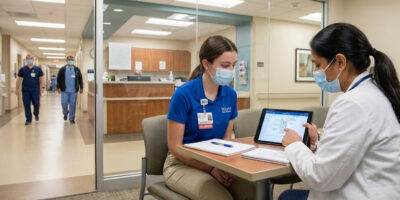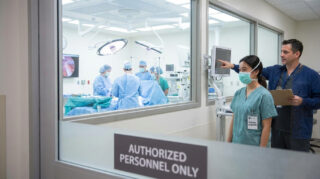
Students interested in surgery often assume shadowing means standing beside a surgeon during an operation. Parents usually want clarity on something more basic: where a minor is actually allowed to be, who supervises them, and how privacy is protected when patients are at their most vulnerable. In practice, surgical shadowing for minors is typically built around controlled observation in approved spaces, and operating room access is the exception, not the default, even in structured high school student medical internships .
Surgery observation makes more sense once families understand the rules hospitals follow for sterile environments, consent, and supervision. For a deeper look at how facilities handle access inside perioperative spaces, use this sterile observer rules overview.
What Surgical Shadowing Means For Minors
For minors, “surgical shadowing” usually refers to watching surgical care happen across the day, not necessarily watching the procedure itself. Most teen shadowing experiences focus on the clinical thinking that leads to surgery and the recovery care that follows it. That is often where students learn the most about decision-making, teamwork, and patient communication.
Hospitals treat minors as guests in clinical environments. Even when a teen is described as an “intern,” the functional role is observer-first: watch quietly, follow directions immediately, and leave when asked. The program’s structure is designed to protect patients and to reduce disruption for staff.
The Role of the Minor as a “Clinical Guest”
Hospitals use specific frameworks to manage these roles, ensuring that the student’s presence does not interfere with the standard of care.
- Non-Clinical Status: Under the Joint Commission’s guidelines, minors in the OR are categorized as “non-clinical observers.” This means they have no hands-on responsibilities. Their primary duty is to remain stationary and silent unless spoken to.
- The “Observer-First” Mandate: The title of “intern” is often used for educational credit, but functionally, the student is a guest. Institutional policies, such as those from Massachusetts General Hospital or the Mayo Clinic, specify that observers must remain within designated “safe zones” to avoid disrupting the sterile field or the surgical team’s movement.
- Immediate Compliance: The “follow directions immediately” rule is a matter of safety. If a complication arises (e.g., a sudden hemorrhage or a code), the surgeon must be able to clear the room of non-essential personnel instantly without having to explain the reasoning.
Protecting the Hospital and the Patient
The structure of these programs is a risk-management strategy designed to address several liabilities:
| Risk Area | Program Mitigation Strategy |
|---|---|
| Liability | Students sign strict Conduct Agreements and HIPAA non-disclosure forms. |
| Staff Burden | Programs often designate a Preceptor (usually a nurse or administrator) rather than the surgeon to manage the student’s logistics. |
| Patient Comfort | Observers are usually required to wear distinct ID badges so the patient knows exactly who is in the room and what their status is. |
The “Leave When Asked” Clause
This is perhaps the most critical component of the guest-observer relationship. According to AORN (Association of periOperative Registered Nurses), the attending surgeon or the circulating nurse has the absolute authority to dismiss an observer at any time for any reason, including:
- Increased surgical complexity.
- The student showing signs of physical distress (vasovagal response).
- The patient or family expressing late-stage discomfort with an observer.
Where Minors Are Most Likely To Observe Surgery-Related Care
Surgical care is not only the operating room. Many facilities are more comfortable allowing minors in lower-risk settings where consent is easier to manage and the pace is more predictable.
Clinic And Pre-Op Visits
Outpatient surgical clinics are often the most realistic entry point. In these visits, teens may observe how surgeons evaluate symptoms, review imaging, explain risks, and decide whether surgery is appropriate. Pre-op appointments also show how teams assess readiness, review medications, and set expectations for recovery.
This is also where students can see the communication side of surgery: how clinicians explain uncertainty, how they answer questions under time pressure, and how they confirm that patients understand what will happen next.
Rounds And Post-Op Care
If a hospital allows minors on inpatient units, surgical rounds can be a strong learning environment. Students may observe how teams track pain control, wound healing, mobility, and complications. They may see how surgeons coordinate with nurses, physical therapy, and other services to plan discharge and follow-up.
In many cases, this setting teaches more about the reality of surgery than a short glimpse of an operation because students see how outcomes are protected after the procedure is over.
Operating Room Access When Permitted
Operating room access for minors varies widely by facility and is often limited or prohibited. Even when it is permitted, it depends on patient consent, surgeon preference, the day’s schedule, and whether supervision is available. If an OR observation opportunity exists, it is typically tightly controlled and may be brief.
If a program uses language like “scrubbing in,” it should only mean sterile observer access when policy and supervision allow it, not participation in the procedure. Any suggestion that minors will handle instruments, touch the patient, or assist in the operation is not consistent with standard boundaries for teens.
Why Surgical Shadowing Slots Can Be Hard To Secure
Surgical shadowing for minors is limited in number. Hospitals have strict privacy obligations, sterile environment rules, and staffing constraints that reduce how many observers they can safely host. These placements can fill quickly when applications open, and some students may find that local facilities do not offer teen access at all during the school year or summer.
When families plan early, they have more flexibility to pursue clinic-based observation, perioperative education sessions, or structured programs that can coordinate supervision and consent requirements more reliably.
Consent And Privacy In Surgical Settings
Consent is a core issue in surgical shadowing because patients may be anxious, exposed, or unable to comfortably decline an observer if they feel pressured. A responsible program treats consent as ongoing and situation-specific. That means a patient can decline an observer without needing to justify it, and the teen must accept that immediately and without complaint.
Privacy also includes what a student does after the experience. Teens should not share patient stories, details, or photos. Even if names are omitted, uncommon details can identify someone. Surgical experiences should be discussed in general terms and documented without any identifying information.
How Supervision Works For Teen Surgical Shadowing
Supervision in surgical shadowing is typically layered. There is usually a program coordinator or education contact who controls placement rules, and there is also an on-site clinical contact who manages what a student may observe that day. In higher-restriction areas, staff may position the student in a specific place, limit movement, and end observation immediately if the environment becomes sensitive or too busy.
In our programs at International Medical Aid, surgical exposure is approached as policy-driven observation with clear boundaries for minors, and any skills practice occurs in simulation settings rather than on patients.
What A Minor Should Never Do While Shadowing Surgery
A minor should not perform tasks that cross into clinical care or create safety risk. That includes handling medications, touching instruments, participating in procedures, accessing medical records, or moving independently through restricted areas. In surgical spaces, even small boundary violations can compromise sterility or patient comfort, so the correct approach is to stay where you are placed and act only when instructed.
How To Request Surgery Shadowing As A Minor
Hospitals are far more likely to approve a minor for surgery-related observation when the request is realistic. Instead of asking for operating room time, students should ask whether they can observe surgical clinic visits, pre-op discussions, or post-op follow-ups. These settings are easier to supervise and still provide meaningful exposure.
It also helps to present a clear schedule and a commitment window. Facilities prefer students who can attend consistently and follow rules, rather than students who want a one-time “look around.”
How To Make A Short Shadowing Experience Count
Surgical shadowing can be short, so the best way to learn is to focus on patterns rather than dramatic moments. Pay attention to how the team verifies identity, confirms consent, communicates during handoffs, and manages uncertainty. After the shift, write a short, privacy-safe note about what you observed in workflow and communication, not about identifiable patient details.
That kind of reflection is also what makes future essays and interviews more credible because it shows judgment and attention to how care is delivered, not just excitement about what you saw.
Next Steps
If you are seeking surgical shadowing as a minor, start with the parts of surgical care that are most accessible: outpatient clinic visits, pre-op counseling, and post-op follow-up. Treat operating room access as a possibility that depends on policy and consent, not as an expectation. The most reliable pathway is to demonstrate professionalism in lower-sensitivity settings first, then build toward more restricted observation if opportunities become available. When surgical environments become available, your job is to protect the team’s workflow and the patient’s dignity. If you do that consistently, you become the kind of student staff are willing to teach.