High school students who are curious about surgery often wonder whether they can observe in an operating room and what that experience is really like. Parents usually have a different concern: whether the environment is safe for a minor, how consent is handled, and what supervision looks like when sterile technique and patient privacy are involved. When families begin comparing options, they often start with a medical internship for high school students and then try to understand how far that access can realistically extend in a surgical setting.
It helps to approach operating room exposure as a privilege that depends on facility policy, patient comfort, and the clinical team’s judgment in the moment. Our early eligibility overview explains the maturity, documentation, and professionalism standards programs look for before considering higher-sensitivity environments like surgery, where the expectations for behavior and boundaries are much stricter than most teens expect.
Why The Operating Room Is Different From Other Clinical Areas
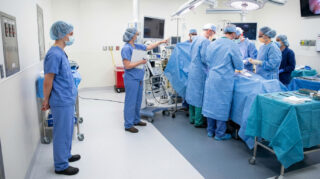
The operating room is not just another hospital department. It is a controlled environment built around sterility, speed, and coordinated teamwork. Every person in the room must have a clear reason for being there. Extra movement increases contamination risk, and unnecessary conversation can distract staff during high-focus moments. Hospitals design strict policies to protect patients from infection and to make sure the surgical team can work without disruption.
For high school students, access is generally more limited than in outpatient clinics or general wards. Even adult observers may face restrictions in the OR, depending on the procedure, the surgeon, and the patient’s preferences. For minors, the bar is usually higher because hospitals must account for additional safety and privacy considerations.
When Operating Room Observation Is Sometimes Possible
Whether a teen can observe in the OR varies widely by hospital and by country. Some facilities do not allow minors in operating rooms at all. Others allow limited observation under specific conditions, usually when all of the following are true: the patient agrees, the surgeon agrees, the hospital policy permits it, and a staff member is willing to supervise the student closely.
Even when observation is allowed, it is often short. A student may be permitted to observe a portion of a procedure rather than an entire case. Some hospitals prefer that students observe from a designated position away from the sterile field. Others allow “close observation” only if the student can follow sterile protocol and remain completely predictable in movement and behavior.
This is why programs that offer surgical exposure typically frame it as “possible, not guaranteed.” The decision is rarely made far in advance because it depends on real-time conditions in the operating theatre and the patient’s comfort on the day of surgery.
What Teens Actually Do During OR Observation
In most cases, teens are present as silent observers. The job is to watch and learn without becoming part of the workflow. That means no touching instruments, no repositioning equipment, no moving closer for a better view, and no speaking to the patient unless the team specifically instructs otherwise.
Observation may include watching how the team prepares the room, how nurses and surgical techs arrange instruments, how anesthesia is administered, and how the surgeon coordinates with the team. Students may see the non-verbal communication that happens constantly in surgery and notice how each person’s role supports patient safety.
Teens who are permitted into the OR are usually positioned with one goal in mind: maximum visibility with minimum disruption. Students might stand near a wall, at the foot of the bed, or in another designated spot where they can see part of the field without risking contamination. If the student is not in the correct place, the correct move is not to adjust independently. It is to wait for instructions.
Scrubbing In As A Sterile Observer
Some programs and hospitals use the phrase “scrubbing in” in ways that confuse families. In the context of a teen observer, scrubbing in does not mean participating in surgery. It means performing the surgical scrub and putting on sterile gown and gloves so the student can stand closer to the sterile field as a sterile observer when policy and supervision allow it.
Scrubbing in is handled within the same regulatory framework that governs all teen clinical exposure. In our programs, “scrubbing in” means joining the surgical team as a sterile observer when hospital policy, supervising surgeons, and local regulations all permit it, not participating in the operation itself. Selected students complete instruction on sterile field rules, gowning and gloving, and acceptable positioning in the operating theatre, then stand in a designated location where they can see the procedure without handling instruments, touching the patient, or influencing clinical decisions.
Clinical mentors remain present to enforce boundaries, intervene if a local provider offers inappropriate hands-on tasks, and remove a student from the theatre if sterile protocol, safety, or patient comfort could be compromised.
This is advanced observation, and it is not appropriate for every student or every setting. The permissibility depends on the facility and on whether the supervising team believes the student can follow sterile rules without error.
Why Hospitals Are Cautious About Teens In The OR
Hospitals limit teen OR access for several practical reasons that have nothing to do with a student’s enthusiasm.
First is infection control. The sterile field exists to protect the patient. A minor who accidentally brushes against sterile drapes, shifts position unpredictably, or faints can create a safety problem. Even a small break in sterility can lead to serious complications.
Second is patient privacy and consent. Surgery involves a level of vulnerability that many patients prefer to keep private. Hospitals must ensure that consent is informed and that patients do not feel pressured to accept observers.
Third is workflow risk. Surgical teams operate under time pressure. The presence of a teen adds a teaching burden and may create delays. Some surgeons are comfortable teaching observers, while others prefer not to add that complexity during procedures.
Finally, there is the issue of emotional readiness. Surgery can be intense. Students may see blood, hear urgent commands, and witness complications. Hospitals do not want a teen to panic, faint, or become distressed in a way that distracts staff or compromises safety.
What Teens Should Know Before Entering The OR
If a teen is invited into an operating room, preparation matters. Students should expect strict rules and should treat them as non-negotiable. A teen who follows rules calmly and consistently is more likely to be trusted with future observation opportunities.
Before entering the OR, teens should be ready for:
- Strict dress and hygiene requirements, including hair covering and sometimes shoe covers
- Clear instructions about where to stand and what not to touch
- No phone use and no photography of any kind
- Immediate exit if asked, without questions or hesitation
- Limited talking, often none during key moments
Teens should also be prepared to encounter unfamiliar or uncomfortable things. If a student feels lightheaded, the correct response is to speak up immediately to the supervising staff member or mentor and step out safely. Hospitals would rather a student leave early than risk a fainting episode in a sterile environment.
How To Build Toward Surgical Observation Responsibly
Many students want OR observation right away. A more realistic approach is to build toward it by demonstrating reliability in lower-sensitivity settings first. Hospitals are more likely to approve a student for higher-restriction environments when they know the student can follow rules, respect privacy, and behave predictably.
For many teens, that progression begins with outpatient observation or general inpatient rounds, where students learn basic hospital etiquette. Next may come exposure to perioperative clinics, recovery units, or surgical ward rounds, where students see surgical care without being in the OR itself. Over time, if a program and facility allow it, OR observation may become possible as a limited, supervised experience.
How Our Programs Handle Surgical Observation
Our approach to surgical exposure is conservative and policy-driven. International Medical Aid includes surgical observation only when it is permitted by the host facility, appropriate for the student’s maturity, and supported by supervision that can enforce boundaries in real time.
Students remain observers in all clinical spaces. Any skills practice that resembles “hands-on” learning occurs in simulation-style sessions rather than on patients, and observation is ended immediately if sterility, safety, or patient comfort could be compromised.
Surgical exposure is therefore considered a possible component of a broader clinical rotation experience, not a guaranteed feature or the program’s main purpose.
Next Steps
If a student is interested in surgery, the best plan is to start with settings that are more consistently accessible to teens, then build toward higher-restriction environments as maturity and opportunity allow. Outpatient surgical clinics, pre-op and post-op visits, and surgical ward rounds can provide meaningful insight into surgical decision-making without requiring OR access. When operating room observation is available, students should treat it as a high-stakes learning moment that requires trust, consent, and strict adherence to sterile rules.