Nursing students who only train in one type of clinical environment graduate with a blind spot. Hospital floors teach you to respond to acute illness under pressure. Community health clinics teach you to see the patient before the crisis ever starts. Both settings are part of nursing education for good reason, and the difference between them is more than just pace or setting. It is a difference in how you think about care, who you serve, and what you pay attention to.
If you are a pre-nursing student trying to figure out where to focus your clinical energy, or wondering whether a community health clinic vs hospital nursing students comparison even matters at this stage, the short answer is: it matters a lot. The way you spend your early clinical hours shapes how you understand the profession, how you talk about nursing in applications, and how prepared you feel on day one of your career. This article breaks down what each environment actually teaches, where they overlap, and how to use both settings to build a stronger foundation.
What Hospital Floors Actually Teach Nursing Students
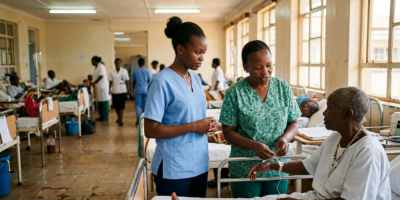
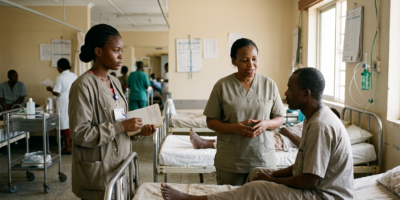
Hospital rotations are the backbone of most nursing programs. When people picture a nursing student in clinical training, they usually imagine a hospital. That image is not wrong, but it is incomplete.
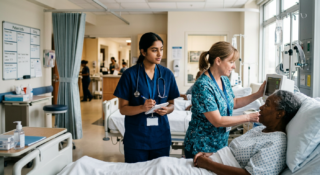
On a hospital floor, whether it is a medical-surgical unit, a pediatric ward, or an intensive care unit, the focus is on acute care. Patients are there because something has gone wrong: a surgery, an infection, a cardiac event, a traumatic injury. The environment is fast, structured, and protocol-driven. Students observe and, within approved and supervised limits, assist with tasks like vital sign monitoring, medication administration, wound care, patient assessment, and documentation in electronic health records. Every action happens under the direction of a licensed nurse or clinical instructor.
What hospital floors teach well is prioritization. When multiple patients need attention, students start to understand triage thinking, even at a basic level. They see how care teams communicate in real time: shift handoffs, interdisciplinary rounds, rapid responses. They get exposure to the technology that supports acute care, from IV pumps to cardiac monitors. They learn the rhythms of a 12-hour shift. And they start to understand what it feels like to work in a setting where outcomes can change quickly. According to the BLS occupational outlook for registered nurses, hospitals remain the largest employer of registered nurses in the U.S., so this exposure is directly relevant to the job market most graduates enter.
Hospital training also has limits. Patients on a hospital floor are often at their most vulnerable and least representative of their normal lives. Students see the disease, the procedure, the recovery. They rarely see the upstream factors that brought the patient there in the first place.
What Community Health Clinics Teach That Hospitals Cannot
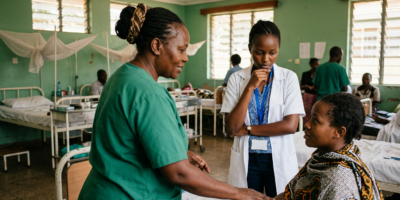
Community health clinics operate on a different logic. The goal is not to stabilize a patient in crisis. It is to keep that patient from reaching a crisis at all. For nursing students, this shift in purpose changes everything about what you observe, what questions you ask, and what skills you develop.
In a community health clinic, you encounter chronic disease management: patients living with diabetes, hypertension, asthma, or depression who come back regularly. You see preventive care: vaccinations, well-child visits, prenatal checkups, cancer screenings. You also see something that hospital floors rarely make visible: the social determinants of health. A patient’s housing situation, food access, insurance status, transportation barriers, and employment all shape their health outcomes. In a community clinic, those factors are part of the conversation, not background noise.
Community health centers serve more than 30 million patients annually in the United States, many of whom are low-income, uninsured, or living in rural areas. Clinics provide care regardless of ability to pay, which means the patient population is often more diverse, both demographically and in terms of health literacy, than what you see in a suburban hospital. For pre-nursing students, this is where you start to understand health equity as a practice, not just a concept.
The pace is different, too. Community clinics tend to allow more time for patient education and relationship building. Students may observe how a nurse explains a new medication regimen, helps a patient understand lab results, or connects a family with local resources. These are core nursing skills, and they are easier to see and absorb in a setting where the clock is not driven by surgical schedules or bed turnover. For a broader look at how community-focused clinical work builds perspective, the IMA blog covers how community health work shapes future healthcare professionals in a way that is relevant across disciplines.
Primary Care vs Hospital Nursing: How the Skills Differ
When you compare a community health clinic vs hospital for nursing students, one of the clearest differences is the skill profile each setting develops.
Skills Emphasized on Hospital Floors
Hospital rotations build technical confidence. Students become familiar with clinical equipment, sterile technique, acute assessment protocols, and the documentation systems used in inpatient care. They practice recognizing deterioration: a dropping blood pressure, a change in mental status, an abnormal lab value. They learn to work within the chain of command, escalating concerns to charge nurses or physicians when something falls outside their scope. They also build stamina for the physical and emotional demands of shift work.
Skills Emphasized in Community Health Settings
Community health rotations build relational and analytical skills. Students practice health education, motivational interviewing techniques, and culturally responsive communication. They learn to think about populations, not just individual patients: What patterns show up across a clinic’s patient panel? What barriers keep people from following through on care plans? They develop comfort with ambiguity, because chronic disease management rarely has a single right answer. And they get practice thinking about prevention and health promotion, which is a growing part of nursing across all settings.
Both skill sets matter. A nurse who can manage a post-operative patient but cannot educate a family about discharge care is only half-prepared. A nurse who understands social determinants but freezes during a rapid response is similarly incomplete. The best nursing education gives you exposure to both, and it asks you to reflect on how the two connect.
Why Nursing Programs Require Both, and What That Means for You
Most accredited nursing programs require clinical rotations in both acute care and community settings. This is not arbitrary. The American Association of Colleges of Nursing (AACN) competency framework emphasizes population health, health equity, and interprofessional collaboration alongside clinical judgment and procedural skills. Programs are designed so that students see the full continuum of care, from prevention through acute treatment and back to recovery.
For pre-nursing students who are still building their applications, this matters for a practical reason. Admissions committees and program reviewers want to see that you understand what nursing actually involves, and that your interest is grounded in real observation, not just an idealized picture. If your only exposure is a hospital, you may struggle to articulate why you care about primary care or public health. If your only exposure is a community setting, you may not convey comfort with the intensity of acute care.
The smartest approach is to seek out exposure in both settings early. That does not mean you need hundreds of hours in each. Even a few structured shifts or observation days in a community clinic can give you language and perspective that stand out. The same is true for hospital-based experience. What matters is that you can reflect on what you saw, what surprised you, and how it shaped your understanding of nursing as a profession. If you are looking for ways to gain early patient interaction experience, the IMA blog has a useful piece on mental health volunteer opportunities for gaining direct patient care experience that may help you think about options.
How Each Setting Prepares You for Different Nursing Careers
The clinical setting you gravitate toward often signals something about the kind of nurse you want to become. That is worth paying attention to, even if your preferences change over time.
Hospital-Oriented Career Paths
If you thrive in high-acuity environments with clear protocols and immediate feedback, you might be drawn to emergency nursing, critical care, perioperative nursing, or labor and delivery. These roles demand quick decision-making, strong technical skills, and the ability to function under pressure. Hospital floor rotations give you a preview of what these careers feel like day to day.
Community-Oriented Career Paths
If you are energized by patient education, long-term relationships, and systems-level thinking, community health nursing, public health nursing, school nursing, or home health care may be a strong fit. These roles require patience, cultural awareness, and comfort working independently or with smaller teams. The WHO has highlighted the growing importance of community-based nursing, particularly in areas facing shortages of nurses and midwives globally, which underscores how critical these roles are to health systems everywhere.
The Overlap
Many nursing careers blend both orientations. A nurse practitioner in a family practice clinic uses acute assessment skills every day. A hospital discharge planner needs to understand social determinants and community resources. Nurse educators draw on both acute and community experiences when training the next generation. Pre-nursing students who invest time in both settings are better positioned to move across these roles as their careers develop.
What to Pay Attention to During Clinical Rotations in Each Setting
Getting the most out of a clinical rotation, whether it is required by your program or something you arrange independently, depends on what you notice and how you process it.
In a hospital, pay attention to how nurses communicate with each other during handoffs. Watch how they prioritize when multiple patients need attention at once. Notice the difference between how a new grad nurse and an experienced nurse assess a patient. Ask your preceptor what they wish they had known before starting on the floor.
In a community clinic, pay attention to the questions nurses ask during intake. Watch how they adjust their communication style for different patients. Notice what happens when a patient cannot afford a medication or does not have reliable transportation to a follow-up appointment. Ask how the clinic measures success, because the answer will be different from a hospital’s metrics.
In both settings, reflect on your own reactions. What felt comfortable? What made you uneasy? What surprised you? These reflections are not just useful for personal growth. They become the raw material for strong application essays, interview answers, and clinical journal entries. The IMA blog offers a relevant discussion of how patient interaction builds confidence and interview performance in pre-health students, which applies directly here.
Building a Clinical Foundation That Covers Both Settings
Pre-nursing students do not need to choose between community health and hospital experience. The goal is to build a foundation that includes both, so you enter your program with a realistic, well-rounded sense of what nursing looks like across settings.
Start by being honest about what you have and what you are missing. If all your experience is in a hospital setting, look for ways to observe or volunteer in a primary care clinic, a community health center, or a public health department. If your background is entirely in community or outreach work, seek out hospital shadowing or volunteer shifts. Even a small amount of exposure in your weaker area can make a meaningful difference in how you understand the profession.
When you write about your experiences, whether in a personal statement, an application essay, or a reflection assignment, be specific. Do not just say you “worked in a clinic.” Describe what you saw, what it taught you, and how it connects to the nurse you want to become. The most compelling applicants are not the ones who have done the most hours. They are the ones who have thought carefully about what those hours meant.
Nursing is one of the few healthcare professions where you can realistically work in an ICU one year and a school health office the next. That flexibility is built into the profession, but only if your education and early experiences give you the range to take advantage of it. Understanding the difference between community health clinics and hospital floors is not just academic. It is the beginning of understanding what kind of nurse you want to be, and what kind of care you want to give.
Frequently Asked Questions
Do nursing schools prefer applicants with hospital experience over community health experience?
Most nursing programs do not favor one setting over the other. Admissions committees are looking for genuine interest in nursing, the ability to reflect on clinical observations, and evidence that you understand what the profession involves. Experience in either setting, described with specificity and self-awareness, strengthens an application. Having experience in both settings can help you stand out because it shows a broader understanding of the care continuum.
Can pre-nursing students perform clinical tasks in community health clinics or hospitals?
Pre-nursing students are not licensed to perform independent clinical tasks. In both community clinics and hospitals, students observe, assist within approved limits, and learn under the direct supervision of qualified healthcare professionals. The scope of what you can do depends on the specific program, the supervising clinician, and the policies of the clinical site. Never assume you will have hands-on responsibilities without confirming what is permitted.
How many clinical hours in each setting should I aim for before applying to nursing school?
There is no universal requirement for pre-program clinical hours, and nursing programs vary in what they expect. Some require a certain number of hours; many do not specify a number at all. Rather than chasing a specific total, focus on the quality and range of your experiences. A combination of hospital and community health exposure, even if the hours are modest, gives you more to reflect on and write about than a large number of hours in a single setting.