Maternal health in sub-Saharan Africa is not an abstract policy problem. It is a crisis defined by numbers that are difficult to accept: approximately 545 maternal deaths per 100,000 live births, a rate that accounts for about 70% of all maternal deaths globally, according to the World Health Organization’s 2023 report on trends in maternal mortality. For pre-nursing students considering careers in global health, obstetric care, or community nursing, understanding this crisis is not optional. It is foundational. The causes of these deaths are overwhelmingly preventable. Hemorrhage, infection, hypertensive disorders like pre-eclampsia and eclampsia, obstructed labor, and complications from unsafe abortion remain the leading killers. What makes these statistics so difficult is not their complexity. It is the fact that proven interventions exist, and they are still not reaching the women who need them most.
Between 2000 and 2015, many countries in sub-Saharan Africa made genuine progress. Maternal mortality ratios declined. Antenatal care visits increased. Skilled birth attendance expanded. But since then, progress has stalled in much of the region, and in some countries, the numbers have moved in the wrong direction. The United Nations’ Sustainable Development Goals Report has documented this slowdown clearly. For nursing students who want to work in maternal health, whether domestically or internationally, this reversal carries a critical lesson: health systems do not improve on autopilot. They require sustained investment, trained personnel, functioning supply chains, and political commitment. Nurses are often the professionals closest to the problem and closest to the solution.
Why Maternal Mortality Remains So High in Sub-Saharan Africa
The reasons behind persistently high maternal mortality in the region are structural, not mysterious. They involve workforce shortages, inadequate infrastructure, poverty, geographic barriers, and gaps in the referral chain between community clinics and hospitals capable of emergency obstetric care.
Consider access to antenatal care. UNICEF’s State of the World’s Children report notes that only about 56% of women in sub-Saharan Africa receive the recommended minimum of four antenatal care visits during pregnancy. That means nearly half of pregnant women in the region enter labor without adequate screening for complications like anemia, malaria, hypertensive disorders, or HIV. When complications arise during delivery, there is often no trained professional present, no functioning ambulance, and no nearby facility equipped for a cesarean section or blood transfusion.
The healthcare workforce shortage compounds every other problem. The WHO has repeatedly documented a severe deficit of nurses, midwives, and physicians across the region. In many rural areas, a single nurse-midwife may be responsible for an entire community’s maternal care, handling prenatal visits, deliveries, postpartum follow-up, and newborn assessments with minimal support. This is not a staffing inconvenience. It is the central bottleneck in reducing maternal deaths. Students who want to understand this work can read what to observe on a maternity service.
Cultural factors also play a role, though they are often oversimplified in Western media. Traditional birth attendants remain active in many communities, and decisions about when and where to seek care are shaped by family structures, religious beliefs, cost, distance, and past experiences with the health system. Effective nursing in this context requires cultural competence, patience, and genuine respect for local knowledge, not just clinical skill. Pre-nursing students interested in global health should begin developing that perspective now. A solid starting point is understanding what cultural competence means in nursing practice and why it matters in every clinical setting, not just international ones.
What Nurses and Midwives Are Actually Doing on the Ground
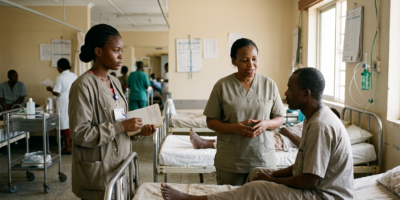
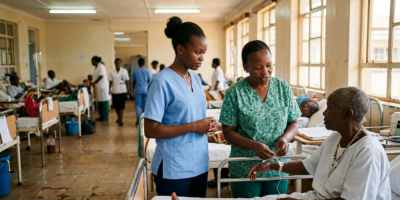
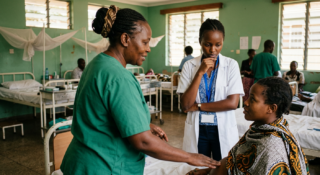
In many sub-Saharan African countries, nurses and midwives are the backbone of maternal health services. They are not supplementary to the system. They are the system. In rural clinics and district hospitals, nurse-midwives conduct antenatal screenings, manage uncomplicated deliveries, identify warning signs of obstetric emergencies, administer medications like oxytocin and magnesium sulfate, and provide postnatal care for mothers and newborns.
Task-shifting and task-sharing have become essential strategies. In Kenya, for example, clinical officers and nurse-midwives routinely perform functions that would be handled by obstetricians in higher-resource settings. This is not a workaround. It is a deliberate, WHO-supported approach to extending care in areas where physician coverage is insufficient. The effectiveness of these strategies depends heavily on training quality, supply availability, and supervision structures.
Nurses are also leading community health education efforts. In many programs across East and Southern Africa, nurse-led outreach teams visit villages to provide prenatal education, distribute iron and folic acid supplements, screen for danger signs, and help women develop birth preparedness plans that include identifying a facility, arranging transport, and saving money for potential emergencies. These interventions are not dramatic. They are methodical, repetitive, and effective.
For pre-nursing students, the lesson here is practical. Maternal health nursing in resource-limited settings is less about heroic interventions and more about consistent, competent, relationship-based care delivered under pressure with limited tools. If you are drawn to this kind of work, you should understand that the skills that matter most, accurate assessment, clear communication, calm prioritization, cultural sensitivity, are the same skills you will develop in any strong nursing program. The setting just makes the stakes more visible.
The Conditions That Shape Maternal Care in the Region
Anemia, Malaria, and HIV in Pregnancy
The disease burden facing pregnant women in sub-Saharan Africa is distinct from what most U.S. nursing students encounter in their domestic clinical rotations. Anemia in pregnancy is common and often severe, driven by nutritional deficiencies and parasitic infections. Malaria during pregnancy increases the risk of maternal anemia, preterm birth, low birth weight, and maternal death. HIV prevalence remains high in several countries, and preventing mother-to-child transmission requires consistent antenatal screening, antiretroviral therapy, and careful delivery management.
According to the WHO’s maternal health fact sheets, most maternal deaths are preventable with timely, appropriate medical intervention. The challenge is not knowledge. It is access, staffing, and supply. Nurses working in these settings must manage multiple overlapping risks in each patient, often with limited diagnostic tools and medications. Understanding this reality is important for any student who wants to work in obstetric or global health nursing.
Infrastructure and Referral Gaps
Many health facilities in rural sub-Saharan Africa lack reliable electricity, running water, sufficient medications, or functioning equipment. When a woman develops eclampsia or begins hemorrhaging, the difference between life and death often depends on whether the nearest facility with surgical capacity is thirty minutes away or three hours away, and whether a vehicle is available.
Nurses in these environments learn to be resourceful and decisive. They perform initial stabilization, make referral decisions under uncertainty, and sometimes accompany patients during transport. This level of responsibility is not something students should romanticize, but it is worth understanding clearly. It shapes what nursing means in much of the world.
What Pre-Nursing Students Should Understand About Structured International Exposure
If you are considering an international health experience as part of your pre-nursing preparation, maternal health settings in sub-Saharan Africa offer a powerful learning environment. But it is important to set expectations accurately.
Students participating in structured programs, including those offered by IMA, do not practice independently. They observe, assist within approved limits, and learn under the supervision of qualified local healthcare professionals. In a maternal health rotation, that might mean taking vital signs during antenatal visits, assisting with weighing newborns, preparing examination areas, or observing how nurse-midwives manage deliveries and identify complications. Students do not perform invasive procedures, insert IVs, draw blood, or make clinical decisions. That boundary exists for good reason: patient safety and professional ethics are not negotiable, regardless of the setting.
What students do gain is perspective. Watching a nurse-midwife manage a postpartum hemorrhage with limited resources teaches something about clinical judgment that a textbook cannot replicate. Sitting in on an antenatal education session conducted in a local language, with a translator helping you follow along, builds a kind of awareness that matters when you eventually care for diverse patient populations at home. These experiences do not replace your nursing education. They supplement it in ways that are hard to access domestically.
If you are early in your pre-nursing path and want to understand more about how international clinical exposure fits into career preparation, it is worth reading about how international nursing internships can benefit your professional development. The key is choosing programs that prioritize structure, supervision, and ethical standards over flashy promises.
How This Experience Connects to Nursing School Applications and Career Readiness
Nursing admissions committees value applicants who can demonstrate genuine engagement with health equity, cross-cultural communication, and reflective practice. An international maternal health experience can strengthen your application, but only if you approach it with the right mindset and represent it honestly.
What matters in an application essay or interview is not the drama of the setting. It is what you observed, what you learned about health systems and your own limitations, and how the experience shaped your understanding of nursing. Admissions reviewers can tell the difference between a student who went abroad and thought critically about what they saw, and a student who frames themselves as a rescuer. The former is compelling. The latter raises concerns.
Specifically, a well-structured maternal health experience can help you speak to social determinants of health with concrete examples, demonstrate that you understand scope of practice and professional boundaries, show that you can function in a team with people whose training and cultural background differ from yours, and articulate why you want to be a nurse in terms that go beyond personal ambition. These are qualities that nursing programs want to see, not because they are trendy, but because they reflect the kind of nurse who will practice safely and effectively.
Students who want to build a stronger foundation before or alongside an international experience should also consider how early clinical exposure, including understanding the role and preparation of certified nursing assistants, can provide useful context for working within healthcare teams.
What “Going Backward” Means and What It Will Take to Change Direction
The phrase “going backward” is not hyperbole. After years of declining maternal mortality ratios, the most recent data from the WHO and partner agencies shows that progress has stalled across much of sub-Saharan Africa. Some countries have seen maternal deaths increase. The reasons include disruptions from the COVID-19 pandemic, ongoing conflicts, economic instability, and persistent underinvestment in primary healthcare and workforce development.
Reversing this trend will require more trained nurses and midwives, better-equipped facilities, stronger referral systems, and sustained political and financial commitment. International organizations, including the WHO and UNICEF, continue to advocate for increased investment in midwifery and nursing education across the region. The WHO’s nursing and midwifery strategy documents outline the scope of what is needed: not just more professionals, but better-supported ones with access to continuing education, fair compensation, and functional work environments.
For pre-nursing students, this context matters because it frames the career you are entering. Nursing is not just a clinical profession. It is a workforce issue, a policy issue, and a human rights issue. The maternal mortality crisis in sub-Saharan Africa illustrates that clearly. Whether you eventually work in global health, community health, labor and delivery, or another specialty entirely, understanding how health systems fail, and how nursing is part of the solution, will make you a more informed and effective practitioner.
You do not need to have all the answers right now. But you do need to start asking the right questions, and to seek out experiences and information that help you understand what nursing looks like beyond the walls of a single hospital. The HRSA’s data on the U.S. nursing workforce offers a useful comparison point for understanding how workforce shortages affect care quality everywhere, not just in low-income countries.
Building Perspective Before You Build a Career
Pre-nursing students are often told to gain experience, build their resumes, and find ways to stand out. That advice is not wrong, but it can lead to a checklist mentality that misses the point. The maternal health crisis in sub-Saharan Africa is not a resume item. It is a defining challenge of global health, and nurses are at the center of the response.
If this topic interests you, start by reading widely. Follow maternal health data from reputable sources. Talk to nursing faculty about global health electives and structured international programs. Ask hard questions about what you would actually do, learn, and contribute in a given setting. And when you do pursue an experience, whether internationally or domestically, bring curiosity, humility, and a willingness to sit with discomfort when what you see does not match what you expected.
The women dying from preventable causes in sub-Saharan Africa deserve more than sympathy. They deserve competent, well-supported healthcare workers and functioning systems. The path to that outcome runs through training programs, policy decisions, and the commitment of the next generation of nurses. That includes you, if you choose it.
Frequently Asked Questions
What are the main causes of maternal death in sub-Saharan Africa?
The leading causes are hemorrhage (severe bleeding), infection, hypertensive disorders such as pre-eclampsia and eclampsia, complications from unsafe abortion, and obstructed labor. Nearly all of these causes are preventable with timely, skilled medical care. The gap between what is medically possible and what is actually available to women in the region is the core of the crisis.
Can pre-nursing students participate in maternal health rotations during international programs?
Yes, structured programs like those offered by IMA may include maternal health rotations where students observe and assist within clearly defined, supervised limits. Students do not perform invasive procedures or make independent clinical decisions. They learn by watching qualified professionals work, assisting with tasks like taking vital signs, and reflecting on what they observe. All participation is supervised by local healthcare staff.
How does an international maternal health experience help with nursing school applications?
It can strengthen your application by giving you concrete examples of health disparities, cross-cultural teamwork, and professional boundary awareness. Admissions committees value reflective, honest accounts of what you learned and how it shaped your understanding of nursing. The experience is most valuable when you can articulate specific observations and insights rather than general claims about personal growth.