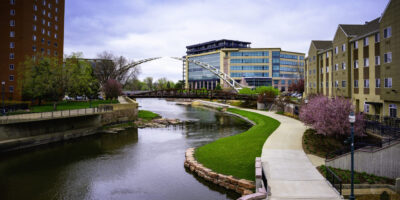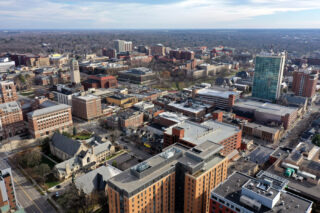

From the busy streets of Detroit to college towns like Ann Arbor, East Lansing, Mount Pleasant and Kalamazoo, Michigan’s medical schools offer very different settings for earning a medical degree. This guide covers every medical school in Michigan: what each one is known for, its admissions requirements and deadlines, its latest class statistics, what the first year costs and what campus life looks like, so you can find the right school for your medical education.
So how many medical schools are in Michigan? Michigan has seven: six MD programs and one osteopathic (DO) college. The MD schools are the University of Michigan Medical School, Wayne State University School of Medicine, Michigan State University College of Human Medicine, the Covenant HealthCare College of Medicine at Central Michigan University, Oakland University William Beaumont School of Medicine and Western Michigan University Homer Stryker M.D. School of Medicine. The DO school is the Michigan State University College of Osteopathic Medicine, which teaches at three sites in East Lansing, Detroit and Clinton Township. Michigan State University is one of the few universities in the country that runs both an MD college and a DO college.
Choosing the right medical school in Michigan depends on your goals. Some programs are built around research, others around primary care, rural health or urban underserved communities, and the schools differ sharply in how many students they take from outside the state. This guide explains those differences school by school, and it ends with the physician assistant programs that appeared in earlier coverage of Michigan’s health professions schools.
Key Takeaways
- Seven programs. Michigan has six LCME-accredited MD programs, all with full accreditation, and one COCA-accredited DO college (MSUCOM) with three teaching sites. No new Michigan medical school is currently in the LCME or COCA pipeline.
- A new name in Mount Pleasant. Central Michigan University’s medical school is now the Covenant HealthCare College of Medicine at Central Michigan University. The name was adopted after Covenant HealthCare and MyMichigan Health made $80 million in gifts, announced in November 2025. The college is still part of CMU, which still awards the degree.
- Out-of-state applicants have real options. Only 32.7% of the University of Michigan Medical School’s 2025 entering class were Michigan residents, and 42% of WMed’s Class of 2030 came from Michigan. At the other end, CMU’s 2026 entering class had 87 Michigan residents among 104 students.
- Highest published class figures. The University of Michigan’s 2025 entering class had a class average total GPA of 3.85 and an average MCAT percentile of 92.61. WMed’s Class of 2030 averaged a 513 MCAT and a 3.81 GPA, and Wayne State’s 2025 accepted applicants had a median MCAT of 512 and a median GPA of 3.88.
- Costs vary widely. For 2026-27, first-year tuition and fees run from $46,678 for Michigan residents at Wayne State to $81,960 for nonresidents at the University of Michigan. The three private MD schools charge everyone the same rate: $63,636 at OUWB and $71,200 at WMed for 2026-27.
- Deadlines start early. The University of Michigan’s AMCAS deadline was September 15, 2026, and MSU College of Human Medicine’s was October 15, 2026. Wayne State accepts AMCAS applications until December 15, and MSUCOM accepts AACOMAS applications until December 1, 2026.
- Who can apply differs. Wayne State, MSU College of Human Medicine and CMU consider Canadian citizens. OUWB and WMed consider only U.S. citizens and permanent residents. The University of Michigan and MSU College of Human Medicine also consider DACA applicants.

Medical Schools in Michigan
Here is the full list of medical schools in Michigan, with a link to IMA’s admissions guide for each school where one exists:
- University of Michigan Medical School (MD, public, Ann Arbor)
- Wayne State University School of Medicine (MD, public, Detroit)
- Michigan State University College of Human Medicine (MD, public, Grand Rapids and East Lansing)
- Michigan State University College of Osteopathic Medicine (DO, public, East Lansing, Detroit and Clinton Township)
- Covenant HealthCare College of Medicine at Central Michigan University (MD, public, Mount Pleasant and Saginaw)
- Oakland University William Beaumont School of Medicine (MD, Rochester)
- Western Michigan University Homer Stryker M.D. School of Medicine (MD, private, Kalamazoo)
Michigan Medical Schools: More Than Just Degrees
Michigan’s medical schools focus on more than academic achievement. Each one also works to develop compassionate, well-rounded physicians. Whether you are drawn to city life in Detroit, the college-town feel of Ann Arbor, the Grand Rapids Medical Mile or the small-city pace of Mount Pleasant and Kalamazoo, Michigan offers medical schools with a supportive environment for both professional and personal growth. Several schools also send students across the state for clinical training: MSU’s two medical colleges place students at community and base hospitals from Detroit to the Upper Peninsula, and CMU trains its third- and fourth-year students in Saginaw and at regional campuses.
Medical Schools in Michigan and Finding the Perfect Fit
Finding the right fit starts with mission. The University of Michigan is a research-intensive school with a curriculum that moves students into core clerkships in the second year. Wayne State trains students in Detroit with a strong emphasis on urban health and service, and its students run 13 free clinics. MSU College of Human Medicine was created to train community physicians and now sends students to community campuses across the state. CMU’s mission focuses on underserved populations in Michigan, especially in rural and mid-Michigan communities. OUWB is strongly committed to the health of southeast Michigan, and WMed works toward health equity in Southwest Michigan. MSUCOM, the first university-based osteopathic medical school, trains DO students who largely stay in Michigan: in 2024, 76% of its graduates entered residencies in the state.
The second question is residency. Because three of the six MD schools are public and closely tied to Michigan’s physician workforce, where you live matters, but not as much as many applicants assume. The University of Michigan takes most of its class from outside the state, and the private schools have no state preference at all. The section on nonresidents below explains each school’s rule.
The third question is cost and logistics: when each school’s deadlines fall, what the first year costs and which applicants each school considers. The tables in the next section put those figures side by side, each with its source and the date it was checked.
Michigan Medical Schools Comparison Tables
Michigan Medical Schools Admissions Profile
| School | Degree, type and campuses | MCAT | GPA | Class size | Applications and outcomes | Class or cohort | Source |
|---|---|---|---|---|---|---|---|
| University of Michigan Medical School | MD, public; Ann Arbor | Class average MCAT percentile 92.61 | 3.85 class average total GPA (science 3.81) | 168 | 10,265 applicants; 443 interviewed | 2025 entering class | U-M Medical School 2025 Entering Class Profile, checked November 13, 2026 |
| Wayne State University School of Medicine | MD, public; Detroit | 512 median (accepted applicants, 2025); 82nd percentile five-year average (Classes 2026-30) | 3.88 median (accepted applicants, 2025); 3.79 five-year average | 299 | 12,843 applications; 1,471 interviews completed; 630 offers | Class of 2030 (entered 2026) | Wayne State class data and Take the MCAT pages, checked November 13, 2026 |
| Michigan State University College of Human Medicine | MD, public; Grand Rapids and East Lansing, plus community campuses statewide | Not published | Not published | 190 | More than 9,600 applicants | 2026 entering class | MSU Today, August 2026; WGVU News, August 24, 2026, checked November 13, 2026 |
| Covenant HealthCare College of Medicine at Central Michigan University | MD, public; Mount Pleasant (years 1-2) and Saginaw (most of years 3-4) | Not published | Not published | 104 | 8,250 applications; 513 campus interviews | 2026 entering class | CMU College of Medicine Profiles for Success, checked November 13, 2026 |
| Oakland University William Beaumont School of Medicine | MD, privately funded; Rochester, with clerkships at Corewell Health hospitals | 509 median | 3.90 median overall (math and science 3.70) | 124 | 8,627 applicants; 500 interviews | Class of 2030 (entered 2026) | OUWB Class of 2030 profile, checked November 13, 2026 |
| Western Michigan University Homer Stryker M.D. School of Medicine | MD, private; Kalamazoo | 513 average (range 497-524) | 3.81 average | 86 | 6,242 applications; 911 phone interviews; 495 virtual interviews | Class of 2030 (entered 2026) | WMed Class of 2030 Profile, checked November 13, 2026 |
| Michigan State University College of Osteopathic Medicine | DO, public; East Lansing, Detroit Medical Center and Macomb University Center (Clinton Township) | 506.7 mean | 3.75 average cumulative undergraduate | 312 (D.O. Class of 2030) | Not published | MCAT and GPA: cohort not stated; class size: entered 2026 | AACOM Choose DO Explorer; MSU Today, August 2026, checked November 13, 2026 |
Michigan Medical Schools Cost and Residency Rules
| School | First-year tuition and fees | First-year cost of attendance | Who may apply | Michigan residents in the latest class | Source |
|---|---|---|---|---|---|
| University of Michigan Medical School | $60,495 residents; $81,960 nonresidents (2026-27) | $102,431 residents; $123,896 nonresidents (2026-27) | U.S. citizens, permanent residents and DACA recipients; no Michigan preference stated | 55 of 168 (32.7%), 2025 entering class | U-M MD Program Tuition and Fees; MD Admissions Requirements; 2025 Entering Class Profile, checked November 13, 2026 |
| Wayne State University School of Medicine | $46,678 Michigan residents; $74,927 nonresidents (2026-27 M1 estimate) | $76,432 residents; $104,591 nonresidents (2026-27 M1, 11 months) | Preference to Michigan residents; U.S. citizens, permanent residents, Canadian citizens and Wayne State degree graduates | 63.5%, Class of 2030 | Wayne State Medicine Financial Aid costs page; eligibility page; class data, checked November 13, 2026 |
| Michigan State University College of Human Medicine | $17,051 per semester residents; $30,963 per semester nonresidents (2026-27); year 1 has three semesters | Year 1 budget $94,419 residents; $136,155 nonresidents (2026-27) | U.S. and Canadian citizens, permanent residents and DACA recipients | 80%, 2026 entering class | MSU Office of Financial Aid 2026-2027 CHM budget; CHM admissions information; MSU Today, checked November 13, 2026 |
| Covenant HealthCare College of Medicine at CMU | $47,710 in state; $70,793 out of state; fees $175 (2025-26, newest posted) | $75,295 in state; $99,363 out of state (2025-26, off campus) | U.S. or Canadian citizens or permanent residents of the U.S. or Canada; Early Decision for Michigan residents only | 87 of 104, 2026 entering class | CMU College of Medicine cost of attendance, admission requirements and class profile pages, checked November 13, 2026 |
| Oakland University William Beaumont School of Medicine | $63,636 for every student (2026-27) | $79,045 (living with parent) to $91,945 (off campus), M1 2026-27 | U.S. citizens and permanent residents; out-of-state applicants admitted | 63%, Class of 2030 | OUWB admissions FAQ, 2026-2027 cost of attendance sheet and class profile, checked November 13, 2026 |
| Western Michigan University Homer Stryker M.D. School of Medicine | $71,200 for every student, fees included (2026-27 M1) | $104,289 (2026-27 M1) | U.S. citizens and permanent residents; no state preference | 42%, Class of 2030 | WMed 2026-27 Cost of Attendance; Admissions FAQs; Application Process, checked November 13, 2026 |
| Michigan State University College of Osteopathic Medicine | $43,776 in state; $61,838 out of state; fees $82 (2025-26, newest listed) | Not published as a total; estimated room, board, books and living costs $32,794 plus a $2,759 health insurance fee | Accepts international students; DACA applicants considered | 71%, D.O. Class of 2030 | AACOM Choose DO Explorer MSUCOM profile; MSU Today, August 2026, checked November 13, 2026 |
A few notes on reading these tables. An acceptance rate is the number of applicants offered admission divided by the number who applied. Wayne State is the only Michigan school that publishes both numbers for its newest class: 630 offers on 12,843 applications for the Class of 2030, or about 4.9%. The other schools publish applications and class size but not offers, and dividing class size by applications understates the real acceptance rate, because many admitted students enroll elsewhere. The MCAT and GPA columns also mix measures on purpose, because each school reports in its own way: the University of Michigan reports an average MCAT percentile, Wayne State reports medians for accepted applicants, OUWB reports matriculant medians and WMed and MSUCOM report averages. For more context on what these numbers mean nationally, see IMA’s list of the average GPA and MCAT score for every medical school in the US, and for a full picture of what four years cost, read IMA’s guide to the total cost of medical school.
Which Michigan Medical Schools Admit Nonresidents?
Every Michigan medical school admits some students from outside the state, but the share ranges from about one in six to about two in three. Here is where each program stands:
- University of Michigan Medical School: most of the class comes from outside Michigan. In the 2025 entering class, 113 of 168 students (67.3%) were nonresidents, representing 29 states plus Washington, D.C. Applicants must be U.S. citizens, permanent residents or DACA recipients. Nonresidents pay higher tuition.
- Wayne State University School of Medicine: Michigan preference, many nonresidents. As a state-supported school, Wayne State gives preference to Michigan residents but strongly encourages out-of-state applicants to apply. It says that typically 30% to 40% of each class is nonresident; the Class of 2030 was 36.5% out of state, with students from 31 states plus Canada. Canadian citizens are eligible and are treated as nonresidents for admission and tuition.
- Michigan State University College of Human Medicine: mostly Michigan, out-of-state welcome. Of the 190 MD students who entered in 2026, 80% were Michigan residents. One of the college’s secondary essay prompts invites out-of-state applicants to explain their interest in training and possibly practicing in Michigan. Canadian citizens, permanent residents and DACA recipients are considered.
- Covenant HealthCare College of Medicine at Central Michigan University: built for Michigan. The college says it recruits and admits students from Michigan to care for Michigan, especially those committed to primary care for the medically underserved. Its 2026 entering class had 87 Michigan residents and 17 nonresidents. Only Michigan residents enrolled at or graduated from a Michigan university can use its Early Decision Program.
- Oakland University William Beaumont School of Medicine: open to all, focused on southeast Michigan. OUWB is privately funded, charges every student the same tuition and admits out-of-state students. It is strongly committed to southeast Michigan, and 63% of the Class of 2030 were Michigan residents.
- Western Michigan University Homer Stryker M.D. School of Medicine: no state preference. As a private school, WMed seeks students from across the United States regardless of state of residence. Its Class of 2030 represented 23 states, and 42% of the class was from Michigan.
- Michigan State University College of Osteopathic Medicine: mostly Michigan. Of the 312 members of the D.O. Class of 2030, 71% were Michigan residents. MSUCOM charges higher tuition to out-of-state students and lists international students and DACA applicants as eligible.
If you live outside Michigan, the University of Michigan, WMed and OUWB are the schools that most often admit nonresidents, and Wayne State has a long record of enrolling a large out-of-state group. If you are a Michigan resident, you can apply to all seven, and CMU, MSU College of Human Medicine and MSUCOM fill most of their seats with Michigan students. Your list should still include schools in other states. IMA’s guide on how many medical schools to apply to can help you decide how many Michigan programs belong next to the rest of your list. International applicants other than Canadians have few MD options in Michigan; IMA’s guide to medical schools that accept international students covers the wider picture.
Michigan MD Schools: Profiles and Admissions
University of Michigan Medical School
The University of Michigan Medical School is located in Ann Arbor and is part of Michigan Medicine, the university’s academic medical center. Founded in 1850, the school has a long history of medical education and research. It is a public school, but it enrolls more nonresidents than Michigan residents: the 2025 entering class of 168 included 55 Michigan residents and 113 nonresidents from 29 states and Washington, D.C. The school describes a holistic review that looks at competencies such as communication, critical thinking, cultural humility, ethical decision making, resilience and teamwork alongside grades and the MCAT.
Admissions and Application
The University of Michigan Medical School accepts applications through the American Medical College Application Service (AMCAS). For the 2026-2027 cycle, the AMCAS deadline was September 15, 2026, and the secondary application deadline was October 15, 2026. The secondary fee is $95. Secondary applications go to applicants with an MCAT score at or above the 35th percentile; applicants below that are screened for excellence in the school’s competencies and may still receive a secondary after review. Applicants must be U.S. citizens, permanent residents or DACA recipients and must have completed at least 90 hours of college coursework, 60 of them at an accredited U.S. or Canadian institution. Michigan does not require a fixed list of prerequisite courses; it asks for competency in areas such as the life and physical sciences, statistics, and the humanities and social sciences.
Interviews are virtual. The interview experience includes two 30-minute conversations with members of the Admissions Committee and six 6-minute short-form interviews at interaction stations, a format close to the multiple mini interviews used by several other Michigan schools.
Academics and Programs
Michigan offers the MD and the MD/PhD through its Medical Scientist Training Program, plus combined degrees including the MD/MBA with the Ross School of Business, the MD/MPP with the Ford School of Public Policy and the MD/MPH with the School of Public Health. Its curriculum moves students into core clerkships in the second year, earlier than at most schools, which leaves the later part of medical school for a chosen Branch with room for research, a dual degree or electives. The 2025 entering class included 14 Medical Scientist Training Program students and 3 oral and maxillofacial surgery students.
Financials and Tuition
For the 2026-27 academic year, first-year tuition and fees are $60,495 for Michigan residents and $81,960 for nonresidents. The first-year cost of attendance, which adds living expenses, books, health insurance and other costs, is $102,431 for residents and $123,896 for nonresidents. The school reports average medical school debt of $161,267 for the Class of 2023, and it offers grants and scholarships through its Office of Financial Aid.
Student Life and Support
The medical campus is within walking distance of the university’s central campus and downtown Ann Arbor, a college town with a lively food, arts and outdoor scene. Students come from a wide range of backgrounds: in the 2025 entering class, 14.3% were first-generation college students, 21.4% were socioeconomically disadvantaged by the AAMC definition, and the average age was 24.9.
Contact Information
University of Michigan Medical School, 6100 THSL, 1135 Catherine Street, Ann Arbor, MI 48109-5726. Phone: 734-764-6317. Email: [email protected].
Key Statistics
- Location: Ann Arbor, MI
- School type: Public
- Year founded: 1850
- 2026-27 AMCAS deadline: September 15, 2026; secondary deadline October 15, 2026; secondary fee $95
- Class average total GPA: 3.85 (2025 entering class)
- Class average MCAT percentile: 92.61 (2025 entering class)
- Applicants, interviewed and class size: 10,265; 443; 168 (2025 entering class)
- Michigan residents: 32.7% (2025 entering class)
- Combined degrees: MD/PhD (MSTP), MD/MBA, MD/MPP, MD/MPH and others
- 2026-27 tuition and fees: $60,495 (resident), $81,960 (nonresident)
- 2026-27 first-year cost of attendance: $102,431 (resident), $123,896 (nonresident)
Read IMA’s full guide to the University of Michigan Medical School for the secondary essays, interview details and admissions strategy.
Wayne State University School of Medicine
Wayne State University School of Medicine, in Detroit, has trained physicians since 1868. It offers a distinctly urban medical education, with students working in Detroit’s hospitals, clinics and neighborhoods from the start. Its students run 13 free clinics and more than 100 student organizations, and its programs such as Street Medicine Detroit bring care to residents across the city. With a Class of 2030 of 299 students, it is one of the largest medical school classes in the country.
Wayne State University School of Medicine at a Glance
Wayne State’s mission centers on serving under-resourced communities, and its Highways to Excellence curriculum combines an organ systems-based curriculum with hands-on experience in clinical settings, community-centered education and personalized pathways through electives, service learning and research. The school’s location gives students access to Detroit’s major health systems and a wide range of patients.
Admissions
For the 2026-2027 cycle, the AMCAS deadline is December 15 and the secondary application deadline is January 22. Verified applicants begin receiving the secondary in July, and the secondary carries a non-refundable $100 fee (a fee waiver policy applies). The Early Decision Program has an August 1 AMCAS deadline and an August 8 secondary deadline. Offers to regular applicants begin October 15. Wayne State does not set a minimum MCAT or GPA. For 2025 accepted applicants, the median MCAT was 512 (10th to 90th percentile range 503 to 519) and the median overall GPA was 3.88 (range 3.56 to 4.00), with a median science GPA of 3.84.
Applicants must hold a bachelor’s degree with all prerequisites and be a U.S. citizen, a U.S. permanent resident or a Canadian citizen. Any student who has completed a bachelor’s, master’s or doctoral degree at Wayne State is also eligible regardless of citizenship. Wayne State does not accept transfer students into the MD program.
Tuition and Financial Aid
Wayne State’s 2026-27 estimated M1 budget lists tuition and fees of $46,678 for Michigan residents and $74,927 for nonresidents (the estimates are based on 2025-26 costs and are replaced by actual charges once published). The total M1 cost of attendance for an 11-month year is $76,432 for residents and $104,591 for nonresidents. Health insurance is mandatory and may be added to the budget individually.
Student Demographics and Campus Life
The Class of 2030 has 299 students: 63.5% from Michigan and 36.5% from out of state, with 31 states plus Canada represented, 98 colleges and more than 125 undergraduate majors. In that class, 92% had community service or volunteer experience, 91% had research or lab experience and 41 were first-generation students. Students live in and around Midtown Detroit and train with the city’s hospital and community partners.
Curriculum and Research
The Highways to Excellence curriculum emphasizes clinical immersion, service to under-resourced communities and leadership. Admitted students can add an MD/MBA, MD/MPH or MD/MS, and Wayne State also offers an MD/PhD program and a three-year MD program for students with prior health care experience. Research and lab experience is common among incoming students, and the school’s research and clinical partnerships give students many opportunities to continue that work.
Diversity and Inclusion
Wayne State’s admissions team describes a holistic review that weighs grades, MCAT scores, personal statement, experiences, recommendations and interviews. Typically 85% to 95% of its students have community service or volunteer experience as well as research experience, and the school’s community programs and free clinics reflect its commitment to Detroit’s residents.
Key Statistics
- Location: Detroit, MI
- School type: Public
- Training physicians since: 1868
- 2026-27 deadlines: AMCAS December 15; secondary January 22; secondary fee $100
- Median MCAT: 512 (2025 accepted applicants)
- Median GPA: 3.88 (2025 accepted applicants)
- Applications, interviews, offers and matriculants: 12,843; 1,471; 630; 299 (Class of 2030)
- In-state share: 63.5% (Class of 2030)
- Degree options: MD, MD/PhD, MD/MBA, MD/MPH, MD/MS, three-year MD
- 2026-27 M1 tuition and fees: $46,678 (resident), $74,927 (nonresident)
- Contacts: Wayne State University School of Medicine, 320 E. Canfield St., Suite 322, Detroit, MI. Phone: 313-577-1466. Email: [email protected]
Read IMA’s full guide to Wayne State University School of Medicine for its secondary essays and interview advice.
Michigan State University College of Human Medicine
Michigan State University College of Human Medicine is a public MD school headquartered on the Grand Rapids Medical Mile, with first- and second-year students learning in East Lansing or Grand Rapids. Established in 1964 to address Michigan’s need for primary care physicians, the college has grown into a community-based school that sends students to community campuses across the state for their clinical years.
Michigan State University College of Human Medicine Details
The college’s Shared Discovery Curriculum puts students into clinical settings from the first year, and its community campus model gives students clinical experience in urban, suburban and rural settings, from Detroit and Flint to Traverse City and the Upper Peninsula. The 2026 entering class shows the college’s reach: of 190 new MD students, 80% were Michigan residents, 19% were first-generation students and 91% came from medically underserved counties.
Admissions
For the 2026-2027 cycle (the 2027 admission cycle), the AMCAS application was due October 15, 2026, and the secondary application and letters of evaluation are due November 30, 2026. Applicants must be U.S. or Canadian citizens or hold permanent resident or DACA status, must have completed at least 90 hours of college coursework at an accredited U.S. or Canadian institution, and must have a bachelor’s degree before matriculation. The secondary screen includes an MCAT total of 498 or higher. Students also need a valid U.S. or Canadian driver’s license and a reliable vehicle by matriculation, because clinical training takes place across the state. The admissions process is mission-aligned, weighing academic preparation alongside service, community commitment and the personal qualities of a physician.
Tuition and Financial Aid
For 2026-27, tuition is $17,051 per semester for Michigan residents and $30,963 per semester for nonresidents. Year 1 includes fall, spring and summer semesters, and the college’s year 1 budget, which adds fees, food and housing, transportation, books and personal costs, totals $94,419 for residents and $136,155 for nonresidents.
Student Demographics and Campus Life
The 2026 entering class of 190 MD students was 80% Michigan residents. Students spend the first two years in East Lansing or Grand Rapids and then move to a community campus, where affordable housing is generally available off campus. Students are encouraged to take part in student organizations and volunteer clinical programs.
Curriculum and Research
The Shared Discovery Curriculum integrates basic science and clinical education from the beginning and uses small group learning and self-directed study. The college offers research opportunities in both clinical and basic science, and combined degrees including the MD/PhD, MD/MPH and MD/MBA.
Diversity and Inclusion
The Advanced Baccalaureate Learning Experience (ABLE) program supports disadvantaged applicants through a year-long enriched academic program. There is no direct application: the admissions committee refers selected applicants, and students who meet the program’s requirements are offered admission to the following year’s entering class. ABLE was established in 1986.
Key Statistics
- Location: Grand Rapids and East Lansing, MI, with community campuses statewide
- School type: Public
- Year founded: 1964
- 2026-27 deadlines: AMCAS October 15, 2026; secondary and letters November 30, 2026
- 2026 entering class: 190 MD students, 80% Michigan residents
- Applicants for the 2026 class: more than 9,600
- 2026-27 tuition per semester: $17,051 (resident), $30,963 (nonresident)
- Combined degrees: MD/PhD, MD/MPH, MD/MBA
- Contacts: MSU College of Human Medicine Office of Admissions. Phone: (517) 353-9620. Email: [email protected]
Read IMA’s full guide to Michigan State University College of Human Medicine for its secondary prompts and admissions strategy.
Covenant HealthCare College of Medicine at Central Michigan University
The Covenant HealthCare College of Medicine at Central Michigan University, located in Mount Pleasant, educates diverse students and trains culturally competent physicians to provide comprehensive health care and services to underserved populations in Michigan and beyond. The LCME directory lists 2012 as the program’s initial accreditation year. Formerly known as the Central Michigan University College of Medicine, it took its current name after Covenant HealthCare and MyMichigan Health committed $80 million in gifts, announced in November 2025. The college remains part of Central Michigan University, CMU confers the degree, and diplomas carry the CMU seal and the college’s new name.
The college teaches on two campuses. First- and second-year students learn foundational sciences, take part in research and build clinical skills in Mount Pleasant. Most third- and fourth-year students move to Saginaw for hospital-based clerkships and electives, with Covenant HealthCare as the primary clinical partner and regional campus affiliates elsewhere in Michigan. The new MyMichigan Health CMU Medical Education Building in Saginaw broke ground on September 22, 2026, and is expected to open for the fall 2028 semester, with space scaled to support up to 130 students per class, pending clinical capacity.
Admissions
For the 2026-2027 cycle, the AMCAS deadline is November 1 and the secondary application and fee are due December 3. Select applicants are invited to complete the secondary through the college’s online portal, and the secondary fee is $100, waived for applicants with an AMCAS fee waiver. Interviews run from September through March in a virtual format that combines multiple mini interviews with small group activities. Offers are made on a rolling basis from October through April. The latest MCAT accepted for a cycle is the September test date. CASPer is optional and does not factor into the evaluation.
Applicants must be U.S. or Canadian citizens or permanent residents of the United States or Canada. The admission requirements include two semesters of biological science with labs and two semesters of organic chemistry with at least one lab (or one semester each of organic chemistry and biochemistry with at least one lab). The college accepts three to five letters of recommendation, or a committee letter. Community college and online courses with labs generally meet the minimum, but the college encourages applicants to take prerequisites at four-year institutions. The admissions process uses a holistic review that balances the applicant’s academic portfolio with critical thinking, ethics, personal values and fit with the college’s mission.
The Early Decision Program is open to Michigan residents who are enrolled at or have graduated from a Michigan public or private university, with a minimum 3.5 GPA and 503 MCAT. Early Decision materials are due August 1, and the college aims to give every Early Decision applicant a decision by August 30.
Tuition and Financial Aid
The newest cost table the college has posted is for 2025-26: tuition of $47,710 in state and $70,793 out of state, plus $175 in fees. The total off-campus cost of attendance for that year was $75,295 in state and $99,363 out of state. Most first-year students are enrolled for 11 months, and the budget covers only months of enrollment.
Student Demographics and Campus Life
Each entering class has 104 seats. The 2026 entering class had 51 men and 52 women, an average age of 24 (range 21 to 36), 12 students with advanced degrees and students from 37 undergraduate institutions, 15 of them in Michigan. The University of Michigan sent the most students (30), followed by Michigan State University (11), Wayne State University (8), Central Michigan University (6) and Grand Valley State University (6). Mount Pleasant is a college town with affordable housing, and the college supports student organizations, community service and programs such as Street Medicine.
Curriculum and Research
The college combines coursework with simulation labs, clinical rotations and community-based assignments. Years 1 and 2 are graded credit/no credit, and years 3 and 4 are graded credit/no credit or credit with honors. Students take part in early clinical experiences, train in physicians’ offices and hospitals across Michigan and work in a medical simulation center. Research opportunities include basic, clinical, medical education and population health research, and students can begin research in the first year.
Diversity and Inclusion
The college’s mission-aligned admissions process looks for reliability, service orientation, teamwork, resilience, cultural awareness, compassion and empathy, integrity and commitment to the college’s mission. Its admissions office also runs pipeline programs and an application workshop for prospective applicants.
Key Statistics
- Location: Mount Pleasant and Saginaw, MI
- School type: Public (part of Central Michigan University)
- LCME initial accreditation year: 2012
- 2026-27 deadlines: AMCAS November 1; secondary December 3; secondary fee $100
- Applications, interviews and class size: 8,250; 513; 104 (2026 entering class)
- Michigan residents: 87 of 104 (2026 entering class)
- 2025-26 tuition: $47,710 (in state), $70,793 (out of state)
- Contacts: Covenant HealthCare College of Medicine at Central Michigan University, Admissions, 600 E. Preston Street, Foust, Mount Pleasant, MI 48859. Phone: 989-774-7882. Email: [email protected]
Mission Statement
The Covenant HealthCare College of Medicine at Central Michigan University educates diverse students and trains culturally competent physicians to provide comprehensive health care and services to underserved populations in Michigan and beyond. Its faculty, staff and graduates advance health and wellness through exceptional education, innovative research, quality patient care and strategic collaborations to improve the health and well-being of individuals and communities.
Additional Information
Special programs and policies:
- The Early Decision Program is available to Michigan residents who attend or graduated from a Michigan university, with notification targeted by August 30.
- The college considers all MCAT scores reported and gives the most weight to an applicant’s highest and most recent scores. A score is usable for four application cycles; for example, a 2023 MCAT is eligible for the 2024 through 2027 cycles.
- The college encourages applicants to take prerequisite and upper-level science courses at a four-year institution.
- The Mount Pleasant campus address is 1280 S. East Campus Drive, Mount Pleasant, MI 48859.
For more details and up-to-date information, visit the Covenant HealthCare College of Medicine website, and read IMA’s full guide to the Central Michigan University College of Medicine.
Oakland University William Beaumont School of Medicine
Oakland University William Beaumont School of Medicine (OUWB) sits on Oakland University’s campus in Rochester, Michigan, north of Detroit. The LCME lists 2010 as its initial accreditation year, and the school welcomed its charter class in 2011. OUWB was created through a partnership between Oakland University and Beaumont Health, now Corewell Health, and its students complete clerkships at Corewell Health hospitals. The school is committed to developing compassionate physicians and to improving health outcomes in southeast Michigan.
Admissions
For the 2026-2027 cycle, the AMCAS deadline is November 15 and the supplemental application, fee and other required materials are due December 15. Applicants who meet the school’s minimum academic and residency requirements receive the supplemental application, which carries a non-refundable $100 fee, waived for applicants with an AMCAS fee waiver. The minimum academic requirements are an MCAT of 495 and an undergraduate BCPM GPA of 3.00 (or an alternative post-baccalaureate route). For the 2027 admissions cycle, the oldest acceptable MCAT is from September 2023. Only U.S. citizens and permanent residents are considered. Roughly 500 applicants are interviewed each cycle, from August through March, and offers begin in mid-October. For the Class of 2030, the median MCAT was 509, the median overall GPA was 3.90 and the median math and science GPA was 3.70.
OUWB accepts out-of-state students. As a privately funded school, it is open to all students with academic credentials and experiences that fit its mission, though it hopes to enroll students who share its interest in the southeast Michigan community. The MD/MPH program, offered with Oakland University, takes five years.
Tuition and Financial Aid
Tuition for 2026-27 is $63,636, the same for in-state and out-of-state students, with no additional fees for health insurance, technology, parking or access to the Oakland University recreation center. The 2026-27 M1 cost of attendance is $79,045 for students living with a parent, $90,646 on campus and $91,945 off campus. All admitted students are eligible for merit-based scholarships, and need-based scholarships require the FAFSA.
Student Demographics and Campus Life
The Class of 2030 has 124 students: 55% female and 45% male, 63% Michigan residents, 19 states and 9 countries represented, 41 undergraduate institutions and 24 languages spoken. In that class, 19% were socioeconomically disadvantaged and 8% were first-generation students. The school sits on a suburban campus with on-campus and nearby off-campus housing.
Curriculum and Research
OUWB’s curriculum puts students in front of patients from the first semester and integrates basic and clinical sciences through active learning. Every student completes Embark, a required four-year research program that ends in a capstone project, and students meet in monthly PRISM mentoring groups. Clerkships take place at Corewell Health hospitals in Royal Oak, Troy and Grosse Pointe.
Diversity and Inclusion
OUWB values diversity, equity and inclusion and uses a holistic admissions process. Its Class of 2030 profile reports students from 19 states and 9 countries who speak 24 languages, and its community engagement programs connect students with service in southeast Michigan.
Key Statistics
- Location: Rochester, MI
- LCME initial accreditation year: 2010
- 2026-27 deadlines: AMCAS November 15; supplemental December 15; supplemental fee $100
- Median MCAT: 509 (Class of 2030)
- Median overall GPA: 3.90 (Class of 2030)
- Applicants, interviews and class size: 8,627; 500; 124 (Class of 2030)
- Michigan residents: 63% (Class of 2030)
- Combined degree: MD/MPH (five years)
- 2026-27 tuition: $63,636 (all students)
- Contacts: Oakland University William Beaumont School of Medicine, O’Dowd Hall, Room 428, 586 Pioneer Drive, Rochester, MI 48309. Phone: (248) 370-3634. Email: [email protected]
Additional Information
Mission statement: OUWB’s mission centers on developing compassionate physicians dedicated to improving the health of their communities, with an emphasis on collaboration and lifelong learning.
Special programs and policies:
- Students complete required clinical rotations across the core specialties, including family medicine, psychiatry, internal medicine, surgery, pediatrics, obstetrics and gynecology and neurology.
- Every student completes the Embark research program and its capstone.
- OUWB recommends that applicants submit at least three and no more than five letters of recommendation, or a committee letter.
Read IMA’s full guide to Oakland University William Beaumont School of Medicine for its supplemental essays and interview day.
Western Michigan University Homer Stryker M.D. School of Medicine
Founded in 2011, the Western Michigan University Homer Stryker M.D. School of Medicine (WMed) is a private, nonprofit medical school in downtown Kalamazoo. It was created by Western Michigan University and Kalamazoo’s two teaching health systems, Beacon Health System and Bronson Healthcare, and despite the university name it is a separate private corporation. WMed is committed to health equity in Southwest Michigan through medical education, patient care, research and community partnerships.
Admissions
For the 2026-2027 cycle, the AMCAS deadline is November 15, 2026, and the supplemental application, including its essays and a free WMed-specific online assessment, is due January 8, 2027. Applicants need a minimum overall GPA of 3.0 and an MCAT of 499 to receive the supplemental, and the oldest MCAT considered for 2027 matriculation is from January 2024. The supplemental fee is $110, waived for applicants approved for the AAMC Fee Assistance Program. Applicants must be U.S. citizens or permanent residents. There are no required prerequisite courses, but WMed recommends upper-division coursework in biochemistry, genetics, human anatomy, human physiology and statistics. After the supplemental, selected applicants move through an experiences review, a phone interview and a Virtual Interview Day. WMed does not use CASPer or the AAMC PREview exam.
For the Class of 2030, WMed received 6,242 applications, held 911 phone interviews and 495 virtual interviews and enrolled 86 students with an average GPA of 3.81 and an average MCAT of 513 (range 497 to 524). WMed has preferred relationships with Western Michigan University, Kalamazoo College, Grand Valley State University and Albion College, and students from those schools can apply through the WMedStart Early Decision Program.
Tuition and Financial Aid
Tuition is the same for every student. For 2026-27, M1 tuition (which includes student fees) is $71,200 and the total M1 cost of attendance is $104,289. Tuition rises slightly in later years: $72,500 for M2 students in 2026-27.
Student Demographics and Campus Life
WMed enrolls 86 students a year. The Class of 2030 was 52% men and 48% women, with an average age of 24, students from 56 undergraduate institutions and 23 states, and 42% from Michigan. Every member of the class had health-related experience, 91% had research experience and together they logged 30,707 community service hours. The W.E. Upjohn M.D. Campus is in downtown Kalamazoo, close to housing, dining and entertainment, and Kalamazoo is the sixth-largest metropolitan area in Michigan.
Curriculum and Research
WMed’s curriculum is organized into the Foundations of Medicine and Clinical Applications phases, with team-based learning, simulation and early clinical experiences. Clinical training takes place with WMed’s teaching partners, including Beacon Kalamazoo and Bronson Methodist Hospital. Students can take part in clinical, community-based, basic science and educational research.
Diversity and Inclusion
WMed uses a mission-aligned review based on the AAMC’s Experiences-Attributes-Metrics-Competencies model, looking for team players who solve problems, show compassion and empathy, are committed to serving others and make decisions with integrity. In the Class of 2030, 20% came from a low socioeconomic background and 10% were first-generation college students.
Key Statistics
- Location: Kalamazoo, MI
- School type: Private
- Year founded: 2011
- 2026-27 deadlines: AMCAS November 15, 2026; supplemental January 8, 2027; supplemental fee $110
- Average MCAT: 513 (Class of 2030)
- Average GPA: 3.81 (Class of 2030)
- Applications and class size: 6,242; 86 (Class of 2030)
- From Michigan: 42% (Class of 2030)
- 2026-27 M1 tuition: $71,200 (all students)
- Contacts: WMed Office of Admissions, Kalamazoo, MI. Email: [email protected]
Mission Statement
WMed is committed to excellence and health equity through medical education, high-quality patient care, research and community partnerships. Its vision is health equity for all in Southwest Michigan through innovation in the practice and study of medicine.
Special programs and policies:
- WMed holds a seat with a commitment letter instead of a monetary deposit.
- The supplemental application includes two required essays, one reapplicant essay and two optional essays, each limited to 2,000 characters.
- WMed uses its own short online assessment of personal attributes instead of CASPer or PREview.
For more details and up-to-date information, visit the WMed website, and read IMA’s full guide to Western Michigan University Homer Stryker M.D. School of Medicine.
Medical Schools in the United States
Choosing the right medical school is a crucial step toward becoming a physician. With many respected institutions across the United States, each offering its own programs, settings and opportunities, it is essential to find the one that fits your academic goals, personal preferences and career plans. Comparing location, tuition, average GPA and MCAT scores is a good place to start, and IMA’s list of the average GPA and MCAT score for every medical school in the US puts Michigan’s schools in national context.
Whether you are interested in research-focused programs, primary care or a specialized field, looking at schools beyond Michigan will give you a broader view of what is available. Most MD applicants apply through AMCAS, and IMA’s guide to applying to medical school with AMCAS walks through the primary application step by step. IMA’s medical school acceptance rates guide explains how to read selectivity numbers correctly, and our full set of medical school guides covers schools in every state.
DO Schools in Michigan
Michigan has one osteopathic medical school, the Michigan State University College of Osteopathic Medicine (MSUCOM), which teaches students at three sites. The COCA directory lists MSUCOM with accreditation status “Accreditation,” its last accreditation visit in fall 2021 and its next visit in academic year 2028-2029. No other osteopathic college in Michigan is on COCA’s current candidate list. DO applicants apply through AACOMAS; IMA’s guide to the AACOMAS application covers that process.
Michigan State University College of Osteopathic Medicine
Michigan State University College of Osteopathic Medicine (MSUCOM) is a leader in osteopathic medical education. Its home campus is in East Lansing, and it has two additional teaching sites: one at the Detroit Medical Center in Detroit and one at the Macomb University Center in Clinton Township. Students choose one of the three sites for their first two years.
- Location: East Lansing, MI; Detroit, MI; Clinton Township (Macomb County), MI
- Average undergraduate GPA: 3.75 (college-reported; cohort not stated)
- Mean MCAT: 506.7 (college-reported; cohort not stated)
- 2025-26 tuition: $43,776 (in state), $61,838 (out of state)
MSUCOM emphasizes a holistic approach to medicine, and its statewide clinical network includes base hospitals in rural and underserved areas, giving students a wide range of clinical training.
Michigan State University College of Osteopathic Medicine (MSUCOM) in Detail
MSUCOM offers a supportive, resource-rich environment on a Big Ten campus. MSUCOM became the first university-based osteopathic medical school when it moved to MSU’s East Lansing campus in 1971, and since 2009 it has matriculated about 300 students a year across its three sites. Third- and fourth-year clinical rotations take place through a statewide network: students are assigned to one of more than 25 affiliated base hospital training sites in Michigan, in both the lower and upper peninsulas. In 2024, 99% of graduates placed into a residency, 46% entered primary care specialties and 76% entered residencies in Michigan.
Mission Statement
“To prepare healthcare leaders through exceptional osteopathic education, inclusive excellence, and impactful research, improving health outcomes for all communities.”
Locations
- East Lansing, MI: suburban home campus with Michigan State University’s full facilities and community.
- Detroit, MI: urban site on the campus of the Detroit Medical Center in Midtown, surrounded by tertiary care hospitals, the Barbara Ann Karmanos Cancer Center and cultural institutions.
- Clinton Township, MI: suburban site at the Macomb University Center, within a 20-mile radius of seven hospitals.
Campus and Facilities
- East Lansing campus: a 5,200-acre campus with gardens, museums, performing arts and sports facilities and working farms.
- Detroit Medical Center site: in Midtown Detroit, within two blocks of the Detroit Public Library and the Detroit Institute of Arts.
- Macomb University Center site: close to multiple hospitals, with Macomb County’s 31 miles of shoreline, 130 parks and many recreation options nearby.
Student Demographics
- D.O. Class of 2030 (entered 2026): 312 students, 71% Michigan residents, 13% first-generation college students, 14% nontraditional students and 7% underrepresented students
- 2024-25 first-year matriculants: 281 (193 in state, 88 out of state)
- 2024-25 total enrollment: 755 at the East Lansing campus, 205 at the Clinton Township site and 243 at the Detroit site
- 2024-25 first-year self-reported race and ethnicity: Asian 31.7%, Black or African American 3.2%, Hispanic or Latino 6.8%, White 43.4%, multiple races 3.6%, undisclosed 6.4%
Academic Programs
- Pre-clerkship program (years 1-2): integrates basic sciences, clinical skills and systems biology, with a human simulation laboratory, a standardized patient program and a second-year preceptorship for early clinical exposure.
- Clinical clerkship program (years 3-4): begins with a preparatory course, Transitions II, followed by core rotations at one of more than 25 affiliated base hospitals in Michigan. Clinical rotations begin July 31 of the third year.
- Core Clinical Concepts (C3): a program that combines online self-directed preparation with in-person instruction at each student’s base hospital.
- Global health: elective time can be used for international rotations.
Special Programs
- DO/MBA: joint degree with the MSU business program.
- DO/MPH: joint degree with the Michigan State University Program in Public Health.
- DO/PhD: majors including biochemistry and molecular biology, cell and molecular biology, epidemiology, genetics, microbiology and molecular biology, neuroscience, pharmacology and toxicology, physiology and others, for careers in biomedical research and academic medicine.
Admissions
- Mean MCAT: 506.7; average cumulative undergraduate GPA: 3.75 (college-reported; cohort not stated)
- Required prerequisites: biochemistry (3 semester hours), biology or zoology (8), inorganic chemistry (8), organic chemistry (5) and college English (6)
- Recommended: anatomy, genetics, immunology, microbiology and physiology
Admissions Process
- Primary application service: AACOMAS
- Earliest application submission date: May 4, 2026
- Primary application deadline: December 1, 2026
- Supplemental application: sent to all applicants, available from June 1, 2026, due February 1, 2027; $100 fee (AACOMAS fee waiver honored)
- MCAT window: oldest score considered December 31, 2023; latest score accepted December 31, 2026
- Interviews: virtual only
- Physician letter: not required
- Shadowing: not required
- Online coursework, online labs and pass/fail prerequisite grades: accepted
- Early Decision: not offered; admission is rolling, so early application is essential
Financial Information
- Tuition (2025-26, newest listed): $43,776 in state; $61,838 out of state
- Annual fees: $82
- Health insurance fee: $2,759
- Estimated annual room, board, books and living costs: $32,794
- Average graduate indebtedness: $270,480
- Acceptance deposit: $500, non-refundable and not applied to tuition
Support Services and Student Activities
- Wellness and counseling: available at all three sites, along with academic counselors.
- Student organizations: more than 30 active organizations focused on service, leadership and professional development.
- Housing: no campus housing, but many private apartment and townhome options near each site.
- Accreditation: accredited by the Commission on Osteopathic College Accreditation (COCA) and the Higher Learning Commission.
Contact Information
- Michigan State University College of Osteopathic Medicine, 965 Wilson Road, East Fee Hall, East Lansing, MI 48824
- Phone: (517) 355-9616
- Admissions: (517) 353-7740; [email protected]
For further details on admissions, curriculum and campus life, prospective students are encouraged to visit the MSUCOM website or contact the admissions office. IMA does not yet have a standalone MSUCOM guide; our AACOMAS application guide is the best next read for DO applicants.
Application Strategies for Michigan Medical Schools
Every school has its own admissions process, and no two admissions committees are exactly alike. Michigan’s schools show how much the details differ: deadlines run from September 15 to December 15 for MD programs, some schools screen with an MCAT or GPA minimum and others do not, and each school asks for its own secondary or supplemental essays. Here are the steps that matter most.
Apply early. Every Michigan school reviews applications on a rolling basis. The University of Michigan and MSU College of Human Medicine close their AMCAS applications in the fall, earlier than most schools in the country, so plan your MCAT and personal statement around the earliest deadline on your list.
Know each school’s screen. OUWB requires at least a 495 MCAT and a 3.00 BCPM GPA. WMed requires a 3.0 GPA and a 499 MCAT to receive its supplemental. MSU College of Human Medicine’s secondary screen includes an MCAT of at least 498. The University of Michigan sends secondaries automatically at or above the 35th MCAT percentile. Wayne State sets no minimum. These are floors, not targets, and the class averages in the tables above show where admitted students usually land.
Match the mission. CMU and MSU College of Human Medicine look for students committed to Michigan’s underserved and rural communities. Wayne State looks for applicants who want to serve urban communities. OUWB and WMed care about their own regions of the state. Use your secondary essays to show specific, real connections to the communities each school serves.
Plan your clinical experience. Admissions committees at every Michigan school read your experiences for evidence that you understand patient care. At Wayne State, typically 85% to 95% of students have community service or volunteer experience and research experience, and every member of WMed’s Class of 2030 had health-related experience. Local hospital volunteering, scribing, EMT work and clinical internships for pre-med students are all ways to build those hours.
Prepare for the interview format. CMU uses multiple mini interviews with small group activities; the University of Michigan combines two longer interviews with six short stations; WMed uses a phone interview before its Virtual Interview Day. IMA’s guide to multiple mini interviews explains how to practice for station-based formats.
Make Your Application Count: Medical School Admissions Consulting
There is plenty of information online about Michigan’s medical schools, and our guides cover each one in detail. Still, no written guide can prepare an applicant as well as one-on-one attention from an expert in medical school admissions. Each candidate is different and every school is unique, so building a strong application takes an individual approach.
IMA’s medical school admissions consulting meets each applicant where their story begins and guides them through the process with strategy planning, essay editing, interview preparation and mock interviews. Our advisors can help you decide which Michigan schools fit you best and how to present your experiences to each one. Learn more on our medical school admissions consulting page.
Michigan Medical Schools: Pre-Med Considerations
Michigan’s medical schools are competitive, and planning early is the best approach. If you are a year or more from applying, these steps will strengthen your application:
- Take the science courses medical schools require or recommend. CMU requires two semesters of biology with labs and organic chemistry with labs, MSUCOM requires biochemistry, biology, inorganic and organic chemistry and English, and the University of Michigan and WMed set competencies or recommendations rather than fixed requirements. Upper-level biochemistry, genetics, anatomy, physiology and statistics are recommended across most of the state’s schools.
- Keep your GPA high. Use IMA’s medical school GPA calculator to see where you stand, including your science (BCPM) GPA, which OUWB uses in its minimum.
- Plan your MCAT date. Michigan schools accept scores for different windows. WMed considers scores from January 2024 for 2027 matriculation, OUWB accepts scores from September 2023 for the 2027 cycle, CMU treats a score as usable for four cycles and MSUCOM accepts scores from December 31, 2023 through December 31, 2026.
- Build long-term clinical and service experience. Many students combine local volunteering with pre-med summer internships that add supervised clinical hours during a break from classes.
- Consider a gap year if you need one. Most Michigan matriculants do not go straight from college; only 11.3% of the University of Michigan’s 2025 entering class matriculated directly from undergraduate study. Pre-med gap year programs can be a structured way to add clinical experience before you apply or reapply.
How IMA Can Help You Prepare
IMA offers pre-med internships that give students hands-on clinical experience before medical school. Our pre-med internships abroad place interns in hospitals and clinics where they take vitals, help with patient intake and triage and assist with direct patient care under the supervision of local physicians and nurses. These are internships for pre-med students who want to understand how care works in a health system very different from Michigan’s, and many interns come home with a clearer sense of why they want to practice medicine.
Our programs are popular with college students looking for medical internships for undergraduates and with students exploring other fields through our pre-health internships. You can compare all of our healthcare internships abroad, or start with an overview of IMA’s medical internships abroad. An internship does not substitute for local clinical experience, and it gives no advantage in any school’s admissions decision; it is one more way to build supervised patient contact and reflect on what a physician’s work involves.
PA Schools in Michigan
Michigan also trains physician assistants (PAs), who are licensed to practice medicine in collaboration with physicians. If you are weighing a PA career alongside medical school, IMA’s guide on how to get into PA school and our guide to physician assistant school cost are good places to start. Students preparing for PA programs can also build patient care hours through pre-PA internships.
University of Detroit Mercy Physician Assistant Program
The University of Detroit Mercy has educated PAs for more than half a century. Its PA program awards a Master of Science with a major in Physician Assistant and offers two tracks: a traditional two-year, full-time program and a three-year, part-time program for working professionals, who spread the didactic coursework over two years before the clinical year.
- Location: Detroit, MI
- Degree: Master of Science, major in Physician Assistant
- Duration: two years full time, or three years part time
In the two-year program, the first year covers didactic coursework in the medical sciences, and the second year covers clinical rotations, community health education and health projects with medically underserved communities, ending with a preceptorship in primary care medicine. Detroit Mercy also offers undergraduate pathways, including a Pre-PA program, for students who want to move into its PA program. Many graduates work in health systems across metro Detroit.
Western Michigan University Physician Assistant Program
Western Michigan University’s Department of Physician Assistant offers an entry-level, full-time, 24-month curriculum that leads to a Master of Science in Medicine (MSM).
- Location: Kalamazoo, MI
- Degree: Master of Science in Medicine
- Duration: 24 months, full time
- Accreditation: Accreditation-Continued status from ARC-PA until its next full review in October 2027
The first year focuses on classroom and laboratory instruction, including research issues relevant to PAs, and the second, clinical year includes experiences in community teaching hospitals, clinics and physician offices. The program uses holistic admissions that score candidates on more than 50 data points, including GPA, clinical experience, service, leadership, resilience and fit with its mission, and it requires no standardized test.
Final Thoughts
When considering a DO medical school in Michigan, it is essential to look at each site’s offerings and support systems; MSUCOM’s three sites and statewide base hospital network give DO students in Michigan many choices. If you hope to attend U Michigan Med, understand both its early deadline and how open it is to out-of-state applicants: in the 2025 entering class, 67.3% of students were nonresidents. The University of Michigan Medical School holds itself to high standards, and its class average MCAT percentile of 92.61 shows how competitive admission is.
Michigan’s medical schools offer a wide range of programs and opportunities for future physicians. Whether you are drawn to the research environment of the University of Michigan Medical School, the urban health focus of Wayne State University, the community campuses of MSU College of Human Medicine, the rural and mid-Michigan mission of CMU, the southeast Michigan focus of OUWB, the Southwest Michigan health equity work of WMed or the holistic approach of Michigan State University College of Osteopathic Medicine, Michigan provides a strong foundation for medical education. Each school’s strengths and programs give students room to pursue their interests and contribute to medicine.
Frequently Asked Questions
How many medical schools are in Michigan?
Michigan has seven medical schools: six MD programs and one DO college. The MD programs are the University of Michigan Medical School, Wayne State University School of Medicine, Michigan State University College of Human Medicine, the Covenant HealthCare College of Medicine at Central Michigan University, Oakland University William Beaumont School of Medicine and Western Michigan University Homer Stryker M.D. School of Medicine. The DO college is the Michigan State University College of Osteopathic Medicine, which teaches at three sites.
What are the DO schools in Michigan?
Michigan State University College of Osteopathic Medicine (MSUCOM) is the only DO school in Michigan. Students attend one of three sites for their first two years: East Lansing, the Detroit Medical Center or the Macomb University Center in Clinton Township. Clinical rotations then take place at base hospitals across the state.
Which Michigan medical school is easiest to get into?
No Michigan medical school is easy to get into. Each receives thousands of applications for about 85 to 300 seats. The right question is which schools fit your record and goals. Compare your GPA and MCAT with each school’s published class figures, check its minimum requirements and residency mix, and apply to a balanced list. CMU, MSU College of Human Medicine and MSUCOM fill most of their seats with Michigan residents, and CMU’s Early Decision Program is open only to Michigan residents.
Is the Central Michigan University College of Medicine still open?
Yes. The school is now called the Covenant HealthCare College of Medicine at Central Michigan University. The new name was adopted after Covenant HealthCare and MyMichigan Health made $80 million in gifts, announced in November 2025. The college is still part of Central Michigan University, CMU still confers the MD degree, and it remains fully accredited.
Which Michigan medical schools accept out-of-state students?
All of them do. The University of Michigan took 67.3% of its 2025 entering class from outside Michigan, WMed’s Class of 2030 was 58% from outside Michigan, and Wayne State’s Class of 2030 was 36.5% out of state. OUWB, MSU College of Human Medicine, CMU and MSUCOM also admit nonresidents, though CMU and MSU College of Human Medicine take a smaller share.
Do Michigan medical schools accept Canadian applicants?
Some do. Wayne State considers Canadian citizens and treats them as nonresidents for admission and tuition. MSU College of Human Medicine considers Canadian citizens, and CMU considers citizens and permanent residents of the United States or Canada. OUWB and WMed consider only U.S. citizens and permanent residents, and the University of Michigan considers U.S. citizens, permanent residents and DACA recipients.
What is the cheapest medical school in Michigan?
For Michigan residents, Wayne State lists the lowest 2026-27 M1 tuition and fees among the schools that have posted 2026-27 figures, at $46,678. MSUCOM’s 2025-26 in-state tuition was $43,776, and CMU’s 2025-26 in-state tuition was $47,710. For nonresidents, MSUCOM’s $61,838 (2025-26) and OUWB’s $63,636 (2026-27, the same for everyone) are among the lowest. Total cost of attendance, scholarships and living costs matter as much as the tuition line.
What MCAT score do I need for Michigan medical schools?
It depends on the school. The highest published figures belong to the University of Michigan, whose 2025 entering class averaged the 92.61 MCAT percentile, WMed, whose Class of 2030 averaged 513, and Wayne State, whose 2025 accepted applicants had a median of 512. OUWB’s Class of 2030 median was 509, and MSUCOM’s mean was 506.7. Minimums are lower: 495 at OUWB, 498 in MSU College of Human Medicine’s screen and 499 at WMed.
When are the Michigan medical school application deadlines?
For the 2026-2027 cycle, AMCAS deadlines are September 15, 2026 at the University of Michigan, October 15, 2026 at MSU College of Human Medicine, November 1 at CMU, November 15 at OUWB and WMed and December 15 at Wayne State. MSUCOM’s AACOMAS deadline is December 1, 2026. Secondary and supplemental deadlines come later, but every school reviews on a rolling basis, so submit early.
Do Michigan medical schools require CASPer or PREview?
Requirements differ. MSU College of Human Medicine requires either the AAMC PREview exam or Casper. CMU lists CASPer as optional and says it does not factor into evaluation. WMed uses neither and gives its own short online assessment instead. Check each school’s current requirements before you register.
Does Michigan have a BS/MD program?
Wayne State offers a B.A./M.D. route through its MedDirect program, with an application deadline of November 1 in the current cycle. The program has its own eligibility rules, so read Wayne State’s current requirements closely. Students exploring medicine before college can also look at medical internships for high school students.
Can I do a gap year before applying to medical school in Michigan?
Yes, and many students do. Only 11.3% of the University of Michigan’s 2025 entering class came straight from undergraduate study; 62.5% were two or more years out. A gap year spent in clinical work, research or service can strengthen your application, as long as you can explain what you learned from it.
What PA programs are in Michigan?
Michigan’s PA programs include the University of Detroit Mercy’s Master of Science program, with two-year full-time and three-year part-time tracks, and Western Michigan University’s 24-month Master of Science in Medicine. Both are covered above, and IMA’s PA school guides explain admissions and costs in more detail.
How can I get clinical experience before applying to Michigan medical schools?
Start with local options such as hospital volunteering, scribing, medical assisting or EMT work, and look for roles where you work directly with patients. Many students also join supervised clinical programs during breaks. IMA’s pre-med programs let students take vitals, help with intake and triage and assist with patient care under supervision, which can give you real experiences to write about in your application.
Schedule Your Complimentary 30-minute Session Today
Don’t let the competitive admissions process hold you back. Take control of your future with International Medical Aid. Contact us today, and let us help make your dream of becoming a health care professional in Michigan a reality.
Schedule Your Complimentary 30-minute Session Today. Questions? Feel free to reach out by email at [email protected].
Sources
School figures in this guide come from each school’s own pages, checked November 13, 2026: the LCME directory of accredited MD programs; the AOA/COCA directory and candidate list of colleges of osteopathic medicine; the University of Michigan Medical School 2025 Entering Class Profile, 2026-27 tuition, admissions requirements, timeline and interview day pages; Wayne State School of Medicine class data, MCAT, eligibility, timeline, portal and degree pages and Wayne State Medicine Financial Aid 2026-27 costs; the MSU Office of Financial Aid 2026-2027 College of Human Medicine budget, MSU College of Human Medicine admissions information and campus pages, MSU Today (August 2026) and WGVU News (August 24, 2026); the Covenant HealthCare College of Medicine at CMU class profile, cost of attendance, requirements, timeline, FAQ, application process, Early Decision, campuses, new name and new home pages; OUWB’s Class of 2030 profile, admissions FAQ, application process, requirements and 2026-2027 cost of attendance; WMed’s Class of 2030 Profile, admissions FAQs, application process and 2026-27 cost of attendance; the AACOM Choose DO Explorer profile for MSUCOM; and the University of Detroit Mercy and Western Michigan University physician assistant program pages.
See more of our guides in your Google results: add International Medical Aid as a preferred source on Google.