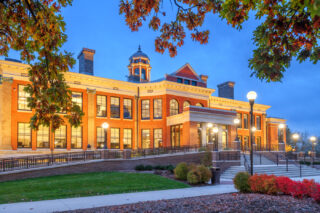

Western Michigan University Homer Stryker M.D. School of Medicine (WMed) is a private, nonprofit medical school in downtown Kalamazoo, Michigan, that grants the Doctor of Medicine (MD) degree. Founded in 2011, WMed is a collaboration of Western Michigan University and Kalamazoo’s two teaching health systems, Beacon Health System and Bronson Healthcare. It has quickly built a reputation for an integrated, team-based curriculum, simulation training that starts in the first week, early clinical experience and a strong commitment to community health. Its affiliations give students clinical training in a wide range of settings across Southwest Michigan and northern Indiana.
This guide covers the 2026-2027 application cycle for students who plan to start medical school on June 28, 2027, as members of the WMed Class of 2031. The AMCAS deadline for this cycle is November 15, 2026, and the WMed supplemental application, including all essays and the online assessment, is due January 8, 2027. All facts were checked on October 28, 2026.
WMed: A Brief Overview
WMed offers a learning environment that prepares students for the demands of modern health care. Basic and clinical sciences are integrated across all four years, students begin clinical experiences in their first year, and graduates are prepared to provide high-quality, patient- and family-centered care. The school’s commitment to health equity shows up in its mission-aligned admissions review, its community-based coursework and its support services, which are designed to build a welcoming environment for every student. The class is small, 86 students a year, and the faculty community is large, with almost 600 faculty members.
Purpose of This Guide
This guide is written to help prospective students understand the full range of what WMed offers, so you can make an informed decision about your medical education. It covers WMed’s mission, accreditation, programs and affiliations, the Foundations of Medicine and Clinical Applications curriculum, admissions requirements and the step-by-step selection process, 2026-27 costs and financial aid, campus and student life, clinical rotations and research, notable people, class statistics, admissions strategies, all five current supplemental essay prompts with original example responses, the phone and virtual interviews and a long list of frequently asked questions.
Whether you are just starting to consider medical school or you are ready to submit your application, the sections below give you the school-specific detail you need to plan each step. If you want one-on-one help with your strategy, essays or interview preparation, our team offers medical school admissions consulting for applicants to schools across the country.
Key Takeaways
- Who can apply. You must be a U.S. citizen or permanent resident and earn a bachelor’s degree from a regionally accredited U.S. institution (or a Universities Canada member) before matriculation, with at least 90 hours of coursework at such an institution. DACA, Canadian and international applicants are not eligible. There are no required prerequisite courses.
- Minimums to receive the supplemental application. WMed invites applicants with at least a 3.0 overall GPA and a 499 MCAT to complete its supplemental application. The most recent MCAT score counts, and scores from January 1, 2024, through September 30, 2026, are accepted for this cycle.
- Academic context. The Class of 2030 entered with an average GPA of 3.81 and an average MCAT of 513 (MCAT range 497 to 524). For the 2025 entering class, the median MCAT for all accepted applicants was 513 and the median GPA was 3.87.
- No state preference. As a private school, WMed admits students from across the country. The Class of 2030 represents 23 states, and 42% of its students are from Michigan. Students from Western Michigan University, Kalamazoo College, Albion College and Grand Valley State University receive priority review.
- Key dates. AMCAS deadline November 15, 2026; supplemental deadline January 8, 2027; virtual interviews from late September 2026 through March 2027; first offers October 15, 2026; classes begin June 28, 2027.
- Distinctive selection process. After the supplemental essays and a free WMed-specific online assessment, selected applicants complete an experiences review and a phone interview about personal attributes before a Virtual Interview Day. WMed does not use Casper or AAMC PREview.
- Costs. 2026-27 first-year tuition (which includes fees) is $71,200, and the total first-year cost of attendance is $104,289. WMed holds a seat with a commitment letter instead of a monetary deposit.
- Next step. Submit AMCAS early, watch your email for the supplemental invitation and complete the essays and online assessment promptly, because WMed reviews applications on a rolling basis.
Key Statistics About Western Michigan University Homer Stryker M.D. School of Medicine
The snapshot and table below gather WMed’s key numbers. Each figure carries its cohort or academic year, because class profiles, tuition schedules and outcome data each cover a different year. WMed publishes a class profile for each entering class on its own website. The newest is the Class of 2030, which entered in summer 2026.

| Measure | Value | Cohort, population and source |
|---|---|---|
| School and degree | Western Michigan University Homer Stryker M.D. School of Medicine (WMed); Doctor of Medicine (MD) | WMed Admissions |
| Location | W.E. Upjohn M.D. Campus, 300 Portage St., downtown Kalamazoo, Michigan; Corewell Health Lakeland regional campus in St. Joseph for the clinical phase | WMed Campus and Safety Information |
| School type and founding | Private 501(c)(3) nonprofit; founded 2011; first MD class graduated in 2018 | WMed Accreditation; WMed Our History |
| Accreditation | Full LCME accreditation; next full LCME survey 2030-31; institutional accreditation from the Higher Learning Commission | WMed Accreditation; LCME Directory of Accredited Programs |
| Class size | 86 | Class of 2030 (WMed Class of 2030 Profile) |
| MD enrollment | 347 students | 2026-27, as of October 15 (WMed Student Achievement) |
| Average MCAT | 513 (range 497 to 524) | Class of 2030 (WMed Class of 2030 Profile) |
| Average GPA | 3.81 | Class of 2030 (WMed Class of 2030 Profile) |
| Median MCAT | 513 (section medians: 128 Chemical and Physical, 127 CARS, 128 Biological and Biochemical, 129 Psychological and Social); mean 512.8 | All accepted applicants, 2025 entering class (AAMC MSAR, 2026 edition) |
| Median GPA | 3.87 | 2025 entering class (AAMC MSAR, 2026 edition) |
| Number of applications | 6,242 | Class of 2030 (WMed Class of 2030 Profile) |
| Number of phone interviews | 911 | Class of 2030 (WMed Class of 2030 Profile) |
| Number of virtual interviews | 495 | Class of 2030 (WMed Class of 2030 Profile) |
| Acceptance rate | Not published by the school | WMed publishes applications, interviews and class size, not offers of admission |
| Students from Michigan | 42%; 23 states represented | Class of 2030 (WMed Admissions FAQs) |
| Minimum GPA and MCAT for the supplemental | 3.0 overall GPA; 499 MCAT | 2026-2027 cycle (WMed Application Process) |
| Tuition, first year | $71,200 (includes student fees); same rate for all students | 2026-27, M1, Class of 2030 (WMed Cost of Attendance) |
| Total cost of attendance, first year | $104,289 (11 months, July to June) | 2026-27, M1, Class of 2030 (WMed Cost of Attendance) |
| Average graduate debt | $273,096 for indebted graduates; 99% of students received financial aid | Academic year 2024-2025 (AAMC MSAR, 2026 edition, from the LCME Part I-B questionnaire) |
| Supplemental fee | $110; automatically waived for AAMC Fee Assistance Program recipients | 2026-2027 cycle (WMed Application Process) |
| Key deadlines | AMCAS November 15, 2026; supplemental January 8, 2027 | 2026-2027 cycle (WMed Application Process) |
| Interviews | Phone interview, then a Virtual Interview Day (about 450 invited); late September 2026 through March 2027 | 2026-2027 cycle (WMed Application Process) |
| Combined degrees | MD-PhD (with Van Andel Institute Graduate School or Western Michigan University); MD-MBA (with WMU Haworth College of Business) | WMed MD-PhD and MD-MBA pages |
| USMLE first-time pass rate | Step 1: 99% (national 92%); Step 2 CK: 100% (national 97%) | Class of 2025 (WMed Student Achievement) |
| Residency Match | 98% matched; 46% to primary care | Class of 2026 (WMed Student Achievement) |
For a side-by-side look at how these numbers compare with other schools, see our list of the average GPA and MCAT score for every medical school.
Mission and Educational Priorities
WMed describes four connected elements that guide the school: a vision (what it aspires to be), a mission (why it exists), strategic priorities (the framework to reach the vision) and values (the behaviors people can expect from each other). All of these elements are focused on health equity, which the school defines as ensuring that everyone has the chance to be as healthy as possible.
Mission: “WMed is committed to excellence and health equity through transformative medical education, high-quality, patient- and family-centered care, innovative research, and community partnerships within a just culture of diversity, equity, inclusion, and belonging.”
Vision: “Health equity for all in Southwest Michigan through innovation in the practice and study of medicine.”
Strategic priorities: promote health equity, elevate the organizational culture and advance medicine and science.
Values: “Together we: Excel with integrity and professionalism; Champion safety and belonging; Listen, collaborate, and serve with respect and compassion.”
These statements are not just words on a wall. WMed aims to produce physicians who are skilled in medical science and also dedicated to improving access to care and health outcomes, particularly for underserved populations. You can see the mission at work in several parts of the program:
- Admissions. WMed uses a mission-aligned review based on the AAMC’s Experiences-Attributes-Metrics-Competencies model. It looks for team players who can solve problems, show compassion and empathy, commit to serving others, communicate well orally and in writing and make decisions with integrity. Attributes are evaluated at nearly every stage, from the online assessment through the phone and virtual interviews.
- Curriculum. The Engagement and Discovery course series places student teams with community organizations in Kalamazoo County that work on health, well-being and service. The Meaning in Medicine course series explores the theoretical foundations of health equity.
- Clinical care. WMed Health, the school’s clinical practice, serves as the medical home for a historically underserved and underinsured patient population, and its primary care practices hold Patient-Centered Medical Home designations.
- Social mission. WMed is an inaugural supporter of the Social Mission Alliance’s Social Mission Metrics Initiative, which helps schools measure what matters for the health care workforce.
For applicants, the practical takeaway is that WMed wants evidence of teamwork, service and the attributes listed above, not just strong numbers. Experiences that show you working with a range of people, solving problems on a team and caring for patients or community members will speak directly to this mission. A history of community work in Southwest Michigan is welcome too, and the supplemental application includes an optional essay about your connection to the region.
The school also has a large philanthropic foundation behind its mission. Building on a $100 million foundational gift in 2011, WMed received the Empowering Futures Gift, a $300 million commitment announced in June 2021 to support student success, expand access through scholarships and foster innovation and discovery.
Accreditation and Institutional Identity
WMed’s MD program holds full accreditation from the Liaison Committee on Medical Education (LCME), the national accrediting body for programs leading to the MD degree in the United States and Canada. The LCME directory lists WMed with full status, an initial accreditation year of 2012 and its next full survey in 2030-31. The school first received preliminary accreditation in 2012, provisional status in 2016 and full accreditation in February 2018, the same year its inaugural class graduated.
Institutionally, WMed is a private 501(c)(3) nonprofit corporation approved by the State of Michigan to operate a nonpublic university. It is accredited by the Higher Learning Commission and certified by the U.S. Department of Education to participate in federal Title IV financial aid programs. Other accreditations include ACGME accreditation for its residencies and fellowships, Society for Simulation in Healthcare accreditation for the Simulation Center and full accreditation of its human research protection program by AAHRPP. The Carnegie Foundation classifies WMed in its 2025 “Research Colleges and Universities” category.
A few distinctions help applicants understand what kind of school WMed is:
- It is private, not part of WMU’s public budget. Despite the name, WMed is a separate private corporation created by Western Michigan University, Beacon Health System (formerly Ascension Borgess) and Bronson Healthcare, and members from each serve on its board. That is why tuition is the same for every student and why there is no in-state preference.
- It is young but built on a long history. Medical education in Kalamazoo dates to 1946, and the Michigan State University Kalamazoo Center for Medical Studies merged into WMed in 2012, bringing its residency programs, clinics and faculty.
- It is named for Dr. Homer H. Stryker, a WMU alumnus, orthopaedic surgeon and founder of Stryker Corporation. The naming in March 2014 honored the wishes of the donors of the $100 million gift.
Accreditation tells you the program meets national standards for medical education. It is a baseline, not a ranking, so use it alongside the curriculum, clinical sites and outcomes described in this guide.
Medical Programs and Affiliations
Western Michigan University Homer Stryker M.D. School of Medicine offers a range of programs that prepare students for careers in medicine. These include the MD degree, dual degrees, a master’s program linked to the MD, residency training and fellowships, all connected to WMed’s mission of advancing health equity and delivering high-quality patient care. Below is an overview of the programs offered at WMed.
Degrees
Doctor of Medicine (MD)
The four-year MD program is designed to develop compassionate, skilled physicians ready for the challenges of modern health care. It enrolls 86 students a year. The curriculum combines scientific knowledge with clinical practice and integrates patient care from the start. WMed fosters a collaborative learning environment where students work in teams, build critical thinking skills and take part in research. You apply through AMCAS and the WMed supplemental application described in the admissions section.
MD-PhD
WMed offers two MD-PhD dual degree pathways. With the Van Andel Institute Graduate School in Grand Rapids, students complete an eight-year program leading to an MD and a PhD in Cellular and Molecular Biology. With Western Michigan University, students earn the MD from WMed and a PhD from WMU. Students complete the preclinical curriculum, then the PhD (typically about four years), then return for the clinical curriculum. Applicants select the MD-PhD application type in AMCAS and, after receiving a WMed supplemental invitation, contact the Office of Admissions to coordinate the additional steps. Admission to each degree program is independent. Van Andel Institute Graduate School provides a graduate fellowship during the PhD years that includes a full PhD tuition waiver, health and life insurance and a living stipend, while WMU offers research assistantships that may provide similar support. Students pay MD tuition and are eligible for scholarship assistance.
MD-MBA
WMed and WMU’s Haworth College of Business offer a five-year MD-MBA. The MBA year is the fourth year of the recommended plan, with 24 credits of required business courses, and medical school tuition is paid in years 1, 2, 3 and 5. You can apply when you first apply to WMed or after you matriculate. Only the MCAT is needed; the GMAT and GRE are not required. MBA core prerequisites (accountancy, corporate finance, basic economic analysis and data economic foundations) can be completed online during medical school or waived for business graduates.
Master of Science in Biomedical Sciences (MS)
The Hal B. Jenson MD Master of Science in Biomedical Sciences is a one-year program, established in 2016, for students who want to strengthen their foundation in basic science before medical school. It provides advanced training in cellular biochemistry, molecular genetics, immunology and anatomy and physiology, and a two-part Capstone guides students through a literature-based thesis. Its most important feature for MD applicants is the linkage: students who successfully complete the program are automatically accepted to the WMed MD program for the following year. Every matriculating student receives a full-tuition scholarship. Priority goes to applicants who have overcome significant adversity, are first-generation college graduates, are socioeconomically disadvantaged or have strong ties to Southwest Michigan.
You can apply directly (applications for the 2027 class open January 4, 2027; priority deadline March 19, 2027; final deadline May 1, 2027) or be considered through your MD application. Current MD applicants who have received a WMed supplemental invitation can email [email protected] with their AMCAS ID by May 1, 2027, to be considered for the 2027 class. For 2026-27, MS tuition is $35,200 and the total nine-month cost of attendance is $59,403, before the full-tuition scholarship.
Master of Science in Medical Engineering
WMed’s current list of graduate programs includes only the Master of Science in Biomedical Sciences. Students interested in applying engineering principles to medical problems can look at programs at Western Michigan University, and WMed’s Innovation Center on the Parkview Campus supports life science, technology and engineering ventures.
WMedStart Early Decision Program
WMedStart is a binding early decision program for juniors (and eligible seniors) at WMed’s four preferred relationship institutions: Western Michigan University, Kalamazoo College, Albion College and Grand Valley State University. Students apply during their junior year for admission after they finish their bachelor’s degree. No MCAT is required for the admission decision, so WMed relies on a cumulative GPA of 3.7 or higher, a science GPA of 3.5 or higher and an SAT of 1350 or ACT of 30 or higher (taken before college). Students must still earn WMed’s minimum MCAT before matriculating, and accepted students may not apply to other medical schools. Applications for the cohort beginning in July 2028 open in January 2027, and the application fee is $50. If you are an undergraduate at one of these schools, a summer of hands-on work through one of our medical internships for undergraduates can add the patient-facing experience WMedStart reviewers look for. Students from these four institutions who do not use WMedStart still receive a priority review in regular admissions.
Residencies
WMed sponsors more than 250 residents and fellows in 10 residency programs and five fellowships, some dating back more than 70 years. Each program prepares residents for independent practice, and medical students learn alongside residents throughout their clinical training. Kalamazoo residents train at WMed Health and the two Kalamazoo teaching hospitals, Beacon Kalamazoo and Bronson Methodist Hospital; Battle Creek residents train at Grace Health and Bronson Battle Creek Hospital.
Emergency Medicine
Residents train in high-volume emergency departments, managing a broad patient population and a wide range of conditions. The program emphasizes critical decision-making, procedural skills and interdisciplinary teamwork.
Family Medicine
WMed has two family medicine residencies, one in Kalamazoo and one in Battle Creek. Training focuses on comprehensive care for patients of all ages, with extensive outpatient experience in chronic disease management, preventive care and acute illness.
General Surgery
The General Surgery residency provides rigorous surgical training across a variety of procedures, with emphasis on both technical skill and compassionate patient care.
Internal Medicine
The Internal Medicine residency prepares physicians for primary care, hospital medicine and subspecialty training, with a strong foundation in evidence-based clinical medicine.
Medicine-Pediatrics
This combined residency prepares physicians for board certification in both internal medicine and pediatrics, caring for patients across the lifespan.
Obstetrics and Gynecology
The OB/GYN residency covers prenatal care, labor and delivery, gynecologic surgery and reproductive health.
Orthopaedic Surgery
Created in 1966 as the first joint residency between Kalamazoo’s two hospitals, the Orthopaedic Surgery residency accepts three residents a year. Residents typically graduate with more than 2,000 logged cases and train across Level 1 and Level 2 trauma centers and dedicated pediatric care. The program also offers an opportunity to serve patients in Honduras.
Pediatrics
The Pediatrics residency focuses on the care of children from infancy through adolescence, with inpatient and outpatient training and exposure to pediatric subspecialties.
Psychiatry
WMed’s Psychiatry residency prepares residents to provide comprehensive mental health care, including training in psychiatric disorders, psychotherapy and psychopharmacology. The Department of Psychiatry’s ambulatory practice is housed on the Beacon Kalamazoo campus. Pre-meds drawn to psychiatry can build relevant experience through mental health internships abroad as well as local work in behavioral health settings.
Fellowships
WMed’s fellowships provide specialized training beyond residency in five areas.
Emergency Medical Services (EMS)
The EMS fellowship focuses on medical oversight of emergency medical services, including prehospital care, disaster management and emergency response systems.
Forensic Pathology
This fellowship trains physicians to investigate sudden, unexpected or unnatural deaths. WMed’s Department of Pathology serves as the Office of the Medical Examiner for counties across Michigan and northern Indiana, performing more than 1,000 autopsies a year, and the office holds full accreditation from the National Association of Medical Examiners.
Hospice and Palliative Medicine
Fellows learn to care for patients with serious, life-limiting illness, with emphasis on pain management, symptom control and end-of-life care.
Simulation
The Simulation fellowship focuses on simulation-based medical education, teaching fellows to design and run simulation training for health professionals.
Sports Medicine
This fellowship provides advanced training in caring for athletes and active people, including diagnosis, treatment and prevention of sports-related injuries.
Clinical Affiliations
WMed’s major clinical affiliates are Beacon Health System (which includes Beacon Kalamazoo, formerly Ascension Borgess), Bronson Healthcare and Corewell Health Lakeland, which also serves as WMed’s regional campus in St. Joseph. Together with the Battle Creek VA Medical Center, these systems provide inpatient and ambulatory training, and students train at more than 190 sites in Southwest Michigan and beyond. These programs reflect the school’s commitment to complete medical education, research and the preparation of physicians ready to meet the changing demands of health care. Whether you pursue an MD, a dual degree or the master’s program, WMed offers a supportive environment for personal and professional growth.
Curriculum Overview
WMed’s curriculum is systems-based and integrated, with the basic and clinical sciences woven together across all four years. It is divided into two main phases:
- Foundations of Medicine covers roughly the first 18 months. Twelve integrated biomedical courses present biochemistry, physiology, pharmacology, pathology and other disciplines around organ systems, alongside early clinical experiences and essential clinical skills.
- Clinical Applications begins in January of the second year with core clerkships and continues through advanced clerkships, electives and a Transition to Residency course.
Teaching combines team-based learning (TBL), small- and large-group sessions, lectures, independent learning modules, labs and simulation. The curriculum follows a spiral design in which each activity builds on the last, and disciplines such as diagnostic imaging, health systems science, immunology, medical ethics, humanities and law, and nutrition run vertically through courses and clerkships.
Foundations of Medicine
The Foundations phase begins with Transition to Medical School, a course that sets expectations and builds study skills. The 12 biomedical courses then move through normal function, disease and treatment for each organ system, with every topic anchored to clinical applications.
- Didactic sessions. There are four half days of lecture and active learning each week, including an integrative session every Friday led by both basic science and clinical faculty. Lectures are live streamed and recorded.
- Independent learning modules. Interactive digital modules with videos, diagrams, readings and quizzes let you study on your own schedule.
- Labs. Anatomy, histology and pathology labs run about once a week for half a day. Gross anatomy uses prosected cadavers, student dissection, plasticized specimens, virtual dissectors and models.
- Team-based learning. Each TBL starts with an individual readiness test, then the same test as a team of about six students, followed by faculty-led application exercises on realistic cases. Students average one TBL session a week.
Simulation Training
WMed’s Simulation Center is accredited by the Society for Simulation in Healthcare. Simulation starts in the first week and continues throughout all four years, ranging from procedures to full team-based scenarios with high-fidelity patient simulators and one-on-one encounters with standardized patients. The school’s philosophy is to practice until learners cannot get it wrong. In the first few months, students complete Medical First Responder training, a fast-paced course in basic patient assessment, simple medical emergencies and basic cardiac life support that ends with a simulated emergency capstone.
Interdisciplinary Collaboration
Throughout the curriculum, students learn alongside residents and other health professionals, including nursing, physical therapy, respiratory therapy, occupational therapy, nutrition and social work. This interprofessional approach builds teamwork and communication skills that patient care depends on.
Integrated Clinical Experience
Four longitudinal courses run through each Foundations term:
- Clinical Skills (four hours a week) teaches communication, history taking, physical examination and simple procedures in a virtual clinic with standardized patients and a virtual hospital with simulators, with Objective Structured Clinical Examinations to measure progress.
- Clinical Experiences gives early and regular exposure to clinical settings so you start forming your professional identity in the first year.
- Engagement and Discovery places your team with a Kalamazoo County community organization focused on health, well-being and service. This service learning builds understanding of social determinants of health, advocacy, population health and cultural competence, and your group may design a project for the organization.
- Meaning in Medicine is a self-paced online series on the foundations of health equity that continues as Support and Policy during the clinical phase. Principles of Medicine covers health systems science, professionalism, leadership, ethics, patient safety, health policy, law, research design and epidemiology.
Elective Opportunities
One-week intervals are spread through the Foundations and Core Clinical phases. You can use them for electives, vacation or catching up. Early electives, assigned by lottery, cover topics such as medical ethics, wellness, forensic pathology, emergency medicine and patient safety. Some are required for students pursuing an academic distinction.
Assessment and Grading
Grading in Foundations of Medicine is pass/fail, based on multiple-choice exams, anatomy exams, standardized patient exams, simulation-based testing and professionalism. Weekly formative exams that do not count toward grades give you regular feedback, and faculty-led capstone reviews precede each summative exam. Grading in Clinical Applications is honors, high pass, pass or fail. Students are not ranked.
USMLE Preparation
You take USMLE Step 1 after completing Foundations of Medicine, and WMed builds preparation time into the second year. During Foundations you can take NBME self-assessments (the CBSSA or CBSE), and you must meet a competency requirement on one of them before sitting for Step 1 and advancing to core clerkships. The core clerkship phase includes a dedicated block for Clinical Reasoning and USMLE Step Preparation, and WMed provides time and resources for Step 2 Clinical Knowledge, which has grown in importance since Step 1 became pass/fail. Passing Step 1 and Step 2 CK is required to graduate.
WMed’s first-time pass rates have been strong. For the Class of 2025, 99% passed Step 1 (national 92%) and 100% passed Step 2 CK (national 97%). For the Class of 2026, 88% passed Step 1 on the first attempt (national 91%) and 100% passed Step 2 CK (national 98%). The Class of 2027 Step 1 first-time pass rate was 95% (national 93%).
Clinical Applications
In the Clinical Applications phase, students are embedded in health care teams. Each student is assigned to either the Kalamazoo campus or the Corewell Health Lakeland regional campus in St. Joseph. Transition to Clinical Applications prepares you with electronic health record training, clinical expectations and common procedures.
Clinical Rotations
Core clerkships begin in January of the second year and are organized into seven blocks: six clinical rotations plus a block dedicated to Clinical Reasoning and USMLE Step Preparation. The six core clerkships are Family and Community Medicine, Medicine, Pediatric and Adolescent Medicine, Psychiatry, Surgery, and Obstetrics and Gynecology. Rotations take place across Southwest Michigan and northern Indiana. Each block opens with simulation and standardized patient preparation and ends with capstone experiences and assessments.
Advanced Simulation and Clinical Practice
Simulation continues into the clinical phase. The advanced clinical curriculum begins with Advanced Cardiovascular Life Support (ACLS) certification and includes required advanced clerkships and selectives in emergency medicine, critical care, hospital medicine, neurology and anesthesiology. The goal is for students to recognize the “sick” patient and take ownership of patient care so they are ready for internship in any specialty.
Longitudinal Integrated Clerkship (LIC)
WMed organizes its core clinical training as the block clerkships described above, and students rotate through each specialty in turn within the seven-block structure. Continuity still runs through the program in other ways: the longitudinal Foundations courses, the learning communities, the individual mentor matched to each student in the second year and, for students at the Lakeland regional campus, the chance to complete all core and advanced rotations within one health system and community.
Selectives and Electives
Advanced clerkships let students explore and finalize their specialty choice through local electives, flexible time for residency interviews and vacation weeks they build into their schedule. Electives allow students to focus on areas of interest and prepare for residency applications.
Global Health and Research Opportunities
WMed supports global health and research through its Academic Distinction programs and fourth-year international electives, described in the rotations and research section below.
Facilities and Learning Environment
Students spend most of their first 18 months on the W.E. Upjohn M.D. Campus in downtown Kalamazoo. WMed completed a $68 million renovation of five of the eight floors of its 350,000-square-foot building in 2014, and a $10 million renovation in 2016 added two floors for clinical and laboratory research.
Learning Resources
WMed uses a format-neutral approach to learning materials. You can access required textbooks through the medical library’s online collection or buy or rent digital or print copies, and the library keeps print copies of each textbook to borrow. Every student needs a laptop that meets the school’s minimum specifications.
Community and Support
WMed emphasizes community. With a small class and almost 600 faculty members, each student receives a great deal of personal attention, and faculty keep an open-door policy. Free tutoring is available.
Attendance and Flexibility
WMed treats students as adult learners who learn in different ways. Lectures are recorded and live streamed, but attendance is required for most curriculum events, including TBL sessions and clinical experiences. This balance lets you study in the way that works for you while making sure you build the teamwork and clinical competencies the curriculum is designed around.
Taken together, early clinical exposure, extensive simulation, interprofessional learning and flexible study options make WMed’s curriculum a strong fit for students who learn by doing and who want to train in teams.
Admissions Requirements and Application Process
The admissions process at WMed is holistic and mission-aligned. The committee considers academic performance alongside personal attributes, life experiences and fit with the school’s mission at every stage. WMed’s review follows the AAMC’s Experiences-Attributes-Metrics-Competencies model and uses the AAMC’s Premed Competencies for Entering Medical Students to judge readiness in professional, thinking and reasoning, and science competencies.
Eligibility and Academic Requirements
To be considered, you must have:
- A minimum overall GPA of 3.0. WMed will review applications with an upward trend. If you have 24 or more hours of post-baccalaureate or graduate science coursework, that higher-level work replaces your undergraduate science GPA in the review.
- A minimum MCAT of 499. There are no section minimums. If you tested more than once, WMed uses your most recent total score. For this cycle, scores from tests taken January 1, 2024, through September 30, 2026, are accepted.
- A bachelor’s degree, earned or expected before matriculation, from an institution accredited by a regional accreditor recognized by the U.S. Department of Education and the Council for Higher Education Accreditation, or a Canadian member of Universities Canada. At least 90 hours of your coursework must be at such an institution.
- U.S. citizenship or permanent residency. DACA, Canadian and international applicants are not eligible.
- Proficiency in keyboarding and in written and spoken English.
WMed does not accept transfer students, because its integrated curriculum does not allow advanced placement from other schools.
Recommended Coursework
There are no required prerequisite courses. WMed recommends a broad base in the humanities, social sciences and physical and biological sciences, and it encourages significant upper-division science coursework. A science major is not required. The recommended undergraduate courses are:
- Biochemistry
- Genetics
- Human anatomy
- Human physiology
- Immunology
- Statistics
WMed expects that you will have completed the foundational science courses your college requires before these upper-level classes. The school also lists psychology, sociology, histology, biology, chemistry, physics and composition among recommended areas and suggests medical terminology to ease the transition to medical school. Pass/fail, AP, online and community college coursework are all accepted, and recommended coursework can be completed as late as June 2027.
Experiences WMed Looks For
WMed asks applicants to “tell us your story.” It looks for broad personal interests and experiences in extracurricular activities, medical settings, community and volunteer settings, team settings that show leadership and collaboration, and work with a diversity of people and cultures. The school recommends shadowing and encourages depth and breadth of clinical exposure through shadowing, volunteering or paid work in health care. It also expects some activities to include patient care or research. Every member of the Class of 2030 had health-related experience, and 91% had research experience.
Hands-on clinical roles make this part of an application concrete. Many applicants build hours through local jobs such as scribe, CNA or medical assistant, and some add structured pre-med internships where they take vitals, assist with intake and triage and help with direct patient care under supervision. Whatever you choose, aim for experiences you can describe in detail, because the experiences review and the phone interview both test what you learned from them.
Letters of Reference
You must submit at least three and no more than four letters of reference through the AMCAS Letters Service. WMed recommends that at least two come from faculty who taught or mentored you, or from employment supervisors if you are a nontraditional applicant. A premedical committee or composite letter is accepted in place of the two faculty letters, and letter packets are accepted. WMed expects you to waive your right to view the letters.
The admissions committee evaluates letters for evidence of cognitive readiness, integrity and ethics, teamwork and collaboration, leadership, initiative and drive, and commitment to excellence, along with attributes such as commitment to medicine, the writer’s enthusiasm, teamwork, leadership and problem-solving. WMed strongly advises sharing this list with your letter writers.
The Seven-Step Selection Process
- AMCAS application. Submit your primary application through the American Medical College Application Service by November 15, 2026. Our AMCAS application guide walks through each section.
- Supplemental application. After an initial review, applicants with at least a 3.0 GPA and 499 MCAT receive an emailed invitation. The supplemental has three required components: essays, a $110 fee (automatically waived for AAMC Fee Assistance Program recipients) and a free online assessment. All components are due January 8, 2027.
- Experiences review. Selected candidates move to a review of their premedical experiences, essays and application materials.
- Phone interview. WMed’s phone interview focuses on personal attributes and is not a test of medical or scientific knowledge.
- Virtual Interview Day. About 450 applicants are invited. All interviews are virtual.
- Post-interview decision. Decisions are rolling, and initial decisions are sent within four weeks of the virtual interview.
- Acceptance and enrollment commitment. WMed reserves your seat with a commitment letter rather than a monetary deposit and uses the AAMC Choose Your Medical School tool to finalize the class in the spring.
The Online Assessment
The online assessment is free and unique to WMed. It includes approximately 50 multiple-choice questions, with approximately 30 seconds to answer each one, and it is designed to learn about your personal attributes. The questions are straightforward, and no preparation is needed or recommended. Your supplemental is not complete until both the essays and the online assessment are submitted. WMed does not use Casper or AAMC PREview.
Timeline for the 2026-2027 Cycle
| Date | Milestone |
|---|---|
| May 5, 2026 | AMCAS opens for the 2027 cycle |
| May 28, 2026 | Earliest date to submit the AMCAS application |
| July 2026 | AMCAS transmits applications; WMed begins review (from July 6, 2026) and sends supplemental invitations |
| August 2026 | Interview invitations begin |
| Late September 2026 | Virtual interviews begin |
| September 30, 2026 | Latest MCAT test date accepted |
| October 15, 2026 | First offers of admission for the Class of 2031; offers continue on a rolling basis |
| November 15, 2026 | AMCAS application deadline |
| January 8, 2027 | Supplemental deadline (essays and online assessment) |
| March 2027 | Virtual interviews end (mid-March) |
| June 2027 | Latest date to complete recommended coursework |
| June 28, 2027 | First day of medical school for the Class of 2031 |
If you are planning the year before you apply, the summer months are a natural time to add clinical hours. Pre-med summer internships and local clinical jobs both work, as long as you finish them in time to describe them in your AMCAS entries.
Updates, Letters of Intent, Waitlist and Deferral
You can send significant updates, such as new experiences, as a PDF through the applicant portal or by email to [email protected]. WMed asks that update letters be used only for meaningful changes, and that letters of interest or intent be reserved for when WMed is truly one of the top two or three schools you would attend. The waitlist is live and unranked, is reviewed at each Admissions Committee meeting and can produce offers at any point in the cycle. Deferral requests are considered case by case.
Before You Matriculate
Offers are conditional on confirmation of your bachelor’s degree, evidence of health insurance, completed health forms and immunizations (hepatitis B, influenza, MMR, meningococcal, Tdap, tuberculosis testing and varicella, with COVID-19 vaccination preferred but not required by WMed), a criminal background check through the AAMC’s service and testing for alcohol and controlled substances. WMed does not admit students who use cannabis or cannabinoids in any form, with or without a prescription or registration card. You must also attest that you can meet the school’s technical standards with or without reasonable accommodation. Questions about accommodations go to [email protected].
Things to Remember
- Timing matters. WMed uses rolling admissions and encourages applicants to complete each step promptly.
- Check your email. All communication is by email, so save [email protected] as a contact.
- Use the applicant portal. You will receive login information to track your progress.
Tuition, Cost of Attendance and Financial Aid
WMed charges the same tuition to every student because it is a private school. Tuition includes student fees and is set annually by the Board of Directors. The 2026-27 figures below are the newest published; costs for the entering Class of 2031 (2027-28) have not yet been released.
| Year and class | Months | Tuition (includes fees) | Direct costs total | Indirect costs total | Total cost of attendance |
|---|---|---|---|---|---|
| M1, Class of 2030 | 11 (July to June) | $71,200 | $72,313 | $31,976 | $104,289 |
| M2, Class of 2029 | 11 (July to June) | $72,500 | $73,099 | $32,267 | $105,366 |
| M3, Class of 2028 | 11 (June to May) | $73,200 | $73,200 | $32,837 | $106,037 |
| M4, Class of 2027 | 12 (June to May) | $74,900 | $74,900 | $36,791 | $111,691 |
For first-year students, the indirect costs include $20,900 for food and housing, $3,740 personal, $1,308 books and supplies, $3,960 transportation and $2,068 in federal loan fees, with $1,113 for textbooks in direct costs. Later years add exam costs, such as the $790 Step 1 fee in M2 and the $695 Step 2 fee in M3, and the M4 budget includes $1,700 for residency applications and interviews.
Three points are easy to miss:
- Health insurance is required but not in the budget. All students must carry coverage throughout medical school, through a parent, spouse or partner plan, the government marketplace, Medicaid or an individual plan. You can ask to add the cost of student-only premiums to your budget through an Appeal for Individual Budget Increase. WMed provides disability and malpractice insurance.
- A laptop is required. Its cost can also be added by budget appeal, and WMed advises waiting to buy one until after you are admitted.
- Reliable transportation is necessary all four years, because clinical experiences begin in the first year at sites across Kalamazoo and beyond.
For a broader view of what physicians-in-training spend, see our breakdown of the total cost of medical school.
Financial Aid Programs
WMed’s Office of Financial Aid approaches medical education financing in line with the school’s mission and values. Its stated goal is to help students make critical financial decisions so they can focus on earning their degree. Aid is available to students in degree programs, including the MD, the MS in Biomedical Sciences and dual degrees. Sources include federal Direct Unsubsidized and Grad PLUS loans, private and alternative loans, external scholarships and third-party programs such as veterans’ benefits. MD students are also eligible for institutional scholarships awarded on need and/or merit, and service commitment scholarships such as the Armed Forces Health Professions Scholarship Program and the National Health Service Corps scholarship.
For indebted graduates in academic year 2024-2025, average medical school debt was $273,096, and 99% of WMed students received financial aid that year.
Merit-Based and Need-Based Scholarships
All accepted students are automatically considered for merit scholarships without a separate application. You will be notified of the steps to apply for need-based aid, which requires the FAFSA and any additional documents requested. Scholarships are available to students in every year, including entering students. Offers are sent by email.
Financial Wellness and Counseling
WMed treats financial wellness as part of medical education. The Office of Financial Aid offers individualized financial planning and counseling in person and virtually, including:
- Exploring sources of funding, including scholarships, loans and external grants.
- Budgeting, debt and loan management, including repayment options and forgiveness programs.
- Personal finance concerns, including unexpected expenses and long-term planning.
- Financial wellness counseling throughout medical school.
The AAMC’s Financial Information, Resources, Services and Tools (FIRST) program is also available for money management and student loan guidance.
Financial Aid Team
The office is in the Student Affairs suite on the second floor of the W.E. Upjohn M.D. Campus, open Monday through Friday, 8:30 a.m. to 5:00 p.m., with evening appointments by request.
- Derik Redding, Director of Financial Aid (269.337.4584), oversees scholarships, student loans and financial wellness programs from pre-matriculation through graduation.
- Carleen Rieger Fonger, Financial Aid Coordinator (269.337.6107), manages daily financial aid operations.
- Samantha McGaughy, Financial Aid Representative (269.337.4408), is a point of contact for general financial aid questions.
Email the team at [email protected].
Applying for Financial Aid
To apply for federal and need-based institutional aid, complete the FAFSA.
Steps to Submit the FAFSA
- Create a Federal Student Aid (FSA) ID at studentaid.gov.
- Complete and submit the FAFSA at studentaid.gov for the correct award year, using the tax year the form requests.
- Review your FAFSA Submission Summary for accuracy.
- If you are selected for verification, submit the additional documents the Office of Financial Aid requests.
Student Loan Programs
Eligible students who complete the FAFSA can borrow federal Direct Unsubsidized and Grad PLUS loans. Borrow only what you need, and consider federal loans before private loans, because federal loans carry fixed rates and more repayment options. Private loans may not offer the same protections.
Federal Loan Interest Rates and Origination Fees
WMed’s 2026-27 budget cites the 2025-26 Direct Loan origination fees of 1.057% for Unsubsidized loans and 4.228% for Grad PLUS loans, which are deducted from the amount you borrow. Rates and fees are set each year by the federal government, so check studentaid.gov for the rates that apply when your loans are disbursed.
Eligibility for Financial Aid
To receive federal aid, you generally must be a U.S. citizen or eligible noncitizen with a Social Security number, complete the FAFSA each year, be enrolled at least half-time in a degree program and maintain Satisfactory Academic Progress. Students at risk of losing eligibility should contact the Office of Financial Aid early.
Additional Support and Resources
WMed offers workshops, planning tools and individual counseling, and students can pursue external scholarships, service commitment scholarships and loan forgiveness programs to reduce borrowing. The school’s tuition refund policy returns 100% of tuition for withdrawals in the first week of a term, then 75%, 50% and 25% in the following weeks.
Campus Facilities and Student Life
WMed is housed in an eight-story, 350,000-square-foot building on the W.E. Upjohn M.D. Campus at 300 Portage Street in downtown Kalamazoo. The site was once the original plot of land acquired by W.E. Upjohn for The Upjohn Company and later housed the research facility where drugs such as Motrin and Xanax were discovered. William U. Parfet, W.E. Upjohn’s great-grandson, donated the building in 2011.
Core Facilities
The downtown building includes two team-based learning halls, six classrooms, 27 small-group discussion rooms, gross anatomy, multipurpose and procedure labs, the Simulation Center, an auditorium, four learning community spaces, a learning commons and medical library, research labs, ample study space and a fitness center that students can use for free. Access is limited to WMed students, residents, fellows, faculty, staff and scheduled visitors.
For researchers, the Department of Investigative Medicine runs core facilities, including a Flow Cytometry and Imaging Core and a Sequencing Core, that support faculty and student research.
Campus and Safety Information
Beyond the main campus, WMed operates at several sites in Southwest Michigan:
- Oakland Drive Campus: WMed Health ambulatory clinics, residency programs and administrative offices, 1.3 miles from downtown.
- Department of Psychiatry on the Beacon Kalamazoo campus (formerly Ascension Borgess): ambulatory psychiatric care for children and adults.
- Family Medicine at Crosstown Parkway: a WMed Health family medicine practice.
- Parkview Campus: the Innovation Center, a 69,000-square-foot incubator for life science, technology and engineering ventures.
- Family Medicine Residency, Bronson Battle Creek: a practice within Grace Health, a federally qualified health center in Battle Creek.
- Corewell Health Lakeland Hospitals Regional Campus in St. Joseph, 48 miles from downtown Kalamazoo, where second-, third- and fourth-year students can complete their core and advanced clerkships.
WMed publishes an Annual Campus Safety and Security Report with crime statistics and safety policies.
Living in Kalamazoo
The Kalamazoo metro area has about 265,000 people and sits midway between Chicago and Detroit on I-94. The downtown campus is within walking distance of housing, restaurants, theaters and public transportation, and most students rent apartments, lofts or homes nearby. Kalamazoo’s cost of living is below the national average, and housing options suit students with families. Lake Michigan beaches at South Haven are about 40 minutes away. The city is also home to the Kalamazoo Promise, which pays college tuition for graduates of Kalamazoo Public Schools.
Student Life
WMed encourages students to stay active outside the classroom through student government, interest groups, organizations, institutional committees, wellness programs and honor societies. The Student Life team, led by the Director of Student Life and Well-Being, supports interest groups, student organizations, learning communities and the honor societies.
Student Organizations and Leadership Opportunities
- Student Council represents every class and works with the administration on student needs and events.
- Institutional committees, such as the Curriculum Committee and Global Health Committee, give students a voice in school decisions.
- Learning Communities. Each student joins one of four learning communities, named for Virginia Apgar, Elizabeth Blackwell, Harvey Cushing and Charles Drew, and stays in it for all four years. Each community has an academic advisor, and the communities compete each year in the Learning Community Olympics for the College Cup. In the second year, each student is matched with an individual mentor, usually a clinical faculty member, alumnus or practicing physician in the specialty they are considering.
- National organization chapters include the AMA Medical Student Section, American Medical Student Association, American Medical Women’s Association, American Muslim Medical Student Association, Asian Pacific American Medical Student Association, AAMC Organization of Student Representatives, Latino Medical Student Association, Medical Student Pride Alliance and Student National Medical Association.
Interest Groups and Honor Societies
WMed has more than 80 student interest groups, open to all students, covering specialties, advocacy, arts and culture, and health and fitness. Examples include the Community Health Interest Group, First Generation and Low-Income Students in Medicine, the Global and Public Health Interest Group, Kalamazoo Pre-Med Mentorship, Keep Kalamazoo Warm, the Refugee Outreach Collective, Arts in Medicine and the Literature and Medicine Interest Group. The school also recognizes students through the Alpha Omega Alpha Honor Medical Society and the Gold Humanism Honor Society.
Wellness and Support
The WMed Wellness Initiative, launched in 2019, promotes well-being at the individual and organizational level. Students with disabilities can request accommodations through the Office of Student Affairs and the Accommodations Committee.
Through these facilities and programs, WMed offers a well-rounded environment that supports both academic and personal growth.
Clinical Rotations and Research Opportunities
Clinical experience at WMed starts in the first year through Medical First Responder training, the Clinical Experiences course and community-based learning. Core clerkships begin in January of the second year, followed by advanced clerkships and electives. Rotations take place at WMed’s affiliated hospitals and clinics, giving students exposure to a wide range of specialties and patient populations.
Clinical Applications
Core Clinical Clerkships
The core clinical clerkships are spread across seven blocks and take place across Southwest Michigan and northern Indiana. The six core clerkships are:
- Family and Community Medicine
- Medicine
- Pediatric and Adolescent Medicine
- Psychiatry
- Surgery
- Obstetrics and Gynecology
Each block starts with preparation that includes simulation and standardized patients and ends with capstone experiences and assessments. Basic science principles are integrated with clinical cases throughout, which helps students prepare for USMLE Step 2 CK.
Advanced Clinical Clerkships
After the core clerkships, students move into advanced clinical training, which begins with ACLS certification. Required advanced clerkships and selectives include:
- Advanced Emergency Medicine (4 weeks)
- Advanced Critical Care Medicine (4 weeks)
- Advanced Hospital Medicine (4 weeks)
- Advanced Neurology (2 weeks)
- Advanced Anesthesiology (1 week)
These rotations focus on managing complex cases and recognizing critically ill patients, and they emphasize ownership of patient care to prepare students for residency. Students choose from local electives and build in flexible time for residency interviews and vacation. All students return to Kalamazoo in March for Match Week and a capstone course focused on biomedical ethics, and the program ends with a Transition to Residency course aligned with each student’s chosen specialty.
Clinical Affiliates
WMed’s major affiliates offer training that rivals major university medical centers, with the advantage of a community-based, diverse patient population across more than 190 training sites.
Beacon Kalamazoo (Beacon Health System)
Beacon Kalamazoo, formerly Ascension Borgess, is part of Beacon Health System, a founding partner of WMed. Beacon Health System includes hospitals in Indiana (Beacon Children’s Hospital, Beacon Granger Hospital, Community Hospital of Bremen, Elkhart General Hospital, Epworth Hospital and Memorial Hospital of South Bend) and in Michigan (Three Rivers Hospital, Beacon Kalamazoo, Beacon Dowagiac, Beacon Allegan and Beacon Plainwell). The system cares for more than 4,000 patients a day in northern Indiana and southern Michigan.
Bronson Healthcare
Bronson Healthcare is a not-for-profit, community-governed system based in Kalamazoo and one of the region’s largest employers, with more than 9,000 employees. Its flagship, Bronson Methodist Hospital, is a tertiary care hospital that received the Malcolm Baldrige National Quality Award in 2005 and holds Magnet designation for nursing excellence. Bronson also operates Bronson Battle Creek, Bronson LakeView and Bronson South Haven.
Corewell Health Lakeland
Corewell Health is WMed’s regional campus affiliate. Students assigned to the Lakeland regional campus can complete all core and advanced rotations within the Corewell system, at Lakeland hospitals in St. Joseph, Niles and Watervliet, which include a simulation training center and residencies in emergency, family and internal medicine.
WMed Health
WMed’s own clinical practice has sites on the Oakland Drive Campus, at Crosstown Parkway and at the Department of Psychiatry on the Beacon Kalamazoo campus, with five primary care practices and more than 20 specialty practices. WMed Health is accredited by The Joint Commission and serves as the medical home for a historically underserved and underinsured population. Its primary care practices in family medicine, internal medicine, medicine-pediatrics and pediatrics hold Patient-Centered Medical Home designations from both the National Committee for Quality Assurance and Blue Cross Blue Shield of Michigan.
Other Affiliates
Students can also rotate at Grace Health in Battle Creek, a federally qualified health center; the Battle Creek VA Medical Center, which serves veterans across western Michigan; Goshen Health; the Kalamazoo Psychiatric Hospital; Pokagon Health Services; and private practices. Day-to-day travel can include Bronson Battle Creek, Bronson LakeView in Paw Paw and Beacon Plainwell, which is why reliable transportation matters.
Research Opportunities
Research is part of WMed’s mission, and students can take part in clinical, community-based, basic science, outcomes-based and educational research. WMed does not require a research thesis for the MD, but many students choose to pursue research, and the school posts a list of student scholarly publications. Over the past four years, more than 80% of the Department of Biomedical Sciences faculty have mentored medical students in scholarly work.
Key research resources include the Center for Immunobiology in the Department of Investigative Medicine, which studies B cells and the antibodies they make, along with work on neurodegenerative diseases; the Center for Clinical Research; the Center for Healthy Aging; population health research; and the Innovation Center on the Parkview Campus. WMed reported $2,281,741 in total direct federal research grants and contracts in fiscal year 2024. The 2016 renovation that added two floors for clinical and laboratory research supports this work.
Academic Distinctions
Academic Distinctions let students pursue and be recognized for areas of interest, with about 30 to 40 hours of curriculum plus a scholarly project. Students may complete up to two. Programs include Advocacy and Leadership in Patient Safety and Quality Improvement, Basic Research, Clinical Informatics, Clinical or Translational Research, Global and Public Health, Interprofessional Focus in Community Health (which includes the AHEC Scholars Program), Medical Ethics, Humanities and Law, Promoting Excellence in Medical Education and Well-Being in Medicine. Completed distinctions are noted in the Medical Student Performance Evaluation.
Global Health
WMed faculty have long-standing relationships with clinics and small hospitals in several parts of the world, and faculty-led experiences take place several times a year. The Global and Public Health Distinction includes longitudinal programming and fourth-year international electives at faculty-approved sites such as Madagascar, Peru and Liberia, as well as immersion in low-resource settings in the United States. Related rotations include public health, infectious diseases and a rural medicine block at migrant worker clinics, including mobile clinics at migrant worker camps. Monthly Global Health Grand Rounds bring students, residents and faculty together. In the 2025 AAMC Graduation Questionnaire, 7% of WMed’s graduating seniors reported a global health experience during medical school.
Applicants who are interested in this path can show it before medical school. Supervised pre-med internships abroad and service work in low-resource communities at home both give you real examples to discuss. Because Peru is one of WMed’s faculty-approved international sites, students drawn to Spanish-language care may also look at a medical internship in Peru to build clinical Spanish and cross-cultural experience. These experiences do not affect admissions decisions on their own, but they can show the attributes WMed evaluates.
Through these clinical rotations and training sites, WMed prepares students for a wide range of specialties and practice settings.
Notable Alumni, Faculty, Leadership and Admissions Staff
WMed graduated its first MD class in 2018, so its alumni network is young, but its graduates are already practicing and teaching across the country. Its faculty include leaders in many specialties who are active in research, clinical care and medical education. The profiles below are based on WMed’s official leadership, admissions and faculty pages.
The School’s Namesake
Homer H. Stryker, M.D.
Dr. Homer Stryker, the namesake of the Western Michigan University Homer Stryker M.D. School of Medicine, was an orthopaedic surgeon, inventor and entrepreneur and a Western Michigan University alumnus. He was born in 1894 in Wakeshma Township, Michigan. He is best known for inventions designed to improve patient care and hospital efficiency, including the Wedge Turning Frame, the Circ-O-Lectric Bed, the Walking Heel and the Cast Cutter. The turning frame helped staff reposition immobilized patients to reduce complications, and the motorized Circ-O-Lectric Bed built on that idea. In 1941 he founded the Orthopedic Frame Company, which became Stryker Corporation, one of the world’s largest medical technology companies. He died in 1980.
Dr. Stryker did not attend WMed, which opened decades after his death. The school was named for him on March 11, 2014, honoring the wishes of the donors of the $100 million foundational gift, his granddaughter Ronda Stryker and her husband William Johnston.
Impact of Homer Stryker on WMed
Dr. Stryker’s focus on practical, patient-centered innovation fits the school’s emphasis on simulation, hands-on learning and innovation in the practice and study of medicine. Kalamazoo’s history with Stryker Corporation and The Upjohn Company is also part of why the city became a home for medical education, and WMed’s Orthopaedic Surgery residency notes that the legacy of Drs. W.E. Upjohn and Homer Stryker continues in its program today.
Notable Alumni
Eric Edewaard, MD (MD 2018)
Dr. Edewaard was a member of WMed’s inaugural MD class, which arrived in 2014 and graduated in 2018. He stayed in Kalamazoo for WMed’s Internal Medicine residency, became the first WMed alumnus to complete residency at the school and, in 2021, became the first WMed graduate to join its faculty, as an assistant professor in the Department of Medicine. His role included seeing patients in the WMed Health Internal Medicine clinic, teaching residents and serving as Internal Medicine clerkship director for fourth-year students. He has since presented at WMed’s Global Health Grand Rounds. His path shows applicants how WMed’s medical school and residency programs connect.
Leadership
J. Adrian Tyndall, MD, MPH, FACEP
Dr. Tyndall is the Hal B. Jenson, MD Dean, President and CEO of WMed and a professor in the Department of Emergency Medicine. Before WMed, he was Executive Vice President for Health Affairs and Dean of Morehouse School of Medicine, and he spent more than 14 years at the University of Florida College of Medicine as professor, emergency medicine chair, trauma researcher and interim dean. He earned his MD at the University of Maryland School of Medicine, completed emergency medicine residency at the University of Maryland Medical System and earned an MPH from Columbia University. As dean, he oversees the school’s educational, clinical, research and operational work.
Michael Busha, MD, MBA
Dr. Busha is Senior Associate Dean for Academic Affairs and Chief Academic Officer. He oversees all educational and degree programs, including undergraduate, graduate and continuing medical education, so the MD curriculum and student services fall under his leadership.
Robert G. Sawyer, MD
Dr. Sawyer is Senior Associate Dean for Research. He plans and oversees WMed’s research mission, including laboratory, translational, clinical and community-based research, and his office helps faculty find funding and supports pilot projects. A surgeon by training, his office is the starting point for students looking for research mentors and projects.
Gustavo Patino, MD, PhD
Dr. Patino is Associate Dean for Undergraduate Medical Education and interim chair of the Department of Biomedical Sciences. A neurologist by training who earned his PhD in neuroscience at the University of Michigan, he is a certified TBL consultant and an assistant editor of the journal Academic Medicine. Because WMed’s curriculum is built on team-based learning, his role is directly relevant to how you would learn.
Maria L. Sheakley, PhD
Dr. Sheakley is Associate Dean for Student Affairs. Student Affairs houses the Office of Financial Aid, Student Life and Well-Being and the accommodations process, so her office touches much of daily student life.
Matthew Hysell, MD
Dr. Hysell is Assistant Dean for the Lakeland Regional Campus, the Corewell Health site in St. Joseph where some students complete their entire clinical phase.
Kelly A. Brown, MD
Dr. Brown is Associate Dean for Graduate Medical Education, overseeing the residencies and fellowships that medical students train alongside.
Admissions Staff
Timothy J. Bauler, PhD
Dr. Bauler is Assistant Dean for Admissions and an associate professor in the Department of Biomedical Sciences. He is responsible for admissions policies and procedures, partnerships with undergraduate institutions and leadership on holistic admissions. He also serves as interim Assistant Dean for Foundations of Medicine. He earned his PhD in microbiology and immunology at the University of Michigan and completed a postdoctoral fellowship at the NIH’s Rocky Mountain Laboratories.
Val Horwath, MA
Val Horwath is Director of Admissions and the admissions contact for the MD-PhD, MD-MBA and Master of Science in Biomedical Sciences programs.
Anna Zblewski, MEd
Anna Zblewski is Manager of Admissions. The admissions team can be reached at [email protected] or 269.337.6100.
Notable Faculty
Thomas L. Rothstein, MD, PhD (Chair and Professor, Department of Investigative Medicine)
Dr. Rothstein is the founding chair of the Department of Investigative Medicine and director of the Center for Immunobiology. He earned his MD and PhD through Duke University’s Medical Scientist Training Program and held faculty roles at Boston University and the Feinstein Institute for Medical Research. His research focuses on B cells and their role in autoimmunity, infection and cancer. He has been continuously funded by the NIH, has mentored more than 50 graduate students and postdoctoral fellows and is editor-in-chief of Frontiers in B Cell Biology. Students interested in laboratory immunology research would find his department a natural starting point.
Dilip R. Patel, MBBS, MBA, MPH (Chair and Professor, Department of Pediatric and Adolescent Medicine)
Dr. Patel leads the Department of Pediatric and Adolescent Medicine. He is board certified in general pediatrics, adolescent medicine, developmental-behavioral pediatrics, neurodevelopmental disabilities and sports medicine. He has edited more than 25 books and published more than 300 papers and book chapters, with recent work on young athletes, cerebral palsy and adolescent health, often with medical students and residents as co-authors.
Donald E. Greydanus, MD (Professor Emeritus, Department of Pediatric and Adolescent Medicine)
Dr. Greydanus is an authority on adolescent health and a frequent co-author with Dr. Patel, including recent books on pediatric sports psychology and psychopharmacology in children and adolescents. His textbooks and publications are used by students and clinicians around the world.
Rajiv Tandon, MBBS, MD, MS (Professor Emeritus, Department of Psychiatry)
Dr. Tandon is a psychiatrist known for his work on the neurobiology of schizophrenia, the classification of psychiatric disorders and psychopharmacology. He served on the DSM-5 workgroup for psychotic disorders, has more than 300 scientific publications and is editor-in-chief of the Asian Journal of Psychiatry. He was on the University of Michigan faculty from 1987 to 2004 and joined WMed in 2019 to chair its Department of Psychiatry.
Robert W. Rebar, MD (Professor Emeritus, Division of Obstetrics and Gynecology)
Dr. Rebar is a board-certified specialist in reproductive endocrinology and infertility and a University of Michigan medical graduate. He is retired faculty of WMed, now Professor Emeritus in the Division of Obstetrics and Gynecology within the Department of Surgical Sciences.
Craig A. Beam, PhD (Professor, Department of Biomedical Sciences)
Dr. Beam is a statistician with a PhD from Iowa State University who works in clinical epidemiology. Before WMed, he was a professor in the Pediatric Epidemiology Center at the University of South Florida. His work supports study design and analysis across research projects, a useful resource for students learning research methods.
Karen Bovid, MD (Program Director, Orthopaedic Surgery Residency)
Dr. Bovid directs WMed’s Orthopaedic Surgery residency, the program founded in 1966 that carries the legacy of Dr. Homer Stryker. She has co-authored clinical reviews with Dr. Patel on cerebral palsy in children.
Faculty Contributions to WMed’s Mission
WMed’s faculty are central to its mission of excellent medical education, research and patient care. With almost 600 faculty members for a class of 86, students have unusual access to mentors through learning communities, Career Connections mentoring and research collaborations. These faculty members show the range of work happening at a young school built on a long history of medical education in Kalamazoo.
Admissions Statistics and Class Profile
WMed publishes a detailed profile for each entering class. The numbers below come from those profiles and from WMed’s student achievement data, along with medians for the 2025 entering class.
General Information
- Year founded: 2011
- School type: Private
- MD enrollment: 347 students (2026-27, as of October 15)
- Campus setting: Downtown Kalamazoo, with clinical sites across Southwest Michigan and northern Indiana
- Classes begin: June 28, 2027, for the Class of 2031
- Estimated new entrants: 86
Admissions Statistics
| Measure | Class of 2030 (entered 2026) | Class of 2029 (entered 2025) |
|---|---|---|
| Number of applications | 6,242 | 5,896 |
| Number of phone interviews | 911 | 862 |
| Number of virtual interviews | 495 | 489 |
| Number in class | 86 | 86 |
| Average GPA | 3.81 | 3.81 |
| Average MCAT score | 513 | 512 |
| MCAT score range | 497 to 524 | 497 to 522 |
Source: WMed Class of 2030 and Class of 2029 profiles.
How to read these numbers:
- Interviews per application. For the Class of 2030, the number of virtual interviews divided by the number of applications was 495 of 6,242, about 7.9%. This is an interview ratio, not an acceptance rate. WMed does not publish how many offers of admission it makes, so a true acceptance rate is not available.
- The class-to-application ratio is not an acceptance rate. WMed makes more offers than it has seats, so 86 students divided by 6,242 applications understates your chance of an offer.
- Applications are rising. Applications grew from 5,896 for the Class of 2029 to 6,242 for the Class of 2030.
- Averages are not cutoffs. The MCAT range of 497 to 524 shows that WMed admits students below and above the average, and its minimums for the supplemental are a 3.0 GPA and a 499 MCAT.
For the 2025 entering class, the median MCAT for all accepted applicants was 513 (mean 512.8), with section medians of 128 in Chemical and Physical Foundations, 127 in Critical Analysis and Reasoning Skills, 128 in Biological and Biochemical Foundations and 129 in Psychological, Social and Biological Foundations. The median GPA was 3.87. For the same cycle, 489 applicants were interviewed: 176 Michigan residents and 313 from other states.
Class of 2030 Composition
- Gender: 52% men, 48% women
- Age: average 24, range 21 to 34
- Health-related experience: 100%
- Research experience: 91%
- Community service hours: 30,707 combined
- Low socioeconomic background: 20%
- First-generation college students: 10%
- States represented: 23, with 42% of students from Michigan
- Undergraduate institutions: 56, led by the University of Michigan (12 students), the University of Washington (5), Michigan State University (4) and Western Michigan University (4). Eight students came from WMed’s preferred relationship institutions: Western Michigan University (4), Albion College (2) and Kalamazoo College (2).
Admission Requirements at a Glance
- MCAT required: Yes; minimum 499; oldest accepted January 1, 2024; latest September 30, 2026
- Minimum GPA for the supplemental: 3.0 overall
- Prerequisite coursework: None required; biochemistry, genetics, human anatomy, human physiology, immunology and statistics recommended
- Shadowing: Recommended
- Letters: three to four through AMCAS Letters Service
Tuition and Fees (2026-27)
- Tuition, first year (includes fees): $71,200 for all students
- Total cost of attendance, first year: $104,289
- Health insurance: required; not included in the budget but can be added by appeal
- Average graduate indebtedness: $273,096 (indebted graduates, 2024-2025)
- Students receiving financial aid: 99% (2024-2025)
Outcomes for Graduating Classes
WMed’s graduates match into residency at high rates. For the Class of 2026, 98% matched, with 46% matching into primary care and 54% into other specialties. Earlier classes matched at 98% (Class of 2025, 41% primary care), 98% (Class of 2024, 30% primary care) and 99% (Class of 2023, 48% primary care). Specialty choices vary widely from year to year, so look at the school’s match lists for the specific residencies graduates enter.
Combined Degree Programs
- MD-PhD: Available (with Van Andel Institute Graduate School or Western Michigan University)
- MD-MBA: Available (with WMU Haworth College of Business)
- Baccalaureate/MD: Not available (WMedStart is an early decision route for preferred relationship institutions)
- MD-MPH, MD-JD: Not available
- Three-year MD pathway: Not available
Contacts
- Office of Admissions: Western Michigan University Homer Stryker M.D. School of Medicine, Kalamazoo, MI 49008-1282
- Phone: (269) 337-6100
- Email: [email protected]
- Admissions leadership: Timothy Bauler, PhD, Assistant Dean for Admissions; Val Horwath, MA, Director of Admissions
Additional Information
- Academic system: Terms, integrated systems-based curriculum
- Language of instruction: English, with medical Spanish electives available
- Grading: Foundations of Medicine pass/fail; Clinical Applications honors, high pass, pass or fail; no class rank
- Research opportunities: Clinical, community-based, basic science, outcomes-based and educational research; no research thesis required
- Community service: Built into the curriculum through Engagement and Discovery and supported by student organizations
- Commitment to primary care: Extensive primary care experiences, including WMed Health practices recognized as a Primary Care Medical Home, and rural health rotations
- Patient interaction: Begins in the first month through Medical First Responder training and continues through Clinical Experiences
- Dress code: Casual in the classroom; professional for clinical experiences
- Housing: Ample housing near the downtown campus, an area that caters to young professionals
Tips and Strategies for Admission
Tips and Strategies for Admission to Western Michigan University Homer Stryker M.D. School of Medicine (WMed)
WMed looks for applicants who combine academic readiness with a real commitment to clinical work, service, teamwork and leadership. Because attributes are assessed at almost every step, from the online assessment to the phone interview and the Virtual Interview Day, your preparation should focus on showing who you are as much as what you have done. The strategies below translate WMed’s stated priorities into practical steps.
1. Get substantial hands-on clinical experience. Every student in the Class of 2030 had health-related experience. Look for roles where you work directly with patients and a care team, such as volunteering in clinics, working as a scribe, CNA, EMT or medical assistant, or shadowing physicians. In your application, explain what each experience taught you about patient care and why it confirmed your choice of medicine. Structured clinical internships for pre-med students can add supervised patient-care hours if local options are limited, but the reflection is what matters most.
2. Show teamwork and leadership with specific examples. WMed’s curriculum runs on team-based learning, and its first listed attribute is being a team player. Describe leadership roles in student groups, community organizations or workplaces, and show how you made decisions, handled conflict and helped a group succeed. A story about a team that struggled and recovered is often more convincing than a list of titles.
3. Make service part of your story, not a line item. The Class of 2030 logged more than 30,000 community service hours. Sustained service, especially in health care or with underserved communities, connects directly to WMed’s mission of health equity and its Engagement and Discovery course. Depth over time counts for more than a long list of one-day events.
4. Present research honestly. With 91% of the Class of 2030 reporting research experience, research is common but not required. If you have done research, describe your specific role, what you learned and any presentations or publications. If you have not, put your effort into clinical and service experiences rather than adding a short, shallow project.
5. Prepare for the online assessment and phone interview by knowing yourself. No preparation is needed for the online assessment, and the phone interview cannot be studied for. What helps is reflecting in advance on your values, how you handle pressure and how you treat people, so your answers are consistent and genuine.
6. Keep your academics on track. The Class of 2030 averaged a 3.81 GPA and a 513 MCAT score. Take upper-level science, especially the recommended biochemistry, genetics, anatomy, physiology, immunology and statistics. If your early GPA is low, an upward trend matters, and 24 or more hours of post-baccalaureate or graduate science replaces your undergraduate science GPA in WMed’s review.
7. Choose letter writers who know you well. Share WMed’s letter criteria (cognitive readiness, integrity, teamwork, leadership, initiative and commitment to excellence) with your writers so they can give concrete examples.
8. Write a personal statement that reflects WMed’s values. Use your statement to explain why you chose medicine and how your values connect to teamwork, compassion and service. Then use the supplemental essays to show why WMed specifically fits you.
9. Apply early. WMed reviews applications on a rolling basis and makes its first offers on October 15. Submit AMCAS early, then complete the supplemental essays and online assessment soon after you receive the invitation.
10. Use the optional essays well. If you have a real tie to Southwest Michigan, explain it in the optional regional essay. If something important is missing from your application, use the additional information essay. Leave optional prompts blank rather than repeating material.
Applicants looking for experiences to strengthen these areas can explore internships for pre-med students along with local volunteering, community health work and pre-med shadowing. These experiences show your commitment to serving others and your readiness for the responsibilities of a medical career.
Building a Balanced School List
Even if WMed is your top choice, apply to a range of schools that fit your goals and values. When you evaluate other programs, compare curriculum style (team-based learning, problem-based learning or lectures), early clinical exposure, location and cost of living, research and clinical rotation opportunities, support services, student life and financial aid. WMed’s lack of an in-state preference makes it a good option for applicants from any state, but applicants from Michigan should also consider the state’s public schools, and every applicant should check residency rules at each school. Our guide to medical schools in Michigan compares the state’s options side by side, and the related guides section below lists schools worth comparing.
In summary, preparing carefully, reflecting honestly and showing a sincere commitment to teamwork and service will help you present yourself as a well-rounded, dedicated candidate.
Secondary Application Questions, Example Responses and Analysis
WMed’s supplemental application for the 2026-2027 cycle includes five essay questions. Two are required for everyone, one is required only for WMed re-applicants and two are optional. Each question has a 2,000-character limit, which is about 300 to 350 words. The essay section is not timed, so you can draft responses offline and submit when you are ready. The supplemental also requires the $110 fee (waived automatically for AAMC Fee Assistance Program recipients) and the online assessment, and everything is due January 8, 2027.
A few principles apply to every WMed essay:
- Count characters, including spaces. Draft in a word processor that shows character counts. Two thousand characters goes quickly.
- Use WMed’s real features. The school’s curriculum, sites and programs are described in detail in this guide. Name the ones that genuinely connect to your experiences, and explain the connection.
- Show attributes through actions. WMed’s process is built around attributes such as teamwork, problem solving, compassion, service, communication and integrity. Let your stories demonstrate them.
- Do not repeat your AMCAS entries. Add new detail, reflection or context.
For more practice, see our database of medical school secondary essay prompts.
The example responses below are original teaching material. Each is labeled “Illustrative example, not an actual applicant essay,” describes a fictional applicant and fits within the 2,000-character limit. Use them to understand structure and reasoning, not as text to copy.
Prompt 1 (Required): Why WMed and How You Will Use Its Mission, Vision and Curriculum
“Please explain both of the following: 1) The specific reason(s) you have chosen to apply to WMed and 2) how you will utilize the unique features of WMed’s mission, vision, and curriculum to achieve your career goals.”
Limit: 2,000 characters. Who answers: all applicants who receive the supplemental invitation.
What it asks: This is a two-part “why us” question. Part 1 wants your specific reasons for choosing WMed. Part 2 asks how you will use WMed’s mission, vision and curriculum to reach your career goals, so you need to state a goal and connect named features to it.
How to approach it: Label or clearly separate the two parts, as the prompt numbers them. For part 1, pick two or three reasons rooted in your own experience, such as team-based learning, the small class, early clinical experience or the health equity mission. For part 2, state a realistic career direction and link it to concrete features: Engagement and Discovery, Medical First Responder and simulation, WMed Health’s primary care practices, the Lakeland regional campus, the Battle Creek VA, the academic distinctions or the MD-PhD or MD-MBA.
Illustrative example, not an actual applicant essay
1) I am applying to WMed because I learn best on a team, and WMed builds its first 18 months around that. For two years I worked as an emergency department tech in a mid-sized hospital, where most of what I learned came from huddles with nurses, paramedics and residents rather than from any one person. When I read that WMed students work through weekly team-based learning sessions in groups of about six, then test their reasoning on clinical cases, I recognized the way I already study and work. The small class of 86 also matters to me. I want faculty to know my name and to tell me plainly what I am getting wrong.
2) My goal is a career in internal medicine in a community hospital that cares for many uninsured and underinsured patients. WMed’s vision of health equity for all in Southwest Michigan describes the work I want to do, and the curriculum gives me concrete ways to start. In the Engagement and Discovery course I would join a team placed with a Kalamazoo County community organization, which would teach me how social conditions shape the illnesses I saw return to our ED every month. Medical First Responder training in the first months, and simulation that starts in the first week, would let me practice the high-pressure moments I watched from the edge of the room as a tech.
During clinical training I hope to rotate through the WMed Health primary care practices that serve as a medical home for a historically underserved patient population, and through the Battle Creek VA Medical Center, since many of my ED patients were veterans. I would also apply for the Interprofessional Focus in Community Health distinction, because its AHEC Scholars curriculum adds rural and community-based training to the core clerkships. These pieces fit together into the kind of internist I am trying to become: someone who works well on a team, understands the community outside the hospital and keeps learning from the people around them.
Why this example works:
- It answers both parts in order. The numbered structure mirrors the prompt, so a reader can see each part answered.
- Part 1 is personal. The applicant ties WMed’s team-based learning and small class to how they already worked and learned as an ED tech.
- Part 2 connects a stated goal to named features. A community internal medicine career links to Engagement and Discovery, Medical First Responder, simulation, WMed Health’s medical home role, the Battle Creek VA and the Interprofessional Focus in Community Health distinction.
- It reflects the vision. It quotes the vision of health equity in Southwest Michigan and shows what it means in practice.
Mistakes to avoid: Answering only part 1, listing features without saying how you would use them, praising Kalamazoo in general terms or naming programs that do not exist at WMed. Make sure any program you name appears on WMed’s own pages.
Prompt 2 (Required): Values, Skills, Talents and Life Experiences
“What unique values, skills, talents, and/or life experiences will you bring to WMed and the practice of medicine?”
Limit: 2,000 characters. Who answers: all applicants who receive the supplemental invitation.
What it asks: WMed wants to know what you will contribute to your classmates and future patients. The “and/or” gives you flexibility. You do not need to cover all four categories, but you should name what you bring and show it in action.
How to approach it: Choose one or two qualities and prove them with specific stories. Then connect them to WMed settings, such as your TBL team, your learning community or clinical rotations, and to patient care. Background, culture, language, family responsibilities, work history and socioeconomic experience all fit here when they shaped the values and skills you will bring.
Illustrative example, not an actual applicant essay
I grew up translating for my grandmother at her dialysis appointments. I was eleven the first time, and I learned quickly that being bilingual is not the same as being understood. The words “fluid restriction” meant nothing to her until a nurse drew a cup on a napkin and marked a line halfway up. That moment taught me a value I still hold: a plan only works if the patient can live it.
The skill I bring is patient, plain explanation. As a peer tutor in organic chemistry for three years, I learned to stop repeating my explanation louder and start asking where the confusion began. I now open every session by asking the student to teach me the last thing they understood. I used the same approach as a volunteer at a free clinic, where I helped patients fill out intake forms in Spanish and English and noticed which questions confused people. I suggested rewording two of them, and the clinic adopted the change.
My life experience includes working twenty hours a week through college at a grocery store, where I became the person managers sent to calm upset customers. That job taught me to listen past the first complaint to the real problem, which is often time, money or fear. I expect to use that skill daily as a physician.
At WMed I would bring these values to my team-based learning group and my learning community. I am comfortable being the person who asks the question everyone is thinking, and I am glad to slow down so a teammate can catch up. In clinical settings, I would bring my Spanish and my habit of checking understanding instead of assuming it. I know the medical Spanish electives would sharpen vocabulary I never learned at my grandmother’s side.
What I hope to add to the practice of medicine is simple: patients who leave the room knowing what to do next and why it matters to them.
Why this example works:
- It names clear qualities. A value (a plan only works if the patient can live it), a skill (plain explanation), a talent (calming upset people) and life experience (translating for a grandmother and working through college).
- Each quality has evidence. Tutoring, clinic intake forms and the grocery store job show the skills in action.
- It connects to WMed specifically. The applicant names team-based learning, learning communities and medical Spanish electives.
- It ends on patients. The last line ties everything back to the practice of medicine, as the prompt asks.
Mistakes to avoid: Listing adjectives without stories, writing a second personal statement, claiming a quality the rest of your application does not support or forgetting the “WMed” half of the question.
Writing About Background, Culture and Perspective
Many applicants want to write about how their cultural, ethnic or socioeconomic background shapes them. WMed’s current required prompts do not ask about this directly, but the question about values, skills, talents and life experiences is an ideal place for it when your background shaped what you will bring to medicine. A first-generation college student might describe learning to find resources alone; an applicant who grew up in a rural town might describe what limited access to care looked like for neighbors; a bilingual applicant might describe the gap between translating and being understood, as the example above does.
WMed values a class with complementary life experiences. Its stated goal is to build student cohorts whose experiences and attributes help every student reach their potential, and its process looks for experience working with a diversity of individuals and cultures. The Class of 2030 included 20% of students from a low socioeconomic background and 10% first-generation college students. Focus on what your experiences taught you and how you will use that in teams and with patients. If a hardship affected your record, the optional additional information essay is the place to give context.
Prompt 3 (Re-applicants Only): Changes Since Your Last Application
“WMed Re-Applicants Only: Describe the changes to your application from previous cycles – include academics, experiences, and/or personal attributes.”
Limit: 2,000 characters. Who answers: only applicants who have applied to WMed before.
What it asks: The committee wants evidence that you have grown since your last WMed application. The prompt names three areas, academics, experiences and personal attributes, so organize around them.
How to approach it: Start with an honest, brief look at what was missing last time. Then describe concrete changes in each area with numbers and specifics. Finish by explaining why WMed is still the right fit. If you used a gap year to grow, say what you did and what you learned from it.
Illustrative example, not an actual applicant essay
Last cycle I applied with a 3.42 GPA, a 503 MCAT and clinical hours that were mostly shadowing. I was invited to WMed’s supplemental application but did not advance. Looking back, my application showed interest in medicine without enough evidence that I could handle the coursework or work directly with patients.
Academics: I completed 26 credit hours of upper-level science as a post-baccalaureate student, including biochemistry, immunology, human physiology and genetics, the courses WMed recommends. I earned a 3.91 in that coursework. I also retook the MCAT after a structured study plan built around timed practice sections and an error log, and my score rose to 510. The biggest change was learning to review why I missed a question instead of simply rereading content.
Experiences: I became a certified nursing assistant and have worked 1,100 hours on a medical-surgical unit. I take vital signs, help patients walk after surgery and report changes to nurses. Shadowing showed me what physicians do; this job showed me what patients go through between rounds. I also started volunteering weekly with a hospice program, which taught me to sit with families without trying to fix what cannot be fixed.
Personal attributes: My first application described teamwork mostly in theory. On my unit, I now take part in shift huddles, and I learned to speak up when I noticed a patient’s confusion was new, which led to an early workup for an infection. I have become more direct and more willing to ask for help early. I also asked a supervisor and a post-baccalaureate professor for honest feedback on my weaknesses and acted on what they said.
I am reapplying because WMed’s focus on teamwork and attributes still matches who I am, and I can now show it with evidence rather than intention.
Why this example works:
- It diagnoses the earlier weakness without excuses. The applicant names the gap in academics and patient contact.
- It covers all three named areas. Academics (post-baccalaureate coursework in WMed’s recommended subjects and a higher MCAT), experiences (CNA work and hospice) and personal attributes (speaking up in a team and seeking feedback).
- It uses evidence. Credit hours, GPA, score change and hours worked make the growth measurable.
- It closes with fit. The last sentence links the changes back to WMed’s focus on teamwork and attributes.
Mistakes to avoid: Listing changes without reflection, blaming the previous cycle, describing growth that does not show up anywhere else in your application or forgetting personal attributes. If you are planning a year to strengthen your candidacy, structured pre-med gap year programs with supervised patient care, along with paid clinical work, can give you new experiences to report.
Prompt 4 (Optional): Connection to Southwest Michigan
“Optional: Please explain any connection you have to Southwest Michigan.”
Limit: 2,000 characters. Who answers: any applicant; optional.
What it asks: WMed’s vision is health equity for all in Southwest Michigan, so the school wants to know about real ties to the region: growing up there, family, schooling, work, service or plans to practice there.
How to approach it: Answer only if your connection is real. Be specific about places, roles and time spent. Explain how the connection shaped your interest in medicine and, if true, how it relates to your long-term plans. You can connect it to WMed’s sites, such as the Kalamazoo campus, Battle Creek or the Corewell Health Lakeland regional campus in St. Joseph.
Illustrative example, not an actual applicant essay
My connection to Southwest Michigan runs through Berrien County. I grew up in Benton Harbor, where my mother worked as a unit clerk at a hospital in St. Joseph for nineteen years. Some of my earliest memories are of waiting in a hospital cafeteria with homework while her shift ended, watching staff come and go. I learned the names of the security guards before I learned long division.
I left for college in another state, but I came home every summer. For three summers I worked at a farm stand outside Coloma and later as a summer camp counselor in Benton Harbor. Many of the families I met through the camp drove long distances for specialty care, and several parents told me they waited until problems were serious before seeking help because of cost or work schedules. Those conversations are a large part of why I want to practice primary care in this region.
During my gap year I returned to St. Joseph and worked as a medical assistant in a family practice. I roomed patients, took histories, updated medication lists and called patients with normal results. I saw how much continuity matters when a physician already knows a patient’s family and job.
I know that WMed students can be assigned to the Corewell Lakeland regional campus in Saint Joseph for their clinical applications phase, completing core and advanced rotations at the Lakeland hospitals in St. Joseph, Niles and Watervliet. Training in the hospitals my mother worked beside, and caring for the communities I grew up in, would be meaningful to me. I would welcome that placement.
My family still lives in Benton Harbor, and my long-term plan is to practice family medicine within an hour of the lake. Southwest Michigan is not just a place I have visited. It is where I learned what a hospital means to a community, and it is where I want to give that back.
Why this example works:
- The connection is concrete. Specific towns, jobs and years show a real tie, not a passing visit.
- It links the region to medicine. Families delaying care and continuity in a family practice explain the applicant’s interest in primary care.
- It connects to a real WMed feature. The Corewell Health Lakeland regional campus in St. Joseph, with hospitals in St. Joseph, Niles and Watervliet, fits the applicant’s roots.
- It states a credible long-term plan. Practicing family medicine near the lake follows from the story.
Mistakes to avoid: Inventing or stretching a connection (a single visit or a friend from Kalamazoo is not enough), writing only about scenery or answering when you have no tie at all. If you have no connection, skip this prompt.
Prompt 5 (Optional): Additional Information
“Optional: Is there any additional information not included elsewhere in your application you would like the admissions committee to know?”
Limit: 2,000 characters. Who answers: any applicant; optional.
What it asks: This is your chance to share something important that does not appear elsewhere, such as context for a grade dip, a family responsibility, a gap in your timeline or a significant experience you could not fit into AMCAS.
How to approach it: Use it for one clear purpose. Explain the facts briefly, show what you did in response and what you learned, and end with evidence that the issue is resolved or managed. Keep the tone factual and forward-looking.
Illustrative example, not an actual applicant essay
I would like the committee to understand the dip in my grades during the spring of my sophomore year. That semester, my father was diagnosed with colon cancer, and I became the main driver to his chemotherapy appointments, which were ninety minutes from campus. I stayed enrolled full-time, but my GPA that term was a 2.9, well below my other semesters.
I did not mention this in my personal statement because I wanted that essay to focus on why I chose medicine. Still, the semester shaped me. I learned to read lab reports so I could explain them to my mother, and I learned how much a single nurse’s phone call could change a family’s week. I also learned my limits. I met with my academic advisor, dropped an elective, and used my university’s counseling center for the first time. Asking for help was hard, and it worked.
My father finished treatment the following year and is now in remission. My grades recovered the next semester, and I earned a 3.85 average over my final five semesters, including upper-level biochemistry and physiology.
This experience gave me two things I will carry into medical school. First, I know how to keep working through stress without hiding it, and I know when to reach for support. Second, I understand caregiving from the passenger seat. I remember which explanations helped my family and which ones left us more confused, and I hope to be the physician who makes time for the caregiver in the room.
I share this not to excuse the grades but to give them context, and to show that the habits I built that year, honest planning, asking early and following through, are the same habits I will bring to WMed.
Why this example works:
- It has one clear purpose. The essay gives context for a single low semester.
- It is factual and brief about the hardship. It spends most of its space on response and growth.
- It shows recovery with evidence. A 3.85 average over five later semesters, including upper-level science, answers the concern.
- It connects to medicine. The caregiver perspective is a real strength for future patient care.
Mistakes to avoid: Repeating your personal statement, listing extra activities that already appear in AMCAS, sounding defensive or using this space when you have nothing new to add.
Program-Specific Applications
MD-PhD applicants select the MD-PhD application type in AMCAS and, after receiving a WMed supplemental invitation, contact the Office of Admissions to coordinate the additional steps for the Van Andel Institute Graduate School or Western Michigan University PhD. WMed has not published separate MD-PhD essay prompts for the 2026-2027 cycle, so complete the five supplemental questions above and ask the Office of Admissions about any additional PhD materials. MD-MBA applicants can apply at the time of their initial application or after matriculating. WMedStart applicants submit essay questions as part of a separate early decision application for students at the four preferred relationship institutions. The essay questions for the WMedStart cohort beginning in July 2028 have not yet been published; they will be released when that application opens in January 2027.
Interview Format and Preparation
WMed’s interview process has two stages after the supplemental application and experiences review: a phone interview and a Virtual Interview Day. All interviews for the Class of 2031 are virtual.
Stage 1: The Phone Interview
WMed’s phone interview is unique to the school and focuses on your personal attributes. It is not designed to test medical or scientific knowledge, and it is not an interview you can study for. The phone interview lasts about 30 minutes, roughly 900 candidates are invited each cycle, and interviewers do not see your application materials. For the Class of 2030, WMed conducted 911 phone interviews.
Because your interviewer knows nothing about your file, you cannot rely on your application to speak for you. Be ready to explain your experiences from scratch, clearly and briefly, and expect questions that ask how you think and how you treat people. Take the call somewhere quiet with good reception, and treat it as seriously as any other interview.
Stage 2: The Virtual Interview Day
About 450 applicants are invited to a Virtual Interview Day. Interview invitations begin in August, and interviews run from late September 2026 through mid-March 2027. The interview day includes a traditional one-on-one open-file interview and a group activity, with more details sent in the invitation. Before the session, invitees receive videos, links and information to review, so the live time can focus on your questions and interests. The day includes plenty of time with current students and faculty.
For the Class of 2030, WMed held 495 virtual interviews. Initial decisions are sent within four weeks of the virtual interview, and offers continue on a rolling basis from October 15.
How to Prepare
- Know your application. In the open-file interview your interviewer can see your materials, so be ready to discuss any experience in depth, including what you learned and how it changed you.
- Practice the group activity mindset. WMed’s curriculum is built on teams. In a group activity, listen, build on others’ ideas, help the group reach a decision and make sure quieter members are heard. Leading does not mean talking the most.
- Prepare your “why WMed” answer. Connect your reasons to specific features: team-based learning, simulation, Engagement and Discovery, WMed Health’s medical home role, the Lakeland regional campus or a distinction program.
- Reflect on the attributes WMed lists. Prepare examples of teamwork, problem solving, compassion and empathy, service, communication and integrity.
- Test your technology. Check your camera, microphone, lighting and internet connection, and choose a quiet, neutral space.
- Use the prep materials. Watch the videos and read the information WMed sends before the day so you can ask informed questions.
- Practice out loud. Mock interviews help you get comfortable explaining your experiences concisely. Our list of medical school interview questions and our full guide to the medical school interview process give you plenty of practice material, and our medical school admissions consulting team offers mock interviews.
The format details above are confirmed by the school. How individual interviewers score answers is not published, so focus on being prepared, specific and genuine rather than on guessing a rubric.
Frequently Asked Questions
What are the unique features of Western Michigan University Homer Stryker M.D. School of Medicine’s curriculum?
WMed’s curriculum is systems-based and integrated, with team-based learning at its center. Students meet in teams of about six for weekly TBL sessions, start simulation in their first week and complete Medical First Responder training in their first months. Clinical experience starts in the first year, and the Engagement and Discovery course places student teams with Kalamazoo County community organizations. The Foundations phase lasts about 18 months, so core clerkships begin in January of the second year, earlier than at many schools. Students learn alongside residents and nursing, therapy, nutrition and social work professionals. If you learn best by doing and working in teams, this structure is worth weighing as you build your list.
What is the mission of the Homer Stryker School of Medicine, and how does it align with students’ career goals?
WMed’s mission commits the school to excellence and health equity through medical education, high-quality, patient- and family-centered care, innovative research and community partnerships within a just culture of diversity, equity, inclusion and belonging. Its vision is health equity for all in Southwest Michigan. This mission fits students who want to care for underserved communities, lead in health care or combine clinical work with community partnerships. It does not limit you to one specialty: WMed graduates match into a wide range of fields, with 46% of the Class of 2026 entering primary care. Use your supplemental essays to show how your own goals connect to the mission.
What research opportunities are available at Western Michigan University Homer Stryker M.D. School of Medicine?
Students can take part in clinical, community-based, basic science, outcomes-based and educational research. Research centers include the Center for Immunobiology, led by Dr. Thomas Rothstein, the Center for Clinical Research and the Center for Healthy Aging. More than 80% of the Department of Biomedical Sciences faculty have mentored medical students in recent years, and distinction programs in Basic Research and in Clinical or Translational Research recognize sustained work. Research is not required for graduation, but many students choose it and present or publish their work.
What are the clinical rotation sites affiliated with WMed?
WMed’s major affiliates are Beacon Health System (including Beacon Kalamazoo, formerly Ascension Borgess), Bronson Healthcare (including Bronson Methodist Hospital) and Corewell Health Lakeland, which hosts the regional campus in St. Joseph. Students also rotate at WMed Health practices, the Battle Creek VA Medical Center, Grace Health, Goshen Health, the Kalamazoo Psychiatric Hospital, Pokagon Health Services and private practices. In all, students train at more than 190 sites in Southwest Michigan and northern Indiana. Each student is assigned to either the Kalamazoo campus or the Lakeland regional campus for the clinical phase.
Who are some notable faculty members at the Homer Stryker School of Medicine?
Notable faculty include Dr. Thomas Rothstein, founding chair of Investigative Medicine and director of the Center for Immunobiology; Dr. Dilip Patel, chair of Pediatric and Adolescent Medicine; Dr. Donald Greydanus, professor emeritus in Pediatric and Adolescent Medicine; Dr. Rajiv Tandon, professor emeritus in Psychiatry; and Dr. Craig Beam, professor in Biomedical Sciences. Leadership includes Dean J. Adrian Tyndall, an emergency physician. See the alumni, faculty and leadership section above for full profiles.
What are the admissions statistics for the 2026 class at WMed?
For the Class of 2026, WMed received 4,302 applications, conducted 797 phone interviews and 465 virtual interviews, and enrolled 86 students with an average GPA of 3.76 and an average MCAT of 513. Competition has grown since then. The newest class, the Class of 2030, drew 6,242 applications, with 911 phone interviews and 495 virtual interviews, for 86 seats, and entered with an average GPA of 3.81 and an average MCAT of 513. WMed does not publish an acceptance rate. The class size divided by applications is not one, because the school makes more offers than it has seats.
What are the prerequisites for applying to WMed?
WMed has no required prerequisite courses. You need a bachelor’s degree from a regionally accredited U.S. institution (or a Universities Canada member) before matriculation, with at least 90 hours completed there, plus U.S. citizenship or permanent residency, a 3.0 minimum GPA and a 499 minimum MCAT. WMed recommends upper-division coursework in biochemistry, genetics, human anatomy, human physiology, immunology and statistics, and it values clinical experience, research and community service. A strong, well-rounded application matters more than any single course.
What is the role of faculty members like Dr. Keith Kenter and Dr. VanderKolk at WMed?
Dr. Keith Kenter is an orthopaedic surgeon who specializes in shoulder, elbow and sports medicine and who chaired orthopaedic surgery in Kalamazoo; he is now a professor in the University of Missouri School of Medicine’s Department of Orthopaedic Surgery. Dr. Craig Vander Kolk, a plastic surgeon, practices at Mercy Medical Center in Baltimore. Students interested in surgical fields at WMed today will work with the faculty of the Department of Surgical Sciences and the Orthopaedic Surgery residency, directed by Dr. Karen Bovid, during their surgery clerkship, electives and research.
How does WMed support students interested in orthopaedic residency?
WMed’s Orthopaedic Surgery residency, founded in 1966 as Kalamazoo’s first joint residency, accepts three residents a year, who graduate with more than 2,000 logged cases. Medical students interested in orthopaedics can learn alongside these residents, choose surgical electives in their advanced clinical year, join specialty interest groups, pursue research with faculty and be matched with a mentor in the field through Career Connections. The residency is directed by Dr. Karen Bovid, and the program also offers a service opportunity in Honduras for its residents.
Where can I find reviews and testimonials about WMed?
Start with WMed’s own website, which includes student testimonials (for example, on the Master of Science in Biomedical Sciences page), class profiles, a virtual building tour and student achievement data on USMLE pass rates and Match results. You can also schedule an in-person campus tour, which includes a meeting with an admissions staff member and a building tour led by a student ambassador, or register for a virtual information session. Applicant forums and medical school review sites offer student opinions, but treat them as individual views and confirm facts with the school.
Are there any notable alumni or faculty mentioned in recent news related to WMed?
Yes. WMed news regularly features its faculty and alumni. Dr. Eric Edewaard, a member of the inaugural Class of 2018, became the first WMed graduate to join the faculty, and he has presented at the school’s Global Health Grand Rounds. Department pages highlight research from the Center for Immunobiology, including NIH-funded work on age-related decline in defenses against infection. Dean J. Adrian Tyndall joined WMed after serving as dean of Morehouse School of Medicine. Check WMed’s news page for the latest announcements.
How can I connect with current students or alumni of WMed?
WMed’s virtual information sessions and in-person campus tours, led in part by student ambassadors, are the most direct ways to meet current students. On the Virtual Interview Day, invitees spend plenty of time with current students and faculty. You can also find WMed alumni and students on LinkedIn and through the school’s social media accounts on Facebook, YouTube, LinkedIn and Instagram. When you reach out, be brief and specific about what you want to learn.
What is the median MCAT score required for admission to WMed?
There is no required median. The minimum MCAT to receive the supplemental application is 499. For the 2025 entering class, the median MCAT for all accepted applicants was 513, and the Class of 2030 entered with an average MCAT of 513 and a range of 497 to 524. A score near or above 513 is competitive, but WMed reviews attributes and experiences alongside metrics.
Does WMed prefer in-state applicants?
No. As a private institution, WMed gives no preference to Michigan residents and enrolls students from across the country. The Class of 2030 represents 23 states, with 42% of students from Michigan. WMed does give priority review to applicants from its four preferred relationship institutions: Western Michigan University, Kalamazoo College, Albion College and Grand Valley State University.
Are there opportunities for research at WMed?
Yes. WMed offers research in basic science, clinical, community-based, outcomes and educational fields, supported by faculty mentors and research centers. Students can earn academic distinctions in Basic Research or Clinical or Translational Research, and a list of student publications is posted on WMed’s website. A thesis is not required.
What financial aid options are available at WMed?
WMed offers institutional scholarships based on need and/or merit, federal Direct Unsubsidized and Grad PLUS loans, private loans, external scholarships and service commitment programs such as the Armed Forces Health Professions Scholarship Program and the National Health Service Corps. All accepted students are automatically considered for merit scholarships. In 2024-2025, 99% of WMed students received financial aid. Complete the FAFSA to be considered for need-based aid.
How does WMed incorporate community service into its curriculum?
Community service is built into the curriculum. In the Engagement and Discovery course series, student teams work with Kalamazoo County community organizations focused on health, well-being and service, and may design a project for the organization. The Interprofessional Focus in Community Health distinction adds community-based training through the AHEC Scholars Program. Many student interest groups, such as Keep Kalamazoo Warm and the Refugee Outreach Collective, run service projects, and the Class of 2030 arrived with 30,707 combined community service hours.
What is the WMed interview format?
WMed uses a two-stage process. Selected applicants first complete a phone interview of about 30 minutes focused on personal attributes, with interviewers who do not see the application. Then about 450 applicants are invited to a Virtual Interview Day, which includes a traditional one-on-one open-file interview and a group activity, plus time with students and faculty. Interviews run from late September 2026 through March 2027.
When is the WMed supplemental application due?
All parts of the supplemental application, the essays, the $110 fee and the online assessment, are due January 8, 2027. Because WMed uses rolling admissions and makes its first offers on October 15, finish it soon after you receive the invitation rather than waiting for the deadline.
What is the WMed online assessment, and how do I prepare?
The online assessment is a free, WMed-specific part of the supplemental that helps the school learn about your personal attributes. It includes about 50 multiple-choice questions with about 30 seconds for each. The questions are straightforward, and no preparation is needed or recommended. Take it in a quiet place where you will not be interrupted, and answer honestly.
Does WMed require Casper or PREview?
No. WMed does not use Casper or the AAMC PREview exam. It uses its own online assessment as part of the supplemental application instead.
Do I need a car at WMed?
Yes, reliable transportation is necessary during all four years. Clinical experiences start early in the first year at sites such as the WMed Health clinics on the Oakland Drive Campus, Beacon Kalamazoo, Bronson Methodist Hospital and Senior Care Partners, and some students have occasional experiences in Battle Creek, Paw Paw and Plainwell.
Can DACA or international students apply to WMed?
No. Applicants must be U.S. citizens or permanent residents. WMed does not accept DACA, Canadian or international applicants, and it does not accept transfer students from other medical schools.
What is WMedStart?
WMedStart is a binding early decision program for juniors (and eligible seniors) at Western Michigan University, Kalamazoo College, Albion College and Grand Valley State University. Admission decisions use GPA (3.7 cumulative, 3.5 science) and SAT (1350) or ACT (30) scores instead of the MCAT, though students must earn WMed’s minimum MCAT before matriculating. Applications for the cohort beginning in July 2028 open in January 2027.
What is the Master of Science in Biomedical Sciences, and does it lead to the MD?
It is a one-year master’s program that strengthens your science foundation before medical school. Students who successfully complete it are automatically accepted to WMed’s MD program for the following year, and every matriculating student receives a full-tuition scholarship. You can apply directly or be considered through your MD application.
How much does WMed cost?
For 2026-27, first-year tuition, which includes fees, is $71,200 for every student, and the total first-year cost of attendance is $104,289. Health insurance is required but not included in the budget. Average medical school debt for indebted graduates was $273,096 in 2024-2025.
What clinical experience should I get before applying to WMed?
WMed does not set a minimum number of hours, but every member of the Class of 2030 had health-related experience. Aim for sustained, hands-on roles where you work with patients and a care team, such as scribing, EMT or CNA work, clinic volunteering or pre-health internships with supervised patient care. Add shadowing to understand what physicians do day to day, and keep notes so you can describe specific moments in your essays and interviews.
Related Medical School Guides
If you are considering WMed, these guides cover schools with a useful connection to it, whether by geography, applicant pool or program style:
- University of Michigan Medical School: Michigan’s flagship public medical school and the most common undergraduate school in WMed’s Class of 2030, so many applicants compare the two.
- Oakland University William Beaumont School of Medicine: another young Michigan MD school built on a partnership between a university and a health system, located in the Detroit metro area.
- Michigan State University College of Human Medicine: a community-based Michigan MD program with campuses across the state, including Grand Rapids, a good comparison for applicants who want community-centered training.
- Wayne State University School of Medicine: a large urban public school in Detroit with a strong focus on underserved populations.
- Saint Louis University School of Medicine: a private Midwestern MD school that, like WMed, admits students from across the country.
- University of Wisconsin School of Medicine and Public Health: a Midwestern public school with a strong community health and rural medicine focus for comparison.
- Central Michigan University College of Medicine: a newer Michigan MD school with a mission centered on the state’s underserved and rural communities.
For a full comparison of Michigan’s medical schools, see our guide to medical schools in Michigan.
More Medical School Guides
Applicants applying broadly may also want to explore these guides, which range from other Midwestern schools to national programs and osteopathic options:
- Perelman School of Medicine at the University of Pennsylvania
- NYU Grossman School of Medicine (NYU Langone Health)
- Cleveland Clinic Lerner College of Medicine
- Uniformed Services University of the Health Sciences (USUHS)
- University of Kentucky College of Medicine
- Creighton University School of Medicine
- University of Nebraska College of Medicine
- Washington University in St. Louis School of Medicine
- NYU Grossman School of Medicine (NYU Manhattan)
- Touro University California College of Osteopathic Medicine
- University of Massachusetts T.H. Chan School of Medicine
- Columbia University Vagelos College of Physicians and Surgeons
- Idaho College of Osteopathic Medicine
- Tufts University School of Medicine
- University of Louisville School of Medicine
- University of South Dakota Sanford School of Medicine
- University of Chicago Pritzker School of Medicine
- Carle Illinois College of Medicine
- Northwestern University Feinberg School of Medicine
- Chicago Medical School at Rosalind Franklin University
- Southern Illinois University School of Medicine
- Rush Medical College of Rush University Medical Center
- Geisel School of Medicine at Dartmouth
- University of Minnesota Medical School
- Johns Hopkins School of Medicine
- Oklahoma State University College of Osteopathic Medicine
- University of Oklahoma College of Medicine
- Marshall University Joan C. Edwards School of Medicine
- Warren Alpert Medical School of Brown University
- Georgetown University Medical School
- Yale School of Medicine
- Full List of Medical School Guides
How International Medical Aid Can Help
How International Medical Aid’s Programs Connect With What WMed Values
International Medical Aid (IMA) runs supervised clinical internships abroad for pre-health students, along with admissions consulting. WMed is committed to training compassionate, skilled physicians who work well in teams and advance health equity. IMA’s programs can help you build and reflect on the kinds of experiences that speak to those priorities. IMA is independent of WMed, and participation does not affect admissions decisions on its own.
Global Health Initiatives
IMA’s global health initiatives support health care delivery and public health projects in underserved communities. For applicants interested in WMed’s Global and Public Health Distinction or its faculty-led international experiences, this work offers concrete experience with health disparities and resource-limited care to reflect on in essays and interviews.
Pre-Med Internships Abroad
Through IMA’s medical internships abroad, pre-med students join clinical teams in Kenya and other sites, where they take vitals, assist with intake and triage and help with direct patient care under the supervision of local health professionals. These pre-med study abroad programs give you the hands-on patient experience and cross-cultural teamwork that WMed’s experiences review and interviews explore. You can compare program options on our page of international healthcare internships.
Admissions Consulting
IMA’s medical school admissions consulting helps applicants plan a school list, write personal statements and supplemental essays, including WMed’s two-part “why WMed” prompt and its values question, and prepare for phone and virtual interviews through mock sessions.
Next step: If you need more patient-facing experience before you apply, explore IMA’s internship options and start planning around your application timeline.
Final Thoughts and Sources
Western Michigan University Homer Stryker M.D. School of Medicine offers a team-based, simulation-rich education in a small class, with early clinical experience, community-based learning and a mission centered on health equity in Southwest Michigan. It welcomes applicants from every state and evaluates personal attributes at nearly every step, from the online assessment to the phone interview and the Virtual Interview Day.
To apply well, submit AMCAS early, complete the supplemental essays and online assessment soon after your invitation (and no later than January 8, 2027) and show, through specific experiences, the teamwork, compassion, service and integrity WMed looks for. With careful preparation and genuine reflection, you can present a strong case for joining the WMed community.
Sources
Facts were checked on October 28, 2026. Class profile figures are WMed’s published averages for each entering class; medians for the 2025 entering class, interviewed counts, phone interview details, interview-day format, average debt and percent receiving aid come from the AAMC MSAR profile; costs are for the 2026-27 academic year.
- WMed, Application Process (2026-2027 cycle requirements, supplemental prompts, fee, online assessment, interview steps and dates) and Admissions FAQs.
- WMed, MD Program admissions and Admissions Team.
- WMed, Class of 2030 Profile, Class of 2029 Profile and Class of 2026 Profile.
- WMed, Student Achievement (enrollment, USMLE pass rates, Match rates).
- WMed, 2026-27 Cost of Attendance and Office of Financial Aid.
- WMed, Mission, Vision, and Values, Accreditation and Our History.
- LCME, Directory of Accredited U.S. Programs.
- WMed, MD Curriculum, Foundations of Medicine and Clinical Applications.
- WMed, Affiliates and Campus and Safety Information.
- WMed, MD-PhD Program, MD-MBA Program, Master of Science in Biomedical Sciences and Preferred Relationships and WMedStart.
- WMed, Residency and Fellowships and Orthopaedic Surgery Residency.
- WMed, Academic Distinctions, Global Health and Department of Investigative Medicine.
- WMed, Student Life, Student Involvement, Learning Communities and Living in Kalamazoo.
- WMed, Leadership and faculty profiles for J. Adrian Tyndall, Timothy Bauler, Gustavo Patino, Thomas Rothstein, Dilip Patel, Donald Greydanus, Rajiv Tandon, Robert Rebar and Craig Beam.
- WMed News, “Dr. Eric Edewaard will be first WMed alumni to join the faculty at the medical school” (June 29, 2021).
- University of Missouri, “Kenter elected to position of director-elect of ABOS” (2025); Mercy Medical Center, Craig Vander Kolk, MD.
- AAMC Medical School Admission Requirements (MSAR), Western Michigan University Homer Stryker M.D. School of Medicine profile, 2026 edition (2025 entering class data; Tuition and Student Fees 2025-2026; LCME Part I-B 2024-2025; Graduation Questionnaire 2025; LCME Part I-A FY2024), accessed October 28, 2026.