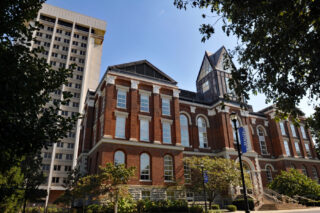

The University of Kentucky College of Medicine (UKCOM) is Kentucky’s flagship public medical school, founded in 1960 to train physicians for the Commonwealth. It awards one Doctor of Medicine (MD) degree through a single curriculum taught on four campuses: Lexington, Bowling Green, Northern Kentucky and the Rural Physician Leadership Program in Morehead. Every applicant chooses a first-choice campus, interviews there and, if admitted, holds a seat at that campus.
UKCOM stands out for its commitment to rural and community-based care, its research enterprise and its partnerships with hospitals and universities across the state. Students in Lexington train beside the Colleges of Nursing, Dentistry, Pharmacy, Public Health and Health Sciences on one campus, which makes interprofessional learning part of daily life. The regional campuses offer small classes and close faculty relationships, with clinical training in Bowling Green, Northern Kentucky and Eastern Kentucky communities.
This guide covers the 2026-2027 application cycle, which the school calls Cycle 2027, for students who will begin medical school in summer 2027. The AMCAS deadline is November 1, 2026, the supplemental (secondary) application is due November 30, 2026, and admission offers to regular applicants begin October 15. All facts were checked on October 20, 2026.
Prospective students often ask the same questions: “What are my chances of getting into UKCOM?”, “What GPA and MCAT scores do I need?” and “How does the campus choice work?” The admissions process is competitive and holistic. The college gives preference to Kentucky residents, values applicants who plan to serve rural Appalachian counties and other underserved communities, and looks well beyond grades and scores.
In this definitive guide, we cover everything you need to know: the newest class profile, the four campuses and how to choose among them, the Kentucky Integrated Curriculum, combined MD/PhD, MD/MPH and MD/MBA options, the Early Decision and Early Assurance programs, 2026-27 tuition and cost of attendance, prerequisites and letter rules, all nine 2026-2027 secondary essay prompts with original examples and analysis, interviews and a long list of frequently asked questions. Should you have questions about the medical school application process, don’t hesitate to reach out to us. International Medical Aid has helped thousands of students get into medical school through our medical school admissions consulting and healthcare internship programs.
Key Takeaways
- Kentucky comes first, but not only Kentucky. As a state medical school, UKCOM gives preference to Kentucky residents. Non-residents with strong ties to the state, such as attending a Kentucky college, may be considered. In the class that entered in 2025, 156 of 208 students were Kentucky residents, and 56 came from rural Kentucky.
- Citizenship rule. Only U.S. citizens and permanent residents are considered. International applicants who graduated from a Kentucky high school or attended a Kentucky college may be considered for the Lexington campus only. Residents of 12 southwest Ohio counties are considered for the Northern Kentucky Campus only.
- Academic context. The Class of 2029 (entered 2025) averaged a 508 MCAT, a 3.84 undergraduate GPA and a 3.78 science GPA. Accepted applicants for the 2025 entering class had a median MCAT of 509. These are averages and medians, not minimums. The school asks for a “competitive” GPA and MCAT and does not publish a cutoff.
- Your campus choice is binding. You pick a first and an alternate campus on the secondary, interview at your first-choice site, and sign an acceptance agreement that binds you to the site where you interviewed.
- Key dates. AMCAS opened May 1, review began June 30, the Early Decision AMCAS deadline was August 1, regular AMCAS closes November 1, 2026 and the secondary closes November 30, 2026. Admission notices to regular applicants begin October 15, and the commit-to-enroll date is June 11.
- Costs. First-year tuition and fees for students who entered in fall 2026 are $42,773.50 in-state and $78,045 out-of-state. The 2026-27 first-year budget is $75,346 in-state and $111,536 out-of-state for students living off campus. Tuition is locked for four years under the Tuition Guarantee Program.
- Distinctive training. Pass/fail grading, nine third-year clerkships, a required rural Area Health Education Center rotation for every student, five scholarly concentrations, two student-run free clinics and three flex months in the fourth year.
- Next step. If you are in the 2026-2027 cycle, finish your secondary and letters before November 30 and prepare for an in-person interview at your first-choice campus. If you are planning ahead, build Kentucky ties you can document, steady clinical service and the specific letters UKCOM requires.
Key Statistics About the University of Kentucky College of Medicine
UKCOM admits a large, Kentucky-focused class each year through a holistic review that weighs each applicant’s experiences, attributes and commitment to underserved communities. The snapshot and table below gather the key numbers. Each figure carries its cohort or academic year, because the class profile, cost budget and admissions timeline each cover a different year.

What Are the University of Kentucky College of Medicine’s Average MCAT and GPA?
The Class of 2029, which entered in 2025, averaged a 508 MCAT, a 3.84 undergraduate total GPA and a 3.78 undergraduate science GPA across 208 matriculants on four campuses (UK College of Medicine Class of 2029 Profile, 2025). These are class averages, not minimums or cutoffs. Accepted applicants for the 2025 entering class had a median MCAT of 509 (mean 509.7), with median section scores of 127 in Chemical and Physical Foundations, 127 in Critical Analysis and Reasoning Skills, 127 in Biological and Biochemical Foundations and 128 in Psychological, Social and Biological Foundations.
The school does not publish a minimum GPA or MCAT. Its eligibility page asks for a “competitive” undergraduate and graduate science GPA and points applicants to the annual class profile for guidance. MCAT scores and GPAs are used in screening to decide who receives the supplemental application, and the admissions committee considers your highest total MCAT score while seeing every score you have taken. If your undergraduate GPA is lower, postbaccalaureate or graduate GPAs are considered, with at least 18 BCPM credit hours. A 508 average means many admitted students scored below 508 as well as above it, so a score near the average is not a reason to skip UKCOM, especially for a Kentucky resident with strong clinical service.
| Measure | Value | Cohort, population and source |
|---|---|---|
| School and degree | University of Kentucky College of Medicine; Doctor of Medicine (MD) | UK College of Medicine, Campuses and Programs |
| Campuses | Lexington; Bowling Green; Northern Kentucky (Highland Heights); Morehead (Rural Physician Leadership Program) | UK College of Medicine, Campuses and Programs |
| Accreditation | LCME, accredited since 1960; full survey visit held October 2026 | UK College of Medicine FAQs; LCME Update, October 2026 |
| First-year class size | 208 (Lexington 131, Morehead 12, Bowling Green 30, Northern Kentucky 35) | Class of 2029, entered 2025 (Class of 2029 Profile) |
| Total applications | 5,765 | Class of 2029 applicant pool (Class of 2029 Profile) |
| Supplemental applications offered | 3,963 | Class of 2029 applicant pool (Class of 2029 Profile) |
| Completed application files | 2,016 | Class of 2029 applicant pool (Class of 2029 Profile) |
| Applicants interviewed | 582 | Class of 2029 applicant pool (Class of 2029 Profile) |
| Interviewed / total applications | 10.1% | Computed from the school’s counts (582 of 5,765). This is the interview rate, not an acceptance rate. |
| Acceptance rate | Not published (the number of admission offers is not reported) | Class of 2029 Profile |
| Average MCAT | 508 | Class of 2029, matriculants (Class of 2029 Profile) |
| Average undergraduate total GPA | 3.84 | Class of 2029, matriculants (Class of 2029 Profile) |
| Average undergraduate science GPA | 3.78 | Class of 2029, matriculants (Class of 2029 Profile) |
| Median MCAT | 509 (mean 509.7) | 2025 entering class, accepted applicants (AAMC MSAR) |
| Median MCAT section scores | 127 / 127 / 127 / 128 (Chem/Phys, CARS, Bio/Biochem, Psych/Soc) | 2025 entering class, accepted applicants (AAMC MSAR) |
| Median GPA | Not published by the school | Class of 2029 Profile reports averages only |
| Kentucky residents | 156 of 208 (56 Kentucky rural residents) | Class of 2029, matriculants (Class of 2029 Profile) |
| Women / men | 113 / 95 | Class of 2029, matriculants (Class of 2029 Profile) |
| Non-majority / first-generation students | 25 / 21 | Class of 2029, matriculants (Class of 2029 Profile) |
| First-year tuition and fees | $42,773.50 in-state; $78,045 out-of-state | 2026-27, students entering fall 2026 (UK Student Success, Cost of Attendance) |
| First-year cost of attendance | $75,346 in-state off campus; $69,860 in-state on campus; $111,536 out-of-state off campus; $106,050 out-of-state on campus | 2026-27, students entering fall 2026 (UK Student Success, Cost of Attendance) |
| Tuition Guarantee Program | Tuition fixed for the four years of each entering class | UK College of Medicine, Cost of Attendance |
| Students securing scholarships or other aid | Nearly 75% | UK College of Medicine, Financial Aid (undated) |
| Average graduate indebtedness | $220,212 | 2024-25, indebted graduates (AAMC MSAR, LCME Part I-B) |
| AMCAS deadline | November 1, 2026 | Cycle 2027 (Dates and Deadlines) |
| Secondary deadline and fee | November 30, 2026, 11:59 p.m. ET; $50 (waived for AAMC FAP recipients) | Cycle 2027 (Dates and Deadlines; How to Apply) |
| Interview format | In person, at the applicant’s first-choice campus; two one-on-one interviews | 2026-2027 cycle (How to Apply; AAMC MSAR) |
| PREview or other situational judgment test | Not used | 2026-2027 cycle (AAMC MSAR) |
| Acceptance deposit | None required | 2026-2027 cycle (AAMC MSAR) |
| Match 2026 | 99% placement; nearly 200 graduates; 22 specialties; about 46% staying in Kentucky | Class of 2026 (UK College of Medicine news, March 22, 2026) |
| Total research funding | $225.8 million | Fiscal year 2024 (UK College of Medicine, Admissions) |
These numbers describe an admissions process that is selective but strongly tilted toward Kentucky. More than two-thirds of applicants were offered the supplemental application, but only about one in ten was interviewed. The class that resulted was 75% Kentucky residents and more than a quarter rural Kentuckians. If you are a Kentucky resident, the school is built for you. If you are not, the Kentucky ties essay and your campus choice matter a great deal.
Mission and Educational Priorities
UKCOM’s official mission statement reads:
“The University of Kentucky College of Medicine promotes an environment that encourages excellence in education, access to high-quality health care, and transformative research to improve the health and wellness of Kentuckians and beyond.”
The mission names three priorities: education, access to care and research, and it names a population, Kentuckians first and then the wider world. Every part of the admissions process reflects that order. The college describes itself as committed to “generating physicians to respond to the healthcare needs of the Commonwealth of Kentucky and beyond,” and it built its regional campuses because, in its words, one of the most critical barriers to better health in the state “is the shortage of physicians serving in community settings across the state.”
The admissions pages translate the mission into four applicant characteristics that the college values. None is required, but each strengthens an application:
- Commitment to the state. Kentucky residents get preference. Non-residents with strong Kentucky ties, such as attending a Kentucky college or university, may be considered.
- Commitment to underserved populations. The college names rural Appalachian counties and low-income patients as groups that struggle to receive safe, effective, patient-centered and timely care, and it “values individuals who have demonstrated interest in serving these areas or populations in the future.”
- Commitment to a collaborative learning environment. UKCOM aims for a class that reflects the people of Kentucky and considers applicants’ educational backgrounds, life experiences and socioeconomic factors. The university does not discriminate on the basis of race, color, ethnic origin, national origin, creed, religion, political belief, sex, sexual orientation, gender identity, gender expression, pregnancy, marital status, genetic information or age.
- Identity. The eligibility page adds that the college “strives for each class to represent the people of the state of Kentucky.”
What this means for you. UKCOM is not looking for a generic strong applicant. It wants evidence that you understand Kentucky’s health needs and will stay to meet them, or that you will serve communities like the ones it serves. Rural service, work with low-income patients, Appalachian roots, first-generation college experience and long-term community involvement all connect directly to the mission. So does honest reflection about the collaborative, pass/fail learning environment, because the second secondary prompt quotes the mission and asks how you will enrich it.
Alongside the mission, the college lists the competencies it expects of applicants, using the AAMC premedical competencies: professional competencies such as service orientation, teamwork, resilience and adaptability, understanding others and ethical responsibility; science competencies in human behavior and living systems; and thinking and reasoning competencies such as critical thinking, quantitative reasoning, scientific inquiry and written communication. Your activities section and secondary essays should show these competencies in action, not list them.
Accreditation and Institutional Identity
UKCOM’s MD program has been accredited by the Liaison Committee on Medical Education (LCME) since 1960. The LCME is the accrediting body for all MD-granting medical schools in the United States. Accreditation protects the value of the degree, supports access to federal financial aid and confirms that graduates can enter U.S. residency programs.
The college completed its most recent full LCME survey visit in October 2026, on the LCME’s eight-year cycle. The survey team’s preliminary feedback praised the college’s governance, the integration of its regional campuses, faculty support, research infrastructure and student services. The team’s formal report and the LCME’s official determination are expected in the coming months.
Institutional identity. The College of Medicine is part of the University of Kentucky, the state’s flagship land-grant university, and of UK HealthCare, its academic medical center. Key facts:
- Founded: 1960, with an inaugural class of 40 students. The college now has more than 10,600 alumni who practice in all 50 states and in 26 countries.
- One degree, four campuses. The MD program is “a single program delivered at multiple campuses,” with the same objectives and the same assessments everywhere. The degree is conferred by the University of Kentucky at every campus, and one Admissions Committee with members from all campuses makes every admission decision.
- Health sciences on one campus. The Lexington campus is one of a few in the nation with all six health science colleges (medicine, nursing, dentistry, pharmacy, public health and health sciences) together, which supports interprofessional education and collaborative research.
- Clinical home. UK Albert B. Chandler Hospital, an 800-bed acute care hospital that opened in 1962, is the center of UK HealthCare and has central and eastern Kentucky’s only Level I adult trauma center. UK HealthCare has been named the No. 1 hospital in Kentucky by U.S. News & World Report for the ninth consecutive year.
- Research. The college received $225.8 million in total research funding in fiscal year 2024. The UK Markey Cancer Center became an NCI-Designated Comprehensive Cancer Center in September 2023, the only one in Kentucky.
- Firsts. UK established the nation’s first Department of Behavioral Science. Its pharmacology, physiology and biochemistry departments ranked No. 1, No. 11 and No. 14 nationally in the 2020 Blue Ridge Institute for Medical Research rankings.
- Rural reach. The college is in the top 10 percent of medical schools in the nation for the share of graduates practicing in rural areas, about 20 percent.
- Growth. The Michael D. Rankin MD Health Education Building in Lexington, with new classrooms, expanded simulation facilities and collaborative learning space, is slated to open in 2027.
Rankings. U.S. News & World Report publishes separate “Best Medical Schools: Research” and “Best Medical Schools: Primary Care” lists. Check the current edition directly if rankings matter to you. For most applicants, the points above, such as the rural practice record, the hospital’s standing in Kentucky and the Match results, say more about the training than a single number.
A distinction worth knowing. UKCOM and its regional campuses are separate from the University of Louisville School of Medicine, another public MD school in Kentucky, and from the University of Pikeville Kentucky College of Osteopathic Medicine (KYCOM), which awards the DO degree. Each school has its own application, mission and costs.
Medical Programs and Affiliations
UKCOM offers one MD program with several entry routes, campus options and combined degrees. Each route below lists who it is for and whether it needs a separate application.
Doctor of Medicine (MD) Program
- Locations: Lexington, Bowling Green, Northern Kentucky and Morehead (Rural Physician Leadership Program).
- Length: four years.
- Application: AMCAS, then the UK College of Medicine supplemental application, where you select a first and an alternate campus.
The MD curriculum is the same at every campus and is built on early clinical exposure. Students interview patients and practice physical examination from the first year, and teaching combines interactive large-group sessions, small groups, standardized patients, simulation and independent learning. Large-group sessions stream live from Lexington to Bowling Green and Northern Kentucky and are recorded for review.
The Four Campuses
Lexington Campus. The main campus and the home of UK HealthCare, UK Albert B. Chandler Hospital, UK Good Samaritan Hospital, Golisano Children’s at UK and the Kentucky Clinic. Lexington is the second-largest city in Kentucky, known as the Horse Capital of the World. The campus enrolled 131 first-year students in the Class of 2029. It is the only campus that offers the MD/PhD program and the only campus open to international applicants with Kentucky high school or college ties.
Bowling Green Campus. Launched in 2017 with Western Kentucky University (WKU) and Med Center Health, this four-year regional campus admits 30 students per year, who spend all four years in Bowling Green. Its first class of 30 graduated in July 2022. Clinical training takes place at The Medical Center at Bowling Green, which has the area’s only open-heart surgery program, and at the Medical Centers at Scottsville and Franklin, which are critical access hospitals. Together these facilities offer 387 acute care beds and more than 50 specialties. Students have full access to WKU facilities and a state-of-the-art simulation lab.
Northern Kentucky Campus. Opened in August 2019 with Northern Kentucky University (NKU) and St. Elizabeth Healthcare, this campus admits 35 students per year, who spend all four years there. Students complete the preclinical years in a remodeled facility on the NKU campus in Highland Heights and the clinical years in St. Elizabeth Healthcare facilities and local practices. The campus celebrated its first Match Day in March 2023, when every fourth-year student matched into the specialty of their choice, and graduated its first class in May 2023. It sits minutes from Cincinnati.
Morehead Campus, Rural Physician Leadership Program (RPLP). Created with Morehead State University and UK St. Claire, the RPLP accepts 12 students per year. Students complete years one and two in Lexington and years three and four in Morehead, training at UK St. Claire and with physicians across northeast Kentucky. Graduates may also receive a Certificate in Health Systems Leadership. Most RPLP students pursue internal medicine, family medicine, pediatrics or emergency medicine.
Combined Degree Programs
MD/PhD Program. Based in Lexington, the MD/PhD Training Program prepares physician-scientists. Applicants designate the University of Kentucky MD/PhD Program on AMCAS and complete a separate MD/PhD secondary. GRE scores are not required. At least one letter from a research mentor is recommended. Incoming students complete a laboratory rotation the summer before the first year. The program reports that 78% of its MD/PhD students published research articles before matriculating.
MD/MPH Program. Designed for completion in five years. Two routes exist:
- With the UK College of Public Health (Lexington): students admitted to UKCOM may apply. You must meet the requirements of the UK Graduate School and the College of Public Health, apply through SOPHAS and indicate interest by choosing the Combined Medical Degree/Graduate application type on AMCAS. Most public health courses are taken in the third year of the five-year program. Concentrations include biostatistics, epidemiology, environmental health, health behavior and population health policy and management.
- With WKU’s Department of Public Health (Bowling Green): students apply separately to each program, usually taking the core MPH courses over one year after the second or third year of medical school. The MPH is offered on campus and fully online.
MD/MBA Program (Bowling Green). A dual degree with the Gordon Ford College of Business at Western Kentucky University. Most students finish both degrees in five years, taking the core MBA courses over one year after the second or third year of medical school. Coursework covers marketing, managerial finance, information technology and data analytics, organizational behavior and business strategy. Students apply separately to each program and must be in good standing.
Early Decision and Early Assurance
Early Decision Program (EDP). For applicants who are certain UKCOM is their first choice. EDP is open to both in-state and out-of-state applicants. You submit AMCAS by August 1 and your secondary by August 15, interview between August and mid-September and receive a decision by October 1. You may apply only to UKCOM until that decision, following AAMC Early Decision rules, and if you are not accepted you still have time to apply elsewhere.
Early Assurance Program (EAP). For academically excellent sophomores at four-year Kentucky colleges who want to study and practice in Kentucky. EAP applicants apply to one regional campus: Bowling Green, Northern Kentucky or the RPLP in Morehead. Requirements include U.S. citizenship or permanent residency, five BCPM lecture courses and two critical writing and speaking courses completed by the fall semester before the deadline, and unweighted cumulative and science GPAs of at least 3.6. The application opens in early November and closes in early February. Accepted students meet program expectations during their junior year and, on completion and graduation, are granted assured admission. Students who want Lexington are encouraged to apply through Early Decision or regular decision instead.
Summer Pathway Programs
The college runs three free summer pathway programs for students considering medicine. Applications open November 1 and close February 1. Participants live in the dormitory provided and attend every activity.
- PEPP Scholars: for rising college freshmen, a one-week program (June 6-11, 2027) that offers the chance to observe, network and volunteer in health care settings.
- PEPP MD: for rising college sophomores with a college GPA of at least 3.0, a two-week program (June 6-17, 2027) that adds an introduction to medical school admissions.
- UKMED (University of Kentucky Medical Education Development Program): for rising college juniors from communities facing health care disparities, with a science GPA of at least 3.0 (June 6-11, 2027). It builds skills that strengthen medical school applications. UKMED was created by Ima Ebong, MD, a 2013 UKCOM graduate.
All three programs require U.S. citizenship, permanent residency or graduation from a Kentucky high school. Contact: Office of Admissions, (859) 323-6161, [email protected]. The college also runs the 120 in 365 Initiative, an online Zoom presentation that lets high school students from every Kentucky county hear current medical students describe their path to medicine.
Research Opportunities
Research runs through every stage of training. About two-thirds of UKCOM students participate in research during medical school, through mentored fellowships, summer projects, the Clinical and Translational Research scholarly concentration and faculty-led projects. Details appear in the rotations and research section below.
Clinical Affiliations
UKCOM’s clinical network is statewide. In Lexington, students train at UK Albert B. Chandler Hospital, UK Good Samaritan Hospital, Golisano Children’s at UK and the Kentucky Clinic. The regional campuses train with Med Center Health in Bowling Green, St. Elizabeth Healthcare in Northern Kentucky and UK St. Claire in Morehead. Every student also completes a rotation in one of Kentucky’s Area Health Education Centers (AHEC), living in a rural community and working at one of more than 300 clinical facilities across the state.
Student Organizations and Activities
UKCOM supports a long list of student organizations, specialty interest groups and clubs at every campus, and any student may join a group based at another campus. Groups range from the student-run free clinics to specialty interest groups, wellness programs and national organizations. For more information, prospective students can visit the College of Medicine website or contact the Office of Admissions. The campus life section below describes the major groups.
Curriculum Overview
The Kentucky Integrated Curriculum is one program delivered at multiple campuses, designed, managed and evaluated by the UK College of Medicine Curriculum Committee under LCME standards. Courses share the same objectives and assessments everywhere, with room for different teaching methods at each site. UKCOM adopted pass/fail grading for all MD courses beginning in August 2018.
The curriculum has three phases: Core Principles, Application and Advanced Development. Each one builds knowledge, clinical skill and professional identity in turn.
Core Principles Phase (Years 1 and 2)
All students take the same sequence of courses, and electives are available after the first semester of M1 in free afternoon time.
- Clinical Anatomy and Radiology opens the curriculum. It combines cadaver-based prosection labs, imaging and physical examination with standardized patients. A trauma surgeon, a diagnostic radiologist, an internist and a pediatrician helped design it. Students who want hands-on dissection for surgical or radiology careers can take a fourth-year anatomy elective focused on their future field.
- Foundations of Infection, Disease and Therapeutics lays the basic science of normal function, disease and therapeutic principles.
- Systems courses then apply foundational science to each organ system, such as musculoskeletal and integumentary, hematologic and lymphatic, neuroscience, respiratory, gastrointestinal, endocrine and reproductive, renal and cardiovascular.
- Multisystems and Integrative Concepts in M2 reinforces clinical science across systems.
Clinical skills start right away. Introduction to Clinical Medicine teaches patient interviewing in weekly small groups led by physicians and behavioral science faculty, with practice sessions with standardized patients, and it emphasizes the social, economic and interpersonal sides of health. Contemporary Practice of Medicine covers epidemiology, public health, statistics and evidence-based medicine. After the summer break, Advanced Clinical Medicine sharpens history, physical examination and clinical reasoning skills in M2.
Medical students must take USMLE Step 1 to progress to the Application Phase, and passing scores on Step 1 and Step 2 CK are graduation requirements.
Application Phase (Year 3)
Students apply their knowledge across disciplines in inpatient wards, operating rooms and clinics, as active members of the care team who assess patients, discuss plans and participate directly in care. They complete nine required clerkships, one at a time:
| Clerkship | Length |
|---|---|
| MD 830 Pediatrics | 7 weeks |
| MD 831 Emergency Medicine | 4 weeks |
| MD 832 Neurology | 2 weeks |
| MD 833 Psychiatry | 4 weeks |
| MD 834 Family Medicine | 4 weeks |
| MD 835 Internal Medicine | 8 weeks |
| MD 837 Surgery | 7 weeks |
| MD 838 Obstetrics and Gynecology | 4 weeks |
| MD 839 Entrustment in Clinical Medicine | 5 weeks |
A longitudinal third-year course integrates content and skills across the clerkships through large and small groups, simulation and standardized patients, with a small group facilitated by a clinical faculty member who tracks each student’s progress.
Advanced Development Phase (Year 4)
The fourth year lets students shape their schedule around their residency plans. All courses are four weeks long, and students complete eight, including:
- Acting Internships: at least two four-week rotations in the role of an intern, providing initial assessments, placing orders, coordinating care, documenting and managing transitions. Options include emergency medicine, family medicine, internal medicine, neurology, neurosurgery, obstetrics and gynecology, otolaryngology, pediatrics, psychiatry, rehabilitation medicine, surgery and urology.
- Electives: five, in patient care, non-patient care or research settings.
- MD 840 Transition to Residency: a capstone of workshops, simulation and standardized patients that prepares graduates for supervised practice, with content adjusted to each student’s future specialty.
- Flex months: three scheduled months with no educational requirements, for residency interviews, vacation or USMLE preparation.
Curricular Threads and Assessment System
Curricular threads carry essential topics through all four years when they are not the main focus of any one course but are fundamental to practice. The college uses a competency-based framework that defines its objectives and guides its assessments. Its stated goal for assessment is “to help students move out of the comfort zone to optimize learning.”
Scholarly Concentration Program
The Scholarly Concentration Program is a voluntary elective program for students who want to go further in one area. Students apply in the fall of M1, must be in good academic standing, complete 12 hours of elective coursework (at least eight in M1-M2 and at least four in M4) and finish a capstone scholarly project, such as research, a paper, a presentation or a service project. Completion earns a special designation in the Medical Student Performance Evaluation (Dean’s letter). The five concentrations are:
- Bioethics and Clinical Ethics: a summer qualitative research project after M1, a Clinical Ethics Seminar, a Bioethics on Film seminar and an M4 research project.
- Global Health: foundations of global health, electives and an immersive experience in a non-U.S. health system.
- Rural Health: two M1-M2 electives, an M4 community project and an additional AHEC rotation (14 credit hours in total).
- Primary Care: a four-week community primary care experience between M1 and M2, an elective on health inequities or rural physician leadership, an M4 project and a primary care acting internship.
- Clinical and Translational Research: research training that culminates in a project through MD 851, Research in Medicine.
How the Phases Differ by Track
The curriculum is the same everywhere, but the setting is not. Lexington students train in a large academic medical center. Bowling Green and Northern Kentucky students take the same courses through live-streamed lectures plus local small groups, and complete all clinical work in their communities. RPLP students complete years one and two in Lexington, then take all eight core clinical clerkships in an underserved rural setting at UK St. Claire, followed by a fourth year with two acting internships and five electives. The RPLP offers five acting internship options and more than 15 electives, and some Morehead students spend their entire fourth year at UK St. Claire.
Admissions Requirements and Application Process
UKCOM uses holistic review and rolling admissions. It looks for students who excel academically and who show a commitment to serving communities, particularly rural and underserved ones. The steps below cover the 2026-2027 cycle.
Eligibility
The college requires:
- A verified AMCAS application.
- At least 90 hours of undergraduate education at a U.S. institution, with the required prerequisites completed.
- A competitive undergraduate and graduate science GPA. If your undergraduate GPA is lower, postbaccalaureate or graduate GPAs are considered, with at least 18 BCPM credit hours.
- An MCAT taken within the two calendar years before the cycle begins. For the 2026 application cycle, the oldest score accepted is from January 2024.
- U.S. citizenship or permanent residency. International applicants who graduated from a Kentucky high school or attended a Kentucky college or university may be considered for the Lexington campus only. Canadian, international and DACA applicants considered under this rule are not eligible for federal loans or institutional scholarships.
Residency. Kentucky residents receive preference. Non-residents with strong ties to the state may be considered. Residents of Butler, Hamilton, Warren, Clermont, Clinton, Brown, Highland, Adams, Ross, Pike, Scioto and Lawrence counties in Ohio are considered for the Northern Kentucky Campus only. If you have other Kentucky ties and want a different campus, call the Office of Admissions at (859) 323-6161. Questions about in-state residency for tuition go to the UK Office of the Registrar.
Prerequisites
UKCOM requires these courses or their equivalent:
- Two courses in physics (6 credit hours)
- Two courses in biological sciences (6 credit hours)
- Four courses in chemistry (12 credit hours)
- One course in organic chemistry (3 credit hours)
- One course in biochemistry (3 credit hours)
- Two courses involving critical writing, synthesis of scholarship and oral presentation or speaking skills (6 credit hours). No specific prefix is required; English courses, upper-level seminars, humanities courses or 500-level foreign language courses in a language other than your primary language can count.
Advanced Placement credit is accepted for all required courses if your undergraduate institution accepts the AP course for credit. Recommended courses include anatomy, behavioral sciences, genetics, humanities, psychology, physiology, social sciences and statistics or biostatistics. The college states that these recommendations “will not influence admission decisions.” Any major is welcome; you are neither expected nor required to major in a science.
Experience
Physician shadowing is required, though UKCOM does not publish minimum hours. The college tells applicants to talk with physicians, shadow in offices or hospitals and volunteer in health care settings to confirm that medicine is right for them. In the 2025 entering class, 95% of matriculants reported physician shadowing or clinical observation, 87% community service, 86% research, 70% medical or clinical volunteering and 70% paid clinical employment. It also values leadership, work experience, hobbies and “strongly tested motivation for medicine.” Hands-on patient contact matters most. Many applicants combine local volunteering with structured clinical internships for pre-med students, where interns take vitals, help with intake and triage and assist with direct care under supervision.
Letters of Recommendation
UKCOM accepts letters only through the AMCAS Letter Service. Every letter must include the writer’s contact information, preferably on letterhead, and a wet signature. You can meet the requirement in one of three ways:
- Committee letter: if your undergraduate school has a premedical committee, you must use its process. A committee letter counts as all three required letters.
- Letter packet: a premedical advisor may provide a composite evaluation from contributing faculty.
- Individual letters: if neither option exists, submit three letters: one from a faculty member in your major who taught and evaluated you in a classroom; one from a faculty member in a BCPM course who taught and evaluated you in a classroom (from a different BCPM course if you are a science major); and one from anyone you choose. Faculty letters must come from a three-credit course; letters from labs, seminars, study abroad, practicums, teaching assistants or graduate assistants are not accepted.
Additional rules: if you have been in a postbaccalaureate, graduate or professional program for at least a year, one letter must come from a faculty member there. Applicants five or more years past graduation may substitute two letters from professional colleagues who can speak to their science or medical knowledge, with the third letter still required. Reapplicants must submit two new individual letters. The college recommends no more than five letters in total.
Other Assessments
UKCOM does not use PREview scores in admissions and requires no additional assessment, such as Casper or another situational judgment test, for the 2026-2027 cycle. The required steps are AMCAS, the supplemental application, letters and an interview. Applicants must also meet the college’s Technical Standards for medical students.
Step-by-Step Application Process
- AMCAS. Submit early. AMCAS verification can take four to eight weeks, and all sections, including a valid MCAT and all letters, must be complete by the deadline. Our AMCAS application guide walks through each section.
- Supplemental application. After AMCAS screening, selected applicants receive an email invitation to the electronic supplemental application. If you hear nothing four to eight weeks after your AMCAS is complete, contact [email protected]. On the supplemental, you choose a first and an alternate campus and write the secondary essays. The fee is $50, waived for AAMC Fee Assistance Program recipients who forward their official award email to [email protected].
- Letters. All required letters must arrive by the secondary deadline.
- Interview. Completed files are reviewed for interviews, and invited applicants interview in person at their first-choice campus. The earliest invitations go out in July and continue on a rolling basis.
- Decision. After interviewing, you receive a decision from the Admissions Committee. If you are admitted, you sign an acceptance agreement binding you to the site where you interviewed and return it within two weeks.
2026-2027 Timeline (Cycle 2027)
| Date | Step |
|---|---|
| May 1, 2026 | AMCAS begins accepting applications |
| June 30, 2026 | UK College of Medicine application review begins |
| July 2026 | Earliest interview invitations |
| August 1, 2026 | Early Decision verified AMCAS deadline |
| August 15, 2026 | Early Decision secondary deadline (form, fee and letters) |
| August to mid-September 2026 | Early Decision interviews |
| October 1, 2026 | Early Decision admission notification deadline |
| October 15, 2026 | Earliest admission notices for regular MD applicants |
| November 1, 2026 | AMCAS deadline |
| November 30, 2026, 11:59 p.m. ET | Secondary deadline (form, fee and letters) |
| January 1, 2027 | Priority date for scholarship consideration (FAFSA complete) |
| June 11, 2027 | Commit to Enroll deadline |
Decisions, Alternate Pool and Deferral
Interviews and offers are rolling, so a file completed in August has more open seats ahead of it than one completed in late November. When seats open later in the cycle, the Alternate Pool Subcommittee reviews files to fill them, and offers can reach alternates as late as orientation week, usually the last week of July.
No deposit is required to hold a seat. Letters of intent, letters of interest and updates on significant achievements are accepted only from applicants placed in the alternate pool, and they are submitted through the applicant portal.
Deferral. Deferral requests are considered case by case. An admitted applicant may request a deferral in writing to [email protected], explaining the reason. The Admissions Committee votes on each request, and deferrals are typically considered for one year. When the next cycle opens, the deferred applicant reapplies before the deadline and selects the “Delayed/Deferred Matriculation” program type, which allows an application to UKCOM only.
Transfers. Transfer admission is limited to the third year, on a space-available basis, and is rare because attrition is very low. Applicants must be in good standing at an LCME-accredited school; transfers from non-LCME, offshore and osteopathic schools are not considered.
Tuition, Cost of Attendance and Financial Aid
A medical degree is a large investment, and UKCOM’s financial aid team helps students plan for it from the first application through repayment. Nearly 75 percent of UKCOM students secure scholarships or other forms of financial aid.
Tuition and Fees by Class Year, 2026-27
Because of the Tuition Guarantee Program, each class pays a different rate, set when it entered.
| Class | In-state | Out-of-state |
|---|---|---|
| First year (entered fall 2026) | $42,773.50 | $78,045.00 |
| Second year (entered fall 2025) | $42,541.00 | $77,637.00 |
| Third year (entered fall 2024) | $42,094 | $76,842 |
| Fourth year (entered fall 2023) | $41,662.50 | $76,086.50 |
Rates for the class entering in 2027 have not been published yet. Expect them to be close to the fall 2026 rates, and remember that whatever rate your class receives stays fixed for four years.
Cost of Attendance, First Year 2026-27
| Budget item | In-state, off campus | In-state, on campus | Out-of-state, off campus | Out-of-state, on campus |
|---|---|---|---|---|
| Tuition and fees | $42,774 | $42,774 | $78,046 | $78,046 |
| Disability insurance fee (fall) | $58 | $58 | $58 | $58 |
| Food and housing | $24,922 | $19,618 | $24,922 | $19,618 |
| Books, course materials, supplies and equipment | $500 | $500 | $500 | $500 |
| Travel | $3,062 | $2,880 | $3,980 | $3,798 |
| Personal | $3,600 | $3,600 | $3,600 | $3,600 |
| Loan origination | $430 | $430 | $430 | $430 |
| Total | $75,346 | $69,860 | $111,536 | $106,050 |
The budget rounds tuition up by about 50 cents because of system limits. Second-year budgets add a $696 certification fee and $1,000 for books and equipment, bringing the 2026-27 second-year total to $76,310 in-state and $112,324 out-of-state off campus. Health insurance is not a line in this budget, and the 2025-26 first-year cost of attendance listed health insurance at $0, so ask the financial aid office how coverage is billed. To see how UKCOM compares nationally, our guide to the total cost of medical school breaks down tuition, living costs and debt.
Students whose real costs exceed the budget can submit a Budget Appeal Form with documentation for a reasonable additional allowance for a laptop or computer (up to $2,000), dependent care, disability-related expenses and study abroad. All UKCOM students receive an iPad and Step 1 preparation materials.
Tuition Guarantee Program
In 2007, UKCOM became one of four medical school programs in the nation to offer a tuition guarantee. Each entering class is guaranteed a set tuition that remains constant for the four years they are enrolled. You will not face tuition increases during medical school, which makes four-year budgeting far more reliable.
Types of Financial Aid
Scholarships and grants. UKCOM awards merit-based and need-based scholarships, which do not need to be repaid. January 1 is the priority date for scholarship consideration, and the FAFSA must be complete by then, so file it as soon as it opens in your application year.
Federal loans. The Federal Direct Unsubsidized Loan is the core federal option for medical students, with a fixed rate and federal repayment plans after graduation. Federal rules changed on July 1, 2026: the Grad PLUS Loan is no longer available to new borrowers, and professional students face an annual limit of $50,000 and an aggregate limit of $200,000 in Direct Unsubsidized Loans. Students who entered before that date may keep the older rules for a limited time. Ask the financial aid office how these limits apply to your class and whether private or institutional loans are needed to cover the full budget.
Debt. Indebted graduates in 2024-25 left with an average of $220,212 in medical school debt. The Tuition Guarantee Program and early scholarship applications are the most direct ways to keep your own total lower.
Loan repayment and service programs. Graduates who commit to practice in underserved areas may qualify for state and federal loan repayment programs. In October 2026, three Bowling Green Campus graduates became the inaugural recipients of medical school loan forgiveness scholarships from the Med Center Health Foundation, designed to keep physicians in south-central Kentucky.
Financial Aid Process
- File the FAFSA each year. The College of Medicine’s school code on the FAFSA has been listed as E00588 in UKCOM’s first-year instructions; confirm the current code with the financial aid office before you file.
- Review your aid offer and accept or decline each award through the myUK portal.
- Meet with the financial aid staff about budgeting, borrowing and repayment. UK Invests, available to all UKCOM students, offers financial literacy and career readiness support.
Contact Information
- Raymond Brooks, Director of Financial Aid: [email protected], (859) 323-5261
- John Stauffer, Assistant Director of Financial Aid: (859) 218-6567
Campus Facilities and Student Life
Student life looks different on each campus. Lexington students share a large university campus with every UK health science college. Bowling Green students use Western Kentucky University’s facilities, Northern Kentucky students study on the NKU campus near Cincinnati, and RPLP students move from Lexington to Morehead, in the foothills of the Appalachian Mountains, for their clinical years. The resources below are open to UK students in Lexington with a valid Wildcard ID.
Physical Health and Arts Resources
Johnson Center. UK’s main fitness facility has racquetball courts, weight training, basketball, volleyball and badminton courts, group fitness classes, an indoor track, a climbing wall and locker and shower facilities. Racquetball courts should be reserved two days in advance, and guest passes cost $5 a day when a member accompanies the guest.
Lancaster Aquatic Center. Located inside the Seaton Center, the Lancaster Aquatic Center has a 50-meter pool open during set hours seven days a week.
Boone Indoor Tennis Center. The Boone Indoor Tennis Center offers four indoor courts near the Seaton Center, open to students from mid-October to mid-April. Courts are reserved two days in advance.
Nutter Field House and Shively Track. The Nutter Field House has an indoor jogging track open on weekdays during the fall and spring semesters. Behind it, the Shively Outdoor Running Track is available whenever the gate is unlocked.
Arboretum Jogging Trail. The Arboretum on Alumni Drive, near the football stadium, offers a trail through trees and flowers for an outdoor run.
Intramural and club sports. Intramural teams are often organized by the M1 and M2 classes, and sign-up information is available in room 177 of the Johnson Center.
Arts and Cultural Venues
- Otis A. Singletary Center for the Arts: a 1,500-seat Concert Hall and a 400-seat Recital Hall that host the Lexington Philharmonic Orchestra, the University Artist Series and the Central Kentucky Chamber Music Society, with free or discounted tickets for many student events.
- University Art Museum: one of the major art museums in Kentucky, located in the Singletary Center, open Tuesday through Sunday from noon to 5 p.m. with free admission.
- Guignol Theatre: the Department of Theatre stages several productions each year.
- Martin Luther King, Jr. Cultural Center: lectures, workshops, seminars, art exhibits, theatre, music and dance throughout the year, plus a collection of books and media on African-American culture.
- Student Activities Board: more than 60 events on campus each year.
- Gatton Student Center: a 378,000-square-foot, $200 million student center with rooftop gardens, fire pits, high-tech meeting rooms and a three-story atrium modeled on Lexington’s Raven Run Nature Sanctuary.
- Sports: the Medical Student Government Association helps students get group seating for UK football games, and basketball tickets are distributed by lottery.
Learning Communities
Every UKCOM student is placed in a learning community “house” named after a horse breed, honoring Kentucky’s horse racing tradition. Houses provide professional development, career advising and academic advising, social connection and wellness events. Each house is paired with a local service partner. In 2025 these included Hope House, the Foundry, the Emergency Shelter of Northern Kentucky, the Down Syndrome Association of Kentucky, Mission Health Lexington, God’s Pantry Food Bank, Arbor Youth, the Ronald McDonald House and The Nest.
Wellness and Support
The Office of Medical Education offers individual counseling through the Woodland Wellness Group in partnership with the Lexington Medical Society, with 12 free counseling sessions per calendar year. The UK Counseling Center offers free, confidential therapy to all UK students, and the BetterMynd platform offers free online therapy sessions. The college also runs peer support services and psychiatry resources. In October 2026, UKCOM earned Gold-level recognition from the American Medical Association for advancing physician well-being.
Student Organizations at the University of Kentucky College of Medicine
UKCOM has student organizations, specialty interest groups and clubs at every campus, and students may join a group at another campus. Specialty interest groups cover fields from anesthesiology, cardiology, dermatology and emergency medicine to neurosurgery, oncology, ophthalmology, orthopaedics, pediatrics, psychiatry and surgery. Several groups shape the student experience in a larger way.
UK Salvation Army Clinic (SAC)
The UK College of Medicine Salvation Army Clinic has served Lexington’s uninsured population since 1986 and is one of the oldest continuously operating student-run free clinics in the United States. Students from the Colleges of Medicine, Pharmacy and Social Work staff it with volunteer physicians, serving residents of the Lexington Salvation Army women and children’s shelter and people experiencing homelessness. Urgent care visits run Tuesday and Thursday nights from 5:30 to 9 p.m., with pharmacy services, monthly subspecialty clinics (pediatrics, ophthalmology, dermatology and nutrition) and free weekly group tobacco cessation classes. Students hold the leadership roles and direct clinical operations, so SAC is a real chance to build patient care and leadership skills.
CCRU Clinic (Northern Kentucky)
Northern Kentucky students run the CCRU Clinic, a free clinic for overnight guests of the Emergency Shelter of Northern Kentucky in Covington, open Monday and Wednesday evenings from September to May and Monday evenings in summer. Medical student volunteers serve as triagers, floor managers and interviewers beside resident and attending physicians, seeing five to 10 adult patients per clinic night. CCRU also partners with Florence Christian Church on a monthly Saturday clinic.
Committee for Advocacy in Professionalism and Ethics (CAPE)
CAPE is a student-faculty committee charged with “enhancing and advancing the professional behavior and identity of medical students.” It addresses lapses in professionalism, regularly reviews the learning environment, helps the Office of Medical Education with professionalism programs and makes recommendations to the dean. Anyone in the college can report a concern or an example of exemplary professionalism. Concerns are handled in an informal “coffee cup chat” with the goal of helping the student recognize and improve the behavior, and CAPE’s actions are non-punitive. CAPE members come from the Lexington, Bowling Green and Northern Kentucky campuses.
Resilient
Resilient is a student-led wellness organization that works to prevent burnout, support students in difficulty and destigmatize mental health care. Its stated goal is simple: “to be well, and do good.” Bowling Green has its own Resilient chapter.
American Medical Association/Kentucky Medical Association Medical Student Section (AMA/KMA-MSS)
The AMA/KMA-MSS represents UKCOM students in organized medicine. It serves as a base for community service and grassroots advocacy on issues important to medical students and physicians, and it gives students representation in the AMA policy-making process.
Future Professionals in Global Health (FPGH)
FPGH helps students understand the barriers multicultural communities face in getting health care and discuss ways to overcome them. Students with global interests can also join the Shoulder-to-Shoulder brigades, in which faculty, students and community members travel to a year-round health clinic in Santo Domingo, Ecuador, during spring break.
Other Organizations
Other groups include the Student National Medical Association, the Lexington Latino Health Advocacy Association, Physicians for Human Rights (which organizes an asylum evaluation clinic), the Asian Pacific American Medical Student Association, UK medPRIDE, Women in Medicine and Science, the Refugee Advocacy Medical Program, a Spanish in Healthcare Club, the Medicine Student Ambassador Program and the Dean’s Student Committee on Admissions, whose members lead campus tours for interviewees. Students also serve on the Admissions Committee, the Curriculum Committee, the Professional Code Committee and the Wellness in Training Committee, giving them a voice in decisions across the college.
Clinical Rotations and Research Opportunities
Clinical Rotations
Clinical training begins in the third year with nine required clerkships: pediatrics, emergency medicine, neurology, psychiatry, family medicine, internal medicine, surgery, obstetrics and gynecology, and Entrustment in Clinical Medicine. Fourth-year students then complete at least two acting internships and five electives. Where you train depends on your campus:
- Lexington: the Albert Chandler Medical Center (UK Albert B. Chandler Hospital), an 800-bed hospital with the region’s only Level I adult trauma center and the area’s only Level IV neonatal intensive care unit; UK Good Samaritan Hospital, a 180-bed acute care hospital founded in 1888; Golisano Children’s at UK, the region’s only children’s hospital; and the Kentucky Clinic, UK HealthCare’s main outpatient clinic, with more than 400 physicians and dentists in more than two dozen specialties.
- Bowling Green: The Medical Center at Bowling Green and Med Center Health’s critical access hospitals in Scottsville and Franklin, plus rural clinics and regional hospitals.
- Northern Kentucky: St. Elizabeth Healthcare facilities and local physician practices.
- Morehead (RPLP): UK St. Claire, a 159-bed rural referral hospital in Morehead with an ICU, a hospitalist service and specialty care, which has trained UK medical students for more than 50 years. Other teaching sites include pediatrics practices in Mount Sterling, South Shore and Maysville, family medicine sites across the region and neurology in Richmond.
Psychiatry, as an example of how a clerkship is built. The four-week Lexington psychiatry clerkship (MD 833) spends two weeks on the inpatient psychiatry unit at UK Good Samaritan Hospital, one week on the psychiatry consult service at Good Samaritan or UK Chandler and one week in the UK Psychiatry Outpatient building at Fountain Court, with exposure to psychiatric emergencies, medical-legal issues and electroconvulsive therapy. Fourth-year options include an acting internship in adult psychiatry, a secondary acting internship in child and adolescent psychiatry and a VA Medical Center mental health elective. The department’s wider training network includes the Pediatric Behavioral Health Unit at Golisano Children’s at UK, the outpatient clinic’s telepsychiatry and addiction services, the Veterans Affairs Medical Center and Eastern State Hospital, a 239-bed state psychiatric hospital. RPLP students take inpatient and outpatient psychiatry at UK St. Claire. Applicants drawn to behavioral health sometimes build early experience through mental health internships abroad before medical school.
The AHEC rotation. Every UKCOM student completes one clinical rotation through Kentucky’s Area Health Education Centers. Students live in a rural Kentucky community for the rotation and work at one of more than 300 clinical facilities across the state. This shared experience is one reason about 20 percent of UKCOM graduates practice in rural areas, placing the college in the top 10 percent nationally.
Research Opportunities
Research during medical school covers a wide spectrum. UKCOM students most often work with faculty mentors in:
- Bench science research
- Clinical and translational research
- Population health, behavioral health and health equity research
- Medical education and evaluation projects
Many students also present clinical case reports at local, regional or national conferences, and a growing number contribute to patient safety and quality improvement projects.
Formal programs. First- and second-year students can take the elective Introduction to Clinical Research, one of the most popular electives and a gateway to further research. Students who complete it are encouraged to join the Professional Student Mentored Research Program, which pairs students with faculty mentors. Each year students also apply for the Professional Student Mentored Research Fellowship, a competitive clinical and translational science program with a $3,000 stipend; about 30 students are accepted. The Research Concentration and other scholarly concentrations open for applications during the M1 year.
Support. Lillian Sims, PhD, Director of Medical Student Research, oversees a “Research Resources” Canvas page with overviews of research areas, departmental research contacts, research targets by specialty, skill-building videos and the monthly Research Roadmap series, IRB protocol and case report templates and examples of recent student research. Students can also search the Scholars@UKY database for mentors and draw on the Center for Clinical and Translational Science.
Research centers. UKCOM students can find mentors in the UK Markey Cancer Center, Kentucky’s only NCI-Designated Comprehensive Cancer Center; the Sanders-Brown Center on Aging, one of the first Alzheimer’s Disease Centers funded by the National Institutes of Health; the Saha Cardiovascular Research Center; and the Center for Clinical and Translational Science. UK is one of 22 public institutions with what the MD/PhD program calls a “trifecta” of federal designations of excellence, and the university received $496.9 million in grant and contract awards in fiscal year 2025.
Match results. The Class of 2026 had a 99% placement rate, with nearly 200 students matching into 22 specialties. About 46% will stay in Kentucky for residency, and 72 students matched into UK College of Medicine programs. It was the largest graduating class in the college’s history. For the Class of 2025, 39% entered primary care specialties, 40% stayed in Kentucky and 30% stayed at UK.
The UKCOM Approach
UKCOM ties research and clinical training to the state it serves. Students learn medicine in a major academic center, community hospitals and rural clinics, often in the same four years. That combination prepares graduates for residency across specialties while giving them direct experience with the health problems Kentucky faces, from cancer and heart disease to limited access in rural counties.
Notable Alumni, Faculty, Leadership and Admissions Staff
The profiles below were verified against official university pages and other primary sources. They show the range of careers UKCOM training supports and introduce the people who lead admissions and education. Mentioning a person here does not mean applicants can expect to meet or work with them.
Notable Alumni
Ernie Fletcher, MD. Fletcher earned his MD from the UK College of Medicine in 1984 after earning an engineering degree at UK and serving in the U.S. Air Force. He practiced as a family physician in Lexington, served in the Kentucky House of Representatives and the U.S. House, and was elected the 60th Governor of Kentucky, serving from 2003 to 2007. He was the second physician elected governor of the state, after Luke P. Blackburn in 1879. Fletcher shows how a UKCOM education can lead to public service at the highest level in the Commonwealth. More detail is on his Wikipedia page.
Daniel Mongiardo, MD. Mongiardo earned his bachelor’s degree at Transylvania University and his MD at the University of Kentucky. An ear, nose and throat surgeon, he served in the Kentucky State Senate from 2001 to 2007 and as the 54th Lieutenant Governor of Kentucky from 2007 to 2011, focusing on health care issues in his campaigns. His career combines surgical practice with state leadership. See his Wikipedia page.
Ardis Dee Hoven, MD. A Lexington native, Hoven studied microbiology as a UK undergraduate and earned her medical degree at the UK College of Medicine. She completed internal medicine residency and infectious disease training at the University of North Carolina at Chapel Hill, then returned to Lexington, where she cared for many of the region’s early HIV and AIDS patients in private practice and later joined the UK College of Medicine faculty in infectious disease. She served as president of the Kentucky Medical Association and, from 2013 to 2014, as president of the American Medical Association. Read her AMA profile.
Emery A. Wilson, MD. Wilson is a graduate of Emory University and the UK College of Medicine. An obstetrician, gynecologist and reproductive endocrinologist, he performed Kentucky’s first successful pregnancy by in vitro fertilization. He served as dean of the UK College of Medicine for 17 years, one of the longest deanships in the country, returned as interim dean in 2010, chaired the Liaison Committee on Medical Education and served on the executive council of the AAMC. He has written more than 130 articles and abstracts and five books, including works on academic medical leadership.
Ima Ebong, MD. Ebong graduated from UKCOM in 2013 and created UKMED, the college’s summer program for rising college juniors from communities facing health care disparities. She modeled it on a program she experienced as an undergraduate at Georgia Tech, explaining that “the idea arose out of my desire to do something positive and make a difference.” UKMED now prepares future applicants each June.
Regional campus graduates. UKCOM’s newer campuses already have alumni serving their regions. In October 2026, Bowling Green Campus graduates Darrin Laswell, MD (2023), Dixi Secula, MD (2022), and Ethan Smith, MD (2023), received the first medical school loan forgiveness scholarships from the Med Center Health Foundation, which supports physicians who build careers in south-central Kentucky. Christa Mattingly, MD, a 2023 Northern Kentucky Campus graduate, credits the campus with knowing her “not only … as a student but also as an individual,” and Shea Poynter Lambirth, MD, a 2013 RPLP graduate, describes the one-on-one learning with attendings at UK St. Claire as “powerful and unique.”
LaTawnya Pleasant, MD. Pleasant, an assistant professor of pediatrics, received the College of Medicine’s 2026 Lyman T. Johnson Torch of Excellence Award from the UK Alumni Association’s Lyman T. Johnson Alumni Constituency Group, which honors alumni who have positively affected the lives of others and their communities.
Leadership
Charles “Chipper” Griffith III, MD, MSPH, Dean. Griffith graduated from Vanderbilt University School of Medicine in 1988 and came to Lexington for residency in internal medicine and pediatrics at UK, where he became chief resident in 1991 and later earned a master’s degree in public health. He joined the faculty in 1994 and rose to professor, serving as associate dean for student affairs, senior associate dean for medical education and vice dean for education. He became acting dean in July 2021 and dean in July 2023. During his time as acting dean, medical student enrollment grew nearly 50% and the Bowling Green and Northern Kentucky campuses graduated their first classes.
Chris Lakes, EdD, Associate Dean for Student Affairs. Lakes leads student affairs on the Lexington campus, the office that supports students from orientation through graduation.
Rebecca M. Todd, MD, Associate Dean for the Rural Physician Leadership Program. Todd is a professor of obstetrics and gynecology and medical director of UK Women’s Health Morehead. She leads the RPLP in Morehead and is the contact for the Rural Health Scholarly Concentration, so she is central to the college’s rural training mission.
Caroline R. Paul, MD, Associate Dean for the Bowling Green Campus. Paul, a professor, leads the Bowling Green Campus and is the contact for its MD/MPH and MD/MBA programs with Western Kentucky University.
Holly Danneman, MD, FAAFP, Associate Dean for the Northern Kentucky Campus. Danneman, a family physician, leads the Northern Kentucky Campus, directs its M2 Multi-Systems and Integrative Concepts course and serves as a preceptor in Advanced Clinical Medicine and Transition to Residency.
Admissions Staff
Wendy L. Jackson, MD, Associate Dean for Admissions. Jackson is a professor of obstetrics and gynecology and leads the Office of Admissions. The final decision for every campus is made by one Admissions Committee with members from all campuses.
Jonathan Gent, MEd, Admissions Director Associate. Gent is the admissions office’s listed contact for the director of admissions role in Lexington, at the Willard Medical Education Building.
Caren Daniels, MD, Director of Admissions for RPLP/Morehead Campus. Daniels leads admissions for the Morehead campus, and the RPLP’s department administrator, KaSandra Hanshaw, MBA, handles open house and program questions.
Faculty and Researchers
Lillian Sims, PhD. An assistant professor of behavioral science and the Director of Medical Student Research, Sims teaches sections of MD 811 Introduction to Clinical Medicine. Her research focuses on improving access to the medical profession for underrepresented students and expanding support for them in training, and she advises the Med Ed and First Gen in Medicine (FGiM) student interest groups. Her publications appear in Academic Medicine, Social Science and Medicine and the Journal of Research on Rural Education.
Scholarly concentration leaders. Each concentration has a faculty contact: Caroline Buchanan, PhD (Bioethics and Clinical Ethics), Joel Hamm, MD (Global Health), Rebecca Todd, MD (Rural Health), Shannon Voogt (Primary Care) and Tana Repella, MD (Clinical and Translational Research). Michelle Lineberry, EdD, advises CAPE.
Faculty directory sample. The college’s faculty spans clinical and basic science departments. A sample from the faculty and staff directory includes Syed Zaeemuddin Ali, MD, Associate Professor of Anesthesiology; Tarek Ali, MBBS, MEd, Assistant Professor of Neurology and Director of the Neurology Clerkship; Sheliza Ali, PhD, Assistant Professor of Neurology; Eunus S. Ali, PhD, Assistant Professor of Toxicology and Cancer Biology and a member of the Markey Cancer Center; Sadiq Ahmed, MD, FACP, FASN, Professor of Internal Medicine and Medical Director of Apheresis and Glomerulonephritis; Timothy J. Ainger, PhD, Associate Professor of Neurology; Rhoda A. Akafuah, MD, Assistant Professor of Pediatrics; Michelle M. Abou-Jaoude, MD, Assistant Professor of Ophthalmology; Kimberly Absher, MD, Assistant Professor of Pathology and Laboratory Medicine; and Ana Villalobos Acosta, MD, Assistant Professor.
Shayan Mohammadmoradi, MS, PhD. A postdoctoral scholar in Molecular and Cellular Biochemistry, Mohammadmoradi earned his MS in pharmacology and nutritional sciences and his PhD at the Saha Cardiovascular Research Center at UK, training in Dr. Alan Daugherty’s group. He now works in Dr. Sidney Whiteheart’s laboratory on platelet exocytosis and how defective platelet function contributes to abdominal aortic aneurysms and aortic dissection. His path shows the graduate research training available alongside the MD program. See his profile.
Admissions Statistics and Class Profile
UKCOM publishes an annual class profile with the full applicant funnel. The newest is for the Class of 2029, which entered in 2025.
Application Information
- Primary application service: AMCAS.
- AMCAS deadline: November 1, 2026. Secondary deadline: November 30, 2026.
- Secondary fee: $50, waived for AAMC Fee Assistance Program recipients.
- Interview invitations: begin in July, on a rolling basis.
- Interview format: two one-on-one interviews, in person at the applicant’s first-choice campus, with lunch, a tour and time with current students. Applicants who choose a regional campus first interview at that campus.
- Deposit: none required.
- Early Decision: open to in-state and out-of-state applicants; AMCAS by August 1, secondary by August 15, decision by October 1.
- Letters: committee letter, letter packet or three specified individual letters, no more than five in total.
- MCAT window: for the 2026 cycle, scores from January 2024 or later.
The Applicant Funnel, Class of 2029
| Stage | Number | Share of total applications |
|---|---|---|
| Total applications | 5,765 | 100% |
| Supplemental application offered | 3,963 | 68.7% |
| Application file completed | 2,016 | 35.0% |
| Interviewed | 582 | 10.1% |
| Matriculated | 208 | 3.6% |
The last row is a matriculation share, not an acceptance rate. UKCOM does not publish how many offers it made, and some admitted applicants enrolled elsewhere, so the true acceptance rate is higher than 3.6% but cannot be calculated from these numbers. Two other ratios are more useful. Of applicants who completed a file, 28.9% were interviewed (582 of 2,016). Of those interviewed, 208 enrolled, which suggests that a completed file and an interview are where most of the selection happens.
Academic Standing, Class of 2029
- Average MCAT: 508
- Average undergraduate total GPA: 3.84
- Average undergraduate science GPA: 3.78
- Median MCAT, accepted applicants (2025 entering class): 509 (mean 509.7, standard deviation 5.6)
- Median MCAT section scores, accepted applicants: 127 Chemical and Physical Foundations; 127 Critical Analysis and Reasoning Skills; 127 Biological and Biochemical Foundations; 128 Psychological, Social and Biological Foundations
Premedical Experiences of the 2025 Entering Class
| Experience | Share of matriculants |
|---|---|
| Physician shadowing or clinical observation | 95% |
| Community service or volunteering | 87% |
| Research or lab work | 86% |
| Medical or clinical community service or volunteering | 70% |
| Medical or clinical paid employment | 70% |
| Military service | 1% |
Nearly every matriculant had shadowed, and seven in ten had clinical volunteering or paid clinical work. Research was more common than many applicants expect at a school known for rural and primary care.
Matriculants by Campus
- Lexington: 131
- Northern Kentucky: 35
- Bowling Green: 30
- Morehead (RPLP): 12
Demographic Breakdown
- Kentucky residents: 156 (75% of the class)
- Kentucky rural residents: 56
- Women / men: 113 / 95
- Non-majority students: 25
- First-generation students: 21
Majors and Colleges
The class came from 36 majors. The most common were biology (77), neuroscience (24), biochemistry (18), chemistry (14) and psychology (11), with students from classics, music, music education, philosophy, nursing, Spanish literature and computer science as well. Students came from about 80 colleges. The University of Kentucky sent 74, followed by Western Kentucky University (12), the University of Louisville (10), Northern Kentucky University (9), the University of Cincinnati (8 across two listings), Centre College (6) and Morehead State and Murray State (4 each). Out-of-state students came from schools such as Emory, Notre Dame, Vanderbilt, UCLA, Georgia Tech and Washington University in St. Louis.
General Information
- Year founded: 1960
- Alumni: more than 10,600
- Campus types: a large urban academic medical center in Lexington; regional campuses in Bowling Green and Northern Kentucky; a rural program in Morehead
- Graduate outcomes: 99% Match placement for the Class of 2026 across 22 specialties
- Estimated new entrants: 213 a year across pathways (157 regular MD, 28 Early Decision, 24 Early Assurance and 4 MD/PhD)
What These Numbers Mean for You
The profile confirms three things. First, UKCOM is a Kentucky school: three in four students are residents, and more than a quarter are rural Kentuckians. Second, the academic bar is solid but not extreme: a 508 average MCAT and a 3.84 average GPA describe a strong but attainable profile, which leaves room for applicants whose service and Kentucky commitment are strong. Third, the screen is steep at the interview stage, so a complete, early, mission-focused secondary matters. A non-resident without Kentucky ties faces long odds; a resident with steady clinical service and a clear plan to practice in the state is exactly who the school is designed to admit.
Tips and Strategies for Admission
UKCOM’s admissions pages say plainly what the college values: Kentucky, underserved communities, collaboration and a tested motivation for medicine. The strategies below turn those priorities into choices you can make now.
Demonstrating Commitment to Healthcare
Show that you understand what physicians do every day, especially in settings like the ones UKCOM serves. Clinical volunteering, shadowing, scribing, EMT or CNA work and clinic roles all count. In your application, explain what specific patient interactions taught you and how they confirmed your choice. UKCOM’s own advice is to “talk to physicians,” “shadow physicians in their offices or in the hospital” and “volunteer in a health care facility” so your motivation is grounded in real experience. Structured pre-med internships can add supervised patient contact to that record, alongside local work.
Showcasing Leadership and Service
UKCOM values leadership and long-term service, particularly service to rural Appalachian counties and low-income communities. One role you held for two years, such as running a free clinic shift, coordinating a food pantry or tutoring at a rural school, says more than six one-time events. Describe what you built or changed and what you learned about the people you served.
Emphasizing Research Experience
About two-thirds of UKCOM students do research during medical school, and the college values scientific inquiry as a competency. If you have research experience, explain your question, your role, what you learned and any presentations or publications. Bench, clinical, population health and health equity projects all fit UKCOM’s research areas. If you have little research, that is not disqualifying; show scientific thinking in your coursework, quality improvement work or a well-designed service project instead.
Crafting a Compelling Personal Statement
Your AMCAS personal statement should tell one clear story of how you came to medicine, using specific moments rather than general claims. For UKCOM, connect that story to service and to the kind of physician you plan to be. If your roots are in Kentucky, especially rural Kentucky, let that show naturally. Do not repeat your activities list; reflect on it.
Preparing for the Interview Process
UKCOM interviews in person at your first-choice campus. Be ready to explain why that campus, why UKCOM and why Kentucky, and to discuss everything in your application in depth. Practice speaking about ethical situations and teamwork clearly and calmly. The interview section below covers preparation in more detail.
Focusing on Academic Excellence
The Class of 2029 averaged a 3.84 undergraduate GPA and a 3.78 science GPA. Strong grades in science courses matter because the curriculum moves quickly through foundational science in the first two years. If your record has a weak stretch, a postbaccalaureate or graduate record with at least 18 BCPM credit hours can be considered. Take the MCAT when you are ready, ideally in the spring of your junior year as UKCOM advises, and remember that only scores from January 2024 or later count for the 2026 cycle.
Securing Strong Letters of Recommendation
UKCOM’s letter rules are specific, so plan early. Without a committee letter or packet, you need a letter from a faculty member in your major, one from a BCPM faculty member who taught you in a three-credit classroom course, and one from anyone you choose. Letters from lab sections, seminars, teaching assistants and graduate assistants do not count. Letters of recommendation are strongest when the writer knows you well and can describe specific examples of your work and character. Ask early, share your resume and goals, and make sure every letter includes contact information and a wet signature.
Gaining Volunteer and Clinical Experience
Direct patient contact is the clearest evidence that you understand patient care. Volunteer in hospitals, free clinics, hospice or community health centers, and keep going long enough to take on responsibility. If your schedule allows, pre-med summer internships can add concentrated clinical time between semesters. Community service tied to health, such as health screenings or food access work, shows the service orientation UKCOM lists as a core competency.
Considering Research and Extracurricular Involvement
Beyond clinical and research work, UKCOM looks for “versatile and well-balanced individuals” whose hobbies and jobs show leadership, organization and the ability to work with people. Athletics, music, art, family responsibilities and paid work all count. Show how you balanced commitments and grew from them.
Choosing Your Campus Strategically
Your campus choice is the single most UKCOM-specific decision you make. You interview at your first-choice campus and, if admitted, you are bound to the site where you interviewed. Visit or attend an open house, and pick the campus whose setting matches your goals:
- Lexington for a large academic medical center, the MD/PhD and the widest research access.
- Bowling Green for a 30-student class, WKU partnerships, the MD/MBA and MD/MPH routes with WKU and training in south-central Kentucky.
- Northern Kentucky for a 35-student class near Cincinnati, training at St. Elizabeth Healthcare and the CCRU free clinic.
- Morehead (RPLP) for rural medicine, a 12-student cohort, clinical years at UK St. Claire and a Certificate in Health Systems Leadership.
Residents of the 12 listed Ohio counties should plan on Northern Kentucky, and international applicants with Kentucky schooling should plan on Lexington, because those are the only campuses open to them.
Documenting Kentucky Ties
If you are not a Kentucky resident, the secondary requires you to explain your Kentucky ties if you have them. Ties the college names, such as attending a Kentucky college or university, carry weight. Family in the state, past work or service in Kentucky and a concrete plan to practice there can also help. Be factual and specific: where, how long and what it means for your future practice.
Applying Early
Because review, interviews and offers are rolling, the date your file is complete matters. Aim to submit AMCAS in June, return the secondary within two weeks of receiving it and have all letters in place well before November 30. For a full list of schools and how they compare, see these guides from our network of medical school profiles:
- Creighton University School of Medicine
- University of Nebraska College of Medicine
- Washington University in St. Louis School of Medicine
- Oakland University William Beaumont School of Medicine
- Wayne State University School of Medicine
- NYU Grossman School of Medicine (NYU Manhattan)
- Touro University California College of Osteopathic Medicine
- University of Massachusetts T.H. Chan School of Medicine
- Columbia University Vagelos College of Physicians and Surgeons
- Idaho College of Osteopathic Medicine
- Tufts University School of Medicine
- Michigan State University College of Human Medicine
- University of South Dakota Sanford School of Medicine
- University of Chicago Pritzker School of Medicine
- Carle Illinois College of Medicine
- Northwestern University Feinberg School of Medicine
- Chicago Medical School at Rosalind Franklin University
- Southern Illinois University School of Medicine
- Rush Medical College of Rush University Medical Center
- Central Michigan University College of Medicine
- Geisel School of Medicine at Dartmouth
- University of Minnesota Medical School
- Johns Hopkins School of Medicine
- Oklahoma State University College of Osteopathic Medicine
- University of Oklahoma College of Medicine
- Marshall University Joan C. Edwards School of Medicine
- Warren Alpert Medical School of Brown University
- Georgetown University Medical School
- Yale School of Medicine
- Full List of Medical School Guides
By following these strategies, you can strengthen your application to the University of Kentucky College of Medicine and present yourself as a well-rounded, committed candidate. The path is demanding, but careful preparation, honest reflection and genuine commitment to service will carry you far.
Secondary Application Questions, Example Responses and Analysis
UKCOM’s secondary, which the college calls the supplemental application, is the main place where you show fit with the mission and choose your campus. Here is what to expect.
The UKCOM secondary at a glance:
- Who receives it: selected applicants, invited by email after AMCAS screening. For the Class of 2029, 3,963 of 5,765 applicants received an invitation.
- Fee: $50, waived for AAMC Fee Assistance Program recipients who forward their award email to [email protected].
- Deadline: November 30, 2026, 11:59 p.m. ET for regular applicants; August 15, 2026 for Early Decision. The form, fee and all required letters must arrive by the deadline.
- Campus selection: you choose a first and an alternate campus and explain your choices in short essays.
- Essays for 2026-2027: nine prompts. Seven apply to every applicant, one applies only to non-Kentucky residents and one applies only if you choose an alternate campus.
- Length: no word or character limits are published for 2026-2027. Follow any counter shown in the supplemental application. If none appears, aim for about 250 to 350 words for the main essays and 100 to 200 words for each campus essay. Concise, specific answers read better than long ones.
- Turnaround: return the secondary within about two weeks. Interviews and offers are rolling.
Every example below is an Illustrative example, not an actual applicant essay. Each was written from scratch to show structure and reflection, and the applicant details are invented for teaching. Do not copy them. Your answers must describe your own experiences.
If you are writing several secondaries at once, our medical school secondary essay prompts database collects prompts from other schools, and essay review is part of our medical school admission consulting services.
Question 1: Why UKCOM
“Why have you chosen to apply to the University of Kentucky College of Medicine?”
Limit: not stated; aim for 250 to 350 words. Who answers: all applicants.
What it asks. A clear, specific reason for UKCOM, not for medical school in general. The best answers connect your goals to things only UKCOM offers: its four campuses, its Kentucky mission, the RPLP, the AHEC rotation, the scholarly concentrations or the student-run clinics.
How to approach it. Start with the goal that drives you, then name two or three UKCOM features that serve it, and explain why each matters to you. Show that you read past the home page. Avoid repeating your first-choice campus essay; keep the focus on the college as a whole.
Illustrative example, not an actual applicant essay (293 words):
I want to practice internal medicine in the part of Kentucky where I grew up, where the nearest cardiologist is an hour away and most of my neighbors see a doctor only when something is already wrong. The University of Kentucky College of Medicine is built for that goal in a way no other school I have studied is.
First, UKCOM trains physicians for the whole state, not just Lexington. Every student completes a rotation through one of Kentucky’s Area Health Education Centers and lives in a rural community while doing it. For me, that rotation would not be a detour. It would be practice for the work I want to do for the rest of my career.
Second, the curriculum lets me go deeper without leaving the core path. I plan to apply for the Rural Health Scholarly Concentration, because its M4 community project would let me design something real, perhaps a blood pressure follow-up program like the one I helped run at my county health department, and test whether it works.
Third, UKCOM values collaboration over competition. Pass/fail grading and learning communities matter to me because I learn best by teaching. As a supplemental instruction leader for general chemistry, I saw students who were afraid to ask questions in lecture start to ask them in a group of six. I want to learn medicine in that kind of environment and help build it for my classmates.
Finally, UKCOM is where Kentucky’s physicians are trained. The physician I shadowed at home graduated from UK, and she still calls former classmates when she needs a specialist’s advice for a patient who cannot travel. I want that network for my future patients. UKCOM is where I can become the physician my home county needs.
Why it works. The answer opens with a concrete goal and a place, then gives three UKCOM-specific reasons tied to the applicant’s experience: the AHEC rotation, the Rural Health concentration and the collaborative pass/fail environment. Each reason includes evidence from the applicant’s life, such as the health department program and the supplemental instruction role. The closing returns to the patients, which keeps the essay about service rather than prestige.
Mistakes to avoid. Listing rankings or generic praise (“excellent faculty,” “cutting-edge research”); naming programs without saying why they matter to you; writing an essay that could be sent to any school by changing the name; and spending the whole answer on your first-choice campus, which has its own prompt.
Question 2: Mission and the Learning Environment
“The University of Kentucky College of Medicine’s (UKCOM) mission statement promotes an environment that encourages excellence in education, access to high-quality health care, and transformative research to improve the health and wellness of Kentuckians and beyond. Please describe how your past experiences or future plans contribute to enriching and enhancing the learning environment at UKCOM.”
Limit: not stated; aim for 250 to 350 words. Who answers: all applicants.
What it asks. How you will make UKCOM a better place to learn, using your past experiences, your future plans or both. The mission sentence is context: it signals that education, access to care and research are the values your contribution should connect to.
How to approach it. Pick one or two things you bring that classmates will benefit from: a perspective from your background, a skill such as teaching or language, or experience with a community the school serves. Show the contribution in action, then describe how you will use it at UKCOM in a specific setting, such as a learning community, a free clinic or a small group.
Illustrative example, not an actual applicant essay (301 words):
For three years I worked weekend shifts as a pharmacy technician in a small-town pharmacy in western Kentucky. Most of what I learned there was not about drugs. It was about why patients do not take them.
One customer, a retired coal miner, picked up his inhalers late every month. My pharmacist assumed he was careless. After a few conversations I learned that his Social Security check arrived on the third and his refill was due on the first, so he waited, and he spent two days every month short of breath. We moved his fill date. It was a five-minute fix to a problem nobody had asked about.
That job taught me to ask about the gap between a plan and a person’s life, and I will bring that habit to UKCOM’s learning environment. In small groups, I expect to be the classmate who asks, “What would this cost the patient, and when would they get to the pharmacy?” Questions like that make case discussions more realistic, and they matter for a school whose mission includes access to high-quality care for Kentuckians.
I also want to contribute through service. I hope to volunteer at the UK Salvation Army Clinic, where students help run pharmacy services along with urgent care visits. I know the practical side of medication access, from prior authorizations to discount programs, and I can share that with classmates who have not worked behind a pharmacy counter.
Finally, I want to contribute through research. The access questions I saw every weekend, such as which patients fall through refill gaps and why, are research questions. I hope to study one of them with a faculty mentor through the Professional Student Mentored Research Program, so that what I learned at a pharmacy counter can improve care beyond a single patient.
Why it works. The essay answers both halves of the prompt: past experience (the pharmacy job, with one vivid patient) and future plans (small groups, the Salvation Army Clinic, mentored research). It ties each contribution to a word in the mission, namely education, access to care and research, without quoting the mission back. The contribution is specific and useful to classmates, which is what “enriching the learning environment” means.
Mistakes to avoid. Restating the mission or praising it; describing your identity or background without showing what classmates will gain; claiming you will “bring diversity” without evidence; and listing every activity instead of developing one.
Question 3: Kentucky Ties (Non-Residents)
“If you are a non Kentucky resident, you are required to elaborate on your Kentucky ties if applicable (personal, familial e.g.)”
Limit: not stated; aim for 150 to 250 words. Who answers: non-Kentucky residents. Kentucky residents skip this prompt.
What it asks. Facts about your connections to Kentucky, personal or family, with enough detail for the committee to judge their strength. The college says non-residents “who have strong ties to the state (e.g. previous attendance at a Kentucky college or university) may be considered,” so this answer can decide whether your file is reviewed seriously.
How to approach it. Lead with your strongest tie and be concrete: names of places, years, what you did. Add any family ties, work or service in Kentucky, and a realistic plan for practicing in the state. If your ties are thin, say what you have honestly and explain your plan, rather than stretching a single visit into a connection.
Illustrative example, not an actual applicant essay (196 words):
I am a resident of Ohio, but Kentucky has been my second home for six years. I completed my bachelor’s degree in biology at a college in central Kentucky, and I have stayed in the state since graduating to work as a medical assistant at a family medicine clinic in Madison County.
My family ties run through my mother’s side. My grandparents farmed in Estill County for 40 years, and I spent most summers there as a child. When my grandfather developed heart failure, I drove him to his appointments in Lexington for two years, which was my first close look at how far rural patients travel for specialty care.
At the clinic, about a third of our patients come from neighboring rural counties. I have helped coordinate referrals for patients who could not get specialty appointments for months. That work has made my plan concrete: I want to complete residency in Kentucky and practice family medicine in a rural county in the central or eastern part of the state.
I am registered to vote in Ohio only because my permanent address has not changed. My life, my work and my future practice are in Kentucky.
Why it works. It leads with the tie UKCOM names explicitly, attending a Kentucky college, then adds four more facts: years of work in the state, a family history in a rural county, caregiving that involved UK HealthCare and a specific practice plan. Every claim is checkable. The closing line addresses the obvious question, why the applicant is still a non-resident, without defensiveness.
Mistakes to avoid. Vague claims (“I love Kentucky,” “I have visited several times”); emotional language in place of facts; leaving the prompt blank when you have real ties; and inventing or inflating ties, which interviewers will ask about.
Question 4: One Life Experience
“Your combination of life experiences make you uniquely you. Talk about one such experience and how it has helped you prepare to be a physician.”
Limit: not stated; aim for 250 to 350 words. Who answers: all applicants.
What it asks. One experience, not a summary of your life, and a clear explanation of how it prepared you for medicine. “Prepare” is the key word: name the skill, habit or understanding you gained and show it in use.
How to approach it. Choose an experience that is not already the center of your personal statement. Tell it briefly, then spend at least half the essay on what it taught you and where you have used that lesson since. The experience does not have to be medical.
Illustrative example, not an actual applicant essay (278 words):
When I was sixteen, my father’s hours at the auto parts plant were cut, and I became the family’s after-school babysitter for my two younger brothers and my cousin, who has Down syndrome. For three years, I made dinner, checked homework and learned how to calm an eight-year-old who could not tell me what was wrong.
My cousin, Eli, communicated mostly through gestures and a few words. When he was upset, the cause was usually something small that I had missed: a sock seam, a changed routine, a loud television. I learned to watch before I acted. I kept a notebook of what upset him and what helped, and after a few months I could often prevent a meltdown instead of reacting to one.
That experience prepared me for medicine in a way my science classes did not. It taught me that careful observation is a form of respect, and that the person who cannot explain their problem still has one. I used the same approach as a volunteer at an adult day center, where several participants had dementia. Instead of assuming agitation was “just the disease,” I started noticing patterns, such as one woman who became restless before lunch because she was hungry and could not say so. I told the staff, and they moved her snack earlier.
Physicians care for many patients who cannot fully describe what is wrong: infants, people with intellectual disabilities, patients with dementia or patients who are frightened or in pain. I want to be the physician who watches closely, writes down what I see and keeps looking until I understand. Eli taught me how. My notebook is still in my desk.
Why it works. It focuses on a single experience, shows a specific skill developing (observation, documentation, prevention), then proves the skill transferred to a new setting. The final paragraph names the patients for whom the skill matters, which answers “how it has helped you prepare to be a physician” directly.
Mistakes to avoid. Covering several experiences; making the essay about someone else’s suffering without showing your own growth; ending with a generic lesson (“I learned to be compassionate”); and repeating your personal statement story.
Question 5: Gratitude
“Describe an experience or situation which made you feel grateful?”
Limit: not stated; aim for 250 to 300 words. Who answers: all applicants.
What it asks. A specific moment of gratitude and what it reveals about you. The committee is looking for perspective and humility, and for what you do with gratitude.
How to approach it. Choose a real moment, not a general sense of being fortunate. Describe it in a few sentences, explain why it made you grateful, and show how the feeling changed something you did. Gratitude toward a patient, mentor or stranger often works better than gratitude for your own success.
Illustrative example, not an actual applicant essay (258 words):
In my second year as a hospice volunteer, I sat with Mrs. T., a retired schoolteacher, on the afternoon she learned she likely had days left. I expected to comfort her. Instead, she asked me about my organic chemistry exam.
I tried to steer the conversation back to her, but she insisted. She had taught high school biology for 31 years, and she wanted to know whether I was studying the right way. For twenty minutes, a dying woman tutored me on how to make flash cards for reaction mechanisms, laughing when I admitted I had been rereading my notes. Before I left, she said, “Promise me you’ll teach someone someday. It’s the best part.”
I walked to my car and cried, partly from sadness and partly from gratitude. She had spent some of her last energy on a stranger, and she had reminded me that patients are not only people who need things. They are people who give things, even at the end.
That afternoon changed how I volunteer. I used to arrive with a plan for what I would do for each patient. Now I arrive ready to learn what they want, and sometimes what they want is to give. I have heard war stories, recipes and advice on marriage, and I have learned that accepting a gift can be a form of care.
I kept my promise. The next semester I became a peer tutor for organic chemistry. I use her flash card method with every student, and I tell them where I learned it.
Why it works. The moment is specific and surprising, which makes it memorable. The essay explains the source of the gratitude, shows a lasting change in the applicant’s approach to patients and ends with an action, the tutoring role, that proves the change was real. It also hints at the teaching culture UKCOM values in its learning communities without saying so directly.
Mistakes to avoid. Writing about gratitude for your own achievements; sentimental language without specific detail; centering the essay on a patient’s death without reflection; and ending without showing what you did differently.
Question 6: Unique, Personal or Challenging Facts
“Please share unique, personally important, and/or challenging facts in your life and/or work experiences. Please discuss how such factors have influenced your goals and preparation for a career in medicine.”
Limit: not stated; aim for 250 to 350 words. Who answers: all applicants.
What it asks. Facts about your life or work that help explain who you are, and a clear link between those facts and your goals and preparation. This is the place for background the rest of the application does not show, such as being first-generation, working through college, caregiving, rural or Appalachian roots, military service or a health challenge.
How to approach it. State the facts plainly, then show their effect. Balance the two parts of the prompt: “influenced your goals” (why medicine, what kind of practice) and “preparation” (skills and habits you built). Keep the tone matter-of-fact.
Illustrative example, not an actual applicant essay (312 words):
I am the first person in my family to finish college, and I paid for most of it by working 25 to 30 hours a week as a certified nursing assistant on a long-term care unit. I grew up in a county in eastern Kentucky where the hospital closed when I was in middle school, and my mother still drives 45 minutes to deliver a lab sample.
Those facts shaped my goals in a direct way. I watched neighbors postpone care because the trip was too long, and I saw what happened when they finally came in. Working as a CNA showed me the other end of that story: residents who arrived with conditions that years of steady primary care might have controlled. I want to practice family medicine in a rural Kentucky county, ideally one like mine, and I want to be part of the reason someone does not wait.
Working through college also prepared me in ways I did not expect. I learned to study in 40-minute blocks between shifts and to protect my sleep before exams. I learned to work on a team where nurses, aides and therapists each knew things I did not, and to report a change in a resident’s condition clearly and quickly. I learned that dignity is often in small things, like warming a washcloth or knocking before entering.
It was not always smooth. My grades dipped during my sophomore year, when I was working nights. I changed my schedule, met with my advisor and took a lighter course load the next spring, and my science GPA rose every semester after that.
UKCOM’s Rural Physician Leadership Program, with its clinical years at UK St. Claire and its emphasis on rural community health, matches the goal these experiences gave me. I am ready for the work, because I have already been doing a version of it.
Why it works. It states several facts (first-generation, working student, rural county without a hospital) and then answers both parts of the prompt: goals (rural family medicine) and preparation (time management, teamwork, clear reporting, dignity in care). It addresses a grade dip briefly and shows the fix, then closes with a specific UKCOM link. The tone is calm and factual.
Mistakes to avoid. Turning hardship into a request for sympathy; listing challenges without connecting them to goals and preparation; over-explaining a low grade; and claiming an identity or experience that is not yours.
Question 7: Not in the Majority
“Describe a situation where you were not in the majority.”
Limit: not stated; aim for 250 to 300 words. Who answers: all applicants.
What it asks. A situation in which you were different from most people around you, by background, belief, language, age, experience or opinion, and what you learned. The prompt does not require a demographic difference; being the only person in a meeting with a different view can count.
How to approach it. Describe the situation and what it felt like, then focus on what you did and what you learned about inclusion, communication or empathy. Connect the lesson to caring for patients who are often the minority in a clinic or hospital.
Illustrative example, not an actual applicant essay (273 words):
The summer after my sophomore year, I joined a road construction crew to earn money for school. I was nineteen, the only woman, the only college student and the only person who had never run a jackhammer.
The first week, the crew called me “the professor” and gave me the jobs no one wanted. I was tempted to prove myself by working twice as hard and saying nothing. Instead, I asked our foreman, Ray, to teach me the equipment I had never used, and I asked the men about their work. I learned that two of them had worked road crews for more than 20 years, that their backs and knees hurt every morning, and that none of them had seen a doctor in years because they would lose a day’s pay.
By August, I was flagging traffic, running a plate compactor and eating lunch with the crew instead of alone in my car. On my last day, Ray asked me whether his chest tightness on hot afternoons was “just the heat.” I told him I was not a doctor, but I urged him to get checked. He called me a month later to say he had a stent.
Being in the minority taught me how it feels to walk into a place where you do not know the rules and no one expects you to belong. Many patients feel that way in a hospital. It also taught me that respect often starts with asking someone to teach you what they know. I want to bring both lessons to medicine, especially when I care for working patients who do not trust doctors yet.
Why it works. The situation is clear and unexpected, and the applicant’s response, asking to be taught and asking about the crew’s lives, shows humility and curiosity. The essay includes a concrete outcome, then names two lessons and links both to patient care, especially for working patients in a state like Kentucky.
Mistakes to avoid. Describing minority status without any reflection or action; portraying the majority group as villains; choosing a trivial situation; and implying that a brief experience gives you full understanding of another group’s life.
Question 8: First-Choice Campus
“Please elaborate on your selection of first-choice campus.”
Limit: not stated; aim for 150 to 200 words. The college describes this as “a brief essay.” Who answers: all applicants.
What it asks. Why you chose your first-choice campus. Because you interview at this campus and an acceptance binds you to it, the committee wants evidence that your choice is informed and sincere.
How to approach it. Name two or three features of the campus that fit your goals, such as class size, clinical partners, location, combined degrees or rural focus, and connect each to your experience or plans. Mention a visit or open house if you attended one. Keep it short.
Illustrative example, not an actual applicant essay, written for the Northern Kentucky Campus (185 words):
My first-choice campus is Northern Kentucky. I grew up in Boone County, and I want to practice where I was raised. Training all four years with St. Elizabeth Healthcare would let me learn in the health system my future patients already use and build relationships with physicians who could become colleagues.
The campus’s size also fits how I learn. In a class of 35, I would know my faculty and classmates well, and the mix of live-streamed lectures from Lexington with local small groups gives me UK’s curriculum in a close community.
Most important, I want to serve at the CCRU Clinic. For two years I have volunteered at a homeless shelter in Covington, sorting donations and serving meals. I have met guests who skip care because they cannot get to a clinic. Working as a student triager or interviewer at a clinic inside the Emergency Shelter of Northern Kentucky would let me serve those same neighbors as a future physician.
At the open house I attended in the spring, a second-year student told me, “Here, they know your name.” That is what I want.
Why it works. It gives three campus-specific reasons (local ties and St. Elizabeth, class size and teaching model, the CCRU Clinic) and connects each to the applicant’s life. The open house detail shows the choice was researched. It is brief and stays on the campus, not on UKCOM in general.
Mistakes to avoid. Choosing a campus only because you think it is easier to get into; describing the city instead of the training; repeating your “Why UKCOM” answer; and writing more than the “brief essay” the school asks for.
Question 9: Alternate Campus
“Please elaborate on your selection of alternate campus (if applicable).”
Limit: not stated; aim for 100 to 150 words. Who answers: applicants who select an alternate campus.
What it asks. Why your second choice would also work for you. A good answer shows that you would be glad to train there, not that you listed it at random.
How to approach it. Name one or two features of the alternate campus that serve the same goal as your first choice. If your first choice is a small regional campus, explain what you would gain from a different setting. Do not apologize for ranking it second.
Illustrative example, not an actual applicant essay, Lexington as the alternate (126 words):
My alternate campus is Lexington. My goal is to practice primary care in Northern Kentucky, and Lexington would prepare me for it in a different way. Training at UK Albert B. Chandler Hospital, with central and eastern Kentucky’s only Level I adult trauma center, would show me the complex cases my future patients may be referred to, and the patient transfers I would one day arrange from the other side.
Lexington would also let me join the Primary Care Scholarly Concentration and complete its four-week community primary care experience between M1 and M2, keeping my focus on the career I plan. And because every student completes an AHEC rotation, I would still train in a community setting. I would be proud to train on either campus.
Why it works. It ties the alternate campus to the same goal as the first choice, names concrete Lexington features and shows that the applicant has thought about what a large academic center adds. The closing sentence affirms commitment without sounding like an afterthought.
Mistakes to avoid. Writing “any campus is fine”; criticizing the alternate campus; copying your first-choice answer with a new name; and leaving the prompt blank after selecting an alternate.
Program-Specific Prompts
The MD/PhD Program has its own secondary for applicants who designate it on AMCAS. Its 2026-2027 essay prompts are not published on the program’s website; they appear in the MD/PhD secondary sent to applicants who pass preliminary screening. The Early Assurance Program uses a separate application for Kentucky college sophomores, outside the AMCAS cycle. Its questions are shown in the EAP application portal.
Interview Format and Preparation
What Is Confirmed
- Format: UKCOM conducts in-person interviews.
- Location: you interview at your first-choice campus. Lexington, Bowling Green, Northern Kentucky and Morehead each run their own interview days.
- Invitations: the earliest interview notifications go out in July and continue on a rolling basis. The Office of Admissions tells every candidate whether an interview will be granted.
- Scheduling: invited applicants receive detailed instructions by email from their first-choice campus and choose a date through the college’s online system.
- Early Decision: EDP interviews run from August to mid-September.
- MD/PhD: MD/PhD interviews run from September to December, with Second Look weekends in March and April.
- Same standards everywhere: applicants to every campus are screened for interviews using the same academic criteria and personal qualities, and one Admissions Committee with members from all campuses makes the final decision.
- After the interview: you receive a decision after the Admissions Committee deliberates. An offer comes with an acceptance agreement that binds you to the site where you interviewed, due within two weeks.
- Interview day: you have two one-on-one interviews, plus lunch, a tour and time to talk with current students. All interviews for the 2026 cycle are in person; applicants who choose a regional campus first interview at that regional campus.
Read the instructions your campus sends with your invitation carefully, because they describe the schedule for your day.
How to Prepare
Know your campus. Your interviewers work at the campus you chose. Know its partners (UK HealthCare, Med Center Health, St. Elizabeth Healthcare or UK St. Claire), its class size, its clinical setting and why it fits you. If you have not visited, attend a virtual or in-person open house before your interview.
Know your Kentucky story. Expect questions about your connection to the state and where you plan to practice. Residents should be ready to talk about the communities they come from. Non-residents should be ready to discuss the ties in their secondary in detail.
Prepare for common questions. Be ready for “Tell me about yourself,” “Why medicine?”, “Why UKCOM?” and “Why this campus?”, plus questions about a challenge you faced, a team conflict, a mistake you learned from and an ethical dilemma. Our list of medical school interview questions is a good place to practice.
Connect to the mission. UKCOM’s mission names access to high-quality health care. Be prepared to discuss health care access in rural Kentucky, the role of primary care, or the challenges low-income patients face in getting care. You do not need policy expertise, but you should be able to speak thoughtfully from your own experience.
Review your whole application. Interviewers may ask about anything in your AMCAS or secondary. Reread your activities, personal statement and all nine secondary answers before your interview day.
Practice out loud. Mock interviews help you speak clearly and concisely. Focus on specific examples rather than general statements, and practice describing what you learned, not only what you did.
Plan your logistics. Because interviews are in person, plan your travel to your campus and arrive early. Dress professionally and treat every person you meet, including student guides from the Dean’s Student Committee on Admissions, with courtesy.
Send updates thoughtfully. Letters of intent, letters of interest and updates on significant achievements, such as a publication or a new role, are accepted only from applicants placed in the alternate pool, through the applicant portal. If you land in the alternate pool, a brief, specific update there can keep your file current.
Frequently Asked Questions
What programs are offered at the University of Kentucky College of Medicine?
UKCOM offers the four-year Doctor of Medicine (MD) on four campuses, plus a combined MD/PhD in Lexington, an MD/MPH (with the UK College of Public Health or Western Kentucky University) and an MD/MBA with WKU’s Gordon Ford College of Business through the Bowling Green Campus. The Rural Physician Leadership Program in Morehead adds a Certificate in Health Systems Leadership. The college also runs an Early Decision Program, an Early Assurance Program for Kentucky college sophomores and summer pathway programs (PEPP Scholars, PEPP MD and UKMED). Residency programs in emergency medicine, family medicine, internal medicine and other fields are run through UK’s graduate medical education office for physicians who have already finished medical school.
How do I apply for admission to the University of Kentucky College of Medicine?
Apply through AMCAS by November 1, 2026. If you pass screening, you will receive an email invitation to the UK College of Medicine supplemental application, where you pick a first and an alternate campus and answer the secondary essays. The supplemental, the $50 fee and all required letters are due by November 30, 2026. Selected applicants then interview in person at their first-choice campus. Apply early, because review and offers are rolling.
What are the admission statistics for the University of Kentucky College of Medicine?
For the Class of 2029, which entered in 2025, UKCOM received 5,765 applications, offered 3,963 supplemental applications, interviewed 582 applicants and enrolled 208 students. Matriculants averaged a 508 MCAT, a 3.84 undergraduate GPA and a 3.78 science GPA, and accepted applicants for the 2025 entering class had a median MCAT of 509. The school does not publish its number of offers, so no true acceptance rate can be calculated. Enrollment as a share of applications was 3.6%, which is lower than the acceptance rate.
What is the role of the Associate Dean for Diversity at the University of Kentucky College of Medicine?
UKCOM’s medical education pages describe support for an inclusive learning environment through several offices and groups rather than a single associate dean: the Associate Dean for Student Affairs, the campus assistant deans for students, learning community advisors and student groups such as the Student National Medical Association and First Gen in Medicine. The admissions process itself aims for a class that “reflects the people of Kentucky,” considering applicants’ educational backgrounds, life experiences and socioeconomic factors. To reach the right person for a specific question, contact the Office of Medical Education.
What courses are included in the College of Medicine curriculum at the University of Kentucky?
The Kentucky Integrated Curriculum begins with Clinical Anatomy and Radiology, Foundations of Infection, Disease and Therapeutics, and organ-system courses, alongside Introduction to Clinical Medicine, Contemporary Practice of Medicine and Advanced Clinical Medicine. The third year has nine required clerkships, including family medicine, internal medicine, neurology, pediatrics, psychiatry and surgery. The fourth year includes two acting internships, five electives and Transition to Residency. Electives cover areas from global health to oncology, and five scholarly concentrations let students specialize further.
Who are some notable alumni of the University of Kentucky College of Medicine?
UKCOM alumni include Ernie Fletcher, MD (1984), Kentucky’s 60th governor; Daniel Mongiardo, MD, Kentucky’s 54th lieutenant governor; Ardis Dee Hoven, MD, president of the American Medical Association from 2013 to 2014; and Emery A. Wilson, MD, a UKCOM graduate who later served as dean of the college for 17 years and chaired the LCME. More than 10,600 UKCOM alumni practice in all 50 states, and the newest regional campus graduates are already serving south-central and Northern Kentucky.
What is the academic calendar for the University of Kentucky College of Medicine?
The MD program follows its own academic calendar, separate from the undergraduate calendar. First-year students start with a mandatory orientation week in late July (July 27 to 31 in 2026), followed by White Coat Ceremonies on each campus, and classes for the class entering in 2026 began August 3, 2026. The calendar includes a summer break between M1 and M2, the third-year clerkship sequence and three flex months in the fourth year. The current calendar is posted on the college’s Academic Calendar page.
What is the process for obtaining a diploma frame from the University of Kentucky College of Medicine?
Diploma frames are a graduation-year purchase, not an admissions step. University of Kentucky diploma frames are sold through licensed retailers, and the UK Bookstore in the Gatton Student Center carries UK merchandise. Ask student affairs during your final year which frame fits the College of Medicine diploma.
How does the University of Kentucky College of Medicine support international students?
UKCOM considers only U.S. citizens and permanent residents, with one exception: international applicants who graduated from a Kentucky high school or attended, or are attending, a Kentucky college or university may be considered for the Lexington campus only. Students in that group who enroll can use the University of Kentucky’s international student services for visa and immigration questions. If you are not a U.S. citizen or permanent resident and lack Kentucky schooling, UKCOM is not an option for this cycle.
What opportunities are there for cancer research at the University of Kentucky College of Medicine?
Students can find cancer research mentors at the UK Markey Cancer Center, Kentucky’s only NCI-Designated Comprehensive Cancer Center, and in departments such as Toxicology and Cancer Biology. The Professional Student Mentored Research Fellowship offers a $3,000 stipend to about 30 students a year, and the Clinical and Translational Research scholarly concentration supports a full project. The oncology interest groups on several campuses connect students with cancer specialists.
What are the requirements for the University of Kentucky College of Medicine’s Family Medicine Residency?
UK’s family medicine residency is a graduate medical education program for physicians who have finished medical school, not a medical school admissions track. Applicants apply through ERAS and the National Resident Matching Program with an MD or DO degree, USMLE or COMLEX results, letters and a personal statement. For medical students, the path toward family medicine starts with the third-year family medicine clerkship, the Primary Care and Rural Health scholarly concentrations and the Family Medicine Interest Group.
What is the University of Pikeville Kentucky College of Osteopathic Medicine?
The University of Pikeville Kentucky College of Osteopathic Medicine (KYCOM) is a separate medical school in Pikeville, in eastern Kentucky, that awards the Doctor of Osteopathic Medicine (DO) degree. DO physicians are fully licensed and train in all specialties, with added training in osteopathic manipulative medicine. It is not part of UKCOM and uses its own centralized application for osteopathic schools. Our KYCOM admissions guide covers it in detail.
What are the secondary essay prompts for the University of Kentucky College of Medicine?
There are nine 2026-2027 prompts: why UKCOM; how your experiences or plans will enrich the learning environment, framed by the mission; Kentucky ties (non-residents only); one life experience that prepared you for medicine; an experience that made you grateful; unique, personally important or challenging facts; a situation where you were not in the majority; your first-choice campus; and your alternate campus, if you choose one. No limits are published, so follow the counter in your supplemental application. Full prompts and examples are in the secondary section above.
What is the role of the Dean at the University of Kentucky College of Medicine?
The dean is the college’s chief academic officer, responsible for its education programs, faculty, research and student affairs, and for setting the college’s direction across all four campuses. The current dean is Charles “Chipper” Griffith III, MD, MSPH, who became acting dean in July 2021 and dean in July 2023 after more than three decades at UK as a physician, teacher and education leader.
What is the University of Kentucky College of Medicine’s approach to grading and exams?
UKCOM uses pass/fail grading for all MD courses, a policy adopted in August 2018 to support collaboration. Its competency-based assessment system aims “to help students move out of the comfort zone to optimize learning.” Students must pass USMLE Step 1 to move into the third-year Application Phase, and they must pass Step 1 and Step 2 CK to graduate, within a set number of attempts.
What resources are available for students at the University of Kentucky College of Medicine’s bookstore?
The UK Bookstore, a two-story, 33,000-square-foot store in the Gatton Student Center run with Barnes and Noble College, carries textbooks, school supplies, general reading and UK merchandise, and it is an authorized Apple reseller. UKCOM also provides every student with an iPad and Step 1 preparation materials, which reduces what most students need to buy, and the first-year budget includes $500 for books, course materials, supplies and equipment.
How can students get involved in clinical rotations at the University of Kentucky College of Medicine?
Clinical rotations are built into the curriculum, so every student takes part. Third-year students complete nine clerkships in hospitals, operating rooms and clinics at their campus, and every student completes an AHEC rotation in a rural Kentucky community. Fourth-year students choose acting internships and electives in many specialties. Before rotations, students can gain patient contact by volunteering at the Salvation Army Clinic or the CCRU Clinic.
What financial aid options are available at the University of Kentucky College of Medicine?
UKCOM offers merit-based and need-based scholarships, and nearly 75 percent of students secure scholarships or other aid. Federal Direct Unsubsidized Loans are available, under new federal limits for professional students that took effect July 1, 2026. The Tuition Guarantee Program fixes tuition for each class for four years. Complete the FAFSA by January 1 for priority scholarship consideration.
What is the Early Decision program at the University of Kentucky College of Medicine?
Early Decision lets applicants who are certain UKCOM is their first choice get an admission decision by October 1 while leaving time to apply elsewhere if they are not accepted. It is open to both in-state and out-of-state applicants. You submit AMCAS by August 1 and the secondary, fee and letters by August 15, interview between August and mid-September and apply only to UKCOM until you receive your decision, following AAMC Early Decision rules.
What is the University of Kentucky College of Medicine’s campus like?
UKCOM has four campuses. Lexington is a large academic medical center on the University of Kentucky’s main campus, with UK HealthCare’s hospitals and all six health science colleges nearby. Bowling Green and Northern Kentucky are four-year regional campuses with classes of 30 and 35 students and access to WKU and NKU facilities. Morehead’s RPLP places 12 students per year at UK St. Claire in Eastern Kentucky for their clinical years.
What are the career opportunities for graduates of the University of Kentucky College of Medicine?
UKCOM graduates enter residency across a wide range of specialties. The Class of 2026 had a 99% placement rate across 22 specialties, with about 46% staying in Kentucky for residency and 72 graduates continuing at UK. In 2025, 39% of graduates entered primary care specialties. About 20 percent of UKCOM graduates practice in rural areas, placing the college in the top 10 percent nationally, and many alumni go on to clinical practice, research, teaching and leadership.
What are the Graduation Honors available at the University of Kentucky College of Medicine?
UKCOM recognizes students through academic achievement awards each year; 173 students across the four campuses earned them in 2024-2025. Students who complete a scholarly concentration receive a special designation in the Medical Student Performance Evaluation (Dean’s letter), and alumni and students are honored by awards such as the Lyman T. Johnson Torch of Excellence and Torch Bearer Awards. Ask the Office of Medical Education for the current list of graduation honors.
What is the application deadline for the University of Kentucky College of Medicine?
For the 2026-2027 cycle, the AMCAS deadline is November 1, 2026, and the secondary deadline is November 30, 2026, at 11:59 p.m. ET. Early Decision applicants must submit AMCAS by August 1 and the secondary by August 15. Because UKCOM reviews and makes offers on a rolling basis, applying well before these dates is a real advantage.
What is the Anatomy program like at the University of Kentucky College of Medicine?
Anatomy is taught through Clinical Anatomy and Radiology, the first course of medical school, which uses cadaver-based prosection labs prepared by experienced anatomists together with imaging and physical examination of standardized patients. Clinicians from trauma surgery, radiology, internal medicine and pediatrics helped design it. Students who want hands-on dissection can take a fourth-year anatomy elective focused on their future field, such as the brain and spinal cord for future neurosurgeons.
What are the CME opportunities at the University of Kentucky College of Medicine?
Continuing medical education (CME) is for practicing physicians and other licensed health professionals, not for medical school applicants. UK HealthCare CECentral provides accredited continuing medical and pharmacy education through live and online activities, and departments such as neurology offer CME credit through grand rounds and conferences. For prospective students, the more relevant programs are PEPP Scholars, PEPP MD and UKMED.
What are the University of Kentucky College of Medicine’s admission requirements?
You need a verified AMCAS application, at least 90 undergraduate credit hours at a U.S. institution, the required prerequisites (physics, biology, general and organic chemistry, biochemistry and two writing and speaking courses), an MCAT from January 2024 or later for the 2026 cycle, U.S. citizenship or permanent residency and the required letters. A competitive GPA and MCAT, clinical and service experience and, for non-residents, Kentucky ties strengthen an application. Our AMCAS guide explains the primary application.
What kind of research opportunities are available at the University of Kentucky College of Medicine?
Students do bench, clinical and translational, population health, behavioral health, health equity and medical education research with faculty mentors. About two-thirds participate in research during medical school. Options include the Introduction to Clinical Research elective, the Professional Student Mentored Research Program and Fellowship, the Clinical and Translational Research scholarly concentration and the MD/PhD program. The college received $225.8 million in research funding in fiscal year 2024.
What is the history of the University of Kentucky College of Medicine?
The college was founded in 1960 with an inaugural class of 40 students, alongside the creation of a medical center for the Commonwealth. UK Albert B. Chandler Hospital opened in 1962. The college launched its Tuition Guarantee Program in 2007, its Bowling Green Campus in 2017 and its Northern Kentucky Campus in 2019, and it has more than 10,600 alumni today. A new health education building in Lexington is slated to open in 2027.
How can I contact the University of Kentucky College of Medicine?
Contact the Office of Admissions at [email protected] or (859) 323-6161, at the Willard Medical Education Building, 780 Rose Street, Lexington. Campus contacts: Bowling Green, (859) 562-3085; Morehead, (859) 562-1542; Northern Kentucky, [email protected] or (859) 562-1499. Financial aid questions go to [email protected] or (859) 323-5261.
Which UKCOM campus should I choose?
Choose the campus whose setting matches your goals, because you interview there and an acceptance binds you to it. Pick Lexington for a large academic medical center and the MD/PhD, Bowling Green or Northern Kentucky for a small class and community-based training, and Morehead’s RPLP for rural medicine. Ohio residents from the 12 listed counties are limited to Northern Kentucky, and eligible international applicants are limited to Lexington.
Can out-of-state applicants get into UKCOM?
Yes, but in smaller numbers. In the Class of 2029, 52 of 208 students were not Kentucky residents. The college gives preference to Kentucky residents and considers non-residents with strong Kentucky ties, such as attending a Kentucky college. Early Decision is open to out-of-state applicants as well. If you have real ties, document them fully in the Kentucky ties essay. If you have none, weigh UKCOM against schools in your own state.
Is the curriculum the same at every campus?
Yes. The Kentucky Integrated Curriculum has the same objectives and assessments at every campus, and the MD degree is conferred by the University of Kentucky for all of them. Teaching methods and clinical settings differ: Bowling Green and Northern Kentucky combine live-streamed lectures from Lexington with local small groups, and RPLP students do their first two years in Lexington.
What is the Early Assurance Program?
The Early Assurance Program offers assured admission to academically excellent sophomores at four-year Kentucky colleges who plan to study and practice in Kentucky. Applicants choose one regional campus (Bowling Green, Northern Kentucky or Morehead), need a cumulative and science GPA of at least 3.6 and complete specific science and writing courses. The application runs from early November to early February, and interviews are in person at the chosen campus.
Does UKCOM require Casper or PREview?
No. UKCOM does not use PREview scores in admissions and requires no additional assessment such as Casper for the 2026-2027 cycle. The required steps are AMCAS, the supplemental application, letters and an in-person interview. If a new test requirement is added, it will appear in your supplemental application instructions.
How much clinical experience do I need for UKCOM?
UKCOM requires physician shadowing but does not publish minimum hours. It asks applicants to shadow physicians, volunteer in health care settings and confirm their motivation through real experience. In the 2025 entering class, 95% of matriculants reported shadowing and 70% reported clinical volunteering. Sustained, hands-on patient contact over time is more convincing than a large number of short experiences. Supervised pre-med internships abroad can add direct patient care hours to steady local volunteering.
What should I do if I am not admitted this cycle?
Ask the Office of Admissions whether feedback is available, then strengthen the weakest parts of your application: MCAT, coursework, clinical service or Kentucky ties. Reapplicants must submit two new individual letters of evaluation. Many reapplicants use a gap year for full-time clinical work, research or service, including pre-med gap year programs that add supervised clinical experience.
Related Medical School Guides
These guides cover schools that applicants to UKCOM often compare. The relationships are geographic or program-based, not claims of equal selectivity.
- University of Louisville School of Medicine: Kentucky’s other public MD school, in Louisville, and the most natural pairing for Kentucky residents applying in-state.
- Medical College of Georgia: a large Southern public MD school with a strong in-state focus, useful for comparing public-school costs and residency preferences.
- UT Tyler School of Medicine: a newer public MD school in East Texas built to train physicians for its own region, a useful comparison for applicants drawn to UKCOM’s regional campuses.
- University of Maryland School of Medicine: a public research-intensive MD school in the South Atlantic region for applicants weighing research depth.
- Uniformed Services University: the military’s tuition-free medical school, an option for applicants interested in service careers who want to compare service commitments with in-state tuition.
- UTMB School of Medicine: a long-established Southern public MD school with a strong in-state preference, useful for comparing residency-focused admissions.
- KYCOM at the University of Pikeville: Kentucky’s osteopathic option in Appalachian eastern Kentucky, for applicants committed to rural Kentucky practice who are open to the DO degree.
For a side-by-side look at every medical school in the state, including tuition, class size and campus options, see our guide to medical schools in Kentucky.
Helpful Articles
The path to medical school and beyond can be challenging, but the right resources make a difference. These articles cover the admissions process, specialty careers and writing:
- How Medical School Admission Consulting Can Help You Stand Out and Succeed: how working with an adviser can help with your personal statement, school list and interview preparation.
- How to Become a Plastic Surgeon: Training, Licensing, and Certification Requirements: the step-by-step path from medical school through residency, licensing and board certification.
- Statement of Purpose Examples for Graduate School: examples and analysis that help with personal statements, including for combined-degree applications such as the MD/MPH or MD/PhD.
For more articles and advice on applications, careers and specialties, visit the International Medical Aid Blog.
How International Medical Aid Can Help
UKCOM’s mission centers on access to care for underserved communities, and its admissions pages value applicants with real, sustained patient contact and a commitment to service. International Medical Aid (IMA) offers programs that help pre-health students build that kind of experience and reflect on it. IMA is independent of UKCOM, and participating in an IMA program does not affect admission to any school.
Global Health Initiatives
IMA’s healthcare internships abroad place students in clinics and hospitals in Kenya and other countries, where care is delivered with limited resources. Interns work under the supervision of local physicians, nurses and clinical officers. They take vitals, help with patient intake and triage and assist with direct patient care, For applicants drawn to UKCOM’s Global Health Scholarly Concentration or the Shoulder-to-Shoulder brigades, this experience offers a first look at care in a different health system.
Pre-Med Clinical Internships
Our internships for pre-med students are designed for undergraduates who want supervised, hands-on clinical experience. They also work well as medical internships for undergraduates who are deciding whether medicine is the right fit, since interns see the daily work of a clinical team up close. Students interested in Spanish-language care, like members of UKCOM’s Spanish in Healthcare Club, can consider a medical internship in Peru.
Choosing International Healthcare Internships Wisely
Through IMA’s international healthcare internships, students gain experience in diverse cultural and health care settings and a broader perspective on global health. To make the experience count for UKCOM, connect it to the mission: explain what you learned about access to care and how it will shape your work with Kentucky patients, rural communities or low-income families. Our medical internships abroad are one way to add that perspective alongside long-term local service.
Admissions Consulting
IMA’s medical school admissions consulting team helps applicants plan their timeline, choose a campus strategy, write mission-focused secondary essays and prepare for interviews. Advisers help you present your own experiences clearly. They do not write essays for you.
Next step: if you are building clinical experience for a future UKCOM application, explore IMA’s programs and plan your hours early, so you can write about them with depth by the time you apply.
Final Thoughts and Sources
The University of Kentucky College of Medicine is a strong choice if you want to train in Kentucky and serve its communities. Its four campuses let you choose a large academic medical center, a small regional class or a rural program, all with one curriculum, one degree and a tuition rate that stays fixed for four years. Every student completes a rural AHEC rotation, the college runs two student-run free clinics, and about one in five graduates practices in a rural area.
UKCOM is also clear about what it values. Kentucky residents receive preference, the secondary asks directly about Kentucky ties, campus choice and service, and the class profile shows a solid but attainable academic bar: a 508 average MCAT and a 3.84 average GPA for the Class of 2029. Applicants who succeed usually combine good academics with a clear commitment to the people and places the college serves.
Your next step depends on where you are. If you are in the 2026-2027 cycle, return your supplemental application and letters well before November 30, choose your campus carefully and prepare for an in-person interview. If you are planning for a later cycle, take the MCAT on time for the score window, build sustained clinical and community service, line up the specific letters UKCOM requires and document your Kentucky ties. If you need help along the way, our medical school admissions consulting team is here for you. Best of luck as you take the next step toward a career in medicine.
Sources
Facts in this guide were checked against these sources on October 20 and 21, 2026. Cohort and academic year labels appear with each figure above.
- UK College of Medicine, Office of Medical Education: How to Apply, Mission and Eligibility, Dates and Deadlines (Cycle 2027), Before You Apply, Early Decision Program, Characteristics of Successful Applicants, Technical Standards and FAQs.
- UK College of Medicine, Class of 2029 Profile (entered 2025).
- University of Kentucky Student Success, Cost of Attendance, 2026-2027 (Medicine budgets by entering class); UK College of Medicine, Cost of Attendance (Tuition Guarantee Program) and Financial Aid.
- UK College of Medicine, Campuses and Programs, Lexington, Bowling Green, Northern Kentucky and Morehead campus pages, About Our Rural MD Training, MD Programs, campus leadership and staff pages and Contact Us.
- UK College of Medicine, MD Curriculum Overview, Scholarly Concentration Program, Medical Student Research, Learning Communities, Wellness, Student Committees and Organizations, UK Salvation Army Clinic, CCRU Clinic, CAPE and Physical Health and Arts Resources; UK College of Medicine Catalog 2025-2026; Department of Psychiatry medical student and rotation site pages.
- UK College of Medicine, Early Assurance Program and Applying to the Early Assurance Program; Pathway Programs; MD/MPH and MD/MBA Programs; MD/PhD Application Process, 2026-2027.
- UK College of Medicine news: Match Day 2026 (March 22, 2026); LCME updates (August 2025 and October 16, 2026); Lyman T. Johnson Awards (October 12, 2026); Bowling Green alumni loan forgiveness scholarships (October 3, 2026); Griffith named dean (July 7, 2023); Markey Cancer Center NCI Comprehensive designation (September 18, 2023); Incoming Students page; faculty and staff directory profiles.
- UKNow: “UK Alum ‘sees blue.’ as President of the American Medical Association” (September 26, 2013); “Wilson Appointed Interim Dean of the UK College of Medicine” (April 20, 2010). U.S. House of Representatives, History, Art and Archives, biography of Ernest Lee Fletcher.
- Federal student loan changes effective July 1, 2026: university financial aid office summaries of the 2025 federal law (for example, University of Washington Office of Student Financial Aid and UIC College of Medicine).
- AAMC Medical School Admission Requirements (MSAR), University of Kentucky College of Medicine profile, 2026 edition (2025 entering class acceptance data; Tuition and Student Fees survey 2025-2026; LCME Part I-B 2024-2025; 2026 application cycle policies), accessed October 21, 2026.
- Secondary prompts: 2026-2027 wording as shown in the UK College of Medicine supplemental application, checked October 20, 2026.