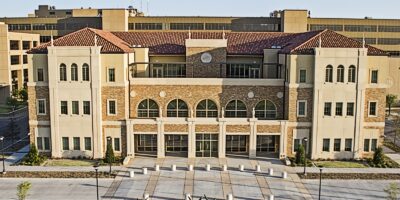
Welcome to the definitive guide for aspiring students of the Uniformed Services University of the Health Sciences (USUHS, or USU). Its medical school, the F. Edward Hébert School of Medicine in Bethesda, Maryland, is the nation’s only federal school of medicine. It trains physicians who will serve as officers in the Army, Navy, Air Force, Coast Guard and U.S. Public Health Service. Students pay no tuition, are commissioned before their first class and draw the full pay and benefits of a junior officer for all four years. In return, graduates serve at least seven years on active duty after residency.
This guide covers the 2026-2027 application cycle for students who plan to start medical school in August 2027. The AMCAS deadline for this cycle was October 15, 2026, interviews run virtually through early December and the school admits on a rolling basis. Every fact below was checked on October 28, 2026.
You will find the school’s mission, its accreditation, the MD, MD/PhD and Early Decision routes, the Molecules to Military Medicine curriculum, pay and service obligations, campus life, class statistics, the three current secondary essay prompts with original example responses and strategies to strengthen your application.
Be an Informed Applicant
Every medical school admissions committee notices a strong GPA, a solid MCAT score and meaningful clinical experience. But USU is not like any other medical school. It asks applicants to commit to a career as uniformed officers, to meet physical and security standards and to explain why military medicine is the right path for them. The sections below organize what you need to know about USU so you can decide whether it fits you and, if it does, make a clear case for your candidacy.
Nothing beats one-on-one guidance. Our medical school admissions consulting services team works with students applying to medical schools across the country, including applicants weighing USU against other routes into military medicine.
Key Takeaways
- Only U.S. citizens can apply. You must be a U.S. citizen by October 15 of the year before you start, be at least 18 at matriculation and be no older than 36 on June 30 of the year you start (age waivers are reviewed case by case). You also must pass a military physical and a security investigation. No prior military service is required.
- Academic context. For the 2025 entering class, accepted applicants had a median MCAT of 511 and a median GPA of 3.82. The school reports a matriculant average of 510 and 3.7. Applications are reviewed only with an MCAT of 496 or higher (500 from the 2028 cycle) and a cumulative GPA of at least 3.0.
- Mission. USU calls itself the Leadership Academy of Military Medicine. It trains physicians to care for “those in harm’s way” and to lead in the Military Health System and the Public Health Service.
- Key dates. AMCAS opens June 1 and closes October 15. The supplemental application is due 21 days after the invitation email (5 business days for Early Decision). Plan for all letters to arrive by October 15. Early Decision applicants submit AMCAS by August 3 and hear by October 1.
- Costs and pay. Tuition and fees are $0. Books and instruments are provided. The school’s 2026 brochure lists annual gross pay of $90,393.60 to $92,301.60 for a student with no prior service.
- The commitment. Graduates owe seven years of active duty (Army, Navy, Air Force or Coast Guard) or ten years (Public Health Service) after residency. Residency years do not count toward the obligation.
- Distinctive training. More than 500 hours of military-unique training, field exercises such as Operation Bushmaster, clerkships at military hospitals across the country and a four-year faculty coaching program.
- Next step. If you are applying this cycle, return your secondary on time, schedule your DoDMERB physical as soon as you are invited to interview and research the five services before interview day.
Key Statistics About Uniformed Services University of the Health Sciences (USUHS)
The snapshot and table below gather USU’s key numbers. Each figure carries its cohort or year, because the class profile, the cost year and the pay table each cover a different period. USU does not publish an applicant count for its recent classes, so this guide does not report an acceptance rate.

| Measure | Value | Cohort, population and source |
|---|---|---|
| School and degree | Uniformed Services University of the Health Sciences, F. Edward Hébert School of Medicine; Doctor of Medicine (MD) | USU School of Medicine About page |
| Location | 4301 Jones Bridge Road, Bethesda, Maryland, on the grounds of Walter Reed National Military Medical Center, across from the National Institutes of Health | USU 2026 admissions brochure |
| School type and founding | Federal (public) school of medicine; established by Congress in 1972; first LCME accreditation 1976 | USU About page; LCME directory |
| Accreditation | LCME, full accreditation granted July 2024; next review 2031-2032 | USU Accreditation page; LCME directory, checked October 28, 2026 |
| Students per class | 178, civilians and active duty | USU MD Program page (current) |
| Total MD enrollment | 709 | Enrolled students, October 2025 (AAMC MSAR, 2026 edition) |
| Median MCAT | 511 (mean 510.8); section medians 128 Chemical and Physical, 127 CARS, 128 Biological and Biochemical, 129 Psychological and Social | All accepted applicants, 2025 entering class (AAMC MSAR, 2026 edition) |
| Median GPA | 3.82 | Accepted applicants, 2025 entering class (AAMC MSAR, 2026 edition) |
| Average MCAT and GPA | 510 MCAT; 3.7 GPA (cumulative and science) | Matriculants (USU Application Prerequisites page and 2026 brochure) |
| Minimums for review | MCAT 496 (500 from the 2028 cycle); cumulative GPA 3.0. Early Decision: MCAT 505, science GPA 3.5 | 2026-2027 cycle (USU Application Prerequisites and Early Decision pages) |
| Applicants interviewed | 591 (56 in-state, 535 out-of-state); the school invites approximately 600 a year | 2025 entering class (AAMC MSAR, 2026 edition); USU Application Process page |
| Applicants and acceptance rate | Not published | No current official applicant count found |
| Waitlist | About 200 waitlist positions per cycle; about 100 offers made from the waitlist | AAMC MSAR, 2026 edition |
| Tuition and fees | $0 in-state and out-of-state (total cost of attendance and health insurance also $0) | 2025-26, first-year students (AAMC MSAR, TSF 2025-2026) |
| Student pay | Annual gross pay $90,393.60 (with dependents column) or $92,301.60 (no dependents column) | O-1 student with no prior service (USU 2026 admissions brochure) |
| Service obligation | 7 years active duty after residency (10 years for Public Health Service; 9 years for MD/PhD) | USU 2026 admissions brochure; MD Program page |
| Students receiving financial aid; average debt | 0%; average indebtedness not available | LCME Part I-B, 2024-2025 (AAMC MSAR, 2026 edition) |
| Match | 88% of the Class of 2026 matched to their first-choice specialty | Military Match Day, December 10, 2025 (USU School of Medicine Annual Report 2025) |
| Board certification rate | 93% | USU MD Program page |
| Direct federal research grants and contracts | $52,086,276 | Fiscal Year 2024 (AAMC MSAR, LCME AFQ) |
| Global health experience | 25% of graduating seniors reported one | AAMC Graduation Questionnaire 2025 (AAMC MSAR) |
| Classes begin | August 2027 for this cycle’s entering class | AAMC MSAR, 2026 edition; USU Application Process page |
A few notes on reading these numbers. The medians describe accepted applicants, so they are not minimums. The school’s own averages (510 and 3.7) describe matriculants. Many students arrive with years of service or a career behind them, so the academic numbers tell only part of the story. Two other figures the school publishes help describe the class: about 20% of USU medical students are first-generation college graduates, and 51% have prior military experience. About 70% of the faculty are current or former military officers.
The tuition line deserves a closer look too. “$0” is accurate, but the real financial picture includes officer pay during school and a service commitment afterward. The tuition and pay section below explains both.
Mission and Educational Priorities
USU’s School of Medicine states its mission this way:
“The Uniformed Services University School of Medicine trains Army, Navy, Air Force, Coast Guard, and PHS physicians, public health practitioners, psychologists, and biomedical scientists to support our nation’s military and public health systems, the National Security and Defense Strategies of the United States, and the readiness of our Uniformed Services. As the Leadership Academy of Military Medicine, we prepare our students to become outstanding clinical practitioners, researchers, and leaders.”
Its vision is “To be our Nation’s preeminent military medical training and research institution, indispensable to our national health security in war or peace.” The school lists five values: compassion, caring and respect; ethics and integrity; excellence in scholarship and care; innovation; and selfless service. Its motto is “Learning to Care for Those in Harm’s Way.”
The school describes three things it does. It produces military physician-leaders and scientists who drive innovation in academia and federal service. It is the focal point for military medical education and training at every stage of a military physician’s career. And it serves as the hub of biomedical science, health services research and innovation for the Military Health System (MHS).
What the mission means for applicants
USU’s mission is narrower and more specific than most medical schools’. The school exists to supply career medical officers. Congress created it in 1972 so that the uniformed services would have a steady supply of physician-leaders, and the school was named for F. Edward Hébert, the Louisiana congressman who championed it. Its graduates now make up 25% of Military Health System physicians and 33% of MHS leadership, and they have a long record of staying in service longer than physicians from other accession sources.
That history shapes what the admissions committee looks for. The school selects applicants who show potential as physicians and leaders and a strong commitment to military medicine and public health. In practice that means three things for you:
- Your motivation has to include service, not only medicine. The first secondary essay asks directly why you want to serve as a uniformed medical corps officer. A strong academic file without a clear answer to that question is a weak USU application.
- Leadership matters as much as clinical exposure. USU builds leadership training into every part of its curriculum and tests it in field exercises. Experiences where you led people under pressure, in uniform or out, are directly relevant.
- You will join a system, not just a school. Your branch of service, your residency, your duty stations and your first years as a physician are shaped by the needs of your service. Applicants who understand this and are comfortable with it tend to write and interview more convincingly.
Educational priorities
USU’s curriculum rests on four priorities. Integration connects coursework across USU’s three graduate-level schools (the School of Medicine, the Graduate School of Nursing and the Postgraduate Dental College). State-of-the-art instruction uses simulation, distance learning and integrated teaching. Academic rigor keeps the program competitive and demanding. Military relevance prepares students to show the knowledge, skills and abilities of a Joint Expeditionary Medical Officer.
USU integrates high academic standards with extensive clinical and military training. Graduates are expected not only to know medical science but to apply it with skill and compassion, often in places far from a large hospital. The school’s research mission focuses on military-relevant topics, including traumatic brain injury, PTSD, rehabilitation and prosthetics, precision medicine, emerging infectious diseases, cancer and trauma care. USU reports more than 1,500 peer-reviewed publications in 2025 and places itself among the top five percent of federally funded research institutions.
Key features at a glance
- Location: Bethesda, Maryland, on the grounds of Walter Reed National Military Medical Center and across the street from the National Institutes of Health.
- Accreditation: Fully accredited by the LCME through the 2031-2032 academic year.
- Programs: MD, MD/PhD, Early Decision, the Enlisted to Medical Degree Preparatory Program (EMDP2) and dual degrees in health professions education.
- Facilities: The Val G. Hemming Simulation Center, research laboratories and close ties to the NIH and military research institutes.
- Service: A commitment to serving military and public health communities, with emphasis on primary care, leadership and global health. More than 40% of graduating students choose family medicine, internal medicine, pediatrics or obstetrics and gynecology each year.
Accreditation and Institutional Identity
The MD program at the F. Edward Hébert School of Medicine is accredited by the Liaison Committee on Medical Education (LCME). In October 2015, it was the first medical school in the country to go through accreditation under the then-new LCME standards, and it received the maximum eight-year term. During the 2023-2024 academic year, the school completed its next full review, including an LCME site visit. In July 2024 it received full accreditation for another eight-year period, and in 2025 the LCME found that all six findings from that review had been resolved. The next LCME review is scheduled for the 2031-2032 academic year. The LCME’s own directory lists the school’s status as Full, with its next survey in 2031-32 and first accreditation in 1976.
Accreditation agencies
Beyond the MD program, the School of Medicine holds accreditation from several agencies for its other degree programs:
- The Liaison Committee on Medical Education (LCME)
- The American Psychological Association Commission on Accreditation (CoA)
- The Council on Education for Public Health (CEPH)
- The Accreditation Board for Engineering and Technology (ABET)
- The Commission on Accreditation of Healthcare Management Education (CAHME)
- The American College of Surgeons (ACS)
Clinical psychology program accreditation
The Clinical Psychology Program has been accredited continuously by the American Psychological Association (APA) since 1997. USU has submitted the data the APA requested for review, and the program remains accredited. Questions about the program’s accreditation go to the APA’s Office of Program Consultation and Accreditation, 750 1st Street, NE, Washington, DC 20002, phone (202) 336-5979, email [email protected] (www.apa.org). The program is also a member of the Council of University Directors of Clinical Psychology (CUDCP) and the Council of Clinical Health Psychology Training Programs (CCHPTP). The clinical psychology PhD is open to members of the uniformed services and is separate from the MD program.
MSPH in Environmental and Occupational Health
The Master of Science in Public Health (MSPH) in Environmental and Occupational Health is one of fewer than 25 master’s-level programs in the United States accredited under ABET’s Industrial Hygiene program criteria. ABET accreditation is recognized by the American Board of Industrial Hygiene, and graduates receive one year of experience credit toward the board-certified industrial hygienist exam.
What makes USU’s identity different
USU is the nation’s only federal health sciences university. It sits inside the Military Health System, so its students are active duty officers, its faculty are largely military physicians and its clinical training takes place in military treatment facilities. It is often called “America’s Medical School,” a phrase the school uses in its own secondary essay prompts.
The university also includes the Graduate School of Nursing and the Postgraduate Dental College, and it has two regional campuses (described under campus life below). For an MD applicant, the relevant program is the F. Edward Hébert School of Medicine. Its graduate programs in public health, psychology and biomedical science are separate applications.
USU’s accreditation record shows that it meets national standards for medical education. Accreditation is not a ranking, and it does not guarantee any individual outcome. What sets USU apart for most applicants is not prestige but purpose: a curriculum, culture and career path designed for military medicine. The school’s research strengths in trauma care, infectious disease and military medicine, and its partnerships with the NIH and Walter Reed, support that purpose.
If you are still deciding whether military medicine is for you, clinical work with patients is one of the best ways to test the fit before you commit. Many applicants build those hours through clinical internships for pre-med students, hospital jobs, EMS work or service in uniform.
Medical Programs and Affiliations
USU’s School of Medicine offers one medical degree, the MD, with several routes into it and a few ways to add a second degree. All MD students are commissioned officers. Graduate programs in biomedical science, public health and psychology are separate and are not covered in detail here.
Doctor of Medicine (MD) program
The four-year MD program accepts 178 students into each class, both civilians and active duty personnel. Accepted students pay no tuition and are commissioned as officers into one of five uniformed services before classes begin: the Army, Navy, Air Force, Coast Guard or Public Health Service. In return, they complete an active duty service commitment after graduation: seven years for the Army, Navy, Air Force and Coast Guard, and ten years for the Public Health Service.
Key parts of the MD program include:
- Pre-clerkship education: About 16 months of integrated, organ-system modules that teach the foundational sciences (anatomy, physiology, biochemistry, pathology and more) alongside early clinical work.
- Military Medical Practice and Leadership: A track that runs through the entire pre-clerkship period and covers combat medical skills, prehospital trauma life support, medical intelligence, health service support and leadership, with field exercises.
- Clinical skills training: Patient contact starts within the first weeks. Students train in the Val G. Hemming Simulation Center and with standardized patients throughout the program.
- Clinical rotations: Required clerkships in core specialties at military treatment facilities (MTFs) across the United States, followed by sub-internships, electives and advanced clerkships.
Early Decision Program (EDP)
USU participates in the AMCAS Early Decision Program, introduced in the admissions cycle for the Class of 2029. EDP is a binding route: you apply only to USU, and if accepted you commit to enroll. Successful applicants learn their decision by October 1.
To be considered, you must designate your application as Early Decision in AMCAS and have a minimum MCAT of 505 and a minimum science (BCPM) GPA of 3.5. You cannot have already applied to any U.S. medical school for the current year. Key EDP dates are:
- AMCAS application and transcripts: August 3
- MCAT scores: August 3
- Secondary application: within 5 business days of receipt
- Letters of recommendation: August 7
- DoDMERB-approved physical exam, security documents and Letter of Approval or Release (for current military): September 30
- Decision: by October 1
To leave a margin, aim to submit AMCAS by August 1. Early Decision applications that are incomplete or late are moved to the regular pool rather than rejected.
MD/PhD Physician-Scientist Program
The MD/PhD program trains military officers as independent physician-scientists who carry out clinical and basic science research. Students should expect to spend seven to eight years; more than 85% finish in seven. To apply, you indicate MD/PhD interest on AMCAS and submit a separate USU PhD program application. The Admissions Office reviews the AMCAS application for an interview, and the relevant graduate program reviews the PhD application. The two reviews are independent, so an applicant accepted to the MD program but not the PhD program can still continue as an MD applicant.
The curriculum has three phases. In the pre-clerkship phase, students complete two four-week laboratory rotations and 17 months of pre-clerkship training, then take USMLE Step 1. In the graduate phase, they spend three or four years on thesis research, with monthly “return to clinic” activities. In the clerkship phase, they rejoin the medical school for the core clerkships and advanced electives. Research areas include emerging infectious diseases, molecular and cell biology, neuroscience and public health, with military-relevant focus on traumatic brain injury, cancer, PTSD, combat casualty care, genomics and precision medicine.
MD/PhD students serve as commissioned officers and incur a nine-year active duty obligation after graduate medical education, instead of seven. The tuition is $0. Because the PhD phase changes the timeline, ask the program contact, Robert Kortum, MD, PhD, how commissioning and pay work for your entry year before you apply.
Enlisted to Medical Degree Preparatory Program (EMDP2)
The School of Medicine established EMDP2 in 2014 to open military medicine to enlisted service members. It is a structured, two-year preparatory program, offered with the armed forces, that lets enlisted members of the Army, Navy, Air Force, Coast Guard and Marine Corps complete medical school prerequisites and prepare for the MCAT while staying on active duty. Graduates who are accepted commission as officers and enter medical school at USU or at a civilian school, with a service obligation either way.
Since the program began, 266 EMDP2 students have matriculated, 190 have been admitted to medical school and 76 have graduated as physicians. In 2025 the program received 177 applications for 26 openings, an 84% increase in applications since 2021. Each service runs its own EMDP2 selection, with packets that include service records, supervisor and commander letters, medical qualification, test scores, transcripts and a personal statement. Lisa Harris, DO, directs the program.
Longitudinal Coaching Program
The Longitudinal Coaching Program pairs each student with a faculty coach for regular meetings across all four years. Members of the Class of 2026, the first participants, said having a coach improved their well-being, helped them recognize and use feedback on clinical skills and kept them accountable for academic and personal goals. More than 75% of the Classes of 2026 and 2027 rated the program as very effective. Coaches are civilian and active duty faculty from every service and a wide range of departments.
Health Professions Education (HPE) and other dual degrees
USU medical students can earn certificates in Health Professions Education alongside the MD. The Department of Health Professions Education also offers two dual degrees for aspiring leaders in academic military medicine: the MD-MHPE (Master’s in Health Professions Education) and the MD-MEd-HPE (Master’s in Education in Health Professions Education). A competitively selected group of students completes a master’s within the four-year program. USU does not offer an MD/MPH or MD/MBA dual degree; its Master of Public Health and other public health degrees are separate graduate programs designed for students with health-related work experience.
Pathways and the Military Medical Community
USU runs Pathways to Military Medicine programs for students from middle school through college. They include summer programs (such as the USU Summer Scholars Program, an 8- to 10-week research program for high school and college students), volunteer positions at Walter Reed and other military hospitals, shadowing through the Student Clinical Observer Opportunities Program (SCOOP) at Walter Reed and research internships with partners such as the Walter Reed Army Institute of Research.
The Military Medical Community (MMC), launched in 2025, is a free hub for anyone interested in military medicine, whether through USU, the Health Professions Scholarship Program (HPSP) or another route. It offers mentorship and networking events, monthly specialty-focused “Military Medical Monday” sessions and local chapters at colleges. More than 1,100 students have joined.
Community engagement and service learning
Service is part of a USU student’s daily life, since every student is a serving officer. Students take part in health-based volunteer work in the community, interest groups focused on community health centers, global health and humanitarian assistance, and operational training that prepares them to respond to disasters. These activities help students build a sense of social responsibility and apply what they learn in real settings.
Clinical affiliations
USU’s clinical partner on campus is Walter Reed National Military Medical Center, next door. Clerkships and electives take place at military treatment facilities in Maryland, Virginia, North Carolina, Georgia, Ohio, Texas, California, Washington and Hawaii, among others. USU also hosts the National Capital Consortium, which sponsors military graduate medical education in the National Capital Region. After graduation, the Defense Health Agency offers residency programs at 25 institutions across the country.
Curriculum Overview
USU’s MD curriculum is called Molecules to Military Medicine (M2MM). It integrates basic science, clinical medicine and health systems science with more than 500 hours of military-unique training. The school describes its four-year, year-round curriculum as nearly 700 hours longer than the typical curriculum at other American medical schools. Those extra hours cover epidemiology, tropical medicine, emerging infectious diseases, trauma care, military leadership, field exercises and disaster medicine. Specialized training also includes interdisciplinary teamwork, cross-cultural medicine and a medical nutrition curriculum designed for operational and clinical settings.
M2MM rests on four conceptual pillars: integration of basic and clinical sciences across all four years, early patient contact, adaptability to different learning styles and the use of advanced educational technologies. The school moved from a discipline-based curriculum to this integrated, organ-system design in 2011, and it switched from letter grades to Honors, Pass or Fail at the same time. Students are not ranked.
The curriculum has three phases: pre-clerkship, core clerkship and post-clerkship. Military medicine runs through all three.
Pre-clerkship phase
The 16-month pre-clerkship phase builds a strong scientific foundation and starts students’ professional identities as officers and physicians. Clinical skills training and patient care activities begin in the first week of medical school. Students are mentored by experienced faculty and study the social and epidemiologic principles that underlie effective patient care.
The phase opens with the seven-week Foundation in Medicine module, which introduces key ideas in basic science and clinical medicine. Organ-system modules follow:
- Musculoskeletal and Integument
- Cardiopulmonary-Renal
- Neuroscience and Behavior
- Gastrointestinal, Hepatobiliary, Metabolism and Nutrition
- Reproduction and Endocrinology
- Multisystem and Complex Diseases, the final module, which prepares students for the complexity of clinical medicine before clerkships
Two longitudinal courses build clinical reasoning across these modules:
- Introduction to Clinical Reasoning teaches students to synthesize clinical data, form diagnostic hypotheses, choose appropriate tests and make sound clinical decisions, through lectures and small-group discussions led by physicians from several departments.
- Integrated Clinical Skills teaches students to gather information through the medical interview and physical exam, then use it to build problem lists, differential diagnoses and basic treatment plans.
Formal coursework (labs, lectures, small groups and clinical work) takes up to about 26 hours a week, which usually leaves two or three half-days for independent study. Most lectures are recorded, so students can attend in person or watch later. Attendance at labs and small groups is required.
Military Medical Practice and Leadership (MMPL)
MMPL runs through the entire pre-clerkship phase, starting at orientation. It is the core of the operational military medicine curriculum. Topics include professionalism, combat medical skills, prehospital trauma life support, military-unique medicine, medical intelligence, health service support, medical planning and logistics, the military decision-making process and stability operations. Students take part in two field exercises and a full day of field training and military history at Antietam National Battlefield.
Medical Field Practicums (MFPs) and field exercises
USU’s field training is progressive, with each exercise building on the last:
- MFP 101 is a four-day field experience that introduces first-year students to basic military, medical and leadership skills.
- MFP 102 is a two-day practical exercise that follows the Advanced Combat Medical Experience (ACME) course and focuses on stabilizing combat casualties in the field.
- MFP 201, Operation Gunpowder, is a one-day practical exercise after a didactic course on tactical field care, forward resuscitative care, prolonged casualty care and en route care.
- MFP 202, Operation Bushmaster, is a five-day simulated deployment that caps more than three years of military curriculum. After a ten-day preparatory course, students lead and deliver care in a simulated deployed environment.
Summer periods add military-relevant courses and other practical training. In 2025 students also attended specialized schools such as Army Airborne School, trained abroad and observed exercises aboard the hospital ship USNS Mercy.
Core clerkship phase
After a week of Transition to Clerkship activities, students complete 45 weeks of required clerkships in three 15-week blocks. The phase includes six core clerkships, which can be completed in any order, and one elective experience. Each block starts with a week of didactic sessions on campus and ends with a leave period. Clerkships weave in basic science “threads” (anatomy, physiology and pathology concepts from the pre-clerkship modules) and clinical threads such as professionalism, ethics, patient safety, quality improvement and evidence-based medicine.
Students take a shelf exam at the end of each five-week rotation. Clerkship grades also reflect how students care for patients on their teams, work in multidisciplinary teams, take histories and do physical exams, build differential diagnoses, write notes and communicate. Clerkships take place at military treatment facilities across the country (see clinical rotations below).
Post-clerkship phase
The post-clerkship phase prepares students for graduate medical education and builds advanced clinical decision-making using the “RIME” model: students move from Reporting information to Interpreting it to Managing and Educating patients.
- USMLE Step 1: Six weeks of dedicated study time at the start of the phase. USU places Step 1 after the core clerkships because students remember basic science better when they can connect it to real patients.
- Bench to Bedside and Beyond (B3): A six-week module that revisits basic science in a clinical context, covering patient safety, team-based care, professionalism and evidence-based decisions. It includes certification in Advanced Trauma Life Support (ATLS) and Advanced Life Support (ALS).
- Advanced clerkships and selectives: Emergency medicine is required, along with anesthesia and neurology if not done earlier. Students complete two sub-internships (for example in general surgery, family medicine, pediatrics, psychiatry or internal medicine) and seven or eight selective blocks, which can include clinical electives, operational or humanitarian rotations, audition rotations at prospective residency sites and research. Electives can take place at military and civilian institutions around the world.
- USMLE Step 2 CK: Taken during this phase. Students must pass Step 1 and Step 2 before graduation.
Capstone research
Capstone is an optional, faculty-mentored research project on a topic the student chooses. Projects range from basic science to clinical, education, operational, performance improvement and public health research. Students can devote up to three months of the post-clerkship phase to the project, and planning starts earlier with a mentor and study design. Over 80% of the 2025 graduating class completed Capstone projects, and many students publish in peer-reviewed journals.
How the curriculum is changing
The 2026 brochure says M2MM will be modernized over the coming academic years, with a pilot already under way in the Neuroscience and Behavior module. The updated curriculum adds individualized AI teaching and learning tools in the pre-clerkship phase so students can learn at their own pace, which frees time for dual degrees, certificates, expanded clerkships or Capstone research. Assessment will shift toward competency-based medical education built on AAMC foundational competencies. If you apply this cycle, expect to hear about these changes on interview day.
How this compares with a civilian curriculum
USU students learn everything students at civilian schools learn, plus operational medicine, officership and leadership. The school cites published research showing that its graduates feel better prepared for a first deployment and for military residency than graduates of civilian schools. The tradeoff is time and structure: students wear the uniform of the day, meet service fitness and weight standards, take physical fitness tests twice a year and complete required field exercises in addition to coursework.
Admissions Requirements and Application Process
USU uses AMCAS and a rolling, three-stage process: the AMCAS application, the supplemental (secondary) application and interviews. Your file moves to the next stage as soon as the previous one is complete, so delays at any step slow your whole application. The school advises applying in June of the year before you plan to start.
The main factors in the committee’s review are your cumulative GPA (with science GPA carefully weighed), MCAT score, letters of recommendation, clinical experience, volunteer and community service and your AMCAS and USU essays.
Eligibility and commissioning requirements
- Citizenship: All USU students must be U.S. citizens by October 15 of the year before planned matriculation. This cannot be waived. If your citizenship is pending, contact your admissions counselor with your hearing location, petition number and hearing date. Permanent residents, international applicants and DACA recipients are not eligible.
- Age: You must be at least 18 at matriculation and no older than 36 on June 30 of the year you start. Older applicants need an age waiver from their service, which the admissions office handles after the interview invitation.
- Physical and security standards: You must pass a Department of Defense Medical Examination Review Board (DoDMERB) physical that meets military medical standards, meet Army height and weight standards regardless of your preferred branch and complete a security investigation (SF-86).
- Degree: You must hold a bachelor’s degree from an accredited institution in the United States, Canada, Puerto Rico or another U.S. territory by June 1 of the year you start.
- Transfers: USU does not accept transfer students or offer advanced standing. Everyone completes the full four-year curriculum.
Academic prerequisites
Complete all prerequisites by June 1 of the year you plan to start, at an accredited institution in the United States, Canada, Puerto Rico or a U.S. territory, with a grade of C or higher (C- is not accepted):
- Biology: one academic year with lab (8 credits). Accepted courses include general biology, human anatomy, human physiology, microbiology, zoology and cell biology. Botany, plant biology, environmental science and ecology alone do not count.
- General or inorganic chemistry: one academic year with lab (8 credits).
- Organic chemistry: one academic year with lab (8 credits). Biochemistry may replace the second semester.
- Physics: one academic year with lab (8 credits). Algebra- and calculus-based physics both count.
- English, foreign language, writing-intensive humanities, social science or psychology: one academic year (6 credits).
- Calculus or statistics: one semester (3 credits). Beginning with the 2028 application cycle (the incoming Class of 2032), statistics alone will no longer meet the requirement, and calculus will be required.
Community college, online and hybrid courses are accepted, including labs, as long as the school is a U.S. accredited institution. CLEP credit is not accepted. AP and IB credit that your college granted is accepted for biology, calculus, statistics, general chemistry, physics and English, but you are expected to take upper-level science courses to show you can handle advanced work. Our medical school prerequisites checklist compares these requirements with other schools.
GPA and MCAT
Applications are automatically withdrawn unless you have a cumulative undergraduate GPA of 3.0 or higher, or a 3.0 or higher in a post-baccalaureate or master’s program. If your GPA is well below average, USU recommends 25 to 30 additional credit hours of post-baccalaureate or graduate work.
The MCAT must be taken within three years before the year you plan to start. For this cycle, USU accepts scores from January 2024 through September 2026. The minimum total score for review is 496 (500 starting with the 2028 cycle). USU does not average multiple scores, encourages retakes for low scores and treats any improvement as valid. All lifetime scores are visible to the committee.
Letters of recommendation
Submit letters through the AMCAS Letter Service. USU accepts up to six individual letters. At a minimum, you need:
- A pre-health committee letter or letter packet (preferred if your school offers one), or, if you cannot provide one, two academic science letters (biology, chemistry, physics or math) and one academic non-science letter from professors or teaching assistants who taught you, and
- A clinical letter from a health care professional (physician, nurse, physician assistant, nurse practitioner, certified nursing assistant or similar) who has seen your patient care interactions. Research supervisors do not count as clinical letter writers.
Military applicants should add a letter from a supervisor or superior officer that speaks to responsibility, dependability, maturity and loyalty. Letters from family members are not accepted, and letters from high-ranking officials who have never worked with you will not help. If you cannot provide a required letter, you must explain why in the secondary application. Reapplicants must resubmit any reused letters through AMCAS and should add at least one new academic letter and a new clinical letter if possible.
Letters are due no later than October 15, so plan for every letter to reach AMCAS by then. The committee will not review your file until all letters arrive, so earlier is much better.
Clinical experience, service and PREview
There is no minimum number of clinical hours, but USU recommends more than 50. If you have no clinical experience, you must explain why in detail. After academic screening, the committee values clinical exposure and community service and looks for experiences that promote personal growth. Shadowing is recommended. Hands-on roles where you work with patients, such as EMT, medical assistant or nursing assistant work, or pre-med summer internships in clinical settings, also make it easier to secure the required clinical letter.
The AAMC PREview professional readiness exam is not required. USU recommends it, and the committee considers PREview scores if you submit them. Casper is not listed among USU’s requirements.
Military applicants
Military applicants compete on the same level as civilians, with two extra steps:
- Approval to apply: Active duty officers, service academy students and ROTC cadets need a Letter of Approval (LOA); enlisted members need a Letter of Release (LOR). Letters must be issued specifically for USU; HPSP approval letters are not accepted. Final letters come from Air Force Personnel Command, Army Human Resources Command, Navy Personnel Command, Marine Corps Manpower and Reserve Affairs or the Public Health Service Office of the Surgeon General. You can apply before your final letter arrives, but no decision is made without it.
- Special cases: Active duty Coast Guard members are selected to apply through Coast Guard boards. Reservists need a commanding officer’s release memo and a DD 368. ROTC cadets need an educational delay memo. National Guard members need a release memo and, if accepted, approval from their state’s adjutant general. Members of the Individual Ready Reserve do not need an LOA or LOR.
Active duty applicants are usually limited to the branch they currently serve in. Transfers to another component are rare.
The supplemental application
After USU receives confirmation of your AMCAS submission, it emails you a link to the Applicant Gateway for the supplemental application. The supplemental is mandatory and free. It is due within 21 days of the invitation email (5 business days for Early Decision), and you must submit it even if your AMCAS has not been verified. You can submit it before your MCAT or all your letters arrive, but both are required before the committee considers you for an interview. The three essay prompts are public, so you can draft them before your invitation (see the secondary section below).
Interview, service preference, physical and security check
USU invites approximately 600 applicants to interview each year. Two School of Medicine representatives interview you separately, and the interviews are currently virtual. When you accept an interview invitation, you must:
- Schedule or complete your DoDMERB physical before interview day and give the date to the Commissioning Coordinator.
- Complete an SF-86 for the security investigation.
- Be ready to rank the five services (Army, Navy, Air Force, Coast Guard and Public Health Service) and state your commitment to each.
Decisions, waitlist and orders
After both interviews, your file goes to the Admissions Committee. An approved applicant receives a conditional offer: you hold a place in the class, but official orders depend on security clearance eligibility and physical qualification. Some applicants need a medical waiver, and the Commissioning Coordinator helps with that process. Once both are cleared, the offer becomes unconditional. Orders are usually processed in May and June. Most students attend service-specific officer training (four to six weeks) over the summer, and classes begin in August. Students who already served as commissioned officers are exempt from that orientation.
Acceptance notices go out from October 15, 2026, through June 1, 2027. You have up to two weeks to respond to an offer. No deposit is required. Deferments are rarely given. USU keeps a waitlist of about 200 positions and typically makes about 100 offers from it. The committee welcomes updates that would help its decision.
Admissions counselors
Counselors are assigned by the first letter of your last name and work with you through the cycle:
- A-L: Ms. Alexandra Bowker, [email protected]
- M-R: Ms. LaRhonda Baker, [email protected]
- S-Z: Ms. Brooke Forrest, [email protected]
The Office of Admissions can also be reached at [email protected] or (800) 772-1743.
Admissions checklist
- MD/PhD application (if applicable): Indicate MD/PhD on AMCAS and submit the separate USU PhD program application.
- AMCAS: Apply with school code 821 between June 1 and October 15. USU is listed with the other medical schools in Maryland. Send official transcripts through AMCAS. Our guide to applying to medical school with AMCAS walks through the primary application.
- Supplemental application: Submit within 21 days of the email invitation.
- Interview: About 600 applicants are invited based on their completed files.
- Acceptance: The Admissions Committee reviews interviewed applicants for a final decision.
Timeline for the 2026-2027 cycle
| Date | Step |
|---|---|
| Spring 2026 (before June) | Request letters, finish the MCAT if possible, draft the three USU essays and, for current military, start the LOA or LOR process |
| June 1, 2026 | AMCAS application period begins (school code 821). USU advises applying in June |
| July 6, 2026 | Application review begins |
| Mid to late July 2026 | First interview invitations sent |
| August 1 to 3, 2026 | Early Decision: AMCAS, transcripts and MCAT scores due (aim for August 1) |
| August 7, 2026 | Early Decision: letters of recommendation due |
| Within 21 days of invitation | Supplemental application due (5 business days for Early Decision) |
| September 30, 2026 | Early Decision: DoDMERB exam, security documents and LOA or LOR due; latest MCAT date considered |
| October 1, 2026 | Early Decision decisions |
| October 15, 2026 | AMCAS deadline; U.S. citizenship deadline; target date for all letters of recommendation |
| October 15, 2026, to June 1, 2027 | Acceptance notices sent on a rolling basis |
| Early December 2026 | Last interview invitations offered |
| May to June 2027 | Official orders processed; June 1, 2027, deadline for degree and prerequisites |
| Summer 2027 | Service-specific officer orientation (four to six weeks) |
| August 2027 | Classes begin |
Tuition, Cost of Attendance and Financial Aid
USU is a tuition-free institution. Students pay no tuition or fees, and books and instruments are provided free or on loan. Students do need access to a computer and may need to buy their own. The AAMC’s tuition survey for 2025-26 lists tuition and fees, other expenses, health insurance and total cost of attendance all at $0, and 0% of students receive financial aid, because no one needs it.
The more useful way to think about USU’s cost is this: students are paid as officers while in school, then repay the nation with service.
Service status and pay
While enrolled, every student serves as an active duty commissioned officer in grade O-1 (Second Lieutenant in the Army or Air Force; Ensign in the Navy, Coast Guard or Public Health Service) with the full pay and allowances of that grade. Students with prior service keep the pay of the highest grade they held before matriculation (the “save pay” provision in 10 U.S.C. 2114), though everyone receives the O-1 housing allowance. Officers who hold a higher grade must be recommissioned as O-1s, and regular officers must resign their regular commissions before they start.
The school’s 2026 admissions brochure lists annual pay for a student with no prior service:
| Pay type | With dependents | No dependents |
|---|---|---|
| Annual base pay (taxable) | $49,803.84 | $49,803.84 |
| Basic Allowance for Housing (BAH, non-taxable) | $36,648.00 | $38,556.00 |
| Basic Allowance for Subsistence (BAS, non-taxable) | $3,941.76 | $3,941.76 |
| Total annual gross pay | $90,393.60 | $92,301.60 |
BAH depends on your duty station and dependent status and is paid to members who live off base. Because there is no base housing for students, all students receive it. For 2026 the Bethesda rate works out to about $3,054 or $3,213 a month, depending on dependent status. Check the current Defense Travel Management Office rates for ZIP code 20814 when you plan your budget, since rates change each January.
On commencement day, graduates are commissioned into the regular medical corps at grade O-3 (Captain in the Army or Air Force; Lieutenant in the Navy, Coast Guard or Public Health Service). The brochure lists combined O-3 base pay, BAH (with Washington, D.C., locality) and BAS of $103,260.96 for a graduate with no prior service and no dependents, and $110,784.96 for one with dependents. The four years of medical school do not count toward longevity for pay, but residency years count toward promotion and retirement. The school notes that fully trained military physicians who have completed their payback earn about $200,000 to $300,000, with full medical and dental benefits, 30 days of paid leave and no malpractice insurance costs.
Benefits
As active duty officers, students and their families receive:
- Health care: Comprehensive medical and dental care at no charge for students through TRICARE. Dependents can enroll in TRICARE plans, which may include care in military treatment facilities at no cost, and in the TRICARE Active Duty Family Dental Plan.
- The University Family Health Center (UFHC): A TRICARE Prime clinic run by USU’s Department of Family Medicine that serves as every medical student’s primary care site and can enroll family members. It ranks among the top MHS small clinics for patient satisfaction.
- Leave: 30 days of paid leave a year, taken during academic breaks.
- Other benefits: Commissary and exchange shopping privileges, free legal help with taxes and wills, low-cost life insurance and reimbursement of Metro commuting costs up to about $325 a month.
The service obligation
After the MD, USU graduates are required by law to serve as active duty officers for seven years (Army, Navy, Air Force or Coast Guard). Public Health Service graduates owe ten years, and MD/PhD graduates owe nine. Time in internship or residency does not count toward the payback, although it does count toward retirement. Physicians who complete 20 or more years of active duty qualify for military retirement, including monthly pay and health benefits.
Graduates who serve fewer than 10 years on active duty after graduation (not counting residency) are placed on the Individual Ready Reserve (IRR). IRR members have no drill requirements but can be recalled by the President in an emergency:
- Fewer than 8 years of active duty: 6 years on the IRR
- 8 to 9 years: 4 years on the IRR
- 9 to 10 years: 2 years on the IRR
A typical timeline for a USU graduate, then, is four years of medical school, three to seven years of residency, and seven years of payback, or about 14 to 18 years in uniform from matriculation.
USU versus HPSP
The other major route into military medicine is the Health Professions Scholarship Program (HPSP), which pays tuition at a civilian school. Here is how the school compares them:
| Feature | USU | HPSP |
|---|---|---|
| How to apply | AMCAS, school code 821; choose your service if accepted | Apply through a service-specific medical recruiting district |
| Tuition | Tuition-free until graduation or disenrollment | Full tuition paid (up to 4 years) |
| Books and instruments | Provided at no charge | Vary by school |
| Pay | Full O-1 pay plus BAH and BAS, all year | Monthly stipend of $2,999 for 10.5 months, plus 45 days of O-1 active duty pay, BAH and BAS |
| Service obligation | 7 years active duty after residency; IRR up to 6 years if under 10 years of active duty | 4 years active duty after residency (5, 6 or 7 years for longer funding); IRR obligation also applies |
| Benefits | Full active duty benefits for you and your dependents | Active duty benefits for you only during 45-day training periods |
| Career planning | Four-year coaching program, military faculty mentors, operational training | Access to an HPSP liaison; limited operational opportunities |
The choice comes down to whether you want a fully military education with pay and a longer obligation, or a civilian education with a shorter obligation. If you are comparing tuition-free options more broadly, see our guide to the top tuition-free medical schools in the U.S.
Campus Facilities and Student Life
The student body at USU includes some of the nation’s brightest scholars, people with a deep commitment to service and science. Students describe a culture of camaraderie and teamwork. Within each class, students are organized into small teams, often called fire teams, that help and encourage one another. Social life includes intramural sports, study groups and events in the Student Union, along with student groups, volunteer opportunities, mentorship programs and guest lectures. Academic counselors, tutoring and student government add support.
Location
USU sits on the grounds of Naval Support Activity Bethesda, next to Walter Reed National Military Medical Center and across the street from the National Institutes of Health and the National Library of Medicine. The campus is in a suburban setting just outside Washington, D.C., with easy access to national monuments, museums, restaurants and sports. Rock Creek Park, the Potomac River and Shenandoah National Park offer outdoor options. A Metro stop near campus connects students to downtown Bethesda and the rest of the region.
Satellite locations
USU has two regional campuses. USU-South in San Antonio, Texas, houses the Postgraduate Dental College, the College of Allied Health Sciences and the Tri-Service Center for Oral Health Studies. USU-West in San Diego, California, supports USU’s schools, students, faculty and research in the western United States. The School of Medicine also has associate deans for regional education in San Diego, San Antonio and Portsmouth, Virginia, who support students and faculty at clerkship sites there.
National Capital Consortium
USU is home to the National Capital Consortium (NCC), which sponsors all military graduate medical education in the National Capital Region. As the largest sponsor of GME in the Military Health System, the NCC trains physicians, dentists and other health professionals who care for service members and their families.
Military life
USU is a multiservice environment. Students learn alongside peers from the Army, Navy, Air Force, Coast Guard and Public Health Service, which builds shared purpose and teamwork across branches. Students must meet their service’s standards and regulations, including training requirements, physical fitness tests twice a year, weight standards and annual evaluations. They wear the uniform of the day on campus and on rotation.
The Office of the Commandant, led by CDR Sean Simmons, MD, provides military leadership and helps students with service-specific questions about health care, housing allowances and career development. Company commanders for each service handle officer development, fitness testing and evaluations.
A common question: students are not pulled out of medical school to deploy. The school is clear that medical students do not yet have the skills to support combat operations and that the services need them to finish training and pass their licensing exams.
Pay and benefits in daily life
Students receive their salary and housing allowance every month, plus benefits such as Metro reimbursement. The military curriculum, including battlefield care training and field exercises, prepares them for the work ahead, and many career paths in military medicine await after graduation.
Families
USU supports students’ families. Spouses and children have access to TRICARE and the University Family Health Center, and the Student Spouses’ Club organizes social and service activities and information sessions to help families settle into life at USU. Many spouses work at the university. The Child Development Center on the installation offers full-day care for students with children.
Student organizations
USU has more than 40 student-led organizations, from the Fighting Docs ice hockey club to the a cappella group Dermatones. Groups include:
- Academic and professional societies: Alpha Omega Alpha (AOA), the national medical honor society; the Gold Humanism Honor Society (GHHS), which recognizes humanistic care and helps run the white coat ceremony and cadaver memorial service; the AMA Medical Student Section; AAMC Organization of Student Representatives, whose members bring the military student perspective to national meetings; and AMSUS, the Society of Federal Health Professionals.
- Specialty interest groups: anesthesiology, community health centers, dermatology, ENT surgery, emergency medicine, family medicine, genomic and personalized medicine, global health, infectious diseases, integrative medicine, internal medicine, neurology, OB/GYN, operational medicine, ophthalmology, orthopedics, pathology, pediatrics, PM&R, preventive medicine, psychiatry, radiology, sports medicine, nutrition and surgery. The USU Group on Women in Medicine and Science (GWIMS) offers mentoring and leadership training for women in medicine and science, and student chapters of the American Association of Neurological Surgeons and the Association of Women Surgeons have offered mentorship in those fields.
- Service and social groups: the Active Learning Interest Group, the Apollo Society for fine and performing arts, the Asian Pacific American Student Association, the Catholic Medical Student Association, the Christian Medical Association, Dermatones, the Humanitarian Assistance/Disaster Response Interest Group, the Latino Medical Students Association, the Latter-day Saint Student Association, One Nation (the Indigenous health interest group led by Indian Health Service students), Student Military Medical Ambassadors, the Student National Medical Association (SNMA), the Student Spouses’ Club and a tutoring group. Groups such as the Maimonides Society, Spectrum, Le Club Français, the American Society for Microbiology chapter, Biomedical Educator Development, Psi Chi and the World Association of Disaster and Emergency Medicine chapter have also been active on campus.
- Sports and recreation: a bike club, the Dancing Docs Society, the Healers Motorcycle Club, Fighting Docs ice hockey, a running club, combative jiu jitsu, rugby, “Friday Footies” soccer and flag football.
Military groups such as the Operational Medicine Group and the Humanitarian Assistance and Disaster Medicine Group help students develop as medical officers. Students also sit on the school’s standing committees. Participation in interest groups is open to all students.
Campus resources
- Val G. Hemming Simulation Center: Delivers more than 38,000 hours of instruction a year using standardized patients, human patient simulators, task trainers and virtual reality, including immersive disaster and combat scenarios.
- Medical Innovation Student Lab (MISL): A space where students work on medical innovation projects with faculty.
- University Family Health Center and counseling: Primary care for students and families, plus confidential counseling.
- Well-Being Program: Builds resilience through student-faculty mentorship, peer networking, volunteering and social activities.
- Academic support: Peer and faculty tutoring, testing support, performance dashboards and an Academic Success Program available free to all students.
- Learning Resource Center: More than a library, with books, journals, a technology lab and study spaces.
Transportation
Most students take the Metro Red Line to the Medical Center stop, where a shuttle runs to USU. Service members can be reimbursed for Metro costs up to about $325 a month. Students are not required to have a car or a driver’s license. On-campus parking is limited, so many students choose apartments along bus routes or the Red Line.
Housing
There is no base housing for USU students. Instead, every student receives the monthly O-1 housing allowance to rent or buy nearby. Students live across Maryland, Virginia and Washington, D.C., with roommates or family. There is no required radius, but the school strongly advises living as close to campus as possible. When you look for housing, weigh commute time to the Medical Center Metro station.
Clinical Rotations and Research Opportunities
Clinical rotations
USU students begin working with patients on the second day of medical school and keep doing so throughout. Clerkships begin in the second half of the second year and take place at military treatment facilities across the United States. After the first 16 months, students are assigned to required rotation sites by lottery, at hospitals in states including Maryland, Virginia, North Carolina, Georgia, Ohio, Texas, California, Washington and Hawaii. That means most students spend part of their third year away from Bethesda, often moving every 15-week block. Students describe working in military hospitals all over the country before taking Step 1.
Working at many sites gives students experience with every population the Military Health System serves: active duty members, veterans, retirees and children. Walter Reed National Military Medical Center, next door to campus, offers exposure to a wide range of specialties. In the final 18 months, students often take electives at military and civilian institutions around the world, including operational and humanitarian rotations. A quarter of graduating seniors (25% on the 2025 Graduation Questionnaire) reported a global health experience during medical school.
The Military Match
USU students do not use the civilian NRMP Match for their first residency. They apply through the Military Match, held each December of the final year. Matches are based on the needs of each service and student preferences. At Military Match Day on December 10, 2025, 88% of the Class of 2026 matched to their first-choice specialty. The school says that typically more than 90% receive their first choice in specialty and location. Program directors weigh the Medical Student Performance Evaluation heavily alongside Step scores, and USU students score at or slightly above the national mean on the USMLE. Over 40% of graduates choose family medicine, internal medicine, pediatrics or OB/GYN each year. Students who want to know which specialties are hardest to match can read our overview of the 10 most competitive medical specialties.
Research opportunities
Research is central to USU’s mission. The university is the research hub of the Military Health System, which is supported by more than $1 billion in medical research investment. The School of Medicine reported $52,086,276 in direct federal research grants and contracts in fiscal year 2024. Its research spans six categories: basic, translational, clinical, health systems and operations, population health and health policy research.
Focus areas include:
- Emerging infectious diseases: pathogenesis, host response and epidemiology.
- Traumatic brain injury and PTSD: understanding and treating conditions common among service members.
- Precision medicine and genomics: personalized approaches to care.
- Trauma and combat casualty care, rehabilitation and prosthetics.
- Health systems and operations research: improving care delivery in military settings.
Students can join research projects from the first year. The most structured route is the optional Capstone project in the post-clerkship phase (completed by over 80% of the 2025 graduating class). Students who can balance research with the curriculum can take on longer projects in the post-clerkship period, and the MD/PhD program serves those who want a research career.
Partners and collaborators
USU’s location and federal role give students access to research partners across government. The School of Medicine has collaborated with:
- Armed Forces Health Surveillance Branch (AFHSB), on health data analysis
- Armed Forces Research Institute of Medical Sciences (AFRIMS), on tropical diseases and emerging threats
- Biomedical Advanced Research and Development Authority (BARDA), on medical countermeasures
- U.S. Navy Bureau of Medicine and Surgery (BUMED)
- Centers for Disease Control and Prevention (CDC)
- Defense Health Agency (DHA)
- Defense Medical Research and Development Program (DMRDP)
- Global Emerging Infections Surveillance (GEIS)
- U.S. Military HIV Research Program (MHRP)
- Military Infectious Diseases Research Program (MIDRP)
- Military Vaccine Agency (MILVAX)
- Naval Health Research Center (NHRC) and Naval Medical Research Center (NMRC)
- National Institute of Allergy and Infectious Diseases (NIAID), National Institute of Mental Health (NIMH) and National Institute of Neurological Disorders and Stroke (NINDS)
- Navy and Marine Corps Public Health Center (NMCPHC)
- Army Congressionally Directed Medical Research Programs (CDMRP), Army Institute of Surgical Research (USAISR), Army Medical Research and Materiel Command (MRMC), Army Medical Research Institute of Infectious Diseases (USAMRIID) and Army Public Health Command (USAPHC)
- Walter Reed Army Institute of Research (WRAIR)
These collaborations give students and faculty chances to work on real surveillance data, infectious disease and vaccine research, mental health and neurological research and improvements in combat trauma care. Students do not get guaranteed placements with any partner; projects depend on mentors and timing.
Global health and service
USU’s Center for Global Health Engagement sponsors the Humanitarian Assistance/Disaster Response interest group, and students have joined exercises such as EXOSAN in France and training aboard the USNS Mercy. If you want global health experience before medical school, pre-med internships abroad in hospitals with limited resources can show you how care works when supplies, staff and time are short, a theme that runs through USU’s operational curriculum.
Notable Alumni, Faculty, Leadership and Admissions Staff
Since its first graduating class of 29 students, the School of Medicine has produced more than 8,000 alumni. They command military hospitals, lead emergency response and terrorism response teams, serve on the White House medical unit and conduct research across medicine. The people below show the range of careers a USU education can lead to and introduce the leaders and staff applicants will deal with.
Notable alumni
Frank Rubio, MD (Class of 2010). Army Colonel Frank Rubio flew UH-60 Black Hawk helicopters for more than 1,100 hours, including combat operations in Bosnia, Iraq and Afghanistan, before choosing USU to become an Army physician. After medical school he served as a brigade surgeon and family physician. NASA selected him as an astronaut candidate in 2017, and his first mission to the International Space Station stretched to 371 consecutive days in orbit, the American record for a single spaceflight. In June 2026 NASA named him a mission specialist on the Artemis III crew, scheduled to launch in 2027. His path shows how USU graduates can move between operational roles, clinical medicine and aerospace medicine.
Andrew R. Morgan, MD (2002). Brig. Gen. Andrew “Drew” Morgan graduated from West Point and then earned his MD at USU in 2002. A board-certified emergency physician, he served with Army special operations units before NASA selected him as an astronaut in 2013, the first Army physician chosen for the program. He spent 272 days aboard the International Space Station. After a 12-year NASA career, he retired from the agency in May 2026 to continue his Army service, and he now serves as commanding general of White Sands Missile Range in New Mexico.
Robert P. Kadlec, MD, MTM&H (1983, 1989). Robert Kadlec earned his MD from the F. Edward Hébert School of Medicine in 1983 and returned for a Master of Tropical Medicine and Hygiene in 1989. A retired Air Force colonel, he served as Special Assistant to the President for Homeland Security and Senior Director for Biological Defense Policy. In 2017 he was nominated as the Department of Health and Human Services Assistant Secretary for Preparedness and Response (ASPR), and he led that office through the federal COVID-19 response, including the period of the Operation Warp Speed vaccine effort. His career shows how USU’s public health and biodefense training can lead to national policy roles.
Joseph Caravalho Jr., MD (1983). Retired Army Maj. Gen. Joseph Caravalho Jr. is a 1983 graduate of the F. Edward Hébert School of Medicine. He served as Joint Staff Surgeon, the senior medical adviser to the Chairman of the Joint Chiefs of Staff, among other senior Army medical roles. In 2017 he was selected as president and CEO of the Henry M. Jackson Foundation for the Advancement of Military Medicine, a nonprofit that supports military medical research.
Peter M. Rhee, MD, MPH. Peter Rhee is a trauma surgeon who earned his medical degree at USU and served 24 years in the U.S. Navy, including work as a battlefield casualty surgeon in Afghanistan and Iraq. He later taught surgery and became nationally known for his trauma care work, including leading the trauma team that treated Rep. Gabrielle Giffords in 2011. He now directs surgical critical care at St. Barnabas Hospital in the Bronx. His career shows how military trauma training carries into civilian academic surgery.
Erica G. Schwartz, MD, JD, MPH. Erica Schwartz is a USU graduate of a different kind: she earned her Master of Public Health at USU, while her medical degree is from Brown University and her law degree from the University of Maryland. She is a board-certified preventive medicine physician and a retired rear admiral of the U.S. Public Health Service Commissioned Corps. She served as chief medical officer of the U.S. Coast Guard and as Deputy Surgeon General of the United States, and in April 2026 she was nominated to lead the Centers for Disease Control and Prevention. Her career shows the reach of USU’s graduate public health programs, which are separate from the MD.
School leadership
Eric Elster, MD, FACS, CAPT, MC, USN (Ret.), Dean. Dean Elster is the School of Medicine’s chief academic officer and a professor of surgery and of molecular and cell biology. He is responsible for the school’s curricula, faculty recruitment and its military-relevant research portfolio. In his message to applicants, he writes of military medicine: “Many careers may be less demanding or more lucrative. None are more rewarding.” In March 2025 he and Dr. Holt published “Rethinking Shadowing for Aspiring Physicians” in the New England Journal of Medicine, arguing for holistic admissions that value personal qualities alongside academics. For applicants, that article is a useful window into how USU’s leaders think about experience.
Brian V. Reamy, MD, Col (Ret), USAF, MC, Vice Dean for Academic Affairs. The Office of Academic Affairs guides the school’s medical education programs and its approach to LCME accreditation.
Arnyce R. Pock, MD, Col (Ret), USAF, MC, Associate Dean for Curriculum. Dr. Pock manages the day-to-day implementation of the Molecules to Military Medicine curriculum and works with the Executive Curriculum Committee. She is the curriculum contact listed for prospective students.
Christopher Jonas, DO, FAAFP, Col, USAF, MC, Associate Dean for Student Affairs. Dr. Jonas oversees student life, acts as an ombudsman for the student viewpoint and serves on the curriculum, promotions and awards committees. His office prepares the Medical Student Performance Evaluation that residency programs rely on.
Lisa Harris, DO, FAAFP, Assistant Dean for Pathways and Director of EMDP2. Dr. Harris leads the Enlisted to Medical Degree Preparatory Program and USU’s pathway programs. In 2025 she welcomed EMDP2 Cohort 12, which included medical technicians and corpsmen as well as linguists, intelligence specialists, air traffic controllers and a Navy SEAL.
Faculty
About 70% of USU’s faculty are current or former military officers, so students learn from military physicians of every specialty and service. Two faculty leaders are especially relevant to applicants:
Patrick Monahan, MD, MPH, Col, USAF MC (Ret.), Associate Dean for Simulation Education. Dr. Monahan oversees the Val G. Hemming Simulation Center, which delivers more than 38,000 hours of instruction each year with standardized patients, mannequins, task trainers and virtual reality to medical and nursing students, physicians and allied health personnel. Much of USU’s early clinical and operational training happens there.
Robert Kortum, MD, PhD, MD/PhD Program contact. Dr. Kortum is the contact for the Physician-Scientist (MD/PhD) program. Applicants interested in research careers should contact him early about the PhD application and program structure.
Admissions leadership and staff
Danielle B. Holt, MD, MSS, FACS, COL, MC, USA, Associate Dean for Recruitment and Admissions. COL Holt, an associate professor of surgery, leads the Office of Recruitment and Admissions, which manages what the school calls the gateway to military medicine for one-fifth of future active component physicians. In her message to applicants she says you will not find “a more talented, hardworking, and interesting group of people” than your classmates, and she notes that students arrive with records in academics, athletics, the arts and military service.
J. Austin Cox, MD, FAAD, LTC, Assistant Dean for Recruitment. Dr. Cox founded the Military Medical Communities initiative in 2025, which shifted recruiting toward a collaborative model that supports students headed to USU, HPSP or any route into military medicine.
Joan C. Stearman, MSW, Director of Admissions, and Denise K. Anderson, MS, Deputy Director of Admissions, run the admissions division. Maureen Dour, MS, is the Commissioning Coordinator who helps accepted applicants with physicals and medical waivers. The three admissions counselors, Alexandra Bowker (last names A-L), LaRhonda Baker (M-R) and Brooke Forrest (S-Z), work with applicants throughout the cycle.
These profiles describe public roles. They do not imply that any person influences individual admissions decisions beyond their stated duties.
Admissions Statistics and Class Profile
USU publishes fewer class-profile details than many schools. Here is what is available, with its cohort and population.
MCAT scores for accepted applicants
For the 2025 entering class, all accepted applicants had:
- Median MCAT total: 511 (mean 510.8, standard deviation 5.7)
- Chemical and Physical Foundations of Biological Systems: median 128 (mean 127.5)
- Critical Analysis and Reasoning Skills: median 127 (mean 127.0)
- Biological and Biochemical Foundations of Living Systems: median 128 (mean 127.6)
- Psychological, Social, and Biological Foundations of Behavior: median 129 (mean 128.6)
The school reports an average MCAT of 510 for matriculants. The minimum for review is 496, and Early Decision requires 505.
GPA data for accepted applicants
The median GPA for accepted applicants in the 2025 entering class was 3.82. The school reports an average GPA of 3.7 for its incoming class, both cumulative and in the sciences. The minimum cumulative GPA for review is 3.0, and Early Decision requires a science GPA of 3.5. A median is the middle value, not a floor: many accepted students fall below it.
Matriculation and interview data
- Students per class: 178, both civilians and active duty.
- Applicants interviewed: 591 for the 2025 entering class (56 Maryland residents and 535 from other states). The school invites approximately 600 applicants a year.
- Total MD enrollment: 709 students as of October 2025.
- Waitlist: about 200 positions a cycle, with about 100 offers made from it.
USU does not publish the number of applicants or acceptances for its recent classes, so a true acceptance rate (offers divided by applicants) cannot be calculated. Be cautious with acceptance rates quoted elsewhere for USU. Dividing class size by applicants measures matriculation, not acceptance, and the figure is not comparable across schools.
One useful ratio is available: about 591 interviewees for 178 seats means roughly one seat for every three to four people interviewed. That ratio says nothing about how many applicants are screened out before interviews, but it does show that the interview matters.
Matriculant demographics
- Prior military experience: 51% of USU medical students have prior military experience, including prior enlisted and officer service and graduates of the service academies and ROTC. No prior service is required.
- First-generation college graduates: 20% of USU medical students.
- Residency: State of residence is not considered. Students come from across the country.
- Languages: Students speak more than 30 languages besides English, from American Sign Language to Vietnamese.
The class brings a wide range of ages and experience. Some students start right after college. Others arrive after years in uniform or in other careers. The school values the depth that comes with that range.
Premedical experiences of matriculants
AAMC data show that most USU matriculants report community service, medical or clinical volunteer work, physician shadowing and research before medical school, and a notable share report military service. The pattern matches the school’s emphasis on clinical exposure, service and leadership.
Additional admission expectations
- Personal experience: The committee looks for documented clinical exposure, volunteer service, leadership and, often, research. There is no minimum number of clinical hours, but more than 50 is recommended.
- Letters: Up to six individual letters; a committee letter or two science and one non-science academic letter, plus a clinical letter.
- Coursework: Beyond the prerequisites, applicants who did well in courses such as biochemistry, genetics, anatomy, physiology, statistics or calculus and the social sciences are better prepared for the MCAT and the pre-clerkship modules.
Tips and Strategies for Admission
Applying to USU takes a different approach than applying to a civilian school, because the school is selecting future officers as well as future physicians. These strategies come from what USU says it values and how its process works.
Reflect on your commitment to military medicine
Be able to explain, clearly and honestly, why you want to be a military physician. What inspired you? What do you know about the work? How do your experiences connect to USU’s mission of caring for those in harm’s way? If you have served, explain what you saw military physicians do. If you have not, explain what you have learned from shadowing, conversations with military doctors or programs such as SCOOP at Walter Reed. A motivation that relies only on free tuition will not hold up in the essays or interviews.
Understand the commitment before you apply
Seven years of active duty after residency is a long commitment, and it comes on top of four years of school and several years of training. Learn how assignments, deployments and branch choice work. Talk to physicians in each service you are considering. Read the school’s guide to choosing a branch and attend an open house; USU usually holds two in-person and two virtual open houses a year. Applicants who understand the tradeoffs write better essays and interview with more confidence.
Show academic strength and resilience
Your GPA and MCAT are the first screen. If your record has a weak stretch, show an upward trend and, if needed, add 25 to 30 credits of post-baccalaureate or graduate work, as USU recommends. Retake a low MCAT; USU does not average scores and views improvement favorably. Then use your application to show how you recovered from setbacks. Perseverance is a trait military medicine values.
Choose relevant extracurricular activities
Quality matters more than quantity. Activities that show commitment to health care, leadership and service carry weight: ROTC, service academy programs, military service, EMS, health-related volunteering and community leadership. Focus on roles where people depended on you.
Gain hands-on clinical experience
USU recommends more than 50 clinical hours, but strong applicants usually have far more, and you need a clinical letter from someone who has seen you with patients. Work as an EMT, medical assistant, scribe or nursing assistant, volunteer in a hospital or join structured pre-med internships where you work directly with patients under supervision. Medical internships for undergraduates can fit into school breaks, and global health internships add experience in settings with limited resources. Shadow military physicians if you can.
Highlight what you bring
USU’s classes mix recent graduates, veterans, enlisted members, career changers, athletes and artists. Think about how your background, skills and experiences will strengthen a class that will train and later serve together. The goal is not to fit a type but to show how your path prepared you for this one.
Prepare thoughtfully for the secondary application
USU publishes its essay prompts in advance, so you can draft them before your invitation arrives. Use the essays to show what your primary application does not: why you want to serve, what you learned about USU and how you handle situations beyond your training. Do not reuse your AMCAS essay, and reapplicants should not reuse a previous essay.
Demonstrate leadership and teamwork
USU values leadership and the ability to work in teams, which are core qualities for officers. Highlight roles where you led others, especially under pressure or in structured settings. Explain what you did, what went wrong and what you learned. Leadership in a nonmilitary setting counts.
Understand the demands of military service
Show that you understand the physical, emotional and ethical demands of military medicine and that you are ready for them. Prepare for the DoDMERB physical, weight standards and fitness testing. Learn the basic expectations of each branch.
Apply early and keep your file moving
Because admissions are rolling, every delay matters. Submit AMCAS in June, return your secondary well before the 21-day deadline, confirm all your letters by October 15 and schedule your physical immediately after an interview invitation. If you are a reapplicant, show clear growth since your last application. A year in clinical work, service or pre-med gap year programs with hands-on patient care can give you new experiences to write about.
Consider Early Decision carefully
If USU is your clear first choice and you meet the 505 MCAT and 3.5 science GPA minimums, Early Decision gives you an answer by October 1. Remember that it is binding and that you cannot apply anywhere else while your EDP application is pending.
Secondary Application Questions, Example Responses and Analysis
USU’s supplemental application asks three essay questions for the 2026-2027 cycle. All three are required for MD and MD/PhD applicants who receive the supplemental application, and each has a limit of 1,500 characters including spaces. There is no fee. The supplemental is due within 21 days of your invitation email (5 business days for Early Decision).
The school publishes the prompts so you can work on them before the invitation arrives, which is a real advantage given the deadline. The directions ask you to explain why you want to attend “America’s Medical School,” to stay within the character limit and not to repeat your AMCAS essay or, if you are reapplying, a previous essay.
The prompts below are the school’s exact wording for this cycle. Earlier cycles also included a question about participating in a diverse and inclusive environment and a question about COVID-19 disruptions. Neither appears in the current supplemental application. The content behind them, your background and how you have handled disruption, still matters and can fit naturally into the three current essays. You can compare USU’s prompts with other schools’ in our medical school secondary essay prompts database.
MD/PhD applicants answer the same three essays and submit a separate USU PhD program application. No additional MD/PhD essay prompt has been published for this cycle, so follow the instructions in your PhD application.
USU Secondary Essay 1: Serving as a uniformed medical corps officer
Medicine and Officership are time-honored professions that unite at “America’s Medical School” in rewarding and challenging ways. What are your thoughts and impressions about serving as a uniformed medical corps officer, and why do you want to pursue this career path? (1500 Character Limit)
Who answers: all applicants who receive the supplemental application. Limit: 1,500 characters.
What it asks: two things. First, your thoughts and impressions of what it means to serve as a uniformed medical corps officer. Second, why you want that career.
How to approach it: show that you understand the role, not just the appeal. A medical officer cares for patients and also leads, advises commanders and makes decisions that balance the patient and the mission. Ground your impressions in something you saw or did: military service, shadowing a military physician, ROTC, a family member’s experience or a conversation that changed your view. Then explain why the path fits you. Mentioning the service obligation briefly and calmly shows you understand the commitment.
Example response (Illustrative example, not an actual applicant essay; 1,315 characters):
I first saw what a medical officer does as a volunteer EMT at a county mass-casualty drill beside an Army National Guard medical company. The physician in charge was not the person doing the most procedures. She was the person deciding which problems mattered first, who did what and what the team needed to keep working. I realized that in uniform, medicine is practiced through people as much as through hands.
Since then, shadowing two Navy physicians has shaped my impressions. A medical corps officer answers to two duties: the patient in front of her and the unit and mission behind that patient. Sometimes that means the hard call, such as keeping a sailor from deploying. I want that responsibility because it asks me to earn trust from both the patient and the command.
I also understand the terms. I would commission before my first class, and after residency I would owe at least seven years of active duty. I see those years as the point of the path, not its cost. I want to care for service members and their families wherever I am assigned, and to grow into a leader who can run a clinic, train medics and corpsmen and plan care far from a hospital. USU builds the officer and the physician together, from Military Medical Practice and Leadership to field exercises, and that is how I want to learn.
Analysis: The opening scene gives a concrete impression of the officer’s role: the physician leads a team and sets priorities, not just performs procedures. The second paragraph answers “thoughts and impressions” directly with the idea of dual duty to patient and mission, using a realistic example (a fitness-for-duty decision) rather than a dramatic combat story. The third paragraph answers “why” and shows the applicant understands the commitment, including commissioning before classes and seven years of active duty after residency. It closes by connecting the goal to USU’s way of training officers and physicians together. The applicant’s experiences (EMT work, shadowing) are modest and believable.
Mistakes to avoid: writing only about patriotism with no medical content; treating the service obligation as the price of free tuition; describing combat medicine in heroic terms you have not experienced; claiming military knowledge you do not have; and forgetting to answer “why” for yourself.
USU Secondary Essay 2: What attracts you to USU’s mission and approach
The Uniformed Services University features a unique curriculum that prepares students to care for those in harm’s way. Please describe what in your research about our school and its values attracts you to our institution’s mission and approach. (1500 Character Limit)
Who answers: all applicants who receive the supplemental application. Limit: 1,500 characters.
What it asks: what you learned in your research about USU, which of its values matter to you, and why its mission and approach attract you.
How to approach it: pick two or three specific, verified features and explain why each matters to you. Good candidates include the Molecules to Military Medicine curriculum and its 500-plus hours of military-unique training, Military Medical Practice and Leadership, field exercises such as Operation Bushmaster, clerkships at military treatment facilities across the country, the Longitudinal Coaching Program, Capstone research and the small student teams. Then connect one of the school’s values (compassion and caring, ethics and integrity, excellence, innovation or selfless service) to your own experience.
Example response (Illustrative example, not an actual applicant essay; 1,366 characters):
My research began with one question: how does a school prepare someone to care for a patient where there is no hospital? USU answers it in its curriculum. Molecules to Military Medicine teaches the science every physician needs, then adds more than 500 hours of military-unique training in trauma, disaster response, tropical medicine and leadership. I worked two summers as a pharmacy technician near a naval air station, and the patients I remember most were young sailors who did not know how to ask for help. I want to be trained to see them as both patients and teammates.
Three parts of USU’s approach stand out. Military Medical Practice and Leadership runs through the whole pre-clerkship period, so leadership is practiced alongside physiology. Clerkships at military treatment facilities across the country would show me the system I will serve before I graduate. And the field exercises that build toward Operation Bushmaster test judgment under pressure, which is where I most need to grow.
USU’s values fit how I want to work. Selfless service is the reason I chose this path over a civilian one. The small student teams and the Longitudinal Coaching Program show me that classmates are expected to carry each other. USU calls itself the Leadership Academy of Military Medicine, and leading care for service members is the career I am asking to begin.
Analysis: The response answers “what in your research” with specific, accurate features rather than general praise. Each feature is tied to a reason: leadership practiced alongside science, early exposure to the military health system, and testing judgment under pressure. The pharmacy technician detail connects the applicant’s own experience to the population USU serves. The final paragraph answers the “values” part by naming selfless service and linking it to a real choice, then references the school’s mission language without copying the full statement.
Mistakes to avoid: listing many programs without saying why they matter to you; focusing on free tuition or pay; pasting the mission statement; naming programs or exercises you have not confirmed; and writing an essay that could be sent to any military pathway, such as HPSP, without changes.
USU Secondary Essay 3: When your knowledge or skills were insufficient
Military physicians often navigate uncertain and complex environments. Describe a significant experience where your knowledge or skills were insufficient to address a challenge. What was your approach to the problem? What lessons did you learn? (1500 Character Limit)
Who answers: all applicants who receive the supplemental application. Limit: 1,500 characters.
What it asks: three things, in order. Describe a significant experience where your knowledge or skills were not enough. Explain your approach. Explain the lessons you learned.
How to approach it: choose a real situation where you were genuinely out of your depth, not a minor inconvenience. Spend most of your characters on what you did: how you recognized the limit, whom you asked, what information you gathered, what you tried and how you followed through. End with lessons that will carry into medicine and military service. Honesty about the gap is the point of the question; the committee wants to see judgment, humility and the ability to get help. This prompt is also a good place to show how you handle disruption or work across differences, if that is where your best story lies.
Example response (Illustrative example, not an actual applicant essay; 1,394 characters):
As a night-shift nursing assistant in a memory care unit, I cared for Mr. R., a retired machinist with advanced dementia. Around 2 a.m. he often became frightened and struck out when we tried to change him. My training covered transfers, vitals and hygiene. It did not cover how to calm a man who believed he was being robbed. Twice I left his room with care unfinished, and I knew that was not acceptable.
My first step was to admit the gap. I told the charge nurse what was happening instead of charting “refused care” and moving on. We reviewed the behavior log together and found a pattern: the episodes began when the overhead lights came on. With her approval I called his daughter and asked about his routines. He had worked nights for thirty years and always started his shift with the radio. We tried lamp light, his old station playing softly and a slower approach where I explained each step before touching him. Within two weeks most nights passed calmly, and the nurse added the plan to his chart so the day staff could use it.
I learned three lessons. Name the limit of your knowledge early, and to the right person. The people who know a patient best are often not clinicians. A fix is finished only when it is written down for the next shift. Military physicians lead teams where the answer is not in the manual, and I want to keep asking the right people the right questions.
Analysis: The first paragraph establishes a real gap: the applicant’s training did not prepare them for the situation, and they admit that care went unfinished. The second paragraph, the longest, answers “what was your approach” step by step: escalating to the right person, using data from the behavior log, asking the family, testing changes and documenting the result so others could use it. The outcome is realistic, an improvement rather than a miracle. The third paragraph answers “what lessons did you learn” with three concrete lessons and ties them back to the uncertainty military physicians face, without claiming military experience.
Mistakes to avoid: picking a story where you were not really out of your depth; presenting a weakness that is secretly a strength; ending with a solo heroic fix; skipping the lessons; and choosing a story with a serious ethical lapse you cannot explain well in 1,500 characters.
Writing tips for all three essays
- Count characters, not words, and include spaces. A 1,500-character answer is about 230 to 260 words.
- Draft early. The 21-day window (5 business days for Early Decision) runs alongside other schools’ secondaries.
- Avoid repeating stories across the three essays and your AMCAS personal statement.
- Have someone who knows military medicine read your first essay for accuracy.
- Keep the tone direct and specific. USU’s prompts reward clear thinking more than polished phrasing.
Interview Format and Preparation
What is confirmed
- Invitations: Applications are reviewed as they arrive. The first interview invitations go out in mid to late July, and invitations continue through early December. USU invites approximately 600 applicants a year (591 were interviewed for the 2025 entering class). Invitations arrive by email.
- Format: Each applicant has two separate 30-minute interviews, one-on-one, with a clinical faculty member and/or a current medical student. Interviewers include active and retired military medical officers. They evaluate your motivation and your potential as a future military physician. USU does not use the multiple mini interview (MMI) format.
- Mode: All MD and MD/PhD interviews for the 2026-2027 cycle are virtual, using live video. Regional interviews are not offered.
- Before interview day: Schedule or complete your DoDMERB physical and send the date to the Commissioning Coordinator. Complete the SF-86 security questionnaire.
- On interview day: You rank the five services (Army, Navy, Air Force, Coast Guard and Public Health Service) and state your commitment to each. You receive briefings on the services, and admissions staff answer questions.
- After the interview: Your file goes to the Admissions Committee for a final decision. Offers are conditional until your security clearance eligibility and physical qualification are confirmed.
How to prepare
The guidance below is general practice advice, not a description of any scoring rubric.
Know why you want to serve. Expect questions that test the motivation behind your first secondary essay: why military medicine, why now and why USU instead of HPSP or a civilian school. Be ready to talk about the service obligation calmly and specifically.
Research the five services. Your branch preference is part of interview day. Learn how each service uses physicians, where they are stationed and what their training paths look like. The Public Health Service carries a ten-year obligation and a different mission; the Coast Guard is small and has its own culture. Read the school’s guide to choosing a branch and, if you can, talk to physicians in the services you are considering. Remember that a branch is offered only if seats are available, and active duty applicants are usually limited to their current component.
Prepare stories about leadership and uncertainty. USU’s third essay asks about a time your skills were not enough. Interviewers may explore similar ground. Prepare several examples of leading a team, handling conflict, making a decision with incomplete information and learning from a mistake.
Understand the life. Be ready to discuss physical fitness standards, frequent moves for clerkships, wearing the uniform and the possibility of deployment after training. If you have a family, think through how the path affects them and what support USU provides.
Know the curriculum. Be able to mention specific parts of M2MM that interest you, such as MMPL, Operation Bushmaster, Capstone research or the coaching program, and explain why.
Practice the virtual setting. Test your camera, audio and internet connection. Choose a quiet, neutral space. Dress as you would for an in-person professional interview.
Ask good questions. Prepare a few questions for each interviewer about their own path in military medicine, student life or the changes coming to the curriculum.
Our list of the most common medical school interview questions is a good place to start your practice. For mock interviews and feedback on how you present your motivation for military service, IMA’s admissions consulting team can help you prepare.
Frequently Asked Questions
What is the acceptance rate for USUHS Medical School?
USU does not publish its number of applicants or acceptances for recent classes, so there is no verified acceptance rate. What is published: the school enrolls 178 students per class and interviewed 591 applicants for the 2025 entering class. Rates quoted elsewhere are often class size divided by applicants, which measures matriculation, not acceptance. Treat USU as a competitive school and focus on meeting its minimums (MCAT 496, GPA 3.0) and building a strong file.
Where is USUHS located?
USU is at 4301 Jones Bridge Road in Bethesda, Maryland, on the grounds of Naval Support Activity Bethesda and Walter Reed National Military Medical Center, just outside Washington, D.C. The National Institutes of Health is across the street. Clerkships take place at military hospitals across the country, so students spend much of their third year away from Bethesda.
Is USUHS a good medical school?
USU is a fully accredited MD program with full LCME accreditation through 2031-2032. It is the only medical school built entirely around military medicine, and its alumni make up 25% of Military Health System physicians and 33% of MHS leadership. The school reports a 93% board certification rate and, in December 2025, 88% of its Class of 2026 matched to their first-choice specialty. Whether it is good for you depends on whether you want a career in uniform.
What financial support does USUHS provide?
Students pay no tuition or fees, and books and instruments are provided. Every student is an active duty officer who receives O-1 base pay, a housing allowance and a subsistence allowance. The school’s 2026 brochure lists total annual gross pay of $90,393.60 to $92,301.60 for a student with no prior service. Students also receive free medical and dental care, family health coverage through TRICARE and 30 days of paid leave a year.
What types of training programs does USUHS offer?
The School of Medicine offers the MD program, the MD/PhD Physician-Scientist program, the binding Early Decision Program, the Enlisted to Medical Degree Preparatory Program (EMDP2) for enlisted service members and dual degrees in health professions education (MD-MHPE and MD-MEd-HPE). It does not offer an MD/MPH or MD/MBA. USU also runs separate graduate programs in biomedical science, public health, psychology and health care administration.
What is the curriculum like at USUHS Medical School?
The Molecules to Military Medicine curriculum has three phases: a 16-month pre-clerkship phase of integrated organ-system modules, 45 weeks of core clerkships and a post-clerkship phase with Step 1, the Bench to Bedside and Beyond module, sub-internships, electives and optional Capstone research. More than 500 hours of military-unique training run throughout. Courses are graded Honors, Pass or Fail.
What kind of clinical training do USUHS students receive?
Students see patients from the second day of school. Core clerkships take place at military treatment facilities across the United States, including Walter Reed and hospitals in states such as Virginia, North Carolina, Texas, California, Washington and Hawaii. Students also complete ATLS and ALS certification, simulation training and operational field exercises. In the final phase, electives can take place at military and civilian institutions worldwide.
Are there research opportunities at USUHS?
Yes. USU is the research hub of the Military Health System, with $52.1 million in direct federal research grants and contracts in fiscal year 2024. Students can join projects from the first year and can devote up to three months to an optional Capstone project. Over 80% of the 2025 graduating class completed Capstone research. Students interested in a research career can apply to the MD/PhD program.
What is student life like at USUHS?
Students describe a close, collaborative culture. Each class is organized into small teams that support one another, and more than 40 student groups cover specialties, faith, the arts and sports, from the Fighting Docs hockey club to the Dermatones a cappella group. Students also wear uniforms, meet fitness standards and take part in field exercises, so daily life combines medical school with military life.
Does USUHS support diversity and inclusion?
USU’s classes draw from across the country and include recent graduates, veterans, enlisted members and career changers. About 20% of students are first-generation college graduates, and students speak more than 30 languages. The school says its interest groups are open to every student and that confidential counseling, wellness resources and mentorship are available to all. Groups such as the Student National Medical Association, the Latino Medical Students Association, the Asian Pacific American Student Association and One Nation, an Indigenous health group, are active on campus.
Can international students apply to USUHS?
No. Every USU student must be a U.S. citizen by October 15 of the year before matriculation, because all students are commissioned as officers. Permanent residents, international applicants and DACA recipients are not eligible, and the requirement cannot be waived.
What kind of mentorship programs are available at USUHS?
USU’s Longitudinal Coaching Program pairs every student with a faculty coach for one-on-one support across all four years. More than 75% of the Classes of 2026 and 2027 rated it very effective. Most faculty are current or former military officers, so students also get informal mentoring from military physicians, and specialty interest groups connect students with physicians early.
How does USUHS integrate military training into its curriculum?
Military Medical Practice and Leadership runs through the pre-clerkship phase and covers combat medical skills, prehospital trauma care, medical intelligence, logistics and leadership. Students complete progressive field exercises, from MFP 101 to Operation Gunpowder and the five-day Operation Bushmaster simulated deployment, plus a day at Antietam National Battlefield. Clerkships take place in military hospitals.
What career opportunities are available for USUHS graduates?
Graduates serve as medical officers in the Army, Navy, Air Force, Coast Guard or Public Health Service. They complete residency through the Military Match, then serve at least seven years of active duty in clinical, operational, research and leadership roles. Alumni have commanded military hospitals, served on the White House medical unit, led national public health offices and flown in space.
What housing options are available for USUHS students?
There is no base housing for students. Every student receives a monthly O-1 housing allowance and rents or buys housing nearby in Maryland, Virginia or Washington, D.C. The school advises living close to campus, and the Metro Red Line’s Medical Center stop is the main commuting route.
What is the role of the Walter Reed National Military Medical Center in USUHS training?
Walter Reed is USU’s next-door neighbor on the Bethesda campus. It offers clinical training across a wide range of specialties, volunteer and shadowing programs for pre-med students (including SCOOP) and specialty care for students’ families. It is one of many military treatment facilities where USU students complete clerkships.
Does USUHS offer dual-degree programs?
Yes, but not the MD/MPH or MD/MBA. USU offers the MD/PhD and two health professions education dual degrees, the MD-MHPE and MD-MEd-HPE. Students can also earn Health Professions Education certificates alongside the MD.
What are the field training exercises at USUHS like?
They are progressive simulations of military medicine in the field. MFP 101 introduces basic military, medical and leadership skills over four days. MFP 102 follows the Advanced Combat Medical Experience course. Operation Gunpowder tests tactical and en route care. Operation Bushmaster is a five-day simulated deployment where students lead and deliver care under realistic conditions.
What support services are available to USUHS students?
Students have access to academic advising, peer and faculty tutoring, testing support, an Academic Success Program, the Longitudinal Coaching Program, the Well-Being Program, confidential counseling, career guidance from the Commandant’s office and primary care for themselves and their families at the University Family Health Center.
How does USUHS prepare students for military medicine?
USU adds nearly 700 hours to a typical medical curriculum, focused on trauma, tropical and infectious disease, disaster medicine and military leadership. Students live as officers from day one, train in field exercises, rotate through military hospitals and work with faculty who are mostly military physicians. The school cites research showing its graduates feel better prepared for first deployments than graduates of civilian schools.
What is the advantage of attending a uniformed military medical school?
A uniformed school gives you military medical training, leadership development and operational experience that civilian schools cannot provide, along with full officer pay and benefits and no debt. The tradeoff is a longer service obligation than HPSP and less control over where you train and serve. Graduates are prepared to practice in both military and civilian settings.
What is the application process for u med programs?
For USU, you submit AMCAS with school code 821 between June 1 and October 15, complete the free supplemental application within 21 days of the invitation, send letters through AMCAS, interview virtually and pass a DoDMERB physical and security investigation. For other medical schools, the process is similar (a primary application, secondaries and interviews), but follow each school’s specific instructions.
Are there any Academy of Medical Technology photos available online?
USU itself shares photos and video of its campus, students and field exercises on its official website and its Facebook, X, YouTube, LinkedIn and Instagram accounts, including a “Life at USU” video about the School of Medicine. For other institutions, check their official websites and social media.
Can I apply to medical schools in us for international students?
Not to USU, which requires U.S. citizenship. Some other U.S. medical schools do accept international applicants, but requirements and eligibility vary widely, so check each school’s policies. Many of the MD guides in our full list of medical school guides explain each school’s policy on international applicants.
What are the tuition costs for usu in state tuition?
There is no in-state or out-of-state difference at USU because there is no tuition. Tuition and fees are $0 for every student (2025-26), and state residency is not considered in admissions. Students instead serve as paid officers and owe active duty service after training.
How long is a PA to MD bridge program in the US?
There is no formal PA-to-MD bridge program at USU. Physician assistants apply like any other applicant and complete the full four-year MD curriculum, since USU does not offer advanced standing. Elsewhere, accelerated pathways for physician assistants have been proposed or piloted, but they are rare, so check each school directly.
What is it like attending a medical school in Washington DC?
USU is in Bethesda, just outside Washington, D.C. Students have access to the NIH, the National Library of Medicine, Walter Reed, federal agencies and the region’s museums, monuments and parks. The region offers a diverse patient population and many research and networking opportunities. Living costs are high, which is one reason students receive a housing allowance.
What opportunities are available at army med schools?
USU is the military’s only medical school, serving the Army along with the Navy, Air Force, Coast Guard and Public Health Service. Students who choose the Army commission as Second Lieutenants, train in military medicine and leadership and can pursue Army residencies, operational roles and opportunities such as Airborne School. The Army also funds civilian medical school through HPSP.
What is the WMED mission?
WMed is a different school: the Western Michigan University Homer Stryker M.D. School of Medicine in Kalamazoo, which is not connected to USU. See our guide to Western Michigan University Homer Stryker M.D. School of Medicine for its mission and admissions details.
How many Maryland medical schools are there?
Maryland has three MD-granting medical schools: the Uniformed Services University of the Health Sciences, Johns Hopkins University School of Medicine and the University of Maryland School of Medicine. USU is the only one that admits students without regard to state residency and charges no tuition.
What is the experience of attending med schools in america like?
U.S. medical schools offer rigorous four-year programs with access to research, clinical training and specialization. Most combine classroom science with growing clinical work, then clerkships and electives. USU follows the same structure but adds military training, officer life and service obligations.
What is a typical day like at a medical university in the USA?
A typical pre-clinical day mixes lectures, labs, small groups and independent study, while clinical years revolve around hospital and clinic rotations. At USU, pre-clerkship students have up to about 26 hours of scheduled coursework a week, with recorded lectures and two or three half-days for self-study, plus military training, uniform standards and fitness requirements.
How many US medical schools are there?
There are more than 150 accredited MD-granting medical schools in the United States, plus osteopathic (DO) schools. USU is the only federal one.
What are the best medical schools in Washington DC?
The Washington region includes USU in Bethesda and, in the District, Georgetown University School of Medicine and the George Washington University School of Medicine. “Best” depends on your goals. If you want a career in military medicine, USU is unique. For a civilian path, compare programs using our guides to each school.
Is there a tuition-free medical school list?
Yes. USU is tuition-free in exchange for service. See our tuition-free Medical School list for tuition across U.S. and Canadian schools and schools with no or reduced tuition.
Where can I find a PA to MD bridge program list?
Look for current information on medical school websites and through physician assistant professional organizations, since bridge or accelerated programs for PAs are uncommon and change often. USU does not offer one.
What makes the American Medical Academy unique?
There is no USU program by that name. USU’s School of Medicine calls itself “America’s Medical School” because it is the nation’s only federal medical school, dedicated to training physicians for the uniformed services. If you mean a different institution, check its accreditation and official website.
What is the significance of Edward Hebert in medical education?
The School of Medicine is named for F. Edward Hébert, the Louisiana congressman who championed its creation. Congress established USU in 1972 to give the Army, Navy, Air Force and Public Health Service a steady supply of career physician-leaders.
How do medical universities in Washington DC differ from others?
Schools in the Washington region are close to federal agencies, the NIH, major research institutions and a diverse patient population. USU adds something no other school has: it is part of the federal government, its students are officers and its training is built around military medicine.
How long is the service obligation after USU?
Seven years of active duty for Army, Navy, Air Force and Coast Guard graduates and ten years for Public Health Service graduates, after residency. MD/PhD graduates owe nine years. Residency does not count toward the obligation, and graduates who serve fewer than 10 years after graduation also owe time on the Individual Ready Reserve.
Do I need prior military service to apply?
No. About half of USU’s students have prior military experience, but many come straight from college. All accepted students attend a four- to six-week officer orientation before classes start unless they have already served as commissioned officers.
Do I get to choose my branch of service?
You rank the five services on interview day, and USU tries to honor your preference, but a branch is offered only if seats are available. Active duty applicants usually must stay in their current component.
Will I be deployed during medical school?
No. The school states that medical students are not pulled out to support combat operations; the services need them to finish training and pass their licensing exams. Deployments can come after residency, during your active duty service.
When are letters of recommendation due?
Plan for every letter to reach AMCAS by October 15. The committee will not review your file until all letters arrive, so request them in the spring. Early Decision letters are due August 7.
Does USU require Casper or PREview?
Neither is required. USU recommends the AAMC PREview exam and considers scores if you submit them. Casper is not listed among USU’s requirements.
Are USU interviews in person?
No. All MD and MD/PhD interviews for the 2026-2027 cycle are virtual. You have two separate 30-minute interviews with faculty and/or medical students.
Does clinical experience abroad count for USU?
USU does not set a minimum number of clinical hours but recommends more than 50 and requires a clinical letter from a health professional who has seen you with patients. Supervised, hands-on patient care counts wherever it happens, including clinical programs abroad, as long as you can describe what you did and what you learned.
Can I apply to both USU and HPSP?
Yes. Many applicants apply to USU through AMCAS and to HPSP through a service recruiter at the same time. If USU’s requirements are not a fit, the school itself points to HPSP as another route into military medicine. Early Decision applicants, however, cannot apply to other medical schools while their EDP application is pending.
Related Medical School Guides
If USU is on your list, these guides can help you compare options. Each relationship is a starting point for research, not a claim that the schools are equally selective.
- University of Maryland School of Medicine: Maryland’s public MD school in Baltimore, an in-state option for Maryland residents who want a civilian path.
- Johns Hopkins School of Medicine: the other MD school in Maryland, a research-intensive private school about an hour from Bethesda.
- UT Southwestern Medical School: a public school in Dallas, worth a look for Texas residents, since many USU clerkships and military residencies are in Texas.
- University of South Carolina School of Medicine: a public option in the Southeast for applicants who want a smaller, community-focused program.
- Alice L. Walton School of Medicine: a newer MD school in Bentonville, Arkansas, for applicants in the South who want to compare a young program with a long-established one.
- TCU Burnett School of Medicine: a newer private MD school in Fort Worth, another Texas option for applicants drawn to the state’s large military medical presence.
For more options with no tuition, see our roundup of tuition-free medical schools and the average GPA and MCAT score by medical school.
Other medical schools to think about
If you are considering USU, you may also want to explore these schools across the country:
- University of Kentucky College of Medicine
- Creighton University School of Medicine
- University of Nebraska College of Medicine
- Washington University in St. Louis School of Medicine
- Oakland University William Beaumont School of Medicine
- Wayne State University School of Medicine
- NYU Grossman School of Medicine (NYU Manhattan)
- Touro University California College of Osteopathic Medicine
- University of Massachusetts T.H. Chan School of Medicine
- Columbia University Vagelos College of Physicians and Surgeons
- Idaho College of Osteopathic Medicine
- Tufts University School of Medicine
- University of Louisville School of Medicine
- Michigan State University College of Human Medicine
- University of South Dakota Sanford School of Medicine
- University of Chicago Pritzker School of Medicine
- Carle Illinois College of Medicine
- Northwestern University Feinberg School of Medicine
- Chicago Medical School at Rosalind Franklin University
- Southern Illinois University School of Medicine
- Rush Medical College of Rush University Medical Center
- Central Michigan University College of Medicine
- Geisel School of Medicine at Dartmouth
- University of Minnesota Medical School
- Oklahoma State University College of Osteopathic Medicine
- University of Oklahoma College of Medicine
- Marshall University Joan C. Edwards School of Medicine
- Warren Alpert Medical School of Brown University
- Georgetown University Medical School
- Yale School of Medicine
- Full List of Medical School Guides
How International Medical Aid Can Help
USU wants applicants who have worked with patients, can secure a clinical letter from a health professional who saw them in action and can describe how they handle situations beyond their training. International Medical Aid (IMA) offers medical internships abroad in Kenya and other locations, where pre-health students work alongside local clinicians in hospitals and clinics with limited resources. Under supervision, interns take vitals, do patient intake and triage and help with direct patient care. That kind of experience gives you concrete stories for USU’s secondary essays and interviews. IMA programs are independent of USU and do not affect admissions decisions.
IMA’s internships for pre-med students fit summer and winter breaks or a gap year, and IMA offers pre-health internships and healthcare internships abroad across several fields:
- Medicine and pre-medicine: hands-on clinical work for future physicians, with vitals, intake, triage and direct care under supervision.
- Pre-PA: for students considering the physician assistant route. Explore pre-PA internships.
- Nursing: for future nurses, including those interested in USU’s Graduate School of Nursing. See nursing internships abroad.
- Mental health and psychology: for students drawn to behavioral health or USU’s clinical psychology programs. Explore mental health internships abroad.
- Pre-dentistry: for future dentists. Learn more about the Pre-Dentistry/Dentistry Internship.
- Nutrition and dietetics: learn more about the Nutrition Placement & Dietetic Internship.
- Physical therapy: discover the Physical Therapy Internship.
- Midwifery: find out more about the Midwifery Internship.
- Peru: a Spanish-language setting for students interested in global health. Learn about the medical internship in Peru.
To plan around your school calendar, check program dates for upcoming sessions.
For one-on-one help with your AMCAS application, USU’s three essays and interview preparation, IMA’s admissions consulting team can work with you on a plan that fits your timeline.
Final Thoughts and Sources
The Uniformed Services University’s F. Edward Hébert School of Medicine is unlike any other medical school in the country. It offers a debt-free education with full officer pay, military-unique training that civilian schools cannot match and a career in service to the nation’s uniformed services and their families. In exchange, it asks for a commitment of seven or more years of active duty after residency and a life lived by military standards.
If that commitment fits you, start early. Apply through AMCAS in June, draft your three essays from the published prompts, have every letter in by October 15 and be ready to schedule your physical and complete your security forms as soon as you are invited to interview. Above all, be able to explain in your own words why you want to serve as a physician and an officer.
Sources
Facts were checked on October 28, 2026. Medians, interview counts, enrollment, the waitlist, research funding and cost survey figures come from the AAMC MSAR profile (2026 edition, 2025 entering class data); class size, requirements, deadlines, essay prompts, pay, service obligations and curriculum come from the school’s own pages and its 2026 admissions brochure.
- USU School of Medicine, Application Prerequisites (2027 application cycle requirements, letters, MCAT and the three essay prompts).
- USU School of Medicine, Application Process and Admissions.
- USU School of Medicine, Early Decision Program.
- USU School of Medicine, MD Program and MD FAQ.
- USU School of Medicine, MD/PhD Physician Scientist and Pathways to Military Medicine.
- USU School of Medicine, About (mission, vision and values), Accreditation and Leadership.
- USU School of Medicine, Unlike Any Other Medical School: A Guide for Prospective Students (2026 admissions brochure; pay table, service obligation, USU versus HPSP, curriculum, points of contact).
- USU School of Medicine, 2025 Annual Report (Match Day, EMDP2, Early Decision, Military Medical Communities).
- LCME, Accredited U.S. Programs directory, checked October 28, 2026.
- AAMC Medical School Admission Requirements (MSAR), Uniformed Services University of the Health Sciences F. Edward Hebert School of Medicine profile, 2026 edition (2025 entering class data; Tuition and Student Fees 2025-2026; LCME Part I-B 2024-2025; Graduation Questionnaire 2025; LCME AFQ FY2024), accessed October 28, 2026.
- Alumni: USU News, Frank Rubio named to Artemis III (June 10, 2026); NASA, NASA Astronaut Andrew Morgan Retires (May 2026) and USU release on Morgan’s astronaut training (July 2015); USU News, Robert Kadlec nominated as HHS ASPR (July 2017); USU News, Joseph Caravalho Jr. selected as HJF president (July 2017); St. Barnabas Hospital, Peter Rhee, MD; OPB, Erica Schwartz is Trump’s nominee for CDC chief (April 16, 2026).