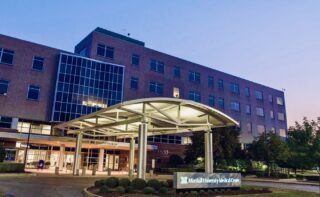

The Marshall University Joan C. Edwards School of Medicine is the state-assisted, community-based MD school of Marshall University in Huntington, West Virginia. It received provisional LCME accreditation in 1977, enrolled its first class in January 1978 and will mark its 50th anniversary in 2027. The school was founded in partnership with the Huntington VA Medical Center, and it still describes itself as a Veterans Affairs affiliated medical school with a focus on rural health in West Virginia and central Appalachia.
This guide covers the 2026-2027 application cycle, for students who will begin medical school in the summer of 2027. The AMCAS window for Marshall runs from June 1 to November 1, 2026. The supplemental application and all letters are due December 15, 2026, and acceptance offers begin October 15, 2026. Facts in this guide were checked on October 21, 2026.
Marshall is a strong option for West Virginia residents, for applicants with rural roots, and for anyone who wants to train in a mid-sized college town with a close-knit medical school. It gives preference to West Virginia residents, but qualified applicants from any state can apply. Below you will find the school’s mission, programs, curriculum, admissions rules, 2026-2027 costs, clinical sites, people to know, the class profile, the current secondary prompt with worked examples, the virtual interview format and answers to the questions applicants ask most, including “What GPA do you need to get into Marshall University medical school?” and “Does Marshall accept out-of-state students?”
Should you have questions about the medical school application process, our admissions advisors at International Medical Aid are here to help.
Key Takeaways
- Residency matters, but it is not a wall. Marshall gives preference to West Virginia residents as a state-assisted school. Qualified applicants can apply regardless of state of legal residence. All applicants must be U.S. citizens or permanent residents.
- There is a firm MCAT floor. A minimum MCAT score of 505 is required for consideration, and the score must come from a test taken within three calendar years before matriculation. The last September 2026 test date is the final score considered for this cycle.
- The class profile has risen fast. The 2026 entering class averaged a 512 MCAT and a 3.84 overall GPA, up from 506 and 3.81 for the 2025 class and 504 and 3.80 for the 2024 class. Accepted applicants for the 2025 entering class had a median MCAT of 506 and a median GPA of 3.89.
- There are GPA screens too. Overall and science GPAs must be at least 3.3 for West Virginia residents and 3.75 for out-of-state applicants. Of the 415 applicants interviewed for the 2025 entering class, 369 were from out of state.
- Eight course areas are required. That includes a new 3-hour statistics or biostatistics requirement on top of biology, general chemistry, organic chemistry, biochemistry, physics, English and social or behavioral science.
- One essay is confirmed for the 2026-2027 secondary. It asks how your goal of becoming a physician aligns with the school’s mission and values, in up to 5,000 characters. The supplemental fee is $75 for West Virginia residents and $100 for nonresidents, waived for AAMC Fee Assistance recipients.
- Interviews are live and virtual. You meet two interviewers for about 40 minutes and must attend a virtual student session within two weeks.
- Costs for 2026-2027: first-year tuition and fees are $35,000 for residents and $70,000 for nonresidents. The full first-year cost of attendance is $67,846 in-state and $102,846 out-of-state.
- Pathway changes: the BS/MD program has been sunset, with its final cohort selected in early 2025. Marshall undergraduates can still use the MD Early Assurance Program. The Metro Waiver ends for students who first enroll in fall 2027 or later.
Key Statistics About Marshall University Joan C. Edwards School of Medicine

What Are Marshall University Joan C. Edwards School of Medicine’s Average MCAT and GPA?
The 2026 entering class at Marshall’s Joan C. Edwards School of Medicine averaged a 512 MCAT, a 3.84 overall GPA and a 3.80 science GPA (Marshall JCESOM Admissions Criteria, 2026). The 2025 class averaged 506 and 3.81. Accepted applicants for the 2025 entering class had a median MCAT of 506 and a median GPA of 3.89. The minimum MCAT for consideration is 505.
These are class averages and medians, not cutoffs. The academic floors are the 505 MCAT minimum and GPA screening minimums of 3.3 for West Virginia residents and 3.75 for out-of-state applicants, applied to both overall and science (BCPM) GPA. The interview criteria also list a GPA of 3.5 or higher among the academic metrics reviewers look for, alongside personal attributes and experience.
| Item | Figure | Year or cohort and population | Source |
|---|---|---|---|
| School and degree | Marshall University Joan C. Edwards School of Medicine, MD (four years) | Huntington, West Virginia; state-assisted, community-based, VA-affiliated | Marshall JCESOM MD Admissions; History |
| Accreditation | LCME (MD degree) | Current | Marshall JCESOM Accreditation Statements |
| Entering class size | 99 (61 men, 38 women) | 2026 entering class | Marshall JCESOM Profile of Entering Students |
| Average MCAT | 512 | 2026 entering class (506 in 2025; 504 in 2024) | Marshall JCESOM Profile of Entering Students |
| Average overall GPA | 3.84 | 2026 entering class (3.81 in 2025; 3.80 in 2024) | Marshall JCESOM Profile of Entering Students |
| Average science GPA | 3.80 | 2026 entering class (3.75 in 2025; 3.74 in 2024) | Marshall JCESOM Profile of Entering Students |
| Average age and range | 23; 21 to 37 | 2026 entering class | Marshall JCESOM Profile of Entering Students |
| Median MCAT | 506 (section medians 126 / 126 / 127 / 127) | 2025 entering class; all accepted applicants | AAMC MSAR, 2026 edition |
| Median GPA | 3.89 | 2025 entering class; accepted applicants | AAMC MSAR, 2026 edition |
| Minimum MCAT | 505, taken within three calendar years before matriculation | 2026-2027 cycle; all applicants except qualifying Early Assurance and BS/MD students | Marshall JCESOM Admissions Criteria |
| Minimum GPA for screening | 3.3 West Virginia residents; 3.75 out-of-state (overall and BCPM) | 2026-2027 cycle | AAMC MSAR, 2026 edition |
| Applicants interviewed | 415 (46 in-state, 369 out-of-state, 0 international) | 2025 entering class cycle | AAMC MSAR, 2026 edition (school-provided) |
| Acceptance rate | Not published (application and acceptance-offer counts are not reported) | Matriculants divided by applicants is not an acceptance rate | Marshall JCESOM admissions pages; AAMC MSAR, 2026 edition; checked October 21, 2026 |
| Total MD enrollment | 331 | October 2025; actively enrolled students | AAMC MSAR, 2026 edition |
| MS1 tuition and fees | $35,000 resident; $70,000 nonresident | 2026-2027 academic year, nine-month MS1 year | Marshall JCESOM 2026-2027 Cost of Attendance |
| MS1 cost of attendance | $67,846 resident; $102,846 nonresident | 2026-2027 academic year; health insurance is arranged by the student and not listed separately | Marshall JCESOM 2026-2027 Cost of Attendance |
| Students receiving financial aid | 89% | 2024-2025; all enrolled and graduated students | AAMC MSAR, 2026 edition (LCME Part I-B) |
| Average graduate indebtedness | $186,271 | 2024-2025; indebted graduates | AAMC MSAR, 2026 edition (LCME Part I-B) |
| AMCAS window | June 1 to November 1, 2026 | 2026-2027 cycle | Marshall JCESOM How to Apply |
| Supplemental and letter deadline | December 15, 2026 | 2026-2027 cycle | Marshall JCESOM How to Apply |
| Supplemental fee | $75 West Virginia residents; $100 nonresidents; waived with AAMC Fee Assistance | 2026-2027 cycle | Marshall JCESOM How to Apply |
| Acceptance offers begin | October 15, 2026 | 2026-2027 cycle | Marshall JCESOM How to Apply |
| MD degrees conferred | 83 | Class of 2026, May 8, 2026 | Marshall JCESOM news, 46th doctoral graduation |
| Residency match | 82 matched; 41% into primary care; 41% staying in West Virginia | Class of 2026, Match Day March 20, 2026 | Marshall JCESOM news, 2026 Match Day |
Every academic figure above is labeled with its cohort. Averages describe the students who enrolled; medians describe all accepted applicants, so the two sets of numbers measure different groups. Interview counts are available, but application and acceptance-offer counts are not published, so no acceptance rate appears here. Dividing the size of the class by the number of applicants would give a matriculation ratio, which is a different number.
Mission and Educational Priorities
Marshall’s current mission statement is short:
“We are empowering the future of medicine by elevating education, driving discovery and championing wellness throughout Appalachia and beyond.”
The MD admissions home page expands it into two sentences: “The Marshall University Joan C. Edwards School of Medicine is empowering the future of medicine by elevating education, advancing discovery, and promoting wellness throughout Appalachia and beyond. We are a community-based, Veterans Affairs–affiliated medical school dedicated to training a skilled physician workforce committed to meeting the evolving healthcare needs of West Virginia, central Appalachia, and the communities we serve.”
The school’s vision is “To be a leading academic medical center advancing excellence in medical education, patient care, and scientific discovery to transform the health of West Virginia, Appalachia, and beyond.”
The five values
The Mission Statement page lists five values. Read them closely, because the 2026-2027 secondary essay asks you to connect your goals to “the mission and values” of the school:
- Collaboration: teamwork across disciplines and institutions to improve patient care, education and research.
- Community: building a healthier future for West Virginia and Appalachia by addressing rural health challenges and meeting community needs.
- Innovation: new ideas, technologies and research that advance understanding of disease and improve outcomes.
- Lifelong Learning: medicine as a lifelong calling that requires continuous growth.
- Respect: valuing every individual, with empathy, humanism and integrity.
The admissions home page uses a slightly different list of six guiding values: Excellence in Education and Patient Care, Professionalism and Integrity, Patient-Centered Service, Commitment to the Region, Collaboration, and Discovery and Improvement. The two lists overlap in spirit. Both put the region, teamwork and patient care at the center.
What the mission means for applicants
The admissions page puts it plainly: “At Marshall, we specialize in rural health, training students in clinical settings that prepare them to serve in underserved areas.” It adds that many students come from rural West Virginia and that the school encourages graduates to remain and practice in rural communities.
That has practical consequences for your application:
- Regional commitment is evidence, not a slogan. Admissions reviewers list “Rural Background” among the personal attributes they weigh and “Distance Traveled” and “Life Experience” among the experiences. If you grew up in a rural area, worked in one, or cared for patients who travel long distances for care, show it with specifics.
- Service counts. Community service sits alongside research and teaching in the experience column of the interview criteria. Long-term service in a community is stronger than a short list of one-day events.
- Primary care is a real outcome here. In the 2026 Match, 41 percent of the class matched into primary care specialties, and 41 percent stayed in West Virginia for residency. You do not need to commit to primary care to be a good fit, but you should understand why the school values it.
- Discovery is part of the mission too. The curriculum includes a nine-week summer research block after the first year, and the school hosts an annual Health Sciences Research Day. An applicant who can connect research curiosity to regional problems such as addiction, obesity, diabetes or access to care will read as well aligned.
The old mission language, which focused on primary care in rural underserved areas, centers of excellence and a collegial environment of lifelong learning, still describes much of the school’s daily work. The current wording simply puts education, discovery and wellness first.
Accreditation and Institutional Identity
The MD program is accredited by the Liaison Committee on Medical Education (LCME), the accreditor for MD programs in the United States and Canada. Marshall’s accreditation statements page also lists the other bodies that cover its programs: the Higher Learning Commission for the MS and PhD in biomedical sciences, the Accreditation Review Commission on Education for the Physician Assistant (ARC-PA) for the Master of Medical Science in Physician Assistant, the Accreditation Council for Graduate Medical Education (ACGME) for its residencies and fellowships, the Commission on Dental Accreditation for its dental general practice residency, and ACCME for continuing medical education. Its animal resources facility is accredited by AAALAC.
How the school began. Federal legislation in the 1970s authorized five new medical schools built in conjunction with existing VA hospitals. The West Virginia Legislature funded Marshall’s school in 1975, the LCME granted provisional accreditation in 1977, and the first class entered in January 1978 and graduated in 1981. The Huntington VA, now the Hershel “Woody” Williams VA Medical Center, remains a core teaching site.
Name and campus. The school’s formal name is the Marshall University Joan C. Edwards School of Medicine. You will also see it called JCESOM, MUJCESOM, MUSOM or simply Marshall medical school. Its teaching and clinical buildings are spread across Marshall’s health sciences campus around Cabell Huntington Hospital, the VA Medical Center campus, the main Marshall campus and downtown Huntington.
Recent changes.
- Marshall Health Network. In October 2023, Marshall University, Marshall Health and Mountain Health Network formed Marshall Health Network, an integrated academic health system with the medical school. Mountain Health Network was renamed Marshall Health Network. The system includes Cabell Huntington Hospital, St. Mary’s Medical Center, Hoops Family Children’s Hospital and Rivers Health.
- Leadership. David Gozal, MD, MBA, PhD (Hon), became vice president for health affairs and the school’s sixth dean in July 2023.
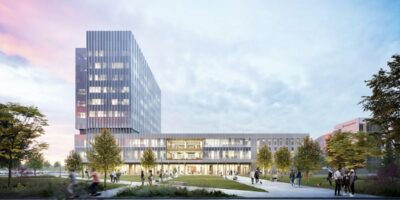
- A new building. In June 2026, the Marshall University Board of Governors approved the $3.5 million purchase of about 3.894 acres on Northcott Court and Hal Greer Boulevard in Huntington as the future home of the medical school and the Marshall Community Health Institute. It will be the school’s first free-standing facility since 1977. Construction is anticipated to begin in the fall of 2027.
- Pathway programs. The BS/MD program has been sunset, and the Metro Waiver tuition discount ends for students who first enroll in fall 2027 or later. Both changes are covered below.
Accreditation tells you the MD program meets national standards. It does not by itself tell you how well a school fits you, which is what the rest of this guide is for.
Medical Programs and Affiliations
Marshall offers one MD degree, reached through a few different doors. Its graduate, physician assistant and certificate programs share faculty and buildings with the MD program but have separate applications.
The MD program
The four-year Doctor of Medicine is the core of the school. Marshall describes it as “innovative, hands-on learning in a family-like atmosphere committed to excellence in medical education, research and patient care.” Most applicants enter through AMCAS in the regular cycle described in the admissions section below.
MD Early Assurance Program (Marshall undergraduates only)
The MD Early Assurance Program is the current early pathway for students already enrolled at Marshall University, both in-state and out-of-state. Students who complete the undergraduate portion are not required to take the MCAT and are accepted into the medical school once they meet the matriculation requirements. Key rules:
- Eligibility: U.S. citizen or permanent resident; apply in the spring of the second undergraduate year at Marshall; two years of full-time Marshall study completed at acceptance.
- Coursework by the end of the second-year summer: one year each of general biology or zoology, general chemistry and organic chemistry, with labs. If organic chemistry lab is not offered in summer, it must be finished with a C or higher by the end of the junior-year summer.
- Test scores: a composite ACT of 24 or SAT of 1160 from a single test date. Superscores are not accepted.
- GPA: at least a 3.7 BCPM GPA and a 3.5 cumulative GPA at the end of the application-year summer, and the same minimums by the end of the undergraduate portion.
- Application: online application, at least three recommenders (two college academic letters plus a third from community, volunteer or work supervision) and interviews with admissions committee members. The 2026 deadlines were March 25 for the application and April 22 for letters.
- Continuing requirements: 30 credit hours of 300- and 400-level science after acceptance, shadowing and volunteering requirements, good standing and two more years in the undergraduate portion.
The school is explicit: “Acceptance into the MD Early Assurance program does not guarantee acceptance into Marshall University Joan C. Edwards School of Medicine.”
BS/MD program (sunset)
For about a decade, Marshall ran an accelerated BS/MD program that let West Virginia students earn both degrees in seven years. The first class enrolled in 2015. The school has now closed it to new students: “After careful consideration and review, we have decided to sunset this program. The final cohort was selected in early 2025.”
What this means for you:
- High school seniors can no longer apply to a Marshall BS/MD seat.
- Students already admitted in earlier cohorts continue under the program policy, which included a reserved path into the MD program for students who met benchmarks, and a full tuition waiver under the school’s tuition assistance policy.
- Marshall points prospective students to its undergraduate pre-medical tracks, summer outreach such as Project PREMED and the Health Care Pathways initiative, and the traditional MD program.
The program’s original features, an integrated undergraduate science sequence, early clinical exposure, mentorship and community engagement, still describe what Marshall values in younger applicants. If you are a high school student drawn to that model, the closest current route is to enroll at Marshall University and apply to the MD Early Assurance Program in your second year. For programs elsewhere that still admit high school students, IMA also offers medical internships for high school students that build early patient-care exposure.
Combined MD/PhD
The MD/PhD program combines medical training with a PhD in biomedical research for future physician-scientists. MD/PhD students begin the first week of July with orientation and a month-long research lab rotation, a month before the MD class. They must submit an MD/PhD fellowship application before the end of the third year. Under the 2026-2027 tuition assistance policy, MD/PhD students receive a full tuition waiver (university fees not included). Students who leave the program must reimburse the stipend and tuition benefits they received.
The MD/PhD prerequisites mirror the MD list, with two semesters each of biology, general chemistry, organic chemistry and physics, plus biochemistry. Marshall’s current program list does not include MD/MBA or MD/MPH dual degrees. Applicants who want a business or public health degree would need to plan it separately.
Graduate and certificate programs
The school also runs:
- PhD in Biomedical Research, with five research clusters: cardiovascular disease; cell biology; obesity and related diseases; neurobiology and addiction research; and toxicology and environmental health.
- BS/PhD in Biomedical Research, a seven-year combined path for Marshall biology and chemistry majors and qualified high school students.
- MS in Clinical and Translational Research, with emphases in clinical trials, clinical informatics and clinical research.
- MS in Medical Sciences and MS in Medical Sciences with Research, two-year non-thesis programs that many students use to strengthen a medical school application.
- MS in Research, a thesis program in the same five clusters as the PhD.
- Certificate in Medical Science, a one-year program in pre-clerkship sciences (biochemistry, physiology, immunology, microbiology and pharmacology) taught by medical school faculty.
If your science GPA needs strengthening, the Certificate in Medical Science and the MS in Medical Sciences are worth a look, because the coursework mirrors the first year of medical school.
Marshall University PA program
Marshall’s physician assistant program is a 28-month program of academic courses and clinical rotations that leads to a Master of Medical Science Physician Assistant degree. Established in 2018, it celebrated its fourth graduating class in May 2026 with 29 graduates. Graduates are prepared “to evaluate, diagnose and manage patients in primary and specialty care across all stages of life and in culturally diverse and rural settings.” The PA program is accredited by ARC-PA and is housed in the Robert W. Coon Education Building on the VA Medical Center campus.
Among PA Schools in West Virginia, Marshall’s program stands out for its ties to a medical school and a rural-focused clinical network. In October 2026 it received a SAMHSA grant to expand substance use disorder training. If you are weighing the PA route, IMA’s pre-PA internships give pre-PA students supervised patient-care hours, and our hub on PA programs that don’t require healthcare experience covers Marshall alongside other options.
The PA program’s focus areas reflect the same priorities as the MD program: global and rural health, health care delivery and leadership, medical humanities, research and community service. Its emphasis on evidence-based medicine and interprofessional teamwork prepares graduates for the same communities the MD program serves.
Graduate medical education
Marshall sponsors ACGME-accredited residencies in family medicine, internal medicine, medicine-pediatrics, neurology, obstetrics and gynecology, orthopaedic surgery, pediatrics, psychiatry and surgery, plus a new anesthesiology residency. Fellowships include addiction medicine, geriatric medicine, sports medicine, cardiology, interventional cardiology, endocrinology, gastroenterology, hematology-oncology, nephrology, pulmonary and critical care, neonatal-perinatal medicine, pediatric hospital medicine, and child and adolescent and geriatric psychiatry. In 2026, Marshall programs filled 100 percent of their first-year slots across 15 residency programs. For medical students, that means residents and fellows on almost every team you join.
Clinical affiliations
The school’s three core affiliated facilities are Cabell Huntington Hospital, St. Mary’s Medical Center and the Hershel “Woody” Williams VA Medical Center in Huntington. Its affiliation agreements also cover sites such as Charleston Area Medical Center, CAMC Teays Valley, Logan Regional Medical Center, Mildred Mitchell-Bateman Hospital, Prestera Center, Rivers Health, River Park Hospital and Huntington Internal Medicine Group. The faculty practice, Marshall Health, is part of Marshall Health Network, which serves patients across West Virginia and the bordering states of Kentucky and Ohio.
Curriculum Overview
Marshall organizes the MD curriculum into three phases. The school’s Curriculum at a Glance (2025 version) shows the structure; the school notes that it “is not an enforceable contract and is subject to change without notice.”
Phase 1: Academic Levels 1 and 2 (pre-clerkship)
The first two years are taught in integrated, organ-system blocks. Basic sciences such as anatomy, physiology, biochemistry and pharmacology are woven into each block rather than taught as stand-alone courses.
Academic Level 1 (fall and spring):
- Molecular and Cellular Foundations (MCF), 7 weeks
- Hematology, Oncology, Microbiology and Host Defense (HOME), 12 weeks
- Neural Network (NN), 10 weeks
- Musculoskeletal (MSK), 8 weeks
- Two independent study (I.S.) periods and a one-week SDW block around winter break
Summer after Level 1: a nine-week Summer Research block.
Academic Level 2 (fall and spring):
- Cardio-Pulmonary-Renal (CPR), 15 weeks
- Gastroenterology, Reproduction, Endocrine and Nutrition (REIGN), 12 weeks
- CBSE Prep, 6 weeks of dedicated preparation for the Comprehensive Basic Science Exam and USMLE Step 1
Running through both years: Patient Care and Clinical Skills, a longitudinal course in history taking, physical examination and communication. Students are assessed with standardized patients from the first year, and the Department of Medical Education runs a dedicated clinical skills and standardized patient program.
This structure has a few practical effects. You will see patients and practice clinical skills from the start. The summer research block gives every student protected time for a project, which is unusual and useful for residency applications. And the six-week CBSE Prep block means board preparation is built into the calendar rather than squeezed in at the end.
Phase 2: Academic Level 3 (clerkships)
The third year begins in the summer and consists of six eight-week rotation blocks across three terms. Core clinical training takes place mainly at Cabell Huntington Hospital, St. Mary’s Medical Center and the VA Medical Center, with community and rural sites across the region. Clerkships cover the core disciplines: family medicine, internal medicine, neurology, obstetrics and gynecology, pediatrics, psychiatry and surgery. The 2026-2027 cost of attendance includes a $2,000 “Rural Clinical Experience” budget line in the third year, which reflects rural clinical time built into the year.
Third-year students also take a career advising course, meet three times with a Career Advisory Dean and attend “Clerkship Conversations” seminars through the Medical Student Career Development Program.
Phase 3: Academic Level 4
The fourth year is organized around residency preparation: USMLE Step 2 CK, required rotations and away rotations in the summer, ERAS and electives in the fall, and the Match and graduation in the spring. The fourth-year cost of attendance includes $3,500 for other clinical travel and $1,500 for residency applications, a sign that most students do away rotations.
Curriculum principles
Three ideas run through all four years:
- Patient-centered care. Students take part in patient care from the early stages of training, learning patients’ needs, preferences and values.
- Community engagement. The curriculum links classroom learning to community service and clinical work in underserved areas, and the school’s own medical education mission stresses “academic excellence and interdisciplinary collaboration.”
- Interprofessional collaboration. Marshall’s medical, pharmacy and health professions students train in the same health sciences community. Events such as Health Sciences Research Day are co-hosted with the School of Pharmacy and the College of Health Professions, and students run an Interprofessional Health Student Organization.
Assessment and requirements
The Medical Student Career Development Program, a four-year longitudinal course based on the AAMC Careers in Medicine program, has been a graduation requirement since the Class of 2019. It walks students from specialty interest inventories in year one to personal statements and residency applications in year four.
Electives and focus areas
The fourth year leaves room for electives in areas of interest, including global health, rural health and research. Students who want more depth can pair electives with research mentors and student interest groups, from the Global and Rural Medicine Interest Group to the Research Interest Group.
Admissions Requirements and Application Process
Who can apply
- Citizenship: “All applicants to the Marshall University Joan C. Edwards School of Medicine must be U.S. citizens or have permanent resident visas.” Applications from DACA recipients, international applicants and Canadian applicants are not accepted.
- Residency: qualified applicants can apply from any state. As a state-assisted school, Marshall gives preference to West Virginia residents. Residency status for admission and fee purposes follows the West Virginia Higher Education Policy Commission rules.
- Degree: entrants should have a bachelor’s degree from an accredited college or university. Exceptionally well-qualified students may be considered after 90 semester hours if other requirements are met.
MCAT
The MCAT is required and is used “along with other data to predict success in preclinical coursework.” Three rules matter:
- “A minimum MCAT score of 505 is required for consideration but does not guarantee an interview or admission.”
- The MCAT must be taken within three calendar years before matriculation. For a 2027 start, that means a test date in 2024 or later.
- The last September 2026 test date is the final administration considered for the 2026-2027 cycle.
Students who meet the criteria of Marshall’s Early Assurance Program or BS/MD Program are exempt from the MCAT.
The MCAT is one piece of a holistic review, and the admissions committee sees your last three years of scores. Accepted applicants for the 2025 entering class had a median total score of 506, with section medians of 126 in Chemical and Physical Foundations, 126 in CARS, 127 in Biological and Biochemical Foundations and 127 in Psychological, Social and Biological Foundations.
GPA screening
Marshall screens on GPA as well as the MCAT. Both your overall GPA and your science (BCPM) GPA must meet the minimum for your residency:
| Applicant group | Minimum overall and BCPM GPA for screening |
|---|---|
| West Virginia residents | 3.3 |
| Out-of-state residents | 3.75 |
If your undergraduate GPA is at least 3.0, postbaccalaureate or graduate coursework can be considered alongside it. Meeting a screen gets your file reviewed; it does not make you competitive on its own. Accepted applicants for the 2025 entering class had a median GPA of 3.89.
PREview and other assessments
Marshall recommends that applicants submit AAMC PREview scores. No other situational judgment test or additional assessment is required for admission, so Casper is not part of the application. If you have time before your file is complete, taking PREview gives the committee one more data point on the professional competencies its interview criteria emphasize.
Prerequisite courses
| Required course | Semester hours |
|---|---|
| General biology or zoology (with lab) | 8 |
| General chemistry (with lab) | 8 |
| Organic chemistry (with lab) | 8 |
| Biochemistry | 3 |
| Physics (with lab) | 8 |
| Statistics or biostatistics (new requirement) | 3 |
| English | 6 |
| Social or behavioral sciences | 6 |
Highly recommended: cellular and molecular biology (3), immunology (3) and any physiology or anatomy course at the 300 level or higher (3).
Course policies:
- All prerequisites must be completed at an accredited U.S. or Canadian college or university, with a grade of C or better, by June 15 of the year you matriculate.
- Courses should be at the level taken by majors in that field.
- AP or CLEP credit on your college transcript may count if you show proficiency, for example by completing a more advanced course in the subject or earning a strong MCAT score.
- Online courses may not be used for science prerequisites, except courses taken in the 2020-2021 and 2021-2022 academic years.
The statistics requirement is the change most likely to catch applicants. If you have not taken statistics or biostatistics, plan to complete it before June 15, 2027.
Letters of recommendation
Marshall requires three letters of recommendation or one composite premedical advisory committee letter. Letters should come from people who can speak to your readiness for medicine, such as undergraduate faculty, physicians you have worked with closely, research mentors or employers. Marshall uses the AMCAS Letter Service, and all letters must be submitted through AMCAS by December 15, 2026. Up to six letters are accepted, and committee letters, letter packets and individual letters all count. Additional pertinent letters are welcome but not required.
Letters of intent, letters of interest and notices of significant updates (such as a new publication, honor or major service role) can be sent to [email protected]. They are added to your file as they arrive, and the committee is told the new information is available.
Experience and personal attributes
Marshall does not publish fixed hour minimums for clinical experience, shadowing or service. Its interview page lists what reviewers look for, noting that the list is “neither exclusive nor exhaustive”:
| Personal attributes | Experience | Academic metrics |
|---|---|---|
| Resilience | Community service | GPA of 3.5 or higher |
| Honesty and ethics | Distance traveled | MCAT: see minimum requirements |
| Work ethic | Life experience | |
| Communication skills | Research | |
| Rural background | Teaching |
Use this table as your planning checklist. Strong Marshall applicants tend to show sustained service, meaningful patient contact, some research or teaching, and evidence of resilience and growth. Clinical work where you take vitals, talk with patients and work alongside a care team carries more weight than passive exposure. Many applicants build those hours through local jobs such as scribing, EMS or patient care technician work; others add clinical internships for pre-med students that include supervised hands-on care.
Technical standards
All MD candidates must meet Marshall’s technical standards in observation, communication, motor function, intellectual-conceptual abilities and behavioral and social attributes, with or without reasonable accommodation. Candidates sign the standards on acceptance, at matriculation and before each later year. Accommodation requests go to the Office of Student Affairs after an offer is accepted.
Step 1: The AMCAS application
Apply through the American Medical College Application Service between June 1 and November 1, 2026. Marshall states that “Early submission is strongly encouraged due to rolling review.” All applications must be verified by AMCAS before review, and verification can take several weeks in the summer peak, so submitting in June or early July gives you the most room.
Step 2: The supplemental application
After verification, “Selected applicants will be invited to complete a Supplemental Application.” The supplemental requires a fee:
- $75 for West Virginia residents
- $100 for nonresidents
- Waived for applicants approved through the AAMC Fee Assistance Program
The deadline to complete it is December 15, 2026. Because review is rolling, aim to return it within one to two weeks of the invitation.
Step 3: A complete file
Only complete applications are considered for interview selection. A complete application has five parts:
- Verified AMCAS application
- Supplemental Application
- MCAT score
- Letters of recommendation
- Prerequisite requirements
Step 4: Interview, decision and response
Interviews run from about September 2026 through February 2027 and may extend if needed. Offers of acceptance begin October 15, 2026. Responses must be submitted in writing by email or regular mail. Offers made between October 15, 2026 and April 30, 2027 require a response within two weeks; after April 30, the response window is one week.
For the 2025 entering class, 415 applicants were interviewed: 46 West Virginia residents and 369 out-of-state applicants. Marshall has no Early Decision Program, and no deposit is required to hold an acceptance. Deferral requests are reviewed case by case. The school typically places about 200 applicants on its waitlist each cycle and makes about 40 acceptance offers from it; open positions go to the next most qualified applicant chosen by the Executive Committee, a subcommittee of the Admissions Committee.
2026-2027 admissions timeline
| Activity | 2026-2027 cycle (class entering 2027) |
|---|---|
| AMCAS submission window | June 1, 2026 to November 1, 2026 |
| Letters of recommendation deadline | December 15, 2026 |
| Supplemental application deadline | December 15, 2026 |
| Last MCAT considered | Last available test date in September 2026 |
| Interview season | About September 2026 to February 2027 (may extend) |
| Acceptance notifications begin | October 15, 2026 |
| Response to offers | Within 2 weeks (October 15, 2026 to April 30, 2027); within 1 week after April 30 |
| “Plan to Enroll” in AMCAS Choose Your Medical School tool | Begins February 19, 2027 |
| Narrow to no more than three acceptances | Begins April 15, 2027 |
| “Commit to Enroll” | Begins April 30, 2027; Marshall’s deadline is three weeks before orientation |
| Orientation | July 2027 |
| First day of classes | To be announced |
For reference, the 2026 entering class had orientation from July 27 to July 30, 2026 and started classes on August 3, 2026.
Transfer and other policies
Marshall publishes an admissions policy and procedural document, an AMCAS criminal background check policy, an admissions committee conflict of interest policy and a transfer student policy on its Policies and Procedures page. Review the background check policy early if anything in your record needs explanation, and disclose it honestly in AMCAS.
Tuition, Cost of Attendance and Financial Aid
Marshall is one of the lower-cost options for West Virginia residents, but the 2026-2027 numbers are higher than the figures many older guides still quote, and an important discount is ending.
2026-2027 cost of attendance by year
The school’s Office of Student Financial Assistance publishes a cost of attendance (COA) budget for each year of the program. The COA is the total budget used to set financial aid, including tuition and fees plus estimated living costs.
| Item (2026-2027) | MS1 (9 months) | MS2 (9 months) | MS3 summer (3 months) | MS3 (9 months) | MS4 summer (3 months) | MS4 (9 months) |
|---|---|---|---|---|---|---|
| Tuition and fees, resident | $35,000 | $28,360 | $9,765 | $19,578 | $9,765 | $19,578 |
| Tuition and fees, nonresident | $70,000 | $63,818 | $21,783 | $43,614 | $21,783 | $43,614 |
| Books and supplies | $1,650 | $650 | $200 | $650 | $200 | $650 |
| Computer and IT | $2,200 | $500 | $0 | $500 | $0 | $500 |
| Living expenses | $15,300 | $15,300 | $5,100 | $15,300 | $5,100 | $15,300 |
| Transportation | $5,657 | $5,657 | $4,916 | $5,657 | $1,893 | $5,657 |
| Miscellaneous and personal | $7,200 | $7,200 | $2,700 | $8,100 | $2,700 | $8,100 |
| USMLE fees | $0 | $1,020 | $0 | $1,020 | $0 | $0 |
| Rural clinical experience | $0 | $0 | $0 | $2,000 | $0 | $0 |
| Residency applications and other clinical travel | $0 | $0 | $0 | $0 | $0 | $1,500 and $3,500 |
| Total, resident | $67,846 | $59,526 | $22,681 | $53,644 | $19,658 | $55,624 |
| Total, nonresident | $102,846 | $94,984 | $34,699 | $77,680 | $31,676 | $79,660 |
Federal loan fees ($250 Direct Unsubsidized and $589 Grad PLUS per nine-month period) are included in each total. Health insurance is not a separate line: Marshall requires every student to carry health insurance and to arrange it themselves, so add the cost of your plan to these budgets if you will not be on a parent’s or spouse’s coverage.
What the first year really costs. A West Virginia resident should plan on about $67,800 for the first year, and a nonresident about $102,800. Tuition and fees alone are $35,000 and $70,000. Living expenses are budgeted at $15,300 for nine months, which reflects Huntington’s relatively low cost of living.
How fast costs have risen. For 2025-2026, first-year tuition and fees were $27,662 for residents and $62,246 for nonresidents, with a total first-year cost of attendance of $62,212 and $96,796. The 2026-2027 budget is about $5,600 higher for residents and $6,000 higher for nonresidents.
Aid and debt. In 2024-2025, 89 percent of Marshall medical students received financial aid, and indebted graduates left with an average of $186,271 in medical school debt. Financial need is not a consideration in admission decisions.
Tuition by semester
Marshall University’s 2026-2027 graduate tuition schedule lists School of Medicine charges per semester. For a full-time first-year student, one fall or spring semester is $17,500 for West Virginia residents and $35,000 for nonresidents, made up of university tuition, university fees and a college program fee. That matches the MS1 tuition and fee line above for two semesters.
Scholarships and tuition assistance
Marshall’s scholarship policy, effective fall 2026, works differently from many schools:
- No separate application. “All medical students are considered.” The scholarship committee reviews every newly admitted and continuing student in good standing.
- FAFSA required. You must file the FAFSA to be considered.
- Priorities for new students: outstanding academic credentials such as MCAT and GPA, and financial need.
- Scholarships reduce loans. Awards replace federal loan borrowing dollar for dollar; they do not add to your aid package.
- Renewals require good academic standing. Repeating a course or year ends scholarship eligibility until the student reapplies.
Tuition assistance (tuition waivers, not loans) goes to specific groups:
- MD/PhD students and students already in the BS/MD program: full tuition waiver (university fees not covered).
- Dependents of benefit-eligible Joan C. Edwards School of Medicine faculty: a 20 percent tuition discount.
- Project PREMED participants: a $5,000 tuition waiver.
The Metro Waiver is ending. The policy states: “The Metro Waiver discount will be discontinued for all students whose initial enrollment in the MD program begins in Fall 2027 or any subsequent term.” If you are applying in the 2026-2027 cycle to start in 2027, do not count on a metro-area discount.
Donor scholarships continue to grow. In August 2026 the school announced the Ava W. and Charles E. “Pete” Peters Jr. Endowed Scholarship for incoming students from Cabell and Wayne counties, and the annual Standing Out in Our Field event raises funds for medical student scholarships.
Loan repayment and service programs
The financial aid office points students to programs that trade service for funding or loan repayment:
- West Virginia Recruitment and Retention Community Project (RRCP)
- West Virginia State Loan Repayment Program (SLRP)
- National Health Service Corps loan repayment
- The VA Health Professions Scholarship Program
- Marshall’s Rural Health Service Program, which supports students who commit to rural practice in West Virginia
Students also form a Marshall HPSP Student Group for those funded through military Health Professions Scholarship Programs.
Help from the Office of Student Financial Assistance
The office is in the Linda S. Holmes Student Wellness Center at 1321 Hal Greer Boulevard in Huntington. Business hours are Monday through Friday, 8 a.m. to 4:30 p.m. Appointments are appreciated and walk-ins are welcome. Parker Unroe, MBA, is the assistant director of student financial assistance.
For incoming students, the office recommends:
- Research the cost of attendance and tuition and fees for every program you are considering.
- Complete the FAFSA.
- Learn about federal funding options for professional students through Federal Student Aid.
- Search institutional and outside scholarships and service loans.
- Plan for relocation costs before medical school starts.
- Schedule an individual financial counseling session with the assistant director.
- Organize any current educational debt with the AAMC’s Medloans Organizer and Calculator, which you can find here.
- Use AAMC FIRST resources such as the AAMC’s Financial Wellness Program, a free online financial education resource.
For current students:
- Keep tracking debt with the Medloans Organizer and Calculator.
- Plan early for fourth-year away rotations and residency interviews; the MS4 budget includes $3,500 for clinical travel.
- Understand your options, including federal and private loans, for residency interviews and relocation.
- Contact your loan servicers about deferment, forbearance or a repayment strategy before residency.
Campus Facilities and Student Life
Where you will study
Marshall’s medical school does not yet have a single building. Its programs are spread across several sites in Huntington:
- Marshall University Medical Center (1600 Medical Center Drive), attached to Cabell Huntington Hospital, the “focal point for the clinical teaching, outreach and service programs” of the school. The admissions office is here.
- Erma Ora Byrd Clinical Center (1249 15th Street), a $22.5 million, 80,000-square-foot building on the former Fairfield Stadium site, across from Cabell Huntington Hospital. It houses major medical student teaching facilities and outpatient clinics.
- Robert W. Coon Education Building on the VA Medical Center campus (1542 Spring Valley Drive), home to anatomy classrooms and facilities, research laboratories, the Human Gift Registry and the PA program.
- Edwards Comprehensive Cancer Center (1400 Hal Greer Boulevard), a 70,000-square-foot joint project of the school, Cabell Huntington Hospital and the Edwards Foundation.
- Robert C. Byrd Biotechnology Science Center on the main campus, a $40 million, 144,000-square-foot research building.
- Linda S. Holmes Student Wellness Center (1321 Hal Greer Boulevard), a study and relaxation space for medical students that also houses student affairs and financial aid.
- Forensic Science Center and the Touma Museum of Medicine, a 4,000-square-foot medical history museum downtown with more than 2,800 artifacts.
The planned medical education building on Hal Greer Boulevard is expected to bring many of these functions under one roof, with simulation and clinical skills space, computing resources for artificial intelligence in health care, research facilities and a community clinic. More than 450 medical and health professions students and 350 residents and fellows are expected to use it each year. Construction is anticipated to start in fall 2027, so applicants in this cycle will train mostly in the current buildings.
Life in Huntington
Huntington sits on the Ohio River in the tri-state region where West Virginia, Kentucky and Ohio meet. The Huntington-Ashland-Ironton metro area has about 365,000 people. It is a college town with a walkable downtown, parks, festivals and Marshall athletics, and West Virginia’s state parks, whitewater, ski areas and climbing are within driving distance. The low cost of living shows up in the school’s budget: $15,300 for nine months of living expenses.
Student organizations
Marshall lists dozens of student-run groups. Current organizations include:
- Service and outreach: Community Service Organization, Marshall Medical Outreach, Health Education and Advocacy Team (HEAT), Herd Community Health Committee, Period Education Program, The Giving Palm and the Medical Student Population Health Team.
- Advocacy and professional: AMA Medical Student Section, American Medical Women’s Association, Student National Medical Association, Sisters in Medicine, Health Spectrum Alliance, HERD Advocates in Medicine, West Virginia State Medical Association and Phi Delta Epsilon.
- Specialty interest groups: anesthesiology, cardiology, dermatology, emergency medicine, family medicine, geriatrics, internal medicine, medicine-pediatrics, neurology (SIGN), neurosurgery, obstetrics and gynecology, oncology, ophthalmology, orthopaedic surgery, otolaryngology, pain management, pathology, pediatrics, plastic surgery, psychiatry, radiation oncology, radiology, sports medicine, surgery, urology, and robotics and minimally invasive surgery.
- Research and innovation: Research Interest Group, American Physician Scientists Association, Artificial Intelligence in Medicine Interest Group and Intermed Labs at Marshall University.
- Global, rural and community health: Global and Rural Medicine Interest Group, Medical Spanish Interest Group and the Substance Use Disorder and Recovery Interest Group.
- Honor societies: Alpha Omega Alpha and the Gold Humanism Honor Society.
- Wellness and community: Christian Medical Association, American Muslim Medical Student Association, Business in Medicine, Financial Literacy in Medicine, Aquadocs, PickleDocs, a chess and checkers club and a book club.
Earlier student groups such as Active Minds, AMSA, Global Medical Brigades and the Wilderness Medicine Interest Group may still appear in older materials; check the current list when you arrive, because student groups change from year to year.
Student support
The Office of Student Affairs supports students through all four years. Its stated mission is to meet “the personal, academic and professional needs of students throughout all four years of medical education.” Services include:
- Academic support through the Office of Academic Support and a Medical HELP learning specialist
- Learning communities and leadership development and wellness programming
- Career advising through the four-year Medical Student Career Development Program and Career Advisory Deans
- Study space and building access, health care resources and a counseling center through Cabell Huntington Hospital
- A disability benefit for enrolled students, sponsored through the American Medical Association and underwritten by The Standard, for disabling injuries or illnesses that last longer than 90 days
Clinical care through Marshall Health
The school’s faculty practice plan, Marshall Health, is part of Marshall Health Network. Faculty physicians see patients across the school’s clinical departments, from family medicine and internal medicine to orthopaedics, neurology, dermatology, obstetrics and gynecology and surgery. For students, this means faculty who teach in the classroom are also practicing clinicians, and many outpatient teaching clinics sit inside the Erma Ora Byrd Clinical Center.
Departments
Academic departments: Anesthesiology; Biomedical Sciences; Cardiovascular Services; Dentistry, Oral and Maxillofacial Surgery; Dermatology; Family and Community Health; Internal Medicine; Medical Education; Neurology; Neurosurgery; Obstetrics and Gynecology; Oncology; Ophthalmology; Orthopaedics; Pathology; Pediatrics; Psychiatry and Behavioral Medicine; Surgery; and Urology.
Divisions and other departments: Animal Resources; Forensic Science; Health Science Library; Human Gift Registry and Body Donation; Information Technology; Graphic Design Services; Office of Academic Affairs; Office of Student Outreach and Engagement; Office of Faculty Advancement; Office of Student Affairs; and the Robert C. Byrd Center for Rural Health.
Clinical Rotations and Research Opportunities
Core clinical sites
Marshall is a community-based medical school, so it trains students in partner hospitals rather than a university-owned hospital. Its three core affiliated facilities sit within a short drive of each other in Huntington.
Cabell Huntington Hospital. A 303-bed teaching hospital (2023 figure) and the main academic and tertiary referral center for Marshall’s training programs. It is home to the Edwards Comprehensive Cancer Center and Hoops Family Children’s Hospital, a 72-bed pediatric specialty hospital inside Cabell Huntington. The Marshall University Medical Center, where the admissions office and many teaching programs are based, is attached to it.
St. Mary’s Medical Center. A 393-bed teaching hospital (2023 figure) and part of Marshall Health Network. St. Mary’s also operates schools of nursing, respiratory care and medical imaging, and it hosts events such as the 2026 Health Sciences Research Day at its Center for Education.
Hershel “Woody” Williams VA Medical Center. The VA partnership is part of the school’s founding. Caring for veterans is part of Marshall training from the start, and the VA campus also houses the Robert W. Coon Education Building, where students learn anatomy.
Ambulatory training. Outpatient teaching happens at the Erma Ora Byrd Clinical Center, which combines medical student teaching facilities with clinical education patient care clinics, and at partner clinics across the region.
Rural and regional rotations
Marshall’s Robert C. Byrd Center for Rural Health works to reduce the isolation of rural health care providers and to improve access to quality care for rural residents. Third- and fourth-year medical students can take rotations in rural areas of West Virginia. One long-standing partner is Coalfield Health Center in Chapmanville, a rural, nonprofit primary care organization that works with the center on research and on rural rotations for medical students, interns and residents. The 2026-2027 third-year budget includes a $2,000 line for a rural clinical experience.
Other regional training partners in Marshall’s affiliation agreements include Charleston Area Medical Center, Logan Regional Medical Center, Rivers Health, River Park Hospital and Mildred Mitchell-Bateman Hospital for psychiatry.
Partnerships that shape training
- Marshall Health Network. The 2023 integration of Marshall Health and the former Mountain Health Network created one academic health system with the school, covering Cabell Huntington, St. Mary’s, Hoops and Rivers Health.
- West Virginia School of Osteopathic Medicine. Marshall and WVSOM signed a memorandum of understanding to collaborate on clinical education, develop and expand clinical rotations at the network’s hospitals, explore ways to improve residency placement and advocate jointly before the West Virginia Legislature, the Higher Education Policy Commission and other governmental bodies.
- Appalachian Regional Healthcare. In 2023, ARH and Marshall Health Network launched child and adolescent behavioral telehealth services in Summers County, West Virginia, connecting young patients in Hinton with Marshall psychiatric care by video.
Research for medical students
Marshall’s student research office describes research as “an integral part of the medical student experience.” Krista Denning, MD, assistant dean for student research, leads it. The main routes are:
- Summer research after year one. The curriculum sets aside nine weeks in the summer after Academic Level 1. Many students are matched with faculty mentors for clinical or basic science projects.
- Year-round projects. Students work on case reports, quality improvement and translational science, from hypothesis to presentation and publication. The school has added faculty leaders in bioinformatics and population analytics, giving students access to large clinical datasets.
- Health Sciences Research Day. The 38th annual event in October 2026 drew more than 300 students, residents, fellows and faculty and a record 187 presentations. The Dr. John Karickhoff Medical Innovation Award recognizes the best overall research performance by a medical student; the 2026 winner studied return to function after total hip arthroplasty with Dr. Matthew Bullock.
- Quality and Safety Summit. Student projects can also be presented at Marshall’s annual Quality and Safety Summit, which showcases quality improvement and patient safety work.
- Publications. In August 2026, four second-year students co-authored a published review on exosome signaling in health and disease with faculty mentors. The school also publishes the Marshall Journal of Medicine.
The research enterprise is led by Gary O. Rankin, PhD, vice dean for research, and is organized around five clusters: cardiovascular disease; cell biology; obesity and related diseases; neurobiology and addiction research; and toxicology and environmental health. If you want a research-heavy career, the MD/PhD program and the Medical Student Research Interest Group are the places to start.
Residency outcomes
In the 2026 Match, 82 Marshall students matched to residency programs. Forty-one percent matched into primary care (family medicine, internal medicine, internal medicine-pediatrics, pediatrics and obstetrics and gynecology), and 41 percent will train in West Virginia. Other students matched into anesthesiology, child neurology, dermatology, diagnostic radiology, emergency medicine, general surgery, neurology, neurological surgery, orthopaedic surgery, ophthalmology, otolaryngology, pathology, psychiatry, radiation oncology and urology. Class of 2026 graduates matched at institutions including the Mayo Clinic School of Graduate Medical Education, Walter Reed National Military Medical Center and George Washington University.
Notable Alumni, Faculty, Leadership and Admissions Staff
The people below hold current roles listed on Marshall’s own pages or appear in the school’s recent news. Knowing who leads admissions, curriculum and research helps you ask better questions at interview day and understand what the school values. None of these people should be contacted to lobby for admission.
School leadership
David Gozal, MD, MBA, PhD (Hon), Vice President for Health Affairs and Dean. Dr. Gozal began his tenure as Marshall’s vice president for health affairs and the sixth dean of the Joan C. Edwards School of Medicine in July 2023. A pediatric pulmonologist and pediatric sleep expert, he came from the University of Missouri, where he held the Marie M. and Harry L. Smith Endowed Chair, chaired the Department of Child Health and served as physician-in-chief of the University of Missouri Health Children’s Hospital. He previously held positions at Tulane, the University of Louisville and the University of Chicago, and he has been a federally funded NIH researcher since 1992. He earned his MD at Hebrew University of Jerusalem, trained in pediatric pulmonology and sleep medicine at Children’s Hospital Los Angeles and holds MBA degrees from Georgetown University and ESADE in Barcelona. In December 2023, Marshall announced that he had been named to Clarivate’s 2023 list of Highly Cited Researchers, with a cross-field designation for work on sleep, sleep apnea and COVID-19. Under his leadership the school joined the integrated Marshall Health Network and began planning its first free-standing building.
Gary O. Rankin, PhD, Vice Dean for Research. Named vice dean for research in April 2025, Dr. Rankin has been at Marshall since 1978 and has taught every medical school class since the school’s founding, helping educate more than 2,200 physicians and scientists. A pharmacologist and toxicologist, he has published more than 190 research papers, mentored more than 75 students and served for 21 years as principal investigator of the West Virginia IDeA Network of Biomedical Research Excellence (WV-INBRE), which has secured more than $92 million in research funding. He also chairs the Department of Biomedical Sciences. For applicants interested in research, his long tenure means the research program has deep roots in the region’s health problems.
Nitin Puri, MD, PhD, Chair and Senior Associate Dean, Department of Medical Education. Dr. Puri leads the department that runs the MD curriculum, course scheduling, clinical skills and standardized patients. The department’s team includes Todd Green, PhD, assistant dean of pre-clerkship curriculum, and Jennifer Gerlach, MD, assistant dean of longitudinal curriculum. If you want to know how the organ-system blocks or the clinical skills course work in practice, ask about this team’s work at your interview.
Marie D. Frazier, MD, FAAP, Associate Dean of Academic and Student Affairs. A professor of pediatrics in pediatric critical care and medical director of the Children’s Advocacy Center at Hoops Family Children’s Hospital, Dr. Frazier oversees academic and student affairs and is a contact for the Medical Student Career Development Program, which pairs students with Career Advisory Deans.
Admissions leadership and staff
Shelvy L. Campbell-Monroe, PhD, MPH, Senior Associate Dean for Admissions, Advising and Student Life. Dr. Campbell-Monroe leads admissions, advising and student life. She also leads the Office of Student Outreach and Engagement, which runs Project PREMED, the five-day summer program that introduces undergraduates to medical school. In September 2026 she approved the school’s updated scholarship and tuition assistance policies.
Susan Flesher, MD, Senior Associate Dean of Admissions. Dr. Flesher is both an admissions leader and an alumna: she graduated from Marshall’s MD program in 2007. In 2026 the Marshall University Alumni Association gave her the School of Medicine Award of Distinction, which honors a graduate who “best represents the mission of the school.” Her path shows applicants that Marshall graduates come back to lead the school.
Valerie Moore, MEd, Director of Enrollment Management. Valerie Moore manages enrollment for the MD program, with Ella McComas Curry as assistant director of enrollment management. The general admissions office can be reached at [email protected] or 304-691-1734.
Faculty
Ali Oliashirazi, MD, Professor and Chair of Orthopaedic Surgery. Dr. Oliashirazi chairs orthopaedic surgery, directs the orthopaedic residency and specializes in total joint replacement. At the May 2026 graduation he was recognized as the school’s honorary alumnus, an award for a non-graduate who has shown distinguished service to the school.
Matthew W. Bullock, DO, MPT. A total joint replacement surgeon, Dr. Bullock is assistant program director of the orthopaedic surgery residency. At Research Day 2026 he mentored the medical student who won both the best oral presentation and the Dr. John Karickhoff Medical Innovation Award, a good example of the student research mentorship available in clinical departments.
John J. Jasko, MD. Dr. Jasko is a member of the orthopaedic sports medicine faculty. He has cared for Marshall University athletes since 2010 and has served as head team physician for Marshall Athletics, coordinating a group of sports medicine physicians and specialists. Students interested in sports medicine can find mentors in this group and in the Sports Medicine Interest Group.
Alan R. Koester, MD. Dr. Koester is part of the hand and upper extremity surgery faculty in orthopaedic surgery, a group that treats conditions of the fingers, hand, wrist, elbow and shoulder. Students drawn to surgical subspecialties can meet faculty like him through the Orthopaedic Surgery Interest Group and orthopaedic electives.
Krista Denning, MD, Assistant Dean for Student Research. Dr. Denning leads medical student research. In August 2026 she described early research as “an important part of their professional development” when four second-year students co-authored a published review with faculty mentors.
Notable alumni
Carmella Evans-Molina, MD, PhD (MD 2001). Dr. Evans-Molina was president of her Marshall class and is now the Eli Lilly Foundation Professor of Pediatric Diabetes at Indiana University School of Medicine. She directs the NIH-funded Indiana Diabetes Research Center and its Islet and Physiology Core, serves as vice chair of the Type 1 Diabetes TrialNet network and co-directs national islet research programs. Marshall gave her its 2026 Distinguished Alumni Award. She also earned the Faculty Choice Award as the outstanding fourth-year student in 2001. Her career shows that a Marshall MD can lead to a national physician-scientist career.
Susan Flesher, MD (MD 2007). Profiled above as senior associate dean of admissions and the 2026 Award of Distinction recipient.
Bobby L. Miller, MD (MD 1997). Dr. Miller received the School of Medicine Award of Distinction in 2018. He served as vice dean of medical education and was appointed interim dean in June 2022, leading the school until Dr. Gozal arrived. His career is an example of Marshall graduates staying to shape the school’s education program.
Alumni awards
Marshall’s alumni association has recognized graduates every year since 2011.
Distinguished Alumni Award (presented at the annual homecoming banquet to an alumnus or alumna who has supported the school and its students or excelled in medical science and education):
- 2011: Dr. Elizabeth L. “Betty” Spangler, Class of 1986
- 2012: Dr. Ron D. Stollings, Class of 1982
- 2013: Dr. R. Mark Hatfield, Class of 1983
- 2014: Dr. C. Douglas “Doug” Phillips, Class of 1984
- 2015: Dr. Kevin W. Yingling, Class of 1985
- 2016: Dr. Mark A. Studeny, Class of 1986
- 2017: Dr. Joseph E. “Joe” Evans, Class of 1982
- 2018: Dr. Gerald G. “Jerry” Blackwell, Class of 1983
- 2019: Dr. Robert A. “Bob” Hess, Class of 1984
- 2020: Dr. Charles D. “David” Adair, Class of 1990
- 2021: Dr. Kevin S. Smith, Class of 1986
- 2022: Dr. Dan M. Phillips, Class of 1987
- 2023: Dr. J. Gregory Rosencrance, Class of 1988
- 2024: Dr. Pamela A. Cyrus, Class of 1989
- 2025: Dr. Sharon E. Frey, Class of 1985
- 2026: Dr. Carmella Evans-Molina, Class of 2001
School of Medicine Award of Distinction (created by the Marshall University Alumni Association in 2012 for a graduate who best represents the school’s mission):
- 2012: Dr. Kevin W. Yingling, Class of 1985
- 2013: Dr. Ron D. Stollings, Class of 1982
- 2014: Dr. R. Mark Hatfield, Class of 1983
- 2015: Dr. Charles W. Clements II, Class of 1997
- 2016: Dr. Joseph E. Evans, Class of 1982
- 2017: Dr. Mark A. Studeny, Class of 1986
- 2018: Dr. Bobby L. Miller, Class of 1997
- 2019: Dr. C. Douglas Phillips, Class of 1984
- 2022: Dr. Robert A. Hess, Class of 1984
- 2023: Dr. Robert J. Cure, Class of 1998
- 2024: Dr. Larry D. Dial Jr., Class of 1999
- 2025: Dr. Paulette S. Wehner, Class of 1989
- 2026: Dr. Susan L. Flesher, Class of 2007
Awards were not made in 2020 and 2021 because of the COVID-19 pandemic. Kevin W. Yingling, a two-time honoree, became CEO of Marshall Health Network when it formed in 2023, another sign of how many Marshall graduates lead health care in the region.
Admissions Statistics and Class Profile
Marshall publishes a three-year “Profile of Entering Students” on its admissions criteria page. These are school-reported figures for students who enrolled, not for all accepted applicants.
| Entering class | 2026 | 2025 | 2024 |
|---|---|---|---|
| Overall GPA | 3.84 | 3.81 | 3.80 |
| Science GPA | 3.80 | 3.75 | 3.74 |
| Average MCAT | 512 | 506 | 504 |
| Average age | 23 | 25 | 24 |
| Age range | 21 to 37 | 20 to 35 | 20 to 31 |
| Men | 61 | 39 | 37 |
| Women | 38 | 42 | 45 |
| Another gender identity | Not reported | 1 | Not reported |
| Total reported | 99 | 82 | 82 |
What the numbers show
- A big jump in 2026. The 2026 class averaged a 512 MCAT, six points above the 2025 class. The overall GPA also rose to 3.84. One year is not a trend, but applicants in the 2026-2027 cycle should treat a score near 510 as competitive and the 505 minimum as a floor, not a target.
- A larger class. The gender rows add up to 99 students in 2026, compared with 82 in each of the previous two years. That is consistent with the 83 MD degrees awarded in May 2026 and suggests the school is growing class size as it plans its new building.
- Age diversity. The 2026 class ranged from 21 to 37, and recent classes have included students in their thirties. Career changers and applicants with gap years are well represented.
- Gender balance shifts year to year. Men outnumbered women in 2026; women outnumbered men in 2024 and 2025.
Accepted applicant medians, interviews and experience
The class averages above describe students who enrolled. The figures below describe the 2025 entering class from a different angle: all accepted applicants, everyone interviewed, and the experiences matriculants reported.
| Measure | Figure | Cohort and population |
|---|---|---|
| Median MCAT | 506 (mean 506.8) | 2025 entering class, all accepted applicants |
| Chemical and Physical Foundations median | 126 | 2025 entering class, all accepted applicants |
| CARS median | 126 | 2025 entering class, all accepted applicants |
| Biological and Biochemical Foundations median | 127 | 2025 entering class, all accepted applicants |
| Psychological, Social and Biological Foundations median | 127 | 2025 entering class, all accepted applicants |
| Median GPA | 3.89 | 2025 entering class, accepted applicants |
| Applicants interviewed | 415 total: 46 in-state, 369 out-of-state, 0 international | 2025 entering class cycle |
| Total MD enrollment | 331 | October 2025 |
Source: AAMC MSAR, 2026 edition (AAMC Data Warehouse as of October 29, 2025; interview counts provided by the school).
| Premedical experience (AMCAS) | Share of 2025 matriculants |
|---|---|
| Community service or volunteering | 88% |
| Physician shadowing or clinical observation | 85% |
| Research or lab work | 78% |
| Medical or clinical community service or volunteering | 61% |
| Medical or clinical paid employment | 59% |
| Military service | 3% |
Source: AAMC MSAR, 2026 edition (AAMC Data Warehouse, Applicant Matriculant File).
Three points stand out. First, the median MCAT for accepted applicants (506) sits well below the 2026 class average (512), so a score in the 505 to 510 range is not out of reach. Second, nearly nine in ten interviewees were from out of state, which shows that nonresidents who clear the 3.75 GPA screen are interviewed in large numbers. Third, almost every matriculant had community service and shadowing, and more than three in four had research.
What is not published
The number of applications and the number of acceptance offers are not published, and neither is the in-state share of the entering class. Without a count of acceptance offers, no true acceptance rate can be calculated. The ratio of matriculants to applications, which some websites present as an acceptance rate, measures something different, because many accepted applicants enroll elsewhere.
How to use these figures
- If your MCAT is below 505, you will not be considered. Retake before applying, and remember the score must come from 2024 or later for a 2027 start.
- If your MCAT is between 505 and 510, your application can still be competitive, especially with West Virginia residency, rural background, strong service and an upward GPA trend.
- Check the GPA screen for your residency first: 3.3 overall and science GPA for West Virginia residents, 3.75 for out-of-state applicants. Below that, your file is unlikely to reach review.
- If your GPA is below 3.5, address it directly. The interview criteria list a GPA of 3.5 or higher among the academic metrics reviewers consider. A strong post-baccalaureate record, such as Marshall’s own Certificate in Medical Science or MS in Medical Sciences, can help.
For a national comparison of class averages, see IMA’s guide to the average GPA and MCAT score by medical school.
Tips and Strategies for Admission
1. Apply early in the AMCAS window
Marshall reviews verified applications on a rolling basis and offers begin October 15. Submit AMCAS in June or early July so your application is verified and reviewed before interview slots fill. Have your letters requested by early summer even though the deadline is December 15.
2. Clear the academic floor with room to spare
The 505 MCAT minimum is absolute, and the 2026 class averaged 512. Plan your test date so you have time for a retake before the last September administration. Make sure statistics or biostatistics is on your transcript or in your schedule before June 15, 2027, and take science prerequisites in person; online science courses do not count outside the 2020-2022 exception.
3. Show your connection to West Virginia and Appalachia
Marshall gives preference to West Virginia residents and lists rural background, distance traveled and life experience among the qualities it weighs. If you are from West Virginia, make your county, school and community visible in your activities. If you are from out of state, explain your ties to the region honestly: family, work, school, service or a specific interest in rural and Appalachian health. Generic interest in “underserved populations” is weaker than one concrete story about a place.
4. Build sustained service and clinical experience
Community service appears in the experience column of the interview criteria, and the school’s student culture is built around outreach groups such as Marshall Medical Outreach and the Community Service Organization. Choose a few commitments and stay with them. For clinical hours, look for roles with real patient contact: EMT, medical assistant, scribe, CNA, patient care technician or hospice volunteer. If your options at home are limited, pre-med internships abroad can add supervised hands-on clinical time, though they should complement, not replace, sustained service in your own community.
5. Shadow a primary care physician
With 41 percent of the 2026 class matching into primary care, you should be able to speak from experience about what primary care looks like, especially in a rural or small-town practice. Shadowing a family physician in a community similar to the ones Marshall serves will give you material for the secondary essay and the interview.
6. Read the mission and values before you write a word
The only confirmed 2026-2027 secondary essay asks how your professional goal aligns with Marshall’s “mission and values.” Know the five values on the Mission Statement page (collaboration, community, innovation, lifelong learning and respect) and be ready to support each one you claim with an experience.
7. Choose letter writers who know your work
Three letters or one committee letter are required. A science faculty member, a physician or clinical supervisor and a research mentor or employer is a strong mix. Ask writers to speak to resilience, work ethic, honesty and communication, the attributes Marshall lists.
8. Address academic weaknesses directly
An upward trend, a strong post-baccalaureate record or a graduate program can offset a weaker early GPA. Marshall’s Certificate in Medical Science covers the pre-clerkship sciences in one year, taught by medical school faculty. If you had a hard semester, explain it briefly in AMCAS and show how your later work proves your readiness.
9. Use Marshall’s own pathway programs
If you are a Marshall University undergraduate, consider the MD Early Assurance Program and its spring-of-sophomore-year deadline. College students anywhere can apply to Project PREMED, the five-day summer residential program; participants who later enroll in the MD program receive a $5,000 tuition waiver under the current policy.
10. Prepare for a two-interviewer conversation
Marshall’s virtual interview is a 40-minute conversation with two interviewers who alternate questions. Practice telling your story clearly and concisely, and prepare examples for each of the personal attributes on the school’s list. IMA’s medical school interview questions guide is a good place to start.
11. Consider expert feedback
If you are unsure how your experiences read to an admissions committee, IMA’s medical school admissions consulting services can review your activities, personal statement and secondary essays and help you present your story clearly. Our advisors focus on presentation and strategy; they cannot influence admissions decisions.
12. Apply broadly and wisely
Marshall should be one school on a balanced list. West Virginia residents should also consider West Virginia University and the West Virginia School of Osteopathic Medicine. Applicants from neighboring states should look at their own state schools first. Our guide to medical schools in West Virginia compares all three in-state options.
Secondary Application Questions, Example Responses and Analysis
Marshall calls its secondary the Supplemental Application. Selected applicants receive an invitation after AMCAS verification. For the 2026-2027 cycle:
- Fee: $75 for West Virginia residents, $100 for nonresidents, waived for AAMC Fee Assistance Program applicants
- Deadline: December 15, 2026
- Turnaround: no fixed window, but review is rolling, so return it within one to two weeks
Marshall’s essay set has changed often in recent years. Through the 2023-2024 cycle it asked why you chose Marshall, where you see yourself in ten years and what you are doing before enrollment. In 2024-2025 it asked “Why Marshall?” plus a short essay on a challenge. Since 2025-2026 the core essay has been a single mission-and-values question. For a side-by-side view of how other schools’ prompts compare, see IMA’s medical school secondary essay prompts database.
Essay 1 (required): Mission and values alignment
“How does your professional goal of being a physician align with the mission and values of the Marshall University Joan C. Edwards School of Medicine?”
Limit: 5,000 characters (spaces included). Applies to every applicant who receives the Supplemental Application.
What the question asks. The prompt has two parts that must connect. First, your professional goal: what kind of physician you plan to be, where and for whom. Second, Marshall’s mission and values. The mission is “elevating education, driving discovery and championing wellness throughout Appalachia and beyond,” and the values are collaboration, community, innovation, lifelong learning and respect. The committee wants to see that your goal and the school’s purpose point in the same direction, with evidence from your life.
How to approach it.
- State your goal early and concretely. “I want to be a physician” is not a goal. “I want to practice family medicine with an addiction medicine focus in the tri-state region” is.
- Use the actual mission and values. Quote a short phrase from the mission and name the values you are addressing. You do not have to cover all five, but each one you claim needs a real example.
- Prove each claim with a story. One specific moment per value works better than a list of activities.
- Connect to real Marshall features. Mention things you can verify on the school’s site: the nine-week summer research block, Health Sciences Research Day, rural rotations, the Marshall Health Network hospitals, student groups such as Marshall Medical Outreach or the Substance Use Disorder and Recovery Interest Group.
- Use the space, but not all of it. 5,000 characters is roughly 750 to 850 words. A focused 3,300 to 4,500 characters is plenty.
Illustrative example 1: an in-state applicant with a rural background (3,364 characters with spaces)
Illustrative example, not an actual applicant essay.
The closest pediatrician to my grandmother’s house in Logan County was forty minutes away, so most of my childhood check-ups happened at a small clinic staffed by one family physician and a nurse practitioner who knew every family by name. When my younger brother had his first severe asthma attack, that physician stabilized him, called ahead to Cabell Huntington Hospital, and phoned my mother the next morning to ask how he slept. I did not have words for it then, but I was watching the kind of doctor I want to become: a primary care physician who stays in a community like mine and treats people as neighbors, not cases.
My professional goal is to practice family medicine in southern West Virginia and to teach the students who will come after me. Marshall’s mission, “elevating education, driving discovery and championing wellness throughout Appalachia and beyond,” describes that work more clearly than anything I could write.
Community is the value I understand best. For three years I have worked as an EMT with a volunteer squad that covers two coal-country towns. Many of our calls are for chronic problems that went untreated too long: a diabetic patient who rationed insulin, an older man with heart failure who could not afford the drive to his cardiologist. Riding in the back of the ambulance taught me that health in Appalachia depends on distance, money and trust as much as on medicine. I want to train where the curriculum takes those realities seriously, with clinical sites across the Marshall Health Network and rural rotations open to third- and fourth-year students.
Collaboration is the value I am still learning. During Project PREMED, I worked with five other undergraduates on a mock case and realized how much better our plan became once the student who had grown up with a disabled parent spoke up about home care. On the squad I now ask for the nurse’s report before I give my own, because I have seen how often the person closest to the patient notices what the rest of us miss. I want to keep building that habit in small groups and on clinical teams.
Innovation and lifelong learning connect to my research. In my junior year I joined a faculty project at my university studying emergency department visits for asthma in rural counties. I spent most of a semester cleaning data before I understood a single result, and that patience taught me more than any exam. Marshall’s nine-week summer research block after the first year and the annual Health Sciences Research Day would give me a way to keep asking questions about rural chronic disease while I learn clinical medicine.
Respect is the value my patients have taught me. A man we transported after a fall once told me he had not seen a doctor in eleven years because the last one “talked down to him.” I sat with him through a long wait in the emergency department and listened. He agreed to follow up with a clinic near his home. I want to practice medicine that earns that kind of trust again and again.
In ten years I hope to be a family physician in a town like the one my grandmother lives in, precepting Marshall students the way that clinic physician once taught me without knowing it. I am applying to Marshall because its mission is the work I already want to do, and because I would like to learn it from people who have spent their careers doing it here.
Why this example works.
- It answers both halves of the prompt. The goal (family medicine in southern West Virginia, plus teaching) appears in the second paragraph, and the mission is quoted right after it. The reader never has to guess what the applicant wants to do.
- It uses the school’s real values as its structure. Community, collaboration, innovation and lifelong learning, and respect each get a paragraph and a concrete experience: EMS calls, a team exercise at Project PREMED, a research project on rural asthma visits, and a patient who distrusted doctors.
- It shows reflection, not just activity. The EMT paragraph explains what the applicant learned about distance, money and trust. The research paragraph admits that cleaning data was slow, which makes the lesson believable.
- It connects to verified Marshall features. Rural rotations for third- and fourth-year students, the Marshall Health Network hospitals, the nine-week summer research block and Health Sciences Research Day are all part of the program.
- It closes the loop. The ending returns to the opening clinic and to teaching Marshall students, which fits the school’s emphasis on keeping graduates in the region.
Illustrative example 2: an applicant from a neighboring state (3,066 characters with spaces)
Illustrative example, not an actual applicant essay.
I spent four years as a pharmacy technician in Portsmouth, Ohio, across the river from the counties Marshall serves. Our pharmacy filled buprenorphine prescriptions for dozens of patients in recovery, and I learned their names, their children’s names and which ones were struggling when a refill came in late. My professional goal grew out of that counter: I want to become a physician who treats addiction as the chronic disease it is, inside primary care, for the people of central Appalachia.
The first value in Marshall’s statement, collaboration, is how recovery actually works. The patients who did best had a prescriber, a counselor, a pharmacist and often a peer recovery coach who talked to each other. When a patient’s insurance changed and her prior authorization lapsed, I spent an afternoon on the phone with her prescriber’s office and her insurer until the gap closed. No single person fixed it. I want to train in a school that teaches medicine as team practice, and I was glad to see interprofessional work across medicine, pharmacy and the health professions built into events like Health Sciences Research Day.
Community is why I am applying to a medical school in Huntington rather than farther away. The overdose crisis did not stop at the state line. I have watched families from Lawrence County, Ohio, and Wayne County, West Virginia, drive to the same clinics and wait in the same lines. Marshall’s mission speaks of “championing wellness throughout Appalachia and beyond,” and I read that as a commitment to the whole tri-state region, not one side of a river.
Innovation matters to me in a practical way. Before I returned to school full time, I helped our pharmacy pilot a text reminder system for naloxone refills. It was simple, and it was not my idea, but I tracked the refill rates for six months and presented them to our district manager. That project showed me that small, measured changes can save lives. I would like to build on it through Marshall’s summer research block and the school’s growing work in population data.
Lifelong learning is not abstract for me. I started college at twenty-four after working full time, and I needed two semesters of study to rebuild the math I had forgotten. I learned to ask for help early and to study with people who were stronger than me in a subject. I expect medical school to demand that same honesty about what I do not yet know.
Respect is the value I most want to protect. People in recovery hear judgment in small moments: a sigh at the counter, a delay that feels deliberate. I trained myself to greet every patient the same way and to explain every delay. As a physician I want to carry that respect into exam rooms where stigma still decides who gets care.
In ten years I hope to practice family medicine with an addiction medicine focus in a community health setting in the tri-state region, teaching students and residents along the way. Marshall trains physicians for the communities I already know, and its mission and values describe the doctor I am working to become.
Why this example works.
- It turns an out-of-state address into a regional connection. Marshall prefers West Virginia residents, but it accepts qualified applicants from anywhere. This applicant shows ties to the tri-state region through work, not through vague praise.
- It names a clear clinical direction. Addiction care in primary care is a real need in the region and fits the school’s mission of championing wellness throughout Appalachia.
- It walks through all five values with a specific example for each and does not repeat the same story.
- It is honest about growth. The lifelong learning paragraph admits a weak math foundation and shows how the applicant fixed it. That is the kind of resilience the interview criteria list.
Mistakes to avoid on this essay.
- Recycling a “Why Marshall?” essay that never mentions the mission or values.
- Listing all five values in one sentence with no evidence.
- Writing only about the school. The question is about your professional goal first.
- Inventing ties to West Virginia. If your connection is new, say so and explain why the region matters to you now.
- Quoting the old mission statement. Use the current wording on the school’s Mission Statement page.
- Exceeding 5,000 characters. Paste your draft into a character counter that includes spaces before you submit.
Other questions that may appear on the form
The 2025-2026 Supplemental Application also included two short items besides the essay. For the 2026-2027 cycle, only the mission and values essay has been confirmed so far. If the items below appear in your portal, the guidance applies; always follow the exact wording and limits your invitation shows.
Plans before enrollment (required in 2025-2026; 5,000 characters). Last cycle’s form asked applicants who are not currently in school to describe their employment or other plans before medical school, and asked current students to enter N/A. If you see this question, treat it as a factual update, not an essay.
Worked response pattern (Illustrative example, not an actual applicant essay.):
“I graduated from West Virginia University in May 2026 with a BS in biology. Since June 2026 I have worked full time as a medical scribe in the emergency department at a regional hospital, about 40 hours a week. I document histories and exams for four physicians and help track pending labs and imaging. In January 2027 I will add a weekly volunteer shift at a free clinic in my county, where I take vitals and help with patient intake. I plan to continue both roles until I start medical school, and I will finish a biostatistics course in spring 2027 to complete Marshall’s statistics prerequisite.”
That answer is about 110 words. It gives dates, hours, duties and a concrete plan, including how the applicant will finish a missing prerequisite. Do not pad this answer to fill the limit.
Reapplicant question (optional in 2025-2026; 500 characters). Last cycle’s form asked whether you had applied to Marshall before and, if so, the class year of that application and what has changed since.
Worked response pattern (Illustrative example, not an actual applicant essay.):
“Yes. I applied for the class entering in 2026. Since then I retook the MCAT and raised my score by six points, completed Marshall’s Certificate in Medical Science, and added 600 hours as a patient care technician on a medical-surgical unit, where I take vitals, assist with mobility and report changes to nurses. I also began volunteering with a rural free clinic.”
That is about 370 characters. It names the earlier class year, lists measurable changes and connects the new clinical work to direct patient care. If you are a reapplicant, IMA’s pre-med gap year programs page explains how supervised international clinical work can be part of a gap year plan.
Program-specific prompts
Marshall does not publish separate MD/PhD essay prompts for 2026-2027 on its own site. MD/PhD applicants should follow the instructions in their application portal and can reach the program through its information request form for current requirements. Early Assurance applicants use the program’s own online application in the spring of their second year at Marshall, not the MD Supplemental Application.
Interview Format and Preparation
The format
Interviews are “arranged by invitation only.” Marshall states that “The purpose of the interview is to assess personal characteristics that are pertinent to the admissions decision,” while also giving you a general introduction to the campus. For the 2026-2027 cycle, interviews are live and virtual:
- Waiting room and welcome. You are admitted from a virtual waiting room for a brief introduction and overview.
- The interview. You move to a breakout room with two interviewers. They alternate asking questions, and the interview lasts about 40 minutes.
- Wrap-up. You return to the main session while the interviewers stay in the breakout room for a brief discussion. Admissions staff then explain the next steps.
- Student session (required). You must attend a virtual student session within two weeks of your interview.
- Faculty session (optional). You are invited to a virtual faculty session, which the school calls “optional but highly recommended.”
- Before the day. You must sign an agreement of terms and conditions and upload current identification as directed.
Interviews run from about September 2026 to February 2027, and offers begin October 15, 2026, so an early interview can lead to an early decision.
What interviewers look for
Marshall publishes the attributes reviewers seek. The list is “neither exclusive nor exhaustive,” but it is the clearest guide you have:
- Personal attributes: resilience, honesty and ethics, work ethic, communication skills and rural background
- Experience: community service, distance traveled, life experience, research and teaching
- Academic metrics: GPA of 3.5 or higher and the MCAT minimum
How to prepare
- Map a story to each attribute. Prepare one example each for resilience, honesty, work ethic and communication. If you have a rural background or have traveled a long distance to reach this point, be ready to talk about it without being asked.
- Know your file. With two interviewers and 40 minutes, expect questions drawn from your AMCAS activities and your mission-and-values essay. Reread both before your interview.
- Prepare for ethics and health care questions. Common topics include access to care in rural areas, the opioid and substance use crisis in Appalachia, physician shortages and teamwork. Show that you understand the problems without claiming easy answers.
- Practice the virtual setup. Test your camera, microphone, lighting and internet connection. Use a quiet, neutral space. The AAMC’s “Virtual Interviews: Tips for Medical School Applicants” covers the basics.
- Use the student and faculty sessions. Ask current students about the organ-system blocks, the summer research block, third-year rotations, rural experiences and life in Huntington. The faculty session is optional, but attending signals interest and gives you better answers for your decision later.
- Have questions ready. Good questions for Marshall include how the new building will change teaching, how students find research mentors for the summer block and how rural rotations are assigned.
After the interview, follow the school’s instructions on updates. If you receive an offer, respond in writing within two weeks (or one week after April 30, 2027).
Frequently Asked Questions
What is Marshall University Joan C. Edwards School of Medicine known for?
Marshall is known for rural health and for training physicians who stay in West Virginia and central Appalachia. It is a state-assisted, community-based, VA-affiliated MD school that trains students in partner hospitals in Huntington and across the region. In the 2026 Match, 41 percent of graduates entered primary care and 41 percent stayed in West Virginia for residency. It also offers protected summer research time and a growing research program in areas such as cardiovascular disease, obesity, addiction and toxicology.
How competitive is admission to JCESOM?
Admission is competitive and has become more so. The 2026 entering class averaged a 512 MCAT and a 3.84 GPA, and accepted applicants for the 2025 entering class had a median MCAT of 506 and a median GPA of 3.89. Every applicant needs at least a 505 MCAT and must meet the GPA screen for their residency. For the 2025 entering class, 415 applicants were interviewed. Application and acceptance-offer counts are not published, so there is no official acceptance rate. West Virginia residents receive preference, which makes admission harder for out-of-state applicants without regional ties.
Does Marshall University Joan C Edwards School of Medicine accept out-of-state students?
Yes. “Qualified applicants can apply regardless of their state of legal residence,” and the supplemental fee for nonresidents is $100. As a state-assisted school, Marshall gives preference to West Virginia residents, so out-of-state applicants should show a clear connection to the region or to rural and Appalachian health. Nonresidents also pay higher tuition: $70,000 in tuition and fees for the first year in 2026-2027.
What is the match rate for Marshall University Joan C Edwards School of Medicine?
In March 2026, 82 students from the Class of 2026 matched to residency programs, and 83 MD degrees were awarded that May. The school does not publish an official match percentage for 2026. Graduates matched into specialties ranging from family medicine and pediatrics to dermatology, neurosurgery, orthopaedic surgery and radiation oncology, at programs including the Mayo Clinic School of Graduate Medical Education and Walter Reed National Military Medical Center.
What GPA do you need to get into Marshall University medical school?
For screening, your overall and science (BCPM) GPAs must be at least 3.3 if you are a West Virginia resident and at least 3.75 if you are from out of state. The interview criteria also list a GPA of 3.5 or higher among the academic metrics reviewers consider. Accepted applicants for the 2025 entering class had a median GPA of 3.89, and the 2026 entering class averaged a 3.84 overall GPA and a 3.80 science GPA. A GPA below 3.5 makes a strong upward trend or post-baccalaureate record important.
How many applicants does JCESOM receive each year?
The number of applications is not published. For the 2025 entering class, 415 applicants were interviewed: 46 West Virginia residents and 369 out-of-state applicants. The entering class had 99 students in 2026 and 82 in each of 2025 and 2024. Because application and acceptance-offer counts are not released, treat any acceptance rate you see elsewhere with caution.
What degree programs are offered at JCESOM?
The school offers the MD; a combined MD/PhD; the MD Early Assurance Program for Marshall undergraduates; a PhD and BS/PhD in biomedical research; MS degrees in clinical and translational research, medical sciences, medical sciences with research, and research; a Master of Medical Science in Physician Assistant; and a one-year Certificate in Medical Science. The BS/MD program has been sunset. MD/MBA and MD/MPH are not on the school’s current program list.
Does JCESOM offer residency programs?
Yes. Marshall sponsors ACGME-accredited residencies in anesthesiology, family medicine, internal medicine, medicine-pediatrics, neurology, obstetrics and gynecology, orthopaedic surgery, pediatrics, psychiatry and surgery, plus a dental general practice residency and many fellowships. In 2026 its programs filled 100 percent of first-year positions across 15 residency programs.
What clinical training opportunities are available?
Students train at Cabell Huntington Hospital, including Hoops Family Children’s Hospital and the Edwards Comprehensive Cancer Center, at St. Mary’s Medical Center and at the Hershel “Woody” Williams VA Medical Center, plus outpatient clinics in the Erma Ora Byrd Clinical Center. Third- and fourth-year students can take rural rotations through the Robert C. Byrd Center for Rural Health, and affiliation agreements extend training to hospitals across the region.
What support services are available to JCESOM students?
The Office of Student Affairs offers academic support, a learning specialist, learning communities, leadership development and wellness programs, career advising through the four-year Medical Student Career Development Program, and access to counseling. Students must carry health insurance, and the school sponsors a disability benefit for long-term illness or injury. Financial aid counseling is available at the Linda S. Holmes Student Wellness Center.
How does JCESOM prepare students for careers in healthcare?
The curriculum combines integrated organ-system blocks with a longitudinal clinical skills course from the first year, a nine-week summer research block, six-week board preparation, third-year rotations in partner hospitals and rural sites, and a fourth year built around residency preparation. The Medical Student Career Development Program, a graduation requirement, guides students from specialty exploration to residency applications.
Is JCESOM a good choice for medical education?
It is a strong choice if you want rural and community-based training, a close-knit school in a low-cost college town, protected research time and a clear path to practice in West Virginia or Appalachia. It is a harder fit if you have no connection to the region, because of the in-state preference. Compare the curriculum, costs and clinical sites with your other options before deciding.
What is the minimum MCAT for Marshall?
The minimum is 505. “A minimum MCAT score of 505 is required for consideration but does not guarantee an interview or admission.” The score must come from a test taken within three calendar years before matriculation, and the last September 2026 test date is the final one considered for the 2026-2027 cycle.
What prerequisites does Marshall require?
You need 8 semester hours each of biology, general chemistry, organic chemistry and physics (all with lab), plus 3 hours of biochemistry, 3 hours of statistics or biostatistics, 6 hours of English and 6 hours of social or behavioral science. All must be completed with a C or better at an accredited U.S. or Canadian school by June 15 of your matriculation year. Online science courses do not count, except those taken in 2020-2021 and 2021-2022.
When are Marshall’s deadlines for the 2026-2027 cycle?
Submit AMCAS between June 1 and November 1, 2026. Letters of recommendation and the Supplemental Application are both due December 15, 2026. Interviews run from about September 2026 to February 2027, and acceptance offers begin October 15, 2026.
What is Marshall’s secondary essay?
The confirmed 2026-2027 essay asks: “How does your professional goal of being a physician align with the mission and values of the Marshall University Joan C. Edwards School of Medicine?” The limit is 5,000 characters. The fee is $75 for West Virginia residents and $100 for nonresidents, waived with AAMC Fee Assistance.
What is the Marshall interview like?
It is a live virtual interview with two interviewers who alternate questions for about 40 minutes. You must also attend a virtual student session within two weeks, and you are invited to an optional faculty session. Reviewers look for resilience, honesty and ethics, work ethic, communication skills and rural background, among other qualities.
How much does Marshall medical school cost?
For 2026-2027, first-year tuition and fees are $35,000 for West Virginia residents and $70,000 for nonresidents. The full first-year cost of attendance, including living costs, is $67,846 for residents and $102,846 for nonresidents. Students must also carry their own health insurance. The Metro Waiver discount ends for students who first enroll in fall 2027 or later.
Does Marshall still have a BS/MD program?
No new students are being admitted. Marshall sunset its BS/MD program and selected the final cohort in early 2025. Marshall University undergraduates can apply to the MD Early Assurance Program in the spring of their second year, which waives the MCAT for students who complete its requirements.
Can international or DACA students apply to Marshall?
No. All applicants must be U.S. citizens or permanent residents. Applications from DACA recipients, international applicants and Canadian applicants are not accepted. If your status may change before you apply, contact the admissions office.
Does Marshall require Casper or PREview?
Casper is not required, and no other situational judgment test is required for admission. Marshall recommends that applicants submit AAMC PREview scores.
Does Marshall have an Early Decision Program?
No. Marshall does not offer an Early Decision Program. All MD applicants apply through the regular AMCAS cycle, and acceptance offers begin October 15, 2026.
Does Marshall require a deposit, and can I defer?
No deposit is required to hold an acceptance. Deferral requests are reviewed case by case, so contact the admissions office as early as possible if you expect to need one.
How does the Marshall waitlist work?
Marshall typically places about 200 applicants on its waitlist each cycle and makes about 40 acceptance offers from it. When a seat opens, the Executive Committee, a subcommittee of the Admissions Committee, offers it to the next most qualified applicant. A letter of intent or an update on new achievements can be sent to [email protected].
How much debt do Marshall graduates have?
In 2024-2025, indebted graduates had an average of $186,271 in medical school debt, and 89 percent of students received financial aid. Lower in-state tuition, scholarships that replace loans, and service-based loan repayment programs can all reduce what you borrow.
Does Marshall require clinical experience or shadowing?
Marshall does not publish fixed hour minimums, but experience matters. Its interview criteria list community service, research, teaching, life experience and distance traveled, and strong applicants usually have sustained, hands-on patient contact. Paid roles like EMT or scribe, long-term volunteering and supervised programs such as medical internships for undergraduates are common ways to build it.
How should I contact Marshall’s admissions office?
The Office of Admissions can be reached at [email protected] or 304-691-1734. The financial aid office is at 304-691-8739. Admissions leaders include Shelvy L. Campbell-Monroe, PhD, MPH, senior associate dean for admissions, advising and student life, and Susan Flesher, MD, senior associate dean of admissions.
Related Medical School Guides
If Marshall is on your list, these guides cover schools with a related location, mission or applicant profile. They are comparisons, not predictions of your chances.
- West Virginia University School of Medicine: West Virginia’s other MD school, in Morgantown, is the natural in-state comparison for residents applying to Marshall.
- West Virginia School of Osteopathic Medicine: the state’s DO school in Lewisburg shares Marshall’s rural focus and partners with it on clinical education.
- Virginia Commonwealth University School of Medicine: a large public MD school in a neighboring state, useful for applicants comparing a big academic medical center with Marshall’s community-based model.
- UNC Medical School: another public school with a strong primary care and rural mission in the Southeast.
- East Tennessee State University James H. Quillen College of Medicine: an Appalachian, VA-affiliated community-based school with a rural primary care focus very close to Marshall’s.
- Georgetown University Medical School: a private Jesuit school in Washington, D.C., useful as a contrast for applicants weighing a large private program against a state-assisted, community-based one.
- University of Oklahoma College of Medicine: a state school with a large rural service area, worth comparing on in-state preference and cost.
For an overview of every option in the state, read IMA’s guide to Marshall University Joan C. Edwards School of Medicine in Huntington and the other medical schools in West Virginia.
More medical school guides
Are you interested in finding other schools in West Virginia or across the U.S.? These guides may also fit your academic and career goals:
- Warren Alpert Medical School of Brown University
- Yale School of Medicine
- Indiana University School of Medicine
- Des Moines University College of Osteopathic Medicine
- University of Iowa Roy J. and Lucille A. Carver College of Medicine
- Marian University College of Osteopathic Medicine
- Meharry Medical College
- Howard University College of Medicine
- University of Kansas School of Medicine (KUMC)
- Charles R. Drew University of Medicine and Science College of Medicine
- Loma Linda University School of Medicine
- John A. Burns School of Medicine (JABSOM)
- Kansas College of Osteopathic Medicine (KansasCOM)
- UC Irvine School of Medicine
- Nova Southeastern University College of Allopathic Medicine
- Touro University Nevada College of Osteopathic Medicine
- University of Miami Miller School of Medicine
- Arkansas College of Osteopathic Medicine (ARCOM)
- University of Arkansas for Medical Sciences (UAMS)
- Tulane University School of Medicine
- LSU Health New Orleans School of Medicine
- LSU Shreveport Medical School
- Kirk Kerkorian School of Medicine at UNLV
- University of Nevada Reno School of Medicine
- University of Arizona College of Medicine-Tucson
- University of Arizona College of Medicine-Phoenix
- Burrell College of Osteopathic Medicine (BCOM)
- The University of New Mexico School of Medicine
- Alabama College of Osteopathic Medicine (ACOM)
- University of South Alabama College of Medicine
- University of Alabama School of Medicine
- FIU College of Medicine
- UCF College of Medicine
- USF Morsani College of Medicine
- Florida State University College of Medicine
- Morehouse School of Medicine
- Medical College of Georgia at Augusta University
- Mercer University School of Medicine (MUSM)
- Campbell University School of Osteopathic Medicine (CUSOM)
- ECU Brody School of Medicine
- Edward Via College of Osteopathic Medicine (VCOM)
- University of South Carolina Medical School
- Lewis Katz School of Medicine at Temple University
- Philadelphia College of Osteopathic Medicine (PCOM)
- Geisinger Commonwealth School of Medicine (GCSOM)
- Penn State Medical School
- CUNY School of Medicine
- SUNY Downstate Medical School
- NYIT College of Osteopathic Medicine
- NYU Long Island School of Medicine
- Albany Medical College
- TOURO College of Osteopathic Medicine
- Norton College of Medicine at Upstate Medical University
- Jacobs School of Medicine at the University at Buffalo
- Hofstra Zucker School of Medicine
- Weill Medical College of Cornell University
- University of Rochester Medical School
- Icahn School of Medicine at Mount Sinai
- Renaissance School of Medicine at Stony Brook University
- Albert Einstein College of Medicine
- Ohio University Heritage College of Osteopathic Medicine
- Northeast Ohio Medical University (NEOMED)
- University of Cincinnati College of Medicine
- University of Toledo College of Medicine
- Wright State University Boonshoft School of Medicine
- Ohio State University College of Medicine
- Rowan University School of Osteopathic Medicine
- Hackensack Meridian School of Medicine (HMSOM)
- Rutgers New Jersey Medical School (NJMS)
- Rutgers Robert Wood Johnson Medical School
- Cooper Medical School of Rowan University (CMSRU)
- A.T. Still University Kirksville College of Osteopathic Medicine
- Saint Louis University School of Medicine
- University of Missouri Medical School
- Kansas City University (KCU)
- UMKC School of Medicine
- New York Medical College
- University of Pittsburgh School of Medicine
- University of Wisconsin Medical School
- VCU School of Medicine
- University of Maryland School of Medicine
- Case Western Medical School
- University of Florida Medical School
- Emory University School of Medicine
- Boston University College of Medicine
- California University of Science and Medicine
- UC San Diego Medical School
- California Northstate University College of Medicine
- Touro University of California
- CHSU College of Osteopathic Medicine
- UC Davis School of Medicine
- Harvard Medical School
- UC Riverside School of Medicine
- USC Keck School of Medicine
- UT Southwestern Medical School
- Long School of Medicine at UT Health San Antonio
- University of the Incarnate Word School of Osteopathic Medicine
- UT Austin’s Dell Medical School
- UTMB School of Medicine
- McGovern Medical School at UT Health
- Johns Hopkins School of Medicine
- The University of Texas Rio Grande Valley School of Medicine
- UNT Texas College of Osteopathic Medicine
- University of Houston College of Medicine
- Texas A&M College of Medicine
- Baylor College of Medicine
- George Washington University School of Medicine
- Vanderbilt University School of Medicine
- St. George’s University School of Medicine
- Lake Erie College of Osteopathic Medicine (in Pennsylvania)
- Sidney Kimmel Medical College at Thomas Jefferson University
- Wake Forest University School of Medicine
- Western University of Health Sciences (in California)
- Drexel University College of Medicine
- Stritch School of Medicine at Loyola University Chicago
- Perelman School of Medicine
- UCLA Medical School
- NYU Medical School
- Washington University School of Medicine
How International Medical Aid Can Help
International Medical Aid (IMA) runs clinical internships abroad, in Kenya and other sites, for pre-med and pre-health students. Interns work under the supervision of local physicians and nurses: they take vitals, do patient intake and triage, and help with direct patient care in hospitals and clinics. It is hands-on work, and it gives applicants concrete stories about patient care, teamwork and health care in low-resource settings. IMA is not affiliated with Marshall, and taking part does not give any applicant an admissions advantage.
How IMA’s programs connect to what Marshall asks of applicants:
- Patient contact and communication. Marshall’s interviewers look for communication skills, work ethic and resilience. Our internships for pre-med students put you in front of patients every day under supervision, which gives you real examples to discuss.
- Care in places with limited access. Much of what interns see abroad, long distances to care, limited specialists and chronic disease managed with few resources, mirrors the access problems Marshall trains students to solve in rural Appalachia. Our pre-med internships abroad work best when you reflect on those parallels honestly rather than treating the trip as a credential.
- Summer timing. Many students complete pre-med summer internships between the junior and senior years of college, before the AMCAS window opens on June 1.
- Other health careers. If you are deciding between medicine and related fields, IMA also offers pre-health internships across disciplines, and our international healthcare internships page lists every program.
Participants describe the experience in their own words. One intern wrote that it “forever changed my life and my perspective on healthcare,” and another said the experience “will make me a better doctor.” You can read more on our testimonials page.
To learn more, visit our Medical & Pre-Medical Internships page, explore all of IMA’s medical internships abroad, or talk with our advisors about medical school admissions consulting for help with your AMCAS application, Marshall’s mission and values essay and interview preparation.
Final Thoughts and Sources
Marshall University Joan C. Edwards School of Medicine trains physicians for West Virginia and central Appalachia. If you have a connection to the region, a record of service and an MCAT comfortably above the 505 minimum, it deserves a place on your list. For the 2026-2027 cycle, submit AMCAS early in the June 1 to November 1 window, take statistics if you have not already, line up three letters for December 15, and draft your mission and values essay before the invitation arrives. Then prepare for a 40-minute virtual conversation with two interviewers who want to see resilience, honesty, work ethic and a real commitment to the communities Marshall serves.
Sources
Facts were checked on October 21, 2026. Class profile figures are school-reported for each entering class; cost figures are for the 2026-2027 academic year. Accepted applicant medians, interview counts, GPA screens, premedical experience, enrollment, aid and debt figures come from the AAMC MSAR and carry their own cohort labels.
AAMC Medical School Admission Requirements (MSAR), Marshall University Joan C. Edwards School of Medicine profile, 2026 edition (2025 entering class data; TSF 2025-2026; LCME Part I-B 2024-2025), accessed October 21, 2026 (subscription required)
- Marshall JCESOM Mission Statement and values
- Marshall JCESOM Admissions Criteria: citizenship, residency, MCAT, letters, technical standards and Profile of Entering Students (2024-2026), cited above
- Marshall JCESOM How to Apply: Supplemental Application, fees and 2026-2027 timeline
- Marshall JCESOM MD Prerequisites
- Marshall JCESOM Interviews: virtual format and attributes
- Marshall JCESOM Admissions contacts
- Marshall JCESOM MD Early Assurance Program
- Marshall JCESOM BS/MD Program sunset notice
- Marshall JCESOM Prospective Students: program list
- Marshall JCESOM MD/PhD in Biomedical Research
- Marshall JCESOM Curriculum at a Glance (2025)
- Marshall JCESOM 2026-2027 Cost of Attendance
- Marshall University 2026-2027 graduate tuition and fees
- Marshall JCESOM Scholarship and Tuition Assistance Policy, effective fall 2026
- Marshall JCESOM Office of Student Financial Assistance
- Marshall JCESOM Health Insurance for Medical Students
- Marshall JCESOM Accreditation Statements
- Marshall JCESOM History
- Marshall JCESOM Facilities and affiliated medical facilities
- Marshall JCESOM Meet the Dean and David Gozal profile, Marshall University Office of the President
- Marshall JCESOM Department of Medical Education
- Marshall JCESOM Office of Student Affairs
- Marshall JCESOM Student Organizations
- Marshall JCESOM Project PREMED
- Marshall JCESOM Medical Student Research
- Marshall JCESOM Orthopaedic Surgery faculty
- Marshall JCESOM Alumni Honors and Awards
- Marshall JCESOM news, September 30, 2026: Evans-Molina named 2026 Distinguished Alumni Award recipient
- Marshall JCESOM news, March 20, 2026: 2026 Match Day results
- Marshall JCESOM news, May 8, 2026: 46th doctoral graduation
- Marshall JCESOM news, June 11, 2026: site acquisition for new School of Medicine facility
- Marshall JCESOM news, October 5, 2026: 38th Health Sciences Research Day
- Marshall JCESOM news, April 18, 2025: Gary Rankin named vice dean for research
- Marshall JCESOM news: Marshall and WVSOM collaborative agreement
- Marshall University news, October 5, 2023: Marshall Health Network formed
- Robert C. Byrd Center for Rural Health: rural medical education
- Secondary prompt wording, 2026-2027: Med School Insiders Marshall secondary prompts, matching the 2025-2026 wording in ProspectiveDoctor and Shemmassian compilations
Reviewed and updated October 21, 2026.