
Pursuing a career in osteopathic medicine is a path filled with challenges and rewards, and the Marian University College of Osteopathic Medicine stands out as a strong choice for aspiring DOs who want to train in Indiana. Since July 2024 the school has carried a new name: the Marian University Tom and Julie Wood College of Osteopathic Medicine, or MU-WCOM. Many applicants still search for it as MU-COM or MUCOM, and you will see both names on forums and older documents. It is the same DO program on the same campus in Indianapolis.
MU-WCOM opened in August 2013 as Indiana’s second medical school and its first new one in more than a century. It remains the only osteopathic medical school in the state. It grants the Doctor of Osteopathic Medicine (DO) degree, recruits nationally and internationally, and builds its training around primary care, osteopathic principles and service to the people of Indiana. About 60 percent of its newest class comes from Indiana, and the rest come from 18 other states and three countries.
This guide covers the 2026-2027 application cycle, for students who want to start medical school in late July 2027. It explains the newest class profile, admission requirements and deadlines, the full 2026-2027 secondary application with original example answers, 2026-27 tuition and cost of attendance, the curriculum, clinical partners, residency outcomes, the interview, and a long list of frequently asked questions. Figures were checked on October 29, 2026. If you are applying to Marian, consider bookmarking this page.
Be an Informed Applicant
Osteopathic medical schools share a philosophy, but each one is distinct. Programs differ in mission, curriculum, clinical networks and culture. Part of being an informed applicant is taking the time to research your schools and find the one that fits your goals.
That research pays off in your application. When you know a school’s history, programs and teaching style, you can show fit in your secondary essays and interview. There are practical details to track as well, such as the minimum MCAT, the letter rules and which MCAT dates count this cycle.
Researching schools is a crucial part of the process, but nothing beats one-on-one admissions guidance. We run clinical internships abroad for future physicians, and we also help students get into the medical school where they belong. If you feel overwhelmed by the details or want an overall strategy, consider our Medical School Admissions Consulting.
What This Guide Covers
This guide walks through MU-WCOM’s key statistics, mission statement, accreditation, programs and affiliations, curriculum, admissions process, financial information, campus facilities and student life, clinical training, notable alumni and faculty, admission statistics, tips and strategies, secondary questions, the interview and frequently asked questions. It is written for applicants who want one complete reference instead of a dozen browser tabs.
Key Takeaways
- One DO program, one campus, a new name: the Marian University Tom and Julie Wood College of Osteopathic Medicine (MU-WCOM, formerly MU-COM) is in Indianapolis and is the only osteopathic medical school in Indiana.
- Class of 2030 profile: 162 students enrolled, 842 candidates interviewed, average MCAT 503, average cumulative GPA 3.78 and average science GPA 3.72. Sixty percent are Indiana residents.
- Minimums: a 3.0 GPA and a 494 MCAT. MCAT scores from 2024 to 2026 count this cycle, and the January 2027 MCAT is not accepted.
- Key dates: AACOMAS opened in early May 2026. The primary deadline is February 1, 2027, and the supplemental application and all materials are due March 1, 2027. Admission is rolling, so applying early matters.
- Secondary: a $100 supplemental application with four short essays of up to 300 words each, a checklist item and six yes/no questions. Example answers for every written item are below.
- Cost: 2026-27 tuition is $63,600 for every student regardless of residency. The school’s first-year cost of attendance is $95,753.
- Mission and outcomes: a Catholic, Franciscan school focused on primary care for Indiana. All 148 graduates in the Class of 2026 matched, 37 percent in Indiana and 59 percent in primary care.
- Next step: check your MCAT date and GPA against the minimums, line up three letters (including one from a physician, ideally a DO), and submit AACOMAS as early as you can.
Key Statistics About Marian University College of Osteopathic Medicine

| Metric | Value | Cohort or year | Source |
|---|---|---|---|
| Degree and campus | Doctor of Osteopathic Medicine (DO), Indianapolis, Indiana | Current | MU-WCOM website |
| Average MCAT | 503 | Class of 2030 (entered 2026), enrolled students | MU-WCOM DO Profile Sheet, Class of 2030 |
| Average cumulative GPA | 3.78 | Class of 2030, enrolled students | MU-WCOM DO Profile Sheet, Class of 2030 |
| Average science GPA | 3.72 | Class of 2030, enrolled students | MU-WCOM DO Profile Sheet, Class of 2030 |
| Students enrolled | 162 | Class of 2030 | MU-WCOM DO Profile Sheet, Class of 2030 |
| Candidates interviewed | 842 | Class of 2030 | MU-WCOM DO Profile Sheet, Class of 2030 |
| Residency mix | 60% Indiana; 18 other states and 3 countries | Class of 2030 | MU-WCOM DO Profile Sheet, Class of 2030 |
| First-generation college graduates | 10% | Class of 2030 | MU-WCOM DO Profile Sheet, Class of 2030 |
| Acceptance rate | Not published for the Class of 2030; about 7.3% (363 accepted of 4,976 applications) for the Class of 2027 | Class of 2030; Class of 2027 (entered 2023) | MU-WCOM DO Profile Sheets, Class of 2030 and Class of 2027 |
| Total medical school enrollment | 624 (150 first-year: 90 in-state, 60 out-of-state) | 2024-2025 academic year | AACOM Choose DO Explorer |
| Tuition | $63,600 per year, residents and nonresidents | 2026-27 academic year | MU-WCOM tuition and budget page; Choose DO Explorer |
| Annual fees and health insurance | $1,500 fees; $4,974 health insurance | 2026-2027 academic year | AACOM Choose DO Explorer |
| First-year cost of attendance | $95,753 | 2026-27 academic year | MU-WCOM tuition and budget page |
| Minimum GPA and MCAT | 3.0 and 494 | 2026-2027 cycle | MU-WCOM DO admission page |
| Primary and supplemental deadlines | February 1, 2027 and March 1, 2027 | Entering Fall 2027 class | MU-WCOM DO admission page |
| Supplemental fee | $100 (fee waivers honored) | 2026-2027 cycle | MU-WCOM catalog; Choose DO Explorer |
| Residency match rate | 100% (148 graduates) | Class of 2026 | MU-WCOM outcomes page |
| Average borrower debt | $276,817 | Class of 2025 | MU-WCOM outcomes page |
What Are MU-WCOM’s Average MCAT and GPA?
For the Class of 2030, which started in 2026, the average MCAT was 503, the average cumulative GPA was 3.78 and the average science GPA was 3.72. These are averages for enrolled students, not minimums and not medians. Half of the class did not score at or above 503, and some students were admitted with numbers below these averages because the committee reviews the whole application.
The published minimums are lower: a 3.0 GPA to be eligible and a 494 MCAT to be considered. The admissions page adds that a GPA above 3.40 improves your chances and that a competitive MCAT usually begins at 500. In practice, a 500 to 505 MCAT with a 3.6 or higher GPA puts you in a solid range, but clinical exposure, commitment to primary care and mission fit carry real weight here.
Is MU-WCOM Hard to Get Into?
Yes, it is competitive. The school interviewed 842 candidates to fill 162 seats in the Class of 2030. That ratio describes interviews to enrolled students, not an acceptance rate, because some interviewees received offers and chose other schools. MU-WCOM does not publish total applicants or offers for the newest class. The most recent profile that did, for the Class of 2027 (entered 2023), reported 4,976 applications and 363 accepted candidates, an acceptance rate of about 7.3 percent for that cohort. In 2024, Marian’s president said the school receives more than 5,000 applications for about 160 seats, which gives a sense of scale without being a verified acceptance rate.
Mission and Educational Priorities
MU-WCOM states its mission this way:
“The Marian University Tom and Julie Wood College of Osteopathic Medicine is a Catholic medical institution built on the inspired vision and values of our Franciscan heritage, and dedicated to preparing osteopathic physicians who are committed to the complete healing of individuals’ bodies, minds, and spirits. This institution is committed to serving the people of Indiana and to developing osteopathic physicians through research, service, and teaching.”
The mission page then lists what the college will provide:
- A quality professional education program emphasizing osteopathic training in primary care through lifelong learning and scholarly activity, in a community that includes students from Indiana, surrounding states, the nation and the world.
- An education consistent with Marian’s four core Franciscan sponsorship values (dignity of the individual, peace and justice, reconciliation, and responsible stewardship) and the tenets of osteopathic medicine.
- A curriculum that measures student competencies with an emphasis on osteopathic clinical skills and service-learning, including the medically underserved in local, regional, national and international settings.
- A commitment to help hospitals in Indiana and surrounding states expand graduate medical education by growing existing residencies or creating new ones.
The college adopted a new strategic plan for 2025-2030 in the fall of 2025, followed by a separate research and scholarly activity plan.
What the Mission Means for Applicants
The mission is not decoration. It shows up in the secondary questions, the class profile and the outcomes data.
- Indiana first, but not Indiana only. The mission names the people of Indiana, and 60 percent of the Class of 2030 are Indiana residents. Out-of-state applicants are welcome and make up a large share of each class, but you should be ready to explain any connection you have to Indiana and whether you would consider practicing in the Midwest. The secondary asks directly whether you have connections to the state.
- Primary care as a foundation. The admissions profile sheet lists “commitment to primary care” among the factors the committee considers, and the catalog says qualified applicants demonstrate “a strong interest in primary care and/or rural practice.” You do not have to promise to be a family physician, but you should understand why primary care matters in a state where 53 of 92 counties are shortage areas.
- Body, mind and spirit. The phrase “complete healing of individuals’ bodies, minds, and spirits” ties the Franciscan tradition to the osteopathic view of the patient as a unit. Applicants of every faith are welcome. What matters is that you can talk about caring for the whole person.
- Service and the underserved. Service-learning and care for the medically underserved are written into the curriculum goals. Sustained service, especially with patients who face barriers to care, fits this school.
- Graduate medical education. The commitment to expanding residencies in Indiana explains why so many graduates stay. In the Class of 2026, 37 percent matched in Indiana and 75 percent matched in Indiana or a surrounding state.
Franciscan Values in Practice
MU-WCOM’s mission is rooted in its Franciscan heritage. Marian University was founded by the Sisters of St. Francis of Oldenburg, Indiana, and continues its Catholic Franciscan mission through the Third Order Franciscan University Alliance. The four sponsorship values appear in the learning environment policy, the Professional Identity Formation series and the student organization list, which includes the Catholic Medical Association and other faith-based groups alongside many secular ones. Education is grounded in the osteopathic philosophy, which views the patient as a unit of body, mind and spirit. Patient care is taught with an emphasis on treating the whole person, and graduates are trained in modern medicine plus osteopathic manipulative treatment.
For prospective students, aligning with the mission means committing to compassion, community service and patient care in Indiana and beyond. You do not need to be Catholic. You do need to be comfortable at a school where faith, service and medicine are openly connected.
Why Marian University College of Osteopathic Medicine?
- It is the only DO school in Indiana, with deep ties to the state’s hospital systems.
- Its clinical network includes more than 200 clinical partners across urban, suburban and rural Indiana.
- Its graduates match well: 100 percent of the Class of 2026 and Class of 2025 placed in residency.
- Its first-time COMLEX Level 1 and Level 2-CE pass rates for 2025-26 were above the national rates.
- Tuition is the same for residents and nonresidents, which is unusual for a school with such a strong state focus.
- Indianapolis offers big-city clinical volume with a cost of living below the national average.
Accreditation and Institutional Identity
When you are working toward becoming a Doctor of Osteopathic Medicine, choosing an accredited school is where you start. Accreditation confirms that a program meets national standards and that its graduates can sit for the licensing exams.
Accredited by the Right Bodies
The Commission on Osteopathic College Accreditation (COCA), the accrediting body for osteopathic medical education in the United States, accredits MU-WCOM’s DO program. After a comprehensive site visit in January 2024, COCA renewed the college’s full accreditation. The next site visit is scheduled for 2031, which reflects a seven-year accreditation. COCA accreditation allows graduates to take the COMLEX-USA licensing exams and enter residency.
Marian University as a whole is accredited by the Higher Learning Commission. That institutional accreditation covers the university’s graduate programs, including the Master of Science in Biomedical Sciences.
Beyond COCA: What Accreditation Does and Does Not Tell You
Accreditation is a minimum standard, not a ranking. It assures you that:
- Curriculum: the program meets COCA standards for osteopathic medical education, including osteopathic principles and practice.
- Faculty: the school has the faculty and leadership structure COCA requires.
- Facilities: students have the anatomy, OMM and simulation resources needed to train.
- Student support: academic, wellness and career advising services meet accreditation expectations.
It does not tell you about culture, rotation quality or fit. For those, look at the outcomes data, talk to students and read the curriculum details later in this guide.
A Reflection of Quality and Dedication
COCA requires every college of osteopathic medicine to publish first-time COMLEX pass rates. MU-WCOM’s 2025-26 first-time Level 1 pass rate was 95.45 percent against a national rate of 90.19 percent, and its Level 2-CE rate was 95.39 percent against 92.48 percent nationally. The school also publishes its match rate by class and average borrower debt. That transparency gives you better information than marketing language does.
Choosing MU-WCOM: Choosing Confidence
Choosing MU-WCOM means choosing a fully accredited program with a long record of graduates. Its outcomes table lists more than 1,400 graduates in the classes of 2017 through 2026, with match results for every class. You can apply knowing the program is established, not new.
Institutional Identity and Name Change
- Official name: Marian University Tom and Julie Wood College of Osteopathic Medicine (MU-WCOM).
- Former name: Marian University College of Osteopathic Medicine (MU-COM), used from the college’s founding until July 2024.
- Why it changed: in July 2024, Julie Wood, on behalf of the Tom and Julie Wood Family Foundation, gave $29 million to the college, the largest individual gift in Marian’s history. The gift supports facility upgrades at the Michael A. Evans Center for Health Sciences, endowed scholarships for future primary care physicians in Indiana, endowed faculty positions and new clinical sites. The college was renamed in recognition of the gift.
- History: Marian’s Board of Trustees approved the college in March 2010, ground was broken in August 2011, and the first class of 162 students began in August 2013. The college’s catalog describes it as one of only five Catholic medical schools and the only Catholic osteopathic medical school in Indiana.
- Campus: a single campus on Marian University’s grounds in Indianapolis. There are no branch campuses. Clinical rotations take students to partner hospitals across Indiana.
- University: Marian University is a private Catholic university sponsored by the Sisters of St. Francis of Oldenburg. It became Marian University in 2009.
What Is a DO vs MD Doctor?
Understanding the distinction between DO and MD is useful for anyone applying to MU-WCOM. DOs, or Doctors of Osteopathic Medicine, and MDs are both fully licensed physicians. They complete the same years of training, enter the same residencies and practice in every specialty. DOs are licensed to practice the full scope of medicine in all 50 states, the District of Columbia and Puerto Rico.
The difference is philosophy and added training. DOs practice a whole-person approach that emphasizes prevention and the body’s ability to heal itself, and they receive training in osteopathic principles and practice, including more than 200 hours of osteopathic manipulative medicine (OMM) at MU-WCOM. OMM is a hands-on approach to diagnosis and treatment. DOs take the COMLEX-USA exams, and many also take the USMLE. Since the single accreditation system in 2020, DO and MD graduates match through the same residency system. Osteopathic medicine was founded in 1874 by Andrew Taylor Still, MD.
If you are new to the profession, start with our explainer on osteopathic medical education and how it differs from allopathic training.
Medical Programs and Affiliations
MU-WCOM offers one medical degree, the DO, plus a graduate program that feeds it and a dual degree option. This section explains each route, who it is for and whether it needs a separate application.
Doctor of Osteopathic Medicine (DO) Program
The four-year DO program is the core of MU-WCOM. It is taught on the Indianapolis campus for the first two years, followed by two clinical years at partner hospitals. The program has a focus on primary care but prepares students for every area of medicine. You apply through AACOMAS, then complete MU-WCOM’s supplemental application if you are invited. Students are called Osteopathic Medical Students (OMS-1 through OMS-4) as they progress.
The Osteopathic Difference
What sets MU-WCOM apart is that osteopathic principles and practice (OPP) and OMM are taught across all four years, not just in the preclinical years. Students complete OPP 1 through 4 in the first two years and OPP 5 and 6 during clinical training. You will learn to use OMM as a hands-on tool for diagnosis and treatment, alongside the full range of modern medicine.
Enrichment Opportunities
Your education extends beyond required courses. MU-WCOM students can do mentored research for credit, apply for Summer Research Fellowship awards, present at the college’s Annual Student Research Day and receive funding to present at conferences. Students also serve at community sites such as the Near West Free Clinic in Indianapolis, join more than 35 student organizations, and take electives such as an OMM elective. These experiences strengthen your training and give you a clearer view of the communities you will serve.
DO/MPH Dual Degree
For students interested in population health, the University of Nebraska Medical Center (UNMC) College of Public Health offers MU-WCOM students a Certificate in Public Health and a Master of Public Health during their four years of medical school. The MPH portion can be completed online, so you earn both degrees within the four-year DO timeline. Ask MU-WCOM admissions about current application timing for the certificate and MPH once you enroll. This option suits students interested in public health, health policy or leading medical teams.
Master of Science in Biomedical Sciences (BMS)
MU-WCOM’s Master of Science in Biomedical Sciences is taught by the college’s own faculty. It is not a PhD program. It has two tracks:
- One-year capstone track: graduate science courses similar to the first year of medical school, designed to strengthen a medical or professional school application.
- Two-year thesis track: a research-intensive option for students headed to biomedical research, a PhD or a professional program.
The BMS program does not require the MCAT for admission. Its biggest draw for future DO applicants is a guaranteed interview for the MU-WCOM DO program when a BMS student earns a 3.50 GPA after the first semester and a 497 or higher MCAT. The program also offers cadaver dissection experience, an optional MCAT prep course and networking with DO students and faculty. For the BMS Class of 2027, the program received 199 applications and enrolled 63 students, 78 percent of them from Indiana, and 85 percent of BMS graduates matriculated to medical school in the most recent cycle. 2026-27 BMS tuition is $36,160 for 32 credit hours. Marian’s Master of Science in Biomedical Sciences tops the list of institutions represented on the Class of 2030 profile.
Early Access Partnership Program
The Early Access Partnership Program, formerly called Special Programs, gives high-achieving premedical students at approved partner colleges an early pathway to MU-WCOM. It offers a guaranteed interview when you apply by the early deadline, priority review and early admission if you meet the criteria.
Eligibility:
- Enrolled in a designated premedical or health sciences pathway at a partner institution
- Cumulative GPA of 3.70 or higher and science GPA of 3.60 or higher
- Required premedical coursework complete by the end of junior year
- Minimum MCAT of 500 with a minimum Biological and Biochemical Foundations score of 124
- Demonstrated alignment with MU-WCOM’s mission and professional expectations
Partner institutions: Benedictine University, Benedictine University Master’s of Integrative Physiology, Butler University, DePauw University, Franklin College, Manchester University, Marian University, Mount St. Joseph University, Saint Mary’s College, University of Dayton, University of Notre Dame and University of Saint Francis.
Timeline: your AACOMAS application must reach MU-WCOM by July 15 before your senior year, and all remaining materials, including letters, by August 15. Interviews run August through October, and decisions arrive before October 31.
If you attend a partner school, talk to your pre-health advisor as a first-year student. These early pathways reward students who plan their coursework, MCAT and medical internships for undergraduates well before senior year.
Doctor of Philosophy and Other Graduate Options
MU-WCOM does not list a PhD in Biomedical Sciences or a Master of Health Sciences. Its graduate options are the BMS program and the DO/MPH partnership with UNMC. Students who want a research doctorate alongside the DO should compare dedicated physician-scientist programs at other osteopathic schools.
Transfer Applicants
MU-WCOM considers transfers only when there is a compelling need and the student is in good standing at a COCA- or LCME-accredited medical school, with passing scores on the first attempt of all applicable licensure exams. Accepted transfers complete their final two years at MU-WCOM. The college does not accept transfers from international medical schools.
Clinical Affiliations
MU-WCOM does not own a hospital. It trains students through partner health systems across Indiana and the Midwest, led by Ascension St. Vincent and Community Health Network in Indianapolis. The full list appears in the clinical rotations section below.
Continuous Learning and Professional Development
The connection to the college does not end at graduation. MU-WCOM maintains an alumni network, and the outcomes page shows graduates training in residencies across the country. Many return to teach as preceptors at Indiana clinical sites. Whether you plan to work in research, serve communities in need or lead healthcare teams, these programs give you room to grow.
Curriculum Overview
MU-WCOM’s DO curriculum is integrated and systems-based, with early clinical experience and osteopathic principles taught in every year. It is designed to develop the seven core competencies set by the National Board of Osteopathic Medical Examiners (NBOME): osteopathic principles and practice, patient care and procedural skills, medical knowledge, practice-based learning, interpersonal and communication skills, professionalism, and systems-based practice. The college also tracks student progress on the core entrustable professional activities.
Teaching methods include lectures, laboratories, case-based seminars, small group learning, flipped classrooms, podcasts, team-based learning, problem-based learning and simulation. Students learn with nursing students from the Leighton School of Nursing through interprofessional education.
OMS-1: Foundations and Cardiopulmonary-Renal Systems
The first semester focuses on foundational subjects, with clinical skills and osteopathic principles taught in parallel courses.
| Semester | Course | Credits |
|---|---|---|
| Fall | Scientific Foundations of Medicine | 7 |
| Fall | Essential Clinical Anatomy and Development | 8 |
| Fall | Introduction to Clinical Medicine 1 | 3 |
| Fall | Osteopathic Principles and Practice 1 | 3 |
| Spring | Cardiopulmonary and Renal Systems 1 and 2 | 5.5 and 9 |
| Spring | Introduction to Clinical Medicine 2 | 3 |
| Spring | Osteopathic Principles and Practice 2 | 3 |
Scientific Foundations of Medicine does not teach biomedical disciplines as separate courses. Instead it builds the basic tenets of several disciplines so the systems courses that follow can apply them to health and disease. You will study anatomy in a cadaver lab, practice hands-on treatment in the OMM lab and learn examination skills in simulation and standardized patient rooms.
OMS-2: Systems, Clinical Skills and Board Preparation
| Semester | Course |
|---|---|
| Fall | Neuroscience, EENT, and Motor Systems |
| Fall | Dermatology, Immunology, Skeletal Muscle, Orthopedics |
| Fall | Introduction to Clinical Medicine 3 |
| Fall | Osteopathic Principles and Practice 3 |
| Spring | GI, Endocrine, and Metabolism |
| Spring | Reproduction, Aging, and Psychiatry |
| Spring | Introduction to Clinical Medicine 4 |
| Spring | Osteopathic Principles and Practice 4 |
In the second year, students advance their clinical skills through Objective Structured Clinical Examinations (OSCEs) with standardized patients while preparing for COMLEX Level 1. Coursework on healthcare access and the needs of different patient populations runs through these years. First- and second-year students can also take Directed Research for credit with a faculty mentor.
Introduction to Clinical Medicine
Introduction to Clinical Medicine (ICM) runs in each of the first four semesters. It integrates content from the systems courses with history taking, physical examination, communication and clinical reasoning. Clinical faculty, including family medicine and internal medicine physicians, lead ICM small groups. By the time you start rotations, you have practiced patient encounters many times in simulation.
Osteopathic Principles and Practice
OPP is longitudinal. You start OMM in your first semester and continue through OPP 6 in the fourth year. Third-year OPP 5 focuses on applying osteopathic tenets to the most common outpatient diagnoses through small groups and guided practice. Upper-level students can also serve as table trainers for first-year students, which strengthens their own skills and teaching ability.
Professional Identity Formation
Professional Identity Formation (PIF) is a longitudinal co-curricular series across all four years. It covers five areas: wellness; lifelong learning; purposeful career development; dignity, justice and unity; and leadership in osteopathic medicine. PIF is where the college’s Franciscan values and its focus on physician wellness become part of training.
OMS-3: Core Clerkships
The third year has ten months of clinical rotations: nine months of core rotations and one month for an elective or vacation.
- Family Medicine: two one-month rotations
- Internal Medicine: two one-month rotations
- Surgery: two one-month rotations (one must be general surgery)
- Psychiatry, Pediatrics, and Obstetrics/Gynecology: one month each
- One elective month or vacation
- Clinical Colloquium courses and the longitudinal OMM curriculum
Students take end-of-rotation COMAT exams and prepare for COMLEX Level 2-CE. During the third year, students begin finalizing their specialty choice, asking faculty and physicians for letters and preparing residency applications.
OMS-4: Sub-Internship, Selectives and Electives
The fourth year has ten months of clinical rotations, including a sub-internship, an internal medicine selective, a primary care selective, an emergency medicine rotation and roughly six months of electives aligned with your goals. Electives are specialties you request with approval from the Department of Clinical Affairs, while selectives come from a limited list approved by the Curriculum Committee. The fourth year gives you flexibility to schedule audition rotations in the parts of the country where you hope to match.
Assessment and Graduation Requirements
The DO degree requires 195 credit hours. MU-WCOM uses letter grades with defined percentage ranges. To graduate, students must pass COMLEX Level 1, COMLEX Level 2-CE and any other required NBOME assessments, and every graduate must be endorsed by the Student Promotion and Academic Progress Committee, the faculty association, the faculty assembly, the dean and the Board of Trustees.
Phases at a Glance
Many applicants find it easiest to think of MU-WCOM’s four years in three phases:
- Phase I: Foundational knowledge (OMS-1 and OMS-2). Anatomy, physiology, biochemistry, pharmacology and pathology, taught through integrated systems courses with early clinical skills.
- Phase II: Clinical skills development (OMS-3). Core clerkships in family medicine, internal medicine, surgery, pediatrics, obstetrics and gynecology and psychiatry, where you apply what you learned with real patients under supervision.
- Phase III: Specialization and refinement (OMS-4). Sub-internships, selectives and electives that prepare you for residency, whether in primary care, emergency medicine, psychiatry, a surgical field or another specialty.
Admissions Requirements and Application Process
MU-WCOM uses AACOMAS, the central application service for osteopathic medicine, and accepts primary applications only through AACOMAS. After an initial screen, eligible applicants receive an invitation to the supplemental application. A complete file then goes to holistic review, and selected applicants are invited to interview. This section covers each requirement for the 2026-2027 cycle (Entering Fall 2027 DO Class).
Minimum Academic Requirements
- Credit hours: at least 90 semester hours, or three-fourths of the credits required for a degree, from a regionally accredited college or university at the time you apply. The only exception is a formal articulation agreement for a combined studies program in which all required courses are complete.
- Degree: you must earn a bachelor’s degree before you matriculate. The catalog allows exceptions only for students in an MU-WCOM approved 3+4 program or applicants who already hold a terminal professional degree that did not require a bachelor’s.
- GPA: a minimum of 3.0 on a 4.0 scale. The catalog describes a competitive average cumulative and science GPA as above 3.6.
- MCAT: required, with a minimum score of 494. Scores are accepted for up to three years before matriculation, so scores from 2024 through 2026 are valid this cycle. MU-WCOM does not accept the January 2027 MCAT for the 2026-27 cycle. The MCAT cannot be waived.
- Technical standards: all applicants must meet the college’s minimum technical standards and health requirements, with or without reasonable accommodation.
Required Coursework
Prerequisites must be completed before matriculation, not before you apply. The minimum grade for each prerequisite course is a B-.
| Course | Requirement |
|---|---|
| Biological sciences | One year with laboratory (8 semester hours / 12 quarter hours) |
| Physics | One year with laboratory (8 semester hours / 12 quarter hours) |
| Inorganic (general) chemistry | One year with laboratory (8 semester hours / 12 quarter hours) |
| Organic chemistry | One year with laboratory (8 semester hours / 12 quarter hours) |
| English | One year (6 semester hours / 8 quarter hours) |
| Biochemistry | One semester (3 semester hours / 4 quarter hours) |
| Behavioral sciences | One year (6 semester hours / 8 quarter hours) |
| Recommended | Three additional science hours each in molecular biology and genetics |
Recommended Coursework
The admissions committee strongly encourages upper-division junior- and senior-level biology courses. Anatomy, physiology, genetics, immunology and microbiology can give you a strong foundation for medical school. These are recommendations, not requirements, but they help in the first-year systems courses.
Course Policies
- Advanced Placement: accepted only if it appears on your college transcript as specific subject credit (for example, Organic General Chemistry, 4 units) or specific course credit (for example, Chemistry 101, 4 units). General AP credit is not accepted.
- CLEP: not accepted.
- Substitutions: MU-WCOM does not allow substitutes for required courses, though courses with equivalent content will be reviewed and the committee may waive additional prerequisites at its discretion.
- Online and pass/fail courses: the school’s Choose DO profile says it accepts online coursework, online labs and pass/fail grades for prerequisites.
- Science GPA: MU-WCOM follows the AACOMAS definition of science courses and the current AACOMAS grade replacement policy.
- Recent coursework: the committee places emphasis on your last 120 credit hours and on science and required courses when choosing between competitive applicants.
- Updates: MU-WCOM does not accept updates to the AACOMAS application by email. Update AACOMAS directly, and use the supplemental application’s update question for new information.
Pre-Med Clinical Experience
MU-WCOM does not publish a minimum number of shadowing or clinical hours. Its profile sheet lists clinical exposure first among the factors the committee considers, along with commitment to primary care, research experience, community involvement and work experience. The school accepts either virtual or in-person shadowing.
Plan for real patient contact. Shadowing a DO shows you understand the profession, and hands-on roles such as medical assistant, EMT, scribe, nursing assistant or pre-med internships where you take vitals and help with patient intake show that you can work with patients. Because the secondary asks about your experiences with shortage-area communities, service with rural or underserved patients is especially useful here.
Letters of Recommendation
MU-WCOM requires a minimum of three letters from people who know you in a professional capacity and can comment on your character, work ethic, academic history, scientific ability, empathy, compassion, resilience, emotional intelligence, commitment and knowledge of healthcare. The committee strongly prefers letters from:
- A pre-health or academic advisor or committee (undergraduate, post-baccalaureate or graduate). A pre-health advisor letter counts as one of the three.
- A faculty member, preferably one who taught you a science course. The school highly recommends at least one academic letter.
- A physician, preferably a DO, or another health care provider with whom you have had a professional relationship and who can speak to your clinical experience and fit for the profession.
If you cannot get letters from all of these sources, choose writers who know you professionally or through service and can address the same qualities. Additional letters are allowed but not encouraged, and any extra letter should cover something the others do not.
How to submit: AACOMAS is the preferred method. Interfolio and VirtualEvals are also accepted if you include your AACOMAS ID in the upload; having the ID only inside the letter is not enough. MU-WCOM does not accept paper letters. Letters must be on official letterhead or signed. The office uploads letters once a week and reviews them for completeness, which can take two to three weeks, so request letters early. For help asking, see our College Recommendation Letter Samples and Writing Guide 2023.
Residency, Citizenship, DACA and International Applicants
MU-WCOM recruits throughout the United States and abroad. It has no in-state requirement and charges the same tuition to every student, although its mission and class profile reflect a strong Indiana presence.
- International applicants: accepted. Coursework from a foreign institution must be evaluated for U.S. equivalence by one of the services AACOMAS designates. Applicants who need an F-1 or J-1 visa must contact the Office of Enrollment Management at the time of application. Requirements include official first-source transcripts, the MCAT, a statement of financial proof, citizenship documents and possibly the TOEFL.
- DACA recipients: considered for admission, per the school’s Choose DO profile.
- International medical school transfers: not accepted.
Tests Beyond the MCAT
MU-WCOM does not list CASPer, PREview or another situational judgment test among its requirements for the 2026-2027 cycle.
Selection Factors: What MU-WCOM Looks For
MU-WCOM uses a holistic process and seeks applicants whose characteristics and interests align with its mission. Its Class of 2030 profile sheet lists what the committee considers:
- Clinical exposure
- Academic accomplishments
- Commitment to primary care
- Unique interests
- Leadership skills
- Life experiences
- Communication skills
- Research experience
- Community involvement
- Letters of recommendation
- Personal statement
- Work experiences
The catalog adds that qualified applicants show “a strong interest in primary care and/or rural practice” and alignment with the mission. Each interviewed applicant’s complete file goes to the admissions committee, which makes one of three decisions: accept, deny or place on an alternate list.
Admissions Criteria in Plain Terms
Beyond grades and scores, MU-WCOM looks for:
- Academic readiness: competitive applicants generally have GPAs above 3.4 and MCAT scores of 500 or higher, with strong science grades in recent coursework.
- Understanding of osteopathic medicine: a genuine reason for choosing a DO path, grounded in experience with osteopathic physicians.
- Meaningful experiences: community service, leadership and healthcare roles that show you understand the challenges and rewards of medicine.
- Personal attributes: empathy, integrity, resilience and communication skills.
The Application Process Step by Step
- Submit your AACOMAS primary application. Instructions are on the Choose DO website. Allow two to four weeks for AACOMAS to verify transcripts.
- Pass the initial screen. MU-WCOM screens primaries for its minimum academic requirements. Applicants with a 494 or higher MCAT and a 3.0 or higher cumulative GPA receive a supplemental invitation.
- Complete the supplemental application. Submit the questions, certification and $100 processing fee through the applicant portal.
- Complete your file. A complete application includes AACOMAS with MCAT score, the supplemental application, the required letters, certification and the fee.
- Check your status. Watch the applicant portal and your email for an interview decision.
- Interview. MU-WCOM uses a traditional interview format designed to assess the NBOME competencies.
- Receive a decision. Decisions usually arrive within a few weeks of the interview. The catalog says three to four weeks.
- Prepare to matriculate. Pay deposits, complete health requirements and review campus life information.
When to Apply to MU-WCOM
MU-WCOM uses rolling admissions and recommends applying as early as possible. Interviews begin in August, and seats fill as the cycle goes on. An application submitted in June or July competes for more open seats than one submitted in January.
Primary Application
AACOMAS opened in early May 2026 for this cycle. MU-WCOM’s primary deadline is February 1, 2027. Aim to submit by late June so your application is verified and screened before interviews start.
Supplemental Application
The earliest supplemental submission date was June 2, 2026, and the final deadline for the supplemental application and all materials is March 1, 2027. Applicants reported receiving invitations within days of AACOMAS verification in June 2026. Turn yours around within one to two weeks.
Interview
Interviews run from August through April 1. Early Access Partnership applicants interview August through October.
Decision and Deposits
Decisions usually come within a few weeks of the interview. If accepted, you pay a $750 seat deposit on the AACOMAS traffic guideline schedule and a $500 tuition deposit by May 1. Both are nonrefundable and are credited to first-year tuition. Under the traffic guidelines, students accepted before November 15 have until December 14 to deposit, those accepted between November 15 and January 14 have 30 days, and those accepted between January 15 and April 30 have 14 days. MU-WCOM considers deferred entrance requests.
Summer Planning
If you are applying in a future cycle, use the year before you apply to finish prerequisites, take the MCAT by early spring and add clinical hours. Pre-med summer internships and summer clinical jobs are a practical way to build patient contact without competing with your coursework.
Application Timeline Table
| Date | Step |
|---|---|
| Early May 2026 | AACOMAS opens; primary applications start arriving at MU-WCOM |
| June 2, 2026 | Earliest supplemental application submission |
| July 15, 2026 | Early Access Partnership Program: AACOMAS application must be received |
| August 15, 2026 | Early Access Partnership Program: all materials due (supplemental, fee, MCAT, letters, letter of intent) |
| August 2026 | Interviews begin |
| Before October 31, 2026 | Early Access Partnership Program decisions |
| December 14, 2026 | First seat deposit deadline (for acceptances before November 15) |
| December 31, 2026 | Latest MCAT score accepted (January 2027 MCAT not accepted) |
| February 1, 2027 | AACOMAS primary application deadline |
| March 1, 2027 | Supplemental application and all materials due |
| April 1, 2027 | Interviews end |
| May 1, 2027 | Tuition deposits due |
| July 26, 2027 | Orientation and start date for first-year students |
DO School Requirements in General
Admission to DO schools is competitive, and requirements vary slightly between schools. General guidelines that also apply at MU-WCOM:
- Undergraduate degree: a bachelor’s degree from an accredited college or university. No specific major is required, though science, math and humanities coursework is recommended.
- MCAT: most DO schools require it. Competitive scores at many DO schools fall between 500 and 510.
- GPA: a minimum of 3.0 is common, but higher GPAs are more competitive.
- Letters: letters from professors, physicians or other healthcare professionals are typically required.
- Personal statement: an essay explaining your motivation for osteopathic medicine is part of AACOMAS.
- Interview: most DO schools interview selected applicants.
To learn how the application service works, read our guide to how you apply to medical school with AACOMAS.
Additional Factors That May Be Considered
- Healthcare work or volunteering: shows your commitment to patient care.
- Research experience: valued, and the MU-WCOM secondary asks directly whether you have it.
- Community involvement: shows leadership and a commitment to serving others.
Marian University Undergraduate Admission for High School Students
Some readers find this guide while planning college, not medical school. If you are a high school student considering Marian University’s undergraduate premedical route, which can lead to the Early Access Partnership Program, Marian evaluates the curriculum you completed, your grades, recommendations and activities. Most admitted first-year students have completed or are on track to complete:
- Eight credits in composition and literature
- Two credits in social studies
- Four credits in mathematics
- Four credits in science
- Two credits in a foreign language (recommended, not required)
You should have completed at least six semesters of high school and be on track to graduate. Some majors, including nursing, education and engineering, have additional admission requirements. Marian offers campus visits, open houses and admissions counselors who can explain scholarships and financial aid. Talking with your high school counselor and attending college fairs are good ways to compare options. High school students who want early clinical exposure can also look at medical internships for high school students.
Tuition, Cost of Attendance and Financial Aid
Planning for the cost of medical school is crucial. MU-WCOM publishes a transparent budget each year, and its tuition does not depend on residency.
Tuition and Fees
For the 2026-27 academic year, DO tuition is $63,600 per year for every student, Indiana resident or not, in each of the four years. The school’s Choose DO profile lists annual fees of $1,500 (covering health service, lab, student activities, student services and technology) and a health insurance fee of $4,974 for 2026-2027. Fees are separate from tuition.
Deposits are a $750 seat deposit and a $500 tuition deposit, both nonrefundable and credited toward first-year tuition. The supplemental application fee is $100.
Cost of Attendance
| Item | Year 1 | Year 2 | Year 3 | Year 4 |
|---|---|---|---|---|
| Tuition | $63,600 | $63,600 | $63,600 | $63,600 |
| Housing | $20,370 | $20,370 | $24,444 | $20,370 |
| Personal and miscellaneous | $7,193 | $7,231 | $8,371 | $7,277 |
| Transportation | $3,090 | $3,090 | $3,664 | $3,090 |
| Books and supplies | $1,500 | $800 | $800 | $300 |
| COMLEX Level 1 | $745 | |||
| COMLEX Level 2-CE | $745 | |||
| Clinical rotation travel | $3,828 | $3,190 | ||
| Total cost of attendance | $95,753 | $96,686 | $105,452 | $97,827 |
Across four years, the 2026-27 budgets add up to roughly $395,700 before any increases. The third year costs the most because of 12-month enrollment, rotation travel and the Level 2-CE exam fee. Financial aid is not available during periods of non-enrollment, so plan for summer expenses between the first and second years.
Cost of Living
Housing in the budget assumes Indianapolis rents. MU-WCOM has no regional campuses, but during the clinical years you may rotate at partner hospitals in cities such as Fort Wayne, Terre Haute, Evansville, Kokomo or Seymour, and the rotation travel line exists for that reason. Indianapolis’s cost of living is about eight percent below the national average, which helps.
Books and Supplies
The budget allows $1,500 for books and supplies in the first year, falling to $300 by the fourth year. Plan for board preparation resources in the second and third years as well.
Federal Loans After July 1, 2026
Federal student loan rules for professional students changed on July 1, 2026:
- Grad PLUS loans are eliminated for new borrowing periods starting on or after July 1, 2026.
- Annual limit: professional students such as DO students can borrow up to $50,000 per year in Direct Unsubsidized loans.
- Aggregate cap: $200,000 for professional study, within a $257,500 lifetime federal cap.
- Repayment: new borrowers choose a fixed-term plan or the Repayment Assistance Plan.
- Current students who borrowed before July 1, 2026 may continue under the old rules for up to three years or until they finish their program.
MU-WCOM’s 2026-27 loan table shows first-year students eligible for $50,000 in Unsubsidized loans and $0 in Grad PLUS. Because the first-year cost of attendance is $95,753, a new student relying only on federal loans faces a gap of about $45,000 per year that must come from savings, scholarships or private loans. Plan for that now.
Financial Aid Options
- Indiana Primary Care Shortage Area Scholarship: created by the Indiana General Assembly in 2013 for MU-WCOM students who agree to provide primary care in Indiana after licensure. It is worth up to $15,000 per year. Primary care means family medicine, general internal medicine, general pediatrics, OB/GYN and general psychiatry.
- MU-WCOM endowed scholarships: including the 2013 Still Endowed Scholarship, Dr. Harry Brickley Endowed Scholarship Fund, Dr. James Stapel Endowed Scholarship, Healthcare Initiatives Primary Care Endowed Scholarship, Indiana State Medical Association Endowed Scholarship, K. Clay Smith Endowed Scholarship, Parkview Physicians Group Endowed Scholarship, Westview Hospital Annual MU-WCOM Student Assistance Endowed Award and CareSource Rural Health Endowed Scholarship. The 2024 Wood gift also established endowed scholarships for future primary care physicians in Indiana, especially students from middle- and low-income backgrounds.
- Service scholarships: National Health Service Corps, Armed Forces Health Professions Scholarship Program and Indian Health Service scholarships. Seven students in the Class of 2030 hold military HPSP scholarships.
- Outside scholarships: the financial aid office lists foundations such as the Indiana Osteopathic Association’s Motyka Dannin Foundation, Decatur County Memorial Hospital and national osteopathic and medical organizations.
- Work-study and grants: the college describes grants, scholarships, work-study and loans as part of its aid packages.
Budgeting and Financial Planning
MU-WCOM’s Health Professions Financial Aid office runs an open-door policy for questions about loans, scholarships, debt management and budgeting. You can reach it at [email protected] or visit the Burden-Lowery Enrollment Management Suite on the first floor of the Evans Center. Use it early. A written four-year budget, a scholarship search plan and a clear picture of repayment options, including Public Service Loan Forgiveness for physicians working at qualifying nonprofit employers, will make the financial side of medical school much more manageable.
Debt and Repayment Outcomes
The Class of 2025’s average borrower debt was $276,817, up from $258,931 for the Class of 2024. MU-WCOM’s cohort default rate was 0.0 percent in every fiscal year from 2015 through 2023. For more context on how these numbers compare, see our breakdown of the total cost of medical school.
Campus Facilities and Student Life
MU-WCOM sits on Marian University’s wooded campus about six miles from downtown Indianapolis, a 15-minute drive to the city center. The campus offers the feel of a close community with access to the amenities of the nation’s 16th largest city.
Michael A. Evans Center for Health Sciences
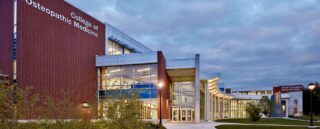
The college is housed with the Alan and Sue Leighton School of Nursing in the Michael A. Evans Center for Health Sciences, a 140,000-square-foot, four-floor LEED Gold building that opened in 2013. It includes:
- Two lecture halls and classrooms
- An anatomy lab for cadaver dissection
- An osteopathic manipulative medicine lab
- Patient simulation centers that recreate hospital and clinic treatment areas for teaching and assessment of medical and nursing students
- Admissions and student affairs offices for graduate programs
The 2024 Wood gift funds facility enhancements in the Evans Center, and Marian’s health sciences campaign announced in 2024 includes plans to expand the building.
Campus Life Beyond the Evans Center
Marian’s campus includes historic mansions, a 55-acre EcoLab, three chapels, collaboration suites, a fitness center and an arena connected to the dining hall. The Mother Theresa Hackelmeier Memorial Library offers individual and group study spaces and collaborative research pods. Indianapolis adds professional sports (the Colts, Pacers, Indians and Fever), the Indianapolis 500, the Indianapolis Museum of Art, the Indianapolis Symphony Orchestra and Eagle Creek, one of the country’s largest city parks.
Housing
The Overlook at Riverdale is the on-campus apartment building for Marian’s medical and graduate students. Residents live among classmates with the privacy of their own apartment, and the building is limited to current graduate students. Many students also rent in nearby Indianapolis neighborhoods.
Mentorship
MU-WCOM pairs first-year students with second- and third-year students through a peer mentoring program, and the OMS-M Peer Mentor Program supports the transition into medical school. Faculty in each department advise students on academics and specialty choice, and the Office of Student Affairs keeps an open door for questions about specialties, clinical years and residency planning.
Support Services
- Academic support: graduate learning specialists in the first two years, one-on-one appointments, individual and group tutoring, and board preparation for COMLEX Level 1 and Level 2-CE.
- Personalized Learning Center: support for learning differences and accommodations.
- Counseling: on- and off-campus physical and mental health services.
- KnightWell: a student-driven wellness initiative for health professions students, with programs such as Therapy Dog Thursday and Tea Tuesday.
- Graduate medical education advising: an assistant dean of graduate medical education and a director of GME advising help students with MyERAS, CVs, interview preparation and letters.
- Office of Student Affairs: orientation, housing, student organizations, campus safety, health and wellness, campus ministry and career services.
Life Beyond the Lecture Hall
Medical school is about more than academics. Students organize game nights, cultural events and sporting events, use the fitness center and mental health services, and attend workshops, conferences and networking events. The Wellness League promotes recreation, fitness and stress management for the medical and nursing communities.
Embracing Community and Diversity
MU-WCOM welcomes students of all faiths and backgrounds. Student groups include the Student National Medical Association, Latino Medical Student Association, Asian Pacific American Medical Student Association, South Asian Medical-Osteopathic Student Association, American Muslim Medical Student Association, Christian Medical and Dental Association, Catholic Medical Association, LGBT+ Alliance at MU-WCOM and a Neurodiversity Advisory Council. Students also take part in Indiana’s annual Black Men in White Coats Youth Summit.
Connecting with the World
Students build professional networks through specialty interest groups, the Student Indiana Osteopathic Association, national conferences and guest lectures. The Global Health Alliance offers local and international global health opportunities, and two medical Spanish clubs help students prepare to care for Spanish-speaking patients. If you are building Spanish skills now, a medical internship in Peru is one way to practice clinical Spanish before medical school.
Student Organizations
MU-WCOM has more than 35 student organizations. Medical students also create community outreach events, blood drives, guest lectures, and networking and shadowing events. The current list on Marian’s student engagement site includes:
Academic, Professional and Advocacy Groups
- Student Osteopathic Medical Association (SOMA): the student affiliate of the American Osteopathic Association, offering leadership roles and a voice in the osteopathic community.
- Student Government Association and SGA Clinical Council: governs the student body and connects students on rotations with the college.
- Indiana State Medical Association and American Medical Association student sections: advocacy on issues affecting medical students.
- American Medical Student Association (AMSA): advocacy and professional development.
- American Medical Women’s Association (AMWA): support for women in medicine.
- Gold Humanism Honor Society: recognizes students who model humanistic patient care.
- Sigma Sigma Phi, MU Upsilon Chapter: the national osteopathic honors and service fraternity.
- Student Research Committee: led by the SGA research executive, supporting student research.
- Medical Humanities Club: studies medicine, health and illness through social, cultural and artistic lenses.
- Teaching Opportunities and Possibilities Club: teaching opportunities for MU-WCOM students.
- Mentors Club: connects medical students with premedical students.
Osteopathic and Specialty Interest Groups
- Student American Academy of Osteopathy (SAAO): builds skills in osteopathic structural diagnosis and treatment.
- Student American Osteopathic Academy of Orthopedics (SAOAO)
- Student Osteopathic Association of Sports Medicine (SOASM): links osteopathic medicine and orthopedic surgery.
- American College of Osteopathic Surgeons Medical Student Section (ACOS-MSS): promotes surgical education.
- Student Osteopathic Internal Medicine Association (SOIMA)
- Family Medicine Club (SAACOFP)
- Emergency Medicine Club
- Pediatrics Student Interest Group: collaborates with peers, teachers, physicians and community organizations around pediatrics. Peyton Manning Children’s Hospital at St. Vincent is one of the college’s clinical partners.
- Psychiatry Student Interest Club: promotes psychiatry and educates students about mental health and illness.
- Neuro Student Interest Group
- Women’s Health Club: interest in OB/GYN.
- Radiology-Oncology Club
- Anesthesia and Critical Care Club
- Physical Medicine and Rehabilitation Club
- Student Interest Group in Ophthalmology-Otolaryngology (SIGOO)
Service, Identity and Community Groups
- Global Health Alliance
- Medical Spanish Club and MUWCOM Medical Spanish Club
- Student Association of Military Osteopathic Physicians and Surgeons (SAMOPS) and Military-Affiliated Students: support for students with military commitments.
- Student Indiana Osteopathic Association: connects students with the Indiana osteopathic community.
- Wellness League
- Medical Craft Club
- Identity and faith groups listed above, plus the comedy club and other university-wide organizations open to graduate students
If you want to start a new organization, contact the director of Student Leadership and Wellness Programs through the Office of Student Affairs.
Clinical Rotations and Research Opportunities
Early Clinical Experience
MU-WCOM gives students clinical experience in the first and second years through Introduction to Clinical Medicine, simulation, standardized patients and OSCEs. Biomedical science courses have a clinical basis, and interprofessional education with nursing students starts early.
Clinical Partners
Students rotate through the college’s clinical partners in the third and fourth years. The school describes relationships with more than 200 clinical partners in urban, suburban, township and rural Indiana. Its listed clinical affiliations include:
- Ascension St. Vincent Health Network: St. Vincent Indianapolis, Fishers, Carmel, Anderson Regional, Kokomo, Seton Specialty and Evansville hospitals, Peyton Manning Children’s Hospital at St. Vincent, St. Vincent Women’s Hospital and St. Vincent Heart Centers in Indianapolis and Carmel
- Community Health Network: Community Hospital North, East and South, Community Howard Regional Health, Community Hospital of Anderson and Madison County, Indianapolis Endoscopy Center and Community Heart and Vascular Hospital
- Other partners: Baptist Health, Fort Wayne Medical Education Program, Franciscan St. Francis Health Network, Goshen Health, Hancock Regional Hospital, Hendricks Regional Health, Henry Community Health, Marion General, Parkview Network, Schneck Medical Center, Union Hospital Network, the VA hospital and Witham Health Services
Training spans inpatient, outpatient, Veterans Affairs, rural, urban and underserved settings. The school’s stated goal is to train students “in Indiana, for Indiana.”
Exploring Medicine Across Indiana
MU-WCOM has a single campus, but its clinical training reaches across the state:
- Indianapolis: the core, where large teaching hospitals and diverse patient populations provide high clinical volume.
- Northern and eastern Indiana: partners in Fort Wayne, Goshen, Kokomo, Marion and Anderson.
- Southern and western Indiana: partners in Evansville, Terre Haute and Seymour, where students can see the healthcare needs of smaller and rural communities.
Each region brings different patient populations and healthcare challenges. Use your rotations to learn the communities, not just the hospitals.
Rotation Structure and Logistics
Third-year core rotations are two months each of family medicine, internal medicine and surgery and one month each of psychiatry, pediatrics and OB/GYN, plus an elective or vacation month. The fourth year adds a sub-internship, internal medicine and primary care selectives, emergency medicine and electives. Students schedule many fourth-year rotations around their residency goals and can do audition rotations outside Indiana. The 2026-27 budget includes rotation travel of $3,828 in the third year and $3,190 in the fourth, a sign that some rotations require travel or temporary housing.
Research Opportunities
Research is part of MU-WCOM’s mission, and the college adopted a dedicated research and scholarly activity strategic plan. Students can:
- Earn credit for mentored research through Directed Research in the first and second years
- Apply for competitive Summer Research Fellowship awards
- Present at the MU-WCOM Annual Student Research Day or at partner hospitals
- Receive funding to attend and present at conferences
- Work in five research laboratory facilities for preclinical, translational and clinical research
- Join faculty groups such as the Bone and Muscle Research Group
Indianapolis is home to major life sciences companies, including Eli Lilly and Company, and nationally recognized hospitals, which widens the range of research options. Research is encouraged but not required for graduation.
Collaborations
MU-WCOM’s collaborations are clinical, academic and community-based:
- Clinical collaborations: partner hospitals and health networks throughout Indiana provide clinical training in diverse settings.
- Academic collaborations: the UNMC College of Public Health offers the DO/MPH, and twelve colleges take part in the Early Access Partnership Program. Many graduates train in Indiana University School of Medicine residency programs.
- Community collaborations: students volunteer at the Near West Free Clinic, take part in community service during DO orientation and support youth programs such as the Black Men in White Coats Youth Summit.
- Research collaborations: faculty research groups mentor medical and BMS students and publish with them.
These partnerships give students varied learning environments and connect academic medicine to real-world care.
Residency Outcomes
| Class | Graduates | Overall match rate | Military residency |
|---|---|---|---|
| 2026 | 148 | 100% | 2 |
| 2025 | 143 | 100% | 4 |
| 2024 | 142 | 100% | 13 |
| 2023 | 136 | 100% | 3 |
| 2022 | 158 | 98.73% | 6 |
The Class of 2026 matched in 20 states and 76 cities across 20 specialty areas, from family medicine and internal medicine to orthopaedic surgery, ophthalmology, radiation oncology and urology. Its top specialties were family medicine (30 percent), internal medicine (16 percent), emergency medicine (12 percent), pediatrics (7 percent) and psychiatry (6 percent). Overall, 59 percent entered primary care and 82 percent entered physician shortage specialties. Thirty-seven percent matched in Indiana, and 75 percent matched in Indiana or a surrounding state (Illinois, Michigan, Ohio or Kentucky). Top facilities included Ascension St. Vincent, Community Health Network, Franciscan Health, Indiana University School of Medicine, Corewell Health and Advocate Health Care.
Exploring Specialized Paths
With a DO foundation, you can specialize in any field. MU-WCOM graduates have recently matched into:
- Neurology: diagnosing and treating disorders of the brain and nervous system.
- Psychiatry: promoting mental health through evidence-based care, a field the college counts among Indiana’s shortage specialties.
- Sports medicine and orthopaedics: applying osteopathic structural skills to athletes and active patients.
- Emergency medicine, pediatrics, anesthesiology and surgery: each represented in the Class of 2026 match.
Students interested in public health can add the DO/MPH.
Osteopathic Advantage
What sets DOs apart is a perspective on care that integrates OMM with the full range of modern medicine. OMM gives you another way to evaluate and treat musculoskeletal problems and connect with patients. It does not replace standard care. It adds to it.
Shaping Your Path
Choosing a specialty is a process of discovery. Explore your interests on rotations, talk with residents and faculty, and use specialty interest groups and research to test your fit. MU-WCOM’s faculty, the Office of Student Affairs and its GME advising staff help students find a specialty that matches their skills and goals.
Notable Alumni, Faculty, Leadership and Admissions Staff
MU-WCOM’s faculty includes PhD scientists, DOs and MDs, many with long clinical or research careers before joining the college. The profiles below are drawn from the college’s directory, faculty biographies and university news, and titles were checked on October 29, 2026. Knowing who leads the school and who teaches its core courses helps you write specific secondary answers and ask better questions at your interview. It does not mean any of these people will review your file.
School Leadership
Amanda Wright, DO: Dean
Dr. Amanda Wright is dean of the Tom and Julie Wood College of Osteopathic Medicine and an associate professor of family medicine. She oversees all aspects of medical education, including curriculum, faculty scholarship, residency preparation and compliance with accreditation standards. Before joining Marian, she was associate dean of clinical medicine at the Arkansas College of Osteopathic Medicine and osteopathic family medicine program director at the University of Illinois College of Medicine at Peoria/UnityPoint Health Methodist, after years in full-spectrum family medicine practice in Peoria. She earned her undergraduate degree at Saint Mary-of-the-Woods College in Terre Haute, her DO at the Chicago College of Osteopathic Medicine and completed family medicine residency at the University of Illinois College of Medicine at Peoria. She still practices with local family medicine residencies. Her listed interests include women’s health and obstetrics, global medicine, point-of-care ultrasound, the effect of social determinants of health on care, integrated curricular design and interprofessional education. After the 2026 Match, she noted that all 148 graduates were going on to make a difference as osteopathic physicians.
Why it matters to applicants: a family physician leads the college, which fits its primary care mission and its emphasis on interprofessional and team-based learning.
Medhane Cumbay, PhD: Associate Dean of Academic Affairs
Dr. Medhane Cumbay is associate dean of academic affairs and an associate professor of pharmacology. He joined the college in January 2015 and teaches the clinical use of drugs in nearly all first- and second-year courses. He earned a BS in biochemistry and biophysics from Oregon State University and a PhD in molecular pharmacology from Purdue University, then completed a postdoctoral fellowship at the Stark Neuroscience Research Institute at Indiana University School of Medicine. He taught at Butler University’s College of Pharmacy and Health Sciences from 2007, where he was named Outstanding Pharmaceutical Science Professor in 2012. His research focuses on cell surface receptor function, drug-receptor interactions, neurodegenerative diseases and drug development.
Sarah Zahl, PhD: Associate Dean of Assessment and Accreditation
Dr. Sarah Zahl has been at Marian since 2013, the year the college opened. As associate dean of assessment and accreditation, she helped secure the college’s seven-year accreditation and has led data-informed improvements in student outcomes and board performance. She was promoted to clinical associate professor in May 2026 and teaches in both the DO and biomedical sciences programs. Her office also handles requests for disaggregated match and debt data, which is useful if you want outcomes broken down further than the public tables.
Clint Whitson, EdD: Associate Dean of Student Affairs
Dr. Clint Whitson is associate dean of student affairs and an assistant professor of leadership in the health professions. The Office of Student Affairs he leads covers student support, wellness, organizations and advising on specialty choice, clinical years and residency.
Admissions Staff
Andy White: Executive Director of Admissions, Health Professions
Andy White leads admissions for Marian’s health professions programs, including the DO program. He is the named contact for the Early Access Partnership Program, both for colleges interested in partnering and for students with questions about the pathway. General questions about DO admissions go to [email protected] or (317) 955-6400. Admissions decisions are made by the admissions committee, not one individual.
Current Faculty
David C. Eland, DO, FAAO: Chair of Osteopathic Principles and Practice
Dr. David Eland chairs the Department of Osteopathic Principles and Practice and teaches OPP across all four years. He has more than 30 years of experience teaching students, residents and practicing physicians. He spent 26 years at Ohio University Heritage College of Osteopathic Medicine, where he is professor emeritus and held leadership roles including department chair and residency director, and he practiced privately in Indianapolis and Minneapolis for ten years. He earned his DO at the Kirksville College of Osteopathic Medicine, holds certification of special proficiency in osteopathic manipulative medicine and is a Fellow of the American Academy of Osteopathy. He wrote a chapter in Foundations of Osteopathic Medicine and co-authored a 2025 Journal of Osteopathic Medicine study showing that soft tissue manipulation enhanced recovery of muscle mass in a disuse model of sarcopenia.
Why it matters to applicants: the person who leads your OMM training is a nationally known osteopathic educator, which supports the college’s four-year OPP curriculum.
Luke Nelligan, DO: Chair of Family Medicine
Dr. Luke Nelligan chairs the Department of Family Medicine. He joined the faculty in September 2015 after serving as director of medical education at Community West Hospital in Indianapolis and director of its family medicine residency clinic. He graduated from the Philadelphia College of Osteopathic Medicine in 1991, is board certified in family medicine and holds added qualification in hospice and palliative medicine. A past president of the Indiana Osteopathic Association, he served on the IOA steering committee that worked to establish an osteopathic medical school in Indiana, which led to the college’s founding. He facilitates Introduction to Clinical Medicine small groups and table trains in OPP labs.
Jeremy Jones, DO: Professor of Primary Care
Dr. Jeremy Jones was promoted to professor of primary care in April 2025. A pediatrician trained at Oklahoma State University, he coordinates the OMM hands-on lectures and labs, leads third-year OPP 5 small groups, facilitates Clinical Colloquium courses and delivers pediatrics lectures in the first- and second-year systems courses. He is involved in implementing the San Damiano Scholars Program at MU-WCOM. His writing on physician resilience and wellness has appeared in The Linacre Quarterly, the journal of the Catholic Medical Association.
Erin McClelland, PhD: Immunology Faculty
Dr. Erin McClelland teaches microbiology and immunology and leads much of the college’s immunology curriculum. In May 2026, Marian’s Board of Trustees approved her promotion to associate professor with tenure. The university credits her with educational innovations that students cite as valuable, an active research agenda, student mentorship, grant activity and leadership roles in the scientific community. She is a faculty member, not an admissions officer.
Daniel Fagan, MD: Internal Medicine Faculty
Dr. Daniel Fagan is an assistant professor of internal medicine. Internal medicine faculty such as Dr. Fagan help students connect the biomedical sciences to patient care in the preclinical years.
Julia Hum, PhD: Director of the Biomedical Sciences Program
Dr. Julia Hum directs the Master of Science in Biomedical Sciences and is a tenured professor of physiology. With Dr. Jonathon Lowery, she is part of the Bone and Muscle Research Group, which has mentored BMS and DO students on abstracts, papers and conference presentations. If you are considering the BMS route to MU-WCOM, her program is the one that offers a guaranteed DO interview.
Notable Alumni
Brandon Koser, DO ’17
Dr. Brandon Koser graduated in 2017 and became chief medical officer of Decatur Memorial Health in Illinois on December 1, 2025, after serving as medical director of its emergency department. He completed emergency medicine residency at Southern Illinois University School of Medicine, holds MPH and MBA degrees from Benedictine University and serves as executive officer of the U.S. Army Reserve 804th Medical Brigade. His path shows how MU-WCOM graduates move into hospital leadership and military medicine.
Ryan Beeker, DO ’18
Dr. Ryan Beeker graduated in 2018 and completed residency through the Michigan State University College of Osteopathic Medicine Statewide Campus System at McLaren/Oakland. In 2024 he matched into an orthopaedic trauma fellowship at the Unite Orthopaedics Foundation in San Diego. He is an example of graduates who pursue competitive surgical subspecialties.
Stephanie Williams, DO ’19
Dr. Stephanie Williams spent her clinical years in the Indianapolis area and, in 2022, returned to her hometown of Seymour, Indiana, as a family medicine physician at Schneck Primary Care, working from the desk where her former mentor once sat. Schneck Medical Center is one of the college’s clinical partners. Her story reflects the college’s founding purpose: training primary care physicians who practice in Indiana communities.
Beyond MU-WCOM
MU-WCOM is the only osteopathic medical school in Indiana, but it is not the only option for students who want to train in the state or the Midwest. Indiana University School of Medicine is the state’s MD school, and several DO schools in nearby states draw Indiana applicants. Comparing faculty, curriculum and clinical networks across these schools helps you find the right fit. See the related guides later in this article and our overview of medical schools in Indiana.
Whichever school you choose, you will join a network of faculty and alumni invested in your success and in the future of osteopathic medicine.
Admissions Statistics and Class Profile
Class of 2030 Profile (Entered 2026)
| Measure | Value |
|---|---|
| Candidates interviewed | 842 |
| Students enrolled | 162 |
| Average MCAT | 503 |
| Average cumulative GPA | 3.78 |
| Average science GPA | 3.72 |
| Indiana residents | 60% (rest from 18 states and 3 countries) |
| First-generation college graduates | 10% |
| Military HPSP scholarship recipients | 7 |
| Undergraduate and graduate institutions represented | 78, including 21 in Indiana |
The most represented institutions were Marian University’s Master of Science in Biomedical Sciences, Indiana University Bloomington, Purdue University West Lafayette, Butler University, Indiana University Indianapolis, University of Illinois Chicago, Michigan State University, Taylor University, Wayne State University, Loyola University Chicago and Marquette University.
Enrollment and Demographics (2024-2025)
The school’s Choose DO profile reports 624 total students for 2024-2025, with 150 first-year matriculants: 90 from Indiana and 60 from out of state. Among those first-year students, 92 percent were science majors, 8 percent non-science majors and 6.7 percent held graduate degrees. Self-reported race and ethnicity were 65.3 percent white, 14.7 percent Asian, 6.0 percent Hispanic or Latino, 4.7 percent Black or African American, 2.0 percent multiple races and 2.7 percent undisclosed. Total enrollment was 396 women, 227 men and 1 student reporting another gender.
Class Size Trend
MU-WCOM enrolled 162 students in its first class in 2013 and 162 again in the Class of 2030. The 2024-2025 first-year class was smaller at 150. In 2024 Marian announced a $150 million health sciences campaign that includes a plan to grow the class to 185 students. Watch for changes in seat numbers in future cycles.
Acceptance Rate
MU-WCOM does not publish its number of applicants or acceptances for the Class of 2030, so a current acceptance rate cannot be calculated from official data. What is published:
- Interviewed to enrolled: 842 interviewed and 162 enrolled. This is not an acceptance rate, because more students are offered seats than enroll.
- Applicant volume: in July 2024, Marian’s president said the school had received more than 5,000 applicants for about 160 seats the prior year.
- Most recent published acceptance figures: the Class of 2027 profile (students who entered in 2023, sheet dated October 2023) reported 4,976 applications received, 565 candidates interviewed, 363 candidates accepted and 162 students enrolled. For that cohort, accepted candidates divided by applications works out to about 7.3 percent. That class averaged a 504 MCAT, a 3.71 GPA and a 3.67 science GPA, and 73 percent were Indiana residents.
Treat any precise acceptance rate you see online with caution.
How to Read These Numbers
- Averages are not cutoffs. The minimums are a 3.0 GPA and a 494 MCAT. Many admitted students are below the averages.
- Cohorts differ. The Class of 2030 sheet describes students who entered in 2026. The Choose DO enrollment block describes the 2024-2025 academic year. Do not mix them.
- Indiana ties matter but are not required. Sixty percent Indiana residents means 40 percent come from elsewhere.
- The BMS pipeline is real. Marian’s own biomedical sciences master’s program tops the list of institutions represented in the class.
Implications for Prospective Applicants
MU-WCOM’s competitiveness comes from a strong applicant pool, a limited class and a clear mission. To improve your chances:
- Academic preparation: aim for a GPA above 3.6 and an MCAT of 500 or higher, with strong recent science grades.
- Extracurricular engagement: shadow DO physicians, volunteer in healthcare settings, serve underserved communities and take part in research if you can.
- Personal statement: tell a clear story about your path to osteopathic medicine.
- Strong recommendations: ask advisors, science faculty and a physician who know your work.
A strong application improves your odds but never guarantees admission. Aligning your application with MU-WCOM’s mission and expectations is the most useful step you can take.
Tips and Strategies for Admission
Earning a spot at MU-WCOM is competitive. Strong academics are essential, but your experiences, writing and interview decide most close cases. These tips translate the school’s stated priorities into practical steps.
1. Apply early in a rolling cycle
MU-WCOM reviews applications on a rolling basis and interviews from August through April 1. Submit AACOMAS in June, complete the supplemental within a week or two of your invitation and have your three letters ready in AACOMAS by July. An early, complete file has more open seats to compete for.
2. Take the MCAT on time
MU-WCOM does not accept the January 2027 MCAT for this cycle, and scores must be from 2024 through 2026. If you are planning a retake, schedule it for the spring or summer, not January.
3. Show patient contact, not just hours
Clinical exposure is the first factor on the school’s list. Shadowing shows you understand what physicians do, but roles where you work with patients show you can do the work. Clinical internships for pre-med students, scribing, EMT work and nursing assistant jobs all give you real patient interaction you can write about. Witnessing daily medical practice firsthand helps you form informed career goals.
4. Connect your service to Indiana’s needs
The first essay asks about your experience with communities like Indiana’s 53 shortage-area counties. Rural health, free clinics, community health centers and work with patients who face transportation, cost or language barriers all fit. Volunteering in healthcare settings that serve underserved communities shows empathy and a commitment to service.
5. Understand osteopathic medicine through a DO
Shadow at least one DO and pay attention to how they examine and treat patients. The committee strongly prefers a letter from a physician, ideally a DO. Be ready to explain osteopathic principles in your own words.
6. Address primary care honestly
You do not have to commit to family medicine, but you should understand why primary care matters to MU-WCOM and to Indiana. If you are drawn to another specialty, explain how a primary care foundation will make you a better physician in that field.
7. Build research if you can
The secondary asks whether you have research experience, and research is on the selection list. A semester of mentored research or a poster is enough to show curiosity and the ability to contribute to scientific work.
8. Lead and advocate
Leadership roles in health-related student organizations or health advocacy campaigns show initiative and communication skills. Depth matters more than titles.
9. Use a gap year with a plan
If you need more clinical experience or a stronger science record, a gap year can help. Full-time clinical work, a post-baccalaureate or master’s program such as Marian’s BMS, or structured pre-med gap year programs can all strengthen a reapplication. Explain what you did and what you learned.
Remember, Authenticity Is Key
- Go beyond the résumé: do not just list experiences. Explain why they matter to you, what you learned and the challenges you faced.
- Let your interest show: share real stories and motivations that connect you to osteopathic medicine.
- Quality over quantity: a few meaningful, sustained activities say more than a long list of brief ones.
By seeking out meaningful experiences and explaining their significance honestly, you can build an application that shows the committee who you are and why you want to be an osteopathic physician.
Crafting a Strong Personal Statement for MU-WCOM
Your AACOMAS personal statement goes to every DO school, so it should not name MU-WCOM. It should, however, reflect the qualities MU-WCOM values: whole-person care, service and a clear understanding of osteopathic medicine.
- Go beyond the résumé. Explore why you want medicine. Share a defining moment, a meaningful patient encounter or a challenge that confirmed your path.
- Tell a story, not a list. Connect your experiences to your goals. How did volunteering at a free clinic shape your view of access to care? How did shadowing a DO show you what osteopathic medicine looks like in practice?
- Show resilience. If you faced setbacks, explain what you learned and how you changed.
- Be specific and honest. Use real details. The committee wants to know who you are, not just what you did.
- End with your vision. What kind of osteopathic physician do you want to be, and whom do you want to serve?
Save school-specific reasons for the “Explain your interest in attending MU-WCOM” essay in the secondary. For official instructions, see MU-WCOM’s DO admission page and the AACOMAS application instructions, both listed in the sources at the end of this guide.
Academic Excellence
Academic excellence is the foundation of a strong application. Strong grades in biology, chemistry, physics and biochemistry show you have the knowledge base for the first-year systems courses. MU-WCOM places emphasis on your last 120 credit hours and on science and required courses, so an upward trend matters. Advanced coursework, independent research and demanding projects show intellectual curiosity. Strength outside the sciences, in writing, history or the arts, shows communication skills and adaptability that help in patient care.
MCAT: The Standardized Stepping Stone
The MCAT is your chance to show your readiness on a common scale. Strong performance in Biological and Biochemical Foundations of Living Systems and in Chemical and Physical Foundations of Biological Systems signals that you can handle the science of medical school. The Psychological, Social, and Biological Foundations of Behavior section reflects the whole-person approach that osteopathic medicine values.
MCAT Preparation
- Give it real time. Plan several months of focused study. Master the content, take full-length practice tests and analyze every one.
- Build endurance. Regular timed practice tests prepare you for the length of exam day.
- Get help where you need it. Prep courses or tutoring can help with weak sections. Marian’s BMS program offers an optional MCAT prep course for its students.
- Protect your balance. Rest and activities you enjoy keep you effective.
- Mind the dates. For MU-WCOM this cycle, the latest accepted MCAT is December 2026.
Letters of Recommendation
Letters give the committee a view of you from people who have watched you work. Choose recommenders who know you beyond the classroom: a pre-health advisor or committee, a science professor who saw your work closely and a physician, preferably a DO, who saw you with patients. Strong letters describe specific moments. Give your writers your CV, your personal statement draft and a few reminders of what they saw you do. Do not script the letter. Encourage them to read MU-WCOM’s mission so they can speak to your fit. Request letters early, since MU-WCOM uploads and reviews letters weekly and processing can take two to three weeks.
Extracurricular Activities
Your application is more than grades and scores. MU-WCOM looks for students who can lead, work in teams and serve with compassion.
- Leadership: leading a student organization or community project shows initiative and responsibility.
- Teamwork: sports, group service projects and work on clinical teams show you can collaborate.
- Service: volunteering in hospitals, public health initiatives or mentoring younger students shows empathy and commitment to community.
- Personal interests: art, athletics or other passions reveal who you are and help you connect with patients.
Sustained engagement in a few activities speaks louder than a scattered list.
Research the School in Depth
Read MU-WCOM’s website, but go further. Look at faculty profiles and research groups, the clinical partner list, the outcomes page and the residency placement sheet. If you can, attend a DO information session or visit campus and talk with current students about the curriculum, student life and what surprised them. These details give your secondary and interview answers substance that generic research cannot.
Tips for Applying to DO Schools in General
- Start early: the process is long, so research schools and prepare materials well before deadlines.
- Do your research: choose schools that fit you academically and geographically, and consider size, location, curriculum and clinical training.
- Build a strong application: proofread everything and highlight your academic achievements, activities and experience.
- Get help: talk to your advisor, professors and mentors, or consider an admissions consultant. Gaining experience through internships for pre-med students during summers or a gap year also gives you more to write about.
Secondary Application Questions, Example Responses and Analysis

MU-WCOM requires a supplemental (secondary) application for the 2026-2027 cycle. Here is what is confirmed:
- Who receives it: applicants who pass the initial screen of their AACOMAS application, which requires an MCAT of 494 or higher and a cumulative GPA of 3.0 or higher.
- When: the earliest submission date was June 2, 2026, and the deadline is March 1, 2027. Because admission is rolling, submit within one to two weeks of your invitation.
- Fee: $100, nonrefundable. If you have an AACOMAS or AAMC fee waiver, MU-WCOM honors it; upload a PDF of the waiver to the supplemental application.
- Where: the MU-WCOM applicant portal.
- Format: four short essays of up to 300 words each, one checklist item and six yes/no questions.
MU-WCOM’s 2026-2027 Secondary Questions
The full 2026-2027 question set, word for word:
- Are you a current or former student in Marian’s Biomedical Sciences graduate program? (yes/no)
- Have you had the opportunity to connect with someone from MU-WCOM? (yes/no)
- Do you have research experience? (yes/no)
- In Indiana, 53 of our 92 counties are designated as Health Professional Shortage Areas. What experiences have you had working with these types of communities, and how has it shaped your perspective on healthcare? (300 words)
- Do you have any connections to the state of Indiana? (yes/no)
- What personal experiences or values have motivated you into considering an osteopathic medical education? (300 words)
- Explain your interest in attending MU-WCOM. (300 words)
- Please indicate any new information, changes or additions that were not included in your AACOMAS application (including but not limited to, education, employment, extracurricular activities, research, military service, academic warnings, conduct violations, and/or convictions). (300 words)
- Do/did you have an undergraduate pre-medical or health profession advisor? (yes/no)
- I am eligible for an AACOMAS fee waiver and request one from MU-WCOM. (yes/no)
- Please indicate how you first learned about MU-WCOM, providing specific details where appropriate. (checklist)
Your portal may number the items differently. Follow the exact wording and limits shown when you log in.
How to Approach the Yes/No Questions
The yes/no items are short, but they are not throwaways. Answer them truthfully and make sure your essays support them.
- BMS student: if you are in Marian’s Biomedical Sciences program, say yes. BMS students with a 3.50 first-semester GPA and a 497 or higher MCAT have a guaranteed interview.
- Connected with someone from MU-WCOM: information sessions, campus visits, fairs and conversations with admissions staff or students all count. If you answer yes, mention it in your “interest in attending” essay.
- Research experience: answer yes only for real research roles. If you answer no, use your other essays to show curiosity in other ways.
- Connections to Indiana: growing up, attending college, working, family or a plan to practice in Indiana all count. Be ready to explain at the interview.
- Pre-health advisor: if you have one, it explains why your advisor or committee letter is in your file.
- Fee waiver: if you qualify through AACOMAS or AAMC, request it and upload the waiver.
How to Prepare for MU-WCOM’s Secondary Essays
- Write to 300 words, not 600. Short limits reward one clear story and one clear point. Cut background the committee already has from AACOMAS.
- Answer every part. The first question asks two things: your experiences and how they shaped your perspective. Address both.
- Be specific to MU-WCOM. Use verified details: the Franciscan mission, OPP in all four years, the Professional Identity Formation series, the Indiana clinical network, the DO/MPH, the BMS program or outcomes such as the share of graduates who stay in Indiana.
- Keep essays distinct. The osteopathic motivation essay and the “why MU-WCOM” essay overlap. Use the first for your personal path to osteopathic medicine and the second for the school.
- Do not repeat your personal statement. Use new stories or new angles on the same experiences.
- Proofread. A clean, prompt-specific answer stands out.
Each example below is original and written for teaching. It describes a fictional applicant and uses only MU-WCOM programs the school publicly describes. Do not copy it; your essays must come from your own experiences.
Essay 1: Indiana Shortage-Area Communities
“In Indiana, 53 of our 92 counties are designated as Health Professional Shortage Areas. What experiences have you had working with these types of communities, and how has it shaped your perspective on healthcare?” (2026-2027 cycle; 300 words maximum; required)
What it asks: two things. First, your direct experience with rural or medically underserved communities. Second, how that experience changed the way you think about healthcare. The opening statistic tells you why MU-WCOM cares: most of Indiana lacks enough primary care, mental health or dental providers.
Approach: pick one or two experiences where you worked with patients who face barriers to care. Use one concrete moment. Then state, plainly, what you now believe about healthcare because of it. Link your conclusion to the kind of physician you want to be in Indiana or communities like it.
Illustrative example, not an actual applicant essay (297 words)
For two summers I worked as a patient care technician at a 25-bed critical access hospital in a rural southern Indiana county, where the nearest cardiologist was an hour away. Most of my shifts were on the medical floor. I took vitals, helped patients walk after surgery and learned to notice when someone was quieter than usual.
One patient changed how I think about access. Mr. D was a 68-year-old farmer admitted with heart failure for the third time that year. During discharge teaching, he admitted he had stopped his diuretic because the pharmacy was 40 minutes away and his truck had broken down. His problem was not a lack of knowledge. It was a lack of roads, rides and options. I helped the nurse call a church volunteer network that delivered his medication, and he made it to his follow-up visit.
Since then I have also volunteered weekly at a free clinic in Indianapolis, checking in patients and taking blood pressures. The setting is urban, but the barriers look familiar: no transportation, no paid sick time and long waits for specialty care.
These experiences shaped my perspective in three ways. First, I now see social needs as clinical information. Asking how a patient gets to the pharmacy can matter as much as the medication list. Second, I learned that small hospitals depend on generalists who can manage complex patients with limited backup. Third, I saw that trust is local. Mr. D listened to the nurse because her family farmed down the road.
I want to train where these lessons are part of the curriculum. MU-WCOM’s clinical partners across Indiana and its primary care foundation would let me keep learning in communities like my home county, and I hope to return to one as a family physician.
Why this example works:
- Experience: it names two settings, a rural critical access hospital and an urban free clinic, so the reader sees that shortage areas are not only rural.
- One patient, one barrier: the story about Mr. D shows that the problem was transportation, not knowledge, and shows the writer acting within a supportive role.
- Perspective: the three lessons answer the second half of the question directly and in order.
- School fit: the closing ties the lessons to MU-WCOM’s statewide clinical partners and primary care focus without repeating the mission statement.
- Length: at 297 words, it stays within the 300-word limit.
Mistakes to avoid: restating the 53-county statistic with no experience behind it; describing communities you have never worked with; claiming you treated patients; writing only about the community and never about how your own view changed.
Essay 2: Motivation for Osteopathic Medicine
“What personal experiences or values have motivated you into considering an osteopathic medical education?” (2026-2027 cycle; 300 words maximum; required)
What it asks: the personal path that led you to osteopathic medicine, specifically. The question allows either experiences or values, and the strongest answers connect both.
Approach: start with a specific experience with a DO or with osteopathic care. Then show the values that make osteopathic principles a natural fit for you. Avoid defining osteopathic medicine in general terms; show it.
Illustrative example, not an actual applicant essay (276 words)
My interest in osteopathic medicine began with my grandmother’s back. After a compression fracture, she spent months on pain medication that made her confused and unsteady. Her primary care physician, a DO, was the first clinician who examined her standing, sitting and walking before changing anything. He adjusted her medications, used gentle osteopathic manipulative treatment for the muscle spasm around the fracture and referred her to physical therapy. Within weeks she was cooking again. What stayed with me was not a single technique. It was that he looked at how her body worked as a whole and at what she wanted her days to look like.
Later I shadowed him for 60 hours. I watched him spend an extra five minutes asking a teenager about sleep and stress before treating her headaches, and I saw how often a careful structural exam changed his plan. He explained that the body is a unit and that structure and function are related. Those ideas matched what I had seen at my grandmother’s kitchen table.
My values point the same way. I grew up in a faith community that taught me to see each person’s dignity, especially when someone is frail or ignored. As a hospice volunteer, I sat with patients whose conditions could not be cured but whose comfort and fear could still be addressed. Medicine that treats only the diagnosis would feel incomplete to me.
Osteopathic medicine gives me a framework for the physician I want to be: one who uses every tool of modern medicine, adds hands-on skills that can reduce reliance on medication when appropriate, and treats patients as whole people with families, beliefs and goals.
Why this example works:
- Personal experience: a family member’s care by a DO and 60 hours of shadowing ground the answer in what the writer saw.
- Osteopathic principles in plain words: the essay mentions that the body is a unit and that structure and function are related without turning into a lecture.
- Values: dignity and whole-person care, shown through hospice volunteering, connect naturally to MU-WCOM’s mission without naming the school.
- Balance: it presents osteopathic medicine as modern medicine plus hands-on skills, not as an alternative to standard care.
- Length: 276 words, within the limit.
Mistakes to avoid: saying you chose DO because MD schools were out of reach; implying MDs do not care about the whole person; claiming OMT cured a disease; writing a general essay about “holistic” care with no example.
Essay 3: Why MU-WCOM
“Explain your interest in attending MU-WCOM.” (2026-2027 cycle; 300 words maximum; required)
What it asks: your specific reasons for choosing this school. It is the place for school research, and the committee can tell when an answer would work for any DO school.
Approach: choose three or four verified features of MU-WCOM and tie each one to your experience or goals. Good options include the Catholic, Franciscan mission; osteopathic principles taught across all four years; the Professional Identity Formation series; statewide clinical partners; the DO/MPH with UNMC; outcomes in primary care and in Indiana; and any real contact you have had with the school.
Illustrative example, not an actual applicant essay (275 words)
I am applying to MU-WCOM because its mission, its training model and its commitment to Indiana fit the physician I am trying to become.
First, the mission. I am drawn to a Catholic medical school that names the complete healing of body, mind and spirit as its purpose. The four Franciscan values, especially dignity of the individual and responsible stewardship, describe how I want to practice. I would welcome the chance to grow in that setting, and I would look into the San Damiano Scholars program the college is building.
Second, the curriculum. Osteopathic principles and practice run through all four years at MU-WCOM, not just the first two. I want OMM to become a skill I use with confidence on clerkships, and the OPP 5 and 6 courses in the clinical years would support that. The Professional Identity Formation series also matters to me. After four years as an emergency department scribe, I know how quickly physicians can lose the reasons they started, and I value a program that builds reflection and wellness into training.
Third, Indiana. I grew up in Columbus and want to practice family medicine in southern Indiana. MU-WCOM’s clinical partners span the state, from large Indianapolis systems to community hospitals like Schneck Medical Center, so I could train in the kinds of places where I hope to work. Its graduates match into primary care and shortage specialties at high rates, and many stay in the state.
Finally, I attended an information session and spoke with a second-year student, who described faculty who know students by name. That is the learning community I want: rigorous, mission-driven and focused on serving Indiana.
Why this example works:
- Organized and specific: mission, curriculum, Indiana and personal contact, each with a verifiable detail.
- Connected to the applicant: the scribe experience explains why Professional Identity Formation matters, and growing up in Columbus explains the Indiana goal.
- Real programs only: OPP 5 and 6, Professional Identity Formation, San Damiano Scholars and Schneck Medical Center are all part of MU-WCOM’s published curriculum, faculty work or partner list.
- Matches the yes/no items: the information session supports a “yes” to having connected with someone from MU-WCOM.
- Length: 275 words, within the limit.
Mistakes to avoid: praising “state-of-the-art facilities” with no detail; listing every program on the website; copying the mission statement; mentioning programs that do not exist, such as a PhD track or branch campus.
Essay 4: Updates Since AACOMAS
“Please indicate any new information, changes or additions that were not included in your AACOMAS application (including but not limited to, education, employment, extracurricular activities, research, military service, academic warnings, conduct violations, and/or convictions).” (2026-2027 cycle; 300 words maximum; answer when you have something new)
What it asks: factual updates since you submitted AACOMAS, plus disclosure of any academic or conduct issues. MU-WCOM does not accept AACOMAS updates by email, so this is the right place for news.
Approach: use short labeled paragraphs. For each update, give the date, your role and the result. End by stating clearly whether you have anything to disclose. If you have nothing new, a one-sentence answer is fine.
Illustrative example, not an actual applicant essay (152 words)
Since submitting my AACOMAS application in June, I have three updates.
Employment: In August I was promoted from scribe to lead scribe in the emergency department at a community hospital in Indianapolis. I now train new scribes, audit chart quality and work about 32 hours per week. Training others has improved my own documentation and taught me to give clear, respectful feedback.
Research: Our retrospective project on emergency department return visits for uncontrolled hypertension was accepted as a poster for a state research meeting this November. I completed the data cleaning and drafted the methods section. I will present the poster with my mentor.
Coursework: I completed Genetics this summer at an accredited university and earned an A. This course was in progress when I submitted AACOMAS and it fulfills the school’s recommended genetics coursework.
There are no other changes, and I have no academic warnings, conduct violations or convictions to report.
Why this example works:
- Easy to scan: employment, research and coursework each get their own short paragraph.
- Concrete: dates, hours and the writer’s exact role in the research project.
- Accurate: an accepted poster is described as a poster, not a publication.
- Complete: the last sentence answers the disclosure part of the question.
- Length: 152 words, well within the limit.
Mistakes to avoid: repeating activities already in AACOMAS; inflating minor updates; leaving out an institutional action or conviction (failing to disclose can lead to a rescinded offer); using this space for another “why medicine” essay.
Item 5: How You First Learned About MU-WCOM
“Please indicate how you first learned about MU-WCOM, providing specific details where appropriate.” (2026-2027 cycle; checklist; no word limit stated)
What it asks: a factual record of how you found the school. It is a checklist, but it may allow detail.
Worked response pattern, illustrative example, not an actual applicant essay:
Select every source that applies and add specifics in the text box: (1) Information session: attended the MU-WCOM DO Information Session in May 2026 and spoke with a second-year student about OPP labs. (2) Pre-health advisor: my advisor recommended MU-WCOM because of its primary care focus in Indiana. (3) Website and Choose DO: reviewed the Class of 2030 profile and Early Access Partnership Program page.
Why this pattern works: it is short, specific and consistent with the “connect with someone from MU-WCOM” answer and the “why MU-WCOM” essay. Mistakes to avoid: inventing a contact you never had, or writing an essay where a checklist is expected.
Earlier MU-WCOM Secondary Questions
MU-WCOM changes its questions from cycle to cycle. Earlier cycles asked about shadowing (describing the experience with the name and location of the hospital or clinic, the physician’s name and specialty and the time spent), gaps in education or employment longer than holidays and semester breaks, whether you are interested in practicing medicine in Indiana, which area of medicine you are most interested in and why (choose up to three), your motivation for attending MU-COM and osteopathic medicine, and any other information you would like the admissions committee to know. Those questions are not on the 2026-2027 secondary.
They are still useful preparation. The interview may touch on the same themes, and the reflection they require will help with the current essays:
- Shadowing: keep a log with each physician’s name, specialty, location and hours. You will need it for AACOMAS anyway, and interviewers may ask.
- Gaps: if you have a gap longer than a semester, be ready to explain it briefly and honestly at the interview.
- Practicing in Indiana: the current “connections to Indiana” question and the shortage-area essay cover similar ground. Know your answer.
- Specialty interests: you do not need a final answer, but be ready to name areas that interest you and explain why, including how primary care fits.
- Anything else: if something important does not fit elsewhere, the update question is the only open space this cycle. Use it only for genuinely new information.
Interview Format and Preparation
Interview Format
MU-WCOM uses a traditional interview format designed to assess the NBOME competencies, such as professionalism, communication and osteopathic principles. The school’s Choose DO profile lists virtual interviews only for this cycle and describes a blended interview experience with both synchronous (live) and asynchronous (recorded) components. Interviews run from August through April 1, and decisions usually arrive within a few weeks. The catalog says three to four weeks.
Every applicant who interviews has their complete application reviewed by the admissions committee, which bases its decision on academic performance, professional, volunteer and extracurricular experience, and interview performance. The school places emphasis on the interview.
What Is Confirmed and What Is General Advice
Confirmed by the school: the traditional format, the NBOME competency focus, the virtual delivery listed for this cycle, the August to April window and the decision timing. Everything else in this section is preparation advice based on how competency-based traditional interviews generally work. Read your invitation email closely for the exact structure, technology requirements and schedule.
How to Prepare
- Know the school. Review the mission, the four Franciscan values, the curriculum, the clinical partners and the outcomes. Be ready to explain why MU-WCOM, not just why a DO school.
- Know your application. Reread your AACOMAS application and every secondary answer. Interviewers often start there.
- Understand osteopathic medicine. Be able to explain the four tenets and OMM in your own words, with an example from shadowing.
- Practice competency stories. Prepare short stories that show teamwork, communication under pressure, ethical judgment, handling a mistake, caring for someone different from you and learning from feedback.
- Prepare for the asynchronous part. Practice recording timed answers to a webcam with no one responding. Look at the camera, keep answers to about two minutes and pause before answering to organize your thoughts.
- Set up your space. Quiet room, neutral background, good lighting, stable internet and a tested microphone and camera.
- Dress professionally. A suit or equivalent professional attire is standard, even for virtual interviews.
- Ask good questions. Ask about things the website does not answer, such as how students choose rotation sites, what OPP 5 looks like on rotations or how the college supports students preparing for COMLEX.
Be familiar with common medical school interview questions, but do not stop there. Research MU-WCOM-specific topics such as its curriculum, research and community outreach. Medicine is about human connection, so show that you can connect with others and handle ethical questions with compassion and integrity. Use interview preparation as a chance to reflect on your goals, not just to memorize answers. For a broader list, see our guide to medical school interview questions.
Practice Questions for an MU-WCOM Interview
These are practice questions that fit MU-WCOM’s mission and the NBOME competencies. They are not a list of questions the school has confirmed.
- Why do you want to be an osteopathic physician rather than an allopathic physician?
- Why MU-WCOM? What about our mission speaks to you?
- Tell me about your experience with rural or underserved patients.
- Describe a time you worked on a team that did not agree. What did you do?
- Tell me about a mistake you made and what you learned.
- How would you explain osteopathic manipulative treatment to a skeptical patient?
- What does caring for the body, mind and spirit of a patient mean to you?
- What do you know about Indiana’s physician shortage, and what role could you play?
- How do you take care of your own wellness under stress?
- Where do you see yourself practicing in ten years?
A Sample Answer Framework
For a behavioral question such as “Tell me about a mistake you made,” use a simple structure: the situation in one or two sentences, what you did, what happened and what you learned and now do differently. Keep it under two minutes. End on the lesson, and if you can, connect it to patient care. For example, an applicant who mislabeled a lab specimen as a research assistant might explain how they reported it immediately, how the team fixed it and how they now use a double-check every time. That answer shows honesty, accountability and a habit that matters in clinical work.
Frequently Asked Questions
What is Marian University College of Osteopathic Medicine (MUCOM)?
It is Marian University’s DO school in Indianapolis, now officially named the Marian University Tom and Julie Wood College of Osteopathic Medicine (MU-WCOM). It opened in August 2013, Marian’s board approved it in 2010, and it was renamed in July 2024 after a $29 million gift from the Tom and Julie Wood Family Foundation. It is one of only five Catholic medical schools and the only osteopathic medical school in Indiana. It focuses on whole-person care and primary care for Indiana.
Is MUCOM accredited?
Yes. The Commission on Osteopathic College Accreditation (COCA) renewed MU-WCOM’s full accreditation after a January 2024 site visit. The next site visit is scheduled for 2031.
What are the admissions requirements for MUCOM?
You need at least 90 semester hours at the time you apply and a bachelor’s degree before you start, a minimum 3.0 GPA, an MCAT of at least 494 from 2024 through 2026, the required prerequisites with grades of B- or better, three letters of recommendation and a completed supplemental application. The prerequisites are a year each of biology, physics, general chemistry and organic chemistry with labs, a year of English, a year of behavioral sciences and a semester of biochemistry. Check the school’s admission page for any updates before you apply.
What is the difference between a DO and MD doctor?
Both are fully licensed physicians who can practice in any specialty. DOs receive additional training in osteopathic principles and osteopathic manipulative medicine, including more than 200 hours of OMM at MU-WCOM, and emphasize whole-person and preventive care. DOs take the COMLEX-USA exams. DO and MD graduates apply to the same residency programs.
What is the average MCAT score for Marian University College of Osteopathic Medicine?
For the Class of 2030, which entered in 2026, the average MCAT score was 503. For the entering fall 2023 class, the average was 504. The minimum MCAT considered is 494, and the admissions page says a competitive score usually begins at 500.
What is Marian University College of Osteopathic Medicine’s acceptance rate?
The school has not published applicants or acceptances for its newest class, the Class of 2030. For the Class of 2027, which entered in 2023, it reported 4,976 applications and 363 accepted candidates, about 7.3 percent. For the Class of 2030 it interviewed 842 candidates and enrolled 162 students. Apply early and make sure your file is complete, since admission is rolling.
What is the curriculum like at MUCOM?
MU-WCOM uses an integrated, systems-based curriculum with lectures, labs, simulations, case studies, small group learning, flipped classrooms, podcasts, team-based learning and problem-based learning. Students have clinical experience in the first two years, osteopathic principles in all four years and a Professional Identity Formation series. The third year includes core rotations in family medicine, internal medicine, surgery, psychiatry, pediatrics and OB/GYN, and the fourth year adds a sub-internship, selectives and electives.
What is the average GPA and MCAT score for admitted students at MUCOM?
For the Class of 2030, enrolled students averaged a 3.78 cumulative GPA, a 3.72 science GPA and a 503 MCAT. Admission is holistic, so applicants with numbers slightly below the averages can still be competitive if their experiences, letters and mission fit are strong.
Where is MUCOM located?
On Marian University’s campus at 3200 Cold Spring Road in Indianapolis, Indiana, about six miles from downtown. The college is in the Michael A. Evans Center for Health Sciences. Indianapolis offers big-city amenities with a close-knit campus community.
What is the cost of attendance at MUCOM?
For 2026-27, tuition is $63,600 per year for all students. The school’s cost of attendance is $95,753 for the first year, $96,686 for the second, $105,452 for the third and $97,827 for the fourth. Annual fees are $1,500 and health insurance is $4,974. Check the school’s tuition and budget page each year, since rates change.
Are there other DO schools in Indiana besides MUCOM?
No. MU-WCOM is the only osteopathic medical school in Indiana. Indiana University School of Medicine is the state’s MD school. Indiana applicants who want a DO school nearby often also consider osteopathic schools in Ohio, Illinois, Michigan and Kentucky.
Where can I find more information about osteopathic medical schools?
The American Association of Colleges of Osteopathic Medicine publishes profiles of every DO school through its Choose DO Explorer, and AACOMAS has application instructions. Our own guides to individual DO schools, linked below, compare programs in more detail.
Does MU-WCOM require a secondary application in 2026-2027?
Yes. Screened applicants with a 494 or higher MCAT and a 3.0 or higher GPA receive a supplemental application with four 300-word essays, a checklist item and six yes/no questions. The fee is $100, and the deadline is March 1, 2027.
What are the MU-WCOM deadlines for 2026-2027?
The AACOMAS primary deadline is February 1, 2027. The supplemental application and all materials are due March 1, 2027. Interviews run August through April 1, and tuition deposits are due May 1, 2027. Admission is rolling, so apply early.
Does MU-WCOM accept the January 2027 MCAT?
No. MU-WCOM does not accept the January 2027 MCAT for the 2026-27 cycle. Scores from 2024 through 2026 are valid, and the latest accepted score is from December 2026.
Does MU-WCOM give preference to Indiana residents?
Its mission centers on serving Indiana, and 60 percent of the Class of 2030 are Indiana residents. There is no residency requirement, out-of-state students make up a large share of each class and tuition is the same for everyone. The secondary asks about your connections to Indiana, so be ready to explain yours.
What letters of recommendation does MU-WCOM require?
At least three. The committee strongly prefers one from a pre-health advisor or committee, one from a faculty member (ideally science) and one from a physician, preferably a DO, or another healthcare provider who knows your clinical work. AACOMAS is the preferred method, and paper letters are not accepted.
How many shadowing or clinical hours does MU-WCOM require?
The school does not publish a minimum. Clinical exposure is the first factor on its selection list, and it accepts virtual or in-person shadowing. Aim for consistent clinical experience with real patient contact and time with at least one DO.
Does MU-WCOM accept international students or DACA recipients?
Yes to both. International applicants need foreign coursework evaluated through an AACOMAS-designated service and must meet English language and financial documentation requirements. DACA recipients are considered for admission. Transfers from international medical schools are not accepted.
Does MU-WCOM accept pass/fail or online prerequisites?
Yes. The school’s profile says it accepts online coursework, online labs and pass/fail grades for prerequisites. AP credit counts only when it appears as specific course or subject credit on your college transcript, and CLEP is not accepted.
Does MU-WCOM have an early admission program?
Yes. The Early Access Partnership Program offers guaranteed interviews, priority review and early decisions to qualifying students at twelve partner colleges, including Butler, DePauw, Notre Dame and Marian. You need a 3.70 cumulative GPA, a 3.60 science GPA and an MCAT of at least 500 with a Biology section score of 124 or higher, and your AACOMAS application must arrive by July 15 before your senior year.
Is there a master’s program that leads to MU-WCOM?
Yes. Marian’s Master of Science in Biomedical Sciences offers a guaranteed DO interview to students who earn a 3.50 GPA after the first semester and score 497 or higher on the MCAT. It has one-year and two-year tracks and does not require the MCAT for admission.
Can I earn a dual degree at MU-WCOM?
Yes. Through a partnership with the University of Nebraska Medical Center College of Public Health, MU-WCOM students can earn a Certificate in Public Health and an MPH during their four years of medical school, with the MPH portion available online.
Where do MU-WCOM students do clinical rotations?
At partner hospitals across Indiana, led by Ascension St. Vincent and Community Health Network in Indianapolis and including Parkview, Franciscan, Union Hospital, Schneck Medical Center, Hendricks Regional Health, the VA and others. The school describes more than 200 clinical partners in urban, suburban and rural areas.
How do MU-WCOM graduates do in the residency match?
Very well. The Classes of 2023 through 2026 each matched at 100 percent. In the Class of 2026, 59 percent entered primary care, 37 percent matched in Indiana and 75 percent matched in Indiana or a surrounding state.
Does MU-WCOM have on-campus housing for medical students?
Yes. The Overlook at Riverdale is an on-campus apartment building for current Marian medical and graduate students. Many students also rent nearby in Indianapolis.
Does MU-WCOM require CASPer?
No. CASPer and PREview are not listed among MU-WCOM’s requirements for the 2026-2027 cycle.
What if I am reapplying to MU-WCOM?
Show clear growth since your last application: stronger grades or MCAT, more patient contact, new responsibilities or completed coursework. A focused gap year with full-time clinical work or a program like Marian’s BMS can help. Use the update question on the secondary for genuinely new information.
Related Medical School Guides
If MU-WCOM is on your list, these DO schools in the Midwest are worth comparing. Each comparison is about geography, degree or a specific program feature, not equal selectivity.
- Chicago College of Osteopathic Medicine at Midwestern University: a large DO school about three hours from Indianapolis, and the school where MU-WCOM’s dean earned her DO.
- Kansas College of Osteopathic Medicine (KansasCOM): a newer Midwest DO school with a similar emphasis on rural and primary care training for its home state.
- Kansas City University (KCU): one of the oldest and largest DO schools in the country, with urban and rural campuses in Missouri.
- Des Moines University College of Osteopathic Medicine: an established private DO school in Iowa and another strong Midwest option.
- Ohio University Heritage College of Osteopathic Medicine: a public DO school in a neighboring state with multiple campuses, and the school where MU-WCOM’s OPP chair taught for 26 years.
- A.T. Still University Kirksville College of Osteopathic Medicine: the founding school of osteopathic medicine, in Missouri, for applicants who want to compare MU-WCOM with the profession’s oldest program.
For Indiana specifically, see our comparison of medical schools in Indiana, including the state’s MD school, Indiana University School of Medicine. To compare MU-WCOM with every accredited DO program, see our DO school rankings guide to osteopathic medical schools, and for numbers side by side, our list of average GPA and MCAT scores by medical school.
Resources for Finding DO Schools
- The American Association of Colleges of Osteopathic Medicine: aacom.org, home of the Choose DO Explorer and AACOMAS.
- The Association of American Medical Colleges: aamc.org, for MD schools and the MCAT.
- U.S. News and World Report’s Best Medical Schools: usnews.com.
More Definitive Medical School Guides
With so many national options, take a look at our Medical Schools List and add to your potential opportunities:
- Meharry Medical College
- Howard University College of Medicine
- University of Kansas School of Medicine (KUMC)
- Charles R. Drew University of Medicine and Science College of Medicine
- Loma Linda University School of Medicine
- John A. Burns School of Medicine (JABSOM)
- Kansas College of Osteopathic Medicine (KansasCOM)
- UC Irvine School of Medicine
- Nova Southeastern University College of Allopathic Medicine
- Florida Atlantic University Charles E. Schmidt College of Medicine
- Touro University Nevada College of Osteopathic Medicine
- University of Miami Miller School of Medicine
- Arkansas College of Osteopathic Medicine (ARCOM)
- University of Arkansas for Medical Sciences (UAMS)
- Tulane University School of Medicine
- LSU Health New Orleans School of Medicine
- LSU Shreveport Medical School
- Kirk Kerkorian School of Medicine at UNLV
- University of Nevada Reno School of Medicine
- University of Arizona College of Medicine-Tucson
- University of Arizona College of Medicine-Phoenix
- Burrell College of Osteopathic Medicine (BCOM)
- The University of New Mexico School of Medicine
- Alabama College of Osteopathic Medicine (ACOM)
- University of South Alabama College of Medicine
- University of Alabama School of Medicine
- FIU College of Medicine
- UCF College of Medicine
- USF Morsani College of Medicine
- Florida State University College of Medicine
- Morehouse School of Medicine
- Medical College of Georgia at Augusta University
- Mercer University School of Medicine (MUSM)
- Campbell University School of Osteopathic Medicine (CUSOM)
- ECU Brody School of Medicine
- Edward Via College of Osteopathic Medicine (VCOM)
- University of South Carolina Medical School
- Medical University of South Carolina (MUSC)
- Lewis Katz School of Medicine at Temple University
- Philadelphia College of Osteopathic Medicine (PCOM)
- Geisinger Commonwealth School of Medicine (GCSOM)
- Penn State Medical School
- CUNY School of Medicine
- SUNY Downstate Medical School
- NYIT College of Osteopathic Medicine
- NYU Long Island School of Medicine
- TOURO College of Osteopathic Medicine
- Albany Medical College
- Norton College of Medicine at Upstate Medical University
- Jacobs School of Medicine at the University at Buffalo
- Hofstra Zucker School of Medicine
- Weill Medical College of Cornell University
- University of Rochester Medical School
- Icahn School of Medicine at Mount Sinai
- Renaissance School of Medicine at Stony Brook University
- Albert Einstein College of Medicine
- Ohio University Heritage College of Osteopathic Medicine
- Northeast Ohio Medical University (NEOMED)
- University of Cincinnati College of Medicine
- University of Toledo College of Medicine
- Wright State University Boonshoft School of Medicine
- Ohio State University College of Medicine
- Rowan University School of Osteopathic Medicine
- Hackensack Meridian School of Medicine (HMSOM)
- Rutgers New Jersey Medical School (NJMS)
- Rutgers Robert Wood Johnson Medical School
- Cooper Medical School of Rowan University (CMSRU)
- A.T. Still University Kirksville College of Osteopathic Medicine
- Saint Louis University School of Medicine
- University of Missouri Medical School
- Kansas City University (KCU)
- UMKC School of Medicine
- New York Medical College
- University of Pittsburgh School of Medicine
- University of Wisconsin Medical School
- VCU School of Medicine
- University of Maryland School of Medicine
- Case Western Medical School
- University of North Carolina Medical School
- University of Florida Medical School
- Emory University School of Medicine
- Boston University College of Medicine
- California University of Science and Medicine
- UC San Diego Medical School
- California Northstate University College of Medicine
- Touro University of California
- CHSU College of Osteopathic Medicine
- UC Davis School of Medicine
- Harvard Medical School
- UC Riverside School of Medicine
- USC Keck School of Medicine
- UT Southwestern Medical School
- Long School of Medicine at UT Health San Antonio
- University of the Incarnate Word School of Osteopathic Medicine
- UT Austin’s Dell Medical School
- UTMB School of Medicine
- McGovern Medical School at UT Health
- Johns Hopkins School of Medicine
- The University of Texas Rio Grande Valley School of Medicine
- UNT Texas College of Osteopathic Medicine
- University of Houston College of Medicine
- Texas A&M College of Medicine
- Baylor College of Medicine
- George Washington University School of Medicine
- Vanderbilt University School of Medicine
- St. George’s University School of Medicine
- Lake Erie College of Osteopathic Medicine (in Pennsylvania)
- Sidney Kimmel Medical College at Thomas Jefferson University
- Wake Forest University School of Medicine
- Western University of Health Sciences (in California)
- Drexel University College of Medicine
- Stritch School of Medicine at Loyola University Chicago
- Georgetown University School of Medicine
- Yale School of Medicine
- Perelman School of Medicine
- UCLA Medical School
- NYU Medical School
- Washington University School of Medicine
- Brown Medical School
How International Medical Aid Can Help
MU-WCOM’s mission centers on caring for the whole person and serving communities that lack enough physicians. Clinical experience with underserved patients is one of the most direct ways to show that you share those priorities, and it gives you real material for the shortage-area essay and the interview.
Healthcare and Pre-Med Internships
We run medical internships abroad for students preparing for medical, PA and other health professions programs. Our pre-med internships abroad place students in clinics and hospitals in Kenya and other sites, where interns take vitals, do patient intake and triage and help with direct patient care under the supervision of licensed clinicians. You see how care works with limited resources and how physicians make decisions when specialists and tests are scarce, which connects naturally to MU-WCOM’s question about Indiana’s shortage areas. Our pre-health internships and other healthcare internships abroad are open to students at many stages, and you can learn how our global healthcare internships fit into our wider work.
Participation does not imply any affiliation with MU-WCOM or an admissions advantage. What it gives you is experience, reflection and stories that are your own.
Admissions Advising
We also offer one-on-one medical school admissions consulting. Our advisors help with school lists, AACOMAS personal statements, secondary essays such as MU-WCOM’s four 300-word questions, and interview preparation. To talk with an advisor, start by booking an appointment.
Final Thoughts and Sources
MU-WCOM offers a fully accredited DO program in Indianapolis with a clear mission: whole-person, primary care-focused medicine for Indiana and beyond. It looks for applicants with solid academics, real clinical exposure, a genuine understanding of osteopathic medicine and a commitment to service. Its graduates match well, many stay in the Midwest and tuition is the same for every student.
Your next steps: confirm your MCAT date and GPA against the minimums, ask for your three letters, submit AACOMAS as early as you can and plan to complete the supplemental within two weeks of your invitation. Attend a DO information session, connect with current students and faculty, and look at internship programs and consulting services that fit your goals. The more informed you are, the more confident you will feel throughout the application process.
Good Luck to You!
We wish you the best as you work toward becoming a skilled and compassionate osteopathic physician. Your success in the medical profession is a journey we are glad to support.
Sources
Facts in this guide were checked on October 29, 2026. Class profile figures are for the Class of 2030 (entered 2026) unless labeled otherwise. Costs are for the 2026-27 academic year.
- MU-WCOM, Admission to the Doctor of Osteopathic Medicine (DO) Program: requirements, letters, selection process and dates for the Entering Fall 2027 DO Class.
- MU-WCOM, Prospective Students and DO Profile Sheet, Class of 2030 (August 2026) and Class of 2027 (October 2023).
- MU-WCOM, Tuition and Budget, 2026-27 cost of attendance and loan eligibility.
- MU-WCOM, Outcomes: residency placement, COMLEX first-time pass rates and debt; Class of 2026 Residency Placement Sheet (April 2026).
- MU-WCOM, Mission, Accreditation and Clinical Partners.
- MU-WCOM, Early Access Partnership Program and International Students page.
- Marian University, 2026-27 MU-WCOM Catalog: prerequisites, curriculum and graduation requirements.
- MU-WCOM DO program page, viewbook, scholarships and loans pages, and the July 1, 2026 federal loan changes summary.
- AACOM, Choose DO Explorer: MU-WCOM: 2026-2027 application dates, supplemental details, 2026-2027 tuition and fees, 2024-2025 enrollment and interview format.
- 2026-2027 secondary questions: confirmed word for word across Med School Insiders’ 2026-2027 list, the Student Doctor Network 2026-2027 MU-WCOM applicant thread (June 23, 2026 post) and MedCoach’s 2026-2027 list. Only the questions were used; all examples in this guide are original.
- Marian University faculty and staff directory and faculty profiles; Marian University news releases (March 2026 Match Day; May 2026 faculty promotions; April 2025 professor of primary care; December 2025, May 2024 and November 2022 alumni stories).
- Indianapolis Business Journal, July 14, 2024 (Wood gift and renaming) and September 6, 2024 (health sciences campaign).
- Marian University student organization directory (connect.marian.edu), current list.