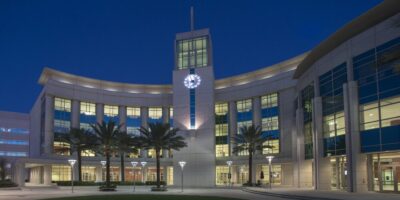
Choosing UC Irvine School of Medicine is a big decision for any aspiring physician. The University of California, Irvine School of Medicine is a public MD program in Irvine, California, and the only medical school and academic medical center in Orange County. It trains more than 400 medical students each year, along with more than 700 residents and fellows, and its clinical partner, UCI Health, runs seven hospitals and a network of primary and specialty clinics. The school’s mission is short and memorable: Discover. Teach. Heal.
UC Irvine is part of the University of California system. Its roots go back to 1896, the UC Regents acquired its predecessor in 1965 and it took the name UC Irvine School of Medicine in 1968. It is fully accredited by the Liaison Committee on Medical Education (LCME), which renewed its accreditation for the maximum eight-year term in 2025.
In the 2026-2027 application cycle, applicants compete for seats in the class that starts medical school in August 2027, the Class of 2031. The AMCAS deadline for UC Irvine is November 1, 2026, and the last day the school accepts secondary applications for the regular cycle is December 1, 2026. All facts were checked on October 21, 2026.
Applicants who do well at UC Irvine usually understand three things before they apply: how the school weighs research, clinical exposure and service; how its mission-based programs such as PRIME-LC and PRIME LEAD-ABC fit into the secondary; and how much medical school costs in Orange County. Each of those topics is covered in detail, along with every current secondary essay prompt, original example answers, the interview process and detailed FAQs.
International Medical Aid is here to help through our medical school admissions consulting. If you need help working through UC Irvine’s requirements, we’ll be happy to schedule a time to meet with you and help you decide if it’s a school you want to attend.
Key Takeaways
- Eligibility. You must be a U.S. citizen, a permanent resident with a green card or approved under DACA with an Employment Authorization Document. UC Irvine does not accept international applicants or transfer students. It uses the same criteria for California and out-of-state applicants.
- Academic context. The 2026 first-year class (Class of 2030) had a median MCAT of 516 and a median cumulative GPA of 3.87, with a median science GPA of 3.85.
- Selectivity. For that class, UC Irvine received 7,874 applications and enrolled 125 students, 114 from California and 11 from out of state. About 3,500 applicants receive a secondary and about 500 to 600 are interviewed. The school does not publish an acceptance rate.
- Mission fit. The school looks for research involvement, health care exposure and community service, plus dedication, reliability, altruism, leadership and communication skills. It gives careful consideration to applicants from disadvantaged backgrounds and to those who have shown they can work with the medically underserved, in particular the Latino population in California.
- Key dates for 2026-2027. AMCAS closes November 1, 2026. Secondaries are due 30 days after the invitation, and no later than December 1, 2026. Interviews run September through April, and acceptances are rolling, starting by November 1.
- Costs. 2026-27 tuition and fees are $52,168 for California residents and $64,413 for nonresidents, including student health insurance. The first-year cost of attendance is $81,793 for students living on campus and $97,694 off campus.
- Distinctive training. Students learn in the iTEACH curriculum with simulation, handheld ultrasound and a weekly Patient and Community Engagement (PACE) clinic in the first two years. Five mission-based programs (PRIME-LC, PRIME LEAD-ABC, HEAL-IM, PRIDE and Space MED) add focused training.
- Next step. If you are applying now, submit AMCAS before November 1, finish your secondary within 30 days and complete the Kira Talent video assessment if you are invited to interview. If you are planning for 2027-2028, build steady clinical work, research and community service now.
Key Statistics About UC Irvine School of Medicine
The snapshot and table below collect UC Irvine’s key numbers. Each figure carries its class or academic year, because the school publishes its class profile, tuition and cost of attendance on different schedules. The class profile reports medians for the 2026 first-year class, the Class of 2030, which entered in August 2026.

| Measure | Value | Cohort, population and source |
|---|---|---|
| School and degree | University of California, Irvine School of Medicine; Doctor of Medicine (MD) | UCI 2026-27 General Catalogue, School of Medicine |
| Location | Irvine, California (Orange County), with clinical training at UCI Health and affiliated hospitals | UCI School of Medicine, Why Choose UC Irvine |
| Accreditation | LCME, full eight-year reaccreditation in 2025; next survey visit 2032-33 | UCI School of Medicine, Accreditation & Compliance |
| Total applications | 7,874 | 2026 MS1/First-Year Class Profile (Class of 2030) |
| Matriculated | 125 | 2026 MS1/First-Year Class Profile |
| In-state / out-of-state matriculants | 114 / 11 | 2026 MS1/First-Year Class Profile |
| Median total MCAT | 516 | Matriculants, 2026 MS1/First-Year Class Profile |
| Median MCAT sections | Chemical and Physical Foundations 129; Critical Analysis and Reasoning Skills 128; Biological and Biochemical Foundations 129; Psychological, Social and Biological Foundations 130 | Matriculants, 2026 MS1/First-Year Class Profile |
| Median cumulative GPA | 3.87 | Matriculants, 2026 MS1/First-Year Class Profile |
| Median science GPA | 3.85 | Matriculants, 2026 MS1/First-Year Class Profile |
| Median total MCAT, accepted applicants | 517 (mean 516.1) | All accepted applicants, 2025 entering class; AAMC MSAR, 2026 edition |
| Median MCAT sections, accepted applicants | Chemical and Physical Foundations 130; Critical Analysis and Reasoning Skills 128; Biological and Biochemical Foundations 129; Psychological, Social and Biological Foundations 130 | All accepted applicants, 2025 entering class; AAMC MSAR, 2026 edition |
| Median GPA, accepted applicants | 3.92 | Accepted applicants, 2025 entering class; AAMC MSAR, 2026 edition |
| First-year class by gender | 64 women, 50 men | 2025 entering class (114 students); AAMC MSAR, 2026 edition |
| Secondary applications sent | About 3,500 | UCI School of Medicine Admissions FAQs (current cycle, no year stated) |
| Applicants interviewed | About 500 to 600 (about 8% to 10% of the applicant pool) | UCI School of Medicine Application Criteria & Process and How to Apply pages |
| Applicants interviewed, by residency | 550: 500 California residents, 50 out of state, 0 international | 2025 entering class; AAMC MSAR, 2026 edition |
| Acceptance rate | Not published | The number of acceptance offers is not published, so no offers-to-applications rate can be calculated. Matriculants divided by applicants is not an acceptance rate and is not shown here |
| Waitlist | About 100 positions per cycle; 30 acceptance offers went to waitlisted applicants | Most recent cycle reported; AAMC MSAR, 2026 edition |
| Early decision | Not offered | 2026-2027 cycle; AAMC MSAR, 2026 edition |
| Deposit | Not required | 2026-2027 cycle; AAMC MSAR, 2026 edition |
| Time to respond to an offer | Two weeks; shorter for offers made after May 15 | 2026-2027 cycle; AAMC MSAR, 2026 edition |
| Deferred entrance | Considered case by case | 2026-2027 cycle; AAMC MSAR, 2026 edition |
| Tuition and fees, 2026-27 | $52,168.44 California resident; $64,413.44 nonresident | UCI University Registrar, Medical Fees 2026-27, fall through spring, including student health insurance ($7,771.86) |
| First-year cost of attendance, 2026-27 | $81,792.85 on campus; $97,694.05 off campus | UCI Office of Financial Aid, School of Medicine budget (first-year tuition and fees $53,177.18) |
| Average debt of indebted graduates | $179,945 | Academic year 2024-2025, LCME Part I-B; AAMC MSAR, 2026 edition |
| Students receiving financial aid | 95% | All enrolled and graduated students, 2024-2025, LCME Part I-B; AAMC MSAR, 2026 edition |
| AMCAS deadline | November 1, 2026 | UCI School of Medicine How to Apply |
| Secondary fee and deadline | $120 (waived with AAMC Fee Assistance); due 30 days after invitation, no later than December 1 | UCI School of Medicine How to Apply |
| Letters of recommendation | 3 to 6, through the AMCAS Letter Service | UCI School of Medicine Application Criteria & Process; AAMC MSAR, 2026 edition |
| Classes begin | Orientation in the first week of August 2027; classes begin August 2, 2027 | UCI School of Medicine How to Apply, example timeline; AAMC MSAR, 2026 edition (start date) |
A few notes on reading these numbers. Medians describe the middle of the enrolled class, not a cutoff. Half of the class scored at or above 516 on the MCAT, and half at or below it. Accepted applicants for the 2025 entering class had slightly higher medians (517 MCAT, 3.92 GPA) than the 2026 enrolled class, which is normal because many admitted applicants with top scores enroll elsewhere. The number of acceptance offers is not published, so no acceptance rate is shown.
Mission and Educational Priorities
UC Irvine School of Medicine states its mission this way: “Our mission at UCI School of Medicine is: Discover. Teach. Heal. Through excellence in research, education, patient care and community service, we seek to advance individual and population health in Orange County and beyond.”
The school’s vision is “Powered by discovery, innovation and inclusive excellence, the UC Irvine School of Medicine will advance individual and population health in Orange County and beyond.” Its strategic plan sets four goals: research distinction, innovative education, clinical excellence and becoming the region’s top destination for complex care.
Each word of the three-part mission has a practical meaning for applicants:
- Discover. Research is a core part of the school’s identity. UCI is a National Institutes of Health (NIH)-designated Clinical Translational Sciences Center, the school reports $300 million to $400 million in annual research funding, and students are supported in scholarly projects from basic science to community-based research. The admissions committee evaluates “their extent and level of research involvement,” so research is one of the named review factors, not an extra.
- Teach. The school calls itself a pioneer in instructional technology. It has been named an Apple Distinguished School six times and built its curriculum around the iPad and handheld ultrasound. Its medical education building houses a simulation center, a clinical skills center and active-learning spaces. Students who enjoy teaching peers, patients or younger students will find many outlets.
- Heal. UC Irvine wants to graduate compassionate physicians who provide high-quality, comprehensive care. As the only academic health system in Orange County, it trains students across a wide range of patients and conditions at UCI Health hospitals, the VA Long Beach Healthcare System, Children’s Hospital of Orange County and Long Beach hospitals.
The mission also has a public-service side: the school “further serves the public through the training of health professionals whose backgrounds reflect California’s ethnic and cultural diversity and whose professional careers address California’s health care needs.” That commitment shows up in the admissions criteria, which give careful consideration to applicants from disadvantaged backgrounds and to those who have shown the potential to work with the medically underserved, in particular California’s Latino population. It also shows up in the five mission-based programs, which focus on Latino communities, African, Black and Caribbean communities, LGBTQ+ patients, integrative medicine and space medicine.
What this means for your application. You do not need to have done everything. You do need a clear record of at least one of the three mission areas, and some evidence of the others. A strong UC Irvine applicant usually shows sustained clinical exposure, real research involvement and community service that has lasted longer than a semester. If you have served Spanish-speaking or other underserved communities in California, say so plainly and show what you did. The secondary essays give you room to explain how these experiences shaped you, and the interview tests whether you can talk about them with insight.
Accreditation and Institutional Identity
UC Irvine School of Medicine is accredited by the Liaison Committee on Medical Education (LCME), the body recognized by the U.S. Department of Education for programs leading to the MD degree. The school was first accredited in 1961. After a self-study and a site visit in January 2025, the LCME awarded continued full accreditation in June 2025 for another eight-year term, the longest possible. The next survey visit is scheduled for the 2032-33 academic year. LCME accreditation is what allows students to take the U.S. Medical Licensing Examination and graduates to enter ACGME-accredited residency programs.
A long history under several names. UC Irvine’s medical school traces its roots to 1896, when it was founded as the Pacific Sanitarium and School of Osteopathic Medicine in Los Angeles. By 1962 it was the California College of Medicine, offering MD, MS and PhD programs. In 1965, the same year UC Irvine welcomed its first students, the UC Regents acquired the college. In 1968 it officially became the UC Irvine School of Medicine and moved to a site on the western edge of the Irvine campus. Warren Bostick, MD, was its first dean. The school is the oldest continually operating medical school in the region.
Part of a larger health sciences enterprise. UC Irvine’s health sciences are organized under the Susan and Henry Samueli College of Health Sciences, named for the Samuelis’ $200 million cornerstone gift. As of summer 2026, School of Medicine Dean Michael J. Stamos, MD, also serves as interim vice chancellor for Health Affairs. UCI Health is the school’s clinical enterprise. In 1976 the university bought the Orange County Medical Center, now UCI Health – Orange, home of UCI Douglas Hospital, Orange County’s only Level I adult and Level II pediatric trauma center. In late 2025, UCI Health – Irvine opened as the nation’s first all-electric acute care hospital, and in July 2026 the UCI Health – Irvine Rehabilitation Hospital opened.
Recognition. The school describes itself as one of the top 50 U.S. medical schools for research in U.S. News & World Report rankings. It is listed by the Blue Ridge Institute among research-intensive medical schools and has received repeated Apple Distinguished School recognition. These rankings and awards say something about research and technology. They do not tell you whether UC Irvine fits your goals, so use them as one input among many.
Keeping names straight. You will see the school called UC Irvine School of Medicine, UCI School of Medicine and UCI SOM. The hospital system is UCI Health, and its main hospital in Orange was long called UC Irvine Medical Center. Applications for the MD program go through AMCAS to “University of California, Irvine.” Program names have also changed over time. The program once called Leadership Education to Advance Diversity is now PRIME LEAD-ABC, short for Program in Medical Education Leadership Education to Advance Doctoring – African, Black and Caribbean.
Medical Programs and Affiliations
UC Irvine offers a four-year MD program, several combined degrees and five mission-based programs. The school also offers graduate degrees, more than 130 residency and fellowship programs, continuing medical education and outreach programs for high school and college students. Most of the combined and mission-based programs are entered through the same AMCAS application, but some open only after you are admitted. The details matter, so each program below notes how you apply.
Medical Degree Program (MD)
The MD program is a four-year course of study. It pairs a systems-based science curriculum with early patient contact, simulation and ultrasound training, followed by core clerkships and a fourth year of required rotations and electives. Graduates must pass USMLE Step 1 and Step 2 and a Clinical Performance Examination. The school’s own summary of the program: “Our goal is to advance high-impact medical research, educate a diverse health workforce and deliver evidence-based, patient-centered healthcare.” The curriculum section below describes each year.
Dual Degree Programs
- MD/PhD, Medical Scientist Training Program (MSTP). The MSTP is an NIH-sponsored program for students who want careers as physician-scientists. Students may earn the PhD in any UCI graduate program for which they qualify, from neuroscience and biomedical engineering to physics and computer science. Normative time is eight years. The program covers medical and graduate tuition, pays a stipend and provides health, dental and vision insurance, and all MSTP students are guaranteed on-campus housing. You apply by marking the MD/PhD option in AMCAS and completing the MSTP items there and in the secondary; there is no separate UCI application. The MSTP does not currently support international students. The Class of 2030 included four MSTP students.
- MD/MBA. This five-year program is offered with the Paul Merage School of Business. Students apply during the second year of medical school and begin MBA coursework after the third year. The MCAT, three years of medical school in good standing and passing Step 1 serve as a waiver for the GMAT.
- MD/MPH. This five-year program is offered with the Joe C. Wen School of Population and Public Health. Students apply during the third year and begin MPH coursework after it.
Mission-Based Programs
UC Irvine’s five mission-based programs add focused training in areas of identified need. Around 40 members of the Class of 2030 joined one of them.
- Program in Medical Education for the Latino Community (PRIME-LC). A five-year MD and master’s program founded in 2004 to train physician-leaders for underserved Latino communities. About 12 Spanish-speaking students are admitted each year. You check the PRIME-LC box in the secondary, answer the PRIME-LC essays and, if invited, complete an extra interview in Spanish. You do not need to be Latino; the school states that applicants from all backgrounds are encouraged to apply and that applications are reviewed without any preference based on race or ethnicity. At least conversational Spanish is required.
- PRIME LEAD-ABC. A program to develop physician leaders who address the health needs of African, Black and Caribbean communities, the first of its kind in the nation. It selects 8 to 12 students each year, offers scholarship support for four years and has an optional fifth year to earn a master’s degree. You opt in through the secondary and answer the program’s supplementary questions.
- Health Education to Advance Leaders in Integrative Medicine (HEAL-IM). A four-year track in evidence-informed integrative medicine and whole-person care, including nutrition, mindfulness, physical activity and stress management. You apply after you are accepted to the MD program; interviews run on a rolling basis from April to mid-June.
- PRIDE Program. Training for students who want to meet the health needs of LGBTQ+ patients through a specialized curriculum, advocacy and community engagement. The PRIDE application is not in the secondary. Admitted students are invited to apply separately. You do not need to be a member of the LGBTQ+ community to apply.
- Space MED (Medicine, Engineering and Design). A four-year program in space medicine with external clinical rotations at NASA and with commercial spaceflight partners (SpaceX, Vast and Virgin Galactic), plus a capstone research project. For now it is open only to matriculating students.
Graduate Programs
The School of Medicine also offers graduate degrees in the biomedical sciences:
- Biomedical and Translational Science (MS): focuses on translating research into clinical practice.
- Biomedical Sciences (MS, PhD): offered through the basic science departments of Anatomy and Neurobiology, Biological Chemistry, Microbiology and Molecular Genetics, Pathology and Laboratory Medicine, and Physiology and Biophysics. Admission is to the PhD.
- Genetic Counseling (MS): prepares students for careers as genetic counselors.
- Medical Science (MS): awarded only to students who complete the first two years of the MD curriculum and a service-learning project but do not plan to finish the MD. You cannot apply to it directly.
Departmental Training Programs
UC Irvine’s clinical departments run more than 130 residency and fellowship programs and train more than 700 residents and fellows each year. Examples from the current list include:
- Anesthesiology: fellowships in critical care medicine, pain medicine, obstetric anesthesiology and regional anesthesiology and acute pain medicine.
- Emergency Medicine: fellowships in wilderness medicine, simulation, point-of-care ultrasound, pediatric emergency medicine and clinical informatics.
- Family Medicine: fellowships in sports medicine and geriatric medicine.
- Internal Medicine: fellowships in cardiology, interventional cardiology, gastroenterology, hematology and oncology, infectious diseases and other subspecialties.
- Neurology: fellowships in stroke and vascular neurology, Parkinson’s and movement disorders, epilepsy and neurocritical care.
- Orthopaedic Surgery: a residency and a hand surgery fellowship.
- Pediatrics: fellowships in neonatal-perinatal medicine, pediatric emergency medicine, pediatric hematology and oncology and others.
- Psychiatry: a child and adolescent psychiatry fellowship and the Train New Trainers primary care psychiatry fellowships.
- Surgery: fellowships in colon and rectal surgery, vascular and endovascular surgery, surgical critical care and complex general surgical oncology.
For applicants, these programs matter for two reasons. Residents and fellows teach medical students every day on the wards, and a broad range of fellowships means more specialty exposure and more research mentors during medical school.
UC Irvine also offers programs for students who are not yet in medical school. Many students start building their record through pre-med programs, pre-med shadowing and summer experiences, and it helps to understand the competencies schools look for, such as those in the AAMC Medical School Admission Requirements.
- UCI MedAcademy (ages 15-19). A five-day program that introduces high school students to medical careers through hands-on activities and workshops. Students must be at least 15 by the first day of the session. Families comparing summer options can also look at medical internships for high school students.
- PRIME Academy. A one-week experience for pre-medical students who want to address the health needs of California’s Latino, African, Black and Caribbean communities. It serves as a stepping stone toward UC Irvine’s PRIME programs.
- Summer Healthcare Experience, Summer Online Research Program and Summer Surgery Program. Career and research exposure programs for high school students, run through the Department of Medicine, the Office of Research and the Department of Urology.
- Open Medical School. An annual event, hosted by UC PRIME Pre-Health Pathways with the School of Medicine, that brings Orange County high school students to campus for suturing, ultrasound and panels.
- Postbaccalaureate Program. UC Irvine lists a separate admissions line for its postbaccalaureate program, which helps students strengthen their academic preparation before applying to medical school.
Continuing Medical Education (CME)
The Office of Continuing Medical Education is accredited by the Accreditation Council for Continuing Medical Education (ACCME). It offers activities in most medical specialties so practicing physicians and other professionals can keep up with new evidence.
Clinical Affiliations
UCI Health includes seven hospitals and a network of primary and specialty care clinics. Training sites include UCI Health – Orange (UC Irvine Medical Center, including UCI Douglas Hospital) and UCI Health – Irvine. The school also partners with Children’s Hospital of Orange County (CHOC), Children’s Hospital Los Angeles, Long Beach Memorial Hospital, Miller Children’s & Women’s Hospital Long Beach and the VA Long Beach Healthcare System. UCI Health also runs Family Health Centers in Santa Ana and Anaheim. To explore further, visit the UC Irvine School of Medicine website, the admissions page, the UCI General Catalogue for graduate programs, UCI MedAcademy and Continuing Medical Education.
Curriculum Overview
UC Irvine’s MD curriculum has moved from a traditional discipline-based structure to a systems-organized approach called iTEACH (Technology-Enhanced, Activity-Coordinated, Humanistic). iTEACH builds in coordinated simulation, ultrasound and clinical skills sessions so that basic science is tied to patient care from the first weeks. The program objectives follow a competency framework described as knowledgeable, skillful, altruistic and dutiful, and a mix of assessment methods tracks each student’s progress.
Pre-Clerkship: Years 1 and 2
The first two years cover the foundations of medicine. First-year courses include gross anatomy and embryology (taught with laboratory dissection), histology, immunology, medical biochemistry and molecular biology, medical genetics, neuroscience, physiology and pathophysiology, and Behavioral Science I with Medical Ethics, Sociology and Humanities (MESH). Second-year courses include pathology, medical microbiology, medical pharmacology, radiology and Behavioral Science II with MESH II.
Teaching combines lectures, clinical correlates, workshops and small-group discussions. Small-group sessions are a regular part of the Clinical Foundations courses, where students practice clinical reasoning with faculty.
Longitudinal Clinical Experiences
Two threads give students patient contact from the start:
- Clinical Foundations I-IV. This four-part series is UC Irvine’s main clinical skills course. In the first year, students learn physician-patient communication, medical interviewing, physical examination and health promotion, in small groups led by the Dean’s Scholars clinical faculty. They complete medical interviews, physical exams and patient write-ups with feedback. Clinical Foundations II builds advanced history-taking, physical diagnosis and clinical reasoning. Clinical Foundations III prepares students for the third year, and Clinical Foundations IV, a two-week course in the final quarter, includes a resuscitation boot camp and a chance to earn ACLS certification.
- Patient and Community Engagement (PACE) clerkships. PACE-1 and PACE-2 place students in weekly clinic sessions with a specific preceptor in the first two years, with reflection sessions that tie clinical lessons to the basic sciences. PRIME-LC students do PACE in clinics serving Latino communities, and PRIME LEAD-ABC students do it at sites serving patients from ABC communities.
Standardized patients and clinical shadowing round out the early clinical exposure. Ultrasound appears throughout the first two years as part of iTEACH.
Clinical Clerkships: Year 3
Third-year students rotate through general surgery, family medicine, inpatient internal medicine, neurology (the neuroscience clerkship), obstetrics and gynecology, pediatrics, psychiatry and radiology. Clinical Foundations III sessions at the start and midpoint of the year cover electronic health records, team care, leadership, professionalism, infection prevention and basic life support. The order of third- and fourth-year rotations varies by student.
Year 4, Electives and Specializations
The fourth year includes a two-week emergency medicine clerkship, a four-week intensive care unit selective (in medicine, anesthesiology, surgery, neurology or pediatrics), a four-week senior acting internship (family medicine, medicine, obstetrics and gynecology, pediatrics or surgery) and Clinical Foundations IV. The rest of the year is electives. Many electives take place at UCI Health in Orange, the VA Long Beach or on the Irvine campus, and others run at affiliated hospitals and clinics in Orange, Los Angeles and San Bernardino counties, including rural sites. Students may also take fourth-year electives at other approved institutions.
Research Opportunities
Research is encouraged throughout medical school, with opportunities in fields such as oncology, neuroscience and public health. The Office of Student Support offers funding for student research during the academic year and keeps a list of opportunities inside and outside UCI. Many students present and publish their work during training.
Assessment and Support
To earn the MD, students must complete the full curriculum, pass USMLE Step 1 and Step 2 and pass a Clinical Performance Examination (CPX). A Student Monitoring Committee meets weekly and a Student Success Committee every two weeks to catch academic difficulty early. Every student is assigned a faculty career advisor early in the first year, and a four-year Career Advising Curriculum includes monthly specialty workshops in the first two years.
How the Mission-Based Tracks Differ
- PRIME-LC students take small-group Chicano-Latino Studies courses in the first three years, taught by faculty from the School of Social Sciences. They visit the state capitol in Sacramento to learn about health policy, travel to the U.S.-Mexico border to learn about immigration and interview migrant farmworkers in the Central Valley. Right after the third year, they complete a four-week clinical rotation in Latin America, then spend a year earning a master’s degree, most often in public health or business, at UCI or another university.
- PRIME LEAD-ABC students take program courses in the first two years, with partners from UCI’s Department of African American Studies and Schools of Nursing, Public Health and Pharmacy. They complete a longitudinal PACE clerkship at a site serving ABC patients, do most third-year rotations in Long Beach hospitals and clinics, continue community experiential learning lessons (CELLs) and spend at least four weeks in the fourth year at a site serving ABC communities.
- HEAL-IM students attend seminars from August of the first year and can earn a certificate in an integrative modality such as acupuncture, biofeedback or nutrition.
- Space MED students follow a four-year longitudinal space medicine curriculum alongside the core courses, with external rotations and a capstone research project.
Admissions Requirements and Application Process
UC Irvine uses AMCAS for the primary application, then invites selected applicants to complete a secondary. Here is what you need, step by step.
Who Can Apply
- U.S. citizens and permanent residents: Yes. Permanent residents must hold a green card.
- DACA recipients: Yes, if approved under Deferred Action for Childhood Arrivals with an Employment Authorization Document. You will provide documentation of DACA status with your secondary application. PRIME-LC graduated the school’s first DACA student in 2020.
- California and out-of-state applicants: Both are welcome. The admissions committee uses the same criteria for in-state and out-of-state residents. Californians who leave the state for college can often still be considered California residents, but only the UCI Registrar decides residency for tuition. UC Irvine also participates in the WICHE Professional Student Exchange Program (PSEP) for applicants from certain western states without medical schools.
- International applicants, including Canadian applicants: No. Applicants must be U.S. citizens, permanent residents or DACA recipients.
- Transfer students: No, except in rare situations where an LCME-accredited school must place a student after a disaster.
Academic Requirements and Prerequisites
You need at least three years (90 semester units) of undergraduate coursework, including at least one full-time year at an accredited U.S. college or university, and a bachelor’s degree from an accredited U.S. school by matriculation. No specific major is required, but you must show strong ability in the sciences. Letter or numerical grades are preferred, especially in the required subjects.
| Subject | Requirement | Notes |
|---|---|---|
| Biology | 1.5 years (3 semesters or 5 quarters) | Must include one upper-division course taken at an accredited four-year school. Psychobiology, behavior-based courses, evolution, ecology, plant biology, animal biology and AP credit are not accepted. |
| Chemistry | 2 years (4 semesters or 6 quarters) | Must include general/inorganic chemistry, organic chemistry and biochemistry. A 4 or higher on AP Chemistry can count for one term of general chemistry. |
| Physics | 1 year (2 semesters or 3 quarters) | A 4 or higher on AP Physics can count for one term. |
| Humanities | 1 semester or 1 quarter | Literature, history, philosophy, language or art. A 4 or higher on an AP humanities exam can count for one term. |
A few policies to know:
- All prerequisite courses must be lecture-based, completed with a C or higher, and taken at a U.S. accredited institution. Laboratory, seminar and research courses do not count toward prerequisites.
- Prerequisites must be finished, and on official transcripts, by July 15 of the year you start medical school. You can apply with courses in progress, but the school strongly encourages you to finish the basic sciences before you apply.
- Community college courses are accepted, except for the upper-division biology course, which must be taken at a four-year school.
- Online courses are accepted in some cases. Email the admissions office with specifics before you rely on one.
- Pass/fail grades for courses taken during the COVID-19 pandemic are accepted without prejudice.
- International Baccalaureate credit is not accepted for prerequisites.
- If you are unsure whether a course counts, email the course name, number, description and institution to [email protected].
Recommended, but not required, courses include anatomy, biostatistics, laboratory experience, cell biology, calculus, English composition, immunology, microbiology, neuroscience, physiology, psychology and Spanish. Spanish deserves attention, since it is on the recommended list and PRIME-LC requires at least conversational ability.
MCAT
The MCAT is required. Your score must come from a test taken within the three years before June 1 of the application year and no later than September 30 of the application year. For the 2026-2027 cycle, that means a test date between June 2023 and September 30, 2026. The school does not publish a minimum score. The 2026 first-year class median was 516, and section medians ranged from 128 to 130. To see how your score compares nationally, read our guide to MCAT scores.
Experiences the School Values
UC Irvine evaluates applicants on “their extent and level of research involvement, exposure and involvement in a healthcare setting, and community service.” It also looks for leadership and for work or activities that show “a desire or sensitivity to working with people from diverse communities.” Clinical exposure and research experience, as well as community service, are described as highly desirable.
In practice, that means steady patient-facing work such as scribing, medical assisting, EMT work, hospice or free clinic volunteering, along with shadowing. Many applicants also add structured internships for pre-med students during a summer or gap year. The school does not publish minimum hours, so focus on depth and reflection over raw totals. In the 2025 entering class, 97% of students reported research or lab experience, 89% community service, 89% physician shadowing, 86% clinical volunteering and 79% paid clinical work.
Letters of Recommendation
If you receive a secondary, three to six current letters are strongly advised. All letters must go through the AMCAS Letter Service; the school will not accept letters sent directly. The committee reviews letters only for applicants who received a secondary.
- Get letters from people who supervised your major activities, such as an attending physician, a research principal investigator or a program director.
- The school recommends at least one letter from an MD or DO who supervised you in a clinical setting, and at least one from a research supervisor if you have done research.
- It suggests two letters from senior professors who can judge your academic ability.
- University committee letters are not required or encouraged.
Secondary Application
After a preliminary screen of the AMCAS application, about 3,500 applicants are invited by email to complete a secondary. The secondary includes essays, supplemental information and a nonrefundable $120 fee. Applicants who received an AMCAS fee waiver qualify for a waiver of the secondary fee, but the AAMC Fee Assistance Program waiver must be applied before you pay. You have 30 days from the invitation to submit, and the last day the school accepts secondaries for the regular cycle is December 1. PRIME-LC and PRIME LEAD-ABC applications are part of the secondary. Applicants with DACA status submit documentation of their status with the secondary. The essays are covered in detail below.
Kira Talent Video Assessment
Applicants invited to interview must complete a Kira Talent Video Assessment before interview day. It is completed on your own schedule and assesses six core competencies that the admissions committee considers essential for success at UC Irvine. CASPer is not part of UC Irvine’s listed requirements, and AAMC PREview is not used in this cycle’s admissions decisions.
Selection Factors
UC Irvine assesses applicants with a holistic approach. “There is no formula used. Each applicant is unique.” The committee reviews every applicant whose academic record and MCAT scores show they can handle the curriculum, and then looks at:
- Academic achievement. The class medians (516 MCAT, 3.87 cumulative GPA, 3.85 science GPA) show the academic level of admitted students. The school wants evidence that you can handle a rigorous science curriculum.
- Personal attributes. Dedication, reliability, altruism, leadership and interpersonal communication skills are given “high regard.”
- Health care exposure. You need a realistic picture of medicine from clinical work, volunteering or shadowing.
- Research experience. Research involvement is a named evaluation factor, consistent with the school’s research mission.
- Community service. Service, especially work that addresses health disparities, is highly desirable.
- Background and mission fit. Careful consideration goes to applicants from disadvantaged social or economic backgrounds and to those who have shown the potential to work with the medically underserved, in particular the Latino population in California.
Application Timeline for 2026-2027
| When | What happens |
|---|---|
| May 2026 | AMCAS application available |
| June 1 to November 1, 2026 | AMCAS submission window; UC Irvine’s deadline is November 1, 2026 |
| July 2026 | First secondary invitations; each secondary is due 30 days after the invitation |
| August 2026 to March 2027 | Interview invitations sent |
| September 2026 to April 2027 | Interviews held (the school’s example timeline also shows August) |
| September 30, 2026 | Last MCAT date considered for this cycle |
| October 1, 2026 | FAFSA opens for students who will need aid |
| By November 1, 2026 | First acceptances issued; decisions continue through May, about two months after each interview |
| November 15, 2026 | Deadline for transcripts to reach AMCAS for verification |
| December 1, 2026 | Last date secondaries are accepted for the regular cycle |
| February 2027 | AAMC “Plan to enroll” option becomes available |
| March 2, 2027 | On-time FAFSA deadline for need-based aid and scholarships |
| March to August 2027 | Scholarship offers for eligible students |
| April 15, 2027 | Narrow acceptances to three schools; you may stay on unlimited waitlists |
| April 30, 2027 | AAMC “Commit to enroll” option becomes available |
| April to August 2027 | Waitlisted applicants may receive offers |
| July 1, 2027 | UC Irvine’s “Commit to enroll” deadline |
| July 15, 2027 | All prerequisites complete and on transcripts |
| First week of August 2027 | Orientation begins |
Decisions, Waitlist and Background Checks
UC Irvine uses rolling admissions, with the first acceptances issued by November 1. Decisions are communicated about two months after the interview, and waitlist decisions are made from spring through summer. Official transcripts are requested after acceptance. All accepted applicants and selected alternates receive an AAMC criminal background check, and every offer is conditional until the committee reviews the report. All entering students must meet the school’s technical standards, with reasonable accommodation if needed.
UC Irvine does not offer an early decision program, and no deposit is required to hold an acceptance. You have two weeks to respond to an offer; offers made after May 15 come with a shorter response window. The waitlist typically holds about 100 applicants, and in the most recent cycle reported, 30 acceptance offers went to waitlisted applicants. The Waitlist Committee weighs the Admissions Committee’s recommendations, class balance and program needs. Requests to defer entry are considered case by case. If you are planning ahead, pre-med summer internships are easiest to fit in the summer before you apply, when you can still describe the experience in AMCAS and your secondary.
Tuition, Cost of Attendance and Financial Aid
UC Irvine is a public school, so California residents pay less than nonresidents. Medical students pay tuition and fees by quarter: fall, winter and spring, with a separate summer charge in some years.
Tuition and Fees
UCI’s Registrar posted the 2026-27 medical fee schedule on July 20, 2026. Annual amounts for fall, winter and spring are:
| Charge (2026-27) | California resident | Nonresident |
|---|---|---|
| Tuition | $13,722.00 | $13,722.00 |
| Professional Degree Supplemental Tuition | $28,395.00 | $28,395.00 |
| Nonresident Supplemental Tuition | Not charged | $12,245.00 |
| Student Services Fee | $1,344.00 | $1,344.00 |
| Student Health Insurance (GSHIP) | $7,771.86 | $7,771.86 |
| Campus fees (student center, recreation, events center, basic needs, graduate association) and disability insurance | $935.58 | $935.58 |
| Total, fall through spring | $52,168.44 | $64,413.44 |
| Summer 2027 (when enrolled) | $4,938.32 | $4,938.32 |
New students also pay a one-time $87 document fee, and first-year students who start before September 20, 2026 pay a prorated health insurance premium of $921.74 for the weeks before fall. Those two charges explain why the financial aid office lists first-year tuition and fees at $53,177.18. The figures are estimates and may change if the UC Regents adjust tuition or state funding changes.
Cost of Attendance
The School of Medicine Office of Financial Aid publishes a standard student budget for each year of the MD program. The 2026-27 budgets below use resident tuition and fees:
| 2026-27 budget | Year 1 | Years 2 and 3 (each) | Year 4 |
|---|---|---|---|
| Books and supplies | $2,330.00 | $2,796.00 | $2,330.00 |
| Housing and food, on campus | $17,989.00 | $20,707.00 | $17,989.00 |
| Housing and food, off campus | $33,890.20 | $40,668.24 | $33,890.20 |
| Personal | $4,047.28 | $4,857.33 | $4,047.28 |
| Transportation | $4,248.89 | $5,098.67 | $4,248.89 |
| Tuition and fees | $53,177.18 | $57,106.76 | $52,168.44 |
| Total, on campus | $81,792.85 | $91,445.76 | $80,784.11 |
| Total, off campus | $97,694.05 | $110,527.00 | $96,685.31 |
On-campus options listed in the budget are Verano Place, Palo Verde and Campus Village. Off-campus options include Vista del Campo, Vista del Campo Norte, Puerta del Sol and private apartments. Nonresidents should add the $12,245 nonresident supplemental tuition to these totals for any year they are charged it. The office can raise a budget for specific costs, such as one computer purchase (up to $2,000), residency application expenses (up to $6,000 with receipts), uncovered medical costs, emergency car repairs, family emergency travel and child care. Any increase is met with additional loans.
Applying for Financial Aid
To be considered for aid, submit the FAFSA (UCI school code 001314). The on-time deadline for need-based university aid and scholarships is March 2, with parent information included. Incoming students also complete the UCI Financial Aid Form in the ZotAid portal, available by mid-March; include parent income and asset information if you want to be considered for scholarships and grants, along with parent tax documents. You will also submit an identity and Social Security number verification form. Once your file is complete, the office can give you an estimate of your first-year aid. Questions go to the School of Medicine Office of Financial Aid at [email protected] or 949-824-6476.
Scholarships and Program Support
- School scholarships. UC Irvine awards merit-based and need-based scholarships using the admission application, academic record, FAFSA and available funds. Scholarship offers for eligible students go out from March through August.
- PRIME-LC. From the beginning, PRIME-LC has offered financial assistance to every student in the program; the amount varies by year. PRIME-LC students also get preferred status for on-campus housing, and the program pays for the Latin America clinical rotation.
- PRIME LEAD-ABC. Scholars are eligible for scholarship support each year for four years.
- HEAL-IM. The program offers a partial scholarship toward senior-year tuition and fees for students in good standing.
- MSTP. Full support for tuition, a stipend and health insurance through both phases.
- Outside scholarships. The financial aid office keeps a list of non-UCI scholarships for medical students.
Loan Repayment and Forgiveness Programs
Graduates who practice in underserved areas or in certain specialties may qualify for federal or state loan repayment or forgiveness programs, such as the National Health Service Corps. Program rules change, so check eligibility near the end of training. The financial aid office also runs workshops on debt management and financial literacy for students moving into and out of medical school. In 2024-2025, 95% of UC Irvine medical students received financial aid, and graduates who borrowed left with an average of $179,945 in medical school debt.
Campus Facilities and Student Life
UC Irvine’s medical school sits in the Health Sciences complex on the western edge of the Irvine campus, near Michael Drake Drive and Health Sciences Road. The 121-acre site houses the medical sciences buildings for first- and second-year classes, lecture halls including the Dr. S. Jerome and Judith D. Tamkin Student Lecture Hall, research buildings and the Medical Education Building, home to the Office of Medical Education and the School of Medicine financial aid office. The school’s simulation center, clinical skills center and active-learning spaces support the iTEACH curriculum.
Clinical and Research Facilities
Students train at UCI Health – Orange in the city of Orange and at UCI Health – Irvine, which opened in late 2025 as the nation’s first all-electric acute care hospital. The Irvine campus also hosts the Beckman Laser Institute and Medical Clinic, the Chao Family Comprehensive Cancer Center, the Sue and Bill Gross Stem Cell Research Center and the Institute for Clinical and Translational Science, all of which offer research opportunities.
Housing and Living in Orange County
Housing is the biggest variable in the budget. The 2026-27 first-year budget allows $17,989 for housing and food on campus, compared with $33,890 off campus. UC Irvine’s on-campus graduate housing options include Verano Place, Palo Verde and Campus Village. MSTP students are guaranteed on-campus housing for all years of both degrees, and PRIME-LC students receive preferred status for on-campus housing. Off-campus options near the school include Irvine, Costa Mesa and Newport Beach. A car is useful for clinical rotations in Orange, Long Beach and other sites, and the budget includes transportation costs. On the brighter side, the school is close to beaches, hiking trails and the Los Angeles and San Diego areas, and Orange County averages about 280 days of sunshine a year.
Student Support and Wellness
The Office of Student Support provides academic counseling, a career advising curriculum, personal counseling and wellness events. Each student is assigned a career advisor at the start of medical school. A learning skills specialist offers one-on-one help and workshops on study skills and time management. The office also maintains a list of research funding and outside opportunities. The Office of Belonging, Equity and Empowerment, led by Diversity Officer Ursula Worsham, EdD, runs programs and resources for students, trainees and faculty.
Service and Community Engagement
Service is part of daily life for many UC Irvine medical students. PRIME-LC students work with community organizations and clinics including the Madison Park Neighborhood Association, Latino Health Access, UCI Clínica Cariño, the OC LGBT Center, AltaMed, the UCI Harm Reduction Institute (a needle exchange program) and Ángeles de la Frontera. PRIME-LC students helped start Orange County’s first needle-exchange program, host a radio show on health issues that airs in Santa Ana, mentor students from junior high through college and support several free clinics. PRIME LEAD-ABC scholars complete service-learning projects that address health disparities in ABC communities. Medical students also help with outreach events such as Open Medical School, which brings local high school students to campus for hands-on medical activities.
Student Events and Traditions
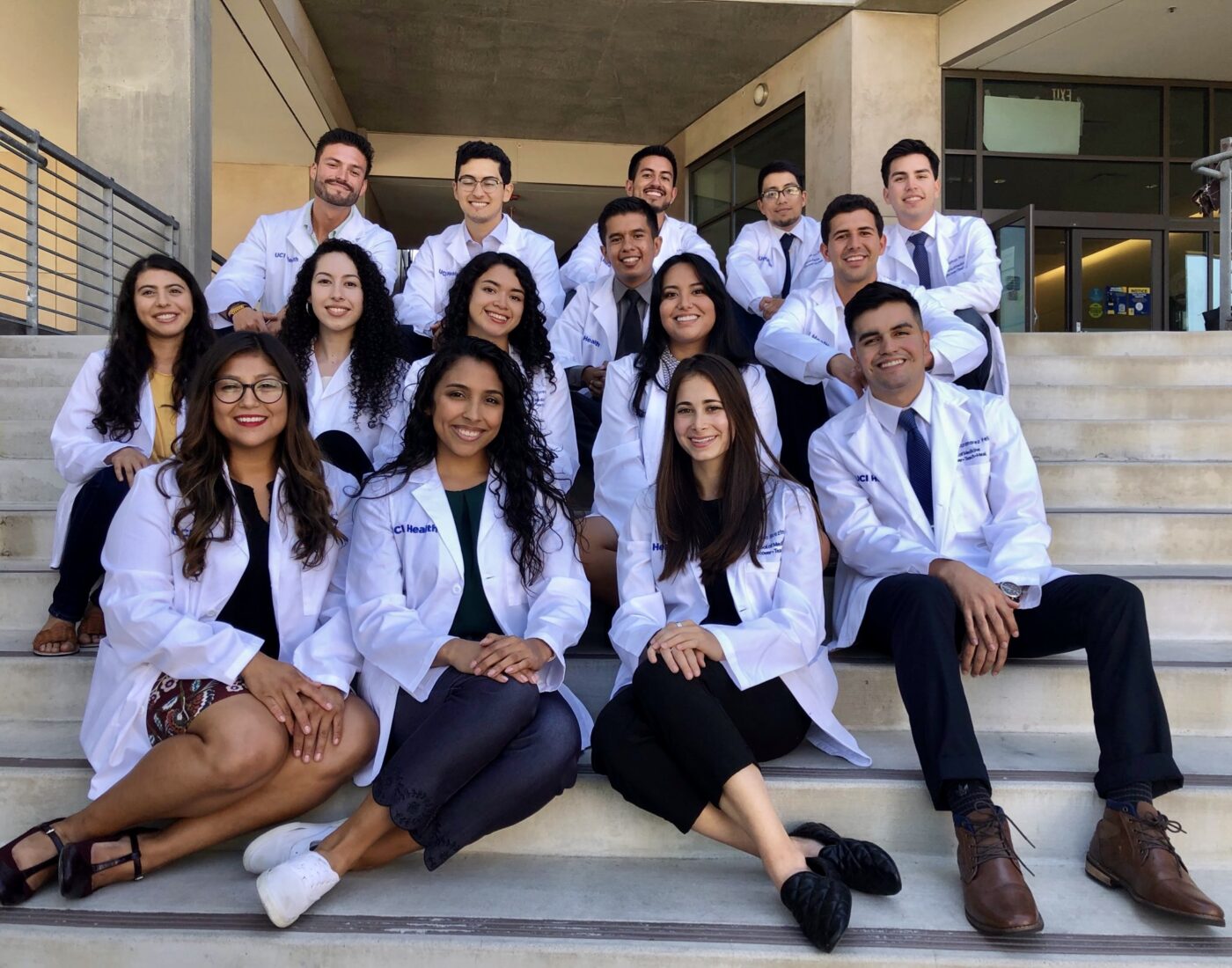
Key milestones include the White Coat Ceremony, Match Day each March and Commencement. At the 2026 White Coat Ceremony, 125 members of the Class of 2030 received their coats at the Irvine Barclay Theatre. Their backgrounds included EMT work, ski patrol, lifeguarding, crisis-line volunteering, published research and college athletics, and they spoke languages including Arabic, Japanese, Chinese, Korean, Telugu, Croatian, Tamil, Farsi, Vietnamese and Spanish. PRIME-LC holds a monthly lecture series and two retreats each year, including one with students from all University of California PRIME programs.
Clinical Rotations and Research Opportunities
Core Rotation Sites
Most required clerkships take place at UCI Health hospitals and clinics, the VA Long Beach Healthcare System, Children’s Hospital of Orange County, Long Beach Memorial and Miller Children’s & Women’s Hospital. Before the third year, Clinical Foundations III arranges clinical privileges at all of the primary clinical sites. Because sites are spread across Orange County and Long Beach, plan for commutes during the clinical years.
UCI Health – Orange houses UCI Douglas Hospital, Orange County’s only Level I adult and Level II pediatric trauma center. Students there see high-acuity trauma care. The Family Medicine clerkship places each student with a family physician at a UCI-affiliated clinic. PRIME-LC students rotate in Santa Ana and other underserved locations, and PRIME LEAD-ABC students do most third-year rotations in Long Beach hospitals and clinics.
Electives
UC Irvine offers a large catalog of electives in nearly every department. Examples include the four-week operating room anesthesiology elective, a surgical intensive care unit rotation at UCI Medical Center, the VA Long Beach and Miller Children’s Hospital, and an anesthesiology acute pain service rotation. Electives also run at affiliated sites in Orange, Los Angeles and San Bernardino counties, including several rural locations. Visiting students from other U.S. medical schools apply for UC Irvine electives through the AAMC Visiting Student Learning Opportunities (VSLO) program.
Research
UC Irvine reports $300 million to $400 million in annual research funding and is an NIH-designated Clinical Translational Sciences Center. Medical students can join research in basic science, clinical, translational and community-based projects. Research areas include neuroscience, cancer, stem cell biology, immunology and biomedical imaging, supported by centers such as the Chao Family Comprehensive Cancer Center, the Sue and Bill Gross Stem Cell Research Center, the Beckman Laser Institute and Medical Clinic and the Institute for Clinical and Translational Science. The Office of Student Support provides research funding during the academic year. MSTP students complete laboratory rotations between their first and second years before choosing a PhD mentor, and they can train in any UCI department, from anatomy and neurobiology to biomedical engineering, chemistry and computer science.
Global and Community Health
The PRIME-LC curriculum includes a four-week clinical rotation in Latin America after the third year, where students see patients with residents and attending physicians and gain exposure to tropical medicine. The program pays for this rotation. PRIME LEAD-ABC scholars may complete an optional research or global health project. Students who want to build Spanish-language clinical skills before medical school sometimes look at a medical internship in Peru, which offers supervised clinical work in a Spanish-speaking setting.
Residency Programs at UC Irvine
UC Irvine’s Office of Graduate Medical Education oversees more than 130 residency and fellowship programs. Residencies include anesthesiology, dermatology, emergency medicine, family medicine, internal medicine, neurology, neurological surgery, obstetrics and gynecology, ophthalmology, orthopaedic surgery, otolaryngology, pathology, pediatrics, physical medicine and rehabilitation, plastic surgery, psychiatry, radiation oncology, diagnostic and interventional radiology, surgery and urology. The UCI Department of Family Medicine has a PRIME-LC residency track, and the first residency positions in any UC PRIME program opened there in 2010. For students, these programs mean daily teaching from residents and fellows, and they give graduates a chance to continue training at a familiar institution if they match there.
Notable Alumni, Faculty, Leadership and Admissions Staff
UC Irvine’s faculty includes more than 1,900 full-time, part-time and volunteer members across 24 academic departments, from basic science research to clinical medical and surgical specialties. Faculty teach medical students, residents and fellows through lectures, clinical rotations, research and mentoring. Many are practicing physicians at UCI Health and affiliated hospitals, which keeps clinical teaching current. Knowing who leads the school and its programs helps you understand its priorities. It does not mean any one person will review your file or mentor you.
School Leadership
Michael J. Stamos, MD, Dean. Dr. Stamos has led the School of Medicine since 2016, first as interim dean, and was appointed interim vice chancellor for Health Affairs in 2026. He is an internationally recognized colorectal surgeon who treats colorectal cancer and inflammatory bowel disease with minimally invasive and sphincter-preserving techniques. He came to UCI in 2002 to establish the Division of Colon and Rectal Surgery and chaired the Department of Surgery from 2010 to 2016. A past president of the American Society of Colon and Rectal Surgeons and the American Board of Colon and Rectal Surgery, he has published more than 260 peer-reviewed papers. Under his leadership the school received its 2025 eight-year LCME reaccreditation and opened new clinical sites in Irvine.
Khanh-Van Le-Bucklin, MD, MEd, Vice Dean for Medical Education. Dr. Le-Bucklin, a professor of pediatrics, oversees undergraduate, graduate and continuing medical education. Her office leads the curriculum, accreditation, student support and the mission-based programs. Her message to applicants highlights the school’s technology-based curriculum, its mission-based programs and its training sites across Orange County and Long Beach, which is a good summary of what the school wants students to engage with.
Megan Boysen Osborn, MD, MHPE, Senior Associate Dean for Student Affairs. Dr. Osborn is a clinical professor of emergency medicine and leads student affairs, including academic and career advising. At the 2026 White Coat Ceremony, she described the Class of 2030 as students who had “put in thousands of hours doing research in the laboratory and volunteering in clinical spaces.” That description is a useful guide to the kind of record the school admits.
Admissions Staff
Adrian Farias, Director of Admissions. Mr. Farias is the school’s Director of Admissions and a listed contact for PRIME LEAD-ABC admissions questions. General admissions questions go to the Office of Admissions at [email protected] or 949-824-5388. Program-specific questions can go to MSTP (949-824-5264), PRIME-LC (949-824-7136 or [email protected]), PRIME LEAD-ABC (949-824-4614) and HEAL-IM (714-456-7863).
Faculty and Program Leaders
Geoffrey W. Abbott, PhD. Dr. Abbott is Vice Dean for Basic Science Research and Academic Affairs and a professor in the Department of Physiology and Biophysics. He earned his BS at the University of Durham, his MS at the University of Leicester and his PhD at the University of London. His molecular pharmacology research covers cardiac arrhythmias, epilepsy and the pharmacology of herbal medicines, with a focus on potassium channels, especially KCNE and KCNQ channels, which help regulate heart rhythm and neuronal excitability, and on solute transporters. His work has implications for treating arrhythmias and epilepsy. Students interested in ion channels or cardiac electrophysiology research will find his lab relevant.
Sudhir Gupta, MD, PhD. Dr. Gupta is a professor of medicine and chief of the Division of Basic and Clinical Immunology, with appointments in pathology and laboratory medicine and in microbiology and molecular genetics. His faculty profile also lists him as director of the Jeffrey Modell Diagnostic Center for Primary Immunodeficiencies. He earned his MD and PhD in Lucknow, India. His research covers the molecular signaling of apoptosis, dendritic cell and B cell biology and the genetic basis of primary immunodeficiency diseases, and he continues to publish on immunoglobulin therapy for primary immunodeficiency. Earlier in his career he was on the faculty of Cornell University Medical College and Memorial Sloan-Kettering Cancer Center. His honors include the Lifetime Achievement Award from the Jeffrey Modell Foundation (1990) and Master of the American College of Physicians (1997).
Edwin Monuki, MD, PhD, MSTP Director. Dr. Monuki directs UC Irvine’s Medical Scientist Training Program and holds the Warren L. Bostick Chair of Pathology. A Southern California native, he earned his BS at MIT and his MD and PhD at UC San Diego, then trained in anatomic pathology and neuropathology in Boston. He joined UCI’s Department of Pathology in 2001. His lab studies forebrain development and translational uses of embryonic, induced pluripotent and neural stem cells. MD/PhD applicants should know his goal of making UCI’s program “an MSTP-of-choice.” Angela G. Fleischman, MD, PhD, a physician-scientist who studies inflammation in myeloproliferative neoplasms, is associate director.
Charles P. Vega, MD, PRIME-LC Director. Dr. Vega, a clinical professor of family medicine, directs PRIME-LC with co-director Valery Vilchez Parra, MD, a colon and rectal surgeon. PRIME-LC was founded in 2004 by Alberto Manetta, MD, and has graduated 180 physicians. Dr. Vega describes the program’s goal as creating “a network of physician-activists and leaders across the state of California.” PRIME-LC applicants should read his program materials closely, because the essays ask how you will use the training.
Carol Major, MD, and Candice Taylor Lucas, MD, MPH, PRIME LEAD-ABC Co-Directors. Dr. Major is Assistant Dean for Student Inclusive Excellence. Dr. Lucas is an associate professor of pediatrics. Together they lead PRIME LEAD-ABC, which pairs scholars with faculty mentors from the first year for career guidance and shadowing.
Jonathan G. Steller, MD, Space MED Co-Director. Dr. Steller is a board-certified OB/GYN specializing in maternal-fetal medicine and a member of the NASA Exploration Medical Capabilities Clinical and Science team. His research looks at gynecologic health in spaceflight and the effects of space radiation on pregnancy and fertility. He co-directs Space MED with Ariana M. Nelson, MD, an associate professor of anesthesiology and pain medicine who has worked on clinical decision support for spaceflight. At the 2026 White Coat Ceremony, he told new students to think of the white coat as “a passport to explore.”
Additional faculty of note.
- Robert F. Hunt, PhD, associate professor of anatomy and neurobiology. His research covers epilepsy, intellectual disability, neural circuits and stem cells. Learn more at the Hunt Lab.
- Joshua D. Grill, PhD, professor of psychiatry and of neurobiology and behavior, who studies Alzheimer’s disease and clinical trials.
- Peter Kaiser, PhD, professor of biological chemistry, who studies the ubiquitin-proteasome system. Learn more at the Kaiser Lab.
- Robert McCarron, DO, Associate Dean for Continuing Medical Education and director of education at the Susan Samueli Integrative Health Institute, who leads HEAL-IM.
- Cristobal Barrios Jr., MD, professor of surgery and a program director of the PRIDE Program.
In memoriam: Sheldon Greenfield, MD. Dr. Greenfield, Donald Bren Professor of Medicine and co-executive director of UC Irvine’s Health Policy Research Institute, died on February 26, 2025. He came to UCI in 2003 with his wife and colleague, Sherrie Kaplan, PhD, MPH, and together they founded the Health Policy Research Institute, which focuses on disparities in health and health care. He co-led the landmark Medical Outcomes Study and was elected to the Institute of Medicine (now the National Academy of Medicine) in 1996. His career shows the school’s long strength in health policy and outcomes research. You can read more on his UCI faculty profile and on Dr. Gupta’s faculty profile.
For more, see the faculty directory, Academic Affairs, research and the Office of Belonging, Equity and Empowerment.
Notable Alumni
UC Irvine’s PRIME programs publish stories of their graduates, which give a clear picture of the careers the school hopes to produce.
- Marco Angulo, MD, MA (PRIME-LC Class of 2011). After graduating from UC Irvine and completing the PRIME-LC Family Medicine Residency, Dr. Angulo helped develop the Health Scholars Program, a pipeline program that has mentored more than 100 students in clinical and service projects in the highest-need areas of Orange County. His path shows how PRIME-LC connects medical school, residency and community work in one region.
- Oscar Hernandez (PRIME-LC, class of 2020). He was the first DACA student to attend the UC Irvine School of Medicine. His story matters for applicants with DACA status, who are eligible to apply.
- Kaosoluchi Enendu (class of 2021). A co-founder of PRIME LEAD-ABC, she explained her choice this way: “The UCI Black community is small but mighty.” Her role in starting the program shows that students help shape UC Irvine’s mission-based training.
- Kara Percival (UCI MD, PRIME-LC). Through PRIME-LC, she earned a master’s in public health from Harvard University alongside her UC Irvine medical degree, an example of the program’s option to complete the master’s year at another university.
- Axana Rodriguez-Torres (PRIME-LC, class of 2021). She is featured among the program’s graduates on its alumni page.
PRIME-LC graduates have entered family medicine, emergency medicine, internal medicine, medicine-pediatrics, obstetrics and gynecology, pediatrics, psychiatry and surgery, as well as anesthesiology, ophthalmology, otolaryngology, plastic surgery, radiology and urology. The School of Medicine Alumni Chapter hosts reunions, an Anteaters in Medicine mixer series and a mentoring program.
Admissions Statistics and Class Profile
What Are UC Irvine School of Medicine’s Average MCAT and GPA?
UC Irvine School of Medicine’s 2026 first-year class (Class of 2030) had a median total MCAT score of 516 and a median cumulative GPA of 3.87, with a median science GPA of 3.85 (UC Irvine School of Medicine Admissions, 2026). The school reports medians, not means.
Median section scores for the same class were 129 in Chemical and Physical Foundations, 128 in Critical Analysis and Reasoning Skills, 129 in Biological and Biochemical Foundations and 130 in Psychological, Social and Biological Foundations. A median is the middle score, not a minimum. Many students were admitted below 516, and many above it.
For the 2025 entering class, all accepted applicants had a median total MCAT of 517 (mean 516.1) and a median GPA of 3.92. Their median section scores were 130 in Chemical and Physical Foundations, 128 in Critical Analysis and Reasoning Skills, 129 in Biological and Biochemical Foundations and 130 in Psychological, Social and Biological Foundations.
The 2026 First-Year Class
| Measure | 2026 MS1/First-Year Class (Class of 2030) |
|---|---|
| Total applications | 7,874 |
| Matriculated | 125 |
| In-state matriculants | 114 |
| Out-of-state matriculants | 11 |
| Median total MCAT | 516 |
| Median cumulative GPA | 3.87 |
| Median science GPA | 3.85 |
| Students in the MSTP | 4 |
| Students in a mission-based program | About 40 |
Sources: UC Irvine School of Medicine Admissions page (2026 MS1/First-Year Class Profile); UC Irvine School of Medicine News, 2026 White Coat Ceremony (MSTP and mission-based program counts).
Accepted Applicants and the 2025 Entering Class
| Measure | 2025 entering class |
|---|---|
| Median total MCAT, accepted applicants | 517 (mean 516.1) |
| Median GPA, accepted applicants | 3.92 |
| Applicants interviewed | 550 (500 in-state, 50 out-of-state, 0 international) |
| First-year class by gender | 64 women, 50 men |
| Research or lab experience | 97% of matriculants |
| Physician shadowing | 89% of matriculants |
| Community service | 89% of matriculants |
| Clinical volunteering | 86% of matriculants |
| Paid clinical work | 79% of matriculants |
Source: AAMC MSAR, 2026 edition (2025 entering class data).
How Applicants Move Through the Process
UC Irvine publishes rough counts for each stage rather than exact figures for one cycle:
- Applications. 7,874 for the 2026 first-year class.
- Secondary invitations. About 3,500 applicants receive a secondary after a preliminary review of the AMCAS application.
- Interviews. About 500 to 600 applicants, or about 8% to 10% of the total pool, are interviewed. Interview sessions host about 40 applicants each.
- Matriculants. 125 students enrolled in the Class of 2030.
For the 2025 entering class, 550 applicants were interviewed: 500 California residents and 50 from out of state.
These steps give a sense of scale. Roughly 4 in 9 applicants get a secondary, and roughly 1 in 6 or 7 secondary recipients is interviewed. The school does not publish how many acceptance offers it makes, so no acceptance rate can be calculated from its public data. Matriculants divided by applicants is not an acceptance rate, because many admitted applicants enroll elsewhere.
Residency Mix
California residents made up 114 of 125 matriculants (91%) in the Class of 2030, and 11 students came from out of state. The school applies the same criteria to in-state and out-of-state applicants. Interviews lean the same way: 500 of the 550 applicants interviewed for the 2025 entering class were California residents. If you live outside California, give a clear reason to train in Orange County and remember that nonresident tuition adds $12,245 a year.
What These Numbers Mean for You
- MCAT. A score near or above 516 puts you in line with the middle of the class. A lower score does not end your chances, but the rest of your application has to be strong.
- GPA. With a 3.87 cumulative median and 3.85 science median, a strong upward trend matters if your early grades were weak.
- Experience. Numbers get you reviewed; experience gets you interviewed. The Class of 2030 had thousands of hours of research and clinical volunteering. Plan for sustained clinical work, such as clinical internships for pre-med students, scribing or medical assisting, not a few weeks of shadowing.
Tips and Strategies for Admission
UC Irvine looks for applicants who show commitment to health care through clinical work, volunteering and real-world medical experience. Admissions advising can help you plan. These strategies follow from the school’s stated priorities.
1. Show all three parts of the mission
Discover, Teach and Heal are not slogans in UC Irvine’s review. Research involvement, health care exposure and community service are the three named experience factors. Before you write anything, list your activities under each heading. If one column is empty, decide whether you can add meaningful work before you apply or whether to explain the gap honestly.
2. Make research real
Research involvement is one of the factors the committee evaluates directly, and lab work, publications and presentations all count. What matters most is that you can explain your question, your role, what went wrong and what you learned. If you have a poster or paper, have one clear sentence ready about why the work matters to patients.
3. Build steady clinical exposure
The committee looks for real exposure and involvement in a health care setting. Direct patient contact over months shows a realistic understanding of the profession. Good options include scribing, medical assisting, EMT work, hospice or free clinic volunteering and structured pre-med internships that involve supervised patient care. Programs for medical internships for undergraduates can add hands-on skills such as vitals and intake if your school year leaves little room for a weekly clinical job. Shadowing helps you see what physicians do, but it should not be your only clinical activity.
4. Serve communities, especially underserved ones
Community service that addresses health disparities is highly valued. UC Irvine gives careful consideration to applicants who have shown they can work with the medically underserved, especially California’s Latino population. If you speak Spanish or another language your community uses, show where you have used it to help people. Depth beats breadth: two years at one free clinic says more than ten one-day events.
5. Use your letters to confirm your story
Ask the people who supervised your most important activities. The school suggests letters from an attending physician, research principal investigator or program director, plus two senior professors. A clinical letter from an MD or DO is recommended. Give each writer a short summary of what you did with them and what you hope they can speak to.
6. Decide early about PRIME-LC, PRIME LEAD-ABC and MSTP
These programs are chosen in AMCAS (MSTP) or the secondary (PRIME-LC and PRIME LEAD-ABC), and each adds essays and an extra interview. Apply only if your record matches the program’s mission. PRIME-LC requires at least conversational Spanish and a long-term commitment to Latino communities. PRIME LEAD-ABC looks for “demonstrated service, leadership, and commitment” to the health and social needs of African, Black and Caribbean communities. Neither program requires a particular background, and applying does not hurt your chances for the regular MD class.
7. Turn the secondary around quickly
UC Irvine uses rolling admissions, and first acceptances go out by November 1. Draft your answers to the four general prompts in early summer so you can submit within a week or two of the invitation, well inside the 30-day limit.
8. Prepare for Kira before your interview
The Kira Talent video assessment is timed and recorded. Practice answering on camera with a timer. Speak clearly, give one concrete example and reach a conclusion before time runs out.
9. Know the school before you interview
Read about iTEACH, the PACE clerkships, the mission-based programs and the clinical sites. Be ready to say why you want to train in Orange County and how you would use the school’s resources.
10. Plan the timeline backward from November 1
The AMCAS deadline is November 1, but strong applicants submit in June. Take the MCAT early enough to have a score by June or July, line up letters in the spring and use the summer before you apply for clinical or research work. Our guide to internship programs has advice on landing summer experiences. If you need help, our medical school admissions consulting team works with applicants on school lists, essays and interviews.
Secondary Application Questions, Example Responses and Analysis
UC Irvine shows its secondary prompts only inside its secondary application portal. The prompts below are the 2026-2027 prompts, word for word. The four general prompts have used 1,500-character limits in every recent cycle; the PRIME-LC and PRIME LEAD-ABC prompts have no published limit for 2026-2027. Always follow the counter in your portal.
Logistics at a glance:
- Who gets one: about 3,500 applicants, after a preliminary screen of the AMCAS application.
- Fee: $120, nonrefundable. Waived for applicants who received the AAMC Fee Assistance Program waiver (apply the waiver before you pay).
- Deadline: 30 days from the invitation email, and no later than December 1 for the regular cycle.
- Letters: three to six, through the AMCAS Letter Service.
- Program essays: PRIME-LC and PRIME LEAD-ABC applicants answer extra questions in the same secondary. MSTP applicants answer supplementary program-specific questions in the secondary; the MSTP section shows its 2026-2027 questions inside the portal.
- Character limits: 1,500 characters is short, roughly 230 to 270 words. Earlier cycles counted characters without spaces, but write to 1,500 including spaces to be safe.
Each example below is original. It is labeled as an illustrative example, not an actual applicant essay, and it is meant to show structure and reflection, not to be copied. Write about your own experiences.
1. “What personal accomplishment are you most proud of and why?”
Limit: 1,500 characters. Who answers: all MD applicants who receive the secondary.
What it asks. Two things: an accomplishment and the reason you are proud of it. The “why” is the real question. The committee wants to know what you value and how you work.
How to approach it. Pick something you led or built, where you can show effort over time and a lesson about yourself. It can be academic, clinical, personal or community-based. Avoid repeating your AMCAS most meaningful experience word for word. Spend about a third of the space on the accomplishment and two thirds on what it shows.
Illustrative example, not an actual applicant essay (character count: 1,356 of 1,500)
Four hundred twelve people in Garden Grove can now do hands-only CPR, and helping them get there is the accomplishment I am proudest of. As a new EMT, I responded to a cardiac arrest in a nail salon. Four coworkers were standing around the patient. No one had started compressions. They were not indifferent. They told me later, in Vietnamese, that they were afraid of breaking her ribs and being blamed. I grew up two blocks from that salon, so I knew the fear was common. I wrote a 20-minute bilingual session, borrowed manikins from our county training center and asked two EMT partners and a nursing student to teach with me. Over 18 months we ran 31 sessions in salons, a Buddhist temple, a church hall and a high school gym. Two salon owners said no at first because sessions cost them customer time. I came back with a 10-minute version they could run before opening. I am proud of the number, but I am prouder of what I changed in myself. I started by teaching my checklist. I ended by teaching to the fear in the room, letting people press too hard on a manikin until they trusted their hands. That lesson shapes how I want to practice medicine: knowledge matters most when a patient or family can use it. I want to keep building that skill from my first year, in UCI’s Clinical Foundations sessions and in a weekly PACE clinic with real patients.
Why this example works. It names a specific, measurable result in the first sentence, then shows the problem that started it. It answers “why” in two layers: pride in the number and pride in a change in the writer’s teaching approach. Setbacks (two owners said no) show persistence without drama. The closing ties the lesson to patient education and to UC Irvine’s Clinical Foundations and PACE experiences, which shows the applicant knows how the school teaches.
Mistakes to avoid. Listing awards with no story, picking an accomplishment that someone else clearly drove, or spending all 1,500 characters on what happened and none on why it matters.
2. “Please describe to the Admissions Committee a challenge or disappointment you have overcome and what you learned about yourself from that experience.”
Limit: 1,500 characters. Who answers: all MD applicants who receive the secondary.
What it asks. Three parts: the challenge or disappointment, how you overcame it and what you learned about yourself. The last part is about self-knowledge, not a general life lesson.
How to approach it. Choose a real setback where your own choices mattered. Describe it briefly and honestly, show the specific steps you took and name one clear insight about how you think or act. Avoid stories where the challenge was someone else’s fault.
Illustrative example, not an actual applicant essay (character count: 1,210 of 1,500)
In my third year of research, I lost six weeks of work, and it was my fault. I was running a cell culture series for our lab’s study of inflammation in kidney cells. I mislabeled two sets of plates, then fed and treated them on the wrong schedule. When the results looked strange, my first instinct was to rerun the assay quietly and hope the numbers improved. Two days later I told my graduate mentor what I suspected. Saying it out loud was harder than the mistake. She pulled my notebook, found the label error in ten minutes and asked me to present it at our lab meeting. I expected embarrassment. Instead, the lab used my error to build a shared labeling template and a second-person check for any plate that changes media. I rebuilt the series over the summer and finished it in time for our abstract. What I learned about myself is that I protect my image before I protect the work. Now I report problems early, even when I am not sure, because a delay costs everyone more than an awkward conversation. In a hospital, the stakes are higher than a set of plates. I want to bring that habit of early, honest reporting into every team I join, starting with simulation debriefs and my first clerkship teams.
Why this example works. The writer owns the mistake in the first sentence. The turning point is a choice, not luck: telling the mentor. The insight (“I protect my image before I protect the work”) is honest and specific, and the essay shows the changed behavior. It connects the lesson to patient safety and team-based training, which is how medical teams in simulation and clerkships work.
Mistakes to avoid. A “challenge” that is really a brag, a grade story with no reflection, or a closing line about resilience that the essay never shows.
3. “Have you ever had difficulty accessing quality education or healthcare? If so, please describe how this impacted you and others in your community.”
Limit: 1,500 characters. Who answers: applicants whose answer is yes. If the answer is no, follow the portal’s instructions; do not invent hardship.
What it asks. Whether you have faced barriers to quality education or health care, and if so, the impact on you and on others in your community. Both parts of “you and others” need an answer.
How to approach it. Describe the barrier concretely, then the effects on you, your family and your community. End with what you did or learned, without turning the essay into a list of achievements. This prompt connects directly to UC Irvine’s careful consideration of applicants from disadvantaged backgrounds.
Illustrative example, not an actual applicant essay (character count: 1,210 of 1,500)
Yes. From age 11 to 17, my family had no health insurance. My mother, who has type 2 diabetes, rationed her insulin and skipped eye exams because each visit meant a missed shift at the packing plant. We used the emergency department for anything that could not wait, which meant six-hour waits and bills we paid in pieces for years. My high school also had no AP science courses. I taught myself chemistry from a used textbook and took my first lab course at a community college at 18. These gaps shaped my family and our neighbors. My mother’s vision worsened before anyone checked it. Two families on our street learned about the county’s low-cost clinic only because I translated a flyer for them. I learned that access is often blocked by information and time, not only by money. That is why I spent three years as a volunteer enrollment assistant at a community clinic, helping families apply for Medi-Cal in Spanish and English. I also tutor community college students in general chemistry, because I know what it is like to arrive in a lab without the background others assume. These experiences made me practical. I ask patients what will get in the way of the plan before I assume they will follow it.
Why this example works. It answers “yes” directly, then gives specific barriers in both health care (no insurance, rationed insulin) and education (no AP science). It describes the impact on the writer, the family and neighbors, as the prompt asks. The reflection (access is blocked by information and time) is an insight a physician can use, and the essay ends with action and a practical clinical habit.
Mistakes to avoid. Exaggerating hardship, writing about a friend’s experience as your own or ignoring the “others in your community” part.
4. “Please clarify for the Admissions Committee your activities (school, work, and/or volunteer, travel, etc.) since receiving your undergraduate degree. You may list them in chronological order or you may incorporate them into an essay, stating why you chose particular activities. If you have just received or will receive your undergraduate degree this year, please discuss your plans for current year.”
Limit: 1,500 characters. Who answers: all applicants. Graduates describe what they have done since the degree; applicants who just finished or will finish the degree this year describe their plans for the current year.
What it asks. What you have done (or will do) and why you chose each activity. You can use a list or an essay.
How to approach it. A clear chronological list works well for this prompt. For each item, give dates, hours, what you do and one sentence on why you chose it. If you are still in school, list your courses, jobs and service for the year. If you are taking time off, this is where pre-med gap year programs and full-time clinical jobs can be explained with purpose.
Illustrative example, not an actual applicant essay (character count: 1,113 of 1,500)
I graduated in June 2025 with a B.S. in Public Health. My activities since then, in order:
July 2025 to present: Medical assistant, federally qualified health center in Anaheim (40 hrs/week). I room patients, take vitals, do medication reconciliation and give diabetes education handouts in English and Spanish. I chose a full-time clinical job because I wanted to see primary care over months, not single visits.
September 2025 to present: Volunteer, weekly free clinic in Santa Ana (4 hrs/week). I run intake and help patients schedule follow-up at the county clinic. I kept this role because it lets me follow patients who have no insurance at all.
January 2026 to present: Research assistant, community health study at my undergraduate university (6 hrs/week, remote). I code interview transcripts on barriers to blood pressure control. I wanted research that asks why plans fail at home.
Plans through July 2027: I will continue all three roles. In spring 2027, I will finish a medical Spanish course and train a new medical assistant at my clinic. If my plans change, I will update the Admissions Committee.
Why this example works. It uses the list format the prompt invites, with dates and hours that make the record easy to check against AMCAS. Each item includes a reason (“I chose a full-time clinical job because…”), which is the part many applicants skip. It covers plans through matriculation and promises updates, which shows maturity.
Mistakes to avoid. Leaving unexplained gaps, listing activities without the “why,” or repeating your AMCAS descriptions instead of explaining your choices.
5. PRIME-LC: “Please describe how you have served your community (school, neighborhood, city, etc.) and how these experiences have prepared you for PRIME-LC.”
Limit: No limit is published for 2026-2027; earlier cycles used 1,500 characters, so write to 1,500 and follow your portal. Who answers: applicants who check the PRIME-LC box in the secondary.
What it asks. Two parts: your community service and how it prepared you for PRIME-LC specifically.
How to approach it. PRIME-LC’s “number one qualification” is a dedication to serving the Latino community. Show service with Latino communities, your use of Spanish and what you learned about the barriers patients face. Then connect your preparation to specific parts of the program: Chicano-Latino Studies, the Spanish interview, community partners and clinical work in Santa Ana.
Illustrative example, not an actual applicant essay (character count: 1,326 of 1,500)
My community service has always started with language. At 14, I began interpreting for my grandparents at their appointments in Santa Ana. In college, I turned that habit into a role. For three years I volunteered at a student-run free clinic, where I ran Spanish-language intake, took blood pressures and walked patients through referral paperwork. I noticed that many patients missed follow-up because the reminder calls came in English, so I set up a Spanish reminder script with our coordinator. Our no-show rate for return visits dropped over the next two terms. I also spent two summers with a neighborhood association running a walking group and a monthly health talk for parents at an elementary school. I learned to plan around shift work, child care and the fear some families had of giving their names. These experiences prepared me for PRIME-LC in three ways. First, I already practice medical conversations in Spanish, and I know where my vocabulary still falls short. Second, I have seen how structural issues, such as immigration status and transportation, decide whether a plan works. PRIME-LC’s Chicano-Latino Studies courses would give me a framework for what I have seen. Third, I have learned to work with community groups rather than for them, which is how I hope to work in PRIME-LC’s community projects.
Why this example works. It shows service over years, a concrete improvement (Spanish reminder calls) and honest awareness of language limits. The second half answers the “prepared you for PRIME-LC” part with three clear points tied to the program’s actual features.
Mistakes to avoid. Treating PRIME-LC as a Spanish immersion or international program (it is neither), or writing a general service essay with no link to Latino communities.
6. PRIME-LC: “Please describe the reason for your interest to be trained as a physician leader for the Latino community. In addition, explain how you intend to utilize the PRIME-LC specialized training to impact community health and health services for the Latino community.”
Limit: No limit is published for 2026-2027; write to 1,500 characters. Who answers: PRIME-LC applicants.
What it asks. Your reason for wanting to be a physician leader for the Latino community, and your plan for using the training to improve community health and health services.
How to approach it. Give one personal reason, then a concrete plan. Use the program’s real parts: the PACE clerkship in Latino-serving clinics, Santa Ana rotations, the master’s year (often public health or business), the Sacramento and border programs, and the PRIME-LC residency track in family medicine. You can pursue any specialty.
Illustrative example, not an actual applicant essay (character count: 1,194 of 1,500)
I want to be a physician leader for the Latino community because I have watched my own family wait for care that arrived too late. My uncle, a landscaper, ignored chest pain for weeks because he could not afford a day off. He survived his heart attack, but he never returned to full-time work. His story is common in my neighborhood, and I do not think it can be solved one visit at a time. I plan to use PRIME-LC training at three levels. In clinic, the PACE clerkship in sites serving Latino patients and rotations in Santa Ana would let me practice the kind of continuity care my uncle never had. In community health, I would use my master’s year to earn an MPH and learn program evaluation, so that health talks and screenings like the ones I helped run are measured, not just repeated. In policy, PRIME-LC’s visits to Sacramento and to the border would show me how laws on coverage and immigration reach the exam room. After residency, I hope to practice internal medicine in Orange County and help build a workplace screening program with employers who hire day laborers and landscapers. I want to be the physician who can treat the patient and also explain the problem to a city council.
Why this example works. The reason is personal but short. The plan works at three levels (clinic, community health and policy), each tied to a real part of PRIME-LC. It names a specialty and a region, showing the specialty freedom the program allows and a believable long-term goal.
Mistakes to avoid. Vague promises to “give back,” or a plan that ignores the “health services” part of the prompt.
7. PRIME LEAD-ABC: “Please describe how you have served your community (school, neighborhood, church, etc.) and how these experiences have prepared you for PRIME LEAD-ABC.”
Limit: No limit is published for 2026-2027; write to about 1,500 characters and follow your portal. Who answers: applicants who opt in to PRIME LEAD-ABC in the secondary.
What it asks. Your service to your community and how it prepared you for PRIME LEAD-ABC.
How to approach it. The program seeks “demonstrated service, leadership, and commitment to addressing the health and social needs of African, Black, and Caribbean communities.” Show sustained service and leadership, then connect it to the program’s structure: the longitudinal PACE clerkship at an ABC-serving site, community experiential learning lessons and mentoring.
Illustrative example, not an actual applicant essay (character count: 1,197 of 1,500)
Most of my service has happened in the fellowship hall of my church in Long Beach. In high school I started helping our health ministry at monthly blood pressure screenings. By college, I was organizing them. I recruited a retired nurse and two pharmacy students, built a simple log so members could track readings over time and arranged referrals to a nearby clinic for anyone with repeated high numbers. Over three years we screened more than 600 adults, and 40 of them reconnected with a primary care doctor. I also mentor Black high school students through a weekend science program. Several of my mentees had never met a Black physician. I set up a panel with two physicians from our church, and one student now volunteers at the same clinic where we send referrals. These experiences prepared me for PRIME LEAD-ABC because they taught me that trust comes before advice. Members told us about chest pain and missed prescriptions only after they knew we would be back the next month. PRIME LEAD-ABC’s longitudinal clerkship and community experiential learning lessons ask for the same consistency. I am ready to show up for the same communities over four years, and to keep learning from them.
Why this example works. It shows growth from helper to organizer, gives outcomes and shows mentoring. The insight that “trust comes before advice” links directly to the program’s longitudinal design.
Mistakes to avoid. Listing events without your role, or describing service unrelated to ABC communities without explaining the connection.
8. PRIME LEAD-ABC: “What is the most important healthcare issue confronting medically under-resourced communities, in particular the ABC communities, and what would be your first steps to address this issue?”
Limit: No limit is published for 2026-2027; write to about 1,500 characters. Who answers: PRIME LEAD-ABC applicants.
What it asks. One issue, why it is most important and your first steps. The prompt asks for first steps, not a complete solution.
How to approach it. Choose one issue you know well. State it, support it with a fact you can defend and a personal or community observation, then give two or three realistic first steps. Listening to the community is a good first step, but it should lead to something concrete.
Illustrative example, not an actual applicant essay (character count: 1,178 of 1,500)
I believe the most important issue is maternal health. Black women in the United States die from pregnancy-related causes at a far higher rate than white women, and many of those deaths are considered preventable. In my own family, my cousin’s postpartum preeclampsia was dismissed as anxiety until she returned by ambulance. The gap is not explained by income or education alone. It reflects how symptoms are heard, how quickly care escalates and whether women have support after they go home. My first step would be to listen. I would ask Black mothers, doulas and nurses in Long Beach and Orange County where care broke down for them, and I would read the local data on severe maternal outcomes. Second, I would focus on the postpartum weeks, when many complications appear. A practical starting project would be a blood pressure check program in the first two weeks after delivery, with cuffs sent home and a clear number to call. Third, I would bring what I learned back to training, because residents and students are often the first to hear a patient’s concern. None of this needs to wait for a new hospital. It needs a team willing to measure results and keep listening.
Why this example works. It names one issue, supports it with a well-established national fact and a personal example, and avoids overclaiming numbers. The first steps are ordered and realistic, and the postpartum blood pressure project is a specific idea a student could help with.
Mistakes to avoid. Picking several issues, citing statistics you cannot source or proposing a plan only a health system CEO could carry out.
9. PRIME LEAD-ABC: “Please describe the reason(s) for your interest to be trained as a physician leader for the ABC community.”
Limit: No limit is published for 2026-2027; write to about 1,500 characters. Who answers: PRIME LEAD-ABC applicants.
What it asks. Why you want to be trained as a physician leader for the ABC community. Notice “leader”: the answer should go beyond wanting to care for patients.
How to approach it. Share one or two reasons rooted in experience, then define what leadership means to you in concrete terms.
Illustrative example, not an actual applicant essay (character count: 1,083 of 1,500)
My interest in training as a physician leader for the ABC community comes from two places: my family and my church. My father is from Jamaica and my mother grew up in Compton. Between them, I have heard about clinics where no one looked like us, doctors who rushed and medicines that were never explained. I have also seen what changes when a patient trusts the person in the room. When our church health ministry brought in a Black family physician to talk about blood pressure, three men who had avoided doctors for years made appointments that week. I want to be that kind of physician, and I also want to lead beyond one practice. Leadership, to me, means building systems that make good care the default: community screenings that connect to real follow-up, mentoring that brings more Black students into medicine and data that shows where care is unequal. I am drawn to training that treats these as core parts of medicine, not extras. I want mentors who have done this work, peers who share the commitment and a curriculum that teaches the history behind the gaps I have seen.
Why this example works. It gives two sources of motivation, one short story with a visible result and a concrete definition of leadership (systems, mentoring and data). It closes by naming what the applicant wants from training, which matches the program’s mentoring and curriculum.
Mistakes to avoid. Writing only about identity without explaining leadership, or making claims about the community without your own observations.
10. PRIME LEAD-ABC: “Explain how you intend to utilize the PRIME LEAD-ABC specialized training to impact community health services for the ABC community.”
Limit: No limit is published for 2026-2027; write to about 1,500 characters. Who answers: PRIME LEAD-ABC applicants.
What it asks. How you would use the program’s training to improve community health services.
How to approach it. Walk through the program year by year and show how you would use each part, then give a post-training goal. Use real features: first- and second-year courses, the longitudinal PACE clerkship, service-learning projects, Long Beach rotations, community experiential learning lessons, the fourth-year ABC-serving rotation and the optional master’s year.
Illustrative example, not an actual applicant essay (character count: 1,180 of 1,500)
I would use PRIME LEAD-ABC training to build the follow-up that my church screenings always lacked. In the first two years, the PRIME LEAD-ABC courses and the longitudinal PACE clerkship at a site serving ABC patients would teach me how a clinic really runs and where patients fall through. I would use that knowledge to design my service-learning project around one gap, such as connecting adults with high blood pressure readings from community screenings to a same-month clinic visit. In my third year, I hope to learn from rotations in Long Beach hospitals and clinics and keep attending the community experiential learning lessons, so my clinical training and community work stay connected. I would also consider the optional master’s year to study health services research, so that I can measure whether a program actually works. Over time, I want to bring these lessons back to the communities that shaped me. My goal after residency is to practice family medicine or internal medicine in a Long Beach community clinic, partner with churches and barbershops on screening and follow-up, and mentor the next group of students so the program’s work continues after I graduate.
Why this example works. Every step is tied to a real program feature, and the essay builds on the applicant’s earlier service (church screenings) instead of starting over. The goal is concrete: a setting, partners and mentoring.
Mistakes to avoid. Repeating your answer to the “reasons” prompt, or describing training the program does not offer.
MD/PhD (MSTP) Supplementary Questions
MSTP applicants answer supplementary program-specific questions in the secondary, in addition to the general MD prompts. The 2026-2027 wording of these questions appears in the portal after you indicate MD/PhD interest in AMCAS. Expect questions focused on research: your proudest research accomplishment, a research challenge, what being a physician-scientist means to you and a list of posters and manuscripts. Prepare by writing down each research project’s question, your role, your methods, a setback you solved and what you would study next. List every poster and paper in full citation form, and mark planned or submitted manuscripts clearly. Keep answers to the limit shown in the portal.
Other Program Applications
HEAL-IM and the PRIDE Program do not appear in the secondary. Admitted students receive information about those applications after acceptance. Space MED is open only to matriculating students for now; the school plans to let applicants express interest in the secondary in the future.
Interview Format and Preparation
UC Irvine’s interview process has two parts: a recorded video assessment you complete in advance and an interview day with live interviews.
Who Is Invited and When
About 500 to 600 applicants, or about 8% to 10% of the applicant pool, are invited to interview. Invitations go out by email from August through March, and you choose a date online. Interviews run from September through April, with about 40 applicants per session.
Kira Talent Video Assessment
Before interview day, you complete a Kira Talent video assessment on your own schedule. It is designed to assess six core competencies that the admissions committee believes are essential for success at UC Irvine. Kira assessments typically show a prompt, give you a short time to prepare and then record your answer. Practice with a timer and a camera.
Interview Day
The interview day includes a short orientation, a student panel, financial aid information and tours. You interview with a faculty member and a current medical student, and there is a filmed structured interview session. Interviews are conducted virtually over Zoom, and regional interviews are not offered. Your invitation will confirm the format and schedule.
Program Interviews
- PRIME-LC. Applicants must first be selected for a School of Medicine interview, then complete a third interview in Spanish to assess conversational skills and commitment to service.
- PRIME LEAD-ABC. Program applicants complete an additional interview.
- MSTP. The MSTP interview takes two days, one for the MD process and one focused on the MSTP. Applicants meet a student interviewer, a member of the School of Medicine admissions committee, a member of the MSTP admissions committee and at least two faculty research interviewers. MSTP interview days are held over Zoom, and interviews take place once a month from October through February.
Decisions
Decisions are communicated about two months after the interview. Acceptances are rolling, starting by November 1, and waitlist offers can come from April through August. You have two weeks to accept or decline an offer, and less time for offers made after May 15. No deposit is required.
How to Prepare
- Know your application. Faculty and student interviewers may ask about anything in AMCAS or your secondary.
- Prepare stories, not scripts. Have five or six experiences ready that show teamwork, a mistake, a patient interaction, leadership and service, and practice telling each in under two minutes.
- Connect to Discover, Teach and Heal. Be ready to talk about your research, how you have taught or mentored others and how you have cared for people.
- Know UC Irvine. Be ready to discuss iTEACH, PACE, the clinical sites and any mission-based program that interests you.
- Practice the structured format. A filmed structured interview usually asks every applicant the same questions. Answer the question asked, give an example and finish with what you learned.
- Prepare Spanish if applying to PRIME-LC. Practice describing your service and your goals in Spanish with a fluent speaker.
- Check your setup. For virtual interviews, test your camera, lighting, audio and internet connection in advance.
Frequently Asked Questions
How much does it cost to go to UCI School of Medicine?
For 2026-27, tuition and fees for fall through spring are $52,168 for California residents and $64,413 for nonresidents, including student health insurance. The financial aid office’s first-year budget, including housing, food, books, personal costs and transportation, totals $81,793 for students living on campus and $97,694 off campus, using resident tuition. Second- and third-year budgets are higher ($91,446 on campus) because they include a summer term and a longer year of living costs. Nonresidents should add $12,245 in nonresident tuition. Check the registrar and financial aid office each spring, because UC tuition can change.
Is UCI a good medical school?
UC Irvine is a well-regarded, research-active public medical school. It holds full LCME accreditation, renewed for the maximum eight years in 2025, and describes itself as one of the top 50 U.S. medical schools for research in U.S. News & World Report. It is the only academic medical center in Orange County, with a Level I trauma center and a new hospital in Irvine. Whether it is a good school for you depends on your goals, budget and interest in its programs.
What are the average GPA and MCAT score requirements for admission to UCI School of Medicine?
The school does not publish minimums. The 2026 first-year class had a median MCAT of 516 and a median cumulative GPA of 3.87, with a 3.85 median science GPA. These are medians for enrolled students, so treat them as a target range, not a cutoff. Accepted applicants for the 2025 entering class had a median MCAT of 517 and a median GPA of 3.92. The MCAT must be taken within three years before June 1 of the application year and no later than September 30.
What extracurricular activities does UC Irvine value in applicants?
UC Irvine evaluates research involvement, health care exposure and community service, plus leadership and activities that show sensitivity to working with people from diverse communities. Dedication, reliability, altruism and communication skills are given high regard. Clinical exposure, research and service are all described as highly desirable, so aim for sustained work in each area.
How can I increase my chances of admission to UCI School of Medicine?
Build a strong academic record and MCAT score, then show depth in research, clinical care and service, especially with underserved communities. Choose letter writers who supervised your main activities, including a physician. Submit AMCAS early, return the secondary quickly and prepare for the Kira assessment and interview. Learn the school’s curriculum and programs so you can explain why UC Irvine fits you.
Does UCI offer financial aid for medical students?
Yes. UC Irvine offers merit-based and need-based scholarships, grants and federal loans. Submit the FAFSA (school code 001314) by March 2 and the UCI Financial Aid Form, including parent information if you want to be considered for scholarships. PRIME-LC, PRIME LEAD-ABC and HEAL-IM offer program support, and the MSTP covers tuition and a stipend.
What are the application deadlines for UCI School of Medicine?
The AMCAS deadline is November 1, 2026 for the 2026-2027 cycle, and transcripts must reach AMCAS by November 15. Secondaries are due 30 days after the invitation and no later than December 1. The MCAT must be taken by September 30 of the application year.
What happens after submitting my application to UCI School of Medicine?
After AMCAS verifies your application, UC Irvine screens it and invites about 3,500 applicants to complete a secondary. After reviewing secondaries, it invites about 500 to 600 applicants to interview. Invited applicants complete the Kira Talent video assessment and an interview day with faculty and student interviews. Decisions follow about two months after the interview.
Does UC Irvine accept out-of-state applicants?
Yes. The admissions committee uses the same criteria for in-state and out-of-state applicants. In the Class of 2030, 11 of 125 students were from out of state. Nonresidents pay $12,245 more per year in nonresident supplemental tuition.
Does UC Irvine accept international or DACA applicants?
UC Irvine accepts U.S. citizens, permanent residents with a green card and applicants approved under DACA with an Employment Authorization Document. It does not accept other international applicants. DACA applicants provide documentation of their status with the secondary. The MSTP does not currently support international students.
Does UC Irvine require CASPer or PREview?
No. CASPer is not required, and AAMC PREview is not used in this cycle’s admissions decisions. Instead, applicants invited to interview complete a Kira Talent video assessment before interview day.
Is the UC Irvine interview an MMI?
No. Interview day includes interviews with a faculty member and a current medical student and a filmed structured interview session, after a Kira Talent video assessment completed in advance. The interviews are conducted virtually. PRIME-LC adds an interview in Spanish, PRIME LEAD-ABC adds a program interview and the MSTP adds a second interview day.
What is PRIME-LC, and do I need to be Latino to apply?
PRIME-LC is a five-year MD and master’s program for students committed to serving underserved Latino communities. You do not need to be Latino. Applicants from all backgrounds are welcome, and applications are reviewed without any preference based on race or ethnicity. You do need at least conversational Spanish and a demonstrated commitment to Latino communities. You apply by checking the PRIME-LC box in the secondary.
If I am not accepted to PRIME-LC or PRIME LEAD-ABC, can I still be admitted to the MD program?
Yes. Students must be accepted to the School of Medicine before they can be accepted to PRIME-LC or PRIME LEAD-ABC, and applicants who are not chosen for a program can still be admitted to the regular MD class. PRIME-LC notes that each year some new medical students were not accepted into the program.
Does UC Irvine accept AP credit or community college courses?
AP credit with a score of 4 or higher can count for one term of general chemistry, physics or humanities, but not biology. The AP score must appear on your transcript or come from the College Board. Community college courses count for prerequisites, except the upper-division biology course, which must be taken at a four-year school. International Baccalaureate credit is not accepted.
How many letters of recommendation does UC Irvine want?
Three to six current letters are suggested, submitted through the AMCAS Letter Service. Include a letter from a physician who supervised you clinically and, if you did research, one from your research supervisor. Committee letters are not required.
Does UC Irvine accept transfer students?
No. The only exception is a rare emergency in which an LCME-accredited school must place a student elsewhere, such as after a natural disaster.
How important is clinical experience for UC Irvine?
Very important. Exposure and involvement in a health care setting is one of three named experience factors, and the Class of 2030 brought thousands of hours of clinical volunteering and research. Aim for sustained, hands-on patient contact. Many applicants combine local volunteering with structured pre-med internships abroad during a summer or gap year.
When does medical school start at UC Irvine?
Orientation begins in the first week of August. The Class of 2031 will start in August 2027, with classes beginning August 2, 2027. Prerequisites must be complete by July 15 of that year.
Does UC Irvine have early decision?
No. UC Irvine does not offer an early decision program. All applicants apply through the regular AMCAS cycle, with a November 1, 2026 deadline for the 2026-2027 cycle.
Does UC Irvine require a deposit, and how long do I have to respond to an offer?
No deposit is required to hold an acceptance. You have two weeks to respond to an offer, and offers made after May 15 come with a shorter window. Requests to defer entry are considered case by case.
How does the UC Irvine waitlist work?
The waitlist typically holds about 100 applicants, and 30 acceptance offers went to waitlisted applicants in the most recent cycle reported. The Waitlist Committee weighs the Admissions Committee’s recommendations, class balance and program needs. Waitlist offers can come from April through August.
How much debt do UC Irvine medical graduates have?
Graduates who borrowed for medical school in 2024-2025 left with an average of $179,945 in medical school debt, and 95% of students received financial aid. UC Irvine’s scholarships, the mission-based programs and the MSTP can lower that amount.
Related Medical School Guides
These California MD programs make useful comparisons with UC Irvine:
- Kaiser Permanente School of Medicine: another Southern California MD program, in Pasadena, with a very different model built inside an integrated health system.
- UC Riverside School of Medicine: a neighboring UC school with its own PRIME program and a mission focused on Inland Southern California.
- Stanford School of Medicine: a research-heavy California option for applicants who are drawn to UC Irvine’s MSTP and research mission.
- California Northstate University College of Medicine: a private MD program in Northern California with a different cost structure from the UC schools.
- USC Keck School of Medicine: a private Los Angeles school that many UC Irvine applicants also consider for Southern California training.
- UCLA David Geffen School of Medicine: a fellow UC school with its own PRIME program, often on the same school lists.
For a statewide view, see our overview of medical schools in California. For a closer look at selectivity, read our breakdown of the UC Irvine School of Medicine acceptance rate.
More Medical School Guides
Like UC Irvine, these schools are committed to medical training, research and patient care, and each takes its own approach. Explore our guides to:
- Nova Southeastern University College of Allopathic Medicine
- Touro University Nevada College of Osteopathic Medicine
- University of Miami Miller School of Medicine
- Arkansas College of Osteopathic Medicine (ARCOM)
- University of Arkansas for Medical Sciences (UAMS)
- Tulane University School of Medicine
- LSU Health New Orleans School of Medicine
- LSU Shreveport Medical School
- Kirk Kerkorian School of Medicine at UNLV
- University of Nevada Reno School of Medicine
- University of Arizona College of Medicine-Tucson
- University of Arizona College of Medicine-Phoenix
- Burrell College of Osteopathic Medicine (BCOM)
- The University of New Mexico School of Medicine
- Alabama College of Osteopathic Medicine (ACOM)
- University of South Alabama College of Medicine
- University of Alabama School of Medicine
- FIU College of Medicine
- UCF College of Medicine
- USF Morsani College of Medicine
- Florida State University College of Medicine
- Morehouse School of Medicine
- Medical College of Georgia at Augusta University
- Mercer University School of Medicine (MUSM)
- Campbell University School of Osteopathic Medicine (CUSOM)
- ECU Brody School of Medicine
- Edward Via College of Osteopathic Medicine (VCOM)
- University of South Carolina Medical School
- Lewis Katz School of Medicine at Temple University
- Philadelphia College of Osteopathic Medicine (PCOM)
- Geisinger Commonwealth School of Medicine (GCSOM)
- Penn State Medical School
- CUNY School of Medicine
- SUNY Downstate Medical School
- NYIT College of Osteopathic Medicine
- NYU Long Island School of Medicine
- Albany Medical College
- TOURO College of Osteopathic Medicine
- Norton College of Medicine at Upstate Medical University
- Jacobs School of Medicine at the University at Buffalo
- Hofstra Zucker School of Medicine
- Weill Medical College of Cornell University
- University of Rochester Medical School
- Icahn School of Medicine at Mount Sinai
- Renaissance School of Medicine at Stony Brook University
- Albert Einstein College of Medicine
- Ohio University Heritage College of Osteopathic Medicine
- Northeast Ohio Medical University (NEOMED)
- University of Cincinnati College of Medicine
- University of Toledo College of Medicine
- Wright State University Boonshoft School of Medicine
- Ohio State University College of Medicine
- Rowan University School of Osteopathic Medicine
- Hackensack Meridian School of Medicine (HMSOM)
- Rutgers New Jersey Medical School (NJMS)
- Rutgers Robert Wood Johnson Medical School
- Cooper Medical School of Rowan University (CMSRU)
- A.T. Still University Kirksville College of Osteopathic Medicine
- Saint Louis University School of Medicine
- University of Missouri Medical School
- Kansas City University (KCU)
- UMKC School of Medicine
- New York Medical College
- University of Pittsburgh School of Medicine
- University of Wisconsin Medical School
- VCU School of Medicine
- University of Maryland School of Medicine
- Case Western Medical School
- University of North Carolina Medical School
- University of Florida Medical School
- Emory University School of Medicine
- Boston University College of Medicine
- California University of Science and Medicine
- UC San Diego Medical School
- California Northstate University College of Medicine
- Touro University of California
- CHSU College of Osteopathic Medicine
- UC Davis School of Medicine
- Harvard Medical School
- UC Riverside School of Medicine
- USC Keck School of Medicine
- UT Southwestern Medical School
- Long School of Medicine at UT Health San Antonio
- University of the Incarnate Word School of Osteopathic Medicine
- UT Austin’s Dell Medical School
- UTMB School of Medicine
- McGovern Medical School at UT Health
- Johns Hopkins School of Medicine
- The University of Texas Rio Grande Valley School of Medicine
- UNT Texas College of Osteopathic Medicine
- University of Houston College of Medicine
- Texas A&M College of Medicine
- Baylor College of Medicine
- George Washington University School of Medicine
- Vanderbilt University School of Medicine
- St. George’s University School of Medicine
- Lake Erie College of Osteopathic Medicine (in Pennsylvania)
- Sidney Kimmel Medical College at Thomas Jefferson University
- Wake Forest University School of Medicine
- Western University of Health Sciences (in California)
- Drexel University College of Medicine
- Stritch School of Medicine at Loyola University Chicago
- Georgetown University School of Medicine
- Yale School of Medicine
- Perelman School of Medicine
- UCLA Medical School
- NYU Medical School
- Washington University School of Medicine
- Brown Medical School
How International Medical Aid Can Help
UC Irvine’s mission, Discover. Teach. Heal., rewards applicants who have already started living it: caring for patients, learning from communities and reflecting on what they saw. International Medical Aid (IMA) helps pre-health students build that kind of experience and present it well.
Clinical experience. IMA runs medical internships abroad for pre-health students in Kenya and other sites. In our programs, interns work in clinics and hospitals under supervision. They take vitals, do patient intake and triage and help with direct patient care. That is the kind of hands-on patient contact UC Irvine’s applicants describe in their secondary essays and interviews. Our pre-health internships fit into a summer or a gap year, and you can compare all of our healthcare internships abroad on one page.
International experience works best as an addition to steady local service, not a replacement. UC Irvine’s mission centers on Orange County and California, so the strongest applications pair sustained local clinical work and service with any time abroad. Whatever you choose, reflect on what you did with your hands, what you learned from patients and how it prepares you to care for people across languages and cultures.
Admissions consulting. Our medical school admissions consulting team works with students to brainstorm, outline, edit and proofread essays, including UC Irvine’s four general prompts and the PRIME-LC and PRIME LEAD-ABC essays. We also run mock interviews, help you practice for recorded video assessments and help you build a school list. Feeling stuck, even with these examples? You can get started here. For more help with your primary application, see our AMCAS personal statement examples.
Final Thoughts and Sources
UC Irvine School of Medicine combines a research-focused mission with deep clinical training across Orange County and Long Beach, a technology-rich curriculum and five mission-based programs that let students focus on Latino, Black, LGBTQ+, integrative and space medicine. It is highly selective, with a 516 median MCAT and 3.87 median GPA for the Class of 2030, and it looks for applicants who have done real research, real clinical work and real community service.
Your next step depends on where you are. If you are in the 2026-2027 cycle, submit AMCAS before November 1, 2026, return your secondary within 30 days and prepare for the Kira assessment and interview. If you are planning for 2027-2028, build sustained clinical, research and service experience now and start your AMCAS application when it opens in May.
For those considering other health care careers in California, the state’s Physician Assistant (PA) programs also offer strong training. Our guide to PA Schools in California covers the options. The path to medicine is demanding, but it is also deeply rewarding. From International Medical Aid, we wish you the best as you take this step, whether at UC Irvine or another medical school in California.
Sources
Facts were checked against these sources on October 21, 2026. Cohort and academic year labels appear with each figure above.
- UC Irvine School of Medicine, Admissions: 2026 MS1/First-Year Class Profile (applications, matriculants, median MCAT and GPA, residency mix) and selection factors.
- UC Irvine School of Medicine, Application Criteria & Process: screening, citizenship and residency, letters, interviews and the Kira Talent assessment.
- UC Irvine School of Medicine, Admission Requirements: prerequisites, MCAT window, course policies and technical standards.
- UC Irvine School of Medicine, How to Apply: rolling admissions, secondary fee and deadline, interview day and example timeline.
- UC Irvine School of Medicine, Admissions FAQs: secondary invitations, AP and community college credit, residency, DACA and program applications.
- UC Irvine School of Medicine, Mission, Vision & Strategic Plan, History and Why Choose UC Irvine School of Medicine.
- UC Irvine School of Medicine, Accreditation & Compliance and LCME reaccreditation news (2025).
- UC Irvine School of Medicine, Curriculum and MD Program Electives.
- UC Irvine, 2026-27 General Catalogue, School of Medicine: mission, degrees, admissions, interviews, combined degrees, mission-based programs and the MD curriculum.
- UC Irvine School of Medicine, Mission-Based Programs, PRIME-LC Admissions, PRIME-LC FAQ, PRIME LEAD-ABC Admissions and PRIME LEAD-ABC Curriculum.
- UC Irvine School of Medicine, Dual-Degree Programs, and UCI Medical Scientist Training Program (application process, FAQ and directors).
- AAMC Medical School Admission Requirements (MSAR), University of California, Irvine, School of Medicine profile, 2026 edition (2025 entering class data): accepted-applicant MCAT and GPA medians, interviews by residency, first-year class gender and premedical experiences, early decision, deposit, offer response time, deferral, waitlist, PREview, start date, graduate debt and financial aid share.
- UCI University Registrar, Medical Fees 2026-27 (posted July 20, 2026).
- UCI Office of Financial Aid, School of Medicine cost of attendance (2026-27 budgets), and UC Irvine School of Medicine Financial Aid.
- UC Irvine School of Medicine, Executive Leadership, Meet the Dean and Office of Medical Education Leadership; UCI Profiles research directory.
- UC Irvine School of Medicine News, 2026 White Coat Ceremony (Class of 2030) and Remembering Sheldon Greenfield, MD.
- UC Irvine School of Medicine, Residency & Fellowship Programs and Pre-Med Programs.
- Secondary prompts, 2026-2027 cycle: Med School Insiders, UC Irvine secondary essay prompts (2026-2027 block) and Shemmassian Academic Consulting, secondary essay prompts (updated for 2026-2027), prompts only. UC Irvine publishes its prompts only in the secondary portal.