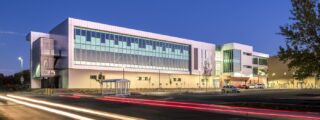

Welcome to this guide to medical school admissions at the University of New Mexico School of Medicine (UNM SOM). The school is part of the UNM Health Sciences Center in Albuquerque and grants the Doctor of Medicine (MD) degree. It has served the state since 1964, and its graduates and residents now make up more than 40 percent of New Mexico’s practicing physicians.
This guide covers the 2026-2027 application cycle, for students who would begin medical school in 2027. Regular and BA/MD applicants have until November 2, 2026 to submit AMCAS, and regular decisions go out by March 15, 2027. Every fact below was checked on October 29, 2026.
The path to becoming a physician is full of decisions, prerequisites and milestones, and UNM has rules that surprise many applicants. The biggest is residency: UNM considers only applicants who are New Mexico residents or who have specific strong ties to the state, plus a small group of WICHE applicants from Montana and Wyoming. If you do not meet one of those criteria, your application will not be reviewed, no matter how strong it is.
Below you will find the school’s mission, its accreditation, the MD, BA/MD, MD/PhD, MD/MPH, Early Decision and PrEP pathways, the three-phase curriculum, prerequisites and deadlines, costs and aid, campus life, clinical training, people worth knowing, the six 2026-2027 secondary essay prompts with original example responses, the interview format and answers to common questions.
Be an Informed Applicant
Medical schools look for well-rounded candidates who excel academically, show meaningful involvement in healthcare and communicate clearly. At UNM, the admissions committee also looks for knowledge of New Mexico’s health care issues and a commitment to serving the state. The sections below organize what you need to know so you can decide whether UNM fits you and, if it does, make a clear case for your candidacy.
Nothing beats one-on-one guidance. Our medical school admissions consulting team works with applicants applying to UNM and to medical and physician assistant programs across the country, from personal statements to interview practice.
Key Takeaways
- Residency decides eligibility. You must have lived in New Mexico for at least six months when you apply, or meet one of the school’s strong-ties criteria (a New Mexico high school diploma, a New Mexico college degree, financial dependence on a New Mexico resident at age 22 or younger, or high school or residence in a listed border county). Tribal members and active duty military stationed in New Mexico are also considered. Montana and Wyoming residents can apply through WICHE, but only through Early Decision.
- Academic context. The 2026 entering class averaged a 506 MCAT and a 3.77 cumulative GPA. Accepted applicants for the 2025 entering class had a median MCAT of 509 and a median total GPA of 3.85. The minimums for review are a 3.0 GPA and a 494 MCAT.
- Class size and competition. For the 2025 entering class, 1,719 verified applications led to 221 interviews and a first-year class of 103 students, 79 of them New Mexico residents.
- Mission. UNM exists to “advance the health of all New Mexicans.” Clinical experience with direct patient contact and knowledge of New Mexico’s health care issues are expected of every applicant.
- Key dates. Early Decision applicants submit AMCAS by August 1 and hear on October 1. MD/PhD and MD/MPH applicants submit by October 1. Regular and BA/MD applicants submit by November 2. The secondary goes to every AMCAS applicant and is due two weeks after the invitation. Letters must arrive before your interview or by December 1, whichever comes first.
- Costs. Resident tuition for 2026-27 is $15,328, and the listed fees bring the resident tuition-and-fees total to $19,135. Nonresident MD tuition is $22,011.88 per semester for fall 2026. The total cost of attendance for 2025-26 first-year students was $61,985 for residents and $90,221 for nonresidents.
- Distinctive training. A 23-month preclinical phase with a practical immersion experience and continuity clinic, a 12-month clerkship year and a final year that includes Medicine in New Mexico, a community-based clinical experience.
- Interviews. Two one-on-one Zoom interviews with two different admissions committee members, each 30 minutes to an hour. Interviewers do not see your MCAT or GPA.
- Next step. Confirm that you meet a residency criterion before anything else, then build in-person clinical experience and learn the health issues facing New Mexico communities.
Key Statistics About the University of New Mexico School of Medicine
The snapshot and table below gather UNM’s key numbers. Each figure carries its cohort or year, because the class profile, the cost year and the aid data each cover a different period.

| Measure | Value | Cohort, population and source |
|---|---|---|
| School and degree | University of New Mexico School of Medicine, UNM Health Sciences Center; Doctor of Medicine (MD) | UNM SOM admissions pages |
| Location | Albuquerque, New Mexico; admissions office in the Health Sciences Library and Informatics Center (HSLIC), room 125 | UNM SOM How to Apply page |
| Founded | 1964 | UNM SOM About page |
| Accreditation | LCME. Most recent completed site visit reported: February 2018 (continued full accreditation). Next site visit scheduled February 23-25, 2026; result not yet posted | UNM SOM LCME Accreditation page, checked October 28, 2026 |
| Average MCAT | 506 | 2026 entering class (UNM SOM How to Apply page) |
| Average cumulative GPA | 3.77 | 2026 entering class (UNM SOM How to Apply page) |
| Prior class averages | MCAT 507; GPA 3.75 | 2025 entering class (UNM SOM Residency Requirements page) |
| Minimums for review | Cumulative GPA 3.0; MCAT 494; all prerequisites; residency criteria | 2026-2027 cycle (UNM SOM How to Apply page) |
| Reserved seats | 28 BA/MD; 5 MD/PhD; 7 PrEP | Each admissions cycle (UNM SOM How to Apply page) |
| Median MCAT, accepted applicants | 509 (mean 508); section medians 127 / 127 / 127 / 128 | 2025 entering class, all accepted applicants (AAMC MSAR school profile) |
| Median GPA, accepted applicants | Total 3.85 (mean 3.78); science 3.81 (mean 3.72) | 2025 entering class, all accepted applicants (AAMC MSAR school profile) |
| Verified applications | 1,719 (195 in-state, 1,506 out-of-state, 18 international) | 2025 entering class (AAMC MSAR school profile) |
| Interviewed | 221 (143 in-state, 74 out-of-state, 4 international); interviewed divided by verified applications: 12.9% | 2025 entering class, school-provided (AAMC MSAR school profile) |
| Acceptances (offers) | Not published | 2025 entering class; offer counts are not reported, so no acceptance rate can be calculated |
| Entering class (matriculants) | 103 (79 in-state, 22 out-of-state, 2 international) | 2025 entering class (AAMC MSAR school profile) |
| Total enrollment | 445 MD students | October 2025 (AAMC MSAR school profile) |
| Resident tuition | $15,328 | 2026-27 academic year (UNM SOM Cost of Attendance page) |
| Resident tuition plus listed fees | $19,135 (tuition plus curriculum, library, student council, disability insurance, virtual histology, needlestick and technology fees) | 2026-27 (sum of items on the UNM SOM Cost of Attendance page) |
| Nonresident MD tuition | $22,011.88 per semester (resident rate $7,664.02 per semester) | Fall 2026 (UNM Bursar, Tuition and Fee Rates, revised June 16, 2026) |
| Tuition and fees | $20,176 in-state; $48,412 out-of-state | First-year students, 2025-26 (AAMC MSAR school profile, TSF 2025-2026) |
| Other expenses (living costs) | $37,890 | First-year students, 2025-26 (AAMC MSAR school profile, TSF 2025-2026) |
| Health insurance | $3,919 | 2025-26 (AAMC MSAR school profile, TSF 2025-2026) |
| Total cost of attendance | $61,985 in-state; $90,221 out-of-state | First-year students, 2025-26 (AAMC MSAR school profile, TSF 2025-2026) |
| Students receiving financial aid | 85% | 2024-2025 (AAMC MSAR school profile, LCME Part I-B) |
| Average graduate indebtedness | $140,767 | Indebted graduates, 2024-2025 (AAMC MSAR school profile, LCME Part I-B) |
| Secondary application | Sent to every AMCAS applicant; $100 fee; fee waiver available; due two weeks after invitation | 2026-2027 cycle (UNM SOM Applications and Deadlines page; AAMC MSAR school profile) |
| Offers, deposit and deferral | Offers sent October 1, 2026 to March 15, 2027; $100 deposit, refundable and due by April 30, 2027, applied to tuition; deferrals case-by-case | 2026-2027 cycle (AAMC MSAR school profile) |
| Classes begin | July 12, 2027 | Entering class of 2027 (AAMC MSAR school profile) |
| Interview format | Two one-on-one Zoom interviews with admissions committee members, 30 to 60 minutes each | 2026-2027 cycle (UNM SOM Interviews page) |
| Physicians in the state | More than 40% of New Mexico’s practicing physicians are graduates of the school and its residency programs | UNM SOM About page |
| U.S. News 2026 | Tier 1, Best Medical Schools: Primary Care; Tier 3, Best Medical Schools: Research | As reported on the UNM HSC School of Medicine page |
| Direct federal research grants and contracts | $71,574,634 | Fiscal year 2024 (AAMC MSAR school profile, LCME Part I-A) |
| Global health experience | 8% of graduating seniors | 2025 Graduation Questionnaire (AAMC MSAR school profile) |
A few notes on reading these numbers. The 506 and 3.77 are averages for students who enrolled in 2026, so they describe a typical successful applicant, not a cutoff. The 509 and 3.85 are medians for everyone accepted for the 2025 entering class, a different group from the students who enrolled, so they run a little higher than the school’s enrolled-class averages. The minimums (3.0 and 494) are the true cutoffs: the admissions office screens out applications below them. Tuition depends on residency for tuition purposes, which is a separate decision from residency for admissions. An applicant who qualifies for review through a strong-ties criterion may still be charged nonresident tuition.
Contact Information
- Physical address: Health Sciences Library and Informatics Center (HSLIC), room 125. The office is open in person on Wednesdays only and is available by phone or email Monday through Friday, 8:00 a.m. to 5:00 p.m. Mountain Time.
- Mailing address: UNM SOM Admissions, MSC 09 5085, 1 University of New Mexico, Albuquerque, NM 87131
- Phone: 505-272-4766
- Email: [email protected]
Mission and Educational Priorities
The school states its mission this way:
“We advance the health of all New Mexicans by: EDUCATING and increasing the diversity of health professionals, leaders and scientists; PROVIDING outstanding and compassionate medical care; ADVOCATING for the health of all New Mexicans and PURSUING new knowledge and excellence of practice.”
UNM School of Medicine Vision
The vision describes the community the school wants to be: “Our vision is to be a transformative community where students become leaders in the delivery of excellent and compassionate healthcare, partners in the crafting of health policy, and champions of public health.” It continues: leaders are lifelong learners; knowledge and discovery are applied to healing and the well-being of the state’s people; scientists, providers and the public collaborate to turn research into real health benefits; achieving health and healthcare equality is a common goal; and “diversity is our foremost strength.”
The school also lists six core values: excellence and accountability; compassion; diversity; integrity, professionalism and ethical behavior; social responsibility; and creativity and innovation. The social responsibility value is especially concrete. It calls for teaching about “the social, economic, and cultural contexts of New Mexico peoples health” and for self-evaluation of the access to, quality and distribution of health care professionals and services.
What the mission means for applicants
The mission names one population: all New Mexicans. That focus shows up in almost every admissions rule.
- State service comes first. The founders’ compact with the state was to give New Mexicans more opportunity for a medical education and to ease severe shortages of care. The school still places special emphasis on admitting state residents, which is why the residency rules are strict.
- New Mexico knowledge is expected. The Committee on Admissions wants every applicant to show “clinical experiences with direct patient contact and knowledge of New Mexico’s health care issues.” Rural access, border health, tribal health systems, an aging population and workforce shortages are fair game in essays and interviews.
- Advocacy is part of the job. The mission lists advocacy next to education and care, and the 2026-2027 secondary asks about public health policy. Expect to discuss how policies affect patients.
- Diversity is treated as a strength for care. The vision calls diversity the school’s “foremost strength.” The first secondary prompt asks how your experience will contribute to an inclusive learning community.
In practice, a strong UNM applicant can explain what they have seen of health care in New Mexico, why they want to practice in the state’s communities and what they bring to classmates and patients. If you grew up outside New Mexico but qualify through a strong-ties criterion, make your real connection to the state clear and specific.
The school’s place in New Mexico
UNM is the state’s only academic medical center and is home to its largest teaching hospital. Its programs in rural and family medicine are nationally recognized, and the school has programs in 141 communities. UNM Hospital is the state’s only Level 1 trauma center, and the Health Sciences Center includes a National Cancer Institute-designated Comprehensive Cancer Center and a dedicated children’s hospital. Through the UNM Health System, its clinicians serve central New Mexico and act as the statewide referral center for Level I trauma and many specialty adult and pediatric services. About 24 percent of all UNM-trained physicians practice in New Mexico, in 30 of the state’s 33 counties, and 45 percent of those in-state physicians work in family medicine, internal medicine, obstetrics and gynecology or pediatrics.
Accreditation and Institutional Identity
The MD program is accredited by the Liaison Committee on Medical Education (LCME), the national accrediting body for MD programs in the United States. The school’s LCME accreditation page states that the most recent completed accreditation visit took place in February 2018 and resulted in continued full accreditation. The next site visit was scheduled for February 23-25, 2026. As of October 28, 2026, the school had not posted the result of that visit. You can check the current status of any MD program in the LCME directory of accredited programs.
The accreditation page also describes how the school prepared: an independent student analysis, a self-study, a mock site visit in October 2025 and a survey package submitted to the LCME on November 17, 2025. Between visits, a Continuous Quality Improvement committee chaired by Dr. Rebecca Hartley monitors the 12 accreditation standards through six subcommittees.
A few points of identity help keep the program straight:
- Institution. The School of Medicine is part of the University of New Mexico Health Sciences Center (UNM HSC), alongside the Colleges of Nursing, Pharmacy and Population Health. The HSC’s clinical arm is the UNM Health System.
- Campus. The MD program is based in Albuquerque. Clinical training extends across the state through rotations such as Medicine in New Mexico.
- Departments. The school has 20 departments, an NCI-designated Comprehensive Cancer Center and the state’s Office of the Medical Investigator.
- Other programs in the school. The School of Medicine also runs health professions programs, including the Master of Science in Physician Assistant Studies (through the Department of Family and Community Medicine), physical and occupational therapy, emergency medical services, radiologic sciences and New Mexico’s first Master of Science in Anesthesia program for anesthesiologist assistants. These are separate programs with separate applications.
- Growth plans. The HSC is planning a new School of Medicine building to replace the current sixty-year-old facility. The school estimates the cost at $600 million and says construction is anticipated to begin by 2027. The new building is meant to allow UNM to double its MD graduates within 10 years.
Accreditation confirms that a program meets national standards. It is not a ranking. For clinical exposure before you apply, our pre-med internships let students work beside clinicians and see how care is delivered in under-resourced settings.
Medical Programs and Affiliations
UNM offers one MD program in Albuquerque with several ways in. Each pathway has its own deadline, eligibility rules and, in some cases, a separate application.
Regular MD program
Most applicants apply through the regular MD program using AMCAS. Regular applicants must meet the minimums (3.0 GPA, 494 MCAT, all prerequisites, residency criteria) and submit AMCAS by November 2. Decisions are sent by March 15.
Early Decision Program (EDP)
EDP is for current New Mexico residents who want to apply only to UNM. You must submit AMCAS by August 1, take the MCAT no later than June so scores arrive before the deadline, and you will hear on October 1. If you are not accepted through EDP, you move into the regular pool and may then apply to other schools. WICHE applicants from Montana and Wyoming must apply through EDP and must meet or exceed the previous entering class’s average MCAT and GPA (506 and 3.77 for the 2026 entering class).
Combined BA/MD Degree Program
The Combined BA/MD Degree Program is a partnership between the UNM College of Arts & Sciences and the School of Medicine. It is designed to help address New Mexico’s physician shortage by assembling a diverse class of students committed to serving communities across the state. Students first earn a bachelor’s degree in a four-year curriculum built to prepare them for medicine in New Mexico, then claim a reserved seat in the School of Medicine. Twenty-eight seats in each entering class are reserved for BA/MD students.
The program is open to high school seniors graduating from a New Mexico high school and to members of an Indian nation, tribe or pueblo located wholly or partly in New Mexico who are graduating from a local high school. BA/MD students receive a Last Dollar Scholarship, personalized academic advising and a living learning community. More details are on the Combined BA/MD Degree Program website. BA/MD students complete the AMCAS step on the regular November 2 deadline.
Combined MD/PhD Program
The MD/PhD program combines clinical training with a PhD in a basic biomedical science. It runs two years of medical school, then three to four years of graduate courses and dissertation research, then the final two years of medical school. It is designed to take seven to eight years, and both degrees are awarded together at the end. Students complete two month-long research rotations during the first 20 months and choose from more than 100 research laboratories. Five seats are reserved for MD/PhD students in each class. Apply through AMCAS by October 1; a specialized MD/PhD admissions committee reviews complete applications. UNM considers all nonresident applicants for the combined MD/PhD program only.
Combined MD/MPH Program
The MD/MPH program adds public health training, with goals that include reducing health disparities in New Mexico populations and strengthening physician advocacy and leadership in health policy. Applicants complete AMCAS and a separate UNM Public Health Program application, with an AMCAS deadline of October 1. Students complete the first three years of medical school, take a year between the third and fourth years for MPH courses, then finish both degrees in the final year, about five years in total. The MPH application deadline is the first Monday in January. For this program, contact the School of Medicine Office of Admissions or the UNM College of Population Health ([email protected]).
Premedical Enrichment Program (PrEP)
PrEP is a year-long post-baccalaureate curriculum for educationally or economically disadvantaged applicants with a bachelor’s degree. These candidates show exceptional non-cognitive strengths but were not admitted directly because of their MCAT or GPA. There is no direct application. You apply to the regular MD program, and the admissions committee nominates candidates and invites them to interview. PrEP students who complete all requirements and receive final committee approval matriculate into the School of Medicine. Seven seats are reserved for PrEP students in each class. The program is coordinated with the HSC Office for Diversity (505-272-2728, [email protected]). Seven students entered the 2025 class from postbaccalaureate programs.
The same office runs programs that help undergraduates prepare to apply: the New Mexico Clinical Education Program (ClinEd), an MCAT Test Prep Program, the Undergraduate Health Sciences Enrichment Program (UHSEP) and the Undergraduate Student Scholars Program.
WICHE applicants
UNM is a member of the Western Interstate Commission for Higher Education. Residents of participating states without a medical school, currently Montana and Wyoming, are considered. They must apply through EDP and meet the prior entering class’s averages.
Transfer admissions
The admissions office lists transfer admissions as a separate process, and transfers are not available in the 2026-2027 cycle. Contact the office directly if you are a current medical student considering a transfer in a later year.
Clinical affiliations
Students train across the UNM Health System. The orthopaedic residency, for example, lists University Hospital, Carrie Tingley Children’s Hospital, the VA Medical Center and Sandoval Regional Medical Center as its Albuquerque-area training sites. The system also includes UNM Children’s Hospital, the UNM Children’s Psychiatric Center and the UNM Comprehensive Cancer Center. Medicine in New Mexico places students in communities outside Albuquerque.
Curriculum Overview
The MD curriculum has three phases, described on the school’s MD curriculum page. Students start working with patients early and finish with a community-based experience in New Mexico.
Phase I: the 23-month preclinical phase
Phase I prepares students for clerkships and for USMLE Step 1.
- Organ system blocks. Foundational science is organized by organ system, so normal structure and function are taught alongside disease.
- WISE weeks. Intersessions at the beginning, middle and end of Phase I focus on student Wellness, content Integration, Step 1 preparation and Education about learning and test-taking strategies.
- Longitudinal clinical courses. Clinical reasoning and clinical skills, including physical examination and patient-centered communication, are taught in courses that run alongside the science.
- Practical immersion experience (PIE) and continuity clinic. These let students apply science, reasoning and skills to real patient care during the preclinical years. Professional identity formation begins in these settings.
Continuity clinic and PIE put students in real practices long before the clerkship year. PIE is a 6-week rural, community-based clinical preceptorship, and students live in the community they are assigned to, which gives a close view of local health needs.
Phase II: the 12-month clerkship phase
Phase II prepares students for residency and for USMLE Step 2. It includes seven required clerkships:
- Family Medicine
- Internal Medicine
- Neurology
- Obstetrics and Gynecology
- Pediatrics
- Psychiatry
- Surgery
An ongoing Doctoring course supports patient care, teamwork and professional identity during the clerkships. A specialty exploration experience (SEE) lets students try specialties outside the core clerkships.
Phase III: the final 12 months
The final year lets students deepen their skills and explore careers. It includes clinical and non-clinical electives, a required sub-internship, an ICU rotation, a Comprehensive Ambulatory Care experience and Medicine in New Mexico, a community-based clinical experience.
How students are supported
The Office of Medical Student Affairs oversees student services, the MD registrar, learning communities and the Applied Cognition Program, which supports learning skills. WISE weeks build wellness and study strategy into the calendar. The Office of Professional Well-being supports the school community. Faculty hold weekly office hours, peer tutors work with more junior students and learning specialists help with study and test-taking strategies.
A few practical details shape daily life. The school runs on semesters, and instruction is in English. Lecture attendance is not required, although some active learning sessions are, and lectures are available online. Phase I is graded credit/no credit, and Phases II and III use Outstanding, Good, Satisfactory and Unsatisfactory. Every student completes a scholarly project and report with a research mentor, and community service is built in, with about 10 hours a week during PIE. In the clerkships, the dress code is business casual.
What the curriculum means for your application
UNM’s structure rewards applicants who already know why they want clinical work. Continuity clinic and PIE mean you will be in clinics within your first two years, and Medicine in New Mexico means you will practice outside Albuquerque. If your experience includes rural, tribal or underserved settings, connect it to these parts of the curriculum. If you want to build that kind of experience now, clinical internships for pre-med students through IMA place interns in clinics where they take vitals, help with intake and triage and assist with direct care under supervision.
Admissions Requirements and Application Process
UNM’s process has three gates: residency, minimum academics and a holistic review of the whole applicant. The admissions office screens every secondary for New Mexico residency status, minimum MCAT and GPA and the required prerequisites. Applicants who pass the screen are reviewed holistically, and the interview is based only on non-cognitive qualities.
Residency requirements
To be considered for the MD program, you must meet one of the criteria on the school’s residency requirements page:
- Be a resident of New Mexico for at least six months at the time of application, or
- Have strong ties to New Mexico, meaning one of the following:
- Graduating from a New Mexico high school after attending for at least one year
- Holding a degree (associate, bachelor’s, master’s or doctorate) from a New Mexico college or university
- Being 22 or younger and financially dependent on a New Mexico resident (state tax documentation required)
- Graduating from high school in, or currently living in, a U.S. county bordering New Mexico: Apache, Cochise or Greenlee in Arizona; Archuleta, Baca, Conejos, Costilla, La Plata, Las Animas or Montezuma in Colorado; Cimarron in Oklahoma; Andrews, Bailey, Cochran, Culberson, Dallam, Deaf Smith, El Paso, Gaines, Hartley, Hudspeth, Loving, Oldham, Parmer, Reeves, Winkler or Yoakum in Texas; or San Juan in Utah
Consideration is also given to enrolled members of a U.S. federally recognized tribal nation (with tribal affiliation or enrollment number) and to active duty military members stationed in New Mexico (with military orders). You may be asked for proof of residency at any point. Qualifying through a strong-ties criterion lets your application be considered but does not guarantee in-state tuition.
Out-of-state and international applicants
UNM does not accept general out-of-state or international applications. Applicants from other states are considered only if they meet a strong-ties criterion, qualify through the tribal or military provisions, or are WICHE applicants from Montana or Wyoming applying through Early Decision. Canadian and other foreign national applicants must have lived in New Mexico for at least six months before applying to meet the residency requirement. DACA applicants are welcome if they meet at least one residency criterion; they are not eligible for federal financial aid, including federal loans. Applicants rejected on residency grounds who believe they have strong ties may file a residency appeal within two weeks of the dated rejection letter; appeals can take up to four weeks.
Prerequisite courses
The school accepts any major (see the prerequisite course policy). About half of applicants major in biology, chemistry or biochemistry. Required courses:
| Course | Lab required | Length |
|---|---|---|
| General Biology I & II (human-based) | Yes | 1 academic year |
| General Chemistry I & II | Yes | 1 academic year |
| Organic Chemistry I & II | Yes | 1 academic year |
| General Physics I & II | No | 1 academic year |
| Biochemistry (400 level) | No | 1 semester or 2 quarters |
Rules to know:
- Biology must be human-based with a lab. Genetics, cell biology, microbiology, immunology and anatomy and physiology count. Zoology and plant ecology do not.
- Biochemistry should be 400 level. At UNM, Biochemistry 423 alone, both Biochemistry 445 and 446, or both Chemistry 421 and 425 meet the requirement.
- Timing. Everything except the organic chemistry labs and any one lecture course must be complete before you submit AMCAS. Organic chemistry labs and biochemistry must be complete before matriculation, and accepted students must have all grades posted by June 30 of the year they start.
- Grades. C or better (C- is not accepted), from a regionally accredited U.S. institution. Pass/fail is accepted only for Spring 2020 through Spring 2022.
- Online courses. Online prerequisite lectures and labs from Spring 2020 through Spring 2023 are accepted. Since Summer 2023, you may take at most two prerequisite lecture courses online, and online labs are not accepted. CNM Fusion or Blended classes count as online.
- AP, IB and CLEP. AP and IB credit counts for introductory biology, chemistry or physics only if your college granted credit. CLEP counts if you have enough semester hours.
- Foreign degrees. Applicants with a bachelor’s degree from outside the United States need at least 60 semester hours (90 quarter hours) at a regionally accredited U.S. school, including 30 upper-division semester hours, taken for letter grades.
Recommended but not required: anatomy and physiology, molecular genetics, microbiology, human genetics, immunology, advanced biochemistry, developmental biology and psychology or sociology. Physics labs, calculus and English composition are not required.
MCAT
You need a total score of at least 494. For the 2027 cycle, UNM accepts scores from 2023 through 2026, and September 12, 2026 is the latest test date considered. If you test more than once, the committee uses your highest composite at the time of interview, though all past scores are visible. Scores received after your interview do not count for the current cycle. If you are waiting on a score, list the test date in AMCAS so the office holds your application. EDP applicants must test by June.
Clinical experience
The committee reviews each type of clinical experience. It expects “clinical experiences with direct patient contact and knowledge of New Mexico’s health care issues.” Hospitals, clinics, nursing homes and hospice all count. The school accepted virtual experiences for pandemic-affected semesters, but applicants are now expected to have in-person clinical and shadowing experience. Summer clinical programs fill early, so plan in winter. That makes pre-med summer internships worth arranging months ahead.
Extracurricular activities
UNM values applicants with a range of experiences that show leadership, teamwork and service. Activities that support a strong application include volunteering in a healthcare setting, research, shadowing physicians, leadership in student or community organizations and sustained community service. Consider also medical scribing and volunteering, which give insight into the medical world and add patient contact.
Letters of recommendation
Under the letters of recommendation policy, submit at least three and no more than four letters through the AMCAS Letter Service only. Letters sent directly to the office are not accepted. The school suggests:
- One or more from a clinician, such as a nurse or physician you worked with in your clinical experience
- One or more from someone you worked with on a project (research mentor, program director, commanding officer or work supervisor)
- One or more from professors or faculty instructors (applicants away from school for several years may substitute other writers)
All letters must arrive before your interview date and no later than December 1, whichever comes first. Late letters are not added to your file. Individual letters are preferred, though committee letters and letter packets are accepted. A committee letter signed by several people counts as one letter, while a packet that contains several letters counts each one separately, so check that a packet does not push you past four.
Primary application (AMCAS)
UNM uses the AMCAS application. The AMCAS fee is $180 for the first school and $48 for each additional school. Verification can take four to six weeks, so submit well before your deadline. AMCAS does not allow updates to experiences after submission; if you start a new experience, discuss it in your interview.
Secondary application
Every applicant who submits AMCAS is invited by email to complete the secondary. You have two weeks from the invitation to finish it. The fee is $100, paid by credit card in the online secondary, and a fee waiver is available. The secondary also asks for a recent headshot against a solid background; the photo is not used in committee review. If you know you will not meet the minimums, you do not have to complete the secondary. The 2026-2027 secondary includes six essays; see the secondary section below. CASPer and PREview are not part of UNM’s requirements.
Deadlines and timeline
| Step | Early Decision | MD/PhD and MD/MPH | Regular and BA/MD |
|---|---|---|---|
| AMCAS opens | End of May | End of May | End of May |
| AMCAS deadline | August 1, 2026 | October 1, 2026 | November 2, 2026 |
| Secondary due | Two weeks after invitation | Two weeks after invitation | Two weeks after invitation |
| Interview invitations | Begin mid-August | Begin mid-August | Begin mid-August |
| Letters due | Before interview or December 1 | Before interview or December 1 | Before interview or December 1 |
| Decisions sent | October 1, 2026 | March 15, 2027 | March 15, 2027 |
A practical timeline for a regular applicant:
- Winter and spring before applying: confirm residency, finish prerequisites, line up summer clinical work, ask letter writers.
- By June: take the MCAT if you plan EDP. Regular applicants can test as late as September 12, 2026, but earlier scores keep you in the early interview pool.
- Late May to early summer: submit AMCAS.
- Within two weeks of the invitation: submit the secondary.
- August onward: interviews.
- By March 15: regular decisions.
Early Decision information
If UNM is your clear first choice and you are a New Mexico resident, EDP gives you an answer by October 1. The tradeoff is that you cannot apply elsewhere until you receive that decision. If you are not accepted, you join the regular pool.
UNM SOM review
UNM uses a holistic review. Interviewers do not see your MCAT, GPA or academic history; those are calculated separately. Rural and community physicians serve on the admissions committee and bring their view of the state’s health needs to selection. The interview focuses on maturity, motivation, problem solving, how you relate to people and how clearly you express ideas, using your clinical and research experience, volunteering, letters and personal statement.
Tuition, Cost of Attendance and Financial Aid
Tuition costs are a major concern for students, and UNM’s resident tuition is low for a medical school. Understanding the full cost, and how residency affects it, helps you plan.
Tuition and fees for 2026-27
The school’s cost of attendance page lists estimated tuition and fees for the 2026-2027 academic year for residents:
| Item | Amount (2026-27) |
|---|---|
| Resident tuition | $15,328 |
| Curriculum fee | $2,700 |
| HSC library fee | $526 |
| HSC student council fee | $2 |
| Disability insurance (fall only) | $103 |
| Virtual histology fee (fall only) | $100 |
| Needlestick insurance (fall only) | $16 |
| UNM technology fee | $360 |
| Total of listed items | $19,135 |
The school’s page does not list a nonresident tuition figure. The UNM Bursar’s fall 2026 rate sheet lists the MD flat rate at $7,664.02 per semester for residents and $22,011.88 per semester for nonresidents. Over two semesters, nonresident tuition comes to about $44,024 before fees. Because qualifying through a strong-ties criterion does not guarantee in-state tuition, applicants from border counties or other states should confirm their tuition residency with UNM early. The Bursar offers a tuition calculator, and the HSC Financial Aid team answers tuition questions at [email protected].
Cost of attendance
Tuition is only part of the cost. Total cost of attendance includes tuition and fees, health insurance and living expenses such as housing, food, transportation and books. The most recent comparable figures for first-year students come from the AAMC’s Tuition and Student Fees survey for 2025-26:
| Measure (2025-26, first-year students) | In-state | Out-of-state |
|---|---|---|
| Tuition and fees | $20,176 | $48,412 |
| Other expenses (living costs) | $37,890 | $37,890 |
| Health insurance | $3,919 | $3,919 |
| Total cost of attendance | $61,985 | $90,221 |
These are 2025-26 figures. Costs for 2026-27 will differ, so use the school’s current tuition table above and ask the financial aid office for the current full budget. Health insurance can often be waived for students with comparable coverage, such as a parent’s or spouse’s plan; confirm the current waiver process with UNM.
Financial aid
The HSC Financial Aid Office serves incoming and current students. Aid includes federal, state and institutional programs, ranging from scholarships and grants to loans. Institutional scholarships may be need-based or merit-based, and award amounts depend on the applicant and available funds. Check the office’s deadlines and required documents early.
Two aid figures help with planning:
- 85% of enrolled and graduating students received financial aid (LCME Part I-B, 2024-2025).
- $140,767 was the average medical school debt of indebted graduates (LCME Part I-B, 2024-2025).
The financial aid office also runs a financial literacy program for all four years, with one-on-one counseling and group sessions on topics such as credit and FICO scores. Admitted students pay a $100 deposit by April 30, 2027; it is refundable until that date and is applied to tuition.
BA/MD students also receive the program’s Last Dollar Scholarship. DACA students are not eligible for federal aid, including federal loans, so they should talk with the financial aid office about other options before accepting an offer.
Planning around cost
For New Mexico residents, UNM is one of the less expensive routes to an MD in the country, and staying in state may also shape where you train and practice. For nonresident-tuition students, the gap is large: the 2025-26 total cost of attendance was about $28,000 higher per year out-of-state. Build a four-year budget using the current tuition table and the most recent living cost estimate, and remember that the MD/MPH and MD/PhD programs run longer than four years.
Campus Facilities and Student Life
Setting
The School of Medicine sits on UNM’s north campus in Albuquerque, between the Sandia Mountains and the Rio Grande Valley. The campus is next to UNM Hospital, New Mexico’s only Level 1 trauma center, which gives students access to a high volume and range of patients from the start. Albuquerque’s high desert climate is dry and sunny, with about 310 days of sunshine a year, low humidity, mild winters, four seasons and plenty of time for hiking, biking and skiing in the nearby mountains.
The current School of Medicine building is about sixty years old. The HSC plans to replace it with a new building, with construction anticipated to begin by 2027. Students entering in 2027 will likely train in the current facilities for much of their time while the new building is planned and built.
Housing
On-campus housing is not available for medical students. Most medical students rent in Albuquerque neighborhoods near the north campus, such as Nob Hill and the University area. UNM’s main campus offers graduate and family housing and Lobo Village; check current eligibility and availability with UNM Housing. Because clerkships and Medicine in New Mexico can place you outside Albuquerque, a reliable car is useful. The school recommends a current driver’s license but does not require students to have a vehicle.
Student organizations and activities
Student life goes beyond classes. Medical students run organizations around cultural, religious, social, academic, professional and community service interests. The Office of Medical Student Affairs supports more than 40 student organizations, and learning communities, each with a faculty mentor and upper-class students, help students connect across the class. These groups also give students ways to serve local communities and build relationships outside the classroom.
Diversity programs
The HSC Office for Diversity, Equity & Inclusion runs pipeline programs from middle school through the health professions, and it coordinates PrEP. The mission’s emphasis on “increasing the diversity of health professionals” reflects a practical goal: to improve health outcomes across New Mexico by building a workforce that reflects and understands its communities.
Support systems
The Office of Medical Student Affairs provides academic records and registrar services, learning communities and the Applied Cognition Program. The school’s Office of Professional Well-being focuses on the well-being of the medical school community. WISE weeks build wellness into the Phase I calendar.
UNM also states a commitment to respectful care for all patients. The school recognizes the specific health challenges faced by LGBTQ+ patients, and its dermatology program, for example, runs a clinic that serves primarily LGBTQ patients. A safe learning environment for students, trainees and colleagues is part of that same commitment.
Life in Albuquerque
Albuquerque offers a rich blend of Hispanic, Native American and Anglo cultures and easy access to the outdoors. Many students value the chance to train where they plan to practice. If you are coming from out of state through a strong-ties criterion, plan for the altitude, the dry climate and the distances involved in rural rotations.
Clinical Rotations and Research Opportunities
Clinical experience from the first year
UNM students begin working with patients in Phase I through continuity clinic and the practical immersion experience. These early experiences build the clinical reasoning and communication skills that the clerkships require.
Core clerkships and sites
The seven required clerkships in Phase II are Family Medicine, Internal Medicine, Neurology, Obstetrics and Gynecology, Pediatrics, Psychiatry and Surgery. Training takes place across the UNM Health System. Its hospitals and affiliated sites include:
- UNM Hospital (University Hospital), the state’s only Level 1 trauma center
- UNM Children’s Hospital
- UNM Carrie Tingley Children’s Hospital
- UNM Children’s Psychiatric Center
- UNM Comprehensive Cancer Center, NCI-designated
- The VA Medical Center in Albuquerque
- UNM Sandoval Regional Medical Center
Sites can change by clerkship and year, so confirm assignments with the school once enrolled.
Phase III and Medicine in New Mexico
The final year includes a required sub-internship, an ICU rotation, Comprehensive Ambulatory Care, clinical and non-clinical electives and Medicine in New Mexico, a community-based clinical experience. This rotation reflects the school’s focus on the whole state. Expect to spend time in a community outside Albuquerque, often in primary care.
Research opportunities
UNM is home to a nationally ranked research enterprise and the Biomedical Sciences Graduate Program. The MD/PhD program lists more than 100 research laboratories across six research divisions and the HSC’s signature research programs, with training programs in infectious diseases and inflammation, cardiovascular physiology and alcohol research in neuroscience. MD students can also find research mentors in clinical departments. The school reported $71,574,634 in direct federal research grants and contracts for fiscal year 2024. Every MD student completes a required scholarly project, which can be primary research, a quality improvement project or an integrative review, and presents it as a talk or poster, a paper or a publication. Students interested in public health research can add an MPH.
Residency programs at UNM
Many UNM departments train residents, which shapes the clinical environment for medical students. Examples include an orthopaedic surgery residency that trains at University Hospital, Carrie Tingley, the VA and Sandoval Regional; a neurology residency with five positions per year; and a dermatology residency with specialty clinics such as a Gallup clinic serving primarily Native American patients.
Global health
Students interested in global health can pursue electives during Phase III. In the 2025 Graduation Questionnaire, 8 percent of graduating seniors reported a global health experience during medical school. Before medical school, pre-med internships abroad can help you see how care works with limited resources, which connects directly to the rural and underserved settings UNM emphasizes. For Spanish-language practice in clinical settings, a medical internship in Peru builds skills that are useful with Spanish-speaking patients across New Mexico.
Notable Alumni, Faculty, Leadership and Admissions Staff
The people below have verified connections to the School of Medicine. Titles were checked on October 28, 2026 against UNM’s leadership and directory pages and alumni award pages.
Notable alumni
Albert Kwan, MD (UNM SOM 1983). Dr. Kwan completed his surgical residency at Texas Tech University Health Sciences Center and served as a general surgeon and flight surgeon in the U.S. Air Force from 1988 to 1993, including as chief of surgery at three Air Force hospitals and deployment to Desert Storm. He then practiced general surgery in Clovis for 30 years, brought advanced laparoscopic surgery to the area and served as president of the medical staff for ten years. He served as President of the New Mexico Medical Society (2007-2008), where he advocated for what became the Rural Health Care Practitioner Tax Credit, and as President of the American Society of General Surgeons and Governor of the American College of Surgeons (2007-2013). He has been UNM clinical faculty since 1990 and was named the school’s 2023 Distinguished Alumnus. His career shows what the mission means by serving rural New Mexico.
Linda Stogner, MD (UNM SOM 1983). A native New Mexican who grew up on a family ranch on the Cubero Land Grant, Dr. Stogner wanted to be a country doctor in rural New Mexico. After a family medicine residency at Texas Tech Amarillo and National Health Service Corps service in Las Vegas, New Mexico, she spent 35 years in Torrance County, at a community health center in Estancia. With Presbyterian Medical Services, she worked as a solo physician for 20 years before becoming medical director over several Estancia clinics, and she precepted medical, nursing, PA and pharmacy students. She held leadership positions in the New Mexico Chapter of the American Academy of Family Physicians, served on the BA/MD admissions committee and is now an AAFP Foundation Physician Trustee. She was the school’s 2023 Distinguished Alumna.
Valerie Romero-Leggott, MD (UNM SOM 1992). Dr. Romero-Leggott is Vice Chancellor for Diversity and Chief Diversity and Inclusion Officer at the UNM Health Sciences Center, Professor in the Department of Family and Community Medicine and Executive Director of the Combined BA/MD Degree Program. A first-generation college student and native New Mexican, she trained in family medicine and has been a leader in adolescent medicine and health workforce pipeline programs. Her UNM directory profile describes grants of more than $5.8 million for diversity programs from middle school through professional degrees. BA/MD applicants should know her work, because she leads the program.
Jennifer Phillips, MD (UNM SOM 2001). Dr. Phillips has been Chief Medical Officer of UNM Medical Group since March 2020 and is a Professor in the Department of Family and Community Medicine. She previously directed the UNM Hospital Southeast Heights Clinic and the Family Medicine Clinic on Tucker and co-directed the UNM Medical Group Center for Reproductive Health. She was elected UNM Hospital Chief of Staff (2017-2019) and has taught in the Health of New Mexico block, the first block of the medical school curriculum, every summer since 2016 (UNM directory profile). Her career reflects the school’s primary care focus and its work on the social determinants of health.
These alumni have made a considerable impact in their fields and continue to serve as role models and leaders within UNM and the wider medical community.
School leadership
Patricia W. Finn, MD, Dean and Professor. Dr. Finn leads the School of Medicine. On the HSC’s workforce expansion page, she describes the mission as providing “equitable, compassionate care that puts patients first, while advancing ground breaking scientific discoveries to improve health care for all New Mexicans.”
Michael Richards, MD, MPA, Executive Vice President, UNM Health Sciences. Dr. Richards leads the Health Sciences Center and has called the new School of Medicine building the HSC’s “top priority” for growing the state’s physician workforce.
Teresa Vigil-Baca, MD, Senior Associate Dean of Education. Dr. Vigil-Baca leads the school’s education mission and co-chairs the accreditation subcommittee for Standards 10 through 12, which cover medical student selection, academic support, career advising and student services.
Betty Chang, MD, Senior Associate Dean for Clinical Affairs. Dr. Chang oversees clinical affairs and co-chairs the accreditation subcommittee for Standards 1 and 2 (mission, planning, leadership and administration).
Raj Vadigepalli, PhD, Senior Associate Dean for Research. Dr. Vadigepalli leads the school’s research enterprise, which is relevant for MD/PhD applicants and MD students who want research mentors.
Chandler Todd, MD, Associate Dean for Medical Student Affairs. Dr. Todd leads the Office of Medical Student Affairs, which handles student services, learning communities and the Applied Cognition Program. Alfonso Belmonte, MD, is Assistant Dean for Medical Student Affairs and co-chairs the accreditation subcommittee on student selection and support.
Faculty and medical education leaders
Rebecca Hartley, PhD, Associate Dean for Undergraduate Medical Education. Dr. Hartley oversees the MD curriculum, chairs the Continuous Quality Improvement committee that monitors the 12 LCME standards and serves as the school’s Faculty Accreditation Lead.
Patrick Rendón, MD, Assistant Dean for Foundational Medical Sciences. Dr. Rendón oversees the foundational science content of Phase I and chairs the accreditation subcommittee on competencies, curricular objectives, design and content.
Carol Morales, MD, Assistant Dean for Clinical Education. Dr. Morales oversees clinical education, which covers the clerkships and clinical experiences students complete in Phases II and III.
Admissions leadership
Robert Sapien, MD, Associate Dean for Admissions. Dr. Sapien leads the admissions program, which sets the residency, academic and holistic review rules described in this guide.
Marlene Ballejos, PhD, MPA, Assistant Dean, Admissions. Dr. Ballejos is the school’s assistant dean for admissions.
Leadership titles describe roles, not admissions preferences. Do not mention these names in essays to signal fit; focus on the programs and mission they represent.
Admissions Statistics and Class Profile
MCAT and GPA
The school publishes entering-class averages:
| Entering class | Average MCAT | Average cumulative GPA | Source |
|---|---|---|---|
| 2026 | 506 | 3.77 | UNM SOM How to Apply page |
| 2025 | 507 | 3.75 | UNM SOM Residency Requirements page |
For everyone accepted for the 2025 entering class, the AAMC data show these figures:
| Accepted applicants, 2025 entering class | Mean | Median |
|---|---|---|
| MCAT total | 508 | 509 |
| Chemical and Physical Foundations | 126.7 | 127 |
| Critical Analysis and Reasoning | 126.7 | 127 |
| Biological and Biochemical Foundations | 126.9 | 127 |
| Psychological, Social and Biological Foundations | 127.8 | 128 |
| Total GPA | 3.78 | 3.85 |
| Science GPA | 3.72 | 3.81 |
The school’s figures are averages for the students who enrolled, so many students in each class scored below them. The accepted-applicant medians cover a slightly different group, everyone offered a seat, and half of that group scored at or below 509 and 3.85. The minimum for review is 494 on the MCAT and 3.0 for GPA, and the committee uses your highest MCAT composite at the time of interview. Applicants aiming for a seat should treat 506 and 3.77 as a reference point, not a requirement.
The importance of GPA and MCAT
GPA and MCAT scores are integral to evaluation at virtually all medical schools, and UNM is no exception. They give the committee a standard way to measure academic readiness.
- GPA reflects your commitment and ability to excel over time. The trend matters: an upward trend after a weak start reads differently from a decline.
- MCAT tests problem solving, critical thinking and knowledge of natural, behavioral and social science concepts.
At UNM, the numbers work as a screen and as context. Once you pass the minimums, the interview is based only on non-cognitive qualities, and interviewers do not see your scores. That design means your clinical experience, letters and essays carry real weight.
What GPA do you need to get into UNM SOM?
You need at least a 3.0 cumulative GPA to be reviewed. The 2026 entering class averaged 3.77. Aiming near or above that average helps, but coursework rigor, trends and the rest of your application also count. If your GPA is below average, strong recent grades in upper-level science, including the required 400-level biochemistry, help show readiness.
Reserved seats
Each entering class includes reserved seats for 28 BA/MD students, 5 MD/PhD students and 7 PrEP students. BA/MD students enter from the UNM undergraduate program, so the number of seats open to direct applicants each year is smaller than the full class.
Applicants, interviews and acceptance rate
For the 2025 entering class, UNM received 1,719 verified applications: 195 from New Mexico residents, 1,506 from out-of-state applicants and 18 from international applicants. It interviewed 221 applicants (143 in-state, 74 out-of-state and 4 international), about 12.9 percent of verified applications. The class that enrolled had 103 students: 79 in-state, 22 out-of-state and 2 international. One accepted applicant deferred entry.
The number of acceptance offers is not published, so no acceptance rate can be calculated. A ratio of matriculants to applicants is not an acceptance rate. The residency split tells the real story: most out-of-state applications do not meet a strong-ties criterion, while about 73 percent of in-state applicants were interviewed (143 of 195). Because the office screens every secondary for residency before review, only eligible applicants reach the committee.
About 50 applicants are placed on the ranked Alternate List in a typical cycle, and about 25 offers go to applicants from that list. Waitlisted applicants are notified by phone when a seat opens.
Note that the AAMC counts residency by its own rules, so an applicant UNM treats as having strong ties may appear as out-of-state in these figures.
Class profile and diversity
UNM’s mission puts diversity at the center: the school wants a workforce that reflects New Mexico, a majority-minority state with large Hispanic and Native American populations. PrEP and the BA/MD program are both designed to widen access for New Mexicans from disadvantaged and underrepresented backgrounds.
The 2025 first-year class of 103 students reflected that goal. Students could select more than one race or ethnicity, so the counts below add up to more than 103:
| 2025 first-year class (self-reported) | Number or share |
|---|---|
| Women / men / another gender identity | 54 / 46 / 3 |
| White | 59 |
| Hispanic or Latino | 39 |
| Asian | 11 |
| Middle Eastern or North African | 8 |
| American Indian or Alaska Native | 6 |
| Black or African American | 1 |
| Native Hawaiian or Pacific Islander | 1 |
| Other | 3 |
| Declined to respond | 5 |
| Self-reported disadvantaged status | 33% |
| Grew up in a medically underserved area | 62% |
| Age 19-23 / 24-29 / 30-39 / 40 and over | 40 / 55 / 5 / 3 |
| Graduate degree before entering | 6% |
| Science or math majors | 57% |
| Entered from postbaccalaureate programs | 7 |
Tribal affiliations in the class included the Navajo Nation, the Pueblo of Isleta, the Fort Peck Assiniboine and Sioux Tribes and the Echota Cherokee Tribe of Alabama. Besides New Mexico, students in the class listed home addresses in Arizona, California, Colorado, Florida, Massachusetts, Montana, New York, Texas, Utah and Washington. More than half of the class (55 of 103) was 24 to 29 years old, so time between college and medical school is common.
Evaluation
While GPA and MCAT are significant, UNM uses a holistic approach. Volunteer work, research, clinical exposure and your personal statement all count. Applicants aiming for a seat should aim for an MCAT and GPA near the class averages and remember that these are not the only criteria.
Tips and Strategies for Admission
1. Settle residency first
Before you spend a dollar on applications, confirm that you meet one of UNM’s residency criteria and collect the documents to prove it. If you qualify through strong ties, be ready to explain your connection to the state in your essays and interview.
2. Get in-person clinical experience with direct patient contact
The committee explicitly wants direct patient contact, and post-pandemic it expects in-person experience. Volunteer roles, CNA or EMT work, medical assistant positions and scribing all help. Internships for pre-med students that put you in clinics with real responsibilities, such as taking vitals and helping with intake, are another way to add depth.
3. Learn New Mexico’s health care issues
This is UNM’s distinctive requirement. Read about rural access, physician shortages (32 of 33 counties are health professional shortage areas), tribal health, border health and the state’s aging population. Talk with clinicians in New Mexico. Your secondary essays on the most significant issue in medicine and on public health policy are good places to show this knowledge.
4. Plan the prerequisites carefully
UNM’s list differs from many schools: human-based biology with lab, no physics lab requirement and a 400-level biochemistry course. Only two prerequisite lectures may be online, and no online labs count. Check every course against the school’s rules before you submit AMCAS.
5. Choose letter writers who saw you with patients
The school suggests a clinician, a project supervisor and a professor. A letter from a nurse or physician who watched you work with patients speaks directly to what the committee values. Remember the hard deadline: before your interview or December 1.
6. Treat the secondary as a 14-day sprint
Six essays at 2,000 characters each, in two weeks, is a lot of writing. Draft your stories before secondaries arrive, then fit them to the prompts. Leave time to pay the fee and upload a photo.
7. Prepare for two conversations, not stations
UNM interviews are two one-on-one conversations based on your experiences, letters and personal statement. Know your application well and be ready to talk about New Mexico.
8. Use time between application and interview
AMCAS cannot be updated after submission. If you start new clinical or service work, keep notes so you can discuss it in your interview. UNM does not accept letters of intent, update letters or other additions, so the interview is your only chance to share news.
9. Consider your full path
If your numbers are below average, a gap year with strong clinical work and upper-level science can help. Pre-med gap year programs are one way to add patient contact while you strengthen your record. PrEP exists for disadvantaged applicants, but the committee nominates candidates, so you cannot apply to it directly.
10. Reapply with a plan
The 2026-2027 secondary does not include a separate reapplicant essay. If you are reapplying, show growth through new experiences, better grades or a higher MCAT, and talk about what changed in your interview. UNM offers a post-application workshop and individual consultations with specific recommendations for applicants who were not admitted, with a focus on applicants from rural and underserved communities or low-income backgrounds. Use that feedback to build your next application.
Secondary Application Questions, Example Responses and Analysis
Each school has its own set of essay prompts as part of their secondary applications. UNM sends its secondary to every applicant who submits AMCAS, and you have two weeks from the invitation to finish it. The fee is $100.
The 2026-2027 secondary includes six essay prompts, each with a 2,000-character limit. The school does not post the prompts on its website, and it does not say which essays are required and which are optional. The first prompt is phrased conditionally (“Are there any aspects…”), but the set is presented together. The safest plan is to answer all six, keeping each response under 2,000 characters including spaces, and to follow the limits shown in your portal. No separate reapplicant prompt or program-specific prompt (for example, for MD/PhD or BA/MD students) appears in the 2026-2027 set. If your portal shows an additional program question, answer it with the same care.
Every example below is original and written for this guide. Each is labeled “Illustrative example, not an actual applicant essay.” Use them to see structure and reasoning, not as text to copy. Your own experiences are what make an essay work.
Essay 1: Contributing to an inclusive learning community
Prompt: “At the UNM School of Medicine, we are committed to building a community of inclusive learners that will go on to enrich the medical field. Are there any aspects of your experience that you are most proud of or that you feel you have been unable to highlight with your application materials already submitted? If so, please explain how this will contribute to an inclusive learning community and your future medical community.”
Limit: 2,000 characters. Who answers: every applicant who receives the secondary.
What it asks: Three things. What are you most proud of, or what has your application not shown? How will it help a learning community where everyone can learn? How will it shape your future medical community?
Approach: Pick one experience that your activities list compresses into a line. Show what you did, what you learned about inclusion in practice and how you would bring it to classmates and patients. Avoid repeating your personal statement.
Illustrative example, not an actual applicant essay:
The part of my record I am proudest of fits in one line of my activities list: “Certified nursing assistant, night shift, 2023 to 2025.” What that line cannot show is the notebook I kept at the nurses’ station of a small long-term care home in Socorro County.
About half of our residents spoke Spanish as their first language, and two spoke mostly Navajo. Several aides were new to the area and spoke only English. At 3 a.m., a resident who could not say “my hip hurts” in English was often labeled “agitated.” I started writing down the phrases residents used for pain, thirst, fear and needing the bathroom, with the help of the residents themselves and two coworkers from the Alamo Navajo community. Over a year the notebook became a laminated two-page card that the day charge nurse added to our orientation packet. Falls on our hall did not disappear, but staff stopped calling people agitated before asking what they needed.
I learned that inclusion is not a feeling in a room. It is a set of small tools that let the person with the least power be understood. I also learned that the people who taught me the most were not the ones with titles. A resident who had been a schoolteacher corrected my spelling every week and made sure I knew the difference between being polite and being clear.
In a learning community, I want to be the classmate who brings the notebook. I expect my UNM classmates to know things I do not, about rural ranching families, about tribal health systems, about research. I want to build small shared tools with them, from study guides to patient phrase lists, and to keep asking who is missing from the conversation. In my future medical community, especially during Medicine in New Mexico and in a continuity clinic, I hope to keep doing what the night shift taught me: slow down, ask in the patient’s terms and write it down so the next person does not have to start over.
Why it works: It names something the application cannot show (the notebook behind a one-line activity) and makes clear why the writer is proud of it. It defines inclusion in concrete terms, as tools that help the least powerful person be understood. It answers both later parts of the prompt: the learning community (shared tools, asking who is missing) and the future medical community (Medicine in New Mexico, continuity clinic). The New Mexico setting and patient languages tie the story to the school’s mission.
Mistakes to avoid: Listing identities without showing what you did. Repeating your personal statement. Skipping the “future medical community” part. Claiming credit for outcomes you cannot support.
Essay 2: Important characteristics of a physician
Prompt: “What do you see as the most important characteristics of a physician? How do you plan to cultivate them during your training?”
Limit: 2,000 characters. Who answers: every applicant who receives the secondary.
What it asks: Which characteristics matter most, and a concrete plan for developing them in medical school.
Approach: Choose two or three traits. Show each in action with a brief observed example. Then give a specific plan linked to UNM’s curriculum.
Illustrative example, not an actual applicant essay:
I think the most important characteristics of a physician are honest curiosity, humility about what one person can see and steadiness under pressure.
Curiosity matters because patients rarely arrive with a textbook story. As a scribe in an urgent care clinic in Las Cruces, I watched a physician ask a farmworker with “allergies” what he did each morning. The answer, mixing pesticides without a mask, changed the diagnosis and the plan. She was not smarter than the chart. She was more curious than it.
Humility matters because no physician sees the whole picture. The same physician called the clinic’s medical assistant into the room whenever a family spoke Spanish faster than she did, and she listened when the assistant noticed what she had missed. I want to work that way, treating nurses, interpreters and families as partners who hold part of the truth.
Steadiness matters because fear spreads. When a toddler had a febrile seizure in our waiting room, the calmest person in the room set the pace for everyone else, and the parents later remembered her voice more than anything she did.
I plan to cultivate these traits on purpose. For curiosity, I will use the practical immersion experience and my continuity clinic in Phase I to follow a few patients over time and ask what their lives look like outside the visit. For humility, I want to seek feedback early from preceptors, nurses and classmates and to track one thing I got wrong each week and what I learned from it. For steadiness, I will treat the wellness part of the WISE weeks as practice rather than a break, building sleep, exercise and reflection habits before clerkships, when the pressure rises. During Phase II, the Doctoring course and the clerkship teams will give me chances to practice all three with real stakes and real supervision.
None of these traits is finished. I see them as skills I will keep practicing for my whole career.
Why it works: It chooses three traits and gives a short, specific scene for each, which proves the writer has watched these traits matter. The second half answers “how” with actual curriculum elements (PIE, continuity clinic, WISE weeks, the Doctoring course) and specific habits. It ends with humility about growth rather than a claim to be finished.
Mistakes to avoid: Listing many traits with no examples. Describing an ideal physician without a plan. Naming curriculum parts that do not exist at UNM.
Essay 3: The most significant issue in the next 20 years
Prompt: “While providing healthcare as a physician is often a rewarding career, it is also a profession that entails addressing constant challenges. Identify what you think is the most significant issue the medical profession will face in the next 20 years and walk us through the process of solving this problem at a local or national level. Explain your reasoning along the way.”
Limit: 2,000 characters. Who answers: every applicant who receives the secondary.
What it asks: One issue, a step-by-step process for solving it at a local or national level, and your reasoning throughout.
Approach: Choose an issue you understand. Define it, then walk through steps in order and explain why each step comes where it does. Keep the scope realistic.
Illustrative example, not an actual applicant essay:
I believe the most significant issue the medical profession will face in the next 20 years is the shortage and uneven distribution of physicians, especially in rural communities. In New Mexico, 32 of 33 counties are designated health professional shortage areas, and the population is aging. A shortage means long drives, delayed diagnoses and emergency visits for problems that primary care could have caught.
Here is how I would approach it at a local level. First, define the problem with data rather than anecdotes: which counties lack which specialties, how far patients travel and how long they wait. A shortage of obstetric care in one county may need a different fix than a shortage of psychiatry in another.
Second, look at the full pipeline, because a physician who serves rural New Mexico is usually someone who grew up nearby or trained there. Programs that recruit students from across the state and give them rural clinical experience early address the source of the problem. I would support expanding those pathways and tracking where graduates practice ten years later.
Third, retention. Recruiting a physician to a small town fails if she leaves after two years. Loan repayment tied to service, reliable telehealth backup from specialists and protected time off all help. I would interview physicians who stayed and those who left, because their reasons point to the fix.
Fourth, extend the team. Physicians cannot close the gap alone. Physician assistants, nurse practitioners, community health workers and pharmacists can share care if roles and supervision are clear.
Finally, measure and adjust. I would choose a few outcomes, such as wait time for a new primary care visit and the share of births with prenatal care in the first trimester, and report them every year.
My reasoning is that this problem is not a single failure but a chain. Fixing one link, such as recruitment, does little if the links before and after it are broken.
Why it works: It names one issue and grounds it in a verified New Mexico fact. It follows the prompt’s instruction to “walk us through the process” with ordered steps, each with a reason. It chooses a local level and stays there. The closing paragraph makes the reasoning explicit, which the prompt asks for.
Mistakes to avoid: Picking an issue too broad to solve in 2,000 characters. Listing solutions without a process. Ignoring the “explain your reasoning” instruction. Using statistics you cannot verify.
Essay 4: A public health policy that affected our community
Prompt: “Clinical outcomes are often the downstream outcome of broader policies that impact health inequities. What is a public health policy that has impacted the health outcomes of our community for better or worse?”
Limit: 2,000 characters. Who answers: every applicant who receives the secondary.
What it asks: One public health policy and its effect, good or bad, on the health of “our community.” Read “our community” as New Mexico or a New Mexico community you know.
Approach: Name one policy accurately. Show its effect through what you have seen. Weigh both the benefits and the limits. Connect to how you would practice.
Illustrative example, not an actual applicant essay:
A public health policy that has shaped health outcomes in my community is New Mexico’s decision to expand Medicaid in 2014.
I saw its effects as a volunteer at a free clinic in Albuquerque’s International District. Before I started, I assumed most of our patients were uninsured. In fact, many had become eligible for Medicaid but did not know it, or had lost coverage because a renewal letter went to an old address. The clinic began screening every patient for eligibility and helping with paperwork. Over my two years there, I watched several patients with uncontrolled diabetes move from our once-a-month volunteer visits to a regular primary care home with access to insulin, test strips and a dietitian. For them, the policy was the difference between rationing medication and managing a disease.
The policy also showed its limits. Coverage did not create clinicians. Patients with new insurance cards still waited months for a first appointment, and some specialists in the area accepted few Medicaid patients. Coverage also depended on paperwork that was hardest for the people with the least stable housing, limited English or no internet. Some of our patients cycled on and off coverage, and each gap interrupted their care.
What I take from this is that clinical outcomes really are downstream of policy, but a policy is only as good as its implementation. A law can open a door, and patients still need someone to show them where it is and keep it from closing behind them.
As a physician, I want to pay attention to both levels. In the exam room, that means asking about coverage and barriers as routinely as I ask about allergies, and knowing the community workers who can help. Beyond the exam room, it means using what I see in clinic as evidence when policies are debated, including enrollment rules and the supply of clinicians who accept public insurance. UNM’s focus on advocacy for the health of all New Mexicans is one reason I want to train here.
Why it works: It names a real New Mexico policy and describes its effect through the writer’s own volunteer work instead of statistics. It shows both “better” and “worse,” which demonstrates judgment. It ties the lesson to the prompt’s framing that outcomes are downstream of policy and to the mission’s call for advocacy.
Mistakes to avoid: Writing a policy report with no personal observation. Choosing a policy from another state without a link to New Mexico. Stating outcomes or numbers you cannot support. Taking a partisan tone instead of a clinical one.
Essay 5: A challenging team experience
Prompt: “Please tell us about a situation in which working with a team was challenging. What was your role? What was challenging? How was it handled? What did you learn?”
Limit: 2,000 characters. Who answers: every applicant who receives the secondary.
What it asks: Four direct questions: your role, the challenge, how it was handled and what you learned.
Approach: Answer the four questions in order. Show your own part in the problem, the specific actions taken and the lesson you will carry into medicine.
Illustrative example, not an actual applicant essay:
During my junior year, I joined a five-person team in an undergraduate research lab studying water quality in private wells in rural Valencia County. My role was field coordinator: I scheduled sampling trips with well owners and kept the chain-of-custody records.
The challenge started when our sampling fell four weeks behind. Two teammates blamed the well owners for canceling, and the lab manager wanted to drop a third of the sites. Team meetings turned tense. I realized I had contributed to the problem: I had been scheduling visits by email, and many owners, often older ranchers, did not check email often. Some also worried that we would report their wells to the state.
I handled it in three steps. First, I owned my part at our next meeting and showed the data: most cancellations came from owners I had only emailed. Second, I proposed a change instead of a debate. I called each owner, explained exactly what we tested and that results went only to them, and asked a local extension agent the owners already trusted to join our first visit in each area. Third, I asked a quieter teammate, who spoke Spanish with several families, to lead those calls with me rather than translating for me. We made her role official on the schedule.
Within five weeks, we had sampled every planned site except two, and three owners asked us to test their neighbors’ wells. Our team meetings became calmer once the problem was a process we could fix rather than people to blame.
I learned that a team’s conflict is often a symptom of a broken system, and that the person closest to the work should look at their own part first. I also learned that trust is built before the task, not during it, and that it travels through people a community already knows. I expect to use these lessons on clinical teams, where a delayed lab draw or a missed handoff is rarely one person’s fault and is usually solved by fixing how the team works.
Why it works: It answers all four questions in the order asked. The writer owns part of the problem, which is more credible than blaming teammates. The resolution involves sharing credit and building trust through people the community already knew. The lesson connects directly to clinical teamwork.
Mistakes to avoid: Choosing a conflict where you were the hero and everyone else was wrong. Skipping your role. Ending without a lesson that applies to medicine.
Essay 6: The impact of COVID-19
Prompt: “Please describe how COVID-19 has affected your preparation for applying to medical school. Describe any academic, personal, financial, or professional barriers/disruptions that COVID-19 may have triggered.”
Limit: 2,000 characters. Who answers: every applicant who receives the secondary.
What it asks: How the pandemic affected your preparation, across academic, personal, financial and professional areas.
Approach: Be factual. Cover the areas that apply to you, show how you responded and connect to what you learned. If COVID-19 had little effect on you, say so briefly and explain what you did in that period.
Illustrative example, not an actual applicant essay:
COVID-19 reached my family during my junior year of high school in McKinley County. My school moved online in March 2020 and stayed mostly remote through my senior year. Our home had one laptop and an internet signal that dropped whenever it rained. My two younger brothers needed the laptop for their classes, so I did much of my own work on a phone, often from the parking lot of the public library, where the signal was better.
The academic cost was real. I took AP Chemistry with almost no lab work, and when I reached General Chemistry in college, I had to relearn basic lab skills that my classmates already had. I used office hours heavily that first year and later worked as a peer tutor for the same course, partly to repair my own foundation.
The personal and financial costs came together. My mother is a home health aide, and when her hours were cut in 2020, I took a job stocking shelves at night to help cover rent. When my grandmother was hospitalized with COVID, the hospital allowed no visitors, and our family relied on a nurse who called us each evening. Those calls are a large part of why I want to be a physician. I saw how much one clinician’s clear, honest updates mattered to a family that could not be in the room.
Professionally, the pandemic delayed my clinical start. Hospital volunteer programs in my area stayed closed until 2022, so I began clinical work later than I had planned. When they reopened, I became a patient transport volunteer and later a certified nursing assistant, and I made up for lost time with consistent, in-person hours.
COVID did not stop my preparation, but it reshaped it. It taught me to work with limited resources, to ask for help early and to notice how access to the internet, transportation and visiting rules can affect a patient’s care. I bring those lessons with me to medical school.
Why it works: It covers each category the prompt names (academic, personal, financial, professional) with specific, honest detail. It shows a response to each barrier rather than only describing hardship. It ties the experience to a reason for choosing medicine and to UNM’s attention to access.
Mistakes to avoid: Exaggerating hardship. Writing only about the world and not your own preparation. Leaving the essay blank if the pandemic had little effect; a short, honest answer is better.
Secondary logistics at a glance
- Primary deadline: Early Decision August 1; MD/PhD and MD/MPH October 1; Regular and BA/MD November 2.
- Secondary deadline: two weeks from your invitation.
- Secondary fee: $100, by credit card. A fee waiver is available; fee assistance recipients should confirm the steps with the admissions office.
- Photo: recent headshot requested; not used in review.
- CASPer and PREview: not required.
- Screening: the office screens for residency, minimum MCAT and GPA and prerequisites.
- Application updates: AMCAS experiences cannot be updated; discuss new experiences at your interview.
Interview Format and Preparation
The format
UNM’s interviews are by invitation only and take place online via Zoom. You will have two one-on-one interviews with two different members of the admissions committee. Each interview lasts 30 minutes to an hour, depending on the interviewer, and you should block out the whole day. Interview invitations typically begin in mid-August, and regional interviews are not offered. UNM does not use the Multiple Mini-Interview (MMI) format, so you will not rotate through timed stations.
What interviewers know and look for
Interviewers do not see your MCAT, GPA or academic history before the interview. The interview is based strictly on non-cognitive qualities, drawing on your clinical and research experiences, volunteering, letters and personal statement. The school says the interview helps it learn about your:
- Maturity
- Motivation for the study of medicine
- Problem-solving skills
- Ability to relate to people
- Ability to express ideas in an organized way
Interviewers are also interested in how you meet the mission and how you might contribute to the learning environment and to New Mexico’s unique health care needs.
What to expect
Expect a conversation about your application. Common areas include:
- Motivation: why medicine, and why UNM and New Mexico.
- Experiences: what you did in clinical, service and research roles and what you learned.
- New Mexico health issues: rural access, shortages, tribal and border health and your view of solutions.
- Teamwork and ethics: how you handled conflict or a hard decision.
- Commitment to service: how you see yourself contributing to communities in the state.
The live conversation may also cover new experiences you started after submitting AMCAS, since the application cannot be updated.
How to prepare
- Know your application. Reread your personal statement, experiences and secondary essays. Interviewers base their questions on them.
- Prepare New Mexico examples. Be ready to discuss a specific health issue in the state and what you have seen of it.
- Practice conversation, not scripts. Interviewers recognize rehearsed answers. Practice with a mentor or friend and ask for feedback on clarity and length. Review common medical school interview questions to warm up.
- Set up your technology. Test Zoom, your camera, microphone and internet the day before. Choose a quiet, well-lit space with a plain background, and have a backup plan if your connection drops.
- Dress professionally. Wear what you would wear to an in-person interview.
- Plan the day. Block the whole day as the school advises, and keep water and notes nearby.
- Listen carefully and stay positive. Make sure you understand each question before answering, and let your enthusiasm for UNM come through.
Our team can coach you through one-on-one interview practice as part of our medical school admissions consulting services.
Decisions
Early Decision applicants hear on October 1. Regular, BA/MD, MD/PhD and MD/MPH applicants receive decisions by March 15. For the 2026-2027 cycle, acceptance offers go out between October 1, 2026 and March 15, 2027. How long you have to respond depends on when your offer arrives, so call 505-272-4766 or email [email protected] if the timing is unclear.
Accepted students pay a $100 deposit, due by April 30, 2027, which is refundable until that date and applied to tuition. Deferral requests are reviewed case by case, and every accepted applicant completes a criminal background check. Waitlisted applicants are ranked on an Alternate List and called by phone when a seat opens. Classes for the entering class begin July 12, 2027.
Frequently Asked Questions
Does the University of New Mexico have a good medical program?
Yes. UNM is the state’s only academic medical center, and its rural and family medicine programs are nationally recognized. In the 2026 U.S. News rankings it placed in Tier 1 for Best Medical Schools: Primary Care and Tier 3 for Research. More than 40 percent of New Mexico’s practicing physicians trained at the school or its residencies. Whether it is a good fit for you depends on your goals, especially if you want to practice in New Mexico or in primary care.
What is the GPA for University of New Mexico School of Medicine?
The 2026 entering class had an average cumulative GPA of 3.77. The 2025 entering class averaged 3.75, and accepted applicants for that class had a median total GPA of 3.85 and a median science GPA of 3.81. The minimum GPA for review is 3.0. These averages describe students who enrolled, so they are a reference point, not a cutoff.
What is the average MCAT score for UNM?
The 2026 entering class averaged 506 on the MCAT, and the 2025 entering class averaged 507. Accepted applicants for the 2025 entering class had a median MCAT of 509. The minimum score for review is 494. The committee uses your highest composite at the time of your interview, and it accepts scores from 2023 through 2026 for this cycle.
What GPA do you need to get into UNM?
You need at least a 3.0 cumulative GPA to be considered. A competitive GPA is close to the class average of 3.77, though MCAT, clinical experience, letters and interviews also matter. Strong recent grades in upper-level science help if your earlier GPA is lower.
How many medical schools exist in New Mexico?
New Mexico has one MD school, the University of New Mexico School of Medicine. The state also has an osteopathic (DO) school, Burrell College of Osteopathic Medicine in Las Cruces. Our guide to medical schools in New Mexico compares the options.
Is there an orthopedics program at UNM School of Medicine?
Yes. The Department of Orthopaedics & Rehabilitation runs an orthopaedic surgery residency that trains at University Hospital, Carrie Tingley Children’s Hospital, the VA Medical Center and Sandoval Regional Medical Center. The department has 25 residents and 5 fellows in hand, sports and trauma. Medical students interested in orthopaedics can explore it through electives.
Is Dermatology of New Mexico directly affiliated with any medical schools in New Mexico?
UNM’s dermatology training runs through the School of Medicine’s own Department of Dermatology, which offers clinical care, education, research and a residency program. Private practices with similar names are separate businesses unless they state an affiliation. If you want a shadowing or clinical experience in dermatology, ask any practice directly about its connection to UNM.
What kind of PA program does the University of New Mexico offer?
UNM offers a Master of Science in Physician Assistant Studies through the School of Medicine’s Department of Family and Community Medicine. It is a separate program from the MD, with its own application and requirements. U.S. News ranks it tied for 75th among PA programs in 2026.
Does the University of New Mexico School of Medicine have a dermatology department, and what can you tell me about UNM Dermatology?
Yes. The UNM Department of Dermatology provides clinical care, education and research and runs a residency program. Residents train in medical, pediatric and surgical dermatology, Mohs surgery and dermatopathology. Specialty clinics include a cutaneous oncology clinic, a dermatology-rheumatology clinic, a Gallup clinic serving primarily Native American patients, the Truman Clinic serving primarily LGBTQ patients and a vascular anomalies clinic. Medical students can gain exposure through electives.
Does UNM accept out-of-state applicants?
Only in specific cases. You must meet a residency or strong-ties criterion, such as graduating from a New Mexico high school, holding a New Mexico college degree or living in a listed border county. Enrolled tribal members and active duty military stationed in New Mexico are also considered, and Montana and Wyoming residents can apply through WICHE and Early Decision. Applicants without one of these connections are not reviewed for the MD program. The combined MD/PhD program is the exception: UNM considers all nonresident applicants for MD/PhD.
Can international students apply to UNM School of Medicine?
Foreign national applicants must have lived in New Mexico for at least six months before applying to meet the residency requirement. DACA applicants are welcome if they meet a residency criterion but are not eligible for federal aid. Check visa and financial requirements with the UNM Global Education Office.
How much does UNM School of Medicine cost?
For 2026-27, resident tuition is $15,328, and the listed fees bring tuition and fees to $19,135. Nonresident MD tuition is $22,011.88 per semester for fall 2026. The total cost of attendance for first-year students in 2025-26 was $61,985 in-state and $90,221 out-of-state, including insurance and living costs. Indebted graduates in 2024-2025 left with an average of $140,767 in medical school debt.
Does UNM use MMI interviews?
No. UNM holds two one-on-one interviews over Zoom with two different admissions committee members. Each lasts 30 minutes to an hour, and interviewers do not see your MCAT or GPA.
When are UNM’s application deadlines?
Early Decision: August 1, 2026, with decisions October 1. MD/PhD and MD/MPH: October 1, 2026. Regular and BA/MD: November 2, 2026. Regular decisions go out by March 15, 2027. Secondaries are due two weeks after your invitation, and letters must arrive before your interview or by December 1.
How many secondary essays does UNM require?
The 2026-2027 secondary has six essays, each limited to 2,000 characters. The school does not say which are required or optional, so plan to answer all six within the two-week window.
Does UNM require physics lab, calculus or English?
No. UNM requires a year of physics, but the lab is not required, and it does not list calculus or English composition as prerequisites. It does require a 400-level biochemistry course and human-based biology with lab.
What is UNM’s Early Decision Program?
EDP lets New Mexico residents apply only to UNM by August 1 and receive a decision on October 1. You must take the MCAT by June. If you are not accepted, you move into the regular pool and may apply elsewhere. WICHE applicants must apply through EDP.
What is the Combined BA/MD program?
It is a partnership between UNM’s College of Arts & Sciences and the School of Medicine for New Mexico high school seniors (and members of tribes, nations or pueblos in New Mexico graduating from a local high school). Students earn a bachelor’s degree, then claim one of 28 reserved seats in the MD class, with a Last Dollar Scholarship and advising along the way.
How do I get into PrEP?
You cannot apply to PrEP directly. You apply to the regular MD program, and the admissions committee nominates educationally or economically disadvantaged candidates and invites them to interview. Seven seats are reserved for PrEP students each cycle.
How much clinical experience does UNM expect?
UNM does not publish an hour minimum. The committee expects clinical experiences with direct patient contact, in person, and knowledge of New Mexico’s health care issues. Quality and how well you can describe what you learned matter as much as hours. Consistent, hands-on roles over time make the strongest case.
Is UNM’s LCME accreditation current?
The school reports that its most recent completed LCME visit, in February 2018, resulted in continued full accreditation, and its next site visit was scheduled for February 23-25, 2026. The school had not posted the result of the 2026 visit as of October 28, 2026. The LCME directory lists the current status of every accredited MD program.
Does UNM accept pass/fail or online prerequisites?
Pass/fail grades count only for Spring 2020 through Spring 2022. Since Summer 2023, you may take at most two prerequisite lectures online, and online labs are not accepted. Online coursework from Spring 2020 through Spring 2023 is accepted.
What is UNM’s acceptance rate?
UNM does not publish the number of acceptance offers, so there is no accurate acceptance rate. For the 2025 entering class, the school received 1,719 verified applications, interviewed 221 applicants and enrolled 103 students. Because most out-of-state applicants do not meet a residency criterion, the numbers for eligible New Mexico applicants look very different: 143 of 195 in-state applicants were interviewed.
How many students are in each UNM medical school class?
The 2025 entering class had 103 students, 79 of them New Mexico residents, and total MD enrollment was 445 in October 2025. The planned new School of Medicine building is meant to allow UNM to double its MD graduates within 10 years.
Does UNM have a waitlist?
Yes. UNM ranks waitlisted applicants on an Alternate List, typically about 50 people, and makes about 25 offers from it in a cycle. When a seat opens, the next applicant on the list gets a phone call, so keep your contact information current.
Does UNM accept letters of intent or update letters?
No. After you submit AMCAS, you can make only the changes AMCAS permits. You may share updates in person during your interviews, but after interviews UNM does not accept letters of intent, update letters or changes to your application.
Is there a secondary fee waiver at UNM?
Yes. The secondary fee is $100, and a fee waiver is available. If you have AAMC Fee Assistance Program approval, contact the admissions office to confirm how the waiver applies before you pay.
Can I defer my UNM acceptance?
Deferral requests are reviewed case by case. One student deferred entry in the 2025 entering class. If you are thinking about a deferral, talk with the admissions office before you accept and before the April 30 deposit date.
Related Medical School Guides
These guides cover schools that applicants comparing UNM often consider. They are geographic and program comparisons, not statements about selectivity.
- Medical schools in New Mexico: compares UNM with the state’s other options, including a DO route.
- Burrell College of Osteopathic Medicine: New Mexico’s osteopathic school in Las Cruces, for applicants who want to stay in the state and are open to a DO.
- Oregon Health and Science University (OHSU): a western public academic health center with a strong rural and primary care mission.
- UC Riverside School of Medicine: a western public school built to serve an underserved region, similar to UNM’s state-service focus.
- University of Utah School of Medicine: a neighboring state’s public MD school with its own residency preferences, useful for applicants from the Four Corners region.
- University of Nevada, Reno School of Medicine: another western state school focused on its own state’s physician shortage and rural communities.
- UC San Diego Medical School: a southwestern public MD school with border health work, for applicants interested in Spanish-speaking and border populations.
- California University of Science and Medicine: a newer western MD school with a mission to serve the underserved Inland Empire.
Medical Schools Near Me
Finding the right medical school is essential. Whether you are staying close to home or exploring options elsewhere, these guides cover schools across the country:
- Alabama College of Osteopathic Medicine (ACOM)
- University of South Alabama College of Medicine
- University of Alabama School of Medicine
- FIU College of Medicine
- UCF College of Medicine
- USF Morsani College of Medicine
- Florida State University College of Medicine
- Morehouse School of Medicine
- Medical College of Georgia at Augusta University
- Mercer University School of Medicine (MUSM)
- Campbell University School of Osteopathic Medicine (CUSOM)
- ECU Brody School of Medicine
- Edward Via College of Osteopathic Medicine (VCOM)
- University of South Carolina Medical School
- Lewis Katz School of Medicine at Temple University
- Philadelphia College of Osteopathic Medicine (PCOM)
- Geisinger Commonwealth School of Medicine (GCSOM)
- Penn State Medical School
- CUNY School of Medicine
- SUNY Downstate Medical School
- NYIT College of Osteopathic Medicine
- NYU Long Island School of Medicine
- TOURO College of Osteopathic Medicine
- Albany Medical College
- Norton College of Medicine at Upstate Medical University
- Jacobs School of Medicine at the University at Buffalo
- Hofstra Zucker School of Medicine
- Weill Medical College of Cornell University
- University of Rochester Medical School
- Icahn School of Medicine at Mount Sinai
- Renaissance School of Medicine at Stony Brook University
- Albert Einstein College of Medicine
- Ohio University Heritage College of Osteopathic Medicine
- Northeast Ohio Medical University (NEOMED)
- University of Cincinnati College of Medicine
- University of Toledo College of Medicine
- Wright State University Boonshoft School of Medicine
- Ohio State University College of Medicine
- Rowan University School of Osteopathic Medicine
- Hackensack Meridian School of Medicine (HMSOM)
- Rutgers New Jersey Medical School (NJMS)
- Rutgers Robert Wood Johnson Medical School
- Cooper Medical School of Rowan University (CMSRU)
- A.T. Still University Kirksville College of Osteopathic Medicine
- Saint Louis University School of Medicine
- University of Missouri Medical School
- Kansas City University (KCU)
- UMKC School of Medicine
- New York Medical College
- University of Pittsburgh School of Medicine
- University of Wisconsin Medical School
- VCU School of Medicine
- University of Maryland School of Medicine
- Case Western Medical School
- University of North Carolina Medical School
- University of Florida Medical School
- Emory University School of Medicine
- Boston University College of Medicine
- California Northstate University College of Medicine
- Touro University of California
- CHSU College of Osteopathic Medicine
- UC Davis School of Medicine
- Harvard Medical School
- USC Keck School of Medicine
- UT Southwestern Medical School
- Long School of Medicine at UT Health San Antonio
- University of the Incarnate Word School of Osteopathic Medicine
- UT Austin’s Dell Medical School
- UTMB School of Medicine
- McGovern Medical School at UT Health
- Johns Hopkins School of Medicine
- The University of Texas Rio Grande Valley School of Medicine
- UNT Texas College of Osteopathic Medicine
- University of Houston College of Medicine
- Texas A&M College of Medicine
- Baylor College of Medicine
- George Washington University School of Medicine
- Vanderbilt University School of Medicine
- St. George’s University School of Medicine
- Lake Erie College of Osteopathic Medicine (in Pennsylvania)
- Sidney Kimmel Medical College at Thomas Jefferson University
- Wake Forest University School of Medicine
- Western University of Health Sciences (in California)
- Drexel University College of Medicine
- Stritch School of Medicine at Loyola University Chicago
- Georgetown University School of Medicine
- Yale School of Medicine
- Perelman School of Medicine
- UCLA Medical School
- NYU Medical School
- Washington University School of Medicine
- Brown Medical School
NM Medical Schools and New Mexico PA Schools
New Mexico is not just about the University of New Mexico when it comes to medical education. The state also has an osteopathic school and several programs for Physician Assistants, including UNM’s own Master of Science in Physician Assistant Studies. These programs offer different routes into clinical care. For those not set on becoming a physician, a PA program can be a shorter path into practice, and pre-PA internships can help you test that path with patient care experience.
How International Medical Aid Can Help
UNM’s committee wants direct patient contact, in-person clinical work and an understanding of health care in communities with limited resources. International Medical Aid (IMA) helps pre-health students build that kind of experience and prepare a strong application.
Clinical internships
IMA runs medical internships abroad for pre-health students, with programs in Kenya and other countries. Interns work in clinics and hospitals beside local clinicians, where they take vitals, do patient intake and triage and help with direct care under supervision. Our pre-health internships are open to students at different stages, and medical internships for undergraduates fit around summer and winter breaks. You can compare all of our healthcare internships abroad or read about our broader work in our Global Initiatives overview.
Why these experiences matter for a UNM application:
- Global perspective. You see health care delivered with different resources and systems, which helps you think about access problems at home, including in rural New Mexico.
- Clinical experience. Hands-on work with patients gives you specific stories for essays and interviews.
- Cultural humility. Working with patients whose language and background differ from yours builds skills you will use with New Mexico’s diverse communities.
- Networking. You meet clinicians and students from around the world.
- Clinical hours. Supervised patient care adds documented clinical experience to your application.
IMA programs are not affiliated with UNM and do not guarantee admission anywhere. They are one way to gain the patient contact UNM asks for. Like IMA Medical Aid programs generally, they work best as part of steady clinical involvement over time.
Admissions consulting
For applicants targeting UNM, our admissions consulting team at International Medical Aid offers:
- Personal statement reviews that help you tell your story clearly.
- Secondary application guidance for UNM’s six 2,000-character essays and their two-week window.
- Interview prep for UNM’s two one-on-one Zoom interviews.
- Academic advising on prerequisites, the MCAT and course planning.
- Application review of every part of your application.
Next step: confirm your residency eligibility, then schedule an appointment with IMA to plan your clinical experience and application timeline.
Final Thoughts and Sources
The University of New Mexico School of Medicine trains physicians for New Mexico. If you meet a residency or strong-ties criterion, it offers low resident tuition, early clinical experience, a final-year rotation in a New Mexico community and a mission built around the state’s health. Confirm your eligibility first, build in-person clinical experience with real patient contact, learn the state’s health issues and prepare for six essays in two weeks and two one-on-one interviews. Good luck with your application to UNM SOM.
Sources (checked October 28-29, 2026):
- UNM School of Medicine: How to Apply (minimums, programs, EDP, PrEP, reserved seats, 2026 entering class averages, contact); Applications and Deadlines; Residency Requirements (2025 entering class averages, WICHE, DACA, foreign nationals); Prerequisite Courses; MCAT; Letters of Recommendation; Interviews; Clinical Experience; Cost of Attendance (2026-27).
- UNM School of Medicine: Mission, Vision and Values; LCME Accreditation page; About page; leadership and education leadership pages; MD curriculum page; MD/PhD, BA/MD and MD/MPH program pages; Office of Medical Student Affairs; Health Professions Programs; Department of Dermatology; orthopaedic and neurology residency pages; UNM HSC directory profiles; 2023 Distinguished Alumni pages.
- UNM Health Sciences: Workforce Expansion Initiative (new building, shortage areas); School of Medicine overview page (U.S. News 2026 tiers).
- UNM Bursar: Fall 2026 Tuition and Fee Rates, Graduate and Health Sciences (revised June 16, 2026), nonresident MD tuition.
- AAMC, Medical School Admission Requirements (MSAR), University of New Mexico School of Medicine school profile, 2026 edition, accessed October 29, 2026: 2025 entering class applications, interviews, matriculants, accepted-applicant MCAT and GPA, demographics (AAMC Data Warehouse, Applicant Matriculant File, as of October 29, 2025); cost of attendance (TSF 2025-2026); aid and debt (LCME Part I-B 2024-2025); global health (Graduation Questionnaire 2025); federal research funding (LCME Part I-A, FY2024); secondary, deposit, waitlist and curriculum details (school-provided).
- AAMC, MSAR Report for Applicants and Advisors (2027): Tuition, Fees and Insurance; Debt Information; Interview Procedures; Secondary Application Policies.
- 2026-2027 secondary prompts: current-cycle compilations (Med School Insiders 2026-2027 list; Student Doctor Network 2026-2027 UNM thread), checked October 28, 2026. UNM does not post its prompts on its website.