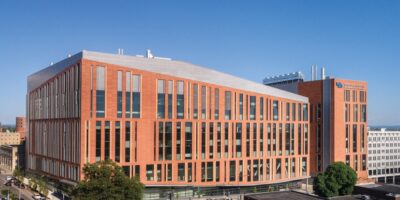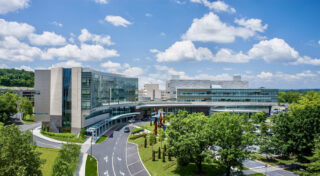

Central Pennsylvania is known for its affordable cost of living, its farmland and ridges, and for being home to one of the most established medical schools in Pennsylvania. Penn State College of Medicine is based in Hershey, adjacent to Penn State Health Milton S. Hershey Medical Center, and it also runs a small regional campus at University Park in State College. Both campuses award the same Doctor of Medicine (MD) degree.
This guide covers the 2026-2027 application cycle, which fills the class that begins classes in July 2027. It explains what Penn State asks for, how its numbers have changed, what the five current secondary prompts ask and how to answer them, and how the virtual interview works. Each figure is labeled with its year and group, and the sources are listed at the end.
Applying to medical school raises a lot of questions, and you can never be too prepared. Once you have read this guide, you will have a much clearer idea of what the admissions committee looks for and how to present your own record. IMA publishes a full library of Medical School Guides if you are comparing several schools.
Key Takeaways
- Who can apply: US citizens, US permanent residents and applicants with DACA status who will hold a bachelor’s degree from an accredited US or Canadian college or university. International applicants are not eligible, and Penn State does not accept transfer students with advanced standing.
- Academic context: Accepted applicants for the 2025 entering class had a median MCAT of 513 and a median overall GPA of 3.88. Penn State publishes no minimum GPA or MCAT, and it considers MCAT scores from 2024 or later for 2027 entry.
- Mission: The College’s mission centers on improving health in the Commonwealth of Pennsylvania and the nation, with special recognition for primary care. A 2026-2027 secondary prompt asks directly how you will help care for patients in central Pennsylvania and rural communities.
- Key dates: The latest AMCAS submission date is Nov. 15. The secondary, $90 fee, MCAT scores and letters are due December 15, 2026. Acceptances go out from October 15 until the class is filled.
- Costs: 2026-27 tuition is $62,459 for Pennsylvania residents and $71,176 for non-residents. The 2025-26 first-year cost of attendance is $100,415 in-state and $107,619 out-of-state.
- Distinctive training: A four-pillar curriculum that includes health humanities and health systems science, a first-year Patient Experience Program, a required research project, three-year accelerated pathways into Penn State Health residencies and a 12-seat regional campus at University Park.
- Selectivity: For the Class of 2025, Penn State received 11,207 applications, interviewed 617 applicants and enrolled 150 new MD students. Penn State does not publish an offer count, so a true acceptance rate cannot be calculated.
- Next action: Write your answer to the new “ties to Hershey and the central PA area” prompt early, because it takes the most honest thought and only 75 words.
Key Statistics About Penn State College of Medicine
The snapshot below comes from the same fact record as the table and every number in this guide. MCAT and GPA figures describe all accepted applicants, not only students who enrolled. Tuition is the 2026-27 rate. Total cost of attendance is the 2025-26 first-year figure, the most recent available, because the school does not publish its own year-by-year budget online.

| Metric | Value | Year and group | Source |
|---|---|---|---|
| School and degree | Penn State College of Medicine, MD | Hershey central campus; University Park Regional Campus | School MD program page |
| Median MCAT | 513 (mean 512.4) | 2025 entering class; all accepted applicants | MSAR |
| Median overall GPA | 3.88 (mean 3.85); science GPA median 3.84 | 2025 entering class; all accepted applicants | MSAR |
| First-year matriculants | 150 (68 Pennsylvania residents, 82 non-residents) | Class of 2025 | School class profile |
| Interviewed / applications | 617 of 11,207 (not an acceptance rate) | Class of 2025 | School class profile |
| Acceptance rate | Not published (no offer count released) | Not available | MSAR and school class profile |
| Tuition, Pennsylvania residents | $62,459 per year | 2026-27, rates effective Fall 2026 | Penn State Bursar |
| Tuition, non-Pennsylvania residents | $71,176 per year | 2026-27, rates effective Fall 2026 | Penn State Bursar |
| Total cost of attendance, in-state | $100,415 (includes $4,417 health insurance) | TSF 2025-26; first-year students | MSAR |
| Total cost of attendance, out-of-state | $107,619 (includes $4,417 health insurance) | TSF 2025-26; first-year students | MSAR |
| One useful distinction | Three-year accelerated MD pathways in five specialties | Current | School accelerated pathways page |
One caution helps you read this table. 617 of 11,207 is the share of applicants who were interviewed, about 5.5 percent. It is not the share who were accepted. Penn State reports interviews and matriculants, but not how many offers it made, so any “acceptance rate” you see elsewhere that divides 150 by the number of applications is a matriculation ratio, not an acceptance rate.
If you want to compare these medians with other schools, IMA keeps a table of medical school GPA and MCAT averages by school.
Mission and Educational Priorities
Penn State College of Medicine and its academic partner, Penn State Health, describe their shared mission as “enhancing the quality of life through improved health, the professional preparation of those who will serve the health needs of others, and the discovery of knowledge that will benefit all.” The full statement on the College’s mission and values page goes further in ways that matter to applicants. It says the College will base education on “the present and future health needs of the Commonwealth of Pennsylvania and the nation,” and that “special recognition is given to the education of primary care providers.” It also commits the College to research, to integrated patient care “for the people of central Pennsylvania and beyond,” and to community outreach through health education and patient care.
The College lists four values: Respect, Integrity, Teamwork and Excellence. Under each, the page gives plain behavioral descriptions, such as being compassionate and kind, having the moral courage to ask hard questions, sharing knowledge for the benefit of the team and earning the trust of teammates.
The College prides itself on a medical education focused on both individual patients and the systems that serve them. Penn State calls itself “Pennsylvania’s only rural academic medical center.” The College was the first in the nation to have a dedicated Department of Humanities and a Department of Family and Community Medicine, and it has grown from a single campus and a small class into a multi-campus academic, research and clinical system. The school’s MD program page puts its educational goal simply: to train “humanistic, systems-ready physicians who are adaptive, critical thinking, collaborative and scholarly.”
What does this mean for you as an applicant?
- Central Pennsylvania and rural care are not background details. The mission names central Pennsylvania and the Commonwealth directly, and the 2026-2027 secondary asks both about your ties to Hershey and central Pennsylvania and about how you will help care for patients in central Pennsylvania and rural communities. Applicants who can show real connection to the region, or real experience with rural or under-resourced care anywhere, have material to work with. Applicants who cannot should not invent it.
- Primary care has a formal place in the mission. The three-year accelerated pathways in family medicine, internal medicine and pediatrics, which were created to support primary care interest and reduce debt, are one concrete expression of it.
- Humanities and systems thinking are part of the training, not electives. The curriculum treats health humanities and health systems science as two of four pillars. Reflection, ethics and attention to how health care is delivered are tested throughout medical school, so they belong in your application too.
- Research is required. Every MD student completes a Medical Student Research project. You do not need publications to apply, but you should be able to talk about inquiry with curiosity.
Penn State’s applicant selection statement fits the mission closely. The committee has “an interest in a record of service, variety of the student body, evidence of strong personal qualities, significant exposure to clinical settings, broad background experiences, leadership, unique activities, and competency in the four sections of the MCAT,” and each application is “reviewed in a mission-aligned manner.” That phrase is the best single summary of how to approach Penn State: read your activities against the mission, and choose the experiences that show it in action.
Accreditation and Institutional Identity
Penn State College of Medicine’s MD program is accredited by the Liaison Committee on Medical Education (LCME), the national accrediting body for MD programs in the United States and Canada. Penn State College of Medicine in Hershey holds Full accreditation in the LCME directory (updated October 14, 2026), with an initial accreditation year of 1967 and a next survey date of 2027-28.
The MD program received full accreditation after its 2018 review and was scheduled to be resurveyed in February 2026; its current status is Full. The College’s LCME accreditation page covers the process, including a 2025 Independent Student Analysis, the student-led survey that is part of reaccreditation, in which 536 of 593 students responded. Accreditation means the program meets national standards; it is not a ranking or a guarantee of any outcome.
Institution name and structure. The formal name is the Pennsylvania State University College of Medicine. It is part of Penn State, a public university, though the medical school itself is classified as a private school. Its clinical partner is Penn State Health, a multi-hospital system whose flagship is Milton S. Hershey Medical Center. The College was founded in 1967.
How the College began. The College’s founding story is usually told through a $50 million gift from the Milton Hershey Foundation, often called the “$50 million phone call,” with instructions to build a medical school in Hershey. Ground was broken in 1966, and the College opened its doors in 1967. The first class graduated in 1969.
Two campuses, one degree. The central campus is in Hershey. The University Park Regional Campus sits on Penn State’s largest campus in State College and accepts 12 new students each year. All students, whether based in Hershey or University Park, graduate with the same Penn State College of Medicine degree.
Research and outcomes. Concrete indicators of the College’s strengths include $59.4 million in federal research grants and contracts (LCME AFQ FY2024), 24 percent of graduating seniors reporting a global health experience (AAMC Graduation Questionnaire 2025), and specialty intentions led by internal medicine (16.5 percent), with anesthesiology, family medicine and psychiatry at 10.1 percent each. If a published ranking matters to you, check the current edition and note the year it measures.
Medical Programs and Affiliations
Penn State offers several routes to the MD, and it helps to know which ones you choose on the secondary and which ones you apply to after acceptance. The College’s MD program overview states the basic rule: curriculum options are open to all enrolled MD students, and once you are accepted, you can apply for the specific track you want. Every MD route starts with AMCAS and an acceptance to the College of Medicine.
Hershey Four-Year MD Curriculum
The central curriculum is based in Hershey at the College of Medicine and Penn State Health Milton S. Hershey Medical Center. It is a learner-centered, fully integrated program in three phases: Foundations, Clinical Core, and Discovery and Residency Prep. It is a four-pillar curriculum: biomedical sciences, clinical sciences, health systems science and health humanities. Most students follow this path. The curriculum section below explains each phase in detail.
A notable part of the Hershey curriculum is the patient navigator role, delivered through the Patient Experience Program, part of the College’s longitudinal health systems science curriculum. The program began in August 2014 as the Systems Navigation Curriculum (SyNC), launched with a $1 million American Medical Association grant under the AMA’s Accelerating Change in Medical Education initiative. Beginning in the first year, students serve as patient navigators, guiding patients through the often complicated process of getting the care they need. Students work directly with a patient from the first day of medical school.
Three-Year Accelerated Pathways MD Curriculum
Penn State’s three-year MD Accelerated Pathways let students finish medical school in three years with a directed path into residency. After meeting the academic and professional standards for graduation, students “are ranked to match into a Penn State Health residency program through the National Resident Matching Program.” The current pathways are:
- Emergency Medicine
- Family Medicine
- Internal Medicine
- Pediatrics
- Psychiatry
Spots are limited to up to 2 in emergency medicine, up to 6 in family medicine, up to 2 in internal medicine, up to 2 in pediatrics and up to 2 in psychiatry.
These five specialties are the current three-year residency pathways. The College also offers two scientist and educator pathways, described below.
How to apply. Students interested in an accelerated pathway “must submit an AMCAS application and can indicate their preference in the secondary application.” Programs contact students after acceptance to complete their own admission process. Accepted applicants can apply after acceptance and before matriculation, or in the fall of the first year.
Why students choose it. The College names two benefits: lower medical education costs and earlier entry into a career. It also says linking medical school with residency improves continuity of patient care, mentoring and advising. Penn State is a member of the national Consortium of Accelerated Medical Pathway Programs (CAMPP), and its accelerated page summarizes studies finding that three-year graduates feel as prepared for residency as four-year graduates and carry less debt. Mentoring and advising are core benefits of every pathway.
One caution on cost. The 2026-27 tuition schedule includes a separate “3+3 Program” line at $93,689 per year for both Pennsylvania residents and non-residents. The schedule does not explain how that line is applied, so ask the Office of Student Aid how tuition works across the three years before assuming a specific saving.
Clinician Educator and Clinician Scientist Pathways
These pathways let students meet the school-wide competencies and core graduation requirements in about three years while spending most of the fourth year on either research or a Master of Education degree.
- Clinician Educator Pathway: students complete both the MD and the Master of Education (MEd) in four years. It is an MD/MEd joint degree in Lifelong Learning and Adult Education, and students can apply anytime during the first year.
- Clinician Scientist Pathway: students build an extended period of research into the four years of medical school.
University Park Curriculum
Based in State College, the University Park Regional Campus is a complete four-year MD program in a small-town setting. Its curriculum is comparable to Hershey’s, integrating basic and clinical sciences with health systems science, health humanities, community engagement and experiential learning. Its distinguishing features are scale and setting:
- It accepts 12 new medical students each year.
- A longstanding partnership with Mount Nittany Medical Center provides longitudinal clinical training in all three phases, and Mount Nittany is the site for most core inpatient experiences.
- The curriculum addresses common rural health care challenges and emphasizes sustainable approaches to health care.
- Classes meet in the Park Avenue facility next to Mount Nittany Medical Center.
- Incoming first-year students receive a University Park scholarship.
The program revolves around early contact with patients and close faculty mentorship. Applicants go through the same admissions process as everyone else. Only after receiving an offer of acceptance to the College of Medicine can an applicant interview for one of the twelve University Park spots. The College anticipates making University Park offers in March and April. If you are offered a University Park position and decline it, your acceptance to the Hershey program is not affected.
MD/PhD Program
The MD/PhD Medical Scientist Training Program is typically completed in eight years and prepares students for careers as physician-scientists in biomedical and health research, academic medicine or related fields. It is supported by a T32 Medical Scientist Training Program award from the National Institutes of Health, and the College provides full tuition, a stipend and health benefits for matriculating students. Graduate programs available to MD/PhD students include Anthropology; Bioinformatics and Genomics; Biomedical Sciences; Engineering Sciences and Mechanics; Molecular, Cellular and Integrative Biosciences; and Neuroscience.
The MD/PhD application deadline is November 16, 2026, and about 8 MD/PhD entrants are expected. Five MD/PhD students matriculated in 2025. The MD/PhD program does not publish its own secondary questions for 2026-2027, so contact the program office before you apply to learn what it will ask.
Other Combined Degrees
The College’s combined degrees page lists the MD/PhD, the MD/MBA and the MD/MPH, along with a dual-title PhD in Clinical and Translational Sciences. The MD/MPH is a five-year program for current Penn State medical students, and the MD/MBA pairs the MD with the One-Year MBA at Penn State’s Smeal College of Business. For most combined degrees, you must apply separately to the school that grants the second degree. Baccalaureate/MD, MD/JD and MD/MPP options are not available. Penn State does have an Early Assurance Program with selected colleges and universities, with an estimated 10 new entrants; ask your undergraduate institution whether it participates.
Physician Assistant Program
Penn State also educates physician assistants. The College of Medicine at Hershey offers the Physician Assistant Program, a 24-month, 101-credit program that awards a Master of Physician Assistant Studies degree and prepares graduates to offer compassionate, comprehensive care, with an emphasis on primary care and underserved communities. The PA program is a separate degree with its own application and is not part of the MD admissions process. If you are still deciding between medicine and the PA profession, pre-PA internships with supervised patient care can help you compare the two roles before you commit to either application.
Psychiatry and Behavioral Health
Psychiatry and behavioral health is a clinical department at the College, not a separate MD admissions track. For MD applicants, the relevant option is the Psychiatry Accelerated Pathway, which is designed for students with an early passion for the field, offering clinical experiences, personalized mentorship and early exposure to psychiatry careers. Psychiatry is also one of the most common career intentions among Penn State graduates, at 10.1 percent of 2025 graduating seniors. If behavioral health is what draws you to medicine, clinical work in that setting, such as crisis line volunteering, work as a behavioral health technician or mental health internships abroad, gives you concrete experience to describe when you explain that interest.
Clinical Affiliations
Penn State Health’s hospitals include Milton S. Hershey Medical Center, Penn State Health Golisano Children’s Hospital, Hampden Medical Center, Holy Spirit Medical Center, Lancaster Medical Center and St. Joseph Medical Center. Affiliated teaching hospitals also include Mount Nittany Medical Center, the Lebanon VA, the Pennsylvania Psychiatric Institute, York Hospital, UPMC Pinnacle and Kaiser Permanente.
Curriculum Overview
Penn State’s MD curriculum has three phases, and the same competencies apply at Hershey and University Park. It is an “integrated four pillar curriculum model of biomedical sciences, clinical sciences, health humanities and health systems sciences” that uses problem-based learning, simulation, small and large group sessions, and patient care.
Phase I: Foundations
Phase I integrates the four pillars to prepare students for clerkships. Teaching formats include small-group learning, problem-based learning (PBL), large-group interactive sessions such as team-based learning and peer instruction, lecture, clinical skills training with standardized and real patients, simulation and lab. Lectures are recorded and attendance at lectures is not required, while PBL attendance is required. Pre-clinical courses are graded pass/fail.
The first year begins in mid-July with Transition to Medical School (one week), followed by courses that include:
- Scientific Principles of Medicine: biochemistry, physiology, histology, genetics, cell and molecular biology, hematology and an introduction to pharmacology, taught by a faculty team.
- Foundations of Health Humanities: how cultural contexts affect medicine, and how to think and act critically, ethically and with cultural humility, including structural inequities, justice and unconscious bias.
- Foundations of Health Systems Science: health care structure, financing, interprofessional roles and teaming, and evidence-based medicine. The Patient Experience Program sits within this sequence. In the first year, students spend a semester guiding patients through the care process, taking histories that include social determinants of health and working with the care team to address them.
- Foundations of Patient-Centered Care: a longitudinal course run within each student’s Society, covering communication, professionalism, history-taking, physical examination, oral presentations, documentation and clinical reasoning, with sessions in classrooms and real inpatient or outpatient settings.
- Organ-system courses: Host Defense/Host Response (microbiology, immunology and oncology, built around PBL), Cardiovascular Medicine, Respiratory Medicine, a renal course, Form and Function and Anatomy, and Gastrointestinal Pathophysiology and Nutrition.
- Health Systems Science in Context and Humanities in Context in the spring of the first year.
The summer after the first year is open for the Medical Student Research project and global health opportunities. The second year continues with Science of Health Systems (quality improvement, patient safety, design thinking and care for patients with disabilities), Endocrinology/Reproductive Medicine, and Neural and Behavioral Science, which includes Neurology Day, when students meet in small groups with about 14 patients who have neurological disorders. Objective Structured Clinical Examinations (OSCEs) assess clinical skills at intervals. Phase I ends with a dedicated USMLE Step 1 study period and a two-week Transition to Clerkships course in March.
Students “begin patient interactions in the fall of first year” through the patient experience and health systems science curriculum and the clinical skills course. For applicants, this is one of the most concrete features to cite: patient contact is part of the first semester, not something that starts in year three. Applicants who have already taken histories, checked vitals or worked with a care team, whether in a hospital job at home or through medical internships for undergraduates, will find that first semester familiar.
Phase II: Clinical Core
Required core clerkships begin toward the end of the second year, in March, and are taught in eight-week blocks running through March of the third year. All students complete the same eight core clerkships, an elective and a Humanities course, in blocks or longitudinally. During clerkships, a twice-monthly Humanities Across Clerkships course gives students a facilitated space to reflect on professional identity, career development and the stresses of clinical work.
Phase II ends with a two-week course in Systems-Conscious and Humanistic Medicine, which revisits health systems and humanities concepts in the context of clinical care and covers skills such as quality improvement projects, patient handoffs, placing orders and calling consults, leading a team in urgent situations and informed consent conversations. It also covers residency personal statements, program selection and interview season. After Phase II, students can choose a dedicated study period for USMLE Step 2 CK. Clinical courses are graded, and the school does not rank students.
Phase III: Discovery and Residency Prep
Phase III gives students time for career exploration, focused research and residency preparation. All students must complete:
- Two acting internships at Penn State Health or College of Medicine affiliates: one specialty-based core acting internship and one critical care or emergency medicine core acting internship
- 24 weeks of electives, with at least 12 weeks at Penn State Health or College of Medicine affiliates
- At least two four-week clinical rotations within five months of graduation
- A Humanities selective
- Transition to Internship, the capstone course in May before graduation
Health systems material applied to clinical care is taught in Systems-Conscious and Humanistic Medicine at the end of Phase II. All students must meet the College’s list of competencies before graduating with the MD.
How the Accelerated Curriculum Differs
Students in a three-year pathway follow the same first-year courses, then add pathway courses from January of Year 1 through December of Year 2. Depending on the pathway, these can include a Career Confirmation Elective, a Longitudinal Elective, a Longitudinal Medicine Clerkship, a Medical Home Longitudinal Course or a Longitudinal Neuroscience Clerkship. Acceleration clerkships, electives and acting internships compress the remaining training so students finish in three years and enter a Penn State Health residency.
The Humanities Emphasis
The College has “the oldest Humanities Department in a college of medicine in the country,” and humanities content runs through every phase: Foundations of Health Humanities and Humanities in Context in Phase I, Humanities Across Clerkships and a required Humanities course in Phase II, and a Humanities selective in Phase III. If you have a background in literature, history, philosophy, the arts or ethics, this is a place where it is part of the training rather than a side interest.
Required Research
The Medical Student Research (MSR) program was established by George Harrell, MD, the College’s founding dean, and it is a requirement for the MD degree. Each student completes mentored research in the clinical, social or basic medical sciences, on campus or at sites nationally or internationally. Nearly 75 percent of students are an author on an article indexed in PubMed and 40 percent were first authors on one or more manuscripts. Topics range from basic science and clinical research to global health, medical education, narrative and social medicine, and population health.
Admissions Requirements and Application Process
Penn State’s official admission requirements and application timeline are short and specific. This section separates what is required from what is typical of admitted students.
Eligibility: Citizenship, Residency and Degree
- Citizenship: Penn State accepts applications from US citizens, US permanent residents and applicants with Deferred Action for Childhood Arrivals (DACA) status. International candidates are not eligible, and Canadian and other international applications are not accepted.
- DACA applicants follow the same timeline as other applicants. If accepted, they must obtain clearance through Penn State’s Directorate of International Student and Scholar Advising using the iStart system, which can take two to three weeks, and they must verify the ability to finance their education. The school notes that foreign nationals are not eligible for federal or Penn State financial aid.
- Residency: Penn State has no requirement of ties to Pennsylvania. Out-of-state applicants are accepted, and the Class of 2025 included 82 non-Pennsylvania residents and 68 Pennsylvania residents.
- Degree: Applicants must complete at least three years of post-secondary study at an accredited US or Canadian college or university, and the baccalaureate degree is required before matriculation. There is no restriction on major.
- Transfers: Penn State does not accept transfer students with advanced standing, because its curriculum phases do not line up with traditional calendars at other schools.
Required and Recommended Coursework
The current required courses, or your institution’s equivalent, are:
| Course | Requirement |
|---|---|
| General biology with lab | 1 year (2 semesters) |
| General/inorganic chemistry with lab | 1 year (2 semesters) |
| Organic chemistry with lab | 1 year (2 semesters) |
| Physics with lab | 1 year (2 semesters) |
| Biochemistry | 1 semester |
Recommended courses are human anatomy and physiology with lab (1 year), microbiology (1 semester), behavioral and social science courses (anthropology, economics, ethics, history, sociology, psychology, philosophy) and humanities courses (art, drama, literature, languages, music). Statistics (1 semester) is also recommended.
Competencies. Alongside the required courses, applicants should demonstrate the interpersonal and intrapersonal competencies in the AAMC Core Competencies for Entering Medical Students and should have studied the material in the AAMC-HHMI Scientific Foundations for Future Physicians and the AAMC Behavioral and Social Science Foundations for Future Physicians.
Course policies:
- Online coursework is “generally not recommended,” with consideration given to online courses taken during the height of the COVID-19 pandemic in 2020 and 2021. Other online courses are considered case by case.
- Pass/fail and credit/no credit grading is “generally not recommended,” with the same 2020-2021 exception.
- Grades: Penn State recommends a C or higher in the strongly recommended courses. Stronger grades in these courses make your science record more competitive.
- AP credit counts toward course requirements only if it appears as earned credit on your college transcript.
- Community college coursework is accepted.
- Timing: Prerequisite coursework must be completed by May 2027 for 2027 entry. Applicants report that the secondary includes a coursework section where you list completed and planned courses as they appear on your transcript.
MCAT and GPA
The MCAT is required and is “used in a comprehensive manner with other aspects of the application.” Penn State considers scores from the last three years before matriculation: for the entering class of 2027, scores from no earlier than 2024. MCAT scores from January 2024 through December 15, 2026 are considered, and if you have taken the MCAT more than once, all scores are reviewed. There is no minimum MCAT or GPA for screening, and graduate or postbaccalaureate GPA is considered.
For all accepted applicants in the 2025 entering class, the median MCAT was 513 and the median overall GPA was 3.88. A median is not a minimum: half of accepted applicants were below it. You can use IMA’s medical school GPA calculator to see how AMCAS will compute your science and overall GPA, but no calculator predicts an admissions decision.
Volunteer Service and Clinical Experience
Penn State has no minimum hours for volunteering or clinical work, but the expectations are clear. Shadowing is recommended, and “clinical exposure strongly recommended.” Among 2025 matriculants, 90 percent reported community service or volunteer work, 93 percent reported physician shadowing or clinical observation, 82 percent reported clinical volunteering, 71 percent reported paid clinical employment and 96 percent reported research or lab experience.
The experiences that show your fit most clearly include:
- Leadership: any role in which you were responsible for people or outcomes, on campus, at work or in the community.
- Clinical experience: hours spent working with patients, paid or volunteer. Roles in which you interact directly with patients, such as scribe, medical assistant, EMT or patient care technician, give you more to write about than passive presence. Supervised clinical internships for pre-med students also count here when you take vitals, do intake and help with patient care rather than only watching.
- Research: Penn State requires research of every student, so research experience is a natural fit, though it is not formally required for admission.
- Volunteer and community service: especially sustained service with communities whose health needs you can describe specifically.
- Extracurricular activities: they show the committee who you are outside the classroom and help the committee get to know you as a whole person.
Letters of Recommendation
Penn State accepts letters only through the AMCAS Letter Service. The rules on the application and interview process page are:
- If your school has a pre-health committee or office, you may use its letter, but you are not required to.
- If you do not use a committee letter, you must submit at least four and no more than six letters: at least two from science faculty, at least one from non-science faculty, and at least one from a college faculty member, community leader, employer or other person in a position of responsibility who knows you well.
- You need a letter from each institution that granted you a degree (associate, bachelor’s, master’s or doctorate) and from any institution you are attending or plan to receive a degree from.
- If you have one or more years of graduate study or full-time employment, you need one additional letter from a graduate faculty member or work supervisor.
The committee wants letters from “writers who know them well” and from “a variety of environments.” For help choosing writers, see IMA’s guide to medical school recommendation letters.
Situational Judgment Tests: Is CASPer Required?
Penn State does not require CASPer, PREview or any other situational judgment test for MD admission. The College is “exploring PREview for future use,” and it “will not be used in this cycle’s admissions decisions.” Additional assessments such as situational judgment tests are not required. Do not take CASPer for Penn State unless the school tells you directly.
Primary and Secondary Applications
AMCAS primary. Penn State uses AMCAS, the standard application most MD schools require. Your AMCAS application includes your coursework and transcripts, your activities, your personal statement and your letters, and AMCAS sends it to every school you designate. IMA’s AMCAS application guide covers each section. The earliest AMCAS submission date is May 30, and the latest is Nov. 15. Treat Nov. 15 as a firm deadline and submit far earlier.
Secondary. Once Penn State receives your verified AMCAS application, “the earliest being in July,” it emails you an invitation to complete a web-based secondary. The secondary is sent to applicants who are US citizens, permanent residents or DACA recipients with a bachelor’s degree from an accredited US or Canadian institution. In this cycle, applicants received the 2026-2027 secondary as early as July 21, 2026. The secondary carries a nonrefundable $90 fee, and a fee waiver is available if you are approved for the AMCAS Fee Assistance Program. Everything else, including the secondary, fee, MCAT scores and all letters, is due December 15, 2026.
Complete means complete. It is the applicant’s responsibility to make sure the application is complete at submission, and Penn State “will not accept updates, including additional letters of recommendation or update letters from applicants, post-submission.” It also denies requests to submit after the published deadlines. Plan your letters and MCAT dates so that everything arrives well before December 15.
Early Decision Program
Penn State’s MD admissions process does not list an Early Decision Program. All applicants apply on the regular timeline: submit AMCAS by Nov. 15, then complete the secondary, pay the $90 fee and make sure your MCAT scores and letters arrive by December 15, 2026. Acceptance notices to regular applicants begin October 15 and continue until the class is filled. Because there is no binding early option, you can apply to Penn State alongside the other schools on your list. If you have questions about timing, contact the Office of Medical Student Admissions.
Decisions, Deposits and Waitlist
- Review begins July 6, 2026.
- Acceptances are sent from October 15 until the class is filled. The latest date for acceptance notices is April 30, 2027.
- Categories: each applicant is placed in “Acceptance,” “Hold for Continued Review” or “Denied Acceptance.” Hold files stay active and can be accepted at any time before orientation. Applicants in the Hold category may submit a statement of intent after April 30.
- Response time: two weeks on or before April 30, five business days after April 30, and two business days within 30 days of orientation.
- Deposit: $100, applied to first-semester tuition, due by May 15 and not refundable after that date.
- Multiple acceptances: Penn State follows the AMCAS Choose Your Medical School tool dates, and after April 15 accepted applicants may hold no more than three acceptances.
- Deferral: requests go to the Director of Medical Student Admissions by May 15, with no exceptions. Deferrals are very limited and decided case by case. Applicants accepted late from the Hold list are not eligible.
- Waitlist: a typical cycle has about 70 waitlist positions, with 25 acceptance offers made to waitlisted applicants, and “a significant number of applicants from the wait list are accepted each cycle.”
- Background check: Penn State participates in the AAMC-facilitated criminal background check for conditionally accepted applicants, and additional checks are required during medical school for some clinical rotations.
- Final transcripts are due by June 30. Classes begin July 12, 2027.
Reapplicants
Reapplicants must submit a completely new AMCAS application, a new secondary, the application fee and additional letters of recommendation. Penn State keeps your previous application as an additional resource file, so the committee can see what changed. Show growth in specific terms: new clinical roles, stronger coursework, a better MCAT or deeper reflection. If your first application was light on patient contact, use the time before you reapply to add sustained clinical work, such as a full-time clinical job or one of the pre-med gap year programs that place you in supervised patient care roles.
2026-2027 Timeline
| Date | Step | Source |
|---|---|---|
| May 30, 2026 | Earliest AMCAS submission | School timeline |
| July 6, 2026 | Application review begins | MSAR |
| July 2026 (reported July 21) | Secondary invitations by email after AMCAS verification | School; applicant reports |
| August 2026 onward | Interview invitations begin | MSAR |
| Mid-September 2026 to March 2027 | Virtual interviews, Mondays, Wednesdays and Thursdays | School |
| October 15, 2026 | Earliest acceptance notices | School; MSAR |
| Nov. 15, 2026 | Latest AMCAS submission | School timeline |
| December 15, 2026 | Secondary, $90 fee, MCAT scores and letters due | School; MSAR |
| March to April 2027 | University Park offers to accepted students | School |
| April 30, 2027 | Latest acceptance notice; Hold applicants may send a statement of intent after this date | MSAR; school |
| May 15, 2027 | $100 deposit and deferral requests due | School; MSAR |
| June 30, 2027 | Final transcripts due | School |
| July 12, 2027 | Classes begin | MSAR |
Because you can submit AMCAS as early as May 30, the clinical experience you plan to describe should be well underway before you apply. Many students use the summer before their application year for research, a clinical job or pre-med summer internships so those hours are already on the AMCAS activities list.
Tuition, Cost of Attendance and Financial Aid
Penn State’s medical tuition now depends on residency. The College’s tuition and financial aid page does not list dollar amounts and points to the university’s tuition schedules instead. The newest schedule is the Penn State Bursar’s rates effective Fall 2026.
2026-27 Tuition (Penn State Bursar)
| Program, College of Medicine at Hershey | Pennsylvania residents | Non-Pennsylvania residents |
|---|---|---|
| Medical (MD), per academic year | $62,459 | $71,176 |
| Medical (MD), per full-time semester | $31,230 | $35,588 |
| MD/Master of Education, per academic year | $62,459 | $62,459 |
| 3+3 Program, per academic year | $93,689 | $93,689 |
These rates follow the Penn State Board of Trustees’ July 2025 approval of the 2026-27 budget, which set a 2 percent increase for in-state medical students and a 4 percent increase for out-of-state medical students. For comparison, 2025-26 tuition was $61,234 for Pennsylvania residents and $68,438 for non-residents. The gap between residents and non-residents is now $8,717 a year.
Total Cost of Attendance (2025-26)
Tuition is only part of the cost. Penn State does not post a year-by-year MD budget online. The most recent official total is for first-year students in academic year 2025-26:
| Item | In-state | Out-of-state |
|---|---|---|
| Tuition and fees | $61,354 | $68,558 |
| Other expenses (living, books and related costs) | $34,644 | $34,644 |
| Health insurance | $4,417 | $4,417 |
| Total cost of attendance | $100,415 | $107,619 |
Do not add the 2026-27 tuition to the 2025-26 total. They are different years and different definitions; the 2025-26 tuition and fees line includes mandatory fees. Use the 2025-26 total as a realistic first-year budget and expect a modest increase in 2026-27. Students must carry health insurance.
Residency gap. The 2025-26 out-of-state total is $7,204 higher than the in-state total, and the whole difference comes from tuition and fees; living costs and health insurance are the same for both groups. Use current figures when you compare offers.
Financial Aid
- Who gets aid: about 94 percent of Penn State medical students receive financial aid (2024-25).
- Scholarships: the College has both merit and need-based scholarships. In 2023-2024, 75 percent of MD students received a scholarship or award that did not require a service commitment, and 2 percent received service-commitment scholarships such as the Health Professions Scholarship Program and the National Health Service Corps.
- Need analysis: need is determined by federal methodology, and parental income information is required for university scholarship and loan consideration.
- University Park: incoming first-year students at University Park receive a University Park scholarship; additional aid is need-based.
- Research funding: summer work-study stipends are available for research after the first year.
- Debt: average graduate debt is $212,682 (2024-25).
How to apply for aid. Complete the FAFSA using federal school code 003329. For 2026-2027, the aid deadlines were February 1, 2026 for first-year students and April 1, 2026 for continuing students; expect similar dates for 2027-2028. You will be considered an independent student for federal loans. The Office of Student Aid offers appointments Monday through Friday, plus debt management resources, and enrolled students facing emergencies can apply to the College of Medicine Student Emergency Fund or Penn State’s Basic Needs Request process.
What remains after aid. Scholarships at most schools cover part of tuition, not living costs. A useful exercise is to subtract any scholarship from the full cost of attendance, not just from tuition, and then estimate four years of borrowing. The three-year accelerated pathways remove a year of living costs, which the College names as a benefit, but check how the separate 3+3 tuition line applies before assuming the size of the saving. For broader comparisons, see IMA’s Medical School Tuition Database.
Campus Facilities and Student Life
Facilities
The Hershey site is a 550-acre campus near Harrisburg that holds the College of Medicine, a University Hospital with more than 600 beds, the Children’s Hospital, an Emergency Medicine and Trauma Center, the Cancer Institute, a Women’s Health Center and the Biomedical Research Building. Hershey is “the only regional Level 1 Trauma Center for both adult and pediatric cases.” Key facilities for medical students include:
- Penn State Health Milton S. Hershey Medical Center, adjacent to the College of Medicine and the center of clinical training on the Hershey campus
- Penn State Health Golisano Children’s Hospital, the children’s hospital on the Hershey campus
- Harrell Health Sciences Library, the College’s research and learning commons
- Biomedical Research Building and the Penn State Cancer Institute
- University Park, where the regional campus teaches in the Park Avenue facility in the borough of State College, next to Mount Nittany Medical Center
The Hershey campus also holds the Penn State Heart and Vascular Institute, founded in 2005; the University Physician Center, home to Penn State Health otolaryngology, dermatology and an outpatient pharmacy; Penn State PRO Wellness at 90 Hope Drive, which works with young people and their families on nutrition, physical activity and healthy choices; the First Discoveries at Bright Horizons child care center at 400 Centerview Lane; and the University Fitness and Conference Center. Membership at the University Fitness Center is free for full-time students at the College of Medicine, and classes include cycling, kickboxing, yoga and Zumba.
Expansion and Renovation of Comparative Medicine Facilities
In September 2022, the Penn State Board of Trustees approved a $37.3 million project to renovate and expand the College’s comparative medicine facilities, where model organisms are used to study cancer, aging, infectious diseases, substance use disorders and other conditions. The project covers renovation of about 11,000 square feet of existing research space, 18,700 square feet of new space, modernized imaging facilities and the first germ-free research facility on the Hershey campus.
Housing and Getting Around
Most Hershey students live in University Manor, on-campus apartments, and that University Park students have campus apartments near the medical center. Hershey is a small town, and central Pennsylvania’s cost of living is generally lower than in Philadelphia or Pittsburgh, though you should compare actual rents. The College “highly recommends” that University Park students have access to a vehicle for all four years, and a car is also useful for clinical sites spread across the Penn State Health system. University Park students travel to Hershey for orientation and some shared sessions and assessments.
Societies, Advising and Support
Every student belongs to one of five Societies; the fifth is the University Park Regional Campus. The Societies are a four-year structure for clinical skills, clinical reasoning, wellness, advising and coaching, and the Foundations of Patient-Centered Care course runs within them, taught by Society adviser coaches. Other support services include the Cognitive Skills Program for learning support, the Office of Health Advancement and Community Engagement, the Office for a Respectful Learning Environment and disability accommodations.
Student Organizations
Student clubs in Hershey and University Park run through the Health Professions Student Assembly (HPSA), the MD student government, and the Graduate Student Association. HPSA supports more than 50 organizations for MD students, from specialty areas to interest groups, and its events and programs are open to all students. Groups active at the College include:
- Alpha Omega Alpha Honor Medical Society (AOA)
- American Medical Women’s Association (AMWA), Hershey and University Park
- Asian Pacific American Medical Student Association (APAMSA)
- BRIDGE mentorship program, Hershey and University Park
- Disability and Deafness Advocacy Coalition (DDAC)
- Global Health Interest Group (GHIG)
- Jewish Union of Medical Professionals (JUMP)
- Latino Medical Student Association (LMSA)
- Military Medicine Interest Group and Student Veterans of America (MMIG/SVA)
- Multicultural Awareness Club (MAC)
- PULSE (Pre-Health Program for Underrepresented Leaders in STEM Education)
- Rural Health Interest Group
- Street Medicine
- Student National Medical Association (SNMA)
- Student Pediatric Society
- Student Surgical Society
PULSE also runs a semester-long outreach program in which medical students teach high school students in grades 9 to 12 about health care and research. The Class of 2025 includes 3 students with a military background, and the University Park campus has featured student veterans, so veterans are a real community at both campuses.
BRIDGE Mentorship
BRIDGE, active at both Hershey and University Park, is a mentorship program for motivated students who want a career in medicine. It pairs MD and physician assistant students at the College with undergraduates from nearby colleges such as Penn State Harrisburg, York, Gettysburg, Millersville, Bucknell and Franklin & Marshall. The College also runs the MENTOR program, which pairs medical, physician assistant and graduate students with faculty mentors.
Lion’s Pantry
The Lion’s Pantry provides essential groceries to any student on the Hershey campus experiencing food insecurity, with no income cutoff or proof of income required. It is at 922 West Governor Road in the Eastmoor Building, and distributions run from 4:30 to 6:30 p.m. on the first and third Wednesday of each month. Students must bring a valid Penn State Health-issued student ID.
Community Service
“Student-run medical clinics and mobile clinics provide community health outreach in Hershey, rural Centre County and beyond.” The University Park campus emphasizes outreach in local communities and has featured students providing screenings and health education at Ag Progress Days, Penn State’s agricultural exposition. There is no formal community service requirement, but service is clearly part of student life and fits the mission.
Life in Hershey and State College
Hershey is a small town in Dauphin County near Harrisburg, best known as the home of The Hershey Company and its attractions. State College is a college town in Centre County surrounded by farmland, forests and mountains, with the sports and cultural events of Penn State’s largest campus. Both settings are quieter than an urban medical school. For some students that is the appeal; for others it is a reason to visit before deciding.
Clinical Rotations and Research Opportunities
Core Clinical Training
Required clerkships start in March of Year 2, after the Transition to Clerkships course, which is earlier than at many schools. Students complete eight core clerkships in eight-week blocks through March of Year 3. Sites “include urban locations, academic referral centers, and community hospitals.”
The main clinical sites are:
- Milton S. Hershey Medical Center, the academic medical center and regional Level 1 trauma center
- Penn State Health Golisano Children’s Hospital
- Penn State Health community hospitals: Hampden, Holy Spirit, Lancaster and St. Joseph medical centers
- Mount Nittany Medical Center in State College, the site for most core inpatient experiences for University Park students
- Other affiliates: the Lebanon VA Medical Center, the Pennsylvania Psychiatric Institute, York Hospital, UPMC Pinnacle and Kaiser Permanente
The College does not publish how students are assigned to sites, so ask about assignment and travel during your interview day student session. Because the system spans several counties, expect some driving.
Acting Internships and Electives
Phase III requires two acting internships at Penn State Health or College affiliates (one specialty-based and one in critical care or emergency medicine), 24 weeks of electives with at least 12 weeks within Penn State Health or affiliates, and at least two four-week rotations in the final five months before graduation. The University Park page confirms that students can also complete rotations at Hershey Medical Center and at institutions outside the Penn State Health system, both nationally and internationally.
Medical Student Research
Research is a graduation requirement at Penn State, not an option. The MSR program pairs every student with a mentored project in clinical, social or basic medical science. The program posts deadlines for each class: for example, the Class of 2030 begins with a PubMed search skills assignment in August of the first year, completes CITI research ethics training by February, updates its project search in March and submits a preliminary proposal in June, with a final proposal due in July 2029 and a final report in January 2030. MSR scholarships, travel awards and federal work-study funding support summer research, and the program recognizes outstanding projects each spring.
For students who want more research:
- The Clinician Scientist Pathway builds an extended research period into four years.
- The MD/PhD Medical Scientist Training Program integrates PhD training in programs such as Biomedical Sciences, Neuroscience, Bioinformatics and Genomics, and Anthropology.
- The Clinical and Translational Science Institute, directed by Jennifer Kraschnewski, MD, MPH, supports clinical and translational research across the College.
- Federal research grants and contracts totaled $59.4 million (FY2024).
Global Health and Rural Health
Students in the Global Health Scholars Program “travel to partner sites and provide essential care,” and Rural Scholars “focus on community needs in Pennsylvania.” The summer after the first year is open for global health work (the curriculum lists a Global Health course, GH 747), and 24 percent of graduating seniors in 2025 had a global health experience. University Park’s curriculum addresses rural health care challenges directly. If global health is part of your interest in Penn State, describe any experience you already have, such as service with immigrant communities at home or medical internships abroad, in specific terms: where you worked, what you did and what you learned about care with limited resources.
Residency Pathways and Outcomes
The three-year accelerated pathways link medical school to Penn State Health residencies in emergency medicine, family medicine, internal medicine, pediatrics and psychiatry. Among 2025 graduating seniors, specialty intentions were led by internal medicine (16.5 percent), followed by anesthesiology, family medicine and psychiatry (10.1 percent each), orthopaedic surgery (8.3 percent), and obstetrics and gynecology and pediatrics (6.4 percent each). These are intentions reported by graduating students, not match results; the College posts match lists separately.
Notable Alumni, Faculty, Leadership and Admissions Staff
Titles change, especially interim ones, so check current roles on the College leadership page before you mention anyone in an essay or interview. Nothing here implies that any person reviews applications, mentors applicants or has preferences about who is admitted.
College Leadership
Karen Kim, MD, MS, Dean. Karen Kim, MD, MS, leads the Office of the Dean at Penn State College of Medicine. She was named dean in 2023 and is the College’s first female dean. She holds the Dorothy Foehr Huck and J. Lloyd Huck Chair in Rural Health Research and serves as Physician in Chief for the academic health system. Before Penn State, she was Vice Provost for Research at the University of Chicago. Her research centers on cancer health equity, and she founded the Center for Asian Health Equity community-academic partnership. For applicants, her rural health chair and equity research line up with the school’s stated focus on central Pennsylvania and rural communities, the same focus that now appears in a secondary prompt.
Kevin Black, MD, Interim Vice Dean for Educational Affairs. Kevin Black, MD, is Interim Vice Dean for Educational Affairs and a professor in Orthopaedics and Therapy Services. Educational Affairs oversees the MD program, so the curriculum structure described in this guide, from Phase I Foundations through Phase III Discovery and Residency Prep, sits within his office’s responsibilities. Applicants do not usually deal with this office during admissions, but curriculum, pathway and academic policy changes come through it. Because his title is interim, recheck it before you rely on it in an essay or interview.
Eileen Moser, MD, MHPE, Associate Dean for Medical Education. Eileen Moser, MD, MHPE, is Associate Dean for Medical Education and a professor of medicine. Her role places her in the leadership of the MD curriculum, and her master’s degree in health professions education reflects the view of teaching as a scholarly field that also underpins the school’s Clinician Educator Pathway, which combines the MD with a Master of Education in four years. Applicants interested in academic medicine or teaching can use the existence of that pathway as a concrete point of fit.
Mark Stephens, MD, MS, Associate Dean for Medical Education, University Park. Mark Stephens, MD, MS, is Associate Dean for Medical Education at the University Park Regional Campus and a professor of Family and Community Medicine. University Park accepts 12 new students each year, partners with Mount Nittany Medical Center for most core inpatient experiences and builds rural health challenges into its curriculum. Applicants drawn to a small cohort in State College should know that University Park interviews take place only after acceptance to the College of Medicine, and that declining a University Park offer does not affect a Hershey acceptance.
Emmanuelle Williams, MD, MEd, Associate Dean for Student Affairs. Emmanuelle Williams, MD, MEd, is Associate Dean for Student Affairs and a professor of medicine, and she directs inflammatory bowel disease care in the Division of Gastroenterology and Hepatology. Student Affairs covers advising, wellness and support after students enroll. For applicants comparing schools, this is the office to ask about during the interview day sessions with College leadership and students, especially how advising works through the Societies and what support looks like during clerkships.
Inginia Genao, MD, Vice Dean and Vice President of Health Advancement and Community Engagement. Inginia Genao, MD, is Vice Dean and Vice President of Health Advancement and Community Engagement. Her office connects the College and Penn State Health with community health work, and the MD program overview links health advancement and community engagement to student outreach such as student-run and mobile clinics. For applicants, this office is the clearest institutional counterpart to the new secondary prompt about caring for patients in central Pennsylvania and rural communities.
Faculty and Research Leaders
Jennifer Kraschnewski, MD, MPH, Vice Dean for Research, Clinical and Translational Science. Jennifer Kraschnewski, MD, MPH, is Vice Dean for Research, Clinical and Translational Science and directs Penn State’s Clinical and Translational Science Institute. She is a professor of medicine, pediatrics and public health sciences. Every MD student must complete a Medical Student Research project, and clinical and translational questions are one common route. Applicants with clinical research or public health experience can point to this research structure when explaining fit, without assuming that any particular faculty member will serve as their mentor.
Indira Mysorekar, PhD, MS, Vice Dean for Research, Basic Science and Graduate Studies. Indira Mysorekar, PhD, MS, is Vice Dean for Research, Basic Science and Graduate Studies and holds the Dorothy Foehr Huck and J. Lloyd Huck Chair in Medicine. Her portfolio covers basic science research and graduate education. That matters most to MD/PhD applicants, because the Medical Scientist Training Program pairs the MD with PhD study in graduate programs such as Biomedical Sciences, Neuroscience, and Molecular, Cellular and Integrative Biosciences. Applicants with bench research experience can use this context when describing the questions they want to pursue.
Fadia Kamal, PhD, Director of Medical Student Research. Fadia Kamal, PhD, is Director of Medical Student Research and an associate professor of Orthopaedics and Therapy Services. She leads the MSR program, which founding dean George Harrell established as a requirement for the MD degree. The program posts deadlines for each class, starting with a literature review assignment and CITI research training in the first year and ending with a final report late in medical school. Applicants without research experience should still expect to complete a mentored project.
Admissions Leadership and Staff
Jonelle Thomas, MD, MPH, Interim Associate Dean of Admissions and Financial Aid. Jonelle Thomas, MD, MPH, is Interim Associate Dean of Admissions and Financial Aid at Penn State College of Medicine, and she is also professor and interim chair of Radiology. She is listed on the MD student admissions contacts page. The official interview day agenda includes a virtual meet-and-greet and Q&A with the Associate Dean for Admissions and Financial Aid, so interviewees should expect to hear from this office directly. Her title is interim, so confirm it on the admissions contacts page close to your interview.
Marc Lubbers, MM, Director of Medical Student Admissions. Marc Lubbers, MM, is Director of Medical Student Admissions and is the school’s primary admissions contact. The school directs deferral requests to the Director of Medical Student Admissions, with a firm May 15 deadline. The Office of Medical Student Admissions (717-531-8755, [email protected]) handles questions about applications, DACA eligibility and criminal background checks. The office also lists Linda D’Ambrosia, Enrollment Services Specialist 2, and David Houdek, Enrollment Specialist.
Notable Alumni
Victoria Heasley, MD, Class of 2018. Victoria Heasley, MD, graduated from Penn State College of Medicine in 2018 after earning her undergraduate degree in Penn State’s College of Engineering in 2014. Penn State News reported in April 2025 that she received a 2025 Alumni Achievement Award and was then an assistant professor of clinical medicine at the University of Cincinnati College of Medicine and a physician at UC Health, specializing in physical medicine and rehabilitation with fellowship training in sports medicine. She founded Bridge Adaptive Sports & Recreation, a nonprofit for people of all abilities. Her path shows that an engineering background can lead to a rehabilitation career.
Penn State College of Medicine has graduated physicians since 1969, and the College recognizes graduates through its alumni awards. This update includes only alumni whose medical degree and role could be confirmed from a dated institutional source, which is why the list is short. More alumni profiles will be added as they are verified.
Admissions Statistics and Class Profile
This section covers the 2025 entering class: how applicants from Pennsylvania and elsewhere moved through the process, the academic profile of accepted applicants and Penn State’s class profiles over recent years.
Verified Application Data for the 2025 Entering Class
These applicant and matriculant figures are current as of October 29, 2025, and are the newest available.
| Group | Verified applications | Interviewed | Matriculated | Interviewed / verified applications |
|---|---|---|---|---|
| In-state | 1,179 | 199 | 68 | 16.9% |
| Out-of-state | 13,030 | 418 | 82 | 3.2% |
| International | 79 | 0 | 0 | 0% |
The last column is interviews divided by verified applications. It is not an acceptance rate. No public source reports how many acceptance offers Penn State made, so an acceptance rate cannot be calculated from public data. The table does show that Pennsylvania residents were interviewed at a much higher rate than out-of-state applicants, even though out-of-state students made up the majority of the class.
Academic profile of all accepted applicants (2025 entering class):
| Measure | Mean | Median |
|---|---|---|
| MCAT total | 512.4 (SD 4.3) | 513 |
| Chemical and Physical Foundations | 128.1 | 128 |
| Critical Analysis and Reasoning | 126.8 | 127 |
| Biological and Biochemical Foundations | 128.3 | 128 |
| Psychological, Social and Biological Foundations | 129.2 | 129 |
| Overall GPA | 3.85 (SD 0.15) | 3.88 |
| Science GPA | 3.79 (SD 0.2) | 3.84 |
Other 2025 matriculant characteristics: 72 men, 77 women and 1 student of another gender identity; 36 percent reported disadvantaged status; 24 percent reported growing up in a medically underserved area; ages 19 to 23 (85 students), 24 to 29 (58) and 30 to 39 (7); 62 percent science or math majors; 5 percent holding a graduate degree. Seven matriculants entered through Early Assurance and five through MD/PhD. Total enrollment was 644 as of October 2025.
The School’s Own Class Profiles
The College’s class profiles page reports:
| School-reported measure | Class of 2025 Profile | 2024 | 2023 | 2022 |
|---|---|---|---|---|
| Applications | 11,207 | 9,382 | 8,018 | 8,293 |
| Interviewed | 617 | 700 | 746 | 752 |
| New students | 150 | 149 | 145 | 151 |
| Pennsylvania residents | 68 (45%) | 53 (36%) | 45 (31%) | 66 (44%) |
| Non-Pennsylvania residents | 82 | 96 | 100 | 85 |
| MD/PhD | 5 | 9 | 9 | 3 |
The Class of 2025 profile also reports 51 percent women, 22 states, 91 colleges and universities, 43 single majors and 23 multiple majors, 3 students with a military background, international experience in 58 countries, 34 languages spoken and volunteer work with more than 210 service organizations. The 2023 class included 133 students in the Hershey curriculum and 12 at University Park.
Reading the two sets together. Interviews (617) and new students (150) for the Class of 2025 are the same in both. The class profile does not include MCAT or GPA data; those figures are in the academic profile table above.
Class Profile Trends
From 2022 to the Class of 2025, the entering class held steady at 145 to 151 new students, while Pennsylvania residents ranged from 31 percent (2023) to 45 percent (Class of 2025) of the class. MD/PhD entrants ranged from 3 to 9 a year. Dividing new students by applications gives a matriculation rate, not an acceptance rate, because it counts only students who enrolled, not every applicant who received an offer.
How to Read These Statistics
- Applications are rising fast. School-reported applications went from 8,018 (2023) to 11,207 (Class of 2025), while interview slots fell from 746 to 617. Competition for interviews has increased.
- The class is national. Between 55 and 69 percent of recent classes came from outside Pennsylvania, so out-of-state applicants are clearly admitted, but in-state applicants are interviewed at a higher rate.
- The median accepted applicant is strong, not perfect. A 513 MCAT and 3.88 GPA are medians for accepted applicants. The CARS median (127) is lower than the other sections, which suggests no single section score is decisive.
- Experience matters as much as numbers. Over 90 percent of matriculants had shadowing and research experience, and over 80 percent had clinical volunteering. Because shadowing is close to universal, hands-on roles such as scribing, EMT work or pre-health internships with supervised patient care give you more to describe than shadowing alone.
Tips and Strategies for Admission
Admission to Penn State College of Medicine is highly competitive, so it pays to be prepared before you start. The committee looks for applicants who stand out through broad experience, a commitment to service, clear diligence in following procedures and strong undergraduate or graduate achievement in both the sciences and the liberal arts. The committee also values leadership, unique activities, significant clinical exposure and “competency in the four sections of the MCAT,” and it “understands that some applicants will take non-traditional pathways to medical school.” These strategies translate that into action.
1. Build your application around the mission, not around a list
Penn State says it reviews each application “in a mission-aligned manner with balanced consideration of all AMCAS sections and responses to questions on the Penn State secondary application.” Before you write anything, list your three or four most important experiences and ask how each one connects to the mission: health in Pennsylvania and the nation, primary care, research, community outreach and humanistic, systems-aware care. You do not need all of them. You need a few that are real and well explained.
2. Take the regional prompts seriously
Two of the five 2026-2027 essays are about place: your ties to Hershey and central Pennsylvania, and how you will help care for patients in central Pennsylvania and rural communities. Pennsylvania residents were interviewed at a much higher rate than out-of-state applicants in the 2025 cycle (199 of 1,179 verified in-state applications, compared with 418 of 13,030 out-of-state). That pattern does not mean out-of-state applicants are unwelcome; most of the class is from outside Pennsylvania. It does mean that every applicant should explain fit concretely.
If you have real ties, such as family, schooling, work, research or service in the region, name them with places and time frames. If you do not, do not invent them. Instead, explain the experiences you do have with rural or under-resourced communities anywhere, and why Penn State’s specific training, such as the University Park rural focus, the Rural Scholars program or the student-run clinics in rural Centre County, is how you want to build on them.
3. Choose clinical experience in which you act, not just watch
Among 2025 matriculants, 93 percent had shadowing and 82 percent had clinical volunteering. Shadowing is recommended, but it is the baseline. The experiences that give you the most to write about are roles in which you are responsible for part of a patient’s care: taking vitals, doing intake, interpreting, scribing, assisting with procedures under supervision or following a patient over time. Penn State’s own first-year Patient Experience Program asks students to build a relationship with a patient, take a history that screens for social determinants of health and work with the care team to address them. If you have done anything like that before medical school, it is worth describing. If you have not, look for internships for pre-med students or clinical jobs that give you supervised patient responsibility, and start early enough that the experience is sustained by the time you apply.
4. Show reflection, not just activity
The humanities pillar runs through all three phases of the curriculum. Applicants who can reflect on what they saw, what it meant and what they would do differently fit that culture. In your activities and essays, pair each experience with one specific observation and one consequence for how you think or act. This is also the best preparation for the interview.
5. Treat research as curiosity, not credentials
Every Penn State MD student completes a research project, and 96 percent of 2025 matriculants reported research experience. If you have done research, explain the question, your role and what you learned about inquiry. If your research is limited, you can still show curiosity through quality improvement work, a capstone or a question that came out of clinical work. Avoid overstating your contribution to a publication.
6. Plan your letters early and follow Penn State’s rules exactly
Penn State accepts committee letters but does not require them. Without one, you need four to six letters with a set mix: two science faculty, one non-science faculty and one other. You also need a letter from every degree-granting institution, and an extra letter if you have a year or more of graduate study or full-time work. The school does not accept additional letters after submission. Ask writers who know you well, early enough that every letter is in AMCAS long before December 15.
7. Submit early and completely
The College reviews applications from July and sends acceptances from October 15. Interviews run from mid-September through March. A complete, early secondary gives you access to more interview dates. Because Penn State does not accept updates after you submit, send the secondary when it is truly finished: proofread, within limits and consistent with your AMCAS application.
8. Decide early whether an accelerated pathway or University Park fits you
You can indicate interest in an accelerated pathway on the secondary, and University Park interviews happen after acceptance. Neither choice is required. If a three-year path in family medicine, internal medicine, pediatrics, emergency medicine or psychiatry genuinely fits your goals, say so with evidence of commitment. If you are unsure, it is fine to indicate that you are not interested yet; programs contact accepted students to complete their own process.
9. Stay within the rules on CASPer and updates
Do not take CASPer or PREview for Penn State unless the school tells you to; current information says neither is used this cycle. Do not send update letters unless you are in the Hold category after April 30, when a statement of intent is permitted.
10. Get structured feedback
Many applicants benefit from an outside reader for their essays and practice for the interview. IMA’s medical school admissions consulting offers one-on-one help with school lists, essays, the AMCAS application and interview preparation. Advising cannot guarantee an outcome, but it can help you see your application the way a reader will.
Secondary Application Questions, Example Responses and Analysis
Penn State’s secondary for the 2026-2027 cycle has five essay prompts. Three are new or changed this year. Penn State does not publish its prompts on its website; the wording below is the wording applicants received on July 21, 2026. IMA also keeps a broader database of medical school secondary essay prompts.
New for 2026-2027. The “why Penn State” prompt also asks about your ties to Hershey and central Pennsylvania, and two new 250-word essays ask about the College’s mission and your motivation to be a physician. The current secondary has no team-setting essay and no separate essay about advancing care for under-represented or marginalized populations.
A Note on Word Limits
Prompts 1 to 3 are written to 75 words in this guide, and prompts 4 and 5 allow 250 words. Penn State does not publish its prompts, so the limit that counts is the one printed in your application portal. Write prompts 1 to 3 to 75 words and follow the limit printed in your portal. If it says 75, stay at 75 even if the word counter allows more. Writing short is never penalized; ignoring a printed limit can be.
Other Parts of the Secondary
Applicants report two non-essay sections. Neither has published official wording, so they are described here as patterns rather than prompts.
- Accelerated pathway interest. You “can indicate [your] preference in the secondary application.” Applicants report options for specific pathways and a “not interested” choice. A worked response pattern: select a pathway only if you can support it with experience in that specialty, and make sure your essays do not contradict the choice. If you choose “not interested,” you lose nothing; you can still learn about pathways after acceptance.
- Prerequisite coursework. Applicants report a section where you list required courses as they appear on your transcript, including courses in progress or planned, with the term you will take them. A worked response pattern: list the course number and title exactly as on your transcript, the institution, the term and the credits; for a planned course, add the planned term; and make sure everything will be finished by May 2027, the latest completion date for prerequisites.
Earlier cycles also included yes/no items about reapplication, prior applications, participation in Penn State events and Pennsylvania AHEC programs. If any such items appear in your 2026-2027 portal, answer them briefly and accurately. MD/PhD applicants may receive additional program questions; ask the MD/PhD program office what to expect.
Each example below is labeled “Illustrative example, not an actual applicant essay.” The examples were written for this guide to show structure and reasoning. They describe one invented applicant, and they are not essays to copy or submit. Your answers must come from your own experiences.
Prompt 1: Activities Since Graduation
If not currently enrolled in a full-time academic program, please summarize your activities from the time of graduation from your baccalaureate program through the time of this application, as well as your plans between now and your matriculation to medical school.
Limit: 75 words (see the note on limits above). Who answers: applicants who are not currently enrolled in a full-time academic program. If you are a full-time student, this prompt does not apply to you.
What it asks. Two things: what you have done since earning your bachelor’s degree, and what you will do between now and matriculation in July 2027. The committee wants to see that your time is purposeful and that there are no unexplained gaps.
How to approach it. Use plain facts: roles, dates, hours and plans. Save reflection for the longer essays and the AMCAS activities section.
Illustrative example, not an actual applicant essay (67 words):
Since graduating with a biology degree in May 2025, I have worked full time as an emergency department scribe at a community hospital in Lancaster County. I also volunteer most Saturdays at a free clinic, checking in patients and arranging Spanish interpretation. From now until matriculation, I will continue both roles, complete a statistics course at my community college this spring, and help train two new scribes.
Why it works. The prompt has two parts: what you did since graduation and what you will do before matriculation. The example answers the first part in two sentences with dates, roles and weekly commitment, then answers the second part with three concrete plans. It uses plain facts rather than reflection because 75 words leave no room for both, and the activities section of AMCAS can carry the detail. The statistics course connects to a course Penn State recommends, which shows planning without overstating it. Mistakes to avoid: describing only the past and skipping future plans, listing activities with no time frame, padding with motivation statements, or leaving a gap of several months unexplained.
Prompt 2: A Unique Aspect of Your Application
Is there a unique aspect of your application that should be considered by the admissions committee?
Limit: 75 words (see the note on limits above). Who answers: all secondary recipients. It is not marked optional.
What it asks. Whether there is something about you the committee should weigh that the rest of the application does not make clear. That could be a background, a responsibility, a skill, an obstacle or a perspective.
How to approach it. Start by reviewing your full application and listing the parts that speak to your individuality. Then pick the one item that matters most to medicine. Show it with one concrete detail and explain how it affects how you will practice.
Illustrative example, not an actual applicant essay (75 words):
I grew up on my family’s dairy farm and still work there most weekends. Farm life taught me how rural families weigh a lost day of work against a doctor’s visit; my father waited three weeks to treat a crushed finger during harvest. That experience shapes how I ask patients at the free clinic about cost, travel and time off, and it is the perspective I would bring to rural health work at Penn State.
Why it works. The example names one specific aspect, explains why it matters with a single concrete detail, and shows how it already changes the applicant’s behavior with patients. That last step is what turns background into evidence: the committee sees a habit, not just a biography. It closes by linking the perspective to Penn State’s stated focus on rural communities without claiming a specific program will accept the applicant. Mistakes to avoid: repeating a primary essay, listing several unrelated traits, choosing something that is only unusual rather than relevant to medicine, or writing nothing because the question sounds optional.
Prompt 3: Why Penn State, and Your Ties to Hershey and Central Pennsylvania
Explain why you decided to apply to the Penn State College of Medicine and what meaningful ties you may have to Hershey and the central PA area.
Limit: 75 words (see the note on limits above). Who answers: all secondary recipients.
What it asks. Two linked questions: why you chose Penn State College of Medicine, and what meaningful ties you have to Hershey and central Pennsylvania. The second part is new this year.
How to approach it. Before writing, read the College’s mission statement and make a list of your reasons for applying. Pick the one reason that matters most to you and also matches something specific the College does. Then state your regional ties directly. With 75 words, you have room for one school feature and one or two ties.
Illustrative example, not an actual applicant essay (75 words):
I applied because Penn State’s Patient Experience Program would have me guide patients through the care system in my first year, work I already do informally for my grandmother. My ties to central Pennsylvania are lifelong: I was raised on a Lebanon County farm, my family still lives there, and I have scribed for more than a year at a Lancaster County hospital. I want to train in the region where I intend to practice.
Why it works. This prompt is new for 2026-2027 and has two parts. The example answers ‘why Penn State’ with one specific program, the first-year Patient Experience Program, and connects it to something the applicant already does. It then answers the ties question with specific places and durations, not general praise of the area. The last sentence links both parts to a career plan. If you have no personal ties, say so honestly and describe any real connection, such as research, service or clinical work with central Pennsylvania communities; do not invent a relative or a visit. Mistakes to avoid: naming Hershey’s attractions instead of the medical school, listing rankings, answering only one of the two questions, or using a generic paragraph that would fit any school.
Prompt 4: Helping Penn State Fulfill Its Mission
Part of the PSCOM mission is providing excellent care to the patients of Central PA and rural communities and ultimately the nation. How will you help us fulfill this mission?
Limit: 250 words. Who answers: all secondary recipients. This prompt is new for 2026-2027.
What it asks. How you, specifically, will help the College provide excellent care to patients in central Pennsylvania, rural communities and the nation. It asks for a plan grounded in your experience, not a summary of the mission.
How to approach it. Start with a short, real moment that shows you understand a barrier to care. Then describe what you will do as a student, through research or service, and as a physician. Connect each action to something Penn State actually offers. Address the national part of the question at the end.
Illustrative example, not an actual applicant essay (249 words):
At the free clinic where I volunteer, a farmworker named Luis once told me he had skipped his blood pressure medicine for a month because the pharmacy closed before his shift ended. Nothing about his care was medically complicated. The barrier was distance, hours and language. That conversation changed how I think about rural care: much of it fails at the handoff between the clinic and the rest of a patient’s life.
I will help Penn State serve central Pennsylvania in three ways. First, as a student, I want to join the student-run clinics that serve Hershey and rural Centre County, and to use my Spanish to make intake and follow-up calls clearer for families like Luis’s. Second, I plan to use the required Medical Student Research project to study a practical question, such as whether evening pharmacy pickup or mailed refills improve medication adherence among agricultural workers. Health systems science, which Penn State teaches from the first year, will give me the language to turn that question into a measurable change.
Third, I intend to practice primary care in a small Pennsylvania town. I am interested in learning more about the Family Medicine Accelerated Pathway after acceptance, because a faster route into a Penn State Health residency could keep me in the region during the years when many physicians leave it.
Care for rural patients is national care, because the same barriers appear in farm counties across the country. I want to learn to solve them here first.
Why it works. The prompt asks how you will help, so the example spends most of its words on actions in three time frames: student, researcher and future physician. It opens with one short patient story that defines the problem (access, not medical complexity), which keeps the essay grounded instead of abstract. Each action is tied to a real Penn State feature: student-run clinics in Hershey and rural Centre County, the required Medical Student Research project, the health systems science curriculum and the Family Medicine accelerated pathway. It expresses interest in the accelerated pathway as something to learn about after acceptance, which matches how the school describes that process. The final paragraph answers the ‘ultimately the nation’ part of the prompt directly. Mistakes to avoid: restating the mission back to the committee, promising to cure rural health care, naming programs without explaining what you would do in them, or ignoring the national part of the question.
Prompt 5: Your Motivation to Be a Physician
Describe your motivation to be a physician.
Limit: 250 words. Who answers: all secondary recipients. This prompt is new for 2026-2027.
What it asks. Why you want to be a physician. It sounds like the personal statement, and that is the trap: the committee already has your personal statement.
How to approach it. Use a different experience from your personal statement, or go further with the same theme. Explain why the physician’s role, as opposed to other health careers, is the one you want, and show that the motivation has held up under real exposure to the work.
Illustrative example, not an actual applicant essay (248 words):
During my second month as an emergency department scribe, I typed the history of a woman in her seventies who came in short of breath for the third time that winter. The physician I worked with spent four extra minutes asking where she slept, how she heated her house and who bought her groceries. The answer was a kerosene heater in a single room. Her inhaler doses were correct; her home was making her sick.
I had chosen biology because I liked mechanisms. That night I saw that the mechanism behind a diagnosis often runs through a person’s kitchen, budget and family. What drew me to the physician’s role, rather than the other roles I respect on the care team, was the responsibility to hold both at once: to interpret the chest X-ray and to decide that a social work referral mattered as much as a new prescription.
Since then I have tested that motivation. I have scribed more than 1,500 hours and watched physicians deliver hard news, miss lunch and argue for a patient’s admission. I volunteer at a free clinic where I see the same chronic diseases without the safety net of a hospital. The work is slower than television suggests, and I still want it.
I want to be a physician because I want to be accountable for the whole picture: the science, the decision and the follow-through. I have seen it done well, and I want to spend my career learning to do it.
Why it works. This prompt is new for 2026-2027 and overlaps with the AMCAS personal statement, so the example uses a different, specific moment rather than repeating a primary-essay story. It moves from observation (the scribe shift), to insight (diagnosis runs through a patient’s life), to a reason for choosing the physician role in particular, to evidence that the motivation has been tested over time. Explaining why a physician rather than another clinical role answers a question many committees ask indirectly. Mistakes to avoid: a childhood story with no adult reflection, describing only a love of science, copying the personal statement, or making claims about patients that you could not have observed in your role.
Final Checks Before You Submit
- Count your words in a separate document and stay within the printed limit.
- Answer every part of every prompt. Prompts 1, 3 and 4 each have two or more parts.
- Make sure your secondary does not contradict your AMCAS activities, dates or personal statement.
- Name only programs Penn State actually offers, and describe them accurately.
- Submit only when the full application is ready, since Penn State does not accept updates or added letters afterward.
Interview Format and Preparation
At Penn State, the interview is an essential step. The interview “provides vital information about the applicant that is not easily obtained by any other means,” and “the selection committee places great importance on these evaluations.” Applicants judged most qualified are invited to interview. Other highly competitive applicants may be placed on a hold list and invited later if space opens.
What Is Confirmed for 2026-2027
For this cycle, “interviews for the 2026-2027 admissions cycle will be conducted in a virtual format from mid-September through March,” as posted on the application and interview process page. The details are:
- Days: Mondays, Wednesdays and Thursdays, mid-September through March.
- Format: two College of Medicine faculty, staff members and/or alumni interview each applicant at the same time. This is a two-interviewer panel, not a multiple mini interview (MMI).
- Groups: half of the day’s applicants interview in the morning and half in the afternoon.
- Invitations: invitations begin in August, and in this cycle applicants received invitations by early September 2026.
Interview day agenda (all times Eastern):
| Time | Group 1 | Group 2 |
|---|---|---|
| 7:30 a.m. | Arrive in Zoom room; welcome and overview | |
| 8 to 11 a.m. | Interviews | |
| 10:30 a.m. | Arrive in Zoom room; welcome and overview | |
| 11 a.m. to 2 p.m. | Interviews | |
| 2 p.m. | Virtual meet-and-greet and Q&A with the Associate Dean for Admissions and Financial Aid (both groups) | |
| 2:45 p.m. | Virtual tour of the College and the Hershey Medical Center complex (both groups) | |
| 3:15 p.m. | Virtual hangout with medical students (both groups) | |
| 4 p.m. | Day ends |
Medical students also run virtual Faculty and Student Meet and Greet sessions for invited interviewees, covering student life, the three-phase curriculum, research, student groups and life in Hershey. Ask the admissions office about dates for in-person tours. University Park has its own interview after acceptance, with offers in March and April.
What Is General Practice Guidance
Penn State does not publish its interview questions or scoring rubric, so the advice below is practical preparation, not insider knowledge.
- Expect a conversation with two people. With two interviewers in the room together, one may ask while the other takes notes, or they may alternate. Speak to both and keep answers focused enough for a back-and-forth.
- Know your application cold. Panel interviewers often work from your AMCAS application and secondary. Be ready to expand on every activity, especially the ones you used in your essays.
- Prepare for mission questions. Be ready to talk about central Pennsylvania, rural care, primary care, research and humanism, and to say honestly how your experiences connect. If you wrote about the accelerated pathways or University Park, expect a follow-up.
- Practice ethical and teamwork questions. Even without an MMI, interviewers commonly ask how you would handle conflict, mistakes or ethical tension. Use specific examples and explain your reasoning, not just your answer. IMA’s list of medical school interview questions is a good place to start.
- Prepare your virtual setup. Test your camera, audio, lighting and internet connection, and plan for a long day on Zoom from 7:30 a.m. or 10:30 a.m. through 4 p.m. Eastern.
- Use the afternoon well. The Q&A with the associate dean and the student hangout are your best chances to ask about clinical site assignments, Society advising, research mentorship, housing and the accelerated pathways.
- After the interview. Penn State does not accept update letters after submission. If you are placed in the Hold category, you may submit a statement of intent after April 30.
Preparing for an interview can be stressful. Many applicants find it helpful to get personalized coaching and a mock interview, which IMA’s medical school admissions consulting team offers.
Frequently Asked Questions
What is the acceptance rate at Penn State College of Medicine?
Penn State does not publish an official acceptance rate, because the number of acceptance offers is not published. What is published: for the Class of 2025, Penn State received 11,207 applications, interviewed 617 applicants and enrolled 150 new MD students. That means about 5.5 percent of applicants were interviewed. Dividing 150 by 11,207 gives about 1.3 percent, but that measures matriculation, not acceptance, because some accepted applicants enroll elsewhere. Use the interview figure as the better signal of how competitive the first cut is.
What MCAT score and GPA do I need for Penn State?
There is no minimum MCAT or GPA. For the 2025 entering class, all accepted applicants had a median MCAT of 513 (mean 512.4) and a median overall GPA of 3.88 (mean 3.85). Half of accepted applicants were below those medians. Scores must be from 2024 or later for 2027 entry, and if you test more than once, all scores are reviewed. Aim to be near the medians, and make sure your experiences and essays carry the rest of your application.
Does Penn State accept out-of-state applicants?
Yes. Penn State has no requirement of ties to Pennsylvania, and the Class of 2025 included 82 non-Pennsylvania residents and 68 Pennsylvania residents. In-state applicants were interviewed at a much higher rate (about 17 percent of verified in-state applications, compared with about 3 percent out-of-state). Out-of-state applicants should answer the regional prompts carefully and honestly.
Can international students apply to Penn State College of Medicine?
No. Penn State accepts applications from US citizens, US permanent residents and applicants with DACA status. International applicants, including Canadian citizens, are not eligible. All applicants also need a bachelor’s degree from an accredited US or Canadian institution. Accepted DACA applicants complete clearance through Penn State’s international student office and must show they can finance their education, because foreign nationals are not eligible for federal or Penn State aid.
What are the Penn State secondary essay prompts for 2026-2027?
There are five: a summary of activities since graduation (for applicants not enrolled full time), a unique aspect of your application, why Penn State and your ties to Hershey and central Pennsylvania, how you will help fulfill the mission of caring for patients in central Pennsylvania, rural communities and the nation, and your motivation to be a physician. The last two have a 250-word limit. Write the first three to 75 words and follow the limit printed in your portal. The full wording and examples are in the secondary section above.
When are the Penn State application deadlines?
AMCAS must be submitted by Nov. 15, 2026. The secondary, the $90 fee, your MCAT scores and all letters are due December 15, 2026, and the school does not accept late materials or later updates. Because review starts in July and interviews start in mid-September, the practical deadline is much earlier: submit AMCAS in early summer and return the secondary within about two weeks of receiving it.
Does Penn State have an Early Decision Program?
No. Penn State’s MD admissions process does not list an Early Decision Program, so all applicants apply on the regular timeline. Submit AMCAS by Nov. 15, then complete the secondary and make sure your fee, MCAT scores and letters arrive by December 15, 2026. Acceptances go out from October 15 until the class is filled.
Does Penn State require CASPer or PREview?
No. Penn State does not require CASPer, PREview or any other situational judgment test for MD admission. The College is exploring PREview for future use but will not use it in this cycle’s decisions. Do not take CASPer for Penn State unless the school tells you directly.
What is the three-year accelerated MD at Penn State?
It is a set of pathways that let students finish medical school in three years and then be ranked to match into a Penn State Health residency in emergency medicine, family medicine, internal medicine, pediatrics or psychiatry. There are up to 14 spots in total, with up to 6 in family medicine. You indicate interest on the secondary, and programs contact you after acceptance. The College names lower costs and earlier career entry as benefits. Choose it only if you are confident about the specialty.
What is the University Park Regional Campus, and how do I apply?
It is Penn State’s 12-seat MD campus in State College, partnered with Mount Nittany Medical Center and focused on rural and community health. There is no separate application. After you are accepted to the College of Medicine, you can interview for University Park; offers usually come in March and April. Students there earn the same degree, receive a University Park scholarship as incoming first-years and are strongly encouraged to have a car. Declining a University Park offer does not affect your Hershey acceptance.
How much does Penn State College of Medicine cost?
For 2026-27, tuition is $62,459 for Pennsylvania residents and $71,176 for non-residents. The 2025-26 first-year cost of attendance is $100,415 in-state and $107,619 out-of-state, including $4,417 for health insurance. About 94 percent of Penn State medical students receive financial aid, and the average graduate debt is $212,682 (2024-25). Compare offers using total cost, not tuition alone.
Is research required at Penn State?
Yes. Every MD student must complete a Medical Student Research project, a requirement that dates to the College’s founding dean. Projects can be clinical, social or basic science, on campus or elsewhere, and the program sets deadlines from the first year through the final report. Research experience before medical school is not formally required, but 96 percent of 2025 matriculants reported some.
What is the Penn State interview like?
For 2026-2027, interviews are virtual, held Mondays, Wednesdays and Thursdays from mid-September through March. Two faculty, staff members or alumni interview each applicant at the same time. The day also includes a Q&A with the associate dean for admissions and financial aid, a virtual tour and a session with current students. It is not an MMI. Prepare to discuss your application in depth and to explain your fit with the mission.
Can I send update letters after I submit?
Generally no. Penn State says it will not accept updates, including additional letters of recommendation or update letters, after submission. The one exception is that applicants placed in the “Hold for Continued Review” category may submit a statement of intent after April 30. Make sure your application is complete and polished when you submit the secondary.
What happens if I am placed on hold?
A Hold decision means your file stays active. Penn State continues reviewing Hold files until the class is filled and may accept you at any time before orientation. A typical cycle has about 70 waitlist positions, with 25 offers made from the list. After April 30 you may send a statement of intent. Note that applicants accepted late from the Hold list cannot request a deferral.
Related Medical School Guides
These schools are worth comparing with Penn State for location, degree type or a specific applicant consideration. None of these comparisons is a claim about equal selectivity.
- Geisinger Commonwealth School of Medicine: another Pennsylvania MD school outside the big cities, useful if you want training in smaller communities in the northeastern part of the state.
- Temple University Lewis Katz School of Medicine: a Philadelphia MD option that gives you an urban counterpart to Hershey within the same state.
- Sidney Kimmel Medical College at Thomas Jefferson University: a large Philadelphia MD school that many Pennsylvania applicants compare with Penn State.
- Perelman School of Medicine at the University of Pennsylvania: a research-intensive Philadelphia MD school for applicants weighing Penn State’s research requirement against a different research environment. IMA also has a shorter Perelman School of Medicine guide.
- Drexel University College of Medicine: a Philadelphia MD school and a common same-state comparison for applicants building a Pennsylvania-heavy list.
- University of Pittsburgh School of Medicine: the major western Pennsylvania MD option, for applicants who want to stay in the state but outside Philadelphia and Hershey.
- Hackensack Meridian School of Medicine (HMSOM): a nearby Northeast MD school in New Jersey for applicants looking across state lines.
- Lake Erie College of Osteopathic Medicine (in Pennsylvania): a Pennsylvania DO option for applicants considering both MD and DO paths.
IMA does not currently have a Pennsylvania state guide. For an overview of the whole process, see IMA’s guide on how to get into medical school.
More Medical School Guides
Whether you knew from an early age that you wanted to attend medical school or are searching for medical schools near you, you have probably discovered many options. Explore more of IMA’s guides by region:
New York: CUNY School of Medicine, SUNY Downstate Medical School, NYIT College of Osteopathic Medicine, NYU Long Island School of Medicine, Touro College of Osteopathic Medicine, Albany Medical College, Norton College of Medicine at Upstate Medical University, Jacobs School of Medicine at the University at Buffalo, Hofstra Zucker School of Medicine, Weill Medical College of Cornell University, University of Rochester Medical School, Icahn School of Medicine at Mount Sinai, Renaissance School of Medicine at Stony Brook University, Albert Einstein College of Medicine, New York Medical College, NYU Medical School.
New Jersey and Mid-Atlantic: Rowan University School of Osteopathic Medicine, Rutgers New Jersey Medical School (NJMS), Rutgers Robert Wood Johnson Medical School, Cooper Medical School of Rowan University (CMSRU), Johns Hopkins School of Medicine, University of Maryland School of Medicine, George Washington University School of Medicine, Georgetown University School of Medicine, VCU School of Medicine.
New England: Harvard Medical School, Boston University College of Medicine, Yale School of Medicine, Brown Medical School.
Ohio and the Midwest: Ohio University Heritage College of Osteopathic Medicine, Northeast Ohio Medical University (NEOMED), University of Cincinnati College of Medicine, University of Toledo College of Medicine, Wright State University Boonshoft School of Medicine, Ohio State University College of Medicine, Case Western Medical School, A.T. Still University Kirksville College of Osteopathic Medicine, Saint Louis University School of Medicine, University of Missouri Medical School, Kansas City University (KCU), UMKC School of Medicine, Washington University School of Medicine, University of Wisconsin Medical School, Stritch School of Medicine at Loyola University Chicago.
The South: University of North Carolina Medical School, Wake Forest University School of Medicine, University of Florida Medical School, Emory University School of Medicine, Vanderbilt University School of Medicine.
Texas: UT Southwestern Medical School, Long School of Medicine at UT Health San Antonio, University of the Incarnate Word School of Osteopathic Medicine, UT Austin’s Dell Medical School, UTMB School of Medicine, McGovern Medical School at UT Health, The University of Texas Rio Grande Valley School of Medicine, UNT Texas College of Osteopathic Medicine, University of Houston College of Medicine, Texas A&M College of Medicine, Baylor College of Medicine.
California and the West: California University of Science and Medicine, UC San Diego Medical School, California Northstate University College of Medicine, Touro University of California, CHSU College of Osteopathic Medicine, UC Davis School of Medicine, UC Riverside School of Medicine, USC Keck School of Medicine, UCLA Medical School, Western University of Health Sciences (in California).
Caribbean: St. George’s University School of Medicine.
How International Medical Aid Can Help
Our mission at International Medical Aid (IMA) is to help the next generation of medical students prepare for medical school. Applying to medical school can be complex and challenging, and we are here to help in two ways. Neither is affiliated with Penn State College of Medicine, and neither affects how Penn State reviews an application.
Voluntary Healthcare Internships Abroad
IMA runs clinical programs, including pre-med internships abroad in Kenya and at other sites, for pre-medical, pre-health and gap-year students. Interns work in hospitals and clinics alongside local medical staff, taking vitals, doing patient intake and triage, and helping with direct patient care under supervision. Interns also practice communication across language and cultural differences, and they learn how care works when resources are limited.
For a Penn State applicant, the value is in what you do with the experience. Penn State’s secondary asks about barriers to care in rural communities and about your motivation for medicine, and its first-year Patient Experience Program asks students to understand patients’ social circumstances. A supervised clinical role gives you specific, reflective material for those questions, as long as you describe your responsibilities accurately. Learn more about IMA’s pre-med internships.
Medical School Admissions Consulting
IMA’s medical school admissions consulting offers one-on-one help through every step of the application process, from your school list and AMCAS application to secondary essays and interview practice. For Penn State specifically, that can mean reviewing your answers to the 75-word prompts, where every word counts, and running a mock two-interviewer panel interview. Advisers cannot promise admission, but they can help you present your experiences clearly.
Next step: If you have questions about the application process or our guides, contact us.
Final Thoughts and Sources
Penn State College of Medicine offers a humanities-rich, systems-focused MD with early patient contact, required research, three-year pathways into Penn State Health residencies and a small rural-focused campus at University Park. For 2026-2027, the application asks more directly than before about central Pennsylvania and rural care, so your best preparation is honest reflection on your own ties and experiences. Submit AMCAS early, send a complete secondary well before December 15, 2026, write prompts 1 to 3 to 75 words, and prepare for a virtual two-interviewer panel. We wish you the best of luck as you apply.
Source Notes
All sources were checked on October 17, 2026. Cohort and year labels are given with each figure in the text.
- AAMC Medical School Admission Requirements (MSAR), Pennsylvania State University College of Medicine profile: applicant and matriculant data for the 2025 entering class (AAMC Data Warehouse as of October 29, 2025); cost of attendance from the Tuition and Student Fees survey, academic year 2025-2026; financial aid and debt from LCME Part I-B, AY 2024-2025; research funding LCME AFQ FY2024; specialty intentions from the AAMC Graduation Questionnaire, July 2025; dates for the 2026 AMCAS cycle. MSAR requires a subscription.
- Penn State College of Medicine: Admission Requirements; How to Apply and timeline; Application and Interview Process; Class Profiles (Class of 2025 Profile and earlier Facts and Figures); Curriculum; Accelerated MD Pathways; University Park Regional Campus; Tuition and Financial Aid; LCME Accreditation; MD program overview; Mission and Values; Office of the Dean; College Leadership; MD Student Admissions Contacts; Educational Affairs Contacts; Medical Student Research; MD/PhD Medical Scientist Training Program; Combined Degree Programs; Physician Assistant Program; Student Life; Health Professions Student Assembly; Get Involved (OHACE affiliated student organizations); PULSE Program; Lion’s Pantry; Maps and Directions; Heart and Vascular Institute.
- Penn State Bursar, Rates Effective 2026 Fall Semester (Medicine, Law and Great Valley School of Graduate Professional Studies), for 2026-27 tuition; Rates Effective 2025 Fall Semester for 2025-26 comparison.
- Penn State News, July 17, 2025: Board of Trustees approval of the 2026-27 operating budget and tuition schedules (2 percent in-state and 4 percent out-of-state medical tuition increases).
- LCME, Directory of Accredited U.S. Programs, last updated October 14, 2026.
- Penn State Health News: September 2014 (AMA grant and launch of the Systems Navigation Curriculum); September 26, 2022 (trustees approve the $37.3 million comparative medicine project); 2026 Commencement Awards (Alpha Omega Alpha); Bright Horizons child care for Penn State Health employees.
- Penn State PRO Wellness, About Us. Daily Collegian, November 10, 2022 (BRIDGE mentorship program). Penn State Health locations for otolaryngology, dermatology and outpatient pharmacy at the University Physician Center.
- Penn State News, April 16, 2025: College of Medicine graduate honored with Alumni Achievement Award (Victoria Heasley, MD).
- Penn State Health locations and Penn State Health News (August 2026) for hospital names, including Penn State Health Golisano Children’s Hospital.
- 2026-2027 secondary prompt wording: Student Doctor Network 2026-2027 Penn State applicant thread (prompts as received, July 21, 2026) and current 2026-2027 secondary prompt compilations. Penn State does not publish its prompts.
Statistics in this guide describe the cohorts named. Missing figures are marked as not published rather than estimated.