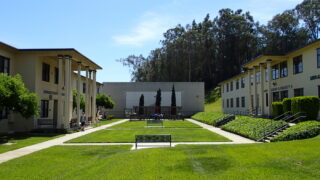

Touro University California College of Osteopathic Medicine (TUCOM) is a private, nonprofit college of osteopathic medicine that grants the Doctor of Osteopathic Medicine (DO) degree. It sits on Mare Island in Vallejo, California, in the northern San Francisco Bay Area, roughly between San Francisco and Sacramento. The college was established in 1997, graduated its founding class in 2001 and is part of the larger Touro University system. Touro University Nevada College of Osteopathic Medicine in Henderson is a branch campus with its own separate application, so this guide covers the Vallejo campus only.
Osteopathic physicians are a growing part of American medicine. DOs now make up about 14 percent of all U.S. physicians, and close to three in ten U.S. medical students attend an osteopathic medical school. TUCOM has trained osteopathic physicians for more than a quarter century, with a strong emphasis on primary care, community service and what the school calls structural competency: the social and economic forces that shape a patient’s health.
This guide is written for applicants in the 2026-2027 AACOMAS cycle, who will start medical school in August 2027 as the Class of 2031. It covers TUCOM’s mission and accreditation, every program and pathway, the curriculum, admissions requirements and deadlines, 2026-2027 tuition and the full cost of attendance, campus life, clinical rotations and research, people worth knowing, class statistics, strategy, all five 2026-2027 secondary questions with original example answers, the interview and a detailed FAQ. Facts were checked on October 17, 2026.
Be an Informed Applicant
As you learn more about TUCOM, you will notice how much the school values community involvement, primary care and real exposure to osteopathic medicine. It screens every primary application before it sends a secondary, it reviews files on a rolling basis and it interviews in a group panel. Each of those choices affects how and when you should apply. Understanding them now will help you decide whether TUCOM belongs on your list and how to present yourself if it does.
Personalized Help
Applying to medical school is a long process, and each school adds its own questions, deadlines and interview format. International Medical Aid (IMA) helps pre-health students through every stage, from building hands-on clinical experience to writing secondary essays and preparing for interviews. Details on IMA’s clinical internships and admissions consulting are in the section on how IMA can help, near the end of this guide.
Key Takeaways
- Eligibility. You must permanently reside in the United States when you apply. TUCOM does not accept international students. DACA recipients who meet all requirements may apply, but federal financial aid is limited to U.S. citizens and permanent residents.
- Screening before the secondary. TUCOM invites you to its secondary only if your primary application meets its minimums: a 3.0 science and cumulative GPA and a total MCAT score of 500 or higher. For the 2026-27 cycle, only MCAT scores earned after January 1, 2023 count.
- Academic context. The Class of 2030, which entered in August 2026, had an average cumulative GPA of 3.58, an average science GPA of 3.49 and an average MCAT of 507. Successful candidates typically have a GPA of 3.3 or higher. TUCOM does not publish an acceptance rate.
- Mission. TUCOM prepares osteopathic physicians committed to primary care and the holistic approach to the patient. Its review criteria include your likelihood to practice in underserved primary care areas.
- Key dates for 2026-2027. AACOMAS opened May 4, 2026. The supplemental application could be submitted from June 1, 2026. The primary deadline is March 15, 2027 and the supplemental deadline is April 15, 2027. Admissions are rolling, so earlier is better. Classes start August 2, 2027.
- Costs. Tuition for 2026-2027 is $72,120 a year for every student, regardless of residency. The school’s 2025-26 sample budget put the first-year cost of attendance at $107,870.
- Distinctive training. Students learn osteopathic manipulative medicine from the first semester, study structural competency as a program learning outcome and can add a DO/MPH, a Global Health Certificate or a fellowship year.
- Next step. Confirm your MCAT date falls after January 1, 2023, line up one committee letter or two science faculty letters and draft your answers to the five secondary questions before you submit AACOMAS.
Key Statistics About Touro University California College of Osteopathic Medicine

The table below collects the key numbers for TUCOM. Each row names its cohort, population and source, because the figures come from different years and different groups.
| Measure | Value | Cohort, population and source |
|---|---|---|
| School and degree | Touro University California College of Osteopathic Medicine, DO | Mare Island, Vallejo, Calif.; private, nonprofit; founded 1997 (TUCOM website; AACOM Choose DO Explorer) |
| Average cumulative GPA | 3.58 | Class of 2030, matriculants, entered August 2026 (TUCOM class statistics) |
| Average science GPA | 3.49 | Class of 2030, matriculants (TUCOM class statistics) |
| Average MCAT | 507 | Class of 2030, matriculants (TUCOM class statistics) |
| Minimum GPA and MCAT | 3.0 science and cumulative GPA; 500 total MCAT | 2026-27 cycle; MCAT earned after January 1, 2023 (TUCOM admissions page) |
| Entering class | About 200 | Class of 2030, White Coat Ceremony, August 30, 2026 (TUC news) |
| First-year matriculants | 188 (163 in-state, 25 out-of-state) | 2024-25 academic year (AACOM Choose DO Explorer) |
| Total DO enrollment | 601 | 2024-25 academic year (AACOM Choose DO Explorer) |
| In-state share | 89% | Class of 2030, matriculants (TUCOM class statistics) |
| Acceptance rate | Not published | TUCOM does not publish applicant, interview or acceptance counts |
| Tuition | $36,060 per semester (Years 1-2); $24,040 per trimester (Years 3-4); $72,120 a year | 2026-27, same for in-state and out-of-state (TUCOM Tuition 2026-2027 table; annual figure is our multiplication) |
| Sample first-year cost of attendance | $107,870 | 2025-26 sample budget, first-year students (Class of 2029), 9 months (TUCOM Tuition & Aid page) |
| Average debt of graduates | $297,691 (86.21% borrowed) | 2024 graduates (TUCOM Tuition & Aid page) |
| COMLEX Level 1 pass rate | 85.19% (national 90.25%) | 2024-25 (TUCOM program outcomes) |
| COMLEX Level 2-CE pass rate | 84.92% (national 91.33%) | 2024-25 (TUCOM program outcomes) |
| Residency match | 100% (129 students) | 2025 graduates; 100% every year since 2017 (TUCOM program outcomes) |
| Secondary fee | $100, non-refundable | 2026-27 cycle; waived for AACOMAS fee waiver recipients on request (TUCOM admissions page) |
| Accreditation | COCA, 10-year Accreditation with Exceptional Outcome (May 7, 2022) | TUCOM accreditation page |
Two notes help you read these numbers. First, the GPA and MCAT figures are averages for students who enrolled. They are not cutoffs. TUCOM’s published minimums are lower (3.0 and 500), and the school says successful candidates typically have a GPA of 3.3 or higher. Second, the cost figures come from two different years. The tuition table is for 2026-27. The full sample budget, with insurance and living costs, is the 2025-26 version, the newest the school has posted, and it uses the lower 2025-26 tuition of $69,300. Expect your own first-year budget to be higher.
If you want to see how TUCOM’s numbers compare with other schools, our table of medical school GPA and MCAT averages lists averages for MD and DO programs across the country.
Mission and Educational Priorities
TUCOM states its mission this way: “The Mission of Touro University Osteopathic Medicine Program is to prepare students to become outstanding osteopathic physicians who uphold the values, philosophy, and practice of osteopathic medicine and who are committed to primary care and the holistic approach to the patient. The program advances the profession and serves its students and society through innovative pre-doctoral and post-doctoral education, research, community service, and multidisciplinary and osteopathic clinical services.” The full statement and the college’s values are on the TUCOM About page.
The college sums up its core values with the acronym WE SCORE: Wellness, Engagement, Service, Community Health, Osteopathic Distinction, Research and Education.
The osteopathic philosophy at TUCOM
TUCOM says the osteopathic tenets are “at the heart of everything we teach.” The four tenets are:
- The body is a unit; the person is a unit of body, mind, and spirit.
- The body is capable of self-regulation, self-healing, and health maintenance.
- Structure and function are reciprocally interrelated.
- Treatment should be based on an understanding of the principles of body unity, self-regulation, and the interrelationship of structure and function.
In practice, this means a physician looks at the whole patient rather than one problem area. The musculoskeletal system is treated as an active part of diagnosis and treatment, not just a frame that holds the body up. These tenets matter twice for applicants: they shape the curriculum, and one of the 2026-2027 secondary questions asks you to choose a tenet and connect it to your own life.
What the mission means for applicants
Primary care is central, but not the only path. TUCOM says it is among the nation’s top 10 medical schools for placing graduates into primary care residencies. It also says its graduates divide almost equally between primary care and specialty medicine. You do not need to promise a primary care career, but you should show that you understand and respect the school’s commitment to it. In the school’s admissions video, Dr. Alesia Wagner, now Associate Dean of Academic Affairs, puts it plainly: applicants need to want to be a DO, need some interest in primary care and need an interest in the community and social justice.
Underserved care is a stated review criterion. TUCOM lists “likelihood to practice in underserved primary care areas” among the criteria it uses throughout the application and interview process. Sustained work with patients or communities who face barriers to care is the strongest evidence you can offer.
Structural competency is part of the curriculum. TUCOM describes itself as the only medical school with structural competency as one of its program learning outcomes. Structural competency is the ability to recognize how housing, food access, income, policy and neighborhood shape health. Applicants who have seen these forces up close, through clinic work, social services, public health jobs or community organizing, have something concrete to write about.
Knowledge of osteopathic medicine matters. “Exposure to, experience with, and/or knowledge of Osteopathic Medicine” is another listed review criterion. Admissions leaders in the school’s video say they often meet applicants who have only read a short summary of osteopathic medicine online. Shadowing a DO, attending a TUCOM information session or joining the student-run ShaDO day will give you real material. If you are new to the field, start with our explainer on what osteopathic medicine is and how it is different.
Wellness is built in. TUCOM’s WARM curriculum stands for Wellness, Academics, Resilience and Mindfulness. The school presents it as a way to balance your growth as a physician and as a person. The 2026-2027 secondary asks about your hobbies and non-academic pursuits, which is one sign that the college cares how you take care of yourself.
History
TUCOM was established in 1997 and graduated its founding DO class in 2001. The American Osteopathic Association first granted the college full accreditation in April 2001. In 2004, the accreditor approved a branch campus in Henderson, Nevada, which is now Touro University Nevada College of Osteopathic Medicine. The California campus moved its regional accreditation to the Western Association of Schools and Colleges in 2005. Over a quarter century, TUCOM has grown into one of the established osteopathic schools on the West Coast, with alumni who now include deans, researchers, military physicians and state medical board members.
Accreditation and Institutional Identity
COCA accreditation. The Doctor of Osteopathic Medicine program is accredited by the American Osteopathic Association’s Commission on Osteopathic College Accreditation (COCA), the body the U.S. Department of Education recognizes as the accreditor of colleges of osteopathic medicine. On May 7, 2022, TUCOM finalized its most recent comprehensive review, and COCA granted a 10-year status of Accreditation with Exceptional Outcome. In its 2015 review, the college received a commendation for its research programs. The details are on the TUCOM accreditation page.
University accreditation. Touro University California is fully accredited by the WASC Senior College and University Commission (WSCUC). Its next accreditation review is scheduled for spring 2034. Accreditation allows students to receive federal and state financial aid. It confirms that the program meets national standards; it is not a ranking or a promise of any outcome.
Institutional identity. Touro University California is a separately accredited institution within the Touro University system, which also runs undergraduate, graduate and professional programs in New York, Montana, Illinois and elsewhere. Touro’s health sciences campus in Vallejo also houses pharmacy, physician assistant, nursing, public health and other programs, so DO students regularly learn alongside other future health professionals.
Names you will see
- TUCOM, TUC COM or Touro California all refer to this college of osteopathic medicine on Mare Island.
- Touro University Nevada College of Osteopathic Medicine (TUNCOM) in Henderson is a branch campus with its own admissions office and application. Choose it separately in AACOMAS if you want to apply there.
- Touro College of Osteopathic Medicine (TouroCOM) in New York and TouroCOM Montana are different colleges in the Touro system, with their own campuses and applications. Statistics or prompts for those schools do not apply to TUCOM California.
When you read forum posts or third-party profiles, check which Touro campus they describe. Mixing them up is the most common source of wrong numbers about this school.
Medical Programs and Affiliations
Programs Offered at Touro Medical School
Touro University California offers the following programs through or alongside the College of Osteopathic Medicine:
- Doctor of Osteopathic Medicine (DO)
- Doctor of Osteopathic Medicine / Master of Public Health (DO/MPH)
- Master of Science in Medical Health Sciences (MSMHS), a one-year preparatory master’s program
- The Public Health to Medicine Scholars program, an MPH pathway for future DO applicants
- Certificates and fellowships for enrolled DO students: Global Health Certificate, Diabetes Certificate, Culinary Medicine, OMM Fellowship, Primary Care (Clinical Sciences) Teaching Fellowship, Anatomy Fellowship and Predoctoral Research Fellowship
- A post-graduate Diabetology Fellowship for primary care physicians and an Office of Continuing Medical Education
Doctor of Osteopathic Medicine
The four-year DO program is TUCOM’s core degree. Like most medical schools, allopathic or osteopathic, it is split into preclinical and clinical education. Years 1 and 2 combine classroom learning with early clinical experience, and Years 3 and 4 are clinical rotations. The curriculum is covered in detail in the next section.
TUCOM has laid out the learning outcomes every graduate should reach. The school’s program learning outcomes are:
- Osteopathic Principles and Practices
- Medical Knowledge
- Patient Care
- Interpersonal and Communication Skills
- Professionalism
- Practice-Based Learning and Improvement
- Systems-Based Practice
- Structural Competency
The first seven are the American Osteopathic Association’s core competencies. The eighth, structural competency, is TUCOM’s own addition.
Students must complete all program requirements and pass the required COMLEX-USA licensing exams before they earn the DO. After that, graduates are eligible to Match for residency, the step that leads to independent practice. TUCOM reports a 100 percent residency match rate every year since 2017.
Doctor of Osteopathic Medicine / Master of Public Health
The DO/MPH dual degree trains osteopathic students to take leadership roles in population health and to build prevention into clinical practice. TUCOM describes it as one of the largest DO/MPH programs in the nation. The DO/MPH program page explains the structure.
Units. The full MPH is 42 units. DO/MPH students complete 30 units within the Public Health Program, and the remaining 12 units transfer from the DO curriculum.
Core courses. Every MPH student covers the five core disciplines of public health: Biostatistics, Behavioral and Social Aspects of Public Health, Epidemiology, Health Policy and Management, and Environmental Health, plus Program Evaluation and Research Methods.
Concentrations. Students choose one of three:
- Community Action for Health, with courses such as Social Inequities in Public Health and Community Health Promotion.
- Global Health, with courses such as Essentials of Global Health and Emerging Health Threats. Depending on the concentration, field study can take place in countries such as Bolivia, Cambodia, Ethiopia, Nepal or Uganda.
- Criminal Justice and Health, which can include work inside a correctional facility.
Culminating experience. All MPH students complete a public health field study. Dual degree students complete 200 hours during a 6-week block designated for public health rotations. Students also choose between preparing for the Certified in Public Health (CPH) exam and completing a capstone project with a faculty mentor. The MPH is accredited by the Council on Education for Public Health (CEPH).
Timing. Many dual degree programs place the MPH between the third and fourth years of medical school. TUCOM does it differently. Students usually begin public health courses the summer before they enter the College of Osteopathic Medicine and finish didactic coursework the summer after their first year. They can take the CPH exam toward the end of the second summer and complete the field study during a designated rotation block. On a case-by-case basis, with approval from MPH and COM leadership, a TUC student can instead add a fifth year and spend it immersed in public health, which is the better route for a capstone project or for someone who cannot start the summer before medical school.
How to apply. You can ask to be considered for the DO/MPH in your AACOMAS application. If you say yes, you answer a few short public health essays, limited to 2,000 characters each. The school states that these essays do not influence your medical school application. If you are accepted to the DO program, your file is forwarded automatically. You can also apply after acceptance through the Touro application system at apply.tu.edu/oc. There is no extra fee, and letters and transcripts come from your AACOMAS file. The DO/MPH essay questions themselves are shown only inside AACOMAS and the Touro portal, and the 2026-2027 wording has not been published, so read them when you reach that section of your application.
Master of Science in Medical Health Sciences
The Master of Science in Medical Health Sciences (MSMHS) will earn you a master’s degree, but it does not make you a physician. It is a one-year, 12-month preparatory program that combines a graduate curriculum in the basic medical sciences with a semester-long, faculty-mentored research internship. It starts in the fall and can be taken on campus or online, with both cohorts taking the same courses at the same time. Research topics include microbiology, ion channels, cancer, diabetes, Alzheimer’s disease, neuronal development and obesity.
Perhaps you decided to become a doctor after you earned your bachelor’s degree, or your undergraduate science grades do not show what you can do now. The MSMHS is designed for that situation. Program leaders describe it as a way to strengthen your health sciences foundation, see the demands of medical school up close and improve your application. Alan Miller, PhD, has directed the program since it began in fall 2010.
The MSMHS has a formal linkage with TUCOM. Details are on the MSMHS admissions page, and the main terms are:
- Guaranteed acceptance. Finish the first MSMHS semester with a cumulative GPA of 3.60 or higher, earn a composite MCAT of 490 or higher by January 15 (within three years of the start of the AACOMAS cycle), submit AACOMAS by January 15 with one letter from a DO plus two science faculty letters or one committee letter, meet all TUCOM prerequisites and have no academic or professional violations. Decisions come by March 15, and you must keep a 3.50 GPA through the rest of the program.
- Guaranteed interview. Students who do not qualify for guaranteed acceptance can still earn a guaranteed TUCOM interview by finishing the program with a 3.10 GPA or higher, earning a 490 or higher MCAT and submitting all application materials by the deadlines. These interviews are held in the first two weeks of May.
- Limits. Only first attempts at MSMHS courses count, the offers are mutually exclusive and each is offered once.
The program reports that more than half of MSMHS students who apply to TUCOM are accepted. It also offers guaranteed interviews at TouroCOM Montana and at Touro physician assistant and dental programs for qualifying students. For 2026, the school’s sample MSMHS budget lists tuition of $28,420, tuition and fees of $28,670 and a total estimated cost of attendance of $62,612 for the nine-month academic year, before any financial aid.
Public Health to Medicine Scholars
The Public Health to Medicine Scholars program is a newer route for strong applicants who want public health training before medical school. Scholars complete an MPH online through live evening Zoom classes over three or four semesters, with a 200-hour field study in the summer. It is not a grade-repair program: applicants need an undergraduate science GPA of 3.5 or higher, and the school points students who need to raise a science GPA to the MSMHS instead. Scholars with an overall program GPA of 3.50 or higher and a composite MCAT of 504 or higher can qualify for guaranteed acceptance or a guaranteed interview at TUCOM, subject to the conditions on the Public Health to Medicine Scholars page.
Certificates and fellowships for DO students
- Global Health Certificate. A structured, four-year path for students interested in global and local health disparities, with case-based courses, research, international summer internships and international clinical rotations. Students apply during their first semester and pre-select some electives and how they spend their first summer. Global Health Pathway students have worked at sites in Africa, India, Mexico, Taiwan and Israel.
- Diabetes Certificate. Training with a dedicated team of diabetes specialists in current research and treatment.
- Culinary Medicine. Coursework on nutrition and cooking as part of patient care.
- OMM Fellowship. An added year in which fellows take on extra clinical, teaching and research work in osteopathic manipulative medicine and teach OMM to classmates.
- Primary Care (Clinical Sciences) Teaching Fellowship. An added year that builds clinical and teaching skills for students interested in academic medicine.
- Anatomy Fellowship and Predoctoral Research Fellowship. Added-year options for students drawn to anatomy teaching or research.
Fellowships extend medical school by one year. They are chosen after you enroll and are not part of the admissions decision.
Clinical affiliations
TUCOM organizes longitudinal core sites and regional clerkships predominantly in California and New York. Kaiser Permanente Northern California invites Touro medical students to a third-year longitudinal program in which they spend one year at Kaiser Permanente Santa Rosa or Napa, and Kaiser Napa-Solano takes third-year family medicine clerks. The school does not publish a full list of core hospitals, so ask about current sites at your interview if location matters to you.
Curriculum Overview
TUCOM’s curriculum integrates basic science and clinical medicine with an osteopathic focus, using an interprofessional, community-centered model. The full course descriptions are on the TUCOM academics page.
How the preclinical years are organized
In Years 1 and 2, each semester has courses along three tracks:
- Integrated sciences, organized by body system. You learn everything about the cardiovascular system in an integrated way, for example, before you move on to the respiratory system.
- Osteopathic doctoring, which builds professionalism, clinical skills such as interviewing and physical examination, clinical reasoning, ethics, humanities and early clinical experience with real and simulated patients in community and clinical settings.
- Osteopathic manipulative medicine, taught in the Osteopathic Principles and Practices courses, where you learn to integrate osteopathic manipulative treatment (OMT) into diagnosis and treatment from the first semester.
A simulated patient lab lets student-doctors practice with trained actors who portray real patient scenarios, so both sides of the conversation feel real. Structural competency runs through all of it.
Year 1
| Course | Units |
|---|---|
| Fundamentals of Osteopathic Medicine | 13 |
| Osteopathic Doctoring 1 | 3.5 |
| Osteopathic Principles and Practices 1 | 3.5 |
| Integrated Systems: Cardiovascular, Respiratory and Renal | 14.5 |
| Osteopathic Doctoring 2 | 4.5 |
| Osteopathic Principles and Practices 2 | 3.5 |
Fundamentals of Osteopathic Medicine lays the scientific base: biochemistry, anatomy, physiology, histology, embryology, genetics, pharmacology, pathology, microbiology and immunology. The cardiovascular, respiratory and renal course then teaches those systems together, ending with a clinical overview that ties all three.
Year 2
| Course | Units |
|---|---|
| Integrated Systems: Neurology/Musculoskeletal | 12.5 |
| Osteopathic Doctoring 3 | 5.5 |
| Osteopathic Principles and Practices 3 | 2.5 |
| Integrated Systems: Gastrointestinal, Endocrinology, Reproduction and Dermatology (GERD) | 13 |
| Osteopathic Principles and Practices 4 | 2.5 |
| Osteopathic Doctoring 4 | 2.5 |
The neurology and musculoskeletal course pairs neuroanatomy and clinical neurology with the structure-function relationship of muscles, bones and joints, which links directly to osteopathic practice. Students take COMLEX-USA Level 1 between the second and third years.
Preclinical electives
TUCOM’s current preclinical electives include:
- Global Wellness, on resilience tools drawn from psychology, philosophy and integrative and lifestyle medicine.
- Helping Babies Breathe: Newborn Stabilization in the Developing World, which teaches neonatal resuscitation for resource-limited settings and is required for Global Health summer interns at the Africa sites.
- Interprofessional Elective in Street Medicine, focused on the health needs of the unhoused population in Vallejo, with hands-on work in the community.
- LGBTQIA+ Considerations in Healthcare, including implicit bias and SafeZone training.
- Life-Saving Hospital Procedures for the Medical Student, a cadaver-based course for second-year students.
- Medical Spanish, for second-year students who want to take histories in Spanish.
- OMT Lab, a summer course in which students provide OMT demonstrations with a faculty preceptor.
- Pathways to Success, on study strategies, time management and well-being.
- Pediatric Obesity Prevention Program (Project HAPPY), in which students are trained to guide Vallejo families through a healthy-habits curriculum as part of an ongoing research program.
- Summer Clinical Preceptorship, a summer between Years 1 and 2 spent in a clinical setting with a TUCOM faculty member or community physician.
- The Healer’s Art, a course on meaning and commitment in medicine.
- Wilderness Medicine: Mountain Medicine, a student-requested course on altitude illness, thermoregulation, improvised care and backcountry OMT.
- Science-based Reproductive Health Care, an interprofessional discussion course.
Year 3
Your third and fourth years are clinical rotations, with time for research or further elective study. Year 3 is built from 13 blocks of four weeks and includes the core rotations:
- Family Medicine
- Internal Medicine
- Surgery
- Obstetrics and Gynecology
- Pediatrics
- Psychiatry
Year 3 also includes some elective time and the required Clinical Distinction course, a self-directed course designed by Dr. Jennifer Weiss that won the Marguerite Ellison Prize for Innovations in Clinical Education from the American Association of Colleges of Osteopathic Medicine in 2017. Students who join Kaiser Permanente’s longitudinal program spend much of the year at one site, following patients over time.
Year 4
Fourth-year rotations include:
- Primary Care
- Critical Care
- Emergency Medicine
- Pediatrics
- OB-GYN
- Osteopathic Manipulative Medicine (OMM)
Year 4 gives you plenty of elective time for sub-internships and audition rotations in the specialty of your choice, with preceptors anywhere in the United States. Blocks are also set aside for research, board study and global health experiences. Many students use electives to explore related fields; a future family physician might rotate in radiology or dermatology, for example. COMLEX-USA Level 2-CE is taken during the clinical years.
Award-winning curriculum design
TUCOM points to four national curricular awards. Dr. Tami Hendriksz received a 2018 award for designing the Patient Perspectives curriculum. Dr. Jennifer Weiss’s Clinical Distinction course won the 2017 Marguerite Ellison Prize. Dr. Stacey Pierce-Talsma and Joel Talsma received a 2016 award for COAR, a curriculum combining clinical skills, OMM, anatomy and radiology. Glenn Davis received a 2021 award for SCOR, an osteopathic core competency assessment system.
Admissions Requirements and Application Process
Selection Factors: What TUCOM Looks for in an Applicant
TUCOM evaluates applicants throughout the application and interview process on criteria that include, but are not limited to:
- Academic competence
- Exposure to, experience with and/or knowledge of osteopathic medicine
- Personal and professional achievements
- Demonstrated leadership skills
- Creative abilities
- Experience in health care
- Likelihood to practice in underserved primary care areas
Beyond academic readiness, students are selected for their understanding of and commitment to osteopathic medicine, verbal and nonverbal communication skills, reasoned judgment and fit with the mission. Steven Davis, Director of Admissions, says in the school’s application video that applicants should show their passion for the profession at every stage and be ready to explain why they want to be a physician generally and an osteopathic physician specifically.
Application Requirements
The requirements are listed on the TUCOM admissions page. You need:
- A bachelor’s degree and all required coursework from an institution accredited by one of seven approved institutional accreditors (HLC, MSCHE, NECHE, NWCCU, SACSCOC, WSCUC or ACCJC), completed before the first day of mandatory orientation.
- A minimum science and cumulative GPA of 3.0.
- A total MCAT score of 500 or higher, earned after January 1, 2023 for the 2026-27 cycle. TUCOM does not waive the MCAT.
- Letters of recommendation, described below.
- Permanent residence in the United States at the time of application.
Applicants who were dismissed from another medical school for professional or academic reasons are not considered. TUCOM also publishes technical standards for admission, which describe the physical, cognitive and behavioral abilities students need to complete the program with or without reasonable accommodation. Review them before you apply.
GPA and MCAT Requirements
The minimums are a 3.0 science and cumulative GPA and a 500 MCAT. The school notes that successful candidates typically have GPAs of 3.3 or higher. The Class of 2030 averaged a 3.58 cumulative GPA, a 3.49 science GPA and a 507 MCAT. If you are near the minimums, the rest of your application has to carry more weight, and you should apply early.
The MCAT window matters. For the 2026-27 cycle, only scores earned after January 1, 2023 are considered. If you plan to retake the exam during the cycle, schedule it early enough that a new score can reach the committee while seats remain, since admissions are rolling.
Required Coursework
All prerequisite courses need a grade of C or higher; a C- does not count. Pass or Credit grades satisfy the requirement, and online coursework, including online labs, from accredited institutions is accepted.
| Subject | Requirement |
|---|---|
| Biology | 8 semester or 12 quarter units, with lab |
| Physics | 8 semester or 12 quarter units, with lab |
| Chemistry, Option 1 | General/Inorganic Chemistry, 8 semester or 12 quarter units, with lab; Organic Chemistry, 8 semester or 12 quarter units, with lab (4 semester units of Biochemistry may replace 4 semester units of Organic Chemistry) |
| Chemistry, Option 2 | General/Inorganic Chemistry, 4 semester or 6 quarter units, with lab; Organic Chemistry, 8 semester or 12 quarter units, with lab; Biochemistry, 4 semester or 6 quarter units, with lab |
| College English | 2 courses |
| Behavioral science | 2 courses |
| Math or computer science | 1 course, minimum 4 semester units |
TUCOM also recommends human anatomy, human physiology and biochemistry for extra preparation. Advanced Placement credit is accepted only when your undergraduate transcript shows specific subject credit (for example, General Chemistry, 4 units) or specific course credit (for example, Chem 101, 4 units). General AP credit without those details does not count.
Foreign coursework. Courses completed outside the United States, unless the institution is accredited by an approved agency, must be evaluated course by course by World Education Services (the preferred agency), the International Education Research Foundation or Josef Silny and Associates. The evaluation must list semester units, letter grades, cumulative GPA and degree equivalency, and must be sent directly to [email protected].
Letters of Recommendation
You must submit either one letter from a pre-professional advisory committee or two letters from biological or physical science faculty who taught you in class. Letters from graduate teaching assistants are acceptable. A letter from a physician (DO or MD) is recommended but not required.
- Letters must be on formal letterhead and signed by the writer.
- TUCOM strongly recommends sending letters through the AACOMAS letter service or with the supplemental application through the TUC application system. Letters may also come through Interfolio or directly from the writer.
- Letters may not come from you, and letters from family members are not considered.
- TUCOM does not participate in the Virtual Evals service.
If you can, ask a DO you have shadowed or worked with for the optional physician letter. It is the clearest outside evidence that you understand osteopathic practice. Our guide to medical school letters of recommendation covers how to ask and when.
Experience in Health Care and Shadowing
TUCOM lists “experience in health care” and knowledge of osteopathic medicine among its review criteria, but it does not publish a minimum number of clinical or shadowing hours, and it does not require shadowing. That does not mean experience is optional in practice. The committee is looking for evidence that you know what patient care involves and why you want to practice it as a DO.
Strong experience for TUCOM usually includes:
- Sustained, hands-on patient contact, such as work as a medical assistant, CNA, EMT, scribe, phlebotomist or patient care technician.
- Time with osteopathic physicians, ideally in primary care, so you can describe how a DO approaches patients and where OMT fits.
- Service with communities that face barriers to care, which connects to the school’s underserved primary care criterion.
- Experience with the social side of health, such as food banks, housing programs, harm reduction or community health work, which gives you material for structural competency.
Many applicants also look for clinical internships for pre-med students that put them in supervised, hands-on roles with patients. Well-run pre-med internships can add depth to your record, but they work best on top of steady clinical and service work in your own community, not as a replacement for it.
The ShaDO Experience. Current TUCOM medical students run the ShaDO Experience for pre-medical students interested in osteopathic medicine. For one day, you shadow a first- or second-year student in their Osteopathic Manipulative Medicine or Osteopathic Doctoring labs and take a short campus tour. Space is limited, spots fill quickly and taking part does not give you special consideration for admission. It is still one of the best ways to see osteopathic training up close.
Is Casper or PREview required?
TUCOM’s admissions requirements do not include Casper, PREview or any other situational judgment test for the 2026-27 cycle. Focus your time on the MCAT, your AACOMAS application and the secondary.
AACOMAS Primary Application and TUCOM Secondary Application
You apply to TUCOM through AACOMAS, the centralized application service for U.S. osteopathic medical schools. Choose Touro University California as a school and submit your materials. If you are new to the system, our AACOMAS application guide walks through each section.
After you submit AACOMAS, TUCOM screens your application against its minimums. Only applicants who meet the 3.0 GPA and 500 MCAT requirements are invited to submit the secondary, which TUCOM also calls the supplemental application. The secondary costs $100 and is non-refundable. If you received an AACOMAS fee waiver, email a copy of your waiver to [email protected] and the office will send you a waiver code. The process is not automatic.
Almost all communication from TUCOM comes by email, so make sure mail from @tu.edu and @touro.edu does not land in your spam folder.
Key dates for the 2026-2027 cycle
| Milestone | Date |
|---|---|
| AACOMAS opens for submission | May 4, 2026 |
| Earliest supplemental submission | June 1, 2026 |
| Interviews | Typically late September through April or early May |
| Multiple-deposit decision for fall starts | June 1 |
| Primary (AACOMAS) deadline | March 15, 2027 |
| Supplemental deadline | April 15, 2027 |
| Orientation and start for first-year students | August 2, 2027 |
Admissions are rolling and deadlines can change. TUCOM advises applicants to submit materials as soon as possible for the best chance of admission. Steven Davis cautions in the admissions video that applicants who wait until the deadline often get caught by a last-minute problem. Plan to submit AACOMAS early in the cycle and return the secondary within a week or two of the invitation. If you are working, studying or doing pre-med summer internships while you apply, draft your secondary answers before the cycle opens so that travel or a busy schedule does not delay your file.
Decisions, deposits and waitlist
The Admissions and Standards Committee reviews complete files and sends interview invitations on a rolling basis to candidates who show the highest potential to succeed at TUCOM. After interviews, the committee meets regularly, usually every other week, though holidays can shift the schedule. Decisions are emailed within a few days of each meeting. Candidates may be accepted, waitlisted or denied.
If you are accepted, you complete a response form and pay a non-refundable, non-transferable $2,000 acceptance deposit, usually due within two weeks of your acceptance letter. Applicants accepted before a certain date also pay a $1,000 additional deposit before May 15, which is refundable if you withdraw before the first day of mandatory orientation. Both deposits are credited toward tuition.
If you hold seat deposits at more than one Touro program, you must choose one by June 1 for fall starts and withdraw from the others. TUCOM does not offer an Early Decision Program. Deferral requests are reviewed case by case, approval is not automatic and deferrals are approved only for very limited reasons. Incoming and current students may also be required to complete background checks.
Tuition, Cost of Attendance and Financial Aid
Cost of Attendance
TUCOM charges the same tuition to every DO student, whether you live in California or another state. For 2026-27, tuition for first- and second-year students is $36,060 per semester, and tuition for third- and fourth-year students is $24,040 per trimester. Both work out to $72,120 a year. The current rates are on the TUCOM Tuition & Aid page.
| 2026-27 tuition and fees | Amount |
|---|---|
| Tuition, Years 1-2 | $36,060 per semester ($72,120 a year) |
| Tuition, Years 3-4 | $24,040 per trimester ($72,120 a year) |
| Part-time, Years 1-2 (under 6 credits) | $1,290 per credit |
| Part-time, Years 3-4 (under 6 credits) | $7,020 per rotation |
| Student Health Fee | $360 a year |
| Technology Fee | $135 per semester (Years 1-2) or $90 per trimester (Years 3-4) |
| Equipment Fee | $1,500, one time in Year 1 |
Using those rates, a first-year student’s 2026-27 tuition and mandatory fees add up to about $74,250: $72,120 in tuition, $360 for the health fee, $270 in technology fees and the $1,500 equipment fee. That is our sum of the school’s listed charges. Tuition and fees are due the first week of classes unless you enroll in a payment plan.
Full cost of attendance by year
Tuition is only part of the cost. Your cost of attendance (COA) also includes health insurance, books, a computer, loan fees, living costs and board exam costs. TUCOM requires participation in Touro’s Student Health Insurance Plan (SHIP) unless you are approved to waive it. The school’s newest sample budget is the 2025-26 version, which labels first-year students as the Class of 2029 and uses the 2025-26 tuition of $69,300.
| Sample budget, 2025-26 | Year 1 (9 months) | Year 2 (9 months) | Year 3 (12 months) | Year 4 (12 months) |
|---|---|---|---|---|
| Tuition | $69,300 | $69,300 | $69,300 | $69,300 |
| Student health center fee | $345 | $345 | $345 | $345 |
| Technology fee | $250 | $250 | $255 | $255 |
| Equipment fee | $1,500 | n/a | n/a | n/a |
| Total tuition and fees | $71,395 | $69,895 | $69,900 | $69,900 |
| Student Health Insurance Plan | $4,906 | $4,906 | $4,906 | $4,906 |
| Books and supplies | $1,364 | $1,364 | $2,046 | $2,046 |
| Computer allowance | $2,066 | $0 | $0 | $0 |
| Unsubsidized loan fee | $428 | $428 | $498 | $498 |
| Estimated cost of living | $27,711 | $27,711 | $37,499 | $37,499 |
| COMLEX exams and travel | n/a | $730 | $730 | $5,871 |
| Total indirect costs | $36,475 | $35,139 | $45,679 | $50,820 |
| Total estimated annual COA | $107,870 | $105,034 | $115,579 | $120,720 |
Added together, the four sample years come to $449,203. That sum is our calculation from the school’s 2025-26 budget. Because 2026-27 tuition is already $2,820 a year higher than the budget shows, a student entering in 2027 should plan for a four-year total above that figure. The third and fourth years cost more because they run 12 months, living costs rise during rotations and the fourth year includes COMLEX and residency travel costs.
It is expensive to attend TUCOM. But do not let the sticker shock keep you from applying. Most students finance medical school with a mix of federal loans, scholarships and other aid, and our overview of the total cost of medical school explains how budgets and loans fit together.
Financial aid and scholarships
Federal aid. Touro California’s financial aid office administers federal and private loans, several federal scholarship programs and the Federal Work-Study Program. Your COA sets the maximum aid you can receive each year. Federal aid is limited to U.S. citizens and permanent residents. If you are a DACA recipient or otherwise apply without citizenship or permanent residency, the school strongly encourages you to explore other financing before you apply.
Scholarships. The College of Osteopathic Medicine offers internal and external scholarships. Its scholarships page lists outside awards for osteopathic students, such as American Osteopathic Foundation grants and scholarships, and the university’s annual Mosaic Gala raises money for dozens of student scholarships. Scholarships at TUCOM are generally modest compared with the cost of attendance, so most students borrow.
Debt and repayment. TUCOM’s 2024 graduates who borrowed left with average debt of $297,691, and 86.21 percent of that class borrowed. The figure includes loans for both tuition and living costs. The Touro cohort default rate, which combines the California and Nevada campuses, was 0.00 percent for fiscal year 2021.
Ways to lower your cost. Living with roommates, choosing housing with a short drive to Mare Island and keeping your loan amount close to your actual needs all help. Public service loan forgiveness and service-based programs such as the National Health Service Corps and military scholarships can also reduce what you repay, especially for physicians who plan careers in primary care or underserved areas, which fits TUCOM’s mission.
Campus Facilities and Student Life
Why Touro University California?
TUCOM’s campus is on Mare Island in Vallejo, a former naval shipyard on the water in the northern San Francisco Bay Area. The location puts you within reach of San Francisco, Sacramento, Napa and the wine country, with hiking, walking and biking trails around campus. The campus setting is suburban.
Facilities include renovated Truett Hall, with classrooms dedicated to health professions teaching, the Lander Hall auditorium and gym, simulated patient and OMM labs, a full-size gymnasium, racquetball and handball courts, weight rooms, outdoor exercise areas and a meditation garden.
Housing
TUCOM does not provide university-subsidized housing. A housing specialist helps students find places to live, and most students live in Vallejo or nearby communities within a short drive of campus. The school’s 2025-26 budget estimates living costs of about $27,711 for each nine-month preclinical year. Bay Area housing is expensive, so start looking early and consider sharing with classmates.
Student support
- OASIS (Office of Academic Services and Institutional Support) offers peer tutors, study-skills workshops and academic coaching.
- Student Health Services provides confidential access to licensed health and mental health professionals.
- The Office of Student Activities supports dozens of student groups, from professional clubs to recreational ones.
- The WARM curriculum builds wellness, resilience and mindfulness into training, and electives such as Global Wellness and Pathways to Success teach coping and study skills.
Admissions leaders also describe a close faculty culture. In the admissions video, Dr. Alesia Wagner recalls a student who emailed six faculty members about summer research; five said yes within 12 hours.
Service and community outreach
Community service is a large part of student life at TUCOM. Students volunteer about 1,300 hours a year at the Student-Run Free Clinic. Other outreach includes the Mobile Diabetes Education Center, vaccination events, mentoring local youth and the Project HAPPY family health program in Vallejo. The Street Medicine elective takes students into Vallejo’s unhoused community. Existing Touro students can also join the Ambassador HP Connect program, which trains them as mentors for disadvantaged high school and college students pursuing health careers. For applicants, this culture means sustained service in your own community will make sense to the committee and give you a natural way to explain why TUCOM fits.
If you are interested in Spanish-language care, the Medical Spanish elective is open to second-year students. Some applicants build language and cultural skills before medical school through programs such as a medical internship in Peru, where they work with patients in a Spanish-speaking clinical setting.
Touro Medical School Ranking
So, where does TUCOM rank among the best medical schools in America? TUCOM’s own strongest claim is about outcomes rather than rankings: the school says it is among the nation’s top 10 medical schools for placing graduates into primary care residencies. Its residency match rate has been 100 percent every year from 2017 through 2025. Rankings measure different things and change often, so use them as one input. For a comparison across osteopathic programs, see our guide to DO school rankings.
Clinical Rotations and Research Opportunities
Clinical training
TUCOM’s clinical years are built around longitudinal core sites and regional clerkships, predominantly in California and New York. Year 3 covers the required core rotations in internal medicine, family medicine, obstetrics and gynecology, pediatrics, general surgery and psychiatry over 13 four-week blocks, plus some elective time. Where you train depends on site assignments, so expect some travel and possibly a move during Years 3 and 4.
One example of a longitudinal option is Kaiser Permanente Northern California’s third-year program. Kaiser invites Touro medical students to spend the year at Kaiser Permanente Santa Rosa or Napa, and Kaiser Napa-Solano accepts third-year family medicine clerks. A longitudinal year lets students follow patients and teams over time instead of switching sites every few weeks. Details are on the Kaiser Permanente Northern California medical student page.
In Year 4, students plan their own schedules, choosing electives, audition rotations and preceptors throughout the United States. Blocks are built in for research, board study and global health experiences. Ask at your interview how sites are assigned, how many students stay in Northern California and how the school supports students who rotate in New York.
Service clinics
The Student-Run Free Clinic is the center of TUCOM’s service culture, with about 1,300 student volunteer hours a year. Students also work with the Mobile Diabetes Education Center, which brings diabetes education into the community, and in the Street Medicine and Project HAPPY electives in Vallejo. These programs are optional, but they are among the clearest ways to put the school’s mission into practice.
Global health
The Global Health Certificate gives students a four-year path with international summer internships and clinical rotations. Global Health Pathway students have worked at sites in Africa, India, Mexico, Taiwan and Israel. DO/MPH students in the Global Health concentration may complete field study abroad, in countries such as Bolivia, Cambodia, Ethiopia, Nepal or Uganda. The Helping Babies Breathe elective prepares students to teach newborn resuscitation during the summer internship at Africa sites.
If global health interests you, it helps to arrive with some experience of care in a different setting. Applicants often use pre-med internships abroad to see how clinicians work with limited resources, and then build on that in their secondary essays and interviews. Be specific about what you did and learned, and connect it to the patients you hope to serve at home.
Research
TUCOM does not list a research requirement for graduation, but research is easy to find. Faculty interests include HIV treatment, cancer vaccines, metabolism, lipid disorders, aging, inflammation and neurological and chronic disease. The TUCOM research page lists faculty teams by topic, including:
- Metabolic Research Center and Diabetes Institute, with clinical research on preventing and treating type 2 diabetes and metabolic dysfunction-associated steatotic liver disease (MASLD), led in part by Dr. Jay Shubrook.
- Lipid disorders and nutrition, studying how dietary carbohydrates and fructose affect blood lipids and chronic disease.
- Cardiovascular disease, focused on Long QT syndrome and electrolyte imbalances.
- Osteopathic manipulative medicine, studying OMT for breastfeeding infants (with a UC San Diego collaboration), autism spectrum disorder (with a UCSF collaboration) and plagiocephaly.
- Global health, on cancer screening in low- and middle-income countries.
- Immunology, drug design, anatomy, evolutionary anatomy and aging, among others.
Students can join faculty projects during the preclinical years and summers, present at the annual Research Day and add a year through the Predoctoral Research Fellowship. Year 4 includes blocks for research.
Outcomes
TUCOM publishes board pass rates and residency results on its program outcomes page.
| Measure | TUCOM | National | Year |
|---|---|---|---|
| COMLEX Level 1 pass rate | 85.19% | 90.25% | 2024-25 |
| COMLEX Level 1 pass rate | 92.91% | 93.18% | 2023-24 |
| COMLEX Level 2-CE pass rate | 84.92% | 91.33% | 2024-25 |
| COMLEX Level 2-CE pass rate | 89.92% | 92.84% | 2023-24 |
| COMLEX Level 3 pass rate | 98.1% | 97.09% | 2025 |
| Residency match | 100% (129 students) | n/a | 2025 |
| Residency match | 100% (116 students) | n/a | 2024 |
The most recent Level 1 and Level 2-CE pass rates are below the national rates, while Level 3 and residency placement are strong. Those are fair questions to ask at your interview: how the school supports board preparation and what it changed after recent results.
Notable Alumni, Faculty, Leadership and Admissions Staff
These profiles come from current TUCOM faculty biographies, directories and university news. Roles were checked on October 17, 2026. They are here to help you understand the school, not to suggest that any person will mentor you or influence a decision.
Leadership
Tami Hendriksz, DO, FACOP, FAAP: Dean, College of Osteopathic Medicine; Campus Provost and Chief Academic Officer; Professor of Pediatrics. Dr. Hendriksz is a TUCOM graduate of the DO Class of 2006. After earning her bachelor’s degree at UCLA and her DO at Touro, she completed her pediatric internship and residency at Children’s Hospital Los Angeles and returned to Touro as faculty in 2009, while continuing to care for underserved children locally. She has served as Vice Chair of Primary Care, Assistant Dean of Clinical Integration, Associate Dean of Clinical Education and Associate Dean of Academic Affairs, became dean in August 2021 and is a five-time TUCOM Teacher of the Year. She designed the Patient Perspectives curriculum. Her career is a good example of the school’s mission: a TUCOM alum who chose pediatric primary care and teaching.
Alesia Wagner, DO, FACOFP: Associate Dean of Academic Affairs; Associate Professor. Dr. Wagner appears in TUCOM’s admissions video describing what the school looks for: students who truly want to be DOs, have interest in primary care and care about community and social justice. She also urges applicants to proofread, avoid copied statements and learn what a DO actually does before they apply.
David L. Coffman, DO: Associate Dean of Clinical Education; Associate Professor. Dr. Coffman is a board-certified general surgeon with fellowship training in trauma surgery and surgical critical care at Yale, and 30 years of clinical experience. He earned his DO at Des Moines University and practiced rurally in the Midwest before his fellowships. As associate dean for clinical education, he oversees the clinical years, which makes him a useful reference point when you ask about rotation sites.
Natalie Nevins, DO, MSHPE, MSS, FACOFP, FS, COL USAR: Associate Dean of Graduate Medical Education, Technology and Program Development; Professor of Family Medicine and Neuromusculoskeletal Medicine. Dr. Nevins is a colonel in the U.S. Army Reserve and Command Flight Surgeon for the Army Reserve Aviation Command, with three combat deployments. Her work spans humanitarian aid, medical simulation, resilience training and disaster and aviation medicine. She received the Arnold P. Gold Foundation’s Leonard Tow Humanism in Medicine Award in 2018 and again in 2026.
Jennifer Weiss, DO: Associate Dean of Faculty Development; Director of Clinical Distinction; Associate Professor. Dr. Weiss is a TUCOM alumna and a board-certified family physician who has taught at the college since completing her residency at Sutter Santa Rosa. She designed the required Year 3 Clinical Distinction course, which won a 2017 national prize for innovation in clinical education, and she leads faculty development programs that teach physicians to be better teachers. She also practices osteopathic care using the biodynamic model.
Faculty
Jay Shubrook, DO, FACOFP, FAAFP: Professor; Director, Diabetes Institute; Medical Director, Metabolic Research Center. Dr. Shubrook is a board-certified family physician and fellowship-trained diabetologist. His research focuses on prevention and early intervention for type 1 and type 2 diabetes, chronic kidney disease and MASLD. He is Deputy Editor of the American Diabetes Association journal Diabetes, Obesity, and Cardiometabolic Care, was founding chair of the executive board of the American College of Diabetology and received a 2026 lifetime achievement award from the Association of Diabetes Care and Education Specialists. His work explains why diabetes runs through TUCOM’s research, certificates and outreach.
Walter Hartwig, PhD: Professor; Director of Enrollment Management and Student Success. Dr. Hartwig’s role links enrollment with student success after matriculation. In April 2026 he moderated a campus talk by alumna Dr. Mary Afsari (DO 2006), who recalled that he had encouraged her, as a student, to use a scholarship for a pediatrics global health rotation in Bolivia. It is a small example of the faculty mentoring TUCOM describes.
Admissions staff
Steven Davis: Director of Admissions, Touro University California. Davis explains the application process in the school’s official “How to apply” video, from AACOMAS screening to deadlines. His main advice is to apply early, read every requirement and show why you want to be a physician and an osteopathic physician specifically.
Lynn Huckle: Senior Admissions Coordinator. Huckle is the contact the school names for questions about the status of a COM secondary application, at [email protected]. General admissions questions go to [email protected] or 707-638-5200.
Alumni
Faisal Qazi, DO, DO Founding Class of 2001. Dr. Qazi is a neurologist who co-founded The Neurology Group in 2012 and serves as designated institutional officer for its neurology residency program in Pomona. In March 2026, Governor Gavin Newsom appointed him to the Osteopathic Medical Board of California, his third gubernatorial appointment. He also founded a nonprofit that provided free medical care and raised $200,000 for families of victims of the 2015 San Bernardino shooting.
Kamal Kalsi, DO, Class of 2005. Dr. Kalsi joined the U.S. Army during his first year at TUCOM. In 2009 he received the first religious accommodation for a Sikh in the military in nearly a generation, which opened a path for service members who wear articles of faith. He earned a Bronze Star in Afghanistan, directed the largest EMS system in the military at Fort Bragg and founded the Sikh American Veterans Alliance. As of a 2024 university profile, he was an emergency physician, a lieutenant colonel in the Army Reserve and a White House commissioner for Asian American, Native Hawaiian and Pacific Islander communities.
Jonathan Revels, DO, Class of 2012. Dr. Revels is a radiology educator at a major New York City research institution with more than 60 peer-reviewed publications and the Radiological Society of North America’s Honored Educator Award. In 2025 he gave the keynote at TUCOM’s Research Day and received the university’s first Alumni Researcher of the Year award. His advice to students: choose research projects you care about, because that passion carries you through setbacks.
Odrin Castillo, DO, MPH (2017) and Tracy Krinard, DO, MPH (2018). Two DO/MPH alumni featured on the program page. Dr. Castillo now teaches residents to think about how policy and structural forces shape care. Dr. Krinard, a family physician, credits the MPH with deepening her understanding of social determinants of health and the insurance system.
These alumni show the range of TUCOM careers: neurology and state regulation, emergency and military medicine, academic radiology and primary care with a public health lens.
Admissions Statistics and Class Profile
Class Statistics
TUCOM publishes class statistics for its two most recent profiled classes on its class statistics page.
| Measure | Class of 2030 (entered 2026) | Class of 2028 (entered 2024) |
|---|---|---|
| Average cumulative GPA | 3.58 | 3.58 |
| Average science GPA | 3.49 | 3.53 |
| Average MCAT | 507 | 506 |
| Average age (range) | 24 (20 to 40) | 24.5 (20 to 41) |
| Male / female / declined to state | 36% / 63% / 1% | 42% / 57% / 1% |
| In-state / out-of-state | 89% / 11% | 86% / 14% |
| Students from the UC system | 107 | 111 |
| Students from the CSU system | 13 | 17 |
| Students from other California and out-of-state schools | 69 | 61 |
Race and ethnicity, Class of 2030: Asian 54%, White 22%, Hispanic 9%, two or more races 6%, unknown 6%, Black 2%, Native Hawaiian or Pacific Islander 1%, American Indian or Alaska Native 0%.
Where students come from. The Class of 2030’s top California feeder schools were UC Davis (31), UC Berkeley (15), UC Irvine (15), UC San Diego (14), UC Los Angeles (10), UC Riverside (8), UC Santa Barbara (6), UC Santa Cruz (5) and Cal Poly San Luis Obispo (4). Outside California, the top feeders were Nova Southeastern University (4) and the University of Washington (4). Many TUCOM applicants also apply to the UC medical schools and to private California schools such as the University of Southern California, so our guides to those schools are useful for comparison.
Enrollment. For the 2024-25 academic year, TUCOM California enrolled 601 DO students (267 male, 325 female) and 188 first-year matriculants (80 male, 107 female), of whom 163 were in-state and 25 out-of-state. Of those first-year students, 84.6 percent were science majors, 15.4 percent non-science majors and 14.9 percent held graduate degrees. The Class of 2030 was described as “some 200 strong” at its White Coat Ceremony on August 30, 2026.
Touro Medical School Acceptance Rate
TUCOM does not publish an acceptance rate, and it does not publish the number of applicants, interviews or offers. Any acceptance rate you see elsewhere is an estimate. What the school does say is that it receives far more applications than it has seats.
A useful way to read the numbers:
- Averages are not minimums. The Class of 2030 averaged a 3.58 GPA and a 507 MCAT, but the screening minimums are 3.0 and 500, and the school says successful candidates typically have a 3.3 GPA or higher. Applicants below the averages are admitted every year when the rest of the file is strong.
- California residents dominate the class. About nine in ten matriculants are California residents, even though tuition is the same for everyone and there is no residency requirement. Out-of-state applicants should explain clearly why they want to train in Northern California.
- Graduate degrees are common. Nearly 15 percent of first-year students in 2024-25 held graduate degrees, which reflects the role of programs such as the MSMHS.
- The class skews toward UC graduates. More than half of the Class of 2030 came from the University of California system.
Tips and Strategies for Admission
1. Clear the screen, then apply early
TUCOM screens every AACOMAS application before inviting a secondary. Make sure your verified GPA and your MCAT clear 3.0 and 500, and that your MCAT was taken after January 1, 2023. Then submit AACOMAS early. Because review is rolling and the committee meets about every other week, an early complete file is reviewed while more interview spots and seats are open.
2. Learn osteopathic medicine first-hand
Knowledge of osteopathic medicine is a listed criterion, and interviewers expect you to explain why you want to be a DO specifically. Shadow an osteopathic physician, ideally in primary care. Attend a Touro Talks Q&A or an open house, and sign up early for the ShaDO Experience if you live nearby. Then be ready to describe, in your own words, how a DO you watched approached a patient and where OMT fit into the visit.
3. Build sustained, hands-on clinical experience
TUCOM values experience in health care, and it wants you to know what patient care involves. Paid or volunteer roles with direct patient contact over months or years are worth more than many brief experiences. Some applicants add internships for pre-med students that give supervised responsibility with patients, such as taking vital signs and helping with intake. Whatever you choose, keep a log of specific patients and moments, because the secondary and interview ask you to reflect on them.
4. Show service in underserved primary care settings
“Likelihood to practice in underserved primary care areas” is one of TUCOM’s written review criteria. Long-term service in a free clinic, a community health center, a rural clinic or a program for unhoused or low-income patients is direct evidence. If you grew up in an underserved community or plan to return to one, say so and explain what you will do there.
5. Learn to talk about structural competency
TUCOM teaches students to ask why disease is more common in some groups and to look at housing, food access and policy. Think about times you saw those forces shape someone’s health, and what you did about it. This kind of reflection fits naturally into the tenet, life experience and fit questions on the secondary.
6. Plan your summers around gaps in your record
Look at your record as the committee will. If you lack clinical hours, a summer of direct patient care will help more than another club. If you lack osteopathic exposure, shadow a DO. If your science grades are the weak point, a post-baccalaureate program or the MSMHS can show you can handle medical school courses. Undergraduates often use medical internships for undergraduates or local clinic jobs to fill clinical gaps in the summer before they apply.
7. Choose your letters for substance
TUCOM requires one committee letter or two letters from science faculty who taught you in class. Choose professors who can describe your work in detail. Add a physician letter, ideally from a DO who has seen you with patients, even though it is not required.
8. Be ready for a group interview
TUCOM interviews up to five candidates at once in a panel. Practice answering questions concisely, listening to others and building on their points without repeating them. Interviewers read your file except for grades and MCAT scores, so know every activity you listed.
9. Take care of yourself and say how
The hobbies question and the WARM curriculum show that TUCOM cares about how you handle stress. Keep real interests outside medicine and be honest about how they help you.
10. If you are reapplying, change your record
If you applied before and were not admitted, the committee will want to see growth. Raise your MCAT or post-baccalaureate grades, add sustained clinical and service work and rewrite your essays from scratch. Consider the MSMHS linkage if your academics were the issue. Some reapplicants also use structured pre-med gap year programs to add hands-on clinical experience and new material to write about. Whether the 2026-2027 secondary includes a separate reapplicant question has not been published, so if the portal shows one, answer it directly with what you changed and what you learned.
Secondary Application Questions, Example Responses and Analysis
Touro Medical School Secondary Application (Including Sample Essays)
When applying to medical school, you will submit two applications: your primary and your secondary. For TUCOM, you submit your primary application through the American Association of Colleges of Osteopathic Medicine Application Service. Also known as AACOMAS, this application goes to all the osteopathic medical schools you choose, so you do not have to fill out the same information many times.
TUCOM screens all applicants before it sends out secondary applications. If you do not receive an invitation, your primary application did not meet the published minimums. If you are invited, you will write several short essays in addition to your personal statement.
The 2026-2027 TUCOM secondary at a glance:
- Invitation only. Only applicants who pass the initial AACOMAS screening may submit it. You can start filling it out early in the Touro portal so you are ready to submit once invited.
- Portal. Go to apply.tu.edu/oc, create an account or log in, and choose Touro University California, College of Osteopathic Medicine and “TUCOM Supplemental Application – Invited to Apply (TUC).” The school’s secondary application instructions walk through every page.
- Fee. $100, non-refundable, or a waiver code for AACOMAS fee waiver recipients.
- Limit. Short answers and essays are limited to no more than 3,000 characters (about 600 words). Count characters, including spaces, in a document before you paste.
- Five questions. A tenet essay, an information session question, a hobbies essay, a life experiences essay and a school fit essay. Answer all five.
- Final check. You cannot go back to edit after you pass the Terms and Conditions page, and the fee is never refunded. Review every page first.
- Status questions. Contact Ms. Lynn Huckle at [email protected].
The DO/MPH program has its own short essays (2,000 characters or fewer each) inside AACOMAS or the Touro portal. Those prompts have not been published for 2026-2027.
If you need help writing your secondary essays, International Medical Aid is here to help. Through our med school admissions consulting services, we can help you brainstorm and outline your essays and give you feedback on essays you have already written.
Every example below is an Illustrative example, not an actual applicant essay. Each was written from scratch to show structure and reflection, and the applicant details are invented for teaching. Do not copy them. Your answers must describe your own experiences.
Question 1: “Please select one of the tenets of Osteopathic Medicine and explain how it might relate to one or more of your lived experiences”
Limit: 3,000 characters. Who answers: all invited applicants.
What it asks. Two things: pick one of the four osteopathic tenets, and connect it to something you have lived. The word “lived” matters. The committee wants your experience, not a summary of osteopathic history.
How to approach it. Name the tenet in your first sentence, using its real wording. Choose one experience, or two that build on each other, and show the tenet at work in it. Then explain what the experience taught you about practicing medicine and how TUCOM’s training would help you act on it. The four tenets are listed in the mission section of this guide.
Illustrative example, not an actual applicant essay (2,329 characters):
I chose the tenet that the body is capable of self-regulation, self-healing and health maintenance, because two years as a lifestyle coach in a diabetes prevention program taught me both how true it is and how easily it can be blocked.
At a community health center in Stockton, I led weekly groups for adults with prediabetes. The science was simple and hopeful. When people moved more, slept better and changed what they ate, their bodies did much of the work. I watched a retired truck driver bring his A1C out of the prediabetes range in six months. He told me, “My body was waiting for me to stop fighting it.” That sentence is the tenet in plain words.
But I also learned that self-regulation needs conditions. One participant, a mother of three working two jobs, did everything I asked in our sessions and still could not make progress. She lived in a motel with a microwave and no kitchen, and the closest grocery store was a long bus ride away. Her body could heal itself, but her housing, her schedule and her neighborhood kept getting in the way. I stopped handing her the standard meal plan and started building one around what she could actually buy and cook, and I connected her with our clinic’s social worker for help with food benefits. Her numbers moved slowly. Her trust in us moved faster.
That experience changed how I understand the tenet. The body’s capacity to heal is real, but a physician’s job includes clearing the path for it. Sometimes that means treatment. Sometimes it means asking where a patient sleeps and what is in their refrigerator.
This is why TUCOM’s focus on structural competency stood out to me. I want to learn, in a formal way, how housing, food access and income shape the conditions in which a patient’s body tries to heal, and I want to practice applying that understanding with patients through work such as the Mobile Diabetes Education Center and the Student-Run Free Clinic. I also want to learn how osteopathic manipulative treatment can support the body’s own mechanisms, a part of care I have only read about so far.
My coaching groups showed me that health maintenance is something patients do every day, long after a visit ends. As an osteopathic physician, I hope to trust that capacity in my patients and to work just as hard on the obstacles that stand in its way.
Why this example works. It names one tenet in the first sentence and stays with it. It uses two linked stories: one that shows the tenet working and one that shows its limits. The second story turns the essay from a definition into reflection, since the writer explains how the experience changed their understanding. It connects to two real TUCOM opportunities, the Mobile Diabetes Education Center and the Student-Run Free Clinic, and to structural competency, which TUCOM treats as a program learning outcome. It admits honestly that the writer has not yet learned OMT, which reads as more credible than claiming expertise.
Mistakes to avoid. Do not choose a tenet and then write about osteopathic medicine in general. Do not open with a dictionary-style definition or the history of the profession. Do not stretch a single shadowing day into a life lesson; choose an experience where you had a role. Avoid the most common structure, a relative’s illness, unless you can show what you did and learned rather than what happened to someone else.
Question 2: “Have you attended any TUCOM information sessions on campus, at another location, or virtually? If yes, please list the event(s) in which you participated.”
Limit: 3,000 characters. Who answers: all invited applicants. Format: a yes or no answer, with a list if yes.
What it asks. This is a factual question. It tells the committee whether you have engaged with TUCOM directly. TUCOM runs “Touro Talks Q&A: Osteopathic Medicine” sessions during the cycle, posts other events on its College of Osteopathic Medicine page and hosts the student-run ShaDO Experience.
Worked response pattern (Illustrative example, not an actual applicant essay; 446 characters):
Yes. I participated in the following TUCOM events:
1. Touro Talks Q&A: Osteopathic Medicine (virtual), October 2026.
2. ShaDO Experience (on campus, Mare Island), shadowing a first-year student in an Osteopathic Manipulative Medicine lab and touring campus, November 2026.At the Q&A, I asked how students balance Student-Run Free Clinic shifts with the preclinical course load, and the answer helped me plan how I would approach my first year.
If you have not attended. Answer “No” plainly. You may add one sentence if it is true and useful, for example: “No. I have not been able to attend yet, but I have registered for the next virtual Touro Talks Q&A.” Do not invent attendance.
Why this pattern works. It lists each event with its name, format and date so the office can confirm it. The optional sentence adds one concrete thing the writer learned, which shows real engagement without padding.
Mistakes to avoid. Do not list events you only registered for as if you attended. Do not use this space for a second fit essay. Do not leave it blank. And if you can attend a session before you submit, do; it also gives you specific details for Question 5.
Question 3: “Please describe your hobbies (or non-academic pursuits) and how they will influence your success as an Osteopathic medical student and/or Osteopathic physician in the future.”
Limit: 3,000 characters. Who answers: all invited applicants.
What it asks. Two parts: describe what you do outside academics, and explain how it will help you succeed as an osteopathic student, an osteopathic physician or both. The “and/or” lets you focus on whichever connection is strongest.
How to approach it. Choose one or two real pursuits you have kept up over time. Describe them with specific detail. Then draw honest, concrete links to medical school and practice: stress management, teamwork, learning through the hands, patience, connection with community. TUCOM’s WARM curriculum and its emphasis on hands-on osteopathic training give you natural places to connect.
Illustrative example, not an actual applicant essay (2,641 characters):
Bouldering and bread baking take up most of my free time, and both have shaped how I learn, how I handle stress and how I hope to care for patients.
I started bouldering in my second year of college, when a friend dragged me to the campus wall. I fell off the easiest route five times. What kept me coming back was the puzzle. A boulder problem is a short sequence of moves that looks impossible until you understand how your body has to move through it. You learn to feel where your weight sits, which muscle is working and when a small shift of the hip turns a slip into a clean move. Over four years I went from the beginner wall to coaching new members of our climbing club. Teaching beginners made me notice how differently people move, and how often a problem in the hand starts in the shoulder or the feet.
That habit of reading movement is part of why osteopathic medicine appeals to me. When I shadowed a DO, I watched her assess a patient’s low back pain by looking at his gait and pelvis before she ever touched his back. It felt familiar. I expect the palpation and structural exams I will learn in OMM labs to be hard in new ways, but I am used to learning through my hands and through repetition.
Bouldering also taught me how to fail productively. Most attempts end in a fall. You rest, think about what went wrong and try again with one change. I bring the same approach to difficult coursework. When I struggled in organic chemistry, I treated each missed problem like a failed attempt, studied what broke down and tried again. I expect medical school to give me plenty of chances to use that patience.
Baking is my quieter outlet. Sourdough takes two days, and it cannot be rushed. On Sunday evenings I feed my starter, mix the dough and let the process run while I study. Every few weeks I bring loaves to the food pantry where I volunteer. Baking reminds me that some things improve only with steady attention over time, which I think is also true of long-term relationships with patients in primary care.
Both hobbies protect my health. Climbing with friends three evenings a week keeps me active and connected, and baking slows me down. TUCOM’s WARM curriculum, which puts wellness and resilience next to academics, tells me the school understands that physicians need routines like these. I plan to keep mine, to find the climbing community in the Bay Area and, if enough classmates are interested, to ask about the student-requested Wilderness Medicine elective, which includes backcountry OMT. As a physician, I want to keep showing patients that health habits do not have to be perfect. They have to be steady.
Why this example works. It answers both parts of the question. The hobbies are described with enough detail to be believable: falling five times, coaching new climbers, a two-day sourdough schedule. Each hobby is linked to something specific: reading movement connects to OMM and structural exams, repeated failure connects to hard coursework, and slow baking connects to long-term primary care relationships. It ties in two real TUCOM features, the WARM curriculum and the student-requested Wilderness Medicine elective with backcountry OMT, without overstating them. It ends on what the writer will model for patients, which answers the “physician” half of the prompt.
Mistakes to avoid. Do not list five hobbies with one sentence each. Do not invent a hobby that sounds impressive. Do not force a medical lesson onto every detail; one or two honest links are enough. And do not use this question to repeat your clinical experience, since it asks for non-academic pursuits.
Question 4: “Please discuss how your life experiences and personal characteristics will contribute to your future success as an outstanding osteopathic physician.”
Limit: 3,000 characters. Who answers: all invited applicants.
What it asks. This is TUCOM’s broadest question. It asks you to name your personal characteristics, show the life experiences that formed them and explain how they will make you an outstanding osteopathic physician. “Outstanding osteopathic physician” echoes the school’s mission statement. This is also your chance to include something important that did not fit in your primary application.
How to approach it. Pick two or three characteristics. For each, give a specific experience that shows it, not just names it. Then connect them to osteopathic practice: whole-person care, primary care, underserved communities. Add one thing the committee could not learn from your AACOMAS entries.
Illustrative example, not an actual applicant essay (2,716 characters):
I grew up in Fairfield, where my parents run a small auto repair shop. From middle school on, I spent afternoons at the front counter, translating for Spanish-speaking customers and explaining repair estimates to people who were worried about money. I learned early that people relax when someone explains a problem honestly and without talking down to them. I also learned what it looks like when a family has to choose between a car repair and a doctor’s visit.
Those years gave me three characteristics I believe will help me become an outstanding osteopathic physician: steadiness, practical problem solving and a habit of listening for the real concern behind a question.
Steadiness came from work. I paid for community college by working night shifts as a certified nursing assistant at a skilled nursing facility. Nights were short-staffed, and I often cared for twelve residents at once. I learned to stay calm when a resident fell or became confused at 3 a.m., to report changes clearly to the charge nurse and to finish every round, even when I was exhausted. When I transferred to UC Davis, that steadiness helped me carry a full science load while I kept working weekends.
Practical problem solving came from my family’s shop and grew at the facility. One resident, Mr. R., refused his evening care every night. Instead of writing him off as difficult, I noticed that he winced each time he moved his left shoulder. I told the nurse, who arranged an evaluation, and his shoulder pain turned out to be the reason he resisted being turned. Once it was treated, he stopped refusing care. That experience showed me that a behavior problem can be a body problem, and that looking at the whole person often gives the answer.
Listening for the real concern is the skill I use most. At the counter, a customer asking “How much?” was often asking “Can I still get to work this week?” With residents, “I’m fine” sometimes meant “I’m scared.” I have learned to ask one more question before I respond.
These experiences point me toward osteopathic medicine. The idea that the person is a unit of body, mind and spirit describes what I saw every night at the facility: pain, fear, loneliness and family worry all affected how residents healed. I want to train as a physician who looks at all of it and who plans care around what a patient can actually do, including cost.
I also hope to bring my Spanish and my working-class perspective to the patients I serve. I see myself in primary care in a community like Solano County, where many families look like mine. I know I still have a great deal to learn. I bring the habits of someone who shows up, notices details and keeps working until the problem is solved.
Why this example works. It names three characteristics in one sentence, then proves each with a separate, specific experience. The CNA story about the resident with shoulder pain does double duty: it shows problem solving and the osteopathic idea that behavior and body are connected. The essay links the writer’s background to TUCOM’s mission (primary care, a whole-person approach and a community in Solano County, near the school) without listing school features, since Question 5 covers fit. It adds information the primary may not have room for, such as the family shop and language skills, and it ends with humility instead of a grand claim.
Mistakes to avoid. Do not list adjectives without evidence. Do not repeat your personal statement. Do not describe hardship without showing what you did with it. Do not end with “That is why I want to be a doctor”; end with the kind of physician you will be.
Question 5: “When considering medical schools, what criteria are important to you and how does TUCOM align with those criteria?”
Limit: 3,000 characters. Who answers: all invited applicants.
What it asks. Two parts: the criteria you use to choose a medical school, and how TUCOM matches them. The criteria should be yours, and the alignment must be specific to TUCOM.
How to approach it. Name three or four criteria up front. For each, explain briefly why it matters to you, using your own experience, and then connect it to a real TUCOM program or policy. Choose criteria that reflect the school’s mission where they genuinely matter to you: primary care, service, osteopathic training, clinical education and student support.
Illustrative example, not an actual applicant essay (2,772 characters):
Four criteria guided my school list: a real commitment to primary care and underserved communities, hands-on osteopathic training from the start, clinical education close to the communities I want to serve and a culture that supports students as people. TUCOM aligns with each one.
First, primary care and community health. I plan to practice family medicine in Northern California, where I grew up and where many of my neighbors wait months for an appointment. TUCOM’s mission commits its graduates to primary care and the holistic approach to the patient, and its record of placing graduates into primary care residencies shows that the commitment is real. I was also drawn to structural competency as a program learning outcome. In my work as a medical assistant at a federally qualified health center, I saw that housing and food access often mattered as much as any prescription. I want a school that teaches those forces as part of medicine, not as an afterthought.
Second, early osteopathic training. I chose osteopathic medicine because I want to treat patients with my hands as well as my head. TUCOM’s curriculum combines coursework with osteopathic manipulative medicine from the first semester, alongside integrated systems and osteopathic doctoring courses, so I would build these skills together rather than in separate pieces. I also value the simulated patient lab, where I could practice clinical conversations before facing real patients.
Third, clinical education near home. TUCOM organizes core clinical training mainly in California, and Kaiser Permanente Northern California offers Touro students a year-long third-year longitudinal program in Santa Rosa or Napa. A longitudinal year would let me follow patients over time, which is how I learned the most as a medical assistant. Before then, I would want to keep serving patients through the Student-Run Free Clinic, where I could continue the community work I have done for three years.
Fourth, a supportive culture. The WARM curriculum, which pairs wellness, academics, resilience and mindfulness, tells me TUCOM sees student well-being as part of training. When I talked with current students, they described faculty who answer emails quickly and help with research projects. I want to learn in that kind of environment, and I would like to give back to it, perhaps as an OMM or Primary Care Teaching Fellow if I qualify.
Finally, I am interested in the DO/MPH program. I hope to help design health programs for my community, and completing an MPH within the medical school timeline would give me the public health tools to do that.
TUCOM fits the physician I want to become: an osteopathic family doctor who treats the whole person and works to change the conditions that make people sick.
Why this example works. It states all four criteria in the first sentence, so the reader knows the structure. Each criterion is grounded in the writer’s own experience (a medical assistant job at a health center) before it is matched to TUCOM. The matches are real and specific: the mission’s primary care commitment, structural competency, OMM from the first semester, the simulated patient lab, the Kaiser longitudinal program, the Student-Run Free Clinic, the WARM curriculum, the fellowships and the DO/MPH. It is careful with claims, saying “if I qualify” for a fellowship. The closing sentence ties the criteria back to the kind of physician the writer wants to become.
Mistakes to avoid. Do not choose criteria that apply to every school, such as “good board scores.” Do not list TUCOM features without explaining why each matters to you. Do not lead with location or weather. Do not misstate programs, such as calling the Kaiser year guaranteed or saying every student joins it.
How the older Touro questions connect to this year’s set
In earlier cycles, TUCOM’s secondary asked two 500-word questions: one about your personal characteristics and life experiences and how they would “contribute to your success at becoming an outstanding Osteopathic Physician,” and one about your exposure to and understanding of osteopathic medicine, including its history and how it would shape your practice. Both themes are still in the 2026-2027 set. The first lives on in Question 4, now limited to 3,000 characters. The second is now asked through the tenet essay in Question 1 and appears again at the interview, where you may be asked why you want to be an osteopathic physician specifically.
Two lessons from answers to those older questions still apply. First, a story about a visible challenge, such as growing up with a skin condition like psoriasis and learning kindness and resilience from a parent, can be powerful, but it needs to end with what you did and who you became, not only what others said to you. Second, growing up around an osteopathic physician is useful exposure only if you show your own understanding. Avoid claims such as “allopathic doctors only treat symptoms.” TUCOM interviewers want respect for both kinds of physicians and a clear sense of what osteopathic training adds.
Openings to avoid
- “Ever since I was young, I have wanted to be a doctor.”
- “Osteopathic medicine was founded by Andrew Taylor Still in 1874…” (unless the history is truly the point).
- “The reason I want to be an MD…” on a DO application. TUCOM’s admissions team says they see this copy-and-paste mistake.
- A quote from a famous physician in place of your own first sentence.
Interview Format and Preparation
Touro Medical School Interview
TUCOM uses a panel-style, group interview format. Up to five candidates are interviewed together by a panel of three: one clinician, one basic science faculty member and one current medical student. The interview is open file and lasts about one hour. Interviewers can see everything you submitted except your grades and MCAT scores, at least five days before the interview. Interviews for the 2026-2027 cycle are virtual.
This is not the traditional interview format, in which one or two interviewers meet you alone, and it is not a multiple mini interview (MMI). Many of the same preparation skills apply, though, and our guide to the traditional format is still a good place to start.
Timing and logistics
- When. Interviews typically run from late September through April or early May. The committee extends invitations on a rolling basis after reviewing complete files.
- Who is invited. Invitations go to candidates who show the highest potential to succeed as TUCOM students and as physicians.
- Accommodations. If you need a disability accommodation for the interview, contact the Office of Admissions at [email protected] at least three days before your scheduled interview.
- Afterward. The committee usually meets every other week. Decisions are emailed within a few days of the meeting: accepted, waitlisted or denied.
What to expect
Because the file is open (except for grades and scores), the panel can ask about any activity, essay or experience you listed. Expect questions such as why you want to be a physician, why you want to be an osteopathic physician specifically, what you know about osteopathic medicine and why TUCOM. Steven Davis and Dr. Alesia Wagner both stress those “why DO” questions in the school’s admissions video. A group format also lets the panel see how you listen, share time and respond to other candidates’ ideas, which ties directly to the selection factors of verbal and nonverbal communication and reasoned judgment.
How to prepare
- Know your file. Reread your AACOMAS application and your five secondary answers. Be ready to talk about any entry in depth.
- Practice your “why DO” answer. Describe what you saw a DO do, how it differs from what you have seen elsewhere and how it fits the patient care you want to give. Use one of the osteopathic tenets naturally if it fits.
- Practice in a group. Ask friends to run a mock panel with three or four candidates. Practice answering in about a minute, adding a new point after someone else speaks and giving credit to others’ ideas.
- Prepare for ethics and health system questions. Think through common dilemmas, such as patient autonomy, confidentiality and access to care, and practice reasoning out loud. Our list of medical school interview questions and our guide to osteopathic medical school interview questions are good practice sets.
- Know TUCOM. Be able to explain structural competency, the WARM curriculum, the Student-Run Free Clinic and one program you would join, such as the DO/MPH or the Global Health Certificate.
- Set up your virtual space. Test your camera, microphone and internet connection. Use a quiet, well-lit room, look at the camera when you speak and keep notes out of sight.
- Prepare questions. Ask about rotation site assignments, board preparation support, the Kaiser longitudinal program or how students balance clinic volunteering with coursework.
If you want structured practice with feedback, IMA’s admissions consultants run mock interviews built around a school’s format, including group panels.
Frequently Asked Questions
Is Touro University California a DO or an MD school?
TUCOM is an osteopathic medical school, and it grants the Doctor of Osteopathic Medicine (DO) degree. DOs are fully licensed physicians in every state. They complete the same kind of residency training as MDs and can practice in any specialty. The main differences are osteopathic manipulative medicine, which TUCOM teaches from the first semester, and a training philosophy built on the osteopathic tenets. You apply through AACOMAS, not AMCAS. If you are deciding between DO and MD schools, apply to both types if your goals fit, and be ready to explain at the interview why osteopathic medicine appeals to you.
What is the Touro University California acceptance rate?
TUCOM does not publish an acceptance rate or its numbers of applicants, interviews and offers. Any rate you see online is an estimate, and some of those estimates mix up the California campus with other Touro colleges. What the school does publish is the class profile: the Class of 2030 averaged a 3.58 cumulative GPA and a 507 MCAT. It also says it receives far more applications than it has seats. The practical takeaway is that TUCOM is competitive, so apply early, meet every requirement and build a balanced list of DO and MD schools.
What GPA and MCAT do I need for TUCOM?
You need at least a 3.0 science and cumulative GPA and a 500 total MCAT just to receive the secondary. The school says successful candidates typically have GPAs of 3.3 or higher, and the Class of 2030 averaged a 3.58 cumulative GPA, 3.49 science GPA and 507 MCAT. For the 2026-27 cycle, only MCAT scores earned after January 1, 2023 count. If you are below the averages, strengthen the rest of your file and apply early. If your grades are the main concern, the MSMHS program has a linkage with TUCOM.
Does TUCOM accept international or DACA applicants?
TUCOM does not accept international students. You must permanently reside in the United States when you apply. DACA recipients who meet all requirements are permitted to apply and enroll. Federal financial aid, however, is limited to U.S. citizens and permanent residents, so DACA applicants and others without citizenship or permanent residency should plan their financing before applying. If you completed coursework abroad, you will need a course-by-course evaluation from an approved agency, with World Education Services preferred.
Does TUCOM prefer California residents?
TUCOM has no residency requirement, and tuition is the same for in-state and out-of-state students. In practice, most students are Californians: 89 percent of the Class of 2030 were in-state. Out-of-state applicants are admitted every year, but they should explain clearly why they want to train in Northern California and how they connect to the school’s mission. Ties to the region, plans to practice in an underserved California community or a specific TUCOM program you want to join all help.
How much does Touro University California cost?
Tuition for 2026-27 is $72,120 a year for every student, billed as $36,060 per semester in Years 1 and 2 and $24,040 per trimester in Years 3 and 4. Mandatory fees add a $360 health fee, technology fees and a one-time $1,500 equipment fee in Year 1. The school’s 2025-26 sample budget put total annual cost of attendance between $105,034 and $120,720 depending on the year, and about $449,000 over four years, before the 2026-27 tuition increase. The 2024 graduates who borrowed averaged $297,691 in debt. Build your own budget early and talk with the financial aid office.
How many letters of recommendation does TUCOM require?
TUCOM requires either one letter from a pre-professional advisory committee or two letters from biological or physical science faculty who taught you in class. Letters from graduate teaching assistants are acceptable. A letter from a physician, DO or MD, is recommended but not required. Letters must be on letterhead and signed, and they are best sent through AACOMAS or with your supplemental application. TUCOM does not use Virtual Evals and does not accept letters from family members.
Does TUCOM require shadowing or a set number of clinical hours?
TUCOM does not require shadowing or publish minimum clinical hours. Still, “experience in health care” and knowledge of osteopathic medicine are written review criteria, and interviewers will ask why you want to be a DO. Plan on sustained, hands-on patient care and time with at least one DO, ideally in primary care. If you are near Vallejo, the student-run ShaDO Experience lets you shadow a TUCOM student in OMM or Osteopathic Doctoring labs. Some students also build supervised, hands-on hours through structured clinical internships, alongside steady clinical work at home.
What are the TUCOM secondary essay questions for 2026-2027?
There are five: a question asking you to choose an osteopathic tenet and relate it to your lived experiences; a question about TUCOM information sessions you attended; a question about your hobbies or non-academic pursuits; a question about how your life experiences and personal characteristics will contribute to your success as an osteopathic physician; and a question about your school selection criteria and how TUCOM aligns with them. Each answer is limited to 3,000 characters. The secondary costs $100 and is sent only to applicants who pass the initial screen. Full examples and analysis are in the secondary section of this guide.
When should I submit the TUCOM secondary?
As soon as you can do it well. TUCOM reviews applications on a rolling basis and advises applicants to submit materials as early as possible. You can begin filling out the secondary in the Touro portal before you are invited, so drafting all five answers before you submit AACOMAS is the best way to return it quickly. The supplemental deadline is April 15, 2027, but waiting that long puts you at a disadvantage because interview spots and seats fill over the cycle.
What is the TUCOM interview like?
TUCOM uses a virtual, panel-style group interview. Up to five candidates meet together with a clinician, a basic science faculty member and a current medical student for about an hour. The interview is open file, except for grades and MCAT scores. Expect questions about why you want to be a physician, why you want to be a DO and why TUCOM. Practice in a mock group so you are comfortable sharing time and building on others’ answers.
Does TUCOM offer a DO/MPH?
Yes. TUCOM’s DO/MPH lets you earn both degrees within the four-year medical school window by completing 30 MPH units, usually in the summer before medical school and the summer after Year 1, with a field study during a rotation block. Concentrations are Community Action for Health, Global Health and Criminal Justice and Health. You can opt in through AACOMAS or apply after acceptance, with short essays of 2,000 characters or fewer and no added fee. A fifth-year option is available case by case.
Can the MSMHS program help me get into TUCOM?
Yes, for students who meet its standards. The one-year Master of Science in Medical Health Sciences has a linkage with TUCOM. Students who finish the first semester with a 3.60 GPA or higher, earn a 490 or higher MCAT by January 15 and meet the other conditions can earn guaranteed acceptance. Students who finish the program with a 3.10 GPA or higher and a 490 or higher MCAT can earn a guaranteed interview. Only first attempts at courses count. The program reports that more than half of its students who apply to TUCOM are accepted. It is a significant cost, so consider it carefully.
Does TUCOM require Casper or PREview?
No. TUCOM’s admissions requirements for the 2026-27 cycle do not include Casper, PREview or any other situational judgment test. Your MCAT, AACOMAS application, letters, secondary answers and interview make up the file. Use the time you save to strengthen your clinical experience and draft your secondary essays early.
Is TUCOM the same school as Touro University Nevada or TouroCOM New York?
No. Touro University Nevada College of Osteopathic Medicine in Henderson is a branch campus with its own application, and TouroCOM in New York and TouroCOM Montana are separate colleges in the Touro system. Each has its own requirements, statistics and secondary. Select each school you want separately in AACOMAS, and make sure any statistics or prompts you read are for the right campus.
Related Medical School Guides
If you are applying to TUCOM, these guides can help you build a balanced list. The relationships are by geography, degree or pathway, not by selectivity.
- CHSU College of Osteopathic Medicine: another California DO school, in Clovis in the Central Valley, for applicants who want to train in the state.
- Western University of Health Sciences (in California): the long-established DO program in Pomona, a natural Southern California comparison for TUCOM applicants.
- Touro University Nevada College of Osteopathic Medicine: TUCOM’s branch campus in Henderson, with its own separate application.
- Noorda College of Osteopathic Medicine: a newer DO school in Utah for applicants open to the Mountain West.
- Idaho College of Osteopathic Medicine: a Western DO school focused on the region’s physician shortage, a fit for applicants drawn to rural and primary care.
- Rocky Vista University College of Osteopathic Medicine: a Colorado and Utah DO option for applicants widening their search across the West.
- Our second guide to this school, Touro University California College of Osteopathic Medicine: The Definitive Guide, offers another walk-through of TUCOM’s admissions process.
State guide. For a full view of your options at home, see our guide to medical schools in California, which compares the state’s MD and DO programs.
More medical school guides
In addition to applying to TUCOM, we recommend applying to several other schools, since most acceptance rates are low. This raises your chances of being accepted on your first try. If you are still considering schools, our definitive guides cover most U.S. medical schools.
California
- UC Davis School of Medicine
- UC Riverside School of Medicine
- USC Keck School of Medicine
- UCLA Medical School
Texas
- UT Southwestern Medical School
- Long School of Medicine at UT Health San Antonio
- University of the Incarnate Word School of Osteopathic Medicine
- UT Austin’s Dell Medical School
- UTMB School of Medicine
- McGovern Medical School at UT Health
- The University of Texas Rio Grande Valley School of Medicine
- UNT Texas College of Osteopathic Medicine
- University of Houston College of Medicine
- Texas A&M College of Medicine
- Baylor College of Medicine
East Coast and Midwest
- Harvard Medical School
- Johns Hopkins School of Medicine
- George Washington University School of Medicine
- Georgetown University School of Medicine
- Vanderbilt University School of Medicine
- Wake Forest University School of Medicine
- Lake Erie College of Osteopathic Medicine (in Pennsylvania)
- Sidney Kimmel Medical College at Thomas Jefferson University
- Drexel University College of Medicine
- Perelman School of Medicine
- Yale School of Medicine
- Brown Medical School
- NYU Medical School
- Stritch School of Medicine at Loyola University Chicago
- Washington University School of Medicine
Caribbean
How International Medical Aid Can Help
TUCOM looks for applicants who have real experience in health care, understand osteopathic medicine and are likely to serve underserved communities. International Medical Aid (IMA) helps pre-health students build and explain that kind of experience through clinical programs and admissions support.
Voluntary Healthcare Internships Abroad
IMA runs international healthcare internships in Kenya and other sites for students exploring careers in medicine and other health professions. All of IMA’s internships are intensive and patient-facing. Under the supervision of local clinicians, interns take vital signs, help with patient intake and triage and assist with direct patient care. They also shadow physicians and see how care is delivered in settings with limited resources.
For future physicians, IMA’s pre-health internships offer a chance to learn how social and economic conditions shape health, which is exactly the kind of reflection TUCOM’s structural competency focus and its tenet essay reward. Those experiences can give you concrete material for the secondary and the interview. You can learn more about all of IMA’s medical internships abroad on our website.
Medical School Admissions Consulting
You can also have an admissions expert review your application. Whether you need help with your AACOMAS application, your five TUCOM secondary essays, your school list or practice for a group panel interview, IMA’s medical school admissions consulting offers one-on-one support.
An IMA internship is one experience among many and does not replace sustained clinical work or service in your own community. IMA is not affiliated with Touro University California, and no program guarantees admission. Next step: compare your clinical, service and osteopathic exposure with TUCOM’s review criteria, then decide whether an internship, consulting or both would close the gaps you find.
Final Thoughts and Sources
Conclusion
Touro University California College of Osteopathic Medicine is an established osteopathic school with a clear identity: primary care, whole-person care, structural competency and community service on Mare Island in Vallejo. It screens applications before the secondary, reviews files on a rolling basis and interviews in a virtual group panel. For 2026-2027, the practical steps are simple: confirm you meet the 3.0 GPA and 500 MCAT minimums with a score earned after January 1, 2023, line up one committee letter or two science faculty letters, learn osteopathic medicine first-hand and submit early.
Good luck with your medical school applications! We believe in you and your ability to become a great osteopathic physician.
Your next move: draft your answers to all five TUCOM secondary questions now, before you submit AACOMAS, so you can return the secondary quickly once you are invited.
Source notes
All facts were checked on October 17, 2026. Cohort labels follow each source.
- TUCOM official pages (tu.edu): College of Osteopathic Medicine homepage; Admissions (requirements, prerequisites, letters, review criteria, interview, deposits, multiple-deposit and background-check policies, admissions video transcript); Secondary Application instructions (3,000-character limit, portal, fee waiver, status contact); Class Statistics (Classes of 2030 and 2028); Tuition & Aid (Tuition 2026-2027 table, 2026-27 fees, 2025-26 sample cost of attendance by class, average debt 2021-2024, cohort default rate); Scholarships; DO/MPH admissions and academics; About (mission, WE SCORE values, osteopathic tenets, leadership); Accreditation; Program Outcomes (COMLEX 2016-17 to 2024-25, Level 3 to 2025, match through 2025); Academics and curriculum (course units, electives, clinical years, curricular awards); Research; Global Health Certificate; faculty directory and biographies (Hendriksz, Coffman, Nevins, Weiss, Shubrook, Wagner, Hartwig); Admissions and Aid staff directory (Huckle).
- Touro University California related programs (tu.edu): Master of Science in Medical Health Sciences homepage, admissions (TUCOM linkage terms) and tuition and aid (2026 sample budget); MPH program, MPH curriculum and Public Health to Medicine Scholars program.
- Touro University California news: Class of 2030 White Coat Ceremony (August 30, 2026); Faisal Qazi joins Osteopathic Medical Board of California (March 2026); Kamal Kalsi profile (April 2024); Jonathan Revels, Research Day keynote and Alumni Researcher of the Year (2025).
- AACOM Choose DO Explorer, TUCOM California profile, accessed October 17, 2026: 2026-2027 cycle dates (AACOMAS May 4, 2026 to March 15, 2027; supplemental June 1, 2026 to April 15, 2027; start August 2, 2027); interview format and virtual-only interviews; deposits; DACA policy; 2024-25 enrollment and first-year matriculant demographics; housing and facilities.
- Kaiser Permanente Northern California, medical student core clerkships page (Touro third-year longitudinal program in Santa Rosa or Napa).
- American Osteopathic Association, 2026 Osteopathic Medical Profession report statistics (DOs as a share of U.S. physicians; share of medical students at osteopathic schools).
- Secondary questions: 2026-2027 wording as posted by an applicant in the Student Doctor Network 2026-2027 TUCOM-CA thread (June 26, 2026), identical to the 2025-2026 questions. The 3,000-character limit is from TUCOM’s secondary application instructions. TUCOM’s supplemental portal is available only to invited applicants.