
The University of California, Riverside School of Medicine (UCR SOM) is a public, community-based MD program in Riverside, California. It is one of the newest schools in the UC system. Its first class of 50 students arrived in August 2013, and it received full accreditation in June 2017, the same month it graduated its first class. Its roots go back much further. The UCR/UCLA Program in Biomedical Sciences began in 1974, and in 1997 it was renamed the UCR/UCLA Thomas Haider Program in Biomedical Sciences. That program became the foundation for the four-year medical school.
UCR’s mission and purpose have grown with it. The school exists to improve the health of the people of California and especially to serve Inland Southern California, a fast-growing region with one of the most severe physician shortages in the state. Students are encouraged to build their medical careers in California and especially in the Inland Empire, where many communities are medically underserved. You will see that focus in every part of the curriculum. UCR’s stated values are inclusion, integrity, innovation, excellence, accountability and respect.
This guide covers the 2026-2027 application cycle for the class that starts medical school in August 2027 (the Class of 2031). The AMCAS deadline for this cycle was October 15, 2026. Letters, transcripts and MCAT scores are due November 1, 2026, and interviews run from September 2026 through March 2027. All facts were checked on October 18, 2026.
If UC Riverside School of Medicine interests you, keep reading. We cover the MD program and its special tracks, the cost of attendance, prerequisites and the MCAT, the AMCAS and secondary applications, letters of recommendation, every current secondary essay with an example, and the Multiple Mini Interview.
International Medical Aid is here to help through our medical school admissions consulting. If you need help working through UC Riverside’s requirements, we’ll be happy to schedule a time to meet with you and help you decide if it’s a school you want to attend.
Key Takeaways
- Eligibility. You must be a U.S. citizen, permanent resident, DACA recipient or eligible to enroll under California AB540, with a bachelor’s degree from a regionally accredited U.S. institution. UCR does not accept international or transfer students. Out-of-state applicants are considered case by case on their ties to California.
- Mission fit comes first. For the Class of 2030, 95% of students had ties to Inland Southern California, 84% grew up in a medically underserved region and 70% came from economically disadvantaged backgrounds. Your application should show real service to underserved communities and a believable plan to practice in the region.
- Academic context. Accepted applicants in the 2025 entering class had a median MCAT of 509 and a median overall GPA of 3.81 (median science GPA 3.74). The Class of 2028 (entered 2024) averaged a 508 MCAT and a 3.60 science (BCPM) GPA. UCR has no minimum GPA or MCAT and considers your highest MCAT total from the last three years.
- Selectivity. For the Class of 2030, 6,826 people applied, 374 were interviewed and 94 enrolled. For the 2025 entering class, 6,508 verified applications led to 324 interviews and 90 matriculants. Only interviewed applicants can be admitted.
- Key dates for 2026-2027. AMCAS closed October 15, 2026. Letters, transcripts and new MCAT scores are due November 1, 2026. Multiple Mini Interviews run September 2026 through March 2027, and decisions are rolling.
- Costs. Tuition and fees for first-year students are $49,796 for 2026-27 (residents). Nonresident tuition and fees are $61,240. The full first-year cost of attendance is $88,402 on campus or $99,502 off campus.
- Distinctive training. Every student starts the Longitudinal Ambulatory Care Experience (LACE) in Year 1, a three-year continuity clinic with a primary care physician mentor in the Inland Empire. Third-year clerkships include emergency medicine and a community advocacy course.
- Next step. If you are applying now, complete your secondary quickly and confirm your letters and transcripts arrive by November 1. If you are planning for 2027-2028, build sustained clinical and community service in underserved settings and start your AMCAS application when it opens in May.
Key Statistics About UC Riverside School of Medicine
The snapshot and table below give you UCR’s key numbers in one place. Each figure carries its cohort or academic year, because the school publishes class profiles, academic averages and cost budgets on different schedules. The Class of 2030 profile does not include MCAT or GPA figures, so the newest academic numbers are the medians for accepted applicants in the 2025 entering class, shown next to the Class of 2028 entering-class averages.

| Measure | Value | Cohort, population and source |
|---|---|---|
| School and degree | University of California, Riverside School of Medicine; Doctor of Medicine (MD) | UCR SOM About page |
| Location | Riverside, California (Inland Southern California) | UCR SOM About page |
| Accreditation | LCME, full accreditation; next survey 2029-2030 | LCME directory; UCR SOM About page |
| Applicants | 6,826 | Class of 2030, entered 2026 (UCR SOM Admission to Medical School page) |
| Interviewed | 374 | Class of 2030 (UCR SOM Admission to Medical School page) |
| Interviewed/applicants | About 5.5% (374 of 6,826) | Class of 2030; calculated from the school’s figures. This is an interview rate, not an acceptance rate. |
| Enrolled | 94 | Class of 2030 (UCR SOM Admission to Medical School page) |
| Offers per application | About 2.4% (143 offers from 6,077 applications) | 2023 admissions cycle, the most recent year with offers published (UCR SOM News, August 30, 2023) |
| Verified applications / interviewed / matriculated | 6,508 / 324 / 90 | 2025 entering class (AAMC MSAR) |
| In-state / out-of-state / international applications | 4,906 / 1,518 / 84 | 2025 entering class, AAMC residency classification; AAMC counts DACA applicants as international (AAMC MSAR) |
| In-state / out-of-state / international interviewed | 310 / 14 / 0 | 2025 entering class (AAMC MSAR, interview data reported by the school) |
| In-state / out-of-state / international matriculants | 86 / 3 / 1 | 2025 entering class, AAMC residency classification (AAMC MSAR) |
| Median MCAT | 509 (mean 509.8) | All accepted applicants, 2025 entering class (AAMC MSAR) |
| Median overall GPA | 3.81 (mean 3.75) | All accepted applicants, 2025 entering class (AAMC MSAR) |
| Median science (BCPM) GPA | 3.74 (mean 3.69) | All accepted applicants, 2025 entering class (AAMC MSAR) |
| Average MCAT | 508 | Class of 2028, entered 2024, entering class (UCR SOM admissions brochure) |
| Average science (BCPM) GPA | 3.60 | Class of 2028, entering class (UCR SOM admissions brochure) |
| Total enrollment | 392 medical students | October 2025, all actively enrolled students (AAMC MSAR) |
| Ties to Inland Southern California | 95% | Class of 2030 (UCR SOM Admission to Medical School page) |
| Underrepresented in medicine | 67% | Class of 2030 (UCR SOM Admission to Medical School page) |
| First-generation college students | 48% | Class of 2030 (UCR SOM Admission to Medical School page) |
| Minimum GPA or prerequisite grade | None | UCR SOM Program Prerequisites page |
| MCAT window | Highest total score from the last three years | 2026-2027 cycle (UCR SOM Program Prerequisites page) |
| Secondary fee | $120; $50 with AMCAS Fee Assistance | 2026-2027 cycle (UCR SOM Application Process page) |
| Secondary deadline | November 1, 2026 | 2026-2027 cycle (AAMC MSAR) |
| Early Decision Program | Not offered | 2026-2027 cycle (AAMC MSAR) |
| Interview format | Multiple Mini Interview (MMI) | UCR SOM Interviewing page |
| Interview delivery | Virtual, using Zoom and Kira | 2026-2027 cycle (AAMC MSAR) |
| Acceptance notices | November 17, 2026 to July 20, 2027; up to two weeks to respond | 2026-2027 cycle (AAMC MSAR) |
| Deposit to hold a seat | Not required | 2026-2027 cycle (AAMC MSAR) |
| PREview | Not used | 2026-2027 cycle (AAMC MSAR) |
| First-year tuition and fees | $49,796 resident; $61,240 nonresident | 2026-27 (UCR SOM Office of Financial Aid) |
| First-year cost of attendance | $88,402 on campus; $99,502 off campus | 2026-27, resident budget (UCR SOM Office of Financial Aid) |
| Students receiving financial aid | 92% | 2024-25, all enrolled and graduated students (AAMC MSAR) |
| Average debt of indebted graduates | $217,416 | 2024-25 (AAMC MSAR) |
| Citizenship | U.S. citizens, permanent residents, DACA recipients and AB540-eligible students; no international applicants | UCR SOM Application Process page |
A note on these numbers: UCR publishes applicants, interviews and enrollment for its newest class, but not how many offers it made. The 2.4% offer figure comes from the 2023 cycle, the latest year the school released offers, so treat it as context rather than a current acceptance rate. Enrollment divided by applicants is not an acceptance rate either, because some admitted applicants choose other schools. For a wider view of how UCR compares on academics, see our list of the average GPA and MCAT score by medical school.
Mission and Educational Priorities
The UCR School of Medicine states its mission this way: “To improve the health of the people of California and, especially, to serve Inland Southern California by training a diverse workforce of physicians, biomedical scientists, and public health professionals and by developing innovative research and health care delivery programs that will improve the health of the medically underserved in the region and become models to be emulated throughout the state and nation.”
Students are encouraged to establish their medical practice in California, and especially in Inland Southern California. The region is home to about 4.3 million people, roughly 60 miles east of Los Angeles and 100 miles north of San Diego, and it has one of the most severe physician shortages in California. Many of its communities are medically underserved. UCR was built to train doctors who will stay and practice there.
The mission is not a slogan. It shows up in who the school admits. For the Class of 2030, 95% of students had ties to Inland Southern California, 84% grew up in a medically underserved region, 70% came from economically disadvantaged backgrounds, 48% were first-generation college students, 38% spoke English as a second language and 67% were underrepresented in medicine. The admissions committee also considers the “distance traveled” by each applicant, because applicants do not all have equal access to resources, mentorship and strong high school preparation.
The school’s vision has three parts. In education, it aims to educate and retain a diverse physician and research workforce for the region. In research, it builds biomedical, translational, clinical and population-based research programs. In clinical care, UCR Health works to deliver quality care close to home under the motto “Bringing Health Home.”
UCR lists six values, each with a short definition:
- Inclusion: embracing diversity in the broadest sense and appreciating all points of view.
- Integrity: exhibiting honesty and the highest ethical standards in all matters.
- Innovation: pursuing organizational goals with creativity and novelty.
- Excellence: demonstrating extraordinary dedication to the highest quality outcomes.
- Accountability: taking responsibility and ownership.
- Respect: showing consideration and appreciation for others.
These values matter for your application. One required secondary essay asks you to pick one of them and show how you displayed it in a clinical setting.
What does the mission mean for you as an applicant? Three things stand out. First, UCR wants evidence that you have served medically underserved people, not just that you care about them. Second, it values ties to the region and interest in primary care. UCR particularly values “experience serving underserved patient populations, as well as strong interest in practicing in Inland Southern California and in primary care specialties.” Third, it values breadth. UCR seeks students with backgrounds that include the humanities, foreign languages, social sciences and the arts. Spanish is not required, but it is recommended because students and local clinicians serve a large Spanish-speaking population.
The results show up after graduation, too. At Match Day 2025, 73 UCR students matched. Seventy-six percent stayed in Southern California for residency, 37% in the Inland Empire, and 33% entered primary care specialties (family medicine, internal medicine and pediatrics).
Accreditation and Institutional Identity
The UCR School of Medicine is accredited by the Liaison Committee on Medical Education (LCME), the body that accredits MD programs in the United States and Canada. The school holds continued full accreditation, and its next accreditation visit is scheduled for the 2029-2030 academic year. You can confirm the status in the LCME directory of accredited programs.
The accreditation path was not quick. Initial accreditation was denied in June 2011 because of concerns about state funding. With new backing from private donors, local government and the UC system, the LCME granted preliminary accreditation in October 2012, making UCR the sixth medical school in the UC system and the first to open in more than 40 years. Provisional accreditation followed in June 2015. On June 9, 2017, one day after it learned it had full accreditation, the school graduated its first class of 40 students.
A few naming points help when you research the school:
- UCR SOM and the UCR/UCLA program are different. Before 2013, students in the UCR/UCLA Thomas Haider Program in Biomedical Sciences finished their undergraduate work and first two years of medical school at UCR, then transferred to UCLA and earned the MD from the David Geffen School of Medicine. Today’s UCR SOM grants its own MD.
- The Thomas Haider Program still exists, but in a new form: it reserves seats at UCR SOM for qualified UCR undergraduates (see Medical Programs below).
- UCR Health is the school’s clinical practice. Its physicians are affiliated with the school, and some LACE and clerkship teaching happens in UCR Health clinics.
- Leadership. The school is led by Deborah Deas, MD, MPH, Vice Chancellor for Health Sciences and the Mark and Pam Rubin Dean of the School of Medicine.
State funding has grown since the early years. The Budget Act of 2020 gave the school $25 million per year, funding intended to let the school double its enrollment over the next several years.
Medical Programs and Affiliations
UC Riverside offers these medical degree pathways:
- Traditional MD Program
- MD with the Program in Medical Education (PRIME) for African, Black, and Caribbean communities
- Thomas Haider Program, including the Haider Early Assurance Program
- Doctor of Medicine / Doctor of Philosophy Combined Degree
- Doctor of Medicine / Master of Public Policy Concurrent Degree
- Designated Emphasis Programs within the MD
The school also runs a separate Master of Public Health program and PhD and master’s programs in biomedical sciences. Those are not MD pathways, but you will share classrooms, projects and some coursework with those students.
MD Program
The MD program is a four-year, full-time program on the Riverside campus, with clinical training across Inland Southern California. You will spend your first two years in an integrated, systems-based curriculum and begin the Longitudinal Ambulatory Care Experience in your first year. That experience continues into your second and third years. You transition to core clerkships in the third year and to selectives, electives and residency preparation in the fourth. You can also explore a Designated Emphasis Program if you have a passion for a specific area of medicine. The Curriculum Overview below breaks down each year.
PRIME: African, Black, and Caribbean Communities
UCR’s Program in Medical Education (PRIME) trains physicians to address the health care needs of the African, Black, and Caribbean (ABC) communities of Inland Southern California. Key points:
- Size: six students per year.
- Start: a two-week summer immersion program in late July, before the academic year. It covers skills for medical school success, self-advocacy, a “meet a mentor” series, visits to local and state legislatures and time with ABC community leaders.
- Throughout medical school: quarterly ABC case conferences, small-group African American studies, monthly director check-ins, structured flourishing, wellness and financial wellness sessions, individualized career plans and collaboration with UC Irvine’s LEAD-ABC PRIME.
- Optional master’s degree: students may pursue a master’s (for example an MPH, MPP or MBA) before completing their final year.
- How to apply: submit AMCAS, then complete the UCR secondary and indicate your interest in PRIME. PRIME applicants write additional essays and take part in an additional interview that includes the MMI and a short one-on-one interview.
Applicants who are not selected for PRIME are still considered for the regular MD program. The PRIME program director is Adwoa Osei, MD, FAAP.
Thomas Haider Program and the Haider Early Assurance Program
The Thomas Haider Program provides at least 24 seats in an upcoming class to qualified UC Riverside undergraduates. It continues the original charter of the UCR/UCLA program: to recruit, admit and support students from UC Riverside, including students from groups underrepresented in medicine. To qualify, you must meet the school’s application standards and prerequisites, attend UCR for six consecutive quarters and complete (or be on track to complete) your bachelor’s degree at UCR.
There are two routes in:
- Through AMCAS. Eligible UCR students apply in the regular cycle and are placed in the Haider applicant pool, a subset of the larger pool.
- Through the Haider Early Assurance Program (EAP). The EAP guarantees a seat in an upcoming class to “mission-fit” UCR undergraduates or recent graduates. In exchange, it is binding: you may not apply to or attend any other medical school. You do not take the MCAT, there is no application fee, and students who meet the requirements receive a scholarship for medical supplies and a medical bag. Admitted EAP students start medical school one year after selection. You may apply to the EAP only once.
For the current EAP cycle, the application opens Monday, December 1, 2026 and closes Wednesday, April 1, 2027. The school is holding a virtual EAP overview on October 27, 2026 and an application workshop on December 15, 2026. UCR encourages interested students to meet with an advisor at the Pre-Professional Advising Center first.
MD / PhD Combined Degree
The MD/PhD combined degree is open to students admitted to the UCR School of Medicine and to exceptional students from other four-year medical schools accredited by the LCME. UCR students may apply at the same time they apply to the medical school or any time after acceptance. Students normally complete the first two years of medical school, spend about three years in the PhD program in biomedical sciences and then return to finish the MD. The track is also open to people who already hold an MD. You can visit the MD/PhD combined degree page or email Biomedical Sciences Admissions at [email protected] with questions.
MD / Master of Public Policy Concurrent Degree
The MD/MPP concurrent degree, offered with UCR’s School of Public Policy, is all about health care policy in the United States. It is meant to develop physician leaders who will help shape the changing landscape of health policy. For detailed information on the public policy side, check out the School of Public Policy MPP page.
To be considered, you must first be accepted to and enrolled in the UCR MD program. The program is open only to UCR medical students who have entered their third year. You apply to the School of Public Policy through its regular process in the fall or winter of your third year. The application includes two letters of recommendation, medical school and undergraduate transcripts, a statement of personal history, a statement of purpose and your most recent MCAT score. The GRE is not required. Applicants should show strong medical school performance, a commitment to primary care, and communication and clinical skills. You will hear back by spring of your third year and enroll in the School of Public Policy the following fall. The MD/MPP program page has the full details.
Students in the MD/MPP concurrent degree study topics like:
- Federal and state health care policy
- Medical leadership
- Advocacy
- Health care consulting
Designated Emphasis Programs
UCR’s Designated Emphasis (DE) programs are optional four-year programs that let you explore a specialized area of medicine alongside the core curriculum, led by faculty DE directors. Completing one adds a designation to your transcript. You can choose from the following programs:
- Community Health: run with the Inland Empire Area Health Education Center (IE AHEC) Scholars Program. It requires 189 hours, including at least 53 hours of online coursework, at least 120 hours of clinical training at a federally qualified health center and a community health project. Graduates earn a California AHEC Certificate in Community Health.
- Healthcare Leadership: a cohort program that accepts 15 students per year and requires 300 contact hours over four years. It prepares students for roles such as dean, CEO and chief medical officer.
- Medical and Health Humanities: at least 180 hours of coursework, research, a capstone project and a public presentation. Courses include narrative medicine, graphic medicine, history of medicine and medical ethics.
- Medical Spanish (HABLAMoS): a four-year program (Hispanic and Bilingual Longitudinal Ambulatory Medical Studies) with classroom instruction and work in Spanish-speaking clinics, with community health workers (promotoras) and with families in rural and urban Inland Southern California and in Spanish-speaking communities in Latin America. It requires at least 200 hours of Spanish-language learning, and students of all language levels can join.
- Point of Care Ultrasound: builds on the Year 1 anatomy ultrasound curriculum. Second-year students can join the Ultrasound Student Instructor Cadre and teach first-year students, and third-year students use ultrasound across their clerkships.
Master of Public Health
The school’s Master of Public Health program welcomed its first cohort of 15 students in September 2024, and its first 12 students graduated in June 2026. MD and MPH students work together in some courses, including the third-year Community Advocacy course. PRIME students may choose an MPH as their optional master’s degree.
Clinical affiliations
UCR does not own a large university hospital. Instead, it trains students through a broad network of community hospitals, county safety-net hospitals, Kaiser Permanente medical centers, behavioral health centers, a Veterans Administration facility and community clinics. At the end of the 2024-25 academic year, the school listed 115 LACE sites and 78 clerkship sites. The Clinical Rotations section below names the main inpatient affiliates.
Curriculum Overview
UCR’s curriculum integrates the science of human biology and disease with clinical, behavioral and health systems sciences from the first weeks of school. Instruction is driven by cases explored in small groups, laboratories, conferences, clinical skills workshops and independent study. The school groups the four years into three phases: the Years 1 and 2 Systems-Based Integrated Sciences Phase, the Year 3 Patient-Centered Clinical Experiences Phase and the Year 4 Individualization and Exploration Phase.
The curriculum is also changing. Since 2025, the school has been reworking its curriculum under a name chosen in March 2026: EVOLVE (Expanding Vision. Optimizing Learning. Valuing Excellence.). Beginning in 2027, the EVOLVE enhancements will be added to the program, and some parts are already being piloted. Changes include earlier integration of disease states into Year 1, a redesigned USMLE Step 1 preparation block, a “learning communities” model for case-based learning, a new Community Advocacy course in Year 3 and graduation assessments tied to mission-aligned skills such as advocacy, value-based care and culturally responsive care. If you enter in 2027, you will be among the first classes to train under it.
Let’s break it down by looking at what you’ll study each year.
Years 1 and 2: Systems-Based Integrated Sciences
Years 1 and 2 bring together 10 block courses. Each block is made up of five modules plus curricular threads:
- Foundational Sciences: histology, cell biology, physiology, anatomy, genetics, pathology, diagnosis and behavioral sciences, with chances to apply them to clinical cases.
- Longitudinal Ambulatory Care Experience (LACE): your continuity clinic, and the home of your health systems science project.
- Integrated Doctoring: doctoring and clinical skills, case-based learning and clinical reasoning, plus self-directed learning, evidence-based medicine and the appropriate use of artificial intelligence in medicine.
- Health Systems Sciences: biostatistics, epidemiology, evidence-based medicine, value-based care, public health, health disparities, medical economics, quality and safety, law and interprofessional education.
- Professional Identity Formation: leadership, wellness, bioethics, professionalism, advocacy, culturally responsive care, humanism and narrative medicine, learning strategies and career advising, with added support for students who are the first in their families to attend medical school.
Year 1: An Integrated Approach to Human Biological Systems
- Block 1: Foundations of Medicine I surveys principles of genetics and molecular, cellular and developmental biology in relation to human disease. It includes an extra module in biostatistics and epidemiology.
- Block 2: Cardiovascular, Renal and Respiratory Medicine I covers the organization and integrated operation of the cardiovascular, renal, respiratory and autonomic nervous systems and their responses to stress and disease.
- Block 3: Gastrointestinal, Endocrine and Reproductive Health I covers gastrointestinal physiology, medical biochemistry and molecular endocrinology, with an emphasis on metabolic disorders and human nutrition.
- Block 4: Musculoskeletal Medicine covers the structures and functions of the peripheral nervous and musculoskeletal systems, with a strong clinical emphasis.
- Block 5: Clinical Neurosciences I covers the structures and functions of the central nervous system, including the visual and auditory systems. Gross anatomy lectures and labs in this block focus on the head and neck.
Ultrasound is part of the Year 1 gross anatomy program. It follows the organ systems in lecture and is taught by second-year students in the Ultrasound Student Instructor Cadre.
Year 2: An Integrated Approach to the Pathophysiology of Disease
- Block 6: Foundations of Medicine II covers the pathophysiology, pharmacology, physical diagnosis and treatment of bacterial, viral, fungal and parasite-mediated infectious diseases; host defense and immunity; immune system disorders; topics in clinical hematology and oncology; and epidemiology and clinical reasoning skills.
- Block 7: Cardiovascular, Renal and Respiratory Medicine II continues pathology and pathophysiology of these systems, including hypertension, developmental disorders, therapeutics, clinical trials and epidemiology, common cancers, common infectious agents and prevention.
- Block 8: Gastrointestinal, Endocrine and Reproductive Health II gives an advanced clinical view of anatomy, biochemistry, pathophysiology, physical diagnosis and imaging in endocrinology, reproductive health and disease, GI diseases, gender-specific diseases, skin manifestations of systemic disease, common infections and cancers, prevention and nutrition.
- Block 9: Clinical Neurosciences II covers neurology, neuropathology, psychiatry and neuropharmacology, coordinated with physical and psychological clinical skills.
- Block 10: Integrative Assessment provides USMLE board review, the NBME Basic Science Comprehensive Exam and an Objective Structured Clinical Examination (OSCE). You study for and take USMLE Step 1 before starting the third year.
Optional electives are offered to first- and second-year students in good academic standing. They are taught in small groups by UCR faculty and cover topics such as medical Spanish, humanities, ultrasound medicine and nutrition. The current list is posted for students on the school’s learning management system. You can find an overview on the MS1 and MS2 elective opportunities page.
Year 3: Patient-Centered Clinical Experiences
Third year starts with a two-week Transition to Clerkships Course (T2C2) on onboarding, safety, clinical workplace roles and well-being. Then you rotate through core clerkships with clinical affiliates in Inland Southern California:
| Year 3 experience | Length |
|---|---|
| Transition to Clerkships course | 2 weeks |
| Community Advocacy course | 2 weeks |
| Internal Medicine | 8 weeks |
| Surgery | 8 weeks |
| Pediatrics | 6 weeks |
| Obstetrics and Gynecology | 6 weeks |
| Family Medicine | 4 weeks |
| Psychiatry | 4 weeks |
| Emergency Medicine | 2 weeks |
| Neurology | 2 weeks |
| Electives | Three 2-week electives |
| LACE 3, intersessions and curricular threads | Longitudinal through the year |
The framework of the core clerkships is designed to prepare you for USMLE Step 2 CK, which students take at the end of third year or the start of fourth year. UCR is among a few schools that make emergency medicine a core third-year clerkship. The Community Advocacy course teaches skills that support health equity for patients, families and communities, with health systems science and social medicine content and chances to work with MPH students.
Intersessions during third year connect the four science pillars (clinical, basic, health systems and behavioral sciences) to what you see on the wards. Examples include depression care across primary care, emergency and mental health settings, optimizing maternal and fetal health and medical clearance before surgery. Balint groups give students a facilitated space to talk through emotionally hard cases.
At the end of Year 3, you present your capstone LACE health systems science project and take the California Clinical Performance Examination (CPX), an eight-patient exam designed by a consortium of 10 California medical schools. You must pass the CPX to graduate. Clerkship grades weigh knowledge 35%, clinical performance 45% and professionalism 20%, with Honors, High Pass and Pass grades.
Year 4: Individualization and Exploration
The fourth year is made up of 11 four-week blocks. To graduate, you complete:
- A four-week core sub-internship selective, where you function at the level of an intern.
- A four-week critical care medicine selective in a medical, surgical, pediatric or neonatal ICU.
- A four-week online radiology course.
- A four-week Transition to Residency course in March.
- 24 weeks of electives, with no more than 12 weeks non-clinical (for example research, teaching or reading electives).
- Four flex weeks, often used for residency interviews.
You can take electives at UCR sites or at other schools through the Visiting Student Learning Opportunities (VSLO) service.
Four-year threads
Threads are longitudinal theme curricula required for all medical students, led by faculty thread directors. They run two to four years and include:
- Clinical Reasoning
- Health Systems Science
- Interprofessional Education
- Palliative Care
- Pediatrics
- Public Health and Social Medicine
- Health Equity, Social Justice and Anti-Racism
Each linked topic has its own page on the UC Riverside website.
Admissions Requirements and Application Process
To apply to the University of California, Riverside School of Medicine, you’ll submit two applications: your AMCAS primary application and the UCR secondary. Below are the requirements, then the steps and dates.
Who can apply
- Citizenship: U.S. citizen, permanent resident, DACA recipient or eligible to enroll under California AB540.
- Degree: a bachelor’s degree from a regionally accredited U.S. institution before you start. All majors are accepted. Online bachelor’s degrees are not accepted.
- International students: not accepted, including applicants with an international bachelor’s degree.
- Transfer students: not accepted. Everyone enters as a first-year medical student.
- Out-of-state applicants: considered case by case. Students are generally from California or have very strong ties to the community, so out-of-state applicants are judged on their contributions to California through their undergraduate program, community service, clinical experience or leadership.
- Undocumented and DACA applicants: welcomed and reviewed under the same standards as everyone else. A Social Security Number is not required to apply. DACA recipients with AB540 status qualify for in-state tuition and some state and institutional aid.
Pre-requisite courses
UC Riverside School of Medicine will accept your prerequisites from any regionally accredited U.S. undergraduate institution, including community colleges. You must finish all prerequisites before you start medical school, but not before you apply. The school verifies completion after admission.
Required science core
- Mathematics: 8 semester hours in calculus and/or statistics
- Physics: 8 semester hours, labs optional
- General chemistry, organic chemistry and biochemistry: 16 semester hours, labs optional
- Biology: 8 semester hours, labs optional
Labs are optional, but lab hours count toward the total semester hours.
Recommended humanities core
- English, writing, composition, logic or critical thinking: 8 semester hours
- Humanities or social sciences: 8 semester hours
- Spanish: 3 semester hours
Course policies to know:
- Online courses: courses from online-only degree programs are not accepted. Because of the COVID-19 pandemic, UCR accepts prerequisite courses and labs taken online or in hybrid format since March 2020. Coursework before March 2020 must have been in person.
- AP and IB credit: AP scores of 3, 4 or 5 and IB scores of 5, 6 or 7 can fulfill prerequisites in all subjects, as long as the credit hours appear on your transcript. This applies to all applicants.
- Pass/fail: pass/fail grades for courses taken during the COVID-19 pandemic are accepted without prejudice. Don’t feel you had to take a letter grade to be considered.
- Minimum grades: there is no minimum grade requirement for prerequisites.
- Age of coursework: prerequisites do not expire, but UCR recommends retaking coursework completed more than five years ago.
- Course checks: you can email a course description to [email protected] to confirm it meets a prerequisite.
If you fall short of the minimum units, don’t panic. Applicants who have completed the necessary coursework but fall below the unit totals are not disqualified from receiving a secondary or being admitted. Your secondary gives you a chance to explain, and the committee decides whether you are prepared. Don’t assume you won’t get in because you’re missing part of one course. For a broader checklist, see our guide to medical school prerequisites. The school’s Program Prerequisites page has the official list.
MCAT
The MCAT is required of all applicants who apply through AMCAS. UCR considers your highest total MCAT score from the last three years, and all scores must be included in your application. The MCAT should be taken no later than September of the year before you would start. For the 2026-2027 cycle, first-time test takers and retakers should submit scores no later than November 1, 2026. If your score expires before you submit your secondary, you must retake the exam. If you want UCR to wait for a new score before reviewing your file, email the admissions office, and remember to ask them to release the hold when the score arrives.
Applicants admitted through the Haider Early Assurance Program do not take the MCAT.
GPA
UC Riverside School of Medicine doesn’t have a required GPA to apply. The school reviews grades holistically, in the context of your experiences, activities and personal attributes. For the 2025 entering class, accepted applicants had a median overall GPA of 3.81, a median science (BCPM) GPA of 3.74 and a median MCAT of 509. The Class of 2028 (entered 2024) averaged a 3.60 science GPA and a 508 MCAT. Use these as a sense of the typical admitted student, not as a cutoff. Postbaccalaureate and graduate coursework is considered case by case if your undergraduate GPA is lower.
Experience
UCR does not set a fixed number of clinical or service hours. The committee carefully evaluates “the breadth and depth of extracurricular activities including authentic clinical experience and meaningful community service,” with particular value on serving underserved patients. Sustained, hands-on work with patients in community clinics, safety-net settings or free clinics fits this mission better than brief shadowing. Local roles such as medical assistant, scribe or free clinic volunteer are the core; structured pre-health internships can add supervised patient care if you have few local options.
Letters of recommendation
One of UC Riverside’s requirements is letters of recommendation. You can submit either a committee letter or packet, or at least three individual letters. The committee accepts no more than five letters in total. Letters can come from a premedical advisor, undergraduate faculty, mentors or anyone else you choose, and must be original, signed letters on institutional letterhead. A committee letter or packet with at least three full original letters meets the minimum.
We recommend getting your letters from trusted professors and from a supervisor who has watched you work with patients. You’ll submit your letters through the AMCAS Letter Service; the AAMC explains the process on its AMCAS Letter Service page. For the 2026-2027 cycle, letters are due November 1, 2026. Once your letters are released to UCR, you cannot change them, so check your letter assignments before you submit.
Other assessments
UCR does not use PREview scores in admissions and requires no additional assessments, such as CASPer or another situational judgment test, for the 2026-2027 cycle. The MMI is the school’s main tool for assessing interpersonal skills.
Primary and secondary applications
Not every medical school works the same way. Some schools send secondaries to everyone, and some screen first. At UCR, all verified AMCAS applicants who meet the eligibility rules are invited by email to complete a secondary. The school does not cap the number of secondaries it sends as part of its holistic review. Invitations go out from July through November.
American Medical College Application Service. The American Medical College Application Service (AMCAS) is the centralized application service for applying to MD programs. It’s where you’ll write your personal statement, fill out your Work and Activities Section and enter all your coursework and grades. Our AMCAS application guide walks through each section. Request official transcripts from every institution you attended to be sent to AMCAS before you submit, since AMCAS will not process your application until it receives them all.
Secondary application. Your secondary application is easier to fill out. You’ll write short essay responses and provide any other information requested, such as a course inventory where you enter only the classes that satisfy each prerequisite. You won’t need to re-enter all your coursework and grades because you already provided them through AMCAS. You reach the UCR secondary through the link on your AMCAS status-check page. The fee is $120, or $50 if you have an AMCAS Fee Assistance Program award, and it is non-refundable. Once you submit your secondary, you cannot change it. We’ve written a comprehensive article covering the differences between primary and secondary applications.
Complete file. Your file goes to the admissions committee once UCR has your AMCAS application, completed secondary, at least three letters or a committee letter, transcripts and an official MCAT score. Official transcripts are only required if you accept an offer, and you can upload unofficial transcripts for classes completed later to the “Documents” section of the secondary portal.
Updates. You may submit one update letter per cycle in the “Other Documents” section of the secondary portal, as a one-page PDF. After an interview, you may submit one more update letter, letter of interest or letter of intent. UCR does not accept update letters by email.
Timeline for the 2026-2027 cycle
| Step | Date |
|---|---|
| AMCAS application opens | May 1, 2026 (submission from May 28, 2026) |
| UCR begins reviewing applications | Mid-July 2026 |
| Secondary invitations sent | July through November 2026 |
| Multiple Mini Interviews | September 2026 through March 2027 |
| AMCAS deadline | October 15, 2026 |
| Secondary application deadline | November 1, 2026 |
| Letters of recommendation due | November 1, 2026 |
| Transcripts and MCAT scores due | November 1, 2026 |
| Acceptance notices sent | November 17, 2026 through July 20, 2027 |
| Haider EAP application window (UCR students) | December 1, 2026 to April 1, 2027 |
| First-year classes begin | August 2, 2027 (the 2026-27 first-year budget period began August 3, 2026) |
Applications are not necessarily reviewed in the order they arrive, and it can take several weeks to hear back. Apply early anyway, because decisions are rolling.
Decisions, waitlist and deferrals
- Admission decisions are made on a rolling basis, and acceptances continue until the class is full.
- Only applicants who complete an MMI can be admitted.
- Admission is provisional until you clear a criminal background check.
- Decisions are final and cannot be appealed. You may reapply the following year, but you are limited to three total application attempts.
- Deferrals of up to one year may be requested in writing and are granted case by case. If you receive one, you must submit an AMCAS application by the next cycle’s primary deadline.
- Acceptance notices go out from November 17, 2026 through July 20, 2027. You have up to two weeks to respond to an offer, and no deposit is required to hold your seat.
- UCR does not offer an Early Decision Program.
- The waitlist typically holds about 150 applicants, and about 45 acceptance offers go to waitlisted applicants in a cycle.
Tuition, Cost of Attendance and Financial Aid
UC Riverside School of Medicine isn’t cheap, but it’s also not the most expensive medical school out there. Here is the 2026-27 student budget from the school’s Office of Financial Aid. These budgets use resident tuition and fees. Figures are estimates based on currently approved amounts and may change with UC Regents decisions or state funding.
| 2026-27 budget | Year 1 (44 weeks) | Year 2 (43 weeks) | Year 3 (52 weeks) | Year 4 (45 weeks) |
|---|---|---|---|---|
| Tuition and fees | $49,796 | $49,796 | $54,605 | $54,577 |
| Room and board, on campus | $26,350 | $28,300 | $34,250 | $29,625 |
| Room and board, off campus | $37,450 | $36,950 | $44,675 | $38,650 |
| Books and supplies | $4,406 | $2,176 | $3,535 | $669 |
| Transportation | $3,300 | $3,300 | $4,000 | $3,450 |
| Personal costs | $4,550 | $4,550 | $5,500 | $4,750 |
| Total, on campus | $88,402 | $88,120 | $101,890 | $93,071 |
| Total, off campus | $99,502 | $96,772 | $112,315 | $102,096 |
A few details matter when you read this table:
- Nonresident tuition. Nonresident tuition and fees for medical students are $61,240 ($22,271 in fees, $26,724 in medical and professional fees and $12,245 in nonresident tuition).
- Summer sessions. Third-year students add $4,809 in summer session fees to the academic-year tuition and fees, and fourth-year students add $4,781.
- Four-year picture. Adding the four 2026-27 class-year budgets gives about $371,483 if you live on campus and $410,685 if you live off campus, before summer session fees. Your real total will differ because tuition and living costs change each year.
- Health insurance. The 2026-27 budget table does not list health insurance as a separate line. For 2025-26, first-year health insurance was estimated at $5,578, and it can be waived if you have comparable coverage, for example through a parent or spouse. Ask the financial aid office how coverage is billed for your year.
- Aid and debt. In 2024-25, 92% of UCR medical students received financial aid, and indebted graduates left with an average of $217,416 in medical school debt.
Scholarships and aid
If you want to go here but can’t afford it, apply for scholarships and grants to help cover your costs. Loans are also an option. UCR offers both need-based and merit-based aid, and its financial aid team works with admitted students on a financial plan, loan counseling and budgeting.
- Dean’s Mission Scholarship (Merit Program): the school’s most prestigious award, offered to strong, mission-fit applicants. It funds either 100% of mandatory tuition and fees (approximately $40,000) or a $20,000 award covering 50%, for the first and second years.
- Dean’s Mission Award (Service Program): selected students entering third year receive a two-year award covering required university fees not met by need-based aid, in exchange for 30 months of service in San Bernardino, Riverside or Imperial County in pediatrics, family medicine, general internal medicine, OB/GYN, general surgery or psychiatry. If you don’t complete the service, the award becomes a loan.
- IEHP Dean’s Mission Award (Service Program): up to $47,000 a year for all four years to cover required university fees not met by other need-based aid. After residency, recipients must practice for five years serving the Medi-Cal population in Inland Southern California, in one of the listed specialties (including family medicine, internal medicine, pediatrics, psychiatry, OB/GYN, general surgery and several subspecialties). If you don’t, the award becomes a loan.
- Founders Scholarship Award: an incentive for heavily recruited applicants.
- Professional School Fee Offset Grants: a limited number of need-based grants toward the annual professional school fee.
- Institutional scholarships: privately funded awards for diversity, program areas, service learning, honors and financial need.
The service awards are the most unusual part of UCR’s aid. They can remove most of your tuition, but they tie you to practice in the region for years. Read the service terms carefully, and treat a service award as a career decision, not just a financial one. Merit scholarships are considered through the application and interview process, including for DACA students with AB540 status.
Undocumented students without AB540 status cannot receive UC institutional aid or UC-administered private funds, so private loans and outside scholarships are their main options. Undocumented students are not eligible for federal aid. If this applies to you, contact the financial aid office early at [email protected].
Campus Facilities and Student Life
UCR SOM sits on the east side of the UC Riverside campus, next to the Orbach Science Library.
Facilities
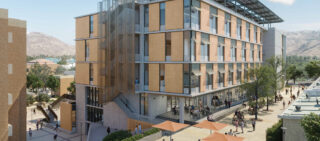
- School of Medicine Education Building II opened in September 2023. It has four large classrooms and 15 case-based learning rooms, two large classrooms for first- and second-year students that combine into a 7,000-square-foot space for more than 300 people, a 136-seat tiered lecture hall, an 80-seat active learning classroom and dedicated study space. It is LEED Platinum certified.
- School of Medicine Education Building, opened in 2012 and refurbished in 2023, houses the anatomy lab, a 100-seat lecture hall, small-group rooms and administrative offices.
- Clinical Skills and Simulation Suite, opened in 2021 in the basement of the Orbach Science Library, is part of the Center for Simulated Patient Care. It has mock exam rooms and simulated clinical spaces for training and testing.
- School of Medicine Research Building, a 58,000-square-foot lab building that includes the only Biosafety Level 3 lab on the UCR campus, along with the Multidisciplinary Research Building and Webber Hall.
Student organizations and service
UCR lists dozens of student-run groups. Some of the most mission-relevant include:
- Riverside Free Clinic, a student-run nonprofit clinic that provides free interdisciplinary health care to underserved residents of the Inland Empire.
- Coachella Valley Free Clinic, a student-run clinic that provides free care in the Eastern Coachella Valley, where many patients are migrant, uninsured and often undocumented farmworkers.
- Doctor’s Corner, a community outreach program founded in 2013 in which students give supervised health education talks.
- Identity and affinity groups, including the Latinx Medical Student Association, the Student National Medical Association, the Asian Pacific American Medical Student Association, the Middle Eastern Medical Student Association, the American Muslim Medical Student Association and the Medical Pride Alliance.
- Specialty interest groups across family medicine, internal medicine, pediatrics, psychiatry, emergency medicine, surgery, radiology and more, plus a Disability Empowerment group, a Health Impact Hub that links medicine and public policy students and a Medical Spanish group with conversation workshops.
- Wellness groups such as a run club, a weightlifting club, a ski and snowboard club, Music and Medicine and Pause 4 Paws.
The School of Medicine Associated Students (SOMAS) is the student government. A Big Sib/Little Sib program pairs every first-year student with a second-year mentor.
Student support
The Office of Student Affairs includes academic success, student support and wellness, career and residency advising, financial aid, the registrar and student life. The Office of Career and Residency Advising runs a four-year career advising curriculum, and faculty-led advising is part of the school’s commitment to give students “extensive personal advising.”
Housing and getting around
The school’s budgets include both on-campus and off-campus room and board, so you can choose either. Expect to drive. Students must travel to all assigned clinical sites, and LACE and clerkship sites are spread across Riverside and San Bernardino counties. Students on required third-year clerkships in Palm Springs and the Coachella Valley are provided housing during those rotations.
Clinical Rotations and Research Opportunities
LACE: three years with a physician mentor
The Longitudinal Ambulatory Care Experience is the signature part of UCR’s training. Instead of short shadowing visits, first-, second- and third-year students work with community-based primary care physicians across Inland Southern California. Students join practice groups, community clinics including federally qualified health centers, and hospital-based clinics. Because you stay with one mentor and one practice for years, you can follow patients over time and see the long-term results of care decisions.
In LACE, you work directly with patients under supervision. You build skills in history-taking, physical exams, case presentation and communication. Over the three years, every student completes an original research or practice improvement project meant to improve the quality and equity of care in Inland Southern California, and presents it at the annual Dean’s Research Day. LACE 3, in the third year, adds weekly ambulatory sessions on applied clinical reasoning and professional identity. The program is co-directed by Moazzum Bajwa, MD, and E. Caroline McGowan, MD.
Core clerkship sites
Third-year students train in a broad network: the public safety-net hospitals in Riverside and San Bernardino counties, private acute care medical centers, community hospitals, a nonprofit integrated health plan, two behavioral health centers, a Veterans Administration facility and a state forensic psychiatric hospital. Selected inpatient affiliates include:
- Riverside Community Hospital, with a Comprehensive Stroke Center and Level I Trauma Center.
- Riverside University Health System (RUHS) Medical Center, a 439-bed facility with more than 60 hospital-based clinics.
- Kaiser Permanente medical centers in Riverside, Fontana, Ontario, Moreno Valley and Anaheim.
- Eisenhower Medical Center, a 463-bed hospital in the Coachella Valley.
- Pacific Grove Hospital, a Riverside adult psychiatric and substance use treatment center.
- Patton State Hospital, a 1,500-bed hospital for forensically and civilly committed patients.
- St. Bernardine Medical Center, a 342-bed nonprofit hospital in San Bernardino.
- Corona Regional Medical Center, with a 160-bed acute care hospital and a 78-bed rehabilitation campus.
OB/GYN sites include UCR Health Silver Oaks Clinic and Riverside Community Hospital, Riverside University Health System and Kaiser Permanente. In the two-week Community-Based Experience, students visit two community sites chosen by lottery and complete cultural competency OSCEs and health equity modules. Electives in Year 3 are also assigned by lottery.
Third-year students are real members of the care team. They take histories, examine patients, present to residents and attendings and follow their patients closely, all under supervision. In surgery, students scrub and assist. In OB/GYN, students participate in deliveries and perform supervised exams. In emergency medicine, students give direct patient care and perform supervised procedures.
Research
Research is woven through all four years at UCR:
- Practice Improvement Projects (PIPs) through LACE, required for every student.
- Summer research fellowships after the first year.
- Clinical research during the third year.
- Research rotations in the fourth year, with a faculty mentor who has principal investigator status, an approved human subjects protocol when needed and a written report.
- Dean’s Research Innovation Grant: up to five grants a year of up to $10,000 each for clinically relevant research by medical students, residents, fellows and junior faculty.
The Scholarly Activities Portal lists open projects, and staff help students with human subjects protocols and biostatistics. The school was recently awarded one of 13 National Institute on Minority Health and Health Disparities center grants.
Graduate medical education and the match
UCR runs its own residency programs, so you will train alongside UCR residents. The school had 86 residents and 34 fellows at the end of 2024-25. At Match Day 2025, 73 students matched, with 76% staying in Southern California and 37% in the Inland Empire. One-third entered primary care. The 2025 graduating class achieved a 99% placement rate.
Notable Alumni, Faculty, Leadership and Admissions Staff
The people below have verified roles at the UCR School of Medicine. Knowing who leads the school’s programs helps you understand its priorities, but none of this means you should contact them about your application. Send admissions questions to [email protected].
School leadership
Deborah Deas, MD, MPH: Vice Chancellor for Health Sciences and Mark and Pam Rubin Dean. Dr. Deas has led the School of Medicine since 2016 and is also a professor of psychiatry. Under her leadership, UCR opened UCR Health, expanded its clinical affiliations, increased its NIH funding and won one of 13 National Institute on Minority Health and Health Disparities center grants. Before UCR, she was interim dean of the College of Medicine at the Medical University of South Carolina, where she also served as associate dean for admissions and led LCME accreditation work. She is board certified in adult, child and adolescent, and addiction psychiatry. Her background in admissions and in serving diverse communities matches the school’s mission-driven review.
Pablo Joo, MD: Senior Associate Dean, Clinical Medical Education. Dr. Joo is a health sciences clinical professor of family medicine. In March 2026, he announced the EVOLVE curriculum, the name for the curricular enhancement work under way since 2025, which rolls out beginning in 2027. If you enter UCR in 2027, the clinical training he oversees will shape your third and fourth years.
Sherif Hassan, MD, PhD, MSc: Executive Associate Dean, Pre-Clerkship Medical Education. Dr. Hassan oversees the first two years. He has more than 30 years of experience teaching gross anatomy, neuroanatomy, medical imaging and embryology, and has designed integrated anatomy and neuroscience curricula at schools in Africa and the United States. His work explains the strong role of anatomy and ultrasound in UCR’s first year.
Rajesh “Robby” Gulati, MD, MACP: Senior Associate Dean, Graduate Medical Education. Dr. Gulati is the designated institutional official for UCR’s residency programs, the sub-internship clerkship director and the interim chair of the Department of Medicine. In 2026, the California Senate recognized him for nearly three decades of service as a physician, educator and mentor. Fourth-year students meet his work directly through the required sub-internship.
Admissions and student affairs
Danny Teraguchi, EdD: Executive Associate Dean for Student Affairs. Since July 2023, Dr. Teraguchi has overseen all of Student Affairs and the Pathway Programs, including admissions, career advising and student support. He also holds the Salma Haider Endowed Chair for the Thomas Haider Program. His research studies “visual pathography,” using drawings and gestures to help patients describe their health experiences when words fall short, which fits the school’s attention to language and culture.
Crystal Meza, EdD: Admissions Manager. Dr. Meza is the admissions manager in the Office of Admissions within Student Affairs. That office communicates with applicants by email, including secondary and interview invitations.
Hanh The-Trinh Nguyen, MD, FAAFP: Associate Dean for Career Advising. Dr. Nguyen is a board-certified family physician who leads the Office of Career and Residency Advising and its four-year advising curriculum. He joined UCR in 2018 from UC Irvine, where he was assistant program director of the family medicine residency and medical director of a federally qualified health center in Anaheim, the community where he grew up.
Christina Granillo, PhD: Associate Dean for Student Success. Dr. Granillo is listed with the Office of Academic Success and as the academic support contact for PRIME. Her office is part of how UCR backs students who come from first-generation and disadvantaged backgrounds.
Faculty and program directors
Adwoa Osei, MD, FAAP: PRIME Program Director. Dr. Osei directs PRIME and its curricular elements and also serves as Associate Dean for Medical Education Quality and Compliance. She earned her medical degree at the University of Ghana Medical School and was chief resident in pediatrics at Hurley Medical Center with Michigan State University. If you apply to PRIME, the program she leads is the one your extra essays address.
Ann Marie Cheney, PhD: Director of HABLAMoS and Faculty Director of the Coachella Valley Free Clinic. Dr. Cheney is a professor of social medicine, population and public health and a medical anthropologist. Her research uses community-based participatory methods with Latinx and Indigenous Mexican immigrant farmworkers in rural Southern California, and she leads Unidas por Salud in the Eastern Coachella Valley. She directs the Medical Spanish designated emphasis, one of the school’s most mission-centered programs.
E. Caroline McGowan, MD: LACE Co-Director. Dr. McGowan is a health sciences assistant clinical professor of pediatrics and co-directs the Longitudinal Ambulatory Care Experience with Moazzum Bajwa, MD. LACE is the three-year clinical relationship every UCR student has, so its directors shape your earliest patient care.
Alumni of the UCR School of Medicine
UCR graduated its first MD class in 2017, so its alumni are early in their careers. These graduates show where the mission leads.
Antonio Garcia, MD (MD 2020). Dr. Garcia completed his family medicine residency at UCR in 2023 and now practices family medicine at Kaiser Permanente Meridian Medical Offices in Riverside, a clinic he first came to know as a student. Many of his patients are Spanish-speaking Latino families, and he now teaches UCR students in his practice. His path, from UCR student to local family physician to teacher, is exactly what the school’s mission describes.
Kishan Patel, MD (MD 2022). In September 2024, Dr. Patel was an emergency medicine resident at UC San Francisco when he joined the cast of the 47th season of the TV show Survivor. He has compared emergency medicine to the game: “strategizing and prioritizing and triaging.” His story is a reminder that UCR graduates also train in competitive programs outside the region.
Violeta Covarrubias, MD (Class of 2024). Dr. Covarrubias grew up as an undocumented immigrant in Pomona and chose UCR for its mission of improving health care access in the area. As a student, she served as mentorship chair of the school’s Latino Medical Student Association chapter and mentored undergraduates through the school’s Future Physician Leaders summer program. Her story shows how UCR’s DACA and first-generation support works in practice.
Aislyn Oulee (Class of 2023). Profiled by the school shortly before her graduation, Oulee moved from São Paulo, Brazil, to Riverside at 14. As a student, she taught healthy skin care at the Riverside Free Clinic and in local schools and pursued dermatology with a focus on caring for patients with darker skin. She is an example of a UCR graduate bringing specialty care goals back to underserved communities.
Admissions Statistics and Class Profile
Class of 2030 (entered 2026)
| Measure | Class of 2030 |
|---|---|
| Total applicants | 6,826 |
| Total interviewed | 374 |
| Total enrolled | 94 |
| Interviewed/applicants | About 5.5% |
| Economically disadvantaged backgrounds | 70% |
| First-generation college students | 48% |
| English as a second language | 38% |
| Grew up in a medically underserved region | 84% |
| Ties to Inland Southern California | 95% |
| Underrepresented in medicine | 67% |
| Military experience | 2% |
| Age range | 21 to 36 |
| Men / women / no response | 39 / 49 / 6 |
The Class of 2030 profile does not include MCAT or GPA averages.
2025 entering class (Class of 2029)
These figures use AAMC residency classifications, which can differ from UCR’s own. For example, DACA applicants are counted as international here, which is why a few “international” applicants and one matriculant appear even though UCR does not accept international students.
| Measure | In-state | Out-of-state | International | Total |
|---|---|---|---|---|
| Verified applications | 4,906 | 1,518 | 84 | 6,508 |
| Interviewed | 310 | 14 | 0 | 324 |
| Matriculated | 86 | 3 | 1 | 90 |
| Academic measure, all accepted applicants | Median | Mean |
|---|---|---|
| MCAT total | 509 | 509.8 |
| Chemical and Physical Foundations | 127 | 127.4 |
| Critical Analysis and Reasoning Skills | 125 | 125.8 |
| Biological and Biochemical Foundations | 127 | 127.6 |
| Psychological, Social, and Biological Foundations | 129 | 128.9 |
| Overall GPA | 3.81 | 3.75 |
| Science (BCPM) GPA | 3.74 | 3.69 |
| Class background, matriculants | 2025 entering class |
|---|---|
| Men / women | 37 / 53 |
| Self-reported disadvantaged status | 65% |
| Grew up in a medically underserved area | 60% |
| Held a graduate degree | 11% |
| Science or math majors | 79% |
| Entered from postbaccalaureate programs | 15 students |
| Ages 19 to 23 / 24 to 29 / 30 to 39 | 37 / 52 / 1 |
About 4.8% of verified applicants (324 of 6,508) were interviewed, and about 0.9% of out-of-state applicants (14 of 1,518) were. The number of acceptance offers for this class has not been published, so no acceptance rate is shown.
Class of 2028 (entered 2024)
| Measure | Class of 2028 |
|---|---|
| Applicants | 6,464 |
| Enrolled | 87 |
| Average MCAT | 508 (the school lists this as the 73rd percentile) |
| Average science (BCPM) GPA | 3.60 |
| Underrepresented in medicine | 53% |
| Ties to Inland Southern California | 80% |
| Disadvantaged | 43% |
| Post-baccalaureate students | 21% |
| Age range | 20 to 43 |
| Female / male / non-binary | 45 / 38 / 4 |
2023 admissions cycle
In the 2023 admissions cycle, the school received 6,077 applications, conducted 291 interviews, offered a spot to 143 applicants and enrolled 86. That works out to about 2.4% of applicants receiving an offer and about 48% of interviewed applicants receiving an offer.
How to read these numbers
- Interview odds matter most. At UCR, only interviewed applicants can be admitted, and in the 2023 cycle roughly half of interviewed applicants received offers. Getting to the MMI is the hardest step.
- Applicant numbers keep rising (6,077 in 2023, 6,464 for the Class of 2028, 6,508 verified applications for the 2025 entering class, 6,826 for the Class of 2030), while the class grew from 86 to 94.
- Out-of-state interviews are rare. For the 2025 entering class, 14 of 1,518 out-of-state applicants were interviewed and 3 matriculated. Apply from outside California only if you have real ties to the region.
- The class is shaped by mission. Ties to the region rose from 80% (Class of 2028) to 95% (Class of 2030). If you have no ties to Inland Southern California, your application must give a convincing reason why you will serve there.
- The averages are averages. A 509 median MCAT and a 3.81 median GPA for 2025 accepted applicants, like the Class of 2028’s 508 MCAT and 3.60 science GPA, describe the middle of the class, not a floor. UCR has no minimum and reviews “distance traveled.”
- Don’t confuse ratios. 94 enrolled out of 6,826 applicants (about 1.4%) is a matriculation ratio, not an acceptance rate.
Tips and Strategies for Admission
UCR is unusually clear about what it wants: future physicians who will serve the medically underserved people of Inland Southern California. Every strategy below comes back to that.
1. Build a record of service, not a list of hours
UCR asks for authentic clinical experience and meaningful community service, especially with underserved patients. Choose a few experiences you can sustain for months or years: a free clinic, a federally qualified health center, a hospice, a community health worker program or a scribe job in a safety-net emergency department. Depth beats variety. If you are still building clinical hours, structured clinical internships for pre-med students can add hands-on patient care to your record, but keep your local service at the center, because UCR’s mission is local.
2. Make your connection to the region concrete
For the Class of 2030, 95% of students had ties to Inland Southern California. If you grew up, went to school or worked in Riverside or San Bernardino County, say so plainly and show what you did there. If you didn’t, explain your real reasons for wanting to train and practice in the Inland Empire. A relative’s care, a job, a clinic you volunteered in or a specific community health problem you want to work on all count. Vague praise of “underserved communities” will not.
3. Show interest in primary care, honestly
UCR particularly values interest in primary care. You don’t have to promise to become a family physician, and the school does not ask you to. But if primary care, psychiatry, pediatrics or another high-need field truly interests you, connect that interest to experiences. One of the required secondary essays asks what type of health care setting you see yourself practicing in.
4. Use Spanish and cultural skills if you have them
Spanish is recommended, not required, because students and clinicians serve a large Spanish-speaking population. If you speak Spanish, show where you have used it with patients. If you don’t, a beginning course and real interest in the HABLAMoS designated emphasis are honest ways to show you are preparing.
5. Tell your “distance traveled” story without apology
The committee considers the obstacles you have overcome to reach this point. First-generation, low-income, immigrant, veteran and community college paths are common at UCR. Write about them factually, and focus on what you did, what you learned and how it prepared you to serve patients.
6. Plan your timeline early
UCR reviews applications on a rolling basis. Submit AMCAS early in the summer, turn your secondary around within one to two weeks and make sure your letters and MCAT score arrive well before November 1. If you are a junior planning your path, use pre-med summer internships and summer jobs to add clinical depth before the application year. If you need more time, a well-used gap year in clinical work is common among UCR matriculants: 21% of the Class of 2028 were post-baccalaureate students.
7. Choose letter writers who have seen you serve
You need at least three letters or a committee letter, and no more than five. Include at least one writer who has seen you work with patients or in the community, ideally in an underserved setting. A short, specific letter from a clinic supervisor can say more about mission fit than a generic letter from a famous professor.
8. If you are a UCR undergraduate, decide on the EAP early
The Haider Early Assurance Program is binding and skips the MCAT. That is a big advantage only if UCR is truly your first choice. Talk with the Pre-Professional Advising Center well before the December 1 opening, and remember you can apply to the EAP only once.
9. Prepare for the MMI as a skill
The MMI rewards clear communication, empathy and structured reasoning under time pressure. Practice with timed scenarios, and get feedback from someone who will be honest. Our consultants run mock MMIs, and our guide to the Multiple Mini Interview explains how it works (see the interview section below).
10. Reapply with real changes
You can apply to UCR up to three times. If you are reapplying, show what has changed: more sustained service, a stronger MCAT, coursework or new responsibility. A gap year spent in direct patient care is often the clearest change; pre-med gap year programs are one way to add it, alongside local paid clinical work.
Secondary Application Questions, Example Responses and Analysis
UC Riverside’s secondary essays are where you show mission fit in your own words. Every general prompt has a limit of 250 words. Below are all the prompts for the 2026-2027 cycle, how to approach each, an original example and an analysis.
The UCR secondary at a glance:
- Who receives it: all verified AMCAS applicants who meet eligibility. Invitations go out by email from July through November.
- Where: through the link on your AMCAS status-check page. Check your junk mail, because the secondary is time-sensitive.
- Fee: $120, or $50 with an AMCAS Fee Assistance Program award. Non-refundable.
- Timing: the secondary deadline is November 1, 2026, the same day letters, transcripts and MCAT scores are due. Aim to submit within one to two weeks of receiving it, well before the deadline.
- General prompts: four required essays and one optional essay, each up to 250 words.
- PRIME prompts: applicants who indicate interest in PRIME write three more essays, each up to 250 words.
- Other programs: the 2026-2027 secondary has no separate MD/PhD, Haider Program or reapplicant essay. MD/PhD applicants should explain their research goals within the general essays and follow the instructions in the portal.
- No changes: once you submit the secondary, you cannot edit it.
Tips for a strong UCR secondary:
- Count words. 250 words is short. Draft long, then cut until every sentence earns its place.
- Answer every part of the prompt. The mission essay asks for experiences, skills and abilities. The values essay asks for one value, displayed by you, in a clinical setting.
- Name real UCR features. LACE, the Community Advocacy course, the designated emphasis programs, the student-run clinics and the regional clinical sites are all verified and specific to UCR.
- Don’t repeat your AMCAS essays. Add new stories or new depth.
- Don’t write about the MCAT in the challenge essay. The prompt says so.
Every example below is an Illustrative example, not an actual applicant essay. Each was written from scratch to show structure and reflection, and the applicant details are invented for teaching. Do not copy them. Your answers must describe your own experiences.
If you feel stuck, help is available. Reviewing secondary essays is part of IMA’s medical school admissions consulting. Our medical school secondary essay prompts database collects prompts from other schools if you are writing several secondaries at once.
Prompt 1: Mission
“The mission of the UCR School of Medicine is to improve the health of the people of California and, especially, to serve Inland Southern California by training a diverse workforce of physicians and by developing innovative research and health care delivery programs that will improve the health of the medically underserved in the region and become models to be emulated throughout the state and nation. What experiences, skills, and abilities will you bring to the class to fulfill this mission?”
Limit: 250 words. Who answers: all applicants. Required.
What it asks. The school has a mission, and it wants to know how you will be part of it. The question has three parts: experiences, skills and abilities. It also asks what you will bring “to the class,” so think about what classmates will gain from you, not just what you will do as a doctor.
How to approach it. Pick one or two experiences that show sustained work with medically underserved people, ideally in California. Pull a specific skill out of each (for example, Spanish, patient education, data work, community organizing). Then connect those skills to a real UCR feature where you would use them.
Illustrative example, not an actual applicant essay (234 words):
For three years I worked the front desk, then the intake station, at a federally qualified health center in Perris. Most of our patients were farmworkers and warehouse workers, and many spoke Spanish or Purépecha. I learned to take blood pressure and a medication list in Spanish, and I learned which questions made people go quiet. “Do you have insurance?” closed more conversations than any symptom.
That job gave me three things I would bring to UCR’s class. First, I speak clinical Spanish well enough to catch what an interpreter might smooth over, and I would add to that through HABLAMoS. Second, I know how a safety-net clinic actually runs: why a patient misses a follow-up when the bus stops running at seven, and why a referral to Loma Linda can mean a lost workday. Third, I can build simple systems. When our diabetic patients kept missing eye exams, I built a call list and a script with our medical assistants, and completed screenings rose over one summer.
I grew up twenty minutes from that clinic, and I plan to practice in the Inland Empire. In LACE, I want to learn the clinical reasoning I could only watch from intake. I also want to bring my classmates the patient side of the visit: the waiting room, the forms, the fear of a bill. That view belongs in a class built to serve this region.
Why it works. It answers all three parts in order: experiences (three years at an FQHC), skills (clinical Spanish, knowledge of safety-net logistics, building a simple quality improvement system) and abilities it will bring to classmates (the patient’s view of the visit). It ties the region in with concrete local details, and it names two verified UCR features, HABLAMoS and LACE, without turning into a list of programs. The closing returns to the mission’s language (“serve this region”) without quoting it back.
Mistakes to avoid. Restating the mission in your own words for half the essay. Listing every activity you have done. Claiming to know the region if you don’t. Promising outcomes you can’t control, such as “I will end the physician shortage.”
Prompt 2: Values in a clinical setting
“The values of the UCR SOM are integrity, innovation, inclusion, excellence, accountability and respect. Please choose one of the values and tell us how you have displayed it in a clinical setting.”
Limit: 250 words. Who answers: all applicants. Required.
What it asks. Choose exactly one value and tell a story in which you, personally, showed it in a clinical setting. The current wording asks how you have “displayed” it, so a story about watching a physician show the value is not enough on its own.
How to approach it. Your essay would be too long if you wrote about each value, which is why UC Riverside wants you to pick just one. Make sure you understand the value well; UCR defines each one (accountability, for example, means “taking responsibility and ownership”). Then focus on that value. Don’t wander into others, even though it might seem like a smart way to prove yourself. Always focus on answering the question. A good story has a moment of choice: you could have done the easy thing, and you did the right one.
Illustrative example, not an actual applicant essay (237 words):
I chose accountability, because the clearest lesson I have learned in a clinic came from a mistake I made.
As a medical assistant at a family practice in Moreno Valley, I roomed patients and entered vitals. One afternoon I entered a man’s blood pressure as 148 over 92. Ten minutes later, cleaning the cuff, I realized I had used the small adult cuff on a large arm. The number was probably wrong, and the physician had already read it.
I could have stayed quiet. The visit was nearly over, and the reading was not dangerous. But the physician was about to change his medication. I knocked, apologized and told her what I had done. She asked me to recheck with the correct cuff. The pressure was 132 over 84. She kept his medication the same.
Afterward, I told our lead medical assistant, and we put a cuff-size chart on the wall of every exam room. I also started saying the cuff size out loud when I took a reading, which felt awkward for about a week.
Accountability, for me, is not about never being wrong. It is about saying so quickly, fixing the harm and changing the system so the next person is less likely to make the same error. In a medical school whose students care for patients from their first year in LACE, I expect to make small mistakes. I intend to own every one.
Why it works. It picks one value and stays with it. The story happens in a clinical setting and shows the writer’s own action at a real moment of choice. It follows through past the apology to a system fix, which matches UCR’s definition of accountability as “taking responsibility and ownership.” The last paragraph links the value to LACE’s early patient contact without overreaching.
Mistakes to avoid. Choosing two values “because they are connected.” Telling a story about someone else’s integrity. Picking a non-clinical setting when the prompt asks for a clinical one. Choosing a dramatic story where your role is small.
Prompt 3: Practice setting
“In what type of healthcare setting do you see yourself practicing medicine?”
Limit: 250 words. Who answers: all applicants. Required.
What it asks. UCR wants to see whether you have thought about the setting where you will work, such as a community clinic, a county hospital, an academic center, a rural practice or a public health role. It is not asking you to commit to a specialty. But the best answers show you understand what that setting is like and why you fit there.
How to approach it. Name a setting, describe it from experience, explain why it fits your goals and be honest about uncertainty. If you are open to more than one specialty, focus on the setting and the patients rather than forcing a specialty choice.
Illustrative example, not an actual applicant essay (225 words):
I see myself in a federally qualified health center in the Inland Empire, probably in family medicine, possibly in pediatrics or psychiatry. The setting matters more to me than the title.
I spent two years as a community health worker in Coachella, helping families enroll in Medi-Cal and get to appointments. The clinic I worked with was small: two physicians, a nurse practitioner, a behavioral health counselor and a front desk that knew every family by name. Patients came in for a child’s asthma refill and left with a depression screening and a food bank referral. Nobody called it integrated care. It was just how the clinic worked.
What drew me to that model was continuity. The same physician saw a grandmother’s diabetes, her daughter’s pregnancy and her grandson’s ear infections. When the grandmother stopped taking insulin, the physician already knew she was afraid of needles because her husband had died in a hospital.
I know this setting has hard parts: long patient lists, limited specialists and burnout. That is one reason I am drawn to UCR’s LACE program. Three years with the same community preceptor would show me what sustaining that kind of practice takes, before I commit to it. Wherever my specialty ends up, I want to work in a clinic where patients do not have to drive two hours to be known.
Why it works. It names a clear setting (an FQHC in the Inland Empire) and describes it from experience, with details that only someone who has been there would know. It is honest about specialty uncertainty while staying committed to the setting. It acknowledges the downsides, which makes the choice more believable, and it connects to LACE’s community-based structure.
Mistakes to avoid. Naming a prestigious specialty with no connection to experience. Describing an academic hospital career without explaining how it serves the region. Writing about “underserved communities” without describing a single real place.
Prompt 4: Challenge, resilience and grit
“Tell us about a personal challenge you have faced in your life thus far and how you demonstrated resilience and grit to overcome it. [Please do not write about studying for or taking the MCAT.]”
Limit: 250 words. Who answers: all applicants. Required.
What it asks. Describe a real personal challenge, then show how you worked through it over time. “Resilience” means recovering from setbacks; “grit” means sustained effort toward a goal. The best essays show both: you were knocked down, and you kept going. The prompt rules out the MCAT.
How to approach it. Spend about a third of the essay on the challenge and two-thirds on what you did. Be specific about actions. If your story involves family members, explain the situation without making them out to be bad people; try to see it from their perspective. Separate how they feel from how you feel.
Illustrative example, not an actual applicant essay (248 words):
When I was seventeen, my father’s hours at a Fontana distribution center were cut in half, and my mother’s cleaning work stopped during her second pregnancy. I was the oldest of three and the only one who could drive. For two years, I worked evenings at a pharmacy, drove my siblings to school and translated at my mother’s prenatal visits.
I started community college with a plan to transfer in two years. It took me four. I failed general chemistry the first time because I missed six classes during my mother’s complicated delivery. I was embarrassed enough to consider quitting.
Instead, I changed how I worked. I told my professor what had happened and asked what I could do differently. I moved my pharmacy shifts to weekends, studied in the parking lot between my siblings’ pickups and joined a study group that met at six in the morning, before anyone in my house needed me. When I retook chemistry, I earned an A, and the next year I tutored the same course.
Grit, for me, was not a dramatic moment. It was saying yes to a slower path without letting it become a smaller one. I transferred, finished my degree and kept my pharmacy job through it all.
My parents never asked me to carry what I carried, and I am proud of how we got through it together. Those years taught me to plan around crises, ask for help early and keep going when the timeline changes.
Why it works. It gives the challenge quickly, then spends most of its words on actions over time: asking for help, restructuring work, retaking the course and tutoring it. It includes a real setback (a failed course) and shows recovery, which proves resilience better than a story with no failure in it. It treats the writer’s parents with respect, and the closing names transferable skills without sounding self-congratulatory. It also reflects UCR’s interest in “distance traveled” and community college paths.
Mistakes to avoid. Writing a trauma narrative with no actions. Choosing a minor inconvenience. Blaming others. Writing about the MCAT, even indirectly. Ending with a cliché instead of a concrete lesson.
Prompt 5: Optional additional information
“If there is anything you would like the committee to consider about your candidacy that is not explained elsewhere in your application, please use this space to tell us.”
Limit: 250 words. Who answers: any applicant who has something new to share. Optional.
What it asks. Use this space only for something that matters and does not appear elsewhere: a grade dip, a gap in your education, a unit shortfall in a prerequisite, a recent change in your application or context the committee needs. UCR’s prerequisite policy specifically says students below the minimum units can explain their circumstances in the secondary.
How to approach it. Be factual and brief. State the issue, give the context and show what you did about it. If nothing needs explaining, leave it blank. A strong application does not need filler.
Illustrative example, not an actual applicant essay (160 words):
I would like the committee to know about my physics coursework. My university’s physics sequence was on the quarter system, and my two physics courses convert to 6.7 semester hours, short of the 8 hours UCR lists.
I took the full calculus-based sequence my major required, including two labs. The third quarter conflicted with the only section of organic chemistry I could fit around my job, so I took organic chemistry and planned to finish physics later. In spring 2026 I enrolled in a third physics course at Riverside City College, in person, and finished with a B+. That course is on my transcript and brings my total to 10 semester hours. I can upload an unofficial transcript to the secondary portal if that helps.
I am sharing this so the committee does not have to guess. I chose the order of my courses because of my work schedule, and I made sure the requirement was complete before I applied.
Why it works. It addresses one specific issue that the rest of the application would not explain, uses UCR’s own unit requirement, shows the problem was fixed and offers a practical next step that matches the portal’s documents section. It is short, factual and calm.
Mistakes to avoid. Repeating your personal statement. Listing extra activities that belong in AMCAS. Making excuses without showing action. Writing something just because the box is there.
PRIME prompts
The following three prompts appear only for applicants who indicate interest in PRIME, the program for African, Black, and Caribbean communities of Inland Southern California. Each has a limit of 250 words.
PRIME Prompt 1: Interest in physician leadership
“Please describe the reason for your interest in being trained as a physician leader for the African, Black, Caribbean community in the Inland Southern California Region.”
Limit: 250 words. Who answers: PRIME applicants. Required for PRIME.
What it asks. Why do you want to be a physician leader for ABC communities, specifically in Inland Southern California? The word “leader” matters. UCR wants future physicians who will advocate, mentor and build programs, not only treat patients.
How to approach it. Ground your interest in experience, connect it to the region and show leadership you have already taken. Then connect it to PRIME’s real structure: the summer immersion, ABC case conferences, mentorship and the option of a master’s degree.
Illustrative example, not an actual applicant essay (239 words):
My grandmother came to Rialto from Kingston in 1988, and she has been the unofficial health adviser of her church ever since. She reads every pill bottle that comes through the fellowship hall. When she was diagnosed with heart failure, the person who finally explained her medications was a Black cardiologist in San Bernardino who asked what she ate on Sundays and adjusted his advice to fit it.
I want to be that physician, and I want to train others to be that physician. In college I led a blood pressure screening program at three Black churches in Rialto and Moreno Valley. We screened almost four hundred people in a year. The harder work was the follow-up. Many people had no regular doctor, and some did not trust the ones nearby. I learned that leadership in health care often means building trust before you can do anything else.
PRIME would give me the training and the network to lead that work as a physician. The summer immersion’s visits with community leaders and legislators would help me understand how policy shapes the care my community receives. The ABC case conferences would build the clinical knowledge I need. I am also interested in completing an MPH before my final year, so I can measure whether programs like our screenings actually change outcomes. I plan to practice in the Inland Empire and to mentor students who grew up here, as I did.
Why it works. It answers why (a family story and community experience), where (specific Inland Empire cities) and why leadership (the writer already led a program and learned from its limits). It names three verified PRIME features, the summer immersion with legislators and community leaders, ABC case conferences and the optional master’s degree, and ties each to a goal.
Mistakes to avoid. Writing a general diversity essay with no regional link. Describing leadership titles without actions. Treating PRIME as a shortcut to admission. Copying language from the PRIME web page.
PRIME Prompt 2: Most important health care issue
“What is the most important healthcare issue confronting African, Black, Caribbean communities in the Inland Southern California region and what would be your first steps to address this issue?”
Limit: 250 words. Who answers: PRIME applicants. Required for PRIME.
What it asks. Two parts: name the issue and describe your first steps. “First steps” is a clue: the committee wants realistic, specific actions, not a plan to solve everything.
How to approach it. Choose one issue you understand from experience or study. Give one or two concrete details about why it matters locally. Then describe two or three first steps a medical student or early-career physician could actually take, such as listening, partnering and measuring.
Illustrative example, not an actual applicant essay (236 words):
I believe the most important issue is maternal health, especially the risks Black mothers face during pregnancy and in the year after birth. Nationally, Black women die of pregnancy-related causes at much higher rates than white women, and many of those deaths happen after the birth itself. In my volunteer work with a doula collective in San Bernardino, I met mothers who had driven forty minutes to a prenatal visit, waited two hours and left without being asked how they were feeling.
My first step would be to listen. Before proposing anything, I would work with community groups, doulas and churches to hear where care breaks down for mothers in the Inland Empire: transportation, postpartum follow-up, being dismissed or something else.
My second step would be to stay close to the postpartum period. Many of the mothers I met missed their postpartum visit because they were caring for a newborn and other children. As a student, I would want to support a project on postpartum outreach, such as text check-ins and home blood pressure monitoring, with a clinic partner, and use a service-learning project to test whether it helps.
My third step would be to measure. Through a master’s degree, I would learn to track whether follow-up and outcomes actually improve.
None of this would solve the problem alone. But a physician who listens first and measures results can help a community build something that lasts.
Why it works. It answers both parts. It names one issue, explains why it matters with an experience in the region and avoids citing statistics it cannot support precisely. The “first steps” are realistic and ordered: listen, act on a specific gap, measure. It connects to PRIME’s required service-learning project and optional master’s degree without forcing them.
Mistakes to avoid. Naming five issues. Proposing a solution only a health system CEO could carry out. Using statistics you can’t source. Writing about communities as problems to be fixed instead of partners.
PRIME Prompt 3: Lived, professional or academic experience
“In what ways has your lived experiences, professional work, or academic studies within the African, Black, Caribbean community shaped your personal growth and deepened your commitment to the PRIME program’s mission?”
Limit: 250 words. Who answers: PRIME applicants. Required for PRIME.
What it asks. How your experiences within ABC communities have changed you, and how they deepened your commitment to PRIME’s mission. It offers three kinds of experience: lived, professional and academic. You don’t need all three, but you do need to show growth.
How to approach it. Choose one or two experiences and show a before and after: what you believed, what happened and how you changed. Then connect that growth to PRIME’s goals, such as culturally sensitive care, a service-learning project on health disparities and mentoring future leaders.
Illustrative example, not an actual applicant essay (234 words):
My parents are Nigerian immigrants, and I grew up in Victorville believing that health was private. You did not talk about blood pressure, and you certainly did not talk about depression. My family’s silence was a way of keeping dignity.
In college I minored in African American studies and worked as a research assistant on an oral history project with older Black residents of the High Desert. One woman described being turned away from a hospital in the 1960s. Another described her son’s long, untreated depression. I realized that the silence I grew up with was not only a family habit. For many people, it had been a reasonable response to a health system that had not earned their trust.
That changed how I see my role. I used to think a good physician simply gave good information. Now I think a good physician earns trust first, through respect, consistency and honesty about the system’s history. I have tried to practice that as a peer mental health educator, by listening before I advise and by never treating hesitation as ignorance.
PRIME’s mission is to train physicians who give equitable care to ABC communities and who lead. I want to learn culturally informed history-taking in PRIME’s case conferences, build a service-learning project on mental health with a local partner and mentor students in the High Desert who grew up with the same silence I did.
Why it works. It draws on lived experience (family culture) and academic work (the oral history project), and it shows a clear change in belief. It connects that growth to PRIME’s verified goals: culturally sensitive history and examination, a service-learning project on disparities and serving as mentors and future leaders. The High Desert setting keeps it inside the program’s region.
Mistakes to avoid. Listing experiences without showing how you changed. Writing about ABC communities from a distance if you have no real connection. Repeating your answer to PRIME Prompt 1.
A note on other prompts
The 2026-2027 secondary has no separate prompt for the MD/PhD, the Haider Program or reapplicants. If you are a reapplicant, use the mission essay or the optional essay to show what has changed since your last application. If you are applying to the Haider Program through AMCAS, make your UCR undergraduate experience visible in your answers.
Interview Format and Preparation
The final step of the admissions process is the interview. It’s a big deal if you’re invited. It means you’ve made an impression on the admissions committee, and they want to meet you before deciding. At UCR, only interviewed applicants can be considered for admission.
What UCR has confirmed
- Format: Multiple Mini Interview (MMI). The MMI assesses verbal and non-verbal communication and readiness for medical school, and UCR uses it because meeting several interviewers gives a fuller assessment and limits the likelihood of bias.
- Structure: after a brief orientation, you rotate through a series of stations. At each one, you have two minutes to read a question or scenario, then six minutes with the interviewer.
- Length: about three hours in total.
- Dates: selected Tuesdays, Thursdays and Saturdays from September 2026 through March 2027.
- Selection: invitations are based on your AMCAS application and secondary, and arrive by email.
- After the MMI: results go back to the admissions committee, which discusses every applicant who interviews. You may submit one update letter, letter of interest or letter of intent after your interview.
- PRIME: PRIME applicants take part in an additional interview process that includes the MMI and a short one-on-one interview.
For the 2026-2027 cycle, the MMIs are virtual, run through Zoom and Kira, and there are no regional interviews. Invited applicants receive a school overview, a chance to meet faculty, staff and students online, and manuals and staff support for the virtual MMI. Test your camera, microphone and internet connection in advance, and set up a quiet, well-lit space. If anything in your invitation is unclear, email [email protected].
General preparation advice
The points below are general practice guidance, not UCR policy.
- Practice the two-minute read. In two minutes, identify the core issue, the people affected and two or three options. Then plan an opening sentence.
- Use the full six minutes. Most stations reward a structured answer followed by real conversation. If you finish early, consider other viewpoints or what you would do next.
- Expect mission themes. Scenarios about access to care, language barriers, limited resources, team conflict and ethical dilemmas are common in MMIs. Ground your answers in the patient’s perspective.
- Show how you reason, not just your conclusion. Interviewers want to see your thinking.
- Prepare your “why UCR” story even though MMIs rarely ask it directly. Knowing your reasons helps you stay consistent.
- Rest and logistics. Three hours of stations is tiring. Eat beforehand and plan to stay sharp to the end.
We’ve covered this interview method in detail in this article. For practice prompts, see our list of the most common medical school interview questions.
Frequently Asked Questions
Is UC Riverside School of Medicine hard to get into?
Yes. For the Class of 2030, 6,826 people applied, 374 were interviewed and 94 enrolled. For the 2025 entering class, 324 of 6,508 verified applicants were interviewed. In the 2023 cycle, the most recent year with published offers, about 2.4% of applicants received an offer. Mission fit matters as much as numbers, so strong service in underserved communities and ties to the region can make a real difference.
What GPA and MCAT do I need for UC Riverside?
There is no minimum GPA or MCAT. Accepted applicants in the 2025 entering class had a median MCAT of 509, a median overall GPA of 3.81 and a median science GPA of 3.74. The Class of 2028 averaged a 508 MCAT and a 3.60 science (BCPM) GPA. UCR considers your highest total MCAT score from the last three years and reviews grades in the context of your whole application.
Does UC Riverside accept out-of-state applicants?
Yes, case by case. Most students are from California or have very strong ties to the community, so out-of-state applicants are judged on their contributions to California through their studies, service, clinical experience or leadership. If you have no California connection, your application needs a convincing reason why you will serve the region. For the 2025 entering class, 14 of 1,518 out-of-state applicants were interviewed and 3 enrolled.
Does UCR accept DACA or undocumented applicants?
Yes. UCR welcomes undocumented and DACA applicants and reviews them under the same standards as other applicants. You do not need a Social Security Number to apply. DACA recipients with AB540 status qualify for in-state tuition and some state and institutional aid. Students without AB540 status rely on private loans and outside scholarships.
Does UC Riverside accept international students?
No. UCR does not accept international students or applicants with an international bachelor’s degree. Applicants must be U.S. citizens, permanent residents, DACA recipients or eligible under AB540.
Does every applicant get a secondary?
UCR invites every verified AMCAS applicant who meets its eligibility rules and does not cap the number of secondaries. Invitations go out from July through November. The fee is $120, or $50 with an AMCAS Fee Assistance Program award.
How many secondary essays does UC Riverside have?
The 2026-2027 secondary has four required essays and one optional essay, each up to 250 words. PRIME applicants write three more essays, each up to 250 words.
When is the UC Riverside secondary deadline?
The secondary deadline for the 2026-2027 cycle is November 1, 2026. Letters, transcripts and MCAT scores are due the same day. Rolling admissions reward early work, so submit within one to two weeks of your invitation.
What kind of interview does UC Riverside use?
The Multiple Mini Interview. You rotate through stations with two minutes to read each scenario and six minutes with the interviewer. The whole MMI takes about three hours. Interviews run on selected Tuesdays, Thursdays and Saturdays from September through March, and for 2026-2027 they are held virtually through Zoom and Kira.
Does UC Riverside require a deposit or offer early decision?
No to both. UCR does not require a deposit to hold your seat and does not offer an Early Decision Program. Acceptance notices go out from November 17, 2026 through July 20, 2027, and you have up to two weeks to respond to an offer.
How much does UC Riverside School of Medicine cost?
For 2026-27, first-year tuition and fees are $49,796 for residents and nonresident tuition and fees are $61,240. The full first-year cost of attendance is $88,402 if you live on campus and $99,502 off campus. Third- and fourth-year tuition and fees are higher ($54,605 and $54,577), and summer session fees apply in those years. In 2024-25, indebted graduates averaged $217,416 in medical school debt.
Are there full-tuition scholarships at UCR?
Yes. The Dean’s Mission Scholarship can cover 100% of mandatory tuition and fees (about $40,000) or 50% ($20,000) for the first two years. Service awards, including the IEHP Dean’s Mission Award of up to $47,000 a year, cover fees in exchange for years of practice in the region; if you don’t complete the service, the award becomes a loan.
What is LACE?
The Longitudinal Ambulatory Care Experience is a three-year continuity clinic that starts in your first year. You work with a community-based primary care physician mentor in the Inland Empire, care for patients under supervision and complete a practice improvement project that you present at the Dean’s Research Day.
What is the Thomas Haider Program?
It reserves at least 24 seats at UCR SOM for qualified UC Riverside undergraduates. You can enter through regular AMCAS or through the binding Haider Early Assurance Program, which requires no MCAT and no fee. The EAP application opens December 1, 2026 and closes April 1, 2027.
What is PRIME at UC Riverside?
PRIME trains physicians to serve the African, Black, and Caribbean communities of Inland Southern California. It admits six students a year, starts with a two-week summer immersion and offers an optional master’s degree before the final year. PRIME applicants write extra essays and have an extra interview.
Does UC Riverside require CASPer or PREview?
No. UCR does not use PREview scores and requires no additional assessments, such as CASPer, for the 2026-2027 cycle. Check your secondary invitation in case anything changes.
Do I need to speak Spanish?
No. Spanish is recommended (three semester hours) but not required. It is helpful because students and local clinicians serve a large Spanish-speaking population. The HABLAMoS designated emphasis lets students at any level build medical Spanish during school.
How much clinical experience do I need for UCR?
UCR does not publish a minimum number of hours. It looks for authentic clinical experience and meaningful community service, especially with underserved patients. Sustained, hands-on roles such as medical assistant, scribe, community health worker or free clinic volunteer show this best. If you need more hands-on time before applying, medical internships for undergraduates can add supervised patient care, and you should keep building local service.
Can I reapply to UC Riverside?
Yes. You may reapply the following year, with a limit of three total application attempts. Decisions cannot be appealed. Show clear growth, such as more service, a stronger MCAT or new responsibility.
Can I take prerequisites at a community college or online?
Yes to community college: UCR welcomes community college coursework, including the required sciences. Online prerequisites are accepted if taken since March 2020; earlier coursework must have been in person. Online bachelor’s degrees are not accepted.
Related Medical School Guides
Applying to medical school is a big deal. UC Riverside School of Medicine is a great option, and we encourage you to apply if you think it’s a good fit. But we also encourage you to apply to other medical schools. Applying to only one school would mean only having one chance of becoming a doctor. If that’s already your plan, you’re a step ahead of the game.
These California guides are good places to start:
- UC Irvine School of Medicine: a nearby UC school in Orange County that also offers a LEAD-ABC PRIME, the program UCR’s PRIME collaborates with.
- Kaiser Permanente School of Medicine: a Southern California MD school built around a single integrated health system, a useful contrast to UCR’s network of community sites, some of which are Kaiser medical centers.
- Stanford School of Medicine: a research-intensive California school to compare with UCR’s community-based mission if you are weighing research-heavy programs.
- California Northstate University College of Medicine: another newer California MD school, this one private and in the Sacramento area.
- USC Keck School of Medicine: a private Los Angeles school with a large county hospital, for applicants who want urban safety-net training.
- UCLA Medical School: the school that granted the MD to students in the former UCR/UCLA program, and a UC option for applicants also considering Los Angeles.
To compare every option in the state, see our guide to medical schools in California.
Here on our blog, we’ve covered a ton of different universities. Check out some of the other schools we’ve researched for you:
- UT Southwestern Medical School
- Long School of Medicine at UT Health San Antonio
- University of the Incarnate Word School of Osteopathic Medicine
- UT Austin’s Dell Medical School
- UTMB School of Medicine
- McGovern Medical School at UT Health
- Johns Hopkins School of Medicine
- The University of Texas Rio Grande Valley School of Medicine
- UNT Texas College of Osteopathic Medicine
- University of Houston College of Medicine
- Texas A&M College of Medicine
- Baylor College of Medicine
- George Washington University School of Medicine
- Vanderbilt University School of Medicine
- St. George’s University School of Medicine
- Lake Erie College of Osteopathic Medicine (in Pennsylvania)
- Sidney Kimmel Medical College at Thomas Jefferson University
- Wake Forest University School of Medicine
- Western University of Health Sciences (in California)
- Drexel University College of Medicine
- Stritch School of Medicine at Loyola University Chicago
- Georgetown University School of Medicine
- Yale School of Medicine
- Perelman School of Medicine
- NYU Medical School
- Washington University School of Medicine
- Brown Medical School
This list of schools should be enough to get you started and give you an idea of where you want to apply.
How International Medical Aid Can Help
International Medical Aid (IMA) supports pre-health students in two ways that fit what UCR looks for: hands-on clinical experience and admissions advising. IMA is an independent organization. It is not affiliated with UC Riverside, and taking part in an IMA program does not affect admission decisions at UCR or any other school.
Clinical experience. IMA runs medical internships abroad for pre-health students in Kenya and other sites. In our pre-med internships, interns work in clinics and hospitals under supervision. They take vitals, do patient intake and triage and help with direct patient care. That is the kind of patient contact UCR’s applicants describe in their mission and values essays. Our internships for pre-med students can fit into a summer or a gap year. You can compare all of our international healthcare internships on one page.
International experience should add to, not replace, your local service. Among UCR’s 2025 graduating seniors, 12% reported a global health experience during medical school, so interest in care abroad continues after admission. UCR’s mission is about Inland Southern California, so the strongest applications pair sustained local work with any experience abroad. If you are drawn to Spanish-language care and programs like HABLAMoS, a medical internship in Peru offers clinical work in a Spanish-speaking setting. Whatever you choose, reflect on what you learned and how it prepares you to care for patients across language and culture. Pre-med internships abroad are most useful when you can explain what you did with your hands and what changed in your thinking.
Admissions consulting. Our medical school admissions consulting team works with students to brainstorm, outline, edit and proofread essays, including UCR’s mission, values and PRIME essays. We also run mock Multiple Mini Interviews and help you build a school list. Are you feeling stuck, even with these examples? You can get started here.
Final Thoughts and Sources
UC Riverside School of Medicine is a strong choice if you want to train in a community-based program built to serve the medically underserved people of Inland Southern California. Its LACE continuity clinic, emergency medicine clerkship, Community Advocacy course, PRIME and designated emphasis programs, and mission-linked scholarships make it different from most UC schools. It is also highly selective, and its class is shaped by mission: real service, ties to the region and a believable plan to practice there.
Your next step depends on where you are. If you are in the 2026-2027 cycle, finish your secondary, confirm your letters, transcripts and MCAT score reach UCR by November 1, 2026, and prepare for the MMI. If you are planning for 2027-2028, build sustained clinical work in underserved settings now, take Spanish if you can and start AMCAS as soon as it opens next spring. Remember, if you need any help along the way, our medical school admissions consulting team is here for you. Best of luck from International Medical Aid!
Sources
Facts in this guide were checked against these official sources on October 18, 2026. Cohort and academic year labels appear with each figure above.
- UCR School of Medicine, Admission to Medical School: Class of 2030 profile (applicants, interviewed, enrolled and class background) and 2026-2027 timeline.
- UCR School of Medicine, Application Process: eligibility, 2026-2027 deadlines, letters, secondary fee, updates, interviews and admission guidelines.
- UCR School of Medicine, Admissions FAQ: out-of-state, transfer, international, AP/IB, community college and coursework policies.
- UCR School of Medicine, Interviewing for Medical School: MMI format, timing and length.
- UCR School of Medicine, admissions brochure (March 2025): Class of 2028 profile, including average MCAT and science GPA.
- UCR School of Medicine Office of Financial Aid, General Information on Financial Aid: 2026-27 student budgets and nonresident tuition and fees.
- UCR School of Medicine, Scholarship Opportunities and Applying as an Undocumented or DACA Student.
- UCR School of Medicine, PRIME, Thomas Haider Program and Haider Early Assurance Program.
- UCR School of Medicine, Mission, Vision, Diversity and Values Statements, About, History and Facilities.
- UCR School of Medicine, 2024-25 Year in Review: Match Day 2025 results, training sites and enrollment.
- UCR Undergraduate Medical Education: curriculum overview, Years 1 and 2, Year 3, Year 4, four-year threads and HABLAMoS.
- UCR School of Medicine News, Announcing the EVOLVE Curriculum (March 23, 2026), and the 2023 admissions committee article with 2023 cycle numbers (August 30, 2023).
- UCR Profiles directory and the School of Medicine leadership and Student Affairs staff pages, for current titles of the people profiled.
- LCME, directory of accredited U.S. programs, for accreditation status and next survey year.
- AAMC Medical School Admission Requirements (MSAR), 2026 edition, UC Riverside School of Medicine profile (accessed October 18, 2026): 2025 entering class applications, interviews, matriculants, accepted-applicant MCAT and GPA medians and class background; 2026-2027 secondary deadline, interview delivery, acceptance dates, deposit, Early Decision and PREview policies; TSF 2025-26 health insurance estimate; LCME Part I-B 2024-25 aid and debt; total enrollment; 2025 Graduation Questionnaire global health participation.
- Secondary prompts: 2026-2027 prompts as shown in UCR’s secondary application, checked October 18, 2026.