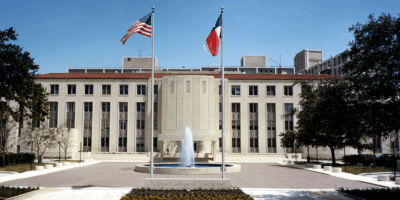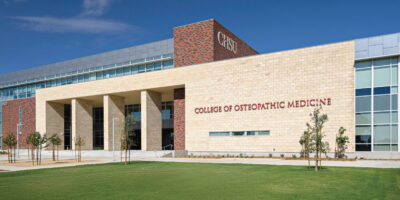
California Northstate University College of Medicine (CNUCOM) is a private M.D. school in Elk Grove, California, just south of Sacramento. It is a young school with a clear purpose: CNU planned it from 2010 onward to help close California’s primary care physician shortage, and it enrolled its first students in 2015. Since then it has grown into a fully accredited medical school that enrolls about 118 new students each year and sends its graduates into residencies across California and the country.
This guide covers the 2026-2027 application cycle, for students who would start medical school in July 2027. CNUCOM takes applications through AMCAS, the primary deadline is December 15, 2026, and offers go out on a rolling basis. The school is open only to U.S. citizens and permanent residents, and it does not take part in federal student loan programs, so how you would pay for school is a real part of the decision.
Below you will find CNUCOM’s mission, its clinical presentation curriculum, the Masters Colloquium, its Sacramento-area hospital partners, current admission requirements, 2026-2027 tuition and cost of attendance, the newest class profile, the people who lead the college, every secondary essay prompt with an example answer and analysis, and what to expect at the virtual interview. Facts were checked against the school’s own pages in November 2026, and each figure is labeled with its year or cohort.
If you are deciding whether to apply, three questions matter most. Do your GPA and MCAT sit near the 3.50 and 511 the school calls competitive? Can you show steady clinical exposure, service and an interest in primary care? And do you have a realistic plan for a four-year cost of attendance near $480,000 without federal loans?
Key Takeaways
- Eligibility is narrow. The M.D. program is open only to U.S. citizens and permanent residents. CNUCOM does not take international or DACA applicants, does not accept transfers and does not offer early decision or deferred matriculation.
- There are hard minimums. You need at least a 2.80 GPA and a 497 MCAT to move forward. The school calls a 3.50 GPA and a 511 MCAT competitive, and the class that entered in 2026 averaged a 515 MCAT and a 3.84 overall GPA.
- California residents fill most seats. Tuition is the same for every student, but 109 of the 118 students in the Class of 2030 came from California.
- Key dates. Submit AMCAS by December 15, 2026. The supplemental application is due 21 days after you are invited to complete it, and the $100 fee cannot be waived. Offers begin November 20, 2026 and continue on a rolling basis.
- The cost is high and federal loans are not available. 2026-2027 tuition is $78,432 for first-year students, total first-year tuition and fees are $80,537, and the school’s estimated first-year cost of attendance is $116,440. CNU does not participate in Title IV federal loans, so students rely on private loans, scholarships, military scholarships and their own funds.
- The curriculum is built around patient complaints. Every week of the first two years centers on clinical presentations such as chest pain or headache, alongside a Medical Skills course, the Masters Colloquium and a required scholarly project.
- Clinical training happens across Northern California. Students rotate through Kaiser Permanente, Sutter Health, Dignity Health, Adventist Health and other hospitals, with a 54-week clerkship year that starts in Year 3.
- Next step. Check your prerequisites against the nine-year window, plan an MCAT date no earlier than January 2023, line up two science-professor letters, and build steady, hands-on clinical and service experience.
Key Statistics About California Northstate University College of Medicine
The snapshot below pulls together the newest figures CNUCOM publishes for applicants. The MCAT and GPA are averages for the students who enrolled in the Class of 2030, which started in 2026. Applications, interviews and class size come from the same class profile, and tuition is the 2026-2027 first-year rate.

| Item | Value | Year or cohort | Source |
|---|---|---|---|
| Degree and campus | M.D.; Elk Grove, California (greater Sacramento) | Current | CNUCOM About page |
| School type | Private | Current | AAMC MSAR, 2026 edition |
| Applications received | 3,845 | Class of 2030 (entered 2026) | CNUCOM Class of 2030 Demographic Data |
| Applicants interviewed | 475 | Class of 2030 | CNUCOM Class of 2030 Demographic Data |
| Students enrolled | 118 (109 in state, 9 out of state) | Class of 2030 | CNUCOM Class of 2030 Demographic Data |
| Average MCAT of enrolled students | 515 | Class of 2030 | CNUCOM Class of 2030 Demographic Data |
| Average overall GPA / BCPM GPA | 3.84 / 3.85 | Class of 2030 | CNUCOM Class of 2030 Demographic Data |
| Median MCAT of accepted applicants | 514 | 2025 entering class | AAMC MSAR, 2026 edition |
| Median GPA of accepted applicants | 3.89 | 2025 entering class | AAMC MSAR, 2026 edition |
| Minimum GPA and MCAT | 2.80 and 497 | 2026-2027 cycle | CNUCOM Admission Requirements |
| Preferred (competitive) GPA and MCAT | 3.50 and 511 | 2026-2027 cycle | CNUCOM Admission Requirements |
| Tuition, Year 1 | $78,432 (same for all residencies) | 2026-2027 | CNU Cost of Attendance and Tuition and Fees, incoming |
| Tuition and fees, Year 1 | $80,537 | 2026-2027 | CNU Cost of Attendance and Tuition and Fees, incoming |
| Estimated total cost, Year 1 | $116,440 | 2026-2027 | CNU Cost of Attendance and Tuition and Fees, incoming |
| Supplemental application fee | $100, no fee waivers | 2026-2027 cycle | CNUCOM Admissions FAQs |
| Early decision | Not offered | 2026-2027 cycle | CNUCOM Admission Steps |
| Students receiving financial aid | 83% | 2024-2025 | AAMC MSAR, 2026 edition (LCME Part I-B) |
| Average debt of indebted graduates | $208,082 | 2024-2025 | AAMC MSAR, 2026 edition (LCME Part I-B) |
| LCME accreditation | Full; initially accredited 2015; next survey 2029-30 | Current | LCME directory |
A note on the numbers. CNUCOM publishes averages for the students who enrolled, while the national applicant data reports medians for everyone who was accepted. The two describe different groups and different years, so they will not match exactly. The school does not publish how many offers it makes, so this guide does not quote an acceptance rate. What you can say from the school’s own numbers is that 475 of 3,845 applicants (about 12%) were interviewed for the Class of 2030. That is an interview rate, not an acceptance rate.
Mission and Educational Priorities
California Northstate University states its mission in one line:
“To advance the science and art of healthcare through education, service, research, personal wellness, and social accountability.”
The College of Medicine describes its own commitment in similar terms. It offers a Doctor of Medicine program and says it “is committed to meet the nation’s need for physicians with an emphasis on training in primary care with social accountability.” It is dedicated to “educating students to become competent, patient-centered healthcare professionals,” using an integrated, clinical presentation-based curriculum, so that graduates can work as physicians “in a multi professional environment.”
The college also publishes a vision: “To prepare California’s future physicians for the 21st century by leveraging innovation and emerging technologies.”
The school’s core values have been a part of how it describes itself since it opened: excellence, professionalism, ethics, compassion, social accountability and innovation. You will see them reflected in the curriculum, especially in the Masters Colloquium’s sessions on ethics, professionalism, public health and wellness.
Why the school exists
CNUCOM’s history explains a lot about its priorities. Senior staff at CNU’s College of Pharmacy began planning a medical school for the greater Sacramento area in the spring of 2010, prompted by studies showing California needed more primary care physicians. The college notes that the state’s budget crisis had kept it from training more medical students, and that the needs of an aging population were adding to doctors’ patient loads. By mid-2011 much of the curriculum design was in place, shaped by Sacramento Valley physicians with decades of practice experience. The dean describes the school as founded in 2015, the year it gained preliminary accreditation and began enrolling students.
What the mission means for applicants
- Primary care and service. A school built to answer a primary care shortage will look for evidence that you care about access to everyday medicine: clinic volunteering, work with underserved patients and an understanding of why primary care matters. You do not need to promise to become a family physician, but you should be able to talk about primary care with respect and specifics.
- Social accountability. This phrase appears in both the university mission and the college’s commitment. It means training doctors who answer to the needs of the communities around them. In the Sacramento region and the Central Valley, that includes patients from many language backgrounds, rural communities and people with limited access to care.
- Personal wellness. Wellness is written into the mission itself, and CNUCOM has a Chief Wellness Officer and a wellness committee. Applicants who can describe how they sustain themselves through hard stretches will fit the culture.
- Innovation and technology. The vision stresses emerging technologies. The dean’s message highlights simulation labs, educational technology and a teleanalytics research fellowship. If you have worked with health technology, data or telemedicine, it is relevant here.
- Research. Research is part of the mission, and every student completes a Self-Directed Student Scholarly Project in the first two years. Research experience helps, but the school weighs it within a holistic review.
Accreditation and Institutional Identity
CNUCOM’s M.D. program is fully accredited by the Liaison Committee on Medical Education (LCME), the body that accredits M.D. programs in the United States and Canada. The school earned preliminary accreditation in June 2015 and provisional accreditation in June 2019, and it achieved full accreditation in 2025. The LCME directory lists the program’s status as Full, with 2015 as its initial year of accreditation and its next full survey in 2029-30.
Full accreditation matters to applicants for practical reasons. Graduates of LCME-accredited programs are eligible for the USMLE, the residency Match and state licensure on the same footing as graduates of older schools. Accreditation is a baseline standard, not a ranking, so use it as one check among many.
Institutional identity
- University: California Northstate University (CNU), a private health sciences university founded in 2007. Its institutional accreditation from the WASC Senior College and University Commission (WSCUC) has been reaffirmed through 2033.
- Colleges: CNU has six colleges: Medicine, Pharmacy, Health Sciences, Dental Medicine, Psychology and Graduate Studies.
- Campus: The College of Medicine is at 9700 West Taron Drive in Elk Grove, California. CNU also has sites in Rancho Cordova and Sacramento.
- Degree: Doctor of Medicine (M.D.). CNUCOM is an allopathic school, not an osteopathic (D.O.) school.
- Type: Private. Tuition is the same for California residents and out-of-state students.
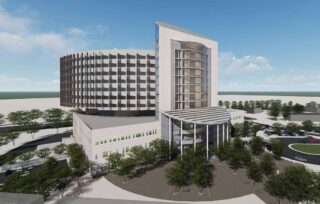
- Teaching hospital plans: The dean’s message describes plans for an 11-story teaching hospital on the site of the former Sacramento Kings arena. It is a plan, not a current training site, so judge the school on the affiliations it has today.
Medical Programs and Affiliations
California Northstate University College of Medicine offers one medical degree: the traditional, four-year Doctor of Medicine. CNU also houses healthcare administration, pharmaceutical sciences and other graduate programs, but none of them is offered as a combined degree with the M.D. CNUCOM does not offer an M.D./Ph.D., M.D./MPH, M.D./MBA or three-year M.D. pathway.
What CNU does offer are pipelines into the M.D. program. Each has its own application and eligibility.
Four-year M.D.
The main route. You apply through AMCAS, complete the supplemental application if invited, interview virtually and, if admitted, start in late July. The program includes Phase A (Years 1 and 2), Phase B clerkships and electives, and a required scholarly project.
BS-MD Early Assurance Honors Tracks
CNU’s College of Health Sciences in Rancho Cordova and the College of Medicine run BS-MD Early Assurance Honors Tracks for students entering college. There is a 4+4 track and a newer 3+4 track. Students earn a bachelor’s degree at CNU’s College of Health Sciences and receive conditional acceptance to the College of Medicine, with dedicated advising and early medical school preparation. Both admissions committees select students. The deadline for Fall 2027 entry is November 30, 2026, with rolling admission. If you are still in high school, our guide to medical internships for high school students explains how to gain early clinical exposure before you apply to programs like this.
MPS-to-MD pathway
CNU’s College of Graduate Studies offers a Master of Pharmaceutical Sciences (MPS). Students in the MPS-to-MD pathway are guaranteed an interview with the College of Medicine. CNU reports that, five years in a row, over 98% of MPS graduates who reached an MCAT of 508 and an MPS GPA of 3.5 were accepted to CNUCOM. Admission is not guaranteed, and the pathway adds a year or more of graduate tuition, so weigh it carefully.
Pre-Medical Post-Baccalaureate (PMPB)
The College of Health Sciences also runs a Pre-Medical Post-Baccalaureate program for career changers and students who need to finish or strengthen their science coursework. CNU recommends a 3.2 cumulative GPA and a 3.0 BCPM GPA for PMPB applicants. Advisors help each student build a curriculum plan aimed at health professions schools, including CNU’s own.
Military scholarships
CNUCOM highlights the Health Professions Scholarship Program (HPSP) for the Army, Navy and Air Force, which pays full tuition, provides a living stipend and reimburses required books in exchange for military service. The Class of 2030 included one military and veteran scholarship recipient.
Clinical affiliations
CNUCOM does not own a hospital. Its students train through affiliations with several large health systems:
- Kaiser Permanente: Central Valley, Diablo Service Area, Oakland, Roseville, Sacramento, South Sacramento and South San Francisco.
- Sutter Health: Sutter Amador Hospital, Sutter Auburn Faith Hospital, Sutter Medical Center Sacramento and Sutter Roseville Medical Center.
- Dignity Health: Mercy Hospital of Folsom, Mercy General Hospital, Mercy San Juan Medical Center, Methodist Hospital of Sacramento and Woodland Memorial Hospital.
- Adventist Health: Lodi Memorial and Rideout.
- AHMC Healthcare: Greater El Monte Community Hospital and San Gabriel Valley Medical Center.
- Other hospitals: Alhambra Hospital Medical Center, Contra Costa Regional Medical Center, Enloe Medical Center, Good Samaritan Hospital (Bakersfield), Highland Hospital (Alameda Health System), Marshall Medical Center, NorthBay Health, Orchard Hospital, Oroville Hospital, Sacramento Behavioral Healthcare, Saint Agnes Medical Center, San Joaquin General Hospital, Sierra Vista Psychiatric Hospital and St. Mary’s Hospital (UCSF Health).
Heritage Oaks Hospital, a psychiatric hospital, is also among the school’s long-standing clerkship affiliates. The spread of these sites means you will likely drive between hospitals, which is why the school recommends that students have a driver’s license and a car.
Curriculum Overview
The CNUCOM curriculum is “completely clinical presentation-based.” A clinical presentation is a symptom or condition that brings a patient to a doctor, such as a sore throat, headache or chest pain. Instead of teaching anatomy, physiology and pharmacology as separate subjects, the school organizes them around these presentations. You learn the science you need to work out why a patient feels the way they do.
The four-year program is divided into phases. The school’s educational program objectives are:
- Patient Care
- Medical and Scientific Knowledge
- Communication and Interpersonal Skills
- Professionalism
- Health Care Systems
- Reflective Practice and Personal Development
Phase A: Years 1 and 2
Phase A combines the first two years into systems-based courses. Each week covers one or two clinical presentations. Each presentation comes with a clinical algorithm, a diagram that helps you reason toward a diagnosis step by step. Faculty walk through the algorithm, then teach the basic science behind it: anatomy, biochemistry, cell biology, genetics, immunology, microbiology, nutrition, pathology, pharmacology and physiology. At the end of the week, you work up a clinical case using what you learned.
Year One courses
- Foundations of Clinical Medicine
- Hematology
- Integumentary and Musculoskeletal Systems
- Neuroscience
- Renal System
- Cardiovascular System
Year Two courses
- Pulmonary System
- Gastrointestinal System
- Endocrine System
- Reproductive Systems
- Behavioral Medicine
Throughout Phase A, you also take Medical Skills, the Masters Colloquium and the Self-Directed Student Scholarly Project course.
Medical Skills
Medical Skills runs alongside the systems courses and teaches the hands-on work of being a doctor. Each week has a “skill of the week” tied to that week’s clinical presentations. The course covers interpersonal and communication skills, rapport, history taking, physical examination, interpreting diagnostic studies, note writing and oral presentations, working in patient care teams, applying science to patient management, cost-effective treatment and professionalism.
Learning methods include:
- Self-directed study of preparatory materials before class
- Hands-on demonstrations
- Paired or standardized patient practice sessions
- Simulated clinical procedures
- Team-based problem-solving exercises
- Small group training using partial task simulators
- Interactions with real patients with real medical problems or physical findings
Feedback comes through self-reflection, self-assessment, quizzes, faculty observation with checklists, peer feedback and standardized patient assessment. Before clerkships, your patient contact is mainly through standardized patients and high-fidelity simulation, starting in Year 1.
Masters Colloquium
The Masters Colloquium (the school also calls it The Colloquium) is one of CNUCOM’s most distinctive features. At the start of Year 1, the entering class is divided into groups of 20, and each group becomes its own “college.” You stay in your college for the first two years, led by a College Mentor who delivers the course content. Sessions run every other week in a discussion or workshop format, with invited experts, and cover the complicated, multidisciplinary sides of becoming a doctor.
Current colloquium themes include physician development (an introduction to the Masters, professionalism, time management, personality types and purpose in career), wellness and self-care, service learning and resiliency, the doctor as patient, leadership, the humanities in medical practice, and public health. Over the years the course has also covered topics such as fundamental ethical principles, communication skills, an introduction to global and public health, problem solving in public health, health care disparities, health literacy, burnout, culturally competent care, environmental health, the health care team and the nurse’s perspective, quality improvement, preventing infant mortality, integrative medicine, informed consent and decision-making capacity, global immunization, and leadership and strategic planning.
For applicants, the Colloquium is a useful detail for “Why CNUCOM?” answers. A small, stable group with a faculty mentor suits students who learn well through discussion and want close relationships with classmates.
Self-Directed Student Scholarly Project
Every student completes a scholarly project, a one-year research-based program finished during the second year. Students work in small groups (the live program has used groups of three) with a faculty mentor. Together you develop a hypothesis, build research questions, choose methods to answer them and carry out the project. Project categories have included translational research, clinical research, basic research, global health, medical education, epidemiology, public and environmental health, and the history of medicine. You may choose a narrower topic within one of these areas. Students present at the annual CNUCOM Student Research Day; the dean notes that more than 300 students showcased projects at a recent research day.
Phase B: Clerkships, electives and sub-internships
Phase B begins in the third year after you have taken USMLE Step 1. The clerkship curriculum is 54 weeks long, so it fills most of Year 3 and runs into Year 4. You care for patients in outpatient and inpatient settings, and during each clerkship you return to campus for clerkship-specific didactics on wellness, determinants of health and health promotion.
| Clerkship | Weeks |
|---|---|
| Emergency Medicine | 4 |
| Extended Clinical Experience | 2 |
| Family Medicine | 6 |
| Internal Medicine (includes a 2-week subspecialty rotation) | 8 |
| Neurology | 4 |
| Obstetrics/Gynecology | 6 |
| Pediatrics | 6 |
| Psychiatry | 4 |
| Surgery | 8 |
Each clerkship has a list of required clinical experiences and procedures. A few examples show how concrete these lists are:
- Family Medicine (6 weeks). You see patients under the direct supervision of a family physician. Required experiences include back pain, cough and viral syndromes, depression and anxiety, diabetes and its complications, dyslipidemia, urinary complaints, hypertension, allergy and sinus problems, musculoskeletal complaints, preventive care and counseling, skin problems, thyroid dysfunction, women’s health and care of LGBTQ patients. Required procedures include breast examination, finger stick glucose, IM injection, PPD placement and urine dipstick interpretation.
- Internal Medicine (8 weeks). Inpatient and ambulatory care, plus a 2-week subspecialty rotation of your choice, completed in Year 3 or 4. Required experiences range from acute MI, congestive heart failure, COPD and asthma, stroke, diabetes and GI bleeding to HIV, liver disease, renal failure, pneumonia, substance use and smoking cessation. Procedures have included airway management, ECG placement and interpretation, IV placement and venipuncture.
- Neurology (4 weeks). Experiences include altered mental status, chronic pain, dizziness and syncope, headache, movement disorders, multiple sclerosis, neuropathy, seizures and stroke. Students have been expected to learn the lumbar puncture.
- Obstetrics/Gynecology (6 weeks). Experiences include contraception, abnormal Pap smears, labor and delivery, menopause, pelvic pain, pregnancy and its complications, and screening for sexually transmitted infections, with procedures such as pelvic and breast exams and Pap smears.
- Pediatrics (6 weeks). Asthma, behavioral concerns, chronic conditions, child abuse, jaundice, respiratory illness, nutrition and well-child care.
- Psychiatry (4 weeks). Substance use, anxiety, bipolar disorder, depression, delirium and dementia, personality disorders, suicidal ideation and psychosis.
- Surgery (8 weeks). Hernia repair, anorectal and laparoscopic procedures, laparotomy, incision and drainage and wound care, with skin suturing as a required skill.
- Emergency Medicine (4 weeks). Abdominal and chest pain, sepsis, altered mental status, overdoses, obstetric, pediatric and psychiatric emergencies, orthopedic injuries and major and minor trauma.
Phase C: Electives and selectives
The final part of training is built from electives and selectives that let you explore specialties before residency applications. Current options include Allergy and Immunology, Anesthesia, Dermatology, Emergency Medicine, Family Medicine, Internal Medicine and its subspecialties (Cardiology, Endocrinology, Gastroenterology, Hematology and Oncology, Infectious Disease, Palliative Medicine, Pulmonary, Renal, Rheumatology and Sports Medicine), Neurology, Neurosurgery, Obstetrics and Gynecology, Ophthalmology, Orthopedic Surgery, Otolaryngology, Physical Medicine and Rehabilitation, Pediatrics, Pathology, Plastic Surgery, Psychiatry, Radiology, Surgery and Urology.
CNUCOM also lists optional elective courses open to students in Years 1 through 4. They include COM 592 Global Health (critical issues in global health, tropical diseases, global health research and delivering care in resource-poor settings), a wellness elective covering leadership, the Healer’s Art, mindfulness and humanities, a research elective for third- and fourth-year students, a Balint-style course on the doctor-patient relationship and teaching assistant electives in endocrinology, cardiovascular and pulmonary medicine, behavioral medicine and reproductive systems.
After completing the curriculum, you take USMLE Step 2 CK and then begin residency.
Grading and schedule
CNUCOM uses an Honors/Pass/Fail grading system. Class rank is used only for the dean’s letter and residency application letters. The school runs on semesters, admits only for the fall term, and requires attendance at identified sessions such as medical skills, clinical skills and small groups, while other sessions are optional.
Admissions Requirements and Application Process
CNUCOM’s Admissions Committee, made up of College of Medicine faculty and community physicians, reviews every completed application and votes on admission. The admissions staff collect materials but do not vote. The school describes its review as holistic: it looks at your personal statement, academics, MCAT scores, curriculum, prerequisites, degrees, letters, clubs and community service, activities, volunteering and clinical exposure.
Degree requirement
CNUCOM prefers a bachelor’s degree from a regionally accredited, four-year U.S. institution or a non-U.S. equivalent. A bachelor’s degree is preferred but not required. The school does not favor any major, though most applicants are science majors. Applicants who already hold a degree must still complete every prerequisite.
Prerequisite courses
To be considered for admission to CNUCOM, you need the following coursework. All prerequisites must be completed within nine years of your intended start date; for this cycle, the school will not consider prerequisites finished before January 2018. Courses must be complete no later than three weeks before the first day of classes, and offers are conditional on finishing them.
| Subject | Requirement | Notes |
|---|---|---|
| English | 2 semesters, 3 quarters or 1 year of college-level English | IB or AP credit may count if your undergraduate school accepted it |
| Biology with lab | 2 semesters, 3 quarters or 1 year | No AP or IB credit |
| Inorganic (general) chemistry with lab | 2 semesters or 2 quarters, at least 8 units | No AP or IB credit |
| Organic chemistry with lab | 2 semesters or 2 quarters, at least 8 units | No AP or IB credit |
| Physics | 2 semesters, 3 quarters or 1 year | No AP or IB credit |
| College-level math | 2 semesters or 3 quarters | Statistics and/or calculus preferred; no AP or IB credit |
| Biochemistry | 1 semester, 1 quarter or 3 units | No AP or IB credit |
Recommended courses (not required): social sciences, behavioral sciences, foreign languages, anatomy, physiology, microbiology, immunology and music.
Course format. Online or distance-learning courses can meet requirements if they meet the school’s equivalency standards and come from an accredited institution, except science courses that require a lab. Pass/fail grades are not accepted for prerequisites. Community college courses are accepted for the core requirements. Short certificate classes (for example, six weeks) do not count. Biochemistry fills quickly at many colleges, so plan it early.
MCAT and GPA
- Minimums: To move forward, applicants need a total GPA of at least 2.80 and an MCAT of at least 497.
- Competitive values: The school calls a 3.50 GPA and a 511 MCAT competitive.
- Recent classes: The Class of 2030 averaged a 515 MCAT, a 3.84 overall GPA and a 3.85 science (BCPM) GPA. For the 2025 entering class, accepted applicants had a median MCAT of 514 and a median GPA of 3.89.
- MCAT dates: For this cycle, the oldest MCAT considered is from January 2023, and the latest is December 15, 2026. The committee looks at your highest total score, and all of your scores are visible.
- Graduate and postbaccalaureate work: If your undergraduate GPA is lower, the school will consider postbaccalaureate or graduate coursework, provided your undergraduate GPA is at least 2.8 and you have at least 12 credit hours of that coursework.
Treat the 2.80 and 497 as floors, not targets. The enrolled class sits well above them.
Residency, citizenship and international applicants
At this time, the M.D. program is only open to U.S. citizens and legal permanent residents (green card holders). Students on F-1 visas are not eligible, and the school does not accept DACA, Canadian or international applicants. CNUCOM accepts out-of-state applicants and charges everyone the same tuition, and it reports no special preference for in-state versus out-of-state applicants. In practice, most of each class comes from California: 109 of 118 students in the Class of 2030.
Experience
CNUCOM highly recommends shadowing. Its holistic review looks at community service, volunteering, clinical exposure, clubs and activities. The 2025 entering class shows how common each experience is among matriculants: 96% reported research or lab work, 91% medical or clinical volunteering, 87% physician shadowing or clinical observation, 85% community service or volunteering and 72% paid medical or clinical work.
Shadowing helps you understand the job, but the strongest applications also include hands-on patient care where you do real work under supervision. Many applicants build that through local clinics, scribing, EMT or medical assistant jobs, hospice volunteering or clinical internships for pre-med students, where you take vitals, help with intake and triage and assist with care under licensed clinicians.
Letters of recommendation
CNUCOM requires a minimum of three and a maximum of four letters, submitted through the AMCAS Letter Service only:
- Two letters from science professors who taught you BCPM (biology, chemistry, physics or math) courses (required)
- One letter from another source, such as a research advisor, non-science professor, community leader or employer or supervisor (required)
If you have been out of school for more than five years, you may replace the BCPM letters with additional letters from the “other” category. Committee letters and letter packets are accepted, but individual letters are preferred. Use letters written for this application cycle.
Other tests and checks
- CASPer and PREview: Not required. CNUCOM is exploring PREview for future use, but it will not be used in this cycle’s decisions.
- Criminal background check: Required. The supplemental application asks about criminal history, and the school follows the Medical Board of California’s reporting requirements. Read those requirements before you answer.
- Technical standards: All candidates must meet standards in observation, communication, motor function, cognitive skills and professionalism, with reasonable accommodation available under federal law.
- Immunizations: Incoming students must meet the school’s immunization requirements.
Step-by-step application process
If you want to apply to CNUCOM, you will submit two applications: your primary and your secondary.
- Submit your AMCAS primary. You apply through the American Medical College Application Service. The earliest submission date was May 28, 2026, review began July 1, 2026, and the deadline is December 15, 2026. CNUCOM does not accept fee waivers for the primary or supplemental application. Our AMCAS application guide walks through each section.
- Receive a supplemental invitation. If your primary application meets the school’s criteria, the Admissions Office invites you to complete the Supplemental Application. Not every applicant is invited.
- Complete the supplemental within 21 days. It is due 21 days after the invitation, at midnight Eastern Time, with a $100 non-refundable fee. It includes the essay questions covered later in this guide.
- Interview. If your file meets the committee’s competitive criteria, the Admissions Office contacts you to schedule a virtual interview. Invitations began in August 2026.
- Decision. After each interview session, the committee reviews interview results. The most qualified candidates from each session receive offers, and the others are waitlisted or denied. Offers begin on November 20, 2026.
- Enroll. Accepted students have two weeks to return enrollment paperwork and a $100 Enrollment Confirmation Fee, which is refundable before April 30.
Timeline for the 2026-2027 cycle
| Step | Date |
|---|---|
| AMCAS opens for submission | May 28, 2026 |
| Application review begins | July 1, 2026 |
| Interview invitations begin | August 2026 |
| Supplemental application | Due 21 days after invitation |
| Earliest acceptance notices | November 20, 2026 |
| AMCAS primary deadline | December 15, 2026 |
| Latest MCAT considered | December 15, 2026 |
| Enrollment confirmation fee refundable until | April 30, 2027 |
| Prerequisites completed | Three weeks before classes begin (by May 2027 is safest) |
| Classes begin | July 26, 2027 |
Rolling admission, waitlist and communication rules
CNUCOM uses rolling admission. Offers are made after each interview session until the class is full, typically from mid-November through the end of the cycle. Applying early gives you more chances at an open seat.
The waitlist typically holds about 40 applicants, and about 10 offers per cycle go to waitlisted applicants. The list changes often, the school does not give out positions on it, and it stays open until the first week of classes. All admission decisions are final; there is no appeal.
CNUCOM enforces a strict communication policy. All questions about your application must go to the Admissions Office ([email protected] or 916-686-7300). Contact by you, your parents, employers or advisors with the CNU President, the dean or Admissions Committee members is treated as “inappropriate communication” and may hurt your application. Because of federal privacy law (FERPA), the school will only discuss your file with you, not with parents or spouses. The school does accept letters of intent from interviewed applicants, letters of interest and notices of significant updates, sent to [email protected].
Tuition, Cost of Attendance and Financial Aid
How much does it cost to attend CNU College of Medicine? There is the cost of tuition and then the total cost of attendance. Tuition and fees are what the school charges. The cost of attendance adds your living expenses, like housing, food, transportation and health insurance. CNUCOM charges the same tuition to every student, whether you live in California, another state or anywhere else.
Tuition and fees, 2026-2027
The table below shows the school’s 2026-2027 schedule for incoming students. It lists projected amounts for all four years; CNU posts a new schedule each year, so the figures for later years can change.
| Item | Year 1 | Year 2 | Year 3 | Year 4 |
|---|---|---|---|---|
| Tuition | $78,432 | $80,785 | $83,209 | $85,705 |
| Student disability/liability coverage fee | $91 | $91 | $91 | $91 |
| Student association/support fee | $500 | $500 | $500 | $500 |
| Technology fee | $100 | $100 | $100 | $100 |
| Medical lab fee (anatomy, medical skills and research) | $500 | $500 | $0 | $0 |
| CPR fee | $90 | $0 | $90 | $0 |
| Scholarly research projects fee | $125 | $125 | $0 | $0 |
| Orientation fee | $130 | $0 | $0 | $0 |
| Medicine kit fee | $150 | $0 | $0 | $0 |
| Enrollment agreement fee (nonrefundable) | $100 | $0 | $0 | $0 |
| CBSE exams (x2) | $0 | $120 | $0 | $0 |
| MedIQ fee (USMLE Rx) | $319 | $0 | $0 | $0 |
| UWorld Step 1 programs | $0 | $500 | $0 | $0 |
| UWorld Step 2 programs | $0 | $0 | $500 | $0 |
| CCSE exam (x1) | $0 | $0 | $60 | $0 |
| Background check | $0 | $0 | $75 | $0 |
| Clerkship symposium fee | $0 | $0 | $40 | $0 |
| Graduation fee | $0 | $0 | $0 | $300 |
| Total tuition and fees | $80,537 | $82,721 | $84,665 | $86,696 |
CNU estimates total tuition and fees for the entire four-year program at $334,619.
Estimated cost of attendance, 2026-2027
| Item | Year 1 | Year 2 | Year 3 | Year 4 |
|---|---|---|---|---|
| Health insurance premium (optional, estimated) | $3,841 | $3,841 | $3,841 | $3,841 |
| Room and board (12 months) | $24,000 | $24,000 | $24,000 | $24,000 |
| Transportation (12 months) | $5,362 | $5,362 | $5,362 | $5,362 |
| Books and supplies | $1,000 | $1,000 | $1,000 | $0 |
| Remediation fee | $300 | $300 | $0 | $0 |
| Residency application/VSLO/travel | $0 | $0 | $3,500 | $3,500 |
| Laptop | $1,400 | $0 | $0 | $0 |
| USMLE exams | $0 | $695 (Step 1) | $695 (Step 2 CK) | $1,300 (listed as Step 2 CS) |
| Total estimated cost per year | $116,440 | $117,919 | $123,063 | $124,699 |
Added together, the school’s four yearly estimates come to $482,121. The health insurance premium is optional if you have comparable coverage, and CNU does offer a student health plan for students without insurance.
No federal student loans
This is the most important financial fact about CNUCOM. California Northstate University does not accept or participate in any federal direct student loan program (Title IV), any federal veterans’ benefits program (Title 38) or any other government student loan program. At most U.S. medical schools, federal Direct Unsubsidized and Grad PLUS loans cover much of the cost. At CNUCOM, students finance their education with private educational loans, scholarships, payment plans, military scholarships and personal or family funds. Private loans usually require a credit check and often a cosigner, and they do not come with federal repayment options such as income-driven repayment or Public Service Loan Forgiveness. Talk to the financial aid office and to private lenders before you accept a seat.
Even so, 83% of CNUCOM students received some form of financial aid in 2024-2025, and indebted graduates in that year left with average medical school debt of $208,082.
Scholarships
CNUCOM students may receive:
- The CNU President’s Scholarship, based on a combination of academic performance, leadership and service, research accomplishments and financial need.
- COM Scholarships, awarded for financial need, academic performance, leadership and service, or research.
- External awards from outside organizations.
- The Health Professions Scholarship Program (HPSP) through the Army, Navy or Air Force, which covers full tuition, a living stipend and required books in return for military service.
Financial considerations
Tuition and fees are due 10 business days before the first day of each semester, except for new students, who follow the payment dates in their enrollment agreement. Living expense checks from private loans are usually ready about 10 business days after the semester starts. Before you commit, build a four-year budget using the school’s schedule, compare private loan terms, and ask whether any scholarship you receive renews each year.
Campus Facilities and Student Life
CNUCOM’s campus sits on West Taron Drive in Elk Grove, a growing suburb in southern Sacramento County. Students train in a single teaching building with lecture halls, small-group rooms, an anatomy lab, clinical simulation labs with patient models and a research laboratory. The dean’s message describes a student-centered setting built around educational technology, small-group learning, mentors and career advisors.
Housing and getting around
CNU does not provide on-campus housing for medical students, so you will rent in Elk Grove, Sacramento or a nearby city. The school’s 2026-2027 budget assumes $24,000 a year for room and board and $5,362 a year for transportation. Clerkship sites stretch from Sacramento to Oakland, Roseville, Folsom, Lodi and beyond, so the school recommends that students have both a driver’s license and a vehicle.
Student support
- Wellness. CNUCOM has a Chief Wellness Officer, a wellness committee and wellness content in the Masters Colloquium and a wellness elective.
- Academic help. Faculty office hours and tutoring are available Monday through Friday from 8 a.m. to 5 p.m., with after-hours meetings by appointment. Peer tutoring and an academic counseling department add support.
- Personal counseling. CNU offers counseling services, with on-site and off-site options described in the student handbook.
- Career advising. The Office of Academics and Career Advising pairs students with advisors and publishes a list of specialty advisors.
- Health plan. A student health insurance plan is available for students without coverage.
Student organizations and service
CNUCOM students run a large set of student interest groups (SIGs) covering specialties, service and identity. The school lists an LGBTQIA Student Interest Group among its support resources. Student government, a yearbook, a talent show, the White Coat Ceremony and the annual Student Research Day are part of campus life.
Community service is a requirement during medical school, and the school strongly encourages service-learning projects. CNUCOM has also hosted a week-long Diversity in Medicine Summer Camp for college undergraduates interested in medicine. Students and faculty speak many languages: matriculants in recent classes reported fluency in languages including Arabic, Chinese, Hindi, Korean, Punjabi, Spanish, Tagalog, Urdu and Vietnamese, which is useful in the diverse Sacramento region.
Life in Elk Grove and Sacramento
Elk Grove is about 15 miles south of downtown Sacramento. The region gives you a mid-sized city with the state capitol, river trails along the American and Sacramento Rivers, and quick drives to Lake Tahoe, the Sierra foothills, Napa and the Bay Area. Costs are lower than in San Francisco or Los Angeles but still high by national standards, which is why the school’s living-cost estimate is substantial.
Clinical Rotations and Research Opportunities
Core rotations and sites
CNUCOM students begin clinical rotations in Year 3 at affiliated hospitals. Before that, clinical encounters happen through standardized patients and high-fidelity simulation. In the clerkship year, the dean notes that students train within some of the largest integrated health systems in the country, including Kaiser Permanente, Sutter Health and Dignity Health, as well as private physicians’ offices and underserved clinical sites across the region.
The breadth of sites has advantages and trade-offs. You will see a wide range of patients, from large urban hospitals to rural and community hospitals such as Oroville, Enloe and Orchard Hospital. You will also drive, sometimes long distances, and your experience may vary by site. Ask current students at your interview how clerkship placements are assigned and how much travel to expect.
Electives and sub-internships
Phase B and Phase C include electives and sub-internships, so you can try specialties before you apply for residency. The internal medicine clerkship includes a two-week subspecialty rotation you choose yourself. A research elective lets third- and fourth-year students spend two or four weeks on a project, with any principal investigator as long as a CNUCOM faculty advisor is involved.
Research
Research is required at CNUCOM through the Self-Directed Student Scholarly Project in the first two years. Beyond that:
- Office of Research and the Center for Translational Medicine. The college lists faculty research interests, faculty research mentors, monthly research seminars and a research-in-progress series.
- Facilities. After the LCME survey in 2021, CNUCOM invested in cell biology, virology, translational research, 3-D printing, animal facilities, simulation and anatomy.
- Intramural seed grants. The school restarted intramural grants first offered in 2018 to help faculty launch projects with students. Many students have published with faculty through these grants.
- Student Research Day. An annual event where students present clinical and basic science projects.
- Funding. Total direct federal research grants and contracts were $115,625 in fiscal year 2024, a small research budget compared with large research universities. CNUCOM is a teaching-focused school, and most student research is clinical, translational or educational and done with faculty and partner health systems.
Global health
The COM 592 Global Health elective covers critical issues in global health, tropical diseases, global health research and the skills needed to deliver care in resource-poor settings. In the 2025 Graduation Questionnaire, 5% of CNUCOM graduates reported a global health experience during medical school. If global health draws you, experience before medical school can help you speak about it with substance. Pre-med internships abroad give you supervised, hands-on time with patients in low-resource settings, which is good preparation for this kind of elective.
Match outcomes
CNUCOM graduates enter a wide range of specialties. The college’s list of 2025 Match results shows 113 residency positions across 20 specialty groupings, 84 of them in California. Internal medicine (27), family medicine (14), anesthesiology (10), emergency medicine (9), psychiatry (9) and general surgery (8) were the largest groups. Graduates matched at programs including Stanford Health Care, UC San Francisco, UCLA Medical Center, Cedars-Sinai Medical Center, UC Davis Medical Center, UC Irvine Medical Center, Kaiser Permanente sites, Northwestern McGaw Medical Center, Mayo Clinic and the University of Chicago Medical Center. The school also posts results for the 2021 through 2024 Matches.
Notable Alumni, Faculty, Leadership and Admissions Staff
CNUCOM is a young school with a growing faculty of M.D., Ph.D. and M.D./Ph.D. educators. The profiles below come from the college’s administration directory, faculty pages and course listings, checked in November 2026. Knowing who leads the school helps you understand its priorities. It does not mean you should contact them: CNUCOM’s communication policy forbids applicants, parents and advisors from contacting the dean or Admissions Committee members about an application.
Leadership
James Martel, M.D., M.P.H., FACS, Dean of the College of Medicine. Dr. Martel (also listed as James Aguayo-Martel) graduated from Stanford University, earned his M.D. at Harvard Medical School and his M.P.H. in biostatistics and epidemiology at the Harvard School of Public Health, interned at Beth Israel Hospital and completed his ophthalmology residency at the Wilmer Ophthalmological Institute of Johns Hopkins. He has served CNUCOM since 2011 as Associate Dean of Graduate Medical Education, Chair of the Department of Ophthalmology and Professor of Ophthalmology and Plastic Surgery. He is also medical director of a Sacramento-area ophthalmology practice and provides on-call care for four hospitals. He established a research fellowship in teleanalytics. His emphasis on new technology mirrors the college’s vision of “leveraging innovation and emerging technologies.”
Catherine F. Yang, Ph.D., M.D. (h.c.), Associate Dean of Medical Education. Dr. Yang is also CNU’s Vice President of Academic Affairs and Research and a Professor of Molecular Pharmacology and Clinical Biochemistry. Her role links the medical curriculum to the university’s academic and research operations.
Roger D. Woodruff, M.D., FAAFP, Associate Dean of Clinical Affairs. A Professor of Family Medicine, Dr. Woodruff oversees clinical affairs, the area that covers the hospital and clinic partnerships where students train. His family medicine background fits a school founded around primary care.
David Yee, M.D., M.P.H., Associate Dean of Clinical Medicine. Dr. Yee is an Associate Clinical Professor of Urology and Urologic Oncology. His role connects clinical faculty with the college’s education program.
Faculty
Rajendra Ramsamooj, M.D., Associate Dean of Curriculum. Dr. Ramsamooj is a Professor of Pathology, Surgical Pathology and Clinical Skills. He leads the curriculum office that oversees the clinical presentation model, so his work shapes what you learn each week in Phase A.
John Chuck, M.D., Chief Wellness Officer. Dr. Chuck is a Professor of Family Medicine. A dedicated wellness officer reflects the “personal wellness” in CNU’s mission.
Thamir Essayyad, M.D., Chair of Clinical Science. Dr. Essayyad is an Assistant Professor of Clinical Science and the course director for Medical Skills, the weekly hands-on course that teaches history taking, physical examination and communication.
Ted (Theodore) Hoehn, M.D., FACEP, Chair of the Clinical Education Department and Director of Informatics. An Assistant Professor of Emergency Medicine, Dr. Hoehn leads clinical education and informatics.
Valerie Gerriets, Ph.D. Dr. Gerriets directs the research elective for third- and fourth-year students and co-directs the wellness elective on leadership, the Healer’s Art, mindfulness and compassionate conversations.
Martin Rubin, M.D. Dr. Rubin directs the Behavioral Medicine teaching assistant elective and co-directs the course on the doctor-patient relationship, which uses the Balint group model to help clinical students discuss hard encounters.
Admissions staff
Xiaodong Feng, Ph.D., Pharm.D., Associate Dean, Office of Student Affairs and Admissions. Dr. Feng is a Professor of Pharmacology and Oncology and leads student affairs and admissions.
Tania Arana, Ph.D., Assistant Dean of Student Affairs and Admissions. Dr. Arana is an Associate Professor of Behavioral Neuroscience.
Feiran Hu, Director of Admissions. Ms. Hu runs the Admissions Office, the only place applicants should direct questions about their files. The office can be reached at [email protected] or (916) 686-7300 and asks for two to three business days for a reply.
Remember that the Admissions Committee, made up of College of Medicine faculty and community physicians, votes on admission. Admissions staff collect and process materials but do not vote.
Notable alumni
CNUCOM’s first class, the Class of 2019, entered in 2015, so its alumni are still early in their careers, most of them in residency or their first years of practice. The college’s alumni office runs an alumni association, newsletters and networking events, but it does not publish profiles of individual graduates, so this guide does not name individual alumni. What the school does publish is where graduates go: its yearly Match lists show graduates entering residencies at Stanford, UCSF, UCLA, Cedars-Sinai, UC Davis, Mayo Clinic and many California community programs.
Why these people matter to applicants
The leadership team’s backgrounds show what CNUCOM values. A dean focused on technology and teleanalytics, a family physician running clinical affairs and a wellness officer in a senior role all reflect the school’s mission. You can use these priorities in your essays and interview: talk about primary care, patient-centered teamwork, wellness and how you use technology to improve care, but only where those connections are true to you.
Admissions Statistics and Class Profile
For the class of 2030, which entered in 2026, the stats are as follows.
Class of 2030 (entered 2026)
| Measure | Value |
|---|---|
| Applications received | 3,845 |
| Applicants interviewed | 475 |
| Students enrolled | 118 |
| In state / out of state | 109 / 9 |
| Average MCAT | 515 |
| Average BCPM GPA / overall GPA | 3.85 / 3.84 |
| Students with graduate degrees | 6% |
| Male / female | 65 / 53 |
| Race and ethnicity | 57% Asian; 26% White; 3% Middle Eastern or African American; 4% Hispanic, Latino or of Spanish origin; 0% Native Hawaiian; 6% two or more races; 4% other or declined |
| SES disadvantaged indicator | 10% |
| Military and veteran scholarship recipients | 1 |
The class came from a wide range of undergraduate schools, including many University of California and California State University campuses (UC Berkeley, UC Davis, UCLA, UC San Diego, UC Irvine, UC Riverside, UC Merced, UC Santa Barbara, UC Santa Cruz, Cal Poly Pomona, CSU Long Beach, CSU Sacramento and San Diego State), as well as Stanford, Harvard, Amherst, Northwestern, NYU, USC, Case Western Reserve and the University of Toronto.
Class of 2029 (entered 2025)
The year before, CNUCOM received 3,461 applications, interviewed 504 applicants and enrolled 118 students (109 in state and 9 out of state). The class averaged a 513.3 MCAT, a 3.78 BCPM GPA and a 3.83 overall GPA, and 11% held graduate degrees. Applications rose by about 11% from the Class of 2029 to the Class of 2030, while interviews fell from 504 to 475.
Accepted applicants, 2025 entering class
National applicant data for the 2025 entering class describes everyone CNUCOM accepted, not only the students who enrolled:
| Measure | Median | Mean (SD) | Source |
|---|---|---|---|
| MCAT total | 514 | 514.5 (4.1) | AAMC MSAR, 2026 edition |
| Chemical and Physical Foundations | 129 | 128.8 (1.7) | AAMC MSAR, 2026 edition |
| Critical Analysis and Reasoning Skills | 127 | 127.1 (2.1) | AAMC MSAR, 2026 edition |
| Biological and Biochemical Foundations | 129 | 128.9 (1.5) | AAMC MSAR, 2026 edition |
| Psychological, Social and Biological Foundations | 130 | 129.6 (1.5) | AAMC MSAR, 2026 edition |
| Total GPA | 3.89 | Not published | AAMC MSAR, 2026 edition |
How to read the profile
- Interviews are the bottleneck. Only about one in eight applicants was interviewed for the Class of 2030 (475 of 3,845). That is an interview rate, not an acceptance rate. CNUCOM does not publish the number of offers it makes.
- Averages are well above the minimums. The minimums are a 2.80 GPA and a 497 MCAT, but the enrolled class averaged 3.84 and 515. Applicants near the minimums need unusual strengths elsewhere.
- CARS is the lowest section. Among accepted applicants in 2025, the median CARS score (127) sat below the science sections. A strong CARS score can help you stand out.
- The class is overwhelmingly Californian. Nine of 118 students in each of the last two classes came from outside California, even though tuition is the same for everyone. Out-of-state applicants should show a real reason to train in Northern California.
- The class is diverse in background. Many students are multilingual, and one in ten carries the AAMC socioeconomic disadvantage indicator.
The school’s earlier profiles show how quickly it has grown. For the Class of 2024, CNUCOM received 4,489 applications and interviewed 257 candidates, and the class had an average MCAT of 512 and an average total GPA of 3.7. Since then, the number of interviews has nearly doubled and the average MCAT has risen to 515.
Tips and Strategies for Admission
Getting into medical school isn’t easy, and CNUCOM interviews only a small share of its applicants. These strategies come from the school’s stated priorities and published policies.
1. Check your eligibility before anything else
Confirm that you are a U.S. citizen or permanent resident, that your prerequisites fall within the nine-year window (completed after January 2018 for this cycle) and that your MCAT was taken in January 2023 or later. These are hard rules, and missing one ends an application before anyone reads your essays.
2. Treat 3.50 and 511 as your real benchmark
The school’s own “preferred, competitive” values are a 3.50 GPA and a 511 MCAT, and the enrolled class averages are higher still. If your scores sit near the minimums, use a postbaccalaureate program or graduate coursework to show recent strong grades. CNUCOM will consider at least 12 credit hours of post-bacc or graduate work if your undergraduate GPA is 2.8 or higher.
3. Plan your finances as seriously as your application
Because CNU does not take part in federal student loan programs, you need a funding plan before you accept. Learn how private medical school loans work, whether you would need a cosigner and how repayment would look on a resident’s salary. Look into the HPSP military scholarship if service appeals to you. Applicants who understand this and still choose CNUCOM show maturity in their “Why CNUCOM?” answers and interviews.
4. Build hands-on clinical experience and shadowing
CNUCOM highly recommends shadowing, and almost nine in ten recent matriculants reported it. Go beyond watching. The school’s curriculum is organized around clinical presentations, the symptoms that bring patients to a doctor, so experience taking histories, measuring vitals and seeing how a team works up a complaint gives you language that fits the school. Many students build these skills through scribing, medical assisting, EMT work, free clinics or pre-med internships.
5. Show service, especially to underserved and diverse communities
The mission names service and social accountability, and community service is required during medical school. Long-term service in one community counts for more than many short projects. If you have worked with patients who speak another language, or with rural, low-income or immigrant communities, describe what you did and what you learned about access to care.
6. Make primary care part of your story, honestly
CNUCOM was founded to address California’s primary care shortage. You do not need to commit to family medicine, but you should understand what primary care physicians do and why the region needs them. A clinic experience where you saw continuity of care, prevention or chronic disease management can carry an essay.
7. Ask the right people for letters, early
You need two letters from BCPM science professors and one from another source, such as a research mentor, employer or community leader. Pick professors who know your work, not just your grade. If you have been out of school for more than five years, you may substitute additional letters from the “other” category.
8. Apply early and return the supplemental quickly
Admission is rolling, interview invitations started in August and offers begin in November. The supplemental is due 21 days after you are invited, but sending it back sooner keeps your file moving. Draft your answers over the summer using the prompts in this guide.
9. Follow the communication policy to the letter
CNUCOM treats contact with the dean, the president or committee members as “inappropriate communication.” Send questions only to the Admissions Office, and make sure parents, advisors and letter writers do not contact the school on your behalf. Following instructions is a professionalism signal here. One past CNUCOM secondary prompt even asked applicants how they make sure they follow school instructions correctly.
10. Use a gap year with purpose
If you need another year to raise your MCAT, finish prerequisites or build clinical hours, plan it. Full-time clinical work, research jobs and structured pre-med gap year programs all give you material for the secondary question about breaks in your education.
11. If you are reapplying, change something real
The secondary asks reapplicants what they have accomplished since their last application. Strengthen the weakest part of your file, whether that is your MCAT, clinical experience or essays, and be ready to describe the change in concrete terms. In our interview with a medical student who was rejected the first time, she explains how reapplying worked for her.
12. Apply broadly
Because acceptance rates are low everywhere, apply to a balanced list of schools. Compare CNUCOM with other medical schools in California and check where your numbers fit using our list of average GPA and MCAT scores by medical school.
Secondary Application Questions, Example Responses and Analysis
CNUCOM calls its secondary the Supplemental Application. If your primary application meets the school’s criteria, the Admissions Office invites you to complete it. It is due 21 days after the invitation, at midnight Eastern Time, and costs $100, with no fee waivers. The supplemental also asks about criminal history, which you should answer after reading the Medical Board of California’s reporting rules. For a broader look at how schools phrase these questions, see our medical school secondary essay prompts database.
Which prompts to expect in 2026-2027
CNUCOM does not post its supplemental questions publicly, and its 2026-2027 wording had not been published when this guide was checked in November 2026. The prompts below are the newest confirmed set, from the 2024-2025 cycle. Most of them have been asked with the same wording for many cycles, so they are a sound basis for early drafting. Confirm the exact wording and limits in your supplemental portal when you are invited, and adjust your drafts to match.
The 2024-2025 set has seven questions:
- Why have you chosen to apply to CNUCOM? (250 words)
- Pre-health advisor experience (1,750 characters in the cycles where a limit was shown)
- The direction of healthcare over the next decade (250 words)
- Gaps in your education since high school (250 words)
- Reapplicants: what you have accomplished since your last application (250 words)
- Anything else the Admissions Committee should know (250 words)
- Standardized tests and your MCAT preparation (1,000 characters)
Earlier cycles also asked a diversity question about preparing for “potentially four years in Elk Grove, the greater Sacramento area, and the rest of the Central Valley.” It does not appear in the 2024-2025 set, but the theme still matters, and the “Why CNUCOM?” example below shows how to bring it in.
Each example below is original teaching material, written to the exact limit. Do not copy it. Use it to see how a strong answer is built, then write from your own experience.
Prompt 1: Why CNUCOM
Prompt (2024-2025 wording): “Why have you chosen to apply to CNUCOM?”
Limit: 250 words. Who answers: every applicant invited to the supplemental.
What the question is really asking
Do you know this school, and is there a real fit? The committee wants specific features of CNUCOM tied to specific things you have done. Generic praise (“excellent curriculum,” “great location”) does not answer the question. Good material includes the clinical presentation curriculum, the Masters Colloquium colleges, the Medical Skills course, the scholarly project, the school’s primary care roots and the Sacramento-area hospital partners.
Example response
Illustrative example, not an actual applicant essay
At the free clinic in south Sacramento where I volunteer, nobody arrives with a diagnosis. They arrive with a cough that won’t quit, or swollen ankles, or a headache that started after a new job on night shift. Taking vitals and writing down those first complaints taught me that medicine begins with the symptom, not the textbook chapter.
That is why CNUCOM’s clinical presentation curriculum stands out to me. Learning cardiovascular physiology through the patient with chest pain, and working up a case at the end of each week, matches how I already think when I hand a chart to the physician. I want to build that reasoning from the first week of Year 1, with the Medical Skills course practicing the history and exam alongside it.
I am also drawn to the Masters Colloquium. My best learning in college happened in a twelve-person ethics seminar where we disagreed openly. A college of twenty with one mentor for two years would give me that same honest discussion about professionalism, burnout and public health.
Finally, I want to train where I hope to practice. My family has lived in Elk Grove for fifteen years, and I have watched relatives wait months for a primary care appointment. CNUCOM was founded to answer that shortage, and its rotations through Kaiser, Sutter and Dignity sites across the region would teach me how care works in the communities I know. I want to stay and practice primary care here.
Analysis
The response opens with a concrete scene from the applicant’s own clinical work and turns it into a reason to want this school’s curriculum. Each paragraph names one verified CNUCOM feature (the clinical presentation model and weekly cases, Medical Skills, the Masters Colloquium colleges of 20, the primary care founding mission and the Kaiser, Sutter and Dignity affiliations) and ties it to evidence from the applicant’s life. The local tie is stated plainly and backed by a specific family experience with access to primary care, which speaks to the school’s social accountability theme without the old diversity prompt. The closing line answers “why” directly. At 244 words, it fits the limit.
Mistakes to avoid
- Listing features from the website without linking them to your experience.
- Praising the school’s “prestige” or rankings. CNUCOM’s identity is about primary care, clinical presentations and the region.
- Promising to practice in Sacramento if you have no tie to the area. Be honest about what draws you.
- Discussing cost or federal loans here. Save financial questions for the Admissions Office.
Prompt 2: Pre-health advisor experience
Prompt (2024-2025 wording): “Did you have a Pre-Health Advisor at your undergraduate institution? If so, please tell us about your experience. How did it help you in your journey to to apply to medical school? If not, please let us know how you worked independently to find out more about applying to medical school and the path of your journey to apply?”
Limit: 1,750 characters in the 2023-2024 and 2021-2022 cycles; no limit was listed for 2024-2025. Write to 1,750 characters, including spaces, unless your portal shows a different limit. Who answers: every applicant.
What the question is really asking
This is a question about initiative and how you learn. Whether or not you had an advisor, the committee wants to see that you understood the path to medicine, made informed decisions and sought out the right information. It also tells them how independent you are, which matters in a curriculum that expects self-directed learning.
Example response
Illustrative example, not an actual applicant essay
My university had one pre-health advisor for about 900 students, so I met her twice. The first meeting, in my sophomore year, was the most useful: she gave me a checklist of prerequisites and told me to plan biochemistry early because it fills fast. I took it the next fall.
After that, I learned mostly on my own. I read the AAMC’s guidance on the application timeline, compared each school’s prerequisite list in a spreadsheet, and noticed that schools differ on online labs and AP credit. That is how I learned I needed a second semester of English at a four-year school.
I also found mentors. A family physician I shadowed explained how letters work and suggested I ask professors who had seen me in small classes. A second-year medical student from my campus pre-med club read my personal statement and asked what I had actually done for patients, not just what I had seen.
The biggest lesson was that I had to own the process. When my advisor was unavailable, I built my own timeline and checked it each semester. That habit will help me in a curriculum where much of the learning is self-directed.
Analysis
The answer covers both halves of the question: the limited advisor contact and the independent work that followed. It gives specific, believable actions (a prerequisite spreadsheet, catching a course gap, asking a shadowing physician about letters) rather than vague claims of being “proactive.” The final paragraph links the lesson to CNUCOM’s self-directed learning style, which the school names in its educational philosophy. It does not criticize the advisor or the college, which keeps the tone professional. The example is about 1,110 characters, well within 1,750.
Mistakes to avoid
- Complaining about an unhelpful advisor. Describe the limits briefly and focus on what you did.
- Answering only “yes” or “no.” The question wants a story of how you prepared.
- Naming paid consultants as your only source of guidance. Show your own research and judgment.
- Going over the character limit. Character counts include spaces and punctuation.
Prompt 3: Healthcare over the next decade
Prompt (2024-2025 wording): “In which direction would you like to see healthcare progress over the next decade?”
Limit: 250 words. Who answers: every applicant.
What the question is really asking
The committee wants to see that you understand a real problem in health care, have thought about it from your own experience and can describe a realistic direction. The best answers pick one focused issue rather than “fix everything.” Good fits for CNUCOM include primary care access, chronic disease, language access, telehealth and technology, and the health care workforce.
Example response
Illustrative example, not an actual applicant essay
Over the next decade, I want primary care to reach patients before their chronic diseases reach the emergency room.
As a medical assistant in a family practice, I room patients with diabetes every day. Many do well with regular visits, but the ones I worry about are those who disappear for a year and come back with an A1c above ten and a foot wound. When I call to remind them, the reasons are rarely medical: a schedule that doesn’t allow a weekday appointment, no car, a phone plan that ran out.
I would like healthcare to progress in three practical ways. First, more primary care physicians, especially in regions like the Central Valley where patients already wait months. Second, care that meets people where they are: evening clinics, video visits for medication checks and remote glucose monitoring that a nurse actually reviews. Third, payment that rewards teams for keeping patients well, so that a clinic can afford the health coach and the interpreter who make follow-up possible.
Technology alone will not do this. A video visit fails a patient who has no data plan, and a glucose monitor means nothing if no one reads it. The progress I want is technology inside a strong care team that knows its patients.
I want to be part of that team as a physician who keeps people out of the hospital, which is the work I already see making the biggest difference.
Analysis
The response chooses one direction (primary care that prevents chronic disease complications) and grounds it in the applicant’s daily work. It proposes three concrete changes, each realistic, and it shows mature thinking by naming the limits of technology, a useful touch at a school whose vision emphasizes emerging technologies. The reference to the Central Valley and primary care shortage fits CNUCOM’s founding purpose without forcing it. It closes with the applicant’s own role. The response is 240 words.
Mistakes to avoid
- Writing a policy paper with no personal experience in it.
- Taking a partisan stance on insurance politics. Focus on patients and care delivery.
- Choosing a trendy topic you cannot discuss in depth at an interview.
- Listing many problems without proposing a direction.
Prompt 4: Gaps in your education
Prompt (2024-2025 wording): “If your education has not been continuous since high school, please explain why. Examples of discontinuities include time taken off while obtaining your undergraduate degree, in addition to gap years.”
Limit: 250 words. Who answers: applicants whose education has not been continuous since high school. Gap years after college count. If your education was continuous, a short “Not applicable” is enough.
What the question is really asking
The committee is not looking for a perfect record. It wants an honest, brief explanation of any break and evidence that you used the time well or handled a hard situation responsibly. Common reasons include financial need, family illness or caregiving, your own health, military service and planned gap years for work or research.
Example response
Illustrative example, not an actual applicant essay
My education has two breaks.
The first came after my sophomore year, when my father had a stroke. My mother could not leave her job, so I took a leave of absence for two semesters to help with his care. I drove him to physical therapy three times a week, managed his medications and learned to check his blood pressure at home. When he could walk with a cane again, I returned to school full time and finished my degree with a 3.8 GPA in my remaining semesters.
Those months shaped my decision to become a physician. I watched his neurologist and primary care doctor explain the same plan in two very different ways, and I saw how much it mattered when the explanation fit our family’s questions.
The second break is a planned gap year after graduation. I am working full time as an emergency department scribe, which has taught me how physicians reason from a chief complaint to a plan, and I volunteer on weekends at a student-run clinic doing intake and vitals. I am also retaking organic chemistry lab at a four-year university so my coursework stays within the required time window.
Both breaks were deliberate choices, and both have made me a more prepared applicant.
Analysis
The answer names each break, gives a clear and honest reason and shows what the applicant did during each one. The caregiving gap is described with concrete tasks rather than emotion alone, and it connects naturally to the applicant’s motivation for medicine. The planned gap year is framed with specific work (scribing, clinic intake) that matches CNUCOM’s emphasis on clinical presentations. The mention of keeping coursework within the required window shows the applicant read the school’s nine-year prerequisite rule. The response is 209 words.
Mistakes to avoid
- Hiding a gap. Your AMCAS dates will show it.
- Over-sharing medical or family details. Give enough to explain, not a full history.
- Sounding defensive. A gap handled well is a strength.
- Writing a long answer when your education was continuous. “Not applicable” is fine.
Prompt 5: Reapplicants
Prompt (2024-2025 wording): “If you have previously applied to medical school, what have you accomplished since that time that would warrant your admission now?”
Limit: 250 words. Who answers: reapplicants only.
What the question is really asking
What has changed? The committee will compare your new application with your old one. It wants a clear account of the weaknesses you identified and the specific, measurable steps you took to fix them. It’s not the end of the world if you’re applying to medical school for the second time; the AMCAS application itself asks whether you have applied before, which shows how common reapplying is.
Example response
Illustrative example, not an actual applicant essay
When I applied last cycle, I received two interviews and no offers. After asking for feedback and rereading my file, I found three weak points: limited direct patient care, a CARS score of 124 and a personal statement that described what I had observed rather than what I had done.
I addressed each one. I left my research job and became a certified medical assistant at a federally qualified health center in Stockton. Over eleven months I have roomed more than 2,000 patients, taken vitals and histories in English and Spanish, and helped run a diabetes education group. This work, not shadowing, is now the center of my application.
I also retook the MCAT after four months of daily timed reading practice. My CARS score rose to 129 and my total from 507 to 513.
Finally, I rewrote my personal statement around a patient I helped through a new insulin plan, and I asked a physician who supervises my clinical work for a new letter.
I also reflected on my interviews. I had memorized answers and sounded rehearsed. This year I practiced with a mentor by talking through real cases from clinic, which feels much more like the conversations I want to have with patients.
I am a stronger applicant because I am now doing the work I want to train for. I would be glad to continue it in a curriculum built on the clinical presentations I see every day.
Analysis
This response does exactly what the prompt asks: it names the weak points from the last cycle and gives specific, checkable evidence of change (a new clinical job, patient numbers, MCAT section and total scores, a new letter writer). It avoids blaming the committee or the process. The final line ties the new experience to CNUCOM’s clinical presentation curriculum without padding. The response is 241 words.
Mistakes to avoid
- Saying you “gained more experience” without numbers or specifics.
- Repeating last year’s essays with small edits.
- Blaming bad luck, the interviewer or the timing of your application.
- Reporting changes you cannot document elsewhere in your file.
Prompt 6: Anything else
Prompt (2024-2025 wording): “Is there anything you would like the Admissions Committee to know that is not reflected elsewhere in your application?”
Limit: 250 words. Who answers: every applicant. Treat it as optional in substance: use it only if you have something new and meaningful to add.
What the question is really asking
This question is so open-ended that you can discuss just about anything, which makes it easy to waste. Strong uses include context for a grade trend, a significant update since you submitted AMCAS, a responsibility that took time away from activities (such as a job or caregiving), or a meaningful experience that did not fit your primary application. Do not repeat your personal statement.
Example response
Illustrative example, not an actual applicant essay
One part of my application that may not be clear is how much I worked during college. I held a 25-hour-a-week job as a pharmacy technician at a grocery store pharmacy for all four years, which paid most of my rent and helped my younger brother with community college tuition.
The job explains two things in my file. First, my activities list has fewer campus clubs than many applicants’ lists, because my afternoons and weekends were at the pharmacy counter. Second, my grades in my first year, when I was adjusting to the schedule, are lower than in my last three years, when I averaged a 3.9.
The pharmacy also taught me more about patients than I expected. I learned which customers could not afford a new prescription and quietly skipped it, and I learned to tell a pharmacist when someone seemed confused about a dose. Twice I caught a duplicate blood pressure prescription from two different doctors. I saw how often care breaks down in the space between the clinic and the counter.
I mention this because I hope it helps the committee read my application in context, and because I would bring that awareness of cost and follow-through to a curriculum that emphasizes health care systems and patient-centered care.
Analysis
The answer uses the space to add context the rest of the application cannot easily show: heavy work hours, the reason for fewer activities and an upward grade trend. It avoids excuses by giving the facts plainly and then showing what the job taught the applicant about patients. The last paragraph connects that insight to CNUCOM’s “Health Care Systems” educational objective and patient-centered mission. The response is 211 words.
Mistakes to avoid
- Repeating your personal statement or a highlight from your activities.
- Writing a general “I am passionate about medicine” essay.
- Raising a problem without context or a sign of growth.
- Feeling obliged to use all 250 words. A short, specific answer is better than filler.
Prompt 7: Standardized tests and MCAT preparation
Prompt (2024-2025 wording): “How do you feel about standardized tests? How did you prepare for the MCAT? What tools or preparatory courses/material did you use and how did you study? Do you feel like your score reflects how you will perform in medical school? From what you have learned, do you think it will help you in the way you will study or prepare for USMLE exams?”
Limit: 1,000 characters, including spaces. Who answers: every applicant.
What the question is really asking
This is a five-part question in a very small space. Standardized tests are a critical part of becoming a doctor. Exams are at every turn, from Step 1 to board certification. CNUCOM wants to know whether you understand that, whether you prepared with a real plan and whether you learned something about how you study that will carry into medical school. Answer every part in a sentence or two, and keep the tone reflective rather than defensive.
Example response
Illustrative example, not an actual applicant essay
I find standardized tests stressful, but useful: they show me what I can recall under time pressure. For the MCAT I studied for four months with a weekly plan, content review books, an AAMC question bank and eight full-length practice exams. I reviewed every missed question in a log, which showed that my errors in CARS came from rushing, not reading. My score shows that I can learn a large body of material steadily, though not how I will work with patients or on a team. The habits I built, spaced review, timed practice and an error log, are the ones I plan to use for USMLE Step 1, where the volume is greater.
Analysis
In about 620 characters, the response answers all five parts in order: feelings about tests, how the applicant prepared, which tools were used, whether the score predicts medical school performance and how the lessons carry to the USMLE. It names specific study methods instead of brands alone and gives a measured view of what a score does and does not show. The tone is honest about stress without sounding anxious.
Mistakes to avoid
- Telling a long story about a bad test day. Explain briefly only if something truly affected your score.
- Skipping one of the five questions.
- Claiming the MCAT is meaningless or, on the other hand, that your score guarantees success.
- Exceeding 1,000 characters. Count spaces and punctuation.
Track-specific and program prompts
CNUCOM has one M.D. track and no M.D./Ph.D. or other combined-degree program, so there are no separate track essays. Applicants through the BS-MD Early Assurance Honors Tracks and the MPS-to-MD pathway apply through those programs’ own processes. The school has not published separate secondary prompts for either pathway for the 2026-2027 cycle; follow the instructions those programs send you.
Other supplemental items: a worked response pattern
Criminal background question. Read the Medical Board of California’s reporting requirements, then answer factually. A clear pattern: “In [month and year], I was cited for [offense] in [county]. The matter was resolved by [outcome]. Since then I have [one or two concrete facts].” Keep it brief, accurate and consistent with what you reported on AMCAS.
Interview Format and Preparation
First of all, congratulations if you have been invited to interview with California Northstate University College of Medicine. It is a big deal: for the Class of 2030, only 475 of 3,845 applicants were interviewed.
Current format
- Virtual. CNUCOM conducts interviews in a virtual format until further notice and says any change will be announced before interviews begin.
- Structure. The day starts with a brief training and overview of the interview process. Your formal interviews then consist of a case question and a Dialogue segment. More details are given in the overview session before the interviews start.
- Rules. Professional dress is required. Test your audio and video in advance. Smartphone use during interviews is prohibited and is cause for dismissal.
- Scheduling. The Admissions Office contacts you to schedule. Because of the volume of applicants, CNUCOM does not offer rescheduling, though you may submit a request. If you must cancel, email [email protected] by noon the day before. A no-show without notice cancels your application and is reported to AMCAS.
- Timing. Invitations began in August 2026. After each interview session, the committee reviews the results, and offers start on November 20, 2026.
CNUCOM has used other formats in past cycles, including the MMI alongside a Dialogue segment. The current format is a case question plus a Dialogue segment, so prepare for both a scenario and a conversation.
How to prepare
For the case question. Expect a scenario you need to think through out loud, often involving ethics, professionalism, teamwork or patient care. Practice a simple structure: restate the problem, identify who is affected, consider options and their consequences, choose a course and explain why. Think about the Masters Colloquium topics, such as informed consent, cultural competence, burnout and health literacy, since they reflect the issues the school cares about.
For the Dialogue segment. Treat it as a conversation about your application. Be ready to discuss:
- Why CNUCOM, with specific features (clinical presentation curriculum, Medical Skills, Masters Colloquium, the Sacramento-area affiliations)
- Your interest in primary care and the needs of Northern California
- Your clinical experiences: what you did, what you learned and one patient who changed your thinking
- How you would handle self-directed learning in a weekly case-based curriculum
- How you sustain your wellness and handle stress
- How you plan to finance medical school, given that CNU does not participate in federal loan programs
- Your answers to the supplemental questions, which interviewers may ask about
Review common medical school interview questions and practice aloud with someone who will give you honest feedback.
For the virtual setting. Use a quiet room, a plain background, a wired connection if possible and a camera at eye level. Close other programs and silence your phone in another room, since phone use is grounds for dismissal. Log in early.
After the interview
Do not call to ask about your status; CNUCOM asks applicants to wait to hear from the school. If CNUCOM is your first choice and you have interviewed, you may send a letter of intent to [email protected]. You may also send notices of significant updates, such as a publication or a major new honor. If you are placed on the waitlist, the school will contact you if a seat opens; the list stays open until the first week of classes.
What is confirmed and what is general advice
The virtual format, the case question and Dialogue segment, the rules on dress and phones, the cancellation policy and the update and letter-of-intent policy all come from CNUCOM. The preparation strategies above are our general advice for this format.
Frequently Asked Questions
How hard is it to get into California Northstate University College of Medicine?
It is competitive. For the Class of 2030, the school received 3,845 applications, interviewed 475 applicants and enrolled 118 students. The enrolled class averaged a 515 MCAT and a 3.84 overall GPA, well above the 2.80 and 497 minimums. CNUCOM does not publish how many offers it makes, so a true acceptance rate is not available.
What GPA and MCAT do you need for CNUCOM?
The minimums are a 2.80 GPA and a 497 MCAT. The school calls a 3.50 GPA and a 511 MCAT competitive. In practice, the Class of 2030 averaged a 515 MCAT, a 3.84 overall GPA and a 3.85 science GPA, and the 2025 entering class had accepted applicant medians of 514 and 3.89.
Is California Northstate University College of Medicine accredited?
Yes. CNUCOM has full accreditation from the LCME. It earned preliminary accreditation in 2015, provisional accreditation in 2019 and full accreditation in 2025, and its next full survey is scheduled for 2029-30. Graduates are eligible for the USMLE, the residency Match and licensure like graduates of any LCME-accredited school.
How much does CNUCOM cost?
For 2026-2027, first-year tuition is $78,432, and total first-year tuition and fees are $80,537. The school’s estimated first-year cost of attendance, including living costs, is $116,440. CNU estimates four-year tuition and fees at $334,619. Tuition is the same for California residents and out-of-state students.
Does CNUCOM accept federal student loans?
No. California Northstate University does not participate in Title IV federal student loan programs or other government student loan programs. Students typically pay with private educational loans, scholarships, payment plans, military scholarships such as HPSP and personal funds. Plan your financing before you accept an offer.
Does CNUCOM accept out-of-state applicants?
Yes. Out-of-state applicants may apply and pay the same tuition as Californians, and the school reports no special preference for in-state applicants. In recent classes, though, most students have come from California: 109 of 118 in the Class of 2030.
Can international or DACA students apply to CNUCOM?
No. The M.D. program is open only to U.S. citizens and legal permanent residents. Students on F-1 visas, DACA recipients and Canadian and other international applicants are not eligible.
What are the prerequisites for CNUCOM?
You need college English, biology with lab, general chemistry with lab, organic chemistry with lab, physics, college math (statistics or calculus preferred) and biochemistry. All prerequisites must be completed within nine years of your start date, and no later than three weeks before classes begin. AP and IB credit count only for English.
Does CNUCOM require CASPer or PREview?
No. CNUCOM does not require CASPer, and it is only exploring PREview for future use; PREview will not be used in this cycle’s admissions decisions.
How many letters of recommendation does CNUCOM require?
Three, with a maximum of four, sent through the AMCAS Letter Service. Two must come from science professors who taught you biology, chemistry, physics or math courses, and one must come from another source, such as a research advisor, non-science professor, community leader or employer. If you have been out of school for more than five years, you may substitute additional letters from that other category.
When is the CNUCOM secondary due, and is there a fee?
The supplemental application is due 21 days after you receive the invitation, at midnight Eastern Time. The fee is $100, it is non-refundable and CNUCOM does not accept fee waivers for its primary or supplemental application.
What does the CNUCOM interview look like?
Interviews are virtual. After a short training session, you complete a case question and a Dialogue segment. Professional dress is required, smartphones are prohibited and the school does not routinely reschedule interviews.
Does CNUCOM have rolling admission?
Yes. Offers are made after each interview session until the class is full, typically from mid-November through the end of the cycle. The earliest offers for this cycle go out November 20, 2026. Applying early gives you more chances.
Does CNUCOM offer early decision or deferred admission?
No. The school does not offer an Early Decision Program, does not offer deferred matriculation and does not accept transfer students from other medical schools.
What is the Masters Colloquium?
The Masters Colloquium is a course in Years 1 and 2 that divides each entering class into colleges of 20 students, each led by a College Mentor. It meets every other week in a discussion or workshop format and covers professionalism, ethics, wellness, leadership, the humanities and public health.
What makes the CNUCOM curriculum different?
The entire curriculum is built on clinical presentations, the symptoms and conditions that bring patients to a doctor. Each week in Years 1 and 2 covers one or two presentations with a diagnostic algorithm, and the basic sciences are taught around them. A Medical Skills course, the Masters Colloquium and a required scholarly project run alongside.
Where do CNUCOM students do clinical rotations?
Students rotate through affiliated hospitals and clinics across Northern California, including Kaiser Permanente, Sutter Health, Dignity Health, Adventist Health and other community and county hospitals. Clerkships start in Year 3 and last 54 weeks. A car is recommended.
Can I contact the dean or committee members to support my application?
No. CNUCOM’s communication policy requires all questions to go to the Admissions Office. Contact by you, your parents or anyone on your behalf with the dean, the CNU President or Admissions Committee members is treated as inappropriate communication and may hurt your application.
Does clinical experience abroad help my CNUCOM application?
It can, when it is hands-on, supervised and something you can reflect on. CNUCOM looks at clinical exposure, volunteering and service as part of a holistic review, and its curriculum centers on patient complaints. Supervised work where you take vitals and help with intake shows that you understand patient care. Pair it with steady clinical work closer to home.
Related Medical School Guides
If CNUCOM is on your list, these related guides can help you build a balanced set of schools. Each pairing reflects geography, degree type or a shared applicant consideration, not equal selectivity.
- UC Davis School of Medicine: The other M.D. school in the Sacramento area and a public university option, useful to compare for applicants who want to train in the same region.
- Stanford School of Medicine: A Northern California research powerhouse for applicants whose profiles lean toward research and academic medicine.
- UCSF School of Medicine: A Bay Area public school with deep research and health equity programs; compare it if you want Northern California with a research focus.
- Loma Linda School of Medicine: A private Southern California M.D. school with a service-centered, faith-based mission.
- Charles R. Drew College of Medicine: A Los Angeles M.D. school focused on underserved communities, a good match for applicants drawn to CNUCOM’s social accountability theme.
- UC Irvine School of Medicine: A Southern California public option where several CNUCOM graduates have matched for residency.
- UC Riverside School of Medicine: Another newer California M.D. school built to train doctors for an underserved region.
- Touro University of California and CHSU College of Osteopathic Medicine: Northern and Central California D.O. options for applicants considering osteopathic medicine in the same region.
For a full comparison of every school in the state, see our guide to medical schools in California.
More medical school guides
As part of our efforts to help you get into medical school, we’ve created guides to schools across the country. Check them out while you’re here:
- Harvard Medical School
- USC Keck School of Medicine
- UCLA Medical School
- Western University of Health Sciences (in California)
- UT Southwestern Medical School
- Long School of Medicine at UT Health San Antonio
- University of the Incarnate Word School of Osteopathic Medicine
- UT Austin’s Dell Medical School
- UTMB School of Medicine
- McGovern Medical School at UT Health
- The University of Texas Rio Grande Valley School of Medicine
- UNT Texas College of Osteopathic Medicine
- University of Houston College of Medicine
- Texas A&M College of Medicine
- Baylor College of Medicine
- Johns Hopkins School of Medicine
- George Washington University School of Medicine
- Vanderbilt University School of Medicine
- St. George’s University School of Medicine
- Lake Erie College of Osteopathic Medicine (in Pennsylvania)
- Sidney Kimmel Medical College at Thomas Jefferson University
- Wake Forest University School of Medicine
- Drexel University College of Medicine
- Stritch School of Medicine at Loyola University Chicago
- Georgetown University School of Medicine
- Yale School of Medicine
- Perelman School of Medicine
- NYU Medical School
- Washington University School of Medicine
- Brown Medical School
How International Medical Aid Can Help
Getting into medical school isn’t easy. That’s why International Medical Aid (IMA) offers both clinical experience and admissions support.
IMA runs clinical internships abroad, in Kenya and other sites, for pre-health students. Our pre-health internships are hands-on and serve some of the world’s most vulnerable populations. Interns take vitals, do intake and triage, and help with direct patient care under the supervision of licensed clinicians. That is the kind of patient-facing experience CNUCOM’s holistic review looks for, and it fits a curriculum built on the symptoms patients bring to their doctors. If you are working around a college schedule, our pre-med summer internships let you gain that experience between semesters.
Our internships for pre-med students, including medical internships for undergraduates, immerse you in another culture and health system, and the reflection they produce gives you honest material for your personal statement, your supplemental essays and the Dialogue segment of your interview. IMA has no affiliation with CNUCOM, and taking part does not affect admission decisions anywhere. What it can do is give you meaningful clinical experience and stories you can tell with confidence.
International Medical Aid offers a variety of internships across health fields:
- Healthcare and Pre-Med
- Physician Assistant and Pre-PA
- Dental
- Nursing/Pre-Nursing
- Nutrition Placement/Dietetic
- Physiotherapy
- Mental Health
- Midwifery
Browse all of our healthcare internships abroad to compare programs, sites and dates, or start at IMA’s home page to learn more about our medical internships abroad.
Admissions advising
IMA also offers medical school admissions consulting. We can help you plan your school list and timeline, sharpen your personal statement and supplemental essays, and prepare for your interview with mock interviews, including practice for virtual formats like CNUCOM’s case question and Dialogue segment. If you want help applying to CNUCOM or schools like it, book an appointment with an advisor.
Final Thoughts and Sources
Applying to medical school is a big deal, and we’re thankful that you’re letting us be part of your journey. California Northstate University College of Medicine is a young, fully accredited school with a clear identity: a clinical presentation curriculum, small mentored colleges, hands-on skills training from the first year and clinical training across Northern California’s large health systems. It suits applicants who want to practice in the region, care about primary care and service, and learn well through cases and discussion.
It also asks a lot. The school interviews only a small share of applicants, admits only U.S. citizens and permanent residents, and costs more than $80,000 a year in tuition and fees without access to federal student loans. Go in with a realistic financial plan.
Your next steps: confirm your eligibility and the nine-year prerequisite window, plan an MCAT date that fits the January 2023 to December 15, 2026 range, line up your two science-professor letters, and build steady, hands-on clinical and service experience you can talk about with depth. Submit AMCAS early, return the supplemental well before the 21-day deadline, and prepare for a virtual case question and Dialogue segment.
We also encourage you to apply to several schools. Because acceptance rates are low, sending several applications improves your chances, and you may get to choose between offers. We wish you the very best as you apply to medical school and pursue your dreams. International Medical Aid is here to help any way we can.
Sources
Facts in this guide were checked on November 11, 2026. Cohort and year labels appear with each figure.
- CNUCOM, Admission Requirements (minimum and preferred GPA and MCAT, prerequisites, letters, technical standards).
- CNUCOM, Admissions FAQs (communication policy, rolling admission, supplemental application, fees, waitlist, enrollment, tuition policy, scholarships).
- CNUCOM, Admission Steps (citizenship, early decision, transfer, deferral, federal loans) and Interview Day.
- CNUCOM Class of 2030, Class of 2029 and Class of 2024 Demographic Data (school class profiles, admissions page).
- California Northstate University Financial Aid, College of Medicine, including the 2026-2027 Cost of Attendance and Tuition and Fees for Incoming Students.
- CNUCOM, About (vision, accreditation history), Our History, Educational Philosophy and LCME accreditation announcement.
- CNUCOM Academics: Curriculum and health system affiliations, Phase A, Phase B and Electives, Years 1-4.
- CNUCOM, Programs and Pathways; CNU BS-MD Early Assurance Honors Tracks; CNU MPS-to-MD Pathways.
- CNUCOM Administration directory, Dean’s Office, Office of Research and Electives faculty listings.
- CNUCOM, Match Day information and 2025 Match Results.
- California Northstate University, Accreditation and Licensing (WSCUC) and university mission statement.
- Liaison Committee on Medical Education, Directory of Accredited U.S. Programs (updated November 2, 2026).
- AAMC Medical School Admission Requirements (MSAR), 2026 edition, CNUCOM profile (2025 entering class MCAT and GPA data and experience data; TSF 2025-2026; LCME Part I-B 2024-2025 aid and debt; 2025 Graduation Questionnaire; school-reported 2026-2027 dates and policies), accessed November 11, 2026.
- Secondary wording: Med School Insiders (2024-2025 and earlier cycles) and ProspectiveDoctor (2021-2022 and earlier) secondary prompt compilations, checked November 11, 2026.
See more of our guides in your Google results: add International Medical Aid as a preferred source on Google.