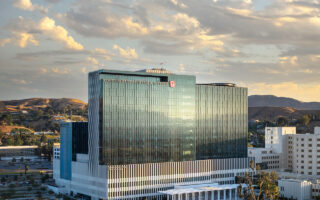

Choosing a medical school is one of the biggest decisions an aspiring physician makes, and Loma Linda University School of Medicine (LLUSM) asks applicants to think harder about fit than most schools do. LLUSM is a private MD program in Loma Linda, California, in the Inland Empire east of Los Angeles. It is owned and operated by the Seventh-day Adventist Church, it has educated physicians since 1909, and it has trained more than 13,000 of them. Its mission is short and direct: “to continue the teaching and healing ministry of Jesus Christ.”
That mission shapes everything an applicant sees. Religion courses and a midweek chapel service are part of the program. Students are expected to keep alcohol, tobacco, cannabinoids and illegal drugs out of their lives while enrolled. The secondary application asks about your spiritual life and your church involvement. At the same time, the school admits applicants from other faiths who show a commitment to Christian beliefs and principles, and its graduates match into every major specialty.
This guide covers the 2026-2027 application cycle, for students who plan to start medical school on July 26, 2027 (the Class of 2031). It explains the 2026 entering class averages, the applicant numbers for the 2025 entering class, the 2026-2027 cost of attendance, the curriculum and its LIFE communities, the new regional campuses in Orlando and Dayton, the requirements and deadlines, and all seven secondary essay prompts, with a full example response and analysis for each one. It also covers the interview, the people who lead the school, and practical strategy for applicants of every faith background. Facts were checked on October 18, 2026.
Key Takeaways
- Mission fit is the center of the file. LLUSM uses a “mission-aligned approach” to review academics, the MCAT, medical and service experience, leadership, letters, competencies and interviews. Preference goes to academically qualified, mission-aligned Seventh-day Adventists, but applicants of other faiths who are committed to Christian beliefs and principles are admitted, and no one is accepted on religious affiliation alone.
- Know the academic context. The 2026 entering class averaged a 510 total MCAT, a 3.85 cumulative GPA and a 3.80 science (BCPM) GPA. The school sets no minimum score. For the 2025 entering class, 5,642 verified applicants competed for 176 seats, and 358 were interviewed.
- Mark the 2026-2027 deadlines. Regular MD and MD/PhD applicants must submit AMCAS by November 2 and the secondary and letters by November 16. Early Decision applicants needed AMCAS by August 3 and the secondary by August 17.
- Plan for the cost. Tuition and fees are $71,746 for Year 1 in 2026-2027, the same for California residents, out-of-state and international students. The school itself offers limited, if any, financial aid.
- Consider the regional campuses now. You can choose to spend Years 3 and 4 at AdventHealth Orlando in Florida or Kettering Health in Dayton, Ohio. You make that choice on the secondary, and it is binding if you are accepted.
- Expect faith in the curriculum. Required religion courses, the Christian Physician Formation course in small LIFE communities, and weekly chapel are part of the program.
- Shadowing and patient care are required. LLUSM requires both physician shadowing and direct patient care exposure.
- Next step: submit AMCAS early, start the seven 275-word secondary essays as soon as your invitation arrives, and decide whether a regional campus fits your goals before you submit.
Key Statistics About Loma Linda University School of Medicine
The snapshot below shows the numbers applicants ask about first. Class averages describe the 2026 entering class, the students who started in summer 2026 after applying in the 2025-2026 cycle. Applicant, interview and class size counts, medians and residency figures describe the 2025 entering class, the newest year with a full applicant profile. Cost figures are for the 2026-2027 academic year. The table gives the year, the population and the source for each figure.

| Metric | Value | Year or cohort | Source and definition |
|---|---|---|---|
| School and degree | Loma Linda University School of Medicine; MD and MD/PhD (Medical Scientist Program) | Current | LLUSM; private, owned and operated by the Seventh-day Adventist Church |
| Average total MCAT | 510 | 2026 entering class | LLUSM Selection Criteria page; matriculants |
| Average cumulative GPA | 3.85 | 2026 entering class | LLUSM Selection Criteria page; matriculants |
| Average science (BCPM) GPA | 3.80 | 2026 entering class | LLUSM Selection Criteria page; matriculants |
| Minimum GPA or MCAT | None stated | 2026-2027 cycle | LLUSM Admission Requirements page |
| Median total MCAT | 510 (mean 510.3) | 2025 entering class | AAMC MSAR, 2026 edition; all accepted applicants |
| Median total GPA | 3.92 (mean 3.87) | 2025 entering class | AAMC MSAR, 2026 edition; all accepted applicants |
| Median science GPA | 3.90 (mean 3.82) | 2025 entering class | AAMC MSAR, 2026 edition; all accepted applicants |
| Verified applications | 5,642 (2,661 California, 2,760 out-of-state, 221 international) | 2025 entering class | AAMC MSAR, 2026 edition; verified AMCAS applications |
| Applicants interviewed | 358 (175 California, 176 out-of-state, 7 international) | 2025 entering class | AAMC MSAR, 2026 edition; interview counts reported by the school |
| Entering class size | 176 (77 California, 93 out-of-state, 6 international) | 2025 entering class | AAMC MSAR, 2026 edition; first-year matriculants |
| Acceptance rate | Not reported | 2025 entering class | AAMC MSAR, 2026 edition, reports no count of acceptance offers, so no acceptance rate (offers divided by applications) can be calculated |
| Deposit to hold a seat | None required; up to 30 days to respond to an offer | 2026-2027 cycle | AAMC MSAR, 2026 edition |
| Tuition and fees | $71,746 (Year 1); $71,656 (Years 2 to 4) | 2026-2027 | LLU Required Program Costs; same for residents, nonresidents and international students |
| Year 1 budget lines, off campus | $109,487 (sum of listed lines) | 2026-2027 | LLU Required Program Costs and Other Educational Costs; tuition, books, living, transportation, personal and loan fees |
| Secondary fee | $85, waived with AAMC Fee Assistance | 2026-2027 cycle | LLUSM Admission Requirements page |
| Students receiving financial aid | 89% | 2024-2025 | AAMC MSAR, 2026 edition (LCME Part I-B); all students |
| Average graduate debt | $241,901 | 2024-2025 | AAMC MSAR, 2026 edition (LCME Part I-B); average medical school indebtedness of graduates |
| Match 2026 | 40% primary care; 32% stayed at LLUH; 62% in California | Class of 2026 | LLU News, Match Day, March 2026 |
| Accreditation | LCME, full; next survey 2031-32 | LCME directory, October 14, 2026 | LCME |
| Regional campuses | AdventHealth Orlando (FL) and Kettering Health (Dayton, OH), Years 3 and 4 | 2026-2027 cycle | LLUSM Regional Campuses page; binding choice on the secondary |
The 2026 class averages and the 2025 class medians tell the same story: a total MCAT around 510 and a GPA near 3.9 sit in the middle of the class, not at a cutoff. LLUSM states plainly that the number of applicants is “far greater than the number of positions,” which makes admission “highly selective and competitive within each year’s applicant pool.” For the 2025 entering class, 5,642 verified applicants were reviewed, 358 were interviewed (about 6.3% of verified applicants) and 176 enrolled. No count of acceptance offers is reported, so no true acceptance rate can be calculated; the interview share is the most useful measure of how hard the first screen is. For a side-by-side view of class numbers at other schools, see our list of average GPA and MCAT scores by medical school, and if you want to compare published school profiles in one place, learn how to use the AAMC’s admission requirements database to choose the best medical school for you.
Mission and Educational Priorities
The School of Medicine states its mission in one sentence: “The mission of the School of Medicine is to continue the teaching and healing ministry of Jesus Christ.” Its fuller purpose statement explains what that means in practice: “Our overriding purpose is to foster the formation of Christian physicians, providing whole-person care to individuals, families, and communities.” The school lists five responsibilities that follow from that purpose (see the school’s mission page):
- Education: creating an environment where medical students, graduate students and residents gain the knowledge, skills, values and attitudes of Christian health professionals and scholars.
- Research: cultivating inquiry and discovering “new routes to wholeness” through basic and clinical research.
- Service: providing timely, cost-effective, whole-person care for all patients, regardless of their circumstances or status.
- Developing the whole person: promoting physical, intellectual, social and spiritual growth in faculty and students. The school’s motto, “To Make Man Whole,” comes from this idea.
- Reaching the world: providing whole-person care wherever the opportunity arises, supporting medical education around the world and sharing “the good news of a loving God.”
Loma Linda University also names seven core values that apply across its schools: compassion, excellence, humility, integrity, justice, teamwork and wholeness. Each value comes with behaviors, such as listening “with kindness and concern,” learning “from teachable moments” and working “toward quality healthcare access for all.”
The school’s own history explains why the mission is so central. LLUSM traces its roots to 1905 and the founding of what became the College of Medical Evangelists, which received its California charter on December 9, 1909. The institution carried that name until 1961. Since 1909, LLUSM has “educated medical students in a supportive Christian environment of excellence and caring” while holding to its original mission to “continue the teaching and healing ministry of Jesus Christ to make man whole.”
What does this mean for you as an applicant? Four practical points stand out.
First, the mission is part of the admissions decision, not a slogan. Applicants are selected “based on a mission-aligned approach.” The academic record, MCAT, medical and service experiences, leadership, mission alignment, letters, interpersonal and intrapersonal competencies and interviews are all reviewed through that lens. The admissions dean’s welcome message invites “academically strong, mission-aligned” applicants whose personal mission is “consistent with ours.”
Second, faith counts, but it does not replace preparation. The school gives preference to academically qualified, mission-aligned members of the Seventh-day Adventist Church. It also has a “firm policy” of admitting applicants from other faiths who have shown a commitment to Christian beliefs and principles. And it says directly that “no candidate is accepted based on religious affiliation alone.”
Third, service is expected to be real and sustained. Service appears in the purpose statement, in the selection criteria and in a dedicated secondary prompt. Students lead community programs such as the Social Action Community Health System (SACHS) and global work through Students for International Mission Service (SIMS). Applicants who already serve consistently, in clinics, churches or their own neighborhoods, will find the most natural fit.
Fourth, whole-person care is taught, not assumed. The curriculum includes a four-year Christian Physician Formation course, a Whole Person Care course and a Whole Person Care clinical clerkship, plus advanced integration weeks on spirituality, social determinants of health, cultural humility, resilience and lifestyle medicine. If you want to treat patients as people with families, beliefs and stresses, not only as diagnoses, the school’s priorities will feel familiar.
For those aspiring to join LLUSM, the mission and core values offer the clearest insight into the school’s educational philosophy. Applicants who align with its principles of compassion, integrity and dedication to service, and who can show those principles in their own record, are the applicants this school is built for.
Accreditation and Institutional Identity
Loma Linda University School of Medicine holds full accreditation from the Liaison Committee on Medical Education (LCME), the accrediting body for MD programs in the United States and Canada. The LCME directory, updated October 14, 2026, lists the school’s status as “Full,” with its next full survey in 2031-32 and initial accreditation “on or prior to 1942.” The School of Medicine “was started in 1909 and has been approved by the Association of American Medical Colleges and the Council on Medical Education of the American Medical Association since November 16, 1922.” Accreditation means the program meets national standards for MD education; it is not a ranking or a guarantee of individual outcomes, but it does mean graduates are eligible for the USMLE and residency training like graduates of any other accredited MD school.
A few identity details are worth getting right:
- University and health system. LLUSM is one of eight schools that make up Loma Linda University, a health sciences university. The school is part of Loma Linda University Health (LLUH), an academic health system with six hospitals and more than 1,200 faculty physicians.
- Church ownership. The school is “owned and operated by the Seventh-day Adventist Church.” Every page of the school’s website carries the line “A Seventh-day Adventist Organization.”
- Degree. The school awards the MD. It is an allopathic (MD) program, not a DO program, so you apply through AMCAS.
- Campus. All students complete Years 1 and 2 on the main campus in Loma Linda. Most stay for their clinical years. A small cohort completes Years 3 and 4 at a regional campus.
- Recent changes. The regional campus model is new. AdventHealth Orlando welcomes third- and fourth-year LLUSM students every year and is licensed by the Florida Commission for Independent Education (License No. 12998). In January 2026, the State of Ohio formally recognized Kettering Health as an official regional campus for LLUSM clinical training.
- Leadership. Tamara Thomas, MD, an LLUSM alumna, is dean of the School of Medicine. On July 1, 2026, Anthony Hilliard, MD, also an LLUSM alumnus, became president of Loma Linda University Health, succeeding Richard Hart, MD, DrPH.
Keep the medical school separate from the rest of the university when you research. Loma Linda University also has Schools of Allied Health Professions, Behavioral Health, Dentistry, Nursing, Pharmacy, Public Health and Religion. Undergraduate housing rules, dental school faculty and nursing program policies do not apply to MD applicants, even though they appear on the same university website.
Medical Programs and Affiliations
LLUSM offers one main route to the MD, an Early Decision option, a combined MD/PhD program and a regional campus option for the clinical years. Each has its own rules.
Regular MD program
Most applicants apply to the four-year Medicine, MD program through AMCAS by the November 2 deadline. Every applicant with a verified AMCAS application is invited to complete the secondary. Years 1 and 2 are on the Loma Linda campus; Years 3 and 4 take place primarily at Loma Linda University Medical Center and affiliated hospitals, or at a regional campus for students who choose one.
Early Decision Program
The Early Decision Program (EDP) is a restricted program that lets you apply to only one medical school. LLUSM says applicants accepted through EDP “have demonstrated excellence in academics, MCAT, extracurriculars, core competencies, and mission alignment.” The 2026-2027 EDP deadlines were August 3 for AMCAS and August 17 for the secondary and letters, with decisions by October 1. Applicants not accepted through EDP are released to the regular MD pool no later than October 1 and are then free to apply elsewhere. EDP makes sense only if LLUSM is clearly your first choice and your file is complete and strong by early August.
MD/PhD: the Medical Scientist Program
The Medical Scientist Program (MSP) is LLUSM’s combined MD/PhD track for students who want careers in academic medicine and biomedical research. The sequence is specific:
- MD Years 1 and 2. Students complete the first two years of medical school and pass USMLE Step 1.
- PhD. Students move into the PhD curriculum, take required courses, pass written and oral qualifying exams, and complete and defend a dissertation.
- MD Years 3 and 4. Students return to medical school for the final two years, complete the standard clinical rotations and pass Step 2.
In most cases the sequence takes about eight years. Students who want to begin with the PhD, or who want to join after starting one of the programs, can ask the program coordinator about possible customization.
Applying is a two-part process. You submit a separate application to the PhD program through the university’s online graduate application, with a preferred deadline of January 1, and you apply to the MD program through AMCAS, selecting the combined MD/PhD option. Students admitted to both programs are then considered for the MSP. Those accepted receive a support package covering tuition for the medical and graduate programs and a stipend during the graduate years. The medical school tuition support comes as a loan that is forgiven when the student completes the PhD. Graduate study in the program is organized through the School of Medicine’s Medical Scientist Program page, and the broader list of PhD areas, including anatomy, cancer and developmental biology, infection and immunity, and neuroscience, is on the school’s graduate programs page. Penelope Duerksen-Hughes, PhD, is the program’s director and coordinator.
The MD/PhD route is competitive. LLUSM says admission “requires evidence that students are likely to develop into successful medical scientists.” Sustained research experience, strong letters from research mentors and a clear account of the questions you want to study matter most. If you are deciding between tracks, our guide to how long medical school takes explains how MD/PhD timelines compare with the standard four years.
Regional campuses: AdventHealth Orlando and Kettering Health
LLUSM now describes itself as “Three States. One Mission.” After two years in Loma Linda, students can complete their clinical years at:
- AdventHealth Orlando (Central Florida). Students train at a major tertiary and quaternary referral hospital that serves patients from across the Southeast, the Caribbean and Latin America. The cohort is “intentionally small (up to 48 students).” Third-year rotations include family medicine, internal medicine, general surgery, pediatrics, neurology and psychiatry, and obstetrics and gynecology. Fourth-year rotations include Whole Person Care, emergency medicine, preventive medicine and critical care. The campus offers a scholarship per year while students train in Orlando, and AdventHealth’s research network includes hundreds of active studies.
- Kettering Health (Dayton, Ohio). Kettering Health is a Seventh-day Adventist health system with nine hospitals, 13 emergency departments, more than 120 outpatient facilities, 15 residency programs and seven fellowships. The State of Ohio recognized it as an official LLUSM regional campus in January 2026.
The key rule: you indicate regional campus interest on the secondary, and the choice is binding. If you are accepted, you must complete Years 3 and 4 at that regional campus, as long as you are in good academic and professional standing and on target to pass Step 1. Accepted students in the Orlando track may be invited to connect and interview with the regional campus team during placement. Regional campus students stay part of the class, take part in LIFE communities, research and student government, and are encouraged to return to Loma Linda for Match Day and graduation. Many regional campus students build connections with local residency programs and go on to match there. Elaine Hart, MD, assistant dean for regional campuses, is the contact for both sites.
Clinical affiliations
Clinical instruction in Years 3 and 4 takes place primarily at:
- Loma Linda University Medical Center
- Jerry L. Pettis Memorial VA Medical Center (the VA medical center in Loma Linda)
- Riverside County Regional Medical Center
- White Memorial Medical Center in Los Angeles
Arrowhead Regional Medical Center, Kaiser Permanente Hospital and Glendale Adventist Medical Center are also affiliated with the school and used for medical student training. The LLUH system around the medical center also includes Loma Linda University Children’s Hospital, where pediatric heart surgery history was made, and behavioral health services that include the Behavioral Medicine Center. For the regional campuses, AdventHealth Orlando and Kettering Health are the clinical partners.
Other School of Medicine programs (separate from the MD)
The School of Medicine also runs graduate programs that have their own admissions and do not lead to the MD: master’s and doctoral degrees in the basic sciences (anatomy, biochemistry, microbiology, pharmacology and physiology), a Pathologists’ Assistant master’s program that the school calls the only one on the West Coast, a Master of Science in Genetic Counseling, a Master of Science in Biotechnology, and degrees in Earth and Biological Sciences. Postgraduate residencies and fellowships are also based in the school and LLUH. These programs share faculty and facilities with MD students but are separate applications.
What is not offered
The MD admissions pages do not describe an early assurance or linkage program, a BS/MD program, or other dual degrees for MD students beyond the MD/PhD. If you are interested in a dual degree such as an MPH, ask the admissions office directly. Loma Linda University does have a School of Public Health, and some LLUSM faculty hold both degrees.
The school requires shadowing and direct patient care, and the programs above all build on that foundation. If you are still building those hours, clinical internships for pre-med students are one supervised way to add direct patient contact before you apply.
Curriculum Overview
LLUSM’s MD curriculum is a four-year program built to train physicians in both the science and the art of medicine. Basic and clinical sciences are integrated throughout, with more basic science in the first half and more clinical science in the second. The school’s instructional methods are “an effective blend of lectures, small group sessions and problem-based learning,” and teaching also includes interactive lectures; problem, team and case-based learning; computer-based instruction; laboratory work; patient care; simulation; and standardized patients. Clinical exposure starts early: medical students are exposed to patients beginning in the first year.
Years 1 and 2: the pre-clerkship years
The first two years emphasize the basic medical sciences, with regular opportunities to apply them to patient care.
- Foundations and organ-system blocks. Students begin with a Foundations block and then move through organ-system blocks that integrate anatomy, physiology, biochemistry, pathology, pharmacology, microbiology and other disciplines into one course per system. A Foundations block is followed by seven organ-system blocks across the two years, ending with multisystem application. First-year blocks in the 2026-2027 catalog include Foundations I, Foundations II (Gastrointestinal and Liver), Hematology and Immunology, Cardiovascular and Pulmonary, and Endocrine and Reproductive, and second-year blocks in Neuroscience and Psychiatric Science, Renal and Urinary, and Musculoskeletal and Skin with multisystem integration.
- Patient Inquiry. A problem-based curriculum the school calls “Patient Inquiry” helps students connect basic science to clinical cases. It builds teamwork and self-directed learning.
- Clinical Skills Development. This longitudinal course runs through medical school and builds history-taking, physical examination, communication, critical thinking, professionalism and whole-person care skills. Students have inpatient and outpatient experiences every year, plus standardized patients and simulation.
- Christian Physician Formation. This longitudinal course addresses theological, ethical and interpersonal questions in health care. It is taught in LIFE communities, where small groups of students are paired with clinical faculty. Each student gets a faculty mentor through the course. It also covers resilience, professionalism, social determinants of health and lifestyle medicine, and its religion component is co-taught by School of Religion faculty and clinicians.
- Selectives. First- and second-year selectives give students room to explore interests.
- USMLE Step 1. Students must pass Step 1 to be promoted to the third year. Year 2 ends with dedicated Step 1 preparation time.
Required religion courses
Religion courses are part of the degree requirements in the 2026-2027 catalog:
- Year 1: RELR 704 Orientation to Christian Physician Formation; RELT 716 God and Human Suffering; and one elective religion course chosen from options such as Adventist Beliefs and Life; Medicine, Humanity, and God; Adventist Heritage and Health; World Religions and Human Health; Christian Spirituality and the Health Professional; and Marriage and Family Wholeness.
- Year 2: RELE 708 Medicine and Ethics and RELR 775 Whole Person Care.
- Year 3: RELE 714 Advanced Medical Ethics.
These courses are where much of the “spiritual, ethical, and relational” content named in the second secondary prompt lives. Applicants of any faith should read the list before they write that essay.
Year 3: core clerkships
The third year has two components. The primary care block includes internal medicine, pediatrics and family medicine, with a continuity clinic experience. The second block combines surgery, obstetrics and gynecology, and neurology and psychiatry. Clerkships run eight weeks for medicine, pediatrics, surgery and neurology/psychiatry, and six weeks each for family medicine and gynecology and obstetrics, plus a two-week third-year elective. Recurring sessions on whole-person care, ethics, radiology, lifestyle and preventive medicine, social determinants of health and patient safety are woven into these rotations. Christian Physician Formation continues.
Advanced integration weeks
During Years 3 and 4, students attend advanced integration weeks: plenary sessions by visiting speakers in the morning and breakout groups in the afternoon. Topics include religion and spirituality, social determinants of health, cultural humility, resilience and lifestyle medicine, with themes such as “Whole-Person Care” and “God and Human Suffering.” Students also get mentoring on career planning, specialty choice and residency applications during these weeks.
Year 4: advanced clinical work and electives
The fourth year asks students to apply what they know more independently. Required experiences include:
- Emergency medicine
- Intensive care (medicine, pediatrics or surgery)
- Preventive Medicine and Population Health
- The Whole Person Care clinical clerkship
- A sub-internship in medicine, surgery, family medicine or pediatrics
- About 20 weeks of electives, including a required two-week elective in a basic science discipline of the student’s choosing
Elective options in the catalog span anesthesiology, dermatology, emergency medicine, family medicine, neurology, neurosurgery, ophthalmology, orthopaedic surgery, otolaryngology, pathology, physical medicine and rehabilitation, psychiatry, radiology, radiation medicine, surgery, urology and more. Elective time can also be used for research and for international medical care and service. The schedule leaves time for Step 2 and residency applications.
How the tracks differ
- Main campus students complete all four years in Loma Linda and its affiliated hospitals in the Inland Empire and Los Angeles.
- Regional campus students complete the same Years 1 and 2 in Loma Linda, then the same curriculum structure in Orlando or Dayton for Years 3 and 4. Regional campuses are “fully integrated into the School of Medicine’s curriculum.”
- MD/PhD students complete MD Years 1 and 2, then the PhD, then MD Years 3 and 4.
Facilities
Students learn in an anatomy laboratory, the Clinical Skills Education Center, whose exam rooms are equipped with video recording for feedback, and the Medical Simulation Center, which includes a virtual trainer room that uses virtual reality to teach and assess procedures. These spaces let students practice “in a safe, educationally progressive hospital-simulated environment.”
For the big picture on how this structure compares with other schools, our guide to how long medical school takes is a useful companion.
Admissions Requirements and Application Process
This section covers what LLUSM requires, how the application moves, and the 2026-2027 dates. The school’s own requirements are firm; the class averages in the statistics section describe a typical admitted student, not a minimum.
Degree requirement
You are expected to finish a bachelor’s degree from an accredited college or university in the United States or Canada before you matriculate. Any major is acceptable, and “no major field is given preference.” The school recommends moving beyond basic courses in your major and taking advanced science and math where you can. On rare occasions, applicants with exceptional academics and mission alignment who have completed at least 90 semester or 135 quarter hours, including the required courses, may be considered.
Required courses
All required courses must be completed at an accredited college or university in the United States or Canada:
| Course | Requirement |
|---|---|
| General Biology (excludes microbiology and anatomy and physiology) | One-year sequence with lab |
| General or Inorganic Chemistry | One-year sequence with lab |
| Organic Chemistry | One-year sequence with lab |
| Biochemistry | One academic term (lab recommended in the catalog) |
| General Physics | One-year sequence with lab |
The school highly recommends coursework in genetics, psychology, sociology and statistics. The catalog also lists college English and religion as required by your own undergraduate school’s degree requirements.
Course policies to check now:
- CLEP and pass/fail grades are not accepted for the required science courses, except pass/fail courses taken in the winter and spring 2020 terms.
- Science credits earned in professional schools (allied health, business, dentistry, nursing or pharmacy) do not count.
- AP credit is not accepted for the required sciences. If your college accepted the AP credit, you may substitute upper-division courses in the same area, or take the required course at another institution.
- Online courses and labs at accredited institutions are acceptable, though in-person courses are recommended.
- Community college courses are acceptable, though four-year institutions are recommended.
MCAT
Every applicant must take the MCAT. You must take it no later than September of the year before you plan to start, and scores older than three years from matriculation are not considered. For the 2027 application cycle, the earliest MCAT accepted is one taken any time in 2024. No minimum score is published. Plan your test date early, using our guide to MCAT test dates and score release, and budget for what the MCAT costs. For preparation, see how to study for the MCAT, with seven tips to ace the exam.
Health care experience
LLUSM requires two kinds of experience: physician shadowing and direct patient care exposure. The school’s stated reason is “to better inform their decision for a career in medicine.” Shadowing alone does not meet the second requirement. Direct patient care means roles where you interact with patients yourself, such as working as a medical assistant, EMT, CNA or scribe with patient contact, or volunteering in a clinic doing intake and vitals under supervision. If your school terms make that hard, pre-med summer internships can add concentrated clinical hours before you apply.
Residency, citizenship and international applicants
LLUSM is private, so state residency does not affect tuition or admission category. International applicants are considered “without regard to their country of origin,” with specific requirements:
- At least one year of study, including the required courses, at an accredited U.S. or Canadian college or university before applying
- Academic competitiveness and proficiency in spoken and written English
- Before a SEVIS Form I-20 is issued, documentation of funds to cover all expenses, with initial proof for the first two years
International tuition and fees are the same as domestic. As with domestic applicants, preference goes to academically qualified, mission-aligned Seventh-day Adventists. Canadian, international and DACA applicants are considered case by case, with the same preference for academically qualified, mission-aligned Seventh-day Adventists. Contact the admissions office early if one of these categories applies to you.
Technical standards
Candidates must meet technical standards in five areas: observation; communication; motor function; intellectual, conceptual, integrative and quantitative abilities; and behavioral and social attributes. Examples include observing patients accurately, communicating effectively and sensitively with patients and colleagues, performing physical exam maneuvers and basic procedures, problem solving, and showing the emotional health and judgment needed for patient care. Reasonable accommodations are provided for students with disabilities who can meet the standards.
Letters of recommendation
Letters must go through the AMCAS Letter Service. Letters sent directly to the admissions office are not accepted.
- If your school offers a committee letter or packet, it is required, and no other letters are needed.
- If it does not, you need three to six letters from people who know you well. At least one must come from a science professor who taught you. The school suggests the others come from a physician you shadowed, an employer, your pastor or other clergy, or a leader of your volunteer work.
- The maximum is six letters total, including any added later.
Your file is not reviewed until every letter you listed in AMCAS has arrived and the minimum has been met. Ask writers early, especially clergy, who may not be familiar with the AMCAS process.
Primary application (AMCAS)
LLUSM uses AMCAS, which opens in early May. The Regular MD and MD/PhD deadline is November 2, 2026; the AMCAS application, transcripts and fees must be submitted by that date. If you are new to the system, start with our AMCAS application guide.
Secondary application
Every applicant receives a secondary invitation by email once AMCAS delivers the verified application (allow up to eight weeks for AMCAS processing). If you have not received the invitation within two weeks of AMCAS verification, call the Office of Admissions at 909-558-4467. The secondary and letters are due November 16 for Regular MD and MD/PhD applicants. The fee is $85, non-refundable, and it is waived automatically if you have AAMC Fee Assistance Program approval. The seven 2026-2027 essay prompts are in the secondary section of this guide.
Complete file and review
A complete file has four parts: a verified AMCAS application, a current MCAT score, the LLUSM secondary with the fee paid or waived, and all required letters. You receive an email when your file is complete and in review. Incomplete files are not reviewed. After submitting your secondary, you can upload updates at medapp.llu.edu, such as new activities, letters of interest and unofficial transcripts. New letters must still go through AMCAS. Contact information changes go to AMCAS first.
Interviews and decisions
Interviews are by invitation only, and only interviewed applicants are considered for admission. After the interview, the committee does an additional file review. Decisions are sent by email on a rolling basis until the class is filled, and status changes appear in the medapp.llu.edu portal. The school asks applicants not to call for status checks. Admissions Committee decisions are final, and appeals are not accepted.
Accepting an offer, waitlist and deferral
LLUSM follows the AMCAS Choose Your Medical School tool. Accepted students are highly encouraged to select “Plan to Enroll” once it opens on February 19 and may update it while holding other acceptances. By June 10, 2027, accepted LLUSM students must select “Commit to Enroll” and withdraw from all other schools and waitlists. Applicants accepted from the waitlist follow the timeline in their acceptance letter.
No deposit is required to hold a seat, and the most time the school allows for a response to an offer is 30 days.
Applicants who will be placed on the waitlist are notified by email no later than the end of May. Alternates are contacted as seats open and may be accepted through the start of classes. In a typical cycle, about 100 applicants hold waitlist positions and about 25 acceptance offers go to applicants from the waitlist.
Deferrals are granted only for emergency circumstances, for one year, after the admission decision is final. Nonurgent requests must be submitted by May 1, and deferred students may not apply to other medical schools.
Background check and transfer
Accepted applicants must complete a criminal background check through the school’s own process; LLUSM does not use the AAMC Background Check Service. Transfer opportunities are very rare. When a position exists, applicants must be current students in good standing at an LCME-accredited U.S. MD school who have finished Year 2, passed Step 1 and not yet started Year 3.
2026-2027 timeline
| Date | What happens |
|---|---|
| Early May 2026 | AMCAS opens |
| July to September 2026 | Early Decision interview invitations sent by email |
| July to November 2026 | Verified AMCAS applications and letters received; secondary invitations sent by email |
| July 2026 to January 2027 | Regular MD and MD/PhD applications reviewed |
| August 3, 2026 | Early Decision AMCAS deadline |
| August 17, 2026 | Early Decision secondary and letters deadline |
| September 2026 to March 2027 | Regular MD and MD/PhD interview invitations sent, primarily in this window |
| By October 1, 2026 | Early Decision decisions sent; non-accepted EDP applicants released to the regular pool |
| November 2, 2026 | Regular MD and MD/PhD AMCAS deadline |
| November 16, 2026 | Regular MD and MD/PhD secondary and letters deadline |
| November 2026 to June 2027 | Rolling decisions until the class is filled (regular MD decisions mainly November through April) |
| January 1, 2027 | Preferred deadline for the PhD application (MD/PhD applicants) |
| February 19, 2027 | AMCAS “Plan to Enroll” opens |
| April 15, 2027 | Students with multiple acceptances narrow to three schools |
| April 30, 2027 | AMCAS “Commit to Enroll” opens; students narrow to one acceptance |
| May 1, 2027 | Deadline for nonurgent deferral requests |
| End of May 2027 | Waitlist notifications sent by this date |
| June 10, 2027 | “Commit to Enroll” required for accepted LLUSM students |
| July 26, 2027 | MS1 orientation and matriculation |
| July 29, 2027 | White Coat Ceremony |
Because review is rolling, earlier complete files have more open interview slots and seats to compete for. A practical goal is to submit AMCAS in June or early July, turn the secondary around within about two weeks, and make sure all letters are in AMCAS before your secondary is done.
Tuition, Cost of Attendance and Financial Aid
LLUSM is a private school, and its costs are the same for everyone. “State residency is not a determinant in tuition rates,” and international students pay the same tuition and fees as domestic students.
2026-2027 cost of attendance
Loma Linda University publishes required costs and an allowance budget for each year of the MD program. The figures below are for the 2026-2027 academic year. The school notes that amounts are expected to rise each year with inflation in professional education, so later years will cost more than these rates.
| Item | Year 1 (11 months) | Year 2 (8 months) | Year 3 (12 months) | Year 4 (10 months) |
|---|---|---|---|---|
| Tuition and fees (required) | $71,746 | $71,656 | $71,656 | $71,656 |
| Books, materials, supplies and equipment (required) | $2,523 | $450 | $663 | $85 |
| Living allowance, off campus or LLU rental | $26,818 | $19,504 | $29,256 | $24,380 |
| Living allowance, on-campus dorm | $15,213 | $11,064 | $16,596 | $13,830 |
| Transportation | $3,850 | $2,800 | $4,200 | $7,500 |
| Miscellaneous personal expenses | $4,015 | $2,920 | $4,380 | $3,650 |
| Federal student loan fees | $535 | $2,973 | $3,315 | $3,292 |
| Professional license costs | $0 | $695 | $695 | $0 |
| Sum of listed lines, off-campus budget | $109,487 | $100,998 | $114,165 | $110,563 |
| Sum of listed lines, on-campus dorm budget | $97,882 | $92,558 | $101,505 | $100,013 |
The university lists each budget line without a printed total; the bold rows add up the listed lines. At 2026-2027 rates, four years of tuition and fees come to $286,714, and the full off-campus budget comes to about $435,213. The budget also lists a higher living allowance for students in LLU-owned rentals with dependents ($27,423 in Year 1), and dependent care and disability-related expenses can be added through a budget revision request. International students must budget 12 months of living expenses each year.
Health insurance
Health insurance is not a separate line in the budget. Medical students are provided health coverage through the university’s Student Health Plan, which stays in effect for students who are regularly enrolled and register and pay tuition and fees on time each term. The plan does not cover optical care and offers limited dental care. Coverage for a spouse or children can be purchased through the university’s Department of Risk Management.
Financial aid
Be clear-eyed here. LLUSM says, “There is limited, if any, financial aid available through the school.” Most students finance their education with federal loans. In 2024-2025, 89% of students received some form of financial aid, and graduates carried an average medical school debt of $241,901. The school lists these funding sources:
- Personal education savings
- Contributions from family, friends, church or employer
- Private scholarships you apply for and win
- Federal Direct Subsidized and Unsubsidized Loans and other federal aid
- National Health Service Corps scholarships
- U.S. Armed Forces scholarships, which carry a service commitment
- Institutional grants or loans
- Private student loans
Two school-specific routes can reduce cost. MD/PhD students accepted into the Medical Scientist Program receive tuition support for both programs, with the MD portion structured as a loan forgiven when the PhD is completed, plus a stipend during the PhD years. Students at the AdventHealth Orlando regional campus are offered a scholarship each year of their clinical training there. Some regional campuses may also offer tuition or cost-of-living advantages, with details given to admitted students during placement.
The university’s Office of Financial Aid handles aid for medical students. Verdell Schaefer is director and Annabel Lezcano is the financial aid advisor for medicine; the office phone is (909) 558-4509. To qualify for federal aid, students must generally be enrolled at least half time in an aid-eligible program.
What this means for applicants
The cost is high and largely loan-financed. Plan early:
- Apply for outside scholarships during your gap year or senior year, not after you are accepted.
- If you might serve in the military or in an underserved area, look into Armed Forces and National Health Service Corps scholarships before you apply.
- Ask your church or denomination about medical education scholarships. Many Adventist conferences and congregations support members in health professions.
- If you are seriously interested in research, compare the MD/PhD support package with the cost of the MD alone.
- Use the AAMC’s financial aid resources and the budget figures above to estimate your borrowing.
For a broader view of funding options, see IMA’s guide to top medical school scholarships and how to get them.
Campus Facilities and Student Life
Loma Linda is a small city in San Bernardino County, nestled below the San Bernardino Mountains in the Inland Empire. The university and medical center sit at the center of a community known for its health-focused lifestyle. Student life at LLUSM reflects the university’s Adventist values, its health sciences focus and a busy academic medical center.
Faith and campus rhythms
- Chapel. The university “expects students to attend the midweek University chapel service.” LLU Chapel meets Wednesdays at 11 a.m. The 2026-2027 schedule includes school chapels, convocation, Weeks of Renewal in October, January and April, and school awards chapels.
- Sabbath. Seventh-day Adventists observe the Sabbath from sundown Friday to sundown Saturday. School offices and libraries close early on Friday afternoon and are closed on Saturday; the library is open on Sunday.
- Lifestyle. Students are expected to exclude alcohol, tobacco products, cannabinoids and illegal drugs from their lives while enrolled. The university’s professional appearance standards include no visible tattoos or body piercings apart from simple earrings. The Student Handbook gives details for School of Medicine students.
- Diet. LLU Dining Services promotes a lacto-ovo vegetarian diet, consistent with more than a century of Adventist health teaching. Vegan options are available on request.
- Faith communities. Campus Hill Church and other congregations sit near campus, and the university maintains a list of nearby churches and synagogues. Campus Hill Church also hosts outside events; in February 2020, for example, Dr. Ben Carson preached there during a weekend organized by the independent Three Angels Broadcasting Network, as Adventist Today reported. That was a church event, not a School of Medicine program.
Study and clinical facilities
Medical students learn in the anatomy laboratory, the Clinical Skills Education Center with video-recorded exam rooms, and the Medical Simulation Center with its virtual reality trainer room. Clinical training happens at Loma Linda University Medical Center and its affiliated hospitals. Campus buildings, including the library, laboratories, bookstore, the Drayson Center fitness facility, and medical and dental facilities, are close together, and many students walk or bike between them.
Housing
Loma Linda University has two main residence halls, Lindsay Hall and the Daniells Residence Complex. The university’s housing policy requires undergraduate students under 21 to live in campus housing unless they are married, have at least 190 quarter units or live with their parents. Graduate and professional students, including medical students, are not required to live in campus housing. Most medical students rent nearby. The Loma Linda University Foundation Rental Office manages rental properties within walking or biking distance of campus and helps students find off-campus housing, and the university’s housing pages include an area guide. The cost of attendance budget assigns each student a dorm, LLU rental, off-campus or living-with-parents allowance, so ask early which budget fits your plans.
Dining
LLU Dining Services runs four dining locations for students, faculty and staff, with breakfast and lunch options, chef’s stations, salad bars and grab-and-go items. They include the Councilors Student Pavilion Café, which has served students since the early 1950s, and the Faculty Dining Room. The medical center’s main cafeteria is also open to students for meals outside those hours, and current students receive a 10% discount with their ID badge.
Student organizations
Loma Linda University’s student organizations are open to students across its schools, so medical students join alongside nursing, dental, public health and allied health students. Current groups listed by the university include:
- Loma Linda University Student Association (LLUSA): the student government and official voice of students from all programs and schools.
- Adventist Medical Evangelism Student Association (AMESA): a chapter that fosters student interest in medical evangelism through leadership, programs and service, patterned after the healing ministry of Jesus.
- African Network (AfriNet): created by LLU students in 2008 to celebrate the African nations represented on campus.
- Association of Latin American Students (ALAS): a group for Latino cultural, social and spiritual life that welcomes students of any background.
- Black Health Professional Student Association (BHPSA): support, community outreach and cultural programs for students in health fields.
- Bioethics Interest Group: discussion of ethical questions in medicine and health care.
- Student National Medical Association (SNMA): the LLU chapter of the national organization focused on medical students of color and service to underserved communities.
- Loma Linda University Garden Club, Taste Buds Culinary Club and Craft Collective: community gardening, vegetarian cooking and creative outlets.
- Veterans and Military Club: community for students with past or current military service.
The university’s organization descriptions also mention a Sexuality and Gender Alliance (SAGA), a Health GIS Club for geospatial health work and a 3D Printing Collaborative. Group names and lists change from year to year, so check the current student activities page during your interview season.
Service and support
Service is part of the culture. Through LLU Community Academic Partners in Service, School of Medicine students spend more than 3,000 hours each year in local schools, shelters and clinics. The Social Action Community Health System (SACHS) connects students with communities that have limited access to care, and Students for International Mission Service (SIMS) supports global service, including a Deferred Mission Appointee program designed for medical students. The School of Medicine also hosts summer pathway programs for high school, undergraduate and graduate students from diverse backgrounds. Students have access to the university’s Student Health Service, counseling services and the faculty mentor assigned through their LIFE community.
Clinical Rotations and Research Opportunities
Core rotations and sites
Clinical training at LLUSM covers surgery, internal medicine, pediatrics, obstetrics and gynecology, family medicine, neurology, emergency medicine, intensive care, preventive medicine and psychiatry. On the main track, rotations take place primarily at Loma Linda University Medical Center, Jerry L. Pettis Memorial VA Medical Center, Riverside County Regional Medical Center and White Memorial Medical Center in Los Angeles, with Arrowhead Regional Medical Center, Kaiser Permanente Hospital and Glendale Adventist Medical Center also used for training. That mix gives students an academic medical center, a VA hospital, county safety-net hospitals and an urban Los Angeles hospital, which means a wide range of patients and payers.
LLUH’s affiliated institutions serve as the tertiary medical facility for inland Southern California. Students should expect some driving: White Memorial in Los Angeles and the Riverside and Arrowhead county hospitals are a commute from Loma Linda, and the Year 4 transportation allowance in the budget ($7,500) reflects that.
Regional campus rotations
Students who choose a regional campus complete core rotations in Orlando or Dayton. AdventHealth Orlando offers third-year rotations in family medicine, internal medicine, general surgery, pediatrics, neurology and psychiatry, and obstetrics and gynecology, and fourth-year rotations in Whole Person Care, emergency medicine, preventive medicine and critical care, with learning in small teams of attending physicians and residents. Kettering Health offers rotations across its hospitals, plus electives, community outreach, research, ultrasound and simulation opportunities, suture workshops and poster presentation opportunities.
Electives and global health
Elective time is available “for additional educational experience in the clinical and research areas, as well as international medical care and service.” Loma Linda’s global history is long. The Overseas Heart Surgery Team, co-founded in 1963 by alumni and faculty C. Joan Coggin, MD, and Ellsworth Wareham, MD, went on to start or upgrade open-heart surgery programs in more than a dozen countries. Today, SIMS supports students who want to serve abroad, and 25% of the Class of 2025 reported a global health experience during medical school. Every student also completes a 20-hour service learning requirement, with local and international options. If you hope to compare international health systems before medical school, pre-med internships abroad are one way to see care in lower-resource settings and reflect on what whole-person care means across cultures.
Research
Research is part of the school’s stated purpose: “cultivating a creative environment for inquiry and discovery.” Faculty and students work in biomedical, translational and clinical research. The MD program does not require a thesis, but every fourth-year student must complete a two-week elective in a basic science discipline. The Office of Student Affairs runs a funded summer research program after the first year, with a living stipend, and more than 70 students take part each year. The School of Medicine reported $7,971,942 in direct federal research grants and contracts for fiscal year 2024. Students with stronger research goals can pursue the Medical Scientist Program, summer research programs run by the School of Medicine, or research electives. Regional campus students have access to research at their sites; AdventHealth reports hundreds of active clinical studies across its system, and the Orlando campus lists clinical research, quality improvement projects and case reports as options. The School of Medicine also has an assistant dean for clinical research.
Match outcomes
The Class of 2026 matched on March 20, 2026. The results:
- 40% matched into primary care
- 32% will continue training at Loma Linda University Health
- 62% matched to California programs
- Internal medicine led for the sixth consecutive year at 14%
- Surgery and surgical subspecialties made up 11%, including neurosurgery, orthopaedic surgery, ophthalmology and urology
- Emergency medicine and anesthesiology each accounted for 9%
Graduates matched at programs including AdventHealth Orlando, Kettering Health, Mayo Clinic Rochester, Harvard, UCLA, USC and the University of Utah. The 2023 class reported a similar pattern, with 62% staying in California and 36% matching into residencies at LLUH. If you want to practice in California, and especially in the Inland Empire, that pattern matters.
Notable Alumni, Faculty, Leadership and Admissions Staff
Loma Linda’s leadership is unusually homegrown. Many of the people who run the School of Medicine and Loma Linda University Health earned their own MD degrees here. Knowing who they are helps you understand what the school values, who reads your file and who will shape your training. The profiles below use the school’s and university’s own directories and news releases.
School and health system leadership
Tamara L. Thomas, MD: Dean, School of Medicine. Dr. Thomas is dean of LLUSM and chair of the Department of Medical Education. She is a professor of pediatrics, emergency medicine and medical education. She earned her MD from Loma Linda University in 1987, after a bachelor’s degree from Walla Walla University in 1983. At the 2026 Match Day she described what she hopes graduates carry with them: “What makes Match Day so meaningful is not just where our students are going, but who they have become.” For applicants, her background is a reminder that the school values physicians formed by its own mission who go on to lead it.
Anthony A. Hilliard, MD, FACC: President, Loma Linda University Health. The LLUH Board of Trustees appointed Dr. Hilliard president of Loma Linda University Health effective July 1, 2026, succeeding Richard Hart, MD, DrPH, who led LLUH through a long period of growth and stayed in office through the transition. Dr. Hilliard also continues as chief executive officer of the LLUH hospitals, a role he has held since October 2024. A Southern California native, he earned his MD from the Loma Linda University School of Medicine in 2002 and completed his residency and cardiology fellowships at the Mayo Clinic. Since returning to Loma Linda in 2009, he has served as division head of cardiology, chief operating officer of the faculty medical group, senior vice president for clinical faculty operations and associate dean of clinical operations for the School of Medicine. He was promoted to professor of medicine in 2025 and has held national leadership roles with the American College of Cardiology and the American Heart Association. His career path, from LLUSM student to cardiologist to system president, shows how closely the school and the health system are tied.
Paul C. Herrmann, MD, PhD: Chancellor, Loma Linda University. Dr. Herrmann is chancellor of the university and a professor of pathology and human anatomy. He earned a PhD from Stanford University in 1996 and his MD from Loma Linda University in 2000. As a physician-scientist and LLUSM alumnus in the university’s top academic role, he is a useful example for MD/PhD applicants of how research and clinical training combine at Loma Linda.
Kevin Codorniz, MD: Vice Dean. Dr. Codorniz is vice dean of the School of Medicine. He is an LLUSM graduate from the class of 2005 and earlier served as associate dean of clinical education, addressing graduating students and families at the 2023 Match Day.
Daniel K. Rogstad, MD, PhD: Senior Associate Dean, Medical Student Education. Dr. Rogstad oversees medical student education. He is an assistant professor of medicine, of basic sciences (biochemistry) and of medical education. He earned both of his doctoral degrees at Loma Linda University, a PhD in 2008 and an MD in 2009, so he completed the same kind of combined training the Medical Scientist Program offers today.
Admissions leadership
Sarah M. Roddy, MD: Associate Dean, Admissions and Recruitment. Dr. Roddy leads LLUSM admissions and is an associate professor of pediatrics in the neurology division. She earned her MD from Loma Linda University in 1980, after a bachelor’s degree from Southern Adventist University. Her welcome message on the MD program page tells you what she is looking for: applicants “who have demonstrated by life experiences that their own personal mission is consistent with ours,” and who are “academically strong” and “mission-aligned.” Read that line before you write your secondary.
Susan A. Ranzolin, BSN: Assistant Dean, Admissions. Ranzolin is listed with Dr. Roddy under Admissions Leadership on the MD program page. The admissions office, in Coleman Pavilion, is open Monday through Thursday from 8 a.m. to 5 p.m. and Friday from 8 a.m. to 2 p.m., and can be reached at 909-558-4467.
Faculty leaders who shape the student experience
Amy C. Hayton, MD: Associate Dean, Physician Formation and Wholeness. Dr. Hayton directs the School of Medicine’s LIFE Communities, the small faculty-led groups where the Christian Physician Formation course is taught. She is an assistant professor of medicine and of medical education and earned both an MD and an MPH from Loma Linda University in 2004. If the LIFE communities are part of why you are applying, she leads that part of the program.
Elaine A. Hart, MD: Assistant Dean, Regional Campuses. Dr. Hart oversees the AdventHealth Orlando and Kettering Health regional campuses and is the contact for both. She is an associate professor of gynecology and obstetrics. She earned her MD from Loma Linda University in 2000, after a bachelor’s degree in nursing from San Jose State University in 1981, a path that may interest applicants coming to medicine from nursing.
Penelope J. Duerksen-Hughes, PhD: Associate Dean, Basic Science and Translational Research. Dr. Duerksen-Hughes is associate dean for basic science and translational research, program director for the Medical Scientist (MD/PhD) program and a professor of basic sciences and in the School of Public Health. MD/PhD applicants who want to discuss timing or customization of the sequence are told to contact her as the program coordinator.
William K. Hayes, PhD: Professor, Earth and Biological Sciences. Dr. Hayes is a professor in the Department of Earth and Biological Sciences, which sits within the School of Medicine. He studies the behavior, ecology and toxinology of venomous snakes, especially rattlesnakes, and arthropods, as well as the ecology and conservation of endangered iguanas and birds in California, the Caribbean and the Galapagos Islands. He teaches graduate students rather than the MD curriculum, but his work shows the range of science housed in the school.
Loma Linda University also has faculty in its other schools who are sometimes confused with medical school faculty. Jung Wei Chen, for example, chairs the Department of Pediatric Dentistry and directs its residency program in the School of Dentistry, not the School of Medicine.
Historic alumni and faculty
Leonard L. Bailey, MD (1942-2019). Dr. Bailey earned his MD from Loma Linda University School of Medicine in 1969 and returned in 1976 to join the faculty. In 1984 he drew international attention by transplanting a baboon’s heart into an infant known as “Baby Fae.” The research that followed led to human infant heart transplants. He went on to transplant hearts in 376 infants and helped make Loma Linda a world leader in pediatric heart transplantation. He was a distinguished professor of cardiovascular and thoracic surgery and of pediatrics, surgeon-in-chief at Loma Linda University Children’s Hospital, and a member of the faculty for 42 years.
C. Joan Coggin, MD (1928-2018). Dr. Coggin earned her MD from the College of Medical Evangelists School of Medicine (now LLUSM) as a member of the class of 1953-A, at a time when women made up less than 5% of medical graduates nationally. A cardiologist, she and Ellsworth Wareham co-founded the Loma Linda University Overseas Heart Surgery Team in 1963. The two pioneered use of the heart-lung machine in Southern California, carrying one in the trunk of a car between White Memorial Medical Center and Los Angeles County Hospital each week, before taking the same idea abroad. The team went on to perform more open-heart surgeries than any similar organization and to start or upgrade programs in countries including Pakistan, Kenya, Nepal, Vietnam and Zimbabwe. She later served as vice president for global outreach and associate dean for international programs, and earned an MPH from Loma Linda University in 1987.
Ellsworth E. Wareham, MD (1914-2018). Dr. Wareham graduated from the College of Medical Evangelists in 1942 and became a cardiothoracic surgeon who performed more than 12,000 operations, including some of the first open-heart surgeries in several countries with the Overseas Heart Surgery Team. In his later years he became widely known as an example of the Loma Linda “Blue Zone,” crediting a vegan diet, exercise and faith for his long life. He continued to assist in surgery into his mid-90s and died at 104.
Why these profiles matter for applicants
These people share a pattern. Many trained at Loma Linda, stayed to teach or lead, and connected clinical excellence with service and faith. Coggin and Wareham turned clinical skill into global service. Bailey combined research, surgery and a willingness to try what had never been done. Today’s deans run the LIFE communities, the regional campuses and the MD/PhD program that will shape your own training. When you write about why Loma Linda appeals to you, specific knowledge of how the school works, and of the people who built it, is far more convincing than general praise.
Admissions Statistics and Class Profile
LLUSM publishes a short class profile for its newest class. For the 2026 entering class:
| Measure | 2026 entering class | Definition |
|---|---|---|
| Average total MCAT | 510 | Average (mean) total score of matriculants |
| Average cumulative GPA | 3.85 | Average overall undergraduate GPA of matriculants |
| Average BCPM GPA | 3.80 | Average biology, chemistry, physics and math GPA of matriculants |
The newest full applicant profile is for the 2025 entering class:
| Measure | 2025 entering class | Definition and source |
|---|---|---|
| Verified applications | 5,642 (2,661 California, 2,760 out-of-state, 221 international) | Verified AMCAS applications; AAMC MSAR, 2026 edition |
| Applicants interviewed | 358 (175 California, 176 out-of-state, 7 international) | Interview counts reported by the school; AAMC MSAR, 2026 edition |
| Interviewed as a share of verified applications | About 6.3% (358 of 5,642) | Interviewed divided by verified applications; not an acceptance rate |
| Acceptance offers | Not reported | No offer count is reported, so no acceptance rate can be calculated; AAMC MSAR, 2026 edition |
| Matriculants (entering class size) | 176 (77 California, 93 out-of-state, 6 international) | First-year matriculants; AAMC MSAR, 2026 edition |
| Deferred | 11 | Accepted applicants who deferred entry; AAMC MSAR, 2026 edition |
| Entered through special programs | Early Decision 16; Early Assurance 3; MD/PhD 2 | Matriculants by program; AAMC MSAR, 2026 edition |
| Median total MCAT | 510 (mean 510.3, SD 6.4) | All accepted applicants; AAMC MSAR, 2026 edition |
| Median MCAT section scores | Chem/Phys 128; CARS 126; Bio/Biochem 128; Psych/Soc 129 | All accepted applicants; AAMC MSAR, 2026 edition |
| Median total GPA | 3.92 (mean 3.87, SD 0.17) | All accepted applicants; AAMC MSAR, 2026 edition |
| Median science GPA | 3.90 (mean 3.82, SD 0.22) | All accepted applicants; AAMC MSAR, 2026 edition |
| Gender | 85 men, 90 women, 1 another gender identity | Matriculants; AAMC MSAR, 2026 edition |
| Background | 75% science or math majors; 5% with a graduate degree; 10 from postbaccalaureate programs; 27% self-reported disadvantaged status | Matriculants; AAMC MSAR, 2026 edition |
| Total MD enrollment | 766 | All four years; AAMC MSAR, 2026 edition |
How to read these numbers
- Averages and medians describe the middle, not the floor. The 2026 averages describe students who enrolled; the 2025 medians describe all accepted applicants. Both point to a total MCAT around 510 and a GPA near 3.9, and many admitted students were below each figure.
- There is no published cutoff. LLUSM does not set a minimum MCAT or GPA. It does require that the MCAT be from 2024 or later for 2027 entry.
- The science GPA matters. A BCPM average of 3.80 means the class performed well in exactly the courses LLUSM requires. An upward trend in science grades can offset a weaker start, but it needs to be visible.
- Mission alignment is weighed alongside the numbers. The academic record and MCAT are reviewed together with service, leadership, mission alignment, letters and competencies. Two applicants with identical numbers can have very different outcomes.
- The interview is the real bottleneck. For the 2025 entering class, about 6.3% of verified applicants were interviewed, and only interviewed applicants can be admitted. No count of acceptance offers is reported, so no true acceptance rate exists; a figure that divides enrolled students by applicants understates the odds of an offer and should not be read as an acceptance rate.
- Residency matters less than at public schools. There is no preference between California and out-of-state applicants. In the 2025 entering class, 77 students were from California, 93 from other states and 6 were international.
Outcomes data
The best public outcome data is the Match. In 2026, 40% of the graduating class matched into primary care, 32% stayed at LLUH, and 62% matched in California, with internal medicine the most common specialty for the sixth year in a row. Those figures, together with the regional campus model, suggest a school that sends many graduates into California practice and into its own residency programs, while also placing students at national programs.
If your MCAT or GPA is below the averages, focus on what you can still control: a strong, sustained record of service and patient care, a convincing account of mission fit, early submission and excellent letters. If your numbers are above the averages, do not assume they will carry the file; LLUSM reads closely for mission alignment, and a thin secondary can hurt a strong applicant.
Tips and Strategies for Admission
LLUSM’s process rewards applicants who know exactly why they want this school and can prove it with their record. These strategies come from the school’s stated selection criteria and from how its application is built.
1. Decide honestly whether the faith-based program fits you
Before anything else, read the Values and Lifestyle page, the religion course list and the secondary prompts. Ask yourself whether you want four years of religion courses, weekly chapel, Sabbath rhythms and a substance-free lifestyle. If the answer is yes, say so with specifics. If the answer is “I’m not sure,” talk with current students or alumni before you apply. Interviewers will ask about your secondary essays, and an applicant who has thought it through is far more convincing than one who is guessing.
2. Build service that lasts, not service that looks good
Service appears in the school’s purpose, its selection criteria and its own secondary prompt. The strongest service records show sustained commitment: one clinic, food pantry, church ministry or tutoring program over a year or more, with growing responsibility. Caregiving for family members counts. Short trips count less unless they connect to something lasting. Well-supervised pre-med internships can add depth, but they work best as part of a longer pattern, not a substitute for local service.
3. Meet both clinical requirements clearly
LLUSM requires physician shadowing and direct patient care. Make sure your AMCAS activities show both, and that a reader can tell which is which. Roles where you take vitals, do intake, transport patients, assist with care or talk with patients count as direct care. Shadowing alone does not. Structured internships for pre-med students that include supervised patient contact can help if your local options are limited. Keep a log of patients you remember (without identifying details) so you have material for the secondary and interview.
4. Plan your letters around the school’s suggestions
LLUSM specifically suggests a letter from “the faith community pastor or other clergy.” If you are active in a congregation, a pastor who knows your service can speak to mission alignment in a way a professor cannot. Combine that with a science professor (required if you have no committee letter), a physician you shadowed, and a supervisor from your patient care role. Stay within the maximum of six letters.
5. Write the seven secondary essays as a set
The seven prompts overlap: attraction to LLUSM, the faith-integrated curriculum, personal attributes, service, spiritual journey, church involvement and, for graduates, post-graduation activities. Map your stories before you write. Use a different main example in each essay, keep the facts consistent across all of them, and make sure your faith essays sound like the same person. At 275 words each, every sentence has to earn its place.
6. Make the regional campus decision deliberately
Selecting a regional campus is binding. Choose Orlando or Dayton only if you have a real reason: family ties, a plan to practice in that region, interest in a particular health system or the Orlando scholarship. If you choose one, say why in your essays and be ready to discuss it in the interview. If you want to stay in California, you can simply leave the option unselected.
7. Use Early Decision only if you are sure
Early Decision is restricted to one school and closes in August. It fits applicants whose first choice is clearly LLUSM and whose file is already strong and complete. If you need more time to improve your MCAT, add clinical hours or line up letters, the regular cycle is the better choice.
8. Apply early and keep your file moving
Review is rolling, and only complete files are reviewed. Submit AMCAS early in the summer, return the secondary within about two weeks of receiving it, confirm that all letters are in AMCAS, and watch for the “file complete” email. Use the medapp.llu.edu portal for meaningful updates, such as a new role, a publication, improved grades or a letter of interest, rather than frequent small ones.
9. Use a gap year with purpose
Many applicants take one or more years between college and medical school. If you do, the seventh secondary prompt will ask how you used that time. Clinical work, research, service and structured pre-med gap year programs all fit, as long as you can explain what you learned and how it prepared you for LLUSM’s training.
10. Reapply with real changes
If you are reapplying, show clearly what has changed: new patient care experience, a stronger MCAT, deeper service or a clearer understanding of mission fit. Do not resubmit the same essays. If you did not get interview invitations in your first cycle, our guide to what to do when you get no medical school interview invites explains how to diagnose the problem before you try again.
11. Show the AAMC competencies through your experiences
LLUSM reviews “interpersonal and intrapersonal competencies,” which closely follow the AAMC’s core competencies for entering medical students: service orientation, cultural competence, teamwork, oral communication, ethical responsibility, reliability, resilience, capacity for improvement and others. Experiences such as medical internships for undergraduates, clinical jobs and long-term volunteering give you concrete stories that show these qualities. Our article on how International Medical Aid offerings align with AAMC core competencies shows how to connect experiences to each competency, which is useful for students working out how LLUSM’s Christian values fit with contemporary medical education and patient care.
Secondary Application Questions, Example Responses and Analysis

LLUSM sends a secondary invitation to every applicant with a verified AMCAS application. For the 2026-2027 cycle, the secondary has seven essay prompts, each with a 275-word limit. Six apply to every applicant. The seventh applies only if you have already graduated from college. The fee is $85, waived automatically with AAMC Fee Assistance Program approval, and the Regular MD and MD/PhD deadline is November 16, 2026 (August 17 for Early Decision). Follow the limit shown in your portal; if it ever differs from 275 words, use the portal’s limit.
Three other parts of the secondary deserve attention before you start writing:
- Regional campus selection. The secondary is where you indicate interest in spending Years 3 and 4 at the AdventHealth Orlando or Kettering Health regional campus. This selection is binding. If you are accepted, you will complete your clinical years at that campus, provided you are in good academic and professional standing and on target to pass Step 1. Leave it unselected if you want to remain in Loma Linda.
- Lifestyle questions. Loma Linda University expects students to keep alcohol, tobacco products, cannabinoids and illegal drugs out of their lives while enrolled, and you may see questions about lifestyle or personal conduct in the portal. Answer any such question exactly as worded, honestly and briefly. If something in your past needs explanation, state the facts, show what you have learned and make clear that you understand and accept the standards for enrolled students.
- MD/PhD applicants. MD/PhD applicants complete the same LLUSM secondary as MD applicants. The separate PhD application, submitted through the university’s graduate application with a preferred deadline of January 1, has its own requirements, and program-specific essay questions for the Medical Scientist Program have not been published for this cycle. Check the graduate application itself for those questions.
Before you draft, read through the full set. The prompts overlap, so plan which story goes where. The first three ask why LLUSM, how the faith-integrated curriculum fits your goals and what personal attributes you bring. The next three ask about service, your spiritual journey and your church involvement. Because two prompts directly address faith and a third addresses religious involvement, your answers need to be consistent, honest and specific. For more examples of how other schools phrase similar questions, see IMA’s medical school secondary essay prompts database, and if you are new to secondaries, our explainer on primary vs. secondary applications covers the basics.
A note on the service prompt in particular: it asks for experiences, plural. If most of your clinical exposure came from a single setting, consider whether another supervised clinical role or a local volunteer commitment could broaden it before you apply. Do not invent or inflate experiences to fill an essay.
Each example below is original and written for this guide. It is labeled “Illustrative example, not an actual applicant essay.” Use the examples to understand structure and specificity, then write about your own experiences in your own words.
Prompt 1: What makes LLUSM particularly attractive to you?
Limit: 275 words. Who answers: All MD and MD/PhD applicants who receive the LLUSM secondary. Status: Appears required for all applicants.
What it asks. This is the school’s “why us” question. Loma Linda wants evidence that you know what is different about its training and that those differences match what you want as a physician. A general answer about good hospitals and sunny Southern California will not separate you from thousands of other applicants.
How to approach it. Pick two or three features that only Loma Linda combines and connect each to something you have already done. Strong choices include the LIFE communities, where small groups of students are paired with clinical faculty in the Christian Physician Formation course; Patient Inquiry sessions; the Whole Person Care clinical clerkship in the fourth year; student service programs such as SACHS; and the regional campus option in Orlando or Dayton. Close with what you would give back, not only what you would get.
Example response (Illustrative example, not an actual applicant essay; 272 words):
Last spring I sat with a man in the free clinic where I volunteer while he waited for test results. He did not want to talk about his blood sugar. He wanted to talk about losing his job and whether God was still listening. I had no answer, and the physician who joined us did not rush him. She asked one more question, then another, before she ever opened the chart. I left thinking that the best care I had seen began with that kind of attention.
Loma Linda builds that attention into its training instead of leaving it to chance. The Christian Physician Formation course, taught in small LIFE communities paired with clinical faculty, with a faculty mentor for each student, would give me a small group where I could ask hard questions about suffering and faith alongside the science. The Patient Inquiry sessions also appeal to me. Working through a case with classmates, and having to explain my reasoning out loud, is how I finally understood acid-base physiology.
I am also drawn to how the school carries whole person care into the clinical years, through the Whole Person Care clerkship and through student service programs such as SACHS. I have spent two years doing intake at a free clinic, and I want to keep serving patients who have nowhere else to go while I train.
Loma Linda’s mission to continue the teaching and healing ministry of Jesus Christ names something I already try to live. I want my medical education shaped by people who believe that listening is part of healing, and I want to learn to do it well.
Why this example works. The example answers the question in the order a reader needs. It opens with a short, specific scene that shows the applicant’s values in action, then names the features of Loma Linda that match those values. Each feature is real and connected to evidence: LIFE communities and Christian Physician Formation connect to the scene about faith and suffering, Patient Inquiry connects to how the applicant learns, and the Whole Person Care clerkship and SACHS connect to two years of free clinic work. The last paragraph ties the answer to the school’s stated mission in the applicant’s own words. The response stays within 275 words and leaves room for the faith-specific prompts that follow, so it does not try to tell the applicant’s whole spiritual story here.
Mistakes to avoid. Do not list hospitals, specialties or rankings without saying why they matter to you. Do not claim programs or partner hospitals the school does not describe. Do not spend half the answer on the weather or on Southern California. If you are interested in a regional campus, mention it only if you can explain why, because the regional campus choice on the secondary is binding.
Prompt 2: Our medical curriculum integrates spiritual, ethical, and relational issues from the Christian perspective into the practice of medicine. Religion courses and weekly chapel services are part of this program. Please respond to the preceding statements as they relate to your personal educational and career goals.
Limit: 275 words. Who answers: All MD and MD/PhD applicants who receive the LLUSM secondary. Status: Appears required for all applicants.
What it asks. The school is telling you, plainly, that religion courses and chapel are part of the program, and asking how you feel about that in relation to your goals. It is checking that you understand what you are signing up for and that you can engage with it honestly. You do not have to be a Seventh-day Adventist, but you do need to show real willingness to take part.
How to approach it. Respond to each element the prompt names: spiritual, ethical and relational issues, the religion courses and the weekly chapel. Then link them to a specific educational goal and a specific career goal. It helps to know that required courses include RELT 716 God and Human Suffering, RELE 708 Medicine and Ethics, RELR 775 Whole Person Care and RELE 714 Advanced Medical Ethics, and that the university holds chapel on Wednesday mornings. If your faith differs from the school’s, say so respectfully and explain what you hope to learn.
Example response (Illustrative example, not an actual applicant essay; 269 words):
I grew up Baptist, and I am not a Seventh-day Adventist. A curriculum that treats spiritual, ethical and relational issues as part of medicine is not a hurdle for me. It is one of the main reasons I am applying.
My goal is to practice palliative medicine. For the past eighteen months I have volunteered at a hospice, sitting with patients so that families can rest. The questions patients ask there are rarely about medication. A retired teacher asked me whether her illness was a punishment. I had nothing useful to say, and I have thought about that silence ever since. A course called God and Human Suffering is not an abstract requirement to me. It is preparation for conversations I know I will have.
The ethics courses matter for the same reason. Decisions about stopping treatment, honoring a patient’s wishes when family members disagree, and telling the truth gently are the daily work of the field I want to enter. I would rather learn to reason through them with faculty who share a clear framework than pick up habits by accident.
Weekly chapel would give me something I have found hard to protect in college: a set time to step back and remember why I am doing this work. I expect to hear traditions that differ from mine, and I welcome that. Learning to listen respectfully to a belief I do not share is a skill my future patients will need from me.
I want to become a physician who can stay in the room when the medicine runs out. Loma Linda’s curriculum is built to teach that.
Why this example works. The prompt has several parts, and the example answers each one. It addresses spiritual and relational issues through the hospice story, ethical issues through specific end-of-life decisions, the religion courses by naming one actual required course, and chapel directly in its own paragraph. It also ties everything to a clear career goal, palliative medicine, and an educational goal, learning to reason through hard conversations. The applicant states their own denomination at the start. That honesty reads as maturity, and it lets the applicant show willingness to take part without pretending to share every belief. The response stays within 275 words, and every paragraph does a job.
Mistakes to avoid. Do not pretend to beliefs you do not hold; interviewers will ask about this essay. Do not write only about your personal faith and skip the curriculum and chapel parts of the prompt. Do not treat the religion courses as a box to check. Avoid criticizing other faiths or the school’s tradition, even indirectly.
Prompt 3: What personal attributes make you a desirable candidate for admission to LLUSM?
Limit: 275 words. Who answers: All MD and MD/PhD applicants who receive the LLUSM secondary. Status: Appears required for all applicants.
What it asks. This prompt asks you to name your strengths and prove them. Loma Linda reviews interpersonal and intrapersonal competencies as part of its mission-aligned selection, so the school wants qualities that matter in patient care and in a close learning community, backed by evidence.
How to approach it. Choose two or three attributes, not seven. For each one, give a short example that shows it rather than describing it. Attributes that echo the university’s stated core values (compassion, excellence, humility, integrity, justice, teamwork and wholeness) are a natural fit, but use your own words and your own evidence. End by connecting the attributes to the kind of classmate and physician you will be at Loma Linda.
Example response (Illustrative example, not an actual applicant essay; 269 words):
Three qualities describe me best: I stay steady, I follow through, and I ask for help before small problems become big ones.
I learned steadiness working night shifts as a certified nursing assistant on a medical-surgical floor. One night a patient with dementia became frightened and tried to pull out his IV while the nurse was with another patient. I lowered my voice, turned down the lights, and talked with him about the farm he had described to me earlier in the week. He calmed down enough for the nurse to reach us. I simply did not add my own panic to his.
Follow-through shows up in smaller ways. When I started tutoring a high school student in chemistry, I promised her mother I would come every Tuesday until the final exam. That semester included my own organic chemistry exams and two family emergencies. I missed one Tuesday, and I made it up on Saturday. She passed with a B.
Asking for help is the attribute I had to learn. During my first semester I tried to handle a heavy course load and a new job alone, and my grades showed it. I met with an advisor, rebuilt my schedule, and joined a study group. My science GPA rose every semester after that.
I think these qualities matter at Loma Linda in particular. A LIFE community or a clinical team works best when its members are calm under pressure, keep their word and admit what they do not know. Humility and teamwork are not slogans to me. They are habits I have practiced, and I will keep practicing them.
Why this example works. The example names three attributes in its first sentence, so the reader knows exactly what to look for. Each attribute then gets its own evidence: a specific patient interaction for steadiness, a measurable commitment for follow-through, and a candid account of an early academic struggle for asking for help. The third attribute turns a possible weakness into growth, which also explains a GPA trend without making excuses. The final paragraph connects the attributes to how Loma Linda actually trains students, in LIFE communities and clinical teams, and echoes two of the university’s core values without quoting a list. The answer sounds like a real person, uses plain language and stays within the 275-word limit.
Mistakes to avoid. Do not list adjectives such as compassionate, hardworking and passionate without proof. Do not repeat your personal statement. Avoid attributes every applicant claims unless your example is unusually specific. Do not describe patients in a way that could identify them.
Prompt 4: Identify experiences in your life that illustrate your service to others.
Limit: 275 words. Who answers: All MD and MD/PhD applicants who receive the LLUSM secondary. Status: Appears required for all applicants.
What it asks. Service is part of Loma Linda’s purpose statement, and the admissions committee reviews service experiences directly. This prompt asks for experiences, plural, so the school is looking for a pattern of service over time, not a single trip or event.
How to approach it. Choose two or three service experiences with real commitment, and show what you did, who you served and what changed in you. Depth over a long period is stronger than a long list. Service does not have to be medical. Tutoring, caregiving, church outreach, disaster relief and work that supports your family all count if you can describe them honestly. Avoid repeating your AMCAS activity descriptions word for word; add reflection the activities section did not have room for.
Example response (Illustrative example, not an actual applicant essay; 266 words):
For three years I have spent Thursday evenings at a food pantry run by a church near my campus. I started by stacking cans. Now I coordinate the intake table, where families give us their household size and any dietary needs. The job taught me that dignity is in the details. We stopped asking families to explain why they needed food. We started keeping low-sodium and diabetic-friendly boxes ready after a volunteer nurse pointed out how many of our guests had high blood pressure.
My longest service commitment is closer to home. Since I was fourteen, I have helped care for my grandmother, who has Parkinson’s disease. I help her with medications and appointments, and I translate for her in Spanish when doctors speak too quickly. I never thought of this as service until a physician thanked me for making sure her questions were answered. That visit showed me how much a patient’s experience depends on whether someone is paying attention to them.
Last summer I volunteered at a student-run free clinic, doing intake and taking vital signs under supervision. Many patients had waited weeks for a visit. One woman told me she had stopped taking her blood pressure medication because she could not afford the copay. The physician found a lower-cost option before she left. I realized that service in medicine often means solving the problem the patient did not come in to talk about.
These experiences have one thread. I want to serve people who are easy to overlook, and I want to keep doing it in the community programs Loma Linda students lead.
Why this example works. The prompt asks the applicant to identify experiences, and the example gives three that cover different settings: community food access, family caregiving and a free clinic. Each one is specific about the applicant’s role, the people served and a concrete change or insight. The food pantry paragraph shows growth from volunteer to coordinator and a practical improvement. The caregiving paragraph counts real family responsibility as service, which many applicants overlook, and it adds Spanish language skill without bragging. The clinic paragraph shows clinical exposure and an insight about cost barriers. The closing names the thread across all three and points toward the school’s student-led community programs. It stays within 275 words.
Mistakes to avoid. Do not describe service as something that mainly helped your application or your resume. Do not exaggerate your clinical role; describe only what you actually did under supervision. Do not choose a one-week trip as your main example unless you can show lasting commitment around it. Avoid language that treats the people you served as a lesson for you rather than as people.
Prompt 5: Discuss how your spiritual origins, development, and experiences have influenced and been integrated into your daily life.
Limit: 275 words. Who answers: All MD and MD/PhD applicants who receive the LLUSM secondary. Status: Appears required for all applicants.
What it asks. This prompt has three parts, origins, development and experiences, and a clear test: does your spiritual life show up in your ordinary days? Loma Linda gives preference to mission-aligned members of the Seventh-day Adventist Church and admits applicants of other faiths who show commitment to Christian beliefs and principles. Either way, it wants a real account, not a performance.
How to approach it. Write in three movements. Start with where your faith began. Then describe how it changed, including doubt or struggle if that is part of your story. Finish with concrete daily practices, such as prayer, Sabbath, study, service or how you treat people at work. Specific habits are more convincing than general statements about faith guiding your life.
Example response (Illustrative example, not an actual applicant essay; 272 words):
I grew up in a Seventh-day Adventist family in a small town in Washington. Sabbath was the shape of our week. On Friday evenings my mother lit candles, we turned off our phones and my father read aloud while we cleaned up after dinner. As a child I thought of these as family rules.
They became my own during my second year of college, when my grandfather developed dementia. He had been the person who taught me to pray, and he slowly forgot my name. I was angry, and for a few months I stopped going to church. What brought me back was not an argument. It was the members of his congregation, who visited him every week, sang hymns he still remembered and sat with my grandmother so she could sleep. I saw faith as something people do for each other, and I wanted that faith.
Today my spiritual life is quieter and more practical than it was when I was young. I start each morning with fifteen minutes of reading and prayer before I open my email. I keep the Sabbath, which means I plan my studying so that Saturday is free for worship, rest and visiting my grandmother. At the hospital where I work as a patient transporter, I pray silently for each patient as we ride the elevator. Nobody knows, but it changes how I speak to them.
My faith has taught me that healing involves more than the body. I want to train at a school where that belief is spoken out loud, and where I can keep growing alongside classmates and mentors who take it seriously.
Why this example works. The example follows the three parts of the prompt in order. It shows spiritual origins through specific family Sabbath practices, development through a real crisis of faith and the community that answered it, and experiences through the grandfather’s congregation. Then it answers the “daily life” test with concrete habits: morning prayer, keeping the Sabbath and planning study around it, and silent prayer for patients at work. Because the applicant is an Adventist, Sabbath details are natural; an applicant from another tradition would describe their own practices with the same specificity. The answer is honest about a period of anger and distance, which makes the later commitment more credible. It stays within 275 words.
Mistakes to avoid. Do not write a sermon or quote long Scripture passages in place of your own story. Do not invent a faith journey; this essay is a frequent interview topic. Do not skip the daily life part of the prompt. If your faith is newer or different from the school’s, say so plainly and describe what you actually practice.
Prompt 6: Please describe your current involvement (or reason for not being involved) with a church or religious group.
Limit: 275 words. Who answers: All MD and MD/PhD applicants who receive the LLUSM secondary. Status: Appears required for all applicants.
What it asks. This is a factual question with room for reflection. The school wants to know your current involvement with a church or religious group, or your reason for not being involved. The prompt itself gives you permission to explain non-involvement, so an honest explanation is acceptable.
How to approach it. Answer the factual part first: name the congregation or group and your role, or state plainly that you are not currently involved and why. Then add what the involvement, or the gap, means to you. If you are not involved, a clear, mature reason (a recent move, a work schedule, a period of searching) and any current spiritual practice are more useful than an apology. Keep it truthful; your letters may come from clergy, and interviewers may ask follow-up questions.
Example response (Illustrative example, not an actual applicant essay; 252 words):
I am not a member of a congregation right now, and I want to explain why.
From middle school through college I was active in my family’s Methodist church. I taught the third-grade Sunday school class for two years and helped run the church’s winter coat drive. After graduation I moved across the country for a job as a clinical research coordinator. I work some weekend shifts enrolling patients in a cardiology study, and in the first few months I visited three churches near my apartment without finding one I could commit to. I did not want to join a congregation in name only.
In the meantime I have kept two practices. I still watch my home church’s service online most Sunday evenings and stay in touch with my former pastor, who wrote one of my letters of recommendation. I also volunteer once a month with the hospital chaplaincy program, helping the chaplain visit patients who have asked for spiritual support. Those visits have shown me how much patients value someone who will listen to their fears without trying to fix them.
I know Loma Linda is a faith-based community with chapel and religion courses built into the program. I see that as a strength, not a reason for hesitation. I miss belonging to a church, and joining one is a priority for me once I know where I will be living. Being part of a school that treats faith as part of daily life would make that step easier, not harder.
Why this example works. The prompt explicitly allows a reason for not being involved, and this example uses that option with care. It states the fact in the first sentence, then gives a concrete, believable reason: a cross-country move and weekend work, plus an unwillingness to join a congregation in name only. It shows continuing involvement where it exists, with online services, contact with a former pastor and monthly chaplaincy volunteering, so the reader sees an active spiritual life even without current membership. It acknowledges the school’s faith-based environment directly and states a plan. Applicants who are active members should instead name their congregation, describe their roles and explain what that community gives them. The response stays within 275 words.
Mistakes to avoid. Do not inflate a loose connection into active membership. Do not sound defensive or critical of organized religion if you are not involved. Do not leave the question half answered by describing past involvement only; the prompt asks about current involvement.
Prompt 7: If you have already graduated, briefly describe your activities since graduation and your planned activities prior to matriculation into medical school.
Limit: 275 words. Who answers: Applicants who have already completed their undergraduate degree. Status: Conditional: only for applicants who have already graduated.
What it asks. This prompt is for graduates only. It asks for two things: what you have done since graduation and what you plan to do before medical school starts. The word “briefly” matters. The school wants a clear account, not a second personal statement.
How to approach it. Organize by time. Summarize your main activities since graduation with dates and roles, then describe concrete plans through July 2027. Show that the time has a purpose: clinical work, research, service, or responsibilities such as family care or paying off debt all count. If there is a gap, explain it briefly and honestly.
Example response (Illustrative example, not an actual applicant essay; 236 words):
I graduated in May 2025 with a degree in public health. Since then I have worked full time as an emergency medical technician with a private ambulance company, mostly on interfacility transfers and some 911 calls. The work has given me about 1,800 hours of direct patient care. I take vital signs, monitor patients during transport and hand off care to nurses and physicians. It has taught me to stay calm in small spaces with frightened people.
In January 2026 I added a part-time role as a research assistant on a community health survey about blood pressure control in Spanish-speaking households. I conduct surveys in Spanish, enter data and help prepare reports for the local clinics that partner with the project. Our team is preparing a poster on medication access for a regional public health conference.
I also continue the service I began in college, volunteering two Saturdays a month at a community health fair run by local churches, where I take blood pressure readings and help people sign up for follow-up care.
Before matriculation I plan to keep working as an EMT through May 2027, finish my part of the survey analysis and present our poster. In June I will take a medical Spanish course to strengthen my clinical vocabulary. In July I will move to Southern California and give myself time to settle, find a church home and prepare for a demanding first year.
Why this example works. The example follows the two-part structure of the prompt: activities since graduation, then planned activities before matriculation. It gives dates, roles and hours, which makes the account easy to check against AMCAS. It shows a purposeful gap period that builds clinical, research and service experience, and it highlights Spanish skills in a practical way. The plans are realistic and run through the July 2027 start, ending with a sensible personal plan. True to the word “briefly,” it avoids long reflection and stays within the 275-word limit.
Mistakes to avoid. Do not skip this prompt if you have graduated, and do not answer it if you have not. Do not list plans you are unlikely to complete. Do not leave unexplained gaps. Avoid repeating your whole activities section; summarize and add what has changed since you submitted AMCAS.
Putting the seven essays together
Read your seven answers in one sitting before you submit. Check that:
- Each essay uses a different main story, so the set shows the full range of your experience.
- Names, dates, hours and roles match your AMCAS application exactly.
- Your faith essays (prompts 2, 5 and 6) describe the same person, with the same tradition, practices and level of involvement.
- Your answer to prompt 1 names features of LLUSM that are real and current, such as LIFE communities, Patient Inquiry, the Whole Person Care clerkship, SACHS or the regional campuses, and not features of another school.
- Every essay is within 275 words, or the limit shown in your portal.
Then submit within about two weeks of your invitation. Because review is rolling and only complete files are read, a fast, careful secondary is one of the few parts of the timeline you fully control.
Interview Format and Preparation
What the school confirms
- Invitation only. Interviews are by invitation, and only interviewed applicants are considered for admission.
- Timing. Regular MD and MD/PhD invitations are sent by email primarily from September through March. Early Decision invitations go out from July through September.
- Format. LLUSM uses two separate one-on-one virtual interviews of 30 to 40 minutes each. Interviewers come from a mix of clinical faculty, basic science faculty, residents, medical students and administrators. There are no regional in-person interviews and no multiple mini interview (MMI). Applicants can view a virtual campus tour.
- Purpose. Through the interview, the school hopes to learn about “an applicant, their motivation for a career in medicine, and their alignment with our mission,” and that interviews let applicants learn about “the integrated faith and science medical training” at the school.
- After the interview. For interviewed applicants, an additional file review takes place after the interview. Decisions are sent by email on a rolling basis.
- No situational judgment test. LLUSM does not use PREview scores and requires no additional assessment, such as CASPer, for admission.
Whether interviewers read your full file is not stated. Prepare for both a file-based and an open conversation.
How to prepare (general guidance)
The points below are practical advice based on the school’s stated priorities, not official instructions.
- Reread your secondary essays. Your faith, church involvement, service and personal attributes essays are natural starting points for questions. Be ready to expand on any story you told, especially in prompts 2, 5 and 6.
- Know your answer to “Why Loma Linda?” Be ready to explain, in your own words, what whole-person care means to you and how the LIFE communities, Christian Physician Formation, religion courses and service programs fit your goals.
- Be ready to talk about faith respectfully. If you are a Seventh-day Adventist, be ready to discuss how your faith shapes your daily life and your view of medicine. If you are from another tradition, be ready to explain your commitment to Christian beliefs and principles and how you will take part in chapel and religion courses.
- Discuss the lifestyle expectations calmly. You may be asked whether you understand and accept the standards for enrolled students, including the substance-free expectation and the appearance standards.
- Explain your regional campus choice. If you selected Orlando or Dayton, be ready to explain why. If you did not, be ready to say why you want to train in Loma Linda and its affiliated hospitals.
- Prepare patient stories. LLUSM requires direct patient care. Have two or three patient interactions ready that show what you learned, without identifying details.
- Practice for video. Test your camera, lighting, audio and internet connection, choose a quiet room and practice answering on camera with a friend or advisor. Dress professionally.
- Prepare your own questions. Ask about LIFE communities, mentorship, the regional campuses, Step 1 preparation or service opportunities. Avoid questions the website already answers.
For practice, work through IMA’s list of the most common medical school interview questions, and review our guide to the traditional one-on-one medical school interview, since LLUSM uses that format. Mock interviews with IMA’s medical school admissions consulting team are another option.
After the interview
Send a short thank-you note if you have your interviewers’ contact information. If you have a meaningful update after the interview, such as new clinical work, a publication or improved grades, upload it at medapp.llu.edu. Waitlisted applicants are notified by the end of May, and alternates may be accepted up to the start of classes, so a brief, sincere letter of interest can help keep your file current.
Frequently Asked Questions
Is Loma Linda Medical School a good choice?
Yes, for applicants who want a faith-integrated, service-focused MD program. Loma Linda University School of Medicine is a fully accredited MD school with more than a century of history, more than 13,000 physicians trained and a large academic health system. It combines rigorous science training with whole-person care, which addresses physical, mental, social and spiritual health. Its graduates match broadly: in 2026, internal medicine was the most common specialty, 11% matched into surgery and surgical subspecialties (including neurosurgery, orthopaedic surgery, ophthalmology and urology), and 9% each went into emergency medicine and anesthesiology. Whether it is a good choice for you depends on fit. If you are comfortable with religion courses, chapel and a substance-free lifestyle, and want those as part of your training, it is a strong option. If those features would feel like obstacles, look closely at other California schools before applying.
Is Loma Linda Medical School hard to get into?
Yes. The school calls admission “highly selective and competitive within each year’s applicant pool,” because applicants far outnumber seats. The 2026 entering class averaged a 510 MCAT and a 3.85 GPA. For the 2025 entering class, 5,642 verified applicants were reviewed, 358 were interviewed and 176 enrolled. As one of the private California medical schools with a distinctive mission, LLUSM also looks for applicants who align with its mission of service and whole-person care, so strong scores alone are not enough. Plan for substantial service and patient care experience, letters that speak to your character, and secondary essays that show real mission fit. Medical school admissions consulting can help you plan the competitive parts of the process.
Do you have to be a Seventh-day Adventist or religious to attend Loma Linda University?
No, you do not have to be a Seventh-day Adventist, but the school does look for a commitment to Christian beliefs and principles. The School of Medicine is owned and operated by the Seventh-day Adventist Church, and “preference for admission is given to academically-qualified, mission-aligned members of the Church.” It is also “a firm policy of the Admissions Committee to admit applicants from other faiths who have demonstrated a commitment to Christian beliefs and principles and who are best suited to meet the educational goals of the School.” No one is admitted on religious affiliation alone.
In practice, applicants from other Christian traditions are admitted and the student body includes a range of backgrounds. Every student takes the required religion courses, is expected to attend the midweek chapel service and follows the lifestyle standards. Applicants who are respectful of the school’s faith, willing to take part fully and honest in their secondary essays about where they stand are the best fit, whatever their denomination.
What is LLUSM known for?
LLUSM is known for whole-person care, its Seventh-day Adventist heritage and its service tradition. Historically, it is known for the 1984 “Baby Fae” infant heart transplant by alumnus Leonard Bailey, MD, and the pediatric heart transplant program that followed; for the Overseas Heart Surgery Team founded by alumni C. Joan Coggin, MD, and Ellsworth Wareham, MD; and for the health and longevity of the Loma Linda community. Today, its curriculum stands out for LIFE communities, the Christian Physician Formation course and the Whole Person Care clerkship, and its catalog offers clinical electives from neurology and neurosurgery to dermatology, ophthalmology, orthopaedic surgery, otolaryngology (ENT) and urology. The school also has a Department of Plastic Surgery, and its graduates match across specialties, led by internal medicine.
What is the average MCAT score for Loma Linda Medical School?
The average total MCAT for the 2026 entering class was 510. The same class averaged a 3.85 cumulative GPA and a 3.80 science GPA. For the 2025 entering class, accepted applicants had a median total MCAT of 510, a median total GPA of 3.92 and a median science GPA of 3.90. LLUSM does not publish a minimum MCAT, so there is no official cutoff. For the 2027 application cycle, your MCAT must be from 2024 or later and taken no later than September 2026. If your score is below 510, the rest of your application, especially mission fit, service and patient care, needs to be strong.
How religious is Loma Linda Medical School?
Religion is part of the program, not an add-on. LLUSM upholds the values of the Seventh-day Adventist Church. Required religion courses run through the first three years, including God and Human Suffering, Medicine and Ethics, Whole Person Care and Advanced Medical Ethics. The Christian Physician Formation course, taught in faculty-led LIFE communities, continues across all four years. The university expects students to attend midweek chapel, offices and libraries close for the Sabbath, and students are expected to avoid alcohol, tobacco, cannabinoids and illegal drugs. At the same time, the school admits students from other faiths who are committed to Christian beliefs and principles. Students who see spiritual health as part of overall wellness tend to find the environment supportive.
What is the Loma Linda School of Medicine controversy?
There is no single controversy. Searches for this usually reflect public debate about features of a church-owned school, such as religious preference in admissions, required chapel and religion courses, and lifestyle standards for students. Historically, the 1984 Baby Fae transplant, in which an infant received a baboon’s heart, was described by the university itself as “pioneering and controversial”; the research that followed led to human infant heart transplants. If you have concerns about a specific policy, read the school’s Values and Lifestyle and selection criteria pages and ask about them during your interview.
What opportunities are available for students interested in PA programs in California?
Physician assistant (PA) programs are separate from the MD program and are housed in schools of allied health or health sciences rather than the School of Medicine. California has many PA programs, including programs within driving distance of Loma Linda. Our guide to Physician Assistant Schools in California compares them. If you are deciding between PA and MD paths, gaining patient care hours first will help with either, and pre-PA internships are one way to see the PA role up close.
What are some medical schools near me in California?
California has a wide range of MD and DO schools. Near Loma Linda in Southern California are the UC Riverside School of Medicine, the California University of Science and Medicine, the UC Irvine School of Medicine, the USC Keck School of Medicine, the UCLA medical school, the Charles R. Drew University College of Medicine and the Western University of Health Sciences College of Osteopathic Medicine. Northern California options include UCSF, UC Davis, California Northstate University and Touro University California. Our guide to medical schools in California compares them, and the Related Guides section below links to our guide for each one. To compare published admissions data across schools, the AAMC’s school database is the standard tool.
How can I enhance my medical school application for LLUSM?
Focus on four areas. First, build sustained service and direct patient care experience, since both are part of LLUSM’s review and patient care is required. Second, show mission alignment honestly through your activities, letters (including clergy, if appropriate) and secondary essays. Third, keep your science GPA strong and take the MCAT early enough to retake it if needed. Fourth, apply early and complete your secondary quickly. Clinical experience abroad, such as International Medical Aid’s supervised pre-health internships, can add global health perspective, but it works best alongside long-term local service.
Can international students apply to Loma Linda?
Yes. International applicants are considered without regard to country of origin. You need at least one year of study, including LLUSM’s required courses, at an accredited U.S. or Canadian college or university before applying, plus academic competitiveness and English proficiency. Before an I-20 is issued, you must document enough funds for all expenses, with initial proof covering the first two years. International tuition and fees are the same as domestic, and preference goes to qualified, mission-aligned Seventh-day Adventists, as for all applicants. International, Canadian and DACA applicants are considered case by case. Six international students enrolled in the 2025 entering class.
How much does Loma Linda School of Medicine cost?
For 2026-2027, tuition and fees are $71,746 for Year 1 and $71,656 for each of Years 2 to 4, the same for every student regardless of residency. Adding books, living expenses, transportation, personal costs and loan fees, the Year 1 off-campus budget lines total about $109,487, or about $97,882 with the on-campus dorm allowance. The school offers limited, if any, institutional aid, so most students rely on federal loans, outside scholarships or service scholarships. The Orlando regional campus offers a scholarship each year of clinical training there, and MD/PhD students in the Medical Scientist Program receive tuition support and a stipend.
What are the 2026-2027 deadlines for Loma Linda?
For Regular MD and MD/PhD applicants, AMCAS is due November 2, 2026, and the secondary and letters are due November 16, 2026. For Early Decision, AMCAS was due August 3 and the secondary August 17, 2026. The preferred PhD application deadline for MD/PhD applicants is January 1, 2027. Accepted students must select Commit to Enroll by June 10, 2027, and orientation and matriculation are July 26, 2027.
Is the regional campus choice on the secondary binding?
Yes. If you select the AdventHealth Orlando or Kettering Health regional campus on the secondary and are accepted, you are required to complete Years 3 and 4 there, as long as you are in good academic and professional standing and on target to pass Step 1. All students complete Years 1 and 2 in Loma Linda. Choose a regional campus only if you have a clear reason, such as family ties or a plan to practice in Florida or Ohio.
Does LLUSM require CASPer or PREview?
No. LLUSM does not use PREview scores, and no additional assessment such as CASPer is required for the 2026-2027 cycle. The required parts of a complete file are a verified AMCAS application, a current MCAT score, the LLUSM secondary with the fee paid or waived, and the required letters. If the school adds a test, it will appear on its admission requirements page, so check before you apply.
What is Loma Linda’s acceptance rate?
No true acceptance rate is reported, because no count of acceptance offers is published. What is known is the applicant funnel for the 2025 entering class: 5,642 verified applications, 358 applicants interviewed (about 6.3%) and 176 students enrolled. Only interviewed applicants can be admitted, so earning an interview is the hardest step. Strong mission fit, sustained service and patient care, and early, careful secondary essays give you the best chance of reaching it.
How many students are in each Loma Linda class?
The 2025 entering class had 176 students: 77 from California, 93 from other states and 6 international students. The school estimates about 176 new students for the class entering in 2027, including about 15 through Early Decision and 1 MD/PhD student. Total MD enrollment across the four years is 766.
Does Loma Linda require a deposit after acceptance?
No deposit is required to hold a seat. You have up to 30 days to respond to an offer, and accepted students must select Commit to Enroll in AMCAS by June 10, 2027. Deferral requests are granted only for emergency circumstances, for one year.
What kind of clinical experience does Loma Linda require?
LLUSM requires both physician shadowing and direct patient care exposure. Shadowing shows you understand what physicians do. Direct patient care means you have worked with patients yourself, for example as a CNA, EMT, medical assistant or clinic volunteer taking vitals and doing intake under supervision. Aim for sustained experience in at least one patient care role, so you can describe real patients and what you learned from them in your secondary and interview.
Does LLUSM accept AP credit or community college prerequisites?
AP credit is not accepted for the required science courses. If your college accepted the AP credit, you can substitute upper-division courses in the same subject or take the required course elsewhere. Community college and online courses from accredited institutions are acceptable, though the school recommends four-year institutions and in-person courses. CLEP and pass/fail grades are not accepted for required sciences, except pass/fail courses from winter and spring 2020.
Who should write my letters of recommendation for Loma Linda?
If your college offers a committee letter or packet, submit it; nothing else is required. Otherwise, submit three to six letters through AMCAS, with at least one from a science professor who taught you. LLUSM suggests the others come from a physician you shadowed, an employer, your pastor or other clergy, or a leader in your volunteer work. A clergy letter can speak directly to mission fit, which matters at this school.
How does the Loma Linda MD/PhD program work?
The Medical Scientist Program combines the MD and PhD in about eight years. Students complete MD Years 1 and 2 and pass Step 1, move into the PhD program for coursework, qualifying exams and a dissertation, then return for MD Years 3 and 4. You apply separately to the PhD program (preferred deadline January 1) and to the MD program through AMCAS, selecting the combined degree option. Students accepted into the program receive tuition support and a stipend during the PhD years, with the MD tuition support structured as a loan forgiven on completion of the PhD.
What lifestyle standards do Loma Linda students follow?
While enrolled, students are expected to exclude alcohol, tobacco products, cannabinoids and illegal drugs from their lives. Professional appearance standards include no visible tattoos or body piercings apart from simple earrings. The university expects students to attend the midweek chapel service, campus dining is lacto-ovo vegetarian, and school offices close for the Sabbath from Friday afternoon through Saturday. The Student Handbook gives the full professional expectations for School of Medicine students.
Related Medical School Guides
These California MD schools are worth comparing with Loma Linda for location, mission or a specific applicant consideration. None of these comparisons is a claim about equal selectivity.
- Charles R. Drew University of Medicine and Science College of Medicine: a mission-driven Los Angeles MD school focused on underserved communities, a natural comparison for applicants drawn to LLUSM’s service emphasis.
- UC Irvine School of Medicine: a public MD school in Orange County, useful for comparing a secular research university with a faith-based private school.
- UC Riverside School of Medicine: LLUSM’s closest MD neighbor, also in the Inland Empire, with a public mission focused on that same region.
- California Northstate University College of Medicine: a private MD school near Sacramento, useful for applicants comparing private California tuition levels.
- California University of Science and Medicine: a newer private MD school in the Inland Empire, for applicants who want to train in the Inland Empire.
- UCSF School of Medicine: a research-intensive public MD school in San Francisco, for applicants weighing research depth against LLUSM’s whole-person care focus.
For a side-by-side look at every California option, see our guide to medical schools in California.
More medical school guides
If you are building a broader list, explore more of IMA’s school guides by region. They are listed for exploration, not as comparisons of selectivity.
California and the West: UC San Diego Medical School, UC Davis School of Medicine, UCLA Medical School, USC Keck School of Medicine, Touro University of California, CHSU College of Osteopathic Medicine, Western University of Health Sciences (in California), John A. Burns School of Medicine (JABSOM), Kirk Kerkorian School of Medicine at UNLV, University of Nevada Reno School of Medicine, Touro University Nevada College of Osteopathic Medicine, University of Arizona College of Medicine-Tucson, University of Arizona College of Medicine-Phoenix, Burrell College of Osteopathic Medicine (BCOM) and The University of New Mexico School of Medicine.
Texas: UT Southwestern Medical School, Long School of Medicine at UT Health San Antonio, University of the Incarnate Word School of Osteopathic Medicine, UT Austin’s Dell Medical School, UTMB School of Medicine, McGovern Medical School at UT Health, The University of Texas Rio Grande Valley School of Medicine, UNT Texas College of Osteopathic Medicine, University of Houston College of Medicine, Texas A&M College of Medicine and Baylor College of Medicine.
Midwest and Plains: Kansas College of Osteopathic Medicine (KansasCOM), Kansas City University (KCU), UMKC School of Medicine, A.T. Still University Kirksville College of Osteopathic Medicine, Saint Louis University School of Medicine, University of Missouri Medical School, Washington University School of Medicine, University of Wisconsin Medical School and Stritch School of Medicine at Loyola University Chicago.
Ohio: Applicants considering the Kettering Health regional campus in Dayton may also want to compare Ohio’s own schools: Wright State University Boonshoft School of Medicine, Ohio University Heritage College of Osteopathic Medicine, Northeast Ohio Medical University (NEOMED), University of Cincinnati College of Medicine, University of Toledo College of Medicine, Ohio State University College of Medicine and Case Western Medical School.
Florida: Applicants considering the AdventHealth Orlando regional campus may also want to compare Florida’s schools: UCF College of Medicine, USF Morsani College of Medicine, Florida State University College of Medicine, FIU College of Medicine, University of Florida Medical School, University of Miami Miller School of Medicine and Nova Southeastern University College of Allopathic Medicine.
The South: Arkansas College of Osteopathic Medicine (ARCOM), University of Arkansas for Medical Sciences (UAMS), Tulane University School of Medicine, LSU Health New Orleans School of Medicine, LSU Shreveport Medical School, Alabama College of Osteopathic Medicine (ACOM), University of South Alabama College of Medicine, University of Alabama School of Medicine, Morehouse School of Medicine, Medical College of Georgia at Augusta University, Mercer University School of Medicine (MUSM), Emory University School of Medicine, Vanderbilt University School of Medicine, Campbell University School of Osteopathic Medicine (CUSOM), ECU Brody School of Medicine, University of North Carolina Medical School, Wake Forest University School of Medicine, University of South Carolina Medical School, Edward Via College of Osteopathic Medicine (VCOM) and VCU School of Medicine.
Mid-Atlantic: Johns Hopkins School of Medicine, University of Maryland School of Medicine, George Washington University School of Medicine, Georgetown University School of Medicine, Lewis Katz School of Medicine at Temple University, Philadelphia College of Osteopathic Medicine (PCOM), Geisinger Commonwealth School of Medicine (GCSOM), Penn State Medical School, University of Pittsburgh School of Medicine, Lake Erie College of Osteopathic Medicine (in Pennsylvania), Sidney Kimmel Medical College at Thomas Jefferson University, Drexel University College of Medicine and Perelman School of Medicine.
New Jersey: Rowan University School of Osteopathic Medicine, Hackensack Meridian School of Medicine (HMSOM), Rutgers New Jersey Medical School (NJMS), Rutgers Robert Wood Johnson Medical School and Cooper Medical School of Rowan University (CMSRU).
New York: CUNY School of Medicine, SUNY Downstate Medical School, NYIT College of Osteopathic Medicine, NYU Long Island School of Medicine, TOURO College of Osteopathic Medicine, Albany Medical College, Norton College of Medicine at Upstate Medical University, Jacobs School of Medicine at the University at Buffalo, Hofstra Zucker School of Medicine, Weill Medical College of Cornell University, University of Rochester Medical School, Icahn School of Medicine at Mount Sinai, Renaissance School of Medicine at Stony Brook University, Albert Einstein College of Medicine, New York Medical College and NYU Medical School.
New England and international: Harvard Medical School, Yale School of Medicine, Boston University College of Medicine, Brown Medical School and St. George’s University School of Medicine.
If you are also weighing a physician assistant career, our guide to Physician Assistant Schools in California is a good place to start.
How International Medical Aid Can Help
Loma Linda asks applicants to show a sustained commitment to service, direct patient care and an understanding of whole-person care. International Medical Aid (IMA) helps pre-health students build that kind of experience and present it clearly. IMA is not affiliated with Loma Linda University, and participating in an IMA program does not give anyone an admissions advantage at LLUSM or any other school. What it can give you is real clinical experience and stories worth telling.
Supervised clinical internships. IMA’s medical internships abroad place pre-health students in clinics and hospitals serving underserved communities in Kenya and at other IMA sites. These are structured, supervised experiences. Interns take vital signs, do patient intake and triage, and help with direct patient care under the supervision of local clinicians. That is the kind of hands-on patient contact LLUSM’s direct patient care requirement describes, and it gives you concrete material for the service, personal attributes and spiritual journey essays, as long as you reflect honestly on what you saw and did. You can compare all of IMA’s international healthcare internships by field and location.
Spanish-language clinical experience. Many patients in the Inland Empire and Los Angeles speak Spanish, and the AdventHealth Orlando campus serves patients from across the Caribbean and Latin America. A medical internship in Peru lets students practice patient care in a Spanish-speaking health system.
Admissions guidance. IMA’s medical school admissions consulting team helps with school lists, personal statements, secondary essays such as LLUSM’s seven 275-word prompts, and mock interviews in the one-on-one format LLUSM uses. Advisors help you connect your experiences to the competencies medical schools look for and to Loma Linda’s mission, without writing your essays for you.
Global health perspective. Loma Linda’s history includes the Overseas Heart Surgery Team and student service through SIMS. If global health is part of your story, supervised international clinical work, followed by careful reflection, can help you explain why whole-person care matters across cultures.
The best next step is to look at your current record against LLUSM’s requirements: shadowing, direct patient care, sustained service, letters and mission fit. If you need more patient contact or help planning your application, apply now for an IMA internship or consulting session.
Final Thoughts and Sources
Loma Linda University School of Medicine is a distinctive choice: a fully accredited MD program with deep Seventh-day Adventist roots, a curriculum that teaches whole-person care through LIFE communities, religion courses and a Whole Person Care clerkship, and a growing set of clinical options in California, Florida and Ohio. It is also selective and expensive, and it expects students to live by its values. The right applicants are those who want that combination and can show it through sustained service, real patient care and honest secondary essays.
If LLUSM is on your list for the 2026-2027 cycle, your next actions are simple: confirm your prerequisites and MCAT date, line up letters (including clergy if appropriate), submit AMCAS well before November 2, decide on the regional campus question, and write all seven secondary essays carefully but quickly once your invitation arrives. With the right preparation and support, you can approach the process with confidence and begin a rewarding journey in medicine. We wish you the best of luck.
Source notes
Facts in this guide were checked on October 18, 2026. Class averages are for the 2026 entering class; applicant, interview, class size, median and residency figures are for the 2025 entering class; costs are for the 2026-2027 academic year; Match figures are for the Class of 2026; deadlines are for the 2026-2027 application cycle (fall 2027 entry).
- LLUSM Selection Criteria: 2026 entering class averages (MCAT 510, cumulative GPA 3.85, BCPM GPA 3.80); mission-aligned review; Seventh-day Adventist preference policy.
- LLUSM Admission Requirements and Application Process: degree, prerequisites, course policies, MCAT window, health care experience, technical standards, Early Decision, MD/PhD steps, AMCAS and secondary deadlines, $85 fee and waiver, letters, complete file, interviews, decisions, waitlist and deferral.
- AAMC Medical School Admission Requirements (MSAR), 2026 edition, Loma Linda University School of Medicine profile, accessed October 18, 2026: 2025 entering class verified applications, interviews, matriculants, residency split, deferrals and special-program entrants; median and mean MCAT and GPA of accepted applicants; gender and background of matriculants; total enrollment; deposit, response time, waitlist, interview format, PREview and DACA policies; 2024-2025 aid and graduate debt (LCME Part I-B); FY2024 federal research grants; Class of 2025 global health participation; summer research program.
- LLUSM Application Timeline: 2026-2027 dates, Plan to Enroll and Commit to Enroll, matriculation and White Coat Ceremony.
- LLU Medicine MD program, Required Program Costs, Academic Year 2026-2027: tuition, fees and budget lines. Totals in this guide are sums of the listed lines.
- LLUSM Financial Aid: residency and tuition policy, funding sources, background check. Office of Financial Aid staff list from the LLU financial aid page.
- LLUSM International Students and Transfer pages.
- LLUSM Regional Campuses, AdventHealth Orlando Campus and Kettering Health Campus: binding secondary selection, rotations, cohort size, scholarship, Ohio recognition in January 2026.
- LLUSM Curriculum and the LLU Catalog 2026-2027, Medicine MD: blocks, Patient Inquiry, Christian Physician Formation and LIFE communities, religion courses, clerkships, electives, Step 1 promotion rule, clinical affiliates, health coverage.
- LLUSM graduate programs and Medical Scientist Program page: MD/PhD sequence, about eight years, application steps, January 1 preferred PhD deadline, financial support.
- Values and Lifestyle, LLU Chapel 2026-2027 schedule, LLU residence halls, dining and student organizations pages: chapel, Sabbath, lifestyle and appearance standards, housing policy, dining and current student groups.
- About LLUSM, history and community programs pages: eight schools, LLUH, SACHS, SIMS, community service hours, six hospitals and 1,200 faculty physicians.
- LLUSM Administration, LLU faculty profiles and the LLU leadership page: titles, degrees and graduation years of the people profiled.
- LLU News, April 16, 2026: Anthony Hilliard named LLUH president effective July 1, 2026.
- LLU News, March 23, 2026: Class of 2026 Match statistics. 2023 Match figures from LLU News, “Medical students celebrate Match Day.”
- LLU News obituaries for Leonard Bailey, MD (2019), C. Joan Coggin, MD (2018) and Ellsworth Wareham, MD (2018).
- LCME directory of accredited programs (updated October 14, 2026) and the LLU Catalog accreditation status page.
- Secondary prompts: the 2026-2027 LLUSM prompts and 275-word limits as listed on Med School Insiders’ 2026-2027 Loma Linda list and in the Student Doctor Network 2026-2027 Loma Linda thread; LLUSM does not publish its prompts outside the applicant portal. All example responses in this guide are original.