Choosing Nova Southeastern University Dr. Kiran C. Patel College of Allopathic Medicine (NSU MD) is a key decision for aspiring physicians. NSU MD is the allopathic medical school of Nova Southeastern University, a private university in South Florida. It awards the Doctor of Medicine (M.D.) degree on the university’s Fort Lauderdale/Davie Campus in Broward County. Many people simply call it NSU Medical School or Nova Med.
One point causes constant confusion. NSU has two medical colleges that share the Patel name. NSU MD grants the M.D. degree. The Dr. Kiran C. Patel College of Osteopathic Medicine (KPCOM) is a separate college that grants the Doctor of Osteopathic Medicine (D.O.) degree, with its own application service, accreditor, class and requirements. This guide is about the M.D. program. A short section on KPCOM explains how the two differ.
NSU MD is a young school. It was founded in 2017, its charter class enrolled in 2018, it graduated its first M.D. class in 2022, and it received full accreditation in 2023. In October 2025 it had 237 enrolled M.D. students. It is known for teaching through cases in small teams, early clinical immersion and clinical training with HCA hospitals along Florida’s southeast coast.
This guide is written for the 2026-2027 application cycle, which leads to entry in 2027. It covers the school’s mission and identity, programs, curriculum, requirements, current costs, campus life, clinical training and research, people worth knowing, class statistics, every current secondary prompt with an original example response, and the interview. Facts were checked on October 17 and 18, 2026.
Key Takeaways
- Eligibility is narrow. NSU MD accepts applications only from U.S. citizens and U.S. permanent residents. It does not consider international or DACA applicants, and it does not accept transfer or visiting students.
- Academic context. The 2026 Class Profile shows a median MCAT of 512 and a median overall GPA of 3.85 for a class of 68. The minimum MCAT for consideration is 502, there is no minimum GPA, and the AAMC PREview exam is required.
- It is very selective. The 2026 Class Profile lists 6,185 primary applications, 385 interviews and 162 accepted applicants, which works out to about 2.6 percent of primary applicants accepted.
- Mission fit matters. The school’s mission is to advance human health through innovation in medical education, research, patient care and community engagement. Teamwork, communication and a patient-first approach are what it looks for and what it teaches.
- Key dates. For the 2026-2027 cycle (entering July 2027), the AMCAS primary deadline is November 30, 2026 and the secondary deadline is December 31, 2026. Acceptance offers go out from October 15, 2026 through July 19, 2027. Apply early, because there are no extensions for a missed secondary deadline. There is no Early Decision Program and no deposit.
- Costs. 2026-27 tuition is $73,407 per year, the same for Florida residents and nonresidents. The first-year cost of attendance adds up to $135,112 for a student living off campus. Indebted graduates in 2024-25 left with an average of $309,684 in medical school debt.
- Distinctive training. Students learn in problem- and case-based groups of seven or eight, start clinical skills on day one and complete core third- and fourth-year rotations at HCA East Florida hospitals, with pediatrics at Nemours Children’s Hospital in Lake Nona.
- Next step. Confirm that your MCAT and science courses fall within six years of your planned start, schedule the PREview exam, line up three or four letters before you open the secondary and draft the four main essays early.
Key Statistics About NSU MD

The table gathers the key numbers for NSU MD. Each row names its cohort and source, because admissions numbers, costs and accreditation come from different pages and different years.
| Measure | Value | Cohort, population and source |
|---|---|---|
| School and degree | Nova Southeastern University Dr. Kiran C. Patel College of Allopathic Medicine, M.D. | Fort Lauderdale/Davie Campus, 3300 S. University Drive, Fort Lauderdale, FL; private |
| Accreditation | Full LCME accreditation | Granted February 16, 2023 (school accreditation page) |
| Class size | 68 | 2026 Class Profile (school admissions requirements page) |
| Median MCAT | 512 (mean 512) | 2026 Class Profile |
| Median overall GPA | 3.85 (mean 3.75) | 2026 Class Profile |
| Median science GPA | 3.74 (mean 3.69) | 2026 Class Profile |
| Primary applications | 6,185 | 2026 Class Profile |
| Secondary applications | 3,365 | 2026 Class Profile |
| Interviewed | 385 | 2026 Class Profile |
| Accepted | 162 | 2026 Class Profile |
| Accepted / primary applications | 2.6% | 162 of 6,185, calculated from the 2026 Class Profile |
| Florida residents in class | 52% (48% non-Florida) | 2026 Class Profile |
| Florida residents among applicants and interviewees | 39% of verified applications; 77% of interviewees | 2025 entering class (AAMC MSAR, AAMC Data Warehouse as of October 29, 2025) |
| Median MCAT section scores | C/P 128, CARS 127, B/B 128, P/S 129 | All accepted applicants, 2025 entering class (AAMC MSAR) |
| MCAT minimum | 502 | Current admissions requirements |
| Total enrollment | 237 | All enrolled M.D. students, October 2025 (AAMC MSAR) |
| Tuition, 2026-27 | $73,407 per year | All four years; no in-state or out-of-state difference (school 2026-27 cost of attendance page) |
| First-year cost of attendance, 2026-27 | $135,112 | Sum of the eight first-year line items, student living off campus (school 2026-27 cost page) |
| Secondary fee | $50, non-refundable; fee waiver available | School how-to-apply page; fee waiver from AAMC MSAR, 2026-2027 cycle |
| Primary application service | AMCAS | 2026-2027 deadlines: primary November 30, 2026; secondary December 31, 2026 (AAMC MSAR). 2025-2026 deadlines were December 31, 2025 and January 31, 2026 (school timeline) |
| Early decision and deposit | No Early Decision Program; no deposit required | 2026-2027 cycle (AAMC MSAR) |
| Waitlist | Typically 150 to 250 positions; about 100 offers go to waitlisted applicants | Per cycle, school-reported (AAMC MSAR) |
| Students receiving financial aid | 92% | All enrolled and graduated students, 2024-25 (AAMC MSAR, LCME Part I-B) |
| Average debt of indebted graduates | $309,684 | 2024-25 graduates (AAMC MSAR, LCME Part I-B) |
Two notes help when reading these numbers. First, the acceptance figure above is accepted applicants divided by primary applications, both from the same class profile. It is not the number of students who enrolled; 68 students made up the class. Second, the cost of attendance is an estimate for budgeting and financial aid. It includes tuition plus books, fees, insurance, housing, food, loan fees, personal costs and transportation. Scholarships reduce what an individual student pays.
NSU MD does not publish an official acceptance rate. The 162 accepted applicants and 385 interviews are the clearest measures of selectivity, and they are covered in more detail in the class profile section below.
Mission and Educational Priorities
NSU MD’s mission is “to advance human health through innovation in medical education, research, patient care, and community engagement.” The college adds: “We will achieve our mission with an approach centered on the patient, the student, and the community.”
The vision is “to become an exemplary medical college internationally recognized for excellence by fostering an innovative culture that supports diversity, collaboration, critical thinking, and creative leadership.” The college lists seven core values: excellence, innovation, teamwork, communication, diversity, integrity and accountability. It defines teamwork as “creating a culture in which everyone acts together as a team, supporting our common cause,” and accountability as “taking responsibility for our actions within a culture of transparency.”
What the mission means for applicants
The mission is not decoration. It shows up in how NSU MD teaches and in what it asks applicants. Three priorities stand out.
Teams and problem solving. Students learn by working through real cases in small groups instead of sitting mainly in lectures. Two of the four main secondary essays ask about teamwork, leadership and problem solving in a Problem Based Learning environment. Applicants who have never worked closely in a group, accepted correction or helped a team recover from a mistake will find these questions hard.
The patient at the center. The school describes an approach that “places the patient at the center of the learning process, using real-world cases and problems as a major vehicle for learning.” Its admissions page lists “genuine caring for people that mirrors our patient-first philosophy” among the qualities it values. Patient-facing experience, reflected on honestly, carries weight here.
Curiosity and innovation. The admissions page also asks for “deep curiosity and passion for solving complex challenges” and a “teamwork-oriented background that shows the ability to support and lead others,” along with “strong foundational science knowledge and academic success.” The school frames itself as a new model of medical education, built without decades of tradition to undo.
In practice, strong NSU MD applicants show sustained clinical exposure, a record of working in teams, intellectual curiosity beyond the prerequisites and evidence of service. The school’s commitment to the patient, the student and the community also means it values people who will help classmates, not only compete with them. One NSU MD student put it this way: “It’s individualized, nobody goes under the radar, and we aren’t pitted against each other.”
The mission emphasizes producing physicians who are clinically skilled and committed to meeting changing health care needs. Applicants who can explain, with examples, how they already work this way will be the most convincing.
Accreditation and Institutional Identity
NSU MD received full accreditation from the Liaison Committee on Medical Education (LCME) on February 16, 2023. The LCME accredits M.D. programs in the United States and Canada. Before full accreditation, a new school moves through preliminary and provisional stages, which is where NSU MD stood when it opened. Its first full accreditation was granted for the maximum number of years allowed for a new medical education program.
Full LCME accreditation matters for practical reasons. Graduation from an LCME-accredited school is required to enter ACGME-accredited residency programs and to take USMLE Step 3. The M.D. program meets the educational degree requirements for licensure in all 50 states, and students should still check any additional requirements in the state where they plan to practice.
Nova Southeastern University itself is accredited by the Southern Association of Colleges and Schools Commission on Colleges (SACSCOC) to award associate’s, baccalaureate, master’s, educational specialist, doctoral and professional degrees. University accreditation and LCME accreditation are separate; the LCME status is the one that matters for the M.D.
Institutional identity
NSU MD is part of NSU’s Health Professions Division on the Fort Lauderdale/Davie Campus. The school’s address is 3300 S. University Drive, Fort Lauderdale, FL 33328-2004, and its student affairs office is in the Terry Administration Building at 3200 South University Drive. The college has also created the Dr. Pallavi Patel School of Health Sciences inside the College of Allopathic Medicine. That school houses graduate and undergraduate health sciences programs such as physician assistant, anesthesia, sonography and respiratory therapy. They do not change the M.D. program, but they mean “NSU MD” now refers to a larger college than the medical school alone.
The college is led by Dean Chad Perlyn, M.D., Ph.D., M.B.A., who joined NSU in December 2024. Dr. Johannes Vieweg, M.D., is the college’s former dean. Accreditation does not guarantee any single student’s success, but it does confirm that the program meets national standards for M.D. education.
Medical Programs and Affiliations
The four-year M.D. program
The core program is a four-year Doctor of Medicine on the Fort Lauderdale/Davie Campus. Applicants apply through AMCAS, complete NSU MD’s secondary and, if invited, interview in a virtual Multiple Mini Interview format. The first two years combine basic science and clinical courses taught through cases; the third and fourth years are clinical rotations, mostly at HCA East Florida hospitals.
Dual Admission bachelor’s and M.D. (for high school seniors)
NSU’s undergraduate college offers an Allopathic Medicine Dual Admission program that reserves a seat in the M.D. program while a student earns a bachelor’s degree at NSU. It comes in three lengths:
- 2+4 (six years), by invitation only. Students follow a two-year prescribed course of study and earn a B.S. in Medical Science after completing the first year of medical school. Students need 30 college credits accepted by NSU, including college-level chemistry and mathematics, before entering. No MCAT is required.
- 3+4 (seven years). Three years in any undergraduate major, with the bachelor’s degree awarded after the first year of medical school. Students must enter with college-level chemistry credit. A 510 MCAT is required.
- 4+4 (eight years). Any undergraduate major and a bachelor’s degree before medical school. A 510 MCAT is required.
The program is only for first-time-in-college students who are U.S. citizens or permanent residents; transfer students are not eligible. High school applicants need a weighted GPA of 4.0 or higher, B grades or better in biology, chemistry and pre-calculus or trigonometry, and high test scores (for example, 34 ACT or 1500 SAT for 4+4, and 35 ACT or 1560 SAT for the invitation-only 2+4). The deadline is February 1, and applicants interview during Shark Preview, an admitted-student event. To keep the reserved seat, students must maintain a 3.7 overall GPA and a 3.7 science GPA, complete the required credits and still submit a graduate application; final admission is at the medical school’s discretion. High school students thinking about this route can build early exposure through medical internships for high school students before they apply.
Master of Biomedical Sciences with NSU MD linkage
The college’s Master of Biomedical Sciences (M.B.S.) is a postbaccalaureate route for applicants who need to strengthen their academic record. Since fall 2025 it has offered two pathways. The Intensive Biomedical Sciences Pathway with NSU MD Linkage uses coursework equivalent to the first year of medical school, taught by NSU MD faculty. Top-performing students who meet specific benchmarks and NSU MD’s admissions criteria are granted conditional acceptance to the M.D. program, and others who meet set requirements may earn a guaranteed interview. The Health Professions Pathway offers guaranteed interview options for several NSU programs, including the M.D., D.M.D., O.D., Pharm.D., physician assistant and anesthesiologist assistant programs. Final admission decisions rest with the medical school.
MD/OMFS
The curriculum page posts separate MD/OMFS (oral and maxillofacial surgery) curriculum schematics for students starting in 2024, 2025 and 2026 and beyond. This track is for oral and maxillofacial surgery trainees and is not a route that general M.D. applicants select in AMCAS. The MD/OMFS is a six-year combined M.D. degree and OMFS certificate program: candidates first complete a Doctor of Dental Surgery (D.D.S.) degree, then match into an oral and maxillofacial surgery residency that runs alongside the NSU MD program. NSU MD has not posted program-specific secondary prompts for it.
Ph.D. followed by the M.D.
NSU MD also offers a Ph.D./M.D. special program. It is not a combined or concurrent dual degree. Students complete a Ph.D. first and, once they finish it, matriculate into the M.D. program through a deferred admission pathway. Applicants apply separately to the Ph.D. and M.D. programs, and both decisions are made before the student starts. NSU MD does not offer a joint M.D./M.B.A., M.D./M.P.H., M.D./J.D. or three-year M.D. pathway.
Clinical affiliations
NSU MD’s preferred hospital partner is HCA East Florida, which employs more than 6,000 physicians across 14 hospitals, surgery centers, imaging centers, freestanding emergency facilities and a regional lab. HCA East Florida provides the core M3 and M4 rotations and many electives at multiple HCA hospitals on Florida’s southeast coast. HCA also opened a teaching and research hospital of more than 200 beds on NSU’s Fort Lauderdale/Davie Campus, integrated with NSU’s research centers and clinical trial programs. Students rotate in pediatrics at Nemours Children’s Hospital in Lake Nona, and several other regional hospitals host electives. The clinical rotations page lists these partnerships.
Other health programs inside NSU MD
The college’s Dr. Pallavi Patel School of Health Sciences offers graduate programs including the Doctor of Health Sciences (D.H.Sc.), Ph.D. in Health Sciences, M.S. in Anesthesia, M.S. in Global Health, Master of Health Science, Master of Medical Science in Physician Assistant (M.M.S.) and the M.B.S., plus undergraduate programs in cardiovascular sonography, medical sonography and respiratory therapy. These are separate degrees with their own admissions. They matter to M.D. applicants mainly because NSU MD students train next to them, and because some applicants consider the PA or M.S. in Global Health programs as alternatives or next steps.
Physician assistant programs at NSU and in Florida
NSU’s physician assistant program, now part of NSU MD, has more than 25 years of history and has prepared more than 3,400 PAs. It runs four Florida programs, in Fort Lauderdale, Fort Myers, Jacksonville and Orlando. Applicants apply through CASPA by January 15, need a bachelor’s degree, a minimum 3.0 cumulative and science GPA and a C or better in every prerequisite, and must submit GRE scores. Prerequisites include human genetics, microbiology, biochemistry, anatomy and physiology and medical terminology. A combined PA and M.P.H. option takes three years.
Florida has several other PA programs, including those at the University of Florida, South University in Tampa, the University of South Florida and Barry University in Miami Shores. Most Florida PA programs use CASPA, many interview applicants and many value patient-contact experience and strong references, but requirements differ, so check each program directly: NSU, UF, South University Tampa, USF and Barry University. For admissions strategy across the state, see our guide to physician assistant schools in Florida, and for the general path, our overview of applying to PA schools. Letters matter for PA programs as much as for medical school; this guide to writing strong references explains what makes a letter useful. Students still deciding between the two careers can test the fit with pre-PA internships that involve supervised patient care.
NSU’s other medical college: the D.O. program at KPCOM
NSU’s Dr. Kiran C. Patel College of Osteopathic Medicine (KPCOM) is a separate college that grants the D.O. degree. It is not part of NSU MD, and its facts do not apply to the M.D. program. Applicants interested in both degrees must apply to each separately.
Osteopathic physicians (DOs) and M.D.s are both fully licensed physicians who can practice in all 50 states, prescribe medication, perform surgery and enter any specialty. They compete in the same residency match. What sets the D.O. apart is training in Osteopathic Manipulative Medicine and a philosophy of treating the whole person. The D.O. program’s mission is “student-centered osteopathic medical education to produce exemplary osteopathic physicians known for competent and compassionate care,” with a strong commitment to primary care and medically underserved communities. KPCOM’s Department of Rural and Urban Underserved Medicine organizes much of that training.
Key differences for applicants considering NSU’s D.O. program:
- Accreditation: the Commission on Osteopathic College Accreditation (COCA) of the American Osteopathic Association, not the LCME.
- Application: through the American Association of Colleges of Osteopathic Medicine Application Service (AACOMAS), due January 15, with an NSU supplemental application due March 1 and a $50 non-refundable fee. NSU MD uses AMCAS instead.
- Size: about 322 students per class across two campuses, Fort Lauderdale/Davie and the Tampa Bay Regional Campus in Clearwater. KPCOM receives more than 7,500 completed applications a year. NSU MD’s 2026 class had 68 students.
- Requirements: a minimum 3.0 cumulative and science GPA, a bachelor’s degree, an MCAT no more than three years old at matriculation, specific credit hours in biology, chemistry, physics, biochemistry and English or humanities with at least a 2.0 in each, and letters that include a physician. NSU MD’s MCAT window is six years and it sets no GPA minimum.
- Tuition: $73,407 per year for 2026-27, the same figure as NSU MD.
- Training: the D.O. curriculum includes Osteopathic Principles and Practice courses, hands-on training in palpatory diagnosis and treatment, and a three-month clinical rotation in a rural or urban medically underserved setting. Underserved rotation sites include community health centers, county health departments, private practices and Florida Department of Corrections facilities.
- Special options: a one-year Predoctoral OPP Fellowship that extends training from four to five years, a Preclinical OMS-II Research Fellowship, and concurrent master’s degrees (M.P.H., M.S. in Health Informatics, M.S. in Disaster and Emergency Management, M.S. in Medical Education and M.S. in Nutrition) at reduced tuition for students in good standing after their first semester.
- D.O. rotation sites: KPCOM’s core rotations take place at hospitals across Florida and in New York, New Jersey and Chicago, including Broward Health Medical Center, HCA Florida Aventura, Kendall, Westside and Largo hospitals, Larkin Community Hospital, Mount Sinai Medical Center, Palmetto General Hospital, AdventHealth East Orlando, Lee Memorial Health System, Palm Beach Gardens Medical Center, Good Samaritan Medical Center and Stony Brook Southampton Hospital. These are D.O. sites, not NSU MD’s M.D. rotation sites.
If you are applying to both colleges, write each application for its own program. An NSU MD secondary that talks about osteopathic principles, or a KPCOM essay that describes NSU MD’s PBL groups, tells readers you have not done your research.
The wider Health Professions Division
NSU MD shares the Health Professions Division with KPCOM, the Barry and Judy Silverman College of Pharmacy, the College of Optometry, the College of Dental Medicine and the Ron and Kathy Assaf College of Nursing. KPCOM now includes the Dr. Pallavi Patel School of Rehabilitative Sciences, with programs such as audiology, occupational therapy, physical therapy and speech-language pathology. The nursing college offers degrees from the B.S.N. through doctoral study; readers comparing nursing paths can start with our guide to advancing through nursing education. Because these colleges share a campus, NSU MD students take part in interprofessional education with future pharmacists, nurses, therapists and other clinicians.
Curriculum Overview
NSU MD’s curriculum is built around a simple idea: students learn medicine by solving patients’ problems in teams. The curriculum page describes students as active learners working “in a smaller group to solve medical problems through inquiry, under faculty facilitator direction,” with groups of just seven or eight students. Cases use both simulated patients and real-world examples.
How the program is organized
The school lists five features of its approach:
- Integrated basic science and clinical courses.
- Problem- and case-based learning in small groups and teams.
- Clinical skills gained from day one.
- Early clinical immersion starting in year one.
- Weeks set aside for reflection and integration throughout medical school.
The program runs in sequential blocks. Students begin with a pre-matriculation block and a Fundamentals block, then move through preclerkship disciplines and organ-system blocks that integrate anatomy, physiology, pathology, pharmacology and clinical reasoning. A Research block and research time are built into the schedule. Practice of Medicine I teaches first-year students the foundations of history taking and physical examination, and its leaders work closely with the problem-based learning faculty so clinical skills line up with each week’s cases. The third and fourth years are clinical clerkships and electives, including a third-year obstetrics and gynecology clerkship and fourth-year electives. The college posts a curriculum schematic, a sample week, course descriptions and calendars for each class from 2027 through 2031 and for academic years 2026-2027 through 2030-2031.
Grading, attendance and requirements
Pre-clerkship science blocks and courses are graded pass or fail. Clinical clerkships and electives use A (Honors), B (High Pass), C (Pass) and F (Fail). Lectures are optional and recorded, but any activity built on shared group work, such as a PBL session, is required. Every student completes a research requirement and a community service requirement before graduation. Students are also assigned an advisor who helps with academic concerns, electives and the residency match.
What a PBL week looks like
In a problem-based learning group, students receive a patient case, identify what they know and what they need to learn, research those learning issues and return to teach each other, with a faculty facilitator guiding the discussion. The process trains diagnostic reasoning and self-directed learning. It also exposes gaps quickly. Students who are used to memorizing lecture slides often find the first months demanding, because no one hands them a list of what will be on the exam.
That is why the secondary asks how your past problem solving in teams would help you succeed in a PBL environment. The admissions committee is checking whether you will contribute to a group of seven, not only whether you can learn alone.
Competencies
Every student works toward seven core competencies:
- Medical Knowledge: biomedical, clinical, epidemiological and social-behavioral sciences applied to patient care.
- Patient Care: compassionate, appropriate and effective care.
- System-Based Practice: awareness of the larger health care system and use of its resources.
- Practice-Based Learning and Improvement: self-assessment, appraisal of evidence and lifelong learning.
- Interpersonal Skills and Communication: effective exchange of information with patients, families and health professionals.
- Ethics and Professionalism: high standards of excellence and integrity.
- Personal and Professional Development and Wellness: the qualities needed for lifelong growth and wellness.
Interprofessional education
On campus, NSU MD students learn alongside students training as pharmacists, nurses, speech-language pathologists, physical therapists, occupational therapists and other health care specialists. The school presents interprofessional education as a team-based approach that can improve outcomes while reducing costs and medical errors.
Research time and scholarly work
Students can take part in clinical, medical education, translational and epidemiology research. The curriculum includes allotted time for projects, and a Research Thread Director helps students find opportunities, edit scholarship applications and prepare for research interviews. The research section below has details.
Is NSU MD a good fit academically?
Applicants often ask whether Nova Southeastern University is a good medical school and whether it is accredited. It is fully LCME-accredited, and its graduates match into residencies across the country. Whether it is right for you depends on how you learn. If you prefer working through problems with peers, can handle open-ended material and want early clinical contact, the curriculum is a strength. If you want a lecture-heavy program where you mostly study alone, think carefully before ranking it highly.
Admissions Requirements and Application Process
Degree and prerequisites
Applicants must earn a bachelor’s degree from an accredited U.S. college or university by July 15 of the year they begin medical school. Any major is acceptable as long as the prerequisites are complete at matriculation. The admissions requirements page lists:
| Course | Requirement |
|---|---|
| Biology | 2 semesters (or equivalent) with lab |
| Biochemistry | 1 semester (or equivalent), with or without lab |
| General Chemistry | 2 semesters (or equivalent) with lab |
| Organic Chemistry | 2 semesters (or equivalent) with lab |
| Physics | 2 semesters (or equivalent) |
| Mathematics (college level) | 1 semester (or equivalent). Calculus is not required; statistics is acceptable |
AP courses satisfy prerequisites if the individual courses and credits appear on your college transcript. Suggested additional courses include anatomy, genetics, immunology, microbiology, pathology, physiology and pharmacology. The admissions FAQ adds that social sciences, languages, behavioral sciences, biostatistics, the humanities and related courses help create a well-rounded physician.
MCAT, PREview and GPA
NSU MD requires a completed MCAT with a minimum score of 502 and completion of the AAMC PREview Professional Readiness Exam. There is no minimum PREview score and no minimum undergraduate cumulative or science GPA. Your highest MCAT and PREview scores are used for the initial review and screening; applicants who pass that stage receive a holistic review in which all scores may be considered. Meeting the minimums does not guarantee an interview. For background on how the exam is built and scored, see our explainer on MCAT score requirements, and compare NSU MD’s profile with other schools in our table of medical school GPA and MCAT averages.
Six-year rule. Science coursework and the MCAT must be completed within six years of the anticipated matriculation date. The school’s own example: applicants entering in fall 2030 need science coursework and an MCAT dated no earlier than July 2024. By the same rule, applicants planning to start in 2027 need science coursework and an MCAT from July 2021 or later.
Citizenship and transfer
NSU MD considers only U.S. citizens and holders of valid U.S. permanent resident cards. It does not consider international or DACA applicants, and it does not accept transfer or visiting students. There is no timeline for changing these policies.
Experience
NSU MD expects:
- Meaningful medically related experiences that show a realistic understanding of the profession, including direct clinical exposure and non-direct clinical exposure.
- Meaningful non-medical experiences that show you can keep a sensible work-life balance.
There is no minimum number of hours; the school requires that experiences be meaningful to the applicant. Physician shadowing is recommended but not required. That does not mean hours are irrelevant. It means the committee wants to see what you did, what you learned and how it shaped your choice of medicine. Consistent direct patient contact, such as work as a scribe, medical assistant, EMT or patient care technician, or supervised clinical internships for pre-med students where you take vitals and help with intake, gives you concrete material for the essays and interview.
Letters of recommendation
Applicants submit at least three and no more than four letters, through AMCAS only. The school strongly advises at least one letter from a science faculty member who taught you and one from a clinician who directly supervised or observed you in a clinical setting. Other letters can come from professors, advisers, research coordinators, preceptors, supervisors, coaches or mentors. A committee letter from your premedical advising office satisfies the requirement. Avoid letters from close relatives or family friends.
Timing matters: letters must be received before you complete the secondary application. Request them in spring, well before you submit the primary.
Personal attributes and technical standards
The school lists the personal attributes it looks for: altruism, capacity for improvement, cultural competence, ethical responsibility to self and others, intrinsic motivation to pursue an M.D., problem solving, reliability and dependability, resilience and adaptability, service, social skills and empathy, teamwork, and verbal and written communication. The selection page adds that motivation, sensitivity to the needs of others, excellent oral communication and maturity receive particular attention, along with compassion and altruism.
All applicants must also meet the college’s technical standards for admission, continuation and graduation. These cover the intellectual, physical and emotional abilities needed for the curriculum and a medical career, such as observation, communication, motor, intellectual and behavioral and social skills, which students must be able to perform with or without reasonable accommodations. Applicants attest at acceptance, and every year after, that they meet the standards. The standards are not meant to deter anyone who could complete the curriculum with reasonable accommodations; requests go to NSU’s Office of Student Disability Services.
How to apply, step by step
The how-to-apply page sets out five steps:
- Submit your primary application through AMCAS. NSU MD participates in AMCAS for all M.D. applications; AMCAS takes no part in selection. If you are new to the system, our AMCAS application guide and this shorter overview of the application via AMCAS® explain each section.
- AMCAS sends NSU MD verification once your primary application is complete.
- NSU MD emails every verified applicant an invitation to the secondary application. Add “nova.edu” to your email safe list.
- Submit the secondary and pay the non-refundable $50 secondary fee.
- If you have not already done so, submit your letters through the AMCAS Letters Service.
There are no extensions if you miss the secondary deadline. Your application is complete and ready for review when you submit the secondary. No updates are permitted unless you are waitlisted, so make sure everything you want considered is final when you submit. If your application is selected, you will receive an interview invitation by email.
Background check and immunizations
Accepted applicants must authorize background checks, and an offer is not final until the results are deemed favorable. Clinical sites may require their own checks. Before matriculation, students must document immunity or vaccination for MMR, varicella, hepatitis A and B, Tdap and influenza (in clinical settings), complete TB screening and have a physical examination within 12 months before starting.
Timeline
For the 2026-2027 cycle (entering 2027), AMCAS opened for submission on May 28, 2026, the primary deadline is November 30, 2026 and the secondary deadline is December 31, 2026. The table sets those dates next to the 2025-2026 cycle (entering fall 2026) so you can see the usual pattern. Check the timeline page for any changes during the cycle.
| Milestone | 2026-2027 cycle (entering 2027) | 2025-2026 cycle (entering 2026) | What to do |
|---|---|---|---|
| Application fee | $50 secondary fee; fee waiver available | $50 secondary fee | Budget for it when the secondary arrives |
| Earliest AMCAS submission | May 28, 2026 | Not listed | Submit early in the AMCAS season |
| Primary (AMCAS) deadline | November 30, 2026 | December 31, 2025 | Do not wait for the deadline; earlier review helps |
| Secondary deadline | December 31, 2026 | January 31, 2026 | Submit within about two weeks of the invitation; no extensions |
| Oldest MCAT and science coursework | July 2021 | July 2020 | Six-year rule |
| Latest MCAT considered | October 31, 2026 | Not listed | Test by early fall at the latest |
| Prerequisites completed | July 2027 | July 1, 2026 | Finish all prerequisites by the summer you start |
| Interviews | Virtual MMI, generally September into spring | September through May | Watch for email invitations from September onward |
| Acceptance offers | October 15, 2026 to July 19, 2027 | December through July | Expect a decision about 3 to 4 weeks after the interview |
| Time to respond to an offer | 14 calendar days before April 30; 5 business days after | Not listed | Reply within the window on your offer |
| Plan to Enroll opens | Not listed | February 20, 2026 | Narrow your choices as offers arrive |
| Commit to Enroll deadline | National AAMC date, similar each year | June 12, 2026 | Commit to one school by the national deadline |
| Deposit | None required | Not listed | No payment is needed to hold a seat |
| Classes begin | July 19, 2027 | July 20, 2026 | Plan housing and immunizations before July |
| Updates and letters of intent | Only if waitlisted | Only if waitlisted | Do not send updates unless NSU MD waitlists you |
| Dual Admission (BS/MD) deadline | February 1 | February 1 | High school seniors only |
Decisions, deferrals and the waitlist
After the interview, each applicant is designated accepted, deferred, waitlisted or rejected. Deferred candidates are set aside for a decision later in the interview cycle. Accepted students can request to defer their start, but deferrals are not automatic and are reviewed case by case. If you are waitlisted, that is the one point at which updates and a letter of intent are allowed. The waitlist typically holds 150 to 250 candidates per cycle. The admissions committee places waitlisted candidates in tiers and selects from them based on tier and the overall makeup of the class, and about 100 acceptance offers each cycle go to applicants from the waitlist. NSU MD does not offer an Early Decision Program and does not require a deposit to hold a seat.
Tuition, Cost of Attendance and Financial Aid
2026-27 cost of attendance
NSU MD charges one tuition rate for all M.D. students. There is no in-state or out-of-state difference. The 2026-27 cost of attendance table estimates costs for a full-time student living off campus:
| Item | Year 1 | Year 2 | Year 3 | Year 4 |
|---|---|---|---|---|
| Tuition (before scholarships or discounts) | $73,407 | $73,407 | $73,407 | $73,407 |
| Books and supplies | $7,200 | $7,200 | $7,200 | $9,275 |
| Institutional fees | $3,455 | $2,185 | $2,185 | $1,505 |
| Health insurance | $2,674 | $2,674 | $2,674 | $2,674 |
| Housing and food | $36,829 | $36,829 | $36,829 | $27,662 |
| Loan fees | $529 | $609 | $609 | $430 |
| Personal expenses | $4,045 | $4,045 | $4,045 | $3,034 |
| Transportation | $6,973 | $6,973 | $6,973 | $5,230 |
| Total (sum of items) | $135,112 | $133,922 | $133,922 | $123,217 |
At 2026-27 rates, four years of tuition alone come to $293,628, and the full four-year cost of attendance adds up to $526,173. Future years will be billed at future rates, which can rise. The totals are sums of the published line items; the page itself lists the items rather than a total.
A few points help with planning:
- Tuition is the same for everyone. Florida residency does not lower NSU MD tuition, unlike at Florida’s public medical schools.
- Health insurance is automatic unless you waive it. NSU requires every student to carry adequate health insurance. Students are enrolled in the NSU Student Health Insurance Plan and charged at registration; students with other coverage must opt out each academic year by the waiver deadline.
- Living costs are an estimate. Housing and food is the second-largest item. South Florida rents vary widely, and many students share apartments near campus to stay below the budget. NSU’s off-campus housing listings are a starting point.
- Registration refunds follow a schedule. Dropping in the first week brings a full tuition refund, the second week 75 percent and after that none.
These costs are essential for budgeting and financial planning. They also determine your financial aid eligibility, since aid packages are built to cover or offset part of the total cost of attendance.
Scholarships and financial aid
NSU MD’s scholarship committee awards scholarships through a holistic approach, and the school strongly suggests filing the FAFSA promptly. Current-use scholarships listed on the financial aid and scholarships page include:
- Dean’s Scholarship Fund: partial tuition for students interested in cancer immunotherapy research; no separate application.
- Dr. Kiran C. Patel College of Allopathic Medicine (NSU MD) Fund: all accepted students are automatically considered; no separate application.
- Health Professions Division Chancellor’s Scholarships: full or partial tuition for in-state NSU MD students.
- Steven and Rosemary Kircher Scholarship: for incoming or current students; FAFSA and a separate application required.
NSU’s Office of Financial Aid administers federal, state and university aid, including loans, grants and scholarships, and payment plans are available. Across the university, 85 percent of students who are U.S. citizens or permanent residents receive financial aid. Within the M.D. program, 92 percent of enrolled and graduated students received aid in 2024-25, and indebted graduates that year left with an average of $309,684 in medical school debt. Most M.D. students still borrow a large share of their costs, so compare the full cost of attendance, not tuition alone, when you weigh offers. NSU’s FAFSA school code is 001509.
Master of Biomedical Sciences costs
For applicants considering the M.B.S. route, 2026-27 tuition is $1,275 per credit hour. Other estimated costs are books and supplies $5,000, institutional fees $1,605, health insurance $2,674, housing and food $27,662, loan fees $218, personal expenses $3,034 and transportation $5,230. Program fees are a $250 non-refundable seat reservation fee, a one-time $100 histology lab fee and a $145 program access fee.
Campus Facilities and Student Life
The campus
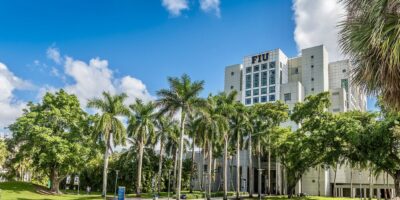
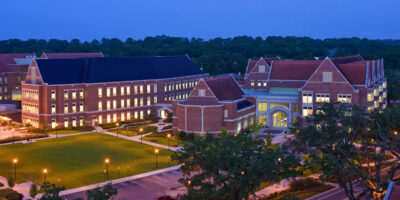
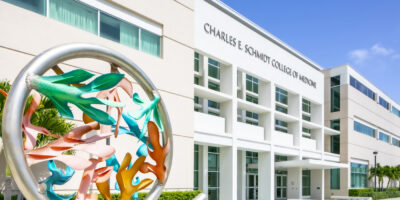
NSU’s flagship Fort Lauderdale/Davie Campus covers 312 acres in the heart of South Florida’s academic and research hub and is home to NSU’s health professions colleges, including NSU MD. It sits in Broward County with easy highway and airport access and a tropical setting close to beaches and urban amenities. The Health Professions Division complex brings classrooms, laboratories, a library, research space, student lounges and patient-care clinics together, and the HCA teaching hospital on campus adds a clinical setting steps from class. Students also use high-tech hospital simulation labs and electronic databases.
NSU also operates regional campuses in Fort Myers, Jacksonville, Miami, Miramar, Orlando, Palm Beach and Tampa in Florida, plus Centennial, Colorado; Henderson, Nevada; and San Juan, Puerto Rico. The M.D. program is taught in Fort Lauderdale/Davie; some other NSU MD health sciences programs run at regional sites.
Housing
Most medical students live off campus, and the cost of attendance assumes off-campus housing. Use NSU’s off-campus housing listings, ask current students about neighborhoods within a short drive and plan for a car. A driver’s license and a vehicle are not formally required, but most students find a car practical. Clinical rotations at HCA hospitals across the southeast coast and pediatrics at Nemours in Lake Nona mean you will travel in the third and fourth years.
Student support
The Office of Student Affairs supports students from orientation through Match. It connects students with health and wellness resources, matches students with tutoring, supports student organizations, provides academic and career advising, processes registration, oversees the residency application and Match process, and partners with student financial assistance on debt management and scholarships. It also plans class events: orientation and team-building day, the White Coat Ceremony, the Pinning and Oath Ceremony, the awards ceremony, Match Day and Commencement. The office is on the fifth floor of the Terry Administration Building.
The Office of Admissions and Student Affairs and a faculty-student Wellness Committee run wellness events through the year, such as pet therapy, field day, yoga and meditation. NSU offers counseling and health services 24 hours a day, every day of the year, along with campus security staffed around the clock and recreation facilities that include a gym and an Olympic pool. The NSU MD imPACT Society brings parents, family members and spouses of students, beginning with the incoming 2028 M.D. class, together with community volunteers to support students with holiday hosting, exam-week support, connections to physician mentors and help at student events.
Clubs, service and community
NSU MD students can join clubs, interest groups and service organizations tied to specialties, communities and causes, including groups that promote health care in underserved communities. Student chapters also run outreach. The NSU MD chapter of the Latino Medical Student Association partners with Immaculata-LaSalle High School’s STEAM program in Miami, and the student-led METAS mentoring program has reached more than 100 high school students. Medical students also mentor high school students through Ad Law-Med, a law and medicine pathway program run with NSU’s Shepard Broad College of Law.
Graduates join a growing alumni network, and the school’s student affairs and career advising teams help students make residency decisions across a range of specialties.
Clinical Rotations and Research Opportunities
Clinical training
NSU MD pairs students with clinical leaders so they spend more time learning from academic and community physicians than in a classroom. Clinical skills start on day one, and early clinical immersion begins in year one.
The core M3 and M4 rotations, and many electives, take place at multiple HCA East Florida hospitals on Florida’s southeast coast, including the HCA teaching and research hospital on NSU’s campus. Pediatrics rotations are at Nemours Children’s Hospital in Lake Nona, near Orlando, and other regional hospitals host electives. HCA East Florida, the school’s preferred hospital partner, employs more than 6,000 physicians across 14 hospitals and related facilities, which gives students a wide range of patients.
What this means in practice: expect to commute between hospitals, and expect at least one rotation away from Broward County. Ask on interview day how sites are assigned and how housing works for the Lake Nona pediatrics rotation.
Residency outcomes
On Match Day, March 20, 2026, 50 percent of NSU MD graduates matched in Florida and 20 percent in South Florida. The top specialties were internal medicine (13 students), general surgery (8), psychiatry (7), anesthesiology (5), emergency medicine (4) and diagnostic radiology (3). In 2025, placement was 100 percent, with 49 percent in Florida and 30 percent in South Florida, and 100 percent of the classes of 2022, 2023 and 2024 matched with a residency program. Over three years, graduates matched in about two dozen states, at programs such as the University of Miami/Jackson Health System, the University of Florida, Cleveland Clinic Florida, Yale-New Haven, UCLA, Vanderbilt and UPMC. The Match Day page lists results by specialty, hospital and year. Graduating students’ stated specialty plans point the same way: across the three most recent graduating classes reported, internal medicine led or tied for the lead every year, at 17.1 to 22.4 percent of respondents, with anesthesiology, psychiatry, radiology and general surgery also common.
Student research
Research is a graduation requirement at NSU MD. The college supports student research in four main areas: clinical research, epidemiology, basic science and translational research, and medical education, along with service-learning projects. Students have presented at regional, national and international conferences and published case studies. Key resources, described on the student research page:
- Built-in time and a Research Thread Director, who helps students find projects, edit scholarship applications and prepare for interviews.
- Internal and external awards, including the Robert E. Dooley Medical Student Research Grant in Prostate Cancer Research, the Cell Therapy Institute Medical Student Grant in Cancer Research, summer scholarships at research institutes and NIH-funded training awards.
- The Moffitt Cancer Translation Research Rotation, which sponsors six students every summer for translational cancer research at Moffitt Cancer Center in Tampa.
- MSTAR placements. NSU MD students have joined the NIH-supported Medical Student Training in Aging Research program at Johns Hopkins and UC San Diego.
- The RISE conference (Research, Innovation and Service in Education), held every fall, where students present abstracts and get feedback before national meetings.
- Travel funding of up to $1,000 once per academic year for students presenting at a major conference in the continental U.S.
If research matters to your plans, ask on interview day how students use the built-in research time and what most complete before applying to residency.
Global health
The college’s main global health program is a separate M.S. in Global Health with a 14-week international field practicum, and its dean has long worked in global surgery. Six percent of the college’s 2025 graduating seniors reported a global health experience during medical school. Many medical students build global perspective through electives, research and service, and some applicants arrive with prior experience abroad, such as a medical internship in Peru that combined clinical work with Spanish-language patient care.
Community engagement
The college invests in pathway programs for high school students from diverse backgrounds:
- Journey into Medicine with Blanche Ely High School’s medical magnet program, which matches students with NSU MD clinical faculty mentors for a year.
- STEM Seminar Series with Stranahan High School, where NSU MD faculty from anatomy, biochemistry, microbiology, pathology, pharmacology and physiology teach weekly seminars; more than 200 students have taken part.
- METAS, the LMSA chapter’s partnership with Immaculata-LaSalle High School.
- Ad Law-Med, which served 60 Broward County high school students between October 2024 and July 2025.
- The TCF Summer Research Internship, which places high school students in cancer and immunotherapy research labs; the 2026 session ran June 22 to July 31 with five students.
Medical students serve as mentors in METAS and Ad Law-Med, which is one practical way to act on the community engagement part of the mission.
Notable Alumni, Faculty, Leadership and Admissions Staff
These profiles come from official NSU and NSU MD pages checked on October 17, 2026. Titles change, so check the school’s directory before contacting anyone. None of these people make admissions decisions alone, and naming them in an essay will not help an application.
School leadership
Chad Perlyn, M.D., Ph.D., M.B.A., Dean. Dr. Perlyn is dean of the Dr. Kiran C. Patel College of Allopathic Medicine and NSU’s executive vice president and chief medical officer, as well as executive medical director for NSU Health. He oversees the university’s seven health care colleges and NSU Health’s network of clinics, and he is a professor of health sciences in the college. He joined NSU in December 2024 from Nicklaus Children’s Health System, where he served as senior vice president of surgical services, community health and corporate responsibility and led the opening of a $180 million surgical tower. A board-certified pediatric plastic and craniofacial surgeon, he continues to care for infants and children with congenital differences. He is also active in global surgery, including work in Haiti after the 2010 earthquake and with partners in Peru. For applicants, his background signals a college that values clinical leadership and community health.
Maria E. Padilla, M.D., M.Sc., M.Ed.L., Executive Associate Dean of Academic and Student Affairs. Dr. Padilla oversees eight units, including admissions, student affairs, curricular affairs, the undergraduate medical education curriculum, LCME accreditation and quality improvement, and faculty affairs. As faculty accreditation lead, she led the effort that earned NSU MD its first full LCME accreditation for the maximum term allowed for a new program. A board-certified pediatrician, she earned her M.D. magna cum laude at the University of Puerto Rico, where she later directed curriculum and faculty development. She has been appointed a professional member of the LCME and a member of the National Resident Matching Program’s board of directors. Applicants can see her influence in the school’s emphasis on structured curriculum and student support.
Admissions and student affairs
Donald D. Pritchett Jr., M.S., J.D., Associate Dean, Student Affairs and Admissions. Mr. Pritchett joined NSU MD in June 2017 with more than 13 years of enrollment management experience. He previously served as executive assistant dean of enrollment management and administration at Albany Medical College, overseeing its admissions and student records offices. He began his career in law school admissions and has taught as an adjunct professor at several universities. He holds a bachelor’s degree from the University of Virginia, an M.S. in criminology from Florida State University and a J.D. from the University of Florida. His office is the main point of contact for admissions and student affairs questions.
Annessa S. Kalloo, Esq., Assistant Dean, Accreditation and Quality. Ms. Kalloo has spent her career in higher education and student advocacy. Before NSU MD she managed admission recruitment for health sciences programs at St. Petersburg College and headed admissions at Barry University College of Law, where she oversaw student services for incoming students. Her work at NSU MD has included admissions and student services. She earned her J.D. at Stetson University College of Law.
Faculty
Vijaykumar (Vijay) Rajput, M.D., Professor and Chair of Medical Education. Dr. Rajput chairs the Department of Medical Education. He previously led the Division of Medical Education at Cooper Medical School of Rowan University, where he was a founding assistant dean for clinical curriculum, and directed an internal medicine residency program. He has received more than fifteen teaching awards, including the ACGME Parker J. Palmer Courage to Teach Award, and his interests include bedside teaching, professionalism, ethics, humanism in medicine and student well-being. The secondary’s question about humanism in medicine fits the values he teaches.
Kyle Bauckman, Ph.D., Associate Professor and Associate Dean, Medical Education. Dr. Bauckman directs several curricular blocks, including pre-matriculation, Fundamentals and Research, and serves as director of student research. His research covers medical education topics such as admissions, curriculum and educational technology. He earned his Ph.D. in cancer biology at Moffitt Cancer Center. Students who want to do research usually work with his office early.
Lauren Fine, M.D., Associate Professor, Medical Education. Dr. Fine joined the college in 2017 and leads Practice of Medicine I, where first-year students learn the foundations of the history and physical exam. She works closely with the PBL faculty to align clinical skills with case work. She was elected the inaugural NSU MD Faculty Council president. An allergist and immunologist, she trained at the University of Miami Miller School of Medicine and the University of Minnesota, serves on the editorial board of the Journal of Asthma and treats veterans at a VA medical center in Broward County.
Melissa Armas, Ph.D., M.P.H., Assistant Professor, Medical Education. Dr. Armas joined NSU MD in 2022 after serving as a founding faculty member of a graduate certificate program at FIU’s Herbert Wertheim College of Medicine, where she taught medical molecular biology and facilitated ethics debriefings for third-year students. She earned her Ph.D. in biomedical sciences at the University of Florida. Her current research covers active learning, ethics in medical education and curriculum development.
Arkene Levy Johnston, Ph.D., Professor of Pharmacology and Assistant Dean of Community Engagement. Dr. Levy Johnston is the contact for the college’s pathway programs. She was previously a professor of pharmacology at the University of the West Indies and completed postdoctoral training as a Fulbright Scholar in cancer research. Her research focuses on drug resistance in ovarian and prostate cancer, and she received a 2018 American Association for Cancer Research faculty scholar award. Applicants interested in mentoring and outreach will find her office behind most of the programs in the community engagement section.
Rolando J. De Leon, M.D., F.A.C.O.G., Assistant Professor, Physician Educator. Dr. De Leon joined the college in 2020 as chair of the Division of Obstetrics and Gynecology. He helped build the third-year OB/GYN clerkship and is developing fourth-year electives. A board-certified OB/GYN with more than 35 years in practice, he chairs the boards of trustees of HCA Mercy Hospital and HCA Plantation General Hospital and is a founding member of VitalMD. He earned his M.D. at Eastern Virginia Medical School and trained at the University of Miami/Jackson Memorial.
Jason E. Portnof, D.M.D., M.D., FACS, FICD, Clinical Associate Professor of Surgery. Dr. Portnof is an oral and maxillofacial surgeon and director of pediatric craniomaxillofacial surgery in NSU’s College of Dental Medicine, as well as a clinical associate professor of surgery for NSU MD. He graduated with honors from NSU’s College of Dental Medicine, earned his M.D. at Weill Cornell and trained in pediatric craniomaxillofacial surgery in Melbourne, Australia. He is the oral and maxillofacial surgeon for Joe DiMaggio Children’s Hospital. His dual training reflects the MD/OMFS track the college supports.
The Patel name
The college is named for Dr. Kiran C. Patel, a Florida cardiologist, entrepreneur, community leader and philanthropist. Dr. Patel is the college’s benefactor and namesake, not a member of its leadership or faculty. With his wife, pediatrician Dr. Pallavi Patel, the Patel Family Foundation has made gifts totaling a record $80 million to advance health care locally and globally, and both of NSU’s medical colleges bear his name. The Dr. Pallavi Patel School of Health Sciences within NSU MD honors Dr. Pallavi Patel.
Alumni
NSU MD’s first M.D. class graduated in 2022, so its alumni are early in their careers. The alumni page highlights graduates who became chief residents or entered fellowships:
- Mitchell Bourne, M.D. ’22, chief resident in internal medicine at the University of Florida in Gainesville.
- Nicole Cyrus, M.D. ’23, chief resident in pediatrics at Nemours Children’s Hospital, one of NSU MD’s clinical partners.
- Joshua Raber, M.D. ’22, chief resident in anesthesiology at the University of Miami.
- Evan McElroy, M.D. ’22, chief resident in emergency medicine at HCA Florida St. Lucie Hospital.
- Brad Boserup, M.D. ’22, cardiology fellow at Dartmouth Hitchcock Medical Center.
Chief resident roles are chosen by residency programs, so these appointments are a useful signal of how early graduates are performing. Other members of the Class of 2022 matched into fellowships in gastroenterology, cardiology, addiction medicine, EMS, pediatric cardiology and neonatal-perinatal medicine.
Admissions Statistics and Class Profile
NSU MD publishes a class profile on its admissions requirements page. The newest is the 2026 Class Profile.
| Measure | 2026 Class Profile |
|---|---|
| Total primary applications | 6,185 |
| Total secondary applications | 3,365 |
| Total interviewed | 385 |
| Total accepted | 162 |
| Class size | 68 |
| Mean / median MCAT | 512 / 512 |
| Mean / median overall GPA | 3.75 / 3.85 |
| Mean / median science GPA | 3.69 / 3.74 |
| Mean / median age | 23 / 23 |
| Sex | 68% female, 31% male, 1% declined to answer |
| Residency | 52% Florida residents, 48% non-Florida residents |
Applicants, interviews and the entering class by residency
Florida residents have a clear edge at the interview stage. For the 2025 entering class, Florida residents filed 39 percent of verified applications but received 77 percent of interviews. Out-of-state applicants filed 61 percent of applications and received 23 percent of interviews. Eleven international applications came in and none was interviewed, which follows the citizenship rule.
The same class gives more detail on scores and background. Accepted applicants had median section scores of 128 in Chemical and Physical Foundations, 127 in Critical Analysis and Reasoning Skills, 128 in Biological and Biochemical Foundations and 129 in Psychological, Social and Biological Foundations. Among matriculants, 23 percent held a graduate degree, 77 percent were science or math majors and 23 percent reported disadvantaged status, up from 9 percent in 2022.
Reading the funnel
Each number has a different denominator, so it helps to walk through them:
- Primary to secondary. NSU MD invites every AMCAS-verified applicant to the secondary, yet only 3,365 of 6,185 primary applicants (about 54 percent) submitted one. Many applicants choose not to complete every secondary they receive.
- Secondary to interview. 385 interviews from 3,365 secondary applications is about 11 percent. Interviewed / primary applications is 6.2 percent.
- Accepted. 162 accepted out of 6,185 primary applications is about 2.6 percent; out of 3,365 secondary applicants, about 4.8 percent. About 42 percent of interviewees were accepted.
- Enrolled. 68 students made up the class. Because many accepted applicants hold several offers, the number accepted is more than twice the class size.
What the numbers mean for you
The 512 median MCAT and 3.85 median GPA sit well above the 502 MCAT minimum. The minimum is a screening floor, not a target. Applicants near the medians with strong clinical and team experience are competitive; applicants well below them need a clear upward trend, a post-baccalaureate record or other evidence of readiness, such as strong M.B.S. performance.
Tuition is the same for every student, and the class was 52 percent Florida residents. Because Florida residents receive a much larger share of interviews than of applications, out-of-state applicants face longer odds. Out-of-state applicants with real ties to South Florida, or a clear reason to train in its communities, should explain that link in their essays.
The class also skews young (median age 23) and female (68 percent). Nontraditional applicants are welcome, and the secondary includes questions designed to let them explain gaps and work history.
Tips and Strategies for Admission
1. Prove that you work well in teams
NSU MD teaches in groups of seven or eight and asks two essay questions about teamwork and problem solving. Choose activities where you worked closely with others toward a shared goal: a clinical team, a research group, a student organization, a job. Keep notes now on specific problems, conflicts and decisions, because you will need two different stories for the secondary and more for the MMI.
2. Get real, sustained clinical exposure
The school asks for both direct and non-direct clinical exposure and sets no hour minimum, so quality and reflection carry the weight. Paid roles with patient contact, hospice or clinic volunteering and well-supervised pre-med internships all count when you can describe what you did and what you learned. Shadowing helps you understand a physician’s day; our tips on pre-med shadowing explain how to make it useful. Look for internships for pre-med students and jobs where you take vitals, room patients or help with intake, because those experiences give you material for the PBL and humanism essays.
3. Plan your summers and timeline around the six-year rule
Your MCAT and science coursework must fall within six years of matriculation. Take the MCAT when you are ready, since NSU MD uses your highest score for screening. Schedule the PREview exam early, because it is required. Summers are the easiest time to add focused clinical work or research; many students use pre-med summer internships or a research program to build experience without hurting their grades.
4. Go beyond the prerequisites on purpose
The fourth essay asks how coursework beyond the basic sciences prepared you for medicine and asks about service learning tied to humanism. Courses in a second language, ethics, anthropology, sociology, biostatistics or the humanities give you strong material. Service tied to a course, with structured reflection, is even better.
5. Secure letters before the secondary arrives
Letters must be received before you complete the secondary, and you need three or four. Aim for one science faculty letter and one clinician letter, plus a committee letter if your school provides one. Ask writers in the spring.
6. Turn the secondary around quickly
NSU MD sends the secondary to every verified applicant. Read the prompts now (they are below), draft the four main essays in early summer and submit within about two weeks of receiving the invitation. There are no extensions after the deadline, and your application is complete the day you submit it, so it must be final.
7. Show that you understand South Florida
NSU MD’s patients are diverse, multilingual and spread along the southeast coast. Experience with Spanish-speaking or Haitian Creole-speaking communities, with older adults or with uninsured patients is relevant here. If you have ties to the region, say so plainly.
8. Use the waitlist rules correctly
Do not send updates or letters of intent unless you are waitlisted. If you are, send one focused update with new information and a sincere statement of interest. The waitlist is tiered and active: about 100 acceptance offers each cycle go to waitlisted applicants, so a strong continued letter of interest can matter.
9. Get feedback before you submit
Ask an advisor or mentor to read your secondary essays for clarity and fit. If you want structured help with your school list, essays or interview practice, IMA’s medical school admissions consulting services work with applicants through each step. Use our GPA calculator to check how your AMCAS GPA compares with NSU MD’s medians before you finalize your school list.
Secondary Application Questions, Example Responses and Analysis

NSU MD emails a secondary invitation to every applicant once AMCAS verifies the primary application. The secondary costs $50, is non-refundable and has no extensions after the deadline, which is December 31, 2026 for the 2026-2027 cycle. A fee waiver is available. Letters of recommendation must be in AMCAS before you complete it.
The 2026-2027 secondary has ten items, each with a 4,000-character limit:
- Four required essays: teamwork and leadership, problem solving for Problem Based Learning, unique perspective, and academic work beyond the prerequisites with service learning.
- A question about significant challenges and an optional follow-up that you answer or mark NA.
- Four Yes/No questions with an explanation box: academic or test gaps, time gap before matriculation, employment during school, and previous applications.
The prompts below are the 2026-2027 wording. NSU MD does not publish program-specific prompts for the Dual Admission, M.B.S. linkage or MD/OMFS routes; those students follow the instructions they receive from the school. For prompts at other schools, see our medical school secondary essay prompts database.
Each example below is original and written for teaching. Use it to see structure and depth, then write from your own experience. Do not copy or adapt the examples, and never submit someone else’s work. Character counts include spaces.
1. Teamwork and leadership toward a common objective
Prompt: “Please provide an example that indicates your ability to function effectively as a productive member of a team working toward a common objective. Elaborate on leadership roles you held in this capacity and how you solved problems that arose. Indicate highlights learned from this experience.”
Limit: 4,000 characters. Who answers: Required. All applicants who complete the secondary.
What it asks and how to approach it. This is NSU MD’s classic teamwork question, and it has four parts: a team with a shared goal, your leadership role, the problems you solved and what you learned. Pick one team and one stretch of time. Spend the most space on a problem that was hard to solve, and show how you worked with people rather than around them. A clinical team, a student organization, a job or a research group all work, as long as the goal and your role are clear. Because the next prompt also involves teamwork, save a different experience for it.
Illustrative example, not an actual applicant essay (3,180 characters)
During my junior year I was one of six student coordinators for the Saturday free clinic that our pre-health society runs with volunteer physicians in a church hall near campus. My role was intake. I led a team of eight to ten undergraduate volunteers who greeted patients, recorded vital signs under the supervision of a volunteer nurse, and completed the intake form before each patient saw a physician. Our shared goal was easy to state and hard to meet: every patient seen, safely, before the physicians left at 1 p.m.
In my first month we were failing. Patients waited up to three hours, and on one Saturday four people left without being seen. My first idea was to recruit more volunteers. The supervising nurse, Ms. Delgado, pushed back. More people in a small room, she said, would make intake slower and less private. She was right, and I was annoyed at first, which taught me something about how I react to correction.
So we measured instead of guessing. For two Saturdays one volunteer recorded the time each patient reached each station. The data showed the bottleneck was not vitals. It was the intake form, which was four pages long and only in English. Volunteers who spoke Spanish or Haitian Creole were pulled across the room to translate, and every other station stalled while they did.
I brought the numbers to our next coordinator meeting instead of a finished plan. The physicians told us which questions they actually used, and together we cut the form to two pages. A Haitian Creole speaker and a Spanish speaker on the team translated it, and a physician checked the medical terms. We also changed the schedule so at least one Spanish speaker and one Creole speaker worked intake every week, instead of whoever signed up first.
Not everyone liked the change. One longtime volunteer felt the new language assignments pushed her out of intake. I met with her one on one, listened, and asked her to lead a new check-in table, where her calm manner with anxious patients was a real strength. She later trained the next group of greeters.
Within six weeks, the median wait dropped from about two and a half hours to just under ninety minutes, and no patient left unseen for the rest of the semester. More important to me, patients began completing the medication section, which the physicians said made their visits safer.
Three lessons stayed with me. First, a leader does not need the answer but must make sure the team finds the real problem before solving the wrong one. Second, the people closest to the work often see the problem first, so I now ask for pushback early. Third, a team works best when each person’s strength sits where it matters, which is why one volunteer’s new role mattered as much as the new form.
Teamwork is one of NSU MD’s core values, and students learn in small groups of seven or eight working through cases together. I expect to be a reliable contributor and, at times, the person who keeps a group honest about what it does not yet know. I also look forward to learning alongside pharmacy, nursing and therapy students, because the clinic taught me that good care depends on everyone in the room, not only the physician.
Analysis. How it answers the prompt: the prompt has four parts, and the example covers each one in order. Functioning as a productive team member toward a common objective: the shared goal is stated in one sentence (every patient seen safely before 1 p.m.). Leadership roles: the writer names the role (intake coordinator for eight to ten volunteers) and shows leadership through decisions, not titles. How problems were solved: two problems are solved, one operational (the form bottleneck, found by measuring) and one interpersonal (the volunteer who felt displaced). Highlights learned: three specific lessons close the essay.
Why it works for NSU MD: teamwork is one of the college’s seven core values, and the curriculum puts students in small groups of seven or eight. The essay shows the behaviors those groups depend on: accepting correction (the nurse who pushed back), using data, sharing credit and placing people where their strengths help most. It ties the story to interprofessional learning, which the school describes, without flattering the school.
Length: 3,180 characters, inside the 4,000-character box with room for edits.
Mistakes to avoid: writing a story where you did everything alone; listing several teams in one essay; inflating results you cannot explain; and repeating the same story you use for the problem-solving prompt that follows. NSU MD asks two teamwork-flavored questions, so choose two different experiences, one centered on leading a group toward a goal and one centered on how you learn and solve problems with peers.
2. Problem solving for a Problem Based Learning environment
Prompt: “Please share some personal examples of problem solving in a team environment and/or leadership experience that would lead to your success in a Problem Based Learning environment.”
Limit: 4,000 characters. Who answers: Required. All applicants who complete the secondary.
What it asks and how to approach it. This prompt is about how you learn and solve problems with peers, which is how NSU MD teaches. Students work in groups of seven or eight through clinical cases, under a faculty facilitator. The strongest answers show the habits that format needs: reading a problem closely, admitting what you do not know, dividing research fairly, teaching others and changing course when the group finds a better answer. You can use more than one example, but give one of them enough room to show the whole process.
Illustrative example, not an actual applicant essay (3,356 characters)
The experience that best prepared me for problem-based learning was a semester-long public health case competition in my sophomore year. Our team of five, two biology majors, an economics major, a nursing student and me, a psychology major, received a case about rising diabetes complications in a rural county with one clinic and no public transportation. We had six weeks to propose a realistic plan.
At our first meeting we did what most teams do. We split the work by major and went off alone. Two weeks later our pieces did not fit. The economics section assumed patients could reach the clinic. The clinical section assumed they had refrigerators for insulin. Nobody had asked what the people in the case could actually do.
I suggested we restart. We read the case aloud together and made three lists: what we knew, what we did not know and what we needed to learn. The third list became our learning issues, about fourteen of them. Each person took two or three, researched them before the next meeting and taught them to the group in five minutes or less, with one source everyone could read. We rotated roles each week: a facilitator, a scribe who kept the shared board and a timekeeper. I was the first facilitator, which meant my main job was asking questions, not answering them.
The hardest problem was not academic. One teammate, who knew the most about diabetes, answered every question before anyone else could think. I spoke with her privately and told her the team needed her knowledge but also needed room to struggle. She proposed a rule herself: whoever researched an issue explains it first, and she adds afterward. She became our best questioner.
We also hit a real disagreement. The nursing student and I wanted a community health worker program, and the biology majors wanted a mobile clinic. Instead of voting, we listed what each plan would need, looked up costs from published programs and found that smaller versions of both could share one van. We placed second of eleven teams. The judges said our plan matched what the community in the case could realistically use.
I have used the same approach since. In my organic chemistry study group, each person brings one problem they could not solve, and the group works it through before anyone opens the answer key. As a medical scribe, when a physician asks me to find a prior lab result, I now think about why she needs it, which helps me find the right note faster.
This experience gave me three habits that I believe will help me in NSU MD’s small-group, case-based curriculum. I am comfortable saying “I don’t know yet” and turning it into a learning issue. I can lead by asking questions and making space for quieter members. And I have learned that good solutions start from the patient’s real circumstances, not the textbook version of a disease.
A group of seven or eight students working through clinical cases with a faculty facilitator will be more demanding than a student competition. The cases will be more complex, and misunderstanding will matter more. But the habits are the same: read the problem closely, name what you do not know, divide the learning fairly, teach each other clearly and test the plan against the patient. I have practiced these habits, and I want to keep building them with classmates who care about getting the answer right together.
Analysis. How it answers the prompt: the prompt asks for personal examples of problem solving in a team environment and/or leadership that would lead to success in problem-based learning. The main example (the case competition) mirrors the PBL cycle: read the case together, identify what is known and unknown, set learning issues, research independently, teach back and revise the plan. Two shorter examples (the study group and scribe work) show the habit carries over. The final paragraphs state why those habits fit a PBL setting.
Why it works for NSU MD: the school’s curriculum page describes students as active learners working in groups of seven or eight through inquiry, under a faculty facilitator, using clinical cases. The essay shows comfort with that format, including the uncomfortable parts: admitting ignorance, managing a dominant member and resolving disagreement with evidence instead of a vote.
How it differs from the teamwork essay: the teamwork response is about leading a group toward an operational goal; this one is about how the writer learns with peers. Using one experience for both prompts wastes space and signals a thin record.
Length: 3,356 characters.
Mistakes to avoid: describing PBL in the abstract without showing that you have done anything like it; claiming expertise in PBL from a single class; turning the essay into a list of group projects; and leaving out a moment where the group struggled. Admissions readers expect real teams to have friction.
3. Traits, experiences or interests a professor would not know
Prompt: “At the NSU MD program, we value the unique perspective that each applicant brings. Identify any traits, life experiences, or interests that a professor or advisor would not normally know about you.”
Limit: 4,000 characters. Who answers: Required. All applicants who complete the secondary.
What it asks and how to approach it. This is NSU MD’s version of a diversity or “tell us something new” prompt. Choose one or two traits, experiences or interests that do not appear elsewhere in your application, and explain what each one shows about how you think and treat people. The best topics are specific and a little surprising. Tie each one to a moment in a clinical, service or work setting so the reader sees the trait in action.
Illustrative example, not an actual applicant essay (3,313 characters)
Most of my professors know me as the student in the second row who asks about exceptions to the rule. Few know that I learned to ask those questions in my uncle’s boat engine repair shop in Marathon, in the Florida Keys, where I worked every summer from age fourteen until college.
The shop is small: my uncle, one mechanic and me. Most customers were commercial fishermen whose income stopped when their engine did. My uncle had a rule I did not understand at first. Before you touch the engine, you listen to the owner for five full minutes. The owner, he said, had heard that engine every day for years and knew things the diagnostic computer did not. One captain told us his engine “coughed only when the tank was under half.” The computer showed nothing. The problem was a cracked fuel pickup tube that drew air only at low fuel levels. Without his story we would have replaced parts he could not afford.
That habit, listen first, then test, then explain, shapes how I work with people. When I volunteered at a hospice in Broward County during college, I found that families often had the most useful observations about a patient’s comfort, but few people asked them. I started each visit by asking what had changed since I last came. A daughter once told me her mother grimaced only when turned onto her left side. I passed it to the nurse, who adjusted the turning schedule. It was a small thing, but I recognized it from the shop.
The shop also taught me the cost of being wrong. When we misjudged a repair, a fisherman lost a week of work. I learned to explain what I knew, what I was unsure of and what it would cost before starting, and to say so when I made a mistake. Once I installed a gasket backward and had to call the owner to tell him his boat would be a day late. He was angry, and then he thanked me for being honest. I think about that call when I imagine telling a patient something they do not want to hear.
A second thing professors would not know is that I race in open-water swims of up to five miles. The sport is mostly about controlling panic. In rough water your body sends strong signals to stop or turn back before you truly need to, and you learn to notice them without obeying them blindly. That calm has helped me on the hospice unit, during exams and once at a beach, where I helped a lifeguard bring a struggling swimmer to shore and kept talking to her while he checked her breathing. Open-water racing also requires a kayak escort who watches every stroke. I never train alone, and I take responsibility for someone else’s safety seriously.
These experiences connect to what NSU MD places at the center of its approach: the patient. A curriculum built on real cases and small teams rewards people who listen before they conclude and who are honest about uncertainty. I also come from a part of Florida where many families work in fishing, construction and tourism, often without steady insurance. I want to train in South Florida, with clinical rotations along the southeast coast, because those are the people I grew up with and hope to care for.
None of this appears on my transcript. But the shop and the water taught me patience, humility and steady attention to people, and I believe those traits will make me a better classmate and, in time, a better physician.
Analysis. How it answers the prompt: NSU MD asks for traits, life experiences or interests that a professor or advisor would not normally know. The example picks two (years in a family boat repair shop and open-water swim racing) and, for each, explains what the experience taught and where the trait has already shown up in clinical or service settings. It avoids a list of hobbies and keeps the focus on character: listening, honesty about mistakes and calm under pressure.
Why it works for NSU MD: the school says it reviews personal qualities such as motivation, sensitivity to the needs of others and maturity, and that its approach is centered on the patient. The story of the captain’s engine is a natural analogy for history taking, and the hospice example proves the habit transfers to people. The closing paragraph links the writer’s background to South Florida and to clinical rotations along the southeast coast without overstating any connection.
Length: 3,338 characters.
Mistakes to avoid: repeating material already in your personal statement or activities list; choosing a trait only because it sounds impressive; describing an interest without showing what it says about you; and forcing a medical connection into every sentence. The prompt invites something new, so give the reader a side of you they cannot find elsewhere in your application.
4. Academic work beyond the prerequisites and service learning
Prompt: “How has your academic work beyond the “traditional” pre-medical school requirements (i.e., introductory biology, general chemistry, organic chemistry, and introductory physics) prepared you for medical school and for a career in medicine? Please highlight any service-learning activities that align with humanism in medicine.”
Limit: 4,000 characters. Who answers: Required. All applicants who complete the secondary.
What it asks and how to approach it. The prompt has two parts. First, explain how coursework beyond biology, general chemistry, organic chemistry and physics prepared you for medical school and for a career in medicine. Name the courses and say what each one changed. Second, describe service-learning activities that connect to humanism in medicine. Service learning usually means service tied to a course or structured reflection, so explain that link. Social sciences, languages, statistics, ethics and the humanities are natural choices; NSU MD’s own FAQ says it values these subjects in a well-rounded physician.
Illustrative example, not an actual applicant essay (3,712 characters)
The course that most changed my idea of medicine was not a science class. It was Medical Anthropology, an elective I took as a sophomore. We read case studies of patients whose beliefs about illness differed from their doctors’, and we interviewed a relative about how their community explains sickness. I interviewed my grandmother, who manages her diabetes with insulin and with teas from Colombia. I had always seen the teas as something she did instead of medicine. After the course I understood them as part of how she makes sense of a chronic illness, and I learned to ask about them without judgment.
That class led me to a minor in Spanish for the health professions. In Medical Spanish I practiced taking histories with native-speaking standardized patients and learned that knowing vocabulary is not the same as being understood. A word that is ordinary in Bogota can confuse someone from Havana. The course required forty hours of service learning, which I completed as an interpreter-in-training at a volunteer-run clinic, supervised by a certified medical interpreter. I watched her stop a physician mid-sentence to ask a patient whether he understood the word “dose.” He did not. That moment taught me that humanism in medicine is often practical: making sure the patient can follow the plan.
I also took Biostatistics and Epidemiology because I wanted to read research critically. Our final project used public county data to compare diabetes hospitalizations across neighborhoods. The pattern followed income and grocery store access more closely than anything else. That project prepared me for evidence-based medicine and for research in medical school, and it made the social factors I had studied in anthropology concrete and measurable.
Bioethics gave me a framework for questions I had already met in clinic. We debated how much a family should be told when a patient asks for privacy, and how to respect autonomy when a patient refuses treatment because of cost. I wrote my final paper on informed consent through interpreters, drawing on all four courses.
My most meaningful service-learning activity grew out of this coursework. With two classmates from Medical Spanish, I helped start a monthly blood pressure and medication review table at a community food pantry. A volunteer nurse checked blood pressures, and we reviewed medication lists in Spanish or English and wrote down questions for each person to bring to their own doctor. We did not give medical advice. Over a year we met more than two hundred people. Many had stopped a medication because of side effects or cost and had never told their physician. Helping them prepare those questions felt like the most humanistic work I have done, because it treated them as partners in their own care.
These courses prepared me for medical school and for a career in medicine in three ways. They taught me to see illness within a patient’s culture and circumstances. They gave me tools to read and question evidence. And they taught me to communicate in a second language with humility, checking understanding instead of assuming it.
NSU MD expects its graduates to apply the social-behavioral sciences to patient care and to communicate effectively with patients and families, not only to master medical knowledge. Its patients in South Florida speak many languages and come from many cultures. I hope to bring my Spanish, my research skills and my habit of asking patients what they believe about their illness into small-group cases and clinical rotations. I would also like to join student-led outreach, such as the Latino Medical Student Association chapter’s mentoring of high school students interested in health careers.
Analysis. How it answers the prompt: the prompt has two parts. First, how academic work beyond the traditional prerequisites prepared you for medical school and a career in medicine. The example names four specific courses (Medical Anthropology, Medical Spanish, Biostatistics and Epidemiology, Bioethics) and states what each taught, with one concrete moment or project for each. Second, service-learning activities that align with humanism in medicine. The example describes a course-linked interpreter placement and a food pantry medication review table, with clear limits on what the students did (no medical advice), and explains why the work was humanistic.
Why it works for NSU MD: the college’s seven competencies include knowledge of the social-behavioral sciences, interpersonal skills and communication, and ethics and professionalism. The essay shows preparation in each without naming them as a checklist. The school’s FAQ also says it values social sciences, languages and behavioral sciences in building a well-rounded physician, and the essay is built on exactly those subjects.
Length: 3,712 characters. Portals can count line breaks differently, so paste a draft into the box early and check the counter.
Mistakes to avoid: listing every elective you took; describing courses without saying what they changed; calling ordinary volunteering service learning when it was not linked to coursework or reflection; and claiming clinical skills you were not trained or permitted to use.
5. Challenges that shaped your motivation
Prompt: “Have you encountered significant personal or professional challenges that have shaped your motivation to pursue a career in medicine and service to others?”
Limit: 4,000 characters. Who answers: All applicants answer. Use the format your portal shows (Yes/No or short text).
What it asks and how to approach it. This question opens a two-part sequence. Answer it honestly and briefly, and use the follow-up for the story. If your portal shows a Yes/No selector, choose the answer and move on. If it shows a text box, a two- or three-sentence summary is enough.
Illustrative example, not an actual applicant essay (422 characters)
Yes.
The most significant challenge was caring for my 12-year-old brother during my mother’s cancer treatment while I studied full time and worked 20 hours a week. It showed me how much a patient’s family depends on clear, practical communication from the care team, and it made service to families in crisis a central reason I want to practice medicine. I describe the experience and what I learned in the next response.
Analysis. What the item asks: whether you have faced significant personal or professional challenges that shaped your motivation for medicine and service. If your portal shows a Yes/No selector, choose the answer and save the story for the follow-up. If it shows a text box, write a short Yes or No plus a two- or three-sentence summary like the example. The detailed story belongs in the follow-up item.
How to approach it: answer honestly. A Yes does not hurt you, and a No is fine if nothing fits. If you answer Yes, keep this item to two or three sentences that name the challenge and the link to your motivation, then tell the full story in the next response. If you answer No, leave the follow-up as NA rather than inventing hardship.
Mistakes to avoid: writing the whole essay here and repeating it in the follow-up; describing a minor inconvenience as a significant challenge; and using the item to explain grades that belong in the academic gaps question.
6. How challenges informed your perspective (if applicable)
Prompt: “If applicable, please describe how your experience with challenges has informed your perspective, decision-making, or approach to helping others. You may include reflections on your educational path, life experiences, or other formative events. If not applicable, please type NA.”
Limit: 4,000 characters. Who answers: Answer if the challenges question applies to you. Otherwise type NA.
What it asks and how to approach it. If you answered that challenges shaped your motivation, this is where you explain how. The prompt asks about three things: your perspective, your decision-making and your approach to helping others. Give each one its own short paragraph. Keep the description of the hardship brief and spend most of the space on what changed in you. If the question does not apply, type NA.
Illustrative example, not an actual applicant essay (1,593 characters)
During my sophomore and junior years, my mother was treated for breast cancer. My father works nights, so I took over most of my 12-year-old brother’s care: school drop-off, homework and dinner, while I attended classes full time and worked 20 hours a week at a pharmacy. My grades dipped that fall, including a C in Organic Chemistry I, which I retook and raised to an A the next year.
The experience informed my perspective in three ways. First, I saw how frightening medical information is when it arrives without explanation. My mother’s oncologist was excellent, but it was a nurse practitioner who took twenty minutes to draw her treatment schedule on a paper calendar for us. That calendar ran our household for six months. I want to be the kind of physician who makes plans usable for families.
Second, it changed my decision-making. I learned to ask for help early, to tell professors about my situation before deadlines rather than after, and to protect a few hours each week for rest. Those habits helped me recover academically, and they will matter in a demanding curriculum.
Third, it shaped how I help others. I now volunteer with a cancer support organization’s youth program, mentoring children whose parents are in treatment. I do not try to fix their situation. I listen and help them plan small, manageable parts of their week, the way someone once helped my family.
My mother finished treatment two years ago and is doing well. The experience is a large part of why I want to practice medicine with attention to the whole family, not only the patient in the exam room.
Analysis. How it answers the prompt: the follow-up asks how your experience with challenges informed your perspective, decision-making or approach to helping others, with optional reflection on your educational path. The example states the challenge in one short paragraph, then gives one paragraph each to perspective (clear communication with families), decision-making (asking for help early, protecting rest) and approach to helping others (mentoring children of patients). It closes with the current situation and the link to medicine.
Why it works: it is honest without being dramatic, it shows recovery, and it connects to the academic dip that the gaps item will explain, so the application reads as one consistent story. At 1,593 characters it is well inside the 4,000-character limit. You do not need to fill the box.
Mistakes to avoid: spending most of the response on the hardship and little on what you learned; sharing details you are not comfortable discussing at an interview; blaming others; and leaving this item blank. If it does not apply to you, type NA as the instructions say.
7. Gaps or inconsistencies in academic or test performance
Prompt: “Do you have any gaps or inconsistencies in either academic or standardized test performances throughout your undergraduate, graduate, or post-graduate career? If you answered yes to the previous question, please explain. If you have selected no, please type NA.”
Limit: 4,000 characters. Who answers: Yes/No with explanation. If No, type NA.
What it asks and how to approach it. These last four items are short factual explanations. Answer Yes or No, then explain only if you answered Yes. State the facts, give brief context and show the response and trend. Cross-reference other answers instead of repeating them.
Illustrative example, not an actual applicant essay (771 characters)
Yes.
In the fall of my sophomore year I earned a C in Organic Chemistry I and a B- in Physics I, and my semester GPA fell to 2.9. That semester my mother began cancer treatment and I became the main caregiver for my younger brother while working 20 hours a week, as described in my challenges response. I retook Organic Chemistry I the following year and earned an A, earned an A in Organic Chemistry II, and have earned a semester GPA of 3.8 or higher every semester since.
I also took my first MCAT without enough preparation and scored 503. I then followed a five-month study plan with a full-length practice exam every week and scored 514 on my second attempt. I believe my record since that semester shows how I perform when I have stable support and a clear plan.
Analysis. What the item asks: a Yes/No answer about gaps or inconsistencies in academic or standardized test performance across undergraduate, graduate or post-graduate study, and an explanation if Yes. A No answer is NA.
Pattern used: state the facts (which semester, which grades, which test), give the context in one or two sentences, then spend most of the space on the response and the trend since. Refer to another answer instead of repeating it. Keep the tone factual.
NSU MD details that matter: the school uses each applicant’s highest MCAT score for the initial review and screening and may consider all scores during holistic review. Explaining a lower first score briefly, and showing the improved one, is useful. There is no minimum GPA for consideration, but a clear upward trend still needs to be visible.
Mistakes to avoid: answering No when a reader will plainly see a W, a repeated course or a large MCAT jump; making excuses; writing a long essay when 700 to 1,000 characters will do; and leaving out what changed.
8. Time gap between your last degree and matriculation
Prompt: “Is there a time gap between earning your last degree (baccalaureate or other) and the expected time of your medical school matriculation? If you answered yes to the previous question, please explain. If you have selected no, please type NA.”
Limit: 4,000 characters. Who answers: Yes/No with explanation. If No, type NA.
What it asks and how to approach it. If you will graduate before the year you start medical school, answer Yes and explain what you are doing in the meantime. Dates, roles and hours make a gap year easy to understand. A planned gap is common and does not need an apology.
Illustrative example, not an actual applicant essay (723 characters)
Yes.
I will finish my B.S. in Biology in May 2026 and hope to begin medical school in summer 2027, a gap of about 14 months. I am using this year deliberately. I work full time as a clinical research coordinator at a cardiology practice, where I consent patients for two observational studies, schedule study visits and enter data. I continue to volunteer four hours a week at a hospice, and I am taking an upper-level Immunology course in the evening to keep my coursework current.
I chose to apply after graduation so that my application would include my full senior-year record and a year of sustained, paid clinical work. The research role has also taught me how much careful consent conversations matter to patients.
Analysis. What the item asks: whether there is a time gap between your last degree and expected matriculation, and an explanation if Yes. Otherwise type NA.
Pattern used: give the dates, then describe what you are doing during the gap with hours and responsibilities, then one sentence on why you chose this timing. A planned gap year is common and needs no apology. NSU MD requires that science coursework and the MCAT be completed within six years of the anticipated matriculation date, so applicants with longer gaps should also confirm that their coursework and test dates still qualify.
Mistakes to avoid: writing NA when you will graduate a year or more before starting; describing the gap vaguely (“gaining experience”); and leaving out employment that the employment item also asks about. Keep the facts consistent across items.
9. Employment during undergraduate or graduate study
Prompt: “Were you employed full-time (or part-time) during your undergraduate or graduate years? If you answered yes to the previous question, please explain. If you have selected no, please type NA.”
Limit: 4,000 characters. Who answers: Yes/No with explanation. If No, type NA.
What it asks and how to approach it. Most applicants who worked during school can answer in a short list: role, setting, dates and weekly hours, plus two or three sentences on what the work required and taught. Paid work is useful context for your grades and activity hours, and it often includes patient contact worth describing accurately.
Illustrative example, not an actual applicant essay (783 characters)
Yes.
I worked part time throughout college to pay for rent and books.
- Pharmacy technician, retail pharmacy, August 2023 to present. About 20 hours a week during semesters and 35 in summers. I fill prescriptions under pharmacist supervision, resolve insurance rejections and explain pickup instructions to patients.
- Peer tutor, university learning center, January 2024 to May 2025. Six hours a week in general chemistry.
Working while in school taught me to plan each week carefully and to keep commitments to coworkers, students and professors at the same time. The pharmacy also showed me how often cost, not knowledge, decides whether a patient takes a medication, and it gave me daily practice explaining instructions clearly to people who are tired, worried or in a hurry.
Analysis. What the item asks: whether you were employed full or part time during your undergraduate or graduate years, and an explanation if Yes. Otherwise type NA.
Pattern used: a short list with role, employer type, dates and weekly hours, followed by two or three sentences on what the work required and taught. Working during school is context that helps readers interpret your grades and activity hours. The box allows 4,000 characters, but most applicants need far less.
Mistakes to avoid: copying your full AMCAS activity descriptions; leaving out jobs you think are unimportant (retail, food service and campus jobs all count); and inflating clinical duties. If a job included patient contact, describe exactly what you did and under whose supervision.
10. Previous applications to medical school
Prompt: “Have you previously applied to any medical school (M.D., D.O., international)? If yes, please explain what steps you have taken to improve your overall application profile for this admissions cycle. If you have selected no, please type NA.”
Limit: 4,000 characters. Who answers: Yes/No with explanation for reapplicants. If No, type NA.
What it asks and how to approach it. Reapplicants should show honest self-assessment and specific action. Name the prior cycle, name what you identified as weak, and list what you changed, with numbers where possible. Many reapplicants use the year for paid clinical work, research or pre-med gap year programs that add supervised patient contact; whatever you did, explain how it fixed a specific weakness.
Illustrative example, not an actual applicant essay (966 characters)
Yes.
I applied to M.D. programs in the 2025-2026 cycle, including NSU MD, and was not accepted. With my prehealth advisor, I identified three weaknesses: limited direct patient care, a primary application submitted in September, and secondary essays that did not explain why each school fit me.
Since then I have: – Worked full time as a certified medical assistant at a family medicine clinic since November 2025, about 1,400 hours of direct patient care, including vital signs, rooming patients and patient education. – Submitted my primary application in June and completed each secondary within two weeks of receiving it. – Taken the AAMC PREview exam early in the cycle and written my NSU MD responses around its case-based, small-group curriculum. – Asked the physician who supervises me daily to write a new clinical letter.
These steps addressed each weakness directly, and the clinical year confirmed that primary care is where I want to build my career.
Analysis. What the item asks: whether you have previously applied to any medical school (M.D., D.O. or international) and, if so, the steps you have taken to improve your application for this cycle. Otherwise type NA.
Pattern used: one sentence naming the prior cycle and outcome, one sentence naming the weaknesses you identified, then a list of specific, measurable changes, each tied to a weakness. End with one sentence on what the year confirmed. Readers want evidence of honest self-assessment and action.
NSU MD details that matter: an application is complete once the secondary is submitted, and no updates are allowed unless you are waitlisted, so everything you want considered must be in place when you submit. Letters of recommendation must also arrive through AMCAS before you complete the secondary.
Mistakes to avoid: blaming the previous cycle on luck; listing changes that do not address the gaps you named; reusing last year’s secondary essays; and answering NA when you applied anywhere before, including D.O. or international programs.
Interview Format and Preparation
What NSU MD confirms
NSU MD interviews finalists who have completed both the primary and secondary applications. The selection process page confirms these points:
- Format: a virtual Multiple Mini Interview (MMI). The admissions committee uses it to assess core competencies essential for success at the school, and the school encourages you to prepare as you would for an in-person interview.
- Campus visits: interviewees are offered a chance to visit campus during the interview cycle, on dates the school announces.
- Interview day: you meet the admissions team, interact with current students and learn about the case-based learning format.
- What they look for: what you love most about medicine, how you work as part of a team and support others, and whether you are ready to move into “a far more immersive, hands-on program than you’ll find at most traditional medical schools.”
- Timing: interviews generally run from September into spring. Invitations arrive by email after your secondary is reviewed.
- Decisions: usually within three to four weeks after the interview, as accepted, deferred, waitlisted or rejected.
The school’s own advice is short: “Relax and be yourself. If we’ve invited you to interview, you’ve already impressed us!”
How MMIs work (general guidance)
The following is general MMI practice, not a description of NSU MD’s specific stations, which the school does not publish. In a typical MMI you rotate through several short stations. At each one you read a prompt for a minute or two, then discuss it with an interviewer for several minutes. Stations often include ethical dilemmas, questions about teamwork or conflict, policy or health system issues, and personal questions about your motivation. Some schools use acting scenarios or collaborative tasks. In a virtual MMI, the rotation happens through video breakout rooms.
How to prepare for NSU MD
- Know the school’s model. Be ready to explain why case-based, small-group learning suits you, using a specific example. The teamwork and PBL essays you wrote are good starting material.
- Practice structured answers. For ethical stations, name the people affected, the facts you would need, the options and their risks, and a reasoned choice. Interviewers care more about your reasoning than about one correct answer.
- Show teamwork, not only leadership. NSU MD asks how you support others in reaching their goals. Prepare a story where you helped a teammate succeed or changed your mind because of someone else’s idea.
- Test your setup. Use a quiet room, stable internet, a neutral background and good lighting. Do a full practice run on the same device.
- Prepare questions. Ask students about PBL groups, clinical sites and how the school supports wellness. Ask staff about the campus visit if you have not seen the campus.
- Rehearse aloud. Our list of the medical school interview questions applicants hear most is a good practice set. If you want mock MMIs with feedback, IMA’s admissions consulting team offers interview preparation.
After the interview, avoid sending updates unless you are waitlisted, since NSU MD allows updates and letters of intent only for waitlisted applicants.
Frequently Asked Questions
How competitive is NSU Medical School for prospective students?
Very competitive. The 2026 Class Profile lists 6,185 primary applications, 385 interviews and 162 accepted applicants for a class of 68, so about 2.6 percent of primary applicants were accepted. The class had a median MCAT of 512 and a median overall GPA of 3.85. The school receives far more qualified applicants than it can admit, so academic strength is necessary but not enough. Applicants who stand out show sustained clinical exposure, a clear record of teamwork, curiosity beyond the prerequisites and service. Next step: compare your MCAT and GPA with the medians, then decide whether your experiences give you two distinct teamwork stories for the secondary.
What is the acceptance rate at NSU MD?
NSU MD does not publish an official acceptance rate. Using its 2026 Class Profile, 162 accepted applicants out of 6,185 primary applications is about 2.6 percent. Among applicants who submitted a secondary (3,365), about 4.8 percent were accepted, and about 42 percent of the 385 interviewees received offers. Remember that accepted applicants are not the same as enrolled students: 68 students made up the class because many accepted applicants hold offers from several schools. Any figure much higher than these, such as a rate above 50 percent, does not match the school’s own numbers.
Is NSU Medical School a DO or MD school?
NSU has both, in two separate colleges. The Dr. Kiran C. Patel College of Allopathic Medicine (NSU MD) grants the M.D. degree, is accredited by the LCME and uses AMCAS. It teaches through a hybrid of case- and problem-based learning in small groups. The Dr. Kiran C. Patel College of Osteopathic Medicine (KPCOM) grants the D.O. degree, is accredited by the Commission on Osteopathic College Accreditation of the American Osteopathic Association and uses AACOMAS. KPCOM’s classes are much larger, about 322 students per class across its Fort Lauderdale/Davie and Tampa Bay campuses, and its curriculum includes osteopathic principles and practice. Both degrees lead to full licensure as a physician. If you apply to both, write separate, program-specific essays.
What distinguishes NSU Medical School from other medical schools?
Three things. First, its teaching model: students learn through real patient cases in problem- and case-based groups of seven or eight, with clinical skills from day one and clinical immersion in year one. Second, its youth: the charter class enrolled in 2018 and the school earned full LCME accreditation in 2023, so students help shape a program that is still building traditions. Third, its clinical partnership with HCA East Florida, which provides core rotations across the southeast coast and a teaching hospital on campus, with pediatrics at Nemours in Lake Nona. NSU MD also emphasizes patient-centered care and innovation in medical education. Next step: decide whether you learn well in small, active groups before you rank the school.
What MCAT and GPA do I need for NSU MD?
The minimum MCAT for consideration is 502, and there is no minimum GPA. The 2026 Class Profile shows a median MCAT of 512 and a median overall GPA of 3.85, with a median science GPA of 3.74. Your highest MCAT score is used for the initial screening, and all scores may be considered in holistic review. The MCAT and your science coursework must be within six years of your planned start, so for a 2027 start they must date from July 2021 or later; the latest MCAT considered for 2027 entry is October 31, 2026. Accepted applicants for the 2025 entering class had median section scores of 128, 127, 128 and 129 (C/P, CARS, B/B, P/S). Next step: if you are below the medians, strengthen the rest of your application or consider a postbaccalaureate route such as NSU MD’s M.B.S. linkage pathway.
Does NSU MD require the PREview or CASPer?
NSU MD requires the AAMC PREview Professional Readiness Exam, with no minimum score. Your highest PREview score is used for initial screening. CASPer is not among NSU MD’s listed requirements. Because PREview results take time to release, schedule the exam early in the cycle so your scores reach the school while your application is under review.
Does NSU MD accept international or DACA applicants?
No. NSU MD currently accepts applications only from U.S. citizens and those with valid U.S. permanent resident cards. It does not consider international or DACA applicants, and it does not accept transfer or visiting students. The school has not set a timeline for changing these policies. NSU’s undergraduate Dual Admission program has the same citizenship rule.
Does NSU MD offer in-state tuition or prefer Florida residents?
NSU MD charges one tuition rate, $73,407 per year for 2026-27, to every M.D. student, whether or not they live in Florida. The 2026 Class Profile shows 52 percent Florida residents and 48 percent non-Florida residents, so out-of-state applicants make up nearly half the class. Florida residents do reach interviews more often: for the 2025 entering class they filed 39 percent of verified applications but received 77 percent of interviews. Some scholarships, such as the Health Professions Division Chancellor’s Scholarships, are awarded to in-state NSU MD students. If you have ties to South Florida, explain them in your essays.
Does every applicant receive a secondary?
Yes. Once AMCAS verifies your primary application, NSU MD emails you an invitation to the secondary. The secondary costs $50, which is non-refundable, and there are no extensions after the deadline. Your application is considered complete when you submit the secondary, and no updates are allowed unless you are waitlisted. Letters of recommendation must already be in AMCAS before you complete it. Next step: draft the four main essays before the invitation arrives so you can submit within about two weeks.
Are there opportunities for students to engage in research at NSU Medical School?
Yes. NSU MD supports clinical, epidemiology, basic science and translational, and medical education research, as well as service-learning projects. The curriculum includes allotted research time, and a Research Thread Director helps students find projects and apply for scholarships. Students present at NSU’s RISE conference every fall, and the school sponsors six students each summer for translational cancer research at Moffitt Cancer Center. Students have also joined MSTAR aging research programs at Johns Hopkins and UC San Diego, and travel funding of up to $1,000 a year helps students present at conferences.
Does NSU Medical School offer global health initiatives for students?
The college’s main global health program is a separate M.S. in Global Health with a 14-week international field practicum, run by NSU MD. Within the M.D. program, students can explore global health through electives, research and service, and the dean has long been active in global surgery in Haiti and Peru. Ask on interview day about current options for international electives. Many applicants build global perspective before medical school; supervised medical internships for undergraduates abroad are one way to see health care in a different system while doing hands-on clinical work.
Can students join clubs and organizations at NSU Medical School?
Yes. NSU MD students can join specialty interest groups, service organizations and community groups, including organizations that promote health care in underserved communities. The Office of Student Affairs supports student organizations and plans events such as the White Coat Ceremony and Match Day. Student chapters such as the Latino Medical Student Association run outreach, including the METAS mentoring program for high school students. As part of NSU, students can also use the university’s recreation facilities, cultural events and volunteer opportunities.
Is there a focus on serving rural and underserved communities at NSU Medical School?
NSU MD’s community focus is mainly in South Florida’s diverse urban and suburban communities. Its pathway programs serve high school students from underrepresented and socioeconomically disadvantaged backgrounds in Broward County and Miami, and students can join outreach and service-learning projects. The dedicated Rural and Urban Underserved Medicine Program, with its required three-month underserved rotation, belongs to NSU’s separate osteopathic college, KPCOM, not to the M.D. program. If rural medicine is your main goal, compare both NSU colleges and Florida’s other medical schools carefully.
What types of dual-degree programs are available at NSU Medical School?
For the M.D., the main combined route is the undergraduate Dual Admission program, which links an NSU bachelor’s degree with the M.D. in six (2+4, by invitation), seven (3+4) or eight (4+4) years. The college also posts curriculum schematics for an MD/OMFS track, a six-year combined M.D. and oral and maxillofacial surgery certificate program for dentists in OMFS residency. A Ph.D./M.D. special program lets students finish a Ph.D. first and then enter the M.D. program through deferred admission; it is sequential, not a concurrent dual degree. There is no joint M.D./M.B.A., M.D./M.P.H. or M.D./J.D. The M.B.S. pathway offers conditional acceptance or a guaranteed interview for top performers. Concurrent master’s degrees in public health, nutrition, health informatics and other fields are offered to D.O. students at KPCOM, not to NSU MD students.
What are the technical standards for admission to NSU Medical School?
Applicants must have the intellectual, physical and emotional abilities to meet the curriculum’s requirements and those of a medical career, including observation, communication, motor, intellectual and behavioral and social skills, with or without reasonable accommodations. Accepted applicants attest that they meet the standards at acceptance and every year after. The standards are not meant to deter anyone who could complete the curriculum with reasonable accommodations. Requests for accommodations go to NSU’s Office of Student Disability Services, so contact that office early if you may need one.
Is there a focus on interdisciplinary collaboration at NSU Medical School?
Yes. Teamwork is one of the college’s seven core values, and the curriculum includes interprofessional education. On campus, NSU MD students learn alongside students training to be pharmacists, nurses, speech-language pathologists, physical therapists, occupational therapists and other health professionals in NSU’s Health Professions Division. Small-group case work also builds collaboration every week. Applicants who can show they have worked well with people from other disciplines will find this a natural fit.
How does NSU Medical School incorporate technology into its curriculum?
NSU MD uses simulated patients alongside real-world cases, and students train in high-tech hospital simulation labs. Students also use electronic databases and online course platforms, and the college presents itself as an adopter of innovative approaches to medical education. Medical education faculty, including Dr. Kyle Bauckman, study educational technology among other topics. Ask on interview day which devices and software first-year students need, since requirements can change from year to year.
What is the cost of attending NSU Medical School?
For 2026-27, tuition is $73,407 per year for every M.D. student, with no in-state discount. Adding books, fees, health insurance, housing and food, loan fees, personal costs and transportation, the first-year cost of attendance totals $135,112 for a student living off campus. Years two and three total $133,922 each and year four $123,217, about $526,173 over four years at 2026-27 rates. Scholarships, such as the NSU MD Fund that considers every accepted student, can reduce the cost. In 2024-25, 92 percent of M.D. students received aid and indebted graduates averaged $309,684 in medical school debt. File the FAFSA promptly to be considered for aid.
How much clinical experience do I need for NSU MD?
NSU MD sets no minimum number of hours. It requires meaningful medically related experiences that show a realistic understanding of medicine, including both direct and non-direct clinical exposure, plus meaningful non-medical activities that show balance. In practice, sustained patient contact over months, with clear reflection, is more persuasive than a large number of scattered hours. Roles where you take vitals, room patients or help with intake under supervision give you strong material for the PBL, humanism and challenges essays.
What are the NSU MD application deadlines for 2026-2027?
For students entering in 2027, the AMCAS primary deadline is November 30, 2026 and the secondary deadline is December 31, 2026. The oldest MCAT considered is from July 2021 and the latest is October 31, 2026. Acceptance offers go out from October 15, 2026 through July 19, 2027, and classes begin July 19, 2027. There are no extensions for a missed secondary deadline. Next step: submit your primary well before November and turn the secondary around within about two weeks.
Does NSU MD have early decision, a deposit or a waitlist?
NSU MD does not offer an Early Decision Program and does not require a deposit to hold a seat. Before April 30, accepted applicants have 14 calendar days to respond to an offer; after April 30 they have 5 business days. The waitlist typically holds 150 to 250 candidates, who are placed in tiers, and about 100 acceptance offers per cycle go to waitlisted applicants. Updates and continued letters of interest are accepted only from waitlisted candidates.
Is physician shadowing required for NSU MD?
No. Shadowing is recommended but not required, and there is no minimum number of hours for any activity. The admissions committee looks for meaningful medically related experience, both direct and non-direct clinical exposure, plus non-medical activities. Roles such as caregiver, medical scribe, medical assistant, EMT or paramedic count as direct clinical experience. Next step: if you have only shadowed, add a role with hands-on patient contact before you apply.
Does NSU MD offer an M.D./Ph.D. program?
Not as a combined, concurrent program. NSU MD offers a Ph.D./M.D. special program in which students complete a Ph.D. first and then matriculate into the M.D. program through a deferred admission pathway. Applicants apply to the Ph.D. and M.D. programs separately, and both decisions are made before the student starts. Applicants who want a funded, integrated M.D.-Ph.D. should look at schools with Medical Scientist Training Programs as well.
How much debt do NSU MD graduates have?
Indebted NSU MD graduates in 2024-25 left with an average of $309,684 in medical school debt, and 92 percent of enrolled and graduated students received financial aid that year. With 2026-27 tuition of $73,407 for every student and a four-year cost of attendance of about $526,173 at current rates, scholarships and careful budgeting matter. Next step: file the FAFSA early and ask about the NSU MD Fund and other scholarships once you are accepted.
Related Medical School Guides
These Florida M.D. schools are useful comparisons for NSU MD applicants. They differ in size, public or private status, tuition and mission, so read each guide before adding a school to your list.
- FIU College of Medicine: a public Miami school with a strong community-health mission, useful for South Florida applicants who want lower in-state tuition.
- Florida Atlantic University Charles E. Schmidt College of Medicine: a public Boca Raton school just north of NSU, a natural comparison for applicants set on Broward and Palm Beach counties.
- University of Miami Miller School of Medicine: South Florida’s large private research medical school, built around Jackson Memorial, for applicants who want a major academic medical center.
- University of Florida Medical School: Florida’s flagship public medical school in Gainesville, a strong option for Florida residents seeking research depth.
- USF Morsani College of Medicine: a Tampa public school with strong research ties, where several NSU MD graduates have matched for residency.
- Florida State University College of Medicine: a community-based public school with regional campuses, a contrast to NSU MD for applicants focused on primary care and rural Florida.
For a statewide comparison of every program, see our guide to medical schools in Florida.
More medical school guides
Choosing the right medical school shapes a medical career. If you are building a broader list, these guides cover schools across the country, each with its own programs and focus:
- UCF College of Medicine
- Touro University Nevada College of Osteopathic Medicine
- Arkansas College of Osteopathic Medicine (ARCOM)
- University of Arkansas for Medical Sciences (UAMS)
- Tulane University School of Medicine
- LSU Health New Orleans School of Medicine
- LSU Shreveport Medical School
- Kirk Kerkorian School of Medicine at UNLV
- University of Nevada Reno School of Medicine
- University of Arizona College of Medicine-Tucson
- University of Arizona College of Medicine-Phoenix
- Burrell College of Osteopathic Medicine (BCOM)
- The University of New Mexico School of Medicine
- Alabama College of Osteopathic Medicine (ACOM)
- University of South Alabama College of Medicine
- University of Alabama School of Medicine
- Morehouse School of Medicine
- Medical College of Georgia at Augusta University
- Mercer University School of Medicine (MUSM)
- Campbell University School of Osteopathic Medicine (CUSOM)
- ECU Brody School of Medicine
- Edward Via College of Osteopathic Medicine (VCOM)
- University of South Carolina Medical School
- Lewis Katz School of Medicine at Temple University
- Philadelphia College of Osteopathic Medicine (PCOM)
- Geisinger Commonwealth School of Medicine (GCSOM)
- Penn State Medical School
- CUNY School of Medicine
- SUNY Downstate Medical School
- NYIT College of Osteopathic Medicine
- NYU Long Island School of Medicine
- TOURO College of Osteopathic Medicine
- Albany Medical College
- Norton College of Medicine at Upstate Medical University
- Jacobs School of Medicine at the University at Buffalo
- Hofstra Zucker School of Medicine
- Weill Medical College of Cornell University
- University of Rochester Medical School
- Icahn School of Medicine at Mount Sinai
- Renaissance School of Medicine at Stony Brook University
- Albert Einstein College of Medicine
- Ohio University Heritage College of Osteopathic Medicine
- Northeast Ohio Medical University (NEOMED)
- University of Cincinnati College of Medicine
- University of Toledo College of Medicine
- Wright State University Boonshoft School of Medicine
- Ohio State University College of Medicine
- Rowan University School of Osteopathic Medicine
- Hackensack Meridian School of Medicine (HMSOM)
- Rutgers New Jersey Medical School (NJMS)
- Rutgers Robert Wood Johnson Medical School
- Cooper Medical School of Rowan University (CMSRU)
- A.T. Still University Kirksville College of Osteopathic Medicine
- Saint Louis University School of Medicine
- University of Missouri Medical School
- Kansas City University (KCU)
- UMKC School of Medicine
- New York Medical College
- University of Pittsburgh School of Medicine
- University of Wisconsin Medical School
- VCU School of Medicine
- University of Maryland School of Medicine
- Case Western Medical School
- University of North Carolina Medical School
- Emory University School of Medicine
- Boston University College of Medicine
- California University of Science and Medicine
- UC San Diego Medical School
- California Northstate University College of Medicine
- Touro University of California
- CHSU College of Osteopathic Medicine
- UC Davis School of Medicine
- Harvard Medical School
- UC Riverside School of Medicine
- USC Keck School of Medicine
- UT Southwestern Medical School
- Long School of Medicine at UT Health San Antonio
- University of the Incarnate Word School of Osteopathic Medicine
- UT Austin’s Dell Medical School
- UTMB School of Medicine
- McGovern Medical School at UT Health
- Johns Hopkins School of Medicine
- The University of Texas Rio Grande Valley School of Medicine
- UNT Texas College of Osteopathic Medicine
- University of Houston College of Medicine
- Texas A&M College of Medicine
- Baylor College of Medicine
- George Washington University School of Medicine
- Vanderbilt University School of Medicine
- St. George’s University School of Medicine
- Lake Erie College of Osteopathic Medicine (in Pennsylvania)
- Sidney Kimmel Medical College at Thomas Jefferson University
- Wake Forest University School of Medicine
- Western University of Health Sciences (in California)
- Drexel University College of Medicine
- Stritch School of Medicine at Loyola University Chicago
- Georgetown University School of Medicine
- Yale School of Medicine
- Perelman School of Medicine
- UCLA Medical School
- NYU Medical School
- Washington University School of Medicine
- Brown Medical School
How International Medical Aid Can Help
NSU MD looks for applicants who understand what patient care involves and who work well on teams. International Medical Aid (IMA) helps pre-health students build that experience and explain it clearly.
Clinical internships abroad. IMA runs medical internships abroad in Kenya and other countries for pre-health students. Interns work under the supervision of local physicians and nurses, taking vital signs, doing patient intake and triage and helping with direct patient care in hospitals and clinics. Our pre-med internships abroad give students sustained, hands-on contact with patients in health systems with limited resources, which is useful material for NSU MD’s humanism, teamwork and challenges questions. Students exploring other fields can compare all of IMA’s healthcare internships abroad.
Structured reflection. NSU MD’s secondary rewards specific stories with honest reflection. During and after an internship, keep a journal of patients, team decisions and moments where you were corrected or changed your mind. Those notes become the raw material for your PBL and teamwork essays and your MMI answers.
Admissions advising. IMA’s medical school admissions consulting team helps applicants build school lists, draft and revise secondary essays and practice MMI interviews.
An IMA internship does not replace any NSU MD requirement, is not affiliated with NSU and does not give an admissions advantage. Its value is the experience and what you learn from it. Next step: review the four main NSU MD essays above, identify which experiences you still need, and plan your next clinical role around them.
Final Thoughts and Sources
NSU MD suits applicants who want to learn medicine in small, active teams, start clinical work early and train across South Florida’s diverse hospitals. It is small and very selective, with 162 offers from 6,185 primary applications in its 2026 Class Profile, and expensive, at $73,407 in 2026-27 tuition for every student. Before you apply, confirm that you are a U.S. citizen or permanent resident, that your MCAT and science courses fall within six years of 2027, that you have taken or scheduled the PREview, and that your letters will be in AMCAS before you open the secondary. Then draft the four main essays early, with two distinct teamwork stories. Good luck with your application to Nova Southeastern University Dr. Kiran C. Patel College of Allopathic Medicine.
Sources and notes
All facts were checked on October 17 and 18, 2026. Statistics are from the school’s 2026 Class Profile unless labeled otherwise; costs are for the 2026-27 academic year. Residency shares, MCAT section medians and matriculant background are for the 2025 entering class from the AAMC MSAR; 2026-2027 deadlines, waitlist, early decision, deposit, aid and debt figures are also from the AAMC MSAR.
- NSU MD, Admissions Requirements and 2026 Class Profile
- NSU MD, How to Apply, Timeline and Key Dates, Admissions FAQ and Selection Process and Interview Day
- NSU MD, Tuition and Fees, 2026-27 cost of attendance and Financial Aid and Scholarships
- NSU MD, Mission and Values; Accreditation (LCME, February 16, 2023); Curriculum; Academics; Clinical Rotations; Match Day 2026; Student Research; Pathway Programs; Office of Student Affairs; Student Life; imPACT Society; Alumni
- NSU MD faculty and staff directory and profiles (Padilla, Pritchett, Kalloo, Rajput, Bauckman, Fine, Armas, Levy Johnston, De Leon, Portnof); NSU Office of the President profile of Chad Perlyn
- NSU MD Master of Biomedical Sciences, M.S. in Global Health and Physician Assistant program pages
- NSU Undergraduate Admissions, Allopathic Medicine Dual Admission
- NSU Dr. Kiran C. Patel College of Osteopathic Medicine: D.O. program, D.O. admissions, academic departments, Rural and Urban Underserved Medicine, Osteopathic Principles and Practice, core clinical rotation sites, student research, concurrent degrees and About pages
- NSU campuses page
- AAMC Medical School Admission Requirements (MSAR), Nova Southeastern University Dr. Kiran C. Patel College of Allopathic Medicine profile, 2026 edition (2025 entering class data; AAMC Data Warehouse as of October 29, 2025; TSF 2025-26; LCME Part I-B 2024-25; Graduation Questionnaire 2025), accessed October 18, 2026
- Secondary prompts: 2026-2027 wording as reported from the applicant portal in the Student Doctor Network 2026-2027 NSU MD thread (July 2026) and current-cycle prompt compilations; limits of 4,000 characters per item. Example responses are original IMA teaching material.