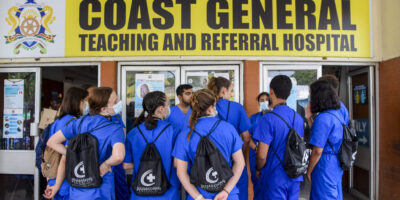
If you search online for “best medical schools near me” anywhere from the Blue Ridge Mountains to the Louisiana Delta, you are likely to come across the Edward Via College of Osteopathic Medicine (VCOM). VCOM is a private, non-profit college that grants one degree, the Doctor of Osteopathic Medicine (DO), on four campuses: Blacksburg, Virginia (the main campus, opened in 2003), Spartanburg, South Carolina (the Carolinas campus, opened in 2011), Auburn, Alabama (built in 2014) and Monroe, Louisiana (first class in 2020). All four campuses share one curriculum, one set of admissions requirements and one application. In the secondary application you rank the campuses you want to be considered for.
VCOM was founded to answer a shortage of physicians in rural southwest Virginia and the Appalachian region, and it has grown into one of the largest medical schools in the country. Its mission from the beginning has been to train osteopathic physicians who will care for rural and medically underserved populations, first in Appalachia and now across the Southeast and the Delta.
The osteopathic tradition VCOM follows began with Andrew Taylor Still, MD, a native of Virginia who moved west as a young man. In 1854, while practicing medicine in Kansas, Dr. Still grew dissatisfied with the medicine of his day and developed a new approach he called osteopathy. It rested on the unity of the body, the body’s ability to heal itself under the right conditions and the proper alignment and function of the musculoskeletal system. VCOM takes pride in bringing those ideas back to Virginia. Today’s DOs hold full practice rights, use every modern medical and surgical tool and add hands-on diagnosis and osteopathic manipulative medicine (OMM) to their care.
This guide covers the 2026-2027 application cycle, which fills the class that starts on July 1, 2027. It explains who can apply, how the AACOMAS and secondary process works, what each campus’s class profile looks like, what 2026-2027 costs, how the curriculum and clinical years run, how interviews work, who leads the school and how to answer both of this cycle’s secondary essays. Facts were checked on October 28, 2026.
Earning an acceptance letter from VCOM takes careful preparation. Follow the instructions closely, apply early in the rolling cycle and be genuine in everything you write. Our goal at International Medical Aid (IMA) is to help bright, committed future physicians get into the school that fits them, and this guide is built for that purpose.
Be an Informed Applicant
Becoming a doctor takes years of dedication, and it begins with getting into a medical school that fits you. Choose your schools with care, and then do everything you can to present yourself well to each admissions committee. VCOM is competitive, and because it fills seats on a rolling basis, preparation and timing both matter. Take the time to read this guide, follow it and get help where you need it.
Our medical school guides can help with every school on your list. If you would like to stay close to home, search “medical schools near me” and then check whether we have a guide for each school you find. This guide was written for VCOM and should not be used as a guide to any other medical school.
Key Takeaways
- Eligibility: you must be a U.S. citizen or permanent resident and earn a bachelor’s degree before you matriculate. VCOM does not accept international applicants, and DACA applicants are not considered.
- Academic floor and typical class: VCOM’s minimum is a 3.4 science and cumulative GPA in your last 90 credit hours, and an MCAT above 496 is generally required. The 3.4 is a minimum, not the class average: matriculants averaged a 3.68 to 3.73 GPA and a 498.7 to 503.2 MCAT, depending on campus.
- One application, four campuses: you apply once through AACOMAS, and one $25 secondary covers any or all of Virginia, Carolinas, Auburn and Louisiana. Each campus admits its own class of about 150 to 185 students.
- Two essays this cycle: the 2026-2027 secondary has two prompts, each limited to 500 words: a significant challenge, and how your ambitions align with osteopathic medicine plus what influenced your decision to apply to VCOM.
- Mission: VCOM trains community-focused osteopathic physicians for rural and medically underserved populations, with a strong lean toward primary care in Appalachia, the Delta and the Southeast.
- Dates: AACOMAS opened May 4, 2026, secondaries can be submitted from May 15, 2026, and the final deadline for both is April 15, 2027. Admission is rolling, and classes can fill by early spring, so apply by early fall.
- Cost: 2026-2027 tuition is $52,500 at every campus, VCOM charges no other fees and student health insurance is free. The estimated first-year cost of attendance is $92,178.
- Next step: line up your required letter from a pre-health committee or science faculty member now, add a physician letter if you can and submit AACOMAS early.
Key Statistics About Edward Via College of Osteopathic Medicine
The snapshot below collects the numbers applicants ask about first. VCOM reports class statistics campus by campus, so the MCAT, GPA and class-size figures are shown as ranges across the four campuses, with each campus listed separately in the table that follows. Costs are for the 2026-2027 academic year and are the same at every campus.

| Campus | First-year class size | Mean MCAT | Mean GPA | Source and year |
|---|---|---|---|---|
| VCOM-Virginia (Blacksburg, VA) | 180 | 503.2 | 3.68 | Choose DO 2026-2027 profile; class size from the 2024-2025 academic year; MCAT/GPA cohort not labeled |
| VCOM-Carolinas (Spartanburg, SC) | 162 | 501.7 | 3.72 | Choose DO 2026-2027 profile; class size from the 2024-2025 academic year; MCAT/GPA cohort not labeled |
| VCOM-Auburn (Auburn, AL) | 162 | 502.2 | 3.73 | Choose DO 2026-2027 profile; class size from the 2024-2025 academic year; MCAT/GPA cohort not labeled |
| VCOM-Louisiana (Monroe, LA) | 160 | 498.7 | 3.69 | Choose DO 2026-2027 profile; class size from the 2024-2025 academic year; MCAT/GPA cohort not labeled |
| Measure | Figure | Year or cohort | Source |
|---|---|---|---|
| School and degree | Edward Via College of Osteopathic Medicine, Doctor of Osteopathic Medicine (DO); campuses in Blacksburg VA, Spartanburg SC, Auburn AL and Monroe LA | Current | VCOM admissions and campus pages |
| Admitted per class (school statement) | Virginia 175 to 185; Carolinas, Auburn and Louisiana 150 to 162 each | Current | VCOM campus pages |
| Total DO enrollment | 2,613 (Virginia 722, Carolinas 645, Auburn 624, Louisiana 622) | 2024-2025 academic year | Choose DO Explorer, four campus profiles |
| Minimum GPA | 3.4 science and cumulative, last 90 credit hours | Current requirement | VCOM Admissions Requirements |
| MCAT guidance | Above 496 generally required; accepted applicants average 500 to 506 | Current requirement | VCOM Admissions Requirements |
| Acceptance rate | Not published (applicant, interview and offer counts are not reported) | n/a | VCOM and Choose DO |
| Tuition | $52,500, every campus, in-state and out-of-state; no other fees | 2026-2027 | VCOM Tuition and Financial Aid |
| Estimated cost of attendance | $92,178 (year 1) to $95,648 (year 4) | 2026-2027 | VCOM Cost of Attendance sheets |
| Secondary fee | $25 for any or all campuses | 2026-2027 cycle | VCOM Step-by-Step Guide |
| Residency match | 99.6% matched during match week; 97% matched on first attempt | Class of 2026 | VCOM admissions page |
| Accreditation | COCA, Accreditation for 10 years; next review 2034-2035 | Current | VCOM Accreditation page |
Two notes help you read these numbers. First, the class profile reports a mean MCAT and an average GPA, not medians and not minimums, so many matriculants sit below each figure as well as above it. Second, each campus admits its own class, so the Louisiana and Virginia figures describe different groups of students. Compare the campus you are most likely to rank first. VCOM’s own admissions requirements and the Choose DO Explorer profile for VCOM-Virginia are the best places to confirm these figures. To see how VCOM sits next to other schools, use our list of medical school GPA and MCAT averages.
Mission and Educational Priorities
Most people pursue medicine because they want to help others, but VCOM was founded with that idea as its first priority. In the late 1990s, leaders of the Harvey W. Peters Research Foundation and Virginia Tech studied health care in Virginia and found that the southside and southwest regions had an extreme shortage, with 30 counties holding critical shortage designations. Virginia’s existing medical schools were all in the eastern half of the state and produced few primary care physicians for the southwest. VCOM was founded to change that, and each new campus answered a similar need: upstate South Carolina and western North Carolina, Alabama and northern Louisiana.
VCOM states its mission this way:
“The MISSION of the Edward Via College of Osteopathic Medicine (VCOM) is to prepare globally minded, community-focused osteopathic physicians to meet the needs of rural and medically underserved populations and advance research to improve human health.”
VCOM’s faculty, staff and students name seven values: professionalism, integrity, duty, compassion, altruism, knowledge and critical thinking. You can read the full mission and goals on the school’s website.
The mission and goals translate into several practical priorities for applicants:
- Rural and underserved care. VCOM aims to graduate physicians who will improve health in the Appalachian and Delta states and in the states where its campuses sit. The school reports that 45% of its students come from communities of fewer than 30,000 people and 59% of graduates practice in a medically underserved area.
- Primary care, without limits. VCOM reports that 64% of its graduates complete primary care residencies, and the school places itself in the top ten for graduates entering primary care residencies in U.S. News and World Report. Graduates also match into competitive specialties, so a primary care focus is a strong theme rather than a requirement.
- Osteopathic identity. The goals call for education focused on evidence-based medicine, patient-centered care, the body’s ability to heal, the relationship of structure to function and the clinical use of osteopathic manipulation.
- Global and community service. VCOM runs outreach to free clinics, shelters and rural communities near its campuses and sustainable year-round clinics in Honduras and the Dominican Republic.
- Research. VCOM wants physicians who take part in research that improves health, and it supports student research on every campus and with its university partners.
- Target regions. VCOM seeks to admit most of each class from applicants who grew up in or are based in its target states: Alabama, Georgia, Florida, Kentucky, Tennessee, Mississippi, Louisiana, Texas, Missouri, North Carolina, South Carolina, Ohio, Pennsylvania, Virginia, Maryland and West Virginia. The school reports that 87% of its students come from these states.
What does this mean for you? Your application should show, with real experiences, that you understand and want to serve the kinds of communities VCOM serves. You do not need to have grown up on a farm or in a small town, but you should be able to explain what draws you to underserved care and to osteopathic medicine. Applicants who match VCOM’s mission in their record tend to write the strongest secondary essays and give the most convincing interviews.
Edward Via College of Osteopathic Medicine Ranking
VCOM highlights its outcomes in primary care and service. The school places itself in the top ten nationally for the number of graduates entering primary care residencies in US News and World Report, and VCOM’s president notes that the college was recently ranked fifth in the country for graduates entering primary care. VCOM’s Appalachian Outreach Program has received the President’s National Honor Service Award with Distinction, and the college has received the national HEED award. Rankings shift from year to year, so treat them as one signal and look closely at what matters for your goals: primary care training, match results, cost and the campus where you want to live for two years.
Other reasons to apply to VCOM include a strong match record, low tuition for a private medical school and a commitment to the communities its students serve. The school states that it recognizes and values the contribution diversity makes to its academic programs.
Accreditation and Institutional Identity
VCOM is institutionally and programmatically accredited by the American Osteopathic Association Commission on Osteopathic College Accreditation (COCA), the nationally recognized accreditor for colleges of osteopathic medicine. VCOM currently holds the status of Accreditation for 10 years, and its next accreditation review will take place in academic year 2034-2035. All four campuses fall under this accreditation; COCA extended the main campus’s accreditation to the Carolinas campus in 2010, and the Auburn and Louisiana campuses were added as branch campuses with their own state approvals. The school’s accreditation page lists the details.
Some distinctions are worth knowing:
- One college, one degree. VCOM is a private 501(c)(3) non-profit college. It works in public/private partnerships with Virginia Tech, Auburn University and the University of Louisiana Monroe (ULM), and with Spartanburg Regional Healthcare System in South Carolina. These partners give VCOM students access to libraries, recreation, athletics and events, but the DO degree is granted and conferred solely by VCOM. It is not a Virginia Tech, Auburn or ULM degree.
- State authorization. Each campus holds the approvals its state requires: Virginia (exempt from further certification by the State Council of Higher Education for Virginia since 2022 after 20 years of continuous approval), the South Carolina Commission on Higher Education, the Alabama Private School Licensure Division and the Louisiana Board of Regents.
- Accreditation is not a guarantee. COCA accreditation means the program meets national standards. It is one requirement for licensure, but graduates must also pass the COMLEX-USA licensing exams and complete residency training.
VCOM’s history matters for applicants because it explains the school’s admissions priorities. The college was established by John Rocovich Jr., JD, LLM, and Sue Ellen Rocovich, DO, PhD, with funds from foundations created by the late Marion Bradley Via; her son Edward Via approved the dedication of the funds, and the school bears his name. The first class entered in fall 2003 and graduated in 2007. The Carolinas campus opened in 2011 after Spartanburg leaders recruited VCOM, Auburn University announced the Auburn campus in 2012, and the Louisiana Board of Regents approved the Monroe campus in 2018.
Medical Programs and Affiliations
The founders of VCOM had a clear vision, and that vision produced a college focused on one thing: training osteopathic physicians. VCOM offers one medical degree, the Doctor of Osteopathic Medicine, with the same curriculum on all four campuses. Around it sit several related programs and partnerships.
Doctor of Osteopathic Medicine
The DO is a four-year program: two preclinical years on your home campus, then two clinical years at VCOM’s core community hospitals and practices. The next section describes the curriculum in detail. You choose your campus preferences in the secondary application, and the campus that admits you becomes your home for the first two years.
Choosing among the four campuses
Each campus has its own faculty, student groups and university partner, while the curriculum and requirements are the same everywhere:
- VCOM-Virginia (Blacksburg). The original campus, in Virginia Tech’s Corporate Research Center in the Blue Ridge Mountains. VCOM admits 175 to 185 students per class here. Students can use Virginia Tech’s libraries, transit, recreation and Hokie athletics and arts events. The campus has an affiliated Sports and Osteopathic Medicine Clinic.
- VCOM-Carolinas (Spartanburg). Opened in 2011 with Spartanburg Regional Healthcare System to address shortages in upstate South Carolina, and part of Spartanburg’s College Town Consortium of seven colleges. VCOM admits 150 to 162 students per class.
- VCOM-Auburn (Auburn). Built in 2014 in the Auburn University Research Park. VCOM admits 150 to 162 per class. Students gain access to Auburn University libraries, Tiger Transit, recreation and athletics.
- VCOM-Louisiana (Monroe). Welcomed its first class in 2020, next to the ULM campus on Bayou DeSiard. VCOM admits 150 to 162 per class. ULM’s pharmacy, nursing, kinesiology and therapy programs offer research and interprofessional links.
Early Decision Track
Applicants who consider VCOM their first choice among all osteopathic and allopathic schools can use the Early Decision Admissions Track. You submit AACOMAS and a letter of intent to [email protected] by June 15, naming your preferred campus; send all secondary materials, the fee and your premedical advisor or science faculty letter by July 15; and apply nowhere else until VCOM decides. Decisions are made by October 1 (September 30, 2026, for this cycle). The Early Decision Track page lists the rules.
DO with Research Distinction
VCOM lists a DO with Research Distinction for students who complete a defined body of research during medical school. It is part of the DO program rather than a separate degree, and details are on VCOM’s student research pages.
Affiliate programs
VCOM has affiliated graduate medical education. The Virginia campus’s Sports and Osteopathic Medicine Clinic serves as a clinical training site for osteopathic neuromusculoskeletal medicine (ONMM3) residents and sports medicine fellows sponsored by the HCA LewisGale Hospital-Montgomery/VCOM Graduate Medical Education Consortium. VCOM’s sports medicine program and fellowship care for athletes at Virginia Tech, Auburn, Radford University, ULM and the U.S. Olympic Ski Team, which gives students interested in sports medicine an unusual set of mentors. These programs open doors for students exploring residency interests.
VCOM also partners with Bluefield University on two master’s programs. In both, the degree is granted solely by Bluefield University:
- Master of Arts in Biomedical Sciences (MABS). A nine-month program taught at the Blacksburg campus or fully online (OMABS). Graduates who earn at least a 3.5 GPA in the MABS program and have a 496 MCAT receive an interview with VCOM’s MABS-to-DO Admissions Committee, regardless of their earlier GPA. VCOM may consider a lower MCAT case by case for MABS graduates with a 3.75 or higher.
- Master of Health Science in Anesthesia (MHSA). A program hosted on the Auburn campus that trains anesthesiologist assistants. It is separate from the DO and has its own admissions.
Details for both are on VCOM’s affiliated master’s programs page.
Guaranteed interview agreements
VCOM has agreements with select colleges and universities that share its mission. Students from those schools who meet VCOM’s admissions requirements can receive a guaranteed interview. The list includes Virginia Tech, Radford, Clemson, Appalachian State, Troy, Alabama A&M, Western Carolina, the University of South Carolina Upstate and several Louisiana System universities, including ULM, Louisiana Tech and the University of Louisiana at Lafayette. ULM and VCOM-Louisiana also signed a new Preferred Admission Track agreement in August 2026 for highly qualified ULM students. If your school is on the list, talk to your pre-health advisor about the agreement’s terms.
Military pathway and veterans
Students who attend VCOM on a military Health Professions Scholarship Program (HPSP) scholarship can complete one or more clinical rotations in a military hospital. VCOM-Louisiana reports that five members of its Class of 2026 matched into Army, Navy and Air Force residencies. VCOM also offers an admissions scholarship for U.S. military veterans; contact the admissions office for details.
Curriculum Overview
VCOM’s curriculum is current and relevant to the medicine of today. The faculty recognize that each student learns differently, so courses mix several methods:
- Lectures and online modules
- Reading and textbook assignments
- Small-group learning and discussion
- Laboratory and computer-based clinical tutorials
- Anatomy and microbiology laboratory experiences
- Simulated clinical laboratory experiences
- Physical diagnosis laboratory experiences
- Osteopathic manipulative medicine (OMM) clinical laboratory experiences
Hands-on clinical experience starts early. The goal of the curriculum, and of the school, is to train physicians who treat patients as whole people with a hands-on approach, grounded in primary care. Students can still pursue any specialty, but VCOM believes a strong primary care foundation prepares every physician well.
Years One and Two
The first two years use a block system. Eight blocks of 9 to 12 weeks each are completed in order, each giving concentrated training in one area of medicine:
- Foundations of Medicine
- Musculoskeletal System
- Neurological System and Special Senses
- Cardiovascular and Pulmonary Systems
- Gastrointestinal and Renal Systems
- Reproductive and Endocrine System
- Dermatologic, Hemostatic and Lymphatic Systems
- Comprehensive Review
Biomedical teaching comes from VCOM’s disciplines: anatomical sciences, cell biology and physiology, microbiology and immunology, pathology and histology, pharmacology, preventive medicine and public health, and osteopathic principles and practice (PPC/OMM). Osteopathic principles and OMM run through the preclinical years, with hands-on lab work on electronic tables in each campus’s physical exam and OMM training lab.
Clinical work is woven through all eight blocks so you can see what you are learning in real terms right away. In the first and second years, students complete approximately 16 to 20 one-day, faculty-supervised Early Clinical Experiences (ECE). Each one is different and focuses on the team approach to medicine through interprofessional experiences: pharmacology rounds, geriatric assessment, EMS, radiology, a day with an ICU nurse, a day with an athletic trainer and internal medicine rounds with a resident.
Students also take part in service-based learning. VCOM faculty and students provide free care to patients from medically underserved regions in free clinics, shelters and rural community health outreach programs. High-fidelity simulation adds training in cardiac and pulmonary emergencies, pediatric emergencies and obstetrical births before students reach real patients in these situations.
Students who are not struggling in the required curriculum can take electives in the first two years: Medical Spanish, Health Policy and a Global Health course. Medical Spanish connects directly with VCOM’s outreach to Spanish-speaking communities at home and in Honduras and the Dominican Republic. If you want to build Spanish and clinical skills before medical school, a medical internship in Peru is one way to practice both.
Year Three
Year three is built around core clinical rotations that give future osteopathic physicians a broad foundation in primary care. VCOM’s third-year students complete ten four-week core rotations, plus a two-week Foundations of Clinical Medicine course that strengthens core concepts for the clinical year and a three-week Comprehensive Review Course that confirms the osteopathic clinical skills needed for promotion to the fourth year. The core syllabi include family medicine, internal medicine I and II, obstetrics and gynecology, pediatrics, psychiatry and neurobehavioral sciences, surgery, a medical or surgical selective, osteopathic manipulative medicine, research and scholarly activity, and a rural and medically underserved population primary care rotation.
Third-year students work in faculty-supervised settings to assess and care for patients. They complete case-based study and reading, give monthly case presentations with the Director of Student Medical Education at their site and attend monthly workshops on applying OMM in patient care. Every student is assured at least one core rotation with an osteopathic physician, one that includes working with residents and more than one with an inpatient component. Each rotation requires a minimum of about 160 hours, including 40 to 60 hours a week plus call.
Year Four
The fourth year continues to build a strong, well-rounded clinical foundation while giving students flexibility to explore specialty interests, schedule audition rotations and prepare for residency. The fourth-year curriculum includes:
- Five electives (20 weeks)
- Four selectives (16 weeks): one medical selective and one intensive medical selective, one surgical selective and one additional medical or surgical selective
- Emergency medicine (4 weeks)
- Osteopathic manipulative medicine integrated throughout the rotations
- A four-week Professional Development Capstone and Graduation course
Most required fourth-year rotations take place at VCOM core sites, but students may request electives elsewhere. Students submit their fourth-year calendar by March 22 of their third year. Fourth-year students can also apply for a four-week international outreach rotation at one of VCOM’s core international sites in Honduras or the Dominican Republic.
Graduation Requirements
To earn the Doctor of Osteopathic Medicine, students must meet VCOM’s graduation requirements, which cover:
- Good moral, professional and ethical character
- All academic requirements, including courses, rotations and examinations
- Demonstration of the osteopathic medical student competencies
- Passing scores on COMLEX-USA Level 1 and Level 2 CE
- Completion of all required exit paperwork, the exit process and the requirements for conferring the degree
VCOM reports a 96% first-attempt pass rate on COMLEX Level 2 CE across all campuses, with a 99% final pass rate. Confirm the exact current requirements in the College Catalog and Student Handbook.
Admissions Requirements and Application Process
VCOM uses a mission-driven admissions process. The committee considers your academic ability, your alignment with the VCOM mission and the professional and ethical character expected of a future physician. VCOM also states that your professionalism in every interaction with faculty and staff during the application process is part of the decision.
Selection Factors: What VCOM Looks for in an Applicant
The admissions committee looks closely at your GPA and MCAT, but it is interested in much more than scores. These are the qualities and requirements it weighs:
- A person of integrity
- Professionalism throughout the application process
- Adaptability and flexibility
- Endurance for rigorous coursework
- A bachelor’s degree before matriculation, with at least 90 hours or three-fourths of the degree completed at application
- The required coursework
- GPA and MCAT scores
- Residency in a target state (a preference, not a requirement)
- U.S. citizenship or permanent residency
- Letters of recommendation
Once a secondary is complete, VCOM reviews it for academic preparedness, health care experience, volunteer outreach, fit with VCOM’s mission and commitment to osteopathic medicine. The college screens AACOMAS applications within two to three weeks of receipt.
Degree and coursework requirements
All applicants must earn a baccalaureate degree before matriculation from an institution recognized by the U.S. Department of Education. At the time you apply, you must have completed at least 90 hours or three-fourths of the credits for your degree. Foreign coursework must be evaluated through an AACOMAS-approved company.
The required courses must have been completed within the five years before you apply to VCOM:
| Course | Required semester hours |
|---|---|
| Biological sciences | 4 |
| Physics | 6 |
| General and inorganic chemistry | 6 |
| Organic chemistry (biochemistry may also count) | 6 |
| English and composition | 6 |
| Additional biomedical science at the 200 level or above (anatomy, physiology, biochemistry, immunology, microbiology, virology, genetics or equivalent) | 9 |
Anatomy, biochemistry, genetics, microbiology and physiology are also recommended. If your required courses are older than five years and you have earned a recent biomedical or pre-medical graduate degree, the dean and the director of admissions can review your transcript for equivalency. VCOM may give special consideration to courses taken by advanced nurse practitioners, physician assistants, pharmacists and doctors of physical therapy. Online and pass/fail prerequisite coursework is accepted only in certain circumstances.
Minimum GPA and MCAT Requirements for VCOM
- GPA: VCOM requires a minimum 3.4 science and cumulative GPA on a 4.0 scale in the last 90 hours of your bachelor’s or master’s degree, and it places emphasis on those last 90 hours and on the science GPA. The 3.4 is a floor. Matriculants on each campus averaged between 3.68 and 3.73, and VCOM notes that a GPA above 3.4 improves your chances.
- MCAT: the minimum MCAT is 496, a more competitive score begins at 500, and the average MCAT of those accepted falls between 500 and 506. Your score must be less than four years old at matriculation; for this cycle, the oldest score considered is from April 1, 2023 (April 10, 2023, for the Carolinas campus), and the latest accepted is from January 31, 2027. VCOM does not waive the MCAT.
- Balance: the MCAT is always weighed with the GPA and the non-academic qualities tied to the mission. VCOM considers applicants from target states with a GPA above 3.7 even with lower but acceptable MCAT scores, and if your GPA is above 3.5, a retake may not be needed. If your MCAT is only a few points below 500, contact the admissions office before you retest.
If your GPA is below 3.4, VCOM suggests the MABS program, another post-baccalaureate or science master’s program, or strong grades in new upper-level (300 and 400 level) science courses. Because VCOM focuses on the last 90 hours, recent work can outweigh weak early grades.
Citizenship and technical standards
Applicants must be U.S. citizens or permanent residents. VCOM does not accept international students, and DACA recipients are not considered. You must also meet VCOM’s Technical Standards for Admission and Continued Enrollment, and accepted students must pass a criminal background check through PreCheck before matriculation and again during enrollment.
Volunteer Service and Clinical Experience
VCOM does not publish a minimum number of hours for volunteer service, clinical experience or shadowing, and shadowing is not required. That does not make experience optional in practice. Health care experience and volunteer outreach are named review factors, so share every relevant experience on your application. These are the areas to show:
- Leadership: list every leadership role, on campus, in student organizations and at work. Leadership in a clinical setting is ideal.
- Clinical experience: include all patient-facing work, even short experiences. Clinical internships for pre-med students that put you in direct patient care are one option if your hours are thin.
- Research: VCOM’s mission includes advancing research to improve human health, and every campus has student research. Share any projects you have worked on, what you did and what you learned.
- Volunteer and community service: show steady commitment to your community, especially to underserved or rural populations.
- Extracurricular activities: let the committee get to know you as a person. Be your authentic self.
VCOM encourages shadowing a physician because it teaches you about the profession, and an osteopathic physician is a good choice. If you do not know a DO, VCOM suggests contacting your state osteopathic medical association or searching a directory of osteopathic physicians in your area.
VCOM Letters of Recommendation
VCOM requires one letter of recommendation from a pre-medical or pre-health committee, or from a science faculty member who is your designated pre-medical advisor or who taught you and knows your academic work. VCOM welcomes additional letters from people who know your academic or professional ability.
A physician letter is not required, but VCOM recommends one if you have worked with a physician as a volunteer or employee, and letters from other volunteer or shadowing experiences are a plus. VCOM accepts letters from practicing physicians or upper-level residents (not interns or first-year residents) whom you have met or shadowed. A letter from a physician who is a family member counts only as a personal reference.
Letters can come through Interfolio, the AACOMAS letter service, an official college or university service or the U.S. mail. Mailed letters go to VCOM’s Office of Admissions, Application Services, 2265 Kraft Drive, Blacksburg, VA 24060, for every campus. Letters sent directly by the author must be on letterhead and signed.
Does VCOM Require the CASPer Exam?
No. VCOM does not list Casper, PREview or any other situational judgment test among its requirements for the 2026-2027 cycle. Its requirements are AACOMAS, the MCAT, the invited secondary, the required letter and the interview.
AACOMAS Primary Application & VCOM Secondary Application
The application process has several steps, and you must receive an invitation by email to advance past the primary application.
- AACOMAS primary. All applications go through the American Association of Colleges of Osteopathic Medicine Application Service (AACOMAS). Our American Association of College and Osteopathic Medicine Application Service (AACOMAS) guide and our AACOMAS application guide walk through it. AACOMAS needs official transcripts from every college you attended and your MCAT scores. You name your preferred VCOM campus on the primary.
- Screening. VCOM screens your AACOMAS file. The secondary is by invitation only, and not every applicant receives one.
- Secondary. If invited, you receive an email with directions and a temporary password. The secondary asks for more information about you, your standardized test scores (ACT, SAT, GRE; “do not recall” is acceptable if you cannot find them), your campus preferences and your two essays. One secondary and one $25 fee cover any or all four campuses. The fee is non-refundable, and the AACOMAS fee waiver is honored. You pay through VCOM Payments or by check.
- Letters. Submit your required letter from a pre-health committee or science faculty member, plus any physician or other letters.
- Complete file. VCOM emails you when your application is complete, and you can check your status at admissions.vcom.edu. Allow two weeks for new documents to appear.
- Interview. If chosen, you are contacted by phone or email to schedule an in-person interview.
Each applicant is reviewed by the campus of first choice. If another campus you ranked wants to interview you, that campus will contact you. If you are finishing coursework during the cycle, send updated transcripts to both VCOM and AACOMAS at the end of each term. VCOM’s step-by-step guide has the current instructions.

Timeline for the 2026-2027 cycle
| Date | Step |
|---|---|
| May 4, 2026 | AACOMAS opens for submission |
| May 15, 2026 | Earliest date VCOM accepts secondary applications |
| June 15, 2026 | Early Decision: AACOMAS and letter of intent due |
| July 15, 2026 | Early Decision: secondary, fee and premedical advisor or science faculty letter due |
| August 2026 to April 2027 | In-person interviews on the four campuses |
| By October 1 (September 30, 2026 this cycle) | Early Decision notifications |
| Early fall 2026 | VCOM’s recommended time to have applied, since classes can fill by early spring |
| Before November 15, 2026 | Accepted by this date: deposit due by December 14 |
| November 15, 2026 to January 14, 2027 | Accepted in this window: 30 days to respond |
| January 15 to April 30, 2027 | Accepted in this window: 14 days to respond |
| January 31, 2027 | Latest MCAT score accepted |
| April 15, 2027 | Final AACOMAS and secondary deadline |
| July 1, 2027 | Orientation and start date for first-year students |
Decisions, deposits and deferrals
VCOM follows the AACOMAS traffic guidelines shown above; after May 1, a school may ask for an immediate deposit. The acceptance deposit is $1,500, is non-refundable and is applied to tuition. VCOM considers deferred entrance requests. Accepted students attend Accepted Students Day at their campus, complete the background check and submit health, immunization, health insurance and Basic Life Support documents on the schedule set by their acceptance date.
Tuition, Cost of Attendance and Financial Aid
VCOM keeps its pricing simple. For 2026-2027, tuition is $52,500 for every DO student on every campus, in-state and out-of-state alike. Tuition is the only fee VCOM charges for the DO program, with no additional or hidden fees, and VCOM provides free health insurance to all students. The school states that it has the third-lowest tuition and fees of all private osteopathic medical schools and that students save about $50,000 to $60,000 over four years compared with most private DO schools.
The cost of attendance (COA) adds estimated living and educational expenses to tuition. VCOM sets one COA for each class year that applies to all four campuses. These are the official 2026-2027 budgets:
| Cost item, 2026-2027 | Year 1 (Class of 2030) | Year 2 (Class of 2029) | Year 3 (Class of 2028) | Year 4 (Class of 2027) |
|---|---|---|---|---|
| VCOM tuition | $52,500 | $52,500 | $52,500 | $52,500 |
| Federal student loan fees (estimate) | $528 | $2,506 | $2,672 | $2,686 |
| Living and other educational expenses | $39,150 | $38,015 | $40,145 | $40,462 |
| Total cost of attendance | $92,178 | $93,021 | $95,317 | $95,648 |
| Academic period | 48 weeks | 48 weeks | 45 weeks | 44 weeks |
Year 1:
The first-year budget of $92,178 includes $3,400 for supplies and equipment (books, a computer, medical equipment, scrubs and white coats), $18,000 for housing and utilities, $5,400 for meals, $8,800 for transportation and travel and $3,550 for medical and personal expenses.
Year 2:
The second-year budget of $93,021 includes $2,265 for supplies, which covers COMLEX preparation materials and the COMLEX Level 1 registration fee, along with the same $18,000 housing allowance, $5,400 for meals, $8,800 for transportation and $3,550 for medical and personal costs. Loan fees rise as total borrowing grows.
Year 3:
The third-year budget of $95,317 covers a 45-week year of rotations. Supplies are $3,895, including COMLEX Level 2-CE registration, housing stays at $18,000, meals are $4,800 and transportation rises to $9,700 because rotation sites can be far from your home campus.
Year 4:
The fourth-year budget of $95,648 covers a 44-week year. Supplies drop to $1,500 but include ERAS and NRMP residency application costs, meals are $4,800, medical and personal expenses are $4,362 and transportation reaches $11,800 with a rotations travel allowance for audition rotations.
The COA is the maximum you can borrow, not a target. VCOM strongly recommends budgeting below it, for example by sharing rent and utilities, and it does not recommend borrowing the full amount.
Financial aid, scholarships and debt
- Federal loans are the main source of aid for most students. Start with the FAFSA. VCOM’s aid pages explain federal loan changes under the One Big Beautiful Bill Act of 2025, which matter for anyone borrowing for medical school.
- Scholarships and grants are listed in VCOM’s scholarship database, and many target states offer loan repayment for physicians who practice in areas of need. VCOM-Virginia announced a $5.1 million scholarship commitment from H. Pat and Nancy E. Artis in October 2026.
- Private loans can fill gaps after federal eligibility is used.
- Repayment record: VCOM states that it is the only school in the country with a zero percent non-payment rate on federal loans, as listed by the Department of Education.
Average graduate indebtedness differs by campus: $215,565 for Auburn, $231,368 for Carolinas and $258,604 for Louisiana, with Virginia’s figure not yet reported (year not stated). Because tuition is identical, the gap mostly reflects living costs and borrowing choices. Each campus has its own financial aid director, listed on VCOM’s tuition and financial aid page.
Understanding the financial side of medical school helps you plan and make good choices. For more on what medical school costs across the United States, see our Medical School Database, where we offer detailed guidance.
Campus Facilities and Student Life
VCOM describes itself as one of the largest medical schools in the country with the feel of a small private college on each campus. Every campus has the same core facilities, including a dedicated Simulation and Technology Center, but the setting and partner university differ.
Facilities
Blacksburg, Virginia. The main building is about 60,000 square feet on a 13-acre campus with a walking and biking path, a small lake, an amphitheater and patios. It holds two theater classrooms, 15 small-group rooms, an anatomy lab, a physical exam and OMM lab, a library and study space. The Simulation and Technology Center has high-fidelity simulators, standardized patient rooms, simulated surgical and ICU suites and simulated radiology. The Center for One Health on the main Virginia Tech campus is a grant-funded lab shared by VCOM and Virginia-Maryland College of Veterinary Medicine faculty. Students rent in Blacksburg and Christiansburg; buying is not recommended because clinical years often take place elsewhere. Since the first class graduated in 2007, nearly 40% of the campus’s graduates have stayed to practice in rural or underserved Virginia. A new health sciences education building on the Virginia campus will carry the Artis name.
Spartanburg, South Carolina. The Carolinas campus was the second to open, in 2011. Spartanburg was chosen because South Carolina had a significant need for primary care physicians, which matches the reason VCOM was founded: to train physicians for underserved areas of the South. The main building is over 70,000 square feet on 20 acres, with two large theater classrooms, 20 small-group rooms, an anatomy lab, an OMM lab, a library and a Simulation and Technology Center. Students and faculty conduct research in a remodeled research facility that opened in 2016 and in the biomedical research center next to campus. Downtown Spartanburg, within walking distance, has restaurants, venues and a professional baseball stadium. VCOM reports that its graduates outnumber residents from the other three Carolinas medical schools combined in South Carolina’s family medicine residencies.
Auburn, Alabama. The Auburn building is about 100,000 square feet on a 16-acre site in the Auburn University Research Park, with a small lake, a walking path, 20 small-group rooms and a first-floor research lab. Students collaborate with Auburn’s Harrison School of Pharmacy, Samuel Ginn College of Engineering, College of Education and School of Kinesiology.
Monroe, Louisiana. The Louisiana building spans over 90,000 square feet on 10 acres along Bayou DeSiard, next to ULM, with the same simulation, anatomy and OMM facilities. VCOM-Louisiana runs the CAREPATH mobile medical unit and is building a disaster response facility for it, and a new St. Francis Family Medicine, Sports Medicine and OMM clinic operated by FMOL Health in affiliation with VCOM-Louisiana will serve as a training site.
Student support and wellness
Most social events are organized or supported by Student Services and the VIA Wellness Committee on each campus. Each campus also has its own financial aid office, medical education office and clinical affairs team. Partner universities add libraries, transit, gyms and athletics.
Student Organizations
VCOM keeps its sponsored organizations limited so students can balance academics with the rest of life. Most focus on the careers students are considering for residency.
VCOM-Sponsored Organizations
- American College of Osteopathic Emergency Physicians (ACOEP)
- American College of Osteopathic Family Physicians (ACOFP)
- American College of Osteopathic Internists (ACOI)
- American College of Osteopathic Obstetricians and Gynecologists (ACOOG)
- American College of Osteopathic Pediatricians (ACOP)
- American College of Osteopathic Surgeons-Medical Student Section (ACOS-MSS)
- American Osteopathic Academy of Sports Medicine (AOASM)
- Gold Humanism Honor Society (GHHS), for rising fourth-year students
- The American College of Osteopathic Neurologists and Psychiatrists (ACONP)
- Sigma Sigma Phi (SSP)
- Student Advocate Association (SAA), for spouses, partners, family and friends of VCOM students
- Student American Academy of Osteopathy (SAAO)
- Student Association of Military Osteopathic Physicians and Surgeons (SAMOPS)
- Student Government Association (SGA)
- Student National Medical Association (SNMA)
- Student Osteopathic Medical Association (SOMA)
- Virginia Rural Health Association (VRHA), the first medical school chapter in Virginia
Local Chapters of External Medical Student and Health Professions Organizations
These national organizations are not sponsored by VCOM, but VCOM students are members and may meet on campus:
- American Medical Women’s Association (AMWA)
- American Muslim Medical Student Association (AMMSA)
- Asian Pacific American Medical Student Association (APAMSA)
- Christian Medical and Dental Association (CMDA)
- Hispanic Community Medical Outreach (HCMO)
- Jewish Medical Student Association (JMSA)
- Medical Outreach and Volunteer Effort (MOVE), at VCOM-Carolinas
- Students for LGBTQIA+ Healthcare
VCOM lists all of these on its student organizations page. Groups such as SAAO, HCMO and VRHA connect directly to the mission themes you will write about in your secondary essays.
Clinical Rotations and Research Opportunities
Core clinical sites
VCOM’s clinical program is community based but highly structured. For third-year core rotations, VCOM partners with community hospitals and practices in its Appalachian and Delta target regions in Virginia, North Carolina, South Carolina, West Virginia, Georgia, Tennessee, Florida, Louisiana and Alabama. Each regional site includes a teaching hospital and teaching practices. VCOM hires a Director of Student Medical Education, a clinical coordinator and clinical faculty at each facility.
Rotations at medium-sized, urban or suburban teaching hospitals are balanced with ambulatory practice and rural hospital, rural clinic or medically underserved experiences. All third-year rotations must be completed at VCOM core hospitals or ambulatory sites. Fourth-year students arrange most rotations through Clinical Affairs, with direct scheduling at a few sites such as Carilion Clinic-Roanoke, Spartanburg Regional Medical Center and Riverside Regional Medical Center in Hampton Roads.
Plan for travel. Clinical sites can be far from your preclinical campus, which is why the third- and fourth-year cost budgets carry higher transportation allowances. VCOM provides information on clinical housing for rotations. If you have family or partner commitments, ask during your interview how core sites are assigned for your campus.
International outreach
VCOM’s global outreach reflects the “globally minded” part of its mission. Third- and fourth-year students have the elective opportunity to spend a four-week rotation in Honduras or the Dominican Republic, where VCOM runs sustainable, year-round clinics. Students at every level join medical outreach trips; in summer 2026, a VCOM-Carolinas student launched a glaucoma screening effort with the Honduras team. If you are curious about clinical work in another country before medical school, medical internships abroad can show you how care is delivered with limited resources.
Military rotations
Students with a military HPSP scholarship can complete one or more rotations in a military hospital, and the third-year syllabi include a military emergency medicine rotation.
Research
Research is part of the mission, and the third-year curriculum includes a research and scholarly activity rotation that ends in a research or case study paper. Students can work with faculty in each campus’s research labs and with partner universities:
- Virginia: research labs in the VCOM 2 building and the Center for One Health with Virginia Tech.
- Carolinas: the remodeled research facility and the adjacent biomedical research center. Carolinas students present at national meetings and at the annual Via Research Recognition Day.
- Auburn: collaborations with Auburn’s pharmacy, engineering, education and kinesiology schools. The Pain Free Research Collaborative is studying new approaches to chronic pain.
- Louisiana: collaborations with ULM’s pharmacy, nursing and health sciences programs.
Students who complete a defined research program can earn the DO with Research Distinction. VCOM’s Vice President for Research oversees research across all four campuses.
Service clinics
From the first year, students provide free care in clinics, shelters and rural outreach programs near each campus. VCOM’s Appalachian Outreach Program, its mini-medical schools for rural high schools and its K-12 outreach in Southwest Virginia are part of this work.
Match outcomes
VCOM reports that 99.6% of the Class of 2026 matched into a residency during match week and that 97% of graduates matched on their first attempt. On the Louisiana campus, the Class of 2026 had 145 graduates from 28 states, 60% matched into primary care specialties and nearly 27% stayed in Louisiana for residency. VCOM’s residency match locations page lists where graduates train. To understand what comes after medical school, read our guide to residency and fellowship.
Notable Alumni, Faculty, Leadership and Admissions Staff
The people below hold current roles at VCOM or are recent graduates highlighted by the school. Titles were checked against VCOM’s officer, board, admissions and department pages on October 28, 2026.
College leadership
Dixie Tooke-Rawlins, DO, FACOFP, President. Dr. Tooke-Rawlins was hired in 2001 as VCOM’s founding dean and helped build the college from facility plans and accreditation approvals to the hiring of its first faculty. She later served as senior dean and provost and now leads the college as president. She was also instrumental in founding the Carolinas and Auburn campuses. Her message to applicants stresses the mission, community-based clinical training and low tuition, which are the themes VCOM’s secondary essays invite you to address.
Deborah West, EdD, Provost. Dr. West is VCOM’s provost and serves ex officio on the Board of Directors. The provost oversees academic affairs across the four campuses and is the final level of appeal in VCOM’s academic grievance process.
Matthew Cannon, DO, FACOFP, Dean for the Carolinas Campus and Senior Dean for all four VCOM campuses. Dr. Cannon leads the Spartanburg campus and coordinates the deans across VCOM. If you rank Carolinas first, he leads the campus whose committee will review your file.
Ron Januchowski, DO, FACOFP, Dean for the VCOM-Virginia Campus. Dr. Januchowski helped recruit VCOM to Spartanburg and served as associate dean for curriculum, assessment and education on the Carolinas campus before becoming dean of VCOM-Virginia in fall 2023. His path across two campuses reflects how closely VCOM’s curriculum is shared.
Heath Parker, DO, FACP, Dean for the Auburn Campus. Dr. Parker leads VCOM-Auburn and serves ex officio on the Board of Directors. He is an internist, which fits the campus’s strong primary care focus.
Ray L. Morrison, DO, FACOS, DFACOS, Dean of the VCOM-Louisiana Campus. Dr. Morrison, a surgeon, leads the Monroe campus and spoke at the Class of 2026 commencement, telling graduates they carry “the trust of the communities you serve.” His campus draws most of its class from outside Louisiana while sending many graduates into Louisiana residencies.
Faculty and researchers
Gunnar Brolinson, DO, Vice President for Research and Professor for Family Medicine and Sports Medicine. Dr. Brolinson oversees research across VCOM and teaches family and sports medicine. His dual role links VCOM’s research mission with its well-known sports medicine program, a useful connection for applicants with research or sports medicine interests.
Jonas Rawlins, DO, FACP, Vice President for International Affairs and Associate Professor for Internal Medicine. Dr. Rawlins leads VCOM’s international programs, including the outreach clinics in Honduras and the Dominican Republic. Applicants who write about global health should understand this program before the interview.
Katherine Jamison, PharmD, BCPS, Associate Dean for Pre-Clinical Medical Education and Associate Professor for Pharmacology, VCOM-Virginia. Dr. Jamison oversees the first two years of the curriculum on the Virginia campus, including the block system and early clinical experiences.
Sofia Abraham-Hardee, DO/PhD, FACOP, FAAP, CS, Associate Dean for Clinical Affairs and Associate Professor for Pediatrics, VCOM-Virginia. Dr. Abraham-Hardee leads clinical affairs for the Virginia campus, which manages third- and fourth-year rotations. Her dual DO/PhD training reflects VCOM’s interest in physician-scientists.
Tiffany Carpenetti, PhD, anatomy faculty, VCOM-Virginia. Dr. Carpenetti teaches in the anatomy lab after an earlier research career studying mosquitoes. VCOM featured her in August 2026 as an example of the faculty first-year students meet in the cadaver lab.
Admissions staff
Bill King, MBA, Vice President for Recruitment and Application Services. Mr. King leads VCOM’s national student recruitment and central application services for all four campuses.
Meghan Farley, BS, Director for Application Services. Ms. Farley’s office processes applications for every campus. Questions about your file go to [email protected], whatever campus you applied to.
Campus directors for admissions. Each campus has its own director: Shayna Lyle, MA (Virginia), Andrew Graham, MHA (Carolinas), Caroline Jeffreys, MEd (Auburn) and Will Copeland, MAT (Louisiana). The director of admissions and the campus dean review course equivalency for applicants with older or nontraditional coursework. For campus questions before you apply, write to [email protected], [email protected], [email protected] or [email protected]. The full list is on VCOM’s admissions contact page.
Alumni
Taylor Bush, DO, VCOM-Auburn Class of 2025. Dr. Bush graduated on time after becoming a mother to twins during her third year and is completing an internal medicine residency at the University of Alabama at Birmingham Huntsville Regional Campus. Her story shows the support VCOM-Auburn gives students with families.
Madison Capotosti, DO, VCOM-Carolinas Class of 2026. Before starting her pediatric residency, Dr. Capotosti practiced neonatal airway management, took part in pediatric simulations, rotated through the pediatric ICU, ran community screenings and contributed to pediatric research at VCOM-Carolinas. VCOM highlights her path as an example of how the campus prepares future pediatricians.
Ishani Sharma, DO, and Shivani Sharma, DO, VCOM-Louisiana Class of 2026. The fraternal twins from Dallas earned biology degrees at the University of Texas at Dallas and master’s degrees in medical sciences at the University of North Texas Health Science Center before VCOM-Louisiana, and they began residency side by side in 2026. Their route through a master’s program shows one way applicants strengthen their academic record before applying.
Admissions Statistics and Class Profile
VCOM Acceptance Rate & Admissions Statistics
VCOM does not publish its number of applicants, interviews or offers, so a true acceptance rate (offers divided by applicants) cannot be calculated. A rate based on the share of applicants who enroll is a matriculation ratio, not an acceptance rate, and should not be read as one. What VCOM is clear about is the selection process itself: a screen of every AACOMAS application, a secondary by invitation only and an interview for a smaller group still. Not everyone who completes a secondary is interviewed.
Edward Via College of Osteopathic Medicine Class Profile
The newest class profile reports enrollment for the 2024-2025 academic year and a mean MCAT and GPA for each campus.
| Campus | Total enrollment | First-year matriculants | In-state / out-of-state | Women / men (first year) | Mean MCAT | Mean GPA | Graduate degrees |
|---|---|---|---|---|---|---|---|
| Virginia | 722 | 180 | 102 / 78 | 115 / 65 | 503.2 | 3.68 | 13.6% |
| Carolinas | 645 | 162 | 75 / 87 | 100 / 62 | 501.7 | 3.72 | 9.1% |
| Auburn | 624 | 162 | 60 / 102 | 90 / 72 | 502.2 | 3.73 | 12.9% |
| Louisiana | 622 | 160 | 47 / 113 | 89 / 71 | 498.7 | 3.69 | 20.0% |
| All campuses | 2,613 | 664 | 284 / 380 | 394 / 270 | n/a | n/a | n/a |
Source: AACOM Choose DO Explorer, 2026-2027 campus profiles; enrollment, matriculant and degree figures labeled 2024-2025 academic year; MCAT and GPA means carry no cohort label.
Across all four campuses, 2,613 students were enrolled in 2024-2025: 1,557 women (59.6%) and 1,056 men (40.4%). Most first-year students were science majors, from 86.0% in Louisiana to 94.4% in Carolinas, so non-science majors are admitted on every campus when they complete the prerequisites.
What these numbers tell you:
- The averages sit well above the minimum. The minimum GPA is 3.4, but campus averages run from 3.68 to 3.73. The minimum MCAT is 496, but campus means run from 498.7 to 503.2, close to VCOM’s own statement that accepted applicants average 500 to 506.
- Campuses differ in residency mix. Virginia filled 57% of its first-year class with Virginia residents, while Louisiana drew 71% of its class from out of state. Both still give strong weight to target-state applicants.
- Graduate degrees are common. Between 9.1% and 20.0% of first-year students held graduate degrees, which matches VCOM’s encouragement of master’s programs for applicants with weaker early grades.
Graduation and match outcomes
VCOM reports a 99.6% match during match week for the Class of 2026 and 97% of graduates matched on first attempt. VCOM-Louisiana graduated 145 physicians in May 2026, with a 99% match rate. Compare these figures with other schools using our list of medical school GPA and MCAT averages and our DO school rankings guide, which covers other osteopathic medical schools.
If your numbers sit below the campus averages, strengthen the parts of your file that VCOM weighs heavily: recent upper-level science grades, clinical experience with underserved patients and a clear mission fit. Medical internships for undergraduates are one way to add supervised patient care before you apply.
Tips and Strategies for Admission
These strategies turn VCOM’s stated priorities into concrete steps. They reflect our editorial reading of VCOM’s published requirements, not a private scoring rubric.
1. Apply early, and finish your file fast. VCOM is rolling, screens AACOMAS files in two to three weeks and states that classes can fill by early spring. For best consideration, submit AACOMAS at least five weeks before any filing date; VCOM encourages applying by early fall. Draft your two secondary essays in spring so you can return the secondary within days of the invitation.
2. Protect your last 90 hours. VCOM weighs the last 90 credit hours and the science GPA most heavily. If your early grades were weak, a run of A’s in 300- and 400-level science courses or a strong master’s year can change how your record reads. Explain any rough semester honestly; the first essay prompt gives you room to do that.
3. Make your mission fit visible. VCOM wants physicians for rural and medically underserved communities. Show it through experiences with real patients: free clinics, rural health fairs, hospice, EMS in a small county or community health work. Long-term commitment to one or two settings reads better than many short ones. Internships for pre-med students that place you in under-resourced clinics can add depth if you have little exposure to underserved care.
4. Learn osteopathic medicine from a DO. VCOM recommends a physician letter and encourages shadowing. Find a DO through your state osteopathic association, observe how they examine patients and ask how they use OMM. A DO who knows you can write a strong letter and give you material for your second essay. Read our explainer on what osteopathic medicine is and how it differs before you write.
5. Rank campuses on purpose. You can be considered at all four campuses for one fee. Rank first the campus where you would be happiest for two years and where your ties are strongest, but list others you would attend. Campuses differ in setting, partner university and class mix, so visit or attend a virtual event if you can.
6. Use the summer before you apply. If you are a year or two away, pre-med summer internships and steady volunteering can fill gaps in clinical hours. Plan MCAT timing so your score falls inside VCOM’s window (no older than April 1, 2023, for this cycle) and is in hand before you submit.
7. Consider a gap year with a plan. A gap year spent in patient care, research or service can make a reapplication much stronger. Pre-med gap year programs with hands-on clinical roles are one option. If your GPA is below 3.4, VCOM points to its MABS program and other master’s programs.
8. Treat every contact as part of the interview. VCOM considers your professionalism in emails, phone calls and campus visits. Answer quickly, be courteous with staff and proofread every message.
9. Ask for letters early. Committee letters often arrive late in the summer, which can delay your file. Request your committee or science faculty letter in spring, and give your physician writer a résumé and a short note about the experiences you shared.
10. Know the cost and the debt. Tuition is the same at every campus, but living costs and borrowing are not. Read the COA sheets and think about how a primary care salary, loan repayment programs in VCOM’s target states and your own budget fit together. Interviewers notice applicants who have thought this through.
Secondary Application Questions, Example Responses and Analysis
VCOM Secondary Application: Essay Prompts, Sample Answers, and Advice
For the 2026-2027 cycle, VCOM’s secondary has two essay prompts. Both are required of every invited applicant, and one secondary covers all four campuses. Each response is limited to 500 words, and the portal has a word counter at the bottom of each essay box. VCOM asks applicants not to paste text into the box, because pasting can add hidden characters that raise the word count. Type or carefully re-enter your final draft and keep it a little under 500 words. The secondary also asks for your campus ranking, standardized test history and the $25 fee.
Two prompts used in earlier cycles are not part of the 2026-2027 secondary: the three professional qualities of a student doctor, and a separate “What influenced your decision to apply to VCOM?” essay. The “what influenced” question is now combined with the osteopathic alignment question in Essay 2. VCOM has not published any reapplicant or prerequisite-completion short answers for this cycle; if your portal shows one, answer it directly and briefly, following the limit shown there.
For more on secondary strategy across schools, see our guide to medical school secondary essay prompts.
Essay #1
Describe a significant challenge you have experienced in your life. Please share the strategies you employed to overcome the challenge, and what you learned from the experience.
- Limit: 500 words
- Who answers: every applicant invited to the secondary; required
- What it asks: three things in order: a significant challenge, the strategies you used to overcome it and what you learned.
How to approach it. When it comes to this type of question, be ready to be genuine and a little vulnerable. The committee wants to know you as an individual with your own story, so choose an experience that shows how you think and act under pressure. Do not write a generic answer. Let the committee see that you are a real person who has faced something hard and worked through it. Spend most of your words on the strategies and the learning, not the setup, because those parts show how you will handle the demands of medical school. Then connect what you learned to who you will be as a medical student and an osteopathic physician.
Good topics include a family illness, a period of financial strain, a disability, a cultural or language barrier, a failure you recovered from or a responsibility you carried at a young age. The challenge does not have to be dramatic. It does have to be real, and you must have done something about it.
Illustrative example, not an actual applicant essay
In October of my sophomore year, my father fell from the loft of our hay barn and broke his pelvis in two places. We farm about ninety acres outside a small town in southwest Virginia, and the nearest trauma center was an hour and twenty minutes away. For the next five months he could not lift, drive or work, and I was the oldest child still living close to home.
I did not handle it well at first. I kept my full course load because I was afraid that dropping a class would look like quitting, and I drove home three nights a week to feed cattle and take my father to physical therapy. By December I had a C in organic chemistry and a B- in physics, the lowest grades I had ever earned. The real problem was that I had told no one, so no one could help me plan around it.
The first strategy I used was the simplest one: I asked for help. I met with my academic advisor and laid out my week hour by hour. She helped me move to a lighter spring schedule without falling behind on my degree plan. I also talked to my organic chemistry professor, who pointed me to a weekly problem session I had been skipping because I thought I did not have time.
The second strategy was structure. I built a written schedule that treated farm work, my father’s appointments and studying as fixed blocks, and I protected sleep the same way. I studied in the waiting room during his therapy sessions. I also asked a neighbor, who had offered help weeks earlier, to cover two evenings of chores. Accepting that offer was harder than any exam that semester.
The third strategy was to repair the damage honestly. I retook organic chemistry the following year and earned an A, and every science course since has been an A or A-. I am explaining the C here because I would rather be judged on what I did next.
What I learned goes beyond time management. Sitting in that therapy clinic twice a week, I watched a physical therapist and a family physician work together to get my father walking again. They asked about the farm, the steps into our house and how far he had to walk to the barn. His recovery depended as much on those practical questions as on his X-rays. I also learned that the people who need help most are often the slowest to ask for it, because I was one of them.
As a medical student, I expect hard weeks again. I know to name the problem early, build a plan with people who can help and keep my commitments visible. I also know what an hour and twenty minutes to care can mean to a rural family, and that is part of why I want to practice where that distance is still normal.
Word count: 490 of 500.
Why this example works.
- It answers all three parts, in the order asked. The challenge takes two short paragraphs. Three clearly labeled strategies follow, and the learning gets its own paragraph plus a forward-looking close.
- The strategies are specific actions. Meeting an advisor, using a problem session, building a schedule, accepting a neighbor’s help and retaking the course are things the reader can picture. “I worked hard” would not show the same judgment.
- It owns a weakness. VCOM weighs the last 90 hours and science grades. The writer names the C, explains the context without excuses and points to the recovery, which turns a transcript question into evidence of maturity.
- The learning connects to medicine and the mission. The physical therapist and family physician asking about the farm and the stairs reflect whole-person, team-based care. The closing line about distance to care ties the story to VCOM’s focus on rural populations without forcing the school’s name into an essay that does not ask for it.
Mistakes to avoid.
- Spending 400 words on the hardship and 50 on what you did about it.
- Picking a challenge that is really a disguised strength (“I care too much”) or one with no clear action.
- Blaming others, or presenting a problem that is not yet resolved without explaining how you are managing it.
- Repeating your AACOMAS personal statement. Use a different experience or show a new side of it.
- Adding a list of lessons with no example of how you applied them.
Essay #2
How do your professional ambitions align with osteopathic medicine? What influenced your decision to apply to VCOM?
- Limit: 500 words for the whole response
- Who answers: every applicant invited to the secondary; required
- What it asks: two questions in one prompt: (1) how your career goals fit osteopathic medicine and (2) what influenced your decision to apply to VCOM, such as personal or medical experiences or the influence of family, physicians or mentors.
How to approach it. VCOM is committed to osteopathic medicine and wants to know you share that commitment. If you are not planning an osteopathic career, this school is not the right fit. Show the committee what you understand about the osteopathic approach (treating the whole person, the body’s ability to heal, structure and function, hands-on diagnosis and OMM) through something you saw or did, not a definition. Then explain what drew you to VCOM: its mission, a program, a person who influenced you or your own ties to the regions it serves. If research on the school, a conversation with a VCOM student or a DO mentor shaped your choice, say so and explain what they said. Split your words roughly in half, because the prompt now carries two questions.
Illustrative example, not an actual applicant essay
I want to be a family physician in a small Southern town, the kind of doctor who knows that a patient’s back pain is tied to the twelve-hour shifts she works standing on a concrete floor. Osteopathic medicine fits that ambition because it asks me to treat the person and not only the complaint.
I first saw this approach during two years volunteering at a free clinic that serves uninsured adults, many of them poultry plant and warehouse workers. One evening a DO volunteer examined a man who had come in for a medication refill. Before writing anything, she asked him to stand, watched how he shifted his weight and pressed along his lower back and hip. She found a restriction that explained the pain he had stopped mentioning to anyone. She used a short manipulative treatment, talked with him about lifting at work and only then reviewed his blood pressure medicine. He left standing straighter, and he came back the next month because he felt heard. I saw that a careful hands-on exam can be a way of listening, and that prevention and practical advice can matter as much as a prescription.
That evening gave my professional goals a shape. I want a career in primary care where osteopathic manipulative medicine is one more tool I can offer, where I can spend time on prevention and where I can treat the whole family over many years. I also want to work where physicians are hardest to find. In the county where I grew up, many families drive more than an hour for specialty care, and the local clinic depends on doctors who choose to stay.
VCOM’s mission to prepare community-focused osteopathic physicians for rural and medically underserved populations matches that goal almost word for word. Several parts of the program drew me in. The early clinical experiences in the first two years would put me with nurses, pharmacists and EMS crews, which is how care actually works in a small hospital. The third-year Rural and Medically Underserved Population Primary Care rotation would give me supervised time in exactly the setting where I hope to practice. I also want to join VCOM’s international outreach in Honduras or the Dominican Republic. I have studied Spanish for four years and use it at the clinic, and I would take the Medical Spanish elective so that I can speak with patients rather than through an interpreter, at home and abroad.
My decision was also personal. My family physician, who still practices in our town, told me that the best preparation for rural medicine is training where you learn to rely on your own exam and on the team around you. VCOM’s community hospital model, with core rotations across the Appalachian and Delta regions, is built around that idea.
I am applying because VCOM trains physicians for the places I come from and the patients I have already started to serve.
Word count: 487 of 500.
Why this example works.
- Both questions get full answers. The first half shows osteopathic alignment through one observed patient encounter; the second half names what influenced the decision to apply to VCOM, including a mentor’s advice.
- It shows osteopathic principles instead of reciting them. The DO’s exam demonstrates structure and function, the whole person, prevention and the use of OMM, and the writer explains what the moment taught them.
- Every VCOM detail is real and relevant. Early Clinical Experiences, the Rural and Medically Underserved Population Primary Care rotation, Honduras and Dominican Republic outreach, the Medical Spanish elective and community-based core rotations are all part of VCOM’s published curriculum, and each one connects to the writer’s stated goal.
- The goals are specific and believable. Family medicine in a small town, prevention, OMM as a tool and long-term family care form a coherent plan that matches VCOM’s mission and its primary care outcomes.
Mistakes to avoid.
- Answering only one of the two questions, or treating “Why VCOM” as an afterthought in the last two sentences.
- Defining osteopathic medicine in textbook language with no personal example.
- Listing VCOM features that any school has (strong match rate, great faculty) or naming programs you have not checked.
- Writing about a campus by name when you have ranked several; keep the essay about VCOM’s shared mission and curriculum unless a campus-specific tie is central to your story.
- Saying you chose VCOM as a backup to MD schools or mainly because of low tuition.
Short-answer and logistical fields
The secondary also asks for factual information. Treat these as part of your professionalism:
- Campus ranking: rank only campuses you would attend, in true order of preference. Example pattern: “1. Carolinas (family in Greenville, SC). 2. Virginia. 3. Auburn.” If the form gives no space for reasons, list the order only.
- Standardized test history: report ACT, SAT and GRE scores if asked. If you cannot recall or find a score, VCOM allows “do not recall.”
- Fee: pay the $25 fee through VCOM Payments, or request the AACOMAS fee waiver if you hold one.
Interview Format and Preparation
VCOM Interview Process
The admissions committee invites only the most qualified applicants to interview. VCOM interviews are in person only, in a traditional format, at the VCOM campus that is considering you for placement. Interviews generally run from August through April, and you are notified by phone or email to schedule.
A typical interview day includes:
- A greeting and orientation session about VCOM
- Admissions interviews with VCOM faculty and administration members
- A financial aid session
- A tour of the VCOM campus, usually led by current students
- Lunch with current students
- A tour of the local area
- An admissions wrap-up
VCOM does not publish the number or length of the individual interviews; your invitation and the orientation session will give your campus’s schedule. The day lets the committee decide whether you fit the school and lets you decide whether VCOM fits you.
What interviewers look for
The committee will not try to make you feel tense, but it does want to see how you handle questions about yourself and about medicine. VCOM’s admissions pages emphasize integrity, professionalism and alignment with the mission. In practice, these are the attributes worth showing:
- Strong interpersonal skills
- Good listening
- Self-confidence without arrogance
- Compassion
- Social awareness, including understanding of rural and underserved communities
- Dedication and passion for osteopathic medicine
VCOM places emphasis on the interview for applicants who reach that stage, so prepare for it as seriously as for the MCAT.
How to prepare
- Know your file. Re-read your AACOMAS application and both secondary essays. Interviewers often start from what you wrote.
- Know VCOM. Be able to explain the mission in your own words and to name two or three programs that matter to you, such as the Early Clinical Experiences, international outreach, sports medicine or the rural primary care rotation.
- Know your campus. Learn the partner university, the region it serves and the health needs of that area. If you are interviewing at Monroe, for example, know why Louisiana’s physician shortage shaped the campus.
- Prepare your “why DO” answer. Expect questions about osteopathic medicine and OMM. Use a real experience, not a definition.
- Practice ethics and current-issues questions. Health care access, rural hospital closures and the cost of care come up often at mission-driven schools. Our list of medical school interview questions is a good place to practice.
- Be professional all day. Students and staff you meet at lunch and on tours are part of the visit.
This is the best chance you will have to show the committee who you are, so be real. Share a bit of your story and let them see how your experiences will make VCOM a better school. Preparing for an interview can be stressful, and many students find personalized coaching and a mock interview through our medical school admissions consulting services helpful.
Frequently Asked Questions
Is VCOM a South Carolina medical school?
VCOM is one college with four campuses in four states. The main campus is in Blacksburg, Virginia, and the branch campuses are in Spartanburg, South Carolina; Auburn, Alabama; and Monroe, Louisiana. The Carolinas campus in Spartanburg is South Carolina’s VCOM location. All four campuses share the same curriculum, requirements and application, and your secondary lets you rank them. If you live in South Carolina, compare the Carolinas campus with the other schools in our guide to medical schools in South Carolina.
What GPA do I need for VCOM?
VCOM’s minimum is a 3.4 science and cumulative GPA in your last 90 credit hours. That is a floor, not the class average. Matriculants averaged between 3.68 and 3.73 depending on campus. VCOM emphasizes the last 90 hours and the science GPA, so recent upper-level science grades or a strong master’s program can help if your early grades were low. If you are below 3.4, VCOM suggests its affiliated MABS program or another post-baccalaureate or master’s program before you apply.
What MCAT score does VCOM require?
VCOM’s minimum MCAT is 496, a more competitive score begins at 500 and the average MCAT of accepted applicants falls between 500 and 506. Campus means run from 498.7 (Louisiana) to 503.2 (Virginia). Your score must be less than four years old at matriculation; for the class starting in 2027, scores from April 1, 2023, through January 31, 2027, are accepted (April 10, 2023, is the oldest for Carolinas). VCOM weighs the MCAT with your GPA and mission fit and may consider target-state applicants with a GPA above 3.7 and lower but acceptable MCAT scores.
What is VCOM’s acceptance rate?
VCOM does not publish its number of applicants, interviews or offers, so no reliable acceptance rate exists. Avoid figures that divide matriculants by applicants, since that is a matriculation ratio rather than an acceptance rate. What you can rely on is VCOM’s process: every AACOMAS file is screened, the secondary is by invitation only and not every secondary leads to an interview. Apply early and make your mission fit clear.
Do I need a separate application for each VCOM campus?
No. You submit one AACOMAS application and name your preferred campus, and one secondary with a $25 fee covers any or all four campuses. In the secondary, you rank the other campuses you want to be considered for. The campus you rank first reviews your file, and if another ranked campus wants to interview you, it will contact you.
How many secondary essays does VCOM have for 2026-2027, and how long are they?
Two, and both are required. Essay 1 asks you to describe a significant challenge, the strategies you used and what you learned. Essay 2 asks how your professional ambitions align with osteopathic medicine and what influenced your decision to apply to VCOM. Each response is limited to 500 words, tracked by a word counter in the portal. Type your final text into the box rather than pasting it, since pasted text can add hidden characters to the count.
How much is VCOM’s secondary application fee?
$25, and that single fee covers any or all four campuses. The fee is non-refundable, and VCOM honors the AACOMAS fee waiver. Pay through VCOM Payments or by check or money order mailed to VCOM’s Office of Admissions in Blacksburg.
How much does VCOM cost?
For 2026-2027, tuition is $52,500 at every campus for in-state and out-of-state students. VCOM charges no other fees, and health insurance is free. The estimated cost of attendance, including living expenses, is $92,178 for the first year and rises to $95,648 for the fourth year because of rotation travel. VCOM recommends living below the full budget to reduce borrowing.
Does VCOM require a letter from a physician or a DO?
No. VCOM requires one letter from a pre-medical or pre-health committee or a science faculty member who knows your academic work. A physician letter is recommended if you have worked with a physician, and VCOM welcomes additional letters. Letters from upper-level residents are accepted, but not from interns or first-year residents, and a letter from a physician who is a relative counts only as a personal reference.
How much clinical experience do I need for VCOM?
VCOM does not set a minimum number of hours, but it reviews every file for health care experience and volunteer outreach, especially with rural and underserved patients. Aim for steady, meaningful patient contact over time. Hands-on pre-health internships where you take vitals and help with intake under supervision, along with local volunteering, give you real experiences to write about in your secondary.
Does VCOM accept international or DACA applicants?
No. Applicants must be U.S. citizens or permanent residents, and DACA recipients are not considered. Coursework from foreign institutions can count if it is evaluated through an AACOMAS-approved company, but citizenship or permanent residency is still required.
Does VCOM have an Early Decision program?
Yes. If VCOM is your first choice among all medical schools, submit AACOMAS and a letter of intent naming your preferred campus to [email protected] by June 15, complete the secondary with your required letter by July 15 and apply to no other medical school until VCOM decides. Decisions are made by October 1. Use Early Decision only if you are sure.
Do VCOM interviews take place online?
No. VCOM interviews are in person only, at the campus considering you, generally from August through April. The day includes an orientation, interviews with faculty and administration members, a financial aid session, a student-led campus tour, lunch with students, a local area tour and a wrap-up.
Where do VCOM students do clinical rotations?
Third-year core rotations take place at VCOM’s partner community hospitals and practices across Virginia, North Carolina, South Carolina, West Virginia, Georgia, Tennessee, Florida, Louisiana and Alabama. Fourth-year students mostly rotate at core sites with some electives elsewhere, and third- and fourth-year students can apply for a four-week rotation in Honduras or the Dominican Republic. Expect to relocate or travel for clinical years.
Can I improve my chances if I was not invited to complete a secondary?
Yes. VCOM advises raising your GPA above 3.4, with emphasis on the last 90 hours and science courses. Options include the VCOM/Bluefield MABS program, another post-baccalaureate or master’s program, or new upper-level science courses. Strengthen your clinical and service record, apply earlier in the cycle and contact VCOM’s admissions office if your MCAT is only a few points below 500.
Does VCOM require the Casper test?
No. VCOM does not list Casper, PREview or any other situational judgment test among its 2026-2027 requirements. Focus on AACOMAS, your MCAT, your letters and your two secondary essays.
Related Medical School Guides
These guides cover osteopathic schools that applicants often consider alongside VCOM. They are grouped by region and degree, not by selectivity.
- Campbell University School of Osteopathic Medicine (CUSOM): a North Carolina DO school with a rural and underserved mission, a natural comparison for applicants ranking VCOM-Carolinas.
- Alabama College of Osteopathic Medicine: Alabama’s other osteopathic school, in Dothan, for applicants weighing VCOM-Auburn.
- UIW School of Osteopathic Medicine: a Texas DO school with a community health focus, useful for Texas residents, a VCOM target state.
- Oklahoma State University College of Osteopathic Medicine: a public DO school with a strong rural primary care mission similar to VCOM’s.
- Arkansas College of Osteopathic Medicine (ARCOM): a Delta-region DO school for applicants drawn to VCOM-Louisiana’s focus on underserved Southern communities.
- Meritus School of Osteopathic Medicine: a newer Maryland DO school; Maryland is one of VCOM’s target states.
Because VCOM has campuses in four states, its state hubs are also worth reading: medical schools in Virginia, medical schools in South Carolina, medical schools in Alabama and medical schools in Louisiana. Applicants from western North Carolina can also read about medical schools in North Carolina.
More medical school guides
Be sure to check out our other medical school guides, including these:
- University of South Carolina Medical School
- Medical University of South Carolina (MUSC)
- Lewis Katz School of Medicine at Temple University
- Philadelphia College of Osteopathic Medicine (PCOM)
- Geisinger Commonwealth School of Medicine (GCSOM)
- Penn State Medical School
- CUNY School of Medicine
- SUNY Downstate Medical School
- NYIT College of Osteopathic Medicine
- NYU Long Island School of Medicine
- TOURO College of Osteopathic Medicine
- Albany Medical College
- Norton College of Medicine at Upstate Medical University
- Jacobs School of Medicine at the University at Buffalo
- Hofstra Zucker School of Medicine
- Weill Medical College of Cornell University
- University of Rochester Medical School
- Icahn School of Medicine at Mount Sinai
- Renaissance School of Medicine at Stony Brook University
- Albert Einstein College of Medicine
- Ohio University Heritage College of Osteopathic Medicine
- Northeast Ohio Medical University (NEOMED)
- University of Cincinnati College of Medicine
- University of Toledo College of Medicine
- Wright State University Boonshoft School of Medicine
- Ohio State University College of Medicine
- Rowan University School of Osteopathic Medicine
- Hackensack Meridian School of Medicine (HMSOM)
- Rutgers New Jersey Medical School (NJMS)
- Rutgers Robert Wood Johnson Medical School
- Cooper Medical School of Rowan University (CMSRU)
- A.T. Still University Kirksville College of Osteopathic Medicine
- Saint Louis University School of Medicine
- University of Missouri Medical School
- Kansas City University (KCU)
- UMKC School of Medicine
- New York Medical College
- University of Pittsburgh School of Medicine
- University of Wisconsin Medical School
- VCU School of Medicine
- University of Maryland School of Medicine
- Case Western Medical School
- University of North Carolina Medical School
- University of Florida Medical School
- Emory University School of Medicine
- Boston University College of Medicine
- California University of Science and Medicine
- UC San Diego Medical School
- California Northstate University College of Medicine
- Touro University of California
- CHSU College of Osteopathic Medicine
- UC Davis School of Medicine
- Harvard Medical School
- UC Riverside School of Medicine
- USC Keck School of Medicine
- UT Southwestern Medical School
- Long School of Medicine at UT Health San Antonio
- University of the Incarnate Word School of Osteopathic Medicine
- UT Austin’s Dell Medical School
- UTMB School of Medicine
- McGovern Medical School at UT Health
- Johns Hopkins School of Medicine
- The University of Texas Rio Grande Valley School of Medicine
- UNT Texas College of Osteopathic Medicine
- University of Houston College of Medicine
- Texas A&M College of Medicine
- Baylor College of Medicine
- George Washington University School of Medicine
- Vanderbilt University School of Medicine
- St. George’s University School of Medicine
- Lake Erie College of Osteopathic Medicine (in Pennsylvania)
- Sidney Kimmel Medical College at Thomas Jefferson University
- Wake Forest University School of Medicine
- Western University of Health Sciences (in California)
- Drexel University College of Medicine
- Stritch School of Medicine at Loyola University Chicago
- Georgetown University School of Medicine
- Yale School of Medicine
- Perelman School of Medicine
- UCLA Medical School
- NYU Medical School
- Washington University School of Medicine
- Brown Medical School
How International Medical Aid Can Help
Personalized Help
One-on-one, personalized help through the application process is one of the best ways to prepare for VCOM or any medical school. Our medical school admissions consulting program is designed to take some of the weight off your shoulders. Our advisors help with your AACOMAS application and campus strategy, give feedback on your secondary essays and prepare you for VCOM’s in-person interview, including mock interviews. Contact us here if you have any questions.
Medical School Admissions Consulting
Our vision at International Medical Aid is to help the next generation of medical students matriculate at the schools that fit them. Applying and interviewing for medical school is demanding, and we want to give you the support you need to complete your application and interview with confidence. Whether you feel ready for your interview or not, our advisors can help you prepare for one of the most important conversations of your life. We walk you through the process, give practical advice and run mock interviews so you are as ready as possible. You can schedule a free consultation with one of our advisors here. If you are unsure whether you need help, read when to hire an admissions consultant for medical school.
Voluntary Healthcare Internships Abroad
Some of the best learning an aspiring physician can have comes from working alongside skilled clinicians, spending time with real patients and seeing how a hospital or clinic runs, especially in a setting very different from home. IMA runs pre-med internships abroad in Kenya and other sites for pre-medical and gap year students. Interns take vitals, do patient intake and triage and help with direct patient care under the supervision of local clinicians. The programs are built to prepare students to become humanistic, globally minded physicians, which echoes the “globally minded, community-focused” language in VCOM’s mission. IMA is independent of VCOM, and participating does not affect admission decisions; what it gives you is experience and reflection you can write and talk about honestly.
Take a few minutes to explore our healthcare internships abroad and reach out if you have questions.
Final Thoughts and Sources
Best of Luck!
VCOM offers one curriculum on four campuses, low tuition for a private medical school, early and constant clinical experience and a mission centered on rural and underserved care. Admission is rolling and competitive. If VCOM fits your goals, take the next steps now: confirm your coursework and GPA in your last 90 hours, plan your MCAT inside the accepted window, line up your committee or science faculty letter, decide how you will rank the campuses and draft your two 500-word essays before the secondary arrives.
As you take your first step toward matriculating at the Edward Via College of Osteopathic Medicine, we wish you the best of luck and hope this guide has made the path clearer. If you run into problems along the way, you can reach out to us for help, and you can direct application questions to VCOM’s admissions office at [email protected]. If you would like to explore our medical school admissions consulting program, feel free to contact us and we will get you the support you need. Whether you searched for medical schools in another state or simply typed “medical schools near me,” VCOM is a strong choice for future osteopathic physicians who want to serve where care is needed most.
Sources
All facts were checked on October 28, 2026.
- VCOM, Mission and Goals; Our History; Message from the President; Accreditation, State Authorization, and Professional Licensure; College Officers; Board of Directors and Advisory Boards.
- VCOM, DO Program Admissions Requirements; A Step-by-Step Guide to Apply; Admissions FAQs; Early Decision Track; Applying to VCOM; Contact Admissions Staff; Join Us at VCOM (Class of 2026 match and COMLEX outcomes); Why VCOM.
- VCOM, Cost of Attendance and the 2026-2027 Cost of Attendance sheets for OMS1 (Class of 2030), OMS2 (Class of 2029), OMS3 (Class of 2028) and OMS4 (Class of 2027); DO Program Tuition and Financial Aid (2026-2027).
- VCOM, Preclinical Education; Clinical Education: Third Year; Clinical Education: Fourth Year.
- VCOM campus pages: Virginia, Carolinas, Auburn and Louisiana; Student Organizations; VCOM-Affiliated Masters Programs; “Edward Via College of Osteopathic Medicine in Monroe Graduates 145 New Physicians” (May 19, 2026).
- AACOM Choose DO Explorer, 2026-2027 profiles for VCOM-Carolinas, VCOM-Virginia, VCOM-Auburn and VCOM-Louisiana: enrollment and first-year matriculants (2024-2025 academic year), mean MCAT and GPA (cohort not labeled), application dates, fees, deposit and start date for the 2026-2027 cycle.
- Secondary prompt wording for 2026-2027 as distributed to invited applicants and compiled for the current cycle; 500-word limit per VCOM Admissions FAQs.
- U.S. News and World Report, VCOM profile, for the primary care ranking VCOM cites.