
If you’re an aspiring medical student living in South Carolina and you’ve been typing “medical schools near me” into a search engine, you have almost certainly come across the Medical University of South Carolina (MUSC). Founded in Charleston in 1824, the MUSC College of Medicine was the first medical school in the southern United States and the 10th in the country. It has conferred more than 10,000 medical degrees, and today it is the public MD program at the center of South Carolina’s only comprehensive academic health system.
MUSC is a big place with a clear state mission. The university educates more than 3,200 students in six colleges (Dental Medicine, Graduate Studies, Health Professions, Medicine, Nursing and Pharmacy) and trains more than 900 residents and fellows. Its health system now runs 18 hospitals across the state, with five more in development, and employs more than 37,000 people. MUSC Health University Hospital has been named the No. 1 hospital in South Carolina by U.S. News & World Report for 10 years in a row. That scale is a large part of why MUSC is one of the most popular medical schools in South Carolina, and why it pays to understand the application process in detail.
The College of Medicine admits approximately 180 students each year into its four-year Doctor of Medicine program in Charleston. As a public, state-supported school, MUSC gives primary consideration to South Carolina residents: more than 90% of each entering class comes from the state. Out-of-state applicants are considered only if they meet higher academic minimums and show strong “Close Ties” to South Carolina. The school also offers a three-year accelerated pathway, a Primary Care Parallel Track at the MUSC AnMed Clinical Campus in Anderson, an MD/PhD Medical Scientist Training Program and a combined MD/MSCR degree.
This guide covers the 2026-2027 application cycle, for students who plan to start medical school in August 2027. You will find the latest class statistics, admission requirements and deadlines, 2026-27 tuition and cost of attendance, the curriculum and clinical campuses, leadership, faculty and alumni profiles, the current secondary essay prompts with full example responses, the interview format and a long list of frequently asked questions. All figures were checked on October 30, 2026.
Be an Informed Applicant
If you’ve researched medical schools near you and found that the Medical University of South Carolina interests you most, you will want to be as prepared as possible for the application process. MUSC is a very competitive school to get into, and most applicants never reach the interview stage. For the Class of 2029, the college received 3,417 applications and interviewed 333 applicants. Attention to detail will matter at every step: your primary and secondary applications, your letters of recommendation and your interviews.
Knowing how the medical school admissions process works is crucial, and that is why we want to help. Our medical school guides break the process down step by step, for many different medical schools in South Carolina and in other states. As you read, take notes and highlight the parts that apply to you. Applying to medical school is a challenge, and it gets easier with preparation. This guide was built specifically for the Medical University of South Carolina College of Medicine and should not be used as a guide for any other medical school.
Personalized Help
We know that applying to medical school is challenging and can be stressful. Our medical school admissions consulting program was designed to make the process easier for you and your family and to give you the best chance of success. Our advisors can help you plan your application, give honest feedback on your essays and prepare you for interviews, including mock interviews if you’d like. Contact us here if you have any questions.
Key Takeaways
- South Carolina residents come first. More than 90% of each entering class is made up of state residents, and 94% of the Fall 2026 incoming MD class came from South Carolina. Residency is determined at the time of application, and any petition must be completed by December 15, 2026.
- Know your minimums before you apply. South Carolina residents need an MCAT of at least 500 and a cumulative undergraduate GPA of at least 3.0 (or a 3.5 post-baccalaureate or graduate GPA). Out-of-state applicants need at least a 511 MCAT, a 3.7 cumulative undergraduate GPA and strong Close Ties to South Carolina. You must meet these minimums to receive a secondary application.
- Admitted students are strong academically. For the Class of 2029, the average MCAT was 511 and the average undergraduate GPA was 3.85. Accepted applicants in the 2025 entering class had a median MCAT of 511 and a median total GPA of 3.91.
- The cycle is already moving. Early Decision closed on August 3, 2026. The AMCAS deadline for Regular Decision is November 2, 2026, the last MCAT accepted for Regular Decision is September 12, 2026, and the MUSC secondary is due December 15, 2026. Supplemental essays must be completed within two weeks of the invitation.
- Budget for the full cost. For 2026-27, first-year tuition is $38,658 for residents and $67,773 for nonresidents. The estimated first-year cost of attendance is $82,333 in-state and $111,448 out-of-state, and the four-year estimate is $305,355 in-state and $415,394 out-of-state.
- Distinctive training options. Select students can finish in three years through the Accelerated Medical Pathway and move into a participating MUSC residency. Others spend years three and four on the Primary Care Parallel Track at the MUSC AnMed Clinical Campus in Anderson. Every third-year student completes family medicine in a rural or underserved part of the state.
- Interviews are virtual and one-on-one. Invited applicants complete three virtual interviews. Interviewers see your AMCAS application, supplemental essays and letters, but not your MCAT score or GPA.
- Next step: confirm your residency status, finish your AMCAS application before November 2, and draft your answer to “Please discuss your primary interest in attending the Medical University of South Carolina” now so you can return the supplemental essays quickly.
Key Statistics About the Medical University of South Carolina
MUSC is one of the oldest and largest medical schools in the Southeast, and it is highly selective for a public school because its seats are reserved almost entirely for South Carolinians. The snapshot below shows the numbers applicants ask about most often, followed by a fuller table with each figure’s year and source.

| Metric | Value | Year or cohort | Source |
|---|---|---|---|
| School and degree | Medical University of South Carolina College of Medicine; Doctor of Medicine (MD) | Current | MUSC College of Medicine |
| Campus | Charleston, South Carolina (all students); MUSC AnMed Clinical Campus in Anderson for years 3 and 4 on the Primary Care Parallel Track | Current | MUSC College of Medicine |
| School type | Public, state-supported; founded 1824 | Current | MUSC College of Medicine; MSAR 2026 |
| Accreditation | Liaison Committee on Medical Education (LCME) | Current | MUSC College of Medicine |
| Applications | 3,417 (546 in-state, 2,871 out-of-state) | Class of 2029 | MUSC M.D. Admissions Snapshot |
| Interviews | 333 (290 in-state, 43 out-of-state) | Class of 2029 | MUSC M.D. Admissions Snapshot |
| Acceptances | 180 (163 in-state, 17 out-of-state) | Class of 2029 | MUSC M.D. Admissions Snapshot |
| Interviews / applications | 9.7% overall (53.1% in-state, 1.5% out-of-state) | Class of 2029 | Calculated from the MUSC M.D. Admissions Snapshot |
| Average MCAT and GPA | MCAT 511; undergraduate GPA 3.85 | Class of 2029 | MUSC M.D. Admissions Snapshot |
| Median MCAT | 511 (section medians 127, 127, 128, 129) | 2025 entering class, all accepted applicants | MSAR 2026 |
| Median total GPA | 3.91; median science GPA 3.87 | 2025 entering class, all accepted applicants | MSAR 2026 |
| First-year class | 186 MD students plus 4 MD/PhD students; mean GPA 3.86; average MCAT 511.4; 94% in-state | Fall 2026 incoming class | MUSC College of Medicine Facts & Figures |
| Acceptance rate | Not published as a rate | Class of 2029 | Not published |
| Tuition, year 1 | $38,658 in-state; $67,773 out-of-state | 2026-27 | MUSC Doctor of Medicine cost of attendance |
| Estimated cost of attendance, year 1 | $82,333 in-state; $111,448 out-of-state (includes $4,000 health insurance) | 2026-27 | MUSC Doctor of Medicine cost of attendance |
| Estimated cost of attendance, four years | $305,355 in-state; $415,394 out-of-state | 2026-27 rates | MUSC Doctor of Medicine cost of attendance |
| Average debt of indebted graduates | $201,990 | 2024-2025 | MSAR 2026 (LCME Part I-B) |
| Residency placement | 96% of 155 graduates placed on Match Day; 41% entering primary care; 30% staying in South Carolina | Class of 2026 | MUSC College of Medicine Facts & Figures |
What Is the Minimum GPA and MCAT for MUSC?
MUSC sets different minimums by residency. South Carolina residents must have an MCAT score of at least 500 and a cumulative undergraduate GPA of at least 3.0, or a cumulative post-baccalaureate or graduate GPA of at least 3.5. Out-of-state applicants must have an MCAT score of at least 511 and a cumulative undergraduate GPA of at least 3.7, which matches the average academic threshold of the current accepted class, and they must also have strong Close Ties to South Carolina. Applicants who do not meet these minimums do not receive a secondary application. A minimum is a floor, not a target: the average admitted student for the Class of 2029 had a 511 MCAT and a 3.85 GPA. To see how these numbers compare with other programs, read our breakdown of medical school GPA and MCAT averages.
MUSC Rankings
U.S. News & World Report stopped publishing numbered positions for medical schools in 2024 and now sorts schools into tiers for research and for primary care. Our overview of the best medical schools in the US explains how the tiers work. For MUSC, two other measures tell you more about the school than a rank does. On the clinical side, MUSC Health University Hospital has been named the No. 1 hospital in South Carolina by U.S. News for 10 years in a row. On the outcomes side, the College of Medicine reports a 99% five-year match rate, and 96% of the Class of 2026 had placed in residency as of Match Day. Rankings measure a narrow set of inputs, so use them as one data point at most.
Mission and Educational Priorities
The MUSC College of Medicine Mission
The College of Medicine states its mission this way:
“Our mission as academic leaders is to offer innovative education, training, and research in service of compassionate health care delivery. By fostering a wide-ranging educational community, we empower the health professionals and scientists of tomorrow to promote the health and well-being of the residents of South Carolina and beyond.”
Its vision is to “Cultivate exceptional and compassionate healthcare through innovation in education, research, and clinical service to benefit all individuals,” and its values are Compassion, Collaboration, Innovation, Integrity and Respect.
The university as a whole has a related mission: to “preserve and optimize human life in South Carolina” through education, research and patient care. MUSC describes its work through three ideas: innovation (breakthrough research, educating the next generation of medical leaders and delivering care), impact (expanding access to education, research and patient care to improve outcomes) and influence (work that benefits the health of communities beyond the state).
What the Mission Means for Applicants
The phrase that matters most for applicants is “the residents of South Carolina and beyond.” MUSC is a public school funded by the state, and it is explicit that it exists to train physicians who will care for South Carolinians. That shows up in every part of admissions:
- Residency drives the process. In-state applications are reviewed first. Out-of-state applicants are reviewed later in the cycle and must show strong Close Ties to the state.
- Connectivity to South Carolina is a listed selection factor. After the primary criteria, the admissions committee may consider additional traits, including connectivity to South Carolina, commitment to service, military service, research, work experience and resilience.
- Training reaches the whole state. Every third-year student completes the family medicine clerkship in a rural or underserved county, and the AnMed campus in Anderson trains students in a community health system in the Upstate.
- Many graduates stay. In the Class of 2026, 30% matched into South Carolina residency programs and 22% stayed at MUSC.
The words “compassionate health care delivery” also matter. Compassion is one of the six attributes MUSC evaluates in interviews, along with critical thinking, emotional intelligence, motivation, oral communication and social skills, and principles. The strongest applications show these traits through specific experiences with patients and communities rather than describing them in general terms.
Why the Medical University of South Carolina?
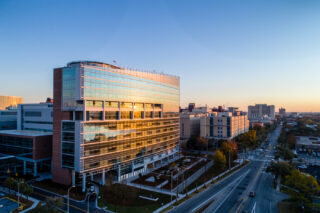
Going to school in a city like Charleston is reason enough for many students to consider MUSC, but location is not the main argument for this school. MUSC is the oldest medical school in the South and the state’s only comprehensive academic health system. The MUSC campus is an 82-acre medical complex in the heart of historic Charleston, and the hospitals, research centers, clinical buildings and basic science buildings that make up the MUSC medical district are within a short walk of the city’s main street.
Research is a real strength. The College of Medicine reports more than $250 million in extramural research funding in the last year, and 91% of its students take part in research with faculty. MUSC Hollings Cancer Center is one of 73 National Cancer Institute-designated cancer centers in the country and the only one in South Carolina, and the MUSC Shawn Jenkins Children’s Hospital is a new, state-of-the-art children’s hospital on the Charleston skyline.
The other main reason is scale. MUSC’s health system includes 18 hospitals across the state, serves patients from 46 counties and records about 3.21 million patient encounters a year. Medical students learn inside a system that sees almost every kind of condition, from routine primary care to transplant and cancer care, and they leave with a network that reaches across South Carolina. The College of Medicine is also building a new home: a new College of Medicine building is planned for 2027.
Accreditation and Institutional Identity
Is MUSC Accredited?
Yes. The MUSC College of Medicine MD program is accredited by the Liaison Committee on Medical Education (LCME), the national accrediting body for MD programs in the United States and Canada. The college achieved full LCME reaccreditation after a site visit in January 2013. Accreditation means the program meets national standards of quality. It is not the same as a license to practice: licensure comes later from a state medical board and requires passing the licensing exams and meeting each state’s other criteria.
The university as a whole is accredited by the Southern Association of Colleges and Schools Commission on Colleges (SACSCOC) to award certificates and baccalaureate, master’s, first professional and doctoral degrees.
Institutional Identity
The College of Medicine traces its history to the Medical Society of South Carolina, which began offering medical lectures in Charleston in the early 1800s. The South Carolina General Assembly authorized a college of medicine in Charleston in December 1823, the Medical College of the State of South Carolina opened in 1824, and its first class of five physicians graduated two years later. The state took ownership of the college in 1913, and the school later grew into the six-college Medical University of South Carolina.
Today the College of Medicine has more than 1,500 faculty members, 740 medical students, 35 master of public health students and nearly 900 residents and fellows. Its main campus is in downtown Charleston, and the MUSC AnMed Clinical Campus in Anderson has trained select third- and fourth-year students since 2015. The school’s office for student support and pathway programs is now called PRIME (Pathway Resources & Impactful Mentoring and Engagement).
Medical Programs and Affiliations
The Medical University of South Carolina consists of six colleges: Medicine, Nursing, Pharmacy, Dental Medicine, Graduate Studies and Health Professions, and it offers residency training through its health system. This section focuses on the College of Medicine’s MD pathways and then covers MUSC’s other doctoral programs.
Doctor of Medicine (MD)
Putting patient care and biomedical research at the center of its work, the College of Medicine is the oldest medical school in South Carolina. It admits approximately 180 students each year into the MD program. Two years of foundational pre-clerkship study are followed by a year of core clinical clerkships and a final year of advanced clinical rotations and electives. After four years, students graduate with an MD and the knowledge, clinical skills and supervised patient care experience they need for residency. Applicants apply through AMCAS for the Regular Decision or Early Decision program.
Accelerated Medical Pathway (Three-Year MD)
A select number of students can finish the MD in three years through the Accelerated Medical Pathway (AMP) and then enter a participating MUSC residency program. The pathway aligns with MUSC’s goal of keeping trainees in the state’s physician workforce. All MD students complete the same pre-clerkship curriculum. AMP students then complete all clerkships and selectives, an AMP selective and specially designed courses in the final phase. The accelerated format uses densely packed semesters and integrates pre-clerkship and clinical experiences, so it is much more intense than the four-year plan.
AMP comes with a directed pathway into one of 8 participating residency programs at MUSC, and the number of available spots varies from year to year. Students do not apply to AMP when they apply to medical school. Residency programs consider enrolled students who show high academic performance in the pre-clerkship phase and clinical skills courses, professional behavior with no serious professionalism concerns, and the ability to complete MD requirements on an accelerated schedule.
Primary Care Parallel Track at the MUSC AnMed Clinical Campus
The Primary Care Parallel Track gives third- and fourth-year MUSC medical students comprehensive clinical training at AnMed, a community-based hospital system in Anderson, South Carolina. Students complete the required clerkships and selectives along with enhanced experiences: a longitudinal continuity clinic with an underserved population at the Anderson Free Clinic, more ambulatory experience during clerkships, longitudinal professor rounds, a weekly Essentials in Primary Care course, a longitudinal wellness curriculum and service-learning activities. The track runs in years 3 and 4 only; students complete their first two years in Charleston with the rest of the class.
The AnMed campus admits a limited number of students from each incoming class. You must first be accepted to the MUSC College of Medicine. You can then show your interest in the MUSC secondary application or by contacting Dr. Renee Monaghan, the MUSC AnMed campus dean. Details are on the MUSC AnMed Clinical Campus page.
Medical Scientist Training Program (MD/PhD)
The Medical Scientist Training Program (MSTP) is MUSC’s combined MD/PhD program for future physician-scientists. It has been supported by a National Institutes of Health T32 training grant for approximately 40 years. The program is challenging and flexible: students choose a research mentor and training experience with guidance from program leadership, and the curriculum brings together basic science, clinical training and the graduate work needed to complete a PhD dissertation. The plan of study runs 23 semesters, and MUSC’s admissions policy describes the combined degrees as usually taking 7 to 8 years, so expect about an 8-year commitment.
MSTP applicants select the MD/PhD program type in AMCAS and complete the MUSC secondary, which includes essay questions and a CV upload. To be eligible, applicants need a bachelor’s degree before matriculation and a minimum MCAT of 504 taken within three years of July 1 of the matriculation year, and they must not be enrolled, or have been enrolled, in an MD or PhD program outside MUSC. For the 2026-2027 cycle, AMCAS opened May 5, 2026, MUSC opened July 1, 2026, and the final deadline is December 1, 2026. Interviews are virtual on select dates from October through January. The MSTP is not open to international applicants; it accepts only U.S. citizens and permanent residents. Accepted students who maintain academic requirements generally receive full tuition, health insurance and a stipend, which is $39,000 a year as of July 1, 2026.
Clinical and research exposure continue through the graduate years. Options include the Translational Sciences Clinic during the graduate years, the Translational Medicine Seminar Series and the CARES Clinic, an evening clinic serving patients without the means to pay. Graduate coursework covers biostatistics, research ethics, techniques and experimental design and an MSTP seminar series. In years 1 and 2, MSTP students take the same pre-clerkship medical curriculum as their classmates, then begin research rotations before committing to a dissertation lab. After the PhD, they return to complete the clinical years of medical school and apply to residency. See the MUSC MSTP page for the full plan of study.
MD/MSCR and MD/MPH
Enrolled MD students can add a Master of Science in Clinical Research (MSCR) through a five-year combined program, in a concentrated full-time option or a blended part-time option. The College of Medicine also enrolls master of public health students, and MD students can pursue an MD/MPH through the College of Graduate Studies. Students apply to these combined programs after enrolling in the MD program.
Doctor of Pharmacy (PharmD)
The MUSC College of Pharmacy offers the Doctor of Pharmacy (PharmD), a PhD and concurrent degree programs in hands-on, research-focused learning environments. The college reports that 96% of its graduates are employed in the field within six months of graduation. Requirements and pre-pharmacy coursework are listed on the MUSC College of Pharmacy website.
Doctor of Dental Medicine (DMD)
The James B. Edwards College of Dental Medicine was established in 1967 as South Carolina’s only college of dental medicine. Its goal is to train dental professionals who will improve the oral health of South Carolina residents and beyond. Research at the college spans biomedical science, bioengineering and digital dentistry.
College of Nursing
The MUSC College of Nursing traces its origin to 1882, when Charleston’s City Council funded a training school for nurses, and with more than 140 years of nursing education it is one of the oldest schools of nursing in the country. Students can pursue nursing degrees and specialty programs at several levels, including the Doctor of Philosophy (PhD) in Nursing, launched in 2001, and the Doctor of Nursing Practice (DNP), launched in 2009. The college established the nation’s first DNP program in Lifespan Palliative Care in 2020. Graduates can go on to many advanced practice roles, such as Certified Registered Nurse Anesthetist (CRNA). Students weighing nursing against medicine can also look at our nursing internships abroad to see how nurses and physicians work together on care teams.
CRNAs vs. Anesthesiologists
CRNAs are registered nurses who have gone on to advanced practice training focused on anesthesia care. Anesthesiologists are physicians who complete medical school and an anesthesiology residency. The two often work side by side as a care team. At MUSC, anesthesia is also a popular physician specialty: 7% of the Class of 2026 matched into anesthesia.
Curriculum Overview
What to Expect: The FLEX Curriculum
MUSC’s MD curriculum, called FLEX, merges basic science with active clinical application. The full program consists of 232 credits and is designed to be completed in 11 semesters. The curriculum moves through three phases: a pre-clerkship phase of about two years, the Immersion Phase of core clerkships and the Enrichment Phase of advanced rotations and electives. Pre-clerkship courses are graded pass/fail. Clinical courses are graded Honors, High Pass, Pass or Fail, and the College of Medicine does not rank students. Teaching uses lectures, small groups, team-based learning and labs, and lectures are available online, though attendance is strongly encouraged.
Pre-Clerkship Phase (Years 1 and 2)
The pre-clerkship phase is built in organ system blocks that teach normal and abnormal function together, so students learn the full spectrum of health and disease. The first year includes Clinical Skills 1 to 3, Foundations of Health, Foundations of Disease, Autoimmunity and Hematology, the cardiovascular, pulmonary and renal systems, gastrointestinal blocks, the reproductive and endocrine systems, and Ethics and Biostatistics. An interprofessional course (IP Foundations and TeamSTEPPS) puts medical students in teams with students from MUSC’s other colleges. Year 2 begins with Clinical Skills 4, Musculoskeletal, Central Nervous System, and Cognition and Behavioral Health.
Students begin patient interactions very early in the first year. The curriculum includes early clinical application, simulation, clinical immersion, ultrasound and procedures training, patient-centered experiences and community-based learning, so students build confidence before they enter full-time clerkships.
FLEX Scholarly Concentrations (Year 2 Spring)
In the spring of the second year, every student chooses one of four FLEX scholarly concentrations that best matches their educational goals: Global Health, Health Humanities, Physician as Teacher or Research. The same semester includes USMLE Step 1 board review and a Transition to Clinical Medicine course. The College of Medicine supports global health work with travel grants for students approved for global health research projects and immersive scholarly experiences, and 16% of 2025 graduating seniors reported a global health experience during medical school. If you are already interested in global health, a medical internship in Peru or another program abroad can help you decide whether this concentration is for you.
Immersion Phase (Year 3)
Clerkships begin in the summer after the second year. During the Immersion Phase, students rotate through seven core clinical clerkships, which can be completed in any sequence: Family Medicine, Internal Medicine, Neurology and Rehabilitation Medicine, Obstetrics and Gynecology, Pediatrics, Psychiatry and Surgery. Students also choose selectives for additional immersion and take courses in ethics in clinical care, geriatric medicine and topics in clinical medicine. The third year closes with a clinical competency exam, a four-week critical care elective and a four-week externship.
Enrichment Phase (Year 4)
The final phase is made up of required advanced clinical rotations, a wide variety of electives, Essentials of Emergency Medicine and the Internship 101 capstone course, which prepares students for the demands of residency. Fourth-year rotations may be taken at MUSC or at hospitals across the country. Graduates go on to a wide range of residencies, including MUSC’s own programs in internal medicine, family medicine, radiology and many other specialties.
Core Elements of the FLEX Curriculum
These elements run through the curriculum:
- Team-based learning
- Early clinical application
- Ultrasound and procedures training
- Health systems curriculum
- Patient-centered experiences
- Telehealth
- Advocacy
- Senior Mentor Program (a longitudinal senior mentor experience)
- Clinical immersion experiences
- Careers in Medicine program, a longitudinal course run by the Group on Student Affairs
How the Tracks Differ
Students on the Accelerated Medical Pathway complete the same pre-clerkship curriculum and all clerkships and selectives, with specially designed courses in place of part of the fourth year. Students on the AnMed Primary Care Parallel Track complete core clerkships comparable to those in Charleston, plus weekly primary care classes and a continuity clinic, and in year 4 they choose from 40 two- or four-week electives at AnMed. MSTP students follow a modified pre-clerkship sequence, then spend their graduate years in research before returning for clinical training.
Admissions Requirements and Application Process
Selection Factors: What MUSC Looks for in an Applicant
The College of Medicine Admissions Committee takes a holistic approach to selection. It gives balanced consideration to academic preparedness, experiences and personal attributes. The primary factors are:
- Academic preparedness: cumulative undergraduate GPA and highest MCAT score. The undergraduate GPA is adjusted for school competitiveness.
- Experiences: clinical exposure to medicine and shadowing, community service and volunteering, leadership and similar activities.
- Attributes: critical thinking, compassion, emotional intelligence, motivation, oral communication and social skills, and principles.
Adjusted GPA, best MCAT score, experiences and attributes are weighted equally as the primary factors. After the primary criteria, the committee may consider additional traits, such as artistic or athletic achievements, connectivity to South Carolina, commitment to service, military service, graduate degrees or post-baccalaureate programs, resilience and overcoming challenges, research, significant improvement in coursework and work experience. MUSC does not consider protected characteristics as factors, in keeping with applicable law. The Admissions Committee is made up of faculty, students, community physicians and other representatives of the College of Medicine, and faculty members make up the majority of voting members.
The admissions staff are there to help. If you have a question about your application, email the Office of Admissions at [email protected], and if they can’t answer it directly, they will point you to the right person.
MCAT and GPA Requirements
MUSC requires the MCAT, and it must be taken within three years of matriculation. For Fall 2027 matriculation (the 2026-27 cycle), MCAT scores from before May 2024 are not accepted. You may take the MCAT more than once; the committee uses your highest composite score. The last MCAT date accepted for Early Decision was July 10, 2026, and the last date accepted for Regular Decision was September 12, 2026.
| Requirement | South Carolina residents | Out-of-state applicants |
|---|---|---|
| Minimum MCAT | 500 | 511 |
| Minimum GPA | 3.0 cumulative undergraduate, or 3.5 cumulative post-baccalaureate or graduate | 3.7 cumulative undergraduate |
| Other requirement | South Carolina residency, determined at application | Strong Close Ties to South Carolina |
| Average for accepted in-state students | MCAT 511 | Not applicable |
The minimums decide who receives a secondary application. Beyond them, GPA and MCAT scores are a large factor in qualifying for an interview, and then the committee looks at personal attributes, leadership, volunteering, clinical exposure and shadowing. For applicants whose GPA is below 3.4, MUSC typically encourages completing a graduate degree to become more competitive. MUSC considers post-baccalaureate and graduate coursework, with no minimum number of credit hours required for that work to count.
Recommended Coursework at the Medical University of South Carolina
MUSC has no required prerequisite courses. To perform well in the curriculum, it strongly recommends completing these courses by the time you matriculate:
- General Biology with lab (2 semesters)
- General Inorganic Chemistry with lab (2 semesters)
- Organic Chemistry with lab (1 to 2 semesters)
- Physics with lab (1 to 2 semesters)
The admissions FAQ adds two semesters of Biochemistry and one semester each of Introductory Psychology and Introductory Sociology to that list. MUSC also suggests coursework in these disciplines:
- Biochemistry
- Anatomy
- Cell Biology
- Embryology
- Genetics
- Physiology
- Immunology
- Statistics
- College-level mathematics
- Courses with intensive writing
Our medical school prerequisites checklist explains how these courses line up with the MCAT and with other schools’ requirements.
Course Policies
- Degree: you must have a bachelor of science (BS) or bachelor of arts (BA) degree, or the equivalent, from an accredited institution by the time you matriculate, or be accepted at the time of application into a joint baccalaureate-MD program developed with MUSC. The college’s admissions policy also lists a minimum of three years of college work (90 semester hours).
- Majors: all majors are welcome as long as your degree is from an accredited college or university. In the 2025 entering class, 72% of matriculants were science or math majors and 8% held a graduate degree.
- AP and IB credit: accepted if the courses appear with credit hours on the official transcript of the undergraduate institution awarding your degree.
- Online courses: online courses from an accredited college or university may be acceptable. Science coursework completed in a formal classroom setting is considered more competitive.
- Pass/fail grades: MUSC prefers letter grades. It accepts pass or satisfactory grades only for semesters in 2020 and 2021 when courses moved from in-person to virtual because of the COVID-19 pandemic.
- Community college coursework: considered, including upward transfer, dual enrollment in high school and supplemental courses taken after enrolling at a four-year school.
- Transcripts: submit them through AMCAS. The Office of Admissions does not accept transcripts directly.
Residency, Citizenship and International Applicants
Applicants must be U.S. citizens or permanent residents. Applicants with Deferred Action for Childhood Arrivals (DACA) status are eligible to apply to the MD program and are considered under the same policies as all other applicants. International applicants must hold U.S. permanent resident status (a green card) to be eligible for the regular MD program, and the MSTP cannot accept international applicants at this time.
South Carolina residency for admissions is determined at the time of application. Living in South Carolina, attending a South Carolina college, owning property or having family in the state does not by itself establish residency, and you may be asked for documentation. If your residency needs review, your application cannot move forward until a final determination is made. Petitions go through the MUSC Office of Enrollment Management, decisions typically take six to eight weeks, and the entire process, including appeals, must be finished by December 15, 2026 to count this cycle. Out-of-state students who are admitted generally stay at the out-of-state tuition rate for all four years.
Close Ties for Out-of-State Applicants
Because more than 90% of each class comes from South Carolina, out-of-state applicants must show meaningful, well-established connections to the state, in addition to the 511 MCAT and 3.7 GPA minimums. Out-of-state applicants without strong Close Ties are not considered. MUSC groups examples of connections by strength:
| Level of connectivity | Examples |
|---|---|
| Strong ties | A parent, legal guardian or spouse whose primary residence is in South Carolina; long-term prior residency in South Carolina unrelated to college or graduate school; completing all or most of K-12 education in South Carolina |
| Moderate ties | Current South Carolina residence or employment of less than 12 consecutive months; completing undergraduate or graduate education at a South Carolina institution |
| Limited ties | Significant extended family in South Carolina (grandparents, aunts and uncles, cousins, in-laws); other substantial personal, professional or historical connections to the state |
No single connection guarantees an interview. The Office of Admissions weighs the strength, duration and overall significance of your ties, and you describe them in the supplemental questions in the AMCAS Applicant Gateway. The full table is on the MUSC selection criteria page.
Does MUSC Require the CASPer Exam?
No. MUSC does not use AAMC PREview scores in admissions and requires no additional assessments, such as CASPer, for admission. Your time is better spent on your AMCAS application, your supplemental essays and interview preparation.
Letters of Recommendation
MUSC requires a minimum of three and accepts a maximum of five letters of recommendation, and all letters must arrive before your application can be considered further. A pre-health or pre-medical advisory committee letter or letter packet from your college fulfills the minimum requirement.
If you don’t have a committee packet, or you’re a nontraditional applicant, include at least one letter from a faculty member who taught you (preferably in the sciences) and at least two letters from other faculty or people who can give an in-depth evaluation. Beyond the required letters, strong choices include undergraduate or graduate faculty, professional mentors, supervisors and employers (especially in health care), and physicians you have worked with or shadowed. Good letters speak to your character, professionalism, communication skills, work ethic and enthusiasm for medicine. It helps to collect letters from different phases of your education.
Letters must be submitted through the AMCAS Letters Service, using the AMCAS Letter Writer Application, Interfolio, mail or VirtualEvals. Do not send letters to the MUSC admissions office: only letters submitted through AMCAS are reviewed, and MUSC does not accept letters of intent or unofficial letters.
Clinical Experience, Shadowing and Service
Exposure to medicine is a requirement for consideration at MUSC, not a suggestion. The school expects medically related work, volunteer or shadowing experiences that let you see the patient-physician relationship and confirm your interest in medicine. There is no minimum number of hours, but comprehensive and varied experiences are preferred.
The 2025 entering class shows what that looks like in practice: 94% of matriculants reported physician shadowing or clinical observation, 79% reported medical or clinical volunteer work, 73% reported paid clinical employment, 78% reported community service, and 89% reported research or lab experience. Service matters too. MUSC wants candidates who show a desire to help others through a history of service that shows sensitivity to other people’s needs. Leadership, in any form, shows the committee you can work with others toward a shared goal, which every physician must do. Hands-on roles are the most useful, and clinical internships for pre-med students are one way to build patient-facing experience alongside shadowing and local volunteering.
Ways you can show this to the admissions committee include:
- Leadership experience
- Volunteer work
- Clinical experience
- Shadowing experience
- A clear, reflective account of why you want to practice medicine
AMCAS Primary Application and MUSC Secondary Application
Every applicant completes three pieces: the AMCAS primary application, MUSC’s supplemental essays in the AMCAS Applicant Gateway, and the MUSC secondary application.
- AMCAS primary. The American Medical College Application Service is the standard application used by most U.S. MD programs. It collects your coursework, experiences, personal statement and letters, and it forwards your application to the schools you choose. Verification can take four to eight weeks. Fill it out carefully and follow every instruction. Our AMCAS application guide walks through each section.
- Supplemental essays. Once MUSC receives your verified AMCAS application, you are invited to answer the MUSC supplemental essay questions in the AMCAS Applicant Gateway. You must complete them within two weeks of the invitation. The Admissions Committee reviews these essays to decide whether you receive the MUSC secondary and whether you are considered for an interview.
- MUSC secondary. Applicants who meet all of the minimums for MCAT, GPA, residency and citizenship, and credit hours, and who complete the supplemental essays, are emailed an invitation to the online MUSC secondary. Invitations start in mid-July. The secondary fee is $95. It can be waived case by case for applicants who qualify for the AAMC Fee Assistance Program (FAP): email [email protected] with a copy of your FAP waiver. The secondary deadline is December 15, 2026.
Out-of-state applicants are reviewed after in-state applicants and typically receive a secondary invitation in late fall to early spring. Check your spam folder; all MUSC communication comes by email from musc.edu addresses.
Early Decision
MUSC participates in the AMCAS Early Decision Program (EDP) for South Carolina residents whose first choice is MUSC. To be eligible, you must be a legal resident of South Carolina, be eligible for a bachelor’s degree by matriculation, have a cumulative undergraduate GPA of 3.5 or higher and an MCAT of 506 or higher, and submit your AMCAS application by the EDP deadline (August 3, 2026 for this cycle, because August 1 fell on a weekend). EDP applicants may not apply to other schools until they are released. Decisions come by October 1. Applicants who are not accepted early are moved to the Regular Decision pool, may then apply elsewhere and remain under consideration for the rest of the cycle. In the 2025 entering class, 36 students matriculated through Early Decision.
Application Timeline for the 2026-2027 Cycle
| Step | Date |
|---|---|
| AMCAS opens for preparation | May 1, 2026 |
| AMCAS opens for submission | May 28, 2026 |
| MUSC supplemental application available | July 1, 2026 |
| Secondary invitations begin | Mid-July 2026 |
| Last MCAT accepted for Early Decision | July 10, 2026 |
| Early Decision AMCAS deadline | August 3, 2026 |
| Interview season (all virtual) | September 2026 to March 2027 |
| Last MCAT accepted for Regular Decision | September 12, 2026 |
| Early Decision notification | By October 1, 2026 |
| Rolling acceptances begin | October 2026 |
| Regular Decision AMCAS deadline | November 2, 2026 |
| Deferment application deadline (restricted one-year) | November 1, 2026 |
| Residency petition and appeals deadline | December 15, 2026 |
| MUSC secondary deadline | December 15, 2026 |
| Out-of-state interviews (typical) | Late January to February 2027 |
| “Plan to Enroll” opens in AMCAS | February 18, 2027 |
| Accepted students narrow to three or fewer acceptances | April 14, 2027 |
| “Plan to Enroll” deadline | April 29, 2027 |
| Deadline for full deposit refund (withdrawal request) | May 14, 2027 |
| Final transcripts due | June 1, 2027 |
| “Commit to Enroll” deadline | June 24, 2027 |
| Orientation and classes begin | August 2027 |
Plan to submit well before the deadlines. Review is rolling, interview invitations start in early August, and complete applications are needed before an applicant can be considered for an interview. Dates come from the MUSC application timeline.
Decisions, Deposits and the Waitlist
MUSC makes admissions decisions on a rolling basis beginning in October and informs applicants electronically. Interviewed applicants who have not been accepted or denied stay on Committee Hold. Once interviews are over, applicants still under consideration may be placed on the waitlist, usually by the end of March or early April. Not every interviewed applicant is placed on the waitlist, and waitlist rank is not disclosed.
After an offer, you have two weeks to return the Applicant Response Form, the deposit and the technical standards form. The deposit is $485 for both in-state and out-of-state students, it is not applied to tuition, and it is refundable if you send a formal withdrawal request by the refund deadline. Admitted students can request a restricted one-year deferral before April 30, with a written description of their plans; common reasons are year-long research, education or service experiences. Every accepted applicant is subject to a criminal background check.
You may send significant updates (new experiences, research or awards) through the Admissions Application Update Form, but only before your interview date. MUSC does not accept letters of intent.
Reapplicants
You may apply to MUSC a maximum of three times. The Associate Dean of Admissions may grant an exception only when a previous applicant shows a substantial change in qualifications. If you are reapplying, use the time between cycles to strengthen the specific weak points in your file, such as MCAT score, clinical hours or service, and be ready to describe those changes clearly.
Technical Standards
Applicants must have the intellectual, physical and emotional capabilities to meet the requirements of the curriculum and of a medical career. MUSC’s technical standards describe the observational, communication, motor, intellectual and behavioral skills needed for safe and effective practice. Final acceptance and matriculation depend on meeting the technical standards with or without accommodations. Students with disabilities can request reasonable accommodations through MUSC’s ADA resources, and MUSC does not discriminate on the basis of disability.
Tuition, Cost of Attendance and Financial Aid
Tuition and Fees for 2026-27
MUSC publishes tuition per semester, and the per-year totals below reflect the 2026-27 academic year. In-state tuition is far lower than out-of-state tuition, which is another reason the school’s seats go mostly to residents.
| Year | In-state tuition | Out-of-state tuition | Health insurance | Fees |
|---|---|---|---|---|
| Year 1 | $38,658 | $67,773 | $4,000 | $2,551 |
| Year 2 | $38,658 | $67,773 | $4,000 | $1,159 |
| Year 3 | $43,599 | $72,000 | $4,000 | $867 |
| Year 4 | $28,244 | $51,652 | $4,000 | $531 |
| Four-year total | $149,159 | $259,198 | $16,000 | $5,108 |
There is also a $95 application fee and a $485 matriculation fee due upon acceptance.
Cost of Attendance by Year
The cost of attendance (COA) estimates the full cost of a year, including direct costs billed by MUSC (tuition, fees and required health insurance) and indirect costs such as housing, food, transportation, books and personal expenses. It is a planning tool, not a bill, and it sets the maximum you can borrow each year.
| 2026-27 item | Year 1 | Year 2 | Year 3 | Year 4 |
|---|---|---|---|---|
| Living expenses (food and housing) | $27,144 | $27,144 | $27,144 | $18,096 |
| Personal expenses | $2,880 | $2,880 | $2,880 | $1,920 |
| Transportation | $3,240 | $3,240 | $3,240 | $2,160 |
| Books, course materials, supplies and equipment | $3,860 | $2,650 | $2,150 | $4,460 |
| In-state total cost of attendance | $82,333 | $79,731 | $83,880 | $59,411 |
| Out-of-state total cost of attendance | $111,448 | $108,846 | $112,281 | $82,819 |
Over four years, the estimated cost of attendance is $305,355 for South Carolina residents and $415,394 for out-of-state students. Year 4 is lower because it covers a shorter enrollment period. The full tables are on the MUSC Doctor of Medicine program page. For more on what medical school costs across the country, visit our Medical School Database, where we compare tuition and costs school by school.
Financial Aid and Scholarships
MUSC offers scholarships based on academic achievement, community engagement, leadership and personal achievement, but most of its scholarships are based on financial need. To be considered for need-based scholarships, file the Free Application for Federal Student Aid (FAFSA) with MUSC’s school code, 003438. MUSC recommends filing in January if you plan to start in the fall. Scholarships are awarded by the College of Medicine Scholarship Committee, and the college lists institutional and external scholarships on its scholarship and aid page.
The Office of Student Financial Aid helps with loans and the aid process, and the Office of Student Financial Literacy offers budgeting help and debt management programs from before enrollment through graduation. In 2024-2025, 84% of MUSC medical students received financial aid. The average medical school debt of indebted graduates was $201,990 in 2024-2025.
What Remains After Aid
Even at in-state rates, most students borrow. A South Carolina resident who pays the full estimated cost of attendance for four years would spend about $305,000, and an out-of-state student about $415,000. Need-based scholarships reduce that amount, but they rarely cover the full cost, so build a realistic budget early. Charleston housing is the largest indirect cost, and MUSC does not provide on-campus housing for medical students. MSTP students are the exception: those accepted to the program who keep up with academic requirements generally receive full tuition, health insurance and a stipend.
Campus Facilities and Student Life
Facilities
The Medical University of South Carolina has come a long way from the small college founded in 1824. Today it is a comprehensive academic health center on an 82-acre medical complex in downtown Charleston. The hospitals, research centers, clinical and basic science buildings of the MUSC medical district are all within a short walk of the city’s main street, so students can move between classes, labs and clinical sites on foot. Key clinical facilities include MUSC Health University Hospital, the MUSC Shawn Jenkins Children’s Hospital and MUSC Hollings Cancer Center, the only National Cancer Institute-designated cancer center in South Carolina. Students practice clinical and procedural skills at the MUSC Health Care Simulation Center and the Center for Clinical Assessment and Teaching (CCAT).
Ralph H. Johnson VA Medical Center
The Ralph H. Johnson VA Medical Center in Charleston is a 155-bed tertiary care teaching hospital. The VA Charleston health care system serves about 85,000 veterans on the South Carolina and Georgia coasts and has more than 4,000 staff.
Housing
MUSC does not provide on-campus housing for medical students. The MUSC Office of Student Programs keeps an online listing of housing near campus, and staff can help you find a place in your preferred location and price range. Budget carefully: food and housing are estimated at $27,144 for each of the first three years.
Student Support
The Group on Student Affairs, led by Associate Dean for Student Affairs Dr. Sarah Schmitt, supports students from orientation through graduation, advises the student council and student groups and runs the longitudinal Careers in Medicine course. The College of Medicine also offers a Student Wellness Program, the MUSC Center for Academic Excellence and Writing Center (study skills workshops and academic advising), Counseling and Psychological Services, the MUSC Wellness Center and student travel grants for presenting research and global health or community engagement work. Before classes start, accepted students can attend GIFT (Getting Integrated and Fully Transitioned into medical school), a pre-matriculation program that introduces the academic and social side of medical school.
The PRIME Division (Pathway Resources & Impactful Mentoring and Engagement) supports students, residents and faculty through mentoring and professional development, and it runs pathway programs for middle school, high school, undergraduate and post-baccalaureate students interested in medicine. Those programs include the Summer Institute, the Summer Medicine Academy and the Post-Baccalaureate Reapplication Program (PREP). MUSC was also a founding chapter of the Aequitas Health Medical Honor Society.
Student Organizations
MUSC has more than 80 student organizations, and many are interprofessional, open to students from all six colleges. Here is a sample of the interest groups and organizations MUSC students can join; check the MUSC student engagement portal for the current roster:
- Specialty interest groups: Anesthesia, Cardiology, Cardiothoracic Surgery, Dermatology, Emergency Medicine, ENT, Family Medicine, Internal Medicine, Med-Peds, Neurosurgery, OB/GYN, Oncology, Pediatrics, Physical Medicine and Rehabilitation, Plastic and Reconstructive Surgery, Psychiatry, Radiology, Sports Medicine, Surgery, Urology, Vascular Surgery and Vascular/Interventional Radiology interest groups, plus the Medical Student Ophthalmology Society and the Student Interest Group in Neurology
- Professional and academic societies: American Medical Association/South Carolina Medical Association student organization, American Medical Women’s Association, American Physician Scientist Association, Association of Women Surgeons, Alpha Omega Alpha (South Carolina Alpha Chapter), Student National Medical Association, Latino Medical Student Association, Medical Student Alumni Council and Medical Student Ambassadors
- Service and community health: the CARES Medical Clinic, One80 Place Student Clinic, Dream Center Neurology Clinic, MUSC Against Hunger, Engaging the Aging, Heart Health Fit Kids, Best Buddies, MUSC Urban Farm and Students Teaching Enrichment Mentorship
- Global and public health: Global Health Interest Group, MUSC Global Surgery, Public Health Interest Group, Physicians for Human Rights and Students for a National Health Program
- Medicine and society: Discussions in Medical Ethics, Medical Humanities Interest Group, High Value Care Interest Group, Lifestyle Medicine Interest Group, Medical Robotics Interest Group, Medical Ultrasound Interest Group and the Waring Historical Library
- Identity and support: Black Student Union, MUSC Asian Student Association, Muslim Student Association, Student Alliance for Equality (SAFE), Alliance for Disability Advocacy, Mental Health First Aid Peer Support Program and the Student Wellness Advisory Group
- Recreation: intramural sports through the MUSC Wellness Center, MUSC Running Club, MUSC Tennis Club, the Interprofessional Pickleball Club, the Interprofessional Surfing Society, the Recreational Golf Club and the MUSC Gospel Choir
Fraternities and Sororities
Professional fraternities on campus have included Phi Chi Medical Fraternity, along with dental and pharmacy groups such as Delta Sigma Delta, Psi Omega, Kappa Psi, Phi Delta Chi, Phi Lambda Sigma and the Rho Chi Society.
Life in Charleston
Charleston combines historic homes, art, music, museums, restaurants and beaches with the energy of a growing city. Students are required to have a current driver’s license, though a vehicle is not required. If you train at the AnMed campus in years 3 and 4, you will live in Anderson, a community between Atlanta and Charlotte near Lake Hartwell, the Blue Ridge Mountains and Clemson University.
Clinical Rotations and Research Opportunities
Core Rotations
Third-year clerkships take place at MUSC in Charleston, with one important exception: every third-year student completes the family medicine clerkship in a rural or underserved county in South Carolina. That requirement reflects the state mission and gives every student primary care experience outside a large academic center. Fourth-year rotations may be taken at MUSC or at hospitals elsewhere in the country, including away rotations in the specialty you plan to pursue.
Charleston Campus
Students in Charleston train across MUSC’s academic medical center, including the adult hospital, MUSC Shawn Jenkins Children’s Hospital and MUSC Hollings Cancer Center, along with MUSC outpatient clinics. Clinical learning happens in inpatient, outpatient, emergency, surgical, primary care and specialty settings, with growing responsibility under supervision.
MUSC AnMed Clinical Campus
Students on the Primary Care Parallel Track spend years 3 and 4 in Anderson, training at AnMed Medical Center, AnMed North Campus, AnMed Behavioral Health, AnMed Rehabilitation Hospital, Patrick B. Harris Psychiatric Hospital and outpatient physician offices. Smaller groups and a favorable student-to-faculty ratio give students more hands-on experience and close relationships with attendings. Third-year students manage chronic illnesses for their own group of patients at the Anderson Free Clinic, attend weekly primary care classes and use the AnMed simulation lab, which includes skill-specific models and ultrasound training mannequins. In year 4, AnMed students complete the same requirements as Charleston students and choose from 40 electives.
Research Opportunities
Research is not required for the MD, but most MUSC students do it: 91% of students take part in research with faculty. The College of Medicine had more than $250 million in extramural research funding in the last year, and the Medical Student Research Portal helps students find projects, mentors and funding. The FLEX Research concentration in the spring of year 2 gives dedicated time for a scholarly project, and the MD/MSCR program adds formal clinical research training for students who want it. For undergraduates, the MUSC College of Graduate Studies runs a Summer Undergraduate Research Program.
Service Clinics
Student-run and community clinics give MUSC students early, supervised patient contact. The CARES Clinic is an evening clinic serving patients without the means to pay, and student organizations run other community health and service programs. These experiences connect classroom learning with community needs, which is the kind of service MUSC looks for in applicants as well.
Where MUSC Graduates Match
On Match Day 2026, 96% of the 155 graduating students had placed in residency. Internal medicine was the most common specialty (23 students, 15% of the class), followed by emergency medicine (12%), family medicine (9%), obstetrics and gynecology (9%), anesthesia (7%), pediatrics (6%), surgery (5%), ophthalmology (5%) and psychiatry (4%). Forty-one percent of the class entered primary care. Students also matched in otolaryngology (7), orthopedic surgery (5), dermatology (3), diagnostic radiology (3), thoracic surgery (2), neurosurgery (2) and urology (1), and six students entered military service. Forty-six students (30%) will train in South Carolina, 34 of them at MUSC, while others matched at programs such as Boston Children’s, Duke, Johns Hopkins, the Mayo Clinic, Vanderbilt and UNC.
Notable Alumni, Faculty, Leadership and Admissions Staff
Knowing who leads the College of Medicine and who runs admissions helps you understand what the school values. The profiles below are drawn from MUSC’s own leadership pages, faculty directory and alumni news. They are here for context, not as people to contact about your application; questions about admissions go to the Office of Admissions.
School Leadership
Terrence E. Steyer, MD, Dean and Vice President for Medical Affairs. Dr. Steyer is Dean and Professor of the College of Medicine, Vice President for Medical Affairs and the Gregory-Chandler Endowed Chair in Family Medicine. A family physician, he earned his BS in mathematics at Allegheny College and his MD at Case Western Reserve University, completed residency at Wake Forest University Baptist Medical Center and was a Robert Wood Johnson Clinical Scholar at the University of Michigan. He began his academic career at MUSC as director of the Trident-MUSC Transitional Year Residency, then served as founding chair of clinical sciences at the Medical College of Georgia-University of Georgia Medical Partnership, where he built the third- and fourth-year curriculum for a new branch campus. He returned to MUSC in 2014 to chair the Department of Family Medicine, led primary care across MUSC Health and became president of MUSC Physicians in 2021. He was named interim dean in April 2022 and dean in December 2022. He served as national president of the Society of Teachers of Family Medicine in 2009-10. For applicants, his background explains a great deal about the school’s primary care emphasis and its regional campus model.
Kristen Hood Watson, MD, Interim Senior Associate Dean for Medical Education. Dr. Hood Watson, an associate professor of family medicine, oversees medical education in the College of Medicine and has led the clinical training experience as Associate Dean for Clinical Education. She previously served as Family Medicine Clerkship Director and Director of Medical Education for the Department of Family Medicine. Nationally, she has chaired the Society of Teachers of Family Medicine’s Conference on Medical Student Education and served on the Alliance for Clinical Education committee. Her work shapes the clerkship year that every MUSC student completes.
Donna Kern, MD, Associate Dean for Professional Identity Formation. Dr. Kern, an associate professor of family medicine, is also Assistant Dean for Patient Safety and Simulation, with administrative oversight of the MUSC Health Care Simulation Center and the Center for Clinical Assessment and Teaching. She brings 25 years of experience in medical student and interprofessional education, with interests in education innovation and governance. Simulation and professional identity formation run through the FLEX curriculum, so her areas touch every student.
Sarah Schmitt, MD, Associate Dean for Student Affairs. Dr. Schmitt leads the Group on Student Affairs, which supports students from orientation to graduation, advises student government and student groups and runs the Careers in Medicine course. She is also Vice Chair for Education in the Department of Neurology.
Renee A. Monaghan, MD, Associate Dean, MUSC AnMed Clinical Campus. Dr. Monaghan leads the AnMed campus in Anderson. Applicants interested in the Primary Care Parallel Track can contact her directly or note their interest in the secondary application.
Admissions Staff
Christopher G. Goodier, MD, Associate Dean of Admissions. Dr. Goodier is Associate Dean of Admissions and Chair of the Admissions Committee for the College of Medicine. He is himself an MUSC MD graduate: he earned a BS in biological sciences at Clemson University and his MD at MUSC, then completed residency in obstetrics and gynecology and a fellowship in maternal-fetal medicine at MUSC. He directed the MUSC OB/GYN residency program from 2018 to 2024 and led OB/GYN simulation. He serves on the South Carolina Birth Outcomes Initiative committee and as a board examiner for the American College of Obstetricians and Gynecologists, and his clinical and research interests include obstetric anesthesia, obstetric emergencies and health care disparities. A South Carolina undergraduate who trained entirely at MUSC now chairs its admissions committee, which says a lot about how the school values connection to the state.
Charlotte Kerr, Director of Admissions. Ms. Kerr directs the College of Medicine Office of Admissions, which handles applicant questions, secondary invitations, fee waiver requests and interview scheduling. The office can be reached at [email protected] or 843-792-3283.
Current Faculty
Nancy Klauber-DeMore, MD, Director of the Medical Scientist Training Program. Dr. Klauber-DeMore directs the MSTP and holds the BMW Endowed Chair in Cancer Research. She is a professor in the Department of Surgery and co-leader of the Development Cancer Therapeutics Program at MUSC Hollings Cancer Center. MD/PhD applicants discuss the MSTP funding package with a program director during their first interview.
Anand S. Mehta, PhD, Senior Associate Dean of Research. Dr. Mehta leads research for the College of Medicine and holds the SmartState Endowed Chair in Proteomic Biomarkers as a professor of pharmacology and immunology. His laboratory studies diagnostic methods and treatments for hepatocellular carcinoma, a primary liver cancer that kills close to one million people a year. It was one of the first to perform total serum glycan analysis for biomarker detection and serum glycoproteomics, and it has identified more than 30 serum glycoproteins with increased fucose levels in patients with liver cancer. Students in the FLEX Research concentration work in labs across this research enterprise.
Notable Alumni
Gerald E. Harmon, MD (Class of 1977). A native South Carolinian, Dr. Harmon is a family physician and retired major general who served as president of the American Medical Association. His career has included serving as chief physician for the National Guard Bureau and assistant surgeon general for the U.S. Air Force, leadership roles in the South Carolina Medical Association and clinical faculty work with the Tidelands Health MUSC Family Medicine Residency Program, all while seeing patients in Pawleys Island, where he has practiced since 1983. When he returned to MUSC for an alumni reunion, he spoke about rural and underserved patients, telemedicine and the need for more residency positions. His path shows how an MUSC graduate can practice in a small South Carolina community and lead nationally.
Mabel Purkerson, MD (Class of 1956). Dr. Purkerson received a 2025 MUSC Distinguished Alumni Award, which honors graduates with significant career achievements and exceptional contributions to their communities.
Robert Ball, MD, MPH (Class of 1970). Dr. Ball also received a 2025 MUSC Distinguished Alumni Award.
Col. Benjamin Ingram, MD (Class of 2005). Col. Ingram received the 2025 Distinguished Military Service Award, which honors MUSC graduates for extraordinary service in the U.S. Armed Forces. Military medicine is a real path at MUSC: six members of the Class of 2026 entered military service for residency.
Ashleigh Hemphill, MD (Class of 2017). Dr. Hemphill received a 2025 Emerging Leader Award, which recognizes graduates within 10 years of graduation who have already shown exemplary leadership in their fields.
Why These Profiles Matter
Two patterns stand out. First, much of MUSC’s leadership comes from family medicine and primary care, from the dean to the senior associate dean for medical education. Second, the school’s leaders and alumni are tied closely to South Carolina: the admissions dean is a Clemson and MUSC graduate, and alumni like Dr. Harmon have built careers in South Carolina communities. When you write about why you want to attend MUSC, these patterns point to what the school cares about: primary care, service to the state and long-term commitment to South Carolina patients.
Admissions Statistics and Class Profile
MUSC Acceptance Rate
MUSC does not publish an acceptance rate. Its admissions snapshot for the Class of 2029 lists 3,417 applications, 333 interviews and 180 acceptances, with 163 of those acceptances going to South Carolina residents and 17 to out-of-state applicants. Because the school does not publish the number of acceptance offers on a basis that can be compared with other schools’ rates, this guide does not calculate one. What the numbers do show clearly is how much residency matters: 53% of in-state applicants were interviewed, compared with 1.5% of out-of-state applicants.
Class of 2029 Admissions Snapshot
| Measure | In-state | Out-of-state | Total |
|---|---|---|---|
| Applications | 546 | 2,871 | 3,417 |
| Interviews | 290 | 43 | 333 |
| Acceptances | 163 | 17 | 180 |
| Interviews / applications | 53.1% | 1.5% | 9.7% |
| Average MCAT | 511 | ||
| Average undergraduate GPA | 3.85 | ||
Source: MUSC College of Medicine M.D. Admissions Snapshot (Class of 2029). Interviews / applications is calculated from the school’s figures and is not an acceptance rate.
Fall 2026 Incoming Class
| Measure | Value |
|---|---|
| Number of applicants | 3,417 |
| First-year students enrolled in the MD program | 186 |
| MD/PhD students | 4 |
| Mean GPA | 3.86 |
| Average MCAT | 511.4 |
| In-state / out-of-state (MD only) | 94% / 6% |
| Undergraduate colleges represented | 47 |
| South Carolina counties represented | 20 |
| Other states represented | 11 |
| Male / female | 35.5% / 64.5% |
Source: MUSC College of Medicine Facts & Figures, Fall 2026 Incoming Medical Degree Class Statistics.
GPA and MCAT of Accepted Applicants
The school reports averages. Medians and section scores for all accepted applicants in the 2025 entering class add more detail:
| Measure | Median |
|---|---|
| MCAT total | 511 |
| Chemical and Physical Foundations of Biological Systems | 127 |
| Critical Analysis and Reasoning Skills | 127 |
| Biological and Biochemical Foundations of Living Systems | 128 |
| Psychological, Social, and Biological Foundations of Behavior | 129 |
| Total GPA | 3.91 |
| Science GPA | 3.87 |
Source: MSAR 2026, all accepted applicants, 2025 entering class (AAMC Data Warehouse, as of October 29, 2025).
More About the 2025 Entering Class
| Measure | Value |
|---|---|
| Matriculants | 179 (163 in-state, 16 out-of-state, 0 international) |
| Early Decision matriculants | 36 |
| Gender identity | 81 men, 97 women, 1 another gender identity |
| Age at matriculation | 126 aged 19-23, 50 aged 24-29, 3 aged 30-39 |
| Science or math majors | 72% |
| Holding a graduate degree | 8% |
| Self-reported disadvantaged status | 22% |
| Grew up in a medically underserved area | 23% |
| States represented | Arizona, California, Florida, Georgia, Kentucky, Massachusetts, New Jersey, North Carolina, South Carolina and Wisconsin |
| Physician shadowing or clinical observation | 94% |
| Research or lab experience | 89% |
| Medical or clinical volunteer work | 79% |
| Community service or volunteer work | 78% |
| Paid clinical employment | 73% |
Source: MSAR 2026, 2025 entering class (AAMC Data Warehouse, as of October 29, 2025).
How to Read These Numbers
Keep three things in mind. First, the cohorts differ: the Class of 2029 entered in 2025, while the Facts & Figures page describes the Fall 2026 incoming class, so the two tables are not the same group of students. Second, an average is not a median, and neither is a minimum. A 511 MCAT is the middle of MUSC’s accepted pool, not a cutoff, but it is also the minimum for out-of-state applicants. Third, the in-state and out-of-state pools are really two different competitions. A South Carolina resident with numbers near the averages has a realistic chance of an interview. An out-of-state applicant needs numbers at or above the averages, strong Close Ties and an excellent overall application.
Tips and Strategies for Admission to MUSC
1. Settle your residency question first
Everything at MUSC starts with residency. If you have any doubt about whether you qualify as a South Carolina resident, review the MUSC Office of Enrollment Management residency checklist before you submit AMCAS, and start any petition early. Your application cannot move forward while residency is under review, and petitions must be complete by December 15, 2026.
2. Clear the minimums with room to spare
Meeting the minimum gets you a secondary; it does not get you an interview. In-state applicants should aim for the averages (a 511 MCAT and a GPA around 3.85). If your GPA is below 3.4, consider a graduate degree or a strong post-baccalaureate record, which MUSC counts. Because only your highest composite MCAT score is used, a retake can help if your first score is well below the averages, but plan it so you test by the September 12 Regular Decision cutoff.
3. Apply early, especially if you are a resident
Review is rolling, interviews begin in September and decisions begin in October. South Carolina residents who are sure MUSC is their first choice and meet the 3.5 GPA and 506 MCAT thresholds should consider Early Decision in future cycles. Everyone else should submit AMCAS early in the summer, not near the November deadline.
4. Return the supplemental essays fast
You have two weeks from the invitation to complete the supplemental essays, and those essays decide whether you get the secondary and an interview. Draft your answers before you submit AMCAS, so you only need to polish them when the invitation arrives.
5. Build broad, hands-on clinical experience
Clinical exposure is required, and 94% of matriculants reported shadowing. Go beyond shadowing: the strongest files also show patient-facing volunteer or paid work. Roles such as medical scribe, emergency medical technician or certified nursing assistant, a hospice or free clinic volunteer position, or pre-med internships where you take vitals and help with intake give you real patient stories to draw on in your essays and interviews.
6. Show service to South Carolina communities
MUSC trains physicians for the state, and every student completes family medicine in a rural or underserved county. Service in South Carolina communities, particularly rural, low-income or medically underserved ones, connects your experience directly to that mission. If you are from out of state, describe your South Carolina ties with specifics: dates, places, people and plans.
7. Plan your summers and gap years with purpose
Most matriculants are 19 to 23 years old, but nearly a third of the 2025 entering class was 24 or older, so a gap year is common. Use it for sustained clinical work, research or service rather than a collection of short activities. Pre-med summer internships can fill a summer with concentrated clinical exposure, and structured pre-med gap year programs can help reapplicants add depth before the next cycle. Research also matters at MUSC, where 89% of matriculants reported research or lab experience.
8. Ask for the right letters
Send three to five letters through AMCAS. A committee letter covers the minimum. Without one, include at least one science faculty letter and two others who know you well, such as a physician you have worked with, a research mentor or a clinical supervisor.
9. Prepare for one-on-one interviews that don’t see your numbers
MUSC interviewers have read your AMCAS application, supplemental essays and letters but do not see your MCAT or GPA. That means your experiences and how you reflect on them carry the whole conversation. Practice describing your key experiences, your reasons for choosing medicine and your interest in MUSC using the six attributes the school evaluates.
10. Think about AnMed, AMP and the MSTP early
If primary care interests you, learn about the AnMed Primary Care Parallel Track and say so in your secondary. If you are aiming for a residency at MUSC, the Accelerated Medical Pathway may be an option once you are enrolled. If you want a research career, the MSTP has its own December 1 deadline and requires a separate essay and CV.
MUSC Secondary Application: Essay Prompts, Sample Answers and Advice
How MUSC’s Essays Work
MUSC’s writing comes in two stages. After AMCAS verifies your application, MUSC invites you to answer its supplemental essay questions in the AMCAS Applicant Gateway, and you have two weeks to complete them. The Admissions Committee reads those essays to decide whether to send you the MUSC secondary application ($95, due December 15, 2026) and whether to consider you for an interview. MUSC does not post its essay questions on its website; they appear in the Applicant Gateway. Copy each question’s exact wording and character limit from the portal before you write, and keep every answer inside the limit shown there.
Interviewers read your supplemental essays before they meet you, so treat them as the first part of your interview. Our medical school secondary essay prompts database collects prompts from other schools if you are building answers for several applications at once.
The MUSC Essay for the 2026-2027 Cycle
This question is confirmed for the 2026-2027 cycle and goes to all MD applicants:
| Prompt | Limit | Who answers |
|---|---|---|
| Please discuss your primary interest in attending the Medical University of South Carolina. | 2,000 characters | All MD applicants (required) |
The Applicant Gateway set also includes additional questions, covered below, about your experience with diverse communities and patient populations, what you have done since your last application (for reapplicants) and your Close Ties to South Carolina (for out-of-state applicants). Read the exact wording of those questions in your portal; the guidance and examples below are written so they fit the question as it appears there.
Each example below is an illustrative example, not an actual applicant essay. The applicants and their experiences are invented. Use the examples to see how an answer can be structured and specific to MUSC, and then write your own from your own experiences.
Prompt 1: Please discuss your primary interest in attending the Medical University of South Carolina. (2,000 characters)
What it asks: This is MUSC’s version of the “Why us?” essay. The word “primary” matters: the committee wants your main reason, supported by evidence, not a list of everything the school offers. With only 2,000 characters (about 300 to 350 words), you have room for one clear reason and two or three supporting points.
How to approach it: Start from your own experience and connect it to something specific about MUSC that is hard to find elsewhere. Strong options include the rural family medicine clerkship that every third-year student completes, the Primary Care Parallel Track at the MUSC AnMed Clinical Campus, a FLEX scholarly concentration (Global Health, Health Humanities, Physician as Teacher or Research), the MSTP, or MUSC’s role as the state’s academic health system. Then show how you will use that opportunity. For South Carolina residents, a plan to practice in the state is a natural fit with the mission; say so if it is true.
Illustrative example, not an actual applicant essay:
For two years I worked night shifts as a nursing assistant at a small hospital in the Pee Dee, and the question I heard most from patients was how far they would have to drive for the next step in their care. A farmer with new heart failure told me his cardiology follow-up was two hours away and he would go only if his daughter could take off work. I want to train where I can learn to close that distance, and for me that place is MUSC.
My primary interest in MUSC is its commitment to the whole state, not only to Charleston. I want to complete my family medicine clerkship in a rural county, as every MUSC third-year student does, and test whether the work I saw from the bedside is the work I want to do as a physician. I am also drawn to the Primary Care Parallel Track at the MUSC AnMed Clinical Campus. Managing my own panel of patients at the Anderson Free Clinic during third year would teach me continuity of care, the part of medicine I missed most when patients left our hospital and I never learned how they did.
The FLEX curriculum fits how I learn. I was a team leader during my anatomy and physiology lab sections, and team-based learning and early clinical application would let me keep connecting science to patients from the first semester. In the spring of second year, I would choose the Physician as Teacher concentration. Teaching new nursing assistants how to take orthostatic vital signs showed me that explaining a skill clearly is a skill of its own, and I want to build on it for the patients and students I will teach later.
Finally, MUSC is where South Carolina physicians are made. Many of the doctors who cared for my grandparents trained here, and many MUSC graduates stay in the state. I plan to be one of them, practicing primary care in a county like the one where I grew up.
Why this example works: The essay opens with a concrete patient moment that defines the applicant’s primary interest: reducing the distance between rural patients and care. Each paragraph then ties that interest to a verified MUSC feature: the required rural family medicine clerkship, the Anderson Free Clinic continuity clinic on the AnMed track, team-based learning in the FLEX curriculum and the Physician as Teacher concentration. Every claim about the applicant is backed by an experience (night shifts as a nursing assistant, training new staff). The final paragraph connects the applicant’s plans to MUSC’s state mission without flattery. The response is 1,816 characters, safely inside the 2,000-character limit.
Mistakes to avoid:
- Praising Charleston’s beaches, history or food. Location is fine to mention but is never a primary interest.
- Listing five programs in one sentence. Pick one or two and explain why they matter to you.
- Copying phrases from MUSC’s website. Show the fit through your experiences instead.
- Running past the limit. Count characters, including spaces, in a plain-text editor before you paste.
Diverse Communities and Patient Populations Essay
What it asks: MUSC trains physicians to care for the many different patients of South Carolina and the nation. This essay asks which parts of your background, identity or experiences have shaped how you relate to, connect with and care for people from communities and backgrounds different from your own. In recent cycles this question has had a 3,000-character limit; confirm the limit in your portal.
How to approach it: Choose two or three experiences where you worked with people whose lives differed from yours. Show what you did, what you got wrong or learned, and how you now act differently. MUSC evaluates compassion, emotional intelligence and oral communication and social skills in interviews, and this essay is a chance to show those traits in action. Avoid making the essay a list of demographic labels; the committee wants to see how you behave with patients and communities.
Illustrative example, not an actual applicant essay:
I grew up translating. My parents moved from Guanajuato to Greenville when I was four, and by second grade I was the one explaining insurance letters, school forms and, eventually, my father’s diabetes medications. I did not have the words for it then, but I was learning that a patient can understand every word of a sentence and still not understand what it means for their life.
That lesson became clearer when I volunteered at a free clinic in Spartanburg County during college. Many of our patients were Spanish-speaking farm and poultry workers, and I was trained as a volunteer medical interpreter. One evening a man came in with a cut on his hand that had been bandaged for a week. When the physician asked why he waited, he said he could not miss a shift. The physician started to explain the risk of infection, and I could see the patient nodding politely while his face said he would be back at work the next morning regardless. I asked the physician if we could talk about what time the clinic opened on Saturdays and whether wound care supplies could go home with him. The plan changed from what was ideal to what he could actually do, and he came back that Saturday.
Language is only one part of relating to patients whose lives differ from mine, and I have had to learn the rest outside my own community. As a tutor in a rural after-school program in Union County, most of my students were Black children whose families had lived in the same town for generations. I came in thinking I understood being an outsider in a system, and I learned quickly that my experience did not make me an expert on theirs. A grandmother who picked up two of my students told me plainly that people came through every few years promising to help and then left. I stayed for three years. By the end, she was the one telling new families to sign their children up. Trust, I learned, is built by showing up on schedule for a long time.
Working as a pharmacy technician in a chain store added another view. Our regulars included older white veterans, college students and recently arrived refugee families from Afghanistan and Congo. The same question, “Do you have any questions about this medicine?”, landed differently with each of them. Some needed more time, some needed privacy and some needed me to slow down and use the interpreter line instead of guessing.
These experiences shaped how I want to practice. I ask before I assume, I watch for the gap between agreement and understanding, and I look for plans that fit a patient’s real schedule, money and family. I want to bring that habit to MUSC’s free clinic work and to my family medicine clerkship in a rural county, and I hope to keep working with Spanish-speaking patients in the Upstate as a physician. South Carolina’s patients are more varied than any one person’s background, and I see it as my job to keep learning from all of them.
Why this example works: The response uses three distinct settings (a free clinic serving Spanish-speaking workers, a rural after-school program and a pharmacy counter) to show growth rather than a single identity statement. The free clinic story shows a skill, adjusting a care plan to what a patient can actually do, instead of claiming empathy in the abstract. The tutoring paragraph is honest about the limits of the applicant’s own perspective, and the three-year commitment shows that trust takes time. The ending turns those lessons into specific habits and ties them to MUSC’s free clinic work and the rural family medicine clerkship. At 2,897 characters, it fits within a 3,000-character limit.
Mistakes to avoid:
- Writing about “diversity” in general terms without a single patient or community member in the story.
- Presenting yourself as a rescuer. Show what you learned from the people you worked with.
- Repeating your AMCAS personal statement. Use different experiences, or a different angle on the same one.
- Using a volunteer trip as the only example. Longer local commitments usually say more.
Reapplicant Essay
What it asks: If you have applied to MUSC before, describe what you have done since your last application to strengthen your candidacy, such as new activities, involvement and academic preparation. In recent cycles this question has had a 2,000-character limit and applies only to reapplicants. Remember that MUSC allows a maximum of three application attempts.
How to approach it: Be direct. Name the weaknesses you identified in your last application, then show the specific actions you took and the measurable results. Numbers help: hours, scores, grades, dates. Close with what the year taught you about your fit for MUSC.
Illustrative example, not an actual applicant essay:
When I received my decision last spring, I asked for feedback and reviewed my application honestly. Two weaknesses stood out: my clinical experience was mostly shadowing, and my MCAT score of 503 sat well below the averages of the schools I applied to. I spent the past year on both.
I took a full-time job as an emergency department scribe at a regional hospital in Florence. Over about 1,600 hours I have documented care for patients with chest pain, overdoses, strokes and the everyday problems that bring people to an emergency room because they have nowhere else to go. Scribing taught me how physicians think through a differential and how much of medicine happens in conversations with families. I also began volunteering one evening a week at a free clinic in our county, where I take vital signs, record histories in English and Spanish and help patients enroll in a prescription assistance program.
For the MCAT, I changed how I studied. Instead of rereading content, I built a schedule around full-length practice tests and spent most of my time reviewing why I missed questions. I retook the exam in June and scored 512.
I also completed two upper-level science courses, biochemistry and physiology, at a South Carolina university while working, and earned A grades in both. I wanted to show that I can handle a heavy science load alongside a demanding job.
Finally, I spent time thinking about why I want MUSC in particular. Working in a rural-serving emergency department showed me how many patients in the Pee Dee arrive late because primary care is hard to reach. MUSC’s requirement that every student complete family medicine in a rural county matches the career I now want.
I am a stronger and more prepared applicant than I was a year ago.
Why this example works: It names two clear weaknesses (limited clinical experience and a low MCAT score) and answers each with concrete results: 1,600 scribe hours, weekly free clinic volunteering, a new study method and a 512 retake. Two upper-level science courses with strong grades address academic preparation. The essay reconnects the applicant’s growth to MUSC’s rural family medicine requirement, and it ends confidently without overstatement. It is 1,763 characters, inside a 2,000-character limit.
Mistakes to avoid:
- Blaming the previous cycle on luck or the committee.
- Listing new activities without showing what changed in you.
- Ignoring an obvious weakness, such as a low score, that the committee will notice anyway.
- Reusing last year’s essays with small edits. The committee can compare files.
Close Ties to South Carolina Essay (Out-of-State Applicants)
What it asks: If you are not a legal resident of South Carolina, describe in detail your strong Close Ties to the state. MUSC wants specifics, such as dates, addresses, schools, family relationships and employment. Out-of-state applicants without strong Close Ties are not considered, so this essay carries real weight. In recent cycles it has had a 3,000-character limit.
How to approach it: Organize your ties using MUSC’s own categories. Strong ties include a parent, legal guardian or spouse whose primary residence is in South Carolina, long-term prior residency in the state unrelated to college or graduate school, and completing all or most of K-12 education in the state. Moderate ties include current South Carolina residence or employment of less than 12 consecutive months and completing a degree at a South Carolina institution. Limited ties include extended family and other personal or professional connections. Lead with your strongest tie, give exact dates and places, and end with your plans to practice in South Carolina. A short summary list at the end makes your ties easy to verify.
Illustrative example, not an actual applicant essay:
My ties to South Carolina are family, schooling and the place I plan to practice.
Family: My parents have lived full time in Summerville, South Carolina, since August 2016, when my father retired from the Navy and took a civilian job at Joint Base Charleston. Their home on Central Avenue is their primary residence, and it has been my home address during every school break for the past nine years. My younger brother graduated from Summerville High School in 2023 and now attends the College of Charleston. My maternal grandparents also moved to Mount Pleasant in 2019 to be near us.
Education: I lived in Summerville with my parents and completed grades 9 through 12 at Summerville High School, graduating in May 2020. Because my family moved several times with the Navy, those four years are the longest I have lived anywhere, and I consider Summerville my hometown. I attended college in Virginia, which is why I am applying as an out-of-state applicant, and I graduated in May 2024.
Work and service: During college I came home every summer. In the summers of 2022 and 2023, I worked as a research assistant at a Charleston hospital, helping enroll patients in a cardiology study, and I volunteered on Saturdays at a free clinic in North Charleston, where I helped with patient intake. Before college, I volunteered for two summers, in 2018 and 2019, with a church program in Dorchester County that delivered meals to homebound seniors. Since August 2024, I have worked full time as a clinical research coordinator in Raleigh, North Carolina, and I return to Summerville about once a month.
Future plans: I want to complete residency and build my career in South Carolina. My parents and grandparents are here, and so is the free clinic where I first learned how to talk with patients. Many of the patients I enrolled in Charleston drove more than an hour from rural counties to reach a trial, and I want to be part of bringing more of that care closer to home. Training at MUSC would let me learn in the state where I intend to stay.
Summary of dates and addresses:
- Parents’ primary residence: Summerville, SC, August 2016 to present
- High school: Summerville High School, August 2016 to May 2020
- Summer research assistant: Charleston, SC, summers of 2022 and 2023
- Free clinic volunteer: North Charleston, SC, summers of 2022 and 2023
- Meal delivery volunteer: Dorchester County, SC, summers of 2018 and 2019
Why this example works: The applicant leads with a strong tie (parents’ primary residence in South Carolina since 2016) and supports it with dates, places and family details. High school in Summerville, summer research and free clinic work in Charleston and earlier volunteer work in Dorchester County add depth, and the essay explains honestly why the applicant is out of state. The future plans paragraph links those ties to a career in South Carolina, which matches MUSC’s mission. The summary list at the end makes every tie easy to check. The response is 2,428 characters, within a 3,000-character limit.
Mistakes to avoid:
- Describing a vacation, a single visit or a love of Charleston as a tie.
- Leaving out dates and places. Vague ties read as weak ties.
- Overstating a connection that MUSC can verify, such as a parent’s residence.
- Forgetting that ties alone are not enough: you also need at least a 511 MCAT and a 3.7 GPA.
MD/PhD (MSTP) Essays
MSTP applicants complete the same MUSC secondary as MD applicants and also submit essays about their interest in the combined MD/PhD program and upload a CV. The MSTP committee is particularly interested in why you want to come to MUSC for the MSTP and what research you would like to pursue in graduate school. The 2026-2027 MSTP-specific questions are not published outside the application, so follow the instructions and limits in your portal.
Common Mistakes on the MUSC Essays
- Waiting too long. The two-week window for supplemental essays is short. Draft early.
- Writing generically. If an essay could be sent to any school by changing the name, it is not specific enough for MUSC.
- Ignoring South Carolina. MUSC is a state school with a state mission. Show your connection to South Carolina’s patients and communities where it is real.
- Repeating your personal statement. Use the essays to add new experiences and new reflection.
- Overlooking the interview. Interviewers read these essays. Write only what you are ready to discuss in detail.
Interview Format and Preparation
MUSC’s Interview Format
For the 2026-2027 cycle, all MUSC interviews are virtual. Applicants who reach the interview stage complete three virtual, one-on-one interviews with MUSC College of Medicine interviewers, who may be faculty, staff, students or alumni. MUSC alumni practicing around the region help with interviews. Two of the interviews, each 30 minutes long, take place on the Virtual Interview Day (VID), and the third is completed at another time.
The Virtual Interview Day begins with a general information session with members of the Office of Admissions and the PRIME Group, who explain the admissions process. After the morning presentations, you complete your two 30-minute interviews. You then meet with a variety of College of Medicine leaders to learn more about the school’s programs. The day closes with a current medical student panel and a virtual campus tour, and you can expect to finish by 1:00 p.m. Eastern time. You will have chances to ask your own questions throughout the day. The whole process is designed to help the admissions committee decide whether MUSC is a good fit for you, and whether you are a good fit for MUSC.
Who Gets an Interview and When
Interview invitations go out through the AMCAS Applicant Gateway, beginning in early August, and interviews run from September 2026 to March 2027. Early Decision interviews are held in September. Because in-state applicants are reviewed first, out-of-state applicants who meet the academic minimums and have strong Close Ties typically receive invitations in December and interview in late January to February. For the Class of 2029, MUSC interviewed 290 in-state and 43 out-of-state applicants.
What Interviewers Evaluate
Interviewers have your AMCAS application, supplemental essays and letters of recommendation. They do not have your MCAT scores or GPA, which keeps the conversation on you as a person. MUSC asks applicants to prepare around six categories:
- Critical thinking
- Compassion
- Emotional intelligence
- Motivation
- Oral communication and social skills
- Principles
Interviewers also assess your experiences, including the quality of your letters, leadership, volunteer work and shadowing or clinical exposure. After the interview, the committee combines interviewer ratings with your academic record into an overall index.
Technology and Professionalism
Use a computer with a camera and microphone; mobile browsers are not supported. Test your audio and video with a friend in a Zoom session well before the day, update your browser and allow pop-ups if prompted. MUSC expects professionalism at every point of contact, including attire and interactions with interviewers, staff and students by email, phone or video, and evaluation continues until a final decision is made and you enroll.
How to Prepare
- Reread your own application. Interviewers have it, and they will ask about it. Be ready to discuss every experience and essay in detail.
- Prepare stories for each attribute. Have at least one specific example for each of the six categories, especially compassion and principles, where MUSC weights character.
- Know why MUSC. Be ready to explain your primary interest in MUSC in a minute or two, with the same specifics you used in your essay.
- Practice common questions. Our list of medical school interview questions covers the questions applicants hear most often.
- Prepare your own questions. Ask about things you can’t find online, such as student experiences on the AnMed track or the rural family medicine clerkship.
- Do a full rehearsal. Run a mock virtual interview with the camera, lighting and room you will use.
Even though MUSC tries to keep interviews free of stress, they are still the most stressful part of the process for most applicants. Many students find it helpful to get personalized coaching and a mock interview through our medical admissions consulting services.
Frequently Asked Questions
Is it hard to get into the Medical University of South Carolina?
Yes, especially for out-of-state applicants. For the Class of 2029, MUSC received 3,417 applications, interviewed 333 applicants and reported 180 acceptances. Admitted students averaged a 511 MCAT and a 3.85 undergraduate GPA. South Carolina residents have a far better chance: 53% of in-state applicants were interviewed, compared with 1.5% of out-of-state applicants. A strong application combines numbers near the averages with varied clinical experience, service and a clear connection to South Carolina.
What is the acceptance rate at MUSC?
MUSC does not publish an acceptance rate. For the Class of 2029, the school reported 3,417 applications, 333 interviews and 180 acceptances, with 163 acceptances for South Carolina residents and 17 for out-of-state applicants. Those figures show that roughly one in ten applicants was interviewed, and that in-state applicants receive the large majority of offers.
What GPA and MCAT do you need for MUSC?
South Carolina residents need at least a 500 MCAT and a 3.0 cumulative undergraduate GPA, or a 3.5 post-baccalaureate or graduate GPA. Out-of-state applicants need at least a 511 MCAT and a 3.7 cumulative undergraduate GPA, plus strong Close Ties to South Carolina. Admitted students are well above the floor: the Class of 2029 averaged a 511 MCAT and a 3.85 GPA, and accepted applicants in the 2025 entering class had a median total GPA of 3.91. Applicants with a GPA below 3.4 are typically encouraged to complete a graduate degree first.
Does MUSC accept out-of-state applicants?
Yes, but only a few, and only with strong Close Ties to South Carolina. As a public, state-funded school, MUSC gives primary consideration to residents, and more than 90% of each class comes from the state. Out-of-state applicants must have at least a 511 MCAT and a 3.7 GPA and show meaningful connections such as a parent or spouse whose primary residence is in South Carolina, long-term prior residency or completing most of K-12 education in the state. For the Class of 2029, 17 of the 180 acceptances went to out-of-state applicants.
Does MUSC accept international students?
Only if they hold U.S. permanent residency. Applicants to the MD program must be U.S. citizens or permanent residents (green card holders), and applicants with DACA status are eligible and considered under the same policies as everyone else. The MD/PhD Medical Scientist Training Program cannot accept international applicants at this time.
Does MUSC require the CASPer or PREview?
No. MUSC does not use PREview scores and requires no additional assessments such as CASPer. Focus instead on your AMCAS application, supplemental essays and interview preparation.
What are MUSC’s application deadlines for the 2026-2027 cycle?
The Regular Decision AMCAS deadline is November 2, 2026, and the last MCAT accepted for Regular Decision was September 12, 2026. Supplemental essays must be completed within two weeks of the invitation, and the MUSC secondary is due December 15, 2026. Residency petitions, including appeals, must be complete by December 15, 2026. The Early Decision deadline was August 3, 2026, and the MD/PhD final deadline is December 1, 2026.
How much does MUSC cost?
For 2026-27, first-year tuition is $38,658 for South Carolina residents and $67,773 for out-of-state students. The estimated first-year cost of attendance, including $4,000 for health insurance, fees and living costs, is $82,333 in-state and $111,448 out-of-state. The four-year estimate is $305,355 for residents and $415,394 for nonresidents. Most scholarships are need-based, so file the FAFSA with school code 003438.
How many students does MUSC accept each year?
The College of Medicine admits approximately 180 students into the MD program each year. The Fall 2026 incoming class had 186 first-year MD students and 4 MD/PhD students.
Is there a primary care track at MUSC?
Yes. The Primary Care Parallel Track at the MUSC AnMed Clinical Campus in Anderson trains a limited number of third- and fourth-year students with a continuity clinic for an underserved population, more ambulatory experience, professor rounds, a wellness curriculum and service learning. You must be accepted to MUSC first, then indicate your interest in the secondary application or contact the AnMed campus dean. Separately, every MUSC third-year student completes family medicine in a rural or underserved county.
Can I finish medical school at MUSC in three years?
Yes, for a select number of students. The Accelerated Medical Pathway lets eligible students meet graduation requirements in three years with a directed pathway into one of 8 participating MUSC residency programs. Residency programs consider enrolled students with high pre-clerkship performance and strong professionalism, and the number of spots varies from year to year.
What is the MUSC interview like?
MUSC interviews are virtual and one-on-one. You complete three interviews: two 30-minute interviews on the Virtual Interview Day and a third at another time. The day also includes an information session with the Office of Admissions and the PRIME Group, meetings with College of Medicine leaders, a student panel and a virtual tour. Interviewers see your application, essays and letters but not your MCAT or GPA.
Does MUSC require shadowing or clinical experience?
Yes. Exposure to medicine is a requirement for consideration. MUSC expects medically related work, volunteer or shadowing experience but sets no minimum number of hours, and it prefers experience that is comprehensive and varied. In the 2025 entering class, 94% of matriculants reported shadowing or clinical observation and 79% reported clinical volunteer work. Hands-on roles, such as internships for pre-med students where you work directly with patients, add depth beyond shadowing.
How many times can I apply to MUSC?
You may apply a maximum of three times. The Associate Dean of Admissions may grant an exception only when a previous applicant shows a substantial change in qualifications. If you reapply, document exactly what you improved since your last application.
Can I send updates or a letter of intent to MUSC?
You can send significant updates, such as new experiences, research or awards, through the Admissions Application Update Form, but only before your interview date. MUSC does not accept letters of intent or unofficial letters of recommendation.
Related Medical School Guides
Are you considering other medical schools in South Carolina, or do you want to see how MUSC compares with other schools in the region? Our overview of medical schools in South Carolina compares every MD and DO program in the state. These guides are the most useful next reads for MUSC applicants:
- University of South Carolina School of Medicine: South Carolina’s other public MD program, based in Columbia, and the most common pairing for in-state applicants.
- University of North Carolina Medical School: a public neighbor with its own strong preference for in-state residents and a large primary care and research footprint.
- University of Florida Medical School: a large public academic health center in the Southeast, useful for comparing cost and class profile.
- University of Maryland School of Medicine: another historic public medical school founded in the early 1800s, with a strong state mission.
- Marshall University Joan C. Edwards School of Medicine: a public school focused on rural and primary care medicine, a good match for applicants drawn to MUSC’s rural mission.
- Uniformed Services University: the military’s own medical school, worth a look if MUSC’s military alumni and service pathways interest you.
More School Guides
Don’t forget to check out the other definitive medical school guides on our website, especially if you have been searching for the best medical schools near you.
- Lewis Katz School of Medicine at Temple University
- Philadelphia College of Osteopathic Medicine (PCOM)
- Geisinger Commonwealth School of Medicine (GCSOM)
- Penn State Medical School
- CUNY School of Medicine
- SUNY Downstate Medical School
- NYIT College of Osteopathic Medicine
- NYU Long Island School of Medicine
- Albany Medical College
- TOURO College of Osteopathic Medicine
- Norton College of Medicine at Upstate Medical University
- Jacobs School of Medicine at the University at Buffalo
- Hofstra Zucker School of Medicine
- Weill Medical College of Cornell University
- University of Rochester Medical School
- Icahn School of Medicine at Mount Sinai
- Renaissance School of Medicine at Stony Brook University
- Albert Einstein College of Medicine
- Ohio University Heritage College of Osteopathic Medicine
- Northeast Ohio Medical University (NEOMED)
- University of Cincinnati College of Medicine
- University of Toledo College of Medicine
- Wright State University Boonshoft School of Medicine
- Ohio State University College of Medicine
- Rowan University School of Osteopathic Medicine
- Hackensack Meridian School of Medicine (HMSOM)
- Rutgers New Jersey Medical School (NJMS)
- Rutgers Robert Wood Johnson Medical School
- Cooper Medical School of Rowan University (CMSRU)
- A.T. Still University Kirksville College of Osteopathic Medicine
- Saint Louis University School of Medicine
- University of Missouri Medical School
- Kansas City University (KCU)
- UMKC School of Medicine
- New York Medical College
- University of Pittsburgh School of Medicine
- University of Wisconsin Medical School
- VCU School of Medicine
- Case Western Medical School
- Emory University School of Medicine
- Boston University College of Medicine
- California University of Science and Medicine
- UC San Diego Medical School
- California Northstate University College of Medicine
- Touro University of California
- CHSU College of Osteopathic Medicine
- UC Davis School of Medicine
- Harvard Medical School
- UC Riverside School of Medicine
- USC Keck School of Medicine
- UT Southwestern Medical School
- Long School of Medicine at UT Health San Antonio
- University of the Incarnate Word School of Osteopathic Medicine
- UT Austin’s Dell Medical School
- UTMB School of Medicine
- McGovern Medical School at UT Health
- Johns Hopkins School of Medicine
- The University of Texas Rio Grande Valley School of Medicine
- UNT Texas College of Osteopathic Medicine
- University of Houston College of Medicine
- Texas A&M College of Medicine
- Baylor College of Medicine
- George Washington University School of Medicine
- Vanderbilt University School of Medicine
- St. George’s University School of Medicine
- Lake Erie College of Osteopathic Medicine (in Pennsylvania)
- Sidney Kimmel Medical College at Thomas Jefferson University
- Wake Forest University School of Medicine
- Western University of Health Sciences (in California)
- Drexel University College of Medicine
- Stritch School of Medicine at Loyola University Chicago
- Georgetown University School of Medicine
- Yale School of Medicine
- Perelman School of Medicine
- UCLA Medical School
- NYU Medical School
- Washington University School of Medicine
- Brown Medical School
How International Medical Aid Can Help
Voluntary Healthcare Internships Abroad
One of the best learning environments for an aspiring physician is working alongside skilled clinicians with real patients, especially in a setting very different from home. International Medical Aid’s pre-med internships abroad place students in clinics and hospitals in locations such as Kenya and other sites, where, under the supervision of local physicians and nurses, interns take vital signs, help with patient intake and triage and assist with direct patient care for medically underserved communities. Our international healthcare internships were designed for pre-medical and gap year students who want to prepare for a future as humanistic, globally minded physicians.
That kind of experience gives you specific, honest material for MUSC’s essays about relating to diverse patient populations and for the interview attributes MUSC evaluates, such as compassion and emotional intelligence. It does not create any affiliation with MUSC or any admissions advantage; what matters is what you learn and how you reflect on it. IMA offers medical internships for undergraduates and recent graduates, as well as pre-health internships for students still deciding between medicine and other health careers. You can compare all of our medical internships abroad by location and dates. Please take a few minutes to explore the programs, and reach out if you have questions.
Medical School Admissions Consulting
Our goal at International Medical Aid is to help the next generation of medical students get into the medical schools that fit them best. Applying and interviewing for medical school is challenging and takes a lot of work, and we want to take some of that weight off your shoulders. Whether or not you feel confident about your interview skills, our advisors can help you prepare for one of the most important interviews of your life. We can help you plan your timeline, review your personal statement and MUSC supplemental essays, think through your Close Ties if you are applying from out of state, and run mock virtual interviews so you are as ready as possible. Learn more about our medical school admissions consulting program, or take a moment to schedule a free consultation with one of our advisors.
Final Thoughts and Sources
Best of Luck!
As you take your first step toward the Medical University of South Carolina, we wish you the best of luck, and we hope this guide has made the path clearer. For MUSC, success comes down to a few decisions made early: confirm your residency status, meet the minimums with room to spare, submit AMCAS well before November 2, return the supplemental essays within two weeks, and prepare for three one-on-one virtual interviews. Above all, show the committee how you will serve the patients of South Carolina. Whether you searched for medical schools in another state or for medical schools near you, MUSC is a strong choice. If you’d like help with any part of the process, please contact us about our medical school admissions consulting program, our international healthcare internships or our medical school guides, and we will get you the support you need.
Sources
All sources were checked on October 30, 2026. Statistics are labeled with their cohort or academic year where they appear.
- Medical University of South Carolina College of Medicine admissions pages: Selection Criteria, M.D. Program (minimums, coursework, letters, Close Ties, citizenship and residency); M.D. Program Application Process (Early Decision, supplemental essays, secondary, AnMed applications and the Class of 2029 M.D. Admissions Snapshot); Application Timeline (2026-27 dates); Admissions Policies; Medical School Admissions FAQ; Medical Student Interview Process; Accreditation vs. Licensure to Practice Medicine.
- MUSC College of Medicine: Facts & Figures (Fall 2026 incoming class, Class of 2026 Match results); About the College of Medicine (mission, vision, values, enrollment and research funding); History of the College of Medicine; Academic Leadership; Pathways & Engagement (PRIME); Student Life; Curriculum.
- MUSC Doctor of Medicine program page (curriculum, 2026-27 tuition, fees and cost of attendance) and MUSC Office of Enrollment Management cost of attendance pages (2026-27).
- MUSC program pages: MUSC AnMed Clinical Campus; Medical Scientist Training Program (curriculum, admissions, 2026-27 stipend); MD/MSCR combined program; MUSC Bulletin, Doctor of Medicine – Accelerated.
- Medical University of South Carolina: About MUSC (university mission, six colleges, health system figures); institutional accreditation (SACSCOC); College of Nursing; James B. Edwards College of Dental Medicine; College of Pharmacy.
- MUSC Faculty Directory profile of Christopher G. Goodier, MD; MUSC News, “AMA president comes home to MUSC for alumni weekend” (March 22, 2022); MUSC Alumni Association, 2025 MUSC Alumni Award winners (October 2025).
- VA Charleston Health Care System, About Us (Ralph H. Johnson VA Medical Center).
- AAMC Medical School Admission Requirements (MSAR), Medical University of South Carolina College of Medicine profile, 2026 edition: MCAT and GPA medians of all accepted applicants, matriculant profile and premedical experiences for the 2025 entering class (AAMC Data Warehouse, as of October 29, 2025); deposit, PREview and assessment policies; interview format; Accelerated Medical Pathway details; LCME Part I-B financial aid and debt data (2024-2025); Graduation Questionnaire (2025).
- 2026-2027 secondary prompt: Shemmassian Consulting, medical school secondary essay prompts (updated for the 2026-2027 cycle); Student Doctor Network, MUSC secondary essay prompts (2026-2027 cycle).