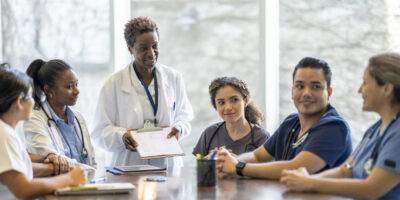
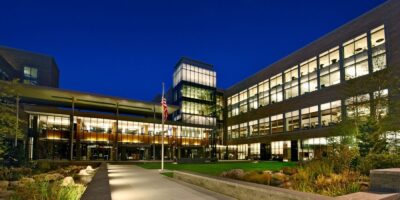
Philadelphia College of Osteopathic Medicine (PCOM) was founded in 1899 and is one of the oldest osteopathic medical schools in the United States. It grants the Doctor of Osteopathic Medicine (DO) degree at three locations: the main campus on City Avenue in Philadelphia, Pennsylvania; PCOM Georgia, a branch campus in Suwanee in the metro Atlanta area; and PCOM South Georgia, an additional location in Moultrie in southwest Georgia. All three teach the same curriculum, but each has its own admissions committee, class size and regional focus.
PCOM is known for “whole person” medicine: treating people, not just symptoms. Students learn to consider how body systems affect one another, along with nutrition, environment and psychology, and they train in osteopathic manipulative medicine (OMM) from the first year. Philadelphia students also spend four months in PCOM’s community healthcare centers, which serve medically underserved neighborhoods of the city.
Becoming a doctor is no easy feat, and getting into medical school can be the first big challenge you will face. Our goal is to help aspiring physicians reach the medical school that fits them best, and our other Medical School Guides cover more than 200 programs. The first step is to make sure you apply to schools that meet your needs and match your values. If you are comparing DO schools in Pennsylvania or Georgia, PCOM deserves a close look.
The sections below cover the 2026-2027 application cycle, for students who want to start medical school in summer 2027. You will find PCOM’s newest MCAT averages for each location, its GPA medians, admissions counts and acceptance rates, 2026-2027 tuition and cost of attendance, the curriculum and clinical years, dual degrees, the questions PCOM asks inside the AACOMAS application with full illustrative answers, the interview and detailed FAQs. Figures were checked on October 20, 2026.
Key Takeaways
- One college, three DO locations: PCOM (Philadelphia, PA), PCOM Georgia (Suwanee, GA) and PCOM South Georgia (Moultrie, GA). Philadelphia and South Georgia share one AACOMAS application with a location choice on the Questions tab. PCOM Georgia needs its own separate AACOMAS application.
- Average MCAT by location: 505 in Philadelphia, 504 at PCOM Georgia and 499 at PCOM South Georgia for the entering class of 2026. PCOM’s newest GPA figure is a median undergraduate science GPA of 3.5 for all classes that entered in 2024.
- No minimums: PCOM has no minimum MCAT or GPA. It calls an MCAT at or above 500, with 125 in each section, generally competitive.
- Selectivity: for the entering class of 2026, Philadelphia accepted 506 of 9,069 applicants (5.6%), PCOM Georgia 317 of 3,563 (8.9%) and PCOM South Georgia 309 of 3,127 (9.9%).
- Eligibility: U.S. citizens and permanent residents only. Prerequisites must be completed at a U.S. regionally accredited school.
- Deadlines: submit AACOMAS by February 1, 2027, have it verified by February 28, 2027, and get the $75 PCOM fee and all letters in by March 1, 2027. Review is rolling, so apply early.
- Cost: 2026-2027 tuition is $67,665 a year at every location, plus an $800 comprehensive fee. The estimated first-year cost of attendance is $100,157.
- Essays: PCOM has no separate secondary. You answer short location questions (2,000 characters each) and optional questions on the Questions tab of the PCOM AACOMAS application.
- Next step: decide which locations fit your goals, line up three letters (ideally including one from a DO), and draft your location answers before you submit AACOMAS.
Key Statistics About Philadelphia College of Osteopathic Medicine
The snapshot below gathers the figures applicants ask about first. MCAT averages and admissions counts are for the entering class of 2026, the newest class PCOM reports. The GPA median covers all PCOM classes that entered in 2024, which is the newest GPA figure PCOM publishes. Tuition is for 2026-2027.

What Are PCOM’s Average MCAT and GPA?
For the entering class of 2026, PCOM’s average MCAT was 505 in Philadelphia, 504 at PCOM Georgia and 499 at PCOM South Georgia (PCOM Program Data, 2026). The median undergraduate science GPA was 3.5 for all PCOM classes entering in 2024 (PCOM Application Requirements, 2024).
PCOM publishes MCAT averages separately for each location, but it reports GPA only as one combined median for all locations. Here is what each location reports:
- PCOM Philadelphia (entering class of 2026): average MCAT 505, with section averages of 126 in Chemical and Physical Foundations, 126 in Critical Analysis and Reasoning, 126 in Biological and Biochemical Foundations and 127 in Psychological, Social and Biological Foundations (PCOM Program Data, Philadelphia, 2026).
- PCOM Georgia, Suwanee (entering class of 2026): average MCAT 504, with section averages of 126, 125, 126 and 127 in the same order (PCOM Georgia Program Data, 2026).
- PCOM South Georgia, Moultrie (entering class of 2026): average MCAT 499, with section averages of 124, 124, 125 and 126 (PCOM South Georgia Program Data, 2026).
- GPA, all locations (classes entering in 2024): median undergraduate science GPA 3.5, post-baccalaureate science GPA 3.8 and graduate science GPA 3.6, as calculated by AACOMAS (PCOM Application Requirements, 2024). PCOM does not publish a separate GPA for PCOM Georgia or PCOM South Georgia.
Two points help you read these numbers. First, an average is not a cutoff. PCOM has no minimum MCAT or GPA, and its committees read the whole file. Second, the science GPA is the one PCOM chooses to report, so your biology, chemistry, physics and math grades carry real weight. A strong post-baccalaureate record counts too: the post-baccalaureate median of 3.8 shows that many students strengthened their record after college.
| Metric | Value | Year or cohort | Source and definition |
|---|---|---|---|
| School and degree | Philadelphia College of Osteopathic Medicine, DO; Philadelphia, PA (main campus), Suwanee, GA (branch campus), Moultrie, GA (additional location) | Current | PCOM Locations; private, not-for-profit; founded 1899 |
| Average MCAT, Philadelphia | 505 | Entering class of 2026 | PCOM Program Data (Philadelphia), Admission Indicators |
| Average MCAT, PCOM Georgia | 504 | Entering class of 2026 | PCOM Georgia Program Data, Admission Indicators |
| Average MCAT, PCOM South Georgia | 499 | Entering class of 2026 | PCOM South Georgia Program Data, Admission Indicators |
| Median undergraduate science GPA | 3.5 (post-baccalaureate science 3.8; graduate science 3.6) | All PCOM classes entering in 2024 | PCOM DO Application Requirements, calculated by AACOMAS |
| Mean MCAT and average cumulative GPA (school-reported profile) | MCAT 502.5; cumulative GPA 3.58 | Cohort and location not stated | AACOM Choose DO Explorer, 2026-2027 profiles (same values on both PCOM profiles) |
| Applied, accepted, matriculated: Philadelphia | 9,069 / 506 / 269 | Entering class of 2026 | PCOM Program Data (Philadelphia) |
| Applied, accepted, matriculated: PCOM Georgia | 3,563 / 317 / 135 | Entering class of 2026 | PCOM Georgia Program Data |
| Applied, accepted, matriculated: PCOM South Georgia | 3,127 / 309 / 96 | Entering class of 2026 | PCOM South Georgia Program Data |
| Acceptance rate (accepted divided by applied) | Philadelphia 5.6%; PCOM Georgia 8.9%; PCOM South Georgia 9.9% | Entering class of 2026 | Calculated by IMA from PCOM Program Data counts |
| Tuition | $67,665 per year ($22,555 per term), plus $800 comprehensive school fee | 2026-2027 | PCOM Cost of Attendance and Tuition Rates; same rate at all locations |
| First-year cost of attendance | $100,157 (four-year total $414,764); health insurance added only if purchased | 2026-2027 | PCOM Cost of Attendance, DO table |
| Postgraduate placement | 100% (Philadelphia and PCOM Georgia) | 2026 | PCOM Program Data, Postgraduate Placement Rates |
| COMLEX Level 1 first-time pass rate | Philadelphia 91.45%; PCOM Georgia 87.02% | 2024-2025 | PCOM Program Data, COMLEX Data |
| Deadlines | AACOMAS February 1, 2027; verified February 28, 2027; PCOM materials March 1, 2027 | 2026-2027 cycle | PCOM DO Application Requirements |
| Accreditation | COCA (DO programs at all three locations); MSCHE (institution) | Current | PCOM DO program page; PCOM 2025-2026 fact sheet |
Mission and Educational Priorities
PCOM states its institutional mission in one line: “Educating health professionals to care for the whole person and advance the health of diverse communities.” Its vision is “Transforming health professions education by integrating human connection with innovation and research.”
The DO programs have their own mission statement, which every location shares:
“Philadelphia College of Osteopathic Medicine’s osteopathic medical programs are dedicated to fostering the growth of the osteopathic profession by training physicians through programs of medical study guided by osteopathic medical tradition, concept and practice in a learning community built on the values of diversity and respect. The College’s undergraduate medical programs prepare students for success in graduate medical education and the graduate medical education programs prepare students for the independent practice of osteopathic medicine. The College will be responsive to the healthcare needs of the respective regions and communities in which the osteopathic medical programs are offered. PCOM is committed to the advancement of knowledge and intellectual growth through teaching and research, and to the well-being of the community through leadership and service.”
The two Georgia locations add regional focus statements. PCOM Georgia’s primary focus “is to recruit and educate students from Georgia and the surrounding states,” and it seeks to keep its graduates in the Southeast. PCOM South Georgia educates students “in serving the healthcare needs of the people in Georgia and the Southeast,” and its graduates “are encouraged to remain in the Southeast and practice among underserved populations where they will have the most impact.”
PCOM lists five values: “We are accountable to one another. We act with integrity and treat everyone with respect. We foster innovation. We embrace diversity, advancing equity and inclusion. We work as a team and seek opportunities to collaborate.”
What the mission means for applicants
The mission is not a slogan to quote back. It tells you what the committees look for.
- Whole-person care. PCOM’s model of medicine is treating people, not just symptoms. Applicants who can describe a time they saw a patient’s housing, diet, work or stress shape their health will connect with the school’s core idea. You do not need clinical vocabulary to show this. You need a real example.
- Diverse communities. PCOM has run community-based healthcare centers in Philadelphia neighborhoods for decades, and Philadelphia DO students spend four months in them. Service to underserved groups is part of the training, not an elective.
- Regional commitment. Each location answers to its region. Philadelphia trains across the Delaware Valley, PCOM Georgia recruits from Georgia and nearby states, and PCOM South Georgia was founded in 2019 to grow medical education in southwest Georgia and keep physicians in rural areas. Ties to a region matter when you choose locations and write your location answers.
- Teamwork. PCOM trains DO students next to physician assistant, psychology, pharmacy and physical therapy students and includes interprofessional education sessions in each year of the curriculum. Show that you work well with other professions.
Whole-person medicine and the history behind it
PCOM began on January 24, 1899, when two doctors of osteopathy, the Rev. Mason Wiley Pressly and Oscar John Snyder, incorporated the Philadelphia College and Infirmary of Osteopathy. They rented two rooms in the Stephen Girard Building in Center City. At the time, Philadelphia had only one “osteopathist,” and the two founders saw a clear need. The college moved several times as it grew, opened a dispensary for patients who could not pay in 1906, took the name Philadelphia College of Osteopathic Medicine in 1967 and has been on City Avenue since 1973.
What stayed the same through those moves was the goal of training doctors who see patients as whole people and do not only treat their symptoms. A second constant was care for people who lacked access. PCOM opened a rural healthcare center in Sullivan County, Pennsylvania, and centers in several urban Philadelphia neighborhoods. Those centers served the community while giving students hands-on clinical experience. In 2020, PCOM transferred ownership of the Sullivan County practice to Family Practice Center, PC, a practice owned and run by PCOM alumni. The Philadelphia centers continue today.
Accreditation and Institutional Identity
The DO programs at PCOM’s main Philadelphia campus, its branch campus in Suwanee, Georgia, and its additional location in Moultrie, Georgia are accredited by the Commission on Osteopathic College Accreditation (COCA) of the American Osteopathic Association (AOA). The institution as a whole is accredited by the Middle States Commission on Higher Education (MSCHE). PCOM also holds approval from the Pennsylvania Department of Education and authorization from the Georgia Nonpublic Postsecondary Education Commission (PCOM 2025-2026 fact sheet).
Key facts about the institution:
- Type: private, not-for-profit college of osteopathic medicine and health sciences. It is not part of a university.
- Founded: 1899 in Philadelphia. PCOM Georgia opened in 2005. PCOM South Georgia enrolled its first class in 2019.
- Size: the 2025-2026 fact sheet lists 14,219 living PCOM DO alumni nationwide, including 5,702 in Pennsylvania and 1,023 in Georgia, and 8,020 alumni practicing primary care.
- Leadership: Kenneth J. Veit, DO ’76, MBA, serves as interim president and CEO and as provost and senior vice president for academic affairs for all three locations. Jay S. Feldstein, DO ’81, has served as PCOM’s eighth president and CEO. Each DO location has its own dean.
- Location types: COCA uses specific terms. Philadelphia is the main campus. PCOM Georgia is a branch campus. PCOM South Georgia is an “additional location” of the Philadelphia campus, which is why you apply to it through the PCOM application rather than a separate one.
Rankings and outcomes
Older rankings lists often placed PCOM high for graduates practicing in primary care, rural areas and medically underserved areas. U.S. News no longer publishes the same numbered medical school lists it once did, so those older positions are not a reliable guide today. Outcome data that PCOM publishes each year is more useful:
- Residency placement: 100% postgraduate placement for 2026 at Philadelphia and at PCOM Georgia, and 99% or higher in every year listed back to 2019 for Philadelphia.
- Board exams (first-time pass rates, 2024-2025): Philadelphia 91.45% on COMLEX Level 1, 87.21% on Level 2-CE and 95.6% on Level 3; PCOM Georgia 87.02%, 90.32% and 93.43%.
- Graduation: 85% of the Philadelphia cohort that entered in 2022-2023 graduated in four years, and the Philadelphia retention rate for 2025-2026 was 99%.
These numbers show a school that places nearly all of its graduates in residency. They are also the kind of facts you can bring up in an interview when someone asks why PCOM.
If you are building an application list now, pre-med internships and other patient-facing roles are worth planning early, because PCOM’s committees read clinical exposure closely at every location.
Medical Programs and Affiliations
PCOM offers a variety of degrees. The DO is the focus of this page, but knowing the other programs helps you understand who your classmates and teammates will be.
Doctor of Osteopathic Medicine (DO)
The DO program takes four years of full-time study and leads to the Doctor of Osteopathic Medicine degree. The focus is treating the whole patient, including preventing medical problems before they arise. Students train in Osteopathic Manipulative Medicine, which PCOM describes as using the hands to diagnose, treat and prevent illness or injury through techniques such as stretching, gentle pressure and resistance. All three locations have OMM labs and practice rooms.
Many people wonder about the difference between a DO and an MD. PCOM defines a DO as “a fully trained physician who prescribes drugs, performs surgery and selectively utilizes all accepted scientific methods of treatment to maintain and restore health.” DOs are qualified to be licensed in all specialties in all 50 states. The difference is in emphasis: osteopathic physicians treat disease in the context of the whole person, consider how body systems relate to each other and add manipulative treatment as another tool. IMA’s guide to MD vs DO differences explains how the two paths compare in training and residency.
Highlights of the DO program at PCOM include high-fidelity patient simulators and standardized patient actors who help students practice before they work with real patients. Graduates enter both primary care and non-primary care specialties, including family medicine, internal medicine, OB/GYN, pediatrics, emergency medicine, surgery, anesthesiology, neurology, psychiatry and urology.
The three DO locations
| Location | Setting | How you apply | Entering class of 2026 | Regional focus |
|---|---|---|---|---|
| PCOM (Philadelphia, PA) | 17-acre main campus on City Avenue, minutes from Center City | PCOM AACOMAS application; select Philadelphia on the Questions tab | 269 matriculants; average MCAT 505 | Delaware Valley clinical training; community healthcare centers; DIMER seats for Delaware residents |
| PCOM Georgia (Suwanee, GA) | Branch campus in Gwinnett County, about 27 miles north of downtown Atlanta | Separate PCOM Georgia AACOMAS application | 135 matriculants; average MCAT 504 | Recruit and keep students from Georgia and nearby states |
| PCOM South Georgia (Moultrie, GA) | 75,000-square-foot facility on a 31-acre site; the only four-year medical school in southwest Georgia | PCOM AACOMAS application; select South Georgia on the Questions tab | 96 matriculants; average MCAT 499 | Rural and underserved care in Georgia and the Southeast |
You may apply to one, two or all three. Each application is reviewed by that location’s own Faculty Committee on Admissions, even though the requirements are the same.
Special DO programs and tracks
- DIMER (Delaware residents): PCOM acts as the osteopathic medical school for the state of Delaware through the Delaware Institute of Medical Education and Research. The Philadelphia campus reserves up to 10 seats in each incoming DO class for Delaware residents who meet the residency rules (a Delaware permanent address, Delaware tax filing and, if registered, Delaware voter registration). Eligible applicants receive a Delaware residency form after PCOM receives their AACOMAS application. Starting in July 2026, ChristianaCare, Bayhealth and PCOM launched the Delaware Collaborative Clinical Campus to expand clinical training in Kent and Sussex counties.
- OMM Clinical Scholars Program: after the second year, selected students can add a year to their clinical training to teach OMM and see OMM patients under faculty supervision. In Philadelphia, scholars spend four months each year in the OMM department over three years, there are three positions each year, and applicants are encouraged to have a GPA of 3.0 or higher. PCOM Georgia and PCOM South Georgia run their own versions. Benefits include remission of tuition, a monthly stipend and a travel allowance.
- Dual degrees: PCOM students can add a Master of Business Administration or a Graduate Business Certificate in Health and Medical Services through Saint Joseph’s University (see PCOM’s online graduate business programs), a Master of Public Health through Thomas Jefferson University or Temple University, a DO/MS in Forensic Medicine (five years in total; students apply after the first term of the DO program) and a DO/MS in Biomedical Sciences with a thesis. PCOM South Georgia does not offer dual degree programs at this time.
- International electives: students may add an approved international elective rotation in the fourth year through the Dean’s Office and Clinical Medical Education.
Other PCOM degree programs
PCOM is a multidisciplinary health sciences college. At the Philadelphia campus, students can also pursue psychology, physician assistant studies, forensic medicine and other graduate programs. PCOM Georgia also offers pharmacy, physical therapy, physician assistant studies, biomedical sciences and medical laboratory science. PCOM South Georgia offers the DO and biomedical sciences degrees.
- Physician Assistant Studies (MS in Health Sciences): offered in Philadelphia and at PCOM Georgia. Students complete academic study of the foundations of medical practice and then clinical rotations in areas such as emergency medicine, family medicine, internal medicine, gynecology, general surgery, pediatrics and behavioral medicine. The 2026-2027 cost of attendance budgets 27 months of enrollment (11, 12 and 4 months). PA applicants apply through CASPA. If you are weighing a PA path, IMA’s pre-PA internships offer patient-care experience abroad.
- Doctor of Pharmacy (PharmD): offered only at PCOM Georgia in Suwanee. The program is four years, with a final year of clinical rotations. PharmD students can pursue concentrations or a dual degree, including business programs with Saint Joseph’s University.
- Doctor of Physical Therapy (DPT): offered at PCOM Georgia; three years in the 2026-2027 budget. The curriculum combines foundational sciences, clinical physical therapy science, evidence-based practice and clinical experiences, with a Physical Therapy Education Center on campus.
- Doctor of Psychology in Clinical Psychology (PsyD): accredited by the American Psychological Association. Students use standardized patients to practice clinical skills early in the program. Students interested in behavioral health before graduate school can explore mental health internships abroad.
- Educational Psychology (PhD): prepares psychologists and leaders who support students in school systems; it requires a doctoral dissertation.
- School Psychology (PsyD and EdS): the PsyD budget covers six years and an estimated 111 credit hours, with a dissertation and a doctoral-level internship.
- Master’s and certificate programs: Applied Behavior Analysis, Applied Positive Psychology, Biomedical Sciences (including a one-year accelerated MS in Preclinical Sciences at all three locations), Forensic Medicine, Medical Laboratory Science and Mental Health Counseling. The Cancer Biology PhD includes a full scholarship. For the full list, see PCOM’s programs and degrees page.
A note for students in PCOM’s biomedical sciences master’s programs: PCOM publishes a separate policy for its own biomedical sciences students who want to apply to the DO program. Read it if you plan to use the one-year MS as a path to medical school.
Curriculum Overview
All three PCOM locations follow the same DO course sequence from the PCOM course catalog. The program runs four years, with a summer start in the first year.
Years 1-2: integrated foundations
During the first two years, students build a strong foundation in the basic sciences through an integrated, systems-based curriculum. Courses combine lectures with hands-on learning. Anatomy, physiology, pathology, microbiology, pharmacology and clinical medicine are taught together, not as separate silos. Students also practice with patient simulators and standardized patient actors.
First year (44.5 credits):
- Summer term: Cellular and Biochemical Foundations of Medicine; Osteopathic Principles and Practice I; Primary Care Skills I; Clinical Reasoning in Basic Science IA; Medical Humanities and Wellness I.
- Fall term: Foundations of Physiology and the Musculoskeletal System; Cardiovascular and Pulmonary Medicine; Renal, Endocrine and Gastrointestinal Medicine; Reproductive and Genitourinary Medicine; Foundations of Research; Osteopathic Principles and Practice II; Primary Care Skills II; interprofessional education.
- Spring term: Head, Eyes, Ears, Nose and Throat and Neuroscience; Infection and Immunity; Introduction to Human Disease and Therapeutics; Osteopathic Principles and Practice III; Medical Humanities and Wellness II; Primary Care Skills III; interprofessional education.
Second year (50 credits): clinical approach courses by system (neuroscience and neurology, psychiatry, hematology and oncology, cardiovascular and renal, pulmonary, endocrinology, gastroenterology, reproductive and obstetrical medicine, and musculoskeletal medicine and dermatology), plus Preventive Medicine and Public Health, Medical Ethics, Osteopathic Principles and Practice IV-VI, Primary Care Skills IV-VI and a Comprehensive Basic Science Review and Synthesis series that prepares students for COMLEX Level 1.
Two threads run through both years. Osteopathic Principles and Practice teaches OMM every term. Primary Care Skills teaches history taking, physical examination and communication from the first summer. PCOM calls this approach “Doctors from Day One,” and it means you start acting like a clinician long before the clinical years.
Years 3-4: clinical clerkships
In the third and fourth years, students work in hospitals, clinics and physicians’ offices under experienced physicians, and their responsibility grows over time. Students complete twenty-one clerkship rotations of 17 credits each across the two years, and each 17-credit rotation requires at least 160 contact hours.
- Third year, required rotations: family medicine, OMM family medicine, general internal medicine, internal medicine cardiology (or ambulatory internal medicine at the Georgia locations), obstetrics and gynecology, pediatrics, psychiatry, general surgery and a surgery subspecialty, plus electives. Philadelphia adds an Advanced Clinical Skills Radiology rotation, and its OMM family medicine rotation is a half rotation or a selective. At the Georgia locations, OMM family medicine is a full rotation.
- Fourth year, all locations: an osteopathic primary care sub-internship, a critical complex care inpatient clerkship, an emergency medicine rotation and seven elective rotations, which students use to explore specialties and do audition rotations for residency.
- Community healthcare: Philadelphia DO students spend four months in PCOM’s community healthcare centers, where they see the realities of health care in underserved Philadelphia neighborhoods.
- Interprofessional education: during the clinical years, DO students take part in sessions with physician assistant, clinical psychology, mental health counseling and school psychology students.
After graduation, PCOM posts placement lists showing where each class matched into residency.
How the curriculum shapes your application
The curriculum rewards applicants who are ready for an integrated, fast-moving first year that starts in the summer. If your science record has gaps, show recent, rigorous coursework. The early clinical skills courses and OMM labs reward people who are comfortable with hands-on learning and with touching patients respectfully. Experience in patient care, such as work as a medical assistant, EMT or scribe, or clinical internships for pre-med students where you take vitals and do intake, gives you a head start on Primary Care Skills.
Admissions Requirements and Application Process
PCOM describes admission to its DO program as “comprehensive as well as competitive.” It seeks “well-rounded, achievement-oriented persons whose character, maturity and sense of dedication point to a successful and productive life as an osteopathic physician.” Grades and MCAT scores matter because they predict success in medical school, but the committees also review research experience, clinical exposure, leadership, extracurricular activities, community involvement, motivation to study medicine and letters of recommendation (PCOM DO Application Requirements).
Degree and coursework
- Degree: a bachelor’s degree from a regionally accredited U.S. college or university before matriculation. Applicants with three years of exceptional undergraduate work may be considered.
- Foreign degrees: if you earned a degree outside the United States, you must request a course-by-course evaluation from World Education Services (WES) that shows it is equivalent to a U.S. degree.
- Where prerequisites count: all prerequisite coursework must be completed at a U.S. regionally accredited college or university. International coursework does not count toward prerequisites.
- AP and IB: accepted if the course and credits appear on your college transcript.
- CLEP: not accepted.
- Pass/fail and online courses: PCOM does not accept prerequisites taken as an audit or graded pass/fail, except coursework from the spring, summer and fall 2020 terms. Online coursework and online labs are accepted only in certain circumstances, with final grades on an official transcript from a regionally accredited institution.
Required courses
| Subject | Requirement |
|---|---|
| Biology | 8 semester hours, including 2 semester hours of laboratory |
| Physics | 8 semester hours, including 2 semester hours of laboratory |
| Chemistry | 16 semester hours, including 4 semester hours of laboratory. At least 4 of the 16 must be organic chemistry (with lab) and at least 3 must be biochemistry. |
| English | 6 semester hours of English composition and/or literature |
| Recommended (not required) | Anatomy, genetics, physiology, behavioral sciences and math/statistics (school-reported profile) |
The chemistry rule is the one applicants most often misread. It is a 16-hour total that must include organic chemistry with lab and biochemistry. General chemistry alone will not meet it.
MCAT
- No minimum: “PCOM does not have minimum MCAT requirements for the DO program. Generally, a competitive MCAT is at or above 500 with 125 for each subsection.”
- Window: the MCAT must be taken within three years of matriculation. For summer 2027 entry, only tests taken in 2024, 2025 and 2026 count, and PCOM will accept a January 2027 score.
- Retakes: taking the MCAT more than once is fine. The Faculty Committee on Admissions reviews all of your MCAT results.
- Sending scores: send scores from the AAMC to AACOMAS while AACOMAS still accepts updates. After that, email your AAMC verification code and ID to [email protected].
GPA
PCOM has no minimum GPA. The medians for all PCOM classes entering in 2024, as calculated by AACOMAS, were an undergraduate science GPA of 3.5, a post-baccalaureate science GPA of 3.8 and a graduate science GPA of 3.6. PCOM says the AACOMAS grade replacement policy change does not affect how it reviews files: “There are no cutoffs or minimums.”
Citizenship and residency
- Applicants must be U.S. citizens or permanent residents (green card holders). A pending permanent residency status is not eligible, and permanent residents must provide a copy of their card before admission.
- PCOM does not accept international applicants for the DO program, and DACA recipients are not considered.
- Residency in a particular state is not required, except for the DIMER seats reserved for Delaware residents. PCOM draws students from across the country, and PCOM Georgia and PCOM South Georgia give particular attention to applicants from Georgia and the Southeast.
- Non-native English speakers must show English proficiency with a TOEFL iBT score of at least 79, with 26 in speaking, unless they meet an exemption (for example, a degree from a regionally accredited U.S. college within the past five years).
Letters of recommendation
PCOM requires at least three letters “from individuals who know the applicant in a professional capacity and can comment on one’s character, work ethic, academic history, scientific acumen, empathy, compassion, resilience, emotional intelligence, commitment and knowledge of the healthcare environment.” The DO Faculty Committee on Admissions strongly prefers these sources:
- A pre-health advisor or committee (undergraduate, post-baccalaureate or graduate). A pre-health advisor letter counts as one of the three. A committee packet with three or more letters meets the whole requirement.
- Faculty, preferably those who taught your science courses. PCOM highly recommends at least one academic letter.
- Physicians, preferably DOs, or other healthcare providers who know your clinical work. A DO letter is not required, but PCOM “strongly recommended” one.
If you cannot get letters from these sources, choose writers who know you professionally and can speak to the qualities above. Letters must be on letterhead and preferably signed. Submit them through AACOMAS to each PCOM location you select, or email them to [email protected]. Interfolio letters can be emailed to that address at your request. PCOM cannot accept letters from other sources, and it copies letters into your PCOM file only after you pay the institutional fee.
CASPer, PREview and other tests
PCOM’s DO requirements list a degree, prerequisites, the MCAT, citizenship or permanent residency and letters. They do not list CASPer, PREview or any other situational judgment test, so none is required for the 2026-2027 cycle.
AACOMAS and the PCOM Questions tab
PCOM uses AACOMAS, the centralized application service for osteopathic medical schools, and follows the AACOM Applicant Protocol and Admissions Guidelines. For questions about AACOMAS itself, visit the AACOMAS Applicant Help Center website.
- Opening: AACOMAS opened for summer 2027 admission in May 2026 (the earliest submission date was May 4, 2026).
- Transcripts: send official transcripts from every college you attended to AACOMAS.
- Letters in AACOMAS: AACOMAS accepts up to six letters through its Evaluations Portal.
- No separate secondary: “There are no supplemental application requirements for 2027 admission.” Instead, open the Program Materials section of your PCOM application in AACOMAS and answer the questions on the Questions tab. Those questions are covered in full below.
Applying to more than one location
- Philadelphia and South Georgia: one PCOM application in AACOMAS. On the Questions tab you choose PCOM, PCOM South Georgia or both.
- PCOM Georgia: a separate application in AACOMAS, with its own AACOMAS fee.
- Institutional fees: $75 for PCOM and/or PCOM South Georgia, and $75 for PCOM Georgia. PCOM emails fee instructions to the address on your AACOMAS application after it receives your application.
- Review: each location’s Faculty Committee on Admissions evaluates its own applicants.
Processing and background check
PCOM processes your application only after it has the non-refundable $75 fee, your official MCAT score report and your letters. PCOM does not provide status updates, so check your PCOM applicant portal often. PCOM runs a criminal background check before matriculation and may repeat it during enrollment, and admitted students must follow PCOM’s DO Program Technical Standards for Admission and Matriculation.
Timeline for the 2026-2027 cycle
| Step | Date or window |
|---|---|
| AACOMAS opens | May 2026 (earliest submission May 4, 2026) |
| Interviews | Rolling, from the summer term through the spring term |
| Decisions | Usually within four to six weeks of the interview |
| AACOMAS e-submitted and complete | February 1, 2027 |
| AACOMAS verified | February 28, 2027 |
| PCOM fee and all required materials received | March 1, 2027 |
| $250 non-refundable tuition prepayment | On the AACOMAS traffic guideline schedule (accepted before November 15: by December 14; November 15 to January 14: 30 days; January 15 to April 30: 14 days) |
| $500 non-refundable deposit | April 15, 2027 |
| Classes begin | Summer 2027 (Summer III entry term) |
PCOM does not offer an Early Decision Program. Deferral requests are considered. Because interviews and decisions are rolling, applying in the first months of the cycle gives you more interview dates to choose from and more seats still open.
Tuition, Cost of Attendance and Financial Aid
PCOM charges the same DO tuition at all three locations. For 2026-2027, tuition is $22,555 per term, or $67,665 per year, plus an $800 comprehensive school fee charged as $400 in the fall and $400 in the spring. The fee supports library resources, student council funding, counseling and wellness services, recreation and fitness, and learning support. It is non-refundable and cannot be waived (PCOM Cost of Attendance, 2026-2027).
| Item | Year 1 | Year 2 | Year 3 | Year 4 | Total |
|---|---|---|---|---|---|
| Months enrolled | 10 | 10 | 12 | 12 | 44 |
| Tuition | $67,665 | $67,665 | $67,665 | $67,665 | $270,660 |
| Comprehensive school fee | $800 | $800 | $800 | $800 | $3,200 |
| Housing, food and utilities | $24,000 | $24,000 | $28,800 | $28,800 | $105,600 |
| Books and supplies | $660 | $660 | $660 | $660 | $2,640 |
| Instruments and equipment | $1,080 | $1,080 | $1,080 | $1,080 | $4,320 |
| Board exams and residency applications | $0 | $730 | $730 | $780 | $2,240 |
| Personal | $3,000 | $3,000 | $3,600 | $3,600 | $13,200 |
| Transportation | $2,500 | $2,500 | $3,000 | $3,000 | $11,000 |
| Federal loan fees | $452 | $452 | $500 | $500 | $1,904 |
| Total estimated cost of attendance | $100,157 | $100,887 | $106,835 | $106,885 | $414,764 |
A few things to know about these figures:
- One budget for all locations. PCOM publishes a single DO cost table for PCOM, PCOM Georgia and PCOM South Georgia. Actual rent varies, and Moultrie is generally cheaper than Philadelphia or metro Atlanta, but your aid budget starts from the same numbers.
- Health insurance is not in the base budget. PCOM leaves student health insurance out of the initial cost of attendance “as very few students incur this cost.” If you buy PCOM’s student plan or a private plan, PCOM adds the cost to your budget.
- Clinical travel. PCOM offers a Clinical Housing Stipend for DO and PA students that reduces the cost of clinical travel. In Philadelphia, housing is provided for core clerkships designated as “away.” At the Georgia locations, students may get a reimbursable housing stipend for some, but not all, away clerkships.
- Rates change yearly. The figures apply only to 2026-2027. PCOM normally finalizes the next year’s tuition around mid-April.
- Deposits: accepted students pay a $250 tuition prepayment and a $500 deposit, both non-refundable and both applied to tuition.
Financial aid and debt
Financial aid is available for up to 100% of the estimated cost of attendance. PCOM offers scholarships, low-interest loans and counseling and financial planning resources, and its financial aid office can review a “Professional Judgment – Special Circumstance Review” if your real costs exceed the budget.
PCOM also publishes how many students borrow and how much. In 2025-2026, 87.50% of Philadelphia DO students, 88.50% of PCOM Georgia DO students and 91.58% of PCOM South Georgia DO students received financial aid. Average indebtedness for the DO degree alone among 2025-2026 graduates was $266,892 in Philadelphia, $264,743 at PCOM Georgia and $319,754 at PCOM South Georgia. The cohort default rate for 2020-2021 was 0.00%.
The OMM Clinical Scholars Program is one route to lower costs, since it includes remission of tuition for its extra year along with a monthly stipend. Military and service scholarships, such as the Health Professions Scholarship Program and the National Health Service Corps, can also cover tuition in exchange for service.
For a broader comparison of what medical school costs across the country, see IMA’s Medical School Tuition Database, which offers detailed guidance on tuition and aid.
Campus Facilities and Student Life
Each PCOM location has its own buildings, simulation center and community. All three have OMM labs and practice rooms.
Philadelphia campus
The main campus sits on 17 acres on City Avenue, just minutes from Center City Philadelphia, with a five-level parking garage. Key buildings include:
- Hassman Academic Center (the Howard A. Hassman, DO ’83 Academic Center, formerly Evans Hall): classrooms, the library, laboratories and dining. A 1990s expansion added a modern OMM lab and the Office of Admissions.
- Rowland Hall: academic support, student services and clinical training. It houses the Dr. Michael and Wendy Saltzburg Clinical Learning and Assessment Center, with patient rooms, trauma bays, surgery suites and high-fidelity robotic simulators.
- Levin Administration Building: the Tudor Revival mansion at the center of campus, home to the Office of the President.
- Meta Christy House: on-campus housing opened in 2021 with 224 furnished apartments (195 studios and 29 one-bedroom units). It is named for Meta L. Christy, DO 1921, PCOM’s first African American female graduate.
- Student Success Center: the 55,000-square-foot activities center that opened in 1999 was renovated and renamed in 2026 to support academic success and student well-being. It offers space for exercise, sports and study.
- Joseph M. Hassman, DO ’65 Family Medicine Center: PCOM’s healthcare center on City Avenue. A 2022 renovation more than tripled its size and added 15 exam rooms, mental health space and a preceptor room where students work with physicians. It was renamed in 2024.
PCOM also runs community healthcare centers in Philadelphia neighborhoods, including the Cambria and Lancaster Avenue divisions, which offer family medicine, internal medicine, gynecology and pediatrics. These centers serve medically underserved patients and are teaching sites for DO, PA and psychology students. They are a good place to see the kind of care PCOM teaches, and students gain hands-on clinical experience there while serving the community.
PCOM Georgia (Suwanee)
PCOM Georgia opened in 2005 in Gwinnett County. Its 172,000-square-foot Old Peachtree building holds large and small classrooms, research and basic science labs, an anatomy lab, the Simulation Center, three pharmacy practice labs, a large OMM practice suite and the Physical Therapy Education Center. The 21,000-square-foot Northlake building holds administrative offices and admissions. The campus is also home to the Georgia Osteopathic Care Center, an OMM clinic open to the public by appointment. Students have free parking and a multipurpose sports court for basketball, volleyball and pickleball.
The PCOM Georgia Simulation Center has 10 standardized patient exam rooms with OMM tables and cameras for faculty review, four full-body high-fidelity simulators, two obstetrical simulators, a child simulator and a newborn simulator.
PCOM South Georgia (Moultrie)
PCOM South Georgia’s 75,000-square-foot building on Tallokas Road includes classrooms, an anatomy lab, an OMM lab, a simulation center, small group study rooms, an information commons and a cafe. The campus has a walking trail and free parking. It is the only four-year medical school in southwest Georgia. PCOM South Georgia does not offer student housing, but the town of Moultrie has affordable rental and home options. Students describe the smaller classes as close-knit, with faculty who know them by name.
Student organizations and support
PCOM students run many organizations across the three locations, with clubs ranging from research to athletics to community service. These include chapters of national osteopathic and medical organizations (for example, the Student Osteopathic Medical Association and specialty colleges such as the American College of Osteopathic Family Physicians), specialty interest clubs for fields such as emergency medicine, pediatrics, psychiatry, surgery and sports medicine, and sports and general interest clubs. Faculty such as the Philadelphia dean serve as advisors to student chapters, including the ACOFP student chapter.
Student affairs offices at each location provide academic and personal support, counseling, and career and residency advising. A medical director of student wellness serves Philadelphia students.
Fitness and well-being
PCOM makes it easy to stay active. Philadelphia students use the Student Success Center for exercise and sports. PCOM Georgia has its sports court and nearby parks in Gwinnett County. Moultrie offers small-town living with outdoor recreation at a slower pace and lower cost than a big city.
Clinical Rotations and Research Opportunities
Where clinical training happens
PCOM’s clinical clerkship program gives third- and fourth-year DO students the chance to examine, evaluate and care for patients under supervision. Students develop physical examination, test interpretation and case presentation skills, learn to document histories and orders, join patient rounds and perform basic procedures under supervision.
- Philadelphia: clerkships are spread through the Delaware Valley, including Pennsylvania, Delaware, New Jersey and Maryland, at hospitals, regional and community medical centers, private practices and urban and rural health centers. PCOM has expanded clinical pipelines through partnerships with Chestnut Hill Hospital (now Temple Health Chestnut Hill Hospital, acquired by an alliance of PCOM, Temple Health and Redeemer Health in 2023), St. Christopher’s Hospital for Children (a pediatrics affiliation) and the vybe urgent care center next to the City Avenue family medicine center. Delaware students can train through DIMER partners, including the new Delaware Collaborative Clinical Campus with ChristianaCare and Bayhealth.
- PCOM Georgia: major teaching affiliates are in Georgia and surrounding states, and students rotate at hospitals and clinics in the greater Atlanta area. Students take part in rounds, lectures, conferences, morning reports and case presentations.
- PCOM South Georgia: rotations take place at hospitals and healthcare facilities across the Southeast, with core clerkships in internal medicine, family medicine, OB/GYN, pediatrics, OMM, psychiatry and surgery, and fourth-year sub-internships, emergency medicine and audition electives.
The Office of Clinical Education assigns clerkships with faculty and hospital administrators, and flexibility is limited. Students can also arrange elective rotations elsewhere in the United States and abroad.
Community healthcare centers
Every Philadelphia DO student spends four months in PCOM’s community healthcare centers, which PCOM describes as an introduction to “the realities of health care in underserved communities in Philadelphia.” Few schools build this much time in their own community clinics into the required curriculum. If you have worked at a federally qualified health center, a free clinic or a safety-net hospital, this is where your experience lines up with PCOM’s training.
Research
PCOM wants students to learn research methods and contribute to hypotheses, data collection and presentations. Opportunities exist at all three locations:
- Foundations of Research is a required first-year course.
- Students find projects through PCOM’s research focus areas, faculty research pages and the Student Research Opportunities listings in myPCOM, and at the annual Faculty Research Forum.
- The Center for Chronic Disorders of Aging supports interdisciplinary research on aging and neurodegenerative disease.
- All student researchers complete the Responsible Conduct of Research course through CITI. The PCOM library covers author fees for many open-access journals, and some lab positions qualify for Federal Work-Study.
- The DO/MS in Biomedical Sciences with a thesis offers a formal research year for students who want more.
Recent student projects posted by PCOM include work on biological processes linked to prostate cancer recurrence after surgery. Research is not required for admission, but PCOM’s committees list research experience among the factors they review.
Residency outcomes
PCOM graduates match into both osteopathic and allopathic residencies through the single graduate medical education system. Postgraduate placement was 100% for 2026 at Philadelphia and PCOM Georgia, and PCOM publishes placement lists for each year from 2021 through 2026 on each location’s program data page. PCOM also sponsors graduate medical education programs, and its associate dean of graduate medical education works with partner hospitals on residency training.
Notable Alumni, Faculty, Leadership and Admissions Staff
PCOM’s leaders and faculty include many of its own graduates. The profiles below use PCOM’s own pages and were checked on October 20, 2026.
Leadership
Kenneth J. Veit, DO ’76, MBA: interim president and CEO; provost and senior vice president for academic affairs. Dr. Veit joined PCOM in 1980 and has served as senior vice president for academic affairs since 1992 and as provost since 2009. He was dean of academic affairs from 1992 to 2022 and serves as chief academic officer for the Philadelphia DO program. He oversees academic programs at all PCOM locations and is the contact for the DO/MBA and DO/MPH options. For applicants, his long career shows how many PCOM leaders started as PCOM students.
Jay S. Feldstein, DO ’81: PCOM’s eighth president and chief executive officer. A PCOM graduate who completed an emergency medicine residency at the Medical Center of Delaware, Dr. Feldstein is board certified in occupational medicine and built a career in health plan leadership, including roles at AmeriHealth Caritas and Aetna, before leading PCOM. His honors include the AOA’s inaugural Diversity, Equity, and Inclusion Unification Award (2021) and AACOM’s Dale S. Dodson Award (2025). Under his leadership, PCOM formed the alliance with Temple Health and Redeemer Health that acquired Chestnut Hill Hospital, which expanded clinical training sites for DO and PA students.
Peter Bidey, DO ’08, MSEd, FACOFP: dean and chief academic officer, PCOM osteopathic medicine program (Philadelphia). Dr. Bidey has taught at PCOM since 2012. He served as vice chair and medical director of the Department of Family Medicine and as assistant dean of clinical curricular integration, and he directed many ambulatory, family medicine and primary care skills courses. He is president of the Pennsylvania Osteopathic Family Physicians Society, sits on the ACOFP Board of Governors and chairs an NBOME content committee. He holds a master’s in education from the University of Pennsylvania and is board certified in family medicine and OMT. His path from PCOM student to dean, with a focus on primary care education, reflects what the Philadelphia program values.
Andrea Mann, DO, FAAP: dean and chief academic officer, PCOM Georgia. Dr. Mann leads the clinical and biomedical sciences departments at PCOM Georgia and is a professor of pediatrics. She previously served as assistant dean for clinical education and chair of pediatrics at Campbell University’s osteopathic school, practiced as a pediatrician and internist in Ohio, and did Alzheimer’s disease research at Case Western Reserve University. She has served as a standard-setting panelist for the NBOME’s COMLEX-USA.
Robert J. Lloyd, DO, FACOS: dean, PCOM South Georgia. Dr. Lloyd graduated from PCOM in 1991 and completed his general surgery residency with PCOM in 1996. He then practiced general surgery in rural East Tennessee for more than 24 years before leading PCOM South Georgia. In his welcome message he describes the campus as “the only four-year medical school in Southwest Georgia” and its commitment to “providing physicians for rural, underserved areas, much like the one where I spent almost a quarter-of-a-century as a practicing physician.” His career is a direct example of the rural mission South Georgia applicants write about.
Admissions staff
Adrianne Jones, MLS: chief admissions officer. Ms. Jones has led admissions and enrollment for all programs at PCOM, PCOM Georgia and PCOM South Georgia since April 2020. City & State Pennsylvania named her a 2025 Black Trailblazer for advancing inclusive admissions and expanding access to health sciences education. She has presented research on how COVID-19 shaped resilience in graduate medical and health sciences admissions, and she is a member of AACRAO and the National Association of Advisors for the Health Professions. Her focus on access and flexibility is one reason PCOM lets applicants choose a virtual or on-campus interview.
Faculty
Michael A. Becker, DO ’87, MS, FACOFP: associate dean of clinical education. Dr. Becker grew up in Philadelphia’s Roxborough neighborhood near the campus, joined the family medicine faculty in 1993, directed PCOM’s Roxborough Healthcare Center and its family practice residency, and now oversees clinical education. He received the 2024 PCOM Alumni Association Certificate of Honor, the association’s highest award. His office shapes the third- and fourth-year clerkships every DO student completes.
Gregory McDonald, DO ’89: chair, Department of Forensic Medicine and Pathology. Dr. McDonald leads the department behind the DO/MS in Forensic Medicine and is a member of the Vidocq Society, a group of forensic experts who help law enforcement solve cold cases.
Brian Balin, PhD: director, Center for Chronic Disorders of Aging. Dr. Balin is a professor of neuroscience and neuropathology and directs the basic science side of PCOM’s aging research center, one of the clearest research paths for DO students interested in neurodegenerative disease.
David Kuo, DO: associate dean of graduate medical education. Dr. Kuo, an associate professor of family medicine, oversees PCOM’s work in residency education, which links students to programs at partner hospitals.
Alumni
Bruce Kornberg, DO ’78, FACC, FACOI. Dr. Kornberg joined PCOM as a clinical instructor in 1983 and chaired the Department of Cardiology from 1997 to 2023. He was named PCOM’s Clinical Teacher of the Year 12 times and received the 2024 O.J. Snyder Memorial Medal, named for the college’s co-founder. He has been an attending at Lankenau Medical Center since 2004.
Other alumni appear throughout PCOM’s leadership: the provost, a past and present president, the Philadelphia dean, the South Georgia dean and the associate dean of clinical education all earned their DO degrees at PCOM. The college’s 2025-2026 fact sheet lists more than 14,000 living DO alumni, over 8,000 of them in primary care.
Admissions Statistics and Class Profile
PCOM publishes applicant, acceptance and matriculation counts for each DO location every year. That makes it one of the few schools where you can calculate a true acceptance rate: accepted applicants divided by all applicants.
| Location | Applied | Accepted | Matriculated | Acceptance rate (accepted / applied) | Average MCAT |
|---|---|---|---|---|---|
| PCOM (Philadelphia) | 9,069 | 506 | 269 | 5.6% | 505 |
| PCOM Georgia (Suwanee) | 3,563 | 317 | 135 | 8.9% | 504 |
| PCOM South Georgia (Moultrie) | 3,127 | 309 | 96 | 9.9% | 499 |
| All three locations | 15,759 applications | 1,132 | 500 | About 7.2% of applications | n/a |
Sources: PCOM DO Program Data pages for Philadelphia, PCOM Georgia and PCOM South Georgia, entering class of 2026. Acceptance rates calculated by IMA. The “all three locations” row adds applications, not people; many applicants apply to more than one location.
How to read these numbers
- Acceptance rate vs. yield. Philadelphia accepted 506 applicants and enrolled 269, so about half of the accepted applicants chose PCOM. Matriculants divided by applicants (about 3% in Philadelphia) is not an acceptance rate, because it leaves out everyone who was admitted and went elsewhere.
- Location matters. Philadelphia draws nearly three times as many applications as either Georgia location and is the most selective by acceptance rate and MCAT. PCOM South Georgia is the least selective of the three by both measures, and its average MCAT of 499 sits below PCOM’s own “generally competitive” benchmark of 500, which shows how much weight its committee gives to the rest of the file and to regional fit.
- Interviews: PCOM does not publish the number of interviews offered, so the share of applicants invited to interview is not available.
MCAT section averages, entering class of 2026
| Section | Philadelphia | PCOM Georgia | PCOM South Georgia |
|---|---|---|---|
| Chemical and Physical Foundations | 126 | 126 | 124 |
| Critical Analysis and Reasoning Skills | 126 | 125 | 124 |
| Biological and Biochemical Foundations | 126 | 126 | 125 |
| Psychological, Social and Biological Foundations | 127 | 127 | 126 |
| Total | 505 | 504 | 499 |
Source: PCOM DO Program Data pages, “Average MCAT Scores (2026).” PCOM labels sections Behavioral, Chemistry, Biochemistry and Critical Analysis.
GPA and demographics
PCOM’s GPA figures are medians for all PCOM classes entering in 2024: undergraduate science GPA 3.5, post-baccalaureate science GPA 3.8 and graduate science GPA 3.6. PCOM’s school-reported national profile lists an average cumulative undergraduate GPA of 3.58 and a mean MCAT of 502.5 without naming the class or location those figures describe (see the statistics table above).
PCOM does not publish a demographic breakdown of the entering class of 2026 on its program data pages, so the counts and averages above are the best current picture of each location’s class.
Older class profiles you may see online, such as a class of 270 with 114 men and 156 women, a median MCAT of 505 and a median GPA of 3.5, describe classes from several years ago. Use the 2026 figures above when you compare schools, and compare like with like: averages with averages, and accepted counts with applicant counts.
If you want to compare PCOM with other schools, IMA’s table of average GPA and MCAT scores for every medical school puts these numbers in context.
Tips and Strategies for Admission
Like most well-known medical schools, PCOM is competitive, and even an interview invitation is an accomplishment. The committees look at your whole record, not just scores. They want to know who you are, what you will bring to the class, what kind of physician you want to become and what you care about. Here is how to turn what PCOM publishes into choices you can act on.
1. Choose your locations on purpose
Your first strategic decision is where to apply. Philadelphia, PCOM Georgia and PCOM South Georgia teach the same curriculum, but they differ in selectivity, region and mission.
- Philadelphia is the most selective by acceptance rate (5.6%) and average MCAT (505). It suits applicants who want an urban setting, Delaware Valley clinical training and the four months in community healthcare centers. Delaware residents should look closely at the DIMER seats.
- PCOM Georgia (8.9%, average MCAT 504) focuses on students from Georgia and nearby states and shares its building with pharmacy, physical therapy and PA students.
- PCOM South Georgia (9.9%, average MCAT 499) is the place for applicants with real ties to rural Georgia or the Southeast who want to practice there.
Applying to Philadelphia and South Georgia costs one AACOMAS designation and one $75 fee. PCOM Georgia is a second AACOMAS designation and a second $75 fee. Apply only where you can write a sincere location answer. A generic “I’d be happy anywhere” approach reads poorly on a question that asks for one aspect of a specific campus.
2. Make the science GPA tell a clear story
PCOM reports a median undergraduate science GPA of 3.5 and a median post-baccalaureate science GPA of 3.8. That tells you two things. The committees watch science grades first, and they value recent, strong science work. If your early grades were weak, an upward trend or a formal post-baccalaureate program can move you into range. Take upper-level science courses in your final two years, and meet with your pre-health advisor often so your prerequisites, including the 16 hours of chemistry, are complete.
3. Aim for a balanced MCAT
PCOM’s “generally competitive” benchmark is a 500 with at least 125 in each section. Its 2026 classes averaged 126 or higher in most sections. A balanced score matters as much as the total. A 505 with a 122 in one section raises more questions than a 503 with every section at 125 or above. If you retake, PCOM sees every score, so retake only when you have a clear plan to improve.
4. Build patient-facing experience
PCOM does not set minimum clinical or volunteer hours, but its committees look seriously at clinical experience when they decide who will do well. The more meaningful time you have spent with patients, the better. Good examples:
- Clinical experience: list every hour you spent working with patients in a paid or volunteer role. Roles where you take vitals, room patients or do intake, such as medical assistant, EMT, scribe, patient care technician or internships for pre-med students in clinics abroad, show that you understand what patient care involves.
- Shadowing: shadow a DO if you can. A DO letter is strongly recommended, and seeing OMM used in practice gives you specific material for your essays and interview. PCOM accepts either virtual or in-person shadowing.
- Community service: PCOM’s community healthcare centers and South Georgia’s rural mission reward sustained service to underserved groups. One long commitment is worth more than many short ones.
- Leadership: student government, a lead role in a service project or a supervisory role at work all count. Note them.
- Research: PCOM lists research among its review factors. It is not required, but any research experience you have belongs in your application.
- Extracurricular activities: activities you enjoy show who you are as a whole person, which is what PCOM’s model of medicine is about.
If you are early in college, plan your clinical hours across the school year and summers. Pre-med summer internships are one way to add focused, supervised patient contact between semesters.
5. Get the letters PCOM prefers
Plan for three letters from the sources PCOM names: a pre-health advisor or committee, a science faculty member and a physician, preferably a DO. If your school offers a committee packet, use it, since a packet with three or more letters meets the whole requirement. Ask early so your letters arrive well before March 1, 2027. Remember that PCOM only copies letters into your file after you pay the $75 fee.
6. Write a personal statement about osteopathic medicine
Your AACOMAS personal statement goes to every DO school, so it must explain why you want to become an osteopathic physician. This is your chance to show who you are, what you want and why. The committees want to know why osteopathic medicine resonates with your values, and why they can expect you to reach graduation. Share your strengths honestly and be specific. Avoid broad claims about DOs being “more holistic” than MDs. Instead, describe what you saw a DO do and why it mattered to you.
7. Apply early
Interviews and decisions are rolling. Submit AACOMAS early in the cycle, answer the PCOM questions at the same time, pay the fee as soon as PCOM emails you, and make sure your MCAT scores and letters are in. A complete file in the summer has far more interview dates and open seats ahead of it than one completed in February.
8. If you are reapplying
If you applied before, strengthen the weakest part of your file before you apply again: retake the MCAT with a plan, add recent coursework or build more clinical hours. Many reapplicants use a gap year for full-time clinical work or pre-med gap year programs that add supervised patient care. Then say clearly what changed.
Secondary Application Questions, Example Responses and Analysis
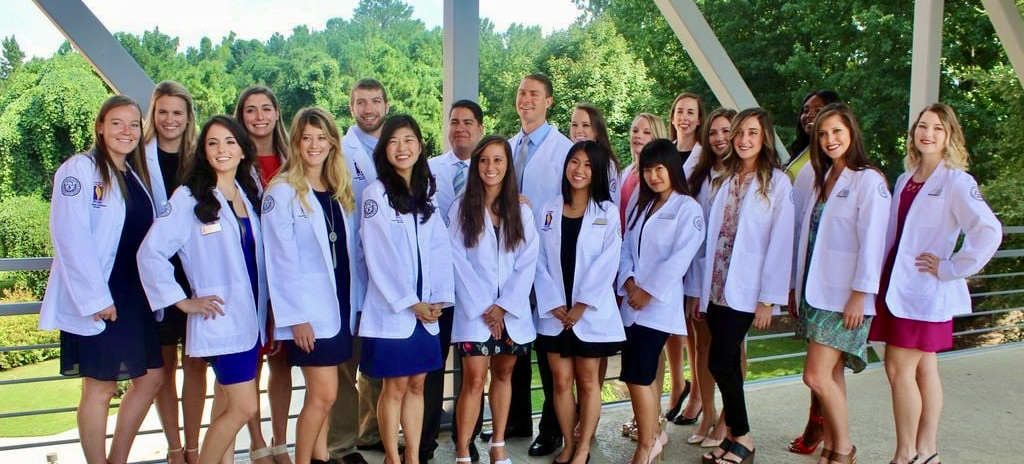
PCOM does not send a separate secondary application. For 2027 admission, PCOM says there are “no supplemental application requirements.” Instead, its questions sit inside AACOMAS: open the Program Materials section of your PCOM application and answer the questions on the Questions tab. PCOM Georgia has its own Questions tab in its separate application. Because the questions are part of the primary application, you answer them before you submit, and they are read together with your personal statement, experiences and letters.
PCOM does not post the question wording on its website. The prompts below are the 2026-2027 questions, quoted word for word, with their character limits. Character counts include spaces. Always check the wording and the limit shown in your AACOMAS portal before you paste in an answer.
| Question | Who answers | Limit |
|---|---|---|
| Philadelphia location question | Applicants who select PCOM (Philadelphia) | 2,000 characters |
| South Georgia location question | Applicants who select PCOM South Georgia | 2,000 characters |
| PCOM Georgia question | Applicants to PCOM Georgia (separate application) | 2,000 characters |
| Deficiencies question | Optional, any applicant | 700 characters |
| Life experiences and empathy question | Answer it if it appears in your application | 2,500 characters |
Each example below is labeled “Illustrative example, not an actual applicant essay.” The examples are original and written only to show structure and reasoning. Use them to understand what each question asks, not as text to adapt. Your answer must be about your own experiences.
Philadelphia location question (2,000 characters)
Prompt: “If you selected to be considered for the Philadelphia location of PCOM, please respond to the following question: What one aspect of the PCOM campus community resonates with your personality and values?”
Who answers: applicants who choose PCOM (Philadelphia) on the Questions tab. If you choose both Philadelphia and South Georgia, you answer both location questions.
What it asks: one aspect, not a list, and a link between that aspect and your personality and values. “Campus community” can mean the people, the programs or the communities the campus serves. Good choices are things you can tie to your own experience: the four months in community healthcare centers, the interprofessional setting with PA and psychology students, the OMM Clinical Scholars Program, DIMER, the history of serving Philadelphia neighborhoods or the student support culture.
How to approach it: name the aspect in your first sentence. Spend most of the space on one or two specific experiences that show the value behind your choice. End with what you would contribute and what you hope to learn. At 2,000 characters you have room for about 300 to 350 words.
Illustrative example, not an actual applicant essay (1,945 of 2,000 characters, including spaces)
The aspect of PCOM that fits me best is the four months every DO student spends in the College’s community healthcare centers in Philadelphia neighborhoods. I want my training to start where patients actually live, and that requirement tells me PCOM wants the same thing.
For two years I worked the front desk and then the intake station at a community health center in North Philadelphia. My job was small but close to the patient: checking insurance, taking vitals, updating medication lists and walking people to the right room. I learned that a missed appointment usually had a reason. One patient with diabetes kept skipping visits until I asked why. Her bus route had changed, and the new one added an hour each way. Our social worker found her a ride program, and her A1C came down over the next six months. Nothing about that was dramatic, but it taught me that health depends on things a lab value cannot show.
That is why the whole-person approach makes sense to me in practical terms. Looking at nutrition, environment and stress is not a soft extra. It is how you find out why a plan is failing. When I read that PCOM students learn in centers serving medically underserved communities, I recognized the kind of place where I have been most useful, and where I still have the most to learn.
My values are steadiness and follow-through. I like to be the person who notices the patient who has been waiting too long and checks in. At PCOM I would bring that habit to the healthcare centers and to my classmates. Over the next four years I hope to learn how a physician turns that attention into diagnosis and treatment, including osteopathic manipulative medicine, which I first saw used for a patient’s chronic neck pain at my clinic.
I also want to stay in Philadelphia. The patients I met at the front desk are the reason I applied, and I would like my clinical years to keep me connected to the same communities I already know.
Why this example works and what to avoid:
- It names one aspect, as the prompt asks: the four months DO students spend in PCOM’s community healthcare centers. It does not list five features.
- It ties the aspect to the applicant’s personality and values with evidence (two years at a community health center, the bus-route story) instead of adjectives.
- It shows an understanding of whole-person care in practical terms without lecturing on osteopathic philosophy.
- It looks forward: what the applicant would bring to classmates and the centers, and what they hope to learn.
- Mistakes to avoid: praising Philadelphia in general, writing about PCOM’s history or rankings, or naming an aspect you cannot connect to something you have done.
South Georgia location question (2,000 characters)
Prompt: “If you selected to be considered for the South Georgia location of PCOM, please respond to the following question: What one aspect of the PCOM South Georgia campus mission and/or community resonates with your personality and values?”
Who answers: applicants who choose PCOM South Georgia on the Questions tab.
What it asks: this version adds “mission,” so you may choose an element of PCOM South Georgia’s focus statement, such as educating students to serve the healthcare needs of Georgia and the Southeast, or encouraging graduates to stay in the Southeast and practice among underserved populations. You may also choose something about the campus community, such as its small size or its place as the only four-year medical school in southwest Georgia.
How to approach it: South Georgia readers will look for real ties to the region or to rural care. If you have them, use concrete details: towns, distances, jobs, family. If you do not, be honest and show a sustained commitment to rural or underserved communities elsewhere, and explain why this region in particular. Do not reuse your Philadelphia answer.
Illustrative example, not an actual applicant essay (1,881 of 2,000 characters, including spaces)
The part of PCOM South Georgia’s mission that resonates with me is its call for graduates to stay in the Southeast and practice among underserved populations where they will have the most impact. That sentence describes the plan I made long before I knew the campus existed.
I grew up outside Thomasville, about forty minutes from Moultrie. When my grandfather’s heart failure got worse, the nearest cardiologist was more than an hour away, and my mother missed work every other week to drive him. In high school I started going with them. I kept his medication chart and wrote down questions for the doctor, because by the time we got home everyone had forgotten half of what was said. I saw how much of rural care depends on distance, time and who has a car.
In college I worked as an EMT for a county service covering mostly farm roads. Long transports gave me time with patients that city crews rarely get. I took histories in the back of the truck, kept people calm and handed off to emergency physicians who often knew our patients by name. Those physicians showed me that a doctor in a small community is also a neighbor, and that trust there is earned over years.
PCOM South Georgia’s size matters to me for the same reason. A smaller class, faculty who know students by name and a community that supports the school feel like the setting where I learn best. I want to be trained in a place that understands the region, then do my clinical years in Georgia hospitals and clinics that serve towns like mine.
My values are loyalty to my community and responsibility for the people who count on me. As a physician I hope to practice family medicine within driving distance of where I grew up, so the next family does not have to plan a whole day around one appointment. PCOM South Georgia’s mission asks its graduates to do exactly that, and I would be proud to answer it.
Why this example works and what to avoid:
- It picks one element of the South Georgia focus statement (graduates encouraged to stay in the Southeast and serve underserved populations) and answers the ‘mission and/or community’ choice directly.
- The rural details (distance to a cardiologist, EMT transports on farm roads) prove the fit instead of claiming it.
- It connects the campus’s small size to how the applicant learns, which speaks to ‘community’ as well as mission.
- It ends with a concrete career goal that matches the mission.
- Mistakes to avoid: writing a generic rural-medicine essay that could go to any school, or saying you want to serve rural Georgia with no evidence of ties or experience.
PCOM Georgia question (2,000 characters)
Prompt: “What one aspect of the PCOM Georgia campus mission and/or community resonates with your personality and values?”
Who answers: all applicants to PCOM Georgia, which uses its own AACOMAS application.
What it asks: the same structure as the South Georgia question, applied to the Suwanee campus. Strong aspects to choose include PCOM Georgia’s focus on recruiting and educating students from Georgia and the surrounding states, its goal of keeping graduates in the Southeast, the “Doctor from Day One” mindset it describes, its shared campus with pharmacy, physical therapy, PA and biomedical sciences students, the Georgia Osteopathic Care Center or its OMM Clinical Scholars Program.
How to approach it: keep PCOM Georgia and PCOM South Georgia distinct. Suwanee is a suburban campus in metro Atlanta; Moultrie is a rural campus in southwest Georgia. Mixing them up is the fastest way to show you did not read about the school.
Illustrative example, not an actual applicant essay (1,914 of 2,000 characters, including spaces)
The aspect of PCOM Georgia that resonates most with me is its focus on educating students from Georgia and the surrounding states and keeping them in the region as physicians. I am one of those students, and staying is the point of my plan.
I grew up in Gwinnett County and have worked for three years as a pharmacy technician at a retail pharmacy in Lawrenceville. Many of our patients are recent immigrants or older adults on fixed incomes. I have helped a man compare the cost of two inhalers, called a clinic to clear up a dosing error and watched a pharmacist spend ten minutes teaching a mother how to use her child’s spacer. That work showed me how many decisions about health happen outside the exam room, and how much depends on people from different professions talking to each other.
That is why PCOM Georgia’s campus appeals to me. DO, pharmacy, physical therapy and physician assistant students learn in the same building in Suwanee. I want to train next to future pharmacists and therapists, because in my experience the best care happens when each person understands what the others do.
I also value the “Doctor from Day One” mindset the school describes. In the pharmacy I learned to act like a professional before I had the title: to double-check, to admit when I did not know, and to ask a pharmacist before guessing. I want a school that expects the same habits from the first week, with simulation and standardized patients that let me practice before I see real patients.
My values are reliability, teamwork and service to the community that raised me. I hope to complete my clinical training in Georgia and practice internal medicine in the metro Atlanta area, where many of my neighbors still struggle to find a primary care physician who speaks their language or has time to explain their medications. PCOM Georgia’s focus on the region matches the commitment I have already made to it.
Why this example works and what to avoid:
- It answers with one aspect from the PCOM Georgia Focus statement (recruiting and keeping students from Georgia and nearby states) and supports it with the applicant’s Gwinnett roots.
- The pharmacy technician details link to a real feature of the Suwanee campus: DO, pharmacy, physical therapy and PA programs share one building.
- It uses the school’s own ‘Doctor from Day One’ phrase and shows the habit rather than repeating the slogan.
- It closes with a specific regional career goal.
- Mistakes to avoid: copying the Philadelphia answer onto the Georgia application, or confusing PCOM Georgia (Suwanee) with PCOM South Georgia (Moultrie).
Optional deficiencies question (700 characters)
Prompt: “Use this space if you’d like to address any identified deficiencies in your application.”
Who answers: optional for any applicant.
What it asks: a brief, factual explanation of a weakness in your record (a low grade, a withdrawal, a gap, an institutional action or a weak MCAT section) and what you did about it. At 700 characters you have about 100 to 120 words.
How to approach it: name the issue, give one or two sentences of context without excuses, then spend most of the space on evidence of improvement. If you have nothing to explain, leave it blank. Using this space to repeat strengths wastes the committee’s time.
Illustrative example, not an actual applicant essay (631 of 700 characters, including spaces)
My transcript shows a W in organic chemistry and a C in biochemistry during my junior year. That fall my father had surgery and I became his main caregiver while working 20 hours a week. I withdrew from one course rather than fail it and did not plan my time well in the other. I retook organic chemistry the next summer and earned an A, then completed 16 post-baccalaureate science credits with a 3.8 GPA while working as a medical assistant. The experience taught me to ask for help earlier and to build a weekly schedule I actually follow. My grades since then are the best evidence that I can handle the pace of medical school.
Why this example works and what to avoid:
- It names the deficiency plainly in the first sentence (a W and a C), so the reader does not have to hunt for it.
- It gives context in one or two sentences without asking for sympathy.
- Most of the space goes to evidence of change: a retake grade, post-baccalaureate credits and a GPA.
- It ends with what the applicant learned and why it predicts success.
- Mistakes to avoid: using the box to repeat strengths, blaming a professor, or writing something when there is nothing to explain. If your record has no gap or drop to address, leave it blank.
Life experiences and empathy question (2,500 characters)
Prompt: “Explain how your life experiences could help advance the goals of having healthcare providers who can empathize with the patient communities they serve. This question provides an opportunity to describe impactful life experiences, especially challenges or hardships that may not be easily presented in other parts of the application. This experience described can be from any point in your timeline and does not need to be directly related to the field of medicine or healthcare.”
Who answers: PCOM DO applicants who see it on the Questions tab. Treat it as required when it appears.
What it asks: two things. First, describe life experiences, especially challenges or hardships, that the rest of your application does not show well. Second, explain how those experiences make you better able to empathize with the patient communities you will serve. The second part is the one applicants forget.
How to approach it: pick one or two experiences and go deep. The experience does not have to be medical. Show what you learned, then name specific behaviors you will bring to patient care. This question fits PCOM’s mission to “advance the health of diverse communities,” so connect your story to the kinds of patients PCOM’s clinics and rotation sites serve.
Illustrative example, not an actual applicant essay (2,365 of 2,500 characters, including spaces)
I learned to listen for what people leave out when I was nine and started interpreting for my parents. They came to Philadelphia from Vietnam with little English, so I went to their appointments, read their mail and explained bills I barely understood. At one visit my mother told the doctor she was “fine” because she did not want to be a burden. On the drive home she admitted she had been dizzy for weeks. I went back and told the nurse, and a medication change fixed the problem. I was proud, and also frightened by how close we had come to missing it.
That experience shaped how I see patients. Many people who seem quiet or agreeable are carrying worries they do not know how to say, often because of language, cost or a past experience of being rushed. They need a provider who notices hesitation and makes room for it.
As I got older the responsibilities grew. In high school my father lost his job after an injury, and I worked weekends at a nail salon with my aunt while keeping up with school. I was tired often and sometimes embarrassed, but I learned to stay patient with customers who were rude because they were stressed, and to be honest with my teachers when I needed more time. Those years taught me that hardship is rarely visible from the outside.
In college I volunteered as a medical interpreter at a free clinic. I translated for patients like my parents, and I learned to tell physicians when a “yes” did not really mean yes. One older man nodded through his whole visit. When I asked him gently in Vietnamese, he explained that he could not afford the new prescription. The physician switched him to a lower-cost option before he left. Small corrections like that are often the difference between a plan that works and one that never starts.
These experiences help advance the goal of having healthcare providers who can empathize with the communities they serve because I am part of one of those communities. I know what it feels like to sit in a waiting room unsure of what will happen next and unable to ask. As a physician, I plan to slow down when a patient goes quiet, use professional interpreters even when a family member offers, and ask about cost before I write a prescription. Empathy, for me, is not a feeling I describe. It is a set of habits I learned at nine years old, and I intend to bring them to every patient I see.
Why this example works and what to avoid:
- It answers the exact question: how the applicant’s life experiences help advance the goal of providers who can empathize with the communities they serve.
- It uses the freedom the prompt offers: the experiences start at age nine and include work that is not medical (a nail salon).
- Each hardship leads to a habit a physician can use: noticing hesitation, using professional interpreters, asking about cost.
- The final paragraph states the link to the goal in the prompt’s own terms, so the reader does not have to infer it.
- Mistakes to avoid: listing hardships without showing what they taught you, turning the essay into a story about a patient instead of about you, or claiming empathy without a single example of acting on it.
Other PCOM questions and programs
If your Questions tab includes a reapplicant question about what you have done since your last application, answer it with specific changes: new coursework and grades, a new MCAT score, added clinical hours or a new role. If it asks whether relatives attended PCOM, answer factually with names, class years and relationships.
Other PCOM programs use their own application services and essays. The physician assistant program, for example, applies through CASPA, where the central essay asks why you want to be a PA. It follows a similar format to the DO personal statement.
Your AACOMAS personal statement
Every DO applicant also writes the AACOMAS personal statement, which PCOM reads alongside these questions. It should answer one big question: why do you want to become an osteopathic physician? The admissions committee wants to know why osteopathic medicine, rather than only medicine in general, fits your vision and values. Share your strengths and be honest about areas of growth, and show why the committee can expect you to reach graduation. Check the current character limit in AACOMAS, keep the statement concise and specific, and avoid generic claims. Let the committee see who you really are.
A short illustrative passage shows the idea:
Illustrative example, not an actual applicant essay. “The patient had been told twice that her back pain was ‘just stress.’ The DO I shadowed asked about her job first. She stocked shelves on a night shift and had started limping after a fall in the stockroom. He examined her standing and walking, treated a restricted sacroiliac joint with OMT and then spent five minutes on her schedule and her sleep. She came back two weeks later moving easily and asked him about her blood pressure for the first time. I want to practice medicine that starts with the person in front of me and does not stop at the symptom she came in with.”
For more school-by-school prompts, see IMA’s medical school secondary essay prompts database.
Interview Format and Preparation
At PCOM, the interview is a vital stage. Only applicants who pass the first review are invited to a personal interview.
Format and logistics
- Who invites you: the Faculty Committee on Admissions at each location, on a rolling basis. You can be invited at any point during the review.
- Virtual or on campus: PCOM offers a choice of a virtual or an on-campus interview at every location, and “the committee does not have a preference on which you select.”
- Format: a traditional personal interview with members of the Faculty Committee on Admissions. PCOM does not describe a multiple mini interview (MMI).
- Timing: interviews begin in the summer term and continue through the spring term.
- Invitations: Philadelphia applicants hear from [email protected], PCOM Georgia applicants from [email protected] and PCOM South Georgia applicants from [email protected]. Add these addresses to your contacts, and keep your email address current in your PCOM portal.
- Decisions: interviewed candidates usually hear within four to six weeks.
How to choose between virtual and on campus
Since the committee has no preference, choose the format that lets you perform best. An on-campus visit lets you see the community healthcare centers’ neighborhood, the Moultrie campus or the Suwanee building for yourself, which can sharpen your answer to “Why PCOM?” A virtual interview saves travel cost, which matters if you are interviewing at several schools. If you choose virtual, test your camera, sound and lighting, and use a quiet room.
What to prepare
PCOM does not publish its interview questions. Expect questions common in traditional medical school interviews, adjusted to PCOM’s mission. Prepare clear, honest answers to:
- Why osteopathic medicine? Use a specific experience with a DO or with OMM.
- Why PCOM, and why this location? Tie your answer to the location question you wrote: the community healthcare centers in Philadelphia, the Georgia focus in Suwanee or the rural mission in Moultrie.
- Tell us about your clinical experience. Be ready to talk about patients you helped and what you learned.
- How do you work on a team? PCOM trains DO students with PA, psychology, pharmacy and physical therapy students.
- A challenge or failure. Show what you changed.
- Ethics and health care issues. Think through access to care, rural physician shortages, cost of care and communication across language and culture.
- Anything in your application. Know every experience and essay well, including your answers on the Questions tab.
After the interview
Accepted applicants follow the AACOMAS traffic guidelines for the $250 tuition prepayment and pay a $500 deposit by April 15, 2027. Review PCOM’s DO Program Technical Standards before you accept. If you hold seats at more than one school after May 1, PCOM may set its own rules for accepted students.
Many applicants find it helpful to practice with a coach. IMA’s medical school admissions consulting includes personalized coaching and mock interviews.
Frequently Asked Questions
What is PCOM’s acceptance rate?
For the entering class of 2026, PCOM Philadelphia accepted 506 of 9,069 applicants, an acceptance rate of about 5.6%. PCOM Georgia accepted 317 of 3,563 (about 8.9%), and PCOM South Georgia accepted 309 of 3,127 (about 9.9%). These rates divide accepted applicants by all applicants. Dividing the number who enrolled by the number who applied gives a much lower figure, but that is not an acceptance rate, because many accepted applicants enroll elsewhere. If you apply to more than one location, each one reviews you separately, so your chances at each are independent.
What MCAT score do I need for PCOM?
There is no minimum. PCOM says a competitive MCAT is generally at or above 500 with at least 125 in each section. For the entering class of 2026, the average MCAT was 505 in Philadelphia, 504 at PCOM Georgia and 499 at PCOM South Georgia. Your MCAT must be from 2024 or later for summer 2027 entry, and a January 2027 score is accepted.
What GPA do I need for PCOM?
There is no minimum GPA. The median undergraduate science GPA for all PCOM classes entering in 2024 was 3.5, with a post-baccalaureate science median of 3.8 and a graduate science median of 3.6. If your undergraduate science GPA is below 3.5, recent post-baccalaureate or graduate science work with strong grades is the most direct way to show you are ready.
Is PCOM Georgia easier to get into than PCOM Philadelphia?
By the published numbers, both Georgia locations accept a larger share of applicants and have lower average MCAT scores than Philadelphia. That does not make them easy. PCOM Georgia focuses on students from Georgia and nearby states, and PCOM South Georgia looks for a commitment to the Southeast and to underserved and rural care. Apply to the locations where your story fits, not just the ones with the highest acceptance rate.
How do I apply to more than one PCOM location?
Philadelphia and South Georgia share one AACOMAS application: choose PCOM, PCOM South Georgia or both on the Questions tab. PCOM Georgia needs a separate AACOMAS application. Each requires a $75 institutional fee ($75 covers Philadelphia and South Georgia together; PCOM Georgia is another $75). Send letters through AACOMAS to each location you choose.
Does PCOM have a secondary application?
Not a separate one. For 2027 admission PCOM has no supplemental application. Its questions are on the Questions tab of the Program Materials section of the PCOM application in AACOMAS. They include a 2,000-character question for each location you choose and an optional 700-character question about deficiencies in your application.
Does PCOM require CASPer or PREview?
No. PCOM’s DO requirements list a bachelor’s degree, prerequisites, the MCAT, U.S. citizenship or permanent residency and three letters. No situational judgment test is listed for the 2026-2027 cycle.
Do I need a letter from a DO?
No, but PCOM strongly recommends one. You need at least three letters. PCOM prefers a pre-health advisor or committee letter, a science faculty letter and a letter from a physician (ideally a DO) or another healthcare provider who knows your clinical work. A committee packet with three or more letters meets the requirement.
Does PCOM accept international students or DACA recipients?
No. The DO program accepts only U.S. citizens and permanent residents. A pending permanent residency application is not enough. Prerequisite courses must also be completed at a U.S. regionally accredited college or university.
How much does PCOM cost?
For 2026-2027, DO tuition is $67,665 a year at all three locations, plus an $800 comprehensive school fee. PCOM’s estimated cost of attendance, including living costs, is $100,157 for the first year and $414,764 over four years. Health insurance is added only if you buy a plan. Aid is available for up to 100% of the cost of attendance.
When are PCOM’s application deadlines?
Submit your AACOMAS application by February 1, 2027, make sure it is verified by February 28, 2027, and get your $75 fee and all required materials to PCOM by March 1, 2027. Because review is rolling, submitting in the summer or early fall gives you the best chance at an interview.
What is the PCOM interview like?
It is a personal interview with members of the location’s Faculty Committee on Admissions. You can choose a virtual or an on-campus interview, and the committee has no preference. Interviews run from summer through spring, and decisions usually arrive within four to six weeks.
Does PCOM offer early decision?
No. PCOM does not offer an Early Decision Program. Applying early in the regular rolling cycle is the best way to improve your timing.
What dual degrees can PCOM DO students earn?
DO students can add an MBA or a graduate business certificate through Saint Joseph’s University, an MPH through Thomas Jefferson University or Temple University, a Master of Science in Forensic Medicine (a five-year DO/MS) or a Master of Science in Biomedical Sciences with a thesis. PCOM South Georgia does not offer dual degree programs at this time.
What is the DIMER program?
DIMER lets PCOM serve as the osteopathic medical school for Delaware. The Philadelphia campus reserves up to 10 seats in each incoming DO class for Delaware residents who meet the program’s residency rules. After you apply through AACOMAS, PCOM sends eligible applicants a Delaware residency form.
How much clinical experience does PCOM want?
PCOM sets no minimum number of hours, but its committees weigh clinical exposure heavily. Aim for regular, hands-on time with patients over months or years. Supervised roles where you take vitals and help with intake, such as medical assistant, EMT or medical internships for undergraduates, show that you understand patient care. Shadowing a DO is also strongly encouraged.
What residency outcomes do PCOM graduates have?
PCOM reported a 100% postgraduate placement rate for 2026 at Philadelphia and PCOM Georgia. Graduates enter both primary care (family medicine, internal medicine, pediatrics, OB/GYN) and other specialties such as emergency medicine, surgery, anesthesiology, neurology, psychiatry and urology. PCOM posts placement lists for each graduating class.
Is PCOM a good school for primary care?
Yes. Primary care is central to PCOM’s training. Students take Primary Care Skills courses every term of the first two years, complete a required osteopathic primary care sub-internship in the fourth year, and in Philadelphia spend four months in community healthcare centers. PCOM’s 2025-2026 fact sheet lists more than 8,000 alumni practicing primary care.
Related Medical School Guides
If PCOM is on your list, these osteopathic schools are worth comparing. Each link explains why it is relevant, not a claim of equal selectivity.
- Lake Erie College of Osteopathic Medicine (LECOM) Pennsylvania: the other large established DO school in Pennsylvania, with campuses in Erie and Greensburg and different learning pathways.
- Duquesne University Nasuti College of Osteopathic Medicine: a newer DO school in Pittsburgh, useful for Pennsylvania applicants who want a western Pennsylvania option.
- Rowan-Virtua School of Osteopathic Medicine: New Jersey’s DO school, a short drive from Philadelphia and a natural comparison for Delaware Valley applicants.
- Touro College of Osteopathic Medicine: a Northeast DO option in New York for applicants interested in urban, underserved communities.
- University of the Incarnate Word School of Osteopathic Medicine: a mission-driven DO school in San Antonio, a useful comparison for applicants focused on service to underserved populations.
- Kentucky College of Osteopathic Medicine: a rural-focused DO school in Appalachia, worth comparing with PCOM South Georgia’s rural mission.
For Georgia applicants weighing PCOM Georgia and PCOM South Georgia against the state’s MD programs, IMA’s guide to medical schools in Georgia compares every option in the state, including the Medical College of Georgia at Augusta University.
More medical school guides
Whether you knew from an early age that you wanted to attend medical school or are just starting to compare programs, you have many good options. Below is a partial list of the guides available in IMA’s Medical School Guides collection:
- Geisinger Commonwealth School of Medicine (GCSOM)
- Penn State Medical School
- CUNY School of Medicine
- SUNY Downstate Medical School
- NYIT College of Osteopathic Medicine
- NYU Long Island School of Medicine
- Albany Medical College
- Norton College of Medicine at Upstate Medical University
- Jacobs School of Medicine at the University at Buffalo
- Hofstra Zucker School of Medicine
- Weill Medical College of Cornell University
- University of Rochester Medical School
- Icahn School of Medicine at Mount Sinai
- Renaissance School of Medicine at Stony Brook University
- Albert Einstein College of Medicine
- Ohio University Heritage College of Osteopathic Medicine
- Northeast Ohio Medical University (NEOMED)
- University of Cincinnati College of Medicine
- University of Toledo College of Medicine
- Wright State University Boonshoft School of Medicine
- Ohio State University College of Medicine
- Hackensack Meridian School of Medicine (HMSOM)
- Rutgers New Jersey Medical School (NJMS)
- Rutgers Robert Wood Johnson Medical School
- Cooper Medical School of Rowan University (CMSRU)
- A.T. Still University Kirksville College of Osteopathic Medicine
- Saint Louis University School of Medicine
- University of Missouri Medical School
- Kansas City University (KCU)
- UMKC School of Medicine
- New York Medical College
- University of Pittsburgh School of Medicine
- University of Wisconsin Medical School
- VCU School of Medicine
- University of Maryland School of Medicine
- Case Western Medical School
- University of North Carolina Medical School
- University of Florida Medical School
- Emory University School of Medicine
- Boston University College of Medicine
- California University of Science and Medicine
- UC San Diego Medical School
- California Northstate University College of Medicine
- Touro University of California
- CHSU College of Osteopathic Medicine
- UC Davis School of Medicine
- Harvard Medical School
- UC Riverside School of Medicine
- USC Keck School of Medicine
- UT Southwestern Medical School
- Long School of Medicine at UT Health San Antonio
- UT Austin’s Dell Medical School
- UTMB School of Medicine
- McGovern Medical School at UT Health
- Johns Hopkins School of Medicine
- The University of Texas Rio Grande Valley School of Medicine
- UNT Texas College of Osteopathic Medicine
- University of Houston College of Medicine
- Texas A&M College of Medicine
- Baylor College of Medicine
- George Washington University School of Medicine
- Vanderbilt University School of Medicine
- St. George’s University School of Medicine
- Sidney Kimmel Medical College at Thomas Jefferson University
- Wake Forest University School of Medicine
- Western University of Health Sciences (in California)
- Drexel University College of Medicine
- Stritch School of Medicine at Loyola University Chicago
- Georgetown University School of Medicine
- Yale School of Medicine
- Perelman School of Medicine
- UCLA Medical School
- NYU Medical School
- Washington University School of Medicine
- Brown Medical School
Feel free to contact us if you have questions about the application process or our medical school guides.
How International Medical Aid Can Help
Medical school admissions consulting
Applying to medical school is complex, and one-on-one help can make a real difference. IMA’s medical school admissions consulting services provide individualized support at every step: choosing schools and PCOM locations, planning your AACOMAS application, editing your personal statement and your PCOM location answers, preparing for the interview with mock sessions and making sure every requirement is in order. You can schedule a free consultation to talk through your plan.
Clinical internships abroad
PCOM’s committees weigh clinical exposure closely, and they want to see that you understand patient care. International Medical Aid runs medical internships abroad for pre-health students in Kenya and other countries. IMA’s pre-med internships abroad place students in clinics and hospitals where, under the supervision of local physicians and nurses, interns take vitals, do patient intake and triage and help with direct patient care. Undergraduates and gap-year students can join, and IMA’s pre-health internships also welcome students preparing for other health professions.
That kind of experience can help you in three ways at PCOM:
- Clinical experience: supervised, hands-on patient contact that you can describe in AACOMAS and discuss in your interview.
- Whole-person care: working in communities with limited resources shows how housing, food, distance and cost shape health, which is the heart of PCOM’s model of medicine.
- Material for your location answers: experiences with underserved patients give you concrete examples for questions about PCOM’s community and mission.
To compare program locations and dates, see IMA’s healthcare internships abroad. Participation in an IMA program does not imply any affiliation with PCOM or any advantage in admissions. Its value is the experience you gain and how you reflect on it.
Final Thoughts and Sources
PCOM offers one osteopathic curriculum in three very different places: a large, selective urban campus in Philadelphia, a suburban campus near Atlanta focused on Georgia students and a rural campus in Moultrie built to keep physicians in southwest Georgia. Your best application starts with choosing the right locations, then shows the committees, through real experiences, why that place fits your values.
Your next steps:
- Confirm your prerequisites, including 16 semester hours of chemistry with organic chemistry and biochemistry, and check that your MCAT is from 2024 or later.
- Choose your locations, then draft each location answer before you submit AACOMAS.
- Request three letters, ideally including one from a DO.
- Submit AACOMAS early, pay the $75 fee when PCOM emails you, and track your file in the PCOM portal.
- Prepare for a virtual or on-campus interview that connects your experience to PCOM’s whole-person mission.
If you would like one-on-one guidance on any of these steps, consider IMA’s medical school admissions consulting. Time with an advisor can build confidence for your interview, help you decide whether PCOM is the right place for you and catch the small details that make a difference. We wish you the best of luck with your application.
Sources
All figures were checked on October 20, 2026. Admissions counts and MCAT averages are for the entering class of 2026; GPA medians are for classes entering in 2024; costs are for the 2026-2027 academic year.
- PCOM, DO Program Data, Philadelphia (entering class of 2026; COMLEX 2024-2025; placement 2026; indebtedness 2025-2026).
- PCOM, DO Program Data, PCOM Georgia and DO Program Data, PCOM South Georgia (entering class of 2026).
- PCOM, Doctor of Osteopathic Medicine Application Requirements (2027 admission; GPA medians for classes entering in 2024).
- PCOM, Cost of Attendance and Tuition Rates and Fees, 2026-2027.
- PCOM, DO Course Sequence; DO program pages for Philadelphia, PCOM Georgia and PCOM South Georgia (mission, focus statements, accreditation); DO FAQ; DIMER, OMM Clinical Scholars, Multidisciplinary Degree Options and DO/MS Forensic Medicine pages; clinical education pages for each location.
- PCOM, Mission, Vision and Values; History; Maps and Facilities; campus pages; Student Research; Administration, Provost and faculty directory pages; PCOM news releases on Adrianne Jones (2025), Michael A. Becker (2024), Bruce Kornberg (2024) and clinical education partnerships (2023); PCOM 2025-2026 fact sheet.
- AACOM Choose DO Explorer, PCOM and PCOM Georgia profiles, 2026-2027 (school-reported mean MCAT and cumulative GPA, cohort not stated; pass/fail, DACA and interview format details).
- Application question wording for 2026-2027: current-cycle compilations from Med School Insiders, Shemmassian Academic Consulting and BeMo, checked against 2025-2026 listings from MedCoach, Savvy Premed and ProspectiveDoctor. PCOM does not publish the wording; confirm it in your AACOMAS portal.
- PCOM Healthcare Centers (pcomhealth.org), current list of community healthcare center locations.