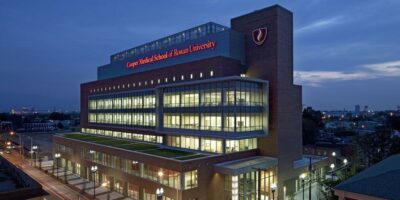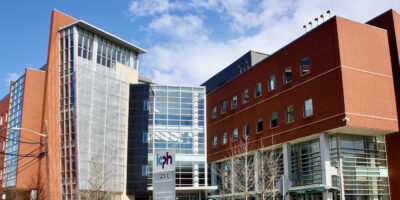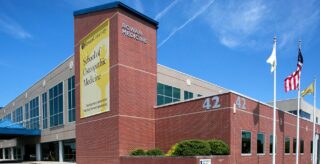

Rowan-Virtua School of Osteopathic Medicine (Rowan-Virtua SOM) is New Jersey’s only osteopathic medical school. It grants the Doctor of Osteopathic Medicine (DO) degree and teaches on two campuses in South Jersey, Stratford and Sewell, in the suburbs of Philadelphia. The school is part of Rowan University and of the Virtua Health College of Medicine & Life Sciences of Rowan University, a partnership with Virtua Health, the largest health system in South Jersey. It is known for primary care, geriatric education and osteopathic manipulative medicine, and for early patient contact in student-run clinics that serve local communities.
Osteopathic medical schools share a philosophy of whole-person care, but each one has its own requirements, curriculum and clinical training sites. Knowing those details is how you show fit in a secondary essay or an interview. This guide covers the 2026-2027 application cycle, which is for students who want to start medical school in July 2027. It explains the preferred GPA and MCAT benchmarks, the newest class figures, what Rowan-Virtua SOM costs in 2026-2027, how the Tensegrity Curriculum and the clinical years work, the dual degrees and the accelerated Pathways to Primary Care 3+3 track, and how to answer each of the four current secondary essays, with a full illustrative example and analysis for each. It also covers the virtual interview and the people who lead the school. Facts were checked on October 18, 2026.
Key Takeaways
- One DO program, two campuses: Rowan-Virtua SOM grants the DO degree only. Students train in Stratford or Sewell, New Jersey, about 30 minutes from Philadelphia. Cooper Medical School of Rowan University is a separate MD school with its own application.
- Academic benchmarks: the school prefers a science GPA of 3.50 or higher, an MCAT of 505 or higher and a Biological and Biochemical Foundations (BBFL) score of 126 or higher. These are preferred values, not cutoffs, and every file gets a holistic review. Students accepted to the 2026 entering class averaged a 509 MCAT, a 127 BBFL and a 3.70 science GPA.
- Open to applicants from anywhere: the school accepts competitive applicants from across the country and from abroad, and it considers DACA recipients. In 2024-2025, about a third of the first-year students on the Stratford campus came from outside New Jersey.
- Deadlines: AACOMAS by February 1, 2027; the secondary application and letters by March 15, 2027. Admission is rolling, so earlier is better. Early Decision applicants had their own fall deadlines.
- Cost: 2026-2027 tuition is $50,680 for New Jersey residents, $78,086 for out-of-state students and $85,894 for international students. The estimated first-year cost of attendance is $83,736 in-state before health insurance.
- Distinctive training: a single Tensegrity Curriculum with system blocks, osteopathic clinical skills from the first year, a required geriatrics clerkship, a four-week integrated OMM and rehabilitation clerkship, 12 optional Areas of Distinction and priority access to clerkships and residencies across Virtua Health.
- Outcomes: the school reports a 98% residency (GME) placement rate for the 2026 Match.
- Next step: check your prerequisites, line up a committee letter or two science faculty letters plus a DO letter, and start drafting the four secondary essays before your invitation arrives.
Key Statistics About Rowan-Virtua School of Osteopathic Medicine
The snapshot below gathers the figures applicants ask about first. MCAT and GPA figures describe students accepted to the 2026 entering class. The first-year matriculant count is for the 2024-2025 academic year, the newest year with a published count. Tuition and cost of attendance are for 2026-2027. The table below the snapshot gives the source of each figure.

| Metric | Value | Year or cohort | Source and definition |
|---|---|---|---|
| School and degree | Rowan-Virtua School of Osteopathic Medicine, DO; campuses in Stratford and Sewell, NJ | Current | Rowan-Virtua SOM Admissions; public, part of Rowan University; founded 1976 |
| Average MCAT | 509 | 2026 entering class | Rowan-Virtua SOM DO Admissions FAQ, accepted students |
| MCAT BBFL subscore | 127 | 2026 entering class | Rowan-Virtua SOM DO Admissions FAQ, accepted students |
| Undergraduate science GPA | 3.70 | 2026 entering class | Rowan-Virtua SOM DO Admissions FAQ, accepted students |
| Preferred benchmarks | Science GPA 3.50+, MCAT 505+, BBFL 126+ | 2026-2027 cycle | Rowan-Virtua SOM How to Apply; preferred values, holistic review |
| Mean MCAT and average cumulative GPA (school-reported profile) | MCAT 507.9; cumulative GPA 3.72 | Cohort not stated on the profile | AACOM Choose DO Explorer, 2026-2027 profile |
| First-year matriculants | 300 (Stratford 269, Sewell 31) | 2024-2025 academic year | AACOM Choose DO Explorer |
| In-state and out-of-state matriculants | 175 in-state, 94 out-of-state (Stratford) | 2024-2025 academic year | AACOM Choose DO Explorer |
| Total DO enrollment | 933 (Stratford 889, Sewell 44) | 2024-2025 academic year | AACOM Choose DO Explorer |
| Applicants, interviews and acceptance rate | Not published | n/a | Neither the school nor its Choose DO profile publishes applicant, interview or offer counts |
| Tuition | $50,680 in-state; $78,086 out-of-state; $85,894 international | 2026-2027 | Rowan-Virtua SOM DO Program Cost of Attendance |
| First-year cost of attendance | $83,736 in-state; $111,142 out-of-state; $118,950 international (10-month budget), plus $5,988 health insurance if enrolled in the university plan | 2026-2027 | Rowan-Virtua SOM 2026-2027 Student Cost of Attendance |
| Residency placement | 98% GME placement | 2026 Match | Rowan-Virtua SOM, Why Choose Rowan-Virtua SOM |
| COMLEX Level 1 first-time pass rate | 93% (national 90%) in 2024-2025; 88% (national 90%) in 2025-2026 | Testing cycles shown | Rowan-Virtua SOM Performance Outcomes |
| Deadlines | AACOMAS February 1, 2027; secondary and letters March 15, 2027 | 2026-2027 cycle | Rowan-Virtua SOM DO Admissions FAQ |
| Accreditation | COCA, Accreditation with Exceptional Outcome through 2031-2032; MSCHE | Current | Rowan-Virtua SOM COCA Accreditation page |
Rowan-Virtua SOM does not publish how many people apply, interview or receive offers, so there is no reliable acceptance rate for the school. Any figure you see elsewhere is an estimate. The useful numbers are the ones the school does publish: its preferred benchmarks and the averages of the students it accepted. Averages are not cutoffs. Many accepted students sit below each average, and an applicant above every average can still be turned down if the rest of the file is thin.
Note that the school’s averages describe students who were accepted, not the smaller group who enrolled. They also focus on the science GPA and the BBFL section, which tells you where the committee looks first: your biology, chemistry, physics and math grades, and the MCAT section on biological and biochemical foundations.
Mission and Educational Priorities
Rowan-Virtua SOM revised its mission and vision in its Strategic Framework, approved on June 11, 2025. The mission reads:
“Rowan-Virtua School of Osteopathic Medicine fosters innovation, advances biomedical research, elevates excellence in education, and delivers transformative interprofessional healthcare for the community we serve.”
The vision reads:
“Rowan-Virtua School of Osteopathic Medicine will improve access, affordability and quality of both education and healthcare for our community, nation, and across the globe.”
To advance the mission, the school commits to four things: develop clinically skillful, compassionate and culturally competent physicians grounded in osteopathic philosophy and ready to meet future healthcare needs; recruit exceptional students from New Jersey, the nation and across the globe; advance research, innovation and discovery; and provide patient-centered care with an emphasis on primary and interprofessional team-based care that responds to the needs of the community.
The school also names six principles: excellence, innovation, integrity, collegiality, compassion and community. Its stated principle of compassion is about responding to “the physical, emotional, spiritual, and intellectual needs of others,” and its principle of community commits the school to “enhancing their health, knowledge, overall well-being, and opportunities.”
What the mission means for your application
Osteopathic identity comes first. The admissions committee evaluates applicants on their knowledge of osteopathic medicine, their exploration of the profession and their motivation to enter it. Two of the four secondary essays ask about osteopathic medicine and about Rowan-Virtua SOM specifically. Applicants who have shadowed a DO, can explain osteopathic manipulative treatment in plain words and know why they want the DO degree are better placed than applicants who treat it as a backup.
Primary care and the community are real priorities. The school is known for primary care, geriatric education and osteopathic manipulative medicine. Students start community service in year one through student-run free clinics, and a three-year Community Service Learning and Leadership course runs through the curriculum. Almost half of the school’s graduates specialize in primary care, and the largest share live and practice in New Jersey. You do not have to commit to family medicine, but you should show sustained service and an understanding of what care looks like for patients with limited access.
Interprofessional and team-based care. “Interprofessional” appears in the mission itself. The school has an Interprofessional Education Area of Distinction and trains DO and physician assistant students on the same campuses. Experiences where you worked closely with nurses, therapists, social workers or community health workers are worth describing.
Research and innovation. Rowan-Virtua SOM received $40 million in extramural research funding in fiscal year 2025. Research is not required for admission, but every student completes a Medical Scholarship curriculum with individual written and oral scholarly work and a capstone project. If you have done research, explain what you asked, what you did and what you learned.
A diverse patient population. One of the required secondary essays begins: “We seek to train physicians who can connect with diverse patient populations with whom they may not share a similar background.” The school serves communities across five counties of South Jersey, with more than 1.5 million people. Specific experiences that changed how you understand people unlike yourself matter here.
Accreditation and Institutional Identity
Rowan-Virtua SOM is fully accredited by the Commission on Osteopathic College Accreditation (COCA), the body the U.S. Department of Education recognizes as the accreditor of colleges of osteopathic medicine, and by the Middle States Commission on Higher Education (MSCHE). After its latest comprehensive site visit in September 2021, COCA granted the school “Accreditation with Exceptional Outcome” through 2031-2032. COCA reviewed the Sewell campus in June 2021 and approved it in August 2021. Accreditation shows that a school meets national standards; it is not a ranking.
The name has changed. The school joined Rowan University in July 2013 and was known as Rowan University School of Osteopathic Medicine (Rowan SOM). It and became Rowan-Virtua School of Osteopathic Medicine after Rowan University and Virtua Health formed a partnership in January 2022. That partnership created the Virtua Health College of Medicine & Life Sciences of Rowan University, which includes the osteopathic school, the Rowan-Virtua Rita & Larry Salva School of Nursing & Health Professions and the Rowan-Virtua School of Translational Biomedical Engineering & Sciences (TBES). Older guides, forum threads and alumni may still say “Rowan SOM” or “RowanSOM.” They mean the same school.
A short history. Legislation creating the school, the first four-year medical school in South Jersey, was signed by Governor Brendan Byrne in 1976. The first class of 24 students started the following year. The school moved to its Stratford campus in 1987. It was the first osteopathic medical school to hold a White Coat ceremony (1996), the first to offer dental medicine as part of its curriculum (1997), the first to offer a problem-based learning curriculum (1998) and one of the first American medical schools to require geriatrics training for every student. In 2019 it enrolled 202 students, more than double the class of a decade earlier, and the Sewell campus later raised the entering class past 280.
Two Rowan medical schools. Rowan University also runs Cooper Medical School of Rowan University (CMSRU), an MD school in Camden. CMSRU applicants use AMCAS; Rowan-Virtua SOM applicants use AACOMAS. The schools have different missions, curricula, prompts and statistics, so treat them as two separate applications.
Rankings. U.S. News and World Report now groups medical schools into tiers for research and primary care instead of publishing a numbered rank for each school, so older numbered ranks no longer apply. Med-Colleges.com, a third-party ratings site, rates Rowan University as a whole rather than the osteopathic school alone, and lists it as the best osteopathic medicine program in New Jersey, which is also the only one. For comparing DO schools, the more useful measures are the school’s own outcomes: board pass rates, residency placement and the specialties graduates enter, all covered in the clinical and statistics sections below. Our DO school rankings guide explains how to read DO school rankings.
Medical Programs and Affiliations
The Doctor of Osteopathic Medicine (DO)
Rowan-Virtua SOM’s DO program is nationally recognized for educational excellence in primary care, geriatric education and osteopathic manipulative medicine. Osteopathic medicine “emphasizes an approach to medical care that considers the whole patient, the environment, and the community when determining a course of medical treatment.”
The curriculum is built on the Seven Competencies of the American Osteopathic Association:
- Osteopathic Philosophy and Osteopathic Manipulative Medicine
- Medical Knowledge
- Patient Care
- Interpersonal and Communication Skills
- Professionalism
- Practice-Based Learning and Improvement
- Systems-Based Practice
You apply to the four-year DO program through AACOMAS. Both campuses teach the DO curriculum, and students on both use the same clinical training network.
Pathways to Primary Care 3+3 (PPC3)
The Pathways to Primary Care 3+3 DO/Family Medicine Accelerated Degree Track lets a small number of students finish the DO in three years and move directly into a New Jersey family medicine residency at Virtua Health in Voorhees or Capital Health in Hopewell/Trenton. Students complete medical school and residency in six years, which cuts time and cost.
How it works:
- You must first be admitted to the four-year DO program. You mark your interest on the secondary application and choose the Virtua track, the Capital track or either.
- After you are offered admission and meet the minimum GPA and MCAT requirements, a dedicated PPC3 committee reviews your file. You complete additional essays and send an extra letter of recommendation from a primary care physician.
- Selected candidates have a second interview for the accelerated program. Only four students are accepted each year, two for Capital Health and two for Virtua Health.
- PPC3 students start with a two-week Pathways Primer Course before orientation, spend four of the six summer weeks after year one in a clinical immersion at their residency site, and complete monthly clinical hours (called PATH hours, for Practical Ambulatory Training in Healthcare) at the residency clinic from the first month of school.
- Students must keep an exam average above 77%, avoid course and COMLEX Level 1 or 2 failures, pass the Capstone OSCE on the first try and maintain high professionalism. Scheduled “off-ramps” let a student move back to the four-year curriculum.
- PPC3 is open only to U.S. citizens, because of visa sponsorship limits at the residency hospitals, and PPC3 students cannot do a dual degree or a research year.
The PPC3 essays are not published outside the application. If you are interested, write them to the length shown in your portal and focus on a sustained, specific commitment to primary care in New Jersey.
Dual degrees
Many DOs extend whole-patient care into law, business, public health or research. Rowan-Virtua SOM offers six combined degrees and holds an annual panel on them shortly after first-year orientation.
- DO/PhD in Cell and Molecular Biology and DO/PhD in Neuroscience: offered with Rowan-Virtua TBES to train physician scientists who practice medicine and also study disease, new treatments and clinical trials. You must be admitted to the DO program and take part in the Summer Medical Research Fellowship after year one, then apply during year two.
- DO/PhD in Biomedical Engineering: offered with the Henry M. Rowan College of Engineering. It is the first physician engineer training program of its kind in the country. Track one completes years one and two of medical school, then the PhD, with engineering research in the summer between years one and two. Track two starts with the first year of the PhD. Track one applicants apply in the fall of year one; track two applicants apply while applying to medical school.
- DO/MBA: for careers in practice management, hospital administration and health care leadership. You apply to the Rowan MBA after your third year of medical school, complete the MBA the following year and return for your final year of medical school.
- DO/MPH: a five-year program with the Rutgers School of Public Health in Piscataway. It suits careers in public health agencies, research and community-focused residencies. You must be accepted to the DO program, have taken the MCAT and be accepted into the MPH program.
- DO/JD: a six-year program with Rutgers Law School in Camden, rather than the seven or eight years the degrees would take separately. It fits careers in health policy, health law and hospital administration. You must take the MCAT and LSAT and be admitted by both schools. Fewer than 1% of the nation’s physicians and attorneys hold both degrees.
Graduate degrees next door
Rowan-Virtua TBES, the school’s Stratford campus partner, offers graduate programs in the biomedical sciences, including the PhD programs used in the DO/PhD tracks. Its Master of Biomedical Sciences program has a partnership with Rowan-Virtua SOM that lets successful students pursue a medical education, which makes it a route worth considering if you need to strengthen your science record before applying. Check Rowan-Virtua TBES for its current programs and the terms of that partnership.
Physician assistant program
The school also runs a physician assistant (PA) program, and DO and PA students share training space on the Sewell campus. If you are weighing the PA route, our pre-PA internships page explains how hands-on patient care experience fits PA admissions.
Early pathways and articulation agreements
Rowan-Virtua SOM has articulation agreements with Rutgers University-Camden, Rowan University, Stockton University and Saint Joseph’s University that let selected students begin osteopathic school after their third year of college. It also has four-plus-four agreements with Monmouth University, the University of the Sciences (now part of Saint Joseph’s University) and the University of Delaware. Each partner school runs its own selection, so apply through the partner, not through AACOMAS.
For high school and college students, the school runs several pathway programs. The ShaD.O.w program, founded in 2006 by alumnus Lindsay Tjiattas, DO, lets high-achieving high school students spend a day with a medical student; about 500 students have taken part. Summer PREP (Pre-Medical Research and Education Program) accepts rising college sophomores and juniors from New Jersey schools, focusing on underrepresented students, with 2027 application information expected in December 2026. The HCOP Academy, funded by the Health Resources and Services Administration, supports students with limited funds or academic preparation and is open to U.S. citizens and permanent residents.
Clinical affiliations
The partnership with Virtua Health gives DO students priority access to clerkships, residencies and fellowships across the Virtua system. Virtua provides care at five hospitals, two satellite emergency departments, 30 ambulatory surgery centers and more than 350 other locations. Students also rotate at other health systems across New Jersey, Delaware and Maryland. Core clerkships are hosted at 15 hub sites, listed in the clinical rotations section below.
Curriculum Overview
Osteopathic medicine at Rowan-Virtua SOM
Osteopathic medicine began in 1874, when Andrew Taylor Still, a frontier physician, looked for ways to treat patients that avoided the harmful drugs and procedures common at the time. He focused on prevention, on the body’s ability to heal itself and on treating the whole person. That whole-person approach is still central at Rowan-Virtua SOM, where students learn to consider every part of a patient’s health when they build a treatment plan.
Osteopathic physicians (DOs) are fully licensed physicians. They prescribe medication, perform surgery and practice in every specialty, from family medicine to neurosurgery. What sets their training apart is added instruction in the musculoskeletal system and in osteopathic manipulative treatment (OMT), a hands-on approach that uses pressure, stretching and movement to diagnose and treat pain and other problems. OMT can be used alongside medication, surgery and other treatments, and it is used with patients of every age. Like MD training, DO training covers the psychological and social factors behind a patient’s illness. The difference is emphasis: the osteopathic tradition makes body unity, self-healing and the link between structure and function explicit parts of the curriculum.
For faculty at Rowan-Virtua SOM, that philosophy shows up in daily teaching. Vice Dean Millicent Channell, DO, welcomes new students by describing how osteopathic principles and OMT “shape compassionate, patient-centered care.” If you want to learn more before you apply, the American Osteopathic Association explains the profession, and shadowing a DO is the best way to see it in practice.
The Tensegrity Curriculum
In osteopathic medicine, “tensegrity” describes the balance of forces in the musculoskeletal system that keeps the body stable and efficient in movement. Rowan-Virtua SOM uses the idea as the name for its DO curriculum: an integrated program that balances the skills a physician needs. It names seven of them:
- Medical knowledge
- Communication skills (written and oral)
- Research skills (written and oral)
- Self-awareness and mastery
- Teamwork
- Leadership
- Community engagement
One curriculum for everyone. For many years the school offered two pre-clerkship tracks, Problem-Based Learning (PBL) and Synergistic Guided Learning (SGL), and applicants chose one. Rowan-Virtua SOM now teaches a single curriculum that keeps the strongest elements of both. From PBL it keeps active, case-based, student-centered learning in small groups: students meet for small-group clinical reasoning sessions, with peer-led presentations and a faculty facilitator. From SGL it keeps the organized order of each block: the normal structure and function of an organ system first, then how disease affects it, then how to diagnose and treat it, followed by clinical application. Basic scientists and physicians teach together. Students who learn well through discussion and self-directed study, and students who want clear objectives and a predictable sequence, both have a place in this design.
Years 1 and 2: pre-clerkship
The first two years combine four kinds of courses.
System blocks. Each block starts with basic science foundations and moves to clinical application, in small-group and large-group formats.
| Year 1 blocks | Year 2 blocks |
|---|---|
| Neuromuscular Foundations | Hematology and Oncology |
| Immunology, Infection, and Inflammation | Brain and Behavior |
| Cardiology | Integrative Cardiology, Pulmonology, and Nephrology |
| Pulmonology and Nephrology | Integrative Endocrinology and Metabolism |
| Gastroenterology and Nutrition | Integrative Complex Clinical Cases |
| Endocrinology | |
| Reproduction |
Intersessions. Short breaks from systems-based work cover Geriatrics and Palliative Care, Human Sexuality, and Health Systems Science I and II.
Osteopathic Clinical Skills. A skills and procedure course covers history taking and the physical and structural exam, osteopathic manipulative medicine, and procedural skills such as point-of-care ultrasound (POCUS) and IV placement.
Longitudinal, project-based courses. Community Service Learning and Leadership is a three-year course that prepares students to be culturally responsive physicians, shows the impact primary care physicians can have in medically underserved communities and builds leadership skills. Medical Scholarship covers epidemiology, biostatistics, research design, quality improvement and safety, scientific communication and evidence-based practice, with required individual written and oral scholarly work building toward a capstone project.
Other features of the pre-clerkship years include expanded training in leadership, professionalism and teamwork; an emphasis on prevention and health equity; more procedural training; and career exploration and coaching from the first day.
BRIDGE weeks
BRIDGE weeks happen four times in medical school: twice in year one, once in year two and once in year three. They give formative feedback on knowledge, skills and attitudes against benchmarks set by faculty. The name stands for Building skills (simulation, procedures, POCUS), Reflecting (self-reflection and peer evaluation), Integrating (integrated foundational science and osteopathic exam review, high-fidelity simulation), Developing (standardized patient exam review and professional identity formation), Goal setting (career advising and academic coaching) and Evaluating (a benchmark OSCE and a summative standardized patient exam). The BRIDGE week at the end of the clerkship year includes the Capstone OSCE.
Years 3 and 4: clerkships
Before the first day of clerkships, every student takes a two-week preparation course and a Clerkship Clinical Skills course. Beginning in academic year 2026-2027, the third year combines coursework and clinical rotations in:
- Community Service Learning and Leadership (a partnership with NJ AHEC and other medically underserved communities)
- Family Medicine
- Geriatrics (run by the New Jersey Institute for Successful Aging)
- Internal Medicine
- Integrated OMM and Rehabilitation (four weeks)
- Obstetrics and Gynecology
- Pediatrics
- Psychiatry
- General Surgery
- An elective
Medical Scholarship 3 runs all year, and students complete and submit their scholarly project. All clerkship students take a one-week Health Systems Science 2 course at the start of July.
The fourth year has three required rotations: four weeks of emergency medicine, a two-week intensive care selective (ICU, NICU, PICU or SICU) and four weeks of a medical or surgical subspecialty. Students also complete 24 weeks of electives and six weeks of flex time for residency interviews or extra electives, plus year-long courses in Medical Humanities and Osteopathic Practice and Principles. A Transition to Residency course, a procedural “boot camp,” prepares students for internship.
Areas of Distinction
Students who want more depth can complete one of 12 optional Areas of Distinction (AODs). Each combines community service (logged through the national TOUCH program), scholarly work approved by an advisor and didactic learning. AODs do not appear on the transcript but are included in the Medical Student Performance Evaluation (the dean’s letter) for residency applications. The current areas are Addiction Medicine, Interprofessional Education, Cultural Competency, Medical Spanish Competency, Developmental Medicine, Osteopathic Manipulative Medicine, Geriatrics, Pediatrics, Healing Arts, Psychiatry, Humanism in Medicine and Women’s Health.
What the curriculum means for your application
- Small-group learning is daily work. Show that you learn well with peers, can present clearly and take responsibility for your own learning. Tutoring, study groups you led and team projects are good evidence.
- Hands-on skills start early. The school values students who are comfortable with patients. Clinical work where you took vitals, did intake or helped with procedures under supervision prepares you for Osteopathic Clinical Skills.
- Service is built into the grade book. Community Service Learning and Leadership runs for three years. Sustained service before medical school shows you will thrive in it.
- Scholarship is required. Every student completes scholarly work and a capstone. Research or quality improvement experience helps, but curiosity and the ability to ask a good question matter more.
Admissions Requirements and Application Process
What the admissions committee looks for
The admissions committee reviews applications holistically. Students accepted to Rowan-Virtua SOM must have the intellectual ability to complete medical school and must show they have mastered the skills needed to practice medicine. The committee looks at undergraduate and graduate coursework along with MCAT scores, and it values the experiences of applicants as much as their academic achievements.
The school expects quality interpersonal skills, demonstrated compassion for others and “a high level of selfless motivation of intense lifelong service to their patients.” It considers success in overcoming economic and educational barriers during college and graduate school. It values resiliency, continual improvement in coursework, athletics, medically related experiences, leadership, community service, cultural sensitivity, volunteering to help those in need and veteran status. Applicants are also evaluated on their knowledge of osteopathic medicine, their exploration of the profession and their motivation to enter it.
In practice, the selection factors are:
- Undergraduate GPA, especially the science GPA
- MCAT score, especially the BBFL section
- Clinical and medically related experience
- Knowledge of osteopathic medicine, ideally from shadowing a DO
- Leadership
- Community service and volunteering
- Letters of recommendation
- The personal statement and secondary essays
- The interview
No single factor guarantees admission.
Degree and prerequisite coursework
All accepted students must earn a bachelor’s degree from an accredited institution before they matriculate. The exception is students in the school’s articulation programs, who may matriculate after completing 75% of their undergraduate credits at a partner institution. Any major is acceptable. The school advises a well-rounded curriculum that includes English, mathematics, the humanities and the natural and social sciences, and it encourages students who do well in any field to pursue it in depth, as long as they can do well in the required science courses.
Required courses, each with a grade of C or better:
| Subject | Semester hours | Notes |
|---|---|---|
| Biology | 8 | With lab |
| Organic chemistry | 8 | With lab |
| Inorganic (general) chemistry | 8 | With lab |
| Physics | 8 | With lab |
| College-level mathematics | 6 | Computer science or statistics may count for up to 3 hours |
| Behavioral science | 6 | Psychology, sociology or cultural anthropology |
| English | 6 | 3 hours of English composition plus 3 more hours from the English department |
| Additional science (strongly recommended) | 6 | Biochemistry, anatomy and physiology, and microbiology are suggested |
The Admissions Committee may waive or add specific requirements in special circumstances. Prerequisites must be completed at a regionally accredited college or university. Online courses and online labs can count. Pass/fail prerequisite grades are assessed case by case. Coursework from a foreign institution must be evaluated by WES, Josef Silny and Associates, AACRAO International Education Services or Educational Credential Evaluators and sent to AACOMAS.
GPA and MCAT
Rowan-Virtua SOM has no published minimum GPA or MCAT. Its preferred values are:
- Science GPA of 3.50 or higher
- MCAT total of 505 or higher
- BBFL (Biological and Biochemical Foundations of Living Systems) score of 126 or higher
Students accepted to the 2026 entering class averaged a 3.70 science GPA, a 127 BBFL and a 509 MCAT. If you are below a preferred value, the rest of your file has to carry more weight: an upward grade trend, strong post-baccalaureate or graduate work, and deep clinical and service experience.
MCAT scores are valid for five years. For entry in 2027, the oldest accepted MCAT is from January 2022. The January 2027 MCAT is the last test the committee will consider for this cycle; if you test after January, you must apply in the next cycle. The school does not waive the MCAT.
Experience: clinical work, shadowing and service
The school does not publish minimum hours, but its selection factors make clinical experience, service and knowledge of osteopathic medicine central. Plan for:
- Shadowing a DO. It is the clearest way to learn what osteopathic physicians do, and it gives you material for the first secondary essay. Virtual and in-person shadowing are both accepted.
- Hands-on patient care. Work as a medical assistant, EMT, scribe, patient care technician or similar gives you real responsibility. Many applicants also complete clinical internships for pre-med students where they take vitals and help with patient intake under supervision.
- Sustained service. The school values volunteering to assist those in need and community service. Depth over a long period means more than many short activities.
- Leadership and teamwork. The curriculum depends on small groups, so roles where you organized people or solved problems as a team carry weight.
Letters of recommendation
A pre-medical advisory committee letter is preferred. Instead of, or in addition to, a committee letter, you can submit two letters from science faculty (biological sciences, chemistry and similar) who can speak to your qualifications. Science faculty letters should come from professors who taught you in a science course. Letters from DO physicians are strongly recommended. If you cannot obtain the required letters, contact the Office of Admissions.
Send letters through AACOMAS or Interfolio, on official letterhead, with your AACOMAS ID so they match your file. The deadline for letters is March 15, 2027.
Other assessments and checks
- PREview: Rowan-Virtua SOM participates in the AAMC PREview professional readiness exam. Taking it is optional and does not determine acceptance.
- Casper: not part of the school’s listed requirements.
- Background check: the school runs a criminal background check on conditionally accepted applicants before matriculation.
- Technical standards: accepted students must meet the school’s essential functions for admission.
Residency, citizenship and international applicants
Rowan-Virtua SOM accepts competitive applicants from all over the country and around the globe. New Jersey residents pay lower tuition, and out-of-state residents pay out-of-state tuition for all four years unless they qualify for a change in residency under the New Jersey residency policy. International students are accepted; contact the Office of Admissions at 856-566-7050 for details. DACA recipients are considered for admission. Federal financial aid is limited to U.S. citizens and eligible non-citizens, and the PPC3 accelerated track is open only to U.S. citizens.
Step 1: The AACOMAS primary application
The first step is the primary application through AACOMAS, the American Association of Colleges of Osteopathic Medicine Application Service. It collects your coursework, MCAT scores, experiences and personal statement and sends them to each DO school you choose. AACOMAS opened in early May 2026 for this cycle. The Rowan-Virtua SOM deadline is February 1, 2027, but admission is rolling and favors early applicants, so submit well before the deadline. Our AACOMAS application guide explains each section.
Step 2: The supplemental (secondary) application
Rowan-Virtua SOM sends the supplemental application to all applicants. When the school receives your verified AACOMAS application, the Office of Admissions emails you a link and login instructions for the online secondary. The secondary includes essays and general questions, including your interest in the PPC3 track. The fee is $90 and is not refundable. If AACOMAS grants you a fee waiver, the school is notified; allow at least two weeks for the waiver to be applied, and use it before March 15. The secondary deadline is March 15, 2027.
In 2026 the release of the secondary application was delayed, and the school extended the Early Decision submission date to Monday, September 14, 2026. Watch your email and the applicant portal, and return the secondary as soon as you can once it arrives.

Your file is complete once the minimum requirements arrive, and the Office of Admissions emails you when it goes to the Admissions Committee. If the committee decides to interview you, you are notified right away. Make sure anything extra you send actually reaches the office.
Step 3: The interview
Invitations begin in early September, and interviews continue through the end of April. Every interview in the 2026-2027 cycle is virtual. The interview section below has the details.
Step 4: Decisions, deposits and deferrals
Decisions are rolling. The acceptance deposit is $500 to hold your seat; your acceptance letter states the deadline. The school follows the AACOMAS traffic guidelines: applicants accepted before November 15 have until December 14 to deposit, those accepted between November 15 and January 14 have 30 days, those accepted between January 15 and April 30 have 14 days, and those accepted on or after May 1 may be asked for an immediate deposit. You pay the deposit through your applicant portal and mail the Acceptance Confirmation Form.
After acceptance, you submit final official transcripts from every institution by late June (June 26 for the 2026 entering class), complete the criminal background check forms and submit health and immunization forms.
Deferrals are rare. Only accepted applicants may request one, and only for illness, military requirements or another non-academic crisis that would seriously affect your ability to succeed; job commitments do not qualify. You must document the reason. The Assistant Dean for Admissions decides with the Senior Associate Dean for Academic Affairs. No deferrals are considered within two weeks of registration, and a deferral lasts one year.
Early Decision Program
The Early Decision Program (EDP) is for highly qualified applicants who consider Rowan-Virtua SOM their first choice. It is open to in-state and out-of-state applicants. To apply EDP, your science GPA must be at least 3.5 and your MCAT at least 505 with a BBFL of 126; applicants below those values are reviewed in the regular rolling process.
EDP deadlines: the AACOMAS application must reach the admissions office by August 15, and all materials (AACOMAS, letters and MCAT score) by August 31. For 2026, because the secondary was released late, the EDP submission date was extended to Monday, September 14, 2026. EDP applicants learn their decision by October 21, and the deposit is due by November 4.
You may apply EDP to more than one school, but EDP is meant for students who only want to enroll at Rowan-Virtua SOM. If you are not selected for an EDP interview, your application moves to the general pool and you are free to apply elsewhere. If you are not offered EDP admission, your application is either deferred to the general pool or rejected; a rejected EDP application is not considered in the general pool. If you are offered EDP admission, send your deposit within two weeks.
Timeline for the 2026-2027 cycle
| Date | Step |
|---|---|
| Early May 2026 | AACOMAS opens |
| August 15, 2026 | EDP: AACOMAS application must reach the admissions office |
| August 31, 2026 | EDP: all application materials due |
| Early September 2026 | Interview invitations begin |
| September 14, 2026 | Extended EDP submission date (2026 secondary delay) |
| October 21, 2026 | EDP decisions |
| November 4, 2026 | EDP deposit due |
| January 2027 | Last MCAT accepted for this cycle (oldest accepted: January 2022) |
| February 1, 2027 | AACOMAS deadline |
| March 15, 2027 | Secondary application, letters of recommendation and fee waiver use deadline |
| End of April 2027 | Interviews end |
| Late June 2027 | Final transcripts due (June 26 for the 2026 entering class) |
| July 2027 | Classes begin (July 12, 2027 is listed for first-year orientation) |
Tuition, Cost of Attendance and Financial Aid
Tuition, 2026-2027
| Residency | Annual tuition |
|---|---|
| New Jersey resident (in-state) | $50,680 |
| Out-of-state | $78,086 |
| International | $85,894 |
Out-of-state residents pay out-of-state tuition for all four years. If you believe you meet New Jersey’s residency criteria for tuition, you can apply for a change using the university’s Residency Analysis Form; submit it at least five weeks before the semester starts.
Cost of attendance, 2026-2027
The cost of attendance (COA) includes direct costs billed by the university (tuition and fees) and estimated indirect costs such as books, exam fees, housing, food, transportation and personal expenses. It varies by year in school and residency.
| Item | Year 1 (10 months) | Year 2 (12 months) | Year 3 (12 months) | Year 4 (10 months) |
|---|---|---|---|---|
| University billed fees | $4,289 | $1,761 | $2,153 | $1,242 |
| Books and supplies | $1,879 | $655 | $0 | $0 |
| COMLEX exam | $0 | $745 | $745 | $0 |
| Residency application expenses (VSLO, ERAS, audition rotations) | $0 | $0 | $200 | $2,700 |
| Health insurance (if enrolled in the university plan) | $5,988 | $5,988 | $5,988 | $5,988 |
| Estimated loan fees | $528 | $499 | $499 | $476 |
Monthly living estimates are $2,071 for housing and food, $365 for transportation and $200 for personal expenses.
The first-year fees cover items such as wellness and general service fees, a student activity fee, a technology fee, a computer fee, a medical kit, question banks, COMSAE and disability insurance. For the 10-month first year, the total estimated cost of attendance is:
| Residency | Total first-year COA, 2026-2027 |
|---|---|
| In-state | $83,736 |
| Out-of-state | $111,142 |
| International | $118,950 |
These totals do not include health insurance. The $5,988 insurance charge is added for students who enroll in the university plan, Aetna Student Health through University Health Plans. Students with other qualifying coverage can waive it by the deadline (September 21 in 2026). Dental and vision plans are separate. The 2027-2028 cost of attendance will be published by June 2027, so first-year costs for the class entering in July 2027 will be somewhat different. Plan on four years of tuition plus living costs, and expect the total to rise each year.
Financial aid
All enrolled students can apply for financial aid, which is generally awarded based on enrollment rather than need. Incoming students should file the FAFSA (school code 002609) and the school’s internal financial aid application. The school recommends filing by April 15. Award letters for incoming students start arriving by email in mid-April.
- Federal loans: eligible students receive a Federal Direct Unsubsidized Loan of up to $50,000 per academic year, with a $200,000 aggregate limit across all graduate and professional programs. Prior graduate borrowing counts toward that limit.
- Private loans: for costs above federal limits, the school points students to its ELM Select lender comparison and recommends applying in April before matriculation. Good credit matters for private loans.
- International students: federal aid is limited to U.S. citizens and eligible non-citizens. International students should look at international student loans and home-country funding; some private lenders require a U.S. co-signer.
- Cost of attendance appeals and emergency help: if actual expenses exceed the COA, you can request a COA appeal. The Student Emergency Fund covers short-term, unexpected emergencies.
- Military and veterans: the Rowan University Military Services Office supports students with education benefits.
Scholarships
The Admissions Committee may consider incoming students for merit scholarships during the admissions cycle, based on criteria that can include financial need and academic excellence. If you are selected for consideration, the Admissions Office will contact you. Rowan-Virtua SOM Foundation Scholarships open to incoming students in mid-December 2026; you must have paid your deposit and have an active Rowan NetID to apply. External options include the National Health Service Corps, the Armed Forces Health Professions Scholarship Programs (Army, Navy and Air Force), the VA Health Professions Scholarship Program, and scholarships from osteopathic and medical organizations.
Campus Facilities and Student Life
The Stratford campus
The Stratford campus sits in the suburbs of Philadelphia, about 30 minutes from the city and a short drive from the Jersey Shore. It has four main buildings: the Academic Center, the University Education Center, the Science Center and the Rowan Medicine Building. The three-story, 110,000-square-foot Academic Center houses the library, basic science and anatomy labs, classrooms, a lounge, student services, a cafeteria and a wellness center. The 54,000-square-foot University Education Center holds small-group classrooms and student space. Virtual tours of all four buildings are on the school’s website.
The Sewell campus
The Sewell campus, at 1474 Tanyard Road in Sewell, combines a medical school and a clinical center in one building. Students learn on the education floor and see osteopathic care delivered in the Rowan Medicine practices on the clinical floor, which offer family medicine, internal medicine, pediatrics, behavioral and mental health, osteopathic manipulative medicine, physical medicine and rehabilitation, pain management, addiction and recovery services, specialty care and the Rowan Integrated Special Needs Center (RISN), which cares for people with physical and cognitive disabilities.
The campus expanded in fall 2026 to give DO and PA students more space for hands-on and technology-based learning. It has an OMM lab, collaborative classrooms, an anatomy lab, a clinical and technical skills lab and a simulation center. The east wing includes eight standardized patient rooms, high-fidelity simulators and task trainers, an augmented reality learning space, a CAE Apollo adult patient simulator, a CAE Lucina maternal-fetal simulator and a Gwen simulator of a patient with Down syndrome. Students practice physical exams, suturing, splinting, IV access and airway management there before they reach clinical settings.
Housing and the South Jersey setting
There is no traditional dormitory on the medical campuses. The school lists Rowan University affiliated housing and off-campus options, and many apartment communities are close to both campuses. The 2026-2027 budget assumes about $2,071 a month for housing and food and $365 a month for transportation. Rotation sites are spread across three states, so plan on reliable transportation. South Jersey offers farm stands, trails, Philadelphia’s culture and the Jersey Shore within an easy drive.
Student support
- Center for Student Success: academic support, tutoring and career and match advising in every year, from self-discovery in year one to rank lists and SOAP preparation in year four.
- Guided Learning Groups Initiative: since 2022, first-year students can join weekly peer groups led by trained student tutors to review hard material, build study strategies and manage time. Students apply during orientation.
- Health and wellness: a wellness center on the Stratford campus, wellness resources through Student Affairs and support for medical students who are parents.
- Financial help: cost of attendance appeals and a Student Emergency Fund for sudden, short-term needs.
Student organizations
Rowan-Virtua SOM has an active, close-knit student community with dozens of student organizations, supported logistically and financially by the Office of Student Affairs. The student organizations page lists them all. Examples include:
- Student Osteopathic Association of Sports Medicine (SOASM), for students interested in sports medicine
- Medical Students for Choice
- An LGBTQIA+ student organization that raises awareness and provides a safe place for all voices to be heard
- Student American Academy of Osteopathy (SAAO), which promotes osteopathic principles and practice
- Student National Medical Association (SNMA) and the Black Collective, which supports Black medical students through mentorship and advocacy
- FIMRC (Foundation for International Medical Relief of Children), which organizes an annual summer trip to an international project site
- Physicians for Human Rights, Students for a National Health Program and specialty interest groups from anesthesiology to radiology
- Student Association of Military Osteopathic Physicians and Surgeons, for students on a military path
Volunteering and community health
Service starts early. The school runs student-run clinics that provide free care and give students real clinical responsibility.
- Rowan-Virtua Community Health Center (RCHC): a free clinic in Lindenwold staffed by student volunteers and Rowan-Virtua SOM physicians. Students triage patients, take vitals and gather histories. First- and second-year students pair with third- and fourth-year students to take a full history of present illness and a set of vitals. Volunteers also translate for non-English-speaking patients, schedule follow-up, call for referrals and set up and break down the clinic.
- The OMM Free Clinic: students examine and treat patients with osteopathic manipulative medicine for muscle strains, sprains, headaches and migraines and other musculoskeletal pain, and they give diet and exercise counseling. The clinic works as part of the Rowan Medicine NeuroMusculoskeletal Institute. It lets patients, and future applicants searching for osteopathic medical schools nearby, see the benefits of osteopathic care first-hand.
- All-Star Sports Clinic: gives children with disabilities between ages 6 and 15 a chance to learn a sport, make friends and be part of a team in a non-competitive setting.
- The Healthy Lifestyle Center: students work one-on-one and in workshops with community members on exercise and nutrition.
- Music Medicine: a student-run program through the NeuroMusculoskeletal Institute that uses music for relaxation and pain management.
- Project REACH (Revitalizing Education & Advancing Camden’s Health): students teach preventive health to Camden middle school students through youth-led community health projects.
If you want to arrive ready for this kind of work, look for clinical and service roles now. Community clinics, hospice, programs for people with disabilities and pre-health internships that include supervised patient contact all build the skills these clinics use.
Clinical Rotations and Research Opportunities
Core clerkship sites
Required core clerkships are hosted at 15 hub sites across the region, and the school is affiliated with health systems across New Jersey, Delaware and Maryland. Through the Virtua Health partnership, DO students receive priority access to clerkships, residencies and fellowships across Virtua’s hospitals. The list of rotation locations includes:
- Virtua Health: Virtua Marlton Hospital, Virtua Mount Holly Hospital, Virtua Our Lady of Lourdes Hospital (Camden), Virtua Voorhees Hospital and Virtua Willingboro Hospital
- Jefferson in South Jersey: Jefferson Cherry Hill Hospital, Jefferson Stratford Hospital and Jefferson Washington Township Hospital (Sewell)
- Elsewhere in New Jersey: Ancora Psychiatric Hospital (Hammonton), AtlanticCare (Atlantic City), Cape Regional Medical Center (Cape May Court House), Capital Health Regional Medical Center (Trenton), CarePoint Health (Bayonne) and CarePoint Health Christ Hospital (Jersey City), CentraState Medical Center (Freehold Township), Community Medical Center (Toms River), Hackensack Meridian University Medical Center Ocean (Brick Township), Holy Name Medical Center (Teaneck), Inspira Medical Center Vineland, Morristown Medical Center, Newtown Medical Center, Overlook Medical Center (Summit), St. Joseph’s University Medical Center (Paterson) and Southern Ocean Center (Manahawkin)
- Delaware and Maryland: ChristianaCare Christiana Hospital (Newark, Delaware), Wilmington VA Medical Center and TidalHealth Peninsula Regional (Salisbury, Maryland)
Because sites are spread across three states, expect to drive and possibly relocate for some rotations. Ask on interview day how sites are assigned.
Distinctive clinical experiences include the Geriatrics Clerkship run by the New Jersey Institute for Successful Aging, the four-week Integrated OMM and Rehabilitation Clerkship, the Community Service Learning and Leadership work with NJ AHEC in medically underserved communities, the two-week ICU selective and the Transition to Residency boot camp. Rowan-Virtua SOM has operated the New Jersey AHEC program for 40 years; it includes three centers and more than 80 community-based organizations in medically underserved areas of the state.
Board performance and residency match
Rowan-Virtua SOM reports COMLEX first-time pass rates by student cohort:
| Testing cycle | Level 1 (school / national) | Level 2-CE (school / national) | Level 3 (school / national) |
|---|---|---|---|
| 2021-2022 | 91% / 92% | 96% / 95% | 96% / 96% |
| 2022-2023 | 90% / 91% | 96% / 95% | 97% / 95% |
| 2023-2024 | 87% / 93% | 94% / 93% | 97% / 97% |
| 2024-2025 | 93% / 90% | 93% / 91% | 98% / 97% |
| 2025-2026 | 88% / 90% | 94% / 92% | Not yet reported |
A growing share of students also take the optional USMLE. For 2024-2025, the school reports first-time pass rates of 83% on Step 1 (national 91%) and 96% on Step 2 CK (national 98%) for the students who took them; for 2025-2026, 86% on Step 1 (national 93%).
The school reports a 98% GME placement rate for 2026. Its top specialties were internal medicine (22%), emergency medicine (15%) and family medicine (9%). Graduation rates are high: for the class that entered in 2020, 84.3% graduated in four years and 95.4% in five, with some students taking longer because of dual degrees. Our guide to DO schools with the best match rates puts these numbers in context.
Research
Rowan University is a Carnegie R2 research institution, and Rowan-Virtua SOM received $40 million in extramural research funding in fiscal year 2025. The school supports more than 20 independent research laboratories. Its basic science departments are Neuroscience and Cell and Molecular Biology, and it partners with the Wilmington VA.
Research centers and institutes include:
- New Jersey Institute for Successful Aging (NJISA): a multidisciplinary institute devoted to the health of older adults, and the home of the geriatrics clerkship.
- NeuroMusculoskeletal Institute (NMI): a multidisciplinary care program combining physical medicine and rehabilitation, interventional procedures, osteopathic manipulation, pain specialists and orthopedic surgery.
- Child Abuse Research Education and Service (CARES) Institute: a nationally recognized center for the study of child abuse and its prevention.
- Cell and Gene Therapy Center: translational research on neurological diseases treated with gene transfer and cell transplantation.
- Rowan-Virtua Regional Integrated Special Needs (RISN) Center: South Jersey’s first primary care practice dedicated to people with complex special needs.
- Center for Medical Weight Loss and Metabolic Control: clinical approaches to obesity and metabolic disease.
The school also runs clinical trials, and faculty, students and volunteer faculty publish steadily; the health sciences library keeps a guide to publications by Rowan-Virtua SOM faculty, students and volunteer faculty.
How students get involved. The Summer Medical Research Fellowship (SMRF) gives medical students, especially first-year students, a funded six-week research project with a faculty mentor; proposals are competitive and participants present a poster the next year. Every student completes scholarly work through the Medical Scholarship curriculum. Each year the school hosts its research showcase, now Research Week. The 31st annual Research Week is scheduled for March 11 and 12, 2027, with posters, e-posters and live lectures.
Clinical experience before medical school
Applicants with research or pre-med internships abroad should describe what they did and learned, not just where they went. The school’s clinics and clerkships reward students who are comfortable with patients, so concrete examples of supervised patient care carry weight in the essays and the interview.
Notable Alumni, Faculty, Leadership and Admissions Staff
These are people you may meet, hear from or read about as you apply. Roles were checked on October 18, 2026.
School leadership
Richard T. Jermyn, DO, FAAPMR, Dean. Dr. Jermyn became dean in 2024 after a year as interim dean, and had been at the school for 28 years at the time of his appointment. He earned his DO at the Philadelphia College of Osteopathic Medicine and completed a physical medicine residency at Temple University/Moss Rehabilitation Hospital. His career focuses on HIV, chronic pain and addiction medicine. He established the nation’s first medical school curriculum on prescribing opioids, his research has brought in more than $24 million in funding, and he was named the American Osteopathic Foundation’s Educator of the Year in 2019. He welcomes interview candidates at the pre-interview orientation and hosts the school’s Dialogue with the Dean video series. Why it matters: the dean’s background in pain and addiction medicine explains why the NeuroMusculoskeletal Institute and the Addiction Medicine Area of Distinction are prominent at the school.
Millicent Channell, DO, MA, FAAO, FNAOME, Vice Dean for Academic Affairs and Student Services. Dr. Channell writes the school’s welcome to prospective osteopathic students, which centers on osteopathic philosophy and OMT as the core of patient-centered care. Her fellowship in the American Academy of Osteopathy reflects the school’s strength in osteopathic manipulative medicine.
Joshua S. Coren, DO, Vice Dean for Clinical Affairs and Medical Director of Rowan Medicine. Dr. Coren oversees the clinical practices where students see osteopathic care delivered, including the clinical floor of the Sewell campus.
Faculty
Jennifer Fischer, PhD, Assistant Dean for Pre-Clerkship Curriculum. Dr. Fischer led the design of the pre-clerkship curriculum and explains its strategy in a Dialogue with the Dean episode. She also presents the curriculum overview webinar for admitted students. Watching her explanation is a good way to prepare for curriculum questions in your secondary and interview.
Michele Tartaglia, DO, Assistant Dean for Clinical Education. Dr. Tartaglia oversees the clerkship years and presents the clinical rotation years overview for admitted students.
Kevin Overbeck, DO, Chair of Geriatrics and Gerontology and Director of the New Jersey Institute for Successful Aging. Dr. Overbeck leads the department and institute behind the required geriatrics clerkship, one of the reasons the school is known for geriatric education.
Alex King, DO, Chair of Osteopathic Manipulative Medicine. Dr. King leads the OMM department and advises students completing the OMM Area of Distinction.
Admissions staff
Paula Watkins, MAS, Assistant Dean for Admissions. Ms. Watkins leads DO admissions. In the admissions edition of Dialogue with the Dean she describes the attributes the school looks for, explains the admissions process and gives advice on becoming a competitive applicant. She also reviews deferment requests from accepted students. You can book an appointment with her through the admissions contact page.
Marissa Collins, MEd, Assistant Director of Admissions, and John Nwafor, MHRM, Assistant Director of Recruitment and Outreach, are part of the admissions team. Mr. Nwafor and admissions recruiter Jenna Bakuckas take one-on-one appointments with prospective students. The admissions office can be reached at 856-566-7050 or [email protected].
Alumni
Rowan-Virtua SOM has graduated more than 3,000 osteopathic physicians. Several now lead the school.
Joanne Kaiser-Smith, DO ’84, Associate Dean for Graduate Medical Education. A graduate of one of the school’s early classes, Dr. Kaiser-Smith now oversees graduate medical education. She received the school’s Distinguished Alumni award in 2026.
Andrea Iannuzzelli, DO ’95, Campus Associate Dean for the Sewell Campus. Dr. Iannuzzelli leads the Sewell campus, co-advises the Developmental Medicine Area of Distinction and serves on the Alumni Association board. She received the Distinguished Alumni award in 2024.
Rebecca Moore, DO ’03, President of the Alumni Association. Dr. Moore advises students in the Medical Spanish Competency and Humanism in Medicine Areas of Distinction and leads the alumni association for the 2026-2027 term.
Alissa Brotman O’Neill, DO ’02, Chair of Surgery. Dr. Brotman O’Neill chairs the department responsible for the third-year general surgery clerkship and serves on the Alumni Association board.
Other Distinguished Alumni honorees include George J. Scott, DO ’97 (2025), Troy L. Randle, DO ’03 (2023), Jennifer Caudle, DO ’05 (2019) and Jane Aronson, DO ’86 (2007). The pattern is clear: many graduates stay connected to the school as faculty, mentors and leaders, which is part of the close student and alumni community applicants hear about.
Admissions Statistics and Class Profile
Students accepted to the 2026 entering class
| Measure | Value |
|---|---|
| Average MCAT | 509 |
| MCAT BBFL subscore | 127 |
| Undergraduate science GPA | 3.70 |
These describe accepted students. They are the newest figures, because the class entering in 2027 is still being selected.
Matriculants and enrollment, 2024-2025 academic year
| Measure | Value |
|---|---|
| First-year matriculants | 300 (Stratford 269, Sewell 31) |
| In-state / out-of-state matriculants (Stratford) | 175 / 94 |
| Total DO enrollment | 933 (Stratford 889, Sewell 44) |
| Science majors among first-year students | 87.0% (non-science 13.0%) |
| First-year students with a graduate degree | 8.2% |
| Mean MCAT (profile) | 507.9 |
| Average cumulative GPA (profile) | 3.72 |
The profile figures for mean MCAT and cumulative GPA do not state which class they describe, so use the 2026 accepted-student averages as the main benchmark.
Self-reported race and ethnicity of first-year students, 2024-2025
| Group | Share |
|---|---|
| Asian | 46.1% |
| White | 27.9% |
| Hispanic or Latino | 4.8% |
| Black or African American | 4.5% |
| Multiple races | 4.1% |
| Native Hawaiian or Pacific Islander | 0.4% |
| American Indian or Alaska Native | 0% |
| Undisclosed | 8.2% |
Class size over time
The first class in 1977 had 24 students. The school enrolled 202 students in 2019, more than double the class of a decade earlier, and after the Sewell campus opened it enrolled more than 280 in one year, the largest entering class of any medical school in New Jersey. In the 2024-2025 academic year it reported 300 first-year students. It has become the largest medical school in New Jersey.
How to read these numbers
- No acceptance rate is published. The school does not report applicant, interview or offer counts. Do not divide matriculants by applicants and call it an acceptance rate.
- Averages are not minimums. A 509 average means many accepted students scored below 509. The preferred benchmarks (505 MCAT, 126 BBFL, 3.50 science GPA) are a better guide to whether you are in range.
- Residency mix. Most students are New Jersey residents, but about a third of the first-year students on the Stratford campus in 2024-2025 came from out of state, and the school accepts competitive applicants from anywhere.
- Science majors dominate, but 13% of first-year students came from non-science majors. Any major works if your science record is strong.
To compare these figures with other schools, see our list of the average GPA and MCAT score for every medical school.
Tips and Strategies for Admission
Researching a school is how you build an application that shows fit. These strategies come from what Rowan-Virtua SOM says it values and how its program is built.
1. Aim for the preferred benchmarks
The school prefers a 3.50 science GPA, a 505 MCAT and a 126 BBFL. If you are below one of them, show strength elsewhere: an upward trend, strong upper-level science grades, a post-baccalaureate or master’s program, or a retake that clearly improves your score. Remember the January MCAT cutoff, and that a 2022 or older score may expire.
2. Learn osteopathic medicine first-hand
Two of the four essays ask about osteopathic medicine and Rowan-Virtua SOM. Shadow a DO, ideally one who uses OMT, and get a letter if you can; DO letters are strongly recommended. Be able to say in plain words what OMT is, when you saw it used and why the whole-person approach matters to you.
3. Build real clinical experience
The committee values medically related experiences, quality interpersonal skills and compassion. Choose roles where you interact with patients: medical assistant, EMT, scribe, patient care technician, hospice volunteer. Pre-med internships that include supervised vitals, intake and triage also give you concrete patient stories.
4. Show sustained service, especially to people with limited access
The school serves communities across South Jersey and runs free clinics, a special needs center and programs for children with disabilities. Long-term service in a clinic, shelter, food program or disability program shows the “selfless motivation of intense lifelong service” the school names in its holistic review.
5. Show that you learn well in small groups
The curriculum relies on small-group clinical reasoning sessions with peer-led presentations. Tutoring, study groups, peer mentoring and team projects show that you can teach and learn with others.
6. Connect your interests to real programs
If you care about aging, mention the geriatrics clerkship and NJISA. If you care about pain and musculoskeletal medicine, mention the NeuroMusculoskeletal Institute and the integrated OMM and rehabilitation clerkship. If you speak Spanish or want to, the Medical Spanish Competency Area of Distinction fits. Name only what genuinely matches your experience.
7. Consider your primary care story honestly
Almost half of graduates specialize in primary care, and the PPC3 track exists for students certain about family medicine in New Jersey. If you are drawn to primary care, show the experiences behind it. If you are not, you do not need to pretend; show how you will serve patients in the specialty you are considering.
8. Plan your letters early
Ask for a committee letter or two science faculty letters, plus a DO letter. Give writers your CV and at least a month. Letters are due March 15, but you want your file complete in the fall.
9. Use your summers and gap years well
Use pre-med summer internships, research programs and clinical jobs to fill gaps in your experience. If you take a year off, plan it around patient care and service. Pre-med gap year programs with hands-on clinical work are one option; a full-time clinical job is another.
10. Apply early and answer the secondary fast
Admission is rolling and favors early applicants. Submit AACOMAS early in the summer, pre-write the four essays and return the secondary within about two weeks of receiving it.
11. Reapplying? Show what changed
Reapplicants should show clear growth: a higher MCAT, stronger grades, new clinical hours or more responsibility. Undergraduates who started late can use medical internships for undergraduates and campus clinical jobs to build experience before they apply again.
12. Get expert feedback
Nothing replaces one-on-one guidance from someone who knows the process. IMA’s admissions advisors can help you choose schools, plan your timeline and review your essays, as described in the IMA section below.
Secondary Application Questions, Example Responses and Analysis
The secondary is your chance to share what is not clear from your AACOMAS application and transcripts, and to show the committee who you are and how you will add to the school community. Rowan-Virtua SOM sends its supplemental application to every applicant once AACOMAS verifies the primary. For the 2026-2027 cycle it has four essays: three required and one optional. The secondary also asks general questions, including whether you want to be considered for the Pathways to Primary Care 3+3 track.
Length. Rowan-Virtua SOM does not publish its essay limits outside the portal. In recent cycles each essay allowed up to 1,000 words. Follow the limit shown in your portal. The examples below run well under 1,000 words, because a focused answer of 400 to 700 words is usually stronger than one that uses every word.
Fee and deadline. The fee is $90 (waived for AACOMAS fee waiver recipients), and the deadline is March 15, 2027. Admission is rolling, so return it quickly.
General advice.
- Be honest, concise and specific. One clear story is better than a list of activities.
- Do not reuse essays written for other schools. Each school wants evidence that you understand its program, so write each answer for Rowan-Virtua SOM.
- Let your own voice come through. The committee wants to know you as a person.
- Use concrete examples. A specific patient, shift or conversation is more convincing than a general statement.
- Brainstorm before you write. List the points each essay must cover, then choose the experience that covers them best. Friends, mentors and family can remind you of moments you have forgotten.
- Proofread for grammar and spelling, and read every answer aloud before you submit.
If your clinical experience includes time abroad, such as a pre-med shadowing study abroad program, write about what you did and what you learned from specific patients, not about the trip itself.
Every example below is labeled “Illustrative example, not an actual applicant essay.” These are teaching examples written for this guide. Do not copy them. Your answers must come from your own experiences.
Essay 1: How you learned about osteopathic medicine and why it fits you (required)
Prompt: “How did you learn about osteopathic medicine and why is it a good fit for you?”
Who answers: all applicants. Length: follow the portal limit (1,000 words in recent cycles).
What it asks. This prompt has two parts, and both need real answers. First, how you learned about osteopathic medicine: a specific person, place or moment, not a definition. Second, why it fits you: the values, habits or experiences that make the osteopathic approach the right way for you to practice. The committee evaluates applicants on their knowledge of osteopathic medicine and their exploration of the profession, so this essay carries weight.
Approach. Open with the moment you first saw osteopathic medicine in practice. Show that you understand what a DO does, including OMT, without turning the essay into a textbook. Then connect the osteopathic approach to something you already do: listening closely, looking for causes, caring about how patients live. End with how Rowan-Virtua SOM’s training would build on that.
Illustrative example, not an actual applicant essay
The first time I saw osteopathic medicine, I thought the physician had forgotten to finish the exam.
I was shadowing Dr. M., a family physician in a small practice outside Trenton, during the summer after my sophomore year. A delivery driver came in with low back pain that had kept him off his route for a week. He wanted an MRI and something stronger than ibuprofen. Dr. M. listened, examined his back, and then asked him to walk across the room, sit, stand and show her how he lifted boxes from the floor of his truck. She noticed that he twisted to one side every time. She checked his hips and found one side tight and restricted.
Then she did something I had never seen a doctor do. She asked his permission, positioned him on the table and used her hands to treat the tight muscles and stiff joints around his pelvis and lower back. It took about ten minutes. When he stood up, he bent forward farther than he had at the start of the visit and laughed in surprise. She did not stop there. She showed him how to lift without twisting, wrote a short note for his employer and asked whether he was sleeping. He was not, because he was worried about losing his job.
After the patient left, I asked Dr. M. what she had done. She explained osteopathic manipulative treatment and the idea behind it: that the body works as one unit, that structure and function affect each other, and that the body can heal itself when the barriers are removed. She also said the manipulation was only one part of the visit. The lifting advice and the question about sleep mattered just as much.
That afternoon I started reading about osteopathic medicine, and I asked to shadow two more DOs, one in sports medicine and one in a hospital internal medicine service. I learned that DOs practice in every specialty, prescribe medication and perform surgery like any physician. What stayed the same across all three was how they approached patients: they asked about work, family and sleep as part of the medical history, and they used their hands as diagnostic tools.
Osteopathic medicine fits me because it describes how I already try to help people. For three years I have worked as a certified nursing assistant on a rehabilitation unit. My job is to help patients bathe, dress, walk and eat. It is physical work, and it taught me that how a patient moves tells me a great deal: who is afraid of falling, who is in more pain than they admit, who is ready to try the stairs. I also learned that recovery stalls when life outside the hospital is not addressed. One of my patients would not practice walking until a social worker helped arrange care for her husband at home. Her body was ready before her mind was free to focus.
I want to be a physician who notices those things on purpose. The osteopathic approach gives me a framework for it: treat the person, not only the complaint, and use every tool, including my hands, to find the cause.
Rowan-Virtua SOM’s training would let me build that framework from the first semester. Osteopathic Clinical Skills teaches the structural exam and OMM alongside history taking, so I would learn to examine and listen at the same time. The OMM Free Clinic would let me practice with real patients early under supervision, and the Integrated OMM and Rehabilitation Clerkship connects directly to the rehabilitation work I already know. I want to learn osteopathic medicine where it is taught as a daily practice, not an extra.
Why this example works.
- It answers both parts in order. The first half shows exactly how the applicant learned about osteopathic medicine (shadowing, a specific patient, follow-up shadowing). The second half explains why it fits, using the applicant’s own work.
- It shows understanding without lecturing. OMT, body unity and structure and function are explained through one patient visit, then summarized in a few sentences. The applicant also shows they know DOs are full physicians in every specialty.
- It proves exploration. Shadowing three DOs in different settings shows the applicant tested their interest instead of relying on one experience.
- The fit is earned. The CNA experience gives concrete evidence that the applicant already notices movement, fear and life circumstances.
- It ends with real Rowan-Virtua SOM programs: Osteopathic Clinical Skills, the OMM Free Clinic and the Integrated OMM and Rehabilitation Clerkship.
- Length: about 610 words, well under the limit.
Mistakes to avoid. Opening with the history of A.T. Still or a dictionary definition of osteopathic medicine; describing osteopathic medicine as “alternative” or limited to the musculoskeletal system; claiming you performed OMT; saying a DO school is a backup; or answering only “why it is a good fit” without saying how you learned about it.
Essay 2: Why Rowan-Virtua SOM (required)
Prompt: “Explain why you are interested in attending Rowan-Virtua School of Osteopathic Medicine:”
Who answers: all applicants. Length: follow the portal limit (1,000 words in recent cycles).
What it asks. This is a fit essay. The committee wants evidence that you researched Rowan-Virtua SOM and that specific parts of its program match your goals and experience. What sets this school apart from other osteopathic schools, and how does that align with your personal and professional goals?
Approach. Choose two to four features that genuinely connect to your past experience and future plans. For each one, explain the connection: what you did before, what the program offers and what you would do with it. Avoid listing the school’s strengths. Do not say only that the curriculum is excellent; explain how the curriculum will make you a better physician. If you value whole-person care, explain how that will help your future patients. Possible features include the student-run clinics, the geriatrics clerkship at NJISA, an Area of Distinction, the Virtua Health partnership, the Medical Scholarship curriculum, the NeuroMusculoskeletal Institute and the special needs care at RISN.
Illustrative example, not an actual applicant essay
My grandmother lived with us for the last six years of her life. By the end, she saw a cardiologist, a nephrologist, a neurologist and a primary care physician, took eleven medications and spent more time in waiting rooms than in her garden. I kept her medication chart on the refrigerator. When she fell in the kitchen and broke her wrist, the emergency physician asked what she was taking, and I was the one who knew. Nobody had looked at the whole list in years.
That experience is the reason I want to care for older adults, and it is the main reason I want to attend Rowan-Virtua School of Osteopathic Medicine.
Rowan-Virtua SOM was one of the first American medical schools to require geriatrics training for every student. The Geriatrics and Palliative Care intersession in the pre-clerkship years and the Geriatrics Clerkship run by the New Jersey Institute for Successful Aging would give me the training I wished my grandmother’s doctors had used together: medication review, fall prevention and conversations about what an older patient actually wants from care. I would also pursue the Geriatrics Area of Distinction, because its combination of service, scholarly work and mentorship would let me focus on older adults throughout medical school instead of only during one rotation.
Since college I have volunteered weekly at an adult day center in Camden County, where I help run a memory group and walk with participants who are at risk of falling. I have learned how much a short conversation can tell me about a person’s balance, mood and confusion. Rowan-Virtua SOM’s model of care fits what I have seen. The Rowan-Virtua Community Health Center in Lindenwold would let me take histories and vitals for uninsured patients in the same region, under supervision, starting in my first year. I want to keep serving South Jersey, not just study near it.
The curriculum is a second reason. I learn best when I explain ideas to others. As a teaching assistant for organic chemistry, I ran weekly review sessions where students worked through problems in small groups, and I saw how much more they remembered when they had to teach each other. The small-group clinical reasoning sessions in the Tensegrity Curriculum, with peer-led presentations and a faculty facilitator, match how I learn. The BRIDGE weeks also appeal to me, because regular feedback on skills and professional growth would help me improve before small problems become big ones.
Third, I want to practice in New Jersey, and the partnership with Virtua Health matters to me. Clerkships across Virtua’s hospitals and other sites in South Jersey would train me in the communities where I hope to work. Many of the school’s graduates stay in New Jersey, and many of its leaders are alumni who came back to teach. That tells me the school builds lasting relationships with its students and its region.
Finally, I want my future patients to receive care from a physician who sees the whole person. Osteopathic training at Rowan-Virtua SOM, with OMM and the structural exam taught from the first semester, would give me another way to help older patients with pain and mobility problems without adding another pill to a long list. My grandmother would have appreciated that. Rowan-Virtua SOM is where I believe I can become the physician I wished she had.
Why this example works.
- A clear thread. Everything connects to one goal, caring for older adults, which grows from a specific family experience and continued service.
- Specific, verified features. The essay names the required geriatrics training, the Geriatrics and Palliative Care intersession, the NJISA geriatrics clerkship, the Geriatrics Area of Distinction, the Rowan-Virtua Community Health Center, small-group clinical reasoning sessions, BRIDGE weeks, the Virtua Health partnership and early OMM training.
- Each feature is tied to the applicant. The adult day center connects to the geriatrics training; teaching assistant work connects to small-group learning; the wish to practice in New Jersey connects to the Virtua partnership.
- Benefits to patients, not just the applicant. The closing explains how OMM could help older patients avoid more medication.
- Length: about 560 words.
Mistakes to avoid. Listing features without explaining why they matter to you; praising location alone (“close to Philadelphia”); naming programs you cannot connect to your experience; confusing Rowan-Virtua SOM with Cooper Medical School of Rowan University; describing PBL and SGL as separate tracks you can choose; or writing an essay that could be sent to any school by changing the name.
Essay 3: An experience that broadened your worldview (required)
Prompt: “We seek to train physicians who can connect with diverse patient populations with whom they may not share a similar background. Tell us about an experience that has broadened your own worldview or enhanced your ability to understand those unlike yourself and what you learned from it.”
Who answers: all applicants. Length: follow the portal limit (1,000 words in recent cycles).
What it asks. The prompt has three parts: an experience, how it broadened your worldview or improved your ability to understand people unlike yourself, and what you learned. The first sentence tells you why the school asks: it trains physicians to connect with patients whose backgrounds differ from their own. The best answers show a real change in your thinking, not a list of different cultures you met.
Approach. Choose one experience where you were the outsider or where your assumptions were wrong. Describe it with enough detail that the reader sees the people involved as individuals, not symbols. Show the moment your understanding changed and what you now do differently. Avoid making yourself the hero who rescues others. Humility and specific learning matter more than the setting.
Illustrative example, not an actual applicant essay
I grew up in a suburb where almost everyone I knew had a car, a family doctor and health insurance through a parent’s job. I did not realize how much those three things shaped my idea of a “good patient” until I worked at a free clinic.
During my junior year I volunteered as an intake assistant at a free clinic run by a church in a rural part of southern New Jersey. Many patients were seasonal farmworkers. My job was to take vitals, record the reason for the visit and check whether patients had brought their medication bottles. In my first month I grew frustrated. Patients came in with blood sugar readings in the 300s and said they had stopped their medication weeks earlier. Several missed follow-up visits. I privately wrote them off as noncompliant.
My view changed because of one patient, a man in his fifties I will call Mr. R. He came in with an infected cut on his hand and a blood pressure of 182/104. When I asked about his blood pressure medication, he said he took it “when he could.” I started to explain why it mattered. The clinic’s interpreter, a nurse who had worked there for ten years, gently stopped me and asked him different questions. When did he leave for the fields? Where did he keep his pills? Could he use a bathroom during the day?
His answers changed everything. He left at five in the morning and rode in a van with no stops. His blood pressure medication was a diuretic, so taking it meant needing a bathroom he did not have for ten hours. He kept his pills in a hot trailer. He had not missed his follow-up visits because he did not care; he had missed them because he was paid by the bucket, and a clinic visit meant losing half a day of income.
I had been judging Mr. R. against a life he did not have. The volunteer physician that night changed his medication to one he could take at night, and the nurse arranged an evening appointment. When he returned two weeks later, his blood pressure was much lower. Nothing about his motivation had changed. What changed was that the plan finally fit his life.
That night changed how I work. I stopped asking patients whether they took their medication and started asking how their day went, when they ate and what made taking pills hard. I learned basic medical Spanish so I could greet patients and confirm their names and birthdays without waiting for the interpreter, while still relying on her for anything clinical. Over the next year I helped the clinic create a simple checklist of questions about work hours, transportation and food so that volunteers would ask them at every intake.
I learned that understanding people unlike myself starts with admitting that my assumptions come from my own life. “Noncompliant” was a word that let me stop asking questions. Now, when a plan is not working, I assume first that I do not have enough information.
I want to bring that habit to Rowan-Virtua SOM, where students serve patients from many backgrounds across South Jersey, and to keep building it through the Medical Spanish Competency and Cultural Competency Areas of Distinction and the Community Service Learning and Leadership course. The patients I will care for will not always share my background. My job will be to ask until I understand.
Why this example works.
- It answers all three parts. The experience (free clinic intake), the change in worldview (from “noncompliant” to understanding the patient’s working conditions) and what was learned (assumptions come from your own life; ask more questions).
- It shows real growth. The applicant admits an unflattering first reaction, which makes the change believable.
- The patient is a person, not a symbol. Specific details about work, medication and income show understanding without stereotyping, and the patient’s identity is protected.
- Lasting action. The applicant learned basic medical Spanish, knows its limits and helped change the clinic’s intake process.
- It connects to the school’s mission and real programs: the first sentence of the prompt, the Medical Spanish Competency and Cultural Competency Areas of Distinction and Community Service Learning and Leadership.
- Length: about 580 words.
Mistakes to avoid. Writing about a short trip as if it made you an expert; describing a whole community in general terms; casting yourself as a savior; choosing an experience with no change in your thinking; or ending without saying what you learned and how you use it.
Essay 4: Barriers or challenges you have overcome (optional)
Prompt: “Optional: Please describe any significant barriers or challenges you may have overcome in the pursuit of your personal/professional goals:”
Who answers: any applicant who has faced a significant barrier or challenge. Length: follow the portal limit (1,000 words in recent cycles).
What it asks. This essay asks about barriers you have already overcome, not about challenges you expect in the future. The school considers success in overcoming economic and educational barriers and values resiliency and continual improvement, so this is a real opportunity if it applies to you. Good subjects include working while in school, family responsibilities, financial hardship, being the first in your family to attend college, a health problem, a disability, military service or a difficult academic stretch you recovered from.
Should you answer it? Answer it if you have a genuine barrier that affected your path, especially one that explains part of your record. Skip it if you would have to stretch an ordinary difficulty into a hardship. Never invent or exaggerate.
Approach. Describe the barrier briefly and honestly. Spend most of the essay on what you did about it, what changed and what you learned. If it affected your grades, point to the evidence of recovery. End with how the experience prepares you for medical school, for example, how you will handle stress, ask for help or manage your time.
Illustrative example, not an actual applicant essay
At the end of my first year of college, my transcript showed a C in general chemistry and a D in calculus. It was not because I could not learn the material. It was because I was working thirty hours a week.
My father lost his job in the fall of my freshman year. My mother cleans offices at night, and my two younger brothers were in middle school. I am the first person in my family to attend college, and I lived at home to save money. When my father’s unemployment benefits ran out, I took a full-time overnight job stocking shelves at a grocery store so we could pay rent. I went to class after my shifts, slept in the afternoon and studied when I could. I told no one at school, because I thought asking for help would mean admitting I did not belong there.
The grades at the end of that year forced me to change. I met with an academic advisor for the first time and told her the truth. She connected me with the financial aid office, which found a grant that replaced part of my income, and with the campus tutoring center. I cut my work hours to twenty and moved to weekend day shifts. I retook calculus over the summer at my community college and earned an A. I started treating my schedule like a job: I wrote every class, shift and study block on a calendar each Sunday, and I kept to it.
My grades improved every semester after that. I earned A’s in organic chemistry, physics and biochemistry, and my science GPA for my last two years is 3.8. I kept working throughout college, and in my junior year I left the grocery store for a job as a patient care technician at a local hospital. That job used the same reliability my overnight shifts had built, but it also gave me a reason for the long hours: patients who needed me to show up.
The most important thing I learned was not how to work hard. I already knew that. I learned that asking for help is a skill, not a weakness. When I finally told my advisor what was happening, problems that had felt impossible for a year were solved in a few weeks. I now tell my younger brothers, and the first-year students I mentor through my college’s first-generation student program, to use every resource early.
My family’s situation has improved. My father found work two years ago, and my brothers are both in high school and doing well. I am proud that I helped keep us steady, and I am proud of the upward trend on my transcript, because it shows what I can do when I manage my time and ask for help.
Medical school will be harder than anything I have done, and there will be weeks when the workload feels like that first year. I know what I will do: plan my time, use the support available from the start, and tell someone early when I am struggling. At Rowan-Virtua SOM, that means using the Center for Student Success and joining a Guided Learning Group in my first year, not waiting until I fall behind.
Why this example works.
- It answers the question that is actually asked. The barrier (family financial crisis and full-time work as a first-generation student) is real and in the past, and the essay shows how it was overcome.
- It explains the record without excuses. The applicant names the low grades, takes responsibility and shows the evidence of recovery: an A in the retaken course and a strong upper-level science GPA.
- Most of the essay is about action and learning. Specific steps (advisor, grant, tutoring, reduced hours, weekly planning) show resilience in practice, which the school values.
- It looks forward realistically. The applicant names a concrete plan for medical school stress, including the Center for Student Success and the Guided Learning Groups Initiative.
- Length: about 540 words.
Mistakes to avoid. Treating the prompt as a question about future challenges; listing hardships without showing what you did; blaming others for your grades; sharing private details that do not serve the point; or writing this essay when you do not have a significant barrier. A short, honest answer is better than a stretched one.
Questions that are no longer asked
Earlier cycles asked applicants to choose and justify a curriculum track (Problem-Based Learning or Synergistic Guided Learning) and to name an area of professional interest. Rowan-Virtua SOM now teaches one curriculum, and those questions are not part of the 2026-2027 essays. The advice from them still helps: in Essay 2, explain how you learn best and why small-group, case-based learning suits you; and if you have a specialty interest, show the experiences behind it and how osteopathic training applies to it.
Pathways to Primary Care 3+3 essays
Applicants who mark interest in the PPC3 track and are offered admission complete additional essays and send an extra letter from a primary care physician. Those prompts are not published for this cycle; they are part of the PPC3 review that follows an offer of admission. Write them to the limit shown in your portal, and focus on a sustained, specific commitment to primary care in New Jersey, with examples from your clinical work.
Interview Format and Preparation
How Rowan-Virtua SOM interviews in 2026-2027
- Format: every interview in the 2026-2027 DO cycle is virtual, held on WebEx.
- Who interviews you: members of the Admissions Committee, which includes faculty, professional staff and third- and fourth-year medical students. The interview is typically a board panel interview.
- Length: about 30 to 45 minutes.
- Timing: invitations begin in early September, and interviews continue through the end of April.
- Pre-interview orientation: every invited candidate must attend an orientation hosted by the Office of Admissions. It includes a welcome from Dean Richard Jermyn, an overview of the DO curriculum and of academic, health and wellness resources, a chance to talk with current students, and tips for a successful virtual interview.
- Before the interview: you receive an email with biographical information about your interviewer, Rowan-Virtua SOM resources, your personal WebEx link and a Rowan-Virtua SOM virtual background.
Interviews are reserved for candidates with strong applications who fit the school’s mission. Just as DOs treat the whole patient, mind, body and spirit, the admissions process considers the whole applicant.
What to expect to discuss
Be ready to talk about:
- Your application. Anything in your AACOMAS application and secondary is fair game. Reread both the night before.
- Your knowledge of and interest in osteopathic medicine. Expect to explain what a DO is, what OMT is, what you saw while shadowing and why you want the DO degree specifically.
- How your goals align with the mission, vision and values. Know the mission (innovation, research, education and interprofessional care for the community), the six principles and the programs that match your interests.
Because the panel may include students, expect questions about teamwork, how you learn and how you handle stress. Because you get your interviewer’s biography in advance, read it and prepare a question that connects to their work.
How to prepare
The following is general preparation advice, not a description of the school’s question list.
- Practice your core answers aloud: why medicine, why osteopathic medicine, why Rowan-Virtua SOM, your greatest strength and weakness, a challenge you overcame and a time you worked on a team. Keep each to about two minutes.
- Prepare specific examples from clinical work, service and leadership. A short story with a clear lesson is better than a general claim.
- Know the school. Be able to describe the Tensegrity Curriculum, the student-run clinics, the geriatrics clerkship, the Areas of Distinction and the Virtua Health partnership in your own words.
- Prepare questions for your interviewers. Ask about things you cannot find online: how students choose a campus, how clerkship sites are assigned, what students wish they had known before year one.
- Set up your technology. Test WebEx, your camera, microphone and internet in advance. Use a quiet room with good lighting, and dress as you would for an in-person interview. If you have limited access to internet or technology, contact the Office of Admissions at [email protected] or 856-566-7050; the school works to make the virtual interview fair and equitable.
- Be yourself. The school’s own advice for interview day is simple: be yourself.
Our guides to medical school interview questions and to osteopathic medical school interview questions and formats have practice questions and sample approaches.
Frequently Asked Questions
Is Rowan-Virtua SOM the same as Rowan University School of Osteopathic Medicine?
Yes. The school was known as Rowan University School of Osteopathic Medicine (Rowan SOM) after it joined Rowan University in 2013. It became Rowan-Virtua School of Osteopathic Medicine after the Rowan University and Virtua Health partnership began in 2022. It is still part of Rowan University and grants the DO degree.
Is Rowan-Virtua SOM a good school?
It is a well-established osteopathic school with full COCA accreditation and an “Accreditation with Exceptional Outcome” status through 2031-2032. It is New Jersey’s only osteopathic medical school, it reports a 98% residency placement rate for 2026, and it is known for primary care, geriatric education and osteopathic manipulative medicine. Whether it is a good school for you depends on your goals, your budget and whether you want to train in South Jersey.
What GPA and MCAT do I need for Rowan-Virtua SOM?
There is no published minimum. The school prefers a science GPA of 3.50 or higher, an MCAT of 505 or higher and a BBFL score of 126 or higher. Students accepted to the 2026 entering class averaged a 3.70 science GPA, a 127 BBFL and a 509 MCAT. Applicants below those values can still be admitted through holistic review if the rest of the file is strong.
What is the acceptance rate at Rowan-Virtua SOM?
The school does not publish how many people apply, interview or receive offers, so there is no reliable acceptance rate. Figures you see online are estimates. Use the preferred benchmarks and the accepted-student averages to judge whether you are in range.
Does Rowan-Virtua SOM prefer New Jersey residents?
The school accepts competitive applicants from across the country and around the world. Most students are New Jersey residents, but in 2024-2025, 94 of the 269 first-year students on the Stratford campus came from out of state. Out-of-state students pay higher tuition for all four years.
Does Rowan-Virtua SOM accept international or DACA students?
Yes. International students are accepted, and DACA recipients are considered for admission. Contact the Office of Admissions at 856-566-7050 for details. Federal financial aid is limited to U.S. citizens and eligible non-citizens, and the PPC3 accelerated track is open only to U.S. citizens.
How many secondary essays does Rowan-Virtua SOM have, and how long are they?
Four for the 2026-2027 cycle: how you learned about osteopathic medicine and why it fits you, why you want to attend Rowan-Virtua SOM, an experience that broadened your worldview, and an optional essay on barriers or challenges you have overcome. In recent cycles each essay allowed up to 1,000 words. Follow the limit shown in your portal; focused answers of 400 to 700 words usually work well.
Do I still choose between PBL and SGL?
No. Rowan-Virtua SOM now teaches a single DO curriculum, the Tensegrity Curriculum, which combines small-group, case-based clinical reasoning sessions from the old PBL track with the organized system-by-system structure of the old SGL track. There is no track essay in the 2026-2027 secondary.
When are the Rowan-Virtua SOM deadlines?
The AACOMAS deadline is February 1, 2027. The secondary application and letters of recommendation are due March 15, 2027. Early Decision applicants had earlier deadlines in August and September 2026. Because admission is rolling, apply as early as you can.
What letters of recommendation does Rowan-Virtua SOM require?
A pre-medical committee letter is preferred. Instead, or in addition, you can send two letters from science faculty who taught you. Letters from DO physicians are strongly recommended. Submit them through AACOMAS or Interfolio on letterhead by March 15.
How old can my MCAT score be?
MCAT scores are valid for five years. For entry in 2027, the oldest MCAT accepted is from January 2022. The January 2027 MCAT is the last one considered for this cycle.
What is the Rowan-Virtua SOM interview like?
All interviews for the 2026-2027 cycle are virtual on WebEx. They last about 30 to 45 minutes and are typically board panel interviews with Admissions Committee members, who include faculty, staff and third- and fourth-year students. Invited candidates attend a required pre-interview orientation first.
How much does Rowan-Virtua SOM cost?
For 2026-2027, tuition is $50,680 for New Jersey residents, $78,086 for out-of-state students and $85,894 for international students. The estimated first-year cost of attendance, including fees and living expenses, is $83,736 in-state, $111,142 out-of-state and $118,950 for international students, plus $5,988 for health insurance if you enroll in the university plan.
Does Rowan-Virtua SOM have an Early Decision program?
Yes. Early Decision is for applicants who consider Rowan-Virtua SOM their first choice and have at least a 3.5 science GPA, a 505 MCAT and a 126 BBFL. It is open to in-state and out-of-state applicants. EDP applicants get their decision by October 21 and must deposit by November 4.
What is the Pathways to Primary Care 3+3 program?
It is an accelerated track that lets four students a year finish the DO in three years and move straight into a family medicine residency at Virtua Health or Capital Health in New Jersey. You must first be admitted to the four-year DO program, mark your interest on the secondary, complete extra essays, send a letter from a primary care physician and pass a second interview. It is open only to U.S. citizens.
What dual degrees does Rowan-Virtua SOM offer?
DO/PhD in Cell and Molecular Biology, DO/PhD in Neuroscience, DO/PhD in Biomedical Engineering, DO/MBA, DO/MPH (five years, with Rutgers School of Public Health) and DO/JD (six years, with Rutgers Law School in Camden). Most dual degree students apply after starting medical school; only track two of the biomedical engineering DO/PhD applies during the medical school application.
Do I need to shadow a DO?
The school does not publish a required number of shadowing hours, but it evaluates applicants on their knowledge of osteopathic medicine and their exploration of the profession, and it strongly recommends a letter from a DO. Shadowing a DO is the best way to meet both. Virtual and in-person shadowing are both accepted.
Does clinical experience abroad help my application?
It can, if it involved real patient contact and you can explain what you learned. The school values medically related experience, compassion and an understanding of patients from different backgrounds. Supervised internships for pre-med students where you take vitals and help with intake and triage can give you concrete stories for the worldview essay and the interview. No program guarantees admission, and long-term clinical work at home matters just as much.
Where do Rowan-Virtua SOM students do clinical rotations?
Core clerkships are hosted at 15 hub sites, with affiliates across New Jersey, Delaware and Maryland. Virtua Health hospitals in Voorhees, Marlton, Mount Holly, Willingboro and Camden are major sites, and students have priority access to clerkships and residencies across Virtua. Other sites include Jefferson hospitals in South Jersey, AtlanticCare, Capital Health, Morristown Medical Center, ChristianaCare and the Wilmington VA.
What is the difference between Rowan-Virtua SOM and Cooper Medical School of Rowan University?
Both are part of Rowan University, but they are separate schools. Rowan-Virtua SOM is an osteopathic school that grants the DO through AACOMAS, with campuses in Stratford and Sewell. Cooper Medical School of Rowan University is an allopathic school that grants the MD through AMCAS, in Camden. You apply to each separately.
Is there housing on campus?
There is no traditional dormitory on the medical campuses. The school lists Rowan University affiliated housing and off-campus housing, and many apartment communities are near both campuses. The 2026-2027 budget assumes about $2,071 a month for housing and food.
Related Medical School Guides
If Rowan-Virtua SOM is on your list, these guides cover other osteopathic schools worth comparing. They are grouped by region and degree, not by selectivity.
- Lake Erie College of Osteopathic Medicine (in Pennsylvania): a large Northeast DO school with a Pennsylvania campus, useful for comparing cost, curriculum pathways and class size.
- Duquesne Nasuti College of Osteopathic Medicine: a newer DO school in Pittsburgh, a regional option for applicants comparing established and newer programs.
- Touro College of Osteopathic Medicine: a New York DO school for applicants who want to stay in the New York and New Jersey region.
- Philadelphia College of Osteopathic Medicine: the closest DO school across the river, and the school where Rowan-Virtua SOM’s dean earned his DO, a natural comparison for Philadelphia-area applicants.
- NYITCOM: a long-established DO school on Long Island with a large class, another Northeast option with a strong OMM tradition.
- Touro University Nevada College of Osteopathic Medicine: a DO school in Henderson, Nevada, for applicants willing to train outside the Northeast; compare its location and eligibility rules before you add it.
New Jersey’s MD schools are separate applications through AMCAS, but many Rowan-Virtua SOM applicants apply to them too: Cooper Medical School of Rowan University (CMSRU) in Camden, Hackensack Meridian School of Medicine (HMSOM), Rutgers New Jersey Medical School (NJMS) and Rutgers Robert Wood Johnson Medical School. For a side-by-side look at the state’s programs, see our guide to medical schools in New Jersey.
When you compare schools, look past headline averages. Check each school’s residency mix, secondary essays, interview format and four-year cost for the same academic year.
More medical school guides
We have many more medical school guides. As you research osteopathic and allopathic schools, compare each one’s curriculum, community ties, research, service opportunities and clinical rotation sites.
- A.T. Still University Kirksville College of Osteopathic Medicine
- Saint Louis University School of Medicine
- University of Missouri Medical School
- Kansas City University (KCU)
- UMKC School of Medicine
- New York Medical College
- University of Pittsburgh School of Medicine
- University of Wisconsin Medical School
- VCU School of Medicine
- University of Maryland School of Medicine
- Case Western Medical School
- University of North Carolina Medical School
- University of Florida Medical School
- Emory University School of Medicine
- Boston University College of Medicine
- California University of Science and Medicine
- UC San Diego Medical School
- California Northstate University College of Medicine
- Touro University of California
- CHSU College of Osteopathic Medicine
- UC Davis School of Medicine
- Harvard Medical School
- UC Riverside School of Medicine
- USC Keck School of Medicine
- UT Southwestern Medical School
- Long School of Medicine at UT Health San Antonio
- University of the Incarnate Word School of Osteopathic Medicine
- UT Austin’s Dell Medical School
- UTMB School of Medicine
- McGovern Medical School at UT Health
- Johns Hopkins School of Medicine
- The University of Texas Rio Grande Valley School of Medicine
- UNT Texas College of Osteopathic Medicine
- University of Houston College of Medicine
- Texas A&M College of Medicine
- Baylor College of Medicine
- George Washington University School of Medicine
- Vanderbilt University School of Medicine
- St. George’s University School of Medicine
- Sidney Kimmel Medical College at Thomas Jefferson University
- Wake Forest University School of Medicine
- Western University of Health Sciences (in California)
- Drexel University College of Medicine
- Stritch School of Medicine at Loyola University Chicago
- Georgetown University School of Medicine
- Yale School of Medicine
- Perelman School of Medicine
- UCLA Medical School
- NYU Medical School
- Washington University School of Medicine
- Brown Medical School
How International Medical Aid Can Help
International Medical Aid (IMA) runs medical internships abroad for pre-health students, with clinical placements in Kenya and other sites. IMA is not affiliated with Rowan-Virtua SOM, and taking part does not affect admission decisions. What it can do is give you hands-on experience and specific stories for your application and interview.
Clinical internships
IMA’s pre-med program combines clinical experience with service learning, didactic sessions on medical specialties and admissions advising. Interns work under the supervision of local physicians and nurses. They take vitals, do patient intake and triage, and help with direct patient care. They also see how care works when resources are limited, which is useful material for the Rowan-Virtua SOM worldview essay and for interview questions about patients unlike yourself. Many interns come home with new interests, a clearer sense of what they want to pursue in medicine and experiences worth discussing with admissions committees. You can compare program options among our healthcare internships abroad.
Medical school admissions consulting
Included in the pre-med program or available as a separate service, IMA offers personalized medical school admissions consulting. Advisors work one-on-one with you to identify your strengths, choose schools, plan your timeline, write and revise your personal statement and secondary essays, and prepare for interviews. If you are building an application for Rowan-Virtua SOM or other DO schools, our medical school admissions consulting team can help you build a plan, and you can schedule a free consultation to get started.
Final Thoughts and Sources
Rowan-Virtua School of Osteopathic Medicine is a strong choice for applicants who want an osteopathic education grounded in primary care, geriatrics, OMM and service to South Jersey communities, with clinical training across Virtua Health and partner hospitals. To compete, aim for the preferred benchmarks (3.50 science GPA, 505 MCAT, 126 BBFL), learn what a DO does first-hand, build real patient care and service experience, and submit AACOMAS early so you can return the four secondary essays quickly. Prepare for a virtual panel interview by knowing your application, osteopathic medicine and the school’s mission.
Applying to medical school is challenging, and we hope this guide gives you what you need to start. If you have questions or would like to learn more about our programs, please contact us. Good luck on your medical school journey.
Source notes
All facts were checked on October 18, 2026. Cohort and year labels are given with each figure in the article.
- Rowan-Virtua SOM, How to Apply: preferred MCAT, BBFL and science GPA, prerequisites, degree requirement, articulation agreements, holistic review, PREview.
- Rowan-Virtua SOM, DO Admissions FAQ: AACOMAS and secondary deadlines, accepted-student averages for the 2026 entering class, letters, MCAT window, 2026-2027 tuition, residency, deferral and background check policies.
- Rowan-Virtua SOM, Early Decision (including the 2026 extension) and DO Interview Process (2026-2027 virtual interviews).
- Rowan-Virtua SOM, Admissions home, Why Choose Rowan-Virtua SOM (2026 Match, COMLEX summary), DO Degree, DO Dual Degrees, admissions staff and admitted students pages.
- Rowan-Virtua SOM, DO Curriculum, Pre-Clerkship, Clerkship (AY2026/27 rotations and health system partners), Areas of Distinction and Pathways to Primary Care 3+3.
- Rowan-Virtua SOM, Performance Outcomes: COMLEX and USMLE first-time pass rates through 2025-2026 and graduation rates.
- Rowan-Virtua SOM, DO Program Cost of Attendance (2026-2027), the 2026-2027 Student Cost of Attendance by class, Incoming DO Students, Scholarships and Student Health Insurance pages.
- Rowan-Virtua SOM, Our Leadership (vision, mission and principles approved June 11, 2025), Administration, COCA Accreditation and History pages.
- Rowan-Virtua SOM, Alumni Association (2026-2027 board) and Distinguished Alumni pages; Stratford and Sewell campus pages; Community Services, Volunteer Opportunities and Student Organizations pages; NJ AHEC, ShaD.O.w, Summer PREP, HCOP and SMRF pages; Research Centers and Institutes and Research Week pages.
- Rowan Today, Richard Jermyn appointed dean (April 2024).
- AACOM Choose DO Explorer, Rowan-Virtua School of Osteopathic Medicine profile: 2024-2025 enrollment, first-year matriculants and demographics, mean MCAT and GPA, international and DACA policy, supplemental fee, shadowing and coursework policies, deposit schedule and first-year start date.
- Secondary essay wording for 2026-2027: Med School Insiders, Rowan-Virtua SOM secondary essay prompts (2026-2027 list), checked against BeMo’s 2026-2027 secondary list and MedCoach’s 2025-2026 list (1,000-word limits). The school shows its secondary only inside the applicant portal.