Applying to medical school can be a daunting process, but we’re here to help. New Jersey has five places to earn a medical degree: four MD programs and one osteopathic (DO) school. Cooper Medical School of Rowan University in Camden, Hackensack Meridian School of Medicine in Nutley, Rutgers New Jersey Medical School in Newark and Rutgers Robert Wood Johnson Medical School in New Brunswick and Piscataway grant the MD. Rowan-Virtua School of Osteopathic Medicine, the state’s only osteopathic medical school, grants the DO at campuses in Stratford and Sewell.
This guide covers everything you need to know about getting into New Jersey medical schools, from admissions statistics to each school’s unique selection factors. It compares the five schools side by side: the latest class MCAT and GPA figures each school publishes, what the first year costs for residents and nonresidents, which schools welcome out-of-state applicants, and how the planned Rutgers School of Medicine affects applicants to the two Rutgers campuses. Each school profile ends with a link to IMA’s full admissions guide for that school.
Key Takeaways
- New Jersey has four LCME-accredited MD programs (CMSRU, Hackensack Meridian, Rutgers NJMS and Rutgers RWJMS) and one COCA-accredited DO school, Rowan-Virtua School of Osteopathic Medicine, which teaches in Stratford and at an additional location in Sewell.
- New Jersey Medical School and Robert Wood Johnson Medical School are preparing for full LCME accreditation to create the Rutgers School of Medicine. Rutgers anticipates accreditation in June 2027, and summer 2028 is the time frame for the anticipated matriculation of the charter class. For now, the two schools still admit students separately.
- CMSRU’s Class of 2030 posted the highest class MCAT average the New Jersey schools publish, 514, with an average overall GPA of 3.87. RWJMS’s Class of 2029 averaged 513 and 3.76.
- NJMS gives equal consideration to in-state and out-of-state applicants. CMSRU and RWJMS are public schools where most students are New Jersey residents but out-of-state applicants are encouraged. Hackensack Meridian is private and charges one tuition rate.
- Hackensack Meridian lists 2026-27 tuition of $74,620 for every student, the highest rate for New Jersey residents. CMSRU and Rowan-Virtua both charge New Jersey residents $50,680 and nonresidents $78,086 for 2026-27.
- Rowan-Virtua’s 2026 entering class had an average MCAT of 509 and a science GPA of 3.70, and its AACOMAS deadline (February 1, 2027) falls months after the AMCAS deadlines of the four MD schools.
- Every New Jersey MD school now offers a three-year accelerated option, and Rowan-Virtua offers a three-year DO track that leads into family medicine residency.

Application Strategies for New Jersey Medical Schools
Below, we provide key information for each New Jersey medical school. If you have your heart set on attending one of the New Jersey medical schools, this information can help you decide where to apply and help focus your application strategy.
It’s important to note that each school is unique. They have different admissions requirements, mission statements and philosophies. This article highlights the unique aspects of each school and provides you with school-specific selection criteria. This will help you identify which schools are the best match for your interests and qualifications.
A strong academic record, compelling pre-med experiences and a great MCAT score are still the foundation of a competitive application. But with large applicant pools and changing admissions standards, it’s more important than ever to have a strategic approach to your medical school applications. The numbers make the point. NJMS received 6,513 applications in 2025 for 174 seats, CMSRU received 4,669 applications for its Class of 2030 of 120 students, and Hackensack Meridian chose its 2026 cohort of 162 from nearly 6,500 applicants.
New Jersey schools also differ on the basic rules that decide whether your application is even reviewed:
- Citizenship. CMSRU and Hackensack Meridian consider only U.S. citizens and permanent residents. For the 2027 cycle, RWJMS accepts applicants who are U.S. citizens, have permanent residency status or are under adjustment of visa status. Rowan-Virtua accepts international students and considers DACA applicants, and it lists a separate international tuition rate.
- Where you took your coursework. CMSRU requires a bachelor’s degree from an accredited U.S. or Canadian four-year institution and does not accept AP or IB credit for its required courses. RWJMS accepts AP credit and community college coursework, and applicants with degrees from outside the U.S. or Canada complete at least one year of science coursework at a U.S.-chartered college first. NJMS does not accept prerequisite coursework taken online.
- Situational judgment tests. RWJMS requires either Casper or the AAMC PREview exam. CMSRU highly recommends PREview, Hackensack Meridian lists PREview on its requirements page, Rowan-Virtua treats PREview as optional, and NJMS requires neither PREview nor Casper. IMA’s AAMC PREview exam guide and its list of medical schools that require Casper explain both tests.
One of the most important things to consider when applying to medical schools is how best to demonstrate fit with a particular school. For example, one of the things that sets Cooper Medical School of Rowan University apart is its commitment to providing “humanistic education in the art and science of medicine.” CMSRU’s mission statement puts it this way, and its Edward D. Viner Center for Humanism exists to keep empathy, ethics and compassionate care at the center of training. If you have experiences that reflect these values, or you’ve faced challenges that helped you develop these qualities, be sure to highlight them in your application.
Admissions committees in New Jersey also read closely for real exposure to patients. NJMS advises prospective students to validate their decision by working in a clinical setting as an EMT, nursing assistant, medical technician or scribe, or by volunteering through a local hospital. Every RWJMS student in the Class of 2029 arrived with medical experience, whether paid work, volunteering or caregiving. College students who are still building those hours can look at medical internships for undergraduates alongside work and volunteer roles closer to home.
In short, researching schools is a vital stage in the application process. While you can’t change who you are to fit a school’s mission statement, you can use this research to help decide what to highlight in your application to present yourself in the best possible light. IMA’s guide on how many medical schools to apply to can help you decide how many New Jersey programs belong on your list next to schools in other states.
Make Your Applications Count: Medical School Admissions Consulting
With so much general advice available about getting into medical school, it can be difficult to find information specifically related to your situation. At International Medical Aid, we believe that every student’s journey is unique. That’s why our admissions consultants work with you one-on-one to provide the individual support and guidance needed to get into your dream school.
We offer a variety of services, including:
- Overall strategy sessions
- Interview preparation, including practice for the multiple mini interview (MMI) format RWJMS uses
- Essay editing for primary and secondary applications
- School list planning across New Jersey and neighboring states
Together, we’ll develop a plan that’s based on your individual strengths and goals. If you’re interested in learning more about our services, please visit our medical school admissions consulting page and schedule an initial consultation.
New Jersey Medical Schools: Pre-Med Considerations
If you’re getting an early start looking into medical schools in New Jersey, you may be wondering what you can do now to improve your chances of getting accepted. Below, we offer a few general tips and advice for pre-med students who are just getting started on their journey to medical school.
First and foremost, maintain a strong GPA throughout your undergraduate years. Medical schools place a great deal of emphasis on academic performance, and a high GPA will make you a more competitive applicant. The latest class averages the New Jersey schools publish run from a 3.70 science GPA at Rowan-Virtua (2026 entering class) to a 3.87 overall GPA at CMSRU (Class of 2030). IMA’s Medical School GPA Calculator can show where you stand, including the science GPA that Rowan-Virtua and CMSRU report.
Plan your coursework around the school with the longest list. Requirements in New Jersey range from CMSRU’s deliberately short list (two biology courses with lab, two chemistry courses with lab and one English course) to NJMS’s list of two semesters each of general biology, general chemistry, physics and organic chemistry with labs, plus a semester of biochemistry and two semesters of English. Hackensack Meridian asks for three semesters of humanities, social and behavioral sciences from at least two disciplines, and requires prerequisites to be completed within 10 years of the application cycle.
In addition, get involved in extracurricular activities that reflect your interests and demonstrate your commitment to helping others, intellectual curiosity and other key attributes. Our article on the AAMC Core Competencies for Entering Medical Students discusses all the traits medical schools look for and how to demonstrate them through activities.
Prepare thoroughly for the MCAT and plan when you take it. New Jersey schools set different limits on how old a score can be and how late you can test:
| School | MCAT rule for the current cycle (2027 entry) |
|---|---|
| Cooper Medical School of Rowan University | Must be taken between January 2023 and September 2026; highest composite from a single test date is used; September 30 is the last acceptable test date |
| Hackensack Meridian School of Medicine | Taken no later than September 30 of the year before matriculation; for July 2027 entry the oldest acceptable MCAT is 2023; highest eligible score considered |
| Rowan-Virtua School of Osteopathic Medicine | Scores are good for five years; January 2022 is the oldest MCAT accepted for the 2027 class; the January MCAT is the last test date considered for the cycle |
| Rutgers New Jersey Medical School | Take the MCAT no later than October of the application year; January test dates considered case by case for extenuating circumstances; scores from any year considered |
| Rutgers Robert Wood Johnson Medical School | Taken within three years preceding the application and no later than October of the application year |
Most applicants plan their MCAT date and their clinical experience around the same calendar. If you are a year or two from applying, the summer before you submit is often the best window for both: study blocks in the spring, a test date that leaves time for a retake before a school’s cutoff, and pre-med summer internships or local clinical work once the exam is behind you.
Finally, focus on gaining clinical experiences that are impactful, educational and unique. Our pre-med shadowing study abroad programs have inspired countless pre-med students and helped them gain the clinical experience they need to stand out from the crowd. Physician shadowing, specialty studies, service learning and more are all part of the IMA experience. Our internships also include mentorship that extends beyond your time abroad, such as pre-med advising and medical school admissions consulting.
New Jersey schools do not publish a required number of clinical hours, but each one reads your experiences for evidence that you understand patient care. Rowan-Virtua lists “volunteering and medically related experiences” first among its selection factors, and NJMS names patient care experiences among its admissions goals. Clinical internships for pre-med students are one way to add structured, supervised hours to the experience you build at home in New Jersey.
IMA’s healthcare internships abroad are popular with undergraduates, pre-med students and gap year students. IMA’s pre-med internships abroad place interns in teaching hospitals in Mombasa, Kenya and Cusco, Peru, where they take vitals, help with patient intake and triage and assist with direct care under the supervision of local physicians and nurses. Students experience a health care system that works very differently from the one in New Jersey, and many come home with a clearer picture of the kind of medicine they want to practice.
To help your research, IMA has also compiled the Average GPA and MCAT Score for Every Medical School in the US. Use it as a motivational tool to keep yourself on track in your studies and steady in your preparation.
Which New Jersey Medical Schools Admit Nonresidents?
Residency matters less in New Jersey than in many states, but it still affects your odds at some schools and your tuition at three of them. Here is where each school stands:
- Rutgers New Jersey Medical School: equal consideration. NJMS gives equal consideration to in-state and out-of-state applicants. Nonresidents pay the out-of-state tuition rate, which was $75,613 in 2025-26 compared with $47,137 for New Jersey residents.
- Rutgers Robert Wood Johnson Medical School: preference for New Jersey residents. Preference for admission is given to residents of New Jersey, but RWJMS recognizes the importance of geographic diversity and encourages out-of-state applicants with outstanding credentials to apply. In the Class of 2029, 26% of the 165 new students came from out of state.
- Cooper Medical School of Rowan University: about two-thirds New Jersey residents. CMSRU is a public, state-sponsored school where approximately two-thirds of matriculating students are New Jersey residents, and out-of-state applicants are strongly encouraged to apply. The Class of 2030 included 95 New Jersey residents and 25 out-of-state residents from 10 states. A student who does not meet New Jersey’s 12-month residency rule when first enrolling is recorded as out-of-state for all four years.
- Hackensack Meridian School of Medicine: no state rule, one tuition. Hackensack Meridian is New Jersey’s only private medical school and charges every student the same tuition. In the 2026 cohort, 65.6% of the 162 incoming students were New Jersey residents.
- Rowan-Virtua School of Osteopathic Medicine: open to all, with resident tuition. Rowan-Virtua accepts competitive applicants from all over the country and around the globe. Its first-year matriculants in 2024-25 included 175 in-state and 94 out-of-state students. Out-of-state students pay out-of-state tuition for all four years.
If you live outside New Jersey, NJMS and Hackensack Meridian are the schools where your residency makes the least difference to admission, and Rowan-Virtua is open to you as a DO applicant. CMSRU and RWJMS remain realistic options for strong out-of-state applicants, as the 25 nonresidents in CMSRU’s newest class show. If you are a New Jersey resident, you can apply to all five, and the three public schools offer you a much lower tuition rate.
New Jersey Medical School Profiles and How to Get Accepted
Without further ado, let’s discuss each of the medical schools in New Jersey and what it takes to get accepted. We’ll cover the schools alphabetically. Click a link to read IMA’s full guide to that school:
- Cooper Medical School of Rowan University
- Hackensack Meridian School of Medicine
- Rowan University School of Osteopathic Medicine (now Rowan-Virtua School of Osteopathic Medicine)
- Rutgers New Jersey Medical School
- Rutgers Robert Wood Johnson Medical School
New Jersey Medical Schools Admissions Profile
| School | Degree, type and campuses | MCAT | GPA | Class size | Applications and outcomes | Class or cohort | Source |
|---|---|---|---|---|---|---|---|
| Cooper Medical School of Rowan University | MD, public; Camden | 514 (average) | 3.87 overall; 3.84 science (average) | 120 | 4,669 applications received | Class of 2030 (as of August 2026) | CMSRU Fast Facts 2026, checked October 17, 2026 |
| Hackensack Meridian School of Medicine | MD, private; Nutley | Not published | Not published | 162 | Nearly 6,500 applicants | 2026 cohort (entered July 2026) | HMSOM news, “White Coat Ceremony Welcomes Ninth Cohort of Students,” July 17, 2026, checked October 17, 2026 |
| Rowan-Virtua School of Osteopathic Medicine | DO, public; Stratford and Sewell | 509 (average); BBFL 127 | 3.70 science | 300 first-year matriculants (269 Stratford, 31 Sewell) in 2024-25 | Not published | 2026 Entering Class (MCAT, GPA); 2024-25 (class size) | Rowan-Virtua SOM DO admissions FAQ; AACOM Choose DO Explorer, checked October 17, 2026 |
| Rutgers New Jersey Medical School | MD, public; Newark | 513 (median) | 3.7 (median undergraduate) | 174 | 6,513 applications; 719 interviews | 2025 (Class of 2029) for applications and class size; MCAT and GPA cohort not stated | NJMS Admissions Recruitment Pamphlet 2026; NJMS Fast Facts, checked October 17, 2026 |
| Rutgers Robert Wood Johnson Medical School | MD, public; New Brunswick and Piscataway | 513 (average) | 3.76 (average) | 165 | Not published | Class of 2029 (entered 2025) | RWJMS At a Glance 2025-2026, checked October 17, 2026 |
New Jersey Medical Schools Cost and Residency Rules
| School | First-year tuition | First-year cost of attendance | Secondary fee | Who may apply | New Jersey residents in the latest class | Source |
|---|---|---|---|---|---|---|
| Cooper Medical School of Rowan University | $50,680 New Jersey residents; $78,086 nonresidents (2026-27) | $86,799 residents; $114,205 nonresidents (2026-27, finalized) | $100 | U.S. citizens and permanent residents; in-state and out-of-state applicants welcome | 95 of 120 (Class of 2030) | CMSRU cost of attendance; admission requirements; MD application process; Fast Facts 2026, checked October 17, 2026 |
| Hackensack Meridian School of Medicine | $74,620 for every student (2026-27) | $128,157 off campus; $102,994 living with parents (M1, 2026-27) | $100 | U.S. citizens and permanent residents; no state preference stated | 65.6% (2026 cohort) | HMSOM 2026-2027 cost of attendance; requirements; admission process; July 17, 2026 news, checked October 17, 2026 |
| Rowan-Virtua School of Osteopathic Medicine | $50,680 in-state; $78,086 out-of-state; $85,894 international (2026-27) | Tuition plus first-year fees of $4,289 and listed living estimates; no single total posted | $90 | Applicants from all states and other countries; DACA applicants considered | 175 in-state of 269 reported (2024-25) | Rowan-Virtua DO cost of attendance and FAQ; AACOM Choose DO Explorer, checked October 17, 2026 |
| Rutgers New Jersey Medical School | $47,137 in-state; $75,613 out-of-state, plus $2,965 Year 1 fees (2025-26, newest posted budget) | Budget components posted by item; no single total posted | $95 | Equal consideration for in-state and out-of-state applicants | Not published | Rutgers Health 2025-2026 cost of attendance; NJMS application process and FAQ, checked October 17, 2026 |
| Rutgers Robert Wood Johnson Medical School | $47,137 in-state; $75,613 out-of-state, plus $2,379 Year 1 fees (2025-26, newest posted budget) | Budget components posted by item; no single total posted | $80 | Preference to New Jersey residents; out-of-state applicants with outstanding credentials encouraged; U.S. citizens, permanent residents or applicants under adjustment of visa status (2027 cycle) | 74% (26% out of state, Class of 2029) | Rutgers Health 2025-2026 cost of attendance; RWJMS How to Apply; At a Glance 2025-2026, checked October 17, 2026 |
A few notes on reading these tables. An acceptance rate is the number of applicants offered admission divided by the number who applied. None of the five schools publishes both figures for its newest class, so this guide does not state current acceptance rates. NJMS’s Fast Facts panel lists 343 acceptance letters on 6,382 applications (about 5.4%), but the panel does not say which class it describes. NJMS’s 2025 numbers show 719 interviews on 6,513 applications, which means about 11% of applicants were interviewed. Dividing matriculants by applicants understates the real acceptance rate, because some admitted students enroll elsewhere. Rutgers approved its 2026-27 tuition rates on July 9, 2026; the most recent budget posted in readable form is for 2025-26. IMA’s guide to the cost of medical school explains how tuition, fees and living costs add up over four years, and its overview of medical school acceptance rates shows how the math works nationally.
The Future Rutgers School of Medicine
New Jersey Medical School and Robert Wood Johnson Medical School are preparing for full Liaison Committee on Medical Education (LCME) accreditation to create the Rutgers School of Medicine. The plan is one school with two campuses: the integrated school will hold a single LCME accreditation and keep comparable campuses in Newark and New Brunswick, and each campus will keep its current class size.
Here is the Rutgers timeline:
- January 11-13, 2027: LCME on-site survey visit.
- June 2027: the anticipated date of accreditation of the future Rutgers School of Medicine, and the earliest date for possible accreditation.
- Summer 2028: the time frame of the anticipated matriculation of the charter class of the future school.
What this means for you depends on when you start medical school. In the current cycle, NJMS and RWJMS each run their own AMCAS designation, secondary application, fee and interview process, so apply to each Rutgers school you want to attend. Once the integrated school is accredited, Rutgers plans one admissions committee, one set of admissions requirements and one interview process with an indicator of campus preference. Applicants will be able to apply to the Newark and New Brunswick campuses or to a single campus, and all applicants will complete a multiple mini interview and a traditional one-on-one interview. If accreditation of the merged school were delayed, students would graduate from the LCME-accredited medical school to which they were admitted.
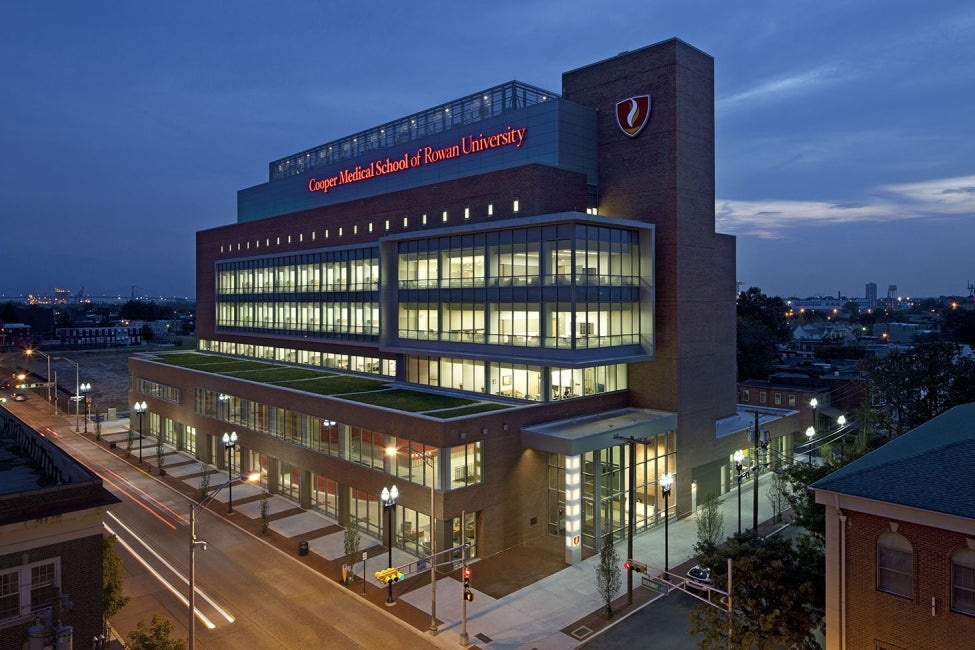
Cooper Medical School of Rowan University (CMSRU)
Cooper Medical School of Rowan University is a public medical school in Camden that opened in summer 2012 as a partnership between Rowan University and its clinical partner, Cooper. It is the only four-year, MD-granting medical school in South Jersey. The school has garnered attention for its Accelerated Three-Year Primary Care Track and its Edward D. Viner Center for Humanism. CMSRU has been listed among the “Top 10 Most Competitive” medical schools for admission in U.S. News & World Report, and it earned full LCME accreditation in June 2016, followed by full re-accreditation for the maximum eight years in November 2021.
CMSRU sums up its community focus in one line: “Camden is our classroom. Camden is our home.” Students begin applying classroom learning to real patients within the first few weeks of medical school, including at the student-run Cooper Rowan Clinic, and service learning is a required part of the curriculum. More than 470 students are enrolled, and since its first Commencement in 2016 the school has graduated 959 physicians.
Medical Degrees
- Four-year MD
- Three-year MD through the Accelerated Three-Year Primary Care Track (PC3): Family Medicine, Primary Care Pediatrics or Primary Care Internal Medicine
- MD/PhD with the Department of Biomedical Engineering of Rowan University
- MD/MBA with the William G. Rohrer College of Business
- 3+4 BS/MD with Rowan University for exceptional high school seniors
CMSRU Highlights
Here are some key features that distinguish CMSRU from other medical schools in New Jersey.
Three-year MD program. This highly selective track lets students who are committed to primary care graduate a year early with year-round classes and early primary care experience, and PC3 graduates go directly into a residency program. Starting in 2026, CMSRU takes up to eight PC3 students a year: two in Family Medicine, two in Primary Care Pediatrics and four in Primary Care Internal Medicine (two on a directed pathway to Cooper residency and two to Inspira). Students apply after they are accepted to CMSRU.
Center for Humanism. Providing a humanistic education in the art and science of medicine is the overarching mission of CMSRU. Students arrive with a high degree of empathy, and through elective classes, research, events and activities with dedicated faculty, the Edward D. Viner Center for Humanism helps each student build the skills to connect and communicate with patients so those instincts last through medical school and beyond.
Community engagement. CMSRU received the 2019 Spencer Foreman Award for Outstanding Community Engagement from the Association of American Medical Colleges. The student-run Cooper Rowan Clinic, required service learning and the school’s partnerships across Camden are examples of how CMSRU works to improve the health of its local community.
Pathways for younger students. CMSRU’s 3+4 BS/MD program lets exceptional high school seniors apply to Rowan University and CMSRU at the same time, and its MEDacademy summer course gives high school juniors college credit and early exposure to health careers. High school students exploring this route can also look at medical internships for high school students, and IMA’s guide to BS/MD programs explains how combined programs work.
Rankings. In U.S. News & World Report’s 2026 Best Medical Schools, CMSRU received a Tier 2 ranking in Primary Care and a Tier 3 ranking in Research.
CMSRU Selection Factors
CMSRU uses a mission-based review, and the Office of Admissions discusses five key selection factors.
Personal competencies. Applicants who demonstrate resilience, strong interpersonal skills, dedication to service, ethical integrity, adaptability, the ability to learn from criticism and strong collaborative character are highly valued in the selection process.
Work and life experiences. CMSRU looks for candidates whose activities resonate with its mission and show initiative, leadership and commitment over time, including evidence of clinical preparedness, personal scholarship (research) and service to one’s community.
MCAT. CMSRU considers your MCAT scores in the context of your entire application. A strong MCAT score is not required for admission, but it will improve your chances. For fall 2027 entry, the MCAT must have been taken between January 2023 and September 2026, and CMSRU uses the highest composite score from a single test date.
GPA. CMSRU thoroughly examines the strength of your coursework, academic performance, trends in grades and any post-baccalaureate and graduate courses.
Residency. CMSRU is a public, state-sponsored medical school. Approximately two-thirds of matriculating students are New Jersey residents, but out-of-state applicants are strongly encouraged to apply.
Application steps. CMSRU screens verified AMCAS applications and sends its secondary application only to applicants who meet initial screening criteria. The secondary fee is $100, waived for AMCAS Fee Assistance Program participants. CMSRU requires at least three letters of recommendation, two of them from academic faculty, and highly recommends the AAMC PREview exam. The regular AMCAS deadline is November 15, and the secondary, letters and fee are due December 15. Early Decision applicants must submit AMCAS by August 1 and meet minimums of a 3.5 overall GPA, a 3.6 science GPA and a 507 MCAT. Interviews are held virtually.
How Competitive is Cooper Medical School of Rowan University?
There is no GPA or MCAT score minimum for regular applicants to CMSRU. Admissions conducts holistic reviews of applicants, and academics are weighed alongside personal competencies and experiences. However, the following data from the Class of 2030 (as of August 2026) may give you an idea of what to expect:
- Applications received: 4,669
- Total students: 120
- New Jersey residents: 95
- Out-of-state residents: 25, from 10 states
- Average overall GPA: 3.87
- Average science GPA: 3.84
- Average MCAT: 514
CMSRU does not publish the number of offers it makes, so its current acceptance rate cannot be calculated from the school’s own figures. With 120 seats for 4,669 applicants, it remains one of the most selective programs in the state. For an in-depth look at what it takes to get into CMSRU, see: How to Get Into Cooper Medical School of Rowan University (CMSRU): The Definitive Guide.
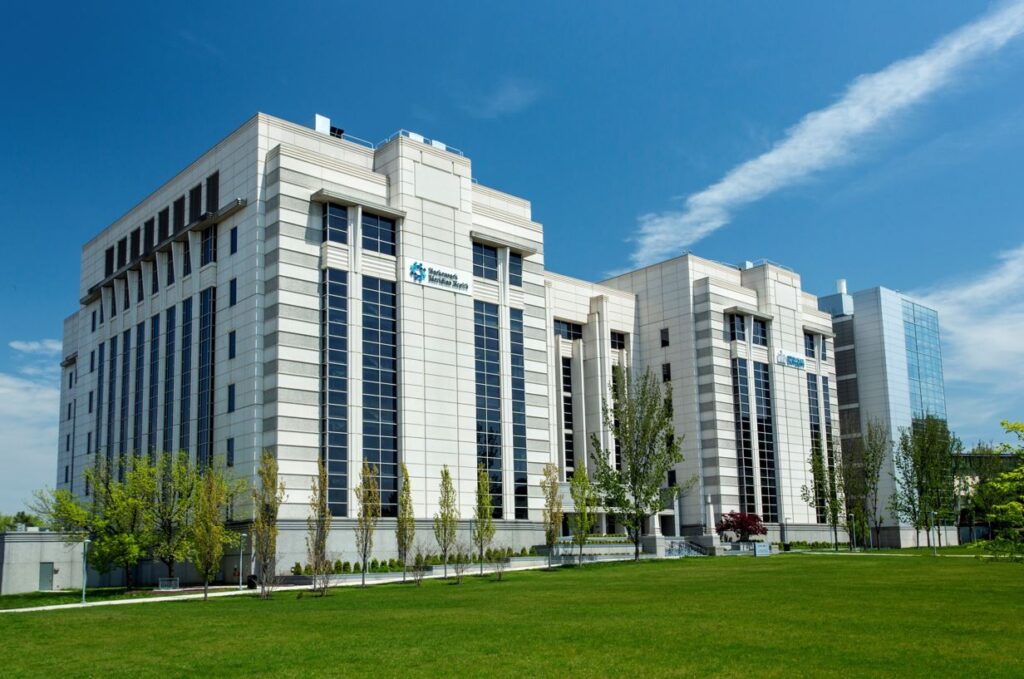
Hackensack Meridian School of Medicine (HMSOM)
Hackensack Meridian School of Medicine is a private medical school in Nutley. When it opened in 2015, it was the first private medical school in New Jersey to open in decades, and it admitted its first class of 60 students in summer 2018. Originally organized as a joint venture with Seton Hall University, the school has operated independently since July 3, 2020, and the LCME granted it full accreditation in February 2023. Its campus sits on the border of Nutley and Clifton at the former Hoffmann-La Roche headquarters.
HMSOM’s mission is “to develop our students, residents and faculty to deliver the highest quality care for all.” The school has quickly gained a reputation for an exceptionally patient-centered curriculum, built around its Human Dimension course. Students can complete the MD in four years or on an accelerated three-year track, and some enter residency directly after the three-year core curriculum through the school’s Phase 3 Residency program.
Medical Degrees
- Four-year MD
- Accelerated three-year MD track
- Phase 3 options that can include a dual degree or certificate program, clinical immersion, research-intensive work, a community-based project or entry into residency
HMSOM Highlights
Here are some key features that set HMSOM apart from other NJ medical schools.
Hackensack Meridian Health network. Hackensack Meridian Health (HMH) is a major health care system in New Jersey affiliated with the Hackensack Meridian School of Medicine. The network includes 17 hospitals and 38,000 team members statewide.
Human Dimension course. One of the most innovative aspects of HMSOM’s curriculum is its Human Dimension course. Pairs of students are matched to families in the communities the school serves and follow those individuals, families and communities over the entire core curriculum, paying attention to social, behavioral and medical health. Students learn through firsthand interactions what it’s like to move through the regional health care system, how the determinants of health shape outcomes, and how to best serve the needs of the community. The work also lays the foundation for the scholarly capstone project every student completes.
Phase 3 and an early start on residency. After the three-year core curriculum, students enter Phase 3, a customized period in which they choose a personalized pathway: a dual degree or certificate, clinical immersion, research-intensive activities, a community-based project or entry into residency. In the 2026 Match, 166 students matched into 24 specialties, and 39 of them came from the 2023 cohort through the Phase 3 Residency program while 127 came from the 2022 cohort.
A large share of New Jersey students. Hackensack Meridian has trained more than 500 doctors since 2018, and 65.6% of its 2026 cohort are New Jersey residents. The students in that cohort collectively speak 27 languages beyond English.
HMSOM Selection Factors
Let’s look at some key quotes from HMSOM’s criteria for selecting students:
“Our candidates must be committed to a future in which all persons have access to effect equal health outcomes, regardless of race and socioeconomic status.”
“You, as a candidate, should possess the personal qualities of integrity, empathy, concern for the welfare of others, interest, and motivation.”
“You must also be able to adapt to changing environments, to be flexible, and to function in the face of ambiguities inherent in the clinical situation.”
Additionally, HMSOM admissions looks for applicants who possess:
- The ability to develop mature, sensitive and effective relationships with patients, patients’ families and professional colleagues
- The capacity for prompt completion of all responsibilities associated with studying the diagnosis and care of patients
- The emotional and psychological health required for the full use of your intellectual abilities, and the exercise of good judgment
You can read these quotes from HMSOM alongside the full requirements. For July 2027 entry, the MCAT must be taken no later than September 30, 2026, and the oldest acceptable MCAT is from 2023. HMSOM requires three letters of recommendation, including at least one from a health care professional and at least one from an academic professor, dated within two years. Applicants must be U.S. citizens or permanent residents. The AMCAS deadline is December 1, the secondary application is due December 8 and the secondary fee is $100, waived for AMCAS Fee Assistance Program participants. HMSOM also participates in Early Decision, with an AMCAS deadline of August 1 and an HMSOM Early Decision secondary deadline of August 15.
How Competitive is Hackensack Meridian School of Medicine?
The holistic application reviews conducted by HMSOM don’t have a required GPA or MCAT score, and the school does not publish class MCAT or GPA averages. What it does publish is the size of the pool: the 2026 cohort of 162 students was selected from nearly 6,500 applicants, and nearly two-thirds of the incoming students, 65.6%, are New Jersey residents. Tuition for 2026-27 is $74,620, the same for every student. For a complete look into what it takes to get into HMSOM, see: How to Get Into Hackensack Meridian School of Medicine (HMSOM): The Definitive Guide.
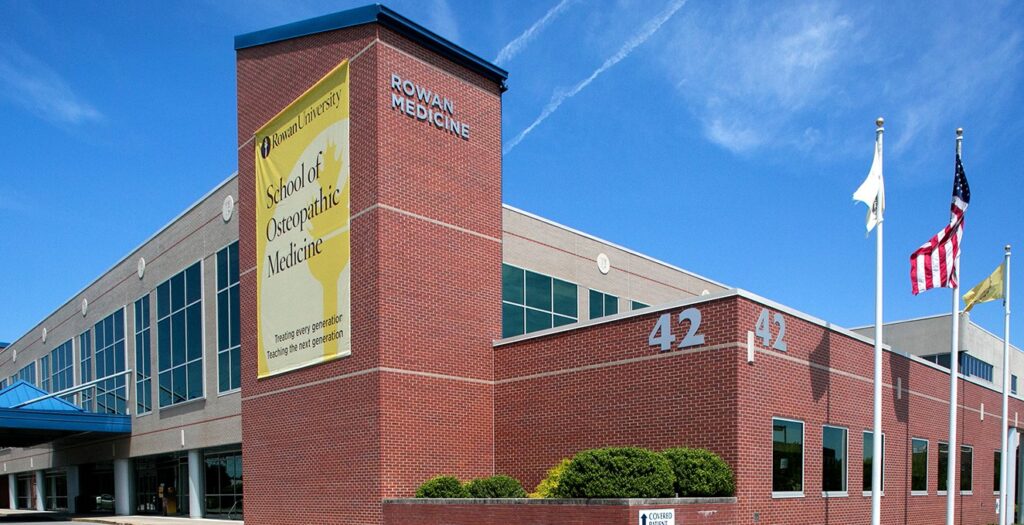
Rowan-Virtua School of Osteopathic Medicine (Rowan SOM)
Rowan-Virtua School of Osteopathic Medicine, formerly Rowan University School of Osteopathic Medicine, is a public medical school in Stratford that was established in 1976. It now has two campuses, Stratford and Sewell, and it is New Jersey’s only osteopathic medical school. Through its partnership with Virtua Health, the largest health system in South Jersey, DO students receive priority access to clerkships, residencies and fellowships across the Virtua system. Rowan-Virtua has a 98% residency match rate and received $40 million in extramural research funding in fiscal year 2025.
Medical Degrees
- Four-year DO
- Three-year DO through the Pathways to Primary Care 3+3 DO/Family Medicine Accelerated Degree Track
- DO/MBA
- DO/MPH (with the Rutgers School of Public Health)
- DO/JD (with Rutgers Law School in Camden)
- DO/PhD in Cell and Molecular Biology, Neuroscience or Biomedical Engineering
Rowan SOM Highlights
Aside from being the only osteopathic medical school in New Jersey, Rowan-Virtua SOM has several distinct qualities.
The Tensegrity Curriculum. In osteopathic medicine, tensegrity refers to the balance of forces that keeps the body stable. Rowan-Virtua’s Tensegrity Curriculum applies the same idea to training: it balances medical knowledge with communication, research, self-awareness, teamwork, leadership and community engagement. During the first two years, basic scientists and physicians teach together through active, case-based, student-centered learning in small-group clinical reasoning sessions, with system blocks, intersessions on topics such as geriatrics and health systems science, and an Osteopathic Clinical Skills course that includes osteopathic manipulative medicine and procedures such as point-of-care ultrasound. Four BRIDGE weeks across the program give formative feedback, and students can complete one of 12 Areas of Distinction.
Clinical training across South Jersey. The required core clerkships run at 15 hub sites across the region, and the clerkship years include a geriatrics clerkship, a four-week integrated OMM and rehabilitation clerkship, an ICU selective and a residency procedural “boot camp.”
A three-year DO for future family physicians. The Pathways to Primary Care 3+3 track lets students finish the DO in three years and move directly into a New Jersey family medicine residency at Virtua Health in Voorhees or Capital Health in Hopewell/Trenton. Only four students are accepted each year, two for each health system, and they are chosen from applicants already admitted to the four-year program.
Cell biology, neuroscience, molecular biology and engineering research. Rowan-Virtua provides medical students with research opportunities through its research faculty and its Summer Medical Research Fellowship. DO/PhD students graduate with degrees in Cell and Molecular Biology or Neuroscience through the Rowan-Virtua School of Translational Biomedical Engineering and Sciences, or in Biomedical Engineering with the Henry M. Rowan College of Engineering.
Rowan SOM Selection Factors
The Office of Admissions at Rowan-Virtua SOM reviews applications holistically and uses straightforward criteria to evaluate applicants:
- Undergraduate and graduate coursework
- MCAT score
- Volunteering and medically related experiences
- Leadership skills and the journey to medical school
- Quality interpersonal skills and a demonstrated compassion for others
- Letters of recommendation, preferably a pre-medical advisory committee letter or two letters from science faculty, with letters from DO physicians strongly recommended
Most importantly, Rowan-Virtua SOM favors applicants who demonstrate knowledge of osteopathic medicine and clear motivations for pursuing a career in osteopathy. The school also values success in overcoming economic and educational barriers, resilience, steady improvement in coursework, athletics, community service, cultural sensitivity and veteran status. If you are still building the kind of medically related experience Rowan-Virtua lists first, pre-health internships are one structured way to add hands-on patient contact.
Applications go through AACOMAS, and the primary deadline is February 1, 2027. Rowan-Virtua sends its supplemental application to all applicants; the fee is $90 and the supplemental deadline is March 15, 2027. Interviews are virtual.
How Competitive is Rowan University School of Osteopathic Medicine?
There is no minimum GPA or MCAT score required to apply to Rowan-Virtua SOM. However, candidates should have a science GPA of 3.50 or higher, a Biological and Biochemical Foundations (BBFL) score of 126 or higher and an MCAT score of 505 or higher. Here are the key admissions statistics the school publishes:
- 2026 Entering Class: average MCAT of 509, undergraduate science GPA of 3.70 and BBFL subscore of 127
- First-year matriculants in 2024-25: 269 at Stratford and 31 at Sewell
- In-state matriculants: 175
- Out-of-state matriculants: 94
MCAT scores are good for five years, and January 2022 is the oldest MCAT accepted for the 2027 entering class. Tuition for 2026-27 is $50,680 for in-state students, $78,086 for out-of-state students and $85,894 for international students. For more on applying, see: How to Get Into Rowan University School of Osteopathic Medicine: The Definitive Guide. IMA’s DO school rankings guide compares Rowan-Virtua with other accredited osteopathic schools.
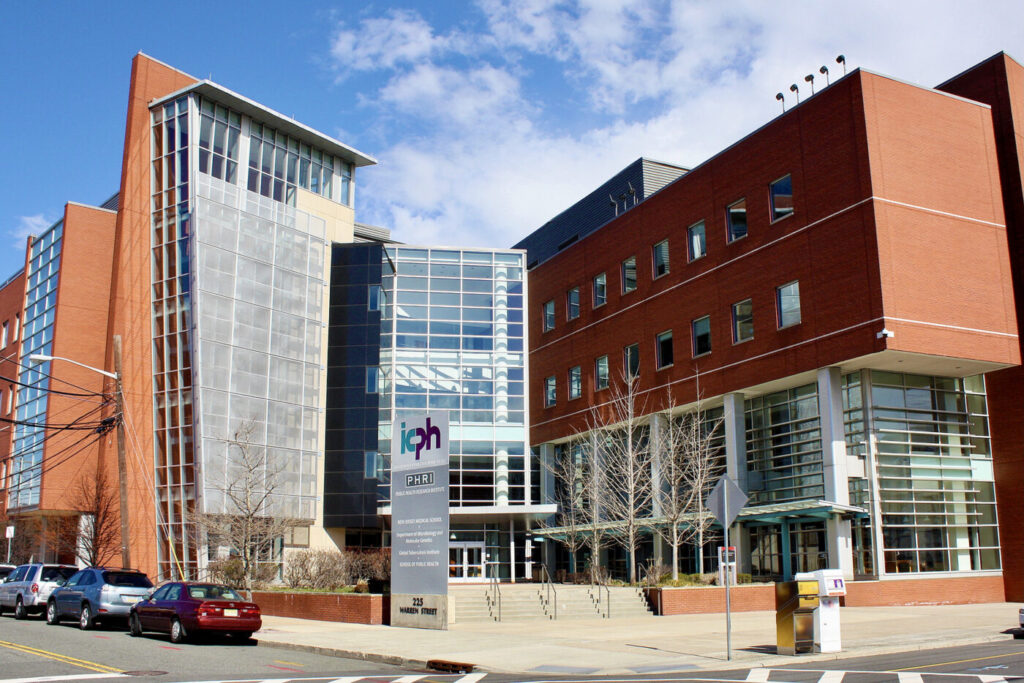
Rutgers New Jersey Medical School (RJMS)
Rutgers New Jersey Medical School is a public medical school in Newark and was established in 1954, when incorporation papers were filed for the Seton Hall College of Medicine and Dentistry of New Jersey, the state’s first medical school. Its first class of 80 students arrived in 1956, and NJMS is still the state’s oldest medical school. NJMS offers an accelerated three-year MD program, joint degrees and ten Distinction Programs. NJMS has the highest NIH funding in the state, and it is one of the two campuses that will form the future Rutgers School of Medicine.
Medical Degrees
- Four-year MD
- Three-year MD (Accelerated 3-Year MD Program)
- MD/MBA
- MD/MPH
- MD with Thesis
- MD/PhD (including an Early Decision MD/PhD option)
RJMS Highlights
Here are a few things that make Rutgers New Jersey Medical School unique among NJ medical schools.
Accelerated three-year MD. This program is open to students already accepted to the traditional four-year MD program who show academic excellence, clinical experience in a primary care setting and community health or leadership experience. Students choose a primary care specialty track when they apply (Internal Medicine, Medicine-Pediatrics, Obstetrics and Gynecology, Pediatrics or Psychiatry) and gain conditional acceptance into Rutgers-sponsored primary care residency programs.
University Hospital in Newark. NJMS’s core teaching hospital is home to northern New Jersey’s Level I Trauma Center. University Hospital is also a hub for liver transplants, through its Center for Advanced Liver Diseases and Transplantation, and for stroke care as a Comprehensive Stroke Center. Students also train at the East Orange VA Medical Center, Saint Barnabas Medical Center, Newark Beth Israel Medical Center and Morristown Memorial Hospital.
Distinction Programs. Students can apply to ten selective Distinction Programs: Artificial Intelligence in Medicine, Bioethics, Entrepreneurship and Innovation, Global Health, Medical Education, WellMentor, Research, Service, Service with a Limited English Proficiency track, and Urban Health. Completion is noted in the Dean’s Letter, on the transcript and on the diploma.
Diversity. NJMS is one of the most diverse medical school campuses. The Class of 2029 represents 61 colleges, 13 birth countries and 24 languages, and 74% of the class are first-generation medical students.
RJMS Selection Factors
As discussed in our Definitive Application Guide to Rutgers New Jersey Medical School, the NJMS Office of Admissions considers a broad range of factors, including:
- Academic performance (GPA, course rigor, academic trends and MCAT scores)
- Interpersonal skills, professionalism and emotional intelligence
- Reflection and clarity in the decision to pursue a career in medicine
- Leadership, self-awareness, ethical behavior and resilience
- Commitment to service, humanism and meaningful extracurricular engagement
- Capacity to contribute to and benefit from a diverse, inclusive learning environment
NJMS’s admissions goals add patient care experiences, grit, compassion and humility, teamwork, maturity and fit for NJMS. Every applicant receives the NJMS secondary application, which costs $95 (waived for AMCAS Fee Assistance Program participants) and is due December 15 along with letters of recommendation. The AMCAS deadline is December 1, or August 1 for Early Decision, and NJMS commits to reviewing completed Early Decision files within 48 hours. A pre-medical committee packet is preferred; otherwise NJMS requires at least two science letters and one non-science letter. Interviews are traditional one-on-one conversations. NJMS’s FAQ encourages applicants to gain clinical exposure before applying, and pre-med internships are one way to do that alongside local hospital volunteering.
How Competitive is Rutgers New Jersey Medical School?
NJMS does not have a minimum required GPA or MCAT score. Here are the most recent admissions statistics the school publishes:
- Applications received in 2025 (Class of 2029): 6,513
- Interviews conducted: 719
- New students welcomed: 174
- Median MCAT: 513 (Fast Facts, cohort not stated)
- Median undergraduate GPA: 3.7 (Fast Facts, cohort not stated)
NJMS gives equal consideration to in-state and out-of-state applicants. Its 2025 figures show that about 11% of applicants were interviewed (719 of 6,513). NJMS does not publish offers for its newest class, so a current acceptance rate is not available.
Rutgers Robert Wood Johnson Medical School (RWJMS)
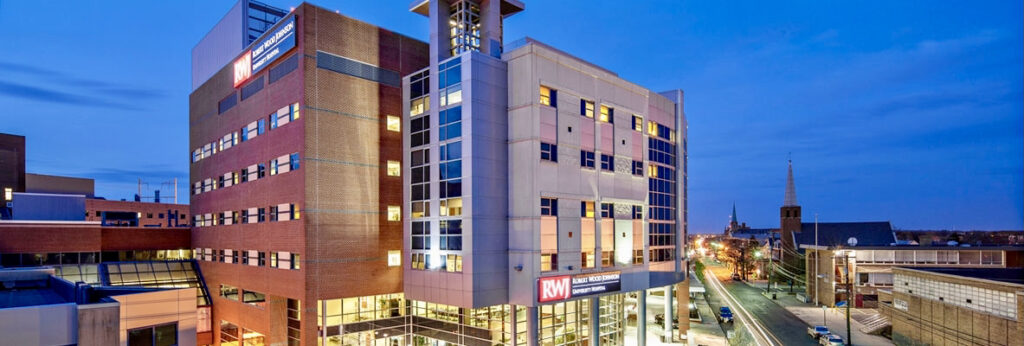
Rutgers Robert Wood Johnson Medical School is a public medical school with campuses in New Brunswick and Piscataway. It was founded in 1961 with a grant from the Kellogg Foundation. The school offers ample research opportunities through Robert Wood Johnson University Hospital, its principal teaching hospital, and Rutgers Cancer Institute, the state’s only NCI-designated Comprehensive Cancer Center. Additionally, RWJMS curricular and extracurricular activities are permeated with community and global health initiatives. In 2026, the medical school welcomes its first class to a new home in the Health and Life Science Exchange (HELIX) in New Brunswick, across from the train station.
Medical Degrees
- Four-year MD
- Three-year MD through the 3-Year Accelerated Program (family medicine or pediatrics)
- MD/PhD
- MD/MPH
- MD/MBA
- MD/MSCTS (MD plus MS in Clinical and Translational Science)
- BA/MD and PharmD/MD joint admissions programs
RWJMS Highlights
Here are some key features that distinguish RWJMS from other medical schools in New Jersey.
Special admissions programs. RWJMS offers several special admissions pathways, including options for undergraduate students at partner institutions, a PharmD/MD program, a BA/MD program and joint degree programs. Applicants interested in the three-year accelerated program indicate their interest on the secondary application; interest does not affect the holistic review.
Research. Medical students in all years can conduct research with more than 200 physicians and scientists, in areas from addiction and cancer to neurological disease and women’s health. Rutgers Cancer Institute and Robert Wood Johnson University Hospital are vital resources for students who want to get involved in research projects, and summer research programs and a Distinction in Research help students build their skills.
Curriculum. RWJMS has been a member of the AMA’s ChangeMedEd Consortium since 2015. Its curriculum has three phases: an 18-month pre-clerkship phase covering foundational sciences, organ systems, patient-centered medicine and health equity, and Community Engaged Service Learning; a clerkship phase; and an advanced clinical experiences phase. Students choose from more than 148 electives and can join one of 10 Distinction Programs, from bioethics and global health to medical innovation and entrepreneurship.
Community and global health. Students train alongside faculty at the Eric B. Chandler Health Center, a federally qualified health center, and run the Homeless and Indigent Population Health Outreach Project (HIPHOP), now in its 33rd year. Global health programs include study abroad in Africa, Asia, Europe and South America. If you want comparable experience before medical school, internships for pre-med students in international clinical settings can help you speak to global health with real examples.
RWJMS Selection Factors
The Office of Admissions at RWJMS lists seven personal competencies it looks for in applicants:
- Social/interpersonal and team skills
- Resilience and adaptability
- Orientation to service
- Desire to learn and capacity to learn
- Sensitivity to diversity and cultural competence
- Reliability and responsibility
- Integrity and ethics
In addition to these qualities, admissions evaluates applicants based on their unique life experiences, meaningful engagement in diverse activities and academic pursuits. Admission is determined on the basis of academic achievement in a balanced undergraduate education, MCAT results, pre-professional committee evaluations, extracurricular involvement, motivation, character, the interview and letters of recommendation.
RWJMS requires three letters of recommendation or a committee evaluation and accepts up to 10 letters. After receiving your AMCAS application, RWJMS emails a secondary application with an $80 fee, waived for AAMC Fee Assistance Program participants. Applicants must also submit either Casper or the AAMC PREview exam. Invited applicants complete a seven-station live video multiple mini interview. The AMCAS deadline is December 1, interview invitations start in September, and offers are made in late December and mid-March.
How Competitive is Rutgers Robert Wood Johnson Medical School?
RWJMS asks for the MCAT within three years preceding the application and no later than October of the application year, plus at least three years (90 semester hours) of college work and a bachelor’s degree by matriculation. Here is the Class of 2029 profile:
- New students: 165
- Average MCAT: 513
- Average GPA: 3.76
- Out of state: 26%
- First-generation college students: 19%
- Average age of first-year students: 23
About 74% of the Class of 2029 are New Jersey residents. In 2026, 96% of RWJMS graduates who took part in the National Resident Matching Program matched, compared with a national rate of 93.5%. For a complete look at applying, see: How to Get Into Rutgers Robert Wood Johnson Medical School: The Definitive Guide.
Good Luck to You!
We hope this article was helpful as you work through the medical school admissions process in New Jersey. Check out our other Medical School Guides for more school-specific tips and advice!
If this cycle does not go the way you hoped, a year spent strengthening your clinical experience, MCAT score or coursework can make your next application much stronger. Many reapplicants use that time for work in health care, research or pre-med gap year programs that add supervised patient care to their record.
Frequently Asked Questions
How many medical schools are in New Jersey?
New Jersey has five medical schools. Four grant the MD: Cooper Medical School of Rowan University, Hackensack Meridian School of Medicine, Rutgers New Jersey Medical School and Rutgers Robert Wood Johnson Medical School. One grants the DO: Rowan-Virtua School of Osteopathic Medicine, which teaches in Stratford and Sewell.
What is happening with Rutgers New Jersey Medical School and Robert Wood Johnson Medical School?
New Jersey Medical School and Robert Wood Johnson Medical School are preparing for full LCME accreditation to create the Rutgers School of Medicine, one school with comparable campuses in Newark and New Brunswick. Rutgers anticipates accreditation in June 2027, and summer 2028 is the time frame for the anticipated matriculation of the charter class. Until then, the two schools admit students separately, so apply to each one you want.
Which medical school in New Jersey is the easiest to get into?
No New Jersey medical school publishes a current acceptance rate, so there is no reliable ranking by ease of admission. Rowan-Virtua’s 2026 entering class had the lowest published MCAT average in the state (509), and the school prefers a science GPA of 3.50 or higher and an MCAT of 505 or higher. Among the MD schools, every published class average sits at 513 or above.
Which medical schools in New Jersey accept out-of-state students?
All five do. NJMS gives equal consideration to in-state and out-of-state applicants, and Hackensack Meridian is private with one tuition rate. CMSRU’s Class of 2030 included 25 out-of-state students, RWJMS’s Class of 2029 was 26% out of state, and Rowan-Virtua accepts applicants from across the country and abroad.
What MCAT score do I need for medical school in New Jersey?
There is no single cutoff. The latest published class figures are 514 at CMSRU, 513 at RWJMS, a median of 513 at NJMS and 509 at Rowan-Virtua. Hackensack Meridian does not publish a class average. CMSRU’s Early Decision program requires at least a 507.
What GPA do I need for medical school in New Jersey?
The latest published averages are a 3.87 overall GPA at CMSRU, 3.76 at RWJMS and a 3.70 science GPA at Rowan-Virtua; NJMS lists a median undergraduate GPA of 3.7. None of the schools sets a minimum GPA for regular applicants, but CMSRU’s Early Decision program requires a 3.5 overall and 3.6 science GPA.
Which is the cheapest medical school in New Jersey?
For New Jersey residents, the two Rutgers schools charged the lowest posted tuition, $47,137 in 2025-26, followed by CMSRU and Rowan-Virtua at $50,680 for 2026-27. Hackensack Meridian charges $74,620 to every student for 2026-27. Compare full cost of attendance, not just tuition, because fees and living costs add tens of thousands of dollars a year.
Do New Jersey medical schools accept international students?
Rowan-Virtua accepts international students and lists an international tuition rate of $85,894 for 2026-27. CMSRU and Hackensack Meridian accept only U.S. citizens and permanent residents. For the 2027 cycle, RWJMS accepts U.S. citizens, permanent residents and applicants under adjustment of visa status. NJMS does not post a citizenship rule on its admissions pages, so contact its admissions office directly.
Do New Jersey medical schools offer three-year MD programs?
Yes. CMSRU’s PC3 track, NJMS’s Accelerated 3-Year MD Program, RWJMS’s 3-Year Accelerated Program and Hackensack Meridian’s accelerated three-year track all let selected students finish in three years. Rowan-Virtua offers a three-year DO through its Pathways to Primary Care 3+3 track, which takes four students a year.
When are the application deadlines for New Jersey medical schools?
For the 2026-27 cycle, CMSRU’s regular AMCAS deadline is November 15. Hackensack Meridian, NJMS and RWJMS have AMCAS deadlines of December 1, with secondary deadlines of December 8 at Hackensack Meridian and December 15 at NJMS and CMSRU. Rowan-Virtua’s AACOMAS deadline is February 1, 2027 and its supplemental deadline is March 15, 2027. Apply early: CMSRU, Hackensack Meridian and NJMS review on a rolling basis, and RWJMS makes offers in late December and mid-March.
Do New Jersey medical schools require Casper or PREview?
RWJMS requires either Casper or the AAMC PREview exam. CMSRU highly recommends PREview, and Hackensack Meridian lists PREview on its requirements page. Rowan-Virtua treats PREview as optional, and NJMS does not require PREview or Casper.
How much clinical experience do New Jersey medical schools want?
None of the five schools publishes a minimum number of clinical hours. Each one reads your application for real exposure to patients: NJMS recommends work as an EMT, nursing assistant, medical technician or scribe, or hospital volunteering, and Rowan-Virtua lists volunteering and medically related experiences first among its selection factors.
IMA Resources
International Medical Aid has helped thousands of pre-health students gain hands-on clinical experience. IMA’s medical internships abroad place students in teaching hospitals and clinics where they take vitals, help with intake and triage and assist with direct care under the supervision of local physicians and nurses. Our medical school admissions consulting team can then help you turn that experience into a strong application to the New Jersey schools that fit you best.
Sources
All sources were checked October 17, 2026.
- LCME, Accredited Programs directory (updated October 14, 2026): lcme.org/directory/accredited-u-s-programs/
- Commission on Osteopathic College Accreditation, Colleges of Osteopathic Medicine directory (September 2026) and candidate status list: osteopathic.org
- Rutgers Health, Building the Rutgers School of Medicine and FAQs: rutgershealth.org/future-school-of-medicine
- Rutgers Health students cost of attendance, 2025-2026; Rutgers tuition and fee rates, 2026-2027: scarlethub.rutgers.edu and finance.rutgers.edu
- Cooper Medical School of Rowan University: Fast Facts 2026 (Class of 2030 snapshot), admission requirements, selection criteria, admissions FAQ, MD application process, important dates, 2026-2027 cost of attendance, Our History and PC3 FAQ: cmsru.rowan.edu
- Hackensack Meridian School of Medicine: requirements, admission process and procedures, criteria for selecting students, admissions overview, Early Decision, 2026-2027 cost of attendance, accreditation, About Us, school history, Phase 3, Human Dimension, 2026 Match data and “White Coat Ceremony Welcomes Ninth Cohort of Students” (July 17, 2026): hmsom.edu
- Rowan-Virtua School of Osteopathic Medicine: admissions, How to Apply, DO FAQ, 2026-2027 DO cost of attendance, dual degrees, curriculum, pre-clerkship and Pathways to Primary Care 3+3: som.rowan.edu
- AACOM Choose DO Explorer, Rowan-Virtua School of Osteopathic Medicine: aacom.org
- Rutgers New Jersey Medical School: Admissions Recruitment Pamphlet 2026, Fast Facts, admissions FAQ, application process, important dates, academic requirements, Accelerated 3-Year MD Program, Early Decision, Distinction Programs and history timeline: njms.rutgers.edu
- University Hospital, Newark: uhnj.org
- Rutgers Robert Wood Johnson Medical School: admissions, How to Apply, About, 3-Year Accelerated Program and At a Glance 2025-2026: rwjms.rutgers.edu