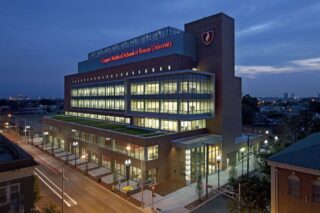

When aspiring physicians looking for a New Jersey medical school ask, “what are good medical schools near me?” it is hard to forget Cooper Medical School of Rowan University (CMSRU). CMSRU is a public, state-supported MD school in Camden, New Jersey, and it is the only four-year, MD-granting medical school in South Jersey. Though it is a relatively new school, since opening in 2012 it has drawn attention for its accelerated three-year primary care track, its pre-med summer program, its student-run free clinic and its Edward D. Viner Center for Humanism. It also made headlines in 2019 as one of the most selective medical schools in the country.
So what does it take to get into CMSRU? This guide covers the 2026-2027 application cycle, which leads to a class that starts in August 2027. You will find the school’s admissions requirements, deadlines, costs, curriculum, clinical training and student life, along with all four current secondary essay prompts, original example answers and an explanation of how each example works. The class statistics come from the Class of 2030, which entered in August 2026, plus applicant medians and interview counts for the 2025 entering class, and the costs come from the school’s finalized 2026-2027 budget. Facts were checked on November 4, 2026.
If you are thinking about applying to CMSRU, bookmark this page and use it alongside our other medical school guides as you build your school list.
Key Takeaways
- Eligibility is narrow on citizenship and broad on majors. CMSRU accepts only US citizens and permanent residents. It does not accept international or DACA applicants, and it does not accept transfer students. Any major is welcome if you finish a bachelor’s degree from an accredited US or Canadian four-year school before you start.
- The required course list is short. Only biology (two courses with lab), chemistry (two courses with lab) and one English course are required. Physics, organic chemistry, biochemistry, biostatistics, ethics, behavioral science, humanities and Spanish are recommended but are not used to rank applicants.
- The class is mostly from New Jersey, but not only. Approximately two-thirds of students are New Jersey residents. The Class of 2030 had 95 New Jersey residents and 25 out-of-state students from 10 states.
- Academic context: the Class of 2030 averaged a 514 MCAT, a 3.87 overall GPA and a 3.84 science GPA, drawn from 4,669 applications for 120 seats. For the 2025 entering class, accepted applicants had a median MCAT of 515 and a median GPA of 3.91, and 393 of 4,619 verified applicants were interviewed. There are no absolute GPA or MCAT cutoffs for regular applicants.
- Mission fit counts as much as academics. CMSRU says academic readiness and a match to its mission are equally valued. Camden, service learning and humanism run through everything the school does.
- Key dates for this cycle: submit AMCAS by November 15, 2026, and the secondary, fee and letters by December 15, 2026. Early Decision applicants submit AMCAS by August 1. Aim to return the secondary within two weeks.
- Costs: 2026-2027 tuition is $50,680 for New Jersey residents and $78,086 for non-residents, plus $2,641 in first-year student fees. The full first-year budget is $86,799 (resident) or $114,205 (non-resident) before health insurance.
- Next action: draft your four secondary answers now, before an invitation arrives, and gather the clinical and service experiences that show you understand communities like Camden.
Key Statistics About Cooper Medical School of Rowan University

The table below collects the figures applicants ask about most. Each row names its cohort or academic year, because class data and cost data come from different years.
| Measure | Figure | Cohort or year | Source |
|---|---|---|---|
| School and degree | Cooper Medical School of Rowan University, MD; Camden, NJ | Current | CMSRU About page |
| Accreditation | LCME, full reaccreditation for eight years (November 2021) | Current | CMSRU About page |
| Entering class size | 120 | Class of 2030, entered August 2026 | CMSRU Fast Facts 2026 |
| Applications received | 4,669 | Class of 2030 | CMSRU Fast Facts 2026 |
| Average MCAT (matriculants) | 514 | Class of 2030 | CMSRU Fast Facts 2026 |
| Average overall GPA (matriculants) | 3.87 | Class of 2030 | CMSRU Fast Facts 2026 |
| Average science GPA (matriculants) | 3.84 | Class of 2030 | CMSRU Fast Facts 2026 |
| New Jersey residents | 95 of 120 (25 out-of-state from 10 states) | Class of 2030 | CMSRU Fast Facts 2026 |
| Median MCAT (accepted applicants) | 515 (mean 514.6) | 2025 entering class | AAMC MSAR |
| Median overall GPA (accepted applicants) | 3.91 (mean 3.88) | 2025 entering class | AAMC MSAR |
| Median science GPA (accepted applicants) | 3.89 (mean 3.84) | 2025 entering class | AAMC MSAR |
| Verified applications | 4,619 (1,321 in-state, 3,286 out-of-state, 12 international) | 2025 entering class | AAMC MSAR |
| Applicants interviewed | 393 of 4,619 verified applicants (236 in-state, 157 out-of-state) | 2025 entering class | AAMC MSAR |
| Matriculants | 118 (85 in-state, 33 out-of-state by AAMC residency classification) | 2025 entering class | AAMC MSAR |
| Acceptance rate | Not published; offers of acceptance are not reported | Not applicable | CMSRU admissions pages; AAMC MSAR |
| Tuition, NJ resident | $50,680 (plus $2,641 student fees) | 2026-2027, Med Year 1 | CMSRU 2026-2027 finalized cost of attendance |
| Tuition, non-resident | $78,086 (plus $2,641 student fees) | 2026-2027, Med Year 1 | CMSRU 2026-2027 finalized cost of attendance |
| Total cost of attendance, Med Year 1 | $86,799 resident; $114,205 non-resident (health insurance not included) | 2026-2027 | CMSRU 2026-2027 finalized cost of attendance |
| Student health insurance | $5,988 single student (enroll or waive) | 2026-2027 | CMSRU 2026-2027 finalized cost of attendance |
| Secondary fee | $100 (waived for AMCAS Fee Assistance Program) | 2026-2027 cycle | CMSRU Apply to the MD Program page |
| Acceptance deposit | $100, refundable until April 30, 2027, applied to tuition | 2026-2027 cycle | CMSRU Apply to the MD Program page; AAMC MSAR |
| Deferred entry | Considered case by case | 2026-2027 cycle | AAMC MSAR |
| Average graduate debt | $209,178 (82% receiving aid) | Academic year 2024-2025 | AAMC MSAR (LCME Part I-B) |
| Residency match | 100% of 105 students seeking residency; 53.3% into primary care fields | Match Day 2026 | CMSRU Fast Facts 2026 |
Averages describe the students who enrolled. Medians describe all accepted applicants in the 2025 entering class, including people who enrolled elsewhere. Neither is a minimum. CMSRU does not publish an acceptance rate, and the number of offers it makes is not reported, so a true acceptance rate cannot be calculated. Applications divided by class size is not an acceptance rate, because enrolled students are only part of the group that receives offers. The interview figure is a useful substitute: about 8.5% of verified applicants (393 of 4,619) were interviewed for the 2025 entering class.
Mission and Educational Priorities
CMSRU states its mission this way: “Cooper Medical School of Rowan University (CMSRU) is committed to providing humanistic education in the art and science of medicine within a scientific and scholarly community in which excellence in patient care, innovative teaching, scholarly activity and service to our community are valued.”
Its vision is that CMSRU “will distinguish itself as an innovator in medical education and biomedical research that will lead to the transformation of healthcare.” Its core values are a commitment to a positive learning environment, mentorship, professionalism, patient advocacy, wellness, the communities it serves and scholarly activity. The school’s motto sums up the local focus: “Camden is our classroom. Camden is our home.”
CMSRU opened in 2012 to provide more medical education options in the region and to help address the physician shortage. The school says it was created in response to a growing and aging population, a projected physician shortage and too few medical school seats in the United States. It was the first new medical school in New Jersey in 35 years. The curriculum, described in detail below, puts students with patients early so they learn medicine as a human-centered service from the start.
What the mission means for applicants
Humanism is the overarching principle. The school calls humanistic education “an overarching principle” of its mission and describes its goal as producing “competent, confident and compassionate physicians.” In practice this shows up in the Viner Center for Humanism, required reflection in service learning and a third-year course called Becoming a Doctor; Staying Human. Applicants who can show empathy in action, not just describe it, fit what the school is looking for.
Camden is part of the curriculum. CMSRU describes Camden as a city where many residents struggle to meet basic needs for housing, food, health care and education. Service learning is required every year, and students care for uninsured patients at the student-run Cooper Rowan Clinic for three years. The school notes that Camden is a recognized “hot spot” for progressive approaches to community health. If you have worked with underserved communities, especially in cities, your experiences speak directly to this part of the mission.
Scholarship matters. Every student completes a capstone scholarly project through the Scholar’s Workshop course, with a thesis and poster. You do not need years of lab research to apply, but you should show curiosity and an ability to ask and answer questions.
A school with a “soul.” The admissions page explains that a deliberate goal in founding CMSRU was a culture that embodies “a school with a ‘soul,'” built through a mission-driven admissions process that brings in students with a wide variety of backgrounds and experiences. That is why the secondary asks what makes you unique and how CMSRU will help you fulfill your own mission.
For many, the attraction of the school is its integration with the regional community. In its curriculum and practice, this New Jersey medical school treats competent, human-centered service as the basic lesson of medical education.
Accreditation and Institutional Identity
CMSRU is accredited by the Liaison Committee on Medical Education (LCME), the accreditor for MD programs in the United States. It earned full accreditation in June 2016, shortly after its charter class graduated, and received full reaccreditation for the maximum eight years in November 2021. Its next LCME review is scheduled for the 2028-2029 academic year. The school announced the reaccreditation in a 2021 news release, and its curriculum pages list the general competencies and objectives students master before residency.
Institution. CMSRU is a partnership between Rowan University and its clinical affiliate, the Cooper health system. Governor Jon Corzine created the school by executive order in June 2009, and Cooper and Rowan signed a formal affiliation agreement in September 2010. Rowan is one of the few universities in the country that grants both MD and DO degrees. Its osteopathic school is a separate school with a separate application through AACOMAS.
Clinical partner. CMSRU’s clinical partner is Cooper Norcross Health, the name the system took in 2026 (formerly Cooper University Health Care). Its flagship hospital in Camden, Cooper Norcross Hospital, is the core clinical campus for CMSRU.
Campus. The six-story CMSRU Medical Education Building opened in July 2012 at Broadway and Benson Streets on the Cooper Health Sciences Campus in Camden. Since 2019, the Clinical Skills and Simulation Center has been in the Joint Health Sciences Center at Broadway and Martin Luther King Jr. Boulevard, a shared building with Rowan, Rutgers University-Camden and Camden County College.
Size. CMSRU had 474 enrolled students and 959 graduates in 2026, with its first commencement in 2016.
Cooper Medical School Ranking
U.S. News and World Report no longer gives most medical schools a single numbered rank. In the 2026 Best Medical Schools, CMSRU received a Tier 2 rating in Primary Care and a Tier 3 rating in Research, the third straight year it has been recognized in this system. In the 2023-2024 Primary Care rankings, before the change, CMSRU was ranked No. 1 in New Jersey, No. 2 in the Delaware Valley and No. 50 nationally. U.S. News has also listed CMSRU among its “Top 10 Most Competitive” medical schools for admission. In a 2021 list of New Jersey medical schools, College Gazette placed CMSRU third of five.
Rankings are a weak guide to fit. A better test is whether CMSRU’s mission, curriculum and location match the kind of physician you want to become.
In 2019, the Association of American Medical Colleges gave CMSRU its Spencer Foreman Award for Outstanding Community Engagement, which is presented each year to one AAMC-member medical school or teaching hospital.
Medical Programs and Affiliations
CMSRU’s primary pathway is the four-year MD. Applicants choose among several application types on AMCAS: Regular, Early Decision, MD/PhD and BS/MD. The school also offers an accelerated three-year track, an MD/MBA and a set of undergraduate pathways. Here is how each one works and when you apply.
Four-Year MD Program
Most students follow the four-year curriculum. CMSRU believes medical education should be “a seamless continuum over four years,” blending basic science, early clinical experience, self-directed learning, teamwork and community service. The curriculum is described in detail in the next section.
Accelerated Three-Year Primary Care Track (PC3)
The three-year track, known as PC3, awards the same MD degree as the four-year track in three years. It is for students committed to a career in Family Medicine, Primary Care Internal Medicine or Primary Care Pediatrics. Family Medicine joined the track starting with the class that entered in 2026.
Seats. Starting in 2026, PC3 takes up to eight students per year:
- 2 students for Family Medicine
- 2 students for Primary Care Pediatrics
- 4 students for Primary Care Internal Medicine: 2 in a directed pathway to Cooper residency and 2 in a directed pathway to the Inspira Medical Center-Vineland residency
How to apply. You apply to PC3 only after you are accepted to CMSRU. The application includes a personal statement and an updated curriculum vitae. Virtual information sessions run between November and March, and PC3 interviews are held in the spring. You choose one specialty when you apply. If a seat opens during the first year, an M1 student in the four-year track may apply. It is not possible to join in the second year.
What CMSRU looks for. The school’s PC3 criteria are sincere motivation to enter primary care internal medicine, pediatrics or family medicine, the maturity to succeed in an accelerated program and an excellent academic record. If you plan to become solely a subspecialist, such as a cardiologist, the school says this is not the track for you.
How it runs. PC3 students start medical school in late June. The track begins six weeks before the regular M1 year with Introduction to Basic Clinical Skills, a five-week course in communication, history-taking and physical diagnosis with standardized patients and task trainers, followed by a one-week Clinical Practice Course in primary care and specialty settings. PC3 students then spend a half-day every month at a primary care clinic in their chosen specialty, working with a faculty preceptor and residents in a Patient-Centered Medical Home. Their other first-year courses line up with those of the four-year students.
After a short break at the end of the first year, PC3 students take a five-week course called Transforming Healthcare in an Urban Environment. It covers social determinants of health, health care disparities, public health advocacy and policy, health care for people experiencing homelessness and trauma-informed care, and shows how teams at Cooper and in Camden deliver care to communities with complex medical and psychosocial needs.
In the second year, PC3 students continue their monthly clinic with more independence and responsibility, plus added exposure to population health management and behavioral health resources in primary care. They take USMLE Step 1 at the end of the second year with their four-year classmates.
The third year is redesigned for PC3. In the fall and early winter, students rotate through four-week clerkship blocks in neurology, psychiatry, surgery, internal medicine, OB/GYN, pediatrics and family medicine/adult primary care, paired with another PC3 student. In the spring they spend 11 continuous weeks in the CLOC rotation, with one half-day a week in each of six areas: neurology, internal medicine, pediatrics, surgery, OB/GYN and psychiatry. PC3 students take USMLE Step 2 CK by March 1 of the third year, with faculty-led review sessions. The year ends with a four-week sub-internship in their discipline, in which the student joins an inpatient team and works side by side with interns under the supervision of a senior resident.
Residency. PC3 students have a directed pathway to the Cooper Family Medicine residency, the primary care tracks of the Cooper Internal Medicine and Cooper Pediatrics residencies, and the primary care track of the Inspira Medical Center-Vineland Internal Medicine residency. This is not an automatic spot. Students must meet the academic and professional standards required of all students, including passing Step 1 and Step 2 CK, and those who do are “highly positioned and ranked to match.” Students may apply to other programs, but the school warns that the timing of the accelerated third year makes an outside match harder.
Cost and flexibility. There is no PC3 scholarship, but finishing in three years removes a year of tuition and fees and starts a resident salary a year sooner. A student who changes their mind may return to the four-year track until January 1 of the third year. There is no requirement to practice in New Jersey; PC3 alumni practice in New Jersey, Pennsylvania, New York and California. Students who want another degree, such as an MPH or MBA, should use the four-year track.
MD/PhD Program
For candidates with a background in biomedical engineering, CMSRU offers an MD/PhD with Rowan University’s Department of Biomedical Engineering in the Henry M. Rowan College of Engineering. Select MD/PhD as your AMCAS application type and complete the extra sections on your motivation and research experiences. You go through the same screening, interview and committee review as regular applicants, and CMSRU forwards your application to the department. You must be admitted by both programs.
MD/MBA Program
CMSRU runs a joint MD/MBA with Rowan’s William G. Rohrer College of Business. The accelerated program takes five years. You first gain admission to the MD program, then apply separately to the MBA. Students in good academic standing with CMSRU approval are guaranteed acceptance to the MBA.
BS-MD and Articulation Pathways
These routes are for high school seniors and undergraduates at partner schools. All BS-MD students are expected to stay involved with CMSRU and community service during college.
- Rowan 3+4 BS-MD. High school seniors apply to Rowan University and CMSRU at the same time, by November 1, choosing Rowan’s College of Engineering (biomedical engineering) or College of Science and Mathematics. Applications are screened in January, and interviews take place in late winter or early spring. At least three students from each cohort are accepted each cycle. After three successful undergraduate years, students are granted admission to CMSRU. They still submit an AMCAS application by November 15 of their third year but do not re-interview. Families exploring this route early may also look at medical internships for high school students to test their interest in medicine.
- Rowan BS in Biomedical Engineering-MD (4+i). A non-accelerated option for high school seniors who want a four-year engineering degree. Up to four students are accepted each cycle. Participants are guaranteed a CMSRU interview in their final year if they meet an overall and science GPA of 3.7 or higher, an MCAT at or above the 80th percentile and adequate clinical and service experience.
- Saint Joseph’s University 4+4 BS-MD. Up to four SJU students per year can earn preliminary acceptance after their sophomore spring. They must still apply through AMCAS and complete a CMSRU interview.
Clinical Affiliations
Cooper Norcross Health is CMSRU’s clinical partner. The school describes it as the leading academic health system in South Jersey, with more than 800 physicians in over 75 specialties across southern New Jersey. Its Camden flagship is South Jersey’s only Level I trauma center, and its Children’s Regional Hospital is the only Level II pediatric trauma center in the Delaware Valley. The system also operates MD Anderson Cancer Center at Cooper and the Cape Regional hospital in Cape May Court House. For PC3 internal medicine students, Inspira Medical Center in Vineland is a second residency partner.
Other programs on CMSRU’s site, such as the PhD in Cancer Cell Biology and Genomics and the certificate in population health, are graduate programs, not MD pathways.
Curriculum Overview
The four-year MD curriculum at CMSRU is designed to integrate foundational medical science, self-directed learning, early clinical exposure and patient-centered learning, service learning and teamwork. The school’s goal is to prepare graduates to be physicians, educators and positive contributors to society.
Students see real clinical cases and settings from the first weeks of medical school, and this continues through all four years. Clinical faculty teach early in the curriculum alongside basic science educators to tie scientific concepts to clinical scenarios, and basic science knowledge is reinforced during clinical rotations. The school calls this a “spiral” curriculum, which is also why it does not accept transfer students.
The coursework has two phases. Phase I, “Foundation and Integration,” covers the first two years and builds the science, skills and behaviors students need to begin clinical practice. Phase II, “Application, Exploration and Advancement,” covers the third and fourth years, when students apply their knowledge in real settings, explore specialties, contribute to medical science and develop advanced clinical skills.
How students learn
Active learning groups. The highlight of Phase I is the active learning group (ALG), a small group in which students and a faculty facilitator work through simulated patient cases. The Medical Education Building has more than two dozen dedicated active learning rooms for this work.
Self-directed learning time. The weekly Phase I schedule includes protected time for reflection and individual study.
Varied formats. Courses mix lectures, flipped lectures, team-based learning, clinical case discussions, laboratory sessions and review sessions.
First year (M1)
The M1 year opens with a one-week orientation and the eight-week Molecular Basis of Medicine course, which introduces biochemistry, cell and molecular biology, genetics, histology, embryology, physiology, pathology and pharmacology. One goal of this course is to “level the playing field” so that students from different backgrounds share the same base of knowledge.
Next comes Week on the Wards 1, a two-week course. In the first week students rotate through inpatient services at Cooper in small groups. In the second week they learn Lean Six Sigma process improvement and complete a small group improvement project on a hospital unit, earning a Lean Six Sigma Yellow Belt. The course also includes an interprofessional session with pharmacy, social work and nursing students.
The rest of the year is organ-system modules: Microbiology, Immunology and Infectious Diseases (eight weeks), Hematology-Oncology (five weeks), Neurology-Psychiatry and Skin-Musculoskeletal, which introduces gross anatomy and dissection. Running alongside the modules all year are three longitudinal courses:
- Ambulatory Clerkship. A three-year interprofessional course at the Cooper Rowan Clinic. M1 students take histories, M2 students perform physical exams and M3 students lead the team, report to faculty and lead the discussion of the differential diagnosis and plan. Pharmacy, social work and physical therapy students from partner universities work alongside them.
- Scholar’s Workshop. A four-year course in biostatistics, epidemiology, quality and patient safety, health care disparities, research and research ethics, ending in a capstone thesis and poster.
- Foundations of Medical Practice. A two-year doctoring course in communication, physical examination, cultural competency and ethics.
Selectives, short elective courses, run in the spring of the first year.
Second year (M2)
M2 continues the systems approach with Cardiovascular, Pulmonary, Endocrine, Gastroenterology, Uro-Renal, a second Week on the Wards, Introduction to OB/GYN, ENT/Allergy and Neuro-Psych. The Ambulatory Clerkship, Scholar’s Workshop and Foundations of Medical Practice continue, and selectives run in the fall.
Third year (M3)
The third year is a series of six-week clerkships with both hospital and outpatient experiences:
- Internal Medicine
- Surgery
- Obstetrics and Gynecology
- Pediatrics
- Psychiatry (four weeks) with Community Medicine (two weeks)
- Neurology (four weeks) with Anesthesiology (two weeks)
- Family Medicine and Adult Primary Care
Students also take four one-week electives, continue in the Cooper Rowan Clinic as team leaders and mentors for first- and second-year students, and work one-on-one with a faculty mentor on their capstone project. The Viner Center for Humanism runs Becoming a Doctor; Staying Human, a small group series meant to help students keep their empathy during the clerkship year. An optional five-session course, the Healer’s Art, offers another space for reflection.
Fourth year (M4)
The fourth year gives students flexibility to prepare for residency. Everyone completes four four-week required experiences:
- A sub-internship in the specialty of their choice, where the student serves in the role of a first-year resident under supervision
- Interprofessional Care of Chronic Conditions, with a choice of settings such as palliative care, geriatrics, rehabilitation or the Cooper Urban Health Institute
- A critical care clerkship in medicine, surgery, pediatrics or neonatal care
- Emergency Medicine
Students also take 16 weeks of electives, up to 12 of which may be away rotations, and Leadership in Community Health, a required spring course that builds on three years of service learning.
Integrated ultrasound
CMSRU runs a four-year, longitudinal ultrasound curriculum that puts probes in students’ hands from the first year. Students start with procedural ultrasound, nerve blocks and ultrasound-guided IVs, then learn cardiac, lung, gallbladder, renal and obstetric scanning on standardized patients and high-fidelity simulators. During the clinical years they rotate through sessions roughly every six weeks, and in the fourth year they apply ultrasound in emergency medicine and critical care.
Service learning
Community engagement through service learning is a required part of the curriculum every year, with a community service requirement of 35 hours per year. The school stresses that service learning is more than volunteering: students reflect on their experiences in small group discussions and essays to understand the social determinants of health. The medical part happens at the Cooper Rowan Clinic, and the non-medical part happens through partnerships with Camden organizations in health and social outreach, tutoring and mentoring, community engagement and youth fitness.
Scholarly Concentrations
Students in good academic standing may add an optional Scholarly Concentration, about 80 to 100 hours of extra work beyond the MD requirements, recognized on the transcript and in the dean’s letter for residency. Current areas are Biomedical Ethics, Medical Education, Medical Innovation and Entrepreneurship, JEDAI (Justice, Equity, Diversity, Anti-racism/Advocacy and Inclusion), Medical Humanities/Narrative Medicine, Climate Health, Leadership, Patient Safety/Quality Improvement and Global Health.
How PC3 differs
PC3 students take the same Phase I courses as four-year students but add the early clinical skills course, monthly primary care clinic and the summer urban health course. Their third year uses shorter four-week clerkship blocks and the 11-week CLOC experience, and they do not take part in the M3 ultrasound sessions or Becoming a Doctor; Staying Human, though they may take the Healer’s Art.
Admissions Requirements and Application Process
Selection Factors: What CMSRU Looks for in a Candidate
Good grades, strong scores, clinical experience and solid letters matter to medical schools across the country. Working on the AAMC’s Core Competencies for Entering Medical Students, seeking out well-rounded and impactful pre-med internships and getting expert advice are all good ways to strengthen your application.
Beyond those common expectations, most schools explain the qualities they prioritize. These are worth knowing because they help you focus your application and show the committee that you fit.
CMSRU uses a mission-based review. It considers every part of your application: the rigor of your coursework, clinical experience, research, leadership, service and other activities. Your AMCAS application, letters and secondary essays are all read together. The school seeks students “who have demonstrated academic excellence, who resonate with our mission, and who possess the personal attributes required of physicians.” It values intellectual curiosity, ethical conduct, an understanding of medicine as both an art and a science, open-mindedness and a service orientation to the community.
The school lists these criteria for interview selection:
- State of residence. CMSRU is a public, state-sponsored medical school. Approximately two-thirds of matriculating students are New Jersey residents, but out-of-state applicants are strongly encouraged to apply.
- GPA. The strength of your coursework, your performance, your GPA trends and any post-baccalaureate and graduate work are reviewed carefully.
- MCAT. Scores are considered in the context of your whole application.
- Work and life experiences. CMSRU looks for activities that resonate with its mission and show initiative, leadership and commitment over time, including clinical preparedness, research and service to your community.
- Personal competencies. Resilience, strong interpersonal skills, dedication to service, ethical integrity, adaptability, the ability to learn from criticism and strong collaborative character are highly valued.
The admissions FAQ adds that CMSRU values students who make long-term commitments to service and who will thrive in small group learning and a curriculum built on active learning. Every applicant receives a full, fair review of all submitted materials.
General requirements
- Citizenship. You must be a US citizen or permanent resident. CMSRU does not accept international applicants, and DACA recipients are not eligible.
- Degree. You must complete a bachelor’s degree at an accredited US or Canadian four-year institution before you start the MD program.
- AMCAS. A verified AMCAS application is required. CMSRU considers only materials submitted as part of a verified AMCAS application.
- English. Fluency in reading, writing and speaking English is required.
- Technical standards. Applicants must meet the school’s technical standards and attest that they have reviewed them in the secondary.
- Transfers. CMSRU does not accept transfer students.
Minimum GPA and MCAT requirements
There is no minimum GPA or MCAT score for regular applicants. CMSRU says it has no absolute thresholds but looks for evidence that each candidate can succeed in the curriculum, shown by the academic record, a successful balance of obligations and personal resilience. Still, GPA and MCAT scores predict success in medical school, so a record well below the class averages makes admission harder.
MCAT rules for this cycle:
- For fall 2027 entry, your MCAT must have been taken between January 2023 and September 2026.
- CMSRU uses your highest composite score from a single test date and does not combine section scores from different dates.
- You may submit AMCAS while you wait for a score if the rest of your application is complete.
Early Decision is the exception. To apply through the Early Decision Program, you need an undergraduate GPA of at least 3.5, a science GPA of at least 3.6 and an MCAT total of at least 507.
Required and recommended coursework
You must take the required courses at an accredited college or university in the US or Canada. AP and IB credit does not satisfy them, but if you received AP or IB credit you may substitute upper-level courses in the same subject. A three-credit intensive writing or English literature course may replace English composition. There is no time limit on when you took required courses. CMSRU accepts pass/fail grades and online lab sessions for coursework completed in the 2020-2021 through 2025-2026 academic years.
| Course | Status | Amount |
|---|---|---|
| Biology (any two courses with lab) | Required | 2 semesters / 8 credits |
| Chemistry (any two courses with lab) | Required | 2 semesters / 8 credits |
| English | Required | 1 semester / 3 credits |
| Biochemistry | Recommended | 1 semester / 3 credits |
| Organic Chemistry (with lab) | Recommended | 2 semesters / 8 credits |
| Physics (with lab) | Recommended | 2 semesters / 8 credits |
| Ethics | Recommended | 1 semester / 3 credits |
| Behavioral Science | Recommended | 1 semester / 3 credits |
| Biostatistics | Recommended | 1 semester / 3 credits |
| Humanities | Recommended | 2 semesters / 6 credits |
| Spanish | Recommended | 2 semesters / 6 credits |
The school keeps the required list short on purpose, to bring in a broad applicant pool with an array of skills and experiences. Recommended courses help you prepare for the curriculum and clinical work, but applicants are not ranked by how many they complete. That said, the MCAT covers organic chemistry, biochemistry, physics and behavioral science, so most applicants take them anyway. Spanish is worth a close look given the communities Cooper serves. If you want to build medical Spanish in a clinical setting, a medical internship in Peru is one way to practice it with patients.
Letters of recommendation
All letters must go through AMCAS Letters. CMSRU prefers, when possible, a letter from a pre-health committee or advisor that represents your school’s evaluation, and that committee letter may include other letters of support. If your school has no committee or advisor, submit individual letters: at least three, with at least two from academic faculty. There is no maximum. Ask people who know you well and can speak to your potential as a physician. Letters are due by December 15, 2026, for regular applicants.
A good letter comes from someone who knows you well and can describe your academic ability. The committee also looks for evidence of motivation, compassion, teamwork and leadership.
Experience
CMSRU does not list a minimum number of clinical or service hours. What it asks for is evidence of clinical preparedness, research or scholarship and long-term service to others. The 2025 entering class shows what that looks like in practice: 97% reported research or lab experience, 91% community service, 91% physician shadowing or clinical observation, 83% clinical volunteering and 75% paid clinical work. About 81% were science or math majors, and 7% held a graduate degree. The school does not offer shadowing to non-students; it suggests contacting Cooper directly about shadowing in Camden and southern New Jersey. Many applicants also build patient-facing experience through pre-med internships in the US or abroad.
AAMC PREview and other tests
Since the 2023 application cycle, CMSRU has highly recommended the AAMC PREview professional readiness exam. It is not listed as a requirement, but the school says it will enhance its mission-based review. If you can take it, plan for it early in your cycle.
AMCAS Primary Application and CMSRU Secondary Application
Applying to medical school requires two applications, a primary and a secondary. Most MD schools in the US use the American Medical College Application Service (AMCAS) as the primary application. Your AMCAS contains your biographical information, activities, transcripts, letters, MCAT scores and personal statement, and it goes to every school on your list. Each school then decides whether to invite you to complete its own secondary, which usually asks more questions about your motivation, experiences and fit. For more detail, read Primary vs. Secondary Applications: Understanding the Difference.
CMSRU’s process has six steps, laid out on its Apply to the MD Program page:
- AMCAS, MCAT and PREview. Submit a complete, verified AMCAS application. CMSRU will not review incomplete or unverified applications.
- Secondary application. CMSRU screens verified AMCAS applications on a rolling basis for academic readiness and mission match, and sends secondaries only to applicants who meet its screening criteria. The school says this is meant to reduce the financial burden of applying. Not every applicant receives a secondary. The invitation comes by email with a link to the CMSRU portal. The fee is $100, waived automatically for AMCAS Fee Assistance Program recipients.
- Interview selection. Trained reviewers read every completed secondary in a deeper, mission-based review. Because this is done by hand, it may take several weeks, and secondaries are generally screened in the order received.
- Interview. Selected applicants attend a virtual interview day.
- Admission decision. Each interviewed candidate is presented to the full Admissions Committee, generally the week after the interview. The committee votes to accept, waitlist or reject. The dean is informed of decisions but has no role in them.
- Acceptance and deposit. Admitted students submit a $100 deposit within two weeks to hold their seat. The deposit is non-binding, fully refundable until April 30 and applied to tuition. Requests to defer entry are considered case by case.
CMSRU uses rolling admissions. Early Decision applicants hear by September 30. Regular applicants begin hearing on October 15, and after that date most candidates hear within about a week of their interview. CMSRU says it will not extend deadlines, so submit early. You can send updates and letters of intent through your CMSRU portal.
Early Decision Program
CMSRU participates in the AAMC Early Decision Program. EDP suits applicants who are sure CMSRU is their first choice and who meet the GPA and MCAT thresholds above. You must submit AMCAS, including transcripts, MCAT scores and letters, by August 1 and finish the secondary by August 15. Interviews and decisions happen in August and September, and every EDP candidate hears by September 30. Under AAMC rules, an EDP applicant may apply only to that one school until a decision is made, and an accepted EDP applicant must attend. EDP is a small route at CMSRU: two members of the 2025 entering class, both New Jersey residents, enrolled through it, and the school expects about three EDP entrants in the next class.
Timeline for the 2026-2027 cycle
| Date | What happens |
|---|---|
| Early May 2026 | AMCAS opens |
| Early June 2026 | AMCAS applications may be submitted |
| Late June to early July 2026 | CMSRU begins downloading applications |
| July 2026 | First interview invitations sent |
| August 1, 2026 | Early Decision AMCAS deadline (transcripts, MCAT and letters) |
| August 15, 2026 | Early Decision secondary deadline |
| August to September 2026 | Early Decision interviews and decisions (by September 30) |
| August 2026 to March 2027 | Regular interviews |
| September 30, 2026 | Last MCAT accepted for this cycle (test dates through September 2026) |
| October 15, 2026 to March 2027 | Rolling offers to regular applicants; accept within two weeks |
| November 15, 2026 | Regular AMCAS deadline |
| December 15, 2026 | Deadline for letters, secondary and fee |
| April 30, 2027 | Hold only one acceptance; deadline for written deposit refund request |
| July 1, 2027 | Final transcripts due |
| Second week of August 2027 | Orientation and classes begin (PC3 students start in late June) |
If you are planning a year ahead, use the summer before you apply for clinical work, research or pre-med summer internships, and aim to submit AMCAS in June so your secondary arrives early in CMSRU’s rolling review. The school’s important dates page lists the full calendar.
Tuition, Cost of Attendance and Financial Aid
For 2026-2027, first-year tuition at CMSRU is $50,680 for New Jersey residents and $78,086 for non-residents, with $2,641 in first-year student fees. These replace the 2022 figures of $40,479 and $64,240 with $2,290 in fees. Tuition and fees may rise each year.
The school’s finalized budget shows the full cost by year. All students are billed only tuition and student fees; the other lines are estimated living costs used to set financial aid.
| Item | Med Year 1 | Med Year 2 | Med Year 3 | Med Year 4 |
|---|---|---|---|---|
| Months of enrollment | 11 | 10 | 12 | 10 |
| Tuition, NJ resident | $50,680 | $50,680 | $50,680 | $50,680 |
| Tuition, non-resident | $78,086 | $78,086 | $78,086 | $78,086 |
| Student fees | $2,641 | $3,160 | $3,160 | $2,741 |
| Direct loan origination fee | $528 | $451 | $498 | $451 |
| Food and housing | $24,200 | $22,000 | $26,400 | $22,000 |
| Books and supplies | $1,600 | $600 | $600 | $600 |
| USMLE exam | $0 | $695 | $695 | $0 |
| Transportation | $4,950 | $4,500 | $5,400 | $4,500 |
| Personal | $2,200 | $2,000 | $2,400 | $2,000 |
| Total, NJ resident | $86,799 | $84,086 | $89,833 | $82,972 |
| Total, non-resident | $114,205 | $111,492 | $117,239 | $110,378 |
A few details matter when you compare schools:
- Health insurance is extra. The Rowan student health insurance rate for 2026-2027 is $5,988 for a single student. You enroll or waive it, and it is billed on the fall term bill.
- First-year books include a laptop. The $1,600 books line includes a $1,000 computer purchase.
- Board prep is in the fees. Step preparation and review materials are included in the M2 and M3 student fees; the $695 exam registration is listed separately.
- Parking costs extra. Student parking costs $266.50 a year for day parkers or $373.10 for 24-hour access.
- PC3 budgets differ. The three-year track’s 2026-2027 totals are $86,799, $86,960 and $87,060 for residents and $114,205, $114,366 and $114,466 for non-residents, and the third year carries $3,260 in student fees. The savings come from skipping a fourth year.
- Residency for tuition. CMSRU follows New Jersey rules under which people who live in the state for 12 months before first enrolling at a public institution are presumed to be residents for tuition. A student recorded as out-of-state at matriculation stays out-of-state for all four years. Veterans should contact the Rowan University Veteran Affairs Office about tuition.
For comparison, first-year tuition and fees for 2025-2026 were $50,830 for residents and $76,932 for non-residents, with total estimated costs of $80,381 and $106,483. The 2026-2027 figures above are newer and should be used for planning.
Scholarships and aid
All accepted students may apply each year for CMSRU’s donor-funded institutional scholarships by filing the FAFSA and the CMSRU institutional form. The school lists close to 20 endowed scholarships and a similar number of restricted funds. Examples include:
- The Herblan Endowed Scholarship, a four-year tuition award for a PULSE graduate or a student with merit and need
- The William G. Rohrer Charitable Foundation Scholarship, a one-year full-tuition award for an incoming New Jersey student with merit and need
- The George E. Norcross III Endowed Scholarship for students from Camden, Pennsauken or Camden County
- The Dr. Julian and Sunny Feldman Endowed Scholarship, a four-year award for a Pennsylvania resident
- The Measey Foundation grants, one-year tuition awards of at least $20,000 to four first-year students with need
- The CMSRU Trustee Scholarship Fund, which supported 22 one-year merit awards across all classes
- The Taiyed and Amta Mama Endowed Global Health Scholarship, which helps fourth-year students take an overseas medical elective of at least four weeks
External options the school lists include the Armed Forces Health Professions Scholarship Program, National Medical Fellowships and the National Health Service Corps, which pays tuition for students committed to primary care in underserved areas.
Debt
For the 2024-2025 academic year, 82% of CMSRU students received financial aid, and indebted graduates had average medical school debt of $209,178. For a detailed breakdown of medical school expenses, loans and repayment, see our guide to The Cost of Medical School in 2022. The full budget is on CMSRU’s cost of attendance page.
Campus Facilities and Student Life
Facilities
CMSRU’s main facilities include:
- The Medical Education Building. Six stories at Broadway and Benson Streets in Camden, with a 250-seat auditorium, more than two dozen active learning rooms for first- and second-year small groups and self-directed study, research and teaching labs, an anatomy lab, library commons and study spaces, and student wellness spaces.
- The Clinical Skills and Simulation Center. Co-run by CMSRU and Cooper and located in the Joint Health Sciences Center since 2019. It covers more than 12,000 square feet, with 12 exam rooms for clinical skills exams and five high-fidelity rooms, including a surgical suite, a birthing suite, a pediatric room and two inpatient rooms. It uses standardized patients, task trainers and high-fidelity mannequins and conducts research on patient safety and simulation.
- The Wellness Center. A 1,508-square-foot exercise space on the fourth floor of the Medical Education Building, plus a meditation room that also serves as a lactation and prayer room.
- The Medical Student Lounge at Cooper. A space for third- and fourth-year students in the hospital’s Pavilion building.
- Food. The STAT Café in the Medical Education Building, the Cooper Hospital cafeteria and a Starbucks in the Pavilion.
Housing, transportation and safety
CMSRU does not provide student housing. The Office of Student Affairs helps students find safe housing and roommates, and the school partners with Places4Students.com, a free off-campus housing service. Orientation and classes begin in the second week of August, so plan to move earlier.
Whether you need a car depends on where you live, but during third-year clerkships you will need access to a car to reach some affiliated sites. CMSRU has a 24-hour parking garage for a yearly fee. Rowan security officers patrol the Medical Education Building day and night and will escort students to parking, public transportation and service learning and clinical sites on request. The school also contracts with the Camden County Sheriff’s Department for round-the-clock patrols of the health sciences campus.
Wellness and student support
The Office of Student Affairs runs a wellness program built on eight dimensions of wellness: social, intellectual, physical, spiritual, environmental, emotional, financial and occupational. Activities include yoga, Pilates, fitness classes, wellness days, trivia, pet therapy, stair challenges and sessions on stress and mindfulness. Students also belong to advisory college learning communities. Learning support services help students with study strategies.
Student Organizations
CMSRU’s Office of Engagement and Community Impact sponsors student engagement groups that share and promote awareness of the different values and belief systems in the school. All students may join any group, and a student Unity Council with representatives from each group works on curriculum that better meets the needs of Camden’s patients and on community engagement. Current groups include:
- American Medical Women’s Association (AMWA)
- Asian Pacific American Medical Students Association (APAMSA)
- Association of Women Surgeons (AWS)
- Christian Medical Students Association (CMSA)
- Cooper Pride
- Disability Awareness Association at Cooper (DAAC)
- Jewish Medical Student Association (JMSA)
- Latino Medical Student Association (LMSA)
- Medical Students for Size Inclusivity (MSSI)
- Middle Eastern Students Association (MESA)
- Muslim Medical Students Association (MMSA)
- South Asian Medical Students Association (SAMSA)
- Student National Medical Association (SNMA)
Students also lead groups such as the CMSRU Green Team and the medical student a cappella group, Acoopella. Honor societies include the Gold Humanism Honor Society, the Chiron Honor Society and Alpha Omega Alpha.
Pre-medical Urban Leaders Summer Enrichment (PULSE)
CMSRU’s Pre-medical Urban Leaders Summer Enrichment (PULSE) program is a six-week, full-day summer program for undergraduates pursuing health care careers, with a focus on students from underrepresented and educationally or financially disadvantaged backgrounds. It offers academic enrichment, clinical experience, research and service learning centered on urban health, and it ends with a poster symposium. Students describe it as demanding; one dean compared it to “trying to drink water from a fire hydrant.” The AAMC’s 2019 Spencer Foreman Award for Outstanding Community Engagement recognized CMSRU’s community work, including its pipeline programs. Programs like PULSE are one of several structured medical internships for undergraduates that can help you test your interest in medicine. Check CMSRU’s site for the current year’s application dates.
Edward D. Viner Center for Humanism
The Edward D. Viner Center for Humanism, named for its founding director, aims “to discover, refine and promote state-of-the-art tools to foster the development of humanistic and professional healthcare practitioners.” It works through education and mentorship, research and publications, medical ethics programs and consultation, and it promotes empathy, respect, integrity, altruism and the pursuit of excellence. Its areas of focus have long included bioethics and law, communication and compassion, wellness and burnout prevention, and humanism and professionalism research.
The center’s founders pointed to research showing that medical students start training with a high degree of empathy but often show less by graduation, in part because students have fewer chances to learn the “soft” skills of medicine from experienced clinicians. CMSRU’s third-year course description makes the same point: research shows that students’ empathy declines during the clerkship year. The center’s goal is to help students stay compassionate, empathetic and ethical throughout their careers. Its programs include selectives for first- and second-year students, Becoming a Doctor; Staying Human, the Gold Humanism Honor Society, a narrative medicine workshop, Commensality and the Humans of CMSRU project.
Clinical Rotations and Research Opportunities
The Cooper Rowan Clinic
Clinical experience at CMSRU starts in the first weeks of medical school at the Cooper Rowan Clinic, a free, student-run primary care clinic in Camden for uninsured and underinsured adults. Students serve as primary care providers for about 600 patients a year, who receive free medications, specialty services, labs and imaging. The clinic is open four days a week, and at least one licensed faculty physician and one pharmacist are on site during clinic hours. Students also act as health advocates, helping patients find social and medical resources and going with them to appointments. Because the Ambulatory Clerkship lasts three years, students can follow the same patients over time and grow from history-taking to leading the team.
Core clerkship sites
Most clinical training takes place at Cooper Norcross Hospital in Camden, CMSRU’s core clinical campus, and across the Cooper system’s outpatient offices. Students see trauma care at South Jersey’s only Level I trauma center, pediatric care at Children’s Regional Hospital and cancer care at MD Anderson Cancer Center at Cooper. The pediatrics clerkship includes the NICU, mother-infant units, general pediatrics, outpatient subspecialty clinics and the pediatric emergency room. The internal medicine clerkship places each student on a teaching team with an attending, a senior resident, an intern and other students, including a week of night medicine. Third-year students need a car for some affiliated sites.
Electives and away rotations
Fourth-year students choose 16 weeks of electives, both clinical, such as cardiology and gastroenterology, and non-clinical, such as health care administration and informatics. Up to 12 weeks may be away rotations, arranged through the AAMC’s Visiting Student Learning Opportunities service. Selected global health experiences are also possible.
Global health
The Center for Global Health and Global Health Education (CGHEd), founded in 2023 and led by urogynecologist Anna Pancheshnikov, MD, offers the Global Health Scholarly Concentration and mentored projects in local, national and international settings. The center follows ethical guidelines for short-term global health work and takes a “glocal” approach that treats health needs in Camden and abroad as connected. Its GURU initiative, a partnership with Universidad Iberoamericana (UNIBE) in Santo Domingo, has trained more than 100 Dominican gynecology and urology residents and physicians and evaluated more than 300 low-income patients. In the 2025 Graduation Questionnaire, 9% of CMSRU’s graduating seniors reported a global health experience during medical school. Applicants who have already done pre-med internships abroad can connect that experience to CGHEd’s emphasis on ethical, sustainable work.
Research
In a recent academic year, CMSRU faculty received nearly $4 million in research funding and published 349 scholarly articles. Direct federal research grants and contracts totaled $1,904,417 in fiscal year 2024. Students can take part through:
- The Student Summer Research Program. Clinical and laboratory projects with mentors at CMSRU, Cooper and other Rowan colleges, posted in winter for the following summer.
- The Camden Scholars’ Forum. An annual poster competition for students, residents, fellows and clinical staff. In 2022, 165 student posters qualified.
- Extramural grants and research years. Students can seek outside funding for summer or yearlong projects.
- The capstone. Every student completes a capstone project with a faculty mentor, with a thesis and poster.
Research centers include the Camden Cancer Research Center, a collaboration of CMSRU, MD Anderson Cancer Center at Cooper and the Coriell Institute for Medical Research.
Residency outcomes
On Match Day 2026, all 105 CMSRU students seeking residency matched, the 11th straight year of a 100% match. Of those, 53.3% entered primary care fields, including internal medicine, family medicine, pediatrics and obstetrics and gynecology, while others matched in fields such as anesthesiology, emergency medicine, neurology, psychiatry, plastic surgery, orthopaedic surgery, otolaryngology, ophthalmology, urology and vascular surgery. About a third (32.4%) stayed in New Jersey, including 17 who stayed at CMSRU and Cooper.
Notable Alumni, Faculty, Leadership and Admissions Staff
Knowing who leads and teaches at CMSRU helps you understand what the school values. The profiles below come from CMSRU’s official pages and were checked on November 4, 2026. Mentioning a faculty member’s work in an essay is fine when it connects to your own interests, but do not assume any one person will be your mentor or interviewer.
Leadership
Annette C. Reboli, MD, Dean. Dr. Reboli is CMSRU’s dean and chief academic officer and a professor of medicine. Before becoming dean she was the school’s Founding Vice Dean, responsible for LCME accreditation, medical education, faculty affairs and clinical affiliations, and she also served as interim dean. An infectious diseases physician trained at Georgetown and the Medical University of South Carolina, she led infectious diseases at Cooper’s Camden hospital, now Cooper Norcross Hospital, has authored more than 180 publications and studies invasive candidiasis. She became a voting member of the LCME in 2018. Applicants meet her at the start of every virtual interview day.
Jocelyn Mitchell-Williams, MD, PhD, Senior Associate Dean for Medical Education. Dr. Mitchell-Williams oversees the curriculum, the simulation center, library services and assessment. She was part of CMSRU’s founding leadership in 2010 and was the founding associate dean for engagement and community impact, where she built pipeline and community service programs and helped lead the school to the 2019 Spencer Foreman Award. She holds engineering degrees and a PhD in biomedical engineering from Rutgers and an MD from Robert Wood Johnson Medical School, and she trained in OB/GYN at Cooper.
Guy Hewlett, MD, FACOG, Associate Dean for Engagement and Community Impact. Dr. Hewlett leads the school’s community engagement work and is medical director of Labor and Delivery at Cooper. He speaks at interview day and works with programs such as PULSE.
Lawrence Weisberg, MD, Associate Dean for Professional Development. Dr. Weisberg, head of nephrology at Cooper and emeritus director of the Viner Center for Humanism, is responsible for a positive learning environment and a humanistic, professional culture across the school and health system. He has won many teaching awards.
Admissions
Douglas Reifler, MD, Senior Associate Dean for Student Affairs and Admissions. Dr. Reifler is a primary care general internist with a strong interest in medical humanities. He earned his MD at UC San Diego, trained at Northwestern and held associate dean roles at Rosalind Franklin University and Temple’s Lewis Katz School of Medicine before joining CMSRU.
Nirandra Mahamitra, MD, Assistant Dean for Admissions. Dr. Mahamitra is an associate professor of family medicine who served as acting chair of family medicine at Cooper and as Family Medicine Clerkship Director and M4 Curriculum Director. He holds both a law degree and an MD. Applicants hear from him at the interview-day welcome and in the live question-and-answer session.
Gisselle Mayock, MS, Senior Director of Admissions, works with the admissions team, which can be reached at [email protected].
Faculty
Camille Henry, MD, PC3 Director. Dr. Henry, an internal medicine-pediatrics physician, directs the accelerated three-year primary care track and presents it at interview day. Questions about PC3 go to her office at [email protected].
Amanda R. Burden, MD, FASA, Assistant Dean for Clinical Skills and Simulation Education. Dr. Burden has directed clinical skills and simulation at CMSRU since the school opened. A professor of anesthesiology, she studies how simulation can improve decision-making in crises and patient safety, has received funding from the Anesthesia Patient Safety Foundation and the Agency for Healthcare Research and Quality, and has spoken on simulation at the White House Office of Science and Technology.
Elizabeth Cerceo, MD, Professor of Medicine. Dr. Cerceo directs Medical Humanities and Climate Health at CMSRU and is core faculty in the Viner Center. Under her leadership CMSRU earned national recognition for climate health education. She advises the CMSRU Green Team and edits for BMC Medical Education. Applicants interested in the Climate Health or Medical Humanities concentrations will see her influence.
Mara Gordon, MD, Assistant Professor of Family Medicine. Dr. Gordon cares for patients of all ages at the Cooper Family Medicine office at the Kroc Center in Camden, co-directs the Narrative Medicine Scholarly Concentration and teaches selectives in narrative medicine and audio storytelling. Before joining CMSRU she was the 2018-2019 Health and Media Fellow at NPR and Georgetown.
Anna Pancheshnikov, MD, Director of CGHEd. Dr. Pancheshnikov, a urogynecologist and assistant professor of obstetrics and gynecology, founded the GURU partnership in the Dominican Republic in 2017 and now leads CMSRU’s global health center.
Alumni
Cynthia Glickman, MD (CMSRU ’16). A member of CMSRU’s charter class, Dr. Glickman was elected to the Gold Humanism Honor Society, completed internal medicine residency at Cooper and served as chief resident. She is now an attending hospitalist, assistant internal medicine clerkship director and core faculty in the Viner Center, and she was named the 2026-27 Gold Humanism Scholar at the Harvard Macy Institute. Before medical school she completed a fellowship in Guatemala.
Jessica Richmond, MD. A CMSRU graduate who completed internal medicine residency at Cooper, Dr. Richmond practices general internal medicine and primary care on the CMSRU faculty. She received CMSRU’s Excellence in Service Award and was a National Medical Fellowship Scholar.
Christian Bruni, MD, MS. A CMSRU graduate who trained in pediatrics at Cooper, Dr. Bruni is an assistant professor of pediatrics with interests in preventive medicine, medical education and the care of medically complex children. He is a member of the Gold Humanism Honor Society.
These alumni show a pattern worth noticing: many CMSRU graduates stay at Cooper for residency and return to teach. With 17 graduates staying at CMSRU and Cooper in the 2026 Match alone, the school is building its own faculty pipeline.
Admissions Statistics and Class Profile
Below are the key admissions figures so you can see how competitive CMSRU is and what a typical class looks like.
Class of 2030 profile
| Measure | Class of 2030 (entered 2026) | Class of 2029 (entered 2025) |
|---|---|---|
| Applications received | 4,669 | 4,619 |
| Total students | 120 | 118 |
| New Jersey residents | 95 | 84 |
| Out-of-state residents | 25 from 10 states | Not listed |
| Average overall GPA | 3.87 | 3.86 |
| Average science GPA | 3.84 | 3.82 |
| Average MCAT | 514 | 513 |
| Graduates of Rowan University | 11 | 14 |
| Students with advanced degrees | 4 | 6 |
Sources: CMSRU Fast Facts 2026 (Class of 2030, as of August 2026) and Fast Facts 2025-26 (Class of 2029, as of August 2025). Six members of the Class of 2030 came through Rowan’s 3+4 BS-MD program.
Accepted applicants and the applicant pool, 2025 entering class
The class averages above describe enrolled students. The figures below cover every accepted applicant and every verified application for the 2025 entering class, so they show where offers went and how many applicants reached the interview stage.
| Measure | Median | Mean (standard deviation) | Source |
|---|---|---|---|
| MCAT total | 515 | 514.6 (4.8) | AAMC MSAR |
| Chemical and Physical Foundations | 129 | 128.8 (1.8) | AAMC MSAR |
| Critical Analysis and Reasoning Skills | 127 | 127.3 (2.0) | AAMC MSAR |
| Biological and Biochemical Foundations | 129 | 128.9 (1.7) | AAMC MSAR |
| Psychological, Social and Biological Foundations | 130 | 129.6 (1.6) | AAMC MSAR |
| Total GPA | 3.91 | 3.88 (0.12) | AAMC MSAR |
| Science GPA | 3.89 | 3.84 (0.16) | AAMC MSAR |
| Stage | In-state | Out-of-state | International | Total | Source |
|---|---|---|---|---|---|
| Verified applications | 1,321 | 3,286 | 12 | 4,619 | AAMC MSAR |
| Interviewed | 236 | 157 | 0 | 393 | AAMC MSAR |
| Matriculated | 85 | 33 | 0 | 118 | AAMC MSAR |
| Interviewed / verified applications | 17.9% | 4.8% | 0% | 8.5% | Calculated from the rows above |
Residency in these rows follows the AAMC classification, which can differ from the school’s own count. Offers of acceptance are not reported, so these numbers do not give an acceptance rate. The in-state advantage is still clear: a New Jersey applicant was almost four times as likely to be interviewed as an out-of-state applicant.
What these numbers mean
Averages, not minimums. A 514 MCAT and 3.87 GPA are class averages. Some students are above and some below. Because CMSRU has no absolute cutoffs for regular applicants, an applicant below these numbers with a strong mission fit can still be competitive, while one above them with little service or clinical depth may not be.
Residency matters. Roughly four in five members of the Class of 2030 were New Jersey residents. Out-of-state applicants are welcome and encouraged, but they compete for a smaller share of seats, and their essays need to show a clear reason for choosing Camden.
The school is growing more popular, not easier. Applications rose slightly from 4,619 to 4,669, and averages rose by one MCAT point and a few hundredths of a GPA point.
Faculty. CMSRU draws on more than 900 faculty members across its biomedical science and clinical departments.
Cooper Medical School Acceptance Rate
In 2019, CMSRU made headlines as one of the toughest medical schools in the country to get into. U.S. News data for applicants entering in fall 2018 showed an acceptance rate of about 3%, with 203 of 6,708 applicants admitted. The national average acceptance rate for US medical schools is usually several times higher.
CMSRU does not post a current acceptance rate, and the number of offers it makes each year is not reported. The fair way to read the current numbers is that 4,669 people applied for 120 seats in the Class of 2030, that the school sends secondaries only to applicants who pass its first screen, and that 393 of 4,619 verified applicants (about 8.5%) were interviewed for the 2025 entering class. Out-of-state applicants face the steepest odds at the interview stage: 157 of 3,286, or about 4.8%. Expect a very selective process and build a balanced school list.
Tips and Strategies for Admission
Aspiring physicians are a passionate and driven group. You want to help others and make a difference through medicine, and you know becoming a physician takes years of dedication. But first you have to get in. Each school has its own selection factors, identity and requirements, and taking time to research them is how you focus your application and show why you belong. Our guides are written for this, and for one-on-one help, our medical school admissions consulting team works with applicants on primaries, secondaries and mock interviews.
Here is how to turn what CMSRU says about itself into a plan.
1. Show service that lasts
CMSRU says it looks for applicants who have “shown they value long-term commitments to service to others.” Two years at one food pantry, shelter or tutoring program usually says more than a long list of one-time events. Use your AMCAS descriptions to show growth: what you did first, what you took on later and what changed for the people you served.
2. Get close to underserved patients
The Cooper Rowan Clinic and service learning mean you will work with uninsured and low-income patients from your first weeks. Experience in free clinics, community health centers, hospice, public hospitals or clinical internships for pre-med students shows you already understand that setting. Focus on what you learned about barriers to care, such as transportation, language, cost and trust, not just on how many hours you logged.
3. Make your New Jersey or Camden connection specific
If you are a New Jersey resident, say where and how your community shaped you. If you are from out of state, explain why Camden in particular, using your experiences rather than general praise. Avoid claiming a connection you do not have; the committee reads many applications from the region.
4. Prepare for small group learning
CMSRU says it looks for students who “will thrive in small group learning environments.” Leadership in study groups, peer tutoring, team research or group clinical work are worth describing. Show that you can teach, listen and accept feedback.
5. Take the PREview
The school highly recommends the AAMC PREview. It is another chance to show the professional competencies CMSRU values.
6. Use the recommended courses strategically
Biostatistics, ethics, humanities and Spanish are recommended for a reason. They reflect the capstone, the humanism focus and the patients in Camden. If you still have room in your schedule, these courses signal fit. They will not raise your rank, but they prepare you.
7. Write your secondary before it arrives
The four prompts have barely changed in recent cycles, CMSRU recommends returning the secondary within two weeks and reviews secondaries in the order received. Drafting your answers in the summer lets you submit quickly and carefully.
8. Ask for letters early
A committee letter is preferred. If your school has one, learn its deadlines in the spring. If not, line up at least three writers, two of them faculty, who know you well.
9. Think about PC3 honestly
If primary care is truly your goal, read about PC3 before you interview. You apply after acceptance, but showing a real primary care interest throughout your application helps your story stay consistent. If you are not sure, the four-year track is the right choice and still sends more than half its graduates into primary care fields.
10. Consider Early Decision only if CMSRU is clearly your top choice
EDP can make sense for New Jersey residents with strong ties to Camden who meet the 3.5 GPA, 3.6 science GPA and 507 MCAT thresholds. Remember that you cannot apply elsewhere until you hear by September 30.
Gaining meaningful experience matters for every applicant. Many students find internships for pre-med students that give them direct patient contact under supervision, which provides concrete stories for the secondary and interview.
Secondary Application Questions, Example Responses and Analysis
Here are the CMSRU secondary essay questions for the 2026-2027 application cycle. There are four prompts, each with a 1,500-character limit (characters include spaces). All applicants who receive the secondary answer all four. The school sends secondaries selectively by email after reviewing your AMCAS application, charges a $100 fee (waived for the AMCAS Fee Assistance Program) and recommends returning it within two weeks. The final deadline for regular applicants is December 15, 2026; Early Decision applicants must finish by August 15, 2026.
A note on PC3. In earlier cycles the secondary included an optional 1,000-character statement for applicants with a serious interest in the PC3 track. A PC3 statement was not published for the 2026-2027 cycle. The PC3 application itself happens after acceptance and includes a personal statement and an updated CV. If your portal shows a PC3 question, follow the limit shown there. The advice at the end of this section will help with either.
Each example below is an original illustrative answer written for this guide. It is not an actual applicant’s essay and should not be copied. Use it to see how a strong answer is built, then write about your own experiences.
Prompt 1: Activities before matriculation
“Please describe your anticipated educational, employment, volunteer, or other activities between completing your AMCAS application and matriculating to medical school.” (1,500 characters)
What it asks. What you will be doing between submitting AMCAS and starting medical school. If you are going straight from college, describe your final academic year. If you are taking a gap year, describe your job, coursework, research, volunteering and anything else you plan.
How to approach it. If you will complete any required or recommended CMSRU courses, include them. Add research, clinical work, shadowing and volunteering, and explain how each will help you become a better doctor. If you plan to rest before medical school, say so honestly and briefly, and explain why it matters. Staying busy is good, but burning out is not. Gap year students who want structured clinical time abroad sometimes look at pre-med gap year programs, and any such plan belongs here with dates.
Illustrative example, not an actual applicant essay
I graduated in May and now work full time as a medical assistant at a community health center that serves many Spanish-speaking families. I room patients, take vital signs, update medication lists and interpret for two physicians when the phone line is busy. I will stay in this job until July, when I would move to Camden.
On Tuesday evenings I am taking a biostatistics course at a local university. I put off statistics in college, and our clinic’s diabetes quality reports showed me what I was missing. I want to read a study and judge its numbers myself before I start a capstone project.
On Saturdays I volunteer at a food pantry, where I help families sign up for SNAP. I have learned to ask about transportation and work hours before I suggest a plan, because a plan that ignores a bus schedule fails.
In the spring I will finish an online medical Spanish course and keep tutoring two high school students in chemistry. I also plan to rest: I have booked a week in August with my grandparents, who have not seen me much since I started working.
These months connect directly to how I hope to learn at CMSRU. Taking histories at the Cooper Rowan Clinic from my first year, and helping patients find social resources there, would build on what I do every day now. I want to arrive ready to contribute to my team, not only to learn from it.
(1,349 characters including spaces)
Why it works. It covers every category the prompt names: education (biostatistics and medical Spanish), employment (medical assistant), volunteering (food pantry and tutoring) and “other” (planned rest). It gives dates, so the plan feels real. Each activity comes with a reason or a lesson, such as learning to ask about bus schedules before making a plan. The ending ties the plan to verified parts of CMSRU, including first-year history-taking at the Cooper Rowan Clinic, the capstone project and the recommended biostatistics and Spanish courses, without flattery.
Mistakes to avoid. Do not list activities with no purpose, promise plans you will not carry out or repeat your AMCAS entries word for word. If your plans change after you submit, you can send an update through the CMSRU portal.
Prompt 2: What makes you unique, and how CMSRU will help you fulfill your mission
“Tell us about something that makes you a unique applicant to CMSRU. How will CMSRU help you fulfill your mission?” (1,500 characters)
What it asks. Two things. First, one quality or experience that sets you apart. Second, your personal mission as a future physician and how CMSRU will help you reach it. In past cycles the secondary asked applicants to write a personal mission statement; this prompt folds that idea into the second question.
How to approach the first part. Secondary essays help admissions learn things that are not elsewhere in your application. Your answer does not have to be about pre-med activities. Some of the strongest answers come from outside the usual pre-med path. Good topics show skills, experiences and traits that relate, directly or not, to succeeding in medical school and medicine. Here are some examples:
- A hobby that teaches you about community
- Experience starting or running a business
- A leadership role in an unusual activity
- First-hand experience of the social or economic obstacles that create health disparities
- Personal challenges that required resilience
- Interests outside the sciences that built communication, teamwork or critical thinking
- Independent research on an unusual topic that gives you insight into medicine
- A distinct view of education, learning or community, backed by concrete examples
Everyone has qualities that make them valuable to a community of learners. Take a moment and brainstorm what makes you, you, or what you notice in yourself that you do not see in other people.
If you are struggling to connect your interests to medicine, use the AAMC competencies as a guide. The interpersonal competencies are service orientation, social skills, cultural competence, teamwork and oral communication. The intrapersonal competencies are ethical responsibility to self and others, reliability and dependability, resilience and adaptability, and capacity for improvement. Critical thinking, quantitative reasoning, scientific inquiry and written communication are listed as thinking and reasoning competencies. Volunteering in health care might show service orientation. A sport might show teamwork. Overcoming a personal challenge might show resilience.
How to approach the second part. State a mission that is yours: the kind of physician you want to be and the people you want to serve. Then name specific parts of CMSRU and explain how each would help, such as the three-year Ambulatory Clerkship, required service learning, the Viner Center, a Scholarly Concentration, the integrated ultrasound curriculum or PC3. You can also mention the community the school serves or student organizations that matter to you.
Illustrative example, not an actual applicant essay
For six years I helped run my family’s laundromat in Vineland. I opened at 6 a.m., fixed jammed coin slots and learned which regulars worked the farms and which worked the night shift at the hospital. The laundromat was where people talked. A farmworker once showed me a cut on his hand that had been red for a week because the nearest clinic closed before he finished work. I drove him to urgent care that night, and I have thought about clinic hours ever since.
That counter taught me to listen before I speak, to explain things in plain Spanish or English, and to notice who never asks for help. It is also why my mission is specific: I want to be a primary care physician in Cumberland County, where many people still wait too long for care.
CMSRU fits that mission in three ways. First, the Ambulatory Clerkship would let me care for the same patients at the Cooper Rowan Clinic for three years, learning continuity before residency. Second, required service learning in Camden, with reflection after each experience, would push me to understand social causes of illness rather than just see them. Third, Leadership in Community Health in my fourth year would ask me to turn those lessons into solutions.
I would bring the laundromat’s lessons to my active learning group: patience, plain talk and the habit of asking one more question. CMSRU would give me the training to answer that farmworker better than I could at seventeen.
(1,437 characters including spaces)
Why it works. It answers both questions. The unique trait, helping run a family business in South Jersey, is shown through a single scene rather than adjectives. The mission is specific: primary care in Cumberland County. It then names three verified CMSRU features and explains how each serves that mission, and it ends by naming what the writer would add to small group learning.
Mistakes to avoid. Do not treat “your mission” as a summary of CMSRU’s mission statement. Do not list programs without explaining why they matter to you, and do not claim a uniqueness that is actually common, such as “I love science and helping people.” Be honest, genuine and specific. This is not the place for vague claims about your qualities. Admissions wants evidence that you have thought about who you are and how you will add to the CMSRU community.
Prompt 3: Work-life balance and stress
“Medical school involves hard work and can be stressful at times. Tell us about activities that you use to help maintain a work-life balance and respond to stress.” (1,500 characters)
What it asks. Whether you know how you respond to stress and have healthy, proven ways to manage it. Admissions committees want to see that the demands of medical school will not derail you.
How to approach it. There is no single right answer. What works for you might not work for someone else. The key is to be honest and describe activities you actually use. Some ideas:
- Staying organized
- Exercise, sleep and nutrition
- Time with friends and family
- Travel
- Hobbies
- Meditation, yoga or prayer
- Journaling
If you are stuck, think about a time you felt overwhelmed. What did you do to feel better? Then share that activity in a way that is meaningful to you. If journaling helps, tell the committee about a time it made a difference: what you were struggling with and how writing helped. Show that you have a plan and use it, not that you are hoping for the best.
Illustrative example, not an actual applicant essay
My stress shows up first in my sleep. During my junior year, when I was taking organic chemistry, working twenty hours a week as a scribe and caring for my younger brother after school, I started waking at 3 a.m. with my mind racing through lab reports. I knew I needed a system, not just willpower.
The first part is running. I joined a beginner running group that meets at 6 a.m. three days a week. I am not fast, but I show up, and the group expects me. Missing a run now feels like breaking a promise, which is exactly why it works.
The second part is Sunday cooking. I make soup and rice for the week with my brother, and we talk while we chop. It forces me to stop studying for two hours and gives us time that is not about homework or chores.
The third part is a five-minute notebook before bed. I write down what went wrong, what went right and the first task for tomorrow. Once it is on paper, I sleep.
This system was tested when my brother was hospitalized for asthma during finals week. I kept the runs short but did not skip them, I cooked simpler meals, and I emailed my professors early instead of hiding. I passed my exams and learned that asking for help is part of balance, not a failure of it.
In medical school I plan to keep all three habits, find a running partner among my classmates and use the support that the advisory colleges and wellness programs offer before stress builds.
(1,408 characters including spaces)
Why it works. It names three specific habits and explains why each works, which shows self-awareness. It includes one real test of the system and an honest lesson about asking for help. It ends with a plan for medical school that refers to supports CMSRU actually offers, its advisory colleges and wellness programming, without overstating them.
Mistakes to avoid. Do not claim you never feel stress, list hobbies with no link to coping or describe unhealthy habits as balance.
Prompt 4: Your pathway and obstacles
“Please share with us something unique about your pathway to medical school, including any obstacles you may have faced.” (1,500 characters)
What it asks. How you got here, what was different about your route and what stood in your way. This is a chance to explain a nontraditional path, a career change, a family responsibility, a gap in your record or a setback.
How to approach it. Pick one thread. Explain the obstacle plainly, own your part in it and show what you did next with evidence. Then say what your path gives you that will help your classmates and patients. Do not repeat your personal statement; add something new.
Illustrative example, not an actual applicant essay
I came to medicine through spreadsheets. I majored in accounting, passed two parts of the CPA exam and spent two years auditing hospital budgets. I was good at it, but the numbers I liked best were the ones I could not change from my desk: readmission rates and missed appointments.
One audit sent me to a hospital’s discharge office for a week. I watched a nurse spend forty minutes finding a ride home for a man with no phone, and I realized I wanted to work on the other side of those numbers.
Switching paths was harder than I expected. I started a postbaccalaureate program at night while keeping my job, and in my first semester I earned a C in general chemistry. I had not taken a lab science in five years, and I had tried to study the way I studied for the CPA exam, alone and at midnight. That grade was my obstacle and my lesson.
I cut my work hours, joined a study group and met with my professor every week. I earned A grades in the next four science courses and learned that asking for help early is a skill. I also began volunteering at a hospice, where I learned to sit with silence.
My accounting background is still part of me. I read a budget the way some people read a novel, and I understand how costs shape care. I hope to bring that view to my classmates and, one day, to patients who worry about bills as much as diagnoses.
(1,351 characters including spaces)
Why it works. It answers both parts: the unusual path (a career change from hospital auditing) and a specific obstacle (a C in general chemistry while working). It owns the setback, explains its cause and shows what changed, with proof in later grades. It closes with what the background adds to a class.
Mistakes to avoid. Do not make the obstacle the whole essay without showing growth, blame others or inflate a minor problem. If you have not faced a dramatic obstacle, write honestly about a real constraint.
If you have a serious interest in PC3
The PC3 track takes up to eight students a year and asks for serious commitment to primary care. Whether you write about it in the secondary or in the PC3 application after acceptance, include:
- Evidence of dedication to family medicine, internal medicine or pediatrics in primary care, such as work in a clinic for underserved patients, a long relationship with a primary care mentor or pre-med internships abroad that offer pediatric or internal medicine focuses
- The qualities that make you a strong candidate for an accelerated program, such as maturity, resilience and the ability to handle stress, with examples
Examples go a long way when space allows.
Interview Format and Preparation
Format
CMSRU interviews are virtual. The school calls the format “a relaxed conversation and not an interrogation.” It is not a multiple mini interview (MMI). Each applicant has one live interview of about 30 minutes, conducted jointly by a member of the Admissions Committee and a second interviewer who is “blinded” to the application. Interview days are held on Fridays, and invitations begin in July. Regular interviews run from August through March; Early Decision interviews take place in August and September.
Invited applicants receive an email with instructions to schedule through the online application system. You may choose your date, but you need the admissions office’s approval to change it.
The 2026-2027 interview day
| Time | Activity |
|---|---|
| 8:45 to 9:00 a.m. | Virtual sign-in |
| 9:00 to 10:00 a.m. | Welcome and live program with Dean Annette Reboli, Assistant Dean of Admissions Nirandra Mahamitra, Associate Dean Guy Hewlett and PC3 Director Camille Henry |
| 10:10 a.m. | Applicant send-off |
| 10:20 a.m., 11:05 a.m. or 11:50 a.m. | Your 30-minute interview (one assigned slot) |
| 10:50 to 11:50 a.m. | Interactive question-and-answer session with Dr. Mahamitra |
| 12:30 to 1:15 p.m. | Student-hosted meet and greet |
| 1:15 to 1:45 p.m. | Affinity group discussions |
About a week before your interview day, you receive a personal email with the link for your interview slot. The school cannot honor requests for specific times. Recorded videos cover the four-year curriculum, the Viner Center, the simulation center, PC3, student affairs, financial aid and research, and a virtual tour shows the Medical Education Building. Accepted students and their families may visit campus in person. Full details are on the virtual interview day page.
After the interview
The Admissions Committee member who interviewed you presents your application to the full committee, generally the week after your interview. The committee discusses it and votes anonymously to accept, waitlist or reject. Interview performance and your overall application are both significant factors. Regular applicants usually hear within about a week of the interview after October 15. You have two weeks to respond to an offer, and offers can go out as late as July 30, 2027. Waitlisted applicants are ranked using a yearly rubric developed by a waitlist subcommittee and receive offers as seats open; waitlist decisions are rolling, and the size of the waitlist varies by year.
For the 2025 entering class, CMSRU interviewed 393 applicants: 236 New Jersey residents and 157 from out of state. With 118 students enrolling, roughly three interviewees competed for each seat.
How to prepare
The school’s own advice is “simply, to be yourself.” You were invited because the committee believes you are academically ready and your experiences resonate with its mission. Expect a relaxed conversation about your application. That said, preparation helps:
- Know your application cold. One interviewer has read it; the other has not. Be ready to explain any activity clearly to someone hearing it for the first time.
- Prepare your “why CMSRU” answer. Tie it to Camden, the Cooper Rowan Clinic, service learning, humanism or a specific program, and connect each point to your own experience.
- Practice talking about service and underserved patients. Expect questions about what you learned, not just what you did.
- Review your secondary. Interviewers may ask about your mission, your pathway or how you handle stress.
- Test your technology. Use a quiet room, a stable connection and a camera at eye level.
- Use the student sessions. The meet and greet and affinity groups are informal, but they are your best chance to ask what life in Camden is like.
- Prepare questions. Ask about things you cannot find online, such as how students balance clinic responsibilities with coursework.
Mock interviews with a consultant or advisor help many applicants feel at ease with a two-person panel.
Frequently Asked Questions
Is Cooper Medical School of Rowan University hard to get into?
Yes. CMSRU received 4,669 applications for 120 seats in the Class of 2030, and its students averaged a 514 MCAT and a 3.87 GPA. For the 2025 entering class, only 393 of 4,619 verified applicants (about 8.5%) were interviewed. U.S. News has listed it among the most competitive medical schools for admission. Because it screens before sending secondaries, a strong AMCAS application and clear mission fit are essential.
What MCAT and GPA do I need for CMSRU?
There is no minimum for regular applicants. The Class of 2030 averaged a 514 MCAT, a 3.87 overall GPA and a 3.84 science GPA. Accepted applicants for the 2025 entering class had a median MCAT of 515, a median overall GPA of 3.91 and a median science GPA of 3.89. Early Decision applicants need at least a 3.5 GPA, a 3.6 science GPA and a 507 MCAT.
Does CMSRU accept out-of-state applicants?
Yes, and the school strongly encourages them. About two-thirds of students are New Jersey residents. In the Class of 2030, 25 of 120 students came from 10 other states.
Does CMSRU accept international or DACA applicants?
No. All applicants must be US citizens or permanent residents. DACA recipients and international students are not eligible.
Does CMSRU accept transfer students?
No. Because of the spiral design of its curriculum, CMSRU does not accept transfer students.
What courses are required?
Two biology courses with lab, two chemistry courses with lab and one English course. Physics, organic chemistry, biochemistry, biostatistics, ethics, behavioral science, humanities and Spanish are recommended. AP and IB credit does not count, but upper-level courses can substitute.
How old can my MCAT be?
For fall 2027 entry, CMSRU accepts MCAT scores from tests taken between January 2023 and September 2026. It uses your highest single-test composite.
Does every applicant get a secondary?
No. CMSRU screens verified AMCAS applications for academic readiness and mission match and sends secondaries only to applicants who meet its criteria. If you receive one, aim to return it within two weeks.
How many secondary essays does CMSRU have?
Four for the 2026-2027 cycle, each limited to 1,500 characters: your activities before matriculation, what makes you unique and how CMSRU will help you fulfill your mission, how you manage stress, and your pathway to medical school and its obstacles.
What is the CMSRU interview like?
It is a virtual interview day, held on Fridays, with one 30-minute interview conducted by an Admissions Committee member and a second interviewer who has not read your application. The day also includes a welcome from the dean, a question-and-answer session with admissions leaders and time with current students. It is not an MMI.
How do I apply to the three-year PC3 track?
You apply after you are accepted to CMSRU, with a personal statement and an updated CV. Information sessions run from November to March, and interviews are held in the spring. Up to eight students a year are chosen across family medicine, primary care pediatrics and primary care internal medicine.
Is a residency guaranteed for PC3 students?
Not automatically. PC3 students have a directed pathway to Cooper’s family medicine, internal medicine and pediatrics residencies or Inspira-Vineland’s internal medicine residency. Those who meet the school’s academic and professional standards, including passing Step 1 and Step 2 CK, are ranked highly to match.
How much does CMSRU cost?
For 2026-2027, first-year tuition is $50,680 for New Jersey residents and $78,086 for non-residents, plus $2,641 in fees. The total first-year cost of attendance is $86,799 for residents and $114,205 for non-residents, before $5,988 in health insurance if you do not waive it.
Does CMSRU offer student housing?
No. Students live off campus. The Office of Student Affairs helps with housing and roommates, and the school partners with a free off-campus housing service.
Do I need a car at CMSRU?
It depends on where you live in the first two years, but during third-year clerkships you need access to a car to reach some clinical sites.
Does CMSRU offer shadowing for pre-med students?
No. CMSRU does not provide shadowing for people who are not enrolled. Contact Cooper directly about shadowing in Camden and southern New Jersey, and look for other patient-facing clinical experience where you live.
Can I send updates or a letter of intent?
Yes. CMSRU accepts updates and letters of intent through your application portal. Send contact changes to AMCAS.
What is the Cooper Rowan Clinic?
It is a free, student-run primary care clinic in Camden where CMSRU students care for about 600 uninsured and underinsured adults a year under faculty supervision. Every student works there for three years through the Ambulatory Clerkship.
Does CMSRU have an Early Decision option?
Yes. Submit AMCAS by August 1 and the secondary by August 15. You need at least a 3.5 GPA, a 3.6 science GPA and a 507 MCAT, and you will hear by September 30.
What is the CMSRU acceptance rate?
A current acceptance rate is not available, because the number of offers CMSRU makes is not published. An acceptance rate has to be offers divided by applicants, so dividing class size by applications understates it. The closest current measure is the interview rate: for the 2025 entering class, 393 of 4,619 verified applicants (about 8.5%) were interviewed, including about 17.9% of New Jersey applicants and about 4.8% of out-of-state applicants.
How many applicants does CMSRU interview?
For the 2025 entering class, CMSRU interviewed 393 applicants, 236 from New Jersey and 157 from other states, and 118 students enrolled. Interview invitations start in July.
Can I defer my admission to CMSRU?
Requests to defer entry are considered case by case. No members of the 2025 entering class deferred. If you are accepted and need a gap year, contact the admissions office before the deposit refund date of April 30.
How much is the CMSRU deposit?
The deposit is $100 for in-state and out-of-state students. It is refundable until April 30, 2027, and it is applied to tuition if you enroll.
What kind of clinical experience helps a CMSRU application?
Experience with underserved patients helps most, such as free clinics, community health centers or supervised internships where you take vitals, do intake and help with patient care. CMSRU values long-term commitment, so steady involvement over time matters more than a single short experience.
Related Medical School Guides
If CMSRU is on your list, these guides cover schools that share its geography, degree or applicant considerations. They are not grouped by selectivity.
- Rutgers Robert Wood Johnson Medical School: another public New Jersey MD school, useful for New Jersey residents comparing in-state options in New Brunswick.
- Hackensack Meridian School of Medicine: a newer North Jersey MD school that also puts community health at the center of its curriculum.
- Rutgers New Jersey Medical School: an urban public MD school in Newark, a natural comparison for applicants drawn to CMSRU’s Camden setting.
- Dartmouth Geisel School of Medicine: a Northeast MD option with a small class, for applicants who value close faculty contact.
- Yale School of Medicine: a Northeast research-focused MD school with a strong thesis tradition, a contrast to CMSRU’s service focus.
- Tufts School of Medicine: a private Northeast MD school with combined degree options for applicants weighing an MD/MBA or similar path.
- Rowan University School of Osteopathic Medicine: Rowan’s DO school in South Jersey, for applicants open to applying through AACOMAS as well as AMCAS.
For every option in the state, see our guide to Medical Schools in New Jersey.
More medical school guides
Explore our other definitive medical school guides:
- A.T. Still University Kirksville College of Osteopathic Medicine
- Saint Louis University School of Medicine
- University of Missouri Medical School
- Kansas City University (KCU)
- UMKC School of Medicine
- New York Medical College
- University of Pittsburgh School of Medicine
- University of Wisconsin Medical School
- VCU School of Medicine
- University of Maryland School of Medicine
- Case Western Medical School
- University of North Carolina Medical School
- University of Florida Medical School
- Emory University School of Medicine
- Boston University College of Medicine
- California University of Science and Medicine
- UC San Diego Medical School
- California Northstate University College of Medicine
- Touro University of California
- CHSU College of Osteopathic Medicine
- UC Davis School of Medicine
- Harvard Medical School
- UC Riverside School of Medicine
- USC Keck School of Medicine
- UT Southwestern Medical School
- Long School of Medicine at UT Health San Antonio
- University of the Incarnate Word School of Osteopathic Medicine
- UT Austin’s Dell Medical School
- UTMB School of Medicine
- McGovern Medical School at UT Health
- Johns Hopkins School of Medicine
- The University of Texas Rio Grande Valley School of Medicine
- UNT Texas College of Osteopathic Medicine
- University of Houston College of Medicine
- Texas A&M College of Medicine
- Baylor College of Medicine
- George Washington University School of Medicine
- Vanderbilt University School of Medicine
- St. George’s University School of Medicine
- Lake Erie College of Osteopathic Medicine (in Pennsylvania)
- Sidney Kimmel Medical College at Thomas Jefferson University
- Wake Forest University School of Medicine
- Western University of Health Sciences (in California)
- Drexel University College of Medicine
- Stritch School of Medicine at Loyola University Chicago
- Georgetown University School of Medicine
- Perelman School of Medicine
- UCLA Medical School
- NYU Medical School
- Washington University School of Medicine
- Brown Medical School
How International Medical Aid Can Help
CMSRU asks for evidence of clinical preparedness, long-term service and an understanding of patients whose basic needs often go unmet. International Medical Aid (IMA) runs medical internships abroad in Kenya and other countries that put pre-health students in clinical settings under the supervision of local physicians and nurses. Interns take vital signs, do patient intake and triage and help with direct patient care under supervision. Those experiences give you concrete stories for questions like CMSRU’s prompts on what makes you unique and how you have handled obstacles.
IMA’s pre-health internships are open to students at different stages, from college students planning a summer to graduates taking a gap year. Students who are still deciding between becoming a physician and a physician assistant can also look at pre-PA internships, which build the same patient-care foundation. Participation in an IMA program does not imply any affiliation with CMSRU or any advantage in its admissions process. What it can give you is supervised, hands-on experience to reflect on honestly in your application.
For help with the application itself, IMA’s medical school admissions consulting team works with applicants on school lists, personal statements, secondary essays like CMSRU’s and mock interviews.
Final Thoughts and Sources
CMSRU is a mission-driven public medical school that asks a lot of its applicants: strong academics, a real commitment to service and a clear understanding of what it means to train in Camden. In return it offers early and continuous patient care at a student-run clinic, a curriculum built on small groups and humanism, an accelerated route into primary care and a 100% match record. If you are a New Jersey resident drawn to community medicine, or an out-of-state applicant with a genuine reason to choose Camden, it deserves a close look.
Your next steps: confirm you meet the citizenship and course requirements, submit AMCAS early (and by November 15, 2026, at the latest), draft your four secondary answers now and plan to return the secondary within two weeks of receiving it.
We hope this guide has given you a clear picture of what CMSRU looks for and how to position yourself. If you have questions about your application or the admissions process, reach out to us.
Sources
All facts were checked on November 4, 2026.
- Cooper Medical School of Rowan University: Admission Requirements; Apply to the MD Program; Special Pathways and Articulations; MD/PhD Program; Admissions FAQ; Important Dates and Deadlines; Selection Criteria; Virtual Interview Day (2026-2027 Application Cycle); Why CMSRU; Office of Admissions; About (history, mission, vision, values, LCME status); Leadership Team and individual leadership profiles; Message from the Dean.
- CMSRU Fast Facts 2026 (Class of 2030 snapshot as of August 2026; Match Day 2026; graduates and enrollment) and Fast Facts 2025-26 (Class of 2029 snapshot as of August 2025).
- CMSRU 2026-2027 Finalized Cost of Attendance (standard curriculum and accelerated primary care track) and Cost of Attendance page; CMSRU Scholarships page.
- CMSRU MD Program, Curriculum Map, M1, M3 and M4 course descriptions, Integrated Ultrasound Curriculum, Scholarly Concentrations, MD/MBA Program; PC3 Track page and PC3 FAQ; CMSRU Overview 2026 (student handbook overview: admissions process, PC3 program structure, student life).
- CMSRU Cooper Rowan Clinic pages; Edward D. Viner Center for Humanism and People pages; Center for Global Health and Global Health Education; Clinical Skills and Simulation Center; Medical Student Research; Student Engagement Groups; Community Health: Service Learning; “PULSE check: Summer success at CMSRU” (July 15, 2024); “CMSRU earns full LCME reaccreditation” (2021).
- CMSRU faculty profiles: Cynthia Glickman, Elizabeth Cerceo, Mara Gordon, Jessica Richmond, Christian Bruni.
- AAMC, Medical School Admission Requirements (MSAR), Cooper Medical School of Rowan University school profile, 2026 MSAR (2025 entering class data from the AAMC Data Warehouse as of October 29, 2025; Tuition and Student Fees Survey, academic year 2025-2026; LCME Part I-B, academic year 2024-2025), accessed November 4, 2026: accepted applicant MCAT and GPA medians, verified applications, interviews and matriculants by residency, premedical experiences, Early Decision, acceptance, deposit, deferral and waitlist information, cost of attendance, debt, global health and research funding.
- AAMC, MSAR Report for Applicants and Advisors, 2027 edition public reports: Admission Policies and Information; Secondary Application Policies; DACA; Interview Procedures; Debt Information (LCME Part I-B); Tuition, Fees and Insurance (Tuition and Student Fees Survey); Premed Course Requirements.
- Secondary prompt wording for 2026-2027: current-cycle compilations (Med School Insiders 2026-2027 set, checked against the 2025-2026 sets from Cracking Med School Admissions and ProspectiveDoctor).
- Historical acceptance data: PhillyVoice, March 19, 2019, reporting U.S. News data for fall 2018. Rankings: CMSRU Fast Facts 2026 and Message from the Dean (U.S. News Best Medical Schools). College Gazette, Best Medical Schools in New Jersey (2021).
- Clinical partner name change: NJBiz, September 23, 2026.