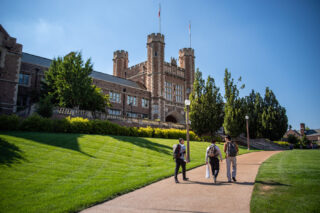

Washington University in St. Louis School of Medicine, known as WashU Medicine, is a private MD school on a single medical campus in St. Louis, Missouri. It sits in the Central West End next to Forest Park, and it trains students alongside Barnes-Jewish Hospital and St. Louis Children’s Hospital. WashU Medicine is one of the largest research medical schools in the country and one of the most selective. For the Entering Class of 2025, 6,138 people applied, 1,021 were interviewed and 123 students enrolled.
This guide covers the 2026-2027 application cycle, which is for students who plan to start medical school in August 2027 (the Entering Class of 2027). It explains what WashU Medicine looks for, how its Gateway Curriculum works, what the 2026-27 cost of attendance is, and how scholarships and the new federal loan limits affect the real price. It also walks through every current secondary essay question with a full illustrative example and analysis, the two-interview virtual format, the people who lead the school, and answers to the questions applicants ask most.
WashU Medicine wants students with excellent academics, but the school is clear that metrics are only one part of its review. Admissions are holistic and mission-aligned: the Committee on Admissions weighs experiences, attributes and metrics together. Throughout this guide, each section ties the official policy to practical next steps so you can decide whether to apply and how to build the strongest application you can. All facts were checked on October 17, 2026.
Key Takeaways
- Who can apply: WashU Medicine considers U.S. citizens, permanent residents, DACA recipients and international applicants in a single pool. Non-citizens must document funding for four years of study after acceptance. There is no residency preference and one tuition rate for everyone.
- The academic bar is very high. The Entering Class of 2025 had a mean GPA of 3.88 and a mean MCAT of 520 (97th percentile). Accepted applicants for the 2025 entering class had a median GPA of 3.96 and a median MCAT of 521. There is no minimum GPA, and the minimum MCAT total score is 500.
- Two exams are required: the MCAT and the AAMC PREview professional readiness exam. For 2026-27, both must come from test dates between January 2023 and September 2026.
- Deadlines are early. MD applicants must submit AMCAS by October 15, 2026, the supplemental application by October 29, 2026, and letters by November 6, 2026. MD/PhD (MSTP) deadlines are earlier, starting September 16, 2026. Secondaries are by invitation only.
- Cost and aid: 2026-27 tuition is $67,968, and the estimated first-year cost of attendance is $103,047. Tuition is fixed from year one, 71% of the 2025 entering class had full tuition funding, and 77% had merit or need-based scholarships.
- Interviews are virtual: two live 25-minute Zoom interviews on the same day, one standard (open file) and one closed file. It is not an MMI.
- Training is research-rich and flexible. The Gateway Curriculum adds early clinical immersions, faculty coaching and the EXPLORE pathways. Research is optional, yet more than 95% of students complete a project.
- Next step: submit AMCAS early in the summer, finish PREview before you apply, line up three letters, and draft your failure essay before the secondary invitation arrives.
Key Statistics About Washington University in St. Louis School of Medicine
The snapshot below gathers the figures applicants ask about first. Class statistics are for the Entering Class of 2025, the newest class WashU Medicine has published. Costs are for the 2026-27 academic year. Means (averages) for GPA and MCAT describe the enrolled class, with MD and MD/PhD students counted together. Medians describe all accepted applicants for the 2025 entering class, including those who enrolled elsewhere.

| Metric | Value | Year or cohort | Source and definition |
|---|---|---|---|
| School and degree | WashU Medicine, MD (also MD/PhD and five MD/master’s options) | Current | WashU Medicine Degree Programs; private school, one campus in St. Louis, MO |
| Entering class size | 123 students (93 MD, 30 MD/PhD) | Entering Class of 2025 | WashU Medicine, Who Chooses WashU Medicine? |
| Mean MCAT | 520 (97th percentile) | Entering Class of 2025 | WashU Medicine; mean of enrolled MD and MD/PhD students |
| Mean GPA | 3.88 | Entering Class of 2025 | WashU Medicine; mean of enrolled MD and MD/PhD students |
| Median MCAT | 521 (mean 520.3) | 2025 entering class | AAMC MSAR, all accepted applicants |
| Median MCAT section scores | 131 C/P, 129 CARS, 130 B/B, 131 P/S | 2025 entering class | AAMC MSAR, all accepted applicants |
| Median total GPA | 3.96 (mean 3.91) | 2025 entering class | AAMC MSAR, all accepted applicants |
| Median science GPA | 3.95 (mean 3.89) | 2025 entering class | AAMC MSAR, all accepted applicants |
| Minimum scores | MCAT total 500; no minimum GPA | 2026-2027 cycle | AAMC MSAR, screening policies |
| Applicants and interviews | 6,138 applicants; 1,021 interviewed | Entering Class of 2025 | WashU Medicine. Interviewed/applicants (16.6%) is not an acceptance rate |
| Applications by residency | 276 Missouri; 5,346 other U.S.; 516 international | 2025 entering class | AAMC MSAR, verified applications |
| Matriculants by residency | 10 Missouri; 103 other U.S.; 10 international | 2025 entering class | AAMC MSAR, matriculants (total 123) |
| Acceptance rate | Not published | n/a | The number of offers is not published by WashU Medicine or in AAMC MSAR |
| Secondary fee, deposit and early decision | $100 fee (waivers available); no deposit; no early decision program | 2026-2027 cycle | WashU Medicine How to Apply; AAMC MSAR |
| Tuition | $67,968 (same for all students) | 2026-27 academic year | WashU Medicine Cost of Education, Phase 1, single student |
| Estimated cost of attendance | $103,047 | 2026-27, 43-week Phase 1 year | WashU Medicine Cost of Education; includes fees, health coverage and living costs |
| Scholarships | 71% full tuition funding; 77% merit and/or need-based scholarships | Entering Class of 2025 | WashU Medicine Financial Support (MD/PhD students are fully funded and are included) |
| Students receiving financial aid | 87% | 2024-25 academic year | AAMC MSAR (LCME Part I-B), all enrolled MD students |
| Mean educational debt of indebted graduates | $110,975 | 2025 graduates | WashU Medicine Financial Support, citing AAMC |
| Accreditation | Full LCME accreditation, eight-year term | Awarded 2023 | WashU Medicine news, September 2023 |
Two cautions help you read these numbers correctly. First, a mean can be pulled up or down by a few very high or low values, so a 3.88 mean does not mean every student had a 3.88 or higher. Second, the 1,021 interviews are 16.6% of applicants, and the 123 enrolled students are 2.0% of applicants. Neither figure is an acceptance rate, because WashU does not say how many offers it made. Third, the medians (3.96 GPA and 521 MCAT) count every accepted applicant for the 2025 entering class, while the means (3.88 and 520) count only the students who enrolled, so the two sets of numbers describe different groups. The school-reported figures above come from WashU Medicine’s class profile page.
Mission and Educational Priorities
WashU Medicine states its mission this way: “We provide exceptional, individualized and compassionate care for every patient; we make the scientific discoveries that change lives; and we train the clinicians and biomedical leaders who will shape tomorrow’s healthcare.” Its vision is “To cure illness, enhance quality of life and transform human health.” The school lists five values: integrity, excellence, compassion, scientific rigor and collaboration. Its definition of compassion includes honoring “our role as a safety-net provider to ensure access to care for all who need it” (see the mission, vision and values page).
The MD program’s own goal, set out in the Gateway Curriculum, is to produce “physicians who are leaders in medicine,” leaders in clinical care, science, education and advocacy. The curriculum’s guiding principles are competency-based assessment, learning-centered teaching, integration of the basic and clinical sciences, and a sustainable workload.
Educational approach at WashU
WashU’s teaching model blends rigorous science with early, hands-on clinical work. Students begin learning to take histories and examine patients soon after they arrive, meet standardized patients in their first month and rotate through three clinical immersions in the first phase. Traditional grades are not given. Instead, students build a competency portfolio that they review with a faculty coach who stays with them through all four years.
What the mission means for applicants
Leadership in academic medicine matters. WashU’s admissions FAQ says the school is “interested in educating tomorrow’s leaders in biomedicine” and that many graduates want academic or leadership roles. The Committee seeks “excellent communicators, people who are energized by other people and people with multiple longitudinal life experiences.” That favors depth: a few activities you stayed with, grew in and can explain.
Research is expected in spirit, not by rule. Research is not a formal requirement, but the FAQ notes that because WashU is a research-focused institution, “it would be a little unusual for someone with no research experience or exposure to apply.” The research does not have to be bench science. Clinical, social science, education and quality-improvement work all count when you can show critical thinking.
Service to St. Louis is part of the identity. Barnes-Jewish Hospital is described as the safety-net hospital in St. Louis for underserved and underinsured patients. Community engagement and service learning are built into the curriculum’s health equity and justice thread. If you have served people with limited access to care, say what you learned about the barriers they face.
Collaboration and humility count. The FAQ names “humility and being a team player” as key attributes and says WashU looks for applicants “who are collaborative, open to feedback and life-long learning, and who have demonstrated grit and perseverance.” Its benchmark for personal qualities is the AAMC Core Competencies for Entering Medical Students.
Do not read the mission as a checklist. WashU wants to see why you chose medicine, why you are choosing WashU and how you would use what the school offers.
Accreditation and Institutional Identity
WashU Medicine’s MD program is accredited by the Liaison Committee on Medical Education (LCME), the accrediting body for MD programs in the United States and Canada. In September 2023, the school announced that the LCME had awarded full accreditation for another eight years, the longest possible term. The review covered the Gateway Curriculum, which launched in 2020, and included a site visit, interviews with faculty, staff and students, and an independent student analysis completed by 96% of students (see the accreditation announcement). Accreditation confirms that a program meets national standards. It is not a ranking.
A few naming points help when you research the school:
- Formal name. The school is Washington University School of Medicine in St. Louis. It brands itself as WashU Medicine. It is part of Washington University in St. Louis, a private research university. It has no connection to the University of Washington in Seattle.
- AMCAS code. WashU Medicine is AMCAS School 184.
- One campus. The admissions FAQ states that the school has no satellite or regional campuses. Most clinical assignments are on the central medical campus, although students may travel to other sites for some rotations.
- Leadership. Bruce D. Levy, MD, became executive vice chancellor for medical affairs and the George and Carol Bauer Dean on July 1, 2026, succeeding David H. Perlmutter, MD, who led the school for more than 10 years.
- Rankings. WashU Medicine no longer participates in U.S. News & World Report’s MD program rankings, although the publication may still rank the program from public data.
- Research scale. The school ranks No. 2 in funding from the National Institutes of Health (NIH), invests $1.2 billion a year in research and brings together more than 3,000 physicians and scientists.
WashU Medicine also has a long-standing affiliation with BJC HealthCare. WashU Medicine physicians care for patients at Barnes-Jewish Hospital, St. Louis Children’s Hospital and Siteman Cancer Center.
Medical Programs and Affiliations
WashU Medicine prepares students for a range of careers in medicine, science and health leadership. The MD is the core program, and every MD and MD/PhD student is admitted to the Gateway Curriculum. Here is how each pathway works and when you apply to it.
Doctor of Medicine (MD)
The four-year MD is designed to train physicians who combine medical knowledge with “compassion, emotional stability and a responsible attitude.” Students learn in inpatient, outpatient, emergency and procedural settings, and they care for patients from urban, suburban and rural communities. You apply through AMCAS by October 15, 2026.
Roy Vagelos Medical Scientist Training Program (MD/PhD)
The Roy Vagelos Medical Scientist Training Program (MSTP) trains physician-scientists. The Entering Class of 2025 included 30 MD/PhD students. MSTP students complete Phase 1 of the Gateway Curriculum, move into PhD training, then return for Phase 2 clerkships and a shortened Phase 3. PhD options include the Division of Biology and Biomedical Sciences (DBBS) programs.
Three practical points:
- Earlier deadlines. MSTP applicants must submit AMCAS and transcripts by September 16, 2026, the supplemental application by September 30, 2026, and letters by October 7, 2026.
- One choice, two reviews. Since 2025, WashU asks applicants to choose either MSTP or MD-only. In practice, MSTP applicants are considered for both. If MSTP does not move forward, the office asks whether you want to stay in the MD-only pool.
- Extra essay and more letters. MSTP applicants answer an additional research essay, and there is no cap on letters. WashU expects letters from all significant research mentors.
Current MD students can also apply to transfer into the MSTP later, once they are sure they want a combined career.
Combined MD and master’s degrees
WashU offers several dual-degree options. Each adds time, usually one year, and most are applied to after you enroll:
- MD/MS in Biomedical Data Science and AI (BDS-AI): computing, statistics and informatics applied to health data, with concentrations in biostatistics, data science or biomedical informatics.
- MD/MSCI (Master of Science in Clinical Investigation): for students committed to careers in clinical and translational research, with coursework, a mentored thesis and concentrations such as translational medicine and dissemination and implementation.
- MD/MPHS (Master of Population Health Sciences): a five-year program in clinical epidemiology, biostatistics, comparative effectiveness and outcomes research. Students may instead complete a Certificate in Clinical Effectiveness or a Certificate in Health Equity and Disparities.
- MD/MPH: a five-year option with the Bursky School of Public Health. It is not a joint acceptance program. MD students apply to the MPH as third-year students, during Phase 2.
- MD/MBA: one additional year focused on leadership, innovation and the business of health care. Linda Wu, DO, MBA, advises the program.
- MS-BMI and the Medical Scholars Program: the Gateway Curriculum also lists a Master of Science in Biomedical Informatics and the Medical Scholars year-long research program, which lets students pause the MD to work with a mentor for one year.
Other degree programs at WashU Medicine
WashU Medicine also offers master’s and doctoral programs that are separate from the MD and have their own admissions. They matter to MD applicants mainly because you will train alongside these students, for example in the interprofessional pro bono clinic with occupational and physical therapy students. Current areas of study are listed on the school’s areas of study page:
- Audiology and Communication Sciences (PACS): Doctor of Audiology (AuD), Master of Science in Deaf Education (MSDE), PhD in Speech and Hearing Sciences and a minor in speech and hearing sciences.
- Biology and Biomedical Sciences (DBBS): PhD programs offered by the Roy and Diana Vagelos Division of Biology and Biomedical Sciences, including Biochemistry, Biophysics and Structural Biology; Biomedical Informatics and Data Science; Cancer Biology; Computational and Systems Biology; Developmental, Regenerative and Stem Cell Biology; Ecology and Evolutionary Biology; Immunology; Molecular Cell Biology; Molecular Genetics and Genomics; Molecular Microbiology and Microbial Pathogenesis; Neurosciences; and Plant and Microbial Biosciences.
- Informatics, Data Science and Biostatistics: the MS in Biomedical Data Science and AI and a graduate certificate in the same field.
- Clinical Investigation: Master of Science in Clinical Investigation (MSCI) and a graduate certificate.
- Genetic Counseling: Master of Science in Genetic Counseling.
- Medical Physics: MS and PhD in Medical Physics and a post-PhD graduate certificate.
- Nursing Science: a PhD in Nursing Science offered with the Goldfarb School of Nursing at Barnes-Jewish College.
- Occupational Therapy (OT): PhD in Rehabilitation and Participation Science, MSOT, OTD and an online post-professional OTD.
- Physical Therapy (PT): PhD in Movement Science and Doctor of Physical Therapy (DPT).
- Population Health Sciences: Master of Population Health Sciences (MPHS), a Certificate in Clinical Effectiveness and a Certificate in Health Equity and Disparities.
- Reproductive Sciences: Master of Science in Reproductive Sciences.
What WashU does not offer
- No transfers. Because of the Gateway Curriculum, WashU Medicine no longer accepts advanced standing (transfer) applications from students at other medical schools.
- No DO degree. WashU awards the MD only.
- No regional campuses. All MD students belong to the St. Louis campus.
Clinical affiliations
WashU Medicine’s main teaching hospitals are Barnes-Jewish Hospital and St. Louis Children’s Hospital, which together have about 1,893 beds on the medical campus. Students also rotate at Missouri Baptist Medical Center, the Veterans Affairs medical center and Progress West, at the federally qualified health centers CareSTL and Affinia, and with primary care preceptors in rural Missouri. Pediatric rotations take place at St. Louis Children’s Hospital. WashU Medicine’s physician practice reported 101 specialties and subspecialties, more than 3,800 providers, more than 200 clinical sites and 2.9 million patient visits in fiscal year 2025.
Curriculum Overview
WashU’s Gateway Curriculum launched in 2020. It has three phases over four calendar years and requires 172 weeks of credit to graduate. The phases are not the same as traditional “years,” so it helps to look at each one. The details below come from WashU’s Gateway Curriculum Essentials document, dated June 23, 2026.
Phase 1: Gateway to the Foundations (17 months)
Phase 1 has 66 weeks of required content:
- Transition to Gateway (1 week).
- Seven Foundational Science Modules (47 weeks): Health and Homeostasis (7 weeks), Defense and Response to Injury (7), Breathing and Circulation (8), INs and OUTs (7), Metabolism and Reproduction (6), Scaffolding and Movement (5) and Brain and Behavior (7). Each module integrates the basic sciences with clinical skills and the social, behavioral and health systems sciences.
- Three 3-week Clinical Immersions (9 weeks) in inpatient, outpatient (including urgent and emergency care) and perioperative or procedural settings (including labor and delivery). There are no other classes during an immersion, so students work fully as part of the team.
- A 4-week EXPLORE immersion in an academic pathway of the student’s choice.
- Transition to Clerkships (1 week) and a 4-week, credit-bearing USMLE Step 1 study period.
Students take Step 1 after Phase 1. Passing Step 1 is not specifically required to start Phase 2. Phase 1 also includes 7 weeks of unscheduled time.
Teaching uses team-based learning, case-based learning, a flipped-classroom method called LACE (Learn, Apply, Consolidate, Expand), labs, simulations and standardized patients. Attendance is required for clinical activities, coaching, dissection labs and small-group sessions, about 27% of all sessions, but not for most lectures. Eighteen curricular threads run across all phases, from anatomy and pharmacology to health equity and justice, ethics and law, and women’s and LGBTQIA+ health. An artificial intelligence thread launched in July 2026.
Phase 2: Gateway to Clinical Medicine (12 months)
Phase 2 has 49 weeks of required content. After a 1-week transition, students complete six 8-week clerkships: internal medicine, surgery, pediatrics, obstetrics and gynecology, neurology and psychiatry. Each clerkship begins with a Foundations Week of specialty-specific science and ends with an ARCC week (Assessment, Reflection, Coaching and Communities), when students take NBME subject exams, clinical skills exams or oral exams. Students interested in science careers who are not in the MSTP can take 8 to 16 weeks of research beginning in January of Phase 2.
Phase 3: Gateway to Specialization (16 months)
Phase 3 lines up training with each student’s career goals. It has 57 weeks of required content. Every student completes:
- A 4-week internal medicine Advanced Clinical Rotation (ACR), also called a subinternship. This rotation ensures that every graduate has a strong base in managing complex medical patients.
- Two more 4-week ACRs in fields of the student’s choice, at least one of them before the cutoff for the Medical Student Performance Evaluation.
- Two 4-week Keystone Integrated Science Courses (KISCs). These take students “from cell to society” around one topic. Current KISCs include Diabetes Care from A to Z, Integrated Approach to Oncology, Infectious Diseases and Health Equity, Introduction to Addiction Medicine, Comprehensive Approach to Disability, Advancing End-of-Life Care, Pediatric Neurocritical Care, Precision Medicine, Holistic and Interdisciplinary Approach to Surgical Critical Care and The AI Imperative.
- A 4-week Gateway to Residency capstone early in the graduation year, which prepares students for the move to residency.
- Up to 4 weeks of credit-bearing study time for USMLE Step 2. Students entering the residency match are expected to finish Step 1 and Step 2 by September 1 of the fall before graduation.
The remaining 10 months of Phase 3 are entirely elective. There is no limit on elective time for research, and the school expects most students to do research early in Phase 3. Students may also take away rotations and international electives.
How students are assessed
The program of assessment is competency-based, which WashU distinguishes from a pass/fail system. The six domains mirror those used in residency: foundational knowledge, patient care, interpersonal and communication skills, professionalism, systems-based practice, and practice-based learning and improvement. Students receive credit or no credit for each course and a rating of Competent or Not-Yet-Competent for each program objective, with Competent with Distinction possible in selected domains. A dashboard shows progress throughout. WashU students consistently have USMLE Step 1 pass rates above the national average, and the school provides a UWorld subscription and practice exam vouchers.
Coaching, mentorship and professional identity
At orientation, each student joins a Gateway Coaching cohort of seven to nine students led by a clinician-educator. The group meets regularly through all four years, and coaches help students review their portfolios and set learning goals. Students also join one of three academic societies (Cori, Erlanger-Graham and Lowry-Moore), and each first-year student is matched with a second-year “Big Sib.” In the third year, students choose a career advisor in the specialty they plan to enter.
By the end of Phase 3, students have built the core competencies for residency and a professional identity that fits their chosen field. The structure gives broad room to explore, which suits applicants who know what they want and those who are still deciding.
EXPLORE
EXPLORE is the Gateway Curriculum’s career development program. It offers longitudinal and immersive experiences in four academic pathways: Research, Education, Advocacy and Global Health, and Innovation. Every student completes the 4-week EXPLORE immersion in Phase 1. In Phase 2, students can defer up to 16 weeks of clerkships for a second immersion, and in Phase 3 they can use electives, the Medical Scholars Program or a dual degree to go further. If you mention EXPLORE in an essay or interview, connect it to something you have already started, not just to an interest.
Admissions Requirements and Application Process
WashU Medicine follows the mission-aligned selection process recommended by the AAMC. The school says standards for admission are high and that applicants are expected to show “high character, aptitude, integrity and motivation suitable for a career in medicine.” It also looks for strong communication skills, extracurricular accomplishment and “a balanced lifestyle, including hobbies and recreational interests.” The requirements below are for the 2026-2027 cycle and come from WashU’s requirements page.
Required exams: MCAT and PREview
- MCAT. Required, and it must be completed before your application is considered. WashU accepts scores up to three years old: for 2026-27, test dates from January 2023 through September 2026. The school does not superscore. It considers your highest total score from a single test day, and all of your lifetime scores are visible to the committee. The minimum total MCAT score for consideration is 500. Its strongest applicants have balanced scores across all four sections. For a refresher on how each section works, see our MCAT Sections Guide: Experts Explain the MCAT.
- AAMC PREview. The AAMC Professional Readiness Exam is now required, under the same rules as the MCAT: it must be completed before your application is considered, and scores from January 2023 through September 2026 are accepted. PREview is a situational judgment test that measures how you would respond to realistic scenarios involving teamwork, ethics and service. Schedule it early, because secondary invitations follow a review of complete files.
- Casper. WashU’s requirements page lists the MCAT and PREview. It does not list Casper.
Undergraduate hours and prerequisites
You need at least 90 semester hours (or the equivalent) from an institution accredited by a USDOE-recognized agency, a Canadian institution recognized by Universities Canada, or an American College Overseas as defined by AMCAS. Study-abroad credit that appears on a U.S. transcript is acceptable.
Required coursework is a minimum of one year (two semesters), or equivalent AP, IB or CLEP credit, in each of:
- Biological science
- General or inorganic chemistry
- Organic chemistry (one semester of biochemistry may replace one semester of organic chemistry)
- Physics
- Calculus, differential and integral (statistics or biostatistics may replace one semester of calculus)
Laboratories are recommended but not required. A biochemistry course is encouraged. There is no humanities or English prerequisite, and no single major is preferred. Applicants from the humanities, social sciences and arts are “equally welcome.” In selected cases the Committee on Admissions may waive one or more prerequisites. For a broader view of how schools differ, see our guide to medical school prerequisites.
Course policies
WashU accepts pass/fail and pass/no pass courses, and it accepts community college, summer and online courses from accredited institutions. However, most classes, especially science classes, “should optimally be taken for a letter grade” at your primary undergraduate institution. Courses must be finished by the June before you start medical school (June 2027 for the Entering Class of 2027). Postbaccalaureate grades become part of your undergraduate GPA, and the committee mainly considers undergraduate GPA. A master’s degree carries no specific weight in review.
Experience expectations
WashU does not publish hour minimums. Its FAQ is specific about what it wants instead:
- Clinical exposure. There is “no single preferred type of clinical experience.” You should have seen physician and patient interactions in a clinical setting, understand what a medical career involves and be able to reflect on what you learned. The strongest experiences are ones where a physician mentored you. Paid roles such as scribe, CNA, EMT or medical assistant and structured programs such as clinical internships for pre-med students can all provide this, if you take part in real patient care and reflect on it.
- Research. Not required, but expected in spirit at a research-focused school. Publications are not needed.
- Service and leadership. Extracurricular activities, including work, service, research, leadership, sports and hobbies, are formal selection factors.
- Nontraditional applicants. Career changers are welcome. Patient-facing activities are especially important to show you understand the clinical environment.
Letters of recommendation
WashU participates in the AMCAS Letter Service and Interfolio. Letters must be on letterhead, signed and dated, and received by November 6, 2026 (October 7 for MSTP).
- You need three letters, submitted individually or as a letter packet. A committee letter can be added or can replace individual letters if that is your school’s practice. A committee letter or letter packet fulfills the requirement.
- MD applicants may submit no more than four letters. MSTP applicants have no cap and should include letters from all significant research mentors.
- Letters may come from any combination of college instructors, science instructors, research mentors, extracurricular mentors, workplace supervisors, postgraduate advisors or others who know you well. No specific science-faculty letter is required.
- If you have an advanced degree or at least a year of full-time work after college, ask a graduate faculty member or your supervisor for a letter.
WashU encourages letters that speak to the AAMC Core Competencies. Our guide on What Pre-Med Students Need to Know About the AAMC Core Competencies explains what those are and how letter writers can address them.
International and DACA applicants
International applicants are compared with all other applicants, and visa status is not a factor in admissions decisions. Accepted applicants who are not U.S. citizens or permanent residents, including DACA recipients, must document funding for four years of tuition and living expenses by May 1 before matriculation. They are not eligible for need-based aid, but all accepted applicants are considered for merit scholarships, which can cover full or partial tuition. You must still meet the 90-hour rule at an approved U.S. or Canadian institution. Applicants with an international undergraduate degree can qualify through a U.S. graduate degree that includes 90 credit hours.
How to apply, step by step
- Take the MCAT and PREview. Spring of junior year, about 18 months before you plan to enroll, is the best timing for many students.
- Submit AMCAS (School 184) by October 15, 2026, with transcripts by the same date. AMCAS verification can take four to six weeks, and WashU receives your file only after verification. If you are new to the primary application, our AMCAS application guide walks through each section.
- Wait for a supplemental invitation. WashU screens applicants before the secondary. Those who meet basic selection criteria receive an email link about three business days after WashU receives the verified AMCAS application.
- Complete the supplemental application within two weeks of the invitation and no later than October 29, 2026 (11:59 p.m. CT). The $100 fee is waived automatically for AAMC Fee Assistance Program recipients, and other waivers can be requested in the portal. You cannot edit the supplement after you submit it.
- Submit letters by November 6, 2026.
- Check your status at mdapply.wustl.edu. Your file is complete when WashU has your verified AMCAS application, the supplemental application, MCAT results, letters and the fee or waiver. Allow 10 business days for processing.
After verification, you can upload updates such as new activities, publications or personal news as a PDF through the portal or by email.
Important dates for the Entering Class of 2027
| Date | Milestone |
|---|---|
| May 1, 2026 | AMCAS opens |
| May 30, 2026 | Earliest AMCAS submission |
| June 26, 2026 | Earliest date WashU receives verified applications |
| July to October 2026 | Supplemental application invitations sent |
| September 16, 2026 | MSTP: last day for AMCAS and transcripts |
| September 30, 2026 | MSTP: last day for supplemental application |
| October 7, 2026 | MSTP: last day for letters |
| October 15, 2026 | MD: last day for AMCAS and transcripts |
| October 29, 2026 | MD: last day for supplemental application (11:59 p.m. CT) |
| November 6, 2026 | MD: last day for letters |
| Mid-September 2026 to mid-February 2027 | Virtual interview season |
| December 2026 to March 2027 | Admissions decisions released |
| April 15, 2027 | Every applicant notified: accepted, not accepted or waitlist |
| April 30, 2027 | Plan to Enroll required; hold only one acceptance |
| May 31, 2027* | MSTP: Commit to Enroll |
| July 20, 2027* | MD: Commit to Enroll; release all other waitlist positions |
| August 9, 2027* | Orientation; academic year begins |
| August 16, 2027* | Instruction begins |
*Dates marked with an asterisk are subject to change. Source: WashU Medicine Important Dates.
Because admission is rolling, applying early matters. Plan your MCAT, PREview and letters so you can submit AMCAS in June. If you still need clinical hours, use the year before you apply: pre-med summer internships and steady local roles both work, as long as they lead to real patient contact and reflection. Our The Best Med School Application Timeline Guide lays out a month-by-month plan.
Selection process
The Committee on Admissions (COA) has sole authority, delegated by the dean, to admit students. After a file is complete, COA members evaluate it on:
- Rigor of curriculum
- Academic record (GPA and MCAT)
- Extracurricular activities (work, service, research, leadership, sports and hobbies)
- Other accomplishments
- Essays (the AMCAS personal statement and secondary responses)
- Distance traveled: challenges and hardships overcome
- Letters of recommendation
Where you went to college is used for context. Attending WashU as an undergraduate does not give you preference, but the committee looks to see that you took advantage of opportunities at your school.
Decisions, waitlist and updates
Decisions can come at any time from December through March, and interview date does not predict decision date. Official notices arrive through the portal, and many accepted applicants also get a phone call. By April 15, 2027, every applicant is accepted, not accepted or placed on the waitlist. WashU welcomes update letters and letters of intent, with no set format or deadline, but sending many updates in a row can work against you. Letters of interest are welcome at any time in the cycle, while letters of intent are for applicants who have already interviewed.
A few policies matter once an offer arrives. You have up to two weeks to respond to an offer. No deposit is required to hold an acceptance. Requests to defer entrance are considered case by case; two accepted applicants deferred from the 2025 entering class. WashU does not run an Early Decision Program, so every applicant goes through the regular cycle. Our guide on How to Write an Excellent Medical School Letter of Intent or Letter of Interest covers what to include.
WashU views reapplicants positively but wants to see how you strengthened your application, such as new activities, leadership or publications, and how your gap time related to medicine.
Contact information
Committee on Admissions, WashU Medicine, MSC 8107-01-01, 660 South Euclid Avenue, St. Louis, MO 63110-1093. Phone: 314-362-6858. Email: [email protected].
Tuition, Cost of Attendance and Financial Aid
WashU Medicine is a private school with one tuition rate for all students, regardless of state. It is expensive on paper, but its scholarship funding is among the most generous in the country, and many students pay far less than the listed price.
2026-27 cost of attendance
These are WashU’s estimated expenses for a single student in the 43-week Phase 1 year, 2026-27, from the cost of education page:
| Item | Amount |
|---|---|
| Tuition (base rate) | $67,968 |
| General student fee | $1,500 |
| Student health fee | $5,330 |
| Direct costs | $74,798 |
| Books and supplies | $500 |
| Medical instruments | $299 |
| Room and board | $21,500 |
| Personal and miscellaneous | $3,192 |
| Transportation | $2,678 |
| Indirect costs (cost of living) | $28,249 |
| Total cost of attendance | $103,047 |
The health and general student fees include health care coverage, hospitalization or disability insurance and access to public transportation, so there is no separate insurance charge. WashU publishes only the Phase 1 budget. Later years have different lengths, so ask the financial aid office for estimates for Phases 2 and 3. All amounts may change in future years, although tuition itself is fixed for you once you enroll.
Tuition stabilization
Under WashU’s tuition stabilization plan, tuition, merit scholarships and need-based scholarships are fixed when you start. Your tuition will not increase from year one “for up to ten consecutive years (allowing one year for research or a master’s degree).” The health and general fees can still change each year. This means you can see a realistic four-year price before you decide to enroll.
Scholarships
- Merit scholarships. Every admitted MD applicant is reviewed automatically by the scholarship committee. There is no separate application. Awards may cover full or partial tuition, and notification usually comes after the admission offer. International and DACA students are eligible.
- Need-based aid. Available to U.S. citizens and permanent residents. It combines scholarships and loans and is packaged as 50% scholarship and 50% Federal Direct Unsubsidized and Washington University loans. Students under 30 at matriculation must include both biological parents’ financial information. Parent tax information is required only in the first year, after which university awards are fixed.
- How much help students get. Of the 123 students who entered in 2025, 77% have merit and/or need-based scholarships and 71% have full tuition funding. 29% come from socioeconomically disadvantaged backgrounds. These shares include the 30 MD/PhD students, who are fully funded. Across the whole school, 87% of MD students received financial aid in 2024-25.
WashU traces this to a $100 million commitment to MD scholarships and education. Its stated outcome is lower debt: among 2025 graduates who borrowed, mean total educational debt was $110,975 at WashU, compared with $244,964 at private MD programs and $210,147 at public MD programs nationally (AAMC figures reported by the school on its financial support page).
Applying for aid
Complete the 2026-2027 FAFSA and choose the School of Medicine (code G24620), then the CSS Profile for parent information. The priority deadline is April 1. Students accepted before April 1 who finish by then generally get an aid offer before the April 30 Plan to Enroll date. Waitlisted applicants are encouraged to apply early too. MD students are not eligible for assistantships or federal work-study.
Federal loans after July 1, 2026
Federal loan rules changed for new borrowers on July 1, 2026, under the One Big Beautiful Bill Act. WashU’s Office of Student Financial Planning summarizes them on its federal aid changes page:
- Grad PLUS has ended for new borrowers. Entering MD students who borrow on or after July 1, 2026 cannot use the Federal Direct Graduate PLUS loan, which used to cover any gap up to the full cost of attendance.
- New Direct Unsubsidized limits. Entering MD students, defined as a professional program, may borrow up to $50,000 per year and $200,000 for the degree. WashU notes that the federal definition of “professional” was still being finalized.
- Legacy borrowers. Students who were enrolled and had received a federal Direct Loan for their program before July 1, 2026 can keep borrowing under the old rules, including Grad PLUS, for up to three years if they stay in the same program. A leave of absence, time off for research or a new dual degree can end legacy status.
- Repayment. By July 1, 2028, new borrowers will have two repayment options: a standard plan of 10 to 25 years, depending on balance, and the income-driven Repayment Assistance Plan (RAP), which qualifies for Public Service Loan Forgiveness.
For applicants starting in August 2027, the practical result is simple. Any cost above scholarships, federal limits and family help must come from private loans or university loans. That makes WashU’s scholarship offer and the need-based package more important than ever when you compare schools.
Washington University loans and private loans
WashU’s institutional loan is reserved for students with demonstrated need who apply with parental information or are 30 or older at entry. It has an annual limit of $16,000 and an aggregate limit of $100,000, no origination fee, and no interest while you are in school. Depending on the loan fund, the fixed rate is 6.25% with a 36-month grace period or 0% with a 3-month grace period, repaid over 10 years. These loans do not qualify for federal forgiveness or consolidation.
Private loans require a credit check and often a co-borrower. WashU lists health-care lenders through the FASTChoice website and does not endorse any lender. The office also points students to outside funding such as the military Health Professions Scholarship Program and the National Health Service Corps.
Campus Facilities and Student Life
WashU Medicine’s students come from all 50 states, the District of Columbia and multiple countries. The school describes them as accomplished but approachable, with interests well beyond medicine. Its informal reputation is a place for students who are “driven and curious.”
Medical campus and facilities
The Washington University Medical Center covers 186 acres directly east of Forest Park. On-site hospital affiliates provide 1,893 beds, and the campus has more than 2.6 million gross square feet of research and teaching space. Key teaching spaces include:
- Farrell Learning and Teaching Center (FLTC): a six-story building completed in 2005 for medical and graduate student teaching, with lecture halls, small-group rooms, student carrels and study space.
- Howard and Joyce Wood Simulation Center: one of several simulation facilities on campus. Students begin simulation training in Phase 1.
- Bernard Becker Medical Library: study space and computer resources. The Cori Nobel Prize medals are on permanent display there.
Housing and cost of living
St. Louis is among the most affordable major cities in the country. The Core Apartment Residences offer furnished one- and two-bedroom units right on the medical campus, in historic buildings renovated in 2018. Quadrangle Housing, a university affiliate, rents apartments in the neighborhoods around both campuses, and its Apartment Referral Service helps incoming students find vetted housing and roommates. Many students live in the Central West End or The Grove, within walking or biking distance.
Getting around
Full-time WashU students get a free Metro pass for buses and the MetroLink light rail. MetroLink connects the medical campus with the Danforth Campus across Forest Park, where students can use the athletic complex, including an Olympic-size pool, an indoor track and training equipment. Some clinical immersions and clerkships require travel off campus.
Life outside class
The medical campus sits in the Central West End, an eclectic neighborhood popular with students. Forest Park, at more than 1,300 acres, is one of the largest urban parks in the country. It holds the Saint Louis Zoo, the Saint Louis Science Center and McDonnell Planetarium, the Saint Louis Art Museum, the Missouri History Museum and The Muny outdoor theater, plus golf courses, running and bike paths, athletic fields and pickleball courts. Tennis and basketball courts on the medical campus are used day and night. The unofficial motto many students use, “study hard, play hard,” fits the balance the school describes.
Wellness and support
The Office of Medical Student Affairs runs student wellness programs. Support includes weekly coaching in Phase 1, Big Sibs, free tutoring and TA sessions, faculty help sessions, peer advocates and easy access to mental health care. Students describe a collaborative class that shares notes and study materials before exams. Many students say their classmates become lifelong friends and a built-in support network.
Student organizations
WashU Medicine has more than 100 student groups, all open to every student, and the school will help you start a new one. A sample from the current student groups directory:
- Professional and specialty groups: American Medical Association (AMA), American Medical Women’s Association (AMWA), Cardiovascular Interest Group (CVIG), Clinical Research Journal Club (CRJC), Dermatology Interest Group (DIG), Emergency Medicine Interest Group (EMIG), Neurosurgery Interest Group, Palliative Care Interest Group, Pediatric Interest Group (PIG), Surgery Interest Group (SIG), Family Medicine Interest Group and Sling Health, a student-run health care startup accelerator.
- Affinity groups: Student National Medical Association (SNMA), Latino Medical Student Association (LMSA), LGBTQ Med, Asian-Pacific American Medical Student Association, First-Generation Medical Student Association, Native Student Association and MedVets.
- Faith and community: Christian Medical Association (CMA), Jewish Medical Student Association and Medical Muslim Students Association.
- Recreation and wellness: ACE Inhibitors (the WUSM tennis club), Krebs Cyclers for bike riders, Running Club, ClimbRx, WUSM Dance and WUSM Ski and Board.
- Arts and culture: Hippocrene (an arts magazine), the Medical School Musical, the Histones a cappella group, Art to Heart, the Music in Medicine Initiative and the WUSM Film Society.
- Advocacy and other interests: Medical Students for Choice, Culinary Medicine Program, Global Health and Medicine (GH&M), Medical Ethics Student Society and WUSM Sustainability, which promotes greater sustainability in the medical school community.
Community service
Service is part of the curriculum and of student culture. Students help run the Interprofessional Pro Bono Health Clinic, where MD, occupational therapy and physical therapy students care for uninsured and underinsured patients under faculty supervision. Other options include CHOICES for Youth in Detention, which supports incarcerated teens at the St. Louis Juvenile Detention Center; LouHealth, a policy and public health advocacy group started by WashU medical students; Casa de Salud for Spanish-speaking, refugee and immigrant patients; health screenings at grocery stores; Pediatric Life Savers CPR classes for NICU families; the Perinatal Project; Sun Protection Outreach Teaching by Students (SPOTS); and youth programs such as Saturday Scholars and the Young Scientist Program.
Clinical Rotations and Research Opportunities
Clinical training
From year one, WashU students take part in hands-on patient care in small groups with experienced clinicians, residents and fellows. Clinical learning stresses the science behind medicine, patient-centered communication, teamwork, preventive care and compassionate care. Training begins with standardized patients in month one, continues with video feedback on patient encounters and the simulation center, and moves into the three Phase 1 clinical immersions.
Core clerkships in Phase 2 take place mainly at Barnes-Jewish Hospital and St. Louis Children’s Hospital. Students may also rotate at Missouri Baptist Medical Center, the VA medical center, Progress West, the federally qualified health centers CareSTL and Affinia, and with primary care preceptors in rural Missouri. Students must acknowledge that some assignments require travel. Both main hospitals provide a large share of care for medically underserved patients in St. Louis, so you will see “the full spectrum of medical issues, from the ordinary to the most rare and complex.” A substantial share of students also do rotations elsewhere, both inside and outside the United States. More detail is on the clinical training page.
Residency match
WashU publishes full match lists. For the Class of 2026, the most common specialties were internal medicine (22 graduates, plus 3 in the internal medicine physician-scientist track), psychiatry (12), emergency medicine (10), pediatrics (10, plus 2 in pediatrics research tracks) and anesthesiology (9). Graduates matched at Barnes-Jewish Hospital, St. Louis Children’s Hospital, Stanford, Johns Hopkins, Mass General Brigham, Duke, Penn, UCSF and many other programs. Family medicine is supported, but WashU has no Department of Family Medicine or family medicine residency of its own. Four Class of 2026 graduates matched in family medicine elsewhere.
Student research
Research is optional, but WashU says more than 95% of MD students complete a research project, and all take part in some form of scholarship. Research fits into each phase:
- Phase 1: the 4-week EXPLORE immersion, with instruction in clinical, translational or basic science research, or in another pathway.
- Phase 2: an 8- or 16-week deferral of clerkships for further research.
- Phase 3: electives, extended study, dual degrees and the Medical Scholars Program, a year away from the MD curriculum to work with a mentor. Medical Scholars can apply for a stipend.
The Office of Medical Student Research and Scholarship helps students find mentors. It is led by Terrance Kummer, MD, PhD, assistant dean for medical student research and scholarship and EXPLORE program director. The EXPLORE Research pathway is co-directed by Dorina Kallogjeri, MD, MPH, and Matthew Shew, MD, and the school lists more than 2,100 faculty mentors available to students.
Areas of investigation
WashU ranks No. 2 among medical schools in NIH funding. Research areas listed for students include Alzheimer’s disease, cancer and cancer therapy, cardiovascular diseases, developmental biology, diabetes, genetic testing and genomics, imaging, immunology, infectious disease, the human microbiome, neuroscience (including brain mapping, autophagy therapeutics and neuronal metabolism), organ transplants, personalized medicine and women’s health. Students can search faculty research profiles to find a fit. Research experiences can lead to master’s degrees (MPH, MPHS, MSCI, MBA or MS-BDS-AI) or a PhD.
Global health
The EXPLORE Advocacy and Global Health pathway offers optional noon sessions in Phase 1, a global health-focused immersion if students choose, and, in Phase 3, global health electives and up to 16 weeks of elective time abroad, with grant support available. Phase 3 global rotations may take place at WashU’s 12 partner sites and 64 AAMC-approved global partners. Current partner sites are in South Korea, Japan, Thailand, Germany, Lebanon, Ireland, Ghana, France and Australia. Recent students have also studied or worked in countries including Ghana, Guatemala, India, Malawi, Peru, South Africa, Tanzania and Vietnam. The Global Health Center, run with the Bursky School of Public Health and the John T. Milliken Department of Medicine, supports this work.
For applicants, global health interest is most convincing when it is grounded in real experience and humility about what you saw. If you have worked in a resource-limited setting, through study abroad or through pre-med internships abroad, explain what you did, what you learned about health systems and how it connects to care at home. Our article on The Value of Study Abroad for Pre-Med and Pre-Health Students covers how to present this well.
Medical education research and collaborations
WashU also studies how doctors learn. The Center for Integrative Research on Cognition, Learning, and Education (CIRCLE) works with School of Medicine faculty in the Division of Medical Education and residents in the Teaching Physician Pathway (WUTPP), which trains residents to become clinician-educators. Its role ranges from one-time consultations to long-term projects, with help on study design, IRB protocols, statistics and reporting. Projects have included:
- The Medical Mindset Study, overseen by WUTPP director Dr. Patricia Kao, which tested a growth-mindset intervention among internal medicine residents to see whether it could protect them from burnout. A growth mindset is the belief that abilities can be developed through effort and strategic practice.
- Active learning in resident education, using CIRCLE’s Observation Protocol for Active Learning (OPAL) to study how faculty use audience-response questions in internal medicine “noon conferences.”
- A Situational Awareness Assessment Tool developed by Eva Aagaard, MD, to give trainees feedback on how well they perceive and anticipate events in critical care scenarios. CIRCLE helped with IRB and statistical work to validate it.
International partnerships
The university’s McDonnell International Scholars Academy, founded in 2005, is a graduate fellowship and leadership program. More than 30 universities are associated with it, with at least one on every populated continent, among them Fudan University, the Indian Institute of Science, Keio University, Korea University and Makerere University. Its network includes more than 300 scholars and alumni from over 70 WashU programs, and since 2019 it has also recruited scholars from outside the partner network. Partnerships like these, together with seed grants and faculty projects in countries such as Uganda, Bangladesh and India, give WashU Medicine a wide international research footprint. These links support faculty research and graduate study. They are not admission routes into the MD program.
Notable Alumni, Faculty, Leadership and Admissions Staff
WashU Medicine’s faculty is among the most decorated in the country. Nineteen Nobel laureates have ties to the school, roughly 400 WashU Medicine physicians are on Castle Connolly’s Top Doctors list, and WashU chief residents and faculty write the Washington Manual of Medical Therapeutics. The profiles below separate medical school alumni from faculty and leaders, because many famous names connected to WashU were faculty, not graduates. Knowing who these people are will not change your odds of admission, but it helps you understand the school’s culture and speak about it accurately.
School leadership
Bruce D. Levy, MD, Dean. Dr. Levy became executive vice chancellor for medical affairs and the George and Carol Bauer Dean of WashU Medicine on July 1, 2026. He grew up in a neighborhood bordering the university. His father earned his medical degree at WashU, and Levy did his first research as a high school student in WashU Medicine labs. He earned his MD at the University of Pennsylvania in 1988 and spent more than 35 years at Harvard Medical School and Brigham and Women’s Hospital, where he co-directed the medical residency, led pulmonary and critical care medicine and became executive vice chair of medicine for Mass General Brigham. His research studies how the body naturally resolves lung inflammation. For 25 years he was volunteer medical director at the New England Shelter for Homeless Veterans. For applicants, his record of residency teaching and care for underserved patients fits the school’s stated priorities.
David H. Perlmutter, MD, former dean. Dr. Perlmutter led WashU Medicine for more than 10 years, through the launch of the Gateway Curriculum and the 2023 LCME review, and concluded his deanship on June 30, 2026.
Eva Aagaard, MD, Vice Dean for Education. Dr. Aagaard is the Carol B. and Jerome T. Loeb Professor of Medical Education. She became vice dean for education on November 1, 2025, and continues as vice chancellor for medical education. She had been senior associate dean for education since 2017 and led the creation of the Gateway Curriculum, launched in 2020. She also developed a Situational Awareness Assessment Tool to give trainees feedback in critical care scenarios. Her work explains much of what is distinctive about the MD program: competency-based assessment, coaching and early clinical immersion.
Nichole Zehnder, MD, Senior Associate Dean for Undergraduate Medical Education. Dr. Zehnder took this role on November 1, 2025, after serving as associate dean for educational strategy, where she oversaw learner and faculty success programs, partnerships with WashU Disability Resources, dual-degree programs and EXPLORE.
Admissions leadership
Valerie S. Ratts, MD, Professor and Associate Dean for Admissions. Dr. Ratts has led MD admissions since January 2014 and oversees recruitment and enrollment. A St. Louis native, she earned her MD and completed her residency and fellowship at Johns Hopkins before joining WashU in 1994. She is a professor of obstetrics and gynecology and a reproductive endocrinologist and infertility specialist at Barnes-Jewish Hospital. Interview invitees receive a video from her that explains the virtual interview experience.
Ian S. Hagemann, MD, PhD, Assistant Dean for Admissions. Dr. Hagemann is a professor of pathology and immunology and of obstetrics and gynecology who specializes in gynecologic pathology. He has been an MSTP student, clinical fellow and faculty member at WashU, so he has seen the MD/PhD path from the inside. He leads the Genetics and Genomics thread and teaches in all three phases of the Gateway Curriculum.
The Committee on Admissions is made up of faculty from many departments, and the school publishes their biographies on its admissions committee page. Your two interviewers will be COA members.
Medical education and student research leaders
Terrance Kummer, MD, PhD, is assistant dean for medical student research and scholarship and EXPLORE program director. His office helps students find research mentors.
Dorina Kallogjeri, MD, MPH, and Matthew Shew, MD, co-direct the EXPLORE Research pathway.
Amjad Musleh, MD, is director of coaching and an associate professor of anesthesiology and of emergency medicine. He leads the Gateway Coaching Program that places every student in a small faculty-coached group.
Faculty and researchers
Jeffrey I. Gordon, MD. Dr. Gordon is the Dr. Robert J. Glaser Distinguished University Professor and founding director of the Edison Family Center for Genome Sciences and Systems Biology. Known as the “father of human microbiome research,” he has spent his entire career at WashU. His group’s work on the gut microbiome in childhood undernutrition has led to microbiome-directed therapeutic foods tested in Bangladesh, India and several African nations. He is a member of the National Academy of Sciences and the National Academy of Medicine and has mentored 151 PhD students and postdoctoral fellows. He earned his MD at the University of Chicago, so he is faculty, not an alumnus.
David M. Holtzman, MD. Dr. Holtzman is a WashU Medicine neurologist whose clinical focus is Alzheimer’s disease, Lewy body dementia, frontotemporal dementia and memory loss. Alzheimer’s disease is one of the research areas WashU highlights for students.
John P. Atkinson, MD. Dr. Atkinson is the Samuel B. Grant Professor Emeritus of Medicine in the Division of Rheumatology. His emeritus title reflects a long career in rheumatology and immunology at WashU, one of the research areas the school lists for students.
Michael S. Diamond, MD, PhD. Dr. Diamond is the Herbert S. Gasser Professor in the departments of medicine, molecular microbiology, and pathology and immunology. He studies the immune response to globally important viruses such as West Nile, dengue and SARS-CoV-2, and contributes to vaccine development.
Mark D. Huffman, MD, MPH. Dr. Huffman is a professor of medicine and co-director of the Global Health Center. His work focuses on improving cardiovascular health care in low- and middle-income countries and bringing those lessons back to the United States.
Historic faculty: the Nobel tradition
Several of the most famous names linked to WashU Medicine were faculty, not medical school graduates:
- Carl F. Cori and Gerty T. Cori shared the 1947 Nobel Prize in Physiology or Medicine for discovering the course of the catalytic conversion of glycogen. Carl Cori was a professor of pharmacology and biological chemistry, and Gerty Cori was a professor of biological chemistry. One of the three student academic societies is named for the Coris.
- Joseph Erlanger, professor of physiology from 1910 to 1946, shared the 1944 Nobel Prize for discoveries about the functions of single nerve fibers. The Erlanger-Graham society is named in part for him.
- Earl W. Sutherland Jr. won the 1971 Nobel Prize for discoveries about how hormones act. At WashU he was a student assistant in pharmacology and later a faculty member in pharmacology and biological chemistry.
- Rita Levi-Montalcini and Stanley Cohen shared the 1986 Nobel Prize for discovering nerve growth factor, work done while both were at WashU.
Faculty with lasting community impact
Helen E. Nash, MD. Dr. Nash graduated from Meharry Medical College in 1945. In 1949 she was the only woman among the first four African American physicians invited to join the staff of Washington University School of Medicine, and she became the first African American physician on the attending staff at St. Louis Children’s Hospital. She served on WashU’s clinical faculty for more than 40 years, retired in 1993 as professor emeritus (clinical) of pediatrics, and then served as the medical school’s dean of minority affairs from 1994 to 1996. Since 1996 the school has given the Dr. Helen E. Nash Academic Achievement Award to a student who shows industry, perseverance, determination and enthusiasm.
Samuel L. Stanley Jr., MD. Dr. Stanley was a professor of medicine and of molecular microbiology at WashU and became the university’s vice chancellor for research in 2006. He was named president of Stony Brook University in 2009. He earned his medical degree at Harvard Medical School.
Notable alumni of the medical school
- Daniel Nathans, MD (Class of 1954). Nathans shared the 1978 Nobel Prize in Physiology or Medicine for discovering restriction enzymes and their use in molecular genetics.
- Edwin G. Krebs, MD (Class of 1943). Krebs graduated from WashU, trained as an intern and resident at what is now Barnes-Jewish Hospital, and later shared the 1992 Nobel Prize for discoveries about reversible protein phosphorylation as a biological control mechanism.
- Ernst L. Wynder, MD. As a WashU medical student, Wynder surveyed lung cancer patients about their smoking habits. His work with surgeon Evarts Graham, published in JAMA in 1950, was one of the first major studies linking cigarette smoking to lung cancer. He spent his career on cancer prevention.
- C. Robert Cloninger, MD (1970). Cloninger earned his medical degree and completed residency at WashU, joined the faculty in 1973 and became the Wallace and Lucille K. Renard Professor of Psychiatry. He is known for research on the genetics and biology of personality, addiction and schizophrenia, and he received the medical center’s Alumni Achievement Award in 2015.
- Thomas F. Frist Jr., MD (1965). Frist co-founded the Hospital Corporation of America (now HCA) in 1968 with his father and businessman Jack Massey, and he is chairman emeritus. He served two years as an Air Force flight surgeon and received WashU’s Distinguished Alumni Award in 1989 and an honorary degree in 2017.
- Leana Wen, MD (2007). As a WashU medical student, Wen was named a Rhodes Scholar, served as president of the American Medical Student Association and was chosen from about 2,000 applicants to travel to Africa with a New York Times columnist to report on global health. Her 2007 essay for that trip described her goal of fighting health disparities through medicine and public communication.
A note on other names. Rochelle Walensky, MD, former director of the Centers for Disease Control and Prevention, is a WashU alumna, but her WashU degree is a bachelor’s degree in chemistry from Arts and Sciences (1991). She earned her MD at Johns Hopkins. She shows the reach of the wider university, not of the medical school.
What this means for your application
You do not need to name faculty in your essays, and you should never claim a connection you do not have. What these profiles show is a pattern: WashU values physicians who combine patient care with discovery, teaching or leadership, and it has done so for more than a century. If you have research, teaching or community leadership experience, show how you would build on it.
Admissions Statistics and Class Profile
WashU Medicine publishes a short profile of each entering class on its “Who Chooses WashU Medicine?” page. The newest is for the Entering Class of 2025.
Entering Class of 2025
| Measure | Value | Notes |
|---|---|---|
| Applicants | 6,138 | All applicants to WashU Medicine |
| Interviewed | 1,021 | 16.6% of applicants |
| Enrolled | 123 | 93 MD and 30 MD/PhD students |
| Mean GPA | 3.88 | Enrolled students, MD and MD/PhD combined |
| Mean MCAT | 520 (97th percentile) | Enrolled students, MD and MD/PhD combined |
| Home states and countries | 30 states and 9 countries | Enrolled students |
| Undergraduate institutions | 65 | Headline figure in the class profile |
| Socioeconomically disadvantaged | 29% | Of the 123 students |
| Full tuition funding | 71% | Includes fully funded MD/PhD students |
| Merit and/or need-based scholarships | 77% | Of the 123 students |
Source: WashU Medicine, Who Chooses WashU Medicine? and Financial Support pages.
Accepted applicants and residency, 2025 entering class
| Measure | Value | Population | Source |
|---|---|---|---|
| Median MCAT total | 521 (mean 520.3) | All accepted applicants | AAMC MSAR, 2025 entering class |
| Median MCAT sections | Chemical and Physical 131; CARS 129; Biological and Biochemical 130; Psychological and Social 131 | All accepted applicants | AAMC MSAR, 2025 entering class |
| Median total GPA | 3.96 (mean 3.91) | All accepted applicants | AAMC MSAR, 2025 entering class |
| Median science GPA | 3.95 (mean 3.89) | All accepted applicants | AAMC MSAR, 2025 entering class |
| Verified applications | 276 Missouri; 5,346 other U.S.; 516 international (6,138 total) | All verified applicants | AAMC MSAR, 2025 entering class |
| Matriculants | 10 Missouri; 103 other U.S.; 10 international (123 total) | Matriculants, MD and MD/PhD | AAMC MSAR, 2025 entering class |
| MD/PhD matriculants | 30 (1 Missouri, 23 other U.S., 6 international) | MD/PhD matriculants | AAMC MSAR, 2025 entering class |
| Graduate degree holders | 11% | Matriculants | AAMC MSAR, 2025 entering class |
| Science or math majors | 69% | Matriculants | AAMC MSAR, 2025 entering class |
| Age at entry | 59 aged 19-23; 60 aged 24-29; 3 aged 30-39; 1 aged 40 or older | Matriculants | AAMC MSAR, 2025 entering class |
| From a medically underserved area | 26% | Matriculants | AAMC MSAR, 2025 entering class |
| Premedical experiences | Research 99%; physician shadowing 96%; community service 90%; clinical volunteering 90%; paid clinical work 54% | Matriculants | AAMC MSAR, 2025 entering class |
How to read these numbers
- Means for the enrolled class, medians for accepted applicants. The 3.88 GPA and 520 MCAT are averages for students who enrolled. The 3.96 GPA and 521 MCAT medians cover everyone who was accepted for the 2025 entering class, so half of accepted applicants were at or below those figures. There is no minimum GPA, and the minimum MCAT total for consideration is 500.
- MD and MD/PhD together. The figures combine the 93 MD and 30 MD/PhD students. WashU does not publish separate MD-only averages.
- Experience matters as much as scores. Nearly every matriculant in the 2025 class had research (99%) and physician shadowing (96%), and 90% had clinical volunteering. More than half (54%) had paid clinical work. More than half of the class (64 of 123) was 24 or older at entry, so gap years are common.
- No acceptance rate. WashU does not report how many offers it made. You can compute an interview rate (16.6%) and a matriculation ratio (123 of 6,138, or 2.0%), but neither is the share of applicants admitted. Interviewed applicants have a much better chance than the overall pool, because the class is drawn from that group.
- Residency. WashU is private, charges the same tuition to everyone and considers applicants regardless of state of residency. For the 2025 entering class, Missouri residents sent 276 of the 6,138 verified applications and made up 10 of the 123 matriculants. Applicants from other states sent 5,346 applications and made up 103 matriculants, and international applicants sent 516 and made up 10. The class came from 30 states and 9 countries.
Where students come from
From 2015 through 2025, 241 colleges sent at least one student to WashU Medicine, and 82 sent three or more. Washington University in St. Louis itself contributed the most (147 over those ten years), followed by Duke (45), Harvard (44), Yale (44), Johns Hopkins (34), Vanderbilt (34) and UCLA (32). Public universities such as the University of Michigan, UC Berkeley, the University of Missouri, Missouri State and Truman State also appear on the list. The admissions FAQ is clear that attending WashU as an undergraduate gives no preference, and that the committee looks for students who made the most of opportunities wherever they studied.
To see how these figures compare with other schools, use our list of the Average GPA and MCAT Score for Every Medical School in the US. If your MCAT is well below WashU’s mean, build a balanced list that also includes schools where your score is closer to the middle; our guide to Medical Schools Accepting Low MCAT Scores can help you find them.
Tips and Strategies for Admission
Applying to WashU Medicine takes a deliberate plan. The academic bar is high for everyone who interviews, so the difference usually comes from what you did with your time, how well you reflect on it, and how clearly your application connects your goals to what WashU offers. Here is how to turn the school’s stated priorities into concrete steps.
1. Reflect on your motivations for medicine
WashU says it wants to see “WHY you are choosing a career in medicine, and also why you are choosing WashU.” Your personal statement and interviews should answer both. Draw on specific moments that moved you toward medicine and explain what each one changed in your thinking. Our collection of AMCAS Personal Statement Examples shows how strong statements turn experiences into reflection.
2. Show academic excellence and resilience
With a mean GPA of 3.88 and a mean MCAT of 520, your academics need to be strong and balanced. WashU considers the rigor of your coursework and grading practices at your school, not just the numbers. If you have a weak semester, explain it once, briefly and honestly, and show the upward trend that followed. The “anything else” secondary question is a good place for that context.
3. Build clinical experience with real patient contact
WashU wants you to have seen physician and patient interactions and to know what you are getting into. The strongest experiences include mentorship from a physician. Choose roles where you work with patients over time, such as scribing, CNA work, hospice volunteering or structured pre-med internships where you take vital signs and help with intake. Then write down what you saw while it is fresh. Specific stories make far stronger essays than hour totals.
4. Do research you can explain
Research is not required, but at a school where more than 95% of students complete a project, research experience helps you show you are ready to use what WashU offers. Depth beats a long list. Be ready to explain your question, your role, what went wrong and what you learned. Clinical, public health, education and quality-improvement projects all count. If your college has few research options, a summer program or a research role in a gap year can fill that need; some medical internships for undergraduates also include small quality or community health projects.
5. Choose activities with depth and leadership
Quality matters more than quantity. WashU lists extracurricular activities, other accomplishments and distance traveled as selection factors. A few long-term commitments where you took on more responsibility will read better than many short ones. Once enrolled, WashU’s student groups, such as the Student National Medical Association and the American Medical Women’s Association, are places to keep leading, so think about how your current activities would carry forward.
6. Highlight what makes your background distinct
WashU says there is “no single profile” that defines its students, who come from different regions, income levels, educational paths and military service. Reflect on how your background shaped your goals, and connect it to the patients and communities you want to serve.
7. Prepare thoughtfully for the secondary application
Draft your failure essay and your “anything else” essay in the summer, before the invitation arrives, so you can return the secondary well within two weeks. Use the secondary to add information that is not in your primary, not to repeat it. Our 20 Tips on How to Make Your Medical School Application Stand Out covers more ways to make every section count.
8. Choose letter writers who know you
You need three letters, and MD applicants may send no more than four. Pick writers who can describe your character, reliability and teamwork with examples, ideally framed around the AAMC Core Competencies. A research mentor letter is valuable at WashU, and MSTP applicants should include all significant research mentors.
9. Prepare for PREview and the closed-file interview
PREview tests professional judgment, and WashU’s closed-file interview means one interviewer knows only your name. Practice explaining your story clearly in two or three minutes, and review ethics and teamwork scenarios. Both reward the same skill: thoughtful, honest reasoning about real situations.
10. Consider expert guidance
If you are unsure how your record fits a school like WashU, an adviser can help with your school list, essays and interview practice. Our article on Medical School Admissions Consulting: How It Could Help You explains what consulting can and cannot do.
Additional considerations for WashU applicants
- MD or MD/PhD? Apply to the MSTP only if you want a career built around research. MSTP applicants are also considered for MD-only, but the MSTP deadlines are a month earlier.
- Match outcomes. WashU publishes full residency match lists by specialty and hospital each year, so you can see where graduates go.
- Dual degrees. The MPH, MPHS, MSCI, MBA and BDS-AI options let you add a second degree, usually in one extra year.
- MD only. WashU awards the MD, not the DO.
- Location. St. Louis gives students a large and varied patient population at a low cost of living.
- Student life resources. The Dis-Orientation Guide, written each year by first-year students, is the best inside look at daily life.
Secondary Application Questions, Example Responses and Analysis
WashU Medicine calls its secondary the “supplemental application.” It is sent only to applicants who pass an initial screen, by email link about three business days after WashU receives your verified AMCAS application. WashU recommends returning it within two weeks and requires it by October 29, 2026 for MD applicants (September 30 for MSTP). The fee is $100, waived automatically for AAMC Fee Assistance Program recipients. Once you submit, you cannot edit it.
WashU does not publish its secondary questions; they appear only in the applicant portal. The questions below are the 2026-2027 wording, and the limits are in characters, including spaces. Always follow the wording and limits shown in your own portal. For a wider list of schools’ prompts, see our Medical School Secondary Essay Prompts database.
| # | Question (short form) | Limit | Who answers |
|---|---|---|---|
| 1 | Activities while not a full-time student | 2,000 characters | Required if you are not a current full-time undergraduate |
| 2 | A time you were unsuccessful or failed | 3,000 characters | All MD and MSTP applicants |
| 3 | Anything else for the Committee on Admissions | 3,000 characters | All applicants; treat as expected and check its status in your portal |
| 4 | Personal experience or relationship with WashU Medicine | Yes/No; 4,000 characters if yes | All applicants answer yes or no; explain only if yes |
| 5 | Area of research for graduate school | 1,800 characters | MSTP (MD/PhD) applicants only |
The examples below are original teaching examples written for this guide. Each one is labeled Illustrative example, not an actual applicant essay. Do not copy them. Use them to see how a response can answer every part of a question within the limit, then write your own from your own experiences. Character counts were checked against each limit.
Question 1: Activities while not a full-time student (2,000 characters, conditional)
“Have you already completed your undergraduate education, have you had your college or graduate education interrupted, or do you plan not to be a full-time student during your application year? If yes, describe in chronological order your activities during the time(s) when you were not enrolled as a full-time student.”
Limit: 2,000 characters. Who answers: every invitee answers the yes or no question. The written response is required only if you answer yes, which includes graduates, applicants who took time off and anyone not enrolled full time during the application year.
What it asks. A clear, dated account of what you did while not a full-time student. The key words are “in chronological order.” This is closer to a structured timeline than an essay, and gaps that are not explained raise questions.
Approach. List each period with month and year, the role, where you were in general terms and what you did. Cover every month, including part-time work, family responsibilities or job searching. Add one or two sentences at the end on why you spent the time this way. If you are planning a gap year, it is the year that this question asks about, so make it purposeful: clinical work, research, service or pre-med gap year programs that put you in real patient care all give you concrete material.
Illustrative example, not an actual applicant essay (1,417 characters)
I graduated in May 2025 with a B.S. in biochemistry and have not been a full-time student since. My activities, in order:
June 2025 to August 2025: I worked full time as a certified nursing assistant on an orthopedic floor at a community hospital, a job I had held part time during college. Twelve-hour shifts taught me how much of patient care happens between physician visits: turning patients, recording intake and output, and noticing when someone is more confused at 3 a.m. than at noon.
September 2025 to present: I am a full-time clinical research coordinator in an outpatient heart failure clinic. I screen and consent patients for two observational studies, schedule study visits and enter data. I have consented 64 patients so far, and I give a short enrollment update at our monthly team meeting.
January 2026 to present: I volunteer four hours every other Saturday at a free clinic, where I take vital signs and do intake in English and Spanish.
March 2026 to May 2026: I completed an evening course in applied biostatistics at a local university to strengthen my quantitative preparation for clinical research.
Throughout: I coach a middle school robotics team one evening a week, as I have since my junior year of college.
I chose to work before medical school to see clinical research from the inside and to test whether my interest in medicine held up outside a classroom. It has grown stronger.
Analysis. The response answers “yes” in its first sentence and then follows the instruction exactly: every period is dated, in order, with no unexplained months. Each entry states a role and gives one concrete detail, such as 12-hour shifts, 64 consented patients or vital signs in two languages, so the reader can judge the level of responsibility. The overlapping entries (“Throughout”) are flagged instead of being folded into one block. The closing two sentences explain the purpose of the time without turning the answer into a personal statement. It uses about 70% of the limit, which is fine. A complete, clear timeline matters more than filling space.
Mistakes to avoid.
- Writing a narrative essay and losing the chronology.
- Leaving gaps. If you spent two months job hunting or caring for a relative, say so.
- Copying your AMCAS activity descriptions word for word.
- Naming exact patients or private details from clinical settings.
- Overstating a role, such as calling observation “clinical care.”
Question 2: A time you were unsuccessful or failed (3,000 characters)
“Describe a time or situation where you have been unsuccessful or failed.”
Limit: 3,000 characters. Who answers: all MD and MSTP invitees. This question has appeared in WashU’s secondary for many years and is effectively required.
What it asks. A real failure, what you did about it, and what you learned. WashU’s interview evaluation factors include “capacity for improvement,” “self-awareness” and “resilience and adaptability,” and this essay tests the same qualities in writing.
Approach. Choose a genuine failure where you had some responsibility, not a disguised strength (“I worked too hard”). A good structure is: the situation and what success would have looked like; the moment you realized it failed; your honest first reaction; what you did next; the result; and what you carry forward. Spend most of your words on your response and reflection, not on the setup. Avoid failures that raise professionalism concerns you cannot resolve, such as academic dishonesty.
Illustrative example, not an actual applicant essay (2,650 characters)
In my junior year I led a blood pressure screening program that my student health club ran at a neighborhood food pantry. I had pitched it, recruited 14 volunteers and written our training guide. By the numbers, the first semester looked like a success: we screened 212 adults. By the measure that mattered, it failed.
Our plan was simple. Anyone with a reading above 140/90 got a printed referral to a nearby community health center. In December, the health center’s outreach coordinator told me that only three of the 41 people we referred had made an appointment. I had been reporting our screening total to the club as if it were the outcome. It was not. We had found 41 people with high blood pressure and connected almost none of them to care.
My first reaction was to look for reasons outside myself: the paper referral, the clinic’s phone line, the holidays. When I went back to the pantry and asked people directly, the answers were more uncomfortable. Several said our volunteers had been rushed and had used words like “hypertension” and “stage 2” without explaining them. One man told me he had thrown the referral away because he assumed the visit would cost money he did not have. The health center offered a sliding fee scale, but none of us had told him. I wrote the training guide, so that gap was mine.
I did three things the next semester. First, I rewrote the training around a two-minute conversation instead of a number: what the reading means, why it matters, and what a visit costs. Second, I asked the health center if we could book appointments on the spot. They agreed to hold four walk-in slots every Friday, and a volunteer called those slots in with the patient standing next to us. Third, I started tracking completed visits instead of screenings and shared that number with the club every month, even when it looked bad.
We screened fewer people in the spring, 158, because each conversation took longer. Of the 33 we referred, 19 kept their appointment. That is still not good enough, and I said so in our end-of-year report, but it was a real change.
The failure taught me two things I expect to use as a physician. The first is to measure what the patient experiences, not what is easy to count. The second is that when something goes wrong, the most useful question is “What did I build that allowed this?” It is less comfortable than blaming the system, but it is the question I can act on. I also learned to ask for feedback from the people I serve before I decide what the problem is, which is the habit I hope to keep building through the coaching and competency feedback that runs through medical school.
Analysis. The essay names a clear failure in its first paragraph and defines it by the right measure: patients connected to care, not people screened. It shows ownership in a specific way (“I wrote the training guide, so that gap was mine”) instead of a vague apology. The middle section shows how the writer found the cause by asking the people affected, which demonstrates humility and the habit of seeking feedback that WashU names in its FAQ. The changes are concrete and the results are reported honestly, including the drop in screenings and the admission that 19 of 33 is “still not good enough.” The final paragraph draws two lessons that apply directly to medicine and ties them lightly to the coaching and competency feedback in WashU’s curriculum. At about 2,650 characters, it uses most of the space without padding.
Mistakes to avoid.
- Picking a “failure” that is really a success, such as one B+ in a hard class.
- Blaming others or the system without examining your own role.
- Spending half the essay on the setup and one sentence on the lesson.
- Ending with a cliché instead of a specific change in behavior.
- Choosing a failure that is too recent to show any growth.
Question 3: Anything else for the Committee on Admissions (3,000 characters)
“Is there anything else you would like to share with the Committee on Admissions?”
Limit: 3,000 characters. Who answers: all invitees. Treat this question as expected and check how it is marked in your portal. If your portal marks it optional, answer only if you have something meaningful to add.
What it asks. Anything important that the rest of your application does not explain. WashU lists “distance traveled: challenges and hardships overcome” as a formal selection factor, and this is the natural place to describe it. Good uses include context for a grade dip, family or work responsibilities, a nontraditional path, an experience your primary could not hold, or an important update.
Approach. Pick one or two topics, not five. Explain the facts briefly, take responsibility where it applies, and spend most of the space on what you learned and how you have done since. Do not repeat your personal statement, and do not write a general “Why WashU” essay unless you have specific reasons.
Illustrative example, not an actual applicant essay (2,456 characters)
I want to give context for my sophomore spring, when my GPA dropped to a 3.1, and for why I worked more than most applicants during college.
That January my father, who installs HVAC systems, fell from a ladder and fractured his pelvis. He could not work for five months, and his job did not offer paid leave. My mother cleans offices at night. I am the oldest of three, so I took a second job. From February to June I worked about 30 hours a week, splitting time between a pharmacy technician job and weekend shifts at a grocery store, while taking 15 credit hours. I also drove my father to physical therapy twice a week because my mother’s schedule did not allow it.
I did not drop any classes, and I am not proud of every decision I made that semester. I slept too little and studied in pieces. I earned a C+ in physics and a B- in organic chemistry, which I later followed with an A in biochemistry and an A- in physical chemistry once my father returned to work. I do not offer this as an excuse. I offer it because the grades on my transcript and the hours in my activities section are connected, and I would rather explain that connection than leave it for the reader to guess.
That semester also shaped how I think about medicine. At physical therapy, I watched my father’s therapist adjust his whole plan when she learned that he could not afford to miss more work. She moved his sessions to early morning and gave him exercises he could do in a truck cab. His recovery depended on that adjustment as much as on the exercises themselves. At the pharmacy, I saw patients split pills or skip refills because of cost and say nothing to their doctors. I started to notice how often a treatment plan fails for reasons that never appear in the chart.
Working through college also gave me skills I value. I can manage my time under real pressure. I know how to talk with tired, worried customers at a pharmacy counter. I learned that asking for help is not weakness: in my junior year I met with my advisor, built a study schedule around my shifts and joined a weekly study group, and my grades recovered.
My family is stable now, and my course load and work hours have been sustainable for two years. I am applying to medical school because I want to practice the kind of medicine my father’s therapist practiced: careful, scientific and built around the patient’s real life. I hope this context helps the Committee read my application as a whole.
Analysis. The response states its purpose in the first sentence, so the reader knows exactly why it exists: to explain a GPA drop and heavy work hours. It gives facts (30 hours a week, 15 credit hours, specific grades) without self-pity, and it says plainly, “I do not offer this as an excuse.” It shows the recovery with later grades and a concrete plan (advisor, schedule, study group). The section on the father’s therapist and the pharmacy connects the hardship to an insight about medicine, which turns context into evidence of reflection. It closes by confirming the situation is stable, which answers the committee’s likely concern about future obligations. This is “distance traveled” told with restraint.
Mistakes to avoid.
- Using this space for a second personal statement.
- Listing several unrelated topics with no thread between them.
- Explaining a weak grade without showing the recovery.
- Sharing private medical or family details beyond what the point requires.
- Writing to the limit when you have nothing new to say. If you have nothing to add and your portal marks the question optional, it is fine to leave it blank.
Question 4: Connection to WashU Medicine (yes or no; 4,000 characters if yes)
“Have you, a family member, or a research mentor had any personal experience or relationship with WashU Medicine? Yes/No If yes: Please explain.”
Limit: 4,000 characters for the explanation. Who answers: every invitee answers yes or no. Write an explanation only if you answer yes.
What it asks. A disclosure of personal connections: your own experience (for example, past research, work or care at WashU Medicine), a family member’s, or a research mentor’s. The question helps the committee understand relationships, and possibly any conflicts of interest, in your file.
Approach. Answer honestly. If the answer is no, say no; there is no penalty implied by the question. If yes, name each connection by category, give dates and describe the relationship accurately without inflating it. You may then add what the connection taught you about the school, but keep that part grounded and brief. Many strong answers use far fewer than 4,000 characters.
Illustrative example, not an actual applicant essay (2,081 characters)
Yes.
Research mentor: From 2024 to 2026 I worked in a translational immunology lab at my university. My principal investigator completed her residency and fellowship training at WashU Medicine and Barnes-Jewish Hospital before joining our faculty. She has written one of my letters of recommendation. She has no current appointment at WashU, and as far as I know she has no role in admissions there.
Family: In 2023 my grandmother was treated for breast cancer at Siteman Cancer Center. I drove her to several appointments over four months and sat with her during two infusion visits.
What these connections mean for my application: I want to be clear about what they are and are not. Neither gives me inside knowledge of the medical school, and I am not applying because of them. They did, however, give me a first look at the institution from two different angles.
From my mentor, I heard what training in a large academic medical center is like from someone who had been through it. She described a culture where residents were expected to ask questions about the science behind a treatment, not just the protocol. That matched what I saw in her own lab. She pushed me to explain why an experiment was designed the way it was before I ran it, and it changed how I approach research.
From my grandmother’s care, I saw the patient side. What I remember most is not the technology but the nurse coordinator who called my grandmother the day before each infusion to ask how she was eating, and the oncology fellow who drew a diagram of her treatment plan on the back of a printout because my grandmother learns visually. Those small acts of attention made a frightening year more manageable for our family.
Both experiences led me to look more closely at WashU Medicine on my own. I was drawn to the Gateway Curriculum’s early clinical immersions and to the EXPLORE Research pathway, which would let me keep building the translational work I started in college while I learn to care for patients. I hope to be the kind of physician who explains things the way that fellow did.
Analysis. The response starts with “Yes” and then sorts the connections into the categories the question names (research mentor, family). Each connection is dated and described precisely, including what it is not: the mentor has no current appointment or admissions role, and the applicant has no inside knowledge. That transparency is the point of the question. The reflection section uses two concrete moments (a mentor’s teaching style, a fellow’s hand-drawn diagram) instead of general praise. The closing paragraph shows that the applicant researched WashU independently and names two verified features of the curriculum, the clinical immersions and the EXPLORE Research pathway. At about 2,080 characters, it shows that a full answer does not need the entire limit.
Mistakes to avoid.
- Answering yes for a very loose tie, such as a friend who toured the campus, and then overselling it.
- Name-dropping faculty or implying influence over admissions.
- Disclosing private health information about family members beyond what is needed.
- Treating this as a “Why WashU” essay with no connection described.
- Answering no when a research mentor or family member clearly has a relationship with the school.
Question 5: MSTP research interests (1,800 characters, MD/PhD applicants only)
“Briefly describe the area of research you would like to explore in graduate school.”
Limit: 1,800 characters. Who answers: applicants to the Roy Vagelos Medical Scientist Training Program only.
What it asks. A focused description of the scientific area you want to study in your PhD, not a full research proposal. The committee wants to see that your interest is specific, grows out of real experience and fits training available at WashU.
Approach. Name the field and the specific question in the first sentence. Then show where the interest came from (your research so far and the skills you learned), state two or three questions you want to pursue, and name the kind of training you need. A brief link to WashU’s PhD programs is useful. Avoid naming a faculty member as your future mentor unless you have a real basis, because rotations come first.
Illustrative example, not an actual applicant essay (1,371 characters)
I want to study how the immune system shapes neurodegeneration, especially how microglia, the brain’s resident immune cells, respond to amyloid and tau pathology in Alzheimer’s disease.
My interest began in my undergraduate lab, where I spent three years studying macrophage activation in a mouse model of chronic inflammation. I learned flow cytometry, single-cell RNA sequencing analysis and how to design experiments with proper controls. My senior thesis showed that a subset of macrophages changes its gene expression after repeated low-grade stimulation, and it made me wonder whether similar long-term changes in microglia help drive or slow disease in the aging brain.
In graduate school I hope to ask three linked questions. Which microglial states appear early in disease, before symptoms? Do those states protect neurons or harm them? And can they be shifted with drugs or immune-based therapies? I expect to combine mouse models with human tissue and fluid samples, and I want to strengthen my training in genomics and computational analysis.
I am drawn to doctoral training through the Division of Biology and Biomedical Sciences, where the Immunology and Neurosciences PhD programs would let me work at the boundary of both fields. As a physician-scientist I hope to care for patients with memory loss and bring questions from the clinic back to the lab.
Analysis. The first sentence states a precise area (microglia in Alzheimer’s disease) instead of a broad field. The second paragraph grounds the interest in three years of related work and names concrete methods, which shows readiness for PhD training. The three questions show scientific thinking: they move from description to function to therapy. The fourth paragraph links the plan to real DBBS PhD programs (Immunology and Neurosciences) without claiming a mentor, and the last sentence connects the research to future patient care, which is what an MD/PhD is for. It fits well within the limit.
Mistakes to avoid.
- Describing your undergraduate project in detail and never stating a future direction.
- Listing five unrelated fields “of interest.”
- Claiming a specific PI as your future mentor without a real connection.
- Using jargon a committee member outside your field could not follow.
- Ignoring the clinical side of the physician-scientist path.
Other questions in the portal
Beyond these essays, your portal may include short administrative items such as contact details, a fee or waiver request and program choice (MD or MSTP). Answer them carefully, because the supplement cannot be edited after submission. If you need to correct something later, email [email protected].
Interview Format and Preparation
WashU Medicine interviews are virtual for the 2026-27 cycle. The school calls this the Virtual Interview Experience (VIE). The interview season runs from mid-September 2026 through mid-February 2027, and virtual interviews are usually offered Monday through Friday. You schedule your day in the admissions portal soon after you receive an invitation. No in-person interviews are being scheduled for this cycle. The details below come from WashU’s interview page.
The two interviews
Each interviewee has two live Zoom interviews on the same day, each with a faculty member from the Committee on Admissions:
- A 25-minute standard interview. The interviewer has reviewed your full application.
- A 25-minute closed-file interview. The interviewer has reviewed only your name.
The interviewer tells you which type each one is, so you know how much background to give. WashU does not use the multiple mini interview (MMI) format.
The rest of the interview week
During your interview week you are invited to:
- A small group discussion with faculty admissions leadership
- An informal small group discussion with current students
- A self-guided virtual tour of the medical campus
- A “Dean’s Greeting,” a casual conversation with the admissions deans, offered twice a week from 4:30 to 5 p.m.
- Optional “Meet Our Students” sessions on Tuesdays and Thursdays at 7 p.m. CT, and “Why WashU Wednesday” sessions on select Wednesdays at 5 p.m. CT from October
Attendance at the student and Why WashU sessions is optional and does not affect admissions decisions. Invitees also receive videos with an overview of the VIE from Dr. Valerie Ratts, an introduction to the Gateway Curriculum and a student welcome. If you have technology problems on interview day, contact the Office of Admissions to reschedule.
What interviewers evaluate
WashU lists the factors it considers in the interview and admissions evaluation:
- Integrity and authenticity
- Service orientation
- Teamwork and collaboration
- Leadership
- Avocations and interests
- Capacity for improvement
- Communication skills
- Empathy and understanding others
- Ethical responsibility to self and others
- Initiative and productivity
- Insight into the practice of medicine
- Maturity, reliability and accountability
- Motivation for the study of medicine
- Professional bearing and communication
- Resilience and adaptability
- Creativity and innovative thinking
- Self-awareness
- Unique accomplishments or experiences
How to prepare
This advice is general practice guidance built around WashU’s confirmed format.
- Master a two-minute story for the closed-file interview. The interviewer knows only your name, so you must introduce yourself clearly: where you come from, what drew you to medicine, your two or three most important experiences and why WashU. Practice it until it sounds natural, not memorized.
- Know your file for the standard interview. Reread your AMCAS application and secondary. Expect follow-up questions on your failure essay, your research and any gaps.
- Prepare for behavioral questions. Use specific examples of teamwork, conflict, ethics and growth that map to the listed factors. Our list of the medical school interview questions applicants hear most is a good place to start.
- Know WashU specifically. Be ready to discuss the Gateway Curriculum, coaching, EXPLORE pathways or the pro bono clinic, and explain how they fit what you have already done.
- Treat it like an in-person interview. WashU emphasizes “professional appearance and timeliness.” Test your camera, microphone and connection; use a quiet, well-lit space; and have a backup device. There are no attire expectations for the optional sessions, and the Dean’s Greeting is casual dress.
- Prepare your own questions. The interview is also for you to decide whether WashU fits. Ask current students about coaching, housing and research matching.
The interview page is the place to confirm any changes before your date. After the interview, you can send updates or a letter of intent, but avoid sending many in a row.
Visiting campus
The admissions office does not currently host in-person visits. If you are in St. Louis, the outside grounds of the medical campus are open to the public, and students have recorded a short virtual tour. WashU also runs monthly virtual Admissions Info Sessions open to anyone, with registration. Admitted applicants are invited to optional visit days in spring 2027.
Frequently Asked Questions
What is the WashU pass/fail deadline?
The pass/fail deadline is an undergraduate course policy, and the date is set in Washington University’s undergraduate academic calendar each semester. Check the current calendar for the exact date. For medical school applicants, the more important point is WashU Medicine’s own policy: it accepts pass/fail and pass/no pass courses and considers them in the context of your whole record. However, it says most classes, especially science classes, should optimally be taken for a letter grade at your primary undergraduate school. If you are a WashU undergraduate deciding whether to take a prerequisite pass/fail, a letter grade is the safer choice.
What is the average GPA for Washington University in St. Louis students?
This guide covers the medical school, not the undergraduate college. For WashU Medicine, the Entering Class of 2025 had a mean GPA of 3.88, counting both MD and MD/PhD students. WashU does not publish a minimum GPA. Because the figure is a mean, some students were admitted with lower GPAs, usually with strong upward trends, demanding coursework or exceptional experiences. Compare your GPA with the mean, but also look at the rigor of your courses, because WashU reviews rigor and grading practices at your school.
Is WashU good for pre-med students?
Washington University in St. Louis is a strong undergraduate option for pre-med students, and it sends more students to WashU Medicine than any other college: 147 matriculants from 2015 through 2025. However, the medical school says attending WashU as an undergraduate does not give you preference in admissions. It looks at whether applicants took advantage of the opportunities at whatever college they attended. Choose an undergraduate school where you can earn strong grades, find research and clinical roles, and get good advising.
How do I get into WashU?
For WashU Medicine, you need strong academics (the 2025 class averaged a 3.88 GPA and a 520 MCAT), a completed PREview, clinical experience with real patient contact, research or scholarly work you can explain, and sustained service or leadership. Submit AMCAS early, return the invitation-only secondary within two weeks, and secure three strong letters. If you are asking about the undergraduate college, its admissions process is separate from the medical school’s.
How do I get into Washington University Medical School?
Meet the prerequisites (biology, general chemistry, organic chemistry, physics and calculus, with allowed substitutions), take the MCAT and PREview, and apply through AMCAS by October 15, 2026. If invited, complete the supplemental application by October 29, 2026 and have letters in by November 6, 2026. Strong candidates combine excellent metrics with meaningful clinical experience, research, service and evidence of teamwork and humility. Your secondary essays, especially the failure essay, and two virtual interviews then carry much of the decision.
What is the Washington University Medical School acceptance rate?
WashU Medicine does not publish an acceptance rate or the number of offers it makes. For the Entering Class of 2025, 6,138 people applied, 1,021 were interviewed (16.6%) and 123 enrolled (2.0% of applicants). The 2.0% figure is often quoted as an acceptance rate, but it is not one, because some admitted applicants choose other schools. The true acceptance rate is somewhat higher than 2.0%, but WashU is still one of the most selective medical schools in the country.
What are WashU secondaries?
WashU’s secondary, called the supplemental application, is sent by invitation to applicants who pass an initial screen. For 2026-2027 it includes a chronological account of time not spent as a full-time student (2,000 characters, if applicable), a failure essay (3,000 characters), an “anything else” question (3,000 characters), a yes or no question about connections to WashU Medicine with an explanation of up to 4,000 characters, and, for MD/PhD applicants, a research interests essay (1,800 characters). The fee is $100 unless waived.
Does WashU offer a fly-in program for prospective students?
The MD admissions office does not currently host in-person visits, and all 2026-27 MD interviews are virtual. Instead, WashU offers monthly virtual Admissions Info Sessions open to anyone, a student-recorded virtual campus tour, and, during your interview week, virtual sessions with students and admissions deans. Applicants who are offered admission are invited to optional visit days in spring 2027. If you are in St. Louis on your own, the outdoor grounds of the medical campus are open to the public.
What is the WashU pre-health program like?
Pre-health advising for Washington University undergraduates is separate from medical school admissions, so check the undergraduate college’s resources for details on its services. From the medical school’s side, WashU Medicine welcomes applicants from every college and every major, and it gives no preference to its own undergraduates. Wherever you study, build a record that shows strong science preparation, clinical and research experience, and thoughtful reflection.
What is the Washington University in St. Louis average GPA for admitted students?
For WashU Medicine, the mean GPA of the Entering Class of 2025 was 3.88, combining MD and MD/PhD students who enrolled. Counting every accepted applicant for the 2025 entering class, including those who chose other schools, the median total GPA was 3.96 (mean 3.91) and the median science GPA was 3.95. Treat these figures as reference points, not a cutoff, and remember that the committee also weighs course rigor, trends and context.
What is the Washington Medical School average MCAT score?
The Entering Class of 2025 at WashU Medicine had a mean MCAT score of 520, which is the 97th percentile. All accepted applicants for the 2025 entering class had a median MCAT of 521, with median section scores of 131 in Chemical and Physical Foundations, 129 in CARS, 130 in Biological and Biochemical Foundations and 131 in Psychological and Social Foundations. The minimum total score for consideration is 500. WashU does not superscore. It considers your highest total from a single test date, and its strongest applicants have balanced section scores. Scores must come from January 2023 through September 2026 for the 2026-27 cycle.
What are the prerequisites for Washington Medical School?
WashU requires one year (two semesters), or equivalent AP, IB or CLEP credit, in biological science, general or inorganic chemistry, organic chemistry, physics and calculus. One semester of biochemistry can replace one semester of organic chemistry, and statistics or biostatistics can replace one semester of calculus. Labs are recommended but not required. There is no humanities or English requirement. You also need at least 90 semester hours from an accredited U.S. or Canadian institution, and prerequisites must be finished by June 2027.
What is the Washington Medical School class profile?
The Entering Class of 2025 had 123 students: 93 MD and 30 MD/PhD. They had a mean GPA of 3.88 and a mean MCAT of 520 (all accepted applicants for the 2025 entering class had medians of 3.96 and 521), came from 30 states and 9 countries, and attended 65 undergraduate institutions. 29% came from socioeconomically disadvantaged backgrounds, 77% had merit or need-based scholarships and 71% had full tuition funding. Students include musicians, athletes, veterans and people who worked through college.
What is the Washington University Medical School ranking?
WashU Medicine no longer participates in U.S. News & World Report’s MD program rankings, although the publication may still rank the school using public data. By research funding, it ranks No. 2 among medical schools in NIH funding. Rankings are a weak guide to fit, so compare curriculum, cost after scholarships, location and match results instead.
What is the Washington Medical School GPA requirement?
WashU Medicine has no minimum GPA, and it considers postbaccalaureate and graduate coursework alongside an undergraduate record. In practice, the mean GPA of enrolled students is 3.88 and the median for all accepted applicants in the 2025 entering class was 3.96, so most successful applicants have GPAs in the high 3s. If your GPA is lower, a strong upward trend, rigorous recent coursework and a clear explanation in the “anything else” secondary question can help, but you should apply to a balanced list of schools.
What is the out-of-state acceptance rate for Washington Medical School?
WashU Medicine does not publish separate in-state and out-of-state acceptance rates, and applicants are considered regardless of state of residency. It is a private school with one tuition rate for all students, and the Entering Class of 2025 came from 30 states and 9 countries. For the 2025 entering class, applicants from outside Missouri sent 5,346 of the 6,138 verified applications and made up 103 of the 123 matriculants; Missouri residents sent 276 applications and made up 10 matriculants, and international applicants sent 516 and made up 10. These counts show who enrolled, not the share of each group that received offers. International applicants are reviewed in the same pool as everyone else. Out-of-state applicants should apply on the strength of their record and fit.
What are the secondary application questions for Washington University in St. Louis Medical School?
For 2026-2027: (1) if you are not a current full-time undergraduate, describe in chronological order your activities while not enrolled full time (2,000 characters); (2) describe a time you were unsuccessful or failed (3,000 characters); (3) anything else you would like to share (3,000 characters); (4) whether you, a family member or a research mentor has a personal experience or relationship with WashU Medicine, with an explanation if yes (4,000 characters); and (5) for MSTP applicants, the research area you want to explore (1,800 characters). The full wording, examples and analysis are in the secondary section above.
How competitive is the WashU medical school acceptance rate?
Very competitive. WashU does not publish an acceptance rate, but only 16.6% of the 6,138 applicants for the Entering Class of 2025 were interviewed, and 123 enrolled. Enrolled students averaged a 3.88 GPA and a 520 MCAT. The good news is that interviewed applicants compete within a much smaller pool, so if you are invited, your interview and secondary essays can make a real difference.
What is WashU’s approach to pre-med education?
WashU Medicine does not set a pre-med track. Instead, it publishes clear prerequisites and says no single major is preferred; humanities, social science and arts majors are “equally welcome.” Its advice is to develop your intellect in depth in whatever field you choose, take most science courses for a letter grade at your home institution and build real clinical, research and service experience. The school benchmarks personal qualities against the AAMC Core Competencies.
How does the WashU fly-in program benefit prospective students?
WashU Medicine does not run in-person visit programs for applicants in the 2026-27 cycle. The comparable benefits come from its virtual events: monthly Admissions Info Sessions, the Dean’s Greeting, “Meet Our Students” and “Why WashU Wednesday” sessions during interview season, and a student-led virtual tour. These let you meet students and admissions leaders and judge fit before you decide. Admitted applicants can attend optional visit days in spring 2027.
What is the Washington Medical School secondary application process like?
After AMCAS verifies your application, WashU reviews it and invites applicants who meet basic selection criteria to complete a supplemental application. The link arrives by email about three business days after WashU receives your verified file. You should submit it within two weeks and no later than October 29, 2026 (September 30 for MSTP). The fee is $100, waived for AAMC Fee Assistance Program recipients. You cannot edit the supplement after submitting, so proofread carefully.
What is the Washington University in St. Louis medical school ranking?
WashU Medicine no longer submits data for U.S. News & World Report’s MD program rankings. It remains one of the country’s leading research medical schools, ranking No. 2 in NIH funding, with 19 Nobel laureates connected to its history. For applicants, the more useful comparisons are curriculum, cost after scholarships and graduates’ residency matches.
Is the PREview exam required for WashU Medicine?
Yes. For the 2026-27 cycle, the AAMC Professional Readiness Exam (PREview) is required, and it must be completed before your application is considered. WashU accepts PREview scores from January 2023 through September 2026 test dates. Plan your PREview date alongside your MCAT so that neither delays your file.
Does WashU Medicine require Casper?
WashU’s MD requirements page lists the MCAT and the AAMC PREview as required exams. Casper is not on that list. Check your portal and the requirements page each cycle in case anything changes.
What is the WashU Medicine interview format?
Interviews are virtual. Each invitee has two live 25-minute Zoom interviews with faculty on the Committee on Admissions on the same day: one standard interview where the interviewer has read your full file, and one closed-file interview where the interviewer knows only your name. It is not an MMI. Interviews run from mid-September 2026 to mid-February 2027.
Does WashU accept international and DACA applicants?
Yes. International applicants are reviewed in the same pool as all other applicants, and visa status is not considered in decisions. Accepted applicants who are not U.S. citizens or permanent residents, including DACA recipients, must document funding for four years of tuition and living expenses by May 1 before matriculation. They are not eligible for need-based aid but are considered for merit scholarships. You need at least 90 credit hours from an approved U.S. or Canadian institution, or a qualifying U.S. graduate degree.
How much does WashU Medicine cost, and is tuition fixed?
For 2026-27, tuition is $67,968 and the estimated first-year cost of attendance for a single student is $103,047, including fees, health coverage and living costs. Under WashU’s tuition stabilization plan, your tuition and scholarships stay fixed from your first year for up to ten consecutive years, allowing one year for research or a master’s degree. In the 2025 entering class, 71% had full tuition funding.
Is research required to get into WashU Medicine?
No. Research is not a formal requirement, and publications are not expected. However, WashU is a research-focused school, and its FAQ says it would be unusual to apply with no research experience at all. Clinical, public health, education and social science research all count. Once enrolled, more than 95% of students complete a research project.
How much clinical experience do I need for WashU?
WashU does not set an hour minimum and has no single preferred type of clinical experience. It wants to see that you have observed physician and patient interactions, understand what a medical career involves and can reflect on what you learned, ideally with a physician mentor. Patient-facing roles such as scribing, CNA or EMT work, hospice volunteering and supervised internships for pre-med students all qualify when you take an active part in care.
Can I apply to both the MD and MD/PhD programs at WashU?
You choose one. Since 2025, WashU asks applicants to apply to either the MSTP or the MD-only program. MSTP applicants are considered for both, and if the MSTP does not move forward, the admissions office asks whether you want to remain in the MD-only pool. MSTP deadlines are earlier, starting September 16, 2026.
Does WashU Medicine accept transfer students or reapplicants?
WashU no longer accepts advanced standing (transfer) applications from students at other medical schools because of the structure of the Gateway Curriculum. Reapplicants are welcome and viewed positively, but you should show clearly how your application has improved, such as new clinical or research experience, leadership or stronger essays, and how your time since the last cycle relates to medicine.
Does WashU Medicine require a deposit after acceptance?
No. WashU Medicine does not require a deposit to hold an acceptance for the 2026-2027 cycle. You have up to two weeks to respond to an offer. Accepted applicants who plan to enroll must select “Plan to Enroll” in the AAMC Choose Your Medical School Tool by April 30, 2027, and MD applicants must select “Commit to Enroll” by July 20, 2027.
Does WashU Medicine have an Early Decision Program?
No. WashU Medicine does not offer an Early Decision Program, and no 2025 matriculants entered through early decision or early assurance. Every MD and MD/PhD applicant applies in the regular AMCAS cycle, so the best way to improve your timing is to submit AMCAS early in the summer and return the supplemental application quickly.
Can I defer my acceptance to WashU Medicine?
Requests to defer entrance are reviewed case by case. Two accepted applicants deferred from the 2025 entering class. If you are thinking about a research year, a fellowship or a family need, contact the admissions office as soon as you have an offer and explain the plan and its timeline.
What is the minimum MCAT score for WashU Medicine?
The minimum total MCAT score for consideration is 500. A score near that floor is far below the class, though: accepted applicants for the 2025 entering class had a median MCAT of 521, and enrolled students averaged 520. If your score is well below 520, apply to a broad list that includes schools where your score sits near the middle of the class.
Related Medical School Guides
If WashU Medicine is on your list, these guides cover other schools worth comparing. They are grouped by geography and program type, not by selectivity.
- Saint Louis University School of Medicine: the other MD school in St. Louis, so it is the closest comparison for applicants who want to train in the same city.
- University of Missouri School of Medicine: Missouri’s public flagship medical school in Columbia, useful for Missouri residents comparing in-state public tuition with WashU’s scholarship-driven price.
- UMKC School of Medicine: a public Missouri medical school in Kansas City, useful for Missouri residents comparing public options on the western side of the state.
- University of Kansas School of Medicine: a public Midwestern medical school across the state line, worth comparing for applicants with ties to Kansas or the Kansas City area.
- University of Iowa Carver College of Medicine: a public medical school in the Midwest, a good comparison for applicants weighing a public university setting in a smaller city against WashU.
- Northwestern University Feinberg School of Medicine: a private research medical school in Chicago, often on the same lists as WashU for applicants targeting top Midwestern programs.
We also publish a second, shorter guide to this school with a different focus. If you want a quick overview instead of this full guide, read our summary guide to Washington University School of Medicine admissions.
For every MD and DO program in the state, with side-by-side details, see our guide to medical schools in Missouri.
More medical school guides to explore
Applicants who consider WashU often apply to other research-focused and Midwestern schools. These guides cover a wider range of options:
- University of Chicago Pritzker School of Medicine
- Johns Hopkins School of Medicine
- Yale School of Medicine
- Columbia University Vagelos College of Physicians and Surgeons
- NYU Grossman School of Medicine (NYU Manhattan)
- Warren Alpert Medical School of Brown University
- Georgetown University Medical School
- Geisel School of Medicine at Dartmouth
- Tufts University School of Medicine
- University of Massachusetts T.H. Chan School of Medicine
- Rush Medical College of Rush University Medical Center
- Carle Illinois College of Medicine
- Chicago Medical School at Rosalind Franklin University
- Southern Illinois University School of Medicine
- University of Minnesota Medical School
- Wayne State University School of Medicine
- Oakland University William Beaumont School of Medicine
- Michigan State University College of Human Medicine
- Central Michigan University College of Medicine
- University of Louisville School of Medicine
- Marshall University Joan C. Edwards School of Medicine
- University of Oklahoma College of Medicine
- University of South Dakota Sanford School of Medicine
- Oklahoma State University College of Osteopathic Medicine
- Idaho College of Osteopathic Medicine
- Touro University California College of Osteopathic Medicine
You can also browse the Full List of Medical School Guides.
How International Medical Aid Can Help
WashU Medicine looks for applicants who understand patient care from the inside, can reflect honestly on what they have seen and can explain clearly why they want to train at WashU. International Medical Aid (IMA) helps pre-health students build that kind of experience and present it well.
Clinical internships. IMA’s pre-health internships place students in clinics and hospitals in Kenya and at other IMA sites. Interns take vital signs, do patient intake and triage, and help with direct patient care under the supervision of local clinicians. That gives you hands-on patient contact and specific stories about teamwork, communication across cultures and care with limited resources, the kind of material WashU’s failure essay, “anything else” question and closed-file interview reward. You can compare IMA’s medical internships abroad and read about our other healthcare internships abroad to find a program that fits your timeline.
Admissions consulting. IMA’s medical school admissions consulting service helps with school lists, personal statements, secondary essays and interview practice, including preparation for open-file and closed-file interviews like WashU’s. Our article on 20 Reasons to Work with a Medical School Advisor from International Medical Aid explains how advising works.
If you are deciding which comes first, start with your timeline. Applicants who still need meaningful patient contact before applying usually benefit most from clinical experience first. Applicants already applying this cycle usually benefit most from help with secondaries and interviews.
IMA is not affiliated with Washington University in St. Louis, and no internship or consulting service can guarantee admission to any medical school. What we can do is help you gain real clinical experience and tell your story clearly.
Final Thoughts and Sources
Getting into Washington University in St. Louis School of Medicine takes excellent academics, but the deciding factors are usually the experiences behind the numbers and how honestly you reflect on them. Finish the MCAT and PREview before you apply, submit AMCAS well before October 15, 2026, choose three letter writers who know you well, and draft your failure and “anything else” essays early so you can return the secondary within two weeks. Prepare a clear two-minute story for the closed-file interview. If you are admitted, look closely at WashU’s scholarship offer and tuition stabilization, because they can make one of the most expensive schools on paper one of the more affordable in practice.
Source notes
All facts were checked on October 17 and 18, 2026. Cohort and year labels are given with each figure in the article. Class means, class size, applicant and interview counts are school-reported figures for the Entering Class of 2025. Medians, section scores, residency counts, minimum scores and other accepted-applicant and matriculant figures come from the AAMC MSAR profile.
AAMC Medical School Admission Requirements (MSAR), Washington University in St. Louis School of Medicine profile, 2026 edition, read October 18, 2026: median and mean MCAT and GPA for all accepted applicants, MCAT section medians and science GPA (2025 entering class); verified applications and matriculants by residency, MD/PhD matriculants, age, graduate degrees, majors, premedical experiences and medically underserved background (2025 entering class); minimum MCAT and GPA policies, secondary fee waiver, deposit, deferral, offer response time and Early Decision Program (2026-2027 cycle); share of students receiving aid (LCME Part I-B, 2024-25).
WashU Medicine MD Admissions, How to Apply, Requirements, Important Dates, Selection Process, Visiting Campus and Frequently Asked Questions pages: 2026-2027 deadlines, MCAT and PREview policy, prerequisites, letters, international and DACA policy, supplemental application, decisions and reapplicants.
- WashU Medicine MD Admissions, Who Chooses WashU Medicine? (Entering Class of 2025 profile and 2015-2025 undergraduate institutions).
- WashU Medicine MD Admissions, The Interview Experience (2026-27 virtual interview format and evaluation factors) and Selection Process.
- WashU Medicine MD Admissions, Cost of Education (2026-27 budget), Financial Support (2025 class scholarship figures and 2025 AAMC debt comparison) and Scholarship Impact.
- WashU Office of Student Financial Planning, Doctor of Medicine types of aid, Federal Aid Changes (One Big Beautiful Bill Act, last updated January 27, 2026) and International Students pages.
- WashU Medicine, Gateway Curriculum Essentials (June 23, 2026), Curriculum, Degree Programs, Student Research, Clinical Training, Community Engagement, Global Health, Teaching Facilities, Coaching and Advising, The Faculty and Student Outcomes (Class of 2026 match) pages.
- WashU Medicine MD Program, EXPLORE Research Pathway and Student Groups Directory.
- WashU Medicine MD Admissions, Student Life, Housing and St. Louis pages.
- WashU Medicine, Mission, Vision and Values; Areas of Study; LCME accreditation announcement (September 2023); and Nobel Prize Winners.
- The Source (WashU newsroom): Levy appointed dean (March 17, 2026); Aagaard and Zehnder education leadership roles (October 2025); Ratts named associate dean for admissions (2013); Leana Wen (2007); Samuel Stanley named vice chancellor for research (2006); tobacco research exhibit (2010); and 2025 honorary degrees (Rochelle Walensky).
- WashU Medicine profiles and biographies: Ian S. Hagemann (admissions committee), Jeffrey I. Gordon (commencement keynote), John P. Atkinson (Division of Rheumatology), David Holtzman (Neurology), C. Robert Cloninger Alumni Achievement Award, Thomas F. Frist Jr. (commencement archive) and the Becker Medical Library biography of Helen E. Nash.
- CIRCLE, WashU School of Medicine collaborations, and the McDonnell International Scholars Academy partner universities page.
- Secondary question wording for 2026-2027: Student Doctor Network, 2026-2027 WashU School of Medicine thread (applicant posts, June 26 and June 30, 2026), cross-checked with the Med School Insiders and MedCoach 2026-2027 secondary prompt listings.