The University of South Dakota Sanford School of Medicine (USD SSOM) is South Dakota’s only medical school. It has trained physicians for the state since 1907 and today enrolls 71 students in each entering class. The school is known for family medicine and rural medicine, and its mission asks graduates to serve the medically underserved areas of South Dakota.
This guide covers the 2026-2027 application cycle, which opened through AMCAS in June 2026 for students who would begin medical school in July 2027. The AMCAS deadline is November 1, 2026. Admission is limited to U.S. citizens and permanent residents who are South Dakota residents or who have strong ties to the state, with a separate route for enrolled members of federally recognized tribes through the Indians Into Medicine (INMED) program.
The school is also in the middle of a major change. The first 18 months of the M.D. program, called Pillar 1, are moving from Vermillion to Sioux Falls. Students who start in 2027 will spend their first year in Vermillion and finish Pillar 1 in Sioux Falls. This guide explains what that means for you, along with the curriculum, costs, class profile, clinical campuses, secondary application and interview.
The statistics and policies here were checked against the school’s own pages in November 2026. Each figure is labeled with its year or cohort so you can see exactly what it describes. If you are deciding whether to apply, the most important questions are simple: do you meet the residency or ties rule, do you clear the 3.1 GPA and 496 MCAT interview screen, and can you show a real commitment to South Dakota and to the kind of medicine the state needs?
Key Takeaways
- Eligibility comes first. You must be a U.S. citizen or permanent resident and either a South Dakota resident or a non-resident with strong ties: a South Dakota high school diploma, at least 90 credits at a South Dakota college, a parent living in South Dakota, a parent who graduated from the school, or membership in a federally recognized tribe from a bordering state. Enrolled members of any federally recognized tribe can apply through INMED.
- There is a hard interview screen. Applicants need a cumulative GPA of at least 3.1 and an MCAT of at least 496 to be offered an interview. Applicants below 3.1 may be considered if they have a 496 or higher and recent, significant coursework with stronger grades.
- The class is small and mostly South Dakotan. The fall 2026 entering class had 71 students: 58 South Dakota residents and 13 non-residents with ties. Their mean MCAT was 508.9 and their mean cumulative GPA was 3.85.
- The mission is family medicine and rural service. Expect your secondary and interview to test whether you understand rural South Dakota and want to serve it.
- Key dates. Apply through AMCAS by November 1, 2026. Return the supplemental application within two weeks of the email invitation. Interviews run generally from September through February, and offers go out from November through March.
- Costs are low for residents. Annual tuition and fees for 2026-2027 are $37,421 for South Dakota residents and $84,790 for non-residents, with an SD Advantage rate of $63,437.
- Training happens across the state. After Pillar 1, you complete your clinical years in Sioux Falls, Rapid City or Yankton, or in a rural community through the Frontier And Rural Medicine (FARM) program.
- Next step. Confirm your residency or ties status, check your prerequisites against the school’s semester list, and start building sustained, hands-on clinical experience in the settings the school serves.
Key Statistics About the University of South Dakota Sanford School of Medicine
The snapshot below summarizes the most recent class profile and costs. Each card carries its own cohort: the median MCAT and GPA describe accepted applicants in the 2025 entering class, while class size, applications, interviews and tuition come from the fall 2026 class and the 2026-2027 rates.

| Item | Value | Year or cohort | Source |
|---|---|---|---|
| Degree and campuses | M.D.; Pillar 1 in Vermillion (moving to Sioux Falls by summer 2028); clinical campuses in Sioux Falls, Rapid City and Yankton plus FARM sites | Current | SSOM About Us; Sioux Falls transition page |
| Founded | 1907; four-year M.D. since 1977 | Historical | SSOM About Us |
| Class size | 71 | Fall 2026 entering class | 2026-2027 Data Reference Card |
| Applications received | 1,087 | Fall 2026 entering class | 2026-2027 Data Reference Card |
| Interviews granted | 203 | Fall 2026 entering class | 2026-2027 Data Reference Card |
| Mean cumulative MCAT | 508.9 | Fall 2026 matriculants | 2026-2027 Data Reference Card |
| Mean undergraduate GPA | 3.85 cumulative; 3.80 science | Fall 2026 matriculants | 2026-2027 Data Reference Card |
| Median MCAT | 509 (mean 509.3) | Accepted applicants, 2025 entering class | AAMC MSAR (2026 edition) |
| Median GPA | 3.86 | Accepted applicants, 2025 entering class | AAMC MSAR (2026 edition) |
| Applicants interviewed by residency | 120 in-state; 80 out-of-state (200 total) | 2025 entering class | AAMC MSAR (2026 edition) |
| Residency of matriculants | 58 South Dakota; 13 non-residents with ties | Fall 2026 entering class | 2026-2027 Data Reference Card |
| Acceptance rate | Not published (the school does not publish its number of offers) | n/a | School admissions pages |
| Interview screen | Cumulative GPA 3.1 and MCAT 496 | Current policy | How to Apply |
| Annual tuition and fees | $37,421 resident; $63,437 SD Advantage; $84,790 non-resident | 2026-2027 | 2026-2027 Data Reference Card |
| Housing, meals and education expenses budget | $25,430 | Current cost page (year not stated) | SSOM Tuition and Costs |
| Total first-year cost of attendance | $64,369 in-state; $110,499 out-of-state | 2025-2026 | AAMC MSAR (Tuition and Student Fees survey) |
| Average debt of indebted graduates | $183,315 | Class of 2026 | 2026-2027 Data Reference Card |
| Secondary fee | $35, non-refundable; fee waiver available | 2026-2027 cycle | How to Apply; AAMC MSAR |
| AMCAS deadline | November 1, 2026 | 2026-2027 cycle | How to Apply |
| Accreditation | LCME, full accreditation for an eight-year term (granted February 2026) | Current | SSOM Accreditation page |
How to read these numbers. The median MCAT of 509 and median GPA of 3.86 describe accepted applicants in the 2025 entering class, and the fall 2026 means describe students who enrolled. None of them are minimums. A mean MCAT of 508.9 means many students scored below that, and the school will interview applicants from 496 up. The interview count tells you that 203 interviews were granted for 1,087 applications for the fall 2026 class, about 19 interviews per 100 applications (interviewed divided by applicants). That is not an acceptance rate. The school does not publish how many offers it made, so no true acceptance rate can be calculated from its data. Because most seats go to South Dakota residents, your chances depend far more on your residency or ties status than on any single overall percentage.
Mission and Educational Priorities
Mission Statement
The school’s official mission statement reads:
“The Mission of the University of South Dakota Sanford School of Medicine is to provide the opportunity for South Dakota residents to receive a quality, broad-based medical education with an emphasis on family medicine. The curriculum is to be established to encourage graduates to serve people living in the medically underserved areas of South Dakota, and is to require excellence in the biomedical sciences and in all clinical disciplines. The University of South Dakota Sanford School of Medicine is to provide to its students and to the people of South Dakota excellence in education, research and service. To these ends, the school is to provide educational pathways leading to both the Doctor of Medicine and the Doctor of Philosophy degrees. Quality health care for the people of South Dakota is addressed by undergraduate, graduate and continuing educational programs as well as by biomedical and applied medical research. The School of Medicine should serve as a technical resource in the development of health care policy in the state and provide extension and research initiatives to improve the health care of the citizens of the state.”
The vision statement adds that the school “will be a leader in educating students who with knowledge, skill, and compassion dedicate their lives to the well-being of their patients, their community, and their profession.”
What the Mission Means for Applicants
The mission is unusually direct. It names the people the school exists to serve, South Dakota residents, and the kind of medicine it emphasizes, family medicine. It also asks the curriculum to encourage graduates to work in the medically underserved areas of the state. Nearly every admissions policy follows from those sentences.
- Residency and ties. Because the school was created to train South Dakotans, it admits South Dakota residents and a limited number of non-residents with documented ties. Residents are granted an opportunity to interview once they pass the screen. Non-residents with strong ties are reviewed individually for an interview.
- Rural and primary care focus. The school reports that its graduates rank in the 99th percentile nationally for practicing in rural areas (AAMC 2022 data), and two-thirds of its graduating students intend to work in South Dakota after their medical training. The FARM program, required family medicine experiences in Pillar 2 and Pillar 3, and the rural campuses all serve this goal.
- Excellence across disciplines. The mission does not ask everyone to choose family medicine. It asks for a broad education and “excellence in the biomedical sciences and in all clinical disciplines.” Graduates match into many specialties. In the 2025 Match, the most common choices were family medicine, internal medicine and anesthesiology.
- Research and policy. The school offers M.D. and Ph.D. pathways, runs an M.D./Ph.D. program and is expected to serve as a technical resource on state health policy.
The school also publishes an Opportunity Statement. It commits the school to recruiting and retaining students “who through their intellectually and ideologically diverse perspectives enrich the learning environment” and says the school values “people with broad life experiences, with records of service to disadvantaged populations, and with other attributes that may enhance the learning community.”
A Culture of Kindness
The school has made kindness an explicit expectation. Its Kindness Initiative aims to embed kindness throughout the curriculum, and the school describes kindness as “a crucial element in healing and happiness.” Dr. Jerome W. Freeman, professor and chair of the Department of Neurosciences, describes it this way on the school’s home page: “An unwavering commitment to kindness is both an ordinary and bold declaration.” For applicants, this is more than a slogan. Recent secondary applications have asked why a physician should be kind, and interviewers are likely to notice whether your stories show respect for patients and teammates.
Turning the Mission Into Your Application
Read the mission as a checklist of evidence. Show the committee that you understand rural South Dakota, that you have done sustained work with underserved patients, that you are open to family medicine or another field the state needs, and that you have real reasons to practice in the state. A generic love of medicine will not stand out here. A specific account of how you will serve South Dakota will.
Accreditation and Institutional Identity
Accreditation
The M.D. program is accredited by the LCME (Liaison Committee on Medical Education), which accredits M.D. programs in the United States and Canada. The school’s most recent full survey took place October 6-8, 2025. At its February 10-12, 2026 meeting, the LCME granted full accreditation of the medical education program for an eight-year term. The next full survey visit is scheduled for 2033-2034. The school’s accreditation page gives the details.
Accreditation confirms that the program meets national standards. It does not rank the school or guarantee any outcome, but it does mean graduates are eligible for the U.S. licensing exams and residency programs open to M.D. graduates.
Institutional Identity
The school is part of the University of South Dakota, a public university. It is a university medical school, separate from Sanford Health, the health system that shares the Sanford name. Students train with all four of the state’s major health systems: Avera, Monument Health, Sanford Health and VA (Veterans Affairs) health care.
The school calls itself a community-based medical school. Clinical education takes place in hospitals and clinics throughout South Dakota, and more than 2,000 practicing South Dakota physicians teach students each year. Leadership oversees approximately 2,200 faculty statewide, more than 1,800 of whom hold an M.D. or D.O.
Recent Changes Applicants Should Know
- Pillar 1 is moving to Sioux Falls. In August 2025, the university announced that Pillar 1, the Medical Student Affairs office and the Division of Biomedical and Translational Sciences would move to Sioux Falls. In April 2026, the school said it would speed up the move and expects to be in its new location by summer 2028. The school’s Sioux Falls transition page explains that Pillar 1 will be housed in Sanford Health’s Talley Building, next to the school’s Health Science Center, with classroom space provided by Avera.
- What it means for 2027 entrants. Students who start the M.D. program in 2027 will complete the first year of Pillar 1 in Vermillion and move to Sioux Falls for the last few months of Pillar 1. Students who start in 2028 will begin in Sioux Falls. The school says the length and structure of the four-year curriculum will not change.
- FARM is expanding. Beginning in March 2027, FARM grows to as many as 17 students a year at 10 communities, adding Aberdeen, Brookings and Mitchell.
- New accreditation term. The February 2026 LCME decision runs through the next survey in 2033-2034.
Applicants who want to explore the state’s broader health landscape can also read our overview of medical schools in South Dakota.
Medical Programs and Affiliations
The school offers one M.D. program with several pathways and combined degrees. Each has its own eligibility, and some require separate applications.
Doctor of Medicine (M.D.)
The four-year M.D. is organized into three pillars: 18 months of integrated biomedical science, 12 months of longitudinal integrated clerkship, and 16 months of advanced clinical training and electives. The curriculum is described in detail in the next section. The M.D. is open to U.S. citizens and permanent residents who are South Dakota residents or who have strong ties to the state.
Physician Scientist Program (M.D./Ph.D.)
The M.D./Ph.D. program, launched in 2006, trains physician-scientists in seven years. The first three and final five semesters are the medical portion of the program. The middle three years are research training in the Ph.D. program. Students in the program earn both degrees at graduation.
Key facts from the school’s 2026-2027 Data Reference Card and admissions pages:
- Size. Two positions were filled in July 2026, and the program had 11 students in total. It has 29 graduates, who are also counted among M.D. and Ph.D. graduates.
- Cost and support. First-year M.D./Ph.D. tuition and fees are $10,530 for residents and $12,000 for non-residents in 2026-2027, and the program lists a scholarship of $31,500 per year.
- Eligibility. Applicants must be U.S. citizens or permanent residents with at least a bachelor’s degree. The M.D./Ph.D. screen does not list the South Dakota residency requirement that applies to the M.D. Applicants need the same 3.1 GPA and 496 MCAT interview screen and the same prerequisites.
- Research expectations. Applicants need “productive laboratory experience that clearly demonstrates an interest, enthusiasm and commitment to biomedical research,” plus at least one letter from a reference who can speak to their experience in, and potential for, independent research.
- Separate committee. Applications are reviewed by an M.D./Ph.D. admissions standing committee, which recommends applicants for acceptance or a ranked alternate list.
Concurrent M.D./MBA and M.D./MPH
The university lists two concurrent programs for medical students: Concurrent Medicine, Business Administration (M.D./MBA) and Concurrent Medicine, Public Health (M.D., MPH). They let medical students add training in health care management or public health. Admission requirements and course plans are published in the graduate catalog. Ask Medical Student Affairs when and how medical students apply, since these programs are added to the M.D. rather than offered as separate entry routes.
Indians Into Medicine (INMED)
The school’s INMED program is a satellite site of the national Indians Into Medicine program based at the University of North Dakota School of Medicine and Health Sciences in Grand Forks. It is open to enrolled members of federally recognized tribes from anywhere in the United States.
- Dedicated seats. Beginning with the entering class of 2015, the school added two seats specifically for INMED applicants. Each year it interviews INMED applicants to join the class.
- History. The first INMED medical graduate from UND, in 1976, was Dr. Michael T. Vandall of the Yankton Sioux Tribe. The school’s first INMED graduate, in 1987, was Dr. Sophie Two Hawk of the Cheyenne River Sioux Tribe. Almost 60 American Indian physicians have graduated from USD.
- Application. Apply through AMCAS, indicate that you are a member of a federally recognized tribe, and complete the INMED application, which requires a Tribal Letter of Recommendation and a tribal identification card or enrollment document. If verified, you receive the supplemental application. INMED interviews are held in December after an informational session.
- Pathway work. The INMED office holds a week-long Healthcare Careers Summer Camp each June with a two-day mini medical school and helps recruit students for the six-week INMED Summer Institute at UND.
Alumni Student Scholars Program and Pathways for High School Students
South Dakota high school students who know they want to become physicians can apply to the Alumni Student Scholars Program. Selected scholars interact with physicians and other health professionals, complete a summer clinical preceptorship and take part in research. They also receive conditional acceptance to the Sanford School of Medicine. High school juniors and seniors can also attend the Healthcare Careers Summer Camp in Vermillion. If you are still in high school and want early exposure abroad as well, our page on medical internships for high school students explains how supervised programs work for that age group.
Frontier And Rural Medicine (FARM)
FARM is the school’s rural track. A select group of Pillar 2 students complete 11 months of their clinical training in a rural community instead of on a large clinical campus. Students apply in the fall of their first year and are interviewed by a selection committee. From March 2027, up to 17 students a year will train at 10 sites: Aberdeen, Brookings, Chamberlain, Milbank, Mitchell, Mobridge, Parkston, Pierre, Spearfish and Vermillion. The program launched in 2014 with six students at five sites. The F10 section on clinical training covers FARM in detail.
Scholarship Pathways Program
The Scholarship Pathways Program is a competitive elective for students who want a mentored scholarly project in one of four pathways: research, service, education or social science. It runs across all four years and includes tuition reduction and funding for supplies and conference travel. Completing students receive special commendation at graduation, and participation is noted on their transcript and diploma.
Biomedical and Translational Sciences (M.S., Ph.D.)
The Division of Biomedical and Translational Sciences offers M.S. and Ph.D. degrees through the USD Graduate School. Applications go through GradCAS on a rolling basis, with no applications accepted after April 1 and offers finalized by May 15. The division had 41 graduate students and four postdoctoral scholars in the 2026-2027 data, and it has awarded 380 Ph.D. and master’s degrees. These programs offer graduate assistantships and stipends, but they are graduate research degrees, not routes into the M.D.
Clinical Affiliations and Graduate Medical Education
Students learn at hospitals and clinics across the state, including Sanford USD Medical Center and Avera facilities in Sioux Falls, the VA Sioux Falls Healthcare System, Monument Health in Rapid City, and Avera Sacred Heart Hospital and Yankton Medical Clinic in Yankton. The school also sponsors or is affiliated with 10 residency programs and six fellowships. Residencies include emergency medicine, family medicine (Sioux Falls/Pierre and Rapid City), general surgery, internal medicine, neurology, pathology, pediatrics, psychiatry and a transitional year. Fellowships include cardiovascular disease, interventional cardiology, child and adolescent psychiatry, gastroenterology, geriatrics and surgical pathology. These programs train residents after medical school and are separate from the M.D. admissions process.
Curriculum Overview
The M.D. curriculum is organized into three pillars that span four years. The school adopted this model in 2013, replacing the traditional two years of basic science and two years of clinical rotations. Two years of biomedical science were shortened to 18 months, the third year became a longitudinal integrated clerkship (LIC), and the final 16 months were opened up for advanced rotations, electives and individual goals. The Office of Medical Education describes the full structure on its curriculum page.
Pillar 1: Foundations (First 18 Months)
Pillar 1 builds the scientific base you need before clinical training. It includes 10 integrated science blocks spread across three semesters. Each semester runs two to four science blocks at the same time as one Clinical Foundations course, where you learn history-taking, physical examination and communication. Anatomy, biochemistry, histology, physiology, neuroscience, microbiology, pharmacology, behavioral science and pathology are taught in organ-system blocks such as cardiovascular and gastrointestinal, so the sciences connect to the patients you will soon see.
- Schedule. Class time may run from 8 a.m. to 5 p.m., Monday through Friday, with built-in unscheduled time each week for independent study. The noon hour is generally reserved for lunch.
- Teaching methods. At least half of learning time is lectures, synchronous or asynchronous. The rest is active learning: Patient-Based Learning sessions, Team-Based Learning sessions and clinical correlation or case sessions, which require attendance.
- Assessment. Quizzes are usually held weekly on Monday mornings, with final exams and NBME customized assessments at the end of each course. These assessments are in person.
- Simulation and OSCEs. High-fidelity simulations and six Objective Structured Clinical Examinations take place during Pillar 1 at the Parry Center for Clinical Skills and Simulation in Sioux Falls.
- Grading. All Pillar 1 courses are graded Satisfactory/Unsatisfactory.
Location for the class entering in 2027. Pillar 1 has historically been taught in the Andrew E. Lee Medical Building in Vermillion. If you enter in 2027, you will complete the first year of Pillar 1 in Vermillion and move to Sioux Falls for the last few months of Pillar 1. From 2028, Pillar 1 will be taught in Sioux Falls. The school expects the move to bring more contact with clinical faculty during the preclinical months, along with new active-learning space provided by Sanford Health and Avera.
Early patient contact. The school emphasizes hands-on clinical exposure from the first year. Medical Student Affairs offers half-day clinical experiences to Pillar 1 students who want more exposure to specialties, and the school requires a family medicine preceptorship in the second year. Students also join student-run clinics, interest groups and research projects early.
Pillar 2: Longitudinal Integrated Clerkship (12 Months)
After Pillar 1 and the USMLE Step 1 exam, students move to their clinical campus for Pillar 2. Over 12 months, they complete seven core clerkships through longitudinal integrated ambulatory experiences, interleaved with hospital-based education, formal didactics and a focused rural family medicine block. The seven core clerkships are family medicine, internal medicine, neurology, obstetrics and gynecology, pediatrics, psychiatry and surgery.
In a traditional block rotation, you might spend six weeks in surgery and then leave. In an LIC, you work in several disciplines at once over the year. You follow your own patients through pregnancies, surgeries and chronic illness, and you learn from the same preceptors for months. Continuity is the point of the model, and it matches the school’s mission, because it teaches the kind of whole-patient care family physicians provide.
- Locations. Students train on one of three clinical campuses, Rapid City, Sioux Falls or Yankton, or in rural communities through FARM. About half of each class trains in Sioux Falls.
- Grading. The first semester of Pillar 2 is pass-fail. The second semester introduces letter grades so students can begin to distinguish themselves.
- OSCEs. Pillar 2 includes an introductory formative session, a formative OSCE in Sioux Falls in the summer and a graded summative OSCE in Sioux Falls in the fall. Passing the OSCE is required for graduation.
Pillar 3: Advanced Clinical Training (16 Months)
During the last 16 months, every student completes selected required rotations: two surgical subspecialty experiences, an emergency medicine rotation and an acting internship (sub-internship). Students also complete a capstone rural family medicine experience. The rest of the time is flexible for electives, research, away rotations and global health experiences. Students can choose courses in medical ethics, medical humanities and health policy. Pillar 3 uses letter grades. A transition-to-residency course and a professional development course are the final requirements. Schedules vary by student, so Pillar 3 is where you shape your training around your career goals.
Competencies, Assessment and Societal Challenges
The school assesses students in the same six competency areas used in graduate medical education: patient care, medical knowledge, practice-based learning and improvement, interpersonal and communication skills, professionalism, and systems-based practice. Assessment includes NBME subject examinations, OSCEs, written exams and attending evaluations, along with written and verbal feedback.
Every LCME school chooses societal problems its curriculum will address. This school focuses on obesity, suicide, tobacco abuse, substance abuse and opioid use disorder, and domestic violence. Those topics are common in rural and tribal communities in the region, and they are good material for applicants who have worked in prevention, behavioral health or community programs.
Ethics, Humanities and Nutrition
The school’s Section of Ethics and Humanities, established in 1995, supports courses and programs in ethics, the arts and kindness. Students can earn a Bioethics Certificate. First-year students have been offered the Healer’s Art elective since 2005. The five-session course, created by Dr. Rachel Naomi Remen, helps students revisit why they chose medicine. The school also runs a Longitudinal Clinical Nutrition Competency, part of a national effort to strengthen nutrition education in medical training.
Program Leading to Professional Licensure
The M.D. program is designed to meet the educational requirements for medical licensure in South Dakota. Licensure also requires graduate medical education (residency), and every state sets its own rules. If you plan to practice outside South Dakota, review that state’s licensing requirements. The M.D./Ph.D. program leads to the same M.D. and adds research training for careers in academic medicine and biomedical research.
Admissions Requirements and Application Process
The school’s How to Apply page sets out the eligibility rules and steps for the M.D., INMED and M.D./Ph.D. routes. Requirements below are current for the 2026-2027 cycle.
Eligibility: Citizenship and Residency
To pursue the M.D., you must be a U.S. citizen or permanent resident. You must also be a South Dakota resident or a non-resident with strong ties to the state. The school lists these ties:
- Graduation from a high school in South Dakota
- Completing at least 90 credits at a college or university in South Dakota
- A parent living in South Dakota
- Being the child of a Sanford School of Medicine graduate
- Membership in a U.S. federally recognized tribe from a bordering state
Enrolled members of any U.S. federally recognized tribe may also apply through INMED. Because citizenship or permanent residency is required, international applicants and applicants with DACA status are not eligible for the M.D. Advanced standing and transfer applications are not considered.
Residency status. Medical Student Affairs keeps a residency application form for students requesting South Dakota residency status for admissions and tuition purposes. If your residency is unclear, for example because your family moved recently, contact the admissions office before you apply.
Academic Requirements
- Credits. At least 64 semester credits of college coursework for committee consideration, and at least 90 semester credits before matriculation. A bachelor’s degree is not listed as a requirement for the M.D., but it is required for the M.D./Ph.D.
- Interview screen. A cumulative GPA of at least 3.1 and a composite MCAT of at least 496 to be offered an interview. Applicants with a GPA below 3.1 may be considered individually if they have an MCAT of at least 496 and recent, significant coursework with stronger performance. Graduate or postbaccalaureate grades are considered when you have at least 24 credit hours of that coursework or a completed graduate degree.
- Technical standards. You must agree to the school’s technical standards for admission, continuation and graduation.
Prerequisite Coursework
Complete the equivalent of the following, with laboratory experience where available:
| Subject | Requirement |
|---|---|
| Biology | 2 semesters (required) |
| General (inorganic) chemistry | 2 semesters (required) |
| Organic chemistry | 1 semester (required); a second semester is recommended |
| Biochemistry | 1 semester (required) |
| Physics | 2 semesters (required) |
| Mathematics | 1 semester (required) |
| Statistics | 1 semester (required) |
| Genetics, microbiology, physiology, psychology, sociology | 1 semester each (recommended, not required) |
The school lists requirements by semester rather than credit hours. It accepts online coursework from any accredited institution and accepts all letter types. For prerequisites taken during the spring, summer or fall 2020 semesters, it accepts pass/fail grades, although the committee prefers letter grades. Community college coursework is accepted. AP credit is accepted for biology, general chemistry, physics, mathematics, psychology, sociology and English composition, but not for biochemistry, statistics, genetics, microbiology or physiology. Shadowing is recommended rather than required.
MCAT
You must take the MCAT within three years of the November 1 AMCAS deadline and no later than November 1 of the year before you enroll. For the 2026-2027 cycle, that means a test date no later than November 1, 2026. Scores are sent to AMCAS. The screen uses your composite score of at least 496. The school’s requirements do not list CASPer, PREview or any other situational judgment test.
Clinical Experience, Shadowing and Service
The school does not publish a minimum number of clinical, shadowing or volunteer hours. Its mission, its service clinics and its graduate data point to what matters: sustained, hands-on patient care, experience with underserved patients and an understanding of rural practice. The school reports that 97 percent of its graduates (AAMC 2022) had experience in a free clinic for underserved populations, and all graduates on its 2026-2027 data card had experience with underserved populations.
Plan your experiences so you can describe real responsibility. CNA, EMT, medical assistant and scribe roles all give you patient contact. Rural shadowing helps you write credibly about family medicine. Supervised pre-med internships can add clinical hours if you choose a program where you take vitals and help with intake and care under supervision, but they work best alongside steady local experience in South Dakota or a similar rural setting.
Letters of Recommendation
The school participates in the AMCAS Letter Writer Service. Send all letters directly to AMCAS. You may submit:
- Three individual letters, or
- A packet from a structured premedical committee with at least three contributing members.
Submit no more than five letters. Writers may upload letters after you submit AMCAS. M.D./Ph.D. applicants need at least one letter from a reference who can speak directly to their research experience and potential for independent research. It is your responsibility to confirm that all letters reach the admissions office by the deadline.
Application Process: Step by Step
Step 1: AMCAS Application
Submit your AMCAS application between June 1 and November 1, 2026. The primary application includes your MCAT scores, biographic information, academic record, personal statement and letters. Send official transcripts from every college or university you attended to AMCAS. For help with the essay at the center of the primary, see our guide to AMCAS Letter and personal statement examples.
Submitting early matters. Screening, supplemental invitations and interviews all start only after AMCAS verifies your application, and verification can take several weeks in peak season. A June or early July submission gives you time to finish the supplemental and interview while seats are still open.
Step 2: Verification and Preliminary Screening
After AMCAS verifies your application and sends it to the school, admissions staff screen it to confirm that you:
- Are a U.S. citizen or permanent resident
- Are a South Dakota resident or have strong ties to the state
- Have completed the prerequisites
- Have taken the MCAT at least once with scores within three years of the November 1 deadline
You are then notified either that you do not meet the criteria for further consideration or that you are invited to submit the supplemental application.
Step 3: Supplemental Application
If you meet the screening requirements, you receive an email invitation with three parts:
- An online supplemental application
- Requests for letters of recommendation
- A non-refundable $35 application fee
A fee waiver is available for the supplemental fee. The supplemental is due two weeks after you receive the email. Once all supplemental materials arrive, the admissions office reviews them with your AMCAS application to decide whether to invite you to interview. See F14 for the essays.
Step 4: Interview
Applicants are invited by email once all supplemental information has been received. South Dakota residents are granted an opportunity to interview. Non-residents with strong ties are reviewed for a possible invitation. Interviews are one-on-one with each of two members of the admissions committee, who have your full file, and one student, who does not. Interviews generally take place from September through February. See F15 for preparation.
Step 5: Decisions and Offers
After your interview, the committee evaluates your complete application at its next scheduled meeting. It may recommend acceptance after any meeting. If you are not accepted at that point, your application is “pended” until the final meeting of the year. At the final meeting, the class is filled, a ranked alternate list is made and non-acceptance decisions are finalized.
- Offer timing. Accepted applicants can be notified anytime between November and March. Alternate list and non-accepted applicants are notified no later than March 31.
- Alternate list. Alternates may receive an acceptance up to five weeks before orientation in the third week of July.
- Securing your seat. Within two weeks of your acceptance, return a signed notarized form, a signed USD SSOM Acceptance Protocols form and a $100 deposit. The deposit is refundable if you withdraw before the five-week Commit to Enroll deadline, and refunds are processed in June. Alternates also return a notarized form and a $100 deposit within two weeks of placement on the list, refundable if they are not accepted.
- AAMC protocols. The school follows AAMC application and acceptance protocols, including the Choose Your Medical School tool. Plan to Enroll opens in February. By mid-April, applicants should narrow multiple offers to no more than three, and by the end of April hold no more than one. The school requires all accepted applicants to select Commit to Enroll five weeks before orientation.
- Waitlist size and deposit credit. The alternate list typically holds 35 to 40 applicants, and alternates are offered seats in rank order. The $100 deposit is applied to tuition when you enroll.
- Updates after you apply. The school accepts grade updates from the summer or fall semester of the application cycle. It does not accept other updates or letters of intent, so put everything you want the committee to see into AMCAS and the supplemental.
- Deferral. Requests to defer entry are considered case by case.
- Before you start. Every accepted student completes a criminal background check by July 1 and meets immunization requirements, including those of the affiliated health systems.
There is no Early Decision Program.
Timeline for the 2026-2027 Cycle
| When | What happens |
|---|---|
| June 1, 2026 | AMCAS opens; submit as early as you can |
| After AMCAS verification | Admissions staff screen your application |
| After screening | Email invitation to the supplemental application ($35) |
| Two weeks after the invitation | Supplemental application due |
| Generally September 2026 to February 2027 | M.D. and M.D./Ph.D. interviews |
| December 2026 | INMED interviews |
| November 1, 2026 | AMCAS deadline; latest MCAT test date |
| November 2026 to March 2027 | Acceptance offers |
| February 2027 | AMCAS Plan to Enroll option opens |
| By March 31, 2027 | Alternate list and non-acceptance notices |
| Mid-April and end of April 2027 | Narrow to three offers, then one |
| Five weeks before orientation | Commit to Enroll required; last point for deposit refund |
| By July 1, 2027 | Criminal background check complete |
| Third week of July 2027 | Mandatory orientation and start of classes |
If you are still planning which year to apply, map your clinical work and MCAT around this calendar. Pre-med summer internships and other summer clinical roles fit best in the summer before you submit AMCAS, so the experience is already on your application when screening begins.
INMED Application Steps
INMED applicants follow a parallel path:
- AMCAS. Submit between June 1 and November 1, choosing the Sanford School of Medicine. Follow the same MCAT, transcript and letter rules.
- Verification and INMED application. Admissions staff confirm that you completed the prerequisites and have MCAT scores no older than three years before the November 1 deadline. After you indicate membership in a federally recognized tribe, you receive information about the INMED application. You can verify eligibility before applying by contacting the admissions office.
- Supplemental application. Once your INMED application is received and verified, you receive the supplemental invitation, letter requests and $35 fee.
- Interview. INMED interviews are held in December after an informational session about the school, with the same structure: two committee members (open file) and one student (closed file).
- Decisions. The committee fills the INMED positions, ranks an alternate list and finalizes non-acceptance decisions at its meeting.
The INMED program requirements submitted to the INMED office are a Tribal Letter of Recommendation and a tribal identification card or identification enrollment document. The academic screen is the same as for the M.D.: 64 credits, the 3.1 GPA and 496 MCAT interview screen, technical standards and the semester prerequisites.
M.D./Ph.D. Application Steps
- AMCAS. Apply with the M.D./Ph.D. designation between June 1 and November 1. Document your research experience in your application and letters.
- Verification and screening. Staff confirm citizenship or permanent residency, prerequisites and an MCAT within three years of November 1.
- Supplemental application. If invited, complete the online supplemental, letter requests and $35 fee.
- Interview. After the M.D./Ph.D. committee reviews your file, you may be selected for an open-file interview with the M.D./Ph.D. admissions committee, generally from September through February.
- Decisions. The M.D./Ph.D. standing committee sends the Admissions Committee its list of applicants recommended for acceptance, a ranked alternate list and those not recommended.
Admissions Considerations
The process is thorough and screened at every step. Meet each deadline, confirm your letters arrived, and make sure your application shows both the academic preparation and the South Dakota commitment the school looks for. If you are a non-resident, your ties are not a box to check. They need to be real, documented and explained.
Tuition, Cost of Attendance and Financial Aid
Tuition and Fees for 2026-2027
The school’s 2026-2027 Data Reference Card lists annual medical student tuition and fees:
| Category | Annual tuition and fees |
|---|---|
| South Dakota resident | $37,421 |
| SD Advantage | $63,437 |
| Non-resident | $84,790 |
| M.D./Ph.D., first year (resident / non-resident) | $10,530 / $12,000 |
For a resident, four years at that rate would be roughly $150,000 in tuition and fees before any increase or scholarship. For a non-resident, the same calculation is roughly $339,000. That gap is one reason residency status matters so much for your decision.
The School’s Cost Breakdown
The school’s Sanford School of Medicine Tuition and Costs page breaks the annual budget into lines. It does not state the academic year, so use it for the structure of the budget rather than as the 2026-2027 rate.
| Line | South Dakota resident | Non-resident | SD Advantage Professional | Minnesota students |
|---|---|---|---|---|
| Tuition | $34,688 | $82,057 | $60,704 | $44,830 |
| Fees | $2,359.55 | $2,359.55 | $2,359.55 | $2,359.55 |
| Insurance | $387.80 | $387.80 | $387.80 | $387.80 |
| Housing, meals, education expenses, etc. | $25,430 | $25,430 | $25,430 | $25,430 |
Two points stand out. First, the page lists a separate rate for Minnesota students, so Minnesota residents with qualifying ties should ask the financial aid office whether it applies to them. Second, the $25,430 line covers housing, meals and education expenses together. Your actual cost will depend on your campus and whether you live alone. Health insurance is required in medical school, and the insurance line shown may not reflect the full cost of a health plan, so ask what coverage it represents. For 2025-2026, the estimated first-year cost of attendance was $64,369 for in-state students and $110,499 for out-of-state students. That total combined tuition and fees ($35,344 in-state; $81,474 out-of-state), $26,843 in other expenses and $2,182 for health insurance. The school’s pages do not publish a single total for 2026-2027, so add the new tuition rates to a living budget of about that size and confirm it with the financial aid office.
Debt and Financial Aid
The average debt of indebted graduates in the Class of 2026 was $183,315. The school reports that 91 percent of its students receive academic scholarship support, and 98 percent of enrolled and graduated students received some form of financial aid in 2024-2025. Medical Student Affairs has dedicated financial aid staff who help current and prospective students with costs, loans, scholarships and financial literacy.
How to apply for aid. File the Free Application for Federal Student Aid (FAFSA) each year. The FAFSA determines your eligibility for federal loans and other aid. File as early as you can so your award is ready before the academic year. After you are admitted, you receive an award notification listing the aid you are eligible for. Medical Student Affairs can explain the award and the requirements for keeping it.
Types of Aid
- Scholarships and grants. These do not need to be repaid. They may be based on merit, need, service or a combination. The school’s scholarships include endowed funds supported by alumni and donors, such as the Dr. Arnold W. and Alanna J. Fenske scholarship endowment, and the Kaufman Scholarship for students admitted to FARM. The Kaufman endowment was established by Dr. Edward A. Kaufman, B.S.M.D. ’70, to honor his parents, Drs. Edward John and Dorothybelle McCree Kaufman.
- Scholarship Pathways awards. Students accepted into the Scholarship Pathways Program receive a tuition reduction and funding for supplies and conference travel.
- Research and travel awards. The Medical Student Research program offers research, travel and publication awards.
- Federal loans. Most medical students borrow through federal Direct Unsubsidized Loans and, where available, Grad PLUS loans. Federal loan rules for professional students have been changing, so check current annual and lifetime limits with the financial aid office before you plan your budget.
- Service-based options. Some students use service commitments, such as state or federal loan repayment programs for practicing in shortage areas, to reduce debt after training. Ask the financial aid office which programs are current for South Dakota.
Graduate Assistantships
Graduate assistantships provide a stipend and a tuition reduction in exchange for part-time teaching, research or administrative work, often up to 20 hours a week. They are open to students fully admitted to a graduate program, such as the Biomedical and Translational Sciences M.S. or Ph.D. The 2026-2027 Data Reference Card lists Ph.D. stipends of $31,500 and M.S. stipends of $15,750, with a graduate assistantship tuition rate of $5,061. These are not a funding source for M.D. students, but they are relevant if you are weighing a research master’s before medical school or the M.D./Ph.D.
Payment, Tuition Classifications and Refunds
- Billing. The university bills electronically. Students receive an email when a statement is ready, and they can pay online by electronic check or card. Authorized payers, such as parents, can be set up to view and pay bills. Payments can also be made in person at the Business Office.
- Payment plans. The Business Office can explain options for spreading payments.
- Reduced tuition programs. The South Dakota Board of Regents sets reduced tuition rules for some groups, such as members of the South Dakota National Guard, so ask whether any apply to medicine. The SD Advantage program extends reduced tuition to residents of nearby states for many programs, but its graduate rule lists medicine as an exception, and the medical school publishes its own SD Advantage and Minnesota rates. Confirm which rate applies to you before you count on it.
- Withdrawals and refunds. Refunds for dropped courses and full withdrawals follow university policy and depend on timing. Review the university’s withdrawal and refund page before making changes.
Costs After Tuition Awards
Even a large scholarship rarely covers living costs. Build a budget that includes rent on your clinical campus, travel between sites, board exam fees, residency application costs in Pillar 3 and health insurance. FARM students may live in a small town for 11 months, where rent may be lower but travel can be higher. Ask current students about real costs on each campus during your interview day.
Campus Facilities and Student Life
Medical student life at USD happens in two stages. During Pillar 1 you are part of a single class on one campus. For Pillar 2 and Pillar 3 the class spreads across Sioux Falls, Rapid City, Yankton and the FARM towns. Support services follow students through both stages.
Campuses and Facilities
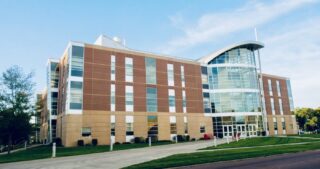
- Vermillion. The Andrew E. Lee Medical Building on the University of South Dakota campus has housed Pillar 1 and the Division of Biomedical and Translational Sciences. It is also home to the Center for Brain and Behavior Research. Vermillion is a small college town on the Missouri River in southeastern South Dakota.
- Sioux Falls. The Health Science Center at 1400 W. 22nd St., on the campus of Sanford Health and Sanford USD Medical Center, houses school administration, clinical departments, Graduate Medical Education, the Center for Disabilities, the Parry Center for Clinical Skills and Simulation and the Wegner Health Sciences Library. Sioux Falls is South Dakota’s largest city, at the junction of I-29 and I-90. Pillar 1 moves to Sioux Falls by summer 2028.
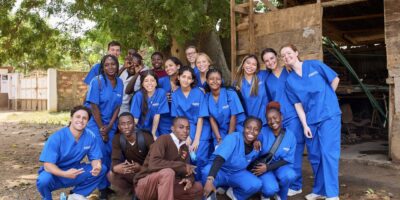
- Rapid City. The Rapid City campus in downtown Rapid City, near Monument Health Hospital, has trained medical students since 1948. Ten to 15 students from each class call it home for Pillar 2 and Pillar 3.
- Yankton. The Yankton campus sits next to Avera Sacred Heart Hospital and Yankton Medical Clinic and is the birthplace of the school’s Yankton Ambulatory Program. Ten to 12 students from each class train there, with rotations that include the South Dakota Human Services Center and Indian Health Service in Wagner.
- FARM communities. FARM students live and train in one of up to 10 rural towns for 11 months.
The Parry Center for Clinical Skills and Simulation is in the lower level of the Health Science Center in Sioux Falls. It uses simulators and standardized patients so students can practice communication, clinical and procedural skills before they see real patients. Students and faculty review recorded sessions for feedback. The center also trains nursing, physician assistant, therapy and social work students from the USD School of Health Sciences, so interprofessional practice starts early.
The Wegner Health Sciences Library in Sioux Falls is described by the school as the state’s premier medical library. It supports the medical school and partner organizations with study space, databases and health sciences collections. The university’s libraries on the Vermillion campus serve students during Pillar 1.
Housing
Most medical students rent off-campus apartments or homes. Housing details are shared during interview sessions. In Vermillion, graduate and professional students may live in university housing when space is available, including Coyote Village, a suite and apartment complex, and McFadden Hall, which has four-person apartments. Vermillion also has off-campus apartments, houses and other rentals. In the clinical years, students arrange their own housing on their campus or FARM town. Because the class splits in Pillar 2, plan for at least one move during medical school, and two if you enter in 2027 and finish Pillar 1 in Sioux Falls.
Medical Student Affairs
The Office of Medical Student Affairs supports students from orientation to graduation. Its services include admissions, financial aid, academic support, career advising, well-being and the registrar. The office is part of the move to Sioux Falls.
- Academic support. Confidential academic counseling, study skills, time management, test-taking strategies, USMLE Step preparation, Supplemental Instruction sessions and one-on-one or small-group peer tutoring are available in every pillar.
- Career advising. Advising follows the pillars. In Pillar 1, students meet a career advisor, hear department chairs present their specialties, can take half-day clinical experiences and draft a curriculum vitae. In Pillar 2, students take career development prep classes, identify specialty advisors and attend a career fair. In Pillar 3, they prepare residency personal statements, review their Medical Student Performance Evaluation with Student Affairs deans, often complete away rotations, hear from newly matched students and program directors, and take a required mock residency interview. Senior students also serve as career peer mentors.
- Alumni connections. Alumni are happy to meet with students, and current students can ask Dr. Suzy Reuter, associate dean of Medical Student Affairs, for introductions.
The university also has a Center for Career and Life Design and online job tools that serve all USD students. Medical students rely mainly on the Medical Student Affairs advising described above, which is built around the residency match.
Well-Being and Counseling
The school’s wellness program motto is “Well students. Well doctors. Well patients.” Resources include:
- A 24/7 stress release and counseling referral line for medical students
- A counselor at the Counseling Center dedicated to medical students
- The national Suicide and Crisis Lifeline at 988
- Student Professional Support Services for academic concerns, anxiety and career questions, with referrals to learning specialists and counselors
- A Wellness Committee with elected wellness officers in each class who plan events such as fitness classes, self-defense classes, study sessions, picnics, movie nights and trivia nights
The university’s Student Counseling Center offers individual counseling, group therapy, prevention and crisis services, and it lists a Sioux Falls clinic. Coyote Care, now powered by Uwill, gives all USD students free 24/7 access to licensed mental health professionals by phone, on or off campus. The Psychological Services Center is another campus mental health resource. In Vermillion, enrolled students can use the Sanford Vermillion Clinic with their Coyote Card, and Charlie’s Cupboard Campus Pantry provides free food to students.
Medical Student Organizations
Medical students run a long list of specialty and service organizations. The current list includes:
- Professional and advocacy groups: American Medical Association Medical Student Section, American Medical Student Association, American Physician Scientist Association, Institute for Healthcare Improvement, Medical Students for Choice and Medical Students for Life
- Specialty interest groups: anesthesiology, dermatology, emergency medicine, family medicine, infectious disease, internal medicine (American College of Physicians), neurology (SIGN), neurosurgery (American Association of Neurological Surgeons), OB/GYN, ophthalmology, orthopedics, pathology (including SCOPE), pediatrics, physical medicine and rehabilitation, plastic and reconstructive surgery, psychiatry, interventional and diagnostic radiology (Seldinger Society) and surgery
- Community and identity groups: Association of Native American Medical Students (ANAMS), Public Health Interest Group and Rural Health Interest Group
- Student-run clinics: Coyote Clinic and Vermillion Community Clinic
Students also elect class officers in the first months of Pillar 1, including representatives to the Medical Student Association, AAMC Organization of Student Representatives, Women in Medicine and the American Medical Women’s Association, the Medical Student Research Committee, the Medical Education Committee and the Code of Professional Conduct Board. Students can also serve as Medical Student Ambassadors, a non-elected role.
Service Clinics
- Coyote Clinic. Students created the Coyote Clinic, a free clinic in downtown Sioux Falls in 2006, and it celebrated 20 years of service in 2026. Medical students serve in a primary care role under the supervision of local physicians every Tuesday evening, with psychiatric care the first Wednesday of each month. Students also join outreach at the Bishop Dudley Hospitality House, blood pressure monitoring at The Banquet, STI screenings with the Department of Health, flu vaccine drives and health fairs.
- Servant Hearts Clinic. This volunteer, student-run free clinic in Yankton sees adults on Monday evenings. Students run the scheduling desk, see patients with an attending and help with administration.
- Vermillion Community Clinic. Listed among the school’s student organizations.
These clinics are central to the school’s identity. They are also where you can turn your premedical service experience into a concrete plan, which is useful in secondary essays and interviews.
Broader USD Campus Life
During Pillar 1, medical students are on a university campus with more than 200 clubs and student organizations, sorority and fraternity life, campus events and traditions such as Dakota Days and the Wacipi. The university also offers a Writing Center, a Graduate and Professional Student Association, and the Gallagher International Center, which supports international students and study abroad. Most of these groups are designed for undergraduates and graduate students in general, not medical students. Medical students tend to spend their limited free time in the medical organizations above, but campus recreation, faith communities and cultural groups are available if you want them. Tiospaye, a student-led organization, supports Native and non-Native students and promotes Native life on campus.
If you are an undergraduate now and are trying to build experience before you apply, medical internships for undergraduates can add structured clinical work during academic breaks. Pair them with ongoing local service so your application shows commitment over time.
Clinical Rotations and Research Opportunities
How Clinical Training Is Organized
Clinical training is community-based. After Pillar 1 and Step 1, each student moves to one clinical home for Pillar 2 and usually stays there through Pillar 3 and graduation. The school works with the state’s four major health systems: Avera, Monument Health, Sanford Health and VA. In the most recent year reported by the school, Pillar 2 placements were:
| Site | Students |
|---|---|
| Avera Sioux Falls | 17 |
| Sanford Sioux Falls | 17 |
| FARM sites (7 Avera, 3 Sanford, 2 Monument, 1 Mobridge) | 13 |
| Avera Yankton | 12 |
| Monument Rapid City | 12 |
On each campus, Pillar 2 runs as a longitudinal integrated clerkship. Students rotate across seven core disciplines at the same time, see patients in outpatient clinics, follow them into the hospital and work with interprofessional teams. A focused rural family medicine block is built into Pillar 2, and a capstone rural family medicine experience is required in Pillar 3. Pillar 3 also requires two surgical subspecialty experiences, emergency medicine and an acting internship, with time for electives, away rotations, research and global health.
Choosing a campus. Ask on interview day how students are assigned to Sioux Falls, Rapid City, Yankton or FARM and how preferences are weighed. Each campus offers a different experience. Sioux Falls has the largest hospitals and the most subspecialists. Rapid City brings West River practice near the Black Hills. Yankton offers a smaller community with a strong ambulatory tradition, a state psychiatric hospital and Indian Health Service exposure.
Frontier And Rural Medicine (FARM)
FARM is the school’s best-known program. The school calls it “a unique opportunity for a select group of third year (Pillar 2) students to complete 11 months of their clinical training in rural communities.” The FARM Program page describes how it works:
- Clinical experience. Students take part in the full spectrum of rural medicine with the health care team. They follow patients and families over time in clinic, hospital and extended care settings. On-site specialty clinics, faculty visits, online cases, telemedicine and weekly didactic sessions extend their learning.
- Community engagement. Students coach sports, help with community events, work with local EMS and teach health classes. Each completes a community project that addresses a local need. Recent projects include skin cancer screening at a cheese plant in Milbank and HIV and syphilis point-of-care screening at a county jail, which found seven positive cases among 112 people screened. Each year the South Dakota Academy of Family Physicians names one Outstanding Community Project.
- Selection. FARM leaders and former students present to first-year students in the fall. Interested students apply, interview with the selection committee and are matched to communities based on preferences and availability.
- Growth. FARM began in 2014 with six students at five sites. From March 2027, it will accept up to 17 students a year at 10 sites, adding Aberdeen, Brookings and Mitchell to Chamberlain, Milbank, Mobridge, Parkston, Pierre, Spearfish and Vermillion.
- Outcomes. The school reports that FARM matches 60 percent of its graduates into primary care specialties (family medicine, pediatrics and internal medicine). Among FARM graduates who have finished training, 56 percent practice in South Dakota and 38 percent in health professional shortage areas.
Dr. Jason Wickersham, associate dean of rural medicine, has been the physician coordinator at the Parkston FARM site since the program began. “Several students have returned to their FARM sites to practice after completing their training,” he said when the expansion was announced in September 2026.
Service Learning and Global Health
The school’s students take part in service learning throughout training. Beyond the Coyote and Servant Hearts clinics, students have taken part in a medical service trip to Guatemala, where 16 students and three faculty members worked in community-run clinics, and in cultural immersion volunteering in settings that include Indian reservations, Hutterite colonies and care facilities for people who are disabled, deaf or blind. Others have administered flu shots to elementary students, trained for health care emergencies and organized charity events. Pillar 3 also has time for global health electives. In the 2025 Graduation Questionnaire, 21 percent of graduating seniors reported a global health experience during medical school.
Research at the School
Research has grown from $5.3 million in funded research in 1996 to $16.8 million in 2024, including $6.37 million in direct federal research grants and contracts in fiscal year 2024, and the school had more than 32 active external research grants, projects and contracts in 2025. Faculty work in basic, translational and clinical research. Areas visible on current faculty pages include pediatric neurodegenerative disease, neuroscience, cancer screening among American Indian women and medical education. The Center for Rural Health Improvement and the South Dakota Area Health Education Centers bring in grants focused on mental health, substance use and workforce shortages.
The move to Sioux Falls includes the Division of Biomedical and Translational Sciences. The school says research alongside Avera, Sanford Health and the VA Sioux Falls Healthcare System will expand, and Sanford Health is providing a new anatomy lab as a first step.
The Center for Brain and Behavior Research
The Center for Brain and Behavior Research (CBBRe) is an interdisciplinary research center based in the Lee Medical Building. It trains research students and fellows in neuroscience and behavioral science and promotes translational research in neurology, neuropsychology and psychiatry. The center lists about 50 faculty members from biology, chemistry, psychology, addiction studies, business and biomedical and translational sciences. Its three research strengths are:
- Stress and addiction: the neural and behavioral processes behind stress, mood and emotion and related psychiatric disorders, especially addiction and affective disorders.
- Neurobehavioral development: neural, cognitive and behavioral development and related disorders, including congenital disorders of nervous system development, pediatric brain tumors, learning disabilities and communication disorders.
- Cognition and plasticity: decision making, learning, memory and motor function and related neurological disorders, including stroke, traumatic brain injury, pain, Parkinson’s disease, Huntington’s disease and Alzheimer’s disease.
The center offers graduate student grants of up to $5,000 a year and holds up to 10 community outreach and education events annually. If your interest in psychiatry or behavioral health started with work in that field, mental health internships abroad are one way some applicants gain supervised exposure to mental health care in a different setting.
Student Research Routes
- Medical Student Summer Research Program (MSRP). Newly accepted medical students can spend the summer before school on a faculty research project. Options change each year.
- Scholarship Pathways Program. Through the Scholarship Pathways Program, students develop a mentored project in research, service, education or social science. Applications run on a rolling basis from the start of medical school until January of the first year. The program includes a summer abstract and IRB work in Pillar 1, an abstract and virtual poster in Pillar 2, and a required four- to eight-week elective in Pillar 3 to finish a manuscript or scholarly product. The Scholars’ Research Symposium is held in the senior year, and some students are selected for podium presentations with an honorarium.
- Awards. Research, travel and publication awards help students present at regional and national meetings.
- Mentors. The Medical Student Research coordinator and faculty such as Dr. Lee Baugh help students find projects and mentors.
The school describes research as “a frequent topic of discussion” at residency interviews, which is why many students start early.
Research Translation
The school’s research goal is to improve the health of South Dakotans. Faculty work with the health systems and community partners to turn findings into care, from cancer screening programs for American Indian women to Batten disease therapies tested in animal models. For applicants, the practical point is that research is available and supported, but it is not required for the M.D.
Notable Alumni, Faculty, Leadership and Admissions Staff
The school has more than 4,300 alumni since 1907 and a statewide faculty of practicing physicians. The profiles below use the school’s current directories and news pages. Titles were checked in November 2026.
School Leadership
Tim Ridgway, M.D., MACP, FASGE, Vice President of Health Affairs and Dean. Dr. Ridgway is the school’s 15th dean and is himself a graduate, earning his M.D. from the University of South Dakota School of Medicine in 1984 after a bachelor’s degree in chemistry and biology from Augustana. He completed a transitional internship at McKennan Hospital in Sioux Falls and internal medicine residency and gastroenterology fellowship at the Mayo Graduate School of Medicine. He is a Fellow of the American Society for Gastrointestinal Endoscopy and a Master of the American College of Physicians. For applicants, his career is a useful model of the school’s mission: a South Dakota graduate who trained elsewhere and returned to practice and lead in the state.
Lori Hansen, Senior Academic Dean. Hansen is the school’s senior academic dean and is listed with both the Office of Medical Education and Medical Student Affairs. Her office is on the Yankton campus.
Amy Prunuske, Ph.D., Associate Dean of Medical Education. Dr. Prunuske leads the Office of Medical Education, which runs the M.D. curriculum, assessment, simulation and accreditation work. Her background is in basic science laboratory research and science education. She previously led foundational science curriculum at the University of Minnesota Medical School and helped found a regional campus for the Medical College of Wisconsin, including a pathway program to medical school. Her research covers the integration of foundational sciences into clinical reasoning and pathway programs for rural students, both directly relevant to the Pillar 1 move.
Jason Wickersham, M.D., Associate Dean of Rural Medicine. Dr. Wickersham is a family physician in Parkston and a professor of family medicine. He has been the physician coordinator at the Parkston FARM site since the program was founded, and he leads the FARM expansion to 10 communities.
DenYelle Baete Kenyon, Ph.D., Associate Dean of Community Health and Engagement. Dr. Kenyon leads the school’s community health work. Her research includes a National Cancer Institute-funded mobile web app to promote cervical cancer screening among Indigenous women (2024 to 2028) and earlier work on breast cancer screening among American Indian women. Applicants interested in tribal and community health will find her work a clear example of the school’s research priorities.
Other current leaders include Nedd Brown (Dean of Graduate Medical Education), Daniel Bird (Associate Dean, Biomedical Sciences), Victor Huber (Interim Associate Dean of Biomedical and Translational Sciences), Jason Kemnitz (Associate Dean, Academic Development and Faculty Affairs), Roy Mortinsen (Assistant Dean, Medical Education), Carolyn Gilbertson (Associate Dean, Sioux Falls Campus), Jennifer Hasvold (Associate Dean, Rapid City Campus) and April Willman (Associate Dean, Yankton Campus).
Admissions and Medical Student Affairs Staff
The school does not list a separate admissions director. Admissions sits within the Office of Medical Student Affairs, which you can reach at 605-658-6300 or [email protected].
Suzy Reuter, Associate Dean of Medical Student Affairs. Dr. Reuter leads Medical Student Affairs, the office responsible for admissions, financial aid, academic support, career advising, well-being and the registrar. Current students contact her to connect with alumni.
Pasquale (Pat) Manzerra, Ph.D., Assistant Dean of Medical Student Affairs and Associate Professor. Dr. Manzerra is featured on the school’s admissions page as part of the team that helps applicants “every step of the way.” He teaches medical biochemistry and genetics, holds a Ph.D. in zoology from the University of Toronto, and lists research interests in medical education, biochemistry education and neuronal injury from stroke, traumatic brain injury and PTSD. Applicants are likely to meet him or his staff during recruitment events and interview days.
The office also includes Benjamin Meyerink (Director of Career Advising and Student Success), Craig Uthe (Chief Wellbeing Officer) and learning specialists who support students academically.
Faculty and Researchers
David Pearce, Ph.D., Professor of Biomedical and Translational Sciences and Pediatrics. Dr. Pearce’s lab studies the molecular basis of inherited pediatric neurodegenerative diseases, including the infantile, late infantile and juvenile forms of Batten disease. His team uses mouse and miniature pig models to find disease mechanisms and test new therapies. His work shows the kind of translational research available to medical students through the summer research program and Scholarship Pathways.
Lee Baugh, Ph.D., Associate Professor of Biomedical and Translational Sciences. Dr. Baugh teaches medical neurosciences and is a member of the Center for Brain and Behavior Research. His lab studies the cognitive and neuropsychological foundations of skilled movement and how movement changes with aging and neurological damage. He is listed as a faculty contact on the Medical Student Research page.
Jerome W. Freeman, M.D., F.A.C.P., Professor and Chair, Department of Neurosciences. Dr. Freeman is quoted on the school’s home page explaining its focus on kindness: “A culture of kindness places our medical school on the threshold of making an enduring impact on medical education.” His words are a useful starting point for any secondary essay about kindness or professionalism.
Daniel G. Petereit, M.D., Clinical Professor (Class of 1989). Dr. Petereit is a Rapid City physician and clinical professor at the school. He was inducted into the South Dakota Hall of Fame in 2026 under the title “Invested in Cancer Care for All,” and in 2022 he received Monument Health’s Distinguished Researcher Award. He is also a co-author, with Dr. Kenyon, of a feasibility study of a mobile web app to promote breast cancer screening among American Indian women in the Northern Plains. His career reflects the school’s commitment to cancer care for every community in the state.
Clinical faculty recognized by Monument Health. In 2022, Monument Health honored several of the school’s clinical faculty in Rapid City, including Dr. Julie Raymond (Distinguished Clinician Award), Dr. John Palmer, D.O., clinical associate professor of internal medicine (Distinguished Educator Award), and Dr. Jason Knudson, a 2001 graduate and clinical associate professor of family medicine who was then a FARM site coordinator. These awards show how much of the school’s teaching comes from practicing physicians across the state.
H. Eugene Hoyme, M.D., Professor Emeritus of Pediatrics. Dr. Hoyme was inducted into the South Dakota Hall of Fame in 2026 as “A Global Pioneer in Pediatric Medicine.” He is listed as professor emeritus, so he is no longer an active teaching faculty member.
Notable Alumni
Susan Marie Anderson, M.D. (Class of 1997). Dr. Anderson, of Canistota, practiced in Sioux Falls and Canistota, chaired the Department of Family Medicine from 2014, directed the FARM program and led the South Dakota Area Health Education Center. She was named the school’s Distinguished Alumni in 2019, later served as executive dean, and was inducted posthumously into the South Dakota Hall of Fame in 2026 as “A Heart of Rural Medicine.” She died in 2024. Her career shows the full arc the school hopes for: a graduate who practiced rural family medicine and then built the programs that train the next generation.
Sophie Two Hawk, M.D. (1987). Dr. Two Hawk, of the Cheyenne River Sioux Tribe, was the school’s first INMED graduate. Almost 60 American Indian physicians have graduated from USD since then.
Edward A. Kaufman, M.D. (B.S.M.D. ’70). Dr. Kaufman established a scholarship endowment, in honor of his parents, Drs. Edward John and Dorothybelle McCree Kaufman, that supports students admitted to FARM each year.
Recent graduates. Austin Eggers, who trained at the Milbank FARM site, says FARM helped him choose family medicine and find a place to practice, where some of his patients are former high school sports competitors. Kjerstin Hensley, Class of 2023, describes standing “side-by-side with students from Ivy League and other ‘big name’ institutions” in residency and being told that the “South Dakota kids” were out-performing their peers.
Admissions Statistics and Class Profile
Fall 2026 Entering Class
The school’s 2026-2027 Data Reference Card reports the most recent class:
| Measure | Value | Population | Source |
|---|---|---|---|
| Applications received | 1,087 | All applicants | 2026-2027 Data Reference Card |
| Interviews granted | 203 | Interviewed applicants | 2026-2027 Data Reference Card |
| Matriculating class | 71 | Matriculants | 2026-2027 Data Reference Card |
| Mean cumulative undergraduate GPA | 3.85 | Matriculants | 2026-2027 Data Reference Card |
| Mean science GPA | 3.80 | Matriculants | 2026-2027 Data Reference Card |
| Mean cumulative MCAT | 508.9 | Matriculants | 2026-2027 Data Reference Card |
| South Dakota residents | 58 | Matriculants | 2026-2027 Data Reference Card |
| Non-residents with ties to South Dakota | 13 | Matriculants | 2026-2027 Data Reference Card |
| Men / women | 38 / 33 | Matriculants | 2026-2027 Data Reference Card |
2025 Entering Class Medians
| Measure | Value | Population | Source |
|---|---|---|---|
| Median MCAT total (mean, SD) | 509 (509.3, 5) | All accepted applicants | AAMC MSAR (2026 edition) |
| Median MCAT sections | Chemical and Physical 127; Critical Analysis and Reasoning 126; Biological and Biochemical 128; Psychological, Social and Biological 128 | All accepted applicants | AAMC MSAR (2026 edition) |
| Median GPA | 3.86 | Accepted applicants | AAMC MSAR (2026 edition) |
| Applicants interviewed | 200 (120 in-state, 80 out-of-state, 0 international) | Interviewed applicants | AAMC MSAR (2026 edition) |
| Total enrollment | 293 | All enrolled M.D. students, October 2025 | AAMC MSAR (2026 edition) |
| Acceptance offers | Not published | n/a | School admissions pages; AAMC MSAR |
What the Numbers Mean
- Interviews granted per application. 203 interviews for 1,087 applications is about 18.7 percent (interviewed divided by applicants). Because the school grants an interview opportunity to South Dakota residents who pass the screen, the share for residents is likely much higher than for non-residents. For the 2025 entering class, 120 of the 200 applicants interviewed were in-state and 80 were out-of-state.
- No acceptance rate. The school does not publish how many offers it made. Dividing 71 matriculants by 1,087 applications (about 6.5 percent) gives a matriculation ratio, not an acceptance rate, because some admitted applicants choose other schools and some seats are filled from the alternate list.
- Medians and means, not minimums. The median MCAT of 509 and median GPA of 3.86 for 2025 accepted applicants sit right beside the fall 2026 matriculant means of 508.9 and 3.85, so the typical admitted student has been stable across the two classes. The real minimums are the interview screen of a 3.1 GPA and a 496 MCAT. Many successful applicants are below the mean on one measure.
- Residency mix. Eighty-two percent of the class (58 of 71) are South Dakota residents. The rest are non-residents with ties. There are no non-residents without ties.
- Where students come from. The data card lists 53 South Dakota high schools with graduates currently in the M.D. or M.D./Ph.D. program, from large Sioux Falls high schools to small rural districts.
Outcomes
- Match. The school reports that 100 percent of its students matched to a residency program in 2024. In the 2025 Match, 63 graduates matched in 22 states. Eleven stayed in South Dakota, and the most common specialties were family medicine (10), internal medicine (9) and anesthesiology (7).
- Practice. The school ranks in the 99th percentile nationally for graduates practicing in rural areas and in the 93rd percentile for the proportion of graduates who are American Indian or Alaska Native (AAMC 2022). Two-thirds of graduating students intend to work in South Dakota after training.
- Student experience. All graduates on the 2026-2027 data card reported confidence that they had the clinical skills required for residency, and over 96 percent were satisfied with faculty mentoring.
Limits of the Data
The class profile describes one entering class, and the medians describe the class before it. Percentile ranges, the number of offers and an applicant breakdown by residency are not published, so no true acceptance rate can be calculated. Use the school’s numbers as a guide to the typical admitted student, and use the eligibility rules and the 3.1/496 screen to decide whether to apply.
Tips and Strategies for Admission
The school’s priorities are clear from its mission, its eligibility rules and its programs. These strategies turn those priorities into practical choices.
Understand the School’s Mission and Values
Show alignment with the mission. The school exists to train physicians for South Dakota, with an emphasis on family medicine and service to underserved areas. Highlight experiences that show you understand rural and underserved care: work at a critical access hospital, a tribal or Indian Health Service clinic, a free clinic, a nursing home or an ambulance service. Explain what you saw about access, distance, cost and trust, and what you did about it.
Be honest about specialty interest. You do not need to promise family medicine. The mission asks for excellence in all clinical disciplines, and graduates match into many fields. What helps is a believable plan to serve South Dakota, whether as a family physician in a small town, an internist in Rapid City or a psychiatrist who travels to rural clinics by telehealth.
Value diverse perspectives. The school’s Opportunity Statement values “people with broad life experiences, with records of service to disadvantaged populations.” Rural upbringing, tribal membership, agricultural work, military service, first-generation college status and caregiving responsibilities are all relevant. Describe what your background taught you about patients, not just the label.
Make Your Ties Concrete
If you are a non-resident, your ties to South Dakota will be read closely. List each tie the school recognizes that applies to you (a South Dakota high school, 90 or more credits at a South Dakota college, a parent living in the state, a parent who graduated from the school, or tribal membership in a bordering state). Then show depth: summers worked in the state, family responsibilities, service in South Dakota communities and specific plans to practice there. A vague wish to “return to the Midwest” is weaker than a clear plan to train and practice in a named part of the state.
Build the Right Kind of Clinical Experience
The school does not publish hour minimums, so aim for depth and responsibility. Strong options include CNA, EMT, medical assistant, phlebotomy and scribe roles, especially in rural or underserved settings. Shadow a family physician in a small town if you can, and ask how they manage obstetrics, emergency coverage and nursing home care. Volunteer at a free clinic or food pantry over months, not weeks. Many applicants also add clinical internships for pre-med students to build hands-on hours, but make sure any program you choose gives you supervised patient contact and fits alongside your local commitments.
Craft a Strong Personal Statement
Tell a story with a point. Focus on one or two experiences that explain why you want to be a physician, and say what you learned. Avoid listing achievements already in your activities section.
Reflect. Admissions readers look for insight. What surprised you? What changed in how you treat people? How will that shape the kind of physician you become? Reflection is especially important for a school that values kindness and continuity.
Connect to the school only lightly. Your AMCAS personal statement goes to every school, so save South Dakota-specific detail for the secondary. A sentence about wanting to serve rural communities is fine; a full paragraph about FARM belongs in the supplemental.
Secure Effective Letters
Choose recommenders who have seen you work with patients, lead in a community or succeed in difficult science courses. A physician who supervised you in a rural clinic, a nurse manager from your CNA job, or a science professor from a course where you improved can all write strong letters. Give them your personal statement, a short list of experiences and a note about the school’s mission so they can speak to the qualities that matter. Stay within the limit of five letters.
Demonstrate Academic Readiness
The school’s screen is a 3.1 GPA and a 496 MCAT, but the enrolled class averages a 3.85 GPA and a 508.9 MCAT. If your numbers are below the mean, strengthen what you can control. Recent, strong upper-level science coursework matters, and the school explicitly considers applicants below a 3.1 GPA who have “recent and significant coursework with a higher performance.” Retake the MCAT only if you can prepare well enough to improve meaningfully. Address any academic setback directly in your secondary, with what you changed afterward.
Highlight Key Experiences
- Clinical work. Describe your direct role with patients and what you learned about care in practice.
- Research. Research is not required for the M.D., but if you have done it, explain your role and what you learned about evidence. For the M.D./Ph.D., research is central.
- Community service. Especially in rural, tribal or low-income communities. The school’s own students run free clinics in Sioux Falls and Yankton and a community clinic in Vermillion, so show that you already serve.
- Leadership. HOSA chapters, ambulance squads, 4-H, church programs and student organizations all count if you describe what you actually did.
Plan Your Timeline
Submit AMCAS early in the summer, return the supplemental within the two-week deadline, and keep your interview calendar flexible from September through February. If you need another year to strengthen your application, internships for pre-med students during a summer or gap period can add clinical depth, but continuous local work is just as valuable.
Keep Your Options Open
Apply broadly, especially if you are a non-resident with ties. Include your own state’s public schools and other Midwest schools with rural missions. The related guides in F17 list good comparisons, and our full collection of school guides follows them.
Secondary Application Questions, Example Responses and Analysis

What Is Confirmed for 2026-2027
- Who receives it. Applicants who pass the school’s screen receive an email invitation: U.S. citizens or permanent residents who are South Dakota residents or have strong ties, who have completed the prerequisites and who have an MCAT within three years of the November 1 deadline. In practice, that means most South Dakota residents and selected non-residents with strong ties who have at least a 3.1 cumulative GPA and a 496 MCAT.
- What it includes. An online supplemental application, requests for letters of recommendation and a non-refundable $35 fee. A fee waiver is available.
- Deadline. Due two weeks after you receive the email request.
- How it is used. The admissions office reviews the supplemental with your AMCAS application to decide whether to invite you to interview.
- INMED and M.D./Ph.D. INMED applicants receive the supplemental after their INMED application is verified. M.D./Ph.D. applicants complete the same online supplemental, letter requests and fee before the M.D./Ph.D. committee reviews them.
What Is Not Published
The school does not post its secondary prompts publicly, and the 2026-2027 wording is not yet public. Answer the questions in your portal exactly as written, and write to the character limits shown there. No separate M.D./Ph.D. or INMED essay prompts have been published for this cycle.
Because the deadline is only two weeks, prepare before your invitation arrives. Draft your story about rural South Dakota, your ties if you are a non-resident, a challenge you worked through and your plan if you are a reapplicant. For practice across schools, see our database of Medical School Secondary Essay Prompts.
Practice With Recent Prompts
The prompts below are the school’s most recently published secondary questions. The first seven appeared in the 2024-2025 cycle. The last five appeared from 2021-2022 through 2023-2024 and were not part of the 2024-2025 set. None is confirmed as 2026-2027 wording. Use them to practice, then answer the questions in your portal. Every example is original teaching material written for this guide, and each stays within the limit listed for that cycle.
Prompts From the 2024-2025 Cycle
These seven items were the full published set for 2024-2025. Two are conditional: the reapplicant essay and the ties essay for non-residents.
Mission essay (2024-2025 wording)
“Given the mission statement of the school, please explain how your experiences and long term goals would help meet the mission.”
Limit (2024-2025): 1,500 characters, including spaces.
Who answers it: All secondary applicants in 2024-2025. No optional label was shown.
What it asks. Two things: your experiences and your long-term goals, both tied to the mission. The mission is specific: South Dakota residents, family medicine, service to the medically underserved areas of the state, and excellence across disciplines. An answer that praises the school without connecting your past and your future to those words misses the question.
Approach. Quote or paraphrase one phrase of the mission in your own words. Use one formative experience as evidence that you already care about the people the mission names. Then state a realistic long-term goal, such as the kind of community and specialty you see yourself in, and name one or two school programs that would help you get there.
Illustrative example, not an actual applicant essay
I grew up in Miller, where one family physician and a physician assistant covered the clinic, the nursing home and the emergency room on weekends. When my grandfather had a stroke, the nearest neurologist was more than 100 miles away, and our family physician coordinated his care by phone for two days. That is the medicine I want to practice: broad, steady and local.
For three years I have worked as a certified nursing assistant at a critical access hospital, about 1,400 hours so far. I take vitals, help patients walk after surgery and sit with families during long nights. In a small hospital the same team admits a patient and sends her home, so continuity is not a program there. It is simply how care works.
The mission asks graduates to serve medically underserved areas of South Dakota, with an emphasis on family medicine. My goal fits that charge. I plan to train in family medicine and return to a town of fewer than 5,000 people in central or western South Dakota. The FARM program is the clearest path I see: eleven months of Pillar 2 in a rural community, following patients across clinic, hospital and long-term care. I would use the community project to build a stroke warning-sign series with the local ambulance service, because my grandfather’s first symptoms went unrecognized for hours.
I want to be the physician a town keeps for thirty years.
Character count: 1,372 of 1,500.
Analysis. The example answers both halves of the prompt. The experiences are concrete: a grandfather’s stroke, a small hospital where one team admits and discharges patients, and 1,400 hours as a CNA. The applicant does not just say they care about rural health. They show what they learned about continuity in a critical access hospital. The goal is specific enough to be believable (family medicine in a town of fewer than 5,000 in central or western South Dakota) without overpromising. The essay names the mission’s own focus on family medicine and underserved areas and ties it to FARM, describing the program accurately as eleven months of Pillar 2 in a rural community. The community project idea links back to the opening story, which gives the essay a clear shape. The last line is short and memorable without being dramatic.
Mistakes to avoid. Copying the full mission statement into your answer, which wastes characters. Claiming you will practice in a rural town without any rural experience to support it. Listing every program at the school. Promising a specialty you have not explored. Writing about rural medicine in general without South Dakota detail.
Diversity essay (2024-2025 wording)
“Given the diversity statement of the school, explain how your background and experiences with diversity will bring value to the school.”
Limit (2024-2025): 1,500 characters, including spaces.
Who answers it: All secondary applicants in 2024-2025.
What it asks. How your background and experiences with diversity will add value to the school. The school’s current statement on this topic is its Opportunity Statement, which values people with broad life experiences and records of service to disadvantaged populations. Diversity here is broad: culture, tribal identity, rural upbringing, income, faith, language, disability, first-generation status, military service and more.
Approach. Choose one part of your background and one story that shows how it shaped how you see patients. Then explain what you will contribute to classmates and patients at this school. Name a concrete way you would contribute, such as a student organization or clinic.
Illustrative example, not an actual applicant essay
My family is from the Rosebud Reservation, but I grew up in Rapid City, so I have spent my life moving between two kinds of South Dakota. At my grandmother’s house, a doctor’s visit meant a two-hour drive and a long wait. In town, my friends saw a pediatrician down the street.
That gap became personal when my grandmother’s diabetes led to a foot wound that went untreated for weeks. She did not trust the clinic, and the clinic did not know her. I started going with her to appointments, writing down questions in advance and explaining the plan to her afterward in plain words. Her wound healed. What changed was not the medicine. It was trust.
In college I volunteered with a youth wellness program for Native high school students and later worked as a pharmacy technician, where I noticed how often patients from reservation communities left without their prescriptions because of cost or confusion. I learned to slow down, ask what a patient already knew and check whether the plan fit their life.
I would bring that habit of listening across cultures to my classmates. I would join the Association of Native American Medical Students and volunteer at the Coyote Clinic, where uninsured patients need the same patience my grandmother needed. My background also lets me speak honestly in small groups about rural and tribal health, so my classmates who grew up in Sioux Falls can hear those realities from someone who has lived them.
Character count: 1,441 of 1,500.
Analysis. The essay chooses one clear part of the applicant’s background, growing up between Rapid City and family on a reservation, and shows its effect through a single story about a grandmother’s untreated foot wound. The key insight, that trust, not medicine, changed the outcome, answers the question of what this background taught the applicant about care. The pharmacy technician detail adds a second, adult experience that shows the same skill in a work setting. The final paragraph explains the value to the school: listening across cultures, joining the Association of Native American Medical Students, volunteering at the Coyote Clinic and helping classmates who grew up in cities understand rural and tribal realities. Every program named is real and current. The tone stays respectful and avoids presenting the community only as a problem.
Mistakes to avoid. Describing diversity only as a list of identities without showing what you learned. Speaking for an entire community. Using another person’s hardship as the main story without showing your own role. Treating diversity as only race or ethnicity when rural, economic or other experiences are more relevant to you. Ending without saying what you will contribute.
Challenge essay (2024-2025 wording)
“Briefly describe a crisis or significant challenge in your life, how you have worked through the crisis or challenge, and what you have learned from this experience.”
Limit (2024-2025): 1,500 characters, including spaces.
Who answers it: All secondary applicants in 2024-2025.
What it asks. Three parts: the challenge, how you worked through it and what you learned. The word “briefly” applies to the description of the crisis, so spend most of your characters on the second and third parts.
Approach. Describe the challenge in two or three sentences. Spend the middle of the essay on specific actions you took, including any mistakes. End with lessons that connect to how you will practice medicine.
Illustrative example, not an actual applicant essay
In the fall of my junior year, my father was injured in a farm accident and could not work for six months. I was a full-time student two hours away. Within a week, I was driving home every weekend to help my mother run our cow-calf operation during calving season.
My grades dropped that semester. I earned a C in organic chemistry, the first C of my life, because I was studying at 2 a.m. after checking heifers. I was embarrassed and tried to handle everything alone, which made it worse.
What changed was asking for help. I met with my professor, explained the situation and arranged to take exams on Mondays when I could study on the drive back. I joined a study group that met online so I could participate from home. I also talked honestly with my parents about what I could and could not carry, and we hired a neighbor’s son for two weekends a month.
The next semester I retook my study schedule from scratch and earned an A in biochemistry. My father recovered, though he still has pain in cold weather.
I learned two things. First, asking for help early is a skill, not a weakness. Second, I understand now why patients on farms delay care: there is no one to cover the work. When my father needed physical therapy, the hardest part was not the exercises but the schedule. As a physician, I will ask patients what their week looks like before I hand them a plan.
Character count: 1,375 of 1,500.
Analysis. The example covers all three parts in order. The crisis, a father’s farm injury during calving season, is described in a few sentences. The longest section is about how the applicant worked through it, including an honest admission of handling things alone at first and a C in organic chemistry. The actions are concrete: meeting a professor, rearranging exams, joining an online study group and hiring help for weekends. The result is measurable (an A in biochemistry the next semester). The lessons are specific and connect to medicine: asking for help early, and understanding why farm patients delay care and need plans that fit their week. That second lesson shows insight a committee at a rural-focused school will recognize.
Mistakes to avoid. Spending most of the essay on the crisis itself. Choosing a minor inconvenience. Blaming others. Claiming the challenge is fully behind you without showing growth. Ending with a general statement about resilience instead of a specific lesson.
Reapplicant essay (2024-2025 wording)
“[For repeat applicants only.] Since your last application, what steps have you taken to strengthen your candidacy? Please note any relevant academic, employment, clinical and personal experience.”
Limit (2024-2025): 1,500 characters, including spaces.
Who answers it: Repeat applicants only. Labeled optional in 2024-2025 compilations; if you are a reapplicant, answer it.
What it asks. What you have done since your last application, in four named areas: academic, employment, clinical and personal. The committee wants evidence that you identified your weaknesses and addressed them.
Approach. Start with a one-sentence diagnosis of what held your application back. Then cover each of the four areas the prompt names, with specific changes and numbers. End with what the year confirmed about your goals.
Illustrative example, not an actual applicant essay
When I applied last cycle, my clinical experience was mostly shadowing, and my MCAT was close to the school’s 496 interview screen. I did not receive an interview. I asked for feedback, reread my file honestly and found two gaps: limited hands-on patient care and an academic record that did not show recent strength in the sciences.
Academically, I retook the MCAT in April and improved by six points. I also completed upper-level physiology and immunology at the University of South Dakota while working, earning A grades in both, so the committee can see recent and significant coursework.
Clinically, I became a certified EMT and joined a volunteer ambulance service in my hometown of 2,800 people. In ten months I have responded to more than 60 calls, from chest pain on a gravel road to a farm injury 40 minutes from the hospital. I take vitals, give oxygen, splint injuries and give report at the emergency department. I also work part time as a medical assistant at a family medicine clinic, where I room patients and manage refill calls.
Personally, I learned to stay steady when I do not have the answer. On a call last winter, a patient’s blood pressure dropped while we were still 20 minutes out. I kept talking to her, followed protocol and trusted my partner.
These experiences confirmed that I want rural family medicine and showed me what continuity looks like from both the ambulance and the clinic.
Character count: 1,420 of 1,500.
Analysis. The example opens with an honest diagnosis: limited hands-on care and a borderline MCAT near the 496 screen. It then covers every area the prompt lists. Academic: a six-point MCAT improvement and A grades in upper-level physiology and immunology, which speaks directly to the school’s policy of considering recent, significant coursework. Employment and clinical: EMT certification, more than 60 ambulance calls and a medical assistant job, with clear duties. Personal: a brief, specific moment of staying calm on a call. The essay ends by connecting the year to rural family medicine, which fits the mission. It avoids blaming the school and shows a reapplicant who used feedback well.
Mistakes to avoid. Repeating last year’s essay with small edits. Listing activities without saying what changed. Ignoring an obvious weakness such as a low MCAT. Sounding bitter about the previous result. Leaving one of the four named areas blank.
If you are planning a reapplication year, choose activities that add direct patient care and recent coursework. Structured pre-med gap year programs can be one part of that plan, but committees look most closely at sustained clinical work and grades from the year itself.
Ties to South Dakota essay (2024-2025 wording)
“For non-South Dakota residents applying to the regular MD program – please describe your ties to South Dakota.”
Limit (2024-2025): 1,500 characters, including spaces.
Who answers it: Non-South Dakota residents applying to the regular M.D. program. Residents do not answer it.
What it asks. Your ties to the state. The school’s eligibility rule recognizes specific ties (a South Dakota high school, 90 or more credits at a South Dakota college, a parent living in South Dakota, a parent who graduated from the school, or tribal membership in a bordering state), and this essay is where you explain yours and show that they are real.
Approach. Name your qualifying tie first, in plain words. Then add depth: family, work, service and time spent in the state. Finish with a concrete plan to train and practice in South Dakota.
Illustrative example, not an actual applicant essay
I am a Minnesota resident, but my ties to South Dakota run through my family and my education. My mother grew up in Watertown, and my grandparents still farm outside Clear Lake. I spent every summer of my childhood there, and since high school I have worked every harvest on their land.
My strongest tie is academic. I transferred to a South Dakota university after my first year and will have completed more than 90 credits there by graduation. I chose it because I wanted to train in the state where I plan to practice. During college I volunteered weekly at a community clinic in Brookings, checked in patients, translated for Spanish-speaking families and helped with blood pressure screenings at a local meat-processing plant.
My grandfather’s care also connects me to the state. When he developed heart failure, his family physician in Clear Lake managed his medications, coordinated with a cardiologist in Sioux Falls and visited him in the nursing home. Watching one physician hold all of that together is why I want rural family medicine.
My plan is to stay. I hope to complete residency in South Dakota and practice in a town in the northeast part of the state. I would apply to the FARM program, and Milbank, Aberdeen or Brookings would let me train close to the family and patients who brought me to medicine.
Character count: 1,324 of 1,500.
Analysis. The essay leads with the facts that matter for eligibility: a Minnesota resident who will finish more than 90 credits at a South Dakota university, which is one of the school’s listed ties. It adds supporting depth with family land near Clear Lake, summers spent there and weekly volunteering in Brookings. The grandfather’s story connects those ties to a reason for choosing rural family medicine. The final paragraph gives a plan to stay, with residency and practice in northeastern South Dakota, and names FARM sites, including Aberdeen and Brookings, which join the program in 2027. The essay is factual, specific and believable.
Mistakes to avoid. Claiming ties you cannot document. Relying only on vacations or sports trips. Forgetting to state which recognized tie applies to you. Writing about the Midwest in general instead of South Dakota. Promising to practice in the state without any supporting history.
COVID-19 essay (2024-2025 wording)
“Please use the space below for anything you might wish to discuss related to the corona virus (COVID-19) public health crisis. Possible topics might include, for example: your biggest lessons and insights from the pandemic; creative ways in which you were able to serve your community during the crisis; how the pandemic has affected your outlook on the role of medicine.”
Limit (2024-2025): 5,000 characters, including spaces.
Who answers it: Open to any secondary applicant who chooses to answer. The wording invites you to discuss anything you wish.
What it asks. Anything you want to share about the pandemic. The suggested topics are lessons and insights, ways you served your community, and how the pandemic changed your view of medicine. You do not need to cover all three.
Approach. Choose one setting and two or three clear lessons. Use specific moments rather than general statements about the pandemic. Connect your lessons to how you want to practice. If the pandemic did not affect you meaningfully, it is reasonable to leave an open-ended space like this blank.
Illustrative example, not an actual applicant essay
When the pandemic started, I was a sophomore working as a dietary aide at a nursing home in Mitchell. Within weeks, the building closed to visitors. My job changed overnight. I still delivered meal trays, but I also became one of the few familiar faces many residents saw each day.
The first lesson was about loneliness. One resident, a retired schoolteacher, stopped eating after her daughter could no longer visit. The nurses were stretched thin, so I asked the activities director whether I could set up video calls during my shifts. Twice a week, I held a tablet while she talked with her daughter and grandchildren. Her appetite returned. Nothing about her medical condition changed, but her care did. I learned that isolation can make people sick in ways a chart does not show.
The second lesson was about trust and information. Our town heard many conflicting messages. Some of my coworkers were afraid of the vaccine, and some residents’ families were angry about restrictions. I did not have the authority to make policy, but I could listen. When a coworker asked me why I was getting vaccinated, I did not lecture her. I told her what I had read, admitted what I did not know, and suggested she bring her questions to our director of nursing. She was vaccinated two weeks later and told me that being heard mattered more than the facts. That conversation shaped how I think about counseling patients: respect comes before persuasion.
The third lesson was about rural capacity. During our facility’s outbreak in late 2020, two residents needed hospital care, and the nearest hospital with open beds was hours away. I watched our nurses call facility after facility while caring for everyone else. I saw how thin the margins are in rural health care and how much depends on a small group of people who cannot be replaced easily. That experience is a large part of why I want to practice family medicine in South Dakota, where a single physician can change what a community is able to handle.
I also found ways to serve beyond my job. I helped a local church deliver groceries to older adults who were afraid to go to the store. Later, I volunteered at a vaccine clinic, where I checked people in and watched for reactions during the observation period after each dose.
The pandemic changed my view of medicine in a lasting way. Before 2020, I thought of physicians mostly as people who diagnose and treat. Now I also see them as trusted sources of information in their towns, as advocates who connect patients to resources, and as members of a team that has to work under pressure. The residents I served taught me that dignity and connection are part of health care. I want to bring those lessons into a career in rural primary care, where the physician often knows the patient, the family and the town.
Character count: 2,817 of 5,000.
Analysis. The example covers all three suggested topics through one job, a dietary aide in a Mitchell nursing home. Lesson one, about loneliness, is shown through video calls that helped a resident start eating again. Lesson two, about trust, comes from a respectful conversation with a coworker about vaccination, and it ends with a principle that applies to medicine: respect comes before persuasion. Lesson three, about rural capacity, comes from watching nurses search for hospital beds during an outbreak, and it connects directly to the school’s mission and to practicing family medicine in South Dakota. The service paragraph adds community work beyond the job. The final paragraph answers the third suggested topic, how the pandemic changed the applicant’s view of the physician’s role. The example uses about 2,800 of 5,000 characters, which is plenty for a strong answer.
Mistakes to avoid. Writing about the pandemic in general rather than your own experience. Repeating your challenge essay. Exaggerating your role. Filling the space just because it is long. Taking political positions instead of describing what you learned about patients and communities.
Residency history (2024-2025 wording)
“Please enter the city, state and date range you have resided in each location. Example: Vermillion, SD; 1/1/1990 – 7/31/2008 Sioux Falls, SD; 8/1/2008 – 5/31/2018. Enter your residency history below.”
Limit (2024-2025): 500 characters, including spaces.
Who answers it: All secondary applicants in 2024-2025. This is an administrative field, not an essay.
What it asks. A factual list of where you have lived and when. It helps the school confirm residency and ties.
Approach. Follow the school’s example format exactly: city, state, start date and end date for each place, in order. Make sure the dates match your AMCAS addresses and any residency documents.
Illustrative example, not an actual applicant essay
Clear Lake, SD; 6/1/2004 - 8/15/2022
Brookings, SD; 8/16/2022 - 5/10/2026
Sioux Falls, SD; 5/11/2026 - present
Character count: 110 of 500.
Analysis. This worked pattern follows the school’s format: city and state, then a date range, one location per line. The dates are continuous, with no gaps or overlaps, and the final entry says “present”. Keep the entries consistent with your AMCAS application, because the committee uses residency history to check eligibility. If you lived somewhere briefly, for example for a summer job, ask the admissions office whether to include it.
Mistakes to avoid. Leaving gaps in dates. Listing school addresses that conflict with your AMCAS permanent address without explanation. Adding commentary to a factual field. Guessing at dates you can check.
Prompts From 2021-2022 Through 2023-2024
These five prompts appeared alongside the mission, diversity, challenge, reapplicant, ties and COVID-19 questions from 2021-2022 through 2023-2024. They were not part of the 2024-2025 set. They are still useful practice because they test themes the school cares about: patient care, persistence, recent achievements and kindness.
Health care and social care experience essay (2021-2022 through 2023-2024 wording)
“Describe how your experiences in health care or social care activities will help you become a good physician.”
Limit (2021-2022 through 2023-2024): 1,500 characters, including spaces.
Who answers it: All secondary applicants in those cycles. Not part of the 2024-2025 set.
What it asks. How your health care or social care experience will make you a good physician. It is forward-looking: the committee wants to see what you learned and how you will use it.
Approach. Choose one clinical role and one service role. Use a short story from each. Name the skills or habits you learned, and connect them to how you will train and practice.
Illustrative example, not an actual applicant essay
For two years I have worked as a scribe in the emergency department of a regional hospital in Aberdeen. I document histories, exams and plans in real time for six physicians and two physician assistants. The work taught me how a good physician thinks: what questions they ask first, how they decide which test matters and how they explain uncertainty to a frightened family.
One night, an older farmer came in with mild shortness of breath and insisted he only needed an inhaler so he could get back for harvest. The physician sat down, asked about his work and his wife, and then explained why she wanted an EKG. He was having a heart attack. I learned that clinical skill and patient trust are part of the same act.
My social care experience balances that view. I volunteer with a food pantry that serves families in three counties. I help with intake and deliver boxes to older adults who cannot drive. Many of the people I deliver to have diabetes or heart disease, and I have seen how distance, cost and pride shape whether they follow a plan.
Together, these roles taught me that good physicians notice the whole person. I want to bring that habit to medical school, especially in the longitudinal integrated clerkship, where I can follow patients over time and see how their lives affect their health. I want to keep asking the question my physician mentor taught me: what will make this plan work for you?
Character count: 1,416 of 1,500.
Analysis. The example balances health care (an emergency department scribe) and social care (a food pantry). The scribe story shows what the applicant learned by watching a skilled physician: asking about the patient’s life uncovered a heart attack that the patient wanted to dismiss. The food pantry paragraph shows the social side of health, with distance, cost and pride shaping whether patients follow a plan. The conclusion turns both into a single habit, noticing the whole person, and connects it to the longitudinal integrated clerkship, where students follow patients over time. The closing question gives the essay a clear, personal ending.
Mistakes to avoid. Listing hours instead of lessons. Describing what physicians did without saying what you learned. Choosing only shadowing when you have hands-on experience. Forgetting the social care half of the prompt if it is your strongest material.
Alternative career plans essay (2021-2022 through 2023-2024 wording)
“What are your career plans in the event that you are not admitted to a medical school this year or after several applications?”
Limit (2021-2022 through 2023-2024): 1,500 characters, including spaces.
Who answers it: All secondary applicants in those cycles. Not part of the 2024-2025 set.
What it asks. Two time frames: what you will do if you are not admitted this year, and what you will do if you are not admitted after several applications. It tests maturity, persistence and whether your commitment is to patients or only to a title.
Approach. Describe a realistic plan for the next year that strengthens your application. Then answer the harder second question honestly, naming a related career you would consider. Keep the focus on service.
Illustrative example, not an actual applicant essay
If I am not admitted this year, I will treat the year as a chance to grow, not a pause. My goal will remain the same: to become a family physician who serves rural South Dakota.
First, I will ask for feedback from the admissions office and use it to decide what to strengthen. If my academic record needs work, I will take upper-level science courses at a South Dakota university while working, so I can show recent and significant coursework.
Second, I will deepen my clinical experience. I am already a certified nursing assistant, and I would move to full-time work at a critical access hospital, where I can care for patients across inpatient, swing-bed and emergency settings. I would also train as an EMT and join the volunteer ambulance service in my hometown, which is always short of members.
Third, I will stay involved in the community I want to serve. I would continue mentoring high school students through HOSA and help with a summer health careers event.
If I am not admitted after several applications, I would consider becoming a physician assistant or nurse practitioner in rural primary care. I would only make that choice after an honest look at why my applications were not successful. Either way, I would stay in South Dakota and work where the need is greatest. My commitment is to rural patients, not to a single title.
Character count: 1,347 of 1,500.
Analysis. The example answers both time frames. For this year, the plan has three concrete steps: asking for feedback, taking recent upper-level science courses and deepening clinical work at a critical access hospital and on a volunteer ambulance service. It also keeps community involvement through HOSA, which the school supports statewide. For the longer term, the applicant names physician assistant or nurse practitioner work in rural primary care and adds an honest condition, deciding only after reviewing why applications did not succeed. The final sentence, about commitment to rural patients rather than a title, gives the committee exactly the reassurance this prompt is designed to test.
Mistakes to avoid. Saying you would never consider anything else. Naming an unrelated career without explanation. Describing a plan that does not address your weaknesses. Sounding resigned or negative.
A reapplication year is easier to plan with structure. If you want to add supervised clinical work abroad during that time, compare pre-health internships with local options, and choose the mix that gives you the most direct patient care.
AMCAS update essay (2021-2022 through 2023-2024 wording)
“Please use this space to update the information contained on your AMCAS application (i.e. grades in recent courses; alterations in your proposed coursework or graduation; additions to your extracurricular activities) or anything else you want the committee to know.”
Limit (2021-2022 through 2023-2024): 1,500 characters, including spaces.
Who answers it: All secondary applicants in those cycles. Not part of the 2024-2025 set.
What it asks. New information since your AMCAS submission: grades, coursework changes, graduation date and activities, or anything else you want the committee to know.
Approach. Use short labeled sections. Give facts, dates and numbers. Add one sentence of reflection at the end if it helps the committee see why the updates matter.
Illustrative example, not an actual applicant essay
Since submitting my AMCAS application in June, I have three updates.
Academics: I completed a summer course in biochemistry and earned an A. This fall I am taking physiology, genetics and medical ethics. My expected graduation date of May 2027 has not changed.
Clinical: I was promoted to lead certified nursing assistant on the night shift at my hospital. I now orient new CNAs, help with patient lifts and safety checks, and report changes in patient condition to the charge nurse. I have added about 220 hours since June, for a total of roughly 1,600.
Service and leadership: I organized a blood pressure screening booth at our county fair in August with two nurses and a pharmacist. We screened 140 people and referred 18 with high readings to their primary care provider. Several people told us it was their first blood pressure check in years, which reinforced my interest in prevention in rural communities.
Research: A poster from my undergraduate research on rural access to prenatal care was accepted for presentation at a regional conference in October.
These updates strengthen the parts of my application that matter most to me: hands-on patient care and service in rural South Dakota. I am grateful for the committee’s consideration and remain committed to training in the state where I plan to practice.
Character count: 1,323 of 1,500.
Analysis. The example is organized for a busy reader, with labeled updates for academics, clinical work, service and research. Each update is factual and specific: a new A, current courses, a promotion with new duties, added hours and a total, a screening event with numbers, and an accepted poster. The closing paragraph connects the updates to rural patient care and service, which is what this school values most. It does not repeat the personal statement or invent significance.
Mistakes to avoid. Repeating information already in AMCAS. Writing a new personal statement. Including trivial updates. Leaving the space blank when you have meaningful new grades or experiences.
COVID-19 disruptions essay (2021-2022 through 2023-2024 wording)
“Please share and explain any disruptions/hardships in your academic, volunteer, work, and/or personal life related to COVID-19 that you would like the Admissions Committee to consider.”
Limit (2021-2022 through 2023-2024): 5,000 characters, including spaces.
Who answers it: All secondary applicants in those cycles who wanted to explain pandemic disruptions. Not part of the 2024-2025 set.
What it asks. Specific disruptions or hardships, in academics, volunteering, work or personal life, that the committee should consider when reading your file. It is an explanation, not a reflection essay.
Approach. Name each disruption, explain its effect on your record and show what you did next. Point the committee to specific grades or gaps and give the context.
Illustrative example, not an actual applicant essay
In March 2020, I was a senior in high school in a small town in western South Dakota. Our school moved online, and my family’s home had no reliable internet. For the rest of that semester, I completed assignments by driving to the school parking lot or the public library lot each evening to use their Wi-Fi. I passed every course, but I lost the chemistry lab experience I had been counting on before college.
The larger disruption came at home. My mother is a respiratory therapist at our local hospital. During the fall 2020 surge in our county, she worked extra shifts, and when she was exposed, she isolated in our basement for two weeks. I took over cooking, driving my younger brothers to school and helping them with their online classes. I started college that fall while carrying more family responsibility than I had expected.
My first-year grades reflect this. I earned a B minus in general chemistry I, below my usual performance, and I withdrew from one elective to keep my other grades stable. I would like the committee to see that semester in context. Once my mother’s schedule settled in spring 2021, I earned an A in general chemistry II and have maintained a science GPA above 3.7 since.
The pandemic also limited my clinical exposure. Hospitals in our area stopped accepting volunteers and shadowing students for more than a year. I adapted by working as a dietary aide in a long-term care facility, which was considered essential work. The role gave me daily contact with residents, and I learned to watch for changes in appetite, mood and alertness and to tell the nursing staff. When volunteer programs reopened in 2022, I began shadowing a family physician and later became a certified nursing assistant.
Looking back, these disruptions taught me to adapt without lowering my standards. They also gave me a close view of what a small hospital asks of its staff during a crisis. Watching my mother come home exhausted and go back the next day is part of why I want to practice in rural South Dakota. I hope the committee will read my early college record with this context in mind and focus on the steady improvement that followed.
Character count: 2,159 of 5,000.
Analysis. The example is organized around clear effects on the record. Academic: online classes without home internet and a lost chemistry lab. Personal: caregiving for younger brothers while the applicant’s mother, a respiratory therapist, isolated after exposure. Record impact: a B minus in general chemistry I and one withdrawal, followed by an A in general chemistry II and a science GPA above 3.7. Clinical: no volunteer access for over a year, solved by essential work in long-term care. The essay asks the committee directly to read one semester in context and points to the improvement that followed. It ends by linking the experience to rural practice without overstating it.
Mistakes to avoid. Describing hardships that did not affect your record. Turning the essay into a general pandemic reflection. Making excuses without showing recovery. Including personal details you are not comfortable sharing.
Kindness essay (2021-2022 through 2023-2024 wording)
“Knowledge and skill are crucial, but why should a physician be kind?”
Limit (2021-2022 through 2023-2024): 5,000 characters, including spaces.
Who answers it: All secondary applicants in those cycles. Not part of the 2024-2025 set.
What it asks. A reasoned argument for kindness in medicine. The prompt grants that knowledge and skill are crucial, so the essay must explain what kindness adds. It ties directly to the school’s Kindness Initiative.
Approach. Open with a specific story that shows kindness changing care. State a clear thesis. Give three or four reasons, each with a short example from your own experience. Connect to the school’s culture and close by returning to your thesis.
Illustrative example, not an actual applicant essay
The first time I saw kindness change a medical outcome, the physician did not prescribe anything. I was working as a certified nursing assistant at a hospital in Yankton. A man in his seventies had been admitted with pneumonia, and by the third day he was refusing his medications and asking to go home. The nurses thought he was confused. The hospitalist came in, pulled a chair to the bedside and asked him what worried him most. He said his wife had dementia, and no one was feeding her. The physician called the social worker, who arranged a neighbor and a respite bed by evening. The patient took his antibiotics that night.
Knowledge told the physician that he needed antibiotics. Kindness told her why he would not take them. I have come to believe that this is the main reason a physician should be kind: kindness is how we learn the truth about our patients.
Patients do not share the most important facts with someone who seems rushed or judgmental. They share them with someone who makes them feel safe. A patient who drinks too much, who cannot afford insulin, who is afraid of a diagnosis or who is caring for someone at home will often stay quiet until they believe the physician cares about them as a person. Kindness is not softness. It is a clinical tool for gathering information, building trust and making a plan that a patient can actually follow.
Second, kindness protects dignity when medicine cannot fix the problem. During my time as a hospice volunteer, I sat with a woman in her last week of life. She could no longer eat, and she did not want to talk about her illness. She wanted to talk about her garden. I listened to her describe tomatoes for an hour. Her nurse told me later that she slept better that night than she had all week. Not every patient can be cured. Every patient can be treated as a person.
Third, kindness matters for the people who provide care. I have watched skilled nurses and physicians become short with one another after a long shift, and I have seen how that tension spreads to patients. I have also seen the opposite. On my unit, one physician thanked the night staff by name every morning. It took her thirty seconds. People wanted to work her shifts, and patients noticed the calm. Kindness toward colleagues is part of patient safety because people speak up when they feel respected.
Fourth, kindness is a choice that has to be practiced. It is easy to be kind when I am rested. It is harder at 3 a.m. with four call lights on. I have learned to use small habits: introducing myself every time, sitting down when I talk with a patient, explaining what I am about to do before I do it, and asking one question that has nothing to do with the illness. These habits keep me kind on my worst nights, not only my best ones.
I am drawn to the University of South Dakota Sanford School of Medicine in part because it treats kindness as an expectation, not an accident. I want to train where kindness is discussed openly in the curriculum and modeled by faculty, and where elective spaces like the Healer’s Art course give students time to reflect on why they chose medicine. I also want to practice kindness in service settings such as the Coyote Clinic, where patients without insurance often arrive expecting to be judged.
A physician should be kind because knowledge and skill only help patients who let us help them. Kindness opens that door. It turns information into understanding and a plan into care. It also helps physicians stay human over a long career. I want to bring both skill and kindness to every patient, especially on the hard days.
Character count: 3,610 of 5,000.
Analysis. The essay opens with a story in which kindness solved a clinical problem: a hospitalist’s question revealed why a patient refused antibiotics. That story sets up a clear thesis, that kindness is how physicians learn the truth about patients. The body offers four distinct reasons (gathering information, protecting dignity when cure is impossible, supporting teams and patient safety, and kindness as a practiced habit), each with a short example from the applicant’s own CNA or hospice work. The paragraph about the school is accurate: kindness is an explicit expectation, the Healer’s Art elective is offered to first-year students, and the Coyote Clinic serves uninsured patients. The conclusion restates the thesis in new words and connects kindness to staying human over a long career. The example uses about 3,600 of 5,000 characters, which leaves room without padding.
Mistakes to avoid. Writing an abstract essay with no personal examples. Citing studies you have not read. Treating kindness as niceness rather than as a clinical skill. Repeating the same point four times. Forgetting to connect your argument to the school’s own focus on kindness.
Completing the Secondary Application
These questions test your academic and professional readiness, but they also test whether you understand the school. The strongest answers share a few habits:
- Specific South Dakota detail. Name towns, settings and programs: FARM, the longitudinal integrated clerkship, the Coyote Clinic, Servant Hearts Clinic, Scholarship Pathways, INMED. Generic praise of “rural medicine” is easy to spot.
- One story per answer. With 1,500 characters, one well-told experience beats a list.
- Reflection over résumé. Say what you learned and how you will act differently.
- Consistency. Your ties, clinical history and goals should match your AMCAS application and your letters.
- Speed and care. Return the supplemental within the two-week deadline, but proofread every answer and check it against the portal’s character count, which includes spaces.
Interview Format and Preparation
Format
The school’s interviews are one-on-one conversations. Each applicant meets separately with two members of the admissions committee, who have read the full application (open file), and with one medical student, who has not (closed file). Interviews generally take place from September through February. Applicants are invited by email once all supplemental information has been received. South Dakota residents who pass the screen are granted an opportunity to interview, and non-residents with strong ties are reviewed for an invitation.
For the current cycle, interviews are virtual. The interview day begins with presentations in the morning, followed by one-on-one interviews in the afternoon. More information is sent after you receive an invitation. No multiple mini interview (MMI) stations are described for this school.
INMED interviews are held in December after an informational session about the school and follow the same two committee members and one student structure. M.D./Ph.D. interviews are conducted open file by the M.D./Ph.D. admissions committee.
What the Format Means for You
- Open-file interviews. Committee members know your grades, MCAT, activities and essays. Expect specific questions about your experiences, your ties to South Dakota and anything in your file that needs explaining, such as a grade drop or a gap year. Be ready to go deeper than your essays.
- Closed-file student interview. The student knows only what you tell them. This is a chance to present yourself in your own words and to ask honest questions about student life, campuses and the move to Sioux Falls.
- Virtual setting. Test your camera, microphone and internet connection in advance. Choose a quiet, well-lit space. Look at the camera when you speak, and keep notes out of view.
- Presentations. Use the morning presentations to learn about campuses, FARM and support services. Mentioning something specific you learned shows that you were engaged.
How to Prepare
- Know your file. Reread your AMCAS application and secondary. Be ready to discuss any activity in detail.
- Prepare your South Dakota story. Why this school, why this state and where do you see yourself practicing? Residents should explain what they want to give back. Non-residents should explain their ties clearly and without exaggeration.
- Learn the curriculum. Understand the three pillars, the longitudinal integrated clerkship, the clinical campuses, FARM and the Pillar 1 move. Have a view about which campus or track might suit you and why.
- Practice ethical and rural health questions. Interviewers may ask how you would handle limited resources, confidentiality in a small town where everyone knows each other, or a patient who cannot travel for specialty care. Think through answers that show judgment and respect.
- Practice kindness out loud. The school values kindness. Have one or two stories ready that show how you treat patients, coworkers or classmates when things are hard.
- Prepare questions. Ask about campus assignment, FARM selection, mentoring, wellness resources or how the Sioux Falls transition will affect the class entering in 2027.
Common Question Themes
The school does not publish its interview questions. Based on its mission and secondary themes, expect questions such as:
- Why do you want to practice medicine in South Dakota?
- What experiences have you had with rural or underserved patients?
- Tell me about a challenge you faced and how you handled it.
- How have you seen kindness affect patient care?
- What would you do if you are not admitted this year?
- What questions do you have about the curriculum or the clinical campuses?
These are practice themes, not a list of confirmed questions.
After the Interview
The committee reviews your full application at its next meeting. You may be accepted after any meeting between November and March, or pended until the final meeting, when the class is filled and the ranked alternate list is made. Alternate list and non-accepted applicants are notified by March 31. If you are placed on the alternate list, you must return a notarized form and a $100 refundable deposit within two weeks to hold your place. A brief, sincere update or letter of continued interest, if the school accepts one, can be appropriate after an alternate list decision. Ask admissions staff whether they accept updates before sending one.
What Is Confirmed and What Is General Advice
Confirmed: the one-on-one structure with two committee members (open file) and one student (closed file), the September-through-February window, the December INMED interviews, and the current virtual format with morning presentations and afternoon interviews. The preparation steps and question themes above are general advice based on the school’s mission and secondary themes, not information about a specific interview rubric.
Frequently Asked Questions
What is the mission of the USD Sanford School of Medicine?
The mission is to give South Dakota residents the opportunity for a quality, broad-based medical education with an emphasis on family medicine, and to encourage graduates to serve people in the medically underserved areas of South Dakota. It also commits the school to excellence in education, research and service, to M.D. and Ph.D. pathways, and to serving as a resource for state health policy. For applicants, the practical message is to show real interest in serving South Dakota.
What is the mission statement of the USD Sanford School of Medicine?
The official statement begins: “The Mission of the University of South Dakota Sanford School of Medicine is to provide the opportunity for South Dakota residents to receive a quality, broad-based medical education with an emphasis on family medicine.” The full statement is quoted in the Mission section of this guide. Read it before writing your secondary, because recent prompts have asked how your experiences and goals would help meet it.
What are the requirements for admission to the USD Sanford School of Medicine?
You must be a U.S. citizen or permanent resident and a South Dakota resident or a non-resident with strong ties to the state. You need at least 64 semester credits to be considered and 90 before you start, the semester prerequisites in biology, general chemistry, organic chemistry, biochemistry, physics, mathematics and statistics, and an MCAT within three years of the November 1 deadline. To be offered an interview, you need a cumulative GPA of at least 3.1 and an MCAT of at least 496. You also submit three to five letters through AMCAS and agree to the technical standards.
What residency programs are offered at the USD Sanford School of Medicine?
The school sponsors or is affiliated with 10 residency programs and six fellowships. Residencies include emergency medicine, family medicine in Sioux Falls/Pierre and Rapid City, general surgery, internal medicine, neurology, pathology, pediatrics, psychiatry and a transitional year. Fellowships include cardiovascular disease, interventional cardiology, child and adolescent psychiatry, gastroenterology, geriatrics and surgical pathology. These are training programs for physicians after medical school. Medical students apply to residencies nationwide through the Match.
Is there information about the USD Sanford School of Medicine on SDN?
Yes. Student Doctor Network has school-specific discussion threads and a school database page where applicants share secondary and interview experiences. Treat those posts as anecdotes. Use the school’s own admissions pages for requirements, deadlines and fees, and use the official secondary portal for the exact questions and limits.
What is the tuition for the USD Sanford School of Medicine?
For 2026-2027, annual tuition and fees are $37,421 for South Dakota residents, $63,437 at the SD Advantage rate and $84,790 for non-residents. The school’s cost page also lists a separate Minnesota rate and a $25,430 budget for housing, meals and education expenses. The average debt of indebted graduates in the Class of 2026 was $183,315.
Where can I find medical schools near me?
Start with your state’s public medical schools, since most give strong preference to residents. If you live in South Dakota, USD is the state’s only medical school. Nearby options include the University of Minnesota, the University of Nebraska, the University of Iowa, the University of North Dakota and schools in Kansas and Missouri. The related guides in this article and our full collection of medical school guides cover many of them.
What is the reputation of South Dakota Sanford Hospital?
Sanford USD Medical Center in Sioux Falls is part of Sanford Health. It is a teaching site for the medical school, and the school’s Sioux Falls campus sits on its grounds. It is a separate organization from the medical school. For your application, what matters is that Sioux Falls students train in both Sanford and Avera hospitals during Pillar 2.
What are Sanford schools known for?
The name “Sanford” appears on several South Dakota institutions, so it helps to be precise. The University of South Dakota Sanford School of Medicine is known for family medicine, rural medicine and its FARM program, and for ranking in the 99th percentile nationally for graduates practicing in rural areas (AAMC 2022). Sanford Health is a separate health system. Other schools elsewhere that share the Sanford name are unrelated to the medical school.
What is Sanford School known for?
If you mean the USD Sanford School of Medicine, it is known for its community-based model, its three-pillar curriculum with a longitudinal integrated clerkship, its rural training through FARM and its focus on kindness. It is South Dakota’s only medical school and has trained physicians since 1907.
What is Sanford University known for?
There is no “Sanford University” connected to the medical school. The medical school is part of the University of South Dakota, a public university. Sanford Health is a separate health system that is one of the school’s clinical partners.
What is Sanford USD Medical Center?
Sanford USD Medical Center is a Sanford Health hospital in Sioux Falls. The medical school’s Health Science Center is located on the Sanford Health campus there, and the hospital is a clinical training site for students in Pillar 2 and Pillar 3. Sanford Health is also providing the Talley Building for Pillar 1 when it moves to Sioux Falls.
What is Sanford College?
There is no “Sanford College” connected to the medical school. The medical school is the University of South Dakota Sanford School of Medicine. Sanford Health runs its own training and education programs, but they are separate from the M.D. program.
What is Sanford Medical Center Sioux Falls SD known for?
Sanford USD Medical Center is Sanford Health’s hospital in Sioux Falls and a teaching hospital for USD medical students and residents. The medical school’s Sioux Falls campus and several of its residency programs are based there. Students placed on the Sioux Falls campus also train in Avera facilities and the VA, so they see several health systems during their clinical years.
Related Medical School Guides
If you are applying to the University of South Dakota Sanford School of Medicine, these guides cover Midwest schools with related missions or applicant pools. They are starting points for building your list, not claims of equal selectivity.
- University of Missouri Medical School: a public Midwest school with rural training opportunities, useful for comparing how two schools prepare students for small-community practice.
- University of Nebraska College of Medicine: a neighboring public school that gives strong preference to its own state’s residents, worth checking if you have ties to Nebraska.
- Washington University School of Medicine: a research-intensive private Midwest school for applicants weighing a physician-scientist path alongside USD’s M.D./Ph.D.
- Indiana University School of Medicine: a large public school with regional campuses across its state, a useful contrast to USD’s statewide clinical campus model.
- University of Minnesota Medical School: the neighboring state school with a Rural Health Mission, a natural comparison for Minnesota residents with South Dakota ties.
- University of Kansas School of Medicine: a public Plains-state school with campuses outside its main city and a strong in-state focus.
For a statewide view of costs, missions and admissions, see our guide to medical schools in South Dakota. To browse every school we cover, visit our Medical School Guides.
More Medical School Guides
These guides cover schools across the country, including many you may add to a balanced list. Each one explains requirements, costs, curriculum and secondary essays for that school.
- University of Chicago Pritzker School of Medicine
- Carle Illinois College of Medicine
- Northwestern University Feinberg School of Medicine
- Chicago Medical School at Rosalind Franklin University
- Southern Illinois University School of Medicine
- Rush Medical College of Rush University Medical Center
- Central Michigan University College of Medicine
- Geisel School of Medicine at Dartmouth
- Johns Hopkins School of Medicine
- Oklahoma State University College of Osteopathic Medicine
- University of Oklahoma College of Medicine
- Marshall University Joan C. Edwards School of Medicine
- Warren Alpert Medical School of Brown University
- Georgetown University Medical School
- Yale School of Medicine
- West Virginia University School of Medicine
- West Virginia School of Osteopathic Medicine
- Des Moines University College of Osteopathic Medicine
- University of Iowa Roy J. and Lucille A. Carver College of Medicine
- Marian University College of Osteopathic Medicine
- Meharry Medical College
- Howard University College of Medicine
- Charles R. Drew University of Medicine and Science College of Medicine
- Loma Linda University School of Medicine
- John A. Burns School of Medicine (JABSOM)
- Kansas College of Osteopathic Medicine (KansasCOM)
- UC Irvine School of Medicine
- Nova Southeastern University College of Allopathic Medicine
- Touro University Nevada College of Osteopathic Medicine
- University of Miami Miller School of Medicine
- Arkansas College of Osteopathic Medicine (ARCOM)
- University of Arkansas for Medical Sciences (UAMS)
- Tulane University School of Medicine
- LSU Health New Orleans School of Medicine
- LSU Shreveport Medical School
- Kirk Kerkorian School of Medicine at UNLV
- University of Nevada Reno School of Medicine
- University of Arizona College of Medicine-Tucson
- University of Arizona College of Medicine-Phoenix
- Burrell College of Osteopathic Medicine (BCOM)
- The University of New Mexico School of Medicine
- Alabama College of Osteopathic Medicine (ACOM)
- University of South Alabama College of Medicine
- University of Alabama School of Medicine
- FIU College of Medicine
- UCF College of Medicine
- USF Morsani College of Medicine
- Florida State University College of Medicine
- Morehouse School of Medicine
- Medical College of Georgia at Augusta University
- Mercer University School of Medicine (MUSM)
- Campbell University School of Osteopathic Medicine (CUSOM)
- Medicine
- Edward Via College of Osteopathic Medicine (VCOM)
- University of South Carolina Medical School
- Lewis Katz School of Medicine at Temple University
- Philadelphia College of Osteopathic Medicine (PCOM)
- Geisinger Commonwealth School of Medicine (GCSOM)
- Penn State Medical School
- CUNY School of Medicine
- SUNY Downstate Medical School
- NYIT College of Osteopathic Medicine
- NYU Long Island School of Medicine
- TOURO College of Osteopathic Medicine
- Norton College of Medicine at Upstate Medical University
- Jacobs School of Medicine at the University at Buffalo
- Hofstra Zucker School of Medicine
- Weill Medical College of Cornell University
- University of Rochester Medical School
- Icahn School of Medicine at Mount Sinai
- Renaissance School of Medicine at Stony Brook University
- Albert Einstein College of Medicine
- Ohio University Heritage College of Osteopathic Medicine
- Northeast Ohio Medical University (NEOMED)
- University of Cincinnati College of Medicine
- University of Toledo College of Medicine
- Wright State University Boonshoft School of Medicine
- Ohio State University College of Medicine
- Rowan University School of Osteopathic Medicine
- Hackensack Meridian School of Medicine (HMSOM
- Rutgers New Jersey Medical School (NJMS)
- Rutgers Robert Wood Johnson Medical School
- Cooper Medical School of Rowan University (CMSRU)
- A.T. Still University Kirksville College of Osteopathic Medicine
- Saint Louis University School of Medicine
- Kansas City University (KCU)
- UMKC School of Medicine
- New York Medical College
- University of Pittsburgh School of Medicine
- University of Wisconsin Medical School
- VCU School of Medicine
- University of Maryland School of Medicine
- Case Western Medical School
- University of North Carolina Medical School
- University of Florida Medical School
- Emory University School of Medicine
- Boston University College of Medicine
- California University of Science and Medicine
- UC San Diego Medical School
- California Northstate University College of Medicine
- Touro University of California
- CHSU College of Osteopathic Medicine
- UC Davis School of Medicine
- Harvard Medical School
- UC Riverside School of Medicine
- USC Keck School of Medicine
- UT Southwestern Medical School
- Long School of Medicine at UT Health San Antonio
- University of the Incarnate Word School of Osteopathic Medicine
- UT Austin’s Dell Medical School
- UTMB School of Medicine
- McGovern Medical School at UT Health
- The University of Texas Rio Grande Valley School of Medicine
- UNT Texas College of Osteopathic Medicine
- University of Houston College of Medicine
- Texas A&M College of Medicine
- Baylor College of Medicine
- George Washington University School of Medicine
- Vanderbilt University School of Medicine
- St. George’s University School of Medicine
- Lake Erie College of Osteopathic Medicine (in Pennsylvania)
- Sidney Kimmel Medical College at Thomas Jefferson University
- Wake Forest University School of Medicine
- Western University of Health Sciences (in California)
- Drexel University College of Medicine
- Stritch School of Medicine at Loyola University Chicago
- Perelman School of Medicine
- UCLA Medical School
- NYU Medical School
- Washington University School of Medicine
How International Medical Aid Can Help
International Medical Aid (IMA) runs supervised clinical internships for pre-health students in Kenya and other sites. Interns take vitals, help with patient intake and triage and assist with direct patient care under the supervision of local clinicians. IMA is not affiliated with the University of South Dakota Sanford School of Medicine, and participating does not guarantee admission anywhere. What it can give you is real patient contact in a setting with limited resources, which many applicants find useful when they write about access to care, continuity and teamwork.
For applicants to a school that values service to underserved communities, the reflection matters as much as the experience. Think about what you learned about distance, cost and trust, and how those lessons connect to rural South Dakota. That kind of reflection can strengthen your mission essay, your challenge essay and your interview answers.
Ways to Explore
- Pre-med programs. Our page on pre-med internships abroad explains the clinical duties, supervision and sites for pre-medical students.
- All programs. Compare options across specialties and countries on our overview of healthcare internships abroad.
- About IMA. Learn more about our medical internships abroad and how they work.
Helpful Information
- Medical School Guides: our library of school-by-school guides with admissions criteria, curriculum, campus life and financial aid.
- Medical School Secondary Essay Prompts: prompts from many schools with advice on how to approach each type of question.
- Internships: Program Dates & Fees: current program schedules and details for IMA internships.
- Alumni Experiences: first-hand accounts from past IMA participants about the skills they built and how the experience shaped their path.
Next step: If you are building clinical experience for a 2027 or 2028 application, choose the program dates that fit your academic calendar and plan how you will reflect on the experience in your secondaries.
Final Thoughts and Sources
Final Thoughts
The University of South Dakota Sanford School of Medicine is a focused choice. It serves one state, admits mostly residents and trains students in communities across South Dakota. If you are a resident or have strong ties, clear the 3.1 GPA and 496 MCAT screen, and can show sustained service to the kinds of patients South Dakota needs physicians for, it is one of the most mission-driven and affordable M.D. programs in the country. Submit AMCAS early, prepare your supplemental answers before the two-week clock starts, and come to your interview ready to explain where in South Dakota you see yourself practicing and why.
Sources
Facts in this guide were checked on November 10, 2026. Class statistics describe the fall 2026 entering class unless noted; medians describe accepted applicants in the 2025 entering class. Tuition and fees are for 2026-2027.
- USD Sanford School of Medicine, How to Apply (eligibility, prerequisites, screening, supplemental, interview, INMED and M.D./Ph.D.)
- USD Sanford School of Medicine, Accepted Medical Students (decision timing, deposit, background check, acceptance timeline)
- USD Sanford School of Medicine, 2026-2027 Data Reference Card (fall 2026 class, tuition and fees, debt, M.D./Ph.D., FARM outcomes, residencies)
- USD Sanford School of Medicine, About Us (history, mission, vision, Opportunity Statement, service)
- USD Sanford School of Medicine, Sioux Falls Transition (Pillar 1 move, Pillar 2 placements, faculty)
- USD Sanford School of Medicine, Office of Medical Education (Three Pillar curriculum, competencies, OSCE), FARM Program and FARM expansion news (September 24, 2026), Scholarship Pathways Program, Medical Student Research
- USD Sanford School of Medicine, Tuition and Costs; Accreditation; Medical Student Affairs; Medical School Admissions; Coyote Clinic; Servant Hearts Clinic; Center for Brain and Behavior Research; Kindness Initiative; campus pages for Sioux Falls, Rapid City and Yankton
- USD faculty and staff directory profiles (Tim Ridgway, Suzy Reuter, Pasquale Manzerra, Lori Hansen, Amy Prunuske, DenYelle Baete Kenyon, David Pearce, Lee Baugh, Jason Wickersham); USD news on the 2026 South Dakota Hall of Fame class, 2022 Monument Health awards and Match Day 2025
- AAMC, Medical School Admission Requirements (MSAR) Report for Applicants and Advisors, 2027 cycle: Interview Procedures, Secondary Application Policies, Admission Policies and Information (public reports)
- AAMC, Medical School Admission Requirements (MSAR) school profile for the University of South Dakota Sanford School of Medicine, 2026 edition (2025 entering class medians and interviews; 2025-2026 Tuition and Student Fees survey; 2024-2025 aid and debt; fee waiver, deposit, waitlist, deferral and update policies), accessed November 10, 2026
- Recent secondary prompt wording: applicant-compiled prompt databases for the 2024-2025 and 2021-2024 cycles (Med School Insiders, SavvyPremed, MedCoach, ProspectiveDoctor, Medical School Headquarters)
See more of our guides in your Google results: add International Medical Aid as a preferred source on Google.