Choosing a medical school is one of the biggest decisions on the way to becoming a physician. Indiana University School of Medicine (IU School of Medicine, or IUSM) has trained doctors since 1903 and is the largest medical school in the United States. It awards the Doctor of Medicine (MD) through one statewide program taught on nine campuses: Indianapolis, Bloomington, Evansville, Fort Wayne, Muncie, Northwest-Gary, South Bend, Terre Haute and West Lafayette. More than 1,400 medical students study across that network, and every campus teaches the same curriculum.
IU is a state school with a strong focus on Indiana. It accepts only U.S. citizens and permanent residents, most of each class comes from Indiana, and Indiana residents can apply through a binding Early Decision Program. Its admissions process is also unusual: there are no secondary essays for the MD program. Only applicants invited to interview complete a short supplemental request.
This guide covers the 2026-2027 application cycle, which fills the class that starts medical school in fall 2027 (the Class of 2031). It explains who can apply, what the newest class looks like, what IU costs, how the nine-campus lottery works, what the MD-PhD program asks in its seven secondary prompts and how to prepare for the online interview. Every figure carries its year or cohort, and sources are listed at the end. If you plan to apply, consider bookmarking this page.
Key Takeaways
- Who can apply: U.S. citizens and permanent residents who have completed at least 90 credit hours at an accredited U.S. or Canadian college, plus the MCAT. You need a bachelor’s degree before you enroll. IU does not accept international students.
- Academic context: The Class of 2029 (entered fall 2025) had an average GPA of 3.84 and an average MCAT of 512.4. Accepted applicants for that 2025 entering class had a median GPA of 3.93 and a median MCAT of 514. Regular applicants face no published minimum, but Early Decision requires at least a 3.8 science and overall GPA and a 512 MCAT with no section below 125.
- Residency matters: 321 of the 365 students in the Class of 2029 were Indiana residents and 44 came from out of state. Nonresidents are admitted every year, but in small numbers. For the 2025 entering class, IU interviewed 453 of 688 in-state applicants and 384 of 7,108 out-of-state applicants.
- No MD secondary essays: IU sends no essay secondary to MD applicants. If you are invited to interview, you complete the IU Indianapolis Graduate Program application and pay a $70 fee, and IU also collects a legal disclosure and a Dean of Students evaluation. MD-PhD applicants get a separate seven-question secondary.
- Key dates: Apply when AMCAS opens in late May or early June. The Early Decision AMCAS deadline is August 1; the regular deadline is November 16, 2026. Online interviews run on Wednesdays from September through March, and acceptance letters go out on the 15th of each month.
- Costs: For 2026-27, first-year tuition and fees are $42,642 for Indiana residents and $71,008 for nonresidents. The full first-year cost of attendance is $68,006 in-state and $96,372 out-of-state.
- Distinctive training: After acceptance you rank all nine campuses, and a computerized lottery assigns your home campus. Four-year tracks in rural medicine (Terre Haute), urban medicine (Gary) and mental health in medicine (Evansville) are available.
- Next action: Submit AMCAS early, line up your three letters (science, non-science and personal) and decide now whether Early Decision fits you.
Key Statistics About Indiana University School of Medicine
The snapshot and the table below come from the same fact record as every number in this guide. Enrollment figures and IU’s average GPA and MCAT describe the students who enrolled in fall 2025 (the Class of 2029). Median GPA and MCAT describe all accepted applicants for that same 2025 entering class, so they run a little higher than the enrolled averages. Costs are the 2026-27 cost of attendance for a full-time medical student.

| Metric | Value | Year and group | Source |
|---|---|---|---|
| School and degree | Indiana University School of Medicine, MD | Nine campuses; applications processed in Indianapolis | IU School of Medicine campuses and MD admissions pages |
| Applications received | 7,822 (not an acceptance rate) | Class of 2029, entered fall 2025 | IU School of Medicine Class Selection page; 2025-2026 Fact Sheet |
| Students enrolled | 365 | Class of 2029 | IU School of Medicine Class Selection page; 2025-2026 Fact Sheet |
| Residency of enrolled students | 321 in-state, 44 out-of-state | Class of 2029 | IU School of Medicine Class Selection page |
| Gender of enrolled students | 190 male, 175 female | Class of 2029 | IU School of Medicine Class Selection page |
| Average GPA | 3.84 | Class of 2029, enrolled students | IU School of Medicine Class Selection page |
| Average MCAT | 512.4 | Class of 2029, enrolled students | IU School of Medicine Class Selection page |
| Median MCAT, accepted applicants | 514 (mean 513.9) | 2025 entering class, all accepted applicants | AAMC MSAR |
| Median GPA, accepted applicants | 3.93 total; 3.91 science | 2025 entering class, all accepted applicants | AAMC MSAR |
| Applicants interviewed | 837 (453 in-state, 384 out-of-state) | 2025 entering class | AAMC MSAR |
| Interviewed / verified applications (not an acceptance rate) | 10.7% overall; 65.8% in-state (453 of 688); 5.4% out-of-state (384 of 7,108) | 2025 entering class | AAMC MSAR (calculated) |
| Acceptance rate | Not published (offer counts are not reported) | 2025 entering class | IU School of Medicine admissions pages; AAMC MSAR |
| Tuition and fees, Year 1 | $42,642 in-state; $71,008 out-of-state | 2026-27, full-time | IU Indianapolis cost of attendance, School of Medicine |
| Total cost of attendance, Year 1 | $68,006 in-state; $96,372 out-of-state | 2026-27, standard budget (health insurance not included) | IU Indianapolis cost of attendance, School of Medicine |
| Statewide MD student body | 1,459 students | 2025-2026 | IU School of Medicine 2025-2026 Fact Sheet |
| Residency Match | 343 matched; 37% into primary care; 115 stayed in Indiana | Match 2026 | IU School of Medicine Residency Placement page |
| Average graduate debt | $213,294 | 2024-2025 graduates | AAMC MSAR (LCME Part I-B) |
| Application deadlines | Early Decision: August 1. Regular: November 16, 2026 | 2026-2027 cycle | IU School of Medicine MD admissions and Early Decision pages; AAMC MSAR |
| One useful distinction | No MD secondary essays; campus assigned by ranked lottery after acceptance | Current | IU School of Medicine admissions and Campus Placement pages |
Read the applicant figure carefully. 365 enrolled students out of 7,822 applications is about 4.7 percent, but that is a matriculation ratio, not an acceptance rate. IU makes more offers than it has seats, and its offer count is not published, so no true acceptance rate can be calculated. Any number that divides the class size by the applicant pool understates your odds of an offer, and residency changes the picture a great deal: about 88 percent of the class is from Indiana.
Interview numbers are the clearer signal. For the 2025 entering class, IU interviewed 837 applicants, about 10.7 percent of its 7,822 applications. Indiana residents were interviewed at a far higher rate: 453 of 688 verified in-state applications (about 66 percent), against 384 of 7,108 out-of-state applications (about 5 percent).
To compare IU with other schools by their academic averages, use IMA’s table of average GPA and MCAT scores by medical school.
Mission and Educational Priorities
IU School of Medicine states its mission in a single sentence on its Mission, Vision and Core Values page: “It is the mission of Indiana University School of Medicine to advance health in the state of Indiana and beyond by promoting innovation and excellence in education, research and patient care.” Its vision is just as direct about the state: the school “will lead the transformation of health care through quality, innovation and education and make Indiana one of the nation’s healthiest states.”
Five core values sit under that mission:
- Excellence in the conduct and advancement of education, research and patient care.
- Respect for students, residents, faculty, staff, partners, communities, patients and families.
- Integrity that holds the highest standards of ethical behavior.
- Diversity reflected in actions that appreciate all individuals.
- Cooperation shown through collegial communication and collaboration.
The admissions pages say the same thing in plainer words. IU describes itself as “unified by our mission to improve the health of every Hoosier community we serve through excellence in education, research and clinical care,” and it ties its decisions to that mission and to the principles of the Hippocratic Oath.
What the mission means for applicants
The mission has three pillars, and each one shows up in how the school is built.
Education. IU teaches one curriculum across nine campuses so that a student in Gary and a student in Bloomington finish with the same preparation. The school invests in regional campuses because, in its own words, educating students outside Indianapolis “increases the likelihood they will put down roots in these communities and serve patients in every corner of the state.” If you can explain why practicing in Indiana, or in a community like the ones IU’s campuses serve, matters to you, you are speaking directly to that goal.
Research. IU received $548 million in total grants in 2025, including $233 million from the National Institutes of Health, and ranked 32nd among U.S. medical schools for NIH funding (15th among public schools) for federal fiscal year 2025. Students can take part through optional Scholarly Concentrations, summer research programs and the MD-PhD program, so research experience is valued without being required for the MD.
Patient care. IU faculty physicians care for patients at IU Health hospitals, Eskenazi Health, the Richard L. Roudebush VA Medical Center and community hospitals around the state. IU wants students who have seen patient care up close: its requirements page says applicants “should have a general understanding of medical settings and experience some level of patient and physician interactions.”
Turning the mission into your application
The practical lesson is that IU is not looking for a generic “strong applicant.” Its selection process weighs “scholarship, character, personality, references, MCAT, altruism and personal interview.” Altruism is named outright, so sustained service matters. Ties to Indiana matter because of the residency mix. Interest in a particular kind of practice, such as rural primary care, urban underserved care or integrated mental health care, matters because IU has built four-year tracks around each one.
Because IU has no secondary essays for the MD program, your AMCAS personal statement, your Work and Activities entries and your interview carry all of that message. Make sure your primary application shows patient contact, service you stayed with, and a clear reason you want to train in a statewide system. Prospective students who share IU’s values of excellence, respect, integrity, diversity and cooperation, and who can show them through real experiences, will find the school’s priorities easy to answer.
Accreditation and Institutional Identity
In medical education, accreditation shows that a school meets national standards. IU School of Medicine holds accreditation across its MD, residency and continuing education programs.
MD program
The MD program is accredited by the Liaison Committee on Medical Education (LCME), the body that accredits programs leading to the MD degree in the United States. On November 13, 2025, IU received full accreditation for the maximum eight-year term, which carries the school through the 2032-33 academic year. IU’s accreditation and continuous improvement team includes Bradley L. Allen, MD, PhD, executive associate dean for educational affairs, and Paul Ko, MD, MEd, senior associate dean for accreditation. Accreditation confirms that the program meets national standards; it is not a ranking or a guarantee of any outcome.
Graduate medical education
IU’s residency and fellowship programs are accredited by the Accreditation Council for Graduate Medical Education (ACGME). The 2025-2026 Fact Sheet lists 1,448 residents and fellows, 121 accredited programs and 66 other programs. For medical students, that size matters: IU-sponsored residents teach on nearly every rotation, and 333 new physicians came to IU for residency in the 2026 Match.
Continuing medical education
The Office of Continuing Education in Healthcare Professions runs courses, conferences and on-demand programs for practicing clinicians. IU School of Medicine is jointly accredited by the Accreditation Council for Continuing Medical Education (ACCME), the Accreditation Council for Pharmacy Education (ACPE) and the American Nurses Credentialing Center (ANCC). Under joint accreditation the school can award credit to physicians, nurses and pharmacists through one process.
Additional program-specific accreditations
The school’s undergraduate Health Professions Programs, such as radiography, respiratory therapy and diagnostic sonography, are accredited as part of Indiana University through the Higher Learning Commission and are also individually accredited by the governing agencies in each discipline. Allied health programs of this kind are typically reviewed by bodies such as the Commission on Accreditation of Allied Health Education Programs (CAAHEP) or the accreditor specific to each field.
One school, nine campuses
The school’s history explains its shape. The IU Board of Trustees created a medical department in 1903. In 1908, competing medical programs tied to IU and Purdue were combined into one IU School of Medicine. Riley Hospital for Children opened in 1924. In 1971, state and university leaders began the regional campus system that grew to eight campuses at host schools in Bloomington, Evansville, Fort Wayne, West Lafayette, Muncie, Gary, South Bend and Terre Haute. The regional campuses once taught only the first two years. Today all of them offer third- and fourth-year clinical training too.
One naming change helps when you read older material: the Indianapolis campus university once called IUPUI is now IU Indianapolis. That is why interviewees complete an “IU Indianapolis Graduate Program application.” The medical school itself has not changed its name or its accreditation.
Medical Programs and Affiliations
IU School of Medicine offers a wide range of programs, from the MD to graduate degrees, health professions degrees and continuing education. This section separates them so you know which application each one needs.
MD program
The MD program takes four years and leads to the Doctor of Medicine degree. It combines classroom science with early clinical skills, team-based learning and interprofessional work, and every student belongs to a small learning community with faculty mentors. The program is distributed across nine campuses, each with its own hospitals, community and setting:
- Indianapolis: the largest campus, close to IU Health’s academic hospitals, Riley Hospital for Children, Eskenazi Health and the Richard L. Roudebush VA Medical Center.
- Bloomington: on the Indiana University Bloomington campus, the only site that also teaches graduate and undergraduate students in its Medical Sciences Program.
- Evansville: six major hospitals with about 2,000 beds, home to the Mental Health in Medicine Track.
- Fort Wayne: at IU Fort Wayne, with clinical education in rural and urban communities through two large hospital systems and a nine-week summer Student Research Fellowship.
- Muncie: the only campus located on hospital property, next to Ball State University.
- Northwest-Gary: 25 miles from downtown Chicago, with 11 major teaching hospitals and about 2,800 beds, home to the Urban Medicine Program.
- South Bend: on the University of Notre Dame campus, with the student-run Navari Student Outreach Clinic.
- Terre Haute: the rural medicine campus, focused on primary care and specialties rural communities need.
- West Lafayette: on the Purdue University campus, with research labs and interprofessional education alongside pharmacy, nursing and psychology students.
You do not apply to a campus. You apply to IU, and if you are accepted you rank all nine campuses. The admissions section below explains the lottery.
Specialized four-year MD tracks
IU runs three four-year programs inside the MD. Each one has a clear mission, and each one is a good test of whether your experiences match a specific kind of practice.
- Rural Medicine Program (Terre Haute): trains physicians “to meet the health care needs of rural and medically underserved areas.” Students train in the Rural Health Innovation Collaborative Simulation Center and through clerkships across the state. The Rural Health Scholarly Concentration is open only to Terre Haute students.
- Urban Medicine Program (Gary): trains “culturally-competent physicians to provide care for underserved communities in urban settings,” with an emphasis on primary care and other specialties of need.
- Mental Health in Medicine Track (Evansville): developed with the Mary O’Daniel Stone and Bill Stone Center for Child and Adolescent Psychiatry. It prepares primary care and specialty physicians to “assess, treat, and triage pediatric and adult patients” with mental health concerns in primary care. To be considered, complete AMCAS and send a formal request to the MD Admissions Office. You are considered for the traditional MD and the track at the same time, and you interview with members of both committees. Applicants drawn to this track often look for mental health internships abroad and local behavioral health volunteering to test the interest before applying.
Early Decision Program
Indiana residents who are certain IU is their first choice can apply through the Early Decision Program (EDP). The AMCAS Early Decision deadline is August 1, though IU strongly recommends submitting in June so your file is complete by July 1. You need at least a 3.8 science and overall GPA and an MCAT of 512 with no section below 125. Notifications come by October 1. If IU does not accept you, you move into the regular pool and may apply to other schools after October 1.
Early Decision students are screened and then complete a supplemental application to request a preferred campus. Placement depends on preference rankings, the number of requests and capacity, so no campus is guaranteed. Early Decision students commit to their home campus for the first three years, may complete up to three clerkships at another campus, and can transfer for the fourth year.
Dual degrees
Students who want more than the MD can adjust the four-year schedule to add a second degree. Each student works one-on-one with a lead advisor and the Mentoring and Advising Program team on a plan of study. Most dual degrees require admission to both IU School of Medicine and the IU school that grants the second degree.
- Medical Scientist Training Program (MD-PhD): a joint program of IU School of Medicine and Purdue’s Weldon School of Biomedical Engineering. You need admission to IU School of Medicine and to an IU or Purdue graduate program. Check the MD-PhD box on AMCAS; the GRE is not required. The program enrolls about eight new students each year, has about 65 current students and more than 100 training faculty, and recently added sociomedical and behavioral science training through the Indiana Alzheimer’s Disease and Related Dementias (IADRD) MSTP.
- MD/JD: for health law or academic medicine. Apply separately to IU School of Medicine and the IU Robert H. McKinney School of Law.
- MD/MPH: with the Richard M. Fairbanks School of Public Health. The four-year option must be requested when you apply to the MD; the five-year option is applied for in the fall of the third year.
- MD/MBA: with the IU Kelley School of Business, usually completed in five years. Apply separately to both schools.
- MD/MA or MD/MS: master’s options in philosophy with a bioethics focus, philanthropy, clinical research, biomedical engineering and other fields.
- MD/MS in Biomedical Engineering: a one-year program in West Lafayette or Indianapolis focused on medical technology and clinical translation.
Graduate degrees
IU School of Medicine also trains scientists. The 2025-2026 Fact Sheet counts 204 master’s students and 205 PhD students. Graduate programs span the basic and clinical sciences, from anatomy and cell biology to biochemistry, pharmacology and medical neuroscience, and prepare students for research, teaching or industry careers.
Exploring other medical careers
The journey through IU is not only about becoming a physician. One role that is part of the anesthesia care team but less often discussed is the anesthesiologist assistant. An anesthesiologist assistant works under the direction of a licensed anesthesiologist to develop and carry out anesthesia care plans. It suits people who want acute care work through a path that differs from medical school. IU’s Department of Anesthesia trains master’s students as well as medical students, residents and fellows. For the training, licensing and certification steps, see IMA’s guide on how to become an Anesthesiologist Assistant.
Health Professions Programs
In addition to training physicians, IU School of Medicine offers undergraduate degrees and certificates in core health professions: cytotechnology, diagnostic sonography, histotechnology, medical imaging technology, medical laboratory science, nuclear medicine technology, paramedic science, radiation therapy, radiography and respiratory therapy. Faculty in the related clinical departments run each program, and 245 health professions students were enrolled in 2025-2026. Students apply through IU Indianapolis.
Physician assistant, nursing, occupational therapy and physical therapy degrees are not among the School of Medicine’s Health Professions Programs. If you are comparing the physician route with Physician Assistant studies, look at those programs’ own admissions pages, and consider pre-PA internships to build the patient care hours PA programs expect.
Continuing education
The Office of Continuing Education in Healthcare Professions offers courses, workshops, conferences and online modules so practicing clinicians can keep up with advances in medicine. It also verifies attendance for dentists, dietitians, optometrists, physician assistants, psychologists and social workers.
Collaborations and clinical affiliations
IU School of Medicine works with a large set of partners:
- Indiana University Health, the school’s primary clinical partner. IU moved more than 65 independent physician groups into one faculty practice, IU Health Physicians, and the executive associate dean for clinical affairs also serves as an IU Health senior vice president.
- Eskenazi Health, the Roudebush VA Medical Center and the Rehabilitation Hospital of Indiana, where IU faculty physicians provide care and teach.
- The Regenstrief Institute, founded in 1969 on the Indianapolis campus, a research institute known for health informatics and care delivery research.
- Purdue University, through the MSTP and Weldon School of Biomedical Engineering, the West Lafayette campus and MS in Biomedical Engineering options.
- Host universities and community hospitals at each regional campus, including Ball State University in Muncie and the University of Notre Dame in South Bend, plus local partners in service learning.
These partnerships give students access to an extensive network of hospitals and clinics and support IU’s goal of improving health in underserved communities across Indiana.
Curriculum Overview
Students pursuing the MD at IU train in basic sciences and in tertiary care centers, community hospitals, outpatient settings, student outreach clinics and physician offices. The curriculum is integrated: clinical experiences start in the first year, and foundational science returns throughout the clinical years. It is also student-centered, with four years of advising, transitions courses at each stage and learning communities that link students from all campuses.
The MD curriculum has three phases, with transitions courses built in “to give students the cultural capital they need to succeed at every level of medical school.”
Phase 1: Foundational knowledge (Years 1 and 2)
Phase 1 builds foundational science and connects it to clinical skills. The first year runs from August through May:
- Transitions 1 (two weeks in early August).
- Foundations of Clinical Practice 1 and Health Systems Science 1, which run all year.
- Human Structure (nine weeks), Molecules to Cells and Tissues (seven weeks), Fundamentals of Health and Disease (six weeks), Host Defense (six weeks) and Neuroscience and Behavior (six weeks).
- About 11 weeks of summer break, when many students start a Scholarly Concentration or summer research.
The second year runs from August through February and is organized by organ system: Cardiovascular and Hematology, Renal and Respiratory, Gastrointestinal System and Nutrition, and Endocrine, Reproductive, Musculoskeletal and Dermatologic, with Foundations of Clinical Practice 2 and Health Systems Science 2 alongside. Students take the NBME Comprehensive Basic Science Examination after winter break and have protected time in March for USMLE Step 1.
Phase 2: Clinical skills (Year 3)
Phase 2 is the clerkship year. Students work on health care teams with real responsibility for undifferentiated patients. The required clerkships are:
| Clerkship | Length |
|---|---|
| Internal Medicine | 8 weeks |
| Pediatrics | 8 weeks |
| Surgery | 8 weeks |
| Obstetrics and Gynecology | 6 weeks |
| Family Medicine | 4 weeks |
| Neurology | 4 weeks |
| Psychiatry | 4 weeks |
| Anesthesia (required clinical course) | 2 weeks |
Third-year electives round out the year. Students who complete their third year in Indianapolis, including students who transfer there from a regional campus, must take some clerkships outside Indianapolis.
Phase 3: Advanced clinical learning (Year 4)
Phase 3 focuses on advanced clinical work and career exploration. Required rotations are a four-week critical care selective, a four-week emergency medicine clerkship, a four-week sub-internship, a two-week radiology rotation and the four-week Transitions 3 capstone that prepares students for residency. The rest of the year is electives, which can be taken anywhere in the nine-campus system and let students explore specialty care, advanced sciences and professional development.
Competencies and assessment
IU extends the six core ACGME competencies through all four years and adds a seventh. Students are assessed on medical knowledge; patient care; practice-based learning and improvement; interpersonal and communication skills; professionalism; systems-based practice; and health equity, advocacy and leadership. The curriculum is governed by a Curriculum Council Steering Committee with four subcommittees, and statewide and local course directors build shared assessments so each campus teaches to the same standard.
Scholarly Concentrations
A Scholarly Concentration is optional. It runs alongside the core curriculum without adding time or cost to the MD. Students take targeted coursework, complete a scholarly project, submit a manuscript for publication (publication itself is not required) and present a poster at IU School of Medicine Education Day. Completers earn eight weeks of non-clinical elective credit, a transcript designation and recognition at graduation. Most begin in the summer after the first year.
Concentrations include Artificial Intelligence in Medicine; Biomedical Engineering and Applied Medical Technology; Biomedical Research; Business of Medicine; Care of Hispanic/Latino Patients; Ethics, Equity and Justice; Genetics in Medicine; Global Health; Health Care Integration and Healthy Aging; Health Promotion and Disease Prevention; Human Sexuality and Health; Medical Education; One Health and Translational Research; Public Health; Quality and Innovation in Health Care; Religion and Spirituality; Rural Health; and Urban Medicine and Health Care Disparities. Many are tied to a campus (for example, Rural Health in Terre Haute and Urban Medicine in Gary), so IU encourages applicants to consider concentrations when they rank campuses.
Diverse learning environments
Because every campus teaches the same curriculum, the differences between campuses are about setting, not content. Urban academic medical centers, community hospitals, rural clinics and college towns each offer a different daily experience. That is the main reason to read about each campus before you rank them.
Admissions Requirements and Application Process
The admissions process at IU School of Medicine is competitive because so many qualified applicants want a limited number of seats. IU looks for applicants who are “passionate about patient care and committed to training for a collaborative career in medicine.” Here is what you need, step by step.
Eligibility and citizenship
- Credit hours: at least 90 credit hours from an accredited U.S. or Canadian institution of higher education at the time you apply.
- Degree: a bachelor’s degree before you matriculate, unless you are accepted through an IU School of Medicine program that has waived that requirement.
- Citizenship: you must be a U.S. citizen or hold a permanent resident visa when you apply. The MD program does not accept international students. Canadian coursework counts toward the 90 hours, but a Canadian citizen without U.S. permanent residency is not eligible. Applicants with DACA status are not accepted.
- MCAT: required. IU issues no decision until a valid MCAT is on file and considers only your most recent score. For the 2026-2027 cycle, IU considers MCAT scores from September 2023 through September 30, 2026. If your score is older than that, plan a retake.
- Other assessments: none. IU requires no situational judgment test or other added assessment, and it does not use AAMC PREview scores.
Prerequisite coursework
- One year each of general chemistry, organic chemistry, physics and biology, each with a lab (a minimum two-hour lab)
- One semester of biochemistry
- One social science course and one behavioral science course
Prerequisites may be in progress when you apply but must be finished before you enroll. The MD Admissions Committee decides which courses meet each requirement. A few related policies:
- Pass/fail: Pass (P) or Satisfactory (S) grades are accepted.
- Online courses: accepted, but IU prefers science prerequisites taken in classrooms at four-year accredited institutions.
- AP credit: some AP credit is accepted, though the committee strongly recommends completing prerequisites at a four-year university.
- Major: IU gives no preference to any major. Matriculants have held degrees in English, biology, music, law, health science and interior design.
- GPA: IU uses the AMCAS GPA. Repeating a course can raise your institutional GPA, but AMCAS counts every grade, so retakes do not erase the original grade for IU.
Clinical and service experience
IU does not list an hour minimum, but it is clear about expectations. Physician shadowing is required, and IU strongly recommends a variety of shadowing and volunteer experiences in both primary care and specialty fields. Applicants “should have a general understanding of medical settings and experience some level of patient and physician interactions,” and the school “highly” recommends “a variety of medical and service learning activities” before you apply. In practice that means shadowing, patient-facing volunteering or work, and service you continue over time. In the 2025 entering class, 93 percent of students reported physician shadowing, 89 percent research, 87 percent community service, 71 percent clinical volunteering and 68 percent paid clinical work. Clinical internships for pre-med students are one way to add supervised patient contact, alongside local hospital, clinic and community roles.
Letters of recommendation and the Dean of Students form
IU requires exactly three letters, sent through the AMCAS Letter Service (committee letters and letter packets are also accepted):
- A science letter from someone who taught you in a class and gave you a letter grade.
- A non-science letter from someone who taught you in a class and gave you a letter grade.
- A personal letter from someone who has known you for years and can speak to your personality, character and readiness for medicine.
IU also requires a Dean of Students evaluation form from your college’s dean of students office. You do not control its timing once it is requested, so start early. MD-PhD applicants should add at least two faculty letters, including one from a research mentor; the MSTP committee reads all letters submitted, even though the MD review is limited to the three designated ones.
How to apply
- Submit AMCAS. All applications go through AMCAS and are processed by the Admissions Office in Indianapolis. Apply when the application opens in late May or early June; IU warns that processing may take eight weeks or longer. For help with the primary itself, see IMA’s AMCAS application guide.
- Wait for review. IU emails you to confirm receipt. There is no secondary essay step. IU reviews the AMCAS file holistically and selects applicants for interview. Review begins July 1. While you wait, you can send notices of significant updates, such as new grades, MCAT results, research or service learning experience.
- Complete the supplemental request if invited. Interview invitees receive a Supplemental Instructions email. You complete the IU Indianapolis Graduate Program application and pay the $70 fee, and IU collects your legal disclosure information and Dean of Students evaluation. You will not be scheduled for an interview until the Graduate Program application and fee are submitted. Track your materials in the Applicant Portal and allow up to eight weeks for updates.
- Interview online. Interviews take place on Wednesdays from September through March.
- Receive a decision. Acceptance letters go out on the 15th of each month during the cycle, and every applicant receives a decision by June.
Residency questions
Because IU is a state school, residency affects both your odds and your tuition. Questions about residency status go to the IU Indianapolis Office of the Registrar. Do not complete a residency application unless the Office of Admissions asks you to.
After you are accepted
IU’s offers are non-binding until you commit, but its deadlines are strict:
- Return your decision letter within 14 days (in writing). No deposit is required.
- If you need to start a year later, IU considers deferred entrance requests; three students in the 2025 entering class deferred.
- Acknowledge the technical standards within 30 days.
- Rank your campus preferences (1 to 9) in the Applicant Portal within 30 days.
- Return the Academic and Legal Disclosure Forms within 14 days.
- Complete a background check through Certiphi, the AMCAS affiliate.
- Send final transcripts showing your graduation date by June 25.
- Select Indiana as Plan to Enroll by May 1 or the offer is rescinded, and select Commit to Enroll by July 1.
Campus assignment
After acceptance you rank all nine campuses. A computerized lottery assigns campuses based on your rankings and each campus’s capacity, and notifications begin in May. An assignment is not final until the Office of Admissions sends a confirmation email. Students in the traditional program can stay at their campus for all four years or ask to move for the third and fourth years, based on space. Read each campus’s clinical partners, concentrations and student life before you rank, and rank every campus honestly, since any of them could be your home. Wherever you train, you need a current driver’s license and a vehicle, because clinical sites are spread across each region.
2026-2027 timeline
| When | What happens |
|---|---|
| Late May or early June 2026 | AMCAS opens. IU recommends applying as soon as it opens; Early Decision applicants should submit in June. |
| July 1, 2026 | Recommended date for Early Decision applications to be complete. |
| August 1, 2026 | AMCAS Early Decision deadline (Indiana residents only). |
| September 2026 to March 2027 | Online interviews on Wednesdays. Interviewees complete the Graduate Program application and $70 fee first. |
| By October 1, 2026 | Early Decision notifications. Applicants not accepted join the regular pool. |
| October 15, 2026 to April 2027 | Acceptance letters on the 15th of each month, starting October 15, 2026; respond in writing within 14 days. |
| November 16, 2026 | Regular AMCAS application and transcript deadline. |
| April 15, 2027 | AMCAS protocol recommends holding no more than three acceptances. |
| May 1, 2027 | Accepted applicants must select Indiana as Plan to Enroll or lose the offer. Campus assignment notifications begin in May. |
| By June 2027 | Every applicant receives a decision. Final transcripts due June 25. |
| July 1, 2027 | Deadline to select Commit to Enroll. |
Reapplying
IU welcomes reapplicants but recommends scheduling a consultation with a director first. Applicants who interviewed and did not receive an offer can call 317-274-3772 or email the Admissions Office to set up an appointment. IU suggests concrete steps such as retaking the MCAT or enrolling in upper-level courses. If you spend a year strengthening your file, structured pre-med gap year programs and steady local clinical work can fill the experience side.
Tuition, Cost of Attendance and Financial Aid
Understanding the costs of medical school is essential before you choose IU. The school publishes a standard cost of attendance for each year of the MD, and it offers grants, scholarships and loans to help cover it.
How tuition works at IU
Medical students pay the same annual tuition regardless of class year. First- and second-year students pay in halves for the fall and spring semesters. Third- and fourth-year students pay in thirds, because they also register for a summer term. Fees vary by year: first- and second-year students pay a microscopy fee, first-year students pay a one-time Interprofessional Education Fee in the fall, and all students pay the Repair and Rehabilitation Fee. For reference, base annual MD tuition in 2025-2026 was $40,038.16 for residents and $67,579.32 for nonresidents, and first-year tuition and fees that year were $41,282 and $68,823.
2026-27 cost of attendance
The figures below are IU’s standard budgets for a full-time medical student in 2026-27. The standard budget covers a nine-month academic year. Years 3 and 4 show lower tuition and fees because a separate summer-term budget covers the rest of those years.
| Expense | Year 1 | Year 2 | Year 3 | Year 4 |
|---|---|---|---|---|
| Tuition and fees | $42,642 | $42,642 | $29,040 | $29,040 |
| Books and supplies | $1,014 | $1,616 | $1,880 | $770 |
| Housing and food | $19,052 | $19,052 | $21,296 | $21,296 |
| Transportation | $2,614 | $2,614 | $5,080 | $5,080 |
| Personal | $2,684 | $2,684 | $2,886 | $2,886 |
| Total | $68,006 | $68,608 | $60,182 | $59,072 |
| Expense | Year 1 | Year 2 | Year 3 | Year 4 |
|---|---|---|---|---|
| Tuition and fees | $71,008 | $71,008 | $48,120 | $48,120 |
| Books and supplies | $1,014 | $1,616 | $1,880 | $770 |
| Housing and food | $19,052 | $19,052 | $21,296 | $21,296 |
| Transportation | $2,614 | $2,614 | $5,080 | $5,080 |
| Personal | $2,684 | $2,684 | $2,886 | $2,886 |
| Total | $96,372 | $96,974 | $79,262 | $78,152 |
Source: IU Indianapolis cost of attendance, School of Medicine tables, checked October 17, 2026.
Added together, the four standard budgets come to $255,868 for an Indiana resident and $350,760 for a nonresident. Treat those as floors, not totals: they leave out the summer-term budgets in Years 3 and 4 and health insurance, and costs rise most years.
What the standard budget leaves out
- Health insurance. All medical students are automatically enrolled each year in the IU School of Medicine student health plan (currently Anthem Student Advantage) unless they waive it with comparable coverage by the fall deadline of September 15. The premium is not part of the standard budget, but you can ask to add it. In 2025-2026, the health insurance line in the cost of attendance was $4,625.
- Personal adjustments. IU lets you personalize the cost of attendance to include health insurance, childcare or a computer purchase. In the fourth year, it can include residency application and interview costs and away rotations. Any adjustment lets you borrow more, usually through the Direct Grad PLUS Loan.
- Living costs by campus. The budget uses one housing and food figure for every campus. Rent differs between Indianapolis and smaller cities, so compare local costs once you know your assignment.
Scholarships
IU awards more than $8 million in scholarships each year. Awards are based on academic merit, financial need, demographic factors and donor-specified categories, such as students from particular Indiana counties or students at a specific regional campus. They range from a few hundred dollars to full tuition. There is no separate scholarship application: by submitting the FAFSA and the school’s Application for Financial Assistance, you are considered for IU scholarships and grants. Students who hold an Armed Forces Health Professions Scholarship or a National Health Service Corps Scholarship are not eligible for IU scholarships, because those programs already cover tuition and fees. IU also encourages students to apply for outside scholarships from businesses and civic, community and religious organizations.
Loans and other aid
Most medical students need scholarships, loans or both. The Office of Student Financial Services, part of the Office of MD Admissions, helps students apply for aid, administers IU scholarships and offers financial literacy resources. Federal loans are the main source of borrowing. Need-based programs such as Loans for Disadvantaged Students consider parental financial information. Private loans exist but are not administered by the school’s financial aid office. Complete the FAFSA every year to stay eligible. In 2024-2025, 96 percent of IU medical students received financial aid, and graduates carried an average medical school debt of $213,294. Both merit and need-based scholarships are available, along with need-based loans, and some scholarships go to Indiana residents who commit to practicing primary care in a medically underserved part of the state.
Dual degree costs
A dual degree adds tuition from the partner school, such as the Fairbanks School of Public Health for the MPH or the Kelley School of Business for the MBA, and often an extra year. Check each partner school’s current tuition and ask your lead advisor how the degrees overlap before you budget.
Budgeting and financial planning
IU’s Office of Student Financial Services offers financial literacy resources, including the Med Student Money blog, and personal counseling on aid. Learn the basics of income-driven repayment, loan consolidation and Public Service Loan Forgiveness before you borrow, since they affect how much medical school really costs over time. For a national view of tuition, living costs and debt, see IMA’s guide to the total cost of medical school.
Campus Facilities and Student Life
At IU School of Medicine, campus life is a mix of demanding academics and a support system built for a statewide school.
Facilities
The new Medical Education and Research Building opened in Indianapolis in 2025. It houses research labs and learning spaces, and many education leaders, including the associate dean for admissions, have offices there. The Ruth Lilly Medical Library serves students and faculty. Each regional campus has its own teaching space, and some have specialized facilities, such as the Rural Health Innovation Collaborative Simulation Center in Terre Haute.
Mentorship and a supportive environment
The Mentoring and Advising Program (MAP) was designed by students and faculty to support learners through all four years. Each student is assigned a lead advisor by their first-year campus and must meet with that advisor three times a year. First-year advising focuses on adjusting to medical school, study skills, social connection and wellness. Second-year advising adds career exploration, research and preparation for USMLE Step 1 and Step 2 CK. Third- and fourth-year advising centers on specialty choice and residency applications, and lead advisors help prepare the Medical Student Performance Evaluation. Career mentors are available at any point, and every student belongs to a Professional Learning Community paired with physician mentors. Academic support, writing help and study skills resources are also available.
Campus experiences
- Indianapolis: the main campus, in a large city with major teaching hospitals, a children’s hospital, a VA medical center and the cultural life of a state capital.
- Bloomington and West Lafayette: Big Ten college towns on the IU Bloomington and Purdue campuses.
- South Bend: on the University of Notre Dame campus, with a traditional collegiate community.
- Muncie: a front-row clinical setting on hospital property next to Ball State University.
- Evansville, Fort Wayne and Gary: urban settings with strong regional hospital systems; Gary sits in the Chicago metro area.
- Terre Haute: the rural program, with close relationships among students, faculty and local physicians. Students gain early hands-on experience at the Mollie Wheat Memorial Clinic.
Smaller campuses mean smaller classes and closer contact with faculty. Indianapolis means more classmates and the largest hospitals. Each regional campus has its own culture and its own community health challenges, and students can join community outreach programs wherever they train.
Life beyond the classroom
Students organize social events, cultural celebrations and sports, and every campus offers fitness and recreation options. IU provides health and wellness services at all nine campuses, including preventive and therapeutic medical care and personal counseling. Confidential mental health services are available on every campus, in Indianapolis and by Zoom, for any reason. Spiritual care and chaplaincy services are available through IU Health. A Wellness Coalition with liaisons from all nine campuses plans curricular and co-curricular wellness activities. Workshops, conferences and networking events with alumni and physicians help students build leadership skills and explore career paths.
Community and cultural engagement
Service learning is part of IU’s identity. Every structured experience has a community partner, an orientation, the service itself and a reflection afterward. Opportunities include curricular service learning through electives and Global Health programs in Kenya, Honduras, Mexico and other locations; co-curricular projects run by the student-led Service-Learning Coalition; and direct community service. Each of the nine campuses has a service learning contact.
Student organizations
Medical students can join specialty interest groups, identity and advocacy groups and service organizations alongside thousands of other students at IU Indianapolis and the regional host campuses. Medical student groups have included an Anesthesia Student Interest Group, a Cardiology Student Interest Group, an Addiction Awareness Student Interest Group, an Aerospace Medicine Student Interest Group, an Advancing Innovations in Medicine Student Interest Group, a Business of Medicine Student Interest Group, Alliance at IUSM (LGBTQ health education and advocacy), the Asian Pacific American Medical Student Association at IUSM and a chapter of the American Medical Women’s Association. Graduate students have the Biomedical Graduate Student Advocacy Association. The full, current list is in the IU Indianapolis student organizations directory, which also covers undergraduate, dental and law student groups that are not part of the medical school.
Clinical Rotations and Research Opportunities
IU’s statewide system gives students a wide range of clinical settings, from large academic hospitals to rural clinics. Required training is the same everywhere; where you train depends on your campus assignment.
Academic hospitals in Indianapolis
- Riley Hospital for Children at IU Health: Indiana’s children’s hospital, opened in 1924 with support from more than 44,000 Indiana residents. Students on pediatrics and other rotations work with children and families facing serious and chronic illness, and learn the communication skills pediatric care requires.
- Eskenazi Health: a county teaching hospital that serves a diverse population. IU faculty physicians provide care and teach here, and students see how chronic disease and social factors such as housing and income shape health. This setting is central to understanding health disparities.
- IU Health academic hospitals, including IU Health University Hospital and Methodist Hospital: the high-volume referral centers where students see complex cases in fields such as transplant, cancer care, cardiology and neurosurgery and learn from subspecialists.
- Richard L. Roudebush VA Medical Center: where students care for veterans and learn to manage service-related illness and injury. Bradley Allen, the school’s top education leader, practices infectious diseases and HIV care here.
Regional hospitals and settings
Regional campuses give students clinical training in their own communities. Evansville has six major hospitals with about 2,000 beds. Gary offers 11 major teaching hospitals with about 2,800 beds. Fort Wayne trains students in rural and urban communities through two large hospital systems. Muncie places students on hospital property. These settings let students follow patients in specific community health environments across specialties such as family medicine, emergency medicine, psychiatry and cardiology.
Rural experiences: Terre Haute is IU’s rural medicine campus, focused on primary care and specialties rural communities need. Students face the realities of rural health care, from limited specialist access to long travel distances, and often build lasting relationships with patients.
Urban experiences: In Indianapolis, Gary, Fort Wayne and Evansville, students care for underserved urban populations, manage chronic disease and learn to address social determinants of health. Gary’s Urban Medicine Program builds a full four years around this work.
IU is also adding residency positions outside Indianapolis. Evansville and Gary are each expanding residency programs by more than 100 positions, beginning in Gary with a psychiatry residency in Merrillville, which gives more students a reason to train and stay in those regions.
Specialized clinics and electives
Third- and fourth-year electives let students explore specific interests in clinics and services such as oncology, cardiology, neurology, infectious diseases and women’s health. Fourth-year electives can be taken anywhere in the nine-campus system.
Benefits of multiple campuses
- Diverse patient populations: the campus network exposes students to many communities, building cultural competency.
- Rural and urban skills: students learn to deliver care in resource-limited rural settings and in complex urban health systems.
- Community involvement: local outreach and public health work let students help solve local health problems.
- A required look outside Indianapolis: Indianapolis students take some third-year clerkships at regional campuses, so every student sees more than one setting.
Strong partnerships and faculty
IU’s clinical training is overseen by a large faculty: 3,707 full-time, 407 part-time and 3,056 volunteer faculty in 2025-2026. Volunteer faculty are often community physicians who teach students in their own practices. The school’s major hospital partners include nationally recognized programs, and many run clinical trials that students can join.
Examples of clinical experiences
The cases you see depend on your site and schedule, but rotations at IU commonly include:
- IU Health academic hospitals: caring for patients before and after organ transplants, following advanced cardiac testing and seeing cancer care that draws on IU’s research programs.
- Riley Hospital for Children: caring for critically ill children, seeing the workup of rare genetic disorders and helping families manage chronic childhood illness.
- Eskenazi Health: managing diabetes and other chronic diseases for patients with limited resources and joining health education for immigrant communities.
- Rural community hospitals: emergency care with fewer resources, minor procedures and long-term relationships with patients in close-knit towns.
Beyond the rotations
- Student Outreach Clinics: student-led clinics in Indianapolis, Fort Wayne, South Bend, Terre Haute and West Lafayette offer free care to uninsured and underserved patients. Medical students manage the clinics under a shared-governance model, supervised by licensed physicians.
- Global health: IU’s global health programs work on four continents, and medical students can take global health electives and service learning programs in Kenya, Honduras, Mexico and other locations. The Global Health Scholarly Concentration, run with the Fairbanks School of Public Health, adds coursework in global health policy, diplomacy and maternal and child health.
- Interprofessional collaboration: small-group learning with pharmacy, nursing, psychology and other students builds the teamwork skills patients depend on.
Research opportunities
Research is optional for the MD but easy to find. Routes include:
- Scholarly Concentrations, with a mentored project, manuscript and Education Day poster (see the Curriculum Overview).
- Summer research programs, including the IMPRS summer research program and Fort Wayne’s nine-week Student Research Fellowship.
- The MSTP, for students who want a physician-scientist career, with research across IU and Purdue labs.
- Research centers in areas such as aging, diabetes, cancer, neuroscience and precision health.
IU’s research enterprise brought in $548 million in total grants in 2025,. The school is known for contributions in Alzheimer’s disease, musculoskeletal health, cancer and cardiovascular disease.
Through its range of clinical experiences, academic partnerships and dedicated faculty, IU prepares students to practice in any setting. Its focus on adaptable, compassionate and socially responsible physicians is clear in how it spreads training across the state.
Notable Alumni, Faculty, Leadership and Admissions Staff
IU School of Medicine has a long record of alumni and faculty who have shaped medicine, research and health policy. The people below hold the roles listed as of October 2026. They are listed so you understand who leads the school and what kind of work it is known for, not because any of them reviews individual applications or has stated admissions preferences.
School leadership
Scott D. Boden, MD, dean. Boden became dean of IU School of Medicine and executive vice president for university clinical affairs at Indiana University in September 2026. He is an orthopaedic surgeon-scientist who spent more than 34 years at Emory University, where he held senior roles in Emory University School of Medicine, Emory Healthcare and the Woodruff Health Sciences Center. As dean he leads the school’s statewide education, research and clinical mission. For applicants, his arrival means the school is entering a new strategic period; listen for his priorities in interview-day sessions.
Bradley L. Allen, MD, PhD, executive associate dean for educational affairs. Allen oversees all of medical education at IU, including the MD program and more than 1,100 residents and fellows. He was senior associate dean for medical student education from 2015, joined the faculty in 2000 and holds the Dolores and John Read Professorship of Medical Education. He is an infectious diseases physician who practices infectious diseases and HIV care at the Roudebush VA Medical Center and has advised the Indiana Department of Health’s tuberculosis program since 2011. He is co-principal investigator on the HRSA-funded INdiana Primary care Advancement in Clinical Training (INPACT) grant, which expands primary care training in underserved communities. A first-generation college graduate, he earned his MD and PhD at the University of Iowa. His work explains why IU emphasizes primary care, health systems science and underserved care.
Anthony L. Shanks, MD, MS, MEd, senior associate dean for medical student education. Shanks is an IU alumnus (MD, Class of 2003) who returned to IU in 2015 after residency, fellowship and a residency program director role at Washington University in St. Louis. He leads the Indianapolis campus, directs the Maternal-Fetal Medicine Fellowship, serves as Director of Career Mentoring for students across all disciplines and was co-faculty lead for the recent LCME visit. His focus on mentorship is the reason career advising is built into every year.
Tatiana Foroud, PhD, executive associate dean for research affairs. Foroud oversees IU’s research enterprise, guiding investment in faculty, infrastructure and interdisciplinary research centers and building partnerships with industry and academic groups to move discoveries into new therapies, diagnostics and devices.
Paul Ko, MD, MEd, and Emily C. Walvoord, MD. Ko is senior associate dean for accreditation and associate dean for curriculum, and helped steer the school’s 2025 reaccreditation. Walvoord is associate dean for student affairs. Together with the regional campus deans, they shape the day-to-day experience of students on all nine campuses.
Admissions leadership
Stephanie C. Sharpe, MD, associate dean for MD admissions and student financial services. Sharpe chairs the Admissions Committee (she has co-chaired it since 2020) and is an IU School of Medicine graduate (MD, 1998) with a bachelor’s degree from IU Bloomington. She completed family medicine residency at Ball Memorial Hospital and practiced family and rural emergency medicine before returning to academic medicine. She is the statewide course director for the Phase 1 course Molecules to Cells and Tissues, where she brought patients with genetic and metabolic disorders into class for “Grand Rounds,” and she is a Master Clinician in Foundations of Clinical Practice. She has received the Trustees’ Teaching Award. Her background in rural emergency medicine and teaching fits the school’s stated interest in applicants who understand real patient care.
Karen A. Smartt, EdD, director of admissions. Smartt has worked in IU admissions since December 1999, when she joined as associate director of admissions for diversity recruitment. She holds a doctorate in organizational leadership from Indiana Wesleyan University and is an Indianapolis native. The Admissions Office she directs is the one you call or email (317-274-3772, [email protected]) for appointments and reapplication consultations.
Faculty and researchers
Lawrence Einhorn, MD, Distinguished Professor and Livestrong Foundation Professor of Oncology. Einhorn completed his residency and an oncology fellowship at IU and has been on the Department of Medicine faculty since 1973. Studies he chaired at IU led to FDA approval of cisplatin, etoposide and ifosfamide for testicular cancer, and his groups ran the pivotal studies behind gemcitabine and pemetrexed in non-small cell lung cancer. His platinum combination chemotherapy raised survival for metastatic testicular cancer from about 10 percent to about 80 percent, and he treated cyclist Lance Armstrong. He received IU’s Distinguished Medical Alumni Award in 2010. His current focus on survivorship shows how IU links bench, bedside and long-term care.
Michael A. Weiss, MD, PhD, Distinguished Professor and Precision Health Initiative Professor. Weiss is a professor of biochemistry, molecular biology and pharmacology whose research covers insulin signaling and diabetes, and the molecular basis of sex determination and related infertility syndromes. He came to IU from Case Western Reserve University, where he chaired biochemistry and founded the Institute for Therapeutic Protein Design, and he founded Thermalin Diabetes, a company that designs new insulin analogs. He earned his MD at Harvard Medical School and the MIT Program in Health Sciences and Technology and his PhD in biophysics at Harvard. His career is a model of the physician-scientist path the MSTP trains for.
IU has more than 60 academic departments and specialty divisions, from ophthalmology and anesthesia to pediatrics and surgery. Many faculty in these departments teach medical students on every campus.
Notable alumni
The school’s Distinguished Medical Alumni and Early Career Achievement awards list graduates whose careers show the range of an IU education:
- Jerome M. Adams, MD (IU School of Medicine, 2002). Adams received IU’s Early Career Achievement Award in 2016. An anesthesiologist, he served as Indiana state health commissioner and then as the 20th Surgeon General of the United States from 2017 to 2021.
- Jane E. Henney, MD (1973). Henney received the Distinguished Medical Alumni Award in 1998. She was the first woman to serve as commissioner of the U.S. Food and Drug Administration, from 1999 to 2001.
- Joseph C. Maroon, MD (1965). Maroon received the Distinguished Medical Alumni Award in 2021. He is a neurosurgeon long associated with the University of Pittsburgh Medical Center and known for his work on sports concussion.
- Allison Brashear, MD (1987), and Daniel Hayes, MD (1979), received the Distinguished Medical Alumni Award in 2024. Samuel Cykert, MD (1983), and Richard Wampler, MD (1974), are the 2026 recipients.
These graduates show what IU’s mix of public service, research and clinical training can lead to, from national public health leadership to specialty care. Their stories can be an inspiration to current and future IU students.
Admissions Statistics and Class Profile
IU publishes its class profile on its Class Selection page and in its annual Fact Sheet, which is updated each February. The newest profile is the Class of 2029, which entered in fall 2025. IU has not yet posted a profile for the class that entered in fall 2026 (Class of 2030). The second table adds median scores for accepted applicants, interview counts and other details for the same 2025 entering class.
| Measure | Value |
|---|---|
| Applications received | 7,822 |
| Students enrolled | 365 |
| In-state / out-of-state enrolled | 321 / 44 |
| Male / female enrolled | 190 / 175 |
| Average GPA (enrolled) | 3.84 |
| Average MCAT (enrolled) | 512.4 |
| Interviewed, offers and acceptance rate | See the table below; offers and an acceptance rate are not published |
| Measure | Value | Group | Source |
|---|---|---|---|
| Median MCAT (mean) | 514 (513.9) | All accepted applicants | AAMC MSAR |
| Median MCAT sections: Chem/Phys, CARS, Bio/Biochem, Psych/Soc | 129, 128, 129, 129 | All accepted applicants | AAMC MSAR |
| Median total GPA (mean) | 3.93 (3.87) | All accepted applicants | AAMC MSAR |
| Median science GPA (mean) | 3.91 (3.82) | All accepted applicants | AAMC MSAR |
| Verified applications: in-state / out-of-state / international | 688 / 7,108 / 26 | Verified applicants | AAMC MSAR |
| Interviewed: in-state / out-of-state | 453 / 384 (837 total) | Interviewed applicants | AAMC MSAR |
| Interviewed / verified applications (not an acceptance rate) | 65.8% in-state; 5.4% out-of-state; 10.7% overall | Verified applicants | AAMC MSAR (calculated) |
| Early Decision matriculants | 59 (all Indiana residents) | Matriculants | AAMC MSAR |
| MD-PhD matriculants | 9 (7 in-state, 2 out-of-state) | Matriculants | AAMC MSAR |
| Matriculants with a graduate degree / science or math majors | 10% / 76% | Matriculants | AAMC MSAR |
| Offers and acceptance rate | Not published | Accepted applicants | IU School of Medicine admissions pages; AAMC MSAR |
How to read these numbers
Applications versus seats. IU received 7,822 applications for 365 seats. The enrolled-to-applicants ratio is about 4.7 percent, but that is a matriculation ratio. Offers exceed seats, and no offer count or acceptance rate is published, so the real chance of an offer is higher than 4.7 percent and differs sharply by residency. The interview stage shows the split: 837 applicants (about 10.7 percent of applications) were interviewed for the 2025 entering class.
Residency. About 88 percent of the class (321 of 365) are Indiana residents. Nonresidents filled 44 seats. A strong out-of-state applicant can be admitted, but Indiana residents make up most of the class, and only residents can use Early Decision. Acceptance offers to out-of-state applicants equal about 20 percent of the entering class. The interview numbers make the gap concrete: about two of every three Indiana applicants (453 of 688) were interviewed for the 2025 entering class, compared with about one in 19 nonresidents (384 of 7,108). In that same class, 59 students entered through Early Decision.
Averages, not minimums. The 3.84 GPA and 512.4 MCAT are averages for enrolled students. About half the class sits below each average. Accepted applicants for the 2025 entering class had a median total GPA of 3.93, a median science GPA of 3.91 and a median MCAT of 514, with a median of 128 or 129 on each section. A median is the middle score, not a cutoff. Regular applicants face no published cutoff, while Early Decision applicants must meet a 3.8 GPA and 512 MCAT with no section below 125.
Volume. IU attracts more than 6,500 applicants each year, and 7,822 applied for the Class of 2029, while the class size has stayed near 365. For the 2026-2027 cycle, IU expects about 370 new entrants: 281 through the regular MD program, 47 through Early Decision, 10 MD-PhD students and 32 through other special programs.
Student body. In 2025-2026, 1,459 MD students were enrolled statewide: 802 in Indianapolis, 99 in Evansville, 94 in Bloomington, 89 in Fort Wayne, 86 in Northwest-Gary, 83 in South Bend, 79 in Terre Haute, 65 in West Lafayette and 62 in Muncie.
Outcomes. In the 2026 Match, 343 IU students matched, 37 percent into primary care, across 37 states; 115 stayed in Indiana for residency. IU’s match rate is 97 percent.
Compared to other Indiana medical schools
Indiana applicants often weigh IU against the state’s osteopathic option, Marian University College of Osteopathic Medicine in Indianapolis, which awards the DO degree. Purdue University does not have its own medical school; it hosts IU’s West Lafayette campus and partners with IU on the MSTP. For a side-by-side look at every option in the state, see IMA’s guide to medical schools in Indiana.
What does this mean for prospective applicants?
If you want to attend IU, plan around four facts. First, academics matter: a GPA and MCAT near the class averages make you competitive, and Early Decision requires them. Second, Indiana residency matters a great deal. Third, IU has no secondary essays, so your AMCAS application must carry your whole story. Fourth, a strong file still carries no guarantee, because there are far more qualified applicants than seats. The tips below turn these facts into a plan.
Tips and Strategies for Admission
Admission to IU is competitive, and its process has two features that change your strategy: there are no MD secondary essays, and residency shapes the class. The tips below turn IU’s stated priorities into concrete steps.
Here are the basics
- Earn a strong GPA and MCAT. These remain central to the review, and the class averages (3.84 and 512.4 for the Class of 2029) give you a realistic target.
- Get involved in experiences that show your interest in medicine. Volunteer in a hospital or clinic, shadow a doctor or join research.
- Write a strong personal statement that tells your story and explains why you want to be a doctor.
- Get strong letters of recommendation from people who know you well, in the three categories IU requires.
Keep in mind that even a strong application carries no guarantee of acceptance. These steps improve your chances; they cannot promise an outcome.
Relevant experiences
Highlighting relevant experiences can significantly strengthen an IU application. IU wants applicants with “a general understanding of medical settings” and “some level of patient and physician interactions,” so plan for experiences in three areas:
- Clinical exposure. Shadowing physicians, working in clinics or volunteering in emergency departments shows you understand the daily work and its demands. Roles that put you next to patients, such as medical assistant, scribe, emergency medical technician or patient care volunteer, show more than shadowing alone. Pre-med internships that include supervised patient care can add to that record.
- Research. Biomedical or clinical research shows you can contribute to medical science. It is not required for the MD, but it fits IU’s research mission and is essential for the MSTP.
- Service. IU names altruism in its selection criteria. Volunteering in underserved communities, especially in roles with patient contact, shows compassion and a commitment to public service.
Leadership roles in health-related student organizations or health advocacy campaigns add to this. What matters most is that your experiences genuinely reflect your interest in medicine and your understanding of its demands, not that they fill a resume. Many students use summers to add depth. If you are planning yours, pre-med summer internships and research programs both fit IU’s priorities, and IU’s MSTP runs its own undergraduate summer research program for students headed toward physician-scientist careers.
Strong personal statements
At IU your personal statement does more work than at most schools, because there is no secondary essay to fill gaps. It is your only long-form essay for the MD program, so it has to explain your motivation, your key experiences and your fit with IU’s mission.
A strong statement goes beyond listing achievements. It explains why you chose medicine, reflects on the experiences that shaped that choice and shows what you learned. It should show that you understand the challenges and rewards of a medical career. Write authentically, show empathy for patients and show growth and resilience. For more ideas on making the AMCAS application stand out, including the personal statement, see IMA’s tips.
Because IU’s mission centers on Indiana communities, consider whether your story connects to them. If you grew up in Indiana, worked in a rural clinic or care about urban underserved medicine, your statement and your Work and Activities entries are the place to say so.
Academic excellence
A strong academic record, especially in science, shows you can handle a demanding curriculum. Excellence in biology, chemistry, physics and math shows readiness for the coursework ahead. Advanced coursework, independent study and academic research show intellectual curiosity, critical thinking and problem-solving. Strong grades in non-science courses also help and reflect wide interests.
The MCAT matters too. High scores in the MCAT, especially in Biological and Biochemical Foundations of Living Systems and Chemical and Physical Foundations of Biological Systems, show strong preparation in the sciences. Remember two IU rules: the committee considers only your most recent MCAT, so retake only when you are ready to improve, and it uses your AMCAS GPA, so repeating a course will not hide the first grade.
Letters of recommendation
Letters give IU a third-party view of your abilities and character. IU asks for a science letter and a non-science letter from people who taught you in class and gave you a grade, plus a personal letter from someone who has known you for years. Ask professors, research mentors and clinical supervisors who know you well.
A strong letter gives specific examples. A professor might describe your performance in a hard course or your contributions to discussion. A clinician might describe how you worked with patients and the team. Help your writers by sharing your goals, your resume and what you hope they can speak to, and ask early. Do not forget the Dean of Students evaluation, which comes from a different office.
Extracurricular activities
Extracurriculars show your personality, interests and values. Leadership in student organizations, community service, sports, the arts and advocacy all show qualities physicians need: empathy, resilience, communication and teamwork. They also show you can manage your time across many commitments.
Health-related activities are especially useful, but personal interests matter too because they show who you are. Quality beats quantity: deep, sustained involvement in a few activities makes a stronger case than brief participation in many.
MCAT preparation
The MCAT tests science knowledge, critical analysis and reasoning. Start early, review each content area and practice under timed conditions. Use review books, online courses, practice tests or study groups, and cover all four sections: Biological and Biochemical Foundations of Living Systems; Chemical and Physical Foundations of Biological Systems; Psychological, Social and Biological Foundations of Behavior; and Critical Analysis and Reasoning Skills.
Take full-length practice tests regularly and study your mistakes. IU does not recommend one test prep course over another, so choose the option that fits how you learn. Build rest into your schedule to avoid burnout.
Research the school
Knowing IU well helps in your interview and in your campus rankings. Explore the school’s website, take the virtual tour of all nine campuses and reach out to current students. To tour the Indianapolis campus, contact the Admissions Ambassadors; for other campuses, contact each site directly. Learn the curriculum, the specialized tracks and the Scholarly Concentrations each campus hosts. That knowledge lets you explain in your interview why IU is your choice and how you would contribute.
Be authentic
Admissions committees can tell real interest from a performance. IU’s own advice is simple: “be your authentic self and step outside of your comfort zone to broaden your educational background.” Be honest about your path, including the challenges and how you grew from them. Your story is yours; use it to show why you belong in medicine.
Should you apply Early Decision?
Early Decision fits only some applicants. It makes sense if you are an Indiana resident, IU is clearly your first choice, your science and overall GPA are at least 3.8, your MCAT is at least 512 with no section below 125, and you can submit a complete application in June. If you meet those terms, Early Decision lets you know by October 1 and saves the cost of other applications. If any piece is uncertain, apply regular decision and apply broadly.
A plan for out-of-state applicants
Nonresidents filled 44 seats in the Class of 2029, so IU is possible but should not be your only plan. Apply early, show a clear reason for choosing IU, such as family in Indiana, an interest in a specific track or a research fit, and build a balanced list that includes your own state schools.
Gaining clinical experience before you apply
Many students worry about getting meaningful patient contact before applying. Local options come first: hospital volunteering, free clinics, hospice, scribing and EMT work. Some students also join medical internships for undergraduates in which they take vitals, help with intake and triage and assist with care under supervision. Whatever you choose, write about what you learned from patients, not only what you did.
A successful application to IU brings together relevant experiences, a clear understanding of the profession, careful interview preparation and alignment with the school’s values. Focus on these areas and stay authentic, and you will give yourself the best chance of admission to this school.
Secondary Application Questions, Example Responses and Analysis
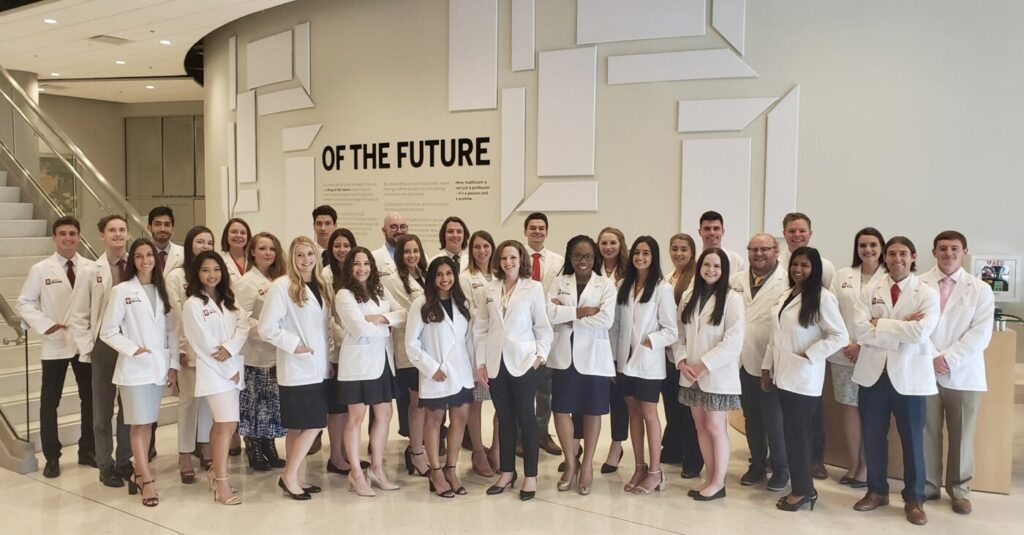
The MD program: no secondary essays
For the 2026-2027 cycle, IU School of Medicine has no secondary essays for MD applicants. That applies to regular applicants, Early Decision applicants and applicants interested in the Rural Medicine Program, the Urban Medicine Program and the Mental Health in Medicine Track. No secondary fee is charged to every applicant, and there is no secondary deadline.
Instead, IU uses a short supplemental request, and only applicants invited to interview receive it. Here is how it works:
- AMCAS review. After IU verifies your AMCAS application, it reviews your file holistically and decides whether to invite you to interview.
- Supplemental Instructions email. If you are selected, you receive an email with instructions to complete the IU Indianapolis Graduate Program application and pay a $70 application fee.
- Required items. IU’s file for interviewees includes your three letters of recommendation, a Dean of Students evaluation form, MCAT scores, your interview results, legal disclosure information and the completed IU Graduate School application and fee.
- Scheduling. IU will not schedule your interview until the Graduate Program application and fee are submitted. Check the Applicant Portal and allow up to eight weeks for materials to be processed.
There are no essays in this request, but it still deserves care. The Graduate Program application is an administrative form, so complete every field accurately and make sure names, dates and contact details match your AMCAS application. Answer the legal disclosure truthfully and completely. If you have something to disclose, give a short, factual explanation of what happened, what you learned and what has changed. Ask your dean of students office to send the evaluation form early, since it is outside your control once requested.
What this means for your strategy: IU reads your AMCAS primary as your full application. Make sure your personal statement explains why medicine, your Work and Activities entries show patient care and service in detail, and your “most meaningful” experiences say what you learned. Keep AMCAS current, check your email (including spam) often, and be ready to move quickly when the invitation comes. If you are comparing other schools’ current essay questions, IMA keeps a medical school secondary essay prompts database.
The MSTP (MD-PhD) secondary
The Medical Scientist Training Program is different. When it receives a completed AMCAS application with the MD-PhD box checked, it emails a secondary that asks about your interest in the Indiana MSTP, your possible research areas and what you will bring to the program. Files go to the MSTP admissions committee once all letters and the secondary are in. The 2026-2027 secondary has seven questions: three with a 500-word limit and four with a 250-word limit. Three of the 250-word questions apply only if they fit your situation.
The examples below follow one illustrative applicant: a chemical engineering graduate working full time as a research technician in protein biochemistry, interested in insulin stability. Each example stays within the word limit and is followed by analysis and common mistakes. Use them to understand the questions, not as text to copy.
MSTP Question 1: Finding the program and why IU and Purdue (500 words)
Prompt: “How did you find out about the Indiana MSTP? Why are you interested in MD/PhD training at Indiana University/Purdue University in particular?”
Who answers: all MSTP applicants. Limit: 500 words.
What it asks: two things. First, a short, honest account of how you learned about the program. Second, and more important, why the combined MD-PhD at IU and Purdue specifically fits your goals.
Approach: keep the first part to a few sentences. Spend most of your words on specific features of the program that match your research and career plans: the IU and Purdue partnership, the research areas you would join, the cohort size and the clinical setting. Tie each feature back to your own goals.
Illustrative example, not an actual applicant essay (420 words):
I first heard about the Indiana MSTP from a postdoctoral fellow in my undergraduate lab who had interviewed there. She told me it was the first program where she had talked with an engineer and a clinician in the same afternoon. That stayed with me, and when I began reading about insulin analogs for my senior thesis, the citations kept leading back to Indianapolis. By the time I opened the program’s website, I already knew some of the work I wanted to learn from.
My interest in MD/PhD training started with a question I could not answer at a kitchen table. My uncle has type 1 diabetes and keeps his insulin in a cooler during the summers he spends working outdoors. When I asked why a drug used by millions of people still needs refrigeration, he laughed and said that was my job to figure out. Two years of protein stability research later, I know the answer is complicated, and I know I want a career spent on problems where the chemistry and the patient are both in the room.
Indiana fits that goal for three reasons. The first is the partnership with Purdue’s Weldon School of Biomedical Engineering. My degree is in chemical engineering, and the projects that excite me sit between molecular design and the formulations and devices that deliver drugs to people. A program built as a joint venture between a medical school and an engineering school matches how I think about research.
The second reason is the depth of diabetes and protein science at IU. Faculty who study insulin signaling and early drug discovery work in the same school as the clinicians who care for patients with diabetes across a statewide system. I want my PhD questions to come from clinical problems, and IU’s size makes those connections easier to build.
The third reason is the scale of the program. With about eight new students each year, I would know my classmates and program leaders well while still having access to more than 100 training faculty. The program’s recent growth into sociomedical and behavioral science through its Alzheimer’s disease training track also tells me the MSTP is expanding in directions that matter to patients.
Finally, IU trains physicians for a state with large cities and small towns. My uncle’s cooler is a small example of a bigger point: a therapy works only if it works in someone’s real life. I want to train where that idea is part of the curriculum, and Indiana is that place.
Analysis: The opening answers “how did you find out” in three sentences and moves on. The applicant then explains why MD-PhD training at all, using one concrete image (the insulin cooler) instead of a general statement about loving science and patients. The “why IU and Purdue” section gives three distinct, verifiable program features: the joint venture with the Weldon School of Biomedical Engineering, IU’s diabetes and protein science, and the small cohort of about eight students each year with more than 100 training faculty. Each feature is tied to the applicant’s own background in chemical engineering and protein stability. The closing returns to the opening image and connects it to IU’s statewide clinical setting, so the essay ends on fit rather than flattery.
Mistakes to avoid: spending half the essay on how you heard about the program; listing program features you have not connected to your goals; praising the school in general terms (“world-class,” “prestigious”) without specifics; and naming features you have not confirmed on the program’s current pages.
MSTP Question 2: Research interests and fit (500 words)
Prompt: “Please describe your research interests and describe how the opportunities at the Indiana MSTP fit with your goals for graduate training. Please include names of up to five IU (and for BME applicants, Purdue) investigators whose research programs interest you.”
Who answers: all MSTP applicants. Biomedical engineering applicants may include Purdue investigators. Limit: 500 words.
What it asks: your research interests, how the MSTP’s opportunities fit your graduate training goals, and up to five named investigators. This is the most technical question in the set.
Approach: state your research question clearly, show your preparation with real methods and results, explain how IU’s research environment supports that question, and name investigators whose current work you have actually read. Briefly say what interests you about each one. You may name fewer than five.
Illustrative example, not an actual applicant essay (413 words):
My research interest is protein stability as a barrier to treatment. Many biologic drugs, including insulin, lose activity when they are heated, shaken or stored for long periods, and that weakness shapes how patients live. I want my PhD to answer a focused version of that problem: how small changes in a protein’s structure affect its stability and its activity, and how to design analogs that keep both.
My preparation comes from two years in a protein biochemistry lab. For my senior thesis I compared the thermal stability of variants of a small model protein using circular dichroism and differential scanning fluorimetry. I learned to purify proteins, design controls and accept that most variants fail. My current job as a research technician has added mass spectrometry and the discipline of running the same assay for months so the data can be trusted.
The Indiana MSTP fits these goals in three ways. First, biochemistry and pharmacology research at IU combines structural and chemical biology with early drug discovery, the same bridge between mechanism and therapy I want to cross. Second, the partnership with Purdue’s Weldon School of Biomedical Engineering would let me think about formulation and delivery alongside molecular design. Third, IU’s Center for Diabetes Research would keep the clinical problem in front of me during my PhD years.
Investigators whose research programs interest me:
- Michael A. Weiss, MD, PhD, whose work on insulin signaling and insulin analog design is the closest match to my thesis question. I want to understand how structural studies guide analogs that resist degradation without losing activity.
- John Turchi, chair of the Department of Biochemistry, Molecular Biology and Pharmacology, who is building a team focused on drug discovery. I would like to learn how a group moves from a biological target to early compounds, a skill that would carry beyond any single disease.
I also hope to meet faculty in the Center for Diabetes Research and in biomedical engineering during interviews, because I expect my questions to sharpen once I hear how current students have built thesis committees across IU and Purdue.
In the long term, I see myself as a physician-scientist in endocrinology who runs a lab on protein therapeutics and sees patients in a diabetes clinic. The clinic would tell me which problems matter most, and the lab would let me work on them. The Indiana MSTP’s integrated curriculum, joint IU and Purdue structure and mentorship are the training I need to build that career.
Analysis: The first paragraph states a focused research question that a PhD could answer, not just a field. The second shows preparation through specific techniques and a realistic attitude toward failure. The fit paragraph names three features of IU’s environment and links each to the question. The investigator list stays within the “up to five” limit, gives a reason for each name and stays honest about the applicant’s level of knowledge. The closing describes a realistic physician-scientist career, which tells the committee the applicant understands what the dual degree is for. The investigators named here hold the roles described on IU’s faculty and department pages as of October 2026; any real applicant must check current lab pages before naming anyone.
Mistakes to avoid: naming five famous faculty without saying why; naming investigators whose labs have moved or closed; describing techniques without a question; claiming expertise you do not have; and, for non-BME applicants, filling the list with Purdue engineering faculty when the prompt limits Purdue names to BME applicants.
MSTP Question 3: Unique perspective or experience (500 words)
Prompt: “The Indiana MSTP seeks students whose individual strengths and viewpoints can help advance the future of medicine. Please describe the unique perspective or experience you would contribute to the incoming class. You may also share any personally significant or challenging circumstances from your background that shape the outlook you bring.”
Who answers: all MSTP applicants. Limit: 500 words. The second part (challenging circumstances) is optional.
What it asks: what you would contribute to your class, and how your background shapes your outlook. The key word is “contribute.” The committee wants to know what classmates and colleagues will gain from you.
Approach: choose one or two experiences that genuinely shaped how you think, describe them with concrete detail, and then show how that perspective affects your research, your teamwork and your future work with patients. If you share a hardship, focus on what it taught you and what you do differently because of it.
Illustrative example, not an actual applicant essay (410 words):
My mother has worked as a pharmacy technician at the same grocery store counter for nineteen years. I grew up doing homework at the end of that counter, and I learned early that the hardest part of medicine for many people happens after the doctor’s visit. I watched customers ask whether a cheaper version existed, split pills to stretch a month, or leave a prescription behind because the copay was more than they had that day. My mother knew most of them by name, and she knew which ones would come back.
That counter gave me the perspective I would bring to the incoming class: I think about therapies from the patient’s side of the transaction. In the lab, when we test whether a protein survives a week at room temperature, I picture the customer who drove forty minutes to pick up insulin and then sat in a hot car. Stability is not an abstract number to me. It decides whether a treatment fits into a real person’s day.
I also bring the experience of being the first person in my family to attend college. My parents supported me completely, but neither could explain what office hours were, how to ask a professor about research, or what a PhD program expected. I learned those things slowly and sometimes awkwardly. Because of that, I now mentor students through my alma mater’s first-generation peer program, where I help sophomores write their first emails to lab directors. I know how much a single clear answer can change someone’s path, and I would bring that same habit of explaining the unwritten rules to my MSTP classmates and, later, to my own trainees.
These experiences shape how I approach research teams. At the counter, my mother never had the authority to change a price, but she always found something she could do, whether that was calling a prescriber about a covered alternative or setting aside a coupon. In the lab, I try to work the same way. When an experiment stalls, I look for the next useful step instead of waiting for a perfect plan. When a teammate struggles, I offer the help I can actually give.
As a physician-scientist, I want to design treatments that are easier to store, carry and afford, and I want to explain them to patients as clearly as my mother explained them to her customers. I would bring that combination of scientific curiosity and practical patient perspective to Indiana.
Analysis: The essay answers both parts of the prompt. The pharmacy counter supplies the “unique perspective,” and first-generation status supplies the “personally significant circumstances,” but neither is presented as a hardship story for its own sake. Each paragraph ends by showing what the applicant does with the experience: thinking about stability from the patient’s side, mentoring first-generation students and finding the next useful step when work stalls. That directly answers “what you would contribute.” The final paragraph links the perspective to the applicant’s research goals, which keeps the essay in MSTP territory.
Mistakes to avoid: writing a hardship narrative with no link to what you would bring; listing identity categories without experiences; repeating your personal statement; and making claims about classmates or the program that you cannot know.
MSTP Question 4: Adversity and resilience (250 words)
Prompt: “Briefly describe a specific instance when you faced adversity, how you met that challenge, and how you demonstrated resilience.”
Who answers: all MSTP applicants. Limit: 250 words.
What it asks: three parts in order: a specific instance, how you met it and how you showed resilience.
Approach: pick one bounded event. Spend about a quarter of your words on the problem, half on what you did and the rest on what resilience meant and what you still do because of it. Research setbacks are fair game for MD-PhD applicants because they are part of the job.
Illustrative example, not an actual applicant essay (215 words):
During my senior thesis, my main protein would not express. For five months, every attempt produced either nothing or an insoluble mess, and my thesis deadline did not move. I tried the usual fixes, changing temperatures and induction times, and each failure cost a week. By February I was behind every other student in my cohort.
I met the challenge by changing how I worked rather than working longer. I wrote out every variable I had tested and asked a graduate student to review the list with me. She noticed that I had never tried a different expression strain or a solubility tag. I read three methods papers, designed a small grid of four conditions instead of one at a time, and ran them in parallel. The second condition worked.
I finished my experiments three weeks before the deadline and presented the results as planned. The bigger lesson was about resilience itself. Pushing harder at the same approach was not resilience; it was stubbornness. Resilience meant admitting I was stuck, asking for help early and redesigning the problem so failure taught me something each time. I now keep a running log of failed conditions in every project and review it with a labmate every two weeks, a habit I plan to carry into my PhD.
Analysis: The response names one specific instance (five months of failed protein expression with a fixed deadline), explains exactly how the applicant met it (listing variables, asking for help, running a parallel grid) and then defines resilience in a thoughtful way, separating it from stubbornness. The ending shows a lasting habit, which proves the lesson stuck. It is well under the limit and stays concrete throughout.
Mistakes to avoid: choosing a vague, ongoing hardship that cannot be described “briefly”; skipping the “how you met that challenge” part; ending with a slogan instead of a changed behavior; and choosing an example that reflects poor judgment you have not addressed.
MSTP Question 5: Updates since AMCAS (250 words, if applicable)
Prompt: “If you have any updates or new information to report since you have submitted your AMCAS primary application, please briefly describe below.”
Who answers: MSTP applicants with real updates. Limit: 250 words.
What it asks: new information since you submitted AMCAS. This is a factual field, so a clear, dated list works best.
Illustrative example, not an actual applicant essay (148 words):
Since I submitted my AMCAS application in June 2026, I have three updates.
Manuscript. The stability study described in my Research and Experiences section was submitted to a peer-reviewed biochemistry journal in August 2026, with me as second author. It is currently under review.
Presentation. I presented a poster on our thermal stability assay at a regional scientific meeting in October 2026 and answered questions from faculty in two other departments, which helped me think about how the method could apply to other therapeutic proteins.
New responsibility. My lab director asked me to train two new undergraduate researchers this fall. I wrote a short protocol guide and meet with each student weekly to review their data.
I have also continued my weekly volunteer shift at a free community clinic, where I check patients in and take vital signs under supervision, now totaling about 160 hours.
Analysis: Each update is dated, specific and new since AMCAS. The applicant explains the status of the manuscript honestly (“under review”) and adds one sentence of meaning to the poster and teaching roles without turning the answer into another essay. The final line updates clinical hours, which ties research and patient care together.
Mistakes to avoid: repeating items already in AMCAS; overstating a manuscript’s status; padding with minor items; and leaving the box blank when you do have a real update. If you have nothing new, it is fine to write a brief “No updates at this time.”
MSTP Question 6: Current activities if not a full-time student (250 words, if applicable)
Prompt: “If you are currently not a fulltime student, please briefly describe the activities you are participating in this academic year.”
Who answers: MSTP applicants who are not full-time students this year. Limit: 250 words.
What it asks: what you are doing this academic year. The committee wants to see that your time is purposeful.
Illustrative example, not an actual applicant essay (158 words):
I graduated in May 2025 and have worked full time since July 2025 as a research technician in a protein biochemistry lab, about 45 hours per week.
In the lab, I run stability assays on engineered protein variants, maintain our mass spectrometry sample queue and manage ordering and safety records. I designed a plate-based screening protocol that cut our assay time roughly in half, and I now train new undergraduate researchers.
Outside work, I volunteer four hours each week at a free community clinic, where I check in patients, record vital signs under a nurse’s supervision and help patients complete medication assistance forms. I also mentor first-generation students through my alma mater’s peer program, meeting with two sophomores each month about research and graduate school planning.
This year has confirmed my goals. Full-time research showed me I can sustain long projects with uncertain results, and the clinic reminds me each week why those results should matter to patients.
Analysis: The answer starts with dates and hours, so the committee immediately understands the applicant’s situation. It lists research duties, one accomplishment (the screening protocol), clinical work with specific tasks and mentoring. The closing two sentences explain what the year has confirmed, which turns a list into evidence of readiness without exceeding the “briefly” instruction.
Mistakes to avoid: listing only a job title; leaving gaps in the timeline unexplained; exaggerating clinical duties; and treating the gap year as a pause instead of describing what you are learning.
MSTP Question 7: Reapplicant improvements (250 words, if applicable)
Prompt: “If you are a re-applicant, what have you done to enhance your re-application?”
Who answers: MSTP reapplicants. Limit: 250 words.
What it asks: concrete improvements since your last application. The committee wants to see that you understood what was missing and fixed it.
Illustrative example, not an actual applicant essay (209 words):
When I applied last cycle, I was not offered an interview. I scheduled a consultation and reviewed my application with two mentors. We agreed on three gaps: limited recent patient contact, a research narrative that described techniques more than questions, and letters that did not speak to my independence.
I addressed each one. First, I began volunteering weekly at a free community clinic in January 2026 and have logged about 160 hours checking in patients, taking vital signs under supervision and helping with medication assistance forms. This work grounded my interest in therapies that patients can actually use.
Second, I rewrote my research story around a single question: how protein stability limits treatment. My work as a full-time research technician gave me ownership of a project, a screening protocol I designed and a manuscript now under review.
Third, I asked my current lab director, who has supervised me daily for more than a year, to write a new letter, and I added a letter from the clinic’s medical director.
I also narrowed my school list to programs where I could explain a real fit. Indiana’s IU and Purdue partnership and its diabetes research are at the top of that list, and I can now explain why in specific terms.
Analysis: The response opens with an honest statement of the prior outcome, then names three specific gaps and answers each one with evidence: clinic hours with tasks, a rewritten research narrative with a project and manuscript, and new letters from people who supervise the applicant closely. It also shows the applicant sought feedback, which mirrors IU’s own advice to reapplicants to consult with the office before reapplying. The final paragraph connects the changes back to Indiana.
Mistakes to avoid: blaming the last cycle’s outcome on luck; listing activities without linking them to a weakness; submitting the same letters; and claiming improvements that are not reflected in the new AMCAS application.
Other MD-PhD tips
- Ask for letters early. The MSTP wants at least two faculty letters, including one from a research mentor, in addition to IU’s three MD letters.
- Do not submit a graduate school application unless the program asks you to.
- Keep your answers consistent with your AMCAS Research and Experiences entries; interviewers will read both.
Interview Format and Preparation
The interview is a critical stage of the IU application, and it is where you show the qualities your AMCAS file can only describe.
What IU confirms about the MD interview
- Online, on Wednesdays. MD interviews are held online by Zoom on Wednesdays from September through March. You need a laptop, desktop or mobile device with Zoom.
- About 45 minutes. The interview itself lasts about 45 minutes.
- Information sessions. Interview day also includes a general information session, a financial aid session and chances to meet current medical students.
- Instructions by email and the Applicant Portal. Check both regularly.
- Professionalism counts the whole time. IU tells applicants to be professional in attire and in every interaction with interviewers, staff and students, by email, phone and in person, because “the evaluation process is ongoing until a final admission decision is issued and enrollment takes place.”
- Track interviews. Mental Health in Medicine Track applicants interview with members of both the traditional MD and the track admissions committees.
The MD interview uses a traditional format, not multiple mini interviews: an open-file session with two members of the Admissions Committee. Open file means your interviewers have read your application, so expect questions that build on your AMCAS entries. Recent applicants have described a conversation built around a set of questions about their experiences and motivation, so prepare for a traditional interview while staying flexible.
What the MSTP interview adds
MD-PhD interviews are virtual and run from October through early February. The day includes a discussion with an MSTP co-director or associate director, an interview with an MD admissions committee member, two interviews with IU faculty (or Purdue faculty for biomedical engineering PhD candidates) and a one-on-one meeting with a current student. Admitted students are invited to visit Indianapolis in late winter to explore research opportunities and student life.
How to prepare
Thorough preparation goes beyond rehearsing answers.
- Know your file. Re-read your personal statement and every Work and Activities entry. Be ready to explain what each experience taught you and how it prepared you for medicine.
- Know IU. Research the curriculum, the nine campuses, the specialized tracks and the Scholarly Concentrations. IU’s own interview tips start with “become familiar with the school, MD program, and its offerings.”
- Practice common questions. Use IMA’s list of medical school interview questions for mock interviews, and ask a friend, adviser or mentor to give you honest feedback.
- Stay informed. Be ready to discuss current issues in health care, ethical questions and advances in medicine, especially ones that affect Indiana, such as rural access and physician shortages.
- Prepare your setup. Test your camera, microphone, lighting and internet, and choose a quiet space. Dress as you would for an in-person interview.
- Prepare questions. Ask about campus life, mentoring or the concentrations you are considering; the answers help you rank campuses later.
Show emotional intelligence, empathy and ethical reasoning, and engage in thoughtful conversation about your path. A confident, professional first impression matters online as much as in person.
If you want structured practice and feedback, IMA’s advisers offer specialized medical school admission consulting, including mock interviews.
After the interview
Acceptance letters go out on the 15th of each month, starting October 15, 2026, and other decisions are sent periodically, so you may wait a few weeks. You have two weeks to respond to an offer. IU typically keeps about 200 applicants on its waitlist in a cycle. If you interview and do not receive an offer, IU invites you to contact the Office of Admissions for a consultation with recommendations before reapplying.
Frequently Asked Questions
What MCAT score is required for IU med school?
IU sets no minimum MCAT for regular admission. Early Decision applicants need at least a 512 with no section below 125. The Class of 2029 averaged 512.4, and accepted applicants for that 2025 entering class had a median MCAT of 514. For the 2026-2027 cycle, scores from September 2023 through September 30, 2026 are considered. IU considers only your most recent score and will not issue a decision until a valid MCAT is on file, so take the test when you are ready to do your best. Because the review is holistic, the MCAT is one of several factors, but a score near or above the class average makes you more competitive.
What GPA do you need to get into IU medical school?
IU does not set a minimum GPA for regular admission. Early Decision requires at least a 3.8 science and overall GPA. The Class of 2029 had an average GPA of 3.84, and accepted applicants for that 2025 entering class had a median total GPA of 3.93 and a median science GPA of 3.91. IU uses your AMCAS GPA, which includes every grade, so repeating a course does not erase the original. A strong science GPA matters most, but IU looks at your whole academic record alongside your experiences and personal qualities.
Does Indiana University School of Medicine have a secondary application?
Not for MD essays. IU has no secondary essays for MD applicants in the 2026-2027 cycle. Only applicants invited to interview receive a supplemental request: they complete the IU Indianapolis Graduate Program application and pay a $70 fee, and IU collects the legal disclosure and Dean of Students evaluation. Your interview is scheduled only after the Graduate Program application and fee are in. MD-PhD applicants are different: the MSTP emails a seven-question secondary after it receives a completed AMCAS application. Because there are no MD essays, your AMCAS application carries more weight, so make it complete and specific.
How hard is it to get into IU medical school?
Admission is competitive. For the Class of 2029, IU received 7,822 applications and enrolled 365 students, with average stats of a 3.84 GPA and a 512.4 MCAT. No acceptance rate is published, and the chance of an offer differs by residency: 321 of the 365 students were Indiana residents. For the 2025 entering class, IU interviewed 837 applicants, including 453 of 688 Indiana applicants and 384 of 7,108 out-of-state applicants. Difficulty also depends on your own profile, including academics, experiences and personal qualities. A well-rounded application with strong academics, meaningful patient contact, sustained service and a clear motivation for medicine gives you the best chance.
Is Indiana University School of Medicine a good medical school?
IU is the largest medical school in the country and holds full LCME accreditation through 2032-33. It ranked 32nd among U.S. medical schools for NIH research funding in federal fiscal year 2025 and reports a 97 percent match rate, with 343 graduates matching in 2026. What makes it a good fit for you depends on your goals. If you want broad clinical exposure, a choice of urban, rural and college-town settings and a school focused on serving its state, IU is a strong option.
Does IU accept international students?
No. The MD program does not accept international students. You must be a U.S. citizen or hold a permanent resident visa when you apply. Coursework from accredited Canadian institutions counts toward the 90 required credit hours, but Canadian citizens need U.S. permanent residency to be eligible. If your status is changing, contact the Admissions Office before you apply.
Does IU accept out-of-state applicants?
Yes. IU is a state school, but it offers acceptances to nonresidents every year. The Class of 2029 included 44 out-of-state students out of 365, and 384 of 7,108 out-of-state applicants (about 5 percent) were interviewed for the 2025 entering class. Acceptance offers to nonresidents equal about 20 percent of the entering class. Out-of-state applicants cannot use Early Decision and pay higher tuition ($71,008 in first-year tuition and fees for 2026-27). Apply early and explain a clear, specific reason for choosing IU.
How does campus assignment work?
After you are accepted, you rank all nine campuses (1 to 9) in the Applicant Portal within 30 days. A computerized lottery assigns campuses based on rankings and capacity, and notifications begin in May. Your assignment is final only after the Office of Admissions sends a confirmation email. Traditional students can stay all four years or ask to move for Years 3 and 4. Early Decision students commit to their home campus for the first three years.
Should I apply through Early Decision?
Apply Early Decision only if you are an Indiana resident, IU is your clear first choice and you meet the minimums: a 3.8 science and overall GPA and a 512 MCAT with no section below 125. Submit in June so your file is complete by July 1; the deadline is August 1. You will hear by October 1. If you are not accepted, you join the regular pool and can apply to other schools. If you are unsure, regular decision is the safer route.
How much does IU School of Medicine cost?
For 2026-27, first-year tuition and fees are $42,642 for Indiana residents and $71,008 for nonresidents. The standard first-year cost of attendance, including housing, food, books, transportation and personal costs, is $68,006 in-state and $96,372 out-of-state. Health insurance is added separately if you need it. IU awards more than $8 million in scholarships each year, and you are considered automatically when you file the FAFSA and the school’s Application for Financial Assistance.
What is the IU interview like?
MD interviews are online by Zoom on Wednesdays from September through March and last about 45 minutes. Interview day also includes a general information session and a financial aid session. The format is traditional, not multiple mini interviews: an open-file session with two members of the Admissions Committee, who will have read your application. Prepare for a conversation about your experiences, motivation and knowledge of IU. Professionalism counts in every interaction until you enroll.
Does IU require research experience?
No. Research is not required for the MD, though it fits IU’s mission and can strengthen your application. IU does expect patient and physician interaction and recommends a variety of medical and service activities. For the MSTP, research is essential: the committee looks for a demonstrated commitment to a physician-scientist career and undergraduate research experience.
Can I reapply to IU School of Medicine?
Yes. IU welcomes reapplicants and recommends scheduling a consultation with a director before reapplying. Applicants who interviewed but did not receive an offer can request feedback. IU suggests concrete steps, such as retaking the MCAT or taking upper-level courses. Use the year to fix the specific gaps in your file and update your experiences.
Can I apply before finishing my prerequisites or degree?
Yes, as long as you have at least 90 credit hours. Prerequisites can be in progress when you apply but must be complete before you enroll, and you need a bachelor’s degree to matriculate unless you are accepted through an IU program that waives it. Final transcripts with your graduation date are due by June 25 of the year you enroll.
What kind of clinical experience does IU expect?
IU wants applicants to have a general understanding of medical settings and some patient and physician interaction, and it highly recommends a variety of medical and service learning activities. Shadowing, clinical volunteering, scribing, EMT work and patient care jobs all count. Some students add supervised patient care through pre-med internships abroad. Choose experiences you can stay with over time and reflect on in your application.
Does IU have special programs for rural, urban or mental health care?
Yes. IU offers a four-year Rural Medicine Program in Terre Haute, a four-year Urban Medicine Program in Gary and a four-year Mental Health in Medicine Track in Evansville. For the mental health track, you must complete AMCAS and send a formal request to the MD Admissions Office; you are then considered for the traditional MD and the track at the same time. Ask the Admissions Office how campus placement and track selection fit together for the program you want.
Does IU accept DACA recipients?
No. Applicants with DACA status are not accepted. You must be a U.S. citizen or permanent resident when you apply. If your status is changing, talk with the Admissions Office before you submit AMCAS.
Does IU require PREview or another situational judgment test?
No. IU requires no added assessment beyond AMCAS and the MCAT, and it does not use AAMC PREview scores. Put that preparation time into your AMCAS entries and your interview instead.
Can I defer my IU acceptance?
IU considers deferred entrance requests, and three students in the 2025 entering class deferred. A deferral is a request, not a right, so explain your plan for the year and ask the Admissions Office about timing as soon as you know you need one.
Does IU have a waitlist?
Yes. IU typically holds about 200 applicants on its waitlist each cycle. Keep your contact information current and send a notice of significant updates if your file changes.
How much debt do IU medical graduates have?
In 2024-2025, IU medical graduates carried an average medical school debt of $213,294, and 96 percent of IU medical students received financial aid. Indiana residents pay far less tuition than nonresidents, so residency has a large effect on what you borrow.
Related Medical School Guides
If IU is on your list, these Midwest MD programs are worth comparing. Each one differs from IU in size, setting, mission or pathway, so read them for the contrast, not as a ranking.
- Creighton University School of Medicine: a private Jesuit MD program in Omaha with a Phoenix regional campus, a useful contrast for applicants who want a smaller, mission-driven school with a multi-site option.
- University of Minnesota Medical School: another large public, state-focused Midwest school with more than one campus, so it is a natural comparison for IU’s statewide model and residency preference.
- Carle Illinois College of Medicine: an engineering-based MD program at the University of Illinois, worth reading if IU’s Purdue partnership and biomedical engineering options appeal to you.
- Medical College of Wisconsin: a private Midwest school with regional campuses, a good parallel to IU’s mix of a main academic center and community-based training sites.
- Oakland University William Beaumont School of Medicine: a newer, community-focused Michigan MD program that offers a different scale from IU’s very large class.
- University of Wisconsin School of Medicine and Public Health: a public Midwest school with a strong state mission and rural and urban training tracks, similar in spirit to IU’s Terre Haute and Gary programs.
For every MD and DO option in the state, including IU and Marian University’s osteopathic school, see IMA’s guide to Indiana medical schools.
More medical school guides to compare
As you weigh IU, it helps to know other schools and what makes each one distinct. Every medical school has its own environment, curriculum and opportunities, and some will match your goals better than others. If you are building a broad list, check each school’s test requirements as you go; IMA’s guide to medical schools that require CASPer can help you plan test dates for the schools that use it.
- Marian University College of Osteopathic Medicine
- Des Moines University College of Osteopathic Medicine
- University of Iowa Roy J. and Lucille A. Carver College of Medicine
- Meharry Medical College
- Howard University College of Medicine
- University of Kansas School of Medicine (KUMC)
- Charles R. Drew University of Medicine and Science College of Medicine
- Loma Linda University School of Medicine
- John A. Burns School of Medicine (JABSOM)
- Kansas College of Osteopathic Medicine (KansasCOM)
- UC Irvine School of Medicine
- Nova Southeastern University College of Allopathic Medicine
- Florida Atlantic University Charles E. Schmidt College of Medicine
- Touro University Nevada College of Osteopathic Medicine
- University of Miami Miller School of Medicine
- Arkansas College of Osteopathic Medicine (ARCOM)
- University of Arkansas for Medical Sciences (UAMS)
- Tulane University School of Medicine
- LSU Health New Orleans School of Medicine
- LSU Shreveport Medical School
- Kirk Kerkorian School of Medicine at UNLV
- University of Nevada Reno School of Medicine
- University of Arizona College of Medicine-Tucson
- University of Arizona College of Medicine-Phoenix
- Burrell College of Osteopathic Medicine (BCOM)
- The University of New Mexico School of Medicine
- Alabama College of Osteopathic Medicine (ACOM)
- University of South Alabama College of Medicine
- University of Alabama School of Medicine
- FIU College of Medicine
- UCF College of Medicine
- USF Morsani College of Medicine
- Florida State University College of Medicine
- Morehouse School of Medicine
- Medical College of Georgia at Augusta University
- Mercer University School of Medicine (MUSM)
- Campbell University School of Osteopathic Medicine (CUSOM)
- ECU Brody School of Medicine
- Edward Via College of Osteopathic Medicine (VCOM)
- University of South Carolina Medical School
- Medical University of South Carolina (MUSC)
- Lewis Katz School of Medicine at Temple University
- Philadelphia College of Osteopathic Medicine (PCOM)
- Geisinger Commonwealth School of Medicine (GCSOM)
- Penn State Medical School
- CUNY School of Medicine
- SUNY Downstate Medical School
- NYIT College of Osteopathic Medicine
- NYU Long Island School of Medicine
- Albany Medical College
- TOURO College of Osteopathic Medicine
- Norton College of Medicine at Upstate Medical University
- Jacobs School of Medicine at the University at Buffalo
- Hofstra Zucker School of Medicine
- Weill Medical College of Cornell University
- University of Rochester Medical School
- Icahn School of Medicine at Mount Sinai
- Renaissance School of Medicine at Stony Brook University
- Albert Einstein College of Medicine
- Ohio University Heritage College of Osteopathic Medicine
- Northeast Ohio Medical University (NEOMED)
- University of Cincinnati College of Medicine
- University of Toledo College of Medicine
- Wright State University Boonshoft School of Medicine
- Ohio State University College of Medicine
- Rowan University School of Osteopathic Medicine
- Hackensack Meridian School of Medicine (HMSOM)
- Rutgers New Jersey Medical School (NJMS)
- Rutgers Robert Wood Johnson Medical School
- Cooper Medical School of Rowan University (CMSRU)
- A.T. Still University Kirksville College of Osteopathic Medicine
- Saint Louis University School of Medicine
- University of Missouri Medical School
- Kansas City University (KCU)
- UMKC School of Medicine
- New York Medical College
- University of Pittsburgh School of Medicine
- University of Wisconsin Medical School
- VCU School of Medicine
- University of Maryland School of Medicine
- Case Western Medical School
- University of North Carolina Medical School
- University of Florida Medical School
- Emory University School of Medicine
- Boston University College of Medicine
- California University of Science and Medicine
- UC San Diego Medical School
- California Northstate University College of Medicine
- Touro University of California
- CHSU College of Osteopathic Medicine
- UC Davis School of Medicine
- Harvard Medical School
- UC Riverside School of Medicine
- USC Keck School of Medicine
- UT Southwestern Medical School
- Long School of Medicine at UT Health San Antonio
- University of the Incarnate Word School of Osteopathic Medicine
- UT Austin’s Dell Medical School
- UTMB School of Medicine
- McGovern Medical School at UT Health
- Johns Hopkins School of Medicine
- The University of Texas Rio Grande Valley School of Medicine
- UNT Texas College of Osteopathic Medicine
- University of Houston College of Medicine
- Texas A&M College of Medicine
- Baylor College of Medicine
- George Washington University School of Medicine
- Vanderbilt University School of Medicine
- St. George’s University School of Medicine
- Lake Erie College of Osteopathic Medicine (in Pennsylvania)
- Sidney Kimmel Medical College at Thomas Jefferson University
- Wake Forest University School of Medicine
- Western University of Health Sciences (in California)
- Drexel University College of Medicine
- Stritch School of Medicine at Loyola University Chicago
- Georgetown University School of Medicine
- Yale School of Medicine
- Perelman School of Medicine
- UCLA Medical School
- NYU Medical School
- Washington University School of Medicine
- Brown Medical School
This list covers a wide range of medical schools, each with its own strengths and specialties. Whether you care most about location, research, community involvement or clinical training, you will find useful information here. Choosing a medical school is about fit with your goals. Explore each option, think about what matches your personal and professional plans, and picture where you would do your best work.
How International Medical Aid Can Help
IU’s mission is to advance health in Indiana and beyond through education, research and patient care, and its selection process values patient contact, service and altruism. International Medical Aid (IMA) helps pre-health students build that kind of experience and reflect on it clearly. IMA is not affiliated with IU School of Medicine, and taking part in an IMA program does not give anyone an admissions advantage. What it can give you is real experience to learn from and write about.
Clinical experience. IMA runs medical internships abroad in Kenya and other sites. Interns work in clinics and hospitals under the supervision of local health care professionals: they take vital signs, help with patient intake and triage and assist with direct patient care. These healthcare internships abroad suit students who want hands-on clinical exposure, and IMA’s pre-health internships are designed for students preparing for medical school. Browse all of IMA’s international healthcare internships to compare programs and specialties.
Reflection that fits IU’s process. Because IU has no MD secondary essays, your AMCAS entries and interview have to explain what your experiences taught you. Global health work can help you understand health systems, patient barriers and teamwork in a way you can describe with specific examples, which also connects to IU’s own global health programs and its focus on underserved care at home.
Admissions advising. IMA’s advisers offer medical school admissions consulting, including school list strategy, personal statement feedback, Early Decision planning and mock interviews for formats like IU’s online interview.
Next step: if you want supervised clinical experience before you apply, start by comparing IMA’s internship programs and dates, then plan how the experience fits your application timeline.
Final Thoughts and Sources
Indiana University School of Medicine offers one MD curriculum across nine campuses, a strong focus on Indiana communities, specialized rural, urban and mental health tracks, and a research enterprise that supports an MD-PhD program run with Purdue. For 2026-2027, plan around its rules: be a U.S. citizen or permanent resident with 90 credit hours, submit AMCAS early, line up your three letters and Dean of Students form, decide on Early Decision by summer, and be ready to complete the Graduate Program application and $70 fee the moment an interview invitation arrives. MD-PhD applicants should give the seven MSTP questions the same care as the primary.
Applying to and succeeding in medical school is demanding, and expert advice can help. International Medical Aid offers medical school admissions consulting and global health initiatives that build clinical experience and an understanding of health care challenges around the world. For personalized help with your application, consider booking an appointment with International Medical Aid. We hope this guide has given you a clear picture of what IU looks for, and we wish you the best as you work toward becoming a physician.
Source notes
Official school sources were checked on October 17, 2026, and the AAMC MSAR profile on October 18, 2026. Cohort and year labels appear with each figure in the text.
- IU School of Medicine MD admissions: MD Admissions (eligibility, prerequisites, applicant review, FAQs, specialized programs); Application Requirements; Application FAQ ($70 Graduate Program fee, citizenship, AP credit, application timing); Supplemental Materials (required file items); Interview Day; Early Decision Program (minimums, deadlines, campus commitment, Scholarly Concentrations by campus); Class Selection (Class of 2029 profile, acceptance letters, admission tasks, enrollment deadlines); Campus Placement (ranking and lottery); Why IU; Matriculation.
- IU School of Medicine 2025-2026 Fact Sheet (PDF, data updated annually in February): Class of 2029 profile, statewide student body, 2025-2026 annual tuition, research funding, GME and faculty counts.
- IU Indianapolis cost of attendance page, School of Medicine tables (2026-27 standard budgets, in-state and out-of-state, Years 1 to 4); IU School of Medicine MD Tuition and Fees; Financial Aid for MD Students (2025-2026 budgets, cost of attendance adjustments); Medical School Scholarships; Health and Wellness (student health insurance).
- IU School of Medicine curriculum pages: MD Curriculum; Year One; Year Two; Year Three Clerkships; Year Four Rotations; Competencies; Scholarly Concentrations; Global Health and Rural Health Scholarly Concentrations; Student Outreach Clinics; Service Learning; Mentoring and Advising.
- IU School of Medicine institutional pages: LCME Accreditation (November 13, 2025); Mission, Vision and Core Values; About; School History; Statewide Campuses; Terre Haute and Northwest-Gary campus pages; Mental Health in Medicine Track (Evansville); Dual Degrees; Medical Scientist Training Program and MSTP Admissions; Health Professions Programs; Department of Anesthesia; Graduate Medical Education; Continuing Education in Healthcare Professions; Global Health; Residency Placement (Match 2026).
- IU School of Medicine people pages: Executive Leadership; Office of the Dean; Educational Affairs contacts; faculty profiles of Stephanie C. Sharpe, Karen A. Smartt, Bradley L. Allen, Anthony L. Shanks, Lawrence Einhorn and Michael A. Weiss; Department of Biochemistry, Molecular Biology and Pharmacology (February 16, 2026 chair announcement); Distinguished Medical Alumni Award and Early Career Achievement Award lists. Public service roles for Jerome Adams and Jane Henney are matters of public record.
- 2026-2027 MSTP secondary prompt wording: current 2026-2027 secondary prompt compilations and applicant reports from July 2026, checked against the MSTP Admissions page’s description of the secondary. IU does not publish the prompt text on its website.
- Regenstrief Institute About page (founding in 1969 on the Indianapolis campus).
- AAMC Medical School Admission Requirements (MSAR), Indiana University School of Medicine profile, 2026 edition, accessed October 18, 2026: 2025 entering class medians for accepted applicants, verified applications and interviews by residency, Early Decision and MD-PhD matriculants, premedical experiences, estimated new entrants, MCAT date range, DACA and assessment policies, interview format, deferral and waitlist, 2025-2026 tuition, fees and health insurance (Tuition and Student Fees survey), and 2024-2025 aid and graduate debt (LCME Part I-B).
Statistics in this guide describe the cohorts named. Figures that are not published, such as an acceptance rate, are marked as not published rather than estimated.