Located in the fast-paced city of Philadelphia, the Lewis Katz School of Medicine at Temple University (Katz, often called LKSOM or Temple Medical School) has trained patient-centered physicians since 1901. It opened that year as Pennsylvania’s first coeducational medical school, with evening and weekend classes for working Philadelphians, and that history of access still shapes its focus on service, diversity and care for underserved communities. Today Katz awards the Doctor of Medicine (MD) degree at three campuses: the North Philadelphia campus across the street from Temple University Hospital, the St. Luke’s regional campus in Bethlehem and the WellSpan Health regional campus in York.
This guide covers the 2026-2027 application cycle, which fills the class that starts medical school in 2027. It explains who can apply, what Temple asks for, what the four required secondary essays ask and how to answer them, how campus ranking works, what the three-interview day looks like and what the program costs. Every figure is labeled with its year and group, and the facts were checked against official sources on October 17 and 18, 2026.
Earning an MD is a challenging feat, and the applicants who do best at a school like Katz are the ones who follow its instructions carefully and prepare early. If you are still building your school list, IMA publishes a full library of medical school guides for programs in Pennsylvania and across the country. This guide was built specifically for the Lewis Katz School of Medicine at Temple University and should not be used as a guide to any other school.
Key Takeaways
- Who can apply: U.S. citizens and applicants with U.S. permanent resident or refugee/asylee status with USCIS at the time they submit AMCAS. A bachelor’s degree is required, and Temple prefers at least 90 semester hours from a U.S. or Canadian university.
- Three campuses, one ranking: You rank North Philadelphia, St. Luke’s (Bethlehem) and WellSpan (York) on the supplemental application. The campus named in your acceptance letter is binding, so rank only campuses where you would actually enroll.
- Academic context: Temple sets no minimum GPA or MCAT. Accepted applicants in the 2025 entering class had a median MCAT of 513 and a median GPA of 3.84, and 1,171 of 14,278 verified applicants were interviewed. Temple considers MCAT scores from 2024, 2025 and 2026 for 2027 entry, and the last test it will accept is September 2026. Casper is required; PREview and Duet are not used.
- Mission: Katz aims to “align with our diverse communities” to improve health through education, research and training. The new 2026-2027 secondary prompt asks you to show compassionate care, community engagement, advocacy and service in your own experiences.
- Key dates: AMCAS by December 15, transcripts to AMCAS by December 29, and the supplemental application, $100 fee and letters by January 15. Early Decision applicants file AMCAS by August 1.
- Costs: 2026-27 tuition is $61,072 for Pennsylvania residents and $64,754 for non-residents, plus a $549 University Services Fee each fall and spring semester. The 2025-26 first-year cost of attendance was $88,396 in-state and $91,972 out-of-state.
- Class size: The Class of 2030 entered in August 2026 with 226 new students: 183 at North Philadelphia and 43 at St. Luke’s. Each regional campus enrolls 40 students per class.
- Distinctive training: A three-phase curriculum with a single-pass organ systems first phase, early clinical skills in the Doctoring course, a required fourth-year scholarly project and dual degrees including the MD/MA in Health Justice and Bioethics.
- Next action: Decide your campus ranking before you write a word of the secondary, because the first essay asks about your first-choice campus.
Key Statistics About the Lewis Katz School of Medicine at Temple University
The snapshot and table below come from the same fact record as every number in this guide. Class size describes the Class of 2030, which entered in August 2026. MCAT and GPA medians and the applicant and interview counts describe the 2025 entering class, the newest cohort with those figures. Tuition is the 2026-27 rate from Temple’s Bursar, and the total cost of attendance is the 2025-26 first-year budget, the newest one available.

| Metric | Value | Year and group | Source |
|---|---|---|---|
| School and degree | Lewis Katz School of Medicine at Temple University, MD | North Philadelphia campus; St. Luke’s regional campus (Bethlehem); WellSpan regional campus (York) | Katz Our Campuses page |
| New students | 226 (183 North Philadelphia, 43 St. Luke’s) | Class of 2030, entered August 2026 | Temple Now, August 13, 2026 |
| Pennsylvania residents | 106 of 226 | Class of 2030 | Temple Now, August 13, 2026 |
| Regional campus class size | 40 per class at St. Luke’s; 40 per class at WellSpan | Current | Katz Our Campuses page |
| Median MCAT | 513 (mean 513.1); no minimum MCAT | 2025 entering class, all accepted applicants | AAMC MSAR (2026 edition); Katz How to Apply |
| Median GPA | 3.84 total (mean 3.80); 3.76 science; no minimum GPA | 2025 entering class, all accepted applicants | AAMC MSAR (2026 edition); Katz How to Apply |
| Verified applications | 14,278 (1,165 in-state, 13,056 out-of-state, 57 international) | 2025 entering class | AAMC MSAR (2026 edition) |
| Applicants interviewed | 1,171 (358 in-state, 813 out-of-state); 8.2% of verified applications | 2025 entering class | AAMC MSAR (2026 edition) |
| Matriculants | 227 (94 in-state, 133 out-of-state) | 2025 entering class | AAMC MSAR (2026 edition) |
| Acceptance rate | Not published (offer count not reported) | 2025 entering class | AAMC MSAR (2026 edition); Katz admissions pages |
| Tuition, Pennsylvania residents | $61,072 per year | 2026-27, full-time MD | Temple Bursar 2026-2027 Tuition Rate Schedule |
| Tuition, non-Pennsylvania residents | $64,754 per year | 2026-27, full-time MD | Temple Bursar 2026-2027 Tuition Rate Schedule |
| University Services Fee | $549 per fall and spring semester (9+ credits); $276 summer | 2026-27 | Temple Bursar 2026-2027 Tuition Rate Schedule |
| Total cost of attendance, first year | $88,396 in-state; $91,972 out-of-state | 2025-26 (newest published budget) | AAMC MSAR, TSF 2025-2026 |
| Average debt of indebted graduates | $217,240 | 2024-25 | AAMC MSAR, LCME Part I-B 2024-2025 |
| Supplemental fee | $100, waived for AAMC FAP approval before AMCAS submission | 2026-2027 cycle | Katz How to Apply |
| One useful distinction | Rank three campuses; campus of acceptance is binding | 2026-2027 cycle | Katz Admissions Interview page |
One caution helps you read figures you may see elsewhere. A number made by dividing the entering class by the number of applicants is a matriculation ratio, not an acceptance rate, because it ignores students who were accepted and chose another school. Temple’s offer count is not published, so a true acceptance rate cannot be calculated. What the numbers do show is the first hurdle: for the 2025 entering class, about 8.2% of verified applicants (1,171 of 14,278) were interviewed. Use the class size, interview figures and campus seats above to understand scale, and compare medians across schools with IMA’s table of medical school GPA and MCAT averages.
Mission and Educational Priorities
Those who apply to the Lewis Katz School of Medicine at Temple University should know a little about the school’s namesake, because his story gives insight into the school’s values. Lewis Katz earned his BS in biology from Temple in 1963 and then graduated first in his class at the Dickinson School of Law. His career spanned law, sports, media, publishing and philanthropy. Through the Katz Foundation, he supported education, medical research and community programs for more than 25 years, building schools, Boys & Girls Clubs and Jewish Community Centers in Camden and beyond. He served on national boards and gave his time to the Temple University Health System and Fox Chase Cancer Center.
Temple awarded Katz an honorary doctoral degree in 2014. His final gift of $25 million, the largest in Temple’s history, endowed the medical school and its dean’s chair, and in 2015 Temple renamed the school the Lewis Katz School of Medicine. The school describes the values he embodied as determination, impact and generosity, and it says those same values define Katz-educated physicians.
The Mission and Vision in Plain Terms
The school’s mission is to “align with our diverse communities to advance medicine and improve health through education, research, training, and development of the next generation of clinicians, educators, and scientists.” Its vision is to set a new standard of excellence in education and research and to lead social change in health and medicine. Read the full statements on the school’s mission and vision page.
Three parts of that mission matter for applicants:
- Community first. The mission starts with communities, not with research rankings. Temple University Hospital, the main clinical training site, is Pennsylvania’s leading safety-net provider in the nation’s largest city without a public hospital. Students learn medicine where many patients face barriers to care, so committees look for applicants who have worked with people whose lives look different from their own.
- Humanistic training. The school calls itself a leader in “humanistic education” and pairs technical excellence with what it calls the art and science of “doctoring.” Its White Coat Ceremony and honor societies (Alpha Omega Alpha and the Gold Humanism Honor Society) reinforce that theme.
- Service as a way of life. The Why Katz page describes “a unique focus on service to others” and “a commitment to our neighbors that becomes a way of life, not just a part of our curriculum.” More than 50 student-run groups support that service.
What the Mission Means for Your Application
If you feel drawn to a humanistic approach to medical education, Temple may be the right choice for you. Being patient-focused, community-aware and compassionate toward all patients are key themes in the curriculum, from the first-year Doctoring course to fourth-year sub-internships. That does not mean Katz prefers one type of applicant. It means your application should show what you have actually done with people, what you learned from it and how it shapes the doctor you want to become.
The 2026-2027 secondary makes this explicit. A new required prompt describes the school’s commitment to compassionate care, community engagement and improving health outcomes “through innovation, advocacy, and service,” then asks how your experiences reflect those values. Applicants who have sustained, specific community work will find that essay easier to write. Applicants who have mostly short-term activities should start reflecting now on what those activities taught them.
Combining state-of-the-art technology with skilled clinical training gives Katz students a well-rounded medical education. The school’s 11-story, 480,000-square-foot Medical Education and Research Building houses research centers in population health, cancer, heart disease and more. Research is valued, but Temple says research activities are “considered but not required” for admission, which fits a mission that weighs service and clinical experience alongside discovery.
Accreditation and Institutional Identity
Katz earned its first medical school accreditation in 1942 and has held it since. The MD program is fully accredited by the Liaison Committee on Medical Education (LCME), the accrediting body for MD programs in the United States and Canada. LCME accreditation means graduates are eligible for licensure and residency in every U.S. state and Washington, D.C. The school’s accreditation page explains the LCME review process, including the student-led Independent Student Analysis. Accreditation confirms that a program meets national standards. It is not a ranking and does not by itself tell you which school fits you best.
One School, Three Campuses
The Lewis Katz School of Medicine is part of Temple University, a state-affiliated university, and of the Temple University Health System. The Pennsylvania Legislature designated Temple’s medical school a state-related institution in 1965. All three campuses award the same Temple MD:
- North Philadelphia campus. Home base is the Medical Education and Research Building (MERB) in Temple’s Health Sciences Center, which also includes the Schools of Pharmacy and Dentistry. Temple University Hospital is directly across the street.
- St. Luke’s regional campus, Bethlehem. A four-year campus at St. Luke’s University Health Network with a class of 40.
- WellSpan regional campus, York. The Temple University Lewis Katz School of Medicine at WellSpan Health is a four-year regional campus with 40 students per class. WellSpan’s campus page states that “an application has been submitted to add the WellSpan Campus as a regional campus site for Temple University Lewis Katz School of Medicine.” The WellSpan campus is set to matriculate its first class in fall 2027.
The same curriculum is taught at all three campuses, and students are evaluated with the same exams. The practical difference is where you live and train for four years, and the size of your class.
Rankings
In 2023, U.S. News & World Report ranked the Lewis Katz School of Medicine at Temple University number 68 in Research among the Best Medical Schools. Rankings change every year and measure different things, so use them as one small input. The fit between your goals and the school’s mission, campuses and patient population matters far more for your application and your training.
Medical Programs and Affiliations
The Lewis Katz School of Medicine at Temple University is well known for its four-year MD program, and it also runs dual degrees, special admission pathways, a postbaccalaureate program and several graduate programs. Keep these separate when you plan your application: most have their own application, and some are open only after you are accepted to the MD.
The Four-Year MD Program
The students who matriculate into Katz’s MD program should come ready to work hard. They learn the basic science behind medicine and practice clinical skills at the same time, starting with the Doctoring course in the first phase. The program is organized in three phases over four years, described in detail in the curriculum section below. Highlights include the clinical simulation program, collaborative learning in seven Doctoring Colleges and an emphasis on interdisciplinary and interprofessional teamwork.
All students must meet the school’s program objectives before graduating. These cover seven competency areas: medical knowledge, patient care, interpersonal and communication skills, professionalism, practice-based learning and improvement, systems-based practice and interprofessional collaboration. The school lists the specific abilities under each on its program objectives page.
Dual Degree Programs
Katz offers three dual degrees and a certificate. The dual degree programs are arranged with the related school so that scheduling is efficient, but the curricula are not merged: students complete all requirements of each program. Students in the dual master’s programs can enroll at any of the three campuses.
- MD/PhD. For applicants drawn to a research career in academic medicine. Students complete Phase 1 of the MD, then three or four years of original research and PhD coursework in one of five clusters (cancer biology and genetics; infectious disease and immunity; molecular and cellular biosciences; neuroscience; organ systems and translational medicine), then return for two years of Phases 2 and 3. Most students receive a fellowship with full tuition remission and a stipend, presently $36,000 a year. You apply with an MD/PhD application type in AMCAS, and you must be accepted by the MD program before the MD/PhD advisory committee considers you. Temple asks for at least one letter that speaks to your research.
- MD/MA in Health Justice and Bioethics. Offered through Temple’s Center for Health Justice and Bioethics, this program focuses on health equity in clinical care, research and policy. The MA can be completed alongside medical school courses with no extra time, and scholarships are available for MD/MA students.
- MD/MBA. Offered with Temple’s Fox School of Business, the online MBA can be completed during medical school with no added time, with special tuition scholarships and a GMAT waiver.
- MD/Certificate in Narrative Medicine. Students use close reading of literature and nonfiction to understand experiences of illness and health.
For the MD/MA, MD/MBA and Narrative Medicine certificate, you apply after you are accepted to the MD. Details are on Temple’s dual degree programs page.
Health Justice and Bioethics Program
Pursuing a Master of Arts in Health Justice and Bioethics is a distinctive option at Katz. Founded in 2012, the program describes itself as the nation’s first ethics program designed explicitly with a health equity lens. It treats health disparities as an ethical problem and teaches students to apply bioethics tools, such as ethical analysis, clear communication and attention to social and structural determinants of health, to questions of health equity. The program focuses on urban settings, which it describes as places of density, diversity and disparity. Its work includes “Equity Rounds,” “Bioethics M&Ms,” advocacy and health equity research. A Health Justice and Bioethics Certificate is available for those who cannot commit to the full master’s.
Special Admissions Pathways
Katz has several routes that let students be considered before or outside the regular cycle:
- Early Decision Plan. For applicants whose first choice is Katz. AMCAS and transcripts are due August 1 of the year before matriculation, supplementary materials by August 15, interviews in mid-September and decisions by October 1. Applicants accepted under this plan may not apply to any other medical school.
- BA/MD Medical Scholars Program with Washington & Jefferson College. An eight-year combined degree for exceptionally qualified high school seniors who are first accepted to Washington & Jefferson. Applicants need a combined SAT of at least 1350 with no section below 600, or an ACT composite of at least 31. Students offered conditional acceptance sit for the MCAT in May of their junior year. High school students interested in this route can start building patient-facing experience through medical internships for high school students.
- Early Assurance. Students at Temple University, Hunter College and Washington & Jefferson College can be considered in their junior or senior year and can complete the MD at North Philadelphia, St. Luke’s or WellSpan. St. Luke’s also has early assurance agreements with DeSales University, Lehigh University, Moravian College and Muhlenberg College, and WellSpan is developing agreements with local colleges. Candidates need at least a 3.6 overall and science GPA at the end of junior year, a strong commitment to service, leadership, and extensive community and healthcare experience. Students are nominated by their pre-medical advisor and take the MCAT in May of their junior year.
- Temple CST Postbaccalaureate Pre-Health linkage. Students in Temple’s College of Science and Technology postbac program can be nominated for linkage to Katz and, if selected, interview for conditional acceptance.
- Temple University Accelerated Health Scholars. Students who matriculate through this Temple program earn their bachelor’s degree after the first year of medical school.
Advanced Core in Medical Sciences (ACMS) Postbaccalaureate Program
The ACMS program prepares students specifically for success in the Katz MD program. It is a 10-month, full-time, non-degree program for people who have finished their foundational pre-med science coursework. Its biggest benefit: every student admitted to ACMS also receives a conditional acceptance to the Katz MD program, and students who complete the program requirements matriculate together as first-year medical students. ACMS classes are graduate-level, taught by medical school faculty and offered only to ACMS students. The program also offers shadowing at Temple University Hospital and clinical activities in the school’s simulation institute.
The current course schedule is:
- Fall: Fundamentals of Physiology; Medical Pharmacology; Microbiology and Immunology; MCAT preparation (if required).
- Spring: Case-Based Clinical Problem Solving; Fundamentals of Biochemistry; Human Anatomy; Special Topics in Medicine; MCAT preparation (if required).
2026-27 ACMS tuition is $32,990 for Pennsylvania residents and $40,698 for non-residents for the fall and spring semesters.
Biomedical Sciences Graduate Program
Katz also offers MS and PhD programs in Biomedical Sciences that prepare students for work in research and health science. PhD students and MS students choosing the thesis option specialize in one of the same five clusters used by the MD/PhD program. First-year students share interdisciplinary coursework, including Organ Systems: Function, Dysfunction, and Therapies, plus short courses in scientific communication, research integrity and bioethics, experimental design and biostatistics, bioinformatics and grant writing. PhD students complete three laboratory rotations, take advanced electives, join seminars and journal clubs and write and defend a thesis. PhD students receive a stipend, tuition remission and health insurance; MS students pay tuition and do not receive a stipend.
Physician Assistant Program
Katz also runs a Physician Assistant program that awards a Master of Medical Science (MMS) in Physician Assistant Studies. It takes 26 months, moving from intensive preclinical training into clinical rotations across Temple’s hospital system and partner sites, with 69 preclinical and 48 clinical credits. The PA program has its own admissions office and application, separate from the MD. If you are still deciding between becoming a physician and a PA, structured pre-PA internships can help you compare the roles before you commit.
Clinical Affiliations
Katz students train across the Temple University Health System and partner networks. Official clinical learning sites include Temple University Hospital’s Main, Episcopal and Jeanes campuses; Fox Chase Cancer Center; St. Luke’s University Health Network; Capital Health in New Jersey; Grand View Hospital in Bucks County; Lancaster General Hospital; Main Line Health; and St. Christopher’s Hospital for Children. WellSpan York Hospital and other WellSpan facilities anchor training at the York campus. The rotations section below explains what students do at each.
Curriculum Overview
The Katz curriculum is built in three phases over four years. Temple restructured Phase 1 in the 2020-2021 academic year and shortened it by about six weeks, which gave the clinical years more time for electives, independent study, a new required fourth-year scholarly project and a capstone course. It restructured Phase 2 in April 2022. The full structure is described on Temple’s MD program format page.
Transition Courses
Pass/fail transition courses sit at the key turning points: Transition to Medical School (the week before classes start, and required for all matriculants), Transition to Phase 2, Transition to Phase 3 and Transition to Residency. Each prepares students for what comes next. The Transition to Phase 2 course, for example, covers the student’s role on the care team, how to learn in a clinical setting, how performance is assessed, how to use the electronic health record and how to communicate with other team members.
Phase 1: Pre-Clerkship Foundations (Years 1 and 2)
Phase 1 is the pre-clerkship curriculum. It is a single-pass organ systems model, which means each organ system is taught once, with normal structure and function, disease, diagnosis and patient management integrated together rather than in separate courses. Students build the foundational basic science that everything in medicine rests on, including cellular biology, anatomy, genetics and immunology, and learn to recognize abnormalities and treatment approaches system by system.
Clinical skills are taught in the Doctoring course, which runs throughout Phase 1. Doctoring introduces patient interviewing, physical exam maneuvers and point-of-care ultrasound, along with topics such as social determinants of health, patient safety, quality improvement, biases in medicine and patient-centered care. Those topics are woven through the rest of the curriculum. Teaching uses active methods: flipped classrooms, simulation, case-based discussion and self-directed learning. During Phase 1, students can also take electives in the humanities, clinical disciplines or research, and first- and second-year students can take disaster and global medicine electives.
Students are grouped into seven Doctoring Colleges, each named for a distinguished faculty member or graduate, such as the W. Wayne Babcock College and the Agnes Montier College. Each college keeps a consistent group of faculty and peers together throughout medical school.
Phase 2: Core Clerkships (Year 3)
Phase 2 begins with the Transition to Phase 2 course and includes four Intersession courses and 36 weeks of required core clerkships in family medicine, internal medicine, neurology, obstetrics and gynecology, pediatrics, psychiatry and surgery. It also includes four weeks of scholarly work, a two-week career exploration rotation and two to six weeks of electives.
Intersessions come before a specific clerkship or group of clerkships. They prepare students for learning in that discipline and connect to longitudinal threads such as social determinants of health, patient safety and cultural competency, so students apply those ideas while caring for patients. In each rotation, students work with physicians in that field, learn how the specialty runs and practice an evidence-based approach to each patient.
Phase 3: Advanced Clinical Training (Year 4)
Phase 3 begins with the Transition to Phase 3 course and gives students more responsibility: caring for undifferentiated patients in the emergency department, treating severe illness in critical care units and taking an active role in working up and managing patients. Requirements include:
- Clerkships in critical care and emergency medicine.
- A sub-internship in medicine, surgery, family medicine, obstetrics and gynecology, or pediatrics.
- 28 weeks of electives, clinical and non-clinical.
- A required scholarly project.
- The Transition to Residency course.
The scholarly project is required for every student, not optional. It can grow from basic science research, clinical questions or other scholarly work, and Phase 2’s four weeks of scholarly work help students start it early.
How the Curriculum Differs by Campus and Track
The same curriculum is taught at North Philadelphia, St. Luke’s and WellSpan, with the same exams. At the regional campuses, students spend all four years at that campus, and the smaller class of 40 means more contact with the same faculty. At WellSpan, students get to know faculty in their pre-clinical courses and then rotate with many of the same faculty in their third- and fourth-year clerkships. Students at each campus can complete some final-phase rotations at the other campuses’ hospitals.
MD/PhD students complete Phase 1, leave for three or four years of research, then return for Phases 2 and 3. MD/MA and MD/MBA students complete the extra degree alongside the MD without adding time. Required matriculation steps include the Transition to Medical School course and an affirmation, the summer before matriculation, that you can meet the school’s technical standards with or without accommodations.
Admissions Requirements and Application Process
The admissions committee at the Lewis Katz School of Medicine reads every complete application with certain expectations. It expects applicants to fill out each part carefully and honestly, and it hopes to get to know the whole person: character, goals and the experiences behind them. Temple conducts an individualized holistic review of each complete application to decide whom to interview. The factors it names include, but are not limited to:
- Academic history
- College attended
- MCAT scores
- Casper results
- Recommendations
- Extracurricular activities
- Work experience
- Medical-related experience
- Community service activities
- Research activities, which are considered but not required
Test scores are important, but they are not everything, and Temple sets no specific academic cutoff for consideration. What stands out most is an application that shows who you really are and what you want to do with your life. The committee also considers the personal attributes and pre-professional, thinking and reasoning, and scientific competencies that match the school’s program objectives and the AAMC Core Competencies for Entering Medical Students. The official requirements are on the school’s How to Apply page.
Eligibility: Citizenship, Residency and Degree
Temple considers applications from U.S. citizens and from applicants with permanent resident or refugee/asylee status with U.S. Citizenship and Immigration Services (USCIS) at the time the AMCAS application is submitted. Permanent residents and refugees or asylees upload their USCIS documentation through the supplemental application site. Applicants with other immigration statuses, including DACA, are not among the groups Temple lists, so contact the Office of Admissions before applying if your status is not one of the three.
Residency is not a requirement, but it is part of the picture: 106 of the 226 students in the Class of 2030 are Pennsylvania residents, so a large share of each class comes from outside the state. A baccalaureate degree is required before matriculation, except for students in the Temple University Accelerated Health Scholars program, who earn their bachelor’s degree after the first year of medical school. Temple prefers a minimum of 90 semester hours from a U.S. or Canadian university, and the Office of Admissions evaluates only courses completed at a U.S. or Canadian university.
Recommended Coursework
Temple has no absolute course requirements. It recommends coursework in:
- Biology
- Chemistry (both general and organic)
- Biochemistry
- Physics
- Psychology
- Sociology
Applicants should also have a broad humanities education and strong writing skills. The committee holds no preference for science majors, but every applicant must show capacity for excellence in the sciences through a broad range of science coursework and the MCAT.
Two course policies deserve attention. If you completed recommended biology, chemistry or physics online, at a community college or through a study-abroad program, Temple prefers to see classroom-based, upper-level science coursework in that discipline. The same preference applies if you used AP credit for entry-level courses in those subjects. At the same time, Temple’s 2026-2027 Graduate Bulletin states that coursework completed online or with pass/fail grades because of COVID will not negatively affect the review of your application. In practice: if your intro sciences were AP, online or community college for reasons other than the pandemic, plan an upper-level classroom course in that subject, such as biochemistry, cell biology or physiology, before you apply.
MCAT and GPA
There is no minimum MCAT score and no minimum GPA. Every applicant must take the MCAT within three years of matriculation and no later than September of the year they apply. For 2027 entry, Temple will consider scores from 2024, 2025 and 2026, and the last MCAT it will consider is September 2026. Temple uses your most recent MCAT results, both section scores and the total, so a retake replaces the earlier score rather than being averaged with it. Plan any retake with that in mind. If you are accepted and then retake the MCAT, your new performance must meet or exceed your level at the time of acceptance.
For the 2025 entering class, accepted applicants had a median MCAT of 513 (mean 513.1) and a median total GPA of 3.84 (mean 3.80), with a median science GPA of 3.76. A median is the midpoint, not a minimum: half of accepted applicants were below it. Because there are no cutoffs, a lower score or GPA will not remove you from consideration, but it puts more weight on your recent coursework, your Casper result and the strength of your experiences.
Volunteer Service and Clinical Experience
Temple does not set a minimum number of volunteer or clinical hours, but medical-related experience and community service are both named review factors, and the mission makes service central. Admissions committees like to see a range of clinical experiences because each one adds to your understanding of patients and shows a lasting commitment to medicine. Hands-on roles, such as clinical internships for pre-med students, scribing, emergency medical services or patient care technician work, teach more than watching alone.
Here are the parts of your experience to show the committee:
- Leadership. List leadership roles on campus, in student organizations and at work. Leadership in a clinical or community setting is ideal.
- Clinical experience. Include all patient-facing experiences, even short ones, and describe what you did, not only where you were.
- Research. Temple values research and has strong research programs, but research is “considered but not required.” Share what you asked, what you did and what you learned.
- Volunteer and community service. Show sustained commitment to your community. At Katz, service to North Philadelphia and the communities around each regional campus is part of daily life.
- Extracurricular activities. Let the committee get to know you. Be your authentic self.
Letters of Recommendation
Temple accepts letters in three formats: a premedical committee letter, a packet from a school letter compilation service, or between three and six individual letters.
- A premedical committee letter does not need a specific number of science or nonscience letters.
- For a packet or individual letters, Temple prefers, but does not require, two letters from professors whose courses you completed in the AMCAS biology, chemistry or physics categories, plus one letter from a nonscience professor, a work experience or a service activity.
- Research letters are welcome, but Temple prefers them in addition to the science professor letters.
- If you send individual letters, Temple recommends no more than six.
Katz participates in the AMCAS Letter Service. Letters can be sent through the AMCAS Letter Writer Application or Interfolio, and all letters should be on letterhead and signed by the writer. If Katz is designated as a recipient, AMCAS releases the electronic copy to the school. All letters you designate for Katz must arrive before your application can be reviewed, so a missing letter can hold your file. You can send additional letters at any point, preferably through the AMCAS Letter Service.
Does Temple Medical School Require Casper?
Yes. All MD applicants must complete Casper, an online open-response situational judgment test that assesses non-cognitive skills and interpersonal characteristics. Register for the U.S. Medicine test (CSP-10111) through Acuity Insights. Casper results are valid for one admissions cycle, and for 2027 entry Temple will consider tests completed between March 19, 2026 and January 5, 2027. Your application is not complete until Casper results arrive, so test early enough that your score is not the last missing item. Temple does not use Duet or the AAMC PREview Professional Readiness Exam.
Institutional Action
If you have an institutional action, your application is not complete until Temple receives a statement from your school describing the incident and the sanctions. A mention in your pre-health committee letter does not meet this requirement. The supplemental application explains how the appropriate official, such as a dean of students or judicial officer, can send the statement, and it gives you a chance to update your AMCAS institutional action response. If you receive an institutional action after submitting AMCAS, you must send the Office of Admissions a letter with the details.
AMCAS Primary Application and the Temple Supplemental Application
You need to complete two applications to be considered at the Lewis Katz School of Medicine at Temple University. The primary application is the American Medical College Application Service (AMCAS), which most U.S. MD programs use. AMCAS contains your basic information, coursework, activities, personal statement and letters. Fill it out as carefully and accurately as you can, and list every medical school you plan to apply to. IMA’s AMCAS application guide walks through each section.
After Temple receives your verified AMCAS application, the Office of Admissions sends an automated email with access to the Katz online supplemental application to every applicant who meets the citizenship criteria. The supplemental is not screened, so every eligible verified applicant receives it. It asks for your campus ranking, four required essays, an optional institutional action update and a few other items, and it is the school’s main tool for learning about your specific interest in Katz.
A $100 non-refundable fee is collected when you submit the supplemental application. The fee is waived for applicants approved for the AAMC Fee Assistance Program (FAP) before they submit AMCAS. Through the supplemental application site you can:
- Complete the supplemental application and pay the fee
- Upload USCIS documentation (permanent residents or refugee/asylee status)
- Send updates such as additional letters and unofficial transcripts
- Track receipt of checklist items, including letters, Casper and an institutional action letter if applicable
Your application is complete when Temple has your verified AMCAS application, supplemental application, fee (if not waived), Casper results and required letters. Once every checklist item arrives, you receive an email saying your application is ready for review.
Decisions, Deposits and the Continuing Candidate List
After the interview, Temple notifies applicants in November, December, March or at the end of the interview season. For the 2026-2027 cycle, acceptance notices go out from October 15, 2026 through August 2, 2027. Accepted students have two weeks to submit a $100 tuition deposit, which is refundable until April 30 and is applied to tuition. Katz accepts deferred entrance requests; one applicant deferred entry in the 2025 entering class. Temple follows the AAMC Application and Acceptance Protocols: by April 15 you may hold no more than three acceptances, and by April 30 you must choose one school and select Plan to Enroll at Katz if that is your choice. Between May 1 and July 1 you can select Commit to Enroll; by July 1 you must confirm your intent to matriculate at Katz by choosing Commit to Enroll. MD/PhD students commit by May 15.
Some interviewed applicants are placed on the continuing candidate list, which is considered after April 30 through matriculation. The number of students taken from the list varies by year, and Temple encourages candidates on the list to send letters of interest starting in April.
Matriculation is conditional. Requirements include finishing all courses taken after AMCAS submission with no grade below a C, graduating by any expected date you listed, staying in good standing, sending official transcripts by June, completing a Pennsylvania Child Abuse History Clearance and an AAMC-facilitated criminal background check, following the school’s social media policy and attending Transition to Medical School. If you are convicted of, or plead guilty or no contest to, a misdemeanor or felony, or become the subject of an institutional action after you submit AMCAS, you must notify the admissions office in writing within 10 business days.
2026-2027 Timeline
| Date | Step |
|---|---|
| March 19, 2026 to January 5, 2027 | Casper tests accepted for 2027 entry |
| Spring to early summer 2026 | Rank campuses, request letters and draft secondary essays |
| August 1, 2026 | Early Decision: AMCAS and transcripts due |
| August 15, 2026 | Early Decision: supplementary materials due |
| Mid-September 2026 | Early Decision interviews |
| September 2026 | Last MCAT accepted for 2027 entry |
| August 2026 | Interview invitations begin |
| September 2026 through April 2027 | Regular interview season (all interviews virtual) |
| October 15, 2026 to August 2, 2027 | Window for acceptance notices |
| By October 1, 2026 | Early Decision decisions |
| November and December 2026; March 2027; end of season | Decision release points |
| December 15, 2026 | AMCAS application deadline |
| December 29, 2026 | Transcripts to AMCAS |
| January 15, 2027 | Supplemental application, $100 fee and letters due |
| March 1, 2027 | Recommended FAFSA date (school code 003371) |
| April 15 and April 30, 2027 | Hold no more than three acceptances (April 15) and one (April 30); deposit refundable until April 30 |
| After April 30, 2027 | Continuing candidate list considered |
| July 1, 2027 | Commit to Enroll deadline |
Tuition, Cost of Attendance and Financial Aid
Temple sets medical school tuition by residency, and the University Services Fee is charged on top of tuition each semester. These are the 2026-27 rates from the Temple Bursar’s 2026-2027 Tuition Rate Schedule.
2026-27 Tuition and Mandatory Fees
| Item | Pennsylvania residents | Non-Pennsylvania residents |
|---|---|---|
| Annual tuition, full-time MD | $61,072 | $64,754 |
| University Services Fee, fall and spring | $549 per semester ($1,098 a year) | $549 per semester ($1,098 a year) |
| University Services Fee, summer | $276 per summer session | $276 per summer session |
| Tuition plus fall and spring fees | $62,170 | $65,852 |
The University Services Fee is non-refundable and supports academic technology, campus activities and recreation, facility upkeep and basic student health services. Tuition and fees are set each year, so expect them to change for later years of school.
The difference between resident and non-resident tuition is $3,682 a year, which is small compared with many public medical schools. Temple is state-affiliated, but the gap between in-state and out-of-state cost is not a major factor in choosing whether to apply.
Total Cost of Attendance
Tuition is only part of what medical school costs. Books and supplies, a laptop, health insurance, housing, food, transportation, board exam fees and personal expenses add a large amount each year. Temple’s Student Financial Services publishes a 2026-27 graduate cost of attendance, but it does not include the MD program, and the 2026-27 MD budget is not posted online. The newest first-year MD budget is for 2025-26:
| Item | In-state | Out-of-state | Source |
|---|---|---|---|
| Tuition and fees | $60,560 | $64,136 | AAMC MSAR, TSF 2025-2026 |
| Other expenses | $27,836 | $27,836 | AAMC MSAR, TSF 2025-2026 |
| Health insurance | $0 | $0 | AAMC MSAR, TSF 2025-2026 |
| Total cost of attendance | $88,396 | $91,972 | AAMC MSAR, TSF 2025-2026 |
Tuition rose for 2026-27, so the 2026-27 total will be higher than the 2025-26 figures above. For a current first-year budget, ask the Katz Office of Student Financial Services (215-707-0453) for the 2026-27 MD cost of attendance, and build your own estimate for housing near your campus. Costs in York and Bethlehem differ from costs in North Philadelphia, and a car is recommended because students travel to clinical sites in Phases 2 and 3.
Debt and Aid at Katz
In 2024-25, 86% of all enrolled and graduated Katz students received financial aid, and the average medical school debt of indebted graduates was $217,240. Those figures are a useful reality check when you compare offers: a scholarship that covers part of tuition still leaves most of the cost of attendance to be financed.
For more on costs at U.S. medical schools, see IMA’s Medical School Tuition Database, which offers detailed guidance on tuition and budgeting.
Scholarships
Temple offers a limited number of merit and need-based scholarships to incoming students. Both types are awarded starting the spring before matriculation. Merit scholarships go to the most academically qualified students, and need-based scholarships go to accepted students with extreme financial need. Most awards are renewable for all four years if you stay in good academic standing. To be considered for all possible funding, complete the FAFSA by March 1 using the School of Medicine’s code, 003371. A dedicated financial aid coordinator speaks with applicants on interview day and works with students the summer before they start.
Other scholarship routes include:
- MD/PhD fellowships. Most MD/PhD students receive full tuition remission and a $36,000-a-year stipend.
- MD/MA and MD/MBA scholarships. Scholarships are available for MD/MA students, and MD/MBA students receive special tuition scholarships for the MBA.
- Service-based programs. The National Health Service Corps and the military Health Professions Scholarship Program cover tuition, fees and other costs and pay a living stipend in exchange for years of service after training.
- St. Luke’s tuition assistance. Eligible Temple/St. Luke’s students who complete residency at St. Luke’s and enter family or internal medicine in the network may benefit from St. Luke’s Tuition Assistance program.
- Alumni-funded awards. Graduates continue to endow scholarships. In 2026, Kathleen Greatrex, MD ’90, described endowing the Rose and Charles R. Greatrex Endowed Scholarship in memory of her parents.
Loans and the 2026-27 Change to Grad PLUS
Most medical students borrow. Accepted students who complete the FAFSA are awarded the Federal Direct Unsubsidized Loan starting in the spring. A major change applies this year: beginning with the 2026-27 academic year, new borrowers are no longer eligible for Federal Direct Graduate PLUS Loans, although certain current borrowers may remain eligible under legacy provisions. Federal Loans for Disadvantaged Students are available to eligible students with financial need, and private loans may require a creditworthy cosigner. Read the school’s financial aid page for the current rules, and ask the financial aid office how much unsubsidized borrowing covers before you decide.
What Tuition Awards Leave Uncovered
Even a large scholarship usually covers tuition only. Living costs, insurance, books and exam fees remain, and with Grad PLUS closed to new borrowers, the gap between federal unsubsidized limits and your total budget may need to come from savings, family, service scholarships or private loans. Compare aid offers on the total cost of attendance, not on tuition alone.
Campus Facilities and Student Life
North Philadelphia: MERB and the Health Sciences Center
Located in North Philadelphia, the school’s home base is the Medical Education and Research Building (MERB), an 11-story, 480,000-square-foot building with open research spaces, smart classrooms and a 12,000-square-foot clinical skills and robotic simulation center. Students and faculty use the building for research in population health, cancer, heart disease and other areas, and the school’s focus on bringing medical education and preventive services to the public shapes much of that work.
MERB sits in Temple’s Health Sciences Center with the School of Pharmacy and the School of Dentistry. Directly across the street is Temple University Hospital, a tertiary and quaternary hospital that serves as Pennsylvania’s leading safety-net provider and as the primary clinical site for medical students and for residents and fellows in 45 graduate medical education programs. Fox Chase Cancer Center, a National Cancer Institute comprehensive cancer center, is part of the Temple University Health System. School research centers include the Fels Cancer Institute for Personalized Medicine, the Sol Sherry Thrombosis Research Center, the Center for Substance Abuse Research, the Independence Blue Cross Cardiovascular Research Center, the Center for Neurovirology and Gene Editing, the Comprehensive NeuroAIDS Center, the Center for Metabolic Disease Research and the Alzheimer’s Center at Temple. The campus is a few miles from downtown Philadelphia and its arts, science, entertainment and culture.
St. Luke’s Campus, Bethlehem
The St. Luke’s regional campus is in historic downtown Bethlehem. The medical education building is directly across the street from the hospital, and the class of 40 allows close mentorship. St. Luke’s University Health Network is a 14-hospital system serving 11 counties in Pennsylvania and western New Jersey, with a Level I Trauma Center and a large graduate medical education program. The campus describes itself as the region’s only four-year medical school campus. Prospective students can email the campus team at [email protected].
WellSpan Campus, York
The WellSpan regional campus is in historic York, Pennsylvania. WellSpan is a nine-hospital health system with more than 23,000 employees, serving 12 counties in central Pennsylvania and northern Maryland. The campus’s anchor, WellSpan York Hospital, is a 593-bed Level 1 Trauma Center with a Comprehensive Stroke Center, a Level III Neonatal Intensive Care Unit and a chest pain and PCI center, and it records more than 92,000 emergency department visits a year. The medical education building is about 10 minutes from the hospital and two blocks from the Jersey College School of Nursing at WellSpan Health. WellSpan has a long history of medical student education, including 12 years as a regional clinical campus for Drexel University College of Medicine. Details are on the WellSpan campus site.
Student Support and Traditions
Katz groups students into seven Doctoring Colleges, academic communities with consistent faculty and peers. Orientation runs four days and ends with the White Coat Ceremony, where students take an oath based on the 1948 Declaration of Geneva. Other traditions include Match Day in Stone Commons, an Awards Day and Commencement each May at the Kimmel Center. The school provides academic advising, career guidance and individualized support, and a financial aid coordinator offers structured debt counseling through all four years.
Student Organizations
The Katz School of Medicine supports service and community through more than 50 student-run groups, including the elected Student Government Association. Groups named on the school’s Why Katz page include:
Service and community outreach
- Temple Emergency Action Corps (TEAC), which trains students in disaster response so they can provide basic medical care in local, national or international emergencies
- Temple Emergency Action Corps Outreach to the Homeless (TEACH), which works with residents of the One Day at a Time (ODAAT) shelter
- The Temple Street Medicine Organization (T-SMO), an outreach team that brings supplies and care to people sleeping outside in Philadelphia
- Big Friends, which tutors and mentors children at Kenderton Elementary School, in the medical school’s backyard
- Habitat for Humanity, the medical school chapter that builds and repairs homes with the Philadelphia affiliate
- Philly (Temple) RISE and KnOWLedge, tutoring and mentoring programs for Philadelphia students and children of essential workers
Specialty interest groups
- Babcock Surgical Society, the longest established student group at the school, with shadowing and a view into life as a surgeon
- Pediatric Interest Group, with a yearly service opportunity at Camp Boggy Creek
- Cardiovascular Interest Group, which educates the North Philadelphia community about heart disease and prevention
Student associations and identity groups
- American Medical Student Association, which lobbies in Harrisburg and Washington, D.C., on health policy
- Student National Medical Association
- Latino Medical Student Association, which runs screenings and blood drives
- South Asian Health Student Association
- OwLGBTQ+ and Allies in Medicine
Honor societies and enrichment
- Alpha Omega Alpha, the national medical honor society, which considers all academically eligible juniors and seniors
- Gold Humanism Honor Society, with a Katz chapter since 2012 that inducts fourth-year students recognized for compassionate care
- TachyChordia, the school’s a cappella group
Regional campus students have their own student life at St. Luke’s and WellSpan. Ask about campus-specific groups on your interview day.
Clinical Rotations and Research Opportunities
Core Clinical Sites
Katz students rotate through hospitals and specialty centers across the region, in urban, suburban and rural settings. The main sites are:
- Temple University Hospital, Main Campus. The home base for the school’s clinical faculty and graduate medical education. It is a major regional referral center with Level I care and a wide range of tertiary and quaternary services, and it is Pennsylvania’s leading primary care provider for at-risk populations.
- TUH Episcopal Campus. Two miles from TUH-Main and the system’s main location for behavioral health. Students diagnose and treat psychiatric disorders in inpatient and outpatient settings and learn emergency psychiatry at the busiest psychiatric crisis response center in Philadelphia.
- TUH Jeanes Campus. In Northeast Philadelphia, offering academic care in a community hospital setting, including cardiac catheterization, neurology and neurosurgery, vascular and bariatric surgery, orthopaedics and ENT.
- Fox Chase Cancer Center. A founding member of the National Comprehensive Cancer Network, where students learn the diagnosis and treatment of every kind of cancer.
- St. Christopher’s Hospital for Children. A 188-bed pediatric hospital in North Philadelphia known for pediatric burn care and oncology.
- St. Luke’s University Health Network. Home of the Bethlehem campus. North Philadelphia students can also complete rotations here. The network includes 14 hospitals and more than 300 outpatient centers, including the new center for women and babies at the Anderson Campus in Easton.
- WellSpan Health. Home of the York campus, with clerkships at WellSpan York Hospital, WellSpan Surgery and Rehabilitation Hospital, Apple Hill Surgery Center and outpatient practices. North Philadelphia students can complete some third- and fourth-year clerkships at WellSpan.
- Other affiliates. Capital Health in Trenton and Pennington, New Jersey; Grand View Hospital in Bucks County; Lancaster General Hospital; and Main Line Health’s hospitals, including Lankenau, Bryn Mawr, Paoli and Riddle.
The full list is on the school’s clinical learning sites page.
Travel and Site Assignment
Your campus of acceptance determines where you spend most of your training. North Philadelphia students train mainly at Temple Health hospitals and can rotate at St. Luke’s, WellSpan and other affiliates. St. Luke’s and WellSpan students spend all four years at their campus and can rotate at Temple Health and the other regional campus in the final phase. Ask on interview day how students travel to rotation sites from your campus and how far the farthest sites are.
Electives and Sub-Internships
Third-year students complete two to six weeks of electives in Phase 2, and fourth-year students complete 28 weeks of electives along with a sub-internship and required critical care and emergency medicine clerkships. Electives can be clinical or non-clinical. The fourth-year sub-internship, in medicine, surgery, family medicine, obstetrics and gynecology or pediatrics, gives students intern-level responsibility before residency.
Student Research and the Scholarly Project
Every Katz student completes a scholarly project in the fourth year, supported by four weeks of scholarly work in Phase 2. Students can work with faculty at the school’s research centers and at Fox Chase Cancer Center, whose basic, translational and clinical research covers cancer prevention, detection, survivorship and community outreach. MERB houses research centers in population health, cancer, heart disease and other areas, and the school’s centers range from thrombosis and cardiovascular research to neurovirology, substance use and Alzheimer’s disease. Applicants who want a research career can apply to the MD/PhD program, and MD students can also apply to join the MD/PhD program during their first year.
Global Medicine Program
The Katz Global Medicine Program offers clinical and research experiences abroad. First- and second-year students can take disaster and global medicine electives with workshops, lectures, clinical skill sessions and a field wilderness medicine experience. The first international clinical experience often comes the summer after first year, with attending physicians in Africa, Asia, Central America and South America. Third- and fourth-year students can rotate at more than a dozen affiliated medical schools on five continents. Students build skills in settings with limited resources, and many improve their language skills, most often Spanish.
Applicants who have already worked in a setting with limited resources, for example through medical internships abroad, can speak to that experience in interviews, as long as they focus on what they learned about patients and systems. Students who want to build Spanish skills before medical school sometimes choose a supervised clinical setting such as a medical internship in Peru, where they can practice clinical Spanish with patients.
Residency Outcomes
In the 2026 Match, the most common specialties were internal medicine (47 graduates), general surgery (20), emergency medicine (18), family medicine (18), neurology (14), anesthesiology (13), pediatrics (13) and obstetrics and gynecology (10). The most common institutions were Temple University Hospital (32), St. Luke’s Hospital Anderson (12), the Hospital of the University of Pennsylvania (11), St. Luke’s Hospital Bethlehem (9) and Thomas Jefferson University (9). About 40 percent of Temple graduates pursue residencies in internal medicine, family medicine or pediatrics. The school posts full results on its program outcomes page.
Notable Alumni, Faculty, Leadership and Admissions Staff
Students at Katz learn from physicians and scientists across the health system and its regional partners. The profiles below were checked against official pages on October 17, 2026. They show who shapes the program and what that suggests about its priorities. They are not a promise of mentorship or contact with any individual.
School Leadership
Amy J. Goldberg, MD, FACS, the Marjorie Joy Katz Dean. Dr. Goldberg was appointed dean in 2022 after a career at Temple that the school describes as progressively responsible leadership. She is a nationally recognized trauma surgeon, the first woman to chair Temple’s Department of Surgery and Chair of the American Board of Surgery. She is a leading voice in community-focused programs against gun violence, an interest that grew from her work in a busy trauma center, and she has received Temple’s Great Teacher Award and the Philadelphia Award. At the Class of 2030 White Coat Ceremony she told students that “when you are with a patient, the patient is at the center.” For applicants, her career shows how much the school values clinical teaching and community health.
Gretchen Diemer, MD, MACP, Senior Associate Dean for Education. Dr. Diemer leads the Office of Undergraduate Medical Education, which runs the MD curriculum. At the Class of 2030 ceremony she described the White Coat Ceremony as “a kind of inauguration into the medical profession, acknowledging the foundational commitment to humanism, ethics and patient care.” That language is a good summary of the values the curriculum is built around.
Regional Campus Leadership
Shaden Eldakar-Hein, MD, Chief Academic Officer and Senior Associate Dean, Temple/St. Luke’s. Dr. Eldakar-Hein leads the St. Luke’s campus. Her welcome letter invites applicants who find “satisfaction when you are serving others” and stresses a small class and an interactive learning environment, with all four years at St. Luke’s University Hospital. Read it before you write the campus essay if St. Luke’s is your first choice.
Michael A. Bohrn, MD, FACEP, FAAEM, Associate Dean, Temple University Lewis Katz School of Medicine at WellSpan Health. Dr. Bohrn leads the WellSpan campus and is an adjunct clinical professor of emergency medicine at Katz. He brings more than 20 years of experience in undergraduate, graduate and continuing medical education, including service on the USMLE Step 3 CCS Committee and roles as an emergency medicine clerkship site director and residency program director.
David Emrhein, MA, MEd, Assistant Dean-Education, WellSpan campus. Mr. Emrhein is the WellSpan campus’s inaugural Assistant Dean-Education. He has more than 25 years in medical education, has served as WellSpan Health’s ACGME Designated Institutional Official for the entire history of that role and is one of three bioethics consultants for WellSpan clinicians.
Faculty and Curriculum Leaders
Denise Salerno, MD, Associate Dean for Undergraduate Medical Education and Associate Dean for Longitudinal Curricular Threads. Dr. Salerno oversees the threads that run through all phases, such as social determinants of health, patient safety and cultural competency, which students revisit in Intersession courses before clerkships.
Karen Lin, MD, Assistant Dean, Phase 1. Dr. Lin leads the pre-clerkship phase, including the single-pass organ systems curriculum and the Doctoring course, where students first learn interviewing, physical exam and point-of-care ultrasound.
David Wald, DO, Assistant Dean, Phase 3, and Associate Dean, Clinical Simulation. Dr. Wald’s two roles connect the fourth year’s emergency medicine, critical care and sub-internship requirements with the simulation training students do in MERB’s 12,000-square-foot clinical skills and robotic simulation center.
Naomi Rosenberg, MD, Assistant Dean of Narrative Medicine and Health Humanities. Dr. Rosenberg leads narrative medicine and health humanities, the area behind the MD/Certificate in Narrative Medicine. Applicants with backgrounds in literature, writing or the arts can see where that interest fits at Katz.
The school’s faculty also changes over time. Its October 2026 faculty recognition event honored 12 faculty members entering retirement, including David J. Fish, MD, of Anesthesiology, who retired after 10 years of service.
Admissions Staff
Jacob Ufberg, MD, Office of Admissions. Dr. Ufberg is the admissions office contact named on the Accepted Students page. Accepted students must notify him in writing, by certified mail and within 10 business days, of any conviction, guilty or no contest plea, or new institutional action after AMCAS submission. For general questions, contact the MD and MD/PhD Office of Admissions.
Notable Alumni
Joel Boyd, MD, MED ’84. Dr. Boyd is an orthopedic surgeon and longtime team physician for the NHL’s Minnesota Wild who also served as team physician for the 2026 gold medal-winning USA Men’s Hockey team. As the Class of 2030 White Coat keynote speaker, he told new students they had arrived “through determination, focus, a willingness and a desire to help humankind,” and he urged them to leave every place better than they found it.
Kathleen Greatrex, MD ’90. Dr. Greatrex is Clinical Assistant Professor of Breast Imaging at the Hospital of the University of Pennsylvania and, since July 2026, president of the Medical Alumni Association Board. She was elected to Alpha Omega Alpha and completed her diagnostic radiology residency at Temple University Hospital. Her path is encouraging for nontraditional applicants: she completed post-baccalaureate courses recommended by an admissions committee member before she was admitted. She later did grant-funded mammogram outreach in Camden churches and endowed a scholarship in her parents’ memory.
Agnes Berry Montier, MD, Class of 1908. Dr. Montier was the first African American woman to graduate from Temple’s medical school, and she practiced in Philadelphia until her death in 1961. One of the school’s seven Doctoring Colleges, the Agnes Montier College, is named for her.
William N. Parkinson, MD, Class of 1911. Dr. Parkinson returned to Temple as dean in 1929 and led the school for 30 years. Under his leadership the school moved into a new building and expanded its class to 100, and the school credits him with making medical education accessible to talented students from all backgrounds.
Admissions Statistics and Class Profile
The Class of 2030
The newest official class figures come from the Class of 2030 White Coat Ceremony in August 2026. The entering class includes 226 new students: 183 at the North Philadelphia campus and 43 at the St. Luke’s regional campus. One hundred six students are Pennsylvania residents, and 14 earned their undergraduate degrees at Temple University.
| Measure | Value | Share | Source |
|---|---|---|---|
| New students | 226 | 100% | Temple Now, August 13, 2026 |
| North Philadelphia campus | 183 | 81% | Temple Now, August 13, 2026 |
| St. Luke’s regional campus | 43 | 19% | Temple Now, August 13, 2026 |
| Pennsylvania residents | 106 | 47% | Temple Now, August 13, 2026 |
| Non-Pennsylvania residents | 120 | 53% | Calculated from the figures above |
| Temple University undergraduates | 14 | 6% | Temple Now, August 13, 2026 |
| Seats per class, St. Luke’s and WellSpan | 40 each | Not applicable | Katz Our Campuses page |
Two points stand out. First, more than half of the class comes from outside Pennsylvania, so out-of-state applicants are well represented. Second, about one in five new students enrolled at St. Luke’s. With WellSpan also enrolling 40 per class, the regional campuses make up a meaningful share of each class, which is why the campus ranking and the campus essay carry weight.
Applicants, Interviews and Acceptance Rate
The newest applicant and interview counts describe the 2025 entering class. Katz received 14,278 verified applications and interviewed 1,171 applicants, and 227 students matriculated.
| Stage | In-state | Out-of-state | International | Total | Source |
|---|---|---|---|---|---|
| Verified applications | 1,165 | 13,056 | 57 | 14,278 | AAMC MSAR (2026 edition) |
| Interviewed | 358 | 813 | 0 | 1,171 | AAMC MSAR (2026 edition) |
| Deferred | 0 | 1 | 0 | 1 | AAMC MSAR (2026 edition) |
| Matriculated | 94 | 133 | 0 | 227 | AAMC MSAR (2026 edition) |
Three things follow from these numbers. First, 8.2% of verified applicants were interviewed, so the secondary and the rest of your file must earn the interview. Second, in-state applicants were interviewed at a higher rate than out-of-state applicants (358 of 1,165, about 31%, against 813 of 13,056, about 6%), even though most of the class comes from outside the state. Third, international applicants were not interviewed, which matches the citizenship rule above. In-state and out-of-state here follow the AAMC residency classification, which can differ from Temple’s tuition residency.
Special programs also feed the class. In the 2025 entering class, one student entered through Early Assurance, one through Early Decision, four through the Baccalaureate/MD program and three through the MD/PhD program. For the class entering in 2027, Katz estimates 220 new entrants: 167 through the regular MD program, 3 through Early Assurance, 6 through Early Decision, 5 through the BA/MD program, 3 MD/PhD students and 36 through other special programs.
The offer count is not published, so there is no true acceptance rate for Katz. Any figure you see that divides the entering class by the number of applicants is a matriculation ratio, not an acceptance rate, because it leaves out accepted students who enrolled elsewhere and so understates the share of applicants who received offers. For a closer look at how acceptance figures for Temple are calculated and reported, see IMA’s separate article on the Temple medical school acceptance rate.
MCAT and GPA
Temple sets no minimum MCAT or GPA, and there is no specific academic cutoff for consideration at any of the three campuses. The newest medians describe all accepted applicants for the 2025 entering class.
| Measure | Median | Mean (standard deviation) | Source |
|---|---|---|---|
| MCAT total | 513 | 513.1 (4.3) | AAMC MSAR (2026 edition) |
| Chemical and Physical Foundations of Biological Systems | 128 | 128.2 (1.7) | AAMC MSAR (2026 edition) |
| Critical Analysis and Reasoning Skills | 127 | 127.2 (1.8) | AAMC MSAR (2026 edition) |
| Biological and Biochemical Foundations of Living Systems | 128 | 128.3 (1.6) | AAMC MSAR (2026 edition) |
| Psychological, Social, and Biological Foundations of Behavior | 129 | 129.3 (1.7) | AAMC MSAR (2026 edition) |
| Total GPA | 3.84 | 3.80 (0.18) | AAMC MSAR (2026 edition) |
| Science GPA | 3.76 | 3.73 (0.23) | AAMC MSAR (2026 edition) |
The standard deviations are useful. With a mean of 513.1 and a standard deviation of 4.3, one standard deviation on either side of the mean runs from about 509 to 517, so accepted applicants are spread well beyond the median. Scores are each applicant’s most recent MCAT, which matches how Temple reads your scores. Use the medians and spread above as context, not as a cutoff. Because Temple reviews the most recent MCAT and weighs coursework, Casper, letters and experiences together, think of your numbers as one part of a full file rather than a pass-fail gate. For a sense of how your numbers compare across schools, use IMA’s medical school GPA and MCAT averages table.
How to Read These Statistics
- Cohort. The Class of 2030 entered in August 2026. Applicants in the 2026-2027 cycle are applying to join the class that enters in 2027.
- Denominator. Shares in the table above use the 226 new students as the denominator.
- Campus. Campus figures describe the Class of 2030 only. Seats per class at St. Luke’s and WellSpan are the school’s stated class sizes, not counts of a specific class.
- Two cohorts. The Class of 2030 figures (226 new students) describe the class that entered in August 2026. MCAT, GPA, applicant, interview and matriculant figures describe the 2025 entering class (227 matriculants), the newest cohort with those figures. Do not mix the two when you calculate shares.
- Class background, 2025 entering class. The class included 91 men and 136 women. Six percent held a graduate degree, 71% were science or math majors, 18 students entered from postbaccalaureate programs and 30% reported disadvantaged status.
- Limits. Gender, background and residency figures are self-reported or use the AAMC residency classification. Treat figures you see elsewhere with care unless they name their source and cohort.
Tips and Strategies for Admission
The strongest Katz applications connect three things: what you have done, what it taught you and why Temple’s mission, campuses and patients fit that learning. These strategies translate Temple’s stated priorities into concrete steps.
1. Decide your campus ranking first
Your first secondary essay is about your first-choice campus, and the campus of acceptance is binding. Before you write, compare the three campuses honestly: a large urban academic center in North Philadelphia, a 40-student regional campus inside St. Luke’s 14-hospital network in Bethlehem, and a 40-student regional campus built around WellSpan York Hospital. Rank only campuses where you would truly enroll. If you would be unhappy at a campus, leaving it off your ranking is better than accepting a binding offer you do not want.
2. Build experience around service, not a checklist
Temple names community service and medical-related experience as review factors and calls service “a way of life” at Katz. Choose a small number of sustained commitments over many short ones. A year at a free clinic, a shelter or a tutoring program shows more than a dozen one-day events. Look for pre-med internships and clinical roles where you take on real tasks under supervision, such as taking vitals, rooming patients or helping with intake, so you have specific stories about patients to draw on.
3. Use summers and gap years on purpose
Temple asks what you will do from June 2026 to June 2027, so your plans are read as part of your application. Plan summers around growth you can describe: a research project, a clinical job or pre-med summer internships that add hands-on patient contact. If you are taking a gap year or reapplying, structured pre-med gap year programs, full-time clinical work or a research position can show steady commitment. Whatever you choose, be ready to explain why it fits the physician you want to become.
4. Reflect, do not just report
The new mission prompt asks how your experiences reflect compassionate care, community engagement, advocacy and service, and how they shape the physician you hope to become. Keep a short journal of patient moments, problems you noticed and what you did about them. When you write, pick one or two moments and explain what changed in your thinking. Reflection is what turns an activity into evidence.
5. Treat research as curiosity, not a credential
Research is “considered but not required” for MD applicants, but every Katz student completes a required scholarly project in the fourth year. If you have done research, explain your question, your role and what you would study next. If you have not, show curiosity in other ways, such as a quality improvement project at work or a question you investigated at a clinic. MD/PhD applicants are different: Temple expects at least one year of research experience in most cases and at least one letter about your research.
6. Follow Temple’s letter preferences exactly
If you use individual letters, aim for two science professors from biology, chemistry or physics courses and one nonscience professor, supervisor or service leader, and keep the total between three and six. Ask early and give writers your activities list, your reasons for medicine and the deadline. All designated letters must arrive before review, so track them in the supplemental portal.
7. Take Casper early and seriously
Casper is required, and your application is not complete until results arrive. Take it early in the window that opened March 19, 2026, so it is not your last missing item. Practice responding to scenarios in writing and on video under time limits, and focus on showing that you consider multiple perspectives.
8. Submit early and completely
Temple reviews complete applications, and interviews run from September through April with decisions in November, December, March and at the end of the season. Submitting AMCAS early and returning the supplemental within a few weeks gives your file more time to be read. The January 15 supplemental deadline is the latest date, not the target.
9. Address coursework gaps before you apply
If your intro sciences were AP, online or at a community college, Temple prefers classroom-based upper-level work in that discipline. A semester of biochemistry, cell biology or physiology in a classroom before you apply answers that preference directly. COVID-era online or pass/fail work will not count against you.
10. Get structured feedback
Ask an advisor, a mentor or a professional reader to review your campus essay and mission essay for specificity, and practice interviews out loud. IMA’s medical school admissions consulting offers one-on-one help with school lists, essays and mock interviews. No adviser can guarantee an outcome, but honest feedback catches vague writing before the committee does.
Secondary Application Questions, Example Responses and Analysis
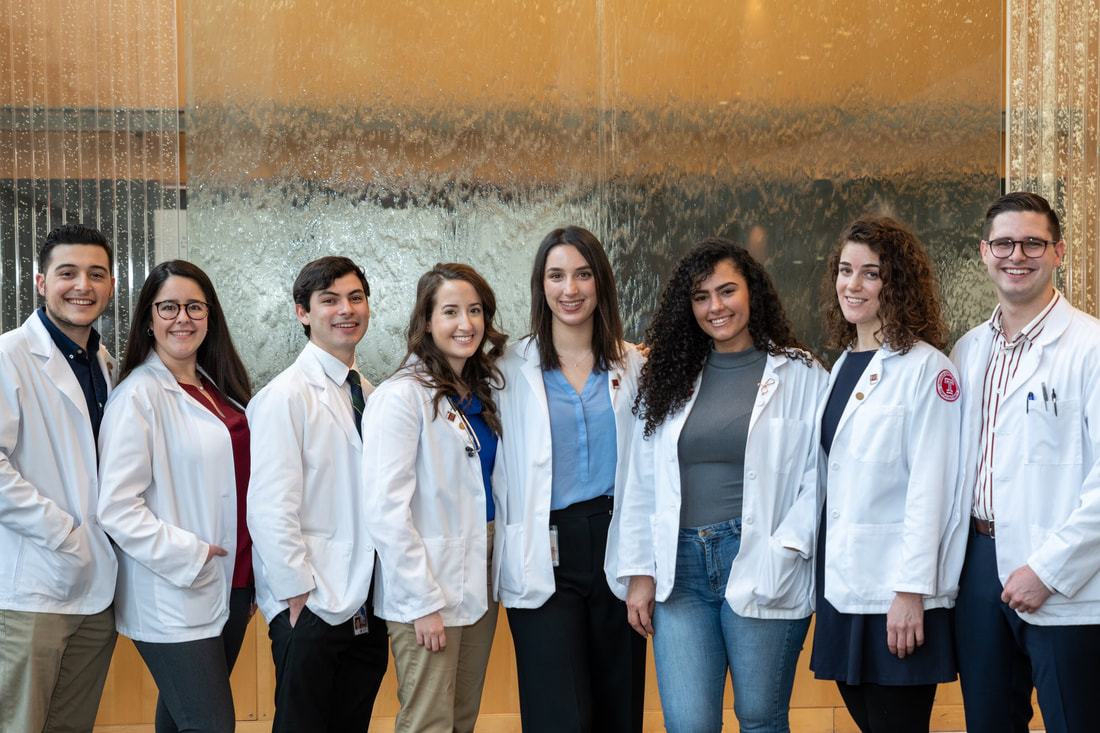
The Temple supplemental application for the 2026-2027 cycle has four required essay prompts and one optional item about institutional action. Each has a 2,000-character limit. Temple does not post its prompts on its website; the wording below is the wording 2026-2027 applicants received. Two prompts changed this year: the campus prompt now asks about your first-choice campus, because you rank the campuses, and a new mission and values prompt replaces the old “nature of your interest” question. The COVID-19 essay is no longer part of the secondary. IMA also keeps a broader database of medical school secondary essay prompts.
A Note on the 2,000-Character Limit
The limit is 2,000 characters, which usually means characters including spaces. That is roughly 300 to 350 words. Write each essay in a separate document, check the character count with spaces, and leave a small margin, because line breaks and pasted formatting can add characters. If your portal shows a different limit, follow the portal.
Other Parts of the Supplemental
- Campus ranking. You rank the campus options (North Philadelphia, St. Luke’s and WellSpan) on the supplemental application. Temple considers your preferences when making interview offers, and your acceptance letter names your campus of acceptance, which is binding. Temple says it will make every effort to honor your preferences.
- Self-reported SAT or ACT score. The supplemental portal may ask you to self-report your highest SAT or ACT composite. Answer accurately if the field appears in your portal. If it is marked optional, you may leave it blank.
- Portal tasks. The same site is where you pay the $100 fee (or receive an FAP waiver), upload USCIS documents if you are a permanent resident or refugee/asylee, send updates and track checklist items.
MD/PhD applicants receive a separate MD/PhD supplemental application in addition to the MD supplemental. Its 2026-2027 prompts are not published. Ask the MD/PhD program office what it includes and plan to write about your research in depth.
Each example below is labeled “Illustrative example, not an actual applicant essay.” The examples were written for this guide to show structure and reasoning. They describe invented applicants, and they are not essays to copy or submit. Your answers must come from your own experiences.
Prompt 1: Your First-Choice Campus
Tell us about your special interest in the first choice campus you selected.
Limit: 2,000 characters. Who answers: every applicant who receives the supplemental. Required: yes.
What it asks. Why the campus you ranked first is the right place for you to train. Because you rank the campuses on the same application, the committee reads this essay alongside your ranking. A vague answer that could apply to any campus suggests the ranking was not carefully considered.
How to approach it. Start with the campus name and your main reason in the first sentence. Then give two or three reasons that connect a specific feature of that campus to something in your own background or goals. Useful verified features include:
- North Philadelphia: Temple University Hospital across the street, Pennsylvania’s leading safety-net provider; 45 graduate medical education programs; the TUH Episcopal behavioral health campus and the busiest psychiatric crisis response center in Philadelphia; St. Christopher’s Hospital for Children; Fox Chase Cancer Center; a large class and a wide range of student groups such as TEACH and Temple Street Medicine.
- St. Luke’s: a class of 40; the medical education building directly across the street from the hospital; a 14-hospital network with a Level I Trauma Center and more than 300 outpatient centers in 11 counties; all four years at St. Luke’s; the Anderson Campus center for women and babies; tuition assistance for eligible graduates who stay for family or internal medicine.
- WellSpan: 40 students per class; faculty who teach in the pre-clinical years and supervise in clerkships; WellSpan York Hospital, a 593-bed Level 1 Trauma Center with a Comprehensive Stroke Center and Level III NICU; an integrated system serving central Pennsylvania and northern Maryland.
Close by showing that you understand the campus assignment is binding and that you ranked with care.
Illustrative example, not an actual applicant essay (1,682 characters):
I ranked the St. Luke’s campus first because I want to learn medicine in the kind of setting where I plan to practice: a regional network that serves small cities, suburbs and farm towns at the same time. I grew up in Easton, and for two years I have worked as a patient care technician on a medical-surgical floor at a Lehigh Valley community hospital. Many of my patients drove in from rural parts of Northampton and Warren counties. I learned that a safe discharge there often depends on whether someone has a ride to follow-up, a pharmacy nearby or a neighbor who checks in. I want to train inside a system that has to answer those questions every day.
A class of 40 matters to me for practical reasons. I learn best when I can ask a question in the moment and work through the answer with someone who knows me. A small class, with the medical education building directly across the street from the hospital, makes that kind of mentorship realistic from the first year.
The range of the network is the other draw. St. Luke’s has 14 hospitals, a Level I Trauma Center and more than 300 outpatient centers across 11 counties in Pennsylvania and New Jersey. I want clerkships that move between a trauma bay and a small community clinic, because the patients I cared for moved between both. The new center for women and babies at the Anderson Campus also stands out to me. My sister’s high-risk pregnancy showed our family how much depends on prenatal care that is close to home.
I know the campus of acceptance is binding, and I ranked the campuses with that in mind. St. Luke’s is where I want to learn, and the Lehigh Valley is where I hope to stay for residency and practice.
Why it works. The prompt asks about one thing, the first-choice campus, and the example names it in the first sentence with a reason rooted in the applicant’s own work. Each of the next paragraphs pairs a verified St. Luke’s feature with a personal reason: the class of 40 and the building across from the hospital with the applicant’s learning style, and the 14-hospital network, Level I trauma center and outpatient centers with the patients the applicant has already cared for. The Anderson Campus detail is specific and tied to a family experience rather than dropped in. The last paragraph acknowledges the binding assignment and states a regional commitment, which tells the committee the ranking was a real decision.
Mistakes to avoid.
- Writing a general “why Temple” essay that never explains why this campus.
- Listing campus facts without saying why they matter to you.
- Ranking a campus first because you think it is easier to get into. The essay will read as thin, and the assignment is binding.
- Criticizing the other campuses. Explain what draws you, not what you dislike elsewhere.
Prompt 2: Mission and Values
Founded on a historic commitment to expanding access to education and healthcare, the Lewis Katz School of Medicine emphasizes a mission rooted in training physicians who combine scientific excellence with deep humanistic commitment. Our mission and vision highlight the importance of compassionate care, community engagement, and a drive to improve health outcomes through innovation, advocacy, and service. Please share how your experiences and/or activities reflect these values and how they shape the physician you hope to become.
Limit: 2,000 characters. Who answers: every applicant who receives the supplemental. Required: yes.
What it asks. Two things. First, how your experiences or activities reflect the values the prompt names: compassionate care, community engagement and improving health outcomes through innovation, advocacy and service. Second, how those experiences shape the physician you hope to become. The opening sentences describe the school’s founding commitment to access, which matches its history as an evening medical college for working Philadelphians.
How to approach it. You do not need an example for every value. Pick one sustained experience, or two related ones, and show several values at work inside it. Describe specific actions: what you noticed, what you did and what happened. Then spend the last third of the essay on the second part of the question, the physician you want to become. Connect that to a real Katz feature only if it fits, such as training at a safety-net hospital, the MD/MA in Health Justice and Bioethics or the Global Medicine Program.
Illustrative example, not an actual applicant essay (1,810 characters):
For three years I volunteered at a free evening clinic in West Philadelphia, first at the front desk and later as a patient advocate. Most of our patients worked hourly jobs and came after their shifts. Compassionate care there meant small, practical things: learning each patient’s name, explaining a lab result in plain words, and never making someone feel rushed because the waiting room was full.
The clinic also taught me what community engagement asks of a clinician. Many patients missed follow-up visits, and I wanted to know why. With our medical director’s approval, I called 60 patients who had missed appointments and recorded their reasons. The most common answers were work schedules and bus routes, not a lack of interest. I shared the results at a staff meeting, and we moved two evening sessions to a church closer to the bus line. Our follow-up rate rose over the next six months. It was not a breakthrough, but it was a real change built on listening.
That project led me to advocacy. I joined a neighborhood coalition asking the city to expand lead testing for older rental homes, and I helped translate flyers into Spanish. I learned that improving health outcomes sometimes happens in a hearing room rather than an exam room.
These experiences shape the physician I hope to become: someone who treats the patient in front of me with patience and respect, then asks what in that patient’s life is making care harder. Katz trains students at Temple University Hospital, Pennsylvania’s leading safety-net provider, and offers an MD/MA in Health Justice and Bioethics that studies health disparities as an ethical problem. I want that combination of clinical training and structured thinking about equity, so that the questions I learned to ask at the clinic become part of how I practice.
Why it works. The example answers both parts of the prompt. Compassionate care appears in small, concrete behaviors at the front desk. Community engagement and service appear in the follow-up project, and the applicant’s method (calling 60 patients, recording reasons, proposing a change) shows a modest kind of innovation that fits the prompt without overstating it. Advocacy appears in the lead testing coalition. The final paragraph answers the second part directly, describing the physician the applicant hopes to become, and connects that goal to two verified Katz features: training at Temple University Hospital and the MD/MA in Health Justice and Bioethics. The essay does not repeat the mission back to the committee; it shows the values in action.
Mistakes to avoid.
- Quoting or paraphrasing the mission for half the essay.
- Naming each value with a one-line example. Depth in one story is stronger than a list.
- Claiming results you cannot support. “Our follow-up rate rose” is fine if true; a precise percentage you cannot document is not.
- Forgetting the second part of the question about the physician you hope to become.
Prompt 3: What Makes You Unique, an Obstacle or Your Contribution
The Admissions Committee would like to know more about you. Katz seeks an engaged student body with a wide variety of experiences, perspectives, and interests to enhance the medical school experience for everyone. Please use the space below to describe what makes you unique as an applicant, an obstacle that you had to overcome, or how you will contribute to the Katz community.
Limit: 2,000 characters. Who answers: every applicant who receives the supplemental. Required: yes.
What it asks. Something about you that the rest of the application does not fully show. The prompt offers three options joined by “or”: what makes you unique, an obstacle you overcame, or how you will contribute to the Katz community. You can choose one, or combine two if they share one thread.
How to approach it. Choose the option that adds the most new information. If your AMCAS already covers a hardship in depth, a contribution essay may serve you better. If you write about an obstacle, spend no more than a third of the essay on the problem and the rest on what you did, what changed and what you now bring to others. If you write about contribution, name a specific group or need at Katz and explain why you are prepared to help. Verified Katz groups include Big Friends, TEAC, TEACH, Temple Street Medicine, Habitat for Humanity, the Babcock Surgical Society and identity-based associations such as SNMA, LMSA and OwLGBTQ+ and Allies in Medicine.
Illustrative example, not an actual applicant essay (1,753 characters):
I am the oldest of three children, and when I was 19 my father lost his job at a warehouse that closed. I took on 30 hours a week at a pharmacy counter to help with rent while staying enrolled full time. That semester my grades dropped, and I earned a C in organic chemistry. It was the lowest grade I had ever received, and it was fair.
I did not want to quit school or quit medicine, so I changed how I worked. I asked my manager for a fixed schedule, moved my study time to early mornings, and went to office hours every week, even when I felt behind. The next year I retook a heavier science load and earned A grades in biochemistry and physiology. My transcript shows the dip and the recovery, and I am not hiding either one.
The pharmacy job turned out to be part of my education. I watched patients choose between two prescriptions because they could not afford both, and I learned to flag those moments for the pharmacist instead of just ringing up the order. I also learned how to stay calm and kind with people who were frustrated, tired or scared.
What I will bring to the Katz community is that experience and a habit of turning it into help for others. As a junior, I started a peer study group for students who worked more than 20 hours a week. We met at 7 a.m., shared notes, and held each other to a plan. Eleven of the 14 members finished the year with higher science grades.
At Katz I would like to join Big Friends and tutor children at Kenderton Elementary, because I know what a steady adult in the room can mean. I also hope to build the same kind of early-morning study group for classmates who carry work or family responsibilities. I understand those pressures, and I want them to know they can carry them and still succeed.
Why it works. The example uses two of the three options, an obstacle and a contribution, and keeps them on one thread: working while studying. It names the grade plainly, which builds trust, and then shows specific changes in behavior and evidence of recovery. The pharmacy paragraph turns the job into clinical insight rather than leaving it as hardship. The contribution is concrete and measured (a study group with a result), and it ends with a verified Katz group, Big Friends tutoring at Kenderton Elementary, plus a plan for classmates who carry similar pressures. The tone stays steady and does not ask for sympathy.
Mistakes to avoid.
- Telling the obstacle in detail and leaving no room for what you did about it.
- Repeating your personal statement. Use this space for something new.
- Listing clubs you would join without explaining why you are suited to them.
- Writing about being “unique” in general terms. Specific details make you distinct; adjectives do not.
Prompt 4: Your Plans for the Current Year
What are your plans for the current year – June 2026 until June 2027?
Limit: 2,000 characters. Who answers: every applicant who receives the supplemental, whether you are in school, working or taking a gap year. Required: yes.
What it asks. What you will be doing for the full year from June 2026 to June 2027. The committee wants to see that the year is purposeful and that there are no unexplained gaps before matriculation.
How to approach it. Organize by commitment: work or school, clinical and service activities, coursework and personal goals. Give roles, dates and hours where you can. Add a short reason for each plan so the answer shows judgment. If you are a full-time student, describe your final courses, thesis or research, clinical and service activities and summer plans. Cover the spring and summer of 2027 as well as the fall.
Illustrative example, not an actual applicant essay (1,694 characters):
From June 2026 to June 2027 I will continue working full time as a medical assistant at a family medicine practice in Reading, Pennsylvania, where I started in August 2025. I room patients, take vitals and histories, update medication lists and give vaccines under supervision. This fall I am also helping the practice launch a diabetes follow-up list. Each week I call patients whose A1c results are overdue and schedule their visits. I plan to keep this role through the end of May 2027, then help train my replacement.
My second commitment is volunteer work. I will continue my Thursday evening shifts as a trained volunteer on a crisis text line, where I have completed more than 120 hours since January 2026. The training has made me a better listener and more comfortable with silence, which I use with patients every day at work.
Academically, I am taking an online statistics course through my community college this fall, because I want to read clinical studies with more confidence. In the spring I will take an evening conversational Spanish course. About one in four patients at my practice speaks Spanish as a first language, and I want to do more than rely on the interpreter line for simple questions.
I also have personal goals for the year. I want to keep running three mornings a week, and I plan to spend more time with my grandmother, who moved in with my family in September.
If I am accepted, I will use the summer of 2027 to move, finish my work responsibilities well and prepare for the start of medical school. I want to arrive ready to learn, with a year of steady patient contact behind me and a clear sense of the kind of primary care physician I hope to become.
Why it works. The example covers the whole window, from June 2026 through the summer of 2027, so there are no gaps. Each commitment has a role, a start date and a level of effort, and each has a reason: statistics to read clinical studies, Spanish because a quarter of the practice’s patients speak it. The crisis line paragraph connects volunteering to a skill used at work. Personal goals are brief and human. The final paragraph shows planning for the transition to medical school without assuming an acceptance.
Mistakes to avoid.
- Writing only about the fall or only about your job.
- Listing plans that are not arranged yet as if they are certain. Say “I plan to” or “I have applied to” when that is the truth.
- Leaving out personal responsibilities that explain your schedule.
- Padding with activities that ended before June 2026.
Optional: Institutional Action Update
Please confirm whether your institutional action (IA) disclosure on your AMCAS application is correct. If you need to update it, please explain:
Limit: 2,000 characters. Who answers: this item is optional. Use it to confirm that your AMCAS institutional action answer is correct or to update it. Required: no, but any applicant with an institutional action must also have a school statement sent to Temple, because the application is not complete without it.
What it asks. Whether your AMCAS answer on institutional action is still accurate, and if not, what changed.
How to approach it. This is a factual item, not an essay. If your AMCAS answer is correct and complete, a one-line confirmation is enough, for example: “My AMCAS institutional action disclosure is correct, and I have nothing to update.” If you need to correct or add to it, use a short, factual structure: the date, what happened, the sanction, whether it is complete, one or two sentences of responsibility and what you changed, and confirmation that you have asked your school to send the official statement. Temple says a statement in a committee letter does not meet its requirement.
Illustrative example, not an actual applicant essay; a worked response pattern for an update (979 characters):
I need to update my AMCAS response. When I submitted AMCAS in June 2026, I answered “No” to the institutional action question because I believed a first-year incident had been handled informally. In August 2026, my university’s Office of Student Conduct confirmed that it was recorded as a formal finding.
In my first semester, I submitted a chemistry lab report that reused two paragraphs of a lab partner’s analysis without attribution. The instructor reported it. I received a zero on the report and completed an academic integrity workshop, and the finding was placed in my student record. I have had no further incidents.
I take responsibility for both the original mistake and the incorrect AMCAS answer. Since then I have kept my own notes for every group assignment and I cite shared work carefully. I have asked the Office of Student Conduct to send the school statement describing the incident and sanction directly to Katz, as the supplemental application instructs.
Why it works. The example says in the first sentence that an update is needed and why the AMCAS answer was wrong. It gives the facts without excuses, states the sanction and that there have been no further incidents, takes responsibility for both the original mistake and the incorrect answer, and confirms the school statement has been requested, which Temple requires before review. It uses about half the limit, which is appropriate for a factual item.
Mistakes to avoid.
- Leaving an AMCAS error uncorrected. An inaccurate disclosure is a bigger problem than the original event.
- Writing a long justification or blaming others.
- Assuming your committee letter covers the requirement.
- Forgetting to ask your school for the official statement.
Final Checks Before You Submit
- Your campus ranking matches your first essay.
- Each essay is under 2,000 characters with spaces and answers every part of its prompt.
- Every program, group or site you name is real and current at Katz.
- Your plans essay covers June 2026 through June 2027.
- Letters, Casper and any institutional action statement are on their way, so your file can be reviewed.
Interview Format and Preparation
The admissions committee at Temple works to create a relaxed environment during interviews. The school says plainly that it does not conduct “stress” interviews and that interviewers try to put you at ease so you can show the “real you.” The interview helps the committee decide whether you fit the school, and it helps you decide whether Temple fits you.
What Is Confirmed for 2026-2027
- Three interviews. Every interviewed applicant has three one-on-one interviews: a primary interview with a physician or PhD faculty member on the Admissions Committee; a secondary, or blind, interview with a faculty member or a student member of the Admissions Committee who has not seen your application; and a community interview with a member of the local community.
- Regional campuses. If you are under consideration at St. Luke’s or WellSpan, your interviews are held with faculty from that campus.
- MD/PhD. MD/PhD applicants have two more interviews on the same day, with the director of the MD/PhD program and a program faculty member. You must be accepted to the MD program before the MD/PhD Advisory Committee considers you.
- Season. Interviews are held from September through April. Early Decision interviews are in mid-September.
- The day. It opens with a welcome from an Admissions office representative, who gives an overview of the curriculum and of clinical, service learning and extracurricular opportunities. It also includes a virtual tour of the campus and an information session with current medical students about student life.
- Format. All interviews for the 2026-2027 cycle (entering 2027) are held in a virtual format. Interview invitations begin going out in August 2026.
- What interviewers look for. Temple seeks candidates with strong interpersonal skills, the ability to listen and take another’s point of view, self-confidence, compassion and social consciousness. Interviewers also explore your interest in medicine, community service, extracurricular activities, shadowing and other experiences, academic background, research and personal experiences.
- Decisions. After the interview, you hear in November, December, March or at the end of the interview season. Some applicants are placed on the continuing candidate list and considered after April 30.
How to Prepare
The guidance below is general practice advice, not a description of Temple’s scoring.
- Know your file cold. Your primary interviewer has read your application. Be ready to discuss any activity, grade or gap in detail and to explain what each experience taught you.
- Practice telling your story without notes. The blind interviewer has not read your file, so you need to introduce yourself, explain why medicine and why Temple, and describe key experiences from scratch in a few minutes.
- Prepare for the community interview. A community member may ask about your connection to the people a Katz physician serves, how you would build trust with patients from different backgrounds or what you know about the campus’s community. Think about North Philadelphia, the Lehigh Valley or York, depending on your campus, and talk about people, not statistics.
- Rehearse your campus reasons. Expect to be asked why you ranked your first-choice campus as you did. Your answer should match your secondary essay.
- Practice common questions out loud. IMA’s list of medical school interview questions is a useful starting point. Practice ethical scenarios too, since Casper and interview conversations both reward balanced reasoning.
- Test your setup. For an online interview, check your camera, sound and lighting, choose a quiet room and keep water nearby.
- Prepare your own questions. Ask students about advising, rotations, how they chose their campus and how they use the Doctoring Colleges.
- Follow up appropriately. If you are placed on the continuing candidate list, Temple encourages letters of interest starting in April.
Preparing for interviews can be stressful, even with Temple’s relaxed approach. Many applicants find it helpful to practice with personalized coaching and mock interviews through IMA’s medical school admissions consulting services.
Frequently Asked Questions
What is the acceptance rate at the Lewis Katz School of Medicine at Temple University?
The offer count is not published, so a true acceptance rate cannot be calculated. For the 2025 entering class, Katz received 14,278 verified applications, interviewed 1,171 applicants (about 8.2%) and enrolled 227 students. Be careful with figures that divide the entering class by the number of applicants. That is a matriculation ratio, not an acceptance rate, because many accepted applicants enroll elsewhere. The newest class, the Class of 2030, entered in August 2026 with 226 new students. Next step: judge your fit by the mission, campus options and your own record rather than by a single percentage.
What MCAT score and GPA do I need for Temple Medical School?
There is no minimum MCAT score or GPA, and Temple has no specific academic cutoff for consideration. For the 2025 entering class, accepted applicants had a median MCAT of 513 and a median total GPA of 3.84 (3.76 science). Temple reviews your most recent MCAT, both section scores and total, alongside your academic history, Casper, letters and experiences. For 2027 entry, only MCATs taken in 2024, 2025 or 2026 count, and the last test accepted is September 2026. Next step: if your intro science courses were AP, online or at a community college, add an upper-level classroom science course before you apply.
Can DACA recipients or international students apply to Temple?
Temple considers applications from U.S. citizens and from applicants with permanent resident or refugee/asylee status with USCIS at the time they submit AMCAS. DACA status and international student status are not among the groups Temple lists. The Office of Admissions also evaluates only coursework completed at a U.S. or Canadian university. Next step: if your status is not one of the three listed, contact the Katz Office of Admissions before you pay any application fees.
Does Temple accept out-of-state applicants?
Yes. Residency is not required. In the Class of 2030, 106 of 226 new students are Pennsylvania residents, which means more than half come from outside the state. Out-of-state tuition for 2026-27 is $64,754, only $3,682 more than the Pennsylvania resident rate of $61,072. Next step: write a campus essay that explains your real connection to the campus you rank first, whether or not you are from Pennsylvania.
What are the Temple secondary essay prompts for 2026-2027?
There are four required prompts, each with a 2,000-character limit: your special interest in your first-choice campus; how your experiences reflect the school’s values of compassionate care, community engagement, innovation, advocacy and service; what makes you unique, an obstacle you overcame or how you will contribute to the Katz community; and your plans from June 2026 until June 2027. An optional item lets you confirm or update your AMCAS institutional action disclosure. The full wording, examples and analysis are in the secondary section of this guide. Next step: decide your campus ranking before you start writing.
How does the campus ranking work, and is it binding?
You rank the campus options, North Philadelphia, St. Luke’s in Bethlehem and WellSpan in York, on the supplemental application. Temple considers your preferences when it makes interview offers, and if you are accepted, your acceptance letter names your campus of acceptance. That campus assignment is binding. Temple says it makes every effort to honor your preferences. Next step: rank only the campuses where you would gladly spend four years.
Is the WellSpan campus accredited?
The Lewis Katz School of Medicine at Temple University is fully accredited by the LCME. WellSpan’s campus page states that an application has been submitted to add the WellSpan Campus as a regional campus site for the school. The WellSpan campus teaches the same curriculum, with the same exams, as the other two campuses, with 40 students per class, and it is set to matriculate its first class in fall 2027. Next step: if WellSpan is on your ranking, ask about the campus on your interview day.
When are the Temple application deadlines?
For regular decision, the AMCAS application is due December 15, transcripts to AMCAS by December 29, and the supplemental application, $100 fee and letters by January 15. Early Decision applicants must submit AMCAS and transcripts by August 1 and supplementary materials by August 15, with decisions by October 1. Next step: aim to complete everything well before the final dates, because interviews begin in September.
Does Temple require Casper or PREview?
Temple requires Casper for all MD applicants and does not use PREview or Duet. For 2027 entry, Temple accepts Casper tests completed between March 19, 2026 and January 5, 2027. Register for the U.S. Medicine test, CSP-10111. Your application is not complete until Casper results arrive. Next step: book an early test date so Casper does not hold up your review.
How many letters of recommendation does Temple want?
Temple accepts a premedical committee letter, a letter packet, or three to six individual letters. With a packet or individual letters, Temple prefers, but does not require, two letters from biology, chemistry or physics professors and one from a nonscience professor, work experience or service activity. Research letters are welcome in addition to those. All designated letters must arrive before review. Next step: ask your writers at least two months before you plan to submit.
Is the Temple interview virtual, and what is it like?
You have three one-on-one interviews: one with a faculty member on the Admissions Committee who has read your file, one with a faculty member or student who has not, and one with a member of the local community. Temple does not conduct stress interviews. The day includes a virtual campus tour and a session with current students, and all interviews for the 2026-2027 cycle are virtual. Invitations begin in August, and interviews run from September through April. For the 2025 entering class, 1,171 applicants were interviewed. Next step: practice introducing yourself and your reasons for Temple without notes, for the interviewer who has not read your file.
How much does Temple Medical School cost?
For 2026-27, tuition is $61,072 for Pennsylvania residents and $64,754 for non-residents, plus a $549 University Services Fee each fall and spring semester. The newest full first-year budget, for 2025-26, put the total cost of attendance at $88,396 in-state and $91,972 out-of-state, and 2026-27 costs will be higher because tuition rose. In 2024-25, indebted graduates owed an average of $217,240. New borrowers can no longer use Federal Grad PLUS loans starting in 2026-27. Next step: complete the FAFSA by March 1 using school code 003371 and ask the financial aid office for the 2026-27 MD budget.
Does Temple Medical School offer Early Decision or Early Assurance?
Yes to both. Early Decision is for applicants whose first choice is Katz; those accepted may not apply anywhere else. Early Assurance is open to students at Temple University, Hunter College and Washington & Jefferson College, and the St. Luke’s campus has Early Assurance agreements with DeSales, Lehigh, Moravian and Muhlenberg. Candidates need at least a 3.6 overall and science GPA at the end of junior year and are nominated by their pre-medical advisor. Next step: talk to your pre-health advisor during sophomore year if you attend a partner school.
Is research required for admission to Temple?
No. Research is considered but not required for MD applicants. Every Katz student completes a required scholarly project in the fourth year, so curiosity and some exposure to inquiry help. MD/PhD applicants are different: in most cases Temple expects at least one year of research experience and a letter that speaks to your research. Next step: if you have no research, show curiosity through quality improvement work or a question you explored in a clinical or service role.
How much clinical experience do I need for Temple?
Temple does not set a minimum number of clinical or volunteer hours. Medical-related experience and community service are both named review factors, and service is central to the school’s mission. Sustained, hands-on roles, such as work as a medical assistant, scribe, patient care technician or EMT, or supervised medical internships for undergraduates, give you specific patient stories for your essays and interviews. Next step: choose one or two commitments you can keep for a year or more.
What is the ACMS postbaccalaureate program?
The Advanced Core in Medical Sciences program is a 10-month, full-time, non-degree postbac at Katz for students who have completed their foundational pre-med science courses. Every student admitted to ACMS also receives a conditional acceptance to the Katz MD program, and students who complete the program requirements matriculate together. Courses include physiology, pharmacology, microbiology and immunology, biochemistry, anatomy and case-based problem solving, with MCAT preparation for students who need it. 2026-27 tuition is $32,990 for Pennsylvania residents and $40,698 for non-residents. Next step: compare ACMS with a traditional reapplication if your science record needs strengthening.
What dual degrees does Temple offer?
Katz offers an MD/PhD, an MD/MA in Health Justice and Bioethics, an MD/MBA with the Fox School of Business and an MD/Certificate in Narrative Medicine. MD/PhD applicants apply through AMCAS with an MD/PhD application type, and most receive tuition remission and a $36,000 stipend. For the MD/MA, MD/MBA and Narrative Medicine certificate, you apply after acceptance to the MD. Next step: if a dual degree interests you, mention the underlying interest in your secondary only if your experiences support it.
What is Temple’s curriculum like?
Temple uses three phases over four years. Phase 1 is a single-pass organ systems curriculum with the Doctoring course for clinical skills and point-of-care ultrasound. Phase 2 is 36 weeks of core clerkships with Intersession courses, scholarly work and electives. Phase 3 includes critical care and emergency medicine clerkships, a sub-internship, 28 weeks of electives, a required scholarly project and a Transition to Residency course. Next step: read the curriculum section above and think about which phase most excites you before your interview.
When will I hear back after my interview?
Temple releases decisions in November, December, March and at the end of the interview season. Accepted students have two weeks to submit a $100 deposit, refundable until April 30. Applicants on the continuing candidate list are considered after April 30, and Temple encourages letters of interest starting in April. Next step: keep your contact information and portal checklist current.
Related Medical School Guides
These schools are worth comparing with the Lewis Katz School of Medicine at Temple University for location, degree type or a specific applicant consideration. None of these comparisons is a claim about equal selectivity.
- Geisinger Commonwealth School of Medicine (GCSOM): a Pennsylvania MD school in Scranton with a community-based, regional focus, useful if Temple’s St. Luke’s or WellSpan campuses appeal to you.
- Perelman School of Medicine at the University of Pennsylvania: a research-intensive Philadelphia MD school, a natural comparison for applicants weighing Temple’s safety-net clinical focus against a different research environment in the same city. IMA also has a shorter guide to the Perelman School of Medicine.
- Penn State Medical School: a central Pennsylvania MD option in Hershey with a small regional campus, for applicants who like Temple’s regional campus model.
- Sidney Kimmel Medical College at Thomas Jefferson University: a large Philadelphia MD school that many Pennsylvania applicants compare with Temple.
- Drexel University College of Medicine: another Philadelphia MD school, and the medical school WellSpan York Hospital served as a regional clinical campus for 12 years.
- Rutgers New Jersey Medical School (NJMS): an urban MD school in Newark, across the state line, for applicants comparing Temple’s North Philadelphia setting with another city-based program in the region.
- Philadelphia College of Osteopathic Medicine (PCOM): a Philadelphia DO option for applicants considering both MD and DO paths.
- Lake Erie College of Osteopathic Medicine (in Pennsylvania): a Pennsylvania DO school with several campuses, for applicants interested in multi-campus programs.
For more Pennsylvania and national options, browse all of IMA’s medical school guides. For an overview of the whole process, see IMA’s guide on how to get into medical school.
More Medical School Guides
Whether you looked for medical schools in a different state or searched for medical schools near me, you have probably found many options. Explore more of IMA’s guides by region:
Pennsylvania and New York: CUNY School of Medicine, SUNY Downstate Medical School, NYIT College of Osteopathic Medicine, NYU Long Island School of Medicine, Albany Medical College, TOURO College of Osteopathic Medicine, Norton College of Medicine at Upstate Medical University, Jacobs School of Medicine at the University at Buffalo, Hofstra Zucker School of Medicine, Weill Medical College of Cornell University, University of Rochester Medical School, Icahn School of Medicine at Mount Sinai, Renaissance School of Medicine at Stony Brook University, Albert Einstein College of Medicine, New York Medical College, University of Pittsburgh School of Medicine, NYU Medical School.
New Jersey and the Mid-Atlantic: Rowan University School of Osteopathic Medicine, Hackensack Meridian School of Medicine (HMSOM), Rutgers Robert Wood Johnson Medical School, Cooper Medical School of Rowan University (CMSRU), VCU School of Medicine, University of Maryland School of Medicine, Johns Hopkins School of Medicine, George Washington University School of Medicine, Georgetown University School of Medicine.
New England: Boston University College of Medicine, Harvard Medical School, Yale School of Medicine, Brown Medical School.
Ohio and the Midwest: Ohio University Heritage College of Osteopathic Medicine, Northeast Ohio Medical University (NEOMED), University of Cincinnati College of Medicine, University of Toledo College of Medicine, Wright State University Boonshoft School of Medicine, Ohio State University College of Medicine, A.T. Still University Kirksville College of Osteopathic Medicine, Saint Louis University School of Medicine, University of Missouri Medical School, Kansas City University (KCU), UMKC School of Medicine, University of Wisconsin Medical School, Case Western Medical School, Stritch School of Medicine at Loyola University Chicago, Washington University School of Medicine.
The South: University of North Carolina Medical School, University of Florida Medical School, Emory University School of Medicine, Vanderbilt University School of Medicine, Wake Forest University School of Medicine.
Texas: UT Southwestern Medical School, Long School of Medicine at UT Health San Antonio, University of the Incarnate Word School of Osteopathic Medicine, UT Austin’s Dell Medical School, UTMB School of Medicine, McGovern Medical School at UT Health, The University of Texas Rio Grande Valley School of Medicine, UNT Texas College of Osteopathic Medicine, University of Houston College of Medicine, Texas A&M College of Medicine, Baylor College of Medicine.
California and the West: California University of Science and Medicine, UC San Diego Medical School, California Northstate University College of Medicine, Touro University of California, CHSU College of Osteopathic Medicine, UC Davis School of Medicine, UC Riverside School of Medicine, USC Keck School of Medicine, Western University of Health Sciences (in California), UCLA Medical School.
Caribbean: St. George’s University School of Medicine.
How International Medical Aid Can Help
Our mission at International Medical Aid (IMA) is to help the next generation of medical students prepare for medical school. Applying and interviewing for medical school is challenging and takes a lot of work, and we offer support in two ways. Neither is affiliated with the Lewis Katz School of Medicine at Temple University, and neither affects how Temple reviews an application.
Voluntary Healthcare Internships Abroad
One of the best learning environments for an aspiring physician is working alongside skilled clinicians with real patients, especially in a health system different from your own. IMA runs pre-med internships abroad in Kenya and at other sites for pre-medical and gap-year students, and its pre-health internships are open to students exploring other health careers as well. Interns work in hospitals and clinics with local medical staff, taking vitals, doing patient intake and triage, and helping with direct patient care under supervision. The programs were designed with the vision of preparing students as humanistic, globally minded future physicians. You can explore IMA’s healthcare internships abroad to compare sites and programs.
For a Temple applicant, the value is in what you do with the experience. Temple’s new secondary prompt asks how your experiences reflect compassionate care, community engagement, advocacy and service, and its Global Medicine Program sends students to settings with limited resources. A supervised clinical role abroad can give you specific, reflective material for those questions, as long as you describe what you did and learned about patients, not the trip itself.
Medical School Admissions Consulting
One-on-one, personalized help is one of the best ways to prepare for applying to the Lewis Katz School of Medicine at Temple University, or any school. IMA’s medical school admissions consulting program is designed to make the process easier for you and your family. Our advisors help with your school list, your AMCAS application and your secondary essays, and they prepare you for interviews with mock interviews. For Temple specifically, that can mean pressure-testing your campus ranking, reviewing your first-choice campus and mission essays against the 2,000-character limit, and rehearsing for the three-interview day.
Next step: If you have questions about the application process, our guides, our internships or our consulting services, contact us here.
Final Thoughts and Sources
As you take your first step toward the Lewis Katz School of Medicine at Temple University, we wish you the best of luck. Katz offers a humanistic, service-centered MD rooted in North Philadelphia, with two 40-student regional campuses in Bethlehem and York, a required scholarly project and dual degrees in research, business and health justice. For 2026-2027, your most important early decision is your campus ranking, because it shapes your first essay and your acceptance is binding to one campus. Start there, then build your essays around specific experiences of care, community and service. Whether you looked for medical schools in a different state or searched for medical schools near me, Temple is worth a close look if its mission matches yours.
Source Notes
School sources were checked on October 17, 2026, and the MSAR profile on October 18, 2026. Cohort and year labels appear with each figure in the text.
- Lewis Katz School of Medicine at Temple University (medicine.temple.edu): How to Apply (eligibility, review factors, letters, MCAT and Casper windows for entering 2027, institutional action, deadlines, coursework); Admissions Interview; Special Admissions; Accepted Students; Our Campuses; Accreditation; Academics and Program Objectives; Clinical Learning Sites; Program Outcomes (2026 Residency Match); Why Katz; Scholarships and Financial Aid; Financial Aid (2026-27 Grad PLUS change); About, Our History and Mission and Vision; Dean’s biography; Office of Undergraduate Medical Education; ACMS Postbaccalaureate, Biomedical Sciences, Health Justice and Bioethics, Narrative Medicine and Physician Assistant program pages; news articles “The Fiber of the Katz School of Medicine: Our Faculty” (October 2026) and “Kathleen Greatrex MD ’90” (September 2026).
- Temple University: MD degree program pages (program format and dual degree programs); Temple Bursar, Academic Year 2026-2027 Tuition Rate Schedule (MD tuition, ACMS tuition and University Services Fee); Temple Graduate Bulletin 2026-2027, Medicine MD (ranking statement and COVID-era coursework statement); Temple Now, “Lewis Katz School of Medicine hosts White Coat Ceremony for Class of 2030,” August 13, 2026 (class size, campus split, residency).
- Temple University Lewis Katz School of Medicine at WellSpan Health (wellspan.org): campus home, Academics (LCME application statement), Admissions and Campus Leadership pages.
- Temple/St. Luke’s School of Medicine (slhn.org): welcome letter from Shaden Eldakar-Hein, MD; Interviews; Financial Aid (St. Luke’s Tuition Assistance).
- AAMC Medical School Admission Requirements (MSAR), Lewis Katz School of Medicine at Temple University profile, 2026 edition, accessed October 18, 2026: MCAT and GPA of accepted applicants, verified applications, interviews, matriculants, residency split, gender and background of the 2025 entering class (AAMC Data Warehouse, October 29, 2025); 2025-26 first-year cost of attendance (TSF 2025-2026); aid and graduate debt (LCME Part I-B 2024-2025); 2026-2027 interview format, invitation and acceptance-notice dates, deposit and deferral policy; estimated 2027 entrants; WellSpan first-class timing.
- 2026-2027 secondary prompt wording: Student Doctor Network 2026-2027 Temple applicant thread (prompts as received, July 10, 2026) and current 2026-2027 secondary prompt compilations. Temple does not publish its prompts.
Statistics in this guide describe the cohorts named. Figures that are not published are marked as not published rather than estimated.