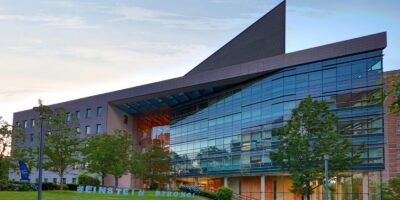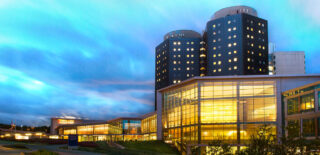

The Renaissance School of Medicine at Stony Brook University (RSOM) is a public MD school in Stony Brook, New York, on the north shore of Long Island. It is part of Stony Brook University, a flagship campus of the State University of New York (SUNY) system, and of Stony Brook Medicine, the university’s health system. That system includes Stony Brook University Hospital, Stony Brook Children’s Hospital, Stony Brook Southampton Hospital, Stony Brook Eastern Long Island Hospital and the Long Island State Veterans Home.
Stony Brook University is one of 71 members of the Association of American Universities (AAU), the invitation-only group of leading research universities in North America. The medical school’s mission centers on training diverse students, clinicians and physician-scientists, delivering compassionate care and doing research that explains the biology of disease.
Be an informed applicant. Even at a public school, RSOM has specific requirements and guidelines, and the majority of its applicants present exceptional credentials. Understanding what the school asks for, and why, will help you build a more focused and convincing application.
This guide covers the 2026-2027 application cycle, for students who plan to start medical school in August 2027. It explains the MD program and its combined degrees, the LEARN curriculum and the three-year MD option, admissions requirements and deadlines, costs, clinical training across Long Island, the people who lead the school, the interview, and every current secondary prompt with a full illustrative example and analysis. Facts were checked on October 23, 2026.
Key Takeaways
- New York residents fill most seats, but out-of-state applicants are welcome. About 81 percent of the class that entered in fall 2026 came from New York State, and more than 40 percent came from Long Island. The school says roughly a quarter of recent entering classes have been out-of-state residents. International, Canadian and DACA applicants may apply, but federal financial aid is limited to U.S. citizens and permanent residents.
- Prerequisites are recommended, not required. For the 2027 entering class, all premedical courses are “HIGHLY recommended, not required.” You still need a bachelor’s degree before you start, an MCAT taken between January 12, 2024 and September 12, 2026, and a completed CASPer.
- The numbers are high. The fall 2026 class had a 3.92 cumulative GPA and an average MCAT at the 89th percentile. Accepted applicants for the 2025 entering class had a median MCAT of 516 and a median GPA of 3.9. Only 6.8 percent of applicants were accepted for the 2026-27 academic year.
- Key dates. AMCAS is due November 16, 2026. The supplemental application and letters are due December 11, 2026. The last CASPer date is November 12, 2026. Early Decision applicants file AMCAS by August 3, 2026.
- Public tuition, Long Island living costs. Tuition for 2025-26, the latest posted year, is $46,470 a year for New York residents and $69,120 for nonresidents, plus about $4,488 in fees, $33,484 in 10-month living costs and a $5,573 health insurance charge that can be waived with other coverage.
- Distinctive training. The LEARN curriculum puts clerkships in the second year, gives you a 16-month advanced clinical phase, and offers a three-year MD (3YMD) with a direct pathway into a Stony Brook residency.
- The secondary is three 500-word essays. For 2026-2027 you explain any gap between college and medical school, describe how your experiences or challenges have defined you, and choose between a career goals essay and an ethical or professional dilemma essay. MD/PhD applicants write a fourth essay on research interests.
- Next step: plan your CASPer date now, then start drafting your experiences essay and your choice essay before your AMCAS is verified.
Key Statistics About Renaissance School of Medicine at Stony Brook University
The snapshot below brings together the figures applicants ask about most, each with its year and source. Admissions figures come from the school’s own class profiles: the fall 2026 entering class (the Class of 2030) and the Incoming Class 2025 profile, which is the most recent profile that reports applicants, interviews and offers together. The median MCAT shown is for all accepted applicants to the 2025 entering class. Tuition is the 2025-26 rate, the latest the school posts. The table that follows gives the definition and source for each number.

| Metric | Value | Year or cohort | Source and definition |
|---|---|---|---|
| School and degree | Renaissance School of Medicine at Stony Brook University; MD, with MD/PhD (MSTP), MD/MPH, MD/MBA, MD/MA and MD/MSECR options | Current | RSOM Combined and Dual Degree Programs page; public SUNY school in Stony Brook, NY |
| Accreditation | Full LCME accreditation; next full survey 2026-27, with the site visit set for March 8-10, 2027 | As of October 2026 | LCME Accredited MD Programs directory; RSOM LCME Accreditation Process page |
| Entering class | 136 students selected from 5,624 applications | Fall 2026 matriculating class (Class of 2030) | RSOM Facts page |
| GPA | 3.92 cumulative (the September 2026 school news release calls it the median undergraduate GPA) | Fall 2026 matriculating class | RSOM Facts page; Stony Brook University News, September 8, 2026 |
| MCAT | Average overall MCAT at the 89th percentile | Fall 2026 matriculating class | RSOM Facts page (a numeric score is not published for this class) |
| Share of applicants accepted | 6.8 percent | 2026-27 academic year | Stony Brook University News, September 8, 2026: “Only 6.8 percent of applicants were accepted” |
| New York residents | 81 percent; more than 40 percent from Long Island; students from 10 other states and 4 countries | Fall 2026 matriculating class | RSOM Facts page; Stony Brook University News, September 8, 2026 |
| Applicants, interviews and offers | 5,689 applicants; 844 interviewed; 396 acceptances offered | Incoming Class 2025 | RSOM Incoming Class 2025 profile. Offers divided by applicants is about 7.0 percent |
| MCAT and GPA, 2025 class | Average total MCAT 514 (89th percentile); median total GPA 3.89; median science GPA 3.86 | Incoming Class 2025 | RSOM Incoming Class 2025 profile; matriculants |
| Class size, 2025 | 141 (124 four-year MD, 5 three-year MD, 8 MD/PhD, 4 Scholars for Medicine and SUPREMES) | Incoming Class 2025 | RSOM Incoming Class 2025 profile |
| Median MCAT, accepted applicants | 516 total (mean 515.8); section medians 129 Chemical and Physical, 128 CARS, 129 Biological and Biochemical, 130 Psychological and Social | 2025 entering class | AAMC MSAR, 2026 edition; all accepted applicants, most recent score |
| Median GPA, accepted applicants | 3.9 total; 3.87 science | 2025 entering class | AAMC MSAR, 2026 edition; all accepted applicants |
| Verified applications by residency | 2,073 in state; 2,955 out of state; 661 international (5,689 total) | 2025 entering class | AAMC MSAR, 2026 edition; AAMC residency classification |
| Tuition | $46,470 a year New York residents ($23,235 per semester); $69,120 nonresidents ($34,560 per semester) | 2025-26 academic year; the page labels the budget “Entering 2025 students” | RSOM Financing Your Medical Education page; tuition and fees match AAMC MSAR (Tuition and Student Fees survey, 2025-26) |
| Fees, living costs and insurance | Fees $4,488; living and other expenses $33,484 (10 months); health insurance $5,573 a year, waivable with other coverage | 2025-26 first-year budget | RSOM Financing Your Medical Education page |
| Average graduate debt | $234,570 | Academic year 2024-25 | AAMC MSAR, 2026 edition (LCME Part I-B); average medical school debt of indebted graduates |
| Secondary fee | $100, waived for AMCAS fee waiver recipients; sent to all applicants | 2026-2027 cycle | RSOM How to Apply and FAQ pages; AAMC MSAR, 2026 edition |
| Interviews | Virtual; two separate interviews with members of the Committee on Admissions; invitations begin in August | 2026-2027 cycle | AAMC MSAR, 2026 edition |
| Acceptance deposit | $100, nonrefundable, applied to tuition, due May 7, 2027; up to 15 days to respond to an offer | 2026-2027 cycle (2027 entering class) | AAMC MSAR, 2026 edition |
What Are Renaissance School of Medicine’s Average MCAT and GPA?
Renaissance School of Medicine’s 2025 incoming class had an average total MCAT of 514 (89th percentile) and a median total GPA of 3.89 (RSOM Incoming Class 2025 profile, 2025). The fall 2026 class posted a 3.92 cumulative GPA and an 89th-percentile MCAT average (RSOM Facts, 2026). Across all accepted applicants to the 2025 entering class, the median MCAT was 516 and the median total GPA was 3.9, with a median science GPA of 3.87.
Those are class profile figures, not cutoffs. RSOM does not publish a minimum MCAT or GPA. Remember one school-specific rule when you plan your MCAT: if you take the exam more than once, RSOM averages your scores rather than using only your best one. That makes a well-prepared single attempt especially valuable here.
Mission and Educational Priorities
RSOM states its mission this way:
“We are committed to recruiting and training diverse students, clinicians and physician-scientists in biomedical sciences to improve the health of all individuals and populations through education, outreach, compassionate care and research that discovers the biology of disease and informs novel preventive, diagnostic and therapeutic strategies.”
The school’s values spell out ICARE: integrity, compassion, accountability, respect and excellence. On its Facts page, the school sums up three critical mission goals: train the next generation of committed, curious and highly capable physicians; advance understanding of the origins of human health and disease; and deliver world-class, compassionate healthcare. You can read the full statement on the school’s Mission, Vision, Values page.
What the mission means for your application
Clinicians and physician-scientists are both named. RSOM is a research-intensive school. It is the top-ranked public medical school in New York State for National Institutes of Health (NIH) funding, and its NIH awards reached about $70.7 million after a 46 percent increase. The mission names “physician-scientists” alongside clinicians. If you have done research, explain what question you asked and what you learned, not just the lab name. If you have not, show curiosity in another form, such as a quality improvement project or a careful look at a clinical problem you saw.
Compassionate care is a stated value, not a slogan. The values define compassion as “empathetic care with attentive listening and affirmation.” The second secondary prompt, about how your experiences have defined you, gives you room to show that kind of listening in a real encounter.
Outreach and “all individuals and populations.” RSOM serves a large and varied region, from Nassau County to the East End farms and the North Fork. About 28 percent of the fall 2026 class came from a lower socioeconomic background, and 35 percent of the 2025 class did. Service with underserved, rural, older or veteran populations connects directly to the patients you would see at Stony Brook Southampton Hospital, Eastern Long Island Hospital or the Long Island State Veterans Home.
Diversity in the broad sense. The Committee on Admissions encourages applications “from a wide variety of students with diverse backgrounds, experiences, and academic interests” and from groups historically underrepresented in medicine. Non-science majors were 14 percent of the 2025 class. You do not need a biology degree, but you do need to show that you can handle the science.
Informed interest. The admissions page says RSOM “hopes to attract applicants who are informed about the school and are particularly interested in the Renaissance School of Medicine.” Specific, accurate knowledge of the LEARN curriculum, the Scholarly Concentrations Program, the 3YMD or the clinical sites will serve you better than general praise.
Accreditation and Institutional Identity
Accreditation. RSOM’s MD program is fully accredited by the Liaison Committee on Medical Education (LCME), the national accreditor for MD programs in the United States and Canada. The school received initial accreditation in 1971 and its most recent full accreditation in 2019, for an eight-year term. The next LCME site visit is scheduled for March 8-10, 2027, and the school will submit its self-study materials in November 2026. You can check the status yourself in the LCME directory of accredited programs. LCME accreditation lets graduates take the USMLE, enter ACGME-accredited residencies and qualify for licensure in every state.
Name and history. The school was founded in 1971 as the Stony Brook University School of Medicine. In 2016 it entered a strategic partnership with Mount Sinai Health System and the Icahn School of Medicine in Manhattan for collaborative education, research and clinical care. In November 2018 it became the Renaissance School of Medicine at Stony Brook University, in recognition of philanthropic investments by more than 100 families at Renaissance Technologies. That giving began with a gift from Jim Simons, the former chair of Stony Brook’s mathematics department, who started Renaissance Technologies on the Stony Brook campus. You will still see “Stony Brook University School of Medicine” in older documents and on some application lists.
Place within Stony Brook. RSOM is one of five health sciences schools at Stony Brook University, alongside Dental Medicine, Health Professions, Nursing and Social Welfare. Its eight basic science and 17 clinical departments teach more than 500 medical students and over 750 residents and fellows each year. As of June 2026, the school had 1,347 full-time and 139 part-time faculty.
Rankings. The school’s own rankings page notes that the 2023 edition of U.S. News & World Report placed it 58th in the Best Research category and that it is the top-ranked public medical school in New York State. Rankings change often and measure different things; use them as one data point, not as a reason to apply.
If you are deciding between public and private New York schools, compare RSOM with the other SUNY campuses and with private programs through our overview of New York medical colleges. Many applicants also build their clinical experience early through healthcare internships abroad, which can broaden the patient populations you have worked with before you start at a school like this one.
Medical Programs and Affiliations
Before you apply, research the school’s programs as closely as its requirements. RSOM offers a four-year MD, a three-year MD option, several combined degrees and a BA/MD route for high school students. Each has its own entry point.
Four-year MD (LEARN curriculum)
Most students enter the four-year MD through AMCAS. In the 2025 incoming class, 124 of 141 enrollees were in the four-year track. The curriculum is described in the next section.
Three-Year MD Program (3YMD@RSOM)
The Three-Year MD Program lets a limited number of students finish the MD in three years and enter a direct pathway into a Stony Brook University Hospital residency in their chosen specialty. Five students in the 2025 incoming class were in the 3YMD.
Key facts:
- 3YMD students spend 133 weeks in the curriculum, compared with 147 weeks in the four-year LEARN curriculum.
- They take four weeks of academic credit before first-year classes begin in mid-August and ten weeks of credit in their chosen specialty during the summer after the first year.
- They receive specialty mentorship between the first and second years.
- You do not apply through AMCAS for this track. Students who have been offered admission or are enrolled in the four-year MD can apply, and the school says enrolled students can apply every February of their first year. Applicants submit a 3YMD application, name the specialty program and interview with that program.
The school lists clear benefits: saving a year of time and tuition, building a long-term mentoring relationship in the residency specialty, a direct pathway into that residency and entering the workforce a year early. It is also candid about the costs. You must choose a specialty very early, you lose the summer break after the first year, you have fewer chances for away electives and outside residency interviews, and 3YMD students cannot combine the track with an MD/MPH, MD/MBA or MD/MA. Students can move from the 3YMD back to the four-year LEARN track at any time. Dr. Lisa Strano-Paul, Associate Dean for Clinical Education, advises 3YMD students.
MD/PhD: Medical Scientist Training Program (MSTP)
The MSTP was founded in 1981 and has had continuous NIH funding for more than 30 years. It enrolls about nine new students a year, with about 78 trainees in the program, and takes six to eight years. MSTP students receive a stipend and a full medical and graduate school scholarship covering tuition, health insurance and fees. Training draws on research partners at Cold Spring Harbor Laboratory and Brookhaven National Laboratory, and PhD programs span biomedical, life, physical and mathematical sciences and engineering. Eight MD/PhD students entered in 2025. For the 2026-2027 cycle, the MD/PhD application deadline is October 1, 2026, well ahead of the MD deadline. MSTP applicants answer an extra research-focused secondary prompt, covered in the secondary section below.
Other combined degrees
- MD/MPH. The Program in Public Health offers an MPH alongside the MD, with concentrations in Epidemiology and Biostatistics, Community Health, or Health Policy and Management. The combined program requires all MD requirements and the 54 MPH credits.
- MD/MBA. With the College of Business, a four-year MD plus a 48-credit MBA, with 6 credits of overlap, for students aiming at healthcare management.
- MD/MA. Selected students in the Scholarly Concentrations Program take 18 credits in the MA program in Medical Humanities, Compassionate Care and Bioethics.
- MD/MSECR. A four-year MD plus a 33-credit Master of Science in Epidemiology and Clinical Research, with a mentored clinical research component.
Scholars for Medicine (BA/MD)
The Scholars for Medicine Program is an eight-year Bachelor’s/MD route for exceptional high school students. Scholars take part in medical school classes and activities while in college, must keep a minimum GPA through the first three undergraduate years, and must reach a minimum MCAT score, taken no later than the spring of junior year. Four students in the 2025 incoming class came through Scholars for Medicine and the related SUPREMES route. If you are still in high school and considering this path, look at medical internships for high school students to build early, supervised exposure to patient care.
AMSNY postbaccalaureate pathway
RSOM works with the Associated Medical Schools of New York (AMSNY) on a postbaccalaureate graduate program with Stony Brook’s Department of Physiology and Biophysics. It is a 30-credit Master of Science with an emphasis on physiology and the biomedical sciences, offered as a 12-month or 18-month thesis option. Students referred to the AMSNY program through the RSOM Office of Admissions are guaranteed acceptance to RSOM if they keep a cumulative GPA of 3.3 or better in the program, meet the master’s curriculum requirements, and earn an MCAT total of at least 504 with no section below 124. Seven students in the 2025 entering class came from postbaccalaureate programs.
Clinical affiliations
RSOM trains students in Stony Brook Medicine’s hospitals and in affiliated institutions. Stony Brook University Hospital is a 628-bed academic medical center, the region’s only tertiary care center and a Level 1 Regional Trauma Center. Affiliates include Nassau University Medical Center, the Northport Veterans Affairs Medical Center and Mount Sinai South Nassau Hospital. More detail appears in the clinical rotations section below.
Transfers
RSOM does not accept transfer applications.
Curriculum Overview
RSOM’s MD program uses the LEARN curriculum, introduced with the class of 2018 in August 2014 after a planning effort involving more than 100 faculty, students and administrators. LEARN stands for Learning centered, Experiential, Adaptive, Rigorous and Novel. Its goals were more active learning, early professional identity formation, integration across disciplines and earlier clinical clerkships.
The curriculum has three phases. Read the official LEARN curriculum description for course-level detail.
Phase I: Foundational Phase (18 months)
Phase I opens with Transition to Medical School, an eight-day course that marks the move from lay person to medical professional in training. Next comes Biomedical Building Blocks (B3), a 24-week sequence of four foundational science courses: The Body, Molecular Foundations of Medicine, Pathogens and Host Defense, and Basic Mechanisms of Disease.
B3 is followed by 36 weeks of Integrated Pathophysiology, five systems-based courses:
- Cardiovascular-Pulmonary-Renal
- Mind-Brain-Behavior
- Endocrine-Reproductive
- Gastrointestinal-Nutrition
- Musculoskeletal
Three longitudinal courses run through Phase I: Introduction to Clinical Medicine (ICM), Themes in Medical Education, and Medicine in Contemporary Society. ICM is where you learn history-taking and examination skills, and you must pass a final ICM summative OSCE (Objective Structured Clinical Examination). Medicine in Contemporary Society is organized by the Center for Medical Humanities, Compassionate Care and Bioethics, which also runs humanistic reflection rounds during the clerkships.
Phase II: Primary Clinical Phase (12 months)
RSOM moves students into core clerkships after 18 months. Phase II begins with a two-week Transition to Clinical Care course, then four 12-week clerkship blocks:
- Medicine and Primary Care
- Pediatrics and Obstetrics-Gynecology
- Surgery, Anesthesia and Emergency Medicine
- Psychiatry, Neurology and Radiology
Blocks one through three each end with a wellness week. During the fourth block, students take a summative Clinical Performance Exam, which they must pass.
USMLE timing
After Phase II and before Phase III, students have 12 weeks of dedicated time, from mid-January to early April, to prepare for and take USMLE Step 1. Many also take Step 2 in that window. Others take four weeks the following summer for Step 2. The Step 2 deadline is August 1 of Phase III. Students must pass the ICM summative OSCE, the Clinical Performance Exam, Step 1 and Step 2 for promotion and graduation.
Phase III: Advanced Clinical Phase (16 months)
Phase III gives you a long, flexible final stretch. Over 16 months you complete 40 weeks of credit:
- a 4-week sub-internship in one of 11 specialties
- 26 weeks of electives
- a 4-week Selective
- a 2-week General Transition to Residency and a 2-week Specialty Transition to Residency
- a 2-week Advanced Clinical Experience
The extra months leave time for board preparation, research, specialty exploration and residency applications and interviews.
Grading
All Phase I courses are pass/fail. The core clerkships (Medicine, Primary Care, Ob/Gyn, Pediatrics, Neurology, Psychiatry and Surgery) are graded Honors, High Pass, Pass, Low Pass or Fail. The two-week mini-clerkships in Emergency Medicine, Anesthesiology and Radiology, and the Transition to Clinical Care course, are pass/fail. In Phase III, sub-internships and four-week clinical electives receive tiered grades, and other courses are pass/fail. RSOM has an Alpha Omega Alpha chapter and elects members to the Gold Foundation Humanism Honor Society each year.
Scholarly Concentrations and professional identity
The Scholarly Concentrations Program (SCP) is an optional four-year track that lets you pursue a focused scholarly project with a mentor and earn recognition for it. Tracks include Basic, Translational and Clinical Research; Global Health; Medical Humanities and Ethics; and Medical Technology and Innovation, and the admissions page also lists Medical Education. Research-track students commit at least eight weeks of full-time work in the summer after the first year. The LEARN curriculum also includes a Global Medical Education Program that lets students complete part of their education abroad, and a focus on professional identity formation.
How the curriculum shapes your application
Because clerkships start after 18 months, RSOM students are on the wards quickly. Committees want evidence that you already understand clinical work and can learn in it. Direct experience with patients helps you write about that convincingly. Clinical internships for pre-med students are one route, alongside work as a scribe, EMT, medical assistant or hospital volunteer.
Admissions Requirements and Application Process
All applicants submit an AMCAS application and the RSOM Supplemental Application. Accepted applicants must earn a bachelor’s degree before matriculation.
Selection factors: what RSOM looks for in an applicant
The Committee on Admissions conducts a holistic review. In its words, your ability “will be evident in your academic record, your scores on competitive examinations, your faculty’s statements and your extracurricular and work experiences.” Motivation and personal characteristics, shown in your application, letters and interview, “are also a major part of our admissions assessment.” The school also states plainly that “the majority of those who apply to the Renaissance School of Medicine present exceptional credentials and the entering class reflects this fact.”
Like most U.S. MD programs, RSOM’s review aligns with the AAMC’s core competencies for entering medical students, which cover professional, science and thinking and reasoning skills. Use them as a checklist when you choose which experiences to describe.
Residency, citizenship and international applicants
- New York residents and out-of-state applicants. RSOM accepts out-of-state applicants. The admissions FAQ says about 25 percent of entering classes over the last four years have been out-of-state residents, and 11 percent (16 students from 11 states) of the 2025 class came from outside New York. For tuition, you must have had your principal home in New York for the 12 months before enrollment to be classified as a resident.
- International applicants. RSOM welcomes international applicants. Students who are not Canadian must complete at least one year of study at a U.S. college or university, and anyone with a foreign bachelor’s degree should complete the recommended coursework at a U.S. or Canadian institution before applying. Financial aid is available only to U.S. citizens and permanent residents, and accepted international students must file an Affidavit of Support showing they can cover about $95,000 for one year. Four international students entered in 2025. Our guide to medical schools that accept international students compares other options.
- Canadian and DACA applicants. Both are welcome to apply. If they are not U.S. permanent residents, they are not eligible for financial aid from U.S. financial institutions.
MCAT and GPA requirements
RSOM does not publish a minimum MCAT or GPA. The class profile tells you what a competitive file looks like: the fall 2026 class had a 3.92 cumulative GPA and an MCAT average at the 89th percentile, and the 2025 class had a median total GPA of 3.89, a median science GPA of 3.86 and an average total MCAT of 514. Looking at everyone offered admission for the 2025 entering class, the median MCAT was 516 and the median total GPA was 3.9. RSOM has no minimum GPA or MCAT for screening and will consider postbaccalaureate or graduate coursework when an undergraduate GPA is lower.
For the 2027 entering class, RSOM accepts MCAT scores from exams taken January 12, 2024 through the September 12, 2026 exam. Early Decision applicants must test by July 11, 2026. Remember that multiple MCAT scores are averaged. Check the AAMC’s MCAT registration and testing information when you plan your test date.
Coursework
For the 2027 entering class, the Committee on Admissions has designated premedical courses as “HIGHLY recommended, not required.” The recommended courses are:
| Subject | Recommendation |
|---|---|
| Biology | 2 semesters with lab(s) |
| Chemistry | Minimum of 4 semesters, including general and organic chemistry and a course in biochemistry; a minimum of 3 semesters of lab is highly recommended |
| English/Writing | 1 semester |
| Physics | 1 semester with lab |
| Social Science/Humanities | 1 semester of psychology, sociology, logic or ethics, anthropology or philosophy |
| Statistics | 1 semester |
“Recommended” does not mean optional in practice. The MCAT tests this material, and the first 18 months of LEARN assume it. If you are missing a course, especially biochemistry or statistics, plan to take it before you apply and say so in your application. Undergraduate coursework should be completed at a college or university in the U.S. or Canada.
Clinical, service and research experience
RSOM does not set a minimum number of clinical or volunteer hours. The committee examines “extracurricular and work experiences” closely, and its mission names compassionate care and outreach. Aim for sustained, hands-on patient contact, service to people who face barriers to care, and some exposure to research or scholarly inquiry. Depth matters more than a long list. Two or three experiences you can describe in detail, with what you learned, will serve you better in the secondary and interview than a dozen short ones.
Many applicants find structured pre-med internships useful for adding supervised patient care to their record, especially when local opportunities are limited.
Letters of recommendation
The Committee on Admissions prefers a composite letter from your college’s pre-health advising office. If your school has no such office or committee, send letters from two instructors, at least one in a science field. RSOM does not solicit other letters but welcomes letters from people who can add important information about you. All letters go through AMCAS, which accepts up to 10. Letters, like the supplemental application, are due December 11, 2026.
Does RSOM require the CASPer test?
Yes. CASPer is an online situational judgment test from Acuity Insights (formerly Altus) that looks at personal and professional characteristics. All RSOM applicants must take the American Professional Health Sciences test CSP-10111 (U.S. Medicine), and “successful completion of CASPer is mandatory in order to maintain admission eligibility.” The CASPer Snapshot and Duet are not required. The test has 12 sections of video and written scenarios and takes about 75 to 90 minutes. Results are valid for one cycle, so reapplicants must retake it. The last CASPer date for RSOM this cycle is November 12, 2026 at 6:00 PM Eastern, and Early Decision applicants must test by July 19, 2026. Sign up on the CASPer website with your AMCAS ID. RSOM does not use AAMC PREview scores in admissions.
AMCAS primary application
RSOM uses the AMCAS primary application. Applications open in May, and RSOM’s AMCAS deadline for the 2026-2027 cycle is November 16, 2026. Submit early: the school says “All application material should be submitted as early as possible,” and it reviews on a rolling basis. Your official grades come through AMCAS, so do not send transcripts directly unless you are accepted.
Supplemental (secondary) application
Once RSOM receives your verified AMCAS application, it emails you instructions for the Supplemental Application. Every applicant with a verified AMCAS receives it. The fee is $100 and non-refundable. If you have an AMCAS fee waiver, the supplemental fee is waived automatically, and other applicants can send a written fee waiver request with documentation, such as a letter from their college financial aid office. Your application is complete when RSOM has your verified AMCAS, supplemental application, fee or waiver, MCAT scores, CASPer results and letters. You will get an email when it goes to the committee.
If you want a refresher on how the two stages fit together, read our article on primary and secondary applications.
Early Decision
RSOM participates in the Early Decision Program. If you apply ED, you apply only to RSOM until you receive a decision. ED requirements for the 2027 entering class:
- AMCAS submitted by August 3, 2026
- all supporting documents and letters received by August 31, 2026
- MCAT taken by July 11, 2026
- CASPer taken by July 19, 2026, 4:00 PM Eastern
- decision by October 1, 2026
If you are accepted, you are expected to enroll. Applicants not accepted ED move to the regular pool and may then apply elsewhere. ED fits only applicants for whom RSOM is the clear first choice and whose file is already strong by early summer.
Review, decisions and waitlist
The committee screens each applicant individually, which can take from several weeks to a couple of months. RSOM uses rolling admissions: first acceptances go out in mid-October and continue until interviews end in mid-March. The school also keeps a wait list and makes offers from it after May 1. A typical cycle has about 300 wait list positions, and about 35 acceptance offers have gone to wait-listed applicants. Acceptance notices can go out as late as July 31, 2027. You have up to 15 days to respond to an offer unless your letter says otherwise, and the $100 deposit (nonrefundable, applied to tuition) is due May 7, 2027. While you wait, keep your email and contact details current in AMCAS. You may email updates to [email protected], and the school accepts additional supporting materials. Letters of intent, letters of interest and notices of significant updates are accepted; upload them in the RSOM AMP portal.
2026-2027 timeline and deadlines
| Date | Step |
|---|---|
| May 2026 | AMCAS opens |
| July 11, 2026 | Last MCAT date for Early Decision applicants |
| July 19, 2026, 4:00 PM ET | CASPer deadline for Early Decision applicants |
| August 3, 2026 | AMCAS deadline for Early Decision |
| August 31, 2026 | Early Decision supporting documents and letters due |
| Beginning in August 2026 | Interview invitations sent |
| September 12, 2026 | Last MCAT exam accepted for regular applicants |
| October 1, 2026 | Early Decision applicants notified; MD/PhD application deadline |
| Mid-October 2026 | First regular acceptances |
| November 12, 2026, 6:00 PM ET | Last CASPer test date |
| November 16, 2026 | AMCAS deadline for all other applicants |
| December 11, 2026 | Supplemental application, fee and letters due |
| Mid-March 2027 | Interviews and rolling acceptances end |
| After May 1, 2027 | Offers to wait list applicants |
| May 7, 2027 | $100 acceptance deposit due |
| Before June 1, 2027 | Written deferment requests due |
| July 31, 2027 | Latest date acceptance notices are sent |
| Mid-August 2027 | Phase I classes begin (3YMD students start four weeks earlier) |
Acceptance conditions, deferrals and reapplicants
All conditionally accepted applicants must complete a criminal background check through Certiphi Screening, arranged through AMCAS at no extra cost. A positive finding does not automatically end an offer; an ad hoc committee reviews it and makes a recommendation. You must report any changes after the check and before matriculation. Accepted students may request a one-year deferment in writing before June 1, 2027, and each request is judged on its merits; medical deferments need a physician’s documentation. Reapplicants submit a new AMCAS, supplemental and CASPer, since CASPer results last one cycle.
Tuition, Cost of Attendance and Financial Aid
RSOM is state supported, so tuition depends on New York residency. The figures below are the ones the school currently posts on its financing page, which labels the budget for students entering in 2025. They are the 2025-26 first-year charges, the latest year with published rates. Rates are set by SUNY and can change each year, so check the Stony Brook bursar for the 2026-27 and 2027-28 rates before you budget.
Tuition and fees
| Item | New York resident | Out of state |
|---|---|---|
| Tuition | $46,470 ($23,235 per semester) | $69,120 ($34,560 per semester) |
| Fees | $4,488 | $4,488 |
| Total billed charges | $50,958 | $73,608 |
The university bursar’s fall 2025 schedule breaks the semester fees into a $45 medical student activity fee, a $1,411.01 comprehensive fee (covering academic success, college, student health, technology, career development and transportation fees) and a $650 clinical skills fee.
Living costs and health insurance
The school’s first-year budget for living and other expenses over 10 months is $33,484:
- Books and supplies: $4,750
- Housing: $12,930
- Meals: $6,440
- Transportation: $4,636
- Personal expenses: $4,300
- Loan fee: $428
Health insurance is required for all RSOM students. The university bills a health insurance charge of $5,573 a year, which you can waive in SOLAR if you have comparable coverage through a parent, spouse or partner.
Adding the posted items together, a first-year New York resident who buys university insurance has a budget of roughly $90,000 for 10 months, and an out-of-state student roughly $112,700. Later years run longer than 10 months, and the school adds USMLE expenses in year three and away elective costs in year four, so your total will change by year.
Financial aid
Between 70 and 80 percent of RSOM students finance their education fully or partly through the Federal Direct Loan Program, using Direct Unsubsidized and Grad PLUS loans. To apply for aid you file the FAFSA every year, the RSOM institutional application for need-based grants (with parent income information), a credit policy statement, and loan paperwork. Your aid offer equals the standard cost of attendance, and you can accept, reduce or decline amounts. If your real costs are higher, you can ask the Assistant Dean of Student Affairs for a cost of attendance revision.
Scholarships come from need, merit, leadership and career interest, through RSOM need-based grants, national organizations and the university’s Scholarship Universe database. MSTP students receive full tuition, fees and health insurance plus a stipend. The 3YMD saves a full year of tuition and living costs.
International students are not eligible for federal aid and must show they can pay one year of costs, about $95,000.
RSOM graduates who borrowed for medical school finished with an average of $234,570 in medical school debt in academic year 2024-25. That figure counts only indebted graduates, so it describes what borrowing typically adds up to, not what every student owes.
What this means for your planning
The resident and nonresident gap is about $22,650 a year in tuition alone, which makes residency a real financial factor over four years. Nonresident students can apply for New York State residency after they complete their first year of medical school; the Office of Student Accounts makes that decision. Public Service Loan Forgiveness and income-driven repayment, which the school’s financial aid page mentions, can help physicians who work in qualifying jobs. The school also points students to the AAMC MedLoans Organizer and Calculator to track borrowing. Borrow only what you need: the school notes that most students live off campus in shared housing, and cooking at home is one of the few costs you control.
Campus Facilities and Student Life
The campus
Stony Brook University sits on 1,039 acres on the north shore of Long Island, about 60 miles east of Manhattan and 60 miles west of Montauk Point. The medical school is in the Health Sciences Center, next to Stony Brook University Hospital, with admissions on Level 4 of the Health Sciences Tower. The setting is suburban, with beaches, the Long Island Sound and the East End vineyards nearby, and the Long Island Rail Road connects to New York City.
Research and learning spaces
RSOM’s research spaces include the Center for Molecular Medicine, with facilities for transgenic studies, high-resolution NMR, X-ray diffraction and molecular modeling. Stony Brook opened an NIH-funded General Clinical Research Center in 1998 to support clinician-scientists. In July 2026 the school celebrated the opening of the first renovated research lab quadrant under the New York State SUNY Flagship initiative. The school also runs the Stony Brook Center for Healthy Aging, a research center focused on older adults in Suffolk County.
Housing and getting around
In the first two years, when most teaching happens on campus, most students live on campus or in nearby communities. Stony Brook is largely made up of single-family homes, and students often share them. The school is direct about transportation: “Access to an automobile may be an important consideration, especially while pursuing clinical clerkships at geographically dispersed sites. Public transportation in the area is limited.” Budget for a car or reliable shared transportation by your clerkship year, since sites stretch from Nassau County to the South Fork and North Fork.
Student support
RSOM’s Office of Student Affairs handles advising and financial aid questions, and the Assistant Dean of Student Affairs reviews cost of attendance revisions. The Office of Inclusion and Belonging supports students, and an Ombuds office is available. Wellness weeks are built into the clerkship year. Each specialty program has a faculty advisor for 3YMD students.
Service, scholarship and community
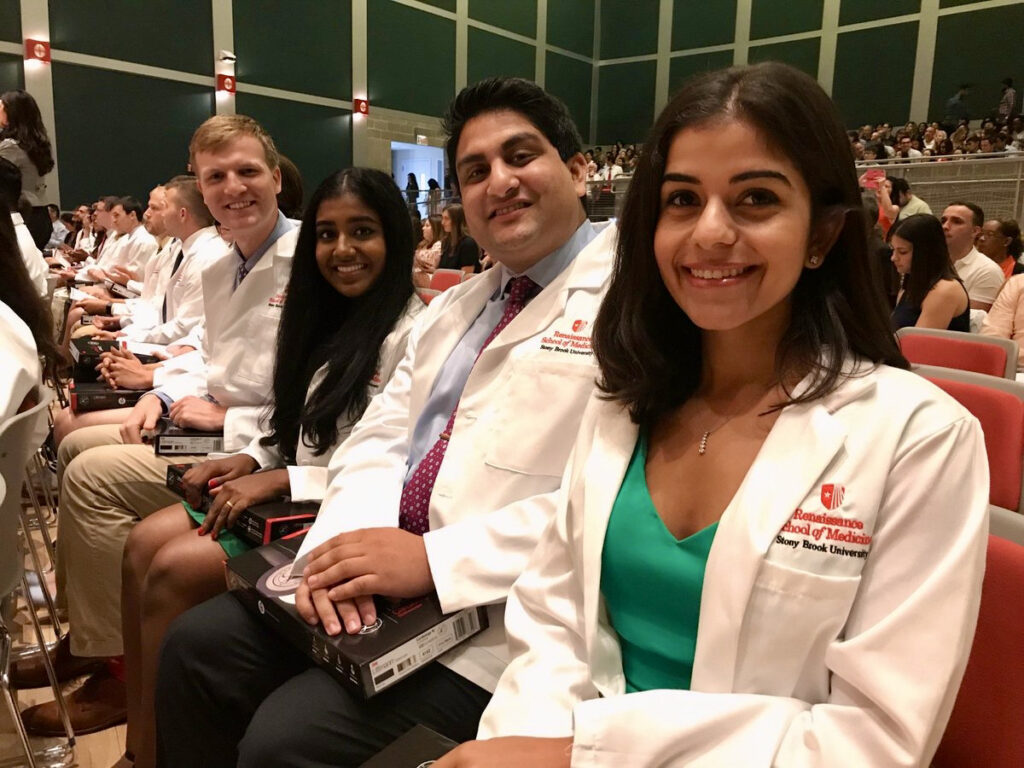
Students can join the Scholarly Concentrations Program, the AOA and Gold Humanism honor societies, and global health work through the Office of Global Medical Education. The Center for Medical Humanities, Compassionate Care and Bioethics sponsors grand rounds and conferences. The school’s alumni chapter runs an annual Stethoscope Drive so that every entering student receives a stethoscope, and it celebrates milestones such as Match Day. PACE, a school program, prepares students from underrepresented backgrounds for careers in medicine.
Life on Long Island
Long Island offers a four-season climate tempered by the ocean and the Sound, Atlantic beaches on the south shore, hiking, and easy train trips into Manhattan. Living costs are high for the region but generally lower than Manhattan, especially in shared housing. If you grew up elsewhere, visit if you can and think about how you will build a support network here.
Clinical Rotations and Research Opportunities
Where clinical training happens
RSOM students train in the hospitals and clinics of Stony Brook Medicine and its affiliates:
- Stony Brook University Hospital (SBUH). A 628-bed academic medical center, the region’s only tertiary care center and a Level 1 Regional Trauma Center. It houses the Stony Brook University Heart Institute, Stony Brook Cancer Center, Stony Brook Children’s Hospital and the Stony Brook University Neurosciences Institute. SBUH also includes Suffolk County’s only Level 4 Regional Perinatal Center, a state-designated AIDS Center, Comprehensive Psychiatric Emergency Program and Burn Center, the Christopher Pendergast ALS Center of Excellence, a Kidney Transplant Center and the nation’s first Pediatric Multiple Sclerosis Center.
- Stony Brook Southampton Hospital. A campus of SBUH and the only emergency care provider on the South Fork, with a Heart and Stroke Center, Breast Health Center and 32 satellite care centers.
- Stony Brook Eastern Long Island Hospital. An acute care community hospital serving the North Fork and Shelter Island, with regional behavioral health programs.
- Long Island State Veterans Home. A Stony Brook Medicine facility caring for veterans.
- Affiliates. Nassau University Medical Center (a 615-bed acute care facility with an 889-bed long-term care facility), Northport VA Medical Center (a 508-bed acute care hospital, 190-bed nursing home and five outpatient clinics) and Mount Sinai South Nassau Hospital in Oceanside.
Stony Brook Medicine’s clinical enterprise handles more than 41,000 inpatient visits, more than 145,000 emergency visits and about 1.78 million outpatient visits a year. That volume, from urban Nassau County to rural East End towns, gives students a wide mix of patients.
Specialty strengths you may hear about
Departments include neurosurgery, chaired by Dr. Raphael Davis, as well as neurology, cardiology, oncology and pediatrics. Students interested in neurological care can see work at the Neurosciences Institute and the ALS center. Students drawn to cancer care can follow the work of Stony Brook Cancer Center. Always describe these as places you hope to learn, not as guaranteed rotations or mentors.
Global health
RSOM’s Office of Global Medical Education supports clinical outreach, global health research, clinical electives and exchange programs with more than 20 partners worldwide. Residents in medicine, ob-gyn, pediatrics, anesthesiology and emergency medicine rotate at partner sites including Chile, China, Ecuador, Japan, Madagascar, Peru, Rwanda and Uganda. The Stony Brook Center for Global Health Equity focuses on Mozambique, with projects in women’s health, emergency medicine and anesthesia, including a low-cost capnography monitor developed with Stony Brook engineers. Medical students can also choose the Global Health track of the Scholarly Concentrations Program, and the Global Health-funded International Health Research Program supports student research abroad. In the 2025 graduating class, 12 percent of seniors reported a global health experience during medical school.
If global health draws you, it helps to have seen care delivered in a low-resource setting before you arrive. Pre-med internships abroad can give you that supervised experience and concrete stories for your secondary essays.
Student research
Research is optional for MD students but widely available. The Scholarly Concentrations research track pairs students with Stony Brook faculty mentors and requires at least eight full-time weeks in the summer after the first year, plus training in research ethics and human or animal subjects protection. Funding applications are due March 31. Projects range from literature reviews and lab work to outcomes research and clinical trials, and mentors can be based at affiliates such as the Northport VAMC. The MSTP, the MD/MSECR and the MD/MPH offer deeper research training. Faculty research includes NIH-sponsored programs in neurological diseases, cancer, cardiovascular disorders, biomedical imaging, regenerative medicine and infectious diseases.
Stony Brook researchers developed the technology behind the MRI, helped develop PET scanning technology, created 3D virtual colonoscopy and discovered the cause of Lyme disease. Medications developed by Stony Brook researchers include ReoPro, Periostat and Xiaflex.
Graduate medical education
Stony Brook Medicine sponsors 69 ACGME-accredited residencies and fellowships and trains more than 750 residents and fellows. The 3YMD offers a direct pathway into one of these programs, and four-year students can match into them through the NRMP. More than 99 percent of graduates pass national licensing exams, the school reports.
Graduates spread across many fields. In the 2025 graduating class, the most common specialty intentions were internal medicine (18.5 percent), anesthesiology (11.8 percent), psychiatry (9.2 percent), obstetrics and gynecology (8.4 percent), radiology (6.7 percent) and orthopaedic surgery (5.9 percent), followed by emergency medicine (5.0 percent). Primary care training is built in: every student completes a four-week Primary Care Clerkship with a family physician, general internist or geriatrician, including home and nursing home visits.
Notable Alumni, Faculty, Leadership and Admissions Staff
The people below hold verified roles at RSOM or graduated from its MD program. Their work shows what the school values; it does not mean any of them will teach or mentor a particular student.
School leadership
Peter Igarashi, MD, Knapp Endowed Dean. Dr. Igarashi became dean on September 12, 2022 and was named Knapp Endowed Dean in August 2025. He is a nephrologist and NIH-funded physician-scientist who studies polycystic kidney disease, transcriptional regulation, epigenetics and kidney development, with more than $25 million in NIH support over his career. Before Stony Brook he led the Department of Medicine at the University of Minnesota Medical School, where NIH funding rose 60 percent, and he was chief of nephrology at UT Southwestern, where he created services to provide regular dialysis to undocumented patients. He earned his MD at UCLA. At the fall 2026 White Coat Ceremony he told new students that the white coat stands for “both the science and the art of medicine, and the importance of the doctor-patient relationship.” For applicants, his career mirrors the mission’s pairing of research with care for underserved patients.
Andrew Wackett, MD, Vice Dean for Undergraduate Medical Education. Dr. Wackett oversees the MD program and is the faculty accreditation lead for the 2027 LCME review. He comes from Emergency Medicine.
Lisa Strano-Paul, MD, Associate Dean for Clinical Education. Dr. Strano-Paul, an internist and geriatrician, oversees clinical education and serves as the career advisor for 3YMD students. She co-chairs the Education Committee of the LCME self-study.
Dr. Janice John, Assistant Dean for Pre-Clinical Curriculum. Dr. John runs the Scholarly Concentrations Program in the Office of Undergraduate Medical Education and works in the UGME dean’s office on the preclinical curriculum.
Admissions leadership
Jack Fuhrer, MD, Associate Dean for Admissions. Dr. Fuhrer is an Associate Professor of Medicine and Clinical Director of the AIDS Center. As associate dean, he “serves as an academic leader for the Committee on Admissions and is responsible for student recruitment and admissions.” His infectious disease work at a state-designated AIDS Center is a reminder that RSOM’s admissions leadership comes from active patient care.
Tara Brown, MBA, Assistant Dean for Admissions. Ms. Brown oversees the daily administrative operations of the Office of Admissions, the office that handles your supplemental application, completeness emails and interview scheduling.
Jennie Williams, PhD, Assistant Dean for Student Diversity. Dr. Williams is an Associate Professor in Family, Population and Preventive Medicine and is listed on the admissions office’s Who’s Who page. She also serves on the LCME self-study committee for academic support and the learning environment.
You can reach the admissions office at [email protected] or (631) 444-2113. The office does not provide individual counseling but will answer questions by email.
Faculty
Raphael Davis, MD, Chair of Neurosurgery. Dr. Davis leads the Department of Neurosurgery at the Renaissance School of Medicine, one of the 17 clinical departments that teach students on the wards. Students interested in the neurosciences will meet the department during the Psychiatry, Neurology and Radiology clerkship block and can explore it further in Phase III electives.
Alumni
Nell Maloney Patel, MD ’01. Dr. Maloney Patel is a professor of surgery and vice chair for education at Rutgers Robert Wood Johnson Medical School, where she has been on the faculty since 2007. She directed the general surgery residency there from 2016 to 2024, received the Association for Surgical Education’s Philip J. Wolfson Outstanding Teacher Award and is the first woman to become a full professor of surgery at Rutgers RWJMS. She received RSOM’s 2025 Distinguished Alumni Award and credits the mentorship she received at Stony Brook as foundational.
Farrukh Jafri, MD ’09. Dr. Jafri is an academic emergency physician and researcher in transitional care, telehealth and medical education. His remote patient monitoring and virtual medication management programs have reduced readmissions among high-risk patients with heart failure, COPD and diabetes, and he has more than 30 peer-reviewed publications. His simulation-based training in crisis resource management has been adopted at multiple hospitals. He received the 2025 Outstanding Recent Graduate Award.
Juan Espinoza, MD ’99. Dr. Espinoza is president of the Renaissance School of Medicine Alumni Board, which runs alumni mentoring, scholarships and the Stethoscope Drive for entering students.
David N. Louis, MD ’85. Dr. Louis received RSOM’s Distinguished Alumni Award in 2008. Other Distinguished Alumni honorees include Ramon Parsons, MD/PhD ’88, and John Gordon Harold, MD ’79, a sign of the range of careers the school’s graduates have built in research and clinical leadership.
These alumni stories have a common thread: teaching, mentorship and care for high-risk patients. If those themes match your own experiences, say so with specifics in your secondary.
Admissions Statistics and Class Profile
RSOM publishes its class data in two places: an annual incoming class profile and the Facts page. The newest data describe the class that entered in fall 2026; the most complete set, with applicants, interviews and offers, describes the 2025 incoming class.
Fall 2026 entering class (Class of 2030)
- 136 students selected from 5,624 applications
- 6.8 percent of applicants accepted for the 2026-27 academic year
- 3.92 cumulative GPA (median undergraduate GPA in the school’s news release)
- average overall MCAT at the 89th percentile
- 81 percent from New York State, more than 40 percent from Long Island; students from 10 other states and 4 countries
- 28 percent from a lower socioeconomic background
- undergraduate degrees from 65 colleges and universities
2025 incoming class
| Measure | Value |
|---|---|
| Total applicants | 5,689 |
| Applicants interviewed | 844 (about 14.8 percent of applicants) |
| Acceptances offered | 396 (about 7.0 percent of applicants) |
| Class size | 141 |
| Program enrollees | 124 four-year MD; 5 three-year MD; 8 MD/PhD; 4 Scholars for Medicine and SUPREMES (Bachelor’s/MD) |
| Median total GPA | 3.89 |
| Median science GPA | 3.86 |
| Average total MCAT | 514 (89th percentile) |
| Residency | 86% New York State (121); 11% out of state (16, from 11 states); 3% international (4) |
| New York regions | 49% New York City; 35% Nassau and Suffolk counties; 16% Upstate |
| Lower socioeconomic background | 35% (49) |
| Average age | 23 |
| Gender | 66% female, 34% male |
| Majors | 86% science, 14% non-science |
| Undergraduate schools | 61 |
| Advanced degrees | 8 (6 master’s, 1 MPH, 1 MBA) |
2025 entering class: accepted applicants and applications by residency
| Measure | Value | Source and definition |
|---|---|---|
| Median MCAT total | 516 (mean 515.8) | AAMC MSAR, 2026 edition; all accepted applicants, most recent score |
| Median MCAT section scores | Chemical and Physical 129; CARS 128; Biological and Biochemical 129; Psychological, Social and Biological 130 | AAMC MSAR, 2026 edition; all accepted applicants |
| Median GPA | 3.9 total (mean 3.86); 3.87 science (mean 3.82) | AAMC MSAR, 2026 edition; all accepted applicants |
| Verified applications | 2,073 in state; 2,955 out of state; 661 international; 5,689 total | AAMC MSAR, 2026 edition; AAMC residency classification |
| Deferred entrance | 2 | AAMC MSAR, 2026 edition; deferral requests are decided case by case |
| Matriculants with a graduate degree | 6 percent | AAMC MSAR, 2026 edition; self-reported |
| Entered from postbaccalaureate programs | 7 | AAMC MSAR, 2026 edition; self-reported |
These accepted-applicant medians and the matriculant figures above describe different groups and different statistics: everyone offered a seat versus the students who enrolled, and medians versus an average MCAT. Read both as a picture of a competitive file, not as cutoffs.
Out-of-state applicants send more than half of all applications, yet New York residents fill most seats. In 2025, 2,955 verified applications came from out-of-state applicants, compared with 2,073 from New York residents.
How to read these numbers
Acceptance rate. The school’s own figure for the 2026-27 class is 6.8 percent of applicants accepted. For the 2025 class, 396 offers out of 5,689 applicants works out to about 7 percent. Both measure offers, not seats: RSOM offers about three acceptances for every seat because admitted students also hold offers elsewhere. Matriculants divided by applicants, about 2.5 percent, is not an acceptance rate and understates your chances if you are offered an interview.
Interviews. In 2025, about one applicant in seven was interviewed, and roughly 47 percent of interviewees received an offer (396 of 844). Reaching the interview is the hardest step.
Residency. New York residents make up the large majority of each class, but out-of-state applicants do matriculate every year. An out-of-state applicant should give a specific, credible reason for choosing Long Island.
GPA and MCAT. A median is the middle value, not a minimum, and half of the class sits below it. The FAQ notes that RSOM averages multiple MCAT scores, so a retake that only edges up your score may lower your average less than you expect, or not help at all.
Socioeconomic background. More than a quarter of each recent class comes from a lower socioeconomic background. Context about work, family responsibilities and finances is part of a holistic file; describe it plainly.
Tips and Strategies for Admission
1. Plan your MCAT around the averaging rule
Because RSOM averages multiple MCAT scores, take the exam when you are ready, not as a practice run. If you must retake, make sure your preparation has changed enough to raise the average meaningfully.
2. Take CASPer early
The last CASPer date is November 12, 2026, and your file cannot be complete without it. Take it in summer or early fall so your application can enter the rolling review early. Practice the format so the time limits feel familiar, and answer from your real values.
3. Submit the secondary quickly
The school asks for all material “as early as possible” and uses rolling admissions from mid-October. Pre-write your three essays in June and July using the prompts in this guide, and aim to return the secondary within about two weeks of receiving it.
4. Show informed interest
RSOM says it hopes to attract applicants “who are informed about the school.” Name specific programs that fit you: the Scholarly Concentrations track you would choose, the LEARN curriculum’s early clerkships, the 3YMD if you already know your specialty, the Global Health track and the Center for Global Health Equity, or clinical sites like Stony Brook Southampton Hospital. Be accurate. Generic praise for “excellent research and diverse patients” adds little.
5. Build sustained, hands-on patient experience
The curriculum puts you on clerkships after 18 months, and the committee weighs work and extracurricular experience heavily. Steady work as a scribe, EMT, CNA, medical assistant or hospice volunteer, with reflection on what patients taught you, is the core of a strong file. Internships for pre-med students that let you take vitals, do intake and help with care under supervision can add depth when your local options are thin.
6. Show research or scholarly curiosity
You do not need a publication. You do need to show that you can ask a good question and follow it through. Describe your role, the method and what you learned, including what did not work. If you are an MSTP applicant, research is central and your fourth essay should read like a scientist’s plan.
7. Use your gap years well
The first secondary prompt asks whether your education will be continuous. If it is not, the committee wants to know what you did and why. Plan gap years with purpose: clinical work, research, service or a degree. Structured pre-med gap year programs can fill part of a year with supervised clinical work, alongside a job or research position.
8. Tell an honest story of growth
The second prompt asks how your experiences and challenges have defined you. Pick one or two moments that changed how you act, not just how you feel. Show the change in a later example.
9. Choose your third essay strategically
You choose between career goals and an ethical or professional dilemma. Pick the one where you have the most concrete material. Career goals essays work when you can link a clear direction to specific RSOM programs. Dilemma essays work when you faced a real conflict and acted thoughtfully.
10. Make your letters count
Ask your pre-health office for a committee letter early. If your school has none, choose two instructors who know your work, one in science, and add a clinical or research supervisor who can speak to how you work with people.
11. Plan the summer before you apply
Many applicants use the summer before or during the cycle to add clinical depth. If you have a summer to fill, pre-med summer internships can give you concentrated patient contact you can describe in your secondary and interview.
12. Consider professional help
Writing three 500-word essays, plus essays for every other school, takes time. A trusted reader helps you cut, focus and check accuracy. International Medical Aid offers personalized medical school admissions consulting, including strategy, secondary essay editing and interview preparation. To learn more and schedule a free consultation, visit our admissions consulting webpage.
Secondary Application Questions, Example Responses and Analysis
When applying to medical schools, the secondary is one of the most important steps. It is where you show your personality, judgment and fit with RSOM in your own words. Our full collection of medical school secondary essay prompts can help you plan across schools.
RSOM emails its Supplemental Application to every applicant once your verified AMCAS arrives. The fee is $100 (waived with an AMCAS fee waiver), and the supplemental, fee and letters are due December 11, 2026. RSOM does not post its prompts publicly. The prompts below are the 2026-2027 wording. Each has a 500-word maximum. Always follow the wording and limits in your portal.
| Prompt | Limit | Who answers |
|---|---|---|
| Will your education be continuous between college and medical school matriculation? If NO, please explain what you have done or plan to do during the gap period and why. | 500 words | All applicants answer yes or no; those who answer no write the essay |
| Tell us how your past experiences and/or challenges have defined you: | 500 words | All applicants |
| Please respond to ONE of the following two questions: (1) Please tell us about your career goals, and how you plan to achieve them. (2) Can you describe a time you faced an ethical/professional dilemma and how you managed it | 500 words | All applicants; choose one option |
| Please describe the basic and/or clinical research fields that you think you might like to explore and/or develop expertise in during your MSTP training. To the extent that you have defined potential specific future clinical interests, please describe the type(s) of medicine that you might be interested in pursuing once you have completed the MSTP. | 500 words | MD/PhD (MSTP) applicants only |
Two changes matter if you have read older lists of Stony Brook prompts. Recent cycles asked applicants on a continuous path to describe their proudest accomplishment; the 2026-2027 version drops that branch, so applicants going straight to medical school have no essay for the first question. Earlier cycles also offered a choice between the social determinants of health and the physician’s role in addressing systemic racism; the current choice is career goals or an ethical or professional dilemma.
Here are our best tips for a strong RSOM secondary:
- Read each prompt carefully and answer every part. The MSTP prompt, for example, asks about both research fields and clinical interests.
- Support your answers with concrete evidence from your clinical, research, service and work experiences.
- Add something new. Do not repeat your AMCAS. Use the secondary for detail and reflection you could not fit in the primary.
- Connect to RSOM accurately. Name real programs only where they fit naturally.
- Edit your answers. Proofread and keep dates consistent with AMCAS.
- Write clearly and concisely. 500 words is a ceiling, not a target.
- Get feedback. IMA’s admissions consultants and other trusted readers can help.
The examples below are original teaching examples, each labeled “Illustrative example, not an actual applicant essay.” They were not submitted to any school, and you should never copy them. Use them to see how an answer can cover every part of a prompt within the limit, then write from your own experience.
Prompt 1: “Will your education be continuous between college and medical school matriculation? If NO, please explain what you have done or plan to do during the gap period and why.”
Limit: 500 words. Who answers: every applicant answers yes or no. Only applicants who answer no write the essay.
What it asks. What you have done, or will do, between college and medical school, and why. The committee wants a clear account of your time and evidence that it moved you toward medicine.
How to approach it. Organize by time: what you have done so far, what you are doing now, and what you will do before August 2027. For each, say what you did, how much, and why. Close with what the time changed in you. If you took a postbaccalaureate program or a master’s degree, describe it here. A gap is not a weakness; a vague gap is.
Illustrative example, not an actual applicant essay (427 words):
No. I graduated in May 2025 with a degree in psychology and will have spent two years working before medical school. I chose this path because I reached senior year with strong grades but thin clinical experience, and I did not want to describe medicine from the outside.
Since July 2025 I have worked full time as an emergency department scribe at a community hospital on the South Shore. I work four ten-hour shifts a week, usually evenings, documenting histories and exams for attending physicians and physician assistants. The job taught me the structure of a good history long before medical school will. More important, it showed me how much of emergency medicine is listening. I remember an older man with chest pain who kept apologizing for “wasting everyone’s time.” The attending stopped typing, sat down and asked what he was afraid of. His answer, that his brother had died at home after ignoring the same pain, changed the conversation and the plan. I now notice the moment when a patient needs someone to stop and ask.
In March 2026 I added eight hours a week as a research assistant on a falls-prevention study in a geriatrics clinic. I consent participants, run balance assessments and enter data. The work has taught me patience with protocols and respect for how much effort a single clean data point takes. It has also shown me how often older patients manage complex medication lists alone.
I also spent three weeks in a supervised clinical internship abroad last winter. Under the supervision of local clinicians, I took vitals, helped with intake and triage, and assisted with wound care in a rural clinic. Seeing nurses make careful decisions with few resources made me more aware of how much I rely on tests and specialists in the hospital where I scribe.
From now until next summer I will continue scribing and stay with the falls study through its first enrollment year. I am also completing an online biochemistry course with a lab component, since my college program did not include one and I want to be ready for Biomedical Building Blocks.
These two years answered a question I could not answer at graduation: whether I want the work of medicine and not only the idea of it. I do. I want to train where patients come from crowded suburbs and quiet farm towns, as they do across Suffolk and Nassau counties, and I would bring habits these years built: documenting carefully, slowing down for a frightened patient and respecting the research that guides care.
Analysis. The answer opens with “No,” which the prompt requires, and then gives a timeline with dates and hours for each activity. It explains why the applicant took time off (thin clinical experience) and what each activity taught, using one specific patient moment instead of a general claim. It addresses the future part of the prompt (“plan to do”) with concrete plans through matriculation, including a missing biochemistry course, which ties the gap to RSOM’s recommended coursework and to the B3 sequence. The closing links the applicant’s experience to the region RSOM serves without overstating it. Mistakes to avoid: listing activities without saying why you chose them, ignoring the “plan to do” part, describing a gap year as a vacation, or treating time off as something to apologize for.
Prompt 2: “Tell us how your past experiences and/or challenges have defined you:”
Limit: 500 words. Who answers: all applicants.
What it asks. Which experiences or challenges made you who you are, and how. “Defined” is the key word: the committee wants to see a change in how you think or act, not just a hard event.
How to approach it. Choose one central experience, or two that connect. Spend about a third of the essay on what happened and two thirds on how it changed you, with a later example that proves the change. You can write about a challenge, but you do not have to; a formative experience such as a job or family role works too. Avoid repeating your personal statement.
Illustrative example, not an actual applicant essay (453 words):
When I was fifteen, my father lost his job at a printing plant, and our family of five moved into my aunt’s two-bedroom apartment in Brentwood. My mother cleaned offices at night, and I became the person who handled things. I translated letters from the insurance company, sat with my youngest brother when his asthma flared, and learned to call the pharmacy before refills ran out.
At the time I thought of this as survival. Looking back, it taught me three things that now shape how I work.
First, it taught me that systems are confusing by design for people who do not already understand them. I remember spending forty minutes on the phone trying to learn why my brother’s inhaler was denied. When I finally found the right person, the problem took two minutes to fix. Since then I have tried to be the person who explains the system. At the free clinic where I volunteer, I now run the Saturday intake desk, and I keep a printed sheet in Spanish and English that explains what to bring to a follow-up visit and how to ask for a refill. It is a small thing, but patients use it.
Second, it taught me to plan. Working twenty hours a week through college meant my study time was fixed, so I learned to use it well. My grades rose each year, and I finished organic chemistry and biochemistry while working. I expect medical school to demand the same discipline at a higher level.
Third, and most important, it taught me what it feels like to be the family member in the waiting room. When my brother was admitted for a severe asthma attack at twelve, a resident took ten minutes to draw his lungs on a paper towel and explain the medicines. I still have that paper towel. That resident did not know she had defined something for me: the belief that explaining is part of treating.
I do not think hardship made me better than anyone else. Many of my classmates at the clinic carried heavier loads. But these years made me attentive to the people who are not in the room: the parent who could not leave work, the patient who cannot read the discharge sheet. When I work with patients now, I ask who will be helping them at home.
I want to keep doing that at the Renaissance School of Medicine. Long Island is my home, and families like mine are part of the communities RSOM serves. I hope to learn to explain disease as well as that resident did, and to build the habit early in Introduction to Clinical Medicine, where students first learn to take histories from patients.
Analysis. The essay names a specific challenge, then spends most of its length on three concrete ways it shaped the applicant, each tied to a later action: the bilingual intake sheet, steady grades while working, and asking patients who will help them at home. That structure answers “defined you” directly. The paper towel detail is memorable without being dramatic, and the line “I do not think hardship made me better than anyone else” shows maturity. The RSOM connection is brief and accurate: the applicant is from Long Island, and ICM is a real Phase I course. Mistakes to avoid: telling a hardship story with no reflection, claiming a challenge made you uniquely qualified, writing only about feelings, or forcing a school connection that is not true for you.
Prompt 3, option 1: “Please tell us about your career goals, and how you plan to achieve them.”
Limit: 500 words, shared with option 2; answer only one. Who answers: all applicants who choose this option.
What it asks. Two things: what you want your career to look like, and your concrete plan to get there. The second half is where many essays fall short.
How to approach it. State a direction honestly, even if it may change. Explain where it came from, using your experience. Then lay out steps: what you will do in medical school, in residency and beyond, and which RSOM opportunities fit. Show you know you will keep learning; committees do not expect a fixed specialty, but they do expect a thoughtful plan.
Illustrative example, not an actual applicant essay (435 words):
I want to be a geriatrician who cares for older adults in the places they live, and who studies how to keep them out of the hospital.
This goal grew from two years of work. As a certified nursing assistant at a skilled nursing facility, I bathed, fed and repositioned residents, and I learned which ones were quietly getting worse long before their charts showed it. One resident, a retired fisherman, stopped finishing his breakfast three days before he was diagnosed with pneumonia. I had noticed and told the nurse, but I did not yet know how much that observation mattered. Later, as a research assistant on a medication-review project, I saw how often older patients took six or more medicines prescribed by doctors who never spoke to each other. Falls, confusion and readmissions often followed.
These experiences gave me a specific career goal: to practice geriatric medicine that combines home and facility-based care with careful medication management, and to build research skills to test better models.
Here is my plan.
In medical school, I will build a strong clinical foundation first. The LEARN curriculum’s early clerkships matter to me, because I want to learn from patients in the second year rather than wait. During the Medicine and Primary Care block, I hope to learn how internists manage complex chronic disease across visits.
I also plan to join the Scholarly Concentrations Program’s research track. Its requirement of eight full-time weeks in the summer after the first year would let me start a project on medication safety in older adults, and its longitudinal structure would let me carry that project through all four years. The Stony Brook Center for Healthy Aging, which focuses on older adults in Suffolk County, is a natural place to look for a mentor. I would also seek out the Long Island State Veterans Home, since many older veterans live with the complex medication lists I saw in my research job.
After medical school, I plan to complete an internal medicine residency and a geriatric medicine fellowship. During residency I would like to gain experience in quality improvement and outcomes research, possibly through additional training in epidemiology.
In the long term, I hope to lead a geriatrics practice that sends clinicians into homes and nursing facilities and tracks its own outcomes, such as falls and hospital readmissions, so we can prove what works.
I know my plans may shift as I meet patients and specialties I have not seen yet. If they do, the core will stay the same: noticing early when someone is getting worse, and building systems that catch it.
Analysis. The essay states a clear goal in the first line, grounds it in specific experiences (the fisherman’s breakfast, the medication review), and devotes most of its length to “how you plan to achieve them,” as the prompt asks. Each step is concrete and tied to real RSOM elements: early clerkships in LEARN, the Medicine and Primary Care block, the SCP research track with its summer requirement, the Center for Healthy Aging and the Long Island State Veterans Home. It names the training path after medical school and ends with an honest acknowledgment that plans can change. Mistakes to avoid: naming a prestigious specialty without explaining why, giving a plan that stops at “get into medical school,” listing programs you have not researched, or claiming certainty about a specialty you have never seen.
Prompt 3, option 2: “Can you describe a time you faced an ethical/professional dilemma and how you managed it”
Limit: 500 words, shared with option 1; answer only one. Who answers: all applicants who choose this option.
What it asks. A real situation where you faced competing obligations or values, and what you did. “Managed” means the committee wants to see your actions and reasoning, not just the dilemma.
How to approach it. Pick a true dilemma, where reasonable people could disagree or where two duties conflicted, not a simple choice between right and wrong. Describe the situation briefly, name the competing values, explain the options you considered, say what you did and why, and reflect on the outcome and what you would do next time. Protect confidentiality and avoid making others look bad.
Illustrative example, not an actual applicant essay (448 words):
In my second year as a volunteer emergency medical technician, I faced a decision about loyalty to a colleague and duty to a patient.
Our crew responded to a call for an older woman who had fallen at home. My partner that night was a senior EMT I admired; he had trained me and was known for being calm in hard calls. On scene, the patient said she felt fine and wanted to stay home. Her vital signs were normal, but she could not remember how she fell, and she was taking a blood thinner. My partner, near the end of a long shift, began guiding her toward a refusal of transport and suggested she call her doctor in the morning.
I was uneasy. A fall she could not explain, in a patient on anticoagulation, can mean a head injury that has not shown itself yet. I also knew that patients have the right to refuse care, and that my partner had far more experience than I did. Speaking up could embarrass him in front of the patient and strain a working relationship I valued.
I weighed three options: stay quiet and trust his judgment, challenge him in front of the patient, or raise the concern in a way that respected both him and her. I chose the third. I asked him, quietly, if we could step aside for a moment. I said I was worried about the blood thinner and the memory gap, and asked whether we should call medical control before accepting a refusal. He paused, then agreed.
The physician on medical control spoke with the patient and explained the risk of a bleed in plain terms. She agreed to be transported. A CT scan later showed a small subdural hematoma, and she was admitted for observation.
Afterward, my partner thanked me, and we talked about how tiredness changes judgment. He told me he would rather be questioned than be wrong. That conversation taught me as much as the call.
I learned three things. First, respect for a patient’s autonomy depends on making sure the choice is informed; she had not heard the real risk until the physician explained it. Second, raising a concern privately and as a question let us focus on the patient instead of on who was right. Third, professionalism includes knowing when to ask for help from someone with more authority, as we did with medical control.
I expect to face similar moments in medical school, as a student on a team where I am the least experienced person. I want to keep the habit I learned that night: notice the concern, raise it respectfully, and keep the patient at the center.
Analysis. The essay presents a genuine dilemma with values on both sides: loyalty to a respected colleague, patient autonomy and patient safety. It walks through the options considered, the action taken and the reasoning, which is exactly what “how you managed it” asks for. The outcome is described without boasting, and the reflection names specific lessons about informed consent, how to raise concerns and when to escalate. The closing connects the lesson to being a medical student on a clinical team, which fits RSOM’s early clerkships without naming programs unnecessarily. Mistakes to avoid: choosing a situation with an obvious right answer (such as a classmate cheating), making yourself the hero and others the villain, revealing identifying details, or spending all your words on the story and none on your reasoning.
Prompt 4 (MSTP only): “Please describe the basic and/or clinical research fields that you think you might like to explore and/or develop expertise in during your MSTP training. To the extent that you have defined potential specific future clinical interests, please describe the type(s) of medicine that you might be interested in pursuing once you have completed the MSTP.”
Limit: 500 words. Who answers: MD/PhD (MSTP) applicants only.
What it asks. Two linked parts: the research fields you want to pursue during the MSTP, and, as far as you know them, your clinical interests after training. The committee is looking for scientific direction, realistic knowledge of the program and a sense of how your science and medicine would connect.
How to approach it. Name one or two research areas and the questions that interest you, grounded in your past research. Show you understand what a PhD project in that area involves. Mention Stony Brook resources only where they genuinely fit, such as its partners at Cold Spring Harbor Laboratory and Brookhaven National Laboratory or its neuroscience and imaging research. Then answer the clinical part honestly: a field you are drawn to, or a short explanation of why you are still open.
Illustrative example, not an actual applicant essay (439 words):
I want to study how neurons in the aging brain fail to clear damaged proteins, and how imaging can detect that failure before memory loss begins.
My interest started in an undergraduate lab that studies autophagy in a mouse model of Alzheimer’s disease. Over three years I learned to culture primary neurons, run Western blots and quantify autophagosomes in confocal images. My senior thesis tested whether a drug that boosts lysosomal function changed the buildup of tau in cultured neurons. The effect was smaller than we hoped and varied between batches, which taught me more about experimental design than a clean result would have. I learned to plan controls before experiments, to track batch effects and to report what did not work.
During the MSTP, I would like to explore two connected fields. The first is the cell biology of protein clearance in neurons, especially why the system slows with age. The second is quantitative imaging, because I came to see that our biggest limit was measurement: we could only count what we could see clearly. I am interested in methods that link changes inside cells to signals that can be measured in living patients, such as PET or MRI.
Stony Brook is a strong place to pursue both. Researchers here developed the technology behind the MRI and helped develop PET scanning, and biomedical imaging and neurological disease are among the school’s NIH-sponsored research programs. The MSTP’s collaborations with Cold Spring Harbor Laboratory and Brookhaven National Laboratory would widen my choice of thesis mentors in neuroscience and imaging science. I would use the laboratory rotations to compare a cell biology lab with an imaging lab before choosing, and I am open to a co-mentored project that bridges the two.
Clinically, I am drawn to neurology, and in particular to the care of people with neurodegenerative disease. Volunteering at an adult day program for people with dementia showed me how much families struggle with uncertainty in the years before a diagnosis is clear. A neurologist who also runs a lab can bring patients’ questions into the research and bring new tools back to clinic. I can picture a career split between a memory clinic and a lab that studies early markers of disease.
I hold these plans with some humility. My clinical clerkships may show me that psychiatry or geriatrics fits me better, and my thesis work may lead in a direction I cannot predict. What I am confident about is the type of question I want to spend my career on: how to see neurodegeneration early enough to change its course, and how to bring that science to patients.
Analysis. The example answers both parts of the prompt: two specific research fields (protein clearance in aging neurons and quantitative imaging) and a clinical interest (neurology, with possible alternatives). It grounds those interests in real research experience, including an imperfect result, which shows scientific maturity. The Stony Brook details are accurate and relevant: MRI and PET history, NIH programs in imaging and neurological disease, and the MSTP’s Cold Spring Harbor and Brookhaven collaborations. It shows the applicant understands the rotation process and does not claim a specific mentor. Mistakes to avoid: listing many unrelated fields, naming faculty you have not researched as if they had agreed to mentor you, ignoring the clinical half of the prompt, or repeating your research essay from AMCAS word for word.
Prompts not covered here
These four prompts make up the 2026-2027 RSOM supplemental. RSOM does not publish separate essay prompts for Early Decision, the 3YMD (which has its own application after admission), Scholars for Medicine or the combined master’s programs. If your portal shows a different or additional prompt, answer the version in your portal.
Interview Format and Preparation
What RSOM says about interviews
RSOM states that “personal interviews are an essential part of the admissions process for any applicant in which the school has a serious interest.” Interview invitations come from the Committee on Admissions, and “whenever possible, appointments are scheduled at the convenience of the applicant.” Interviews continue until mid-March, and acceptances are made on a rolling basis from mid-October. The admissions office has a dedicated interview coordinator.
Interviews are virtual, and regional interviews are not offered. Invitations go out beginning in August. Each invited applicant has two separate virtual interviews, each with a member of the Committee on Admissions. The Office of Admissions also hosts virtual informational sessions for interviewed applicants on Wednesdays and Thursdays, with a medical student session and sessions with the assistant deans for admissions, diversity and student affairs, and financial aid. Your invitation gives the date, platform and schedule. Read it closely and follow its instructions.
What the numbers say
In the 2025 cycle, RSOM interviewed 844 of 5,689 applicants and offered acceptances to 396, so about 47 percent of interviewees received an offer. The interview is a real decision point, not a formality.
How to prepare
- Know your file. Be ready to discuss anything in your AMCAS and secondary, especially your gap-period plans, the experiences you said defined you and your career goals or dilemma essay.
- Know RSOM. Be able to explain, briefly and accurately, why the LEARN curriculum’s early clerkships, a Scholarly Concentrations track, the 3YMD or the Long Island clinical sites fit you. If you are out of state, explain why Long Island.
- Practice common questions. Why medicine? Why RSOM? Tell me about a time you worked on a team, faced a setback or disagreed with someone. What would you do in an ethical scenario?
- Prepare for ethics and professionalism. RSOM’s secondary asks about ethical and professional dilemmas, and CASPer tests situational judgment. Practice reasoning aloud: name the stakeholders, the values in tension, the options and your choice.
- Prepare questions. Ask about things you genuinely want to know, such as how students choose a Scholarly Concentrations mentor, what the clerkship year feels like across sites, or how students handle transportation to distant sites.
- For your two virtual interviews, test your camera, audio and internet connection, choose a quiet room and dress as you would in person. Treat each interview as a fresh conversation; the second interviewer may ask about the same experiences, and consistent, specific answers help.
- Use the informational sessions. The student session is your best chance to ask what daily life at RSOM is like. If you later visit campus on your own, plan for travel to Stony Brook and parking at the Health Sciences Center.
Mock interviews with honest feedback help most applicants. IMA’s admissions consultants offer interview preparation as part of medical school admissions consulting.
Frequently Asked Questions
Does the Renaissance School of Medicine require the CASPer test?
Yes. All applicants must complete CASPer (test CSP-10111, U.S. Medicine), and completing it is required to remain eligible for admission. The last test date for the 2026-2027 cycle is November 12, 2026 at 6:00 PM Eastern. The Snapshot and Duet are not required, and results are valid for one cycle only.
What is the Renaissance School of Medicine acceptance rate?
For the 2026-27 academic year, 6.8 percent of applicants were accepted. For the 2025 incoming class, RSOM offered 396 acceptances to 5,689 applicants, about 7 percent. These are offers divided by applicants; the share who enroll is lower because admitted students choose among several schools.
What MCAT and GPA do I need for Stony Brook medical school?
There is no published minimum. The fall 2026 class had a 3.92 cumulative GPA and an MCAT average at the 89th percentile. The 2025 class had a median total GPA of 3.89 and an average MCAT of 514. Among all accepted applicants for the 2025 entering class, the median MCAT was 516 and the median GPA was 3.9. Scores near or above those levels make you competitive on paper, but the review is holistic.
Does RSOM accept multiple MCAT scores?
RSOM accepts scores from January 12, 2024 through the September 12, 2026 exam for the 2027 entering class. If you have taken the MCAT more than once, RSOM averages your scores. Plan your test date so your first attempt reflects full preparation.
Are prerequisite courses required at RSOM?
No. For the 2027 entering class, premedical courses are “HIGHLY recommended, not required.” The recommended list includes two semesters of biology with lab, four semesters of chemistry including general, organic and biochemistry, a semester each of English, physics with lab, social science or humanities, and statistics. Most competitive applicants complete them.
Can out-of-state applicants get into RSOM?
Yes. About a quarter of recent entering classes have been out-of-state residents, and 16 out-of-state students from 11 states entered in 2025. New York residents fill most seats, so out-of-state applicants should explain a genuine reason for choosing RSOM.
Does RSOM accept international and DACA applicants?
Yes. International applicants (other than Canadians) must complete at least one year at a U.S. college or university, and accepted international students must show they can cover about $95,000 for one year. DACA recipients and Canadian citizens may apply. Federal aid is limited to U.S. citizens and permanent residents.
What are the RSOM application deadlines for 2026-2027?
AMCAS is due November 16, 2026. The supplemental application, fee and letters are due December 11, 2026. The last CASPer date is November 12, 2026. Early Decision applicants file AMCAS by August 3, 2026 and hear by October 1, 2026.
How many secondary essays does RSOM have?
Three for MD applicants, each up to 500 words: a gap-period question (written only if your education is not continuous), an essay on how your experiences or challenges have defined you, and a choice between career goals and an ethical or professional dilemma. MD/PhD applicants write a fourth essay on research and clinical interests.
How much does the Renaissance School of Medicine cost?
Tuition for 2025-26, the latest posted year, is $46,470 for New York residents and $69,120 for nonresidents, plus $4,488 in fees. With $33,484 in 10-month living costs and a $5,573 health insurance charge, a first-year budget is roughly $90,000 for residents and about $112,700 for nonresidents. Check the bursar for current-year rates.
What is the three-year MD program at Stony Brook?
The 3YMD lets a limited number of admitted students finish the MD in 133 weeks instead of 147, with a direct pathway into a Stony Brook University Hospital residency in their chosen specialty. You apply after admission, during the first year, and must interview with the specialty program.
Does RSOM have an Early Decision program?
Yes. ED applicants apply only to RSOM, file AMCAS by August 3, 2026, take the MCAT by July 11 and CASPer by July 19, and hear by October 1, 2026. Accepted ED applicants are expected to enroll; others move to the regular pool.
Is RSOM pass/fail?
Phase I, the first 18 months, is pass/fail. Core clerkships are graded Honors, High Pass, Pass, Low Pass or Fail, and some shorter courses remain pass/fail.
Does RSOM have rolling admissions?
Yes. First acceptances go out in mid-October and continue until interviews end in mid-March. Wait list offers come after May 1. Applying early gives you more chances in the rolling process.
How many letters of recommendation does RSOM require?
RSOM prefers a composite letter from your pre-health advising office. Without one, send letters from two instructors, at least one in science. Additional letters are welcome, and AMCAS accepts up to 10.
What is the RSOM interview format?
Interviews are virtual. Each invited applicant has two separate interviews with members of the Committee on Admissions, and invitations begin in August. In the 2025 cycle, 844 of 5,689 applicants were interviewed and about 47 percent of interviewees received an offer.
How much debt do RSOM graduates have?
Indebted graduates in academic year 2024-25 finished with an average of $234,570 in medical school debt. New York residency, scholarships, the MSTP and the three-year MD can all lower what you borrow.
Does RSOM accept transfer students?
No. The Renaissance School of Medicine does not accept transfer applications.
Does RSOM offer an MD/PhD program?
Yes. The NIH-supported Medical Scientist Training Program enrolls about nine students a year, takes six to eight years, and covers tuition, fees and health insurance with a stipend. MSTP applicants answer an extra secondary prompt on research and clinical interests.
Is clinical experience abroad useful for RSOM applicants?
It can be, if it involves real, supervised patient contact and you can reflect on it. RSOM supports global health through the Office of Global Medical Education and a Global Health scholarly track. Experience caring for patients in a low-resource clinic can strengthen your gap-period or experiences essay.
Is the Renaissance School of Medicine the same as Stony Brook University School of Medicine?
Yes. The school was founded in 1971 as the Stony Brook University School of Medicine and was renamed the Renaissance School of Medicine at Stony Brook University in November 2018.
Related Medical School Guides
If you are applying to RSOM, these New York guides cover schools that applicants often compare with it. The pairings reflect geography and program type, not equal selectivity.
- NYU Medical School: a private Manhattan school, useful as a contrast to RSOM’s public tuition and Long Island setting.
- SUNY Upstate Norton College of Medicine: another SUNY MD program with New York resident tuition, in Syracuse.
- SUNY Downstate College of Medicine: the SUNY medical school in Brooklyn, for applicants comparing public options in and around New York City.
- Columbia Vagelos College of Physicians and Surgeons: a research-intensive private school in Manhattan for applicants weighing physician-scientist paths.
- Icahn School of Medicine at Mount Sinai: Mount Sinai has partnered with Stony Brook since 2016 for education, research and clinical care.
- NYU Grossman School of Medicine and NYU Long Island: covers NYU’s Manhattan and Long Island campuses, the second Long Island MD option.
- Weill Cornell Medicine: a private Manhattan school often on the same lists as RSOM for New York applicants.
For a side-by-side view of every MD and DO program in the state, see our guide to New York medical colleges.
More school guides
If you are considering other medical colleges or want to know “what are the best medical schools near me,” we have detailed guides for most medical schools:
- Albert Einstein College of Medicine
- New York Medical College
- Ohio University Heritage College of Osteopathic Medicine
- Northeast Ohio Medical University (NEOMED)
- University of Cincinnati College of Medicine
- University of Toledo College of Medicine
- Wright State University Boonshoft School of Medicine
- Ohio State University College of Medicine
- Rowan University School of Osteopathic Medicine
- Hackensack Meridian School of Medicine (HMSOM)
- Rutgers New Jersey Medical School (NJMS)
- Rutgers Robert Wood Johnson Medical School
- Cooper Medical School of Rowan University (CMSRU)
- A.T. Still University Kirksville College of Osteopathic Medicine
- Saint Louis University School of Medicine
- University of Missouri Medical School
- Kansas City University (KCU)
- UMKC School of Medicine
- University of Pittsburgh School of Medicine
- University of Wisconsin Medical School
- VCU School of Medicine
- University of Maryland School of Medicine
- Case Western Medical School
- University of North Carolina Medical School
- University of Florida Medical School
- Emory University School of Medicine
- Boston University College of Medicine
- California University of Science and Medicine
- UC San Diego Medical School
- California Northstate University College of Medicine
- Touro University of California
- CHSU College of Osteopathic Medicine
- UC Davis School of Medicine
- Harvard Medical School
- UC Riverside School of Medicine
- USC Keck School of Medicine
- UT Southwestern Medical School
- Long School of Medicine at UT Health San Antonio
- University of the Incarnate Word School of Osteopathic Medicine
- UT Austin’s Dell Medical School
- UTMB School of Medicine
- McGovern Medical School at UT Health
- Johns Hopkins School of Medicine
- The University of Texas Rio Grande Valley School of Medicine
- UNT Texas College of Osteopathic Medicine
- University of Houston College of Medicine
- Texas A&M College of Medicine
- Baylor College of Medicine
- George Washington University School of Medicine
- Vanderbilt University School of Medicine
- St. George’s University School of Medicine
- Lake Erie College of Osteopathic Medicine (in Pennsylvania)
- Sidney Kimmel Medical College at Thomas Jefferson University
- Wake Forest University School of Medicine
- Western University of Health Sciences (in California)
- Drexel University College of Medicine
- Stritch School of Medicine at Loyola University Chicago
- Georgetown University School of Medicine
- Yale School of Medicine
- Perelman School of Medicine
- UCLA Medical School
- Washington University School of Medicine
- Brown Medical School
How International Medical Aid Can Help
International Medical Aid (IMA) helps future physicians build real clinical experience and present it clearly. IMA is independent of the Renaissance School of Medicine, and taking part in an IMA program does not affect admission to any school.
Clinical internships abroad
IMA’s medical internships abroad place students in clinics and hospitals in Kenya and other sites. Interns work under the supervision of local clinicians: they take vitals, do patient intake and triage, and help with direct patient care. That hands-on work gives you concrete stories for RSOM’s secondary prompts, whether you are explaining a gap year, describing an experience that shaped you or weighing an ethical question you met in a resource-limited setting.
IMA offers pre-health internships for students at different stages, including medical internships for undergraduates who want summer or winter-break clinical work before they apply. Patient-facing work like this can sharpen your clinical skills, broaden your perspective and show you how care is delivered to people with few resources, which connects naturally to RSOM’s interest in global health equity.
Admissions consulting
IMA’s admissions consultants work one-on-one with applicants on strategy, school lists, personal statements, secondary essays and interviews. For RSOM, that can mean planning your MCAT around the averaging rule, choosing between the career goals and dilemma essays, and preparing for the interview. Visit our medical school admissions consulting page to schedule a free consultation.
Next step: if you need more patient contact before you apply, look at IMA’s internship dates now so the experience is complete before you write your secondaries.
Final Thoughts and Sources
The Renaissance School of Medicine offers public tuition, a research-intensive faculty, early clinical clerkships and a wide range of patients across Long Island. It is also highly selective: about 7 percent of applicants are accepted, and most students are New York residents with GPAs near 3.9 and MCATs around the 89th percentile. Apply early, take CASPer in good time, remember that RSOM averages MCAT scores, and use your three secondary essays to show what your experiences taught you and how RSOM fits your plans. Applying to medical school is a long process, so take your time and ask for help when you need it.
Sources
Facts were checked October 23, 2026. Cohort and year labels appear with each figure above.
- Renaissance School of Medicine, Incoming Class 2025 profile: applicants, interviews, offers, class size, GPA, MCAT and residency, 2025 incoming class.
- Renaissance School of Medicine, Facts: fall 2026 matriculating class, NIH funding, faculty counts and clinical volume.
- Stony Brook University News, “136 Students Take the First Step Toward Becoming Physicians at RSOM White Coat Ceremony,” September 8, 2026: 6.8 percent accepted and class profile for the Class of 2030.
- Renaissance School of Medicine, Admissions Requirements, How to Apply and Admissions FAQ: 2026-2027 deadlines, coursework, MCAT window and averaging, CASPer, letters, Early Decision, residency and deferment.
- Renaissance School of Medicine, Financing Your Medical Education: tuition, fees, living costs and health insurance (page labeled for students entering in 2025); Stony Brook University Student Financial Services, Professional Program of Medicine, fall 2025 rates.
- Renaissance School of Medicine, Curriculum, Grading and Honors, Special Programs, Combined and Dual Degree Programs, 3YMD and 3YMD FAQ, MSTP and Scholarly Concentrations Program pages.
- Renaissance School of Medicine, Clinical Training and Clinical Affiliates pages; Center for Global Health Equity; Housing.
- Renaissance School of Medicine, Mission, Vision, Values; History; About; Rankings; LCME Accreditation Process pages.
- Renaissance School of Medicine, Who’s Who in Admissions, Leadership and Department Chairs pages; Distinguished Alumni list; Stony Brook University Renaissance School of Medicine Alumni Chapter page (2025 award recipients and alumni board).
- LCME, Accredited U.S. Programs directory (accessed October 2026).
- AAMC Medical School Admission Requirements (MSAR), Renaissance School of Medicine at Stony Brook University profile, 2026 edition (2025 entering class data), accessed October 23, 2026: accepted applicant MCAT and GPA medians, applications by residency, interview format, acceptance dates, deposit, waitlist, PREview, MD/PhD deadline, AMSNY postbaccalaureate terms, 2025-26 tuition and fees, 2024-25 graduate indebtedness, 2025 specialty intentions and global health participation.
- 2026-2027 secondary prompts: applicant-reported portal text (Student Doctor Network 2026-2027 Stony Brook thread, July 13, 2026), checked against the Med School Insiders 2026-2027 and MedCoach 2026-2027 prompt listings on October 23, 2026.