
Medical schools in New York range from large research universities to small private colleges, and students who want to train in the state have more choices than almost anywhere else in the country. New York has 15 MD programs and five osteopathic (DO) sites: NYITCOM in Old Westbury, Touro College of Osteopathic Medicine in Harlem and Middletown, LECOM at Elmira, and the new D’Youville University College of Osteopathic Medicine in Buffalo, which enrolled its first class in August 2026.
This guide will help you get a handle on which New York medical schools are a good fit for you and give you practical tips for getting into the school where you belong. New York medical schools can be very competitive, and the most selective ones accept only a small share of the thousands of people who apply. That can feel daunting, but with careful research, expert guidance and self-directed preparation you can find the school that matches your skills and your professional goals.
Below you will find side-by-side tables with the latest class MCAT and GPA figures each school publishes, 2026-27 tuition and cost of attendance, application deadlines and fees, and a section on which schools admit students who are not New York residents. Each school profile ends with a link to IMA’s full admissions guide for that school.
Key Takeaways
- New York has 15 LCME-accredited MD programs, all with full accreditation, and five DO sites: NYITCOM (Old Westbury), TouroCOM Harlem, TouroCOM Middletown, LECOM at Elmira and D’Youville University College of Osteopathic Medicine (Buffalo), which holds COCA pre-accreditation and enrolled its first class in August 2026.
- Three New York MD programs cover tuition for every student: NYU Grossman School of Medicine, NYU Grossman Long Island School of Medicine and Albert Einstein College of Medicine. Columbia and Weill Cornell meet demonstrated financial need with scholarships instead of loans for eligible students.
- Among schools that publish a class MCAT figure, the latest numbers run from 511 (average, Jacobs School at Buffalo, Class of 2030) to 523 (median, NYU Grossman, Class of 2028).
- The four SUNY medical schools (Buffalo, Upstate, Stony Brook and Downstate) charge New York residents $46,470 in annual tuition at their latest posted rates. Nonresidents pay $69,120 to $73,330 depending on the school and year posted.
- Private New York schools charge one tuition rate to everyone and set no state preference. The SUNY schools prefer New York residents but admit out-of-state applicants every year.
- CUNY School of Medicine admits students straight from high school into a seven-year BS/MD program and does not require the MCAT.
- Deadlines vary widely: Icahn’s AMCAS deadline was October 1, while NYMC accepts AMCAS applications through December 15 and the DO schools run into spring 2027.

Is New York a Good Place to Study Medicine?
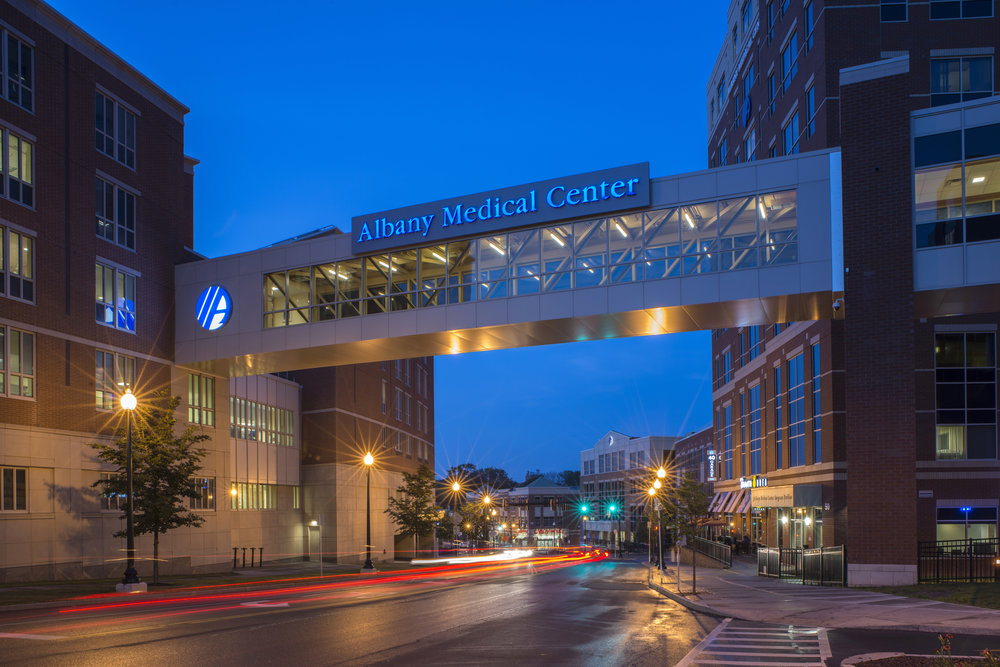
New York is a great place to attend medical school for many reasons. To start, the state is home to some of the busiest hospitals and most advanced medical facilities in the world. Students have access to top-notch clinical training and learn from some of the most experienced doctors and nurses anywhere. They see the latest medical advances and treatments firsthand and watch how experts handle a wide variety of cases. Albany Medical Center’s Emergency Department and Level 1 Trauma Center, for example, is the busiest in New York State, with more than 75,000 patient visits each year.
Medical students who train in busy hospitals and clinics are well prepared to enter the workforce and make a difference in the lives of their patients. Exposure to modern medical technology in practical, real-world settings also gives them insight into how to use these tools in their future careers.
Most importantly for many students, New York is diverse and multicultural, with people from all walks of life living and working side by side. That diversity shows up in the patient populations medical students meet during clinical rotations, as well as in their classmates and mentors. Working with diverse populations is invaluable for future doctors, who need to understand, communicate with and care for patients from every background. Students who learn medicine among many cultures and communities are well positioned to work in any setting, whether urban, rural, inner-city or abroad.
New York is also home to some of the country’s most respected research medical schools, such as Weill Cornell Medicine, Columbia University Vagelos College of Physicians and Surgeons and NYU Grossman School of Medicine. These institutions train highly sought-after physicians and have a long history of groundbreaking research. The state also offers strong options outside New York City, from Albany and Rochester to Syracuse, Buffalo and Elmira, and on Long Island.
When you are not in class, New York offers a wide range of activities and attractions. From the city life of New York City to the natural beauty of the Adirondack Mountains, there is something for everyone. With medical schools in so many parts of the state, you can explore what New York has to offer while getting an excellent education.
In short, New York offers medical students a wealth of opportunities to learn, grow and prepare for successful careers in medicine. So let’s discuss how to get into one of the state’s many excellent medical schools.
Application Strategies for New York Medical Schools
Below, we lay out the key admissions statistics and profiles of every medical school in New York. You can use this information to focus your application strategy and make well-informed decisions about where to apply. Whichever schools you choose, you will have a better chance of acceptance if you:
- Ace the MCAT
- Demonstrate AAMC’s Core Competencies
- Understand the Cost of Medical School
- Have Hands-On Pre-Med Clinical Experience
- Get Personalized Admissions Guidance
One of the best things about New York medical schools is the range of academic and clinical focus. Before you start your application, understand your own academic and professional interests so you can find schools that let you pursue them. Being realistic about how your academic record compares with your peers matters, but building a list of schools that reflect your interests (or encourage you to explore different areas of medicine early on) is essential to finding a good fit. IMA’s guide on how many medical schools to apply to can help you decide how many New York programs belong on your list next to schools in other states.
To start, each school is unique. Some are research powerhouses, others focus closely on primary care and population health, and many blend both. We highlight the distinctive programs and features of each school so you can get a sense of what each offers.
While your chances of getting into New York medical schools certainly depend on your academic record, it is often just as important to demonstrate fit with a particular institution. That means understanding what each school looks for in an ideal candidate and making sure your application reflects it.
How do you demonstrate fit? Start with a list of schools you are genuinely excited about attending: schools whose programs and missions speak to your professional and personal ambitions. Many of the best-known New York medical schools are internationally recognized for research. Many others run community-focused learning and training programs that emphasize primary care, population health and service to underserved communities, such as Touro’s focus on underserved areas, CUNY’s primary care mission and NYU Grossman Long Island’s directed pathways into primary care residencies. Some offer specialized programs in rural health care, like SUNY Upstate’s Rural Medical Scholars Program and Columbia’s Bassett track. A school’s location and health care network also play an important role. Overall, New York medical schools cover a wide range of focus areas and interests.
However, demonstrating fit requires more than genuine interest. You need to show admissions committees your dedication and fluency in particular aspects of medicine through concrete experience and self-directed learning during your pre-med years.
For prospective medical students with clear professional goals, focused pre-med experience goes a long way. For instance, enrolling in one of IMA’s pre-med internships abroad gives you hands-on experience with diverse patient populations and insight into global health care systems. Shadowing physicians and attending specialized lectures also demonstrate your dedication to medicine. Your application will stand out if you can speak fluently about these experiences and how they helped you develop as a future physician. Focused internships also show your commitment to self-directed study, and your application will reflect a genuine passion for your chosen field.
If you have your sights set on one of the more interdisciplinary schools, such as the University of Rochester School of Medicine and Dentistry with its Biopsychosocial Model, structure your undergraduate or post-baccalaureate coursework accordingly. Even if you want a more clinically focused medical school experience, many schools listed here look for a record of broad, exploratory undergraduate coursework. Several New York schools have loosened traditional prerequisites: NYU Grossman and NYU Grossman Long Island list no required courses, Einstein uses a competency-based approach with no prerequisites, Hofstra/Northwell lists strongly recommended coursework instead of required natural-science courses, and Stony Brook highly recommends premedical courses for the 2027 entering class without requiring them. College students still planning their schedules can look at medical internships for undergraduates as a way to add patient contact around their coursework.
Cost of living and tuition are other things to consider. New York is an expensive state to live in, and medical school is already a costly investment. However, some schools are located in areas with lower costs of living, and several New York schools offer tuition-free education or debt-free financial aid. Public universities (the four SUNY schools and CUNY) are more affordable for New York residents, while private institutions charge the same tuition to in-state and out-of-state students.
Finally, look at admissions statistics to get a clearer idea of your chances at each school. When you build your list, pay attention to the average or median GPA and MCAT scores of entering students and, where a school publishes it, how many applicants it interviews and accepts. Among New York MD schools that publish class statistics, the latest MCAT figures range from 511 to 523 and GPA figures from 3.77 to 3.98. At the established New York DO schools (NYITCOM, TouroCOM and LECOM), mean MCAT scores run from 501.4 to 504.6 and average GPAs from 3.48 to 3.69.
In our list of New York medical schools below, we detail each school’s latest class profile, the residency rules that decide whether out-of-state applicants have a realistic chance, costs and current deadlines. Residency makes a big difference when you decide where to apply. If, for instance, your academic record is well above a SUNY school’s averages but you live outside New York, remember that 86% of SUNY Upstate’s Entering Class of 2026 and 89% of Buffalo’s Class of 2030 came from New York State. You may want to weigh private schools with no state preference more heavily.
Overall, this guide gives you an overview of what you need to know about New York medical schools for the 2026-2027 application cycle. While it will help you stay organized, research each school further to make sure it is the right fit for you. Our Ultimate Medical School Guides cover everything you need to know, including sample supplemental essay responses, selection criteria, detailed admissions statistics and more. IMA’s list of the Average GPA and MCAT Score for Every Medical School in the US puts the New York numbers next to the rest of the country.
Building Clinical Experience for New York Medical Schools
New York admissions committees read your experiences for evidence that you understand patient care. Few New York schools publish an hour count, so the quality and depth of your clinical work matter more than a number. Plan your MCAT and your clinical experience on the same calendar. If you are a year or two from applying, the summer before you submit is often the best window: study blocks in the spring, a test date that fits each school’s MCAT window, and pre-med summer internships or local clinical work once the exam is behind you.
Structured, supervised programs can add depth to the hours you build at home. Clinical internships for pre-med students place you with patients rather than on the sidelines, which gives you real stories for your personal statement, secondaries and interviews. Because many New York patients speak Spanish, a medical internship in Peru can also help you build clinical Spanish alongside patient-care experience.
If you are taking time between college and medical school or reapplying after an unsuccessful cycle, use that year to strengthen the weakest part of your application. Pre-med gap year programs that include supervised clinical work are one option, alongside research jobs, scribe or medical assistant roles and community service in New York.
Which New York Medical Schools Admit Nonresidents?
Residency affects your chances at New York’s public schools much more than at its private ones. Here is where each program stands for the 2026-27 cycle.
Private MD schools with no state preference. NYU Grossman, NYU Grossman Long Island, Columbia, Icahn Mount Sinai, Weill Cornell, Einstein, Rochester, Zucker Hofstra/Northwell, NYMC and Albany Medical College charge one tuition rate and do not favor New York residents. Some of them set citizenship rules instead:
- Accept international and DACA applicants: NYU Grossman and NYU Grossman Long Island (with a bachelor’s degree from an accredited U.S. or Canadian institution), and Icahn Mount Sinai. Weill Cornell welcomes international applicants but does not offer them financial aid, and DACA students are eligible for its institutional aid.
- U.S. citizens, permanent residents and DACA recipients: Zucker Hofstra/Northwell (international student visas cannot be sponsored). NYMC also accepts Canadian citizens, but other international applicants are not eligible.
- U.S. citizens and permanent residents only: Albany Medical College.
- Limited international admission: Columbia rarely admits applicants from foreign universities and requires U.S. premedical training. Einstein does not accept international applicants. Rochester asks applicants to be U.S. citizens, permanent residents or asylees, except for Levitan scholarship applicants, and reviews other international applications case by case.
SUNY schools: New York residents preferred, nonresidents admitted.
- Jacobs School at Buffalo accepts many out-of-state applicants but gives preference to New York residents, especially Western New Yorkers, when qualifications are equivalent. In the Class of 2030, 89% came from New York State.
- SUNY Upstate gives New York applicants a slight preference. Its Entering Class of 2026 was 86% New York residents, 14% out-of-state and 5% international. Upstate welcomes foreign citizens and DACA-eligible applicants who have completed at least 90 semester hours in the U.S. or Canada.
- Stony Brook admits out-of-state applicants, and 81% of the Class of 2030 came from New York State. International applicants need at least one year of study at a U.S. college (Canadians excepted) and receive no financial aid. DACA applicants are welcome.
- SUNY Downstate gives preference to New York residents and accepts well-qualified out-of-state applicants. International applicants, including Canadians, are reviewed only after U.S. citizens and permanent residents, and the class has filled before any international review for more than 20 years.
CUNY School of Medicine recruits high school seniors into its BS/MD program. In the entering class of 2023, 2% of students came from out of state.
DO schools. NYITCOM, TouroCOM and D’Youville consider only U.S. citizens and permanent residents and charge the same tuition to every student. LECOM charges one rate to New York residents and nonresidents and accepts international students who meet its coursework and escrow rules.
If you live outside New York, your strongest options are the private MD schools and the DO schools, with the SUNY schools as realistic choices if your record is strong and you have a reason to train in their region. If you live in New York, you can apply to every program, and the SUNY schools and CUNY offer the lowest in-state tuition in the state.
Make Your Applications Count: Medical School Admissions Consulting
There is plenty of general advice about what you should do to get into medical school, but very little that fits your individual circumstances. Your admissions path is unique, and you need an admissions consultant who will understand your needs, provide comprehensive support and guide you every step of the way.
At International Medical Aid, we specialize in helping students get into their dream schools, whether they are looking for traditional allopathic (MD) programs or innovative osteopathic (DO) schools. Whichever New York school catches your eye, chances are we have helped many students just like you prepare their applications.
We offer a range of services, from comprehensive strategy sessions to interview preparation, essay editing and more. If you are applying to medical school, let us help you put your best foot forward so you can study where you belong. Explore our medical school admissions consulting today and schedule a free consultation with one of our admissions experts.
New York Medical Schools Compared
Below, we give you the most important information about each medical school in New York, including:
- School profiles and campuses
- Latest class MCAT and GPA figures, with the class they describe
- Applicants, interviews and offers where the school publishes them
- 2026-27 tuition and first-year cost of attendance
- Residency and citizenship rules
- Secondary application fees and current deadlines
- Distinctive programs and factors to consider
Here are all of the medical schools in New York, in the order they appear in this guide. Click a link to read IMA’s full guide to that school, with details on the application process, what the school looks for in a candidate, interviews and secondary essay prompts with sample answers.
- NYU Grossman School of Medicine
- Columbia University Vagelos College of Physicians and Surgeons
- Icahn School of Medicine at Mount Sinai Hospital
- Weill Cornell Medical College (Weill Cornell Medicine)
- University of Rochester School of Medicine and Dentistry
- Albert Einstein College of Medicine
- Stony Brook University Renaissance School of Medicine
- University of Hofstra Zucker School of Medicine (Donald and Barbara Zucker School of Medicine at Hofstra/Northwell)
- Jacobs School of Medicine and Biomedical Sciences at the University at Buffalo
- SUNY Upstate Medical University Norton College of Medicine
- New York Medical College
- Lake Erie College of Osteopathic Medicine (LECOM at Elmira)
- Albany Medical College
- CUNY School of Medicine
- New York Institute of Technology College of Osteopathic Medicine
- NYU Long Island School of Medicine (NYU Grossman Long Island School of Medicine)
- SUNY Downstate Health Sciences University College of Medicine
- Touro College of Osteopathic Medicine (Harlem and Middletown)
- D’Youville University College of Osteopathic Medicine (Buffalo; new in 2026)
New York MD Schools: Admissions Profile
| School | Type and location | Class MCAT | Class GPA | Class size | Applicants, interviews, offers | Class or cohort | Source |
|---|---|---|---|---|---|---|---|
| NYU Grossman School of Medicine | Private; Manhattan | 523 (median, Class of 2028) | 3.98 (median) | About 100 | 8,185 applicants (Class of 2029); 8,271 applicants, 821 interviewed, 208 accepted (Class of 2027) | Class of 2029, entered July 2026 | NYU Langone News, Class of 2029 and Class of 2028 releases; By the Numbers page, checked October 17, 2026 |
| NYU Grossman Long Island School of Medicine | Private; Mineola | Not published | Not published | 24 | Not published | Class of 2029, entered July 2026 | NYU Langone News, Class of 2029 White Coat Ceremony, checked October 17, 2026 |
| Columbia Vagelos College of Physicians and Surgeons | Private; Washington Heights, Manhattan | Not published; offers ranged 508-528 | Not published; offers ranged 3.53-4.0 | 140 | 7,591 applicants | Class of 2030, entered August 2026 | CUIMC News, White Coat 2026; VP&S MD admissions FAQs, checked October 17, 2026 |
| Icahn School of Medicine at Mount Sinai | Private; Upper East Side, Manhattan | Not published | Not published | 128 (118 MD, 10 MD-PhD) | 9,149 applications; 910 interviews | 2025 entering class and cycle | Icahn admissions facts and statistics pages, checked October 17, 2026 |
| Weill Cornell Medicine | Private; Upper East Side, Manhattan | 518 (median) | 3.94 (median) | 106 (89 MD, 17 MD-PhD) | Over 9,000 applicants and 700-750 MD interviews each year | Class of 2030, entered 2026 | Weill Cornell Class of 2030 profile and MD admissions pages, checked October 17, 2026 |
| University of Rochester School of Medicine and Dentistry | Private; Rochester | 517 (average) | 3.8 (average) | 105 (Class of 2027) | Not published | MCAT and GPA: most recent entering class, year not stated | URMC MD admissions FAQ and Class of 2027 release, checked October 17, 2026 |
| Albert Einstein College of Medicine | Private; Morris Park, Bronx | Not published | Not published | 165 | 8,897 applications; 966 interviews | 2024 data | Einstein MD admissions statistics page, checked October 17, 2026 |
| Renaissance School of Medicine at Stony Brook University | Public (SUNY); Stony Brook, Long Island | 514 (average, class entering 2025) | 3.92 (median) | 136 | 6.8% of applicants accepted (Class of 2030); 5,689 applicants, 844 interviewed, 396 offers (2025) | Class of 2030, entered 2026 | Stony Brook Medicine news, September 8, 2026; incoming class 2025 profile, checked October 17, 2026 |
| Zucker School of Medicine at Hofstra/Northwell | Private; Hempstead, Long Island | 518 (median) | 3.85 (median) | 104 (Class of 2029); capped at 100 | Not published | Class entering 2026 | Zucker School of Medicine How to Apply and FAQ pages, checked October 17, 2026 |
| Jacobs School of Medicine at the University at Buffalo | Public (SUNY); downtown Buffalo | 511 (average) | 3.8 (average) | 180 MD and 8 MD-PhD | 6,894 applicants; about 600 interviewed | Class of 2030, entered July 2026 | UB news release, July 27, 2026; Jacobs School admissions pages, checked October 17, 2026 |
| SUNY Upstate Norton College of Medicine | Public (SUNY); Syracuse, plus Binghamton Clinical Campus | 512 (average) | 3.89 (average) | 181 | 6,637 applicants | Entering Class of 2026 | SUNY Upstate class statistics page, checked October 17, 2026 |
| New York Medical College | Private; Valhalla, Westchester County | 516 (average) | 3.77 | About 200 | 9,599 applications | Class of 2028, entered 2024 | NYMC School of Medicine About page, checked October 17, 2026 |
| Albany Medical College | Private; Albany | 512 (average) | 3.82 (average, science 3.77) | 145 | More than 14,000 applications | MCAT and GPA: most recent incoming class; size: Class of 2030 | Albany Medical College MD admissions page (updated September 25, 2026) and Class of 2030 release, checked October 17, 2026 |
| CUNY School of Medicine | Public (CUNY); Harlem, Manhattan; seven-year BS/MD | No MCAT required | Not published | About 100 recruited each year | 1,349 applicants; 123 accepted (9.1%) | Entering class of 2023 | CUNY School of Medicine facts and figures page, checked October 17, 2026 |
| SUNY Downstate College of Medicine | Public (SUNY); East Flatbush, Brooklyn | Not published | Not published | About 200 | Not published | Not applicable | SUNY Downstate admissions pages, checked October 17, 2026 |
New York DO Schools: Admissions Profile
| School | Campus and status | Mean MCAT | Average GPA | Class size | Applications | Source |
|---|---|---|---|---|---|---|
| NYITCOM | Old Westbury, Long Island (main campus; also Jonesboro, Arkansas); COCA accredited | 504.6 | 3.69 | 318 on Long Island (Class of 2030) | Not published | AACOM Choose DO Explorer, NYITCOM; NYIT news, Class of 2030 White Coat, checked October 17, 2026 |
| TouroCOM Harlem | Harlem, Manhattan (main campus); COCA accredited | 501.4 (all TouroCOM campuses) | 3.48 | 135 (Class of 2029) | 5,198 AACOMAS applications (2024-25, all campuses) | AACOM Choose DO Explorer; TouroCOM admissions pages, checked October 17, 2026 |
| TouroCOM Middletown | Middletown, Hudson Valley (additional location, opened 2014); COCA accredited | 501.4 (all TouroCOM campuses) | 3.48 | 134 (Class of 2029) | See TouroCOM Harlem | AACOM Choose DO Explorer; TouroCOM admissions pages, checked October 17, 2026 |
| LECOM at Elmira | Elmira (additional location of LECOM Erie, opened 2020); COCA accredited | 502.3 (all LECOM locations) | 3.64 | Not published for Elmira | Not published | AACOM Choose DO Explorer, LECOM; LECOM Elmira pages, checked October 17, 2026 |
| D’Youville University College of Osteopathic Medicine | Buffalo; COCA pre-accreditation; first class entered August 2026 | Not published (minimum 501) | Not published (minimum 3.2) | 96 (inaugural Class of 2030) | Not published | D’Youville DO program, tuition and news pages; AACOM Choose DO Explorer, checked October 17, 2026 |
New York Medical Schools: Cost and Residency Rules
| School | Tuition | First-year cost of attendance | Who may apply | Source |
|---|---|---|---|---|
| NYU Grossman | $65,500, covered for every student by the Full-Tuition Scholarship (2026-27) | $104,116; $38,616 after the scholarship and health insurance subsidy (2026-27) | No state preference; U.S. citizens, permanent residents, DACA and international applicants | NYU Grossman Cost of Attendance 2026-27 and How to Apply, checked October 17, 2026 |
| NYU Grossman Long Island | $63,552, covered for every student by the Full-Tuition Scholarship (2026-27) | $95,948; $32,396 after the scholarship and subsidy (2026-27) | No formal state preference; ties to the communities the school serves are welcomed; DACA and international applicants accepted | NYU Grossman Long Island Cost of Attendance 2026-27 and MD admissions pages, checked October 17, 2026 |
| Columbia VP&S | $76,336 (2026-27) | $117,049 (2026-27) | No state preference; applicants from foreign universities rarely admitted | VP&S 2026-27 student budget and application requirements, checked October 17, 2026 |
| Icahn Mount Sinai | $78,738 (2026-27) | $105,203, excluding optional health insurance (2026-27) | No state preference; international and DACA applicants considered | Icahn 2026-27 cost of attendance by class and admissions FAQ, checked October 17, 2026 |
| Weill Cornell | $73,294 (2026-27) | $110,316 (2026-27) | No state preference; international applicants welcome but not eligible for aid | Weill Cornell cost of attendance and admissions FAQ, checked October 17, 2026 |
| Rochester | $74,050 (2026-27) | $100,874 (2026-27) | No preference for New York residents; U.S. citizens, permanent residents or asylees, with other international applications reviewed case by case | URMC MD cost of attendance and admissions FAQ, checked October 17, 2026 |
| Einstein | $74,261, covered for every MD student by the Gottesman Scholarship (current posted budget) | $121,978 before the scholarship (current posted budget) | No state preference (44% in-state in 2024); international applicants not eligible | Einstein cost of attendance and admissions statistics pages, checked October 17, 2026 |
| Stony Brook | $46,470 New York residents; $69,120 nonresidents (2025-26, newest rates posted) | Not posted as a single 2026-27 total | New York residents preferred; out-of-state, international (with a year of U.S. study) and DACA applicants considered | Stony Brook bursar tuition (Fall 2025) and admissions FAQ, checked October 17, 2026 |
| Zucker Hofstra/Northwell | $61,800 (2026-27) | $101,613, on campus (2026-27) | No in-state preference; U.S. citizens, permanent residents and DACA recipients | Zucker Cost of Attendance 2026-2027 and admission FAQs, checked October 17, 2026 |
| Jacobs School at Buffalo | $46,470 residents; $71,190 nonresidents (2026-27) | $83,330.86 residents; $108,050.86 nonresidents (2026-27) | Preference to New York residents, especially Western New York, when qualifications are equal; many out-of-state students admitted | Jacobs School cost of attendance and admissions policy pages, checked October 17, 2026 |
| SUNY Upstate | $46,470 residents; $71,190 nonresidents (current posted rates) | $82,323 residents; $107,043 nonresidents (Syracuse, current posted budget) | Slight preference for New York residents; foreign citizens and DACA-eligible applicants with 90 U.S. or Canadian semester hours | SUNY Upstate financial aid cost of attendance and admissions FAQ, checked October 17, 2026 |
| New York Medical College | $67,710 (2026-27) | $98,560 on campus (2026-27) | No state preference; U.S. citizens, permanent residents, DACA recipients and Canadian citizens | NYMC tuition and cost of attendance and eligibility pages, checked October 17, 2026 |
| Albany Medical College | $61,125 (2026-27) | $92,834 (2026-27) | No state preference stated; U.S. citizens and permanent residents | Albany Medical College MD cost of attendance and admissions pages, checked October 17, 2026 |
| CUNY School of Medicine | $41,600 residents; $69,260 nonresidents in the MD years (year not stated) | $71,644 residents; $99,304 nonresidents (M1, year not stated) | High school seniors apply to the BS/MD; 2% of the entering class of 2023 came from out of state | CUNY School of Medicine BS/MD tuition and facts and figures pages, checked October 17, 2026 |
| SUNY Downstate | $46,470 residents; $73,330 nonresidents (current posted rates) | $86,031 in-state; $112,891 out-of-state (M1, current posted budget) | Preference to New York residents; well-qualified out-of-state applicants accepted; international applicants reviewed after U.S. applicants | SUNY Downstate bursar and cost of attendance pages, checked October 17, 2026 |
| NYITCOM | $70,720 (2026-27) | $118,098 cost of education (2026-27) | U.S. citizens and permanent residents; same tuition for all | NYITCOM tuition and fees and cost of education pages, checked October 17, 2026 |
| TouroCOM (Harlem and Middletown) | $72,080 plus $200 in fees, every campus (2026-27) | $115,026 Harlem; $115,026 off campus or $120,919 on campus at Middletown (2026-27) | U.S. citizens and permanent residents; same tuition in-state and out-of-state | TouroCOM tuition and cost of attendance pages, checked October 17, 2026 |
| LECOM at Elmira | $44,875 in years 1 and 2 (2026-27) | Not posted as a single total; first-year living expenses $31,080 (2026-27) | Same tuition for New York residents and nonresidents; international students accepted with escrow | LECOM Elmira tuition and fees pages, checked October 17, 2026 |
| D’Youville COM | $55,000 plus a $5,600 student services fee (2026-27) | Not published | U.S. citizens and permanent residents; same tuition for New York and out-of-state students | D’Youville DO tuition and fees and program pages, checked October 17, 2026 |
New York Medical Schools: Deadlines and Secondary Fees
| School | Primary deadline | Secondary deadline | Secondary fee | Source |
|---|---|---|---|---|
| NYU Grossman | AMCAS October 15, 2026 | November 10, 2026 | $110 | NYU Grossman admissions timeline and How to Apply, checked October 17, 2026 |
| NYU Grossman Long Island | AMCAS November 1, 2026 | November 16, 2026 | $110 | NYU Grossman Long Island deadlines and How to Apply, checked October 17, 2026 |
| Columbia VP&S | AMCAS October 15 | October 22; supporting documents October 29 | $110 | VP&S process and timeline and requirements, checked October 17, 2026 |
| Icahn Mount Sinai | AMCAS October 1 | November 1 | Not published | Icahn admissions timeline, checked October 17, 2026 |
| Weill Cornell | AMCAS October 15, 2026 | November 16 | $100 | Weill Cornell timeline and FAQ, checked October 17, 2026 |
| Rochester | AMCAS October 15 | November 15; letters November 22 | $100 | URMC MD admissions, checked October 17, 2026 |
| Einstein | AMCAS October 15 (Early Decision August 1) | All materials December 1 (Early Decision August 15) | Not published | Einstein MD admissions, checked October 17, 2026 |
| Stony Brook | AMCAS November 16, 2026 (Early Decision August 3) | December 11, 2026 | $100 | Stony Brook admissions, checked October 17, 2026 |
| Zucker Hofstra/Northwell | AMCAS November 1 (Early Decision materials August 1) | December 1 | $125 | Zucker How to Apply and requirements, checked October 17, 2026 |
| Jacobs School at Buffalo | AMCAS November 15 (Early Decision August 1) | December 1 (Early Decision August 31) | $100 | Jacobs School admissions, checked October 17, 2026 |
| SUNY Upstate | AMCAS October 15 | December 1 | $110 | SUNY Upstate admissions, checked October 17, 2026 |
| New York Medical College | AMCAS December 15 (Early Decision August 1) | January 31 (Early Decision August 31) | $135 | NYMC admissions and supplemental application pages, checked October 17, 2026 |
| Albany Medical College | AMCAS November 1, 2026 | December 1, 2026 | $130 | Albany Medical College admissions, checked October 17, 2026 |
| CUNY School of Medicine | BS/MD application through the school’s own portal, December 1 | Not applicable | Not published | CUNY School of Medicine admissions page, checked October 17, 2026 |
| SUNY Downstate | AMCAS December 1, 2026 (Early Decision August 1, 2026) | Complete application January 4, 2027, 12 noon | $100 | SUNY Downstate admissions, checked October 17, 2026 |
| NYITCOM | AACOMAS April 30, 2027 | Supplemental available until March 16, 2027 | $80 | NYITCOM Apply page, checked October 17, 2026 |
| TouroCOM | AACOMAS March 1, 2027 (Early Decision August 1) | March 15, 2027 | $200 | TouroCOM admissions; AACOM Choose DO Explorer, checked October 17, 2026 |
| LECOM at Elmira | AACOMAS April 1, 2027 | May 10, 2027 | $50 | AACOM Choose DO Explorer, LECOM; LECOM admissions, checked October 17, 2026 |
| D’Youville COM | March 31 | Sent to all applicants | $50 | D’Youville DO program page; AACOM Choose DO Explorer, checked October 17, 2026 |
A few notes on reading these tables. An acceptance rate is the number of applicants offered admission divided by the number who applied. Only a few New York schools publish both numbers: NYU Grossman accepted 208 of 8,271 applicants for the Class of 2027 (about 2.5%), Stony Brook offered admission to 396 of 5,689 applicants in 2025 (about 7.0%) and reports that 6.8% of applicants were accepted for the Class of 2030, and CUNY accepted 123 of 1,349 BS/MD applicants for its entering class of 2023 (9.1%). Other schools publish applicants and class size but not offers, and dividing class size by applicants understates the real acceptance rate, because some admitted students enroll elsewhere. A mean (average) and a median are different measures, and neither is a minimum: about half of a class scored below a median. IMA’s guide to the cost of medical school explains how tuition, fees and living costs add up over four years.
Without further ado, let’s explore the New York medical schools!
NYU Grossman School of Medicine
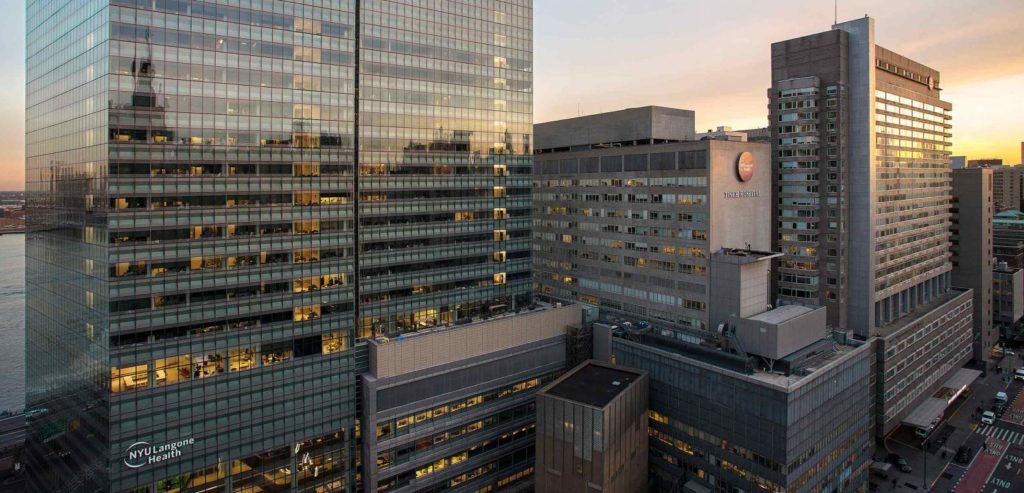
NYU Grossman School of Medicine was founded in 1841 and is located on Manhattan’s East Side, at NYU Langone Health’s main campus on First Avenue. It is a private school with full LCME accreditation.
- Latest class: the Class of 2029 entered in July 2026 with about 100 students chosen from 8,185 applicants, a median GPA of 3.98 and a median MCAT in the 99th percentile. The newest numeric median MCAT is 523, for the Class of 2028 (entered 2024).
- Applicants, interviews and offers: for the Class of 2027, 8,271 applied, 821 were interviewed and 208 were accepted, an acceptance rate of about 2.5%.
- Cost: tuition of $65,500 for 2026-27 is covered by the Full-Tuition Scholarship. The year’s total cost of attendance is $104,116, or $38,616 after the scholarship and the school’s health insurance subsidy.
- Who may apply: U.S. citizens, permanent residents, DACA recipients and international applicants with a bachelor’s degree from an accredited U.S. or Canadian institution.
- 2026-27 cycle: the AMCAS deadline was October 15, 2026; secondaries are due November 10, 2026, with a $110 fee. Interviews run September through December in a multiple mini interview format, and all applicants hear in January.
NYU Grossman awards every MD student a full-tuition scholarship, regardless of merit or financial need, and has done so since fall 2018. Students still plan for fees and living costs, and a need-based Debt-Free Scholarship has been available since 2021-22. This makes NYU one of the most affordable private medical schools in the nation, and one of the most applied-to schools in New York.
NYU Grossman is internationally recognized for its research programs, so competitive applicants bring plenty of research experience and a strong record of academic achievement. The school is also known for its three-year MD. Since 2023, every student graduates in three years or chooses an optional fourth year for research or a dual degree. Something only a handful of U.S. medical schools offered a few years ago is now the standard path at NYU.
NYU Grossman lists no required prerequisite courses, only recommended ones, and accepts MCAT scores taken within three years of expected matriculation.
Factors to consider
- Tuition covered for every MD student
- Three-year MD for every student, with an optional fourth year
- Top medical research school
- Very competitive
Read IMA’s full guide: How to Get Into NYU Grossman School of Medicine (Manhattan).

Columbia University Vagelos College of Physicians and Surgeons
Columbia University’s Vagelos College of Physicians and Surgeons was founded in 1767 and is located in the Washington Heights neighborhood of upper Manhattan. It is a private school with full LCME accreditation.
- Latest class: the Class of 2030 entered in August 2026 with 140 students (73 men and 67 women from 30 states), chosen from 7,591 applicants. Columbia does not publish a class average or median, but offer recipients in the 2026 cycle had GPAs from 3.53 to 4.0 and MCAT scores from 508 to 528.
- Cost: tuition is $76,336 for 2026-27, and the first-year budget is $117,049.
- Who may apply: there is no state preference. Applicants need at least three years at a regionally accredited U.S. or Canadian college, and applicants from foreign universities are rarely admitted.
- 2026-27 cycle: the AMCAS deadline was October 15, the secondary deadline was October 22 and supporting documents were due October 29. The secondary fee is $110. Admissions are not rolling; all decisions are released in early March.
One of the oldest medical schools in the country, Columbia’s VP&S awarded the first MD degree in the thirteen colonies. In 2018 it achieved another medical school first by replacing loans with scholarships for students who qualify for financial aid. The Vagelos Scholarship Program meets 100% of demonstrated need with scholarships, and its need-based packages include no loans.
As an Ivy League medical school and one of the top research medical schools in the United States, Columbia is most competitive for applicants with strong research experience and an excellent record in the sciences. About 37% of the most recent graduating class took extra time for research or a dual degree.
VP&S is not all about research, of course. In 2010 the school began offering a second MD track, the Columbia-Bassett Program, which pairs Columbia’s training with longitudinal clinical experience at Bassett Healthcare in rural upstate New York.
The school advises prospective students to use their pre-med years to explore a broad range of subjects. Applicants who have followed their personal passions and interests in college often make the most well-rounded and successful applicants to Columbia.
Factors to consider
- Need-based aid meets full need with scholarships, not loans
- Multiple MD tracks, including the Columbia-Bassett Program, and student-run free clinics
- Top medical research school
- Very competitive
Read IMA’s full guide: How to Get Into Columbia University Vagelos College of Physicians and Surgeons.

Icahn School of Medicine at Mount Sinai
The Icahn School of Medicine at Mount Sinai opened in 1968 and is located on Manhattan’s Upper East Side near East Harlem, next to The Mount Sinai Hospital. It is a private school with full LCME accreditation; its next site visit is scheduled for October 2027.
- Latest class: the 2025 entering class had 118 MD and 10 MD-PhD students. Icahn received 9,149 applications and held 910 interviews in the 2025 cycle. It does not publish class MCAT or GPA figures.
- Cost: tuition is $78,738 for 2026-27, and the first-year cost of attendance is $105,203, not counting optional health insurance. The Enhanced Scholarship Initiative caps borrowing at $75,000 over four years for students with no expected family contribution.
- Who may apply: there is no state preference. International and DACA applicants are considered in the same pool and may receive institutional aid.
- 2026-27 cycle: the AMCAS deadline was October 1 and secondaries are due November 1. Decisions are rolling from January, and waitlist offers begin in March. MCAT scores must be within five years of application.
Another top research school, the Icahn School of Medicine operates alongside The Mount Sinai Hospital, giving students an immersive experience in the world of health care from the first year.
Icahn is known for FlexMed, an early assurance program. College sophomores at four-year U.S. and Canadian colleges, in any major, apply for a guaranteed seat without taking the MCAT. FlexMed students are encouraged to pursue the subjects they love while completing the school’s required coursework. FlexMed is open to U.S. citizens and permanent residents, and the deadline for this cycle is January 14, 2027.
The most competitive applicants to Icahn will have significant patient contact hours, volunteering and clinical research. Undergraduates who pursue FlexMed demonstrate early commitment to the school’s mission of rethinking medical education. Icahn also offers an NIH-funded Medical Scientist Training Program for students who want an MD-PhD.
Factors to consider
- Located next to The Mount Sinai Hospital
- Community service focused
- Top medical research school
- FlexMed early assurance for college sophomores
Read IMA’s full guide: How to Get Into Icahn School of Medicine at Mount Sinai.
Weill Cornell Medical College
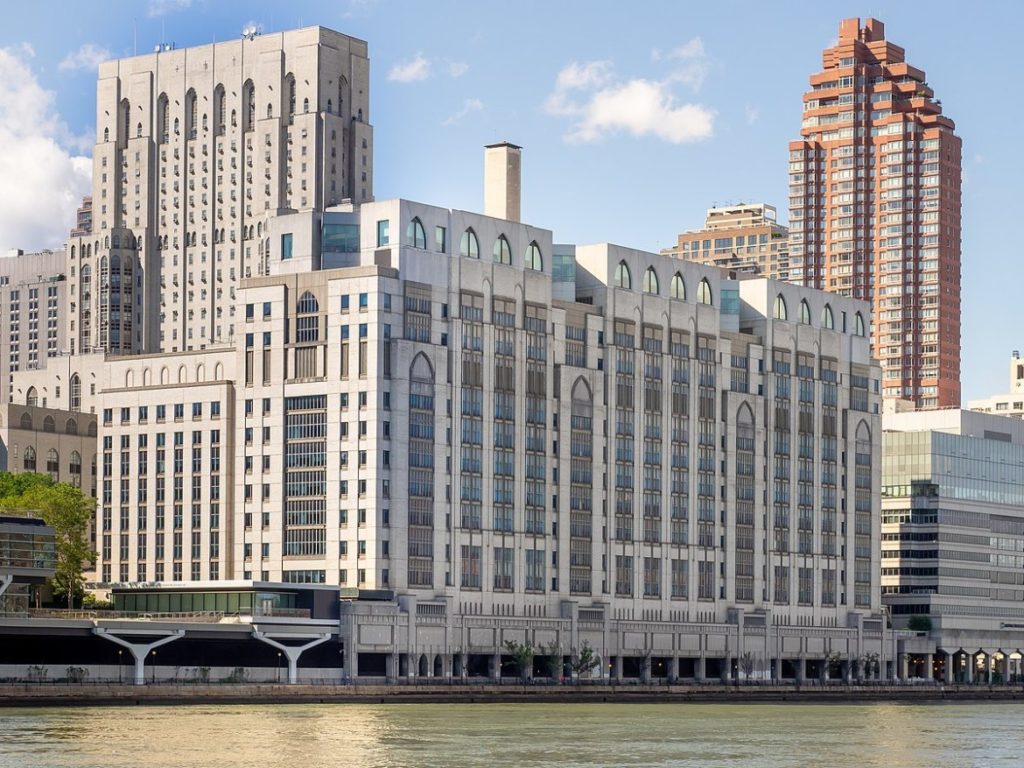
Weill Cornell Medical College, now Weill Cornell Medicine, was founded on April 14, 1898 and is located on the Upper East Side of Manhattan. It is a private school with full LCME accreditation.
- Latest class: the Class of 2030 entered in 2026 with 106 students (89 MD and 17 MD-PhD), a median MCAT of 518 and a median GPA of 3.94. Members come from 26 states and 41 colleges. Each year the school receives over 9,000 applications and holds 700 to 750 MD interviews.
- Cost: tuition is $73,294 for 2026-27, the same for all students, and the first-year cost of attendance is $110,316.
- Who may apply: there is no state preference. International applicants are welcome but are not eligible for financial aid. DACA students are eligible for institutional aid.
- 2026-27 cycle: the AMCAS deadline was October 15, 2026 and the supplemental application is due November 16, with a $100 fee. Interviews are virtual, and most acceptances go out in March; admissions are not rolling. Weill Cornell has no MCAT cutoff and accepts scores from January 2023 through September 12, 2026.
Weill Cornell is consistently ranked among the top medical schools in the country. Like the schools above, it is a research powerhouse, and its curriculum aims to produce well-rounded doctors through self-directed and small-group learning.
Weill Cornell also offers strong global health opportunities. Its Global Health elective program includes sites in 23 countries, and a third to a half of students take part in international clinical care or research.
Following Columbia’s lead in reducing student debt, Weill Cornell launched its Debt Free Scholarship Program in September 2019. For eligible students it meets full demonstrated need with Weill Cornell scholarships in place of loans. Weill Cornell also runs the Tri-Institutional MD-PhD Program with The Rockefeller University and Memorial Sloan Kettering Cancer Center.
Factors to consider
- Debt-free financial aid for students with demonstrated need
- Emphasis on global health
- Top medical research school
- Very competitive
Read IMA’s full guide: How to Get Into Weill Cornell Medicine.
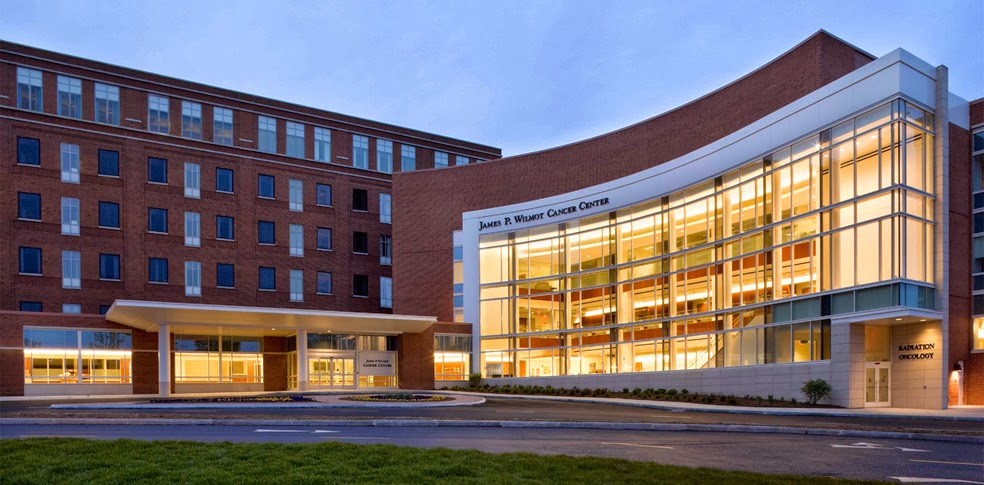
University of Rochester School of Medicine and Dentistry
The University of Rochester School of Medicine and Dentistry was founded in 1925 and is located in Rochester, about six hours northwest of New York City. It is a private school with full LCME accreditation and about 400 medical students.
- Latest class: entering students have an average MCAT of 517 (range 503 to 528) and an average GPA of 3.8 (range 3.0 to 4.0); the school does not state which class these figures describe. The newest class size it publishes is 105, for the Class of 2027.
- Cost: tuition is $74,050 for 2026-27, and the first-year cost of attendance is $100,874.
- Who may apply: there is no preference for New York residents. Applicants should be U.S. citizens, permanent residents or asylees, except Levitan scholarship applicants; other international applications are reviewed case by case.
- 2026-27 cycle: the AMCAS deadline was October 15, secondaries (with a $100 fee) are due November 15 and letters November 22. Interviews run from September to mid-March and are all virtual, with two one-on-one interviews and a small-group problem-based learning discussion.
The University of Rochester School of Medicine and Dentistry (URSMD) is well known for its commitment to primary care. Community service, community clinics and global health are central to the school’s culture. URSMD recognizes students who make significant, long-term contributions to community health with an MD with Distinction in Community Health.
URSMD’s curriculum is built on the Biopsychosocial Model, which explores the biological, psychological and social aspects of medicine with an interdisciplinary, liberal arts approach. The Double Helix Curriculum integrates foundational science and clinical medicine across all four years. Dual degrees include an MD/PhD, MD/MBA and MD/MS in Medical Humanities, and the Rochester Early Medical Scholars (REMS) program links undergraduate study at Rochester with the MD.
Factors to consider
- Community-focused
- Interdisciplinary curriculum built on the Biopsychosocial Model
- Strong primary care tradition
- Competitive
Read IMA’s full guide: How to Get Into the University of Rochester Medical School.
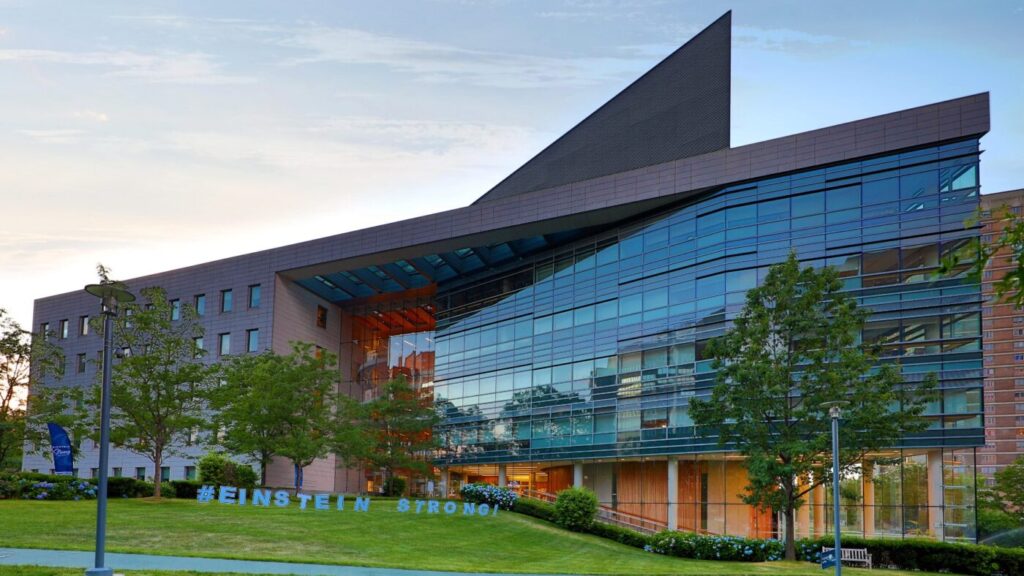
Albert Einstein College of Medicine
The Albert Einstein College of Medicine traces its start to 1953, when Albert Einstein agreed to lend his name to the new school. Its first class enrolled on September 12, 1955, and it became an independent degree-granting institution in 2019. The school is located on the Jack and Pearl Resnick campus in the Morris Park neighborhood of the Bronx.
- Latest class: in the school’s 2024 data, Einstein received 8,897 applications, held 966 interviews and accepted 165 MD students into the first-year class. 44% of the class came from New York, and students came from 22 states. Einstein does not publish class MCAT or GPA figures.
- Cost: sticker tuition is $74,261 per year, but the Gottesman Scholarship Fund, created in March 2024, covers tuition and educational fees for every MD student. The full first-year student budget is $121,978 before the scholarship; living costs are not covered.
- Who may apply: there is no state preference. International applicants are not eligible; applicants need a bachelor’s degree from a U.S. or Canadian school or at least 30 science credits at one.
- 2026-27 cycle: the AMCAS deadline was October 15, and all materials, including the secondary and letters, are due December 1. Early Decision applicants file by August 1. Acceptances begin March 1. MCAT scores may be up to three years old at matriculation.
Einstein is known for both research and primary care, and it weighs experience in both when evaluating candidates. It was home to one of the nation’s first Medical Scientist Training Programs, founded in 1958, and offers an Einstein-CUNY MD/MPH. Einstein admits students without required prerequisite courses, using a competency-based approach instead.
Students gain clinical experience in hospitals across the Bronx, including the public hospitals Jacobi and North Central Bronx. Teaching sites put students to work with a diverse and often underserved population, and the curriculum includes global health and community-based service learning.
Factors to consider
- Tuition covered for every MD student by the Gottesman Scholarship
- Research heavy, with a long-standing MSTP
- Community-based learning in the Bronx
- Competitive
Read IMA’s full guide: How to Get Into Albert Einstein College of Medicine.
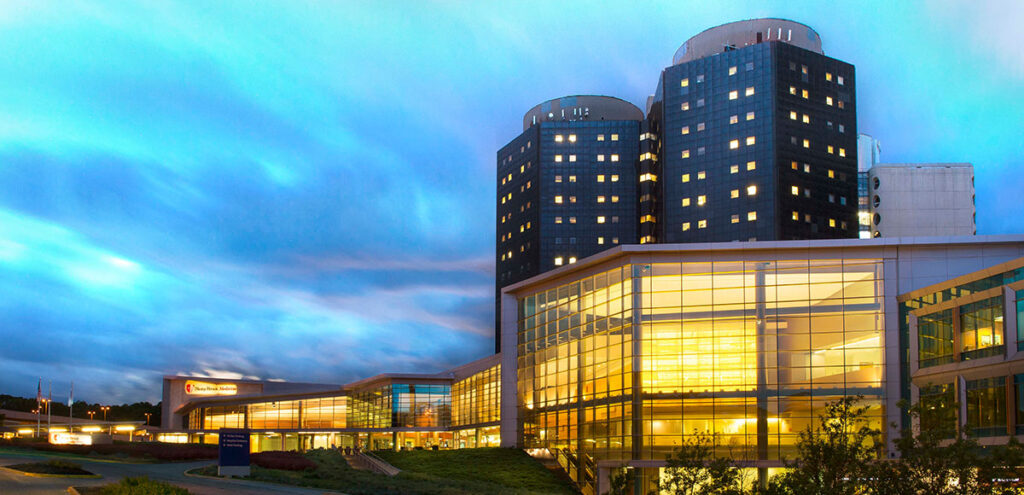
Renaissance School of Medicine at Stony Brook University
The Renaissance School of Medicine at Stony Brook University was founded in 1971 and is located in Stony Brook, in the Town of Brookhaven on the North Shore of Long Island. It took its current name in November 2018. It is a public SUNY school; the LCME granted full accreditation in 2019, and its next site visit is in March 2027.
- Latest class: the Class of 2030 entered in 2026 with 136 students and a median undergraduate GPA of 3.92; 6.8% of applicants were accepted, and 81% of the class came from New York State. The latest MCAT figure is an average of 514 for the class entering in 2025, when 5,689 applied, 844 were interviewed and 396 were offered admission.
- Cost: for 2025-26, the newest rates posted, tuition was $46,470 a year for New York residents and $69,120 for nonresidents.
- Who may apply: New York residents are preferred, and out-of-state, DACA and international applicants are considered. International applicants other than Canadians need at least one year of study at a U.S. college.
- 2026-27 cycle: the AMCAS deadline is November 16, 2026, and the secondary and letters are due December 11, 2026, with a $100 fee. Early Decision applicants filed by August 3. Admissions are rolling, with the first acceptances in mid-October. CASPer is required, and MCAT scores from January 12, 2024 through September 12, 2026 are accepted.
Its high share of New York residents and SUNY tuition make it a good option for New Yorkers who want to stay in the state for medical school.
The MD program includes five scholarly concentrations, so students can shape their education around their interests and career goals: Basic, Translational and Clinical Research; Global Health; Medical Humanities and Ethics; Medical Education; and Medical Technology and Innovation. Professional and ethical development is central to the curriculum. Stony Brook also offers a three-year MD (3YMD) for a limited number of admitted students, with a directed pathway into a Stony Brook residency.
Factors to consider
- Public medical school with in-state tuition for New Yorkers
- Accelerated three-year MD program
- Five scholarly concentrations
- Rolling admissions with an Early Decision option
Read IMA’s full guide: How to Get Into Renaissance School of Medicine at Stony Brook University.
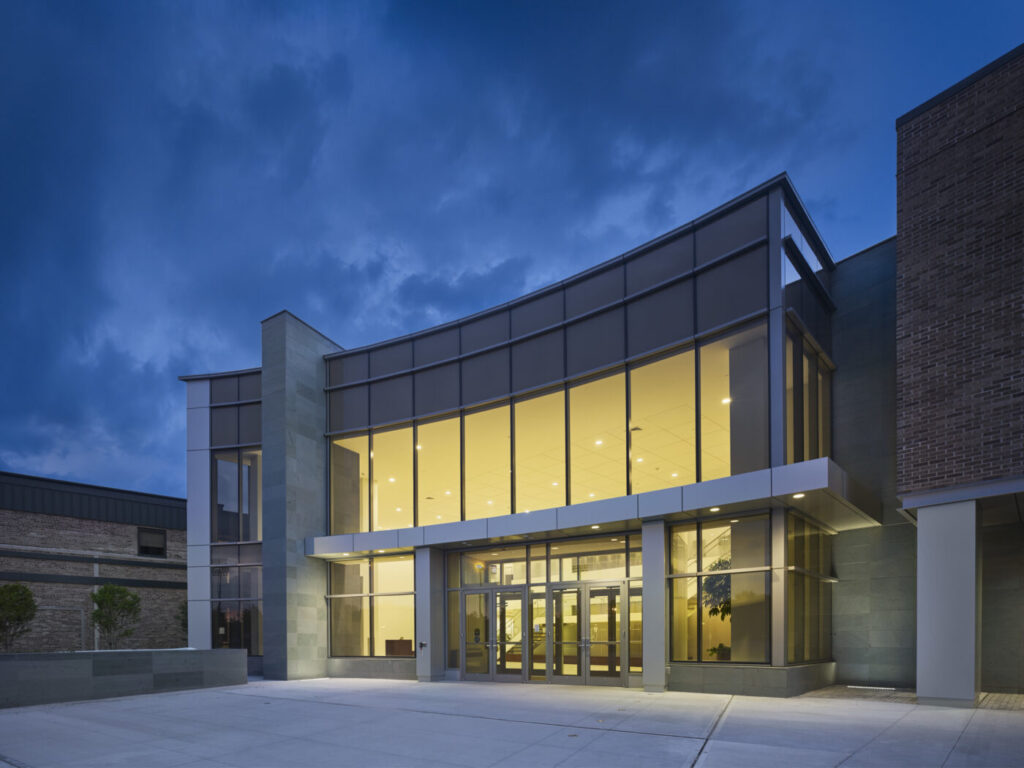
Hofstra University Zucker School of Medicine
The Donald and Barbara Zucker School of Medicine at Hofstra/Northwell was established in 2008 by two equal partners, Hofstra University and Northwell Health, and is located in Hempstead, Long Island, about 25 miles from New York City. Its first class entered in 2011. It holds full LCME accreditation.
- Latest class: the class entering in 2026 has a median MCAT of 518 and a median cumulative undergraduate GPA of 3.85. The school caps each entering class at 100 students; the Class of 2029 entered with 104 students from 16 states.
- Cost: tuition is $61,800 for 2026-27, and the first-year on-campus cost of attendance is $101,613. Health insurance is required but not included in the standard budget.
- Who may apply: U.S. citizens, permanent residents and DACA recipients, with no in-state preference. The school cannot sponsor international student visas.
- 2026-27 cycle: the AMCAS deadline is November 1 and the secondary deadline is December 1, with a $125 fee. CASPer is required. Early Decision applicants submitted all materials by August 1. Admissions are rolling, with acceptances beginning in December.
Established less than two decades ago, the Zucker School of Medicine has quickly built a strong reputation through its research, its active approach to teaching and its partnership with Northwell Health. The school champions many of the practices of contemporary medical education, such as small-group, self-directed learning and early patient interaction. It has more than 4,000 faculty members across 25 academic departments, and 80% of first-year students do summer research.
Factors to consider
- Contemporary curriculum and learning practices
- Partnership with Northwell Health
- No in-state preference
- Very competitive
Read IMA’s full guide: How to Get Into the Zucker School of Medicine at Hofstra/Northwell.
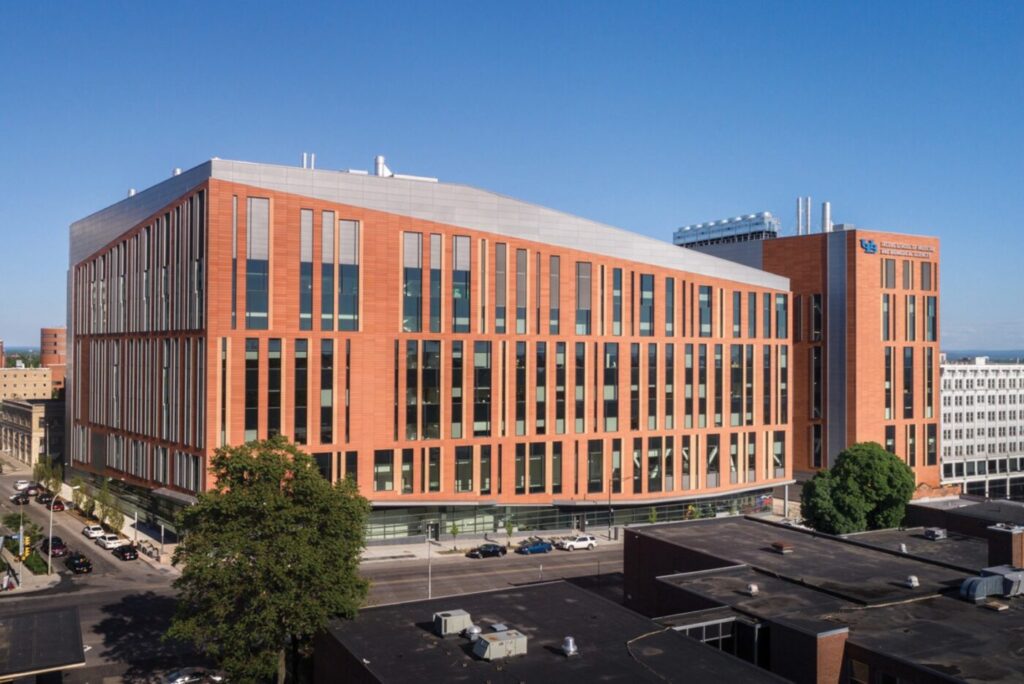
Jacobs School of Medicine and Biomedical Sciences at the University at Buffalo
The Jacobs School of Medicine and Biomedical Sciences at the University at Buffalo was founded in 1846 and is located in downtown Buffalo on the Buffalo Niagara Medical Campus, about seven hours northwest of New York City. It is a public SUNY school accredited by the LCME and took the Jacobs name in 2015.
- Latest class: the Class of 2030 entered in July 2026 with 180 MD and 8 MD-PhD students chosen from 6,894 applicants, with an average GPA of 3.8 and an average MCAT of 511. 89% came from New York State and 40% from Western New York. About 600 applicants are invited to interview, from August through March.
- Cost: 2026-27 tuition is $46,470 for residents and $71,190 for nonresidents. The first-year cost of attendance is $83,330.86 for residents and $108,050.86 for nonresidents.
- Who may apply: the school accepts many out-of-state applicants but gives preference to New York residents, especially from Western New York, when qualifications are equivalent. It gives preference to U.S. citizens and permanent residents.
- 2026-27 cycle: the AMCAS deadline is November 15 and the supplemental application is due December 1, with a $100 fee. Early Decision applicants filed AMCAS by August 1 and the supplemental by August 31. MCAT scores must be within three years.
Jacobs School graduates train at a fraction of the cost of many medical schools, especially for New York residents. The school emphasizes a collegial, team-based spirit in hopes of fostering a generation of collaborative physicians and clinical scientists. Its new Well Beyond curriculum is built around learning communities and faculty coaches, and early on students learn from community physicians and work through real-world clinical problems.
Buffalo also runs pathway programs, including the AMSNY/Jacobs School Post-Baccalaureate Program and the Early Opportunity Program in Medicine, an early assurance program. Dual degrees include an MD/MBA, MD/MPH and MD-PhD.
Factors to consider
- Affordable in-state tuition
- Supportive, team-based culture
- Strong preference for New York residents, though many nonresidents are admitted
- Early Decision option
Read IMA’s full guide: How to Get Into the Jacobs School of Medicine at the University at Buffalo.
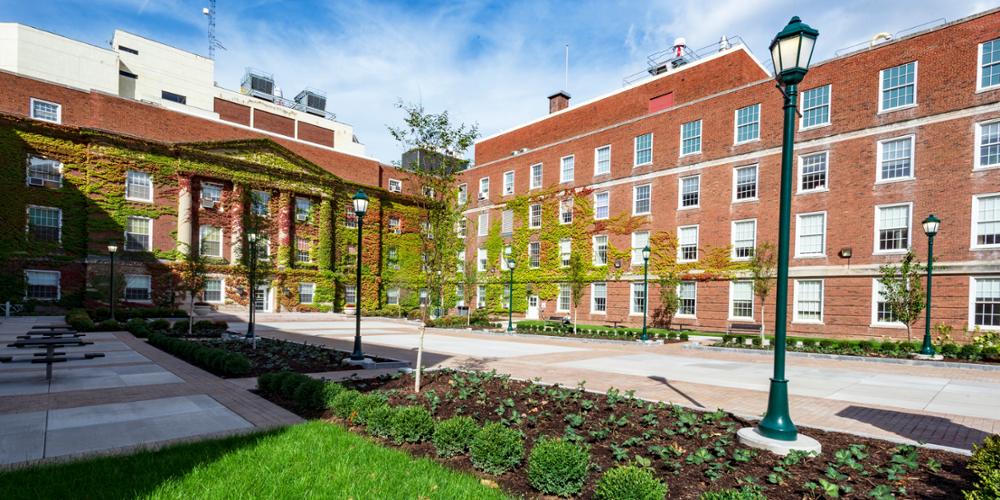
Upstate Medical University Norton College of Medicine
The Upstate Medical University Norton College of Medicine is located in Syracuse, a little over four hours north of New York City, with a Binghamton Clinical Campus where about 40 students a year complete their clinical training. The college traces its roots to Geneva Medical College, founded in 1834, which became Syracuse University’s College of Medicine in 1871. The State University of New York acquired the school in 1950.
- Latest class: the Entering Class of 2026 has 181 students chosen from 6,637 applicants, with an average undergraduate GPA of 3.89 and an average MCAT of 512. 86% are New York residents, and the class includes 24 Rural Medical Scholars and 4 students in the three-year MD.
- Cost: tuition is $46,470 for New York residents and $71,190 for nonresidents at the current posted rates. The first-year cost of attendance at Syracuse is $82,323 for residents and $107,043 for nonresidents.
- Who may apply: Upstate welcomes U.S. citizens, permanent residents, foreign citizens and DACA-eligible applicants who have completed at least 90 semester hours in the U.S. or Canada, and it gives New York applicants a slight preference.
- 2026-27 cycle: the AMCAS deadline was October 15, and the secondary and letters are due December 1, with a $110 fee (waived for U.S. veterans and active-duty military, and with an AAMC fee waiver). Early Decision applicants file AMCAS by August 1. Interviews run September through March.
Upstate Medical University’s Norton College of Medicine is committed to educating compassionate, collaborative physicians who can serve the health needs of their communities. The MD program emphasizes small-group learning, early clinical exposure and a supportive environment that gives students a solid foundation in medicine.
Of note is the university’s commitment to serving surrounding communities. The Rural Medical Scholars Program gives students four years of rural health electives with community physician mentors, and every student completes at least 40 hours of Community-Engaged Learning. Upstate also offers a three-year MD, launched in fall 2023, with a directed pathway into an Upstate or UHS Binghamton residency, and the Binghamton campus offers a year-long family medicine placement with a single physician.
Factors to consider
- Rural Medical Scholars Program
- Community-Engaged Learning requirement and Binghamton Clinical Campus
- Slight preference for New York residents
- Affordable in-state tuition
Read IMA’s full guide: How to Get Into the Norton College of Medicine at SUNY Upstate Medical University.
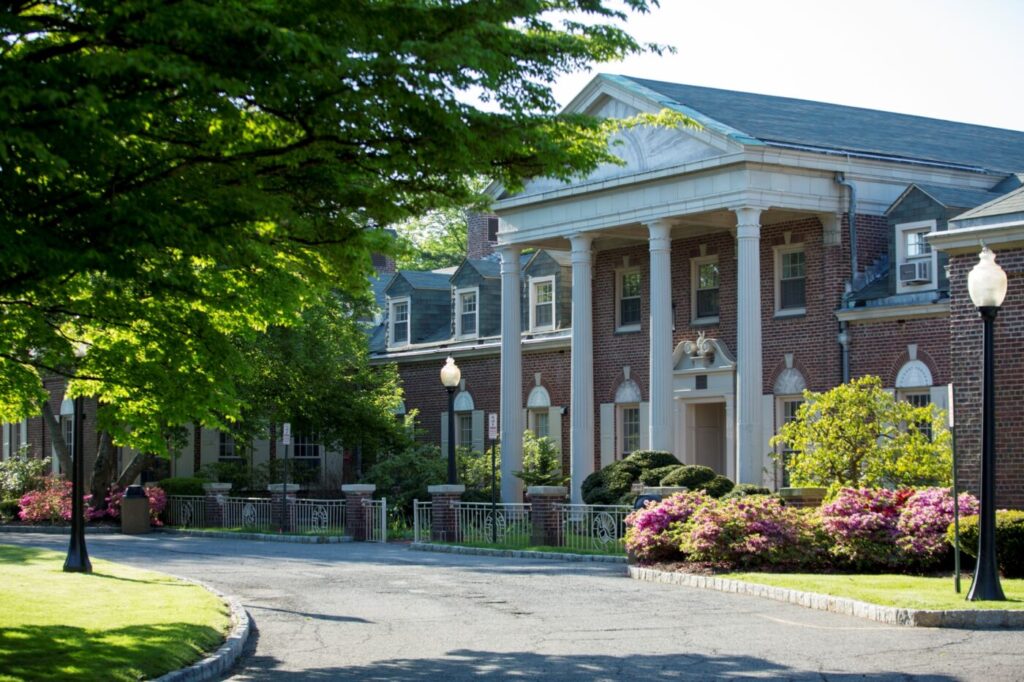
New York Medical College
New York Medical College was founded in 1860 and is located in Valhalla, in Westchester County, on a campus within the Grasslands Reservation that is also home to Westchester Medical Center. NYMC joined the Touro University System in 2011. The LCME fully reaccredited the School of Medicine in 2024 for the maximum eight years.
- Latest class: the Class of 2028 (entered 2024) had an average MCAT of 516 and an undergraduate GPA of 3.77, from 9,599 applications. NYMC enrolls approximately 200 students each year.
- Cost: tuition is $67,710 for 2026-27, and the first-year cost of attendance is $98,560 for students living on campus.
- Who may apply: there is no state preference. U.S. citizens, permanent residents, DACA recipients and Canadian citizens may apply; other international applicants are not eligible.
- 2026-27 cycle: the AMCAS deadline is December 15 and the supplemental application is due January 31, with a $135 fee. Early Decision applicants filed AMCAS by August 1 and the supplemental by August 31. Interviews are virtual multiple mini interviews from September to March. A 2026-27 CASPer is required, and MCAT scores from January 2024 to September 2026 are accepted.
New York Medical College has more than 30 clinical affiliates in seven states, including Westchester Medical Center, Maria Fareri Children’s Hospital and NYC Health + Hospitals/Metropolitan. The school emphasizes discovery and exploration, giving first- and second-year medical students ample opportunities to engage in research and a variety of clinical areas.
In addition to being one of the oldest medical colleges in the country, NYMC is one of the larger ones, with about 200 students per class and 908 students in the School of Medicine. Its Valhalla location gives students quiet, natural surroundings while keeping New York City within easy reach. Its late deadlines also make NYMC a useful school to add to a list later in the cycle.
Factors to consider
- Peaceful location with quick access to New York City
- Large network of clinical affiliates
- Late AMCAS and supplemental deadlines
- Competitive
Read IMA’s full guide: How to Get Into New York Medical College (NYMC).
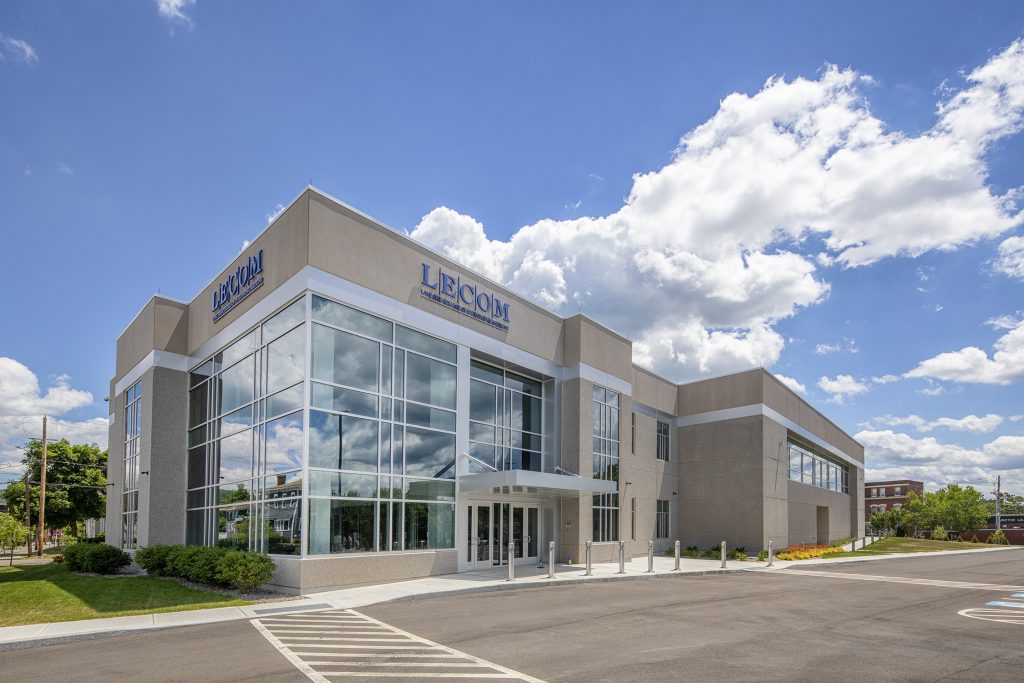
Lake Erie College of Osteopathic Medicine (Elmira Campus)
The Lake Erie College of Osteopathic Medicine was founded in 1992 and has a campus in Elmira, about four hours northwest of New York City. LECOM at Elmira is an additional location of the main Erie, Pennsylvania campus; its inaugural class of 120 students arrived on July 24, 2020. LECOM is accredited by the Commission on Osteopathic College Accreditation (COCA).
- Latest figures: LECOM’s matriculants have a mean MCAT of 502.3 and an average GPA of 3.64 across all of its locations (no cohort year is given). The Elmira campus had 508 students enrolled in 2024-25 and does not publish a separate first-year class size.
- Cost: 2026-27 tuition at Elmira is $44,875 in the first and second years ($50,875 in year three and $50,375 in year four), the same for New York residents and nonresidents. Estimated first-year living expenses are $31,080.
- Who may apply: there is no state requirement. LECOM accepts international students who meet its coursework rules and escrow the cost of the program.
- 2026-27 cycle: the AACOMAS deadline is April 1, 2027 and the supplemental deadline is May 10, 2027, with a $50 fee. Admissions are rolling, with no Early Decision. Applicants need a GPA of at least 2.7 to receive the supplemental and an MCAT of at least 497 within the last five years, or an Academic Index Score of 110 or higher in place of the MCAT.
The Elmira campus was created to help address physician shortages in the region, and the wider LECOM network has a long track record of progressive teaching. LECOM offers several learning pathways across its campuses: the Lecture-Discussion Pathway, the Problem-Based Learning Pathway, the Directed Study Pathway, the three-year Primary Care Scholars Pathway (at Erie) and the Accelerated Physician Assistant Pathway (at LECOM at Seton Hill). Elmira students enroll in the Problem-Based Learning Pathway, meeting in groups of eight with a faculty facilitator three times a week.
The pathways at LECOM reflect a focus on practicality, with programs designed to teach real-world doctoring skills and put students on the path to serving their communities.
Factors to consider
- DO degree
- Problem-Based Learning at Elmira, with other pathways across LECOM
- Lowest DO tuition in New York for the first two years
- Accepts international students
Read IMA’s full guide: How to Get Into Lake Erie College of Osteopathic Medicine. LECOM uses the American Association of Colleges of Osteopathic Medicine Application Service; IMA’s guide to AACOMAS covers the application step by step.
Albany Medical College
Albany Medical College was founded in 1839 and is located in Albany, about three hours north of New York City. It is a private school accredited by the LCME and the only medical school in New York’s Capital Region.
- Latest class: the Class of 2030 entered in 2026 with 145 students chosen from more than 14,000 applications, including 42 from New York and 37 from combined degree programs. The most recent incoming class had an average MCAT of 512 and an average GPA of 3.82 (science 3.77).
- Cost: tuition is $61,125 for 2026-27, the same for all students, and the estimated first-year cost of attendance is $92,834.
- Who may apply: U.S. citizens and permanent residents. The school states no preference for New York residents.
- 2026-27 cycle: the AMCAS deadline is November 1, 2026 and the secondary is due December 1, 2026, with a $130 fee. Interviews are virtual multiple mini interviews, and rolling decisions begin October 15. MCAT scores from January 2023 through tests taken before September 30, 2026 are accepted.
Albany Medical College attracts students who want to learn medicine at a busy academic medical center. The Emergency Department and Level 1 Trauma Center at Albany Medical Center is the busiest in New York State, with more than 75,000 patient visits each year, and Albany Med is northeastern New York’s only academic medical center. Clinical rotations take place at Albany Medical Center and affiliated hospitals in the Albany Med Health System.
Albany reserves up to 45 first-year seats for its combined degree programs with Rensselaer Polytechnic Institute, Union College and Siena College, and it offers MD/PhD, MD/MPH and MD/MBA options.
Factors to consider
- Busiest Level 1 trauma center in New York State
- Combined BS/MD programs with RPI, Union and Siena
- Rolling admissions
- Competitive
Read IMA’s full guide: How to Get Into Albany Medical College.
City University of New York (CUNY) School of Medicine
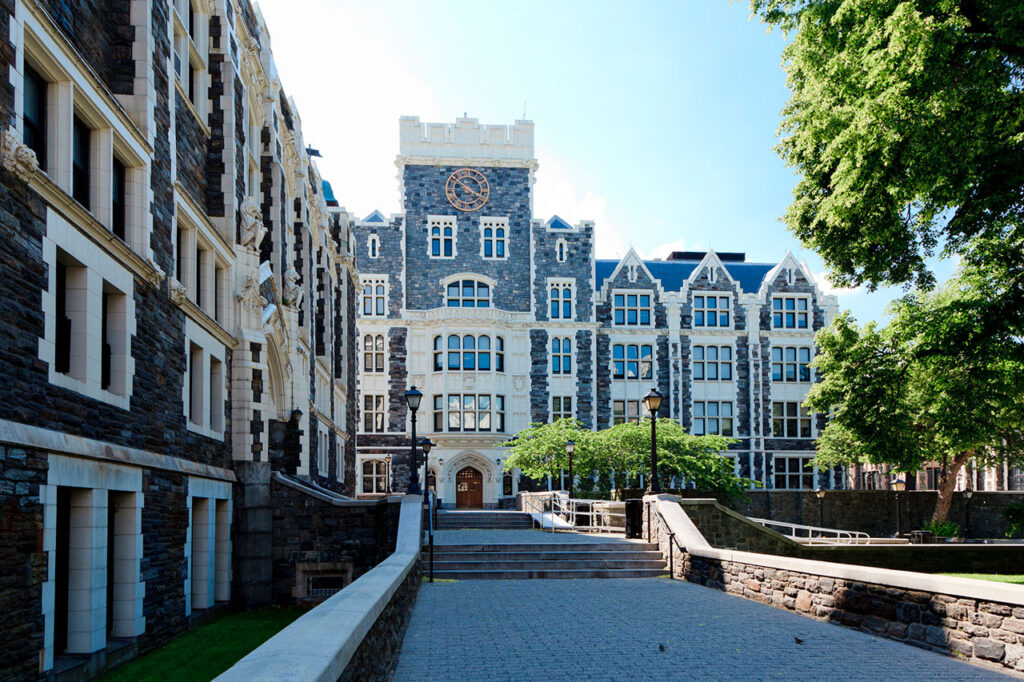
The CUNY School of Medicine was established in 2016 and is located on the City College of New York campus in Hamilton Heights, Harlem, in northern Manhattan. Its roots go back to 1973, when the Center for Biomedical Education was founded; it became the Sophie Davis School of Biomedical Education in 1978. The LCME granted full accreditation in June 2023, and it is the only public medical school in Manhattan.
- Latest admissions data: for the entering class of 2023, 123 students were accepted from 1,349 BS/MD applicants, an acceptance rate of 9.1%. The school recruits about 100 high school seniors each year.
- MCAT: CUNY does not require the MCAT for entry into the MD phase. BS/MD students who finish the BS in 2026-27 or later need a cumulative GPA of at least 3.5 and a science GPA of at least 3.3 to move into the first year of medical school.
- Cost: tuition in the MD years is $41,600 for New York residents and $69,260 for nonresidents, with a first-year (M1) cost of attendance of $71,644 and $99,304. The tuition page does not state an academic year.
- 2026-27 cycle: applications go through the school’s own portal, not AMCAS, and must be complete by December 1. Applicants need a minimum cumulative average of 85 over their first three years of high school, three essays and five letters of recommendation, and SAT or ACT scores are optional through spring 2027.
The CUNY School of Medicine aims to bring students from underrepresented and low-income communities into the medical profession through lower tuition and its seven-year BS/MD program: a three-year BS in Biomedical Sciences followed by the four-year MD. Its admissions focus on commitment to primary care and to areas with provider shortages. Students who want to build patient-care experience before applying can look at IMA’s medical internships for high school students.
Factors to consider
- Seven-year BS/MD program for high school seniors
- Focus on primary care and public health
- No MCAT required
- Acceptance rate higher than most New York MD programs
Read IMA’s full guide: How to Get Into CUNY School of Medicine.
New York Institute of Technology College of Osteopathic Medicine
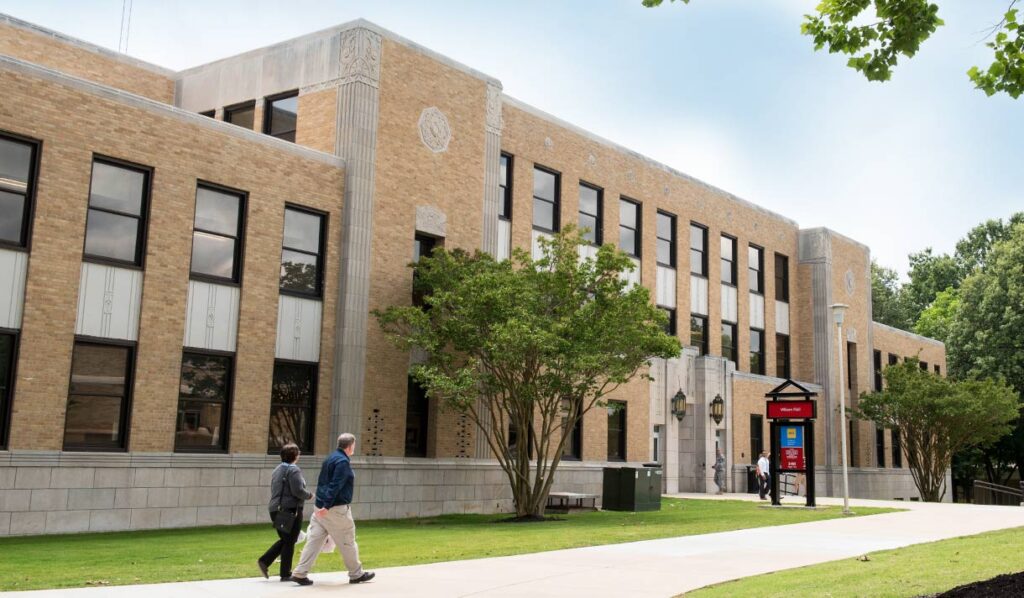
The New York Institute of Technology College of Osteopathic Medicine (NYITCOM) was founded in 1977 as New York’s first osteopathic medical school and is located in Old Westbury, Long Island, about 22 miles from Manhattan. It also has a location in Jonesboro, Arkansas. NYITCOM is accredited by COCA.
- Latest figures: NYITCOM matriculants have a mean MCAT of 504.6 and an average GPA of 3.69 (no cohort year is given). The Class of 2030 entered in August 2026 with 318 students on Long Island and 121 in Arkansas.
- Cost: tuition is $70,720 for 2026-27, and the first-year cost of education is $118,098.
- Who may apply: U.S. citizens and permanent residents.
- 2026-27 cycle: AACOMAS must receive applications by April 30, 2027. The supplemental application, with an $80 fee, is sent to every applicant and is available until March 16, 2027. Admissions are rolling, with interviews from late summer through early spring until the class is filled. MCAT scores from January 2024 to January 15, 2027 are accepted.
NYITCOM serves more than 1,200 medical students on its 176-acre Long Island campus and has graduated more than 6,750 DOs there. Its mission centers on training osteopathic physicians for a lifetime of learning and practice and on advancing patient-centered, population-based health care.
Factors to consider
- DO degree
- Large class and established alumni network
- Rolling admissions with a spring deadline
- Campus choice between Long Island and Arkansas
Read IMA’s full guide: How to Get Into NYIT College of Osteopathic Medicine.
NYU Long Island School of Medicine
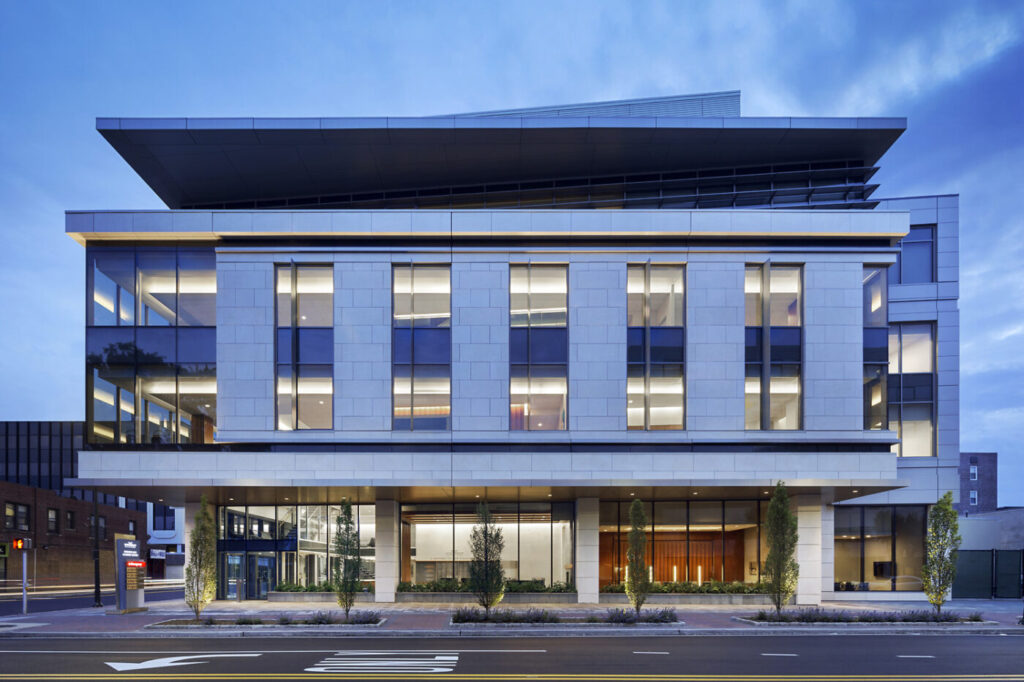
The NYU Long Island School of Medicine, renamed NYU Grossman Long Island School of Medicine in July 2023, opened in 2019 and is located in Mineola, Nassau County, 17 miles outside New York City. It received full LCME accreditation in February 2023.
- Latest class: the Class of 2029 entered in July 2026 with 24 students; the entering class is capped at 24. The school does not publish class MCAT, GPA or applicant figures.
- Cost: tuition of $63,552 for 2026-27 is covered by the Full-Tuition Scholarship, which a $200 million gift from Kenneth and Elaine Langone endowed in perpetuity. The first-year cost of attendance is $95,948, or $32,396 after the scholarship and health insurance subsidy.
- Who may apply: U.S. citizens, permanent residents, DACA recipients and international applicants with a bachelor’s degree from an accredited U.S. or Canadian institution. There is no formal state preference, but the school welcomes applicants with ties to the communities it serves.
- 2026-27 cycle: the AMCAS deadline is November 1, 2026 and secondaries are due November 16, 2026, with a $110 fee. Multiple mini interviews run from early September through December, and all applicants hear in February 2027.
NYU Grossman Long Island is a small medical school, enrolling 24 students a year. Those who make it in enjoy tuition-free medical school with a focus on primary care and public health. Its accelerated three-year MD comes with the offer of a directed pathway into an internal medicine, pediatrics or OB-GYN residency at NYU Langone Hospital-Long Island. The school advises applicants who are unsure about primary care or who want to subspecialize to look elsewhere. Students also run the Wellness Initiative Student-Run Health (WiSH) Clinic in Hempstead.
Factors to consider
- Tuition covered for every student
- Three-year MD program with a directed residency pathway
- Small and tight-knit
- Very small class, so admission is extremely competitive
Read IMA’s full guide: How to Get Into NYU Long Island School of Medicine.
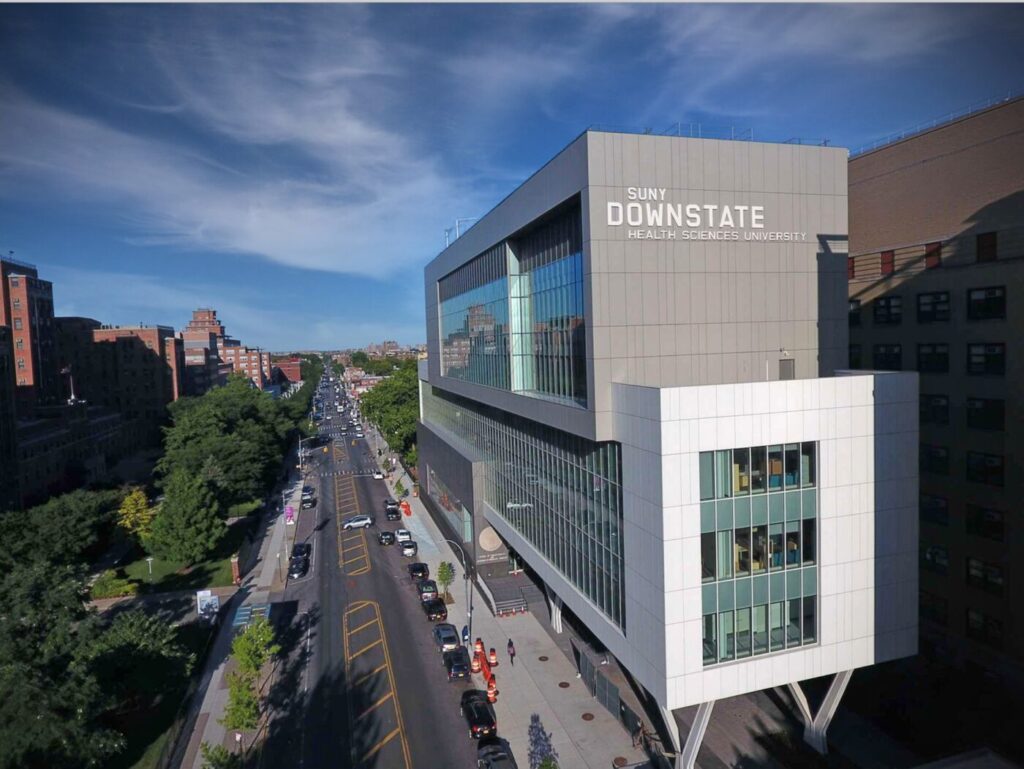
SUNY Downstate Health Sciences University College of Medicine
The SUNY Downstate Health Sciences University College of Medicine was founded in 1860, when instruction began at the Long Island College Hospital, and is located in East Flatbush, Brooklyn. It is accredited by the LCME and is part of the only academic medical center in Brooklyn.
- Latest class: Downstate enrolls approximately 200 students per class. The August 2026 entering class came from 17 states and territories. The school does not publish class MCAT or GPA figures; the newest applicant count it posts is 6,148 applicants for 199 seats in 2022.
- Cost: tuition is $46,470 a year for residents and $73,330 for nonresidents at the current posted rates. The first-year cost of attendance is $86,031 in-state and $112,891 out-of-state.
- Who may apply: Downstate gives preference to New York residents and accepts well-qualified out-of-state applicants. International applicants are reviewed only after U.S. citizens and permanent residents.
- 2026-27 cycle: AMCAS applications must be on file by December 1, 2026, and the complete application, including the $100 secondary fee, is due by noon on January 4, 2027. Early Decision applicants filed by August 1, 2026. Admissions are modified rolling: the school encourages applicants to complete their files before October 1, and acceptances begin in early February 2027. MCAT scores from August 1, 2024 through September 12, 2026 are accepted.
SUNY Downstate serves a diverse population and focuses on producing culturally competent, community-oriented physicians. Students eager to tackle urban health problems and serve underserved communities will find a good fit here. Downstate’s research includes the STAR Program for HIV care. Dual degrees include an MD/PhD, MD/MPH and MD/MHA, and a BA/MD program with Brooklyn College and post-baccalaureate linkages offer other routes in.
Factors to consider
- Affordable for New York residents
- Emphasis on urban medicine
- Preference for New York residents
- Early Decision and modified rolling admissions
Read IMA’s full guide: How to Get Into SUNY Downstate College of Medicine.
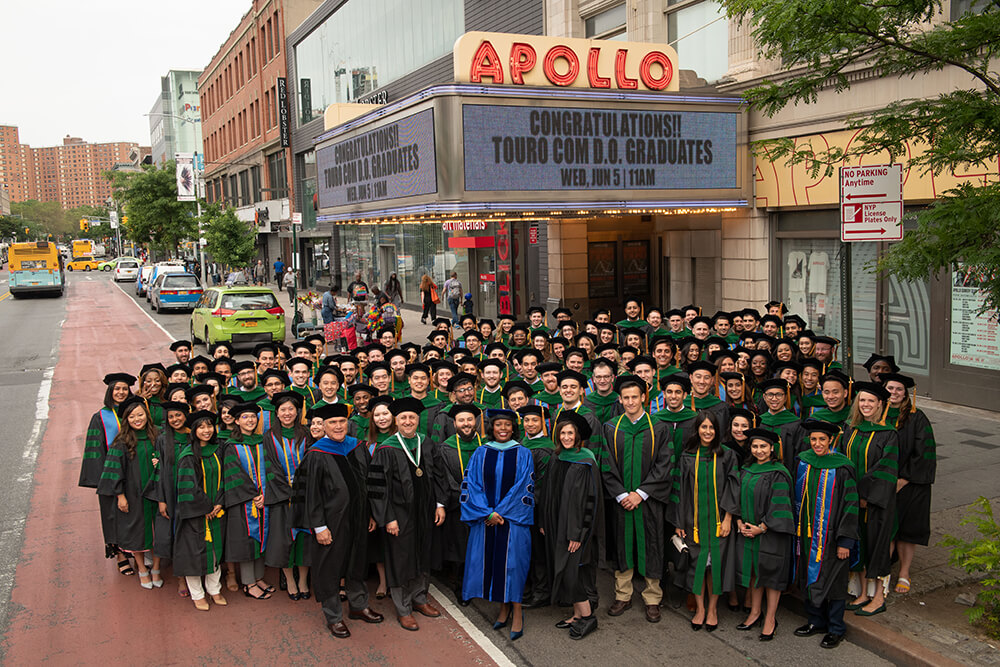
Touro College of Osteopathic Medicine
The Touro College of Osteopathic Medicine (TouroCOM) was founded in 2007 and has its main campus on West 125th Street in Harlem. It added a campus in Middletown, in New York’s Hudson Valley about 60 miles from the city, in July 2014, and it also has a location in Great Falls, Montana. TouroCOM is fully accredited by COCA.
- Latest figures: TouroCOM matriculants across its campuses have a mean MCAT of 501.4 and an average GPA of 3.48 (no cohort year is given). The Class of 2029 entered with 135 students in Harlem and 134 in Middletown. TouroCOM received 5,198 AACOMAS applications in 2024-25.
- Cost: tuition is $72,080 plus $200 in fees for 2026-27, the same at every campus. The first-year cost of attendance is $115,026 in Harlem, and $115,026 off campus or $120,919 on campus in Middletown.
- Who may apply: U.S. citizens and permanent residents only; DACA and international applicants are not considered. Tuition is the same in-state and out-of-state.
- 2026-27 cycle: admissions are rolling until the AACOMAS deadline of March 1, 2027, and the supplemental deadline is March 15, 2027. The secondary is by invitation, with a $200 fee. To receive one, applicants need overall and science GPAs of at least 3.0 and an MCAT of at least 498, taken between January 2024 and January 2027. Casper and Duet are required. Early Decision applicants need GPAs of 3.5 and an MCAT of 504.
Approximately 80% of TouroCOM’s hospital affiliates are in areas of need, and the college is committed to training doctors to meet the needs of underserved populations. More than half of its graduates go into primary care. The student body is diverse, and the school emphasizes community service, primary care and public health. Applicants choose one campus and can interview at only one. Middletown offers on-site dormitories, and both New York campuses share the same flipped-classroom curriculum.
Factors to consider
- DO degree
- Focus on enrolling students from underrepresented communities and serving underserved populations
- Two New York campuses: Harlem and Middletown
- Rolling admissions with a March deadline
Read IMA’s full guide: How to Get Into Touro College of Osteopathic Medicine.
D’Youville University College of Osteopathic Medicine
D’Youville University College of Osteopathic Medicine is New York’s newest medical school and Western New York’s first osteopathic medical school. Located in Buffalo, it holds pre-accreditation status from COCA, which permits it to recruit and enroll students. Its inaugural class, the Class of 2030, started in August 2026, and 96 students received white coats in September 2026; 46% of the class is from New York. Classes start on D’Youville’s main campus, and the school moves to a permanent home at 285 Delaware Avenue in downtown Buffalo in fall 2027.
- Class profile: the school has not published class MCAT or GPA averages. Applicants need a minimum MCAT of 501 and minimum science and overall GPAs of 3.2, with MCAT scores taken from March 31, 2024 through March 31, 2027.
- Cost: tuition is $55,000 for 2026-27, plus a $5,600 comprehensive student services fee, the same for New York and out-of-state students.
- Who may apply: U.S. citizens and permanent residents only.
- 2026-27 cycle: the school lists a March 31 application deadline. The supplemental application goes to all applicants, with a $50 fee. Interviews are virtual, and there is no Early Decision.
D’Youville’s mission focuses on service, equity and the health and well-being of a diverse society, with an emphasis on underserved and rural communities. Students complete core clinical rotations through nearly 50 clinical affiliation agreements across New York State, with hubs in Western New York, Central New York, Upstate New York and Long Island. As a pre-accredited school with no graduates yet, D’Youville is best for applicants who are comfortable joining a new program and helping shape it.
Factors to consider
- DO degree, new in 2026
- Focus on underserved and rural communities
- Lower tuition than the other New York DO schools after LECOM
- U.S. citizens and permanent residents only
IMA does not yet have a dedicated guide for D’Youville. IMA’s guide to AACOMAS covers the osteopathic application that every New York DO school uses.
Good Luck to You!
If you are interested in attending one of the medical schools in New York, we can help. Our team of experienced admissions consultants will work with you to create an application that stands out from the rest. We know what it takes to be accepted into these competitive schools, and we want to help you achieve your dream of becoming a doctor in a world with an unfortunate shortage of physicians.
Clinical experience is part of that preparation. IMA’s pre-med internships place students in teaching hospitals in Mombasa, Kenya and Cusco, Peru, where interns take vitals, help with patient intake and triage and assist with direct care under the supervision of local physicians and nurses. These internships for pre-med students never involve tasks that would require a medical license in the United States. IMA’s medical internships abroad also include programs for nursing, pre-PA, mental health and other health careers, and our healthcare internships abroad page describes every track.
Explore our services today and let’s get started on the path to success!
Frequently Asked Questions
How many medical schools are in New York?
New York has 15 LCME-accredited MD programs and five osteopathic (DO) sites. The MD programs are Albany Medical College, Albert Einstein College of Medicine, Columbia Vagelos College of Physicians and Surgeons, CUNY School of Medicine, the Zucker School of Medicine at Hofstra/Northwell, the Icahn School of Medicine at Mount Sinai, the Jacobs School at the University at Buffalo, New York Medical College, NYU Grossman School of Medicine, NYU Grossman Long Island School of Medicine, Stony Brook’s Renaissance School of Medicine, SUNY Upstate Norton College of Medicine, SUNY Downstate College of Medicine, the University of Rochester School of Medicine and Dentistry and Weill Cornell Medicine. The DO sites are NYITCOM, TouroCOM Harlem, TouroCOM Middletown, LECOM at Elmira and D’Youville University College of Osteopathic Medicine.
What is the newest medical school in New York?
D’Youville University College of Osteopathic Medicine in Buffalo enrolled its first class in August 2026 and holds COCA pre-accreditation. Among MD programs, the newest are NYU Grossman Long Island School of Medicine, which opened in 2019, and the CUNY School of Medicine, which became a medical school in 2016.
Which New York medical schools are tuition-free?
NYU Grossman School of Medicine and NYU Grossman Long Island School of Medicine cover tuition for every MD student with a Full-Tuition Scholarship, and Einstein’s Gottesman Scholarship covers tuition and educational fees for every MD student. Students at all three still pay for housing, food and other living costs. Columbia and Weill Cornell are not tuition-free, but they meet demonstrated need with scholarships instead of loans for eligible students.
What is the cheapest medical school in New York?
For New York residents, the SUNY schools and CUNY cost the least in tuition. Buffalo, Upstate and Downstate charge residents $46,470 a year, and CUNY lists $41,600 a year for residents in the MD years. For students who are not tuition-free, LECOM at Elmira has the lowest DO tuition, $44,875 in the first two years for 2026-27.
Which New York medical schools accept out-of-state students?
All of them accept out-of-state applicants. The private MD schools and the DO schools set no state preference. The SUNY schools prefer New York residents but admit nonresidents each year: 14% of Upstate’s Entering Class of 2026 came from out of state, and 89% of Buffalo’s Class of 2030 came from New York State, so the remaining 11% came from elsewhere.
Do New York medical schools accept international students?
Several do. NYU Grossman, NYU Grossman Long Island and Icahn accept international applicants and can offer them institutional aid. Weill Cornell welcomes international applicants without financial aid. SUNY Upstate and Stony Brook consider international applicants who have studied in the U.S. or Canada, and NYMC accepts Canadian citizens. Einstein, Albany, NYITCOM, TouroCOM and D’Youville do not accept international applicants, and LECOM accepts them with an escrow requirement.
What MCAT score do I need for medical school in New York?
It depends on the school. The latest published class figures run from 511 (average) at Buffalo to 523 (median) at NYU Grossman, with Weill Cornell and Hofstra/Northwell at 518, NYMC at 516, Stony Brook at 514, and Upstate and Albany at 512. The DO schools list mean MCATs from 501.4 to 504.6. Few New York schools set a hard minimum, but TouroCOM requires 498 to receive a secondary, LECOM requires 497 (or an Academic Index Score of 110), and D’Youville requires 501.
What GPA do I need for medical school in New York?
Among MD schools that publish one, the latest class GPAs run from 3.77 at NYMC to 3.98 at NYU Grossman. Weill Cornell’s Class of 2030 had a median of 3.94, Stony Brook’s 3.92, Upstate’s an average of 3.89, Hofstra/Northwell’s a median of 3.85 and Albany’s an average of 3.82. The DO schools list average GPAs from 3.48 to 3.69, and TouroCOM requires at least a 3.0 overall and science GPA for a secondary.
What is the easiest medical school to get into in New York?
No medical school in New York is easy to get into. Schools with lower published MCAT and GPA figures, such as the DO schools, and schools that publish higher acceptance rates, such as CUNY’s BS/MD (9.1% for the entering class of 2023), may be more realistic for some applicants. The best target schools are the ones whose mission, location and residency rules match your record and goals.
Which New York medical school does not require the MCAT?
The CUNY School of Medicine does not require the MCAT, because students enter its seven-year BS/MD program from high school. Icahn’s FlexMed program also admits college sophomores without the MCAT, and Albany Medical College’s combined degree students are exempt from the MCAT.
Which New York medical schools offer a three-year MD?
NYU Grossman’s MD is a three-year program for every student, with an optional fourth year. NYU Grossman Long Island also runs an accelerated three-year MD. Stony Brook and SUNY Upstate offer three-year options for a limited number of admitted students, each tied to a directed residency pathway.
Which New York medical schools offer Early Decision?
Einstein, Stony Brook, Hofstra/Northwell, Buffalo, SUNY Upstate, NYMC, SUNY Downstate and TouroCOM offer Early Decision. Their Early Decision deadlines fall in August, so you need to plan your MCAT and application for the spring and early summer of your application year.
How much clinical experience do New York medical schools want?
Most New York schools do not publish a required number of hours, but all of them look for meaningful patient contact and evidence that you understand what physicians do. Supervised programs such as IMA’s pre-health internships can add hands-on hours alongside the clinical work you do at home.
When should I apply to medical schools in New York?
Apply early in the AMCAS or AACOMAS cycle. For the 2026-27 cycle, Icahn’s AMCAS deadline was October 1 and NYU Grossman, Columbia, Weill Cornell, Rochester, Einstein and Upstate closed on October 15. Hofstra/Northwell, NYU Grossman Long Island and Albany close November 1, Buffalo November 15, Stony Brook November 16, Downstate December 1 and NYMC December 15. The DO schools run into 2027: TouroCOM March 1, LECOM April 1 and NYITCOM April 30. Many schools review applications on a rolling basis, so applying well before the deadline helps.
Sources
- NYU Grossman School of Medicine: By the Numbers (Class of 2027); admissions requirements, How to Apply and 2026-27 admissions timeline; Cost of Attendance 2026-27; Affordability and Financial Aid; Three-Year MD; NYU Langone News, Class of 2028 (September 2024) and Class of 2029 (July 2026) White Coat releases. Checked October 17, 2026.
- NYU Grossman Long Island School of Medicine: MD admissions, How to Apply, admissions requirements, deadlines and policies (2027 application cycle) and commonly asked questions; Cost of Attendance 2026-27; NYU Langone News, Class of 2028 and Class of 2029 White Coat releases and “Five things to know about Long Island’s only tuition-free medical school”. Checked October 17, 2026.
- Columbia Vagelos College of Physicians and Surgeons: MD application requirements, process and timeline, and FAQs; 2026-27 student budget; Vagelos Scholarship Program; LCME accreditation page; CUIMC News, “VP&S welcomes 140 future physicians” (2026). Checked October 17, 2026.
- Icahn School of Medicine at Mount Sinai: MD admissions facts and statistics, timeline and FAQs; FlexMed; 2026-27 cost of attendance by class. Checked October 17, 2026.
- Weill Cornell Medicine: Class of 2030 profile; MD admissions timeline and FAQ; 2026-27 cost of attendance; Debt Free Scholarship Program; Global Health electives. Checked October 17, 2026.
- University of Rochester School of Medicine and Dentistry: MD admissions FAQ and apply pages; 2026-27 cost of attendance; Class of 2027 release; curriculum pages. Checked October 17, 2026.
- Albert Einstein College of Medicine: MD admissions statistics (2024 data), admissions, cost of attendance and history pages (archived copies, 2026). Checked October 17, 2026.
- Renaissance School of Medicine at Stony Brook University: incoming class 2025 profile; Stony Brook Medicine news, Class of 2030 White Coat (September 8, 2026); admissions FAQ, deadlines and special programs; bursar tuition (Fall 2025). Checked October 17, 2026.
- Zucker School of Medicine at Hofstra/Northwell: How to Apply, requirements and FAQs; Cost of Attendance 2026-2027; Class of 2029 orientation story (archived). Checked October 17, 2026.
- Jacobs School of Medicine and Biomedical Sciences: UB news, Class of 2030 White Coat (July 27, 2026); admissions, policy and cost of attendance pages (2026-27). Checked October 17, 2026.
- SUNY Upstate Norton College of Medicine: class statistics (Entering Class of 2026); financial aid cost of attendance; admissions, FAQ, Rural Medical Scholars Program and history pages (archived copies, 2025-2026). Checked October 17, 2026.
- New York Medical College: School of Medicine About page (Class of 2028); admissions, eligibility and supplemental application pages; 2026-27 tuition and cost of attendance. Checked October 17, 2026.
- Albany Medical College: MD admissions page (updated September 25, 2026); Class of 2030 release; 2026-27 cost of attendance and Financial Aid Guide. Checked October 17, 2026.
- CUNY School of Medicine: facts and figures; admissions, BS/MD requirements and BS/MD tuition pages; LCME accreditation page; school history. Checked October 17, 2026.
- SUNY Downstate Health Sciences University: College of Medicine admissions pages and 2026-27 Admissions Information Booklet; bursar and cost of attendance pages. Checked October 17, 2026.
- New York Institute of Technology College of Osteopathic Medicine: Apply page (2026-2027 dates); admission requirements; 2026-2027 tuition and cost of education; accreditation; Class of 2030 White Coat news (August 2026). Checked October 17, 2026.
- Touro College of Osteopathic Medicine: admissions, tuition and cost of attendance, campus and mission pages. Checked October 17, 2026.
- Lake Erie College of Osteopathic Medicine: Elmira campus, admissions, pathways and 2026-27 tuition and fees pages. Checked October 17, 2026.
- D’Youville University College of Osteopathic Medicine: DO program, tuition and fees (2026-27) and news releases (June, August and September 2026). Checked October 17, 2026.
- Liaison Committee on Medical Education, Directory of Accredited MD Programs (updated October 14, 2026) and list of applicant and candidate programs.
- American Osteopathic Association, Colleges of Osteopathic Medicine directory (September 2026) and candidate status list; AACOM Choose DO Explorer profiles for NYITCOM, TouroCOM, TouroCOM Middletown, LECOM and D’Youville. Checked October 17, 2026.