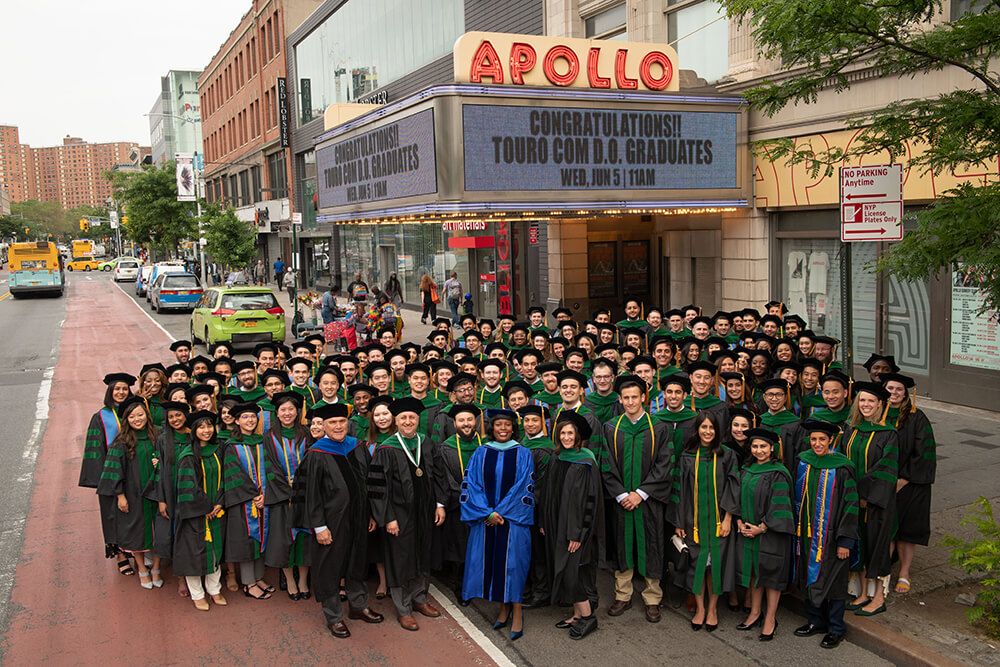
Touro College of Osteopathic Medicine (TouroCOM) is one of the few DO schools in New York City. It is a private, nonprofit college of osteopathic medicine and a division of Touro University, and it grants the Doctor of Osteopathic Medicine (DO) degree. TouroCOM welcomed its first class in 2007. Its main campus sits on West 125th Street in Harlem, across the street from the Apollo Theater. Today it is one school with three locations: Harlem in Manhattan, Middletown in New York’s Hudson Valley and Great Falls, Montana, which opened in 2023. All three campuses share one curriculum, one AACOMAS application and one secondary.
TouroCOM has been dedicated from the start to training physicians who are committed to helping their patients and their communities. Its mission puts particular weight on practicing medicine in underserved communities, and roughly 80 percent of its hospital affiliates serve areas of need in urban and rural settings. The college describes itself through three ideas: leaders in education, partners in the community and pioneers in health care. Each one shows up in how the school teaches, where students train and what it asks applicants to write about.
This guide is written for applicants in the 2026-2027 AACOMAS cycle, who would start medical school in July 2027 as the Class of 2031. It covers TouroCOM’s mission and accreditation, every program and pathway, the curriculum, admissions requirements and deadlines, 2026-2027 tuition and the full cost of attendance at each campus, campus life, clinical rotations and research, people worth knowing, class statistics, strategy, the 2026-2027 secondary essay with original example answers, the interview and a detailed FAQ. Facts were checked on October 18, 2026.
Be an Informed Applicant
Like all medical schools across the country, DO schools in New York have school-specific requirements and guidelines. Understanding TouroCOM’s identity, selection criteria and programs will help you focus your application and put your best foot forward. TouroCOM screens every primary application before it sends a secondary, reviews files on a rolling basis, asks you to pick one of three very different campuses and interviews you with faculty who can see your entire file. Each of those choices affects how and when you should apply.
Personalized Help
Many students find themselves overwhelmed by medical school applications. Each school you apply to has its own process, deadlines and essays. International Medical Aid (IMA) helps pre-health students at every stage, from building hands-on clinical experience to writing secondary essays and preparing for interviews. A medical school admissions consultant can guide you through each step and give you personal feedback. Details on IMA’s clinical internships and admissions consulting are in the section on how IMA can help, near the end of this guide.
Key Takeaways
- Eligibility. You must be a U.S. citizen or permanent resident when you apply. TouroCOM does not consider DACA recipients or international applicants for the DO program.
- Screening before the secondary. TouroCOM sends its secondary only to applicants who pass a screen: a 3.0 overall and science GPA, an MCAT of 498 or higher taken within the accepted window and Casper results on file.
- Academic context. Recent matriculants averaged a 501.4 MCAT and a 3.48 cumulative GPA. TouroCOM received 5,198 AACOMAS applications in 2024-2025 and enrolled about 135 new students on each campus. It does not publish an acceptance rate.
- Mission. The school trains osteopathic physicians with a particular emphasis on practicing medicine in underserved communities. Your secondary essay asks you to connect your own background to that mission and its goals.
- Key dates for 2026-2027. The AACOMAS deadline is March 1, 2027, and the supplemental deadline is March 15, 2027. Casper must be taken between March 19, 2026 and February 9, 2027. Admission is rolling, so applying early matters. Classes start July 26, 2027.
- Costs. Tuition and fees for 2026-2027 are $72,280 for every student, whatever the residency. The estimated first-year cost of attendance is $115,026 in Harlem, $115,026 to $120,919 in Middletown and $105,825 in Great Falls.
- Distinctive training. A flipped classroom, osteopathic manipulative medicine (OMM) from the first semester, simulation and standardized patient labs on all three campuses, a DO/MPH and DO/MBA, and a funded research track in Montana.
- Next step. Choose your campus deliberately, take Casper early and plan a three-paragraph secondary essay about TouroCOM’s mission before invitations arrive.
Key Statistics About Touro College of Osteopathic Medicine

The table below collects the key numbers for TouroCOM. Each row names its cohort, population and source, because the figures come from different years and different groups.
| Measure | Value | Cohort, population and source |
|---|---|---|
| School and degree | Touro College of Osteopathic Medicine, DO | Private, nonprofit division of Touro University; first class 2007; main campus Harlem, additional locations Middletown, NY and Great Falls, MT (TouroCOM website; AACOM Choose DO Explorer) |
| Mean MCAT | 501.4 | TouroCOM matriculants; cohort not labeled (AACOM Choose DO Explorer) |
| Average cumulative GPA | 3.48 | TouroCOM matriculants; cohort not labeled (AACOM Choose DO Explorer) |
| Secondary screening minimums | 3.0 overall and science GPA; MCAT 498 | 2026-2027 cycle; MCAT from January 2024 or later (AACOM Choose DO Explorer, school-reported) |
| AACOMAS applications | 5,198 | 2024-2025 academic year (TouroCOM Student Demographics) |
| First-year matriculants | 395 (Harlem 134, Middletown 135, Great Falls 126) | 2024-2025 academic year (AACOM Choose DO Explorer) |
| Class of 2029 size | Harlem 135, Middletown 134, Great Falls 135 | Students who entered in 2025 (TouroCOM Student Demographics) |
| Total DO enrollment | Harlem 542, Middletown 540, Great Falls 231 | 2024-2025 academic year (AACOM Choose DO Explorer) |
| Acceptance rate | Not published | TouroCOM does not publish interview or acceptance counts |
| Tuition and fees | $72,280 ($72,080 tuition plus $200 fees) | 2026-2027, all residencies and campuses (TouroCOM Tuition page) |
| Estimated first-year cost of attendance | Harlem $115,026; Middletown $115,026 off campus or $120,919 on campus; Great Falls $105,825 | 2026-2027, Class of 2030 (TouroCOM Tuition page) |
| Student health insurance | $7,816 | 2026-2027 plan year (TouroCOM Student Health Insurance page) |
| Average graduate debt | Harlem $353,639; Middletown $330,693 | 2025 graduates who borrowed (TouroCOM Tuition page) |
| COMLEX Level 1 first-time pass rate | Harlem 93.7%; Middletown 89.31%; Great Falls 78.35% (national 90.19%) | 2025-2026 (TouroCOM Outcomes page) |
| Final match rate | Harlem 99.13%; Middletown 98.4% | AY 2025-26 graduates, 2026 Match (TouroCOM match results) |
| Secondary fee | $200, non-refundable | 2026-2027 cycle; waived for AACOMAS fee waiver recipients (TouroCOM Admission Requirements) |
| Accreditation | COCA accredited, all three campuses | TouroCOM Accreditation page |
Two notes help you read these numbers. First, the MCAT and GPA figures are averages for students who enrolled, not cutoffs. TouroCOM’s screening minimums are lower (3.0 and 498), and most admitted students land well above those floors. The averages are listed without a cohort year, so treat them as a recent snapshot. Second, the cost figures are full budgets, not just tuition. The $115,026 first-year estimate for Harlem includes $72,280 in tuition and fees plus living costs, transportation, books, a computer allowance, the loan fee and health insurance.
If you want to see how TouroCOM’s numbers compare with other schools, our table of medical school GPA and MCAT averages lists averages for MD and DO programs across the country.
Mission and Educational Priorities
Why the TOURO College of Osteopathic Medicine?
TouroCOM is a private medical college whose main campus sits in Harlem, New York. When it welcomed its first class in 2007, the school set out to build a program that embraced the technological and medical standards of the new century while staying close to the community around it. That pairing of technology and social responsibility still defines the school.
The college’s mission statement reads:
“The Touro College of Osteopathic Medicine is committed to training osteopathic physicians, with a particular emphasis on practicing medicine in underserved communities. We value and support public service, research, graduate medical education, and osteopathic clinical service in the community that will strive to improve health outcomes for those we serve. We will work to educate students through the use of the latest innovative education techniques using summative and formative measures so as to graduate qualified osteopathic physicians.”
The school lists three goals alongside that statement:
- Graduate qualified osteopathic physicians
- Promote the practice of medicine in underserved areas
- Improve health outcomes in the community through public service, research, osteopathic clinical service, and graduate medical education.
Leaders, partners and pioneers
TouroCOM describes its identity in three parts, and each one is worth knowing before you write your secondary.
- Leaders in education. TouroCOM’s medical curriculum was built to take full advantage of current medical and classroom technology. It uses a flipped classroom: students learn the material at home from recorded lectures and readings, and professors use class time to check understanding, work through cases and step in early when a student falls behind.
- Partners in the community. About 80 percent of TouroCOM’s hospital affiliates serve areas of need in rural and urban communities. Students are active advocates and outreach volunteers from Harlem and the Hudson Valley to Montana and beyond.
- Pioneers in health care. TouroCOM’s faculty are accomplished practitioners and researchers. With newer labs and facilities, faculty are encouraged to pursue their own projects, and students join research on every campus.
What the mission means for applicants
The mission is not decoration on this application. It is the subject of the only secondary essay, and it shapes the rest of the review.
- Underserved care is the center. The words “underserved communities” appear in the mission’s first sentence. Experiences with patients who face barriers to care, whether in a city clinic, a rural health center or a community screening event, are the clearest evidence you can offer.
- Service is valued for itself. The mission names public service first in its list of values. TouroCOM students log volunteer hours through the national TOUCH program (Translating Osteopathic Understanding into Community Health), run health fairs and mentor high school students. Sustained service before medical school fits that culture.
- Research and graduate medical education count. The mission explicitly values research and GME. You do not need publications, but curiosity about how care can be improved, and some experience asking a question carefully, will help you answer the essay well.
- Osteopathic identity matters. The mission speaks of osteopathic physicians and osteopathic clinical service. Shadowing a DO, and being able to explain what osteopathic care adds, matters here. TouroCOM prefers a letter from a DO.
- Innovation in teaching affects you. A flipped classroom rewards students who study well on their own. If your record shows you can manage independent learning, say so.
The school’s programmatic learning objectives reinforce the same priorities. They ask graduates to deliver care that “recognizes the unique health care needs of underserved communities,” to uphold the Osteopathic Oath and to use research and evidence in practice.
Accreditation and Institutional Identity
TouroCOM’s DO program is accredited by the Commission on Osteopathic College Accreditation (COCA) of the American Osteopathic Association. The accreditation covers the main campus in Harlem, the additional location in Middletown, New York and the additional location in Great Falls, Montana. Touro University, the parent institution, is accredited by the Middle States Commission on Higher Education (MSCHE). The school’s accreditation page lists both.
Graduates of COCA-accredited programs take the COMLEX-USA licensing series and enter the single graduate medical education system shared with MD graduates. TouroCOM’s curriculum meets degree requirements set by the AOA and COCA, and the school states that graduates are eligible for licensure in all 50 states based on the academic curriculum, though each state board sets its own rules on exam attempts and residency training.
Names you will see
Touro runs several osteopathic schools, and the names are easy to mix up:
- Touro College of Osteopathic Medicine (TouroCOM) is the school in this guide: Harlem, Middletown and Great Falls. Some sources call it TouroCOM-NY, TouroCOM Harlem, TouroCOM Middletown or TouroCOM Montana. All three share one application.
- Touro University California College of Osteopathic Medicine in Vallejo, California is a separate school with its own application. See our Touro University of California guide.
- Touro University Nevada College of Osteopathic Medicine in Henderson, Nevada is another separate school.
Choosing a Touro school on AACOMAS therefore means choosing a specific school, and for TouroCOM, then a specific campus.
Medical Programs and Affiliations
Medical Programs at TOURO College of Osteopathic Medicine
Before applying, it is crucial to research the different programs TouroCOM offers. This research will help you decide whether the school is a good fit and help you focus your application. TouroCOM’s two main degree programs are the DO and a one-year Master of Science that can lead into the DO. Joint degrees, a research track in Montana and several pipeline programs round out the list.
TOURO DO Program
TouroCOM’s DO program aims for all students to play a role in their community as they receive their medical education. It takes four years. The first two years are preclinical, taught on campus with a flipped classroom, OMM labs, simulation and standardized patients. The third and fourth years are clinical rotations at affiliated hospitals and practices. While students are on campus for their preclinical years, they take part in community service, health fairs and mentoring.
You apply to the DO program through AACOMAS and choose a campus in the application:
- Harlem, New York (main campus). A commuter campus in central Manhattan. Most rotations are across Manhattan, Brooklyn, Queens and Staten Island, with fourth-year electives at large academic medical centers.
- Middletown, New York. The only medical school in Orange County, about 60 miles from New York City in the Hudson Valley. It has on-campus housing, an onsite OMM clinic and a close clinical partnership with Garnet Health Medical Center.
- Great Falls, Montana. Opened in 2023 in central Montana. Students train with Benefis Health System, Great Falls Clinic and rural and tribal health partners, and the campus hosts a funded research track.
If you select “no preference,” TouroCOM assigns your campus. You can interview at only one campus.
TOURO MS Program
The Master of Science in Interdisciplinary Studies in Biological and Physical Sciences immerses students in an intensive biomedical curriculum. It is a one-year, two-semester program of 42 credits in courses such as clinical anatomy and embryology, medical biochemistry, physiology, histology, neuroanatomy, microbiology and immunology, law and ethics in medicine, health and human behavior and community service. Medical school faculty teach it.
The MS is now offered on all three campuses, each in a different format:
- Middletown: fully in person, with an optional MasterSIM internship in the simulation center.
- Harlem: fully remote, with live, synchronous sessions.
- Great Falls: hybrid, with at least 51 percent of coursework in the student’s chosen format.
MS students who complete the curriculum with a GPA of 3.45 or higher, pass the Comprehensive Examination and show professional conduct are offered admission to the TouroCOM DO program. Admission also requires a background check, health requirements, a valid Casper score and the DO technical standards. Typically 30 to 35 students from each campus are offered direct matriculation each year. The MS has its own application on Touro’s portal, with applications opening November 1, a June 15 submission deadline and supporting materials due July 1. Applicants who want DO consideration upload MCAT scores. International students can be considered only for the Middletown MS.
DO/MPH
The DO/MPH is offered with the School of Health Sciences and Practice at New York Medical College. The MPH is a 42-credit MPH-Generalist degree; 12 credits of DO coursework (including preventive medicine and behavioral medicine) count toward it, leaving 30 MPH credits, all delivered online. Students can start as early as the spring of the first DO year, finish both degrees within four years or take up to three years after graduation to complete the MPH. Approval from the campus preclinical dean is required, and you must stay in good standing in the DO program. The MPH carries a tuition discount for TouroCOM students, but federal aid covers only the primary degree.
DO/MBA
The DO/MBA pairs the DO with an MBA in healthcare management from Touro’s Graduate School of Business. It follows the same structure: 42 MBA credits with 12 shared, leaving 30 credits (10 courses) taken online alongside the DO.
Medical Scientist Training Program (Montana)
TouroCOM Montana runs a Medical Scientist Training Program for students accepted to the Great Falls campus. Four students are selected each year. The track includes a one-month research experience in the summer after the first year, a full research year at the Weissman Hood Institute at Touro between the second and third years, and then clinical training. Participants receive stipends and full tuition coverage for the third and fourth years. Candidates need a cumulative GPA of at least 3.45 and prior research experience. This is a research pathway inside the DO program, not an NIH-funded MD/PhD program.
Pipeline programs
TouroCOM runs programs that start long before medical school:
- MedAchieve is a two-year after-school program for high school students near each campus (MedStart, then MedExcel). Each student is paired with a TouroCOM medical student mentor. Completing both years guarantees an interview at TouroCOM’s DO program.
- Project Aspire and Cubs for Scrubs bring health lessons into Harlem elementary and middle schools.
- Partnerships with the National Youth Leadership Forum on Medicine and Mentoring in Medicine serve high school students.
- Summer courses in anatomy, histology and embryology are open to college students as noncredit preparation.
Clinical affiliations
TouroCOM does not own a hospital. Third- and fourth-year students rotate through a network of affiliated hospitals and practices assigned by campus. New York sites include NYC Health + Hospitals Harlem Hospital Center, South Brooklyn Health, Brookdale University Hospital Medical Center, Staten Island University Hospital, Montefiore Nyack Hospital, Garnet Health Medical Center, Vassar Brothers Medical Center and several New Jersey hospitals. Montana sites include Benefis Health System, Alluvion Health and rural hospitals across the state, with additional sites in South Dakota and Arizona. The clinical rotations section below lists them in more detail.
Curriculum Overview
TouroCOM’s DO curriculum runs four years: two preclinical years on campus and two clinical years on rotations. Every campus teaches the same curriculum, and all students must pass COMLEX-USA Level 1 and Level 2-CE and the school’s own Clinical Skills Assessment to graduate.
How the preclinical years are taught
TouroCOM uses a flipped classroom. Lectures are pre-recorded, and you work through them and the assigned readings on your own schedule. Class time is reserved for problem solving, clinical cases and discussion, with “clicker sessions” that show you and your professors how well you understand the material. All formative quizzes and summative exams are given on digital platforms, which lets faculty track progress closely and step in early. Laboratory exercises, practical exams, OMM training and clinical skills testing happen in person.
This model suits students who can keep up with a large volume of material without daily lectures to set the pace. A 2020 abstract by TouroCOM faculty reported higher COMLEX Level 1 anatomy performance after the flipped model was introduced.
Year 1
First-year courses are taught in alignment with organ systems and include:
- Clinical Anatomy and Embryology I and II
- Histology and General Pathology I and II
- Medical Biochemistry and Genetics I and II
- Medical Physiology I and II
- Microbiology and Immunology
- Neuroanatomy
- Osteopathic Manipulative Medicine I (two parts)
- Physical Diagnosis I and II
- Global Perspectives in Healthcare
- Professionalism and Medical Ethics
- An optional Shadowing elective (at least three hours with a health professional)
Year 2
Second year moves to clinical systems and disease:
- Clinical Systems I and II (cardiovascular, pulmonary, gastrointestinal, renal and genitourinary, endocrinology, dermatology, rheumatology and immunology, neuromusculoskeletal, OB/GYN, hematology and oncology, special topics)
- Early Clinical Experience: Introduction to Doctoring, Parts 1 and 2
- Medical Immunology and Microbiology I and II
- Pharmacology I and II
- Systematic Pathology I and II
- Osteopathic Manipulative Medicine II (two parts)
- Medical Simulation
- Preventive Medicine and Public Health
- Behavioral Medicine
- Introduction to Clinical Rotations, the required course before third year
Osteopathic principles and OMM
DOs learn the same medical science as MDs, plus hundreds of hours of training in osteopathic manipulative treatment, which focuses on the musculoskeletal system and the body’s ability to heal. At TouroCOM, OMM labs run through the first two years, and students practice on one another. The OMM and physical diagnosis labs have a dress code that exposes the region being examined, and participation is required. Harlem runs a large OMM Teaching Assistant program in which second-year students teach first-years. Middletown’s onsite OMM clinic lets students observe patient care starting in the first year and take on more active roles under faculty supervision as they progress.
Simulation and standardized patients
Every campus has a simulation center with high-fidelity manikins, task trainers for skills such as venous access, ultrasound-guided techniques, suturing, intubation and lumbar puncture, and Objective Structured Clinical Examination (OSCE) rooms set up like outpatient primary care offices. Standardized patients, community members trained to portray medical conditions, let you practice histories, exams, breaking bad news and difficult conversations before you work with real patients.
Years 3 and 4
The third and fourth years are clinical. Students are assigned a main clinical site through a rotations lottery in March of the second year, and rotations begin around July 1.
Third-year core rotations:
- Emergency Medicine
- Family Medicine
- Internal Medicine
- Obstetrics and Gynecology
- Pediatrics
- Psychiatry
- Surgery
Each third-year core ends with a COMAT subject exam. Fourth-year core rotations are a sub-internship (in family medicine, internal medicine, OB/GYN, pediatrics, psychiatry or surgery) and ambulatory medicine. The rest of fourth year is electives, including international and research electives approved through the school. Fourth-year students are asked to schedule fall rotations at sites with residency programs, and they gain access to the Visiting Student Learning Opportunities (VSLO) system in the spring of third year.
Assessment and licensing exams
Students take COMLEX-USA Level 1 at the end of the second year and Level 2-CE between the third and fourth years. Because the national Level 2-PE exam was discontinued, TouroCOM requires its own Clinical Skills Assessment, given by the primary care and OMM departments, as a graduation requirement. COMLEX Level 3 comes after graduation, during residency.
Admissions Requirements and Application Process
Selection Factors: What TOURO College of Osteopathic Medicine Looks for in an Applicant
What exactly is TouroCOM looking for in candidates: MCAT scores, grades, clinical hours? The answer is all of them, weighed together. TouroCOM uses a holistic approach to admissions. Academic success matters, but the school also evaluates your research, clinical, extracurricular and community service experiences, along with your interest in and commitment to practicing osteopathic medicine. Its first stated requirement is “the passion and drive to become a physician.”
The school also says it is looking for candidates who understand osteopathic medicine and show a passion to become a doctor in underserved areas. Casper fits that approach: TouroCOM describes Casper as a way to weigh “personal attributes in equal measure with academic metrics and foundational experiences.”
Holistic review means the committee tries to see who you are as a person, not only as a set of numbers. The AAMC Core Competencies for Entering Medical Students, written for MD admissions, are still a useful checklist for DO applicants: service orientation, cultural awareness, teamwork, reliability, resilience, capacity for growth and the thinking and science skills medicine requires. If you want to be accepted to TouroCOM, make sure your application shows these qualities with specific examples. Our guide to DO schools explains how osteopathic training differs from MD training if you are still deciding.
Application Requirements for TOURO College of Osteopathic Medicine
To apply, you need:
- A bachelor’s degree from a regionally accredited college or university, or its equivalent if completed abroad. Students who have completed at least 75 percent of their undergraduate credits can be considered, but the degree must be finished before matriculation.
- U.S. citizenship or permanent residency at the time of application. TouroCOM does not currently consider DACA or international students. Federal aid is limited to citizens and permanent residents.
- The prerequisite courses listed below, with grades of C or better.
- An MCAT score taken no more than three years before your planned enrollment year.
- Letters of recommendation as described below.
- Casper results from the current cycle.
- The ability to meet the technical standards for osteopathic medical students.
All post-secondary transcripts go to AACOMAS, including coursework taken abroad. For foreign coursework, AACOMAS accepts only an evaluation from an approved evaluation service, not the original transcript.
GPA and MCAT Requirements
TouroCOM screens primary applications before it sends secondaries. For the 2026-2027 cycle, the school’s criteria for receiving the supplemental application are:
- Overall GPA of 3.0 or higher
- Science GPA of 3.0 or higher
- MCAT of 498 or higher
- Casper (and Duet) results received
- U.S. citizen or permanent resident
These are floors, not targets. Recent matriculants averaged a 501.4 MCAT and a 3.48 cumulative GPA. Applicants whose numbers sit at the minimums need clear strengths elsewhere: sustained clinical work, service in underserved settings and a strong understanding of osteopathic medicine.
MCAT age. Only scores from MCATs taken no more than three years before the planned enrollment year count. For fall 2027 enrollment, a January 2024 score is acceptable and a December 2023 score is not. The latest score TouroCOM accepts for this cycle is from January 2027. TouroCOM does not waive the MCAT.
Early decision minimums are higher. Early decision applicants should have a 3.5 overall and science GPA and an MCAT of 504 or higher taken in January 2023 or later.
Required Coursework for TOURO College of Osteopathic Medicine
TouroCOM publishes a complete list of required courses for its DO program. You can complete them in undergraduate or post-baccalaureate study, and the minimum grade for each is a C.
| Subject | Minimum | Notes and accepted substitutes |
|---|---|---|
| Biology | 8 semester hours | AP Biology 4 or 5, or IB Biology 6 or 7 |
| Inorganic (general) chemistry | 8 semester hours | AP Chemistry 4 or 5, or IB Chemistry 6 or 7 |
| Organic chemistry | 7 semester hours | 3 hours of biochemistry may count toward the total |
| Physics | 8 semester hours | AP Physics 4 or 5, or IB Physics 6 or 7 |
| English | 6 semester hours only if your degree was not completed in English | Not required if your bachelor’s degree was completed in English; AP English 4 or 5 or IB Language A 6 or 7 accepted |
| Mathematics and/or computer science | 3 semester hours | AP Pre-Calculus, Calculus AB or BC, or Statistics 4 or 5; IB Mathematics 6 or 7 |
| Behavioral sciences | 3 semester hours | Psychology, sociology, anthropology and others; AP Psychology 4 or 5, IB Psychology or IB Social and Cultural Anthropology 6 or 7 |
Recommended (not required) courses include anatomy, biochemistry, genetics and physiology. A few policies matter:
- Pass/fail grades count only for courses taken in Spring 2020 through Fall 2021 and noted on the transcript as an alternative grade because of COVID-19.
- Online coursework is accepted when it comes directly from a regionally accredited institution, not through a third party. Online labs are accepted.
- AP and IB credit must be verified. If invited to the secondary, you upload the PDF of your AP score report; IB scores are sent to TouroCOM using school code 038943.
- Courses in progress are allowed. You may be admitted provisionally and must earn a B or better in any prerequisite still underway and finish all coursework before matriculation.
Volunteer and Clinical Experience
TouroCOM does not set a minimum number of clinical or volunteer hours. It does value community and public service very highly, and its holistic review looks at research, clinical, extracurricular and service experiences. Meaningful volunteer and clinical experience is what makes an application competitive here.
What counts:
- Clinical experience. Patient exposure through volunteering or working in hospitals, emergency departments, extended-care facilities, community health centers and free clinics. Roles in which you take vitals, room patients or help with intake give you more to write about than roles at a distance from patients. Structured clinical internships for pre-med students can add supervised, hands-on hours if your local options are limited.
- Volunteer and community service. Show sustained involvement in your community. Given TouroCOM’s mission, service with people who face barriers to care is especially relevant.
- Research. Many medical schools consider research a valuable part of preparation. Research can be in any discipline and at any site. Be ready to describe the question, your role and what you learned.
- Leadership. Leadership can come from your community, faith organization, job or campus groups.
- Extracurricular activities. Balancing activities with coursework shows you can handle the demands of medical school.
- Shadowing. TouroCOM highly encourages shadowing a DO. Virtual shadowing is not accepted. In-person shadowing also sets up the physician letter the school requires.
If you are building hours over a break, pre-med summer internships are one way to add concentrated clinical time, but year-round local involvement still carries the most weight.
TOURO College of Medicine Letters of Recommendation
Strong letters come from people who know you and can speak to your integrity, interest in medicine, academic ability, interpersonal skills and resilience. TouroCOM’s admission requirements set out exactly who should write them. Letters are accepted through AACOMAS or Interfolio.
Academic letters (choose one route):
- An evaluation from a pre-professional advisory committee, or
- Two letters from natural science faculty (for example biology, chemistry or physics) who know your classroom work.
- A natural science research laboratory supervisor can replace one faculty letter.
- If you have been out of school for five years or more, one letter from a current supervisor can replace the second faculty letter.
- If you work in a medical field such as nursing or pharmacy, a letter from a healthcare supervisor is preferred.
Physician letter:
- One letter from a physician (DO or MD) who has observed you in a clinical or patient-based setting. A letter from a DO is preferred.
- In place of this letter, TouroCOM accepts either a letter from a non-physician supervisor who has observed your interactions with patients, or a letter from a DO or MD who supervised you in a lab or professional setting and can speak to your professionalism.
Other rules: virtual shadowing does not count, letters from relatives are not considered and letters should be on letterhead and signed.
Does TOURO College of Osteopathic Medicine Require the CASPer exam?
Yes. Casper is a computer-based situational judgment test, administered by Acuity Insights, that presents everyday scenarios by video or text and asks for short typed responses. It is designed to assess personal characteristics such as professionalism, ethics, empathy and cultural sensitivity. Our guide to the CASPer exam explains the format and how to prepare.
For fall 2027 admission, Casper must be taken between March 19, 2026 and February 9, 2027, excluding the May 29, 2026 test date. Earlier results are not valid. Casper fees are separate from the TouroCOM secondary fee. Duet, Acuity’s values-alignment survey, is also part of TouroCOM’s process: the supplemental screen lists Casper and Duet results, and early decision applicants must complete both by July 31. Plan to take Casper and complete Duet as early in the cycle as you can.
Technical standards
Every applicant must be able to meet TouroCOM’s technical standards, with reasonable accommodation where possible. They cover professionalism; observation; communication; motor function; sensory skills; strength and mobility (osteopathic treatment can require considerable upper body strength); visual integration; intellectual, conceptual, integrative and quantitative abilities; and behavioral and social abilities. Participation in physical examination courses and OMM labs, where students examine and treat one another, is required.
AACOMAS Primary Application and TOURO College of Osteopathic Medicine Secondary Application
AACOMAS is the primary application for almost every DO medical school. Your primary application is sent to all of the DO schools you select. Our guide to the differences between AACOMAS and AMCAS explains how the two services work, and our step-by-step guide to applying with AACOMAS covers each section.
AACOMAS must verify your application before TouroCOM sees it. Once your application reaches Completed status, verification can take up to 10 business days, and professional transcript entry can add up to 10 more business days before that. Processing times vary through the cycle, so if you do not hear back for several weeks during the busy summer months, do not become discouraged.
After TouroCOM receives your verified primary, the Office of Admissions screens it and invites qualified applicants to the online secondary. All secondary applications are school-specific, and they ask questions the school considers important in judging fit. You will not be invited to TouroCOM’s secondary if you do not meet the requirements above, so check the required coursework and the screening minimums before you apply. The secondary carries a $200 non-refundable fee, paid at the end of submission. TouroCOM waives it for applicants approved for the AACOMAS Fee Waiver Program. The secondary is also where you upload AP score reports.
TouroCOM uses rolling admissions: it reviews files and fills seats as the cycle moves, so a complete file in summer or early fall is reviewed while every seat is still open. Submitting your AACOMAS at least four weeks before the deadline is the minimum for best consideration, and much earlier is better.
Choosing a campus
The campus choice is part of the application. Pick the one you would actually attend:
- Harlem suits applicants who want urban medicine and can manage a commuter campus and New York City rents.
- Middletown suits applicants who want a smaller, residential setting near a teaching hospital, with New York City about an hour away.
- Great Falls suits applicants drawn to rural and frontier medicine, outdoor life and lower living costs, and those interested in the Medical Scientist Training Program.
If you select “no preference,” the school assigns you. You can interview at only one campus, so treat this as a real decision.
Key dates for the 2026-2027 cycle
| Date | Step |
|---|---|
| March 19, 2026 | First Casper date valid for fall 2027 admission |
| May 4, 2026 | AACOMAS opened |
| June 1, 2026 | Earliest supplemental (secondary) submission |
| July 31, 2026 | Early decision: Casper and Duet complete |
| August 1, 2026 | Early decision: verified AACOMAS application received |
| August 15, 2026 | Early decision: secondary, letters, Casper/Duet and MCAT received |
| Late August to early October 2026 | Early decision interviews |
| By October 15, 2026 | Early decision decisions |
| November 4, 2026 | Early decision acceptance deposit ($3,000) due |
| September 2026 to May 2027 | Regular interviews, on a rolling basis |
| February 9, 2027 | Last Casper date valid for fall 2027 admission |
| March 1, 2027 | AACOMAS deadline |
| March 15, 2027 | Supplemental (secondary) deadline |
| June 30, 2027 | Last day the $1,000 second deposit is refundable |
| July 26, 2027 | Orientation and start for first-year students |
Early Decision Program
TouroCOM’s early decision program is for strong candidates who consider TouroCOM their first choice. It is available on all three campuses, but you choose one campus and can apply early decision to only that one. There is no limit on early decision seats.
Early decision is binding. You may apply only to TouroCOM, and if accepted you commit to attend the campus you selected. If you are not selected for an interview, or if you are interviewed and deferred, your file moves into the general pool and you are told in time to apply elsewhere. If you are rejected after an early decision interview, you cannot be reconsidered in the general pool that cycle.
For the 2026-2027 cycle, the early decision deadlines (August 1 and August 15, 2026) have passed. If TouroCOM is your clear first choice in a future cycle, plan the MCAT, Casper, Duet and letters so everything is in place by late July.
Decisions, deposits and waitlist
After the interview, the Admissions Committee sends its recommendations to the Dean, who approves all admissions. TouroCOM usually notifies candidates within two months of the interview and tries to notify waitlisted candidates as soon as possible.
Deposits follow the AACOMAS traffic guidelines. Those accepted before November 15 have until December 14; those accepted between November 15 and January 14 have 30 days; those accepted between January 15 and April 30 have 14 days; after May 1 a school may ask for an immediate deposit. TouroCOM’s acceptance deposit is $2,000 and non-refundable. A second $1,000 deposit is refundable through June 30, 2027. Both are applied to tuition. Deferral requests are considered.
Transfer students
TouroCOM accepts transfer applications into the second year from COCA- and LCME-accredited medical schools when seats are available. Contact the campus first. Transfer applicants need good standing, a minimum 2.5 GPA, a letter from their current dean confirming eligibility for readmission and a $200 fee, and must complete the last two years at TouroCOM. The transfer deadline is June 15. LCME transfers must complete the OMM requirement before graduation.
Tuition, Cost of Attendance and Financial Aid
TOURO College of Osteopathic Medicine Tuition and Cost of Attendance
TouroCOM is a private school, so tuition is the same for New York residents, Montana residents and everyone else. For 2026-2027, DO tuition is $36,040 per semester, or $72,080 a year, plus $100 in fees each semester, for a total of $72,280. Students taking fewer than nine credits pay $1,290 per credit, and the rate per rotation is $7,020.
In addition to tuition and fees, TouroCOM students should budget for living costs, transportation, books and supplies, exam fees and health insurance. The Office of Financial Aid publishes a sample cost of attendance for each campus and year. Middletown shows two versions because it offers on-campus housing.
| Year (class) | Harlem | Middletown, off campus | Middletown, on campus | Great Falls |
|---|---|---|---|---|
| Year 1 (Class of 2030, 10 months) | $115,026 | $115,026 | $120,919 | $105,825 |
| Year 2 (Class of 2029) | $112,077 | $112,077 | $120,563 | $103,391 |
| Year 3 (Class of 2028, 12 months) | $129,922 | $129,922 | $128,036 | $113,470 |
| Year 4 (Class of 2027) | $123,361 | $123,361 | $126,661 | $109,651 |
Every figure above includes $72,280 in tuition and fees. Here is how the Harlem first-year budget breaks down:
| Item | Amount |
|---|---|
| Tuition | $72,080 |
| Fees | $200 |
| Living expenses | $27,063 |
| Transportation | $3,375 |
| Personal | $2,439 |
| Books and supplies | $1,606 |
| Loan origination fee | $254 |
| Computer allowance | $750 |
| Health insurance | $7,259 |
| Total estimated cost | $115,026 |
A few details stand out. Years 2 and 4 include a $745 exam fee for COMLEX. Years 3 and 4 add a $3,978 miscellaneous line and run 12 and 10 months. Great Falls costs about $8,700 to $16,500 less per year than Harlem, almost entirely because of living costs. Added together at 2026-2027 rates, the four Harlem budgets come to about $480,000.
Health insurance
All on-ground students must have ACA-compliant health insurance. Students are automatically enrolled in the Touro University student plan, an Aetna Student Health PPO, unless they submit an approved waiver by the deadline. The plan costs $7,816 for the 2026-2027 year. The first-year budget above uses $7,259 for its 10-month year, and the later years use $7,816.
Financial aid and scholarships
TouroCOM’s financial aid office helps students apply for federal loans, private loans, work-study and scholarships. Federal aid is open only to U.S. citizens and permanent residents. New federal student aid rules take effect July 1, 2026, and the office posts updates on how they affect borrowing, so check the financial aid page as you compare offers.
Most TouroCOM students borrow. About 88 percent of enrolled students receive financial aid, and the average annual scholarship or grant per student is $23,239. Average debt at graduation was $353,639 for Harlem’s 2025 graduates (83.5 percent borrowed) and $330,693 for Middletown’s (84.2 percent borrowed).
Named scholarships include:
- Ayaka Den Memorial Emergency Fund, an emergency loan fund open to DO students on every campus.
- Michael Hardy, Esq and Geoffrey E. Eaton Community Advisory Board Scholarship (Harlem), named for two founding members of the Harlem Community Advisory Board and awarded to students from communities underrepresented in medicine, $1,000 to $6,000 a year.
- Sheldon L. Sirota, DO Memorial Scholarship Fund for Harlem students entering third year.
- Montana scholarships, including the Holm Family, John Yturri Memorial, TouroCOM Montana and Waldenberg Family scholarships, through one application each spring for accepted Montana students.
External options include American Osteopathic Foundation awards, AMA Foundation Physicians of Tomorrow scholarships and the military Health Professions Scholarship Program (Army, Navy, Air Force), which pays tuition in exchange for service. Montana MSTP students receive full tuition for years three and four.
Even with a scholarship, you will likely cover most of the cost through loans. Compare TouroCOM’s campus budgets with the other schools on your list and look closely at living costs, which vary more than tuition.
Campus Facilities and Student Life
Harlem
TouroCOM Harlem sits at 230 West 125th Street, directly across from the Apollo Theater. It is a commuter campus: students live across Manhattan, Queens, New Jersey and the other boroughs. Housing is not provided, but rentals are reachable by subway, bus or train. The school describes the student body as close-knit and service-minded, and faculty emphasize collaboration over competition.
Students run a wide range of clubs through the Harlem Student Government Association, including the Student Osteopathic Medical Association (SOMA), Artists in Medicine and specialty interest groups. The International Medical Club has taken first- and second-year students, with faculty, on a service trip to Cusco, Peru to provide free health screenings. If global health interests you, a medical internship in Peru is one way to see Spanish-language care before medical school.
Community service is central. Harlem students run health fairs and blood pressure and diabetes screenings, nutrition and food-as-medicine programs, neighborhood clean-ups, events with the Greater Harlem Chamber of Commerce and volunteer shifts in the medical tent at the NYC Marathon. They also mentor high school students in MedAchieve. Harlem’s research focuses on OMM and urban community health, and a student-founded Center for Osteopathic Research Excellence (CORE) keeps projects running across classes.
Middletown
TouroCOM Middletown is the only medical school in Orange County, in a small Hudson Valley city about an hour from Manhattan by car or train. It offers 85 newly renovated on-campus dorm units steps from classrooms, plus off-campus rentals. The onsite OMM clinic is the only osteopathic manipulative treatment clinic within 30 miles and keeps a waiting list of patients from New York, Connecticut and Massachusetts.
Garnet Health Medical Center, minutes from campus, has seven residency programs and gives students early exposure to residents. Middletown runs a Chief Medical Student program for third-years, a Medicine and Horsemanship program that builds nonverbal communication skills and a research incubator of nearly 9,000 square feet. Student groups include sports medicine, rural health, wilderness medicine, armed forces medicine and a book club. Students volunteer at shelters, food pantries and local schools. The campus has an on-staff psychiatrist, a learning specialist and a social worker.
Great Falls, Montana
TouroCOM Montana opened in 2023 in Great Falls, the first medical school in Montana. Housing is not provided, but new apartments sit next to campus and many rentals are within a 15-minute drive. Living costs are lower than in New York. The campus is in the city’s medical corridor, close to Benefis Health System and Great Falls Clinic and Hospital.
Students partner with Rocky Boy Health Center, the Indian Family Health Clinic and local organizations to serve rural and tribal communities. Peer mentorship and buddy programs connect classes, and the TOUCH program tracks service hours. Outdoor life is a draw: the Missouri River trail system, skiing, and Glacier and Yellowstone national parks within driving distance. The Medical Scientist Training Program and the Weissman Hood Institute give the campus a research focus on neurodegenerative disease, diabetes, mental health and rural health.
Facilities on every campus
All three campuses have lecture halls set up for laptops, OMM labs with hydraulic tables and camera systems, temperature-controlled anatomy labs, breakout study rooms, a library with electronic resources and a simulation center with OSCE rooms. Student wellness services include counseling and wellness programming.
TOURO College of Osteopathic Medicine Rankings
Rankings say less about TouroCOM than its outcomes do. Its strengths are the ones that matter for its mission: training for primary care and underserved communities, and a high match rate. In the 2026 Match, internal medicine, emergency medicine, family medicine and pediatrics were among the most common specialties for both New York campuses. For a broader view of how osteopathic schools compare, see our guide to DO school rankings, and our analysis of DO schools with the best match rates.
Clinical Rotations and Research Opportunities
How rotations are assigned
During the third and fourth years, you train at one of TouroCOM’s affiliated hospitals and practices. Students are assigned a main clinical site through a rotations lottery in March of the second year; schedules come out in early April and rotations start around July 1. Students are responsible for their own transportation, and sites can be spread across a large area, especially in New York’s suburbs and in Montana.
Rotation sites by campus
Harlem students rotate mainly across Manhattan, Brooklyn, Queens, Staten Island, Long Island and northern New Jersey. Listed sites include NYC Health + Hospitals Harlem Hospital Center and South Brooklyn Health; One Brooklyn Health’s Brookdale University Hospital Medical Center, Interfaith Medical Center and Kingsbrook Jewish Medical Center; Staten Island University Hospital; Wyckoff Heights Medical Center; Nassau University Medical Center; St. John’s Episcopal Hospital; St. Joseph Hospital in Bethpage; Montefiore Nyack Hospital; and in New Jersey, Bergen New Bridge Medical Center, Palisades Medical Center, RWJ Community Medical Center, St. Clare’s Health and St. Mary’s General Hospital. Fourth-year electives often include placements at academic centers such as Columbia, Mount Sinai and NYU.
Middletown students rotate across the Hudson Valley: Garnet Health Medical Center and Garnet Health Medical Center Catskill, Montefiore St. Luke’s Cornwall Hospital, Vassar Brothers Medical Center, Putnam Hospital Center, Montefiore Nyack Hospital, the Hudson Valley VA, Cornerstone Family Health Care, Middletown Medical Group, Horizon Family Medical Group, Hudson Regional Hospital in New Jersey and St. Joseph’s Health in Syracuse.
Great Falls students rotate at Benefis Health System and Benefis Teton Medical Center, Alluvion Health (a federally qualified health center), Northern Montana Health Care, Missouri River Medical Center, Mountainview Medical Center, Marias Healthcare Services, Deer Lodge Medical Center, Bitterroot Health, Logan Health/Billings Clinic and Indian Health Service sites in the Billings area, with additional sites at Monument Health in South Dakota and Yuma Regional Medical Center and Northern Arizona Healthcare in Arizona. Rural rotations often mean stabilizing patients for transfer to larger centers.
Electives and international study
Fourth year includes elective time. International rotations, research electives and other special requests go through the school’s elective request process at least 30 days before the rotation. If you are curious about care in low-resource settings now, pre-med internships abroad can show you how clinicians work with limited equipment, which is useful context if you later pursue an international elective.
Research
Research happens on all three campuses:
- Harlem focuses on OMM research (chronic pain, respiratory function, clinical skills) and urban health topics such as hypertension, diabetes and nutrition. Students lead CORE, a multi-year research program.
- Middletown has cell culture, molecular biology, microbiology, microscopy and immunohistochemistry labs and a research incubator with 3D printing resources. Faculty projects include work on extending the life of donated kidneys and on oxygen-carrying compounds during cardiac arrest.
- Great Falls works with the Weissman Hood Institute at Touro (formerly the McLaughlin Research Institute) on Alzheimer’s, Parkinson’s, ALS, macular degeneration, diabetes, mental health and suicidality, plus rural health research.
Research is not required for the DO, but it is available, and the Montana MSTP gives four students a year a funded research year.
Service clinics and community care
The Middletown OMM clinic is open to the public, and students take on more active roles there as they progress. Harlem and Montana students run screenings and health fairs in their communities. These are the kinds of service the mission describes, and they continue through all four years.
Outcomes
| Measure | Harlem | Middletown | Great Falls | National |
|---|---|---|---|---|
| COMLEX Level 1 first-time pass, 2025-2026 | 93.7% | 89.31% | 78.35% | 90.19% |
| COMLEX Level 2-CE first-time pass, 2025-2026 | 90.24% | 80.47% | Not yet tested | 90.19% |
| COMLEX Level 3 first-time pass, 2025 | 97.6% | 88.72% | Not yet tested | 97.09% |
| Final match rate, AY 2025-26 | 99.13% (115 graduates) | 98.4% (124 graduates) | No graduates yet | Not shown |
The outcomes page shows year-by-year results. Harlem’s Level 1 rate rose to 93.7 percent in 2025-2026 after 79.85 percent the year before, while Middletown’s Level 2-CE rate has fallen below the national rate for two years. Great Falls posted its first Level 1 results in 2025-2026. Ask current students on interview day how the school supports board preparation.
Notable Alumni, Faculty, Leadership and Admissions Staff
The people below hold current roles listed on TouroCOM’s website, or are alumni listed by the school’s alumni association. Knowing who leads the school, who teaches and where graduates go helps you understand its priorities. It does not mean any of them will review your file, and you should not name them in essays unless you have actually worked with them.
Leadership
Kenneth J. Steier, DO, MBA, MPH, MHA, MGH, Executive Dean and Chief Academic Officer. Dr. Steier leads TouroCOM across Harlem, Middletown and Great Falls and is a Professor of Medicine. He is board certified in internal, pulmonary and critical care medicine and earned his DO at the New York College of Osteopathic Medicine. He previously served as associate dean and chair of medicine at Kansas City University and as a clinical assistant dean at NYCOM, and he completed a National Health Service Corps commitment in rural Monroe, Louisiana from 1992 to 1996. That background in underserved and rural practice mirrors the mission you will write about.
Arthur Prancan, PhD, Preclinical Dean (Harlem). Dr. Prancan joined TouroCOM in 2008 as co-course director of pharmacology and later chaired Basic Biomedical Sciences and directed the MS program, which has produced more than 200 graduates. As preclinical dean and Professor of Physiology and Pharmacology, he oversees the first two years. He co-authored work linking the flipped classroom to higher COMLEX Level 1 anatomy scores.
Barbara Capozzi, DO, Clinical Dean (Harlem). Dr. Capozzi oversees clinical education and is an Associate Professor. A NYCOM graduate and board-certified family physician, she is also a certified nutrition specialist with mini-fellowships in clinical nutrition and geriatric medical education. Her 25 years span preclinical, clinical, graduate and continuing medical education. Her role matters to you because she shapes the third and fourth years.
Nadege Dady, EdD, Dean of Student Affairs (Harlem). Dr. Dady oversees admissions, the registrar, financial aid, the bursar, alumni relations and student life on the Harlem campus. Before TouroCOM, she worked in academic affairs at Rutgers School of Dental Medicine, led the NYC Metropolitan Area Health Education Centers and ran pipeline programs. She is a COCA commissioner on student services and lead author of published studies on diversity in TouroCOM’s admissions.
Admissions staff
Steven Toplan, Director of Admissions (Harlem). Mr. Toplan directs admissions for the Harlem campus and is a co-author of TouroCOM’s published research on diversity in osteopathic admissions. Questions about Harlem applications can go to the admissions office.
Thomas J. Buskey, Director of Admissions (Middletown). Mr. Buskey directs admissions in Middletown. He co-authored a 2020 abstract on how TouroCOM added the CASPer situational judgment test to its holistic admissions process, which helps explain why Casper carries weight here.
Faculty
Stacey L. Fanning, PhD, Chair of Basic Biomedical Sciences (Harlem). Dr. Fanning is an Associate Professor in Immunology, Assistant Dean of Research and Assistant Director of the MS program. Her research covers immune reconstitution after cellular immunotherapy and cytokine changes in disease, including COVID-19 convalescent plasma studies. She also co-authored a study showing that mini-medical school programs reduced perceived barriers to medical careers among underrepresented high school students.
Tiffany Hensley-McBain, PhD, Associate Dean of Research (Montana). Dr. Hensley-McBain leads an NIH-funded laboratory at the McLaughlin Research Institute studying how inflammation drives age-related disease, including Alzheimer’s. She is Associate Course Director for Immunology and the contact for the Medical Scientist Training Program, so she is a key person for research-minded Montana applicants.
Mary Banihashem, MSc, DO (U.K.), Course Director of OMM (Harlem). Dr. Banihashem has taught osteopathic medicine in the United States and Europe for more than 20 years, including faculty roles at NYCOM and the Lake Erie College of Osteopathic Medicine. She directs first-year OMM and started the OMM Teaching Assistant Program, in which second-years teach first-years.
Conrad Fischer, MD, Professor of Medicine, Physiology and Pharmacology (Harlem). Dr. Fischer is responsible for first-year physiology content and helps arrange clinical rotations at Brooklyn affiliates. He is the author of the “Master the Boards” series for licensing exam review and has received multiple teaching awards. With Dr. Prancan he published a pharmacology review for Step 1.
Jeffrey Gardere, PhD, ABPP, Associate Professor of Behavioral Medicine (Harlem). Dr. Gardere is a board-certified clinical psychologist and directs the Behavioral Medicine and Introduction to Cultural Competence in Healthcare courses. He has written several books on parenting and mental health and advises student groups including Artists in Medicine.
Alumni
TouroCOM’s alumni association lists graduates of its first classes on its Board of Directors, which shows where early classes went:
- Sowmya Gadey, DO (2011), chair of the alumni board, completed internal medicine residency at St. Elizabeth’s Medical Center in Massachusetts and practices with Norwalk Medical Group in Connecticut.
- Lauren Koffman, DO (2011) trained in neurology at Cleveland Clinic and neurocritical care at Johns Hopkins and is an Assistant Professor of Clinical Neurology at Temple University Hospital.
- Shoji O. Samson, DO, FAAP, FACOP (2011) completed pediatrics at Wyckoff Heights Medical Center in Brooklyn and a neonatal-perinatal fellowship, and is an Assistant Professor of Clinical Pediatrics at the University of Illinois College of Medicine Peoria, practicing at OSF Children’s Hospital of Illinois.
- Kevin Wong, DO (2012) completed diagnostic radiology at Michigan State and pediatric diagnostic and interventional radiology fellowships at Phoenix Children’s, and is an Assistant Professor at the University of Arkansas for Medical Sciences and Arkansas Children’s Hospital.
These careers show TouroCOM graduates reaching academic medicine and competitive fellowships as well as primary care. The school’s current match lists show the same range.
Admissions Statistics and Class Profile
TOURO College of Osteopathic Medicine Acceptance Rate and Admission Statistics
TouroCOM does not publish how many applicants it interviews or accepts, so there is no valid acceptance rate to report. Dividing matriculants by applicants gives a much smaller number than the true acceptance rate, because many accepted applicants enroll elsewhere. What the school does publish is enough to judge the competition.
Applications. TouroCOM received 5,198 AACOMAS applications in 2024-2025, down from 7,943 in 2020-2021.
| Academic year | Applications |
|---|---|
| 2024-2025 | 5,198 |
| 2023-2024 | 5,231 |
| 2022-2023 | 6,090 |
| 2021-2022 | 5,982 |
| 2020-2021 | 7,943 |
Class size. In the 2024-2025 academic year, TouroCOM enrolled 395 first-year students: 134 in Harlem, 135 in Middletown and 126 in Great Falls. The Class of 2029, which entered in 2025, had 135 students in Harlem, 134 in Middletown and 135 in Great Falls.
Academics. Recent matriculants averaged a 501.4 MCAT and a 3.48 cumulative GPA. TouroCOM does not publish ranges or campus-level averages.
Who enrolls. In 2024-2025, 128 matriculants were in-state and 204 out-of-state. Among first-year matriculants, 78.3 percent were science majors, 21.7 percent non-science majors and 14.8 percent held graduate degrees. Self-reported race and ethnicity was 40.1 percent White, 34.6 percent Asian, 12.7 percent Hispanic or Latino, 5.7 percent Black or African American and 3.3 percent multiracial.
| Campus | Men | Women | Unknown | Total |
|---|---|---|---|---|
| Harlem | 77 | 56 | 2 | 135 |
| Middletown | 68 | 66 | 0 | 134 |
| Great Falls | 41 | 94 | 0 | 135 |
What this means for you. About 400 seats across three campuses and roughly 5,200 applications make TouroCOM competitive, but not out of reach for applicants near its averages. Your numbers need to clear the screen comfortably. Beyond that, the school’s emphasis on mission, service and Casper means that a strong service record and a clear understanding of osteopathic medicine can matter as much as a few extra MCAT points. The MS program and MedAchieve also bring students into each class through direct pathways.
Tips and Strategies for Admission
1. Clear the screen, then apply early
TouroCOM does not send a secondary until your verified primary passes its screen. Take Casper and complete Duet early, check that your MCAT falls inside the January 2024 to January 2027 window and submit AACOMAS in early summer. Rolling review rewards complete files that arrive while every seat is open.
2. Choose your campus for real reasons
Your campus choice frames your application and your interview. Know why Harlem, Middletown or Great Falls fits your goals: urban underserved care, a residential Hudson Valley campus with a teaching hospital, or rural and frontier medicine with a research option. Selecting “no preference” is allowed, but a reasoned choice helps you write a sharper essay.
3. Build sustained clinical experience with patients
TouroCOM sets no hour minimum, which makes the quality of your experience more important. Seek roles with direct patient contact over many months. Good internships for pre-med students involve supervised, hands-on work such as taking vitals and helping with intake, not just watching from a corner. Keep a short journal of patient moments; you will need them for the essay and interview.
4. Serve underserved communities, and stay with it
The mission names underserved communities first. A year of weekly shifts at a free clinic, a food pantry or a community health center says more than a dozen one-time events. Be ready to describe the people you served and what you learned about barriers to care.
5. Shadow a DO in person
TouroCOM prefers a DO letter and does not accept virtual shadowing. Shadow a DO long enough to see osteopathic principles in practice, ask about OMT and ask for a letter if the physician knows your work.
6. Plan your letters around TouroCOM’s rules
Line up a committee letter or two science faculty letters, plus a physician letter. If you have a research supervisor, that letter can count as one science letter. Check that no letter comes from a relative and that each is signed on letterhead.
7. Show you can learn independently
The flipped classroom means you will learn much of the material on your own. Strong grades in demanding courses, a successful post-baccalaureate year or independent research help show that you can.
8. Use the MS or MedAchieve pathway if it fits
If your science record needs strengthening, TouroCOM’s one-year MS offers a direct route to the DO with a 3.45 GPA and a passing comprehensive exam. If you are in high school near a campus, completing MedAchieve guarantees a DO interview.
9. Plan a strong reapplication if needed
If you are not admitted, ask what to improve, retake the MCAT if your score is near the floor and add sustained clinical work. Structured pre-med gap year programs can add hands-on clinical time during a gap year, but local, ongoing service should stay at the center of your plan.
10. Prepare for a faculty interview
Faculty interviewers see your entire file. Review your AACOMAS entries and secondary so you can discuss any item in depth, and prepare clear answers about osteopathic medicine, underserved care and your campus choice.
For general strategy beyond TouroCOM, medical internships for undergraduates and campus clinical roles are both worth comparing as you plan your remaining college years.
Secondary Application Questions, Example Responses and Analysis
TOURO Medical School Secondary Application: Essay Prompts, Sample Essay Answers, and Advice
Completing your secondary application is a critical part of applying to medical school. In the secondary, you can express your character, ambitions and motivations, and show what makes you a strong fit for TouroCOM’s DO program.
TouroCOM’s 2026-2027 secondary has one essay. It goes to every screened applicant, whichever campus you choose, along with the $200 fee and any AP score reports. Here are a few tips before you start:
- Read the prompt closely and address every part of it: your background, your experience or your academic program, and TouroCOM’s mission, goals or objectives.
- Support each point with concrete evidence from your clinical, academic and service experiences.
- Do not simply repeat your AACOMAS personal statement. The prompt itself says this essay is different, so use it to explain things you did not have room for in the primary.
- Proofread carefully, and write clearly and concisely. Omit filler and stay on topic.
- Consider getting feedback. Admissions consultants can review your essay with fresh eyes and point out gaps.
The 2026-2027 prompt
“This Personal Statement is different than the essay that had been submitted with your AACOMAS application. In no more than three paragraphs that will fit on this single page (if the essay creates a second page, it is too long), please discuss how your background, experience or academic program has prepared you for meeting Touro College of Osteopathic Medicine’s Mission, Goals, or Objectives.”
Limit: no more than three paragraphs, and the essay must fit on a single page in the secondary form. There is no word or character count. Who answers: every applicant invited to the TouroCOM secondary. Required: yes.
Because the limit is a page rather than a number, write to a length that will clearly fit. Three paragraphs of about 350 to 450 words is a safe target for a single page. Paste your essay into the form and confirm it does not spill onto a second page before you submit.
What the prompt is asking
The question has three moving parts:
- What prepared you: your background, your experience or your academic program. You can draw on one or all three.
- Prepared you for what: TouroCOM’s mission, goals or objectives. The essay is about fit with this specific school.
- How: the word “discuss” asks you to explain the connection, not just list experiences next to mission phrases.
TouroCOM’s mission and goals give you the targets: training osteopathic physicians; practicing medicine in underserved communities; public service, research, graduate medical education and osteopathic clinical service; improving health outcomes; and innovative teaching. You do not need to cover all of them. Two or three, tied to real experiences, make a stronger essay than a tour of every phrase.
A three-paragraph plan
- Paragraph 1: Your background or main clinical experience and how it prepared you for practicing medicine in underserved communities. Use one specific patient or moment.
- Paragraph 2: Experience that connects to osteopathic clinical service, public service or research. Show what you did and what changed.
- Paragraph 3: Your academic preparation for TouroCOM’s way of teaching, plus how you would contribute on the campus you chose and where you see yourself practicing.
Example response 1: Harlem applicant
Illustrative example, not an actual applicant essay
I grew up translating for my grandmother at a crowded clinic in the South Bronx, where her blood pressure readings were often high and her follow-up visits often missed. For the past two years I have worked as a medical assistant at a federally qualified health center a few miles from that clinic. I take vitals, complete intake and screen patients for food and housing insecurity, and I have learned that many of our patients do not miss appointments because they do not care, but because a shift change or a bus delay makes the visit impossible. That work has prepared me for Touro College of Osteopathic Medicine’s emphasis on practicing medicine in underserved communities, because I have already seen what that care asks of a clinician: patience, flexibility and attention to what happens outside the exam room.
My experience has also shown me the osteopathic clinical service and public service your goals describe. I shadowed a family physician, a DO, who treated a delivery driver’s low back pain with osteopathic manipulation and then spent ten minutes adjusting his work schedule and lifting habits with him. The driver returned two weeks later able to finish his route without pain medication. Seeing a physician use her hands and her questions together convinced me to pursue osteopathic medicine. At my church, I helped start a monthly blood pressure screening table, and when I noticed that few people with high readings ever followed up, I built a simple reminder call list with our parish nurse. Over six months, more than half of the people we flagged saw a clinician. That small project taught me how service, careful data and persistence can improve health outcomes in a community.
My academic path prepared me for the way TouroCOM teaches. I completed my post-baccalaureate science courses at night while working full time, which meant learning most material on my own and using class time to test what I understood. I believe I am ready for a flipped classroom that rewards independent study and active problem solving. At TouroCOM Harlem, I hope to join the health fairs and screenings students run in the neighborhood, log my service through the TOUCH program and consider the DO/MPH so I can study why hypertension control lags in neighborhoods like the one I grew up in. My goal is to return to the Bronx as a primary care physician who treats the whole patient and stays with a community for the long term.
Analysis of example 1
How it answers each part of the prompt. The essay stays within three paragraphs at about 410 words, a comfortable single-page length. Each paragraph answers a different part of “background, experience or academic program.” Paragraph 1 uses background and clinical work; paragraph 2 uses shadowing and a service project; paragraph 3 uses the applicant’s academic path. Each paragraph names the mission element it connects to: practicing medicine in underserved communities, osteopathic clinical service and public service, improving health outcomes and innovative teaching.
What makes it work. The writer shows understanding instead of claiming it. The line about patients who miss visits because of shift changes and bus delays shows real insight into underserved care. The DO shadowing scene shows osteopathic thinking in action: a hands-on treatment followed by attention to the patient’s work. The screening project gives a measurable result (more than half of flagged patients saw a clinician) without overstating its importance. The final paragraph ties a real habit, studying independently while working, to TouroCOM’s flipped classroom, and names verified Harlem opportunities: student-run health fairs and screenings, the TOUCH program and the DO/MPH.
Mistakes it avoids. It does not repeat a full life story from the AACOMAS statement. It does not flatter the school or quote the mission at length. It does not name faculty or claim connections the writer does not have. It ends with a concrete career goal that matches the mission.
Example response 2: Great Falls applicant
Illustrative example, not an actual applicant essay
I grew up on a cattle ranch in northern Montana, forty minutes from the nearest hospital, and joined our volunteer ambulance service as an EMT at nineteen. On my second call, an older rancher with chest pain waited almost an hour for us to reach him because the roads had drifted shut. We stabilized him and drove him to a critical access hospital, where a single physician cared for him until a flight crew could take him to a larger center. That night showed me what underserved means in a rural place: not a lack of willing people, but distance, weather and too few clinicians. Four years of calls since then have prepared me for Touro College of Osteopathic Medicine’s emphasis on practicing medicine in underserved communities, because I already know the patients I want to serve and the gaps I want to help close.
My background has also prepared me for your goals of public service and osteopathic clinical service. For two summers I volunteered at a clinic serving a nearby tribal community, checking in patients, taking vitals and helping the nurse with diabetes education sessions. Several patients told me they trusted the clinic because the same faces came back every year, and I learned that continuity is its own kind of treatment. I shadowed a rural family physician, a DO, who used osteopathic manipulation for a farmer’s shoulder injury and explained how she weighs a patient’s work and finances before ordering tests the patient cannot afford. Her hands-on, whole-person approach is the kind of medicine I want to practice in a region where a referral can mean a full day of driving.
My academic program prepared me for the research and education parts of your mission. As an undergraduate I spent two years in a neuroscience lab studying inflammation in a mouse model of neurodegeneration, where I learned to design a careful experiment and to accept results I did not expect. I would welcome the chance to apply to TouroCOM Montana’s Medical Scientist Training Program and the research at the Weissman Hood Institute, because Alzheimer’s disease weighs heavily on rural families who live far from specialists. Whether or not I take that path, I want to train in Great Falls, complete my rotations in Montana’s rural hospitals and stay in the state as a family physician who can both treat patients and ask better questions about their care.
Analysis of example 2
How it answers each part of the prompt. This version is also three paragraphs, at about 400 words. It shows that “underserved” covers rural communities as well as cities. Paragraph 1 uses background and EMT work to explain rural access barriers. Paragraph 2 uses service with a tribal community clinic and DO shadowing to address public service and osteopathic clinical service. Paragraph 3 uses the academic program, two years of lab research, to address the research part of TouroCOM’s mission.
What makes it work. It is specific to the Great Falls campus without listing features. It mentions the Medical Scientist Training Program and the Weissman Hood Institute only because the writer’s research background makes them relevant, and it says plainly that the writer wants to train and stay in Montana whether or not the research track works out. The ambulance call and the tribal clinic each teach something different: distance as a barrier, and continuity as a form of care.
Mistakes it avoids. It does not treat research as a substitute for patient care, and it does not promise an MSTP spot, which is selective and chosen after admission. It avoids generic praise of Montana’s scenery. It also avoids the common error of writing three paragraphs about the past and none about the school.
Mistakes to avoid on the TouroCOM essay
- Running onto a second page. The prompt says plainly that a second page is too long.
- Writing four or five paragraphs. The limit is three.
- Recycling your personal statement. The prompt states that this essay is different. Use new examples or new angles.
- Listing the mission without discussing it. Connect each experience to a specific part of the mission and explain the link.
- Ignoring osteopathic medicine. TouroCOM trains osteopathic physicians. Show that you understand what that means through what you have seen in practice.
- Ignoring your campus. You chose a campus in the application. A sentence on how you would contribute there shows the choice was deliberate.
Questions from earlier cycles
In earlier cycles, TouroCOM’s secondary offered optional sub-questions that some applicants still find helpful for brainstorming: Why osteopathic medicine? Have you been exposed to a diverse environment, and how did you contribute? How have your academic background and personal experiences prepared you for medical school? How were you influenced by a shadowing experience? The 2026-2027 prompt does not list them, but each still maps onto the current question. Answering “why osteopathic medicine” through a shadowing story, for example, is a strong way to address the mission’s focus on osteopathic clinical service. To best answer the essay, think about what led you to choose the DO path and use that as one of your three paragraphs.
Interview Format and Preparation
TOURO College of Osteopathic Medicine interview format
After you submit the secondary, the Admissions Office invites selected applicants to interview. Submitting a secondary does not guarantee an interview.
- Format: a traditional interview in which you meet with several faculty members, plus an informational presentation about TouroCOM, its parent institution Touro University and the campus community and housing.
- File access: interviewers have full access to your application record. Their feedback is weighed alongside your academic record and experiences.
- Setting: interviews are conducted virtually, by Zoom.
- Timing: interviews run on a rolling basis from September through May; early decision interviews run from late August to early October.
- One campus only: you interview for the campus you selected.
- Decisions: usually within two months of the interview. An interview does not guarantee acceptance.
How to prepare
Because faculty have read your file, expect questions that follow up on anything in it: a grade trend, a gap, a research project or a story from your secondary. Re-read your AACOMAS entries and your essay the night before.
Prepare clear answers to the questions TouroCOM’s mission invites:
- Why osteopathic medicine, and what have you seen a DO do differently?
- What does “underserved” mean in the community you know best, and what did you learn there?
- Why this campus, and how would you contribute to its service work?
- How do you learn on your own? (The flipped classroom makes this a fair question.)
- Where do you see yourself practicing, and in what kind of community?
Expect standard questions too, such as your greatest challenge, an ethical scenario or teamwork under pressure. Our list of the most common medical school interview questions and our guide to osteopathic medical school interview questions are good places to practice.
Virtual interview logistics
Test your camera, microphone and connection in advance, choose a quiet room with a plain background and dress as you would in person. Keep a short list of your own questions ready, such as how rotation sites are assigned on your campus, how students prepare for COMLEX and what service projects first-years join.
Frequently Asked Questions
Is Touro College of Osteopathic Medicine a good school?
TouroCOM is a COCA-accredited DO school with high match rates: 99.13 percent for Harlem and 98.4 percent for Middletown in the 2026 Match. Its training emphasizes primary care, underserved communities and osteopathic skills from the first semester. Whether it is good for you depends on your campus fit, your interest in its mission and the cost. Compare its outcomes, budgets and rotation sites with other schools on your list.
What GPA and MCAT do I need for TouroCOM?
To receive the secondary, you need at least a 3.0 overall and science GPA and an MCAT of 498 or higher taken in January 2024 or later. Recent matriculants averaged a 501.4 MCAT and a 3.48 GPA. Treat the averages as your target and the minimums as a floor. Early decision applicants should have a 3.5 GPA and an MCAT of 504 or higher.
What is TouroCOM’s acceptance rate?
TouroCOM does not publish the number of applicants it interviews or accepts, so no accurate acceptance rate is available. It received 5,198 AACOMAS applications in 2024-2025 and enrolled about 395 first-year students across three campuses. Dividing those two numbers does not give an acceptance rate, because many accepted applicants enroll elsewhere.
Does TouroCOM require Casper or PREview?
TouroCOM requires Casper, taken in the current cycle. For fall 2027 admission, the valid window runs from March 19, 2026 to February 9, 2027, excluding May 29, 2026. Duet is also part of the process. PREview is not part of TouroCOM’s requirements.
Does TouroCOM accept international students or DACA recipients?
No. Applicants must be U.S. citizens or permanent residents when they apply. TouroCOM does not currently consider DACA or international applicants for the DO program. International students can be considered for the MS program only on the Middletown campus.
How many secondary essays does TouroCOM have?
One. The 2026-2027 secondary asks you, in no more than three paragraphs that fit on a single page, to discuss how your background, experience or academic program prepared you for TouroCOM’s mission, goals or objectives. The secondary fee is $200, waived for AACOMAS fee waiver recipients.
How long should the TouroCOM secondary essay be?
There is no word or character count. The limit is three paragraphs that fit on one page in the form. Aim for about 350 to 450 words and check the page view before you submit; a second page means it is too long.
Which TouroCOM campus should I choose?
Choose the campus where you would actually want to spend four years. Harlem offers urban medicine and New York City hospital systems; Middletown offers on-campus housing, an OMM clinic and Garnet Health; Great Falls offers rural and tribal health care, lower living costs and a funded research track. You can interview at only one campus, and “no preference” means the school assigns you.
Does TouroCOM require a letter from a DO?
A physician letter is required, and a letter from a DO is preferred, but an MD letter is accepted. If you cannot get a physician letter, TouroCOM accepts a letter from a non-physician supervisor who saw you with patients, or from a DO or MD who supervised you in a lab or professional setting. Virtual shadowing does not count.
How much does TouroCOM cost?
Tuition and fees for 2026-2027 are $72,280 for every student. The estimated first-year cost of attendance, including living costs and health insurance, is $115,026 in Harlem, $115,026 to $120,919 in Middletown and $105,825 in Great Falls. Average debt for 2025 graduates was about $331,000 to $354,000, depending on campus.
Does TouroCOM offer early decision?
Yes. The binding early decision program is open on all three campuses. For 2026-2027, applicants needed a verified AACOMAS application by August 1, all materials by August 15 and Casper and Duet by July 31, with decisions by October 15 and a $3,000 deposit by November 4. Early decision applicants may apply only to TouroCOM.
Is the TouroCOM interview in person or virtual?
Interviews are virtual, held by Zoom. You meet with several faculty members who have read your full file, and you also attend an informational presentation. Interviews run on a rolling basis from September through May.
Does the TouroCOM master’s program lead to the DO program?
Yes, for students who meet the standard. MS students who finish the 42-credit program with a GPA of 3.45 or higher, pass the Comprehensive Examination and show professional conduct are offered admission to the DO program, subject to a background check, health requirements, Casper and the technical standards. Typically 30 to 35 students per campus are offered direct matriculation.
Is there a high school pathway to TouroCOM?
TouroCOM’s MedAchieve program serves high school students near each campus. Students who complete both years, MedStart and MedExcel, are guaranteed an interview at TouroCOM’s DO program. It does not guarantee admission.
How much clinical experience do I need for TouroCOM?
TouroCOM does not set a minimum number of hours. It looks for meaningful clinical, service and research experience and a clear understanding of osteopathic medicine. Sustained, hands-on roles with patients are the strongest evidence. If you need more direct patient experience, pre-med internships with supervised clinical work are one option to add to local volunteering and shadowing.
When does the TouroCOM class start?
Orientation and the start of classes for the entering class are scheduled for July 26, 2027. Third-year rotations begin around July 1 each year.
Related Medical School Guides
If you are considering TouroCOM, these guides cover schools that applicants often compare with it:
- NYITCOM: a long-established osteopathic school on Long Island and a natural comparison for Harlem and Middletown applicants.
- Rocky Vista University College of Osteopathic Medicine: a DO school with a Montana campus, worth comparing if Great Falls and rural Mountain West medicine appeal to you.
- Noorda College of Osteopathic Medicine: a newer DO school in the West, useful for applicants weighing a young program like TouroCOM Montana.
- Philadelphia College of Osteopathic Medicine: a large, long-established Northeast DO school to compare on cost, campuses and clinical networks.
- Rowan University School of Osteopathic Medicine: a public DO school in New Jersey, worth comparing if you are a New Jersey resident or want a Northeast alternative.
- Touro University of California: a separate Touro DO school in Vallejo, California, with its own application and its own secondary.
- Touro University Nevada College of Osteopathic Medicine: another separate Touro DO school, in Henderson, Nevada.
For every option in the state, see our guide to medical schools in New York.
More medical school guides
If you are considering applying to other medical schools in New York or other states, we have definitive guides for most MD and DO schools. Whether you want to compare schools near you or check out guides for other colleges, here are more of our guides:
- Albany Medical College
- Norton College of Medicine at Upstate Medical University
- Jacobs School of Medicine at the University at Buffalo
- Hofstra Zucker School of Medicine
- Weill Medical College of Cornell University
- University of Rochester Medical School
- Icahn School of Medicine at Mount Sinai
- Renaissance School of Medicine at Stony Brook University
- Albert Einstein College of Medicine
- Ohio University Heritage College of Osteopathic Medicine
- Northeast Ohio Medical University (NEOMED)
- University of Cincinnati College of Medicine
- University of Toledo College of Medicine
- Wright State University Boonshoft School of Medicine
- Ohio State University College of Medicine
- Hackensack Meridian School of Medicine (HMSOM)
- Rutgers New Jersey Medical School (NJMS)
- Rutgers Robert Wood Johnson Medical School
- Cooper Medical School of Rowan University (CMSRU)
- A.T. Still University Kirksville College of Osteopathic Medicine
- Saint Louis University School of Medicine
- University of Missouri Medical School
- Kansas City University (KCU)
- UMKC School of Medicine
- New York Medical College
- University of Pittsburgh School of Medicine
- University of Wisconsin Medical School
- VCU School of Medicine
- University of Maryland School of Medicine
- Case Western Medical School
- University of North Carolina Medical School
- University of Florida Medical School
- Emory University School of Medicine
- Boston University College of Medicine
- California University of Science and Medicine
- UC San Diego Medical School
- California Northstate University College of Medicine
- CHSU College of Osteopathic Medicine
- UC Davis School of Medicine
- Harvard Medical School
- UC Riverside School of Medicine
- USC Keck School of Medicine
- UT Southwestern Medical School
- Long School of Medicine at UT Health San Antonio
- University of the Incarnate Word School of Osteopathic Medicine
- UT Austin’s Dell Medical School
- UTMB School of Medicine
- McGovern Medical School at UT Health
- Johns Hopkins School of Medicine
- The University of Texas Rio Grande Valley School of Medicine
- UNT Texas College of Osteopathic Medicine
- University of Houston College of Medicine
- Texas A&M College of Medicine
- Baylor College of Medicine
- George Washington University School of Medicine
- Vanderbilt University School of Medicine
- St. George’s University School of Medicine
- Lake Erie College of Osteopathic Medicine (in Pennsylvania)
- Sidney Kimmel Medical College at Thomas Jefferson University
- Wake Forest University School of Medicine
- Western University of Health Sciences (in California)
- Drexel University College of Medicine
- Stritch School of Medicine at Loyola University Chicago
- Georgetown University School of Medicine
- Yale School of Medicine
- Perelman School of Medicine
- UCLA Medical School
- NYU Medical School
- Washington University School of Medicine
- Brown Medical School
How International Medical Aid Can Help
TouroCOM looks for applicants who have served underserved communities, understand osteopathic medicine and can show real experience with patients. International Medical Aid (IMA) helps pre-health students build and reflect on that experience through clinical programs and admissions support.
Voluntary Healthcare Internships Abroad
IMA’s voluntary healthcare internships abroad give students the chance to gain hands-on medical experience in hospital and clinic settings in Kenya and other sites. All of IMA’s internships are intensive and patient-facing. Under the supervision of local clinicians, interns take vital signs, help with patient intake and triage and assist with direct patient care, and they shadow physicians to see how care is delivered with limited resources.
IMA’s pre-health internships go beyond building a medical school application. IMA’s programs serve communities with limited access to care, and interning abroad helps you develop communication skills, serve medically underserved patients and broaden your perspective. That reflection connects directly to TouroCOM’s mission and its one secondary essay. There is a lot to learn about IMA’s medical internships abroad, so take time to explore the programs on our website.
Medical School Admissions Consulting
At International Medical Aid, we want aspiring medical professionals to succeed in the application process. Whether you need help with your AACOMAS application, your TouroCOM secondary essay, your school list and campus choice or practice for a faculty interview, IMA’s medical school admissions consulting offers one-on-one support, including DO school admissions consulting. You can schedule a free consultation to start.
An IMA internship is one experience among many and does not replace sustained clinical work or service in your own community. IMA is not affiliated with Touro College of Osteopathic Medicine, and no program guarantees admission. Next step: compare your clinical, service and osteopathic experience with TouroCOM’s priorities, then decide whether an internship, consulting or both would close the gaps you find.
Final Thoughts and Sources
Good Luck!
TouroCOM offers one osteopathic curriculum on three very different campuses, all built around a mission of serving underserved communities. To be a strong applicant, clear the screen early, take Casper and Duet on time, choose your campus for real reasons and write a three-paragraph secondary that ties your own experience to that mission. Remember to be strategic, take your time and do not hesitate to ask for help. We wish you good luck with your application and believe in your ability to become a great osteopathic physician.
Sources
Facts in this guide were checked on October 18, 2026, against the following sources:
- TouroCOM DO Admissions, Early Decision and Transfer Students pages: 2026-2027 deadlines, rolling admission, campus choice, interview process, citizenship, early decision terms.
- TouroCOM Admission Requirements and Technical Standards pages: prerequisites, MCAT window, letters, $200 secondary fee, Casper window.
- TouroCOM Student Demographics: AACOMAS applications through 2024-2025; class tables through the Class of 2029.
- TouroCOM Tuition page: 2026-2027 tuition and fees and cost of attendance by campus and year; average debt for 2025 graduates. Student Health Insurance: 2026-2027 plan cost. Scholarships.
- TouroCOM Mission and Vision, About, Accreditation and Learning Objectives pages.
- TouroCOM DO program, Academics, Preclinical Courses, Medical Simulation, Clinical Education, DO/MPH and DO/MBA pages.
- TouroCOM Outcomes, Harlem Match and Middletown Match pages: COMLEX pass rates through 2025-2026; match results through AY 2025-26.
- TouroCOM campus pages for Harlem, Middletown and Great Falls; Research and the Montana Medical Scientist Training Program page; MS program pages; Pre-Med Pathways and MedAchieve.
- TouroCOM Leadership, Directors, Faculty and Alumni pages: current roles and alumni board.
- AACOM Choose DO Explorer profile for TouroCOM: 2026-2027 cycle dates, supplemental screening criteria, mean MCAT and average GPA, 2024-2025 enrollment and matriculants, deposits, aid statistics.
- AACOMAS Applicant Help Center: verification timing.
- 2026-2027 secondary prompt wording: current-cycle prompt compilations (Med School Insiders; MedCoach), checked October 18, 2026. The school does not post its secondary prompt publicly.
Cohort labels matter: the MCAT and GPA averages are not labeled by year; enrollment and matriculant counts are for 2024-2025; class tables are for the Class of 2029; costs are for 2026-2027; outcomes are for 2025-2026 and the 2026 Match.