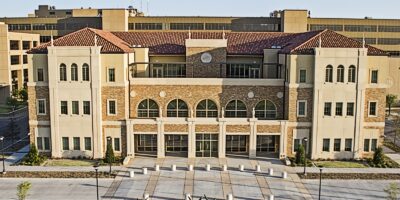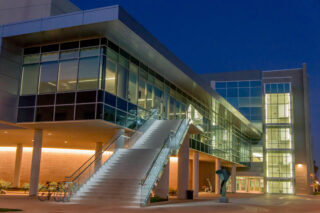

Western University of Health Sciences (WesternU) began as a medical school. The College of Osteopathic Medicine of the Pacific (COMP) opened in Pomona, California, in 1977 to answer a shortage of primary care physicians in the western United States, and the university grew around it. Today, COMP is an established osteopathic medical school with nearly five decades of graduates. It grants the Doctor of Osteopathic Medicine (DO) degree on an urban campus in downtown Pomona, east of Los Angeles, and it shares its accreditation, curriculum and leadership with a second campus in Lebanon, Oregon, now called Heatherington College of Osteopathic Medicine (WesternU HCOM).
COMP is competitive. For the class that entered in August 2025, the Pomona campus received 5,433 applications, granted 881 interviews and enrolled 227 students, whose average MCAT was 509 and average overall GPA was 3.82. Most students are California residents, and the school’s emphasis on humanism, primary care and interprofessional education shapes every part of the program.
This guide covers the 2026-2027 application cycle, for students who want to start medical school in August 2027. It explains COMP’s newest class statistics, admission requirements and deadlines, the 2026-2027 secondary essay prompts with full example answers, 2026-2027 tuition and cost of attendance, the curriculum and clinical rotations, residency outcomes, the online interview and multiple mini interview, related programs at WesternU and a long list of frequently asked questions. Figures were checked on November 12, 2026.
Be an Informed Applicant
Osteopathic medical schools share a philosophy, but each one has its own mission, curriculum and culture. Learning those details helps you choose schools that fit, write secondary essays that sound specific, and avoid practical mistakes such as missing a deadline or sending the wrong letters. It is especially important at a school like COMP, which has two campuses with separate secondaries and different essay prompts.
Research is essential, but personal guidance is often what makes the difference. At International Medical Aid (IMA), we run clinical internships abroad for future physicians, and we help students prepare their medical school applications. If you want help building a school list or polishing your essays, consider our Medical School Admissions Consulting.
Key Takeaways
- What it is: COMP is WesternU’s osteopathic medical school in Pomona, California, founded in 1977. It grants the DO degree and is fully accredited by the Commission on Osteopathic College Accreditation (COCA). Its Oregon campus is WesternU HCOM in Lebanon, Oregon.
- Class profile: The Pomona class that entered in August 2025 averaged a 509 MCAT, a 3.82 overall GPA and a 3.65 science GPA. Ninety percent were California residents.
- Competition: Pomona received 5,433 applications and granted 881 interviews (about 16% of applicants) for 227 seats. COMP does not publish offers, so there is no verified acceptance rate.
- Deadlines: AACOMAS opened May 4, 2026. COMP’s primary deadline is March 1, 2027, and its secondary deadline is March 15, 2027. Admissions are rolling, so apply early in the summer.
- Secondary: Three essay prompts for Pomona in 2026-2027, each with a 500-word limit, and a $65 fee. Oregon has a separate secondary with different prompts. Full examples are below.
- Requirements: Prerequisites in biology, general and organic chemistry and physics (all with lab), English and behavioral sciences; MCAT taken between January 2022 and January 2027; two letters, including one from a physician (DO preferred).
- Cost: 2026-2027 tuition is $72,040. Estimated tuition and fees, including health insurance, are $81,057 for the first year.
- Outcomes: 100% residency placement for the Pomona Class of 2026, with 55% entering primary care.
- Interview: An online interview plus a 30-minute multiple mini interview (MMI) with standardized patients, or an on-campus day that includes both.
Key Statistics About Western University of Health Sciences College of Osteopathic Medicine of the Pacific
The snapshot below collects the numbers applicants ask about first. MCAT, GPA, applications, interviews and enrollment are for the Pomona campus class that entered in August 2025, the newest statistics COMP has published. Tuition is for the 2026-2027 academic year, and the placement rate is for the Pomona Class of 2026.

What Are COMP’s Average MCAT and GPA?
For the Pomona class that entered in August 2025, the average MCAT was 509, the average overall GPA was 3.82, the average science GPA was 3.65 and the average non-science GPA was 3.91 (WesternU COMP and HCOM Competitive Class Stats). These are averages, not minimums. COMP recommends a 3.0 overall and science GPA and a 500 MCAT as academic benchmarks, but enrolled students are well above those levels.
COMP’s averages are higher than the national DO average and close to many MD programs. If your numbers are below 509 and 3.8, you can still be competitive with a strong clinical record, DO shadowing, community service and an early application, but you should apply to a balanced list. You can compare COMP with other schools in our list of medical school GPA and MCAT averages.
| Metric | Value | Year or cohort | Source and definition |
|---|---|---|---|
| School and degree | Western University of Health Sciences College of Osteopathic Medicine of the Pacific (COMP); Doctor of Osteopathic Medicine (DO); Pomona, California | Current | WesternU; private, nonprofit; founded 1977 |
| Applications received | 5,433 (Pomona); 8,789 (both campuses) | Class entering August 2025 | Competitive Class Stats |
| Interviews granted | 881 (Pomona); 1,347 (both campuses) | Class entering August 2025 | Competitive Class Stats |
| Interviewed as a share of applications | 16.2% (Pomona) | Class entering August 2025 | Interviews granted divided by applications received; not an acceptance rate |
| Students enrolled | 227 (Pomona); 322 (both campuses) | Class entering August 2025 | Competitive Class Stats |
| Average MCAT | 509 (Pomona); 508 (both campuses) | Class entering August 2025 | Competitive Class Stats |
| Average overall GPA | 3.82 (Pomona); 3.74 (both campuses) | Class entering August 2025 | Competitive Class Stats |
| Average science and non-science GPA | 3.65 and 3.91 (Pomona) | Class entering August 2025 | Competitive Class Stats |
| In-state residents | 90% (Pomona) | Class entering August 2025 | Competitive Class Stats |
| Mean MCAT and average cumulative GPA (school-reported directory figure) | MCAT 508.4; GPA 3.72 | Cohort not stated | AACOM Choose DO Explorer, WesternU/COMP profile (2026-2027 cycle) |
| First-year matriculants | 225 (207 in-state, 18 out-of-state) | 2024-2025 academic year | AACOM Choose DO Explorer, WesternU/COMP profile |
| Total DO enrollment | 931 (Pomona); 485 (HCOM) | 2024-2025 academic year | AACOM Choose DO Explorer, WesternU/COMP profile |
| Acceptance rate | Not published | Not applicable | COMP publishes no offer counts |
| Tuition | $72,040 per year | 2026-2027 academic year | WesternU student budget, DO California |
| Estimated tuition and fees, including health insurance | $81,057 (years 1 and 2); $81,037 (year 3); $81,512 (year 4) | 2026-2027 academic year | WesternU student budget, DO California |
| Average indebtedness | $331,925 | 2025 graduates with WesternU debt | WesternU student budget, DO California |
| Residency placement | 100%; 55% primary care | Pomona Class of 2026 | WesternU news, March 24, 2026; school placement figure |
| Graduates | 224 | COMP Class of 2026, May 20, 2026 commencement | WesternU news, June 1, 2026 |
Mission and Educational Priorities
COMP and WesternU HCOM share one mission statement:
“The Mission of the College (COMP and WesternU HCOM): is to prepare students to become technically competent, culturally sensitive, professional and compassionate physicians who are prepared for graduate medical education, who are lifelong learners, and who will serve society by providing comprehensive, patient centered healthcare with the distinctive osteopathic philosophy. This is accomplished through excellence in curriculum, translational research, service, osteopathic clinical practice and the enhancement of osteopathic graduate medical education.”
What the Mission Means for Applicants
Primary care and the West. COMP was founded in 1977 as a direct response to a critical shortage of primary care physicians in the western United States. That purpose still shows in its results: 55% of the Pomona Class of 2026 entered primary care, and U.S. News and World Report has named COMP and WesternU HCOM a Tier 1 medical school for primary care for three consecutive years. You do not need to commit to family medicine, but you should understand why primary care matters.
Humanism. WesternU describes humanism as the core of its mission, including values such as altruism, compassion, empathy, integrity and respect, and its motto is “To Teach, To Heal, Together.” Admissions reflects this. The committee looks for applicants who demonstrate a commitment to compassionate health care and who are well-rounded, with diverse experiences.
Whole-person care. The college’s description of osteopathic medicine emphasizes the patient’s mind, body and spirit, and its curriculum teaches osteopathic manipulative medicine (OMM) alongside every other tool of modern medicine.
Interprofessional practice. WesternU is one of the most comprehensive graduate health sciences universities in the country, with programs in dentistry, nursing, optometry, pharmacy, physical therapy, podiatric medicine, physician assistant studies, veterinary medicine and more. Interprofessional education, where students from two or more professions learn with each other, runs through the DO curriculum.
Core Competencies and Learning Outcomes
COMP organizes its program around seven core competencies:
- Medical knowledge
- Osteopathic philosophy
- Patient-centered care
- Professionalism (leadership)
- Interpersonal and communication skills
- Practice-based learning and improvement
- Systems-based practice
The college also publishes learning outcomes and follows the AOA Code of Ethics. If you can show examples of these competencies in your experiences, such as a patient interaction that tested your communication skills or a quality-improvement project at work, you will speak the college’s language in your essays and interview.
Why Western University of Health Sciences COMP?
- History and size. COMP has trained osteopathic physicians in Southern California for nearly five decades and graduated 224 students in 2026.
- Primary care strength. Tier 1 for primary care, with most graduates entering primary care fields.
- Technology. COMP and WesternU HCOM are an Apple Distinguished School, and the Digital Doctor Bag program teaches students to use current technology in medical education and practice.
- Early clinical skills. OMM and clinical skills start in the first semester, and the interview itself uses standardized-patient encounters.
- Research growth. COMP’s student research has expanded quickly; more than 60 WesternU students now present at a major western medical research conference each year.
- Strong outcomes. 100% residency placement for the Pomona Class of 2026, the third consecutive year at 100%.
Accreditation and Institutional Identity
COMP, including WesternU HCOM, is accredited by the American Osteopathic Association Commission on Osteopathic College Accreditation (COCA), the only accreditor for osteopathic medical schools recognized by the U.S. Department of Education. At its most recent comprehensive visit, in spring 2022, the college met all standards and received the maximum ten-year accreditation, and the next full visit is scheduled for spring 2032 (COMP and WesternU HCOM Accreditation). Western University of Health Sciences is accredited by the WASC Senior College and University Commission (WSCUC).
History
- 1977: COMP is established in Pomona, with Philip Pumerantz, PhD, as founding president.
- 1978: COMP receives pre-accreditation (January) and provisional accreditation (July) from the American Osteopathic Association.
- 1982: Full accreditation in February.
- 1996: COMP is restructured into a university and renamed Western University of Health Sciences.
- Today: the college operates campuses in Pomona, California (COMP), and Lebanon, Oregon (Heatherington College of Osteopathic Medicine, or WesternU HCOM).
Two Campuses, One College
The Pomona campus (COMP) and the Lebanon campus (WesternU HCOM) share one accreditation, one curriculum and one dean, but they admit students separately. You apply to one or both through AACOMAS, each campus sends its own secondary, and each charges its own processing fee. Applications to the two campuses are reviewed independently. Only one set of letters is needed for both.
This guide focuses on Pomona. If you are interested in the Oregon campus, note that it has different secondary prompts, a smaller class (95 students enrolled in August 2025) and a different applicant pool (42% Oregon residents).
Leadership
Lisa Warren, DO, MBA, a 2001 COMP graduate and pediatrician, has been dean of COMP and WesternU HCOM since July 1, 2024. Heather Phipps, DO, MBA, is site dean of WesternU HCOM. Robin Farias-Eisner, MD, PhD, MBA, is president of Western University of Health Sciences, and Paula Crone, DO, a 1992 COMP graduate, is provost.
Medical Programs and Affiliations
Doctor of Osteopathic Medicine
The four-year DO program is the core of COMP. Doctors of osteopathic medicine see patients, prescribe medications, perform surgery and deliver babies in hospitals, medical centers and offices across the United States, and they also use osteopathic manipulative treatment. The program is split into a two-year integrated preclinical curriculum and two years of clinical rotations, described in detail below.
DO/MPH Dual Degree
COMP students can earn a Master of Public Health through a dual enrollment program with Claremont Graduate University’s School of Community and Global Health. The program was designed by WesternU’s Department of Population Health Science and CGU for students who want a deeper understanding of public health practice and research, community health promotion and health services delivery.
Master of Science in Medical Sciences (MSMS)
WesternU’s 12-month Master of Science in Medical Sciences is a preparatory program for students interested in medicine, dentistry, optometry, podiatric medicine and other health professions. It builds critical evaluation skills and research awareness under faculty mentorship. Completing the MSMS does not guarantee admission to COMP, but it is a structured way to strengthen an academic record.
Joint Seven-Year Program with Pitzer College
Some COMP students enter through a joint seven-year medical program with Pitzer College in Claremont: three years at Pitzer, then four years at COMP. If you are still in high school or early in college in the Claremont area, ask Pitzer and WesternU about current eligibility.
Other WesternU Programs
WesternU offers doctoral programs in dental medicine, nursing practice, optometry, osteopathic medicine, pharmacy, physical therapy, podiatric medicine and veterinary medicine, along with master’s programs including physician assistant studies, medical sciences, biomedical sciences and nursing. WesternU’s College of Health Sciences offers a Master of Science in Physician Assistant Studies, and DO students learn alongside students from other professions in interprofessional courses. If you are weighing medicine against PA school, pre-PA internships are one way to see both roles in a clinical setting.
Clinical Affiliations
COMP does not own a teaching hospital. Instead, it places students at community hospitals, county hospitals and private practices across Southern California and beyond. Some examples of partner hospitals include Antelope Valley Hospital (Lancaster), Arrowhead Regional Medical Center (Colton), College Medical Center (Long Beach), Kaiser Permanente (Fontana, Orange and San Diego), Kern Medical Center (Bakersfield), Marian Medical Center (Santa Maria), Metropolitan State Hospital (Norwalk), PIH Health Hospital (Downey), Pomona Valley Hospital Medical Center (Pomona) and the San Bernardino County Department of Behavioral Health (Rialto). In Southern California, students may receive yearlong placements within one hospital system or placements across several systems in a region.
Curriculum Overview
COMP’s curriculum is learner-centered and competency-based. The college re-engineered its legacy systems-based curriculum into an integrated design, called iMED, in which basic science and clinical faculty often teach side by side (COMP Curriculum Overview).
Years One and Two: The Preclinical Curriculum
The first two years are organized as a series of integrated Foundations of Osteopathic Medicine (FOM) blocks:
- First year, fall: Introduction to the Study of Osteopathic Medicine (anatomy, histology, biochemistry, genetics, cell biology, clinical medicine and OMM), then FOM 1 (musculoskeletal, dermatology and hematology) and FOM 2 (neurologic and behavioral medicine).
- First year, spring: FOM 3 (cardiovascular, respiratory and renal) and FOM 4 (gastrointestinal, endocrine and reproductive), followed by a high-yield review capped by a cumulative national standardized exam.
- Second year: FOM 5 through FOM 8 revisit the organ systems through pathology, pathophysiology, microbiology and immunology, and pharmacology, followed by another high-yield review.
- Board preparation: students receive nine weeks of dedicated study for COMLEX Level 1, guided by a faculty board advisor.
Clinical skills, medical reasoning and OMM run through every block. A longitudinal course, Integrated Skills for the Study of Medicine, combines board preparation, practice exams and conference week activities.
Assessment and Conference Weeks
Assessment weeks end each block with clinical skills practicals, an anatomy practical and an integrated computerized exam. A conference week follows each assessment week. Modeled on a professional conference, it lets students choose sessions on wellness, professional development, systems-based practice, professionalism and communication. Conference weeks continue through the first three years and teach students to manage their own continuing education, a habit physicians need for their whole careers.
Interprofessional Education
Interprofessional education occurs every semester. Students from different health professions learn about, from and with each other, so DO students practice the teamwork that good patient care depends on.
Technology: The Digital Doctor Bag
COMP and WesternU HCOM are an Apple Distinguished School. Through the Digital Doctor Bag program, students learn to use current technology in medical education and practice. The first-year budget includes a $2,000 computer and iPad expense.
Doctor of Osteopathic Medicine: The Two Phases
The program is often described in two phases. The preclinical phase (years one and two) builds the foundation in basic science and organ systems while teaching osteopathic principles. The clinical phase (years three and four) is made up of rotations in core disciplines and electives. Together they prepare you to enter residency as a DO.
Admissions Requirements and Application Process
Prerequisite Courses
COMP requires these prerequisites (COMP and WesternU HCOM Application Requirements):
| Course | Minimum |
|---|---|
| College English | One academic year (6 semester units) |
| Behavioral Sciences | One academic year (6 semester units) |
| Biological Sciences with lab | One academic year (8 semester units) |
| Organic Chemistry with lab | One academic year (8 semester units) |
| Inorganic Chemistry with lab | One academic year (8 semester units) |
| Physics with lab | One academic year (8 semester units) |
Recommended, not required: Biochemistry, Genetics and Physiology.
Course policies:
- Prerequisites must be completed at a regionally accredited U.S. institution, an institution recognized by the U.S. Department of Education, or its equivalent abroad.
- All prerequisites must be finished by June 1 of the year you plan to enter.
- CLEP, IB and AP credits count if the credits appear on your transcript and are course-specific.
- Coursework from non-U.S. institutions (other than Canada) must be evaluated by an approved service.
- COMP does not accept alternative educational experience or professional training in place of requirements.
- Online prerequisite courses and online labs are generally not accepted. Online labs completed between spring 2020 and fall 2022 are accepted because of COVID-19.
Application Requirements
- A bachelor’s degree before matriculation (you may apply while it is in progress).
- Completion of most prerequisites, and at least 90 semester units, at the time of application.
- Official MCAT scores sent to AACOMAS. For the class entering in 2027, COMP accepts MCATs taken between January 2022 and January 2027, but January 2027 scores may delay review. The school strongly recommends taking the MCAT in August or September of the year before you plan to enter.
- Two letters of recommendation (details below).
- Proof of legal U.S. residency before matriculation, if you are not a U.S. citizen.
COMP’s current application requirements do not list CASPer, PREview or any other situational judgment test. The live interview day includes a short multiple mini interview instead (see the interview section).
Letters of Recommendation
COMP requires two letters:
- One from a physician (MD or DO), and a DO is preferred. The letter should come from a physician you shadowed or worked with in a clinical setting.
- One from a science professor or a health professions committee. A committee evaluation from your campus pre-health committee is preferred, and it must include at least one science professor. If your school has no committee, a letter from a science professor who taught you is acceptable.
Recommenders must know you in a professional or academic capacity and have no personal or family relationship with you. If you have not taken a class for two or more years, you may substitute a letter from a research professor, non-science professor, pre-health advisor or supervisor. Letters can come through AACOMAS (recommended because it is fastest), Interfolio or mail. COMP does not accept letters by email, and it advises sending no more than five additional letters.
Reapplicants: COMP will reuse your letters for a second consecutive application only. You may add one new letter. If you are applying for a third consecutive year, or if your last application was more than a year ago, you need new letters.
Competitive Candidate Profile
COMP describes the applicants it seeks. They:
- Are academically prepared to succeed in a rigorous program.
- Are well-rounded with diverse experiences.
- Have shown interest and involvement in the community.
- Demonstrate a commitment to compassionate health care.
- Have a good understanding of the profession and WesternU.
- Demonstrate excellent verbal and written communication skills.
The admissions committee selects interviewees by considering GPA, MCAT scores, clinical experience, leadership roles, knowledge of osteopathic medicine and community service. COMP also welcomes nontraditional students and says that age is no barrier.
International and DACA Applicants
COMP accepts applications from international students on both campuses, with no separate application or fee, and WesternU’s International Student Services helps with immigration documents. Applicants with DACA status are considered. International applicants should know that some residency programs will not sponsor visas, so COMP advises starting that research early.
When to Apply: The 2026-2027 Timeline
COMP admits students on a rolling basis, interviewing and offering seats starting in September.
- Primary application: AACOMAS opened May 4, 2026, and closes for COMP on March 1, 2027. For best consideration, submit at least six weeks before the deadline, but in practice, submit in June or early July.
- Secondary application: Applicants who meet COMP’s requirements, after a holistic review of the primary, receive a secure link to the secondary, beginning in mid-July. COMP asks you to submit within two weeks (its FAQ says 10 business days), and late secondaries may be delayed. The secondary deadline is March 15, 2027. The processing fee is $65, non-refundable, and applicants with an AACOMAS fee waiver receive a secondary fee waiver.
- Interviews: September through April. Invitations arrive by email, usually two to four weeks in advance.
- Decisions: posted to your status page about 30 days after your interview. All decisions are final, and COMP does not offer appeals or second interviews in the same cycle. Everyone receives a final status by email at the end of the cycle in August.
- Deposits: COMP follows the AACOMAS traffic guidelines. Students accepted before November 15 have until December 14 to decide; those accepted November 15 to January 14 have 30 days; those accepted January 15 to April 30 have 14 days. The acceptance deposit is $2,000 and is applied to tuition.
- Start date: First-year orientation begins August 3, 2027.
Application Timeline Table
| Step | Date or timing | What to do |
|---|---|---|
| AACOMAS opens | May 4, 2026 | Request transcripts and letters; designate COMP, HCOM or both |
| Best time to submit AACOMAS | June to early July 2026 | Rolling review rewards early files |
| Secondary links sent | From mid-July 2026 | Submit within two weeks with the $65 fee |
| Interviews | September 2026 through April 2027 | Online interview plus MMI, or on-campus day |
| Decisions | About 30 days after interview | Check your status page |
| Last MCAT accepted | January 2027 | January scores may delay review |
| Primary deadline | March 1, 2027 | Seats may fill earlier |
| Secondary deadline | March 15, 2027 | Only for invited applicants |
| Orientation | August 3, 2027 | First day of the DO program |
Submitting Your Application
Like most DO programs, COMP uses AACOMAS. After you submit, all documents are processed by WesternU’s Office of Enrollment Data Services; allow about 10 business days for each to post to your file. You can check your status online, and you will receive an email when your application is complete. The committee will not review your file until every required document has arrived.
List of Things You Need
Here is a simplified checklist:
- AACOMAS application with COMP (and HCOM, if you want both) designated.
- Official transcripts to AACOMAS, with foreign coursework evaluated by Josef Silny and Associates or World Education Services.
- MCAT scores from January 2022 to January 2027 released to AACOMAS.
- Two letters: a physician (DO preferred) and a science professor or committee.
- Secondary application and $65 fee, within two weeks of receiving the link.
- Interview and MMI, if invited.
Clinical Experience and DO Exposure
COMP does not publish a minimum number of hours, but it looks for clinical experience, community service and knowledge of osteopathic medicine, and it requires a physician letter. COMP accepts only in-person shadowing, so shadow a DO in person and, if possible, ask that physician for your letter. Then build steady patient contact through paid or volunteer work. Clinical internships for pre-med students can add supervised patient contact, and pre-med summer internships fit around a school year if you plan ahead.
Tuition, Cost of Attendance and Financial Aid
WesternU is private, so tuition is the same for California residents and nonresidents. The figures below are from WesternU’s 2026-2027 budget for the Pomona DO program (WesternU Student Budget, DO California). All budgets are estimates for full-time students and can change.
Tuition and Fees (2026-2027)
| Item | Year 1 | Year 2 | Year 3 | Year 4 |
|---|---|---|---|---|
| Tuition | $72,040 | $72,040 | $72,040 | $72,040 |
| Student body fees | $40 | $40 | $20 | $20 |
| Graduation fee | Not applicable | Not applicable | Not applicable | $475 |
| Student service fees | $978 | $978 | $978 | $978 |
| Program support fees | $2,625 | $2,625 | $2,625 | $2,625 |
| Health insurance | $5,374 | $5,374 | $5,374 | $5,374 |
| Estimated total tuition and fees | $81,057 | $81,057 | $81,037 | $81,512 |
Living Costs and Other Budget Items
WesternU’s budget adds these items each year:
- Living expenses: $33,220
- Personal expenses: $7,744
- Transportation: $9,724
- Books, course materials, supplies and equipment: $2,552 (year 1), $1,974 (year 2), $1,304 (year 3), $1,575 (year 4)
- Computer and iPad: $2,000 (year 1 only)
- Loan fees: about $530 for Direct Unsubsidized loans and $3,382 for Grad PLUS loans per year
Added together, the first-year budget items come to about $140,000, so plan for a full cost of attendance well above tuition. WesternU disburses loans twice a year, in the fall before school starts and in the spring.
Tuition Costs in Context
Average indebtedness for WesternU DO graduates with WesternU debt was $281,104 in 2022, $276,042 in 2023, $312,357 in 2024 and $331,925 in 2025. Those numbers show how quickly costs add up, so it pays to plan early.
Financial Aid and Scholarships
WesternU offers recruitment scholarships based on the strength of your application, interview and community contributions. No separate application is required: if you are selected, the scholarship offer arrives with your admission offer. File the FAFSA as soon as it opens, search WesternU’s scholarship database, and consider service-based programs. Students who are permanent residents of Arizona, Montana or Wyoming may be eligible for the WICHE Professional Student Exchange Program; contact your state WICHE office, since the annual application deadline is October 1.
Other WesternU Program Costs
If you are comparing paths within WesternU, the MSMS and Master of Science in Physician Assistant Studies have their own budgets on the same financial aid site. Check the current year’s figures there, since tuition changes annually.
Campus Facilities and Student Life
WesternU California in Pomona
COMP sits in the middle of downtown Pomona, an urban neighborhood with art galleries, dance studios, concert halls, coffee houses and restaurants, in the Los Angeles area. The campus is home to WesternU’s California colleges, so you will share classrooms, labs and events with students in pharmacy, dentistry, optometry, physical therapy, nursing, podiatric medicine, veterinary medicine and physician assistant studies. Clinical sites across the Inland Empire, Los Angeles County and Orange County are within driving distance. WesternU also offers virtual 360-degree tours of both campuses.
Housing
Plan your housing early. WesternU’s 2026-2027 budget for Pomona DO students assumes $33,220 a year for living expenses, and the admissions and student affairs teams can point you to housing resources near campus.
Student Life and Wellness
COMP builds wellness into the curriculum through conference weeks and the MedWell program, and the college has a wellness coordinator. Students can join specialty interest groups, cultural groups, student government and service organizations, and the WesternU MIKE program pairs students with mentors. WesternU events, such as the annual Pomona community 5K and 10K, connect students with the surrounding neighborhood.
Community Service
Community service is part of what COMP looks for in applicants and part of student life. WesternU Health clinics and WesternU’s community programs give students chances to serve the Pomona Valley, and students organize outreach and health education events throughout the year. Bring a record of service with you, and plan to keep serving.
Clinical Rotations and Research Opportunities
Third Year (OMS III)
The third year is made up of core rotations, chosen in order by lottery, plus scheduled teaching touchpoints (COMP Clinical Curriculum):
| Rotation | Length |
|---|---|
| Clinical Orientation | 1 week |
| Family Medicine | 4 weeks |
| Internal Medicine | 8 weeks (two 4-week rotations) |
| Pediatrics | 4 weeks |
| OB/GYN and Women’s Health | 4 weeks |
| Osteopathic Manipulative Medicine | 4 weeks |
| Psychiatry | 4 weeks |
| Surgery | 4 weeks |
| Selective (set discipline, affiliated site) | 4 weeks |
| Electives (student’s choice) | Two 4-week rotations |
| Conference and clinical performance exam weeks | 4 weeks total |
| Vacation | 2 weeks |
Accreditation standards require some rotations to take place in hospitals, with osteopathic physicians and in settings with residents. Throughout the year, students receive clinical cases, simulations, procedural practice and board preparation, plus a monthly half-day “Fourth Friday” session for professional development and wellness.
Fourth Year (OMS IV)
Fourth-year students complete 32 weeks of rotations and receive 8 weeks of vacation:
- Emergency Medicine (4 weeks)
- Sub-Internship (4 weeks, in inpatient internal medicine, surgery or family medicine)
- Selective (4 weeks)
- Electives (20 weeks, discipline and location chosen by the student)
The electives give you room for audition rotations at residency programs you hope to join.
Rotation Sites
COMP rotations include community and county hospitals, sites with and without residency programs, and inpatient and outpatient settings, so students see the full range of practice. Partner hospitals in Southern California include Arrowhead Regional Medical Center, Pomona Valley Hospital Medical Center, Kaiser Permanente in Fontana, Orange and San Diego, Kern Medical Center, PIH Health Hospital in Downey and others listed earlier in this guide.
Residency Outcomes
The Pomona Class of 2026 achieved 100% residency placement for the third consecutive year, with 55% pursuing primary care. The most common placements were internal medicine, family medicine, emergency medicine, psychiatry, pediatrics and anesthesiology. Graduates matched at programs such as Loma Linda University Health, Adventist Health Glendale and Emory University School of Medicine.
Research Opportunities
Research at COMP has grown steadily. The Office of Student Research, co-directed by Sébastien Fuchs, MD, PhD, supports student projects, and more than 60 WesternU students now present research each year at the Western Medical Research Conference. COMP also hosts an annual student research symposium, and in 2026 WesternU reported COMP and its Oregon campus among the top osteopathic colleges in research. Nissar A. Darmani, PhD, associate dean of research, leads the college’s research enterprise.
Notable Alumni, Faculty, Leadership and Admissions Staff
School Leadership
Lisa Warren, DO, MBA, Dean (COMP, 2001). Dr. Warren, a pediatrician and associate professor of pediatrics, became dean of COMP and its Oregon campus on July 1, 2024. She earned her DO at COMP in 2001. At the 2026 Match Day, she told graduates that they had “already touched and changed many patients” through their training. As an alumna leading her own school, she is a good example of the career paths COMP opens.
Edward V. Barnes II, MD, FACP, Vice Dean, College Affairs. Dr. Barnes is an associate professor of internal medicine and chief of the Division of Nephrology and Hypertension.
Gerald Thrush, PhD, Vice Dean, Academic Affairs. Dr. Thrush is a professor of immunology who oversees academic affairs; in 2026 he served as University Marshal for all 10 WesternU commencement ceremonies.
Michelle Park, EdD, Associate Dean, Student Affairs. Dr. Park leads student affairs on the Pomona campus.
Stephanie White, DO, Associate Dean, Clinical Education. Dr. White oversees third- and fourth-year rotations.
Heather Phipps, DO, MBA, Site Dean, WesternU HCOM. Dr. Phipps leads the Lebanon, Oregon campus.
Admissions Staff
Marcel P. Fraix, DO, MBA, FAAPMR, Associate Dean, Admissions and Enrollment. Dr. Fraix leads COMP admissions and also chairs physical medicine and rehabilitation and the Section of Health Policy and Management. Admissions counselors handle individual questions and advising appointments.
Current Faculty
Sébastien Fuchs, MD, PhD, Associate Professor and Co-Director, Office of Student Research. In September 2026, Dr. Fuchs became the first WesternU faculty member elected a Fellow of the American Federation for Medical Research. He has taken WesternU students to the Western Medical Research Conference since 2014.
Nissar A. Darmani, PhD, Associate Dean of Research and Professor of Pharmacology.
Jesus Sanchez, DO, Assistant Dean, Academic Affairs, and Professor of NMM/OMM and Family Medicine. Dr. Sanchez teaches osteopathic manipulative medicine and family medicine.
Notable Alumni
Paula Crone, DO (COMP, 1992), WesternU Provost. Dr. Crone leads academics across WesternU’s colleges and spoke to the COMP Class of 2026 at commencement.
James Winn, DO (COMP, 1989). Dr. Winn’s daughter followed him to COMP and matched into internal medicine at Loma Linda University Health in 2026, a reminder that many COMP families span generations.
Sujay Dayal, DO (COMP, 2022). Dr. Dayal completed the joint seven-year program with Pitzer College and COMP, and in 2026 he hooded his sister, a new COMP graduate who completed the same path.
Admissions Statistics and Class Profile
Class Stats, GPAs and Test Scores: Class Entering August 2025
| Measure | Pomona (COMP) | Oregon (HCOM) | Both campuses |
|---|---|---|---|
| Applications received | 5,433 | 3,356 | 8,789 |
| Interviews granted | 881 | 466 | 1,347 |
| Students enrolled | 227 | 95 | 322 |
| Men / women | 44% / 55% | 34% / 66% | 42% / 58% |
| In-state residents | 90% | 42% | 76% |
| Bachelor’s degree or higher | 95% | 95% | 95% |
| Graduate or doctoral degree | 14% | 16% | 15% |
| Average age | 24.8 | 25.7 | 25.1 |
| Average overall GPA | 3.82 | 3.58 | 3.74 |
| Average science GPA | 3.65 | 3.57 | 3.625 |
| Average non-science GPA | 3.91 | 3.83 | 3.88 |
| Average MCAT | 509 | 507 | 508 |
2024-2025 First-Year Class (Pomona)
In 2024-2025, COMP enrolled 225 first-year students (126 women and 99 men), 207 of them California residents and 18 from out of state, and 931 DO students in total. Among those first-year students, 45.8% identified as Asian, 29.3% as white, 10.2% as Hispanic or Latino, 4.0% as multiple races, 0.4% as Black or African American and 10.2% undisclosed. Most (89.8%) were science majors, and 8.9% held graduate degrees.
How Competitive Is COMP?
About 16% of Pomona applicants (881 of 5,433) received interviews for the class that entered in 2025. COMP does not publish how many offers it made, so the true acceptance rate is unknown. The 90% in-state share means California residents make up nearly the whole Pomona class; out-of-state applicants should have a clear reason for choosing COMP. Oregon’s class is smaller and more geographically mixed, which can make it a better fit for some out-of-state applicants.
How to Read These Numbers
COMP’s stats are high for a DO school. The 509 average MCAT and 3.82 average overall GPA put the Pomona class near the profile of many MD programs, and the science GPA (3.65) runs below the overall average because non-science grades are higher. If your science GPA is your weaker number, upper-level science courses or the MSMS can help. And because the class profile mixes traditional and nontraditional students (average age about 25), a few years of work experience is common.
Competitive Comparisons
COMP’s numbers are competitive, but they are not as high as those at the most selective MD schools. If you are applying broadly, compare COMP with schools such as Perelman and Brown to see how averages, missions and secondary styles differ.
Tips and Strategies for Admission
1. Apply in June or early July
Rolling admissions and a large applicant pool make timing important. Submit AACOMAS early, have your letters ready, and return the secondary within two weeks. COMP starts interviewing in September, and later applicants compete for fewer seats.
2. Decide which campus or campuses you want
Each campus has its own secondary, fee and prompts, and each reviews applications independently. Apply to both only if you would attend either, and write each secondary for its own campus. Do not mention Lebanon in a Pomona essay or the reverse.
3. Shadow a DO in person and get the letter
COMP prefers a DO letter and accepts only in-person shadowing. A DO letter, plus a specific story about osteopathic care, is one of the clearest signals that you understand the profession.
4. Build sustained clinical experience
COMP’s applicants often have years of work behind them. Paid roles such as medical assistant, scribe, EMT or care coordinator show commitment. Supervised internships for pre-med students can add hands-on patient contact, as long as you can explain what you did and what you learned.
5. Show humanism in action
COMP’s mission centers on compassionate, patient-centered care. Use your essays to describe what you did for a person, not just how many hours you served. Specific moments of listening, follow-up and advocacy are more convincing than general statements about caring.
6. Practice the MMI
COMP’s MMI uses two five-minute encounters with standardized patients, and it is required for admission. Practice short role-plays with a friend: introduce yourself, listen, acknowledge emotion, and explain next steps in plain language.
7. Strengthen your science record if needed
Because the average science GPA is lower than the overall GPA, the committee sees many applicants with uneven records. If yours is uneven, upper-level science, a post-baccalaureate program or WesternU’s MSMS can help. Pre-med gap year programs that add clinical work can round out a gap year, too.
8. Reapply strategically
COMP’s FAQ suggests that reapplicants review their previous materials honestly, looking for gaps in DO exposure, clinical exposure, academics or community service. Fix the biggest gap before reapplying, and add a new letter if you can.
Secondary Application Questions, Example Responses and Analysis
COMP Pomona Secondary Essay Prompts (2026-2027)
COMP sends its secondary to applicants who meet its requirements after a holistic review of the primary application. For the 2026-2027 cycle, the Pomona secondary has three essay prompts, and WesternU’s official instructions set a 500-word limit for each essay question. The processing fee is $65. WesternU recommends drafting your answers in a word processor and pasting them in; you cannot change answers after submission, though you can upload supplemental information later.
The three Pomona prompts are:
- What is your purpose of pursuing medical education, and why COMP Pomona?
- Briefly discuss any extenuating circumstances which you feel are pertinent to your application (poor grades, course withdrawals, lapse in your education, etc.).
- If you have not taken any coursework for over 3 years, please explain why and what you have been doing during that period of time.
The Oregon campus (WesternU HCOM) has a different and longer set of prompts in 2026-2027, including questions about observing a DO, a clinical situation in which a patient’s values differ from yours, the HCOM mission and why Lebanon, Oregon. If you apply to both campuses, you will complete two secondaries.
Applicants also reported a portal glitch early in the 2026-2027 cycle: the application proof page showed last year’s questions with blank answers. Applicants reported that the admissions office confirmed it was a display error and that only the three current Pomona questions needed answers. If you see the same thing, contact admissions rather than writing extra essays.
How to Approach COMP’s Secondary
- Invest most in prompt 1. It is the only prompt every applicant must answer fully, and it combines “why medicine” and “why COMP.”
- Use prompts 2 and 3 only if they apply. If they do, be factual and brief. If not, say so in a short line.
- Be specific to Pomona. Mention verified features such as the primary care mission, humanism, interprofessional education, conference weeks, the standardized-patient MMI or Southern California rotation sites, and connect each to your own experience.
- Stay within 500 words and submit within two weeks.
The examples below are original and written for this guide. Each is an illustrative example, not an actual applicant essay, and each stays within the 500-word limit. Use them to understand structure, not as text to copy.
Prompt 1: What is your purpose of pursuing medical education, and why COMP Pomona? (500 words)
What it asks: Two things: your reason for becoming a physician and your specific reasons for choosing COMP’s Pomona campus.
Approach: State your purpose in a sentence, show it through one real experience, then give two or three specific reasons for COMP that connect to that purpose.
Illustrative example, not an actual applicant essay:
My purpose in pursuing medicine is simple to say and hard to do: I want to be the physician who notices what is going on outside the exam room and still has time to treat the person in front of me.
I learned that purpose at a community health center in the Inland Empire, where I have worked as a medical assistant for two years. Most of our patients work long hours in warehouses, and many put off care until pain stops them from working. One of them, a forklift driver in his fifties, came in for a refill and mentioned back pain almost as an afterthought. The DO I worked with examined his back with her hands, found tight muscles on one side, treated him with osteopathic manipulation, and then asked how he lifted at work and how long his shifts were. She adjusted his blood pressure medicine, showed him two stretches, and wrote a work note. He came back a month later standing straighter and with better numbers. I want to practice that kind of medicine: careful, hands-on and aware of the whole person.
COMP Pomona is where I want to learn it, for three reasons.
First, COMP was founded in 1977 to address a shortage of primary care physicians in the western United States, and it still trains a large share of primary care doctors. In 2026, 55% of COMP’s graduating class entered primary care. I want to practice family medicine in Southern California, and COMP’s mission and outcomes match that goal.
Second, WesternU’s commitment to humanism fits how I already try to care for patients. At my clinic, I have seen that patients follow plans they helped build. COMP’s focus on patient-centered care, its interprofessional education with students in pharmacy, physical therapy, nursing and other professions, and its conference weeks on wellness and professionalism would help me build the habits I want to carry for a whole career. I also value that COMP’s interview includes standardized-patient encounters, because communication is a skill I want to keep practicing.
Third, COMP’s clinical training sites are the hospitals that serve my community. Rotations at places such as Pomona Valley Hospital Medical Center and Arrowhead Regional Medical Center would let me learn in the same county and safety-net systems where my patients receive care. I want my training to prepare me for the patients I intend to serve.
I would bring two years of full-time clinical work, fluency in Spanish and a steady habit of following up with patients after they leave. I want to earn my DO at COMP Pomona and stay in this region to practice the kind of medicine that changed my patient’s day, and his month.
Why this works: The answer covers both halves of the prompt in order: a clear purpose, then specific reasons for COMP Pomona. The purpose is shown through one patient story that also demonstrates an understanding of osteopathic care. Each ‘why COMP’ reason uses a verified fact (the 1977 founding to address the western primary care shortage, 55% of the Class of 2026 entering primary care, humanism and interprofessional education, conference weeks, the standardized-patient MMI and named rotation hospitals) and ties it to the applicant’s own experience. It ends with what the applicant brings. Mistakes to avoid: answering only ‘why medicine’, listing COMP features without connecting them to you, naming the Oregon campus in a Pomona essay, and going over 500 words.
Prompt 2: Briefly discuss any extenuating circumstances which you feel are pertinent to your application (poor grades, course withdrawals, lapse in your education, etc.). (500 words)
What it asks: Context for anything on your record that a reader might question.
Approach: Name the issue, explain the cause in a few sentences, and spend most of your words on what you did afterward.
Illustrative example, not an actual applicant essay:
In the spring of my sophomore year, I withdrew from General Chemistry II and Calculus, and my GPA that semester was 2.4. I want to explain what happened and what I did about it.
That February, my younger brother was diagnosed with leukemia. My parents both work night shifts, and my mother does not drive on freeways, so I became the person who took him to treatment at a children’s hospital an hour from our home, three days a week. I tried to keep a full course load, but I was missing labs and studying in waiting rooms. By April, it was clear I could not pass chemistry and calculus while doing what my family needed. I met with my advisor, withdrew from both courses before the deadline, and finished my other classes with Bs and Cs.
My brother finished treatment the following year and has been in remission for three years. Once his schedule stabilized, I retook General Chemistry II and earned an A, then took Calculus and earned an A-. Over the next two years, I completed Organic Chemistry, Biochemistry and Physics with a science GPA of 3.8. My transcript shows the dip, but it also shows the recovery.
That year also taught me lessons I could not have learned in a classroom. I watched nurses explain chemotherapy to my parents in plain language and patiently answer the same questions every week. I learned how much a family depends on a care team that communicates well, and I learned to manage my time under real pressure. Those lessons are part of why I chose osteopathic medicine and why I value COMP’s focus on humanistic, patient-centered care.
I am not asking the committee to overlook the grades. I am asking that they be read alongside the record that followed.
Why this works: The example states the facts plainly (which courses, which semester, what grade), explains the cause briefly without dramatizing it, and spends most of its words on the recovery: retakes, upper-level science and a strong science GPA. It closes by connecting the experience to the applicant’s goals without asking for sympathy. Mistakes to avoid: blaming others, writing about a minor issue as if it were a crisis, leaving a visible problem unexplained, or using this space for a second personal statement. If nothing on your record needs context, a short answer such as ‘Not applicable’ is fine.
Prompt 3: If you have not taken any coursework for over 3 years, please explain why and what you have been doing during that period of time. (500 words)
What it asks: For nontraditional applicants, an account of the years since your last course.
Approach: Give dates and roles, show what you learned, and show that you are ready to return to full-time study.
Illustrative example, not an actual applicant essay:
I graduated with a degree in biology in 2021 and have not taken a college course since. During those years, I have been working in health care full time, and that work is the reason I am applying to medical school now.
After graduation, I worked for two years as an emergency medical technician with a private ambulance company in Los Angeles County. I ran interfacility transfers and 911 backup calls, took vital signs, managed oxygen and splinting, and handed patients off to emergency department teams. The work taught me to stay calm, to communicate clearly under pressure and to respect every member of a care team. It also showed me how often our patients were older adults with chronic illnesses that had gone unmanaged for years.
That pattern led me to my current job. For the past two years, I have worked as a medical assistant and then a care coordinator at a primary care practice in the San Gabriel Valley. I room patients, take histories, update medication lists, and call patients after hospital discharges to make sure they understand their new medications and have a follow-up visit. Many of the patients I once transported by ambulance are the patients I now help keep out of the hospital.
I also prepared for the MCAT on my own while working full time, which required the same discipline I will need in medical school. I studied each morning before work for eight months, reviewed biochemistry and physics content, and took full-length practice exams on weekends. My MCAT score reflects that preparation.
I understand that time away from the classroom is a fair concern. To stay current, I completed a free online biochemistry review and joined a weekly study group with two other working applicants. I am ready to return to full-time study. My time away has given me something coursework alone could not: years of patient contact, a clear reason to become a physician and a commitment to primary care that I hope to build on at COMP.
Why this works: The prompt asks two things, why and what you were doing, and the example answers both with dates and specific duties. It turns the gap into evidence of readiness by showing years of patient contact, independent MCAT preparation and steps taken to stay academically current. It acknowledges the committee’s concern directly. Mistakes to avoid: vague descriptions (‘I worked in health care’), apologizing instead of explaining, or claiming duties beyond your scope. If you have taken coursework within the last three years, this prompt does not apply to you.
Earlier COMP Prompts
COMP’s prompts change from year to year. In the 2025-2026 cycle, the secondary asked about an experience observing a DO that solidified your desire to become an osteopathic physician, why becoming a DO matters to you if you had not shadowed one, your most memorable community service activity, how the COMP mission statement aligns with your values, why you want to attend COMP, whether you had participated in research, extenuating circumstances, and any gap in coursework of more than three years. Earlier cycles also asked about meaningful community service and why you want to attend COMP. These themes still matter. Even though the 2026-2027 Pomona secondary is shorter, your “purpose and why COMP” answer should show DO exposure, service and fit with the mission.
Interview Format and Preparation
Interview Format
COMP interviews are by invitation, from September through April. This cycle, COMP offers both online and on-campus interviews, with only four on-campus dates. The choice is yours, and the admissions committee has no preference (COMP Your Interview).
Online interview day. Online interviews take place on Zoom and last about four hours: a welcome from the dean, an icebreaker, admissions and student affairs presentations, a preclinical presentation, a financial aid presentation, networking and the interview.
Online MMI. The multiple mini interview takes place on a different day in the same week. It lasts 30 minutes: an overview, then two five-minute interactions with standardized patients. Your knowledge of medicine is not evaluated. You choose one of four MMI timeslots when you schedule your interview. The MMI is required to be considered for admission.
On-campus interview day. On-campus days last about six hours and include a welcome from the dean, an icebreaker, financial aid and preclinical presentations, an OMM demonstration, a campus tour, the MMI and the interview.
The interview itself. Interviews take place on Tuesdays or Thursdays and last 30 minutes. You will be asked to draw on personal experiences, and questions can be challenging and thought-provoking. You will have time to ask your own questions at the end.
COMP and Conversation. Before your interview, COMP Student Ambassadors host an informal evening social where you can talk with current students. Spouses and significant others may attend.
After the Interview
Decisions are posted to your status page about 30 days after your interview. COMP does not offer second interviews or appeals.
How to Prepare
- Reread your application. Interviewers draw on your experiences, so know your AACOMAS entries and secondary well.
- Practice the MMI. In a standardized-patient encounter, introduce yourself, ask open questions, listen, respond to emotion and explain next steps clearly. No medical knowledge is required.
- Know COMP. Review the mission, the curriculum, the DO/MPH program and the clinical rotation structure, and prepare a few questions for your interviewers.
- Test your technology. For online days, use the newest version of Zoom and test your audio and video.
- Plan your day. On-campus days run six to seven hours, and check-in is on the first floor of the HEC building.
Practice Questions
- Why do you want to become an osteopathic physician?
- Why COMP, and why Southern California?
- Tell me about a time you made a mistake in a clinical or work setting. What did you do?
- Describe a patient interaction that changed how you think about health care.
- How would you handle a patient whose values differ from your own?
- What does humanism in medicine mean to you?
Frequently Asked Questions
Is Western University of Health Sciences COMP hard to get into?
Yes. For the class that entered in August 2025, the Pomona campus received 5,433 applications, granted 881 interviews and enrolled 227 students with an average MCAT of 509 and an average overall GPA of 3.82. Those numbers are high for a DO school.
What is COMP’s acceptance rate?
COMP does not publish the number of offers it makes, so there is no verified acceptance rate. About 16% of Pomona applicants (881 of 5,433) received interviews for the class that entered in 2025.
What MCAT and GPA do I need for COMP?
There is no strict cutoff, but COMP lists a 3.0 overall and science GPA and a 500 MCAT as recommended benchmarks. The Pomona class that entered in 2025 averaged a 509 MCAT and a 3.82 overall GPA, so competitive applicants are usually well above the benchmarks.
Does COMP prefer California residents?
COMP is private and charges the same tuition to everyone, but 90% of the Pomona class that entered in 2025 were California residents. Out-of-state applicants are considered, and the Oregon campus admits a more geographically mixed class.
What are the COMP application deadlines for 2026-2027?
The primary (AACOMAS) deadline is March 1, 2027, and the secondary deadline is March 15, 2027. Admissions are rolling, so apply early.
How many secondary essays does COMP have?
For 2026-2027, the Pomona secondary has three prompts with a 500-word limit each: your purpose in pursuing medicine and why COMP Pomona, extenuating circumstances, and any gap in coursework of more than three years. The Oregon campus has its own prompts.
Can I apply to both the Pomona and Oregon campuses?
Yes. Designate both in AACOMAS. Each campus sends its own secondary and charges its own fee, and applications are reviewed independently. Only one set of letters is needed.
Does COMP require CASPer?
No. COMP’s current application requirements do not list CASPer or any other situational judgment test. The interview includes a required MMI with standardized patients.
What is the COMP interview format?
You can interview online or on campus. Online interviews include a four-hour Zoom day and a separate 30-minute MMI with two five-minute standardized-patient encounters. On-campus days last about six hours and include both the interview and the MMI.
Does COMP require a letter from a DO?
COMP requires a letter from a physician (MD or DO) and states that a DO is preferred, plus a letter from a science professor or a health professions committee.
How much does COMP cost?
Tuition for 2026-2027 is $72,040. Estimated tuition and fees, including health insurance, are $81,057 for the first year, and living, personal and transportation costs add about $50,000 more.
Does COMP accept international or DACA applicants?
Yes. COMP accepts international applicants on both campuses with no separate application, and it considers applicants with DACA status. Proof of legal U.S. residency is required before matriculation for non-citizens.
Does COMP accept online prerequisites or AP credit?
Online prerequisite courses and online labs are generally not accepted, except labs completed online between spring 2020 and fall 2022. AP, IB and CLEP credits are accepted when they appear on your transcript as specific courses.
Does COMP accept older applicants?
Yes. COMP says age does not matter and welcomes nontraditional students. The average age of the Pomona class that entered in 2025 was 24.8.
How long does it take to hear back after the interview?
Decisions are posted to your status page about 30 days after your interview.
How can I gain clinical experience before applying to COMP?
Shadow a DO in person, then build steady patient contact through work as a medical assistant, scribe, EMT or care coordinator, volunteering at a clinic or a supervised clinical internship. Choose experiences you can describe in detail.
Related Medical School Guides
These guides cover schools with similar missions, locations or applicant pools:
- Touro University California College of Osteopathic Medicine: A Northern California DO school with a public health focus.
- CHSU College of Osteopathic Medicine: A Central Valley DO school serving a region with a severe physician shortage.
- Touro University Nevada College of Osteopathic Medicine: A large DO school near Las Vegas whose classes draw heavily from California.
- Rocky Vista University College of Osteopathic Medicine: A Mountain West DO school with campuses in Colorado and Utah.
- Noorda College of Osteopathic Medicine: A newer DO school in Utah.
- Idaho College of Osteopathic Medicine: A DO school serving the rural Northwest, a useful comparison for the Oregon campus.
For more California options, see our guide to medical schools in California.
If you are also applying to MD programs, our guides to Johns Hopkins Medical School, Washington University School of Medicine, NYU Medical School, Yale School of Medicine and Georgetown University School of Medicine explain their requirements and secondaries. Don’t be afraid to apply to schools that feel out of reach, as long as you meet their requirements and also build a balanced list.
How International Medical Aid Can Help
Where We Come In
International Medical Aid is here for you on your medical school journey. COMP looks for applicants with real clinical experience, community involvement and an understanding of compassionate, whole-person care. International Medical Aid runs medical internships abroad that build all three. Our pre-med internships place students in hospitals and clinics in Kenya and other sites, where interns take vitals, help with intake and triage and assist with direct patient care under the supervision of local physicians and nurses.
These pre-med internships abroad are open to medical internships for undergraduates and graduates, and we offer other pre-health internships for students considering PA, nursing and other careers. You can see the full range of healthcare internships abroad on our programs page. The experience gives you specific patient stories for your “purpose and why COMP” essay and your MMI practice.
Our programs do not guarantee admission to COMP or any medical school, and they are not affiliated with Western University of Health Sciences. What they offer is supervised clinical experience and the reflection that comes with it.
We also help with applications through Medical School Admissions Consulting: reviewing your primary and secondary applications, editing essays and running practice interviews, including MMI practice.
Final Thoughts and Sources
COMP offers a well-established path into osteopathic medicine in Southern California: a primary care mission dating to 1977, an integrated curriculum with conference weeks and early OMM, rotations across the region’s community and county hospitals, and a perfect placement record for three straight years. Its statistics are high for a DO school, its applicant pool is large, and its rolling timeline rewards early, complete applications.
Your next steps: decide whether to apply to Pomona, Oregon or both, line up a DO letter and a science or committee letter, take the MCAT by September if you can, and submit AACOMAS early. When the secondary arrives, use the “purpose and why COMP Pomona” essay to show who you are and why this school fits you. Good luck.
Sources
All figures were checked on November 12, 2026. Statistics come from these sources, with cohorts labeled above:
- Western University of Health Sciences, COMP and WesternU HCOM: Competitive Class Stats (class entering August 2025); Application Requirements; Apply Now; FAQs; Your Interview (California); About the College; Accreditation; Curriculum Overview, Pre-Clinical Curriculum and Clinical Curriculum; Administrative Offices.
- WesternU, Instructions for Completing Your Secondary Application, COMP and HCOM, DO2031 (revised April 20, 2026).
- WesternU Financial Aid, Student Budget, Doctor of Osteopathic Medicine (California), 2026-2027 Academic Year.
- WesternU news: COMP Class of 2026 residency placement (March 24, 2026); COMP Commencement 2026 (June 1, 2026); faculty AFMR fellowship (September 29, 2026).
- AACOM Choose DO Explorer, WesternU/COMP profile, 2026-2027 cycle (school-submitted enrollment by campus, demographics, directory MCAT and GPA, dual degree, deposit schedule, DACA and international policy).
- 2026-2027 secondary prompts: Med School Insiders secondary prompts database (2026-2027 entry) and the Student Doctor Network 2026-2027 WesternU COMP applicant thread, checked against each other; the 500-word limit is from WesternU’s official secondary instructions.
See more of our guides in your Google results: add International Medical Aid as a preferred source on Google.