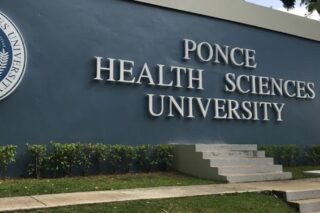

Becoming a physician is exciting and demanding, and the school you choose shapes the patients you learn to serve. Ponce Health Sciences University School of Medicine (PHSU School of Medicine) is a strong fit for applicants who care about cultural competence, Spanish-English communication and reducing health disparities in Puerto Rico and the mainland United States.
PHSU awards the Doctor of Medicine (MD) through one LCME-accredited program taught on two campuses: the main campus in Ponce, Puerto Rico, where training is bilingual, and a branch campus in St. Louis, Missouri, where instruction is in English. You apply once through AMCAS, then choose one campus on the PHSU secondary application. A separate MD program in Tortola, British Virgin Islands, has its own admissions process and accreditation, and this guide treats it apart from the Ponce and St. Louis program.
This guide covers the 2026-2027 application cycle, which is for students who plan to start medical school on July 26, 2027. It explains the requirements for each campus, the AMCAS and secondary deadlines, the new organ-system curriculum, 2026-2027 tuition and cost of attendance by campus, clinical training sites, the people who lead the school, the virtual Multiple Mini Interview and how to prepare a strong secondary. Facts were checked on October 17, 2026.
Key Takeaways
- One MD program, two campuses. The LCME accreditation covers both Ponce, Puerto Rico, and St. Louis, Missouri. You do not pick a campus on AMCAS; you pick one on the PHSU secondary.
- Language rules differ by campus. Ponce applicants must be bilingual in English and Spanish and may be asked to complete a Language Assessment Evaluation. St. Louis requires English proficiency only, and its interviews are in English.
- Minimums are clear. You need a bachelor’s degree, a cumulative and science GPA of at least 2.7, and an MCAT score of at least 494 earned within your first three attempts and within the last five years. Admitted applicants sit well above that: the 2025 entering class had a median MCAT of 500 and a median GPA of 3.7.
- A class of about 194. For the 2025 entering class, 2,255 verified applications led to 578 interviews and 194 matriculants across both campuses. There is no Early Decision Program and no deferred entrance.
- Key dates for this cycle: AMCAS is due December 30, 2026; the PHSU secondary is due January 31, 2027; classes start July 26, 2027.
- The secondary is an online application, not a set of published essays. It carries a $100 fee and is where you choose your campus. Plan for a short statement of interest and goals in case your portal asks for one.
- Costs depend on residency and campus. 2026-2027 tuition is $48,674 for residents of Puerto Rico, Missouri or Illinois and $75,960 for everyone else. First-year cost of attendance for residents is $92,712 in Ponce and $99,874 in St. Louis.
- The curriculum is new. Starting with the class that entered in August 2026, the first two years follow organ-system blocks taught with flipped classroom, problem-based, team-based and case-based learning.
- Outcomes are strong for the mission. In Match 2026, 98 percent of PHSU students matched into residency across 18 specialties, with 35 percent staying in Puerto Rico and 65 percent training in 22 U.S. states.
- Next step: confirm which campus fits your language skills and residency, submit AMCAS well before December 30 and have your three letters, CV and statement of goals ready for the secondary.
Key Statistics About Ponce Health Sciences University School of Medicine
The snapshot below shows the figures applicants ask about first. The MCAT, GPA, class size and application figures describe the 2025 entering class across both campuses combined. Tuition is for the 2026-2027 academic year. The table that follows gives the year, population and source for each figure, including the 2026-2027 minimums, cost of attendance and Match Day 2026 results.

| Metric | Value | Year or cohort | Source and definition |
|---|---|---|---|
| School and degree | Ponce Health Sciences University School of Medicine; four-year MD (166 weeks) | Current | PHSU Doctor of Medicine program page. Private university founded in Ponce; first medical class 1977 |
| Campuses | Ponce, Puerto Rico (main campus, bilingual); St. Louis, Missouri (branch campus, English) | 2026-2027 cycle | PHSU Doctor of Medicine program page; campus chosen on the PHSU secondary |
| Accreditation | LCME, covering the Puerto Rico and St. Louis campuses | Current | PHSU School of Medicine page and Accreditations and Licensures page |
| Minimum GPA | 2.7 cumulative and 2.7 science | 2026-2027 cycle | PHSU Doctor of Medicine program page (minimum, not a median) |
| Minimum MCAT | 494, within first three attempts and last five years | 2026-2027 cycle | PHSU Doctor of Medicine program page (minimum, not a median) |
| Median MCAT, accepted applicants | 500 (mean 500.3); median section scores 125, 124, 125, 126 | 2025 entering class | AAMC MSAR, 2026 edition; all accepted applicants, both campuses combined |
| Median GPA, accepted applicants | 3.7 total (mean 3.66); 3.6 science (mean 3.54) | 2025 entering class | AAMC MSAR, 2026 edition; all accepted applicants, both campuses combined |
| Verified applications | 2,255 (568 in-state, 1,598 out-of-state, 89 international) | 2025 entering class | AAMC MSAR, 2026 edition; verified AMCAS applications, both campuses combined |
| Applicants interviewed | 578 (295 in-state, 259 out-of-state, 24 international) | 2025 entering class | AAMC MSAR, 2026 edition; interview counts reported by the school |
| Class size (matriculants) | 194 (112 in-state, 78 out-of-state, 4 international) | 2025 entering class | AAMC MSAR, 2026 edition; about 194 new entrants also expected for the 2026-2027 cycle |
| Acceptance rate | Not published | 2025 entering class | AAMC MSAR, 2026 edition. No count of acceptances or offers is reported, so no offers-to-applicants rate can be calculated. Interviewed divided by verified applications was 25.6 percent (an interview ratio, not an acceptance rate) |
| Early decision and deferral | No Early Decision Program; deferred entrance not offered | 2026-2027 cycle | AAMC MSAR, 2026 edition |
| Seat deposit | $100, not refundable, applied to tuition; 14 days to respond to an offer | 2026-2027 cycle | AAMC MSAR, 2026 edition |
| Tuition | $48,674 residents of Puerto Rico, Missouri or Illinois; $75,960 non-residents | 2026-2027, per year, all four years | PHSU 2026-2027 cost of attendance sheets, Ponce and St. Louis |
| Mandatory fees | $3,798 (Years 1 and 2); $3,898 (Years 3 and 4) | 2026-2027 | University fees $3,600, disability insurance $198, malpractice $100 in clinical years |
| Cost of attendance, Year 1, Ponce | $92,712 resident; $119,998 non-resident | 2026-2027 | PHSU MD Main Campus cost of attendance sheet |
| Cost of attendance, Year 1, St. Louis | $99,874 resident; $127,160 non-resident | 2026-2027 | PHSU MD St. Louis Campus cost of attendance sheet (includes estimated individual medical insurance) |
| Application deadlines | AMCAS December 30, 2026; PHSU secondary January 31, 2027 | 2026-2027 cycle | PHSU Application Timelines and Deadlines page (updated October 5, 2026) |
| Secondary fee | $100; fee waiver available | 2026-2027 cycle | PHSU Doctor of Medicine program page (fee); AAMC MSAR, 2026 edition (fee waiver) |
| Program start | July 26, 2027 | Entering class of 2027 | PHSU Doctor of Medicine program page |
| Match outcome | 98 percent matched; 18 specialties; 35 percent in Puerto Rico, 65 percent in 22 U.S. states | Match Day 2026 | PHSU news release, March 20, 2026 |
| Mission outcomes | 40 percent of physicians in Puerto Rico are PHSU graduates; more than 90 percent of graduates identify as underrepresented in medicine | AAMC Mission Management Tool 2025, as reported by PHSU | PHSU Outcomes and Impact page |
| Financial aid and debt | 84 percent of students receive aid; average debt of indebted graduates $291,934 | 2024-2025 academic year | AAMC MSAR, 2026 edition (LCME Part I-B Student Financial Aid Questionnaire) |
Two cautions help you read these numbers. First, the 2.7 GPA and 494 MCAT figures are floors. Meeting them makes you eligible for review; the medians of 3.7 and 500 for the 2025 entering class tell you more about how competitive you are. Second, no acceptance rate is published for PHSU, so any rate you see elsewhere should be checked for its denominator. A count of enrolled students divided by applicants (194 of 2,255) is a matriculation ratio, not an acceptance rate. The Admissions Statistics section below explains what is and is not available for the current class.
Mission and Educational Priorities
The current mission of the School of Medicine reads:
“The mission of the School of Medicine is to educate ethical professionals who provide compassionate, culturally competent healthcare and generate high impact research to reduce health disparities in the populations we serve in Puerto Rico and the U.S., through high-quality education in a diverse environment.”
The same language frames the School of Medicine’s description of what the virtual interview is meant to assess. Each phrase points to something you can show in an application.
Ethical professionals. Ethical responsibility, integrity and maturity appear on PHSU’s list of selection criteria. The school wants evidence that you handle confidentiality, honesty and accountability well. Clinical work, research and jobs where you were trusted with sensitive information are the natural places to show this.
Compassionate, culturally competent healthcare. Cultural competency is its own selection criterion, defined as the ability to understand, respect and effectively interact with patients from different backgrounds, beliefs and languages. Spanish matters here. At the Ponce campus it is a requirement, because the partner hospitals and clinics in Ponce serve a mostly Spanish-speaking population. At St. Louis it is not required, but the campus offers Spanish through its Language Support Program, and the school describes the St. Louis environment as culturally diverse.
High impact research to reduce health disparities. PHSU pairs medical training with the Ponce Research Institute, which works on cancer, neuroscience, mental health, infectious disease and women’s health. You do not need a publication to apply, but a clear interest in why some communities get sicker or get care later is a strong fit.
Puerto Rico and the U.S. The mission names both places. The school’s own outcomes data show that it delivers on both: 40 percent of physicians in Puerto Rico are PHSU graduates, and in Match 2026 about two thirds of graduates went to residencies in 22 U.S. states while about one third stayed in Puerto Rico.
A diverse environment. PHSU reports that more than 90 percent of its graduates identify as underrepresented in medicine and that the school sits in the 85th percentile for graduates practicing in underserved areas (AAMC Mission Management Tool 2025). The St. Louis campus reports that 53 percent of its students are Hispanic or Latino, American Indian or other groups underrepresented in medicine, and that 36 percent of reporting students there are first generation.
What the mission means for your application
The school’s educational approach follows from that mission:
- Bilingual education at the Ponce campus, so graduates can practice in Spanish and English.
- Cultural competence throughout training, with a required course called Interprofessional Perspectives in Health Disparities in the first year.
- Holistic learning that brings clinical skills, behavioral science and medical ethics in from the start through the Essentials of Clinical Care courses.
- Community engagement through primary care and family medicine training and service to underserved populations.
- Active teaching methods such as the flipped classroom and small-group discussion, now formalized in the 2026 curriculum.
PHSU’s university-wide mission adds a broader goal: to provide a world-class health sciences education through innovative, adaptive learning environments that help students excel as ethical practitioners and scientists. In practice, the strongest PHSU applications connect three things: sustained service to people who face barriers to care, honest reflection on what that service taught you, and a specific reason the Ponce or St. Louis setting fits the physician you plan to become.
Accreditation and Institutional Identity
Accreditor and status. The PHSU Doctor of Medicine program is accredited by the Liaison Committee on Medical Education (LCME), the accrediting body for MD programs in the United States and Canada. The accreditation includes the campuses in Puerto Rico and the St. Louis, Missouri, campus, as stated on the PHSU Accreditations and Licensures page. The university as a whole is accredited by the Middle States Commission on Higher Education (MSCHE) and licensed by Puerto Rico’s Board of Post-secondary Institutions. The St. Louis branch campus is authorized by the Missouri Department of Higher Education and Workforce Development.
Why accreditation matters to you. LCME accreditation affects practical things:
- Licensing exams and residency. Students of LCME-accredited programs take the USMLE and apply to residency through the National Resident Matching Program like any U.S. MD student. PHSU notes that some states have their own licensure requirements beyond the MD program, so check the state where you plan to practice.
- Federal financial aid. Students in the LCME program can use federal student aid programs.
- Professional recognition. Accreditation is a recognized standard in the medical community, though it is a minimum standard, not a ranking.
Continuous review. LCME accreditation is not permanent. Schools go through periodic full reviews of curriculum, faculty, student services, facilities and outcomes. PHSU is open about its own history here: the university says that since 2014, under new leadership, it has moved from an underperforming medical school on academic probation to a fully accredited, internationally recognized university. Applicants sometimes find older forum posts about that period. The current status is full LCME accreditation for both campuses.
Institutional identity and history. What is now PHSU began as the medical school of the Pontifical Catholic University of Puerto Rico, which enrolled its first medical class in 1977. When that university decided not to continue the program, a group of civic and professional leaders in southern Puerto Rico formed the nonprofit Ponce Medical School Foundation in 1980 to keep it open, and the school operated for years as Ponce School of Medicine. The LCME first accredited it to grant the MD in 1981. Today Ponce Health Sciences University includes schools of medicine, behavioral and brain sciences, public health, dental medicine and nursing, and its admissions email addresses use the psm.edu domain from the Ponce School of Medicine name. On campus, the psychiatry and dermatology residency programs at the PHSU Wellness Center are accredited by the Accreditation Council for Graduate Medical Education (ACGME).
The Tortola program is different. PHSU also runs a four-year MD program in Tortola, British Virgin Islands. That program holds preliminary accreditation from the Accreditation Commission on Colleges of Medicine (ACCM), not LCME accreditation. It has a separate application, deadline, tuition and start date. If you are researching the LCME program in Ponce or St. Louis, do not use BVI figures, and if you are considering BVI, read its own pages and accreditation terms carefully. The Medical Programs section below explains the difference.
Medical Programs and Affiliations
The Doctor of Medicine program in Ponce and St. Louis
The PHSU Doctor of Medicine program is a four-year, in-person MD totaling 166 weeks. It is one program with one curriculum and one accreditation, delivered on two campuses. PHSU announced in March 2026 that its “evolving MD curriculum reflects a unified approach across Puerto Rico and St. Louis.”
The program prepares students to address the needs of the populations they serve through foundational science, early clinical skills and ethics, then core clerkships and electives. What differs by campus is the language environment and the clinical network:
| Feature | Ponce, Puerto Rico (main campus) | St. Louis, Missouri (branch campus) |
|---|---|---|
| Language requirement | Bilingual English and Spanish required; Language Assessment Evaluation may be required | English proficiency required |
| Interview language | Spanish and English | English only |
| Extra prerequisite | Spanish, 3 credits | None beyond the shared list |
| Spanish learning | Bilingual academic environment | Optional Spanish through the Language Support Program |
| Main clinical network | Hospitals and clinics across Puerto Rico, plus partners in New York | Mercy Health for third- and fourth-year clerkships; Humboldt Park Health in Chicago from 2029-2030 |
| Admissions contact | [email protected], 787-840-2575 | [email protected], 314-499-6540 |
Language of instruction
The bilingual environment at the Ponce campus is one of the school’s distinguishing features. PHSU describes its English-Spanish academic setting in Ponce as a way to prepare students to serve Puerto Rican communities and the growing Hispanic population across the United States. Patients at Ponce partner sites are mostly Spanish speaking, which is why the school makes bilingualism an eligibility rule rather than a preference.
At the St. Louis campus, instruction is in English. This lets students from many linguistic backgrounds study in the same program, and the Language Support Program gives St. Louis students a way to build Spanish over time. If you are applying to St. Louis and already speak Spanish, it is still worth saying so, because cultural and language skills are part of the communication criterion.
Tracks, combined degrees and pathways
PHSU does not offer a combined MD/PhD, MD/MPH or MD/MBA through its MD admissions pages. The School of Medicine offers three programs: the Doctor of Medicine for Puerto Rico and the U.S., the PhD in Biomedical Sciences and the Master of Science in Medical Sciences (MSMS). Public health degrees (MPH, MPH in International Health and DrPH in Epidemiology) sit in a separate public health program with its own applications.
MSMS linkage. The MSMS is a preparatory master’s degree offered in Ponce, San Juan, St. Louis, virtual remote and online formats. PHSU offers an MD interview to the top 20 percent of MSMS graduates in any given MD application year, as long as they meet the standard minimum MD admissions requirements. The school is explicit that completing the MSMS does not guarantee entry into the MD program. For applicants whose GPA is near the 2.7 floor, or who need a stronger recent science record, the MSMS is a real option to weigh against a do-it-yourself postbaccalaureate year.
The separate MD program in Tortola, British Virgin Islands
PHSU’s international location in Tortola runs its own four-year MD. Key facts from the PHSU BVI MD page:
- Accreditation: preliminary accreditation from the ACCM. It is not covered by the LCME accreditation of the Ponce and St. Louis program.
- Next start: January 11, 2027, with an application deadline of December 4, 2026 and rolling review.
- Tuition: $62,100 per year.
- Structure: the first two years in Tortola, then students apply for clinical rotations in the U.S. or Puerto Rico.
- MSMS link: all PHSU MSMS graduates who meet BVI minimums are guaranteed a BVI interview.
The BVI program has its own ECFMG pathway and its own considerations for residency. Treat it as a different school when you build your list, and compare it with other Caribbean options on its own terms.
Clinical affiliations and collaborations
PHSU students train in a broad network rather than one university hospital. In Puerto Rico, the MD partner list includes the PHSU Wellness Center, Damas Hospital, Hospital Episcopal San Lucas (Ponce and Guayama), Metro Pavía Hospital Metropolitano Dr. Pila, San Cristóbal Ambulatory Clinics, Mayagüez Medical Center, Manatí Medical Center, the VA Caribbean Healthcare System and its outpatient clinics, PR Children’s Hospital, San Jorge Children’s Hospital and Ashford Presbyterian Community Hospital, among others. PHSU also lists the Urban Health System in the Bronx and Wyckoff Medical Center in Brooklyn. In St. Louis, a partnership with Mercy Health supports third- and fourth-year clerkships, and a 2026 affiliation with Humboldt Park Health in Chicago adds rotations for St. Louis students beginning in the 2029-2030 academic year.
On the research side, PHSU works with the Ponce Research Institute and has long taken part in the Research Centers in Minority Institutions (RCMI) program, which supports health disparities research. An academic partnership with the H. Lee Moffitt Cancer Center began in 2002. Community partnerships run through the university’s outpatient clinics and outreach programs, which PHSU says treat more than 50,000 Medicaid patients each year.
Commitment to diversity and inclusion
PHSU’s admissions policies state a commitment to recruiting women and people from backgrounds underrepresented in healthcare through professional associations, community organizations and pipeline programs. The Ponce campus reports that 98 percent of its students are Hispanic or Latino, and the bilingual program supports that mission by preparing graduates to serve patients in two languages. For applicants, this means the committee will read your experiences for evidence that you can work across language, culture and income.
Preparing for residency and beyond
The program’s design, from early clinical skills to a fourth year with 24 weeks of electives, builds toward residency. Faculty advisors help with program selection, applications and interviews, and the school verifies graduation credentials for the National Resident Matching Program once students pass USMLE Step 2 CK. Graduates from both campuses go on to practice in Puerto Rico, the mainland and beyond.
Curriculum Overview
Structure: four years, 166 weeks
The PHSU MD is a four-year program totaling 166 weeks. The first two years are pre-clerkship coursework, and the last two are core clinical clerkships, a fourth-year set of required rotations and electives. The same curriculum applies at the Ponce and St. Louis campuses.
The 2026 organ-system redesign
In March 2026, PHSU announced that its School of Medicine would move from a traditional discipline-based model to an organ-system-based curriculum that connects foundational science with clinical practice from the start of training. The change is phased in: first-year courses changed in August 2026 and second-year courses change in August 2027. Students entering in July 2027 will take both pre-clerkship years in the new format.
Dean Olga Rodríguez de Arzola explained that the redesign “aims to strengthen deep understanding and knowledge retention by more directly connecting what students learn in the classroom with clinical practice.” The school gives several goals for the change: more meaningful learning, closer work between basic science and clinical faculty, earlier clinical competence and better use of academic time. It also ties the redesign to Puerto Rico’s needs, noting that the island’s population is aging quickly and that physician supply is an ongoing challenge.
Years 1 and 2: pre-clerkship blocks
The pre-clerkship years now run as organ-system blocks, with a longitudinal clinical skills course in every semester.
| Semester | Courses (credits) | Total credits |
|---|---|---|
| Year 1, first semester | Foundation I (12); Foundation II (10); Essentials of Clinical Care I (4) | 26 |
| Year 1, second semester | Skin and Musculoskeletal (4); Gastrointestinal (5); Reproductive and Endocrine (6); Hematology (5); Essentials of Clinical Care II (6); Interprofessional Perspectives in Health Disparities (1) | 27 |
| Year 2, first semester | Cardiovascular (7); Renal and Urinary (6); Respiratory (6); Essentials of Clinical Care III (6) | 25 |
| Year 2, second semester | Neurology (8); Multisystem (4); Medical Ethics (2); Introduction to Clinical Practice (1); Skills Development (1); Essentials of Clinical Care IV (4) | 20 |
Foundation I and II open the program with the core sciences that the later blocks build on; PHSU lists gross anatomy, biochemistry and pharmacology among the essential sciences of the pre-clerkship years. PHSU continues to teach anatomy in a traditional cadaver lab and pairs it with three-dimensional anatomy software; the St. Louis campus adds a digital anatomy table and simulation labs.
System blocks then teach each organ system as a whole. In an organ-system design, a cardiovascular block brings normal heart physiology, the pathology of heart disease, the pharmacology of cardiac drugs and the clinical presentation of chest pain together rather than in separate courses months apart.
Essentials of Clinical Care I through IV run alongside the blocks as the longitudinal clinical thread, the place where patient-centered skills, behavioral science and professionalism come in early. The course sequence ends with Introduction to Clinical Practice and Skills Development, which prepare students for clerkships.
Interprofessional Perspectives in Health Disparities is a required first-year course. Its title signals the approach: health disparities viewed through an interprofessional lens, which puts the mission into the curriculum from the first year. Medical Ethics in the second year builds the ethical reasoning that the admissions committee screens for.
How students learn
The redesign formalizes active learning methods PHSU already used. The school has adopted a flipped classroom, in which students review materials before class and use class time for discussion and problem solving. Teaching emphasizes:
- Problem-Based Learning (PBL): small groups work through patient cases and identify what they need to learn.
- Team-Based Learning (TBL): students prepare individually, take readiness checks and then solve applied problems in teams.
- Case-Based Learning (CBL): faculty-guided cases connect science to diagnosis and treatment.
Small-group discussions are a hallmark of this approach. Faculty facilitators keep groups on track and help students apply theory to clinical scenarios. The format also prepares students for the team-based nature of modern healthcare. If you learn best by reading alone and memorizing, this format will ask more of you in group settings, which is worth thinking about honestly before you choose PHSU.
Community medicine and public health
Community medicine has long been a cornerstone of the PHSU MD. Under the new curriculum it runs through the Essentials of Clinical Care courses, the health disparities course, the third-year family medicine clerkship and the fourth-year primary care selective. Students study preventive care, the social determinants of health (such as housing, education and access to food) and the barriers that keep patients from care. Working with underserved populations helps students turn that knowledge into practical solutions and, for many, into long-term advocacy for health equity.
Year 3: core clerkships
The third year carries 53 credits of core clinical training at affiliated hospitals and clinics:
- Pediatrics, 8 weeks
- Obstetrics and Gynecology, 8 weeks
- Internal Medicine, 8 weeks
- Surgery, 8 weeks
- Clinical Psychiatry, 4 weeks
- Family Medicine, 4 weeks
- Professional Development I and II, longitudinal courses on professional growth, medical ethics, the history of medicine and preparation for residency applications
- Longitudinal Radiology, which brings imaging into clinical decision making
By the end of the year, students are expected to manage common conditions and work effectively in multidisciplinary teams.
Year 4: required rotations and electives
The fourth year carries 55 credits:
- General Internal Medicine, 4 weeks
- Emergency Medicine, 4 weeks
- Primary Care Selective in medicine, pediatrics, family medicine or OB/GYN, 4 weeks
- Electives, 24 weeks, taken as 2-week or 4-week rotations
- Up to 8 weeks of unscheduled time for residency interviews, board preparation or additional clinical work
Twenty-four weeks of electives is a lot of room. Students can explore subspecialties such as cardiology, oncology or neurology, complete away rotations at programs they want to match into, and strengthen applications in competitive fields.
Assessment, boards and graduation
PHSU sets clear milestones:
- NBME Comprehensive Basic Science Examination (CBSE). Students who pass all pre-clerkship courses must reach the required minimum CBSE score before taking USMLE Step 1.
- USMLE Step 1. Students must take and pass Step 1 before starting clerkships. They must sit for it no later than July 10 so results arrive before third year begins.
- USMLE Step 2 CK. Passing Step 2 CK is required to graduate. PHSU strongly recommends taking it by August 30 of the residency application year so scores are ready when ERAS opens. Students must pass by the annual deadline for their rank lists to be verified for the National Resident Matching Program, and the last chance to pass for a May graduation is the last week of April.
Graduation also requires completing all courses, clerkships and electives in the allowed time and meeting the technical standards and professionalism expectations.
Academic support
Students who struggle have faculty advising, tutoring and academic support services, and the CBSE checkpoint is designed to catch gaps before Step 1. The Language Support Program also offers language help, which matters for students at St. Louis who want to build clinical Spanish and for students in Ponce who are strengthening one of their two languages.
Admissions Requirements and Application Process
Overview of the admissions process
PHSU’s admissions process looks for candidates who do well academically and fit the mission of compassionate, culturally competent care. Every applicant goes through a holistic review that weighs academic achievement, clinical exposure and experience in healthcare or community service. The steps are:
- Submit the AMCAS primary application.
- Complete the PHSU secondary application, where you choose the Ponce or St. Louis campus and pay the $100 fee.
- If selected, complete a virtual Multiple Mini Interview.
- If accepted, confirm your seat with a deposit, meet the immunization and health requirements, and attend orientation before the July 26, 2027 start.
Eligibility and citizenship
PHSU accepts applications from U.S. citizens, U.S. permanent residents and international applicants. An international applicant is anyone who is not a U.S. citizen or permanent resident. For international applicants:
- Students from non-English-speaking countries must submit an English proficiency score: IELTS with at least 7.0 overall and 7.0 on each band, or TOEFL with an overall score of 94 to 101 and minimum section scores. A waiver may be requested by students with degrees from U.S. or U.K. universities.
- Coursework from a foreign medical or health professions program cannot be used to meet PHSU degree requirements.
- Foreign medical graduates are not eligible for advanced standing.
International applicants are reviewed individually against the same academic and language requirements, including the language rules for their campus. Applicants with DACA status are considered case by case and must present official documentation; contact the admissions office for your campus before applying. Accepted applicants also complete a criminal background check, and transfer requests are handled case by case.
Degree and prerequisite coursework
You must hold a bachelor’s degree from an accredited institution. PHSU requires the following minimum credits:
| Course | Credits | Ponce | St. Louis |
|---|---|---|---|
| Biology I and II, with laboratory | 8 | Required | Required |
| Chemistry I and II, with laboratory | 8 | Required | Required |
| Organic Chemistry I and II, with laboratory | 8 | Required | Required |
| Physics I and II, with laboratory | 8 | Required | Required |
| Mathematics | 6 | Required | Required |
| Behavioral and Social Sciences (such as psychology or sociology) | 6 | Required | Required |
| English | 3 | Required | Required |
| Spanish | 3 | Required | Not required |
Plan your last undergraduate years so all of these are complete, or in progress with a clear completion date, when you apply.
GPA and MCAT minimums
- GPA: a minimum cumulative undergraduate GPA of 2.7 and a minimum science GPA of 2.7, as calculated through AMCAS.
- MCAT: a minimum score of 494, earned within your first three MCAT attempts and taken within the last five years.
These are eligibility floors. For the 2025 entering class, accepted applicants had a median MCAT of 500 and a median total GPA of 3.7 (science GPA 3.6), so a typical admitted student sits well above the minimum. The three-attempt rule matters: the admissions committee considers your highest total score from your first three MCAT attempts, so if you have already taken the MCAT three times, a fourth score will not count. For the 2026-2027 cycle, MCAT scores from January 2022 through January 31, 2027 are accepted.
Postbaccalaureate or graduate coursework does not offset a low undergraduate GPA for screening purposes: the 2.7 floor applies to your AMCAS cumulative and science GPA. Extra coursework can still strengthen your application in other ways, but it will not move you past the screen if your undergraduate GPA is below 2.7. Prerequisite courses must be completed between August 2017 and May 2027.
Language requirements
All applicants to the Ponce main campus must be bilingual in English and Spanish to be eligible for the MD program, because PHSU’s partner hospitals and clinics in Ponce serve a predominantly Spanish-speaking population. PHSU may require a Language Assessment Evaluation. St. Louis applicants need English proficiency.
If Spanish is your second language and you want to apply to Ponce, build clinical Spanish before you apply, not after. Medical Spanish courses, volunteer roles where you speak with Spanish-speaking patients, and a medical internship in Peru or another Spanish-language setting can all help you practice the vocabulary of symptoms, medications and instructions. Be honest about your level in your application and interview; the evaluation will show it either way.
Situational judgment tests
PHSU does not list CASPer, PREview or Duet among the requirements for its MD program in the 2026-2027 cycle. If other schools on your list require CASPer, our guide to The CASPer Exam: What It Is and Why It Matters explains the test and how to prepare.
Clinical experience, shadowing and service
Clinical shadowing and volunteer work are not mandatory, but the admissions committee highly recommends experience in healthcare through research, volunteering or shadowing. In the selection criteria, the school says commitment to medicine “is shown through relevant volunteer work, shadowing experiences, and other clinical exposure.” Treat this as an expectation in practice. Applicants who arrive with sustained patient contact, such as work as a medical scribe, EMT, patient care technician, medical interpreter or clinic volunteer, can speak to the realities of care in their interviews. Structured clinical internships for pre-med students can add hands-on hours, especially when they place you with patients who face barriers to care.
The AMCAS primary application
PHSU uses the American Medical College Application Service (AMCAS). For the 2026-2027 cycle, the AMCAS deadline is December 30, 2026. AMCAS typically opens in May, and applying early in the summer gives your file more time in a rolling process. You will not choose Ponce or St. Louis on AMCAS. For a walkthrough of each section, see our AMCAS application guide.
AMCAS components include:
- Personal and demographic information
- Your full academic record, entered course by course and verified against official transcripts
- MCAT scores
- Work and activities, including your most meaningful experiences
- A personal statement on your motivation for medicine
PHSU’s MD page also asks for a personal statement that highlights your goals in healthcare and emphasizes relevant academic and professional experience, and for a detailed resume or CV. Official transcripts must be sent directly from each institution to PHSU; transcripts forwarded by applicants are treated as unofficial.
Letters of recommendation
PHSU asks for three letters of recommendation: two from previous professors and one from a professional who can speak to your capabilities and character as they relate to medical training. Science professors are a natural choice for the two academic letters, and the professional letter can come from a clinical supervisor, research mentor or employer who has seen you work.
Through the AMCAS Letter Service, letters can usually arrive in three forms:
- Committee letter: written by your school’s pre-health advisor or committee, often with individual letters attached.
- Letter packet: a set of individual letters assembled by your school’s advising office.
- Individual letters: sent by each writer directly.
PHSU accepts a premedical committee letter in place of the three individual letters, and all letters must be submitted through AMCAS. If your school offers a committee letter, check that it draws on at least two professors and one professional, which keeps it aligned with what PHSU asks for. A short letter of interest or update later in the cycle can be useful if you are waitlisted; send it only through the channel admissions tells you to use.
The PHSU secondary application
After AMCAS, every applicant completes the PHSU online application, the secondary. It is where you select your campus, upload documents and pay the $100 application fee. The deadline is January 31, 2027. PHSU does not publish essay prompts for the secondary. The Secondary Application section later in this guide explains the process in detail and gives a worked example for a statement of interest and goals.
Selection criteria
The MD Admissions Committee looks for integrity, maturity, a strong commitment to service, leadership and a collaborative spirit. Its published criteria are:
- Academic performance: success in prerequisites and overall GPA, as an indicator of readiness for medical school.
- Commitment to a career in medicine: volunteer work, shadowing and other clinical exposure that show a realistic understanding of the profession.
- Critical thinking: analyzing complex cases, synthesizing information and making sound judgments.
- Cultural competency: understanding, respecting and communicating with patients from different cultures, beliefs and languages.
- Ethical responsibility: honesty, confidentiality and accountability.
- Humanism: compassion, empathy and respect for each person beyond the diagnosis.
- Integrity and maturity: strong moral principles, emotional stability, resilience and self-awareness.
- Language and communication skills: clear verbal and nonverbal communication, plus English and Spanish proficiency for Ponce.
- Leadership: guiding and supporting others in team-based settings.
- Resilience and adaptability: recovering from setbacks and adjusting to new challenges.
- Service orientation: a genuine commitment to improving others’ well-being.
Use this list as a checklist when you choose your AMCAS meaningful experiences. Each criterion should be visible somewhere in your application.
Technical standards
All accepted candidates must meet PHSU’s technical standards, which follow AAMC guidance. They cover five areas:
- Observation: gathering information in labs, including cadaver dissection, and from patients during a full physical examination.
- Communication: communicating effectively and sensitively with patients, families and teams, in person and in writing, in English for St. Louis candidates and in English and Spanish for Ponce candidates.
- Motor function: performing examinations, diagnostic maneuvers and emergency care such as CPR.
- Intellectual-conceptual, integrative and quantitative abilities: understanding spatial relationships, reasoning and solving clinical problems.
- Behavioral and social attributes: maturity, judgment, stamina and professional conduct under stress.
Candidates sign a Technical Standards Acknowledgment before enrollment and again before each academic year. Reasonable accommodations are available under PHSU’s Reasonable Accommodation Policy; candidates who may need accommodation should contact the designated coordinator before enrollment so the request can be evaluated in time, including before the clinical years.
Acceptance, deposit and deferral
Once accepted, students confirm their seat with a deposit and provide proof of required immunizations before classes start. For the 2026-2027 cycle, acceptance notices go out from October 1, 2026 through June 1, 2027, and you have up to fourteen days to respond to an offer. The seat deposit is $100 for in-state and out-of-state students, is not refundable, is applied to tuition and is due by May 30, 2027. Follow the instructions in your offer letter closely. The university describes its admissions as rolling for most programs, which is another reason to complete your secondary early.
PHSU does not grant deferred entrance to the MD program, and no deferrals were recorded for the 2025 entering class. If you are not sure you can start on July 26, 2027, think carefully before you accept. PHSU also has no Early Decision Program. Waitlisted candidates can send a letter of interest to the admissions staff, which is added to their profile for the Admissions Committee, and 70 acceptance offers went to waitlisted applicants in the most recently reported cycle.
Immunizations and health certificate
Before admission, PHSU requires:
- Two doses of varicella
- Tdap, with boosters every 10 years
- Two doses of MMR (measles, mumps and rubella)
- Annual flu vaccine
- Three doses of hepatitis B, with antibody testing after the series
- Four doses of polio
- Three doses of COVID-19
PHSU’s admissions policies allow some exemptions in other programs, but no exemptions are permitted for students in the medical program. Third-party clinical sites can also deny access to students who are not in compliance. Ponce students must also obtain a Health Certificate issued through the Puerto Rico Department of Health before or during orientation, and medical students present an updated certificate each year.
Final steps to matriculation
After acceptance, you will:
- Confirm your acceptance in writing and pay the seat deposit.
- Submit immunization records and, for Ponce, the Puerto Rico health certificate.
- Review and sign the Technical Standards Acknowledgment.
- Send final official transcripts from every institution.
- Attend the mandatory orientation before classes begin on July 26, 2027.
2026-2027 application timeline
| Step | Date or timing | Notes |
|---|---|---|
| AMCAS submission opens | May 28, 2026 | Submit early in a rolling process |
| Application review begins | August 3, 2026 | Only applicants who complete the PHSU secondary are considered |
| AMCAS deadline | December 30, 2026 | Campus is not chosen on AMCAS |
| PHSU secondary deadline | January 31, 2027 | Choose Ponce or St. Louis; $100 fee; fee waiver available |
| Interviews | Invitations from September 2026 | Virtual Multiple Mini Interview, live and asynchronous |
| Offers | October 1, 2026 to June 1, 2027 | Up to 14 days to respond to an offer |
| Deposit | By May 30, 2027 | $100, not refundable, applied to tuition |
| Immunizations and health certificate | Before classes | No exemptions for medical students |
| Classes begin | July 26, 2027 | Orientation comes first |
Tuition, Cost of Attendance and Financial Aid
2026-2027 tuition
PHSU charges the same tuition at both LCME campuses. Residents of Puerto Rico, Missouri or Illinois pay the resident rate; everyone else pays the non-resident rate. That Illinois is included is easy to miss and useful for applicants from the Chicago area.
| Item, per year | Resident | Non-resident |
|---|---|---|
| Tuition | $48,674 | $75,960 |
| Fees, Years 1 and 2 | $3,798 | $3,798 |
| Fees, Years 3 and 4 | $3,898 | $3,898 |
| Tuition and fees, Years 1 and 2 | $52,472 | $79,758 |
| Tuition and fees, Years 3 and 4 | $52,572 | $79,858 |
The fees break down as University Fees of $3,600 (general student fees for orientation, classroom response devices and ID cards, plus building, educational services, library and technology), a Disability Insurance Fee of $198 and a Malpractice Fee of $100 that applies only in the clinical years. The St. Louis university fee also includes a student organization and activity fee.
Cost of attendance by campus
PHSU’s 2026-2027 cost of attendance sheets estimate the full budget for each year, including living costs. These budgets set the maximum financial aid you can receive.
Ponce (Main Campus), 2026-2027
| Budget line | Year 1 | Year 2 | Year 3 | Year 4 |
|---|---|---|---|---|
| Living expenses (rent, utilities, food) | $29,250 | $29,250 | $29,250 | $29,250 |
| Books, materials, supplies and equipment | $1,150 | $1,150 | $1,550 | $800 |
| Transportation | $4,300 | $4,300 | $4,300 | $4,300 |
| Miscellaneous | $4,600 | $4,600 | $4,600 | $4,600 |
| Loan fees | $440 | $440 | $440 | $440 |
| Tests and other | $500 | $1,700 | $2,000 | $2,250 |
| Rotation expenses | $0 | $0 | $0 | $5,000 |
| Total cost of attendance, resident | $92,712 | $93,912 | $94,712 | $99,212 |
| Total cost of attendance, non-resident | $119,998 | $121,198 | $121,998 | $126,498 |
St. Louis Campus, 2026-2027
| Budget line | Year 1 | Year 2 | Year 3 | Year 4 |
|---|---|---|---|---|
| Living expenses (rent, utilities, food) | $30,850 | $30,850 | $30,850 | $30,850 |
| Books, materials, supplies and equipment | $1,150 | $1,150 | $1,550 | $800 |
| Transportation | $4,880 | $4,880 | $4,880 | $4,880 |
| Miscellaneous | $9,582 | $9,582 | $9,582 | $11,498 |
| Loan fees | $440 | $440 | $440 | $440 |
| Tests and other | $500 | $1,700 | $3,600 | $7,250 |
| Total cost of attendance, resident | $99,874 | $101,074 | $103,474 | $108,290 |
| Total cost of attendance, non-resident | $127,160 | $128,360 | $130,760 | $135,576 |
If 2026-2027 rates held for all four years, the total estimated cost would be about $380,548 for a Ponce resident, $489,692 for a Ponce non-resident, $412,712 for a St. Louis resident and $521,856 for a St. Louis non-resident. Tuition and living costs usually rise over time, so treat these as a planning floor.
Health insurance
Health insurance is not a separate line on the 2026-2027 sheets. The St. Louis budget states that all years include estimated individual medical insurance expenses. The Ponce budget does not mention health insurance, so Ponce students should ask Student Financial Services whether coverage is required and how it is budgeted. For 2025-2026, the first-year health insurance estimate was $2,678 for both in-state and out-of-state students. Clinical sites generally expect students to carry health coverage.
Living and other expenses
Living expenses are the largest non-tuition cost. The estimates cover rent, utilities and food for moderate living. PHSU does not offer on-campus housing in Ponce but helps students find nearby housing, and St. Louis students live off campus in the city. Transportation matters more than many applicants expect: clinical training in Puerto Rico can take you to hospitals across the island, and fourth-year Ponce budgets include $5,000 for rotation expenses. Books, equipment, board exam fees and residency application costs appear under books and tests, which is why the tests line climbs in Years 3 and 4.
Application fee and deposit
The PHSU secondary carries a $100 application fee, required to process your application. A fee waiver is available for the secondary. Accepted students pay a $100 seat deposit to confirm enrollment. The deposit is the same for in-state and out-of-state students, is not refundable, is applied to tuition and is due by May 30, 2027 for the 2026-2027 cycle. Check your offer letter for the exact steps.
Financial aid
Most MD students fund their education with a mix of federal loans, scholarships and personal resources. Students are admitted to PHSU regardless of their financial circumstances. In 2024-2025, 84 percent of PHSU medical students received financial aid, and the average medical school debt of indebted graduates was $291,934. The Student Financial Services office helps students build a plan, and its Student Financial Services Manual sets out the policies.
Federal loans. Federal Direct Unsubsidized Loans are the base of most medical school aid packages. Interest accrues from disbursement, and borrowers complete entrance counseling and a Master Promissory Note. Federal graduate borrowing rules changed for new borrowers beginning July 1, 2026, including new annual and lifetime limits and the end of new Grad PLUS loans for new borrowers, so confirm your 2026-2027 limits with Student Financial Services before you rely on any number from an older source.
Private loans. Private or alternative loans are credit-based and usually carry variable rates tied to a benchmark rate plus the lender’s margin. They can fill gaps but generally have fewer protections than federal loans, so treat them as a last resort. PHSU does not endorse specific lenders.
Institutional scholarships. PHSU offers scholarships for each location, with separate lists for the Puerto Rico campuses, the St. Louis campus, the Tortola location and online programs, plus lists of external medical and heritage-based scholarships on its scholarships page. Awards consider academic performance, leadership and financial need. Watch your email after enrollment, because applications for many awards open during the year.
External scholarships. Private foundations, professional associations and heritage organizations offer scholarships for medical students. Hispanic and Latino medical student scholarships are especially relevant to PHSU’s student body.
Military scholarships. The Armed Forces Health Professions Scholarship Program, offered through the Army, Navy and Air Force, can cover tuition and pay a monthly stipend in exchange for service after training. Start with each branch’s site, such as goarmy.com and navy.com. PHSU has also formed a collaboration agreement with the Puerto Rico National Guard to expand academic and professional development opportunities.
Applying for financial aid
- Complete the Free Application for Federal Student Aid (FAFSA).
- Create your FSA ID, which acts as your electronic signature.
- Complete entrance counseling and the Master Promissory Note at studentaid.gov.
- Submit PHSU financial aid forms and any tax or income verification Student Financial Services requests.
- Review and accept your financial aid offer in the PHSU financial aid portal.
Aid is disbursed at least once per semester. Report any change in enrollment or finances right away so your aid stays accurate. Students who withdraw may have to return part of their federal aid under the federal return-of-funds rules described in the PHSU catalog.
Smart borrowing
Before you accept loans, build a four-year budget from the tables above, borrow only what you need for each year and learn the repayment options for the career you plan. Physicians who choose primary care in underserved areas, a common path for PHSU graduates, may qualify for loan repayment programs through federal and state agencies; research these early.
Summary of key financial considerations
- Residents of Puerto Rico, Missouri and Illinois save $27,286 per year in tuition compared with non-residents.
- St. Louis budgets are $7,162 higher than Ponce in Year 1 for residents, mainly because of higher miscellaneous, transportation, testing and insurance estimates.
- Clinical years cost more than pre-clerkship years at both campuses.
- PHSU publishes a transparent cost of attendance for each campus, so you can compare it directly with other schools on your list.
Campus Facilities and Student Life
Ponce, Puerto Rico: the main campus
PHSU’s main campus is in Ponce, Puerto Rico’s second-largest city, on the south coast. The campus address is 388 Zona Industrial Reparada 2 (also listed as 388 Calle Dr. Luis F. Salas), Ponce, Puerto Rico 00716. The setting combines easy road access with a quieter learning environment, and the library and research building sit close to classrooms.
Key facilities for medical students include:
- The PHSU Wellness Center and The Clinics at PHSU. PHSU recently brought its medical, dental and mental health services together under The Clinics at PHSU. The Wellness Center offers students hands-on experience in primary care, mental health and preventive medicine while serving the local community, and it houses the university’s ACGME-accredited psychiatry and dermatology residencies.
- Behavioral health services. PHSU’s behavioral health centers support training in clinical psychology and related fields, and medical students see the link between mental and physical health in a setting where both are delivered.
- Anatomy and learning labs. Students learn anatomy in a traditional cadaver lab supported by three-dimensional anatomical software.
- The Ponce Research Institute. The research partner on campus works on cancer, neuroscience, mental health, infectious disease and women’s health.
Housing. PHSU does not offer on-campus housing in Ponce or St. Louis. The university keeps a list of affordable apartments within a 10-mile radius, and there are affordable options in the city. A driver’s license and a vehicle are recommended for medical students, and a car makes daily life and clinical rotations across the island much easier.
Life in Ponce. Ponce is known for its historic buildings, colorful plazas and museums. Students can walk Plaza Las Delicias and the Parque de Bombas, visit the Museo de Arte de Ponce, one of the finest art museums in the Caribbean, or head to La Guancha Boardwalk for seafood and the water. Hacienda Buena Vista, a short drive away, offers hiking trails, waterfalls and a look at the island’s coffee history. For students from the mainland, Puerto Rico is part of the United States, so there is no visa or currency change.
St. Louis, Missouri: the branch campus
The St. Louis campus is at 2351 Market Street in Downtown West, a revitalized district near hospitals, universities and cultural institutions and close to the stadium of the St. Louis City SC soccer team. The city pairs big-city amenities with close-knit neighborhoods and a thriving healthcare and biotechnology sector.
Facilities include modern classrooms, simulation labs and a digital anatomy table, along with study spaces and student support services. The campus also hosts the MSMS, a PsyD in Clinical Psychology and a Bachelor of Science in Nursing, so medical students share space with other health professions students.
Safety and commuting. PHSU notes that the campus is in an active professional district, works with local partners on campus security, provides safety education through Student Affairs and supports safe commuting with parking and rideshare options. As in any city, students are encouraged to use common-sense safety practices.
Life in St. Louis. The Gateway Arch, Forest Park (home to the Saint Louis Art Museum, with free admission, and the St. Louis Zoo), the Missouri History Museum, the St. Louis Symphony Orchestra and The Fabulous Fox theater are all part of city life. Sports fans can follow the Cardinals, the Blues and St. Louis City SC. The food scene ranges from barbecue to toasted ravioli and thin-crust pizza. Rents are moderate compared with many large cities, which helps a medical student budget.
San Juan and Tortola
PHSU also operates a learning center in San Juan, Puerto Rico, which focuses on clinical and school psychology and medical sciences and is not an MD campus. Its psychology programs have their own specialized labs and collaborative learning spaces. The Tortola, British Virgin Islands, location hosts the separate ACCM-accredited MD program described earlier, with its Dr. David L. Lenihan Learning Center, simulation lab and an anatomy lab that uses virtual reality and synthetic cadavers.
Campus culture
A supportive environment. PHSU describes a collaborative atmosphere where faculty and staff work closely with students on academic, social and emotional well-being. Small-group learning in the new curriculum builds close relationships among classmates and with faculty facilitators.
A diverse student body. The Ponce campus reports that 98 percent of its students are Hispanic or Latino, 19 percent of reporting students are first generation and 34 percent fall under the federal poverty level for Puerto Rico. At St. Louis, 53 percent of students are from groups underrepresented in medicine and 36 percent of reporting students are first generation. That mix of backgrounds enriches discussions and prepares students to care for diverse patients.
Active engagement. Students are encouraged to join organizations, serve in the community and take on leadership roles. These activities build professional skills and give you experiences to draw on in residency applications.
Student organizations
PHSU has hosted chapters of a wide range of professional and interest groups. Groups have included:
- Professional associations: Puerto Rico Medical Association (PRMA), Puerto Rico’s Medical Students Association (AEMPR), American Medical Association (AMA), American Medical Student Association (AMSA), American Medical Women’s Association (AMWA), Student National Medical Association (SNMA) and the Alpha Omega Alpha Honor Society (AOA).
- Specialty interest groups: cardiology, anesthesiology, dermatology, emergency medicine, family medicine, internal medicine, neurology, obstetrics and gynecology, oncology, ophthalmology, pediatrics, radiology, surgery, human sexuality (Sexualidad Humana) and sports medicine.
- Other organizations: Christian Fellowship, PSM Volunteers for community service, the Student Council and LGBTQ+ support groups.
Active groups currently include the AMA chapter, the Latino Medical Student Association (LMSA), the Alpha Omega Alpha Beta Chapter of Puerto Rico, Christian Fellowship, a Student Council at both the Ponce and St. Louis locations, and interest groups in anesthesiology, dermatology, ENT, family medicine, gastroenterology, internal medicine, infectious diseases, medicine-pediatrics, neurology, neurosurgery, OB/GYN, ophthalmology, pathology, pediatrics, plastic surgery, psychiatry and urology. New organizations must be registered and approved by the Student Affairs Office before they start activities. Chapters change from year to year and differ between Ponce and St. Louis, so confirm current groups with Student Affairs at your campus. St. Louis students have also led community projects; for example, the campus news highlights a research-informed Teddy Bear project to build children’s comfort with healthcare.
Wellness programs and resources
Medical school is demanding, and PHSU offers several layers of support:
- Orientation. A mandatory orientation period introduces new students to the academic environment, resources and support services.
- Special events. Student Affairs organizes wellness activities through the year, such as yoga, Zumba, workouts, sports tournaments, arts and crafts, karaoke, health expos and nutrition workshops.
- Counseling. Licensed professionals provide confidential counseling, and the Office of Professional Counseling offers academic and personal guidance.
- The Wellness Center. On the Ponce campus, the Wellness Center provides medical and counseling services that students can use to protect their own health.
- Language support. The Language Support Program helps students strengthen English or Spanish.
Participation in organizations and interest groups is encouraged as a way to build community and stay balanced. Overall, PHSU’s facilities and culture reflect its mission: a supportive, diverse setting focused on preparing students to serve patients from many backgrounds.
Clinical Rotations and Research Opportunities
Clinical training in Puerto Rico
PHSU does not rely on a single university hospital. Ponce-campus students rotate through a network of public, private, community and veterans’ facilities across the island, which exposes them to different patient populations and health systems. The MD program partnership list includes:
- Ponce area: PHSU Wellness Center, Damas Hospital, Hospital Episcopal San Lucas, Metro Pavía Hospital Metropolitano Dr. Pila, Mennonite Ponce and San Cristóbal Ambulatory Clinics
- South and central: Hospital Episcopal San Lucas Guayama, Centro Médico Menonita in Cayey, Hospital General Menonita de Aibonito, Metro Pavía Hospital in Yauco
- West: Mayagüez Medical Center, Bella Vista Hospital in Mayagüez, La Concepción Hospital in San Germán, Hospital Buen Samaritano in Aguadilla, Costa Salud community clinics in Rincón and Aguada, and Migrant Health System clinics in several western towns
- Mountain region: Clínica Castañer in Adjuntas and Hospital General Castañer in Lares
- North and metro: Manatí Medical Center, Ashford Presbyterian Community Hospital, Hospital El Maestro, San Juan Capestrano Hospital, Auxilio Mutuo, PR Children’s Hospital in Bayamón, San Jorge Children’s Hospital in Santurce, Doctor’s Center hospitals and Ryder Hospital in Humacao
- Veterans care: VA Caribbean Healthcare System, including the Ponce and Mayagüez outpatient clinics
- New York: Urban Health System in the Bronx and Wyckoff Medical Center in Brooklyn
Together, the affiliated networks provide about 2,000 beds plus several ambulatory facilities for clinical teaching. This network has practical consequences. Rotations can require driving between towns, and students should budget time and money for travel. In return, students see rural clinics and tertiary-care hospitals, migrant health centers and children’s hospitals, often in Spanish. Some clinical experiences take place in the mainland U.S. as well.
Clinical training in St. Louis and Chicago
St. Louis students complete third- and fourth-year clerkships through PHSU’s partnership with Mercy Health, a large regional health system, under the supervision of experienced physicians. In September 2026, PHSU announced a new affiliation with Humboldt Park Health, a 200-bed community hospital on Chicago’s West Side founded in 1894. Beginning in the 2029-2030 academic year, St. Louis students will be able to rotate there in family medicine, psychiatry, emergency medicine, internal medicine, obstetrics and gynecology, surgery and pediatrics, plus electives. The hospital sits in the center of Puerto Rican culture in the Midwest and serves a patient population that is nearly 40 percent Hispanic. Applicants entering in 2027 would reach clinical years around that time.
Required training versus optional opportunities
Required clinical training is the third-year core clerkships and the fourth-year general internal medicine, emergency medicine and primary care selective. Electives are where students choose: 24 weeks in 2- or 4-week blocks, which can include away rotations at programs in the specialty you plan to enter. Research is optional. There is no thesis requirement for the MD, courses are graded pass/fail, and community service is a requirement during medical school. Global health work is optional too: 9 percent of PHSU graduating seniors in 2025 reported a global health experience during medical school, as an elective or as volunteers.
Residency outcomes
PHSU’s match results show where this training leads:
- Match Day 2026: 98 percent of PHSU students matched across 18 specialties, including general surgery, vascular surgery, urology, orthopedics, ophthalmology, dermatology, radiology, internal medicine, obstetrics and gynecology, anesthesiology, emergency medicine, pediatrics and family medicine. Sixty-five percent will train in 22 U.S. states and 35 percent stayed in Puerto Rico. Graduates matched in dermatology at PHSU, the University of Pennsylvania and Boston University Medical Center, in orthopedics at Mayo Clinic in Minnesota and Wellstar Health System in Georgia, and in vascular surgery at Montefiore. Three students matched into PHSU’s own psychiatry residency, including one in rural psychiatry.
- St. Louis campus: PHSU reported that 100 percent of the St. Louis campus’s MD Class of 2025 matched, across eight states and seven specialties, with placements that included SSM Health and Saint Louis University School of Medicine, St. Louis Children’s Hospital and Mercy Hospital St. Louis.
- Match 2025: 108 students matched, a 96 percent match rate, with 36 percent staying in Puerto Rico and 64 percent going to the U.S. mainland, across 17 states and 16 specialties.
- Specialty intentions: among PHSU graduating seniors in recent classes (Graduation Questionnaire data through July 2025), internal medicine was the most common intended specialty in each year (22 to 27 percent), followed by pediatrics (10 to 19 percent), with obstetrics and gynecology, emergency medicine and radiology also common.
Research at PHSU
Research at PHSU centers on health disparities. Through the Ponce Research Institute (PRI), students can work with faculty on cancer, neuroscience, mental health, infectious disease and women’s health. Research opportunities also include HIV and hepatitis C, the behavioral sciences, and biomedical topics such as endometriosis, diabetes mellitus and immunizations. Student research on endometriosis and polycystic ovary syndrome reached an international congress in 2026.
Funding. PHSU reported $9,311,741 in total direct federal research grants and contracts in fiscal year 2024 (LCME Part I-A Annual Financial Questionnaire), compared with $13,434,419 in fiscal year 2022, and more than $40 million in federal and private research grants over 2018-2020. PHSU has also received a $3 million grant to advance doctoral training in biomedical sciences.
Collaborations. Key research relationships include the Research Centers in Minority Institutions (RCMI) program, which supports health disparities research at minority-serving institutions; National Institutes of Health funding for faculty projects; and an academic partnership with the H. Lee Moffitt Cancer Center that began in 2002. PHSU researchers have also contributed to studies such as work linking Zika immunity to severe dengue risk.
A faculty example. Dr. Marcos J. Ramos-Benítez, a PHSU microbiology faculty member and principal investigator at PRI, received the 2024 NIH Director’s Award for his role in a study showing that SARS-CoV-2 can spread through the body and persist in organs, including the brain, months after infection. Work like this shows the kind of lab a curious student might join.
How students get involved in research
- Guided projects with faculty mentors, where students help design and run studies.
- Summer research when schedules allow.
- Presentations and publications, with support for presenting at national and international conferences and preparing manuscripts.
- Community-focused studies that look at access to care, culturally adapted interventions and the effectiveness of community health programs.
Research strengthens analytical skills and residency applications, particularly in competitive specialties. If you already have research experience in health disparities, infectious disease or neuroscience, make that clear in your application, because it lines up with active PHSU work.
Behavioral health and psychiatry
PHSU stands out for behavioral health. It runs a School of Behavioral and Brain Sciences, behavioral health centers and an ACGME-accredited psychiatry residency, and its partner list includes San Juan Capestrano Hospital. Applicants interested in psychiatry can point to this in their secondary and interview. If you want patient-facing experience in this area before applying, mental health internships abroad are one option to compare with local crisis line or behavioral health volunteer roles.
Notable Alumni, Faculty, Leadership and Admissions Staff
The profiles below are drawn from PHSU’s official directory (updated August 25, 2026), leadership pages and news releases, plus public biographical records for alumni. Titles change; check the directory before you write to anyone.
Notable alumni
Joxel García, MD, MBA (MD, Ponce School of Medicine, 1988). García graduated from Ponce School of Medicine in 1988, trained in obstetrics and gynecology in Hartford, Connecticut, and later earned an MBA from the University of Hartford. He served as Connecticut’s Commissioner of Public Health from 1999 to 2003, as Deputy Director of the Pan American Health Organization from 2003 to 2006 and as the fourteenth Assistant Secretary for Health at the U.S. Department of Health and Human Services, confirmed in March 2008 with the rank of admiral in the U.S. Public Health Service Commissioned Corps. He was the first Puerto Rican to hold that post. He also served as Director of Health for Washington, D.C. In April 2009 he was named President and Dean of the school he graduated from, and he later served as executive director of the MD Anderson Cancer Control and Prevention Platform. For applicants, his path shows how a PHSU degree can lead to public health leadership at the state, national and international level. He does not hold a current PHSU role.
PHSU reports that more than 3,000 physicians, biomedical scientists and master’s graduates have completed its programs over 46 years, that 40 percent of physicians in Puerto Rico are PHSU alumni and that more than 10 percent of Hispanic physicians in the U.S. are PHSU alumni. Recent graduates are now in residencies across 22 states.
Founders and trustees
Charles Cuprill Oppenheimer (1916-2011). Cuprill Oppenheimer was one of the founders of Ponce School of Medicine and a trustee emeritus, not a graduate. A Ponce native, he was a veteran of World War II and the Korean War and retired as a major general in the Puerto Rico National Guard. As an attorney he was admitted to the U.S. Supreme Court Bar and argued landmark cases before the Puerto Rico Supreme Court. He served three terms as dean of the Pontifical Catholic University School of Law, during which it won American Bar Association approval. His role reflects the community effort that kept the medical school open in southern Puerto Rico when the Pontifical Catholic University stepped away from it.
School and university leadership
Olga Rodríguez de Arzola, MD, FAAP, Dean of the School of Medicine and Vice President for Medical Affairs. Dr. Rodríguez de Arzola, a professor and Fellow of the American Academy of Pediatrics, leads the School of Medicine across Ponce and St. Louis. She signs the dean’s message for the school and explained the March 2026 move to an organ-system curriculum as a way to connect classroom learning with clinical practice and prepare physicians for Puerto Rico’s aging population. She was also quoted on the Match 2025 and Match 2026 results. For applicants, her public statements are the clearest guide to what the school values right now: clinical reasoning, active learning and service to Puerto Rico and the U.S.
Kenira J. Thompson García, PhD, MBA, President of Ponce Health Sciences University. Dr. Thompson was named president in August 2026 after 21 years at the institution, which she joined in 2005 when it was still Ponce School of Medicine. She has served as dean of research, vice president of research and president of the Ponce Research Institute, and she is a professor in the Departments of Basic Sciences, Psychiatry and Clinical Psychology. She holds master’s and doctoral degrees in behavioral neuroscience from the University of Wisconsin-Milwaukee and an MBA from the University of Cambridge. In 2017 she became the first Hispanic woman on the steering committee of the AAMC Group on Research Advancement, and from 2022 to 2024 she chaired the Governor of Puerto Rico’s Scientific Advisory Board for Public Health Emergencies. Her research leadership is a reason PHSU emphasizes health disparities science.
Georgina Aguirre Meléndez, Professor and Senior Associate Dean for Medical Education. Dr. Aguirre Meléndez holds the senior medical education role in the School of Medicine, the area that covers curriculum and assessment at a time when the pre-clerkship years are moving to organ-system blocks.
Orlando A. Torres Fernández, Associate Dean for Student Affairs of the School of Medicine. Dr. Torres Fernández leads student affairs for the School of Medicine. Student affairs offices handle areas such as advising, wellness and student organizations, so accepted students will deal with this office often.
Stefani M. Schuette, Director of the St. Louis Campus. Schuette directs operations at the St. Louis branch campus, including campus safety and student services. St. Louis applicants and visitors will find the campus director’s office a key contact.
Joan Shaffer, Assistant Dean for Clinical Affairs, MD St. Louis. Dr. Shaffer holds the clinical affairs role for the St. Louis MD program. Clinical affairs covers the clinical years, which at St. Louis run through partners such as Mercy Health.
Admissions staff
Sarimer Sánchez Gorbea, Assistant Dean for Admissions, School of Medicine (Ponce). Sánchez Gorbea holds the admissions role in the School of Medicine dean’s office in Ponce. The Ponce admissions office can be reached at [email protected] or 787-840-2575. Contacting the office with a specific question, such as how to complete the Language Assessment Evaluation, is appropriate and helpful.
Darrien Dickson, Director of Admission, St. Louis. Dickson directs admissions at the St. Louis campus. St. Louis applicants can contact [email protected] or 314-499-6540, and the office arranges campus tours that include classrooms, simulation labs, the digital anatomy table and meetings with faculty and staff.
These are public professional roles. Do not assume any staff member’s personal preferences, and keep correspondence short, specific and professional.
Faculty and researchers
Vanessa Rivera-Amill, PhD, Associate Dean of the Biomedical Sciences Program, Professor of Microbiology and PRESCA Director. Dr. Rivera-Amill is a microbiology professor who leads the biomedical sciences graduate program and directs PRESCA. As a microbiologist, her field connects to PHSU’s infectious disease research, and her program trains the PhD students who share PHSU’s research environment with medical students.
Marcos J. Ramos-Benítez, PhD, Assistant Professor of Microbiology. Dr. Ramos-Benítez is principal investigator of the Immunology and Molecular Pathogenesis Laboratory at the Ponce Research Institute and received the 2024 NIH Director’s Award for work showing that SARS-CoV-2 can persist in organs, including the brain, more than seven months after symptoms begin. His autopsy and data protocols were credited as key to the study. He is an example of the early-career research faculty medical students can approach for projects.
Dr. Richard E. Noel, Professor and Chair of Basic Sciences. Dr. Noel is a biochemistry professor who chairs Basic Sciences, the department responsible for the foundational science that the new Foundation and system blocks are built on. His leadership spans the basic science faculty who teach the pre-clerkship years.
Dr. James T. Porter Benedict, Professor of Pharmacology. Dr. Porter is a professor in pharmacology, a discipline now taught inside the organ-system blocks, where students learn drug action alongside the disease it treats.
Dr. Nydia Ortiz-Pons, Professor, Behavioral Sciences. Dr. Ortiz-Pons is a professor in PHSU’s behavioral sciences programs, part of the School of Behavioral and Brain Sciences. Her field supports physicians’ understanding of the behavioral and psychological side of patient care, a strength of PHSU’s integration of mental health into medical training.
Chiedoze Waturuocha, Associate Professor, MD St. Louis. Dr. Waturuocha is an associate professor on the St. Louis MD faculty, part of the group that teaches medical students at the branch campus.
Faculty contributions and legacy
Together, these leaders and faculty show how PHSU’s mission becomes daily practice: a dean leading curriculum change, a president and research faculty building health disparities science, and admissions offices on two campuses that apply the same standards with different language rules. Alumni such as Dr. García show how far that training can carry a physician, from a clinic in Puerto Rico to national public health leadership.
Admissions Statistics and Class Profile
What PHSU publishes and what it does not
The class profile below covers the 2025 entering class, the newest cohort with reported data. The MCAT, GPA, application and class figures combine the Ponce and St. Louis campuses, because they are reported for the MD program as a whole. Read every number with its cohort and denominator in mind:
| Measure | Figure | Cohort or year | What it tells you |
|---|---|---|---|
| Minimum GPA | 2.7 cumulative and 2.7 science | 2026-2027 cycle | Eligibility floor, not a typical admitted GPA |
| Minimum MCAT | 494, within first three attempts and last five years | 2026-2027 cycle | Eligibility floor, not a median |
| Median MCAT, accepted applicants | 500 (mean 500.3, standard deviation 6.3) | 2025 entering class | Typical admitted score, both campuses combined |
| Median MCAT section scores | 125 Chem/Phys, 124 CARS, 125 Bio/Biochem, 126 Psych/Soc | 2025 entering class | CARS is the lowest median section |
| Median total GPA, accepted applicants | 3.7 (mean 3.66) | 2025 entering class | Typical admitted GPA |
| Median science GPA, accepted applicants | 3.6 (mean 3.54) | 2025 entering class | Science GPA runs slightly below total GPA |
| Verified applications | 2,255: 568 in-state, 1,598 out-of-state, 89 international | 2025 entering class | Out-of-state applicants are about 71 percent of the pool |
| Applicants interviewed | 578: 295 in-state, 259 out-of-state, 24 international | 2025 entering class | 25.6 percent of verified applications (interview ratio) |
| Acceptances (offers) | Not reported | 2025 entering class | No acceptance rate can be calculated |
| Matriculants (class size) | 194: 112 in-state, 78 out-of-state, 4 international | 2025 entering class | One combined LCME program across two campuses |
| Deferred | 0 | 2025 entering class | Deferred entrance is not offered |
| Estimated new entrants | 194 | 2026-2027 cycle | Expected size of the class entering July 2027 |
| Gender, first-year class | 84 men, 109 women, 1 another gender identity | 2025 entering class | Women are a majority |
| Matriculants with a graduate degree | 31 percent | 2025 entering class | Many students arrive after a master’s |
| Science or math majors | 72 percent | 2025 entering class | Non-science majors are welcome if prerequisites are done |
| Self-reported disadvantaged status | 37 percent | 2025 entering class | Up from 13 percent in 2022 |
| Total MD enrollment | 796 | October 2025 | All four years, both campuses |
| Ponce campus students who are Hispanic or Latino | 98 percent (1,570 of 1,600) | PHSU Outcomes and Impact page, current | All Ponce campus programs, not only the MD |
| St. Louis campus students from underrepresented groups | 53 percent | PHSU Outcomes and Impact page, current | All St. Louis programs |
| First-generation students | 19 percent of reporting Ponce students; 36 percent of reporting St. Louis students | PHSU Outcomes and Impact page, current | All programs at each campus |
| Graduates who identify as underrepresented in medicine | More than 90 percent | AAMC Mission Management Tool 2025 | Mission outcome |
| Physicians in Puerto Rico who are PHSU graduates | 40 percent | PHSU Outcomes and Impact page | Long-term workforce outcome |
| Match rate | 98 percent | Match Day 2026 | Graduating MD students who matched |
Class figures for the 2025 entering class reflect data as of October 29, 2025, and interview counts are reported by the school. In this data, in-state follows AAMC’s state-of-residence classification for a Puerto Rico school, which can differ from PHSU’s own tuition residency rule for Puerto Rico, Missouri and Illinois.
Reading acceptance figures correctly
An acceptance rate is the number of applicants offered a seat divided by the number who applied, for the same cycle. You may see sites divide PHSU’s class size by its applicant count and call that an acceptance rate. That is a matriculation ratio, and it understates the share of applicants who receive offers, because some admitted students choose other schools. If you see an interviews-to-applicants figure, label it as exactly that. For PHSU’s 2025 entering class, 2,255 verified applications led to 578 interviews (25.6 percent) and 194 matriculants. The 25.6 percent figure is an interview ratio, and 194 of 2,255 (8.6 percent) is a matriculation ratio. Neither is an acceptance rate, and no count of offers is reported, so no true acceptance rate is available.
Residency mix and campus balance
PHSU’s tuition structure favors residents of Puerto Rico, Missouri and Illinois, who pay the resident rate, and both campuses accept out-of-state, Canadian and international applicants. In the 2025 entering class, in-state applicants made up 25 percent of verified applications but 51 percent of interviews and 58 percent of matriculants (112 of 194), while out-of-state applicants were 71 percent of applications and 40 percent of matriculants (78). Four international students enrolled. In-state here means Puerto Rico residents under AAMC’s classification, so Missouri and Illinois residents count as out-of-state in these figures even though they pay resident tuition. Matriculants came from 21 U.S. states and territories, including Puerto Rico, Missouri, Illinois, Florida, Texas, New York and California. Because you apply to only one campus, the choice affects both your competition and your language requirement.
Class profile in practice
Applicants reach PHSU from traditional and nontraditional paths, including master’s programs such as PHSU’s own MSMS, whose graduates have advanced to medical school at a 65 percent rate. The student body is united less by a single academic profile than by a commitment to underserved communities. PHSU’s own description of its students is telling: the median household income of PHSU students is about $40,000, which PHSU compares with a U.S. average of about $100,000, and about a third of Ponce campus students fall under the federal poverty level for Puerto Rico. For applicants from similar backgrounds, this is a school where your path is the norm, not the exception.
Tips and Strategies for Admission
1. Choose your campus first, and choose it honestly
You apply to one campus on the secondary, and the language rules are different. If you are fully bilingual and want to train in Spanish with patients in Puerto Rico, Ponce is the natural choice. If your Spanish is limited, St. Louis is the realistic option, and you can still use the Language Support Program to build Spanish during school. Do not choose Ponce hoping your Spanish will pass; the Language Assessment Evaluation and the bilingual interview will test it.
2. Clear the minimums with room to spare
The 2.7 GPA and 494 MCAT minimums decide eligibility, not admission. Aim well above them: the 2025 entering class had a median MCAT of 500 and a median total GPA of 3.7, and only about one in four verified applicants was interviewed. Check that your MCAT score comes from your first three attempts and that it was taken within the last five years. If your GPA is close to 2.7, consider a year of upper-level science coursework or PHSU’s MSMS, which offers an MD interview to its top 20 percent of graduates.
3. Finish every prerequisite, including the language courses
Ponce requires 3 credits of Spanish and both campuses require 3 credits of English and 6 credits each of mathematics and behavioral or social sciences. These are the courses applicants most often overlook because they are not lab sciences. Map them in your AMCAS coursework early.
4. Build sustained, patient-facing experience
PHSU says clinical shadowing and volunteering are not mandatory, but its selection criteria judge commitment to medicine through exactly those experiences. Aim for depth rather than a long list: one or two roles where you worked with the same patient population over months tell the committee more than ten short ones. Roles in community health centers, migrant health clinics, interpreter programs and chronic disease clinics fit PHSU’s mission especially well. Well-structured pre-med internships can add focused clinical hours, but they work best alongside steady local service, not as a replacement.
5. Show cultural competence through behavior, not adjectives
Cultural competency is its own criterion. Instead of calling yourself culturally competent, describe a moment when you changed how you communicated because of a patient’s language, beliefs or circumstances, and what you learned. Bilingual applicants should give examples of using both languages in service settings. Applicants who are still learning Spanish can describe how they worked with interpreters and what that taught them about the limits of translation.
6. Write a mission-aligned personal statement
PHSU asks for a personal statement that highlights your healthcare goals and relevant academic and professional experience. Make your goals concrete: the populations you hope to serve, the kind of practice you imagine and the problems you want to work on. Tie them to health disparities in Puerto Rico or the mainland U.S. if that is honestly your interest. Show resilience and service, two of PHSU’s criteria, through what you did, not through what you say about yourself.
7. Ask for the right three letters
PHSU wants two letters from previous professors and one from a professional. Ask science professors who know your work beyond a grade, and choose a professional writer, such as a clinical supervisor or research mentor, who can speak to your character, reliability and communication with patients. Give each writer your CV, a short summary of your goals and the PHSU mission so they can speak to fit.
8. Use research if you have it, and connect it
Research is not required, but PHSU’s research priorities (cancer, neuroscience, mental health, infectious disease, women’s health and health disparities) are clear. If your research touches any of these, connect it explicitly in your secondary statement and interview. If you have no research, focus on clinical and service depth instead; that is a sound choice for a mission-driven school.
9. Plan summers and gap years with purpose
If you are early in college, map your summers around the experiences that build your file: clinical work one summer, research another, and language study if you hope to apply to Ponce. Pre-med summer internships can be one piece of that plan. If you are applying after graduation or reapplying, a gap year spent in patient-facing work, Spanish practice and coursework repair can transform an application that fell short. Structured pre-med gap year programs are one option to compare with full-time clinical jobs such as scribing or medical assisting.
10. Apply early and finish the secondary fast
PHSU describes its admissions as rolling for most programs. Submit AMCAS in early summer if you can, then complete the PHSU online application as soon as you have access, well before the January 31, 2027 deadline. An early, complete file gives the committee more time and you more interview options.
11. Prepare for the MMI in both languages if you apply to Ponce
Practice MMI stations on ethics, communication and teamwork. Ponce applicants should practice answering in Spanish and in English, switching between them, because the interview uses both. St. Louis applicants should practice structured English answers that show cultural awareness.
12. Get feedback before you submit
A second reader catches what you cannot see in your own writing. Pre-health advisors, mentors and professional reviewers can help. International Medical Aid’s medical school admissions consulting offers application strategy, essay review and mock interviews, with no promise of admission to any school.
Secondary Application Questions, Example Responses and Analysis
How the PHSU secondary works in 2026-2027
PHSU’s secondary is not a set of published essay prompts. It is the PHSU online application, completed at apply.phsu.edu after your AMCAS application. Every MD applicant to Ponce or St. Louis completes it. In the online application you:
- Start a new application and enter basic information that matches your AMCAS file.
- Choose the term, the Doctor of Medicine program and one campus: Ponce or St. Louis. This is the only place you make the campus choice.
- Upload any documents the application requests, such as your resume or CV.
- Pay the $100 application fee, which is required to process your application.
- Submit by January 31, 2027.
PHSU has not published any essay prompt for the 2026-2027 secondary. Some applicants report that their portal included a short item asking about their interest in the program and their academic and professional goals, while others report no essay at all. Because the requirement is not confirmed, the practical approach is simple: prepare a polished statement of interest and goals of about 450 words now, and if your portal asks for it, adjust it to the exact wording and limit shown there. Never exceed the limit your portal displays.
For a broader view of what other schools ask this cycle, see our database of medical school secondary essay prompts.
Worked response pattern: your resume or CV
PHSU asks for a detailed resume or curriculum vitae outlining your skills, achievements and any exposure to the healthcare field. This is a factual document, not an essay, but its organization matters. A clear structure uses these headings, each entry with dates, hours where relevant and one line on what you did:
- Education: institutions, degrees, majors and graduation dates.
- Academic honors: for example, “Dean’s List, six semesters (2023-2026)” or “Departmental scholarship in biology, 2025.” List each honor once, with the year and a few words on what it recognized.
- Research experience and publications: for example, “Undergraduate research assistant, physiology lab, 2024-2026, about 10 hours per week. Studied blood pressure control in adults at a community health center; poster at a regional undergraduate research conference, April 2026.” Give full citations for any publication or abstract.
- Clinical experience: role, setting, dates and total hours, with the patient population. For example, “Patient intake volunteer, community health center, 2024-present, about 400 hours. Took vital signs and updated medication lists for Spanish- and English-speaking patients.”
- Community service and volunteer work: for example, “Mentor, high school health careers program, 2025-2026, 60 hours. Advised students on college preparation.”
- Leadership, employment and languages: offices held, paid work and your language proficiency, stated honestly (native, fluent, professional working or conversational).
Keep entries consistent with AMCAS. The committee will compare them, and mismatched dates or hours raise questions you do not want.
Practice statement: interest in the program and goals
Practice question (not PHSU’s wording): Why are you interested in PHSU’s MD program, and what are your academic and professional goals?
Response type: personal statement of interest. Suggested length: about 450 words, or the limit your portal shows if it asks for a statement. Eligibility: useful for applicants to either campus; the example below is written for a Ponce applicant.
What it asks. The practice question has two parts. The first asks for real reasons you want PHSU, specific to the school and your chosen campus. The second asks for goals at two levels: academic (what you plan to accomplish in medical school) and professional (the kind of physician you plan to be).
How to approach it. Start with an experience that explains why PHSU’s mission matters to you, then connect it to two or three verified features of the program: the campus language environment, the organ-system curriculum, the health disparities course, the Ponce Research Institute, the clinical network or, for St. Louis, Mercy Health clerkships and the Language Support Program. End with goals that are specific but open to change.
Illustrative example, not an actual applicant essay
My grandmother had her first stroke in Yauco and her second in Kissimmee. In Yauco, the neurologist explained everything to her in Spanish while she held his hand. In Kissimmee, a kind resident spoke through a phone interpreter, and my grandmother nodded at every pause without understanding the plan. She stopped taking her blood thinner a month later because she thought it was only for the hospital. I was sixteen, and I was the one who finally read the discharge papers to her at the kitchen table.
That kitchen table is why I want to train at PHSU, and specifically at the Ponce campus. I want my clinical education to happen in Spanish and English from the first year, with patients like my grandmother, at hospitals and clinics across southern Puerto Rico. Since my sophomore year I have volunteered as a Spanish-speaking patient intake assistant at a community health center in Orlando, about 400 hours so far. I take vital signs, update medication lists and walk patients through what the doctor will ask. I have learned that a translated word is not the same as an understood plan. I want to learn medicine where that difference is part of the curriculum, which is what I see in PHSU’s bilingual training and in a first-year course built around health disparities across the professions.
The new organ-system curriculum also fits the way I learn. In my physiology course, the material finally made sense when our professor taught the heart, the kidney and blood pressure medications as one story. Case-based and team-based sessions would let me practice that kind of thinking with classmates long before clerkships. I am also drawn to the Ponce Research Institute. My undergraduate research looked at blood pressure control among Hispanic adults at our health center, and I would like to keep asking why some patients do well after a diagnosis and others do not.
My academic goal is to build a strong foundation in the pre-clerkship blocks, pass the CBSE and Step 1 on schedule, and use my clerkships to test whether family medicine or neurology is the right specialty for me. My professional goal is to practice as a bilingual physician who treats chronic disease early, in either Puerto Rico or Central Florida, where many families move back and forth between the two. Wherever I settle, I want to take part in community research and teach patients and students how to make a plan understandable, not just accurate.
My grandmother now keeps a card in her purse, in Spanish, listing every medicine and why she takes it. I made the first one. I want to spend my career making the next thousand.
Word count: 445.
Analysis: why this example works
It answers both parts of the question. The first three paragraphs explain interest in PHSU; the fourth states academic and professional goals directly, using the same words the question uses. A reader never has to guess where each part is answered.
The reasons are specific to PHSU and to one campus. The writer names the Ponce campus and explains why: bilingual training from the first year and patients at hospitals and clinics in southern Puerto Rico. The example also points to verified program features, the organ-system curriculum with case-based and team-based learning, the first-year health disparities course and the Ponce Research Institute, without listing them like a brochure. Each feature is tied to something the writer has already done.
The opening story earns its place. The grandmother’s two strokes show, in a few sentences, the exact problem PHSU’s mission addresses: care that is technically correct but not understood. The ending returns to the same image, which makes the essay feel complete without a summary paragraph.
The experience is concrete and modest. The writer gives a role, a setting, hours and duties (vital signs, medication lists, walking patients through visits). It shows service orientation and cultural competency, two PHSU criteria, without claiming to have changed a health system.
Goals are concrete but flexible. Passing the CBSE and Step 1 on schedule shows the writer knows PHSU’s milestones. Naming two possible specialties and two possible places to practice shows direction without false certainty, which reads as mature.
Language skills are shown, not claimed. The writer never says “I am fluent.” The essay demonstrates Spanish use in a clinical role, which supports the Ponce bilingual requirement.
Adapting the statement for St. Louis
A St. Louis applicant would keep the same structure and change the reasons: English-language training at the St. Louis campus, third- and fourth-year clerkships with Mercy Health, future rotation options at Humboldt Park Health in Chicago, the Language Support Program if the writer wants to build Spanish, and a connection to the Midwest or to Hispanic and underserved communities there. Do not claim Ponce features, such as bilingual instruction, in a St. Louis statement.
Mistakes to avoid
- Treating a practice question as PHSU’s wording. Use the exact wording and limit in your portal if an essay appears, and answer every part of it.
- Writing a generic “why medicine” essay. The committee already has your AMCAS personal statement. This statement should explain why PHSU and your campus.
- Choosing the wrong campus features. Bilingual instruction is a Ponce feature; Mercy Health clerkships are a St. Louis feature. Mixing them signals that you have not researched the school.
- Confusing the programs. The Tortola, BVI program is separate, with ACCM accreditation and its own application. Do not mention it in an LCME application unless you are explaining a real connection.
- Overstating language ability. Ponce applicants may be asked to complete a Language Assessment Evaluation and will interview in Spanish and English. Claims that do not hold up will hurt you.
- Listing goals with no plan. “I want to reduce health disparities” is a value, not a goal. Say what you will do and where.
- Leaving the secondary until January. In a rolling process, waiting until the deadline wastes your early AMCAS submission.
Interview Format and Preparation
Confirmed format
PHSU invites selected candidates to an interview conducted virtually in a Multiple Mini Interview (MMI) format. The interview evaluates premedical competencies tied to the mission of training ethical professionals who provide compassionate, culturally competent care and generate research to reduce health disparities in Puerto Rico and the U.S.
- Ponce campus: interviews are conducted in both Spanish and English.
- St. Louis campus: interviews are conducted in English only.
Interview invitations for the 2026-2027 cycle begin in September 2026. There are no regional interviews, and the MMI includes both live and asynchronous (recorded) parts. PHSU does not publish the number of stations or how stations are scored. Applicants in the 2026-2027 cycle have described a recorded stage before a live virtual station, with the interview date assigned by the school. In the 2025 entering class cycle, 578 applicants were interviewed. Follow the instructions in your own invitation, which control.
How an MMI works
An MMI breaks the interview into a series of short stations. At each one, you read a prompt, often a scenario, an ethical dilemma or a question about your experiences, then respond to an interviewer or a recorded prompt within a set time. Stations commonly test ethical reasoning, communication, empathy, teamwork, problem solving and professionalism, which line up closely with PHSU’s selection criteria. The format rewards structured thinking and calm delivery more than memorized answers.
What to expect at PHSU, based on its criteria
Because the MMI is built around the mission, prepare for stations that touch on:
- Cultural competency: a patient whose beliefs or language differ from yours, or a family that does not trust the health system.
- Ethical responsibility: confidentiality, honesty with patients, conflicts between autonomy and safety.
- Service and health disparities: access to care in rural or low-income communities, such as the mountain towns and migrant clinics in PHSU’s clinical network.
- Teamwork and leadership: a conflict in a group, a time you supported someone who was struggling.
- Resilience: a setback and what you changed afterward.
- Motivation and fit: why PHSU and why your campus.
Preparation tips
- Practice in the interview language. Ponce applicants should practice full answers in Spanish and in English and switch between them mid-practice. If your clinical Spanish is weaker than your conversational Spanish, practice explaining a diagnosis or a medication plan in simple Spanish. Highlight bilingual communication skills naturally through examples.
- Use a simple structure. For ethical scenarios, name the issue, consider the people involved, weigh options and give a clear recommendation with a safety net. For personal questions, use situation, action and reflection.
- Prepare five or six core stories. Choose experiences that show service, cultural competence, teamwork, a mistake you learned from and leadership. Most stations can draw on one of them. Clinical roles such as hospital volunteering, scribing or internships for pre-med students in under-resourced settings often supply the most useful stories, as long as you describe your own role accurately.
- Know the school. Be ready to discuss the organ-system curriculum, the clinical network for your campus, the Ponce Research Institute and the mission statement in your own words.
- Test your setup. For a virtual interview, use a quiet room, a stable connection, a neutral background and a camera at eye level. Do a full practice run at the same time of day as your interview.
- Practice timed stations. Work with a partner who reads prompts aloud and keeps time, then gives feedback.
Resources for practice
PHSU does not say whether its interviewers see your full file, so treat each station as a fresh chance to show who you are. Our guide to Open File vs. Closed File Medical School Interviews: A Comprehensive Analysis explains how to prepare for either approach. For practice prompts, use 320 Common Medical School Interview Questions and Answers and our list of the most common medical school interview questions. If you want structured mock MMIs with feedback, International Medical Aid’s admissions consulting includes interview preparation.
After the interview
Acceptance notices for the 2026-2027 cycle go out from October 1, 2026 through June 1, 2027, and you have up to fourteen days to respond to an offer. A brief thank-you note to the admissions office is optional and should be professional. If you are placed on a waitlist or have a meaningful update, such as new grades, a publication or a new clinical role, a short letter of continued interest sent through the channel admissions specifies is appropriate. Letters of interest from waitlisted candidates are added to the candidate’s profile for the Admissions Committee.
Frequently Asked Questions
How do I apply to PHSU SOM?
Apply through the American Medical College Application Service (AMCAS) by December 30, 2026, then complete the PHSU online application (the secondary) by January 31, 2027. The secondary is where you select the Ponce or St. Louis campus and pay the $100 fee. PHSU also asks for three letters of recommendation (two from professors, one from a professional), a personal statement, a resume or CV and official transcripts sent directly from each school. Selected applicants are invited to a virtual Multiple Mini Interview. Start AMCAS early in the summer, because PHSU reviews most programs on a rolling basis.
What makes Ponce Health Sciences University School of Medicine unique?
PHSU combines a bilingual Spanish-English MD at its Ponce campus with an English-language branch campus in St. Louis, under one LCME accreditation. Its mission centers on culturally competent care and research to reduce health disparities in Puerto Rico and the U.S., and its outcomes back that up: 40 percent of physicians in Puerto Rico are PHSU graduates. It is a U.S. LCME-accredited school located in the Caribbean, which is different from offshore Caribbean medical schools. PHSU’s separate BVI program is the one that follows a Caribbean accreditation model.
How does PHSU SOM support diversity in medical education?
PHSU recruits women and students from groups underrepresented in healthcare through professional associations, community organizations and pipeline programs. More than 90 percent of its graduates identify as underrepresented in medicine, and the school ranks in the 85th percentile for graduates practicing in underserved areas (AAMC Mission Management Tool 2025). The curriculum builds cultural competence in medicine through a required first-year health disparities course and clinical training with diverse patient populations. If diversity and service matter to you, show them through sustained experiences, not statements.
What programs are available at PHSU SOM?
The School of Medicine offers the Doctor of Medicine for Puerto Rico and the U.S. (Ponce and St. Louis campuses), a PhD in Biomedical Sciences and a Master of Science in Medical Sciences (MSMS). The MD integrates biomedical science, community medicine and clinical training in a four-year, 166-week program. PHSU does not offer an MD/PhD or other combined degree through its MD admissions. The university also runs a separate MD in Tortola, BVI, and programs in psychology, public health, dental medicine and nursing.
Where are the campuses of PHSU SOM located?
The main campus is in Ponce, Puerto Rico, at 388 Zona Industrial Reparada 2 (388 Calle Dr. Luis F. Salas). The St. Louis branch campus is at 2351 Market Street in Downtown West, St. Louis, Missouri. The Ponce Medical School campus is bilingual, while the PHSU St. Louis Campus teaches entirely in English. Clinical training for Ponce students takes place across Puerto Rico, and St. Louis students train with Mercy Health. PHSU also has a learning center in San Juan and a separate MD program in Tortola, British Virgin Islands.
What are the PHSU admissions requirements?
You need a bachelor’s degree, a cumulative and science GPA of at least 2.7 and an MCAT score of at least 494 from your first three attempts within the last five years. Required coursework includes biology, chemistry, organic chemistry and physics with labs (8 credits each), mathematics and behavioral or social sciences (6 credits each) and English (3 credits). Ponce adds Spanish (3 credits) and requires bilingual English-Spanish fluency. You also need three letters, a personal statement and a CV. International applicants from non-English-speaking countries submit IELTS or TOEFL scores.
What are the tuition and fees for PHSU SOM?
For 2026-2027, tuition is $48,674 per year for residents of Puerto Rico, Missouri or Illinois and $75,960 for non-residents, at both campuses. Mandatory fees are $3,798 in Years 1 and 2 and $3,898 in Years 3 and 4. Total first-year cost of attendance is $92,712 (resident) or $119,998 (non-resident) in Ponce and $99,874 or $127,160 in St. Louis. Scholarships and federal loans help offset these costs for students pursuing Puerto Rico medical education or training in St. Louis.
Are scholarships available at PHSU SOM?
Yes. PHSU scholarships include institutional awards for each location (Puerto Rico campuses, St. Louis, Tortola and online programs) and lists of external medical and heritage-based scholarships. Awards consider academic performance, leadership and financial need. Military scholarship programs through the Army, Navy and Air Force are another option for students willing to serve. Watch your PHSU email after enrollment, since many institutional scholarship applications open during the academic year.
What clinical opportunities are available at PHSU SOM?
Clinical rotations at PHSU take place across a wide network. Ponce students train at sites such as the PHSU Wellness Center, Damas Hospital, Hospital Episcopal San Lucas, Mayagüez Medical Center, VA Caribbean Healthcare System, children’s hospitals and community clinics across the island, with additional partners in New York. St. Louis students complete clerkships with Mercy Health, and from 2029-2030 can rotate at Humboldt Park Health in Chicago. Third year covers six core specialties, and fourth year includes 24 weeks of electives.
Does PHSU SOM offer research opportunities?
Yes. PHSU research opportunities run through the Ponce Research Institute, with work in cancer, neuroscience, mental health, infectious disease, women’s health and health disparities, plus studies in biomedical sciences and public health. Students can join faculty projects, present at conferences and publish. Research is optional for MD students; there is no thesis requirement. If you have research experience, connect it to these areas in your application.
How does PHSU SOM address health disparities?
Health disparities are written into the PHSU mission and vision. Students take a required course on health disparities in the first year, train with underserved patients across Puerto Rico and in community hospitals on the mainland, and can join research focused on minority health. PHSU community medicine work also runs through its outpatient clinics, which serve more than 50,000 Medicaid patients a year. The result shows in where graduates practice: PHSU sits in the 85th percentile for graduates practicing in underserved areas.
What is the campus life like at PHSU SOM?
PHSU campus life is close-knit and inclusive. Students join professional associations, specialty interest groups and service organizations, and Student Affairs runs wellness events such as yoga, sports tournaments and health expos. Counseling services are confidential. In Ponce, students enjoy a historic city near beaches and mountains; in St. Louis, they live in a large Midwestern city with museums, sports and a lively food scene. PHSU does not offer on-campus housing in Ponce, so plan to rent nearby.
Is PHSU SOM accredited?
Yes. PHSU accreditation for the Doctor of Medicine comes from the LCME and covers both the Puerto Rico and St. Louis campuses. That makes graduates eligible for the USMLE and the U.S. residency match on the same basis as other U.S. MD graduates. PHSU is one of the medical schools in Puerto Rico with full LCME accreditation. The university is also accredited by the Middle States Commission on Higher Education. The separate Tortola, BVI MD has preliminary ACCM accreditation instead.
What bilingual education opportunities does PHSU SOM offer?
As a bilingual medical school at its Ponce campus, PHSU teaches and trains in Spanish and English, preparing graduates for culturally and linguistically diverse practice. Ponce applicants must be bilingual and may be asked to complete a Language Assessment Evaluation, and their interviews use both languages. At St. Louis, instruction is in English, and students can learn Spanish through the Language Support Program. Either path builds communication skills that matter for Hispanic patients in Puerto Rico and across the U.S.
How does PHSU SOM prepare students for residency?
PHSU residency match support starts with a curriculum built toward the boards: an NBME CBSE checkpoint, Step 1 before clerkships and Step 2 CK required for graduation. Fourth year includes 24 weeks of electives for away rotations and specialty exploration, plus unscheduled time for interviews. Faculty advisors help with program choice and applications. In Match Day 2026, 98 percent of students matched across 18 specialties, with placements in Puerto Rico and 22 states.
Are international students eligible to apply to PHSU SOM?
Yes. PHSU international applicants (anyone who is not a U.S. citizen or permanent resident) are considered and must meet all academic and language requirements. Applicants from non-English-speaking countries need IELTS of 7.0 overall and on each band or TOEFL of 94 to 101, unless they qualify for a waiver through a U.S. or U.K. degree. Foreign medical graduates are not eligible for advanced standing. The PHSU St. Louis Campus suits English-speaking international students who do not speak Spanish.
What support is available for students interested in community medicine?
PHSU community medicine is part of the core curriculum through the Essentials of Clinical Care courses, the health disparities course, the family medicine clerkship and the fourth-year primary care selective. Students can also serve through the university’s outpatient clinics and outreach programs, rural and migrant health sites in Puerto Rico, and community hospitals such as Humboldt Park Health for St. Louis students. These experiences address social determinants of health and prepare students for primary care in underserved areas.
How can students balance academic rigor with campus life at PHSU SOM?
PHSU faculty and administration provide wellness resources, including confidential counseling, wellness events, student organizations and mentorship. The flipped classroom and small-group format of the new curriculum gives students more structured time with classmates, which many find builds community. Protect time for sleep, exercise and people outside medicine from the first week, and use counseling early rather than waiting for a crisis.
Can I apply to both the Ponce and St. Louis campuses?
The PHSU secondary is where you select the location you are applying to, and applicants generally choose one campus. Because the campuses differ in language requirements, interview language and clinical networks, decide before you submit. If you are unsure whether a campus change is possible later in the cycle, ask the admissions office in writing before you pay the secondary fee.
Do I need to speak Spanish to attend PHSU?
Only for the Ponce campus. Ponce applicants must be bilingual in English and Spanish, may be asked to complete a Language Assessment Evaluation and interview in both languages. The St. Louis campus requires English proficiency only, interviews in English and offers Spanish through its Language Support Program. Spanish is still an asset at St. Louis, especially with Hispanic patients in the Midwest.
Is the PHSU program in Tortola, BVI, the same as the Ponce and St. Louis MD?
No. The Tortola program is a separate four-year MD with preliminary accreditation from the Accreditation Commission on Colleges of Medicine (ACCM), not the LCME. It has its own application (deadline December 4, 2026, for a January 11, 2027 start), tuition ($62,100 per year) and structure, with the first two years in Tortola. Compare it as a different school.
What is the minimum MCAT and GPA for PHSU?
The minimum MCAT score is 494, earned within your first three attempts and taken within the last five years. The minimum cumulative and science GPA is 2.7. These are eligibility floors for the 2026-2027 cycle, not the averages of admitted students. For the 2025 entering class, accepted applicants had a median MCAT of 500 and a median GPA of 3.7 (3.6 science), so aim well above the minimums.
What is the PHSU acceptance rate?
No PHSU acceptance rate is published, because no count of offers is reported. For the 2025 entering class, PHSU received 2,255 verified applications, interviewed 578 applicants (25.6 percent) and enrolled 194 students. Be careful with rates you find elsewhere: dividing class size by applicants (8.6 percent here) gives a matriculation ratio, not an acceptance rate. Focus on the medians, your fit with the mission and an early, complete application.
Does PHSU require CASPer, PREview or Duet?
No. PHSU does not list CASPer, PREview or Duet among its MD requirements for 2026-2027. Its assessments are the AMCAS application, the PHSU secondary, letters, the personal statement, the CV and the virtual Multiple Mini Interview.
How does the PHSU MSMS connect to the MD?
PHSU offers an MD interview to the top 20 percent of its Master of Science in Medical Sciences graduates in any given application year, if they meet the minimum MD admissions requirements. All MSMS graduates who meet BVI minimums are guaranteed an interview for the Tortola MD. Completing the MSMS does not guarantee admission. PHSU reports that 65 percent of MSMS graduates have advanced to medical school.
How much will four years at PHSU cost?
At 2026-2027 rates, the four-year cost of attendance totals about $380,548 for a Ponce resident, $489,692 for a Ponce non-resident, $412,712 for a St. Louis resident and $521,856 for a St. Louis non-resident. These totals include tuition, fees, living costs, books, transportation, tests and loan fees. Expect future years to cost more.
How can I get clinical experience before applying to PHSU?
PHSU does not require shadowing or volunteering, but its selection criteria judge commitment to medicine through them, so build steady patient-facing experience. Good options include clinic volunteering, scribing, EMT work, medical interpreting and community health programs. Pre-med internships abroad can add supervised clinical work with patients who face barriers to care. Whatever you choose, keep track of your hours and reflect on what you learned.
When does the program start, and when are decisions made?
Classes for the entering class of 2027 begin July 26, 2027, after a mandatory orientation. Application review begins August 3, 2026, interview invitations start in September 2026, and acceptance notices go out from October 1, 2026 through June 1, 2027. You have up to fourteen days to respond to an offer. Accepted students confirm their seat with a $100 non-refundable deposit, applied to tuition, and complete immunization requirements before classes start.
How big is the PHSU entering class?
The 2025 entering class had 194 matriculants across the Ponce and St. Louis campuses combined: 112 in-state, 78 out-of-state and 4 international students. About 194 new entrants are expected again for the class starting July 26, 2027. Total MD enrollment across all four years was 796 in October 2025.
Can I defer my PHSU acceptance?
No. PHSU does not grant deferred entrance to the MD program, and the 2025 entering class had no deferrals. PHSU also has no Early Decision Program. If you might need a gap year, apply in the cycle that matches the year you can actually start.
Does PHSU accept DACA recipients?
DACA applicants are considered case by case and must present official documentation. Because language and residency rules differ by campus, contact the admissions office for your campus before you apply.
Related Medical School Guides
PHSU offers something unusual, and it is worth comparing with other schools before you decide. These guides were chosen for a specific reason each, not because the schools have the same selectivity.
- San Juan Bautista School of Medicine: the closest comparison for Puerto Rico applicants, another LCME-accredited MD program on the island, based in Caguas.
- Alice L. Walton School of Medicine: a new MD school in Bentonville, Arkansas, for applicants weighing a young program with a whole-health focus against PHSU’s long track record.
- Washington State University Elson S. Floyd College of Medicine: a community-based MD built around underserved and rural care, useful for comparing distributed clinical training with PHSU’s island-wide network.
- Virginia Commonwealth University School of Medicine: a large public urban MD program, a useful contrast with PHSU’s private, mission-driven model and its resident tuition rules.
- ECU Brody School of Medicine: a primary care mission school in eastern North Carolina for applicants focused on serving underserved regions; check its residency rules before applying.
- Howard University College of Medicine: a historically Black MD program in Washington, D.C., with a long commitment to health equity, a natural comparison for PHSU’s minority-serving mission.
- Washington University in St. Louis School of Medicine: another MD option in the same city as PHSU’s branch campus, with a research-intensive profile.
- University of Missouri School of Medicine: a public option for Missouri residents, who also qualify for PHSU’s resident tuition.
State guide: Missouri applicants can compare every in-state option in our guide to medical schools in Missouri.
Considering other schools
Even if PHSU is your top choice, a balanced list protects you. Compare schools on:
- Curriculum and programs: organ-system design, bilingual training, health disparities focus, research expectations.
- Location: urban, rural or island; distance from family; where you want to practice.
- Cost and financial aid: resident rules matter. PHSU gives resident tuition to Puerto Rico, Missouri and Illinois residents, while many public schools reserve most seats for their own state.
- Student life and culture: organizations, support services and community involvement.
- Residency placement: match lists and the share of graduates who stay in the region.
- Research opportunities: areas of strength and student access.
Building a balanced list
A strong list mixes schools where your profile and mission fit are strong, schools that are a reach, and schools where your metrics sit comfortably above published medians. Mission fit counts as much as numbers at schools like PHSU, so judge each school on both. The guides below cover more schools across regions and missions:
- Northeast and Mid-Atlantic: Perelman School of Medicine at the University of Pennsylvania, NYU Grossman School of Medicine (NYU Langone Health), NYU Grossman School of Medicine (NYU Manhattan), Columbia University Vagelos College of Physicians and Surgeons, Johns Hopkins School of Medicine, Georgetown University Medical School, Uniformed Services University of the Health Sciences (USUHS), Yale School of Medicine, Warren Alpert Medical School of Brown University, Tufts University School of Medicine, University of Massachusetts T.H. Chan School of Medicine and Geisel School of Medicine at Dartmouth.
- Virginia and the South: University of Virginia School of Medicine, Eastern Virginia Medical School (EVMS), Virginia Tech Carilion School of Medicine, University of Kentucky College of Medicine, University of Louisville School of Medicine and Marshall University Joan C. Edwards School of Medicine.
- Midwest: Medical College of Wisconsin, Western Michigan University Homer Stryker M.D. School of Medicine, Cleveland Clinic Lerner College of Medicine, Creighton University School of Medicine, University of Nebraska College of Medicine, Oakland University William Beaumont School of Medicine, Wayne State University School of Medicine, Michigan State University College of Human Medicine, Central Michigan University College of Medicine, University of South Dakota Sanford School of Medicine and University of Minnesota Medical School.
- Illinois, where residents also qualify for PHSU’s resident tuition: University of Chicago Pritzker School of Medicine, Carle Illinois College of Medicine, Northwestern University Feinberg School of Medicine, Chicago Medical School at Rosalind Franklin University, Southern Illinois University School of Medicine and Rush Medical College of Rush University Medical Center.
- West and Southwest: Texas Tech University Health Sciences Center Paul L. Foster School of Medicine, a border-region MD program in El Paso, Spencer Fox Eccles School of Medicine at the University of Utah, University of Oklahoma College of Medicine.
- Osteopathic (DO) options: Touro University California College of Osteopathic Medicine, Idaho College of Osteopathic Medicine and Oklahoma State University College of Osteopathic Medicine.
For every school we cover, see the Full List of Medical School Guides.
How International Medical Aid Can Help
International Medical Aid (IMA) helps pre-health students build the clinical experience and application skills that schools like PHSU look for. IMA is not affiliated with PHSU, and none of its programs affects admission decisions.
Clinical internships abroad. IMA runs medical internships abroad in Kenya and other sites. Interns work under the supervision of local clinicians and take part in direct patient care: taking vital signs, doing patient intake and triage and helping with care in clinics and hospitals that serve communities with limited access. For a PHSU applicant, that kind of work offers real material for the selection criteria on cultural competency, service and resilience, and for the reflection the secondary and the MMI ask for. Learn more about IMA’s healthcare internships abroad, or start with IMA’s pre-health internships page for program details. Undergraduates looking for summer options can also compare medical internships for undergraduates with clinical roles closer to home.
Admissions consulting. IMA’s Medical School Admissions Consulting supports applicants through every stage:
- Application strategy: choosing schools and campuses, including the Ponce versus St. Louis decision, and timing AMCAS and secondaries.
- Personal statement and secondary review: making your writing specific to each school’s mission.
- Mock interviews: practice MMIs and traditional interviews with feedback, including practice in Spanish and English for Ponce applicants.
- Experience planning: building clinical, service and research experiences that fit your goals.
One clear next step: list your clinical and service experiences with dates and hours, compare them with PHSU’s selection criteria, and close the biggest gap before you submit AMCAS.
Final Thoughts and Sources
PHSU School of Medicine is a strong choice for applicants who want to serve Hispanic and underserved communities and who value culturally competent, mission-driven training. Choose the Ponce campus if you are bilingual and want to train in Spanish and English across Puerto Rico; choose St. Louis if you want the same LCME program in English with Midwest clinical partners. Either way, clear the 2.7 GPA and 494 MCAT minimums with room to spare, submit AMCAS well before December 30, 2026, finish the PHSU secondary before January 31, 2027 and prepare for a virtual MMI.
Ponce Health Sciences University School of Medicine offers the resources, support and opportunities to help you build a meaningful career. For the latest details, contact the admissions office for your campus: [email protected] for Ponce and [email protected] for St. Louis.
Source notes
Facts in this guide were checked on October 17 and 18, 2026. Figures are labeled by cycle, academic year or cohort in the text.
- PHSU Doctor of Medicine program page, Ponce and St. Louis (requirements, prerequisites, minimums, language rules, letters, $100 fee, interview format, immunizations, selection criteria, technical standards, curriculum, USMLE policies, international applicants, start date July 26, 2027; page updated September 1, 2026): phsu.edu
- PHSU Application Timelines and Deadlines (AMCAS December 30; secondary January 31, 2027; rolling admissions for most programs; updated October 5, 2026): phsu.edu
- PHSU School of Medicine, PR and US (mission, dean’s message, LCME accreditation of both campuses, Language Support Program)
- PHSU 2026-2027 cost of attendance sheets, Doctor of Medicine Main Campus and St. Louis Campus: Ponce PDF and St. Louis PDF
- PHSU Accreditations and Licensures (LCME, MSCHE, Missouri authorization, ACCM for BVI, ACGME residencies)
- PHSU Clinical Partnerships (MD partner sites in Puerto Rico and New York; Mercy Health in St. Louis)
- PHSU news releases: curriculum transformation beginning August 2026 (March 11, 2026); Match Day 2026 (March 20, 2026); Match 2025; Humboldt Park Health affiliation (September 10, 2026); new university president (August 26, 2026); 2024 NIH Director’s Award for Dr. Marcos J. Ramos-Benítez
- PHSU Outcomes and Impact (AAMC Mission Management Tool 2025 figures, student body data): phsu.edu
- PHSU faculty and staff directory (updated August 25, 2026) and Office of the President
- PHSU MSMS program page (MD interview linkage), BVI MD program page, Tortola, Ponce and St. Louis location pages, admissions policies, admissions process, scholarships and mission and vision pages
- Public biographical records for Joxel García and Charles Cuprill Oppenheimer and for the school’s early history
- AAMC Medical School Admission Requirements (MSAR), Ponce Health Sciences University School of Medicine profile, 2026 edition, accessed October 18, 2026 (one profile covering the Ponce and St. Louis campuses): median MCAT and GPA, verified applications, interviews and matriculants for the 2025 entering class (AAMC Data Warehouse, October 29, 2025); class demographics; 2026-2027 cycle dates, fee waiver, deposit, deferral, Early Decision, MCAT and GPA policies, DACA and letter policies; 2025-2026 health insurance estimate (Tuition and Student Fees survey); financial aid and debt (LCME Part I-B, 2024-2025); research funding (LCME Part I-A, fiscal year 2024); global health participation and specialty intentions (Graduation Questionnaire, 2025); research areas, clinical beds, housing and student organizations
- AAMC MSAR latest updates page (PHSU profile fields updated September 4, 2026)