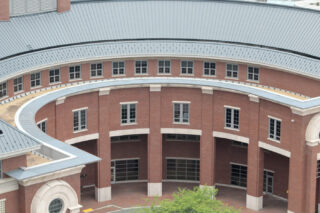

The Virginia Commonwealth University (VCU) School of Medicine, located on VCU’s MCV Campus in downtown Richmond, Virginia, is one of the oldest public medical schools in the United States. Its history begins in 1838, when the Richmond medical department endorsed by Hampden-Sydney College opened, and the school later became the Medical College of Virginia (MCV). In 1968, MCV joined Richmond Professional Institute to form VCU. Today the School of Medicine trains M.D. students inside central Virginia’s only academic medical center, VCU Health, which is also the largest single provider of indigent health care in the commonwealth.
This guide covers the four-year M.D. program and its related pathways for the 2026-2027 application cycle (AMCAS 2027), which enrolls the class that starts in July 2027 and graduates as the Class of 2031. VCU’s mission is to improve health through discovery, training and patient care, and the school places weight on hands-on clinical experience and community service in addition to academic metrics. Students begin learning clinical skills in the first weeks of medical school, train through a statewide set of clinical sites and can choose added routes such as the three-year Competency-Based Graduation pathway, the fmSTAT family medicine program or the M.D.-Ph.D.
The guide is written for applicants who want an honest picture of what VCU asks for and what it offers. It explains the current requirements and deadlines, the latest class statistics and costs, the curriculum, campus life, clinical training and research, the people who lead the school, and the five current secondary essay prompts with full illustrative answers. Facts and figures were checked against official VCU and AAMC sources on October 17, 2026.
Key Takeaways
- Who can apply: VCU accepts M.D. applications from Virginia residents, out-of-state applicants, Canadian citizens and permanent residents, and international applicants who hold a degree from a U.S.-accredited institution and a valid visa. DACA applicants are considered case by case.
- Academic context: For the 2025 entering class, accepted applicants had a median MCAT of 514 and a median GPA of 3.9. The school screens with a minimum MCAT of 503 and a minimum undergraduate science GPA of 3.3. Those are floors, not targets.
- Experience minimums are real requirements: at least 40 hours of in-person physician shadowing in the U.S., at least 60 hours of direct, hands-on patient care and at least 100 hours of community service. Matriculants average more than 200 service hours.
- Key dates: Early Decision AMCAS deadline August 1, 2026. Regular AMCAS deadline October 15, 2026. The supplemental application is due within 30 days of the invitation, and the Casper test must be taken by September 30, 2026.
- Interview format: a virtual Multiple Mini Interview (MMI) on Zoom with six to eight stations. Plan for four to five hours online.
- Cost: for 2025-26, first-year tuition and fees were $41,660 for Virginia residents and $67,318 for nonresidents, with a total first-year cost of attendance of $88,878 and $116,112. For 2026-27, medicine tuition and mandatory fees rose $638 for residents and $951 for nonresidents.
- Distinctive training: eight core clerkships across VCU Medical Center, the Richmond VA Medical Center, Riverside Regional Medical Center and other Virginia sites, plus a three-year Competency-Based Graduation option and the fmSTAT family medicine pathway.
- Next action: count your shadowing, patient care and service hours against VCU’s minimums now, take Casper early and submit AMCAS well before October so your file is complete when supplemental invitations begin in early July.
Key Statistics About VCU School of Medicine

The snapshot above shows the figures most applicants ask for first. The table below adds the detail behind them, including the cohort or academic year for each number and where it comes from.
| Item | Value | Year or cohort | Source |
|---|---|---|---|
| School and degree | VCU School of Medicine, M.D.; public; urban MCV Campus, Richmond, Virginia | Current | VCU SOM; MSAR |
| Founded | 1838 | Historical | VCU SOM history page |
| Accreditation | LCME, continuously since the LCME’s founding in 1942 | Current | VCU SOM LCME page |
| Total M.D. enrollment | 782 | October 2025 | MSAR |
| First-year class size | 184 (116 in-state, 66 out-of-state, 2 international) | 2025 entering class | MSAR |
| Newest entering class | 184 students (Class of 2030) | Entering July 2026 | VCU SOM news, July 20, 2026 |
| Median MCAT (mean) | 514 (514.1) | Accepted applicants, 2025 entering class | MSAR |
| Median total GPA (mean) | 3.9 (3.86) | Accepted applicants, 2025 entering class | MSAR |
| Median science GPA (mean) | 3.87 (3.81) | Accepted applicants, 2025 entering class | MSAR |
| Verified applications | 8,306 | 2025 entering class | MSAR |
| Interviewed | 796 (9.6% of verified applicants) | 2025 entering class | MSAR |
| Acceptance rate | Not published (no offer count is reported) | 2025 entering class | MSAR |
| Tuition and fees, first year | $41,660 in-state; $67,318 out-of-state | AY 2025-26 | MSAR (TSF) |
| Total cost of attendance, first year | $88,878 in-state; $116,112 out-of-state | AY 2025-26 | MSAR (TSF) |
| 2026-27 tuition change | +$638 (1.6%) residents; +$951 (1.4%) nonresidents | AY 2026-27 | VCU FY2026-2027 budget plan |
| Students receiving aid | 72% | AY 2024-25 | MSAR (LCME Part I-B) |
| Average graduate indebtedness | $227,102 | AY 2024-25 | MSAR (LCME Part I-B) |
| Residency match rate | 99% matched to PGY-1 positions after SOAP | Class of 2026 (Match Day March 20, 2026) | VCU SOM news |
Class Size and Demographics
VCU enrolled 184 first-year M.D. students in the 2025 entering class: 116 Virginia residents, 66 out-of-state students and two international students. That class included 113 women, 69 men, one student of another gender identity and one who declined to answer. Nine percent held a graduate degree, 67% had majored in science or math, and 10 to 15 came from postbaccalaureate programs. The newest class, the Class of 2030, also numbers 184 and arrived on July 20, 2026. Its members speak nine languages, and many arrived with health care jobs behind them: 21 medical assistants, 14 EMTs, 11 scribes and three registered nurses.
Academic Data
For the 2025 entering class, accepted applicants had a median MCAT of 514 (mean 514.1). Section medians were 129 in Chemical and Physical Foundations, 127 in Critical Analysis and Reasoning, 129 in Biological and Biochemical Foundations and 130 in Psychological, Social and Biological Foundations. The median total GPA was 3.9 (mean 3.86) and the median science GPA was 3.87 (mean 3.81). VCU also posts its own averages, with no class year given: an MCAT of 512 to 513, an undergraduate GPA of 3.79 and an undergraduate science GPA of 3.7.
Admissions Data
VCU received 8,306 verified applications for the 2025 entering class: 1,165 from Virginia residents, 6,718 from out-of-state applicants and 423 from international applicants. It interviewed 796 applicants (387 in-state, 384 out-of-state and 25 international) and enrolled 184. Eight matriculants came through Early Decision, two through the Baccalaureate/M.D. route and seven entered the M.D.-Ph.D. program.
Tuition and Fees (2025-2026 Academic Year)
First-year tuition and fees for 2025-26 were $41,660 for Virginia residents and $67,318 for nonresidents. The full first-year cost of attendance, which adds living costs and $3,412 in health insurance, was $88,878 in-state and $116,112 out-of-state. For 2026-27, VCU’s budget plan raised medicine tuition and mandatory fees by $638 (1.6%) for residents and $951 (1.4%) for nonresidents, and set the student health insurance estimate at $3,973. The full cost breakdown is in the tuition section below.
Financial Aid and Scholarships
About 72% of VCU medical students received financial aid in 2024-25, and the average graduate left with $227,102 in educational debt. Aid comes mostly through federal Direct Unsubsidized loans, campus-based loans such as the Primary Care Loan and Loans for Disadvantaged Students, scholarships, and service programs such as the National Health Service Corps and the military Health Professions Scholarship Program.
Residency and Match Data
On Match Day 2026, 99% of the Class of 2026 matched into PGY-1 positions after the Supplemental Offer and Acceptance Program. One-third of the class will stay in Virginia for part or all of residency, and about 20% matched into VCU Health programs. Others matched at institutions including Duke, Emory, Johns Hopkins and Yale. The class matched across primary care and specialty fields, from internal medicine-pediatrics and family medicine to emergency medicine and orthopaedic surgery. On May 8, 2026, VCU graduated 175 new M.D. and M.D.-Ph.D. physicians.
Acceptance Rate and Rankings
VCU does not publish an acceptance rate, and no count of offers is published for the 2025 entering class. Dividing matriculants by applicants (184 of 8,306, about 2.2%) gives a matriculation ratio, not an acceptance rate, because some admitted applicants enroll elsewhere. The clearest published measure of selectivity is the interview ratio: 796 interviewed out of 8,306 verified applicants, or 9.6%. That ratio was much higher for Virginia residents (387 of 1,165, about 33%) than for out-of-state applicants (384 of 6,718, about 5.7%).
U.S. News & World Report’s 2026 Best Medical Schools rankings place VCU in Tier 2 for both Research and Primary Care. In the outcome rankings, VCU is #95 in Most Graduates Practicing in Primary Care, #103 in Most Graduates Practicing in Health Professional Shortage Areas and #121 (tie) in Most Graduates Practicing in Rural Areas. These placements describe a school with a large research base and a meaningful share of graduates in primary care and shortage areas. Rankings say little about fit, so weigh them below curriculum, clinical setting, cost and location when you build your list.
Mission and Educational Priorities
VCU School of Medicine states its mission in one sentence: “Our mission is to improve health through exceptional and innovative discovery, training and patient care.” Its vision is to be known for the accomplishments of its trainees, faculty, staff and alumni in research, education and patient care. Five core values guide the school’s conduct and decisions:
- Education and lifelong learning
- Respect and integrity
- Communication and collaboration
- Innovation and technology
- Community engagement
These values show up in specific parts of the program. Community engagement is built into the M.D. curriculum through the Patient, Physician and Society course, which carries a community service requirement and runs across all four years. Communication and collaboration are taught through the Interprofessional Education and Collaborative Care curriculum, which places medical students with students from VCU’s schools of nursing, pharmacy, dentistry and health professions on the MCV Campus. Innovation and technology appear in point-of-care ultrasound training, simulation and a longitudinal telehealth thread.
VCU’s Commitment to Diversity and Community Health
VCU’s clinical setting shapes its mission in a practical way. VCU Health is central Virginia’s only academic medical center and the largest single provider of indigent health care in the commonwealth. It also runs the region’s only Level I trauma center verified in adult, pediatric and burn trauma care. Students therefore train with patients who are uninsured or underinsured, patients transferred from rural hospitals and patients with complex conditions, all in the same system. The school’s 2021-2025 strategic plan built research strengths in cancer, neurosciences, cardiovascular disease, liver disease and metabolic health, which are also common conditions in the communities VCU serves.
The school’s admissions statement makes the link to applicants direct: successful applicants “demonstrate exceptional qualities that align with the mission, vision, and values of the institution,” and “impacting communities through service and hands-on clinical experiences are highly regarded in our selection process in addition to academic metrics.” Applicants come from many backgrounds. The Class of 2030 includes speakers of Arabic, Chinese, French, Hindi, Japanese, Korean, Odia, Portuguese, Spanish and Turkish, and students who have lived in countries from Brazil to Sri Lanka.
What this means for applicants:
- Service is not optional. The 100-hour community service minimum is a requirement, and matriculants average more than 200 hours. Long-term service that responds to a need the community itself identified carries more weight than a long list of one-day events.
- Hands-on care counts separately from shadowing. VCU asks for both, and it lists scribing, interpretation, nursing care, medical assistant work, hospice and EMT work as examples of direct patient care.
- Reflection matters. The first supplemental essay asks you to show, with specific examples, how your own mission and values align with VCU’s. That is hard to do without experiences you have thought about carefully.
Accreditation and Institutional Identity
The M.D. program at VCU School of Medicine is accredited by the Liaison Committee on Medical Education (LCME), the national accrediting body for M.D.-granting medical schools in the United States. VCU states that its program “has been continually accredited since the LCME’s founding in 1942.” The LCME conducted a site visit during the 2023-2024 academic year, and the school directs anyone who wants to confirm current status to the LCME Secretariat. Accreditation matters for practical reasons: Virginia requires it for licensing graduates and for federal financial aid, and only graduates of LCME-accredited schools can match into ACGME-accredited residency programs.
The school’s names can confuse applicants. The institution is Virginia Commonwealth University, the medical school is the VCU School of Medicine, and the health sciences campus where it sits is the MCV Campus, named for the Medical College of Virginia. MCV began in 1838 as a medical department endorsed by Hampden-Sydney College, became an independent institution known as the Medical College of Virginia and joined Richmond Professional Institute in 1968 to form VCU. In 1900 the college became the first in the country to expand its medical curriculum to four years. The clinical partner is VCU Health, whose hospitals include VCU Medical Center and the Children’s Hospital of Richmond at VCU, and the faculty physician practice is MCV Physicians.
VCU’s M.D. program is based in Richmond. The school’s former Inova Campus in Northern Virginia closed after its final class of fourth-year students graduated in spring 2021, and Inova Fairfax now hosts a campus of the University of Virginia School of Medicine. Applicants who want Northern Virginia training should look at UVA’s program; VCU applicants should plan on Richmond as home base, with clinical rotations at sites around the state.
Medical Programs and Affiliations
VCU School of Medicine offers a range of programs, from the standard M.D. to combined degrees and pathways that begin before or after matriculation. Some require a separate application. Others are open only to students who have already enrolled.
Doctor of Medicine (M.D.) Program
The M.D. is a four-year, full-time program in Richmond. Students spend about 18 months in organ-system coursework, take USMLE Step 1, complete eight core clerkships in M3 and finish with acting internships and electives in M4. Clinical skills start in the first weeks through the Practice of Clinical Medicine course, and M2 students see patients with a preceptor two afternoons a month. VCU estimates its entering class at about 184 seats: roughly 150 through the standard M.D. route, 10 through early assurance, six through Early Decision, 10 through the Baccalaureate/M.D. route and eight in the M.D.-Ph.D.
Combined M.D.-Ph.D. Program
VCU’s Medical Scientist Training Program (MSTP) trains physician-scientists in basic and social sciences and biomedical engineering. VCU has run a recognized M.D.-Ph.D. program since 1986, and in 2022 it received an MSTP training award from the National Institute of General Medical Sciences. Students earn both degrees in an average of eight years. The program typically admits five to eight students a year, with a total census of about 50. Tuition, fees and health insurance are covered, and the minimum annual stipend was $37,500 as of August 25, 2026.
Applicants select the combined M.D.-Ph.D. option in AMCAS. The program begins in June before M1 with orientation and laboratory rotations. After Step 1, students complete six to eight weeks of M3 clinical rotations before starting the Ph.D. phase, then return to clinical training after the dissertation defense. Ph.D. options extend beyond traditional basic science departments to programs such as biomedical engineering, healthcare policy and research, and epidemiology. Interview day for M.D.-Ph.D. applicants includes meetings with participating faculty and program leadership in addition to the standard School of Medicine interview.
M.D./M.P.H. Program
The M.D./M.P.H. dual degree, offered with the VCU School of Public Health, lets medical students earn both degrees in five years. Students complete at least 36 M.P.H. credit hours, and nine of those credits are satisfied by M.D. coursework such as Population Health and Evidence-Based Medicine and Patient, Physician and Society. An approved public health elective in M4 replaces the M.P.H. internship. Students apply after matriculating to medical school, and the M.P.H. program has its own supplemental application. This route suits students drawn to population health, health policy or community-based research.
M.D./M.S. Program
VCU offers an M.D.-M.S. in Clinical and Translational Sciences for students who want formal training in clinical research. Students enroll after their second year and typically complete the master’s in about 12 months while on hiatus from the M.D., with possible support for tuition, fees and a stipend. Students apply after matriculation. Clinical research, study design and translational science are the focus.
Postbaccalaureate Premedical Graduate Certificate Program
The Premedical Graduate Health Sciences Certificate (CERT) is a one-year, graduate-level program for students who want to strengthen their academic record before applying. CERT students who earn a 3.5 GPA or higher and an MCAT of 508 or higher are eligible for a guaranteed interview at VCU School of Medicine. A guaranteed interview is not a guaranteed admission, but it is one of the clearest structured routes into the VCU applicant pool for career changers and applicants with an uneven undergraduate record.
BS/MD Guaranteed Admissions Program
VCU Honors College runs an eight-year Guaranteed Admission Program for Medicine. Only current high school seniors may apply, and students keep their guaranteed seat by meeting the program’s requirements while enrolled in the Honors College. Students who finish the bachelor’s degree in fewer than four years do not move into medical school early. For students who are already at VCU, the Preferred Applicant Track for Medicine lets Honors College premedical students apply at the end of their sophomore year. Transfer students are not eligible. High school students exploring this route can build early experience through medical internships for high school students and local volunteering.
MD/MHA Program
VCU’s current dual degree options include the M.D.-Ph.D., M.D./M.P.H. and M.D.-M.S. in Clinical and Translational Sciences, but they do not list an M.D./M.H.A. (Master of Health Administration). Students interested in health care leadership should ask the admissions office whether an M.D./M.H.A. arrangement is available after matriculation. Students who want management training can also use M4 non-clinical electives and the IPEC courses on health care payment models and care coordination.
Pathways for Enrolled Students
Three more programs shape the VCU experience but are not chosen in AMCAS:
- fmSTAT (Family Medicine Scholars Training and Admission program). A dual admission program for students committed to family medicine. VCU invites select applicants during the supplemental process, and 8 to 10 fmScholars are chosen each year from students accepted to the School of Medicine. Scholars receive a four-year longitudinal curriculum with a one-to-one family physician mentor, retreats and seminars, and the fmScholar designation appears in the residency application letter (MSPE).
- Competency-Based Graduation (CBG). A three-year M.D. pathway for students committed to a specialty who plan to stay at VCU or a VCU-affiliated residency. Students learn about it in M1, apply in the spring of M1, complete a summer clinical experience and receive final acceptance in November of M2. Participating residencies are anesthesia, emergency medicine, emergency medicine-internal medicine, family medicine, internal medicine, internal medicine-pediatrics, pediatrics and psychiatry. VCU’s first CBG cohort graduated in 2020.
- Pre-matriculation program. VCU offers a pre-matriculation program open to accepted students in the six to eight weeks before classes, and an early matriculation program that begins in June for about 10 entrants.
Clinical Affiliations
M.D. students train mainly at VCU Medical Center, the Children’s Hospital of Richmond at VCU, the Richmond Veterans Affairs Medical Center (Central Virginia VA Health Care System) and Riverside Regional Medical Center in Newport News, plus other community sites across Virginia. VCU Health’s MCV Hospitals are licensed for 902 beds. Students need reliable transportation for clinical experiences, because rotations use sites in Central Virginia and throughout the state.
Curriculum Overview
VCU’s M.D. curriculum combines about 18 months of organ-system science with early, steady clinical skills training, a full clerkship year and a flexible fourth year. M1 and M2 are graded pass/fail. M3 and M4 are graded Honors, High Pass, Pass or Fail, and class rank is based on M3 clerkship performance and reported in quartiles on the MSPE. Teaching uses lectures, small groups including team-based, problem-based and case-based learning, preceptorships and simulation.
M1 Year: Scientific Foundations of Medicine
M1 begins with Transition to Medical School, a two-week introduction that includes the Practice of Clinical Medicine Bootcamp and a series of “Crucial Conversations” sessions on communication, bias and health disparities. The fall semester, called the Scientific Foundations of Medicine phase, covers the structure, function and pathophysiology students need for organ-system study.
Fall Semester Courses:
- Transition to Medical School
- Molecular Basis of Health and Disease (biochemistry, genetics, cell and molecular biology)
- Principles of Physiology
- Principles of Autonomics and Pharmacology
- Immunity and Infection
- Foundations of Disease
Spring Semester Courses:
The Applied Medical Sciences phase starts in the spring of M1. Each organ-system block covers normal anatomy and physiology, then disease diagnosis, pathophysiology and management.
- Marrow (hematology and oncology)
- Movement (musculoskeletal and dermatologic systems)
- Endocrine and Metabolism
- Gastrointestinal
- Reproduction and Anatomy
M2 Year: Applied Medical Sciences
From August to January, M2 continues the Applied Medical Sciences phase. Students then spend six to eight dedicated weeks preparing for the USMLE Step 1 exam with close guidance from a faculty adviser. Step 1 must be passed before clerkships begin.
Courses:
- Cardiovascular
- Pulmonary
- Renal
- Neuroscience
- Behavioral Sciences (an introduction to psychiatry)
The Applied Clinical Anatomy Capstone runs from January of M1 to January of M2. Dissection teams combine anatomical, radiological and pathological findings to identify at least one significant clinical condition in their donor and present their findings in a grand rounds format to students and faculty.
M3 Year: Core Clerkships
M3 starts with Transition to M3, a three-week course of instruction and simulation that prepares students for clinical work. Students then rotate through hospitals and ambulatory services that include VCU Medical Center, the Richmond VA Medical Center, Riverside Regional Medical Center and other health care facilities throughout Virginia.
Clerkships:
- Ambulatory Clerkship
- Family Medicine
- Internal Medicine
- Neurology
- Obstetrics and Gynecology
- Pediatrics
- Psychiatry
- Surgery
M3 also includes a Foundational Career Exploratory Elective and continuing longitudinal work in Patient, Physician and Society, population health, telehealth and geriatrics.
M4 Year: Advanced Clinical Concentrations
M4 consists of 44 weeks of elective rotations and eight weeks of acting internships. Students must complete one ward acting internship and one critical care acting internship (four weeks each). Within those 44 weeks, at least 24 must be clinical electives and no more than 20 can be non-clinical. Students get up to four weeks of dedicated time to study for USMLE Step 2 CK, which is required for graduation, and they may complete an away rotation at another institution.
M4 opens with Transition to M4, which covers ICU management, electrolyte emergencies, transitions of care, escalation of care and calling consultants. A summative OSCE must be passed before the M4 year begins. The year ends with Transition to Residency, a required course of workshops and specialty bootcamps that also covers personal, professional and financial planning for residency.
Longitudinal Curriculum
Several courses run across multiple years:
- Patient, Physician and Society (PPS): a four-year course that develops the humanistic physician. Topics include spirituality, integrative medicine, ethics, cultural competency, palliative care, health care disparities, the effect of psychological trauma on health, the physician-patient relationship, the influence of community and society on health, and professionalism.
- Practice of Clinical Medicine (PCM): over the first 18 months, students learn professionalism, medical interviewing, physical examination and clinical reasoning in small groups taught by a practicing attending physician and a volunteer M4 student. In M2 they see patients with a preceptor at VCU or in the community two afternoons a month.
- Interprofessional Education and Collaborative Care (IPEC): required courses in M1 and M4, with electives in M2 and M3. Courses include Foundations of Interprofessional Practice, Interprofessional Quality Improvement and Patient Safety, care coordination courses, Global Health and Interprofessional Complex Care Coordination.
- Population Health and Evidence-Based Medicine: epidemiology, biostatistics, preventive medicine, public health and evidence-based medicine across the first three years.
- Point of Care Ultrasound: bedside ultrasound taught alongside PCM over the first 18 months, with a standardized patient at each session.
- Diagnostic Reasoning: an 18-month course that builds differential diagnosis skills and prepares students for Step 1 with USMLE-style questions.
- Geriatrics: a four-year curriculum built on American Geriatrics Society and AAMC competencies, covering delirium, dementia, falls, polypharmacy and other common conditions in older adults.
- Telehealth: a longitudinal thread that continues into the clerkship year.
Elective Opportunities
VCU publishes an M4 electives catalog, and students choose electives based on career goals, mixing clinical and non-clinical blocks. Non-clinical time can go to research, scholarly projects or other approved work. Students from other medical schools who want a VCU elective contact the School of Medicine registrar’s office, which handles visiting student requests.
Global Health and Telehealth
Global health appears in the IPEC curriculum through a Global Health course, and telehealth is a longitudinal thread through the preclinical and clerkship years. VCU’s alumni include physicians who built careers in global health; one 2006 graduate spends most of each year in Africa with the Botswana Harvard Health Partnership and credits the MCV Campus with fueling that interest. Applicants who have worked in under-resourced settings, in the U.S. or abroad, can connect that experience to these parts of the curriculum, as long as they describe what they actually did and learned.
Admissions Requirements and Application Process
VCU uses holistic review based on the AAMC model. In the school’s words, it weighs “how each applicant may benefit from and contribute to VCU School of Medicine’s learning environment and the medical profession as a future physician.” Grades and scores matter, but the school’s requirements for clinical and service hours mean an applicant with strong metrics and thin experience will struggle.
Step 1: AMCAS Application
VCU participates in AMCAS and accepts both Early Decision and regular applications. For the 2026-2027 cycle, the earliest AMCAS submission date was May 28, 2026, the Early Decision deadline is August 1, 2026, and the regular AMCAS deadline is October 15, 2026. VCU strongly encourages anyone considering Early Decision to submit AMCAS by July 15, 2026. The school does not review incomplete or unverified applications, and application review began July 6, 2026.
All applicants must submit valid MCAT scores. VCU accepts MCAT scores from 2024, 2025 and 2026, and the last eligible 2026 test date for this cycle was September 12, 2026. It evaluates applications using the most recent single score or the average of all scores from tests taken within the cycle year (January to September 2026). The screening minimum is 503.
Step 2: Supplemental Application
Supplemental invitations go out starting in early July. VCU invites select applicants based on completed and verified AMCAS applications, including transcripts, MCAT scores and letters of recommendation, so late letters can delay an invitation. The supplemental application should be submitted within 30 days of the invitation, and the timeline lists January 30 as the final date to submit supplemental materials. The supplemental fee is $100, non-refundable, and fee waivers are available. The current essay prompts and full illustrative answers are in the secondary section of this guide.
Step 3: Screening and Holistic Review
After the supplemental application arrives, reviewers evaluate the full file, including metrics, experiences and personal attributes. One of three outcomes follows: an interview invitation, a hold for an interview decision, or a decision that the application will receive no further consideration. Holds are common. VCU asks applicants not to call when their status has not changed, because staff have no information beyond what the applicant portal shows.
Step 4: Interview
VCU uses the Multiple Mini Interview (MMI) on Zoom, with interviews from late August through early March. Details are in the interview section below.
Step 5: Admissions Offer
Early Decision applicants are notified by October 1. Regular M.D. acceptance notifications go out on four dates: October 16, December 16, February 1 and March 15. Applicants who do not receive an offer on the final offer date may be invited to join the alternate list. For the 2025 cycle, VCU made 75 offers to waitlisted applicants, and the waitlist stays active from April 1 until the class is full or classes begin on July 19, 2027.
Step 6: Acceptance and Deposit
Admitted students accept the offer and pay a $100 matriculation deposit, which goes toward tuition, within two weeks of the offer. Applicants who withdraw receive a full refund if VCU receives the withdrawal notice on or before May 1. Offers made after April 30 must be accepted within one week of the offer date. Deferral requests are considered case by case, and admitted students must complete a criminal background check.
Admissions Timeline: Key Dates
| Date | Step |
|---|---|
| Early May 2026 | AMCAS application opens |
| May 28, 2026 | Earliest AMCAS submission |
| Early July 2026 | Application review begins (July 6) and supplemental invitations start |
| July 15, 2026 | Recommended AMCAS submission date for Early Decision applicants |
| August 1, 2026 | Early Decision AMCAS deadline |
| Late August 2026 to early March 2027 | MMI interview season |
| September 12, 2026 | Last eligible MCAT date for this cycle |
| September 30, 2026 | Last eligible Casper date |
| October 1, 2026 | Early Decision notification |
| October 15, 2026 | Regular AMCAS deadline |
| October 16, 2026; December 16, 2026; February 1, 2027; March 15, 2027 | Regular acceptance notification dates |
| January 30, 2027 | Final deadline for supplemental materials |
| April 1, 2027 | Waitlist becomes active |
| May 1, 2027 | Withdrawal notice received by this date for a full deposit refund |
| June 15 | AMCAS Commit to Enroll |
| June 30, 2027 | All prerequisites must be complete |
| July 19, 2027 | Classes begin with Transition to Medical School |
Prerequisites
VCU updated its premedical course requirements in January 2025, effective for the 2026 application cycle and beyond. Required coursework:
- Biology with lab: one academic year (general biology, zoology or botany)
- General chemistry with lab: one academic year
- Organic chemistry I with lab: one semester or institutional equivalent
- Organic chemistry II with lab: one semester, only if your institution requires it for your major or as a prerequisite for upper-level courses
- Physics with lab: one academic year
- Biochemistry: one semester or institutional equivalent
- Math: one academic year, College Algebra or higher
- English: one academic year of writing-intensive courses, in English or another subject designated writing-intensive
Highly recommended: psychology, sociology, biostatistics and an upper-level biological science such as cell biology, anatomy, genetics, microbiology, molecular biology, immunology or neuroscience. Non-science majors must complete four credit hours of upper-level biology; for science majors it is recommended.
Course policies to know:
- VCU accepts AP and CLEP credit for prerequisites if it appears on an official transcript, but lab credit is still required. AP credit is not accepted for biochemistry or organic chemistry.
- Science courses taken pass/fail are not accepted, VCU requires letter grades for science coursework completed after December 2021, and online substitutions for science courses and labs are not accepted.
- Community college coursework is accepted.
- Prerequisites have no expiration date, but VCU strongly encourages additional science coursework within four years of applying.
- A bachelor’s degree from an accredited U.S. or Canadian institution is customary and recommended before enrollment, and the school expects a broad education that includes social sciences, history, arts and languages.
GPA and Test Requirements
- Minimum undergraduate science GPA: 3.3. For postbaccalaureate or graduate work, VCU looks for a competitive GPA over the last two consecutive years or a graduate science GPA of 3.5 or above across at least 27 credit hours in a basic science degree program.
- Minimum MCAT: 503.
- Casper: required. All applicants take the American Professional Health Sciences Casper situational judgment test (CSP10111) by September 30, 2026, and reapplicants must take a new test. VCU does not use the AAMC PREview exam.
Clinical Experience, Service and Activities
These minimums apply to every applicant:
- Physician shadowing: at least 40 hours of in-person shadowing in the U.S.
- Direct patient care: at least 60 hours of hands-on patient care, such as scribing, language interpretation, nursing care, medical assistant work, hospice or EMT work.
- Community service: at least 100 hours of meaningful service designed to address community-identified needs. Matriculants average more than 200 hours. Examples include tutoring and after-school programs, food banks, hospice and nursing homes, homeless shelters, crisis hotlines, Peace Corps, AmeriCorps and Special Olympics.
- Research and leadership: valuable but not required.
- Hobbies and interests: welcome in the application.
For every experience, VCU prefers longitudinal involvement over sporadic exposure. Applicants who need structured patient contact can look at clinical internships for pre-med students, but those hours should add to, not replace, the U.S. shadowing VCU requires.
Residency, Citizenship and Other Eligibility
VCU accepts applications from U.S. citizens, permanent residents and applicants who can show current legal immigration status at the time of application. Canadian citizens and permanent residents may apply. International applicants must hold a degree from a U.S.-accredited institution and a valid visa and, if accepted, document the ability to pay tuition and fees for at least four years. DACA applicants are considered case by case. VCU has no state relationship that reserves seats for another state, it does not accept transfer students, and applicants who previously matriculated at another medical school and withdrew or were dismissed are not considered.
Letters of Recommendation
VCU requires a minimum of three and a maximum of five letters through the AMCAS Letter Service. Letters should come from supervisors, professors and mentors who know you well, from academic, clinical, employment, research or volunteer settings, and they should speak to the AAMC premedical competencies, including commitment to learning and growth, cultural awareness, reliability and service orientation. An institutional premedical committee letter or packet satisfies the requirement, and no additional letters are needed with one.
Personal Statement
VCU describes the personal statement as “an original piece of writing that conveys who you are and your motivation for a career in medicine beyond grades and test scores.” Use it to show how your experiences shaped your motivation, and save your VCU-specific reasoning for the supplemental essays.
Updates and Letters of Intent
VCU welcomes updates on new grades. Letters of intent, letters of interest and updates to experiences can be uploaded through the applicant portal, but the selection committee does not consider them when extending interview or acceptance offers. Put your best case in the application itself.
Early Decision Program (EDP)
Early Decision is open to in-state and out-of-state applicants who are certain VCU is their first choice. Under AAMC Early Decision rules, an EDP applicant applies only to VCU until VCU decides. The AMCAS deadline is August 1, 2026, VCU recommends submitting by July 15, and decisions are released by October 1, 2026. In the 2025 entering class, eight matriculants came through Early Decision. EDP makes sense only for applicants whose metrics and experiences already fit VCU well and who want to stay in Virginia.
Tuition, Cost of Attendance and Financial Aid
VCU is a public school, so residency makes a large difference in cost. The figures below separate tuition and fees from the full cost of attendance, which also includes housing, food, transportation, books, insurance and other living costs.
Cost of Attendance by Year and Residency
| Item | Virginia resident | Nonresident |
|---|---|---|
| Tuition and fees | $41,660 | $67,318 |
| Other expenses (living, books, transportation and similar) | $43,806 | $45,382 |
| Health insurance | $3,412 | $3,412 |
| Total cost of attendance | $88,878 | $116,112 |
For 2026-27, VCU’s university budget plan raised tuition and mandatory fees for medicine students by $638 (1.6%) for Virginia residents and $951 (1.4%) for nonresidents. The required student health insurance estimate rose from $3,412 to $3,973 unless a student shows comparable coverage. A full 2026-27 M.D. cost of attendance budget has not been published, so applicants should use the 2025-26 totals above plus those increases as a planning estimate and confirm the final budget after admission.
The School of Medicine’s own most recent four-year budget, for 2024-25 and marked subject to revision, shows how costs change across the program. In-state tuition was $36,524 and out-of-state tuition was $61,224 that year. Total estimated cost of attendance was:
| Year (months budgeted) | In-state total | Out-of-state total |
|---|---|---|
| M1 (10 months) | $83,841 | $110,672 |
| M2 (12 months) | $90,193 | $117,023 |
| M3 (12 months) | $89,542 | $116,372 |
| M4 (10 months) | $86,378 | $113,197 |
M2 and M3 cost more because they are budgeted for 12 months. M1 and M2 fees include items such as a simulation fee, an ultrasound fee and a question bank, out-of-state students pay a capital outlay fee, and the budget includes board exam registration in M2 and M4 and residency application fees in M4. Transportation is a meaningful line, because clerkships take students to sites outside Richmond.
Financial Aid at Virginia Commonwealth University (VCU) School of Medicine
About 72% of VCU medical students received financial aid in 2024-25, and the average graduate owed $227,102. The School of Medicine Financial Aid Office counsels M.D. students and administers campus-based loans. Students apply with the FAFSA, and the CSS Profile with parental information is used for need-based campus programs.
Federal loan rules changed for students who start borrowing on or after July 1, 2026, which includes the class entering in July 2027. The main loan types are below.
Federal Direct Unsubsidized Stafford Loan
- Eligibility: medical students regardless of financial need.
- Annual and lifetime limits: under the 2025 federal reconciliation law (Public Law 119-21), new borrowers in professional degree programs such as the M.D. can borrow up to $50,000 a year in Direct Unsubsidized loans, with a $200,000 aggregate limit for professional study and a $257,500 lifetime limit on federal student loans. Students who borrowed before July 1, 2026 may keep the older limits for a limited time.
- Interest rate: fixed at 8.07% for graduate and professional Direct Unsubsidized loans first disbursed from July 1, 2026 through June 30, 2027. Interest accrues from disbursement.
- Origination fee: 1.057% for loans first disbursed before October 1, 2027.
- Repayment: begins six months after graduation or leaving school. There is no deferment during internship or residency.
- Application: file the FAFSA here.
Federal Direct Graduate PLUS Loan
- Status for new borrowers: the Grad PLUS program has been eliminated for new borrowers. A graduate or professional student who had not borrowed a PLUS loan before July 1, 2026 is not eligible for one. Students already borrowing Grad PLUS before that date may continue under transition rules for a limited period.
- For continuing borrowers: Grad PLUS is credit-based and carries a fixed 9.07% rate for loans first disbursed in 2026-27 and a 4.228% origination fee.
- More information: federal loan details are available from Federal Student Aid here, and VCU Student Financial Services summarizes the changes on its Reconciliation Bill of 2025 page.
The practical effect is that a federal loan cap of $50,000 a year will not cover the full cost of attendance for most students, especially nonresidents. Entering students should plan early for the gap through scholarships, service programs, savings, family help or private loans.
Federal Primary Care Loan
- Eligibility: a campus-based loan awarded by the School of Medicine Financial Aid Office to students who commit to primary care. Eligibility is determined from the CSS Profile.
- Interest rate: fixed at 5%.
- Grace period: 12 months after graduation, and the student is not responsible for interest until repayment begins.
- Conversion: regular loans may be converted to Primary Care Loans at graduation once it is clear the student will match into a primary care residency.
Loans for Disadvantaged Students
- Eligibility: a campus-based loan for students who are financially needy or from disadvantaged backgrounds, based on CSS Profile information.
- Interest rate: fixed at 5%.
- Grace period: 12 months after graduation, with no interest during school.
Service-Based Scholarship and Loan Repayment Programs
- National Health Service Corps (NHSC) Scholarship: for students pursuing primary care. It pays tuition and eligible fees, an annual payment for other educational costs and a monthly stipend, which the 2026 program guidance estimates at $1,648 before taxes. Recipients serve a minimum of two years in a health professional shortage area, plus one year for each additional year of support, up to four years of support. NHSC also offers loan repayment programs for graduates, including the Students to Service Loan Repayment Program.
- Health Professions Scholarship Program (HPSP): a military scholarship for medical students who agree to serve in the armed forces after training. VCU has HPSP students in every class; they complete away rotations at military medical institutions and match through the separate Military Match. Four members of the Class of 2026 matched this way, including one into orthopaedic surgery at Brooke Army Medical Center. Each service branch publishes its current benefits and service obligation.
- Public Service Loan Forgiveness (PSLF): forgives the remaining balance on Direct Loans after 120 qualifying monthly payments under a qualifying repayment plan while working full time for a government or not-for-profit employer.
- Veterans Affairs Specialty Education Loan Repayment Program (SELRP): for recent medical graduates who are in or matched to a residency in a specialty the VA identifies as a shortage. It pays $40,000 a year, up to $160,000, in return for 12 months of VA clinical service for each $40,000, with a minimum of 24 months of service.
Private Loans
- Eligibility: credit-based loans from banks and other lenders, usually at variable rates.
- Interest: accrues from disbursement, although students may defer payments while enrolled.
- Repayment: many lenders allow deferment during residency. The Financial Aid Office recommends using all federal options before private loans, and with the new federal caps, comparing private lenders carefully will matter more for the entering class.
Financial Aid Counseling and Support
- Financial aid summer workshop: each June, the Financial Aid Office holds a voluntary workshop for incoming M1 students on the aid process, types of aid and other resources.
- Debt management presentations: these begin at orientation and continue through medical school, and students can meet with the office by appointment.
- Exit counseling: every M4 student receives detailed exit counseling and one-on-one guidance before graduation.
Refund Policy
The School of Medicine follows the university tuition and fee refund policy. Students who withdraw before completing 60% of the semester, measured in calendar days, must return all or part of the financial aid disbursed to their VCU accounts and may owe the university for charges aid had covered. Medical withdrawals are treated the same as other withdrawals. Details, including the refund schedule for each semester, are on VCU Student Financial Services’ drops and withdrawals page here.
Planning Your Budget
A few practical steps help:
- Use the 2025-26 totals plus the 2026-27 increases as your first-year estimate, then confirm the official budget after you are admitted.
- File the FAFSA and CSS Profile as soon as they open, because campus-based loans and some scholarships depend on them.
- Decide early whether a service program such as NHSC or HPSP fits your goals. These programs have their own deadlines and service obligations.
- If you are seriously considering a primary care career at VCU, look at fmSTAT and CBG together. The three-year CBG pathway exists in part to reduce student debt.
- Budget for a car or reliable transportation, which the school recommends for clinical rotations.
Campus Facilities and Student Life
VCU School of Medicine sits on the MCV Campus in downtown Richmond, alongside VCU’s schools of dentistry, nursing and pharmacy and its College of Health Professions. VCU’s larger Monroe Park Campus, about two miles west, holds the undergraduate departments, graduate housing and many university services. Many medical students use services on both campuses.
Campus Resources
MCV Campus Recreation Center
The MCV Campus Recreation Center is a 46,000-square-foot indoor recreation facility in the Larrick Student Center with a fitness center, studios and locker rooms. VCU RecWell has announced that the center will close on November 25, 2026, because Larrick is scheduled for demolition in spring 2027. A smaller replacement fitness space at 610 N. 10th St. is planned to open in summer 2027. Until then, MCV Campus students can use the Cary Street Gym and other RecWell facilities on the Monroe Park Campus, along with group exercise, intramural sports and outdoor adventure programs.
University Student Health Services
University Student Health Services is a nationally accredited health care provider, accredited by the Accreditation Association for Ambulatory Health Care, with clinics on both the Monroe Park and MCV campuses. Students can be seen by appointment for primary care and related services.
University Counseling Services (UCS)
University Counseling Services offers individual, relationship and group therapy, skills and support groups, and crisis intervention. UCS has an office on the MCV Campus in the VMI Building at 1000 East Marshall Street as well as on the Monroe Park Campus.
Dean of Students Office
The Dean of Student Advocacy Office, in the Hunton Student Center at 1110 East Broad Street, helps students facing life challenges that affect their studies. VCU also runs the Ram Pantry, a free food pantry for students at 930 W. Grace St., with smaller Little Ram Pantries on the MCV Campus.
Division for Academic Success
The Division for Academic Success provides disability support services to MCV Campus students with documented disabilities, including academic accommodations, from its office at 1000 E. Marshall Street.
Office of Multicultural Student Affairs
The Office of Multicultural Student Affairs provides programming, advising and support that help students from many backgrounds build community and stay on track. It is based in the University Student Commons on the Monroe Park Campus.
Rams in Recovery
Rams in Recovery is VCU’s collegiate recovery program for students in or seeking recovery from substance use. It offers community, recovery meetings and trainings, including Recovery Ally Training and naloxone training.
Facilities at VCU Medical School
VCU’s medical campus mixes some of the oldest medical buildings in the country with modern teaching and research space.
Critical Care Hospital
Dedicated in October 2008, the Critical Care Hospital at VCU Medical Center is a 15-level, 367,000-square-foot building that cost $184 million and houses 232 adult patient beds. Its intensive care beds are where students on surgery, internal medicine and critical care rotations see many of VCU’s sickest patients under supervision.
James W. and Frances G. McGlothlin Medical Education Center
The McGlothlin Medical Education Center opened in 2013 as a $158.6 million, 12-story, 200,000-square-foot building. Its construction was a public-private partnership: the commonwealth committed $70 million, and James W. and Frances G. McGlothlin gave $25 million in 2011. The building was designed for team-based learning and simulation, and it houses classrooms, small-group rooms, simulation space and the School of Medicine Dean’s Office. Most M1 and M2 teaching takes place here.
Molecular Medicine Research Building
The Molecular Medicine Research Building opened in 2009. The eight-story, 125,000-square-foot research building was designed to house 48 principal investigators and their teams, and it is one of the main homes for laboratory research on the MCV Campus. Students who want lab experience during medical school often work with investigators based here.
Sanger Hall
Sanger Hall, opened in 1968, is a 12-story building named for William T. Sanger, president of the Medical College of Virginia from 1925 to 1956. It houses School of Medicine departmental offices and laboratories, including the Office of Graduate Education.
West Hospital
West Hospital, built in 1941, is an Art Deco high-rise that served as a hospital for decades and is now used by VCU as office space. It is one of the most recognizable buildings on the MCV Campus. Virginia’s Department of Historic Resources found it eligible for the National Register of Historic Places in 2024, and VCU has proposed demolishing it, so applicants should not expect it to remain part of campus life long term.
The Egyptian Building
The Egyptian Building is a National Historic Landmark and one of the oldest examples of Egyptian Revival architecture in the U.S. It was the first permanent home of the medical department that became MCV, and classes and patients moved there by 1845. It still serves the School of Medicine with a lecture hall and teaching space, and it connects today’s students to the school’s history.
Student Life and Engagement
Office of Student Engagement
On the health sciences campus, the Office of Student Engagement is part of VCU’s Division for Student Engagement and Impact. It organizes social events, leadership opportunities and service projects for students on the MCV Campus.
VCU Recreation and Well-Being (RecWell)
RecWell promotes physical, emotional and mental wellness through fitness centers on both campuses, group exercise, club and intramural sports, outdoor adventure trips and wellness programs. During the MCV Campus Recreation Center transition, the Monroe Park facilities carry most of these services.
Military Student Services
VCU Military Student Services supports veterans, service members and military-connected students as they move between military service and academic life. HPSP medical students have their own student group as well.
Student Organizations
VCU School of Medicine lists about 96 student organizations. They range from specialty interest groups to service programs, identity-based associations and hobby clubs. A few examples by category:
Medical Specialty Groups
Specialty interest groups help students explore fields early, find mentors and plan electives. Examples include the Cardiology Interest Group, the Dermatology Interest Group and the Emergency Medicine Student Association (EMSA) at VCU.
Identity-Based Groups
Groups such as Medicine with Pride, the Asian Pacific American Medical Student Association (APAMSA), the Latino Medical Student Association and the Student National Medical Association (SNMA) offer community and advocacy for students from many backgrounds.
Community Service Organizations
Service groups put the curriculum’s community focus into practice. Crossover Clinic provides medical care for underserved populations in Richmond, Refugee Connect supports refugee families, and MedMentors @ MCV mentors young people. Remote Area Medical and Health Opportunities for People Everywhere at VCU offer additional outreach.
Interest Groups and Professional Development
Students can join groups focused on professional development and wider interests, such as the Global Surgery Student Alliance, Health Economics and Policy, Medical Education and Research Mentorship, and Physicians for Culinary Medicine.
Medical Specialty and Interest Groups
- Anesthesia Student Interest Group
- Cardiology Interest Group
- Cardiothoracic Surgery Interest Group
- David Hume Surgical Society
- Dermatology Interest Group
- Emergency Medicine Student Association (EMSA) at VCU
- ENT Interest Group
- Gastroenterology Student Interest Group
- Genetics Student Interest Group
- Hematology and Oncology Student Interest Group
- Internal Medicine Student Interest Group
- Interventional Radiology/Diagnostic Radiology Student Interest Group
- Med-Peds at VCU
- N2Path (pathology)
- OB/GYN Student Interest Group
- Ophthalmology Student Interest Group
- Orthopaedic Surgery and Sports Medicine Interest Group
- Pediatric Student Interest Group
- Plastic Surgery Student Interest Group
- PM&R Student Interest Group
- Radiation Oncology Interest Group
- Student Family Medicine Association (SFMA)
- Student Interest Group in Neurology (SIGN)
- Student Psychiatry Society
- Urology Student Interest Group
- Vascular Society Interest Group
Identity-Based Organizations
- Asian Pacific American Medical Student Association (APAMSA)
- Association of Women Surgeons
- First Physicians
- Jewish Medical Student Association
- Latino Medical Student Association
- Medicine with Pride
- Queer POC Community
- South Asian Medical Student Association (SAMSA)
- Student National Medical Association (SNMA)
- Women in Medicine Student Organization (WIMSO)
Professional and Advocacy Organizations
- American Association of Neurological Surgeons Medical Student Chapter
- American Geriatrics Society Student Chapter
- American Medical Association/Medical Society of Virginia Medical Student Section
- American Medical Student Association (AMSA)
- Health Economics and Policy
- Medical Ethics Student Interest Group
- Medical Students for Choice
- Medical Students for Maternal Health Equity
- Medical Students for Violence Prevention
- Richmond Academy of Medicine
Community Service and Outreach Groups
- Crossover Clinic
- Health Opportunities for People Everywhere at VCU
- Juvenile Justice Initiatives
- Meals for Moms SIG
- MedMentors @ MCV
- Period Education Project
- Refugee Connect
- Remote Area Medical
- Trauma Survivors Network
- The Simple Sunflower, which pairs medical students with pediatric patients undergoing cancer treatment at Children’s Hospital of Richmond
Interest-Based and Extracurricular Groups
- Adaptive Sports
- Artificial Intelligence in Medicine
- Baking it Forward
- Beats Per Minute and Med Melodies (music)
- Doctors Who Bike
- Global Surgery Student Alliance
- Medical Spanish at VCU and Medical Chinese Student Interest Group
- Medicine is the Muse
- Physicians for Culinary Medicine
- SonoRAMS (ultrasound)
- Wilderness Medicine Student Interest Group
- Yoga Student Interest Group
- Sports groups for pickleball, soccer, tennis, table tennis, volleyball, bowling and boxing
Religious and Cultural Organizations
- Catholic Student Association
- Christian Medical and Dental Associations
- Jewish Medical Student Association
- Muslim Health Professionals
Other Notable Groups
- HPSP Students (Health Professions Scholarship Program)
- Research Student Interest Group
- White Coat Wellness
- Medical Education Student Interest Group
These organizations change from year to year as students start new groups. The point for applicants is that VCU has space to continue nearly any interest, from music to policy work, and that service groups are central to student life.
Life in Richmond
Richmond is a mid-sized city with a metropolitan population of about 1.3 million and vibrant neighborhoods, art galleries, museums, music venues, restaurants, breweries and parks. The James River runs through downtown with Class III and IV rapids, and Interstates 64 and 95, Amtrak’s Main Street Station and Richmond International Airport make trips to the mountains, Virginia Beach and Washington, D.C., easy. Neighborhoods such as the Fan and Oregon Hill border the Monroe Park Campus, a short ride from the MCV Campus, and many medical students live there or downtown. Compared with large East Coast cities, Richmond’s cost of living is moderate, and graduating students often describe it as a city they want to stay in: one couple from the Class of 2026 matched together at VCU Health and planned to move into the Fan.
Clinical Rotations and Research Opportunities
Clinical Rotations at VCU Medical School
VCU students train inside a large academic health system and at affiliated hospitals across Virginia. Clinical rotations connect classroom science to patient care under the supervision of faculty physicians and residents.
The Importance of Clinical Rotations
Rotations are where students learn to take a full history, examine patients, present cases, write notes, build differential diagnoses and work as part of a team. They also help students choose a specialty, and they are where residency letters of recommendation usually come from. VCU’s M3 grades are Honors, High Pass, Pass or Fail, and class rank is based on clerkship performance, so the clinical year matters for the residency match.
VCU’s Clinical Rotation Curriculum
All M3 students complete eight core clerkships: ambulatory care, family medicine, internal medicine, neurology, obstetrics and gynecology, pediatrics, psychiatry and surgery. The year begins with the three-week Transition to M3 course and includes didactic sessions on practice-related topics. In M4, every student completes a ward acting internship and a critical care acting internship, then fills 44 weeks with clinical and non-clinical electives, which can include an away rotation. The electives catalog covers a wide range of specialties.
Clinical Rotation Experiences at VCU
- VCU Medical Center: the flagship teaching hospital and home of the region’s only Level I trauma center verified in adult, pediatric and burn trauma care. VCU Health is also recognized for organ transplantation, head and spinal cord trauma, heart care, burn care, pediatrics and cancer treatment. MCV Hospitals are licensed for 902 beds.
- Children’s Hospital of Richmond at VCU: Virginia’s only Level I pediatric trauma center, where students complete much of their pediatrics training.
- VCU Massey Comprehensive Cancer Center: designated a Comprehensive Cancer Center by the National Cancer Institute in 2023 and one of two NCI-designated cancer centers in Virginia.
- Richmond VA Medical Center (Central Virginia VA Health Care System): a major training site with strong neurology and rehabilitation services.
- Riverside Regional Medical Center: a community hospital in Newport News that hosts VCU clerkships and a VCU-affiliated family medicine residency.
- Community sites across Virginia: ambulatory practices and hospitals in Central Virginia and around the state, which is why VCU recommends that students have reliable transportation.
Students are supervised by VCU faculty and residents throughout and receive regular feedback. Many also take part in quality improvement projects and clinical research during rotations.
Research Opportunities for Medical Students at VCU
Research is not required for admission or graduation, but the vast majority of VCU medical students take part in some research experience. Students can work in basic science, clinical, translational, population health and medical education research, and they can use M4 non-clinical electives for scholarly projects.
The School of Medicine accounts for almost half of VCU’s sponsored research awards and 87% of the university’s NIH funding, with more than $230 million in research funding in fiscal 2023. In fiscal 2025 it ranked 60th among U.S. medical schools in total NIH grant awards, with 120 NIH-funded investigators and 169 awards. Its strategic research strengths are cancer, neurosciences, cardiovascular disease, liver disease and metabolic health.
Research Culture at VCU
VCU research is organized around departments and a set of centers and institutes. Several are especially relevant to students:
- C. Kenneth and Dianne Wright Center for Clinical and Translational Research: VCU’s NIH Clinical and Translational Science Award hub, which received a $27.5 million CTSA award in 2023. It supports clinical trials, clinical research training and the M.D.-M.S. in Clinical and Translational Sciences.
- VCU Massey Comprehensive Cancer Center: cancer research from the lab to population science, with student research opportunities across departments.
- VCU Center for Drug Discovery: drug discovery and development research, building on VCU’s earlier Institute for Structural Biology, Drug Discovery and Development at the Virginia BioTechnology Research Park.
- VCU Diabetes Center and the Stravitz-Sanyal Institute for Liver Disease and Metabolic Health: research on diabetes, liver disease and metabolic conditions, two of the school’s strategic strengths.
- Virginia Center on Aging: a statewide agency created by the Virginia General Assembly and based at VCU, which supports aging research, education and geriatric training that connects to VCU’s four-year geriatrics curriculum.
- Virginia Institute for Psychiatric and Behavioral Genetics: research on genetic and environmental influences on psychiatric and behavioral conditions.
Students interested in a research career can apply to the M.D.-Ph.D., add a year for the M.D.-M.S., or, as an M.D.-Ph.D. student, apply to the Wright Scholars program for translational and clinical projects. Faculty mentorship is available but not guaranteed; students usually find mentors by reaching out to investigators in their fields of interest during M1.
Notable Alumni, Faculty, Leadership and Admissions Staff
VCU School of Medicine has more than 175 years of graduates. The profiles below focus on people whose connection to the school is verified and whose work helps applicants understand what VCU training can lead to and who runs the school today.
Notable Alumni of VCU Medical School
Patch Adams, M.D. (Class of 1971)
Hunter “Patch” Adams earned his M.D. at the Medical College of Virginia in 1971. He became known for an approach to care built on humor, compassion and close human connection, and in 1989 he founded the Gesundheit! Institute as a nonprofit to put that model into practice. The 1998 film Patch Adams, starring Robin Williams, was based on his life. For applicants, his story is a reminder that VCU has long produced physicians who question how care is delivered and who put the patient relationship at the center.
Baruj Benacerraf, M.D. (Class of 1945)
Baruj Benacerraf began medical studies at MCV in July 1942 and completed an accelerated wartime program, earning his medical degree before his internship in 1945. He shared the 1980 Nobel Prize in Physiology or Medicine for discoveries concerning genetically determined structures on the cell surface that regulate immune reactions, work tied to the major histocompatibility complex. His research shaped modern understanding of transplantation and autoimmunity. He is the clearest example of an MCV graduate whose laboratory career changed medicine, which matters for applicants considering the M.D.-Ph.D.
Georgia Chenevix-Trench, Ph.D. (Class of 1985)
Georgia Chenevix-Trench earned her Ph.D. in 1985 from the Department of Human Genetics at the Medical College of Virginia, so she is an alumna of MCV’s graduate program rather than its M.D. program. She went on to an international career in cancer genetics, studying inherited risk for breast and ovarian cancer. Her path shows that the MCV Campus has trained researchers as well as physicians, and that VCU’s human genetics strength, still visible in programs such as the Virginia Institute for Psychiatric and Behavioral Genetics, has a long history.
Jean Harris, M.D. (Class of 1955)
Jean L. Harris was the first African American student admitted to the School of Medicine at the Medical College of Virginia, earning her M.D. in 1955. In 1978, Governor John Dalton appointed her Virginia’s Secretary of Human Resources, making her the first African American cabinet member in the commonwealth. Her career joined medicine and public health policy. For applicants, she is an important part of VCU’s history and a model for physicians who want to work on health systems and access as well as individual care.
Jeffery Taubenberger, M.D., Ph.D. (M.D. 1986, Ph.D. 1987)
Jeffery K. Taubenberger earned an M.D. in 1986 and a Ph.D. in 1987 from the Medical College of Virginia of VCU. He is best known for leading the sequencing, reconstruction and characterization of the virus responsible for the 1918 influenza pandemic, work that has shaped pandemic preparedness. He is a senior investigator at the National Institute of Allergy and Infectious Diseases and served as NIAID’s acting director from 2025 to 2026. His dual-degree path is a direct example of what VCU’s M.D.-Ph.D. program can lead to.
Percy Wootton, M.D. (Class of 1957)
Percy Wootton earned his M.D. from the Medical College of Virginia in 1957. He became president of the American Medical Association in June 1997, serving as its 152nd president, and the Medical College of Virginia gave him its Outstanding Alumnus Award in 1996. His career shows how a clinician trained at VCU can move into national leadership on policy and professional standards.
Recent and Current Alumni
- Thomas M. Scalea, M.D., an alum of the VCU School of Medicine, leads the R Adams Cowley Shock Trauma Center at the University of Maryland Medical Center in Baltimore, the nation’s only freestanding trauma center. His career is a useful reference for applicants drawn to trauma and acute care, which VCU’s own Level I trauma center makes visible from the first clerkship.
- Sarah J. “Sally” Hanson, M.D. (M.D. 2006) spends most of each year in Africa with her family through the Botswana Harvard Health Partnership. VCU’s alumni magazine credits the MCV Campus with fueling her interest in global health.
- Perry G. Fine, M.D. (M.D. 1981) helped organize the Utah Medical Orchestra and turned to composing when the pandemic paused his clinical work, a reminder that VCU welcomes interests outside medicine.
- Terry Everett, M.D. (M.D. 2025) is an anesthesiology resident at VCU Health and returned as the alumni speaker for the Class of 2030’s Transition to Medical School, telling new students, “You deserve to be here.”
School Leadership
Stephen L. Kates, M.D., Interim Dean
Stephen L. Kates is interim dean of the VCU School of Medicine and interim executive vice president for medical affairs for VCU Health. He is a professor and chair of orthopaedic surgery and became interim dean on December 24, 2025, after former dean Arturo P. Saavedra moved to the university’s provost role. Kates welcomed the Class of 2030 by describing medicine and science as “team sports” and announced the Class of 2026’s 99% match. Applicants should know the school is in a leadership transition and watch for a permanent dean appointment.
Luan Lawson, M.D., Senior Associate Dean for Medical Education and Student Affairs
Lawson oversees both the M.D. curriculum and student affairs. The curriculum phases, clerkships, grading and student support described in this guide fall within her portfolio, so her office shapes day-to-day life once you enroll.
Scott P. Stringer, M.D., Vice Dean and Senior Associate Dean for Clinical Affairs
Stringer is vice dean, senior associate dean for clinical affairs and president of MCV Physicians, the faculty physician practice. Because students do much of their clinical training with MCV Physicians faculty, his role connects directly to the clerkship experience.
Fadi N. Salloum, Ph.D., Senior Associate Dean for Research
Salloum leads the Office of Research and Research Training, which supports the school’s research enterprise and the research routes students use, from summer projects to the M.D.-M.S. and M.D.-Ph.D.
John E. Delzell Jr., M.D., M.B.A., Senior Associate Dean of Graduate Medical Education
Delzell oversees graduate medical education, the residency and fellowship programs at VCU. That matters to applicants because about 20% of the Class of 2026 matched into VCU Health programs, and the CBG pathway feeds students directly into VCU residencies.
Faculty and Program Leaders
Christina Vitto, M.D., Competency-Based Graduation Program Director
Vitto directs the three-year Competency-Based Graduation pathway, which lets selected students graduate in three years and enter a participating VCU or VCU-affiliated residency. Students express interest after starting medical school, so she is a contact for enrolled students rather than applicants. Her program is one of VCU’s most distinctive options for students who already know their specialty.
David D. Limbrick, M.D., Ph.D., Director, Medical Scientist Training Program
Limbrick directs VCU’s M.D.-Ph.D. program, which enrolled seven M.D.-Ph.D. matriculants in the 2025 entering class. Applicants to the combined degree interview with participating faculty and program leadership in addition to the standard School of Medicine MMI, so program leaders like Limbrick are part of the admissions experience for physician-scientist applicants.
Brian “Binks” Wattenberg, Ph.D., and Larisa Litovchick, M.D., Ph.D., MSTP Program Leaders
Wattenberg is an associate program director of the Medical Scientist Training Program, and Litovchick is the program’s listed contact for combined-degree questions. Applicants deciding between the M.D. and M.D.-Ph.D. tracks should direct program-specific questions to the MSTP office.
Admissions Staff
Christopher Woleben, M.D., Associate Dean for Admissions
Woleben leads M.D. admissions and is himself a VCU School of Medicine alum. At the Class of 2030’s opening session he told the new students, “Everybody is going to be in your corner.” His office runs the holistic review, supplemental invitations and MMI process described in this guide, and he also speaks to new students as an alumni speaker.
Donna H. Jackson, Ed.D., Associate Dean for Admissions Outreach and Engagement
Jackson leads admissions outreach and serves as director of student outreach programs. That part of the office works with prospective students and pipeline programs before they apply, so applicants exploring VCU early are most likely to meet her team at recruitment events.
Keith D. Baker, Ph.D., Assistant Dean for Admissions
Baker is the listed contact for interview questions and rescheduling. If a conflict arises after you schedule your MMI, his office is the route the school lists, which matters because missing the seven-day scheduling window leads to withdrawal of the application.
Admissions Statistics and Class Profile
VCU School of Medicine is a large, established public school with a strong Virginia focus and a big national applicant pool. The numbers below come from the 2025 entering class, the newest cohort with full applicant and matriculant data. Every figure keeps its own denominator, because mixing them is the most common way applicants misread medical school statistics.
| Group | Verified applications | Interviewed | Interviewed / applicants | Matriculated |
|---|---|---|---|---|
| Virginia residents | 1,165 | 387 | 33.2% | 116 |
| Out-of-state | 6,718 | 384 | 5.7% | 66 |
| International | 423 | 25 | 5.9% | 2 |
| Total | 8,306 | 796 | 9.6% | 184 |
How to read the table:
- Interviewed / applicants is the share of verified applicants who were interviewed. It is not an acceptance rate.
- Matriculated counts students who enrolled. Some admitted applicants chose other schools, so the number of offers was higher than 184. No offer count is published, so no true acceptance rate can be calculated.
- Residency mix: about 63% of the 2025 entering class were Virginia residents, even though Virginia residents made up only 14% of verified applicants. VCU is a public school, and in-state applicants have a much better chance of an interview.
Virginia Commonwealth University School of Medicine Admissions Overview
VCU School of Medicine, established in 1838, is a public medical school in Richmond known for combining a large academic medical center with community-focused training. It draws a competitive pool from Virginia, the rest of the country and abroad, and it evaluates every completed file through holistic review.
Application Process
VCU uses AMCAS for the primary application. For the 2026-2027 cycle, the earliest AMCAS submission date was May 28, 2026, and the primary deadline is October 15, 2026. Selected applicants are invited to complete the supplemental application, which carries a $100 fee (waivers available) and is due within 30 days of the invitation, with January 30, 2027 as the final date.
Early Decision Program (EDP)
VCU’s Early Decision Program is for strong applicants who are committed to attending VCU. EDP applicants are notified by October 1, 2026, and the option is open to both in-state and out-of-state applicants. Eight 2025 matriculants entered through EDP.
Interviews
Interviews use the Multiple Mini Interview (MMI) format to assess communication, critical thinking and ethics. Interview invitations begin in late July, and interviews run on Zoom from late August through early March, usually on select Tuesdays, Wednesdays and Thursdays.
Metrics of Accepted Applicants
| Measure | Median | Mean (SD) |
|---|---|---|
| MCAT total | 514 | 514.1 (4.1) |
| Chemical and Physical Foundations | 129 | 128.7 |
| Critical Analysis and Reasoning | 127 | 127.2 |
| Biological and Biochemical Foundations | 129 | 128.7 |
| Psychological, Social and Biological Foundations | 130 | 129.6 |
| Total GPA | 3.9 | 3.86 (0.16) |
| Science GPA | 3.87 | 3.81 (0.2) |
| Measure | Minimum | School-posted average (no cohort named) |
|---|---|---|
| MCAT | 503 | 512 to 513 |
| Undergraduate GPA | Undergraduate science GPA 3.3 | 3.79 undergraduate; 3.7 science |
| Graduate science GPA | 3.5 or above over at least 27 credit hours | Not posted |
The difference between the minimums and the medians is the most useful number in this section. A 503 MCAT meets the screening floor, but half of accepted applicants scored 514 or higher. An applicant near the minimums needs clear strengths elsewhere: long-term patient care, service hours well above 100, an upward grade trend or a completed graduate program such as CERT, which carries a guaranteed interview at a 3.5 GPA and a 508 MCAT.
Diversity and Inclusivity
The 2025 entering class included 113 women, 69 men, one student of another gender identity and one who declined to answer. Nine percent held a graduate degree, two-thirds had majored in science or math, and 10 to 15 came from postbaccalaureate programs. The Class of 2030 speaks nine languages and has members who have lived in countries across Asia, Africa, Europe and the Americas. VCU considers international applicants who hold a degree from a U.S.-accredited institution and a valid visa, and DACA applicants case by case.
Tuition and Financial Aid
For 2025-26, first-year tuition and fees were $41,660 for Virginia residents and $67,318 for nonresidents, with total first-year costs of attendance of $88,878 and $116,112. About 72% of students received aid in 2024-25, and average graduate debt was $227,102. The tuition section above has the full breakdown, including the 2026-27 increase.
Tips and Strategies for Admission
VCU tells applicants what it values more directly than many schools do. The requirements page lists hour minimums, the selection statement names service and hands-on clinical work, and the essays ask about mission fit, changed views and plans for the year ahead. The strategies below turn those signals into choices you can make now.
Understand and Align with VCU’s Mission
VCU’s mission is to improve health through exceptional and innovative discovery, training and patient care, and its core values include communication and collaboration and community engagement. Read those words, then look at your own record for the two or three experiences that best show them. Alignment means showing that you already act on similar values, not repeating the school’s language. Applicants who have cared for uninsured patients, worked on teams with nurses or pharmacists, or served a community over months have the material VCU’s first essay asks for.
Highlight Community Involvement and Service
The 100-hour service minimum is a floor, and the matriculant average is above 200 hours. VCU asks for service “designed to address community-identified needs,” so choose activities where the community defined the need: a food bank, a tutoring program run with a local school, a crisis line or a hospice. Stay with one or two activities over time rather than adding many short ones, and describe what changed because you were there.
Craft a Compelling Personal Statement
Your personal statement should explain who you are and why you want to practice medicine, using a few specific moments rather than a list of achievements. Keep it general enough for every school. Save VCU-specific reasons, such as its indigent care role, IPEC or fmSTAT, for the supplemental essays, where they answer a direct question.
Reflect on Personal Growth and Experiences
VCU’s new 2026-2027 prompt asks you to describe an experience that changed a strongly held view. That is a test of reflection. Before you write, list moments when you were wrong about something important, what you learned and what you did differently afterward. The same habit helps in the MMI, where stations often ask you to weigh more than one side of a hard question.
Prepare for the Multiple Mini Interview (MMI)
VCU’s interview is a virtual MMI with six to eight scenario stations that assess critical thinking, communication and ethics. Practice timed stations out loud with a partner, record yourself on video and review how you sound on Zoom. Work through ethics cases, teamwork scenarios and questions about health care access, and practice saying “I don’t know, but here is how I would find out.”
Focus on Clear Communication
Clear communication is a core value at VCU and a skill the MMI is built to measure. In every station, state your answer, give your reasoning and check that you addressed the other person’s concern. Short, organized answers beat long, wandering ones, especially on video.
Choose Recommenders Who Know You Well
VCU asks for three to five letters from people who know you well and can speak to the AAMC premedical competencies. A clinical supervisor who watched you with patients, a professor who saw you grow in a hard course and a service leader who worked with you for a year will usually write stronger letters than a well-known name who met you once. A committee letter satisfies the requirement on its own.
Provide Context for Your Recommenders
Give each writer your CV, a short summary of the work you did with them and a note on which competencies they can best describe. Ask early. Because VCU sends supplemental invitations only to verified applications with letters, a late letter can hold up your whole application.
Emphasize Clinical Experience
VCU separates clinical experience into two parts: at least 40 hours of in-person U.S. physician shadowing and at least 60 hours of direct, hands-on patient care. The Class of 2030 shows what that looks like in practice, with 21 former medical assistants, 14 EMTs, 11 scribes and three registered nurses. Paid roles count. If you need more hands-on hours, a supervised clinical role at home, a hospice volunteer position or pre-med internships where you take vitals and help with intake can build them, and pre-med summer internships can fit between semesters. Keep the U.S. shadowing requirement in mind, because experience abroad does not replace it.
Showcase Research Involvement
Research is valuable but not required at VCU, and the school asks applicants to describe research experiences, presentations and publications. If you have research, explain your role, the question and what you learned. If you do not, spend your time on clinical and service work instead of starting a short project only for the application. Most VCU students take part in research during medical school, so interest and curiosity count.
Balance Academic Performance with Experiences
The 2025 accepted-applicant medians were a 514 MCAT and a 3.9 GPA. Strong experiences can carry an applicant near the medians, but they rarely make up for metrics near the 503 and 3.3 minimums alone. If your scores are below the median, raise them where you can, and make sure your experiences clearly exceed VCU’s hour requirements. A retake of the MCAT is worth considering only if you can show real improvement.
Address Academic Weaknesses Proactively
VCU’s supplemental application includes a question about low grades and one about gaps, so use them if you need them. Name the problem, explain it briefly, show what you changed and point to later results. For applicants with older or uneven records, the CERT program is a structured way to show current academic strength, with a guaranteed interview at a 3.5 GPA and a 508 MCAT. Reapplicants should also take a new Casper test, as VCU requires, and use the time between cycles to add hours. Pre-med gap year programs are one way to add structured clinical work, but your application should show what you learned, not only where you went.
Apply Early and Completely
VCU begins review in early July and sends supplemental invitations on a rolling basis. Seats remain open for later interviewees, and the school says interview timing does not hurt an applicant’s chances, but an early, complete file gives reviewers more time with your application. Submit AMCAS in June or early July, have letters in place, take Casper well before September 30 and return the supplemental within days rather than weeks.
Secondary Application Questions, Example Responses and Analysis
VCU’s supplemental application for the 2026-2027 cycle has five essay prompts, each with a 2,000-character limit. Two are required of everyone (mission and values, and changed views), one asks every applicant about the next twelve months, and two are for applicants who need them (lapses and low grades). Prompt 2 is new this cycle. The supplemental is due within 30 days of the invitation, and the fee is $100.
Character limits include spaces. Draft in a word processor, check the count and paste into the portal, then confirm the portal’s own count. If your portal shows a different limit, follow the portal.
Each example below is original teaching material written for this guide. It is labeled “Illustrative example, not an actual applicant essay.” Do not copy it. Use it to see how a response answers every part of a prompt, then write from your own experiences.
Prompt 1: Using specific examples, discuss how your mission and values align with those of VCU School of Medicine. (2,000 characters)
Who answers: all applicants invited to the supplemental application.
What it asks: two things at once. First, what is your own mission, and what values do you act on? Second, how do they match VCU’s? The phrase “using specific examples” is the key instruction. Reviewers want moments from your life, not adjectives.
Approach: choose one or two experiences that show values VCU names: communication and collaboration, community engagement, respect and integrity, lifelong learning or innovation. Tell each briefly with a concrete result. Then connect them to verified parts of VCU, such as its role as Virginia’s largest single provider of indigent care, the Patient, Physician and Society course, IPEC with nursing and pharmacy students, fmSTAT or the Level I trauma center. End by stating your values in your own words.
Illustrative example, not an actual applicant essay (1,794 characters):
For two years I have worked as a Spanish medical interpreter at a community health center that serves many uninsured families. One afternoon a pharmacist, a nurse and a physician each explained a new insulin plan to Mrs. R. in three separate visits. Each explanation was correct, but they did not match, and she left more confused than when she arrived. I asked the team if we could try one shared visit. We sat together, I interpreted, the nurse used teach-back and the pharmacist showed her the pen. For the first time, Mrs. R. repeated the plan in her own words. Three months later her A1c had fallen from 10.2 to 8.6.
That visit taught me that good care depends on communication and collaboration as much as on knowledge, which is why those words in VCU’s core values stand out to me. Interpreting has also shown me what community engagement looks like in practice. When our clinic noticed missed appointments among farmworker families during harvest season, I helped a local church set up Saturday walk-in hours. Attendance grew from six patients to more than thirty within two months.
VCU’s mission to improve health through discovery, training and patient care describes the physician I want to become. As the largest single provider of indigent care in Virginia, VCU Health would let me train with patients like the families I serve now. The Interprofessional Education and Collaborative Care curriculum would let me learn beside nursing and pharmacy students on the MCV Campus, the same teamwork that helped Mrs. R. Patient, Physician and Society would give me a place to keep reflecting on language, trust and health disparities.
My values are steady presence, clear communication and service that answers what a community asks for. I want to bring them to VCU and grow them there.
Why this example works:
- It gives two specific examples, each with a result a reader can picture: a shared visit that changed a patient’s understanding and an A1c that fell, and Saturday hours that grew from six patients to more than thirty.
- It names the writer’s values and links them to VCU’s own words: communication and collaboration, community engagement and the mission of discovery, training and patient care.
- It connects to verified VCU features (the indigent care role of VCU Health, IPEC on the MCV Campus and the Patient, Physician and Society course) and explains why each matters to this applicant.
- It stays under the limit with room to spare.
Mistakes to avoid: listing VCU facts without your own examples; writing about values in general terms; naming programs you cannot connect to your experience; spending most of the space praising Richmond.
Prompt 2: Describe an experience that led you to change your views about an issue for which you previously held a strong opinion. (2,000 characters)
Who answers: all applicants invited to the supplemental application. This prompt is new for 2026-2027.
What it asks: evidence that you can change your mind when you learn something new. It has three parts: a strongly held earlier view, the experience that challenged it and how your view changed. Strong answers add what the change taught you about how you form opinions.
Approach: pick an issue that matters to health or patient care and where you really were wrong, or at least incomplete. Show that the view was strong, describe one experience in detail, then state the new view clearly. Avoid issues where the “change” is a political conversion story, and avoid topics that could make a reader question your judgment as a future physician.
Illustrative example, not an actual applicant essay (1,695 characters):
Until my sophomore year I was firmly against syringe service programs. My home county lost more people to overdose every year, and I believed that handing out clean needles told people drug use was acceptable. I argued this in a public health class debate and was proud of how hard I pushed.
The next summer I volunteered at a recovery community center. Part of my role was intake for a weekly health van that offered wound care, HIV and hepatitis C testing and syringe exchange. I expected to object to that last part quietly. Then I met D., who came every week for supplies and every week declined treatment. In August he arrived with an abscess that the van nurse treated on the spot. Two weeks later he asked her about starting buprenorphine. When I asked what changed, he said she was the first person in years who had not given up on him.
I read the studies the staff shared, which link these programs to fewer HIV and hepatitis C infections without more drug use. More than the data, I saw that weekly contact built the trust that made treatment possible. My view moved from seeing these programs as permission to seeing them as a door that stays open until a person is ready to walk through it.
The experience also changed how I hold opinions. I had built a strong position from news stories and my own grief about my community, without talking to anyone the policy affected. Now, when I feel certain, I ask whose voice I have not heard yet. I still care about preventing addiction, and I now see harm reduction and recovery as parts of the same work. As a physician I will meet patients whose choices I do not understand at first, and I want to be the doctor who keeps the door open.
Why this example works:
- It states the original opinion directly and shows that it was strongly held, with a debate the writer was proud of.
- It describes one specific experience (intake for a health van) and one turning point (a patient who later sought treatment), so the change feels earned.
- It names the new view in one sentence and explains why it changed, using both evidence and a person.
- It closes with what the experience taught about forming opinions and why that matters for patient care.
Mistakes to avoid: choosing a trivial topic; describing a view that changed without a specific experience; telling a story in which you were never really wrong; ending without saying what you do differently now.
Prompt 3: Please briefly explain any lapses in your journey to medicine that are not explained in your application. (2,000 characters)
Who answers: applicants with a gap or interruption, such as time out of school or a period with no listed activity, that AMCAS does not already explain. If you have no gap, you do not need to invent one.
What it asks: a short, factual explanation of a gap. “Briefly” is part of the instruction.
Approach: give the dates, the reason, what you did during the gap and when you resumed. Point to AMCAS entries instead of repeating them. Add one sentence of reflection at most.
Illustrative example, not an actual applicant essay (1,091 characters):
After I finished my associate degree at a community college in December 2022, I was not enrolled anywhere in spring 2023. My transfer admission to a four-year university began in the fall, and a scholarship I had counted on for the spring was not renewed after its residency rules changed. I could not cover tuition and rent without it.
I spent those eight months working full time as a pharmacy technician and saving for my first year at the university. I kept volunteering at a food pantry about six hours each Saturday and prepared for the university’s math and chemistry placement exams. These activities are in my AMCAS experiences, but the semester without coursework is not explained there.
At the time the pause felt like falling behind. Looking back, it taught me to plan my finances and courses a year ahead. It also gave me a close view of how often customers asked us to split prescriptions or skip refills because of cost, which is part of why I care about access to care. I returned in fall 2023 as a full-time student, stayed continuously enrolled and graduated in May 2025.
Why this example works:
- It names the exact gap (spring 2023) and the reason (a scholarship that was not renewed) in the first paragraph.
- It shows responsible use of the time: full-time work, continued service and preparation for placement exams.
- It points to AMCAS for the details and adds only one short reflection.
- It ends by confirming continuous enrollment and graduation.
Mistakes to avoid: writing a second personal statement; sounding defensive; leaving dates vague; using the space when there is no gap to explain.
Prompt 4: Please briefly explain any low GPAs or poor grades. (2,000 characters)
Who answers: applicants with a low semester, a low cumulative GPA or individual poor grades they want to explain. A single withdrawal or one B usually does not need explaining.
What it asks: context and evidence of change. Reviewers want to know what happened and, more important, whether it is likely to happen again.
Approach: name the term, the GPA and the courses. Explain the cause briefly and take responsibility. List the specific changes you made, then show the later grades that prove them, especially in required science courses such as biochemistry, which VCU now requires.
Illustrative example, not an actual applicant essay (1,305 characters):
My GPA in my first semester of college was 2.41, including a D in Calculus I and a C in General Chemistry I. I am the first in my family to attend college, and I lived at home that year to save money. That meant a 90-minute commute each way and weekend shifts at my family’s restaurant. I did not use office hours, and I studied the way I had in high school, by rereading notes the night before an exam.
The grades were my responsibility, and they showed me that my approach had to change. Over winter break I met with an academic advisor and made three decisions. I moved into a shared apartment near campus so I could study between classes. I booked two hours a week at the tutoring center for every science course. And I replaced rereading with practice problems and weekly self-quizzes.
I retook Calculus I that spring and earned an A-, and I earned a B+ in General Chemistry II. Since then my science GPA has been 3.81, including an A in Biochemistry and an A- in Physics II. I now work as a peer tutor at the same center, where I help first-year students build a study plan before their first exam instead of after it.
My transcript shows a slow start followed by four years of steady work. The habits I built after that first semester will matter more in medical school than the semester itself.
Why this example works:
- It gives the numbers up front: a 2.41 semester GPA, a D in Calculus I and a C in General Chemistry I.
- It explains context in two sentences and takes ownership without blaming anyone.
- It lists three concrete changes and shows the results, including a retake and later grades in Biochemistry and Physics II.
- It ends with a forward-looking line that ties the experience to medical school.
Mistakes to avoid: explaining every imperfect grade; offering excuses without changes; leaving out the later grades that show the trend; using more space than the problem needs.
Prompt 5: What will you be doing for the next twelve months during the application cycle? (2,000 characters)
Who answers: all applicants invited to the supplemental application. Students still in school and applicants in a gap year both answer it.
What it asks: a concrete plan for the whole year, from now until the next class starts. VCU wants to know whether you are still building skills and service while you wait.
Approach: list your main commitments with schedules and goals: work, clinical roles, service, research, courses and any meaningful personal routines. Explain why each matters. If you are a student, include your remaining courses and any thesis or capstone. Only list plans you have secured or can realistically complete.
Illustrative example, not an actual applicant essay (1,416 characters):
Through next summer I will keep working full time as an emergency department technician at a community hospital, where I started in June 2025. I take vital signs, run EKGs, draw blood, set up for procedures and help move patients safely, usually on three 12-hour shifts a week. The job keeps my clinical skills current and lets me keep learning from nurses and physicians on busy nights.
Two afternoons a month I will continue volunteering with a hospice program, sitting with patients so family caregivers can rest. This work has taught me how much a quiet hour can mean to a family, and it is the commitment I would least want to give up.
This fall I am taking an in-person biostatistics course at a local university, because VCU recommends biostatistics and because I want to read clinical studies with more confidence. In the spring I plan to present a quality improvement project from my department on shortening the time from triage to first EKG for patients with chest pain. With our nurse educator, I have pulled data from 400 charts, and we hope to submit an abstract to a regional emergency care meeting.
Outside of work I am training for my first half marathon in March and cooking for my roommates on Sundays. These routines keep me steady during long weeks.
If I am admitted, I will finish the project, leave my position in early July and move to Richmond before Transition to Medical School begins.
Why this example works:
- It covers the full twelve months with specific roles, schedules and duties: three 12-hour emergency department shifts a week and hospice visits twice a month.
- It includes a course VCU recommends (biostatistics) and explains why the writer is taking it.
- It describes a project with a defined goal, a role and a next step.
- It adds personal routines briefly and ends with a realistic plan for starting at VCU.
Mistakes to avoid: vague plans such as “continue to gain experience”; listing only studying or waiting; naming commitments you have not secured; repeating your AMCAS activities without saying what comes next.
Other Supplemental Sections and Program-Specific Prompts
- Clinical exposure hours. VCU’s supplemental application also asks applicants to report clinical exposure in two parts, physician shadowing and work or volunteering in a clinical setting, with hours and short descriptions. The wording for 2026-2027 has not been published outside the portal. Have exact totals ready that match your AMCAS entries, and write brief, specific descriptions.
- fmSTAT. Applicants invited to the Family Medicine Scholars Training and Admission program complete additional fmSTAT materials. The fmSTAT essay prompts for 2026-2027 have not been published. If you receive an invitation, follow the instructions and limits in the portal, and draw on any sustained primary care or community health experience you have.
- M.D.-Ph.D. Applicants to the combined program complete additional M.D.-Ph.D. essays, usually on motivation for the dual degree and on research experience. The 2026-2027 M.D.-Ph.D. prompts have not been published. Write to the limits shown in your portal.
- Reapplicants. VCU requires reapplicants to take a new Casper test. A reapplicant essay prompt for 2026-2027 has not been published. Be ready to explain clearly what has changed since your last application.
Interview Format and Preparation
Current Format
VCU uses the Multiple Mini Interview (MMI) on Zoom. Interview day includes a series of six to eight stations of varied lengths. Each centers on a specific scenario and is evaluated by people representing the School of Medicine. The scenarios assess interpersonal skills essential to medical school, including critical thinking, communication and ethics. Applicants should plan to be online for about four to five hours, and all applicants attend an information session with School of Medicine administrators and students as part of the day.
Timing and Scheduling
- Season: late August through early March, on select Tuesdays, Wednesdays and Thursdays. Interview invitations can begin in late July.
- Scheduling window: you have seven days from the email announcing your status change to schedule through the “Schedule Interview” tool in the applicant portal. If you miss the deadline, your application is withdrawn.
- Time zone: all interview and information session times are Eastern. VCU encourages applicants in the Mountain and Pacific time zones to choose a PM session when available.
- Rescheduling: you may reschedule once with the portal tool. Within seven days of your interview, you must call the admissions office at (804) 828-9629 instead. Keith D. Baker, Ph.D., assistant dean for admissions, is the listed contact for interview questions.
- Cancellations: if you cancel less than five business days before your interview, call or message the office immediately. A no-show without notice means no additional interview will be offered.
- Timing and holds: seats stay available for applicants interviewed later in the cycle, and the school states that the timing of a review or interview will not hurt an applicant’s chances. Holds for an interview decision are common.
Program-Specific Interviews
fmSTAT candidates attend an information session about the program and have separate one-on-one interviews about their family medicine interest, in addition to the standard MMI. M.D.-Ph.D. candidates meet with participating faculty and program leadership in addition to the standard School of Medicine interview.
How to Prepare
The points below are general MMI practice guidance, not VCU scoring rules.
- Set up your space. Test your camera, microphone, lighting and internet connection at the same time of day as your interview. Use a quiet room and a plain background.
- Practice timed stations. Work with a partner on six to eight stations in a row so you can build stamina for a long online session.
- Use a simple structure. Identify the issue, name the people affected, consider options and their trade-offs, choose a course of action and explain how you would follow up.
- Prepare for ethics and access questions. VCU’s patient population includes many uninsured and underinsured patients, so practice scenarios on cost, consent, confidentiality, cultural differences and limited resources.
- Prepare for teamwork scenarios. Collaboration is a VCU core value, and many MMI stations test how you work with others under pressure.
- Reread your application. Be ready to talk about every experience you listed, including your clinical and service hours.
- Rest and reset between stations. Each station is scored on its own. If one goes badly, let it go before the next one starts.
For mock MMI practice with feedback, IMA’s medical school admissions consulting team works with applicants on interview preparation.
Practice Question: Grit
Some applicants are asked about resilience in interviews, and “How do you define grit, and how have you demonstrated this in the past?” is a useful practice question for VCU’s MMI and for personal interviews at other schools. A strong answer defines grit in one sentence (for example, steady effort toward a long-term goal after setbacks), then gives one specific example: the goal, the obstacle, what you changed and what happened next. Choose an example where you adjusted your approach, not only worked harder, and end with how that lesson will help you in medical school. Keep it to about two minutes when you say it out loud.
Frequently Asked Questions
What is the acceptance rate for Virginia Commonwealth University Medical School?
VCU does not publish an acceptance rate, and no offer count is reported for the 2025 entering class. What is known: VCU received 8,306 verified applications, interviewed 796 applicants (9.6%) and enrolled 184 students. Dividing enrolled students by applicants gives about 2.2%, but that is a matriculation ratio, not an acceptance rate, because some admitted applicants chose other schools. For planning, the interview ratio is more useful, and it differs sharply by residency: about 33% of Virginia applicants were interviewed, compared with about 5.7% of out-of-state applicants. Virginia residents should treat VCU as a realistic target if their metrics are near the medians, while out-of-state applicants should apply with strong, mission-aligned experiences.
What are the rankings of Virginia Commonwealth University Medical School?
In U.S. News & World Report’s 2026 Best Medical Schools rankings, VCU is in Tier 2 for both Research and Primary Care. It ranks #95 in Most Graduates Practicing in Primary Care, #103 in Most Graduates Practicing in Health Professional Shortage Areas and #121 (tie) in Most Graduates Practicing in Rural Areas. U.S. News now groups most schools into tiers rather than giving each a number in the main lists. Rankings are a rough guide at best. For most applicants, VCU’s clinical setting as Virginia’s largest provider of indigent care, its in-state cost, its 99% match rate and pathways such as CBG and fmSTAT will matter more than its tier. Compare those features directly with the other schools on your list.
What is unique about the curriculum at VCU Med School?
VCU combines 18 months of organ-system science with clinical skills from the first weeks. The Practice of Clinical Medicine course teaches interviewing and examination in small groups led by an attending physician and an M4 student, and M2 students see patients with a preceptor two afternoons a month. Point-of-care ultrasound, diagnostic reasoning, geriatrics, telehealth and a four-year Patient, Physician and Society course run alongside the science. The school also offers a three-year Competency-Based Graduation pathway, used by only about 20% of U.S. medical schools, for students headed into a participating VCU residency.
Why choose VCU Medical School?
Students choose VCU for its clinical breadth and its public mission. VCU Health is central Virginia’s only academic medical center, the largest single provider of indigent care in Virginia and home to the region’s only Level I trauma center verified in adult, pediatric and burn care. Students also train at the Richmond VA Medical Center and Riverside Regional Medical Center. In 2026, 99% of graduates matched after SOAP, and about 20% matched at VCU Health. Applicants who want strong clinical training with a large, diverse patient population, in a mid-sized city with a moderate cost of living, often find VCU a good fit.
What types of research opportunities are available at VCU SOM?
VCU medical students can work in basic science, translational, clinical and population health research. The School of Medicine accounts for almost half of VCU’s sponsored research awards and 87% of the university’s NIH funding. Research is not required for admission or graduation, but most students take part in some research. Structured routes include the M.D.-M.S. in Clinical and Translational Sciences, the M.D./M.P.H. and the M.D.-Ph.D., and M4 non-clinical electives can be used for scholarly work. Strengths include cancer through VCU Massey Comprehensive Cancer Center, neuroscience, cardiovascular disease, liver disease and metabolic health.
Where is VCU Medical Center located, and what are the clinical training opportunities?
VCU Medical Center sits on the MCV Campus in downtown Richmond. It is the main teaching hospital for VCU School of Medicine and includes the region’s only Level I trauma center verified in adult, pediatric and burn trauma care. The Children’s Hospital of Richmond at VCU is Virginia’s only Level I pediatric trauma center. M3 students complete eight core clerkships at VCU Medical Center, the Richmond VA Medical Center, Riverside Regional Medical Center in Newport News and other Virginia sites, so reliable transportation is important.
Are there specific services provided by VCU Medical School to support students?
Yes. The School of Medicine runs an Office of Student Affairs and a Financial Aid Office that offers a June workshop for incoming students, debt management presentations and one-on-one exit counseling for every M4. University services available to medical students include Student Health Services, University Counseling Services on both campuses, the Dean of Student Advocacy Office and Ram Pantry, disability accommodations and recovery support. Upperclass students also volunteer as co-teachers in the Practice of Clinical Medicine course, and dozens of student interest groups offer peer support and mentoring.
What financial aid and scholarships are available at VCU SOM?
About 72% of VCU medical students received financial aid in 2024-25, and the average graduate owed $227,102. Most aid comes from federal Direct Unsubsidized loans. The School of Medicine also awards campus-based Primary Care Loans and Loans for Disadvantaged Students, both at a fixed 5% rate with no interest during school, using the CSS Profile. Service programs such as the National Health Service Corps scholarship and the military Health Professions Scholarship Program cover tuition in exchange for service. File the FAFSA and CSS Profile early, and compare service options before borrowing private loans.
Where do students live, and what housing options are near VCU Medical School?
Most VCU medical students live off campus. Graduate housing on VCU’s Monroe Park Campus is limited, but off-campus housing is plentiful. Neighborhoods such as the Fan and Oregon Hill border the Monroe Park Campus, a short ride from the MCV Campus, and downtown apartments are closer to the hospital. Many students keep a car for clinical rotations at sites around Central Virginia and the state. Start looking in the spring after you commit, and ask current students which areas work best for the hospital and for parking.
What is the significance of the Medical College of Virginia (MCV) name?
The Medical College of Virginia was the school’s name for most of its history. It began in 1838 as a medical department endorsed by Hampden-Sydney College, became an independent institution known as MCV and joined Richmond Professional Institute in 1968 to form Virginia Commonwealth University. The health sciences campus is still called the MCV Campus, the faculty practice is MCV Physicians and the hospitals are licensed as MCV Hospitals. The name signals the school’s long history in Virginia medicine.
What are some notable facilities and hospitals associated with VCU SOM?
Key facilities include VCU Medical Center and its Critical Care Hospital, the Children’s Hospital of Richmond at VCU, VCU Massey Comprehensive Cancer Center, the McGlothlin Medical Education Center where most M.D. classes and simulation take place, the Molecular Medicine Research Building, Sanger Hall and the historic Egyptian Building. Students also train at the Richmond VA Medical Center and Riverside Regional Medical Center. The facilities section of this guide describes each one.
What types of community service opportunities are available for VCU medical students?
Service is required in the curriculum through the Patient, Physician and Society course, and many students also volunteer through student-run clinics, health outreach groups and mentoring programs organized by student organizations. Richmond’s free clinics and community health organizations offer additional opportunities. Because VCU requires at least 100 service hours before admission, applicants who have already served one community for a long time are often the students who lead these efforts once enrolled.
How does VCU SOM support diversity and inclusion?
VCU builds inclusion into its mission and curriculum. Respect and integrity and community engagement are core values, and the Patient, Physician and Society course covers cultural competency, health care disparities and the effects of community and society on health. The school runs student outreach programs for prospective applicants through its Office of Student Outreach, a pre-matriculation program for accepted students and student organizations for many identities and interests. The Class of 2030 speaks nine languages, and the school considers DACA and international applicants under its posted rules.
What is the VCU SOM match rate, and what specialties do students pursue?
For the Class of 2026, 99% of students matched into PGY-1 positions after SOAP, which the school reports as above the national average. One-third will complete part or all of residency in Virginia, and about 20% matched at VCU Health. Matches included internal medicine, internal medicine-pediatrics, family medicine, emergency medicine and orthopaedic surgery, with programs at Duke, Emory, Johns Hopkins and Yale. Students in the military Health Professions Scholarship Program take part in the separate Military Match.
Where can I find more information about VCU SOM’s mission statement and curriculum?
The mission statement and core values are on the School of Medicine’s “About” pages, and the full curriculum, including course descriptions for each year and the longitudinal courses, is on the M.D. curriculum overview page. The Sources section at the end of this guide lists each page. The Office of Medical Education answers curriculum questions by email, and the admissions office answers application questions at [email protected] or (804) 828-9629.
Does VCU accept out-of-state applicants?
Yes. VCU accepts out-of-state, Canadian and international applicants, and 66 out-of-state students enrolled in the 2025 entering class. The odds are lower than for Virginia residents: about 5.7% of out-of-state applicants were interviewed, compared with about 33% of Virginia applicants. Out-of-state applicants should show a clear reason for VCU, such as its indigent care mission, fmSTAT, CBG or a connection to Virginia, and meet every hour requirement.
How many shadowing and clinical hours does VCU require?
VCU requires at least 40 hours of in-person physician shadowing in the U.S. and at least 60 hours of direct, hands-on patient care, such as work as a medical assistant, scribe, EMT, interpreter or hospice volunteer. It also requires at least 100 hours of community service, and matriculants average more than 200 hours. Longitudinal involvement counts more than short exposures. Hands-on roles abroad, such as internships for pre-med students where you take vitals and help with triage under supervision, can add to patient care experience but do not replace U.S. shadowing.
Does VCU require Casper or PREview?
VCU requires the Casper situational judgment test (American Professional Health Sciences, CSP10111). The last eligible test date for the 2026-2027 cycle is September 30, 2026, and reapplicants must take a new test. VCU does not use the AAMC PREview exam. Take Casper early in the summer so your file is complete when supplemental invitations go out.
Does VCU have a three-year M.D. option?
Yes. The Competency-Based Graduation (CBG) program lets selected students graduate in three years and continue into a participating VCU or VCU-affiliated residency, including anesthesia, emergency medicine, family medicine, internal medicine, internal medicine-pediatrics, pediatrics and psychiatry. You do not apply in AMCAS. Students learn about CBG during M1, apply in the spring of M1 and receive final acceptance in November of M2. It suits students who already know their specialty and want to train at VCU.
What is fmSTAT?
fmSTAT is VCU’s Family Medicine Scholars Training and Admission program, a dual admission program for applicants committed to family medicine. VCU invites select applicants during the supplemental process, and 8 to 10 fmScholars are chosen each year from students accepted to the School of Medicine. Scholars receive a family physician mentor, a four-year longitudinal curriculum, retreats and seminars, and the fmScholar designation appears in the MSPE. fmSTAT candidates also have separate one-on-one interviews.
When are VCU secondary applications due, and how much do they cost?
Supplemental invitations begin in early July. The supplemental should be submitted within 30 days of the invitation, and January 30, 2027 is the final date for supplemental materials. The fee is $100 and is non-refundable, with waivers available. Because review is holistic and invitations are rolling, return the supplemental as soon as you can produce strong essays.
Does VCU accept AP credit, online labs or community college courses?
VCU accepts AP and CLEP credit for prerequisites if it appears on an official transcript, but lab credit is still required, and AP credit is not accepted for biochemistry or organic chemistry. Pass/fail and online science courses and labs are not accepted, and science courses completed after December 2021 need letter grades. Community college courses are accepted. If you used AP credit for introductory science, consider taking upper-level courses in that subject to show current mastery.
Related Medical School Guides
Most VCU applicants also apply to other schools in Virginia and the Mid-Atlantic. These guides cover schools that share a state, a region or an applicant consideration with VCU. They are starting points for comparison, not judgments about selectivity.
- Eastern Virginia Medical School (EVMS): another Virginia M.D. option, based in Norfolk, useful for Virginia residents who want to compare a Hampton Roads program with VCU’s Richmond base.
- University of Virginia School of Medicine: Virginia’s other large public M.D. program and the school that now runs the Inova campus in Northern Virginia.
- Virginia Tech Carilion School of Medicine: a smaller Virginia program in Roanoke with a research-focused curriculum, a good contrast with VCU’s large class.
- University of Maryland School of Medicine: a nearby public school with a large urban academic medical center and a major trauma center, similar in setting to VCU.
- Uniformed Services University of the Health Sciences (USUHS): a regional option for applicants considering military medicine, worth comparing with the HPSP route VCU students use.
- Georgetown University Medical School: a private Washington, D.C., school that many Virginia and out-of-state applicants add to the same list.
- Our other VCU School of Medicine admissions guide: a second, separately written VCU guide with its own example essays and planning advice for the 2026-2027 cycle.
For a side-by-side look at every Virginia program, see IMA’s guide to medical schools in Virginia.
More Medical School Guides
As you build a balanced list, these guides cover schools across the country with different missions, sizes and settings:
- Virginia Tech Carilion School of Medicine
- Medical College of Wisconsin
- Washington State University Elson S. Floyd College of Medicine
- Western Michigan University Homer Stryker M.D. School of Medicine
- Perelman School of Medicine at the University of Pennsylvania
- NYU Grossman School of Medicine (NYU Langone Health)
- Cleveland Clinic Lerner College of Medicine
- Uniformed Services University of the Health Sciences (USUHS)
- University of Kentucky College of Medicine
- Creighton University School of Medicine
- University of Nebraska College of Medicine
- Washington University in St. Louis School of Medicine
- Oakland University William Beaumont School of Medicine
- Wayne State University School of Medicine
- NYU Grossman School of Medicine (NYU Manhattan)
- Touro University California College of Osteopathic Medicine
- University of Massachusetts T.H. Chan School of Medicine
- Columbia University Vagelos College of Physicians and Surgeons
- Idaho College of Osteopathic Medicine
- Tufts University School of Medicine
- University of Louisville School of Medicine
- Michigan State University College of Human Medicine
- University of South Dakota Sanford School of Medicine
- University of Chicago Pritzker School of Medicine
- Carle Illinois College of Medicine
- Northwestern University Feinberg School of Medicine
- Chicago Medical School at Rosalind Franklin University
- Southern Illinois University School of Medicine
- Rush Medical College of Rush University Medical Center
- Central Michigan University College of Medicine
- Geisel School of Medicine at Dartmouth
- University of Minnesota Medical School
- Johns Hopkins School of Medicine
- Oklahoma State University College of Osteopathic Medicine
- University of Oklahoma College of Medicine
- Marshall University Joan C. Edwards School of Medicine
- Warren Alpert Medical School of Brown University
- Georgetown University Medical School
- Yale School of Medicine
- Full List of Medical School Guides
How International Medical Aid Can Help
International Medical Aid (IMA) offers clinical internships abroad and admissions advising for pre-health students. IMA is independent of VCU, and none of its programs carry an admissions advantage at VCU or any other school. What they can do is help you build experiences and an application that answer VCU’s questions well.
Pre-Med Advising and Consulting
IMA’s Pre-Med Advising and Consulting services help applicants plan coursework, experiences and timelines, and then turn those experiences into clear writing. For VCU, that means checking your shadowing, patient care and service hours against the school’s minimums, choosing the strongest examples for the mission and values essay and preparing a thoughtful answer to the new changed-views prompt.
Global Internship Programs
IMA’s Global Internship Programs run on set session dates through the year, so students can plan around semesters. IMA offers medical internships abroad in Kenya and other sites where interns work with local clinicians in communities with limited access to care. Interns take vital signs, help with patient intake and triage and assist with direct care under supervision. For VCU applicants, the value is hands-on patient contact and the reflection that comes from it. VCU requires 40 hours of shadowing in the U.S., so time abroad adds to that requirement rather than replacing it.
MCAT Test Prep
A competitive MCAT matters at VCU, where accepted applicants had a median of 514 for the 2025 entering class. If you are deciding whether to test again, IMA’s MCAT Test Prep guide to retaking the MCAT explains how to judge whether a retake is worth it and how to prepare. VCU evaluates the most recent single score or the average of scores within the cycle year, so plan any retake carefully.
Medical School Admissions Consulting
IMA’s Medical School Admissions Consulting team supports applicants through the full process: school selection, personal statements, the five VCU supplemental essays and mock MMI practice for VCU’s virtual interview format.
Residency Admissions Consulting
Students thinking ahead to residency can ask IMA’s consulting team what support is available for later stages of training. At VCU, residency planning starts in the clerkship year, and programs such as CBG link students directly to VCU residencies.
Volunteer Programs Abroad
IMA’s Volunteer Programs Abroad page gives an overview of all program areas and locations, including international healthcare internships for students in medicine and other health fields. Choose a program that fits your goals and timeline, and plan to explain in your application what you did, what you learned and how it connects to the care you want to provide.
Pre-Med Shadowing and Study Abroad
Students who want structured clinical exposure in another health system can compare pre-med internships abroad with other options on the Pre-Med Shadowing and Study Abroad overview of healthcare internships abroad. IMA’s medical internships for undergraduates fit between semesters or during a gap year, and its pre-health internships include hands-on patient care under supervision rather than watching from the side.
Next step: compare your current hours with VCU’s minimums, then choose the one experience that would fill your biggest gap before you apply.
Final Thoughts and Sources
Final Thoughts About Virginia Commonwealth University School of Medicine
VCU School of Medicine combines one of the longest histories in American medical education with a clear present-day mission: training physicians inside Virginia’s largest provider of indigent care, at a Level I trauma center and across a statewide network of clinical sites. Its admissions process rewards applicants who have already done the work the school values, with real patient care, long-term service and the ability to reflect on what they learned.
If VCU is on your list, start with the requirements you can control now. Count your shadowing, patient care and service hours against the 40, 60 and 100 hour minimums. Take Casper early. Submit AMCAS by early July so your file is complete when supplemental invitations begin, and draft your five supplemental essays before they arrive. Virginia residents with metrics near the 2025 medians should treat VCU as a strong target; out-of-state applicants should show a specific reason for Richmond. Programs such as fmSTAT, CBG, CERT and the M.D.-Ph.D. give applicants with particular goals more than one route into the school.
Facts in this guide were checked on October 17, 2026.
Sources
- AAMC Medical School Admission Requirements (MSAR) profile for Virginia Commonwealth University School of Medicine: 2025 entering class applicant and matriculant data (as of October 29, 2025); tuition, student fees and cost of attendance, AY 2025-26; aid and debt, LCME Part I-B, AY 2024-25; 2026 AMCAS cycle dates. Accessed October 17, 2026.
- VCU School of Medicine, Office of Admissions and M.D. prospective applicants page (requirements, steps and timeline; updated August 26, 2026).
- VCU School of Medicine, Interview Process.
- VCU School of Medicine, Mission, vision and values, About and History.
- VCU School of Medicine, LCME Accreditation.
- VCU School of Medicine, M.D. Curriculum Overview and Competency-Based Graduation Program.
- VCU School of Medicine, Medical Scientist Training Program and Dual Degree Options; VCU Bulletin 2026-27, M.D./M.P.H. and M.D.-M.S. opportunities.
- VCU Department of Family Medicine and Population Health, fmSTAT Scholars Program; VCU Honors College, Guaranteed Admission Program for Medicine.
- VCU School of Medicine, Office of Financial Aid and 2024-2025 M.D. cost of attendance budget; VCU FY2026-2027 University Budget Plan; VCU Student Financial Services, Reconciliation Bill of 2025 and drops and withdrawals pages.
- U.S. Department of Education, Federal Student Aid, interest rates for Direct Loans first disbursed July 1, 2026 to June 30, 2027; HRSA, National Health Service Corps Scholarship program guidance, 2026.
- VCU School of Medicine news: Welcome M.D. Class of 2030 (July 20, 2026), Class of 2030, Match Day 2026, Class of 2026, alumni speaker Terry Everett and 12th & Marshall, Spring 2026.
- VCU School of Medicine, Dean’s Office; VCU News, Stephen Kates named interim dean and Thomas Scalea profile; VCU School of Medicine, Jean Harris profile.
- Alumni biographies: Nobel Prize, Baruj Benacerraf; NIAID, Jeffery Taubenberger; Office of Justice Programs, Percy Wootton; Wikipedia entries for Patch Adams and Georgia Chenevix-Trench.
- VCU News releases on the Critical Care Hospital (2008), Molecular Medicine Research Building (2009) and McGlothlin Medical Education Center (2011, 2013); VCU Libraries, William T. Sanger historical files; Historic Richmond, West Hospital.
- VCU RecWell, MCV Campus Recreation Center and facility improvement projects; University Student Health Services; University Counseling Services; Dean of Student Advocacy; Division for Academic Success; Office of Multicultural Student Affairs; Rams in Recovery; Military Student Services; VCU SOM student organizations list (accessed October 17, 2026).
- VCU Health, emergency and trauma services; VCU Massey Comprehensive Cancer Center NCI designation (2023); VCU research centers and institutes.
- Inova Health, Inova and UVA School of Medicine open new campus (March 4, 2021).
- U.S. News & World Report, Virginia Commonwealth University medical school profile, 2026 rankings.
- 2026-2027 secondary prompt wording: Student Doctor Network 2026-2027 VCU thread and Medical School Insiders secondary prompt database, checked October 17, 2026; VCU does not publish its prompts publicly.