Southern Illinois University School of Medicine (SIU School of Medicine, often shortened to SIU SOM or SIU Med) is the public MD program of Southern Illinois University. It was founded in 1970 to meet the health care needs of central and southern Illinois, and that purpose still shapes almost every part of the school: who it admits, how it teaches and where its graduates go. The school’s clinical practice is called SIU Medicine, and its main campus sits in Springfield, the state capital.
The MD program is split across two campuses. Students in the traditional four-year program spend their first year at the medical education facilities on the Southern Illinois University Carbondale campus and their remaining three years in Springfield. Students in the Lincoln Scholars Program, SIU’s rural MD track, stay in Carbondale for all four years. This two-campus design gives students both a small-town collegiate setting and a regional academic medical center, and it puts them in front of rural and urban patient populations from the start.
The 2026-2027 application cycle is for students who will begin medical school in August 2027. SIU accepts applications through AMCAS, the deadline is November 15, and the supplemental application, fee and letters must arrive by 4:30 p.m. Central time on February 1, 2027. The MD program is open only to Illinois residents, with one exception: the combined MD/JD program also considers applicants from other states. All facts in this guide were checked on November 11, 2026.
SIU is known for problem-based learning in small groups, one of the oldest standardized patient programs in the country and a long record of sending graduates into practice in Illinois. This guide covers the class profile, requirements and policies, 2026-27 costs, the curriculum, interview format, people worth knowing and all four 2026-2027 secondary essays, each with an original example and analysis. It is written for Illinois residents deciding whether SIU belongs on their list, and for applicants who already know it does and want to prepare well.
Key Takeaways
- Illinois residents only, with one exception. The MD program accepts Illinois residents who are U.S. citizens, permanent residents or Illinois residents with DACA status. Only the MD/JD program considers non-residents.
- Academic context. Accepted applicants in the 2025 entering class had a median MCAT of 508 and a median GPA of 3.84. The minimums are a 498 MCAT and a 2.80 overall and science GPA (cumulative or last 60 hours). Minimums are screening floors, not targets.
- A small, mission-driven class. SIU enrolls 80 new MD students a year. The admissions committee looks for identification with the goals of the school, service orientation, responsibility and good interpersonal skills, and it gives preference to residents of central and southern Illinois and to applicants from rural or inner-city areas.
- Key dates for 2026-2027. AMCAS deadline November 15; supplemental application, $75 fee and letters due February 1, 2027 (4:30 p.m. CST); interviews mid-August through early March; offers after each committee meeting from September 22, 2026 through March 9, 2027.
- Costs. First-year tuition and fees for 2026-27 are $44,383. The school’s full first-year budget, including housing, food, transportation and books, is $74,481.
- Distinctive training. Case-based, small-group learning in the first two years, standardized patients from the first week, a required family and community medicine rotation and a 15-week Personalized Education Plan in year three.
- Rural medicine has its own track. The Lincoln Scholars Program trains a class of eight entirely in Carbondale, with clinical placements in rural communities from the first weeks.
- Next step. Submit AMCAS early, line up four letters (three academic) or a committee letter now and plan to answer four supplemental essays, including a 500-word essay on teamwork, self-directed learning and problem-based learning.
Key Statistics About Southern Illinois University School of Medicine
The snapshot and table below bring SIU’s key numbers together. Each figure carries its cohort or academic year. MCAT and GPA medians describe accepted applicants in the 2025 entering class. Class size comes from the school’s admissions pages, and costs come from the school’s 2026-27 budget, the newest year available.

| Measure | Value | Cohort, population and source |
|---|---|---|
| School and degree | Southern Illinois University School of Medicine; Doctor of Medicine (MD) | SIU School of Medicine |
| Campuses | Year 1 in Carbondale, years 2 to 4 in Springfield (traditional program); all four years in Carbondale (Lincoln Scholars Program) | SIU MD programs page |
| Founded | 1970 | SIU history page |
| Accreditation | LCME full accreditation for eight years, granted in 2025 | SIU facts and figures, March 2026 |
| Public or private | Public, state-supported | SIU quick facts |
| Residency rule | Illinois residents only (MD/JD considers non-residents) | SIU requirements and policies |
| Application service | AMCAS; deadline November 15 | SIU admissions timeline, 2026-2027 cycle |
| Supplemental application | By invitation; $75 fee (waived for AMCAS fee waiver recipients); due February 1, 2027, 4:30 p.m. CST | SIU supplemental application and timeline |
| Students enrolled each year | 80 | SIU admissions FAQ |
| Estimated new entrants | 80 (74 MD program, 6 combined degree) | Next entering class (AAMC MSAR, 2026 edition) |
| Applicants interviewed | 280 (all Illinois residents) | 2025 entering class cycle, school-reported (AAMC MSAR, 2026 edition) |
| Interviews per year | About 300 | SIU interview day page |
| Median MCAT, accepted applicants | 508 (mean 508.5); sections: 127 Chem/Phys, 126 CARS, 127 Bio/Biochem, 129 Psych/Soc | 2025 entering class (AAMC MSAR, 2026 edition) |
| Median GPA, accepted applicants | 3.84 | 2025 entering class (AAMC MSAR, 2026 edition) |
| Minimum MCAT | 498 | SIU requirements, 2027 entry |
| Minimum GPA | 2.80 overall and 2.80 science (cumulative or last 60 hours) | SIU requirements |
| Matriculants by gender | 37 men, 43 women | 2025 entering class (AAMC MSAR, 2026 edition) |
| Total enrollment | 330 medical students | October 2025 (AAMC MSAR, 2026 edition) |
| Acceptance rate | Not published (no count of applications and offers in the sources checked) | SIU admissions pages and AAMC MSAR, checked November 11, 2026 |
| Tuition and fees, first year | $44,383 | 2026-27, first-year students (SIU admissions FAQ and 2026-27 budget) |
| Total estimated budget, first year | $74,481 | 2026-27, traditional program (SIU student budget) |
| Tuition and fees; total cost of attendance | $41,623; $65,706 (in-state; health insurance $2,278) | 2025-26, first-year students (AAMC MSAR, Tuition and Student Fees survey) |
| Students receiving financial aid | 84% | AY 2024-25 (AAMC MSAR, LCME Part I-B) |
| Average debt of indebted graduates | $239,058 | AY 2024-25 (AAMC MSAR, LCME Part I-B) |
| Early decision | Not offered | 2026-2027 cycle (AAMC MSAR, 2026 edition) |
| Seat deposit | $100, refundable until April 30, applied to tuition | SIU admissions decisions page |
| Graduates practicing in Illinois | 910 of 2,358 graduates in practice (39%), in 75 Illinois counties | SIU facts and figures, March 2026 |
| Graduates in primary care | 770 of 2,358 graduates in practice (34%) | SIU facts and figures, March 2026 |
| Global health experience | 19% of graduating seniors | AAMC Graduation Questionnaire, 2025 (AAMC MSAR, 2026 edition) |
What Are the Median MCAT and GPA at SIU School of Medicine?
Accepted applicants in the 2025 entering class had a median MCAT score of 508 (mean 508.5) and a median GPA of 3.84. The median section scores were 127 in Chemical and Physical Foundations, 126 in Critical Analysis and Reasoning Skills, 127 in Biological and Biochemical Foundations and 129 in Psychological, Social and Biological Foundations. SIU uses your most recent MCAT score when it reviews your file, although the committee can see all of your scores.
A median is the middle score, not a minimum. Half of accepted applicants scored below 508, and SIU’s formal floor is 498. That gap tells you something useful about the school. SIU weighs academic readiness, but it is clearly willing to admit applicants below the national averages for MD schools when their experiences, motivation and connection to the school’s mission are strong. It also means that a high MCAT alone will not carry a file. The admissions committee looks beyond scholastic ability for responsibility, maturity, integrity, compassion, proper motivation and identification with the goals of the school.
For comparison with other schools that weigh mission fit heavily, see IMA’s guide to medical schools accepting low MCAT scores. It explains how to read a school’s MCAT range and when a score below the median is still competitive.
SIU does not publish a count of acceptance offers, so no true acceptance rate can be calculated. Estimates such as 6% to 13% are not based on published offer counts. Dividing matriculants by applicants gives a matriculation ratio, not an acceptance rate, because some admitted applicants choose other schools.
Mission and Educational Priorities
SIU School of Medicine states its mission in one sentence: “Our mission is to optimize the health of the people of central and southern Illinois through education, patient care, research and service to the community.” Its vision is “Better health for all.”
That sentence is not decoration. In 1968, the Illinois Board of Higher Education recommended that Southern Illinois University establish a medical school to serve downstate Illinois. The plan placed basic science education in Carbondale and clinical training in Springfield, and the school was established in 1970 under founding dean Richard H. Moy with a mission to educate physicians who would meet the primary care and broader health needs of the region. Half a century later, the same focus drives admissions. The school’s FAQ says it intends “to select students who identify with those goals,” and the admissions committee gives preference to residents of central and southern Illinois and to applicants from rural and inner-city areas.
What the Mission Means in Practice
The mission shows up in three concrete ways that matter to applicants.
Who SIU trains. SIU is a state-supported school. It admits Illinois residents to the MD program, gives preference to downstate residents and graduates of Illinois high schools, and encourages applications from people in rural or underserved areas and from career changers who have succeeded in a health-related field or another profession.
Where graduates go. Of 2,358 SIU graduates in practice, 910 (39%) practice in 75 Illinois counties, and 770 (34%) practice primary care. Approximately one-third of SIU’s more than 3,450 graduates have chosen careers in primary care, and AAMC data place SIU first among U.S. medical schools for the share of graduates practicing in rural areas. At the same time, SIU is not a primary-care-only school. About half of graduates each year enter residencies outside primary care, and SIU graduates train in every area of medicine.
How students learn. SIU’s founding philosophy was to teach students what they need to know to solve real health problems rather than to memorize an instructor’s expertise. That idea produced problem-based learning, early patient contact and mastery-based progression. It also produced a long record of educational firsts: the first comprehensive set of curricular objectives for an MD degree (1976) and the first requirement that students pass a performance-based clinical competency examination with standardized patients before graduating (1985).
Strong Community-Based Programs
Community-based training has been part of SIU since its early years. Since 1981, the school has required a family and community medicine rotation for third-year students, which made SIU one of the earliest medical schools in the country to place students in ambulatory care settings with practicing physicians. Today, SIU Medicine, the school’s multispecialty practice, provides care to more than 190,000 patients a year across central and southern Illinois. SIU Medicine also includes one of the largest university-owned and administered Federally Qualified Health Center systems in the country, with 13 clinics in eight cities that provide primary, dental and behavioral health care, medication-assisted treatment for opioid use disorder and community outreach.
For applicants, this means community service and clinical experience with underserved patients are not just “nice to have.” They are evidence that you already identify with the work SIU does. Volunteering at a free clinic, working as a medical assistant at a rural health center or tutoring children in a low-income school district all speak directly to the mission. Many applicants add structured clinical experience through programs such as pre-health internships, which give students supervised, hands-on patient contact in settings with limited resources.
Commitment to Rural Health Care
Rural areas of Illinois face shortages of physicians, limited access to specialty services and higher rates of some chronic conditions. SIU addresses these problems in several ways: the Lincoln Scholars Program (the school’s rural MD track), family medicine residency programs in Springfield, Decatur, Quincy, Alton and Carbondale, telehealth services that reach 99 of Illinois’s 102 counties and the Center for Rural Health and Social Service Development, which works on health and social service concerns in the 66 urban and rural counties of central and southern Illinois.
The school has received national recognition for this work. In 2018, SIU was the institutional winner of the Josiah Macy Jr. Foundation Award for Excellence in Social Mission for Health Professions Education. The school is also one of two medical schools in the world to earn five Aspire awards for excellence in medical education.
How to Use the Mission in Your Application
Applicants often treat mission statements as something to quote back to a school. SIU’s mission works better as a filter. Ask yourself three questions, and answer them with evidence in your application:
- Do I have a real connection to central or southern Illinois, or to communities like them? Hometown, family, work, schooling or service all count. If you grew up in Chicago, a sustained commitment to underserved urban communities also fits the mission, since the committee gives preference to applicants from inner-city areas as well as rural ones.
- Have I shown service orientation over time? One summer of volunteering is weaker than three years of steady involvement.
- Can I explain how I learn? SIU’s curriculum depends on self-directed learning in small groups. The secondary application asks about it directly.
Accreditation and Institutional Identity
SIU School of Medicine’s MD program is accredited by the Liaison Committee on Medical Education (LCME). In 2025, the school received full accreditation for eight years, the longest term the LCME grants. The program earned provisional accreditation in 1972 and full accreditation in 1975. SIU is also the only medical school in the world to receive two consecutive LCME accreditations without any citations, in 2007 and 2015.
Other accreditations reflect the size of the institution. In 2024, the school received continued institutional accreditation from the Accreditation Council for Graduate Medical Education (ACGME), and its residency programs are individually accredited. In 2023, it received four-year accreditation from the Accreditation Council for Continuing Medical Education. Its Physician Assistant Program holds continuing accreditation from the Accreditation Review Commission on Education for the Physician Assistant, with the next site visit scheduled for 2027.
Names You Will See
The names can be confusing, so here is how they fit together:
- Southern Illinois University School of Medicine is the medical school. It is part of Southern Illinois University in Carbondale and is the school you apply to through AMCAS.
- SIU Medicine is the name of the school’s health care practice: the physicians, clinics and services that patients use. It is also used informally for the school as a whole.
- SIU Carbondale (Southern Illinois University Carbondale) is the main university campus, home to the first year of the traditional MD program and all four years of the Lincoln Scholars Program. First-year medical students study at the medical education facilities on this campus, and the Office of Student Affairs in Carbondale is in Lindegren Hall.
- Springfield is home to the main medical campus, administrative offices at 801 N. Rutledge Street, the Memorial Center for Learning and Innovation and the school’s main clinical partners.
- SIU Edwardsville is a separate campus in the SIU System. Its School of Dental Medicine is a different school from the School of Medicine.
Size and Scope
SIU School of Medicine has about 320 students pursuing the four-year MD, 423 residents and fellows in 34 individual programs, 57 MEDPREP students, 122 physician assistant students and 98 graduate research students. It runs 21 residency programs and 14 fellowships, and its programs occupy 26 buildings in Springfield, six buildings in Carbondale and family medicine centers in Alton, Carbondale, Decatur, Quincy and Springfield. Its fiscal year 2025 budget was $430 million.
Leadership Transition
In June 2026, Southern Illinois University selected Ian B.K. Martin, M.D., M.B.A., as the next provost and dean of SIU School of Medicine and CEO of SIU Medicine, following a national search. He succeeds Jerry Kruse, M.D., MSPH, who served as provost and dean from 2015 to 2026 and is now professor emeritus. Martin’s background and what it means for applicants are covered in the leadership profiles later in this guide.
Medical Programs and Affiliations
SIU School of Medicine offers a world-class medical education in a supportive, student-centered academic environment. Its programs are built around the same goal: physicians who can meet the health needs of central and southern Illinois. Here is what you can apply to and how each option works.
Traditional 4-Year MD Program
The traditional MD program is SIU’s main offering and is open to Illinois residents only. Students are immersed in clinical encounters, research and community service throughout their training, and the school is known for its attention to clinical skills, professional behavior and evaluation.
Overview
The program begins with a foundational year at the Carbondale campus, followed by three years in Springfield. SIU Medicine’s outpatient clinics and partnerships with hospitals in Springfield and the surrounding communities give students a diverse patient population whose health care needs reflect society as a whole.
Curriculum
The first two years are clinical case-based and small-group oriented, with the basic sciences integrated into discipline modules. Instruction includes self-directed learning, lectures and simulated patients, and clinical mentoring begins in the first year. The third year consists of clinical rotations in emergency medicine, family and community medicine, internal medicine, neurology, obstetrics and gynecology, pediatrics, psychiatry and surgery, plus a 15-week Personalized Education Plan (PEP) that lets students explore other specialties such as radiology or anesthesiology and subspecialties such as cardiology or orthopedics. In the fourth year, students complete a required Medical Humanities clerkship and electives that prepare them for residency. The full structure is described in the curriculum section below.
Lincoln Scholars Program (Rural MD Program)
SIU launched the Lincoln Scholars Program (LSP) in the summer of 2020 as a new MD track to train the next generation of generalist, rural physicians. It is part of the school’s Rural MD Program. Unlike the traditional program, the LSP is based entirely in Carbondale, with clinical placements in neighboring rural communities and elective options in Springfield during the PEP and the fourth year.
Key features of the LSP:
- A class of eight. Lincoln Scholars spend their first year learning and training alongside physician assistant students in Carbondale’s SIU Medicine building.
- Patients from the start. LSP students begin seeing patients in the first few months of medical school during a weekly mentor clinic.
- A longitudinal team. Students work with an interdisciplinary team that includes a rural physician throughout their training.
- Selection for rural connection. LSP students are chosen for both academic potential and their experience in, and dedication to, rural Illinois.
- No service mandate. Primary care is emphasized but not required, and graduates are encouraged and prepared to practice in rural or underserved areas without a specific obligation. State and federal incentives exist for those who do.
The LSP’s charter class graduated in 2024. The program also sponsors retreats on self-care, group dynamics and community involvement. Lincoln Scholars have their own 2026-27 budgets, with a first-year total of $67,312.
If you grew up in a rural community, worked in one or want to practice in one, the LSP is the clearest expression of SIU’s mission, and it is worth asking about at every SIU event you attend. The school’s public pages do not describe a separate application for the LSP, so contact the Office of Admissions about how Lincoln Scholars are selected in the current cycle.
MD/JD Program
In cooperation with the SIU School of Law, SIU offers a six-year program that leads to the concurrent award of the MD and the JD. It is the only SIU MD option open to applicants who are not Illinois residents.
Overview
Students spend their first year at the School of Law in Carbondale, completing 32 credit hours of first-year law coursework, followed by a summer session with six credit hours of advanced coursework. In the second year, students continue as full-time law students with another 32 credit hours, concentrated in health law, and a second summer session that may include legal research and clinical experience with state or federal agencies that regulate public health and the medical profession. In the third year, students enroll as first-year medical students in Carbondale. They then move to Springfield for the remaining medical curriculum. During the senior year of medical school, students take a specially designed 14-week sequence of law, medicine and health policy electives that counts toward both degrees.
Admission to each school is separate. Applicants must apply to the School of Law with a valid LSAT score as well as to the School of Medicine through AMCAS, and the supplemental application asks you to choose MD or MD/JD. Medical school applicants to the dual degree should present better than a B average and competitive MCAT scores. MD/JD applicants have three one-on-one interviews instead of the two that MD applicants have.
MD/MPH Program
The MD/MPH is a five-year joint program of SIU School of Medicine and the SIU Carbondale College of Education and Human Services. Students earn the MD and a Master of Public Health.
Overview
The program is not available through AMCAS. It is offered only to applicants who have been accepted to the MD program and have not yet started medical school. Students accepted to the program spend their first year completing MPH coursework in Carbondale, start medical school in the second year and take MPH-specific electives and a practicum in their final year. Students study public health for three semesters at SIU Carbondale before beginning the medical curriculum.
Electives
Each MD/MPH student completes 15 hours of electives, including the practicum, on the Springfield campus during the fourth year of medical school. Each elective earns one credit hour per week. Required electives include:
Practicum in Community Health Education
This two-part practicum places students in a community agency with a strong public health focus. The four-week first part focuses on building the relationship with the agency, developing the program and starting it. The two-week second part completes and evaluates the project.
Biological Terrorism Preparedness and Response
This elective covers the identification of and response to biological, chemical and radiological events. Students study the characteristics of potential agents and the surveillance and response systems that physicians join from the local to the national level.
Clinical Epidemiology
This course uses didactic presentations and problem sets on basic measures of disease, surveillance and outbreak response, screening tests, clinical trials, study designs and genetics, so students can apply epidemiological principles to clinical questions.
Emerging Trends in Public Health
This elective reviews recent trends in public health practice and research through readings and discussion on three to five topics, such as obesity and chronic disease, preparedness, foodborne outbreaks, vaccination policy and health disparities.
Optional electives include Public Health Leadership, Issues in Minority Health Care, Statistics in Medical Research, Clinical Ethics Consultation and a service learning sequence on community health needs assessments.
Elective Pathways
SIU offers several elective pathways that run alongside the MD curriculum and appear on residency applications:
- Research Scholars Pathway: four years of medical research, approved learning experiences and a peer-reviewed presentation or publication.
- Medical Education Pathway: curriculum design, educational scholarship and teaching, for students who want to become clinician educators.
- Health Advocacy Scholars Pathway: learning experiences that address health equity and contributions to medical education scholarship.
- Interprofessional Complex Care Collaborative (Hotspotting) Scholars Program: interprofessional teams that support patients who cycle repeatedly through health and social service systems.
- Medical Humanities HEALERS Pathway: broader study in the humanities, with recognition noted for residency applications.
- Leadership Development Pathway: a four-year leadership curriculum adapted from John P. Kotter’s eight-stage change framework.
MEDPREP
The Medical/Dental Education Preparatory Program (MEDPREP) has prepared educationally and socioeconomically challenged students for medical, dental and other health professions schools for more than 50 years. It has served more than 1,700 students since 1972, and 85% of its students have been accepted to medical schools. It is a non-degree program in Carbondale for disadvantaged undergraduate or postbaccalaureate students and for underrepresented, rural or low-income students. MEDPREP is not a guaranteed path to SIU, but its alumni have entered SIU School of Medicine and health professions schools across the country.
Other Degree Programs
SIU School of Medicine also offers a Physician Assistant program (MSPA), a PA doctoral degree (DMSc), master’s and PhD programs through the Multidisciplinary Biomedical and Biological Sciences graduate program, and residency and fellowship training. Applicants interested in the PA route can compare it with the MD path through pre-PA internships, which give hands-on exposure to the PA role in clinical teams.
Curriculum Overview
The SIU curriculum is designed to support students’ development into skilled, thoughtful physicians. It integrates basic and clinical science from the first week, uses case-based learning in small groups for the first two years, and assesses clinical skills with standardized patients throughout. Grading is pass/fail. The school was the first in the country to require a clinical competency examination before graduation, and that emphasis on demonstrated skill still runs through every year.
Medical Education Year 1
In the first year, students work through a series of clinical, organ-based problems. Each problem requires breadth and depth of knowledge in gross anatomy, histology, biochemistry, behavioral science, pharmacology, embryology, genetics, physiology and population health.
Clinical Skills Development
Students learn history taking, physical examination maneuvers and clinical reasoning alongside the basic sciences. They work with standardized patients in the first week of Year 1 and soon afterward begin shadowing a physician mentor, generally staying with the same mentor through the year.
Location and Structure
First-year students study in Carbondale. The year runs 38 weeks in three units:
- CRR, Cardiovascular, Respiratory, Renal (14 weeks). Mid-unit and end-of-unit exams cover gross anatomy lab, histology, the basic sciences, clinical reasoning and physical exams.
- NMB, Neural, Muscular, Behavioral (12 weeks). Exams add neuroanatomy lab.
- ERG, Endocrine, Reproduction, Gastrointestinal (12 weeks).
Students can apply for two optional summer experiences: the Mentored Professional Enrichment Experience (MPEE) or the Clinical and Research Experience (CARE). MPEE projects take place with SIU and non-SIU faculty and can continue through the rest of medical school.
Medical Education Year 2
The second year, in Springfield, is fully integrated around organ systems. Clinical medicine, immunology, microbiology, pathology, pharmacology, public health and radiology are combined into four nine-week core instructional units.
Core Instructional Units
- Unit 1: Hematology, Immunology and Infection (HII)
- Unit 2: Cardiovascular, Respiratory and Renal (CRR)
- Unit 3: Neuromuscular Behavior (NMB)
- Unit 4: Endocrine, Reproductive and Gastrointestinal (ERG)
The second year is nine months long with a two-week winter break, and students usually take USMLE Step 1 at the end of it. Year 2 Doctoring adds focused histories and examinations, basic procedures, order and prescription writing, interpretation of lab and imaging results, telehealth communication, difficult conversations and end-of-life care.
Medical Education Year 3
The third year is an individualized, learner-centered experience that integrates basic science and scholarly medicine with clinical practice and professional development.
Clerkships
The core curriculum runs 34 weeks of eight- and four-week rotations in an interprofessional clinical environment:
- Emergency Medicine
- Family Medicine
- Internal Medicine
- Neurology
- Obstetrics and Gynecology
- Pediatrics
- Psychiatry
- Surgery
- Medical Humanities
A three-week intersession includes Medical Humanities, Geriatrics and the Summative Clinical Competency Examination, which assesses clinical reasoning, differential diagnosis, history and physical examination skills, management planning and communication. Students are evaluated at the end of each clerkship on a pass/fail scale, with an overall rating based on the Reporter Interpreter Manager Educator framework. The year ends with the 15-week Personalized Education Plan, in which students choose courses that strengthen clinical skills and support their career plans.
Medical Education Year 4
The fourth year gives students a wide range of experiences to explore interests, strengthen weaker areas of knowledge or clinical reasoning and prepare for residency.
Electives and Requirements
Fourth-year students complete 30 weeks of elective credit, at least 20 of them with SIU faculty, plus one week of Medical Humanities and the fourth-year Doctoring curriculum. To graduate, students must also pass USMLE Step 1 and Step 2. Electives are graded pass/fail.
Individual-Designed Electives
Students may design their own elective when no regular elective covers a topic. These Individual-Designed (ID) electives can include experiences with non-SIU faculty or in military or other health care settings. A student must be in good academic standing, as determined by the Student Progress Committee, to take an elective with non-SIU faculty.
Standardized Patient Program
SIU has used standardized patients for teaching and assessment since the late 1970s and runs one of the oldest and most renowned Standardized Patient Programs in the country. Standardized patients are community members coached to portray the history, personality, physical findings and emotional state of a real patient. In the mid-1980s, under Howard S. Barrows, MD, the program expanded to a 15-patient clinical practice examination for senior students, work that contributed to the Standardized Patient Project at the National Board of Medical Examiners.
The Professional Development Laboratory, the first facility of its kind, is a suite of eight fully functional examination rooms around a central observation room, where faculty watch encounters through one-way glass and audiovisual equipment. During the first two years, about 20% to 25% of students’ patient cases involve standardized patients, and all performance-based examinations use them. After the clerkships, students complete a 14-patient clinical competency examination, each encounter followed by a computer-based clinical reasoning exam. By graduation, students have completed more than 50 standardized patient encounters.
Critical Clinical Competencies
Critical Clinical Competencies (CCC) give students structured, interactive practice in clinical reasoning. In each video-based case, a physician and standardized patient complete part of an encounter, the video pauses, and learners record a differential diagnosis and explain their reasoning. A panel of physicians from different specialties then discusses the same information, and learners compare their thinking before the case continues. The curriculum covers 12 common chief complaints mapped to 144 diagnoses across the first three years. Faculty and students began building it in 2012 under the leadership of Debra Klamen, MD, with support from the Josiah Macy Jr. Foundation, and completed it for internal use in 2018.
Doctoring and Mentorship
The Doctoring curriculum spans all four years. It covers communication, physical examination, professionalism, ethics, care of older adults, complementary therapies and medical humanities. In Years 3 and 4, the Medical Humanities clerkships draw on philosophy, religion, anthropology, sociology and the arts, and seniors write a shared class oath and an individual oath. Peer mentorship links first-year students with third-year students and second-year students with fourth-year students.
What the Curriculum Means for Applicants
Problem-based learning rewards students who are comfortable saying “I don’t know yet” in front of peers and then going to find the answer. SIU asks about this directly in its 500-word secondary essay, so think now about times you identified a gap in your own knowledge, built a plan to close it and taught what you learned to others. Small-group tutorials, peer-led study groups, research projects you designed and courses taught in a case-based format all count.
Admissions Requirements and Application Process
The admissions process at SIU School of Medicine is designed to select students who will succeed in the program and serve the region. It is holistic, and it has several stages: an initial AMCAS review, a supplemental application by invitation, interviews and committee decisions.
Admissions Requirements
At the Time of Application
- You must be an Illinois resident, unless you are applying to the MD/JD program, which accepts out-of-state applicants.
- You must be a U.S. citizen, have a permanent resident visa or be an Illinois resident with Deferred Action for Childhood Arrivals (DACA) status.
- MCAT scores must not be older than two years, with a minimum score of 498.
- Your overall cumulative undergraduate GPA, or your GPA for the last 60 hours of coursework, must be at least 2.80 on a 4.0 scale.
- Your science GPA, cumulative or for the last 60 hours of science, must be at least 2.80.
- You must have completed 60 credit hours at a U.S. college or university.
Meeting these requirements does not ensure admission. The school admits 80 first-year students, and there are many more qualified applicants than seats.
At the Time of Matriculation
- You must complete and pass a criminal background check.
- You must have completed at least 90 semester hours of undergraduate coursework at an accredited, degree-granting college or university.
A bachelor’s degree is not formally required, but preference goes to applicants who will have earned one, and 100% of recent matriculants held a bachelor’s degree. Applicants with foreign credits must have completed at least 60 semester hours in the United States. SIU accepts community college coursework, although the upper-level science courses it recommends usually require a four-year or graduate institution. Online coursework is reviewed case by case, and SIU prefers courses taken at land-based institutions. AP and pass/fail credit are accepted. If your undergraduate GPA is below the average, SIU does consider postbaccalaureate and graduate coursework, and the “last 60 hours” GPA rule gives a strong upward trend real weight.
Selection Factors
Before the MCAT: Recommended Coursework
SIU does not require specific prerequisite courses. To perform well on the MCAT, it recommends:
- Two years of chemistry, including organic chemistry
- One year of physics
- One year of English composition
- One year of mathematics, including statistics
- One year of biological or life sciences
- One semester of biochemistry, cell and molecular biology, physiology and genetics
All applicants are expected to have a strong foundation in the natural sciences, social sciences and humanities and to write and speak English well.
Interview Selection
Applicants are selected for interviews based on:
- Academic strengths
- Involvement in extracurricular activities
- Employment and volunteer experiences
- Area of residence, with preference for residents of central and southern Illinois and those from rural and inner-city areas
Applicant Acceptance
Before issuing an acceptance, the Admissions Committee looks beyond proven scholastic ability for:
- Evidence of responsibility, maturity, integrity and compassion
- Proper motivation
- Identification with the goals of the school
- Exploration of medicine as a career
- Service orientation
- Good interpersonal skills
Shadowing is recommended but not required. Among SIU’s 2025 matriculants, large majorities reported community service, physician shadowing or clinical observation, clinical volunteering, paid clinical work and research on their AMCAS applications. Clinical experience with real responsibility helps on every one of the factors above. If you are building those hours, clinical internships for pre-med students are one way to add supervised patient care, such as vital signs and intake, to the shadowing many applicants already have.
Admissions Policies
MCAT
The Admissions Committee considers MCAT scores that are no more than two years old at the time of application, so 2024 scores are the oldest considered for 2027 entry. The latest test date considered for this cycle is in September 2026. The committee can see all of your scores but uses your most recent score during review.
PREview
SIU recommends, but does not require, the AAMC Professional Readiness Exam (PREview). No other situational judgment test, such as Casper, is required.
Letters of Recommendation
SIU accepts letters through the AMCAS Letter Service. You submit letters when you are invited to complete the supplemental application, and you have two options:
- One pre-health professions committee letter or another composite letter, or
- Four individual letters: three from academic sources, such as professors or research advisors, and one personal or professional letter.
If you are currently enrolled in an advanced degree program, a letter from your primary graduate program advisor is also required. Letters from political sources are not recommended. All supplemental materials, the application and letters must arrive by February 1.
Illinois Residency
SIU accepts only legal Illinois residents for the regular MD program. Legal residents are those with a valid Illinois driver’s license or those registered to vote in Illinois. Only the MD/JD program considers non-residents. Canadian and international applicants are not considered.
DACA Applicants
SIU welcomes applicants with DACA status who are Illinois residents. DACA recipients are not eligible for federal or state funding, no institutional scholarships or additional funding are available, and students are responsible for securing loans and reapplying for them each year. Plan your financing early if this applies to you.
How the Process Works
- AMCAS. Submit your AMCAS application between June 1 and November 15. Every AMCAS application receives an initial review.
- Supplemental application. Selected applicants are invited to complete the supplemental application. Only about 25% of applicants receive an invitation, and the preliminary review often takes a month or more. The supplemental application is submitted through SIU’s own online form from July 15 to February 1, with a $75 fee. A fee waiver is available to applicants who qualified for an AMCAS fee waiver.
- Interview. When your file is complete, you may be invited to interview in Springfield. Interviews run from mid-August to early March.
- Committee decision. The Admissions Committee meets throughout the cycle. Decisions usually arrive about four to five weeks after the interview, by U.S. mail and email.
Timeline for the 2026-2027 Cycle
| Date | Step |
|---|---|
| June 1, 2026 | AMCAS submission window opens |
| July 6, 2026 | Application review begins |
| July 15, 2026 | Supplemental application submission opens (by invitation) |
| Mid-August 2026 | Interviews begin in Springfield |
| September 22, 2026 | First acceptance offers, after each Admissions Committee meeting |
| November 15, 2026 | AMCAS deadline |
| February 1, 2027, 4:30 p.m. CST | Supplemental application, $75 fee and letters must be received |
| Early March 2027 | Interviews conclude |
| March 9, 2027 | Last scheduled committee offer date; the class of 80 holds its places by March |
| April 30, 2027 | Multiple acceptance decision deadline; deposit refundable until this date |
| April to June 2027 | Peak waitlist movement; offers after June 1 are possible |
| August 16, 2027 | Classes begin |
Although the formal deadlines are late, SIU extends offers after each committee meeting from September onward. Applying in June or July and returning the supplemental application within a couple of weeks puts your file in front of the committee while the most seats are open.
Admissions Decisions
The Admissions Committee makes all final decisions. It has more than 20 members, including clinical and basic science faculty, medical students and medical residents, representing SIU locations in Springfield, Carbondale, Quincy and Decatur. All final decisions are communicated by U.S. postal mail and email.
Types of Admissions Decisions
- Accept. You have been offered a seat in the entering class. To reserve it, submit a $100 enrollment deposit within two weeks of your notification. The deposit is refundable until April 30. Offers go out after each committee meeting between September and March until a class of 80 is filled.
- Primary Waitlist. The committee considers you qualified for admission, but you have not yet been offered a seat. Applicants are ranked by committee score, and as accepted applicants decline, offers go out in waitlist order. Placement does not guarantee admission. Movement is usually heaviest in April and May, and acceptances after June 1 are not unusual.
- Prospective Reapplicant. The committee sees you as a promising candidate for a future class if you take specific steps to strengthen your application. Prospective reapplicants are expected to evaluate their previous cycle critically and show clear, visible growth.
- Ranked Alternate. A list of alternates rated by how well they identify with the school’s mission and goals. Few, if any, are accepted, and only if the primary waitlist is exhausted.
- Deny. Denied applicants are not reconsidered in the same cycle but may reapply in future cycles.
SIU accepts notices of significant updates, such as published research, significant honors or substantial new health care or community service. Deferral requests are considered case by case. SIU does not have an early decision program.
Tuition, Cost of Attendance and Financial Aid
Medical school is expensive even at a public school. Here are SIU’s current numbers and how to read them.
Tuition and Fees
For 2026-27, tuition and fees for first-year medical students are $44,383. That figure combines fall and spring tuition of $37,800 with first-year fees of $6,583. Because the MD program is open only to Illinois residents, there is no separate out-of-state tuition rate for MD students. Budgets are based on a 1.1% tuition increase and may be adjusted.
Full 2026-27 Student Budgets
The school’s estimated budgets include living costs, which is what you will actually borrow against. In the traditional program:
| Year (class) | Tuition | Fees | Total estimated budget |
|---|---|---|---|
| First year (Class of 2030) | $37,800 | $7,241 | $74,481 |
| Second year (Class of 2029) | $56,700 (includes summer tuition) | $3,578 | $91,868 |
| Third year (Class of 2028) | $56,700 (includes summer tuition) | $3,578 | $92,318 |
| Fourth year (Class of 2027) | $37,800 | $3,578 | $66,983 |
The first-year budget breaks down as tuition $37,800, fees $7,241, educational resources $1,600, housing and food $19,140, transportation $3,000 and personal expenses $5,700. Fees include student health insurance of $2,278, disability insurance, a technology fee and the SIU Carbondale general student fee, which covers the recreation center, the student health center, the Saluki Express bus service and student legal services. The budget assumes rent of $875 a month. First-year students can request up to $1,200 for their move to Springfield.
The second and third years cost more because they include summer tuition. Added together at 2026-27 rates, the four budgets come to about $325,650, with tuition alone near $189,000. Real costs will be higher because tuition and living costs rise over time.
Lincoln Scholars have separate budgets. The 2026-27 first-year LSP budget is $67,312, based on a nine-month year in Carbondale.
The AAMC’s Tuition and Student Fees survey for 2025-26 listed first-year tuition and fees of $41,623, other expenses of $21,805, health insurance of $2,278 and a total cost of attendance of $65,706 for in-state students. These are the prior year’s figures. Use the school’s 2026-27 budget for planning.
Financial Aid
SIU participates in all major federal student aid programs. To apply for aid, complete the Free Application for Federal Student Aid (FAFSA) each year as early as possible, starting October 1, using federal school code 001758. First-time aid applicants also complete SIU’s own Financial Aid Application, which arrives in their welcome email. Students receive aid based on need, and most need is met with a combination of loans because scholarships are limited. Scholarship and grant aid are generally reserved for students with exceptional need.
The Financial Aid Office, directed by Leslie Fry, helps with aid packages, debt counseling and short-term emergency loans. In academic year 2024-25, 84% of SIU students received financial aid.
Primary Care Loan Program
SIU participates in the federal Primary Care Loan program, a long-term, low-interest loan (5%) for students with financial need. Recipients must complete a primary care residency in family medicine, internal medicine, pediatrics, combined medicine and pediatrics, preventive medicine or osteopathic general practice within four years of graduation, and then practice primary care for 10 years (including residency) or until the loan is repaid. If you fail to meet the service obligation, the interest rate rises. Only consider this loan if you are firmly committed to primary care.
Average Graduate Indebtedness
The average medical school debt of indebted SIU graduates was $239,058 in academic year 2024-25. That is a meaningful amount of debt even at a public school, so compare SIU’s budget with your other acceptances and ask the financial aid office about loan counseling at your interview day, where you will meet with a financial aid advisor.
Campus Facilities and Student Life
SIU describes its culture as collaborative, student-centered and mission-driven. With 80 students per class and a student-faculty ratio of about 1:1, classes are small, and small-group learning encourages collaboration over competition. Students regularly describe close relationships with classmates, faculty and staff.
Two Campuses, Two Settings
Carbondale. The first year of the traditional program, and all four years of the Lincoln Scholars Program, take place in a small-town collegiate setting at SIU Carbondale, a university with more than 20,000 undergraduate, graduate and professional students. The surrounding region is known for its natural beauty and outdoor activities, including hiking, camping, kayaking and rock climbing. The Office of Student Affairs in Carbondale is in Lindegren Hall, and Lincoln Scholars train in Carbondale’s SIU Medicine building.
Springfield. The remaining three years of the traditional program take place at the medical campus in Springfield, the state capital, with a population of about 115,000. SIU’s facilities there sit in the Mid-Illinois Medical District, one of downstate Illinois’s largest medical districts.
Campus Facilities
- 801 N. Rutledge Street, Springfield. The administrative hub of the School of Medicine and home of the Office of Student Affairs and Financial Aid Office.
- Memorial Center for Learning and Innovation. Opened in 2016, this 72,000-square-foot facility includes collaborative learning spaces, a medical simulation center and the Roland Folse Surgical Skills Laboratory.
- Professional Development Laboratory. Eight fully functional examination rooms surrounding a central observation room, used for standardized patient teaching and assessment.
- Medical Library. About 155,726 volumes, 3,368 audiovisual titles, roughly 5,940 print and electronic periodicals, 5,201 e-books and 4,934 special collections, with study space and online databases.
- Carbondale medical education facilities. First-year students study at the medical education facilities on the SIU Carbondale campus.
Housing
There is no on-campus housing for medical students in Springfield. All medical students live off campus, so a car and a driver’s license are strongly recommended. The school’s 2026-27 budget assumes $875 a month for rent. In Carbondale, the Office of Student Affairs keeps a housing book with additional information.
Wellness and Support
The Office of Student Affairs, led by Associate Dean Haneme Idrizi, MD, in Springfield and Assistant Dean Amanda Mulch, MD, in Carbondale, provides academic counseling, career counseling, mental health counseling and referral and personal counseling. Students also have access to peer tutoring through Peer-Assisted Learning in Medicine and wellness programming. Support for students with disabilities is available through Student Affairs, and the Office of Equity, Diversity and Inclusion, led by Associate Dean Wendi El-Amin, MD, supports students from all backgrounds and gender and sexual minority students.
Student Organizations
SIU medical students are active in a wide range of organizations on both campuses. They join local chapters of national organizations, serve on student government bodies and faculty committees, lead specialty interest groups and take part in service projects such as mentoring, public health awareness and screening initiatives. Student groups welcome everyone. Here is a sample of current medical student organizations:
- Service and community: Enos Elementary Mentoring Program and Birthday Club, Collaborative Nutrition Program at Schools, Tar Wars, ThinkFirst, Top Soccer, Senior Support Squad, Mary Bryant Home BINGO, Physician Pipeline Program and Environment and Health Education.
- Professional and identity groups: Student National Medical Association (SNMA), Latino Medical Student Association (LMSA), Asian Pacific American Medical Student Association (APAMSA), American Muslim Medical Student Association, American Medical Women’s Association, Christian Medical and Dental Associations, GLMA, First Generation and Medical Students with Chronic Illnesses and Disabilities Alliance.
- Policy and advocacy: Against Medical Advice Student Advisory Council, Health Policy, Medical Legal Partnerships, Correctional Medicine and Student Advocates for Preventative Health.
- Specialty interest groups: family medicine, internal medicine, pediatrics, emergency medicine, surgery, OB/GYN, psychiatry, neurology, orthopaedic surgery, plastic surgery, otolaryngology, urology, radiology, dermatology, pathology, anesthesia, geriatrics, infectious disease, sports medicine, rural health and global health, among others.
- Wellness and interests: Fitness Club, Basketball Club, Golf Club, Book Club, Performing Arts and Culinary Medicine.
Carbondale has its own set of groups for first-year and Lincoln Scholars students, including Advocates for Rural Health, a Rural Health interest group and the Southern Illinois Medical Association.
Community Service and Engagement
Service is part of SIU’s culture. Community service is highly recommended throughout medical school, and students run outreach programs, health fairs and educational workshops that raise awareness about health issues, provide screenings and connect people with resources. The Global Health interest group connects students interested in care beyond Illinois, and 19% of SIU’s graduating seniors in 2025 reported a global health experience during medical school. These experiences help students understand the social and economic factors that affect health and build the empathy and social responsibility the school looks for.
Clinical Rotations and Research Opportunities
Patient Care and Clinical Excellence
SIU Medicine is the school’s health care practice and the largest multispecialty physician group in the region. It has more than 450 teaching physicians, nearly 380 residents, more than 40 fellows and more than 700 other providers, including nurse practitioners, physician assistants, social workers, audiologists, counselors, midwives, pharmacists and dental professionals. In calendar year 2025, SIU clinics recorded 641,316 visits from 190,424 unique patients.
SIU Medicine provides services mainly in Springfield, with satellite locations in Carbondale, Decatur, Quincy, Alton and Jacksonville, and clinical outreach to more than 28 Illinois communities. Its telehealth program reaches 99 of Illinois’s 102 counties with surgery, psychiatry, pediatrics, ENT, OB-GYN, neurology, family medicine, internal medicine, NICU, maternal fetal medicine and TeleStroke services. The school’s commitment to patient care extends beyond its clinics through community outreach on preventive care, health education and chronic disease management.
Affiliated Hospitals and Clinics
Students train mainly at Springfield’s two major hospitals, Memorial Hospital (Memorial Medical Center) and HSHS St. John’s Hospital, which includes St. John’s Children’s Hospital. Other affiliated hospitals include:
- Springfield: Vibra Hospital and Lincoln Prairie Behavioral Health Center
- Carbondale: Memorial Hospital
- Decatur: Memorial Hospital and St. Mary’s Hospital
- Quincy: Blessing Hospital
- Effingham: St. Anthony’s Memorial Hospital
- Litchfield: St. Francis Hospital
- Carlinville: Carlinville Area Hospital
- Staunton: Community Memorial Hospital
- Pittsfield: Illini Community Hospital
- Jacksonville: Passavant Area Hospital
SIU Medicine also runs family medicine centers in Alton, Carbondale, Decatur, Quincy and Springfield and maintains clinic sites in West Frankfort and other regional communities. These sites give students exposure to a wide range of conditions and patient populations, from tertiary care in Springfield to small rural hospitals.
Residency Programs
SIU runs 21 residency programs and 14 fellowships. Residencies include dermatology, emergency medicine, five family and community medicine programs (Springfield, Decatur, Quincy, Alton and Carbondale), internal medicine, medicine and psychiatry, neurology, obstetrics and gynecology, pediatrics, psychiatry, radiology and seven surgical programs (general surgery, orthopedics, otolaryngology, neurosurgery, plastic surgery, vascular surgery and urology). SIU posts its Match Day results each year on its match results page.
Research Opportunities
SIU School of Medicine nurtures creativity among its clinicians and scientists. Physicians and research scientists are working on more than 250 active research projects with $20.5 million in active outside funding (as of August 31, 2025). Notable areas include medical education, neuroscience, aging, cancer, women’s health, hearing science and regenerative medicine. The school’s total direct federal research grants and contracts were $2,823,200 in fiscal year 2024.
Research is not required for the MD, but opportunities begin after the first year. MPEE projects with SIU and non-SIU faculty can continue through medical school, and the medical student research program offers chances to present and publish.
Featured Research Departments
- Medical Microbiology, Immunology and Cell Biology: molecular mechanisms of infectious disease, immune response and cell biology.
- Pharmacology: drug effects on biological systems and new therapeutic targets.
- Biomedical Sciences: divisions of anatomy and neurobiology, biochemistry and molecular biology, and molecular and integrative physiology.
- Population Science and Policy: population health, health policy, community engagement and health disparities. This department also hosts the MD/MPH program.
- Center for Clinical Research: infrastructure and expertise for clinical trials and translational research.
- Clinical Trials: SIU Medicine trials of new drugs, surgical techniques and devices, and research on risk factors and prevention.
- Research Scholars Program: a four-year elective track, designed by SIU medical students with faculty, that recognizes student research with a certificate at graduation.
- Office of the Associate Dean for Research: support for grant applications, contracts and research protocols.
- Medical Library: literature, journals and databases for research.
The Dale and Deborah Smith Center for Alzheimer’s Research and Treatment and SIU’s work on aging stand out for students interested in neurology and geriatrics. Recent faculty innovations include an AI-powered simulator for cardiothoracic surgery oral board practice, developed at SIU in 2026.
Why SIU for Research?
SIU is not a research-intensive school in the way that large private universities are, and its federal research funding is modest. Its strengths are medical education research, clinical and translational work tied to its patient population and a structure that lets interested students do research without making it a requirement. If you want a physician-scientist career, look closely at the Research Scholars Pathway and ask current students how they found mentors.
Notable Alumni, Faculty, Leadership and Admissions Staff
The people below hold current roles verified on SIU School of Medicine pages in November 2026. Knowing who leads admissions, curriculum and key clinical departments helps you understand the school’s priorities and prepare thoughtful questions for your interview day. None of this implies any admissions preference.
School Leadership
Ian B.K. Martin, M.D., M.B.A., FACEP, FAAEM, Provost and Dean. In June 2026, following a national search, Southern Illinois University selected Dr. Martin as provost and dean of SIU School of Medicine and CEO of SIU Medicine. Before SIU, he was eminent scholar, professor and system chair of emergency medicine at the Medical College of Wisconsin, where he was also associate provost and senior associate dean for faculty affairs and leadership development. He is immediate past president of the Association of Academic Chairs of Emergency Medicine and a past president of the Society for Academic Emergency Medicine. He trained in emergency medicine and internal medicine at the University of Maryland Medical Center and R Adams Cowley Shock Trauma Center and held faculty roles at Duke, UNC and West Virginia University. In announcing his selection, SIU described his passion for educating and mentoring future physicians and his experience in community and global health. He succeeds Jerry Kruse, M.D., MSPH, who joined SIU’s faculty in 1984 and served as dean and provost from 2015 to 2026.
Debra Klamen, MD, MHPE, Senior Associate Dean for Education and Curriculum. Dr. Klamen is professor and chair of medical education. She led development of the Critical Clinical Competencies curriculum and has published on clinical reasoning, deliberate practice in the third-year clerkship and assessment. Her research interests include curriculum design, longitudinal performance assessment and stress management in medical school. She also sponsors the Leadership and Medical Education pathways and the student chapter of the Kern National Network. For applicants, her work explains why SIU tests clinical reasoning so often: the curriculum is built to give every student consistent, deliberate practice.
Wendi El-Amin, MD, Associate Dean for Equity, Diversity and Inclusion. Dr. El-Amin is a professor of family and community medicine and medical education and provides care at the Center for Family Medicine in Springfield. She earned her MD at Georgetown, completed residency as chief resident at the University of Texas-Houston and previously served as assistant dean of medical education at the University of Virginia. She co-leads the Health Advocacy Scholars Pathway and sponsors the Physician Pipeline Program.
Admissions and Student Affairs Staff
Haneme Idrizi, MD, Associate Dean for Student Affairs and Admissions. Dr. Idrizi leads the Office of Student Affairs and admissions. She is a professor of clinical pediatrics specializing in pediatric hospital medicine, a graduate of SIU School of Medicine and completed her pediatric residency at UT Health San Antonio. Her academic work focuses on medical education and interprofessional education, and her interprofessional education project earned the Academic Pediatric Association’s Ray E. Helfer Award in 2019. She serves as chief student advocate and sponsors several student groups, including the Latino Medical Student Association and Mentorship in Medicine. Because she is both an SIU alumna and the admissions lead, her focus on interprofessional teamwork is worth noting as you write the teamwork secondary essay.
Amanda Mulch, MD, Assistant Dean for Student Affairs (Carbondale). Dr. Mulch was named assistant dean in December 2021. A Quincy native, she earned her bachelor’s degree in microbiology at SIU (1999) and her MD at SIU School of Medicine (2003), and she has been a partner at Southern Illinois OB/GYN Associates in Carbondale since 2007. She is the first-year students’ main advocate in Carbondale, handling academic, career and personal counseling and orientation, and she sponsors many Carbondale student groups.
Leslie Fry, Director of Financial Aid. Ms. Fry directs the Financial Aid Office in Springfield, which builds aid packages, provides debt counseling and offers short-term emergency loans.
Faculty
Jennifer Rose, MD, Lincoln Scholars Program Director. Dr. Rose directs the LSP and sponsors the Rural Health interest group. She describes the program’s aim as letting students “learn the challenges that are unique to rural medicine” and feel inspired to stay in the communities they are drawn to. If the LSP interests you, her description of the program is the best guide to what it values.
Beau Batton, MD, Professor and Associate Chair of Pediatric Inpatient Services; Chief, Division of Neonatology. Dr. Batton is a professor of clinical pediatrics, chief of neonatology and director of the Neonatal Intensive Care Unit at HSHS St. John’s Children’s Hospital. He chairs the Illinois Department of Public Health Perinatal Advisory Committee, co-directs the Illinois South Central Perinatal Network and is a member of the International Neonatal Consortium Hemodynamic Adaptations Workgroup. His work focuses on improving outcomes for critically ill newborns.
Giovanna Caprirolo, MD, Associate Professor, Pediatric Critical Care. Dr. Caprirolo cares for critically ill children. She completed her pediatric residency at SIU School of Medicine and her pediatric critical care fellowship at the Medical College of Wisconsin, and she speaks English and Spanish.
Doug Carlson, MD, Professor of Pediatrics and Emergency Medicine; Chair, Department of Pediatrics. Dr. Carlson chairs the Department of Pediatrics and is medical director of St. John’s Children’s Hospital. He earned his MD at SIU School of Medicine and is board certified in pediatrics, pediatric emergency medicine and pediatric hospital medicine. His leadership shapes pediatric education and clinical services at SIU.
Jody Lack, MD, Professor, Pediatric Hospital Medicine; Chief, Division of Pediatric Hospital Medicine. Dr. Lack earned her MD and completed her pediatric residency at SIU School of Medicine. She leads the care of hospitalized children and combines clinical practice with medical education.
Tracy Milbrandt, MD, Associate Chair; Associate Professor; Division Chief, Pediatric Primary Care. Dr. Milbrandt leads pediatric primary care, with a focus on preventive health and the management of chronic conditions in children.
Ramzi Nicolas, MD, Professor of Clinical Pediatrics; Chief of Pediatric and Fetal Cardiology. Dr. Nicolas is associate chair of pediatric specialty care and medical director of pediatric echocardiology at both HSHS St. John’s Children’s Hospital and Memorial Medical Center. He earned his MD at the American University of Beirut and completed fellowships in pediatric cardiology and interventional cardiology.
Alumni
Many SIU graduates stay to teach. These alumni hold current faculty roles at SIU School of Medicine, and their paths show what an SIU education can lead to.
Jordan Sestak Bruce, MD. An SIU School of Medicine graduate from Springfield, Dr. Sestak Bruce is an assistant professor of clinical neurology at the SIU Neuroscience Institute, specializing in physical medicine and rehabilitation. Her practice ranges from musculoskeletal care to rehabilitation after brain injury, spinal cord injury, amputation and stroke. Her introduction to physiatry at SIU led her to the specialty, and she now sponsors the PM&R interest group. Her path, from SIU student back to hometown faculty member, shows the school’s regional focus in action.
Austin Beason, MD, MBA. Dr. Beason earned his MD and completed his orthopedic surgery residency at SIU School of Medicine, then completed a hand and upper extremity fellowship at the University of Florida and an MBA at Duke’s Fuqua School of Business. He returned to Springfield as an assistant professor of orthopedic surgery and assistant program director, and he sponsors the Orthopaedic Surgery interest group. His specialty work includes shoulder, elbow, wrist and hand conditions.
Tyler Fulks, MD. Dr. Fulks, from Chatham, Illinois, earned his MD at SIU School of Medicine and completed SIU’s emergency medicine residency and an out-of-hospital care (EMS) fellowship. He now serves as associate professor and chief of SIU’s Division of Emergency Medical Services, with interests in prehospital medicine, disaster preparedness and physician field response. He helps lead the residency’s disaster planning and mass casualty curriculum.
Doug Carlson, Jody Lack, Haneme Idrizi and Amanda Mulch, profiled above, are also SIU School of Medicine graduates.
Admissions Statistics and Class Profile
SIU publishes a limited set of class statistics. Each figure below is labeled with its cohort, and the table names its source.
Application Numbers
- Applicants interviewed: 280, all Illinois residents (2025 entering class cycle). SIU coordinates about 300 interviews a year.
- Supplemental invitations: about 25% of applicants are invited to complete the supplemental application.
- Entering class: 80 new MD students a year. The estimated entering class for 2027 is 80, with 74 in the MD program and 6 in combined degree programs.
- Total applications and acceptance offers: not published in the sources checked.
Academic Metrics
| Measure | Median | Mean (standard deviation) |
|---|---|---|
| MCAT total | 508 | 508.5 (6.1) |
| Chemical and Physical Foundations | 127 | 126.9 (2.1) |
| Critical Analysis and Reasoning Skills | 126 | 126.2 (2.3) |
| Biological and Biochemical Foundations | 127 | 127.2 (2.0) |
| Psychological, Social and Biological Foundations | 129 | 128.2 (2.0) |
| Total GPA | 3.84 | Not shown |
Source: AAMC MSAR, 2026 edition, all accepted applicants to SIU School of Medicine, 2025 entering class (AAMC Data Warehouse as of October 29, 2025).
The standard deviation of 6.1 on the MCAT is wide. A wide spread of scores among accepted applicants is consistent with SIU’s mission-centered review. The section medians show that SIU’s accepted applicants scored highest on the Psychological, Social and Biological Foundations section, which tests the behavioral and social science that underpins patient care.
Demographics
- Gender: 37 men and 43 women in the 2025 entering class.
- Residency: Illinois residents only in the MD program; all 280 interviewees in the 2025 cycle were Illinois residents.
- Age and background: SIU encourages applications from people seeking a change after a successful career in a health-related field or another profession, so the class includes both traditional and nontraditional students.
- Languages: students at SIU speak languages including American Sign Language, Arabic, Bengali, Chinese, French, German, Gujarati, Hindi, Hungarian, Korean, Malayalam, Romanian, Spanish, Tagalog, Tamil, Turkish, Urdu and Vietnamese.
Additional Metrics
- Bachelor’s degree: 100% of recent matriculants held a bachelor’s degree.
- Premedical experience: large majorities of SIU’s matriculants from 2022 through 2025 reported community service, physician shadowing or clinical observation, clinical volunteering, paid clinical employment and research; very few reported military service.
- Total enrollment: 330 medical students (October 2025).
How to Read These Numbers
Three cautions. First, the medians are for accepted applicants, a group that includes people who enrolled elsewhere. Second, SIU does not publish the number of applications or acceptance offers, so any acceptance rate you see elsewhere is an estimate. Third, because SIU accepts only Illinois residents, its applicant pool is smaller and more local than at schools that accept national applicants. Your competition is other Illinois residents, many of them from central and southern Illinois.
Tips and Strategies for Admission
SIU School of Medicine looks for applicants who are academically ready, committed to service and clearly connected to the health needs of central and southern Illinois. These strategies translate its stated selection factors into concrete steps.
Show Your Connection to the Region
The admissions committee gives preference to residents of central and southern Illinois and to applicants from rural and inner-city areas. If that is you, make it visible: your hometown in the AMCAS application, your high school if it was in Illinois, the local employers and clinics where you worked and the specific health problems you saw in your community. If you are from the Chicago area, show sustained work with underserved communities and explain why training downstate makes sense for you. Do not invent a rural connection you do not have. Committee members read many applications from the region and notice when a story is thin.
Highlight Health Care Involvement
Experience in health care settings. Clinical volunteering, shadowing and paid clinical work all matter at SIU. Describe what you did, not just where you were: the patient interactions, the responsibilities and how they shaped your decision to become a physician. Experiences in which you take vitals, do intake or help patients through a visit show more than hours of watching.
Students who need more clinical exposure often use pre-med summer internships to add a concentrated block of supervised patient care before applying. Others use medical internships abroad to see how care works where resources are scarce, which can sharpen your understanding of the access problems rural Illinois also faces.
Showcase Leadership and Service
Leadership roles. Highlight leadership positions in student organizations, community groups or work, and describe their impact.
Community service. SIU’s committee looks for service orientation. Long-term service, especially with underserved populations, is stronger than many short commitments. Health-related service fits the mission directly, but nonclinical service such as tutoring, food banks and youth mentoring also shows the commitment SIU values.
Emphasize Research Experience
Research is not required, but it helps you show curiosity and the self-directed learning SIU’s curriculum depends on. If you have research experience, highlight your role, any presentations or publications and the skills you developed. If you do not, do not panic. SIU’s mission is service and patient care, and strong clinical and service experience can carry your application.
Prepare for Problem-Based Learning
SIU’s first two years depend on small-group, case-based learning. Look for chances to practice it before you apply: peer-led team learning in chemistry or biology, case-based courses, journal clubs, study groups you organize or tutoring. Reflect on what you did when a group stalled, how you divided learning issues and how you checked your own understanding. You will need these examples for the 500-word secondary essay and for your interviews.
Craft a Compelling Personal Statement
Reflect on your experiences, challenges and motivations and explain why you are committed to medicine. A strong statement for SIU connects your story to service, to patients and, where honest, to the region. For structure and examples, see IMA’s AMCAS personal statement examples.
Focus on Academic Excellence
Coursework and grades. Your record should show you can handle a demanding curriculum. Because SIU screens on cumulative or last-60-hour GPA, a strong recent record matters. Take the recommended upper-level courses (biochemistry, cell and molecular biology, physiology and genetics) at a four-year institution when you can.
Advanced coursework. Honors courses, a graduate program or a postbaccalaureate program can strengthen a borderline record. SIU considers postbaccalaureate and graduate coursework.
Seek Strong Letters of Recommendation
Choose recommenders who know you well and can describe your academic ability, clinical experience and character. SIU requires either a committee letter or four individual letters, three of them academic, so plan early. If you are in a graduate program, you also need a letter from your primary graduate advisor. Give your writers your CV, your personal statement and a note on why SIU matters to you. Skip letters from political figures, which SIU does not recommend.
Apply Early and Respond Quickly
SIU extends offers after each committee meeting from September through March. Submit AMCAS in June or July, complete the supplemental application within about two weeks of your invitation and have your letters in the AMCAS Letter Service before you submit the supplemental application.
Plan for the Gap Year Possibility
Many SIU matriculants take time between college and medical school, and the school encourages nontraditional applicants. If you need a year to strengthen clinical experience, retake courses or work in health care, use it deliberately. Structured pre-med gap year programs and full-time clinical jobs both give you new material for your application. If you receive a Prospective Reapplicant decision, treat it as a roadmap: the committee expects clear, visible growth.
Keep Your Options Open
SIU accepts only Illinois residents and admits 80 students a year, so even strong applicants should apply broadly. Consider the other Illinois schools in the related guides section below and a range of schools outside the state that fit your goals.
Secondary Application Questions, Example Responses and Analysis
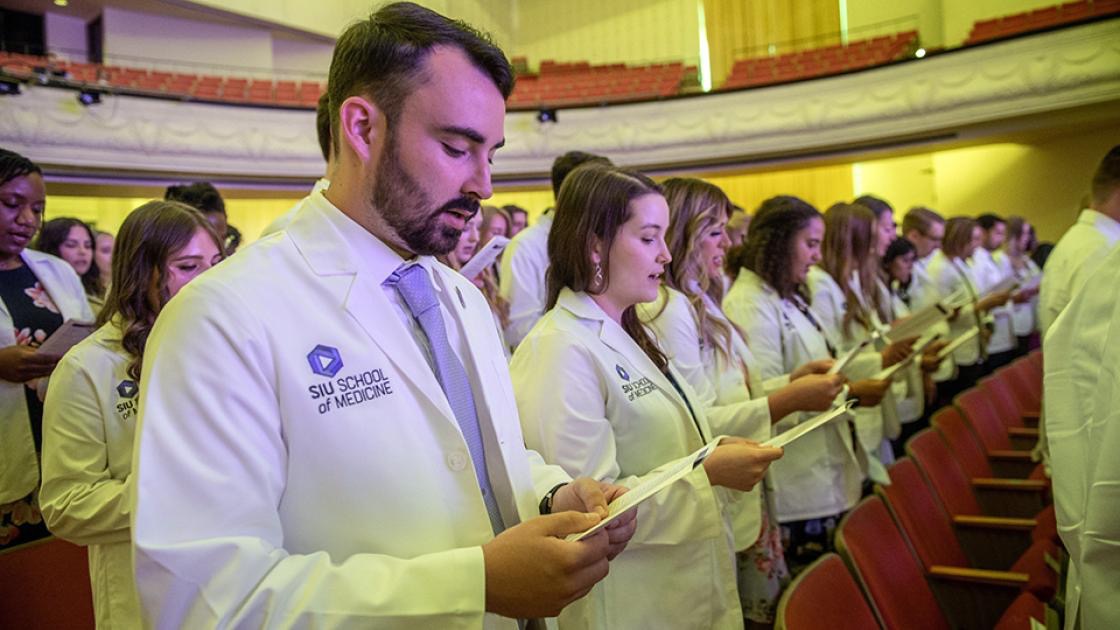
Secondary Essays at SIU School of Medicine
SIU calls its secondary the Supplemental Application for Admission. It is sent only to selected applicants after an initial review of the AMCAS application, and only about 25% of applicants receive one. You complete it through SIU’s own online form, which collects your contact details, parental information, your pre-health advisor or committee chair, the essays and a few additional questions. The fee is $75, and a waiver is available if you qualified for an AMCAS fee waiver. Your application is not complete until the fee arrives. The supplemental application, fee and letters must be received by 4:30 p.m. Central time on February 1, 2027, and SIU states that no exceptions will be granted.
The secondary application gives you a chance to show the committee how your experiences, motivations and plans fit SIU’s mission. For the 2026-2027 cycle, the supplemental application has four essays:
- Essay 1: how you would contribute to SIU’s mission and what barriers you have overcome (300 words or less, required).
- Essay 2: lived experiences that will make you a better physician (300 words or less, required).
- Essay 3: teamwork, self-directed and lifelong learning, and exposure to small-group tutorials in problem-based learning (500 words or less, required).
- Essay 4: for previous SIU applicants only, how you have strengthened your credentials (300 words or less).
The wording is the same as in the 2025-2026 cycle. MD/JD applicants answer the same essays and complete a separate application to the SIU School of Law. Write to the limits above and follow the limit shown in your portal. Because SIU extends offers from September onward, aim to return the supplemental application within about two weeks of your invitation.
The examples below are original illustrations, each labeled as an illustrative example, not an actual applicant essay. They show structure and depth. Write your own essays from your own experiences, and do not copy these.
Secondary Essay #1: Contribution to SIU’s Mission and Barriers Overcome
“SIU School of Medicine uses a holistic approach to identify students who best fulfill its mission: to assist the people of Central and Southern Illinois in meeting their health care needs through education, patient care, research and service to the community. In what ways do you believe you would contribute to SIU’s mission and what barriers have you overcome in your life’s circumstances to reach this point in applying to medical school? Please limit your response to 300 words or less.”
Limit and eligibility. 300 words or less. Required for all supplemental applicants.
What it asks. Two separate things in 300 words: how you would contribute to the mission, and what barriers you have overcome. The mission has four parts (education, patient care, research and service), and it is tied to a place: central and southern Illinois. A strong answer shows both a real connection to that region or to similar communities and an honest account of a barrier, with what you did about it.
How to approach it. Open with a short, specific scene that shows why the region’s health needs matter to you. Spend about half the essay on one real barrier and the actions you took. Then name one or two SIU features that connect your past to your future, such as the Lincoln Scholars Program, the family and community medicine rotation or SIU’s case-based small groups, and end with what you plan to do as a physician.
Illustrative example, not an actual applicant essay
The nearest obstetrician to my hometown in Wayne County is forty minutes away. I learned that number at sixteen, when my aunt went into early labor during an ice storm and my uncle drove her there on back roads while I sat in the back seat holding a flashlight. Many families in our county are not that lucky, and that night is the reason I want to practice medicine in southern Illinois.
My path here has not been simple. I am the first person in my family to attend college. When my father was injured at the grain elevator during my sophomore year, our income dropped by half, and I moved home, transferred to a regional campus and started working thirty hours a week as a certified nursing assistant in a long-term care facility. My grades dipped that year. I rebuilt them by planning every week, studying during night shifts and asking professors for help early. My last 60 hours are my strongest work.
Those shifts also taught me what rural patients carry. Many of my residents had delayed care for years because specialists were too far away. I learned to take vital signs carefully, to notice when a resident was quieter than usual and to report changes before they became emergencies.
I would contribute to SIU’s mission by bringing that experience and a commitment to stay. I am especially drawn to the Lincoln Scholars Program, because training in Carbondale with a rural physician from the first months would prepare me to return to a county like mine. I also want to learn in SIU’s case-based small groups, where the planning habits I built while working would help my classmates. I want to be the physician my aunt needed close to home.
Analysis.
- Both halves of the question. The essay covers contribution (a commitment to rural practice, interest in the Lincoln Scholars Program and a willingness to support classmates in small groups) and barriers (first-generation status, a family financial crisis, a semester of lower grades).
- Specific to the region. Wayne County, a forty-minute drive to obstetric care and rural long-term care residents tie the applicant to the population SIU serves, without lecturing about rural health statistics.
- A barrier with action. The applicant does not just list hardships. The essay shows what changed: weekly planning, studying on night shifts, asking for help early and a stronger last 60 hours, which also connects to SIU’s last-60-hours GPA policy.
- Evidence of clinical responsibility. Work as a certified nursing assistant shows direct patient care and the habit of reporting changes, a realistic preview of clinical work.
- School-specific, but not padded. The essay names one program and one learning format and explains why each matters to this applicant.
Mistakes to avoid. Do not spend 250 words on hardship and 50 on the mission. Do not claim a regional connection you do not have. Do not list every SIU program; pick the ones that connect to your actual plans. Avoid blaming others for setbacks, and do not leave a grade dip unexplained if it is visible on your transcript.
Secondary Essay #2: Lived Experiences That Will Make You a Better Physician
“Tell us about your lived experiences that will make you a better physician? Please limit your response to 300 words or less.”
Limit and eligibility. 300 words or less. Required for all supplemental applicants.
What it asks. This prompt is about life, not your activities list. SIU wants to know what you have lived, such as family responsibilities, culture, language, illness, work or identity, and how it will change the way you practice. The key words are “better physician.” The answer should end in concrete physician behaviors, not just personal growth.
How to approach it. Choose one experience or a closely related set. Describe it briefly and specifically. Then explain two or three ways it will shape your practice, each tied to an example from your clinical or service work that proves the lesson has already changed how you act. Avoid repeating Essay 1; if Essay 1 covers a financial barrier, use Essay 2 for a different part of your life.
Illustrative example, not an actual applicant essay
I grew up translating for my grandparents, who moved from Michoacán to Beardstown to work at the meatpacking plant. By ten, I was the person who explained insurance letters at the kitchen table. By fourteen, I was the person in the exam room telling my grandfather that “borderline” meant his blood sugar needed attention now, not someday. I did not always know the right words in either language, and I learned how easily a patient can leave a visit agreeing to a plan he does not understand.
That experience will make me a better physician in three ways.
First, I listen for confusion. As a medical interpreter volunteer at a community health center, I now watch for the nod that means “I am being polite” rather than “I understand.” When I see it, I ask the patient to explain the plan back in their own words. It takes two extra minutes and often changes the plan.
Second, I understand that adherence is shaped by work. My grandfather skipped evening doses because his shift ended after the pharmacy closed. A good plan has to fit a patient’s schedule, transportation and budget, and I will ask about those things as routinely as I ask about symptoms.
Third, I know what it is like to be responsible too young. Many children in immigrant and rural families carry adult worries. As a tutor for middle school English learners, I have tried to give students the help I wished I had, and as a physician I want to make sure the child in the room is never the only person explaining a diagnosis.
These lessons came from my family, not a classroom. They taught me that clear communication is a form of care, and that is the physician I intend to be.
Analysis.
- Lived, not listed. The core experience is family life in a central Illinois town, not a résumé item, which is exactly what the prompt asks for.
- Physician behaviors. Each of the three lessons ends in something the applicant already does: teach-back, asking about schedules and transportation, protecting children from interpreting for parents.
- Evidence. Interpreter volunteering and tutoring show that the lessons are active, not theoretical.
- Fit without name-dropping. The essay never mentions SIU by name, and it does not need to. Its focus on patients in central Illinois communities and on communication fits a school that requires a family and community medicine rotation and tests communication with standardized patients from the first week.
- Clear structure. “Three ways” organizes 300 words and makes the essay easy to read quickly.
Mistakes to avoid. Do not write a second personal statement. Do not turn a family member’s illness into the whole essay without explaining what you learned and how you now act differently. Avoid generic claims such as “this taught me empathy” without a behavior that proves it.
Secondary Essay #3: Teamwork, Self-Directed Learning and Problem-Based Learning
“To be successful as a student at SIU School of Medicine and as a practicing physician, you must be flexible and committed to cultivating and employing critical interactive and learning skills. Describe your experiences that demonstrate: contribution in a teamwork setting; engagement in self-directed and life-long learning (taking personal initiative to identify and address your learning goals and needs); and exposure to the small group tutorial process used in a problem-based learning environment. Please limit your answer to 500 words or less.”
Limit and eligibility. 500 words or less. Required for all supplemental applicants.
What it asks. Three distinct experiences, each with evidence: a contribution to a team, a time you identified and addressed your own learning needs, and exposure to small-group tutorials like those used in problem-based learning. This essay maps directly onto SIU’s curriculum, in which the first two years are case-based and small-group oriented and built on self-directed learning.
How to approach it. Use the prompt’s three parts as your structure, with a short label for each, so the reader can check each requirement. Spend about 150 words on each part and use the remaining words to connect them to SIU. For the tutorial part, be honest. If you have never had formal problem-based learning, describe the closest real experience, such as peer-led team learning, a case-based course, a journal club or a study group you ran, and explain what you learned about the process.
Illustrative example, not an actual applicant essay
Teamwork. During two summers as a patient care technician on a medical-surgical unit, I learned that good teams depend on small, reliable habits. On one night shift, a patient recovering from hip surgery became confused and tried to climb out of bed. The nurse was with another patient, so I stayed at the bedside, kept him calm and called for help using the unit’s escalation steps. Afterward, our charge nurse asked me to help her draft a one-page fall-risk checklist for technicians. We tested it with six colleagues, revised it twice based on their feedback and presented it at a staff meeting. The unit adopted it the following month. My contribution was not a single heroic moment. It was listening to the people who would use the checklist and making it easy for them.
Self-directed learning. In my junior year, I earned a C on my first biochemistry exam. I had studied for hours, so the problem was not effort. I met with my professor, who pointed out that I could recite pathways but could not apply them to new problems. I set myself a specific goal: to explain any pathway in my own words and predict what would happen if one enzyme failed. Each week I wrote three practice questions of my own, answered them without notes and checked my reasoning with a classmate. I finished the course with an A, and I have used the same method since, including while preparing for the MCAT. More important, I learned to identify a gap honestly and build a plan to close it, a habit I will need for the rest of my career.
Small group tutorials. My exposure to the tutorial process came through my university’s peer-led team learning program in organic chemistry, first as a student and then for two semesters as a leader. Each week, six to eight students worked through a case-based problem set without lecture. My job as a leader was not to give answers but to keep the group reasoning: asking what we already knew, what we needed to learn and who would research which question before the next session. The hardest moment came when one student dominated every discussion while two others stayed silent. I started assigning rotating roles, including a summarizer and a skeptic, and the quieter students began leading parts of the session. By the end of the term, the group was setting its own learning issues.
These experiences prepared me for SIU’s curriculum. I have seen how a small group can learn more together than its members learn alone, but only when each person takes responsibility for their own preparation and for the group’s process. SIU’s case-based first year, with its emphasis on self-directed learning and early work with standardized patients, is exactly the environment where I learn best. I am ready to contribute to a tutorial group that challenges me, and to keep improving long after medical school ends.
Analysis.
- All three parts, clearly labeled. The reader can find teamwork, self-directed learning and small-group tutorials in seconds.
- Contribution, not just presence. The teamwork story shows a specific action (a checklist tested with colleagues and adopted by the unit) and credits the team.
- A real learning gap. The biochemistry story names a weakness, the diagnosis, the plan and the result, which is exactly the “personal initiative to identify and address your learning goals” the prompt describes.
- Honest about PBL exposure. Peer-led team learning is not medical school PBL, and the essay does not pretend otherwise. It shows understanding of how tutorials work: shared learning issues, roles and group process.
- Tied to SIU. The ending connects to SIU’s case-based first year, self-directed learning and early work with standardized patients.
Mistakes to avoid. Do not answer only two of the three parts. Do not describe a lecture course as a tutorial. Do not make every story about you alone; teamwork means showing how others contributed. Stay under 500 words, and do not spend the opening paragraph restating the prompt.
Secondary Essay #4: Reapplicants
“If you have previously applied to SIU School of Medicine, please describe how you feel you have strengthened your credentials since that application. Please limit your answer to 300 words or less.”
Limit and eligibility. 300 words or less. For applicants who applied to SIU in a previous cycle.
What it asks. What has changed since your last SIU application. SIU’s committee states that it expects prospective reapplicants to evaluate their previous cycle critically and show clear, visible growth, and that it looks for what has changed.
How to approach it. Open with a one- or two-sentence honest assessment of the weakness in your last application. Then describe two or three concrete changes with numbers: hours, grades, outcomes. End with how those changes have deepened your fit with SIU’s mission. Do not complain about the previous decision.
Illustrative example, not an actual applicant essay
When I applied to SIU last cycle, my application showed a strong interest in medicine but limited patient care. I had shadowed physicians and volunteered at a hospital information desk, but I had little direct responsibility for patients. After a Prospective Reapplicant decision, I looked at my application honestly and made three changes.
First, I added sustained clinical work. Since last June, I have worked full time as a medical assistant at a federally qualified health center in Decatur. I room patients, take vital signs, update medication lists and help with diabetic foot checks and immunizations under the supervision of our physicians and nurse practitioners. I have now logged more than 1,800 hours of direct patient care, and I understand the daily realities of primary care for patients who are uninsured or underinsured.
Second, I strengthened my academic record in the areas I had skipped. I completed biochemistry and genetics as a nondegree student and earned A grades in both. These were two of the courses SIU recommends, and they also improved my understanding of the problems my clinic patients face.
Third, I deepened my service. I now coordinate monthly blood pressure screenings at two churches in Decatur, recruiting volunteers and arranging follow-up for patients with high readings. We have screened more than 300 people since January and referred 41 to primary care.
These changes have made me a more prepared applicant and a more realistic one. I no longer imagine primary care in central Illinois; I see it every day. I am applying again because SIU’s mission describes the work I already do, and I want to learn to do it as a physician.
Analysis.
- Honest diagnosis first. The applicant names the weakness (limited direct patient care) in the first two sentences.
- Measurable changes. Full-time work with hours, two recommended courses with grades and a screening program with outcomes make growth visible.
- Mission fit. A federally qualified health center in Decatur and church-based screenings speak directly to SIU’s service mission in central Illinois.
- Respectful tone. The essay refers to the Prospective Reapplicant decision without arguing with it.
Mistakes to avoid. Do not list activities you already had last cycle. Do not say only that you “learned a lot.” Do not reuse your previous essays unchanged; the committee may compare them.
If Your Form Includes a Conduct Question
In some past cycles, SIU’s supplemental application also included administrative questions about criminal convictions, charges or campus misconduct, worded as: “Have you ever been convicted of a felony? Have you ever been convicted with a misdemeanor other than a minor traffic offense? Have you ever been charged with a felony or a misdemeanor other than a minor traffic offense, or with misconduct on any college campus? If you answered ‘YES’ to any of the three preceding questions, please explain the relevant circumstances.” No character limit was given. If your form asks a question like this, answer it exactly and consistently with your AMCAS application. A worked response pattern for an applicant with nothing to report is: “No, I have not been convicted of a felony or of a misdemeanor other than a minor traffic offense, nor have I been charged with a felony, a misdemeanor or misconduct on any college campus.” If you do have something to disclose, state the facts, the date, the outcome and what you learned, briefly and without excuses, and remember that SIU requires a criminal background check before matriculation.
Program-Specific Prompts
SIU does not list separate essays for the MD/JD, the MD/MPH or the Lincoln Scholars Program in the 2026-2027 supplemental application. MD/JD applicants choose that option on the form and apply separately to the School of Law. The MD/MPH is offered only after acceptance, with its own information sent to eligible students. If you are interested in the Lincoln Scholars Program, use Essays 1 and 2 to show your experience in and commitment to rural Illinois, and ask the Office of Admissions how LSP selection works this cycle.
Writing Tips for All SIU Essays
- Use all four parts of the mission. Across your essays, show education (how you learn and teach), patient care, research or inquiry and service.
- Be regional and specific. Name the places and populations you know.
- Do not repeat yourself. Each essay should add a new piece of evidence.
- Count words. SIU’s limits are firm.
- Proofread the form fields too. Hometown, advisor details and degree program choices are part of your file.
Interview Format and Preparation
Confirmed Format and Timing
Selected applicants are invited to the SIU School of Medicine campus in Springfield for interviews. The interview is the last step before a final decision, and it is in person. SIU uses traditional one-on-one interviews, not multiple mini-interviews:
- Two faculty interviews for MD applicants. One interviewer is a current or former member of the Admissions Committee and has access to your complete application. The other is a faculty member who is not on the committee and sees only basic biographical information and your supplemental essays.
- Three one-on-one interviews for MD/JD applicants.
- When: interviews typically begin in mid-August and conclude at the beginning of March. Invitations begin to go out in late July or early August.
- How many: the Admissions Office coordinates about 300 interviews each year.
- Decision timing: applicants can expect a decision about four to five weeks after the interview.
The day also includes a presentation about the school and curriculum, a student-led campus tour, lunch and a meeting with a financial aid advisor. Your schedule may include some downtime between activities. SIU uses video interviews only when needed.
How to Prepare
Because one interviewer has read only your essays, your supplemental application becomes your introduction. Reread every essay before your interview day and be ready to expand on each story.
- Know the mission and be able to discuss it. Expect questions about why SIU, why central or southern Illinois and how you would contribute.
- Prepare stories for SIU’s selection factors. Responsibility, maturity, integrity, compassion, motivation, exploration of medicine, service orientation and interpersonal skills. Have one or two specific stories for each.
- Understand problem-based learning. Be ready to describe how you learn in groups, how you handle a teammate who is not contributing and how you identify your own knowledge gaps.
- Know your file. The committee interviewer has your full application, including your AMCAS experiences and letters. Be ready to discuss anything in it, including a grade dip or a gap year.
- Think about practice location. You may be asked where you see yourself practicing. Answer honestly. SIU knows that about half of its graduates enter specialties outside primary care.
- Practice out loud. Mock interviews help you sharpen answers and catch habits like long pauses or rambling. Focus on clear communication, empathy and problem-solving.
Interview Tips From SIU
- Plan to arrive on time and allow extra time for unexpected delays.
- Professional attire is recommended.
- Come prepared with questions for your interviewers, students and staff.
- Bring something to read or work on during downtime.
Questions to Ask
Good questions show that you have researched SIU and are thinking about fit:
- How do first-year students in Carbondale stay connected with faculty and mentors in Springfield?
- What do students find most challenging about the move from Carbondale to Springfield after the first year?
- How do students use the Personalized Education Plan to explore specialties?
- How are Lincoln Scholars selected, and how do they interact with students in the traditional program?
- How do students find research mentors for MPEE projects or the Research Scholars Pathway?
After the Interview
Thank-you notes are optional, but they are a courteous way to close. SIU accepts notices of significant updates, such as a publication, a significant honor or substantial new health care or community service. Send only meaningful updates. If you are placed on the Primary Waitlist, stay patient: movement usually peaks in April and May.
Frequently Asked Questions
What is the application deadline for SIU SOM?
The AMCAS deadline is November 15 for the 2026-2027 cycle. The supplemental application, the $75 fee and your letters must be received by 4:30 p.m. Central time on February 1, 2027. Because SIU makes offers after each committee meeting from September 22, 2026 onward, applying early in the summer is a real advantage.
What financial aid options are available?
SIU participates in all major federal student aid programs, and students apply each year with the FAFSA. Most need is met through loans because scholarships are limited and are generally reserved for students with exceptional need. SIU also participates in the federal Primary Care Loan program for students who commit to primary care. In 2024-25, 84% of students received financial aid.
What clinical rotation opportunities are available?
Third-year students rotate through emergency medicine, family and community medicine, internal medicine, neurology, obstetrics and gynecology, pediatrics, psychiatry, surgery and medical humanities, then complete a 15-week Personalized Education Plan. Training happens mainly at Memorial Hospital and HSHS St. John’s Hospital in Springfield, with SIU Medicine clinics and affiliated hospitals across central and southern Illinois. Fourth-year students complete 30 weeks of electives.
How does SIU SOM support diversity and inclusion?
The Office of Equity, Diversity and Inclusion, led by Associate Dean Wendi El-Amin, MD, supports students from all backgrounds. Student groups include SNMA, LMSA, APAMSA, GLMA, First Generation and an alliance for students with chronic illnesses and disabilities. SIU also runs MEDPREP, which has prepared educationally and socioeconomically challenged students for health professions schools since 1972, and the Physician Pipeline Program.
What are the requirements for letters of recommendation?
SIU requires either one pre-health committee or composite letter or four individual letters. If you send individual letters, three must come from academic sources such as professors or research advisors, and one can be personal or professional. If you are enrolled in an advanced degree program, a letter from your primary graduate advisor is also required. Submit letters through the AMCAS Letter Service by February 1, and avoid letters from political sources.
What are the recommended courses for SIU SOM?
SIU does not require prerequisite courses, but it recommends two years of chemistry including organic chemistry, one year of physics, one year of English composition, one year of math including statistics, one year of biology and one semester each of biochemistry, cell and molecular biology, physiology and genetics. These courses prepare you for the MCAT and the curriculum.
How does SIU SOM handle the admissions process?
SIU uses holistic review. Every AMCAS application receives an initial review, and about 25% of applicants are invited to complete the supplemental application. Selected applicants interview in Springfield with two faculty members, and the Admissions Committee then decides to accept, waitlist, designate a prospective reapplicant, rank as an alternate or deny. The committee looks for responsibility, maturity, integrity, compassion, motivation, service orientation, interpersonal skills and identification with the school’s goals.
What is the full name of SIU SOM?
The full name is Southern Illinois University School of Medicine. Its clinical practice is called SIU Medicine, and the school is part of Southern Illinois University in Carbondale.
What is the SIU SOM ranking among U.S. medical schools?
SIU is best judged by its mission results rather than a single ranking. AAMC data place SIU first among U.S. medical schools for the share of graduates practicing in rural areas, and the school won the 2018 Josiah Macy Jr. Foundation Award for Excellence in Social Mission. It is also one of two medical schools in the world to earn five Aspire awards for excellence in medical education. If rankings matter to you, check the current edition of the ranking you use and compare it with these outcomes.
Where is SIU SOM located?
SIU School of Medicine’s main medical campus is in Springfield, Illinois. Students in the traditional MD program spend their first year in Carbondale and the next three years in Springfield. Lincoln Scholars spend all four years in Carbondale. SIU Medicine also has clinic sites in Decatur, Quincy, Alton, Jacksonville, West Frankfort and other communities.
What are the SIU SOM prerequisites for admission?
There are no required prerequisite courses. You must be an Illinois resident (except for the MD/JD), be a U.S. citizen, permanent resident or Illinois resident with DACA status, have an MCAT of at least 498 from within the last two years, have overall and science GPAs of at least 2.80 and have 60 credit hours from a U.S. college at application. By matriculation, you need 90 semester hours and a cleared background check.
What is the SIU SOM average MCAT score for admitted students?
Accepted applicants in the 2025 entering class had a median MCAT of 508 and a mean of 508.5. The minimum MCAT SIU considers is 498. SIU uses your most recent score when it reviews your application.
How much is the SIU SOM tuition?
For 2026-27, first-year tuition and fees are $44,383, made up of $37,800 in tuition and $6,583 in fees. The school’s full first-year budget, including living costs, is $74,481. The second and third years include summer tuition, so their budgets are higher. There is no out-of-state MD tuition rate because the MD program accepts only Illinois residents.
What is the SIU SOM match list?
The match list is SIU’s annual report of where graduating students matched for residency. SIU posts Match Day results each year on its match results page, with results available from 2020 through 2025. About half of SIU graduates enter residencies outside primary care, and graduates match into every area of medicine.
What does the SIU SOM curriculum entail?
The first two years are case-based and taught in small groups, with standardized patients from the first week and a physician mentor in Year 1. Year 1 in Carbondale has three organ-system units, and Year 2 in Springfield has four nine-week units. Year 3 includes core clerkships, an intersession with a clinical competency exam and a 15-week Personalized Education Plan. Year 4 includes 30 weeks of electives and medical humanities.
Where can I find reviews of SIU SOM?
The most reliable sources are current SIU students and residents, whom you can meet on the interview day tour and at lunch. SIU also welcomes campus visits on any weekday by reservation through the Admissions Office in Springfield or the Student Affairs Office in Carbondale. Student forums can add perspective, but treat individual posts as anecdotes rather than official information.
What is included in the SIU SOM secondary application?
The supplemental application includes four essays for 2026-2027: contribution to SIU’s mission and barriers overcome (300 words), lived experiences (300 words), teamwork, self-directed learning and problem-based learning (500 words) and a reapplicant essay (300 words) for previous applicants. It also asks for contact details, parental information, your advisor or committee chair and additional questions, and it requires a $75 fee and your letters.
What is the SIU SOM mission statement?
The mission is to optimize the health of the people of central and southern Illinois through education, patient care, research and service to the community. The school’s vision is better health for all.
What is the SIU SOM average GPA for admitted students?
Accepted applicants in the 2025 entering class had a median GPA of 3.84. The minimum is 2.80 for both overall and science GPA, measured cumulatively or over your last 60 hours of coursework, so a strong recent record matters.
How can I prepare for the SIU SOM secondary application?
Draft your answers before your invitation arrives, since the prompts are unchanged from last cycle. Collect stories about your connection to central or southern Illinois, a barrier you overcame, a lived experience that shapes how you care for people, a team contribution, a self-identified learning gap and any small-group tutorial experience. Have your letters in the AMCAS Letter Service early, and return the supplemental application within about two weeks.
What are the SIU SOM class sizes?
SIU enrolls 80 new students in the MD program each year. The 2025 entering class had 37 men and 43 women. The Lincoln Scholars Program class is eight students.
Does SIU School of Medicine accept out-of-state applicants?
No, not for the regular MD program. Only Illinois residents may apply, and legal residency means a valid Illinois driver’s license or voter registration. Out-of-state applicants are considered only for the combined MD/JD program, which requires a separate application to the SIU School of Law and an LSAT score.
Do I have to go into primary care if I attend SIU?
No. SIU has a strong history in primary care, and the Lincoln Scholars Program emphasizes it, but no SIU track requires it. About half of graduates each year enter residencies outside primary care. The only primary care obligation comes with the optional federal Primary Care Loan.
What is the Lincoln Scholars Program?
The Lincoln Scholars Program is SIU’s rural MD track, launched in 2020. A class of eight students trains entirely in Carbondale, starts seeing patients in a weekly mentor clinic within the first months and works with a rural physician throughout. It is designed to train generalist physicians for rural Illinois, but graduates are not required to practice primary care or in a rural area.
Does SIU require Casper or PREview?
SIU does not require Casper. It recommends, but does not require, the AAMC PREview exam.
Does SIU School of Medicine accept DACA recipients?
Yes. SIU accepts Illinois residents with DACA status. DACA recipients are not eligible for federal or state aid, and SIU does not offer institutional scholarships or additional funding for them, so students must secure private loans and reapply for them each year.
What happens if I am placed on the Primary Waitlist?
You are considered qualified for admission but have not yet been offered a seat. Applicants are ranked by committee score, and offers go out in order as accepted students decline. Movement is usually heaviest in April and May, and acceptances after June 1 are not unusual, so keep your contact information current.
Related Medical School Guides
SIU accepts only Illinois residents, so most SIU applicants also apply to other Illinois schools and to schools in nearby states. These guides cover the closest comparisons. The links reflect geography, mission or applicant considerations, not equal selectivity.
Illinois Medical Schools
- Rush Medical College of Rush University Medical Center: a private Chicago school with a strong community health focus, useful if you want an urban academic medical center alongside SIU’s downstate model.
- Rosalind Franklin Chicago Medical School: an interprofessional health sciences university north of Chicago that shares SIU’s emphasis on team-based training.
- Carle Illinois College of Medicine: the other downstate Illinois MD program, in Urbana-Champaign, with an engineering-focused curriculum that contrasts with SIU’s clinical, case-based model.
- Northwestern University Feinberg School of Medicine: a research-intensive Chicago school for applicants with strong research interests who want to compare a very different setting.
- Stritch School of Medicine at Loyola University Chicago: a Jesuit school in the Chicago suburbs whose service and social justice values overlap with SIU’s mission.
- University of Chicago Pritzker School of Medicine: a research university school on Chicago’s South Side, with a strong community health presence.
- University of Illinois College of Medicine: the state’s other large public MD program and a natural pairing with SIU for Illinois residents.
For an overview of every program in the state, see IMA’s guide to medical schools in Illinois.
Schools With Similar Missions in Nearby States
These schools share SIU’s focus on regional, rural or primary care training: University of Missouri Medical School, Indiana University School of Medicine, University of Iowa Roy J. and Lucille A. Carver College of Medicine, University of Wisconsin Medical School, University of Kansas School of Medicine (KUMC), Saint Louis University School of Medicine, UMKC School of Medicine, Washington University School of Medicine, Central Michigan University College of Medicine and University of Minnesota Medical School.
More Medical School Guides
When you evaluate other programs, consider location, curriculum, research opportunities, cost and community engagement. These IMA guides cover schools across the country.
- Geisel School of Medicine at Dartmouth
- Johns Hopkins School of Medicine
- Oklahoma State University College of Osteopathic Medicine
- University of Oklahoma College of Medicine
- Marshall University Joan C. Edwards School of Medicine
- Warren Alpert Medical School of Brown University
- Georgetown University Medical School
- Yale School of Medicine
- West Virginia University School of Medicine
- West Virginia School of Osteopathic Medicine
- Des Moines University College of Osteopathic Medicine
- Marian University College of Osteopathic Medicine
- Meharry Medical College
- Howard University College of Medicine
- Charles R. Drew University of Medicine and Science College of Medicine
- Loma Linda University School of Medicine
- John A. Burns School of Medicine (JABSOM)
- Kansas College of Osteopathic Medicine (KansasCOM)
- UC Irvine School of Medicine
- Nova Southeastern University College of Allopathic Medicine
- Touro University Nevada College of Osteopathic Medicine
- University of Miami Miller School of Medicine
- Arkansas College of Osteopathic Medicine (ARCOM)
- University of Arkansas for Medical Sciences (UAMS)
- Tulane University School of Medicine
- LSU Health New Orleans School of Medicine
- LSU Shreveport Medical School
- Kirk Kerkorian School of Medicine at UNLV
- University of Nevada Reno School of Medicine
- University of Arizona College of Medicine-Tucson
- University of Arizona College of Medicine-Phoenix
- Burrell College of Osteopathic Medicine (BCOM)
- The University of New Mexico School of Medicine
- Alabama College of Osteopathic Medicine (ACOM)
- University of South Alabama College of Medicine
- University of Alabama School of Medicine
- FIU College of Medicine
- UCF College of Medicine
- USF Morsani College of Medicine
- Florida State University College of Medicine
- Morehouse School of Medicine
- Medical College of Georgia at Augusta University
- Mercer University School of Medicine (MUSM)
- Campbell University School of Osteopathic Medicine (CUSOM)
- ECU Brody School of Medicine
- Edward Via College of Osteopathic Medicine (VCOM)
- University of South Carolina Medical School
- Lewis Katz School of Medicine at Temple University
- Philadelphia College of Osteopathic Medicine (PCOM)
- Geisinger Commonwealth School of Medicine (GCSOM)
- Penn State Medical School
- CUNY School of Medicine
- SUNY Downstate Medical School
- NYIT College of Osteopathic Medicine
- NYU Long Island School of Medicine
- Albany Medical College
- TOURO College of Osteopathic Medicine
- Norton College of Medicine at Upstate Medical University
- Jacobs School of Medicine at the University at Buffalo
- Hofstra Zucker School of Medicine
- Weill Medical College of Cornell University
- University of Rochester Medical School
- Icahn School of Medicine at Mount Sinai
- Renaissance School of Medicine at Stony Brook University
- Albert Einstein College of Medicine
- Ohio University Heritage College of Osteopathic Medicine
- Northeast Ohio Medical University (NEOMED)
- University of Cincinnati College of Medicine
- University of Toledo College of Medicine
- Wright State University Boonshoft School of Medicine
- Ohio State University College of Medicine
- Rowan University School of Osteopathic Medicine
- Hackensack Meridian School of Medicine (HMSOM)
- Rutgers New Jersey Medical School (NJMS)
- Rutgers Robert Wood Johnson Medical School
- Cooper Medical School of Rowan University (CMSRU)
- A.T. Still University Kirksville College of Osteopathic Medicine
- Kansas City University (KCU)
- New York Medical College
- University of Pittsburgh School of Medicine
- VCU School of Medicine
- University of Maryland School of Medicine
- Case Western Medical School
- University of North Carolina Medical School
- University of Florida Medical School
- Emory University School of Medicine
- Boston University College of Medicine
- California University of Science and Medicine
- UC San Diego Medical School
- California Northstate University College of Medicine
- Touro University of California
- CHSU College of Osteopathic Medicine
- UC Davis School of Medicine
- Harvard Medical School
- UC Riverside School of Medicine
- USC Keck School of Medicine
- UT Southwestern Medical School
- Long School of Medicine at UT Health San Antonio
- University of the Incarnate Word School of Osteopathic Medicine
- UT Austin’s Dell Medical School
- UTMB School of Medicine
- McGovern Medical School at UT Health
- The University of Texas Rio Grande Valley School of Medicine
- UNT Texas College of Osteopathic Medicine
- University of Houston College of Medicine
- Texas A&M College of Medicine
- Baylor College of Medicine
- George Washington University School of Medicine
- Vanderbilt University School of Medicine
- St. George’s University School of Medicine
- Lake Erie College of Osteopathic Medicine (in Pennsylvania)
- Sidney Kimmel Medical College at Thomas Jefferson University
- Wake Forest University School of Medicine
- Western University of Health Sciences (in California)
- Drexel University College of Medicine
- Perelman School of Medicine
- UCLA Medical School
- NYU Medical School
How International Medical Aid Can Help
International Medical Aid (IMA) runs clinical internships abroad, in Kenya and other countries, for pre-health students. IMA is independent of SIU School of Medicine. Our programs do not affect admissions decisions at SIU or any other school, but they can help you build the kind of clinical experience and reflection SIU’s committee looks for.
Pre-Med Internships
IMA’s pre-med internships place students in hospitals and clinics where they work under the supervision of local physicians, nurses and clinical officers. Interns take vital signs, do patient intake and triage and help with direct patient care under supervision. These are hands-on internships for pre-med students, and many interns use the experience to write specific, reflective AMCAS descriptions and secondary essays.
Global Health Initiatives
IMA’s global health initiatives support health care delivery and public health projects in underserved communities. For SIU applicants, working where clinics are far apart and resources are scarce can sharpen your understanding of the access problems that rural Illinois also faces, and give you concrete stories about teamwork across languages and professions.
Healthcare Internships Abroad
IMA’s healthcare internships abroad also include programs for pre-PA, pre-nursing and other pre-health students. Our pre-med internships abroad are open to undergraduates and graduates, and medical internships for undergraduates fit well into a summer or a gap year. To learn how an international clinical experience fits a medical school application, read How Overseas Internships Enhance Your Medical Career, or review the Medicine Pre-Medicine Internships program page.
Clinical Experience and Admissions Consulting Services
Clinical experience is most useful when you can explain what you learned. IMA’s medical school admissions consulting services help applicants plan their experiences, write personal statements and secondary essays and prepare for interviews. For SIU, that means connecting your story to central and southern Illinois, explaining how you learn in small groups and preparing for two one-on-one faculty interviews.
Next step: if you need more direct patient care before you apply, review IMA’s internship dates and choose a session that fits before your AMCAS submission or during a gap year.
Final Thoughts and Sources
Southern Illinois University School of Medicine offers a mission-driven MD program for Illinois residents, with case-based learning in small groups, early and frequent work with standardized patients, a rural track in Carbondale and deep ties to the communities of central and southern Illinois. The best SIU applicants show a genuine connection to that mission, sustained service and clinical experience, and the self-directed learning habits the curriculum depends on.
If SIU fits your goals, your next steps are clear: submit AMCAS early in the summer, secure four letters (three academic) or a committee letter, draft your four supplemental essays now and prepare for two one-on-one faculty interviews in Springfield. For more planning help, see IMA’s guides to AMCAS personal statement examples and medical schools accepting low MCAT scores.
SIU provides a strong foundation for a fulfilling career in medicine, and with careful preparation you can present yourself as the kind of physician its mission needs.
Sources
All sources were checked on November 11, 2026.
- SIU School of Medicine, Requirements, selection factors and policies.
- SIU School of Medicine, Admissions timeline (2026-2027 cycle).
- SIU School of Medicine, Admissions decisions.
- SIU School of Medicine, Interview day.
- SIU School of Medicine, Admissions FAQ (2026-2027 tuition and fees; class size).
- SIU School of Medicine, Supplemental Application for Admission (fee, letters, February 1, 2027 deadline).
- SIU School of Medicine, Student budget, 2026-2027 Traditional Program and Lincoln Scholars Program budgets.
- SIU School of Medicine, MD programs (MD, Lincoln Scholars, MD/JD, MD/MPH).
- SIU School of Medicine, About the Lincoln Scholars Program.
- SIU School of Medicine, Facts and figures (March 2026).
- SIU School of Medicine, History of SIU School of Medicine.
- SIU School of Medicine, Education and Curriculum, Year 1 to Year 4, Doctoring, Standardized Patient Program and Critical Clinical Competencies pages.
- SIU School of Medicine, Educational pathways.
- SIU School of Medicine, Student organizations and interest groups.
- SIU School of Medicine, DACA applicants.
- SIU School of Medicine faculty profiles and Office of Student Affairs staff.
- Aspects (SIU Medicine news), Dr. Ian Martin selected as next provost, dean and CEO of SIU Medicine (June 8, 2026).
- AAMC Medical School Admission Requirements (MSAR), Southern Illinois University School of Medicine profile, 2026 edition (2025 entering class data; Tuition and Student Fees survey 2025-2026; LCME Part I-B 2024-2025).
- 2026-2027 secondary prompt wording: Med School Insiders secondary prompts database and the Student Doctor Network schools database (2026-2027 entries), which match word for word.
See more of our guides in your Google results: add International Medical Aid as a preferred source on Google.