
Illinois, the Land of Lincoln, is known for its cities and history, and also for its medical education. The state is home to eight MD programs and two osteopathic (DO) medical schools that are already enrolling students, with a third DO school listed as planning its first class for 2027. Together they give aspiring physicians a wide range of choices, from research-heavy private schools in Chicago to public programs built to serve rural and small-town Illinois.
This guide covers every MD and DO program in Illinois, plus two of the state’s well-known physician assistant (PA) programs. It compares where each school teaches, the latest class MCAT and GPA figures each school publishes, what the first year costs, and the rule that shapes many applicants’ chances most: which schools admit students who are not Illinois residents. Each school profile links to IMA’s full admissions guide for that school.
Key Takeaways
- Illinois has eight LCME-accredited MD programs: Carle Illinois College of Medicine, Chicago Medical School at Rosalind Franklin University, Loyola University Chicago Stritch School of Medicine, Northwestern University Feinberg School of Medicine, Rush Medical College, Southern Illinois University School of Medicine, the University of Chicago Pritzker School of Medicine and the University of Illinois College of Medicine.
- Two DO schools enroll students: Midwestern University Chicago College of Osteopathic Medicine (CCOM) in Downers Grove, founded in 1900, and the new Illinois College of Osteopathic Medicine (IllinoisCOM) in Chicago, which holds pre-accreditation and enrolled its first class in 2026.
- Northwestern Feinberg’s 2026 entering class posted a median MCAT of 520 and a median GPA of 3.95, the highest class figures published by any Illinois school.
- Southern Illinois University School of Medicine admits only Illinois residents to its regular MD program. Every other Illinois MD and DO program considers out-of-state applicants.
- Carle Illinois ($37,558) and SIU ($37,800) list the lowest 2026-27 resident tuition in the state. CCOM lists the highest first-year tuition, $85,232 for 2026-27.
- The University of Illinois College of Medicine is one of the largest medical schools in the country, with first-year seats on three campuses: Chicago (180), Peoria (65) and Rockford (55).
- Southern Illinois University offers an MD only, not a DO. Its students spend the first year in Carbondale and the remaining three years in Springfield.

Illinois Medical Schools
Medical schools in Illinois are known for producing well-rounded, compassionate and skilled health care professionals. These institutions are not just about earning a degree. They are about building a lifelong commitment to patient care, innovation and leadership in medicine. Whether you prefer the urban setting of Chicago or a suburban or small-city campus in Maywood, North Chicago, Downers Grove, Urbana, Springfield or Carbondale, Illinois offers a setting that supports both personal and professional growth.
Every MD program in Illinois holds full accreditation from the Liaison Committee on Medical Education (LCME), the accrediting body for MD programs in the United States and Canada. The LCME directory of accredited programs (updated October 14, 2026) lists these eight Illinois programs:
| MD program | Location listed by the LCME | Accreditation status | Initial year of accreditation |
|---|---|---|---|
| Carle Illinois College of Medicine | Urbana-Champaign | Full | 2017 |
| Chicago Medical School at Rosalind Franklin University of Medicine and Science | North Chicago | Full | On or before 1942 |
| Loyola University Chicago Stritch School of Medicine | Maywood | Full | On or before 1942 |
| Northwestern University Feinberg School of Medicine | Chicago | Full | On or before 1942 |
| Rush Medical College of Rush University Medical Center | Chicago | Full | On or before 1942 |
| Southern Illinois University School of Medicine | Springfield | Full | 1972 |
| University of Chicago Pritzker School of Medicine | Chicago | Full | On or before 1942 |
| University of Illinois College of Medicine | Chicago (with campuses in Peoria and Rockford) | Full | On or before 1942 |
Osteopathic medical schools are accredited by the American Osteopathic Association’s Commission on Osteopathic College Accreditation (COCA). The AOA directory of colleges of osteopathic medicine (September 2026) lists three Illinois schools:
| DO school | Location | COCA status | First class |
|---|---|---|---|
| Midwestern University Chicago College of Osteopathic Medicine (CCOM) | Downers Grove | Accreditation | 1900 |
| Illinois College of Osteopathic Medicine (IllinoisCOM) at The Chicago School | Chicago | Pre-accreditation | 2026 |
| Niazee College of Osteopathic Medicine | Schaumburg | No status listed in the directory | Planned for 2027 |
Accreditation matters when you choose where to apply. Graduates of an accredited program can sit for licensing exams and enter residency training, so a school’s accreditation status, or the stage a new school has reached, is one of the first things to check.
Finding the Right Medical School in Illinois
Becoming a health care professional begins with choosing the right medical school. Illinois offers a diverse range of medical schools, each with its own strengths, focus areas and learning environment. This guide will help you explore each institution, understand its admissions process and identify the programs that fit your career goals and academic strengths.
Every school has its own admissions process and guidelines. No two admissions committees are exactly the same. Each has its own standards, testing rules and degree options, and each is looking for specific qualities in an applicant. That is why it is worth researching every school on your list, and why IMA publishes detailed medical school guides for each one.
In Illinois, the basic rules that decide whether you can even apply differ more than many applicants expect:
- State residency. SIU considers only Illinois residents for its regular MD program. The public University of Illinois College of Medicine and Carle Illinois charge nonresidents more, and the private schools treat Illinois and out-of-state applicants the same way. The full breakdown is in the next section.
- Citizenship. Pritzker, Feinberg, the University of Illinois College of Medicine and CCOM consider international applicants. Loyola, Chicago Medical School and Rush consider U.S. citizens, permanent residents and DACA recipients (Rush also considers asylees and refugees). Carle Illinois and IllinoisCOM consider only U.S. citizens and permanent residents, and SIU considers U.S. citizens, permanent residents and Illinois residents with DACA status.
- MCAT age and minimums. SIU requires an MCAT of at least 498 taken within two years of application. Carle Illinois also requires at least 498, from a test no more than three years old in January of the year you would enroll. Feinberg sends its secondary application to verified applicants with an MCAT of 500 or higher. Loyola and Chicago Medical School accept MCAT scores from January 1, 2024 onward, and Loyola’s last accepted test date for this cycle is November 1, 2026.
- GPA screens. SIU sets a minimum cumulative and science GPA of 2.80. CCOM sends supplemental applications to applicants with cumulative and science GPAs of at least 2.75 and says competitive applicants are above 3.00. IllinoisCOM recommends a cumulative GPA of 3.0 or higher, a science GPA of 3.3 or higher and an MCAT of 500 or higher. Loyola and Carle Illinois set no GPA cutoff.
Admissions committees also weigh clinical experience and service in medicine heavily. Feinberg does not set a required number of hours, but it reports that the average amount of volunteer and clinical experience among its applicants is 200 to 300 hours. College students who are still building those hours can look at medical internships for undergraduates alongside volunteer and work roles closer to home. Medical schools in Illinois can be challenging to get into, so you will need to be as prepared as possible. The most selective programs are used to seeing high GPAs and MCAT scores, so give your full effort at every step if you want to earn one of those seats.
When you choose where to apply, consider every part of each school, including its mission. What is the focus of the program, and does it match your own goals? Will you add your own strengths and perspective to the student body? These are good questions to think through. IMA’s guide on how many medical schools to apply to can help you decide how many Illinois programs belong on your list next to schools in other states.
Applicants come across as enthusiastic, confident and dedicated when they understand a school and what it stands for. Every admissions committee wants to know you share its mission, and in Illinois those missions range from biomedical research at Pritzker and Feinberg to Jesuit formation at Loyola, engineering-based medicine at Carle Illinois, and the health of central and southern Illinois at SIU.
Which Illinois Medical Schools Admit Nonresidents?
Residency shapes your chances at some Illinois schools far more than at others. Here is where each program stands for the 2026-27 cycle:
- Southern Illinois University School of Medicine: Illinois residents only. SIU accepts only legal Illinois residents for its regular MD program. Legal residents are those with a valid Illinois driver’s license or those registered to vote in Illinois. Only the combined medicine and law (MD/JD) program considers non-Illinois residents. Within Illinois, SIU gives preference to applicants from central and southern Illinois and from rural or inner-city areas.
- University of Illinois College of Medicine: public, with a strong Illinois share. In the Class of 2029, 59% of students were Illinois residents. Nonresidents pay a higher tuition rate ($83,814 for 2026-27, compared with $49,500 for residents), and the college invites mission-aligned international applicants, who pay $98,814. Canadian applicants are considered international.
- Carle Illinois College of Medicine: public, open to nonresidents. Carle Illinois sets a nonresident tuition of $49,292 for students who entered in summer 2026, against $37,558 for residents. It considers only U.S. citizens and permanent residents and does not publish the share of Illinois residents in its classes.
- Chicago Medical School at Rosalind Franklin University: private, majority Illinois. In the 2026 entering class, 66% of students were Illinois residents based on permanent address. Tuition is the same for every student.
- Loyola Stritch: no preference. Loyola is a private institution and gives the same consideration to in-state and out-of-state applicants.
- Northwestern Feinberg: no preference. As a private university, Feinberg does not give preference to Illinois residents. Its 2026 entering class came from 26 states and the District of Columbia.
- University of Chicago Pritzker: mostly out-of-state. In the Entering Class of 2024, 13% of students were from Illinois and 87% were from other states or countries.
- Rush Medical College: no state rule. Rush lists no state residency requirement and charges one tuition schedule to all students.
- Midwestern University CCOM: about half from Illinois. CCOM lists 107 in-state and 103 out-of-state first-year matriculants, charges one tuition rate and accepts international students.
- IllinoisCOM: no state rule. IllinoisCOM lists no residency requirement. It considers U.S. citizens and permanent residents and does not accept international students at this time.
If you live outside Illinois, your realistic options are every school except SIU, with the University of Illinois College of Medicine and Carle Illinois costing more for nonresidents. If you are an Illinois resident, you can apply to all ten programs that are admitting students, and SIU, the University of Illinois College of Medicine and Carle Illinois give you the lowest in-state tuition.
Illinois Medical Schools at a Glance
Illinois Medical Schools Admissions Profile
| School | Degree, type and campus | MCAT | GPA | Class size | Applications and interviews | Class or cohort | Source |
|---|---|---|---|---|---|---|---|
| Northwestern University Feinberg School of Medicine | MD, private; Chicago (Streeterville) | 520 (median) | 3.95 (median) | 141 | 8,936 applications; 681 invited to interview | 2026 entering class | Feinberg Entering Class Profile, checked October 17, 2026 |
| University of Chicago Pritzker School of Medicine | MD, private; Chicago (Hyde Park) | Range 505 to 527 (no mean or median published) | Range 3.4 to 4.0 | 91 (81 MD, 10 MD/PhD) | 6,407 applications; 630 interviewed | Entering Class of 2024 | Pritzker class profile, checked October 17, 2026 |
| Loyola University Chicago Stritch School of Medicine | MD, private; Maywood | 513 (mean) | 3.86 overall, 3.82 science (means) | 171 | More than 14,000 applicants | Class of 2030 (entered 2026) | Loyola Stritch Class of 2030 Profile, checked October 17, 2026 |
| University of Illinois College of Medicine | MD, public; Chicago, Peoria and Rockford | 511 (average) | 3.82 (average) | 300 first-year seats (Chicago 180, Peoria 65, Rockford 55) | 11,310 applications | Class of 2029 (entered 2025) | UI College of Medicine MD admissions page and admissions FAQ, checked October 17, 2026 |
| Rush Medical College | MD, private; Chicago (West Side) | 510 (average) | 3.72 (average) | Not published | Not published | 2025 entering class | Rush Medical College MD program page, checked October 17, 2026 |
| Chicago Medical School at Rosalind Franklin University | MD, private; North Chicago | 508 | 3.72 cumulative, 3.63 science | 203 | 16,269 AMCAS applicants | 2026 entering class | Chicago Medical School class profile, checked October 17, 2026 |
| Southern Illinois University School of Medicine | MD, public; Carbondale (year 1) and Springfield (years 2 to 4) | Not published | Not published | 72 new students each year | Not published | Current admissions FAQ | SIU admissions FAQ, checked October 17, 2026 |
| Carle Illinois College of Medicine | MD, public; Urbana | Not published (minimum 498) | Not published | Not published | Not published | Not applicable | Carle Illinois admissions FAQ and Before You Apply pages, checked October 17, 2026 |
| Midwestern University Chicago College of Osteopathic Medicine | DO, private; Downers Grove | 509 (average) | 3.66 (average cumulative) | 210 first-year matriculants | Not published | MCAT: students entering in 2025; GPA and class size: cohort not labeled | Midwestern University CCOM DO program page; AACOM Choose DO Explorer, checked October 17, 2026 |
| Illinois College of Osteopathic Medicine | DO, private; Chicago; COCA pre-accreditation | Not published (recommended 500 or higher) | Not published (recommended 3.0 cumulative, 3.3 science) | Not published | Not published | Inaugural class, entered 2026 | IllinoisCOM application requirements page; AOA directory (September 2026), checked October 17, 2026 |
Illinois Medical Schools Cost and Residency Rules
| School | First-year tuition | First-year cost of attendance | Who may apply | Illinois residents in the latest class | Source |
|---|---|---|---|---|---|
| University of Chicago Pritzker School of Medicine | $65,576 for every student (2026-27) | $96,128 (2026-27; optional $5,517 health insurance not included) | No state preference; international applicants considered | 13% (Entering Class of 2024) | Pritzker student budget, admissions process and class profile, checked October 17, 2026 |
| Northwestern University Feinberg School of Medicine | $76,512 for every student (2026-27) | $120,134 (2026-27, includes waivable health insurance) | No preference for Illinois residents; international applicants with three years of U.S. or Canadian coursework considered | Not published | Feinberg tuition and costs; admissions FAQs, checked October 17, 2026 |
| Rush Medical College | $22,145 per fall and spring term; the four M1 terms from Summer 2026 to Summer 2027 total $60,999 | No single total published | No state rule; U.S. citizens, permanent residents, asylees, refugees and DACA recipients | Not published | Rush University tuition rates and 2026-27 cost of attendance; applying to the MD program, checked October 17, 2026 |
| Loyola University Chicago Stritch School of Medicine | $73,720 for every student (current posted M1 budget) | $106,560 (current posted M1 budget) | No in-state preference; U.S. citizens, permanent residents and DACA recipients | Not published | Loyola Stritch tuition and fees page (updated October 2026); MD FAQs, checked October 17, 2026 |
| University of Illinois College of Medicine | $49,500 resident; $83,814 nonresident; $98,814 international (2026-27) | Chicago campus: $89,430 resident; $123,744 nonresident; $138,214 international (2026-27) | Illinois and out-of-state applicants; international applicants, including Canadians, considered | 59% (Class of 2029) | UI College of Medicine 2026-27 cost of attendance; MD admissions and international applicants pages, checked October 17, 2026 |
| Chicago Medical School at Rosalind Franklin University | $74,290 for every student; $76,367 with fees (2026-27) | $112,567 (year 1, no dependents, 2026-27) | No state rule; U.S. citizens, permanent residents and DACA recipients | 66% (2026 entering class, by permanent address) | Chicago Medical School budget guide and class profile; common questions, checked October 17, 2026 |
| Southern Illinois University School of Medicine | $40,724 tuition and fees (2026-27); the budget’s tuition line is $37,800 | $74,481 (2026-27, Class of 2030) | Illinois residents only (MD/JD program excepted); U.S. citizens, permanent residents and Illinois residents with DACA status | All students, by rule | SIU admissions FAQ; 2026-2027 student budgets; requirements and policies, checked October 17, 2026 |
| Carle Illinois College of Medicine | $37,558 resident; $49,292 nonresident and international (students entering summer 2026, 2026-27) | Not published as a single MD figure (the University of Illinois cost calculator applies) | U.S. citizens and permanent residents; Illinois and out-of-state applicants | Not published | University of Illinois Urbana-Champaign 2026-27 graduate and professional tuition rates; Carle Illinois Before You Apply, checked October 17, 2026 |
| Midwestern University Chicago College of Osteopathic Medicine | $85,232 for every student; $86,780 with fees (2026-27) | Tuition and fees plus a $38,136 off-campus living budget (2026-27, first year) | No state rule; international applicants and DACA recipients considered | 107 of 210 first-year matriculants | Midwestern University DO cost of attendance 2026-2027; AACOM Choose DO Explorer, checked October 17, 2026 |
| Illinois College of Osteopathic Medicine | $62,500; $65,295 with fees (AY 2026-27) | Not published | No state rule; U.S. citizens and permanent residents only | Not published | IllinoisCOM tuition and fees; application requirements, checked October 17, 2026 |
Secondary application fees for the 2026-27 cycle are $95 at Pritzker and Feinberg, $115 at Loyola, $70 at the University of Illinois College of Medicine, $75 at SIU, $140 at Chicago Medical School and $50 at IllinoisCOM. Carle Illinois sends its secondary application to eligible applicants at no cost. Most schools waive their fee for applicants approved for the AMCAS Fee Assistance Program.
Top Medical Schools in Illinois
Illinois is home to several top-tier medical schools known for rigorous academic programs and strong clinical training. These schools provide a solid foundation in medical science while also offering opportunities for research, community engagement and specialized training in many fields of medicine. Below is a profile of each MD program, followed by the osteopathic schools and two PA programs.
University of Chicago Pritzker School of Medicine
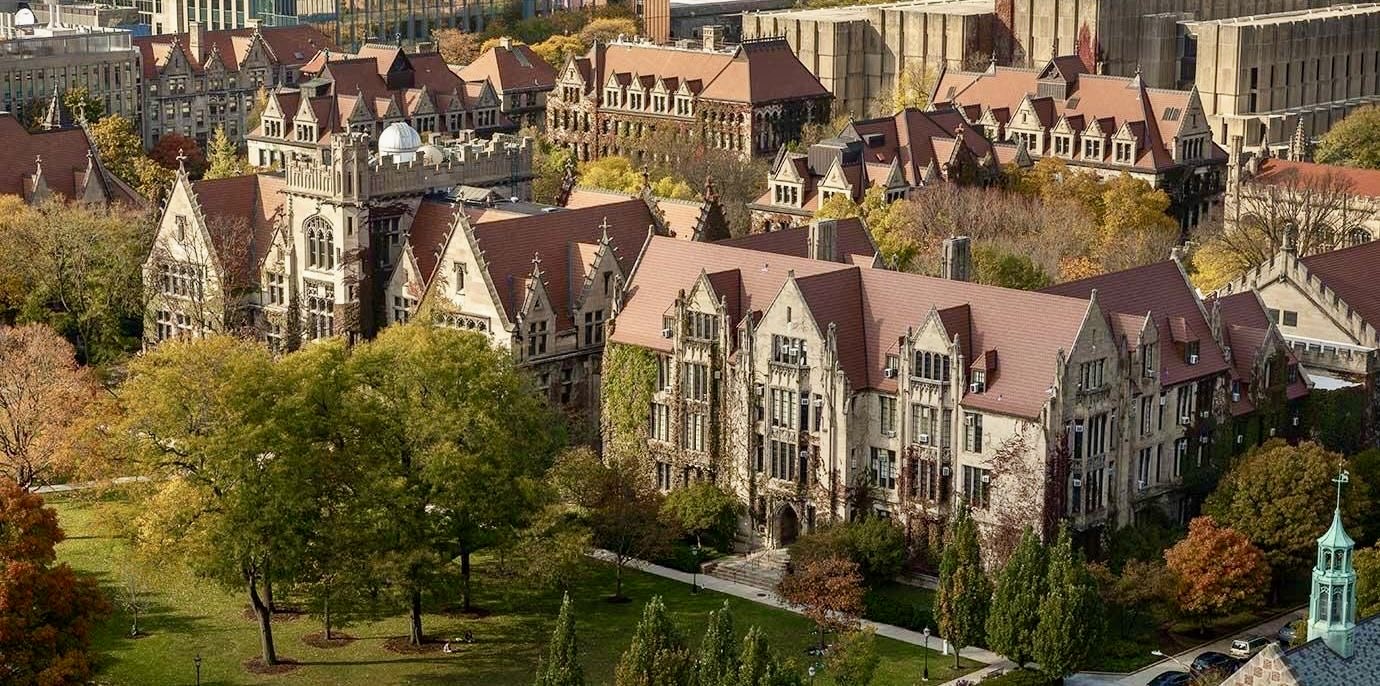
The Pritzker School of Medicine at the University of Chicago is known for its strong emphasis on research and a curriculum that encourages critical thinking and problem-solving, preparing students for leadership roles in medicine. The school sits in Hyde Park, a historic residential neighborhood about 20 minutes south of downtown Chicago, which gives students access to a diverse patient population and a wide range of clinical experiences. Students also run six free clinics, a hands-on way to serve neighbors on Chicago’s South Side.
- Location: Chicago (Hyde Park)
- Program length: 4 years (MD)
- Degrees: MD; MD/PhD through the Medical Scientist Training Program; dual degrees including MD/MBA, MD/MA in Public Policy, MD/MPH and MD/MS programs in bioinformatics and applied data science
- Admissions: Highly competitive, with a focus on academic excellence, research experience and leadership potential
- Tuition: $65,576 for M1 and M2 and $87,436 for M3 and M4 (2026-27), the same for every student
The University of Chicago Pritzker School of Medicine is a prestigious institution dedicated to training future leaders in medicine. Its rigorous curriculum, combined with a strong emphasis on research and critical thinking, prepares graduates for the complex challenges of modern health care. The small class, about 90 students per year, means students know their faculty and classmates well.
Class profile. Pritzker’s newest posted class profile describes the Entering Class of 2024: 6,407 applications, 630 interviews and 91 students (81 in the MD program and 10 in the MD/PhD program). Pritzker publishes ranges rather than averages: MCAT scores from 505 to 527 and cumulative GPAs from 3.4 to 4.0. Only 13% of that class came from Illinois.
Applying. Pritzker sends its secondary application to every AMCAS applicant, with a $95 fee that is waived for AMCAS Fee Assistance Program participants. For the 2026-27 cycle, the AMCAS deadline is November 15 and the secondary application and letters are due December 1. The MCAT must have been taken in January 2023 or later. International applicants are welcome, and they can receive non-federal aid, including Pritzker scholarships. Details are on Pritzker’s admissions site.
With a highly competitive admissions process that values academic excellence, research experience and leadership potential, Pritzker continues to be a top choice for aspiring physicians who want to make a significant impact in medicine. For a complete look at the application, read IMA’s guide to the University of Chicago Pritzker School of Medicine.
Northwestern University Feinberg School of Medicine
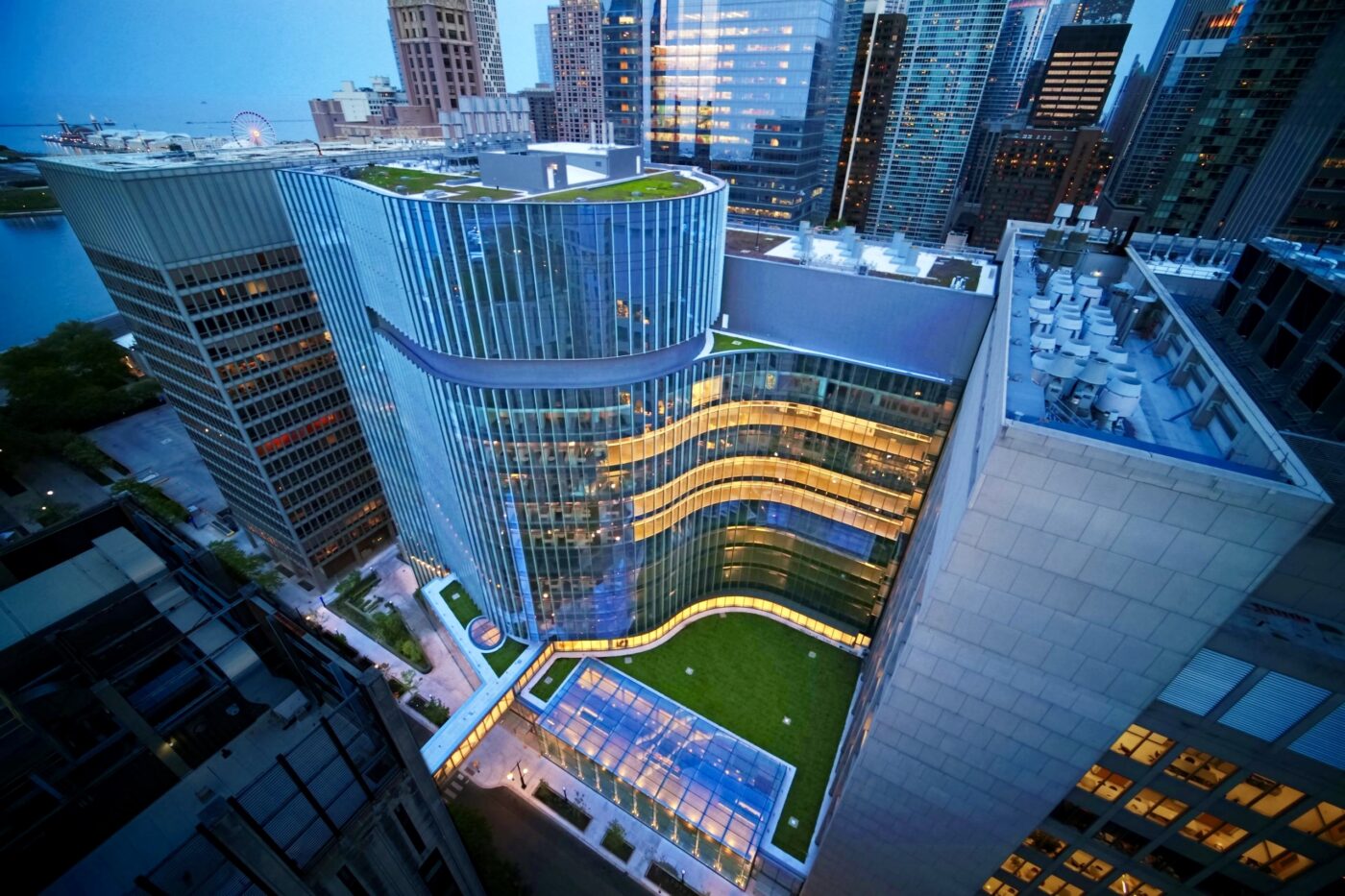
Feinberg School of Medicine offers a student-centered curriculum that integrates clinical practice with basic science from the very beginning. From day one, the MD curriculum immerses students in evidence-based clinical care. Feinberg’s campus sits in Chicago’s Streeterville neighborhood, just north of downtown along Lake Michigan, where students train in some of the nation’s leading hospitals and health care facilities. The school is known for interdisciplinary collaboration and community outreach.
- Location: Chicago (Streeterville)
- Program length: 4 years (MD)
- Degrees: MD; MD/PhD through the Medical Scientist Training Program
- Admissions: Selective, with a holistic review that weighs academic performance, clinical and volunteer work and personal qualities
- Tuition: $76,512 (2026-27), the same for every student
Admissions are selective, and the review process values not only academic performance but also volunteer work and the personal qualities applicants show in their personal statements. That combination makes Feinberg a top choice for students who want to excel in clinical medicine and research.
Class profile. Feinberg’s 2026 entering class has 141 students, chosen from 8,936 applications, with 681 applicants invited to interview. The class posted a median GPA of 3.95 and a median MCAT of 520. The year before, the 2025 entering class posted a median GPA of 3.93 and a median MCAT of 521.
Applying. Feinberg sends its secondary application to every AMCAS-verified applicant with an MCAT of 500 or higher, and it sets no minimum GPA. The secondary fee is $95, waived for AMCAS Fee Assistance Program participants. For 2027 matriculation, the AMCAS deadline is November 1, 2026 and the secondary application deadline is November 15, 2026. Feinberg accepts MCAT scores from January 2024 through September 2026 for this cycle. Feinberg considers international applicants who have completed three years of coursework at a U.S. or Canadian institution. See Feinberg’s admissions requirements for the full list.
IMA’s guide to Northwestern University Feinberg School of Medicine covers the secondary essays, interview and timeline in detail.
Rush Medical College
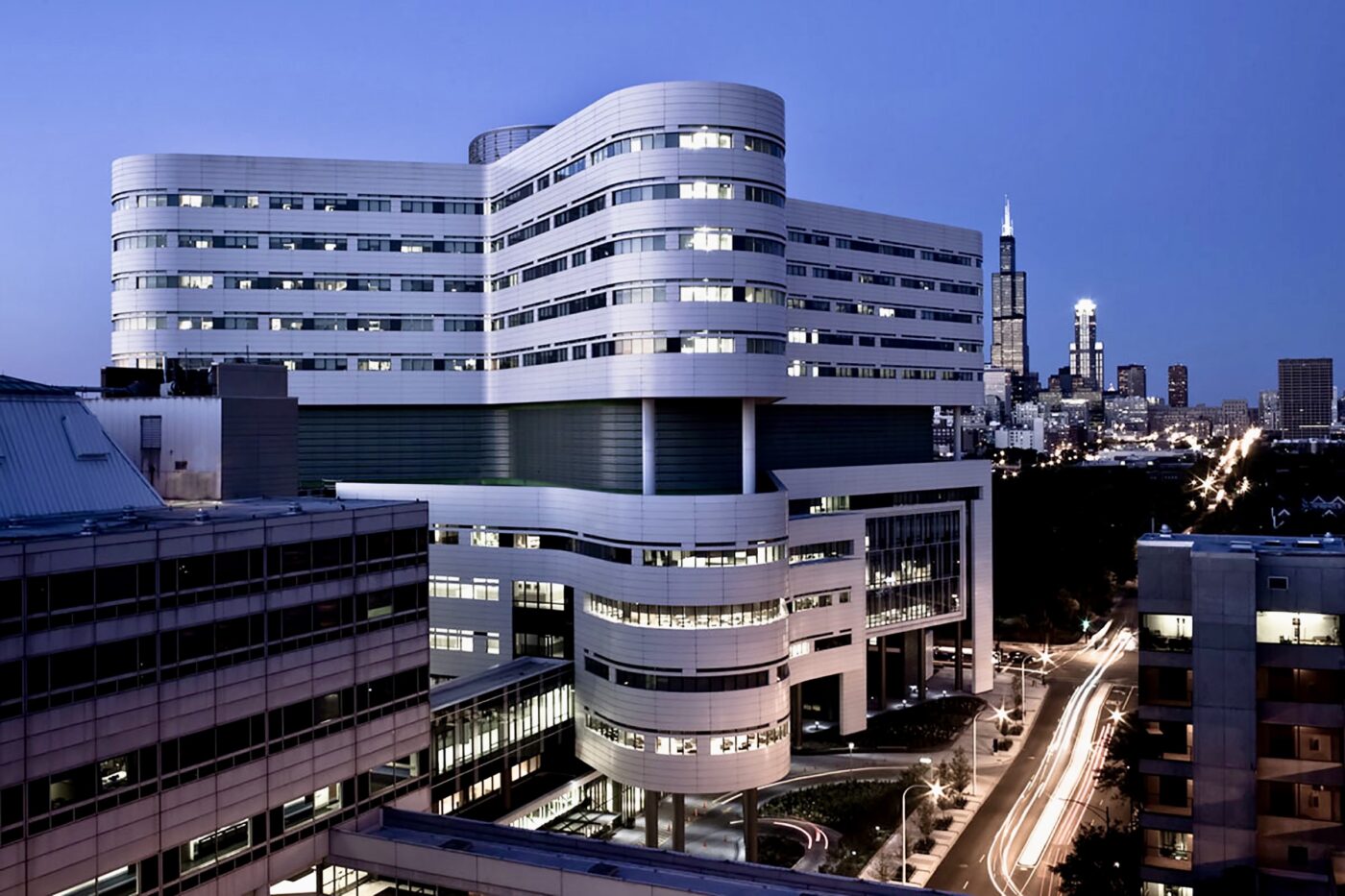
Rush Medical College combines a long tradition of medical education with modern teaching methods. The college emphasizes a patient-centered approach to health care and offers extensive hands-on learning in clinical settings across Chicago. Rush is also known for its commitment to serving communities in need. Rush students learn to develop patient relationships and work in teams while providing services to communities in need.
- Location: Chicago (West Side, at Rush University Medical Center), with clinical training that includes John H. Stroger, Jr. Hospital of Cook County
- Program length: 4 years (MD), with preclerkship years 1 and 2 and clerkship years 3 and 4
- Admissions: Focuses on candidates with strong academic backgrounds and a demonstrated commitment to service
- Tuition: $22,145 per fall and spring term for M1 students (Summer 2026 to Summer 2027 rate schedule)
Rush blends a rich history of medical education with modern, team-based teaching. Its curriculum gives students patient contact early, and its location on Chicago’s West Side gives them broad exposure to urban medicine. Admissions to Rush Medical College favor candidates who combine strong academic credentials with a deep commitment to service, which makes it a natural choice for aspiring physicians who want to care for underserved patients.
Class profile. Rush’s 2025 entering class posted an average cumulative GPA of 3.72 and an average composite MCAT of 510. Rush does not publish its class size or application numbers.
Applying. Rush considers U.S. citizens, permanent residents, asylees, refugees and DACA recipients. It does not accept international or transfer students. For the 2026-27 cycle, the AMCAS deadline was October 1, and secondary applications and letters are due November 13, 2026 at 11:59 p.m. Central Time. Early Decision applicants had to complete all materials by August 3. Rush accepts MCAT scores from January 2024 through September 2026, and it does not require Casper for fall 2027 entry. Read more on Rush’s MD application page.
IMA’s guide to Rush Medical College explains the application step by step.
Loyola University Chicago Stritch School of Medicine
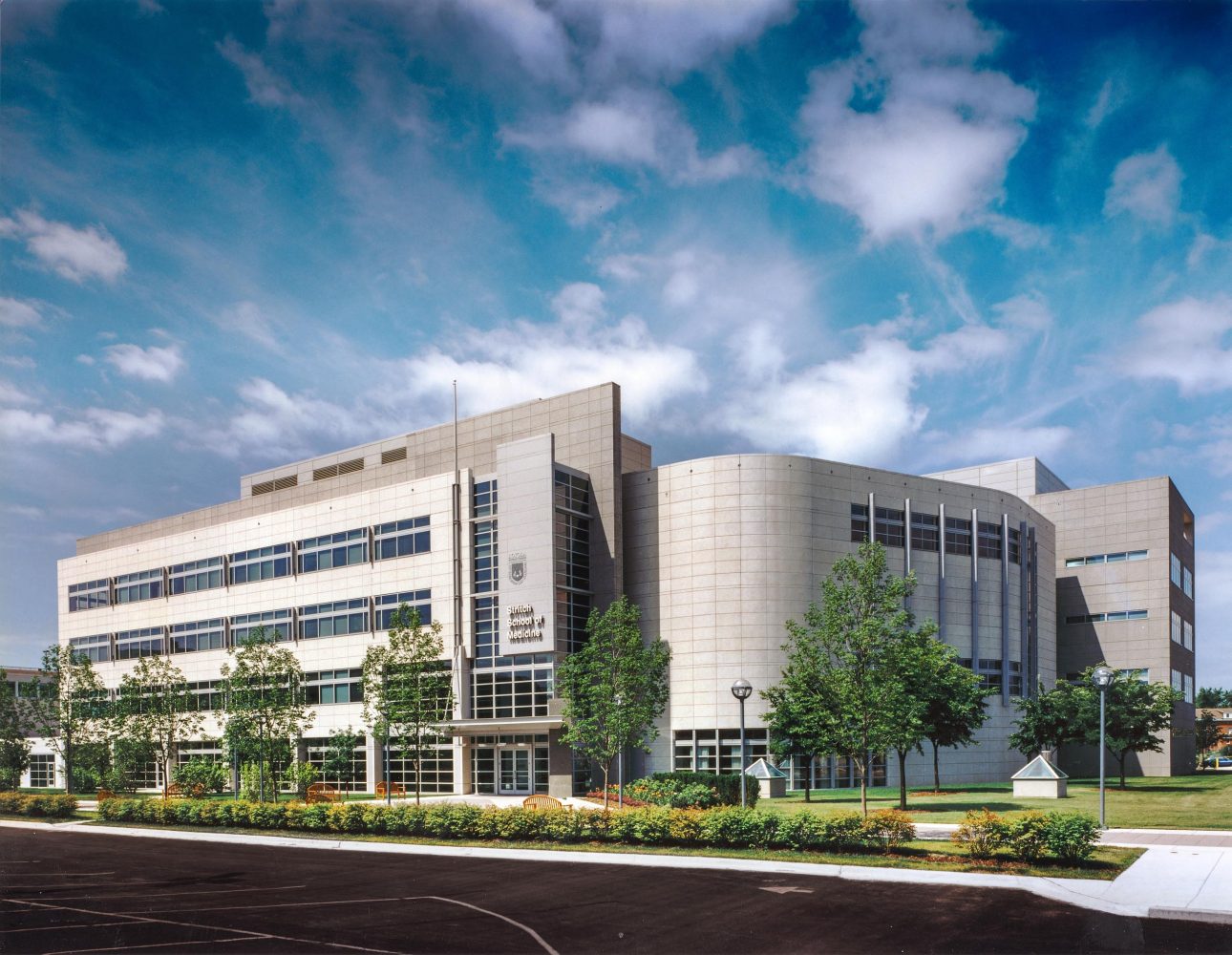
Loyola University Chicago Stritch School of Medicine is rooted in a strong Jesuit tradition that emphasizes the holistic development of medical professionals. Its mission describes Stritch as Chicago’s Jesuit Catholic medical school: a compassionate community advancing medicine through exceptional clinical training, scientific inquiry, rigorous research, personal and professional formation, and an unwavering commitment to those it serves. The school offers a four-year MD program and aims to develop physicians who are compassionate, ethical and committed to serving their communities.
- Location: Maywood, on Loyola’s Health Sciences Campus west of Chicago
- Program length: 4 years
- Degree: MD, plus MD dual-degree programs
- Admissions focus: Alignment with the Jesuit mission and a strong commitment to service and education
- Tuition: $73,720 for M1 students, with a total M1 cost of attendance of $106,560 (current posted budget)
Loyola’s curriculum integrates clinical practice with the Jesuit values of social justice and care for the whole person. The program is highly regarded for producing well-rounded physicians who excel in both clinical skills and ethical medical practice.
Class profile. Loyola’s Class of 2030, which entered in 2026, has 171 students chosen from more than 14,000 applicants. The class posted a mean MCAT of 513, a mean overall GPA of 3.86 and a mean science GPA of 3.82. Students come from 24 U.S. states and territories and 85 undergraduate colleges, and 6% are first-generation college students. Their mean pre-medical hours include 1,261 in research and 351 in medically based service.
Applying. Loyola sends its secondary application automatically to all verified applicants. The secondary fee is $115, with fee waivers available on request. For cycle 2027, the AMCAS deadline is November 2, 2026, and the secondary application is due December 11, 2026 at 11:59 p.m. Central Time. The oldest MCAT considered is from January 1, 2024, and the latest is November 1, 2026. Loyola has no GPA or MCAT cut-off scores and asks for three to six letters of recommendation, preferably a committee letter. Loyola considers U.S. citizens, permanent residents and DACA recipients. The full steps are in Loyola’s MD application guide.
IMA’s guide to Loyola University Chicago Stritch School of Medicine covers the secondary application and interview.
Southern Illinois University School of Medicine
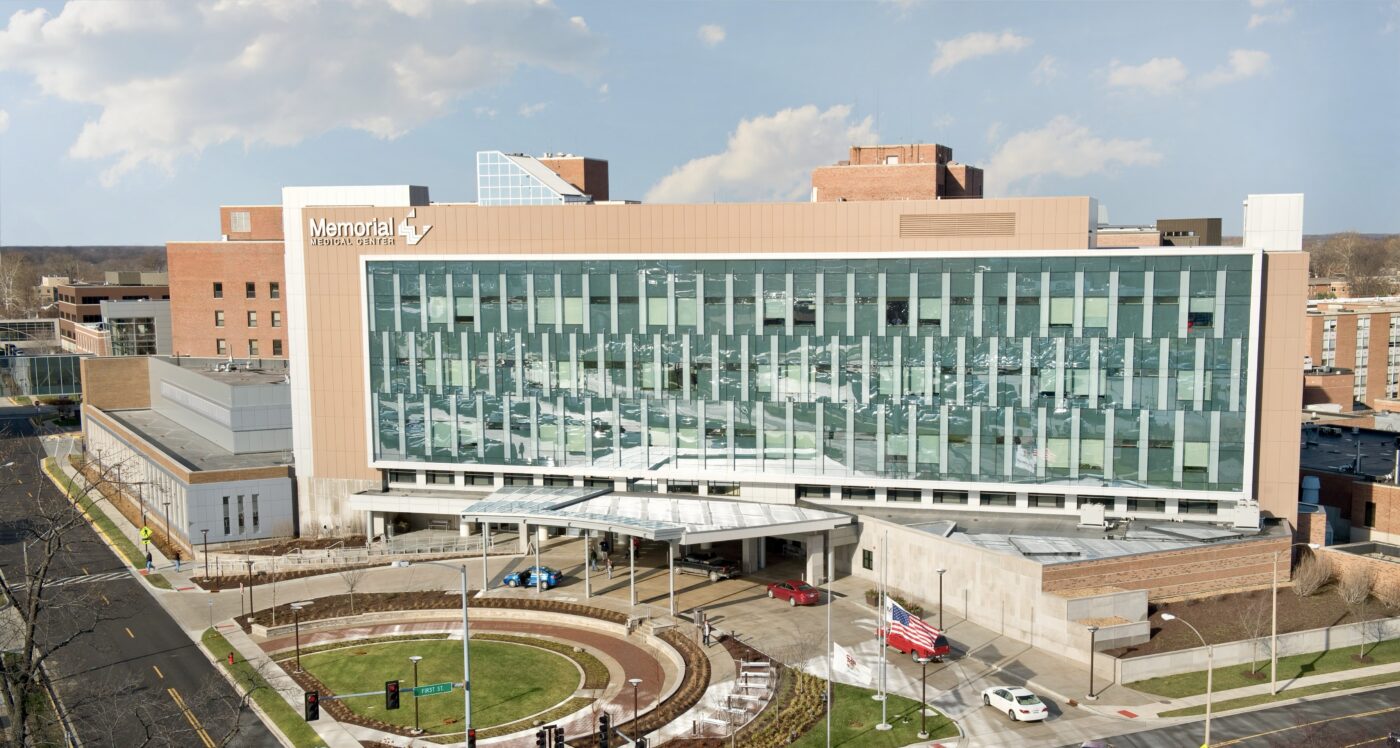
Southern Illinois University School of Medicine (SIU) offers an MD program with a distinct focus on the health of central and southern Illinois, including its rural communities. SIU does not offer a DO program. Students spend their first year of medical school in Carbondale and the remaining three years in Springfield, where most of the school’s facilities are located. SIU was founded in 1970.
- Location: Carbondale (year 1) and Springfield (years 2 to 4)
- Program length: 4 years
- Degrees: MD; MD/JD; MD/MPH; plus master’s, PhD and physician assistant programs
- Admissions focus: Illinois residents, with preference for central and southern Illinois and rural or inner-city areas
- Tuition and fees: $40,724 for first-year students (2026-27)
The program prepares students for the realities of practicing medicine in rural areas, with an emphasis on primary care, family medicine and community health. SIU’s mission is “to optimize the health of the people of central and southern Illinois through education, patient care, research and service to the community.” Its curriculum stresses solving real-world health problems, early patient care and problem-based learning in small groups of six or seven students. SIU was the first medical school in the nation to require a clinical competency examination before graduation. The Lincoln Scholars Program trains a class of eight students each year with an interdisciplinary team in Carbondale and neighboring communities, with a focus on rural primary care. SIU also notes that about half of its graduates enter residencies outside primary care, so the school is not limited to primary care careers.
Class size and costs. SIU enrolls 72 new MD students each year. Its 2026-27 budget for first-year students (Class of 2030) totals $74,481, including $37,800 in tuition. SIU does not publish class MCAT or GPA averages.
Applying. SIU accepts only Illinois residents for its regular MD program. Applicants need an MCAT of at least 498 that is no more than two years old at the time of application, cumulative and science GPAs of at least 2.80 (or 2.80 over the last 60 hours) and at least 60 credit hours from a U.S. college or university. AMCAS applications are due November 15. About 25% of applicants are invited to complete the supplemental application, which carries a $75 fee and is due February 1. Interviews take place in Springfield. Read the rules on SIU’s requirements page.
IMA’s guide to Southern Illinois University School of Medicine explains how SIU’s mission shapes its review.
University of Illinois Chicago College of Medicine
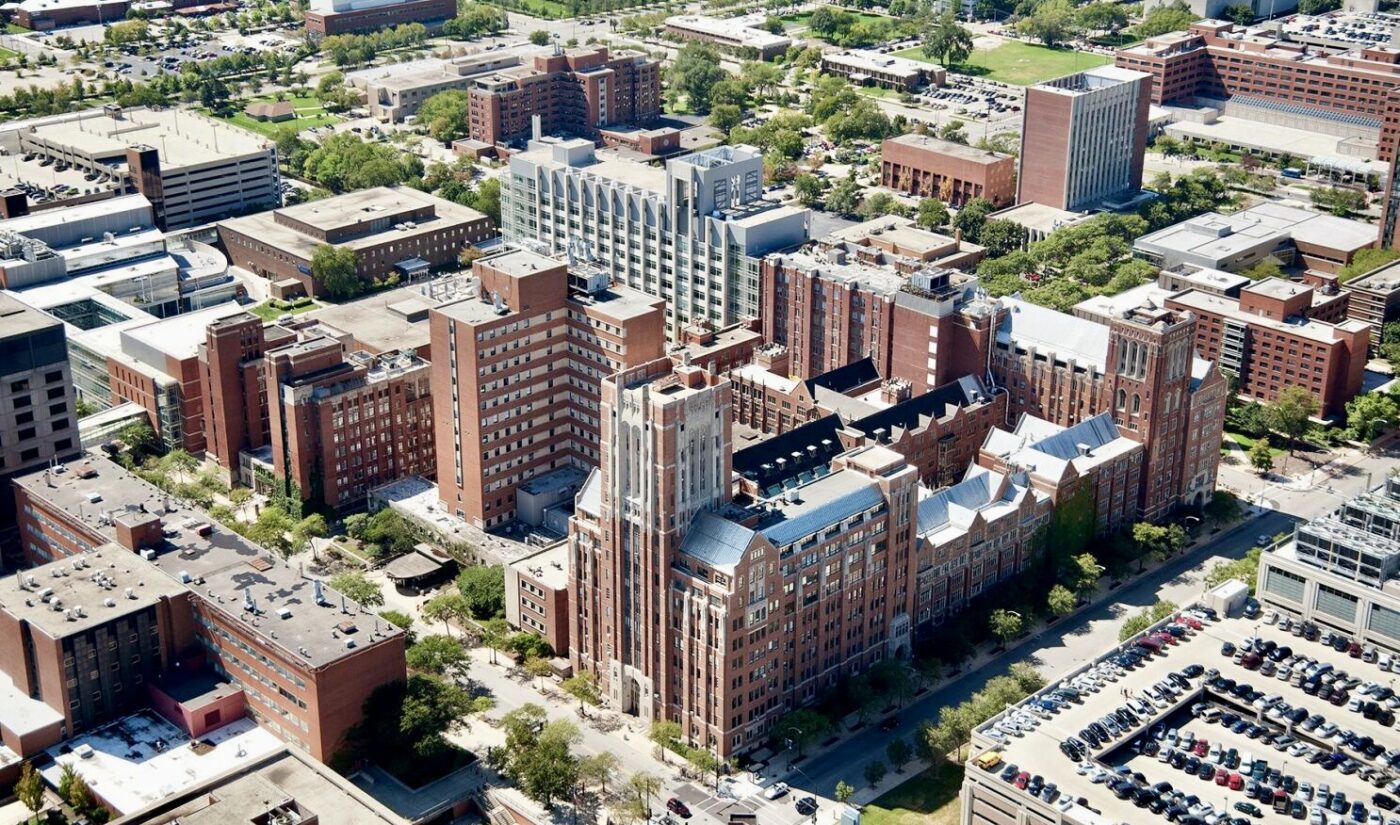
The University of Illinois College of Medicine, founded in 1882, describes itself as one of the largest and most prestigious medical schools in the United States. It offers a four-year MD program on three campuses: Chicago, Peoria and Rockford. Known for its strong emphasis on research, it ranks in the top third of NIH-ranked institutions by research funding, and one in six physicians in Illinois received a medical degree or residency training there.
- Location: Chicago, Peoria and Rockford
- Program length: 4 years
- Degrees: MD; joint MD/PhD, MD/MPH, MD/MBA, MD/MS in clinical and translational science and MD/MS in bioengineering
- Admissions focus: Holistic review informed by the college’s mission “to advance health for everyone through outstanding education, research, clinical care, and social responsibility”
- Tuition: $49,500 for Illinois residents, $83,814 for nonresidents and $98,814 for international students (2026-27)
The curriculum is designed to build innovation and critical thinking, preparing students to lead in medical research and clinical practice. Each campus has its own character. The Chicago campus sits in what the college calls the world’s largest medical district, and students there accompany physicians on rounds and learn to take patient histories in their first year. Peoria’s campus is within six blocks of more than 900 patient beds, a Level I trauma center and a children’s hospital. Rockford’s campus is home to the National Center for Rural Health Professions. Optional scholarly concentrations include the Rural Medical Education Program, the Global Medical Education Program and Urban Medicine. The college also has specialized departments such as the Department of Anesthesiology, established more than 70 years ago, for students interested in anesthesia and pain management.
Class profile. The Class of 2029 drew 11,310 applications and posted an average MCAT of 511 and an average GPA of 3.82. Fifty-nine percent of the class were Illinois residents, and the class represented 124 colleges and universities and 10 countries. Each year’s first-year class has 300 seats: 180 in Chicago, 65 in Peoria and 55 in Rockford. Campus assignments are made after an offer of acceptance, and any accepted applicant could be placed on any campus.
Applying. Secondary applications go to selected applicants and carry a $70 fee, which AMCAS Fee Assistance Program recipients do not pay. The secondary application deadline is December 1. The MCAT can be no more than three years old as of August of the matriculation year. The college considers DACA applicants and international applicants, including Canadians. See the College of Medicine’s admissions page for details.
IMA’s guide to the University of Illinois Chicago College of Medicine covers each campus and the application.
Carle Illinois College of Medicine
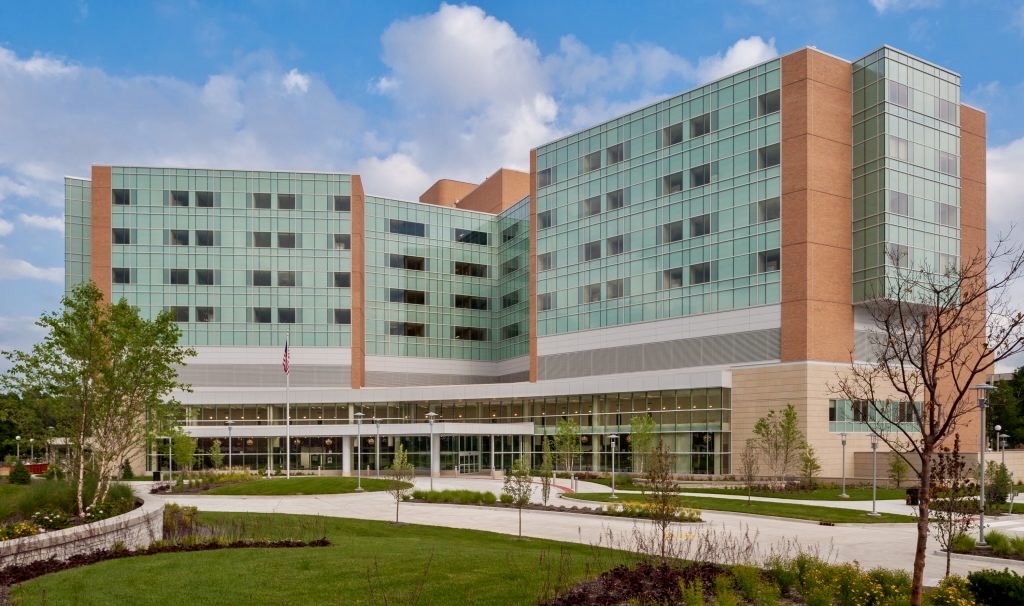
Carle Illinois College of Medicine calls itself “the world’s first accredited engineering-based medical school.” It offers a four-year MD program that integrates engineering and technology with medical education. Located in Urbana, it was created in 2015 as a partnership between the University of Illinois Urbana-Champaign and Carle Health, combining the strengths of a leading public research university with a regional health system. The first Carle Illinois graduates entered residency in summer 2022.
- Location: Urbana
- Program length: 4 years
- Degree: MD
- Focus: An engineering-based curriculum built around human factors, design thinking, medical technologies and entrepreneurship
- Admissions focus: Innovation, problem-solving and interdisciplinary collaboration
- Tuition: $37,558 for Illinois residents and $49,292 for nonresidents (students entering in summer 2026, 2026-27 rates)
The curriculum is designed to build innovation and problem-solving skills, preparing students for the changing challenges of health care. Through a combination of traditional medical training and engineering-focused coursework, students learn to develop new solutions and technologies that improve patient care. Carle Illinois immerses students early in clinical, case-driven, problem-based active learning. About 60% of its students have backgrounds in engineering, joining classmates with degrees in advanced mathematics, computer science and other quantitative fields. The college is home to more than 160 students and 700 affiliated clinical and academic faculty members.
This educational model attracts students who want to become physicians and also want to push the limits of what is possible in health care through technology. With its focus on problem-based learning and early clinical exposure, Carle Illinois is a strong fit for students who want to combine engineering and medical science.
Applying. Carle Illinois considers U.S. citizens and permanent residents with a bachelor’s degree from an accredited U.S. or Canadian college. It requires an MCAT of at least 498, no more than three years old in January of the year you would enroll, and has no minimum GPA. Instead of fixed prerequisites, applicants must show competency in at least 9 of 11 areas, including calculus, multivariate calculus, differential equations and linear algebra, by enrollment. The AMCAS deadline is October 31. After an initial screen, secondary applications, made up of a portfolio and video responses, go to eligible students at no cost. Carle Illinois does not hold in-person interviews (it holds invitation-only events for its most competitive applicants) and does not offer early decision. Read the requirements on Carle Illinois’s Before You Apply page.
IMA’s guide to Carle Illinois College of Medicine covers the competency checklist and portfolio.
Chicago Medical School at Rosalind Franklin University
Chicago Medical School (CMS) is the MD program of Rosalind Franklin University of Medicine and Science in North Chicago, in Lake County. It sits within an interprofessional university that also includes colleges of health professions, nursing, pharmacy and podiatric medicine, so medical students learn alongside future PAs, nurses and pharmacists.
- Location: North Chicago
- Program length: 4 years
- Degrees: MD; MD/PhD
- Admissions focus: Rolling admissions; most successful applicants have cumulative and science GPAs around 3.5 and an MCAT of at least 510
- Tuition: $74,290 (2026-27), the same for every student
Class profile. CMS’s 2026 entering class has 203 students, drawn from 16,269 AMCAS applicants. The class profile lists a cumulative GPA of 3.72, a science GPA of 3.63 and an MCAT of 508. Sixty-six percent of the class are Illinois residents by permanent address, and the average age at matriculation is 24.
Applying. CMS sends a supplemental application to every applicant with a verified AMCAS application who meets its citizenship requirements: U.S. citizens, permanent residents and DACA-eligible applicants. The supplemental application fee is $140, waived automatically for AMCAS Fee Assistance Program recipients. For the 2026-27 cycle, the AMCAS deadline is November 1, 2026 and supplemental materials are due December 1. CMS accepts MCAT scores from exams taken on or after January 1, 2024 and uses the highest score. The year 1 cost of attendance for a student without dependents is $112,567. See Chicago Medical School’s application requirements for the full list.
IMA’s guide to Chicago Medical School at Rosalind Franklin University covers the five secondary essays for this cycle.
Osteopathic Medical Schools in Illinois
Illinois offers programs in osteopathic medicine for students interested in a whole-person approach to medicine. These programs emphasize the relationship between structure and function and the body’s ability to heal itself. DO graduates are licensed to practice medicine and surgery in all 50 states, the same scope of practice as MD graduates. Osteopathic schools use the AACOMAS application rather than AMCAS.
Midwestern University Chicago College of Osteopathic Medicine (CCOM)
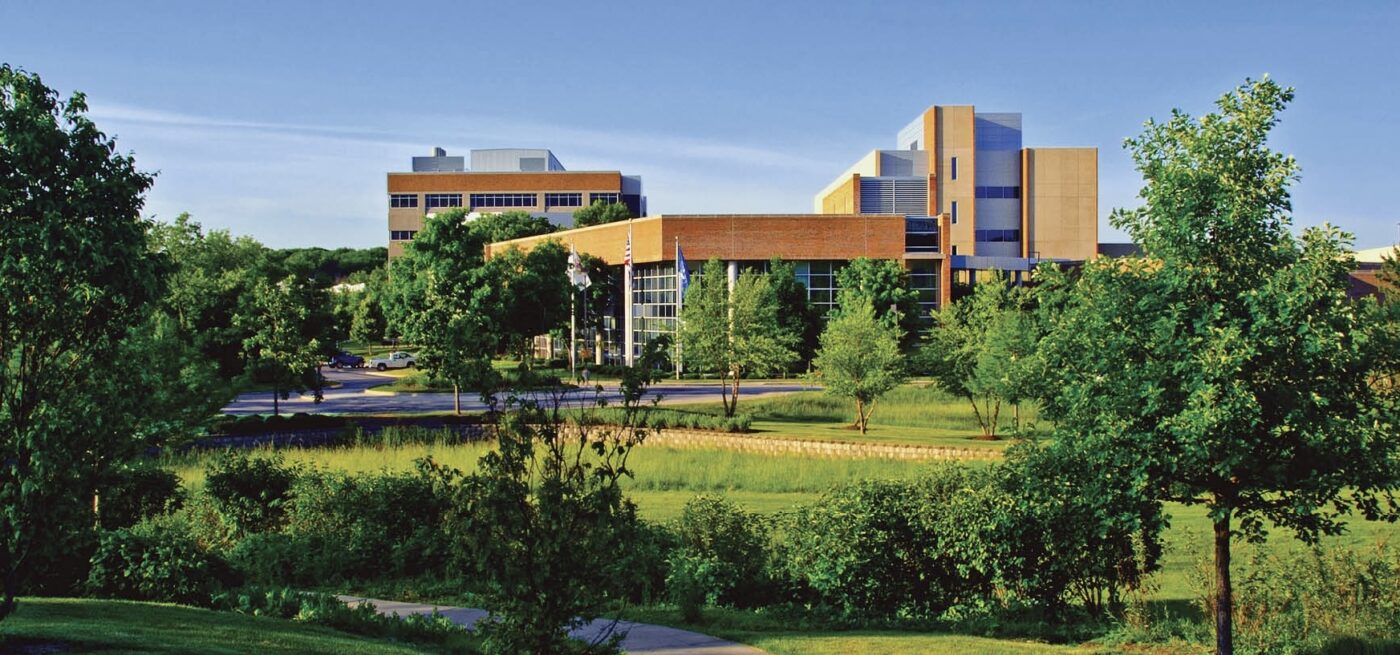
CCOM is one of the oldest osteopathic medical schools in the country. Founded in 1900, it describes itself as one of the most respected medical schools in the country. The curriculum is designed to provide a strong foundation in osteopathic principles, combined with rigorous training in the biomedical sciences and clinical skills. Students benefit from a collaborative learning environment, a simulation center and extensive clinical rotations across many health care settings.
- Location: Downers Grove, a western suburb of Chicago
- Program length: 4 years (DO)
- Core rotations: Family medicine, internal medicine, surgery, pediatrics, psychiatry, osteopathic manipulative medicine, obstetrics and gynecology and emergency medicine
- Admissions: Competitive, with a focus on academic achievement, community involvement and an understanding of osteopathic principles
- Tuition: $85,232 (2026-27), the same for in-state and out-of-state students
Midwestern University CCOM stands out for its long history in osteopathic medical education. The program is deeply rooted in osteopathic principles, ensuring that students gain a thorough understanding of both the biomedical sciences and clinical skills. Its collaborative learning environment and extensive clinical rotations prepare students for careers in primary care, family medicine, osteopathic manipulative medicine and every other specialty. Admissions to CCOM are competitive and emphasize academic achievement, community involvement, service and an understanding of osteopathic medicine, making it a strong choice for students committed to whole-person patient care.
Class profile. The average MCAT for students entering CCOM in 2025 was 509. CCOM enrolls 210 first-year students, 107 of them from Illinois, and its matriculants have an average cumulative GPA of 3.66.
Costs. For 2026-27, tuition and fees total $86,780 a year. The first-year living budget adds $38,136 for students living off campus or $25,620 for students living on campus. CCOM appears on IMA’s list of the 10 most expensive medical schools in the United States.
Applying. CCOM requires a bachelor’s degree, two letters of recommendation and minimum cumulative and science GPAs of 2.75 to receive a supplemental application, and it notes that competitive applicants have GPAs above 3.00. MCAT scores can be no more than three years old; the oldest considered is from January 1, 2024. The AACOMAS deadline is April 1, 2027, but CCOM uses rolling admissions and encourages early applications. CCOM accepts international students and DACA recipients and offers guaranteed interviews to qualified students from partner colleges, including Illinois State University, Northern Illinois University, Bradley University and Aurora University. See CCOM’s program page for details.
IMA’s guide to Midwestern University Chicago College of Osteopathic Medicine (CCOM) covers the application in depth.
Illinois College of Osteopathic Medicine (IllinoisCOM)
The Illinois College of Osteopathic Medicine is part of The Chicago School, a nonprofit university with a long history in psychology and mental health education. The school calls IllinoisCOM “Chicago’s first new medical school in nearly 100 years.” Its DO program holds pre-accreditation status from COCA, and its first class matriculated in 2026.
- Location: Chicago
- Program length: 4 years (DO)
- Focus: Integrated mental and physical health, built around a Mind and Medicine course series; students learn alongside future psychologists and behavioral health professionals and complete at least two clinical rotations focused on mental and behavioral health
- Clinical rotations: Opportunities in the Chicago, Dallas, Southern California and Washington, D.C. metro areas
- Tuition: $62,500 for the first year, $65,295 with fees (AY 2026-27)
Applying. Applicants apply through AACOMAS, and selected applicants are invited to complete a secondary application with a $50 fee (waived for applicants who received an AACOMAS fee waiver). Interviews are virtual. IllinoisCOM considers U.S. citizens and permanent residents only. It recommends a cumulative GPA of 3.0 or higher, a science GPA of 3.3 or higher and an MCAT of 500 or higher, with MCAT scores no older than January 2024 for fall 2027 entry. Prerequisites include biology, general and organic chemistry and physics with labs, plus English, humanities and psychology. Two letters are required: one from a physician (preferably a DO) and one from a pre-medical source. Details are on IllinoisCOM’s application page. IMA does not yet have a dedicated guide to IllinoisCOM.
Niazee College of Osteopathic Medicine
The Niazee College of Osteopathic Medicine in Schaumburg plans to enroll its first class in 2027. As of September 2026, it had no listed COCA accreditation status. Applicants interested in Niazee should confirm its COCA status before applying, because a school must reach pre-accreditation before it can recruit and admit students.
Physician Assistant (PA) Programs in Illinois
Illinois is also home to respected PA programs that prepare students for careers as physician assistants. These programs combine rigorous academic coursework with extensive clinical training. Students weighing a PA career against medical school can build patient care experience through pre-PA internships before they apply.
Rosalind Franklin University of Medicine and Science PA Program
The PA program at Rosalind Franklin University has graduated more than 1,500 students since it began in 1991. It is known for its interprofessional focus and its curriculum covering a wide range of medical disciplines. Its mission is to prepare “competent, compassionate, and ethical physician assistant leaders who, as integral members of the interprofessional healthcare team, will provide quality patient-centered care.” The program emphasizes clinical reasoning, patient care and professional development, using team-based learning and simulation.
- Location: North Chicago
- Program length: Two years: a didactic year of four quarters and a clinical year of four quarters (MS in Physician Assistant Practice)
- Clinical training: Required rotations in family practice, internal medicine, surgery, pediatrics, women’s health and emergency medicine, plus two electives
- Admissions: Selective, with a focus on academic performance, health care experience and commitment to service
- Tuition and fees: $62,041 for year 1 and $60,301 for year 2 (2026-27)
- Class profile: 67 students chosen from 4,292 applicants, with a cumulative GPA of 3.56 and 36% Illinois residents (newest posted profile)
Rosalind Franklin is also home to Chicago Medical School. PA applicants who want to understand the campus and the MD program next door can read IMA’s guide to Rosalind Franklin University of Medicine and Science and its Chicago Medical School.
Northwestern University PA Program
Northwestern’s PA program is part of the Feinberg School of Medicine and gives students access to Feinberg faculty and clinical training sites. It awards a Master of Medical Science (MMS) degree after a 24-month curriculum and is designed to produce skilled, compassionate providers who are well prepared for the challenges of modern medicine.
- Location: Chicago (Streeterville)
- Program length: 24 months (MMS)
- Admissions: Highly competitive, with an emphasis on academic excellence, clinical experience and interpersonal skills
- Tuition: $58,947 per year (2026-27)
- Cost of attendance: $106,536 for the first year and $105,361 for the second year (2026-27)
Specialized Medical Programs in Illinois
In addition to traditional MD and DO programs, Illinois offers specialized training in many health care fields. These programs suit students who want to focus on one area of health care or on health care administration.
Medical Assistant and Technician Schools
Illinois has many programs for people interested in becoming medical assistants or technicians. These programs offer focused training in clinical and administrative skills and prepare students for certification and employment in a variety of health care settings. Examples include clinical medical assistant programs, medical laboratory technician programs and emergency medical technician (EMT) programs.
Medical Billing and Coding Schools
For students interested in the administrative side of health care, Illinois offers medical billing and coding programs that prepare students for careers in health care management. These programs are available on campus and online, which gives working professionals flexibility. Examples include campus-based medical billing and coding programs and online medical billing and coding programs.
Financial Considerations for Medical Students in Illinois
The cost of medical education is significant, but Illinois medical schools offer financial aid options, including scholarships, grants and loans. In-state students at the public schools benefit from much lower tuition. For 2026-27, Illinois residents pay $49,500 in first-year tuition at the University of Illinois College of Medicine, $37,558 at Carle Illinois and $40,724 in first-year tuition and fees at SIU, while first-year tuition at the private schools runs from $62,500 at IllinoisCOM to $85,232 at CCOM.
Total cost of attendance matters as much as tuition. First-year budgets range from $74,481 at SIU to $120,134 at Feinberg, and the University of Illinois College of Medicine’s Chicago campus budget is $89,430 for residents and $123,744 for nonresidents. Several schools also offer substantial scholarships: in Pritzker’s Entering Class of 2024, 60% of students received a full-tuition scholarship, and Carle Illinois offers about $1 million a year in scholarship aid and considers every admitted student for merit scholarships. CCOM’s 2026-27 budget also notes that Direct Graduate PLUS loans ended on July 1, 2026, so new students should plan their borrowing early.
It is important to explore every available financial aid opportunity and to consider the cost of living in Illinois when you plan your education. IMA’s guide to the total cost of medical school explains tuition, living expenses and debt in more detail.
Illinois Medical Schools and Excellence in Medicine and Your Options
Illinois is home to some of the most respected medical schools in the United States, offering a wide range of opportunities for aspiring health care professionals. Whether you are interested in allopathic medicine (MD), osteopathic medicine (DO) or physician assistant (PA) programs, Illinois provides an educational landscape that supports many career goals.
Medical schools in Illinois are known for their academic programs, research opportunities and strong clinical training. Institutions like the University of Chicago Pritzker School of Medicine and Northwestern University Feinberg School of Medicine are among the most selective in the country, and Feinberg’s 2026 entering class posted a median MCAT of 520. These schools offer advanced medical education and also emphasize the development of compassionate, culturally competent physicians who are equipped for the challenges of modern health care.
For students interested in the whole-person approach of osteopathic medicine, the Chicago College of Osteopathic Medicine at Midwestern University provides an education that integrates osteopathic principles with thorough medical training, and the new IllinoisCOM adds a second option in the city itself. Illinois is also home to strong PA programs, such as those at Rosalind Franklin University and Northwestern University, which prepare students for rewarding careers in health care.
As you explore medical schools in Illinois, keep an open mind and consider other institutions as well. The path to becoming a health care professional is highly individual, and finding the right fit is crucial. Different schools offer different strengths, focus areas and campus cultures. By broadening your search, you can find programs that match your academic interests, professional goals and personal preferences.
Visiting campuses, talking with current students and alumni, and understanding each school’s offerings can give you valuable insight for an informed decision. The goal is to find a school that challenges you academically and supports your growth as a future health care leader.
As you continue your search for the right medical school, here is a list of institutions to consider in Illinois, with IMA’s admissions guide for each:
- University of Chicago Pritzker School of Medicine, Chicago (MD)
- Northwestern University Feinberg School of Medicine, Chicago (MD)
- Rush Medical College, Chicago (MD)
- Loyola University Chicago Stritch School of Medicine, Maywood (MD)
- University of Illinois College of Medicine, Chicago, Peoria and Rockford (MD)
- Southern Illinois University School of Medicine, Carbondale and Springfield (MD)
- Carle Illinois College of Medicine, Urbana (MD)
- Chicago Medical School at Rosalind Franklin University, North Chicago (MD)
- Chicago College of Osteopathic Medicine at Midwestern University, Downers Grove (DO)
For schools beyond Illinois, IMA’s Average GPA and MCAT Score by Medical School lets you compare class statistics across the country.
Residency Programs and Career Opportunities
Illinois offers many residency programs across a wide range of specialties. From large teaching hospitals in Chicago to community-based programs in smaller cities, graduates of Illinois medical schools have many options for completing their residency training and starting their medical careers. The University of Illinois College of Medicine alone offers more than 60 residency programs for nearly 1,000 residents across its three campuses. SIU trains 423 residents and fellows in 34 programs, including family medicine programs in Springfield, Decatur, Quincy, Alton and Carbondale, and 910 of its graduates in practice work in 75 Illinois counties.
Medical School Careers in Illinois
When you consider medical schools in Illinois, it is clear that the state offers a diverse range of educational opportunities for aspiring health care professionals. Whether you are interested in MD, DO or specialized programs, Illinois has options for a wide range of career goals.
The list of medical schools in Illinois includes highly selective institutions like the University of Chicago Pritzker School of Medicine and Northwestern University Feinberg School of Medicine, which are often named among the top medical schools in Illinois. These schools offer programs that prepare students for every medical specialty, from surgery to primary care.
For those exploring other health careers, there are also specialized programs like diagnostic medical sonography schools in Illinois and medical billing and coding schools in Illinois, which offer targeted training in specific fields. The state also hosts osteopathic medical schools in Illinois, such as Midwestern University Chicago College of Osteopathic Medicine, which focuses on a whole-person approach to patient care. These schools are ideal for students who want to understand and apply osteopathic principles in their practice.
Medical assistant schools in Illinois are also plentiful, offering both clinical medical assistant programs and certified medical assistant programs. These programs give students the skills and knowledge to work in fast-paced health care settings.
For students wondering how many medical schools in Illinois offer specialized training, the state’s educational landscape is rich with opportunities. Beyond traditional medical education, Illinois is home to medical esthetician schools, medical imaging schools and medical lab technician schools, which serve students interested in specialized health care careers. Medical laboratory technician programs and medical records technician programs in Illinois train people who prefer to work behind the scenes in health care.
High school students can get an early start, too. IMA offers medical internships for high school students, including students from Illinois, which provide early exposure to medicine and help guide future career plans. IMA’s wider range of international healthcare internships serves college students and gap year students as well. These experiences can strengthen a student’s resume, especially when combined with medical camps for high school students in Illinois.
When choosing a medical school in Illinois, consider factors like the cost of attendance, which varies a great deal by institution and by whether you can claim Illinois residency for in-state tuition at the public schools. Schools like the University of Illinois also offer specialized departments, such as the Department of Anesthesiology at the University of Illinois College of Medicine, which provide focused training for students interested in anesthesia and pain management.
Prospective students should also explore medical administrative assistant programs in Illinois and online medical billing and coding programs if they are interested in the administrative side of health care. The state’s commitment to diverse educational paths also shows in its emergency medical technician programs and medical assistant programs, which prepare students for immediate entry into the health care workforce.
If you are comparing Illinois with other states, such as neighboring Wisconsin or more distant North Dakota, look closely at each state’s residency rules, because public medical schools in most states favor their own residents. Aspiring doctors and health care professionals should also check medical school accreditation in Illinois when choosing a program: MD programs are accredited by the LCME and DO programs by COCA, as shown in the tables above.
How good is the medical school in Illinois?
Illinois offers some of the best medical schools in the country, with programs that serve many interests and career goals in health care. From research-intensive institutions to specialized schools in diagnostic medical sonography, medical assisting and more, the state provides strong educational options for aspiring medical professionals. The list of medical schools in Illinois is long, so whether you are looking for a traditional MD program or a specialized field, there is a program that fits your needs.
For those planning to stay close to home, Illinois also offers in-state tuition at its public medical schools, which makes attending medical school in Illinois a practical and attractive option for residents. With a thorough approach to medical education and a commitment to excellence, Illinois remains a top choice for many students pursuing a career in medicine.
Most applicants plan their MCAT date and their clinical experience around the same calendar. If you are a year or two from applying, the summer before you submit is often the best window for both: study blocks in the spring, a test date that leaves time for a retake before each school’s cutoff, and pre-med summer internships or local clinical work once the exam is behind you. Applicants who missed this cycle’s deadlines can use the extra year well; pre-med gap year programs are one way to add supervised clinical hours before reapplying.
Illinois Medical School Admissions with International Medical Aid
Are you dreaming of a successful medical career in the heart of the Midwest? Illinois’s medical schools provide an excellent and supportive environment for starting your journey as a health care professional. Gaining admission can be challenging, with competitive acceptance rates, rigorous applications and demanding interviews. International Medical Aid’s Medical School Application Consulting is here to guide you through these obstacles.
Excel on the MCAT and Craft Engaging Essays
- MCAT expertise: Our experienced coaches assess your strengths and weaknesses and offer personalized strategies and proven techniques for doing your best on the MCAT.
- Compelling storytelling: We help you write engaging essays that highlight your story, motivations and commitment to medicine, so you stand out in a competitive field.
Showcase Your Strengths and Get Noticed
- Academic excellence: We guide you in presenting your academic achievements effectively, showing your dedication and potential for success at Illinois medical schools.
- Extracurricular edge: We help you turn your extracurricular activities and volunteer work into compelling narratives that reflect your character and passion for service.
- Insider insights: Learn strategies to personalize your application, from securing strong recommendation letters to preparing interview responses that fit each school.
Plan Your Path to Success
- Financial aid guidance: We simplify the details of tuition costs and financial aid options to help make your Illinois medical school plans a reality.
- Residency planning: We guide you through the range of residency programs in Illinois so you can find the best fit for your career goals.
- Graduate insights: Benefit from advice drawn from the experience of Illinois medical school graduates who have walked the same path before you.
Clinical experience is where many Illinois applicants can set themselves apart. Admissions committees across the state read your experiences for evidence that you understand patient care, and Feinberg reports that its applicants average 200 to 300 hours of volunteer and clinical experience. Clinical internships for pre-med students are one way to add structured, supervised hours to the experiences you build at home in Illinois. IMA’s pre-med internships abroad place interns in teaching hospitals in Mombasa, Kenya and Cusco, Peru, where they take vitals, help with patient intake and triage and assist with direct care under the supervision of local physicians and nurses.
Partnering with International Medical Aid
International Medical Aid is your partner in Illinois medical school admissions. Our support system helps you:
- Reach your potential: Our personalized approach helps you present your best self in every part of the application.
- Reduce stress and save time: Focus on what matters most, your studies and preparation, while we help you manage the application logistics.
- Strengthen your application: Gain a competitive edge with our expert guidance and experience.
Take control of your future with International Medical Aid. Contact us today, and let’s make your dream of becoming an Illinois doctor a reality. Schedule Your Complimentary 30-minute Session Today. Questions? Feel free to reach out by email at [email protected].
IMA’s pre-med internships give students the opportunity to work with patients who live in underserved parts of the world and lack access to consistent, quality medical care. These internships for pre-med students run in teaching hospitals, where interns take vitals, do intake and triage and help with direct care under supervision, and they never perform tasks that would require a medical license in the United States. IMA’s medical internships abroad also include programs for nursing, pre-PA, mental health and other health careers. Another IMA resource is the Medical School Secondary Essay Prompts Database, which collects current secondary prompts for schools across the country.
Frequently Asked Questions
How many medical schools are in Illinois?
Illinois has ten medical schools enrolling students: eight MD programs and two DO schools. The MD programs are Carle Illinois, Chicago Medical School at Rosalind Franklin University, Loyola Stritch, Northwestern Feinberg, Rush, SIU, Pritzker and the University of Illinois College of Medicine. The DO schools are Midwestern University CCOM and IllinoisCOM. A third DO school, the Niazee College of Osteopathic Medicine in Schaumburg, is listed with a planned first class in 2027.
What is the newest medical school in Illinois?
The Illinois College of Osteopathic Medicine (IllinoisCOM) at The Chicago School is the newest. It holds COCA pre-accreditation and enrolled its first class in 2026. Among MD programs, the newest is Carle Illinois College of Medicine, which was created in 2015 and first accredited by the LCME in 2017.
Which medical schools in Illinois accept out-of-state students?
Every Illinois MD and DO program except SIU’s regular MD program considers out-of-state applicants. The private schools (Pritzker, Feinberg, Rush, Loyola, Chicago Medical School, CCOM and IllinoisCOM) treat Illinois and out-of-state applicants the same way. The two public programs that admit nonresidents, the University of Illinois College of Medicine and Carle Illinois, charge nonresidents a higher tuition.
Does SIU School of Medicine accept out-of-state applicants?
No. SIU accepts only legal Illinois residents for its regular MD program. Out-of-state applicants are considered only for the combined medicine and law (MD/JD) program.
Does SIU offer a DO program?
No. Southern Illinois University School of Medicine offers the MD degree, along with an MD/JD, an MD/MPH, a physician assistant program and graduate degrees. The DO programs in Illinois are at Midwestern University CCOM in Downers Grove and IllinoisCOM in Chicago.
What MCAT score do I need for medical school in Illinois?
It depends on the school. The latest published class figures run from a median of 520 at Feinberg (2026 entering class) to 508 at Chicago Medical School (2026 entering class), with Loyola at 513, the University of Illinois College of Medicine at 511, Rush at 510 and CCOM at 509. SIU and Carle Illinois set a minimum of 498, and Feinberg sends secondaries to applicants with 500 or higher. Chicago Medical School notes that most successful applicants score at least 510.
What GPA do I need for medical school in Illinois?
Published class GPAs range from a median of 3.95 at Feinberg to an average of 3.66 at CCOM. Loyola’s Class of 2030 posted a mean overall GPA of 3.86, the University of Illinois College of Medicine’s Class of 2029 averaged 3.82, and Rush and Chicago Medical School both list 3.72. SIU sets a minimum of 2.80, and CCOM requires 2.75 to receive a supplemental application. IMA’s Medical School GPA Calculator can show where you stand.
Which is the cheapest medical school in Illinois?
For Illinois residents, the lowest first-year tuition is at Carle Illinois ($37,558 for 2026-27) and SIU ($37,800 tuition, or $40,724 with fees). SIU also has the lowest published first-year cost of attendance, $74,481. Among private schools, IllinoisCOM has the lowest first-year tuition at $62,500.
Which is the most expensive medical school in Illinois?
CCOM lists the highest first-year tuition, $85,232 for 2026-27 (Pritzker’s tuition for third- and fourth-year students is higher, $87,436). Feinberg has the highest published first-year cost of attendance among the MD programs at $120,134, and the University of Illinois College of Medicine’s budget for international students on the Chicago campus is $138,214.
Do Illinois medical schools accept international students?
Some do. Pritzker, Feinberg (with three years of U.S. or Canadian coursework), the University of Illinois College of Medicine and CCOM consider international applicants. Loyola, Chicago Medical School and Rush consider DACA recipients but not international applicants, and Carle Illinois and IllinoisCOM consider only U.S. citizens and permanent residents.
Which medical schools are in Chicago?
Pritzker (Hyde Park), Feinberg (Streeterville), Rush (West Side), the University of Illinois College of Medicine’s Chicago campus and IllinoisCOM are in the city of Chicago. Loyola Stritch is in nearby Maywood, Chicago Medical School is in North Chicago, and CCOM is in Downers Grove.
How much clinical experience do Illinois medical schools want?
Most Illinois schools do not set an hour count, but all of them look for meaningful patient contact. Feinberg reports that its applicants average 200 to 300 hours of volunteer and clinical experience, and Loyola’s Class of 2030 averaged 351 hours of medically based service. Supervised programs such as IMA’s pre-health internships can add hands-on hours alongside the clinical work you do in Illinois.
When should I apply to medical schools in Illinois?
Apply early, because most Illinois schools use rolling admissions. For the 2026-27 cycle, Rush’s AMCAS deadline was October 1, Carle Illinois’s is October 31, Feinberg’s and Chicago Medical School’s are November 1, Loyola’s is November 2, and Pritzker’s and SIU’s are November 15. CCOM’s AACOMAS deadline is April 1, 2027, but CCOM also encourages early applications.
Are there physician assistant programs in Illinois?
Yes. Rosalind Franklin University in North Chicago offers a two-year MS in Physician Assistant Practice, and Northwestern University’s Feinberg School of Medicine offers a 24-month Master of Medical Science PA program. SIU School of Medicine also runs a physician assistant program.
Final Thoughts
Choosing the right medical school is a crucial step toward becoming a health care professional. Illinois offers a diverse range of programs, each with its own strengths and opportunities. Whether you are interested in allopathic medicine, osteopathic medicine or physician assistant studies, Illinois has a program that can help you reach your career goals. By exploring your options carefully and weighing your personal and professional goals, you can find the right fit among Illinois’s medical schools.
If you are still searching for the answer to “What are the best medical schools near me?”, explore our other medical school guides, and reach out to IMA to learn more about our medical school admissions consulting.
Sources
- Liaison Committee on Medical Education, Directory of Accredited Programs (updated October 14, 2026).
- American Osteopathic Association, directory of colleges of osteopathic medicine (September 2026).
- University of Chicago Pritzker School of Medicine: class profile (Entering Class of 2024); 2026-2027 student budget; admissions process (2026-27 cycle); degree programs; admissions home. Checked October 17, 2026.
- Northwestern University Feinberg School of Medicine: Entering Class Profile (2026 entering class); 2026-2027 tuition and costs; application timeline; admissions requirements; admissions requirements FAQ; prospective students FAQ; living in Chicago; MD curriculum. Northwestern PA program home and 2026-2027 cost of attendance. Checked October 17, 2026.
- Rush Medical College: MD program page (2025 entering class); applying to the MD program; process and timeline (2026-27 cycle); Rush University tuition rates (Summer 2026 to Summer 2027) and 2026-2027 cost of attendance. Checked October 17, 2026.
- Loyola University Chicago Stritch School of Medicine: Class of 2030 Profile; tuition and fees (updated October 2026); MD application guide (cycle 2027); MD FAQs; mission. Checked October 17, 2026.
- University of Illinois College of Medicine: MD admissions (Class of 2029); admissions FAQ; 2026-2027 cost of attendance; international applicants; application timeline; campuses; Department of Anesthesiology. Checked October 17, 2026.
- Southern Illinois University School of Medicine: requirements, selection factors and policies; admissions FAQ; 2026-2027 traditional program student budgets; quick facts; admissions timeline; About Us; facts and figures; advantages of SIU Medicine. Checked October 17, 2026.
- Carle Illinois College of Medicine: overview; admissions; Before You Apply; admissions FAQ; tuition, fees and scholarships; University of Illinois Urbana-Champaign 2026-27 graduate and professional tuition rates. Checked October 17, 2026.
- Chicago Medical School at Rosalind Franklin University: 2026 entering class profile; 2026-2027 budget guide; application requirements; common questions. Rosalind Franklin University PA program, curriculum, class profile and 2026-2027 tuition and fees. Checked October 17, 2026.
- Midwestern University Chicago College of Osteopathic Medicine: DO program page; Downers Grove DO cost of attendance 2026-2027; AACOM Choose DO Explorer, Chicago College of Osteopathic Medicine at Midwestern University. Checked October 17, 2026.
- Illinois College of Osteopathic Medicine at The Chicago School: DO program page; application requirements; DO tuition and fees (AY 2026-27); inaugural class preview. Checked October 17, 2026.