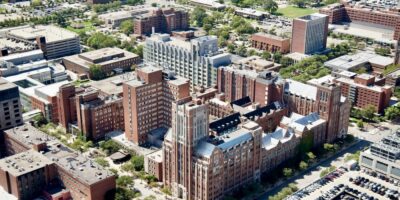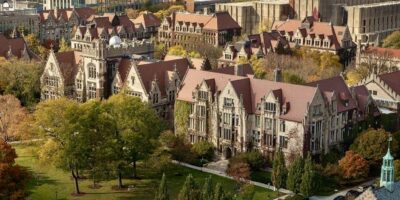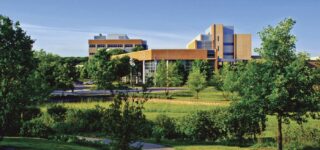

The Chicago College of Osteopathic Medicine (CCOM) at Midwestern University is one of the oldest osteopathic medical schools in the United States. J. Martin Littlejohn founded it in Chicago in 1900, and it is the founding college of Midwestern University. Today CCOM grants the Doctor of Osteopathic Medicine (DO) degree on Midwestern’s wooded, 105-acre campus in Downers Grove, Illinois, about 25 miles west of downtown Chicago. Students get the quiet of a suburban campus and quick train access to one of the largest medical communities in the country.
CCOM is known for a strong basic science program, early hands-on training in osteopathic manipulative medicine (OMM), a large simulation center and clinical rotations at hospitals across the Chicago area. Its graduates do well on the COMLEX-USA board exams and in the residency Match, and more than 7,500 alumni practice across the country. Osteopathic physicians (DOs) are fully licensed physicians who view the body as an integrated whole, with structure and function working together, and who care for each patient’s biological, psychological and social needs. CCOM builds that philosophy into all four years.
Becoming a doctor is no easy feat, and getting into medical school can be the first big challenge you face. Our goal is to help aspiring physicians find the medical school that fits them best, and our other Medical School Guides cover more than 200 programs. The first step is to apply to schools that match your goals and values. If you are comparing DO schools in the Midwest, or you want to train in and around Chicago, CCOM deserves a close look.
This guide covers the 2026-2027 application cycle, for students who want to start medical school in August 2027. It walks through CCOM’s newest class profile, admission requirements and deadlines, the fact that CCOM has no secondary application this cycle, 2026-2027 tuition and cost of attendance, the curriculum and clinical years, residency and board outcomes, the interview, and a long list of frequently asked questions. Figures were checked on October 23, 2026.
Key Takeaways
- One DO program, one campus: CCOM teaches its DO program on Midwestern University’s Downers Grove, Illinois campus. Its sister school, the Arizona College of Osteopathic Medicine (AZCOM) in Glendale, is a separate college with its own application.
- Class profile: the Class of 2029 (entered fall 2025) had an average composite MCAT of 509, an average overall GPA of 3.65 and an average science GPA of 3.61. About half of the class (51%) came from Illinois.
- Competition: CCOM received nearly 7,000 applications for its 200 seats for the class that started in fall 2025. It does not publish interview or acceptance counts.
- Minimums: you need a cumulative and science GPA of at least 2.75 to apply, and CCOM says competitive applicants have both above 3.00. MCAT scores must be no more than three years old.
- No secondary in 2026-2027: CCOM does not send a supplemental application or charge a supplemental fee this cycle. Your file is complete when your AACOMAS application, MCAT scores and two letters of recommendation arrive.
- Deadline and timing: everything is due by April 1, 2027, but review is rolling and about half of all offers go out by the end of December. Apply in early summer.
- Cost: tuition is $85,232 for 2026-2027, the same for every student, after a university-wide tuition freeze. Tuition and fees total $86,780, and the first-year cost of attendance is about $112,400 with on-campus housing.
- Outcomes: 189 of 192 graduates who entered the 2026 Match were placed in residency (98.44%), and CCOM’s first-time COMLEX pass rates were above the national rates in every year it reports.
- Next step: line up two strong letters (ideally one from a DO), finish your AACOMAS application early, and prepare for a panel interview that may be virtual or on campus.
Key Statistics About Chicago College of Osteopathic Medicine
The snapshot below gathers the numbers applicants ask about first. MCAT and GPA averages are for the Class of 2029, the class that entered in fall 2025 and the newest class CCOM profiles. Applications are for that same entering class. Tuition and cost of attendance are for the 2026-2027 academic year, and the placement rate is for the Class of 2026.

What Are CCOM’s Average MCAT and GPA?
For the Class of 2029, which entered CCOM in fall 2025, the average composite MCAT was 509, the average overall GPA was 3.65 and the average science GPA was 3.61 (CCOM Class of 2029 Profile, 2025). These are averages, not cutoffs. CCOM’s minimum to apply is a 2.75 cumulative and science GPA.
Two points help you read these numbers. First, an average means about half of the class scored below it. CCOM states that a competitive applicant has cumulative and science GPAs above 3.00, and it reviews letters, service, clinical exposure and your understanding of osteopathic medicine alongside your numbers. Second, the science GPA matters on its own. The Class of 2029’s science average (3.61) sat only a little below its overall average (3.65), so a strong record in biology, chemistry and physics is part of a typical admitted file.
If your numbers are below these averages, you can still build a strong application. Apply early, since CCOM fills seats on a rolling basis, show upward grade trends, and make your clinical and service record clear and specific. If your MCAT is at or above 509 and your GPAs are near 3.6, your academic record is in line with the most recent class, and the rest of your file will decide the outcome.
| Metric | Value | Year or cohort | Source and definition |
|---|---|---|---|
| School and degree | Chicago College of Osteopathic Medicine of Midwestern University; Doctor of Osteopathic Medicine (DO); Downers Grove, Illinois | Current | CCOM DO program page; private, nonprofit; founded 1900 |
| Average composite MCAT | 509 | Class of 2029 (entered fall 2025) | CCOM Class of 2029 Profile; MWU 2026-2027 catalog |
| Average overall GPA | 3.65 | Class of 2029 (entered fall 2025) | CCOM Class of 2029 Profile |
| Average science GPA | 3.61 | Class of 2029 (entered fall 2025) | CCOM Class of 2029 Profile |
| Mean MCAT and average cumulative GPA (school-reported profile) | MCAT 508.8; GPA 3.66 | Cohort not stated | AACOM Choose DO Explorer, CCOM profile (2026-2027 cycle) |
| Applications | Nearly 7,000 for 200 seats | Class entering fall 2025 | MWU 2026-2027 catalog, CCOM Competitive Admissions |
| Interviews and acceptances | Not published | Not applicable | CCOM publishes applications and seats only |
| Acceptance rate | Not published | Not applicable | Applications divided by seats is not an acceptance rate, because CCOM offers more acceptances than it has seats |
| First-year matriculants | 210 (107 in-state, 103 out-of-state) | 2024-2025 academic year | AACOM Choose DO Explorer, CCOM profile |
| Minimum GPA to apply | 2.75 cumulative and science (over 3.00 competitive) | 2026-2027 catalog | MWU 2026-2027 catalog, CCOM Admission Requirements |
| Tuition | $85,232 per year, all residencies | 2026-2027 | MWU Cost of Attendance Budget 2026-2027, DO, Downers Grove |
| Tuition and fees | $86,780 per year | 2026-2027 | Tuition plus $1,500 student services fee and $48 disability insurance fee |
| First-year cost of attendance | $112,400 on campus; $124,916 off campus | 2026-2027 | Tuition and fees plus the university’s living, insurance, transportation and loan-fee budget (sum computed from the budget table) |
| Residency placement | 98.44% (189 of 192) | Class of 2026 | CCOM Residency Placement Statistics table |
| COMLEX-USA Level 1 first-time pass rate | 91.3% (national 90.25%) | 2025 | CCOM board pass rate table |
| COMLEX-USA Level 2-CE first-time pass rate | 92.68% (national 91.89%) | 2025 | CCOM board pass rate table |
| Accreditation | COCA, accredited through 2030 | Current | CCOM DO program page; MWU 2026-2027 catalog |
Mission and Educational Priorities
CCOM’s mission is short and direct:
“The Chicago College of Osteopathic Medicine (CCOM) educates osteopathic physicians to provide compassionate, quality care, promote the practice of osteopathic medicine and lifelong learning, research and service.”
The college describes its vision as achieving educational excellence through leadership, teamwork, commitment, integrity, professionalism, and the practice and application of the osteopathic philosophy. It also states that it “embraces the osteopathic philosophy of a patient-oriented versus disease-oriented approach to healthcare and prepares students to regard the body as an integrated whole.”
What the mission means for applicants
Each part of the mission points to something you can show in your application.
- Compassionate, quality care: CCOM wants students who already treat people with patience and respect. Its program page lists bedside manner, communication and relationships with patients and families as things the college cares about most. Admissions readers look for experiences where you spent real time with patients or clients and learned to listen.
- Promoting osteopathic medicine: CCOM asks every applicant to “demonstrate understanding of and interest in osteopathic medicine.” That means you should be able to explain, in your own words, what a DO does differently and why it fits you. Time with a DO, a letter from a DO and a clear reason for choosing osteopathic medicine all help.
- Lifelong learning: CCOM’s programmatic objectives ask graduates to become “self-directed, life-long learners who incorporate evidence-based principles.” A record of steady academic growth, independent projects or a graduate program helps here.
- Research: research is part of the mission, and CCOM students present at the university’s annual Kenneth A. Suarez Research Day. Research is not required for admission, but curiosity and a habit of asking questions are valued.
- Service: CCOM requires applicants to “demonstrate service orientation through community service or extracurricular activities.” Long-term service carries more weight than a long list of short projects.
Programmatic objectives
CCOM’s program “emphasizes primary care but includes traditional specialties and subspecialties.” The college states six programmatic objectives for its four-year curriculum. In short, students will:
- know current biomedical, behavioral, clinical and epidemiological concepts used in high-value osteopathic care;
- provide care that promotes wellness and treat ill patients with compassion, using sound clinical judgment that respects patients’ beliefs and culture;
- act professionally, with honesty, courtesy and accountability, and communicate well with patients, faculty, staff and colleagues;
- strive for excellence in didactic, online and hands-on physical diagnosis and manipulative treatment sessions;
- become self-directed, lifelong learners who use evidence-based principles to provide safe, effective care;
- understand the U.S. healthcare system and its resources to improve patient safety and access to care.
These objectives give you useful language for interviews. If you can describe a time you used judgment while respecting a patient’s culture, or a time you took responsibility for a mistake, you are speaking directly to what CCOM says it trains.
The osteopathic approach
CCOM describes osteopathic physicians as embracing “a holistic philosophy that views the body as an integrated whole, recognizing the interdependence of structure and function.” DOs complete the same scope of training as MD physicians, take licensing exams (COMLEX-USA), and enter residencies in every specialty. What sets them apart is added training in osteopathic manipulative treatment (OMT), a set of hands-on techniques used to diagnose and treat problems in the musculoskeletal system and the body as a whole, and a strong focus on prevention and the whole person.
At CCOM, OMM training starts in the first quarter of the first year with Principles of Osteopathic Manipulative Medicine I and continues through the second year and into a required four-week OMM rotation in the fourth year. The department’s chair, Kurt Heinking, D.O., is himself a CCOM graduate and sees patients at Midwestern’s Multispecialty Clinic in Downers Grove.
History: one of the founding schools of osteopathic medicine
CCOM was founded in 1900 by J. Martin Littlejohn, Ph.D., D.O., M.D. (1865-1947), as the American College of Osteopathic Medicine and Surgery, incorporated in Chicago to train physicians in a nonprofit setting. It later took the name Chicago College of Osteopathic Medicine. Littlejohn was an early leader of the osteopathic profession who wanted osteopathic principles taught alongside rigorous science, and the campus library and technology building, Littlejohn Hall, carries his name.
The college is the founding college of Midwestern University, which grew around it into a graduate health sciences university with campuses in Downers Grove and Glendale, Arizona. CCOM celebrated its 125th anniversary in 2025, and alumni raised $214,269 for a commemorative Littlejohn Scholarship. Dean Thomas A. Boyle describes CCOM as “the fourth oldest active medical school in Illinois.”
Strategic priorities for 2026 to 2031
Midwestern University’s strategic plan for fiscal years 2026 to 2031 sets out CCOM’s goal to “be a leader in osteopathic medical education, medical research, and collaborative health professions education.” The plan lists priorities that show where the curriculum is heading:
- adding planetary health topics to the curriculum from a public health perspective;
- expanding interprofessional education with Midwestern’s other colleges;
- preparing to assess clinical and OMM skills under the new national osteopathic clinical skills assessment being developed by the National Board of Osteopathic Medical Examiners (NBOME);
- growing OMT-centered primary care at Midwestern’s Multispecialty Clinic;
- expanding articulation agreements with local colleges and outreach to elementary and high school students;
- building scholarship funding;
- adding a business of medicine elective and expanding ultrasound teaching.
For applicants, these priorities are useful when you explain why CCOM fits you. A background in public health, team-based care, ultrasound or community outreach lines up with the direction the college has published.
Accreditation and Institutional Identity
CCOM is accredited by the Commission on Osteopathic College Accreditation (Commission on Osteopathic College Accreditation), the body recognized by the U.S. Department of Education to accredit colleges of osteopathic medicine. CCOM states that it is “currently accredited through 2030,” and its 2026-2027 catalog notes that the college “will undergo its next full accreditation visit in 2030.” Midwestern University as a whole is accredited by the Higher Learning Commission.
Institution, name and campus
- Full name: Chicago College of Osteopathic Medicine of Midwestern University (CCOM). You will also see “Midwestern University Chicago College of Osteopathic Medicine” and “MWU/CCOM.”
- Parent institution: Midwestern University, a private, nonprofit graduate university focused on the health professions. MWU has more than 6,400 students and more than 40,000 alumni across its two campuses.
- Campus: 555 31st Street, Downers Grove, Illinois 60515. CCOM is taught only in Downers Grove.
- Sister school: the Arizona College of Osteopathic Medicine (AZCOM) is Midwestern’s other DO school, in Glendale, Arizona. It is a separate college with its own admissions and curriculum details. If you apply to both, you submit to each through AACOMAS.
Why accreditation matters to you
Accreditation is more than a formality. It affects your licensure, your financial aid and the quality checks your education goes through.
- Licensure: CCOM’s DO degree “is designed to meet the educational requirements to become licensed to practice osteopathic medicine in all 50 states and the District of Columbia.” Graduates must still complete residency training and meet each state’s own rules.
- Board exams: graduates of a COCA-accredited college are eligible for the COMLEX-USA series. CCOM requires students to pass COMLEX-USA Level 1 and Level 2-CE before graduation.
- Federal aid: accreditation is a condition for federal student loans, which most CCOM students use.
- Quality review: COCA reviews each college on a cycle. A college prepares a detailed self-study of its curriculum, faculty, facilities and student services; a team of evaluators visits campus and meets faculty, students and administrators; and COCA then decides the college’s status. CCOM’s next full visit is scheduled for 2030, and the strategic plan asks its self-study committee to review every change in standards so the college stays ready between visits.
- Territories: CCOM has not determined whether its curriculum meets licensure requirements in Puerto Rico or the U.S. Virgin Islands, and it tells students so directly. If you plan to practice there, check with those licensing boards early.
Continuous quality improvement
CCOM describes itself as proactively modifying its curriculum “to meet the needs of the practice of osteopathic medicine in the 21st century,” with growing integration of basic science and clinical science material. In practice that shows up in several ways:
- Curriculum review: the college reserves the right to change its curriculum, and the 2026-2027 catalog lists a new course sequence for students admitted from August 2026.
- Student outcomes: CCOM publishes its first-time COMLEX pass rates, graduation rates, retention rates and residency placement each year (see the statistics section below).
- Faculty development: for more than 20 years the Costin Institute for Medical Educators at CCOM trained osteopathic educators in leadership and teaching. More than 300 medical educators completed it before it closed in May 2025, and many of them teach at CCOM. Its endowment now funds a scholarship for CCOM students.
Recognition and outcomes
Applicants often ask where CCOM ranks. Ranking lists change their methods often, and they rarely measure what matters most to a future student. The more useful markers are outcomes, which CCOM publishes:
- Board results: CCOM’s first-time pass rates on COMLEX-USA Level 1, Level 2-CE and Level 3 were above the national rates in every year shown, from 2021 through 2025.
- Residency placement: 98.44% for the Class of 2026, 98.49% for 2025, 97.91% for 2024 and 100% for 2023.
- Alumni reach: more than 7,500 CCOM alumni practice medicine, and graduates lead in national organizations. Two CCOM-connected physicians, Karen J. Nichols, D.O., and Teresa A. Hubka, D.O., have served as president of the American Osteopathic Association (AOA).
- Continuing education: CCOM is accredited by the AOA to provide continuing medical education, and its annual Ward E. Perrin, D.O. Clinical Refresher Course has run for decades. In 1987 it became the first continuing education program hosted by an osteopathic school to receive AMA accreditation.
If you want to compare DO schools side by side, our guide to osteopathic medical schools explains how ranking lists work and what to look at instead.
Medical Programs and Affiliations
Doctor of Osteopathic Medicine (DO)
The DO is CCOM’s only medical degree. It usually takes four academic years: two years of mostly classroom and lab instruction followed by two years of mostly clinical rotations. CCOM runs on quarters, and the 2026-2027 curriculum requires 245 to 275 credits. Students must spend at least 45 months between matriculation and graduation. On graduation, CCOM states, students “are eligible for postdoctoral residency training in all fields of medicine.” Like every medical school, it also notes that completing the program “does not guarantee placement in a residency program, future employment, licensure, board certification or credentialing.”
Dual degrees
- DO/MPH: Midwestern’s online, 56-credit Master of Public Health is built to “dovetail” with professional programs such as the DO. Dual degree students complete most MPH requirements during their preclinical years and can finish over four years. The program includes a public health practicum of at least 160 hours, which can be scheduled around rotations with the dean’s approval, and a capstone project. Up to 12 credits from the DO curriculum can count toward the MPH.
- DO/MBS: current students in Midwestern’s Master of Biomedical Sciences program who are accepted into a clinical program, such as the DO, can finish the MBS as a secondary degree within five years of starting it. The MBS requires a research thesis.
Preparatory master’s programs
Midwestern’s College of Graduate Studies in Downers Grove offers a Master of Biomedical Sciences (MBS), a two-year research degree, and a Master of Arts in Biomedical Sciences (MA), a nine-month program designed to strengthen an application to professional school. Students enrolled in a Midwestern program receive a guaranteed interview with another Midwestern program when they meet that program’s requirements, have finished at least one full-time quarter with a qualifying Midwestern GPA, and have an entrance exam score no lower than one standard deviation below the program’s previous matriculant mean. A guaranteed interview is not a guaranteed seat.
Articulation agreements and guaranteed interviews
CCOM has agreements with several undergraduate colleges that guarantee interviews to qualified students. Each agreement has its own GPA, MCAT and course rules, and students must still meet every CCOM deadline. The CCOM program page lists these partners:
| Partner college | Starting with the class matriculating in | Terms in brief |
|---|---|---|
| Arizona Christian University | Fall 2020 | Guaranteed interviews and reserved acceptances for qualified applicants |
| Arizona State University | Fall 2027 | Guaranteed interviews |
| Aurora University | Fall 2023 | Guaranteed interviews |
| Benedictine University | Fall 2027 | Guaranteed interviews |
| Bradley University | Fall 2026 | Guaranteed interviews for all qualified applicants |
| Greenville University | Fall 2024 | Guaranteed interviews |
| Illinois State University | Fall 2026 | Guaranteed interviews |
| Lake Forest College | Current agreement | Up to 10 guaranteed interviews a year |
| Northern Illinois University | Fall 2026 | Guaranteed interviews |
| Ripon College | Fall 2026 | Guaranteed interviews |
| University of Iowa | Fall 2027 | Guaranteed interviews |
| University of New Haven | Fall 2026 | Guaranteed interviews |
| Wheaton College | Fall 2027 | Guaranteed interviews |
CCOM also has a dual admission program with the Illinois Institute of Technology. Details are available from the Office of Admissions.
The Lake Forest College agreement in detail
The Lake Forest College (LFC) agreement is a good example of how these programs work. CCOM guarantees that up to ten LFC students will receive an interview each year during the normal admissions cycle. Students apply as regular applicants through AACOMAS, either by the summer before their last year at LFC or no later than one year after graduating. To qualify, an LFC student must:
- meet all of CCOM’s admission requirements;
- have a science GPA of 3.4 or higher and a cumulative undergraduate GPA of 3.2 or higher at the time of application;
- have no failed courses and no final grade below a C (or equivalent);
- have taken the MCAT within the 24 months before applying, with a score of at least 500;
- meet CCOM’s minimum course requirements in science and English composition;
- submit a recommendation from LFC’s Pre-Health Advisory Committee (or equivalent) to the CCOM dean;
- show familiarity with the philosophy and practice of osteopathic medicine and the qualities of character the profession expects;
- attest that they can meet CCOM’s technical standards, and later pass the background check, fingerprinting and substance abuse clearance;
- complete LFC’s Health Professions Program before matriculating.
The agreement adds that CCOM “highly recommends that a Student have experience in direct patient care by and through ‘shadowing’ an osteopathic physician.” It also states plainly that it does not guarantee admission, and that CCOM may interview fewer than ten students. If you attend a partner school, talk with your pre-health advisor early, because the GPA and MCAT conditions are higher than CCOM’s general minimums.
Clinical affiliations
CCOM’s core clinical rotations take place at affiliated hospitals and clinics in the Chicago area, and its electives and audition rotations reach across the country. Midwestern University does not publish a full current list of its core affiliates, but its 2026 Match story named the health systems where the most CCOM graduates matched: Advocate Health Care (31), Franciscan Health (10), the University of Illinois System (8), University of Chicago/NorthShore (8) and the Medical College of Wisconsin (8). One 2026 graduate matched into emergency medicine at Resurrection Medical Center in Chicago after audition rotations there. The clinical rotations section below explains how rotations are scheduled.
Graduate medical education
CCOM supports residency programs (graduate medical education, or GME) at teaching hospitals in the Chicago area, and it takes part in the Midwestern University GME Consortium, which sponsors residency programs in the Southwest near the Glendale campus. Since July 1, 2020, all of these programs have been accredited only by the ACGME, the same body that accredits MD residencies.
Rural Scholar Program
CCOM and the University of Wisconsin/Monroe Hospital Family Medicine Residency Program created a Rural Scholar Program. Students accepted to it follow a special clinical rotation schedule, and on finishing that schedule and graduating from CCOM they “are guaranteed a position in the Family Medicine residency program.” Interested students contact CCOM’s Associate Dean of Clinical Education. This is one of the clearest paths in the country from a DO school to a rural family medicine residency.
International medicine
CCOM students can take one four-week international rotation elective during the third and fourth years, with approval from the CCOM dean and Midwestern’s president. CCOM has also joined DOCARE on a two-week medical mission to Guatemala each year. If global health is part of your story, these options give you a way to continue it in medical school.
Continuing medical education
CCOM is accredited by the AOA to provide continuing medical education for physicians. Its annual Ward E. Perrin, D.O. Virtual Clinical Refresher Course, held October 15 to 17, 2026, offered up to 12 AOA Category 1-A credits on topics from dyslipidemia guidelines to OMT in primary care. Students see CCOM faculty teach practicing physicians, which is one sign of the college’s ties to the profession.
Other programs on the Downers Grove campus
CCOM shares the campus with Midwestern’s colleges of dental medicine, optometry, pharmacy, health sciences (physician assistant studies, physical therapy, occupational therapy, clinical psychology, speech-language pathology and others) and graduate studies. That mix matters for interprofessional education, which is built into the first-year curriculum, and it means you will train beside future dentists, pharmacists and therapists from day one.
Curriculum Overview
CCOM’s curriculum has two phases: two preclinical years of basic and clinical sciences on campus, then two clinical years of rotations. The college describes its approach as “a progressive integration of basic and clinical sciences,” taught with “interactive teaching methods that mirror the patient-centered approach of osteopathic physicians in clinical practice.” The course list below is the one CCOM’s 2026-2027 catalog publishes for students admitted from August 2026 onward. CCOM can change its curriculum, and students admitted in earlier years follow the catalog for their own year.
Year 1: foundations and first patient skills
The first year runs over fall, winter and spring quarters. Anatomy and biochemistry anchor the fall, physiology runs through winter and spring, and neuroscience fills the spring. From the first quarter, students also learn to interview and examine patients and begin OMM.
| Quarter | Courses | Credits |
|---|---|---|
| Fall | Medical Anatomy I; Biochemistry I; Foundations of Osteopathic Clinical Practice; Patient Symptom Presentations I; Physical Exam Skills I; Interprofessional Education I; Principles of Osteopathic Manipulative Medicine I | 19.5 |
| Winter | Medical Anatomy II; Biochemistry II; Research Design, Methods and Approaches; Patient Symptom Presentations II; Physical Exam Skills II; Interprofessional Healthcare Communication; Principles of Osteopathic Manipulative Medicine II; Physiology I | 19.5 |
| Spring | Neuroscience; Behavioral Health Assessment; Patient Symptom Presentations III; Physical Exam Skills III; Principles of Osteopathic Manipulative Medicine III; Physiology II | 18.5 |
A few features stand out:
- Anatomy with a cadaver lab: Medical Anatomy I and II span the fall and winter. The anatomy cadaver laboratory is in Science Hall, the same building as the OMM lab. Anatomy is the base for both surgery and OMM, so it carries real weight in the first year.
- Patient symptom presentations: a three-quarter sequence teaches students to reason from what a patient reports (such as chest pain or fatigue) to a list of possible causes. This is the early form of clinical reasoning.
- Physical exam skills: three quarters of hands-on exam training, much of it in the Clinical Skills and Simulation Center with standardized patients (trained actors) and simulators.
- Research design: a winter course in research design, methods and approaches introduces the evidence-based practice skills that CCOM’s objectives call for, and helps students read the medical literature critically.
- Behavioral health assessment: a spring course on assessing mental and behavioral health, which is part of whole-person care.
- Interprofessional education: first-year courses put CCOM students in teams with students from Midwestern’s other health programs.
Year 2: systems, disease and treatment
The second year shifts to disease and treatment. Clinical Symptom Integration courses tie together pathology, pharmacology and microbiology, and Simulated Patient Care courses build clinical decision making.
| Quarter | Courses | Credits |
|---|---|---|
| Fall | Clinical Symptom Integration I; Simulated Patient Care I; Infectious Disease, Etiologic Agents and the Immune Response I; Clinical Osteopathic Manipulative Medicine; Pathology I; Pharmacology I | 28 |
| Winter | Clinical Symptom Integration II; Simulated Patient Care II; Infectious Disease, Etiologic Agents and the Immune Response II; Clinical Osteopathic Medicine II; Pathology II; Pharmacology II | 22 |
| Spring | Clinical Symptom Integration III; Simulated Patient Care III; Mental Illness and Treatments; Clinical Osteopathic Manipulative Medicine III; Pathology III; Pharmacology III | 13.5 |
Pathology teaches the causes and effects of disease, so students can recognize the mechanisms behind each condition. Pharmacology covers how drugs act, what they treat, their side effects and how they interact, which is basic to safe care. The lighter spring quarter leaves room to prepare for COMLEX-USA Level 1, which students must pass to graduate.
Osteopathic manipulative medicine across the curriculum
OMM is not a single course. CCOM students take Principles of Osteopathic Manipulative Medicine in all three first-year quarters, Clinical OMM in all three second-year quarters, and a required four-week OMM rotation in the fourth year. They learn hands-on techniques to diagnose, treat and prevent illness or injury, and how to use them in patient care. The OMM department also works with OMM student scholars, and Midwestern’s Multispecialty Clinic offers OMT to the public, so students see the techniques used in practice.
Preclinical electives
Electives in the first two years are optional and graded pass/fail, usually for one or two credits. Offerings vary, and the 2026-2027 catalog lists:
- Career Development
- Clinical Foundations of Ultrasound
- Student Research Elective
- Cultural Transformation
- Physiology Teaching Elective
Note that a failed elective counts the same as a failed core course, so take an elective only if you can give it real effort.
Years 3 and 4: clinical rotations
The clinical years run from summer to spring. Each year includes Clinical Skills Assessment/EPA courses that check students’ progress on entrustable professional activities, the core tasks a new resident must perform without supervision.
| Year | Required rotations | Electives |
|---|---|---|
| Third year (OMS III) | Family medicine (8 weeks), internal medicine (8 weeks), surgery (8 weeks), obstetrics and gynecology (4 weeks), pediatrics (4 weeks), psychiatry (4 weeks), a selective in a field of the student’s interest (4 weeks) | Elective clerkship time (0 to 12 credits) |
| Fourth year (OMS IV) | Emergency medicine (4 weeks), osteopathic manipulative medicine (4 weeks), plus 8 weeks of core family medicine, internal medicine or surgery in one of four set combinations | 36 to 54 credits of elective clerkships, including audition rotations |
Students must complete at least 24 weeks of electives across the third and fourth years. The Clinical Rotation Manual sets limits that shape a fourth-year schedule:
- up to 32 weeks of electives in the five primary areas (general internal medicine, family medicine, pediatrics, obstetrics and gynecology, general surgery);
- no more than 16 weeks of electives in any other specialty, such as orthopedic surgery or cardiology;
- no more than 8 weeks of electives without direct patient care, such as research or asynchronous electives;
- no more than 4 weeks of elective time with the same preceptor.
The catalog lists examples of electives, including anesthesiology, cardiology, cardiovascular and thoracic surgery, dermatology, endocrinology, gastroenterology, hematology and oncology, infectious disease, nephrology, neurology, neurosurgery, nuclear medicine, ophthalmology, orthopedic surgery, otorhinolaryngology, pathology, radiology, rheumatology, urology and research.
Licensure and graduation requirements
To graduate, students must pass every didactic course and rotation with a C or better, pass COMLEX-USA Level 1 and Level 2-CE, meet all financial obligations and be in good professional standing. At least 45 months must pass between matriculation and graduation. After graduation, all DOs must complete a residency to be licensed. CCOM’s degree meets one of the basic requirements for licensure in all 50 states, and each state sets its own added rules.
How the curriculum shapes your application
The curriculum tells you what CCOM values, and you can use it in your application:
- Early hands-on skills (physical exam, OMM, simulation) reward applicants who are comfortable with touch, communication and practice. Patient-facing experience, not only lab time, helps you show this.
- The research design course and research elective welcome applicants who have asked questions and followed them through.
- Interprofessional courses favor applicants who have worked well on teams with nurses, pharmacists, therapists or medical assistants.
- The primary care emphasis in CCOM’s objectives fits applicants with steady service to underserved or community patients.
Admissions Requirements and Application Process
CCOM “considers those students for admission who possess the academic, professional, and personal qualities necessary to become exemplary osteopathic physicians,” using “a rolling admissions process within a competitive admissions framework.” Here is what the 2026-2027 catalog and program page require.
Academic requirements
- Degree: a bachelor’s degree from a regionally accredited college or university, completed before matriculation.
- Grades: grades of C or better in required courses. A C- is not acceptable.
- GPA: a minimum cumulative and science GPA of 2.75 on a 4.00 scale to apply. To be competitive, CCOM says both should be over 3.00. The Class of 2029 averaged 3.65 overall and 3.61 in science.
- MCAT: a competitive MCAT score, taken no more than three years before the year you plan to enroll. For fall 2027 entry, the oldest MCAT accepted is from January 1, 2024, and the latest is April 1, 2027. CCOM does not waive the MCAT. The Class of 2029 averaged 509.
Required courses
| Course | Semester hours | Quarter hours |
|---|---|---|
| Biology with lab | 8 | 12 |
| General chemistry with lab | 8 | 12 |
| Organic chemistry with lab | 8 | 12 |
| Physics with lab | 8 | 12 |
| English composition | 6 | 9 |
CCOM recommends anatomy, physiology and biochemistry as courses “that may contribute to success in medical school.” Biochemistry in particular helps with the first-year biochemistry sequence and the MCAT. Behavioral sciences, genetics and statistics are also useful. CCOM accepts online coursework for prerequisites, and it accepts pass/fail grades and online labs only in certain circumstances, so ask the Office of Admissions about any pandemic-era or pass/fail course before you apply.
A course in Spanish or another language is not required, but it helps you talk with patients in the Chicago area, where many patients speak languages other than English.
Personal qualities CCOM looks for
CCOM lists what it expects beyond grades. Applicants must:
- demonstrate understanding of and interest in osteopathic medicine;
- demonstrate service orientation through community service or extracurricular activities;
- show motivation for, and commitment to, healthcare through previous work, volunteer work or other life experiences;
- have the verbal, nonverbal and written communication skills to work with patients and colleagues;
- pass Midwestern’s fingerprint-based background check;
- commit to the university’s Drug-Free Workplace and Substance Abuse Policy;
- meet the college’s technical standards.
Applicants who have been convicted of a felony will not be considered.
Clinical experience and shadowing
CCOM does not set a required number of shadowing or clinical hours, and it does not require shadowing for admission. Still, its requirements ask you to show “understanding of and interest in osteopathic medicine” and “commitment to healthcare.” Time with a DO is the most direct way to do both, and a DO letter is strongly recommended. CCOM’s articulation agreements also say the college “highly recommends” direct patient care experience through shadowing an osteopathic physician.
Plan for a mix of shadowing and real patient care. Shadowing shows you what a physician’s day looks like. Hands-on roles such as medical assistant, EMT, scribe, patient care technician or clinic volunteer show that you can work with patients yourself. Many applicants add structured clinical internships for pre-med students, where they take vitals and help with intake and triage under supervision, to deepen that record.
Letters of recommendation
CCOM requires two letters of recommendation:
- One from a premedical advisory committee, a prehealth advisor or a basic science professor who taught you.
- A second letter, which CCOM prefers to come from a U.S. licensed physician, either a DO or an MD. “Letters from osteopathic physicians are strongly recommended.”
The letters must follow these rules:
- CCOM accepts letters through AACOMAS, or sent directly to the Office of Admissions by email, Interfolio or U.S. mail.
- Your full legal name and AACOMAS ID must appear on the front page of each letter. You give this information to your writers.
- Letters must be on letterhead with the writer’s full contact information and academic degrees (for example, Ph.D., D.O., M.D.).
- Reapplicants must submit new letters.
- Letters from family members are not accepted.
Both letters must arrive by the April 1 deadline, and CCOM will not review your file until they do.
AACOMAS and the application file
You apply through AACOMAS, the centralized application for osteopathic medical schools. For the 2026-2027 cycle, AACOMAS opened for submissions on May 4, 2026, and its deadline for CCOM is April 1, 2027. You send your official transcripts and MCAT scores to AACOMAS only. CCOM will not accept transcripts or scores sent directly to Midwestern.
Your file is complete when the Office of Admissions has three things:
- your verified AACOMAS application;
- your official MCAT scores, as reported to AACOMAS;
- both required letters of recommendation.
CCOM does not send a secondary or supplemental application in the 2026-2027 cycle, and it does not charge a supplemental fee. That makes your AACOMAS personal statement, experiences section and letters even more important. Our AACOMAS application guide walks through each section.
After you apply, Midwestern sends instructions for its applicant portal, where you track which materials have arrived. CCOM states that “applicants are responsible for tracking the receipt of their application materials.” Applicants in the 2026-2027 cycle reported that portal emails were slow to arrive, and some found their status by creating an account on Midwestern’s applicant portal themselves. Check your status every week or two.
Rolling admissions and timing
CCOM reviews completed files and makes interview decisions “at regular intervals during the admissions cycle” until the class is full. Applications are “considered on a first-come, first-served basis only until all seats are filled,” and “typically, 50% of all admissions offers are made by the end of December.” In practice, applying in May or June, with letters ready, gives you the best chance. A file completed in March competes for far fewer seats.
Citizenship, international applicants and DACA
- International applicants: CCOM accepts international students, and its DO program is approved for F-1 student enrollment. International applicants must complete at least 30 semester hours at a regionally accredited U.S. college or a recognized Canadian institution that teaches in English. Of those hours, 15 must be in the sciences, 6 in non-remedial English composition and 3 in speech or public speaking. Coursework completed elsewhere needs a course-by-course evaluation from ECE, WES or Josef Silny & Associates. Deposited international students who need an I-20 must prepay the full annual tuition 45 days before the first day of class.
- DACA and Dreamer applicants: CCOM considers DACA applicants. DACA and Dreamer students are not eligible for federal financial aid, institutional merit awards or state-based aid, but they may qualify for private loans or the MWU Loan with a U.S. cosigner.
Early decision, CASPer and other tests
CCOM has no early decision program. It does not list CASPer, PREview or another situational judgment test among its requirements. The MCAT is the only standardized test required.
Background check, health and insurance
Accepted students must pass Midwestern’s fingerprint-based background check, submit medical records (physical exam, immunizations, tuberculosis testing and titers) and show proof of medical and disability insurance, either through an MWU-approved plan or a comparable outside plan. Insurance must stay in place for the whole program.
Acceptance, deposit and deferment
CCOM follows the AACOMAS traffic guidelines for deposits:
- accepted before November 15: until December 14 to respond;
- accepted between November 15 and January 14: 30 days;
- accepted between January 15 and April 30: 14 days;
- accepted on or after May 1: CCOM may ask for an immediate deposit.
The acceptance deposit is $200, applied to tuition and partly refundable. Final transcripts are due 14 days before classes begin. Deferments are considered only for serious illness or a medical condition of the student or an immediate family member, or for military service. You must pay the deposit, then request the deferment in writing at least 60 days before classes start.
Reapplying and transferring
If you receive a denial or an end-of-cycle letter, you may reapply in the next cycle through AACOMAS. CCOM advises reapplicants to talk with an admissions counselor before reapplying, and reapplicants must send new letters. Use the time to fix the weakest part of your file. For many applicants that means more patient care hours, a stronger MCAT or a post-baccalaureate record. Some reapplicants spend part of the year in pre-med gap year programs that add supervised clinical work.
CCOM may accept transfer students from other U.S. osteopathic schools when they are in good standing, rank in the top half of their class and have rotation sites available. Accreditation rules require the last two years to be completed at the college that grants the degree.
Timeline for the 2026-2027 cycle
| When | What happens |
|---|---|
| Spring 2026 | Ask your two letter writers (one science faculty member or committee; one DO or MD). Take the MCAT no earlier than January 1, 2024. |
| May 4, 2026 | AACOMAS opens for submissions. |
| May to July 2026 | Submit AACOMAS early, send letters and check your Midwestern applicant portal. There is no secondary to complete. |
| September 2026 to April 2027 | Virtual and on-campus interviews. Decisions come within four weeks of each interview. |
| By December 2026 | About half of all offers have been made. |
| April 1, 2027 | Final deadline for the AACOMAS application, MCAT scores and both letters. |
| Deposit dates | Follow the AACOMAS traffic guidelines above; $200 deposit. |
| August 2027 | Orientation and start of classes in Downers Grove (the 2026 start date was August 4). |
Tuition, Cost of Attendance and Financial Aid
CCOM is a private school, so tuition is the same for Illinois residents and out-of-state students. Midwestern University froze tuition across all programs for the 2026-2027 academic year. The Board of Trustees approved the freeze in March 2026 as part of the fiscal year 2027 budget, citing new federal limits on graduate and professional student loans.
Tuition and fees, 2026-2027
| Item | Year 1 | Year 2 | Year 3 | Year 4 |
|---|---|---|---|---|
| Tuition | $85,232 | $85,232 | $85,232 | $85,232 |
| Student services fee | $1,500 | $1,500 | $1,500 | $1,500 |
| Disability insurance fee | $48 | $48 | $48 | $48 |
| Total tuition and fees | $86,780 | $86,780 | $86,780 | $86,780 |
Tuition is set each year, and the figures above are for 2026-2027 only. Students on clinical rotations pay a fixed tuition rate each quarter.
Living costs and total cost of attendance
Midwestern’s 2026-2027 budget gives living costs for three situations: living on campus, living off campus and living with parents. The first two years use a 10-month budget, and the clinical years use a 12-month budget.
| Budget item | Year 1 | Year 2 | Year 3 | Year 4 |
|---|---|---|---|---|
| Books, course materials, supplies and equipment | $1,500 | $600 | $450 | $400 |
| Personal expenses | $3,000 | $3,000 | $3,600 | $3,600 |
| Health insurance | $4,048 | $2,802 | $3,736 | $4,048 |
| Housing, on campus | $9,123 | $9,123 | $9,123 | $9,123 |
| Housing, off campus | $18,500 | $18,500 | $22,200 | $22,200 |
| Housing, with parents | $4,000 | $4,000 | $4,800 | $4,800 |
| Food | $4,500 | $4,500 | $5,400 | $5,400 |
| Transportation, on campus (includes auto insurance and registration) | $2,920 | $2,920 | $12,901 | $12,901 |
| Transportation, off campus or with parents | $6,059 | $6,059 | $12,901 | $12,901 |
| Average loan origination fees | $529 | $3,320 | $3,367 | $3,367 |
| Total living and other costs, on campus | $25,620 | $26,265 | $38,577 | $38,839 |
| Total living and other costs, off campus | $38,136 | $38,781 | $51,654 | $51,916 |
| Total living and other costs, with parents | $23,636 | $24,281 | $34,254 | $34,516 |
Adding tuition and fees gives the full yearly cost of attendance:
- Year 1: $112,400 on campus, $124,916 off campus, $110,416 living with parents.
- Year 2: $113,045 on campus, $125,561 off campus.
- Year 3: $125,357 on campus, $138,434 off campus.
- Year 4: $125,619 on campus, $138,696 off campus.
At 2026-2027 rates, four years would cost about $476,000 living on campus and about $528,000 living off campus, before any tuition changes in later years. Transportation jumps in the clinical years because students drive to hospitals across the Chicago area, so plan for a reliable car by the start of the third year.
For a broader look at what medical school costs and how students pay for it, see our guide to the total cost of medical school.
Federal loan changes from July 1, 2026
The biggest financial change for the 2026-2027 cycle is federal. Under the One Big Beautiful Bill Act, the Graduate PLUS Loan is no longer available to new borrowers from July 1, 2026, and new caps apply to Direct Unsubsidized Loans:
- Professional students (including medicine): $50,000 a year and $200,000 over a lifetime.
- Overall federal cap (excluding Parent PLUS): $257,500.
Students who already had a federal Direct Loan in their program before July 1, 2026 keep the old rules for up to three more academic years or until their program ends. Students who start CCOM in August 2027 will be new borrowers under the new limits. That matters, because $50,000 covers less than half of the first-year cost of attendance. Midwestern says students entering professional programs after July 2026 “may see a gap between total program costs and the new federal borrowing caps” and may need institutional aid, scholarships, personal resources or private loans.
The MWU Loan and financial wellness support
To help fill the gap, Midwestern offers the MWU Loan, which it describes as having “low fixed interest rates, no origination fees, and program-aligned borrowing limits.” The university also runs a free financial wellness program, Sensible Strategies, with one-on-one guidance on budgeting and borrowing. Meet with the Office of Student Financial Services as soon as you are accepted to build a four-year plan.
Scholarships
Most Midwestern scholarships are open to students during their first year, not before matriculation, and applications usually open in the winter quarter through the student portal. Awards are based on academic standing, financial need, letters and essays. CCOM students can apply for a long list of college-specific scholarships, including:
- the CCOM Alumni Association Merit Scholarship and CCOM Alumni Reunion Student Scholarship;
- the CCOM General Scholarship and CCOM International Scholarship;
- the Osteopathic Heritage Foundation Endowed Scholarship in Honor of J. Richard Costin, D.O., which gives substantial support each year to two CCOM students who show empathy, leadership and professionalism, with a focus on underserved communities;
- the Dr. Ward and Mrs. Dorothy Perrin Memorial Scholarship;
- named awards such as the Kenneth W. DeByle, D.O., Student Scholarship, the Louis G. Poulos, D.O., Memorial Scholarship and the Dennis A. Reter, D.O., Student Scholarship.
University-wide awards open to all Downers Grove programs include the Arthur G. Dobbelaere, Ph.D., Student Scholarship, the Drs. Reshmi and Mahmood Siddique Scholarship and the MWU Spirit of Service Scholarship.
Service and military scholarships
- Military Health Professions Scholarships: the Air Force, Army and Navy offer scholarships for osteopathic medicine at the Downers Grove campus. They cover full tuition and fees plus a monthly stipend, in exchange for one year of service as a medical officer for each year of support, with a three-year minimum. In the 2026 Match, six CCOM graduates matched into military programs.
- National Health Service Corps (NHSC) Scholarship: for students who commit to primary care in a health professional shortage area after training.
- External osteopathic scholarships: Midwestern lists sources such as the American Osteopathic Foundation, the Northwest Osteopathic Medical Foundation and state medical societies.
Loan repayment and forgiveness
Public Service Loan Forgiveness (PSLF) remains in place. Time spent in residency at a nonprofit hospital counts toward the 120 required qualifying payments. Income-driven repayment plans base monthly payments on income, which can make payments manageable during residency. Loan repayment programs, such as the NHSC Loan Repayment Program and many state programs, repay part of a physician’s loans in exchange for service in shortage areas.
Debt
The average graduate indebtedness reported on CCOM’s school profile is $331,986. The graduating class for that figure is not stated. With the new federal caps, future students will likely carry a larger share of private or institutional loans, so compare offers carefully and borrow only what you need.
Financial planning resources
The Office of Student Financial Services helps students understand their aid, build a budget and plan for repayment. Midwestern also runs workshops on financial literacy and debt management through Sensible Strategies, and offers online budgeting and repayment tools. Students who plan early, keep costs down in the preclinical years and apply for scholarships every year have the most choices later.
Campus Facilities and Student Life
CCOM students live and learn on Midwestern University’s Downers Grove campus, which the university calls a “beautiful, safe, wooded, 105-acre location.” Nearly 3,000 students in Midwestern’s Illinois programs share the campus. Downers Grove has three Metra commuter rail stations, so downtown Chicago is a short train ride away, and both O’Hare and Midway airports are nearby.
Academic buildings
- Cardinal Hall: a 137,000-square-foot building with a large auditorium that divides into five lecture halls, classrooms, academic offices and the Clinical Skills and Simulation Center.
- Science Hall: a five-story building with classrooms, research labs, the anatomy lab, the OMM lab, a student testing center and Midwestern’s Core Research Facility, which has shared equipment for histology, imaging and molecular biology.
- Littlejohn Hall: the library and technology center, with book, journal and electronic collections, a medical informatics lab, a large auditorium, and lounge and study areas.
- Alumni Hall: labs, classrooms and the Hyde Atrium, a bright space for study and events.
- Centennial Hall: two 258-seat lecture halls, a pharmacy practice lab and research labs.
- White Oak Hall: classrooms, offices and optometry labs, plus a 24-hour student study room with its own entrance.
- The Commons: the student center, with the dining hall, coffee shop, University Store, mailroom and a computer lab.
- Dr. Arthur G. Dobbelaere Support Services Hall: the Office of Admissions, Student Financial Services, the Registrar and other offices.
- Recreation and Wellness Hall: a weight room, aerobic room, racquetball and handball courts, a gym, a craft room and a music room, plus athletic fields for intramurals.
Clinical Skills and Simulation Center
The Clinical Skills and Simulation Center on the fourth floor of Cardinal Hall is where CCOM students practice before they see real patients. It includes:
- 21 clinic-style exam rooms equipped like an outpatient office, with a viewing room for faculty;
- four hospital and critical care rooms with high-fidelity patient simulators;
- a labor and delivery room with maternal and fetal simulators, plus child and infant simulators;
- two operating rooms with a scrub room, and endoscopic and laparoscopic surgery trainers;
- a multipurpose room with ultrasound, ECG and exam equipment;
- control rooms, debriefing rooms and four 40-seat classrooms.
The center’s goals include helping students apply classroom knowledge in realistic settings, build skills in history taking, physical exams and patient education, practice under stress and work in teams. Standardized patients, actors trained to portray medical conditions, help students practice communication and diagnosis.
Midwestern University Clinics
The Multispecialty Clinic, a few miles from the main campus, offers dental care, eye care, family medicine, osteopathic manipulative treatment, physical therapy and speech-language therapy to the public. Licensed faculty and upper-level students provide care there. For CCOM students, it is a place to see OMT and family medicine practiced by their own faculty.
Housing
Midwestern offers on-campus housing in Downers Grove for students in all programs:
- Redwood Hall I: 80 single rooms, each with a bathroom shared by two adjoining residents, plus five singles with private bathrooms. Each floor has a microwave, study room and free laundry.
- Redwood Hall II: single rooms for 131 residents with private or shared bathrooms, two full kitchens and the Dorothy and Ward Perrin Interfaith Chapel.
- The Pines Apartments: 48 unfurnished one-bedroom apartments of 500 square feet, each with a kitchenette, stove and refrigerator, and central heating and air conditioning.
For 2026-2027, on-campus rates range from $2,600.10 a quarter for a Redwood I single with a shared bath to $3,300.30 a quarter for a Pines apartment. Housing applications open on the student portal, and selections for incoming students began in February 2026. Many students live off campus in Downers Grove and nearby suburbs such as Lisle and Naperville, and the university’s off-campus housing resources list apartments near campus. Off-campus housing costs more, as the cost of attendance budget shows.
Student services and wellness
Midwestern’s Student Services office supports student government, student organizations, tutoring, orientation, stress and time management seminars, multicultural programming, crisis intervention and counseling, academic support, disability services, community outreach and intramural sports. Counseling services, learning specialists, TimelyCare telehealth and a campus health and wellness center are available to students. The Dean of Students on the Downers Grove campus also serves as the liaison for students facing housing insecurity.
Student organizations
CCOM students run a large set of clubs. Campus-wide groups bring together students from every Midwestern program, and CCOM-specific groups focus on osteopathic medicine and the specialties. Midwestern’s current Downers Grove club list includes these CCOM organizations:
- Osteopathic and professional groups: the Student Osteopathic Medical Association (SOMA), the Student American Academy of Osteopathy (SAAO), the American College of Osteopathic Family Physicians (ACOFP), the American College of Osteopathic Surgeons (ACOS), the American Medical Association (AMA), the American Medical Women’s Association, and Sigma Sigma Phi, the osteopathic honor and service fraternity.
- Specialty interest groups: addiction medicine, cardiology, dermatology (DIGA), emergency medicine, internal medicine, neurology (SIGN), ENT and ophthalmology (SENTOS), anesthesiology (SCASA), orthopedics (SAOAO), pediatrics (SOPA), obstetrics and gynecology (SOOGA), psychiatry (Midwestern Psychiatry Association), radiology, and physical medicine and rehabilitation.
- Service and clinical groups: the Community Health Clinic, the Soft Tissue Clinic (OSTCE), where students practice OMT, the International Health Club, the Correctional Medicine Club, Food As Medicine and the Integrative Medicine Club.
- Military medicine: the Student Association of Military Osteopathic Physicians and Surgeons (SAMOPS).
- Identity and advocacy groups: the American Association of Physicians of Indian Origin (AAPI), the Asian Pacific American Medical Student Association (APAMSA), the Student National Medical Association (SNMA), Medical Students for Choice and the Wilderness Medicine Club.
Campus-wide groups open to CCOM students include the Arab Student Union, Asian Healthcare Association, Black Student Alliance, Exercise is Medicine, Fellowship of Christian Healthcare Professionals, Geriatrics Club, Health Care for All, Hispanic Healthcare Association, Jewish Student Union, Muslim Student Association, an MSF chapter, a gaming club, the MWU Greek Club, the One Health Club, PRIDE, the Sports Medicine Club, the South Asian Student Association and the Underserved Medicine Club. Student government gives each program a voice and recognizes new organizations.
Community and culture
Students and alumni often describe CCOM as hardworking and close-knit. Jackson Sweeney, a CCOM student in the Class of 2028, put it this way in a Midwestern video story: “Everyone knows CCOM. Everyone knows that they’re the students that work hard, that put in the time.” The college marks milestones together, from orientation week to the Match Day celebration, where the Class of 2026 gathered with family and friends in Chicago in March 2026. Alumni events and the CCOM Alumni Association connect students with practicing DOs, and CCOM’s strategic plan includes a mentorship program run through alumni relations.
Living in Downers Grove
Downers Grove has a busy downtown with shops and restaurants, nature preserves and the Morton Arboretum nearby. Chicago, 25 miles east, offers museums, pro sports, music and the lakefront. The cost of living in the western suburbs is generally lower than downtown Chicago, and the commuter train makes city weekends easy. For students who want the energy of a big city with a quieter place to study, it is a good fit.
Clinical Rotations and Research Opportunities
Where clinical training happens
All of CCOM’s core clinical rotations take place at approved, affiliated hospitals and clinics in the Chicago area. CCOM describes its rotation experience as “unmatched” and its location as “close to many reputable hospitals in Chicago.” Electives and fourth-year audition rotations can take students to programs across the country, as long as the site has an agreement with CCOM or is approved by the Associate Dean of Clinical Education.
The 2026 Match gives a picture of the health systems where CCOM students train and later stay. The systems that took the most CCOM graduates were Advocate Health Care (31), Franciscan Health (10), the University of Illinois System (8), University of Chicago/NorthShore (8) and the Medical College of Wisconsin (8). Advocate Health Care, one of the largest systems in Illinois, has hospitals across the Chicago suburbs and city. One 2026 graduate, Dani Sychowski, matched into emergency medicine at Resurrection Medical Center in Chicago after audition rotations there and credited “incredible clinical preceptors and rotation sites in the Chicagoland area that allowed me to see a wide variety of patients and pathology.”
How rotations are scheduled
CCOM’s Department of Clinical Education assigns core rotations. Students do not contact core sites themselves. The Clinical Rotation Manual is strict on this point: a student who contacts a core site without approval “will not be approved for credit.” For electives:
- requests need at least 120 days’ notice when a new agreement with a site is needed;
- once a site approves, students have 48 hours to submit the request form;
- students who have not arranged an elective 30 days before it starts may be assigned one, asked to take vacation or placed on leave;
- block switch requests need 60 days’ notice and are approved only in exceptional circumstances.
Because many core sites are in the suburbs and city, most students need a car in the clinical years. The cost of attendance budget raises transportation to $12,901 a year for the third and fourth years for this reason.
Core and selective rotations
Third-year students rotate through family medicine, internal medicine and surgery (8 weeks each), and obstetrics and gynecology, pediatrics and psychiatry (4 weeks each), plus a 4-week selective in a field they choose. In the fourth year, they complete emergency medicine and osteopathic manipulative medicine (4 weeks each) and 8 more weeks of core family medicine, internal medicine or surgery. Each core rotation includes preceptor evaluations, post-rotation exams, clinical experience logs and other assignments set by the department.
Special rotation options
- Rural Scholar Program: with the University of Wisconsin/Monroe Hospital Family Medicine Residency Program, this track gives selected students a set rotation schedule and a guaranteed family medicine residency position on completion.
- International rotation: one four-week international elective, requested at least 120 days ahead and approved by the CCOM dean and the university president. It cannot fall in the block of the student’s Match, and it can be canceled if a travel warning rises.
- Military rotations: students with active duty orders can complete part of their core rotations at military sites, and military students can take electives there. Requests need 90 days’ notice.
- Research electives: up to 8 weeks of elective time without direct patient care, including research, with IRB or IACUC approval and a research mentor.
Research at CCOM
Research is part of CCOM’s mission, and Midwestern University reports more than $38 million a year in research funding across its programs. For a CCOM student, the main routes into research are:
- Research Design, Methods and Approaches: the required first-year course that teaches study design and how to read the literature.
- Student Research Elective: an optional preclinical elective for students working on a project.
- Research electives in the clinical years: approved through an online research portal, with a questionnaire, CITI training, the mentor’s CV and an IRB or IACUC approval letter.
- Core Research Facility: shared equipment in Science Hall for histology, imaging and molecular biology, open to faculty, staff and students.
- Office of Research and Sponsored Programs: the university office that helps with grants, research funds and compliance. Midwestern’s student research policies cover topics such as human subjects, animal research and authorship.
Kenneth A. Suarez Research Day
Each year, Midwestern holds the Kenneth A. Suarez (KAS) Research Day on each campus, named in honor of the late Dr. Kenneth A. Suarez. On May 2, 2025, a record 219 student-led posters filled Cardinal Hall in Downers Grove, and nearly 500 student posters were presented across both campuses that year. The day also includes oral presentations and a rapid-fire session. CCOM students present work in areas such as neuroscience, and a CCOM Class of 2027 student presented a poster on transcranial direct current stimulation in 2025.
A long research tradition
CCOM has a long history of osteopathic research. In 2018, former dean Karen J. Nichols, D.O., published a history of research at the college in the Journal of Osteopathic Medicine, tracing its research culture back to the early 20th century (History of Research at Midwestern University/Chicago College of Osteopathic Medicine, 2018).
That tradition includes landmark work on osteopathic manipulative treatment. Robert E. Kappler, D.O., a 1958 CCOM graduate who taught at the college for 55 years and chaired its department of osteopathic medicine, was a co-author of a randomized trial published in the New England Journal of Medicine in 1999 that compared osteopathic spinal manipulation with standard care for patients with low back pain (Andersson et al., NEJM, 1999). The trial screened 1,193 patients and enrolled 178 with back pain lasting three weeks to six months. It remains one of the best-known studies of OMT.
Research focus areas
Midwestern ties much of its research to One Health, the idea that human, animal and environmental health are connected. With a College of Veterinary Medicine on the Glendale campus and a planned planetary health curriculum at CCOM, students interested in public health, infectious disease or environmental health find a natural home for their questions. Other common areas for CCOM students include:
- Osteopathic manipulative medicine: studies of OMT for pain and function, building on the college’s history.
- Sports medicine and musculoskeletal care: the OMM chair, Kurt Heinking, D.O., is an active researcher in OMM and sports medicine.
- Biomedical sciences: pharmacology, physiology, neuroscience and molecular biology in faculty labs.
- Medical education: CCOM’s strategic plan includes work on clinical skills assessment and the use of artificial intelligence in patient care education.
Students who do research build skills in critical thinking and data analysis that help in residency. The research record also strengthens applications to competitive specialties.
Residency outcomes
CCOM publishes its residency placement each year:
| Graduation year | Graduates entering the Match | Offered a position | Not placed in GME | Percent placed |
|---|---|---|---|---|
| 2026 | 192 | 189 | 3 | 98.44% |
| 2025 | 199 | 196 | 3 | 98.49% |
| 2024 | 192 | 188 | 4 | 97.91% |
| 2023 | 199 | 199 | 0 | 100% |
The Class of 2026 placed in residency programs in 29 states, with 53% in Illinois. The top states were Illinois, Michigan, Wisconsin and California, and the top specialties were internal medicine (61), family medicine (29) and emergency medicine (17). The class took part in four matches: the military match, the ophthalmology match, the urology match and the NRMP Main Residency Match. CCOM’s 2026 match list also includes graduates in anesthesiology, general surgery, obstetrics and gynecology, orthopedic surgery, pathology, pediatrics, physical medicine and rehabilitation, psychiatry, diagnostic radiology, ophthalmology, urology and transitional year programs.
Notable Alumni, Faculty, Leadership and Admissions Staff
The people below have verified roles at or connections to CCOM. Knowing who leads the college, who runs admissions and what its graduates have done helps you understand CCOM’s priorities, and it gives you real examples to mention in an interview.
Leadership
Thomas A. Boyle, D.O., M.B.A., FACEP, FACOEP, FAAOE, Dean. Dr. Boyle is the dean of CCOM, and his fellowships in the American College of Emergency Physicians and the American College of Osteopathic Emergency Physicians (FACEP, FACOEP) reflect a career in emergency medicine. He earned his D.O. from the Philadelphia College of Osteopathic Medicine in 1983 and an M.B.A. from St. Joseph’s University in 2019. In his welcome letter, he describes CCOM as “one of the founding schools of osteopathic medicine and the founding college for Midwestern University” and stresses the college’s network of hospital and physician partners for students aiming at “primary care or specialty practice; urban, suburban, or rural locations.” He also helped steward the Costin Institute and now leads the scholarship that replaced it.
Kathy LePard, Ph.D., Associate Dean, Academic Affairs. Dr. LePard is a professor in CCOM, the College of Dental Medicine-Illinois and the College of Graduate Studies, and she oversees CCOM’s academic program. She also serves as national faculty in foundational biomedical sciences for the National Board of Osteopathic Medical Examiners (NBOME), the organization that writes the COMLEX exams. Her NBOME role is one reason CCOM pays close attention to board preparation.
William Moran, D.O., Associate Dean, Clinical Education. Dr. Moran leads CCOM’s clinical education, including the assignment of core rotations at affiliated sites and approval of electives. Students interested in the Rural Scholar Program contact the Associate Dean of Clinical Education.
Perry Marshall, D.O., Associate Dean, Interprofessional Education. Dr. Marshall leads interprofessional education, the courses and experiences that teach CCOM students to work in teams with dental, pharmacy, therapy and other health professions students. Expanding interprofessional education is one of CCOM’s 2026 to 2031 strategic priorities.
Admissions staff
Koby Johnson, Director of Admissions, Illinois and Arizona. Mr. Johnson leads Midwestern University’s admissions office for both campuses, so his team handles CCOM as well as AZCOM applications. Contact: [email protected], 630-515-6179.
Kerry Mortenson, Associate Director of Admissions, Downers Grove. Ms. Mortenson works in the Downers Grove admissions office, which processes CCOM files, letters and interview scheduling. The Downers Grove team also includes senior admissions counselors Brittany Cufaude, Jillian Galich and Donna Martin and admissions counselors Melissa Drzal, Morgan Tarling, Stephanie Gable and Brittany Mendoza. The general contact is [email protected] or 630-515-7200. When you contact the office, name the program (DO) and campus (Downers Grove) so your question reaches the right counselor.
Faculty
Kurt P. Heinking, D.O., FAAO, Chair and Professor of Osteopathic Manipulative Medicine. Dr. Heinking graduated from CCOM in 1994 and now chairs its OMM department. He is also a professor of family medicine, is board certified in family medicine, sports medicine and neuromusculoskeletal medicine, and is a Fellow of the American Academy of Osteopathy. He sees patients at the MWU Multispecialty Clinic and researches OMM and sports medicine. He has hosted 15 visiting osteopaths from Poland and Belgium with CCOM’s OMM student scholars to compare techniques, and he taught at the 2026 Clinical Refresher Course on bringing OMT into a busy primary care practice. If OMM draws you to osteopathic medicine, his department is where you will spend much of your first two years.
Teresa A. Hubka, D.O., Clinical Professor and Chair, Obstetrics and Gynecology. Dr. Hubka chairs CCOM’s OB/GYN department and directs its core and elective clerkships for third- and fourth-year students. She advises the Student Obstetricians and Gynecologists Association (SOOGA) and is a Costin Scholar in Medical Education. In 2024 she became the 128th president of the American Osteopathic Association, the second woman to hold the role and the first obstetrician-gynecologist. She led the OB/GYN residency at Resurrection Medical Center in Chicago from 2000 to 2015.
George W. Borrelli, D.O., Clinical Assistant Professor. Dr. Borrelli teaches clinical medicine at CCOM and completed the Costin Institute in 2021-2022. In a Midwestern video story, he describes his favorite part of teaching as “being able to share my clinical experience and my clinical knowledge with the students,” which reflects the one-on-one attention CCOM promotes.
Alumni and former faculty
Richard Scheuring, D.O., NASA flight surgeon. Dr. Scheuring trained as a decathlete with Olympic hopes before injuries ended that path, and he then earned his D.O. at the Chicago College of Osteopathic Medicine. He ran a family practice and sports medicine clinic in Illinois before training in aerospace medicine and becoming a flight surgeon at NASA’s Johnson Space Center, where he cares for astronauts. His path shows how a primary care foundation at CCOM can lead to a very different specialty.
Karen J. Nichols, D.O., MA, former Dean. Dr. Nichols was dean of CCOM from 2002 to 2018, and in 2010 she became the first woman to serve as president of the American Osteopathic Association. When she left the dean’s office in 2018, she moved into national leadership roles in organized medicine. She remains adjunct faculty at CCOM, and Dr. Hubka has called her a mentor. The Costin Institute for Medical Educators grew under her leadership.
Robert E. Kappler, D.O. (1958). Dr. Kappler devoted 55 years to CCOM as a professor and chair of osteopathic medicine. He also served as assistant clinical dean, associate dean for clinical sciences and chief of staff at Chicago Osteopathic Hospital. He co-authored the 1999 New England Journal of Medicine trial of osteopathic manipulation for low back pain, founded the OMM fellowship program and started the Educational Council on Osteopathic Principles (ECOP), and he was named to the first class of the AOA’s Great Pioneers in Osteopathic Medicine. He died in 2017.
J. Richard Costin, D.O. (1949). Dr. Costin was a surgeon, teacher and leader of the osteopathic profession who chaired the boards of CCOM and the Osteopathic Heritage Foundation. The Costin Institute for Medical Educators, founded in his honor in 2003, trained more than 300 osteopathic educators, and his name now carries on through the scholarship for two CCOM students each year.
Ward E. Perrin, D.O. (1943). Dr. Perrin joined the faculty soon after graduating and organized CCOM’s continuing education program for 54 years. Under his leadership it became the Clinical Refresher Course, the first continuing education program at an osteopathic school to earn AMA accreditation. Redwood Hall’s interfaith chapel and a CCOM scholarship carry his and his wife Dorothy’s names.
J. Martin Littlejohn, Ph.D., D.O., M.D., founder. Littlejohn founded the college in 1900 as the American College of Osteopathic Medicine and Surgery. Littlejohn Hall, CCOM’s library and technology center, is named for him.
Why these profiles matter for applicants
These profiles show three things CCOM values: OMM taught by people who practice it, leadership in national osteopathic organizations, and a primary care base that can lead to any specialty. When you explain why CCOM fits you, refer to real programs these people lead, such as the OMM department, the clinical rotation system or interprofessional education, rather than general praise.
Admissions Statistics and Class Profile
Applications and seats
For the class that entered in fall 2025, CCOM “received nearly 7,000 applications for its 200 seats.” CCOM does not publish how many applicants it interviews or accepts, so no reliable acceptance rate exists. Dividing applications by seats does not give an acceptance rate, because medical schools send more offers than they have seats and some admitted students choose other schools. What the numbers do show is that CCOM is highly competitive and that early, complete files matter.
Class of 2029 profile (entered fall 2025)
| Measure | Class of 2029 |
|---|---|
| Average age | 24 (range 20 to 37) |
| Women / men | 51% / 49% |
| Average overall GPA | 3.65 |
| Average science GPA | 3.61 |
| Average composite MCAT | 509 |
| Illinois residents | 51% |
| Other states listed | California, Wisconsin (7%), Michigan (5%), Florida (3%), Minnesota (3%), Massachusetts (2%) |
| Geographic reach | 25 states and several countries |
Most common undergraduate schools: University of Illinois Urbana-Champaign, Loyola University Chicago, University of Illinois Chicago, University of Wisconsin-Madison, Benedictine University and Michigan State University.
Most common majors: biology, biochemistry, neuroscience, biomedical science and molecular biology. For the 2024-2025 entering class, 84.3% of first-year students were science majors, 15.7% were non-science majors and 8.1% held a graduate degree.
Enrollment
In the 2024-2025 academic year, CCOM enrolled 812 students in total, with 210 first-year matriculants: 107 from Illinois and 103 from other states. That near-even split shows that CCOM, though it draws heavily from Illinois, is very open to out-of-state applicants.
How to read these numbers
- Averages, not minimums: the 509 MCAT and 3.65 GPA are averages. The minimum GPA to apply is 2.75, and CCOM considers over 3.00 competitive.
- Cohort labels matter: the Class of 2029 profile is for students who started in fall 2025. CCOM had not posted a Class of 2030 profile when this guide was checked.
- Residency mix: about half of each class comes from Illinois. Out-of-state applicants should show a clear reason for training in the Chicago area, such as family ties, a plan to practice in the Midwest or interest in CCOM’s specific programs.
- Age range: students from 20 to 37 entered in fall 2025, so career changers and applicants with gap years are well represented.
Graduation and retention
| Class of | Matriculated | Graduated in 4 years | In 5 years | In 6 years |
|---|---|---|---|---|
| 2022 | 202 | 186 (92%) | 194 (96%) | 195 (97%) |
| 2023 | 203 | 186 (92%) | 196 (97%) | 197 (97%) |
| 2024 | 204 | 182 (89%) | 183 (90%) | Not yet reported |
| 2025 | 208 | 188 (90%) | Not yet reported | Not yet reported |
First-year retention was 98% for the cohort that matriculated in 2021-2022 and 97% for each of the three cohorts before it.
COMLEX-USA board results
| Exam and year | CCOM pass rate | National pass rate | CCOM mean / national mean |
|---|---|---|---|
| Level 1, 2025 | 91.3% | 90.25% | Pass/fail, no mean |
| Level 1, 2024 | 95.65% | 93.05% | Pass/fail, no mean |
| Level 1, 2023 | 95.29% | 90.60% | Pass/fail, no mean |
| Level 1, 2022 | 94.09% | 92.20% | 548 / 526 |
| Level 2-CE, 2025 | 92.68% | 91.89% | 544 / 535 |
| Level 2-CE, 2024 | 93.85% | 92.51% | 538 / 527 |
| Level 2-CE, 2023 | 95.45% | 94.50% | 572 / 552 |
| Level 2-CE, 2022 | 96.89% | 95.06% | 574 / 555 |
| Level 3, 2024 | 99.47% | 96.81% | 635 / 581 |
| Level 3, 2023 | 95.77% | 94.71% | 589 / 555 |
| Level 3, 2022 | 98.17% | 96.25% | 598 / 563 |
| Level 3, 2021 | 98.4% | 97.0% | 628 / 578 |
CCOM’s first-time pass rate was above the national rate on every exam in every year shown, and its Level 2-CE and Level 3 means were higher too. Because Level 1 is now reported as pass/fail, residency programs look harder at Level 2-CE scores, so CCOM’s Level 2-CE mean of 544 in 2025, nine points above the national mean, is a useful sign for future residency applicants.
Tips and Strategies for Admission
CCOM is a large, well-established DO school with high demand, a rolling process and no secondary. These strategies come from what CCOM says it values and how its process works.
1. Apply in the first weeks of the cycle
CCOM fills seats “on a first-come, first-served basis only until all seats are filled,” and about half of all offers go out by the end of December. Aim to submit AACOMAS in May or June, with both letters already assigned. Because there is no secondary, your file can be complete within days of AACOMAS verification. A complete file in July competes for nearly every seat. A complete file in February competes for far fewer.
2. Build academics around the averages
The Class of 2029 averaged a 509 MCAT, a 3.65 overall GPA and a 3.61 science GPA. If you are below these, do not wait for a perfect score. Show an upward trend, take upper-level science courses (anatomy, physiology and biochemistry are recommended) and consider Midwestern’s own MA or MBS in Biomedical Sciences if you need a stronger graduate-level record. Check that your MCAT is no older than January 1, 2024 for fall 2027 entry.
3. Get a DO letter
CCOM prefers that your second letter come from a U.S. licensed DO or MD and strongly recommends a letter from an osteopathic physician. Shadow a DO long enough (several days or more) that they can write about your character and your understanding of osteopathic medicine. Ask early, and give the writer your AACOMAS ID and a short summary of your experiences, because CCOM requires your full legal name and AACOMAS ID on the letter.
4. Show real patient care, not only observation
CCOM wants “motivation for, and commitment to, healthcare as demonstrated by previous work, volunteer work, or other life experiences.” Hands-on roles show this best. Work as a medical assistant, EMT, scribe, CNA or clinic volunteer gives you stories about patients. Many students add pre-med internships that place them in clinics where they take vitals and help with intake and triage under supervision. Whatever you choose, write about what you did and what you learned from specific patients.
5. Make your osteopathic reasons specific
CCOM asks applicants to demonstrate “understanding of and interest in osteopathic medicine.” In your AACOMAS personal statement and in your interview, explain what you saw a DO do that changed how you think about care. Was it OMT for a patient with back pain? A long conversation about sleep and stress during a visit about headaches? Be concrete. Then connect it to CCOM’s training: OMM from the first quarter, a required OMM rotation and a chair who still treats patients.
6. Show service that lasts
CCOM requires “service orientation through community service or extracurricular activities.” One long commitment, such as two years at a free clinic, food pantry or tutoring program, says more than many one-day events. If you can, show growth from volunteer to leader.
7. Write a strong AACOMAS application
With no secondary, your AACOMAS application is your only written voice before the interview. Use the personal statement to tell a clear story of why medicine and why osteopathic medicine. Use the experiences section to describe impact, not only duties. Our guide to the AACOMAS application covers each section in detail.
8. Use the partner pathways if you can
If you attend Lake Forest College, Bradley, Illinois State, Northern Illinois, Benedictine, Aurora, Wheaton, Ripon, Greenville, the University of Iowa, the University of New Haven, Arizona State or Arizona Christian, check the CCOM articulation agreement with your pre-health advisor. These agreements guarantee an interview for students who meet higher-than-usual GPA and MCAT conditions. Students in Midwestern’s own master’s programs can also earn a guaranteed interview.
9. Plan your summer around experience
If you have a summer before applying, use it for patient contact or research. Pre-med summer internships in clinical settings, research positions with a faculty mentor or full-time work as a medical assistant all give you fresh experiences to write about and discuss at interview.
10. Keep track of your file
CCOM makes you responsible for tracking your materials. Log into Midwestern’s applicant portal regularly, confirm that both letters show as received, and email the Office of Admissions if something is missing. A file missing one letter is not reviewed, no matter how strong the rest is.
11. If you are reapplying
CCOM advises reapplicants to talk with an admissions counselor first. Ask what held your file back, then change something real: a retake that raises your MCAT, a semester of upper-level science with strong grades, or months of new patient care. Send new letters, as CCOM requires, and apply even earlier in the cycle.
Secondary Application Questions, Example Responses and Analysis
Does CCOM have a secondary application for 2026-2027?
No. CCOM does not send a secondary (supplemental) application in the 2026-2027 cycle, and it charges no supplemental fee. Your application is complete when the Office of Admissions has your AACOMAS application, your MCAT scores as reported to AACOMAS and your two required letters of recommendation. CCOM then reviews the file and decides whether to invite you to interview.
This changes how you should prepare:
- Your AACOMAS application carries all of your writing. CCOM reads your personal statement and experience descriptions without a school-specific essay to add context. Make sure they show your understanding of osteopathic medicine, your patient care and your service.
- Letters matter more. CCOM states in its applicant tips: “We care about what faculty and health professionals have to say about an applicant.” A detailed letter from a DO who knows your work can do the job a “Why CCOM?” essay used to do.
- Speed is in your hands. With no secondary to wait for, a strong applicant can have a complete file within days of AACOMAS verification. Use that advantage in a rolling process.
- “Why CCOM?” moves to the interview. You will still need a clear answer about why CCOM fits you. The interview section below includes practice questions and full illustrative answers.
What CCOM asks for instead: two worked items
CCOM’s own instructions replace a secondary with two steps that every applicant must complete correctly. Below are the school’s exact words for each, a worked response pattern and an analysis.
Item 1: Complete application by April 1
“All application materials, including the AACOMAS application, MCAT scores (as reported to AACOMAS), and two required letters of recommendation must be received in the Office of Admissions on or before April 1st.”
Limit: no length limit; this is an administrative step, not an essay.
Worked response pattern (Illustrative example, not an actual applicant essay):
May 4: AACOMAS opens. Submit the application in the first two weeks, with CCOM selected and both letters assigned to CCOM in the AACOMAS letters section. Send official transcripts and MCAT scores to AACOMAS only. Late May to June: watch for AACOMAS verification. When Midwestern emails applicant portal instructions, create the account and log in. If no email arrives within three weeks of verification, create an account on the Midwestern applicant portal yourself. June to July: confirm in the portal that the AACOMAS application, MCAT scores, Letter 1 and Letter 2 all show as received. If a letter is missing, ask the writer to resend it through AACOMAS or by email or Interfolio, with your full legal name and AACOMAS ID on the first page. Every two weeks: check the portal for status changes such as “awaiting decision,” an interview invitation or an interview waitlist.
Analysis: The pattern covers every part of CCOM’s instruction: the AACOMAS application, MCAT scores reported through AACOMAS (CCOM will not accept them sent directly) and two letters, all received well before April 1. It builds in CCOM’s warning that applicants must track their own materials, and it reflects the 2026-2027 experience that portal emails can be slow. The biggest mistake to avoid is assuming your file is complete because AACOMAS is verified. CCOM does not review a file until both letters are in. A second mistake is waiting until spring: in a rolling process, an April file competes for very few seats.
Item 2: Two letters of recommendation
“Applicants must submit two letters of recommendation. One letter must be written by a prehealth advisory committee, prehealth advisor or basic science professor who taught the applicant.”
Limit: no length limit; CCOM sets content and format rules instead.
Worked response pattern (Illustrative example, not an actual applicant essay):
Letter 1, science faculty: email the biochemistry professor who taught you in a class where you earned an A and spoke up often. Subject line: “Letter of recommendation request for osteopathic medical school.” Include your full legal name, your AACOMAS ID, your transcript, your personal statement draft, the date you will submit (for example, May 20) and a short list of things they observed, such as your tutoring role in their course or your poster in their lab. Ask that the letter be on letterhead, signed, with their full contact information and degree. Letter 2, physician: ask the DO you shadowed for 40 hours in a family medicine clinic, where you watched OMT for low back pain and helped with patient education handouts. Remind them of two specific patient moments you discussed. Follow up politely two weeks before your submission date, then thank both writers in writing.
Analysis: The pattern meets CCOM’s letter rules: one letter from a basic science professor who taught the applicant, a second from a U.S. licensed physician (CCOM prefers a DO or MD and strongly recommends a DO), letterhead with contact details and degrees, and the applicant’s legal name and AACOMAS ID on the first page. Giving each writer specific memories helps them write a detailed letter rather than a generic one. Mistakes to avoid: asking a family member (CCOM will not accept the letter), asking a professor who barely knows you, letting a reapplication reuse old letters (reapplicants must send new ones), and forgetting to check that both letters show as received in the portal.
Program-specific questions
CCOM has no separate application or extra questions for dual degrees, the Rural Scholar Program or articulation agreements at the point of applying to the DO program. The DO/MPH dual degree and the Rural Scholar Program are arranged after you enroll. Students applying under an articulation agreement apply through AACOMAS like everyone else, and their home college provides the required committee recommendation.
Your AACOMAS personal statement
Because CCOM has no secondary, your AACOMAS personal statement does the work a CCOM essay would have done. A strong statement for CCOM:
- explains why you want to be a physician through one or two specific experiences with patients;
- shows why osteopathic medicine in particular fits you, using something you saw a DO do;
- shows the qualities CCOM lists: service, commitment to healthcare, communication and an understanding of osteopathic medicine;
- stays honest and specific, with no general claims you cannot support.
AACOMAS sets the length limit for the personal statement in the application itself, so check the current limit when you start writing and edit to it.
Interview Format and Preparation
Format and logistics
CCOM uses a panel interview. On interview day, “applicants join several other interviewees to meet with members of an interview panel, which is selected from a volunteer group of basic scientists, current students, administrators, and clinicians.” Panel members rate each applicant on a standardized form, then send their evaluations to the Admissions Committee. The committee may recommend acceptance, denial, a hold or the alternate list, and the dean gives final approval.
Key details for the 2026-2027 cycle:
- When: interviews “typically” run from September to April. Applicants in the 2026-2027 cycle reported the first interview days in mid-September 2026.
- Where: CCOM offers virtual and on-campus interviews. In early September 2026, some applicants reported that only on-campus dates were open when they scheduled. Be ready to travel to Downers Grove, and ask the Office of Admissions about virtual options if travel is a hardship.
- Scheduling: invited applicants schedule through Midwestern’s online system.
- Interview waitlist: CCOM may place some applicants on an interview “Waiting List” pending openings later in the cycle. Many 2026-2027 applicants received this status in August.
- Decisions: CCOM notifies applicants of their status within four weeks of the interview.
What the panel looks for
CCOM’s panel assesses “academic and personal preparedness for medical school.” In practice, panels look for the same qualities CCOM lists in its admission requirements:
- understanding of and interest in osteopathic medicine;
- service orientation;
- motivation for and commitment to healthcare;
- verbal and nonverbal communication with patients and colleagues;
- professionalism and integrity.
Because the panel includes students and basic scientists as well as clinicians, expect a mix of questions about your path, your experiences, how you study and how you work with others. Because several applicants interview together, show respect and attention when others speak. How you treat your fellow applicants is part of the impression you make.
How to prepare
- Know your file. Reread your AACOMAS application. Be ready to discuss any experience you listed, including what went wrong and what you learned.
- Know CCOM. Be able to name specific features: OMM from the first quarter, the Clinical Skills and Simulation Center, interprofessional courses, Chicago-area core rotations, the Rural Scholar Program, the Kenneth A. Suarez Research Day and CCOM’s board and match results.
- Know osteopathic medicine. Explain the osteopathic philosophy in your own words and describe a time you saw a DO apply it.
- Practice common questions. Work through our list of medical school interview questions, especially those on motivation, teamwork, ethics and stress.
- Practice out loud. Do at least two mock interviews with someone who will give honest feedback, including one on video if you might interview virtually.
- Prepare questions for them. Ask about clinical rotation assignments, OMM opportunities, research mentoring or student support.
Practice questions CCOM used to ask in writing
Before the 2025-2026 cycle, CCOM’s supplemental application asked a short set of questions. They are no longer part of the written application, but they are still the best practice questions for a CCOM interview, because they ask exactly what panels want to know. The questions CCOM used through the 2024-2025 cycle were:
- “List any relative who is an osteopathic physician.”
- “Why do you believe CCOM would provide you with the type of osteopathic medical education you are seeking? (1500 characters)”
- “Why should CCOM accept you into this year’s class? (1500 characters)”
- “Upload a copy of your resume or curriculum vitae, which will include, but not be limited to the following information:” educational history, employment history, medically related work and volunteer experiences, college extracurricular activities and leadership, community activities and leadership, and hobbies and nonacademic interests.
Below are full illustrative answers to the two essay questions, written within the old 1,500-character limit. Use them to shape a spoken answer of about one to two minutes.
“Why do you believe CCOM would provide you with the type of osteopathic medical education you are seeking?”
Illustrative example, not an actual applicant essay:
I want an education where hands-on skills start early and are practiced until they are second nature. As a physical therapy aide, I watched patients with chronic back pain who had tried pills and rest with little change. When a DO in our clinic used OMT and then taught one patient simple exercises, I saw how structure and function connect. CCOM teaches OMM from the first quarter and keeps it going through a required fourth-year rotation, taught by faculty who still treat patients at the Multispecialty Clinic. That steady practice is what I want. I also learn best by doing. The Clinical Skills and Simulation Center, with its exam rooms and operating rooms, would let me practice exams and teamwork before I meet patients on rotations. Interprofessional courses with pharmacy and therapy students fit the team I worked in every day. Finally, I hope to practice primary care in the Chicago area, where I grew up. CCOM’s core rotations at Chicagoland hospitals would train me with the patients I hope to serve, and its strong board and match results tell me I would be ready for residency.
About 1,090 characters, within the old 1,500-character limit.
Analysis: The answer names four real CCOM features (OMM from the first quarter through a fourth-year rotation, the simulation center, interprofessional courses and Chicago-area core rotations) and ties each one to the applicant’s own experience. It opens with a specific patient moment rather than a general statement about holistic care. It shows understanding of osteopathic medicine through what the applicant saw, not through a definition. Mistakes to avoid: praising CCOM’s “reputation” without detail, listing features with no link to your story, and naming faculty you have never met.
“Why should CCOM accept you into this year’s class?”
Illustrative example, not an actual applicant essay:
I will bring steady patient care experience, a habit of service and the drive to keep learning. For two years I worked as a medical assistant in a busy community clinic, taking vitals, rooming patients and translating for Spanish-speaking families. I learned to slow down for frightened patients and to speak up when something looked wrong, like the day I flagged a blood pressure of 190/110 that the patient had brushed off. Outside work, I have tutored middle school students in science every week for three years, and I now train new tutors. That role taught me patience and how to explain hard ideas simply, which is what good patient education needs. My grades show growth: after a weak first year, I earned a 3.8 in my last 60 credits, including biochemistry and physiology. I have also completed a research project on clinic no-show rates, which I would like to continue through CCOM’s research elective and present at Research Day. CCOM asks for service, commitment to healthcare and real understanding of osteopathic medicine. I have shown all three in ways I can describe in detail, and I will bring the same work ethic to your classrooms, labs and clinics.
About 1,170 characters, within the old 1,500-character limit.
Analysis: The answer is built around the qualities CCOM lists in its admission requirements: service, commitment to healthcare and communication. Each claim has proof: a dated role, a specific patient moment, a measurable grade trend and a named project. It addresses a weakness (a poor first year) briefly and shows growth. It connects to two real CCOM opportunities (the research elective and Research Day). Mistakes to avoid: repeating your GPA and MCAT as your main selling point, using words like “passionate” without evidence, and comparing yourself with other applicants.
The relative and resume questions
If an interviewer asks whether you have a DO in your family, answer simply and honestly. Name the relative and their field if you have one, and say what you learned from them. If you have none, say so and explain how you came to osteopathic medicine on your own. Do not overstate a connection.
For the resume question, CCOM’s old list is still a good guide to what panels may ask about: education, employment, medically related work and volunteering, college activities and leadership, community activities and hobbies. Bring a one-page summary to a virtual interview so you can glance at dates if needed, and be ready to talk about any hobby you list.
Other likely questions
- Why osteopathic medicine instead of MD programs?
- Tell us about a time you made a mistake with a patient or on a team.
- How do you handle stress, and how will you manage it in medical school?
- What do you know about the COMLEX exams and how will you prepare?
- What would you do if a classmate was struggling or acting unprofessionally?
- How would you care for a patient who does not trust physicians?
Building a strong set of stories ahead of time helps you answer these clearly. Applicants who have done hands-on clinical work, for example through medical internships for undergraduates where they help with intake and vitals, often have the most concrete stories to tell.
Campus visit
If you interview virtually, consider a campus tour. Midwestern offers tours of the Downers Grove campus by appointment, along with an interactive virtual tour and 360-degree views of Cardinal Hall, Science Hall and the anatomy and OMM labs.
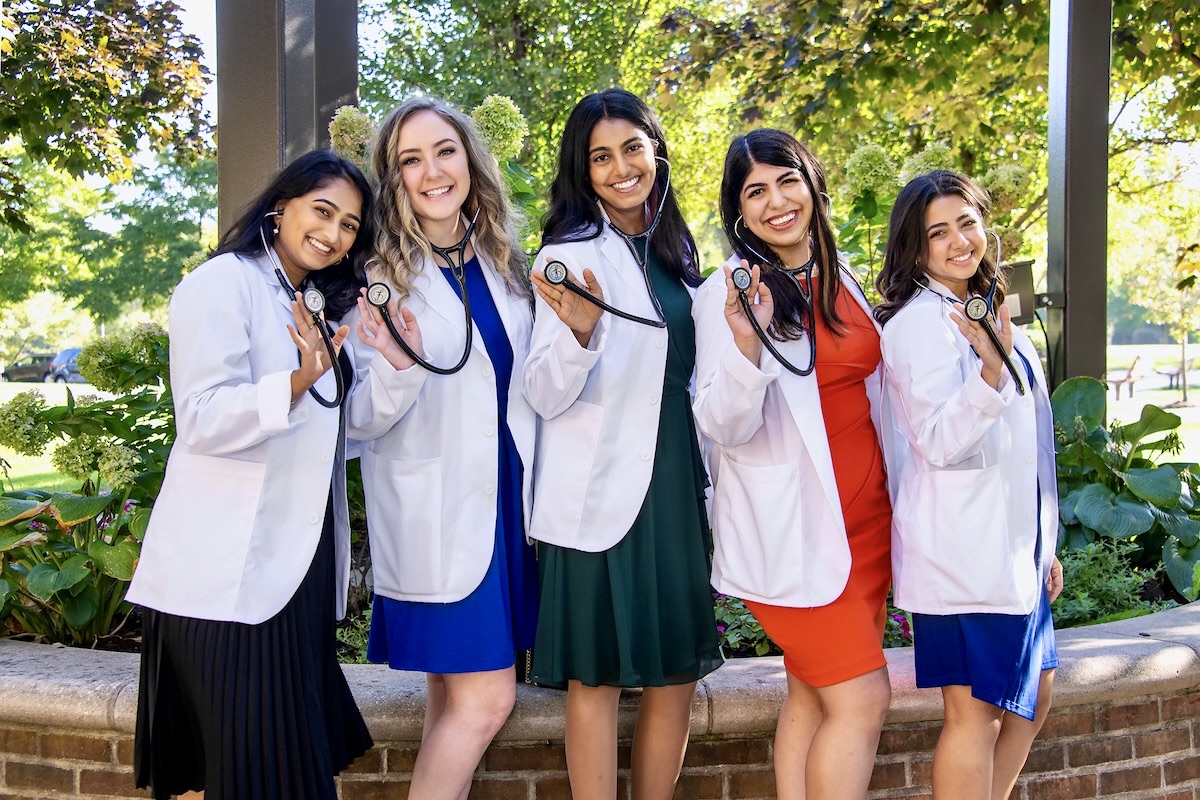
After the interview
CCOM notifies applicants within four weeks. If you are placed on hold or the alternate list, a short, polite update letter with real new information (a new role, grades or a publication) is reasonable. Keep checking your portal, and respond quickly to any request. If you are accepted, review the deposit deadline that applies to your acceptance date under the AACOMAS traffic guidelines.
Frequently Asked Questions
What is the mission of the Chicago College of Osteopathic Medicine at Midwestern University?
CCOM “educates osteopathic physicians to provide compassionate, quality care, promote the practice of osteopathic medicine and lifelong learning, research and service.” Its vision lists leadership, teamwork, commitment, integrity, professionalism and the practice of the osteopathic philosophy. In practice, CCOM looks for applicants with real patient contact, steady service and a clear understanding of what DOs do, and it trains students in OMM from their first quarter.
Where is the Chicago College of Osteopathic Medicine at Midwestern University located, and what is the campus setting like?
CCOM is on Midwestern University’s campus at 555 31st Street in Downers Grove, Illinois, about 25 miles west of downtown Chicago. The campus covers 105 wooded acres in a suburban setting and is home to nearly 3,000 students in Midwestern’s Illinois programs. Downers Grove has three Metra train stations, so Chicago is easy to reach for weekends, and core rotations take place at hospitals across the Chicago area.
What facilities are available to students at the Chicago College of Osteopathic Medicine at Midwestern University?
Key facilities include Cardinal Hall, with lecture halls and the Clinical Skills and Simulation Center (21 exam rooms, hospital simulation rooms, a labor and delivery room and two operating rooms); Science Hall, with the anatomy lab, OMM lab, research labs and Core Research Facility; Littlejohn Hall, the library and technology center; Alumni Hall and its Hyde Atrium; Centennial Hall; White Oak Hall, with a 24-hour study room; The Commons, with dining and the University Store; and Recreation and Wellness Hall. Midwestern’s Multispecialty Clinic offers family medicine and OMT to the public.
What housing options are available for students at the Chicago College of Osteopathic Medicine at Midwestern University?
Midwestern offers Redwood Hall I (80 single rooms with shared or private baths), Redwood Hall II (single rooms for 131 residents, two kitchens and the Perrin Interfaith Chapel) and the Pines Apartments (48 unfurnished one-bedroom apartments of 500 square feet with kitchenettes). For 2026-2027, rates run from $2,600.10 to $3,300.30 a quarter. Many students rent off campus in Downers Grove and nearby suburbs, and the cost of attendance budget shows that living off campus costs more.
What student support services are available at the Chicago College of Osteopathic Medicine at Midwestern University?
Student Services supports tutoring, learning specialists, counseling, crisis intervention, disability services, stress and time management seminars, multicultural programming, student government and organizations, intramural sports and community outreach. TimelyCare offers telehealth support, and the Office of Student Financial Services helps with loans, scholarships and budgeting through its Sensible Strategies program.
How does the Chicago College of Osteopathic Medicine at Midwestern University integrate osteopathic principles into its curriculum?
OMM runs through the whole program. Students take Principles of Osteopathic Manipulative Medicine in all three first-year quarters, Clinical OMM in all three second-year quarters and a required four-week OMM rotation in the fourth year. Courses in patient symptom presentations, physical exam skills and behavioral health assessment teach the whole-person approach, and CCOM’s programmatic objectives require care that respects each patient’s beliefs and culture.
What is the structure of the Doctor of Osteopathic Medicine program at the Chicago College of Osteopathic Medicine at Midwestern University?
The DO program usually takes four years: two years of mainly classroom and lab study (anatomy, biochemistry, physiology, neuroscience, then pathology, pharmacology, microbiology and clinical integration) and two years of clinical rotations. Third-year cores are family medicine, internal medicine and surgery (8 weeks each), and OB/GYN, pediatrics, psychiatry and a selective (4 weeks each). Fourth year adds emergency medicine, OMM, 8 weeks of core FM, IM or surgery and at least 24 weeks of electives across the clinical years.
What are the admissions requirements for the Chicago College of Osteopathic Medicine at Midwestern University?
You need a bachelor’s degree before matriculation; 8 semester hours each of biology, general chemistry, organic chemistry and physics with labs; 6 semester hours of English composition; grades of C or better; a cumulative and science GPA of at least 2.75 (over 3.00 to be competitive); an MCAT no more than three years old; and two letters of recommendation. You must also show understanding of osteopathic medicine, service and commitment to healthcare, and pass a fingerprint background check.
What is the acceptance rate for the Chicago College of Osteopathic Medicine at Midwestern University, and how competitive is the admissions process?
CCOM does not publish an acceptance rate. For the class that entered in fall 2025, it received nearly 7,000 applications for 200 seats, so the process is highly competitive. Because CCOM sends more offers than it has seats, dividing seats by applications does not give a true acceptance rate. Apply early, since about half of offers go out by the end of December.
Does the Chicago College of Osteopathic Medicine at Midwestern University accept international students, and what are the requirements for international applicants?
Yes. CCOM’s DO program is approved for F-1 students. International applicants must complete at least 30 semester hours at a regionally accredited U.S. college or a recognized English-language Canadian institution, including 15 hours of science, 6 hours of English composition and 3 hours of speech. Coursework from other countries needs a course-by-course evaluation from ECE, WES or Josef Silny & Associates. Students who need an I-20 must prepay a full year of tuition 45 days before classes start.
What are the tuition and fees for the Doctor of Osteopathic Medicine program at the Chicago College of Osteopathic Medicine at Midwestern University?
For 2026-2027, tuition is $85,232 for all students, after a university-wide tuition freeze. Fees add a $1,500 student services fee and a $48 disability insurance fee, for $86,780 in tuition and fees. With books, insurance, housing, food, transportation and loan fees, the first-year cost of attendance is about $112,400 living on campus or $124,916 off campus.
What types of financial aid and scholarships are available to students at the Chicago College of Osteopathic Medicine at Midwestern University?
Students use federal Direct Unsubsidized Loans (capped for new borrowers at $50,000 a year from July 1, 2026), the MWU Loan, private loans, military scholarships, the NHSC Scholarship and dozens of Midwestern and CCOM scholarships, including the Osteopathic Heritage Foundation scholarship in honor of J. Richard Costin, D.O. Most institutional scholarships open during the first year. DACA students are not eligible for federal aid or institutional merit awards.
What is the curriculum like at the Chicago College of Osteopathic Medicine at Midwestern University?
CCOM’s curriculum integrates basic and clinical sciences, taught with interactive methods that mirror how DOs approach patients. First-year courses include medical anatomy, biochemistry, physiology, neuroscience, patient symptom presentations, physical exam skills, research design and OMM. Second year covers pathology, pharmacology, infectious disease, clinical symptom integration, simulated patient care and clinical OMM. The clinical years include assessment of entrustable professional activities.
What is the Osteopathic Manipulative Medicine (OMM) training like at the Chicago College of Osteopathic Medicine at Midwestern University?
OMM training starts in the first quarter and continues for six straight quarters, then returns as a required four-week rotation in the fourth year. Students practice in the OMM lab in Science Hall, and the department works with OMM student scholars. The department chair, Kurt Heinking, D.O., is a CCOM graduate who treats patients at the Multispecialty Clinic. Students can also join the student-run Soft Tissue Clinic and SAAO.
What clinical rotation opportunities are available for students at the Chicago College of Osteopathic Medicine at Midwestern University?
Core rotations take place at affiliated hospitals and clinics in the Chicago area. In the 2026 Match, the health systems that took the most CCOM graduates were Advocate Health Care, Franciscan Health, the University of Illinois System, University of Chicago/NorthShore and the Medical College of Wisconsin. Students can also take electives across the country, one four-week international elective, military rotations and the Rural Scholar Program with University of Wisconsin/Monroe Hospital.
What research opportunities are available to students at the Chicago College of Osteopathic Medicine at Midwestern University?
Students learn research methods in a required first-year course, can take a research elective in the preclinical years and up to 8 weeks of research electives in the clinical years. They can use the Core Research Facility in Science Hall and present at the annual Kenneth A. Suarez Research Day, where 219 student posters were shown in Downers Grove in 2025.
How does the Chicago College of Osteopathic Medicine at Midwestern University prepare students for residency?
CCOM combines a strong basic science base, early clinical skills training, simulation and Chicago-area rotations. Fourth-year students take electives and audition rotations, and CCOM supports residency programs in Chicago and through the Midwestern University GME Consortium. Results are strong: 98.44% of the Class of 2026 who entered the Match were placed, in 29 states.
What is the application process for the Chicago College of Osteopathic Medicine at Midwestern University?
Apply through AACOMAS, which opened May 4, 2026, for fall 2027 entry. Send transcripts and MCAT scores to AACOMAS, and have two letters sent through AACOMAS, Interfolio, email or mail. There is no secondary in 2026-2027. When the file is complete, CCOM reviews it on a rolling basis and invites selected applicants to a panel interview, held virtually or on campus from September to April. Everything must arrive by April 1, 2027.
What are the academic requirements for admission to the Chicago College of Osteopathic Medicine at Midwestern University?
You need a cumulative and science GPA of at least 2.75 to apply, and CCOM considers over 3.00 competitive. All required courses need a C or better (a C- does not count). Your MCAT must be no more than three years old. The Class of 2029 averaged a 509 MCAT, 3.65 overall GPA and 3.61 science GPA. Anatomy, physiology and biochemistry are recommended.
What is the average GPA and MCAT score for students accepted to the Chicago College of Osteopathic Medicine at Midwestern University?
For the Class of 2029, which entered in fall 2025, the average overall GPA was 3.65, the average science GPA was 3.61 and the average composite MCAT was 509. These are averages for students who enrolled, not minimums. About half of the class scored below each average.
What extracurricular opportunities are available to students at the Chicago College of Osteopathic Medicine at Midwestern University?
CCOM has more than 30 student organizations, from SOMA, SAAO and Sigma Sigma Phi to specialty groups in emergency medicine, internal medicine, pediatrics, OB/GYN, orthopedics and more. Service groups include the Community Health Clinic and the Soft Tissue Clinic. Campus-wide clubs cover culture, faith, One Health, sports medicine and underserved medicine, and student government recognizes new groups.
What is the student-to-faculty ratio at the Chicago College of Osteopathic Medicine at Midwestern University?
Midwestern University reports an average student-to-faculty ratio of 12.2 to 1 across both campuses. It does not publish a separate ratio for CCOM. CCOM says its faculty “prioritize personalized, one-on-one attention with students,” and small-group settings such as the anatomy lab, OMM lab and simulation center give students close contact with faculty.
What are the career prospects for graduates of the Chicago College of Osteopathic Medicine at Midwestern University?
Strong. CCOM placed 98.44% of its Class of 2026 match participants in residency, and 97.91% to 100% in each year from 2023 to 2026. The Class of 2026’s top specialties were internal medicine, family medicine and emergency medicine, and graduates also matched in anesthesiology, surgery, orthopedics, ophthalmology, urology, radiology and psychiatry. More than 7,500 CCOM alumni practice across the country.
What is the accreditation status of the Chicago College of Osteopathic Medicine at Midwestern University?
CCOM is accredited by the Commission on Osteopathic College Accreditation (COCA) and is currently accredited through 2030, when its next full accreditation visit is scheduled. Midwestern University is accredited by the Higher Learning Commission. CCOM’s degree is designed to meet licensure requirements in all 50 states and the District of Columbia.
What is the role of the Chicago College of Osteopathic Medicine at Midwestern University in community service?
Service is part of CCOM’s mission, and applicants must show “service orientation through community service or extracurricular activities.” Students serve through the Community Health Clinic, the Underserved Medicine Club, the International Health Club and campus-wide service groups, and the Multispecialty Clinic gives the community affordable care from faculty and upper-level students. The Costin scholarship rewards students who focus on underserved communities.
What types of clinical training facilities are available at the Chicago College of Osteopathic Medicine at Midwestern University?
The Clinical Skills and Simulation Center in Cardinal Hall has 21 clinic exam rooms, four hospital and critical care rooms with high-fidelity simulators, a labor and delivery room, two operating rooms with surgical trainers and a multipurpose room with ultrasound and ECG equipment. Standardized patients help students practice. The MWU Multispecialty Clinic, a few miles from campus, offers family medicine, OMT, dental, eye, physical therapy and speech-language care.
What makes the Chicago College of Osteopathic Medicine at Midwestern University unique compared to other medical schools?
CCOM is one of the oldest osteopathic schools in the country (founded in 1900) and the founding college of Midwestern University. It combines a long OMM tradition with a modern simulation center, Chicago-area core rotations, first-time COMLEX pass rates above national rates and residency placement near 98%. It also offers a Rural Scholar Program with a guaranteed family medicine residency and articulation agreements with many Midwestern colleges.
What is the role of interprofessional education at the Chicago College of Osteopathic Medicine at Midwestern University?
Interprofessional education is part of the first-year curriculum (Interprofessional Education I and Interprofessional Healthcare Communication), and CCOM has an associate dean for it. Students learn with future dentists, pharmacists, physician assistants, physical and occupational therapists, psychologists and speech-language pathologists on the same campus. Expanding this work is one of CCOM’s strategic priorities for 2026 to 2031.
What is the role of the faculty at the Chicago College of Osteopathic Medicine at Midwestern University in student success?
CCOM says its faculty “prioritize personalized, one-on-one attention with students.” Faculty teach in small lab and simulation settings, mentor research projects and many also practice at the Multispecialty Clinic or Chicago-area hospitals. Many completed the Costin Institute’s training for medical educators. The results show in CCOM’s graduation rates (about 90% in four years and 97% within six years for recent classes) and board pass rates.
What are the research opportunities at the Chicago College of Osteopathic Medicine at Midwestern University?
Research is part of CCOM’s mission. Students start with a required research design course, can choose a preclinical research elective and up to 8 weeks of clinical research electives, and work with faculty in areas such as OMM, sports medicine, biomedical sciences and One Health. The Core Research Facility supports lab work, and Kenneth A. Suarez Research Day gives every student a chance to present.
What is the campus life like at the Chicago College of Osteopathic Medicine at Midwestern University?
Campus life is busy and close-knit. Students study hard but also join more than 30 CCOM organizations and many campus-wide clubs, use the Recreation and Wellness Hall and athletic fields, and gather in the Hyde Atrium and The Commons. Downers Grove’s downtown is nearby, and Chicago is a short train ride away for museums, sports and dining.
How does the Chicago College of Osteopathic Medicine at Midwestern University support student wellness?
Midwestern offers counseling, TimelyCare telehealth, a campus health and wellness center, learning specialists, tutoring and disability services. Recreation and Wellness Hall has a weight room, gym, aerobics room and racquetball courts, plus fields for intramurals. The Dean of Students also helps students facing housing insecurity, and Sensible Strategies offers free financial wellness coaching.
What are the post-graduation opportunities for students from the Chicago College of Osteopathic Medicine at Midwestern University?
Graduates enter residency in every field. About half stay in Illinois, and the Class of 2026 trained in 28 other states as well. Many choose primary care, while others enter emergency medicine, surgery, anesthesiology, psychiatry and other specialties. Alumni have gone on to roles such as NASA flight surgeon and national leadership in the American Osteopathic Association. Some graduates also serve through military medicine.
How does the Chicago College of Osteopathic Medicine at Midwestern University prepare students for the COMLEX and USMLE exams?
The curriculum leaves time in the spring of second year for board study, and students must pass COMLEX-USA Level 1 and Level 2-CE to graduate. CCOM’s first-time pass rates were above national rates on every COMLEX level from 2021 to 2025, including 91.3% on Level 1 and 92.68% on Level 2-CE in 2025. Some DO students also take the USMLE; learn how the two exam series differ in our guide to the COMLEX and USMLE.
Does CCOM have a secondary application?
No, not for the 2026-2027 cycle. CCOM sends no supplemental application and charges no supplemental fee. Your file is complete when your AACOMAS application, MCAT scores and two letters arrive, and everything must be in by April 1, 2027.
Do I need a letter from a DO to apply to CCOM?
A DO letter is not strictly required, but it is strongly recommended. CCOM requires two letters: one from a premedical committee, prehealth advisor or basic science professor who taught you, and a second that CCOM prefers to come from a U.S. licensed DO or MD. Letters from family members are not accepted.
How old can my MCAT score be?
CCOM accepts MCAT scores from tests taken no more than three years before the year you plan to enroll. For fall 2027 entry, the oldest accepted test date is January 1, 2024, and the latest is April 1, 2027.
Does CCOM require shadowing or a set number of clinical hours?
No minimum is set, and shadowing is not required. But CCOM asks applicants to show understanding of osteopathic medicine and commitment to healthcare, and it strongly recommends a DO letter, so time with a DO and hands-on patient care make an application much stronger. Supervised internships for pre-med students can add direct patient contact such as vitals and intake.
Does CCOM prefer Illinois residents?
CCOM is private and charges the same tuition to everyone. About half of each entering class comes from Illinois: 51% of the Class of 2029, and 107 of 210 first-year students in 2024-2025. Out-of-state applicants are welcome, and a clear reason to train in the Chicago area helps.
Does CCOM offer early decision?
No. CCOM has no early decision program. It uses rolling admissions, so applying early in the cycle works much like an early decision advantage.
Does CCOM require CASPer or PREview?
No. CCOM does not list CASPer, PREview or another situational judgment test among its requirements. The MCAT is the only required test.
Is CCOM the same as AZCOM?
No. Midwestern University has two osteopathic colleges: CCOM in Downers Grove, Illinois, and the Arizona College of Osteopathic Medicine (AZCOM) in Glendale, Arizona. They are separate colleges with separate applications through AACOMAS. You can apply to both.
What is the Rural Scholar Program?
It is a partnership between CCOM and the University of Wisconsin/Monroe Hospital Family Medicine Residency Program. Selected students follow a special clinical rotation schedule and, after completing it and graduating, are guaranteed a position in that family medicine residency. Students ask CCOM’s Associate Dean of Clinical Education about it once enrolled.
Does CCOM accept DACA recipients?
Yes, CCOM considers DACA applicants. DACA and Dreamer students are not eligible for federal financial aid, institutional merit awards or state-based aid, but they may qualify for private loans or the MWU Loan with a U.S. cosigner.
Related Medical School Guides
If CCOM is on your list, these osteopathic schools in the Midwest are worth comparing. Each one is in the same region and grants the DO, but they differ in setting, size and programs.
- Kansas College of Osteopathic Medicine (KansasCOM): a newer DO school in Wichita, useful to compare with CCOM’s long history and established Chicago-area rotation network.
- Kansas City University College of Osteopathic Medicine: another long-established Midwestern DO school with a large class, a good comparison for applicants who want an urban setting outside Illinois.
- Marian University College of Osteopathic Medicine: a DO school in Indianapolis, a natural option for applicants from Indiana and the wider Chicago region.
- Des Moines University College of Osteopathic Medicine: a long-established Iowa DO school, relevant for University of Iowa students who are also eligible for CCOM’s articulation agreement.
- Ohio University Heritage College of Osteopathic Medicine: a multi-campus Ohio DO school with a strong primary care focus, useful for comparing costs and in-state advantages.
- A.T. Still University Kirksville College of Osteopathic Medicine: the founding school of osteopathic medicine in Missouri, a fitting comparison for applicants drawn to CCOM’s history and OMM tradition.
If you want to stay in the state, our guide to medical schools in Illinois compares CCOM with the state’s MD programs, including the University of Chicago Pritzker School of Medicine, Northwestern Feinberg, Rush, Loyola Stritch, Rosalind Franklin’s Chicago Medical School, Carle Illinois and Southern Illinois University.
More medical school guides
When considering a career in medicine, it is wise to keep your options open and explore a wide range of medical schools across the United States, including both MD and DO programs. Each school has its own strengths in curriculum, clinical opportunities and location, and understanding these differences helps you find the best fit for your goals. Casting a wide net raises your chances of finding a program that matches your plans. Research your options carefully before you decide.
- University of South Dakota Sanford School of Medicine
- University of Chicago Pritzker School of Medicine
- Carle Illinois College of Medicine
- Northwestern University Feinberg School of Medicine
- Chicago Medical School at Rosalind Franklin University
- Southern Illinois University School of Medicine
- Rush Medical College of Rush University Medical Center
- Central Michigan University College of Medicine
- Geisel School of Medicine at Dartmouth
- University of Minnesota Medical School
- Johns Hopkins School of Medicine
- Oklahoma State University College of Osteopathic Medicine
- University of Oklahoma College of Medicine
- Marshall University Joan C. Edwards School of Medicine
- Warren Alpert Medical School of Brown University
- Georgetown University Medical School
- Yale School of Medicine
- West Virginia University School of Medicine
- West Virginia School of Osteopathic Medicine
- Indiana University School of Medicine
- Des Moines University College of Osteopathic Medicine
- University of Iowa Roy J. and Lucille A. Carver College of Medicine
- Marian University College of Osteopathic Medicine
- Meharry Medical College
- Howard University College of Medicine
- University of Kansas School of Medicine (KUMC)
- Charles R. Drew University of Medicine and Science College of Medicine
- Loma Linda University School of Medicine
- John A. Burns School of Medicine (JABSOM)
- Kansas College of Osteopathic Medicine (KansasCOM)
- UC Irvine School of Medicine
- Nova Southeastern University College of Allopathic Medicine
- Touro University Nevada College of Osteopathic Medicine
- University of Miami Miller School of Medicine
- Arkansas College of Osteopathic Medicine (ARCOM)
- University of Arkansas for Medical Sciences (UAMS)
- Tulane University School of Medicine
- LSU Health New Orleans School of Medicine
- LSU Shreveport Medical School
- Kirk Kerkorian School of Medicine at UNLV
- University of Nevada Reno School of Medicine
- University of Arizona College of Medicine-Tucson
- University of Arizona College of Medicine-Phoenix
- Burrell College of Osteopathic Medicine (BCOM)
- The University of New Mexico School of Medicine
- Alabama College of Osteopathic Medicine (ACOM)
- University of South Alabama College of Medicine
- University of Alabama School of Medicine
- FIU College of Medicine
- UCF College of Medicine
- USF Morsani College of Medicine
- Florida State University College of Medicine
- Morehouse School of Medicine
- Medical College of Georgia at Augusta University
- Mercer University School of Medicine (MUSM)
- Campbell University School of Osteopathic Medicine (CUSOM)
- Medicine
- Edward Via College of Osteopathic Medicine (VCOM)
- University of South Carolina Medical School
- Lewis Katz School of Medicine at Temple University
- Philadelphia College of Osteopathic Medicine (PCOM)
- Geisinger Commonwealth School of Medicine (GCSOM)
- Penn State Medical School
- CUNY School of Medicine
- SUNY Downstate Medical School
- NYIT College of Osteopathic Medicine
- NYU Long Island School of Medicine
- TOURO College of Osteopathic Medicine
- Norton College of Medicine at Upstate Medical University
- Jacobs School of Medicine at the University at Buffalo
- Hofstra Zucker School of Medicine
- Weill Medical College of Cornell University
- University of Rochester Medical School
- Icahn School of Medicine at Mount Sinai
- Renaissance School of Medicine at Stony Brook University
- Albert Einstein College of Medicine
- Ohio University Heritage College of Osteopathic Medicine
- Northeast Ohio Medical University (NEOMED)
- University of Cincinnati College of Medicine
- University of Toledo College of Medicine
- Wright State University Boonshoft School of Medicine
- Ohio State University College of Medicine
- Rowan University School of Osteopathic Medicine
- Hackensack Meridian School of Medicine (HMSOM
- Rutgers New Jersey Medical School (NJMS)
- Rutgers Robert Wood Johnson Medical School
- Cooper Medical School of Rowan University (CMSRU)
- A.T. Still University Kirksville College of Osteopathic Medicine
- Saint Louis University School of Medicine
- University of Missouri Medical School
- Kansas City University (KCU)
- UMKC School of Medicine
- New York Medical College
- University of Pittsburgh School of Medicine
- University of Wisconsin Medical School
- VCU School of Medicine
- University of Maryland School of Medicine
- Case Western Medical School
- University of North Carolina Medical School
- University of Florida Medical School
- Emory University School of Medicine
- Boston University College of Medicine
- California University of Science and Medicine
- UC San Diego Medical School
- California Northstate University College of Medicine
- Touro University of California
- CHSU College of Osteopathic Medicine
- UC Davis School of Medicine
- Harvard Medical School
- UC Riverside School of Medicine
- USC Keck School of Medicine
- UT Southwestern Medical School
- Long School of Medicine at UT Health San Antonio
- University of the Incarnate Word School of Osteopathic Medicine
- UT Austin’s Dell Medical School
- UTMB School of Medicine
- McGovern Medical School at UT Health
- The University of Texas Rio Grande Valley School of Medicine
- UNT Texas College of Osteopathic Medicine
- University of Houston College of Medicine
- Texas A&M College of Medicine
- Baylor College of Medicine
- George Washington University School of Medicine
- Vanderbilt University School of Medicine
- St. George’s University School of Medicine
- Lake Erie College of Osteopathic Medicine (in Pennsylvania)
- Sidney Kimmel Medical College at Thomas Jefferson University
- Wake Forest University School of Medicine
- Western University of Health Sciences (in California)
- Drexel University College of Medicine
- Stritch School of Medicine at Loyola University Chicago
- Perelman School of Medicine
- UCLA Medical School
- NYU Medical School
- Washington University School of Medicine
How International Medical Aid Can Help
International Medical Aid (IMA) helps pre-health students build the experience and application skills that schools like CCOM look for.
Medical school admissions consulting
IMA offers medical school admissions consulting for students applying to MD and DO programs. Advisors help applicants plan their timeline, choose schools, write and edit the AACOMAS personal statement and experience descriptions, prepare letter requests and practice for panel interviews like CCOM’s. For a school with no secondary, where the AACOMAS application and the interview carry so much weight, that feedback can make a real difference.
Clinical internships abroad
IMA runs medical internships abroad for pre-health students, with programs in Kenya, Peru and other sites. In IMA’s pre-med internships abroad, interns work in clinics and hospitals under the supervision of local physicians and nurses. They take vitals, do patient intake and triage, and help with direct patient care. Interns also take part in community health outreach and reflect on what they see.
For CCOM applicants, this kind of experience supports what CCOM asks for: commitment to healthcare shown through real work, service to communities with less access to care and the communication skills to work with patients from different backgrounds. Interns often come back with specific patient stories for the AACOMAS personal statement and the interview. Applicants who want to use their Spanish, or who are drawn to CCOM’s international medicine options, may also consider a medical internship in Peru.
IMA’s Global Health Internships page describes every program, and IMA’s healthcare internships abroad include medicine, nursing, pre-PA, mental health and other tracks for pre-health internships. You can see upcoming program dates and choose a session that fits your academic calendar, and learn more about IMA’s community work through its Global Health Initiatives.
An IMA internship does not guarantee admission to any school, and it is not affiliated with CCOM. It is one way to gain supervised clinical experience and a broader view of healthcare before medical school.
One clear next step
If CCOM is on your list, start now: confirm your MCAT date falls on or after January 1, 2024, ask a DO and a science professor for letters, and plan to submit AACOMAS in the first weeks of the cycle. If you need more patient care hours first, a supervised clinical internship is a practical way to get them.
Final Thoughts and Sources
The Chicago College of Osteopathic Medicine is a historic, well-run DO school with a clear identity: a strong science base, OMM from the first quarter, a large simulation center, Chicago-area clinical training and solid board and residency results. Founded in 1900, it remains the founding college of Midwestern University and one of the most sought-after osteopathic schools in the Midwest, with nearly 7,000 applications for 200 seats.
For the 2026-2027 cycle, the path is simple to describe and hard to execute: no secondary, an April 1, 2027 deadline, rolling review with about half of offers by December, and a panel interview. Students who succeed apply early, bring two strong letters (ideally one from a DO), show real patient care and service, and can explain clearly why osteopathic medicine and CCOM fit them. Plan your finances early too, because the 2026-2027 cost of attendance is about $112,400 for the first year and new federal loan limits apply to students who start in 2027.
Choosing a medical school is one of the biggest decisions in your path to becoming a physician. If CCOM’s mix of tradition, hands-on training and Chicago-area opportunity fits you, it deserves a place near the top of your list.
Sources
Figures were checked on October 23, 2026. Class profile figures are for the Class of 2029 (entered fall 2025), the newest class CCOM profiles. Costs are for the 2026-2027 academic year.
- Midwestern University, Doctor of Osteopathic Medicine (D.O.), Chicago College of Osteopathic Medicine: admissions requirements, articulation agreements, mission and vision, Class of 2029 profile, graduation and retention rates, leadership, accreditation, residency placement (2023-2026) and COMLEX pass rates (2021-2025).
- Midwestern University 2026-2027 Downers Grove Catalog, CCOM Admissions, plus the CCOM Mission, Accreditation, Degree Description, Curriculum, Preclinical Electives, Clinical Rotations, Graduation Requirements, Licensure Requirements and GME Consortium pages, and the general Admissions page (international applicants, deferment, matriculation).
- Midwestern University, Cost of Attendance Budget 2026-2027, Doctor of Osteopathic Medicine, Downers Grove.
- Midwestern University, Tuition Freeze for 2026-27 (news release, March 16, 2026); Federal Student Aid Changes; Scholarships; International Students; Tuition and Fees.
- Midwestern University, CCOM Clinical Rotation Manual, Academic Year 2026-2027; Strategic Plan, Fiscal Years 2026-2031 (CCOM section).
- Midwestern University, CCOM Recent Residency Matches (Class of 2026); CCOM Students Take Next Step in Careers with Residency Matches (2026); Message from the Dean; CCOM Celebrates 125 Years; Costin Institute and Scholarship; Ward E. Perrin, D.O. Clinical Refresher Course.
- Midwestern University, Downers Grove campus, Campus Facilities, Housing (2026-2027 rates), Clinical Skills and Simulation Center, Clubs and Organizations, Admissions Staff, Tips for Applicants, articulation agreement with Lake Forest College; Kenneth A. Suarez Research Day 2025.
- Midwestern University faculty and clinic profiles (Thomas Boyle, Kathy LePard, Kurt P. Heinking) and Midwestern news on Teresa Hubka and Karen Nichols (2024).
- AACOM, Choose DO Explorer: Chicago College of Osteopathic Medicine at Midwestern University (2026-2027 cycle dates, deposit, supplemental application status, 2024-2025 enrollment, average graduate indebtedness).
- American Osteopathic Association: Teresa Hubka leadership profile; Karen J. Nichols (2018); The DO, In Memoriam: Robert Kappler (2017). NASA NESC Academy biography of Richard Scheuring, D.O.
- Andersson GB, Lucente T, Davis AM, Kappler RE, Lipton JA, Leurgans S. A comparison of osteopathic spinal manipulation with standard care for patients with low back pain. New England Journal of Medicine, 1999.
- Nichols KJ. History of Research at Midwestern University/Chicago College of Osteopathic Medicine. Journal of Osteopathic Medicine, 2018;118(9):569-571.
- Med School Insiders, Chicago College of Osteopathic Medicine of Midwestern University secondary essay prompts database (2024-2025 questions; 2025-2026 and 2026-2027 no supplemental application).