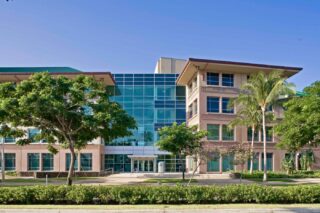

Embarking on a medical career at the John A. Burns School of Medicine (JABSOM) at the University of Hawaiʻi at Mānoa is an impressive opportunity. JABSOM is Hawaiʻi’s only medical degree program, a public MD school on the Kakaʻako waterfront in Honolulu, and it was built to train physicians for Hawaiʻi and the Pacific. The school opened in 1965 as a two-year program at Lēʻahi Hospital, became a full four-year school in 1973 and moved to its Kakaʻako campus in 2005. It is named after John A. Burns, the governor who founded it.
This guide covers the 2026-2027 application cycle for students who will start medical school on July 12, 2027. The AMCAS deadline for this cycle is November 2, 2026, interviews run through February 5, 2027, and decisions go out on March 12, 2027. All facts were checked on October 18, 2026.
In this definitive guide to getting into JABSOM, we cover everything you need to know: the 2026 class profile, the residency screen that decides who counts as a Hawaiʻi applicant, the problem-based learning curriculum, the Kauaʻi Medical Training Track, the ʻImi Hoʻōla Post-Baccalaureate Program, tuition and cost of attendance, prerequisites and the PREview exam, all five 2026-2027 secondary essays with examples, and the three-interview format. Knowledge is power, so use what you learn here to make your application as strong as possible.
Whether you’re looking to understand the admission criteria, explore the curriculum, learn about the campus or understand the school’s history and medical contributions, the sections below give you the details. Should you have questions about the medical school application process, don’t hesitate to reach out to us. International Medical Aid has helped thousands of students get into medical school through our medical school admissions consulting and healthcare internship programs. We’re here for you!
Key Takeaways
- Hawaiʻi comes first. The school’s first priority is to admit resident applicants with strong ties to Hawaiʻi or the Pacific Islands. The class holds 67 resident seats, and about 10 nonresidents are admitted, preferably with some ties to Hawaiʻi. In the 2026 entering class, 70 of 77 students were Hawaiʻi residents.
- “Resident” has a special meaning here. For application purposes you count as a resident if you meet at least two of five criteria: your legal residence, your parents’ legal residence, your birthplace, where you graduated high school and where you attended college. This is separate from residency for tuition.
- Academic context. The 2026 entering class averaged a 513 MCAT, a 3.79 cumulative GPA and a 3.73 science GPA. For the 2025 entering class, accepted applicants had a median MCAT of 512 and a median GPA of 3.89. These are averages and medians, not minimums. JABSOM has no minimum GPA or MCAT.
- Requirements. You need 90 semester credits from a U.S. or Canadian school, one year each of biology, physics, general chemistry and organic chemistry with labs, one biochemistry course, the MCAT and the AAMC PREview exam. Prerequisites can still be in progress when you apply.
- Key dates. AMCAS closes November 2, 2026. The MCAT must be taken by September 30, 2026 and the PREview by October 31, 2026. Interviews end February 5, 2027, and all decisions go out March 12, 2027. JABSOM does not use rolling admissions.
- Costs. 2026-2027 tuition is $36,672 for residents and $71,328 for nonresidents, plus $794 in fees. The estimated first-year cost of attendance is $73,193 for a resident living on or off campus and $107,849 for a nonresident.
- Distinctive training. Problem-based learning in small tutorial groups, a two-year preceptorship with a community physician, clinical training in community hospitals across the islands and a Kauaʻi track with a four-year tuition scholarship.
- Next step. If you applied this cycle, pay the $150 secondary fee, return all essays within about two weeks and prepare for three virtual interviews. If you are planning for 2027-2028, take the PREview early, build steady clinical and service hours and document your ties to Hawaiʻi or the Pacific.
Key Statistics About JABSOM
The snapshot and table below gather JABSOM’s key numbers. Each figure carries its cohort or academic year, because the class profile, national admissions data, tuition schedule and cost budget each cover a different year. The newest class profile is for the class that entered on July 13, 2026, and the newest median MCAT and GPA figures are for accepted applicants to the 2025 entering class.

| Measure | Value | Cohort, population and source |
|---|---|---|
| School and degree | University of Hawaiʻi at Mānoa John A. Burns School of Medicine; Doctor of Medicine (MD) | JABSOM Admissions |
| Campus | Kakaʻako campus, 651 Ilalo Street, Honolulu, Oʻahu | JABSOM, Kakaʻako Campus |
| Accreditation | LCME, full accreditation for the next eight years | JABSOM news, April 2026 |
| First-year class size | 77 (70 Hawaiʻi residents, 7 out-of-state) | 2026 entering class (2026 Admitted Class Profile) |
| Applicants | 2,658 (298 in-state, 2,360 out-of-state) | 2026 applicant pool (2026 Admitted Class Profile) |
| Applicants interviewed | 297 (198 in-state, 99 out-of-state, of whom 5 were international applicants) | 2026 applicant pool (2026 Admitted Class Profile; international split from AAMC MSAR, 2026 edition, school-reported) |
| Interviewed / applicants | 11.2% overall; 66.4% in-state; 4.2% out-of-state | 2026 applicant pool, computed from the school’s counts. This is the interview rate, not an acceptance rate. |
| Acceptance rate | Not published (the number of acceptance offers is not reported) | 2026 Admitted Class Profile; AAMC MSAR, 2026 edition (no offer count) |
| Median MCAT | 512 (mean 512.9); section medians CPBS 128, CARS 127, BBLS 128, PSBB 129 | 2025 entering class, accepted applicants (AAMC MSAR, 2026 edition) |
| Median GPA | 3.89 | 2025 entering class, accepted applicants (AAMC MSAR, 2026 edition) |
| Average MCAT | 513 (CPBS 129, CARS 127, BBLS 129, PSBB 129) | 2026 entering class (2026 Admitted Class Profile) |
| Average cumulative GPA | 3.79 | 2026 entering class (2026 Admitted Class Profile) |
| Average science GPA | 3.73 | 2026 entering class (2026 Admitted Class Profile) |
| Estimated new entrants | 77 (65 regular MD, 1 Early Decision, 11 other special programs) | 2027 entering class, school estimate (AAMC MSAR, 2026 edition) |
| Premedical experience of the first-year class | Physician shadowing or clinical observation 91%; research 90%; community service 86%; clinical volunteering 78%; paid clinical work 77% | 2025 entering class, matriculants (AAMC MSAR, 2026 edition) |
| Total MD enrollment | 327 | October 2025 (AAMC MSAR, 2026 edition) |
| Average PREview total score | 7 | 2026 entering class (2026 Admitted Class Profile) |
| Resident tuition | $36,672 per year | 2026-2027, Hawaiʻi residents and COFA students (Tuition & Financial Support) |
| Pacific Institutional Exemption tuition | $55,008 per year | 2026-2027 (Tuition & Financial Support) |
| Nonresident tuition | $71,328 per year | 2026-2027 (Tuition & Financial Support) |
| Student fees | $794 per year | 2026-2027 (Tuition & Financial Support) |
| Estimated cost of attendance, first year | $61,591 resident at home; $73,193 resident on or off campus; $107,849 nonresident | [Est] 2026-2027 Student Budget, MS1 (JABSOM Financial Aid & Scholarships) |
| Student health insurance, first year | $5,733 | 2025-2026, first-year students (AAMC MSAR, 2026 edition; Tuition and Student Fees survey) |
| Students receiving financial aid | 93% | JABSOM news, April 2026; AAMC MSAR, 2026 edition (LCME Part I-B, 2024-2025) |
| Direct federal research grants and contracts | $33,440,932 | Fiscal year 2024 (AAMC MSAR, 2026 edition; LCME Part I-A) |
| Residency match | 78 students matched; 56% into internal medicine, family medicine, pediatrics and OB-GYN; 33% stayed in Hawaiʻi | Class of 2026, Match Day 2026 (JABSOM news) |
A few notes on reading these numbers. The MCAT and GPA figures are averages for the students who enrolled and medians for the students who were accepted, not cutoffs. A median sits in the middle of the group, so half of accepted applicants were at or below 512 and 3.89. The interview figures show how many applicants were invited to interview, which is a different measure from how many were offered admission. And because the class holds 67 resident seats, a Hawaiʻi applicant and a mainland applicant face very different odds even with the same scores. The cost figures are the school’s estimated budget. Tuition and fees are the only costs paid directly to JABSOM.
Mission and Educational Priorities
JABSOM’s mission is short and specific. In the school’s own words:
JABSOM, as part of the fabric of Hawaiʻi, is a diverse learning community committed to excellence and leadership in:
- Educating current and future healthcare professionals and leaders
- Delivering high-quality healthcare
- Conducting research and translating discoveries into practice
- Establishing community partnerships and fostering multidisciplinary collaboration
- Pursuing alliances unique to Hawaiʻi and the Asia-Pacific region
- Acting with forethought regarding right relationships, respect, and moral action. Pono.
The school’s vision is “Maikaʻi Loa: Attaining Lasting Optimal Health for All (A.L.O.H.A).” Its shared core values are Collaboration, Diversity and Inclusion, Excellence, Innovation and Discovery, and Pono, which the school defines as “Integrity, morality, and equity, taking action to eliminate health disparities in the spirit of social justice.” JABSOM also describes itself as a Native Hawaiian place of learning.
Named after John A. Burns, a former Governor of Hawaiʻi, JABSOM embodies a spirit of knowledge, compassion and service. The dean’s message says the school’s major purpose is “to provide an opportunity for a medical education previously unavailable to residents of Hawaiʻi and other Pacific nations.” That purpose explains most of what applicants see in the admissions process.
What the mission means for you as an applicant:
- Ties to Hawaiʻi and the Pacific matter more than anywhere else. The residency screen, the 67 resident seats and the secondary question on personal connections all flow from the mission. If you have real ties, document them clearly in AMCAS and in the secondary. If you do not, your application has to show why you want to serve this region, with evidence.
- Professionalism is written down. The JABSOM Professionalism Philosophy reads: “As a member of the John A. Burns School of Medicine community, I uphold the highest standards of professional behavior. As such, I will treat myself and others with respect, aloha and compassion, execute my duties with skill and accountability, act altruistically, embrace social responsibility, conduct myself with integrity and humility, and pursue excellence in all that I do.” The 2026-2027 secondary includes a full essay on professional integrity, so read this statement before you write it.
- Community health is the point, not a side project. JABSOM is a community-based school. It has no university hospital of its own and trains students in partner hospitals and clinics across the state. The school also says its primary research focus is improving the health of ethnic groups in Hawaiʻi who are often underrepresented in research and carry a heavy burden of chronic disease.
- Primary care and staying home. More than half of the Class of 2026 matched into primary care fields, and a third stayed in Hawaiʻi for residency. The school’s own figures say nearly half of Hawaiʻi’s physicians earned their medical degree or completed residency at JABSOM or serve as its faculty.
JABSOM’s commitment to this mission shows in its research, community partnerships and dedication to educating the next generation of healthcare professionals. The school is known for problem-based learning, Asian and Pacific health, tropical medicine and service to the diverse communities of Hawaiʻi, and you’ll see those threads in every section below.
Accreditation and Institutional Identity
JABSOM is accredited by the Liaison Committee on Medical Education (LCME), the accreditor for MD programs in the United States and Canada. In April 2026 the school announced that it had received full accreditation for the next eight years. Its 19 residency and fellowship programs are accredited by the Accreditation Council for Graduate Medical Education, and the SimTiki Simulation Center is accredited by the Society for Simulation in Healthcare.
A few points of identity are worth getting right:
- Name. The full name is the University of Hawaiʻi at Mānoa John A. Burns School of Medicine. You will also see “UH Medical School,” “Hawaii Medical School” or “Hawaii Med School.” These all refer to JABSOM, the only medical school in the state.
- Degree. JABSOM grants the MD. It does not offer dual or joint degrees with the MD, so there is no MD/PhD or MD/MPH program to apply to. Separate master’s and PhD programs exist in areas such as tropical medicine, cell and molecular biology, and developmental and reproductive biology.
- Campus. Medical students learn at the 9.9-acre Kakaʻako campus in Honolulu, home to the Medical Education Building and the Biomedical Sciences Building, with clinical training across Oʻahu and the neighbor islands.
- Community-based model. The school partners with community hospitals rather than owning a university hospital. JABSOM is also a Research Centers in Minority Institutions (RCMI) Specialized Center and is home to the first clinical department in an accredited U.S. medical school focused on the health disparities of an indigenous population, the Department of Native Hawaiian Health.
- Rankings. U.S. News & World Report placed JABSOM in Tier 1 for primary care for the third year in a row, in Tier 3 for research and 42nd for graduates practicing in rural areas.
Physician Assistant Schools and Medical Schools in Hawaiʻi
JABSOM is the only MD school in Hawaiʻi. If you are weighing other careers in medicine, physician assistant (PA) training is also an option, but it is offered by a different institution. JABSOM does not offer a PA degree.
If your passion lies in becoming a PA in Hawaii, the option to know is Hawaiʻi Pacific University’s Master of Medical Science in Physician Assistant program, a full-time, 24-month program whose first class started in 2025. It holds Accreditation-Provisional status from the ARC-PA, and its first cohort is scheduled to graduate in December 2026. Look for accredited programs that meet your academic and career goals, and if you are still deciding between MD and PA paths, pre-PA internships let you see both roles in a clinic before you commit.
Aspiring medical professionals in Hawaiʻi have several paths to choose from. Choosing the right path depends on your goals. Whether you picture yourself diagnosing and treating patients as a physician or serving as a versatile provider on a PA team, Hawaiʻi offers educational routes to make your medical dream a reality.
Medical Programs and Affiliations
JABSOM offers one MD program, but several tracks and pipeline programs change how students reach it and where they train.
The MD program
The four-year MD program is the school’s core. All students follow the same problem-based learning curriculum (see the next section). Students who want more time in rural communities can add the Kauaʻi track or the Rural Health Program, and students interested in global health can take electives abroad through the Office of Global Health and International Medicine.
Kauaʻi Medical Training Track (KMTT)
The Kauaʻi Medical Training Track is a rural track centered on Kauaʻi. Key facts:
- Size. Six students in each incoming class.
- Training. In years one and two, students spend several months on Kauaʻi in PBL tutorials and clinical skills sessions with on-island faculty. In years three and four they live on Kauaʻi for their outpatient clerkship semester and several more rotations and electives. In total, KMTT students spend about 15 months on Kauaʻi over four years. Wilcox Medical Center in Līhuʻe is the main clinical site.
- Scholarship. Every KMTT student receives a four-year scholarship covering in-state tuition and fees. Housing, utilities, airfare and car shipping are covered while living on Kauaʻi.
- Commitment. Graduates commit to practicing on Kauaʻi for four years after residency or fellowship. Students may choose any specialty, though primary care is encouraged.
- Who can apply. Any JABSOM applicant who receives a general admissions interview. Both Hawaiʻi residents and nonresidents may apply. The KMTT application is sent with the interview invitation, and you must be offered admission to JABSOM before you can be offered a KMTT spot. KMTT interviews are held on Zoom, and offers are made on a rolling basis.
The program is supported by a donation from the Chan Zuckerberg Initiative. For questions, the program directs applicants to Travis Hong, MD.
Rural Health Program
The Office of Medical Education’s Rural Health Program offers pre-clinical units and clinical rotations on Kauaʻi, Maui, Lānaʻi and Hawaiʻi Island throughout all four years. Students with a strong interest in rural health can also pursue the Dean’s Certificate of Distinction in Rural Health. Physician shortages are greatest on the rural neighbor islands, which is why the school has built training there.
ʻImi Hoʻōla Post-Baccalaureate Program
ʻImi Hoʻōla (“Those Who Seek To Heal”) is a 12-month post-baccalaureate program that prepares students to enter the JABSOM MD program. It looks for applicants with “strong leadership skills, humanism, motivation, and a commitment to serve communities in Hawaiʻi and the Pacific.” For the 2027-2028 class:
- You must apply to JABSOM through AMCAS in the same cycle, with a completed JABSOM secondary and paid fees, and submit a separate ʻImi Hoʻōla application by November 2, 2026, at 11:59 PM HST.
- You need a conferred bachelor’s degree before the program starts and at least a 2.0 cumulative undergraduate GPA.
- The same science prerequisites apply, completed by June 2027.
- The MCAT must be taken between January 2025 and September 2026, and the PREview between January 2025 and October 2026.
- Two letters of recommendation are submitted through the program’s own online system. Interfolio and similar services are not accepted.
ʻImi Hoʻōla interviews finish in April 2027, decisions go out in May, and the program begins in July 2027.
Native Hawaiian health
The Native Hawaiian Center of Excellence sits within the Department of Native Hawaiian Health and works to improve the health of Native Hawaiians through education, research and community partnerships that help Native Hawaiian students and faculty succeed in medicine. It runs programs for high school and undergraduate students as well as medical students.
Global health and graduate programs
The Office of Global Health and International Medicine coordinates the Global Health Interest Group, the student-led Partnership for Social Medicine and its “Social Justice in Medicine” elective, international electives for first-year students in the summer and for fourth-year students, and exchange agreements with medical schools in Japan, Korea, Australia, New Zealand, Taiwan and elsewhere. Medical students can also earn the one-year Graduate Certificate in Tropical Medicine, which meets the academic requirements to sit for the CTropMed diploma offered by the American Society of Tropical Medicine and Hygiene. These are separate from the MD, and JABSOM does not offer joint degrees.
Clinical affiliations
JABSOM trains students in partner hospitals and clinics rather than one university hospital. Its affiliated facilities include:
- The Queen’s Medical Center, the largest private hospital in Hawaiʻi and the main trauma center in the Pacific Basin, plus the Queen Emma Clinics.
- Kapiʻolani Medical Center for Women and Children, the largest hospital in Hawaiʻi specializing in maternity and infant care and the primary training site for the Departments of Pediatrics and Obstetrics-Gynecology. When people talk about Hawaiʻi’s children’s hospital, this is the JABSOM teaching site they mean.
- Straub Medical Center and Pali Momi Medical Center (Hawaiʻi Pacific Health), plus University Family Medicine at Pali Momi.
- Kaiser Permanente Hawaiʻi, Kuakini Medical Center, Adventist Health Castle on Windward Oʻahu and the Rehabilitation Hospital of the Pacific.
- Tripler Army Medical Center and the Spark M. Matsunaga VA Medical Center.
- Hawaiʻi State Hospital (psychiatry) and Shriners Hospital for Children in Honolulu (pediatric orthopaedics).
- Hilo Medical Center on Hawaiʻi Island and Maui Health (Maui Memorial Medical Center).
- Community health centers including Kalihi-Palama Health Center and Kōkua Kalihi Valley, and University Health Partners of Hawaiʻi.
The school also works with the University of Hawaiʻi Cancer Center, which shares the Kakaʻako campus.
Curriculum Overview
The curriculum at JABSOM is designed to prepare students for the diverse challenges of modern medicine. It is a four-year program: two pre-clerkship years followed by two years of clinical work in hospitals and clinics. It is guided by the school’s educational philosophy and designed to help students meet its graduation objectives. The school’s current four-year curriculum map is dated June 28, 2026.
JABSOM was one of the first U.S. medical schools to make problem-based learning (PBL) its core curricular method, and a 1992 Harvard University study identified it as one of ten leaders in medical education reform.
Pre-clerkship years (years 1 and 2)
- Eight instructional units. Six of them are organized around PBL tutorials. In PBL, a small group works through a patient case, identifies what it needs to learn and teaches itself with a faculty tutor guiding the process. Tutorials are supplemented by lectures, labs, standardized patients and advanced simulation.
- Community Health. A first-year course that provides service-learning opportunities and introduces community resources.
- Clinical Skills. A series of courses across both years in which students practice medical interviewing and physical examination under the direct supervision of clinical skills faculty.
- Longitudinal Clinical Preceptorship (LCP). First- and second-year students are paired with a practicing physician in the community for two years. Students reinforce their knowledge, practice basic clinical skills and gain insight into the practice of medicine.
If you want to see what PBL feels like before you apply, the admissions office offers an in-person PBL demonstration for prospective students and online videos of the curriculum and a PBL session.
Learning Communities and electives
Learning Communities run through all four years. They bring together students from each of the four classes, give each student a four-year relationship with a mentor and have both advising and teaching roles. Electives in a variety of disciplines are available all four years. Clubs, interest groups and traditions like the annual medical school lūʻau round out the experience.
Clinical clerkships (year 3)
Third-year students take longitudinal clerkships in Family Medicine, Internal Medicine, Obstetrics and Gynecology, Pediatrics, Psychiatry and Surgery. Students care for patients under the supervision of medical school faculty and resident physicians. Students may be assigned to a clerkship site on a neighbor island. Third-year students also attend a colloquia series.
Exploring medical careers (year 4)
The final year gives students room to explore careers. Required experiences in Emergency Medicine and in Geriatrics and Palliative Care are paired with up to 24 weeks of electives in clinical and biomedical research disciplines. Senior seminars close out the year.
JABSOM is internationally recognized for its PBL curriculum and community-based clinical training, which together give students an educational experience that is both effective and thoughtfully designed.
What PBL means for applicants
PBL rewards students who prepare on their own, speak up in a small group and accept feedback from peers. That is a useful lens for your application. Admissions readers will look for evidence that you learn independently, work well in teams and respond well when someone tells you what you could do better. It is no accident that the first 2026-2027 secondary essay asks about difficult feedback.
Office of Medical Education (OME)
The Office of Medical Education designs, administers and evaluates key parts of the medical student curriculum. It delivers all pre-clerkship PBL courses as well as the clinical skills and community health courses in the first two years. OME also oversees the third-year longitudinal clerkship program, the third-year colloquia series and senior seminars. Beyond teaching, OME runs faculty development locally and internationally, supports faculty and student research in medical education and coordinates community service initiatives that promote health education in Hawaiʻi.
For more information about the Office of Medical Education, visit the OME website.
Contact information
- Phone: (808) 692-0920
- Fax: (808) 692-1252
- Address: John A. Burns School of Medicine, Office of Medical Education, 651 Ilalo St., MEB 3rd Floor, Honolulu, HI 96813-5534
Admissions Requirements and Application Process
The admissions process at JABSOM involves a holistic review of each applicant. In addition to high academic potential, the school places emphasis on “personal attributes including motivation, commitment to medicine, and an awareness of the world around the applicant.” JABSOM also encourages a broad education in the humanities and the social and behavioral sciences, on top of the science prerequisites, because it believes a physician must understand the social, cultural and psychological parts of health as well as the physical.
Academic requirements
College credit. You must complete 90 semester credit hours (or 135 quarter hours) from a regionally accredited U.S. institution or a similarly accredited institution in Canada. Credits from institutions outside the U.S. and Canada are not accepted, and the school will not accept evaluations from third-party credentialing services. JABSOM has no preference for a major, degree or undergraduate college.
Science prerequisites. One academic year means two semesters or three quarters.
| Subject | Requirement | Notes |
|---|---|---|
| General Biology | One academic year with lab | Introductory biology for life science majors; UH equivalents BIOL 171/171L and 172/172L |
| General Physics | One academic year with lab | Non-calculus physics; UH equivalents PHYS 151/151L and 152/152L |
| General Chemistry | One academic year with lab | UH equivalents CHEM 161/161L, 162/162L or 171/171L |
| Organic Chemistry | One academic year with lab | UH equivalents CHEM 272/272L and 273/273L |
| Biochemistry | One course, no lab required | UH equivalents BIOL 402 or BIOC 441 |
Recommended but not required: anatomy, calculus, cell and molecular biology, genetics, immunology, microbiology, physiology and statistics.
Course policies.
- Prerequisites do not have to be finished when you apply, but they must be completed by July 1 of the year you start. If any are in progress, you must send an official transcript by July of that year.
- Online lecture courses from accredited U.S. or Canadian schools count. JABSOM has accepted online lab courses since 2020 and will continue “until further notice.”
- AP and IB credits on a college transcript, community college courses and pass/fail or credit/no credit courses are all accepted.
- Prerequisites do not expire, though the school recommends refresher courses when needed.
- If you are unsure whether a course qualifies, you can email the admissions office a syllabus for review.
MCAT. The MCAT is required and must be taken within three years of matriculation. For the 2027 entering class, tests taken from January 2024 to September 30, 2026 count (May 31, 2026 for Early Decision). Tests taken in October 2026 or later are not valid for this cycle. If you have more than one score, JABSOM uses your most recent scores for screening. There is no minimum MCAT and no minimum GPA.
AAMC PREview. The PREview Professional Readiness Exam is required. For the 2027 entering class, exams taken from January 2024 to October 31, 2026 count (July 31, 2026 for Early Decision). The school’s pages do not list Casper or any other situational judgment test as a requirement.
Age. There is no age limit. The school considers all applicants without discrimination on the basis of age and other protected characteristics. The 2023 entering class ranged in age from 21 to 48.
Residency for application purposes
All applicants go through two screens: a residency screen and an academic screen. The residency screen determines your ties to Hawaiʻi or the Pacific Islands. It is “not to eliminate an applicant at this stage.” You are scored on five criteria:
- Your legal residence
- Your parents’ legal residence
- Your birthplace
- Where you graduated high school
- Where you attended college or university
You need at least two of the five to be considered a “resident” for application purposes. The Pacific Islands that count include American Samoa, the Commonwealth of the Northern Mariana Islands, the Cook Islands, the Federated States of Micronesia, Guam, Kiribati, Nauru, Niue, Rapa Nui, the Republic of Palau, the Republic of the Marshall Islands, the Solomon Islands, Tokelau, Tonga, Tuvalu, Vanuatu and Wallis and Futuna. The information comes from your AMCAS application and the JABSOM secondary, and the secondary gives you a chance to explain your ties.
Residency for tuition is a separate question decided by the University of Hawaiʻi. You generally must have been a bona fide Hawaiʻi resident for at least one calendar year before the semester begins. Several categories of nonresidents can pay in-state tuition, including students from the Freely Associated States (see the cost section).
Nonresident, DACA and international applicants
- Nonresidents. JABSOM accepts nonresident applicants, including out-of-state and international students. About 13% of an entering class of 77 (roughly 10 students) may be nonresidents, and they “must be highly ranked, preferably with some ties to Hawaiʻi.”
- DACA and undocumented applicants. JABSOM considers applicants without regard to their country of origin. Applicants who are undocumented or have DACA status are eligible for resident tuition status. Contact the admissions office for details.
- International applicants. You must complete at least 90 semester credits at an accredited school in the U.S. or Canada. Coursework from foreign schools counts only if it appears on an accredited U.S., U.S. territorial or Canadian school’s transcript, such as an American study-abroad program. Federal loans are available only to U.S. citizens and permanent residents.
Letters of recommendation
JABSOM requires a committee or composite letter from your school, or a packet of at least two individual letters. If your school has no premedical committee, at least two individual letters are required. Graduate students should include a letter from their thesis advisor as one of the two. Letters must come through the AMCAS Letter Service. Most applicants submit four to six letters, and AMCAS allows up to ten.
The secondary application
JABSOM does not screen before sending secondaries. Every applicant who pays the one-time $150 secondary fee receives the secondary. The fee is non-refundable and non-transferable, and JABSOM does not waive it or accept the AMCAS Fee Assistance Program waiver. Within five days of receiving your fee, the school emails you a link to its web-based secondary, which includes supplementary essays, science prerequisite verification and your list of letter writers. If you need more time to pay, contact the admissions office at [email protected]. The essays are covered in detail in the secondary section below.
Interviews, decisions and the waitlist
Interviews are by invitation only and are all virtual. Each invited applicant has three interviews. The process is covered in the interview section below.
Decisions. All interviewed applicants are reviewed and rated by the Admissions Committee once their file is complete. JABSOM does not use rolling admissions. Most applicants hear their final status at the end of the review, and for the 2026-2027 cycle decisions go out on March 12, 2027. A few exceptional candidates may be offered acceptance right after their committee review.
Early Decision. JABSOM participates in the AMCAS Early Decision Program. The EDP deadline was August 3, 2026, and EDP applicants are notified by October 1. Early Decision is open to both residents and nonresidents, and EDP applicants may not apply to other schools.
Deposit. No deposit is required to hold a seat. Accepted applicants have up to two weeks to respond to an offer. Accepted applicants follow the AAMC Application and Acceptance Protocols, and JABSOM asks accepted students to select “Commit to Enroll” by May 14, 2027.
Waitlist. Waitlisted applicants are ranked by the committee’s composite score. The school does not request extra materials, but a waitlisted applicant may send a letter of intent or updates by email, and the school accepts letters describing significant updates or achievements. The waitlist stays open from the day decision letters go out until the first day of school, and openings can occur as late as a week before classes start.
Background check. All accepted and waitlisted students must complete and pass a criminal background check through Certiphi Screening, Inc.
Deferral. The school does not encourage deferred admission. Requests need a unique circumstance or exceptional reason and are reviewed case by case.
Transfers. JABSOM does not ordinarily consider transfer (advanced standing) requests, and it currently has no space available.
Early acceptance programs. The Doctor of Medicine Early Acceptance Program (DMEAP) is no longer available, and JABSOM does not currently list another early assurance program. High school students interested in medicine can explore the school’s youth programs, such as the Medical Diagnosis and Treatment Course and AHEC’s Pre-Health Career Corps, or medical internships for high school students that build early clinical exposure.
2026-2027 timeline
| Date | Event |
|---|---|
| June 26, 2026 | Earliest date schools receive verified AMCAS applications |
| July 2026 | JABSOM begins sending secondary applications; ʻImi Hoʻōla applications open |
| July 31, 2026 | Latest PREview date for Early Decision applicants |
| August 3, 2026 | AMCAS Early Decision application and transcript deadline; interview invitations begin |
| September 2026 | Regular interview invitations sent by email |
| September 30, 2026 | Latest MCAT date for the 2027 entering class |
| October 1, 2026 | EDP applicants notified; FAFSA available in October |
| October 31, 2026 | Latest PREview date |
| November 2, 2026 | AMCAS regular deadline; ʻImi Hoʻōla application deadline |
| November 16, 2026 | AMCAS transcript deadline |
| February 5, 2027 | All JABSOM interviews completed |
| February 19, 2027 | “Plan to Enroll” available in the AMCAS Choose Your Medical School Tool |
| March 12, 2027 | Admissions decisions sent |
| April 30, 2027 | “Commit to Enroll” available |
| May 14, 2027 | JABSOM deadline for accepted students to select “Commit to Enroll” |
| July 12, 2027 | Entering 2027 class begins |
All AMCAS deadlines are 11:59 p.m. Eastern Standard Time. Deadline extensions are not granted, and applicants alone are responsible for making sure documents arrive on time. For a full list of school deadlines, see the AAMC’s AMCAS Participating Medical Schools and Deadlines, and for test dates see the MCAT testing calendar and the AAMC PREview page.
JABSOM’s admissions policy aims to fulfill the school’s mission to train high-quality physicians for Hawaiʻi and the Pacific. Every step above, from the residency screen to the connection essay, is built around that goal.
Tuition, Cost of Attendance and Financial Aid
JABSOM offers a range of financial aid options, including scholarships, grants and loans, to support students throughout medical school. All tuition and fee charges are set by the University of Hawaiʻi Board of Regents and may change.
Tuition and fees
| Category | 2025-2026 | 2026-2027 |
|---|---|---|
| Resident tuition (per year) | $36,672 | $36,672 |
| Pacific Institutional Exemption tuition (per year) | $55,008 | $55,008 |
| Nonresident tuition (per year) | $71,328 | $71,328 |
| Student fees (per year, subject to change) | $772 | $794 |
Source: JABSOM Tuition & Fees, checked October 18, 2026. Tuition is the same in every year of the program.
Compact of Free Association (COFA) students. Effective July 1, 2024, students from the Republic of the Marshall Islands, the Federated States of Micronesia and the Republic of Palau who enrolled from Spring 2024 onward are charged the in-state resident rate.
Cost of attendance
The cost of attendance (COA) is the school’s standard budget for setting the maximum aid a student can receive. Only tuition and fees are paid to JABSOM. The other lines are estimates.
| Budget | MS1 | MS2 | MS3 | MS4 |
|---|---|---|---|---|
| Resident, living at home | $61,591 | $63,230 | $61,080 | $59,454 |
| Resident, living on or off campus | $73,193 | $74,832 | $73,737 | $71,056 |
| Nonresident, living on or off campus | $107,849 | $109,488 | $108,393 | $105,712 |
Each budget includes tuition, fees ($794), books and supplies ($3,892 in the first year), meals and housing, personal expenses, transportation ($3,263 in the first year) and a $350 loan fee allowance. Meals and housing are budgeted at $13,136 for students living at home and $24,738 for students living on or off campus in the first year (lower, $19,177, if living in campus housing). Health insurance is not listed as a separate line in the budget, so check your coverage. For 2025-2026, first-year student health insurance was estimated at $5,733 a year. See the JABSOM Cost of Attendance page for the full table and the list of additional expenses. Tuition is usually due in mid-August for fall and mid-January for spring.
Financial aid
Financial status is not a factor in admission decisions. The school says 93% of JABSOM students receive some form of financial aid or scholarship, and 47% of graduates leave with no medical school debt. Among graduates who borrow, average debt is $152,127.
To be considered for most aid, complete the FAFSA. It opens on October 1, and the priority deadline is February 1. Students who file are offered an aid package in late spring. The school’s sample offer for students entering in July 2026, based on a $73,950 cost of attendance, combines a $3,000 JABSOM Opportunity Grant (not guaranteed each year), $50,000 in Federal Unsubsidized Loans and $20,950 in private loans.
Scholarships
- Admissions scholarships. The Admissions Office offers merit and need-based scholarships to incoming students that can range up to four years of full tuition plus a living stipend. Merit scholarships need no separate application and are based on admissions committee ratings. Students are notified shortly after decision letters go out in March.
- Need-based awards. These require evidence of financial need, such as a Pell Grant in college or qualifying for the AAMC Fee Assistance Program. JABSOM strongly recommends that students interested in need-based scholarships look into FAP, even though the school does not accept the FAP waiver for its secondary fee.
- Kauaʻi Medical Training Track. The only JABSOM scholarship you apply for before admission. It covers four years of in-state tuition and fees.
- First-year and continuing scholarships. First-year students can apply in July and August after they start, and current students apply each November for the next year. These awards usually range from $1,000 to $5,000.
- Named donor scholarships. Examples include the Barry and Virginia Weinman gifts, which have funded full-tuition scholarships for Hawaiʻi students, and the four-year Donovan K. I. Ching Memorial Scholarship for first-year students who are Hawaiʻi residents with financial need.
- Service scholarships. The Air Force, Army and Navy Health Professions Scholarship Programs and the National Health Service Corps pay full tuition in return for service.
Federal rules cap total aid and scholarships at the cost of attendance, so each new scholarship can change your aid.
Loan repayment
Hawaiʻi has several programs that help with loans after training. The Healthcare Education Loan Repayment Program (HELP), developed by JABSOM with the Healthcare Association of Hawaiʻi and the state Department of Health, repays up to $50,000 for health professionals who practice in Hawaiʻi for at least two years. The Freeman Foundation has supported JABSOM graduates who start their careers in Hawaiʻi. Federal Public Service Loan Forgiveness also applies, and all major hospitals in Hawaiʻi qualify as nonprofits.
Helpful resources: the JABSOM Scholarships page and the University of Hawaiʻi at Mānoa Financial Aid Services Office.
Campus Facilities and Student Life
JABSOM provides a vibrant student life with diverse clubs and organizations. The school’s location in Honolulu offers a blend of urban and natural experiences, from the city’s cultural offerings to Hawaiʻi’s landscapes.
The Kakaʻako campus
JABSOM’s campus in Kakaʻako (traditionally Kaʻākaukukui) sits in front of Kakaʻako Waterfront Park. The 9.9-acre complex houses the Medical Education Building and the Biomedical Sciences Building and was built with energy efficiency in mind under the U.S. Green Building Council’s LEED standards. JABSOM houses the largest biomedical research facility in Hawaiʻi. The University of Hawaiʻi Cancer Center and the UH Clinics at Kakaʻako are also on the campus.
- Cafe Waiola, the on-campus dining spot, serves fresh meals daily.
- The Māla Lāʻau Lapaʻau is a garden at the center of campus, created in 2005 by the Department of Native Hawaiian Health as a Native Hawaiian place of learning. It holds 35 indigenous and endemic plants used in Native Hawaiian medicine and is often used as an outdoor classroom.
- SimTiki Simulation Center gives students simulation training.
- Health Sciences Library is on campus.
Around campus
JABSOM is a short walk from SALT at Our Kakaʻako, with local shops, restaurants and coffee, and close to Ward Village, Aloha Tower Marketplace and Ala Moana Shopping Center. Ala Moana Beach Park is within walking distance, and Kakaʻako Waterfront Park is right next door.
For students using public transportation, BIKI bike share has two stations near campus, and TheBus routes 60, 65, 67, 42 and 20 stop at Ala Moana Boulevard and Coral Street. Honolulu is expensive, and the school’s budget assumes $24,738 a year for meals and housing for a student not living at home. Many local students live with family, which is why the school also publishes a “living at home” budget.
Student organizations and support
- Alpha Omega Alpha Hawaiʻi Chapter. The medical honor society recognizes top students and organizes mentorship activities, guest speakers and service projects. JABSOM won the 2023-24 Alpha Omega Alpha Professionalism Award.
- Gold Humanism Honor Society. JABSOM has a chapter that honors students and faculty who model integrity, compassion, empathy and service.
- Medical Student Mentorship Program (MSMP). A student-led program that connects JABSOM students with pre-health undergraduates and shares resources, job and volunteer openings and workshops. Learn more on the MSMP website.
- Student wellness. The Office of Student Affairs runs a student wellness program with support contacts and a toolkit, alongside academic and career advising, registration and financial aid services.
- Learning Communities. Small groups that span all four classes, with a long-term mentor, as described in the curriculum section.
- Hawaiʻi H.O.M.E. Project. The Houseless Outreach and Medical Education project offers care to people experiencing homelessness and is one of the clinical volunteer opportunities the school lists for students.
- Global Health Interest Group and Partnership for Social Medicine. See the programs section above.
Diversity and Living Aloha
JABSOM describes itself as one of the most culturally and ethnically diverse medical schools in the country and is fully committed to a diverse learning environment. Its “Living Aloha” resources include the Native Hawaiian Center of Excellence, ʻImi Hoʻōla, the Area Health Education Center and the Pacific Disabilities Center. The dean’s message says the school “strives to build on its historical role in expanding opportunities for women, minorities, Native Hawaiian and Pacific Islanders, and the socio-economically disadvantaged.” Nearly 90% of JABSOM medical students are kamaʻāina, born in Hawaiʻi.
These offerings and resources create a full environment for medical students, blending academic work with opportunities for personal growth, community engagement and cultural learning.
Clinical Rotations and Research Opportunities
Where students train
Because JABSOM is community-based, clinical training happens in the partner hospitals and clinics listed in the programs section. Third-year clerkships are longitudinal, and students may be assigned to a site on a neighbor island. Kapiʻolani Medical Center for Women and Children is the primary training site for pediatrics and obstetrics-gynecology, The Queen’s Medical Center hosts departments including geriatrics, medicine, orthopedics, psychiatry and surgery, Kuakini supports geriatrics, internal medicine and surgery, and the VA clinics train students in geriatrics, internal medicine and psychiatry. JABSOM students and residents also rotate at Tripler Army Medical Center.
Early clinical exposure starts in year one through the Longitudinal Clinical Preceptorship and the Community Health course. Students on the Kauaʻi track get significantly more clinical learning in the first two years because Kauaʻi physicians teach them directly.
Neighbor island and rural training
The Rural Health Program offers pre-clinical units and rotations on Kauaʻi, Maui, Lānaʻi and Hawaiʻi Island in all four years, and the school is expanding medical student and residency education on the neighbor islands. JABSOM is launching a new family medicine residency program on Kauaʻi. The Area Health Education Center (AHEC) helps students with travel, airfare, shared lodging and ground transportation for rural experiences, including month-long interprofessional placements in U.S.-affiliated Pacific Island communities.
Global health electives
First-year students can take an international elective in the summer after year one (called MD5), and fourth-year students can take global health electives at partner institutions. Exchange agreements cover schools in Japan, Korea, Australia, New Zealand, Taiwan and other countries, and JABSOM has a postgraduate program at Okinawa Chubu Hospital that has run for more than 50 years.
Research
Formal research is not a stated MD requirement, but students can use fourth-year elective weeks for biomedical research. JABSOM brings in about $50 million a year in external funding, most of it for research and most from the National Institutes of Health. Research centers on campus include:
- Center for Cardiovascular Research
- Center for Native and Pacific Health Disparities Research
- Diabetes Research Center
- Pacific Center for Emerging Infectious Disease Research
- PIKO (Center for Pacific Innovations, Knowledge and Opportunities)
- Ola HAWAII (RCMI Specialized Center)
- Yanagimachi Institute for Biogenesis Research
- Pacific Disabilities Center and the Hawaiʻi Center for AIDS
JABSOM is known for its work in reproductive and developmental biology. In 1998, JABSOM researcher Ryuzo Yanagimachi and his team announced the “Honolulu Technique,” a landmark in mammalian cloning. The school’s research focuses on diseases that affect Hawaiʻi’s communities most, such as heart disease, diabetes, cancer and infectious disease. Students interested in cancer research can also look at the University of Hawaiʻi Cancer Center, which shares the campus.
Residency match
In Match 2026, 78 JABSOM students matched into residency programs. Fifty-six percent matched into internal medicine, family medicine, pediatrics and OB-GYN, 19% matched into surgical specialties and 33% stayed in Hawaiʻi. JABSOM also sponsors 19 residency and fellowship programs. The school says it ranks first in the nation in retaining combined MD and residency alumni who practice in the state.
Notable Alumni, Faculty, Leadership and Admissions Staff
The people below show the school’s leadership, the faculty students learn from and the kinds of careers JABSOM graduates build. Roles were checked on October 18, 2026. Listing a faculty member here does not mean they mentor applicants or influence admission decisions.
Leadership
T. Samuel Shomaker, MD, JD, MSM, Dean. Dr. Shomaker leads JABSOM and holds the Barry and Virginia Weinman Endowed Chair. Before coming to Hawaiʻi he was dean of the Texas A&M College of Medicine and vice president for clinical affairs at the Texas A&M Health Science Center. He has spoken publicly about primary care as “the backbone of a healthy community” and about scholarships that help JABSOM graduates stay in Hawaiʻi rather than move to the continent. His focus on keeping physicians in the state is worth knowing when you explain your own plans.
Lee Buenconsejo-Lum, MD, FAAFP, Associate Dean for Academic Affairs. Dr. Buenconsejo-Lum oversees all education at JABSOM, from the ʻImi Hoʻōla post-baccalaureate program through medical school and residency, along with the support services for students and faculty. She also mentors faculty on JABSOM’s PBL curriculum. She served as interim dean before Dr. Shomaker’s appointment and is a professor of family medicine and community health.
W. Steven Ward, PhD, Interim Associate Dean for Research. Dr. Ward is a professor and the director of the UH Institute for Biogenesis Research, which he helped build after joining the university in 2000. His research on sperm chromatin structure has been funded by the NIH since 1991. For applicants interested in reproductive biology research, his institute carries on the work that made JABSOM known for mammalian cloning.
Admissions
Ivy Nip-Asano, MD, Director of Admissions. Dr. Nip-Asano is a 1994 JABSOM graduate and internal medicine physician who became the school’s first assistant director of admissions in 2011 and now serves as Director of Admissions. The last of each applicant’s three interviews is with the Director of Admissions or an Admissions Committee member. The JABSOM Alumni Association lists her as the contact for alumni who want to serve on the Admissions Committee or as admissions interviewers. The committee reviews MD applications and holds the dean-delegated authority to make all MD admission decisions. Her path from high school teacher to physician to admissions leader is a reminder that JABSOM values applicants with varied backgrounds.
Faculty
Travis Hong, MD, Director of Rural Health. Dr. Hong directs the Office of Medical Education’s Rural Health Program and is the contact for the Kauaʻi Medical Training Track. If you are interested in KMTT, his program runs the informational sessions and reviews applications.
Junji Machi, MD, PhD, Office of Global Health and International Medicine. Dr. Machi is interim director of the office and director of its Japanese affiliated programs, including the UH postgraduate program at Okinawa Chubu Hospital and the Hawaiʻi Medical Education Program, which brought U.S. and Hawaiʻi teaching methods into Japanese medical schools. Fourth-year students interested in a global health elective contact his office.
Joseph Keaweʻaimoku Kaholokula, PhD, Professor and Chair, Department of Native Hawaiian Health. Dr. Kaholokula is a translational behavioral scientist who has led federally funded research for more than two decades to improve cardiometabolic health for Native Hawaiians and Pacific Islanders. He is a lead co-principal investigator of the PIKO Clinical and Translational Research Center and has more than 200 publications. His department is the first clinical department in an accredited U.S. medical school focused on an indigenous population’s health.
Michele Carbone, MD, PhD, University of Hawaiʻi Cancer Center. Dr. Carbone is a professor at the University of Hawaiʻi Cancer Center who has unraveled key parts of mesothelioma’s story. He identified inherited mutations in the BAP1 gene as a major cause of susceptibility to mesothelioma and other cancers, work that led to public health action in the U.S. and Turkey. In 2026 he received the Szent-Györgyi Prize for Progress in Cancer Research, and in April 2026 he and Dr. Haining Yang received a $1 million V Foundation award. He works on the same Kakaʻako campus as JABSOM students.
Robert Mann, forensic anthropologist. Robert “Bob” Mann has served as an adjunct professor of anatomy at JABSOM. He conceived the “Human Skeleton in Forensic Anthropology and Medicine” workshop, a one-week course run with UH Outreach College and UH West Oʻahu that won a best non-credit course award. Students in the workshop analyze a known-identity skeleton and build a biological profile. His work gives students interested in forensic anthropology and related fields a rare chance to learn in this area.
Alumni
Jeffrey Okamoto, MD. Dr. Okamoto earned his medical degree at the University of Hawaiʻi and trained in pediatrics at Kaiser Los Angeles Medical Center. He is a developmental-behavioral pediatrician and assistant professor in JABSOM’s Department of Pediatrics, focused on autism, intellectual disabilities and other developmental disabilities. He teaches medical students and residents about normal and abnormal child development and behavior, and he received the department’s Faculty Excellence of Preceptor Teaching Award in 2018. He has also served on the national American Academy of Pediatrics Council Management Committee.
Martina Leialoha Kamaka, MD. Dr. Kamaka is a Native Hawaiian family physician who graduated from Kamehameha Schools, the University of Notre Dame and JABSOM. After practicing in Pennsylvania and Hawaiʻi, she joined the JABSOM faculty in 1999 and works in the Department of Native Hawaiian Health and the Native Hawaiian Center of Excellence. She directs the department’s cultural competency curriculum project and is a founding member of ʻAhahui o nā Kauka, the Association of Native Hawaiian Physicians. Her career shows how JABSOM graduates come home to teach.
David Horio, MD, Class of 1969. Dr. Horio enrolled at JABSOM in 1965, when tuition and fees were $208. He is now an assistant professor in the pathology department. In 1976 he created the Shigeru and May Horio Memorial Scholarship Endowment, named for his parents, so that no student would be shut out of medical school because of financial need. His gift is one of many donor scholarships that make JABSOM more affordable.
In memoriam: Clayton Chong, MD, MPH. The JABSOM and Hawaiʻi medical community mourns Dr. Clayton Chong, who died in November 2022 at age 68. A Hilo native and Kamehameha Schools graduate, he earned his MD at the University of Hawaiʻi, completed residency at JABSOM and earned an MPH at Harvard. Known as “Dr. Crabbie,” he worked at The Queen’s Medical Center for more than 30 years as chief of oncology and medical director of the Queen’s Cancer Center. He was an associate professor of medicine in JABSOM’s Department of Native Hawaiian Health and a founder of ʻAhahui o nā Kauka. His life embodied selfless service, and he is remembered by his colleagues, students and the many patients he cared for.
Graduate voices
The school’s Graduate Spotlight shares short reflections from alumni. Malia Takeuchi, MD (Class of 2014), credits PBL with letting her “take an active role in my learning” on the way to a neurological surgery residency, and Kayla Murata, MD (Class of 2020), says JABSOM taught her “to be a competent physician that puts patients first.”
Admissions Statistics and Class Profile
JABSOM publishes a class profile every year. The newest one describes the 77 students who started on July 13, 2026.
| 2026 applicant pool | In-state | Out-of-state | Total |
|---|---|---|---|
| Applicants | 298 | 2,360 | 2,658 |
| Applicants interviewed | 198 | 99 | 297 |
| First-year new entrants | 70 | 7 | 77 |
| Measure | Average |
|---|---|
| Cumulative GPA | 3.79 |
| Science cumulative GPA | 3.73 |
| Chemical and Physical Foundations of Biological Systems | 129 |
| Critical Analysis and Reasoning Skills | 127 |
| Biological and Biochemical Foundations of Living Systems | 129 |
| Psychological, Social, and Biological Foundations of Behavior | 129 |
| MCAT total | 513 |
| PREview total score | 7 |
Class composition (2026). 77 students: 53 women and 24 men. Average age 24, range 21 to 29. 70 Hawaiʻi residents and 7 out-of-state residents. The top five undergraduate majors were Biology, Biochemistry, Neuroscience, Cell and Molecular Biology, and Physiological Science.
Source: JABSOM 2026 Admitted Class Profile.
Medians and experience data
| Measure | Value | Population and source |
|---|---|---|
| Median MCAT total | 512 (mean 512.9, standard deviation 5.4) | Accepted applicants (AAMC MSAR, 2026 edition) |
| Median Chemical and Physical Foundations | 128 (mean 128.3) | Accepted applicants (AAMC MSAR, 2026 edition) |
| Median Critical Analysis and Reasoning Skills | 127 (mean 126.8) | Accepted applicants (AAMC MSAR, 2026 edition) |
| Median Biological and Biochemical Foundations | 128 (mean 128.5) | Accepted applicants (AAMC MSAR, 2026 edition) |
| Median Psychological, Social and Biological Foundations | 129 (mean 129.2) | Accepted applicants (AAMC MSAR, 2026 edition) |
| Median GPA | 3.89 | Accepted applicants (AAMC MSAR, 2026 edition) |
| Physician shadowing or clinical observation | 91% | Matriculants (AAMC MSAR, 2026 edition) |
| Research or lab experience | 90% | Matriculants (AAMC MSAR, 2026 edition) |
| Community service or volunteering | 86% | Matriculants (AAMC MSAR, 2026 edition) |
| Medical or clinical volunteering | 78% | Matriculants (AAMC MSAR, 2026 edition) |
| Medical or clinical paid employment | 77% | Matriculants (AAMC MSAR, 2026 edition) |
| Military service | 1% | Matriculants (AAMC MSAR, 2026 edition) |
Nine in ten students who entered in 2025 had done research, and nine in ten had shadowed a physician or observed clinical care. Shadowing is recommended, not required, and clinical volunteering or a paid clinical job can give you the same kind of exposure. About three in four had volunteered in a clinical setting or worked in a paid clinical role.
How to read these numbers
- The interview gap is the real story. In 2026, 198 of 298 in-state applicants (66.4%) were interviewed, compared with 99 of 2,360 out-of-state applicants (4.2%). Overall, 297 of 2,658 applicants (11.2%) were interviewed. These are interview rates, not acceptance rates. Five of the 99 out-of-state interviewees were international applicants.
- No acceptance rate is published. Applicants, interviews and enrolled students are reported, but the number of acceptance offers is not. You can’t calculate an acceptance rate by dividing enrolled students by applicants, because some admitted students enroll elsewhere.
- Averages and medians, not cutoffs. A 513 MCAT and a 3.79 GPA are the 2026 class averages. For accepted applicants to the 2025 entering class, the medians were 512 and 3.89. Medians and averages measure different things and cover different groups, so read them side by side rather than as one number. Many admitted students are below each figure, and JABSOM has no minimums.
- “In-state” here means the residency screen. The in-state and out-of-state counts follow JABSOM’s application residency, not tuition residency.
Recent trends
| Entering class | Applicants (in-state / out-of-state) | Interviewed | Entrants (resident / nonresident) | Average MCAT | Average GPA (cumulative / science) |
|---|---|---|---|---|---|
| 2026 | 2,658 (298 / 2,360) | 297 | 77 (70 / 7) | 513 | 3.79 / 3.73 |
| 2025 | 2,368 (239 / 2,129) | 286 | 77 (67 / 10) | 512 | 3.79 / 3.73 |
| 2023 | 2,386 (254 / 2,132) | 279 | 77 (67 / 10) | 512 | 3.77 / 3.69 |
Applications rose by about 12% from 2025 to 2026, and in-state applications rose from 239 to 298. The class has stayed at 77, and averages have crept up by a point or so. The 2023 entering class, which marked its start with the Class of 2027 White Coat Ceremony on July 17, 2023, was 53 women and 24 men with an average age of 24 and an age range of 21 to 48. Its top majors were Biology, Molecular and Cell Biology, Biochemistry, Human Biology and Neuroscience. Older profiles are on the school’s archived class profile page.
Tips and Strategies for Admission
JABSOM’s admissions rules are unusually clear about what matters. Here is how to turn them into a plan.
1. Be honest about your residency screen result. Count your five criteria before you apply. If you meet two or more, you compete for one of 67 resident seats, and roughly two-thirds of in-state applicants were interviewed in 2026. If you meet fewer than two, you are competing for about 10 seats with more than 2,300 other applicants. Nonresidents with real ties to Hawaiʻi, such as family, past work or long-term service in the islands, should explain them clearly. If you have no ties, apply only if JABSOM’s mission is truly where you want to train, and make that case with evidence.
2. Treat the $150 secondary fee as part of your school list decision. JABSOM sends the secondary to everyone who pays, does not waive the fee and does not accept FAP. For a nonresident without ties, that fee is worth weighing against the interview numbers above.
3. Prepare thoroughly for the MCAT and maintain a strong academic record. The 2026 class averaged 513, with 127 in CARS and 129 in the other sections. Prepare thoroughly for the MCAT with a plan that covers all four sections, and take it by spring of your application year so you can apply early. JABSOM uses your most recent score, so a retake replaces your earlier result for screening.
4. Don’t skip the PREview. It is required, and the 2026 class averaged a 7. Take it in spring or summer so it is scored before the October 31 cutoff, and much earlier if you are applying Early Decision.
5. Gain healthcare-related experience through clinical work, volunteering and shadowing. JABSOM’s own pre-med page lists clinical jobs such as scribing, CNA, medical assistant and patient care technician work, plus clinical volunteering at hospitals on every island. Steady hours over time matter more than a long list. If you are building hours from scratch, clinical internships for pre-med students can add hands-on patient contact alongside your local work.
6. Demonstrate a commitment to serving diverse and underserved populations. The mission talks about Hawaiʻi’s many communities, Native Hawaiian and Pacific Islander health and health equity. Service that continues today will also help you answer the 2026-2027 essay “How are you currently serving your community?”
7. Practice for a PBL classroom. Show that you learn on your own, work in a team and handle feedback. Group research, peer tutoring, team leadership and any role where someone critiqued your work all give you material.
8. Use summers and gap years well. Many successful applicants take time after college. Pre-med summer internships are a good way to fill a summer with patient-facing work, and pre-med gap year programs can give reapplicants new clinical experience to write about. If your stats are not yet competitive and you have strong ties to Hawaiʻi, look closely at ʻImi Hoʻōla.
9. Plan your letters early. Use a committee letter if your school offers one. Otherwise send at least two individual letters, and most applicants send four to six. Graduate students should include their thesis advisor.
10. Write about professionalism with real examples. JABSOM has a written professionalism philosophy and won a national Alpha Omega Alpha professionalism award. Expect the professional integrity essay to be read closely.
11. Utilize resources like admissions consulting for guidance. Our medical school admissions consulting services can help you plan your timeline, review essays and prepare for interviews. If you are also writing your personal statement, our AMCAS personal statement examples show how strong statements are built.
Embrace the opportunity to become part of a medical school that is dedicated to improving health in Hawaiʻi and the Pacific. The rest of this guide gives you what you need to prepare.
Secondary Application Questions, Example Responses and Analysis

JABSOM’s secondary is open to everyone who pays the fee. Here is what to expect.
The JABSOM secondary at a glance:
- Who receives it: every applicant who pays the $150 secondary fee. There is no pre-screen.
- Fee: $150, one-time, non-refundable. No fee waivers, and the AMCAS FAP waiver is not accepted.
- Timing: JABSOM begins sending secondaries in July. The link arrives by email within five days of your payment.
- Deadline: the school does not publish a separate secondary deadline. Return your secondary within about two weeks and well before the November 2 AMCAS deadline, since interviews start in August and end February 5.
- What it includes: supplementary essays, science prerequisite verification and the names of your letter writers.
- Essays for 2026-2027: four essays for all applicants (one of 600 words and three of 500 words) and one additional 500-word essay for reapplicants.
- Ties to Hawaiʻi: the secondary is where you explain your ties to Hawaiʻi or the Pacific Islands for the residency screen, so be complete and specific.
The 2026-2027 prompts are new or shortened compared with last year. Two essays are new (current community service and professional integrity), and the connection and reapplicant essays dropped from 600 to 500 words. Write to the limits shown in your portal.
Every example below is an Illustrative example, not an actual applicant essay. Each was written from scratch to show structure and reflection, and the applicant details are invented for teaching. Do not copy them. Your answers must describe your own experiences.
Whether you need help with one question or the whole secondary, essay review is part of our medical school admissions consulting. Our medical school secondary essay prompts database collects prompts from other schools if you are writing several secondaries at once.
Question 1: Difficult feedback
“Reflect on a recent instance where you were given personal feedback that was unfavorable or difficult to receive. How did you respond? Elaborate on how this experience has shaped the way in which you interact with others.”
Limit: 600 words. Who answers: all applicants.
What it asks. Three things: a recent instance of feedback that was hard to hear, how you responded, and how it changed the way you treat other people. “Recent” matters. A story from high school is weaker than one from the last two or three years. “Personal” matters too: the feedback should be about you, your behavior or your manner, not about a grade.
How to approach it. Quote or closely restate the feedback. Describe your first reaction honestly, including defensiveness if that is what happened. Then show what you did next, and give evidence that your behavior changed. Spend at least a third of the essay on the last part of the prompt, how you interact with others now. For JABSOM, it helps to connect the lesson to small-group learning, because PBL tutorials depend on giving and receiving feedback well.
Illustrative example, not an actual applicant essay (512 words):
Last spring, after a shift at the hospice where I volunteer, the volunteer coordinator asked me to stay for a few minutes. She had sat in on my visit with Mr. K., a retired longshoreman with advanced heart failure. “You’re kind,” she said, “but you fill every silence. I think you do it because the quiet makes you uncomfortable, not because he needs you to talk.”
I felt my face get hot. I had spent that visit telling Mr. K. about my classes, the weather and a documentary I had watched, because I thought keeping him company meant keeping the conversation going. I said something defensive about wanting him to feel less alone. She nodded and said, “Then ask him what alone feels like to him, and wait.”
On the drive home I replayed the visit. Twice Mr. K. had started a sentence about his brother, and twice I had jumped in with a new topic. I had been so focused on being pleasant that I missed what he was trying to tell me.
The next week I tried something that felt awkward. I asked one open question and then counted to ten in my head before saying anything. The first silence lasted almost a minute. Then Mr. K. told me that his brother had died of the same illness, and that he was afraid of the last weeks more than of dying itself. We talked for forty minutes, and I said maybe a hundred words. I wrote down what he told me about wanting to be at home and shared it with the nurse, with his permission, and his care plan was updated that week.
I asked the coordinator to sit in again a month later. Her second round of feedback was smaller: I still rushed to reassure people when they were sad. I am working on that too.
That conversation changed how I act in other settings. As a teaching assistant for general chemistry, I used to answer a student’s question the moment they paused. Now I ask what they have tried and wait. Students often solve the problem themselves, and the ones who don’t tell me exactly where they are stuck. In my research lab, I stopped defending my slides line by line at lab meetings and started writing down every critique first, then responding the next day. My principal investigator noticed and asked me to help run journal club.
The most lasting change is that I now ask for feedback before it is offered. After every tutoring session I ask one student what I could do better, and after each hospice visit I write a short note on what I missed. The notes are not always flattering, but they are useful.
I know that problem-based learning at JABSOM means my tutorial group will tell me, week after week, when I talk too much or explain too little. I want that. The hardest feedback I received last year was also the kindest, because it made me a better listener for someone who had little time left to be heard.
Why it works. It answers all three parts in order. The feedback is recent, personal and quoted, and the applicant admits a defensive first reaction instead of pretending to accept it gracefully. The response is concrete (one open question, a ten-second pause) and has an outcome that matters to a patient (the care plan changed). The last third shows the change spreading to teaching, research and the habit of asking for feedback, which answers “how this experience has shaped the way in which you interact with others.” The closing ties the lesson to PBL without flattering the school.
Mistakes to avoid. Choosing feedback that is really a compliment (“I care too much”). Choosing academic feedback about a grade instead of personal feedback. Blaming the person who gave the feedback. Telling the story and stopping at “I learned to listen” with no evidence. Using an old high school example when the prompt asks for a recent one.
Question 2: Current community service
“How are you currently serving your community? Describe the impact that you are making and how this has improved your community.”
Limit: 500 words. Who answers: all applicants.
What it asks. This prompt is in the present tense. JABSOM wants service you are doing now, not a project that ended two years ago. It also asks for impact twice: the impact you are making and how the community is better. That means numbers, outcomes or specific changes, not just hours.
How to approach it. Define the community first. Then describe your role and what you actually do each week or month. Give two or three concrete results, and be honest about scale. A small, real result is better than a big claim. End with what you are still working on and why you plan to keep going. If your main service ended, pick something you still do, even if it is smaller.
Illustrative example, not an actual applicant essay (425 words):
Every other Saturday I help run a free blood pressure and blood sugar table at a community center in Waipahu, the neighborhood where my grandparents settled after moving from Ilocos. I started as a volunteer handing out water. Today I coordinate the twelve student volunteers who staff the table, train new volunteers to take manual blood pressures and keep the follow-up log.
The community I serve is mostly older Filipino immigrants, many of whom speak Ilocano or Tagalog first and do not have a regular doctor. When we started, we measured blood pressures and handed people a printed card. Most never followed up. Last year I noticed that the same aunties and uncles came back month after month with readings above 160, holding the same card.
I proposed a change to the nurse practitioner who supervises us. With her approval, we now ask anyone with a high reading whether they want help making an appointment. I keep a simple log of their names, readings and phone numbers, and two bilingual volunteers call each person within a week. If they have no clinic, we connect them with the community health center down the road, which accepts patients regardless of insurance.
Since we started the calls fourteen months ago, 61 people with high readings have agreed to be contacted, and 38 of them have seen a clinician at least once. The nurse practitioner tells us that several now come to the table to show us their lower numbers. One uncle brought his pill bottle to ask me whether he was taking it at the right time of day. I could not answer that question, but I could sit with him while he called his pharmacist, and that is often what people need.
The change I am proudest of is not a number. Our volunteers used to see the table as a way to log hours. Now they argue about how to reach the people who did not answer their phones. Two of them started a Tagalog version of our handout, which the health center now uses too.
I still have work to do. We know little about whether people stay on their medications, and our log is a spreadsheet that only I fully understand. This year I am training a younger volunteer to manage it so the program does not depend on me.
Serving this community has taught me that care often fails in the space between a measurement and a follow-up visit. That gap is what I want to keep closing as a physician in Hawaiʻi.
Why it works. It is clearly current (“Every other Saturday,” “this year”). The community is defined precisely, and the applicant’s role has grown over time, which shows commitment. The impact is specific and honest (38 of 61 people seen by a clinician), with a qualitative change in the volunteer culture as well. It admits limits and shows planning for the program’s future. The closing connects the work to Hawaiʻi without overreaching.
Mistakes to avoid. Describing past service only. Listing hours instead of results. Inflating your impact (“I lowered blood pressure in Waipahu”). Turning the essay into a story about yourself with the community as background. Forgetting to answer how the community has improved.
Question 3: Professional integrity
“Professionalism in medicine often requires balancing personal beliefs with the duty of care, or navigating conflicts within a healthcare team. Describe a specific instance where your professional integrity or boundaries were challenged. How did you handle it, what was the outcome and how did this experience shape your definition of what it means to be a professional physician?”
Limit: 500 words. Who answers: all applicants.
What it asks. Four parts: a specific instance when your integrity or boundaries were challenged, how you handled it, the outcome and how it shaped your definition of a professional physician. The opening sentence names two kinds of conflict (personal beliefs against duty of care, or conflict in a team), so either kind works.
How to approach it. Pick a real moment with something at stake, where doing the right thing had a cost. Describe it plainly and fairly, without making anyone a villain. Show the steps you took, including who you spoke to and what you said. Report the outcome honestly, even if it was mixed. Then give your own definition of professionalism in a sentence or two, grounded in the story. JABSOM’s professionalism philosophy (respect, aloha and compassion, skill and accountability, integrity and humility) is a useful reference, but don’t just quote it back.
Illustrative example, not an actual applicant essay (436 words):
In my first month as a medical scribe at an urgent care clinic, a busy afternoon left us forty minutes behind. The physician I worked with, whom I respected, told me to save time by marking the review of systems as “negative” for every patient unless he said otherwise. I understood the pressure, but I had been in the room, and for at least two patients he had not asked about most of those symptoms.
I felt stuck. I was the newest person on the team, and he was the person who would evaluate my work. But the chart would say a patient denied chest pain or shortness of breath when no one had asked, and the next clinician would trust that record. Our scribe training had been clear that we document only what is said and done.
I didn’t argue in front of patients. Between rooms, I told him quietly that I wasn’t comfortable recording answers to questions that weren’t asked, and I offered an alternative: I would document what he did ask and leave the rest blank so he could fill it in or ask before signing. He was irritated and said I was slowing him down. I apologized for the delay but did not change the notes.
At the end of the shift I wrote down exactly what had happened and asked my scribe supervisor how to handle it. She thanked me, reviewed the policy with our team at the next meeting and worked with the clinic to change the template so that unasked items show as “not reviewed” instead of defaulting to normal. Two weeks later, the same physician told me he had caught a missed symptom because a blank field reminded him to ask. Our working relationship recovered, and he later asked for me by name on busy shifts.
The outcome was not perfect. For a few shifts our relationship was tense, and I worried about my evaluation. But I learned that integrity does not require confrontation. It requires being clear about the line, offering a workable path and telling the truth when the moment is uncomfortable.
This experience shaped how I define a professional physician. A professional is someone whose record can be trusted, because patients and colleagues act on what we write and say. A professional also protects the team, which means raising problems early and privately and helping fix the system rather than simply blaming the person. I want to train at a school that treats professionalism as a daily practice, and I want to be a physician whose honesty holds up when the waiting room is full.
Why it works. The challenge is specific, realistic and has stakes (patient records others will rely on). The applicant handles it respectfully, offers an alternative, documents the event and uses the proper channel. The outcome is honest and includes a system change and a repaired relationship. The final paragraph answers the last part of the prompt directly with a personal definition, instead of a list of virtues.
Mistakes to avoid. Choosing a situation with no real conflict. Making yourself the hero and a colleague the villain. Describing an incident that reveals a privacy breach or puts a patient at risk through your own actions without accountability. Skipping the outcome or the definition. Sharing identifying patient details.
Question 4: Why JABSOM and connections to Hawaiʻi or the Pacific Basin
“Describe why you have chosen to apply to JABSOM and if you have any personal connections to the school, Hawaii or the Pacific Basin. If you do not have a personal connection, elaborate on your motivations for applying to JABSOM.”
Limit: 500 words. Who answers: all applicants. Applicants without a personal connection answer the second sentence.
What it asks. Why JABSOM, and whether you have personal connections to the school, Hawaiʻi or the Pacific Basin. If you don’t, explain your motivations instead. This essay also gives you the chance to explain the ties that count in the residency screen.
How to approach it. If you have ties, state them plainly first: where you were born, went to school or lived, where your family is and how long. Then connect them to specific parts of JABSOM: PBL, the Longitudinal Clinical Preceptorship, neighbor island rotations, the Kauaʻi track, the Department of Native Hawaiian Health or a community you want to serve. If you have no ties, don’t invent them. Explain what draws you to train in a community-based school built for Hawaiʻi and the Pacific, and give evidence from your past work. In both cases, end with what you plan to give back.
Illustrative example, not an actual applicant essay (434 words):
I was born at Maui Memorial Medical Center and grew up in Pukalani, where my mother still teaches fourth grade. I graduated from King Kekaulike High School and left for college on the mainland because I wanted to see what else was out there. What I learned is that I want to come home.
Upcountry Maui taught me what distance means in health care. When my grandfather had a stroke, he was flown to Oʻahu because the care he needed was not available on our island. My family spent two weeks rotating between a hotel near the hospital and the airport. After the Lāhainā fire in 2023, I spent my winter break volunteering at a donation site in Kahului and saw how many families had lost not only their homes but their doctors, pharmacies and records at once.
Those experiences are why I am applying to JABSOM first. I want to train at the school whose purpose is to educate physicians for Hawaiʻi and the Pacific, and whose graduates make up so much of the physician workforce at home. The Rural Health Program’s rotations on Maui, Lānaʻi and Hawaiʻi Island would let me learn in the kinds of communities I want to serve, and I would apply for the Dean’s Certificate of Distinction in Rural Health. I am also interested in the Kauaʻi Medical Training Track because its model of training students on a neighbor island for months at a time is exactly what Maui needs, even though my own goal is to return to Maui.
JABSOM’s problem-based learning also fits how I learn best. In college I helped start a peer study group for organic chemistry that worked through clinical cases together, and I found I remembered far more when I had to teach a classmate. The Longitudinal Clinical Preceptorship would let me build a two-year relationship with a community physician from the start, which matters to me because my most important mentor so far is the family physician in Makawao who let me shadow her and later hired me as a medical assistant.
I also want to learn from the Department of Native Hawaiian Health. Many of the patients I worked with in Makawao were Native Hawaiian kūpuna managing diabetes and heart disease, and I saw how much trust depended on understanding their families and values. I want to learn to provide that care well, not just to know it matters.
My plan is to practice primary care on Maui. JABSOM is where I can train for that, among people who share that goal and teachers who have done the same work.
Why it works. The ties come first and are concrete (birthplace, high school, family), which helps the residency screen. Each reason for JABSOM is tied to a verified program (Rural Health Program rotations, the Dean’s Certificate, KMTT, PBL, the Longitudinal Clinical Preceptorship, the Department of Native Hawaiian Health) and backed by something the applicant has already done. It is honest about KMTT being Kauaʻi-specific. It ends with a clear plan to practice in Hawaiʻi, which is the mission.
Mistakes to avoid. Writing about the beaches or the weather. Claiming ties you don’t have. Listing programs with no connection to your own experience. Writing about Hawaiʻi culture as something exotic. For applicants without ties: apologizing for having none instead of giving real motivations and evidence.
Question 5: Reapplicant essay
“If you are a re-applicant to JABSOM, please complete the following additional essay. Elaborate on the specific steps you have taken to enhance your candidacy for the MD program and why you chose to take these steps.”
Limit: 500 words. Who answers: reapplicants to JABSOM only.
What it asks. Two things: the specific steps you took since your last application and why you chose them. The “why” is easy to forget. The committee wants to see that you diagnosed your weaknesses and chose steps that address them.
How to approach it. Start with a short, honest diagnosis of what was weak last time. Then describe two to four steps, each with a reason and a result. Results can be scores, hours, responsibilities or skills. Avoid repeating your whole application. End with how the changes make you ready now.
Illustrative example, not an actual applicant essay (390 words):
When I reviewed my first application with my pre-health advisor, we found two clear weaknesses. My MCAT, a 504, was well below JABSOM’s average, with a weak CARS score. And my clinical experience was short: about 150 hours of hospital volunteering, mostly at an information desk. I had strong research, but I had not shown that I understood patient care.
My first step was to fix the MCAT the right way. I knew from my first attempt that I had crammed content and neglected reading, so I spent four months reading long-form articles every day and doing timed CARS passages three times a week before reviewing science. I retook the exam in April and scored a 511, with my CARS score up four points.
My second step was to get real patient contact. I completed a nurse aide course at a community college and have worked full time for ten months as a certified nurse aide on a medical-surgical unit. I chose this job instead of more research because I needed to learn what patients need hour by hour: help eating, turning, getting to the bathroom and being listened to at 3 a.m. I now have more than 1,500 hours of direct patient care, and I have learned to recognize when a patient is getting worse and to tell the nurse right away.
My third step was to serve people outside the hospital. Since January I have volunteered twice a month with the Hawaiʻi H.O.M.E. Project, helping set up clinic sites and checking in patients experiencing homelessness. I chose it because so many of my CNA patients were discharged without a stable place to recover, and I wanted to see the other side of that problem. Seeing patients at the H.O.M.E. clinic who had been on my unit weeks earlier has changed how I think about discharge planning.
Finally, I took the PREview again early, in May, so that my application would be complete well before the deadline, and I asked my charge nurse and the H.O.M.E. volunteer coordinator for new letters, since they have seen my recent work.
A year ago, I knew a lot about science and little about patients. Today I understand both much better, and I have shown that I can learn from a setback. I believe I am ready to begin medical school at JABSOM.
Why it works. It names specific weaknesses honestly, then gives a reason and a result for each step, which answers both parts of the prompt. It mixes metrics (MCAT, hours) with growth in judgment and understanding. The service choice (the Hawaiʻi H.O.M.E. Project, a clinical volunteer site JABSOM lists for pre-meds) connects to JABSOM’s community focus. It is concise and ends with readiness.
Mistakes to avoid. Listing activities without explaining why you chose them. Blaming the committee or bad luck. Claiming you “fixed everything” with no evidence. Repeating the same application with small changes. Forgetting to update letters.
Writing tips for the whole secondary
- Mind the word limits. One essay allows 600 words and the rest allow 500. Write close to the limit only if every sentence earns its place.
- Don’t repeat stories. Use different experiences across the five essays. The feedback, service and integrity essays can easily overlap if you are not careful.
- Keep your ties consistent. The details in your connection essay should match your AMCAS addresses, schools and activities, since the residency screen uses both.
- Be specific about JABSOM. Name real programs only if you can connect them to your own experience.
- Proofread. Have someone you trust read each essay for clarity, then read it aloud yourself.
Interview Format and Preparation
The format
All JABSOM interviews are conducted virtually. Interviews are by invitation only, after the admissions office screens both your AMCAS and secondary applications. Each invited applicant has three interviews:
- Two assigned interviews with a clinical or basic science faculty member, a physician, a JABSOM alumnus, a member of the medical community or a fourth-year medical student.
- A final interview with the Director of Admissions or an Admissions Committee member.
JABSOM does not use the Multiple Mini Interview format. Interviews run from August through February. For the 2026-2027 cycle, Early Decision invitations go out in August, regular invitations begin in September and all interviews must be completed by February 5, 2027. If you are invited to interview, you will also receive the Kauaʻi Medical Training Track flyer and application.
Admissions does not offer campus tours except to interviewees. If you want to see the campus, the school has a virtual tour on its Campus Tours page, and student ambassadors lead campus tours for prospective students.
How to prepare
The school does not publish its interview questions. The guidance below is our editorial advice based on JABSOM’s mission and format, not knowledge of a private rubric.
- Know your file. Your interviewers may have read your AMCAS and secondary. Be ready to expand on any experience or essay, especially your ties to Hawaiʻi and your feedback, service and integrity essays.
- Explain why Hawaiʻi. Expect some version of “Why JABSOM?” and “Where do you see yourself practicing?” Have a specific, honest answer.
- Show how you learn in groups. PBL is central to JABSOM. Be ready to describe how you work in teams, how you handle a group member who isn’t contributing and how you respond to criticism.
- Know the mission and values. Pono, aloha, community-based training and health equity for Native Hawaiians and Pacific Islanders are central. Think about how your experiences connect.
- Prepare for a fourth-year student interviewer. A student interviewer may ask what you would bring to your classmates and how you handle stress.
- Practice on video. Test your camera, lighting, sound and internet. Choose a quiet space and dress as you would in person.
- Ask good questions. Ask about Learning Communities, neighbor island rotations, the preceptorship or student life. Avoid questions the website already answers.
After interviews, every interviewed applicant is reviewed and rated by the Admissions Committee once the file is complete, and decisions go out March 12, 2027. If you are waitlisted, you may send a letter of intent or updates by email.
Second Look Day
Admitted students are invited to Second Look Day. In 2026 it was held over Zoom on April 10 and 11, with sessions on the curriculum and student life.
Frequently Asked Questions
Is JABSOM a good medical school?
Yes. JABSOM is fully accredited by the LCME and is placed in Tier 1 for primary care by U.S. News & World Report for the third year in a row. It is known for problem-based learning, community-based clinical training and its focus on Hawaiʻi’s diverse population. Nearly half of Hawaiʻi’s physicians earned their medical degree or completed residency at JABSOM or serve on its faculty. Whether it is good for you depends on whether you want to train and practice in Hawaiʻi and the Pacific.
What is the average MCAT score for the University of Hawaii?
The 2026 entering class averaged a 513 on the MCAT, with 129 in Chemical and Physical Foundations, 127 in CARS, 129 in Biological and Biochemical Foundations and 129 in Psychological, Social and Biological Foundations. For the 2025 entering class, the median MCAT of accepted applicants was 512, with a CARS median of 127. These are an average and a median, not minimums. JABSOM has no minimum MCAT, and individual scores vary.
What are the specific GPA requirements for applying to JABSOM?
JABSOM has no minimum GPA. The 2026 entering class averaged a 3.79 cumulative GPA and a 3.73 science GPA, and accepted applicants to the 2025 entering class had a median GPA of 3.89. Graduate or post-baccalaureate coursework can be considered if your undergraduate GPA is lower. Academic performance is important but not the only factor. The committee also weighs motivation, commitment to medicine, awareness of the world and ties to Hawaiʻi.
Does JABSOM offer any special programs or tracks for specific areas of interest (e.g., rural medicine, global health)?
Yes. For rural medicine, the Kauaʻi Medical Training Track admits six students per class with a four-year in-state tuition and fees scholarship and a commitment to practice on Kauaʻi, and the Rural Health Program offers rotations on Kauaʻi, Maui, Lānaʻi and Hawaiʻi Island plus a Dean’s Certificate of Distinction in Rural Health. For global health, the Office of Global Health and International Medicine offers international electives, exchange programs and the Graduate Certificate in Tropical Medicine. For students who need extra preparation, ʻImi Hoʻōla is a 12-month post-baccalaureate program leading into the MD program.
What resources are available to support students during their studies, such as academic tutoring or mental health services?
The Office of Student Affairs provides academic and career advising, a student wellness program with support contacts, registration and financial aid help. Learning Communities give each student a four-year mentor. University Health Services Mānoa offers medical care, and the university’s counseling and student support services are open to medical students.
What opportunities are there for research involvement or electives within the curriculum?
Electives are available in all four years, and fourth-year students can spend up to 24 weeks in clinical and biomedical research electives. JABSOM’s research centers cover cardiovascular disease, diabetes, emerging infectious diseases, Native and Pacific health disparities and reproductive biology, and the UH Cancer Center shares the campus.
What is the class size at JABSOM, and how does that impact the learning experience?
JABSOM enrolls 77 first-year students. The small class and PBL tutorials mean you work closely with classmates and faculty tutors, and Learning Communities connect you with students in all four classes and a long-term mentor.
What scholarship and financial aid options are available for JABSOM students?
The admissions office offers merit and need-based scholarships of up to four years of full tuition plus a living stipend, with no separate application. The Kauaʻi Medical Training Track includes its own scholarship. First-year and continuing students can apply for awards of $1,000 to $5,000, and service scholarships such as HPSP and the National Health Service Corps are available. The school says 93% of students receive some form of aid. Complete the FAFSA by the February 1 priority date.
What is the average cost of attendance for JABSOM, including tuition, fees, and living expenses?
For 2026-2027, the estimated first-year cost of attendance is $61,591 for a resident living at home, $73,193 for a resident living on or off campus and $107,849 for a nonresident. Tuition is $36,672 for residents and $71,328 for nonresidents, plus $794 in fees. Living expenses depend on where you live, and Honolulu is expensive.
Are there any loan repayment programs or benefits for medical students in Hawaii?
Yes. The Healthcare Education Loan Repayment Program (HELP) repays up to $50,000 for health professionals who practice in Hawaiʻi for at least two years, and the Freeman Foundation has supported JABSOM graduates who start their careers in Hawaiʻi. Federal Public Service Loan Forgiveness can forgive remaining federal loans after 120 qualifying payments while working for a nonprofit or government employer, and all major Hawaiʻi hospitals are nonprofits.
What is the success rate of JABSOM graduates in matching to residency programs?
In Match 2026, 78 JABSOM students matched into residency programs across the country. The school does not publish a single match rate on its pages. A third of the class stayed in Hawaiʻi for residency.
What are the most popular residency specialties chosen by JABSOM graduates?
Primary care leads. In 2026, 56% of the class matched into internal medicine, family medicine, pediatrics and OB-GYN, and 19% matched into surgical specialties. This reflects JABSOM’s emphasis on primary care and Hawaiʻi’s needs.
Does JABSOM offer any career guidance or mentorship programs for students?
Yes. The Office of Student Affairs provides academic and career advising, Learning Communities provide four-year mentors and fourth-year students attend a session on loan repayment during Senior Seminar Week. Students also mentor pre-health undergraduates through the Medical Student Mentorship Program.
What are the job opportunities for physicians in Hawaii after completing residency?
Hawaiʻi has a critical physician shortage, especially in primary care and on the rural neighbor islands, and the school’s programs are built to address it. JABSOM’s Physician Workforce page lists job boards, recruiters and loan repayment for physicians who want to practice in the state.
What is the cost of living like in Honolulu and other areas of Hawaii for medical students?
High. The school budgets $24,738 a year for meals and housing for a student living on or off campus, compared with $13,136 for a student living with family. Budget carefully and look for shared housing early.
What is the cultural environment like for students from diverse backgrounds?
JABSOM describes itself as one of the most culturally and ethnically diverse medical schools in the country and as a Native Hawaiian place of learning. Its values include aloha and pono, and resources include the Native Hawaiian Center of Excellence and the Pacific Disabilities Center. Students from many backgrounds find a welcoming community.
What are some of the challenges and benefits of living and studying medicine in Hawaii?
Challenges include a high cost of living, distance from family on the mainland and travel between islands for some rotations. Benefits include training in one of the most diverse populations in the country, a close-knit class, neighbor island experience and the chance to practice where you train.
What recreational activities and cultural experiences are available for students in Hawaii?
The campus is next to Kakaʻako Waterfront Park and a walk from Ala Moana Beach Park. Students surf, hike, swim and attend local festivals, and school traditions include the annual medical school lūʻau.
Can you compare JABSOM to other medical schools in the Pacific region?
JABSOM is the only MD school in Hawaiʻi and the main medical school serving the U.S.-affiliated Pacific. Its PBL curriculum, community-based training and focus on Native Hawaiian and Pacific Islander health set it apart from West Coast schools. See the related guides below for schools in the western U.S.
What are the unique challenges and opportunities for aspiring physicians in Hawaii?
Aspiring physicians face rural isolation on the neighbor islands, a high cost of living and the need for cultural humility with many communities. They also have unique opportunities to serve diverse communities, learn from Native Hawaiian health traditions and help close the state’s physician shortage.
Is JABSOM hard to get into for out-of-state applicants?
Yes. The class holds 67 resident seats, and about 10 nonresidents are admitted, preferably with ties to Hawaiʻi. In 2026, 99 of 2,360 out-of-state applicants (4.2%) were interviewed, including 5 international applicants, and 7 out-of-state students enrolled. The number of acceptance offers is not published, so no true acceptance rate exists for either group.
How do I count as a “resident” for JABSOM’s application?
You need at least two of five criteria: your legal residence, your parents’ legal residence, your birthplace, your high school location and your college location in Hawaiʻi or the listed Pacific Islands. This is separate from residency for tuition.
Does JABSOM accept the AMCAS Fee Assistance Program waiver for the secondary fee?
No. Every applicant pays the $150 secondary fee, and JABSOM does not accept the FAP waiver. Qualifying for FAP can still help you show eligibility for need-based admissions scholarships.
Does JABSOM require the PREview or Casper?
JABSOM requires the AAMC PREview. For the 2027 entering class, the exam must be taken by October 31, 2026 (July 31, 2026 for Early Decision). The school does not list Casper as a requirement.
Does JABSOM use MMI interviews?
No. JABSOM holds three virtual interviews: two with faculty, physicians, alumni, community members or fourth-year students and a final interview with the Director of Admissions or an Admissions Committee member.
Does JABSOM offer MD/PhD or other dual degrees?
No. JABSOM does not offer dual or joint degree programs. Separate master’s and PhD programs exist at the school.
Can DACA recipients apply to JABSOM?
Yes. JABSOM considers applicants without regard to country of origin, and undocumented and DACA applicants are eligible for resident tuition status.
Is JABSOM rolling admissions, and is a deposit required?
No to both. Most applicants hear on one date, March 12, 2027 for this cycle, though a few highly rated applicants may be accepted earlier. No deposit is required to hold a seat, and accepted applicants have up to two weeks to respond to an offer.
Does clinical experience abroad count for JABSOM?
Clinical experience anywhere counts if you can describe what you did and what you learned. Supervised patient care in pre-med internships abroad can add to your file, but it should add to, not replace, sustained clinical and service work at home.
Related Medical School Guides
JABSOM is a wonderful school. It’s great if you want to apply, and it will be fantastic if you get in. But with 77 seats and a strong preference for Hawaiʻi applicants, there’s no guarantee, so apply to JABSOM and several other medical schools. Each application you submit increases your chances of getting into medical school.
These guides to schools in the western U.S. are good places to start:
- Creighton School of Medicine: a Jesuit MD program with a regional campus in Phoenix, a western option with a strong service mission for mainland applicants.
- Charles R. Drew University of Medicine and Science College of Medicine: a Los Angeles MD school focused on underserved communities, for applicants who share JABSOM’s health equity priorities.
- Washington State University Elson S. Floyd College of Medicine: a community-based public school without its own university hospital, the closest structural match to JABSOM’s model.
- UC Davis School of Medicine: a West Coast public school with rural and tribal health tracks, for applicants drawn to JABSOM’s rural mission.
- University of Colorado Medical School: a western public school with rural training, a useful comparison for applicants weighing state schools.
- Kirk Kerkorian School of Medicine at UNLV: a newer public MD school built to address a western state’s physician shortage, much like JABSOM’s purpose for Hawaiʻi.
To see every option in the islands, read our guide to medical schools in Hawaii.
More medical school guides
If you’re looking beyond Hawaiʻi, research schools based on your desired location, specialty focus and other factors. We’ve compiled guides to other schools across the country. Just like this guide, they’ll help you decide which schools are right for you.
West and Southwest
- UC Irvine School of Medicine
- UC San Diego Medical School
- UC Riverside School of Medicine
- UCLA Medical School
- USC Keck School of Medicine
- California University of Science and Medicine
- California Northstate University College of Medicine
- Touro University of California
- CHSU College of Osteopathic Medicine
- Western University of Health Sciences (in California)
- Touro University Nevada College of Osteopathic Medicine
- University of Nevada Reno School of Medicine
- University of Arizona College of Medicine-Tucson
- University of Arizona College of Medicine-Phoenix
- Burrell College of Osteopathic Medicine (BCOM)
- The University of New Mexico School of Medicine
Texas
- UT Southwestern Medical School
- Long School of Medicine at UT Health San Antonio
- University of the Incarnate Word School of Osteopathic Medicine
- UT Austin’s Dell Medical School
- UTMB School of Medicine
- McGovern Medical School at UT Health
- The University of Texas Rio Grande Valley School of Medicine
- UNT Texas College of Osteopathic Medicine
- University of Houston College of Medicine
- Texas A&M College of Medicine
- Baylor College of Medicine
Midwest and Plains
- Kansas College of Osteopathic Medicine (KansasCOM)
- A.T. Still University Kirksville College of Osteopathic Medicine
- Saint Louis University School of Medicine
- University of Missouri Medical School
- Kansas City University (KCU)
- UMKC School of Medicine
- Washington University School of Medicine
- University of Wisconsin Medical School
- Stritch School of Medicine at Loyola University Chicago
- Ohio University Heritage College of Osteopathic Medicine
- Northeast Ohio Medical University (NEOMED)
- University of Cincinnati College of Medicine
- University of Toledo College of Medicine
- Wright State University Boonshoft School of Medicine
- Ohio State University College of Medicine
- Case Western Medical School
South and Southeast
- Nova Southeastern University College of Allopathic Medicine
- Florida Atlantic University Charles E. Schmidt College of Medicine
- University of Miami Miller School of Medicine
- FIU College of Medicine
- UCF College of Medicine
- USF Morsani College of Medicine
- Florida State University College of Medicine
- University of Florida Medical School
- Arkansas College of Osteopathic Medicine (ARCOM)
- University of Arkansas for Medical Sciences (UAMS)
- Tulane University School of Medicine
- LSU Health New Orleans School of Medicine
- LSU Shreveport Medical School
- Alabama College of Osteopathic Medicine (ACOM)
- University of South Alabama College of Medicine
- University of Alabama School of Medicine
- Morehouse School of Medicine
- Medical College of Georgia at Augusta University
- Mercer University School of Medicine (MUSM)
- Emory University School of Medicine
- Campbell University School of Osteopathic Medicine (CUSOM)
- ECU Brody School of Medicine
- University of North Carolina Medical School
- Wake Forest University School of Medicine
- Edward Via College of Osteopathic Medicine (VCOM)
- University of South Carolina Medical School
- Medical University of South Carolina (MUSC)
- VCU School of Medicine
- Vanderbilt University School of Medicine
Mid-Atlantic
- Lewis Katz School of Medicine at Temple University
- Philadelphia College of Osteopathic Medicine (PCOM)
- Geisinger Commonwealth School of Medicine (GCSOM)
- Penn State Medical School
- University of Pittsburgh School of Medicine
- Lake Erie College of Osteopathic Medicine (in Pennsylvania)
- Sidney Kimmel Medical College at Thomas Jefferson University
- Drexel University College of Medicine
- Perelman School of Medicine
- Rowan University School of Osteopathic Medicine
- Hackensack Meridian School of Medicine (HMSOM)
- Rutgers New Jersey Medical School (NJMS)
- Rutgers Robert Wood Johnson Medical School
- Cooper Medical School of Rowan University (CMSRU)
- University of Maryland School of Medicine
- Johns Hopkins School of Medicine
- George Washington University School of Medicine
- Georgetown University School of Medicine
New York and New England
- CUNY School of Medicine
- SUNY Downstate Medical School
- NYIT College of Osteopathic Medicine
- NYU Long Island School of Medicine
- NYU Medical School
- Albany Medical College
- TOURO College of Osteopathic Medicine
- Norton College of Medicine at Upstate Medical University
- Jacobs School of Medicine at the University at Buffalo
- Hofstra Zucker School of Medicine
- Weill Medical College of Cornell University
- University of Rochester Medical School
- Icahn School of Medicine at Mount Sinai
- Renaissance School of Medicine at Stony Brook University
- Albert Einstein College of Medicine
- New York Medical College
- Harvard Medical School
- Boston University College of Medicine
- Yale School of Medicine
- Brown Medical School
Caribbean
Good luck deciding on medical schools!
How International Medical Aid Can Help
International Medical Aid (IMA) supports pre-health students in two ways that fit what JABSOM looks for: hands-on clinical experience and admissions advising. IMA is an independent organization. It is not affiliated with JABSOM, and taking part in an IMA program does not affect admission decisions at JABSOM or any other school.
Clinical experience. IMA runs medical internships abroad for pre-health students in Kenya and other sites. In our pre-med internships, interns work in clinics and hospitals under supervision. They take vitals, do patient intake and triage and help with direct patient care. Our internships for pre-med students and medical internships for undergraduates fit into a summer or a gap year, and our pre-health internships welcome students on other health career paths too. You can compare all of our healthcare internships abroad on one page.
International experience should add to, not replace, your local service. JABSOM’s mission is about Hawaiʻi and the Pacific, so the strongest applications pair sustained clinical and service work close to home with any experience abroad, then reflect on what changed in your thinking about access to care. IMA’s global work, including our study abroad opportunities, is most useful when you can explain what you did with your hands and what you learned about patients and communities.
Admissions consulting. Our medical school admissions consulting team works with students on MCAT planning, personal statements, JABSOM’s five secondary essays and interview preparation, including practice for virtual interviews. If you’re ready to start, you can apply now for our internship program or book a consultation.
Final Thoughts and Sources
JABSOM is a strong choice if you want to train in Hawaiʻi, learn through problem-based learning in a small class and build a career serving the islands and the Pacific. Its community-based training, neighbor island rotations, Kauaʻi track and Department of Native Hawaiian Health make it different from any mainland school. It is also built around its mission: 67 resident seats, about 10 for nonresidents, and a secondary that asks directly about your ties and your service. Whether you are drawn to primary care, Native Hawaiian health or public health, JABSOM offers an environment that builds both academic and cultural competence.
Your next step depends on where you are. If you are in the 2026-2027 cycle, return your secondary within two weeks and prepare for three virtual interviews before February 5. If you are planning for 2027-2028, check your residency screen, take the MCAT and PREview early, build steady clinical and community service and start AMCAS when it opens. Remember, if you need help along the way, our medical school admissions consulting team is here for you. Best of luck as you advance in your medical career!
Sources
Facts in this guide were checked against these sources on October 18, 2026. Cohort and academic year labels appear with each figure above.
- JABSOM Admissions, Steps to Apply, 2027 Admissions Cycle Timeline, Admission Requirements, Residency Screening and FAQs.
- JABSOM Admissions, 2026 Admitted Class Profile and archived 2025 and 2023 class profiles; Pre-Med Opportunities; Graduate Spotlight; Second Look Day 2026.
- JABSOM Admissions, Tuition & Financial Support (2025-2026 and 2026-2027); JABSOM Financial Aid & Scholarships, Cost of Attendance ([Est] 2026-2027 Student Budget), Sample Aid Offer, Scholarships and Loan Repayment.
- JABSOM, Vision & Mission, Facts & Figures, History, Dean’s Message, Office of the Dean and leadership pages, MD Program curriculum, Affiliated Healthcare Facilities, Global Health & International Medicine, ʻImi Hoʻōla Post-Baccalaureate Program, Kakaʻako Campus and Living Aloha.
- JABSOM Office of Medical Education, Rural Health Education and Kauaʻi Medical Training Track; Native Hawaiian Center of Excellence; Department of Native Hawaiian Health faculty pages; Department of Pediatrics faculty page.
- JABSOM news: Match Day 2026 (April 2026); U.S. News Tier 1 primary care and LCME accreditation (April 2026); “The Power of Belief: JABSOM Scholarships Invest in Our Future” (April 2026); Donovan K. I. Ching Scholarship (October 2022).
- University of Hawaiʻi News: dean finalists (January 2024), assistant director of admissions (December 2011), Weinman scholarships (September 2020), forensic anthropology workshop award (October 2017) and Carbone Szent-Györgyi Prize (May 2026); JABSOM Alumni Association, Be a Leader; Honolulu Star-Advertiser obituary for Clayton Chong (December 2022).
- AAMC Medical School Admission Requirements (MSAR), University of Hawaii, John A. Burns School of Medicine profile, 2026 edition (2025 entering-class data), read October 18, 2026: median MCAT and GPA of accepted applicants, MCAT section scores, premedical experience of matriculants, interviewed applicants by residency, estimated new entrants, Early Decision, offer response time, waitlist window, update letters, shadowing, health insurance (Tuition and Student Fees survey, 2025-2026), aid (LCME Part I-B, 2024-2025), enrollment and federal research funding.
- Hawaiʻi Pacific University, MMS-PA Accreditation and Outcomes.
- AAMC: Application and Acceptance Protocols for Applicants and Criminal Background Check Service.
- Secondary prompts: 2026-2027 wording as shown in the JABSOM secondary application, checked October 18, 2026.