
Are you an aspiring medical student looking for a college that combines hands-on osteopathic training with a commitment to community and to patients who have the hardest time finding a doctor? Burrell College of Osteopathic Medicine (BCOM) may be a strong fit. In June 2026 the college became Burrell College of Health Sciences, and its Doctor of Osteopathic Medicine (DO) program now sits in the Burrell College of Health Sciences School of Osteopathic Medicine (BCSOM). The program, the mission and the campuses did not change. Burrell is a private osteopathic medical school with two campuses: Las Cruces, New Mexico, on the campus of New Mexico State University, and Melbourne, Florida, on the campus of the Florida Institute of Technology. Both campuses share one application.
This guide covers the 2026-2027 application cycle, for students who want to start medical school in July 2027. It explains who can apply, what the newest class statistics mean, what Burrell costs in 2026-2027 on each campus, how the curriculum and clinical years work, and how to answer each of the three current secondary questions, with a full illustrative example and analysis for each. It also covers the virtual interview, the faculty and alumni behind the school, and the practical steps that make an application stronger. Whether you want to understand prerequisites, financial aid or daily life as a Burrell student, the sections below walk through each piece in order. Facts were checked on October 23, 2026.
Key Takeaways
- Eligibility: Burrell pre-screens every verified application for two things: current U.S. citizenship or permanent residency, and a submitted MCAT score. The college cannot consider international applicants, and DACA recipients are not considered.
- Academic context: Burrell sets no minimum MCAT or GPA. It recommends a science GPA of at least 3.0 and an MCAT of 496 or higher with no section below the 15th percentile. The 2025 entering class averaged a 500 MCAT, a 3.47 GPA and a 3.3 science GPA.
- Mission: Burrell trains osteopathic physicians to improve the quality of and access to healthcare in underserved communities, with roots in the Southwest and the U.S.-Mexico border region and a growing presence in Florida.
- Key dates: primary AACOMAS deadline April 30, 2027; secondary deadline May 15, 2027; best consideration if all materials are in by February 2027. Admissions are rolling, and interviews began in September 2026.
- Costs: 2026-2027 tuition is $70,622 on both campuses for every student. The estimated cost of attendance is $105,858 in Las Cruces and $113,175 in Melbourne.
- Distinctive training: a Mission Medicine curriculum in the first two years, cadaver dissection on both campuses, third-year rotations through ten Regional Academic Centers, and optional distinctions in Rural Medicine and Research.
- Next step: finish your prerequisites, line up at least two strong letters (ideally a committee letter or a science professor plus a DO or MD), and start drafting answers to the three 300-word secondary questions before your invitation arrives.
Key Statistics About Burrell College of Osteopathic Medicine
The snapshot below brings together the figures applicants ask about first. MCAT, GPA, class size and applicant figures describe the 2025 entering class across both campuses, the newest entering class the college has published. Tuition is for the 2026-2027 academic year. The table that follows gives the source of each figure.

What Are Burrell College of Osteopathic Medicine’s Average MCAT and GPA?
Burrell’s 2025 entering class, across the Las Cruces and Melbourne campuses, had a mean MCAT of 500, a mean GPA of 3.47 and a mean science GPA of 3.3 (Burrell College Data and Outcomes, 2025 entrance year). Burrell sets no minimum score; it recommends a 496 MCAT and a 3.0 science GPA.
Those averages are typical of recent Burrell classes. Between 2021 and 2025 the mean MCAT of matriculants ranged from 500 to 504 and the mean GPA from 3.47 to 3.70. An average is not a cutoff. Roughly half of any class sits below each average, and Burrell reviews every academic indicator alongside experience, letters and the interview. Your MCAT score and GPA get you through the first screen; the rest of your file decides the outcome.
| Metric | Value | Year or cohort | Source and definition |
|---|---|---|---|
| School and degree | Burrell College of Health Sciences School of Osteopathic Medicine (formerly Burrell College of Osteopathic Medicine); Doctor of Osteopathic Medicine (DO) | Current (name changed June 2026) | Burrell College About page; private, for-profit; founded 2013 |
| Campuses | Las Cruces, NM (NMSU campus) and Melbourne, FL (Florida Tech campus) | 2026-2027 cycle | Burrell How to Apply; one AACOMAS designation with a campus preference |
| Mean MCAT | 500 | 2025 entering class | Burrell Data and Outcomes, matriculants, both campuses |
| Mean GPA | 3.47 | 2025 entering class | Burrell Data and Outcomes, matriculants |
| Mean science GPA | 3.3 | 2025 entering class | Burrell Data and Outcomes, matriculants |
| Matriculated students | 300 | 2025 entering class | Burrell Data and Outcomes (data at census date may differ) |
| AACOMAS designations | 7,419 | 2025 entering class | Burrell Data and Outcomes; applicants who designated Burrell, not acceptances |
| Acceptance rate | Not published | n/a | Neither Burrell nor its AACOM Choose DO profile publishes interview or offer counts |
| Mean MCAT and GPA (school-reported profile) | MCAT 500.0; GPA 3.46 | Cohort not stated | AACOM Choose DO Explorer, 2026-2027 profile |
| Recommended minimums | Science GPA 3.0; MCAT 496, no section below the 15th percentile | 2026-2027 cycle | Burrell Admission Requirements; recommendations, not cutoffs |
| Tuition | $70,622, same for all students on both campuses | 2026-2027 | Burrell Student Accounts, Tuition and Fees table |
| Student fees | $1,975 (Las Cruces); $3,657 (Melbourne) | 2026-2027 | Burrell Student Accounts |
| Estimated cost of attendance | $105,858 (Las Cruces); $113,175 (Melbourne) | 2026-2027, 10-month year | Burrell Estimated Cost of Attendance |
| Average loan debt | $254,494 | Graduating Class of 2025 | Burrell Data and Outcomes |
| GME placement | 99% | Classes of 2022 through 2025 | Burrell Data and Outcomes; match-eligible graduates placed by July 1 |
| Deadlines | Primary April 30, 2027; secondary May 15, 2027; best consideration February 2027 | 2026-2027 cycle | Burrell How to Apply; AACOM Choose DO Explorer |
| Accreditation | COCA, Accreditation with Exceptional Outcome (2024); HLC institutional accreditation (June 26, 2025, 10-year term) | Current | Burrell Accreditation page and history timeline |
Because Burrell does not publish how many applicants it interviews or admits, there is no reliable Burrell acceptance rate. Figures you see elsewhere are estimates, and some simply divide matriculants by applicants, which measures something different. The useful numbers are the ones the school does publish: the recommended minimums, the class averages and the size of the applicant pool.
Mission and Educational Priorities
Burrell’s mission statement reads:
“Burrell College of Health Sciences educates a diverse osteopathic physician and healthcare workforce committed to improving the quality and access to healthcare in underserved communities. ¡Para la gente y el futuro! For the people and the future!”
The Spanish motto, “Para la gente y el futuro,” has been part of the college since its founding. The college’s vision statement adds the regional focus:
“The Burrell College of Health Sciences will be celebrated for preparing culturally competent healthcare professionals dedicated to serving the Southwest, particularly among its Native American and Hispanic populations, and further extending locally and nationally to all underrepresented communities served by the College.”
The college was founded to improve the health of the Southwestern United States and its border with Northern Mexico and to increase diversity in the physician workforce. Its values are service, excellence, community, inclusion and integrity. In his message to prospective students, President John Hummer says the college seeks students who have the intellectual skills to succeed and, “more importantly,” a service-to-society mindset.
Three ideas in that mission shape what the school looks for.
Underserved communities. The mission names a specific goal: better access to care where it is hardest to get. Burrell seeks to recruit and admit students “who have shown a commitment to fulfilling the College’s mission” and screens applicants for academic excellence, clinical experience, community service, maturity, motivation and awareness of the osteopathic profession. If you have worked in a rural clinic, a border community, a tribal health setting or a safety-net hospital, say so plainly and show what you did there.
Service as a habit. Burrell students logged more than 43,000 volunteer hours from 2022 to 2026, and the college describes its medical students as “very active in coordinating and participating in regional community outreach, education, and service projects.” An application with a long, steady service record fits that culture better than one built in the months before applying.
Practice in the mission region. About one-third of Burrell graduates complete residencies in the college’s mission region. In the Class of 2026 match, 55% of students entered primary care specialties (family medicine, internal medicine, psychiatry and pediatrics), rising to 61% with obstetrics and gynecology. That does not mean you must choose primary care. It means you should be ready to explain how your plans connect to communities that need physicians.
In practical terms, the mission tells you what to emphasize. Burrell uses an “individualized, holistic admissions process” in which race, ethnicity and national origin are not used as preferences. Your service record, your clinical exposure and your understanding of osteopathic medicine are what you can control, and those are what the secondary questions and the interview ask about.
Accreditation and Institutional Identity
Is Burrell College of Osteopathic Medicine accredited? Yes. The Burrell College of Health Sciences is accredited by the Commission on Osteopathic College Accreditation (COCA), which operates under authority granted by the U.S. Department of Education, to offer the Doctor of Osteopathic Medicine degree. The college received full COCA accreditation in 2020, when its first class graduated, and in 2024 it was granted Accreditation with Exceptional Outcome, the highest level COCA awards.
The college is also institutionally accredited by the Higher Learning Commission (HLC). Burrell held HLC candidate status from 2023 and received initial accreditation on June 26, 2025, for a 10-year term. It is licensed by the New Mexico Higher Education Department, holds an annual license from Florida’s Commission for Independent Education for the Melbourne campus, and holds a Texas Certificate of Authority for limited DO clerkships in Texas. Both campuses are eligible for federal financial aid.
Accreditation matters for practical reasons:
- Quality standards: COCA reviews the curriculum, faculty, facilities and student outcomes against national standards for osteopathic medical education.
- Licensure: graduates of a COCA-accredited program can sit for the COMLEX-USA licensing examinations and, after residency, for state medical licenses as fully licensed physicians.
- Financial aid: accreditation is what makes students eligible for federal student loans, which most Burrell students use.
- Transfer of credit: Burrell does not accept transfers into its program, but credits earned at an accredited institution are easier for other schools to evaluate if you ever need to move.
Institutional identity. Burrell is a private, freestanding college, not part of New Mexico State University or Florida Tech, although it partners with both universities for student amenities. It was incorporated in 2013 by co-founders George Mychaskiw, DO, and John L. Hummer, named for Chet and Elizabeth Burrell, and welcomed its first class in 2016. It is a for-profit institution; Rice University (through the Rice Management Company) and The Rise Fund are its two largest shareholders.
Recent changes. The Melbourne, Florida campus, approved by COCA for recruitment in 2023, enrolled its first students in 2024 in the L3Harris Commons building at Florida Tech. In June 2026 the college became Burrell College of Health Sciences, organized into a School of Osteopathic Medicine (BCSOM) and a School of Health Professions (BCSHP). The legal entity, Burrell College of Osteopathic Medicine, LLC, did not change, and the School of Health Professions has no programs open yet. When you search for current information, look for both names.
If you are considering a medical education at Burrell, you are considering a fully accredited osteopathic school whose graduates enter residency programs across the country. As with any school, accreditation is a floor, not a promise about your experience, so pair it with the outcomes data in the statistics section below.
Medical Programs and Affiliations
Doctor of Osteopathic Medicine (DO)
Burrell offers one medical degree: the four-year Doctor of Osteopathic Medicine (DO) degree program. DOs are fully licensed physicians who diagnose and treat disease, perform surgery and prescribe medication, with added training in osteopathic principles and osteopathic manipulative medicine (OMM). The program is the same on both campuses, and Burrell describes itself as “one college, two locations.” First- and second-year lectures can be delivered synchronously or asynchronously, while gross anatomy, clinical skills and OMM labs are taught in person on each campus.
If you are still deciding between the two physician degrees, our guide MD vs DO: The Major Differences and Which is Better explains how training, licensing and residency options compare.
Choosing a campus
You apply to both campuses with one AACOMAS designation and indicate your campus preference on the primary application. Admissions requirements are applied consistently across the New Mexico and Florida campuses. The Las Cruces campus has a class size of about 200 and Melbourne about 100.
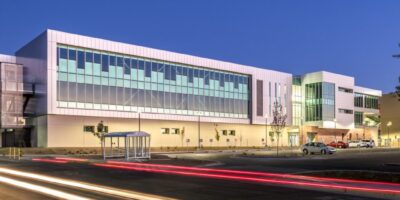
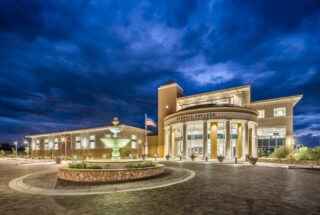
- Las Cruces, New Mexico: the original campus, in Arrowhead Research Park on the New Mexico State University campus, with the Woody and Gayle Hunt Medical Education Center and Library and the Burrell Research Laboratories.
- Melbourne, Florida: the newer campus on the Florida Tech campus, in the L3Harris Commons building, which opened to its first class in 2024.
Costs differ slightly by campus (see the tuition section). Clinical rotations in years three and four are assigned through Regional Academic Centers, so your preclinical campus does not lock you into one clinical region.
Distinctions and special tracks
Burrell has no combined degrees such as DO/MPH or DO/PhD, no early decision program and no separate application tracks. Two optional distinctions add structure inside the DO program:
- Distinction in Research: a longitudinal, faculty-mentored research experience that begins in year one and runs through year four. Completion is recognized at graduation and noted on the final transcript.
- Distinction in Rural Medicine: offered to qualifying students assigned to the Eastern New Mexico or Four Corners Regional Academic Center in the third year. Students complete projects in rural, underserved communities, and the distinction is noted in the Medical Student Performance Evaluation (MSPE), at graduation and on the transcript.
Pathway programs
Burrell runs Osteopathic Medicine Pathway Programs (OMPP) with two partner universities. Students at New Mexico State University or Florida Tech who apply, interview and are accepted into the OMPP receive individual advising sessions with their university and Burrell, campus visits and events, peer mentors and insight into osteopathic medicine. NMSU participants can also apply for an NMSU OMPP scholarship. OMPP students still apply through AACOMAS like everyone else.
Clinical and graduate medical education affiliations
Burrell built residency partnerships before its first class graduated. Its affiliated programs include family medicine (Memorial Medical Center, Gerald Champion Regional Medical Center in Alamogordo, Hidalgo Medical Services and Medicos de El Centro), internal medicine (MountainView Regional Medical Center, Las Palmas del Sol Healthcare and Northwest Healthcare in Tucson), osteopathic neuromusculoskeletal medicine and a transitional year. A family medicine program, a psychiatry rural training track and another transitional year are under development. These programs are open to graduates of any school through the national match; they are not reserved for Burrell students.
Physician assistant and other health careers
Burrell’s DO program is separate from any physician assistant training. The School of Health Professions has no programs yet, so a Physician Assistant (PA) career in the region means applying elsewhere. For a comprehensive list of programs, see our guide to PA Schools in New Mexico. PA programs are usually shorter than medical school while still leading to patient care, and some students later move between the professions through PA programs designed as bridges. If you are exploring both paths, pre-PA internships can help you compare the roles in real clinical settings before you commit.
Curriculum Overview
Burrell’s DO program is a four-year, evidence-based curriculum designed to give students the knowledge and competencies needed to enter graduate medical education and the practice of osteopathic medicine. It is applications-based and integrates medical knowledge, clinical skills and osteopathic principles and practice. Teaching uses case discussions, team-based learning, laboratory and skills instruction, interactive integrated sessions, simulated clinical experiences, small groups and directed study. Students are evaluated through written exams, skills-based competency assessments, observation and structured clinical assessments.
The curriculum is built around seven program objectives tied to the American Osteopathic Association’s core competencies, including competence in osteopathic manipulative treatment, professionalism, communication with patients and teams, evidence-based practice and an understanding of “the specific healthcare needs of diverse populations.”
Pre-clinical education (Years 1 and 2)
The first two years follow a two-pass, systems-based design. The first pass in OMS I emphasizes normal structure and function with clinical correlates, beginning with cadaver-based dissection at both the Las Cruces and Melbourne campuses. The second pass in OMS II returns to each organ system with an emphasis on pathology and pharmacology and a foundation in clinical medicine, disease and differential diagnosis.
OMS I (Year One) courses include:
- Foundations of Anatomic and Molecular Medicine
- Cardiovascular and Respiratory Systems
- Renal, Gastrointestinal, Endocrine and Reproductive Systems
- Nervous System and Foundations of Disease
- Osteopathic Manipulative Medicine I
- Principles of Clinical Practice I and II
- Mission Medicine I
OMS II (Year Two) courses include second-pass systems courses (cardiovascular, respiratory, renal, gastrointestinal, endocrine and reproductive, musculoskeletal and integumentary, nervous system, and immunology, hematology and lymphatics), Behavioral Medicine and Psychiatry, Principles of Clinical Practice III and IV, Osteopathic Manipulative Medicine II, Mission Medicine II and the Pathophysiologic Overview of Medicine. Students can also take a Medical Spanish elective in the second year if they have intermediate to advanced Spanish, and a Directed Research course.
At the end of year two, before starting year three, students must sit for the COMLEX-USA Level 1 national board examination. Burrell supports board preparation with board-style questions in coursework, the Lecturio platform in years one and two, UWorld in years two and three, and faculty seminars on study and test-taking skills.
Mission Medicine
Mission Medicine is Burrell’s community-based learning curriculum and the part of the preclinical years most closely tied to the college’s identity. It includes coursework on humanism, biostatistics, epidemiology and the social determinants of health, and students work directly with nonprofit agencies, schools and other community organizations to understand what shapes patient health. The first course in the series prepares students for their relationships with themselves, patients, colleagues and the communities they serve. Faculty such as Mary Lacaze, MD, use the course to teach cultural humility, health disparities and patient-centered care.
Osteopathic principles and practice
OMM is taught across all four years: OMM I and II in the preclinical years, then longitudinal OMM III and OMM IV courses during clinical training. Labs for OMM, physical diagnosis, standardized patients and simulation are on both campuses. Demonstrating competence in osteopathic manipulative treatment and osteopathic philosophy is one of the program’s formal objectives.
Clinical skills and simulation
Principles of Clinical Practice runs through the first two years and teaches history-taking, physical examination and clinical reasoning. Burrell’s simulation center includes high-fidelity mannequins that mimic patient conditions, standardized patient exam rooms set up like clinic rooms, and rooms that can be configured as a hospital room, operating room or delivery room. Every room is wired for audio and video, so faculty can watch encounters live or on recording and debrief afterward. In the standardized patient program, trained community members portray patient cases so students can practice communication, history-taking and examination before they meet real patients. Alumnus Brian Liu, DO, later credited the Principles of Clinical Practice course with preparing him for clerkships and audition rotations.
Clinical education (Years 3 and 4)
OMS III (Year Three): students begin with an Introduction to Clinical Rotations course and then complete core clerkships in family medicine (8 weeks), internal medicine (8 weeks), surgery (8 weeks), pediatrics (4 weeks), obstetrics and gynecology (4 weeks) and psychiatry (4 weeks). They also complete a longitudinal OMM III course and a longitudinal Clinical Rotation Essentials course, and they have two blocks set aside for elective clinical experiences.
OMS IV (Year Four): students complete at least 38 credit hours. Of these, 28 must be clinical, including a required emergency medicine clerkship (4 weeks), a required intensive care unit selective (4 weeks) and two sub-internship selectives, with the rest in clinical electives. The remaining hours include a longitudinal OMM IV course and further clinical or non-clinical work. One block may be used as independent study for COMLEX-USA Level 2-CE. Electives and selectives can be done inside or outside Burrell’s Regional Academic Centers with approval, and Burrell students have completed elective rotations across the United States.
To graduate, students must complete all required courses within six years of matriculation, pass COMLEX-USA Level 1 and Level 2-CE, have no outstanding financial obligation or unresolved disciplinary violation, and receive the faculty’s recommendation for graduation. After graduation, Burrell DOs complete residency and can be licensed as fully licensed osteopathic physicians.
Academic opportunities
- Research: the college supports faculty-supervised research in four priority areas: basic biomedical science, clinical science (including osteopathic research), population health and medical education. Students take part through the Summer Research Experience, course electives, extracurricular projects and the Distinction in Research.
- Rural medicine: the Distinction in Rural Medicine builds on third-year rotations in rural New Mexico.
- Medical Spanish: for students who already speak Spanish at an intermediate level or above, the elective builds clinical vocabulary for patient conversations. Burrell’s mission region along the border makes this practical. If Spanish-language care interests you now, a medical internship in Peru is one way to practice clinical Spanish before medical school.
Admissions Requirements and Application Process
Before you apply, make sure you understand how the DO application works. Both DO and MD degrees lead to a career as a fully licensed physician, but the application services, letter rules and philosophy differ. Burrell uses AACOMAS, the osteopathic application service; our AACOMAS Definitive Guide 2023 walks through the primary application step by step.
Steps to apply
- Primary application: submit through the American Association of Colleges of Osteopathic Medicine Application Service (AACOMAS) and designate Burrell College of Health Sciences. Choose your campus preference, Las Cruces or Melbourne, on the AACOMAS application.
- Pre-screen: once your AACOMAS application is verified, the Office of Admissions checks two minimum requirements: current U.S. citizenship or permanent residency, and a submitted MCAT score.
- Supplemental (secondary) application: applicants who pass the pre-screen receive an email with login instructions. You must submit the supplemental application and its $80 non-refundable fee to be considered further. Applicants approved for an AACOMAS or AMCAS fee waiver can request a secondary fee waiver.
- Review and interview: applications are reviewed on a rolling basis, and selected applicants are invited to a virtual interview.
- Decision: after the interview, the Medical Student Admission Selection Committee reviews the full file. Applicants recommended for acceptance are sent to the Dean for approval, and decisions go out on a rolling basis.
Burrell uses an individualized, holistic admissions process. Initial screening considers academic achievement, MCAT performance, prior education, prerequisite coursework, letters of recommendation, and medical, service, leadership, employment, research and community experiences. The college does not make decisions on the basis of race, color, national origin, ethnicity, sex, religion, disability, age, veteran status or any other legally protected status, and it does not use race, ethnicity or national origin as preferences or targets.
2026-2027 timeline
| Date | Step |
|---|---|
| May 4, 2026 | AACOMAS opened for new applications |
| June 2026 | Secondary application invitations began |
| Early August 2026 | First wave of interview invitations |
| September 2026 through late spring | Virtual interviews via Zoom, on a rolling basis |
| Before November 15, 2026 | Offers made in this window: 30 days to accept; non-refundable seat deposit due by December 14 |
| November 15 to January 14 | 30 days to accept and pay the seat deposit |
| February 2027 | Submit all application materials by now for best consideration |
| January 15 to April 30 | 14 days to accept and pay the seat deposit |
| March 1, 2027 | Latest MCAT score accepted for this cycle |
| April 30, 2027 | Primary AACOMAS application deadline |
| On or after May 1, 2027 | An immediate seat deposit may be requested |
| May 15, 2027 | Secondary application deadline |
| July 12, 2027 | Orientation and start date for first-year students |
The seat deposit is $2,000, non-refundable and applied to tuition. Students who still hold acceptances at more than one osteopathic school after May 1 will be contacted by the Office of Admissions with instructions for keeping their Burrell seat. Because Burrell admits on a rolling basis, applying early matters more than the final deadlines suggest. Submitting your primary in early summer and returning the secondary within about two weeks of the invitation keeps you in the earliest review groups.
Prerequisite coursework
Applicants must complete these courses with a grade of C or higher:
| Course | Requirement | Credit hours |
|---|---|---|
| Biology with lab | Required | 8 (or one year with lab) |
| General/inorganic chemistry with lab | Required | 8 (or one year with lab) |
| Organic chemistry with lab | Required | 8 (or one year with lab) |
| Physics with lab | Required | 8 (or one year with lab) |
| Science elective | Required | 3 |
| English | Recommended | 6 |
Biochemistry hours can count toward the general or organic chemistry requirement or the science elective. Recommended science electives include advanced courses in behavioral sciences, biochemistry, cell biology, genetics, human anatomy, immunology, molecular biology, neurosciences and physiology. AP or IB credit used for a prerequisite must be verified with an official score report, transcript or other document showing the specific course and credits. Online coursework, online labs and prerequisites graded pass/fail are accepted.
Degree: you need a bachelor’s degree, or equivalent, from a college or university accredited by an agency recognized by the U.S. Department of Education. A degree in progress must be conferred and shown on an official transcript by July 1 of the year you start. Coursework from outside the United States or Canada must be evaluated for U.S. equivalence and the report sent to AACOMAS.
MCAT and GPA
Burrell does not set minimum MCAT or GPA requirements, but it does give recommendations:
- a cumulative science GPA of at least 3.0 on a 4.0 scale
- an MCAT of 496 or higher, with no section below the 15th percentile
MCAT scores are not considered expired, but applicants are advised to have a test date within the three years before matriculation. For this cycle, the oldest MCAT considered is from July 1, 2022, and the latest score accepted is from March 1, 2027. Burrell uses the GPAs calculated in your verified AACOMAS application and encourages applicants to compare themselves with the average scores of matriculating students it publishes each cycle. There is no MCAT waiver.
Citizenship, residency and international applicants
You must be a current U.S. citizen or permanent resident. Permanent residents must provide a copy of their permanent resident card before moving forward in the process. Burrell is unable to consider international applicants at this time, and DACA recipients are not considered. Both in-state and out-of-state applicants are encouraged to apply, and tuition is the same for everyone. One residency rule matters later: at least 90% of students assigned to the El Paso, Texas clinical center must be residents of Texas or Doña Ana County, New Mexico, as listed on the AACOMAS application.
Experience hours
Burrell values academic achievement but also asks applicants to describe their extracurricular, medical, non-medical and community volunteer experience. There is no published minimum number of hours, and shadowing is not required. Even so, the selection factors (clinical experience, community service, maturity, motivation and awareness of the osteopathic profession) make experience central. Experience in rural and medically underserved settings connects directly to the college’s mission. Direct patient contact counts most: clinical internships for pre-med students that include supervised vitals, intake and triage show you understand the work, not just the setting.
Letters of recommendation
Letters are one of the most important parts of a Burrell application, and the rules changed in recent cycles. Here is the current policy:
- Minimum: at least two letters of recommendation.
- Strongly recommended sources:
- a pre-health committee or composite letter, which can satisfy the two-letter requirement on its own
- a science professor who has taught or advised you within the past three years
- a physician (DO or MD) who is not related to you
- Maximum: up to ten letters.
- Other useful writers: a research advisor, a premedical or academic advisor, someone who has seen you in a volunteer, service or care setting, and an employment supervisor.
- Format: letters should be on letterhead and include the writer’s credentials.
- Not accepted: letters from relatives do not satisfy the requirement.
- Delivery: all letters should be submitted through AACOMAS.
A physician letter is strongly recommended but not required. A letter from a physician carries the most weight when it describes your work with patients during shadowing, volunteering or employment in healthcare. If you have been out of school for a while and have not taken recent prerequisites, a letter from a current employer or supervisor helps fill the gap.
Who to ask: choose writers who know your academic and personal qualities well enough to give specific examples. A detailed letter from a professor who supervised your research is worth more than a generic letter from a well-known name.
How to ask: respect your writers’ time. Give them your CV, a short summary of what you hope they can speak to, and at least four to six weeks before you want the letters uploaded.
Why strong letters matter: in a pool of more than 7,000 applicants, a thoughtful letter that paints a full picture of your preparation and character can leave a lasting impression on the committee. By understanding each type of letter and following the format rules, you put yourself in a stronger position.
Assessments
Burrell does not list Casper, PREview or any other situational judgment test as a requirement. Burrell also has no early decision program.
Deferral, appeals and transfers
Accepted applicants with extenuating or unexpected personal circumstances can request a one-year deferral in writing to the Director of Admissions at least 60 days before orientation; approval rests with the Vice President of Student Services. Applying to another medical school during a deferral ends the offer. An applicant who wants to appeal a decision must bring new information and submit it to the Director of Admissions by the last day of March. Burrell does not accept transfer students or give advanced standing.
Before you start: matriculation requirements
Admitted students must complete several items before orientation: immunization records with titers, a tuberculosis test within 60 days of enrollment, a criminal background check and drug screen within 60 days before matriculation, official transcripts, proof of health insurance and proof of legal U.S. residency status. Applicants should also read the minimal technical standards in the college catalog.
For specific questions, contact the Office of Admissions at (575) 674-2210 or [email protected], or visit Burrell College’s Admissions Page.
Tuition, Cost of Attendance and Financial Aid
Burrell charges the same tuition to every DO student on both campuses, regardless of state residency. Fees and living costs differ by campus.
| Item | Las Cruces (NM) | Melbourne (FL) |
|---|---|---|
| Tuition | $70,622 | $70,622 |
| Student activity fees | $1,975 | $3,657 |
| Average loan origination fees | $529 | $529 |
| Living expenses (housing and meals) | $20,854 | $22,594 |
| Personal and miscellaneous | $5,075 | $6,936 |
| Transportation | $3,193 | $4,200 |
| Additional supplies (diagnostic kit, COMLEX study resource) | $250 | $250 |
| Health insurance (12 months) | $3,360 | $4,387 |
| Estimated total | $105,858 | $113,175 |
Tuition plus fees comes to $72,597 in Las Cruces and $74,279 in Melbourne for 2026-2027. All required textbooks and college-provided educational resources are included in tuition. Direct costs are subject to an increase of 3% to 5% every academic year, with a new cost table posted each spring, so plan on higher figures for 2027-2028 when you would start. Source: Burrell Estimated Cost of Attendance, 2026-2027.
What the budget includes
- Living expenses are averages for living on or off campus. Federal rules do not let the financial aid office adjust housing costs to each student’s choices, so a cheaper apartment lowers what you spend, not what you are allowed to borrow.
- Transportation covers travel between home and school and travel needed to complete the program, including clinical rotations, plus an allowance for residency interviews and rotation travel.
- Health insurance is required. The budget uses marketplace estimates of $280 a month in New Mexico and $365.50 a month in Florida. If your actual plan costs more, the cost of attendance can be updated.
- Professional judgment: the financial aid office can review students with extenuating circumstances and approved elective rotations that need extra travel.
Rough four-year picture
Four years at the 2026-2027 budget alone come to more than $420,000 in Las Cruces and about $450,000 in Melbourne, before the yearly increases. That is a planning estimate, not a quote. Average loan debt for Burrell graduates was $254,494 for the Class of 2025, $265,157 for the Class of 2024 and $290,423 for the Class of 2023. The college’s published cohort default rate was 0 for the 2020, 2021 and 2022 cohorts.
Financial aid
In the 2024-2025 reporting year, 76% of Burrell students received financial aid, 76% had loans and 15% received scholarships or grants. The average annual scholarship or grant per student is $19,750. Most students therefore finance most of the cost with federal and private loans, so knowing the debt figures before you apply is part of being financially prepared.
Scholarships. Burrell runs one college scholarship application each year. For 2026-2027 it opened February 1, 2026, with a priority deadline of March 1, 2026; funds may become limited after that date, so watch for the 2027 window if you are admitted. Scholarships administered through the Coalition for Osteopathic Excellence include the Dr. Lloyd M. Hummer Memorial Scholarship, Friends of Military Veterans Annual Scholarship Fund, GECU Foundation THRIVE and Borderland Health Scholarships, Hunt Family Foundation Endowed Scholarship Fund, Joshua J. Baca Memorial Four-Corners Scholarship, Newman/Allen Family Scholarship in Osteopathic Manipulative Medicine, Pieratt Family Scholarship and Yates Scholarship Fund.
Service-based programs. Several programs pay for school or repay loans in exchange for service:
- Armed Forces Health Professions Scholarships, which can cover full tuition and fees, books and a monthly stipend.
- National Health Service Corps scholarships and loan repayment for primary care in underserved areas.
- New Mexico Medical Loan-for-Service, which turns educational loans into service in New Mexico shortage areas.
- Florida Reimbursement Assistance for Medical Education (FRAME), which helps repay loans for clinicians who practice in underserved parts of Florida.
- Indian Health Service and state loan repayment programs.
- Regional Incentive Grant: up to $75,000 for physicians who commit to practice in Eastern New Mexico for at least three years, sponsored by the PY Foundation through the Coalition for Osteopathic Excellence.
Veterans and eligible family members can use GI Bill benefits, and the college will not charge late fees while it waits up to 90 days for VA payments. For forms and contacts, visit the Financial Aid Website; the Director of Financial Aid is Marlene Melendez, EdD.
Campus Facilities and Student Life
Las Cruces, New Mexico campus
Burrell’s main campus is in Las Cruces, on the New Mexico State University (NMSU) campus in Arrowhead Research Park. In the Chihuahuan Desert, Las Cruces is New Mexico’s second-largest city, with hiking in the Organ Mountains, bird watching around Dripping Springs and river rafting on the Rio Grande. The city has more than 100 parks, free events on the Downtown and Mesilla plazas, and housing costs below the national average. It has been nationally recognized as a good place to work, play and raise a family. El Paso, Texas, is close by and is also part of Burrell’s clinical network.
The campus includes lecture halls and seminar rooms, a hybrid gross-virtual anatomy lab, a standardized patient facility, a physical diagnosis lab and a simulation center with high-fidelity mannequins. The college library sits in the Woody and Gayle Hunt Medical Education Center, and the Burrell Research Laboratories (bioscience, human physiology and computational research) are on this campus.
Melbourne, Florida campus
The Melbourne campus is on the Florida Institute of Technology (Florida Tech) campus, along Florida’s central east coast. Melbourne residents enjoy beaches, snorkeling, fishing and boating, and nearby attractions include the Kennedy Space Center, the Indian River Lagoon Preserve State Park and the Florida Tech Botanical Gardens. Melbourne lies within 75 miles of Orlando and Walt Disney World. The city also has an active arts scene and annual festivals. If you are searching for medical schools near you in Florida, Burrell’s Melbourne campus is the Space Coast’s first medical school.
Instructional spaces and labs
Both campuses offer large and small group teaching spaces and specialized labs: OMM and physical diagnosis labs, standardized patient and simulation labs, gross anatomy labs with dissection tables and imaging tools, and access to research labs. Anatomy lab sessions also use ultrasound and radiologic imaging.
Library and partner-university access
The college library offers core medical and osteopathic resources, including electronic databases, journals, print and electronic books and media. Through the partnerships with NMSU and Florida Tech, Burrell students also get access to extra library resources, study spaces, dining, health services, recreation centers, intramural sports and transit. In Las Cruces, students with a Burrell ID attend NMSU home athletic events free in the student section; in Melbourne, students attend Florida Tech home games in the student section. For more details, visit the Burrell College website.
Student housing
Burrell helps students find housing in both cities:
- Las Cruces: Burrell has an agreement with NMSU for affordable student housing a few blocks from campus, with NMSU housing and meal plan applications. The Flats at Ridgeview, a private complex designed with medical students in mind, is nearby and is not owned or operated by the college. Students can also rent through local property managers.
- Melbourne: depending on availability, Burrell students may be able to live in Florida Tech student housing, and Florida Tech helps students find off-campus options.
Off-campus housing gives you more choice of living environment, but you are responsible for your own transportation. The Office of Student Affairs has housing contacts for each campus ([email protected]).
Student support
Burrell offers financial aid education, academic support, career planning and advising, and physical and mental health services. The Office of Student Affairs uses an Advisory College Program: small faculty-led communities that run activities on acclimation, professionalism, wellness and professional development. Career counseling follows students through all four years, with match advising and resources on residency applications.
Student organizations
Burrell has more than 80 student organizations, and students can charter new ones. Many are osteopathic or specialty groups, while others focus on community engagement, culture and shared interests. Several clubs have separate chapters on each campus. Examples from the current list include:
- Medical specialties: American College of Emergency Physicians/American College of Osteopathic Emergency Physicians student chapter, American College of Osteopathic Obstetricians and Gynecologists, American College of Osteopathic Pediatricians, ACS Surgery Interest Group, American Association of Neurological Surgery, American Society of Clinical Oncology, American Society of Hematology interest group, Association of Anesthesia and Perioperative Medicine, Cardiovascular Medicine and Cardiology interest groups, Dermatology Club, Family Medicine Interest Group, Med-Peds Interest Group, National Otolaryngology Student Alliance, Pathology Organization for Medical Students, Physical Medicine and Rehabilitation Club, Plastic Surgery Club, Psychiatry Student Interest Group Network (PsychSIGN), Radiology Club, Sports Medicine Club (AOASM), Student Interest Group in Neurology, Student Osteopathic Internal Medicine Association, Ultrasound Interest Group, Urology Interest Group and Wilderness Medicine Club.
- Cultural and identity-based groups: Arab-American Medical Association, American Muslim Medical Student Association, Asian Pacific American Medical Student Association, Black Health Empowerment Alliance, First Generation Club, Latino Medical Student Association, LGBTQIA+ Alliance, Persian American Student Osteopathic Association, South Asian Medical Student Association and Student National Medical Association.
- Professional development: American Medical Association, American Medical Student Association, American Medical Women’s Association, Florida Osteopathic Medical Association, Student Association of Military Osteopathic Physicians and Surgeons, Student Osteopathic Medical Association, Student Government Association, Gold Humanism Honor Society and the Student Research Organization.
- Community, outreach and interests: Animal Helpers, Gifted Hands, Global and Border Health Student Organization, Health and Wellness Club, Art of Medicine Club, Beach Medicine Club (Florida), Burrell Catholic Medical Association, Burrell Christian Medical Association, Christian Medical and Dental Association, Geriatrics and Healthy Aging Society, Medical Anthropology Student Organization and Burrell College Men’s Health Club.
Clubs host guest speakers, service projects and outreach, and many sponsor community events such as health fairs, screenings and donation drives with Student Affairs approval. Burrell students also earn national recognition: in 2026, a Burrell student physician was named National Student Doctor of the Year by the Council of Osteopathic Student Government Presidents.
JEDI program
The JEDI (Justice, Equity, Diversity and Inclusion) program, run through Burrell’s Student Government Association, gives students credit for trainings, discussions and documentary viewings about cultural settings and personal identities in healthcare and community settings. The goal is to prepare students to handle microaggressions, prejudice and socioeconomic barriers they will meet in practice. Students log JEDI hours through Track-It-Forward, much as they log service hours.
TOUCH program
The Translating Osteopathic Understanding into Community Health (TOUCH) program is a national initiative of the Council of Osteopathic Student Government Presidents. It encourages osteopathic medical students to improve the health of their local communities by bringing osteopathic principles into volunteer work. Students who log 50 hours in a TOUCH year (May 1 to April 30) earn Silver recognition, and those who log 100 hours earn Gold. Hours must serve the community outside the college.
Takeaways
- Broad network: the large number of organizations gives students many ways to find mentors, peers and specialty exposure, on either campus.
- Skill development: clubs and outreach programs build leadership, teamwork and community engagement alongside coursework.
- Whole-person training: JEDI and TOUCH both aim to produce physicians who understand the communities they serve.
For more information or to get involved, contact the Office of Student Affairs or see the Burrell student organizations list.
Clinical Rotations and Research Opportunities
Regional Academic Centers
For the third year, every Burrell student is assigned to a Regional Academic Center (RAC). Each RAC has a Regional Assistant Dean and a coordinator who serve as the student’s main contacts during core rotations. Clinical training is community-based, in affiliated hospitals and clinics, under the supervision of credentialed physician faculty. Assignments depend on preceptor availability and on each student’s interests and preferences. Burrell’s network includes more than 1,050 physician preceptors.
Burrell currently has ten RACs:
- Albuquerque, NM: sites include Presbyterian Healthcare Services, Lovelace Health System, the New Mexico VA Health Care System, Christus St. Vincent, El Centro Family Health and First Choice Community Healthcare (both federally qualified health centers) and the Albuquerque Area Indian Health Service.
- Las Cruces, NM: Memorial Medical Center, MountainView Regional Medical Center, Gerald Champion Regional Medical Center, Mesilla Valley Hospital, Ben Archer Health Center and La Clinica de Familia, with additional teaching sites in Alamogordo, Anthony, Deming, Hatch, Holloman, Santa Teresa and Silver City.
- Eastern New Mexico: communities including Artesia, Carlsbad, Hobbs, Lovington and Roswell, with sites such as Artesia General Hospital, Carlsbad Medical Center, Covenant Health, Nor-Lea Hospital District and Roosevelt General Hospital.
- Four Corners, NM: San Juan Regional Medical Center, Rehoboth McKinley Christian Health Care Services, Cibola General Hospital, Fort Defiance Indian Hospital and the Navajo Area Indian Health Service.
- El Paso, TX: The Hospitals of Providence, HCA Las Palmas Del Sol, William Beaumont Army Medical Center, the El Paso VA and Centro de Salud Familiar La Fe. This RAC has a capacity limit, and at least 90% of students assigned here must be residents of Texas or Doña Ana County, NM.
- Tucson, AZ: Tucson Medical Center, Carondelet St. Joseph’s and St. Mary’s, Northwest Hospital, Marana Health Center and the Phoenix Area Indian Health Service.
- Space Coast, FL: Health First, Steward Melbourne, Rockledge and Sebastian River medical centers, Brevard Health Alliance, the Orlando VA and behavioral health partners.
- Southwest, FL: Lee Health, Naples Community Hospital, Physicians Regional (Naples) and Sarasota Memorial.
- Palm Beach, FL.
- Brooklyn, NY: opened in July 2026 with a first cohort of 11 third-year students rotating through One Brooklyn Health’s Brookdale University Hospital Medical Center, Interfaith Medical Center and Kingsbrook Jewish Medical Center in surgery, OB/GYN, pediatrics, internal medicine, family medicine and emergency medicine.
What this means for you: your third year will likely take place away from your preclinical campus, and some RACs are hours from Las Cruces or Melbourne. Budget for a move, and use the transportation allowance in the cost of attendance. If you have strong ties to El Paso or Doña Ana County, list your residence accurately on AACOMAS, since it affects eligibility for the El Paso RAC. Students who want rural training can aim for the Eastern New Mexico or Four Corners RAC and the Distinction in Rural Medicine.
In the fourth year, students arrange electives and selectives inside or outside the RAC network with the Office of Clinical Education’s approval, which lets them do audition rotations at residency programs across the country.
Research
Burrell’s Office of Research and Sponsored Programs supports faculty and student research on both campuses and at every RAC, in four core areas: basic biomedical science, clinical science, medical education and population health. Faculty collaborate with New Mexico State University and a wide network of academic institutions and medical centers. Students can take part through:
- the Summer Research Experience during the preclinical years
- the Distinction in Research, a longitudinal track from year one through year four
- Directed Research and non-clinical research electives
- the Student Research Organization, research town halls and student travel funding to present work
- the annual Medical Student Research Day, held in 2026 on September 12 in Las Cruces and September 19 in Melbourne, with projects ranging from surgical techniques and pharmacology to cancer biomarkers and imaging models
Recent examples show what is possible. In 2026, three Burrell student physicians who joined a summer project with an NMSU public health professor became co-authors on two peer-reviewed reviews of COVID-19 vaccine refusal among people living with HIV and cancer survivors. At the 2026 Research Day, award-winning projects were mentored by Burrell faculty and by faculty at Florida Tech. Gross anatomy dissection and digital anatomy software also support anatomy-based projects.
Community outreach and service
Medical students coordinate and take part in regional outreach, education and service projects. The college keeps a long list of community partners in Las Cruces, from disability services and crisis programs to senior care communities and the Red Cross. Community work is built into Mission Medicine, so outreach is part of the curriculum as well as an extracurricular choice.
Graduate medical education and outcomes
Burrell reports a 99% GME placement rate for the Classes of 2022 through 2025, 97.2% for the Class of 2021 and 100% for the inaugural Class of 2020. On Match Day 2026, 165 student physicians matched into 22 disciplines, including 44 in internal medicine, 18 each in emergency and family medicine, 17 in pediatrics, 11 each in OB/GYN and psychiatry, and smaller numbers in surgery, neurology, anesthesiology, orthopedic surgery, interventional radiology, radiation oncology, urology and vascular surgery. Seven matched in Las Cruces or El Paso, four in Albuquerque and nine in Florida.
Specialty training in New Mexico after medical school
Students who want to stay in New Mexico for advanced training also look at the University of New Mexico. UNM offers a three-year gastroenterology and hepatology fellowship for physicians who have finished internal medicine residency, and a three-year dermatology residency with a teledermatology service for remote parts of the state. These are graduate programs open by national application, not Burrell pathways. Alumnus Luis Zuniga, DO, is one example of a Burrell graduate who moved from internal medicine into a gastroenterology fellowship.
Notable Alumni, Faculty, Leadership and Admissions Staff
Burrell graduated its first class in 2020 and had produced more than 700 physicians by 2024. The profiles below come from the college’s leadership, department and news pages. Roles were checked on October 23, 2026; alumni roles are given as of the date of the college’s feature.
School leadership
John L. Hummer, MHA, President and Chief Executive Officer. Hummer co-founded the college in 2013 with founding dean George Mychaskiw, DO, to address physician shortages in the Southwest and along the border with Northern Mexico and to diversify the physician workforce. He has led Burrell through full COCA accreditation, the 2024 Florida campus opening and the 2026 move to Burrell College of Health Sciences. In April 2026 the Board of Deans of the American Association of Colleges of Osteopathic Medicine named him the 2026 William D. Miller Award recipient, a national honor for leaders who have advanced the osteopathic profession. For applicants, his message is consistent: Burrell wants students with a service-to-society mindset.
William Pieratt, DO, FACP, Executive Vice President of Academic Services; Dean and Chief Academic Officer. As dean, Pieratt oversees the DO program on both campuses. Applicants whom the admissions committee recommends for acceptance go to the Dean for approval, so his office is the final step in every admission decision. After the 2026 match he credited the strength of the academic program and the faculty for students’ clinical readiness and professionalism.
Doris Newman, DO, FAAODist, Campus Dean, Florida. Newman was appointed dean of the Melbourne campus in 2023 after a national search. She earned her DO at the University of New England College of Osteopathic Medicine, completed residency there in osteopathic neuromusculoskeletal medicine, and is board certified in osteopathic manipulative medicine and pain medicine. She is a past president of the American Academy of Osteopathy and has held faculty and leadership roles at UNE, Nova Southeastern and Sam Houston State. Applicants interested in OMM will find a campus dean whose career is built on it.
Faculty and educators
Muneer Assi, DO, Associate Dean of Clinical Education. Assi leads the third and fourth years across all Regional Academic Centers and directs the internal medicine clerkship, the Clinical Rotation Essentials course and the fourth-year sub-internship and ICU selectives. He earned his DO at the Texas College of Osteopathic Medicine. Alumnus Luis Zuniga, DO, called him the most influential person in his medical education: “a mentor, a friend, a sounding board, a clinical educator.”
Michael E. Woods, PhD, Associate Dean of Academic Affairs. Woods, an associate professor of pathology with a PhD from the University of Texas Medical Branch, oversees the preclinical curriculum. He describes the first two years as a two-pass systems-based curriculum and calls Mission Medicine “one element of our curriculum that makes us really unique.”
Mary Lacaze, MD, Associate Dean of Community-Based Learning and Chair of Preclinical Medicine. An oncologist and associate professor of hematology and oncology, Lacaze leads Mission Medicine. A college feature describes how she brings lessons from equine-assisted therapy into the course to teach trust, nonverbal communication, cultural humility and empathy. If the Mission Medicine curriculum is part of why you are applying, she is the faculty leader behind it.
Chris Hague, PhD, Assistant Dean of Research. Hague directs the Burrell Research Laboratories and is an associate professor of pharmacology. He mentored award-winning student projects on both campuses at the 2026 Medical Student Research Day, including work on cervical cancer biomarkers and local anesthetic effects on wound healing.
Thomas Eiting, PhD, Director of Student Research. An assistant professor of physiology, Eiting runs the programs students use to get into research, from the Summer Research Experience to the Distinction in Research and Research Day. “The foundation of being a doctor is science,” he says.
Oliver W. Hayes, DO, FACEP, Associate Dean of Graduate Medical Education. Hayes leads Burrell’s work with affiliated residency programs and directs the required fourth-year emergency medicine clerkship. He earned his DO at Michigan State University.
Admissions and student services staff
Tammy Fowler, EdD, Vice President of Student Services. Fowler heads the division that runs Admissions, Financial Aid and the Registrar, and she approves deferral requests.
Austin Gentry, MA, Director of Admissions. Gentry leads the admissions office, receives appeals and deferral requests, and is Burrell’s contact for the NMSU and Florida Tech pathway programs. He earned his BA and MA at New Mexico State University.
Gabriela Donato, MA, Associate Director of Admissions. Donato works with Gentry and a team of admissions advisors and recruiters who answer applicant questions at [email protected] and (575) 674-2210.
Notable alumni
Harris Ahmed, DO, MPH (Class of 2020). A member of the inaugural class, Ahmed was a vitreoretinal surgery fellow at Weill Cornell Medicine when Burrell chose him as its 2026 commencement speaker. He has written and lectured on physician workforce, scope of practice and medical education and serves on the board of the California Academy of Eye Physicians and Surgeons. His class graduated with a drive-through diploma celebration during the pandemic.
Michael Arias, DO (Class of 2021). Admitted to the inaugural class, Arias deferred for a year for Army training and served as an Army Reservist throughout medical school. As of late 2024 he was a chief resident in Miami with a neuromuscular medicine fellowship at UCLA ahead. His advice to students: care about “the depth of life too.”
Brian Liu, DO (Class of 2021). A former Houston firefighter, Liu came to Burrell after a UT Austin degree, a master’s from UNT Health Science Center and research at Baylor College of Medicine. He went on to emergency medicine residency at Oklahoma State University Center for Health Sciences and used his OMT skills with patients there.
Luis Zuniga, DO (2023). A former UTEP chemistry peer leader and recipient of the Leonard Tow Humanism in Medicine Award, Zuniga completed internal medicine residency and in 2026 began a gastroenterology fellowship at the University of Nebraska Medical Center.
Josiel Garcia, DO, MS (Class of 2023). A Miami native featured by the college for his commitment to mission medicine and underserved communities, Garcia began residency in physical medicine and rehabilitation at Baylor College of Medicine.
These alumni came to Burrell from firefighting, military service, peer teaching and research. What they share is a clear story about why they chose medicine and whom they wanted to serve, which is exactly what Burrell’s application asks you to show.
Admissions Statistics and Class Profile
Admissions and enrollment by entering class
| Entrance year | AACOMAS designations | Matriculated | Mean MCAT | Mean GPA | Mean science GPA |
|---|---|---|---|---|---|
| 2025 (Las Cruces and Melbourne) | 7,419 | 300 | 500 | 3.47 | 3.3 |
| 2024 (Las Cruces and Melbourne) | 5,837 | 312 | 500 | 3.48 | 3.38 |
| 2023 (Las Cruces) | 5,036 | 177 | 501 | 3.48 | 3.41 |
| 2022 (Las Cruces) | 6,127 | 195 | 502 | 3.70 | 3.46 |
| 2021 (Las Cruces) | 6,754 | 162 | 504 | 3.54 | 3.46 |
Source: Burrell College Data and Outcomes. Data at census date may differ.
Three patterns stand out. First, the class nearly doubled when the Florida campus opened in 2024. Second, applications rose sharply, from 5,837 designations for 2024 to 7,419 for 2025. Third, the academic profile has stayed steady at around a 500 MCAT and a 3.47 to 3.48 GPA since 2023.
About the “acceptance rate.” Burrell publishes designations and matriculants, not interviews or offers. In 2025, 300 students matriculated out of 7,419 designations, about 4 per 100. That is a matriculation ratio, not an acceptance rate: it leaves out applicants who were admitted but chose another school, and it counts every applicant who designated Burrell, including those who never completed the secondary. Treat any single “Burrell acceptance rate” you see with caution.
Who enrolls
For the 2025 entering class, 62% of matriculants were women and 38% men. By race and ethnicity, 29% were white, 27% Hispanic or Latino, 25% Asian, 9% Black or African American, 5% two or more races and 4% unknown, with fewer than 10 Native Hawaiian or Pacific Islander students. Underrepresented minorities in medicine made up 36% of the class, up from 31% in 2024 and 25% in 2023.
For the 2024-2025 academic year, the New Mexico campus enrolled 734 medical students, and its 295 first-year students included 10 New Mexico residents and 285 from out of state. Among first-year matriculants, 86.1% were science majors, 13.9% non-science majors and 16.9% already held a graduate degree. The class is overwhelmingly drawn from outside New Mexico, so out-of-state applicants should not hesitate to apply.
Licensing exam results
| Exam | Burrell first attempt | Burrell cumulative | National first-time |
|---|---|---|---|
| COMLEX Level 1 | 82% | 99% | 90% |
| COMLEX Level 2-CE | 91% | 100% | 91% |
| COMLEX Level 3 (2024) | 97% | n/a | 93% |
The 2024-2025 Level 1 first-attempt rate was lower than in earlier years (95% in 2023-2024 and 90% in 2022-2023), while Level 2-CE matched the national rate and nearly every student eventually passed. Ask about board support during your interview if this matters to you.
Retention and completion
Retention for students who entered in 2024 was 98% in New Mexico and 96% in Florida. The four-year graduation rate was 78% for the 2022 entering class and 83% for 2021; for the 2020 entering class, 86% graduated within five years and 88% within six. Some students take longer because of leaves, research years or remediation.
Using these numbers
The class profile tells you where you stand, but not whether you will be admitted. With a mean around 500, an applicant at 496 to 500 with a strong service record and good letters is competitive, while an applicant well above the average still needs to show mission fit. For a wider view of osteopathic school data, our Choose DO guide explains how to use the official DO school explorer to compare Burrell with other programs.
Tips and Strategies for Admission
Know the requirements, then aim past them
Start with the specific admission requirements: a U.S. citizenship or permanent residency check, a submitted MCAT, the prerequisite courses with grades of C or higher, and at least two letters. Then look at the class profile. With matriculants averaging a 500 MCAT and a 3.47 GPA in 2025, a score at or above those numbers puts you in the middle of the class, not ahead of it. If you are below the recommended 3.0 science GPA or 496 MCAT, use a post-baccalaureate program, upper-level science courses or a retake to show an upward trend before you apply. Burrell does not set cutoffs, but the committee reviews every academic indicator.
Make your experience match the mission
Medical schools in New Mexico like Burrell are not just looking for academically strong students; they also value practical experience in healthcare and service. Burrell’s mission centers on underserved communities, and its selection factors name clinical experience and community service directly. The strongest applications show both, over time:
- Clinical work with real responsibility: jobs or volunteer roles where you take vitals, room patients, scribe, assist with intake or work as an EMT, CNA or medical assistant.
- Service to people who struggle to get care: free clinics, community health centers, rural health fairs, food pantries, tribal or border-region programs.
- Exposure to osteopathic medicine: shadowing a DO is not required, but it helps you answer “why osteopathic medicine?” in the interview and gives you material for the secondary.
Volunteering or working in healthcare environments shows your dedication and can make your application more appealing. If your schedule allows only a few concentrated blocks of time, pre-med summer internships can add structured patient contact between semesters.
Gain clinical experience abroad with IMA
One way to add hands-on clinical experience is an internship with International Medical Aid (IMA). Pre-med internships with IMA place students in clinics and hospitals abroad, where interns take vitals, do intake and triage, and help with direct patient care under the supervision of local physicians and nurses. Because many of the patients have limited access to care, the experience connects naturally to Burrell’s focus on underserved communities and gives you concrete stories for the secondary questions and the interview. These are medical internships for undergraduates and recent graduates, and they work best as one part of a steady record of clinical work at home. IMA programs are independent of Burrell and do not affect admissions decisions.
Academic performance and test scores
Strong grades and test scores are a basic requirement. You can further distinguish yourself by doing well in upper-level science courses and in electives related to healthcare, public health or medical ethics. If your MCAT is below the class average, a structured prep course or tutor and a full-length practice schedule are worth the investment before a retake. Remember that Burrell uses your verified AACOMAS GPAs, so learn how AACOMAS calculates them.
Medical school admissions consulting
Even before you apply, you might benefit from working with professionals who specialize in medical school admissions. The Admissions Committee looks at your whole file, and an outside reader can spot gaps you miss: a personal statement that never says why osteopathic medicine, an experience section that hides your best clinical work, or a letter plan that leaves out a physician. Advisors can also help you address weaknesses, academic or experiential, before they cost you an interview. Our article on medical school admissions consulting explains what that support looks like.
Strong personal statement and letters of recommendation
Your personal statement should go beyond achievements to show who you are and why you are a good fit for osteopathic medicine and for Burrell’s mission. Pick one or two experiences and reflect on what they taught you about patients. Then plan your letters early: a committee letter, or a science professor plus a DO or MD who has seen you with patients, gives the committee the combination it recommends. High-quality letters from people who know your work well will strengthen everything else in your file.
Write the secondary early and specifically
The three secondary questions are short (300 words each), and they reward specific stories. Draft them in May or June, before your invitation arrives, so you can return the secondary within about two weeks. Use concrete details from your own experience, connect them to verified Burrell programs such as Mission Medicine, the Distinction in Rural Medicine or the Regional Academic Centers, and avoid repeating your personal statement.
Choose your campus thoughtfully
You state a campus preference on AACOMAS. Think about cost (Melbourne’s budget is about $7,300 higher in 2026-2027), support systems, climate and where you hope to do clinical training. The curriculum is the same, so pick the place where you will do your best work for two years.
Financial preparedness
Know the numbers before you commit. The Class of 2025 graduated with an average loan debt of $254,494, and 15% of students received scholarships or grants in 2024-2025. Apply for the college scholarship as soon as the window opens, and look early at service-based programs like the National Health Service Corps, military scholarships, the New Mexico Medical Loan-for-Service and Florida’s FRAME program.
If you are reapplying or taking a gap year
If you were not admitted, use the year to fix the weakness the third secondary question will ask you about anyway: retake the MCAT, add upper-level coursework or build steady clinical hours. Many applicants use pre-med gap year programs to add months of supervised patient care, then come back with a stronger story and new letters.
Secondary Application Questions, Example Responses and Analysis

The secondary application is a crucial phase in Burrell’s admissions process. It gives the admissions committee a fuller picture of your qualifications, interests and career goals, and it tests whether you understand osteopathic medicine and Burrell’s mission. Every component counts.
Logistics for 2026-2027:
- Who receives it: every applicant who passes the pre-screen (current U.S. citizen or permanent resident with a submitted MCAT score). Burrell sends an email with login instructions after your AACOMAS application is verified.
- Fee: $80, non-refundable. Applicants approved for an AACOMAS or AMCAS fee waiver can request a secondary fee waiver.
- Deadline: May 15, 2027, but submit all materials by February 2027 for best consideration, and earlier is better under rolling admissions.
- Questions: three essays, each limited to 300 words. The same questions apply to both campuses.
Treat all three essays as required. Write each one to the 300-word limit shown in your portal, count your words before you paste, and keep a copy of every answer for interview preparation.
Question 1: Area of medicine and practice setting
“In what area of medicine do you see yourself practicing, and in what type of setting?” (300 words)
What it asks: two things, a field and a setting. Burrell wants to know where you see yourself and whether your reasons are grounded in real experience. The mission focuses on underserved communities, and many graduates enter primary care, but the question does not require a primary care answer.
How to approach it: name your field and setting in the first sentence or two. Then explain where the interest came from, using a specific experience. Show what you enjoy about the daily work, not just the idea of it. Connect your goal to something Burrell actually offers, such as a Regional Academic Center, the Distinction in Rural Medicine or the Medical Spanish elective. If you are undecided, say so honestly and explain which setting you are sure about.
Illustrative example, not an actual applicant essay (290 words):
I see myself practicing family medicine in a community health center in a small town, the kind of place where one physician may see a newborn, a rancher with uncontrolled diabetes and a grandmother on dialysis before lunch.
I grew up in Deming, New Mexico. When my asthma worsened in high school, my mother drove me an hour to Las Cruces for every specialist visit, and we waited weeks for each one. I did not understand why until my gap year, when I worked as a scribe at a rural clinic: two clinicians, one visiting physician two days a week, and a waiting room that filled before the doors opened.
Family medicine fits what I enjoy most about that work. I like following a patient over months and watching a blood pressure come down because a medication finally matched a night-shift schedule. I also like the breadth. In one afternoon, the physician I worked with splinted a finger, adjusted insulin doses and calmly talked a teenager through her first panic attack.
I want to prepare for that setting on purpose. Burrell’s Distinction in Rural Medicine, with third-year rotations through the Eastern New Mexico or Four Corners Regional Academic Center, would put me in the communities I hope to serve before residency begins. The Medical Spanish elective would help me move past the clinic Spanish I use now, which works for intake questions but not for explaining a new diagnosis to a worried family.
I know my interests may shift during clerkships. If they do, I expect the setting to stay the same. Whether I finish in family medicine, internal medicine or pediatrics, I want to practice where the next appointment is not weeks away and an hour down the highway.
Why this example works: it answers both parts of the prompt in the first sentence (family medicine; a community health center in a small town). The Deming story shows where the interest began, and the scribe year supplies first-hand evidence instead of a bare claim. The third paragraph explains what the writer likes about the work itself, continuity and breadth, through concrete scenes. The Burrell paragraph names two verified opportunities and ties each to a specific need. The close admits the specialty could change while showing that the commitment to the setting is stable, which matches Burrell’s mission.
Mistakes to avoid: naming a specialty with no reason behind it, listing several fields to look open-minded, describing a setting you have never seen, or restating Burrell’s mission without evidence that you share it.
Question 2: An experience with people from a different background
“Reflect on a previous experience where you interacted with individuals from a different background than your own. What challenges did this present, if any? How did you demonstrate openness to their perspective? How will the experience influence your approach to patient care in the future?” (300 words)
What it asks: four things: the experience, the challenges it presented, how you showed openness, and how it will shape your care of patients. Burrell trains students for culturally diverse communities in the Southwest, the border region, tribal health settings, Florida and now Brooklyn, so this question goes to the heart of the mission.
How to approach it: pick one sustained experience rather than a brief trip. Describe the difference in background without stereotyping. Be honest about what was hard, including your own mistakes. Show openness through actions (what you asked, changed or learned), and end with specific habits you will carry into patient care.
Illustrative example, not an actual applicant essay (291 words):
Every Saturday for two years, I worked the intake table at a food pantry in Albuquerque that serves many older Vietnamese-speaking residents. I grew up speaking only English in a suburb where I rarely thought about language at all.
The first challenge was simple and humbling: I could not explain our forms. Clients nodded politely, then left without the produce boxes they qualified for. I assumed they were not interested. One morning a client’s granddaughter, translating, told me the real problem. Her grandmother thought the clipboard was a government document and worried that signing it could affect her status.
I had been treating silence as agreement. After that conversation, I changed how I worked. I asked the granddaughter and two other bilingual volunteers to help me write a one-page explanation in Vietnamese. I learned to greet clients and say “no paperwork needed for this” in their language, badly at first, which made several people laugh and then relax. Most importantly, I started asking, “What questions do you have?” and waiting through the pause instead of moving the line along. Pickups of fresh produce at our table rose that spring, and two clients began bringing friends who had stayed away.
That experience will shape how I care for patients. I now know that a nod can mean respect, confusion or fear, and that only a question will tell me which. As a physician, I plan to use trained interpreters rather than family members whenever I can, check understanding with teach-back, and ask what a form or test means to the patient before I ask for a signature. Burrell’s Mission Medicine courses and clinical rotations in communities across the Southwest and Florida would give me structured practice in exactly this kind of listening.
Why this example works: it takes the four questions in order. The experience is long-term and specific. The challenge is real and partly the writer’s own misjudgment, revealed when a granddaughter explained the clipboard. Openness shows up in visible actions (a translated explanation, a few learned phrases, waiting through the pause) and a result. The final paragraph names three habits for patient care and links them to Mission Medicine and Burrell’s community-based rotations without overstating them.
Mistakes to avoid: writing about a short trip where you only watched, describing a group as a stereotype, casting yourself as the hero who fixed everything, or skipping the last question about patient care.
Question 3: Strengthening one area of your application
“If you could strengthen one area of your application, what would it be? What have you done, or what do you plan to do, to address it and improve going forward?” (300 words)
What it asks: honest self-assessment and evidence of action. This question has appeared in Burrell’s secondary for several cycles, so the committee has read thousands of answers. It wants to see that you can identify a real gap and do something about it.
How to approach it: name one real weakness in the first sentence, explain briefly why it matters, then spend most of your words on what you have already done and what you will do next. Specific actions, dates and hours make the improvement believable. If the weakness is a grade or an MCAT section, state the number plainly and focus on the evidence of change.
Illustrative example, not an actual applicant essay (287 words):
If I could strengthen one area of my application, it would be the consistency of my clinical experience. My hours are real, but until last year they came in short bursts: a summer of hospital volunteering, a few weeks of shadowing over winter breaks. I saw medicine in snapshots, not over time, and I rarely saw what happened to a patient after a single visit.
I recognized this gap while writing my primary application. Most of my examples ended when the patient left the room. I could describe a procedure, but I could not describe a relationship.
To address it, I took a part-time job as a medical assistant at a family practice in January. I work twenty hours a week, rooming patients, taking vital signs, updating medication lists and calling patients with normal results. Because I see the same people month after month, I now know which patient needs her blood pressure rechecked on the other arm and which one will only admit to skipping doses if I ask about cost first. I have learned more from following one man through a new diabetes diagnosis, from his first A1c to his first good one, than from any single shadowing day.
Going forward, I will keep this job through the spring before matriculation. I also volunteer two evenings a month at a free clinic, where I practice intake with patients who have no regular source of care. I keep a short journal after each shift, noting one thing I would do differently next time.
These steps have turned isolated hours into a steady routine. They have also shown me why continuity matters, which is the kind of care I hope to learn in Burrell’s community-based clinical training.
Why this example works: it names one specific weakness, inconsistent clinical exposure, in the first sentence and explains why it matters without apologizing. It answers both halves of the second question: what the writer has done (a 20-hour-a-week medical assistant job since January, with concrete duties and a patient followed over time) and what comes next (keeping the job, free-clinic volunteering and a reflective journal). The closing line connects continuity of care to Burrell’s community-based clinical training.
Mistakes to avoid: choosing a disguised strength such as perfectionism, blaming circumstances, picking a problem you have done nothing about, or spending all 300 words on the weakness and none on the fix.
Questions from earlier cycles
The “strengthen one area” question has appeared every cycle since 2022-2023. Earlier cycles also asked what draws you to Burrell and what you would become involved in, and asked for an experience that aligns with the college’s mission. Those questions are not part of the 2026-2027 secondary, but the reflection behind them is still useful for the interview, where “Why Burrell?” is a likely question.
Interview Format and Preparation
The interview is a critical part of Burrell’s admissions process. It is by invitation only, and it is where the committee gets to know you beyond your application.
Format for 2026-2027
- Virtual: interviews for the 2026-2027 cycle are conducted virtually, via Zoom. In-person campus tours are offered separately.
- Timing: the first wave of invitations went out in early August 2026, and interviews run from September through late spring on a rolling basis. Invitation timing depends on your application, seat availability, interviewer capacity and when you applied.
- The interview day: applicants complete an interview checklist in the admissions portal: an introduction video about the college, a one-on-one interview, and a student experience panel with current students.
- After the interview: the Medical Student Admission Selection Committee reviews your academic record, experiences, application materials and interviewer evaluations. Applicants recommended for acceptance go to the Dean for approval. Burrell aims to send decisions about two weeks after you complete both the interview and the student panel, whichever comes later.
Burrell does not publish its interview questions or scoring, so the advice below is general practice, not a description of a private rubric.
How to prepare
Preparation is the key to a confident interview. Start by researching Burrell’s mission, values and curriculum. That will help you answer questions well and ask good questions of your own. Expect to discuss:
- why you want to be a physician, and why an osteopathic physician specifically
- why Burrell, and why your preferred campus
- what you have learned from clinical and service experiences, especially with underserved patients
- the three topics from your secondary: your intended field and setting, working with people from different backgrounds, and the area you are strengthening
- ethical or teamwork scenarios that test judgment and communication
Shadowing osteopathic physicians gives you insight into the field and concrete material for these answers. Make sure your personal statement and interview tell the same story. For a broader list of question types, see our guide to osteopathic medical school interview questions and formats.
Virtual interview logistics
- Test your camera, microphone, lighting and internet connection a day ahead, and have a phone ready as a backup.
- Dress professionally, choose a quiet, neutral background and close other applications.
- Look at the camera when you speak, and keep notes out of view.
- Treat the student panel as part of the interview: ask thoughtful questions about Mission Medicine, the Regional Academic Centers, board preparation or life on each campus.
Additional interview tips
Be yourself. Interviewers want to meet the real person behind the file. Show enthusiasm for osteopathic medicine and for Burrell’s mission, and use specific examples instead of general claims. Finish with one or two questions that show you have done your homework. IMA’s admissions consulting team runs mock interviews if you want practice with feedback. If you are still deciding between MD and DO, our guide Applying to Medical School: The Differences Between MD and DO Application Services explains how the two systems compare.
Understanding the waitlist
Waitlists exist because many applicants hold more than one acceptance, and no school knows exactly how many offers will be declined. At Burrell, waitlisted applicants may be presented to the Dean for seat approval at the discretion of the Office of Admissions throughout the cycle. Movement tends to pick up in spring, as admitted students commit elsewhere and the May 1 multiple-acceptance rules take effect.
Taking proactive steps while waitlisted
A waitlist is a reason to stay engaged, not to wait passively. If Burrell is your top choice, send short, substantive updates through the admissions portal’s “Update App / Submit LOI” option: a new clinical role, completed coursework, a publication or a new MCAT score. Keep your messages brief and professional, and keep strengthening your application in case you need to reapply.
Frequently Asked Questions
What is the Burrell College of Osteopathic Medicine acceptance rate?
Burrell does not publish an acceptance rate, interview counts or offer counts. What it does publish is the size of the pool: 7,419 AACOMAS designations and 300 matriculants for the 2025 entering class. Dividing those numbers gives about 4 matriculants per 100 applicants, but that is a matriculation ratio, not an acceptance rate, because some admitted students enroll elsewhere. Any acceptance rate you see quoted for Burrell is an estimate. Focus instead on the numbers you can act on: the recommended 3.0 science GPA and 496 MCAT, and the class averages of about 500 and 3.47.
What MCAT and GPA do I need for Burrell?
There is no required minimum. Burrell recommends a cumulative science GPA of at least 3.0 and an MCAT of 496 or higher, with no section below the 15th percentile. The 2025 entering class averaged a 500 MCAT, a 3.47 GPA and a 3.3 science GPA. If you are at or above those averages, your experiences, letters and interview will decide your outcome. If you are below the recommendations, build an upward trend with recent upper-level science courses or a stronger retake before applying.
Is Burrell College of Osteopathic Medicine the same as Burrell College of Health Sciences?
Yes. In June 2026 the college changed its name to Burrell College of Health Sciences, and the DO program is now its School of Osteopathic Medicine (BCSOM). The legal entity, accreditation, mission and campuses stayed the same. On AACOMAS, designate Burrell College of Health Sciences. Older documents, news stories and forum threads use the former name, BCOM.
Does Burrell accept international or DACA students?
No. Burrell pre-screens every applicant for current U.S. citizenship or permanent residency and cannot consider international applicants at this time. DACA recipients are not considered. Permanent residents must provide a copy of their permanent resident card before moving forward. If your status is pending, contact the admissions office before you apply.
Do I have to choose between the Las Cruces and Melbourne campuses?
Yes, you state a campus preference on your AACOMAS application, but you apply with one designation and one secondary. The curriculum and admissions standards are the same on both campuses. Las Cruces enrolls about 200 students a year and Melbourne about 100. Tuition is identical; Melbourne’s fees and living costs are higher. Clinical rotations in the third year are assigned through Regional Academic Centers that may be far from either campus.
How much does Burrell cost?
For 2026-2027, tuition is $70,622 for every student on both campuses. Student fees are $1,975 in Las Cruces and $3,657 in Melbourne. The estimated cost of attendance, including living expenses and health insurance, is $105,858 in Las Cruces and $113,175 in Melbourne for the academic year. Direct costs may rise 3% to 5% each year. The Class of 2025 graduated with an average loan debt of $254,494.
Are there scholarships at Burrell?
Yes. Burrell runs an annual college scholarship application; for 2026-2027 it opened February 1, 2026, with a priority deadline of March 1. Named scholarships include the Hunt Family Foundation, Joshua J. Baca Memorial Four-Corners and Newman/Allen OMM scholarships. In 2024-2025, 15% of students received scholarships or grants. Service-based programs such as the National Health Service Corps, military scholarships, the New Mexico Medical Loan-for-Service and Florida’s FRAME program can cover more.
How many letters of recommendation does Burrell require?
At least two, submitted through AACOMAS. A pre-health committee or composite letter can satisfy the requirement on its own. Burrell strongly recommends a letter from a science professor who has taught or advised you within three years and one from a DO or MD who is not related to you. You can submit up to ten letters. Letters from relatives do not count.
Is a physician letter or shadowing required?
Neither is required, but both help. A letter from a DO or MD is strongly recommended, and shadowing an osteopathic physician gives you the clearest answer to “why osteopathic medicine?” in your interview. If you cannot find a DO to shadow, a physician who has supervised your clinical work can still write a strong letter.
What are the Burrell secondary essay questions for 2026-2027?
There are three, each limited to 300 words: the area of medicine and setting where you see yourself practicing; an experience with people from a different background, including challenges, openness and its effect on patient care; and the one area of your application you would strengthen and what you are doing about it. The secondary fee is $80, and the deadline is May 15, 2027.
What is the Burrell interview like?
Interviews for 2026-2027 are virtual via Zoom. The process includes an introduction video, a one-on-one interview and a student experience panel. Decisions usually come about two weeks after you finish both the interview and the panel. Prepare to explain why you want to be an osteopathic physician, why Burrell and what your clinical and service experiences taught you.
How important is clinical experience for Burrell?
Very important. Clinical experience and community service are named selection factors, and the mission focuses on underserved communities. Burrell does not set a minimum number of hours, so quality and consistency matter more than a total. Roles with real responsibility, such as taking vitals, doing intake or assisting with care, show that you understand the work. Many students build this through jobs at home and pre-health internships with supervised patient contact.
Where do Burrell students do clinical rotations?
Third-year students are assigned to one of ten Regional Academic Centers: Albuquerque, Las Cruces, Eastern New Mexico and Four Corners in New Mexico; El Paso, Texas; Tucson, Arizona; Space Coast, Southwest and Palm Beach in Florida; and Brooklyn, New York. At least 90% of students assigned to El Paso must be residents of Texas or Doña Ana County. Fourth-year electives can be done across the country.
Where do Burrell graduates match?
Burrell reports a 99% GME placement rate for the Classes of 2022 through 2025. In 2026, 165 students matched into 22 specialties, with 55% in primary care and the largest groups in internal medicine (44), emergency medicine (18), family medicine (18) and pediatrics (17). Graduates also matched into competitive fields such as orthopedic surgery, interventional radiology and vascular surgery.
Does Burrell have early decision or a guaranteed pathway?
Burrell has no early decision program. Students at New Mexico State University and Florida Tech can join the Osteopathic Medicine Pathway Program, which offers advising, campus visits, peer mentors and, at NMSU, scholarship eligibility. Pathway students still apply through AACOMAS.
Can I defer or transfer?
Accepted applicants with extenuating circumstances can request a one-year deferral at least 60 days before orientation; applying to another medical school during the deferral ends the offer. Burrell does not accept transfer students from other medical schools.
Related Medical School Guides
Burrell is one of several osteopathic schools to compare if you are drawn to the Southwest, to underserved communities or to a newer, growing DO program. These guides are grouped by geography, degree and pathway, not by selectivity.
- UIW School of Osteopathic Medicine: a San Antonio DO school, a natural comparison for applicants who want to train in the Southwest and care for South Texas communities.
- Touro University California College of Osteopathic Medicine: a West Coast DO school with a primary care and community health emphasis, useful if you are weighing California against New Mexico.
- Rocky Vista University College of Osteopathic Medicine: a multi-campus Mountain West DO school, another option for applicants who want rural and regional training outside the big coastal cities.
- Alabama College of Osteopathic Medicine (ACOM): a private DO school in the Southeast, useful for comparing cost, curriculum and clinical training models with Burrell’s.
- UNT Texas College of Osteopathic Medicine: a public DO school in Fort Worth, worth comparing for Texas residents who might also train at Burrell’s El Paso clinical center.
- Kentucky College of Osteopathic Medicine: an Appalachian DO school in Pikeville, a good comparison for applicants interested in rural practice and Burrell’s Distinction in Rural Medicine.
For the other medical school in the state, see our guide to The University of New Mexico School of Medicine, the state’s public MD program in Albuquerque. For a full overview of programs, admissions and costs in the state, read our guide to medical schools in New Mexico. If the Melbourne campus is on your list, our guide to medical schools in Florida compares allopathic and osteopathic options across the state.
Additional resources: Choose DO
If you want to compare osteopathic schools side by side, the official Choose DO Explorer lists each college’s requirements, deadlines, tuition and class data. Our article on how to use Choose DO to compare osteopathic schools walks through each field.
Alternative paths and nearby schools
Burrell is not the only option in New Mexico and the surrounding region. Applicants often also consider the University of New Mexico School of Medicine, the Paul L. Foster School of Medicine at Texas Tech University Health Sciences Center in El Paso, and the University of Arizona College of Medicine in Tucson. If you are open to other healthcare careers, New Mexico also has accredited physician assistant programs, which take less time than medical school while still leading to patient care.
More medical school guides
As you research osteopathic and allopathic medical schools, compare each one’s mission, community ties, research opportunities, clinical rotation sites and cost. Here is a list of other schools for your consideration:
- Alabama College of Osteopathic Medicine (ACOM)
- University of South Alabama College of Medicine
- University of Alabama School of Medicine
- FIU College of Medicine
- UCF College of Medicine
- USF Morsani College of Medicine
- Florida State University College of Medicine
- Morehouse School of Medicine
- Medical College of Georgia at Augusta University
- Mercer University School of Medicine (MUSM)
- Campbell University School of Osteopathic Medicine (CUSOM)
- ECU Brody School of Medicine
- Edward Via College of Osteopathic Medicine (VCOM)
- University of South Carolina Medical School
- Medical University of South Carolina (MUSC)
- Lewis Katz School of Medicine at Temple University
- Philadelphia College of Osteopathic Medicine (PCOM)
- Geisinger Commonwealth School of Medicine (GCSOM)
- Penn State Medical School
- CUNY School of Medicine
- SUNY Downstate Medical School
- NYIT College of Osteopathic Medicine
- NYU Long Island School of Medicine
- Touro College of Osteopathic Medicine
- Albany Medical College
- Norton College of Medicine at Upstate Medical University
- Jacobs School of Medicine at the University at Buffalo
- Hofstra Zucker School of Medicine
- Weill Medical College of Cornell University
- University of Rochester Medical School
- Icahn School of Medicine at Mount Sinai
- Renaissance School of Medicine at Stony Brook University
- Albert Einstein College of Medicine
- Ohio University Heritage College of Osteopathic Medicine
- Northeast Ohio Medical University (NEOMED)
- University of Cincinnati College of Medicine
- University of Toledo College of Medicine
- Wright State University Boonshoft School of Medicine
- Ohio State University College of Medicine
- Rowan University School of Osteopathic Medicine
- Hackensack Meridian School of Medicine (HMSOM)
- Rutgers New Jersey Medical School (NJMS)
- Rutgers Robert Wood Johnson Medical School
- Cooper Medical School of Rowan University (CMSRU)
- A.T. Still University Kirksville College of Osteopathic Medicine
- Saint Louis University School of Medicine
- University of Missouri Medical School
- Kansas City University (KCU)
- UMKC School of Medicine
- New York Medical College
- University of Pittsburgh School of Medicine
- University of Wisconsin Medical School
- VCU School of Medicine
- University of Maryland School of Medicine
- Case Western Medical School
- University of North Carolina Medical School
- University of Florida Medical School
- Emory University School of Medicine
- Boston University College of Medicine
- California University of Science and Medicine
- UC San Diego Medical School
- California Northstate University College of Medicine
- Touro University of California
- CHSU College of Osteopathic Medicine
- UC Davis School of Medicine
- Harvard Medical School
- UC Riverside School of Medicine
- USC Keck School of Medicine
- UT Southwestern Medical School
- Long School of Medicine at UT Health San Antonio
- University of the Incarnate Word School of Osteopathic Medicine
- UT Austin’s Dell Medical School
- UTMB School of Medicine
- McGovern Medical School at UT Health
- Johns Hopkins School of Medicine
- The University of Texas Rio Grande Valley School of Medicine
- UNT Texas College of Osteopathic Medicine
- University of Houston College of Medicine
- Texas A&M College of Medicine
- Baylor College of Medicine
- George Washington University School of Medicine
- Vanderbilt University School of Medicine
- St. George’s University School of Medicine
- Lake Erie College of Osteopathic Medicine (in Pennsylvania)
- Sidney Kimmel Medical College at Thomas Jefferson University
- Wake Forest University School of Medicine
- Western University of Health Sciences (in California)
- Drexel University College of Medicine
- Stritch School of Medicine at Loyola University Chicago
- Georgetown University School of Medicine
- Yale School of Medicine
- Perelman School of Medicine
- UCLA Medical School
- NYU Medical School
- Washington University School of Medicine
- Brown Medical School
How International Medical Aid Can Help
International Medical Aid (IMA) helps pre-health students build the kind of clinical experience and reflection that Burrell’s application asks for.
- Clinical internships abroad: IMA’s pre-med internships abroad place students in clinics and hospitals in Kenya and other sites. Interns take vitals, do intake and triage, and help with direct patient care under the supervision of local clinicians, often in communities with limited access to care. IMA offers medical internships abroad for students at different stages, from undergraduates to gap-year applicants, and you can compare all of IMA’s healthcare internships abroad on one page.
- Material for your secondary and interview: Burrell’s questions ask about your intended practice setting, your work with people from different backgrounds and how you are strengthening your application. Supervised patient care in an unfamiliar health system gives you specific, reflective answers to all three.
- Admissions advising: IMA’s medical school admissions advisors help with school lists, personal statements, secondary essays and mock interviews.
IMA’s programs are independent of Burrell and do not affect admissions decisions. As one next step, look at internships for pre-med students that fit your schedule, or schedule an appointment with IMA for individualized advice on your application.
Final Thoughts and Sources
Burrell College of Osteopathic Medicine, now Burrell College of Health Sciences School of Osteopathic Medicine, offers a fully accredited DO program on two campuses, a curriculum built around Mission Medicine and community-based clinical training, and outcomes that include a 99% GME placement rate. Admission is competitive mostly because of the size of the pool: more than 7,400 applicants for about 300 seats in 2025. The applicants who stand out pair solid academics with a long record of clinical work and service and a clear reason for choosing osteopathic medicine.
Your next steps: confirm your prerequisites and citizenship eligibility, plan your letters, submit AACOMAS early and draft your three secondary answers before your invitation arrives. We hope this guide helps you prepare. Should you need individualized support, IMA’s advisors are ready to help. We wish you the best in fulfilling your medical career goals.
Sources (checked October 23, 2026):
- Burrell College of Health Sciences, How to Apply (2026-2027 cycle schedule, interviews, seat deposits).
- Burrell College of Health Sciences, Admission Requirements (pre-screen, recommended MCAT and GPA, prerequisites, letters).
- Burrell College of Health Sciences, Data and Outcomes PDF (entrance years 2021-2025, demographics, COMLEX, GME placement, retention, financial aid, average debt; revision dated 7/1/25, posted June 2026).
- Burrell College of Health Sciences, Student Accounts (2026-2027 tuition and fees) and Estimated Cost of Attendance (2026-2027).
- Burrell College of Health Sciences, Scholarship and Loan Programs; Office of Financial Aid; Alumni (Regional Incentive Grant).
- Burrell College of Health Sciences, College Catalog 2026-2027 (curriculum, distinctions, interview, decisions, deferral, graduation requirements).
- Burrell College of Health Sciences, Mission, Vision and Values; About and history; Accreditation and State Authorization; Institutional Leadership.
- Burrell College of Health Sciences, School of Osteopathic Medicine overview, Pre-Clinical Education, Clinical Education, Regional Academic Centers, Year 3 and Year 4 curricula, Graduate Medical Education, Community Based Learning, Research, Housing, Student Organizations, JEDI and TOUCH pages.
- Burrell College news: Class of 2026 match (March 20, 2026); name change (May 20, 2026); Brooklyn Regional Academic Center (July 30, 2026); Medical Student Research Day 2026 (October 22, 2026); alumni and faculty features cited in the people section.
- AACOM Choose DO Explorer, Burrell College of Health Sciences School of Osteopathic Medicine profile (2026-2027 cycle; enrollment 2024-2025; fee waiver, international and DACA policy, scholarship average).
- Secondary prompts for 2026-2027: Med School Insiders secondary prompt database (2026-2027 section) and the 2026-2027 Burrell thread on Student Doctor Network; interview checklist and decision timing from the same thread.
- University of New Mexico Health Sciences Center, gastroenterology fellowship and dermatology residency pages.
Statistics are labeled with their cohort in the tables above. The 2025 entering class is the newest class Burrell has published; tuition and cost figures are for 2026-2027 and will rise for students entering in 2027.