If you’re a Florida resident looking into local medical schools and have searched online for “best medical schools near me,” there’s little doubt that USF Morsani College of Medicine has made its way to your list. Since its founding in 1971, the University of South Florida’s medical school has grown into one of the most selective MD programs in the country. The 140 students who entered in 2026 as the Class of 2030 arrived with a median MCAT of 521 and a median overall GPA of 3.98, both the highest in the school’s history.
Who is the Morsani College of Medicine named after? The college is named for Frank and Carol Morsani, Tampa philanthropists and longtime USF Health supporters. On December 8, 2011, the USF Board of Trustees renamed the college the USF Health Morsani College of Medicine in recognition of $37 million the couple had given to USF Health, including a new $20 million gift announced that day. Their belief in caring for all people fits the school’s own mission, which centers on education, research and compassionate patient care.
The school is built on four pillars that still describe what applicants will experience:
- Education: a four-year MD curriculum taught in small groups and engaged-learning sessions, with early clinical work and simulation.
- Research: one of only 16 medical schools with the U.S. News & World Report Tier 1 research designation in 2026, with almost $145 million in direct federal research grants and contracts in fiscal year 2024.
- Community impact: a focus on the Tampa Bay region, the state of Florida and beyond, including student-run clinics, community outreach and the USF Health Center for Advanced Medical Learning and Simulation (CAMLS) in downtown Tampa, where students and clinicians train in surgery, robotics, patient safety and team care.
- Patient care: training at Tampa General Hospital, Moffitt Cancer Center, All Children’s Hospital in St. Petersburg, two large Veterans Affairs hospitals and USF Health’s own practices.
This guide covers the 2026-2027 application cycle, which fills the class that starts medical school in July 2027. It explains the school’s mission and programs, the curriculum, every admissions requirement and deadline, 2026-27 tuition and cost of attendance, campus life, clinical training and research, the people who lead the school, the newest class profile, the secondary application with full example answers, the remote interview and a long list of frequently asked questions. Figures were checked on November 13, 2026.
Be an Informed Applicant
International Medical Aid (IMA) was established around the vision of assisting aspiring physicians to get into their chosen medical school. Our mission is to make the application and interview process as simple and stress-free as possible for the applicants we work with. This is why we developed our medical school guides. The more prepared you are as an applicant, the stronger your application will be.
Our medical school guides are free. If you are exploring several schools, we publish guides for many other programs as well, and this one was written specifically for USF Morsani College of Medicine. It should not be used as a guide to any other Florida medical school, because requirements, deadlines and secondary questions differ from school to school.
Key Takeaways
- Who can apply: You must be a U.S. citizen or permanent resident with your green card in hand when you submit AMCAS. International students on F1 visas and DACA recipients do not qualify, although exceptions may be considered case by case. Out-of-state applicants are welcome: 490 of the 948 applicants interviewed in the most recent reported cycle were from outside Florida.
- Academic profile: The Class of 2030 had a median MCAT of 521 (98th percentile) and a median overall GPA of 3.98, with a 3.99 median science GPA. There is no minimum GPA or MCAT for regular decision applicants.
- Prerequisites: Two semesters each of biology with lab, chemistry with lab, physics with lab, mathematics and English or expository writing, plus one semester each of organic chemistry with lab and biochemistry. Required courses cannot be taken pass/fail.
- Key dates: AMCAS closes January 15, 2027. The secondary goes to every verified applicant and is due January 31, 2027, with a $30 fee. Early Decision applicants must have AMCAS in by August 3 and hear by October 1.
- Costs: 2026-27 tuition and fees are $33,694 for Florida residents and $60,499 for nonresidents. The estimated first-year cost of attendance is $68,962 for residents and $95,768 for nonresidents.
- What makes USF different: remote interviews only, a Scholarly Concentrations Program that starts in year one, weekly one-on-one primary care mentoring in years one and two, and core training at Tampa General Hospital, Moffitt Cancer Center and the James A. Haley VA.
- Your next step: Submit AMCAS early. USF reviews on a rolling basis and sends acceptances from mid-October to May, so a September file is in a better position than a January one.
Key Statistics About USF Morsani College of Medicine

The snapshot and the table below come from the same fact record. The Class of 2030 figures are the school’s own profile of the students who started in July 2026, the newest class with published data. The interview count and the accepted-applicant medians cover the 2025 entering class, the newest national data available.
No acceptance rate is shown. A real acceptance rate divides the number of offers of admission by the number of applications for the same cycle, and USF does not publish its number of offers or its total applications. Dividing the class size by the number of applicants gives a matriculation rate, not an acceptance rate, so this guide does not calculate one.
| Measure | Value | Cohort or year | Source |
|---|---|---|---|
| School and degree | USF Health Morsani College of Medicine, MD; Tampa, Florida; public; founded 1971 | Current | USF Health; AAMC MSAR school profile |
| Class size | 140 | Class of 2030 (entered 2026) | USF Health News, July 27, 2026 |
| Median MCAT | 521 (98th percentile nationally) | Class of 2030, entering students | USF Health News, July 27, 2026 |
| Median overall GPA; median science GPA | 3.98; 3.99 | Class of 2030, entering students | USF Health News, July 27, 2026 |
| Class background | 66 from Top 30 universities; 68 from Florida colleges; 35 USF graduates; 79% speak two or more languages; 38% speak three or more | Class of 2030 | USF Health News, July 27, 2026 |
| Median MCAT, accepted applicants | 521 (mean 520.8); section medians 131 / 129 / 131 / 131 (Chem/Phys, CARS, Bio/Biochem, Psych/Soc) | 2025 entering class; all accepted applicants | AAMC MSAR school profile (2026 MSAR) |
| Median GPA | 3.97 | 2025 entering class | AAMC MSAR school profile (2026 MSAR) |
| Applicants interviewed | 948 (458 in-state, 490 out-of-state, 0 international) | 2025 entering class cycle | AAMC MSAR school profile (2026 MSAR) |
| Estimated new entrants | 140 (MD 115, BS/MD 20, MD/PhD 5) | 2026-2027 cycle (2027 entry) | AAMC MSAR school profile (2026 MSAR) |
| Total MD enrollment | 631 | October 2025 | AAMC MSAR school profile (2026 MSAR) |
| Tuition and fees, MD Core | $33,694 Florida resident; $60,499 nonresident | 2026-27 academic year | USF Health Registrar |
| Estimated cost of attendance, year 1 | $68,962 Florida resident; $95,768 nonresident (off campus) | 2026-27 academic year | USF Health Financial Aid |
| Students receiving aid; average debt of indebted graduates | 88%; $194,099 | 2024-25 academic year | AAMC MSAR school profile (LCME Part I-B) |
| Secondary fee and deadline | $30; January 31, 2027 | 2026-2027 cycle | USF MD Admissions, Application Process |
| Interview format | Remote only, on Microsoft Teams; semi-open file | 2026-2027 cycle | USF MD Admissions; AAMC MSAR school profile |
Mission and Educational Priorities
The school’s official mission statement for its MD program reads: “The mission of the MD medical education program at the Morsani College of Medicine is to provide for the education of students through the creation of a scholarly environment that fosters excellence in the lifelong goals of education, research activity, and compassionate patient care.”
Three words in that sentence matter for applicants: scholarly, research and compassionate. USF does not require a research thesis, but it builds scholarship into the first two years through the required Scholarly Concentration Courses, and most students do some form of research before graduation. The admissions committee selects for interview based on “academic achievement, demonstrated motivation to practice medicine, humanism, leadership, etc.” That list lines up closely with the mission: academic excellence and research on one side, humanism and patient care on the other.
The school’s vision adds a promise of “an open culture of accessibility to faculty, patients, and technology through a challenging curriculum with diverse educational experiences,” and a goal that graduates become leaders “without ever sacrificing their initial inspiration to care for patients.” The MD program lists five values: High Standards, Respect for Individuals, Advancing Knowledge, Personal Development and Leadership, and Commitment to Health.
What this means in practice:
- Academic strength comes first in the numbers. USF’s recent classes have set school records for MCAT and GPA, and the Early Decision program sets an MCAT floor of 518. A strong academic record is the price of entry, not the differentiator.
- Scholarship is expected, not optional. Every first- and second-year student enrolls in a Scholarly Concentration Course, and the secondary has asked applicants how the Scholarly Concentrations Program fits their goals. Applicants who can describe a question they want to study have a natural answer.
- Humanism is screened. The committee looks for “demonstrated motivation for medicine and helping others.” Sustained patient contact, service and evidence that you listen to people will carry more weight than a list of titles.
- Leadership is a stated outcome. The vision talks about leaders in “the ever-changing business of healthcare.” Leadership that improved how something worked, such as a clinic workflow, a tutoring program or a research protocol, fits that goal well.
Accreditation and Institutional Identity
The MD program at the USF Health Morsani College of Medicine is accredited by the Liaison Committee on Medical Education (LCME), the national accreditor for MD programs in the United States and Canada. The LCME last reviewed the school in 2023 and granted full accreditation for the maximum eight-year term. The next formal review is scheduled for the 2030-31 academic year. LCME accreditation is what allows graduates to sit for the USMLE and enter ACGME-accredited residency programs; it is a baseline standard, not a ranking.
A few naming points help when you research the school:
- USF Health is the university’s academic health enterprise. It includes the Morsani College of Medicine, the College of Nursing, the College of Public Health, the Taneja College of Pharmacy, the School of Physical Therapy and Rehabilitation Sciences, and USF Health’s multispecialty physician practice.
- MCOM is the abbreviation the school itself uses for the Morsani College of Medicine.
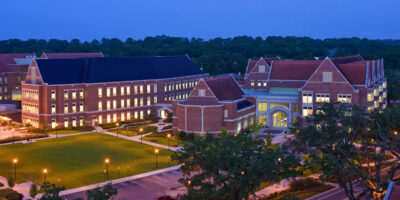
- The MD program is based in the downtown Tampa Morsani College of Medicine and Heart Institute building at 560 Channelside Drive, close to Tampa General Hospital and CAMLS. Many clinical rotations take place on the USF Tampa campus medical complex, home to the Morsani Center for Advanced Healthcare, with the James A. Haley VA next door.
- The school is public. It is part of the State University System of Florida, so Florida residents pay a much lower tuition rate than nonresidents.
USF is a research-intensive medical school. It earned the highest Tier 1 research rating from U.S. News & World Report in 2025 and again in 2026, as one of just 16 medical schools nationwide with that designation and the first in Florida to receive it. Federal research support is substantial: $144,979,419 in total direct federal research grants and contracts in fiscal year 2024. For applicants who want pre-med internships and research before medical school, that research base also means USF faculty publish widely in fields you may already be reading about.
Medical Programs and Affiliations
USF Morsani College of Medicine is particularly attractive because of the number, variety and quality of the residency programs and clinical departments around it. Through its Graduate Medical Education office, USF sponsors residency and fellowship programs in most hospital-based, medical and surgical specialties, including:
- USF Psychiatry Residency
- USF Emergency Medicine Residency
- USF Plastic Surgery Residency
- USF General Surgery Residency
- USF Pediatrics Residency
Clinical teaching also takes place in strong departments such as Physical Therapy, Neurosurgery, Neurology, Obstetrics and Gynecology, Orthopaedic Surgery, Ophthalmology, Cardiology, Emergency Medicine, Psychiatry and Urology. Medical students do not choose a residency at USF, but a deep bench of residents and fellows means more teaching on the wards and more faculty to approach for research and mentoring.
Medical Education (MD)
USF offers one four-year MD program in Tampa, which the school calls the MD or Core program. It features “a strong preclinical integrated curriculum with a small group and engaged learning emphasis, integrated clerkships, and year 4 career tracks.” The Scholarly Concentrations Program lets students focus on an area of interest outside the core curriculum. The curriculum is described in detail in the next section.
SELECT MD Program (Closing)
For more than a decade, USF also ran the SELECT MD Program (Scholarly Excellence. Leadership Experiences. Collaborative Training.). SELECT students spent two years in Tampa and then two clinical years at the USF-Lehigh Valley campus in Allentown, Pennsylvania, with the Lehigh Valley Health Network. The program shared the Core curriculum and added a graduate certificate in leadership, health systems and values-based patient-centered care, built on the idea that students with strong emotional intelligence become better physician leaders. The traits it recruited for were intellectual perspective, empathy, creativity and the passion to change patient care, the health of communities and the medical profession.
SELECT is ending. USF has begun to sunset the program because Lehigh Valley Health Network merged with Jefferson Health. The SELECT MD program will end with the graduating Class of 2027, and USF is not admitting new SELECT students. If you apply in the 2026-2027 cycle, you are applying to the Tampa MD program. Older guides and forum posts that describe a SELECT essay or a choice between tracks no longer apply.
7-Year BS/MD Program
The 7-Year B.S./M.D. Accelerated Program is a partnership between MCOM and the USF Judy Genshaft Honors College. It is open to first-time-in-college freshmen, who must first be accepted into the Honors College. Students complete their bachelor’s degree at USF in three years and then spend four years at MCOM, as long as they keep meeting program benchmarks, including a successful MCOM interview. About 20 of the estimated 140 new entrants each year come through this pathway. High school students considering it should look at the Honors College application timeline in their senior year; medical internships for high school students are one way to test an interest in medicine before committing to an accelerated track.
MD/PhD Degree
The USF Morsani College of Medicine-Moffitt Cancer Center MD/PhD Program trains a small group of physician-scientists, with about five new entrants a year. Its structure is two years of preclinical medical school, four years of research training and two years of clinical rotations. Admitted students receive a full tuition waiver for the entire program, a cost-of-living stipend and comprehensive health insurance.
The program’s partnership with Moffitt Cancer Center, Florida’s first NCI-designated Comprehensive Cancer Center, is its signature. Research areas include cancer biology, immunology and immunotherapy, neuroscience, cardiovascular science, infectious diseases, genetics and genomics, pharmacology and drug discovery, biomedical engineering, artificial intelligence and machine learning, mathematical and computational oncology, and public and global health. The program seeks applicants who bring “significant research experience, outstanding academic performance, competitive MCAT scores,” and curiosity and resilience. MD/PhD applicants apply through AMCAS and should follow the program’s own How to Apply page for any added steps.
Physician Assistant Program (PA)
The University of South Florida PA Program is a separate, intensive 24-month program in the Morsani College of Medicine. It prepares graduates to practice patient-centered, evidence-based medicine, and it trains PA students alongside medical, nursing and pharmacy students. PA applicants apply through CASPA, not AMCAS.
The USF PA program’s requirements are competitive:
- A bachelor’s degree from a U.S. regionally accredited college, completed by the end of the fall semester before matriculation
- A minimum overall GPA of 3.0 and science GPA of 3.0, as calculated by CASPA
- The GRE, taken within the past five years
- Prerequisites including microbiology with lab, organic chemistry with lab, organic chemistry II or biochemistry, two semesters of human anatomy and physiology with lab, statistics and medical terminology
- At least 500 hours of direct patient care experience in a health care setting before applying (shadowing does not count toward these hours)
Like other Florida PA programs, the first phase is didactic, with thorough instruction in the basic and medical sciences taught through lectures, problem-based small groups, clinical simulation and laboratory work. The clinical phase places students with faculty and preceptors across Tampa Bay, including Tampa General Hospital, Moffitt Cancer Center and the James A. Haley VA Medical Center, in core areas such as internal medicine, family medicine, pediatrics, surgery, emergency medicine, women’s health and behavioral health. Graduates earn a Master of Physician Assistant Studies and are eligible to sit for the Physician Assistant National Certifying Exam (PANCE). The program holds Accreditation-Continued status from the ARC-PA, with its next validation review expected around March 2031. Shadowing does not count toward the 500 hours, so PA applicants need hands-on patient care roles.
Physical Therapy (DPT)
The USF School of Physical Therapy and Rehabilitation Sciences has declared its mission to “Move Lives Forward.” The school houses the Doctor of Physical Therapy degree program, a Professional Athletic Training Program and an Orthopaedic Residency Program. DPT students train in anatomy and science, diagnosis of movement problems and treatment planning, then move into clinical education. The school runs its own physical therapy center, which provides clinical care to the Tampa Bay community, and it shares an interprofessional environment with the MD, PharmD, nursing and public health programs. USF was the first state university in Florida to offer the DPT.
Master’s in Medical Sciences (MS)
The USF Master of Science in Medical Sciences (MSMS) has several pathways designed to help students build a foundation for careers in medicine and research. Courses are taught by Morsani College of Medicine faculty. The pre-medical track concentrations are:
- Pre-Professional Program (MSP3), a one-year program that covers topics from the first and second years of medical school
- Health Sciences (100% online), which mirrors the pre-professional curriculum and takes one extra semester
- Anatomy, a one-year concentration in gross anatomy, neuroanatomy, embryology, histology and pathology
There are also research tracks, including Aging and Neuroscience, Molecular Medicine and Women’s Health, for students interested in a career in medical research or a future PhD in biomedical sciences. Completing the MSMS does not guarantee admission to the MD program; it is a separate graduate degree.
Clinical Affiliations
MCOM’s main clinical partners are Tampa General Hospital, its primary teaching affiliate; Moffitt Cancer Center; All Children’s Hospital in St. Petersburg; the James A. Haley Veterans’ Hospital in Tampa and the Bay Pines VA Healthcare System; and USF Health’s own outpatient centers, including the Carol and Frank Morsani Center for Advanced Healthcare and the South Tampa Center for Advanced Healthcare. Community training partners also include various rural clinics. These sites are covered in more detail in the clinical rotations section below.
Curriculum Overview
The MD curriculum runs four years. Years 1 and 2 are an integrated, organ system-based continuum; year 3 is a set of paired, integrated clerkships; and year 4 is built around a specialty track that prepares students for residency.
Years 1 and 2: Integrated Medical Science
Years 1 and 2 introduce normal and disease processes organ system by organ system, with growing emphasis on diseases and therapy as the courses progress. Each course blends anatomy, physiology, pathophysiology, cell biology, biochemistry, microbiology and pharmacology for the organ system under study. Year 1 courses also explore disease models while teaching normal processes, rather than holding disease until year 2.
Year 1 courses:
- Musculoskeletal System: dissection-based anatomy of the back and extremities, with the physiology and biochemistry of muscle contraction
- Cancer Biology: molecular and cellular biology, genetics and immunology taught through cancer pathogenesis and treatment
- Cardiovascular and Pulmonary Systems: structure and function of the heart, lungs, vessels and blood
- Gastrointestinal, Endocrine, Renal and Reproductive Systems
- Neurological System: neurobiology, neuroanatomy, the motor and sensory systems and core principles of pharmacology
Year 2 courses:
- Infection and Immunity: immunology, microbiology, hematology and the gastrointestinal system, with an introduction to clinical medicine
- Cardiovascular, Pulmonary and Renal Systems: pulmonology, cardiology, nephrology, organ transplantation and multi-organ disease
- Neurology, Endocrinology, Reproductive Health, Rheumatology and Dermatology: including psychiatry, men’s and women’s health and common ambulatory problems
Doctoring and Evidence-Based Clinical Reasoning
Two longitudinal courses run alongside the science courses:
- Doctoring I-IV. For the first three years, students meet in small groups to learn interviewing, physical diagnosis and differential diagnosis, along with bioethics, medical humanities, health systems and economics, and community, preventive and public health. The course also introduces care of special populations, including people with disabilities. Doctoring IV in year 4 is a 14-week longitudinal course on leadership, teaching as a resident, pain management, management of substance use disorder, patient safety, life support, disaster management and financial wellness.
- Evidence-Based Clinical Reasoning I-II. A two-year sequence that starts with statistics and evidence-based medicine and then moves to small-group problem-based learning cases, where students research topics and teach their peers.
Early Clinical Experience
USF puts students with patients from the first year. In the Doctoring Clinical Experience, first- and second-year students work with physician preceptors for one half day each week; over two years, each student works with two different preceptors in primary care and specialty practices. All students also meet weekly one-on-one with a primary care physician in years 1 and 2 for mentoring and coaching on interviewing and physical diagnosis. Students practice skills with standardized patients and simulators in the Center for Experiential Learning and Simulation and at CAMLS.
Year 3: Integrated Clerkships
Year 3 clerkships in Tampa are built around the patient’s experience rather than around single departments, with multiple departments teaching together at Tampa General Hospital, the Haley VA, All Children’s Hospital and the Morsani Center. The year includes:
- Primary Care: an eight-week interdisciplinary outpatient clerkship in family medicine, internal medicine and pediatrics, focused on common chronic diseases and prevention
- Adult Medicine: inpatient care of acute adult illness
- Surgical Care: general, trauma, vascular and gynecologic surgery, surgical subspecialty selectives and simulation training at CAMLS
- Psychiatry and Neurology: paired five-week clerkships
- Women’s Health and Pediatric Medicine: paired four-week clerkships, including labor and delivery, prenatal care, newborn nursery and inpatient pediatrics
- Two 2-week electives to explore other careers or do research
Year 4: Specialty Track
Year 4 requires nine months of coursework. Students spend three to five months in a specialty track that prepares them for a specific residency, including a four-week acting internship with direct patient management responsibility, two four-week specialty selectives, a four-week unstable patient course in an ICU or emergency department, and a two-week course on specialty-specific Entrustable Professional Activities. Each student also completes a four-week general elective (or an independent study or away elective) and the 14-week Doctoring IV course.
Scholarly Concentrations Program
The Scholarly Concentrations Program (SCP) is one of USF’s defining features and the subject of a secondary question in recent cycles. During years 1 and 2, every student takes the Scholarly Concentration Course, an umbrella course for the concentration curricula. Students choose a concentration by the end of September of year 1, after a faculty showcase, about two months of “concentration shopping” and a student Round Robin event. After year 2, students may continue in the elective SCP through years 3 and 4.
Students who continue must complete at least 180 contact or activity hours over four years and a capstone scholarly project by February 15 of their fourth year. Capstones can be hypothesis-driven research, service, innovation, clinical experience or a case study, with a scholarly write-up. Students who finish can graduate with distinction in SCP.
The current concentrations are:
- AI in Medicine
- Biomedical Research
- Community Health and Wellness
- Health Systems Engineering
- Innovation, Entrepreneurship and Business in Medicine
- International Medicine
- Law and Medicine
- Medical Education
- Medical Humanities
- Nutrition Research and Health
- Public Health
- Sex-Based and Sociocultural Differences in Health and Disease
The International Medicine concentration offers global health research and health care delivery experience abroad, help finding travel funding, virtual research with international partner institutions and training in clinical skills for any global setting. Applicants who have done pre-med internships abroad often find it a natural fit, and those with Spanish-language experience, such as a medical internship in Peru, can connect it to past student projects in Panama and Latin America.
Grading, Support and Requirements
USF uses tiered grading and maintains a chapter of Alpha Omega Alpha, the national medical honor society, which it has held since 1976. Students also complete a community service requirement during medical school, with international, national and local opportunities. There is no research or thesis requirement, but most students do research through a summer project after year 1, elective time in years 3 and 4 or the SCP. A pre-matriculation program, Medical Science Skills Development, is offered to entering students who may benefit from reviewing foundational sciences, and the Academic Support Center offers tutoring on weekdays and weekends.
Admissions Requirements and Application Process
Selection Factors: What USF Medical School Looks for in an Applicant
The Admissions Committee, formally the Medical Student Selection Committee, uses a comprehensive, holistic review. USF evaluates applicants on:
- Personal attributes and achievements
- Academic record
- Performance on the MCAT
- Letters of recommendation
- Interviews
- Demonstrated motivation for medicine and helping others
In choosing whom to interview, the committee considers academic achievement, demonstrated motivation to practice medicine, humanism and leadership, and it reviews interview evaluations, letters, course load and the types of courses taken. Applicants from diverse backgrounds, rural communities and groups underrepresented in medicine are encouraged to apply. USF does not use race or gender preferences in admissions, a policy in place since 1999. Test scores and GPA are important, but the committee reads the whole application, and the school urges applicants to submit the AMCAS and secondary applications as soon as possible.
Citizenship, Residency and Eligibility
Successful applicants to USF, like other medical schools in Tampa, must be U.S. citizens or permanent residents. A green card must be in your possession when you submit AMCAS. International students on student (F1) visas and DACA recipients do not qualify, although exceptions may be considered case by case. USF does not accept undergraduate degrees or credit earned outside the United States, including in Canada.
Florida residency for tuition requires proof of permanent residency in Florida for the 12 months before registration. Typical supporting documents are a Florida driver’s license, vehicle registration and voter registration card. Non-Florida residents are considered for every seat; there is no required connection to Florida.
All accepted applicants must pass a criminal background check. USF runs it through Certiphi Screening after an applicant reaches conditional acceptance.
Candidates with disabilities are welcome to apply, and the school provides reasonable accommodations. Every student must be able to meet the school’s technical standards in five domains: observation; communication; clinical skills; intellectual-conceptual, integrative and cognitive skills; and behavioral attributes, social skills and professional expectations.
Undergraduate Degree and Prerequisite Courses
You must complete a bachelor’s degree at a regionally accredited U.S. college or university by matriculation, and you may major in any discipline. All prerequisites must be finished at a U.S. regionally accredited institution by matriculation, under the MD academic requirements (Early Decision applicants by August of their entering year). Required coursework may not be taken pass/fail or online, although exceptions may be considered case by case. Applicants already in a graduate or professional program must finish that degree before starting the MD.
Required courses:
- Biological science with lab: at least two semesters at the college level, covering core concepts. If you took basic biology through dual enrollment or AP, USF strongly encourages two semesters of other biological sciences in college. Strong consideration is given to molecular biology, genetics and microbiology.
- Chemistry with lab: at least two semesters at the college level, with the same dual enrollment and AP guidance.
- Organic chemistry with lab: at least one semester. Organic chemistry II may be taken in place of biochemistry.
- Biochemistry principles: at least one semester.
- Physics with lab: at least two semesters, at least one in college.
- Mathematics: at least two semesters, at least one in college. Statistics and calculus are recommended.
- English or expository writing: two semesters at the college level, either two English courses or one English course and one course with substantial expository writing.
Recommended coursework: psychology, sociology, the arts and humanities and ethics, with at least 15 semester hours of general coursework in these areas, plus molecular biology, genetics and microbiology. USF also strongly encourages research and independent scholarly activity.
USF prefers that you take prerequisites at your degree-granting institution, but courses from a junior college are acceptable if you started there; in that case, take additional upper-level science at a four-year school. AP credit is accepted. Coursework completed more than five years before application is evaluated case by case. Our medical school prerequisites checklist can help you map USF’s list against other schools’.
Minimum GPA and MCAT Requirements for USF Morsani College of Medicine
USF Morsani College of Medicine does not have a minimum GPA or MCAT for regular decision applicants, and every applicant who submits AMCAS receives the secondary. The numbers of admitted students are very high, however. The Class of 2030 had a median MCAT of 521, among the highest of any Florida medical school, and a median overall GPA of 3.98. Plan with the class profile in mind, not the absence of a cutoff.
MCAT rules:
- The MCAT must be taken within three years before entry. Older scores may be considered case by case.
- The latest MCAT accepted for the 2026-2027 cycle is September 10, 2026. September scores count; January scores do not count for the same cycle.
- The committee sees every MCAT you have taken since 1991.
- Early Decision applicants need an MCAT of at least 518, with at least 126 in each section, and a minimum overall and science GPA of 3.8.
Volunteer Service and Clinical Experience
USF has no minimum number of volunteer or clinical hours. Still, it cannot be overstated that good, quality medical experience is highly favorable with the Admissions Committee. Experience in medical and paramedical areas helps applicants understand health care delivery and confirms their motivation, while volunteering and community service “provide insight to the humanistic nature of an applicant.”
Shadowing is required. Physician shadowing means observing a physician’s day, how they communicate with patients and how they work with a health care team.
The admitted class shows what “competitive” looks like. In the 2025 entering class, 98% of matriculants reported physician shadowing or clinical observation, 96% research or lab work, 92% community service or volunteering, 86% medical or clinical volunteering and 66% paid clinical employment.
If you are planning early, take this as encouragement to start gaining medical experience now. One strong option is to combine local service with clinical internships for pre-med students, where you take vitals, do intake and triage and help with direct care under supervision. IMA runs healthcare internships abroad that add hands-on clinical experience and exposure to different health systems. Keep a log of your hours, patients and reflections as you go; you will need specifics for your AMCAS descriptions and the secondary.
USF Morsani College of Medicine Letters of Recommendation
USF requires three letters of recommendation, submitted through the AMCAS Letter Service. Five letters are recommended, and the school accepts up to five. At least one letter must come from a science faculty member who taught you in a formal course, such as biology, chemistry or physics. A teaching assistant does not count as faculty. Do not mail letters to USF; letters that arrive outside AMCAS are not accepted.
You can meet the requirement in one of three ways:
- Letter packet: submit your undergraduate institution’s pre-professional letter packet to AMCAS. No other letters are needed.
- Committee evaluation letter: submit your institution’s committee letter to AMCAS. No other letters are needed.
- Individual letters: submit at least three, including at least one science faculty letter.
Other letters can come from non-science faculty (math, psychology, English, humanities, history and similar fields) or from people who know your work outside class, such as physicians you have shadowed, research mentors and volunteer supervisors. Character letters should not come from family members, peers or relatives, and they should back up the experiences in your AMCAS application.
Nontraditional applicants who have been out of school for more than two years and can no longer get a science faculty letter may submit letters from a lab or employment supervisor, with at least two letters in total. If only one letter arrives, your file is incomplete and will not be reviewed, so confirm in AMCAS that your letters are released to USF.
Does USF Medical School Require the CASPer Exam?
No. USF does not require CASPer or any other additional assessment for admission, and it does not use AAMC PREview scores.
AMCAS Primary Application and USF Medical School Secondary Application
USF uses AMCAS for the primary application. AMCAS collects your coursework, activities, personal statement and letters, verifies your transcripts and forwards the verified application to each school you select. It can take four to six weeks after you submit for AMCAS to transmit your data to USF. Our AMCAS application guide covers the primary in detail.
Once USF receives your verified application, it emails you an invitation to the secondary. Every applicant receives one. A complete secondary includes:
- The electronically submitted secondary application
- The non-refundable $30 fee (fee waivers are available)
- A completed Florida residency form and supporting documents
- Your letters of recommendation, released through AMCAS
The secondary lets the committee see who you are as an individual, how you would add to the student body and your vision for a career in medicine. The committee then reviews files and invites a select group to interview.
USF does not accept application updates unless the admissions office or your interviewer asks for them. Update your address and phone number through AMCAS, not by contacting the school.
Early Decision
Only applicants who fully intend to attend USF if accepted should apply through the Early Decision Program (EDP). An EDP acceptance is a binding commitment, and EDP applicants may not apply to other schools until they are released. Applicants not considered for an EDP interview may be reviewed in the regular cycle and are then free to apply elsewhere. EDP applicants need an MCAT of at least 518 (126 or higher in every section) and at least a 3.8 overall and science GPA; applications that fall short are moved to the regular pool.
Application Timeline for the 2026-2027 Cycle
| Date | What happens |
|---|---|
| Late May to June 2026 | AMCAS opens for submission. USF reviews on a rolling basis, so apply early. |
| July to November 2026 | USF receives verified AMCAS applications (four to six weeks after submission). |
| July 2026 to January 2027 | Secondary invitations are emailed. |
| August 3, 2026 | Early Decision: AMCAS application deadline. |
| August 31, 2026 | Early Decision: all secondary materials due. |
| August 2026 to March 2027 | Applications reviewed; regular interview invitations sent. |
| September 10, 2026 | Latest MCAT test date accepted for this cycle. |
| October 1, 2026 | Early Decision decisions sent. |
| Mid-October 2026 to May 2027 | Rolling offers of admission. |
| January 15, 2027 | AMCAS application deadline. |
| January 31, 2027 | Deadline for all secondary application materials. |
| April 2027 | Interviews end for the cycle. |
| April 30, 2027 | Applicants holding more than one acceptance choose one school and withdraw from the others (AAMC traffic rule). |
| June 2027 | Applicants accepted after April 30 have until June 9 to make a final decision; prerequisite courses must be complete. |
| July 2027 | Classes begin. |
Decisions, Deposits, Deferrals and the Waitlist
All admissions decisions are made by the Medical Student Selection Committee and are final. Interviewed applicants are accepted, waitlisted or rejected, and offers go out on a rolling basis from mid-October to May. USF does not require a deposit to hold a seat. Deferral requests are considered case by case.
The waitlist typically holds about 50 applicants. It is not ranked, and the school will not tell you your position. Seats may open after the April 30 AAMC deadline and can be offered until the first day of class. You may hold an acceptance elsewhere while waitlisted at USF, but choosing “commit to enroll” at another school automatically withdraws you from USF. Waitlisted applicants may send a letter of intent to [email protected], but a letter of intent does not increase the chance of acceptance or influence the decision; send one only if it is true.
USF considers transfer students only between the second and third years, from LCME-accredited schools, after passing USMLE Step 1, and only for U.S. citizens and permanent residents, subject to space.
Tuition, Cost of Attendance and Financial Aid
USF is a public school, so tuition depends on Florida residency. For 2026-27, MD Core tuition and fees are $33,693.79 for Florida residents and $60,498.71 for nonresidents. Florida medical school tuition is a flat yearly rate, regardless of the hours a student takes.
The figures below are USF’s published cost of attendance for the 2026-27 academic year, for Florida residents and nonresidents living off campus. The cost of attendance is an estimate used to set financial aid eligibility, not a bill, and fees are subject to change. The budget uses the prior aid year’s tuition and fees, which is why nonresident tuition appears as $60,500. Health and disability insurance, USMLE and residency application costs are included in the personal allowance line.
Year 1
- Tuition and Fees: $33,694 FL resident / $60,500 non-resident
- Housing: $14,000
- Food: $7,212
- Books and Supplies: $1,388
- Transportation: $5,255
- Personal Allowances: $7,413
- Total: $68,962 FL resident / $95,768 non-resident
Students with a summer enrollment component in year 1 have a larger budget: $74,859 for Florida residents and $100,408 for nonresidents.
Year 2
- Tuition and Fees: $33,694 FL resident / $60,500 non-resident
- Housing: $15,400
- Food: $7,934
- Books and Supplies: $2,119
- Transportation: $5,723
- Personal Allowances: $8,635
- Total: $73,505 FL resident / $100,311 non-resident
Year 3
- Tuition and Fees: $33,694 FL resident / $60,500 non-resident
- Housing: $16,800
- Food: $8,655
- Books and Supplies: $1,841
- Transportation: $3,980
- Personal Allowances: $9,286
- Total: $74,256 FL resident / $101,062 non-resident
Year 4
- Tuition and Fees: $33,694 FL resident / $60,500 non-resident
- Housing: $15,400
- Food: $7,934
- Books and Supplies: $220
- Transportation: $5,778
- Personal Allowances: $9,356
- Total: $72,382 FL resident / $99,188 non-resident
Added up, the four-year estimated cost of attendance in the 2026-27 budgets is about $289,000 for a Florida resident and about $396,000 for a nonresident, before any scholarships and before future tuition changes. The budget assumes students share a two-bedroom apartment within 10 miles of downtown Tampa; a laptop is not included but can be added case by case.
| Program year | Florida resident | Nonresident |
|---|---|---|
| Year 1 (Class of 2030) | $68,962 | $95,768 |
| Year 2 (Class of 2029) | $73,505 | $100,311 |
| Year 3 (Class of 2028) | $74,256 | $101,062 |
| Year 4 (Class of 2027) | $72,382 | $99,188 |
For comparison, the AAMC’s national tuition survey lists USF’s first-year tuition and fees for 2025-26 at $33,726 in state and $57,036 out of state, with total first-year costs of $71,974 and $95,284.
Financial Aid
Financial aid at USF is handled by the USF Health Office of Financial Aid. Aid includes federal Direct Unsubsidized and Grad PLUS loans, scholarships, employment and other resources. To be considered for federal aid, file the FAFSA every year using USF’s school code, 001537. For students entering in 2027, the 2027-2028 FAFSA opened September 23, 2026, and the priority deadline is January 1, 2027. Students with documented special circumstances can request a professional judgment review.
In the 2024-25 academic year, 88% of USF medical students received financial aid, and indebted graduates left with an average medical school debt of $194,099. MD/PhD students receive a full tuition waiver, stipend and health insurance. The Financial Aid Office also offers debt management and financial planning. Learning about the financial side of medical school early pays off; for more on costs across the country, see our Medical School Database, where we compare tuition and cost of attendance at U.S. and Canadian schools.
Campus Facilities and Student Life
Facilities
The MD program is based in the Morsani College of Medicine and Heart Institute building in downtown Tampa’s waterfront medical and research district. It is the world’s first certified Microsoft Medical Innovation Center of Excellence. Inside and around it, students use:
- The Experiential Learning Lab, a 5,000-square-foot black-box space on the third floor with moving walls that convert from exam rooms to simulation spaces
- The Florida Blue Health Knowledge Exchange, an almost entirely digital library with more than 4,500 online journals and 4,500 e-books, a video wall and a lecture recording space; the Shimberg Health Sciences Library serves the main Tampa campus
- The anatomy laboratory, with 24 dissection tables, overhead projection of prosections and digital imaging
- Small group learning rooms equipped with Microsoft Teams screens
- Collegia suites, apartment-style lounges with kitchens for each of the nine Collegia, the school’s learning communities
- A Serenity Room for meditation and prayer, plus a student gym and relaxation room on the main campus
- CAMLS, the 90,000-square-foot Center for Advanced Medical Learning and Simulation, a few blocks away
- The Center for Experiential Learning and Simulation, with 18 recorded patient encounter rooms for standardized patient practice
Other USF Health facilities that appear in the student experience include the Carol and Frank Morsani Center for Advanced Healthcare, the USF Health South Tampa Center, the Byrd Institute, the Interdisciplinary Research Building, USF Health core research facilities and the Moffitt Cancer Center.
Housing and Getting Around
The MD program points students to the USF Health off-campus housing portal, Rotating Room and ApartmentsForBulls.com. The housing portal, run with Crew Innovations as “Real Estate With Honors,” lists apartments, houses, condos and short-term furnished rentals near the downtown campus and clinical sites. A driver’s license and a car are recommended because rotations are spread across Tampa, St. Petersburg and Bay Pines.
Student Support
The Office of Student Affairs supports medical and physical therapy students with career advising from year 1 through year 4, wellness coaching and programming, professional development workshops and walk-in appointments. It plans the White Coat Ceremony, Match Day and Commencement. The M.A.P.S. office (Mentorship, Advising, Progress and Support) and specialty advisors help students plan for residency, and the Academic Support Center provides tutoring.
Honor Societies
- Alpha Omega Alpha recognizes scholarship and professionalism; USF has had a chapter since 1976.
- The Barness-Behnke Chapter of the Gold Humanism Honor Society inducts fourth-year students chosen by peers for compassion and patient-centered care.
- The Robert A. Good Honor Society, founded at USF in 2017, recognizes students, faculty and alumni for research, innovation and scholarship.
Student Organizations
USF has more than 50 medical student organizations, from specialty interest groups to service and social clubs. The school’s list, updated in September 2026, includes:
A.I. and Technology in Medicine; Addiction Medicine Interest Group; Advocacy for Survivors; American Association of Neurological Surgeons at USF Student Chapter; American Medical Association; American Medical Women’s Association; Anesthesiology Interest Group; Artificial Intelligence in Radiology Student Interest Group; Asian American and Pacific Islander Mentorship; Asian Pacific American Medical Student Association; Association of Medical Science Graduate Students (AMSGS); Association of Physical Therapy Students; Association of Physician Assistant Students; Athletes in Medicine; Athletic Training Students’ Association; BRIDGE Healthcare Clinic; Bulls Birding Club; Canine Companion Collar Scholars; Cardiology Interest Group; Cardiothoracic Surgery Interest Group; Christian Medical and Dental Association; College Football Interest Group; College of Medicine Allocation Committee; College of Medicine Wellness Council; Crochet for Kids at MCOM; Dermatology Interest Group; EdByMed; Emergency Medicine Interest Group; Family Medicine Interest Group at USF; Fitness Rx; Health Buddies at USF; Healthcare Improvement Group; Interdisciplinary Oncology Interest Group; Internal Medicine Interest Group; International Health Service Collaborative; Interventional Radiology Student Interest Group; Latino Medical Student Association at Morsani College of Medicine; Let’s PLAY; MCOM Athletic Club; MCOM Book Club; MCOM Collegia; MCOM Dance Club; MCOM Nephrology Interest Group; MCOM Plant Club; MCOM Running Club; MCOM Student Council on Diversity and Inclusion; MCOM Wellness Installment; Medical American Sign Language; Medical Cooking Club; Medical Education Outreach Program; Medical Genetics Interest Group; Medical Mandarin; Medical Music Club; Medical Simulation Interest Group; Medical Spanish Club; Medical Students for Choice; Medical Vietnamese; Medicine in Motion; Morsani Chess Club; Morsani College of Medicine Disability Coalition; Morsani College of Medicine Green Club; Morsani Mahjong; Morsani Student Council; Muslim Student Doctor Association; Narrative Medicine Interest Group; Obstetrics and Gynecology Interest Group; Oncology and Hematology Interest Group; Orthodox Christian Medical Fellowship; Orthopaedic Surgery Interest Group; Otolaryngology Interest Group; Pathology Interest Group (PATHOS); Pediatrics Interest Group; Physical Medicine and Rehabilitation Interest Group; Plastic Surgery Interest Group; Plastic Surgery Outcomes Research Team; Point-of-Care Ultrasound Interest Group; Preventive and Integrative Medicine Interest Group; Project Hillsborough Health; Project World Health; Psychiatry Interest Coalition; Radiation Oncology Interest Group; Radiology Interest Group; South Asian Medical Student Association; Sports Medicine Interest Group; Student Interest Group in Neurology; Student Interest Group in Ophthalmology; Student National Medical Association; Student Physicians for Social Responsibility; Surgical Interest Group – CORE; Surgical Outcomes Research Team; Suture Club; Tampa Bay Street Medicine; The Pulse Student Review; Urology Interest Group; Vascular Surgery Interest Group; Virtual Reality in Medicine Special Interest Group; Vot-ER at USF; Women Building Women; Women in Orthopaedic Surgery; Women in Radiology; Women in Surgery Interest Group; and YYC AfterHours.
Service is a big part of student life. The BRIDGE Healthcare Clinic is a student-run free clinic, and Tampa Bay Street Medicine, Project Hillsborough Health and Project World Health take care outside hospital walls. Applicants who have done medical internships for undergraduates in community clinics will recognize the work: intake, vitals, patient education and follow-up.
Outside class, students use the university recreation center and athletic fields, and downtown Tampa offers the Riverwalk, Channelside, Amalie Arena and waterfront parks within walking distance of the medical school.
Clinical Rotations and Research Opportunities
Clinical Training Sites
USF medical students learn at a wide range of hospitals and teaching centers, among the busiest in the region. The main sites are:
- Tampa General Hospital (TGH): the primary teaching affiliate. TGH is a Level I trauma center and the region’s only burn center, and it performed the first heart transplant in Florida. Most core clerkships include time here.
- James A. Haley Veterans’ Hospital: one of the busiest hospitals in the VA system, with a spinal cord injury unit and residency training in most medical and surgical specialties. It opened in 1972, a year after the medical school.
- Moffitt Cancer Center: Florida’s first NCI-designated Comprehensive Cancer Center, connected to the USF Tampa medical complex. USF physicians staff many of its clinics, and it anchors the MD/PhD program.
- All Children’s Hospital (St. Petersburg): a regional children’s hospital with pediatric, cardiac and neonatal intensive care units, transplant programs and a large pediatric cancer program.
- Bay Pines VA Healthcare System: a large VA medical center with acute care, psychiatry, substance use and nursing home units, which trains hundreds of medical, nursing and allied health students a year.
- Carol and Frank Morsani Center for Advanced Healthcare: a 196,000-square-foot ambulatory surgery and specialty center on the USF Tampa campus, opened in 2008, with eight operating rooms and five endoscopy suites. Students train here with neurosurgery, neurology, psychiatry, digestive disorders, ENT, sports medicine and women’s health faculty.
- USF Health South Tampa Center for Advanced Healthcare: an outpatient center on the TGH campus where surgery, obstetrics and gynecology, neurology, pediatrics and internal medicine faculty see patients, often used in third- and fourth-year rotations.
USF Health’s own practice, the largest multispecialty group practice on Florida’s west coast with more than one thousand clinical care providers, adds outpatient sites across the region. Because sites are spread across Tampa, St. Petersburg and Pinellas County, plan for driving time during the clinical years.
Simulation
Simulation is woven into the clerkships. The Center for Experiential Learning and Simulation (ELS) has 18 exam rooms that record video and audio so faculty can review each encounter, standardized patients for communication practice and full-body and cardiac simulators. CAMLS, a 90,000-square-foot, three-story center in downtown Tampa, combines simulation technology, aviation-style team training and evidence-based practice. Surgical clerkship simulation sessions at CAMLS are required.
Research
USF does not require a thesis, but most students do research. Common routes are:
- A mentored summer research project between years 1 and 2 (the Summer Research Elective)
- Elective time in years 3 and 4
- The Scholarly Concentrations Program, including the Biomedical Research concentration for students who want to develop as physician-scientists
The RISE office (Research, Innovation and Scholarly Endeavors), launched in 2015 in the Department of Medical Education, is the hub. It helps students find a mentor and project, provides consultations on study design and biostatistics, coaches writing and presenting, and showcases student work. This support often leads to first-author publications for medical students. All scholarly work, including research, innovation, business and creative arts, is documented through the Archivum platform once a student enrolls.
Community and Global Health
Community outreach is a long tradition at the college. Students can join the BRIDGE Healthcare Clinic, Project World Health, the International Health Service Collaborative and Tampa Bay Street Medicine, or the International Medicine concentration. About 11% of USF’s 2025 graduating seniors reported a global health experience during medical school. Applicants who want to show this kind of interest before medical school can look at pre-health internships that include community clinic work, which builds the service record USF values.
Notable Alumni, Faculty, Leadership and Admissions Staff
The people below hold current roles listed on official USF pages, or are MD graduates recognized by the MCOM Alumni Society in 2026. They are listed so you understand who leads the school and the kind of work its faculty and graduates do. None of them can be assumed to mentor any particular applicant.
School Leadership
Charles J. Lockwood, MD, MHCM, Executive Vice President of USF Health and Dean of the Morsani College of Medicine. Dr. Lockwood leads the Morsani College of Medicine as well as the Colleges of Nursing, Public Health and Pharmacy and the School of Physical Therapy and Rehabilitation Sciences. He also oversees USF Health’s multispecialty group practice. He is a member of the National Academy of Medicine. Welcoming the Class of 2030, he said its members “had their choice of outstanding medical schools,” a reminder that USF competes with top national programs for admitted students.
Bryan Bognar, MD, MPH, FACP, Vice Dean for Educational Affairs. Dr. Bognar is also Senior Associate Vice President for Student Success at USF Health, founding chair of the Department of Medical Education and a professor of internal medicine. The curriculum, simulation and student support offices described in this guide sit within his area.
Deborah DeWaay, MD, FACP, Senior Associate Dean for Undergraduate Medical Education. Dr. DeWaay leads the MD curriculum office, which oversees the integrated courses and clerkships.
Christopher Jackson, MD, Associate Dean for Student Affairs. Dr. Jackson leads the Office of Student Affairs, which provides career advising from year 1, wellness programming and the major class events, from the White Coat Ceremony to Match Day.
Admissions
Edwing Daniel, PhD, Associate Dean for MD Admissions and Scholarships. Dr. Daniel is also Assistant Vice President for Admissions at USF Health and an assistant professor in the Department of Medical Education. The MD admissions office is reached at [email protected]; contact information changes should go through AMCAS.
Faculty
Rahul Mhaskar, MPH, PhD, Associate Dean for Medical Student Research and Faculty Director of RISE. Dr. Mhaskar directs the office that helps students find research mentors and learn study design and biostatistics. If research matters to you, RISE is the office whose work you will feel most directly.
J. Zachary Porterfield, MD, PhD, Co-Director of the USF MCOM-Moffitt MD/PhD Program. Dr. Porterfield is an associate professor in the Division of Infectious Disease and International Medicine and an assistant dean, and he is also listed among the faculty leaders of the International Medicine scholarly concentration.
Yao Yao, PhD, Co-Director of the MD/PhD Program. Dr. Yao is a professor in the Department of Molecular Pharmacology and Physiology and an assistant dean.
Ingrid Bahner, PhD, Co-Director of the Scholarly Concentrations Program. Dr. Bahner co-directs the SCP with Shannon Bailey, PhD, Andy Crofton, PhD, and Susan Pross, PhD. The SCP directors describe the program’s purpose as helping students “embrace the challenges of discovery and scholarship.”
Rafael Carrion, MD, Chair of Urology. Dr. Carrion is chair of the College of Medicine’s urology department. His subspecialties are sexual medicine, neurourology, Peyronie’s disease, male health and general urology. He has published more than 40 peer-reviewed papers, has hosted more than 25 live surgery workshops at USF and received the American Urological Association’s young leadership award. He earned his MD at the University of Miami in 1997.
Anthony Bradshaw, MD, Neurology. Dr. Bradshaw is associate program director of the Clinical Neurophysiology Fellowship, associate director of the EMG Laboratory and an attending neurologist. His research interests include peripheral nerve hyperexcitability syndromes, inflammatory and necrotizing autoimmune myopathies, CIDP and other immune-mediated neuropathies, myasthenia gravis, neuromuscular complications of cancer, HIV and rheumatologic disorders, and muscular dystrophies. He earned his MD at the University of Virginia in 2015 and is board certified by the American Board of Psychiatry and Neurology.
Alumni
Jane Messina, MD ’88. Dr. Messina has diagnosed skin cancers and other diseases as a pathologist at Moffitt Cancer Center for nearly four decades and is a professor at the Morsani College of Medicine. She is medical director of Moffitt’s Mole Patrol, a mobile outreach program that has screened more than 25,000 people and found more than 80 melanomas at early, treatable stages. She received the 2026 MCOM Alumni Society Distinguished Physician Award in Academics.
Valerie Riddle, MD ’89. Dr. Riddle spent 26 years in the Washington, D.C., area, where she helped build a dedicated team and then a clinic to give patients with HIV continuity of care after hospital discharge. After returning to Tampa, she began teaching USF medical students and mentoring through USF programs. She received the 2026 Distinguished Physician Award in Service.
Jennifer Chevinsky, MD ’16. Dr. Chevinsky trained in preventive medicine, served as an Epidemic Intelligence Service officer at the CDC and is now the public health officer for Riverside County, California, which has more than 2.5 million residents. As a USF student she traveled to India to study social determinants of health. She received the 2026 Early Career Achievement Award in Academics.
These three careers show the range of paths USF graduates take: academic pathology, clinical service to underserved patients and public health leadership.
Admissions Statistics and Class Profile
The USF Medical School Acceptance Rate and Admissions Statistics
USF Morsani is highly selective, and the bar has risen sharply in recent years. The Class of 2030 enrolled 140 students with a median MCAT of 521, the 98th percentile nationally, alongside a median overall GPA of 3.98 and a median science GPA of 3.99, all college records. Of those 140, 66 students (47%) attended undergraduate institutions ranked among the Top 30 national universities by U.S. News & World Report, 68 attended Florida colleges or universities and 35 (25%) earned their undergraduate degree at USF itself, making USF the most represented university in the class. The class is also notably multilingual: 79% speak at least two languages and 38% speak three or more.
USF does not publish an acceptance rate, the number of applications it received or the number of offers it made. An acceptance rate is offers divided by applications for the same cycle, so no valid rate can be given. Avoid using any figure that divides enrolled students by applicants; that is a yield-based matriculation figure, not an acceptance rate.
USF Morsani College of Medicine’s Class of 2030 Profile
The following statistics describe the Class of 2030, the most recent entering class, which began in July 2026:
- Class Size: 140
- Median MCAT: 521 (98th percentile nationally)
- Median Overall GPA: 3.98
- Median Science GPA: 3.99
- From Top 30 ranked universities: 66 students (47%)
- Attended Florida colleges or universities: 68 students
- USF undergraduates: 35 students (25%)
- Speak two or more languages: 79%
- Speak three or more languages: 38%
Accepted Applicants, 2025 Entering Class
| Measure | Value | Source |
|---|---|---|
| MCAT total, all accepted applicants | Median 521; mean 520.8 (standard deviation 3.5) | AAMC MSAR school profile (2026 MSAR) |
| Chemical and Physical Foundations | Median 131; mean 130.4 | AAMC MSAR school profile (2026 MSAR) |
| Critical Analysis and Reasoning Skills | Median 129; mean 129.1 | AAMC MSAR school profile (2026 MSAR) |
| Biological and Biochemical Foundations | Median 131; mean 130.5 | AAMC MSAR school profile (2026 MSAR) |
| Psychological, Social and Biological Foundations | Median 131; mean 130.8 | AAMC MSAR school profile (2026 MSAR) |
| Median GPA | 3.97 | AAMC MSAR school profile (2026 MSAR) |
| Applicants interviewed | 948: 458 in-state, 490 out-of-state, 0 international | AAMC MSAR school profile (2026 MSAR) |
Three patterns stand out. First, CARS is the lowest section median at 129, while the science sections sit at 131; a balanced score with a solid CARS matters. Second, USF interviews slightly more out-of-state applicants than Florida residents, so it is not a school that reserves nearly all interviews for in-state applicants, even though residents pay far less. Third, with an estimated 140 new entrants (115 through the regular MD route, 20 through the BS/MD program and 5 MD/PhD), the number of seats open to regular applicants is smaller than the class size suggests.
Experience of Matriculants
| Experience | 2022 | 2023 | 2024 | 2025 |
|---|---|---|---|---|
| Community service or volunteer | 90% | 89% | 90% | 92% |
| Physician shadowing or clinical observation | 91% | 96% | 94% | 98% |
| Medical or clinical volunteer | 88% | 87% | 85% | 86% |
| Medical or clinical paid employment | 56% | 63% | 63% | 66% |
| Research or lab | 95% | 95% | 94% | 96% |
| Military service | 1% | 0% | 0% | 0% |
Research is nearly universal in recent USF classes, and two-thirds of the 2025 entering class had paid clinical work. Those two facts, more than any single number, describe the typical admitted student.
Tips and Strategies for Admission
1. Treat the numbers as the floor, then build the rest of the file. With a 521 median MCAT and a 3.98 median GPA, most interviewed applicants already have strong numbers. What separates them is the evidence behind the committee’s other criteria: humanism, leadership and motivation for medicine. Before you apply, list three experiences that show each of those qualities with a concrete result.
2. Get research experience you can talk about. Ninety-six percent of the 2025 entering class reported research, and the secondary has asked how the Scholarly Concentrations Program fits your goals. You do not need publications. You do need to explain a question you worked on, what you did and what you learned. If you have no research yet, a semester in a lab or a community health project with real data is worth more than a long list of short projects.
3. Build sustained, hands-on clinical experience. Shadowing is required, but two-thirds of the class also had paid clinical work. Roles where you touch patients, such as medical assistant, EMT, patient care technician or scribe, give you stories that show what you learned from patients. Pre-med summer internships can add focused clinical hours between semesters, as long as you can describe what you did and what you learned.
4. Read the Scholarly Concentrations pages before the secondary arrives. Pick one or two concentrations that match your past work. Look at the concentration’s description and past student projects, and be ready to explain how your experiences point to it. A generic answer here signals that you have not read anything about the school.
5. Plan your letters for USF’s rules. You need three letters, with at least one from a science faculty member who taught you in a formal course, and the school recommends five. A physician you shadowed or a research mentor can strengthen the set, as long as the letter backs up an experience in your AMCAS application.
6. Apply early in the cycle. USF reviews on a rolling basis, starts sending acceptances in mid-October and accepts the secondary through January 31. Submitting AMCAS in June and returning the secondary within about two weeks puts your file in front of the committee before many seats are filled.
7. Decide on Early Decision carefully. EDP makes sense only if USF is your clear first choice and you meet the 518 MCAT (126 per section) and 3.8 GPA minimums by the August deadlines. An EDP acceptance is binding, and you cannot apply elsewhere while your EDP application is pending.
8. If you are reapplying, show real change. USF does not accept application updates unless asked, so your new application has to show growth on its own. Many reapplicants use a gap year for full-time clinical work, research or service. Structured pre-med gap year programs can fit into that plan if they give you real responsibility and reflection to write about.
9. Prepare for a remote interview. All interviews are online through Microsoft Teams, so your setting, audio and video are part of the first impression. Practice on the platform and with someone who will give honest feedback.
10. Mind the logistics. Keep your contact information current in AMCAS, confirm your letters are released to USF, submit your Florida residency documents with the secondary and check your email regularly from July through spring.
Secondary Application Questions, Example Responses and Analysis

USF sends its secondary application by email to every applicant once AMCAS verifies the primary. The fee is $30, and the deadline for all secondary materials is January 31, 2027. Answer the questions exactly as they appear in your secondary, and stay within the character limit shown in each box.
The 2026-2027 questions are not posted publicly. USF delivers the current secondary only through its applicant link and does not publish the questions on its website. The questions below are the 2025-2026 set, the most recent set that can be confirmed word for word, plus the diversity essay USF used through the 2024-2025 cycle. They are labeled prior-cycle questions and are shown so you can practice. The current set may drop, add or reword questions, and in recent cycles USF has dropped one question at a time. If your portal marks a question optional, it is still worth answering well. For other schools’ questions, see our medical school secondary essay prompts database.
Every example below is an original illustration written for this guide. Each is labeled “Illustrative example, not an actual applicant essay.” Use them to see how a strong answer is built, not as text to copy; your answers must come from your own experiences.
Prior-Cycle Practice: COVID-19 and Your Application (2025-2026, 1,500 characters)
Prompt: “Do you believe the competitiveness (i.e. course requirements, experiences, academic performance, etc.) of your application for medical school has been impacted by the COVID-19 pandemic? 1500 characters.”
Who answers: All applicants. If your application was not affected, type “N/A.”
What it asks: Whether the pandemic changed what you could do, and if so, how. USF still asks this. Answer it only if something concrete happened: a cancelled clinical placement, a lost research year, a semester of remote labs that hurt a grade. Describe the effect plainly, then what you did to make up ground. If your application was not meaningfully affected, say so briefly rather than manufacturing a hardship.
Illustrative example, not an actual applicant essay (about 1,070 characters):
Yes. In spring 2021 I had arranged to start as a volunteer in the emergency department of our county hospital, the role I had planned to use as my main source of patient contact. The hospital suspended all student volunteers that March and did not reopen the program until late 2022. My general chemistry and physics labs that year were also moved online, so most of my early lab work was done through simulations rather than at the bench.
I responded in two ways. First, I took a paid job as a patient care technician at a skilled nursing facility in summer 2021, which gave me 900 hours of direct care: taking vital signs, helping residents eat and move, and reporting changes to the nurses. Second, I enrolled in an in-person analytical chemistry lab the next fall to rebuild hands-on skills, and I earned an A.
The pandemic changed the shape of my clinical experience more than its amount. I have fewer hospital hours and more long-term care hours than I had planned, but I learned how to care for the same patients week after week, which is a skill I want to keep.
Why it works: It answers the yes or no question in the first word, then names concrete effects (a cancelled volunteer role, online labs) with dates. It explains what the applicant did in response and closes with an honest assessment of the net effect. It avoids self-pity and blame and stays well under the limit.
Mistakes to avoid: inventing a hardship when nothing changed, listing feelings without facts, and repeating your whole activities section.
Prior-Cycle Practice: Family Connection to USF (2025-2026, 250 characters if yes)
Prompt: “Do you have a parent (or grandparent) who is a graduate of the USF Health Morsani College of Medicine or a faculty member at USF Health? 250 characters if yes.”
Who answers: Only applicants with a parent or grandparent who graduated from MCOM or works on the USF Health faculty.
What it asks: A factual answer, and only relevant if it applies.
Illustrative example, not an actual applicant essay (worked response pattern):
Yes. My mother, Dr. Ana Ruiz, earned her MD from the USF Health Morsani College of Medicine in 1998.
Why it works: It gives the name, the relationship and the degree and year, and then stops. For a faculty member, give the current title and department instead.
Mistakes to avoid: turning a factual field into an essay, or arguing that the connection should help. The school has not said how it uses this information.
Prior-Cycle Practice: Most Likely Practice Scenario (2025-2026, single choice)
Prompt: “What do you see as the most likely practice scenario for your future medical career? Private Practice, Academic Medicine, Public Health, Health Care Administration, Health Policy, Other. You just pick one and then move to the next question.”
Who answers: All applicants. There is no character limit; you choose one option from the list.
What it asks: Pick the one you can actually defend at interview. This is not a binding commitment, but a mismatch between what you select here and what the rest of your application shows will get noticed, especially because the next question asks you to prove your preparation for it.
Illustrative example, not an actual applicant essay (worked response pattern):
Academic Medicine.
Why it works: The applicant in the next example has two years of clinical research and teaching experience, so academic medicine is the choice the record supports.
Mistakes to avoid: choosing the option you think sounds best rather than the one your experiences support.
Prior-Cycle Practice: Knowledge, Skills and Attributes (2025-2026, 1,500 characters)
Prompt: “Describe the knowledge, skills, and attributes you have developed in preparation for the career path you have chosen in the previous question. 1500 characters”
Who answers: All applicants.
What it asks: Evidence that you have already started preparing for the setting you chose. Treat knowledge, skills and attributes as three separate parts.
Illustrative example, not an actual applicant essay (about 1,150 characters):
I chose academic medicine because the work I enjoy most combines patient care, teaching and questions that need data to answer.
Knowledge: two years in a pediatric asthma lab taught me how a clinical study is built, from writing a consent form in plain language to cleaning a data set in R. I co-authored one poster on inhaler technique in children from Spanish-speaking homes.
Skills: as a supplemental instruction leader for organic chemistry, I ran three weekly review sessions for 40 students. I learned to explain the same mechanism three different ways and to watch faces for the moment someone gets lost. Teaching is a skill I practice, not a talent I assume.
Attributes: patience and follow-through. Our lab enrolled families at a community clinic, and many visits ended without a signed consent because a parent needed time to think. I learned to call back, answer the same question again and respect a no. Those families taught me that good research depends on trust built one conversation at a time.
I want a career where I see patients, train students and study how to make care work better for families like the ones I met in that clinic.
Why it works: It uses the prompt’s own three words as signposts, so a reader can check that each part is answered. Each part rests on one specific experience with a concrete detail, and the closing line ties all three back to academic medicine.
Mistakes to avoid: picking a scenario in the previous question that this answer cannot support, listing traits without evidence and restating your personal statement.
Prior-Cycle Practice: Scholarly Concentrations Program (2025-2026, 1,500 characters)
Prompt: “The USF Morsani College of Medicine’s Scholarly Concentrations program aims to support the educational development of medical students by providing opportunities for academic endeavors in areas of special interest. This program facilitates self-directed learning, enhances interactions between students and fosters relationships between students and faculty. Scholarly concentrations provide a forum where diversity of ideas and perspectives are valued. Each concentration includes elements of course work, practical application and scholarly presentation. Please review our Scholarly Concentrations website to determine which concentration would be of interest to you and answer the following question: (Scholarly Concentrations Program | USF Health) a. How would the USF Morsani College of Medicine’s Scholarly Concentrations Program help your personal career goals? 1500 characters.”
Who answers: All applicants. Check whether your portal marks this question optional.
What it asks: Look up the concentrations before answering and name one. Then connect it to your past and your career goals.
Illustrative example, not an actual applicant essay (about 1,390 characters):
I hope to join the International Medicine concentration because it fits the question that has followed me since college: how do we keep good care going after a short-term team leaves?
As an undergraduate I volunteered with a student group that ran screening days for farmworker families in my county. We measured blood pressure and blood sugar, but our follow-up rate was low because families moved with the harvest. I helped redesign our referral card and phone script, and our follow-up rate rose from about one in five to one in three. That small project showed me that the design of a program matters as much as the medicine inside it.
The concentration would give me structure to study that question properly. Its course work and mentored projects, and the chance to work with international partner institutions, would let me plan a project with a real evaluation plan rather than a one-time trip. The RISE office’s support in study design and biostatistics would help me build the skills my undergraduate project lacked. I would aim to complete a four-year project and present it, and to graduate with the SCP distinction.
My long-term goal is to practice internal medicine and spend part of my career building partnerships that train local clinicians and measure results. The Scholarly Concentrations Program would let me start that work as a student, with faculty who already do it.
Why it works: It names one real concentration, ties it to a specific experience with a measurable result and then explains what the program itself adds: course work, mentored projects, international partner institutions, RISE support and the chance to graduate with SCP distinction. It ends with a career goal.
Mistakes to avoid: naming a concentration you have not read about, praising the program in general terms and promising outcomes the school does not offer.
Prior-Cycle Practice: Academic Difficulties (2025-2026, 2,000 characters, if applicable)
Prompt: “If you have experienced academic difficulties, please explain the situation and how it was resolved. (Please explain all grades less than a “B”, including B-, or any “withdrawal” on your transcripts). 2000 characters.”
Who answers: Applicants with any grade below a B, including a B-, or any withdrawal.
What it asks: Every qualifying grade or withdrawal, what happened and how you resolved it.
Illustrative example, not an actual applicant essay (about 1,390 characters):
In the spring of my sophomore year I earned a C+ in Physics I and withdrew from Calculus II. That semester my father had a stroke, and I drove home each weekend, two hours each way, to help my mother with his care and with our family’s small cleaning business. I kept my full course load because I did not want to fall behind, and I did not ask my professors for help. That was a mistake.
In physics I understood the concepts but ran out of time on problem sets and missed two labs. By the time I realized I could not finish calculus well, the only option left was to withdraw.
I resolved the situation in three steps. First, I met with my advisor and built a schedule that matched my real hours: the following fall I took 13 credits instead of 17 and moved my campus job to weekday mornings. Second, I retook Calculus II that fall and earned an A-, and I took Physics II the next spring and earned a B+. Third, I learned to speak up early. When my father was readmitted the next year, I emailed my professors in the first week, arranged to submit one lab late, and finished that semester with a 3.8.
My father now lives at home with outpatient therapy, and I still help on weekends. The lesson I carry from that year is practical: I plan my workload around my real responsibilities and I ask for help before a problem becomes a grade. My grades since that semester show the change.
Why it works: It covers every item the prompt names, takes responsibility, lists specific corrective steps and points to later grades as evidence. It describes a family illness factually without asking for sympathy.
Mistakes to avoid: leaving out a qualifying grade, blaming a professor and explaining grades of B or higher, which the prompt does not ask about.
Prior-Cycle Practice: Strength and Diversity of the USF Class (2024-2025, 2,000 characters)
Prompt: “The USF Morsani College of Medicine strives to educate a very diverse set of students who bring a variety of strengths and interests to the field of medicine. The definition of diversity is broad and includes (but is not limited to) lifestyle, race/ethnicity, geography, socioeconomic status and distance traveled through life. The definition of strength is also broad and includes (but is not limited to) humanism, scholarship, intellectual curiosity, research, and leadership. How do you feel your particular experiences, interests, and passions will add to the strength and diversity of the USF class and ultimately to the field of medicine? 2000 characters”
Who answers: All applicants in the 2023-2024 and 2024-2025 cycles. It did not appear in the 2025-2026 set, but it is good practice and gives you a ready answer if your secondary includes it.
What it asks: Answer with specifics rather than categories. What you have done and what perspective it gave you is more persuasive than what group you belong to. Cover both halves: the USF class and the field of medicine.
Illustrative example, not an actual applicant essay (about 1,580 characters):
I grew up in Immokalee, Florida, where my parents pick tomatoes and peppers from November to May. I am the oldest of four and the first in my family to finish high school in the United States. From age eleven I interpreted at clinic visits for my parents and our neighbors, and I learned early that a diagnosis means little if a family cannot understand it or afford the follow-up.
That experience shaped what I bring to a class. I speak Spanish and enough Haitian Creole to start a conversation, and I know how to explain a medication schedule to someone who reads little in either language. As a certified medical interpreter at a community health center, I have worked about 600 hours with patients who often arrive late because the bus runs once an hour. I bring a habit of asking what stands between a patient and the plan, not only what the plan should be.
My strengths also include scholarship. With a public health professor I studied heat illness among farmworkers, and I presented our survey of 112 workers at a state conference. The project taught me how to design questions people will answer honestly, and how slow and careful community research has to be.
In a USF class, I would add a perspective that many classmates have not lived, and I would share it in small groups, in student-run clinics such as BRIDGE, and in research. I would also learn from classmates whose paths look nothing like mine. In medicine, I hope to practice in a rural or agricultural community in Florida, where a physician who understands the work and the language can keep patients in care.
Why it works: For diversity it uses geography, socioeconomic status and distance traveled, three categories the prompt names, with concrete detail. For strength it shows humanism and scholarship. It then answers both “add to the USF class” (small groups, the BRIDGE clinic, research) and “ultimately to the field of medicine” (rural Florida practice).
Mistakes to avoid: naming identity categories without experiences, and skipping the field-of-medicine part of the question.
MD/PhD and Other Program Questions
No MD/PhD-specific secondary questions for 2026-2027 are public. MD/PhD applicants should follow the instructions in their portal and on the MD/PhD program’s How to Apply page. The SELECT program essay used in earlier cycles no longer applies, because SELECT is closing.
Secondary Timing
Prompts can change mid-cycle and schools sometimes add questions after the application opens, so always write to the exact wording in your own secondary portal rather than to any published list. Draft answers to the practice questions above in June, then adjust them when your invitation arrives, and aim to submit within about two weeks.
Interview Format and Preparation
USF Medical School Interview Process
Applicants who make it through to the interview stage are notified by email or phone and scheduled. USF Morsani does not offer an in-person option: interviews are held only remotely, via Microsoft Teams. Interview invitations begin in August and continue through March, and interviews end in April.
The format is a semi-open file interview, which means your interviewer sees part of your application, but not all of it. Be ready to discuss anything in your AMCAS and secondary, and do not assume the interviewer already knows your numbers. Interview day consists of the interview only. Afterward, interviewees are invited to online sessions to learn more about the curriculum, meet current students and talk with faculty and staff. The interview helps the committee decide whether USF’s program fits “your particular needs and goals,” so expect questions about why USF in particular.
Preparing for a Remote Interview
Prepare accordingly. Test your camera, microphone and connection ahead of time, choose somewhere quiet with a plain background and reliable light, and have a phone fallback ready in case the video drops. Because there is no campus visit attached to the interview, do the homework another way: read the curriculum pages properly and arrive with questions specific enough that they could not be asked of any other medical school, such as how students choose a scholarly concentration or how the Doctoring Clinical Experience preceptors are assigned.
It is best to learn as much about the school as possible before the interview. Dress professionally, speak confidently and be willing to share information that helps the interviewer understand you. Based on USF’s stated selection criteria and values, the committee looks for candidates who show:
- Developed interpersonal ability
- The ability to focus
- Self-confidence
- Compassion
- Respect for individuals from all backgrounds
- Knowledge of USF’s MD program and its scholarly concentrations
- A passion for helping others
Our list of medical school interview questions covers the questions most applicants face. For USF, also be ready for “Why USF?”, a question about the concentration you would choose, a question about teamwork, and an ethics question. Preparing for an interview can be stressful, and many applicants find personalized coaching and a mock interview through our admissions consulting helpful.
After the Interview
Interviewed applicants are accepted, waitlisted or rejected. USF does not accept application updates unless the office or your interviewer asks for one. If you are waitlisted and USF is truly your first choice, you may send a letter of intent, but it does not change your chances.
Frequently Asked Questions
What GPA and MCAT do I need for USF Morsani College of Medicine?
USF has no minimum GPA or MCAT for regular decision applicants. The Class of 2030 had a median MCAT of 521 and a median overall GPA of 3.98, so successful applicants usually have numbers close to those. Early Decision applicants need at least a 518 MCAT, with at least 126 in each section, and a 3.8 overall and science GPA.
What is the USF Morsani acceptance rate?
USF does not publish the number of applications it receives or the number of offers it makes, so a true acceptance rate cannot be calculated. What is published is that the school interviewed 948 applicants for the 2025 entering class and enrolls a class of 140, including BS/MD and MD/PhD students.
Does USF Morsani accept out-of-state applicants?
Yes. Out-of-state applicants are considered for all seats, and 490 of the 948 applicants interviewed for the 2025 entering class were from outside Florida. Nonresidents pay higher tuition: $60,499 in 2026-27, compared with $33,694 for Florida residents.
Does USF Morsani accept international or DACA applicants?
Generally no. Applicants must be U.S. citizens or permanent residents holding a green card when they submit AMCAS, and students on F1 visas do not qualify. Exceptions may be considered case by case. USF also requires a bachelor’s degree and all prerequisites from U.S. regionally accredited institutions.
When is the USF secondary application due, and what does it cost?
The secondary is due January 31, 2027, and all materials must arrive by that date. The fee is $30 and is non-refundable. Every applicant receives the secondary by email after AMCAS verifies the primary application, and fee waivers are available.
Does USF require CASPer, PREview or a minimum number of clinical hours?
No. USF does not require CASPer or PREview, and it has no minimum number of clinical or volunteer hours. Shadowing is required, and nearly all admitted students report shadowing, research and community service, so plan for meaningful, sustained experience in each area.
How many letters of recommendation does USF require?
Three, submitted through AMCAS, with at least one from a science faculty member who taught you in a formal course. Five are recommended. A committee letter or a letter packet from your school satisfies the requirement on its own.
Are USF Morsani interviews in person?
No. All interviews are held remotely on Microsoft Teams, in a semi-open file format. Invitations go out from August through March, and online sessions with students and faculty follow the interview.
Is the SELECT program still available?
No. USF is sunsetting the SELECT MD program after Lehigh Valley Health Network merged with Jefferson Health, and the last SELECT class graduates in 2027. Applicants in the 2026-2027 cycle apply to the four-year MD program in Tampa.
What is the Scholarly Concentrations Program?
It is USF’s structured scholarship program. Every first- and second-year student takes the Scholarly Concentration Course and chooses a concentration, such as AI in Medicine, International Medicine, Public Health or Health Systems Engineering. Students may continue in years 3 and 4, complete a capstone project and graduate with SCP distinction.
How much does it cost to attend USF Morsani?
For 2026-27, tuition and fees are $33,694 for Florida residents and $60,499 for nonresidents. The estimated first-year cost of attendance, including living costs, is $68,962 for residents and $95,768 for nonresidents. In 2024-25, 88% of students received aid, and indebted graduates averaged $194,099 in debt.
Can I take prerequisites online, pass/fail or at a community college?
Required courses may not be taken pass/fail or online, although the school considers exceptions case by case. Community college courses are accepted, especially if you began your studies there, but USF encourages you to add upper-level science at a four-year school. AP credit is accepted, and USF strongly encourages college-level courses beyond AP in biology, chemistry, physics and math.
Does USF have a BS/MD program?
Yes. The 7-Year BS/MD Accelerated Program is open to first-time-in-college students admitted to the USF Judy Genshaft Honors College. Students finish a bachelor’s degree at USF in three years and then complete four years at MCOM if they meet program benchmarks, including an MCOM interview.
Does sending a letter of intent help if I am waitlisted?
USF accepts letters of intent only from waitlisted applicants, and a letter of intent will not increase the likelihood of acceptance. The waitlist is not ranked, and seats can be offered until the first day of class. Send a letter only if you would definitely enroll.
How can I strengthen my clinical experience before applying to USF?
Look for roles with direct patient contact that you can sustain over time, such as medical assistant, EMT or patient care technician work, plus required physician shadowing. Some applicants add internships for pre-med students, where interns take vitals, do intake and triage and help with direct care under supervision. Whatever you choose, keep notes on patients and lessons so you can write specific secondary answers.
Related Medical School Guides
If USF is on your list, these guides cover schools that applicants often consider alongside it. These are geographic and program comparisons, not claims of equal selectivity.
- University of Miami Miller School of Medicine: a private MD school in South Florida, a useful comparison because private tuition does not depend on Florida residency.
- NSU MD: Nova Southeastern’s private MD program in Fort Lauderdale, another Florida option outside the state university tuition structure.
- Florida State University College of Medicine: another public Florida MD program with in-state tuition, worth comparing for curriculum and clinical training structure.
- FIU Medical School: a public MD program in Miami, another state university option for Florida residents.
- Florida Atlantic University Charles E. Schmidt College of Medicine: a public MD program in Boca Raton for Florida applicants comparing state university schools.
- UF College of Medicine: the University of Florida’s MD program in Gainesville, a public research university option for Florida residents.
For a side-by-side view of every program in the state, see our guide to medical schools in Florida.
Exploring Other Schools
Florida has more medical schools than most applicants realize, and with USF Morsani admitting 140 students from a large applicant pool, a list built around one school in one state is a risk. The guides below cover other programs across Florida and the rest of the country, each written the same way as this one.
- Florida State University College of Medicine
- Morehouse School of Medicine
- Medical College of Georgia at Augusta University
- Mercer University School of Medicine (MUSM)
- Campbell University School of Osteopathic Medicine (CUSOM)
- ECU Brody School of Medicine
- Edward Via College of Osteopathic Medicine (VCOM)
- University of South Carolina Medical School
- Medical University of South Carolina (MUSC)
- Lewis Katz School of Medicine at Temple University
- Philadelphia College of Osteopathic Medicine (PCOM)
- Geisinger Commonwealth School of Medicine (GCSOM)
- Penn State Medical School
- CUNY School of Medicine
- SUNY Downstate Medical School
- NYIT College of Osteopathic Medicine
- NYU Long Island School of Medicine
- TOURO College of Osteopathic Medicine
- Albany Medical College
- Norton College of Medicine at Upstate Medical University
- Jacobs School of Medicine at the University at Buffalo
- Hofstra Zucker School of Medicine
- Weill Medical College of Cornell University
- University of Rochester Medical School
- Icahn School of Medicine at Mount Sinai
- Renaissance School of Medicine at Stony Brook University
- Albert Einstein College of Medicine
- Ohio University Heritage College of Osteopathic Medicine
- Northeast Ohio Medical University (NEOMED)
- University of Cincinnati College of Medicine
- University of Toledo College of Medicine
- Wright State University Boonshoft School of Medicine
- Ohio State University College of Medicine
- Rowan University School of Osteopathic Medicine
- Hackensack Meridian School of Medicine (HMSOM)
- Rutgers New Jersey Medical School (NJMS)
- Rutgers Robert Wood Johnson Medical School
- Cooper Medical School of Rowan University (CMSRU)
- A.T. Still University Kirksville College of Osteopathic Medicine
- Saint Louis University School of Medicine
- University of Missouri Medical School
- Kansas City University (KCU)
- UMKC School of Medicine
- New York Medical College
- University of Pittsburgh School of Medicine
- University of Wisconsin Medical School
- VCU School of Medicine
- University of Maryland School of Medicine
- Case Western Medical School
- University of North Carolina Medical School
- University of Florida Medical School
- Emory University School of Medicine
- Boston University College of Medicine
- California University of Science and Medicine
- UC San Diego Medical School
- California Northstate University College of Medicine
- Touro University of California
- CHSU College of Osteopathic Medicine
- UC Davis School of Medicine
- Harvard Medical School
- UC Riverside School of Medicine
- USC Keck School of Medicine
- UT Southwestern Medical School
- Long School of Medicine at UT Health San Antonio
- University of the Incarnate Word School of Osteopathic Medicine
- UT Austin’s Dell Medical School
- UTMB School of Medicine
- McGovern Medical School at UT Health
- Johns Hopkins School of Medicine
- The University of Texas Rio Grande Valley School of Medicine
- UNT Texas College of Osteopathic Medicine
- University of Houston College of Medicine
- Texas A&M College of Medicine
- Baylor College of Medicine
- George Washington University School of Medicine
- Vanderbilt University School of Medicine
- St. George’s University School of Medicine
- Lake Erie College of Osteopathic Medicine (in Pennsylvania)
- Sidney Kimmel Medical College at Thomas Jefferson University
- Wake Forest University School of Medicine
- Western University of Health Sciences (in California)
- Drexel University College of Medicine
- Stritch School of Medicine at Loyola University Chicago
- Georgetown University School of Medicine
- Yale School of Medicine
- Perelman School of Medicine
- UCLA Medical School
- NYU Medical School
- Washington University School of Medicine
- Brown Medical School
How International Medical Aid Can Help
Personalized Help
The best way to prepare your application to medical school and strengthen your chances at USF Morsani College of Medicine is one-on-one, personalized coaching from one of our experts at IMA. Our medical school admissions consulting program was designed to meet each applicant’s individual needs every step of the way. Each candidate is unique, so an individualized approach matters. Our advisors can give feedback on your essays and secondary responses and prepare you for your interview, including mock interviews on a video platform like the one USF uses. Contact us here if you have any questions.
Medical School Admissions Consulting
There’s no doubt that applying to medical school is stressful and challenging, no matter who you are or where you come from. The process is demanding, from the first application to the interview. Still, gaining acceptance to one of the schools of your choice and earning your degree so that you may one day practice medicine is worth the effort. At IMA, we aim to make this process as clear and stress-free as possible, and our consulting program supports you from start to finish. Whether you interview well naturally or not, our experts can help you prepare thoroughly for one of the most important interviews of your life. Working with IMA does not imply any affiliation with USF or any advantage in its admissions process; the goal is to help you present your own experiences clearly.
Healthcare Internships Abroad
One of IMA’s most popular programs is our medical internships abroad, which take students to underserved communities around the world, including sites in Kenya and other countries. Interns take vitals, do intake and triage and help with direct care under supervision. Students see medical conditions shaped by local living conditions and learn how care works with limited resources.
Our programs were designed for pre-medical and gap year students with the goal of preparing them to become humanistic, globally minded physicians. For pre-meds, the pre-medicine program is the main option; there are also internships in Peru, nursing and mental health tracks. Experiences like these fit naturally into an answer about USF’s International Medicine or Public Health concentrations, as long as you write about what you did and learned rather than where you went. Explore the program pages on our website and reach out if you have any questions.
Final Thoughts and Sources
Best of Luck!
We at IMA wish you the best of luck as you pursue your dream of studying medicine at the USF Morsani College of Medicine. The school’s numbers are high, but its process is clear: strong academics, required shadowing, three letters through AMCAS, a $30 secondary due January 31, 2027, and a remote interview. Applicants who apply early, know the Scholarly Concentrations Program and can show sustained patient care, service and research give themselves the best chance.
If you’d like help with any part of the process, explore our admissions consulting program and contact us. Whether you looked at medical schools outside of Florida or searched for medical schools near me, the USF Morsani College of Medicine is an excellent choice to consider. We hope this guide helps you reach your goal.
Sources
All figures were checked on November 13, 2026. Cohorts and academic years are labeled throughout.
- USF Health Morsani College of Medicine, MD Admissions pages: Academic Requirements, Application Process, Admissions Timeline, Selection Criteria, Early Decision, Letters of Recommendation, Interview Day, Waitlist, For Admitted Students (technical standards and background check) and MD Admissions FAQ (2026-2027 cycle).
- USF MD Program: Mission, Vision and Values; LCME Accreditation; Educational Programs overview (SELECT closing with the Class of 2027); MD Curriculum; MD Program Overview; Scholarly Concentrations Program and International Medicine concentration; RISE; Clinical Teaching Sites; Student-Centered Spaces; Student Involvement (organization list updated September 2026); Office of Student Affairs; Deans and Directors.
- USF Health Registrar, 2026-2027 Tuition and Fees; USF Health Financial Aid, MD Cost of Attendance 2026-2027 and How to Apply for Financial Aid.
- USF Health News, Class of 2030 profile (July 27, 2026) and September 3, 2026 release (U.S. News Tier 1 research designation, AOA chapter, tiered grading); USF Health news, December 8, 2011 (college naming).
- USF MCOM-Moffitt MD/PhD Program; 7-Year BS/MD Program page; USF PA Program homepage and admissions requirements; School of Physical Therapy and Rehabilitation Sciences; Master’s in Medical Sciences; USF GME residency and fellowship list; Dean’s Welcome Message; faculty profiles of Rafael Carrion, MD, and Anthony Bradshaw, MD.
- USF Alumni Association, 2026 MCOM Alumni Award winners.
- AAMC Medical School Admission Requirements (MSAR), USF Health Morsani College of Medicine school profile, 2026 MSAR (2025 entering class data; AAMC Applicant Matriculant File as of October 29, 2025; Tuition and Student Fees 2025-2026; LCME Part I-B 2024-2025; LCME AFQ FY2024; 2025 Graduation Questionnaire), accessed November 13, 2026.
- Secondary questions: the 2025-2026 and 2024-2025 USF secondary question lists, cross-checked word for word in two independent current compilations of secondary questions. The 2026-2027 questions are delivered only through the USF applicant portal.
See more of our guides in your Google results: add International Medical Aid as a preferred source on Google.