Choosing Florida Atlantic University Charles E. Schmidt College of Medicine (FAU Medical School) is a big decision for anyone planning a career in medicine. This guide covers the school from admission requirements and the curriculum to its history, programs and place in South Florida health care.
The Charles E. Schmidt College of Medicine is the public M.D. school of Florida Atlantic University, located on FAU’s main campus at 777 Glades Road in Boca Raton, Florida. FAU established its independent medical school in 2010, and its first M.D. graduates finished in 2015. In May 2026 the college graduated its largest class yet, 79 new physicians. The school is known for an Integrated Patient Focused Curriculum, early work with patients in the community, a third year built around longitudinal integrated clerkships at hospitals in Palm Beach and Broward counties, and partnerships with more than 300 community organizations from Miami-Dade to Vero Beach.
The information below is for the 2026-2027 application cycle, for students who plan to start medical school in August 2027 (the Class of 2031). The AMCAS deadline for this cycle is November 16, 2026, and secondary applications must be submitted by December 31. All facts were checked on October 28, 2026.
You will find FAU’s mission, admission requirements, combined degree programs, the curriculum, 2026-27 costs, class statistics, the eight current secondary essay prompts with original example responses, interview preparation and answers to common questions. Whether you are a prospective student, a parent or an advisor, this guide is meant to give you clear, current information about FAU Medical School and a few other medical schools in Florida to help you decide where to apply.
Be an Informed Applicant
Many things stand out to every medical school admissions committee: a high GPA, a strong MCAT score, international healthcare internships and other pre-med experiences. But medical school applications are not one-size-fits-all. Each school has its own mission, selection factors and admissions guidelines. This guide organizes what is known about FAU so you can focus your application and make a clear case for yourself.
Nothing beats one-on-one guidance, though. Our medical school admissions consulting team works with students applying to medical schools across the country, including Florida’s public schools. Whether you need help with overall strategy, your written materials or a situation you cannot find advice about anywhere else, IMA’s advisors can help.
Key Takeaways
- Only U.S. citizens and permanent residents can apply. FAU does not consider international applicants, DACA recipients or applicants with a felony explanation on their AMCAS application. Permanent residency must be in place at the time you apply.
- Florida residents have preference, but out-of-state applicants are welcome. Up to 30% of the class may come from other states. In the 2025 entering class, 28% of the 78 students were from out of state.
- Academic context. For the 2025 entering class, all accepted applicants had a median MCAT of 516 and a median GPA of 3.93. The school’s own class profile lists a mean MCAT of 515, a mean GPA of 3.85 and a mean science (BCPM) GPA of 3.82. Applicants are screened against a minimum GPA of 3.0 and a minimum MCAT of 497, and a cumulative and BCPM GPA of 3.5 is considered competitive.
- Mission. FAU is committed to “transforming healthcare in South Florida and beyond.” Its curriculum puts patients and the community at the center from the first year.
- Key dates. Submit AMCAS by November 16, 2026. Every applicant with a verified AMCAS receives the secondary by email; return it by December 31. Some 2026-27 listings show December 15, 2026, so plan to submit by December 15 to be safe. Interviews run from mid-September through February, and acceptances go out from October 15, 2026.
- Costs. For 2026-27, first-year tuition and fees are $31,830 for Florida residents and $73,394 for non-residents. The estimated first-year cost of attendance (off campus) is $65,848 for residents and $107,412 for non-residents.
- Distinctive training. Students start direct patient care with community preceptors in the spring of Year 1, then spend Year 3 in longitudinal integrated clerkships at affiliated community hospitals instead of short block rotations.
- Special routes. B.S./M.D. (Med Direct and Wilkes Medical Scholars), FAU High School M.D. Direct, an M.D./Ph.D. with the Max Planck Florida Institute for Neuroscience, M.D./M.B.A., M.D./M.H.A., an M.D./M.S. in Biomedical Science and a Research Distinction Track.
- Next step. If you are applying this cycle, return the secondary quickly, line up a committee letter or three faculty letters through AMCAS, and be ready for a closed-file interview that tests how you think and behave in real situations.
Key Statistics About FAU Medical School
The snapshot and table below gather FAU’s key numbers. Each figure carries its cohort or academic year, because the class profile, the tuition schedule and the national data each cover a different year. FAU’s class profile page does not print a year. Its class photo is labeled “Entering class 2025,” and its count of 78 matriculants matches the 2025 entering class in national data, so this guide labels it the 2025 entering class.

| Measure | Value | Cohort, population and source |
|---|---|---|
| School and degree | Charles E. Schmidt College of Medicine, Florida Atlantic University; Doctor of Medicine (M.D.) | FAU College of Medicine |
| Location and type | Boca Raton, Florida; public medical school | FAU; AAMC MSAR, 2026 edition |
| Accreditation | Fully accredited by the Liaison Committee on Medical Education (LCME) | FAU About the College |
| Median MCAT | 516 (mean 516.8); section medians 129 Chemical and Physical, 128 CARS, 129 Biological and Biochemical, 130 Psychological and Social | All accepted applicants, 2025 entering class (AAMC MSAR, 2026 edition) |
| Median GPA | 3.93 | Accepted applicants, 2025 entering class (AAMC MSAR, 2026 edition) |
| Mean MCAT and GPA, class profile | MCAT 515; GPA 3.85; BCPM 3.82 | 2025 entering class (FAU Entering M.D. Class Profile) |
| Applications | 4,165 | 2025 entering class (FAU Entering M.D. Class Profile) |
| Applicants interviewed | 443 (362 in-state, 81 out-of-state) | 2025 entering class (AAMC MSAR, 2026 edition, data provided by the school) |
| Students matriculated | 78 (46 men, 32 women); 28% out of state; 9% with graduate school | 2025 entering class (FAU Entering M.D. Class Profile; AAMC MSAR, 2026 edition) |
| Acceptance rate | Not published by the school | Checked October 28, 2026 |
| Total enrollment | 329 medical students | Actively enrolled, October 2025 (AAMC MSAR, 2026 edition) |
| Estimated new entrants | 80 (71 M.D., 8 B.S./M.D., 1 M.D./Ph.D.) | 2026-2027 cycle, class entering in 2027 (AAMC MSAR, 2026 edition) |
| Minimum screening GPA and MCAT | 3.0 GPA; 497 MCAT (3.5 cumulative and BCPM GPA considered competitive) | 2026-2027 cycle (AAMC MSAR, 2026 edition) |
| Tuition and fees, first year | $31,830 Florida residents; $73,394 non-residents | 2026-27 (FAU 2026-2027 Cost of Attendance) |
| Total cost of attendance, first year | $65,848 residents; $107,412 non-residents (off campus) | 2026-27 (FAU 2026-2027 Cost of Attendance) |
| National survey tuition and cost | Tuition and fees $31,830 in-state, $67,972 out-of-state; total cost $62,938 and $99,080 | 2025-26 (AAMC Tuition and Student Fees survey, in AAMC MSAR, 2026 edition) |
| Average graduate debt | $185,937 for indebted graduates; 80% of students received aid | Academic year 2024-25 (AAMC MSAR, 2026 edition, from the LCME Part I-B questionnaire) |
| AMCAS deadline | November 16, 2026 | 2026-2027 cycle (AAMC MSAR, 2026 edition) |
| Secondary deadline and fee | December 31; $30 (waived for AAMC Fee Assistance Program recipients) | FAU Admissions Requirements and Process |
| Acceptance notices | October 15, 2026 through August 2, 2027; two weeks to respond | 2026-2027 cycle (AAMC MSAR, 2026 edition) |
| Early Decision | Not offered | FAU Admissions FAQ |
| Class of 2026 | 79 graduates; 53% matched in Florida across 21 institutions; 33% entered primary care | FAU News, May 12, 2026; FAU Residency Match Results |
For a side-by-side view of how FAU’s numbers compare with other schools, see our list of the average GPA and MCAT score for every medical school.
FAU Medical School Important Dates
- AMCAS opens for submission: May 28, 2026
- Application review begins: July 20, 2026
- AMCAS deadline: November 16, 2026
- Secondary application deadline: December 31, 2026
- Classes begin: the first week of August 2027 (the 2026 entering class began orientation on August 3, 2026, and classes on August 10, 2026)
Mission and Educational Priorities
FAU’s 2023-2028 Strategic Plan states the college’s mission in five parts:
The Florida Atlantic University Schmidt College of Medicine is committed to transforming healthcare in South Florida and beyond by: Training exceptional clinicians and cutting-edge scientists. Driving scientific breakthroughs in discovery, basic, clinical and translational research. Promoting optimal health practices for our community. Recruiting and retaining the best healthcare workforce. Partnering with stakeholders to improve innovative, high-quality care.
The plan’s vision is that the college “is moving toward an academic health center model and is committed to advancing state-of-the art healthcare by integrating education, innovation, and research to serve our region as a model for the state and nation.” The plan lists five core values: integrity, transparency and accountability; compassion and respect; collaboration and partnership; curiosity and innovation; and leadership and stewardship.
Dean Lewis S. Nelson describes the same goal in his message to the community: “Our mission extends beyond training the next generation of physicians – we aim to transform healthcare delivery in South Florida and beyond.” He writes that the college plans “to evolve from our strong foundation as a community-based medical school into a leading academic health system.”
What the mission means for applicants
The mission is regional first. FAU wants physicians who will serve South Florida, and its selection policy reflects that: Florida residents receive preference, and more than half of the Class of 2026 stayed in Florida for residency. If you have roots in Palm Beach, Broward, Miami-Dade or the Treasure Coast, say so, and show what you have done in those communities.
The mission is also community-based. The college works with more than 300 community organizations, requires a service learning project in the first two years, and places students with community physicians from the first year. Applicants who can show steady, humble service, rather than a long list of short projects, fit this design. The 2026-2027 secondary asks directly about community engagement, humility and collaboration.
Finally, the mission names science. FAU wants to train “cutting-edge scientists” as well as clinicians, and it is building research through partnerships with the Max Planck Florida Institute for Neuroscience and the Herbert Wertheim UF Scripps Institute. Research is not required for the M.D., but 94% of the 2025 entering class reported research experience. If you have done research, explain what you learned and how you would continue it.
FAU says it was nationally recognized by U.S. News & World Report for its mission to care for diverse patient populations, and the university itself ranked No. 1 among Florida public universities for campus ethnic diversity in the 2024 U.S. News & World Report rankings. Students who speak more than one language or have worked with diverse communities will find that experience valued here. Do not invent a connection, though. A plain, specific account of real service will do more than repeating the mission back to the committee.
Accreditation and Institutional Identity
The Charles E. Schmidt College of Medicine is fully accredited by the Liaison Committee on Medical Education (LCME) to offer the M.D. degree, including the M.D./Ph.D., M.D./M.B.A. and M.D./M.H.A. dual degree programs. The LCME accredits all M.D. programs in the United States and Canada. Accreditation means graduates are eligible for the U.S. Medical Licensing Examination and for residency programs through the National Resident Matching Program. It is a baseline requirement, not a ranking.
The college is also accredited by SACSCOC, the regional accreditor for the university, to offer an M.S. in Biomedical Science and a Ph.D. in Integrative Biology in collaboration with FAU’s Charles E. Schmidt College of Science and the Max Planck Florida Institute for Neuroscience. A Genomics and Predictive Health Certificate is also offered.
Some identity points help applicants keep things straight:
- Name. The official name is the Charles E. Schmidt College of Medicine at Florida Atlantic University. You will also see “FAU Schmidt College of Medicine,” “FAU College of Medicine” and “Med Owls,” a nickname for its students and alumni.
- History. FAU’s independent medical school was established in 2010 after a multi-year effort to secure funding and approvals, championed by Adam Hasner, then majority leader of the Florida House and now FAU’s president. The first M.D. graduates finished in 2015. The Class of 2026, with 79 graduates, was the largest in the college’s history.
- Campus. The M.D. program is based on the Boca Raton campus (Building 71). The Wilkes Medical Scholars B.S./M.D. track is based at FAU’s Jupiter campus, home to the Harriet L. Wilkes Honors College and the Max Planck Florida Institute for Neuroscience.
- Size. The school had 329 enrolled medical students in October 2025 and expects about 80 new entrants in 2027.
- Graduate medical education. FAU’s Consortium for Graduate Medical Education was formed in 2011 with leading Palm Beach County hospitals. The Accreditation Council for Graduate Medical Education (ACGME) has accredited FAU residencies in internal medicine, surgery, emergency medicine, psychiatry and neurology, and the college offers fellowships in cardiovascular disease, geriatric medicine, hospice and palliative care, and vascular surgery.
- Leadership. Lewis S. Nelson, M.D., M.B.A., became dean and chief of health affairs in 2025.
Contact details for the college are: Charles E. Schmidt College of Medicine, Florida Atlantic University, 777 Glades Road, BC-71, Boca Raton, FL 33431; phone (561) 297-4828. The M.D. admissions office can be reached at [email protected] or (561) 297-0440.
Medical Programs and Affiliations
FAU offers one M.D. program with several combined degree options and early-admission pathways. Each has its own eligibility rules and, in some cases, its own application. The Schmidt College of Medicine stands out for how it pairs medical training with other fields, preparing students for the many sides of modern health care.
M.D. Degree Program at Florida Atlantic University Charles E. Schmidt College of Medicine
The four-year M.D. program uses the Integrated Patient Focused Curriculum, which is described in detail in the curriculum section below. Students apply through AMCAS and complete the FAU secondary. About 71 new M.D. students are expected in the class entering in 2027. A Research Distinction Track offers a parallel curriculum for medical students who want structured research training alongside the M.D.
Bachelor’s/M.D. Dual Degree Programs at Schmidt College of Medicine, Florida Atlantic University
FAU offers two Bachelor’s/M.D. programs that let outstanding high school seniors earn a B.S. and an M.D. in seven to eight years. Students admitted to these highly selective programs receive conditional admission to the College of Medicine as long as they maintain the program’s standards.
Program Options and Structure
- Med Direct: a collaboration between the College of Science and the College of Medicine, based on the Boca Raton campus.
- Wilkes Medical Scholars: a collaboration between the Harriet L. Wilkes Honors College and the College of Medicine, based on the Jupiter campus, combining an honors undergraduate education with the path to medical school.
Program Highlights
- Select high school finalists are offered an interview at the College of Medicine during the spring of their senior year.
- Students receive mentoring from medical students and faculty of the College of Medicine.
- Students take part in research, volunteer and medical experiences.
- Students interact with the College of Medicine and its affiliate hospitals.
- Students receive individualized pre-medical advising throughout their undergraduate years.
Admission Requirements
For the 2026-2027 cycle, applicants must be U.S. citizens or permanent residents and high school seniors with a minimum SAT of 1490 or ACT of 33 and a weighted high school GPA of at least 4.30. The timeline is:
- September 7, 2026: application opens (students apply to FAU first; the B.S./M.D. supplement opens once minimums are met)
- November 23, 2026: FAU undergraduate application due
- December 1, 2026: B.S./M.D. secondary application, CV and one letter of recommendation (from a counselor or high school teacher) due
- January 25-29, 2027: interview invitations sent
- February 8-12, 2027: interviews, conducted virtually
- March 2027: decisions released
About eight B.S./M.D. students are expected to enter the M.D. program in 2027. For general strategy, see our guide to BS/MD programs. High school students exploring health careers can also look at medical internships for high school students to gain early exposure before they apply.
FAU High School M.D. Direct Program
This program is open only to FAU High School seniors. Admitted students earn a B.A. or B.S. from FAU, an approved two-year M.S. from FAU and the M.D. from the College of Medicine in seven or eight years. The College of Science and the College of Engineering and Computer Science may provide teaching or research assistantships with a partial tuition waiver during the master’s years. Preference goes to National Merit Finalists and Scholars. Minimums are the same as the B.S./M.D. programs (1490 SAT or 33 ACT and a 4.30 weighted GPA), and patient interaction and research experience are highly recommended. The application, CV and letter are due December 1, 2026, and interviews are held virtually February 8-12, 2027.
M.D./Ph.D. Dual Degree Program
FAU’s Colleges of Medicine and Science and the Max Planck Florida Institute for Neuroscience (MPFI) run a joint M.D./Ph.D. for future physician-scientists. MPFI is part of the Max Planck Society, and its laboratories focus on neuroscience.
Program Structure and Experience
- First year at FAU: students complete the standard preclinical first year at the College of Medicine, earning credit toward both degrees.
- Ph.D. at MPFI: starting the summer after the first year, students join an MPFI laboratory full time and typically finish coursework and a dissertation in four to five years.
- Concentrations: students enroll in FAU’s Integrative Biology Ph.D. program with a concentration in Biomedical Sciences (IBBS) or Neuroscience (IBNS).
- Return to medicine: students then complete the last three years of the M.D. curriculum consecutively, so clinical skills stay current for USMLE Step 1 and Step 2 and residency applications.
Admission and Completion
Admission is a co-application with separate decisions. Applicants submit the M.D. application through AMCAS with the FAU secondary, check the M.D./Ph.D. box, and apply to the IBBS or IBNS Ph.D. program through GradCAS. The Ph.D. side requires a statement of research interest naming MPFI faculty, a current CV and a letter of motivation. Interviews take place at both the Boca Raton campus and MPFI on the Jupiter campus. Applicants accepted by both committees enter the program. FAU encourages applicants to contact MPFI faculty early to judge fit. Marc Kantorow, Ph.D., associate dean of graduate programs, is the College of Medicine contact. About one M.D./Ph.D. student is expected in the 2027 entering class.
FAU has also graduated M.D./Ph.D. students through a partnership with the Herbert Wertheim UF Scripps Institute; Class of 2026 graduate Ugoma Onubogu completed her dual degree that way.
M.D./M.B.A. Dual Degree Program
The M.D./M.B.A., offered with FAU’s College of Business, is designed for physicians who want management and leadership skills. It covers leadership, strategic management, finance, accounting, operations, information systems and marketing.
Program Structure and Aims
Students accepted to or enrolled in the M.D. program receive conditional admission, provided they stay in good standing and receive approval from the College of Medicine. The GMAT and GRE are waived. The M.B.A. requires at least 30 credits, or 36 credits for students without the finance and accounting prerequisites. M.B.A. tuition is charged per credit hour by the College of Business and does not depend on Florida residency.
Admission Process
First-year students may begin the application process at the end of their first semester; the earliest business classes start the summer between the first and second years. Students meet with a Student Affairs dean, receive approval, and submit a College of Business review sheet, a letter of intent and a CV. The two colleges coordinate approval.
M.D./M.H.A. Dual Degree Program
The M.D./M.H.A. (master of health administration) is also offered with the College of Business. It covers health policy and law, research methods, health care systems and delivery, health care finance, management and marketing.
Program Focus and Structure
The M.H.A. requires at least 30 credits and has no prerequisites, so students without a business background can join. Tuition is charged per credit hour and does not vary by residency.
Admission Criteria
Admission follows the same steps as the M.D./M.B.A.: conditional admission for accepted or enrolled M.D. students, a waived GMAT or GRE, approval from Student Affairs and a review by the College of Business. Students choose a start time that fits their medical studies.
M.D./M.S. in Biomedical Science
M.D. students can also complete the M.S. in Biomedical Science thesis track. Twenty-four credits from Years 1 and 2 of the M.D. curriculum transfer toward the M.S., and students add at least six thesis credits as a capstone.
Each of these programs merges medicine with another discipline. They prepare students for clinical excellence and also for leadership, research and administrative roles in health care.
Special Programs at FAU Medical School
FAU offers a few programs outside the M.D. curriculum that help students prepare for medicine.
The Post Baccalaureate Medical Pathway Program
FAU’s Charles E. Schmidt College of Science runs post-baccalaureate pre-health options through its Pre-Health Professions Office. FAU has called its career-changer certificate track the Post-Baccalaureate Medical Pathway Program; today it is offered as the Post Baccalaureate Certificate, alongside a second bachelor’s degree and a prerequisites-only option. These are College of Science programs. They do not include admission to, or a linkage with, the College of Medicine.
Key Features of the Program
- Prerequisite coursework: core courses include Biological Principles and Biodiversity with labs, General Chemistry 1 and 2 with labs, Organic Chemistry 1 and a Medical Shadowing Internship course (IDS3940), plus options such as anatomy and physiology.
- Advising and support: students use the Pre-Health Advising office, informational workshops and pre-health clubs, and can open a pre-health file that stores letters of recommendation for up to three years.
- Clinical and research exposure: optional volunteering and shadowing and many research opportunities.
- Application preparation: interview preparation, a committee interview and MCAT preparation (at extra cost).
- Flexible enrollment: full-time or part-time status.
Eligibility and Application Process
- Who it serves: people with a bachelor’s degree who have not finished the prerequisites for medical school or another health profession, including career changers and recent graduates.
- Requirements: a B.A. or B.S. with at least a 3.0 GPA, an FAU undergraduate application as a second-bachelor’s student, the certificate application and a $50 application fee.
- Raising a GPA: the second bachelor’s option requires at least 30 new credits, with 75% of coursework at FAU.
For students who need to strengthen grades after college, FAU’s admissions FAQ notes that MCAT scores and GPAs do not offset one another, and it suggests a post-bac or graduate degree when both are low. The College of Medicine considers postbaccalaureate or graduate coursework when an applicant’s undergraduate GPA is at least 3.3 and the newer work covers at least 12 credit hours, with a 3.7 or higher preferred.
Note on Summer Programs
The College of Medicine does not list a summer enrichment program for college students or graduates. Its Healthcare Careers Opportunity Program (HCOP) serves selected Palm Beach County middle and high school students and FAU pre-health undergraduates, and first-year medical students can serve as HCOP leaders. Students who want summer experience before medical school should look at outside options, such as pre-med summer internships that put you in a clinic, research positions or local clinical jobs.
Clinical Affiliations
FAU students train at hospitals in Palm Beach and Broward counties. The affiliated hospitals the school lists are Cleveland Clinic Florida, Joe DiMaggio Children’s Hospital, Memorial Hospital System, Boca Raton Regional Hospital, Delray Medical Center, West Boca Medical Center and the West Palm Beach VA Medical Center. FAU’s Consortium for Graduate Medical Education partners are Boca Raton Regional Hospital, Bethesda Hospital East and Tenet Healthcare’s Delray Medical Center, St. Mary’s Medical Center and West Boca Medical Center. The clinical rotations section below describes each site.
Curriculum Overview
FAU’s medical school curriculum is built to give students broad medical knowledge, practical skills and ethical training. Its Integrated Patient Focused Curriculum is based on the principle that future physicians should learn essential basic science in the context of patient care, patient case studies and the practice of clinical skills.
Overview of Integrated Patient Focused Curriculum
The program is distinguished by:
- Early introduction to patients and the community: students work with patients and community health settings from the start.
- Continuity relationships: long-term relationships with patients, physicians and health care systems are central.
- Longitudinal integrated clerkship modules in the third year: continuous learning across specialties with the same team.
- Integrated competency assessments: assessments evaluate a broad set of competencies.
- A small class size: about 80 students per class, with close contact with faculty.
The curriculum uses an active learning style with problem-based approaches. In the first days of medical school, students visit community health centers and interview patients about their illnesses, treatments and life changes.
Typical Weekly Schedule
A typical week in the first and second years includes dedicated independent study time, no more than 10 hours a week of lectures and two to three half days of clinical experiences. Instruction is very hands-on, with small group work, problem-based learning (PBL), team-based learning (TBL) and simulation. Lecture attendance is not mandatory, and lectures are available online.
Foundational Science Curriculum
- Key disciplines: anatomy, physiology, pharmacology, pathology and other sciences are integrated throughout the courses.
- Teaching methods: problem-based learning, with a balance of small group sessions and independent study, supported by labs, clinical correlations, simulations and lectures that focus on core concepts rather than lists of facts.
A prematriculation program in biochemistry and immunology is recommended for all incoming students and required for some.
Clinical Curriculum in Years 1 and 2
The clinical curriculum in the first two years is a series of four Foundations of Medicine courses. Students learn medical interviewing, physical examination and clinical reasoning using a hypothesis-driven approach grounded in evidence-based medicine. Standardized and simulated patients in the Clinical Skills Simulation Center are used to teach core and advanced skills, along with professionalism, ethics, cultural competency and communication.
After an intensive clinical skills course at the end of the first semester, students are assigned to community preceptors. Starting in the spring of Year 1, they regularly provide direct patient care under the supervision of physician preceptors in the community. Every student also takes part in a longitudinal primary care preceptor experience called the Community and Preventive Medicine Clerkship.
The Foundations of Medicine Service Learning Program links second-year students with community partner organizations. Students choose projects focused on the health, wellness and education of families and children from pre-K through young adulthood. Service learning is a required part of the first two years.
Third-Year Longitudinal Integrated Clerkships (LICs)
- Placement: students are placed with a group of physicians at affiliated community hospitals for an extended period (up to six months at a site) rather than completing short clerkships in random order at many sites.
- Core clerkships: by the end of Year 3, students complete Medicine, Surgery, Ob/Gyn, Pediatrics, Psychiatry, and Community and Preventive Medicine, and they are exposed to anesthesiology, geriatrics, palliative care, emergency medicine, pathology and radiology.
- Team role: students become active members of the health care team, learning how the system of care works while building the competencies needed for residency.
Year 3 and 4 Highlights
- “White space time”: time set aside during Year 3 for students to pursue their own interests, such as subspecialty clinical experiences, research or community health projects.
- Year 4 electives: a wide range of selective and elective rotations, plus required acting internships.
- Transition to Residency: a course throughout Year 4 that prepares students for residency.
Grading and Assessment
Years 1, 2 and 4 are graded pass/fail. Third-year clerkships use honors, high pass, pass and fail. FAU does not rank students. Research or a thesis is optional, not required. Faculty hold office hours and tutoring is available.
Competencies and Objectives
The FAU Medical Education Program Goals guide the M.D. curriculum. All graduates are expected to achieve eight competencies from the Physician Competency Reference Set (PCRS) endorsed by the AAMC:
- Patient care: compassionate, appropriate and effective patient-centered care.
- Knowledge for practice: biomedical, clinical, epidemiological and social-behavioral sciences applied to patient care.
- Practice-based learning and improvement: evaluating your own care and improving through lifelong learning.
- Interpersonal and communication skills: effective exchange of information with patients, families and health professionals.
- Professionalism: carrying out professional responsibilities with ethical principles.
- Systems-based practice: using the wider health care system to provide optimal care.
- Interprofessional collaboration: working on interprofessional teams for safe, effective care.
- Personal and professional development: sustaining lifelong growth.
The curriculum emphasizes humanistic medicine, professionalism, evidence-based decisions, management of chronic disease and interprofessional teamwork.
Additional Information
The Charles E. Schmidt College of Medicine posts its academic calendars (2025-26 and 2026-27) on the M.D. program page. The college does not accept transfer students or admit students with advanced standing, because the curriculum is designed as one integrated, longitudinal program from matriculation through graduation.
Admissions Requirements and Application Process
Applying to FAU Medical School starts with a primary application through the American Medical College Application Service® (AMCAS®), followed by FAU’s own secondary application. The school conducts a holistic review of every completed application. For a full walkthrough of the primary application, see our AMCAS application guide.
Eligibility: citizenship, residency and degree
- Citizenship: applications are accepted only from U.S. citizens and permanent residents who do not have a felony explanation on their AMCAS application. You must be a permanent resident at the time you apply, and applicants who cannot prove citizenship or permanent residency before matriculation risk having an offer rescinded.
- International and DACA applicants: FAU does not accept international students, applicants with DACA status, foreign-trained professionals or applicants whose higher education came from a country other than the United States or Canada. Canadian citizens are considered only if they are U.S. permanent residents.
- Degree: a bachelor’s degree or higher from a regionally accredited institution is required.
- Florida residents: Florida residents receive preference, and up to 30% of the class may come from other states.
- Transfers: FAU does not accept transfer students or admit students with advanced standing from another medical school, for any reason.
Prerequisites and Technical Standards
All prerequisites must be graded credits from a regionally accredited college or university in the United States or Canada. The courses FAU deems essential are:
| Course | Semesters | Quarters | Notes |
|---|---|---|---|
| English | 2 | 3 | Literature or writing courses |
| Inorganic (general) chemistry with labs | 2 | 3 | |
| Organic chemistry or biochemistry with labs | 2 | 3 | Biochemistry strongly recommended; one semester can replace the second semester of organic chemistry |
| Physics with labs | 2 | 3 | |
| Biology with labs | 2 | 3 | |
| Mathematics | 2 | 3 | Any college-level math, including statistics, algebra, precalculus or calculus |
| Additional science | 2 | 3 | More natural science or math, or social science courses |
Course policies to know:
- AP and IB credit may fulfill some requirements, but FAU expects you to take higher-level courses in that subject. CLEP and AICE credits are not accepted.
- Online courses are considered case by case, with preference for applicants who did most of their preparation at a four-year college. Online lectures and labs taken during the COVID-19 period (Winter/Spring 2020 through Spring 2022) are accepted.
- Pass/No Credit grades are accepted only for courses taken from Spring 2020 through Summer 2021.
- Community college courses are accepted for lower-division prerequisites, but FAU encourages and expects additional upper-level science, math and English. Community college work is viewed well when you performed well and show an upward trend.
- Study abroad credit counts only if it appears on the transcript of a regionally accredited U.S. or Canadian school with credits listed for each course. Courses from foreign or nationally accredited institutions are generally not accepted.
- Recency: the admissions committee prefers prerequisites completed within five years of the application, with a grade of C or better. Prerequisites must be finished by May of the year you enter.
- Recommended courses: biochemistry, cell and molecular biology, genetics and statistics. Psychology, behavioral sciences, computer science, social sciences and humanities are also recommended.
FAU strongly encourages applicants to broaden their education and says that majoring in the sciences gives no advantage over majoring in the social sciences or humanities. Our checklist of medical school prerequisites can help you compare FAU’s list with other schools.
FAU’s technical standards describe the abilities every student must have, with or without reasonable accommodation: observation and perception, communication, motor and tactile function, intellectual abilities (conceptual, integrative and quantitative) and behavioral and social attributes. Admitted students complete a technical standards attestation every year.
MCAT requirements
- The MCAT is required with no exceptions or substitutions, regardless of other degrees, licenses or exams.
- Take the exam no later than September of the year before you plan to enter. For August 2027 entry, that means September 2026.
- Scores must be no more than three years old.
- FAU looks at all reported scores and uses the highest total from a single test date. It does not superscore sections across test dates.
- The admissions committee pays attention to all section scores but especially emphasizes Critical Analysis and Reasoning Skills (CARS).
- The minimum MCAT for screening is 497. The median for all accepted applicants in the 2025 entering class was 516.
GPA expectations
The minimum GPA for screening is 3.0, and a cumulative and science (BCPM) GPA of 3.5 is considered competitive. The 2025 entering class had a mean GPA of 3.85 and a mean BCPM of 3.82. FAU considers postbaccalaureate or graduate coursework for applicants with a lower undergraduate GPA if the undergraduate GPA is at least 3.3 and the newer coursework covers at least 12 credit hours; a graduate or post-bac GPA of 3.7 is preferred.
Experience: clinical work, shadowing and service
FAU makes no allowances for missing volunteer, shadowing or clinical experience. It expects applicants to have them already and accepts virtual shadowing. Shadowing is recommended. Selection factors include the “meaningfulness of direct patient contact experiences,” community service and research. The 2025 entering class shows how common these experiences are:
- Physician shadowing or clinical observation: 95%
- Research or lab work: 94%
- Community service or volunteering: 90%
- Medical or clinical volunteering: 87%
- Paid medical or clinical employment: 70%
- Military service: 1%
Notice that 70% of the class held paid clinical jobs. FAU values direct patient contact, so roles such as medical assistant, scribe, EMT, CNA or patient care technician carry weight. Clinical internships for pre-med students can also add hands-on hours where you help take vitals, do intake and assist with care under supervision.
Selection Factors
FAU seeks candidates who show both academic strength and humanistic qualities. Its selection factors include classroom performance, MCAT scores, the quality of letters of recommendation, the meaningfulness of direct patient contact, diversity of background, volunteer and community service, research, and an assessment in the interview of personal traits such as maturity, responsibility, integrity, respect for others, altruism and intellectual curiosity.
At the screening stage, a team of evaluators scores each completed application (AMCAS, letters, MCAT and secondary). The holistic review considers your attributes, community service, values, educational background, GPAs, MCAT scores, the rigor of your educational program, breadth of life experiences, research and the meaningfulness of direct patient contact and other experiences. Those scores determine interview invitations.
Letters of recommendation
Letters are accepted only through the AMCAS Letter Service; mailed, emailed or hand-delivered letters are not used. FAU requires one of the following:
- A committee letter from your premedical advisory committee (greatly preferred). A committee letter that compiles feedback from several sources satisfies the requirement on its own.
- At least three individual letters from faculty who taught you: at least two from natural science professors and one from a non-science professor who can speak to your academic readiness and personal suitability for medicine.
You may submit up to five letters. Applicants who have been out of school for a year or more since their bachelor’s degree can send three letters from any mix of professors, advisors, clinical, shadowing or research supervisors and preceptors, volunteer supervisors, work supervisors and mentors. If you cannot get science faculty letters, FAU accepts letters from professors, advisors, research coordinators, preceptors, supervisors, mentors and coaches (for college student-athletes). A clinical letter from a physician or another health professional is highly beneficial, and a research mentor’s letter is recommended if you have done research.
Assessments
FAU does not use AAMC PREview scores and requires no additional situational judgment test. Instead, interviewed applicants complete an asynchronous recorded interview through SparkHire in addition to the live interview, described in the interview section below.
Admissions Process
- AMCAS application. Submit AMCAS between May 28 and November 16, 2026. Review begins July 20, 2026. FAU has no Early Decision program.
- Secondary application. Every applicant with a verified AMCAS application receives an email with a link to the online secondary. The non-refundable fee is $30. FAU says it gives preference to applicants “with truly competitive cognitive credentials, highly desirable personal traits, and compelling life experiences,” and it encourages you to compare your record with the latest class profile before completing the secondary. Secondaries submitted after December 31 are not considered.
- Fee assistance. If the AAMC approves you for its Fee Assistance Program, FAU is notified and automatically waives the secondary fee. FAU has no separate waiver policy.
- Screening. Evaluators score each complete file, and the scores determine interview invitations, which are emailed on a rolling basis starting in August.
- Interview. Interview days are scheduled on Mondays, Tuesdays and Thursdays between mid-September and February, and the interview takes the entire day.
- Decision. The admissions committee uses a rolling process. Each interviewed applicant receives one of three outcomes: acceptance, the alternate list (waitlist) or not accepted.
Decisions, deposits and the waitlist
- Acceptance notices go out from October 15, 2026, through August 2, 2027. You have two weeks to respond to an offer.
- Deposit: $100, non-refundable but applied to tuition, due May 14, 2027, for both in-state and out-of-state students.
- AMCAS Plan to Enroll and Commit to Enroll apply to FAU’s M.D., B.S./M.D. and M.D./Ph.D. programs. For the 2026 cycle these dates were April 30 and June 12; dates are similar each year.
- Waitlist: FAU typically has about 175 applicants on its alternate list and has offered acceptance to about 40 of them in a cycle. The list is not ranked, and all files are reviewed again when seats open.
- Letters of interest are accepted only from waitlisted applicants, from October 15 through April 30, emailed to the Director of Admissions. Letters of intent may be sent only by waitlisted applicants from May 1 to July 15. Our guide to the medical school letter of intent or letter of interest explains how to write both.
- Deferrals are considered case by case.
- Background check: a criminal background check is required.
Residency for Tuition Purposes
- Florida residency: tuition classification follows Florida Statute 1009.21.
- Documentation required: a Florida resident for tuition purposes must have established and maintained legal residence in Florida for at least 12 consecutive months immediately before initial enrollment.
Reapplicants and gap years
FAU considers reapplicants, but it expects you to have significantly improved your application, whether in GPA, MCAT or experiences, before reapplying. The 2026-2027 secondary includes an optional reapplicant essay. FAU says it does not frown on gap years used to improve coursework or MCAT scores or to gain meaningful medical and life experiences, and it reviews traditional and nontraditional applicants equally. Many applicants use the time between college and medical school for clinical jobs or pre-med gap year programs that add supervised patient care.
2026-2027 application timeline
| Date | Step |
|---|---|
| May 28, 2026 | Earliest date to submit AMCAS |
| July 20, 2026 | FAU begins application review |
| After AMCAS verification | Secondary invitation emailed to every verified applicant |
| August 2026 onward | Interview invitations emailed on a rolling basis |
| September 2026 | Latest month to take the MCAT for 2027 entry |
| Mid-September 2026 to February 2027 | Interview days (Mondays, Tuesdays and Thursdays) |
| October 15, 2026 | Earliest acceptance notices; letters of interest from waitlisted applicants accepted through April 30 |
| November 16, 2026 | AMCAS deadline |
| December 31, 2026 | Secondary application deadline |
| Late April 2027 | AMCAS Plan to Enroll (April 30 in the 2026 cycle) |
| May 1 to July 15, 2027 | Letters of intent from waitlisted applicants |
| May 14, 2027 | $100 deposit due |
| Mid-June 2027 | AMCAS Commit to Enroll (June 12 in the 2026 cycle) |
| August 2, 2027 | Latest acceptance notices |
| First week of August 2027 | Orientation and matriculation |
If your contact information changes after you submit, update it in AMCAS; FAU’s admissions office cannot change your primary or secondary application.
Tuition, Cost of Attendance and Financial Aid
FAU sets a fixed annual tuition and fee rate, billed half at the start of each semester. Tuition and fees are set by the Florida Legislature, the Florida Board of Governors and the FAU Board of Trustees and can change. The 2026-2027 cost of attendance budgets assume a single student sharing a two-bedroom apartment.
2026-27 first-year budget
| Item | Florida resident | Non-Florida resident |
|---|---|---|
| Tuition | $28,112 | $67,696 |
| University fees | $3,718 | $5,698 |
| Tuition and fees | $31,830 | $73,394 |
| Federal student loan fees | $384 | $384 |
| Books, supplies and equipment | $730 | $730 |
| Housing (off campus / on campus / with parents) | $14,260 / $12,764 / $1,762 | $14,260 / $12,764 / $1,762 |
| Food (off or on campus / with parents) | $6,110 / $5,474 | $6,110 / $5,474 |
| Transportation (off campus / on campus) | $3,956 / $3,434 | $3,956 / $3,434 |
| Personal expenses (includes required health, disability and liability insurance) | $8,578 | $8,578 |
| Total, off campus | $65,848 | $107,412 |
| Total, on campus | $63,830 | $105,394 |
| Total, living with parents | $52,714 | $94,278 |
Costs across all four years
| Year | Fees | Florida resident total | Non-Florida resident total |
|---|---|---|---|
| M1 | $3,718 resident; $5,698 non-resident | $65,848 | $107,412 |
| M2 (includes Step 1 exam allowance) | $3,676; $5,656 | $66,813 | $108,377 |
| M3 (includes Step 2 exam allowance) | $3,708; $5,688 | $74,111 | $115,675 |
| M4 (includes away rotation applications) | $3,708; $5,688 | $73,156 | $114,720 |
Tuition stays at $28,112 (resident) or $67,696 (non-resident) in every year of the 2026-27 schedule. If 2026-27 rates held for all four years, an off-campus budget would total about $279,928 for a Florida resident and about $446,184 for a non-resident. Actual totals will change as rates are updated.
Some details matter when you plan:
- Insurance: health, disability and professional liability insurance are required and are built into the personal expense allowance rather than shown as a separate line.
- Third and fourth years cost more. Housing and food allowances rise for M3 and M4, and transportation is based on daily travel to hospitals in and outside the local area, multiplied by the IRS mileage rate.
- On-campus housing is in the Innovation Village Apartments (two bedroom, two bath). Most medical students live off campus within two to three miles of the college.
- Residency matters. The non-resident tuition premium is about $39,600 a year. If you may qualify as a Florida resident under Florida Statute 1009.21, check the 12-month rule early.
Financial Aid and Scholarships
To be considered for any aid, including grants, loans and scholarships, students must file the FAFSA. The Office of Medical Student Financial Aid uses the cost of attendance and your Student Aid Index to set eligibility.
- Federal Direct Unsubsidized Loans: for new borrowers with a first disbursement on or after July 1, 2026, medical students may borrow up to $50,000 per academic year, with a $200,000 lifetime limit for professional-level Direct Unsubsidized loans. Students who borrowed before July 1, 2026, and stay continuously enrolled keep the earlier limits for up to three years.
- Grad PLUS loans are now available only to those legacy borrowers. New students who need more than the federal limits will look at private loans, which FAU encourages students to compare carefully with the financial aid office first.
- FAU Graduate Grant: a need-based grant awarded first come, first served to students who file the FAFSA.
- College of Medicine scholarships: incoming students receive a link to apply during the admissions process. Named scholarships include the Academic Excellence Scholarship, the Boca Raton Regional Hospital Scholarship, the June and Ira Gelb, M.D. Scholarship, the Helen and Marcy Ouslander Scholarship in Geriatrics, the Jack Laub Medical Scholarship for students interested in cancer research, the Robin and N. Laurence Nagle Cardiovascular Research and Training Scholarship, the White Coats-4-Care Scholarship and others.
- State and outside aid: state scholarships, Florida Prepaid and external scholarships are also accepted.
In 2024-25, 80% of FAU medical students received financial aid, and the average medical school debt of indebted graduates was $185,937. Scholarships based on academic performance and community service exist, but most students still borrow. Plan your budget around the full cost of attendance, not tuition alone.
Campus Facilities and Student Life
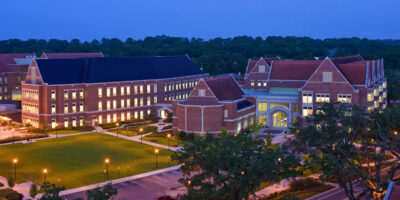
FAU Medical School’s campus in Boca Raton has modern lecture halls, small-group rooms, the Clinical Skills Simulation Center and research laboratories. The college sits on FAU’s subtropical main campus, about a mile from the Atlantic Ocean. Campus life is built on collaboration, small classes and service to the community.
Student Life and Campus Resources
- Simulation and clinical skills: standardized and simulated patients are used in the Clinical Skills Simulation Center to teach core and advanced clinical skills.
- HealthFirst: the college’s wellness initiative offers resources and activities within the college and the Boca Raton community.
- Peer mentorship: the Medical Student Peer Mentorship Program pairs each first-year student with a second-year mentor for advice on housing, classes, study strategies and adjusting to medical school.
- Campus recreation: FAU Campus Recreation runs a fitness center, intramural and club sports, and outdoor trips. Medical students have formed their own intramural soccer and basketball teams.
- Owls Care: FAU’s health promotion office supports student well-being.
- Transportation: a driver’s license is required and a car is recommended, since clinical sites are spread across two counties.
Diversity and Inclusion
FAU Medical School is committed to diversity and inclusion. The college says it works to build a physician workforce able to deliver high-quality, equitable care and to reduce health disparities, and it defines diversity broadly, including educational background, research experience, nontraditional paths, socioeconomic disadvantage and other life adversity. Current students speak more than 20 languages besides English, including Spanish, French, Portuguese, Hindi, Arabic, Hebrew, Russian, Urdu and American Sign Language. Affinity groups include the Student National Medical Association, the Latin Medical Student Association, the Jewish Association of Health Medical Students, the Medical Student Pride Alliance and a Christian Medical Association chapter.
Student Life at FAU Medical School
The College of Medicine has more than 20 student organizations. Officers change every year; the list below reflects the 2026-27 officers posted on the school’s student organizations page. Students also lead a Student Council (2026-27 president Tomas Gayoso, vice president Abby Black) and class councils for each class.
AI in Healthcare
This group brings together students who want to understand how artificial intelligence affects health care delivery and patient care. It invites AI experts, promotes AI-related research opportunities and follows AI’s changing role in medicine. Leadership: Anthony Molle (President), Roshni Merugu (Vice President).
Anesthesiology
The anesthesiology group teaches students about the specialty, chronic pain management and related procedures. Leadership: Benjamin DuPré (President), Juan Nieto-Cardona (Vice President).
Brain Interest
This group gathers students interested in neuroscience and the nervous system, especially those considering neurology, neurosurgery or psychiatry. Leadership: Ashley Amiraslani (President), Benjamin DuPré (Vice President).
Business in Medicine
This organization covers the business side of health care: personal finances, starting and running a private practice and different employment models. It is a natural fit for students considering the M.D./M.B.A. or M.D./M.H.A. Leadership: Sonakshi Dixit (President), Ethan Conerly (Vice President).
Cardiology Interest Group
The group introduces cardiology practice, procedures and lifestyle, including its subspecialties. Leadership: Ethan Conerly (President), Nicholas Shaffer (Vice President).
Dermatology Interest Group (“Skin Squad”)
This group focuses on dermatology, current research and technology, and public health issues such as sunscreen use and skin cancer screening, which matter in sunny South Florida. Leadership: Mimi Schmidt (President), Anthony Molle (Vice President).
Disability Interest Group
The group raises awareness of the challenges people with disabilities face in health care, shares patient and physician experiences and offers volunteer opportunities. Leadership: Hanna Neustadter (President), Sara Schlatner (Vice President).
Emergency Medicine Interest Group (EMIG)
EMIG exposes students to emergency medicine through hands-on sessions, shadowing and public health advocacy events. Leadership: Jason Barry (President), Sidney Fire (Vice President).
Endocrinology Interest Group
This group teaches students about endocrinology topics and procedures and helps them explore the specialty. Leadership: Zeena Shather (President), Sonakshi Dixit (Vice President).
ENT/Otolaryngology Interest Group
The ENT group increases exposure to otolaryngology through lectures, research opportunities and residency match advice. Leadership: Nicholas Postell (President), Anna Rico (Vice President).
Family Medicine Interest Group (FMIG)
FMIG explores family medicine through community service and mentoring and helps students think through careers in primary care. Leadership: Juan Alvarez (President), Mimi Schmidt (Vice President).
Hematology Oncology Club
The club offers guest physician talks, literature discussions and research opportunities in hematology and oncology. Leadership: Eric Morales (President), Soniya Yalamanchili (Vice President).
IMAGE (Internal Medicine and Geriatrics Enthusiast)
IMAGE hosts workshops and guest lectures for students interested in internal medicine and geriatrics. Internal medicine was the most common specialty for the Class of 2026. Leadership: Nicholas Shaffer (President), Raphael Briceno (Vice President).
Medical Specialties Committee
The committee introduces specialties that do not have their own interest group. Leadership: Raydeep Kainth (President), George Fernandez-Hamoui (Vice President).
Obstetrics and Gynecology Interest Group
The group teaches students about obstetrics, gynecology and their subspecialties and raises awareness of women’s health issues and inclusive care. Leadership: Preethi Rao (President), Yael Shabtay (Vice President).
Ophthalmology Interest Group
This group offers activities such as case report spotlights and shadowing and research opportunities in ophthalmology. Leadership: Leonardo Eisner (President), Justin Gumbs (Vice President).
Orthopedic Surgery Interest Group
The group brings guest speakers and hands-on workshops, such as suturing tutorials, and connects students with faculty in orthopedics. Leadership: Mary Adam (President), Izzy Merem (Vice President).
Pediatric Interest Group
This group works to improve child health in South Florida through toy and diaper drives, blood drives and guest speakers. Leadership: McKenzie Bellon (President), Emily Capofreddi (Vice President).
Plastic Surgery Interest Group
The group teaches students about reconstructive and cosmetic surgery and the surgical skills used in the specialty. Leadership: Nikhil Prabhakar (President), Brian Ferydouni (Vice President).
Radiology Interest Group
This group builds interest in diagnostic and interventional radiology through case discussions, imaging workshops and career advice. Leadership: Ryan Kotenko (President), Juan Nieto-Cardona (Vice President).
Sports Medicine Interest Group
The group covers sports injuries and care from surgical and non-surgical specialists and offers chances to work with injured athletes. Leadership: Izzy Merem (President), Madi Porras (Vice President).
Surgery Interest Group
This group focuses on general surgery and its subspecialties and connects students and faculty interested in surgery. Leadership: Jaden Wise (President), Leonardo Eisner (Vice President).
The Cytokines
The Cytokines is the college’s student band. Co-founded by Class of 2026 M.D./Ph.D. graduate Ugoma Onubogu, it has performed at official events and local venues since 2018. Leadership: Kyle Brenner (President).
Threshold Choir
The Threshold Choir sings songs of comfort, kindness and peace, including for people near the end of life. Leaders: Shahadur Sohag, Victoria Roberts and Rodrigo Vasquez.
Wilderness Medicine Interest Group
This group covers medical care in wilderness, disaster and limited-resource settings through lectures, workshops and simulations. Leadership: Jack Stoffer (President), Sidney Fire (Vice President).
Other groups
The 2026-27 list also includes interest groups in gastroenterology, neurological surgery, pathology, psychiatry and vascular surgery; the Caridad Student Clinic Interest Group; the Clinical Research Training Association; and service and advocacy groups such as the American Medical Association, the American Medical Student Association, the American Medical Women’s Association, Arts in Medicine, Bridge to Medicine and Pathways (HCOP), Competency in Medical Spanish, the Global Health Interest Group, Owl Ambassadors, Project Grow, Public Health and Advocacy and Student Wellness.
Living in South Florida: Boca Raton Lifestyle
Boca Raton
Boca Raton sits in southern Palm Beach County on Florida’s southeast coast. It is known for its beaches, parks and cultural life, and it blends city convenience with a quiet seaside setting.
Educational Excellence and Recreational Diversity
Boca Raton values education and has many well-regarded schools, which matters for students with families. For free time, the city has shopping centers, restaurants of every type and entertainment venues, from beachside cafes to fine dining.
Outdoor Activities and Cultural Experiences
The city’s parks and recreation areas offer hiking, biking and beach days, and the coast is good for water sports such as paddleboarding. Theaters and galleries show local and international work.
Healthcare and Wellness
Boca Raton has major hospitals close to campus, including Boca Raton Regional Hospital, one mile from the college. For medical students, that means clinical sites and a health-focused community nearby.
Finding Your Community
Neighborhoods range from busy downtown areas to quiet beachside suburbs and older residential streets, so students can find a setting that fits.
Housing Options
Housing ranges from apartments to family homes. On-campus housing for medical students is in Innovation Village Apartments, but most students rent apartments within two to three miles of the college. FAU’s off-campus housing service helps students find places to live; visit FAU Off-Campus Housing to explore options and local prices.
Exploring Palm Beach County
Beyond Boca Raton, Palm Beach County mixes urban areas and natural beauty, from Palm Beach to the arts districts of West Palm Beach. Third-year students often train at hospitals across Palm Beach and Broward counties, so many get to know the region well.
Learn More
To learn more about the area’s attractions and events, visit The Palm Beaches. Living in Boca Raton and greater Palm Beach County offers a strong mix of education, culture and quality of life for medical students.
Clinical Rotations and Research Opportunities
Clinical Exposure and Training
Clinical exposure at FAU begins early. Students interview patients at community health centers in the first days of school, work with community preceptors from the spring of Year 1 and spend Year 3 embedded with physician groups at affiliated hospitals. During their third and fourth years, students rotate through hospitals in Palm Beach and Broward counties.
Clinical Training and Residency Programs
FAU’s Graduate Medical Education programs give students contact with residents and fellows in its own ACGME-accredited programs: internal medicine, surgery (including general surgery), emergency medicine, psychiatry and neurology, plus fellowships in cardiovascular disease, geriatric medicine, hospice and palliative care, and vascular surgery.
FAU Medical School’s Affiliated Hospitals and Clinical Sites
The school lists these affiliated hospitals:
- Cleveland Clinic Florida
- Joe DiMaggio Children’s Hospital
- Memorial Hospital System
- Boca Raton Regional Hospital
- Delray Medical Center
- West Boca Medical Center
- West Palm Beach VA Medical Center
Its Consortium for Graduate Medical Education also includes Bethesda Hospital East and St. Mary’s Medical Center. Here is what the school and its partners say about each site:
Boca Raton Regional Hospital is one mile from the college. It has grown from a community hospital into a tertiary medical center with 400 beds, about 19,700 admissions and 40,000 emergency visits a year. It is part of Baptist Health South Florida.
Delray Medical Center in Delray Beach, a Tenet Healthcare hospital, has 493 beds and is a Level I trauma center for adults and children, with cardiovascular care, a comprehensive stroke center and psychiatric services.
West Boca Medical Center, also a Tenet hospital, is a 195-bed acute care facility known for pediatric and surgical specialty programs, including robotic surgery, with maternity care and a Level III neonatal ICU.
Bethesda Hospital East in Boynton Beach is a 400-bed community, not-for-profit hospital with maternity services, a Level III neonatal ICU, pediatric intensive care, inpatient rehabilitation and cardiovascular services.
St. Mary’s Medical Center in West Palm Beach, a Tenet hospital, has 463 beds, a dedicated children’s hospital with a pediatric trauma center, Level I trauma care and a comprehensive stroke center.
Cleveland Clinic Florida is the Florida operation of Cleveland Clinic, a nonprofit academic medical center.
Joe DiMaggio Children’s Hospital is a pediatric hospital that serves children from infancy through adolescence and is part of Memorial Healthcare System in South Florida. Memorial Hospital System is a nonprofit health system that includes Memorial Regional Hospital, and FAU graduates in the Class of 2026 matched into its residency programs.
West Palm Beach VA Medical Center provides primary, specialty and surgical care to U.S. military veterans as part of the Department of Veterans Affairs.
Because the third year places students at one site for up to six months, ask at interview day how sites are assigned and how far you may need to drive. FAU’s budget assumes daily travel to hospitals in and outside the local area for M3 and M4 students.
Global health
In the AAMC’s 2025 Graduation Questionnaire, 6% of FAU’s graduating seniors reported a global health experience during medical school. The Global Health Interest Group and the Competency in Medical Spanish group give students ways to prepare for work with patients from other countries, and South Florida’s population means much of that work happens close to home. Applicants who want global health exposure before medical school can look at pre-med internships abroad or, for those focused on Spanish-language care, a medical internship in Peru.
Research at Schmidt College of Medicine, FAU
FAU encourages students and faculty to take part in research. Students can engage as early as their first year, and the Research Distinction Track offers a structured parallel curriculum. Research is optional for the M.D.
Overview of Research Programs
The college’s research programs focus on:
- Healthy aging and geriatrics: improving quality of life for older adults.
- Neuroscience: the nervous system and the brain.
- Chronic pain and opioid use: pain management and its challenges.
- Genomics and precision medicine: using genetic information to guide individual care.
These programs use collaborative, multidisciplinary approaches to uncover basic biological mechanisms and develop new strategies against disease.
Clinical Trials and Studies
Clinical trials and studies at FAU are run through the Division of Research’s Clinical Research Unit. They translate research findings into clinical practice and focus on conditions that affect local communities, such as cardiovascular disease and neurodegenerative disorders.
Engaging in Research
The college invites students to work with established scientists and gain hands-on research experience, and it offers educational and training opportunities, lectures and mentorship.
Cores and Shared Services
Research is supported by core facilities that give access to specialized equipment:
- Genomics Facility
- Proteomics Facility
- Imaging Facility
- Histology Facility
- Animal Facilities
- Biostatistics Core
Research Funding
FAU’s research is funded by the National Institutes of Health (NIH), the National Science Foundation (NSF) and other agencies. The college has more than 15,000 square feet of dedicated laboratory space, supported by the Schmidt Family Endowment Fund and State University System excellence funds. Direct federal research grants and contracts totaled $3,083,657 in fiscal year 2024.
Collaborative Research Initiatives
FAU prioritizes collaboration among basic, translational and clinical researchers. Partnerships with the Herbert Wertheim UF Scripps Institute for Biomedical Innovation & Technology and the Max Planck Florida Institute for Neuroscience give students access to more research settings.
Areas of Research and Faculty Labs
Examples of current faculty research include:
- Bioengineering and high-throughput approaches: Andrew Oleinikov, Ph.D. (malaria proteins, placental malaria and tissue-on-a-chip tools)
- Molecular and cell biology of the eye: Marc Kantorow, Ph.D., and Lisa Brennan, Ph.D. (lens development, oxidative stress and cataract)
- Behavioral and neuropharmacology: Lawrence Toll, Ph.D., and Andrea Cippitelli, Ph.D. (pain, opioid receptors and nicotine and alcohol addiction)
- Cancer biology: Massimo Caputi, Ph.D., Patrick Grant, Ph.D., and Michael Lu, Ph.D.
- Cardiovascular biology and medicine: Charles Hennekens, M.D., Dr.P.H., Xupei Huang, Ph.D., Howard Prentice, Ph.D., and Claudia Rodrigues, Ph.D.
Participating in Clinical Trials and Studies
The Clinical Research Unit recruits community participants for active studies and posts the current list on its website, so students can see which trials are enrolling and which faculty lead them.
Medical Student Summer Research
Medical students can find research through structured programs such as the Research Distinction Track and through mentors outside formal programs. The Clinical Research Training Association, a student group, also helps students learn research methods.
Authorship and Research Ethics
FAU encourages researchers to discuss authorship and expectations at the start of every project and to follow the International Committee of Medical Journal Editors (ICMJE) recommendations on authorship.
Match results
FAU’s graduates match across Florida and the nation. The Class of 2026 had 79 graduates; 53% matched in Florida across 21 institutions, and 33% entered primary care fields such as internal medicine, family medicine and pediatrics. The class also matched in competitive specialties including dermatology, neurological surgery, ophthalmology, orthopedic surgery, otolaryngology, plastic surgery and urology. On the school’s residency placement list, internal medicine was the most common specialty, followed by psychiatry, emergency medicine and pediatrics.
Preparing for a Career in Medicine
FAU prepares students for careers from primary care to specialized fields, and its curriculum, research and clinical opportunities equip graduates for their chosen specialties. Specialty faculty mentoring and career advising are part of the Office of Student Affairs.
Alumni Network and Career Support
Graduates join the MedOwls alumni network, which has grown since the first class graduated in 2015. The alumni office shares upcoming events, ways to get involved and alumni highlights, and alumni sometimes return to hood new graduates at commencement, as Sabina Fridman, M.D. ’23, and Kevin Lukose, M.D. ’22, did in 2026. Student Affairs supports students through residency applications and career decisions.
Notable Alumni, Faculty, Leadership and Admissions Staff
FAU’s faculty includes respected physicians and scientists, and its young alumni network is growing quickly. The profiles below come from the college’s leadership pages, faculty directory and news releases. They are here to help you understand who leads the school and what kind of work happens there, not to suggest that any person will mentor you or influence your application.
Leadership
Lewis S. Nelson, M.D., M.B.A.
Dr. Nelson became dean and chief of health affairs in 2025 and is a professor of emergency medicine and medical toxicology. Before FAU, he was the founding chair of emergency medicine at Rutgers New Jersey Medical School and chief of service for the emergency department at University Hospital in Newark. He has served as president of the American College of Medical Toxicology and of the Association of Academic Chairs in Emergency Medicine, is lead editor of Goldfrank’s Toxicologic Emergencies and has written more than 300 peer-reviewed papers. His research covers opioid use, alcohol withdrawal, patient safety and health policy. His stated goals for FAU are expanding research, advancing clinical care through partnerships and innovating in medical education. Applicants interested in emergency medicine or addiction medicine will find his priorities worth noting.
Jennifer W. Caceres, M.D., F.A.C.P.
Dr. Caceres is vice dean for medical education and a professor of medicine. She oversees the curriculum you would experience, and she previously served as senior associate dean for student affairs and admissions. At the 2026 commencement she told graduates they leave “prepared with the knowledge, compassion and integrity to serve your patients and communities with excellence,” a good summary of what the curriculum aims for.
Neil M. Masangkay, M.D.
Dr. Masangkay is assistant dean for student affairs and an associate professor of neurology. Student Affairs handles advising, mentoring, career advising, student well-being and student organizations, so his office shapes daily student life. He helped hood graduates at the 2026 commencement.
Michelle Lizotte-Waniewski, Ph.D.
Dr. Lizotte-Waniewski is assistant dean for preclinical curriculum, director of HealthFirst and a professor of population health. She leads the first two years of the curriculum and the college’s student wellness initiative, which connects students with wellness activities in the college and in Boca Raton.
Admissions staff
Mark Di Corcia, Ph.D.
Dr. Di Corcia is associate dean for educational affairs and admissions and an associate professor of obstetrics and gynecology. He is the senior academic leader over admissions.
Monica D. Lopez, M.S.
Ms. Lopez is director of admissions for the College of Medicine. She hosts relaxed virtual admissions chats for students planning to apply in the next one to three years, which are a good way to hear directly what the committee looks for. Letters of interest and letters of intent from waitlisted applicants go to the director of admissions.
Admissions team
The admissions office also includes Nancy Gracia, associate director of admissions; Roleithia S. Mills-Perry, M.H.A., assistant director of medical student recruitment and pathway programs; and Sabrina Woolf, admissions coordinator. Questions about your application can go to [email protected].
Faculty
Charles H. Hennekens, M.D., Dr.P.H.
Dr. Hennekens is the first Sir Richard Doll Professor of Medicine and Preventive Medicine and a senior academic advisor. Before FAU he was the first John Snow and first Eugene Braunwald Professor of Medicine at Harvard Medical School and the first chief of preventive medicine at Brigham and Women’s Hospital. He has consulted for the U.S. Food and Drug Administration since 2002 and, as of January 2026, had authored or co-authored more than 1,000 peer-reviewed publications. He served as interim chair of population health from 2024 to 2026. His work in cardiovascular epidemiology and clinical trials makes him one of the best-known researchers at the college.
Joanna L. Drowos, D.O., M.P.H., M.B.A.
Dr. Drowos is a professor of family medicine and directs the Clinical and Preventive Medicine Clerkship in the third year. She is board certified in preventive medicine, family medicine and medical quality, and she earned her M.B.A. in health care administration at FAU. She previously served as center medical director of the Riviera Beach Health Center of the Palm Beach County Health Department, caring for medically underserved patients. Her career shows the community and preventive focus at the heart of FAU’s curriculum.
Marc Kantorow, Ph.D.
Dr. Kantorow is associate dean of graduate programs and a professor of biomedical science, and he is the College of Medicine contact for the M.D./Ph.D. program. His laboratory studies how lens cells mature and stay transparent, research that bears on cataract, a leading cause of blindness. He has been on the FAU faculty since 2003.
Andrew Oleinikov, Ph.D.
Dr. Oleinikov is a professor of biomedical science who studies malaria parasite proteins, placental malaria and anti-adhesion therapies with National Institutes of Health funding. He also develops tissue-on-a-chip and single-cell tools with FAU engineers. He was FAU’s Researcher of the Year in 2018 and mentors students in his lab, several of whom have won College of Medicine student research awards.
Lawrence Toll, Ph.D.
Dr. Toll is a professor of biomedical science and an investigator at the FAU Brain Institute in Jupiter. A neuropharmacologist, he studies pain, opioid receptors and nicotine addiction, work that ties directly to the college’s chronic pain and opioid use research focus. He trained as a postdoctoral fellow with neuroscientist Solomon Snyder at Johns Hopkins.
Other faculty
Other faculty named in this guide include Patrick A. Grant, Ph.D., chair of biomedical science and senior associate dean for research; Allison H. Ferris, M.D., chair of medicine; Kfir Ben-David, M.D., chair of surgery and program director of the general surgery residency; Lisa Clayton, D.O., associate dean for graduate medical education and chair of emergency medicine; and Michael R. Dobbs, M.D., chair of clinical neurosciences. Steven Lewis, Ph.D., is also a longtime member of the faculty.
Notable alumni
FAU’s first M.D. class graduated in 2015, so its alumni are early in their careers. A few recent graduates show the range of paths:
Ugoma Onubogu, M.D., Ph.D. (Class of 2026)
Dr. Onubogu completed the M.D./Ph.D. through a partnership between the College of Medicine and the Herbert Wertheim UF Scripps Institute. She co-founded The Cytokines, the student band, and is known as an advocate for underserved communities. She received the Ira J. Gelb, M.D. Award for Exemplary Service at commencement and entered radiation oncology residency at The University of Texas MD Anderson Cancer Center.
Cody Jackson, M.D., Ph.D. (Class of 2023)
Dr. Jackson was FAU’s first M.D./Ph.D. dual-degree student. His research focused on virology and immunology, and he matched into internal medicine residency at Oregon Health & Science University in 2023.
Joshua S. Sohmer, M.D. (Class of 2026)
Dr. Sohmer was student council president for the Class of 2026 and spoke at commencement: “Behind each of us are the people whose care, sacrifice and belief helped carry us here.” He was hooded by his wife, alumna Sabina Fridman, M.D. ’23.
Jacob Abulencia, M.D. (Class of 2026)
Dr. Abulencia took the Officer’s Oath at commencement and will serve as a captain in the U.S. Air Force, an example of an FAU graduate entering military medicine.
Admissions Statistics and Class Profile
FAU publishes a short entering class profile, and the AAMC’s national data add medians and interview counts. Here is how the numbers fit together for the 2025 entering class.
Entering M.D. Class Profile
| Measure | 2025 entering class | Source |
|---|---|---|
| Applications received | 4,165 | FAU Entering M.D. Class Profile |
| Applicants interviewed | 443 (362 in-state, 81 out-of-state) | AAMC MSAR, 2026 edition |
| Students matriculated | 78 | FAU Entering M.D. Class Profile |
| Mean MCAT | 515 | FAU Entering M.D. Class Profile |
| Mean GPA | 3.85 | FAU Entering M.D. Class Profile |
| Mean BCPM (science) GPA | 3.82 | FAU Entering M.D. Class Profile |
| Median MCAT, all accepted applicants | 516 | AAMC MSAR, 2026 edition |
| Median GPA, accepted applicants | 3.93 | AAMC MSAR, 2026 edition |
| Students with graduate school | 9% | FAU Entering M.D. Class Profile |
| Out-of-state students | 28% | FAU Entering M.D. Class Profile |
| Men and women | 46 men, 32 women | AAMC MSAR, 2026 edition |
What the numbers mean
- Applications to interviews. FAU interviewed 443 applicants out of 4,165 applications, so roughly one in nine or ten applicants was interviewed. Interviewed divided by applicants is about 10.6%. That is an interview rate, not an acceptance rate.
- Acceptance rate. FAU does not publish the number of acceptances it offers, so no true acceptance rate can be calculated. Dividing the 78 matriculants by 4,165 applications (about 1.9%) gives a matriculation ratio, which understates the chance of an offer because many accepted applicants choose other schools.
- In-state strength. About 82% of interviewees (362 of 443) were Florida residents, and 72% of the class came from Florida. Out-of-state applicants are interviewed, but in smaller numbers.
- Means and medians. The class profile shows means for the 78 matriculants (MCAT 515, GPA 3.85), while the national data show medians for all accepted applicants (MCAT 516, GPA 3.93). Both are useful. Neither is a minimum.
- Section scores. Accepted applicants had median section scores of 129 in Chemical and Physical Foundations, 128 in CARS, 129 in Biological and Biochemical Foundations and 130 in Psychological, Social and Biological Foundations. Because FAU emphasizes CARS, a strong CARS score helps.
- Screening minimums. FAU screens against a 3.0 GPA and a 497 MCAT, but the typical admitted student is far above those levels.
- Experiences. Nearly all matriculants reported shadowing (95%) and research (94%), and 70% held paid clinical jobs.
Estimated class size for 2027
FAU expects about 80 new students in 2027: 71 in the regular M.D. program, 8 from the B.S./M.D. programs and 1 M.D./Ph.D. student. Total enrollment was 329 medical students in October 2025.
How FAU compares
Applicants who also look at the medical school acceptance rates across the country can use FAU’s figures to compare it with other Florida and national schools. FAU’s own guidance is practical: compare your numbers with the latest entering class, and remember that “MCAT scores and GPAs do not offset one another.”
Tips and Strategies for Admission
These strategies come from FAU’s stated selection factors, its curriculum and its secondary prompts. They are editorial advice, not a description of a private scoring rubric.
1. Build meaningful direct patient contact
FAU names “the meaningfulness of direct patient contact experiences” in both its screening and its selection factors. Meaningful usually means sustained, hands-on and reflective: months or years in one role where you actually worked with patients. Seventy percent of the 2025 class held paid clinical jobs. Scribing, medical assisting, EMT work, CNA shifts and patient care technician roles all count. So do structured pre-med internships where you take vitals and help with intake under supervision. Be ready to describe a specific patient, what you did and what you learned.
2. Show long-term community engagement
FAU’s mission, its 300 community partners, its required service learning and its rewritten 2026-2027 community engagement prompt all point the same way. Choose service you can describe in depth, ideally in a community similar to those FAU serves. Show humility and learning, not just hours.
3. Do not neglect CARS
FAU emphasizes the CARS section. If your CARS score lags behind your science sections, consider a focused study plan or a retake before September of the application year, since FAU uses your highest single-date total and does not superscore.
4. Get the letters FAU prefers
A committee letter is greatly preferred. If your school does not offer one, line up two science professors and one non-science professor who taught you. Add a clinical letter from a physician or health professional and, if you did research, a letter from your research mentor. Remember the five-letter cap.
5. Turn the secondary around quickly
Every verified applicant gets the secondary, and FAU uses rolling admissions with interview invitations starting in August. A strong secondary submitted in late summer has more open interview slots ahead of it than one submitted near the December 31 deadline. Prewrite your activities summary and your community, qualities and leadership stories in July so you can finish within about two weeks.
6. Make “Why FAU” specific
Name FAU features that match real experiences in your past: Year 1 community preceptors, the third-year longitudinal integrated clerkship, second-year service learning, HCOP outreach, the Research Distinction Track, the Max Planck M.D./Ph.D. or specific student groups such as Competency in Medical Spanish or the Caridad Student Clinic Interest Group. If you have ties to South Florida, say so.
7. Prepare for behavioral questions
FAU’s interview is closed file and situational-behavioral. Practice telling short, honest stories about times you handled conflict, made a mistake, worked on a team or acted under pressure, and practice recorded responses for the asynchronous portion.
8. If you are a reapplicant, show real change
FAU wants significant improvement before you reapply. Use the gap to add clinical hours, raise your MCAT, take upper-level science or complete a post-bac or master’s program. Pre-health internships and full-time clinical jobs both help reapplicants show growth.
9. Use FAU’s own resources
Join a virtual chat with the director of admissions, compare your record with the entering class profile and read the requirements page closely. FAU’s admissions office does not offer individual advising, so your college’s pre-health advisor or an experienced consultant is your best source of personal feedback.
Secondary Application Questions, Example Responses and Analysis
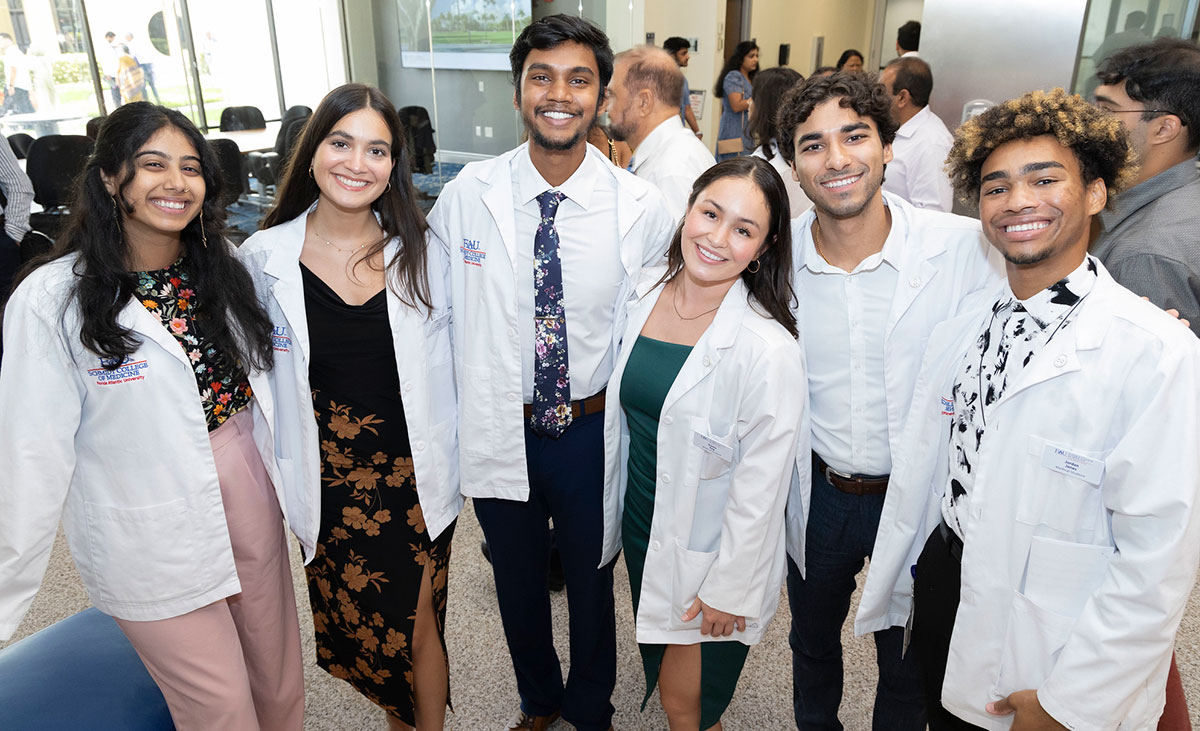
FAU sends its secondary application by email to every applicant with a verified AMCAS application. The fee is $30 (waived automatically for AAMC Fee Assistance Program recipients), and secondaries submitted after December 31 are not considered. FAU says the secondary “consists primarily of reflective analyses of personal experiences,” so expect essays that ask what you learned, not only what you did.
The 2026-2027 secondary has eight items. Two are conditional (academic hardships and prerequisite exceptions), one is a required activities summary, four are required essays and one is for reapplicants. Several prompts are new this cycle: the community service, personal qualities and leadership essays were rewritten, the activities question now begins by asking whether you will be enrolled as a student, and the earlier personal challenge essay was dropped. Limits are in characters, including spaces.
Each example below is original and written for this guide. They show one way to answer each prompt. Do not copy them; your own experiences are what make an essay work. For other schools’ prompts, see our medical school secondary essay prompts database.
1. Use this area to justify and/or explain any academic hardships on your transcripts (any failed and/or repeated courses due to any reason)
Limit: 1,600 characters. Who answers: applicants with failed or repeated courses (conditional).
What it asks: a brief, honest explanation of any failed or repeated course and, implicitly, evidence that the problem is behind you.
Approach: name the course and grade, give the cause in one or two sentences, describe what you changed and point to the later record that proves it. Avoid blaming professors or over-sharing private details.
Illustrative example, not an actual applicant essay
In the spring of my sophomore year I earned a D in Organic Chemistry I and withdrew from Physics II. That semester my father injured his back at the warehouse where he worked, and I took a 30-hour-a-week job at a grocery store so my family could keep up with rent. I did not tell my professors or my advisor what was happening. I kept attending lectures, but I studied in the break room and slept about five hours a night. By April I was behind in both courses and too proud to ask for help.
I should have spoken up sooner. When I finally met with my academic advisor that May, she helped me set up a reduced work schedule, apply for an emergency grant and plan a lighter summer term. I retook Organic Chemistry I that fall and earned an A, then completed Organic Chemistry II, Physics II and Biochemistry with grades of A or A-minus while still working 15 hours a week. My science GPA has risen every semester since.
The grades on my transcript are real, and I own them. What changed was how I handle pressure. I now treat asking for help as part of the work, not a sign of failure. I use office hours every week, I keep a written schedule that shows my study hours next to my shifts, and I tell people early when something at home may affect my performance. Those habits matter in a curriculum with weekly clinical sessions and self-directed learning, where falling behind quietly is easy. I am confident that my later coursework shows how I perform when I manage my time and my responsibilities honestly.
Why it works: The response names the exact grades, explains the cause without excuses and takes ownership in its first line (“I own them”). It shows the fix in concrete steps: an advisor meeting, a reduced work schedule, an A on the retake and A-range grades in harder courses. It ends with habits (office hours, written schedules, early communication) that fit FAU’s self-directed curriculum with weekly clinical sessions. At about 1,500 characters, it stays under the limit.
Mistakes to avoid: writing a long hardship story with no evidence of recovery, leaving this box blank when you have a repeated course, or using it for unrelated grievances.
2. Use this area to explain exceptions to these prerequisites at your institution
Limit: no limit appears in this cycle’s prompt listings; keep it brief and follow any limit shown in your portal. Who answers: applicants whose college covered FAU’s prerequisites in a different way (conditional).
What it asks: a factual explanation of how your coursework meets FAU’s prerequisite list when the course names or structure differ, or when you used AP or IB credit.
Approach: treat this like a course map. List course names, numbers and credits and say which FAU requirement each one covers. No essay language is needed.
Illustrative example, not an actual applicant essay
My university teaches general and organic chemistry as a three-semester integrated sequence, Chemical Principles I, II and III (CHEM 111, 112 and 213), each with a laboratory. Together these 12 credits cover the content of two semesters of general chemistry and one semester of organic chemistry. I completed Organic Chemistry II with lab (CHEM 314) and Biochemistry (BCHM 401) separately. I also used AP credit for Calculus I and then completed Calculus II and Biostatistics at my university. The course descriptions are available from my registrar if they would help the committee.
Why it works: It maps an integrated chemistry sequence to FAU’s semester requirements, lists credits and course numbers, notes the separately completed courses and shows that AP credit was followed by higher-level coursework, which is what FAU expects. It is under 600 characters and offers course descriptions if needed.
Mistakes to avoid: using this space for a personal essay, claiming CLEP or AICE credit (FAU does not accept either) or leaving a gap unexplained when your transcript does not match FAU’s list.
3. Will you be enrolled as a student this year? Whether or not you will be a full-time student, please provide details of your activities/employment for the application year.
Limit: 1,200 characters. Who answers: all applicants (required).
What it asks: whether you will be enrolled in school and, either way, what you will be doing during the application year.
Approach: answer the yes or no question in the first sentence. Then list each activity with your role, setting, hours and duties, and say how long you will continue.
Illustrative example, not an actual applicant essay
I will not be enrolled as a student this year. I graduated in May 2026 with a B.S. in Biology, and I am working full time as an emergency department scribe at a community hospital in Broward County, about 40 hours a week on rotating day and evening shifts. I document histories, exams and results in real time for six attending physicians and two physician assistants, which has taught me how emergency teams sort and prioritize patients.
On Saturday mornings I volunteer at a free clinic in Pompano Beach, where I check patients in, update intake forms in English and Spanish and help the nurse with blood pressure and glucose checks under supervision. I average 12 hours a month there.
I am also finishing a manuscript with my undergraduate research mentor on sleep and academic performance in first-generation students; we plan to submit it in early 2027. If I am interviewed or admitted, I will keep my scribe job through June 2027 and give notice in time to start orientation in August.
Why it works: The first sentence answers the enrollment question. Each activity has a role, hours and specific duties, and the last paragraph shows a realistic plan through matriculation. Clinical work, community service and research are all accounted for in under 1,000 characters.
Mistakes to avoid: answering only the first question, listing vague plans (“I hope to volunteer”), or describing past activities instead of the application year.
4. Describe why you would like to attend the Charles E. Schmidt College of Medicine at FAU. What values, skills, talents, and life experiences would you contribute to our community?
Limit: 1,600 characters. Who answers: all applicants (required).
What it asks: two things, why FAU and what you would contribute. Both must be answered.
Approach: pick two or three real features of FAU and connect each to something in your past. Then name specific contributions, each backed by evidence.
Illustrative example, not an actual applicant essay
I want to learn medicine where the patients are part of the curriculum from the first months. At FAU, students begin direct patient care with community preceptors in the spring of the first year and then spend the third year in a longitudinal integrated clerkship, following patients with the same group of physicians instead of rotating every few weeks. I grew up in Lake Worth Beach, translating for my grandmother at her clinic visits, and I learned that continuity is what made her trust a doctor. A curriculum built on continuity matches what I have seen work.
I also want to train in the region I plan to serve. FAU’s partnerships with more than 300 community organizations from Miami-Dade to Vero Beach, and its second-year service learning program with community partners, would let me keep working with families like the ones I tutored at a Palm Beach County after-school program for three years.
I would bring three things to the Schmidt community. First, fluent Spanish and working Haitian Creole, which I would use through the Competency in Medical Spanish group and in clinics where language can decide whether a patient returns. Second, teaching experience: as a supplemental instruction leader for general chemistry, I learned to explain hard ideas in small groups, which fits a problem-based, small-group curriculum. Third, persistence. I worked 20 hours a week through college and still made time to lead study sessions. I would offer that same steady effort to classmates in small groups and to the community FAU serves.
Why it works: The “why FAU” half names real features (community preceptors from the spring of Year 1, the Year 3 longitudinal integrated clerkship, 300 community partners and second-year service learning) and links them to a personal story about continuity of care. The “contribute” half names three contributions, each with evidence: languages tied to a real student group, small-group teaching suited to problem-based learning, and persistence shown by working through college. It also signals a South Florida connection, which fits FAU’s regional mission.
Mistakes to avoid: praising Boca Raton’s weather or the beach, listing features that every school has, or answering only one half of the prompt.
5. Community engagement often requires humility, collaboration, and a willingness to learn from others. Describe a community service experience that significantly influenced your perspective. What did you learn about the community you served, about yourself, and how this experience has shaped the physician you hope to become?
Limit: 1,600 characters. Who answers: all applicants (required).
What it asks: one service experience that changed your perspective, and three lessons: about the community, about yourself and about the physician you want to be. The opening sentence signals that FAU wants humility and collaboration.
Approach: choose service where you learned from the people you served. Show a moment when your assumptions were wrong, then answer the three questions in order.
Illustrative example, not an actual applicant essay
For two years I volunteered with a food pantry that serves farmworker families in western Palm Beach County. I joined thinking my job was to hand out boxes. In my first month, a coordinator named Rosa asked me to stop packing standard boxes and sit with families at intake instead. She wanted to know why so much food was being left behind.
The answer was humbling. Many families lacked a working stove, worked shifts that left no time to cook dried beans, or followed diets their culture did not match to our supplies. We had been measuring success by pounds distributed, not by what people could use. With Rosa and two other volunteers, I helped design a short intake question about cooking equipment and work hours. Within three months we offered a ready-to-eat box option, and leftover food at our Saturday site dropped by about a third.
I learned that the community knew far more about its needs than we did, and that collaboration meant listening first and planning second. I also learned something about myself: I was quick to offer help before I understood the problem. That habit would be dangerous in medicine.
This experience shaped the physician I hope to become. I want to ask patients what their days look like before I write a plan, because a treatment that does not fit someone’s life is like a box of food they cannot cook. I hope to carry this lesson into FAU’s service learning projects and, later, into primary care in South Florida, where many patients face the same limits as the families I served.
Why it works: The essay shows humility (being redirected to listen at intake) and collaboration (designing a question with a coordinator and other volunteers), with a measurable result. It answers the three questions in order: what the community taught (they knew their needs best), what the writer learned about themself (helping before understanding) and how it shapes their future practice (asking about patients’ daily lives before writing a plan). It ties the lesson to FAU’s service learning and to primary care in South Florida.
Mistakes to avoid: writing a savior story, describing many activities instead of one, or skipping the “about yourself” question.
6. Medical students and physicians rely on many personal qualities beyond academic achievement. Reflect on an experience from employment, volunteering, research, athletics, military service, or other meaningful activity that helped you develop qualities you believe are essential for success in medicine. How have these qualities prepared you for the challenges of medical school?
Limit: 1,600 characters. Who answers: all applicants (required).
What it asks: one experience, the qualities it built and how those qualities prepare you for medical school.
Approach: choose one meaningful activity and two or three qualities. Prove each one with a short scene, then connect each to a real challenge of medical school.
Illustrative example, not an actual applicant essay
For three years I worked night shifts as a certified nursing assistant at a long-term care facility while I finished college. The job taught me more about medicine than any class, because it tested qualities I had not needed in a lecture hall.
The first was reliability. On a night shift, if I did not turn a patient every two hours or report a change in breathing, no one else would catch it until morning. I learned to finish every task completely and to document it, even at 4 a.m. when no one was watching.
The second was composure. One night a resident with dementia became frightened and struck me while I was helping her to the bathroom. I stepped back, lowered my voice and called the charge nurse. Later I learned that she was most calm when someone sang the hymns she knew, so I learned two of them. Her agitated nights became less frequent.
The third was humility. The most experienced aide on my unit had no college degree, yet she could spot a urinary infection before any test because she noticed small shifts in behavior. I learned to ask her questions and to value knowledge that comes from years at the bedside.
These qualities will help me in medical school. Reliability will keep me on top of weekly clinical sessions and independent study. Composure will help when a simulation or a real patient encounter goes wrong. Humility will make me a better member of the teams I will join in my third-year clerkship, where nurses, aides and physicians all hold part of the picture.
Why it works: One job anchors the essay, and each quality (reliability, composure, humility) is proven with a specific moment rather than claimed. The final paragraph answers the second question directly by linking each quality to FAU’s structure: weekly clinical sessions, simulation and the team-based third-year clerkship.
Mistakes to avoid: listing adjectives without examples, choosing too many qualities, or forgetting to answer “how have these qualities prepared you.”
7. Leadership is demonstrated through initiative, service, and the ability to positively influence others. Describe a time when you identified a need or opportunity or took action to create positive change. What was your role, how did you work with others to affect change, and what did you learn from the experience?
Limit: 1,600 characters. Who answers: all applicants (required).
What it asks: a specific example of initiative: the need you saw, your role, how you worked with others and what you learned.
Approach: you do not need a title. Pick a moment where you noticed a gap and acted, show how you brought others along, include a result and end with a lesson that carries into medicine.
Illustrative example, not an actual applicant essay
As a junior, I noticed that students in our university’s pre-health club were logging clinical hours but few of them had ever taken a blood pressure correctly. Our campus health fairs relied on volunteers who had watched one video. I saw a chance to make our outreach safer and more useful.
I proposed a training program to the club board and to the nursing faculty member who advised our health fairs. My role was coordinator. I recruited two nursing students to co-teach, wrote a one-page checklist based on the protocol our faculty adviser approved and scheduled four Saturday sessions. Every volunteer had to pass a skills check with a nursing student before working a fair. Some members pushed back because the training added time. I listened, moved one session online for the classroom part and kept the hands-on check in person.
Over the next year, 46 volunteers completed the training. At our fairs, we screened more than 300 community members, and the faculty adviser reported that repeat measurements by nurses matched our readings far more often than before. We also added a referral card that listed two nearby low-cost clinics.
I learned that leadership is often about creating structure so others can do good work, and about sharing credit. The nursing students made the program credible, and listening to complaints made it stronger. I also learned to ask experts before acting. In medicine, I expect to lead in small ways, like improving a clinic workflow, and I will start the same way: notice the gap, ask the people closest to it and build a plan together.
Why it works: Each part of the prompt has a clear answer. The need is specific (untrained volunteers taking blood pressures), the role is named (coordinator), collaboration and pushback are shown, the results have numbers and the lessons (building structure, sharing credit, asking experts first) apply to clinical work.
Mistakes to avoid: describing a title instead of an action, claiming all the credit, or ending without a lesson.
8. If you are a reapplicant for medical school, please share examples of personal or professional experiences that you believe have strengthened your application, contributed to your growth, and have better prepared you for the rigors of medical school since your initial application.
Limit: 1,600 characters. Who answers: reapplicants (optional and conditional).
What it asks: what has changed since your last application and how those changes prepare you for medical school.
Approach: name the weakness in your earlier application honestly, then give specific improvements with numbers and dates. FAU says reapplicants should have “significantly improved” their applications, so this essay is where you prove it.
Illustrative example, not an actual applicant essay
When I applied in 2025, my application showed strong grades and research but limited direct patient care: about 120 hours, mostly shadowing. Feedback from my pre-health advisor confirmed that this was my biggest gap. Since then I have changed how I spend my time.
I completed medical assistant certification and have worked full time since August 2025 at a family medicine practice in Boynton Beach. I room patients, take vital signs, review medications and give vaccines under the supervision of the physicians. I now have more than 1,800 hours of direct patient contact. The work has shown me what continuity looks like: I know which patients need a second explanation of their insulin dose and which ones will skip a referral unless we call them.
I also spent four weeks in a supervised clinical internship abroad, where I took vitals, helped with intake and triage and assisted with care at a rural clinic. Seeing patients travel hours for basic care made me think harder about access in my own county.
I retook the MCAT, raising my CARS score from 125 to 129 by reading long-form journalism every day for four months and practicing timed passages. Finally, I asked for honest feedback on my essays and rewrote them to show reflection rather than lists.
These experiences prepared me for medical school in practical ways. I am comfortable with patients, I understand how a clinic runs, and I have shown that I can take criticism, set a plan and follow it through. I am a stronger applicant and a more grounded future physician than I was a year ago.
Why it works: The essay names the earlier gap (limited patient care), shows a large, measurable change (more than 1,800 hours as a medical assistant), adds supervised clinical work abroad and an improved CARS score with the method used, and closes by connecting each change to readiness for medical school. It reads as growth, not as a complaint about the last cycle.
Mistakes to avoid: repeating your old application, blaming the previous cycle’s outcome on luck, or listing changes without showing what you learned.
Program-specific prompts
No separate secondary prompts for the M.D./Ph.D. or the B.S./M.D. programs have been published for the 2026-2027 cycle. M.D./Ph.D. applicants complete the same College of Medicine secondary and send their research statement, CV and letter of motivation to the Integrative Biology Ph.D. program through GradCAS. B.S./M.D. applicants complete a separate supplemental application through FAU’s undergraduate portal.
Interview Format and Preparation
Interview Process
FAU’s interviews are an essential part of admissions. They are closed file, or blinded: interviewers do not see your application, so they judge you on how you think and communicate during the conversation. The format is situational-behavioral. In addition to the live interview on Zoom, applicants complete an asynchronous recorded interview through SparkHire. The interview assesses personal traits such as maturity, responsibility, integrity, respect for others, altruism and intellectual curiosity.
FAU does not describe its interview as a Multiple Mini Interview. If you are also preparing for schools that use the Multi-Mini Interview format, much of the same practice helps, because MMI stations and behavioral questions both reward clear, structured answers to real scenarios.
Timing and logistics
- Invitations: emailed on a rolling basis starting in August. Check your inbox and schedule promptly.
- Interview days: Mondays, Tuesdays and Thursdays between mid-September and February. The interview is scheduled for the entire day.
- The day: formal interview days begin around 9:00 a.m. Eastern and end around mid-afternoon. They include introductory presentations, the interview, a panel of current medical students, a video tour of the simulation center and teaching facilities, and a “What will happen next?” presentation by the director of admissions with a timeline for decisions.
- Regional interviews: not offered.
How to prepare
- Practice behavioral stories. Prepare short accounts (situation, action, result, lesson) about teamwork, conflict, a mistake, an ethical gray area, leadership and caring for someone different from you. Behavioral questions often begin with “Tell me about a time when.”
- Practice situational reasoning. For “what would you do” questions, state the problem, name the people affected, consider options and choose a respectful, honest course of action. Show your reasoning.
- Rehearse on camera. SparkHire responses are recorded with set timing. Practice speaking to a camera with a timer, keep answers organized and look at the lens.
- Retell your story without notes. Because the interview is closed file, your interviewer will not know your activities. Be ready to explain your path, your clinical work and why FAU, in your own words.
- Know FAU. Be ready to discuss the longitudinal integrated clerkship, early community preceptors, service learning and how you would use FAU’s student groups.
- Prepare questions. Ask students about third-year site placement, commuting, research access or HealthFirst.
Our list of the most common medical school interview questions is a good place to start practicing. Mock interviews with an advisor or an IMA consultant can help you practice behavioral answers and recorded responses.
After the interview
Decisions are rolling: acceptance, the alternate list or not accepted. Acceptances begin October 15. If you are waitlisted, you may send a letter of interest between October 15 and April 30, and, from May 1 to July 15, a letter of intent if FAU is your clear first choice.
Frequently Asked Questions
Is FAU Medical School competitive?
Yes. FAU received 4,165 applications for the 2025 entering class, interviewed 443 applicants and enrolled 78 students. Accepted applicants had a median MCAT of 516 and a median GPA of 3.93, and the class averaged a 515 MCAT and a 3.85 GPA. The school does not publish an acceptance rate, but the gap between applications and seats shows how selective it is. Florida residents have an advantage, since at least 70% of seats go to them. The practical step is to compare your numbers with the class profile, apply broadly and make your clinical and service experience as strong as your statistics.
What makes FAU Medical School unique?
Three things stand out. First, students begin direct patient care with community preceptors in the spring of their first year. Second, the third year uses longitudinal integrated clerkships, placing students with one group of physicians at a community hospital for an extended period rather than rotating every few weeks. Third, the college is deeply tied to its region, with more than 300 community partners, required service learning and a mission focused on South Florida. Its small class of about 80 students and its M.D./Ph.D. partnership with the Max Planck Florida Institute for Neuroscience are also distinctive.
Are there opportunities for international experiences?
Some. In the 2025 Graduation Questionnaire, 6% of FAU’s graduating seniors reported a global health experience during medical school. Students can join the Global Health Interest Group and the Competency in Medical Spanish group, and South Florida’s international population means many patients come from other countries. If global health matters to you, ask current students on interview day how classmates arrange electives or volunteer work abroad, and describe any international clinical experience you already have in your application.
Can students pursue dual degrees?
Yes. FAU offers an M.D./Ph.D. with the Max Planck Florida Institute for Neuroscience, an M.D./M.B.A. and an M.D./M.H.A. with the College of Business, and an M.D./M.S. in Biomedical Science thesis track. The M.D./M.B.A. and M.D./M.H.A. are open to accepted and enrolled M.D. students, with the GMAT or GRE waived. The M.D./Ph.D. requires a separate Ph.D. application through GradCAS at the same time as AMCAS. High school seniors can also apply to the B.S./M.D. programs (Med Direct and Wilkes Medical Scholars) or, for FAU High School students, the FAU High School M.D. Direct Program.
What is the minimum MCAT score for FAU Medical School?
FAU screens applications against a minimum MCAT of 497. That is a floor, not a target. The median for all accepted applicants in the 2025 entering class was 516, and the class average was 515. FAU uses your highest total from a single test date, does not superscore and pays special attention to the CARS section. Your score must be no more than three years old, and you must test no later than September of the year before you would enter.
What GPA do you need for FAU Medical School?
The minimum GPA for screening is 3.0, and FAU considers a cumulative and science (BCPM) GPA of 3.5 competitive. The 2025 entering class averaged a 3.85 GPA and a 3.82 science GPA, and accepted applicants had a median GPA of 3.93. If your undergraduate GPA is at least 3.3, FAU will also consider post-bac or graduate work of at least 12 credit hours, preferring a 3.7 or higher in that coursework.
What is the acceptance rate for FAU Medical School?
FAU does not publish an acceptance rate, so any precise figure you see elsewhere is an estimate. For the 2025 entering class, the school received 4,165 applications, interviewed 443 applicants (about 10.6% of applicants) and enrolled 78 students. Enrolled students divided by applications is not an acceptance rate, because some accepted applicants choose other schools. The best next step is to focus on the parts of your application FAU emphasizes, such as direct patient contact, service and CARS.
Is Florida Atlantic University a good medical school?
FAU is a fully LCME-accredited public medical school with a growing reputation. It was nationally recognized by U.S. News & World Report for its mission to care for diverse patient populations, its Class of 2026 matched into competitive specialties such as dermatology, neurosurgery and plastic surgery, and 53% of that class stayed in Florida for residency. Whether it is a good fit for you depends on your goals. Students who want early patient contact, a longitudinal third year and a community-focused mission in South Florida often find it a strong match.
Does FAU accept out-of-state applicants?
Yes. Florida residents receive preference, but up to 30% of the class may come from other states, and 28% of the 2025 entering class was from out of state. Out-of-state students pay much higher tuition: $73,394 in tuition and fees for the first year in 2026-27, compared with $31,830 for Florida residents. Only U.S. citizens and permanent residents are eligible.
Does FAU accept international, DACA or Canadian applicants?
FAU does not accept international applicants or applicants with DACA status. Applicants must be U.S. citizens or permanent residents at the time of application. Canadian citizens are considered only if they are U.S. permanent residents. Coursework from regionally accredited Canadian colleges is accepted for prerequisites.
When are FAU’s deadlines for 2026-2027?
Submit AMCAS by November 16, 2026. Every verified applicant receives the secondary by email, and secondaries submitted after December 31 are not considered. Interviews run from mid-September through February, and acceptance notices are sent from October 15, 2026, through August 2, 2027. Because admissions are rolling, applying early in the cycle is a real advantage.
What letters of recommendation does FAU require?
FAU greatly prefers a committee letter from your premedical advisory committee. Without one, you need at least three letters from faculty who taught you: two from natural science professors and one from a non-science professor. You may send up to five letters, and all must come through the AMCAS Letter Service. Nontraditional applicants who have been out of school for at least a year can use letters from supervisors, preceptors and mentors.
How much clinical experience do I need for FAU?
FAU does not set a minimum number of hours, but it expects applicants to already have volunteer, clinical and shadowing experience, and it makes no exceptions. In the 2025 entering class, 95% reported shadowing, 87% clinical volunteering and 70% paid clinical work. What matters most is meaningful direct patient contact over time. Hands-on roles where you take vitals and help with intake under supervision show the committee you understand patient care.
Does FAU have an interview, and what is it like?
Yes. FAU uses a closed-file, situational-behavioral interview. Applicants complete a recorded asynchronous interview through SparkHire and a live interview on Zoom. Interview days run Mondays, Tuesdays and Thursdays from mid-September through February and include presentations, a student panel and a video tour. Prepare short, honest stories about real experiences and practice answering on camera.
Does FAU accept transfer students?
No. FAU does not accept transfers or admit students with advanced standing from another medical school, for any reason, because its curriculum is designed as one integrated program from matriculation through graduation.
Does FAU offer a post-baccalaureate program?
FAU’s College of Science offers post-baccalaureate pre-health options: the Post Baccalaureate Certificate for career changers who still need prerequisites, a second bachelor’s degree for students who need to raise their GPA, and a prerequisites-only option. These programs offer advising, shadowing, research access and a committee interview, but they do not guarantee or link to admission at the College of Medicine.
Does FAU have Early Decision?
No. FAU does not offer an Early Decision program. All applicants go through the regular rolling process.
Related Medical School Guides
Most FAU applicants also apply to Florida’s other public and private M.D. schools, and applying broadly is the surest way to improve your chances. These guides are good places to start:
- FIU College of Medicine: a public M.D. school in Miami with a strong community health focus, the closest match to FAU’s regional mission.
- University of Miami Miller School of Medicine: a private, research-heavy M.D. school in Miami for South Florida applicants who also want a large academic medical center.
- NSU MD: Nova Southeastern University’s M.D. program in Fort Lauderdale, a Broward County option for applicants who want to stay near FAU’s clinical region.
- Florida State University College of Medicine: a public school that, like FAU, trains students in community settings, with regional campuses across the state.
- Mayo Clinic Alix School of Medicine: Mayo’s M.D. program, which includes a campus in Jacksonville, for Florida applicants interested in a research-intensive private option.
- University of Florida Medical School: Florida’s flagship public academic health center in Gainesville, a common pairing with FAU for in-state applicants.
- UCF College of Medicine and USF Morsani College of Medicine: Central Florida public options that many FAU applicants add to their lists.
For a side-by-side look at every option in the state, read our guide to medical schools in Florida.
More medical school guides
FAU’s programs are notable for their innovative approach to medical education. If you are also looking at schools outside Florida, these guides cover M.D. and D.O. schools across the country, each with its own strengths. You can browse every school in our medical school guides collection.
- Touro University Nevada College of Osteopathic Medicine
- Arkansas College of Osteopathic Medicine (ARCOM)
- University of Arkansas for Medical Sciences (UAMS)
- Tulane University School of Medicine
- LSU Health New Orleans School of Medicine
- LSU Shreveport Medical School
- Kirk Kerkorian School of Medicine at UNLV
- University of Nevada Reno School of Medicine
- University of Arizona College of Medicine-Tucson
- University of Arizona College of Medicine-Phoenix
- Burrell College of Osteopathic Medicine (BCOM)
- The University of New Mexico School of Medicine
- Alabama College of Osteopathic Medicine (ACOM)
- University of South Alabama College of Medicine
- University of Alabama School of Medicine
- Morehouse School of Medicine
- Medical College of Georgia at Augusta University
- Mercer University School of Medicine (MUSM)
- Campbell University School of Osteopathic Medicine (CUSOM)
- ECU Brody School of Medicine
- Edward Via College of Osteopathic Medicine (VCOM)
- University of South Carolina Medical School
- Lewis Katz School of Medicine at Temple University
- Philadelphia College of Osteopathic Medicine (PCOM)
- Geisinger Commonwealth School of Medicine (GCSOM)
- Penn State Medical School
- CUNY School of Medicine
- SUNY Downstate Medical School
- NYIT College of Osteopathic Medicine
- NYU Long Island School of Medicine
- Albany Medical College
- TOURO College of Osteopathic Medicine
- Norton College of Medicine at Upstate Medical University
- Jacobs School of Medicine at the University at Buffalo
- Hofstra Zucker School of Medicine
- Weill Medical College of Cornell University
- University of Rochester Medical School
- Icahn School of Medicine at Mount Sinai
- Renaissance School of Medicine at Stony Brook University
- Albert Einstein College of Medicine
- Ohio University Heritage College of Osteopathic Medicine
- Northeast Ohio Medical University (NEOMED)
- University of Cincinnati College of Medicine
- University of Toledo College of Medicine
- Wright State University Boonshoft School of Medicine
- Ohio State University College of Medicine
- Rowan University School of Osteopathic Medicine
- Hackensack Meridian School of Medicine (HMSOM)
- Rutgers New Jersey Medical School (NJMS)
- Rutgers Robert Wood Johnson Medical School
- Cooper Medical School of Rowan University (CMSRU)
- A.T. Still University Kirksville College of Osteopathic Medicine
- Saint Louis University School of Medicine
- University of Missouri Medical School
- Kansas City University (KCU)
- UMKC School of Medicine
- New York Medical College
- University of Pittsburgh School of Medicine
- University of Wisconsin Medical School
- VCU School of Medicine
- University of Maryland School of Medicine
- Case Western Medical School
- University of North Carolina Medical School
- Emory University School of Medicine
- Boston University College of Medicine
- California University of Science and Medicine
- UC San Diego Medical School
- California Northstate University College of Medicine
- Touro University of California
- CHSU College of Osteopathic Medicine
- UC Davis School of Medicine
- Harvard Medical School
- UC Riverside School of Medicine
- USC Keck School of Medicine
- UT Southwestern Medical School
- Long School of Medicine at UT Health San Antonio
- University of the Incarnate Word School of Osteopathic Medicine
- UT Austin’s Dell Medical School
- UTMB School of Medicine
- McGovern Medical School at UT Health
- Johns Hopkins School of Medicine
- The University of Texas Rio Grande Valley School of Medicine
- UNT Texas College of Osteopathic Medicine
- University of Houston College of Medicine
- Texas A&M College of Medicine
- Baylor College of Medicine
- George Washington University School of Medicine
- Vanderbilt University School of Medicine
- St. George’s University School of Medicine
- Lake Erie College of Osteopathic Medicine (in Pennsylvania)
- Sidney Kimmel Medical College at Thomas Jefferson University
- Wake Forest University School of Medicine
- Western University of Health Sciences (in California)
- Drexel University College of Medicine
- Stritch School of Medicine at Loyola University Chicago
- Georgetown University School of Medicine
- Yale School of Medicine
- Perelman School of Medicine
- UCLA Medical School
- NYU Medical School
- Washington University School of Medicine
- Brown Medical School
Considering PA school in Florida?
Some students reading about FAU are weighing physician assistant (PA) school as well. The path to becoming a PA includes a master’s-level program, a separate application and its own experience expectations. Our guide to PA vs. doctor explains the differences, and our list of Florida PA programs compares schools across the state.
Application Process for Florida PA Schools
Most PA programs use the Central Application Service for Physician Assistants (CASPA). Requirements vary by program, so check each school’s current admissions page. In general, expect:
- Interviews: common at most Florida PA programs.
- Letters of reference: strong references, often including one from a physician or PA you have shadowed.
- Experience: direct patient care experience is usually preferred and is required by some programs.
- Tests: some programs ask for the GRE, and a few accept the MCAT instead.
- GPA: many programs set minimums around 3.0 overall and in science courses.
- Coursework: typically biology, general and organic chemistry, anatomy and physiology, microbiology, statistics, English and humanities or social sciences, with biochemistry and medical terminology often preferred or required.
Florida PA Schools
Florida PA programs include Nova Southeastern University (Fort Lauderdale and other campuses), the University of Florida (Gainesville), South University (Tampa), the University of South Florida (Tampa) and Barry University (Miami Shores). For current requirements, see Nova Southeastern University, the University of Florida, South University Tampa, USF and Barry University’s PA program. If you are leaning toward PA school, pre-PA internships can help you build patient care experience.
Work Prospects
The demand for PAs is growing. The Bureau of Labor Statistics projects PA employment to grow 21% from 2025 to 2035, with about 11,500 openings a year, and reports a median annual wage of $135,880 in May 2025.
How International Medical Aid Can Help
FAU looks for applicants with meaningful direct patient contact, sustained community service and a clear understanding of what physicians do. International Medical Aid (IMA) helps pre-health students build that kind of experience.
IMA runs medical internships abroad in Kenya and other countries. Interns work alongside local clinicians and, under supervision, take vital signs, conduct patient intake and triage and help with direct patient care in hospitals, clinics and community health settings. Those experiences give you real patient stories to reflect on in FAU’s community engagement, personal qualities and “Why FAU” essays, and in a behavioral interview. IMA programs are independent of FAU and do not affect admission decisions.
For students who want structured, supervised clinical hours before applying, our internships for pre-med students are a common starting point. Advisors can help you choose a program length that fits your summer, gap year or post-bac plans.
IMA’s medical school admissions consulting team also helps applicants with school lists, personal statements, FAU’s eight secondary prompts and interview practice, including behavioral and recorded-response formats. If FAU is on your list, a planning conversation now can help you submit a strong secondary early in the rolling cycle.
Final Thoughts and Sources
Concluding Thoughts
The Florida Atlantic University Charles E. Schmidt College of Medicine offers a patient-focused, community-based M.D. education in Boca Raton, with early clinical work, a longitudinal third year and a mission aimed at South Florida. It is selective and favors Florida residents, but it welcomes out-of-state citizens and permanent residents for up to 30% of the class. If FAU fits your goals, submit AMCAS early, return the secondary quickly, line up strong letters and prepare for a closed-file behavioral interview. For students who want a robust, well-rounded medical education rooted in community health, FAU is an excellent choice to consider.
Source notes
All facts were checked on October 28, 2026. Class statistics are labeled by entering class and population; costs are labeled by academic year and residency.
- FAU Schmidt College of Medicine, M.D. Admissions Requirements and Application Process (citizenship, prerequisites, letters, secondary fee and December 31 deadline, interview days, decisions).
- FAU, M.D. Admissions FAQ (MCAT policy, international and DACA policy, AP/IB/CLEP, reapplicants, gap years, Florida residency statute).
- FAU, Entering M.D. Class Profile (applications, means, out-of-state share, matriculants; page undated, identified as the 2025 entering class).
- AAMC Medical School Admission Requirements (MSAR), FAU profile, 2026 edition (2025 entering class data; 2026-2027 cycle dates), read October 28, 2026 (medians, interviews, screening minimums, deadlines, acceptance window, waitlist, interview format, premedical experiences, debt, TSF 2025-26 costs, enrollment, affiliated hospitals).
- FAU, M.D. Student Cost of Attendance, 2026-2027; Types of Aid; Scholarship Opportunities.
- FAU, M.D. Degree Program (curriculum and competencies); Technical Standards.
- FAU, About the College; Strategic Plan 2023-2028; Message from the Dean.
- FAU, Dual Degree Programs, including the M.D./Ph.D., M.D./M.B.A., M.D./M.H.A., Bachelor’s/M.D. and FAU High School M.D. Direct pages (AY 2026-2027 timelines).
- FAU Charles E. Schmidt College of Science, Post Baccalaureate Pre-Health Programs.
- FAU, Consortium for Graduate Medical Education; Research; Residency Match Results.
- FAU, M.D. Student Organizations (2026-27 officers); Student Well-Being; Community Engagement and HCOP.
- FAU, College Leadership, Administrative Offices and faculty directory profiles (Nelson, Hennekens, Drowos, Kantorow, Oleinikov, Toll, Brennan, Lu).
- FAU News Desk, “FAU Celebrates Largest Class of M.D. Graduates in its History,” May 12, 2026; “Class of 2023” commencement release, April 28, 2023; “Lewis S. Nelson, M.D., Named Dean,” January 7, 2025; 2024 U.S. News rankings release.
- Secondary prompts for 2026-2027: Student Doctor Network 2026-2027 FAU thread (prompts posted July 17, 2026), Med School Insiders 2026-2027 prompt list and MedCoach (verified for 2026-2027), checked October 28, 2026. FAU does not publish its prompts.
- U.S. Bureau of Labor Statistics, Occupational Outlook Handbook, Physician Assistants (May 2025 wage; 2025-2035 projections).