



Welcome to the definitive guide for prospective students interested in the University of South Alabama Frederick P. Whiddon College of Medicine. Starting a medical career is exciting and demanding, and it takes careful preparation and steady commitment. Whether you are a high school student setting your sights on medicine or an undergraduate making final preparations for the application process, this guide gives you a complete look at what the Whiddon College of Medicine offers and what it asks of applicants.
The Whiddon College of Medicine is the public MD school of the University of South Alabama in Mobile, on the central Gulf Coast. Its charter class of 25 students entered in January 1973, and the college took its current name, the Frederick P. Whiddon College of Medicine, in June 2022. It enrolls approximately 80 medical students each year from a pool of more than 1,100 applicants, and its students train in the hospitals and clinics of USA Health, the region’s academic health system. Over its history, the college has supplied one-third of the physicians in the Mobile area.
This guide covers the 2026-2027 application cycle, for students who plan to start medical school in summer 2027 as members of the Class of 2031. You will find admission requirements and deadlines, minimum MCAT and GPA standards, 2026-27 tuition and cost of attendance, the curriculum and Primary Care Pathway, clinical training sites, leadership, faculty and alumni profiles, the current secondary essay prompts with full example answers, the interview format and a long list of frequently asked questions. All figures were checked on November 4, 2026.
Overview of the University of South Alabama College of Medicine
The College of Medicine is home to basic science and clinical departments that cover a broad range of medical disciplines, from cardiology and neurology to surgery, pediatrics, family medicine and emergency medicine. Students who think they may become cardiologists, neurologists, surgeons or primary care physicians will find a competency-based curriculum built to prepare them for residency in any of those fields.
The college is known for its commitment to service. Community service or service learning is a required part of medical education here, and first- and second-year students must earn a minimum number of community service credits every year. Medical students also staff the USA Student-Run Free Clinic at the Salvation Army in downtown Mobile, where they take histories and perform physical exams under the supervision of physician preceptors. These experiences enrich each student’s training and serve people in Mobile who have trouble getting care elsewhere.
The college also states plainly whom it serves. Its primary obligation is to residents of Alabama, and more than 90% of current students are from the state. For the Class of 2030, 19% of students came from rural Alabama counties, and the Primary Care Pathway trains students specifically for rural and other medically underserved communities. The admissions committee selects students without regard to race, color, national origin, sex, religion, age, disability or any other legally protected basis.
Purpose of this Guide
The main goal of this guide is to give you a complete, current view of the admissions process, coursework and opportunities at the University of South Alabama Whiddon College of Medicine. We answer the common questions about prerequisites, the application procedure, financial aid and what life is like as a medical student in Mobile.
This guide also serves as a roadmap through the steps you need to take to prepare for medical school. It explains what the Admissions Committee looks for in an applicant and how you can make your application stand out. Our medical school guides have helped many applicants in the past, and this one is written to offer the same level of detailed help. From the moment you decide to pursue medicine to the day you receive an acceptance, use it as a companion. It covers preparing for medical school, the medical programs at the college, special programs, facilities, student life, the primary application, the MCAT, shadowing and volunteering, prerequisites, waitlist and selection policies, building your profile, letters of recommendation, the personal statement, the secondary application and interview preparation. This guide was built specifically for the Whiddon College of Medicine and should not be used as a guide for any other medical school.
Personalized Help
One-to-one, personalized help through a medical school application program is one of the best ways to prepare for applying to the University of South Alabama. Our medical school admissions consulting program was developed to take some of the burden off your shoulders and give you the support you need. Our advisors can help you plan your timeline, review your personal statement and secondary essays and prepare you for virtual interviews. Contact us here if you have any questions.
Key Takeaways
- Alabama residents come first. The college’s primary obligation is to Alabama residents, and more than 90% of current students are from the state. Out-of-state applicants are considered only if they have strong ties to Alabama, a bachelor’s degree, an overall GPA of 3.8 or higher and an MCAT score of 508 or higher.
- Accepted applicants sit well above the minimums. For the 2025 entering class, accepted applicants had a median MCAT of 509 and a median GPA of 3.93. The college received 1,906 verified applications, interviewed 203 applicants and enrolled 79 students, 74 of them Alabama residents.
- You need an MCAT of at least 495 to receive a secondary. For the 2027 entering class, the college accepts MCAT scores from 2023 through the September 2026 test dates. Only U.S. citizens and permanent residents are considered.
- The 2026-2027 deadlines are close. The AMCAS deadline is November 2, 2026, AMCAS transcripts are due November 16, 2026, and the secondary application is due December 1, 2026. Early Decision closed on August 3, 2026.
- The secondary is short but specific. The 2026-2027 secondary has two required questions: a life-experience essay about caring for patients with varied healthcare needs, including those in underserved or rural communities, and a short question about the areas of medicine that interest you. The fee is $75.
- Costs are moderate for residents. For 2026-27, tuition is $36,290 a year for Alabama residents and $72,580 for out-of-state students. The estimated first-year cost of attendance for a student living off campus is $70,679 in-state and $106,969 out-of-state.
- Interviews are virtual and one-on-one. Invited applicants complete two 40-minute interviews on Zoom, usually on a Wednesday between September and March. Acceptances are offered on a rolling basis starting in mid-November.
- Training is rooted in the Gulf Coast. Students spend years one and two on the main campus and years three and four in USA Health hospitals and clinics and community physicians’ offices. Up to 10 students per class join the Primary Care Pathway, and a new 295,000-square-foot college building is scheduled to open in 2027.
- Next step: submit AMCAS before November 2 if you have not already, and start drafting your answer to the life-experience prompt now so you can return the secondary well before December 1.
Key Statistics About the University of South Alabama College of Medicine
The Whiddon College of Medicine is a mid-sized public MD school with a clear regional mission. The snapshot below shows the numbers applicants ask about most often, followed by a fuller table with each figure’s year and source.

| Metric | Value | Year or cohort | Source |
|---|---|---|---|
| School and degree | Frederick P. Whiddon College of Medicine at the University of South Alabama; Doctor of Medicine (MD) | Current | Whiddon College of Medicine |
| Campus | Main campus, Mobile, Alabama (years 1 and 2); USA Health hospitals, clinics and community physicians’ offices (years 3 and 4) | Current | Future Medical Students page; 2026-2027 Bulletin |
| School type | Public; charter class entered January 1973 | Current | 2026-2027 Bulletin |
| Accreditation | Liaison Committee on Medical Education (LCME), full accreditation; next self-study and site visit in the LCME 2026-27 cycle | Current | Whiddon College of Medicine Accreditation page |
| Entering class | 73 students (34 men, 39 women); 19% from rural Alabama counties | Class of 2030 (entered 2026) | Future Medical Students page |
| Typical class size and applicant pool | Approximately 80 students a year, selected from more than 1,100 applicants | 2026-2027 Bulletin | 2026-2027 Bulletin for the M.D. Program |
| Interviews | Approximately 200 applicants invited | 2026-2027 Bulletin | 2026-2027 Bulletin for the M.D. Program |
| Minimum MCAT to receive a secondary | 495 | 2027 entering class | How to Apply page |
| Out-of-state minimums | Bachelor’s degree, overall GPA 3.8 or higher, MCAT 508 or higher, strong ties to Alabama | Current | Future Medical Students page |
| Early Decision minimums | MCAT 503 and GPA 3.50 (minimum to be considered for an interview) | Current | Early Decision/Early Assurance page |
| Median MCAT of accepted applicants | 509 (mean 509.5); section medians 127 Chemical and Physical, 127 CARS, 127 Biological and Biochemical, 128 Psychological and Social | 2025 entering class | AAMC MSAR school profile |
| Median GPA of accepted applicants | 3.93 total (mean 3.85); 3.90 science (mean 3.80) | 2025 entering class | AAMC MSAR school profile |
| Verified applications | 1,906 (488 in-state, 1,382 out-of-state, 36 international) | 2025 entering class | AAMC MSAR school profile |
| Applicants interviewed | 203 (181 in-state, 22 out-of-state, 0 international) | 2025 entering class | AAMC MSAR school profile |
| Matriculants | 79 (74 in-state, 5 out-of-state); 10 through Early Decision | 2025 entering class | AAMC MSAR school profile |
| Acceptance rate | Not published; acceptance offers are not reported, so a rate cannot be calculated | 2025 entering class | Not published |
| Matriculant backgrounds | 19% with a graduate degree; 81% science or math majors; 10 from postbaccalaureate programs | 2025 entering class | AAMC MSAR school profile |
| Total enrollment | 314 MD students | October 2025 | AAMC MSAR school profile |
| Acceptance deposit | $100, nonrefundable, applied to tuition, due April 30, 2027 | 2026-2027 cycle | Application Timeline; AAMC MSAR school profile |
| Waitlist | About 40 places a cycle and about 20 offers; ranked list | Typical cycle | AAMC MSAR school profile |
| Tuition | $36,290 in-state; $72,580 out-of-state (per year, all four years) | 2026-27 academic year | M.D. Program Tuition and Fees, 2026-2027 |
| First-year cost of attendance (living off campus) | $70,679 in-state; $106,969 out-of-state | 2026-27 academic year | 2026-2027 Cost of Attendance by Class |
| Student health insurance | $3,457 (in-state and out-of-state) | 2025-26 academic year | AAMC MSAR school profile, Tuition and Student Fees Survey 2025-2026 |
| Average graduate indebtedness | $165,079 for indebted graduates; 86% of students receiving aid | Academic year 2024-2025 | AAMC MSAR school profile, LCME Part I-B Student Financial Aid Questionnaire |
| Match | 36% of the Class of 2026 matched in Alabama, including 16 students at USA Health hospitals | Match Day, March 20, 2026 | Match Day page |
University of South Alabama Medical School Acceptance Rate
The Whiddon College of Medicine does not publish an official acceptance rate, and acceptance offers are not reported, so a true acceptance rate (offers divided by applications) cannot be calculated. The college describes its class as approximately 80 students a year chosen from more than 1,100 applicants, with approximately 200 interviewed. For the 2025 entering class, the exact counts were 1,906 verified applications, 203 applicants interviewed and 79 students enrolled, so about 11% of applicants, roughly one in nine, were interviewed. Residency changes the picture sharply: 181 of 488 in-state applicants were interviewed (about 37%), compared with 22 of 1,382 out-of-state applicants (under 2%), and 74 of the 79 new students were Alabama residents. Do not divide enrolled students by applicants and call it an acceptance rate; that number measures how many applicants ended up enrolling, not how many received offers. The more useful numbers for planning are the published minimums: an MCAT of 495 to receive a secondary, a 503 MCAT and 3.50 GPA to be considered for an Early Decision interview, and a 3.8 GPA and 508 MCAT for out-of-state applicants with strong ties to Alabama. For comparison, our guide to FIU explains how competitive FIU Medical School is, another public Southern MD program with a regional focus.
What Are the Minimum GPA and MCAT for South Alabama?
There are two kinds of minimums. To receive a secondary application at all, you need an MCAT score of at least 495, and you must be a U.S. citizen or permanent resident. If you are not an Alabama resident, you also need an overall GPA of 3.8 or higher, an MCAT of 508 or higher, a bachelor’s degree and strong ties to Alabama. Meeting a minimum only keeps you in consideration. Admitted students are usually well above these floors: for the 2025 entering class, accepted applicants had a median MCAT of 509 and a median total GPA of 3.93. Apart from the out-of-state standard, there is no GPA cutoff for screening, but postbaccalaureate or graduate coursework is not used to offset a lower undergraduate GPA, so your undergraduate record carries real weight. The committee also weighs the substance and level of your courses, your academic trend, your pre-health advisory review, your extracurricular activities and your state of residence.
Mission and Educational Priorities
The Whiddon College of Medicine Mission
The college’s official mission statement reads: “Our mission is to provide innovative research, education, and clinical care in a culture of excellence, discovery, and scholarship to the next generation of physicians, scientists, and educators to advance patient-centered and equitable healthcare.”
Its vision statement reads: “We envision a thriving community of medical educators, researchers, and physicians who advance high-quality, innovative, and reliable healthcare for all.”
The college’s 2024-2027 Strategic Plan sets four goals: education and academic excellence, research and discovery, staff and faculty success, and university and community relations. A new strategic plan for 2027-2031 is being developed now, with a steering committee that began meeting in September 2026, and it will take effect on July 1, 2027.
What the Mission Means for Applicants
Three words in the mission matter most to you as an applicant: research, patient-centered and equitable.
Research. Research is part of the mission, not an add-on. The college runs a Medical Student Summer Research Program that is now in its 53rd year. In summer 2026, 69 students took part, including 11 incoming first-year students. Students who keep going can earn an M.D. with Research Honors. You do not need publications to be admitted, but you should be able to talk about how you think through questions and evidence.
Patient-centered. The curriculum starts in the first week with a module called Patients and Human Structure, which introduces the biopsychosocial model of medicine. The interview is designed to measure communication skills, compassion for others and motivation for practicing medicine in a multicultural society. Show the committee that you listen to patients and understand their lives outside the clinic.
Equitable. The college serves a region with large rural and underserved populations. The 2026-2027 secondary essay asks directly how your background has shaped your ability to care for patients with varied healthcare needs, “including those in underserved or rural communities.” Your experiences with people whose access to care is limited are central evidence for this school.
Why the Whiddon College of Medicine?
Applicants choose South Alabama for practical reasons. In-state tuition is moderate for an MD program. Classes are small, around 70 to 80 students, so faculty know students by name. Students learn in a regional referral system that includes the region’s only Level I trauma center, a regional burn center, a freestanding children’s and women’s hospital and an academic cancer institute. And the college has a long record of keeping doctors on the Gulf Coast: 36% of the Class of 2026 matched in Alabama, including 16 students who stayed at USA Health hospitals.
Accreditation and Institutional Identity
Is the University of South Alabama College of Medicine Accredited?
Yes. The Frederick P. Whiddon College of Medicine is accredited by the Liaison Committee on Medical Education (LCME), the accrediting body for MD programs in the United States and Canada, which is jointly sponsored by the Association of American Medical Colleges and the American Medical Association. The college holds full LCME accreditation. It is now in the LCME 2026-27 review cycle: the self-study was completed in spring 2026, the LCME site visit took place October 19-21, 2026, and the LCME summary report is anticipated in December 2026. A routine review like this is a normal part of LCME accreditation and does not change the school’s accredited status. The college is also a member of the AAMC, and its residency and fellowship programs at USA Health are accredited by the Accreditation Council for Graduate Medical Education (ACGME).
Institutional Identity
You will see several names for the same school. “University of South Alabama College of Medicine,” “USA College of Medicine,” “South Alabama medical school,” “USACOM” and “Whiddon College of Medicine” all refer to the Frederick P. Whiddon College of Medicine, a name the college took in June 2022. It is the only MD school on Alabama’s Gulf Coast. Alabama’s other public MD school is the University of Alabama at Birmingham Marnix E. Heersink School of Medicine, which is a separate institution with its own application.
The University of South Alabama was founded by an act of the Alabama Legislature on May 3, 1963. A 1969 legislative resolution supported a medical school, the first dean was named in 1971, and the charter class entered in January 1973. In 2023, USA Health added Providence Hospital to its system. In December 2023, ground was broken on a new 295,000-square-foot Whiddon College of Medicine building, which is scheduled to open in 2027 and will bring research and education under one roof.
The college has a new dean. Jeffrey S. La Rochelle, M.D., MPH, joined the University of South Alabama as dean in May 2026.
Medical Programs and Affiliations
The Whiddon College of Medicine offers two degree programs: the Doctor of Medicine and a Ph.D. in Basic Medical Sciences. Here is a detailed look at each pathway, along with the special tracks and programs that relate to the MD.
Doctor of Medicine (M.D.) Program
The MD is a four-year program with a competency-based curriculum across all four years. The first two years use an integrated, organ systems-based approach and are taught largely on the main campus in the Medical Sciences Building, the Whiddon College of Medicine Simulation Center and the Small Group Learning Center. The last two years take place in USA Health hospitals and care centers and in the offices of community physicians. Graduates go on to residencies in primary care and in nearly every specialty. You apply through AMCAS, and all applicants are considered for the MD program.
Early Decision Program (EDP)
The college participates in the AMCAS Early Decision Program, which is designed for competitive applicants who have narrowed their choice to a single school. The EDP is limited to residents of Alabama, the Florida Panhandle and the Mississippi Gulf Coast counties who are eligible for in-state tuition. EDP candidates need a minimum MCAT of 503 and a GPA of 3.50, which makes them eligible to be considered for an interview but does not guarantee one. For the 2026-2027 cycle, the Early Decision AMCAS deadline was August 3, 2026, the Early Decision secondary deadline was September 1, 2026, and EDP candidates are notified by October 1. Applicants who are not accepted through the EDP move into the regular pool and are free to apply to other schools.
College of Medicine Early Acceptance Program (High School Seniors)
The College of Medicine Early Acceptance Program (CoM EAP) is jointly offered by the university’s Honors College and the Whiddon College of Medicine. It gives a small number of qualified high school seniors a conditional acceptance to the College of Medicine, contingent on completing the program. If you are a high school student asking, “Does the University of South Alabama have a medical school where I can start my journey?”, this is the program that answers that question.
For students applying in fall 2026, the CoM EAP application deadline is Monday, December 15, 2026, at 5 p.m., and applicants must first be admitted to USA as undergraduates. Minimum qualifications for initial consideration are U.S. citizenship or permanent residency and, for Alabama residents, a 27 ACT composite (one sitting) or 1260 SAT with a 3.5 GPA; out-of-state students need a 30 ACT or 1360 SAT with a 3.5 GPA. Preference goes to Alabama residents and to students in the Mississippi service-area counties (George, Greene, Harrison, Jackson, Perry and Stone) and the Florida counties of Escambia and Santa Rosa. Selected applicants interview on campus in February. Students in the program must complete their bachelor’s degree and medical school prerequisites at USA, meet all Honors College graduation requirements, keep at least a 3.5 overall and science GPA and earn an MCAT score of at least 504. High school students thinking about this route can build early exposure through medical internships for high school students, which helps them test their interest in medicine before they commit to a long pathway.
Primary Care Pathway
The Primary Care Pathway (PCP) is an optional four-year longitudinal track for students interested in family medicine, internal medicine or pediatrics. It enrolls up to 10 medical students per class, and interested students apply during their first year. PCP students are assigned to a community-based primary care clinic in a rural or underserved area, where they train across all four years. Current sites include Accordia Health in Bayou La Batre, Franklin Medical Mall in Mobile, Franklin Loxley Family Medical Center, Franklin South Baldwin Family Health Center in Foley and the Mobile County Health Department in Semmes. The program is supported by a Health Resources and Services Administration (HRSA) grant. We describe its year-by-year structure in the curriculum section.
M.D. with Research Honors
The M.D. with Research Honors Program is open to all students in good academic standing who want to devote additional time to a research project before graduation. With a mentor’s guidance, students submit a research proposal and prepare a publication-ready manuscript. Students who complete the requirements graduate with “Research Honors” on their diploma.
Ph.D. in Basic Medical Sciences
The college’s doctoral program awards the Ph.D. in Basic Medical Sciences through the University of South Alabama Graduate School. It was the university’s first Ph.D. program, launched in 1978. It is organized around six tracks: Infectious Disease and Host Defense, Neuroscience, Cardiovascular Lung Biology, Biomedical Engineering and Bioinformatics, Biochemistry and Molecular Biology, and Cancer Biology. All Ph.D. students receive a stipend, full tuition coverage and single coverage health insurance. This is a separate research degree with its own application, not a combined MD/PhD program; the college does not list a combined MD/PhD.
MBA Healthcare Leadership Concentration
The College of Medicine lists the MBA Healthcare Leadership Concentration, offered through the university’s Mitchell College of Business, among its resources for medical students and residents who want business and leadership training. It is a separate graduate program with its own admission process.
Master of Public Health
The University of South Alabama offers a Master of Public Health, an interdisciplinary graduate program that trains students in areas such as epidemiology and health policy and focuses on public health problems in Lower Alabama. It is housed outside the College of Medicine, in the university’s allied health and biomedical sciences programs, so it is a separate application and not part of the MD.
Clinical Affiliations: USA Health
USA Health is the university’s academic health system. It includes three hospitals and a cancer institute:
- USA Health University Hospital, the primary inpatient site for adult care and the major referral center for southwest Alabama, southeast Mississippi and part of northwest Florida. It houses the Fanny Meisler Trauma Center, the region’s only Level I trauma center, along with the Arnold Luterman Regional Burn Center and centers for stroke, cardiovascular disease and sickle cell disease.
- USA Health Children’s & Women’s Hospital, the only stand-alone inpatient facility in Alabama dedicated to children and women. It has the region’s only Level III neonatal intensive care unit and pediatric intensive care unit, a small baby unit, the region’s only 24-hour pediatric emergency center and the region’s only high-risk obstetrics program.
- USA Health Providence Hospital, a 349-bed hospital acquired in 2023 with 24/7 emergency care, a Level III trauma center and ECMO capability.
- USA Health Mitchell Cancer Institute, the leading academic cancer treatment and research center on the upper Gulf Coast, with a second site in Fairhope.
USA Health physician practices form the region’s largest multispecialty practice and the only academic physicians group on the Gulf Coast. Clinics include the Strada Patient Care Center, the Stanton Road Clinic and a West Mobile campus, and in Baldwin County the Mapp Family Campus. The college also has training affiliations with hospitals and providers in Mobile, the Gulf Coast region and rural Alabama.
Curriculum Overview
Education Across the Continuum
The Whiddon College of Medicine describes its curriculum as “education across the continuum.” Its learning objectives are built around the six core competencies defined by the ACGME and the American Board of Medical Specialties: medical knowledge, patient care, practice-based learning and improvement, interpersonal and communication skills, professionalism and systems-based practice. Instruction in all six begins in the first week of medical school. Rather than teaching anatomy, physiology and pathology as separate courses, the college teaches them together in modules. Using the cardiovascular system as an example, students learn the structure, function and pathology of the heart and its treatment while also learning to listen to heart sounds, interpret diagnostic tests and talk with patients who have heart disease. Progress in each competency is assessed through milestones.
Years One and Two: The Pre-Clerkship Phase
The first year begins with foundational modules and moves into organ systems:
| Year | Module | Length |
|---|---|---|
| Year 1 | Patients and Human Structure | 6 weeks |
| Year 1 | Principles of Foundational Medicine | 7 weeks |
| Year 1 | Principles of Infection and Immunity | 7 weeks |
| Year 1 | Musculoskeletal System | 6 weeks |
| Year 1 | Cardiovascular System | 8 weeks |
| Year 1 | Urinary System | 5 weeks |
| Summer | Optional research experience | 8 weeks |
| Year 2 | Respiratory System | 6 weeks |
| Year 2 | Digestive System | 6 weeks |
| Year 2 | Endocrine and Reproductive Systems | 8 weeks |
| Year 2 | Neuroscience and Behavioral Science | 10 weeks |
| Year 2 | Hematology and Oncology | 4 weeks |
| Year 2 | USMLE Step 1 preparation | 8 weeks |
Teaching methods include lectures, small group and team-based learning, anatomy labs with dissection, clinical skills labs, simulated patients and independent study. A few features stand out:
- Clinical Skills I and II. These year-long courses run alongside the modules. Students practice history-taking, physical examination and documentation with standardized patients, then apply those skills with real patients through CLINIC, the Clinically Integrated Introductory Course. First-year CLINIC visits happen in primary care settings; second-year visits happen in specialty settings, which also supports early career exploration. Assessment uses OSCEs, competency-based evaluations and required CLINIC assignments, including an evidence-based medicine assignment.
- Culinary medicine. As part of an integrative nutrition curriculum in the Digestive System module, students train in a dedicated teaching kitchen and apply nutrition science to practical, patient-centered meal planning.
- Simulation. The Whiddon College of Medicine Simulation Center opened in summer 2024. It covers 13,000 square feet, with 12 outpatient clinic rooms, six inpatient rooms, a procedural skills lab, high-fidelity manikins and point-of-care ultrasound equipment.
Year Three: Clerkships
Third-year students rotate through seven clerkships:
| Clerkship | Length |
|---|---|
| Family Medicine | 6 weeks |
| Obstetrics and Gynecology | 6 weeks |
| Internal Medicine | 12 weeks |
| Surgery | 8 weeks |
| Psychiatry | 4 weeks |
| Neurology (or a selective) | 4 weeks |
| Pediatrics | 8 weeks |
The Family Medicine clerkship is different from the others: most of it is spent one-on-one with a community faculty member in a private practice, where students see a different population from the one in USA hospitals. Students may also choose a third-year selective in orthopaedic surgery, emergency medicine, pathology, radiology, research or neurosurgery in place of neurology, which then moves to year four.
Year Four: Electives and Transition to Residency
The fourth year consists of 11 four-week rotations, with 32 weeks required for graduation. Every student completes one acting internship, one specialty rotation, one basic science course and the Transition to Residency course. Up to three rotations may be taken away from the university. Fourth-year students may also join the annual overseas elective described in the clinical rotations section.
Continuous Professional Development and Service Learning
Throughout medical school, students take part in the Continuous Professional Development program. First-, second- and third-year students must earn 20 professional development credits each year, and first- and second-year students must earn at least 8 of those credits through community service at an approved site. Students can earn the Professional Development Certificate of Honor, the Community Service Certificate of Honor, the Dean’s Award for Life-Long Learning and the Dean’s Award for Service to the Community.
How the Primary Care Pathway Changes the Curriculum
Students in the Primary Care Pathway complete every required element of the core curriculum, with these additions and substitutions:
- Years 1 and 2 (PCP 1 and PCP 2): a small-group series on population health, interprofessional teams, high-value care, quality improvement, patient safety, behavioral health and leadership; 20 visits across the year at an assigned clinic; and an eight-week PCP Summer Experience doing a quality improvement project at the clinical site.
- Year 3 (PCP 3): the ambulatory portions of the family medicine, internal medicine and pediatrics clerkships are completed at the assigned PCP site, along with a four-week PCP Selective (neurology moves to year four) and leadership coaching.
- Year 4 (PCP 4): an acting internship in the primary care field the student plans to pursue, a course in basic science related to primary care, a practice management course in place of the specialty requirement, the deferred neurology clerkship and Transition to Residency.
PCP students also receive $2,500 for the summer project, travel compensation to their sites and training toward Institute for Healthcare Improvement certification.
Admissions Requirements and Application Process
When applying to medical school, it is important to understand each step of the admissions process in detail. Here is what you need to know for the Frederick P. Whiddon College of Medicine. The college’s How to Apply page is the official reference for the requirements below.
Selection Factors: What the Admissions Committee Looks For
The Committee on Admissions is charged with selecting students with superior academic and personal attributes who have shown strong motivation for medicine and strong promise as future physicians. In the early phase of selection, the committee relies on objective criteria: grade point average, MCAT scores, the substance and level of courses taken, the trend in academic performance, the pre-health advisory review, extracurricular activities and state of residence. Undergraduate grades and MCAT scores help the committee judge whether you can handle a demanding curriculum, but many factors contribute to the final decision.
Once your credentials have been reviewed favorably, you may be invited to interview. The interview evaluates the nonacademic abilities and personal characteristics the faculty consider necessary to become a competent physician. The college lists them specifically: communication, empathy, leadership, team orientation, previous life and work experiences, research experience, regional bilingual language proficiency and sensitivity to a multicultural society.
The college gives preference to Alabama residents, and it considers highly qualified out-of-state applicants who have strong ties to Alabama. The university provides equal opportunity to all qualified students. AMCAS fee waivers are based on economic need, and students who receive one automatically receive a waiver of the Whiddon secondary fee.
Who Can Apply: Residency, Citizenship and International Applicants
- Alabama residents receive primary consideration. More than 90% of current students are from Alabama.
- Out-of-state applicants are considered if they are competitive and have strong ties to Alabama, with these minimum credentials: a bachelor’s degree from an accredited four-year college, an overall GPA of 3.8 or higher and an MCAT of 508 or higher. If you have ties to Alabama, such as attending high school or college in the state or having close family here, make them clear in your application.
- International applicants must have U.S. permanent resident status to be considered. DACA recipients are not considered, and Canadian applicants are not accepted. All applicants must complete at least 90 semester hours and all prerequisites at a U.S. regionally accredited institution.
- Transfer students may transfer only into the third year, on a space-available basis, and only from an LCME-accredited medical school. Transfer spaces are rarely available because attrition is very low. Students at non-LCME schools, offshore schools or osteopathic schools are not considered. Requests go to Brittany Seals, assistant director of admissions, at [email protected].
Basic Prerequisites and Coursework for the University of South Alabama
Knowing which prerequisite courses the Whiddon College of Medicine requires is crucial for mapping out your undergraduate plan. Both science and non-science majors are considered. You need 90 semester hours from a U.S. regionally accredited college or university, and a bachelor’s degree is preferred. Regardless of major, the science courses you use to meet the requirements should be the ones designed for science or premedical students.
Required courses (minimum):
| Course | Semester hours |
|---|---|
| General Chemistry with Lab | 8 |
| General Biology with Lab | 8 |
| Mathematics | 6 |
| Organic Chemistry with Lab | 8 |
| General Physics with Lab | 8 |
| Humanities | 3 |
| Behavioral and Social Sciences | 3 |
| English Composition or Literature | 6 |
Recommended and substitution policies:
- Statistics or biostatistics and immunology are recommended but not required.
- Biochemistry may be substituted for Organic Chemistry II, so taking biochemistry is a smart choice for most applicants.
- The college strongly recommends that all prerequisite science courses and their labs be completed in person rather than online.
- U.S. Advanced Placement credits are accepted when properly noted on the undergraduate transcript.
- Pass/fail grades are accepted for prerequisite courses completed in the spring 2020 semester, and online prerequisite coursework from spring, summer and fall 2020 is accepted; online coursework from spring 2021 is reviewed case by case.
- There is no time limit on how long ago you completed your undergraduate prerequisites. All required courses must be completed before you matriculate, and for the 2027 entering class the latest completion date is June 2027.
Courses in psychology, sociology or ethics can strengthen your preparation for the MCAT and for medical school. A foreign language, especially Spanish, is useful too: the interview specifically considers regional bilingual language proficiency, and Spanish skills help in clinics across Mobile and Baldwin counties.
MCAT Requirements
The MCAT is required. For the 2027 entering class:
- Scores from the September 2026 MCAT dates are the latest scores considered.
- A 2023 MCAT score is the earliest score considered.
- You need a minimum MCAT score of 495 to receive a secondary application.
- Early Decision applicants need at least a 503, and out-of-state applicants need at least a 508.
- The Admissions Committee considers your most recent MCAT score, so plan a retake only if you are ready to improve on your current result.
If you plan to apply Early Decision in a future cycle, take the MCAT no later than July so your score is available by the EDP deadline. For all applicants, January through September is the preferred time to test for the upcoming cycle.
MCAT: Mastering the Test
If you plan to apply to the University of South Alabama College of Medicine or to any medical school in Alabama, taking the MCAT is an unavoidable step. The Association of American Medical Colleges administers the MCAT. It is a standardized exam that assesses problem solving, critical thinking and knowledge of natural, behavioral and social science concepts.
Format. The MCAT has four sections:
| Section | Questions | Time |
|---|---|---|
| Chemical and Physical Foundations of Biological Systems | 59 | 95 minutes |
| Critical Analysis and Reasoning Skills (CARS) | 53 | 90 minutes |
| Biological and Biochemical Foundations of Living Systems | 59 | 95 minutes |
| Psychological, Social, and Biological Foundations of Behavior | 59 | 95 minutes |
Scoring. Each section is scored from 118 to 132, and the four scores are added for a total score from 472 to 528. Chemical and Physical Foundations tests biochemistry, biology, general chemistry, organic chemistry and physics. CARS tests comprehension, analysis and reasoning. Biological and Biochemical Foundations focuses on biochemistry, biology, general chemistry and organic chemistry. Psychological, Social, and Biological Foundations covers psychology, sociology and biology. Your score is a significant part of your application, and a strong score gives you room above the college’s minimums.
Preparation tips. The MCAT requires months of steady, planned study:
- Start early. Ideally, begin preparing six to eight months before your test date.
- Make a study plan. Build a detailed schedule that focuses on your weakest areas.
- Take practice tests. Take full-length practice tests regularly to learn the format and build stamina.
- Analyze mistakes. Spend real time reviewing every error so you do not repeat it.
- Stay current. Check the AAMC for any changes to the test format or content.
Resources. The AAMC Official Guide and practice exams are the most reliable materials. Free content from Khan Academy covers the tested topics. These IMA articles can also help: Best Classes to Take Before the MCAT, MCAT Score Calculator: Predict and Convert Your Scores, MCAT Sections Guide: Experts Explain the MCAT and our list of medical schools accepting low MCAT scores. If you would like a personalized study plan, an advisor through medical school admissions consulting can help you build one.
Clinical Experience, Shadowing and Volunteering
Beyond academics, practical experience is essential. Shadowing physicians, especially in primary care, gives you a realistic view of a physician’s daily life, and it is the best way to prepare for the college’s questions about why you want to practice medicine. Shadowing is highly recommended but not required, and there is no minimum number of hours. Primary care physician shadowing is looked upon favorably by the Admissions Committee, and you should be able to discuss in detail what you learned from watching physicians work with patients. Recent matriculants have done this almost universally: in the 2025 entering class, 98% reported physician shadowing or clinical observation, 95% community service or volunteering, 90% research, 70% clinical volunteering and 66% paid clinical work.
Community service and volunteer work show your commitment to helping others and build the interpersonal skills a medical career requires. Service carries extra weight at this school, where community service is a required part of medical education itself. Hands-on patient care matters as well. Work as a medical assistant, scribe, nursing assistant, EMT or patient care technician, or clinical internships for pre-med students, give you direct patient contact and real stories for your secondary essay about caring for patients with varied healthcare needs.
Letters of Recommendation
Letters must meet these criteria:
- A composite evaluation or letter packet prepared by your undergraduate premedical committee is preferred.
- If your college has no committee, you must submit at least three letters: at least two from faculty who have taught you, one of them from science faculty, and at least one from someone who has known and observed you personally.
- No more than six letters may be submitted.
- Graduate students in a degree program must submit a letter from their major advisor or department chair that includes the expected date of completing their degree.
- If you are currently employed, the college strongly encourages a letter from your employer.
- Nontraditional applicants who have not completed academic work in five or more years may receive consideration in how their letters are made up; contact the admissions office for guidance.
- All letters must be submitted through AMCAS.
Who to ask. Letters are critical endorsements of your application. Choose professors and mentors who can speak to your skills, character and commitment to medicine with specific examples. A physician you have worked with closely can add useful perspective, especially if you have spent real time in clinical settings with them.
How to request letters. Ask politely and early. Give your writers plenty of time, plus your CV, a short summary of your goals and the experiences you shared, so they can write in detail.
Why strong endorsements matter. Specific, credible letters can meaningfully strengthen your file, while generic ones add little. Put effort into choosing the right people, and build those relationships well before you need the letters.
Personal Statement
Importance and purpose. Your personal statement is the cornerstone of your AMCAS application. This is where you explain why you want to practice medicine and what has prepared you for it. For South Alabama, it also helps to show why training in Alabama and the Gulf Coast region makes sense for you.
Writing tips and structure. Strong personal statements have a clear structure, a genuine voice and specific examples that support each point. Balance your motivation for medicine with evidence of your skills and experiences. If serving Alabama or rural communities is part of your goals, show where that commitment comes from.
Pitfalls to avoid. Keep a balanced tone: confidence is good, but overconfidence can weaken your message. Proofread carefully, and ask more than one person to review your work for content and errors. Support your points with specific examples, and avoid common stories or clichés that make your statement sound like everyone else’s.
AMCAS Primary Application and the Whiddon Secondary Application
You apply through the American Medical College Application Service (AMCAS). For the 2026-2027 cycle, the AMCAS application opened in May 2026 and could be submitted beginning in June 2026. The regular AMCAS deadline is November 2, 2026, and AMCAS transcripts are due November 16, 2026. Completed applications and all materials, including official transcripts, must reach AMCAS by the deadline. If an application is submitted after the deadline, the applicant must contact the school directly and obtain permission for AMCAS to process it.
All U.S. citizens and permanent residents who apply and have an MCAT score of 495 or higher are sent a secondary application. The secondary fee is $75, nonrefundable. Students granted an AMCAS Fee Assistance Program waiver automatically qualify for a secondary fee waiver. The regular secondary deadline is December 1, 2026. Because acceptances begin in mid-November and interviews run from September through March, returning the secondary early gives you the most interview dates to choose from. We cover the secondary prompts in detail later in this guide.
Other policies to know:
- Accepted students must follow the AAMC Choose Your Medical School tool guidelines.
- A criminal background check is required.
- The college does not use AAMC PREview scores, and no other situational judgment test or additional assessment is required for admission.
- Letters of intent and notices of significant updates, such as a new publication or award, may be emailed to [email protected].
- The college publishes technical standards in five areas: observation; communication; motor; intellectual, conceptual, integrative and quantitative abilities; and behavioral and social attributes. These can be met with or without reasonable accommodations through the university’s Center for Educational Accessibility and Disability Resources.
Application Timeline for the 2026-2027 Cycle
These dates come from the college’s 2026-2027 application timeline.
| Date | Event |
|---|---|
| January to September 2026 | Preferred time to take the MCAT for this cycle (Early Decision applicants by July) |
| May 2026 | AMCAS application opens |
| June 2026 | AMCAS application can be submitted |
| August 3, 2026 | Early Decision AMCAS application deadline and Early Decision AMCAS transcript deadline |
| September 1, 2026 | Early Decision secondary application deadline |
| September 2026 to March 2027 | Applicants are selected to interview (interviews on most Wednesdays) |
| By October 1, 2026 | Early Decision candidates notified |
| November 2, 2026 | AMCAS application deadline |
| Mid-November 2026 | Rolling acceptances begin |
| November 16, 2026 | AMCAS transcript deadline |
| December 1, 2026 | Secondary application deadline |
| February 2027 | Accepted applicants encouraged to use the Choose Your Medical School tool to indicate “Plan to Enroll” |
| April 2027 | Applicants who have not been accepted are placed on the wait list or rejected |
| April 15, 2027 | AAMC protocols recommend accepted students narrow their acceptances to three schools |
| April 30, 2027 | $100 deposit due from all accepted students |
| May 3, 2027 | Accepted applicants encouraged to indicate “Plan to Enroll” or “Commit to Enroll”; those who commit elsewhere must withdraw their Whiddon acceptance |
| July 5, 2027 | Accepted students must select “Commit to Enroll” and withdraw from all other programs |
Decisions, Deposits and the Waitlist
Acceptances are offered on a rolling basis starting in mid-November, and accepted applicants are notified by email and have up to two weeks to respond to an offer. Interviewed applicants who have not been accepted are placed on hold and remain under consideration until notified otherwise. In April, applicants who have not been accepted are placed on the wait list or rejected. All accepted students owe a $100 deposit by April 30, 2027; it is nonrefundable and is applied to tuition, and by July 5, 2027, accepted students must commit to enroll and withdraw from all other programs. The wait list is ranked, and offers are made in the order the Admissions Committee ranked applicants. In a typical cycle, about 40 applicants are placed on the wait list and about 20 receive offers from it.
Deferred admission. Under special circumstances, an accepted applicant may request to defer the start of medical school for one or two years. A written request explaining the reason must reach the Office of Admissions by June 1. Deferred applicants may not seek or accept admission at any other school for that entering year. No students in the 2025 entering class deferred.
Importance of Early Preparation
If you are considering medical schools in Alabama, early preparation pays off. Becoming a physician is long, demanding and competitive, and every step adds to your application, from choosing the right undergraduate courses to building clinical experience, research and service. An early start gives you time to explore volunteering, shadowing and pre-med internships that can make your application distinctive.
Why early planning is crucial:
- Understanding prerequisites. Knowing the requirements early lets you build them into your undergraduate schedule smoothly, including taking science labs in person as the college recommends.
- Clinical experience. Hands-on experience is expected of nearly every applicant, and early planning gives you time to explore clinical settings and confirm your interest.
- Letters of recommendation. Building genuine relationships with mentors takes time. A rushed request usually produces a generic letter.
- MCAT preparation. Knowing the test and the college’s score window early gives you enough time to prepare well.
- Research. The college values research experience in its interview evaluation, and early research gives you time to grow into real responsibility.
- Secondary applications. Knowing what the Whiddon secondary asks lets you collect the experiences and reflections you will need to answer it well.
How early is early? Ideally, preparation begins as soon as you decide to pursue medicine, which for most students is at the start of college. High school students who already know they want to stay in Alabama should look at the College of Medicine Early Acceptance Program. But it is never too late to start. Even if you discover medicine later, careful planning can prepare you for success.
Tuition, Cost of Attendance and Financial Aid
Medical school is a significant financial investment. The Whiddon College of Medicine offers several financial aid options, including scholarships, federal loans and emergency support, and exploring them early helps you make an informed decision.
Tuition and Fees for 2026-27
Tuition is charged per semester. For the 2026-27 academic year, the M.D. tuition and fee schedule lists:
| Charge per semester | Alabama residents | Out-of-state students |
|---|---|---|
| Tuition | $18,145 | $36,290 |
| Resource fee | $254 | $254 |
| Escrow fee (varies by class and semester) | $86 to $482 | $86 to $482 |
That works out to $36,290 a year in tuition for Alabama residents and $72,580 for out-of-state students, the same for all four years. The escrow fee was created at the request of the student body and covers items such as the yearbook, class dues, disability insurance, standardized testing fees, CPR and ACLS certification and, for seniors, the graduation fee.
Cost of Attendance by Year
The college’s 2026-27 cost of attendance (COA) includes tuition and fees, living expenses, books and supplies (with USMLE Step 1 and Step 2 fees included in the second- and third-year budgets), transportation, personal expenses and loan fees. For a student living off campus:
| Year | In-state tuition and fees | In-state total COA | Out-of-state tuition and fees | Out-of-state total COA |
|---|---|---|---|---|
| M1 | $37,269 | $70,679 | $73,559 | $106,969 |
| M2 | $37,289 | $70,983 | $73,579 | $107,273 |
| M3 | $37,513 | $74,669 | $73,803 | $110,959 |
| M4 | $37,034 | $73,700 | $73,324 | $109,990 |
Living on campus lowers the first-year total to $65,125 in-state and $101,415 out-of-state, and living with parents lowers it to $60,011 in-state and $96,301 out-of-state. The off-campus living allowance for first-year students is $16,920, including $6,835 for rent. Adding the four off-campus years gives an estimated total of about $290,031 for Alabama residents and $435,191 for out-of-state students at 2026-27 rates; actual costs will change as rates are updated each year.
Health insurance is not listed as a separate line in the college’s COA table. Student health insurance for first-year students was $3,457 in the 2025-26 academic year, so plan for that cost if you are not covered by another plan.
Federal Loans Changed on July 1, 2026
Federal loan rules changed at the start of the 2026-27 academic year, and they matter for everyone entering in 2027:
- The Graduate PLUS Loan Program was discontinued for new borrowers effective July 1, 2026.
- Professional students can borrow up to $50,000 a year in Federal Direct Unsubsidized Loans, subject to the cost of attendance and aggregate limits.
- New borrowers face a $200,000 aggregate graduate-level limit and a $257,500 lifetime federal limit.
- New repayment plans include a revised Standard Repayment Plan and the income-based Repayment Assistance Plan (RAP).
Because annual federal loans are now capped at $50,000 for new borrowers, an out-of-state student whose COA is about $107,000 would need to cover the difference through scholarships, savings or private loans. Alabama residents, whose first-year COA is about $70,700, face a much smaller gap. Talk with the College of Medicine Office of Financial Aid early; it offers one-on-one budgeting meetings.
For context on borrowing, in academic year 2024-2025, 86% of the college’s students received financial aid, and graduates who borrowed left with an average medical school debt of $165,079.
How to Apply for Aid
The Free Application for Federal Student Aid (FAFSA) is the first step, and you must complete it every academic year at studentaid.gov. MD students are considered independent for federal aid and do not report parental information. Aid is applied to your student account starting the first day of classes once all eligibility requirements are met. If you have an unexpected emergency during school, the Office of Student Affairs administers an interest-free Emergency Loan Fund of up to $500 for up to 60 days, and the COM CARES program provides additional emergency funds.
Scholarships Specific to the University of South Alabama
The Whiddon College of Medicine awards scholarships based on academic performance and financial need. All incoming first-year students are considered automatically for:
- College of Medicine Dean’s Scholarships
- Crampton Trust Scholarships
- Medical Alumni Association Scholarships
- The Clyde “Sid” Huggins Endowed Scholarship
- The Class of 1976, 1981, 1983 and 1984 Medical Alumni Scholarships
- Barbara Corcoran Endowed Scholarship
- Samuel J. Strada Endowed Scholarship
Dean’s and Crampton Trust Scholarships may be renewable for all four years. Other renewable scholarships are limited to students from specific Alabama counties. For example, students from Houston, Dale, Henry and Geneva counties are eligible for the W. Hudson and Sarah E. Turner Trust Medical Scholarships. Other foundation scholarships require a separate application and may consider community of residence and a commitment to primary care in underserved communities. Current students are reviewed every year for additional scholarships.
What Remains After Aid
Even with scholarships, most students borrow. Before you accept an offer, compare each school’s full cost of attendance, not just tuition, and estimate what you will owe after four years. Remember the new $50,000 annual federal limit if you are an out-of-state applicant. The AAMC’s MedLoans Organizer and Calculator, which the college’s financial aid office recommends, can help you plan repayment.
Campus Facilities and Student Life
Facilities Supporting Education and Training
The college’s administrative offices and main classrooms are on USA’s main campus in west Mobile, and clinical training happens mainly at the hospital campuses.
- Medical Sciences Building (MSB). This building is the backbone of preclinical education. It houses the Gross Anatomy Laboratory, lecture auditoriums, teaching labs, conference rooms for small groups or whole classes, faculty research labs, the Office of Student Affairs and the Division of Medical Education.
- Small Group Learning Center. Next to the MSB, this building supports collaborative, active learning in small groups.
- Whiddon College of Medicine Simulation Center. Opened in summer 2024, this 13,000-square-foot center gives students a safe, realistic place to practice. It has 12 outpatient clinic simulation rooms, six inpatient rooms, classrooms and a procedural skills lab, with high-fidelity manikins, task trainers, point-of-care ultrasound and audiovisual recording for teaching and assessment. Students practice clinical skills with standardized patients here, which makes it a central resource for hands-on learning.
- Charles M. Baugh Biomedical Library. The library supports medicine, nursing and allied health with print and electronic resources, literature search help and study rooms.
- Central Services and Administration Building (CSAB). The Dean’s Office, Office of Medical School Admissions, Office of Academic Success and Continuing Medical Education are here.
- Hospital-campus facilities. These include the Mastin Patient Care Center behind University Hospital, the Moorer Clinical Sciences Building, the Stanton Road Clinic and the 133,000-square-foot Strada Patient Care Center across from Children’s & Women’s Hospital.
- The new college building. A 295,000-square-foot Whiddon College of Medicine building is under construction and scheduled to open in 2027, bringing research and education together under one roof. Students entering in 2027 should expect to spend much of their preclinical training in it.
Student Support and Wellness
The Office of Student Affairs, led by Associate Dean Laventrice Ridgeway, Ed.D., supports students academically, personally and professionally, from orientation through the Match. The student-led Wellness Program is guided by a Wellness Council of students and faculty advisors. During orientation, every new student joins one of five Wellness Houses (Apalachee, Blakeley, Mobile, Spanish and Tensaw), each named for a river that empties into Mobile Bay. The houses compete in drives and events and gather for dinners and socials throughout medical school. The program also runs Peer Emotional and Educational Resilience Support (PEERS).
Student Organizations
Student organizations let future physicians deepen their learning, gain practical experience and find community. Some of the most visible groups at the college:
- USA Student-Run Free Clinic. Founded in 2014, the clinic reopened on April 3, 2026, at the Salvation Army, 1009 Dauphin St., in downtown Mobile. It is open weekdays from 2:30 to 5 p.m. Interprofessional teams of students from medicine, pharmacy, physician assistant studies, physical therapy, occupational therapy and nursing take histories and perform physical exams, then present to a supervising physician. Services include over-the-counter medications, in-house EKGs and ultrasounds and point-of-care testing such as blood glucose checks, and students also lead community health education sessions.
- MedPride and Allies. This group supports LGBTQ+ students, residents and faculty and works to keep the academic environment safe and welcoming.
- Gold Humanism Honor Society (GHHS). The college’s chapter recognizes students and faculty who model compassionate, patient-centered care. New members are inducted each year at the third-year White Coat Ceremony.
- Alpha Omega Alpha (AOA), Alabama Beta Chapter. The national medical honor society recognizes academic and professional excellence.
- Christian Medical Ministry of South Alabama (CMMSA). This group helps organize the annual medical mission trip to Rwanda described below.
- Medical Spanish Interest Group. Students learn medical Spanish to care better for Spanish-speaking patients, and the group has partnered with the free clinic on health screenings.
- Discipline-oriented interest groups. The college supports many specialty interest groups, which give students early exposure to fields from family medicine and pediatrics to surgery, emergency medicine, psychiatry and radiology.
Students can also be elected to honors including the Aequitas Health Equity Medical Honor Society, the National Pathology Honor Society and Research Honors. Whether you found this guide by searching for medical schools in Alabama or for medical school admissions consulting, you will find that student life at South Alabama gives you many ways to serve and lead outside the classroom.
Life in Mobile
The college is located in Mobile, a port city on the Gulf Coast with about 750,000 people in its metropolitan area and a cost of living below the national average. Reasonably priced housing is available near the main campus. Mobile has a rich cultural life, and Mardi Gras is a big enough event that the college’s academic calendar gives third-year students Lundi Gras and Mardi Gras off. The beaches of Baldwin County and the Gulf are a short drive away. The city’s hospitals and clinics give students plenty of clinical variety, and for students from Alabama, the Florida Panhandle or the Mississippi Gulf Coast, Mobile is close to home.
Clinical Rotations and Research Opportunities
Core Rotations and Clinical Sites
USA Health University Hospital and USA Health Children’s & Women’s Hospital are the primary patient care facilities for the college. Other clinical training sites include the Strada Patient Care Center, the Mitchell Cancer Institute, the Stanton Road Clinic and community preceptor sites throughout Alabama. A few examples from the clerkships:
- Internal medicine: inpatient, ambulatory and consultative medicine, with teams of one attending, one resident, two to three interns and three students.
- Obstetrics and gynecology: labor and delivery, night float, high-risk obstetrics clinic, ambulatory clinic, gynecologic surgery and gynecologic oncology at Children’s & Women’s Hospital, Center Street Clinic, the Women’s Center and Mostellar Medical Clinic.
- Psychiatry: adult inpatient and outpatient services, child and adolescent psychiatry and consultation-liaison at the BayPointe facility of Mobile Mental Health Center, plus emergency psychiatry.
- Surgery: three two-week rotations on services such as trauma, colorectal surgery and general or GI surgery.
- Family medicine: most of the rotation one-on-one with a community physician in private practice.
The college trains more than 240 residents and fellows, so students work closely with residents on every service. Students who want rural or underserved primary care experience can apply to the Primary Care Pathway and train at one community clinic for four years.
Research Opportunities Specific to the University of South Alabama
Does the University of South Alabama have a medical school with real research opportunities? Yes. Research happens across the College of Medicine’s basic science departments, the Laboratory of Infectious Disease, the Mitchell Cancer Institute and the hospital campuses.
- Medical Student Summer Research Program. This eight-week research program pairs students with faculty mentors for 30 to 40 hours a week of basic science or clinical research, along with a seminar series and student presentations. It is open to incoming first-year students and to students between the first and second years. In summer 2026, its 53rd year, 69 students took part: 58 rising second-year students and 11 incoming first-year students. The program ends with Medical Student Research Day, where students presented more than 70 posters in 2026 and compete for the Clyde G. “Sid” Huggins Medical Student Research Awards.
- M.D. with Research Honors. Students who want to go further submit a research proposal, complete a project with a mentor and prepare a publication-ready manuscript.
- Third-year research selective. Students can spend a month in research as a third-year selective.
- Primary Care Pathway quality improvement projects. PCP students complete an eight-week summer quality improvement project at their clinic, with a $2,500 stipend. Sample topics include improving pediatric immunization rates and screening mothers for postpartum depression.
Students have described the quality of faculty mentorship as one of the college’s greatest research strengths. Research also gives you good material for the interview, which considers research experience.
Overseas Clinical Experiences
Each year, fourth-year students can take a four-week overseas elective at Kibogora Hospital, a rural hospital in southwest Rwanda. In February 2024, twelve fourth-year students joined USA Health attendings, residents and staff to care for patients in internal medicine, obstetrics and gynecology, general surgery, anesthesia and pediatrics. The trip gives students experience delivering care in a remote setting with few resources. In the 2025 graduating class, 14% of seniors reported a global health experience during medical school. If global health interests you, you can start building that perspective before medical school through international healthcare internships, where pre-health students work in clinics serving communities with limited access to care.
Where Graduates Match
On Match Day, March 20, 2026, the Class of 2026 gathered at the USA Mitchell Center to learn their residency placements. Thirty-six percent of the class matched at programs in Alabama, including 16 students who matched at USA Health hospitals. The college posts full match lists for every class from 2009 through 2026 on its Match Day page.
Notable Alumni, Faculty, Leadership and Admissions Staff
Knowing the people who lead the college, run admissions and teach students helps you understand its priorities and prepare better questions for your interview. Every person below was confirmed through official University of South Alabama pages or the College of Medicine’s own news.
School Leadership
Jeffrey S. La Rochelle, M.D., MPH, Dean. Dr. La Rochelle joined the University of South Alabama in May 2026 as dean of the Frederick P. Whiddon College of Medicine. He came from the University of Central Florida College of Medicine, where he was associate dean of academic affairs and professor of medicine and had served as assistant dean of medical education. An internal medicine specialist, he is a retired U.S. Air Force colonel with 25 years of service and was an assistant chief of medicine at Walter Reed National Military Medical Center. He earned his MD and MPH from the Uniformed Services University of the Health Sciences after undergraduate degrees in microbiology and English from the University of Florida. A dean with deep experience in medical education is leading the college through its LCME review and the move into its new building, so applicants entering in 2027 will train under his leadership.
R. Franklin Trimm, M.D., FAAP, Senior Associate Dean. Dr. Trimm serves in the Dean’s Office as senior associate dean. In 2026, the USA Medical Alumni Association gave him a Distinguished Service Award for his dedication to the college.
T.J. Hundley, M.D., Associate Dean for Medical Education. Dr. Hundley oversees the Division of Medical Education and is an associate professor of internal medicine. He has more than 20 years of experience in curriculum design, implementation and evaluation, mainly in the clinical years, and he serves on the Primary Care Pathway faculty.
Laventrice Ridgeway, Ed.D., Associate Dean for Student Affairs. Dr. Ridgeway leads the Office of Student Affairs, which supports students from orientation through academic advising, career development, the Match and graduation. Her office’s stated approach is to support each student as a whole person.
Melody Petty, M.D., MPH, FAAP, Assistant Dean for Health Advancement. Dr. Petty is a pediatrician who has won multiple teaching awards and has a strong interest in reducing health disparities and caring for the underserved. She is also a mentor and faculty member for the Primary Care Pathway Scholars program.
Admissions Staff
Natalie Bauer, Ph.D., Associate Dean for Admissions. Dr. Bauer leads the Office of Admissions for the MD program.
Deborah Fetherland, Director of Admissions. Ms. Fetherland leads the welcome and information session that opens every interview day, so she is likely to be one of the first people you meet if you are invited to interview. Her email is [email protected].
Brittany Seals, Assistant Director of Admissions. Ms. Seals handles admissions inquiries and advanced standing transfer requests ([email protected]).
Kelly Clarke, Assistant to the Director. Ms. Clarke supports the admissions office ([email protected]).
The admissions office is located at 5795 USA Drive North, CSAB Room 339, Mobile, AL 36688. You can reach it at (251) 460-7176 or [email protected].
Current Faculty
R. Allen Perkins, M.D., MPH, Professor and Chair of Family Medicine. Dr. Perkins is the principal investigator for the Primary Care Pathway. He has more than 25 years of experience in medical education, with expertise in faculty development and curriculum design, and he works on curriculum evaluation at the national level. He received a 2026 Distinguished Service Award from the USA Medical Alumni Association. If you are interested in rural primary care, his program is the one to learn about.
Jennifer Young Pierce, M.D., MPH, Professor of Interdisciplinary Clinical Oncology. Dr. Pierce is a gynecologic oncologist at the USA Health Mitchell Cancer Institute. In November 2026, she was appointed faculty councilor for the Alpha Omega Alpha Alabama Beta Chapter. She has directed the Division of Cancer Control and Prevention and the Gynecologic Oncology Fellowship Program and hosts The Cancering Show podcast, for which the Medical Association of the State of Alabama gave her its Howard L. Holley Award in 2025.
Benjamin Estrada, M.D., Professor of Pediatrics. Dr. Estrada has more than 25 years of experience in curriculum design, implementation and evaluation in both the preclinical and clinical years, and he teaches on the Primary Care Pathway faculty.
Notable Alumni
Edward A. Panacek, M.D., MPH. Dr. Panacek earned his MD at the Whiddon College of Medicine in 1981 and an MPH in epidemiology from the University of California, Berkeley. He is professor and chair of emergency medicine at the college and USA Health. He is widely known for his sepsis research and taught the American College of Emergency Physicians research fellowship for more than a decade. In March 2026 he received the International Educator Award from the American Academy of Emergency Medicine and the Mediterranean Academy of Emergency Medicine, and in 2026 he received a Distinguished Medical Alumni Award. His career shows that South Alabama graduates can build national academic careers and come home to lead.
Ann B. Weinacker, M.D. Dr. Weinacker earned her MD at South Alabama in 1986 and received a 2026 Distinguished Medical Alumni Award. She is a professor of medicine in pulmonary and critical care at Stanford University School of Medicine, where she has held senior clinical leadership roles.
Antwan J. Hogue, M.D. Dr. Hogue, a Mobile native, earned his MD at the college in 2012 and received a 2026 Medical Alumni Humanitarian Award. He and his wife, trauma surgeon Ashley Williams Hogue, M.D., co-founded Project Inspire, USA Health’s hospital-based injury prevention program for young people, which received the Medical Association of the State of Alabama’s William Henry Sanders Award in 2025. He has served USA Health as a senior hospitalist and as medical director of the Johnson Haynes Jr., M.D. Comprehensive Sickle Cell Center.
Steven P. Furr, M.D. Dr. Furr is a 1981 graduate of the college, a University of South Alabama trustee and an adjunct assistant professor of family medicine. In 2025 he received the Medical Association of the State of Alabama’s William Jeff Terry Award, which recognizes outstanding leadership and advocacy, and he was named one of the college’s “50 People of Influence” during its 50th anniversary.
Lynn E. Yonge, M.D. Dr. Yonge is a 1986 graduate who practices adolescent medicine in Fairhope. He was a member of the first class of Fellows of the Academy of Wilderness Medicine, served two terms on the board of the Wilderness Medical Society and teaches wilderness medicine as a senior elective at the college. He received the 2025 Medical Alumni Humanitarian Award.
Why These Profiles Matter
These profiles show what the college values. Several of its leaders and faculty are deeply invested in primary care and underserved communities, its alumni include both national academic leaders and physicians who returned to serve Mobile, and its admissions team runs a personal, one-on-one interview day. Use what you learn here to ask informed questions, but never assume that knowing a name gives you an admissions advantage.
Admissions Statistics and Class Profile
Class of 2030 Profile
The college’s most recent published class profile is for the Class of 2030, which entered medical school in 2026:
| Measure | Class of 2030 |
|---|---|
| Students | 73 |
| Men / women | 34 / 39 |
| From rural Alabama counties | 19% |
| Fields of study represented | 25 |
| Colleges and universities represented | 27 |
| Hometowns | 39, across 19 Alabama counties and four additional states |
This class “reflects the breadth of perspectives that enrich the Whiddon College of Medicine learning environment.” The rural share matters: nearly one in five students came from rural Alabama, which fits the secondary essay’s focus on rural and underserved communities.
Applicants, Interviews and Class Size
In round numbers, the college enrolls approximately 80 medical students each year, selected from more than 1,100 applicants, and invites approximately 200 applicants to interview. Class sizes vary a little from year to year. For example, 78 students in the Class of 2028 received their white coats in June 2026 as they began clinical training, while the Class of 2030 entered with 73 students. More than 90% of current students are Alabama residents.
For the 2025 entering class, the exact counts by residency were:
| Category | In-state | Out-of-state | International | Total |
|---|---|---|---|---|
| Verified applications | 488 | 1,382 | 36 | 1,906 |
| Interviewed | 181 | 22 | 0 | 203 |
| Matriculated | 74 | 5 | 0 | 79 |
Ten of those 79 students entered through the Early Decision Program (nine in-state and one out-of-state), and none deferred. For the 2027 entering class, the college expects about 80 new students: 69 through the regular MD admissions process and 11 through Early Decision. The college had 314 MD students enrolled in October 2025.
GPA and MCAT of Accepted Applicants
For the 2025 entering class, accepted applicants had these scores:
| Measure | Median | Mean (standard deviation) |
|---|---|---|
| MCAT total | 509 | 509.5 (5.6) |
| Chemical and Physical Foundations | 127 | 127.0 (2.1) |
| Critical Analysis and Reasoning Skills | 127 | 126.7 (1.9) |
| Biological and Biochemical Foundations | 127 | 127.5 (2.2) |
| Psychological, Social, and Biological Foundations | 128 | 128.2 (1.8) |
| Total GPA | 3.93 | 3.85 (0.19) |
| Science GPA | 3.90 | 3.80 (0.26) |
The median MCAT of 509 sits 14 points above the 495 needed for a secondary and just above the 508 out-of-state minimum, and the median GPA of 3.93 tells you that most accepted applicants have nearly straight A records. The college also publishes its minimums: a 495 MCAT to receive a secondary, a 503 MCAT and 3.50 GPA for Early Decision consideration and a 3.8 GPA and 508 MCAT for out-of-state applicants. Treat those as floors, not targets. If your numbers are close to the minimums, the rest of your application, especially your clinical experience, service and ties to the region, needs to be strong.
How to Read These Numbers
Keep the cycle and the cohort separate. The Class of 2030 entered in 2026; you are applying in the 2026-2027 cycle to join the Class of 2031, which starts in 2027. The “more than 1,100 applicants” and “approximately 200 interviews” figures are rounded and are not tied to one specific class, so they are a guide to scale rather than a precise interview rate. The 1,906 applications, 203 interviews, 79 matriculants and the 509 and 3.93 medians all describe the 2025 entering class, one year before the Class of 2030. And because acceptance offers are not reported, be cautious with any rate you see elsewhere that divides matriculants by applicants. That calculation is not an acceptance rate.
Backgrounds of Recent Matriculants
The 2025 entering class gives a fuller picture of who enrolls:
- Gender: 37 men and 42 women.
- Age: 48 students were 19 to 23 when they entered, 28 were 24 to 29 and 3 were 30 to 39, so more than a third were 24 or older when they started medical school.
- Academic paths: 19% held a graduate degree, 81% were science or math majors and 10 entered from postbaccalaureate programs.
- Background: 32% indicated disadvantaged status on AMCAS, and 26% said the area where they grew up was medically underserved.
- Home states: Alabama, Florida, Illinois and Mississippi.
If you are a nontraditional applicant, a graduate student or a postbac student, these numbers show you will not be alone in the class.
Tips and Strategies for Admission to South Alabama
1. Settle your residency question first
This is a state school with a clear obligation to Alabama. If you are an Alabama resident, you are in the core applicant pool. If you live in the Florida Panhandle or on the Mississippi Gulf Coast, check whether you qualify for in-state tuition, which also opens the Early Decision Program to you. If you live elsewhere, apply only if you meet the out-of-state minimums of a 3.8 GPA and 508 MCAT and have genuine ties to Alabama.
2. Clear the minimums with room to spare
A 495 MCAT gets you a secondary, but it does not make you competitive. Aim well above the minimums, and if your score is in the low 500s, make sure the rest of your file is excellent. Check that your MCAT falls within the accepted window of 2023 through September 2026.
3. Apply early
Acceptances start in mid-November and continue on a rolling basis, and interviews run on Wednesdays from September through March. Submit AMCAS early in the summer and return the secondary quickly so you can compete for early interview dates and early offers.
4. Take the life-experience essay seriously
With only two questions on the 2026-2027 secondary, your life-experience essay carries a lot of weight. Pick one experience that truly changed how you communicate with, empathize with and care for patients, and connect it to underserved or rural communities if that is honest for you.
5. Build hands-on clinical experience
The interview evaluates empathy, communication and team orientation, and you can only show those with real stories. Look for roles where you work directly with patients, such as nursing assistant, medical assistant, scribe or EMT. Hands-on internships for pre-med students in clinical settings can also give you supervised patient care experience to reflect on.
6. Show service, especially to underserved communities
Service is required during medical school here, so the college wants applicants who already serve. Long-term commitment to one community, such as a free clinic, food bank or rural health program, tells a stronger story than a long list of one-day events.
7. Plan your summers and gap years with purpose
Use summers for research, clinical work or service that builds toward medicine. Many students look at pre-med summer internships to add clinical depth between semesters. If you are taking a gap year or reapplying, choose experiences that fill the specific gaps in your application. Structured pre-med gap year programs can add patient care experience, but what matters is what you learn and how you reflect on it.
8. Ask for the right letters
A committee letter is preferred. If your school does not have one, get two faculty letters (one in science) and one personal letter, and if you work, get a letter from your employer, which the college strongly encourages. Keep the total at six or fewer.
9. Prepare for two one-on-one virtual interviews
The interviews are conversational and one-on-one. Interviewers are given your AMCAS profile and an evaluation form, so know your application well and be ready to talk about any experience on it. Practice speaking about your motivation for medicine, your service and how you work with people from different backgrounds.
10. Think about the Primary Care Pathway and research early
If primary care in rural or underserved communities interests you, learn about the Primary Care Pathway before your interview; students apply during the first year. If you like research, ask about the Summer Research Program, which accepts incoming first-year students.
Building Your Profile
Building a strong profile for medical school is a holistic process. Many students interested in medical schools in Alabama, including the University of South Alabama, seek professional medical school admissions consulting to plan their path, especially if they are comparing several options, including Alabama DO schools.
Clinical experience. Clinical work gives you a firsthand understanding of what physicians do. Mobile and the surrounding region have many hospitals and clinics where premedical students can work or volunteer, and experience with patients who have limited access to care will help you answer the college’s secondary question.
Research. The Whiddon College of Medicine values research, and medical schools in the South increasingly expect applicants to understand how evidence is built. Whether you are comparing Alabama medical schools or programs across the country, research experience gives you something concrete to discuss. Research can also be a strong talking point if you are weighing PA schools in Alabama as an alternative path.
Volunteering and extracurricular activities. Volunteering adds a humanistic dimension to your application. If you are focused on medical schools in Alabama, steady community service shows that you are committed to contributing to the people around you, which is exactly what the Whiddon College of Medicine asks of its own students.
University of South Alabama College of Medicine Secondary Application
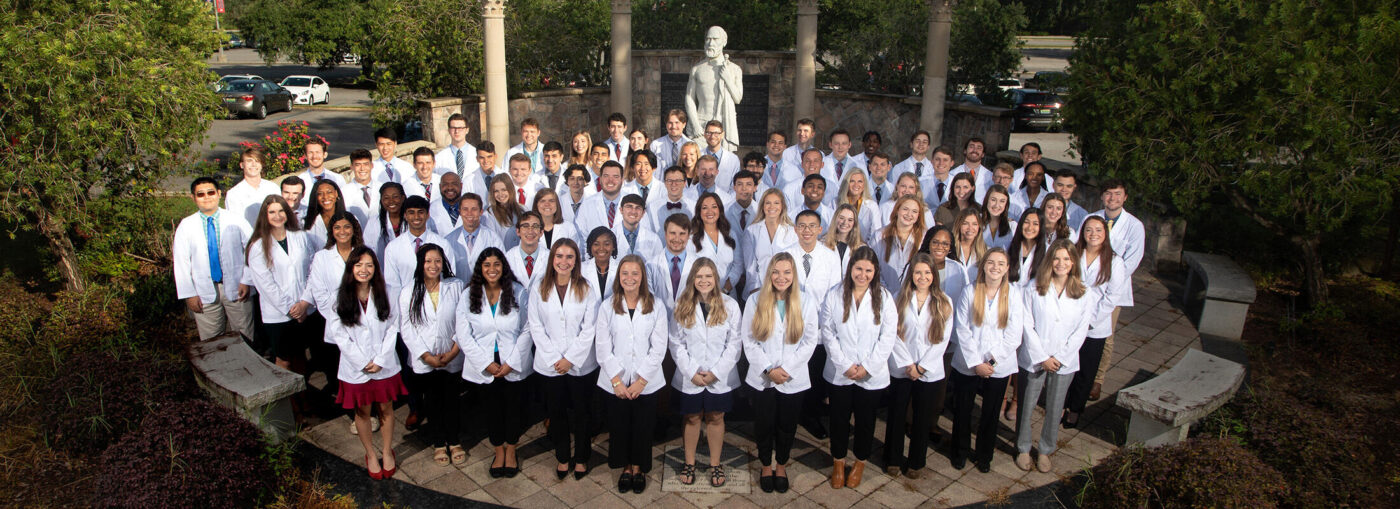
How the Whiddon Secondary Works
After your AMCAS application reaches the college, all U.S. citizens and permanent residents with an MCAT of at least 495 are sent a secondary application. The secondary fee is $75, nonrefundable, and it is waived automatically for AMCAS Fee Assistance Program recipients. The regular deadline is December 1, 2026. Watch your email, including spam folders, for the secondary invitation once AMCAS verifies your application.
For the 2026-2027 cycle, the secondary has two required questions. Both are listed below word for word.
Secondary Essay Prompts for the 2026-2027 Cycle
| Prompt | Who answers | Limit |
|---|---|---|
| 1. Life experience and patient care | All applicants who receive the secondary | Not published; plan for about 3,500 characters and follow the limit shown in your secondary |
| 2. Areas of medicine | All applicants who receive the secondary | Not published; plan for about 200 characters and follow the limit shown in your secondary |
Neither question’s character limit is published for this cycle. The life-experience prompt replaced a 3,500-character essay about readiness to practice medicine in a multicultural society, and the areas-of-interest question had a 200-character limit in recent cycles. Write the first essay to about 3,500 characters and the second to about 200 characters, then adjust to whatever limit your secondary shows. Writing to the shorter length is the safe choice, because cutting a long draft at the last minute usually weakens it.
Prompt 1: Life Experience and Patient Care
“The Whiddon College of Medicine is dedicated to training resilient, adaptable physicians who provide exceptional, patient-centered care to individuals from all walks of life. Please share a significant life experience or aspect of your background that has shaped your ability to effectively communicate with, empathize with, and care for patients with varied healthcare needs, including those in underserved or rural communities.”
What it asks. This prompt has four parts. You need to (1) describe one significant experience or part of your background, (2) show how it shaped your ability to communicate with patients, (3) show how it shaped your empathy and care, and (4) connect it to patients with varied needs, “including those in underserved or rural communities.” The opening sentence also tells you what the college values: resilience, adaptability and patient-centered care for people “from all walks of life.”
How to approach it. Choose one experience and go deep. A family member’s illness, a job caring for patients, growing up in a rural town, translating for relatives or serving at a free clinic can all work, as long as you show a change in how you communicate and care. Spend most of your words on what you did and learned, not on background. End by looking forward to how you will use that skill as a medical student in Mobile and the surrounding region.
Illustrative example, not an actual applicant essay
My grandmother lived 40 minutes from the nearest pharmacy in rural Clarke County, and for three summers I drove her to every appointment after her diabetes began damaging her kidneys. In those waiting rooms I learned that a missed dose rarely meant she did not care. It meant the refill cost too much that month, the drive was too long, or the instructions on the printout used words she did not use.
The turning point came at a visit where a new physician changed two of her medications. My grandmother nodded at everything. In the car she asked me which pill was new, and I realized neither of us could say. Since then I have stopped treating a nod as understanding. At the next visit I asked the nurse to go through the changes again while my grandmother repeated them back, and I made a large-print chart we taped inside her kitchen cabinet. Her blood sugar readings steadied over the next few months. The medicine had not changed. The communication had.
I carried that lesson into my job as a certified nursing assistant at a long-term care center in Grove Hill. Many of our residents had spent their lives farming or working at the paper mill, and several had never trusted doctors. One resident refused his evening blood pressure check for a week. Instead of pushing, I asked about the work he used to do. He had been a timber cutter, and he told me the last time someone took his blood pressure, the news led to a hospital stay far from home. Once I explained that the reading only helped the nurse decide whether to call his doctor, and that he could see the number himself, he let me take it. I learned that empathy is not only feeling sorry for someone. It is finding out what they are afraid of and answering that fear honestly.
These experiences shaped how I communicate with every patient. I use plain words, I ask patients to tell me in their own words what they will do, and I try to learn what makes care hard for them, whether that is cost, distance, literacy or past experiences with the healthcare system. Patients in rural Alabama often carry all of those barriers at once.
I want to keep building these skills at the Whiddon College of Medicine. The CLINIC visits in primary care settings during the first year would let me practice them early, and the Student-Run Free Clinic at the Salvation Army would let me serve patients in Mobile who face many of the same barriers my grandmother did. I am also interested in the Primary Care Pathway, because following patients at one community clinic for four years is the kind of continuity that helped my grandmother most. My goal is to become a physician whom patients in places like Clarke County understand and trust.
Why this example works.
- It answers every part of the prompt. It names one experience (driving a grandmother to appointments), shows how it changed communication (teach-back and a large-print chart), shows empathy in action (learning a resident’s fear) and ties both to rural patients with varied needs (cost, distance, literacy and distrust).
- It shows resilience and adaptability without saying those words. The applicant changes approach when something does not work, which matches the qualities named in the prompt’s first sentence.
- It is specific to the college. The closing paragraph names verified parts of the program: CLINIC visits in primary care settings, the Student-Run Free Clinic at the Salvation Army and the Primary Care Pathway.
- It fits the expected length. The essay is about 2,700 characters including spaces (482 words), comfortably under the 3,500 characters the college allowed for the previous version of this essay.
Mistakes to avoid.
- Writing about hardship without showing how it changed the way you communicate with and care for patients.
- Choosing a dramatic moment from a short shadowing day when you have a longer, more meaningful experience available.
- Ignoring the “underserved or rural communities” part of the question. If your experience is urban, connect it honestly to patients with limited access to care.
- Claiming you already understand rural life if you do not. Write about what you learned, not about what you assume.
- Filling the essay with praise for the school instead of evidence about yourself.
Prompt 2: Areas of Medicine
“Although interests may change, what areas of medicine are you primarily interested in at the current time?”
What it asks. This is a short-answer question. The college wants to know which fields interest you now. It already says interests may change, so it is not asking for a commitment.
How to approach it. Name one or two areas, give a brief reason tied to your experience and, if space allows, mention a part of the college’s program that fits. Keep it honest and specific. Write to about 200 characters.
Illustrative example, not an actual applicant essay
Family medicine and pediatrics, especially rural primary care. My work as a CNA showed me how much continuity matters, and I hope to explore it through the Primary Care Pathway.
Why this example works. In 177 characters including spaces, the answer names two fields, gives a reason from the applicant’s own experience and connects to a verified program. It is consistent with the life-experience essay, so the two answers tell one story.
Mistakes to avoid.
- Listing five or six specialties, which reads as a lack of reflection.
- Naming a highly competitive specialty without any experience to support the interest.
- Contradicting the rest of your application. If your essays are about primary care, a sudden interest in a field you have never seen will raise questions.
Ties to Alabama for Out-of-State Applicants
In earlier cycles, the secondary included an optional essay for out-of-state applicants explaining their ties to Alabama. That question has not been published for the 2026-2027 cycle, so we do not give an example for it here. The college does screen out-of-state applicants for strong ties to Alabama, so if you are not a resident, make your ties clear throughout your AMCAS application, including where you attended high school or college, family in the state and any work or service in Alabama. If your secondary includes a ties question, answer it directly and follow the limit shown.
Strategies for Effective Answers
Be concise but meaningful. Address each question directly, and support every claim with a specific example. Mention experiences that genuinely shaped you, such as clinical work, service or time spent with patients in settings very different from your own. Draft your life-experience essay before the secondary arrives so you can return it within one to two weeks, and have someone you trust read it for clarity and length. Keep your two answers consistent with each other and with your AMCAS application.
Interviews at the University of South Alabama College of Medicine
Interviews are a critical part of the admissions process and are by invitation only. The interview day gives the college a chance to learn more about you than your application can show, and it gives you a chance to learn about the Whiddon College of Medicine. The college says it wants to understand the depth of your intellectual curiosity, your values and your commitment to a career of service.
Interview Format for 2026-2027
- Virtual. All interviews for the 2026-2027 admissions cycle are conducted online via Zoom.
- Two one-on-one interviews. Each applicant meets with two interviewers, one at a time. Each interview is scheduled for 40 minutes and is conversational.
- Who interviews you. Interviewers are members of the Admissions Committee and ad hoc interviewers. They receive your AMCAS profile and an evaluation form.
- When. Interviews take place on most Wednesdays between September and March. Early Decision interviews take place in mid-September, with invitations going out in the first week of September; other invitations begin in mid-September. Applicants selected for an interview are contacted by email one to two weeks before the interview date.
- No MMI. The college does not use the Multiple Mini Interview format, so you do not need to prepare for timed stations. If other schools on your list use MMIs, our guide to Multiple Mini Interviews (MMIs) explains how they differ.
Your Interview Day
| Time | Activity |
|---|---|
| 8:30 to 9:00 a.m. | Applicants sign in via Zoom |
| 9:00 to 9:40 a.m. | Welcome and information session with Director of Admissions Deborah Fetherland, including financial aid and how the admissions process works |
| 10:00 to 10:40 a.m. | First interview |
| 11:00 to 11:40 a.m. | Second interview |
| 12:00 to 12:40 p.m. | Q&A session with current medical students, including small breakout groups |
| 12:45 to 1:00 p.m. | Closing remarks and Q&A with the admissions office |
What Interviewers Evaluate
Interviewers ask a range of questions to judge your communication skills, compassion for others and motivation for practicing medicine in a multicultural society. The interview evaluates these specific attributes:
- Communication
- Empathy
- Leadership
- Team orientation
- Previous life and work experiences
- Research experience
- Regional bilingual language proficiency
- Sensitivity to a multicultural society
Interviews can be stressful, but they are also your best chance to show the person behind the application. Reaching the interview stage at a school that interviews only a small share of applicants is already an accomplishment.
Technology and Setting
To complete the online interview, you need a stable internet connection, a computer or tablet with a good webcam and microphone, and a private, quiet, well-lit space free from distractions. The AAMC publishes tips for virtual interviews, and the admissions office encourages applicants to contact it with any concerns about completing an online interview. Test your setup the day before, close other programs and keep a phone number for the admissions office nearby in case your connection drops.
Interview Preparation
The interview is a key step in your medical school admissions journey. Because both interviews are one-on-one conversations based on your application, preparation is less about memorizing answers and more about knowing your own story.
Do’s:
- Research the Whiddon College of Medicine thoroughly, including its mission, the Primary Care Pathway, the Student-Run Free Clinic and USA Health’s hospitals.
- Reread your AMCAS application and secondary essays, and be ready to discuss any experience you listed.
- Practice answering common questions out loud, such as why you want to be a physician, why South Alabama and how you have worked with people from backgrounds different from yours.
- Prepare a few thoughtful questions for your interviewers and for the student session.
- Dress professionally, even on Zoom.
Don’ts:
- Don’t be late. Sign in at 8:30 a.m. sharp.
- Don’t speak negatively about other medical schools, including other medical schools in Alabama.
- Don’t be unprepared to discuss your clinical experiences, research, service and any time you have spent in clinical programs abroad.
- Don’t recite rehearsed paragraphs. The interviews are conversational.
Mock interviews. Mock interviews are highly recommended. Practice with your premedical advisor, your school’s career center or a medical school admissions consulting service, and record yourself on video so you can see how you come across on camera. Practice helps you give clear, thoughtful answers and feel more confident on the day.
After the Interview
Interviewed applicants who are not accepted right away are placed on hold and stay under consideration until notified. Acceptances begin in mid-November and continue on a rolling basis, and decisions for applicants not yet accepted are made in April, when they are placed on the wait list or rejected.
Acceptance and Matriculation
Next steps after acceptance. Once accepted, you must respond within the time given in your offer, submit your $100 deposit by April 30, 2027, and follow the Choose Your Medical School tool timeline, committing to enroll and withdrawing from other programs by July 5, 2027. You will also submit final transcripts, complete all prerequisite coursework and other administrative steps. Watch your email for instructions from the Office of Admissions.
Preparing for the first year. The first year can feel like a whirlwind. Orientation for first-year students in 2026 ran the week of July 27, and the fall semester began August 3, so expect a late-July start. To make the transition smoother, rest before school starts, review basic science concepts you feel less sure of and talk with current students about how they study. Incoming students who want a head start on research can apply to the Summer Research Program, which accepts students before their first year.
How to Reach Out for More Information
If you are curious about the University of South Alabama medical school or are comparing medical schools in Alabama, contact the admissions office directly. It is the best resource for specific questions about your application.
- Office of Admissions, Frederick P. Whiddon College of Medicine: 5795 USA Drive North, CSAB Room 339, Mobile, AL 36688
- Phone: (251) 460-7176
- Email: [email protected], or Director of Admissions Deborah Fetherland at [email protected]
- Financial aid: College of Medicine Office of Financial Aid, (251) 460-7918
For questions about community engagement at the college, LoRen Modisa, Ed.D., co-chairs the community engagement task force for the 2027-2031 strategic plan.
Frequently Asked Questions
Does the University of South Alabama have a medical school?
Yes. The University of South Alabama’s medical school is the Frederick P. Whiddon College of Medicine in Mobile, which awards the Doctor of Medicine. Its charter class entered in 1973, and it took its current name in 2022. It is a fully accredited, public MD school and the only MD school on Alabama’s Gulf Coast.
Is the University of South Alabama College of Medicine the same as the Whiddon College of Medicine?
Yes. The USA College of Medicine was renamed the Frederick P. Whiddon College of Medicine in June 2022. You will still see older names, including USACOM and South Alabama College of Medicine, in some places.
Does South Alabama accept out-of-state applicants?
Yes, but only competitive out-of-state applicants with strong ties to Alabama. You need a bachelor’s degree, an overall GPA of 3.8 or higher and an MCAT score of 508 or higher. More than 90% of current students are Alabama residents, so out-of-state applicants should apply only if they meet these standards and can show real ties to the state.
Does the college accept international students or DACA recipients?
International applicants must have U.S. permanent resident status to be considered, and the secondary application goes only to U.S. citizens and permanent residents. All applicants must also complete at least 90 semester hours and all prerequisites at a U.S. regionally accredited institution. DACA recipients are not considered. If you hold another status, contact the admissions office before applying.
What is the minimum MCAT score for South Alabama?
You need at least a 495 to receive a secondary application. Early Decision applicants need at least a 503 with a 3.50 GPA to be considered for an interview, and out-of-state applicants need at least a 508. For the 2027 entering class, scores from 2023 through the September 2026 test dates are accepted.
What is the acceptance rate at the University of South Alabama College of Medicine?
The college does not publish an acceptance rate, and acceptance offers are not reported, so a true rate cannot be calculated. For the 2025 entering class, 1,906 verified applications led to 203 interviews and 79 matriculants. In-state applicants had a much better chance of an interview (181 of 488) than out-of-state applicants (22 of 1,382). Your residency status and how far you sit above the minimums matter more than any single rate.
What MCAT and GPA do accepted applicants have?
For the 2025 entering class, accepted applicants had a median MCAT of 509 (mean 509.5) and a median total GPA of 3.93 (mean 3.85). The median science GPA was 3.90. These are medians, not minimums: the minimum MCAT to receive a secondary is 495, and out-of-state applicants need at least a 508 and a 3.8 GPA.
When are the 2026-2027 deadlines?
The AMCAS deadline is November 2, 2026, AMCAS transcripts are due November 16, 2026, and the secondary application is due December 1, 2026. Early Decision applications were due August 3, 2026, with the Early Decision secondary due September 1, 2026.
What are the secondary essay questions?
For the 2026-2027 cycle, the secondary asks two questions: a life-experience essay about how your background has shaped your ability to communicate with, empathize with and care for patients with varied healthcare needs, including those in underserved or rural communities, and a short question about which areas of medicine interest you now. Plan for about 3,500 characters on the first and about 200 characters on the second, and follow the limits shown in your secondary.
How much does the secondary application cost?
The secondary fee is $75 and is nonrefundable. If you received an AMCAS Fee Assistance Program waiver, the Whiddon secondary fee is waived automatically.
What is the interview format?
All 2026-2027 interviews are virtual via Zoom. You will have two one-on-one, conversational interviews of 40 minutes each, plus an information session and a session with current medical students. Interviews take place on most Wednesdays from September through March.
Does South Alabama use MMI interviews?
No. The college uses two traditional one-on-one interviews, not Multiple Mini Interviews or panel interviews.
How much is tuition at the University of South Alabama College of Medicine?
For 2026-27, tuition is $36,290 a year for Alabama residents and $72,580 a year for out-of-state students. The estimated first-year cost of attendance for a student living off campus is $70,679 in-state and $106,969 out-of-state.
Does South Alabama offer Early Decision?
Yes. The Early Decision Program is open to residents of Alabama, the Florida Panhandle and the Mississippi Gulf Coast counties who are eligible for in-state tuition, with a minimum 503 MCAT and 3.50 GPA. Applicants agree to attend if accepted and are notified by October 1.
Can high school students apply to the medical school early?
Yes, through the College of Medicine Early Acceptance Program, run jointly with the USA Honors College. It offers a small number of high school seniors a conditional acceptance to medical school if they complete their undergraduate degree at USA and meet all program requirements, including a minimum 3.5 GPA and a 504 MCAT. The application deadline for this year’s high school seniors is December 15, 2026.
What is the Primary Care Pathway?
It is an optional four-year track for up to 10 students per class who are interested in family medicine, internal medicine or pediatrics. Students train at the same community primary care clinic in a rural or underserved area throughout medical school, complete a summer quality improvement project and take leadership training. Students apply during the first year.
Does the college require shadowing?
Shadowing is highly recommended but not required, and there is no minimum number of hours. Primary care physician shadowing is looked upon favorably, and you should be able to discuss in detail what you learned. In the 2025 entering class, 98% of matriculants reported shadowing or clinical observation. Hands-on clinical experience and community service matter as well.
Is the University of South Alabama College of Medicine accredited?
Yes. The MD program is fully accredited by the Liaison Committee on Medical Education. It had its scheduled LCME site visit in October 2026 as part of the regular 2026-27 review cycle.
Can I defer admission?
Under special circumstances, accepted applicants can request a one- or two-year deferral. A written request explaining the reason must reach the Office of Admissions by June 1, and deferred students may not apply to or accept admission at another school for that year.
Is the acceptance deposit refundable?
No. Accepted students pay a $100 deposit by April 30, 2027. It is nonrefundable and is applied to tuition.
How does the South Alabama wait list work?
Applicants who have not been accepted by April are placed on the wait list or rejected. The wait list is ranked, and offers are made in rank order. In a typical cycle, about 40 applicants are placed on it and about 20 receive offers.
Does South Alabama require CASPer, PREview or a background check?
The college does not use AAMC PREview scores and requires no other situational judgment test or additional assessment. A criminal background check is required.
Where do South Alabama graduates match?
Graduates match across the country and in many specialties. In March 2026, 36% of the Class of 2026 matched at programs in Alabama, including 16 students who matched at USA Health hospitals.
How early should I start preparing?
As early as you can. Most students start when they decide on medicine in college, which leaves time for prerequisites, clinical experience, research and strong letters. If you discover medicine later, careful planning can still prepare you well; many applicants take one or more gap years to build experience.
Related Medical School Guides
If you are considering the University of South Alabama, these guides cover schools that applicants often compare with it:
- University of Alabama School of Medicine: Alabama’s other public MD school, the UAB Heersink School of Medicine in Birmingham, is the natural in-state comparison and has its own secondary and Primary Care Track.
- University of Arkansas for Medical Sciences (UAMS): another public Southern MD program that gives strong preference to state residents.
- University of South Carolina Medical School: a public Southern MD school with a similar class size and community-based clinical training.
- Wake Forest University School of Medicine: a private Southeastern MD option for applicants who want to compare a larger research-focused school.
- Vanderbilt University School of Medicine: a highly selective private MD school in Nashville that many Southern applicants add to their lists.
- Johns Hopkins School of Medicine: a national research-intensive MD school for applicants with strong research records who are applying broadly.
For an overview of every medical school in the state, see our guide to medical schools in Alabama. If you are also considering osteopathic medicine, our guide to the Alabama College of Osteopathic Medicine covers a DO option in the state.
More Medical School Guides
To help you further, we have compiled a list of other medical schools that may suit your interests and goals. These schools offer a range of programs and settings, and exploring them can help you build a balanced application list.
Southeast: UCF College of Medicine, USF Morsani College of Medicine, Florida State University College of Medicine, University of Florida Medical School, Morehouse School of Medicine, Medical College of Georgia at Augusta University, Mercer University School of Medicine (MUSM), Emory University School of Medicine, Campbell University School of Osteopathic Medicine (CUSOM), ECU Brody School of Medicine, University of North Carolina Medical School, Edward Via College of Osteopathic Medicine (VCOM), VCU School of Medicine, St. George’s University School of Medicine.
Mid-Atlantic and Northeast: Lewis Katz School of Medicine at Temple University, Philadelphia College of Osteopathic Medicine (PCOM), Geisinger Commonwealth School of Medicine (GCSOM), Penn State Medical School, Lake Erie College of Osteopathic Medicine (in Pennsylvania), Sidney Kimmel Medical College at Thomas Jefferson University, Drexel University College of Medicine, Perelman School of Medicine, University of Pittsburgh School of Medicine, University of Maryland School of Medicine, George Washington University School of Medicine, Georgetown University School of Medicine, CUNY School of Medicine, SUNY Downstate Medical School, NYIT College of Osteopathic Medicine, NYU Long Island School of Medicine, Touro College of Osteopathic Medicine, Albany Medical College, Norton College of Medicine at Upstate Medical University, Jacobs School of Medicine at the University at Buffalo, Hofstra Zucker School of Medicine, Weill Medical College of Cornell University, University of Rochester Medical School, Icahn School of Medicine at Mount Sinai, Renaissance School of Medicine at Stony Brook University, Albert Einstein College of Medicine, New York Medical College, NYU Medical School, Rowan University School of Osteopathic Medicine, Hackensack Meridian School of Medicine (HMSOM), Rutgers New Jersey Medical School (NJMS), Rutgers Robert Wood Johnson Medical School, Cooper Medical School of Rowan University (CMSRU), Yale School of Medicine, Harvard Medical School, Boston University College of Medicine, Brown Medical School.
Midwest: Ohio University Heritage College of Osteopathic Medicine, Northeast Ohio Medical University (NEOMED), University of Cincinnati College of Medicine, University of Toledo College of Medicine, Wright State University Boonshoft School of Medicine, Ohio State University College of Medicine, Case Western Medical School, A.T. Still University Kirksville College of Osteopathic Medicine, Saint Louis University School of Medicine, University of Missouri Medical School, Kansas City University (KCU), UMKC School of Medicine, Washington University School of Medicine, University of Wisconsin Medical School, Stritch School of Medicine at Loyola University Chicago.
Texas: UT Southwestern Medical School, Long School of Medicine at UT Health San Antonio, University of the Incarnate Word School of Osteopathic Medicine, UT Austin’s Dell Medical School, UTMB School of Medicine, McGovern Medical School at UT Health, The University of Texas Rio Grande Valley School of Medicine, UNT Texas College of Osteopathic Medicine, University of Houston College of Medicine, Texas A&M College of Medicine, Baylor College of Medicine.
West: California University of Science and Medicine, UC San Diego Medical School, California Northstate University College of Medicine, Touro University of California, CHSU College of Osteopathic Medicine, UC Davis School of Medicine, UC Riverside School of Medicine, USC Keck School of Medicine, UCLA Medical School, Western University of Health Sciences (in California).
How International Medical Aid Can Help
Information About IMA International Medical Aid
One of the best learning environments for an aspiring physician is working alongside skilled clinicians with real patients, especially in a setting very different from home. International Medical Aid’s pre-med internships abroad place students in clinics and hospitals in Kenya and other locations. Under the supervision of local physicians and nurses, interns take vital signs, help with patient intake and triage and assist with direct patient care in communities with limited access to healthcare.
That kind of experience gives you specific, honest material for the Whiddon secondary question about caring for patients with varied healthcare needs, and for an interview that evaluates empathy, communication and sensitivity to a multicultural society. It does not create any affiliation with the University of South Alabama or any admissions advantage; what matters is what you learn and how you reflect on it. IMA offers medical internships for undergraduates and recent graduates, as well as pre-health internships for students still deciding between medicine and other health careers. You can compare all of our medical internships abroad by location and dates on the IMA International Medical Aid home page. Please take a few minutes to explore the programs, and reach out if you have questions.
Medical School Admissions Consulting
Our goal at International Medical Aid is to help the next generation of medical students get into the schools that fit them best. Applying and interviewing for medical school takes a lot of work, and we want to take some of that weight off your shoulders. Our advisors can help you plan your timeline, decide whether South Alabama fits your residency situation, review your personal statement and your Whiddon secondary essays and run mock virtual interviews so you are ready for two one-on-one conversations on Zoom. Learn more about our medical school admissions consulting program, or take a moment to schedule a free consultation with one of our advisors.
Final Thoughts and Sources
Conclusion and Best Wishes
Applying to medical school, whether to the University of South Alabama or anywhere else, is challenging and rewarding. If you are still wondering, “Does the University of South Alabama have a medical school?”, the answer is yes: the Whiddon College of Medicine is an established, fully accredited public MD school that offers a competitive, complete medical education rooted in the Gulf Coast.
Final Tips for the Application Process
- Confirm your residency status and make sure you meet the college’s minimums before you apply.
- Stay vigilant about deadlines: AMCAS by November 2, 2026, and the secondary by December 1, 2026.
- Draft your life-experience essay early and keep it specific to how you communicate with and care for patients.
- Prioritize quality over quantity in your letters, your activities and your personal statement.
- Build hands-on clinical and service experience, including with underserved or rural communities.
- Prepare for two one-on-one virtual interviews, and keep checking the college’s website for updates.
Best wishes as you work through the admissions process. Medical school is not only about academics; it is about building a profile that shows your motivation, commitment and readiness for a demanding and rewarding career. If you would like help with any part of the process, please contact us about our medical school admissions consulting program, our international healthcare internships or our medical school guides.
Sources
All sources were checked on November 4, 2026. Statistics are labeled with their cohort or academic year where they appear.
- University of South Alabama Frederick P. Whiddon College of Medicine, Future Students pages: Future Medical Students (mission, Class of 2030 profile, applicant categories, out-of-state minimums, admissions staff); How to Apply (MCAT window and minimum, prerequisites, letters, secondary fee); Application Timeline 2026-2027; The Interview Process; Early Decision/Early Assurance; Technical Standards; Scholarships and Awards; The Curriculum; Research Opportunities; Overseas Clinical Experiences.
- 2026-2027 Bulletin for the M.D. Program (history and timeline, USA Health, facilities, admissions, selection process, curriculum and clerkships, Primary Care Pathway, financial aid, academic calendar).
- College of Medicine Office of Financial Aid: 2026-2027 Cost of Attendance by Class; College of Medicine M.D. Program Tuition and Fees, Academic Year 2026-2027; Financial Updates and Things to Know (federal loan changes effective July 1, 2026).
- Whiddon College of Medicine: home page (mission, new building, news of November 4, 2026); Accreditation and Accreditation Timeline; Administration and Dean’s Office; Strategic Plan 2024-2027 and 2027-2031 planning; Primary Care Pathway (Department of Family Medicine); Ph.D. in Basic Medical Sciences; Match Day 2026; Continuous Professional Development; Community Service and Service Learning; Wellness Program; Office of Student Affairs; MedPride and Allies; Department of Emergency Medicine.
- Whiddon College of Medicine news: “Welcoming Our Alumni Home: Medical Alumni Reunion 2026” (June 30, 2026); “Class of 2028 receives white coats” (June 25, 2026); “Medical students begin summer research” (May 28, 2026); “53rd Annual Medical Student Research Day set for July 24” (July 15, 2026); “USA Student-Run Free Clinic open to serve Mobile community” (April 22, 2026); “Panacek earns International Educator Award” (March 31, 2026); Med School Watercooler, “Whiddon COM faculty, alumni recognized at MASA annual session” (April 24, 2025) and “Medical alumni reconnect at annual reunion weekend” (June 26, 2025).
- University of South Alabama Office of Admissions, Early Acceptance Programs (College of Medicine EAP, 2026-2027 deadline); USA Master of Public Health program page; Stanford Medicine profile of Ann Weinacker, M.D.
- AAMC Medical School Admission Requirements (MSAR), school profile for the Frederick P. Whiddon College of Medicine at the University of South Alabama, 2026 edition, accessed November 4, 2026: 2025 entering class MCAT and GPA of accepted applicants, verified applications, interviews and matriculants by residency, matriculant demographics and premedical experiences; application, shadowing, deposit, waitlist and assessment policies; Tuition and Student Fees Survey 2025-2026; LCME Part I-B Student Financial Aid Questionnaire 2024-2025; 2025 Graduation Questionnaire.
- AAMC Medical School Admission Requirements (MSAR) Report for Applicants and Advisors, 2027 edition, public reports: Tuition, Fees and Insurance (Tuition and Student Fees Survey, academic year 2024-2025); Debt Information (LCME Part I-B Student Financial Aid Questionnaire, academic year 2023-2024); Secondary Application Policies; Interview Procedures; Admission Policies and Information.
- 2026-2027 secondary prompts: Med School Insiders secondary prompts database (2026-2027 section); BeMo Academic Consulting, Medical School Secondary Essay Prompts 2026-2027 (updated August 21, 2026); Student Doctor Network, 2026-2027 University of South Alabama Whiddon College of Medicine thread (July 14, 2026).











