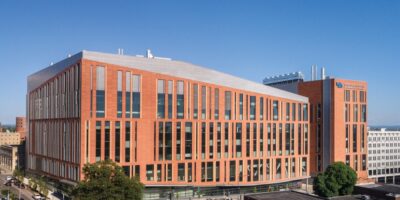
NYU Grossman Long Island School of Medicine is a medical school in New York unlike any other medical college in the state or even across the country. It is the only medical school in the United States that offers a three-year, tuition-free MD degree in primary care. The school opened in Mineola, on Long Island, in 2019 as NYU Long Island School of Medicine and took its current name in July 2023. Every student receives a Full-Tuition Scholarship, finishes the MD in three years and is offered a directed pathway into a primary care residency at NYU Langone Hospital-Long Island.
Like all medical schools across the country, New York medical colleges have school-specific requirements and guidelines, and this one is more specific than most. Understanding the school’s identity, selection criteria and programs will help you decide whether it fits you and help you put your best foot forward. This guide covers the 2026-2027 application cycle, for students who want to start medical school in July 2027. It explains the three residency tracks, the three-year curriculum, the 2026-27 cost of attendance, the requirements and deadlines, the virtual interview and all six current secondary questions, each with a full illustrative example and analysis. Facts were checked on October 17 and 18, 2026.
Key Takeaways
- This school is for applicants who are already sure about primary care. The school seeks students committed to general practice in internal medicine, pediatrics or obstetrics and gynecology, and it advises applicants who are unsure, or who want to subspecialize, to choose a different program.
- You pick a residency track when you apply. The secondary asks you to choose internal medicine, pediatrics or OB-GYN. Applicants interested in family medicine apply through the internal medicine track. General surgery is not a track.
- The class is tiny. The entering class is capped at 24 students. The school received more than 4,000 applications for 24 spots in 2022, and for the 2025 entering class, 4,738 verified applications led to 308 interviews and 24 matriculants.
- The academic bar is high. Accepted applicants in the 2025 entering class had a median MCAT of 514 and a median GPA of 3.86. There is no minimum MCAT or GPA for screening.
- Tuition is covered for everyone. For 2026-27, the Full-Tuition Scholarship is worth $63,552 per student, and the required health insurance plan is fully subsidized. The cost that remains in year 1 is $32,396 for fees, living and educational expenses, and need-based Debt-Free Scholarships can cover that gap for students who qualify.
- Deadlines for the 2026-2027 cycle: AMCAS by November 1, 2026, and the secondary ($110 fee) by November 16, 2026, at 11:59 p.m. ET. Decisions are not rolling: all applicants hear in February 2027.
- No prerequisites are mandated, but eight subjects are expected. The MCAT is required, and for July 2027 entry the oldest accepted score is from January 2024.
- Interviews are virtual. The day pairs a multiple mini-interview (MMI) circuit with a team-based group activity run by the Simulation Center staff.
- Next step: list the primary care and track-specific clinical experience you already have, then draft your residency track essay before the secondary arrives.
Key Statistics About NYU Grossman Long Island School of Medicine
The snapshot below gathers the figures applicants ask about first. MCAT, GPA and applicant figures are for the 2025 entering class, class size and the residency tracks are current for the 2026-2027 cycle, costs are for the 2026-27 academic year and outcomes are from Match Day 2026. The number of acceptance offers is not published, so there is no acceptance rate to report. The share of applications that reached an interview is shown instead, labeled as exactly that.

| Metric | Value | Year or cohort | Source and definition |
|---|---|---|---|
| School and degree | NYU Grossman Long Island School of Medicine, MD (three-year accelerated); no combined or dual degrees | Current | School About Us and FAQ pages; Mineola, Nassau County, NY |
| Accreditation | Full LCME accreditation | Current (granted February 2023) | School MD Degree page; NYU Langone news, February 22, 2023 |
| Entering class size | Capped at 24 (24 entered in July 2026) | Current cap; Class of 2029 | School FAQ; NYU Langone White Coat release, July 27, 2026 |
| Applications | 4,738 verified applications (1,140 in-state, 3,142 out-of-state, 456 international) | 2025 entering class | AAMC MSAR, 2026 edition; verified AMCAS applications |
| Applications (school-published) | More than 4,000 for 24 spots | 2022 | NYU Langone, “Five Things to Know” (2023) |
| Interviewed | 308 (176 in-state, 132 out-of-state, 0 international) | 2025 entering class | AAMC MSAR, 2026 edition; interview data provided by the school |
| Matriculated | 24 (15 in-state, 9 out-of-state) | 2025 entering class | AAMC MSAR, 2026 edition |
| Median MCAT | 514 (mean 513.6) | 2025 entering class | AAMC MSAR, 2026 edition; all accepted applicants. No minimum MCAT for screening |
| Median GPA | 3.86 total; 3.84 science | 2025 entering class | AAMC MSAR, 2026 edition; all accepted applicants. No minimum GPA for screening |
| Acceptance rate | Not published (offers are not reported) | n/a | An acceptance rate needs the number of offers. Interviewed divided by verified applications was 308 of 4,738 (6.5%), an interview share, not an acceptance rate |
| Residency tracks | Internal medicine, pediatrics, OB-GYN (family medicine through the IM track) | 2026-2027 cycle | School How to Apply and FAQ pages |
| Tuition and Full-Tuition Scholarship | $63,552 tuition, fully offset by the scholarship | 2026-27 academic year; all students (no in-state or out-of-state split) | School Cost of Attendance page |
| Fees and health insurance | $4,550 fees; $9,325 insurance, fully subsidized, no opt-out | 2026-27 academic year | School Cost of Attendance page |
| Cost after scholarship and insurance subsidy | $32,396 (year 1); $32,080 (year 2); $30,430 (year 3) | 2026-27 academic year | School Cost of Attendance page; fees plus living and educational expenses, before any Debt-Free Scholarship |
| Match outcomes | 100% of 25 graduates matched; 72% in primary care and mission-aligned fields; 76% stayed in New York; 40% at NYU Langone Hospital-Long Island | Match Day 2026 | School Match Day Results page |
| Class profile | More than half women; 13% first-generation college students; 71% from the tristate area; 67% from New York State (46% New York City, 21% Long Island) | Entering class of July 2025 (Class of 2028) | NYU Langone White Coat release, July 28, 2025 |
A tuition-free school with 24 seats attracts thousands of applicants: more than 4,000 in 2022 and 4,738 verified applications for the 2025 entering class, of which 308 (6.5%) reached an interview. Treat those numbers as a sense of scale. What matters more is fit. The admissions committee reads every file against one question: is this person ready to commit to general practice in the track they chose?
Mission and Educational Priorities
The school states its mission in one sentence: “Our mission is to develop preeminent physician leaders and a quality workforce through scholarship and innovative medical education design anchored by the principles of primary care and health systems science” (see the MD Admissions page). Its About page adds that the school seeks to improve the health of the community by training the next generation of general practitioners in primary care.
Every major feature of the school follows from that mission. The three-year curriculum gets graduates into practice a year sooner. The Full-Tuition Scholarship removes the debt that can push new doctors toward higher-paying specialties. The directed pathway keeps graduates training at NYU Langone Hospital-Long Island, where the school wants to grow the primary care workforce. The school was the first in the nation to offer a three-year, tuition-free degree with a focus on primary care.
Why NYU Grossman Long Island School of Medicine?
NYU Grossman Long Island School of Medicine is one of the newest medical schools on Long Island, having launched in 2019, and it has already made quite a name for itself. It belongs to NYU Langone Health, the only health system in the United States with two medical schools. The Long Island school grew out of NYU Langone’s merger with the former Winthrop-University Hospital in Mineola. That hospital is now NYU Langone Hospital-Long Island, a 591-bed medical center across the street from the school that serves racially, ethnically and socioeconomically diverse communities on Long Island.
The connection to NYU Langone has also expanded research on campus. Multidisciplinary scientists and physician investigators conduct research and clinical studies in a variety of areas, including diabetes and its treatment, and the school’s research areas include a Diabetes and Obesity Research Center, a Clinical Research Center and a medical education research team. The hospital is also known for departments such as obstetrics and gynecology, orthopedic surgery and urology, each led by a department chair at the school.
Many graduates stay. At Match Day 2026, 52 percent of graduates continued training at NYU Langone Health locations, including 40 percent at NYU Langone Hospital-Long Island. Residents there earn a house staff salary the school describes as highly competitive with other academic medical centers in the New York metropolitan area. For context on what residents earn in different specialties and regions, see our guide to resident salary figures.
What the mission means for you as an applicant
Three practical points follow from the mission.
First, commitment comes before admission, not after. Most medical schools expect students to explore specialties during clerkships. This school asks you to choose a field on your secondary. It looks for “meaningful clinical experiences in primary care as well as in their selected residency track.” If your clinical experience is mostly emergency, surgical or research-lab work, you need a clear and honest explanation of why primary care is still your path.
Second, “generalist” is the key word. The school wants future general internists, general pediatricians and generalist obstetrician-gynecologists. It warns that the accelerated calendar leaves too little time to build a portfolio for highly specialized fields, including surgical subspecialties. Writing about a love of interventional cardiology will work against you here.
Third, health systems science is part of the job description. The school is interested in future “change-agents” in the delivery of comprehensive, equitable, value-based care. Experiences that show you noticing how care is delivered, such as missed follow-ups, language barriers or a clinic’s scheduling problem, are directly relevant.
Accreditation and Institutional Identity
- Accreditation: The MD program has full accreditation from the Liaison Committee on Medical Education (LCME). The LCME granted full accreditation in February 2023, after provisional accreditation during the school’s first years. The program is registered with the New York State Education Department, and New York University is institutionally accredited by the Middle States Commission on Higher Education (see the MD Degree page).
- Name: The school opened as NYU Long Island School of Medicine. In July 2023, with a $200 million gift from Kenneth and Elaine Langone, it was renamed NYU Grossman Long Island School of Medicine in honor of Robert I. Grossman, MD, CEO of NYU Langone Health and dean of NYU Grossman School of Medicine in Manhattan. You will also see the abbreviation NYUGLISOM.
- Campus: a single campus in Mineola, Nassau County, 17 miles from New York City. Classes and simulation take place in the Research and Academic Center, and clinical training happens at NYU Langone Hospital-Long Island and community outpatient practices.
- Two separate NYU medical schools: NYU Grossman School of Medicine in Manhattan is a different school, with its own admissions, secondary, curriculum and costs. Applying to one is not applying to the other.
- Private school, no residency preference: costs are the same for every student, and the school publishes no in-state preference, although it welcomes applicants with ties to the communities it serves.
NYU Grossman Long Island School of Medicine Rankings
Full accreditation made the school eligible to take part in medical school rankings such as those from U.S. News and World Report. The school does not publish a ranking on its own website. A small, mission-driven school that sends most graduates into primary care is better judged by its outcomes: 100 percent of graduates matched for the fifth consecutive year in 2026, and 72 percent entered primary care and mission-aligned disciplines.
Accreditation tells you the program meets national standards. It does not tell you whether a three-year primary care school fits you. If you want to start building patient care experience while you are still deciding, medical internships for undergraduates can give you supervised time with patients in primary care settings before you commit to a field.
Medical Programs and Affiliations
Before applying, it is crucial to research the programs a medical school offers. This research will help you decide whether the school is a good fit and help you focus your application. At NYU Grossman Long Island School of Medicine, the answer is simple: there is one MD program, and every student follows it.
The three-year accelerated MD
NYU Grossman Long Island School of Medicine is one of the only medical schools to make a three-year MD the standard program for every student, rather than an optional track inside a four-year school. The program is geared toward “exceptionally qualified students who excel in a team-oriented learning environment that promotes self-directed active learning, engaged scholarship, and innovative thinking.” Students earn the degree sooner and at lower cost and begin residency a year earlier than graduates of traditional four-year programs.
The directed pathway to residency
Acceptance comes paired with the offer of a directed pathway into one of three primary care residency programs at NYU Langone Hospital-Long Island:
- Internal medicine (applicants interested in family medicine apply through this track)
- Pediatrics
- Obstetrics and gynecology
You choose your track on the secondary application. When you are accepted, you are notified that you will be ranked to match into that residency program through the National Resident Matching Program (NRMP) during your final year, contingent on satisfactory academic progress and on meeting professional standards. It is a pathway, not an automatic job: students still participate in the Match, may choose to rank the NYU Langone Hospital-Long Island program and may also rank external programs (see How to Apply).
General surgery is not a directed-pathway track. Some graduates still match into surgical fields through the regular Match. In 2026, graduates matched in general surgery, vascular surgery, urology and orthopedics. The school is clear that its calendar is not built to prepare students for highly specialized fields, so do not apply here planning to switch.
Changing tracks
The school expects students to pursue the residency they named when they applied. It will support a student whose goals change, but the directed pathway may not exist in the new field, and the student would apply to external programs instead.
Family medicine
Family medicine is not one of the directed-pathway options. The school has a large family medicine department with faculty who mentor students, an active family medicine interest group, and graduates who match into external family medicine programs. In 2026, graduates matched into family medicine at Montefiore Medical Center-Albert Einstein College of Medicine and NewYork-Presbyterian Hospital-Columbia. Family medicine applicants may also choose the internal medicine directed pathway in their final year.
What the school does not offer
- No MD/PhD, MD/MPH, MD/MBA or other combined or dual degrees, and no leave of absence to pursue one.
- No global health programs during enrollment. The time between each year is too short, and the school says students interested in global health typically pursue such programs before matriculation.
- No advanced-standing transfers.
- No early decision or early assurance programs are listed on the school’s admissions pages.
Because global health work must happen before medical school, it belongs in your gap year or college summers. Pre-med internships abroad are one way to gain hands-on primary care exposure in a different health system before you apply.
Other education programs (not the MD)
NYU Grossman Long Island School of Medicine also sponsors graduate medical education, with training in 28 medical subspecialties through its residency and fellowship programs. Residencies at NYU Langone Hospital-Long Island include emergency medicine, general surgery, internal medicine, neurology, obstetrics and gynecology, orthopedic surgery, pathology, pediatrics, podiatric medicine and surgery, and urology, plus an internal medicine residency at NYU Langone Hospital-Suffolk. The school also runs non-degree pharmacy residency programs and a Simulation Center. These are training programs for graduates, not routes into the MD.
Curriculum Overview
The MD curriculum teaches the basic and clinical sciences together with health systems science (HSS): the study of how health care is delivered, how providers work together, and how to deliver safe, high-value patient care. It emphasizes integrated care, meaning patient-centered care across disciplines with effective communication between community-based primary care providers and hospital-based specialists. The program is divided into three phases (see the MD Curriculum page).
Phase One: Foundational Basic Science Instruction and Research (46 weeks)
Students spend 46 weeks in interdisciplinary pre-clerkship coursework that covers foundational basic science concepts in biology, anatomy and physiology. They also build skills in the behavioral and social aspects of medicine so they are ready to work with patients and other providers in Phase Two.
- Language Acquisition course: the year begins here, combining core basic science concepts with case-based clinical learning exercises.
- Organ systems courses: taught in a mix of small and large group sessions that promote active learning.
- One week of elective time: students choose an area of interest from primary care clinical topics.
- Longitudinal courses: core clinical skills (communication, medical knowledge and clinical reasoning), health systems science, ethics, humanities and professionalism, and exposure to ambulatory care practice.
- Teaching methods: problem-based learning, small group seminars, large group lectures, workshops, clinical skills sessions, clinical simulations and bedside teaching.
All students progress through Phase One on the same timeline, which is one reason the class becomes close. With only 24 students, you will know every classmate.
Phase Two: Clinical Skills Integration (45 weeks)
During Phase Two, students spend 45 weeks in core clerkship training at NYU Langone Hospital-Long Island and ambulatory care training sites. After a transition-to-clinical-care orientation week, students rotate through one of four schedule tracks.
- Core clerkships: internal medicine, neurology, obstetrics and gynecology, pediatrics, primary care, psychiatry and surgery.
- Core rotation in rehabilitation and pain management.
- Two weeks of elective study, chosen by schedule track.
- Weekly longitudinal courses: ambulatory care clinic, problem-based learning, health systems science, ethics and humanities, and radiology.
- Comprehensive clinical skills exam at the end of the phase: simulated patient encounters that assess communication, history taking, physical examination and clinical reasoning.
Phase Three: Advanced Skill Development, Individualized Exploration and Career Preparation
Phase Three begins with two structured independent learning courses: four weeks to prepare for the USMLE Step 1 exam and three weeks to prepare for Step 2. Students then spend 35 weeks on longitudinal educational experiences.
- HSS-SHEP capstone project.
- Emergency medicine rotation (4 weeks) and critical care medicine (ICU) rotation (4 weeks).
- Sub-internship (advanced clerkship) in internal medicine, pediatrics, obstetrics and gynecology, or surgery (4 weeks).
- 12 weeks of electives. Electives typically align with your residency track.
- Transition to residency course (4 weeks).
What the compressed calendar means
Three things set this curriculum apart from a four-year program.
- Ambulatory care runs through all three years. Students work in community-based outpatient practices every year, not only during a primary care clerkship. Students need a car to reach most of these required outpatient experiences.
- There is little time for career exploration. Two- and four-week electives exist, but they usually match the student’s track. The school is direct that the calendar does not allow the research and final-year electives needed to match into subspecialties.
- Step exams come later in the sequence. Both Step preparation courses sit at the start of Phase Three, after the core clerkships, so clinical experience comes before the board exams.
Support is built in. The school pairs the accelerated calendar with academic coaching, career advising and professional mentoring, and the small class means faculty know students well.
Admissions Requirements and Application Process
NYU Grossman Long Island School of Medicine uses a comprehensive review. It seeks applicants who are passionate about primary care, have direct experience in their chosen residency track, plan to practice as generalists, show academic readiness for an accelerated program, bring a team-based mindset, show exceptional personal and professional maturity and are committed to the communities the school serves (see Admissions Requirements). The school does not list minimum requirements for receiving a secondary.
Eligibility
- Citizenship: the school accepts applications from U.S. citizens, permanent residents, people with DACA status and international applicants.
- Degree: all applicants must have a bachelor’s degree from an accredited college or university in the United States or Canada by matriculation. There are no exceptions.
- Prior medical school: students who are enrolled in, have completed, or have withdrawn or been dismissed from any medical school are not eligible. The school does not accept advanced standing transfers.
- Residency: there is no state residency requirement, and out-of-state applicants are welcome. Applicants with ties to Long Island, the New York metro area and the New York, New Jersey and Connecticut tristate area are especially encouraged to apply. The secondary asks about ties to Long Island, the New York City metro area and the tristate area.
GPA and MCAT requirements
There is no minimum MCAT score or GPA for screening. Even so, competitive scores matter. The entering class is capped at 24 students, and you will need strong academics to stand out in a pool of thousands. For the 2025 entering class, accepted applicants had a median MCAT of 514 (mean 513.6) and a median GPA of 3.86 (science GPA median 3.84). Section medians were 128 in Chemical and Physical Foundations, 127 in Critical Analysis and Reasoning, 128 in Biological and Biochemical Foundations and 130 in Psychological, Social and Biological Foundations.
The committee looks at both total and science GPA, and sustained success in science courses is a key part of the review. If your undergraduate GPA is lower, strong postbaccalaureate or graduate coursework is considered when your undergraduate GPA is at least 3.5. There is no minimum number of credit hours for that coursework.
The MCAT is required. The school accepts only scores from the three years before expected matriculation. For July 2027 entry, the oldest accepted MCAT score is from January 2024, with no exceptions. If your best score is from 2023, you must retest. The latest test date that counts for this cycle is September 12, 2026, since that score is released in time for the November 16, 2026 completion deadline. If you have more than one score, the most recent one carries the most weight.
Required coursework
The school does not mandate prerequisite coursework, so it does not publish a required course list. Instead, the admissions committee checks that applicants have the foundation to succeed. Applicants are expected to show a high level of proficiency in these subjects, which are strongly recommended as part of a broad premedical curriculum:
- Biology
- Physics
- Chemistry
- Genetics
- Statistics
- English
- Psychology
- Sociology
Students majoring in any field, including the humanities and social sciences, are encouraged to apply. Genetics and statistics are worth noticing because some premedical tracks skip them.
Volunteer and clinical experience
The school does not publish an hours minimum, but it is specific about the kind of experience it wants: meaningful clinical experience in primary care and in your selected residency track, enough to show that your track choice is well informed. Add as many meaningful experiences to the Work and Activities section of your application as you can, and choose depth over volume. Community service and public service are always good experiences to include. What counts:
- Clinical experience: patient contact gained by volunteering or working in hospitals, emergency rooms, extended-care facilities, primary care practices, community health centers and free clinics. For this school, continuity matters: roles where you see the same patients or the same clinic over months are stronger evidence than one-time exposure.
- Volunteer and community service: show your involvement in your community through service or volunteering, ideally with people who have trouble getting care.
- Research: many medical schools treat research as a crucial part of preparation. Research can be in any field. Be able to describe your project, the questions you asked and your role. Here, clinical, quality improvement, population health and health services research fit the mission well.
- Leadership: in the community, at a place of worship, at work or in school organizations.
- Extracurricular activities: balancing activities is a good indicator of how you will handle the responsibilities and demands of an accelerated program.
If your clinical record is thin in primary care, clinical internships for pre-med students that place you in supervised, patient-facing roles, such as taking vitals and doing intake and triage, can help you build the track-specific experience the school asks about.
Letters of evaluation
Being a competitive applicant includes strong letters. Letters should come from people who know you well and can speak to your integrity, interest in medicine, academic ability, interpersonal skills and resilience. The school’s rules:
- A committee or composite letter from your pre-health committee or advisor fulfills the requirement.
- If your school does not offer one, submit at least three individual letters, two of which should be from science professors.
- Committee-letter applicants may add individual letters.
- Maximum of 10 letters.
- Good sources include current or former professors, physician mentors, research advisors or supervisors, employers and coaches. Ask writers to follow the AAMC’s guidelines for writing a letter of evaluation.
- All letters must come through the AMCAS Letter Service.
For this school, a letter from a physician who supervised you in primary care, or in your chosen field, is especially useful because it confirms the commitment your secondary describes.
Does NYU Grossman Long Island School of Medicine require the CASPer exam?
CASPer is an online situational judgment test required by some medical schools to assess non-cognitive and interpersonal skills. NYU Grossman Long Island School of Medicine’s admissions requirements list academics, the MCAT, letters, technical standards and a background check, and they do not include CASPer, PREview or any other situational judgment test. PREview scores are not used in admissions, and no additional assessments are required. Watch your secondary instructions in case this changes.
Technical standards and background check
Every student must meet the school’s technical standards, which define the physical, mental, emotional and social abilities needed to succeed in medical school. Before matriculation, accepted students must complete the AAMC-facilitated Criminal Background Check, at no additional cost. Enrolled students must also follow the immunization policy, including mandatory influenza and COVID-19 vaccination, and must have health and disability insurance.
Step 1: The AMCAS primary application
The AMCAS is the primary application for almost every MD program, and it goes to all the MD schools you select. The school’s AMCAS deadline is November 1, 2026, but it strongly encourages applicants to submit as early as possible. Before you submit, review the AMCAS primary application mistakes that most often hurt applicants, and see our full AMCAS application guide for timing and verification.
Step 2: The secondary application
After AMCAS sends your completed primary application, the school invites you by email to complete its secondary through a secure online admissions portal. The secondary asks you to choose a residency track and explain your interest, and it asks about your path to medicine, obstacles you have faced and ties to the communities the school serves. Every applicant receives the secondary. The fee is $110, nonrefundable and payable by credit card. It is waived for applicants approved for the AAMC Fee Assistance Program. There is no Early Decision Program. The secondary is due November 16, 2026, at 11:59 p.m. ET. The school strongly urges applicants to finish it as early as possible so their file is reviewed in time for interview consideration. The prompts and full examples are in the secondary questions section below.
Step 3: Interview and decision
Interview invitations begin in August 2026, and MMIs run from early September through December 2026. Decisions are not rolling. All MD applicants are notified in February 2027, and offers to waitlisted applicants begin April 1, 2027. Initial offers go out on a single date, February 9, 2027, by a personal phone call from a member of the admissions committee; other final-pool candidates learn the same day by email whether they are waitlisted. The waitlist usually holds about 35 candidates, and waitlist offers are made by residency track as seats in that track open.
Timeline for the 2026-2027 application cycle
| Date | Event |
|---|---|
| August 2026 | Interview invitations begin |
| Early September 2026 | Multiple mini-interviews begin (virtual) |
| October 1, 2026 | FAFSA and CSS Profile open |
| November 1, 2026 | AMCAS primary application deadline |
| November 16, 2026, 11:59 p.m. ET | Secondary application deadline |
| December 2026 | Multiple mini-interviews end |
| February 2027 | All MD applicants notified of decisions |
| February 23, 2027 | Accepted applicants may select “Plan to Enroll” in the AMCAS Choose Your Medical School tool |
| April 1, 2027 | FAFSA and CSS Profile due; waitlist acceptances begin; deadline to request a deferral |
| April 15, 2027 | Accepted applicants may hold no more than three acceptances (waitlists can be kept) |
| April 30, 2027 | “Commit to Enroll” option opens |
| May to June 2027 | Registration, health forms, housing and orientation information sent |
| June 1, 2027 | Must select “Commit to Enroll” or the acceptance is withdrawn |
| July 5, 2027 | Transition to Medical School program begins |
After you are accepted
You must accept an offer through the school’s online admissions portal within these windows, or the offer is rescinded: within two weeks if accepted on or before April 30; within five business days if accepted between May 1 and June 15; and within two business days if accepted on or after June 15. “Plan to Enroll” lets you stay on other waitlists and keep interviewing. “Commit to Enroll” means you must withdraw every other acceptance, waitlist position and application. No deposit is required to hold your seat.
Under limited circumstances, accepted students may request a one-time, one-year deferral, in writing to the associate dean for admissions by April 1. Requests are reviewed case by case and approval is not guaranteed. Students accepted from the waitlist cannot defer. See the Admissions Deadlines and Policies page for the full rules.
Tuition, Cost of Attendance and Financial Aid
In addition to tuition and fees, students should budget for living costs, books, supplies and exam fees. Tuition itself is covered: every current and entering student automatically receives a Full-Tuition Scholarship. Your bill shows a tuition charge and a matching scholarship credit. For the 2026-27 academic year, that scholarship is worth $63,552 per student. The school’s cost table also lists the required health insurance plan, which the school fully subsidizes.
| Item | First year (12 months) | Second year (11 months) | Third year (11 months) |
|---|---|---|---|
| Tuition | $63,552 | $63,552 | $63,552 |
| Full-Tuition Scholarship | ($63,552) | ($63,552) | ($63,552) |
| Fees | $4,550 | $4,550 | $4,550 |
| Student health insurance plan | $9,325 | $9,325 | $9,325 |
| School health insurance subsidy | ($9,325) | ($9,325) | ($9,325) |
| Housing | $14,232 | $13,046 | $13,046 |
| Food | $8,736 | $8,008 | $8,008 |
| Miscellaneous (laundry, clothing, travel, personal) | $3,736 | $4,070 | $3,810 |
| Total living expenses | $26,703 | $25,124 | $24,864 |
| Books and supplies | $1,141 | $1,016 | $1,016 |
| USMLE fees | $0 | $1,390 | $0 |
| Total educational expenses | $1,142 | $2,406 | $1,016 |
| Total costs | $95,948 | $95,632 | $93,982 |
| Cost after Full-Tuition Scholarship and health insurance subsidy | $32,396 | $32,080 | $30,430 |
Source: Cost of Attendance, 2026-27. Figures are as published; the first-year books line and educational total differ by $1 in the school’s table. The same costs apply to every student, with no in-state or out-of-state difference.
Health insurance
All students must enroll in the school’s basic individual health insurance plan. It costs students nothing because the school fully subsidizes it, and it cannot be waived. You may keep a parent’s or spouse’s plan as secondary coverage, but there is no opting out of the school plan.
Debt-Free Scholarships for costs above tuition
Need-based Debt-Free Scholarships help students who qualify pay for costs above tuition, such as housing, food, books and other expenses. To be considered, you submit financial information about yourself, your parents and your spouse, if you have one, on the CSS Profile. The school uses the CSS Profile to set your estimated family contribution, then meets any shortfall between that amount and the remaining costs above tuition with a Debt-Free Scholarship. Many students qualify. You must reapply every year.
Students who do not qualify can borrow federal loans by filing the FAFSA. The FAFSA and CSS Profile open October 1, 2026, and are due April 1, 2027. Keeping the Full-Tuition and Debt-Free Scholarships requires satisfactory academic progress and professionalism. Current students whose educational expenses exceed the budget may file a budget appeal, which applies only to students eligible for additional unsubsidized loans.
Who is eligible
U.S. citizens, permanent residents, DACA students and international students are all eligible for the Full-Tuition Scholarship, provided they have a bachelor’s degree from an accredited U.S. or Canadian college by matriculation.
How the savings add up
Compare total costs, not just tuition. Over three years, the published “cost after” figures add up to $94,906 before any Debt-Free Scholarship (our sum of the three columns). A four-year school at the same living costs would add another year of expenses and delay your first residency paycheck by a year. The school makes this point itself: students start earning a resident’s salary one year earlier than graduates of a four-year program. In 2023, when the Langone gift made the scholarship permanent, the school noted that its students avoid roughly $200,000 in debt, the AAMC median at the time. To compare this school with other no-tuition programs, see our list of tuition-free medical schools and what each one covers.
The result shows in debt figures. Average graduate medical school indebtedness was $51,990 (LCME, 2024-25), and 100% of students received aid. That is about a quarter of the roughly $200,000 AAMC median the school cited in 2023, so graduates here start residency with much less to repay.
Practical costs still matter. You will need a car for outpatient rotations in all three years, which the miscellaneous line may not fully cover, and housing is the largest single expense.
Campus Facilities and Student Life
Campus and getting around
The school sits in the suburban village of Mineola in Nassau County, 17 miles from New York City and easy to reach by car, train or bus. Classes, simulation and study space are in the NYU Grossman Long Island School of Medicine Research and Academic Center, directly across the street from NYU Langone Hospital-Long Island. Housing, shops, restaurants and recreation are within walking distance. Clinical training also takes place in community-based outpatient practices, and students need a car to reach most of them.
Housing
The school offers below-market housing a few blocks from campus and the hospital. Apartment-style studios, small and large one-bedrooms and shared two-bedrooms are guaranteed to all single students when they first matriculate. Housing for couples and families may be available. Smoking and pets are not allowed. Students with disabilities can request accessible housing through the Office of Student Affairs, and requests are reviewed case by case.
Clubs and service
With 24 students per class, student life is small and close. Students volunteer in community programs and run several student organizations:
- WiSH Clinic: the Wellness Initiative Student-Run Health Clinic provides free primary care, health screenings and other services to uninsured and underinsured patients on Long Island. Students treat patients with attending physicians from the Department of Family Medicine and run daily operations, including scheduling, check-in, the free pharmacy and fundraising. The clinic operates in a 4,283-square-foot facility at 175 Fulton Street in Hempstead as a partnership between NYU Langone Hospital-Long Island and RotaCare (see Community Initiatives).
- Envision Scholars Program: mentoring and advising for underserved high school and college students from the local community who are interested in health careers.
- Specialty interest groups: internal medicine, pediatrics, obstetrics and gynecology, and family medicine.
- Other groups: the Medical Ethics Society, a Medical Spanish Club, peer mentoring and tutoring, wellness activities and class liaison roles.
The Medical Spanish Club reflects the patients students see. One student describes a sizable Hispanic population and many outpatient clinics in the area. If you are building clinical Spanish before medical school, a medical internship in Peru puts you in Spanish-speaking clinical settings with supervision.
Who the students are
The school’s student profiles show what the mission looks like in practice. Eisha Butt, an internal medicine track student, grew up in an immigrant family in Jamaica, Queens, and plans to return there as an internist. Quinn Matos came to medicine after a master’s degree in theological studies, grew up in Merrick on Long Island, and is on the internal medicine track with the goal of practicing family medicine. Larry Palfini, on the pediatrics track, is drawn to prevention through screening, developmental milestones and vaccination. Danielle Reid worked as a neonatal intensive care nurse before medical school and chose internal medicine to fight health disparities. These stories share a pattern: each student arrived with a clear primary care reason and, often, a local tie.
Well-being and support
A Committee for Professional Health and Well-Being guides wellness programming, and the school offers mentorship and professional development programs. Accelerated programs are demanding, and the small class and close faculty contact are part of how the school supports students. Service is also a large part of life here. If you want to show service with medically underserved patients before you apply, IMA’s medical internships abroad place students in clinics where they help with intake, vitals and direct care under supervision.
Clinical Rotations and Research Opportunities
Where you train
Core clerkships take place at NYU Langone Hospital-Long Island, a 591-bed medical center in Mineola, and at ambulatory care training sites in the community. Simulation training, including the comprehensive clinical skills exam, uses standardized patient encounters, and the NYU Langone Hospital-Long Island Simulation Center staff also run part of the interview day. Students have ambulatory clinical experiences in community practices in all three years, so expect to drive.
Required rotations
- Phase Two (45 weeks): internal medicine, neurology, obstetrics and gynecology, pediatrics, primary care, psychiatry and surgery clerkships, a rehabilitation and pain management rotation and two weeks of electives.
- Phase Three: emergency medicine (4 weeks), critical care medicine (4 weeks), a sub-internship in internal medicine, pediatrics, OB-GYN or surgery (4 weeks), 12 weeks of electives and a 4-week transition to residency course.
Research
The school encourages research early so students can keep building their interests into residency. Students can begin extracurricular research after completing the Language Acquisition course. First-year research takes place outside scheduled class time, on Tuesday and Thursday afternoons or weekends. Students can also do curricular research during research electives and choose a research-based capstone project.
- Focus areas: continuous quality improvement, population health, health services, and clinical or translational research. Basic science research is limited by the accelerated calendar.
- How to start: the first contact is Louis Ragolia, PhD, director of the medical student research program, who helps students find mentors. Students sign a mentor-mentee agreement, complete ethics training and need permission from the Office of Student Affairs before starting.
- Finding projects: biannual research workshops let faculty present projects and students meet mentors. Students also use a catalog of faculty and resident research opportunities and may seek mentors at other institutions after consulting the director.
- Presenting: students submit work to the annual NYU Grossman Long Island School of Medicine Research Day and to regional and national meetings.
- Funding: stipends are not available for extracurricular research, but travel reimbursement is usually provided when work is accepted at a meeting.
See MD Student Research Opportunities for details. For applicants, the message is clear: quality improvement and health services projects fit this school well. A summer of bench work is fine, but explain what it taught you about patients.
Service clinic
The WiSH Clinic in Hempstead is the main student-run service site, where students see uninsured patients with Family Medicine attendings. It is optional but central to student life.
Match outcomes
Match Day 2026 was the fifth consecutive year in which 100 percent of the graduating class matched through the NRMP. Of the 25 graduates:
- 72 percent matched in primary care and mission-aligned disciplines.
- 76 percent stayed in New York State.
- 52 percent continued at NYU Langone Health locations, including 40 percent at NYU Langone Hospital-Long Island.
Graduates matched in internal medicine at NYU Grossman Long Island School of Medicine (five students), NYU Grossman School of Medicine’s primary care program and UT Southwestern; in OB-GYN at NYU Grossman Long Island School of Medicine (two), Flushing Hospital Medical Center and Mass General Brigham; in pediatrics at NYU Grossman Long Island School of Medicine, Baylor College of Medicine and Children’s National Hospital; and in family medicine at Montefiore-Einstein and NewYork-Presbyterian-Columbia. Others matched in surgery, anesthesiology, dermatology, psychiatry and radiation oncology (see Match Day Results). The list shows that the directed pathway is an option, not a requirement, and that strong students also match at other well-known programs in their primary care field.
Notable Alumni, Faculty, Leadership and Admissions Staff
The school is young. It opened in 2019 and graduated its first class in 2022, so its alumni are early in their careers. The people below are drawn from the school’s leadership, faculty and student pages. Titles were checked on October 17, 2026.
School leadership
Gladys M. Ayala, MD, MPH, Dean. Dr. Ayala is an internal medicine and primary care physician who has spent more than thirty years as a medical educator, training students, building educational programs and mentoring faculty in leadership. She joined the school in 2018 as senior associate dean for medical education, leading curriculum development, and became dean in January 2023. She earned her MD at Mount Sinai School of Medicine and her MPH at Columbia University, and she is a professor in the Department of Medicine. Her faculty profile describes the school as NYU Langone Health’s second medical school, with a mission to train primary care physicians to become academic leaders and address workforce shortages in New York State. She co-authored a 2024 paper in Medical Education Online on running a standalone three-year primary care curriculum. Her description of the mission is worth reading before you write your track essay.
Steven P. Shelov, MD, founding dean (retired). Dr. Shelov, a pediatrician, became founding dean in 2017 and led the school through its opening in 2019 and its early accreditation work. He retired from the deanship in January 2023, when Dr. Ayala succeeded him. He is a co-author of the school’s published accounts of its three-year curriculum, which are useful background reading.
Steven E. Carsons, MD, Vice Dean and Director of Clinical Research. Dr. Carsons holds two roles: vice dean on the executive leadership team and director of clinical research. He also co-authored the school’s papers on its curriculum. His research role reflects where student research mostly happens here: in clinical and health services projects rather than bench science.
Judith M. Brenner, MD, Senior Associate Dean for Medical Education. Dr. Brenner leads medical education, the office responsible for fitting pre-clerkship courses, 45 weeks of clerkships, Step preparation and Phase Three into three years. Applicants who ask detailed questions about scheduling, electives or assessment on interview day are asking about her office’s work.
Nicholas Berbari, MD, Associate Dean for Students. Dr. Berbari leads student affairs. That office approves extracurricular research before students begin, handles accessible housing requests and supports the coaching and mentoring the school emphasizes. Much of the day-to-day student experience outside class runs through student affairs.
Other leaders on the current roster include Arsenia M. Asuncion (assistant dean, clinical education), Nobuyuki Miyawaki (assistant dean, preclinical education), Ruth M. Crowe, MD, PhD (associate dean, medical education), Wendy L. Kinzler (associate dean, graduate medical education) and Sandra L. Yingling, PhD (associate dean, educational planning and continuous quality improvement).
Admissions and financial aid staff
Robin Camhi Baum, MS, Associate Dean for Admissions and Financial Aid. Robin Camhi Baum oversees both the Office of Admissions and the Office of Financial Aid. Because admissions and aid sit under one leader, the same office handles your file from the secondary through scholarship paperwork. Deferral requests go in writing to the associate dean for admissions by April 1.
Elizabeth DeMartinis, MPH, Program Manager for Admissions and Financial Aid. She is named with the associate dean as part of the admissions office. Questions go to [email protected] or 516-240-7200.
Alecia Young, Assistant Director for Financial Aid. Admitted students applying for need-based Debt-Free Scholarships work with the financial aid office, which can be reached at [email protected].
Faculty
Louis Ragolia, PhD, Director of the medical student research program. Dr. Ragolia is a professor in the Department of Foundations of Medicine, course director for Language Acquisition (the course that opens Phase One) and the first contact for every student research project. His research studies how obesity links to type 2 diabetes, fatty liver disease and cardiovascular disease, including why diabetes often reverses after bariatric surgery, and his lab has worked on a noninvasive biomarker for predicting preterm birth. He has more than 100 peer-reviewed publications and two U.S. patents and received the American Diabetes Association’s Thomas R. Lee Award. He earned his PhD at the CUNY Graduate Center. For applicants, he is the person who will help you turn a research interest into a manageable project within a three-year calendar.
Orla O’Donoghue, PhD, Assistant Dean for Active Learning. Phase One relies on problem-based learning, small group seminars and simulation. Dr. O’Donoghue leads active learning and co-authored the 2024 curriculum paper. If you learn best by discussing cases in a small group, ask about her office’s methods on interview day.
Department chairs tied to the tracks. Bruce W. Polsky chairs the Department of Medicine, home of the internal medicine track, and is also associate dean for faculty. Arun Chopra chairs the Department of Pediatrics. Erika Banks chairs the Department of Obstetrics and Gynecology. Francis L. Faustino chairs the Department of Family Medicine, whose attending physicians supervise students at the WiSH Clinic and whose faculty mentor students who plan to practice family medicine through the internal medicine track. Knowing these departments helps you write a specific track essay, but do not claim connections you do not have.
Alumni
Erin Miller, inaugural class. Erin Miller graduated in the school’s first class after earning a master’s degree in public health. During her OB-GYN rotation she found that she liked surgery, procedures and caring for patients over the life course, and she went on to an obstetrics and gynecology residency at NYU Langone Hospital-Long Island. She has said that student feedback tangibly helped shape the new school, and that continuing into residency on the same campus let her get to know her mentors well. Her path shows how the directed pathway can work in practice.
The school’s official pages profile no other graduates by name, so this guide does not list others. The 2026 match list shows where the newest graduates went.
Admissions Statistics and Class Profile
NYU Grossman Long Island School of Medicine has one of the most competitive admissions processes in the country simply because of its size: 24 seats, full tuition covered for everyone and a three-year path to practice. To attend, you will need a strong application.
Class and outcome figures
| Figure | Value | Cohort | Source |
|---|---|---|---|
| Entering class size | Capped at 24 | Current | School FAQ |
| Matriculants | 24 | Class of 2029 (entered July 2026) | NYU Langone release, July 27, 2026 |
| Applications | More than 4,000 | 2022 | NYU Langone, Five Things to Know (2023) |
| Verified applications | 4,738 (1,140 in-state, 3,142 out-of-state, 456 international) | 2025 entering class | AAMC MSAR, 2026 edition |
| Interviewed | 308 (176 in-state, 132 out-of-state, 0 international) | 2025 entering class | AAMC MSAR, 2026 edition |
| Interviewed / verified applications | 6.5% overall; 15.4% in-state; 4.2% out-of-state | 2025 entering class | IMA calculation from AAMC MSAR counts; not an acceptance rate |
| Matriculated | 24 (15 in-state, 9 out-of-state, 0 international) | 2025 entering class | AAMC MSAR, 2026 edition |
| Graduate degree before entry; science or math majors | 21%; 58% | 2025 entering class | AAMC MSAR, 2026 edition |
| Self-reported disadvantaged status | 41% | 2025 entering class | AAMC MSAR, 2026 edition |
| Women | More than half | Class of 2028 (entered July 2025) | NYU Langone release, July 28, 2025 |
| First-generation college students | 13% | Class of 2028 | NYU Langone release, July 28, 2025 |
| From the tristate area | 71% | Class of 2028 | NYU Langone release, July 28, 2025 |
| From New York State | 67% (46% New York City, 21% Long Island) | Class of 2028 | NYU Langone release, July 28, 2025 |
| Graduates matched | 100% of 25 | Match 2026 | School Match Day Results |
| Matched in primary care and mission-aligned fields | 72% | Match 2026 | School Match Day Results |
| Median MCAT (all accepted applicants) | 514 (mean 513.6; sections 128 / 127 / 128 / 130) | 2025 entering class | AAMC MSAR, 2026 edition |
| Median GPA (all accepted applicants) | 3.86 total; 3.84 science | 2025 entering class | AAMC MSAR, 2026 edition |
| Acceptance offers | Not published | n/a | No acceptance rate can be calculated |
| Average graduate indebtedness | $51,990 | 2024-25 | AAMC MSAR, 2026 edition (LCME Part I-B) |
How to read these numbers
- There is no published acceptance rate. The number of applicants who receive offers is not published. Dividing 24 seats by thousands of applications gives a matriculation ratio, not an acceptance rate, because some admitted students choose other schools. The clearest published measure of selectivity is the interview share: 308 of 4,738 verified applications (6.5%) reached an interview for the 2025 entering class.
- New York applicants interview at a higher rate. For the 2025 entering class, 176 of 1,140 in-state applicants (15.4%) were interviewed, compared with 132 of 3,142 out-of-state applicants (4.2%). No international applicants were interviewed, and 15 of the 24 matriculants were New York residents. The class also included students from Colorado, Illinois, Massachusetts, New Jersey, Pennsylvania and Virginia.
- The class leans local. Seventy-one percent of the 2025 entering class came from the tristate area and two-thirds from New York State. The school says it recruits predominantly from the New York metro area. Applicants from elsewhere are eligible and welcome, but they should explain clearly why they want to train and possibly practice here.
- Accepted applicants have strong academics. For the 2025 entering class, accepted applicants had a median MCAT of 514 and a median GPA of 3.86. Neither number is a minimum, but a score near or above those medians puts you in range, and a lower score needs strong track experience and an upward academic trend behind it. Twenty-one percent of matriculants already held a graduate degree, and 58% were science or math majors, so nonscience majors are well represented too.
- Mission fit is the real filter. Many strong applicants are a poor fit because they want to subspecialize. A slightly lower score paired with years of primary care experience in your chosen track can be a better fit than a high score with no track evidence.
For a side-by-side view of other schools, see our list of average GPA and MCAT scores by medical school.
Tips and Strategies for Admission
Selection factors: what the school looks for
What exactly is NYU Grossman Long Island School of Medicine looking for: MCAT scores, grades, clinical hours? Like most medical schools, it uses a holistic, or in its own words comprehensive, review. That means the committee evaluates your entire application to understand who you are as a candidate and as a person. The AAMC Core Competencies for Entering Medical Students guide this kind of review, and the school maps its MMI stations to those competencies. Beyond the competencies, the school names its own priorities: commitment to primary care, direct experience in your residency track, plans to practice as a generalist, academic readiness for an accelerated program, a team-based mindset, maturity and commitment to the communities it serves. It also welcomes first-generation college students, applicants from disadvantaged backgrounds, people coming from another health career such as physician assistant or nurse practitioner, nontraditional applicants and those with ties to the local communities.
Here is how to turn those priorities into an application.
1. Choose your track with evidence, then build more of it. Look at your activities and ask which field they actually support. If most of your clinical time is with adults in a primary care practice, internal medicine is the honest choice. If you want pediatrics but have little time with children, add a pediatric clinic, a school-based health program or a camp health role before you apply. The school wants a “well-informed decision,” and the proof is in your AMCAS activities. Pre-med internships in primary care settings are one way to add hands-on hours with the patient population your track serves.
2. Show continuity. Primary care is about following patients over time. A year at one clinic usually says more than five short experiences. Describe what you saw change: a patient’s blood pressure over several visits, a child’s growth chart, a prenatal patient’s progress.
3. Write like a generalist. Avoid language about rare diseases, procedures for their own sake or subspecialty plans. Write about prevention, chronic disease, access, communication and coordination.
4. Show you understand health systems science. You do not need the term. Describe a moment when you noticed a system problem, such as a missed referral, a language barrier, a transportation gap or a scheduling rule that kept patients away, and what you or your team did about it.
5. Prove you can handle the pace. Three years means less time to recover from a slow start. An upward GPA trend, a strong recent MCAT, heavy course loads handled well or demanding work schedules balanced with school all help. If you have a weak semester, use the optional secondary question to explain it briefly.
6. Make your regional ties concrete, or skip that question. Ties to Long Island, New York City or the tristate area help only when they are real and specific. If you have none, leave the ties question blank, as the secondary instructs, and let your track and timeline essays carry your case.
7. Use your summers well. Global health programs are not possible during enrollment, so any international clinical work has to happen before you start. Pre-med summer internships in primary care clinics are a practical way to add track-relevant hours between semesters.
8. Choose letters that confirm your track. A physician who supervised you in your chosen field can confirm your commitment in a way no one else can. Two science faculty letters, or a committee letter, cover the academic side.
9. Apply early, and submit the secondary fast. The AMCAS deadline is November 1, but the school strongly encourages early submission and urges applicants to complete the secondary as early as possible for interview consideration. Draft your track essay in the spring so you can return the secondary within days of the invitation.
10. Get feedback before you submit. Because the essays are short and the school is specific, small mistakes show. Don’t be afraid to reach out for personalized help with your application. An outside reader can tell you whether your track choice reads as convincing.
Secondary Application Questions, Example Responses and Analysis
Completing your secondary application is a critical part of applying to medical school. In the secondary, you can express your character, motivations and ambitions, and show what makes you a strong fit for this school. Here, it is also where you choose your residency track.
The 2026-2027 secondary has six items. Every item has a 400-word limit. Four are essays that most applicants answer: the re-applicant item (screening questions for everyone, essay for re-applicants), the residency track essay, the timeline essay and the regional ties essay (only if you have ties). Two are optional. The questions below are the 2026-2027 secondary questions. Write to 400 words or fewer and follow the limit shown in your portal. For prompts from other schools, see our medical school secondary essay prompts database.
General tips for this secondary:
- Read each prompt closely and answer every part. Several prompts ask two or three questions in one.
- Support each answer with concrete evidence from your academic, clinical and extracurricular experiences.
- Do not simply repeat your AMCAS. Use the secondary to explain what your experiences taught you and anything you could not cover in detail in the primary.
- Proofread and edit thoroughly. Write each essay clearly and concisely, omit filler, and stay on the prompt.
- Keep your track consistent across every essay. The committee reads them together.
- Do not exceed 400 words. Shorter is fine when the question is simple.
Each example below is original and written for teaching. They are not essays to copy, and every applicant detail in them is invented. Use them to see structure and level of detail, then write about your own experiences.
Question 1: Re-applicant questions and essay (400 words)
Prior to the current application cycle, have you ever applied to any medical school before? Yes/No. If yes, have you ever applied to NYU Grossman Long Island School of Medicine? Yes/No. If yes, during which application cycle did you most recently apply to NYUGLISOM? (dropdown to select the year). If you are a re-applicant to any medical school, please describe what steps you have taken to strengthen your candidacy. Additionally, if you did not previously apply to NYUGLISOM, why have you chosen to apply to our program now?
Who answers: everyone answers the yes/no screening questions. The essay is required if you have applied to any medical school before, not only if you applied here. The second sentence of the essay, why apply now, applies if you did not previously apply to NYUGLISOM.
What it asks: what you changed since your last application, and, if this is your first time applying here, why you chose this school now.
Approach: Name the weakness in your last application in one or two sentences. Then spend most of the essay on specific, dated changes: new roles, new responsibilities, a retaken exam, new letter writers. Finish by explaining why this school fits the applicant you are now. Re-applicants who spent the year in a full-time clinical job or a structured program can describe it here, and pre-med gap year programs with direct patient care can be part of that story if you completed one.
Illustrative example, not an actual applicant essay (391 words)
Yes, I applied to medical school during the 2025-2026 cycle. I did not apply to NYUGLISOM.
Last cycle I received two interviews and no acceptances. When I asked one school for feedback, the answer was direct: my clinical hours were high in number but thin in continuity. Most came from a hospital transport job, where I moved patients between floors and rarely saw the same person twice. I could describe procedures, but I could not describe what it is like to follow one patient’s health over months.
I spent this year closing that gap. In September 2025 I left transport for a full-time medical assistant position at a community internal medicine practice in Hicksville. I room patients, take vitals, reconcile medication lists and run the diabetic foot screening checklist. Because I work the same exam rooms five days a week, I now know many patients by name. One of them, a retired bus driver with heart failure, taught me more about adherence than any course. He skipped his diuretic on days he ran errands because he could not count on finding a restroom. The fix was not a new drug. It was a timing change his physician worked out with him in under five minutes. That conversation is a large part of why I want to practice internal medicine.
I also took the MCAT again with a real study plan and moved from 508 to 514 in January 2026. I rewrote my personal statement around continuity of care instead of acute medicine, and I asked the practice’s lead physician for a letter because she has watched me work for nine months.
Why NYUGLISOM now? Last year I applied mostly to four-year programs because I thought a longer runway would help me explore. This year showed me I do not need more exploration. I need training that keeps me close to the kind of patients I already serve. NYUGLISOM asks applicants to be sure about primary care before they arrive, and for the first time I can say that honestly. The directed pathway into internal medicine at NYU Langone Hospital-Long Island would let me train a short drive from the practice where I learned what follow-up really means. A three-year curriculum with ambulatory care in every phase matches the way I have learned best this year: by seeing the same patients again.
Analysis: The example answers every part of the item in order. It states the screening facts plainly (applied before, not to NYUGLISOM), names the specific weakness from last cycle (clinical hours without continuity), and shows concrete steps with dates: a new medical assistant role with named duties, an MCAT retake, a rewritten personal statement and a new letter writer who has observed the applicant. The patient story is brief and shows what the applicant learned, not just what they did. The final paragraph answers the second question, why apply to NYUGLISOM now, by tying the change to the school’s requirement that applicants be sure about primary care, the internal medicine directed pathway and ambulatory care across the three-year curriculum. Mistakes to avoid: blaming the previous cycle on luck, listing new activities without saying what they fixed, skipping the ‘why now’ question, or claiming certainty about primary care without evidence from the past year.
Question 2: Residency track essay (400 words)
NYU Grossman Long Island School of Medicine (NYU GLISOM) seeks to train physician leaders grounded in primary care and address physician shortages in specific fields. To support this mission, acceptance to NYUGLISOM is paired with an offer of a directed pathway to residency into one of three designated residency programs at NYU Langone Hospital-Long Island: Internal Medicine I Pediatrics I Obstetrics & Gynecology. Candidates interested in Family Medicine may apply through the Internal Medicine track. Though Family Medicine is not part of the NYU GLISOM directed pathway to residency option, final year students are positioned to successfully match to external Family Medicine programs. They also retain the option of pursuing the directed pathway to Internal Medicine at NYU Langone Hospital-Long Island, if they choose. Please select your intended residency track below and discuss your reasons for this choice, how the pre-medical experiences listed on your AMCAS application confirm your commitment to this field within the context of primary care, and why you have chosen this medical discipline over others you have explored. If applicable, please explain how your academic interests or personal journey may have influenced your residency track selection.
Who answers: every applicant. You must select one track: internal medicine, pediatrics, or obstetrics and gynecology. Family medicine applicants select internal medicine.
What it asks: four things. Why you chose the track; how the pre-medical experiences on your AMCAS confirm your commitment to the field within primary care; why you chose it over other fields you explored; and, if it applies, how your academic interests or personal journey shaped the choice.
Approach: State your track in the first line. Give each required part its own paragraph so the reader can check them off. Point to activities that actually appear on your AMCAS application, and describe one specific moment from each instead of listing hours. When you explain why you did not choose another field, be fair to that field; the committee wants to see that you explored and decided, not that you dismissed. Keep the essay about general practice in the field. If you are a family medicine applicant on the internal medicine track, say so plainly and explain how adult primary care fits your goals.
Illustrative example, not an actual applicant essay (378 words)
Track selected: Pediatrics
I chose pediatrics because the work I return to, whenever I have a choice, is the work of keeping children well before they get sick.
My AMCAS activities show this pattern. For two years I volunteered at a community health center’s pediatric clinic in Brentwood, where I ran the reading corner in the waiting room and helped nurses record heights and weights before well visits. I watched a pediatrician turn a routine visit into a longer conversation because a mother mentioned, almost in passing, that her son had stopped talking at daycare. That referral to early intervention was not dramatic, but it may change his school years. I want to be the person who hears that sentence and acts on it.
My research job confirmed the same interest from another angle. I helped with a chart review of missed vaccine appointments at the same clinic and learned that most missed visits were not refusals. They were transportation and work-schedule problems. Preventive care for children often depends on whether an adult can get them there. That is a primary care problem, and a general pediatrician can help solve it with plain tools such as evening hours and reminder calls.
I explored other fields seriously. I shadowed an emergency physician for forty hours and enjoyed the pace, but many of the children I saw needed something that should have happened earlier: an asthma action plan, a refill, a follow-up visit. I also worked as a teaching assistant for adult physiology and liked it, yet my favorite student questions were always about growth and development.
My own family shaped this choice as well. My younger sister was born with a heart defect, and her pediatrician coordinated her cardiologists, her school nurse and my parents for years. I learned that a general pediatrician is often the one doctor who sees the whole child.
NYUGLISOM’s pediatrics track fits this path. I want early, repeated time in ambulatory care, which the three-year curriculum builds into every phase, and I want to keep training in the region where I plan to practice. I would also join the pediatrics interest group and volunteer with the Envision Scholars Program, because mentoring local students who are curious about health careers is another kind of prevention.
Analysis: The example names the track first so the reader never has to search for it. It then answers the four required parts in sequence: reasons for the choice (prevention and the well child), how AMCAS experiences confirm commitment within primary care (clinic volunteering and the vaccine chart review, each with a specific detail), why pediatrics over other fields explored (emergency shadowing and adult physiology teaching, described fairly rather than dismissed) and the optional personal journey (a sibling’s care coordinated by a general pediatrician). It stays general rather than subspecialty focused, which matters at a school that tells subspecialty-minded applicants to look elsewhere. School-specific details are verified: ambulatory care in every phase, the pediatrics interest group and the Envision Scholars Program. Mistakes to avoid: picking a track for strategy rather than evidence, writing about a subspecialty such as pediatric cardiology, describing experiences that are not on your AMCAS, and treating family medicine as a separate track (family medicine applicants choose internal medicine).
Question 3: Timeline essay (400 words)
Please provide a response to the timeline that pertains to you: If you have graduated from college, please tell us what you have been doing since that time up until the present and your reasons for doing so? (Please be sure to account for all your time since graduating, including your plans for the upcoming application cycle.) Please also discuss how these experiences have informed you of your understanding of primary care and chosen residency track. If you are still in college, what factors influenced your decision to apply to NYUGLISOM directly from undergrad? Please also tell us your planned academic, extracurricular, research, community service and/or work activities for the upcoming application cycle and how any of these activities align with your interest in primary care and chosen residency track?
Who answers: every applicant, but you answer only the version that applies to you. College graduates answer the first version. Students who are still in college answer the second.
What it asks (graduates): what you have done since graduating and why, with all time accounted for, your plans for the upcoming cycle, and how these experiences shaped your understanding of primary care and your track.
What it asks (current students): why you are applying straight from college, your planned academic, extracurricular, research, service and work activities for the coming year, and how they connect to primary care and your track.
Approach: Use dates or short time headings so the committee can see every period at a glance. Give a reason for each choice, including practical ones such as income. Save the last paragraph for the primary care and track connection, since that is the part many applicants forget. A gap year spent in direct patient care is strong evidence for this school, whether it was a scribe job, a medical assistant role, a free clinic position or another structured program.
Illustrative example, not an actual applicant essay (363 words; graduate version)
I graduated from Stony Brook University in May 2025 with a degree in health science. Here is how I have used my time since then.
June to August 2025: I worked as a health aide at a day camp in Suffolk County. I managed inhalers, EpiPens and insulin schedules for about thirty children and called parents when something looked wrong. I took the job partly for income and partly to test whether I liked working with families, not just patients.
September 2025 to the present: I work full time as a medical scribe at a two-physician internal medicine practice in Garden City. Scribing has been my best teacher in primary care. I have documented hundreds of visits where nothing urgent happened and everything mattered: a blood pressure that crept up over three visits, a missed colonoscopy, a patient who admitted only on the way out that she was rationing insulin. I learned that internal medicine is less about rare diagnoses than about catching small changes early and keeping people engaged in their care.
Evenings: Since October 2025 I have volunteered two evenings a month at a free clinic in Queens, checking patients in and taking vitals. Many patients there have no regular doctor, which shows me what happens when primary care is missing.
January 2026: I took the MCAT while working, which pushed me to plan my weeks with discipline.
Plans for the upcoming application cycle: I will keep scribing through June 2027. In January I begin training new scribes, and I am finishing a quality improvement project with my physicians that tracks how many overdue colon cancer screenings we close after a reminder call. I will keep my free clinic shifts and continue an evening medical Spanish course, because about a fifth of our patients prefer Spanish.
These experiences confirmed my choice of the internal medicine track. I have seen that adult primary care is where chronic disease is prevented or controlled, and that small system fixes, such as a reminder call, can matter as much as a prescription. NYUGLISOM’s focus on health systems science names the work I have already started doing, and I want the training to do it well.
Analysis: This is the graduate version of the prompt. The example accounts for every period since graduation with dates, explains the reason for each choice (income, testing an interest, learning primary care), and includes the plans for the upcoming cycle that the prompt now asks for. It closes by answering the last part, how these experiences informed the applicant’s understanding of primary care and the chosen track, and links that to health systems science, a verified focus of the curriculum. A current undergraduate would answer the other version instead: explain why applying directly from college makes sense (for example, enough sustained primary care exposure already), then list planned academic, research, service and work activities for the coming year and connect each to primary care and the chosen track. Mistakes to avoid: leaving unexplained gaps, listing jobs without reasons, forgetting the upcoming-cycle plans, or answering both versions.
Question 4: Regional ties essay (400 words, leave blank if it does not apply)
(Please leave this question blank if it does not apply to you.) Do you have any personal, professional, or educational ties to the Long Island, NYC-Metropolitan or Tri-State (NY, NJ, CT) Areas? If so, please describe how these connections have influenced your decision to apply to NYUGLISOM and how they may impact your plans to practice medicine.
Who answers: only applicants with personal, professional or educational ties to Long Island, the New York City metro area or the tristate area (New York, New Jersey, Connecticut). Everyone else leaves it blank.
What it asks: how your connections influenced your decision to apply and how they may affect your plans to practice medicine.
Approach: Be specific about place and relationship: where you grew up, worked or studied, and which communities you know. Then make a practice plan that is realistic for a primary care physician in the region. A family connection to the area is a tie; a vacation in Manhattan is not.
Illustrative example, not an actual applicant essay (360 words)
I grew up in Elmont, on the Nassau County border with Queens, and I have lived on Long Island my entire life except for four years of college upstate.
My parents emigrated from Haiti and opened a small tax preparation office on Hempstead Turnpike. As a teenager I translated for neighbors who came in with tax forms and left asking about medical bills, insurance letters and prescriptions. Many of them had a doctor in name only. They waited until a problem became an emergency because they did not know how to use the primary care they technically had. My grandmother was one of them. Her diabetes was diagnosed during an emergency visit for a foot wound, years after her first symptoms.
These experiences are the main reason I am applying to NYUGLISOM. The school was built to address physician shortages in the communities around it, and those communities are mine. I know the bus routes along Hempstead Turnpike, the churches that host health fairs and the pharmacies where people ask the pharmacist first because they cannot reach a doctor. I also speak Haitian Creole, which is useful in parts of Nassau County and southeast Queens where many patients prefer it.
My ties also shape my plans to practice. I intend to practice internal medicine in Nassau County or southeast Queens, ideally in a practice that serves patients on Medicaid and those without insurance. I would like to help build the kind of follow-up system my grandmother never had: regular screening, clear instructions in the patient’s language and someone who calls when a visit is missed.
Training close to home matters to me for practical reasons too. My parents are getting older, and staying within a short drive lets me help with their care and the family business while I study. Staying on Long Island for training is part of my plan, not a fallback.
If admitted, I would hope to volunteer at the WiSH Clinic in Hempstead, a few miles from where I grew up, because it serves uninsured patients in the same neighborhoods I have described. I want my training to begin where I intend to spend my career.
Analysis: The prompt asks two things if you have ties: how the connections influenced your decision to apply, and how they may affect your plans to practice. The example answers both with specifics (a named neighborhood, a family business, a grandmother’s delayed diagnosis, a language skill) and a concrete practice plan in Nassau County or southeast Queens. It shows knowledge of the community rather than repeating the school’s mission back to it, and it names one verified school opportunity, the WiSH Clinic in Hempstead. The practical reason (aging parents) is stated honestly and framed as part of the plan. Mistakes to avoid: inventing ties you do not have, listing only that you visited New York City, writing about New York in general rather than the communities the school serves, or leaving the practice-plan half unanswered. If you have no ties, leave this question blank as instructed.
Question 5: Academic fluctuations and application irregularities (optional, 400 words)
(Optional) Please comment on any significant fluctuations in your academic record or inconsistencies in your MCAT score; if you took a leave of absence for any reason during college; or any application irregularities that you feel would be helpful for the admissions committee to consider when conducting its comprehensive review of your credentials.
Who answers: optional for all applicants. Use it if you have a real dip in grades, a large MCAT score change, a leave of absence or another irregularity the committee would notice.
What it asks: an explanation that helps the committee during its comprehensive review.
Approach: One sentence of context, one sentence of responsibility, and the rest on what changed and the evidence that it worked. Because the curriculum is accelerated, show that you know how to spot overload early.
Illustrative example, not an actual applicant essay (281 words)
In the spring of my sophomore year, my GPA dropped to a 2.9 for one semester, and I earned a C in Organic Chemistry II. That February my father lost his job, and I took a 25-hour-per-week shift at a grocery store to help cover rent. I did not reduce my course load because I was worried about falling behind, and I did not ask my professors or my advisor for help. Both choices were mistakes.
That semester taught me to ask for support early and to plan honestly around my real hours. The next fall I met with my advisor, moved to a 14-credit load while I kept working, and used my school’s tutoring center every week. My semester GPAs after that were 3.7, 3.8, 3.9 and 3.8. I retook Organic Chemistry II as a summer course and earned an A, and I later earned A grades in biochemistry and genetics.
My MCAT scores also show a change. I first took the exam in April 2024 and scored 503. I had studied around a full work schedule with no practice tests under timed conditions. Before my second attempt in January 2026, I reduced my work hours, completed eight full-length practice exams and reviewed every missed question. I scored 513.
I share this because the pattern matters more than any single number. When I had a plan and used the support available to me, my performance was strong and consistent. I bring those habits with me, and I understand that an accelerated three-year curriculum leaves little room to recover from a slow start. I have already learned how to recognize when I am overextended and what to change before grades suffer.
Analysis: The example addresses the two items most applicants would need from this prompt: a one-semester GPA drop with a low grade, and an MCAT score change. It gives the cause in one or two sentences, takes responsibility for the choices that made it worse, and spends most of its words on the recovery, with semester GPAs, a retaken course and a changed MCAT study method. The closing ties those habits to the pace of a three-year accelerated curriculum, which is the concern a committee is most likely to have. It stays under 300 words because an optional explanation should be complete but short. Mistakes to avoid: long hardship narratives, excuses without evidence of change, raising minor dips that do not need explanation, and using this space for a second personal statement.
Question 6: Additional information (optional, 400 words)
(Optional) Please feel free to share any other information that you have not already included in your AMCAS application or secondary responses that you believe would be relevant for the admissions committee to know about.
Who answers: optional for all applicants.
What it asks: anything relevant that is not already in your AMCAS application or your other secondary answers.
Approach: Use it only for something that changes how the committee reads your file: a family responsibility, a significant job you could not describe fully, an update on a pending publication, or context for a gap. Keep it factual and short.
Illustrative example, not an actual applicant essay (251 words)
Since my sophomore year of college, I have been a primary caregiver for my grandfather, who has Parkinson’s disease. I did not list this as an activity on my AMCAS application because it is part of my family life, not a role I chose. However, it accounts for about fifteen hours of my week, and it explains why my extracurricular list is shorter than some applicants’.
My responsibilities include sorting his medications into a weekly organizer, driving him to his neurologist and primary care visits, and keeping a simple log of falls, sleep and medication timing that his doctors review. Over time I learned that his primary care physician was the person who held everything together. She noticed when a new medication from a specialist interacted with his blood pressure pills, and she adjusted his plan so he could stay at home instead of moving to a facility.
Caregiving has also made me practical about time. I studied for the MCAT and completed my clinical volunteering around his appointments, which taught me to plan each week in advance and protect blocks of study time. I know this skill will matter in an accelerated program.
Finally, I want the committee to know that my family has arranged home care support beginning next summer, so my caregiving role will not limit my ability to attend medical school full time. It will, however, stay with me as a reminder of what good primary care looks like from the family’s side of the exam room.
Analysis: Good additional-information answers give the committee something it cannot find elsewhere and that changes how it reads the file. This example does that: it explains a time commitment that is not on the AMCAS list, quantifies it (about fifteen hours a week), and shows what it taught the applicant about primary care and time management. It also answers the question a reader would ask next, whether caregiving will interfere with full-time study, without asking for sympathy. Mistakes to avoid: repeating activities already described, adding a new essay about why you want to be a doctor, listing minor awards, or filling the space because it is there. If nothing important is missing from your application, leave this optional item blank.
Mistakes to avoid across the whole secondary
- Inconsistent tracks. If your track essay says pediatrics and your timeline essay talks only about adult medicine, the committee will notice.
- Subspecialty language. Phrases like “I hope to become a pediatric cardiologist” contradict the mission.
- Overusing the word limit. Four hundred words is a ceiling, not a target. Optional items especially should be short.
- Generic praise for the school. Name the features that matter to you, such as the directed pathway, ambulatory care in every phase, the WiSH Clinic or the full-tuition model, and connect each to your plans.
- Ignoring the deadline. The secondary closes November 16, 2026, at 11:59 p.m. ET, but waiting until then can cost you interview consideration.
Interview Format and Preparation
The format
The school uses a two-part interview, and all interviews are virtual (see the Interview Process page).
- Multiple mini-interview (MMI), about one hour. You move through a circuit of short, scenario-based conversations with different interviewers at separate stations. Scenarios are mapped to the interpersonal and intrapersonal AAMC Core Competencies for Entering Medical Students. Interviewers assess decision-making, critical thinking, and interpersonal and communication skills. The circuit includes a station where you are observed in a nonclinical interaction with a standardized patient, and a limited traditional interview station with specific questions about your application.
- Interactive group activity, about one hour. A team-based exercise facilitated by staff from the NYU Langone Hospital-Long Island Simulation Center evaluates teamwork and collaboration.
Applicants are split into two groups. One group does the MMI while the other does the team activity, and then the groups switch, so every applicant completes both.
Timing
Invitations begin in August 2026. MMIs begin in early September 2026 and run through December 2026; the interview page describes the season as beginning in September and continuing through early December. The school sends additional details about the process and schedule before your interview day.
How to prepare
The format is confirmed by the school. The preparation advice below is our general guidance, not a description of how the school scores interviews.
- Practice short scenario answers. MMI stations are brief. Practice stating the issue, the people affected, two or three options and your choice, in a few minutes.
- Treat the standardized patient station as a conversation. It is nonclinical, so you are not expected to diagnose. Listen, show empathy, ask clarifying questions and respond to what the person says.
- Know your file for the traditional station. You will be asked specific questions about your application. Be ready to discuss every AMCAS activity, your track choice and your timeline essay in detail.
- In the team activity, make others better. Share ideas, invite quieter teammates in, keep track of time and help the group reach a decision. Dominating the group is as unhelpful as staying silent.
- Prepare your “why primary care, why this track” answer. Even outside the traditional station, it will come up.
- Set up your space. Test your camera, microphone and connection, and choose a quiet spot with good light for two hours of virtual interviews.
For practice questions, see our list of common medical school interview questions. If you would like a mock MMI with feedback, IMA’s medical school admissions consulting team can run practice sessions.
After the interview
Decisions are not rolling. All applicants are notified in February 2027, and waitlist offers begin April 1, 2027. If you are placed on the waitlist, remember that waitlist admits cannot defer.
Frequently Asked Questions
Is NYU Grossman Long Island School of Medicine really tuition-free?
Yes. Every enrolled student receives a Full-Tuition Scholarship regardless of need or merit, worth $63,552 for the 2026-27 year. Tuition-free does not mean free, though. After the scholarship and the health insurance subsidy, the 2026-27 budget still lists $32,396 in first-year costs for fees, housing, food, books and other expenses. Students who qualify can receive need-based Debt-Free Scholarships through the CSS Profile to cover that gap, and others can use federal loans. Keeping the scholarships requires satisfactory academic progress and professionalism. File the FAFSA and CSS Profile as soon as they open on October 1 if you want to be considered for need-based aid.
Is it the same school as NYU Grossman School of Medicine in Manhattan?
No. Both belong to NYU Langone Health, which is the only U.S. health system with two medical schools, but they are separate schools with separate admissions, secondaries, curricula and costs. The Long Island school is in Mineola, has a three-year primary care curriculum for every student and offers a directed pathway into three primary care residencies. Applying to one does not count as applying to the other. If you are interested in both, prepare separate secondaries and make sure your reasons for each school are different and accurate.
What residency tracks can I choose?
For the 2026-2027 cycle, you can choose internal medicine, pediatrics, or obstetrics and gynecology. General surgery is not a track. When you are accepted, you are notified that you will be ranked to match into that residency at NYU Langone Hospital-Long Island through the NRMP in your final year, if you meet academic and professional standards and choose to rank the program. You may also rank programs elsewhere. Choose the track your experience supports most strongly, since the school expects you to follow it.
Can I apply if I want to be a family physician?
Yes. Family medicine applicants apply through the internal medicine track. Family medicine is not a directed-pathway option, but the school has a large family medicine department, faculty mentors, a family medicine interest group, and graduates who match into external family medicine programs. In 2026, graduates matched into family medicine at Montefiore-Einstein and NewYork-Presbyterian-Columbia. You can also choose the directed internal medicine pathway in your final year. In your track essay, say plainly that family medicine is your goal and explain why adult primary care is the right track for you.
What if I am not completely sure about primary care?
The school’s advice is direct: applicants who are not fully sure about primary care, or who already want to subspecialize, should choose a program that lets them explore. The three-year calendar leaves little time for career exploration and not enough time to build the research and electives needed for subspecialty residencies. A leave of absence for subspecialty research is not feasible. If you are still deciding, a four-year program is probably a better fit, and you can apply here in a later cycle once your experience confirms primary care.
Can I change tracks after I start?
You can, but the directed pathway may not be available in your new field. The school expects students to pursue the residency they named when they applied and will support a change, but a student who switches would apply to external residency programs in the new field. Highly specialized fields, including surgical subspecialties, are hard to reach from this curriculum. That is why your track choice should rest on real experience before you apply.
Does NYU Grossman Long Island School of Medicine require the CASPer exam?
No. The current admissions requirements list academics, the MCAT, letters of evaluation, technical standards and a criminal background check. CASPer, PREview and other situational judgment tests are not among them, and PREview scores are not used in admissions. Your interview includes an MMI circuit and a team activity, which assess many of the same personal competencies. Check your secondary instructions each cycle in case requirements change.
Is there a minimum MCAT or GPA?
No. There is no minimum MCAT or GPA for screening. For the 2025 entering class, accepted applicants had a median MCAT of 514 and a median GPA of 3.86. The MCAT is required, and only recent scores count: for July 2027 entry, the oldest accepted score is from January 2024, with no exceptions. With 24 seats and thousands of applicants, you should aim for scores that are competitive at the other MD schools on your list, and pair them with strong primary care experience in your track.
Which courses do I need?
The school does not require specific prerequisite courses. It expects a high level of proficiency in biology, physics, chemistry, genetics, statistics, English, psychology and sociology, and strongly recommends those subjects. You can major in anything, including the humanities. If genetics or statistics is missing from your transcript, consider adding it before you apply, since both are named expectations.
How much clinical experience do I need?
No hour minimum is published. The school looks for meaningful clinical experience in primary care and in your chosen residency track, enough to show your choice is well informed. Depth and continuity matter more than a large total. A year in one primary care clinic, a scribe position in an internal medicine practice or steady volunteering in a pediatric or prenatal clinic is strong evidence. Internships for pre-med students that involve supervised direct patient care can add hands-on experience, but they work best alongside sustained local clinical work.
Do international students qualify for the Full-Tuition Scholarship?
Yes. The school accepts applications from U.S. citizens, permanent residents, DACA recipients and international applicants, and all of them are eligible for the Full-Tuition Scholarship. Every applicant must hold a bachelor’s degree from an accredited college or university in the United States or Canada by matriculation, with no exceptions. International applicants should confirm separately what other financial aid they qualify for, because federal loans have their own eligibility rules.
Is the interview in person?
No. All interviews are virtual. The interview has two parts of about one hour each: an MMI circuit, including a standardized patient station and a short traditional interview about your application, and a team-based group activity run by Simulation Center staff. Applicants are split into two groups that switch halfway. Interviews run from September through early December, and the school sends detailed instructions before your interview day.
When will I hear back?
Admissions decisions are not rolling. All MD applicants are notified in February 2027; initial offers are made by phone on February 9, 2027. Accepted applicants can select “Plan to Enroll” from February 23, 2027, and waitlist offers begin April 1, 2027. If you are accepted, you must respond within the window that applies to your acceptance date: two weeks if accepted by April 30, five business days between May 1 and June 15, and two business days after June 15.
Do I need a car, and is housing guaranteed?
Students need a car to reach most of the required outpatient clinical experiences, which take place in community practices in all three years. Housing is guaranteed to single students when they first matriculate, in below-market apartments a few blocks from the school. Housing for couples and families may be available. Smoking and pets are not allowed. Plan your budget for a car, insurance and fuel in addition to the school’s published living costs.
Can I do a dual degree or global health while enrolled?
No. The school offers no combined or dual degrees and does not allow a leave of absence to pursue one. Because the break between years is short, global health programs are not practical while enrolled. Students interested in global health usually complete those experiences before matriculation, so plan any international clinical work for college or a gap year.
Can I defer my admission?
Possibly. Accepted students may request a one-time, one-year deferral in writing to the associate dean for admissions by April 1. Requests are reviewed case by case and approval is not guaranteed. Students accepted from the waitlist are not eligible to defer. If you think you may need a deferral, raise it as soon as you are accepted.
Is there a deposit or an early decision option?
No to both. No deposit is required to hold a seat, and there is no Early Decision Program. Every applicant receives the secondary, which costs $110 unless you have an approved AAMC fee waiver, and decisions come on one notification date in February 2027.
How many students match into their residency at NYU Langone Hospital-Long Island?
At Match Day 2026, 40 percent of the 25 graduates matched at NYU Langone Hospital-Long Island, and 52 percent stayed within NYU Langone Health. Every graduate matched, for the fifth year in a row, and 72 percent entered primary care and mission-aligned disciplines. The rest matched at programs such as UT Southwestern, Baylor, Children’s National and Mass General Brigham, which shows that the directed pathway is an option and not an obligation.
Related Medical School Guides
If you are considering other medical schools in New York, these guides are good starting points. Each one differs from NYU Grossman Long Island in a way that matters for your list.
- New York Medical College: a private New York MD school in the Hudson Valley with a traditional four-year curriculum, useful if you want more time to explore specialties.
- CUNY School of Medicine: a New York City school with a BS/MD program built around service to underserved communities, a different entry route for students committed early.
- Albert Einstein College of Medicine: another tuition-free New York MD school, in the Bronx, with a four-year curriculum and more room for research.
- Hofstra Zucker School of Medicine: the other MD school in Nassau County, a few miles away, and a natural comparison for Long Island applicants.
- SUNY Downstate Medical Center School of Medicine: a public Brooklyn school with lower tuition for New York residents and a strong community-care focus.
- Columbia Vagelos College of Physicians and Surgeons: a research-intensive Manhattan school, worth comparing if you are weighing primary care against academic medicine.
The other NYU guides. NYU Grossman Long Island is a separate school from its Manhattan sibling. Read our guide to NYU Grossman School of Medicine in Manhattan for that school’s own admissions process, and our overview of NYU Grossman School of Medicine and NYU Langone Health for how the two NYU schools compare.
All New York schools. For a statewide comparison, see our guide to medical schools in New York.
More medical school guides
If you are applying to other medical schools in New York or other states, we have guides for most medical schools on our website. Whether you want to know how medical schools near you compare or simply want to research other programs, these guides can help.
New York: TOURO College of Osteopathic Medicine | Albany Medical College | Norton College of Medicine at Upstate Medical University | Jacobs School of Medicine at the University at Buffalo | Weill Medical College of Cornell University | University of Rochester Medical School | Icahn School of Medicine at Mount Sinai | Renaissance School of Medicine at Stony Brook University | NYU Medical School
New Jersey and Pennsylvania: Rowan University School of Osteopathic Medicine | Hackensack Meridian School of Medicine (HMSOM) | Rutgers New Jersey Medical School (NJMS) | Rutgers Robert Wood Johnson Medical School | Cooper Medical School of Rowan University (CMSRU) | University of Pittsburgh School of Medicine | Lake Erie College of Osteopathic Medicine (in Pennsylvania) | Sidney Kimmel Medical College at Thomas Jefferson University | Drexel University College of Medicine | Perelman School of Medicine
New England and Mid-Atlantic: Yale School of Medicine | Brown Medical School | Harvard Medical School | Boston University College of Medicine | Johns Hopkins School of Medicine | University of Maryland School of Medicine | George Washington University School of Medicine | Georgetown University School of Medicine | VCU School of Medicine
Ohio and the Midwest: Ohio University Heritage College of Osteopathic Medicine | Northeast Ohio Medical University (NEOMED) | University of Cincinnati College of Medicine | University of Toledo College of Medicine | Wright State University Boonshoft School of Medicine | Ohio State University College of Medicine | Case Western Medical School | A.T. Still University Kirksville College of Osteopathic Medicine | Saint Louis University School of Medicine | University of Missouri Medical School | Kansas City University (KCU) | UMKC School of Medicine | Washington University School of Medicine | University of Wisconsin Medical School | Stritch School of Medicine at Loyola University Chicago
The South: University of North Carolina Medical School | Wake Forest University School of Medicine | University of Florida Medical School | Emory University School of Medicine | Vanderbilt University School of Medicine
Texas: UT Southwestern Medical School | Long School of Medicine at UT Health San Antonio | University of the Incarnate Word School of Osteopathic Medicine | UT Austin’s Dell Medical School | UTMB School of Medicine | McGovern Medical School at UT Health | The University of Texas Rio Grande Valley School of Medicine | UNT Texas College of Osteopathic Medicine | University of Houston College of Medicine | Texas A&M College of Medicine | Baylor College of Medicine
California and the West: California University of Science and Medicine | UC San Diego Medical School | California Northstate University College of Medicine | Touro University of California | CHSU College of Osteopathic Medicine | UC Davis School of Medicine | UC Riverside School of Medicine | USC Keck School of Medicine | UCLA Medical School | Western University of Health Sciences (in California)
Caribbean: St. George’s University School of Medicine
How International Medical Aid Can Help
At International Medical Aid, we offer aspiring medical professionals thorough, practical content because getting into medical school is hard work and we want you to succeed. Many students feel overwhelmed by medical school applications, and each school has its own process. This one asks you to commit to a residency track before you start, which makes your clinical experience and your secondary essays even more important.
Clinical internships
IMA runs pre-health internships in Kenya and other sites for pre-med and other pre-health students. Interns work in hospital and clinic settings, where they take vitals, do intake and triage and help with direct patient care under the supervision of local clinicians. All of our internships are intensive and patient-facing. Interns gain real clinical experience, serve medically underserved patients, build communication skills and broaden their perspective on how care is delivered with limited resources. For students who want this experience before medical school, our international healthcare internships page compares program types and locations.
Because NYU Grossman Long Island students cannot do global health work while enrolled, this kind of experience fits best in college or a gap year. IMA programs are independent of NYU Grossman Long Island School of Medicine and do not affect admissions decisions. What they can give you is direct patient care to reflect on in your track and timeline essays.
Admissions consulting
A medical school admissions consultant can guide you through every stage of the process and give personalized feedback. Our advisors can help you choose the right residency track based on your experiences, shape your secondary essays, build a school list and practice for the MMI and team activity. IMA can help you put together a competitive application that highlights your strengths and adapts your message to each school. Whether you need help with essays, strategy or interview practice, explore our consulting services, or schedule a free consultation with IMA.
Final Thoughts and Sources
Good luck!
NYU Grossman Long Island School of Medicine is a clear choice for the right applicant: someone already committed to general practice in internal medicine, pediatrics or OB-GYN, ready for a fast three-year pace and drawn to training, and possibly practicing, on Long Island. For that applicant, the combination of a Full-Tuition Scholarship, an earlier start to residency and a directed pathway is hard to match. If you are still deciding on a specialty, a four-year program is probably a better fit.
Be strategic about your application, take your time and do not hesitate to ask for help. Your next steps: confirm your MCAT date falls on or after January 2024, line up a committee letter or three individual letters, submit AMCAS early (deadline November 1, 2026) and have your track essay drafted before the secondary arrives (due November 16, 2026).
Sources
All figures were checked on October 17 and 18, 2026.
- NYU Grossman Long Island School of Medicine: MD Admissions, How to Apply, Admissions Requirements, Interview Process, Admissions Deadlines and Policies (2027 Application Cycle), Commonly Asked Questions and Match Day Results (Match Day 2026).
- NYU Grossman Long Island School of Medicine: Financial Aid and Cost of Attendance (2026-27 estimated tuition, fees and expenses).
- NYU Grossman Long Island School of Medicine: MD Degree (LCME accreditation), MD Curriculum, MD Student Research Opportunities, About Us (mission), Our Leadership, Community Initiatives, Housing, Life as an MD Student, Alumni, For Applicants and Graduate Medical Education pages; faculty profiles of Gladys M. Ayala, MD, MPH and Louis Ragolia, PhD.
- NYU Langone Health news: White Coat Ceremony releases of July 27, 2026 (Class of 2029) and July 28, 2025 (Class of 2028, class profile); $200 million gift and renaming (July 21, 2023); full LCME accreditation (February 22, 2023); “Five Things to Know About Long Island’s Only Tuition-Free Medical School” (2023, 2022 application figure).
- LongIsland.com, “NYU Long Island School of Medicine Founding Dean Dr. Steven Shelov to Retire” (October 3, 2022), for leadership history.
- 2026-2027 secondary questions: Student Doctor Network, 2026-2027 NYU School of Medicine Long Island thread (June 30, 2026), with the school’s How to Apply, FAQ and MD Admissions pages.
- AAMC: MCAT information; Medical School Admission Requirements (MSAR), 2026 edition, NYU Grossman Long Island School of Medicine profile (accessed October 18, 2026): MCAT and GPA of all accepted applicants, verified applications, interviews and matriculants for the 2025 entering class (AAMC Data Warehouse, October 29, 2025), application policies for the 2026-2027 cycle, and LCME Part I-B 2024-25 aid and debt.