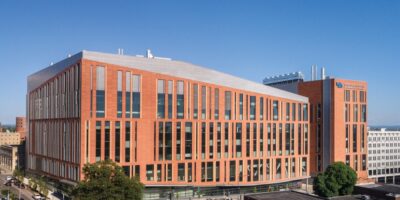
Albany Medical College is one of the nation’s oldest private medical schools. It was founded in 1839 with a first class of 57 students, and it still keeps enrollment deliberately small, with about 145 students in each first-year MD class. The college takes pride in an intimate, collegial learning environment where students know their classmates and faculty well.
The college sits on New Scotland Avenue in Albany, New York, the state capital. It is a private, independent medical college and part of the Albany Med Health System, which also includes Albany Medical Center, Columbia Memorial Health, Saratoga Hospital and Glens Falls Hospital. It is not part of a larger university. Albany Medical Center is northeastern New York’s only academic medical center, so students train at the hospital that receives the region’s most complex patients.
Be an informed applicant. Albany Medical College has school-specific guidelines and requirements for its admissions and application process. It requires two semesters of each prerequisite taken in person and for a letter grade, accepts letters only through the AMCAS Letter Service, sends every verified applicant a supplemental application with seven 1,000-character questions and interviews applicants in a virtual Multiple Mini Interview. Knowing these rules early helps you put your best foot forward and leave a strong impression on the Admissions Committee.
This guide covers the 2026-2027 application cycle, for students who plan to start medical school in August 2027. It explains the MD program, the combined baccalaureate/MD programs with Rensselaer Polytechnic Institute, Union College and Siena University, the joint degrees, the curriculum, admissions requirements and deadlines, costs, clinical training across the Capital Region, the people who lead the school, the interview and every current secondary question with a full illustrative example and analysis. Facts were checked on October 28, 2026.
Key Takeaways
- Only U.S. citizens and permanent residents are eligible. You also need at least three years of college (90 semester hours or 135 quarter hours) at an accredited college, preferably in the United States, an MCAT score and letters of recommendation.
- Prerequisites are strict. Two semesters each of biology, inorganic chemistry, organic chemistry (or one semester of organic chemistry plus one of biochemistry) and physics, all with lab, taken in person and for a letter grade. Pass/fail prerequisites are never accepted. Online prerequisites count only if taken between Spring 2020 and Spring 2021.
- The class profile is strong but not a cutoff. The most recent incoming class (the Class of 2030) had an average MCAT of 512 and an average undergraduate GPA of 3.82 overall and 3.77 in science. The school does not publish a minimum GPA or MCAT. For the 2025 entering class, accepted applicants had a median MCAT of 513 and a median GPA of 3.87.
- The pool is huge and national. For the 2025 entering class, Albany received 14,157 verified applications and interviewed 726 applicants, about 5 percent. Out-of-state applicants filed 12,085 of those applications and made up 94 of 141 matriculants.
- Key dates. AMCAS is due November 1, 2026. The supplemental application and its $130 fee are due by 11:59 p.m. EST on December 1, 2026. Your MCAT must be taken before September 30, 2026, and no earlier than January 2023.
- Costs are the same for every applicant. As a private school, Albany charges $61,125 in tuition for 2026-27 regardless of residency. The estimated first-year cost of attendance is $92,834, and the estimated four-year total is $375,858.
- Service is built into the degree. Every student completes service learning in all four years, starts clinical work in the community in year one through the Introductory Longitudinal Clerkship and can earn an MD with Distinction in one of several tracks.
- About a quarter of seats go to combined-degree students. Up to 45 first-year places are reserved for students from the seven- and eight-year programs with RPI, Union College and Siena University. Thirty-seven members of the Class of 2030 came through these programs.
- Next step: submit your AMCAS early, then use the time before your supplemental arrives to draft answers to the seven 2026-2027 questions shown later in this guide.
Key Statistics About Albany Medical College
The snapshot below brings together the figures applicants ask about most, each with its year and source. Admissions figures come from the school’s own class profile for its most recent incoming class, the Class of 2030, which entered in August 2026. Costs are the school’s 2026-27 estimates for MD students who entered in fall 2026, which are the rates that apply to the 2026-2027 academic year. Applications, interviews and median scores for all accepted applicants describe the 2025 entering class, one year earlier. The table that follows gives the definition and source for each number.

| Metric | Value | Year or cohort | Source and definition |
|---|---|---|---|
| School and degree | Albany Medical College; MD, with combined BS/MD, BA/MD and BS, MS or MBA/MD programs and MD/PhD, MD/MPH and MD/MBA joint degrees | Current | Albany Medical College MD Program Admissions page; private, independent college in Albany, NY, within the Albany Med Health System |
| Accreditation | Full LCME accreditation; next full survey 2027-28. Institutional accreditation by the Middle States Commission on Higher Education, reaffirmed 2021-2022 | As of October 2026 | LCME Accredited U.S. Programs directory; Albany Medical College Accreditation page |
| Entering class | 145 matriculants from more than 14,000 applications | Class of 2030 (entered August 2026) | Albany Medical College Facts and Figures page; White Coat Ceremony release, Class of 2030 |
| Average MCAT | 512 (sections: Chemical and Physical 128, CARS 127, Biological and Biochemical 128, Psychological and Social 129) | Most recent incoming class (Class of 2030) | Albany Medical College MD Program Admissions page; average for matriculants |
| Average GPA | 3.82 overall; 3.77 science | Most recent incoming class (Class of 2030) | Albany Medical College MD Program Admissions page; average undergraduate GPA for matriculants |
| Median MCAT, accepted applicants | 513 (mean 512.5); section medians 128 Chemical and Physical, 127 CARS, 128 Biological and Biochemical, 129 Psychological and Social | 2025 entering class | AAMC MSAR school profile; all accepted applicants |
| Median GPA, accepted applicants | 3.87 total (mean 3.80); 3.83 science (mean 3.76) | 2025 entering class | AAMC MSAR school profile; all accepted applicants |
| Verified applications | 14,157 (2,059 in-state, 12,085 out-of-state, 13 international) | 2025 entering class | AAMC MSAR school profile |
| Interviewed | 726 (177 in-state, 549 out-of-state); interviewed/applicants 5.1% | 2025 entering class | AAMC MSAR school profile; interview counts supplied by the school |
| Matriculants | 141 (47 in-state, 94 out-of-state); 11 deferrals | 2025 entering class | AAMC MSAR school profile |
| Acceptance rate | Not published (no count of acceptance offers) | 2025 entering class | AAMC MSAR school profile reports applications, interviews and matriculants only |
| Minimum GPA and MCAT | None published | 2026-2027 cycle | Albany Medical College MD Program Admissions page; the committee considers the whole application |
| Class background | 24 states; 42 New York students, 19 of them from the Capital Region; 27 languages; 19 birth countries; 68 colleges; 19 with master’s degrees; ages 20 to 33; 37 from Albany’s combined degree programs | Class of 2030 | Albany Medical College MD Program Admissions page; White Coat Ceremony release, Class of 2030 |
| Tuition | $61,125 a year, same for New York residents and nonresidents ($244,500 over eight semesters at the 2026-27 rate) | 2026-27 academic year | Albany Medical College MD Estimated Cost of Attendance, Incoming Fall 2026 Students; 2026-27 Financial Aid Guide |
| Estimated cost of attendance | $92,834 in Year 1 (10 months); $375,858 estimated four-year total | Incoming fall 2026 MD students, 2026-27 rates used for all four years | Albany Medical College MD Estimated Cost of Attendance, Incoming Fall 2026 Students |
| Average graduate indebtedness | $208,522 for graduates who borrowed; 79 percent of students receiving aid | Academic year 2024-25 | AAMC MSAR school profile (LCME Part I-B Student Financial Aid Questionnaire) |
| Deposit, offer response and waitlist | No deposit; three days to respond to an offer; deferral requests case-by-case; about 200 waitlist positions offered, with 100 acceptance offers from the waitlist | 2026-2027 cycle | AAMC MSAR school profile |
| Secondary application | Sent to every verified AMCAS applicant; $130 fee, nonrefundable, waived only for AAMC Fee Assistance Program recipients | 2026-2027 cycle | Albany Medical College MD Program Admissions page |
| Interview | Virtual Multiple Mini Interview, about two hours | 2026-2027 cycle | Albany Medical College MD Program Admissions page |
| 2026 Match | 146 students matched; 32 stayed in the Albany Med Health System; 49 matched in New York State; 22 percent entering primary care | Match 2026 | Albany Medical College Facts and Figures page; Albany Med Match Day 2026 release |
What Are Albany Medical College’s Average MCAT and GPA?
Albany Medical College’s most recent incoming class had an average MCAT score of 512 and an average undergraduate GPA of 3.82 overall and 3.77 in science (Albany Medical College MD Program Admissions, 2026-2027). The section averages were 128 in Chemical and Physical Foundations, 127 in Critical Analysis and Reasoning Skills, 128 in Biological and Biochemical Foundations and 129 in Psychological, Social and Biological Foundations.
These are class averages, not cutoffs. Albany does not publish a minimum GPA or minimum MCAT. It reviews the whole application rather than placing disproportionate weight on any single experience or metric. Applicants below the averages are reviewed, but their experiences, letters and essays have to carry more of the case. If you want to compare these numbers with other schools, see our list of medical school GPA and MCAT averages.
How Many People Apply to Albany Medical College?
More than 14,000 applications were received for the Class of 2030, and 145 students matriculated. That is roughly one matriculant for every 97 applications. This ratio is not an acceptance rate: an acceptance rate counts every applicant offered a seat, including those who chose another school, and the school does not publish its number of offers. What the ratio does show is that Albany receives a very large national pool for a small class, so a clear, specific application matters.
The newest full applicant counts cover the 2025 entering class: 14,157 verified applications (2,059 from New York residents, 12,085 from other states and 13 international), 726 applicants interviewed and 141 matriculants. Interviewed/applicants was 5.1 percent overall, 8.6 percent for New York residents (177 of 2,059) and 4.5 percent for out-of-state applicants (549 of 12,085). No count of acceptance offers is published for that class either, so there is no true acceptance rate.
Mission and Educational Priorities
Albany Medical College shares the mission of the Albany Med Health System:
“Albany Med Health System is the first choice for patient experience, quality and clinical excellence by delivering accessible, collaborative and trusted care, advancing discovery, and educating the next generation of health care professionals.”
The system’s values spell out SERVICE: safety, excellence, respect, voice, integrity, compassion and empowerment. Each value has a short definition. Safety means a reliable, harm-free environment. Excellence means the highest standards in patient care, education and discovery. Respect means treating every person with dignity, fairness and appreciation. Voice means listening attentively and speaking truthfully. Integrity means honesty and transparency in every decision. Compassion means empathy and kindness in every interaction. Empowerment means opportunities and resources for self-development, team building and ownership of results. You can read the full statement on the Albany Medical College Mission and Philosophy page.
The MD admissions team adds its own philosophy: the college seeks “applicants who demonstrate a commitment to compassionate, patient-centered care, improving health outcomes, and serving the healthcare needs of our communities.” The committee considers academic preparation, experiences, demonstrated alignment with the mission and evidence of the AAMC Premed Competencies for Entering Medical Students.
What the mission means for your application
Service is not optional here. Service learning is required in all four years of the MD program, and students have logged more than 6,500 community service hours focused on the social determinants of health. Albany looks for a successful applicant who “demonstrates significant commitment to community service and a desire to help others.” Sustained service with real responsibility, ideally with communities that face barriers to care, fits Albany better than a long list of one-day events.
Clinical experience should involve direct patient contact. Albany asks applicants to complete significant clinical experiences before matriculation and to understand what working on a health care team involves. Its examples include EMT work, nurse’s aide roles, scribing and patient-based clinical research in hospitals, rehabilitation centers, nursing homes, physicians’ offices and hospices.
Context matters. Albany recognizes that students have variable amounts of time because of other commitments, and it reviews activities in the context of other responsibilities. If you worked to support your family or cared for a relative, say so plainly. The supplemental application gives you room to explain.
Communities, including rural ones. The Albany Med Health System covers a large region, from the mid-Hudson Valley to the North Country, Adirondacks and western New England. Students learn in urban Albany and in community hospitals such as Glens Falls and Columbia Memorial. If you come from a small town or have worked with rural patients, connect that experience to the region the school serves.
Discovery still counts. The college has no research requirement, but it values research in a lab, the humanities, the social sciences or a clinical setting. Its faculty publish hundreds of peer-reviewed articles each year, and its students log about 25,000 elective research and scholarly activity hours.
Selection factors: what Albany Medical College looks for in an applicant
When you apply to medical schools, one of the most essential items to research is each school’s selection criteria. Students should be well informed about how their MCAT scores, GPA and other experiences compare with those of accepted students.
Admissions committees generally take a holistic approach. The committee tries to understand who you are as a person, not just how well you scored on the MCAT. Albany is explicit about the framework it uses: the AAMC Premed Competencies for Entering Medical Students, which replaced the older AAMC Core Competencies. The model has three groups:
- Professional competencies: commitment to learning and growth, empathy and compassion, ethical responsibility to self and others, interpersonal skills, oral communication, reliability and dependability, resilience and adaptability, service orientation, self-awareness, teamwork and collaboration and understanding others.
- Thinking and reasoning competencies: critical thinking, quantitative reasoning, scientific inquiry and written communication.
- Science competencies: human behavior and living systems.
Albany also lists other considerations by name: service, meaningful clinical experience, leadership, research experience and paid employment. Paid work is not required, but it is valued whether clinical or nonclinical, including service industry, retail and administrative jobs. Leadership can come from school organizations, clubs and sports teams. Use these categories as a checklist when you choose which experiences to describe in AMCAS and in the supplemental application.
Accreditation and Institutional Identity
Albany Medical College’s MD program is fully accredited by the Liaison Committee on Medical Education (LCME). The LCME directory lists the program’s status as Full, with accreditation dating to on or before 1942, and its next full survey in academic year 2027-28 (LCME Accredited U.S. Programs). LCME accreditation is what allows graduates to sit for the USMLE and enter ACGME residencies, so it matters to every applicant, but it is a baseline standard rather than a ranking.
The college as a whole is accredited by the Middle States Commission on Higher Education, which reaffirmed its accreditation in 2021-2022 with the next full review in 2028-2029. The college also sponsors 46 ACGME residency and fellowship programs and is accredited to provide continuing medical education. Its Physician Assistant and Nurse Anesthesiology programs carry their own accreditation, which is separate from the MD program (Albany Medical College Accreditation).
A few distinctions help when you compare schools:
- Private and independent. Albany Medical College is not a state school and is not a unit of a university. It is one of the founding members of the Albany Med Health System. Tuition is the same for New York residents and nonresidents.
- Not the same as the University at Albany. UAlbany is a separate SUNY campus. Albany Medical College partners with UAlbany’s School of Public Health for the MD/MPH, but the two are different institutions.
- More than an MD school. Each year the college confers more than 200 degrees in medicine, nurse anesthesiology, physician assistant studies, bioethics and biomedical sciences, and it added a master’s in human anatomy in 2022. Nearly 840 medical and graduate students are enrolled, including 585 MD students.
- Honor society chapter. Albany is one of 135 chapters of the Alpha Omega Alpha medical honor society.
- The region’s only academic medical center. Albany Medical Center is the only academic medical center within a 150-mile radius and the region’s only children’s hospital, Level 1 trauma center and dedicated pediatric emergency department.
If you want to see how Albany’s history and student body compare with other New York schools, our guide to New York medical colleges places all of the state’s MD and DO programs side by side.
Medical Programs and Affiliations
Students should research every program at Albany Medical College before applying. That research will help focus your application and guide your decision about which medical school is the best fit for you. Albany offers a traditional four-year MD, three combined baccalaureate/MD programs for high school seniors and three joint degrees that current medical students add during school.
The four-year MD program
Most applicants apply through AMCAS to the four-year MD. Since its founding in 1839, the program has kept a first-year class of about 145 students. The curriculum runs in three phases, described in the next section, and students train at Albany Medical Center and across the Albany Med Health System. Everyone completes required service learning, and students can add an MD with Distinction track at no extra tuition.
Combined baccalaureate/MD programs
Albany reserves up to 45 places in each first-year class for students who enter through seven- and eight-year combined degree programs with Rensselaer Polytechnic Institute (RPI), Union College and Siena University. These programs are for high school seniors, not college students. Applicants should rank in the top 10 percent of their high school class or have at least a 3.5 GPA on a 4.0 scale, be U.S. citizens or permanent residents and show motivation for medicine that supports the focus of their chosen program. Albany considers applicants to only one of the three programs; anyone who applies to more than one is administratively withdrawn. Each application is filed with the undergraduate school by November 1, and students in the combined programs do not need to take the MCAT to move into the MD program. Thirty-seven members of the Class of 2030 entered through these programs.
If you are a high school student weighing these routes, early patient contact helps you test your interest; our medical internships for high school students are one supervised way to start.
Physician Scientist Program (RPI). This accelerated program lets students earn a BS and an MD in seven calendar years: three years at RPI followed by four at Albany Medical College. Research is the focus, carried out during the third year at RPI and the first two years of medical school. RPI reviews applications first and forwards qualified candidates to Albany, which invites only applicants with uniformly superior credentials to a required interview. High school coursework must include four years of English, three of science including chemistry and lab-based physics, four of math through precalculus and three of social studies or history. Albany’s current dean, Dr. Alan Boulos, is a graduate of this program.
Leadership in Medicine Program (Union College). Union and Albany offer an eight-year program in which students earn a BS, MS or MBA from Union and then the MD. The undergraduate years include an interdepartmental major, a non-science discipline and 10 courses in health care management, with the goal of preparing physicians to lead on managerial, moral, multicultural and international challenges. Required test scores are an SAT of 1410 or higher or an ACT of 30 or higher, and clinical or volunteer service in medicine is required: a student will not be considered without it. Applicants must also show interest in and knowledge of health care management.
Science, Humanities and Medicine Program (Siena University). Described as the first program of its kind in the country, this joint program emphasizes humanities, ethics and social service. Students earn a BA from Siena after four years and then the MD. The curriculum adds philosophy, ethics, decision making, social work, medical sociology and metaphysics, and the program includes two summers of volunteer service, with grants for travel and living costs. Applicants must be in the top 10 percent of their graduating class, and Siena forwards qualified candidates to Albany, which sends them a supplemental application.
A note on Sophie Davis. The Sophie Davis Biomedical Education Program is the seven-year BS/MD program of the CUNY School of Medicine in New York City. It is not an Albany Medical College program and has no admissions connection to Albany. If it interests you, see our guide to the CUNY School of Medicine.
Joint degree programs for current medical students
MD/PhD. Albany students who want careers in research and academic medicine can add a PhD. The program usually takes six or seven years: two years of medical school, two or three years of graduate study and thesis work, then two years of clinical clerkships. Stipends cover tuition and help with expenses during the PhD years. Students generally apply during their first or second year of medical school, so there is no separate MD/PhD application through AMCAS.
MD/MPH. Albany students can earn a Master of Public Health through the University at Albany School of Public Health. The combined degree takes five years, with MPH coursework completed during the summers and the third year. Students apply in their first or second year, after being admitted to Albany, and apply separately to the School of Public Health.
MD/MBA in Health Care Management. With Clarkson University, students earn an MBA focused specifically on health care. The combined degree typically takes five years. Admitted students apply separately to Clarkson and either defer the start of medical school by one year or leave after the third year to spend 13 months at Clarkson before returning for the final year.
Clinical affiliations
The Albany Med Health System is the largest health system in northeastern New York and western New England. Albany Medical Center has 766 beds, a physician practice of more than 500 doctors and specialties ranging from neurology, endocrinology and obstetrics and gynecology to pediatrics and family medicine. Together, the system’s four hospitals have 1,520 beds, more than 800 physicians and 125 outpatient locations. Students also train at the Samuel S. Stratton VA Medical Center, the Capital District Psychiatric Center, community practices in Albany, Schenectady and Troy, the Whitney Young Health Center and sites of the Hudson Headwaters Health Network. The clinical rotations section below explains how these sites fit into training.
Other programs at Albany Medical College
The college also offers master’s and doctoral programs in the basic sciences, a Physician Assistant program, a Doctor of Nursing Practice in nurse anesthesiology, the Alden March Bioethics Institute and a master’s in human anatomy. These are separate programs with their own admissions and costs. The PA program, for example, has its own cost table, and the $28,992 basic science graduate tuition is not MD tuition.
Curriculum Overview
Albany Medical College renewed its MD curriculum to reflect changes in the MCAT, the USMLE and graduate medical education competencies. The new design adds meaningful clinical experience in years one and two, shortens the preclinical phase and gives students more flexibility in the fourth year for residency interviews and electives. The curriculum is built in three phases (Albany Medical College MD Curriculum).
Phase 1: Foundations of Medical Science (about 18 months)
Students begin with a week-long Introduction to Medicine course covering professionalism, the culture of medicine, self-care, service learning and clinical skills. The Foundations of Medical Science phase then replaces traditional discipline-based courses with six integrated, organ-based blocks over 18 months. The blocks weave in pathology, pharmacology, imaging, oncology, infectious disease, nutrition and global climate change and health. Alongside them, students take courses in clinical skills, ethics and evidence-based health care.
Introductory Longitudinal Clerkship. In the first year, students are placed with physicians throughout the community. This clerkship continues into year two. Early clinical work with positive physician role models helps students build foundational skills, confidence, empathy and a sense of professional identity.
Curricular threads. Albany has added threads on climate health, nutrition and the care of patients with disabilities. The disability curriculum brings self-advocates with disabilities into the Patient Safety and Clinical Competency Center to share their experiences with students before clinical training. Students learn a structured history and physical exam for patients with disabilities, practice with adaptive equipment and learn about behavioral and developmental disabilities.
Clinical Bridge Block. Second-year students complete an intensive two-week, simulation-based block before clerkships. They practice airway management, suturing and mock operating room protocols with standardized patients and manikins, with heavy support from faculty and residents.
Phase 2: Core Patient Care
For most students, the core clerkship phase begins in April of year two. The core includes:
| Clerkship | Length |
|---|---|
| Medicine | 8 weeks |
| Surgery | 8 weeks |
| Pediatrics | 6 weeks |
| Obstetrics and Gynecology | 6 weeks |
| Family Medicine | 4 weeks |
| Neurology | 4 weeks |
| Psychiatry | 4 weeks |
| Scholarly Endeavors | 4 weeks |
| Radiology | 2 weeks |
| Vacation | 2 weeks |
Clerkships may be taken in any order, and there is flexibility for students who want bench research, an additional degree or other scholarly work. The clinical core is designed so students can meet competencies in settings that fit their career goals.
Phase 3: Advanced Patient Care
The Advanced Patient Care phase lasts a full year, beginning in April of year three for most students and ending in April of year four. Students take required advanced clerkships, choosing blocks of two to four weeks in:
- Advanced Care of Undiagnosed and Acutely Ill Patients (emergency medicine)
- Advanced Inpatient Care, a sub-internship in family medicine, medicine, obstetrics and gynecology, pediatrics or surgery
- Critical Care in the MICU, PICU, SICU or another ICU
This phase is active, guided learning rather than shadowing. Students must finish the core clerkships covered by USMLE Step 2 by fall of the fourth year. The fourth year also includes electives, including an anatomy elective with cadaveric dissection for students heading toward surgical fields, and a revised Learning to Teach: Teaching to Learn course that prepares students for their teaching roles as residents.
Service learning across all four years
Service learning is a graduation requirement. Students complete at least 40 hours over four years, and at least half must be finished before the first day of the third year. About 20 programs are designated as service learning sites, based on community-identified needs, and many require training. New students also take part in a Day of Service and Engagement during orientation, and the Department of Family and Community Medicine runs events such as the Sheridan Hollow Health Fair and Teddy Bear Hospital pop-up clinics (Albany Medical College Service Learning).
MD with Distinction
Students can explore an interest in a scholarly way through the MD with Distinction program. Each track includes a written proposal, mentored longitudinal work, a Thesis Advisory Committee, a presentation at Medical Student Investigation Day and a thesis defense, all within the four years and at no extra tuition. The tracks are:
- Research: a research curriculum, six weeks of full-time research between the first and second years (summer research may carry a stipend) and a thesis.
- Community Service: service delivery and leadership, ending with a sustainable service project designed with a community partner.
- Health Systems Analysis: a study of a health care management or policy issue with systems implications, mostly during the summer after year one.
- Bioethics: membership in the Alden March Bioethics Institute community, a mentored project, a conference proposal, a journal submission and a four-week Scholars in Bioethics rotation.
- Advocacy: a project on a social, environmental or policy barrier to the health of a defined population.
- Nutrition: nutrition-related service learning, a nutrition club and a scholarly project on a specific nutrition issue.
Assessment and grading details for each course are in the college’s course catalogs. If you are deciding between Albany and other schools, compare how early each one starts clinical work. At Albany, the answer is the first year.
Admissions Requirements and Application Process
Albany Medical College has specific application criteria and academic requirements that students must meet to be considered for admission. This section covers eligibility, coursework, the MCAT, letters, the supplemental application, deadlines and what happens after you apply (Albany Medical College MD Program Admissions).
Eligibility
To apply to the MD program, you must:
- Be a U.S. citizen or U.S. permanent resident. International applicants and DACA recipients without permanent residency are not eligible.
- Be able to meet the Minimum Technical Standards for Matriculation.
- Comply with New York State and OSHA immunization requirements.
- Complete at least three years of college work (90 semester hours or 135 quarter hours) at an accredited college or university, preferably in the United States.
- Submit MCAT results, letters of recommendation and the required coursework.
Applicants with three years of college should show preparation comparable to four-year graduates. If you have been away from formal coursework for three or more years, Albany advises completing traditional college-level courses before applying. Students who entered college with AP credit are encouraged to use that room for advanced courses. AP credit is accepted toward the biology, chemistry and physics requirements.
Required coursework
Albany requires two semesters of each of the following, with related laboratory work:
- Biology. Examples include molecular biology, genetics, cell biology or cell physiology, neuroscience, virology and anatomy.
- Inorganic chemistry. Examples include introductory inorganic chemistry, structure and bonding, principles of chemistry, solid state chemistry, physical chemistry and chemical synthesis.
- Organic chemistry. Two semesters of organic chemistry with lab, or one semester of organic chemistry and one semester of biochemistry taken through the chemistry department, with lab.
- Physics. Examples include introductory physics, thermodynamics, mechanics, electricity, heat, light, sound, waves, optics and biophysics.
Albany also expects one to two upper-level, rigorous science courses that show you are willing to challenge yourself, and it values extra lab and research experience.
Course format rules. All prerequisite coursework must be taken in person. Prerequisites cannot be taken pass/fail or S/U at any time. Online prerequisites are accepted only if they were taken between Spring 2020 and Spring 2021. If you took a prerequisite online after Spring 2021, plan to retake it in person before you matriculate.
Recommended preparation. Albany encourages coursework in statistics or biostatistics, English composition or literature (or other intensive writing) and the behavioral and social sciences, such as psychology, sociology, philosophy, ethics, anthropology or economics. Proficiency in additional languages is valued.
MCAT and GPA requirements
All applicants to the four-year MD must submit MCAT scores; combined degree students do not. All scores you have taken are sent automatically by the AAMC. The oldest score Albany accepts is three years old. For August 2027 enrollment, that means a test from January 2023 or later, and your latest score must come from a test taken before September 30, 2026.
Albany does not publish a minimum GPA or MCAT. The most recent incoming class averaged a 512 MCAT and a 3.82 overall GPA (3.77 in science). Treat those as a description of the class, not a threshold. The committee sees every MCAT you have taken, puts the most weight on your highest score and looks for an upward trend. It also considers post-baccalaureate and graduate coursework when your undergraduate GPA is lower.
Casper and other assessments
Albany does not list Casper, PREview or any other situational judgment test among its requirements for the 2026-2027 cycle. The required items are the AMCAS application, MCAT scores, letters and the supplemental application. For a list of schools that do use Casper, see our guide to medical schools that require Casper.
Letters of recommendation
Albany considers letters only through the AMCAS Letter Service. You can submit:
- A premedical advisory committee letter (preferred), or
- A letter packet from your college’s letter service, or
- If your school does not offer a committee letter service, three to four individual letters.
The maximum number of individual letters is four. The committee prefers one faculty letter that discusses your personal attributes and academic abilities. You may add a letter from a supervisor in a paid or volunteer research or clinical role, and if you have substantial clinical, research, volunteer, teaching assistant or health care experience, Albany highly recommends a letter from that supervisor or principal investigator. For timing and choosing writers, see our guide to medical school recommendation letters.
Clinical experience, service and research
Albany expects significant clinical experience before matriculation, with direct patient contact, in settings such as hospitals, rehabilitation centers, nursing homes, physicians’ offices and hospices. Volunteer and paid roles both count. Service matters because service learning runs through the curriculum, and research is valued but not required. If your patient contact is thin, clinical internships for pre-med students give supervised, hands-on experience; our interns take vitals, help with intake and triage and assist with direct care under the supervision of local clinicians.
AMCAS primary application and Albany Medical College secondary application
Most medical schools in the United States use AMCAS. Your AMCAS is your primary application and is sent to every medical school you select. Albany participates in AMCAS, and the AMCAS deadline is November 1, 2026. For a walk-through of the form, see our AMCAS application guide.
Secondary applications are unique to each school and usually contain essay questions that help the committee learn about your values, ambitions and motivations. At Albany, everyone who submits an AMCAS application by November 1, 2026 and whose application is verified receives the supplemental application. Albany does not screen applicants before sending it. The supplemental is web-based and due by 11:59 p.m. EST on December 1, 2026. The fee is $130 and is nonrefundable; fee waivers go only to applicants approved for the AAMC Fee Assistance Program. You are responsible for watching your application status page and making sure every item arrives on time.
For further clarification about the differences between the AMCAS primary application and a school-specific application, read this article.
No updates or letters of intent. Albany does not accept updates or letters of intent at any point in the season. Put everything you want the committee to know into your AMCAS and supplemental application.
Interview, decisions and the Alternate List
After your application is complete, the Admissions Committee screens it and places you in one of two categories: interview or no interview. You are notified by email. Interviewed applicants are generally reviewed within four to six weeks, and decisions follow by email in one of three categories: Immediate Accept, Alternate List or Reject. Albany offers rolling admission and accepts from its Alternate List in rank order to fill the class. Decisions begin on October 15 and continue until the class is full.
After an offer. No deposit is required, but you have only three days to respond to an offer, so decide in advance how you will compare schools. Deferral requests are considered case-by-case. About 200 applicants are typically offered a place on the Alternate List, and 100 acceptance offers went to applicants from that list. Applicants are expected to follow AMCAS traffic rules, including withdrawing from other waitlists after committing to a school. For the class that entered in 2026, the Plan to Enroll date was April 30 and the Commit to Enroll date was June 5, and the dates are similar each year.
Albany Medical College application timeline, 2026-2027
| When | What happens |
|---|---|
| May 2026 | AMCAS opens |
| July 2026 | Albany begins importing AMCAS applications |
| August 2026 | Supplemental applications go out; review of completed applications begins |
| September 2026 | First interview invitations and interviews |
| Before September 30, 2026 | Last MCAT test date Albany can consider for this cycle |
| October 15, 2026 | Rolling decisions begin |
| November 1, 2026 | AMCAS deadline (also the combined degree program deadline at RPI, Union and Siena) |
| December 1, 2026, 11:59 p.m. EST | Supplemental application and $130 fee due |
| January to March 2027 | Interviews and rolling decisions continue |
| January 15, 2027 | Priority deadline for institutional scholarships (FAFSA and AMC Financial Aid Form) |
| April 2027 | Interview season ends; Second Look for accepted students |
| May to July 2027 | Decisions continue until the class is filled |
| August 2027 | New class matriculates |
If you are a year or more from applying, plan your clinical hours around this calendar. Pre-med summer internships completed the summer before you submit AMCAS can still go into your Work and Activities section.
Transfer applicants
Albany considers transfer requests only from the spouse or domestic partner of a current employee, student, resident or postdoctoral fellow at Albany Medical College, Albany Medical Center or the Albany Med Health System. Transfer applicants must come from an LCME-accredited school, have strong academic performance and comparable coursework, and report USMLE Step 1 results if applying to the third year.
Tuition, Cost of Attendance and Financial Aid
Students who plan to attend Albany Medical College need to budget for tuition and fees and also for living expenses and incidentals. Albany publishes an estimated cost of attendance for each program, including separate tables for the MD and the Albany Medical College PA Program (Albany Medical College Cost and Financial Aid).
MD tuition and estimated cost of attendance
MD tuition for 2026-27 is $61,125 a year. Because Albany is private, tuition is the same for New York residents and nonresidents. The school’s estimate for students who entered in fall 2026 uses the 2026-27 tuition for all four years, so the four-year tuition total is $244,500 over eight semesters. Tuition and health insurance are expected to rise each year, so treat later-year figures as estimates.
| Cost component | Year 1 (10 months) | Year 2 (10 months) | Year 3 (12 months) | Year 4 (10 months) | 4-year total |
|---|---|---|---|---|---|
| Tuition | $61,125 | $61,125 | $61,125 | $61,125 | $244,500 |
| Books, supplies and equipment | $554 | $1,100 | $258 | $0 | $1,912 |
| Technology allowance | $1,800 | $0 | $0 | $0 | $1,800 |
| UWorld | $450 | $450 | $0 | $0 | $900 |
| Residency application cost | $0 | $0 | $0 | $1,400 | $1,400 |
| Step exam fees | $0 | $800 | $800 | $0 | $1,600 |
| Student health fee | $125 | $125 | $125 | $125 | $500 |
| Housing | $12,320 | $12,320 | $14,784 | $12,320 | $51,744 |
| Food | $5,460 | $5,460 | $6,552 | $5,460 | $22,932 |
| Utilities | $1,810 | $1,810 | $2,172 | $1,810 | $7,602 |
| Phone and internet | $2,420 | $2,420 | $2,904 | $2,420 | $10,164 |
| Transportation | $1,500 | $1,960 | $3,060 | $2,550 | $9,070 |
| Personal | $3,270 | $3,270 | $3,924 | $3,270 | $13,734 |
| Loan fees | $2,000 | $2,000 | $2,000 | $2,000 | $8,000 |
| Estimated total | $92,834 | $92,840 | $97,704 | $92,480 | $375,858 |
Source: Albany Medical College, Doctor of Medicine Program Estimated Cost of Attendance for Incoming Fall 2026 Students; 2026-27 tuition used for all four years.
What the budget includes, and what it leaves out
- Living costs are now much higher than tuition alone suggests. In Year 1, housing, food, utilities, phone and internet, transportation and personal costs add up to $26,780. Year 3 runs 12 months, so its living costs are higher.
- Health insurance is not in the standard budget. Students must have health insurance, and the cost of the AMC student plan can be added to your budget on request so that aid can cover it. The 2026-27 budget does not list a premium. The student health insurance charge was $5,638 in 2025-26, the most recent year published.
- Loan fees are built in. An average of $2,000 a year is added for borrowers to cover mandatory federal loan fees.
- The technology allowance is Year 1 only. It lets incoming students use aid for a new computer or device.
Financial aid and scholarships
Albany’s Office of Financial Aid administers federal, state, institutional and private funds, mainly based on need. To be considered for everything, complete the FAFSA every year and the Albany Medical College Financial Aid Form. You are then automatically considered for institutional scholarships, grants, loans and work-study. The priority deadline for scholarship funding is January 15.
Institutional scholarships are stewarded by the Albany Medical Center Foundation and funded by donors. They are awarded on criteria that include program of study, class year, college affiliation, the content of the Albany Medical College essay, financial need, loan debt, prior need-based aid and specialty. The Albany Medical College Alumni Association also awards scholarships to continuing second-, third- and fourth-year students. Federal Work-Study is available on request, and service-obligation programs such as the Armed Forces Health Professions Scholarship Program and the National Health Service Corps Scholarship can cover tuition in exchange for a service commitment.
Debt and repayment
In academic year 2024-25, 79 percent of Albany students received aid, and graduates who borrowed left with average medical school debt of $208,522. For 2025-26, the AAMC survey listed first-year tuition and fees of $60,051, other expenses of $28,038 and health insurance of $5,638, for a total cost of attendance of $93,727. These are earlier figures on a different budget basis, so plan with the 2026-27 budget above. MD students can also enroll in a Cashnet payment plan for tuition. Before you accept an offer, ask the Financial Aid Office how much grant aid you can expect each year, because the full cost of attendance applies in every year of the program.
Graduate tuition is separate from MD tuition
Albany’s basic science MS and PhD programs charge $28,992 a year for full-time graduate students in 2026-27, and that tuition is covered by Trustee Tuition Scholarships. This rate applies only to graduate students in the basic sciences. MD tuition for 2026-27 is $61,125.
Campus Facilities and Student Life
Albany Medical College shares a campus with Albany Medical Center on New Scotland Avenue, close to Washington Park and the Lark Street neighborhood. Classrooms, the simulation center, the library and the hospital are a short walk apart, which makes it easy to move between lecture, small group and clinical work.
Learning facilities
Patient Safety and Clinical Competency Center (PSCCC). Albany’s simulation center houses Laerdal SimMan manikins, an audio and video capture system so students can review their own encounters and a multipurpose procedure room that divides into an operating room, an intensive care unit and a trauma bay. A task training room supports ultrasound, IV insertion, suturing, central line placement, airway management, laparoscopic skills, endoscopy, lumbar puncture and physical exam practice. Albany’s Standardized Patient program, in which trained actors portray patients and family members and give feedback on communication, is one of the most established in the country (Albany Medical College Simulation Center).
Schaffer Library of Health Sciences. The library provides 65 databases, more than 23,000 e-books and 42,000 e-journal titles.
Student support
The Office of Academic and Student Affairs supports students from orientation to graduation and acts as a referral hub for policies, daily life questions and student activities. Albany frames wellness around eight dimensions: emotional, environmental, financial, intellectual, physical, occupational, social and spiritual. Student and Resident Psychological Services offers confidential assessment, individual, group and couples therapy and medication management. These services are free for students, with records kept separate from the rest of the health system. Students also have free 24/7 access to the Albany Medical Center Fitness Center, free fitness classes, monthly Schwartz Rounds on the emotional side of clinical work and a disability accommodations office (Albany Medical College Wellness).
Clubs and organizations
Albany supports more than 70 student groups, and students can start new ones. The range includes:
- Medical interest groups: emergency medicine, family medicine, internal medicine, pediatrics, surgery, neurosurgery, orthopedics, military medicine, medical simulation, ultrasound and more than 15 others.
- Professional and educational groups: the Albany Med Addiction Coalition, American Medical Student Association, Bioethics Club, Lobbying and Advocacy Club, Medical Spanish Club, Nutrition in Medicine Club, Physicians for Human Rights, Public Health and Medicine, Research Interest Group and Wilderness Medicine Society.
- Identity and community groups: First-Generation and Low-Income in Medicine (FGLIMed), Student National Medical Association, Latinx Medical Student Association, Asian Pacific American Medical Student Association, American Medical Women’s Association, Medical Students for Disability Advocacy, Medical Student Pride Alliance and the Muslim Student Association.
- Social, spiritual and sports groups: a book club, a yarn club, TREES (the environmental committee), the Christian Medical and Dental Association, an Outing Club, a Running Club and basketball, flag football, soccer and racket sports clubs.
Alpha Omega Alpha, the national medical honor society, elects members in their junior and senior years from the top quarter of the class (Albany Medical College Student Life).
Living in Albany
Albany is the capital of New York and one of the oldest chartered cities in the country. Practical points for students:
- Housing. On-campus housing is not available, and the college keeps a list of affordable apartments within a five-mile radius. Most students rent apartments near campus. Many use Tri City Rentals, which runs complexes around Albany, including the Park South Apartments next to the college. The Year 1 housing budget is $12,320.
- Getting around. Capital District Transportation Authority buses are free for Albany Medical College students who swipe their badge, and CDPHP Cycle bike share has three stations next to campus. Albany-Rensselaer is one of Amtrak’s busiest stations in New York, and Albany International Airport has direct flights to more than 20 destinations.
- Location. New York City, Boston and Montreal are each two to three hours away. The Adirondacks, the Catskills, Lake George, the Berkshires, Vermont and Saratoga Springs are within easy reach, and some of the region’s best hikes are less than 90 minutes from campus.
- Weather. Winters are cold and snowy. If you will drive to rural clinical sites, plan for winter driving.
- Community life. The Tulip Festival in Washington Park, Larkfest, the Riverfront Jazz Festival, Capital Pride, the New York State Museum and theaters such as the Palace and Proctors are all nearby (Albany Medical College: The Albany Area).
Students who want to keep building patient-facing experience before matriculation can look at pre-med internships that place students in supervised clinical settings.
Clinical Rotations and Research Opportunities
Where students train
Albany Medical Center is the anchor of clinical training. It is the region’s only academic medical center and includes:
- A 766-bed hospital with the widest range of medical and surgical services in northeastern New York and a six-story Patient Pavilion with hybrid operating rooms and the region’s only neuro and vascular ICUs.
- The busiest emergency department in New York State, with more than 75,000 patient visits a year, and the region’s Level 1 trauma center.
- The Bernard and Millie Duker Children’s Hospital, the region’s only children’s hospital and the referral center for seriously ill and injured children from 25 counties across upstate New York and western New England. It includes the Melodies Center for Childhood Cancer and Blood Disorders, the highest-level neonatal ICU, the region’s only pediatric ICU and more than 40 subspecialties.
- The Massry Family Children’s Emergency Center, the only dedicated pediatric emergency department in northeastern New York and western New England, verified as a Level 1 pediatric trauma center.
Beyond the main campus, students can train across the Albany Med Health System and affiliated sites (Albany Medical College Facilities and Affiliations):
- Columbia Memorial Health in Hudson: a 192-bed hospital with more than 40 primary and specialty care centers across Columbia, Greene and Dutchess counties, with a focus on rural health care delivery.
- Glens Falls Hospital: a community hospital serving five counties over 6,000 square miles of the Adirondack region. Its emergency department often treats skiing and hiking injuries, which gives students exposure to wilderness emergency medicine.
- Saratoga Hospital: the only acute care hospital in Saratoga County, with more than 450 physicians and other clinicians.
- Samuel S. Stratton VA Medical Center: a 401-bed teaching hospital where second-, third- and fourth-year students receive part of their clinical instruction.
- Capital District Psychiatric Center: the state psychiatric hospital for Albany and eight surrounding counties, next to the college.
- Ambulatory sites: community physicians in Albany, Schenectady and Troy, the Whitney Young Health Center, which provides medical, dental and addiction services regardless of income or insurance, and the Hudson Headwaters Health Network in the Adirondack, Lake George and Glens Falls communities.
What this means for students
Because the system covers a large region, some required and elective experiences take place outside Albany. Plan for a car or reliable transportation in the clinical years. Students begin rotating to off-campus clinical sites in January of the first year, so a driver’s license and a vehicle are recommended from then on; the free CDTA bus service does not reach every clinical site. The Year 2 to Year 4 transportation budgets rise from $1,960 to $3,060, which reflects this travel. The variety of sites also means you can see the same specialty in an academic center and in a community or rural hospital, which helps when you decide where you want to practice.
Research opportunities
Albany’s research enterprise includes 406 active scientific research awards, 30 active NIH grants, $18.1 million in sponsored research and 592 peer-reviewed articles. Research departments cover regenerative and cancer cell biology, immunology and microbial disease, molecular and cellular physiology and neuroscience and experimental therapeutics (Albany Medical College Facts and Figures).
Routes into research for medical students include:
- Scholarly Endeavors, a four-week block in the core clinical phase.
- The MD with Distinction in Research, which includes the Common Questions about Research series in year one, six weeks of full-time research between the first and second years and a thesis.
- Medical Student Investigation Day, held each fall, where students present projects from every distinction track.
- The MD/PhD program for students who want a research-heavy career.
- Senior research electives in the fourth year.
Students logged about 25,000 hours of elective research and scholarly activity. Research is not required for admission, but if you have done it, be ready to explain your question, your role and what you learned.
Service and community clinics
Service learning sites include programs that address community-identified needs, such as the Delaware Community Friendship Garden and the Joan Nicole Prince Home, where student service learners help care for patients with terminal conditions. Health fairs and Teddy Bear Hospital clinics give students regular contact with families in Albany neighborhoods.
Match outcomes
On Match Day 2026, 146 Albany Medical College students matched to residency programs. Thirty-two chose to continue their training in the Albany Med Health System, 49 matched to programs in New York State and 22 percent entered primary care specialties, including family medicine, internal medicine, medicine-pediatrics, pediatrics and obstetrics and gynecology. In 2025, 123 students matched, 41 in New York State, and 40 percent of that class entered primary care. The health system’s own residencies span 46 ACGME programs, from anesthesiology and emergency medicine to neurosurgery, plastic surgery, psychiatry and vascular surgery.
Notable Alumni, Faculty, Leadership and Admissions Staff
The people below hold current roles listed on Albany Medical College’s leadership, program and news pages as of October 2026. Several are Albany graduates, which shows how often the college draws its leaders from its own alumni (Albany Medical College Leadership).
School leadership
Alan S. Boulos, MD ’94, Dean. Dr. Boulos has been dean of Albany Medical College since 2022 and holds the title of The Lynne and Mark D. Groban, MD ’67 Distinguished Dean. He is the third alumnus of the college and the first neurosurgeon to lead it. He graduated from the RPI and Albany Medical College physician scientist program, completed his neurosurgery residency at Albany Medical Center and a neuroendovascular fellowship in Buffalo. He joined Albany Med in 2002, became the inaugural chair of Neurosurgery in 2013 and treats stroke, aneurysms and other cerebrovascular disorders. He oversees more than 2,000 staff and about 840 medical and graduate students. For combined-degree applicants, he is living proof of where the RPI route can lead.
Ann E. Rutter, MD ’08, Senior Associate Dean of Academic Administration. Dr. Rutter is a family physician who graduated from Albany through the Leadership in Medicine program with Union College. Before her appointment she was academic vice chair of Family and Community Medicine and had directed the Family Medicine clerkship since 2012, and she received the 2023 Preceptor of the Year award from the Family Medicine Residency. She chairs the Medical Student Education Committee of the Society of Teachers of Family Medicine. Her path shows how the combined programs and primary care education connect at Albany.
C. Lynn Cabral, MD, Associate Dean for Medical Education, and Alicia Wiczulis, MD, Associate Dean for Student Affairs, lead the offices that oversee the curriculum and student support. Interview day includes a welcome and curriculum overview from an advising dean, so you will hear directly about how the curriculum and student support work.
Admissions
Julia Saltonovich, MBA, Assistant Dean of Admissions. Ms. Saltonovich leads the MD admissions office, which manages AMCAS imports, supplemental applications, interviews and the Alternate List. Questions about your application go to the Office of Admissions at 47 New Scotland Avenue, Mail Code 3, by email or at 518-262-5521. Remember that the office does not accept updates or letters of intent.
Faculty and educators
Megan Gerber, MD, MPH, Assistant Dean for Health Humanities. Dr. Gerber is a primary care physician, professor of medicine and section chief of General Internal Medicine. She joined Albany Med in 2021, has served as an advising dean and was named to a new role that brings the arts and social sciences into medical education. She edited a text on trauma-informed care in primary care and was selected for the 2025-2026 class of the Hedwig van Ameringen Executive Leadership in Academic Medicine program. Applicants interested in narrative medicine, trauma-informed care or the humanities will find a clear advocate in her work.
Annette Grajny, MD ’04, Associate Dean for Simulation Education. Dr. Grajny, an Albany graduate and associate professor of emergency medicine, is medical director of the Patient Safety and Clinical Competency Center, where students practice everything from airway management to difficult conversations with standardized patients. Her role is a reminder of how much of Albany’s early clinical training happens in simulation.
Mandeep Sidhu, MD, Associate Dean for Clinical Science and Research. Dr. Sidhu also serves as interim chair of Regenerative and Cancer Cell Biology and is a contact for the MD with Distinction in Research and in Health Systems Analysis. Students who want a research thesis inside the four-year MD will work with his office.
Angela Antonikowski, PhD, Associate Dean for Community Outreach and Medical Education. Dr. Antonikowski oversees community outreach and the service learning program and is the contact for the MD with Distinction in Advocacy. Service learning is a graduation requirement, so her office shapes part of every student’s experience.
Jennifer Earle Miller, MD, associate professor in the Division of Physical Medicine and Rehabilitation, directs Albany’s disability curriculum. She recruited about 20 of her own patients to work with students, and the curriculum is supported by a National Inclusive Curriculum for Health Education grant.
Alumni in leadership
Shellie Asher, MD ’98, Associate Dean for Graduate Medical Education. Dr. Asher, an Albany graduate, oversees graduate medical education, the residency and fellowship programs where many Albany students continue their training. In 2026, 32 graduates chose to stay in the Albany Med Health System for residency.
These profiles describe public roles. They do not imply that any person reviews applications or favors particular backgrounds.
Admissions Statistics and Class Profile
Class of 2030 at a glance
| Measure | Class of 2030 |
|---|---|
| Applications received | More than 14,000 |
| Matriculants | 145 |
| Average MCAT | 512 (128 / 127 / 128 / 129 by section) |
| Average GPA | 3.82 overall; 3.77 science |
| States represented | 24 |
| New York students | 42, including 19 from the Capital Region |
| Languages spoken | 27 |
| Birth countries | 19 |
| Colleges represented | 68 |
| Entering with a master’s degree | 19 |
| Age range | 20 to 33 |
| From Albany’s combined degree programs | 37 |
Sources: Albany Medical College MD Program Admissions page (most recent incoming class); Albany Medical College Facts and Figures page; Albany Med White Coat Ceremony release for the Class of 2030.
How to read these numbers
The MCAT and GPA figures are averages for matriculants. They describe students who enrolled, not the full range of applicants who were offered seats. Albany does not publish a minimum MCAT or GPA. For a view of everyone admitted, see the 2025 accepted-applicant medians below.
Applications to matriculants is not an acceptance rate. About 145 of more than 14,000 applicants enrolled, roughly 1 percent. An acceptance rate would count all applicants offered admission, including those who enrolled elsewhere, and the number of offers is not published by the school.
Combined degree students fill a significant share of seats. Thirty-seven of 145 seats in the Class of 2030 went to graduates of the RPI, Union and Siena programs. That leaves roughly 108 seats for applicants who applied through AMCAS in the regular cycle.
The class is national. Only 42 of 145 students came from New York, and students came from 24 states. Albany is private and charges the same tuition to every student, so it draws heavily from outside the state. Out-of-state applicants should not assume a public-school disadvantage here.
Many students take time before medical school. With 19 students holding master’s degrees and an age range of 20 to 33, nontraditional paths are well represented. If you are considering time off to strengthen your application, pre-med gap year programs with supervised patient care are one way to use that year.
2025 entering class: applications, interviews and accepted-applicant scores
| Measure | In-state | Out-of-state | International | Total |
|---|---|---|---|---|
| Verified applications | 2,059 | 12,085 | 13 | 14,157 |
| Interviewed | 177 | 549 | 0 | 726 |
| Matriculated | 47 | 94 | 0 | 141 |
| Deferred | 5 | 6 | 0 | 11 |
A separate program table for the same class lists 41 Baccalaureate/MD matriculants (9 in-state, 32 out-of-state) and 8 Early Assurance matriculants (7 in-state, 1 out-of-state).
| Accepted applicants, 2025 entering class | Median | Mean (SD) |
|---|---|---|
| MCAT total | 513 | 512.5 (4.0) |
| Chemical and Physical Foundations | 128 | 128.2 (1.6) |
| Critical Analysis and Reasoning Skills | 127 | 126.6 (2.0) |
| Biological and Biochemical Foundations | 128 | 128.4 (1.6) |
| Psychological, Social and Biological Foundations | 129 | 129.3 (1.6) |
| Total GPA | 3.87 | 3.80 (0.19) |
| Science GPA | 3.83 | 3.76 (0.24) |
The 2025 matriculants also had these traits: 18 percent held a graduate degree, 79 percent were science or math majors, 24 percent indicated disadvantaged status and 19 percent came from a medically underserved area. Most were 19 to 23 years old (78 students), with 60 aged 24 to 29 and 3 aged 30 to 39. The class included 63 men, 77 women and one student of another gender identity.
What the 2025 numbers tell you. Interviews are the main filter: about 1 in 20 applicants was interviewed. New York residents were interviewed at nearly twice the out-of-state rate (8.6 percent against 4.5 percent), even though tuition is the same for everyone and two-thirds of matriculants came from other states. The tight MCAT spread (a standard deviation of 4 points around a 513 median) shows that most admitted applicants scored in a narrow band, so plan for an MCAT close to that range if you can.
Class size over time
Class size has held at about 145 for years, consistent with the college’s long-standing policy of limiting enrollment to a small group of carefully selected students. With averages of 512 on the MCAT and 3.82 for GPA, plan to present academics at or near those levels if you can, and let the rest of your application show the service and patient care Albany values.
Tips and Strategies for Admission
Albany receives more than 14,000 applications for about 108 regular-cycle seats. Strong numbers help, but the applicants who stand out show a clear fit with what Albany actually values: service, direct patient care, community and humane, collegial learning. These strategies translate those priorities into practical steps.
1. Check your prerequisites against Albany’s format rules now
Albany’s course rules are stricter than many schools’. Every prerequisite must be letter-graded and taken in person, and online prerequisites count only from Spring 2020 to Spring 2021. Audit your transcript before you apply. If a prerequisite was taken online after Spring 2021 or pass/fail, plan to retake it in person. Add one or two upper-level science courses, such as biochemistry, genetics, physiology or immunology, because Albany expects them.
2. Build sustained service, not a checklist
Albany requires service learning in all four years and looks for “significant commitment to community service.” Two or three long-term commitments where you took on real responsibility will read better than a dozen short events. Food pantries, free clinics, tutoring programs, refugee resettlement, hospice volunteering and work with people with disabilities all fit, especially if you can describe what you learned about barriers to health. The supplemental application asks directly about the structural and social determinants of health and about a community you belong to, so your service will likely appear in your essays as well.
3. Get direct patient contact
Albany asks for clinical experience with direct patient contact and names EMT work, nurse’s aide roles, scribing and patient-based research as examples. Shadowing alone does not meet that description. Consider a paid role such as CNA, EMT, medical assistant or scribe, a hospice volunteer role or supervised internships for pre-med students where you take vitals and help with patient intake. Keep a short journal of specific patients and moments; your supplemental answers will need concrete detail.
4. Choose letters with Albany’s preferences in mind
Use a committee letter or letter packet if your school offers one. If not, send three or four individual letters, never more than four. Include at least one faculty letter that speaks to your academic abilities and character, and add a letter from a clinical or research supervisor if you have substantial experience there. Ask your writers to give specific examples, because Albany reads letters for context on the whole application.
5. Show the Premed Competencies through specific stories
Albany explicitly evaluates the AAMC Premed Competencies. In your AMCAS descriptions and most meaningful experiences, show competencies through actions rather than naming them. For example, describe the time you caught a medication discrepancy during a scribe shift (reliability and teamwork) or the way you changed your tutoring approach for a student with a learning disability (understanding others and adaptability).
6. Explain your context plainly
Albany reviews activities in the context of other responsibilities. If you worked many hours, cared for family members or had a leave of absence, use the questions on academic inconsistencies, interruptions and anything else to explain briefly and factually. Do not apologize at length; show what you did and what changed.
7. Submit AMCAS early and finish the supplemental quickly
Albany sends the supplemental to every verified applicant and starts reviewing completed applications in August. Decisions are rolling, beginning October 15, and seats fill over time. Submit AMCAS in June or early July if you can, then return the supplemental within two weeks of receiving it. Waiting until the December 1 deadline puts you behind applicants who have already interviewed.
8. Prepare for the MMI from the start
Albany interviews in a virtual Multiple Mini Interview format. Practice short, structured answers to ethical scenarios and personal questions out loud, on camera, with a timer. The interview section below explains the format in detail.
9. Connect your interests to Albany’s real programs
When you write about why Albany, name programs that actually fit you: the Introductory Longitudinal Clerkship, service learning, the disability curriculum, the climate health and nutrition threads, the MD with Distinction tracks, the MD/MPH with UAlbany or rural and community training at sites such as Glens Falls and Columbia Memorial. Avoid generic praise of the hospital’s size.
10. If you are thinking about global health
Albany’s Physicians for Human Rights chapter, Medical Spanish Club and advocacy track give students room to keep working on health equity. If you have served abroad, describe what you did with your hands and what you learned about systems, not just where you went. Supervised pre-med internships abroad can add hands-on clinical experience in low-resource settings, as long as you can explain what you learned from the local clinicians who supervised you.
Personalized help
At International Medical Aid, we understand that students often feel overwhelmed by everything involved in applying to medical school. Every school has unique requirements, and you must meet the requirements of each one. To make the process easier, we recommend medical school admissions consulting. A consultant can help with every step or with just the one or two areas where you need guidance, give constructive feedback and help you submit the most competitive application possible. If you could use extra help, consider our personalized medical school admissions consulting service.
Secondary Application Questions, Example Responses and Analysis
Secondary applications are a critical part of applying to medical school. The questions give you the chance to show the Admissions Committee why you fit Albany and what makes you stand out. Keep these tips in mind:
- Read every part of each question carefully, and answer all parts.
- Use concrete evidence from your academic, clinical, service and work experiences.
- Do not simply repeat your AMCAS application; add new detail or reflection.
- Write clearly and concisely, and proofread every answer.
- For additional help, consider our medical school admissions consulting service.
Albany Medical College’s 2026-2027 supplemental application at a glance
Albany’s 2026-2027 supplemental application has seven questions, each limited to 1,000 characters, which is about 150 to 180 words. Count characters, not words, and remember that spaces and punctuation count. Two questions (academic inconsistencies and interruptions or gaps) ask you to type N/A if they do not apply, and the “anything else” question is optional in practice. The most meaningful experience question pulls up your own AMCAS Work and Activities list so you can choose one entry.
| # | Question | Limit | Who answers |
|---|---|---|---|
| 1 | Describe yourself | 1,000 characters | All applicants |
| 2 | Academic inconsistencies | 1,000 characters | All applicants (N/A if it does not apply) |
| 3 | Interruptions and gaps | 1,000 characters | All applicants (N/A if it does not apply) |
| 4 | Structural and social determinants of health | 1,000 characters | All applicants |
| 5 | A community you identify with | 1,000 characters | All applicants |
| 6 | Anything else | 1,000 characters | Optional |
| 7 | Most meaningful AMCAS experience | 1,000 characters | All applicants |
One 2026-2027 applicant has reported a possible additional, optional question: “Describe a significant challenge that has prepared you for the MD career path.” (1,000 characters). It was part of the standard set in the 2024-2025 and 2025-2026 cycles but is missing from other applicants’ reports this year. If your portal shows it, answer it within the limit shown and use the same approach as question 1: one specific challenge, what you did and what it taught you. MD/PhD, MD/MPH and MD/MBA students apply after they enroll, so those programs add no separate questions to this application. For a broader look at how other schools phrase their questions, see the medical school secondary essay prompts database.
Each example below is an original illustrative response written to teach structure. It is not a real applicant’s essay, it was not submitted to Albany and you should never copy it. Your answers must come from your own experiences.
Question 1: Describe yourself
Prompt (verbatim): “Describe yourself (1000 characters).”
Limit and eligibility: 1,000 characters; required of all applicants.
What it asks: This is the most open question on the application. Albany wants a short, honest portrait: the traits that define you, backed by evidence, and a sense of how you will fit into a small, service-focused class.
Approach: Choose two or three traits, prove each with a specific example and end with a line about how those traits fit Albany. Avoid a list of adjectives. One vivid opening image is worth more than five qualities.
Illustrative example, not an actual applicant essay (970 characters):
I am the person who stays to stack the chairs. At the food pantry in my hometown, I started by unloading trucks on Saturday mornings and now coordinate 30 volunteers, but I still stay after to sweep and talk with whoever is left. Those last twenty minutes taught me more than the intake forms did: who skipped meals so their kids could eat, who drove forty minutes because the closer pantry shut down.
I am also stubborn in useful ways. I failed my first organic chemistry exam, rebuilt my study habits around practice problems and office hours, and finished the year with an A-. I work twenty hours a week as a nursing assistant, which has made me efficient and humble. A good shift is measured in turned patients and answered call lights.
I want to train where service is part of every year of school. Albany’s service learning requirement and its first-year community clerkship match how I already learn best: by showing up, again and again, for the same community.
Analysis: The opening sentence makes the applicant memorable and introduces the main trait, staying to do unglamorous work, without naming a virtue. The pantry paragraph shows responsibility (coordinating 30 volunteers) and attention to patients’ circumstances, which connects to Albany’s interest in service and the social determinants of health. The organic chemistry example shows resilience with a concrete result, and the nursing assistant job shows direct patient contact and work experience, both of which Albany values. The closing names real Albany features (four years of service learning and the first-year community clerkship) and ties them to how the applicant learns. Every sentence does work, and the answer stays well under 1,000 characters.
Mistakes to avoid: listing adjectives without proof, restating your personal statement, writing about why you want medicine instead of who you are and running over the character limit because you counted words.
Question 2: Academic inconsistencies
Prompt (verbatim): “Please explain any inconsistencies in your university, graduate, or professional school academic performance and/or MCAT scores. If the question does not apply to you, please put N/A in the box provided (1000 characters).”
Limit and eligibility: 1,000 characters; all applicants respond, with N/A if it does not apply.
What it asks: Albany wants an explanation of any dip or uneven pattern in grades or MCAT scores, and evidence that you understand what happened and have shown sustained improvement.
Approach: State the facts briefly, explain the cause without excuses, describe what you changed and point to evidence of the change. If you have no real inconsistency, write N/A. Do not invent a weakness to fill the box.
Illustrative example, not an actual applicant essay (929 characters):
My transcript shows a 2.6 GPA in my second semester, followed by five semesters above 3.7. That spring my father lost his job, and I took a 30-hour-a-week grocery job to help cover our rent. I kept a full course load because I was afraid of falling behind, and I did not ask my professors or advisor for help. My grades in general chemistry and calculus showed it.
The next fall I met with my advisor, cut my hours to 15 and built a weekly schedule that protected time for problem sets. I retook calculus in person and earned an A. I also learned to speak up early. When my grandmother was hospitalized in my junior year, I contacted my professors that week and arranged extensions instead of quietly slipping.
My upper-level grades, including an A in biochemistry and an A- in physiology, are a more accurate picture of how I learn now. That semester taught me to plan around real limits rather than pretend they do not exist.
Analysis: The response opens with the exact pattern a reader would notice, so there is no guessing. It explains the cause (family job loss and a 30-hour work week) factually and takes responsibility for the mistake of not asking for help. The second paragraph shows specific corrective actions and a measurable result, including retaking a course in person, which matters because Albany requires in-person, letter-graded prerequisites. The grandmother example proves the lesson stuck. The ending points the reader to the upper-level grades that best predict medical school performance. The tone is calm and brief, which is what this kind of question rewards.
Mistakes to avoid: blaming professors, oversharing private details, writing a long story with no evidence of improvement and answering at all when N/A is the honest response.
Question 3: Interruptions and gaps
Prompt (verbatim): “Has your college or university, graduate or professional school attendance been interrupted for any reason? If yes, please explain. Also, please explain any extended gaps in activity/employment in your post-graduate history. If the question does not apply to you, please put N/A in the box provided (1000 characters).”
Limit and eligibility: 1,000 characters; all applicants respond, with N/A if it does not apply.
What it asks: There are two parts. First, did your enrollment stop for any reason, such as a leave, a withdrawal or a transfer? Second, are there extended gaps in activity or employment since you graduated?
Approach: Answer each part directly, in order. Give dates or durations, the reason, what you did during the time and how you returned. Then add one or two sentences about what you learned, without turning the answer into a second personal statement.
Illustrative example, not an actual applicant essay (869 characters):
Yes. I withdrew for the spring semester of my sophomore year after being diagnosed with Crohn’s disease. For eight weeks I could not keep up while my doctors adjusted my treatment, and my dean recommended a medical leave rather than a semester of incomplete grades. I returned that summer, took two courses to stay on track and graduated on time.
After graduation there was a three-month gap before I started work as an emergency department scribe. I used it to complete scribe training and prepare for the MCAT. I have now scribed for 14 months, about 32 hours a week.
The leave was not lost time. As a patient I learned how frightening it is to wait for results and how much a clear explanation helps. As a scribe I watch for the moment a patient stops following the conversation, and I let the physician know. I expect to carry both lessons into clinical training.
Analysis: The answer begins with “Yes,” so it answers the first part immediately. It names the reason and the length of the interruption, shows a responsible decision (a medical leave on the dean’s advice) and proves the applicant returned and graduated on time. The second paragraph handles the post-graduate gap separately, with a duration and a purpose, so a reader can see there are no unexplained months. The closing turns the illness into insight about patient communication, which links to the scribe role, without dwelling on medical details. It covers both parts of the question and stays well under the limit.
Mistakes to avoid: skipping the post-graduate part of the question, hiding a leave that appears on your transcript, giving more medical detail than needed and leaving any months unexplained.
Question 4: Structural and social determinants of health
Prompt (verbatim): “Please describe your personal experiences with the structural and social determinants of health in your life and community, how they shaped your engagement with medicine and your future ideas for doctoring (1000 characters).”
Limit and eligibility: 1,000 characters; required of all applicants.
What it asks: Three parts: your personal experiences with structural and social determinants of health (such as transportation, income, housing, insurance, geography or discrimination), how those experiences shaped your engagement with medicine and what they mean for the kind of doctor you want to be.
Approach: Use one or two concrete experiences, ideally one from your own life or community and one from your clinical or service work. Name the determinant clearly. Then explain the effect on your path and give a specific, realistic idea for your future practice. This question reflects Albany’s service learning curriculum, which stresses the social determinants of health, so it is a natural place to connect to Albany programs.
Illustrative example, not an actual applicant essay (919 characters):
I grew up in a rural county where the nearest hospital with labor and delivery is 50 minutes away. When my aunt went into early labor during a snowstorm, the drive took nearly two hours. She and the baby were fine, but that night taught me that geography is a health condition.
In college I saw the same pattern in a city. Volunteering at a free clinic, I met patients who missed follow-up because a bus route was cut or because a missed shift meant a missed rent payment. Their barriers were roads, schedules and wages, not motivation.
These experiences drew me to primary care and to the parts of medicine that happen outside the exam room. I want to ask about transportation and work hours as routinely as I ask about allergies. At Albany, I would seek service learning and clinical training at both city and rural sites, and I hope to study missed-appointment barriers through the MD with Distinction in Advocacy.
Analysis: The first paragraph gives a personal experience with a structural determinant (distance to obstetric care in a rural county) and a one-line insight. The second adds a second setting and names social determinants precisely: transit cuts and hourly wages. The third answers the last two parts of the prompt: the experiences led the applicant toward primary care and community-focused medicine, and the future idea is concrete (screening for transportation and work schedules). The closing names real Albany opportunities, including rural sites and the MD with Distinction in Advocacy, which exists for projects on non-biological barriers to health.
Mistakes to avoid: writing an abstract essay on health disparities with no personal experience, describing other people’s hardship as a backdrop for your own virtue, using jargon without examples and forgetting the “future ideas for doctoring” part.
Question 5: A community you identify with
Prompt (verbatim): “Tell us about a community with which you identify and how you are involved with it (1000 characters).”
Limit and eligibility: 1,000 characters; required of all applicants.
What it asks: Two parts: which community you identify with and how you are actively involved in it. A community can be cultural, religious, geographic, linguistic, a disability community, a workplace or a group formed around shared experience.
Approach: Choose a community that matters to you and explain why you belong to it. Spend most of the answer on involvement: what you do, how often and what has changed because of it. End with what the community has taught you that you will bring to medicine.
Illustrative example, not an actual applicant essay (925 characters):
I identify with the Deaf community through my younger brother, who was born deaf. I have signed since I was seven, and for years I was his interpreter at doctor visits, which meant I sometimes heard his diagnosis before he did. That role made me want to help the community speak for itself instead.
In college I joined our ASL club and became its president as a junior. We host monthly Deaf coffee nights with the local Deaf center and run a workshop for nursing students on using certified interpreters rather than relatives. On Saturdays I volunteer with the center’s youth program, helping with homework and planning outings.
My role is to listen first and support second. Deaf adults have taught me that access is not a favor. I hope to keep that lens in medical school, whether I am practicing exams with standardized patients in Albany’s simulation center or caring for patients who communicate differently than I do.
Analysis: The answer identifies the community and the applicant’s connection in the first sentence, then explains why it matters with a specific memory. The second paragraph is all involvement, with roles, frequency and outcomes: leadership, a recurring event and a workshop that changes practice for future nurses. The third paragraph shows humility (listen first) and draws a lesson about access that fits Albany’s disability curriculum and standardized patient training. It answers both parts of the prompt and shows the respect for patients’ expertise that Albany teaches.
Mistakes to avoid: picking a community you are not actually involved in, describing a community only as a service recipient, listing groups without showing your role and claiming to speak for an entire community.
Question 6: Anything else
Prompt (verbatim): “Is there anything else you would like the admissions committee to know when reviewing your application? If so, please use the space provided (1000 characters).”
Limit and eligibility: 1,000 characters; optional in substance (“If so”).
What it asks: Whether there is important context missing from the rest of your application. Because Albany does not accept updates or letters of intent at any point, this is your only chance to add information.
Approach: Use it only for something new and important: family responsibilities, work hours, a significant upcoming activity, a reapplicant update or context that explains your record. Lead with the fact, explain its effect on your application and show where you stand now. If you have nothing to add, it is fine to leave it blank.
Illustrative example, not an actual applicant essay (908 characters):
I want the committee to know about my role at home, which does not appear in my activities. Since my mother’s stroke three years ago, I have managed her medications, appointments and insurance calls while finishing college. I scheduled labs around her physical therapy and studied for the MCAT in waiting rooms.
This explains why my clinical hours are concentrated in the last two years and why I chose a commuter college. It also shaped my goals. Coordinating care for one person showed me how many handoffs happen between hospital, rehab and home, and how easily a medication change gets lost.
My mother is now stable, and my older brother moved home last year to share her care, so I am free to relocate for medical school. I am applying with a clear sense of what patients and families carry between visits, and I want to bring that understanding to primary care in a community like the Capital Region.
Analysis: The response states the missing fact in the first sentence and explains why it is not in AMCAS. The second paragraph uses that context to explain two choices a reader might question: the timing of clinical hours and a commuter college. It then shows how caregiving shaped career goals, connecting to care transitions and primary care. The final paragraph answers the question a reader would ask (can the applicant relocate?) and closes with a forward-looking sentence. This kind of context is exactly what Albany considers when it reviews activities in light of other responsibilities.
Mistakes to avoid: pasting a “why Albany” essay, repeating your personal statement, sending a list of minor updates and using the space as a letter of intent, which Albany does not accept.
Question 7: Most meaningful AMCAS experience
Prompt (verbatim): “In the “Work and Activities” section on your AMCAS application, you provided the following list of experiences. Please select the experience that you feel has been the most meaningful in influencing your desire to pursue a career in medicine, explain why, and also describe what aspect of that experience best equips you to make an impact in the medical profession. Describe what aspect of that experience best equips you to make an impact in the medical profession (1000 characters).”
Limit and eligibility: 1,000 characters; required of all applicants. The portal shows your own AMCAS activities to choose from, and the text box repeats the second part of the question.
What it asks: Three parts: which experience most influenced your desire to pursue medicine, why it did and which aspect of it best equips you to make an impact as a physician.
Approach: Pick the experience with the clearest link to medicine and the best single moment. Tell that moment briefly, explain how it changed your motivation, then name one transferable skill or quality and show it in action. Do not repeat your AMCAS description; go deeper.
Illustrative example, not an actual applicant essay (903 characters):
My two years as an emergency medical technician with a volunteer rescue squad most shaped my decision. I joined for clinical hours, but the calls changed why I wanted medicine. On my third shift we cared for a man with chest pain who kept apologizing for calling. My crew chief knelt at his level, explained each step and held his hand while we placed the leads. I saw that clinical skill and kindness happen in the same minute.
The squad also taught me to work inside a team under pressure. I learned to give a clear handoff at the emergency department, to say when I was unsure and to ask for help early.
The aspect that best equips me for medicine is calm, structured communication. Patients rarely remember the protocol, but they remember whether someone told them what was happening. I want to build on that skill in Albany’s simulation training and in clerkships at a busy Level 1 trauma center.
Analysis: The first sentence names the experience, which answers the “select” part. The chest pain call explains “why” with a specific moment that shows how the applicant’s motivation shifted from collecting hours to caring for patients. The second paragraph shows teamwork and humility. The third paragraph answers the final part directly by naming one aspect, calm and structured communication, and tying it to Albany’s simulation training and its busy Level 1 trauma center. Each part of the prompt has its own sentence or paragraph, so a reader can check them off.
Mistakes to avoid: choosing an experience only because it sounds impressive, retelling the AMCAS description, answering only the “why” and skipping the “aspect that best equips you” and naming several skills without showing any of them.
Questions from earlier cycles
Albany’s questions change from year to year. Questions about COVID-19, a reapplicant question about how you spent your time since a previous application and a “tell us one thing about yourself” question do not appear in the 2026-2027 set. If you reapplied, use question 6 to describe what you have done since your last application.
Interview Format and Preparation
Format
Albany Medical College uses a virtual Multiple Mini Interview (MMI). Over about two hours, applicants rotate through a series of short, one-on-one virtual interviews and are asked to critically assess and discuss a variety of topics. Along with the interviews, applicants have a virtual orientation before the interview, a student panel and a welcome and curriculum overview from an advising dean. All interviews are virtual, and regional interviews are not offered.
Timing and logistics
- The season opens in late summer, with the first invitations and interviews in September, and closes in April.
- If invited, you choose a date and time from a list.
- You can reschedule only once, and you should ask at least one week before your original date by emailing the Admissions Office.
- To cancel and withdraw, use “Withdraw Application” in the applicant portal.
- Interviewed applicants are generally reviewed within four to six weeks, with decisions by email: Immediate Accept, Alternate List or Reject.
- Accepted students are invited to Second Look in April.
What the MMI tests
An MMI is designed to sample how you think and communicate across many short encounters rather than one long conversation. Expect a mix of ethical dilemmas, questions about health care and society, teamwork or communication scenarios and personal questions. Because Albany evaluates the Premed Competencies, stations are likely to touch on ethical responsibility, empathy, oral communication, critical thinking, teamwork, resilience and understanding others. The specific stations and scoring are not published.
How to prepare
- Practice the structure. For each scenario, take a moment to identify the problem and the people affected, consider more than one option and the perspective of each person involved, choose a course of action and explain your reasoning, including what you would do next.
- Practice timing on video. Use a timer and record yourself answering two-minute scenarios. Check that you look at the camera, speak clearly and do not rush.
- Prepare your tech and space. Use a stable internet connection, a quiet room, good lighting and a neutral background. Test your setup before interview day.
- Know your application. Reread your AMCAS and supplemental. Interviewers may ask about any experience you listed.
- Prepare for Albany-specific questions. Be ready to explain why a small private college in the Capital Region fits you, how you would use service learning and what draws you to the clinical training sites or an MD with Distinction track.
- Use the student panel. Prepare questions about the Introductory Longitudinal Clerkship, clinical sites, housing and student support. What you learn can help you choose between offers.
For more practice, see our list of the most common medical school interview questions. If you want structured MMI practice with feedback, our medical admissions consulting includes mock interviews.
Frequently Asked Questions
What is the acceptance rate at Albany Medical College?
Albany does not publish the number of acceptances it offers, so a true acceptance rate cannot be calculated from its own figures. What it does publish is that more than 14,000 applications were received for the Class of 2030 and 145 students matriculated, about 1 percent. That matriculation ratio understates the acceptance rate, because some admitted applicants enroll elsewhere. For the 2025 entering class, 726 of 14,157 verified applicants were interviewed (5.1 percent), but the number of acceptance offers was not published, so a true acceptance rate still cannot be calculated. Either way, Albany is highly selective. Focus on what you can control: strong academics, sustained service and direct patient care, and early, careful secondary answers.
What GPA and MCAT do I need for Albany Medical College?
There is no published minimum GPA or MCAT. The most recent incoming class averaged a 512 MCAT and a 3.82 overall GPA, with a 3.77 science GPA. Those are averages for enrolled students, so many students were above and below them. For the 2025 entering class, all accepted applicants had a median MCAT of 513 and a median GPA of 3.87. If your numbers are below the averages, the rest of your application, including letters, service and clinical work, needs to be especially strong. Your MCAT must be from January 2023 or later and taken before September 30, 2026 for this cycle.
Does Albany Medical College accept out-of-state applicants?
Yes. Albany is private and charges the same tuition to New York residents and nonresidents. The Class of 2030 included students from 24 states, and only 42 of 145 students came from New York. Out-of-state applicants are reviewed in the same process as New York residents.
Can international students or DACA recipients apply?
No. Applicants must be U.S. citizens or U.S. permanent residents. If you hold permanent residency, you are eligible. International students and DACA recipients without permanent residency are not eligible for the MD program.
Does Albany Medical College require Casper or PREview?
No. Albany’s 2026-2027 requirements are the AMCAS application, MCAT scores, letters of recommendation and the supplemental application. Casper and PREview are not part of the process. Check your application status page after you submit in case anything changes.
Is the Sophie Davis BS/MD program part of Albany Medical College?
No. The Sophie Davis Biomedical Education Program belongs to the CUNY School of Medicine in New York City. Albany’s combined baccalaureate/MD programs are the Physician Scientist Program with RPI (seven years), the Leadership in Medicine Program with Union College (eight years) and the Science, Humanities and Medicine Program with Siena University (eight years). High school seniors apply through the undergraduate school by November 1.
Does Union College still have an early assurance program with Albany?
Union’s current partnership with Albany is the eight-year Leadership in Medicine Program for high school seniors, in which students earn a BS, MS or MBA and then the MD. It requires an SAT of at least 1410 or an ACT of at least 30, clinical or volunteer service in medicine and interest in health care management. Students apply to Union by November 1 and check the combined degree box.
Can I take prerequisites online or pass/fail?
Prerequisites must be taken in person and for a letter grade. Pass/fail or S/U prerequisites are never accepted. Online prerequisites count only if they were taken between Spring 2020 and Spring 2021. If any of your prerequisites fall outside these rules, retake them in person before you matriculate, and say so in your application.
How many letters of recommendation does Albany want?
Albany prefers a committee letter or letter packet through the AMCAS Letter Service. If your school does not offer one, send three to four individual letters, with a maximum of four. Include one faculty letter about your academic abilities and personal attributes, and add a clinical or research supervisor letter if you have substantial experience in that area. Letters outside the AMCAS Letter Service are not considered.
Does everyone get the Albany secondary application?
Yes. Every applicant who submits AMCAS by November 1, 2026 and whose application is verified receives the supplemental application. Albany does not screen before sending it. The supplemental and its $130 fee are due by 11:59 p.m. EST on December 1, 2026. Fee waivers are available only through the AAMC Fee Assistance Program.
How long should my Albany secondary answers be?
Each of the seven 2026-2027 questions has a 1,000-character limit, including spaces, which is about 150 to 180 words. Two questions (academic inconsistencies and interruptions or gaps) ask you to type N/A if they do not apply. Write each answer in a word processor that counts characters, then paste it into the portal and confirm it fits.
Can I send an update letter or letter of intent to Albany?
No. Albany does not accept updates or letters of intent at any point in the season. Put any important context in your supplemental application, especially in the “anything else” question, and make sure your AMCAS activities are complete before you submit.
What is the interview like at Albany Medical College?
Albany uses a virtual Multiple Mini Interview lasting about two hours, made up of short one-on-one virtual stations on a range of topics. The day also includes a virtual orientation, a student panel and a curriculum overview from an advising dean. Interviews run from September through April, and you may reschedule only once, at least one week in advance. Practice timed answers on camera.
How much does Albany Medical College cost?
MD tuition for 2026-27 is $61,125 a year for every student. The estimated first-year cost of attendance, including living costs, is $92,834, and the estimated four-year total is $375,858 at 2026-27 rates. Health insurance can be added to your budget on request. Albany offers need-based institutional scholarships and federal aid; file the FAFSA and the AMC Financial Aid Form by the January 15 priority deadline.
How much clinical experience do I need for Albany?
Albany does not set a minimum number of hours. It asks for significant clinical experience with direct patient contact, such as work as an EMT, nurse’s aide or scribe or patient-based research, and it reviews your experiences in the context of your other responsibilities. Depth and responsibility matter more than a total. Paid roles, hospice volunteering and supervised medical internships for undergraduates where you work directly with patients can all build that experience.
Is research required for admission to Albany Medical College?
No. Albany has no research requirement, but it values research experience in a lab, the humanities, the social sciences or a clinical setting. Once enrolled, students can pursue research through Scholarly Endeavors, the MD with Distinction in Research or the MD/PhD program. If you have research, explain your question, your role and what you learned.
When does Albany send decisions?
Albany offers rolling admission. Decisions begin October 15 and continue until the class is filled. Interviewed applicants are generally reviewed within four to six weeks and placed in Immediate Accept, Alternate List or Reject. Albany fills seats from its Alternate List in rank order, so applicants on the list can receive offers into the summer.
How many students are in each class at Albany Medical College?
Each first-year class has about 145 students. Up to 45 seats are reserved for students from the RPI, Union and Siena combined degree programs; 37 members of the Class of 2030 came through these programs. The MD program enrolls 585 students across four years.
Related Medical School Guides
If Albany Medical College is on your list, these New York schools are useful comparisons. Each relationship is about geography, mission or a specific applicant consideration, not a claim that the schools are equally selective.
- Columbia Vagelos College of Physicians and Surgeons: another private New York school with nationwide recruitment, useful if you want to compare a small Capital Region college with a large research university in Manhattan.
- Jacobs School of Medicine at the University at Buffalo: a public SUNY school in upstate New York, a good comparison for New York residents weighing in-state tuition against Albany’s single private rate.
- Renaissance School of Medicine at Stony Brook University: a public SUNY school on Long Island with a three-year MD option, for applicants who want a different curriculum structure within New York.
- NYU Grossman Long Island School of Medicine: a three-year, primary care focused MD, worth comparing if Albany’s community clerkships and primary care match outcomes appeal to you.
- NYU Grossman School of Medicine: a Manhattan school with a very different cost model, useful for applicants comparing total cost of attendance across private New York schools.
- University of Rochester Medical School: a private upstate school with a strong humanistic, biopsychosocial tradition, a close comparison for applicants drawn to Albany’s health humanities and service focus.
For every MD and DO program in the state, see our guide to New York medical colleges.
More medical school guides
Are you considering other New York medical colleges, or do you want to see how Albany compares with schools elsewhere? Check out our other medical school guides, especially if you have been asking yourself which medical schools are near you.
- Norton College of Medicine at Upstate Medical University
- Hofstra Zucker School of Medicine
- Weill Medical College of Cornell University
- Icahn School of Medicine at Mount Sinai
- Albert Einstein College of Medicine
- New York Medical College
- Ohio University Heritage College of Osteopathic Medicine
- Northeast Ohio Medical University (NEOMED)
- University of Cincinnati College of Medicine
- University of Toledo College of Medicine
- Wright State University Boonshoft School of Medicine
- Ohio State University College of Medicine
- Rowan University School of Osteopathic Medicine
- Hackensack Meridian School of Medicine (HMSOM)
- Rutgers New Jersey Medical School (NJMS)
- Rutgers Robert Wood Johnson Medical School
- Cooper Medical School of Rowan University (CMSRU)
- A.T. Still University Kirksville College of Osteopathic Medicine
- Saint Louis University School of Medicine
- University of Missouri Medical School
- Kansas City University (KCU)
- UMKC School of Medicine
- University of Pittsburgh School of Medicine
- University of Wisconsin Medical School
- VCU School of Medicine
- University of Maryland School of Medicine
- Case Western Medical School
- University of North Carolina Medical School
- University of Florida Medical School
- Emory University School of Medicine
- Boston University College of Medicine
- California University of Science and Medicine
- UC San Diego Medical School
- California Northstate University College of Medicine
- Touro University of California
- CHSU College of Osteopathic Medicine
- UC Davis School of Medicine
- Harvard Medical School
- UC Riverside School of Medicine
- USC Keck School of Medicine
- UT Southwestern Medical School
- Long School of Medicine at UT Health San Antonio
- University of the Incarnate Word School of Osteopathic Medicine
- UT Austin’s Dell Medical School
- UTMB School of Medicine
- McGovern Medical School at UT Health
- Johns Hopkins School of Medicine
- The University of Texas Rio Grande Valley School of Medicine
- UNT Texas College of Osteopathic Medicine
- University of Houston College of Medicine
- Texas A&M College of Medicine
- Baylor College of Medicine
- George Washington University School of Medicine
- Vanderbilt University School of Medicine
- St. George’s University School of Medicine
- Lake Erie College of Osteopathic Medicine (in Pennsylvania)
- Sidney Kimmel Medical College at Thomas Jefferson University
- Wake Forest University School of Medicine
- Western University of Health Sciences (in California)
- Drexel University College of Medicine
- Stritch School of Medicine at Loyola University Chicago
- Georgetown University School of Medicine
- Yale School of Medicine
- Perelman School of Medicine
- UCLA Medical School
- NYU Medical School
- Washington University School of Medicine
- Brown Medical School
How International Medical Aid Can Help
Voluntary healthcare internships
International Medical Aid (IMA) runs medical internships abroad for pre-health students in Kenya and other sites. Our intensive, patient-facing internships help students gain hands-on clinical experience. Interns work under the supervision of local doctors, nurses and clinical officers, taking vitals, doing patient intake and triage and helping with direct patient care in hospitals and clinics that serve medically underserved communities.
That kind of experience lines up with what Albany asks of applicants: direct patient contact, service to communities facing barriers to care and an understanding of how social and structural factors shape health. our pre-health internships are open to pre-med students at different stages, and you can compare all of our international healthcare internships by location and specialty. our programs are independent of Albany Medical College and do not affect admissions decisions; their value is the experience you gain and what you learn from it.
Medical school admissions consulting
We work to provide the most thorough and accurate information possible for future physicians. Applying to medical school is a difficult process, and we understand how overwhelming it can feel. One of the best ways to make sure your application is as strong as possible is to work with our medical school admissions consulting service. Our consultants can help with school selection, your personal statement, Albany’s 1,000-character supplemental answers and MMI practice. Students who are interested in learning more should schedule a consultation with International Medical Aid.
Final Thoughts and Sources
Albany Medical College offers a small class, a long history, early clinical work and a strong commitment to service, all at the hub of a regional health system. Applying well means meeting its strict course rules, submitting a clean AMCAS early, answering seven 1,000-character questions with specific, honest detail and preparing for a virtual MMI.
We want to wish you the best of luck in applying to medical school and in your future career in medicine. The key to success is taking your time, developing an application strategy and seeking help when you need it. If you want personalized help, contact us for guidance from one of our medical admissions consultants.
Sources
Figures and requirements were checked on October 28 and 29, 2026.
- Albany Medical College, MD Program Admissions: eligibility, prerequisites, MCAT window, letters, supplemental application and fee, interview format, decisions, class profile and average MCAT and GPA for the most recent incoming class, combined and joint degree programs, transfer policy, 2026-2027 timeline.
- Albany Medical College, Combined Degree Programs: RPI, Union and Siena program requirements.
- Albany Medical College, Doctor of Medicine Program Estimated Cost of Attendance for Incoming Fall 2026 Students and 2026-27 Financial Aid Guide: tuition and cost of attendance.
- Albany Medical College, Cost and Financial Aid page: aid process, scholarship priority deadline and basic science graduate tuition.
- Albany Medical College, Facts and Figures page: Class of 2030 applications and matriculants, 2026 Match, research statistics.
- Albany Medical College, MD Program, About the MD Program, Curriculum, Year One to Year Four, Service Learning, MD with Distinction, Simulation Center, Student Life, Wellness, The Albany Area and Facilities and Affiliations pages.
- Albany Medical College, Mission and Philosophy, Leadership and Accreditation pages.
- Albany Med Health System news releases: White Coat Ceremony for the Class of 2030; Match Day 2026; appointments of Dr. Ann Rutter and Dr. Megan Gerber; Dr. Gerber’s ELAM fellowship; the disability curriculum.
- LCME, Accredited U.S. Programs directory (accessed October 2026).
- AAMC Medical School Admission Requirements (MSAR) school profile, Albany Medical College (2026 MSAR; 2025 entering class data, AAMC Data Warehouse as of October 29, 2025; TSF academic year 2025-26; LCME Part I-B academic year 2024-25; Graduation Questionnaire 2025): applications, interviews, matriculants, accepted-applicant MCAT and GPA, deposit, offer response and waitlist, AP credit, MCAT policy, housing and transportation, debt and survey costs. Accessed October 29, 2026.
- AAMC MSAR public reports (2026): Debt Information (LCME Part I-B, academic year 2023-24); Tuition, Fees and Insurance (Tuition and Student Fees survey, academic year 2024-25); Interview Information.
- 2026-2027 supplemental questions: applicant-reported portal text from the 2026-2027 cycle, checked October 28, 2026.