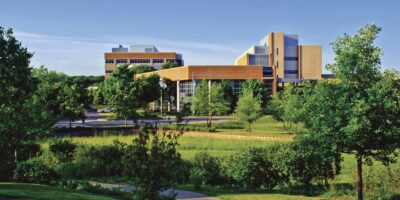
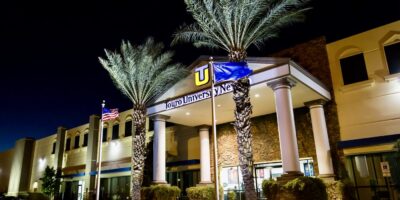
Lake Erie College of Osteopathic Medicine (LECOM) grants one medical degree, the Doctor of Osteopathic Medicine (DO), and it grants that degree at five locations: the main campus in Erie, Pennsylvania; LECOM at Seton Hill in Greensburg, Pennsylvania; LECOM at Elmira in Elmira, New York; LECOM at Jacksonville University in Jacksonville, Florida; and the branch campus in Bradenton, Florida. LECOM does not offer the MD degree. Its graduates are osteopathic physicians, fully licensed to diagnose, prescribe, operate and practice in every specialty, just as MD graduates are. What differs is the focus. Osteopathic training adds a whole-person philosophy and hands-on osteopathic manipulative medicine to the same core of medical science.
LECOM is also different from most medical schools in how it teaches. Instead of one curriculum, it lets students choose a learning pathway: lecture-based, small-group problem-based learning, self-directed study, or one of two accelerated three-year pathways. Which pathways you can choose depends on the campus.
The facts below apply to the 2026-2027 application cycle, for students who want to start medical school in July 2027. They cover LECOM’s minimum and average MCAT and GPA, every campus and pathway, 2026-2027 tuition, the Early Acceptance Program, the brief supplemental application, the virtual interview and the people who lead the college. Every fact was checked against LECOM’s own pages on October 20, 2026.
Key Takeaways
- One degree, five locations, two applications: LECOM grants the DO only. Erie, Seton Hill, Elmira and Jacksonville University share one AACOMAS application; Bradenton has its own. Apply to both groups if you would attend either.
- Clear minimums: LECOM sends its supplemental application only to applicants with a 2.7 or higher overall GPA and an MCAT of at least 497 taken within the past five years. Applicants without that MCAT can qualify through LECOM’s Academic Index Score (AIS) of 110 or higher, built from GPA and SAT or ACT scores.
- Average stats: first-year students at Erie, Seton Hill, Elmira and Jacksonville average a 502.3 MCAT and 3.64 GPA; Bradenton averages 505.2 and 3.71. LECOM calls an MCAT at the 50th percentile or higher competitive.
- No secondary essays: the LECOM Supplemental Application is a short form with a $50 fee. Your AACOMAS personal statement and experiences carry the whole written case.
- Deadlines: AACOMAS by April 1, 2027, and the LECOM supplemental by April 1. Admission is rolling, so applying in early summer is a real advantage.
- Low tuition for a private school: 2026-2027 first-year tuition is $41,825 at Erie and Seton Hill, $44,875 at Elmira, $44,000 at Jacksonville and $42,395 (Florida residents) or $42,750 (non-residents) at Bradenton. Fees, insurance and living costs come on top.
- Choose how you learn: Erie offers Lecture-Discussion, Problem-Based Learning, Directed Study and the three-year Primary Care Scholars Pathway. Seton Hill offers PBL and the three-year Accelerated Physician Assistant Pathway. Elmira, Jacksonville and Bradenton teach PBL only.
- Strong outcomes: LECOM reported a 99.9 percent residency match for the Class of 2026, with 653 graduates placed.
- Next step: decide which campus group fits you, check every prerequisite against LECOM’s list, line up a committee letter or two science professor letters plus a DO letter, and submit AACOMAS early.
Key Statistics About Lake Erie College of Osteopathic Medicine
What Are LECOM’s Average MCAT and GPA?
LECOM’s first-year students at Erie, Seton Hill, Elmira and Jacksonville average a 502.3 MCAT and a 3.64 cumulative GPA; Bradenton averages a 505.2 MCAT and a 3.71 GPA (AACOM Choose DO Explorer, 2026-2027 cycle profiles). LECOM’s minimums are a 497 MCAT and a 2.7 GPA (LECOM Catalog, 2026-2027).
LECOM does not post its own class averages, so these school-reported figures are the newest available. The Erie figures cover the main campus and its three additional locations, which share one application; the Bradenton figures come from the separate Bradenton profile. Neither profile prints the entering year for its averages, so treat them as the most recent first-year class LECOM reported for the 2026-2027 cycle.
Three more points frame them. First, LECOM’s own benchmark: “A competitive MCAT score is in the 50 percentile or higher” (LECOM Entrance Requirements, 2026). Second, the 497 minimum sits between the 38th and 42nd percentile, by LECOM’s own description. Third, students admitted through the Early Acceptance Program may be exempt from the MCAT altogether: they apply as high school seniors or undergraduates, need a 3.5 unweighted high school GPA (3.7 for the Pre-Bachelor’s track) and must hold a 3.40 overall and 3.30 science GPA in college (LECOM Early Acceptance Program, updated September 2026). The program is current for 2026-2027 entry.

| Metric | Value | Year or cohort | Source and definition |
|---|---|---|---|
| School and degree | Lake Erie College of Osteopathic Medicine, DO; Erie, PA (main), Greensburg, PA (Seton Hill), Elmira, NY, Jacksonville, FL (additional locations), Bradenton, FL (branch) | Current | LECOM COM Program page; private, nonprofit; chartered 1992 |
| Mean MCAT, Erie group | 502.3 | 2026-2027 cycle profile (entering year not printed) | AACOM Choose DO Explorer, LECOM; first-year students, Erie with Seton Hill, Elmira and Jacksonville |
| Average cumulative GPA, Erie group | 3.64 | 2026-2027 cycle profile | AACOM Choose DO Explorer, LECOM |
| Mean MCAT, Bradenton | 505.2 | 2026-2027 cycle profile | AACOM Choose DO Explorer, LECOM Bradenton |
| Average cumulative GPA, Bradenton | 3.71 | 2026-2027 cycle profile | AACOM Choose DO Explorer, LECOM Bradenton |
| Minimum MCAT | 497 within the past five years, or AIS of 110 | 2026-2027 | LECOM Academic Catalog 2026-2027, section 2.2.1 |
| Minimum GPA | 2.7 overall (college and graduate coursework combined) | 2026-2027 | LECOM COM Entrance Requirements |
| Competitive MCAT | 50th percentile or higher | Current | LECOM COM Entrance Requirements |
| First-year matriculants | Erie 328 (59 in-state, 269 out-of-state); Bradenton 142 (100 in-state, 42 out-of-state) | Erie 2024-2025; Bradenton 2025-2026 | AACOM Choose DO Explorer; Seton Hill and Elmira counts listed as TBA |
| DO students enrolled, all locations | 2,877 | Fall 2026 | LECOM Facts (as of August 24, 2026) |
| Applicants, interviews, acceptance rate | Not published | n/a | LECOM states it receives the most medical school applications in the country but publishes no counts |
| First-year tuition | Erie and Seton Hill $41,825; Elmira $44,875; Jacksonville $44,000; Bradenton $42,395 (FL resident) or $42,750 (non-resident) | 2026-2027 | LECOM tuition and fees pages by campus |
| Residency match | 99.9% (653 graduates) | Class of 2026 | LECOM Match Day 2026 release |
| COMLEX Level 1 first-time pass rate | Bradenton 97.78%; Erie (with Seton Hill and Elmira) 95.46%; national 90.25% | 2024-2025 testing cycle | LECOM COMLEX Pass and Graduation Placement Rates |
| Deadlines | AACOMAS April 1, 2027; LECOM Supplemental Application April 1 | 2026-2027 cycle | AACOM Choose DO Explorer; LECOM Apply page |
| Accreditation | COCA (DO program); MSCHE (institution) | Current | LECOM Accreditation page |
An acceptance rate cannot be calculated honestly for LECOM, because the college does not publish how many people apply, interview or receive offers. Dividing first-year class size by the number of AACOMAS applicants would measure enrollment, not admission, and the result would be misleading. The figures that matter for your planning are the published minimums, the averages above and the fact that LECOM screens applicants before sending its supplemental.
Remember that averages are not cutoffs. Many students in each class sit below each average. An applicant with a 499 MCAT and strong clinical work can earn an interview at LECOM, and an applicant with a 510 and no sense of osteopathic medicine can be turned down.
Mission and Educational Priorities
LECOM’s College of Osteopathic Medicine states its mission this way:
“The mission of the Lake Erie College of Osteopathic Medicine is to prepare students to become osteopathic physicians through a program of excellence in education, research, clinical care, and community service to enhance the quality of life through improved health for all humanity. The osteopathic medical program is dedicated to serve all students through innovative curriculum and the development of postdoctoral education and interprofessional experiences.”
Its educational goals add a sharper point: “The primary goal of LECOM is to educate students to become physicians who practice within the osteopathic concept. Additionally, the college’s goal is to educate and develop primary care physicians who will practice in the osteopathic tradition.”
Three ideas in those statements shape what LECOM looks for and how you should present yourself.
Primary care is the center of gravity. LECOM was founded in 1992 by the leaders of Millcreek Community Hospital in Erie, who wanted to train osteopathic physicians for the medically underserved areas of northwestern Pennsylvania. That purpose still drives the school. The college’s Facts page says the majority of LECOM graduates become primary care physicians: family medicine, internal medicine, pediatrics or OB-GYN. In 2026, U.S. News & World Report ranked LECOM 23rd in the nation for graduates practicing in primary care and 23rd for graduates serving rural areas. You do not have to promise a primary care career to be admitted, and LECOM graduates match into every specialty. But you should understand why primary care matters to the school and be able to talk about it with respect.
“Serve all students through innovative curriculum.” This phrase explains LECOM’s learning pathways. The college built several ways to learn the same material because it believes students succeed in different environments. When LECOM asks which pathway you prefer, it is asking you to know yourself as a learner. Applicants who can explain, with evidence from their own record, how they learn best come across as mature and prepared.
Community service and clinical care. LECOM looks for students who “will excel in academics, clinical care, research and community service” and who “show an awareness of osteopathic medicine, which recognizes total-person health care for the patient and the community.” Service and patient contact are not extras here. They are part of the mission statement itself.
LECOM also measures students against three institutional learning outcomes: discipline knowledge, professionalism and osteopathic philosophy. The admissions committee evaluates candidates against those same three outcomes. In practical terms, your application should show that you can handle the science (grades and MCAT or AIS), that you behave like a professional (reliable commitments, good letters, a clean record) and that you understand what makes osteopathic medicine distinct (DO shadowing and an informed reason for choosing a DO school).
Finally, affordability is part of LECOM’s identity. The college describes itself as having the lowest tuition among private, nonprofit osteopathic medical colleges, and it raises scholarship money through events across its campuses. If keeping debt low matters to you, it is a legitimate reason to apply, and one LECOM openly shares.
Accreditation and Institutional Identity
The Doctor of Osteopathic Medicine program at LECOM is accredited by the Commission on Osteopathic College Accreditation (COCA) of the American Osteopathic Association. The 2026-2027 catalog reports that LECOM recently received a 10-year COCA accreditation renewal for its medical school. At the institutional level, LECOM is accredited by the Middle States Commission on Higher Education. It is chartered by the Pennsylvania Department of Education, licensed in Florida by the Commission for Independent Education and operates LECOM at Elmira under the supervision of the New York State Board of Regents.
LECOM is a private, nonprofit college. It received its Pennsylvania charter in December 1992 as the 16th college of osteopathic medicine in the country, and its charter class began on August 9, 1993, in Erie. The first class graduated on May 24, 1997. Since then the college has added:
- LECOM Bradenton (2004), a branch campus in Lakewood Ranch, Florida. Because it is a branch campus, it reports its own board scores and runs its own AACOMAS application.
- LECOM at Seton Hill (2009), an additional location of LECOM Erie on the campus of Seton Hill University in Greensburg.
- LECOM at Elmira (2020), an additional location of LECOM Erie next to Elmira College in New York. Its first class of 120 began in July 2020 and graduated in 2024.
- LECOM at Jacksonville University (2026), an additional location of LECOM Erie in the Medical Mall at Jacksonville University. It opened in July 2026 with an inaugural class of about 75 DO students and is the first medical school in the city of Jacksonville.
The distinction between “additional location” and “branch campus” matters to applicants. Seton Hill, Elmira and Jacksonville are legally part of LECOM Erie: they share Erie’s AACOMAS application, and their board results are reported with Erie’s. Bradenton is a separate branch. The DO degree at Seton Hill and Elmira is LECOM’s alone; LECOM notes that the degree is independent of any association with Seton Hill University or Elmira College.
LECOM is also the core of LECOM Health, which the college calls the nation’s only osteopathic academic health center. LECOM Health includes LECOM Medical Center and Behavioral Health Pavilion in Erie (the former Millcreek Community Hospital, renamed in February 2025), Corry Memorial Hospital, Warren General Hospital, a network of clinical practices, rural health clinics and senior living communities. Students learn in these facilities, which is one reason Erie offers such a large clinical network close to campus.
A word on DO versus MD, since the two are often confused. Both are physicians with full, unlimited licenses. Both complete four years of medical school (three on an accelerated track), take national licensing exams and enter the same residency match. DO students take the COMLEX-USA licensing exams and also learn osteopathic manipulative medicine. For a full comparison, read our guide to the major differences between MD and DO, and see where LECOM fits among osteopathic medicine programs in our DO school rankings.
Medical Programs and Affiliations
LECOM is a multi-school college. Alongside the College of Osteopathic Medicine, it runs a School of Pharmacy, a School of Dental Medicine in Bradenton, a School of Podiatric Medicine in Erie, a Graduate School of Biomedical Sciences and a School of Health Services Administration. Medical students share classes and clinical sites with students from several of these schools, which gives LECOM a built-in interprofessional setting. Everything below focuses on the College of Osteopathic Medicine.
The five learning pathways and where they are offered
| Pathway | Length | Erie | Seton Hill | Elmira | Jacksonville | Bradenton |
|---|---|---|---|---|---|---|
| Lecture-Discussion Pathway (LDP) | 4 years, 176 curricular weeks | Yes | No | No | No | No |
| Problem-Based Learning (PBL) | 4 years, 176 weeks | Yes | Yes | Yes | Yes | Yes |
| Directed Study Pathway (DSP) | 4 years, 176 weeks | Yes | No | No | No | No |
| Primary Care Scholars Pathway (PCSP) | 3 years, 144 weeks | Yes | No | No | No | No |
| Accelerated Physician Assistant Pathway (APAP) | 3 years, 140 weeks | No | Yes | No | No | No |
All five pathways lead to the same DO degree. They differ only in how the first two (preclinical) years are taught, and in the case of PCSP and APAP, in how quickly the clinical years move. From the third year on, all students complete the same clinical rotations. The curriculum section below explains how each pathway works day to day.
Primary Care Scholars Pathway (PCSP)
LECOM created the Primary Care Scholars Pathway in 2007 in response to the national shortage of primary care physicians, especially in family medicine. Primary Care Scholars graduate in three years from the Erie campus with a DO degree that LECOM describes as equivalent to a four-year program. By LECOM’s count, PCSP was the first of 19 accelerated three-year medical degree programs in the country.
The pathway works because it runs year-round. Students complete the first two years of preclinical education in under 20 months using the Directed Study learning format, take several courses during the summer, begin clinical rotations in March of their second year and finish with a sub-internship at the hospital where they will continue training after graduation. LECOM added core rotations specifically for PCSP students to strengthen osteopathic manipulative medicine and other primary care skills.
The commitment is serious. PCSP students must enter a residency in family medicine, pediatrics or general internal medicine directly after graduation and then practice primary care for at least five years after residency. A fellowship in geriatrics, neuromuscular medicine or family medicine obstetrics may delay that practice. If a student chooses not to enter a primary care residency or not to practice primary care for the five years, LECOM asks the student to return the scholarship award with assessed fees based on the tuition paid at the start of the student’s final year. In plain terms: PCSP saves a year of tuition and a year of time, but only if you are sure you want primary care. If you are not, the four-year pathways keep every specialty open.
Accelerated Physician Assistant Pathway (APAP)
APAP, added in 2011, lets certified physician assistants (PA-Cs) earn a DO in three years. LECOM explains that PAs who want to return to medical school often cite cost and time away from practice as barriers, so the pathway shortens medical school by a year and reduces its cost by one quarter. APAP is offered only at LECOM at Seton Hill. Students follow the PBL curriculum for the two preclinical years, and the acceleration happens in the clinical years.
APAP has 12 seats each year. Six are “undeclared” seats, which let the graduate pursue any specialty. Six are primary care seats, which require the graduate to enter a primary care residency and work in primary care for five years after residency. Applicants must:
- be certified physician assistants (certification must be complete before the late-July start);
- have a minimum GPA of 2.7;
- have completed at least one physics course with lab (4 credits) and one organic chemistry course with lab (4 credits);
- be U.S. citizens or permanent residents; and
- have scored in the 40th percentile or higher on an MCAT taken after January 2015, or meet the AIS alternative of 110.
LECOM recommends at least two years of practice experience and notes that APAP applicants average more than five years of clinical experience. It places no time limit on when the physics and organic chemistry were taken, as long as the grade was C or better. Letters from supervising physicians are accepted in place of science professor letters. After submitting AACOMAS, APAP applicants email the APAP Administrative Coordinator. APAP is only for PAs who already hold certification. If you are an undergraduate still choosing between the two professions, compare what PA programs expect in our guide to PA school requirements before you commit to either route. For full details, see LECOM’s Accelerated Physician Assistant Pathway page. Undergraduates who are weighing PA school against medical school can test the fit first through pre-PA internships that place them beside working clinicians.
Early Acceptance Program (EAP)
LECOM’s Early Acceptance Program lets qualified students reserve a seat in the College of Osteopathic Medicine while they are still in high school or college. LECOM has agreements with a long list of community colleges, colleges and universities across the country (the current affiliate list is dated September 18, 2026). Students apply to the EAP through the LECOM Application Portal, which is open from May 1 to April 1, and apply separately to the undergraduate school.
General EAP requirements for the medical program, from LECOM’s page updated in September 2026:
- You must not already hold a bachelor’s degree, and you must have at least one year remaining as a full-time undergraduate.
- High school GPA: 3.5 unweighted or higher; the Pre-Bachelor’s (2+ and 3+) medical track requires 3.7 unweighted.
- SAT or ACT scores are strongly recommended but not required, except for the 2+4 and 3+4 medical track, which requires a 1340 SAT or 28 ACT on a single exam.
- College GPA: 3.40 overall and 3.30 science.
There are two medical tracks. In the Pre-Bachelor’s Track (2+ and 3+), students apply as high school seniors, complete two or three years of undergraduate study, meet GPA and other requirements and enter LECOM the following July without a bachelor’s degree (some partner schools award the bachelor’s later using LECOM credits). In the Bachelor’s Track, students must hold a provisional acceptance before starting their final undergraduate year, finish the bachelor’s degree and enter LECOM the next July. The LECOM phase can be completed at Erie, Greensburg, Elmira, Jacksonville or Bradenton.
The benefits are substantial: EAP students may be exempt from the MCAT, do not file an AACOMAS application and do not need a second interview, provided they meet the program’s final requirements. The interview itself is a recorded one-way interview of six questions with two minutes per answer and one chance to record. If denied, a student may reapply once per application cycle until the end of junior year. One example of a partner track is the six-year BS to DO program between Elmira College and LECOM, in which students earn a BS in Biology from Elmira College and finish the DO at LECOM at Elmira without taking the MCAT. Students who reach college through these programs still need real patient contact, and medical internships for undergraduates are one way to build it during the summers before LECOM. Families of younger students who are planning for the EAP can also look at medical internships for high school students, which introduce clinical settings before college.
Master of Medical Science (MMS)
The one-year, non-thesis Master of Medical Science, offered at Erie and Bradenton, is designed to prepare college graduates for professional programs such as osteopathic medicine. MMS students who maintain a 3.0 cumulative GPA, pass all courses without remediation and meet professionalism standards are eligible to be interviewed early in the spring for the College of Osteopathic Medicine, and no MCAT is required. The MMS requires a 2.7 cumulative GPA, U.S. citizenship or permanent residency and most of the standard science prerequisites. For applicants whose grades or MCAT fell short, the MMS is LECOM’s own structured second chance.
Concurrent degrees
DO students can add a master’s degree delivered online during the third and fourth years: the Master in Health Services Administration (MHSA), Master of Public Health (MPH), Master of Science in Biomedical Ethics (MSBE) or Master of Science in Medical Cannabinoid Therapeutics (MS MCT). Erie first-years with research interests can enroll in the Master of Science in Biomedical Sciences (MSBS), a structured research experience run alongside the DO. The Master of Science in Medical Education is also available. None of these requires a separate admissions decision at the time you apply to the DO program.
Clinical affiliations
LECOM reports clinical education agreements with more than 100 hospitals and clinics and more than 1,600 adjunct faculty members. Affiliates named on LECOM’s current list include UPMC Hamot, AHN Saint Vincent, LECOM Health’s own hospitals and the Erie VA in Pennsylvania; Arnot Ogden, Rochester Regional Health and St. John’s Riverside in New York; Baptist Health Jacksonville, Lee Health, Manatee Memorial and BayCare in Florida; Mercy Health St. Elizabeth in Ohio; and Mercy Hospital Jefferson and Mercy Hospital Southeast in Missouri. For the new Jacksonville location, Baptist Health, UF Health St. Johns and AdventHealth are the official clinical education partners. The clinical section below explains how students are assigned.
Curriculum Overview
LECOM’s curriculum has two halves. The first two years (OMS1 and OMS2) teach the biomedical and clinical sciences, osteopathic principles and practice (OPP) and history and physical examination skills. The pathways differ only in this half. The last two years (OMS3 and OMS4) are clinical rotations, and every pathway converges there. Across all pathways, students take part in interprofessional education with pharmacy, dental and podiatric students, so they practice working on health care teams.
LECOM’s Associate Dean of Preclinical Education puts the choice simply in a 2026 article on the college’s site: no pathway gives an inherent advantage on board exams or in clinical rotations, and the best pathway is the one that matches how you have learned successfully in the past. The college’s advice is to “stick with what got you here” rather than try a new learning method in medical school.
Lecture-Discussion Pathway (LDP): Erie
The LDP is the most traditional pathway and the closest to an undergraduate science schedule. Students usually spend mornings in lecture and afternoons in a mix of lectures, laboratories, tutorials, small-group discussions and independent study, with plenty of access to faculty. LECOM recommends it for students who learn well from presentations and readings and who are more comfortable in a teacher-directed setting with a highly structured schedule.
The LDP runs in two phases:
- Phase I, the core curriculum (first semester of year one): Gross Anatomy, Histology, Embryology, Microbiology/Immunology, Biochemistry I, Physiology, Osteopathic Principles and Practice I, History and Physical Examination I, and Introduction to Biostatistics and Research Methodology. The second semester adds Biochemistry II/Medical Genetics, Pathology, Pharmacology, Healthcare Management I and Human Sexuality. These are the foundation subjects every later course builds on, which is why they come first.
- Phase II, the systems curriculum (second semester of year one through year two): the Musculoskeletal System, Basic and Clinical Neuroscience, then the Digestive, Cardiovascular, Respiratory, Renal, Hematology/Oncology, Endocrine, Reproductive and Integumentary systems, along with OPP II through IV, History and Physical II through IV, Geriatric Medicine, ACLS and a Biomedical Sciences and Osteopathic Principles Convergence course. In the late summer and early fall, students in all pathways take Medical Jurisprudence, Medical Spanish, Public Health and Preventive Medicine, and Psychiatry in a directed-study format.
In Phase II, each organ system is taught from the viewpoint of anatomy, biochemistry, microbiology, pathology, pharmacology and physiology, and primary care physicians and specialists bring clinical perspectives into the classroom. Examinations are mostly multiple-choice questions written in the style of licensing boards, with quizzes for feedback and occasional oral practical exams.
Problem-Based Learning (PBL): every campus
LECOM introduced PBL in 2000 and was among the first osteopathic colleges to teach this way. PBL is the only pathway at Seton Hill, Elmira, Jacksonville and Bradenton, and it is also offered at Erie.
PBL begins with foundational courses in the anatomical sciences (anatomy, embryology and histology), where PBL is a minor part of the schedule. After that, PBL becomes the main mode of instruction and makes up about 60 percent of the preclinical curriculum. Students work in groups of eight or nine with a faculty facilitator three times a week and study more than 70 patient cases over the two preclinical years. Facilitators do not lecture. The group takes the medical history, works through the physical examination, requests additional results, labs or imaging (an EKG or an MRI, for example) and builds a differential diagnosis.
The heart of PBL is the learning issue. During each case, students identify the topics they need to understand, and those learning issues, drawn from chapters in required textbooks, define the material for examinations. Between sessions, students study those issues on their own or in informal groups. Basic and clinical sciences are woven together case by case rather than taught as separate subjects. PBL suits students who like discussing problems with peers, who come prepared because the group depends on them and who are comfortable directing much of their own reading. Osteopathic Principles and Practice and History and Physical Examination are still taught in labs on every campus.
Directed Study Pathway (DSP): Erie
The DSP follows the same timeline as the LDP, but most of the learning comes from faculty-written modules rather than lectures. After attending anatomical sciences lectures with LDP students in the first semester, DSP students move to modules built from highly structured learning objectives, which they use with assigned textbooks. Faculty meet with DSP students weekly, and module meetings include question-and-answer sessions, case-based learning, laboratory sessions and small-group discussions.
The DSP is not an online or correspondence program. Anatomy, Histology, Embryology, Basic Neuroscience, History and Physical Examination and OPP are taught in person with required attendance, and OPP labs meet about once a week throughout the first two years. Students are on campus three to five days a week, and every DSP student must live within 30 miles of Erie. The preclinical curriculum cannot be finished in less than two years. LECOM recommends DSP for self-motivated students with strong organizational and time-management skills and a strong science background, who learn best through reading and small-group interaction. The DSP tends to keep a waiting list, so if you want it, rank it as your first choice during the interview process.
Primary Care Scholars Pathway (PCSP): Erie
PCSP students complete all preclinical courses and modules in about 18 months using the DSP format, attending year-round. In the first year (August to May) they take Gross Anatomy, Histology, Embryology, OPP I and II, Healthcare Management I and II, History and Physical I and II, Human Sexuality and Biostatistics and Research Methods, plus modules in physiology, biochemistry, microbiology and immunology, pharmacology, pathology, genetics and the musculoskeletal and nervous systems. From June to the following March they finish the systems modules, an enrichment module and courses including Public Health, Medical Jurisprudence, Psychiatry, ACLS and Geriatrics. Clinical rotations in family medicine and internal medicine start in March of year two. The third year includes pediatrics, OB/GYN, internal medicine, surgery, psychiatry, OMM, selectives, ambulatory medicine, office-based practice, ENT/ophthalmology, emergency medicine and a sub-internship.
Accelerated Physician Assistant Pathway (APAP): Seton Hill
APAP students take the same two-year PBL preclinical curriculum as all Seton Hill students. Their clinical training starts with family practice/OMM and geriatric medicine rotations in the summer after the second year, then continues with OB/GYN, internal medicine, pediatrics, psychiatry, general surgery, office-based practice, emergency medicine/critical care, an osteopathic manipulative/rural/underserved rotation and a sub-internship.
Osteopathic Principles and Practice
Every LECOM student learns the history, philosophy, principles and practice of osteopathic manipulative medicine. LECOM teaches the four tenets of osteopathic medicine that date to Andrew Taylor Still: the body is a unit, and the person is a unit of body, mind and spirit; the body is capable of self-regulation, self-healing and health maintenance; structure and function are reciprocally interrelated; and rational treatment is based on those principles. Hands-on diagnosis and treatment are taught in OPP labs equipped with treatment tables on every campus. This is the skill set that most clearly separates your DO training from an MD curriculum, and it is worth seeing in action before you apply.
Assessment, boards and changing pathways
Across pathways, exams are mainly multiple-choice and written to prepare students for COMLEX-USA. Students take COMLEX Level 1 after the second year and Level 2 after the third year; both must be passed before graduation. Level 3 is taken during residency.
A student may change pathways or campuses only once, by written request at least two weeks before the end of the Anatomy course, with approval from the pathway directors and academic deans. Students who struggle academically may be required to change pathways. Choose carefully at the start, because switching later is limited.
Admissions Requirements and Application Process
Academic requirements
LECOM seeks applicants who “have shown success in their science courses” and who have “proven themselves as well-rounded individuals who have done well overall in their academic careers.” The firm requirements for the 2026-2027 cycle are:
- Degree: a bachelor’s degree from a regionally accredited U.S. or Canadian college or university by the time you enroll. Applicants in LECOM’s affiliated programs (such as the EAP) are considered individually, but no one is admitted with less than 75 percent of the credits required for a bachelor’s degree.
- GPA: a 2.7 or higher overall GPA, counting all college and graduate coursework, to receive the supplemental application.
- MCAT: all MCAT scores must be submitted. The minimum is 497 on an exam taken within the past five years. For 2027 entry, the oldest MCAT considered is from July 1, 2022, and the latest accepted is from January 31, 2027. LECOM considers your most recent score, and its entrance page describes an MCAT at the 50th percentile or higher as competitive.
- Academic Index Score (AIS): applicants who have not taken the MCAT, or whose score is below 497, can be considered for an interview using LECOM’s AIS, which combines undergraduate and graduate GPA with SAT and/or ACT Critical Reading and Math scores. The minimum AIS is 110. LECOM’s entrance page has a calculator. Documentation of the scores is required, and the SAT or ACT must already exist; applicants with neither must take the MCAT. LECOM is one of a small group of medical schools that don’t require the MCAT for every applicant.
Prerequisite courses
| Subject | Requirement |
|---|---|
| Biology | 8 semester hours, including 2 hours of lab (general biology, zoology, or a combination of biology, zoology and botany) |
| Inorganic (general) chemistry | 8 semester hours, including 2 hours of lab |
| Organic chemistry | Organic I: 4 credits with 1 credit of lab; Organic II: 4 credits with 1 credit of lab, or 3 credits of biochemistry in place of Organic II |
| Physics | 4 semester hours, including 1 hour of lab |
| English | 6 semester hours of composition and literature |
| Behavioral sciences | 6 semester hours (for example psychology, sociology, anthropology, medical ethics or philosophy) |
| Recommended | Biochemistry, physiology, genetics, microbiology and anatomy |
Each prerequisite needs a C or better. A course with a C- or lower must be repeated. LECOM does not accept AP or IB credit in place of science prerequisites; AP or IB credit counts only for English or behavioral science (with an AP score of 3 or better or an IB score of 5 or better). Online coursework, online labs and pass/fail prerequisites are evaluated case by case, and all coursework must come from a regionally accredited institution. Note that LECOM’s physics requirement is a single semester, lighter than many schools. For a school-by-school view, see our medical school prerequisites checklist.
Residency, citizenship and international applicants
LECOM accepts applicants from every state. In 2024-2025, 269 of Erie’s 328 first-year students came from outside Pennsylvania, while 100 of Bradenton’s 142 first-year students in 2025-2026 were Florida residents. Tuition is the same for residents and non-residents at every campus except Bradenton, where Florida residents pay slightly less.
International applicants on F-1 visas are considered. They must meet all general requirements, complete at least 75 percent of the credits for a bachelor’s degree at a regionally accredited U.S. or Canadian institution, have foreign coursework evaluated by World Education Services or Josef Silny and Associates, and provide written proof of funds to finance their full education before moving forward. Federal loans require U.S. citizenship or permanent residency. DACA recipients are not considered for admission.
Letters of recommendation
LECOM requires either:
- one letter from a pre-professional or similar committee, or
- two letters from undergraduate or graduate college or university science professors.
A letter from an osteopathic physician is highly recommended. APAP applicants may submit two letters from supervising physicians. LECOM asks for letters once you are selected for an interview, but you should have them ready long before that, because interviews are scheduled on a rolling basis. Letters can arrive through AACOMAS, Interfolio, email or paper.
Shadowing and experience
LECOM does not set a fixed number of shadowing or clinical hours, and it accepts virtual or in-person shadowing. Do not read that as permission to skip it. A DO letter is highly recommended, and the mission asks for applicants who understand osteopathic medicine. Shadowing a DO, ideally in primary care, gives you that letter and the understanding at the same time. Patient-facing clinical work, service and, if you are interested, research round out the file. If your clinical hours are thin, structured clinical internships for pre-med students can add supervised patient contact in a short block of time.
Step by step: AACOMAS, the supplemental and the interview
- Submit AACOMAS. LECOM uses the American Association of Colleges of Osteopathic Medicine Application Service (AACOMAS), the DO counterpart to the MD system, AMCAS. AACOMAS collects transcripts, MCAT scores, experiences and your personal statement; it does not make admissions decisions. For 2027 entry, the earliest submission date is May 4, 2026, and the deadline is April 1, 2027. LECOM has two AACOMAS options: one for the Erie main campus and its additional locations (Seton Hill, Elmira and Jacksonville University) and one for the Bradenton branch campus. Designate both if you would attend either. Our AACOMAS application guide walks through each section, and the AACOMAS form opens at the AACOMAS application portal.
- Receive and submit the LECOM Supplemental Application. Once LECOM receives your verified AACOMAS application, qualified applicants get an email with a username and password for the LECOM Candidate Portal. The supplemental is brief, carries a $50 non-refundable fee (waived with proof of an AACOMAS fee waiver) and is due April 1. LECOM begins accepting supplementals June 1, 2026. Complete it within days.
- Letters. If you are selected for an interview, LECOM asks for your letters. Have them ready to release.
- Interview. Qualified applicants are invited to a virtual interview, described in the interview section below.
- Decision. After the interview, the admissions committee reviews your full file a second time, including the interview evaluations, and extends offers on a rolling basis.
- Accept and pay the matriculation fee. A $2,000 non-refundable matriculation fee is due 30 days after you receive an acceptance, and it is credited toward tuition when you enroll. Classes start in late July; the first-year start date for 2027 is July 26.
LECOM does not offer an Early Decision Program, and it grants deferred entrance only for military deployment.
2026-2027 timeline
| When | What to do |
|---|---|
| Spring 2026 | Finish prerequisites; take the MCAT (or confirm your AIS); request letters |
| May 4, 2026 | AACOMAS opens for submission |
| May to June 2026 | Submit AACOMAS early; designate the Erie group, Bradenton or both |
| From June 1, 2026 | Complete each LECOM Supplemental Application within days of the email; pay the $50 fee |
| Summer 2026 to spring 2027 | Rolling virtual interviews; release letters when invited |
| Rolling | Offers sent after interviews; $2,000 matriculation fee due 30 days after acceptance |
| January 31, 2027 | Latest MCAT date LECOM accepts for 2027 entry |
| April 1, 2027 | AACOMAS deadline and LECOM supplemental deadline; limited interview dates remain after this |
| July 26, 2027 | First-year start date |
The deadline in April is a backstop, not a target. With rolling admission and one of the largest applicant pools in the country, seats and interview dates fill as the year goes on. Applicants who submit in May or June and return the supplemental quickly have the most options.
Tuition, Cost of Attendance and Financial Aid
LECOM is one of the least expensive private medical schools in the country, and it advertises the lowest tuition among private, nonprofit osteopathic medical colleges. Tuition is set by campus, and it rises in the third and fourth years because clinical rotation costs are built in. The figures below are LECOM’s published 2026-2027 rates.
Tuition by campus and year (2026-2027)
| Campus | OMS1 | OMS2 | OMS3 | OMS4 |
|---|---|---|---|---|
| Erie (all residencies) | $41,825 | $41,825 | $47,825 | $47,325 |
| Seton Hill (all residencies; APAP years 1-3 follow the OMS1, OMS3 and OMS4 rates) | $41,825 | $41,825 | $47,825 | $47,325 |
| Elmira (all residencies) | $44,875 | $44,875 | $50,875 | $50,375 |
| Jacksonville University (all residencies) | $44,000 | Not yet posted | Not yet posted | Not yet posted |
| Bradenton, Florida resident | $42,395 | $41,395 | $46,370 | $45,010 |
| Bradenton, non-resident | $42,750 | $42,750 | $48,750 | $48,250 |
Fees and insurance (2026-2027, all campuses unless noted)
- Curriculum fee: $500
- Technology fee: $500
- Board preparation fee: $300
- Student government fee: $50
- Virtual textbooks (estimated, first year): $2,000 at Erie, $1,878 at Seton Hill, $1,920 at Elmira and Jacksonville, $2,037 at Bradenton
- ERAS processing fee (fourth year): $65
- Student disability insurance (mandatory, varies by age): $562
- Student health insurance (mandatory): $4,524, which may be waived during the first two years with other coverage but is required on rotations
Fees are charged in the fall term; spring charges are the second half of tuition and health insurance.
Living expenses and an estimated first-year budget
LECOM’s financial aid budgets list first-year living expenses of $27,080 at Erie (the Erie page still labels its living table 2025-2026) and Seton Hill, $31,080 at Elmira and $33,080 at Bradenton. Jacksonville’s living budget had not been posted at the time of review.
Adding LECOM’s listed first-year tuition, fees, textbooks, disability insurance and health insurance gives these approximate first-year totals (our arithmetic from LECOM’s 2026-2027 pages, before scholarships and before any health insurance waiver):
| Campus | Tuition, fees and insurance | Plus living expenses | Approximate first-year total |
|---|---|---|---|
| Erie | $50,261 | $27,080 | $77,341 |
| Seton Hill | $50,139 | $27,080 | $77,219 |
| Elmira | $53,231 | $31,080 | $84,311 |
| Bradenton, Florida resident | $50,868 | $33,080 | $83,948 |
| Bradenton, non-resident | $51,223 | $33,080 | $84,303 |
| Jacksonville | $52,356 | Not yet posted | n/a |
LECOM does not provide campus housing; it helps students find housing close to campus. In Erie, LECOM Health rents homes and townhomes near the campus and medical center to students and residents, starting at about $880 to $1,200 a month. Students at Seton Hill, Elmira and Jacksonville have access to the host university’s amenities, and LECOM at Jacksonville University students can use Jacksonville University’s on-campus housing and dining options.
Financial aid and scholarships
Most LECOM students finance their education with federal Direct Unsubsidized and other federal or private loans. Graduate and professional students file the FAFSA as independent students (LECOM’s federal school code is G30908), complete entrance counseling and sign master promissory notes. LECOM asks that financial aid documents be completed by the end of April, and award letters go out about 30 days before the fall term. Federal loan rules for graduate students are changing, so confirm current borrowing limits with LECOM’s Office of Financial Aid before you budget.
LECOM’s scholarship fund awards more than $4 million each year based on academic performance. The money is raised through events such as the scholarship auction in Erie, the scholarship gala in Bradenton and a casino night in Elmira, and LECOM’s Board of Directors matches the funds raised. LECOM also points students to the National Health Service Corps scholarship and loan repayment programs, which fund primary care physicians who serve in shortage areas, and to the military Health Professions Scholarship Program.
Debt after graduation
LECOM publishes average loan debt for its graduates. For the Class of 2023, the average was $216,799 for the 317 borrowers at the Erie campus group (Erie, Seton Hill and Elmira) and $207,983 for the 166 borrowers at Bradenton. Those figures are lower than at many private medical schools, but they are still large. Use LECOM’s federal loan calculator and talk to the financial aid office about how a three-year PCSP or APAP route, an NHSC commitment or military service would change your numbers.
Campus Facilities and Student Life
Your daily life at LECOM depends heavily on the campus you attend. Here is what each location offers.
Erie, Pennsylvania (main campus). LECOM’s original and largest campus spans three settings. LECOM Main and LECOM West sit on a 53-acre, park-like campus on West Grandview Boulevard with a view of Lake Erie, two major buildings for teaching and research, and the 26,000-square-foot LECOM West Research Center. LECOM Bayfront, on the Lake Erie shoreline, houses small-group rooms for PBL students and flexible lecture space. The 28-acre LECOM Education Center, a short drive away, provides small-group rooms, a student study lounge and a simulation center with medical manikins and task trainers. Students also use the John M. and Silvia M. Ferretti Medical Fitness and Wellness Center and train alongside dental, podiatric and pharmacy students. Erie is roughly equidistant from Pittsburgh, Cleveland and Buffalo, has a low cost of living and four seasons, and is home to Presque Isle State Park, a 2,300-acre sandy peninsula with beaches and trails.
LECOM at Seton Hill, Greensburg, Pennsylvania. LECOM occupies Lynch Hall on the Seton Hill University campus, about 30 miles east of Pittsburgh at the edge of the Laurel Highlands. Students have PBL classrooms with audiovisual systems, an OPP lab, a lecture hall, a medical learning resource center and study space, plus access to Seton Hill University’s dining hall, library, gym and athletic facilities. The campus describes its community as tight-knit, with faculty who advise students closely.
LECOM at Elmira, New York. A 49,000-square-foot academic building next to the Elmira College campus houses PBL classrooms, an OPP lab, lecture halls, a medical library and student lounges. Students can use Elmira College’s dining hall, library and recreation facilities. Elmira, a city of about 28,000, is close to the Finger Lakes. Elmira students can choose from many clinical sites and graduate medical education programs in New York State.
LECOM at Jacksonville University, Florida. The newest location opened in July 2026 in a 75,000-square-foot facility in the Medical Mall on Jacksonville University’s Arlington campus. It includes PBL classrooms, an OPP lab, lecture halls, a medical library and student lounges. Students have access to Jacksonville University’s dining, fitness centers, pool, athletic facilities and on-campus housing. Baptist Health, UF Health St. Johns and AdventHealth are its clinical education partners for the third and fourth years. As a brand-new campus, it has no graduates yet, and its living-cost budget and later-year tuition have not been posted.
LECOM Bradenton, Florida (branch campus). Located in Lakewood Ranch, a master-planned community between Bradenton and Sarasota about 45 miles south of Tampa, the Bradenton campus has two 210-seat lecture halls, 24 small-group classrooms for PBL, a multipurpose anatomy lab, an OMM lab, a library and a cafeteria serving breakfast and lunch. LECOM’s School of Dental Medicine and Florida pharmacy pathway share the campus.
Student support, clubs and service
LECOM’s Office of Student Affairs guides students from matriculation through graduation, with admissions, financial aid, registrar, career and residency advising, and coordination of clubs and events such as the White Coat Ceremony and Commencement. Student clubs range from specialty interest groups and honor societies to cultural and hobby clubs, and they change with student interest. Clubs are the main way students take part in service and engage with the local community. Students also volunteer at LECOM’s scholarship fundraisers, which return the money to students as scholarships.
LECOM states plainly that medical school is a full-time commitment and strongly discourages employment while enrolled. Plan your finances so you do not need to work.
Clinical Rotations and Research Opportunities
Early clinical exposure
Clinical training starts in the first year with History and Physical Examination and clinical examination courses. Once students have documented competency in histories and physical exams, they take part in clinical preceptor experiences and simulated patient encounters during the second year. LECOM also offers select chances in the first two years to practice those skills with real patients.
How third- and fourth-year rotations work
In the third and fourth years, every student completes 24 four-week clinical rotations, 12 per year, at an assigned year-long core site. Core rotations in family medicine, internal medicine, pediatrics, obstetrics and gynecology and general surgery, plus required rotations in psychiatry, geriatrics/OPP, office-based practice and emergency medicine, must be done with a LECOM affiliate. Other required rotations include selectives, a rural or underserved rotation and a senior capstone. Electives can be in any specialty at any domestic medical facility.
The third year includes Internal Medicine I to III, Surgery I and II, Obstetrics/Gynecology, Family Medicine, Pediatrics, an elective, Psychiatry/Behavioral Health, Geriatrics/OPP, a comprehensive clinical knowledge rotation that prepares students for COMLEX Level 2 and four weeks of vacation. The fourth year includes clinical competency development, Emergency Medicine/Critical Care, three electives, two medical/surgical selectives, a primary care selective, Office-Based Practice I and II, a rural/underserved rotation, the senior capstone and four weeks of vacation.
Core sites are assigned in the second year through a “mini-match” using the EValue Optimization Scheduling (EVOS) tool. Students rank every available core site for their campus, and the software assigns sites to produce the highest overall satisfaction rather than relying on a lottery. Students learn their site before the end of January of the second year, and the site stays the same for both clinical years. No changes are allowed in the third year; there is some flexibility for fourth-year electives and selectives. Bradenton students can be assigned only to Florida core sites.*
LECOM’s clinical network spans Pennsylvania, New York, Florida, Ohio, Missouri, New Jersey, California and Michigan, with more than 100 hospitals and clinics and more than 1,600 adjunct faculty. In 2024, LECOM opened its first Midwest regional campus at Mercy Hospital Jefferson in Missouri, starting with 12 third-year students and planning to grow to as many as 72. Students can also suggest a home-town hospital; several current affiliates began through student contacts, though a year-long core affiliate must accept LECOM students for a full year. Because rotations can be far from your preclinical campus, budget for travel and a possible move after the second year.
Research
Research is part of LECOM’s mission, and the college keeps research laboratories at Erie, Elmira, Seton Hill, Jacksonville and Bradenton, including the LECOM West Research Center in Erie. Roughly 25 percent of LECOM students take part in clinical or bench research. Students with strong research interest can enroll in the concurrent Master of Science in Biomedical Sciences at Erie, a research-focused master’s for first-year medical students, or the Master of Science in Medical Education, which includes a thesis project and research mentor. LECOM faculty publish in areas such as osteopathic manipulative treatment in cancer supportive care, and research centers are spread across the campuses rather than concentrated in one place. Research is not required for admission, but if you have done it, explain what you learned.
Outcomes
LECOM’s outcomes support its reputation for preparing students for the boards and the match. On COMLEX Level 1 in the 2024-2025 testing cycle, Bradenton students passed on the first attempt at 97.78 percent and Erie-group students at 95.46 percent, against a national rate of 90.25 percent. GME placement was 100 percent in 2025 (612 of 612 graduates seeking residency) and 99.4 percent in 2024. For the Class of 2026, LECOM reported a 99.9 percent match, with 653 graduates placed in specialties including pediatrics, urology, psychiatry and internal medicine. For context on how LECOM compares, see our analysis of the DO schools with the best match rates.
Notable Alumni, Faculty, Leadership and Admissions Staff
LECOM has granted the DO degree to more than 11,000 physicians, with 11,148 DO alumni counted in 2026. The people below were chosen because their roles shape the experience of applicants and students, or because their careers show the range of paths LECOM graduates take. Titles are current as listed on LECOM’s leadership and admissions pages in October 2026, and alumni roles are as reported by LECOM.
Leadership
John M. Ferretti, D.O., President and CEO. Dr. Ferretti is a board-certified internist and was among LECOM’s founders. He has led the college for more than three decades, through the opening of Bradenton, Seton Hill, Elmira and Jacksonville and the growth of LECOM Health into an osteopathic academic health center with hospitals, practices and senior living communities. His emphasis on affordability and primary care runs through LECOM’s mission and tuition policy. When you write about why LECOM, the college’s founding purpose of training physicians for underserved northwestern Pennsylvania is a fair place to start.
Silvia M. Ferretti, D.O., Provost, Senior Vice President and Dean of Academic Affairs, College of Osteopathic Medicine. Dr. Ferretti is the chief academic officer for the DO program across all campuses. She spoke for LECOM at the July 2026 opening of LECOM at Jacksonville University, describing the new campus as part of a shared vision to educate physicians for Florida’s growing health care needs.
Mark K. Kauffman, D.O., MSMEd, FACOFP, Dean of Academic Affairs, LECOM Bradenton. Dr. Kauffman leads the Bradenton branch campus, which runs its own AACOMAS application and supplemental, its own board reporting and Florida-only core rotation sites. If Bradenton is your first choice, his campus is the one you are really applying to.
Kevin A. Thomas, D.O., M.S., Associate Dean of Academic Affairs, LECOM at Seton Hill. Dr. Thomas leads the Greensburg location, home of the PBL pathway and the Accelerated Physician Assistant Pathway.
Richard R. Terry, D.O., M.B.A., Associate Dean of Academic Affairs, LECOM at Elmira. Dr. Terry leads LECOM at Elmira. When Elmira College and LECOM announced their six-year BS to DO program, he pointed to the critical physician shortage in upstate New York and the program’s role in speeding new physicians into the region. Applicants with roots in the Southern Tier or Finger Lakes have a natural story to tell here.
Faculty and academic leaders
Jonathan Kalmey, Ph.D., Associate Dean of Preclinical Education. Dr. Kalmey oversees the first two years for the Erie campus and its additional locations, the stage where pathways differ. LECOM’s guidance to applicants from this office is consistent: every pathway can produce an excellent physician, and you should pick the one that matches how you already learn best.
Sarah McCarthy, Ph.D., Director of the Directed Study Pathway and the Primary Care Scholars Pathway. Dr. McCarthy directs Erie’s two module-based pathways, including the three-year PCSP. If you are considering DSP or PCSP, LECOM invites questions to the admissions office or the DSP director.
Michael P. Rowane, D.O., M.S., Associate Dean of Clinical Education. Dr. Rowane directs the clinical years, including core site assignments. At the 2024 opening of LECOM’s regional campus at Mercy Hospital Jefferson in Missouri, he noted that students often grow attached to the communities where they train and frequently stay to practice there. That idea explains why LECOM places students at year-long core sites.
Other academic leaders listed by LECOM include Bertalan Dudas, M.D., Ph.D., Institutional Director of Research; Jack Lee, Ph.D., Director of the Lecture Discussion Pathway; and David M. Duriancik, Ph.D., Director of Problem-Based Learning at Erie.
Admissions staff
Mark Badaracco, Executive Director of Enrollment Services and Information Systems. Mr. Badaracco directs LECOM’s admissions, financial aid and registrar operations.
Dustin Cassell, Director of Preprofessional Program Admissions. Mr. Cassell is the main point of contact for the Early Acceptance Program and coordinates admissions for the post-baccalaureate and several master’s programs. High school and college students interested in the EAP will likely hear from his office.
Debra A. Horne, MSEd, Director of Student Affairs, LECOM Bradenton. Ms. Horne oversees admissions, financial aid, registrar and student affairs at Bradenton.
Each campus has its own admissions representatives (at Erie, Bradenton and Seton Hill) and, at Elmira, an assistant director of admissions and a student support specialist who process applications and schedule interviews. LECOM’s admissions team page lists direct email addresses and phone numbers for each.
Alumni
Brian A. Kessler, D.O. Dr. Kessler earned both his DO and his Doctor of Healthcare Administration from LECOM. He was named 2024-2025 President of the American College of Osteopathic Family Physicians, and LECOM reported that he serves as dean of the Campbell University Jerry M. Wallace School of Osteopathic Medicine, after earlier roles as a dean at Lincoln Memorial University and director of medical education at Cleveland Clinic South Pointe Hospital. His career shows how LECOM’s primary care culture can lead into academic leadership.
Alice Briones, D.O. (Class of 2005). Dr. Briones began as an Army combat medic, attended LECOM on an Air Force Health Professions Scholarship, trained in pathology and forensic pathology, and became the first woman to lead the Armed Forces Medical Examiner System. She was later appointed Chief Medical Examiner of Maine. Her path is a reminder that military scholarships are open to DO students and that LECOM graduates reach specialties far from primary care.
Erik Johnson, D.O., M.P.H. (Class of 2011). Dr. Johnson served as a battalion and brigade flight surgeon with combat deployments to Afghanistan, completed residencies in aerospace and occupational medicine and was named 2024-2025 President of the Society of the United States Army Flight Surgeons.
William H. Wismer, D.O., FACOI (Class of 2000). Dr. Wismer came to LECOM after earning a chemical engineering degree at Grove City College. He trained in internal medicine and gastroenterology at Millcreek Community Hospital (now LECOM Medical Center), has practiced gastroenterology there since 2006, and serves Corry Memorial and Warren General hospitals. He has taught as a clinical professor since 2006 and gave the keynote at a LECOM White Coat Ceremony. His career is a clear example of LECOM’s model of training students and keeping them in the region.
Giorgio Rotoli, D.O. Dr. Rotoli is a neurosurgeon and partner at New Jersey Brain and Spine, where he treats degenerative spine disease and brain and spinal tumors. LECOM highlighted his path in 2026 because osteopathic physicians remain a small share of neurosurgeons. He credits LECOM’s whole-patient focus with shaping how he decides when surgery is truly necessary.
Admissions Statistics and Class Profile
LECOM publishes outcomes in detail but publishes little about its incoming classes. Here is everything available for the 2026-2027 cycle, with its source and cohort.
MCAT and GPA
| Group | Mean MCAT | Average cumulative GPA | Source |
|---|---|---|---|
| Erie, Seton Hill, Elmira and Jacksonville (one application) | 502.3 | 3.64 | AACOM Choose DO Explorer, LECOM profile, 2026-2027 cycle |
| Bradenton | 505.2 | 3.71 | AACOM Choose DO Explorer, LECOM Bradenton profile, 2026-2027 cycle |
| Minimum to receive the supplemental | 497 (or AIS 110) | 2.7 | LECOM Academic Catalog 2026-2027 |
| Competitive MCAT | 50th percentile or higher | n/a | LECOM COM Entrance Requirements |
Two points help you read these numbers. First, Bradenton’s averages run higher than the Erie group’s, and Bradenton enrolls mostly Florida residents. If your scores are near the minimums, applying to both campus groups widens your chances. Second, the averages are means across whole classes. A 502 average means many students were admitted below it, and LECOM looks at the complete file.
LECOM does not publish median scores, MCAT section scores, science GPA averages or the number of students admitted through the AIS or the EAP.
Class size and enrollment
| Measure | Figure | Cohort | Source |
|---|---|---|---|
| First-year matriculants, Erie campus | 328 (155 men, 173 women; 59 in-state, 269 out-of-state) | 2024-2025 | AACOM Choose DO Explorer |
| First-year matriculants, Seton Hill and Elmira | Listed as TBA | 2024-2025 | AACOM Choose DO Explorer |
| First-year matriculants, Bradenton | 142 (74 men, 68 women; 100 in-state, 42 out-of-state) | 2025-2026 | AACOM Choose DO Explorer |
| Inaugural class, Jacksonville | About 75 | Entered 2026 | LECOM opening release, July 2026 |
| Total DO enrollment, Erie / Seton Hill / Elmira | 1,059 / 423 / 508 | 2024-2025 | AACOM Choose DO Explorer |
| DO enrollment, all locations | 2,877 | Fall 2026 | LECOM Facts |
| DO graduates | 637 | Spring 2026 | LECOM Facts |
Erie’s first-year class in 2024-2025 was 89.0 percent science majors and 11.0 percent non-science majors, and 13.4 percent held a graduate degree. Bradenton’s 2025-2026 first-year class was 90.1 percent science majors, and 12.7 percent held a graduate degree. Non-science majors are admitted every year, as long as the prerequisites are complete.
Applicants, interviews and acceptance rate
LECOM states that it receives the most medical school applications in the country, but it does not publish the number of applicants, interviews or offers for any campus. For that reason there is no valid acceptance rate for LECOM. Rates you see on third-party sites are estimates, often calculated by dividing class size by applicants, which counts enrolled students rather than offers and understates the real chance of admission. Use the minimums and averages instead to judge where you stand.
Outcomes by cohort
| Measure | Figure | Cohort | Source |
|---|---|---|---|
| Residency match | 99.9% (653 graduates) | Class of 2026 | LECOM Match Day 2026 release |
| GME placement | 100% (612 of 612 seeking) | 2025 | LECOM COMLEX and GME placement page |
| COMLEX Level 1 first-time pass rate | Bradenton 97.78%; Erie group 95.46%; national 90.25% | 2024-2025 | LECOM COMLEX page |
| COMLEX Level 2-CE first-time pass rate | Bradenton 93.26%; Erie group 92.79%; national 91.33% | 2024-2025 | LECOM COMLEX page |
| COMLEX Level 3 first-time pass rate | Bradenton 97.96%; Erie group 98.26%; national 96.81% | 2024 | LECOM COMLEX page |
| Average loan debt | Erie group $216,799; Bradenton $207,983 | Class of 2023 | LECOM Student Debt Outcomes |
For a broader view of where LECOM’s numbers sit, compare them with other schools in our list of the average GPA and MCAT score for every medical school.
Tips and Strategies for Admission
LECOM’s process is different from most medical schools in three ways: it screens before it sends the supplemental, it asks for no secondary essays, and it interviews through a recorded virtual format. That shifts where your effort should go.
1. Clear the screen, then apply early
The 2.7 GPA and 497 MCAT minimums are hard gates for the supplemental. Check them first. If your MCAT is below 497 but your SAT or ACT is strong, calculate your AIS on LECOM’s entrance page; a score of 110 or more opens the door to an interview. Then submit AACOMAS in May or June. LECOM interviews and admits on a rolling basis from summer through spring, and the earliest applicants have the most interview dates and seats to choose from. When the supplemental email arrives, finish it the same week.
2. Make AACOMAS do all the writing
Because LECOM has no secondary essays, your AACOMAS personal statement and experience descriptions are the only written case the committee reads. Treat them as your LECOM essays. Your personal statement should answer, with real experiences, why you want to be a physician and why osteopathic medicine in particular. Our guide to the difference between a compelling and an average personal statement shows how to build that case. In the experience section, write descriptions that show what you did with patients, not just where you were.
3. Show that you understand osteopathic medicine
LECOM selects applicants “who show an awareness of osteopathic medicine.” The surest way to show that is to shadow a DO, see osteopathic manipulative treatment in person and ask the physician to write your letter. Mention specific things you observed, such as how the physician examined structure and function, or how a treatment fit into a broader plan. Avoid vague claims that DOs “treat the whole person” and MDs do not; both treat patients as whole people. Explain what the osteopathic approach adds in your own words.
4. Show primary care and community commitment honestly
LECOM’s mission centers on primary care and community service. If you have worked in a free clinic, a rural practice, a nursing home or a community health program, make those experiences prominent. If you are drawn to a specialty, say so honestly, and show that you value the primary care foundation every LECOM student receives. Do not claim a primary care commitment you do not have, especially if you are considering PCSP or an APAP primary care seat, where the commitment is contractual.
5. Choose your campus and pathway with evidence
LECOM asks where you want to train and how you want to learn. Think about it before your interview:
- PBL suits applicants who learned well in study groups, case competitions or discussion-based courses.
- LDP suits applicants who thrived in well-taught lecture courses with a set schedule.
- DSP suits disciplined independent learners with strong science preparation who can live within 30 miles of Erie.
- PCSP suits applicants already certain of family medicine, pediatrics or general internal medicine.
- APAP is only for certified PAs.
Be ready to explain your choice with examples from your own record. That answer shows the self-knowledge LECOM’s mission values.
6. Build real clinical hours
LECOM sets no hour minimums, but your clinical experience is the evidence behind everything else. Aim for consistent, patient-facing work over time: medical assisting, EMT work, scribing, hospice volunteering or a clinic job. Summer is the natural time to add a concentrated block. Pre-med summer internships in clinical settings abroad can give you a few intensive weeks of supervised patient care to add to steady experience at home. If you are taking a year before medical school, plan it around clinical work and service; well-designed pre-med gap year programs can be part of that year.
7. Prepare letters early
Ask your pre-health committee about its letter process in the spring before you apply. If your school has no committee, line up two science professors who know your work, plus a DO. LECOM asks for letters when you are selected for an interview, and delays at that point slow your file.
8. Consider the EAP or MMS if you fit
If you are a high school senior or early college student certain about medicine, the Early Acceptance Program can secure a provisional seat and may exempt you from the MCAT. If you have graduated and your record needs strengthening, LECOM’s one-year Master of Medical Science offers an MCAT-free path to an early spring interview for students who maintain a 3.0 GPA.
9. Apply broadly
Even with LECOM’s large classes, no single school is a sure thing. Apply to a balanced list of DO schools, and MD schools if your numbers support it. The related guides below are a good place to start.
Secondary Application Questions, Example Responses and Analysis
LECOM has no secondary essay questions for the 2026-2027 cycle. Instead of a secondary with essays, it uses the LECOM Supplemental Application, which LECOM describes in one line: “The LECOM Supplemental Application is very brief, and LECOM encourages you to complete it as soon as possible.” It is an administrative form in the LECOM Candidate Portal that collects biographical information and campus preferences and charges a $50 fee. There is nothing to pre-write.
That makes LECOM one of the simplest schools on your list to complete, and it also means the committee forms its first impression entirely from your AACOMAS application. If you are applying to several schools (and you should), you will still be writing secondary essays for most of them; our medical school secondary essay prompts database lists the current questions school by school.
Below are the steps LECOM actually asks of applicants after AACOMAS, in LECOM’s own words, with a worked response pattern for each. None of them is an essay, so each “example” shows how to complete the step well.
1. The LECOM Supplemental Application and fee
LECOM’s wording: “LECOM requires all applicants to submit a LECOM Supplemental Application.”
- Who receives it: applicants with a verified AACOMAS application who meet the screen (2.7 overall GPA; MCAT of 497 or higher within five years, or AIS of 110 or higher). The Erie group (Erie, Seton Hill, Elmira and Jacksonville University) and Bradenton each send their own.
- Length: no essay field or length is published; it is a short form.
- Fee and deadline: $50, non-refundable, paid at submission and waived with proof of an AACOMAS fee waiver; due April 1. LECOM begins accepting supplementals June 1, 2026.
Worked response pattern (Illustrative example, not an actual applicant essay):
- Watch the email address on your AACOMAS application after verification; LECOM’s email carries a username and password for the LECOM Candidate Portal.
- Log in the same day and confirm that your name, AACOMAS ID and contact details match AACOMAS exactly.
- Choose campus preferences in the order you would truly attend. If you designated both the Erie group and Bradenton in AACOMAS, complete each supplemental you receive.
- Pay the $50 fee, or upload proof of your AACOMAS fee waiver.
- Submit within a few days, well before April 1, and save a PDF of the confirmation page.
Why this works: with no essay to write, speed and accuracy are the whole task. The pattern covers each requirement LECOM states (the emailed portal login, the fee paid at submission and the April 1 deadline) and accounts for LECOM’s two separate application tracks. Because admission is rolling, an early, complete supplemental puts you in line for earlier interview dates.
Mistakes to avoid: letting the email sit for weeks, listing a campus you would not attend, forgetting the second supplemental if you applied to both groups, and assuming a fee waiver applies without uploading proof.
2. Letters of recommendation after interview selection
LECOM’s wording: “If you are selected for an interview, you will need to submit letters of recommendation.”
- Who: every applicant invited to interview.
- What: one pre-professional or similar committee letter, or two letters from undergraduate or graduate science professors. A letter from an osteopathic physician is highly recommended. APAP applicants may use two letters from supervising physicians.
Worked response pattern (Illustrative example, not an actual applicant essay): In the spring before you apply, ask your pre-health committee whether it writes committee letters and what its deadlines are. If it does not, ask two science professors who taught you in upper-level courses, and ask a DO you shadowed for an additional letter. Load all letters into your letter service (AACOMAS, Interfolio or email are accepted) so they can be released quickly. When the interview invitation arrives, confirm in the portal that the committee letter, or both science letters, plus the DO letter appear as received.
Why this works: LECOM asks for letters only after it selects you, which tempts applicants to wait. The pattern has letters ready to go within days of the invitation and follows LECOM’s exact options, with the recommended DO letter added on top.
Mistakes to avoid: sending only non-science letters, treating a DO letter as one of the two required science letters, and waiting until the invitation to ask your writers.
3. The Academic Index Score route
LECOM’s wording: “Applicants who do not meet the minimal MCAT requirement will receive an email advising them of information on how to submit ACT and/or SAT scores for consideration of an interview based on the LECOM Academic Index Score (AIS) in lieu of the MCAT.”
- Who: applicants who have not taken the MCAT or scored below 497 and who have SAT and/or ACT scores.
- Requirement: an AIS of at least 110, calculated from your undergraduate and graduate GPA with SAT and/or ACT Critical Reading and Math scores, with official documentation.
Worked response pattern (Illustrative example, not an actual applicant essay):
- Before you apply, enter your AACOMAS cumulative GPA and your SAT or ACT section scores in the AIS calculator on LECOM’s COM Entrance Requirements page.
- If the result is 110 or higher, order official score reports from the College Board or ACT, or find a college transcript that lists them.
- When LECOM’s email arrives, submit the documentation exactly as instructed.
- If you later take the MCAT and score 497 or higher, report it; LECOM considers all MCAT scores.
Why this works: the AIS is LECOM’s alternative to the MCAT for interview consideration. Checking the threshold first keeps you from paying for a supplemental you cannot use, and ordering official reports early avoids the delay of documenting old scores.
Mistakes to avoid: assuming the AIS guarantees an interview (it qualifies you to be considered), and planning to sit the SAT or ACT now just to create an AIS. Applicants with neither test must take the MCAT.
4. APAP: contacting the coordinator (certified PAs only)
LECOM’s wording: “Once you have submitted your AACOMAS application, please email the APAP Administrative Coordinator so that additional information can be gathered.”
Worked response pattern (Illustrative example, not an actual applicant essay):
Subject: APAP applicant, AACOMAS ID [number], submitted [date]
Dear APAP Administrative Coordinator,
I submitted my AACOMAS application on [date] and am applying to the Accelerated Physician Assistant Pathway at LECOM at Seton Hill. I am a certified PA (NCCPA certification since [year]) and have practiced in [specialty] for [number] years. I completed organic chemistry with lab and physics with lab at [institution]. My MCAT was taken on [date] (or: I am requesting AIS review using my SAT/ACT scores). Please let me know what additional information you need.
Thank you, [Name], PA-C [Phone]
Why this works: the email gives the coordinator what APAP screens on: certification, practice experience (LECOM recommends at least two years), the two mandatory lab courses and the MCAT or AIS route. It is short and easy to match to your AACOMAS file.
Mistakes to avoid: emailing before AACOMAS is submitted, leaving out your AACOMAS ID, and applying while awaiting PANCE results without saying when certification will be complete. Certification must be finished before classes start in late July.
Where your writing effort should go instead
With no LECOM essays, spend that time on three things that LECOM does read:
- Your AACOMAS personal statement. Make the osteopathic case clearly: a moment that drew you to medicine, what you learned from DO shadowing, and why primary care, community service or whole-person care matters to you.
- Your experience descriptions. Use the space to show responsibility with patients and growth over time.
- Your interview answers. LECOM’s recorded interview is where you speak directly to the committee, so practice there, as the next section explains.
Interview Format and Preparation
The current format
LECOM interviews are virtual. After you complete the supplemental, qualified applicants are invited to an asynchronous virtual interview: you log in to a video platform and record answers to questions on your own schedule, within a one-week window. There is no live interviewer on the call. For Bradenton, LECOM describes a virtual information session followed by a recorded video interview in which questions are randomized and you have a set amount of time to read and answer each one. LECOM uses this format because it reduces the time and expense of interviewing and gives applicants flexibility.
For comparison, LECOM’s Early Acceptance Program interview is a series of six questions with two minutes to answer each and only one chance to record. LECOM has not published the number of questions or the timing for the regular DO interview, so practice with timed answers of about one to two minutes.
Interviews run throughout the cycle, and limited dates remain after April 1. After your interview, the admissions committee reviews your full file again with your interview evaluations before deciding.
Choosing your pathway during the interview process
You indicate your learning pathway preferences during the interview process. There are limits on the number of students LECOM can place in each pathway, so seats in popular pathways can fill as the cycle goes on, which is one more reason to apply early. The Directed Study Pathway often has a waiting list; if you want it, rank it first. Pathway changes after matriculation are allowed only once, at the end of the Anatomy course, and only if space is open.
What you may be asked
LECOM does not publish its interview questions. Expect the core questions every medical school asks, plus questions that test your understanding of osteopathic medicine and LECOM. Practice questions like these:
- Why do you want to become a doctor?
- Why osteopathic medicine, and what have you seen of it in practice?
- Why LECOM, and which campus and pathway fit you best?
- Medicine can wear on a person over time. How will you maintain empathy for patients over a long career?
- Share an experience where you made a real difference in someone’s life.
- What would you do if you found the answers to an upcoming test?
- Tell us about a time you worked on a team that disagreed.
- What do you know about the role of primary care in rural or underserved communities?
Our list of the most common medical school interview questions gives you more to practice with.
How to answer well in a recorded format
Every applicant fears the same two things: freezing and giving a weak answer. The best defense is practice, not memorized scripts. These principles still apply:
- Answer the question that was asked. Following directions is a skill every physician needs, and the committee will notice if you pivot to a prepared speech.
- Keep answers focused. Aim for one to two minutes. If a time limit is shown, use most of it, but finish your point before the clock runs out.
- Use one specific example. Do not get lost in the details. A single, well-told story about a patient or a team says more than a list of activities.
- Close the answer. In a recorded interview, no one will prompt you to continue, so end with a short sentence that ties the example back to the question.
- Do not ask whether you answered well. Every applicant is nervous. Do your best, then move on.
- Expect one take. Some platforms allow retakes and some do not. If you are offered several tries, two or three are enough; chasing a perfect answer usually makes it worse.
Your setup
- Use a strong, stable internet connection. A frozen video makes everything harder.
- Sit in a quiet room with good, even lighting in front of you, not behind you.
- Choose a background with good contrast: do not wear a white blazer against a white wall, or you will blend in.
- Dress as you would for an in-person interview.
- Place the camera at eye level and look into the lens, not at your own image.
- Test the platform before the interview window closes.
Most of all, take a breath and trust your preparation. An interview invitation means LECOM sees potential in your file and wants to know more about you.
Frequently Asked Questions
What are LECOM’s average MCAT and GPA?
First-year students at Erie, Seton Hill, Elmira and Jacksonville average a 502.3 MCAT and a 3.64 cumulative GPA, and Bradenton students average a 505.2 MCAT and a 3.71 GPA, in the school-reported profiles for the 2026-2027 cycle. LECOM itself publishes minimums rather than averages: a 497 MCAT within five years (or an AIS of 110) and a 2.7 overall GPA. Use the averages to judge how competitive you are and the minimums to confirm you will receive the supplemental.
What is the minimum MCAT score for LECOM?
The minimum is 497 on an exam taken within the past five years, which LECOM places between the 38th and 42nd percentile. LECOM calls the 50th percentile or higher competitive. For 2027 entry, MCATs from July 1, 2022, through January 31, 2027, are accepted.
Can I get into LECOM without the MCAT?
Sometimes. Applicants without a qualifying MCAT can be considered for an interview through LECOM’s Academic Index Score, which combines your GPA with SAT and/or ACT scores; the minimum AIS is 110. Early Acceptance Program students may be exempt from the MCAT, and students who complete LECOM’s Master of Medical Science with at least a 3.0 GPA can interview without an MCAT. If you have neither an MCAT nor an SAT or ACT score, you must take the MCAT.
Does LECOM have secondary essays?
No. LECOM’s secondary is the LECOM Supplemental Application, a brief administrative form with a $50 fee and no essay prompts in the 2026-2027 cycle. Your AACOMAS personal statement and experiences are the only written materials the committee reviews, so polish them carefully.
Is LECOM hard to get into?
LECOM’s published minimums are among the more accessible in medical education, and its classes are large. But it receives a very large number of applications, its average admitted student scores above the minimums, and it does not publish an acceptance rate. Treat it as a realistic option if you meet the minimums, not as a guaranteed one, and apply early.
How many LECOM campuses are there, and do I apply to each one?
LECOM grants the DO at five locations: Erie, Seton Hill (Greensburg), Elmira, Jacksonville University and Bradenton. There are two applications. Erie, Seton Hill, Elmira and Jacksonville share one AACOMAS designation and supplemental; Bradenton has its own. You may apply to both groups.
Which LECOM campus is best for me?
It depends on how you learn and where you want to train. Erie is the only campus with lecture-based, directed-study and three-year primary care options. Seton Hill is the only home of the PA pathway. Elmira, Jacksonville and Bradenton teach problem-based learning only. Bradenton students do all core rotations in Florida, and Elmira and Jacksonville students have access to clinical sites in New York and Florida. Cost differs slightly by campus too.
How much does LECOM cost?
For 2026-2027, first-year tuition is $41,825 at Erie and Seton Hill, $44,875 at Elmira, $44,000 at Jacksonville and $42,395 (Florida resident) or $42,750 (non-resident) at Bradenton. Tuition rises in the clinical years. With fees, insurance and living costs, a first-year budget runs from roughly $77,000 at Erie and Seton Hill to about $84,000 at Elmira and Bradenton.
Can I finish LECOM in three years?
Yes, through two pathways. The Primary Care Scholars Pathway at Erie takes three years but requires a residency in family medicine, pediatrics or general internal medicine and five years of primary care practice afterward. The Accelerated Physician Assistant Pathway at Seton Hill takes three years and is open only to certified PAs.
What is the LECOM Early Acceptance Program?
It is a partnership with selected colleges and universities that lets qualified high school seniors and undergraduates earn a provisional acceptance to LECOM. Medical-track applicants need a 3.5 unweighted high school GPA (3.7 for the Pre-Bachelor’s track) and must keep a 3.40 overall and 3.30 science GPA in college. EAP students may be exempt from the MCAT and do not file AACOMAS. Applications open May 1 and close April 1 on LECOM’s portal.
Who should write my letters of recommendation?
LECOM requires either one committee letter or two letters from undergraduate or graduate science professors, and it highly recommends a letter from a DO. Letters are requested after you are selected for an interview, but have them ready before you apply.
What is the LECOM interview like?
It is a virtual, recorded interview. You answer questions on video within a set window, about a week, without a live interviewer. Practice concise one- to two-minute answers about why you want to be a physician, why osteopathic medicine and why LECOM.
Does LECOM accept international students or DACA recipients?
LECOM considers international students on F-1 visas who complete at least 75 percent of a bachelor’s degree at a U.S. or Canadian institution, have foreign coursework evaluated and show proof of funds for the full program. DACA recipients are not considered for admission.
Does LECOM accept AP credit or online courses for prerequisites?
AP and IB credit cannot replace science prerequisites; it can count for English or behavioral science. Online courses, online labs and pass/fail grades are reviewed case by case. Every prerequisite needs a C or better.
Where do LECOM students do clinical rotations?
Students are assigned to a year-long core site through a ranked “mini-match” in the second year and complete 24 four-week rotations there and at other approved sites. LECOM’s network includes more than 100 hospitals and clinics in Pennsylvania, New York, Florida, Ohio, Missouri, New Jersey, California and Michigan. Bradenton students rotate in Florida.
How do LECOM graduates do in the residency match?
LECOM reported a 99.9 percent match for the Class of 2026, with 653 graduates placed, after 100 percent placement in 2025. DO graduates enter the same national match as MD graduates.
Is LECOM accredited?
Yes. The DO program is accredited by the Commission on Osteopathic College Accreditation, and LECOM is institutionally accredited by the Middle States Commission on Higher Education.
Does LECOM provide housing?
LECOM does not run student dormitories for medical students, but it helps students find housing close to campus. In Erie, LECOM Health rents homes and townhomes to students. Students at Jacksonville University can use the university’s on-campus housing options.
What kind of clinical experience should I have before applying to LECOM?
LECOM sets no hour minimum, but strong applicants have steady, hands-on patient contact and DO shadowing. Medical assisting, EMT work, scribing and clinic volunteering all count, and many applicants add a concentrated summer block through pre-health internships that include supervised direct patient care.
Can I work during medical school at LECOM?
LECOM strongly discourages any employment during medical school, including in the Directed Study Pathway, because the workload is full time.
Related Medical School Guides
LECOM is one of several DO options in Pennsylvania and the Northeast. These guides cover schools that applicants often consider alongside it:
- Duquesne University Nasuti College of Osteopathic Medicine: a newer DO school in Pittsburgh, close to LECOM at Seton Hill, for applicants who want to train in western Pennsylvania.
- Philadelphia College of Osteopathic Medicine (PCOM): the other long-established Pennsylvania DO school, useful for comparing cost, campuses and curriculum with LECOM.
- Rowan-Virtua School of Osteopathic Medicine: a public DO school in South Jersey, with a different secondary (four essays) and a strong primary care focus.
- NYIT College of Osteopathic Medicine (NYITCOM): a large Northeast DO school on Long Island with a campus in Arkansas, relevant if you are also considering LECOM at Elmira.
- Touro College of Osteopathic Medicine: a New York-based DO college, useful for comparing another multi-campus osteopathic school with LECOM.
- Touro University California College of Osteopathic Medicine: a West Coast DO school for applicants comparing LECOM with programs outside the Northeast.
State guides: if you are drawn to LECOM at Elmira, see our guide to medical schools in New York; if you are considering Bradenton or Jacksonville, see medical schools in Florida.
LECOM might seem like your dream school, and if so, that is great. But do not put all your eggs in one basket. It is important to apply to multiple medical schools, which improves your chances of admission and may leave you choosing between offers. If your numbers also support MD applications, our guides to other schools include:
- Georgetown University School of Medicine
- Yale School of Medicine
- UCLA Medical School
- Perelman School of Medicine, Pennsylvania’s Ivy League MD program
- NYU Medical School
- Washington University School of Medicine
- Johns Hopkins School of Medicine
- Brown Medical School
Our blog adds guides to more medical schools regularly, so check back often.
How International Medical Aid Can Help
International Medical Aid (IMA) runs medical internships abroad for pre-health students, with clinical placements in Kenya and other sites. IMA is not affiliated with LECOM, and taking part does not affect admission decisions. What it can do is give you hands-on patient experience and real stories to bring to your AACOMAS application and your LECOM interview.
Clinical internships
IMA’s pre-med internships combine clinical experience with service learning, didactic sessions on medical specialties and admissions advising. Interns work under the supervision of local physicians and nurses. They take vitals, do patient intake and triage, and help with direct patient care. They also see how care works where resources are limited, which connects naturally to LECOM’s mission of community service and care for underserved areas. Our internships for pre-med students suit both students just starting out and those with clinical experience, and our pre-med internships abroad run in several countries. You can compare every program among our healthcare internships abroad.
Medical school admissions consulting
IMA also offers medical school admissions consulting. Advisors work one-on-one with you on:
- Strategy sessions: applying to medical school can feel like a full-time job, and a plan keeps it manageable.
- Primary application review: a second set of eyes on your AACOMAS or AMCAS application, which matters even more at LECOM, where AACOMAS is your only written case.
- Secondary application review: you will not write LECOM essays, but most other schools on your list will ask for several.
- Medical school interview preparation: practice for recorded and live formats, including LECOM’s virtual interview.
- Guidance for non-traditional students: for career changers, graduates returning to medicine and applicants with unique life experiences.
If you are building an application for LECOM or other DO schools, you can schedule a free consultation to get started.
Final Thoughts and Sources
LECOM offers something few medical schools do: a choice of campus, a choice of learning style and one of the lowest private tuitions in the country, all leading to the DO degree and a residency match rate near 100 percent. To get in, meet the 2.7 GPA and 497 MCAT (or AIS) minimums, aim for the averages, learn osteopathic medicine first-hand with a DO, build steady patient care and service experience, and submit AACOMAS early. Then return the brief supplemental within days, have your letters ready and practice for the recorded virtual interview.
We wish you the very best of luck applying to medical school. Remember that International Medical Aid is here for you every step of the way. If you have questions or would like to learn more about our programs, please contact us.
Source notes
All facts were checked on October 20, 2026. Cohort and year labels are given with each figure above.
- LECOM, COM Entrance Requirements: degree, 2.7 GPA, letters, prerequisites, MCAT window, competitive MCAT, AIS.
- LECOM, Apply to the College of Osteopathic Medicine: two AACOMAS options, LECOM Supplemental Application, $50 fee, April 1 deadline, letters, rolling admission.
- LECOM, College of Medicine Academic Catalog and Student Handbook 2026-2027 (updated July 1, 2026): 497 MCAT minimum, AIS 110, admissions procedure, international policy, history, campuses, pathway change policy, tuition schedule.
- LECOM, COM Program and Pathways pages, with the LDP, PBL, DSP, DSP FAQ, PCSP, PCSP curriculum, APAP and APAP FAQ pages.
- LECOM, Early Acceptance Program (updated September 18, 2026), How to Apply to the EAP and the EAP affiliated colleges list; Elmira College and LECOM BS to DO release (2023).
- LECOM, 2026-2027 tuition and fees pages for Erie, Seton Hill, Elmira, Jacksonville University and Bradenton; Financial Aid Information; Scholarships; Student Debt Outcomes; Student Housing.
- LECOM, Mission, Accreditation and Facts (fall 2026 enrollment as of August 24, 2026).
- LECOM, COMLEX Pass and Graduation Placement Rates (Level 1 and 2-CE through 2024-2025, Level 3 through 2024, GME placement 2019-2025) and Match Day 2026 release.
- LECOM campus pages for Erie, Greensburg (Seton Hill), Elmira, Jacksonville and Bradenton; LECOM at Jacksonville University opening (July 2026).
- LECOM, Clinical Rotations FAQ, rotation affiliates, Third and Fourth Year Curriculum and Clinical Education pages; Mercy Hospital Jefferson regional campus release (2024).
- LECOM, Leadership and Admissions Team pages; alumni releases on Brian A. Kessler, D.O., Alice Briones, D.O., Erik Johnson, D.O., William H. Wismer, D.O., and Giorgio Rotoli, D.O.; U.S. News Best Graduate Schools 2026 release; the Associate Dean of Preclinical Education’s 2026 article on choosing a pathway.
- LECOM, Master of Medical Science entrance requirements.
- AACOM Choose DO Explorer, LECOM profile (Erie main campus with Seton Hill, Elmira and Jacksonville): 2026-2027 cycle dates, mean MCAT and GPA, 2024-2025 enrollment and matriculants, interview format, international and DACA policy, letter and coursework policies, start date.
- AACOM Choose DO Explorer, LECOM Bradenton profile: 2026-2027 cycle dates, mean MCAT and GPA, 2025-2026 matriculants, interview format.
- Supplemental application content for 2026-2027: LECOM’s Apply page and catalog, checked against MedCoach’s 2026-2027 LECOM and LECOM Bradenton secondary pages, which list no essay prompts.