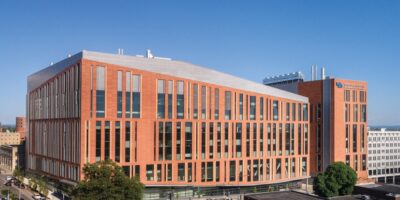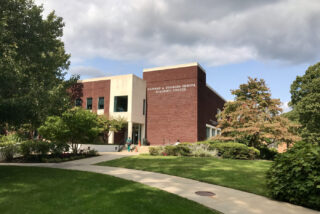

New York Institute of Technology College of Osteopathic Medicine (NYITCOM) is a private college of osteopathic medicine that grants the Doctor of Osteopathic Medicine (D.O.) degree. It has two locations that share one program and one application: the main campus in Old Westbury on Long Island, New York, and NYITCOM-Arkansas in Jonesboro, on the campus of Arkansas State University. The college was founded in 1977 as the New York College of Osteopathic Medicine and took its current name in 2012. The Arkansas location welcomed its first class in 2016.
NYITCOM is part of New York Institute of Technology (New York Tech), a private university known for technology-focused programs. The medical school is one of the largest osteopathic schools in the country. It welcomed 439 first-year students in 2026: 318 on Long Island and 121 in Jonesboro.
This guide is written for applicants in the 2026-2027 AACOMAS cycle, who will start medical school in 2027. It covers what makes NYITCOM distinct, its mission and accreditation, every program and pathway, the curriculum, admissions requirements and deadlines, current tuition and cost of attendance, life on both campuses, clinical training and research, people worth knowing, class statistics, admissions strategy, the complete 2026-2027 secondary application with original example answers, the interview and a detailed FAQ. Facts were checked on October 17, 2026.
Be an Informed Applicant
Like all medical schools, NYITCOM has its own requirements and priorities. Understanding the college’s identity, selection factors and programs helps you decide whether it belongs on your list and lets you put your best foot forward when you apply. NYITCOM asks every applicant to choose a campus, so it also pays to understand how Long Island and Jonesboro differ before you open the secondary.
Personalized Help
Many students find medical school applications overwhelming. Each school has its own admissions process, its own secondary questions and its own timeline. A medical school admissions consultant can guide you through each stage, from your school list to your interview, with personalized feedback along the way. International Medical Aid (IMA) helps applicants build a competitive application that highlights their strengths and shapes their message for each school. Details on IMA’s consulting and clinical programs are in the section on how IMA can help, near the end of this guide.
Key Takeaways
- Eligibility is limited to U.S. citizens and permanent residents. NYITCOM does not accept international students, and DACA recipients are not considered. You need a bachelor’s degree from a U.S.-accredited college, unless you are in a formal combined-degree program.
- One application, two campuses. You apply once through AACOMAS and state your campus choice (Long Island, N.Y. or Jonesboro, Ark.) on the NYITCOM supplemental application. The admissions committee may recommend the best campus fit for you.
- Academic context. NYITCOM matriculants have a mean MCAT score of 504.6 and an average cumulative GPA of 3.69. There is no published minimum. MCAT scores from January 2024 through January 15, 2027 are accepted.
- Mission. The college trains osteopathic physicians for a lifetime of learning and practice, including careers in inner-city and rural communities. The Arkansas location was created to train generalist physicians for the Mississippi Delta.
- Key dates for 2026-2027. The supplemental application is available only until March 16, 2027, and NYITCOM recommends completing it within 10 days of receiving the email. The AACOMAS receipt deadline is April 30, 2027. Interviews run from late summer to early spring on a rolling basis.
- Costs. Tuition for 2026-2027 is $70,720 per year for every student, regardless of residency or campus. The school’s first-year cost of education is $118,098, plus required medical and dental insurance of $5,738 unless waived.
- Distinctive training. Long Island students train across the New York metro area and in college-run clinics, including a student-run free clinic that serves patients in English and Spanish. Arkansas students train in more than 150 regional facilities across four states, complete a four-week rural rotation and earn a Certificate in Population Health.
- Next step. Confirm your MCAT date falls in the accepted window, line up three letters through AACOMAS and draft the four core supplemental essays before you submit your primary application.
Key Statistics About NYIT College of Osteopathic Medicine

The table below collects the key numbers for NYITCOM. Each row names its cohort, population and source, because the figures come from different years and different groups.
| Measure | Value | Cohort, population and source |
|---|---|---|
| School and degree | New York Institute of Technology College of Osteopathic Medicine, D.O. | Old Westbury, N.Y. (main campus, suburban) and Jonesboro, Ark. (additional location, rural); private, nonprofit (school pages; Choose DO Explorer) |
| Founded | 1977 (Old Westbury); 2016 (Jonesboro) | NYITCOM About page; Choose DO Explorer |
| Entering class | 439 (318 Long Island, 121 Arkansas) | Class of 2030, matriculated 2026 (New York Tech news, August 14, 2026) |
| Total enrollment | New York 1,270; Arkansas 487 | 2024-25 academic year (Choose DO Explorer) |
| First-year matriculants, New York location | 417 (193 in-state, 224 out-of-state) | 2024-25 academic year (Choose DO Explorer; Arkansas figure listed as TBA) |
| Mean MCAT | 504.6 | Matriculants, both campuses; entering-class year not printed (Choose DO Explorer, 2026-2027 profile) |
| Average cumulative GPA | 3.69 | Matriculants, both campuses; entering-class year not printed (Choose DO Explorer) |
| MCAT dates accepted | January 2024 to January 15, 2027 | 2026-2027 cycle; no minimum score published (NYITCOM admission requirements) |
| Acceptance rate | Not published | NYITCOM does not publish applicant, interview or acceptance counts |
| Tuition | $70,720 per year | 2026-2027, Years 1 to 4, same for in-state and out-of-state (NYITCOM tuition page; Choose DO Explorer) |
| Year 1 tuition and fees | $72,449 | 2026-2027, Class of 2030 (NYITCOM tuition page) |
| Year 1 total cost of education | $118,098 | 2026-2027 school budget; excludes medical and dental insurance of $5,738 (NYITCOM cost of education page) |
| Average graduate indebtedness | New York $302,269; Arkansas $345,226 | Graduates by campus; year not printed (Choose DO Explorer) |
| COMLEX Level 1 first-time pass rate | 96.96% (national 90.25%) | 2024-25 (NYITCOM outcomes page) |
| COMLEX Level 2 first-time pass rate | 90.50% (national 91.33%) | 2024-25 (NYITCOM outcomes page) |
| Residency placement | 97.5% | AY2024-25 graduates, both campuses combined (NYITCOM outcomes page) |
| Supplemental application fee | $80, non-refundable | 2026-2027 cycle; verified AACOMAS fee waivers honored (NYITCOM apply page) |
| Acceptance deposit | $1,500, non-refundable, applied to tuition | 2026-2027 (Choose DO Explorer) |
| Accreditation | COCA accredited; next self-study 2029-30 | NYITCOM accreditation page |
Two notes help when you read these numbers. First, the MCAT and GPA figures are means for students who enrolled, not minimums and not the numbers of everyone who was accepted. Many students are admitted below and above these averages. Second, tuition is the same for every student, but living costs differ a great deal between Long Island and Jonesboro. The tuition section below explains what the school budget includes.
Mission and Educational Priorities
NYITCOM’s mission statement reads: “New York Institute of Technology College of Osteopathic Medicine (NYITCOM) is committed to training osteopathic physicians for a lifetime of learning and practice, based upon the integration of evidence-based knowledge, critical thinking, and the tenets of osteopathic principles and practice. We are also committed to preparing osteopathic physicians for careers in healthcare, including that in the inner city and rural communities, as well as to the scholarly pursuit of new knowledge concerning health and disease.” The statement goes on to describe “a continuum of educational experiences” through the clinical and postgraduate years, meant to build competence, compassion and the ability to serve society through research, teaching and leadership.
The college’s vision is to advance patient-centered, population-based osteopathic healthcare through education and research. Both locations share the same mission, vision and outcomes.
What the mission means for applicants
Three ideas in the mission matter most when you plan your application.
Osteopathic principles are central. The mission names “the tenets of osteopathic principles and practice” alongside evidence-based knowledge. Applicants should understand what makes Osteopathic Medicine different: the focus on the whole person, the link between structure and function and the use of osteopathic manipulative treatment (OMT). Shadowing a D.O. is the best way to see this in practice.
Inner-city and rural communities are named on purpose. NYITCOM trains in two very different settings. The Long Island campus sits 22 miles from Manhattan, and its students rotate through hospitals across the New York metro area. The Jonesboro location was created after Arkansas State University approached New York Tech in 2012 about a program to produce generalist physicians (family medicine, internal medicine, pediatrics, general surgery, emergency medicine and obstetrics and gynecology) for the medically underserved areas of Arkansas and the Mississippi Delta. Your campus choice should match the communities you have actually served.
Scholarship is part of the job. The mission commits the college to “the scholarly pursuit of new knowledge concerning health and disease.” NYITCOM backs this with the Academic Medicine Scholars program, a D.O./Ph.D. track and faculty research labs. Research is not required for admission, but curiosity and the ability to describe a project clearly will help you in interviews.
History
NYITCOM traces its roots to W. Kenneth Riland, D.O., and a group of osteopathic physicians practicing in New York. Dr. Riland was the personal physician to President Richard Nixon, Vice President Nelson Rockefeller and Secretary of State Henry Kissinger. He and his colleagues saw a medical school as a way to strengthen the credibility of osteopathic medicine and used the support of Rockefeller and other leaders to establish the New York College of Osteopathic Medicine in 1977. The college changed its name to the NYIT College of Osteopathic Medicine in 2012. In August 2016, NYITCOM-Arkansas welcomed its first class of 115 students. The college’s academic health center on Long Island still carries Dr. Riland’s name.
Accreditation and Institutional Identity
NYITCOM’s D.O. program is accredited by the AOA Commission on Osteopathic College Accreditation (COCA), the body recognized by the U.S. Department of Education to accredit colleges of osteopathic medicine. The program’s status is “Accredited.” Its last reaffirmation was in 2015, its last mid-cycle review was in 2026 and its next self-study evaluation is scheduled for 2029-30. You can review the details on the NYITCOM accreditation page.
The Jonesboro location is an additional location of the same college, not a separate school. It offers the same D.O. program, and applicants use the main campus application. Graduates of both locations earn the same degree.
New York Institute of Technology, the parent university, is accredited by the Middle States Commission on Higher Education (MSCHE). It was first accredited in 1969, reaffirmed in 2019 and has its next self-study evaluation in 2026-2027.
NYITCOM is also accredited by the Accreditation Council for Graduate Medical Education (ACGME) as an institutional sponsor of residency and fellowship programs. In October 2026, NYITCOM-Arkansas announced that it had applied for ACGME accreditation for a new rural family medicine residency in Blytheville, Arkansas, with a first class of four residents expected in the summer of 2027.
Names you will see
You will see the college called NYITCOM, NYIT College of Osteopathic Medicine, New York Tech College of Osteopathic Medicine and, for the Arkansas location, NYITCOM-Arkansas or NYITCOM at Arkansas State. These all refer to the same D.O. program. Keep two distinctions in mind:
- New York Tech versus NYITCOM. Many statistics you see online describe the whole university, which has campuses in Old Westbury, New York City, Jonesboro and Vancouver. University-wide figures such as undergraduate enrollment or undergraduate financial aid do not describe the medical school.
- NYITCOM versus other New York osteopathic schools. New York has several colleges of osteopathic medicine, including Touro College of Osteopathic Medicine (with campuses in Harlem and Middletown) and D’Youville University College of Osteopathic Medicine in Buffalo. NYITCOM opened in 1977 as the New York College of Osteopathic Medicine.
Medical Programs and Affiliations
Before applying, research the different programs NYITCOM offers. This helps you decide whether the school fits your goals and lets you write about specific opportunities in your secondary. NYITCOM’s main entry point is the four-year D.O. program. It also runs a unique program for foreign-trained physicians, two dual-degree tracks, several concurrent degrees and certificates, and pipeline programs that lead into the D.O.
DO Program
New York Institute of Technology College of Osteopathic Medicine’s D.O. program is a four-year, full-time program offered at both locations. The first two years are pre-clinical, combining biomedical and clinical sciences with osteopathic principles and practice. Years three and four are clinical. Students complete core clerkships in family medicine, internal medicine, obstetrics and gynecology, pediatrics, psychiatry and surgery, an emergency or ambulatory clerkship and an ambulatory medicine rotation, then further clinical rotations in the fourth year. The curriculum section below has the detail.
Émigré Physicians Program (EPP)
The Émigré Physicians Program retrains physicians who were born and educated outside the United States so they can earn a D.O. NYITCOM is the only medical school in the United States offering such a program, and it is available only on the Long Island campus. Key details:
- Admission is competitive and highly selective, with a maximum of 35 seats.
- It is a four-year, full-time U.S. medical school program.
- EPP students are fully integrated into the entering D.O. class and take part in all parts of student life, including research with faculty.
- Admitted students are strongly discouraged from working full time during the academic year.
- Students must complete all academic requirements to graduate. Residency follows graduation, and its length depends on the specialty.
EPP has its own application, separate from AACOMAS, with a $195 non-refundable fee. Applicants need an official course-by-course credential evaluation from World Education Services or Globe Language Services showing a foreign medical degree equivalent to the U.S. M.D. They also need a TOEFL iBT score of 4.5 or higher on the new scale (tests taken since January 22, 2026) or 90 or higher on the old scale, within two years of applying. The TOEFL cannot be waived, even for applicants with a U.S. degree or an ECFMG certificate. Two letters of recommendation and a résumé or CV with no unexplained gaps are also required. See the EPP application page for the current timeline for the 2027 entering class.
D.O./M.S. in Academic Medicine (Academic Medicine Scholars)
The Academic Medicine Scholars program is a five-year combined D.O. and M.S. in Academic Medicine for students interested in careers that combine teaching, research and clinical practice. Strong second-year students are invited to apply. Scholars spend an extra year doing supervised research and teaching, and an academic scholarship is awarded for the last three years of the program. It is offered on both campuses.
D.O./Ph.D. in Medical and Biological Sciences
The D.O./Ph.D. is a highly competitive seven-year program for future osteopathic physician-scientists. It admits two to three students a year, with financial support for all years, and is open to students on both campuses. You apply after you are accepted to the D.O. program, with an essay explaining your interest in the Ph.D. and a CV. The deadline for the 2027 entering class is April 15, 2027.
Concurrent degrees and certificates
NYITCOM students can earn another credential while completing the D.O.:
- M.B.A. New York Tech’s online M.B.A., open after you matriculate and complete the first year, with NYITCOM approval.
- M.P.H. A two-year, fully online, 48-credit Master of Public Health with a 200-hour practicum.
- M.S. in Clinical Nutrition. Fully online. Graduates can apply for physician nutrition specialist credentialing.
- M.S. in Medical/Healthcare Simulation. A two-year, almost entirely online program.
- Global Health Certificate. Nine credits plus a two- to four-week global fieldwork trip with faculty from the Center for Global Health.
- Arkansas certificates. Every NYITCOM-Arkansas graduate earns a Certificate in Population Health. Students can also earn certificates in Telemedicine, Health IT, Evidence-based Medicine or Global Health.
Pathways into the D.O. program
- Seven-year B.S./D.O. programs. New York Tech’s College of Arts and Sciences offers a combined B.S. in Life Sciences and D.O. in seven years. Students need a 3.5 GPA each semester, an MCAT score at least equal to the mean of the NYITCOM first-year class from the year they began college, a complete application by January 1 of their third undergraduate year and a campus choice by the end of their second year. NYITCOM also has seven-year agreements with SUNY Geneseo, New Paltz, Plattsburgh and Old Westbury; CUNY Hunter, Lehman and Queens; Adelphi University; Albany College of Pharmacy and Health Sciences; St. John’s University; St. Bonaventure University; Arkansas State University; Ouachita Baptist University; William Baptist College; the University of Central Arkansas; the University of Arkansas at Little Rock; and the University of Memphis. These programs are for high school students and college freshmen, so they apply before most applicants start thinking about medical school.
- M.S. in Biomedical Sciences (Bridge to D.O.). A one-year, full-time program that guarantees a seat in the next NYITCOM entering class after successful completion. No MCAT score is required to apply.
- M.S. in Medical/Healthcare Simulation pathway. Students who complete the first 21 credits with a 3.00 GPA are offered a guaranteed seat in the next D.O. entering class and can finish the remaining credits during medical school.
- Transfer into year three. NYITCOM considers transfer students from COCA-accredited colleges of osteopathic medicine who completed the first two years in good standing and passed COMLEX Level 1 on the first attempt. Transfer students must complete the last two years at NYITCOM. The deadline for the 2027 transfer cycle is March 2, 2027.
Clinical affiliations and partnerships
On Long Island, NYITCOM’s clinical partners include Catholic Health, a Long Island system where NYITCOM students complete rotations, assist in research and go on to residencies. Long Island students rotate through hospitals and healthcare facilities across the New York tri-state area. In Arkansas, NYITCOM-Arkansas partners with Baptist Memorial Health Care, which dedicates up to 25 student positions to students who want to train at Baptist Memorial facilities. A First District Congressional Fellowship places one third-year Arkansas student per year in the office of U.S. Representative Rick Crawford; the Population Health Certificate is required.
Curriculum Overview
NYITCOM’s four-year curriculum moves from foundational and systems-based science in years one and two to clinical clerkships in years three and four. Osteopathic principles and practice (OPP) run through all four years. Students must pass an Objective Structured Clinical Examination (OSCE) at the end of each of the first three years to be promoted.
Year one
Year one courses include Science of Learning, Medical Gross Anatomy, Building Blocks of Medicine, Musculoskeletal and Integumentary Systems, Immunology and Hematology, Neuro-Foundations, Nervous System and Mental Health, Doctor-Patient Relationship and Osteopathic Principles and Practice. Science of Learning teaches study strategies through team-based sessions. Gross anatomy takes a regional approach and introduces X-ray, CT and MRI so students learn normal anatomy on imaging. Core Clinical Competencies seminars run alongside, with practice in history-taking, physical examination and OMT at the Institute for Clinical Competence, which uses standardized patients and patient simulators.
Year two
Year two is organized around organ systems. Principles and Practice of Osteopathic Medicine II covers the cardiovascular, respiratory and renal systems; Principles and Practice III covers the gastrointestinal, endocrine and reproductive systems. Students also complete Basic Life Support and seminars in child abuse prevention, infection control and HIPAA, which meet New York State licensure and clinical-site requirements. An end-of-year OSCE assesses readiness for clerkships. Electives such as Medical Spanish are available in the first two years.
Year three
The third year begins with Introduction to Clinical Medicine, which covers ultrasound, IV catheterization, suturing, sterile technique and other practical skills. Core clerkships are:
| Clerkship | Length |
|---|---|
| Family Medicine | 4 weeks |
| Internal Medicine | 8 weeks |
| Obstetrics and Gynecology | 4 weeks |
| Pediatrics | 4 weeks |
| Psychiatry and Behavioral Medicine | 4 weeks |
| Surgery | 8 weeks |
| Emergency Medicine or an ambulatory clerkship (family practice, internal medicine or pediatrics) | 4 weeks |
| Ambulatory Medicine Rotation with a primary care physician | 4 weeks |
Third-year students also complete OPP modules, which review diagnosis and osteopathic treatment for the conditions they see on rotations, plus Advanced Cardiac Life Support and a final OSCE. Details are in the NYIT catalog’s year three curriculum.
Year four
The fourth year continues clinical rotations as students prepare for residency applications. The school budget for year four includes ERAS fees, interview travel and clinical rotation travel, which reflects how many students complete away rotations in the specialties they plan to enter.
Osteopathic manipulative medicine
The Department of Osteopathic Manipulative Medicine teaches OMM in the first year (soft tissue, counterstrain, muscle energy, myofascial release and articulatory techniques) and continues it through the clinical years. The department also provides osteopathic care to the community at NYITCOM clinical sites, including the W. Kenneth Riland Academic Health Center, the Adele Smithers Parkinson’s Disease Treatment Center, the Center for Sports Medicine, the Central Islip Family Health Center and the Ehlers-Danlos Syndrome/Hypermobility Treatment Center.
Differences at NYITCOM-Arkansas
Arkansas students follow the same curriculum with some additions. NYITCOM-Arkansas was among the first medical schools in the United States to train first-year students to deliver care through telemedicine. Each student must complete a four-week rotation in a rural area. Most third- and fourth-year rotations take place in community hospitals, including NEA Baptist Memorial Hospital and St. Bernards Medical Center in Jonesboro. Every Arkansas graduate also earns a Certificate in Population Health.
Admissions Requirements and Application Process
Selection Factors: What New York Institute of Technology College of Osteopathic Medicine Looks for in an Applicant
What exactly is NYITCOM looking for: MCAT scores, grades, clinical hours? Like most medical schools, NYITCOM reviews the whole application, which means it tries to understand who you are as a candidate and as a person, not just your numbers. Successful candidates “must have a thorough preparation with high academic achievement showing evidence of the capacity to succeed in a rigorous medical education program.” They must also show the personal characteristics expected of a physician: integrity, compassion, maturity, motivation and interpersonal skills. A bachelor’s degree, the MCAT, letters of recommendation, the supplemental application and a personal interview are all required.
If you want to be accepted into NYITCOM’s D.O. program, make sure your application gives clear evidence of each of these qualities. Don’t be afraid to ask for help with your application if you are unsure how your experiences read to an admissions committee.
Application Requirements for NYITCOM
To be considered for admission to New York Institute of Technology College of Osteopathic Medicine, you must:
- Be a U.S. citizen or U.S. permanent resident. NYITCOM does not accept international students, and DACA recipients are not considered.
- Hold a bachelor’s degree from a college or university accredited by an agency recognized by the U.S. Department of Education. Students in a formal combined-degree articulation program are the exception. NYITCOM will consider candidates with credentials from a college or university outside the United States.
- Complete the required prerequisite courses.
- Take the MCAT. NYITCOM accepts official scores from January 2024 to January 15, 2027.
- Submit three letters of recommendation through AACOMAS.
- Complete the NYITCOM supplemental application and pay the $80 fee or submit a fee waiver code.
- Accept the NYITCOM Technical Standards for admission and matriculation.
Every applicant who submits a completed AACOMAS application receives the supplemental application. There is no screen before the secondary, so meeting the minimum requirements is about whether your file can be complete and competitive, not about whether you are invited to the secondary.
Technical standards
In addition to academic requirements, students must meet NYITCOM’s technical standards, with or without reasonable accommodations. Students who accept an offer of admission at either location must sign an affirmation that they comply. The standards cover:
- Observation. Candidates and students must have sufficient vision to observe demonstrations, experiments and laboratory exercises, to observe a patient accurately at a distance and nearby, and to assess structural asymmetries, range of motion and tissue texture changes.
- Communication. Candidates should be able to speak, hear and observe patients to elicit information, examine patients, describe patient characteristics and perceive nonverbal communication. They must communicate effectively and sensitively with patients, and read and write well enough to communicate with the healthcare team.
- Motor. Candidates need enough motor function for general and emergency care, including cardiopulmonary resuscitation, inserting catheters, opening obstructed airways, obstetrical maneuvers, operating diagnostic and therapeutic devices and performing osteopathic manipulation. These require gross and fine movements, equilibrium and the use of touch and vision.
- Sensory. Osteopathic students and physicians need enhanced tactile abilities. A candidate with significant tactile, sensory or proprioceptive disabilities would be carefully evaluated before admission to determine whether they are otherwise qualified, with or without reasonable accommodation.
- Strength and mobility. OMT often requires upright posture and enough extremity and body strength. Mobility is needed for emergency codes and CPR.
- Participation in OMM laboratory, clinical skills and clinical care encounters. Osteopathic students must be able to tolerate touching and being touched as part of learning examination and treatment skills. Non-sexual body regions being examined or treated must be sufficiently exposed for observation, palpation and treatment, regardless of age, sex, gender, nationality, religion, race or body size, always in a respectful and professional manner.
- Behavior and social attributes. Candidates must have the emotional health to use their intellectual abilities fully, exercise good judgment, complete responsibilities promptly and build mature, sensitive and effective relationships with patients. Osteopathic education requires tolerance for physically taxing workloads, flexibility and cooperation with faculty, classmates and colleagues.
The standards also expect students to behave with high moral and behavioral standards and to show respect for all individuals and groups. Physicians are expected to show integrity, compassion, interpersonal skills and motivation. Read the full NYITCOM technical standards before you apply, and contact the school early if you expect to need accommodations.
GPA and MCAT Requirements
NYITCOM does not publish a minimum GPA or minimum MCAT score. The MCAT is required, and only scores from tests taken between January 2024 and January 15, 2027 are accepted for the 2026-2027 cycle. NYITCOM matriculants have a mean MCAT of 504.6 and an average cumulative GPA of 3.69. Treat these as a reference point, not a cutoff. Applicants below these averages are admitted when the rest of the application is strong, and applicants above them are not guaranteed an interview.
The MCAT can be waived only in certain circumstances, such as admission through the M.S. in Biomedical Sciences Bridge to D.O. program, which does not require an MCAT score to apply.
Volunteer and Clinical Experience
NYITCOM does not publish a minimum number of clinical, volunteer or shadowing hours. Its admission requirements state that “community and hospital-based volunteer or professional work is another way by which applicants can assess their interest in the healing profession and express their commitment.” Shadowing can be virtual or in person. In practice, competitive applicants show sustained clinical work, service and time spent with physicians, ideally including a D.O.
What counts as clinical, volunteer and other experience:
- Clinical experience. Direct patient exposure through work or volunteering in hospitals, emergency rooms, extended-care facilities, free clinics and similar settings. Roles where you take vital signs, help with intake or assist patients carry more weight than roles with no patient contact. Structured clinical internships for pre-med students can add supervised, hands-on hours if you cannot find enough local options.
- Shadowing. Time following a physician, ideally including an osteopathic physician who uses OMT. Shadowing is watching, so describe it that way in your application.
- Volunteer and community service. Sustained service in your community, especially with people in need. NYITCOM’s mission names inner-city and rural communities, so service in either setting is relevant.
- Research. Research is not required, but many applicants have it. Be able to explain your project, the question it asked and your role.
- Leadership. Leadership can come from work, school organizations, faith communities or community groups.
- Extracurricular activities. Activities and jobs show how you manage responsibilities, which predicts how you will handle the workload of medical school.
If you are planning a summer or gap year to strengthen your clinical background, pre-med internships abroad can be one piece of a broader plan. Look for programs where you work under supervision with real patients, and keep building local service at the same time.
NYITCOM Letters of Recommendation
Strong letters show your integrity, interest in medicine, academic ability, interpersonal skills and resilience. NYITCOM requires three letters, sent through AACOMAS (Interfolio is also accepted). The school does not accept letters emailed or mailed to the admissions office. You must submit either:
- A pre-health committee letter or composite letter (preferred), or
- Three individual letters: two from faculty members who taught you (at least one in science) and one from a supervisor in a long-term work, service, research or clinical role. If you cannot provide a supervisor letter, you may send an additional faculty letter.
NYITCOM also strongly recommends a letter from a D.O. or M.D. who is not a family member.
Non-traditional applicants. If you have been out of college for more than two years and cannot reasonably get a committee letter or faculty letters, you may submit three letters from professional sources: current or former supervisors (including how long you worked together, their relationship to you and your competencies and potential) or directors of professional associations you have belonged to for at least one year. Each letter must include the writer’s contact information.
Required Coursework for NYIT College of Osteopathic Medicine
Students applying to NYITCOM must complete these courses:
| Course | Semester hours | Notes |
|---|---|---|
| English | 6 | College English |
| Biology (lecture and lab) | 8 | Includes general biology or zoology |
| General Chemistry (lecture and lab) | 8 | |
| Organic Chemistry I (lecture and lab) | 4 | |
| Organic Chemistry II (lecture and lab) | 4 | Biochemistry, with or without lab, may substitute |
| Physics (lecture and lab) | 8 |
NYITCOM encourages additional courses in the behavioral sciences (psychology, sociology, anthropology), biochemistry, calculus or statistics, human anatomy and physiology, genetics and microbiology. Online coursework and online labs are not accepted for prerequisites, and pass/fail grades are not accepted for prerequisites. Check the NYITCOM admission requirements before you plan your final semesters.
Does NYIT Require the CASPer exam?
The Casper test is an online situational judgment test used by some medical schools to assess interpersonal and professional skills. NYITCOM does not list Casper, PREview or any other situational judgment test among its requirements for the 2026-2027 cycle. You do not need to take one to apply.
AACOMAS Primary Application and NYITCOM Secondary Application
The AACOMAS primary application is the shared application for DO schools in New York and across the United States. You submit it once through the AACOMAS portal, and it goes to every osteopathic school you select. AACOMAS must verify your coursework before schools receive the application, and verification can take several weeks at busy times of year, so submit early. Our AACOMAS application guide walks through each section.
After you submit your AACOMAS application, NYITCOM emails you a secure link to its supplemental application. Every applicant receives it. Secondary applications are school-specific and ask questions the school uses to judge fit. NYITCOM’s application is not complete until every supplemental question is answered and the $80 fee is paid. The complete set of 2026-2027 questions, with example answers, is in the secondary application section below.
A few rules to remember:
- Fee waivers. NYITCOM honors only verified AACOMAS fee waivers. Forward your AACOMAS fee waiver email to the admissions office; after verification you receive a one-time supplemental fee waiver code that expires within five days.
- Reapplicants. All 2026-2027 applicants, including reapplicants, must create a new supplemental portal account.
- No updates after submission. NYITCOM does not accept updates or additional materials once you submit the supplemental. Make sure everything you want considered is in your AACOMAS application or supplemental before you click submit.
Key dates for the 2026-2027 cycle
| Date | Milestone |
|---|---|
| May 4, 2026 | AACOMAS begins processing applications |
| Within 10 days of the supplemental email | Recommended time to complete the NYITCOM supplemental |
| Late summer 2026 through early spring 2027 | Interviews, by invitation, on a rolling basis |
| Before November 15, 2026 | Applicants accepted by this date have until December 14 to submit the deposit (AACOMAS traffic guidelines) |
| March 16, 2027 | Last day the supplemental application is available |
| April 30, 2027 | Deadline for AACOMAS to receive applications |
| May 4, 2027 | Deadline for receipt of the supplemental application |
Because NYITCOM interviews and admits on a rolling basis, applying near the deadlines puts you at a disadvantage. For best consideration, submit AACOMAS early in the cycle and complete the supplemental soon after it arrives.
Decisions, deposits and deferrals
All admissions decisions are sent by email, and NYITCOM does not offer extensions. Deposit deadlines follow the AACOMAS traffic guidelines: applicants accepted before November 15 have until December 14; those accepted between November 15 and January 14 have 30 days; those accepted between January 15 and April 30 have 14 days; and those accepted on or after May 1 may be asked for an immediate deposit. The acceptance deposit is $1,500, non-refundable and applied to tuition. NYITCOM does not have an Early Decision Program. Requests to defer entry are considered.
Tuition, Cost of Attendance and Financial Aid
New York Institute of Technology College of Osteopathic Medicine Tuition and Cost of Attendance
NYITCOM charges the same tuition to every D.O. student, whether you are a New York resident, an Arkansas resident or from another state, and whether you attend on Long Island or in Jonesboro. For the 2026-2027 academic year, tuition is $70,720 per year.
| Item | Year 1 (Class of 2030) | Year 2 (Class of 2029) | Year 3 (Class of 2028) | Year 4 (Class of 2027) |
|---|---|---|---|---|
| Tuition | $70,720 | $70,720 | $70,720 | $70,720 |
| Activity fee | $250 | $250 | $250 | $250 |
| Healthcare fee | $100 | $100 | $100 | $100 |
| Life/disability insurance | $129 | $140 | $140 | $140 |
| Lab fee | $175 | $175 | None | None |
| New tech fee | $475 | $475 | $475 | $475 |
| Simulated patient fee | $600 | $600 | $525 | $375 |
| Graduation fee | None | None | None | $475 |
| Tuition and fees total | $72,449 | $72,460 | $72,210 | $72,535 |
| Medical and dental insurance (required unless waived) | $5,738 | $6,328 | $6,328 | $6,328 |
Source: NYITCOM tuition and fees, 2026-2027. All NYITCOM students must enroll in the school’s medical and dental insurance plans unless an acceptable waiver is provided on time.
Full cost of education
In addition to tuition and fees, students should budget for loan fees, books and supplies, equipment, board exams, residency applications, travel and living costs. The Office of Financial Aid builds this school budget each year.
| Category | Year 1 | Year 2 | Year 3 | Year 4 |
|---|---|---|---|---|
| Tuition and fees | $72,449 | $72,460 | $72,210 | $72,535 |
| Other education costs (loan fees, books and technology, equipment, uniforms, boards, ERAS, interview and rotation travel) | $6,486 | $6,781 | $7,581 | $13,336 |
| Living costs (rent with utilities $18,824; food $7,465; transportation $6,414; personal $6,460) | $39,163 | $39,163 | $39,163 | $39,163 |
| Total cost of education | $118,098 | $118,404 | $118,954 | $125,034 |
| Medical insurance (listed separately) | $5,738 | $6,328 | $6,328 | $6,328 |
Source: NYITCOM 2026-2027 cost of education.
Adding the four totals gives $480,490 for the four years at 2026-2027 rates, before insurance and before any tuition increases (our calculation). Year four costs more because of ERAS fees ($2,500), interview travel ($3,000) and clinical rotation travel ($4,000). Living costs in the school budget are a single figure for both locations. Rent in Jonesboro is generally lower than on Long Island, so check local housing costs for the campus you choose. The Arkansas location has an on-campus apartment complex available for medical students to lease, while Long Island students live in the surrounding residential communities.
Students who need more than the standard budget can request an adjustment that meets federal Title IV rules, with documentation. Examples include child care (up to $10,000 per family, shared 50 percent with a spouse), a one-time computer purchase up to $2,000, rent up to $1,500 per month and outside medical or dental expenses up to $1,000 per year. All budget increases need approval from the financial aid office.
For context on how these figures compare nationally, see our guide to the total cost of medical school.
Financial aid and scholarships
Most NYITCOM students pay for medical school with federal loans. Average graduate indebtedness is $302,269 for the New York location and $345,226 for Arkansas.
NYITCOM offers need-based and merit-based support:
- NYITCOM Institutional Needs-Based Grant for economically disadvantaged students. Eligibility uses parental tax information for most students, including those over 24, with exceptions for students whose parents are deceased or live outside the United States.
- Long Island scholarships such as the Émigré Physicians Program Alumni Grant, the Fingerman/Sheflin Memorial Endowed Scholarship for academically strong third- and fourth-year students, the Kevin and Pamela Klein Family Endowment, the A.O. Allenius Family Endowed Scholarship, and the Dr. Jerome H. Blue and Larita Moultrie-Blue JD Endowed Scholarship for a student committed to caring for underserved communities. The Edgar R. Cofeld Memorial Endowed Scholarship, from the New York State Osteopathic Medical Society, supports students from several western New York counties.
- Arkansas scholarships, a separate set of institutional and privately funded awards for Jonesboro students.
- Academic Medicine Scholars receive an academic scholarship for the last three years of the five-year program, and the D.O./Ph.D. program provides financial support for all years.
The financial aid office emails students when scholarship application cycles open.
New York Tech’s undergraduate aid, which is often described online, does not apply to the D.O. program. At the university level, 99 percent of first-time, full-time undergraduate students receive some form of financial aid (2026-2027 catalog), and New York Tech offers undergraduate awards such as a public sector scholarship that covers up to 50 percent of full-time undergraduate tuition for children of police officers, firefighters, EMTs and K-12 teachers. These figures describe undergraduate students, not medical students.
Campus Facilities and Student Life
Why the NYIT College of Osteopathic Medicine?
For applicants searching for “medical school near me” or “DO schools in New York,” NYITCOM stands out for its size, its two very different campuses and its long history in osteopathic education. It is part of New York Tech, a private university with campuses in Old Westbury, New York City, Jonesboro and Vancouver. The university enrolls 7,946 undergraduate and graduate students from 71 countries and 39 states, offers more than 100 degree programs, and 97 percent of its graduates are employed or continuing their education (2026-2027 catalog). For medical students, the more useful point is that NYITCOM sits inside a technology-focused university with schools of health professions, engineering and management, which makes interdisciplinary work and concurrent degrees possible.
Long Island (Old Westbury) campus
The Long Island campus serves more than 1,200 medical students and has graduated more than 6,750 D.O.s. It is part of New York Tech’s 176-acre campus in Old Westbury, with a fitness club, recreation facilities, dining halls, a main and a medical library, student clubs and sports teams. It is 22 miles from Manhattan, which gives students access to urban and suburban hospitals across the tri-state area.
Facilities include an osteopathic manipulative medicine laboratory, smart auditoriums and the Institute for Clinical Competence, where students practice with standardized patients and human patient simulators. The campus also houses several college-run clinics:
- The W. Kenneth Riland Academic Health Center, the college’s academic health center.
- The Adele Smithers Parkinson’s Disease Treatment Center.
- The Center for Sports Medicine.
- The Family Health Care Center in Central Islip.
- The Ehlers-Danlos Syndrome/Hypermobility Treatment Center.
- The Center for Behavioral Health.
- The Asylum Clinic.
- The student-run Community Free Clinic, which serves patients in English and in Spanish.
The Community Free Clinic is one of the most visible ways Long Island students serve their neighbors. For applicants who already work with Spanish-speaking patients, it is a natural place to keep building those skills; some pre-meds sharpen them first through programs such as a medical internship in Peru, where Spanish is the language of care. Students who want more language practice can take the Medical Spanish elective in the first two years.
Long Island students find housing in the nearby residential communities. Transportation matters: the school budget assumes students drive, with gas, repairs and insurance in the transportation line.
NYITCOM-Arkansas (Jonesboro) campus
NYITCOM-Arkansas is housed in Wilson Hall on the Arkansas State University campus in Jonesboro. The 1931 Art Deco building underwent a $12.6 million modernization to create an 86,000-square-foot medical facility with laboratories, a simulation emergency room, an operating room, clinical learning rooms and a gross anatomy lab. It was the first osteopathic medical school in Arkansas and has about 120 medical students per class, which makes for close mentoring between students and faculty.
Students have access to Arkansas State University’s campus facilities, and an on-campus apartment complex is available for medical students to lease. Community programs include the Delta Care-a-Van mobile clinic, which brings primary care, screenings and health education to Delta communities; the Delta Population Health Institute; an emergency medical services program; and the NYITCOM Medical Clinic in Jonesboro.
The Arkansas Class of 2030, which received white coats on August 1, 2026, is the 11th class at the Jonesboro location. It includes students from 23 states, 26 of them from Arkansas.
Student support and organizations
Both campuses offer counseling and wellness services, a Student Government Association with many sponsored student organizations and community initiatives. NYITCOM students often join specialty interest groups, service organizations and research groups early in the first year. If you visit either campus or attend an information session, ask current students how they balance coursework with clinic and outreach work.
NYIT College of Osteopathic Medicine Rankings
NYITCOM’s strongest numbers are its outcomes. The Class of 2026 had a 98 percent match rate for residency placements, and residency placement rates ranged from 97.5 to 99.3 percent for graduates from AY2021-22 through AY2024-25. New York Tech is also a top source of minority graduates at the doctoral level in osteopathic medicine (Diverse Issues in Higher Education). For a broader view of how osteopathic schools compare, see our DO school rankings guide.
Clinical Rotations and Research Opportunities
Clinical training on Long Island
Long Island students complete their core clerkships at partner hospitals and healthcare facilities across the New York tri-state area. NYITCOM’s partners include Catholic Health, the Long Island system where NYITCOM students complete rotations, assist in research and go on to residencies and fellowships; NYITCOM alumnus Patrick O’Shaughnessy, D.O., helped build that partnership. Students also gain supervised experience at NewYork-Presbyterian Hospital and other clinical locations. Site assignments change from year to year, so ask about current core sites, travel and housing during your interview.
Clinical training in Arkansas
Arkansas students train through a network of more than 150 regional medical facilities in Arkansas, Tennessee, Mississippi and Missouri. Most third- and fourth-year rotations take place in community hospitals, including NEA Baptist Memorial Hospital and St. Bernards Medical Center. Every student completes a four-week rural rotation, and the Baptist Memorial Health Care partnership dedicates up to 25 student positions to training at Baptist Memorial facilities. In 2026, NYITCOM-Arkansas received state Rural Health Transformation Program grants totaling about $5.2 million, including $3 million for a new rural family medicine residency in Blytheville with the Mississippi County Hospital System and St. Bernards Healthcare, about $740,000 to expand its EMS programs and $1.5 million in August for maternal and child health.
Global health
The Center for Global Health develops physicians ready to address the global burden of disease and health disparities at home and abroad. Students can earn the nine-credit Global Health Certificate, which includes a two- to four-week global fieldwork trip with faculty. The dean’s welcome highlights global sites in Ghana, and in 2026 NYITCOM students delivered hands-on care in rural communities in the Dominican Republic with the Center for Global Health. If global health already shapes your interests, experience with healthcare internships abroad before medical school can give you concrete stories to bring to interviews.
Research
Long Island faculty research covers areas such as human anatomy, paleontology, heart disease, kidney disease, Parkinson’s disease and robotics. In May 2026, NIH-funded NYITCOM research advanced understanding of the link between menopause and cardiovascular disease risk, and in August 2026 a NYITCOM student researcher received the American Heart Association’s Student Scholarship in Cardiovascular Disease. Research facilities include the New York Tech Imaging Center, an animal facility, a cell culture core facility and other core labs. Arkansas faculty research is funded by the NIH and the American Heart Association, with work on heart failure and chronic pain.
Students can get involved through faculty labs, summer research, the Academic Medicine Scholars program (an extra year of supervised research and teaching) and the D.O./Ph.D. program. Mention specific research interests in your interview only if you can explain them in your own words.
Outcomes
| Measure | NYITCOM | National | Year |
|---|---|---|---|
| COMLEX Level 1 first-time pass rate | 96.96% | 90.25% | 2024-25 |
| COMLEX Level 2 first-time pass rate | 90.50% | 91.33% | 2024-25 |
| COMLEX Level 3 pass rate | 95.69% | 96.81% | 2024 |
| Residency placement rate | 97.5% | Not applicable | AY2024-25 graduates |
| Residency placement rate | 99.0% | Not applicable | AY2023-24 graduates |
| Graduation within 4 years (5 for D.O./M.S.) | 79.6% | Not applicable | 2021 matriculants |
| Graduation within 6 years (7 for D.O./M.S.) | 92.6% | Not applicable | 2019 matriculants |
| Annual retention | 99% | Not applicable | 2024-2025 |
Source: NYITCOM outcomes data. NYITCOM-Arkansas has a 100 percent postgraduate placement rate for its graduates, with 70 percent entering primary care specialties (family medicine, internal medicine, pediatrics, general surgery and psychiatry) and graduates matching into competitive fields such as anesthesiology, ophthalmology, orthopedic surgery, radiology, urology, neurology, obstetrics and gynecology, emergency medicine and dermatology.
Notable Alumni, Faculty, Leadership and Admissions Staff
NYITCOM has an alumni network of more than 9,000 osteopathic physicians (2024). The people below hold current or recent roles connected to the college. Knowing who leads the school, who teaches in programs that interest you and what graduates have done helps you ask better questions and write more specific essays. Roles were checked on October 17, 2026; where a role comes from an older school source, the year is noted.
Leadership
Nicole Wadsworth, D.O., FACOEP, FACEP, Dean. Dr. Wadsworth leads the College of Osteopathic Medicine across both locations. Her welcome to applicants emphasizes the range of training settings (urban, suburban and rural), the college’s global sites in Ghana and the student-run free clinic on Long Island. At the Long Island White Coat ceremony in August 2026 she told the Class of 2030 that the white coat marks “the beginning of a lifelong commitment to the osteopathic profession and for caring for others.” Her message is a useful guide to what the college values: hands-on service and commitment to the profession.
Shane Speights, D.O., Site Dean, NYITCOM-Arkansas. Dr. Speights leads the Jonesboro location. In October 2026 he spoke about the location’s new grants, including support for a rural family medicine residency in Blytheville. Applicants to the Arkansas campus should read the location’s news to understand its focus on rural care, EMS and graduate medical education in the Delta.
Steven Lewis, M.D., Associate Dean of Academic Affairs, NYITCOM-Arkansas. Dr. Lewis coated students at the Arkansas White Coat ceremony on August 1, 2026, and oversees academic affairs at the Jonesboro location.
Faculty
Sheldon Yao, D.O., Chair, Department of Osteopathic Manipulative Medicine. Dr. Yao leads OMM teaching and the department’s community care at the Riland Academic Health Center, the Parkinson’s center, the Center for Sports Medicine, the Central Islip Family Health Center and the Ehlers-Danlos/Hypermobility center. If OMT interests you, this department’s clinical work is a concrete example of the osteopathic approach you can mention in your secondary.
Sonia Rivera-Martinez, D.O. ’02, Director of the Community Free Clinic. A NYITCOM graduate, Dr. Rivera-Martinez completed her family practice residency and chief residency on Long Island and joined NYITCOM’s family medicine faculty in 2010. As of 2024 she was an associate professor and director of the student-run Community Free Clinic, and she received the college’s Excellence in Medicine award that year.
Dong Zhang, Ph.D., Program Director, D.O./Ph.D. Dr. Zhang directs the seven-year D.O./Ph.D. program in Medical and Biological Sciences and is the contact for students considering it after acceptance.
Paula Ryo, D.O., Director of Simulation Education. Dr. Ryo directs simulation education and is the contact for the concurrent M.S. in Medical/Healthcare Simulation.
William “Landon” Jackson, M.S. ’21, D.O. ’21, Assistant Professor of Clinical Medicine, NYITCOM-Arkansas. A graduate of the Jonesboro location and the Academic Medicine Scholars program, Dr. Jackson joined the Arkansas faculty in August 2026. He teaches first- and second-year students and precepts third- and fourth-year students through his general surgery practice at St. Bernards Medical Center in Jonesboro. His path shows what the Arkansas location was built to do: train physicians who stay and serve the region.
Admissions staff
Kathy Riley, Associate Director of Admissions (Long Island events) and Jennifer Wharton, Associate Director of Admissions (Arkansas events) are the admissions office contacts on the 2026-2027 recruitment schedule. Use the school’s information sessions and recruitment events to ask about the campus that interests you.
Alumni
Humayun “Hank” J. Chaudhry, D.O. ’91. NYITCOM’s 2024 Distinguished Alumnus, Dr. Chaudhry is president and CEO of the Federation of State Medical Boards (as of 2024), which represents state medical licensing boards and co-sponsors the USMLE. He is a clinical associate professor of medicine at George Washington University and previously served as health commissioner for Suffolk County, New York.
Elizabeth Haines, D.O. ’05. The 2024 Alumna of the Year, Dr. Haines is service chief of quality and patient safety officer at Hassenfeld Children’s Hospital at NYU Langone and an associate professor of pediatrics and emergency medicine (as of 2024). She researches point-of-care ultrasound and neonatal infections.
Christopher Kyriakides, D.O. ’89. The 2024 Alumnus of the Year founded New York Orthopaedic Surgery and Rehabilitation, a multi-specialty practice, and teaches at NYITCOM as a distinguished adjunct clinical associate professor.
Alan Wong, D.O. ’03, M.B.A. ’03. Dr. Wong is chief medical officer and senior vice president for medical affairs at Mount Sinai South Nassau in Oceanside, New York, the same hospital where he did his first rotation out of medical school. His joint D.O. and M.B.A. shows how NYITCOM’s concurrent degrees can lead to leadership roles.
Patrick M. O’Shaughnessy, D.O. ’99. Dr. O’Shaughnessy leads Catholic Health on Long Island (president and CEO as of 2024) and serves on New York Tech’s Board of Trustees. He helped forge the Catholic Health partnership that trains NYITCOM students.
Daniel Ferrara, D.O. ’86. Dr. Ferrara is vice chair of New York Tech’s Board of Trustees and congratulated the Class of 2030 at its White Coat ceremony in August 2026.
These profiles are for context. Naming faculty or alumni in your essays does not help unless you have a real connection to their work.
Admissions Statistics and Class Profile
NYIT Acceptance Rate and Admission Statistics
NYITCOM does not publish its number of applicants, interviews or acceptances, so there is no official acceptance rate. What is published gives a useful picture of the class.
Class size. The Class of 2030, which entered in 2026, has 439 students: 318 on Long Island and 121 in Jonesboro. NYITCOM-Arkansas describes its classes as about 120 students.
Academic profile. Matriculants have a mean MCAT of 504.6 and an average cumulative GPA of 3.69, for both campuses combined. NYITCOM does not publish separate averages for each campus or medians.
Enrollment. In the 2024-25 academic year, total enrollment was 1,270 at the New York location and 487 in Arkansas. The New York location enrolled 417 first-year students that year: 193 from New York and 224 from other states. By gender, the New York first-year class had 244 women, 172 men and none reporting another gender.
Background of first-year students (2024-25). 86.6 percent were science majors and 13.4 percent non-science majors; 6.5 percent held graduate degrees. Self-reported race and ethnicity: Asian 43.2 percent, White 37.6 percent, Hispanic or Latino 6.5 percent, multiple races 3.6 percent, Black or African American 3.1 percent and undisclosed 6.0 percent.
Arkansas Class of 2030. Students from 23 states, including 26 from Arkansas.
To compare NYITCOM’s numbers with other osteopathic schools, use the Choose DO explorer, which shows school profiles side by side. You can open NYITCOM’s Choose DO page to compare it with other schools on the same measures.
How to read these numbers
- A mean is not a minimum. The 504.6 MCAT and 3.69 GPA are averages. Roughly half of enrolled students are below them.
- A large class is not an easy admission. NYITCOM enrolls a large class because it runs two locations, but it also receives a large volume of applications. Treat it as a competitive school and apply early.
- Residency mix. On the New York side, more than half of first-year students come from outside the state, so out-of-state applicants are welcome. Tuition is the same regardless of residency.
- Campus fit. The committee may recommend a campus. If you would attend either one, say so honestly in the supplemental.
Tips and Strategies for Admission
NYITCOM’s published priorities point to a clear strategy: show academic readiness, show that you understand osteopathic medicine, and show that you belong at the campus you choose. The tips below turn those priorities into concrete steps.
1. Choose your campus for real reasons
The campus question is the first thing on the supplemental and it shapes how the committee reads the rest of your file. Long Island suits applicants who want metro New York clinical training, a large class and access to college-run specialty clinics. Jonesboro suits applicants who want small classes, rural and Delta medicine, telemedicine and population health training, and close ties to community hospitals. Pick the campus that matches your experiences, then make sure your activities, essays and letters tell the same story. If you would attend either campus, say so; the committee can recommend the best fit.
2. Get to know osteopathic medicine first-hand
Shadow a D.O., ideally one who uses OMT, and be ready to explain what you saw. NYITCOM accepts virtual or in-person shadowing. Strongly consider asking that physician for a letter, since NYITCOM strongly recommends a D.O. or M.D. letter from a non-family member. Read our explainer on what osteopathic medicine is and how it is different before you write about it.
3. Build sustained, hands-on clinical experience
NYITCOM’s mission is about patient care in real communities, so clinical work where you interact with patients carries weight. Jobs such as EMT, medical assistant, scribe or patient care technician show commitment over time. Many applicants add structured medical internships for undergraduates during breaks, where they take vitals and help with intake under supervision. Keep your hours steady across the year rather than packing them into one month.
4. Plan your summers around gaps in your record
Use your summers to fix the weakest part of your application. If your science GPA needs help, take upper-level science courses in person (NYITCOM does not accept online prerequisites or online labs). If your clinical hours are thin, pre-med summer internships or a local clinical job can add supervised patient contact. If you need research, ask a professor early in the spring.
5. Submit early and answer the supplemental quickly
NYITCOM interviews and admits on a rolling basis from late summer to early spring. Submit AACOMAS in late spring or early summer, and complete the supplemental within 10 days of receiving it, as the school recommends. Draft the four core essays in advance so you can submit a polished secondary on time.
6. Make your application final before you submit the supplemental
NYITCOM does not accept updates or additional materials once you submit the supplemental. Finish your MCAT, confirm your letters and double-check your activities before you submit. If you are waiting on an MCAT score, plan your timing so the supplemental reflects the application you want reviewed.
7. Show service to the communities in the mission
The mission names inner-city and rural communities. Service with people who face barriers to care, such as free clinics, community health outreach, rural EMS or work with immigrant communities, gives you material for the secondary questions about contribution and the community where you want to practice.
8. Prepare for a traditional interview
NYITCOM uses a traditional interview format, so practice explaining your path to medicine, why D.O., why NYITCOM and why your campus. Review the interview section below and our list of medical school interview questions.
9. If you are reapplying, change your record
Reapplicants answer a separate supplemental question about what they have done since the last cycle. A strong answer names specific improvements: a higher MCAT, more clinical hours, new responsibilities. A gap year spent working with patients, or one of the structured pre-med gap year programs that include supervised clinical work, can give you something concrete to report.
Secondary Application Questions, Example Responses and Analysis
NYIT Secondary Application: Essay Prompts, Sample Essay Answers, and Advice
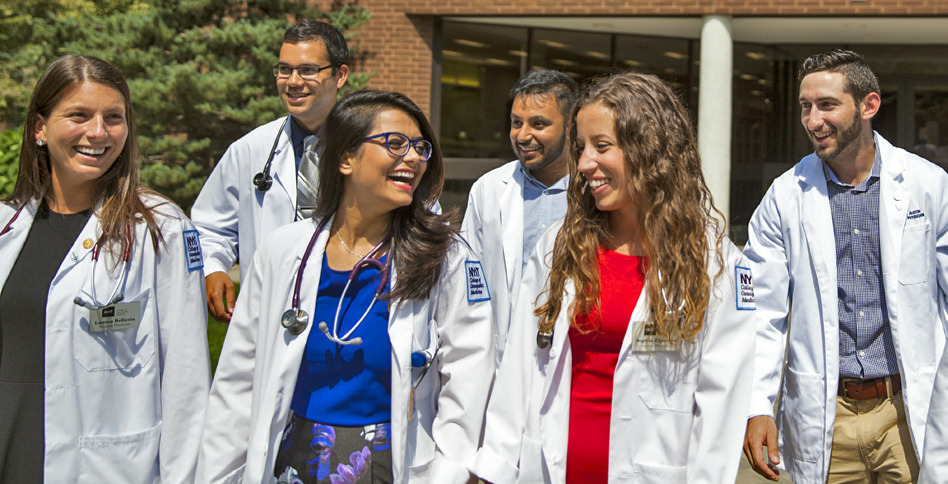
Your secondary application is a critical part of applying to NYITCOM. It is where you show your character, motivations and fit with the school, and where you explain anything your primary application did not have room for. NYITCOM sends its supplemental application to every applicant after AACOMAS submission.
The 2026-2027 NYITCOM supplemental application at a glance:
- Fee: $80, non-refundable, or a verified AACOMAS fee waiver code.
- Timing: NYITCOM recommends completing the supplemental within 10 days of receiving the email. It is available only until March 16, 2027.
- Length: The Old Westbury form has eleven items: four essay questions answered by everyone (three at 1,000 characters and one at 250 characters), a 1,000-character reapplicant essay, a 200-character family question and five selection or yes/no questions. Applicants who choose the Jonesboro campus answer the four core essay questions.
- Limits are in characters. 1,000 characters, including spaces, is about 150 to 180 words. Write in a document that counts characters, then paste into the portal.
- Program tracks. The supplemental has no separate essays for the B.S./D.O., D.O./Ph.D., Academic Medicine Scholars or Émigré Physicians programs. The D.O./Ph.D. and Academic Medicine Scholars programs have their own applications later, and EPP uses a separate application.
Here are a few tips for a strong NYITCOM secondary:
- Read each question carefully and answer every part of it.
- Support your answers with concrete evidence from your academic, clinical, work and service experiences.
- Do not repeat your AACOMAS entries word for word. Use the secondary to add depth and explain what your experiences taught you.
- Write clearly and concisely. With 1,000 characters, every sentence must do work. Cut filler and stay on topic.
- Proofread and edit thoroughly before you submit, because you cannot send updates afterward.
- Consider getting feedback. Writing many secondary essays takes time, and IMA’s admission consulting offers an outside review that can find areas for improvement.
Every example below is an Illustrative example, not an actual applicant essay. Each was written from scratch to show structure and reflection, and the applicant details are invented for teaching. Do not copy them. Your answers must describe your own experiences.
Question 1: “Which NYITCOM campus/site are you interested in attending? (The NYITCOM Admissions Committee reserves the right to recommend the best campus fit for you based upon your complete application.)”
Format: selection (Old Westbury, NY or Jonesboro, AR). Required: yes, for all applicants.
What it asks. This is a selection, not an essay, but it frames your whole file. The committee may recommend a different campus based on your complete application.
Worked response pattern: Select the campus you actually prefer, for example “Old Westbury, NY.” Make sure your campus essay (Question 3) explains the same choice and that your activities support it.
Why it matters. A Jonesboro choice from an applicant with no rural or Southern ties, or a Long Island choice with no explanation, invites questions. Choose honestly and be ready to explain your choice at the interview.
Question 2: “Would you consider attending either campus?”
Format: yes or no. Required: yes.
Worked response pattern: Answer “Yes” only if you would truly enroll at either Old Westbury or Jonesboro. Answer “No” if a family, work or financial reason ties you to one location.
Why it matters. Saying yes gives the committee more ways to admit you, since it can recommend the best campus fit. Saying no is fine when it is true, but do not say yes unless you would accept a seat at the other campus.
Question 3: “Briefly describe the reasons for your campus/site choice and comment on one or two factors that are most important to you in choosing where you wish to pursue your medical education.”
Limit: 1,000 characters. Required: yes, for all applicants at both campuses.
What it asks. Two things: why you chose this campus, and the one or two factors that matter most to you in choosing a medical school. The words “one or two” are a signal to focus.
How to approach it. Open with your campus and your main reason. Tie each factor to something specific at that location and to your own experience. Keep personal factors such as family proximity honest but secondary.
Illustrative example, not an actual applicant essay (993 characters, Long Island applicant):
I chose the Long Island campus in Old Westbury for two reasons: the patients I hope to serve and the way NYITCOM teaches osteopathic care in community settings.
I grew up in Queens and have spent three years as a volunteer interpreter at a Nassau County clinic, where most of the patients I help speak Spanish. NYITCOM’s student-run Community Free Clinic, which serves patients in English and Spanish, is the kind of place where I could keep doing that work while learning to examine and treat patients myself.
The second factor is hands-on training. I want to learn osteopathic manipulative medicine where it is used with real patients, and the OMM department’s community care at sites such as the Riland Academic Health Center would let me see treatment for the chronic pain and mobility problems I first noticed while volunteering.
Staying near family matters too, but it is not my main reason. I want to train where I already know the communities, so I can give back from my first year.
Why this example works. It answers the question in the first sentence and limits itself to two factors, as the prompt asks. Each factor connects to a real Long Island opportunity (the student-run Community Free Clinic, which serves patients in English and Spanish, and OMM community care at the Riland Academic Health Center) and to the writer’s own record of interpreting at a clinic. Mentioning family as a secondary factor sounds honest without making convenience the main reason.
Mistakes to avoid. Do not list every feature of the campus. Do not choose based on prestige or location alone. Do not name programs you cannot connect to your own experience. An Arkansas applicant should write about the factors that draw them to Jonesboro, such as rural rotations, population health or the Delta, with the same specificity.
Question 4: “Based on your experiences within your community, workplaces, educational experiences, and your unique attributes, in what ways will you contribute to the NYITCOM Community?”
Limit: 1,000 characters. Required: yes, for all applicants at both campuses.
What it asks. The prompt names four sources (community, workplaces, education and personal attributes) and asks what you will contribute. It is about giving, not getting.
How to approach it. Draw on two or three of the four sources, show one concrete habit or skill they gave you, then name specific ways you will use it at NYITCOM.
Illustrative example, not an actual applicant essay (990 characters, Jonesboro applicant):
For four years I worked weekends at my family’s hardware store in a small town in northeast Arkansas, and since college I have worked as an EMT with a rural ambulance service. Both jobs taught me to listen to people who do not like asking for help. Farmers call chest pain “indigestion,” and older patients apologize for calling 911. I learned to slow down, ask a second question and explain what I was doing in plain words.
I will bring that habit to NYITCOM. In small groups and clinical skills sessions, I can help classmates practice explaining a plan to patients worried about cost or distance. As a tutor in my university’s first-generation student program, I also learned to share study systems without making anyone feel behind.
Outside class, I hope to join outreach such as the Delta Care-a-Van and the EMS program, where my field experience could be useful. I would rather be the classmate who arrives early to set up the screening table than the one who only shows up to lead.
Why this example works. It covers community and workplace (the hardware store and EMT work), education (tutoring first-generation students) and a personal attribute (patient, plain-language listening). It turns those into specific contributions: helping classmates practice patient explanations, sharing study systems and joining NYITCOM-Arkansas outreach through the Delta Care-a-Van and EMS program. The final sentence shows humility without false modesty.
Mistakes to avoid. Do not describe what NYITCOM will do for you. Do not list traits (“I am compassionate and hardworking”) without evidence. Do not claim leadership roles at the school before you arrive.
Question 5: “Describe the community in which you see yourself practicing medicine.”
Limit: 1,000 characters. Required: yes, for all applicants at both campuses.
What it asks. A specific picture of where you want to practice and why. The best answers show you know the community’s needs from experience.
How to approach it. Name the type of community in the first sentence. Show its needs through one real encounter. Explain what kind of physician that community needs and how your training would prepare you.
Illustrative example, not an actual applicant essay (962 characters):
I see myself practicing family medicine in a mid-sized town in the Mississippi Delta, where the nearest specialist can be two hours away and one clinic often serves several counties.
As an EMT, I have transported patients whose heart failure worsened because they could not get to follow-up visits. One woman told me she skipped her cardiology appointment because the drive cost more than a week of groceries. A family physician who can manage chronic disease, perform basic procedures and use telemedicine to bring in specialists might have kept her out of the ambulance.
That is the community I want to serve: people who are loyal to their towns, practical about their health and often underestimated. I want to be a doctor who knows which patients farm, which ones raise grandchildren and which ones need a ride. Training that treats the whole person, with rural rotations and population health built in, would prepare me to care for people where they live.
Why this example works. It names a specific community in the first sentence and grounds it in an EMT encounter that shows a real barrier (cost of travel to specialty care). It describes the kind of physician the community needs and links that to NYITCOM-Arkansas training in rural rotations, population health and telemedicine without overclaiming. It also fits the mission’s commitment to rural communities.
Mistakes to avoid. Avoid a vague answer such as “an underserved community.” Do not romanticize a community you have not spent time in. Do not lock yourself into a narrow specialty you have barely seen; a type of community is enough.
Question 6: “Have you previously applied to NYITCOM?”
Format: yes or no. Required: yes.
Worked response pattern: Answer “Yes” if you applied to NYITCOM in any earlier cycle; otherwise “No.” Reapplicants also must create a new portal account for 2026-2027.
Question 7: “If yes, what specific steps have you taken to strengthen your credentials for the current application year?”
Limit: 1,000 characters. Required: only for reapplicants.
What it asks. Specific, measurable steps since your last application. The committee wants to see a changed record, not a changed attitude.
How to approach it. Name the weaknesses honestly, then give one concrete fix for each, with numbers where possible.
Illustrative example, not an actual applicant essay (935 characters):
After my first application, I asked for feedback and reread my file. Three weaknesses stood out: a 501 MCAT, limited direct patient care and a personal statement that listed activities without reflecting on them.
I addressed each one. I studied for five months on a fixed schedule with full-length practice tests and retook the MCAT in April, scoring 508. I started working full time as a patient care technician on a medical-surgical unit, where I take vital signs, help patients move safely and report changes to nurses. In 10 months I have logged about 1,600 hours of direct care.
I rewrote my personal statement around one patient, a man recovering from a hip fracture whose fear of falling showed me how much recovery depends on trust. I also shadowed a family physician who uses osteopathic manipulative treatment, which clarified why I am choosing the D.O. path. I am a stronger applicant and a better-prepared future student.
Why this example works. It is specific from start to finish: three weaknesses, three fixes, each with evidence (a new MCAT score, a job title with real duties, 1,600 hours, a rewritten statement). The shadowing detail shows growth in understanding of the D.O. path, which matters at an osteopathic school. It ends with a confident, short summary.
Mistakes to avoid. Do not blame the previous cycle or the committee. Do not write “I grew a lot” without proof. Do not list steps that did not change your application.
Question 8: “Do you have any immediate family members (ONLY grandparents, parents, brothers/sisters, spouses) who have graduated from NYIT College of Osteopathic Medicine?”
Format: selection. Required: yes.
Worked response pattern: Choose “No” unless a grandparent, parent, sibling or spouse graduated from NYITCOM. Cousins, aunts, uncles and family friends do not count.
Question 9: “If you do, please provide their name, relationship, and year of graduation from NYITCOM.”
Limit: 200 characters. Required: only if you answered yes to Question 8.
Worked response pattern: “[Full name], mother, D.O. [year].” This is a factual field, not an essay. Give the three requested facts in one line and do not add stories about your relative.
Question 10: “How and where did you learn about NYITCOM?”
Limit: 250 characters. Required: yes, for all applicants at both campuses.
What it asks. A short, factual answer: how you heard about the school and where.
Illustrative example, not an actual applicant essay (199 characters):
I first heard about NYITCOM at a D.O. information session at my college, then joined a virtual admissions event. A D.O. I shadowed on Long Island, who trained at NYITCOM, also encouraged me to apply.
Why this example works. It answers both “how” and “where” in under 250 characters and names realistic routes: a campus information session, a virtual admissions event and a physician the writer shadowed. NYITCOM holds information sessions and recruitment events through its admissions office, so attending one gives you an honest answer.
Mistakes to avoid. Do not turn this into a second “why us” essay. Do not name a person you have not actually met.
Question 11: “Are you interested in any concurrent degree programs?”
Format: yes or no. Required: yes.
Worked response pattern: Answer “Yes” if you would like information about options such as the online M.B.A., M.P.H., M.S. in Clinical Nutrition, M.S. in Medical/Healthcare Simulation or the Global Health Certificate; otherwise “No.”
Why it matters. Interest here does not commit you to anything. The concurrent degrees begin after matriculation, and the D.O./Ph.D. and Academic Medicine Scholars programs have separate applications.
Openings to avoid
A campus essay that begins, “When it came to deciding where I wanted to pursue my medical education, there were a lot of key factors to consider: location, campus life, academics,” spends a fifth of the character limit on a list. Lead with your choice instead. The same applies to “How and where did you learn about NYITCOM?”: a one-line answer such as “I first learned about NYITCOM from a family friend who is an alum” is acceptable, but naming the event or person and where you met them gives the committee more.
Interview Format and Preparation
Format and logistics
NYITCOM interviews only applicants under serious consideration, by invitation of the admissions committee. Interviews begin in late summer and continue through early spring until the class is filled. Because admission is rolling, applicants are interviewed and accepted throughout the season, so schedule your interview as soon as you are invited.
The interview uses a traditional format. You can interview virtually or in person at either location, and NYITCOM-Arkansas encourages in-person interviews. Interviews are for the Long Island or Jonesboro location, depending on your campus.
What to expect
The school does not publish its interview questions. In a traditional interview, expect one-on-one conversation with a faculty member or admissions committee member about your path to medicine, your experiences and your fit with the school. Applicants in the 2026-2027 cycle have described relaxed, conversational interviews of about 20 minutes with a faculty member; treat these reports as anecdotes.
How to prepare
- Why osteopathic medicine? Be ready to explain what you have seen D.O.s do and why the osteopathic approach fits you. Our guide to osteopathic medical school interview questions covers common D.O. questions.
- Why NYITCOM, and why this campus? Connect your answer to specific programs: the Community Free Clinic or OMM community care on Long Island, or rural rotations, telemedicine and the Population Health Certificate in Jonesboro.
- Your supplemental essays. Reread them. Interviewers often ask about the community where you want to practice or how you will contribute.
- Your experiences. Prepare two or three patient stories you can tell in under two minutes, with what you learned.
- Ethics and current issues. Practice reasoning aloud through ethical scenarios and know the basics of current healthcare topics such as access to care in rural areas.
- Questions for them. Ask about clinical site assignments, housing, research opportunities and student support.
After the interview, check your email regularly; NYITCOM sends all decisions by email and does not offer extensions.
Frequently Asked Questions
Is NYITCOM a D.O. or an M.D. school?
NYITCOM grants the Doctor of Osteopathic Medicine (D.O.) degree. D.O.s are fully licensed physicians who can practice in every specialty in the United States. They train in the same core sciences and clinical rotations as M.D. students, plus osteopathic principles and osteopathic manipulative treatment. If you are deciding between the two paths, shadow both kinds of physicians and apply to the schools whose missions fit you.
What is the NYITCOM acceptance rate?
NYITCOM does not publish its number of applicants, interviews or acceptances, so there is no official acceptance rate. What is published is the size of the class (439 new students in 2026) and the academic profile of enrolled students (mean MCAT 504.6, average GPA 3.69). Treat NYITCOM as a competitive school and apply early in the cycle.
What MCAT and GPA do I need for NYITCOM?
There is no published minimum MCAT or GPA. Matriculants average 504.6 on the MCAT and 3.69 for cumulative GPA. Scores from January 2024 through January 15, 2027 are accepted for the 2026-2027 cycle. If you are below the averages, strengthen other parts of your file, such as clinical experience and a strong supplemental.
Should I choose the Long Island or the Arkansas campus?
Choose the campus that fits your experience and goals. Long Island offers metro New York clinical training and college-run specialty clinics; Jonesboro offers small classes, rural and Delta medicine, telemedicine training and a required Certificate in Population Health. Both lead to the same D.O. degree, and tuition is the same. If you would attend either, answer yes to the “either campus” question, since the committee can recommend the best campus fit.
Does NYITCOM accept international or DACA applicants?
No. Applicants must be U.S. citizens or U.S. permanent residents. NYITCOM does not accept international students, and DACA recipients are not considered. Foreign-trained physicians who are citizens or permanent residents can look at the Émigré Physicians Program.
How much does NYITCOM cost?
For 2026-2027, tuition is $70,720 per year for every student. Tuition and fees total $72,449 in the first year, and the school’s full first-year cost of education, including living costs, is $118,098, plus $5,738 for required medical and dental insurance unless waived. The four-year total at current rates is about $480,000 before insurance. Average graduate debt is $302,269 for New York and $345,226 for Arkansas.
Is there in-state tuition for New York or Arkansas residents?
No. Tuition is the same for in-state and out-of-state students at both locations. More than half of the New York location’s 2024-25 first-year class came from outside New York.
Does NYITCOM require Casper or PREview?
No. NYITCOM does not list Casper, PREview or any other situational judgment test among its requirements for the 2026-2027 cycle.
How many letters of recommendation does NYITCOM require?
Three, through AACOMAS (Interfolio is also accepted). Send a pre-health committee or composite letter (preferred), or three individual letters: two from faculty who taught you (at least one in science) and one from a long-term supervisor. A letter from a D.O. or M.D. who is not a family member is strongly recommended. Non-traditional applicants out of college more than two years may send three professional letters.
How many clinical or shadowing hours does NYITCOM require?
NYITCOM does not publish a minimum for clinical, volunteer or shadowing hours, and it accepts virtual or in-person shadowing. Competitive applicants usually show sustained, hands-on patient care over a year or more and time shadowing a D.O. Supervised programs such as pre-health internships, where students take vitals and help with intake and triage, can add to your local experience.
When should I submit the NYITCOM secondary?
As soon as possible. NYITCOM recommends completing the supplemental within 10 days of receiving the email, and admission is rolling. The supplemental is available only until March 16, 2027. You cannot add updates after you submit it, so make sure your application is final first.
Can I take prerequisites online or pass/fail?
No. NYITCOM does not accept online coursework or online labs for prerequisites, and it does not accept pass/fail grades for prerequisites. Biochemistry may substitute for Organic Chemistry II.
Does NYITCOM offer early decision or deferrals?
NYITCOM does not have an Early Decision Program. It does consider requests to defer entry after acceptance.
What is the Émigré Physicians Program?
It is a four-year D.O. program on the Long Island campus for physicians born and educated outside the United States, with a maximum of 35 seats. It has its own application with a $195 fee, a credential evaluation, a TOEFL requirement that cannot be waived, two letters and a CV. EPP students join the regular D.O. class.
What are NYITCOM’s board pass and residency placement rates?
In 2024-25, NYITCOM’s first-time pass rate was 96.96 percent on COMLEX Level 1 (national 90.25 percent) and 90.50 percent on Level 2 (national 91.33 percent). The residency placement rate was 97.5 percent for AY2024-25 graduates and 99.0 percent for AY2023-24 graduates, for both campuses combined.
Related Medical School Guides
If you are applying to NYITCOM, these guides can help you build a balanced list. The relationships are by geography, degree or pathway, not by selectivity.
- TOURO College of Osteopathic Medicine: another osteopathic option in New York, with campuses in Harlem and Middletown, for applicants who want to train in the state.
- Arkansas College of Osteopathic Medicine (ARCOM): an osteopathic school in Fort Smith, a natural comparison for applicants weighing NYITCOM’s Jonesboro campus.
- Alabama College of Osteopathic Medicine: a Southern D.O. school with a rural and underserved focus similar to NYITCOM-Arkansas.
- Burrell College of Osteopathic Medicine: another D.O. school built to serve a medically underserved region, useful for applicants drawn to regional, mission-driven training.
- UNT Texas College of Osteopathic Medicine: a large public D.O. school in the South, for applicants comparing primary care and population health training.
- Kentucky College of Osteopathic Medicine: an Appalachian D.O. school with a strong rural mission, a fit for applicants who chose Jonesboro for its rural focus.
State guides. For a full view of your options in each state, see our guides to New York medical colleges and medical schools in Arkansas. Arkansas applicants should also read our guide to The University of Arkansas for Medical Sciences (UAMS).
More medical school guides
If you are considering other D.O. and M.D. schools in New York City, Long Island or other states, our definitive guides cover most U.S. medical schools.
New York
- NYU Long Island School of Medicine
- Hofstra Zucker School of Medicine
- Renaissance School of Medicine at Stony Brook University
- Albert Einstein College of Medicine
- Icahn School of Medicine at Mount Sinai
- Weill Medical College of Cornell University
- NYU Medical School
- New York Medical College
- Albany Medical College
- Norton College of Medicine at Upstate Medical University
- Jacobs School of Medicine at the University at Buffalo
- University of Rochester Medical School
New Jersey and Pennsylvania
- Rowan University School of Osteopathic Medicine
- Hackensack Meridian School of Medicine (HMSOM)
- Rutgers New Jersey Medical School (NJMS)
- Rutgers Robert Wood Johnson Medical School
- Cooper Medical School of Rowan University (CMSRU)
- Lake Erie College of Osteopathic Medicine (in Pennsylvania)
- Sidney Kimmel Medical College at Thomas Jefferson University
- Drexel University College of Medicine
- Perelman School of Medicine
- University of Pittsburgh School of Medicine
Ohio and the Midwest
- Ohio University Heritage College of Osteopathic Medicine
- Northeast Ohio Medical University (NEOMED)
- University of Cincinnati College of Medicine
- University of Toledo College of Medicine
- Wright State University Boonshoft School of Medicine
- Ohio State University College of Medicine
- Case Western Medical School
- A.T. Still University Kirksville College of Osteopathic Medicine
- Saint Louis University School of Medicine
- University of Missouri Medical School
- Kansas City University (KCU)
- UMKC School of Medicine
- Washington University School of Medicine
- University of Wisconsin Medical School
- Stritch School of Medicine at Loyola University Chicago
Mid-Atlantic, New England and the Southeast
- Johns Hopkins School of Medicine
- University of Maryland School of Medicine
- George Washington University School of Medicine
- Georgetown University School of Medicine
- VCU School of Medicine
- University of North Carolina Medical School
- Wake Forest University School of Medicine
- Emory University School of Medicine
- University of Florida Medical School
- Vanderbilt University School of Medicine
- Yale School of Medicine
- Harvard Medical School
- Boston University College of Medicine
- Brown Medical School
Texas
- UT Southwestern Medical School
- Long School of Medicine at UT Health San Antonio
- University of the Incarnate Word School of Osteopathic Medicine
- UT Austin’s Dell Medical School
- UTMB School of Medicine
- McGovern Medical School at UT Health
- The University of Texas Rio Grande Valley School of Medicine
- University of Houston College of Medicine
- Texas A&M College of Medicine
- Baylor College of Medicine
California and the Caribbean
- California University of Science and Medicine
- UC San Diego Medical School
- California Northstate University College of Medicine
- Touro University of California
- CHSU College of Osteopathic Medicine
- UC Davis School of Medicine
- UC Riverside School of Medicine
- USC Keck School of Medicine
- UCLA Medical School
- Western University of Health Sciences (in California)
- St. George’s University School of Medicine
How International Medical Aid Can Help
NYITCOM looks for applicants who have spent real time with patients and communities and who can explain what they learned. International Medical Aid (IMA) helps pre-health students build and explain that kind of experience through clinical programs and admissions support.
Voluntary Healthcare Internships Abroad
IMA’s voluntary healthcare internships give students hands-on experience in hospitals and clinics. All of IMA’s internships are intensive and patient-facing. Under the supervision of local clinicians, interns take vital signs, help with patient intake and triage and assist with direct patient care. They also shadow physicians and see how care is delivered in settings with limited resources.
Through International Medical Aid’s pre-med shadowing study abroad programs, aspiring medical students gain real clinical experience and prepare for the demands of medical school. The value goes beyond your application. IMA’s programs serve communities with limited access to care, and interning abroad helps you build communication skills, serve medically underserved patients and broaden your perspective. Those experiences can give you concrete material for NYITCOM’s questions about contribution and the community where you want to practice.
- Pre-med internships in Kenya and other sites place students in supervised clinical roles with real patients.
- Internships for pre-med students fit into a summer or a gap year, alongside sustained clinical work at home.
- IMA also offers other medical internships abroad for students exploring different health careers.
There is a lot to learn about these programs, so take time to explore them on our website.
Medical School Admissions Consulting
At International Medical Aid, we aim to give aspiring medical professionals thorough, useful content. Getting into medical school is hard work, and an admissions consultant can make a real difference. Whether you need help writing your NYITCOM supplemental essays, building an application strategy, choosing between the Long Island and Jonesboro campuses or preparing for a traditional interview, IMA’s medical school admissions consulting offers one-on-one support. You can schedule a free consultation with IMA to get started.
An IMA internship is one experience among many and does not replace sustained clinical work or service in your own community. IMA is not affiliated with NYITCOM or New York Institute of Technology, and no program guarantees admission. Next step: compare your clinical, service and shadowing hours with the selection factors in this guide, then decide whether an internship, consulting or both would close the gaps you find.
Final Thoughts and Sources
Good Luck!
NYIT College of Osteopathic Medicine offers one D.O. program at two very different locations: a large, established campus on Long Island near New York City and a smaller, rural-focused location in Jonesboro, Arkansas. Both share a mission of training osteopathic physicians for a lifetime of learning and practice, including in inner-city and rural communities. For 2026-2027, the practical steps are clear: confirm you are a U.S. citizen or permanent resident, make sure your MCAT falls in the January 2024 to January 15, 2027 window, line up three letters through AACOMAS, choose your campus for real reasons and complete the supplemental within 10 days of receiving it.
We wish you good luck with your medical school applications. Be strategic, take your time and do not hesitate to ask for help. If you need support with your application, essays or interview, IMA’s consulting services are here for you.
Your next move: draft your answers to the four core NYITCOM supplemental questions now, before you submit AACOMAS, so you can return the secondary quickly and with care.
Source notes
All facts were checked on October 17, 2026. Cohort labels follow each source.
- NYITCOM official pages (nyit.edu): Apply to the D.O. Program (2026-2027 dates, letters, supplemental, interviews); D.O. admission requirements; technical standards; tuition and fees, 2026-2027; cost of education, 2026-2027; grants and scholarships; About (mission, vision, history); accreditation; outcomes (COMLEX 2021-22 to 2024-25, residency placement AY2021-22 to AY2024-25, graduation and retention); concurrent programs; locations; dean’s welcome; College of Osteopathic Medicine homepage; NYITCOM-Arkansas homepage, About page and partnerships; Department of Osteopathic Manipulative Medicine; Émigré Physicians Program application; D.O./M.S. in Academic Medicine; D.O./Ph.D. admission requirements; transfer students; 2026-2027 recruitment schedule.
- NYIT Catalog 2026-2027 (catalog.nyit.edu): D.O. curriculum years 1-2 and year 3; combined baccalaureate/D.O. programs; Émigré Physicians Program; Fast Facts (university-wide enrollment, countries, states, financial aid, graduate outcomes).
- New York Tech news: Class of 2030 White Coat ceremonies (August 14, 2026); alumnus joins NYITCOM-Arkansas faculty (2026); NYITCOM-Arkansas Rural Health Transformation Program grants (October 2026); recognizing NYITCOM alumni and friends (May 7, 2024); alumni profile of Alan Wong (August 1, 2023).
- AACOM Choose DO Explorer, NYITCOM profile, accessed October 17, 2026: 2026-2027 tuition, fees and deposit; 2026-2027 cycle dates and policies; 2024-25 enrollment and first-year matriculant demographics; mean MCAT and average GPA of matriculants (entering-class year not printed); average graduate indebtedness by campus.
- Secondary questions: 2026-2027 wording from Shemmassian Consulting’s 2026-2027 secondary essay prompt compilation (published July 25, 2026, updated August 6, 2026), including the school’s 10-day completion recommendation. NYITCOM’s supplemental portal is available only to applicants. The fee and campus-choice requirement are on the NYITCOM apply page.
- Interview reports: Student Doctor Network 2026-2027 NYITCOM Long Island and Arkansas threads (anecdotal applicant reports, August to October 2026).
- Undergraduate scholarship: New York Tech public sector scholarship page.