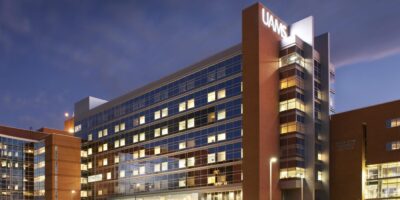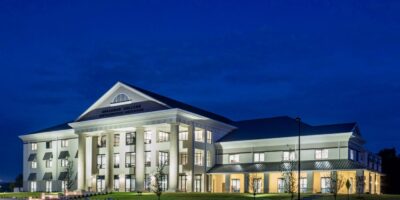

Arkansas now has four places to earn a medical degree: two MD programs and two osteopathic (DO) programs. The University of Arkansas for Medical Sciences (UAMS) College of Medicine has trained the state’s doctors since 1879 and teaches on two campuses, Little Rock and Fayetteville. The Alice L. Walton School of Medicine in Bentonville opened in July 2025 with preliminary accreditation and waives tuition for its first five classes. On the osteopathic side, the Arkansas College of Osteopathic Medicine (ARCOM) trains students in Fort Smith, and the New York Institute of Technology College of Osteopathic Medicine runs a full campus in Jonesboro on the grounds of Arkansas State University.
This guide compares all four programs side by side: where each one teaches, the latest class MCAT and GPA figures, what the first year costs, and the rule that matters most for many applicants, which schools admit students who are not Arkansas residents. Each school profile ends with a link to IMA’s full admissions guide for that school.
Key Takeaways
- Arkansas has two MD programs (UAMS College of Medicine and the Alice L. Walton School of Medicine) and two DO programs (ARCOM in Fort Smith and NYITCOM at Arkansas State in Jonesboro).
- UAMS is the state’s only public medical school. Its Class of 2030 has 172 students, 143 of them Arkansas residents, with an average MCAT of 510 and an average GPA of 3.86.
- UAMS gives priority to Arkansas residents. State law lets it accept up to 50 out-of-state students, nonresidents need an MCAT of at least 505 (500 for residents), and students from the six border states pay in-state tuition.
- The Alice L. Walton School of Medicine admits 48 students a year and waives tuition and most fees for classes entering from 2025 through 2029. Its inaugural class posted a median MCAT of 513 and a mean GPA of 3.89.
- ARCOM and NYITCOM-Arkansas charge one tuition rate to every student and enroll many students from outside the state: 26 of the 121 students in NYITCOM-Arkansas’s Class of 2030 come from Arkansas.
- For 2026-27, first-year tuition ranges from $36,500 for Arkansas residents at UAMS to $70,720 at NYITCOM.
- Every Arkansas program accepts only U.S. citizens and permanent residents.

Guidance for Applying to Medical Schools in Arkansas
At International Medical Aid (IMA), we are committed to helping future doctors find the right medical schools and succeed in the application process. This guide simplifies the wealth of information available about medical schools in Arkansas. We understand the process can be overwhelming, so we have condensed the essentials into one resource. Our objective is to help you make an informed decision about where to submit your application.
Every medical school has its own admission criteria and selection process, which makes it crucial to research each one carefully. Our comprehensive guides on medical schools can help with that work. Each school has its own approach to medical education and to the qualities it looks for in applicants. Schools may require specific prerequisite courses, U.S. citizenship or permanent residency, a minimum MCAT score and more, and in Arkansas those rules differ more than many applicants expect. UAMS sets separate MCAT minimums for residents and nonresidents, the Alice L. Walton School of Medicine screens on both MCAT and GPA before it sends a secondary application, and the two osteopathic schools publish no minimum score at all.
Arkansas for Medical Education
Arkansas, known as the Natural State, also has a growing academic landscape that includes medical education. The state’s medical schools aim to produce highly competent and compassionate health care providers, filling a crucial need in the rural and underserved communities of Arkansas and the Mississippi Delta. Each school states that purpose in its own way. ARCOM’s mission ends with “service to the underserved,” NYITCOM-Arkansas describes its home as “one of the most medically underserved regions of the country,” and the Alice L. Walton School of Medicine trains physicians “devoted to transforming the health of medically underserved and rural communities in Arkansas, its surrounding states, and beyond.” Arkansas medical schools are pivotal in shaping the future of health care, not only within the state but across the broader South.
The roster has grown quickly. For decades UAMS was the state’s only medical school. NYITCOM-Arkansas welcomed its first class of 115 students in August 2016 as the first osteopathic medical school in Arkansas, ARCOM’s first students received their white coats in 2017, and the Alice L. Walton School of Medicine enrolled its inaugural class in July 2025. UAMS and the University of Arkansas are also preparing a six-year BS-MD program that will admit its first students in fall 2027.
Application Strategies for Arkansas Medical Schools
At International Medical Aid (IMA), we are dedicated to helping aspiring physicians work through the complex job of selecting and applying to medical schools. We wrote this guide specifically for applicants interested in medical schools in Arkansas, to ease the stress and confusion that comes from an overwhelming amount of information. Every medical school has its own admissions process, standards and requirements, and we cover each Arkansas program in detail below.
A key to success in medical school admissions is understanding what each institution is looking for in a candidate. Admissions committees evaluate applicants on criteria such as prerequisite grades, MCAT scores, U.S. citizenship or permanent residency, and prior clinical or volunteer experience in health care. Where you completed your coursework matters too:
- UAMS requires a bachelor’s degree from an accredited college or university before you begin classes, along with three semesters of biology (including one full semester of genetics), three semesters of chemistry (including organic chemistry and biochemistry), two semesters each of physics and English, one semester of statistics and two semesters of social sciences. AP credit and online courses count if they appear on your transcript.
- Alice L. Walton School of Medicine has no specific prerequisite courses, but every applicant needs at least 24 credit hours of biology, chemistry, physics and math (BCPM) coursework and a bachelor’s degree from a regionally accredited U.S. or Canadian institution before matriculation.
- ARCOM requires at least 90 credit hours, or three-fourths of the credits for a degree, from a college or university accredited by an agency the U.S. Department of Education recognizes. Prerequisites must be passed with a 2.0 or better, and foreign coursework cannot meet them.
- NYITCOM requires a bachelor’s degree from a college or university accredited by an agency the U.S. Department of Education recognizes and lists English, biology, general chemistry, organic chemistry (biochemistry may replace the second semester) and physics as prerequisites.
Our detailed guides explain what each school in Arkansas expects from its applicants, and IMA’s guide on how many medical schools to apply to can help you decide how many Arkansas programs belong on your list next to schools in other states.
Competitive Medical Schools
Arkansas medical schools are highly competitive and often expect above-average GPA and MCAT scores. Give your best effort at every stage of the application process. When you choose a school, consider its vision, mission and goals to see how they line up with your own plans for a career in medicine. Are you a good fit for the community, or will you just blend in? These are crucial questions to think through as you evaluate your options.
It is easier to show enthusiasm and dedication when you are genuinely passionate about a school’s purpose and goals. Every program in Arkansas talks about rural and underserved care, so the applicants who stand out are the ones who can show, with real experiences, why that work matters to them. IMA’s medical school admissions consulting service offers an individualized approach to the application process, with services ranging from strategy planning and essay editing to interview preparation and mock interviews.
In the early planning stages, take the advanced science courses that medical schools often require. Keep your GPA high, prepare thoroughly for the MCAT and stay involved in meaningful extracurricular activities. Volunteering or working in health care settings is also vital. UAMS lists shadowing physicians, working in health care settings, community service, leadership roles, research and study abroad as examples of experiences to include on your application, and ARCOM highly encourages both volunteering and shadowing even though it sets no minimum number of hours. Clinical internships for pre-med students are one way to add supervised, hands-on hours next to the experiences you build at home in Arkansas, and IMA’s healthcare internships abroad describe every track we offer, including our Pre-Med Shadowing Study Abroad Programs.
Most applicants plan their MCAT date and their clinical experience around the same calendar. If you are a year or two from applying, the summer before you submit is often the best window for both: study blocks in the spring, a test date that leaves time for a retake before a school’s cutoff, and pre-med summer internships or local clinical work once the exam is behind you. Here is how the MCAT rules differ for the 2026-27 application cycle:
| School | MCAT rule for the current cycle |
|---|---|
| UAMS College of Medicine | 500 or higher for Arkansas residents; 505 or higher for nonresidents; scores must be from within the last three years |
| Alice L. Walton School of Medicine | 500 or higher; scores must be within four years of matriculation, so the oldest score accepted for the 2027 entering class is from January 2023 |
| ARCOM | No minimum; 500 or higher is considered competitive; scores dated on or after May 2023 |
| NYITCOM (Long Island and Arkansas) | No published minimum; scores from January 2024 to January 15, 2027 are accepted |
MCAT scores and GPA are significant factors in admissions decisions, but each school evaluates candidates as whole people. UAMS has no formal GPA minimum and reviews your GPA as part of the full application, and ARCOM says students with numbers below its typical ranges may still be considered. To help your preparation, IMA offers the Average GPA and MCAT Score for Every Medical School in the US guide and a Medical School GPA Calculator that shows both your overall GPA and the BCPM GPA that Alice L. Walton uses in its screen. This thorough approach prepares you to apply confidently to medical schools in Arkansas and improves your chances of admission.
Which Arkansas Medical Schools Admit Nonresidents?
Residency shapes your chances in Arkansas more than almost any other factor. Here is where each program stands for the 2026-27 cycle:
- UAMS College of Medicine: priority for Arkansas residents, with room for up to 50 nonresidents. UAMS is a public university, and state law governs its admissions policies. The Admissions Office and Admissions Committee give priority consideration to Arkansas residents who meet the published requirements. State law permits the committee to accept up to 50 out-of-state residents, depending on how many qualified Arkansas residents apply and accept offers each year. When it screens nonresident applications, the Admissions Office looks for applicants with “strong ties” to Arkansas (for example, previous residence in the state, family in Arkansas, attendance at an Arkansas undergraduate school, or other significant personal or business connections) and for applicants from the six border states: Louisiana, Mississippi, Missouri, Oklahoma, Tennessee and Texas. Students from those border states pay in-state tuition, but they still must meet the nonresident MCAT minimum of 505. Nonresidents who claim strong ties must tell the Admissions Office by November 15, 2026. In the Class of 2030, 143 of the 172 students are Arkansas residents.
- Alice L. Walton School of Medicine: recruits nationally, with a regional focus. The school aims to attract students from across the United States, including out-of-state students, and charges no separate nonresident rate. Its 2026-2030 strategic plan sets a goal of more than 70% of matriculants coming from Arkansas and the Heartland states, and 65% of the Class of 2030 came from the Heartland region, including Arkansas and its surrounding states.
- ARCOM: no residency requirement, with a preference for rural and regional applicants. ARCOM gives preference to students from rural and underserved environments who are likely to advance its mission, especially those from Arkansas and the South Central United States. Among its 142 first-year matriculants in 2024-25, 17 were in-state and 126 were out-of-state. Every student pays the same tuition.
- NYITCOM at Arkansas State: no residency requirement. NYITCOM charges one tuition rate at both of its campuses. Applicants state on the supplemental application whether they want to attend in Long Island, New York or Jonesboro, Arkansas, and the admissions committee may recommend the campus that fits best. The Jonesboro Class of 2030 includes 26 students from Arkansas and represents 23 states.
If you live outside Arkansas, your realistic options are ARCOM, NYITCOM-Arkansas and the Alice L. Walton School of Medicine, with UAMS as a strong choice if you come from a border state or have real ties to Arkansas and an MCAT of 505 or higher. If you are an Arkansas resident, you can apply to all four, and UAMS was built with you in mind.
Medical Schools in Arkansas Profiles
Arkansas Medical Schools Admissions Profile
| School | Degree, type and campuses | Average MCAT | Average GPA | Class size | Applications and residency | Class or cohort | Source |
|---|---|---|---|---|---|---|---|
| UAMS College of Medicine | MD, public; Little Rock and the Northwest Regional Campus in Fayetteville | 510 | 3.86 | 172 (19 in Fayetteville) | 3,337 applicants; 143 Arkansas residents enrolled | Class of 2030, entered August 2026 | UAMS College of Medicine Class of 2030 profile and Apply page; UAMS News, August 19, 2026; checked October 17, 2026 |
| Alice L. Walton School of Medicine | MD, private nonprofit; Bentonville; LCME preliminary accreditation | 513 (median) | 3.89 (mean; BCPM 3.87) | 48 | Nearly 5,000 applications for the Class of 2030 | MCAT and GPA: Class of 2029, entered July 2025; applications: Class of 2030, entered July 2026 | Alice L. Walton School of Medicine class profiles and White Coat Ceremony news, July 17, 2026; checked October 17, 2026 |
| Arkansas College of Osteopathic Medicine (ARCOM) | DO, private nonprofit; Fort Smith | 498.7 (mean) | 3.56 | 176 (Class of 2030) | 142 first-year matriculants in 2024-25, 17 of them in-state | MCAT and GPA: cohort not stated; class size: Class of 2030 | AACOM Choose DO Explorer ARCOM profile (2026-27 cycle); ARCOM news, September 26, 2026; checked October 17, 2026 |
| NYITCOM at Arkansas State | DO, private; Jonesboro (additional location of NYITCOM, Long Island) | 504.6 (mean, both campuses combined) | 3.69 (both campuses combined) | 121 in Jonesboro | 26 students from Arkansas; 23 states represented | Class size: Class of 2030, entered August 2026; MCAT and GPA: cohort not stated | AACOM Choose DO Explorer NYITCOM profile (2026-27 cycle); NYIT News, August 14, 2026; checked October 17, 2026 |
Arkansas Medical Schools Cost and Residency Rules
| School | First-year tuition | First-year cost of attendance | Who may apply | Arkansas residents in the latest class | Source |
|---|---|---|---|---|---|
| UAMS College of Medicine | $36,500 for Arkansas and border-state residents; $64,900 for other nonresidents (2026-27) | Tuition plus $35,464 in budgeted fees and living costs (M1, 2026-27): about $71,964 for residents and $100,364 for nonresidents | Priority to Arkansas residents; up to 50 nonresidents under state law; MCAT 500 for residents, 505 for nonresidents; U.S. citizens and permanent residents | 143 of 172 (Class of 2030) | UAMS Student Financial Services College of Medicine tuition (FY 2026-2027) and 2026-27 budget workbook; UAMS College of Medicine Apply page; checked October 17, 2026 |
| Alice L. Walton School of Medicine | $0 for classes entering 2025 through 2029 (listed tuition $69,650) | $38,181 after the waiver (M1, 2026-27, living off campus) | Recruits nationally; goal of more than 70% of matriculants from Arkansas and the Heartland states; U.S. citizens and permanent residents | Not published (65% of the Class of 2030 from the Heartland region, including Arkansas) | Alice L. Walton School of Medicine types of aid, 2026-2027 cost of attendance and admissions FAQ; checked October 17, 2026 |
| Arkansas College of Osteopathic Medicine (ARCOM) | $60,500, one rate (2026-27); $62,150 for 2027-28 | $91,187 on campus or $91,987 off campus (OMS I, 2026-27) | No residency requirement; preference to applicants from rural and underserved areas, especially Arkansas and the South Central U.S.; U.S. citizens and permanent residents | 17 of 142 first-year matriculants (2024-25) | ACHE 2026-2027 and 2027-2028 Doctor of Osteopathic Medicine tuition; ACHE 2026-2027 DO cost of attendance; AACOM Choose DO Explorer ARCOM profile; checked October 17, 2026 |
| NYITCOM at Arkansas State | $70,720, one rate at both campuses (2026-27) | $118,098 year 1 cost of education, plus $5,738 in required medical and dental insurance (2026-27) | No residency requirement; choose Long Island or Jonesboro on the supplemental; U.S. citizens and permanent residents | 26 of 121 (Class of 2030) | NYITCOM tuition and fees and cost of education (2026-2027); NYIT News, August 14, 2026; checked October 17, 2026 |
A few notes on reading these tables. An acceptance rate is the number of applicants offered admission divided by the number who applied, and none of the four Arkansas programs publishes its number of offers. UAMS’s 172 students made up about 5% of its 3,337 applicants, but that figure compares students who enrolled with students who applied, so it understates the true acceptance rate, because some admitted students enroll elsewhere. NYITCOM’s MCAT and GPA averages cover its Long Island and Arkansas campuses together, and neither osteopathic school states which entering class its averages describe. The UAMS cost of attendance above adds the school’s 2026-27 first-year budget to its tuition; actual living costs vary by campus and household. IMA’s guide to the cost of medical school explains how tuition, fees and living costs add up over four years.
Diverse Program Offerings and Admission Criteria
Arkansas offers both Doctor of Medicine (MD) and Doctor of Osteopathic Medicine (DO) programs. These two paths suit students with different educational philosophies and career goals. Graduates of both practice as fully licensed physicians in every specialty. The DO schools in Arkansas add training in osteopathic principles and osteopathic manipulative medicine, with an emphasis on whole-person care and preventive medicine, on top of the traditional medical curriculum. MD applicants apply through AMCAS, and DO applicants apply through AACOMAS; IMA’s guide to AACOMAS explains the osteopathic application service step by step.
The admission process for these medical schools is highly competitive. Besides an excellent academic record and strong MCAT scores, applicants should show soft skills such as communication and empathy. UAMS looks for students who are empathic, team-oriented and intellectually curious, and its faculty interviewers ask applicants for examples of empathy, resilience, teamwork and cultural competency. ARCOM evaluates academic ability, knowledge of and commitment to osteopathic medicine, service to the community, professionalism, communication skills and personal integrity. NYITCOM looks for high academic achievement along with integrity, compassion, maturity, motivation and interpersonal skills. Clinical experiences, research projects and community service are also increasingly important in the admission process.
Here is how the application timelines compare for the 2026-27 cycle:
| School | Primary application | Secondary or supplemental | Secondary fee |
|---|---|---|---|
| UAMS College of Medicine | AMCAS by November 1, 2026 | Due November 15, 2026; all documents by January 15, 2027 | $100 ($50 for AMCAS Fee Assistance Program applicants) |
| Alice L. Walton School of Medicine | AMCAS by November 1, 2026 | Supplemental materials due December 1, 2026 | $100, nonrefundable |
| ARCOM | AACOMAS by April 16, 2027 | Due April 30, 2027; invitations expire after 30 days | No fee |
| NYITCOM (Long Island and Arkansas) | AACOMAS receipt deadline April 30, 2027 | Available only until March 16, 2027 | $80, or a verified AACOMAS fee waiver code |
All four programs admit on a rolling basis or begin making offers in the fall, so applying early in the cycle helps at every school. UAMS’s Admissions Committee may make early acceptance decisions from October onward, Alice L. Walton makes offers on a rolling basis from mid-October until its class of 48 is full, ARCOM offers seats after each interview date starting in August, and NYITCOM interviews and accepts applicants throughout the season until its class is filled.
Medical Schools and DO Schools Arkansas
Below is an alphabetical list of the medical schools in Arkansas. Each entry links to the school’s official website and to IMA’s full guide, with details on the application process, what the school looks for in a candidate, campus life, interviews and secondary essay prompts with sample answers.
- Alice L. Walton School of Medicine (MD, Bentonville): read How to Get Into Alice L. Walton School of Medicine: The Definitive Guide
- Arkansas College of Osteopathic Medicine (DO, Fort Smith): read IMA’s guide to ARCOM
- New York Institute of Technology College of Osteopathic Medicine (DO, Jonesboro, at Arkansas State University): visit the NYITCOM-Arkansas website
- UAMS College of Medicine (MD, Little Rock), part of the University of Arkansas for Medical Sciences: read IMA’s guide to UAMS
- UAMS Northwest Regional Campus (MD, Fayetteville): the same UAMS College of Medicine and the same application; you state a campus preference on the secondary application
In-Depth Curriculum and Hands-On Clinical Experience
The academic journey at Arkansas medical schools is intense. Students spend the early part of their training in the basic sciences and foundational medical knowledge, and clinical training takes center stage in the later years, when students apply what they have learned in real health care settings. Every Arkansas school now brings patients into the first year, and all of them use simulation to make learning more interactive:
- UAMS uses a student-centered, active-learning curriculum built on flipped classrooms, team-based learning, simulation and case-based teaching. Students in the three-year primary care track begin clinical training on day one.
- Alice L. Walton School of Medicine organizes its curriculum around six threads it calls ARCHES (Art of Healing, Research, Clinical, Health Systems Science, Embracing Whole Health and Science of Medicine). Students begin working with patients and simulations within their first month, and Mercy, the school’s primary educational partner, anchors its clinical training in Northwest Arkansas.
- ARCOM teaches a helix curriculum that combines lecture, team-based and interactive learning, revisiting each semester’s concepts as students move to more complex systems. Third-year core rotations cover family medicine, internal medicine, pediatrics and surgery, with required experiences in women’s health and behavioral health. Fourth-year students complete emergency medicine and nine electives that can be done anywhere in the United States, and every student completes a month-long rotation in a rural or medically underserved community.
- NYITCOM-Arkansas trains first-year students to deliver care through telemedicine and requires a four-week rural rotation. Most third- and fourth-year rotations take place in community hospitals, including NEA Baptist Memorial Hospital and St. Bernards Medical Center, within a network of more than 150 regional medical facilities in Arkansas, Tennessee, Mississippi and Missouri.
Research Prospects and Fields of Specialty
Arkansas is a growing center for medical research, supported by its health care systems and investment in academic research. Medical students can explore research in many fields, including cardiology, endocrinology, neurology, cancer and public health, and Arkansas schools work with hospitals and research centers to give students the resources and mentorship to take part.
UAMS’s Little Rock campus is home to the largest biomedical research enterprise in Arkansas, with research strengths that include cancer, cardiovascular disease, bone research, infectious disease, mental health and biomedical informatics. By graduation, 75% of UAMS medical students take part in research and 50% publish or present. The College of Medicine has offered an MD/PhD program since 1991, and three students in the Class of 2030 are the first in its new NIH-funded Medical Scientist Training Program. In Fayetteville, the Northwest campus runs a community health and research program supported by more than $70 million in federal grants.
The Alice L. Walton School of Medicine requires every student to complete a mentored scholarly research project across four research courses. At NYITCOM-Arkansas, faculty study areas such as heart failure and chronic pain with funding from the National Institutes of Health, the American Heart Association and other organizations, and students can add a Master of Science in Academic Medicine through the Academic Medicine Scholars Program, spending an extra year on research and teaching.
Post-graduation and Career Pathways
Graduates of Arkansas medical schools are well prepared for many career paths, including clinical practice, academic medicine and health care administration.
Strong alumni networks and career services help students find residencies and jobs, often in high-demand rural areas that badly need physicians. The state’s hospitals offer residency programs and fellowships, and many graduates train close to home. In the UAMS Class of 2026, 99% of the 164 seniors matched to a residency program, and 45% of those who matched will stay in Arkansas for residency. UAMS is also working with hospitals in Northwest Arkansas and across the state to open new residency programs. NYITCOM-Arkansas has a 100% postgraduate placement rate, with 70% of its graduates pursuing primary care specialties, and NYITCOM has applied for ACGME accreditation of a new rural family medicine residency in Blytheville, where it hopes to welcome its first four residents in summer 2027. The Alice L. Walton School of Medicine’s first students will graduate in 2029, and the school plans to report its first Match results that summer.
Campus Life and Extracurriculars
Arkansas, with its abundance of natural wonders, offers a distinctive lifestyle for medical students. Outdoor activities such as hiking, fishing, biking and canoeing offer a welcome break from a demanding academic schedule. Social events, clubs and organizations at each medical school offer networking opportunities and the chance to build interpersonal skills, rounding out the educational experience.
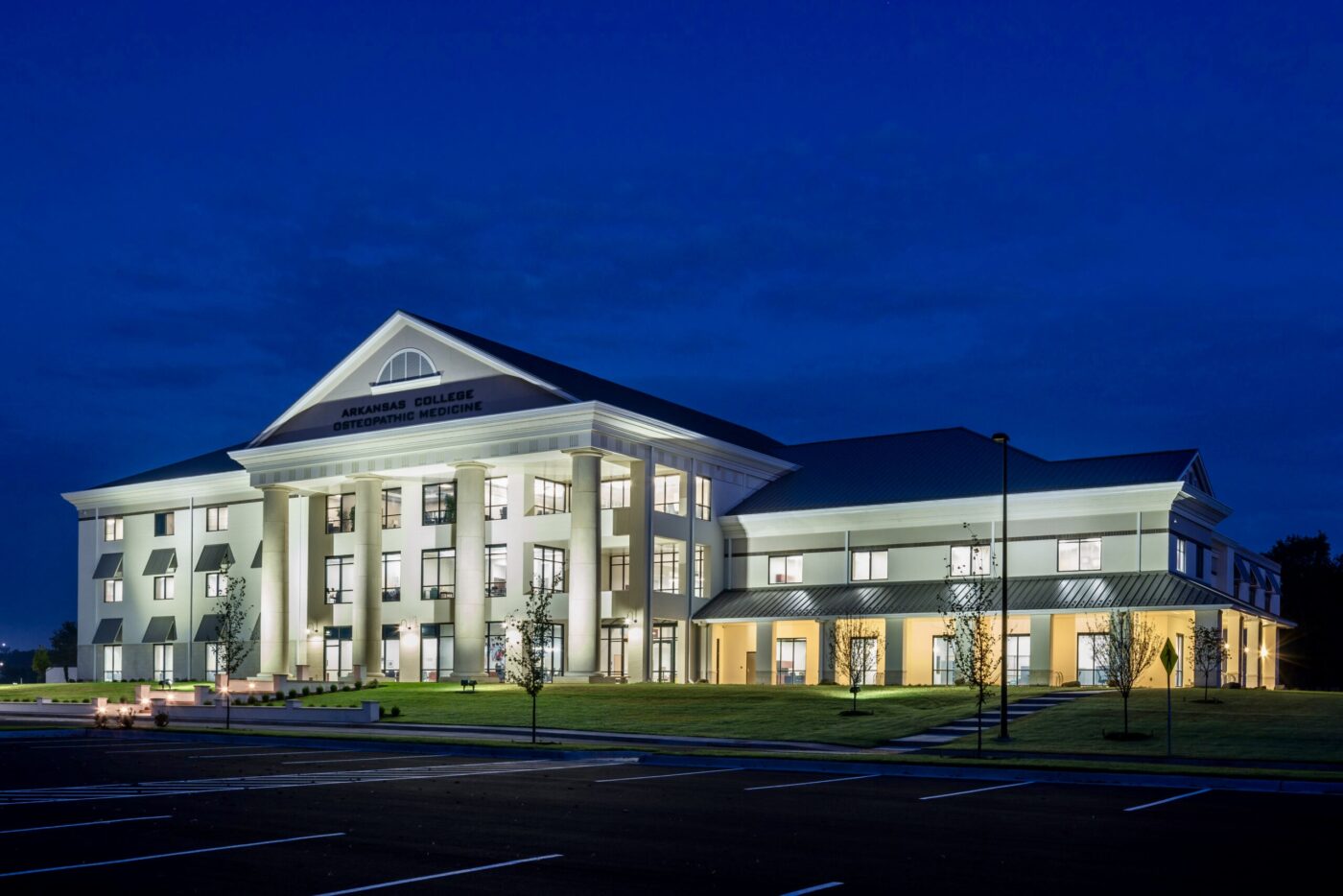
Each campus has its own setting. Little Rock offers the state capital’s neighborhoods, dining and parks, while Fayetteville is a college town with long biking trails and Southeastern Conference sports. UAMS students run the 12th Street Health and Wellness Center in Little Rock and the North Street Clinic in Fayetteville, two volunteer clinics that offer free care to vulnerable patients. The Alice L. Walton School of Medicine sits on the Crystal Bridges campus in Bentonville and groups its students into four Houses of 12 students, each led by practicing physicians who serve as career mentors. ARCOM’s 102,000-square-foot building in Fort Smith, the second largest city in Arkansas, has outdoor study spaces near biking and hiking trails. NYITCOM-Arkansas students in Jonesboro can use Arkansas State University’s housing, dining, fitness center and library, and they can help deliver primary care, screenings and health education through the Delta Care-a-van mobile clinic.
Future Developments and Considerations
Medical schools in Arkansas continue to adapt to a changing health care landscape. They are adding new programs, adopting more advanced technology in teaching and focusing on research areas that matter in today’s world. A few changes are worth watching if you are planning ahead:
- A six-year BS-MD program. UAMS and the University of Arkansas will launch an accelerated six-year Bachelor of Science to Doctor of Medicine program in fall 2027. Students will spend two years at the University of Arkansas in Fayetteville, with UAMS faculty involved from day one, and then complete the standard four-year UAMS curriculum. The first cohort is limited to 20 students, preference goes to Arkansas residents and then to border-state students, and admission in the first year is by invitation. High school students considering this path can build early patient-facing experience through medical internships for high school students.
- Alice L. Walton’s accreditation path. The school holds preliminary LCME accreditation, with its next site visit planned for 2026-27 in pursuit of provisional accreditation. It is not yet accredited by the Higher Learning Commission, so its students are not eligible for federal financial aid until the school gains candidacy and Title IV approval; students who need loans currently use private lenders.
- New rural training. NYITCOM-Arkansas has received about $5.2 million in Arkansas Rural Health Transformation Program grants, including funding for the Blytheville residency and for emergency medical services training.
Arkansas College of Osteopathic Medicine (ARCOM)
Set amid the natural beauty of Fort Smith, Arkansas, ARCOM combines a modern 102,000-square-foot facility with a firm commitment to osteopathic medicine. The college is not just an educational institution; it is a community that encourages critical thinking, creativity and, above all, compassionate health care. ARCOM is the first program developed by Arkansas Colleges of Health Education (ACHE), a nonprofit institution accredited by the Higher Learning Commission. On April 23, 2025, the Commission on Osteopathic College Accreditation (COCA) granted ARCOM Accreditation with Exceptional Outcome, its highest status, for 10 years; the next review is in the 2034-2035 academic year.
Excellence
A notable feature that sets ARCOM apart is its use of small-group learning. Along with team-based learning, case-based learning, hands-on laboratory sessions, standardized patients and simulation, small groups allow a high level of personal instruction and make the student-teacher relationship more of a partnership in learning. ARCOM integrates early clinical experiences and medical outreach with the foundational sciences from the start, so students are prepared for both board examinations and real-world health care delivery. The curriculum places particular emphasis on preparing students to become primary care physicians.
ACHE also offers a one-year Master of Science in Biomedicine (MSB), taught in the medical school building by medical school faculty. Through a linkage agreement, MSB students who meet set benchmarks (a 3.2 GPA by the end of the fall semester, a 3.0 cumulative GPA, good standing and two letters) earn guaranteed acceptance to ARCOM, and MSB graduates with a 3.0 GPA in good standing earn a guaranteed interview. Linkage applicants do not need to retake the MCAT.
Student Body
ARCOM’s first-year class has grown. Its White Coat Ceremony on September 26, 2026 recognized 176 student doctors from the Class of 2030, and about 1,600 ARCOM students have received white coats since the tradition began in 2017. Here is ARCOM’s student body for the 2024-25 academic year:
- Total medical school enrollment: 632
- First-year matriculants: 142
- In-state matriculants: 17
- Out-of-state matriculants: 126
- Race and ethnicity of students: White (48.6%), Asian (19.7%), Hispanic/Latino (16.2%), Black/African American (4.2%), multiple races (5.6%), American Indian/Alaska Native (1.4%), undisclosed (4.2%)
- First-year matriculants with graduate degrees: 19.7%
Mission Statement
ARCOM’s mission is “to educate and train compassionate osteopathic physicians, skilled in the science of patient-centered osteopathic medical care, dedicated to the ethical and social principles of the osteopathic profession, committed to lifelong learning, and focused on service to the underserved.”
The college carries out this mission at the undergraduate and graduate medical education levels “through excellence in teaching, research, service, and scholarly activity,” supported by community service and outreach.
ARCOM Admissions and Cost
ARCOM conducts a holistic review and sets no minimum GPA or MCAT score. Most admitted students have an overall GPA above 3.5, a science GPA above 3.4 and an MCAT of 500 or higher, and the faculty look closely at upper-division science grades. ARCOM’s latest published averages are a mean MCAT of 498.7 and an average GPA of 3.56.
- Letters: a letter from a physician you have worked with (a DO is preferred, an MD is accepted), plus either a pre-medical committee letter or two letters from natural science professors
- MCAT: scores dated on or after May 2023
- Secondary: sent only to selected competitive applicants, with no fee; invitations expire after 30 days
- Interview: in person only, a 30-minute conversation with one faculty member and one community member, held from late July through April or early May
- Decisions: usually within three weeks of the interview; a $2,000 deposit holds a seat
- Cost: tuition is $60,500 for 2026-27 and $62,150 for 2027-28, the same for every student, and the 2026-27 first-year cost of attendance is $91,187 living on campus or $91,987 off campus
For more information and helpful tips about applying, read IMA’s ARCOM guide.
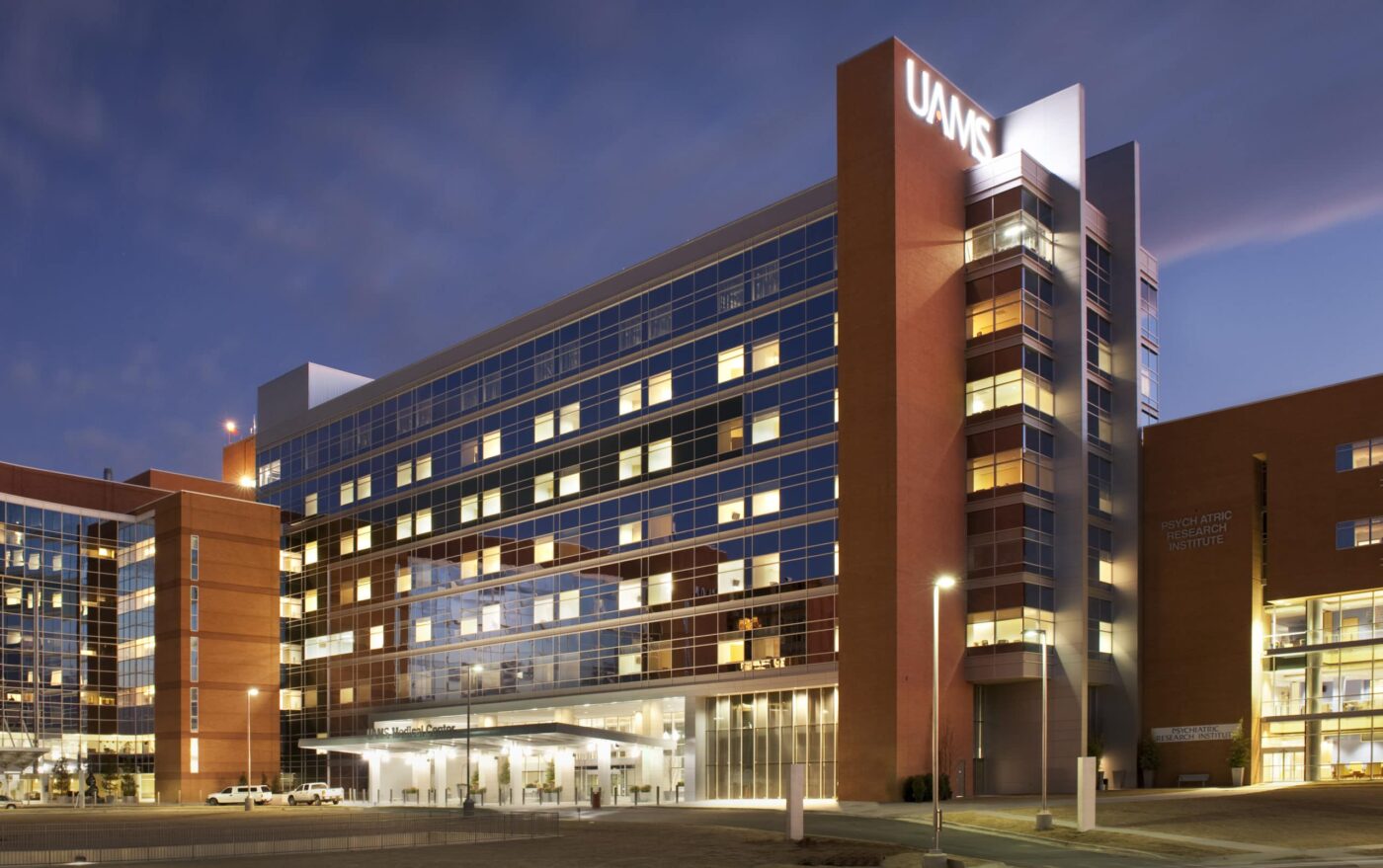
University of Arkansas for Medical Sciences (UAMS) College of Medicine
General Information
Founded in 1879, UAMS has grown into the center of medical education in Arkansas. It is the state’s only academic medical center and health sciences university, and the College of Medicine trains the majority of Arkansas’s physicians. More than 11,900 physicians have graduated from the College of Medicine since its founding, and the Class of 2030 is the 148th class to begin medical school at UAMS. In Little Rock, students learn from more than 1,400 faculty members in 20 clinical departments and seven basic science departments, with 89 ACGME-accredited residency and fellowship programs. The College of Medicine holds full LCME accreditation, with its next survey in 2030-31.
UAMS states its mission as improving “the health, health care and well-being of Arkansans and of others in the region, nation and world by educating current and future health professionals and the public,” along with providing patient- and family-centered care, specialty expertise, research and the translation of discoveries into better health.
The College of Medicine is one medical school on two campuses. About 155 students per class study at the Little Rock campus, a comprehensive academic medical center that includes the UAMS Health Medical Center, Arkansas Children’s Hospital, the Central Arkansas Veterans Healthcare System and Baptist Health. About 20 students per class study at the Northwest Regional Campus in Fayetteville, where they work with physicians at private practices, UAMS clinics, Washington Regional Medical Center, Mercy Hospital, Arkansas Children’s Northwest and other sites. The campus preference you indicate on the secondary application has no bearing on your evaluation for admission.
Admission Details
- Application deadlines: AMCAS by November 1, 2026; UAMS secondary by November 15, 2026; all documents by January 15, 2027
- Average MCAT: 510 (Class of 2030)
- Average GPA: 3.86 (Class of 2030)
- First-year class size: 172 (Class of 2030, including 19 in Fayetteville)
- Tuition for 2026-27: $18,250 per semester for Arkansas residents and border-state students ($36,500 per year) and $32,450 per semester for other nonresidents ($64,900 per year), plus a $400 study materials fee each semester and university fees
UAMS screens applications for its MCAT minimums (500 for residents, 505 for nonresidents, with scores from the last three years) and invites qualifying applicants to complete the secondary application and interview. A composite letter from your college’s premedical advisory committee is mandatory; if your school has none, or you graduated more than two years ago, three faculty members who know your academic work submit individual letters instead. The secondary fee is $100, or $50 for applicants approved for the AMCAS Fee Assistance Program. UAMS does not require the AAMC PREview or Casper, and it requires no deposit to hold a seat.
Interview Day is in person in Little Rock or Fayetteville, with a virtual option for out-of-state applicants who cannot travel. It includes multiple one-on-one interviews, campus tours and conversations with current students. The interviews are blind: your interviewers have not seen your application. Interviews run from September 2026 through January 2027, and UAMS notifies every applicant of a decision by February 26, 2027.
Special Programs
In 2021, the UAMS Northwest Campus in Fayetteville launched Arkansas’s first accelerated three-year MD program, built to fast-track primary care physicians who plan to serve underserved parts of the state. The three-year track is now offered at both campuses for students committed to family medicine, internal medicine or pediatrics. Students take the same courses and clerkships as four-year students but skip the mostly elective fourth year, which cuts tuition costs by 25% and gets graduates into practice a year sooner. The program requires its own application after a student is admitted to the College of Medicine, and three members of the Class of 2030 are on the track.
UAMS also offers three dual degrees: an MD/MPH at both campuses (about one in four UAMS medical students pursues both degrees), an MD/PhD on the Little Rock campus and an MD/MBA with the University of Arkansas’s Walton College of Business in Fayetteville. Honors tracks cover research, global health and service, underserved primary care, medical humanities, child health, and innovation and entrepreneurship. For students who want to practice in rural Arkansas, the state’s Rural Practice Loan and Scholarship Program and the Community Match Rural Physician Recruitment Program connect students with rural communities.
Applicants who miss this cycle’s November deadlines should plan for the next one and use the time to strengthen their application. Pre-med gap year programs are one way to add supervised clinical hours before you reapply.
Curriculum and Facilities
UAMS takes pride in its simulation labs and teaching technology, which bring classroom concepts to life. The Little Rock campus is a thriving hub for students who want an academic environment closely tied to real patient care: it is home to Arkansas’s only adult Level 1 trauma center, five health-related colleges, a graduate school and seven institutes for clinical care, research and education. UAMS had a 100% Match in 2025. Students engage with more than 70 residency programs and can choose from more than 300 electives, and 90% of graduates volunteer during medical school.
Arkansas medical schools, represented here by UAMS and its three newer partners in medical education, ARCOM, NYITCOM-Arkansas and the Alice L. Walton School of Medicine, offer future health care providers strong training, modern facilities and opportunities for community service. Choosing any of them is not just a step toward a degree but a step toward a fulfilling career in health care.
Alice L. Walton School of Medicine
The Alice L. Walton School of Medicine (AWSOM) is Arkansas’s newest medical school and its second MD program. Founded in 2021, it is a nonprofit, four-year MD program in Bentonville, housed in a 154,000-square-foot building on the Crystal Bridges campus, home of the Crystal Bridges Museum of American Art and the Heartland Whole Health Institute. Its inaugural class entered in July 2025, and its second class, the Class of 2030, began classes on July 13, 2026.
The school’s mission is to train “physicians who are devoted to transforming the health of medically underserved and rural communities in Arkansas, its surrounding states, and beyond.” It emphasizes whole health, which shows up in its curriculum, its wellness programs and its partnerships.
Accreditation and Financial Aid
The school holds preliminary LCME accreditation, the first step for a new medical school, and its next survey is planned for 2026-27, when it will seek provisional accreditation. A site visit in 2029-30 is planned in anticipation of full accreditation. The school is not yet accredited by the Higher Learning Commission and is seeking candidacy, so students are not eligible for federal financial aid, including Direct Loans, until it achieves candidacy and Title IV approval. Students who need loans use private lenders.
The Tuition Waiver
The Alice L. Walton School of Medicine waives all tuition and most fees for its first five classes, those entering from fall 2025 through fall 2029, for four years of enrollment. Listed tuition is $69,650 per year. After the waiver, students still owe $2,456 per year in billable charges, and the school’s 2026-27 first-year cost of attendance, living off campus, is $38,181. IMA’s guide to tuition-free medical schools in the U.S. compares this waiver with other free-tuition programs.
Admission Details
- Class size: 48 per class
- Inaugural class profile (Class of 2029, entered July 2025): median MCAT 513, mean GPA 3.89, mean BCPM GPA 3.87, 19% first-generation and 15% rural
- Class of 2030 (entered July 2026): 48 students from nearly 5,000 applications; 25% from rural communities and 65% from the Heartland region, including Arkansas and its surrounding states
- Minimums for a secondary: an MCAT of 500 or higher within four years of matriculation (the oldest score accepted for the 2027 entering class is from January 2023), an overall GPA of at least 3.4, and a cumulative BCPM GPA of 3.4 with at least 24 BCPM credit hours (or a post-baccalaureate or graduate BCPM GPA of 3.5)
- Eligibility: U.S. citizens and permanent residents only; no transfer students
- Letters: a minimum of three and a maximum of five letters, or a committee letter, through the AMCAS Letter Service
- PREview: not required but highly recommended
- Fees and dates: a $100 nonrefundable supplemental fee; AMCAS deadline November 1 and supplemental deadline December 1; offers made on a rolling basis from mid-October until the class is full
The school welcomes out-of-state applicants and sets no separate nonresident tuition, but its strategic plan aims for more than 70% of matriculants to come from Arkansas and the Heartland states. Applicants with roots in the region, or real experience in rural and underserved care, should make that connection clear. For a full look at the school, read How to Get Into Alice L. Walton School of Medicine: The Definitive Guide.

NYIT College of Osteopathic Medicine at Arkansas State
If you are exploring medical schools in Arkansas, particularly in osteopathic medicine, NYITCOM at Arkansas State is a strong choice. It is an extension of NYIT, the New York Institute of Technology College of Osteopathic Medicine, which was founded in 1977 as New York’s first osteopathic medical school. New York Tech has campuses in Old Westbury and New York City in New York, Jonesboro in Arkansas, and Vancouver in Canada. NYITCOM-Arkansas, the first osteopathic medical school in Arkansas, welcomed its inaugural class of 115 students in August 2016 and is housed in Wilson Hall, an 86,000-square-foot, 1931 Art Deco building on the Arkansas State University campus that was modernized for medical education.
The Jonesboro location shares NYITCOM’s mission, vision and outcomes with the Long Island campus, and it adds a focus on improving health care access for underserved and rural populations in Arkansas and the Mississippi Delta region. NYITCOM at Arkansas State is an additional location of NYITCOM and is accredited by COCA along with the main campus.
Campus and Financial Perks
- A diverse student body: the Class of 2030 in Jonesboro represents 23 states
- Access to Arkansas State University’s on-campus housing, dining, fitness center and library
- One tuition rate for every student: $70,720 for 2026-27
- Scholarships specifically for Arkansas campus students, including awards for students from Arkansas Delta counties, along with military scholarships and National Health Service Corps scholarships
Outcomes and Placement
- 100% postgraduate placement rate for NYITCOM-Arkansas graduates
- 70% of NYITCOM-Arkansas graduates pursue primary care specialties (family medicine, internal medicine, pediatrics, general surgery and psychiatry)
- Graduates of the Arkansas campus have also matched into anesthesiology, ophthalmology, orthopedic surgery, radiology, urology, neurology, obstetrics and gynecology, emergency medicine and dermatology
Admission Details
- Mean MCAT: 504.6 (both campuses combined)
- Average GPA: 3.69 (both campuses combined)
- First-year class size in Jonesboro: 121 (Class of 2030, entered August 2026), including 26 students from Arkansas
Programs at NYITCOM at Arkansas State
Doctor of Osteopathic Medicine (DO) Program
- A comprehensive four-year program
- Clinical clerkships in multiple specialties during the final two years, mostly at community hospitals such as NEA Baptist Memorial Hospital and St. Bernards Medical Center
- A required four-week rural rotation
- A Certificate in Population Health earned by every graduate, with optional certificates in telemedicine, health IT, evidence-based medicine or global health
- The Academic Medicine Scholars Program, which adds a Master of Science in Academic Medicine
The Arkansas campus also offers a Master of Science in Biomedical Sciences for students preparing for medical school.
Emigre Physicians Program (EPP)
- A program that retrains physicians born and educated outside the United States to earn a DO degree; NYITCOM is the only U.S. medical school that offers one
- Offered only on NYITCOM’s Long Island campus, not in Jonesboro
- Highly competitive and selective admission, with a separate application
- EPP students are fully integrated into the entering DO class and take part in all parts of student life
Application Considerations
NYITCOM reviews the whole applicant, looking for high academic achievement that shows you can succeed in a rigorous medical program along with the personal characteristics expected of a physician: integrity, compassion, maturity, motivation and interpersonal skills. A bachelor’s degree, the MCAT, letters of recommendation and a personal interview are required. Interviews can be virtual or in person at either campus, and NYITCOM-Arkansas encourages in-person interviews.
Admission Requirements
NYITCOM sends its supplemental application to every applicant after the AACOMAS application is submitted. On it, you state which campus you want to attend, Long Island or Jonesboro, and the admissions committee may recommend the campus that fits you best. The supplemental fee is $80, or a verified AACOMAS fee waiver code, and the supplemental is available only until March 16, 2027. NYITCOM accepts MCAT scores from January 2024 to January 15, 2027 and does not accept updates once the supplemental is submitted. Applicants must be U.S. citizens or permanent residents.
Technical Standards
Every student who accepts an offer, at either campus, signs an affirmation of compliance with NYITCOM’s technical standards:
- Observation: sufficient vision for laboratory work and patient assessment, including structural asymmetries, range of motion and tissue texture changes
- Communication: effective spoken and written communication with patients and the health care team
- Motor skills: the ability to perform procedures such as cardiopulmonary resuscitation, airway management and osteopathic manipulation
- Sensory skills: enhanced tactile abilities
- Strength and mobility: enough strength and mobility for osteopathic techniques and emergency care
- Participation: the ability to touch and be touched as part of learning osteopathic examination and treatment
- Behavior and social attributes: emotional health, good judgment, flexibility and mature, effective relationships with patients
These criteria are designed not just for academic success but also for the ethical and professional responsibilities of medical practice. For personalized application help, reach out to IMA, and read IMA’s full NYITCOM guide for its secondary prompts and interview advice.
How IMA’s Programs Align with the Mission Statements of Medical Schools in Arkansas
Alignment with ARCOM’s Mission Statement
International Medical Aid (IMA) aligns closely with the mission of the Arkansas College of Osteopathic Medicine (ARCOM). ARCOM’s commitment to educating compassionate osteopathic physicians focused on service to the underserved matches IMA’s core objectives. IMA’s pre-physician assistant internship programs give students patient-centered clinical experience, particularly in communities with limited access to care.
This hands-on approach complements ARCOM’s dedication to “excellence in teaching, research, service, and scholarly activity” and to lifelong learning. IMA and ARCOM both recognize the importance of the ethical and social principles of the osteopathic profession. For students considering DO schools in Arkansas, IMA’s programs can be a valuable stepping stone. For more information, visit IMA’s pre-PA physician assistant internship page.
Resonance with NYIT Arkansas’s Mission Statement
The mission of NYIT College of Osteopathic Medicine in Arkansas also lines up with IMA’s objectives. NYITCOM is committed to training osteopathic physicians “for a lifetime of learning and practice, based upon the integration of evidence-based knowledge, critical thinking, and the tenets of osteopathic principles and practice.”
IMA’s programs connect critical thinking with evidence-based medical practice, which fits the mission of NYIT Arkansas. That makes IMA’s programs useful for students aiming for Arkansas medical schools like NYITCOM. IMA encourages a lifetime of learning and practice, mirroring NYIT Arkansas’s emphasis on continuing education.
Complementing the UAMS Mission Statement
The University of Arkansas for Medical Sciences (UAMS) has a broad mission to improve health, health care and well-being, not just in Arkansas but in the region, nation and world. IMA’s core purpose of improving access to medical and public health resources, especially in low-resource communities, fits well with the UAMS mission.
Students aiming for Arkansas medical schools like UAMS will find IMA’s approach especially fitting. Both UAMS and IMA focus on educating current and future health professionals. UAMS also highlights global health through one of its honors tracks, and IMA’s pre-med internships abroad give pre-med students supervised clinical experience in teaching hospitals in Mombasa, Kenya and Cusco, Peru.
Connecting with the Alice L. Walton School of Medicine Mission
The Alice L. Walton School of Medicine trains physicians to transform the health of medically underserved and rural communities and asks its students to pioneer whole health principles. IMA’s internships place students in communities where access to care is limited, and they ask interns to think about the whole patient, from the vitals they take to the conditions patients live in. Applicants to a school with this mission benefit from experience that shows they have already worked where care is hard to reach.
A Strategic Choice for Prospective Students in Arkansas Medical Schools
International Medical Aid offers programs that fit the missions of the leading medical schools in Arkansas. Whether you are considering DO schools in Arkansas such as ARCOM and NYITCOM-Arkansas, or MD programs such as UAMS and the Alice L. Walton School of Medicine, IMA provides practical experience that builds your skills and strengthens your application.
The shared commitment to service, ethics and lifelong learning makes IMA’s programs a valuable asset for anyone hoping to attend medical school in Arkansas. Students who are weighing a physician assistant career, or who want to understand the PA role on a care team, can explore IMA’s pre-PA internships, and IMA’s medical internships abroad also include programs for nursing, mental health and other health careers.
Preparing for Medical School in Arkansas and the Importance of Internships
The Competitive Landscape of Medical School Admissions
Gaining admission to medical school is highly competitive, especially in a state like Arkansas, which has only four programs and only one public MD school. Aspiring medical students must excel in several areas: a high GPA, strong MCAT scores and extracurricular activities that show a commitment to health care.
These factors are integral to a compelling application that stands out to admissions committees. Before applying, set clear goals and find internships or experiences that line up with them, a process made easier with resources like the Average GPA and MCAT Score for Every Medical School in the US. College students who are still building clinical hours can look at medical internships for undergraduates alongside volunteer and work roles closer to home.
Types of Pre-Med Internships Aligning with Your Career Goals
When you think about how to strengthen your application, internships offer a valuable opportunity for practical experience and skill development. They range from hospital clinical roles to research positions at universities or pharmaceutical companies. The type of internship you choose should match your future career goals in medicine.
For instance, if you are more interested in patient care, a clinical internship is the better fit. If you are leaning toward medical research, a research internship makes more sense. IMA’s pre-med internships are clinical: interns take vitals, help with patient intake and triage, and assist with direct care under the supervision of local physicians and nurses, and they never perform tasks that would require a medical license in the United States. These internships for pre-med students suit applicants who want patient contact in a health system very different from the one at home.
Crafting a Strong Application for Internships
Because quality internships are competitive, your application must be excellent. Fit your application to the specific role you are applying for so you stand out from the crowd. Highlight experiences that are relevant to the internship, whether volunteering, past jobs or extracurricular activities.
A compelling cover letter can also make a significant difference. And do not underestimate the power of a strong interview; practicing your interview skills can improve your chances of securing the internship you want.
By carefully considering your goals, choosing the right type of internship and crafting a strong application, you will be better positioned to gain the practical experience Arkansas medical schools look for in applicants.
Arkansas medical schools are rising stars in medical education, offering strong programs and preparing students for successful health care careers. With well-rounded curricula, modern facilities and a commitment to serving the community, these schools make significant contributions to medicine. IMA’s Medical School Secondary Essay Prompts Database can help with the next step once your applications are in, and our global health initiatives page describes the communities IMA works with.
Frequently Asked Questions
How many medical schools are in Arkansas?
Arkansas has four medical school programs: two MD programs (the University of Arkansas for Medical Sciences College of Medicine and the Alice L. Walton School of Medicine) and two DO programs (the Arkansas College of Osteopathic Medicine in Fort Smith and NYITCOM at Arkansas State in Jonesboro). UAMS teaches on two campuses, Little Rock and Fayetteville, under one College of Medicine.
What is the newest medical school in Arkansas?
The Alice L. Walton School of Medicine in Bentonville is the newest. It holds preliminary LCME accreditation, enrolled its inaugural class of 48 students in July 2025 and welcomed its second class in July 2026.
What is the easiest medical school to get into in Arkansas?
No Arkansas medical school is easy to get into, and none publishes the number of offers it makes, so true acceptance rates cannot be compared. ARCOM has the lowest published average MCAT in the state, 498.7, and sets no minimum score. For Arkansas residents, UAMS is the most realistic MD option, because it gives residents priority and sets a lower MCAT minimum for them (500) than for nonresidents (505).
Which medical schools in Arkansas accept out-of-state students?
All four do. ARCOM and NYITCOM-Arkansas have no residency requirement and enroll many students from other states. The Alice L. Walton School of Medicine recruits nationally while aiming for most of its students to come from Arkansas and the Heartland states. UAMS gives priority to Arkansas residents but may accept up to 50 nonresidents, especially applicants with strong ties to Arkansas or from a border state, if they score 505 or higher on the MCAT.
Does UAMS give in-state tuition to students from other states?
Yes, for six states. College of Medicine students from Louisiana, Mississippi, Missouri, Oklahoma, Tennessee and Texas pay the in-state rate, $18,250 per semester for 2026-27. That tuition benefit does not change the admissions rules, so applicants from those states still need an MCAT of at least 505.
What MCAT score do I need for medical school in Arkansas?
It depends on the school. The latest published averages are 513 (median) at the Alice L. Walton School of Medicine, 510 at UAMS, 504.6 at NYITCOM (both campuses combined) and 498.7 at ARCOM. UAMS requires at least 500 for Arkansas residents and 505 for nonresidents, Alice L. Walton requires at least 500, ARCOM considers 500 or higher competitive, and NYITCOM publishes no minimum.
What GPA do I need for medical school in Arkansas?
The latest averages are 3.89 at the Alice L. Walton School of Medicine, 3.86 at UAMS, 3.69 at NYITCOM (both campuses) and 3.56 at ARCOM. Alice L. Walton requires an overall GPA of at least 3.4 and a BCPM GPA of 3.4. UAMS and ARCOM set no formal GPA minimum, though ARCOM notes that most of its students have an overall GPA above 3.5.
Which is the cheapest medical school in Arkansas?
For students in classes entering from 2025 through 2029, the Alice L. Walton School of Medicine waives tuition and most fees, and its 2026-27 first-year cost of attendance after the waiver is $38,181. Among schools that charge tuition, UAMS is the least expensive for Arkansas and border-state residents at $36,500 for 2026-27. ARCOM charges $60,500, and NYITCOM charges $70,720.
Is the Alice L. Walton School of Medicine really free?
Tuition and most fees are waived for four years for the first five classes, those entering in fall 2025 through fall 2029. Students still owe $2,456 a year in billable charges plus living costs. Because the school does not yet have Higher Learning Commission candidacy, its students cannot use federal financial aid until it gains candidacy and Title IV approval, so students who need loans use private lenders.
Do Arkansas medical schools accept international students?
No. UAMS, the Alice L. Walton School of Medicine, ARCOM and NYITCOM all accept only U.S. citizens and permanent residents. UAMS asks permanent residents to provide their documentation with the secondary application, before a faculty interview.
Is NYITCOM-Arkansas a separate school from NYITCOM in New York?
No. NYITCOM-Arkansas is an additional location of the New York Institute of Technology College of Osteopathic Medicine, with the same accreditation, mission, application and tuition as the Long Island campus. You apply to NYITCOM once and choose your preferred campus on the supplemental application. The Emigre Physicians Program is offered only on Long Island.
Does Arkansas have a three-year medical school program?
Yes. UAMS offers an accelerated three-year MD track at both of its campuses for students committed to family medicine, internal medicine or pediatrics. It cuts tuition costs by 25% and requires a separate application after you are admitted to the College of Medicine.
Is there a BS-MD program in Arkansas?
UAMS and the University of Arkansas will launch a six-year BS-MD program in fall 2027, with an inaugural cohort of 20 students. Preference goes to Arkansas residents and then to students from border states, and in the first year admission is by invitation to students who apply to the University of Arkansas.
How much clinical experience do Arkansas medical schools want?
None of the four schools sets a required number of clinical hours. UAMS asks applicants to show exposure to health care and patient care, and ARCOM highly encourages volunteering and shadowing and requires a letter from a physician you have worked with. Meaningful patient contact, reflected in your application and letters, matters at every school.
When should I apply to medical schools in Arkansas?
Apply early in the AMCAS or AACOMAS cycle. For 2026-27, the AMCAS deadline is November 1, 2026 at both UAMS and the Alice L. Walton School of Medicine. NYITCOM’s supplemental application is available only until March 16, 2027, and ARCOM’s AACOMAS deadline is April 16, 2027. Every program makes offers on a rolling basis or starts making offers in the fall, so seats can fill before the final deadline.
Sources
- University of Arkansas for Medical Sciences College of Medicine: Apply page (requirements effective with the 2026 admissions cycle and the 2026-27 timeline); Class of 2030 profile (College of Medicine blog); One Medical School, Two Campuses; Three-Year M.D.; About the College; admissions overview; rural practice programs. UAMS Student Financial Services, College of Medicine tuition and fees (FY 2026-2027) and 2026-27 graduate and professional budget workbook. UAMS News: Class of 2030 White Coat Ceremony (August 19, 2026); six-year BS-MD program (March 25, 2026); Class of 2026 Match (March 30, 2026); three-year M.D. launch (September 23, 2021). Checked October 17, 2026.
- Alice L. Walton School of Medicine: class profiles (Class of 2029); how to apply; admissions process; requirements; admissions FAQ; types of aid; cost of attendance and 2026-2027 Estimated Cost of Attendance PDF; Why AWSOM; accreditation; clinical partnerships; White Coat Ceremony for the Class of 2030 (July 17, 2026). Checked October 17, 2026.
- Arkansas College of Osteopathic Medicine and Arkansas Colleges of Health Education: ARCOM home page; admissions requirements; apply page; admissions FAQs; accreditation; 10 Years of White Coat Ceremonies (September 26, 2026); 2026-2027 and 2027-2028 Doctor of Osteopathic Medicine tuition; 2026-2027 Doctor of Osteopathic Medicine cost of attendance. Checked October 17, 2026.
- New York Institute of Technology College of Osteopathic Medicine: apply page (2026-2027 cycle); D.O. admission requirements; tuition and fees and cost of education (2026-2027); About NYITCOM; NYITCOM-Arkansas home and About pages; technical standards; accreditation; outcomes; grants and scholarships; Emigre Physicians Program; Class of 2030 White Coat (August 14, 2026); Arkansas Rural Health Transformation Program grants (October 15, 2026); NYIT Catalog Fast Facts. Checked October 17, 2026.
- AACOM Choose DO Explorer profiles for the Arkansas College of Osteopathic Medicine and the New York Institute of Technology College of Osteopathic Medicine (2026-2027 cycle). Checked October 17, 2026.
- Liaison Committee on Medical Education, Directory of Accredited MD Programs (updated October 14, 2026). American Osteopathic Association, Commission on Osteopathic College Accreditation directory of colleges of osteopathic medicine (September 2026) and candidate-status list (August 2026). Checked October 17, 2026.