The Alabama College of Osteopathic Medicine (ACOM) is Alabama’s first osteopathic medical school. It grants the Doctor of Osteopathic Medicine (DO) degree on a single campus in Dothan, in the southeast corner of the state, and it is the academic division of Southeast Health, the region’s largest health system. The school was built to answer a physician shortage, so its training leans toward patient-centered, team-based primary care for medically underserved parts of Alabama, the Tri-State area and the nation.
This guide covers the 2026-2027 application cycle, which fills the class that starts in the summer of 2027. It explains who can apply, how the AACOMAS-only process works (ACOM has no secondary application this cycle), what the Class of 2030 profile tells you, what 2026-2027 costs look like, how the curriculum and statewide clinical years run, how interviews work, and who leads the school. If you are still deciding between the two kinds of medical degrees, start with What is Osteopathic Medicine and How is it Different? and then come back. If you are comparing the two application services, our AACOMAS Definitive Guide 2023 and Applying to Medical School: The Differences Between the MD and DO Application Services walk through both systems. Students weighing a physician assistant career can also review the list of PA schools in Alabama here.
Facts in this guide were checked against the school’s own pages on October 18, 2026.
Key Takeaways
- Eligibility: you must be a U.S. citizen or permanent resident. ACOM does not accept international applicants, non-permanent residents or applicants with DACA status.
- No secondary this cycle: ACOM reviews the AACOMAS primary application, your letters and your MCAT. There is no supplemental application and no supplemental fee for 2026-2027, so your AACOMAS personal statement and experiences carry the written part of your application.
- Class profile: the Class of 2030, which entered in 2026, drew 4,814 AACOMAS applications, the school conducted 1,663 interviews and 224 students matriculated. Matriculants averaged a 504 MCAT and a 3.57 GPA.
- Regional focus: at least half of every class comes from the Southeast, mostly Alabama and Florida, and the school looks for applicants able and willing to serve primary care and underserved needs in Alabama and the region.
- Dates: AACOMAS opened May 4, 2026. ACOM lists June 1 as its AACOMAS submission deadline, interviews run from the end of July through the end of April, and admission is rolling, so apply early.
- Cost: 2026-2027 tuition is $61,788 for every student, in-state or out-of-state. The estimated first-year cost of attendance is $104,600.
- Distinctive training: cadaver dissection in the first semester, osteopathic principles and practice in every preclinical term, a nationally winning simulation program, two rural clinics near Dothan and clinical years at core sites across Alabama, the Florida Panhandle and Mississippi’s Gulf Coast.
- Next step: line up your physician letter (DO preferred) and your committee or science faculty letters, then submit AACOMAS as early in the cycle as you can.
Key Statistics About Alabama College of Osteopathic Medicine
The snapshot below brings together the numbers applicants ask about first. Admissions figures describe the Class of 2030, the class that entered in 2026 and the newest class profile the school has published. Costs are for the 2026-2027 academic year. ACOM publishes applications, interviews and matriculants but not the number of offers it makes, so no acceptance rate is shown.

| Measure | Figure | Year or cohort | Source |
|---|---|---|---|
| School and degree | Alabama College of Osteopathic Medicine, Doctor of Osteopathic Medicine (DO), Dothan, Alabama | Current | ACOM Our Story |
| Average MCAT, matriculants | 504 | Class of 2030 (entered 2026) | ACOM Class of 2030 profile |
| Average GPA, matriculants | 3.57 | Class of 2030 | ACOM Class of 2030 profile |
| AACOMAS applications received | 4,814 | Class of 2030 | ACOM Class of 2030 profile |
| Interviews conducted | 1,663 | Class of 2030 | ACOM Class of 2030 profile |
| Students matriculated | 224 | Class of 2030 | ACOM Class of 2030 profile |
| Approved class size | Up to 210 per class | Approved December 13, 2018 | ACOM Accreditation page |
| Acceptance rate | Not published (offers are not reported) | n/a | ACOM class profiles |
| Total DO enrollment | 793 | Academic year ending 2025 | AACOM Choose DO Explorer |
| Tuition | $61,788 a year, every student | 2026-2027 | ACOM Tuition and Fees |
| Estimated cost of attendance | $100,153 (OMS II) to $104,600 (OMS I) | 2026-2027 | ACOM Cost of Attendance |
| Residency placement | 99.5%, 17 specialties, 28 states | Class of 2026 | ACOM Class of 2026 match report |
| Accreditation | COCA, Accreditation (ten-year term granted April 2024) | Current | ACOM Accreditation page |
Two notes help you read these numbers. First, the class profile reports averages, not medians, so a 504 average means many matriculants scored below 504 as well as above it. Second, the count of interviews is not the count of offers. ACOM interviewed 1,663 applicants and enrolled 224 for the Class of 2030; some interviewees received offers and went elsewhere, so you cannot turn these two numbers into an acceptance rate. For DO schools, ACOM’s Choose DO Explorer profile is the companion source to the school’s own data; our guide to the Choose DO Explorer explains how to use it. To see how ACOM’s numbers sit next to other schools, compare them in our list of average GPA and MCAT scores by medical school.
Mission and Educational Priorities
ACOM states its mission this way:
“The Alabama College of Osteopathic Medicine will provide quality, learner-centered osteopathic education, research, and service, while promoting graduate medical education, with emphasis on patient-centered, team-based primary care to serve the medically underserved areas of Alabama, the Tri-State area, and the nation.”
Its vision is that “The Alabama College of Osteopathic Medicine will be regionally and nationally recognized for significantly impacting the physician workforce needs and access to quality medical services.” The mission statement is reviewed every five years, and the next review is scheduled for fall 2026, so check the mission page again before you interview.
The school’s core values go by the acronym InSPIRED: Integrity, Service, Passion, Innovation, Respect, Excellence and Diversity. A Council on Institutional Core Values, which includes faculty, staff and student government leaders, advises the dean’s cabinet on how to keep those values present in daily life. The school also runs a “One Table” theme, the idea that everyone brings different backgrounds to a single shared table, and celebrates it with events such as COM-Unity Day and a Military Appreciation Luncheon. In 2026, ACOM received the Higher Education Excellence and Distinction (HEED) Award from Insight Into Academia for the fourth year in a row.
What the mission means for your application
The mission is not decoration. The school’s selection page names “the applicant’s ability and desire to fulfill the college’s commitment to the primary care and underserved needs of Alabama and the region” as one of the personal characteristics it rates. In practice, that means:
- Primary care is the center of gravity. Over 60 percent of ACOM graduates since 2017 have entered primary care disciplines (family medicine, internal medicine, OB/GYN and pediatrics), and 52 percent of the Class of 2026 matched or placed into primary care programs. You do not have to commit to family medicine to be admitted, but you should be able to explain how primary care and underserved communities fit your plans.
- Regional ties matter. The school welcomes applicants from all backgrounds, “especially those from Alabama and the surrounding region,” and at least half of each class comes from the Southeast. If you grew up in the Wiregrass, the Florida Panhandle, Georgia or the rural South, connect that history to your goals. If you did not, show why you would train and possibly stay in a region like this one.
- Team-based care is taught, not assumed. Team-based learning, simulation and interprofessional sessions run through the preclinical years. Experiences where you worked inside a team, rather than beside one, give you strong material.
- Osteopathic identity counts. The school strongly recommends time with an osteopathic physician, and a DO letter is preferred. Read about the MD vs. DO: The Major Differences and Which is Better so you can explain why you want this degree in particular.
If you want help turning these priorities into an application plan, IMA offers specialized medical school consulting services alongside its clinical programs.
Accreditation and Institutional Identity
Yes, Alabama College of Osteopathic Medicine is accredited. ACOM is accredited by the Commission on Osteopathic College Accreditation (COCA) of the American Osteopathic Association, the only accreditor for predoctoral osteopathic medical education in the United States and the body recognized by the U.S. Department of Education. COCA granted ACOM full accreditation on April 6, 2017, the year its first class graduated.
At its April 11-12, 2024 meeting, COCA reviewed the report from ACOM’s December 2023 comprehensive site visit and granted the status of Accreditation, which the school describes as the highest recognition COCA awards and which runs for ten years. The school’s announcement called it “Accreditation with Exceptional Outcome.” The next comprehensive site visit is scheduled for the 2033-2034 academic year. On December 13, 2018, COCA also approved a class size increase that allows ACOM to enroll up to 210 students per class, up from the original 162.
Separate from accreditation, ACOM is licensed by Alabama’s Private School Licensure Division to operate as an osteopathic medical school and award the DO degree, and it holds an annual license with the City of Dothan.
A few identity points are useful to know:
- Ownership and governance. ACOM is the academic arm of Southeast Health, which is governed by the Houston County Health Care Authority. The school describes itself as the only osteopathic medical school that is an academic division of a county healthcare authority. A nine-member board of directors, with representatives of the health care authority and the Alabama Medical Education Consortium, governs the college.
- Age. ACOM was founded in 2010 and graduated its first class in 2017. It is one of 43 colleges of osteopathic medicine in the country, by the school’s count.
- Mayo Clinic Care Network. Southeast Health is the first Alabama health system to join the Mayo Clinic Care Network, and ACOM is the first and only osteopathic medical school in the network. Membership gives faculty, staff and students access to selected Mayo Clinic knowledge tools, such as AskMayoExpert, and educational resources. It does not change ACOM’s governance or accreditation, and it is not a Mayo Clinic degree or rotation guarantee.
- One campus, one degree. ACOM offers only the DO program, on one campus in Dothan. Optional master’s degrees come through partner universities, described below.
Medical Programs and Affiliations
ACOM is a single-degree school. Everyone enrolls in the four-year Doctor of Osteopathic Medicine program, and a few students extend to five years through a fellowship. Everything else, from master’s degrees to simulation competitions, is optional and sits on top of the DO.
Doctor of Osteopathic Medicine (DO)
The DO program follows a hybrid preclinical curriculum in years one and two, then community-based clinical training at core sites in years three and four. You apply only through AACOMAS. Details of the curriculum are in the next section.
Early Decision Program
ACOM runs an Early Decision Program for applicants who consider ACOM their first choice among osteopathic and MD schools. Early Decision applicants sign a letter of intent not to apply to other medical schools until ACOM announces early decisions on or before October 1, need a minimum cumulative and science GPA of 3.40 and a minimum MCAT of 504, and must complete AACOMAS by July 15. Interviews are in person in mid-September, decisions come by October 1, and admitted students pay a reduced $500 deposit by November 1 instead of the standard $2,000. Applicants not accepted early move automatically into the regular pool. For the 2026-2027 cycle, the July 15, 2026 Early Decision deadline has passed, so this is planning information for future applicants. See the Early Decision page for the letter of intent.
Fellows Scholars Programs (five-year option)
ACOM offers two one-year Fellows Scholars Programs that students enter after completing the OMS II year and COMLEX-USA Level 1:
- Anatomy/OPP Fellows Scholars Program. Fellows help teach anatomy and osteopathic principles and practice (OPP), mentor first- through third-year students, help develop the network-wide OPP curriculum for third- and fourth-year students, join research projects and provide clinical services under faculty supervision.
- Clinical Simulation Fellows Scholars Program. Fellows help run the simulation curriculum: writing and programming cases, supervising the teaching of skills such as IV insertion, lumbar puncture and suturing, and supporting simulation competitions.
Both fellowships add a year, so the total time from matriculation to graduation is five years. Fellows devote at least 40 hours a week, earn a Master of Science in Adult Education (MSADE) through a special arrangement with Troy University, receive a monthly stipend (currently $1,500), receive $1,500 toward national professional training and receive a tuition waiver for the fellowship year and one additional year. The scholarships page also lists an $18,000 scholarship during the fellowship year. A fellow who leaves early must repay the balance of tuition and fees, with exceptions for serious emergencies. These programs suit students drawn to academic medicine, teaching or OMM.
Concurrent master’s degrees
ACOM has partnered with regional universities so students can add a master’s degree while in medical school. All three are optional:
- Master of Business Administration (MBA), Troy University, Dothan Campus. Useful for students who expect to run a practice or lead a health organization. Troy substitutes ACOM’s Foundations of Modern Health Care for one elective.
- Master of Public Health (MPH), Samford University, online. A coordinated DO/MPH that places most MPH coursework in summer terms, aimed at primary care and public health careers.
- Master of Science in Management (MSM), Leadership concentration, Troy University, Dothan Campus. A leadership-focused degree for students who want hospital or clinical management skills without a business background.
The MSADE degree is available only to students in the Fellows Scholars Programs.
Admissions agreements and preparation
- Troy University MOU. A three-year agreement guarantees an admissions interview to Troy University students who meet academic and MCAT requirements and waives the admission application fee, and it brings ACOM recruiting, advising and mock interviews to the Troy campus.
- SOFtoSOM MOU. A three-year agreement with Special Operations Forces to School of Medicine guarantees an interview to academically vetted Special Operations veterans who reach a minimum MCAT, waives the fee and offers the Anatomy Boot Camp at no cost.
- Anatomy Boot Camp. ACOM offers an optional Anatomy Boot Camp for incoming students before the first semester of medical school. It is preparation, not a requirement.
- Military pathways. ACOM has an active Military Interest Group and a chapter of the Student Association of Military Osteopathic Physicians and Surgeons, which was named national chapter of the year. Students on military scholarships match through the separate military match each year, and the school helps veterans use GI Bill benefits.
Clinical affiliations
ACOM’s clinical partner is Southeast Health, including its Medical Center in Dothan, a 420-bed regional referral hospital that is a Level II trauma center and one of four certified Comprehensive Stroke Centers in Alabama. Third- and fourth-year students train at more than two dozen core sites organized in four regions, built on a network the state-funded Alabama Medical Education Consortium created in the early 2000s. Students also see patients at the Southeast Health ACOM rural clinics in Ashford and Taylor. More on these sites is in the clinical rotations section.
If you are still deciding between becoming a physician and becoming a PA, you can build patient care experience either way through IMA’s pre-PA internships, and compare Alabama PA programs in our list of PA schools in Alabama.
Curriculum Overview
ACOM’s DO curriculum runs four years (five for Fellows Scholars). The first two years combine discipline-based foundations with organ-system courses, and the last two years move students into community hospitals and clinics across the region. Osteopathic principles and practice, clinical skills and simulation run through the whole program.
Years 1 and 2: a hybrid preclinical model
The preclinical curriculum is a hybrid of discipline-based and system-based teaching. The first semester is devoted to foundational sciences and anatomy with cadaver dissection, which the school frames as students’ “First Patient.” Professionalism and ethics start right away in Foundations of Modern Health Care, and Primary Clinical Skills (PCS) and Osteopathic Principles and Practice (OPP) give hands-on practice in physical and structural examination, osteopathic manipulative treatment (OMT) and clinical reasoning. From the spring of the first year, courses are organized by organ system, with clinical integration and a patient-centered focus.
The course sequence looks like this:
| Term | Courses |
|---|---|
| OMS I, fall | Anatomical Sciences; Molecular Medicine; Foundations of Modern Health Care I; Osteopathic Principles and Practice I; Primary Clinical Skills I |
| OMS I, spring | Neuroanatomy/Behavioral Neuroscience; Musculoskeletal; Hematology and Lymphatics; Dermatology; Foundations of Modern Health Care II; Osteopathic Principles and Practice II; Primary Clinical Skills II |
| OMS II, fall | Cardiovascular; Respiratory; Renal; Foundations of Modern Health Care III; Osteopathic Principles and Practice III; Primary Clinical Skills III |
| OMS II, spring | Endocrine/Reproductive; Gastrointestinal; Foundations of Modern Health Care IV; Osteopathic Principles and Practice IV; Primary Clinical Skills IV |
This hybrid approach lets you learn the scientific basis of medicine first, then see how it applies to each organ system in a clinical context. Four features stand out:
- Discipline and system balance. A strong base in the core sciences, followed by organ-system courses, prepares you for COMLEX-USA Level 1 and for clinical work.
- Professionalism and ethics from day one. Foundations of Modern Health Care runs all four preclinical terms.
- Hands-on learning. PCS and OPP put theory into practice from the first semester.
- Longitudinal reinforcement. OPP, high-fidelity patient simulation and early standardized patient encounters continue across both years, which the school says supports long-term retention.
Teaching methods mix lectures with clinical integration sessions, small groups, online and interactive instruction, and team-based learning in a dedicated Team-Based Learning Center. Students have immersive simulation experiences and numerous standardized patient encounters, early clinical exposure in an ACOM primary care clinic, and career development built into the curriculum.
Osteopathic principles and practice
OPP is taught in all four preclinical terms in a 5,000-square-foot OPP laboratory, and it does not stop when students leave campus. Every core clerkship in years three and four includes clinically relevant osteopathic activities, each clinical site has OPP tables for student use, and students are expected to use their osteopathic training in patient encounters. The Rural Health clerkship combines OPP training with work in a rural family health clinic, and third-year students serve as near-peer teachers for first- and second-year students in OPP lectures and labs. The OPP department is chaired by Thomas J. Fotopoulos, DO, who is board certified in neuromusculoskeletal medicine and osteopathic manipulative medicine.
Simulation
Simulation is one of ACOM’s best-known strengths. Simulation is integrated into the curriculum, the Simulation Center building is just over 10,000 square feet with eight simulation bays and a skills lab, and ACOM teams have won six national titles in the American Medical Student Association (AMSA) simulation competition and three international titles. In 2025, the ACOM team “Smooth Obturators” won the AMSA national championship in Washington, D.C., defeating teams that included Yale School of Medicine. A Clinical Simulation Fellows Scholars Program trains selected students to teach simulation.
Years 3 and 4: community-based clinical training
The third- and fourth-year curriculum is delivered at community hospitals and clinics throughout the region, using a network of Medical Education Directors and supervising physician preceptors. Students are assigned to a core clerkship site. The required clerkships are four weeks each:
- Third year: Psychiatry, Internal Medicine I and II, Obstetrics/Gynecology, General Surgery, Pediatrics, Family Medicine and Rural Health, with the rest of the year for electives.
- Fourth year: Emergency Medicine (after completing the whole third year) and Hospice and Palliative Care, plus electives that let students travel to programs where they may apply for residency.
Three rules shape the clinical years. Every student must complete at least one core clerkship with a DO preceptor, at least one core clerkship embedded in a residency program, and inpatient experience in at least two core clerkships. Electives can be in any discipline with any licensed physician the Division of Clinical Sciences approves. A Pathway to Residency curriculum covers specialty choice, residency applications and interview skills, and each site offers didactic sessions.
Preceptors use a range of teaching methods, from direct observation and monitored participation to case presentations, and every clinical faculty member is approved through a credentialing process that includes CV review, a recommendation from the site’s Medical Education Director and a license check. The Academic Planning and Evaluation Committee for Curriculum, the Curriculum Committee and the Dean’s Cabinet review the clinical curriculum.
Community-based training exposes students to a wide variety of cases, and the preceptor model gives close, practical teaching. The trade-off is that you may live away from Dothan for clinical years and see a different mix of cases than classmates at other sites. Ask about site assignment when you interview.
Program outcomes and core competencies
By graduation, ACOM expects students to meet seven program outcomes that follow the osteopathic core competencies:
- Osteopathic principles, practice and manipulative treatment: osteopathic principles integrated into patient care plans.
- Osteopathic patient care and procedural skills: gathering data and forming diagnoses across care settings.
- Application of knowledge for osteopathic medical practice: applying biomedical and clinical science in an integrated, patient-centered way.
- Practice-based learning and improvement: evidence-based medicine and continuous improvement.
- Interpersonal and communication skills: therapeutic relationships with patients and effective work with care teams.
- Professionalism: ethical conduct grounded in the ethics and social science coursework.
- Systems-based practice: understanding health systems and advocating for quality, equitable care.
The curriculum aims to produce osteopathic physicians who are academically strong, clinically competent, ethically grounded and ready for lifelong learning and leadership.
Admissions Requirements and Application Process
ACOM welcomes applicants from all backgrounds, especially those from Alabama and the surrounding region, and uses rolling admissions. It reviews applications and makes interview decisions throughout the cycle, so applying early is one of the most useful things you can do. The Class of 2030 drew 4,814 AACOMAS applications for about 224 seats.
Who can apply: citizenship and residency
You must be a U.S. citizen or permanent resident, and you must keep that status through enrollment. ACOM does not accept international applicants or non-permanent residents, and applicants with DACA status cannot be considered at this time. Coursework from foreign institutions must be evaluated for U.S. equivalence through a service AACOMAS designates.
There is no separate in-state quota and no in-state tuition rate. Alabama residents and out-of-state applicants pay the same tuition, and the class is built to include at least 50 percent from the Southeast, mainly Alabama and Florida.
Degree and prerequisite coursework
You need a high school diploma or equivalent and a bachelor’s degree from a college or university accredited by an agency recognized by the U.S. Department of Education. Applicants who have completed 75 percent of their degree may be considered in special circumstances with the Dean’s approval. All prerequisite courses, AACOMAS-listed coursework and degree requirements should be finished by July 1 of the year you start.
| Subject | Courses | Semester hours | Status |
|---|---|---|---|
| Biology | 2 courses with labs | 8 | Required |
| General/inorganic chemistry | 2 courses with labs | 8 | Required |
| Organic chemistry | 2 courses with labs | 8 | Required |
| Physics | 2 courses with labs | 8 | Required |
| English (composition and/or literature) | 2 courses | 6 | Required |
| Biochemistry, cell biology, genetics, human anatomy, physiology, immunology, microbiology, neuroscience, behavioral science | Upper-level courses | n/a | Recommended |
| Math/statistics | n/a | n/a | Recommended |
Lab credit is required for all science courses. ACOM does not usually accept substitutes, but the Associate Dean of Student Services can approve equivalent coursework, and most osteopathic schools follow the AACOMAS definition of science courses for the science GPA. ACOM accepts online coursework, online labs and pass/fail grades for prerequisites. There is no published time limit on how old prerequisite coursework can be, but recent upper-level science is the best evidence that you are ready for the first semester. Any undergraduate major is acceptable.
MCAT policy
The MCAT is required, and ACOM does not waive it. Scores from within four years of the start of the application cycle are preferred, and older scores may be considered case by case. For the 2026-2027 cycle, the oldest MCAT considered is from March 31, 2022 and the latest accepted is January 31, 2027, and the school notes that the January test date is the last one it accepts. Take the test as early as you can so a score is in hand when your application is reviewed.
The Class of 2030 averaged 504 on the MCAT, and the school lists competitive averages of a 504 MCAT, a 3.45 undergraduate GPA and a 3.35 science GPA. These are averages, not cutoffs. The only published minimums are the Early Decision Program’s (3.40 GPA and 504 MCAT).
The MCAT has four sections, each scored from 118 to 132, for a total from 472 to 528:
- Chemical and Physical Foundations of Biological Systems: 59 questions, 95 minutes.
- Critical Analysis and Reasoning Skills (CARS): 53 questions, 90 minutes.
- Biological and Biochemical Foundations of Living Systems: 59 questions, 95 minutes.
- Psychological, Social, and Biological Foundations of Behavior: 59 questions, 95 minutes.
A strong score helps your application and can help with scholarship eligibility; the ACOM Rural Medicine Scholarship, for example, requires an MCAT of 502 or higher. For preparation, these IMA resources are a good start:
- Best Classes to Take Before the MCAT
- MCAT Score Calculator: Predict and Convert Your Scores
- MCAT Sections Guide: Experts Explain the MCAT
- Medical Schools Accepting Low MCAT Scores in 2023
Experience: clinical work, shadowing and service
ACOM does not publish minimum hours, but its selection page lists what the committee looks for in personal characteristics: personal experiences with patient populations, physician shadowing, community and volunteer service, leadership positions and honors. Shadowing is not a formal requirement, but the school strongly recommends time with an osteopathic physician, and it accepts both virtual and in-person shadowing. Patient-facing work, such as scribing, EMT or CNA work, or internships for pre-med students where you take part in supervised patient care, shows the committee that you understand what physicians do.
Letters of recommendation
Letters “play a major role in the assessment of applicants,” so plan them early. ACOM requires:
- A physician letter. It must come from a physician, with a DO preferred, and should describe your exposure to patients and your ability to perform in a medical setting. It can reflect shadowing, volunteering or work. An MD letter is accepted.
- A premed advisor or committee letter, listing the names and departments of committee members. If your school has no committee, submit two academic letters from science faculty who taught you in required or recommended upper-level science courses. Only biology, chemistry or physics instructors count. Letters from social science or math professors do not count toward this requirement, and labs or research-based courses will not suffice.
- Nontraditional applicants who have been out of college for more than two years and have not taken recent prerequisite or other classes must add a letter from an immediate supervisor or employer, along with the physician letter.
All letters should be signed and on letterhead. Science faculty letters should include academic credentials in the signature line and name the course the writer taught you, so tell your writers about these rules when you ask. Letters from relatives, spouses, family friends, coaches, personal trainers, veterinarians, dentists, or your family physician or pediatrician (unless you shadowed or worked with them) do not count toward the requirement. You may send more than three letters, but the school discourages it unless an extra letter adds something new. ACOM accepts letters through AACOMAS, Interfolio, by mail or by email.
Step 1: the AACOMAS application
ACOM accepts applications only through AACOMAS, the American Association of Colleges of Osteopathic Medicine Application Service, which opened for the 2026-2027 cycle on May 4, 2026. Send original transcripts directly to AACOMAS and release your MCAT scores from the AAMC to AACOMAS. Our guide to applying to medical school with AACOMAS walks through each section, and the ACOM How to Apply page lists the school’s steps.
Step 2: no supplemental application
For 2026-2027, ACOM states plainly: “NO Supplemental Application or Fee is Required.” Once your AACOMAS application is verified and your letters arrive, your file is complete. The admissions committee reviews completed files using its own standards, and applicants selected for interviews receive an email invitation with login credentials to schedule a date. Applicants approved for an AACOMAS fee waiver are automatically eligible for any ACOM fee waiver.
Step 3: interview
Interviews run from the end of July through the end of April, in person or by Zoom. The format is covered in the interview section below.
Step 4: decisions, deposits and deferral
After the interview, the Admissions Committee reviews your file with the interviewers’ comments, and the Dean approves its recommendations. Applicants usually hear within a few weeks. Accepted applicants pay a nonrefundable $2,000 deposit, which is credited toward tuition, on the AACOMAS traffic guideline schedule:
- Accepted before November 15: deposit due by December 14.
- Accepted November 15 to January 14: 30 days to pay.
- Accepted January 15 to April 30: 14 days to pay.
- Accepted on or after May 1: you may be asked for an immediate deposit.
ACOM fills the class on a rolling basis up to the first week of matriculation. Deferral requests are considered; contact admissions with your circumstances. Deposited students receive matriculation packets around February 1, covering the drug screen, background check, medical equipment, health insurance and immunization records. Matriculation is conditional until all final transcripts arrive, and the school can deny matriculation for academic or conduct problems between acceptance and enrollment. All students must meet ACOM’s Technical Standards for Admission and Matriculation and the OPP mandatory course requirements, which include hands-on examination and treatment.
Timeline for the 2026-2027 cycle
| Date | Step |
|---|---|
| May 4, 2026 | AACOMAS opens and applications are available to ACOM |
| July 15, 2026 | Early Decision AACOMAS deadline (passed) |
| End of July 2026 | Regular interviews begin (in person or Zoom) and continue through the end of April 2027 |
| Mid-September 2026 | Early Decision interviews; decisions by October 1 |
| November 1, 2026 | Early Decision $500 deposit due |
| December 14, 2026 | First seat deposit deadline for applicants accepted before November 15 |
| January 2027 | Last MCAT test date accepted (scores through January 31, 2027) |
| Around February 1, 2027 | Matriculation packets sent to deposited students |
| June 1 | ACOM’s listed deadline for AACOMAS submission; confirm the current-cycle date with admissions and do not wait for it |
| July 1, 2027 | All prerequisites and degree requirements complete |
| Summer 2027 | Orientation and first classes (the 2026 class began June 29-30, 2026) |
If you are planning a year ahead, use the spring and summer before you apply for MCAT preparation and clinical experience; pre-med summer internships can fit into that window without competing with the school year.
Tuition, Cost of Attendance and Financial Aid
ACOM charges one tuition rate for everyone. Alabama residents and out-of-state students pay the same amount, which removes the usual out-of-state premium that public medical schools charge. The total cost of attendance is much higher than tuition alone, so plan with the full budget.
Tuition and fees, 2026-2027
| Item | Amount | Notes |
|---|---|---|
| Tuition, standard rate | $61,788 a year ($30,894 per term) | Same for in-state and out-of-state students |
| Extended-time tuition | $10,298 per term | For students on an extended schedule |
| Affordable Access Textbook and Resources Fee | $1,000 a year ($500 per term) | Optional; covers required digital course materials |
| Technology fee | $250, one time | Optional; laptop and tablet purchased through ACOM |
| Student health insurance | Premiums announced each summer; $3,934 listed for 2026-2027 in Choose DO | Optional if you enroll in another ACA-compliant plan |
| Acceptance deposit | $2,000 ($500 for Early Decision) | Nonrefundable; credited to tuition |
| Annual payment plan opt-in fee | $50 | If you use the payment plan |
Cost of attendance by year
The cost of attendance (COA) is the school’s estimate of educational expenses for a year of enrollment. It sets your maximum financial aid, including loans; your total aid package can never exceed it. The 2026-2027 standard COA is:
| Budget item | OMS I (11 months) | OMS II (10 months) | Fellowship, optional (12 months) | OMS III (10 months) | OMS IV (9 months) |
|---|---|---|---|---|---|
| Tuition | $61,788 | $61,788 | $61,788 | $61,788 | $61,788 |
| Textbook and resources fee (optional) | $1,000 | $1,000 | $1,000 | $1,000 | $1,000 |
| Books, materials, supplies and equipment | $2,849 | $1,000 | $1,200 | $1,000 | $900 |
| Food and housing | $23,144 | $21,040 | $25,248 | $21,040 | $18,936 |
| Transportation | $5,533 | $5,030 | $6,036 | $6,500 | $5,850 |
| Miscellaneous | $8,096 | $7,360 | $8,832 | $7,360 | $6,624 |
| Board exams and residency interview travel | $0 | $745 | $0 | $745 | $5,000 |
| Estimated loan fees | $2,190 | $2,190 | $462 | $2,190 | $2,190 |
| Estimated COA | $104,600 | $100,153 | $104,566 | $101,623 | $102,288 |
Fellows Scholars receive a tuition waiver during the fellowship year, but the standard budget still lists tuition for that year, so your actual charges as a fellow will be lower than the COA. The COA assumes full-time enrollment on the standard pattern for each year, so students on extended time or a different schedule will have a different COA. The figures can change without notice.
A few practical details are worth knowing. The school includes a $250 allowance for the optional laptop and tablet purchase in the books and equipment budget. Students with children under 12 can ask for a dependent care allowance of up to $12,000 a year, and students who need a major vehicle repair to keep commuting can ask for up to $2,500 a year. Federal loans cannot cover periods when you are not enrolled, and the COA cannot include spousal expenses, moving costs, vehicle purchases or consumer debt payments. The financial aid office encourages students to live well below the COA: share housing, cook at home and track spending.
For a wider view of what medical school costs, see our guide to the total cost of medical school. Average graduate indebtedness at ACOM is $248,706 (Choose DO, 2026-2027 profile).
Financial aid and scholarships
The Office of Financial Aid helps students with federal loans, private loans, military benefits and scholarships, and offers financial literacy resources, initial loan counseling and exit counseling. Aid depends on maintaining satisfactory academic progress, as defined in the Student Financial Aid Guide. Students can also review their loan history in the National Student Loan Data System. Institutional and ACOM-affiliated scholarships include:
- ACOM Fellows Scholars Track: tuition waiver plus an $18,000 scholarship during the fellowship year for students selected for the Anatomy/OPP or Simulation fellowship.
- ACOM Rural Medicine Scholarship: first offered in 2024, for admitted applicants from Alabama who plan to practice osteopathic medicine in rural and medically underserved areas of Alabama after residency. Applicants need a cumulative undergraduate GPA of 3.0 or higher and an MCAT of 502 or higher; it supports the first year.
- Blue Cross and Blue Shield of Alabama Primary Care Scholarship: full-tuition support for students who agree to practice primary care or behavioral health in underserved areas of Alabama. Recipients going into family medicine, internal medicine or pediatrics can receive up to two years of funding; those going into OB/GYN or psychiatry can receive up to three.
- Walter Scott Foundation Scholarship: for third-year students with outstanding academic achievement.
- Vance Daly Powell, Jr., DO Scholarship: for one student with outstanding performance in the OMS III OB/GYN clerkship who matches into OB/GYN.
The school also keeps a searchable list of outside scholarships, grants and loan repayment programs, and students in the military Health Professions Scholarship Program receive service-funded support with a service commitment. The 2026-2027 institutional scholarship cycle has closed, so incoming students should watch for the next cycle after they are admitted. Details are on the ACOM scholarships page and in the Student Financial Aid Guide.
Campus Facilities and Student Life
ACOM sits on a 200-acre campus in Dothan with a wooded walking trail, an outdoor pavilion and garden, an outdoor fitness area and a paved walking and biking path to nearby shops and restaurants. Dothan calls itself the Peanut Capital of the World, and it is the medical hub of the Wiregrass region where Alabama, Georgia and Florida meet.
The main building
The 110,000-square-foot main building was designed so that every student can see and hear during lectures and labs. Faculty offices are on the second floor, close to student spaces, so it is easy to stop in with questions. Key spaces include:
- Anatomy lab. Dissection tables, TV monitors, computer stations and a handheld examination camera that projects images to the monitors. The lab has onsite cold storage for anatomical donations and a freestanding morgue on campus.
- OPP lab. A 5,000-square-foot open room with height-adjustable treatment tables and an overhead projection system that displays to monitors around the room.
- Performance Exam Suite. Sixteen fully equipped exam rooms, patient and student waiting rooms and a central control room. Each room has microphones and two cameras to capture the full patient encounter, with a grading station behind two-way mirrored glass.
- Clinical Competency Center. Set up to resemble the testing environment of the National Board of Osteopathic Medical Examiners (NBOME) exams, so students are comfortable on exam day.
- Center for Research. Nearly 4,000 square feet on the third floor with bench research stations and dedicated rooms and equipment for microscopy, tissue culture and histology.
- Team-Based Learning Center. A 6,100-square-foot room where one instructor can run many small groups at once, with a digital video wall, drop-down projector screens and wireless microphones at each table.
- Auditoria. Two tiered auditoria that each seat up to 210 students, with ergonomic rolling chairs and push-to-talk microphones.
- Learning Resource Center and library. A 2,800-square-foot center with study carrels and small group rooms. The library is primarily electronic, so digital resources are available 24/7 on any device.
- Study spaces. In 2020 ACOM added 31 study stations with height-adjustable tables, power and views of nature, on top of group rooms, library carrels and 64 study spaces in the Simulation Center. Study areas are open 24/7 with badge access.
- Bistro and student lounge.
Simulation Center
The stand-alone Simulation Center, completed in 2021, is just over 10,000 square feet. The expansion tripled the original 3,000-square-foot building, adding eight simulation bays, a larger skills lab and study space for 64 students. High-fidelity manikins and virtual environments let students practice decision-making, communication and leadership, and simulation is part of the regular curriculum.
Housing
ACOM partners with Corvias Campus Living on Summerfield Square, an apartment community a three-minute walk from class. It offers studio, one- and two-bedroom apartments, most bedrooms with a private bathroom, full kitchens, private study areas and a washer and dryer in each unit. All-inclusive rates cover internet, cable TV, water, a baseline amount of electricity, sewer, trash, pest control, on-site management and 24-hour emergency maintenance. The 3,000-square-foot clubhouse has a fitness center, an open kitchen, a study room, a lap pool and hot tub, a grill area, a fire pit and a playground. Individual leases with roommate matching are available.
Many students also rent elsewhere. Dothan has affordable apartments and townhomes within a short drive of campus, and the school’s food and housing budget for 2026-2027 is $23,144 for the 11-month first year. Remember that third- and fourth-year students may live near their core site, so a long lease in Dothan may not suit your whole program.
Student support
ACOM’s Division of Student Services handles admissions, advising and student life. Academic support and a Center for Academic and Career Excellence help with study strategies, board preparation and career planning. The Student Government Association runs a Mental Health Awareness Task Force that offers wellness events and peer support, and the Disability Awareness in Medicine group supports students with disabilities and chronic illnesses. The Office of Financial Aid offers financial literacy resources and budget counseling. Students who served in the military can use GI Bill benefits, and the school celebrates its service members each year.
Student organizations and service
ACOM has a wide range of student organizations. Getting involved is one of the best ways to find mentors, serve the community and explore specialties.
Medical and specialty interest groups: Anesthesiology Interest Group (AIG), Dermatology Interest Group, Emergency Medicine Interest Group (EMIG), Geriatrics Interest Group, Internal Medicine Interest Group (IMIG), Neurology and Psychiatric Interest Group, Obstetrics and Gynecology Interest Group (GOBIG), Orthopedics and Sports Medicine Interest Group, Pediatrics Interest Group, Physical Medicine and Rehabilitation Committee, Radiology Interest Group (RIG) and the Surgical Interest Group.
Topic-specific groups: Global Public Health Advocates (GPHA), which is ACOM’s DOCARE International chapter and plans medical outreach trips and public health events such as free HIV testing; the Lifestyle Medicine Interest Group (LMIG); the Medical Spanish Organization (MSO), which helps students build medical Spanish; the Gold Humanism in Medicine Interest Group; and the ACOM Addiction Information Coalition.
Cultural, religious and identity groups: the Asian Pacific American Medical Student Association (APAMSA), the Christian Medical Ministry of Alabama (CMMA), the Jewish Medical Student Association (JMSA), the Latino Medical Student Association (LMSA), the Muslim Student Association, the Student National Medical Association (SNMA) and the Student Diversity Council.
Other groups: the ACOM Green Club, Arts in Medicine (AIM), Disability Awareness in Medicine, the Military Interest Group and the Student Association of Military Osteopathic Physicians and Surgeons.
Professional associations: the American Medical Association Medical Student Section (AMA-MSS), the American Medical Student Association (AMSA), the American Medical Women’s Association (AMWA), the Student Osteopathic Medical Association (SOMA), the Student American Academy of Osteopathy (SAAO), the Student Association of the American College of Osteopathic Family Physicians (SAACOFP) and the Student Osteopathic Association for Research (SOAR).
Students also serve through the ACOM Community Outreach Initiative: judging and mentoring at the Wiregrass District Science Fair, running a youth Science Camp, and volunteering with the Samaritan Clinic, Dothan Rescue Mission, House of Ruth, city clean-up days and drug take-back events. Whether you want to specialize, work in public health, explore lifestyle medicine or join a cultural or faith group, there is a place for you, and these groups bring networking, service and leadership opportunities.
If medical Spanish or global health interests you before medical school, a medical internship in Peru is one way to practice clinical Spanish in a supervised setting.
Clinical Rotations and Research Opportunities
Core sites
ACOM students complete their third and fourth years at a core site within a network the school describes as carefully selected for strong teaching cultures, experienced preceptors and commitment to osteopathic principles. Each site has a Core Site Director and coordinator, with regional coordinators handling scheduling, and faculty clerkship chairs are based on campus. The current network covers four regions:
| Region | Sites |
|---|---|
| North | Boaz, Cullman, Decatur, Florence, Gadsden, Guntersville, Huntsville, Sheffield |
| Central | Alexander City, Anniston, Birmingham, Dothan, Montgomery, Sylacauga |
| South | Bay Minette, Fairhope, Foley, Gulfport, Mobile AltaPointe, Mobile Franklin Clinic, Mobile Infirmary, Mobile Springhill, Pensacola |
| Southeast | Lake City, Leesburg, Niceville, Panama City Bay, Panama City Gulf Coast, Tallahassee |
The network grew out of the Alabama Medical Education Consortium (AMEC), a state-funded nonprofit founded in 2004 to bring third- and fourth-year osteopathic students to Alabama hospitals. Those core teaching sites were later committed to ACOM. Since 2017, AMEC and ACOM have also helped Alabama hospitals start residency programs, because physicians tend to practice near where they train; by 2023, 13 Alabama hospitals had graduate medical education programs. For applicants, that means the clinical years are spread across Alabama and north Florida, with one site on the Mississippi Gulf Coast. Expect to relocate for your core site and to travel for some electives.
Rural clinics
ACOM students see patients at two rural clinics run with Southeast Health. The Southeast Health ACOM Ashford Clinic, in Ashford, offers internal medicine, pediatrics and osteopathic manipulative medicine, and the old clinic building next door now serves as an education center for students. ACOM broke ground on a second clinic in Taylor on September 7, 2023, to serve that community and give students more hands-on learning. These clinics are where the mission becomes concrete: students care for rural patients under ACOM faculty supervision during the preclinical years.
Board performance and residency placement
ACOM publishes first-time COMLEX-USA pass rates. In 2025-2026, the Level 1 first-time pass rate was 97.21 percent, compared with a national average of 90.19 percent, and the Level 2-CE first-time pass rate was 94 percent, compared with 92.48 percent nationally. The Level 3 first-time pass rate for 2025 was 97.61 percent, against 97.09 percent nationally.
Residency outcomes are strong. The Class of 2026 reached a 99.5 percent residency placement rate, with 197 graduates placed in 17 specialties across 28 states. The most common destinations were Florida (60), Alabama (19), Texas (16), Georgia (11) and South Carolina (10). Fifty-two percent matched or placed into primary care, and the class also placed in fields such as orthopedic surgery, interventional radiology, neurology and general surgery. The Class of 2025 placed at 99.44 percent across 29 states, with internal medicine the most common specialty, followed by family medicine and emergency medicine; 7 percent of that class matched through the military match. In 2026, U.S. News ranked ACOM No. 22 of 168 schools for the most graduates in primary care, No. 32 for graduates serving medically needy areas and No. 51 for graduates serving rural areas. To see how these outcomes compare, read our guide to the DO schools with the best match rates and our DO school rankings.
Research
Research is not required for graduation, but it is available and supported. ACOM’s research mission starts in its community, with work in population health (with a focus on social determinants of health), clinical research, biomedical research and medical education research. Students can use:
- The Center for Research, a nearly 4,000-square-foot lab for bench science.
- The ACOM Summer Research Program, which has its own application.
- Research electives during the clinical years, with a registration and reporting process.
- A reimbursement policy for student research presentations and manuscripts.
- The ACOM Cureus channel, where students and faculty can publish, and IDEAS seminar presentations.
- An Office of Research that helps with project development, grants, compliance and the institutional review board, led by James D. Foster, PhD, with Shane Warren, PhD, as Director of Research and Grant Development.
Each fall, ACOM and the local chapter of the Society of Hospital Medicine host a Research Poster Day with categories in population health, basic science and translational research, clinical and quality improvement research, medical education research and outreach. Students are encouraged to present at regional and national meetings and publish in peer-reviewed journals. If you have research experience, describe what you learned and how it connects to community health. If you do not, you are not disqualified; clinical and service experience matter more for this mission.
Service and community clinics
Service is built into the school’s values. Beyond the rural clinics, students volunteer at the Samaritan Clinic and with local shelters and community programs. GPHA plans medical outreach trips, and some faith-based groups organize medical mission trips. The ACOM chapter of the Student Association of the American College of Osteopathic Family Physicians has received a national humanitarian award.
Notable Alumni, Faculty, Leadership and Admissions Staff
ACOM is young, so its alumni are early in their careers, but its leaders and faculty include several national figures in osteopathic medicine. Knowing who they are helps you understand the school’s priorities and prepares you for interview conversations. Roles were checked on October 18, 2026.
Leadership
Richard O. Sutton III, MS, FACHE, President. Sutton leads ACOM as president and sits on its Board of Directors as an ex-officio, non-voting member. As president of a college that is part of Southeast Health, he connects the medical school to the health system that runs its main teaching hospital and rural clinics.
James C. Jones, DO, FACEP, Dean and Senior Vice President. Dr. Jones is a native of south Texas, a Texas A&M graduate and a DO graduate of the University of North Texas Health Science Center, Texas College of Osteopathic Medicine. He trained in emergency medicine at LSU-Charity Hospital in New Orleans, where he was chief resident. Recruited by Southeast Health as emergency department medical director, he grew the department from about 20,000 to almost 60,000 patients a year. He later served as Southeast Health’s Director of Medical Education and as a core site director and preceptor, helped develop ACOM from its inception as a founding board member, and now also serves as Designated Institutional Official. His career explains why the school ties student education so closely to its health system.
Richard R. Thacker, DO, MACOI, Associate Dean of Clinical Sciences. Dr. Thacker oversees the clinical curriculum and core sites. In 2026 he was sworn in as the 130th president of the American Osteopathic Association for 2026-27, after serving on its board of trustees. He is board certified in hospice and palliative medicine, a master fellow of the American College of Osteopathic Internists, a graduate of Nova Southeastern University’s osteopathic college, a past president of the Florida Osteopathic Medical Association and, before ACOM, an internist and the medical education director for the Tallahassee core site. Students voted him the 2024 ACOM Student Advocate Award winner.
James Lyons, MD, Associate Dean of Medical Education. Dr. Lyons, a Cornell electrical engineering graduate and Indiana University medical graduate, is board certified in family medicine, anatomic and clinical pathology, and dermatopathology. A U.S. Air Force veteran, he has served on the NBOME faculty since 2016 and was named the NBOME’s Division Chair of Pathology. He has been on the ACOM faculty for more than 12 years.
James D. Foster, PhD, Associate Dean of Anatomy, Molecular Medicine, Research and Graduate Studies. Dr. Foster earned his PhD in anatomy at Temple University and taught at several osteopathic schools before ACOM. He has received research funding from the National Institutes of Health and the National Science Foundation, and he led development of virtual and online parts of the curriculum.
Admissions and student services
Philip D. Reynolds, PhD, Associate Dean of Student Services. Dr. Reynolds leads the division that includes admissions. A Troy University biology graduate with a PhD in pharmacology from the University of South Alabama, he previously directed Troy University’s Health Professions Advising Office and advised its Alpha Epsilon Delta premedical honor society, so he knows the premedical side of the process well.
Linda Goodson, Director of Admissions, and Tasha Maxwell, Admissions Counselor, are the admissions recruiters applicants work with directly. They answer questions about requirements, open houses and the status of your file at [email protected] or (334) 699-2266.
Faculty
Thomas J. Fotopoulos, DO, Chair of Osteopathic Principles and Practice. Dr. Fotopoulos is board certified in neuromusculoskeletal medicine and osteopathic manipulative medicine. He chaired OPP departments at the Arkansas College of Osteopathic Medicine and Pacific Northwest University before ACOM, has won many teaching awards, and is a second-generation osteopathic physician. Expect his department’s influence in every OPP lab you take.
Jim Nolin, PhD, FNP-C, CHSE, Director of Clinical Simulation. A board-certified family nurse practitioner, Nolin retired from the U.S. Army as a colonel after 26 years, including service as chief of a primary care clinic. He directs the simulation program whose teams have won six AMSA national championships.
Gregory T. Jacobs, DO, FACEP, FAAEM, Chair of Specialty Medicine. Dr. Jacobs is board certified in emergency medicine with more than 20 years of practice. He came to ACOM from the Southeast Health emergency department and serves as medical director of clinical simulation.
Alumni
Sara-Bethany Weir, DO (ACOM 2018). A native of Ozark, Alabama, and an Auburn University graduate, Dr. Weir completed family medicine residency at McLaren Greater Lansing in Michigan and practiced there before returning to the Wiregrass. She is now an assistant professor of family medicine at ACOM and a physician at the Southeast Health ACOM Ashford Clinic, where she teaches students in a rural setting. Her path, from a nearby small town to ACOM, residency and back to rural practice, is the outcome the mission aims for.
Jamie Morrow, DO (Class of 2020) is president of the ACOM Alumni Board of Directors, and Kimyra Milhouse, DO (Class of 2019) is vice president. The alumni board connects graduates with each other and with current students through networking and continuing education.
Admissions Statistics and Class Profile
ACOM posts a profile for each entering class with application, interview and matriculant counts, average GPA and MCAT, and state, gender and ethnicity information. The newest is the Class of 2030, which entered in 2026.
| Entering class | AACOMAS applications | Interviews conducted | Matriculants | Average GPA | Average MCAT |
|---|---|---|---|---|---|
| Class of 2030 (entered 2026) | 4,814 | 1,663 | 224 | 3.57 | 504 |
| Class of 2029 (entered 2025) | 3,815 | 1,118 | 202 | 3.60 | 503 |
| Class of 2028 (entered 2024) | 3,757 | 991 | 207 | 3.45 | 503 |
Source: ACOM class profiles, linked from the ACOM Class Profiles page. The Class of 2028 profile also reports 1,891 supplemental applications reviewed; ACOM no longer uses a supplemental application.
What the trend shows
Applications rose by about 26 percent between the Class of 2029 and the Class of 2030, and interviews rose by about 49 percent. The school interviewed roughly a third of its applicants for the Class of 2030 (1,663 interviews for 4,814 applications), a higher share than in earlier years. Average GPA and MCAT have stayed close to 3.5-3.6 and 503-504. Class size has ranged from 202 to 224 over these three years.
Enrollment and demographics
| Measure | Figure | Period | Source |
|---|---|---|---|
| Total DO enrollment | 793 (380 male, 413 female) | Academic year ending 2025 | AACOM Choose DO Explorer |
| First-year matriculants | 204 (107 male, 96 female, 1 other) | Choose DO 2026-2027 profile | AACOM Choose DO Explorer |
| In-state / out-of-state matriculants | 24 / 180 | Choose DO 2026-2027 profile | AACOM Choose DO Explorer |
| Asian | 27.5% | First-year matriculants | AACOM Choose DO Explorer |
| Black/African American | 4.9% | First-year matriculants | AACOM Choose DO Explorer |
| Hispanic/Latino | 12.7% | First-year matriculants | AACOM Choose DO Explorer |
| White | 43.6% | First-year matriculants | AACOM Choose DO Explorer |
| Multiple races | 5.4% | First-year matriculants | AACOM Choose DO Explorer |
| American Indian/Alaska Native; Native Hawaiian/Pacific Islander; undisclosed | 0% each | First-year matriculants | AACOM Choose DO Explorer |
| Science majors / non-science majors | 84.3% / 15.7% | First-year matriculants | AACOM Choose DO Explorer |
| Graduate degree holders | 13.7% | First-year matriculants | AACOM Choose DO Explorer |
The in-state count looks small next to the school’s regional focus, but “in-state” means Alabama only. Florida, Georgia and the rest of the Southeast make up much of the out-of-state group, and at least half of each class is from the Southeast. The class is mostly science majors, but about one in six matriculants majored in something else, and one in seven already holds a graduate degree.
How to read these numbers
- There is no published acceptance rate. ACOM reports applications, interviews and matriculants. Matriculants divided by applications is not an acceptance rate, because it leaves out admitted students who chose other schools. Do not use it to judge your odds.
- Averages are not minimums. A 504 average MCAT and a 3.57 average GPA mean many matriculants were below those numbers. The only published minimums are for Early Decision.
- The interview is the deciding step. With about one in three applicants interviewed for the Class of 2030, the interview and your letters weigh heavily. Rolling review means interview slots and seats shrink as the cycle goes on.
- Waitlist movement is not published. ACOM fills its class until the first week of matriculation, so offers can come late in the cycle, but the school does not report how many waitlisted applicants are admitted.
Tips and Strategies for Admission
These strategies come from what ACOM says it values and how its process works. They are practical steps, not guarantees.
1. Apply early, really early
ACOM reviews applications and schedules interviews on a rolling basis from the start of the cycle, and the class can fill before the last listed deadline. Aim to submit AACOMAS in May or June, with your letters already in your letter service, so your file is complete when interviews begin at the end of July. If ACOM is clearly your first choice and you meet the 3.40 GPA and 504 MCAT minimums, consider Early Decision in a future cycle.
2. Make your academic record easy to trust
The committee uses MCAT scores, grades and GPAs as its academic measures. If your GPA is near or below the class average, strong recent upper-level science grades (biochemistry, physiology, immunology) help show readiness for the first-semester anatomy and molecular medicine load. Retake the MCAT only with a clear plan to improve, because the January test date is the last ACOM accepts.
3. Show that you understand osteopathic medicine
Spend time with a DO and ask for a letter from that physician if you can. Learn the osteopathic tenets and be ready to give a concrete example of whole-person care you saw. Our article What is Osteopathic Medicine and How is it Different? is a good place to start, and the “DO vs MD” question below helps you frame your answer.
4. Build real clinical experience
ACOM rates personal experiences with patient populations. The strongest experiences put you near patients over time: scribing, CNA or EMT work, hospice volunteering, free clinic work, or clinical internships for pre-med students where you take vitals and help a supervised care team. Write down specific patients and moments as they happen; you will need them for your personal statement and interview.
5. Connect your story to the region and to primary care
The school looks for applicants able and willing to meet the primary care and underserved needs of Alabama and the region. If you have roots in the rural South, show them. If you do not, explain honestly what draws you to community-based training and to patients who live far from specialists. Experiences with rural or medically underserved patients, in the United States or abroad, help you speak to this with evidence.
6. Volunteer where it matters to you
Community and volunteer service and leadership are named selection factors. Depth beats a long list. Healthcare-related service and community work both count, and a leadership role you grew into says more than a title.
7. Choose letter writers who know you
Ask writers who have watched you work: a physician (ideally a DO) who saw you with patients, science faculty from biology, chemistry or physics, and, if you have been out of school more than two years, your supervisor. Give each writer your CV, a short note on what you hope they can speak to and ACOM’s format rules (letterhead, signature, and for faculty, the course they taught you). Request letters at least a month before you want them submitted. A thoughtful, specific letter can make a real difference with a committee that weighs letters heavily.
8. Write a personal statement that does the secondary’s job
Because ACOM has no secondary, your AACOMAS personal statement and experience descriptions are the only written material the committee reads before your interview. Make sure they answer the questions a secondary would: why medicine, why osteopathic medicine, what you have learned from patients, and what kind of community you hope to serve. Use our AACOMAS Definitive Guide 2023 for section-by-section help.
9. Use your summers and gap years well
If you need another year to strengthen your application, use it for steady clinical work, upper-level science and service. Options include full-time clinical jobs, postbaccalaureate coursework, and pre-med internships that give hands-on patient care experience. For college students, medical internships for undergraduates can fit into summer or winter breaks.
10. Stay in touch, the right way
Attend an open house (in-person dates in 2026 included October 24, November 14 and December 5, with virtual sessions by Zoom) or request a personal tour. Join the admissions mailing list. Contact admissions with real questions or important updates, not frequent check-ins.
Secondary Application Questions, Example Responses and Analysis
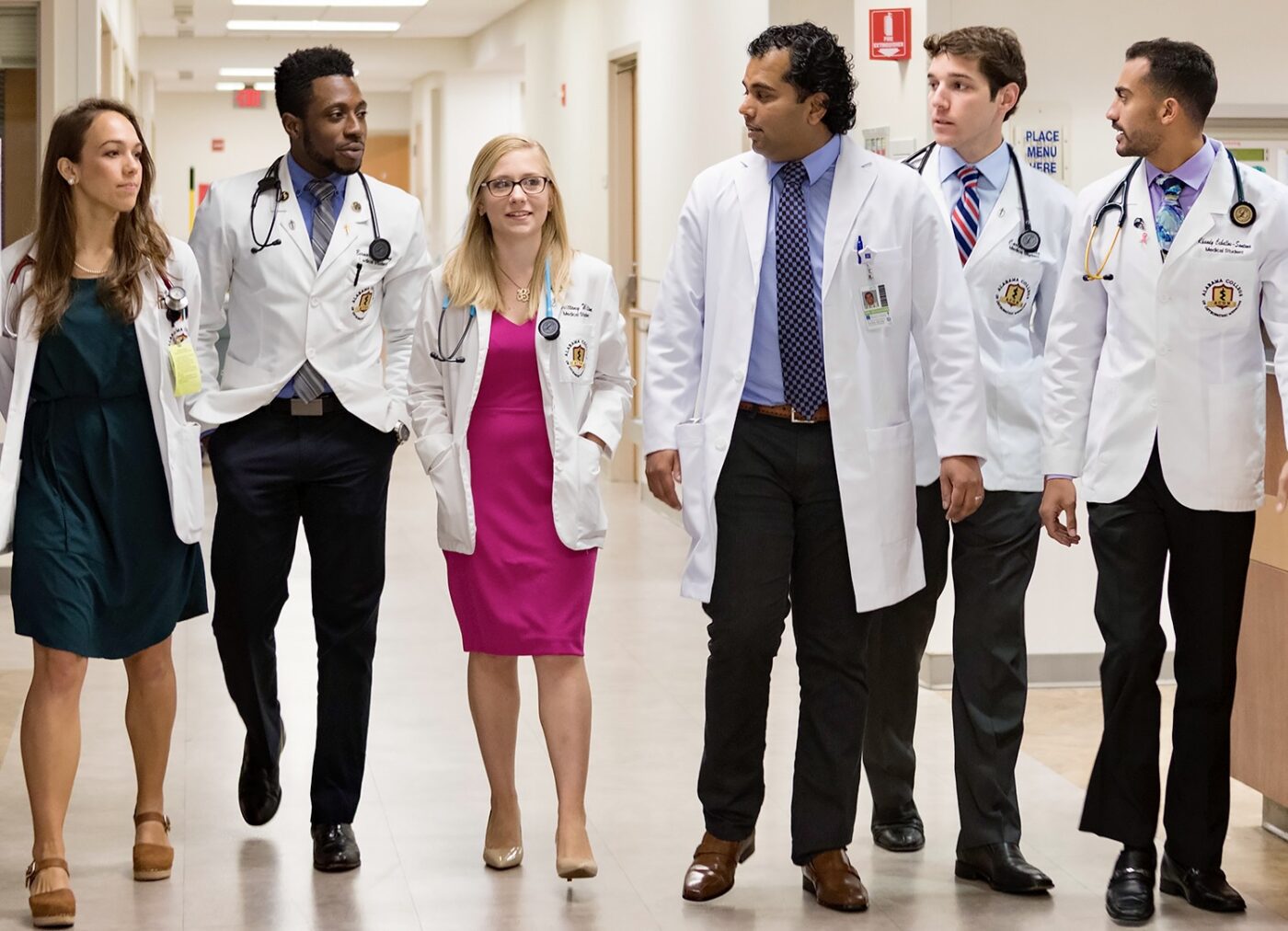
ACOM has no secondary application for the 2026-2027 cycle. The school’s application steps are to complete the AACOMAS primary application, submit the required letters and make sure every document has arrived, and it states: “NO Supplemental Application or Fee is Required.” There are no ACOM essay prompts to answer this cycle, no supplemental fee and no supplemental deadline.
That changes your strategy in two ways:
- Your AACOMAS application has to carry everything. The committee reads your personal statement, experiences and letters to decide whom to interview. Nothing else gives you a second chance to explain why ACOM, why osteopathic medicine or why the region.
- Your “why ACOM” answer moves to the interview. Questions the school once asked in writing are now natural interview questions. Prepare them out loud.
Writing the AACOMAS personal statement for ACOM
The AACOMAS personal statement allows 5,300 characters, including spaces. It goes to every osteopathic school on your list, so you cannot name ACOM in it, but you can write a statement that fits what ACOM values:
- Lead with patients, not with a résumé. ACOM rates “personal experiences with patient populations.” Pick one or two moments with real patients and show what you did, what you noticed and what changed in you.
- Show osteopathic reasoning. Describe a time you saw a patient’s environment, family, work or body mechanics shape their illness. That is whole-person care in action, and it is more convincing than repeating the tenets.
- Point toward primary care and underserved communities, honestly. If you have served rural or medically underserved patients, say so plainly. If you are undecided about specialty, show that you value continuity, prevention and access, without promising a career you have not chosen.
- Make your experience entries specific. In the experiences section, give hours, responsibilities and one concrete outcome for each major activity. Committees at schools without secondaries read these closely.
- Proofread for clarity. Short sentences, no clichés, no jargon.
Our AACOMAS Definitive Guide 2023 covers the rest of the primary application.
Retired ACOM questions to use as interview practice
ACOM used three supplemental questions in recent cycles, most recently in 2024-2025. They are not part of the 2026-2027 application, and you should not submit answers to them. They are still excellent interview practice, because they ask exactly what ACOM interviewers want to know: how you fit the mission and values, how you think about patients from different backgrounds and whether you understand osteopathic philosophy. Practice each as a two-minute spoken answer. The written examples below show how a strong answer is built.
Practice question 1: mission and core values (retired prompt, 250 words)
The retired wording was: “Describe how specific attributes of ACOM’s mission and core values align with your professional goals and personal attributes.”
What it asks: two links, one between the mission and your goals, and one between the InSPIRED values and who you are. Generic praise of “primary care” will not do; name specific parts of the mission and specific values, and back each with evidence.
Illustrative example, not an actual applicant essay (232 words):
For two years I worked weekend shifts as a patient care technician in a 25-bed hospital in rural south Georgia. Many of our patients drove past three closed clinics to reach us. One farmer came in with a foot wound he had ignored for a month because the nearest primary care office had a six-week wait. Watching our one family physician clean that wound, adjust his diabetes plan and call his daughter to arrange rides convinced me that I want to practice primary care where doctors are scarce.
ACOM’s mission to serve “the medically underserved areas of Alabama, the Tri-State area, and the nation” describes the region I come from and the work I want to do. Its emphasis on patient-centered, team-based care matches what I saw at my hospital, where the nurse, the case manager and the physician solved that farmer’s problem together. The Rural Health clerkship and the Ashford Clinic would let me train in exactly that kind of setting.
Of the InSPIRED values, Service and Integrity mean the most to me. Service, because I organized a monthly blood pressure screening at my church that now runs without me. Integrity, because as a technician I learned to report my own charting error the moment I found it, even when no one would have noticed. I want to bring both into a school that treats them as daily habits, not slogans.
Why it works: it quotes a specific phrase of the mission, ties it to a lived experience, names two ACOM training features that fit and gives one piece of evidence for each value. It stays under the old 250-word limit.
Mistakes to avoid: listing all seven values with no evidence; praising the school’s facilities instead of its mission; claiming a lifelong commitment to rural Alabama if you have no connection to the region.
Practice question 2: diversity and the decision to apply (retired prompt, 250 words)
The retired wording was: “The Alabama College of Osteopathic Medicine promotes values and equity from various cultural, social, and economic backgrounds. Discuss the role that diversity played in your decision to become an osteopathic medical school applicant.”
What it asks: not a list of your identities, but how meeting people unlike you, or living as someone unlike the people around you, shaped your decision to pursue osteopathic medicine. The best answers show learning and a change in behavior.
Illustrative example, not an actual applicant essay (229 words):
I grew up translating for my grandmother at medical appointments in Mobile. By twelve I knew the Spanish words for “blood thinner” and “follow-up,” and I also knew how often she nodded at instructions she did not understand. Once, a pharmacist slowed down, drew the pill schedule on the back of a receipt and asked her to explain it back. My grandmother laughed and said it was the first time anyone had checked.
That moment stayed with me through college, where I volunteered at a free clinic serving farmworkers and families without insurance. I learned that language was only one barrier. Some patients worked two jobs and could not return for a second visit; others distrusted clinics after being treated as a number. The physicians I admired most asked about work, food and family before they asked about symptoms.
Those physicians were often DOs, and their habit of looking at the whole person is a major reason I am applying to osteopathic schools. Diversity did not just make me want to be a doctor; it taught me what kind of doctor patients like my grandmother need: one who checks for understanding, adapts the plan to a patient’s life and treats every patient with the same respect. I would bring that perspective to classmates at a school that, like ACOM, trains physicians for communities with many backgrounds and limited access.
Why it works: it starts with a specific scene, shows growth from family experience to clinical service, links diversity directly to the choice of osteopathic medicine and ends with what the applicant will contribute.
Mistakes to avoid: writing only about identity without showing what you learned; treating patients as symbols; using “diversity” as a buzzword with no examples.
Practice question 3: personal attributes and the osteopathic philosophy (retired prompt, 500 words)
The retired wording was: “What are your personal attributes that demonstrate the osteopathic philosophy?”
What it asks: for attributes, with proof, that line up with osteopathic principles: the body as a unit of body, mind and spirit; the body’s capacity for self-regulation and healing; the relationship between structure and function; and treatment based on these ideas. Pick two to four attributes and show each in action.
Illustrative example, not an actual applicant essay (437 words):
The first patient who taught me about structure and function was my father. After twenty years of laying brick, he developed back pain that pills barely touched. A DO in Enterprise spent our first visit asking about his work, his sleep and the way he lifted, then used her hands to find the tight muscles along his spine. She treated him, taught him two stretches and changed how he loaded his truck. Within a month he was back on the job. I was sixteen, and I had never seen a doctor treat the person and the problem at the same time.
Three attributes connect me to that kind of medicine.
The first is curiosity about the whole person. As an EMT on a county ambulance, I learned that the most useful questions are often not about the complaint. One elderly man called us three times in a month for dizziness. On the third call I noticed his kitchen was nearly empty. He had been skipping meals to afford his medications. We connected him with a meal program and his social worker, and the calls stopped. His dizziness had a medical cause and a life cause, and treating only one would not have worked.
The second is patience with the body’s ability to heal. Working in a physical therapy clinic, I watched patients recover strength after surgery through slow, steady effort. I learned to celebrate small gains, to explain why a home exercise mattered and to keep encouraging patients on discouraging days. Osteopathic medicine trusts that the body can heal when we remove obstacles and support it, and I have seen that trust rewarded.
The third is a preference for working with my hands and in teams. I like learning by doing, which is why I want an education that teaches physical examination and manipulative treatment from the first semester and builds skills in simulation. On the ambulance, every call depended on my partner and me communicating clearly. I want to train where team-based care is the standard, because that is how patients are actually served.
I also know my limits. I tend to want to fix every problem myself, and I am learning to ask for help sooner and to let patients lead decisions about their own care. Good osteopathic physicians partner with patients rather than direct them, and I want to keep growing in that direction.
My father still does the stretches the DO taught him. That visit showed me medicine that listens, examines and treats the whole person, and it is the medicine I want to practice in the rural South where I grew up.
Why it works: it names three clear attributes and proves each with a specific experience, links them to osteopathic principles without lecturing, shows self-awareness with a real limitation, and ties the ending back to the opening story and to the region ACOM serves.
Mistakes to avoid: listing the four tenets as if reciting a textbook; claiming you already practice osteopathic medicine; using every attribute you can think of instead of proving a few.
Interview Format and Preparation
How ACOM interviews
Applicants selected for an interview receive an email invitation with login credentials to schedule a date. ACOM interviews from the end of July through the end of April, in person on campus or virtually by Zoom. The interview itself is a formal, 30-minute, open-file conversation with two faculty or qualified staff members, all of whom complete training in interview procedures, desired qualifications and rubric scoring. “Open file” means your interviewers have read your application, so expect questions about your experiences.
The interview day also includes overviews of the college and curriculum and time with current students, faculty and staff, so you can learn about academic programs, clinical rotations, student services and student life.
What the interview is for
ACOM says the interview’s primary purpose is to assess your interpersonal skills and how you relate to others, and to learn more about your motivation for the profession. It also lets the school learn about your interests and experiences and “perhaps to get a sense of the likelihood that they would accept a seat if offered.” In plain terms, interviewers want to know:
- How you relate to people. Expect questions about teamwork, empathy and communication.
- Why osteopathic medicine. Be ready to explain the DO path with real examples.
- Why ACOM. Know the mission, the rural clinics, the core site model, simulation and the Fellows programs, and be honest about how much the region matters to you.
- Whether you would come. A clear, sincere interest in ACOM is part of what they are judging.
After the interview
The Admissions Committee reviews your full file with the interviewers’ comments, and the Dean approves its recommendations. Most applicants hear within a few weeks, though timing varies during the cycle.
What past interviewees reported
Older applicant surveys on Student Doctor Network (58 respondents) give a feel for the day. These are self-reported and not from the school, so treat them as background:
- 87.7 percent said the interview improved their view of the school.
- Average stress was 3.64 out of 10, and respondents rated their own performance 7.09 out of 10.
- Most interviews lasted about 30 minutes (62.1 percent), most were held at the school (81.8 percent) and most were one-on-one (82.5 percent), all with open files.
- Respondents prepared by researching the school, reading interview books and watching interview prep videos. Many liked the faculty presentations and student Q&A sessions; some found interviewers reserved.
Questions applicants reported include:
- Tell me about yourself. Why medicine, why osteopathic medicine and why ACOM?
- How do you handle stress, and what do you do to relax?
- What does it mean to be a team leader, and what does it mean to be a team member?
- What would you do if you saw a classmate using a cell phone during an exam that did not allow outside resources?
- What is your opinion of a physician who decides to stop seeing patients who are not vaccinated?
How to prepare
General preparation advice, not ACOM policy:
- Know your application. Interviewers have it open. Be ready to talk about every experience you listed.
- Practice the three retired ACOM questions from the previous section aloud. They map directly to mission fit, diversity and osteopathic philosophy.
- Prepare an ethics approach. For scenarios like the cell phone question, think through the facts, the people affected, your options and a fair action, and say what you would do.
- Prepare two or three questions for them, such as how core sites are assigned, how students prepare for COMLEX, or what the Ashford and Taylor clinics look like for first-year students.
- Practice with a friend or mentor under realistic time pressure, and for a Zoom interview, test your camera, sound and lighting.
Our guides to osteopathic medical school interview questions and the most common medical school interview questions have more practice material.
If you are waitlisted
A waitlist is not a rejection. ACOM fills its class until the first week of matriculation, and seats open as admitted applicants choose other schools. The school does not publish how many applicants it waitlists or admits from the waitlist. Generally, schools with many cross-admitted applicants see more movement than schools whose admitted students nearly all enroll. While you wait:
- Send meaningful updates, such as new grades, a new role or a completed project, if the school accepts them.
- If ACOM is your first choice, a short letter of intent saying you would enroll if admitted can help, as long as it is true.
- If visits are welcome, an open house is a good way to show continued interest.
- Keep building your record in case you need to reapply. A year of full-time clinical work or one of IMA’s pre-med gap year programs can give you new patient care experience to describe.
Frequently Asked Questions
Is Alabama College of Osteopathic Medicine accredited?
Yes. ACOM is accredited by the Commission on Osteopathic College Accreditation (COCA), the only accreditor for osteopathic medical schools in the United States. It received full accreditation on April 6, 2017, and in April 2024 COCA granted it a ten-year term of Accreditation, with the next comprehensive site visit planned for 2033-2034.
Does ACOM have a secondary application in 2026-2027?
No. ACOM does not require a supplemental application or fee this cycle. Your AACOMAS application, letters and MCAT make up your file, and the school invites applicants to interview from there. Put extra care into your AACOMAS personal statement and experience descriptions, because they are the only essays the committee reads.
What is the acceptance rate at Alabama College of Osteopathic Medicine?
ACOM does not publish an acceptance rate or the number of offers it makes. For the Class of 2030, it received 4,814 AACOMAS applications, conducted 1,663 interviews and enrolled 224 students. Dividing enrollees by applicants does not give an acceptance rate, because some admitted applicants enroll elsewhere. The practical takeaway is that about one in three applicants was interviewed, so the interview is a major step.
What MCAT score and GPA do I need for ACOM?
There is no published minimum for regular admission. The Class of 2030 averaged a 504 MCAT and a 3.57 GPA, and the school lists competitive averages of 504 for the MCAT, 3.45 for undergraduate GPA and 3.35 for science GPA. Early Decision requires at least a 3.40 cumulative and science GPA and a 504 MCAT. Scores within four years of the cycle start are preferred.
Does ACOM prefer Alabama residents?
ACOM welcomes applicants from everywhere but especially those from Alabama and the surrounding region, and at least half of each class comes from the Southeast, mostly Alabama and Florida. Tuition is the same for in-state and out-of-state students. Applicants from outside the region should explain what draws them to community-based training in the Deep South.
Does ACOM accept international or DACA applicants?
No. Applicants must be U.S. citizens or permanent residents and keep that status through enrollment. ACOM does not accept international applicants or non-permanent residents, and applicants with DACA status cannot be considered at this time. Foreign coursework must be evaluated for U.S. equivalence through a service AACOMAS designates.
When is the ACOM application deadline?
ACOM lists June 1 as its AACOMAS submission deadline, but admissions are rolling and the class can fill before then. Submit AACOMAS in May or June of the year you apply, have your letters ready and confirm the current-cycle deadline with the admissions office. The Early Decision deadline is July 15.
How much does ACOM cost?
For 2026-2027, tuition is $61,788 for every student, regardless of state residency. The estimated cost of attendance, including living costs, ranges from $100,153 in the second year to $104,600 in the first year. Optional fees include a $1,000 textbook and resources fee and a one-time $250 technology fee, and the acceptance deposit is $2,000.
Do I need a letter from a DO?
No, but it is preferred. You need a physician letter, and ACOM accepts letters from DOs or MDs. The school strongly recommends spending time with an osteopathic physician, and a DO letter is one way to show you understand the profession. You also need a premed committee letter or two letters from biology, chemistry or physics faculty.
How does the ACOM interview work?
You will have a 30-minute, open-file interview with two trained faculty or staff members, either in person in Dothan or by Zoom. The day also includes overviews of the college and curriculum and time with students. Interviews run from the end of July through the end of April, and decisions usually come within a few weeks.
Does ACOM require Casper or PREview?
ACOM’s admissions requirements do not list Casper, PREview or any other situational judgment test for the 2026-2027 cycle. The required items are the AACOMAS application, MCAT scores, transcripts and letters. Check the admissions requirements page before you apply in case this changes.
Where do ACOM students do clinical rotations?
Third- and fourth-year students train at core sites in four regions: North Alabama, Central Alabama (including Dothan, Birmingham and Montgomery), South Alabama and the Gulf Coast (including Mobile, Pensacola and Gulfport, Mississippi) and the Southeast region in north Florida (including Tallahassee and Panama City). Students are assigned a core site and may relocate for it.
What is the ACOM Fellows Scholars Program?
It is an optional extra year after the second year and COMLEX Level 1, in either Anatomy/OPP or Clinical Simulation. Fellows teach, do research, earn a Master of Science in Adult Education through Troy University, receive a monthly stipend and get a tuition waiver for the fellowship year and one more year. The program makes medical school five years long.
Can I earn a dual degree at ACOM?
Yes, through partner universities. ACOM students can add an MBA or a Master of Science in Management from Troy University’s Dothan Campus, or an online MPH from Samford University. All three are optional. The Master of Science in Adult Education is available only to Fellows Scholars.
How do ACOM graduates do in the residency match?
The Class of 2026 had a 99.5 percent residency placement rate, with graduates placed in 17 specialties across 28 states, and 52 percent matched or placed into primary care. The most common destination states were Florida, Alabama, Texas, Georgia and South Carolina.
Is ACOM a good school?
It depends on what you want. ACOM is fully accredited with a ten-year COCA term, posted first-time COMLEX Level 1 pass rates above the national average in 2025-2026, placed 99.5 percent of its 2026 graduates and is nationally recognized for producing primary care physicians. It is a strong fit if you want hands-on, community-based training in the Southeast.
Does international clinical experience help an ACOM application?
ACOM rates personal experiences with patient populations and service, and supervised clinical work in any setting can show what you learned about patients and care teams. Experience abroad does not replace experience at home, and no program guarantees admission. Programs such as IMA’s healthcare internships abroad let interns take vitals, help with intake and triage and assist with direct care under supervision, which gives you concrete examples for your personal statement and interview.
How can I contact ACOM admissions?
Call the Office of Admissions at (334) 699-2266 or email [email protected]. The fax number is (334) 699-2268, and the campus is at 445 Health Sciences Boulevard, Dothan, AL 36303. Reaching out with specific questions is the best way to confirm dates and requirements for your cycle.
Related Medical School Guides
If ACOM is on your list, these guides cover schools that share its degree, region or mission. They are useful comparisons, not claims of equal selectivity.
- Campbell University School of Osteopathic Medicine (CUSOM): a private DO school in rural North Carolina with a similar commitment to training physicians for the rural Southeast.
- Edward Via College of Osteopathic Medicine (VCOM): a multi-campus DO school with a campus in Auburn, Alabama, and the other osteopathic option most Alabama applicants compare with ACOM.
- UIW School of Osteopathic Medicine: a DO school in San Antonio that also emphasizes service to underserved communities in the South.
- Oklahoma State University College of Osteopathic Medicine: a DO school known for rural and primary care training, useful if the rural mission is what draws you to ACOM.
- Meritus School of Osteopathic Medicine: a newer DO school tied to a regional health system, like ACOM’s relationship with Southeast Health.
- NYIT College of Osteopathic Medicine: a large, established DO school, a good contrast in size, setting and urban clinical training.
For every MD and DO option in the state, see our guide to medical schools in Alabama, which compares ACOM with the University of Alabama School of Medicine at UAB and the University of South Alabama College of Medicine in Mobile. For a national view of osteopathic programs, see our DO school rankings guide to accredited osteopathic medical schools.
More medical school guides
ACOM is one of several strong options in the Southeast and beyond. If you are building a balanced school list, these IMA guides cover other MD and DO schools across the country:
- FIU College of Medicine
- UCF College of Medicine
- USF Morsani College of Medicine
- Florida State University College of Medicine
- Morehouse School of Medicine
- Medical College of Georgia at Augusta University
- Mercer University School of Medicine (MUSM)
- ECU Brody School of Medicine
- University of South Carolina Medical School
- Lewis Katz School of Medicine at Temple University
- Philadelphia College of Osteopathic Medicine (PCOM)
- Geisinger Commonwealth School of Medicine (GCSOM)
- Penn State Medical School
- CUNY School of Medicine
- SUNY Downstate Medical School
- NYU Long Island School of Medicine
- Albany Medical College
- TOURO College of Osteopathic Medicine
- Norton College of Medicine at Upstate Medical University
- Jacobs School of Medicine at the University at Buffalo
- Hofstra Zucker School of Medicine
- Weill Medical College of Cornell University
- University of Rochester Medical School
- Icahn School of Medicine at Mount Sinai
- Renaissance School of Medicine at Stony Brook University
- Albert Einstein College of Medicine
- Ohio University Heritage College of Osteopathic Medicine
- Northeast Ohio Medical University (NEOMED)
- University of Cincinnati College of Medicine
- University of Toledo College of Medicine
- Wright State University Boonshoft School of Medicine
- Ohio State University College of Medicine
- Rowan University School of Osteopathic Medicine
- Hackensack Meridian School of Medicine (HMSOM)
- Rutgers New Jersey Medical School (NJMS)
- Rutgers Robert Wood Johnson Medical School
- Cooper Medical School of Rowan University (CMSRU)
- A.T. Still University Kirksville College of Osteopathic Medicine
- Saint Louis University School of Medicine
- University of Missouri Medical School
- Kansas City University (KCU)
- UMKC School of Medicine
- New York Medical College
- University of Pittsburgh School of Medicine
- University of Wisconsin Medical School
- VCU School of Medicine
- University of Maryland School of Medicine
- Case Western Medical School
- University of North Carolina Medical School
- University of Florida Medical School
- Emory University School of Medicine
- Boston University College of Medicine
- California University of Science and Medicine
- UC San Diego Medical School
- California Northstate University College of Medicine
- Touro University of California
- CHSU College of Osteopathic Medicine
- UC Davis School of Medicine
- Harvard Medical School
- UC Riverside School of Medicine
- USC Keck School of Medicine
- UT Southwestern Medical School
- Long School of Medicine at UT Health San Antonio
- University of the Incarnate Word School of Osteopathic Medicine
- UT Austin’s Dell Medical School
- UTMB School of Medicine
- McGovern Medical School at UT Health
- Johns Hopkins School of Medicine
- The University of Texas Rio Grande Valley School of Medicine
- UNT Texas College of Osteopathic Medicine
- University of Houston College of Medicine
- Texas A&M College of Medicine
- Baylor College of Medicine
- George Washington University School of Medicine
- Vanderbilt University School of Medicine
- St. George’s University School of Medicine
- Lake Erie College of Osteopathic Medicine (in Pennsylvania)
- Sidney Kimmel Medical College at Thomas Jefferson University
- Wake Forest University School of Medicine
- Western University of Health Sciences (in California)
- Drexel University College of Medicine
- Stritch School of Medicine at Loyola University Chicago
- Georgetown University School of Medicine
- Yale School of Medicine
- Perelman School of Medicine
- UCLA Medical School
- NYU Medical School
- Washington University School of Medicine
- Brown Medical School
How International Medical Aid Can Help
International Medical Aid (IMA) runs medical internships abroad for students preparing for careers in medicine and the health professions, at sites in Kenya and other countries. IMA is not affiliated with ACOM, and taking part does not give you an admissions advantage at any school. What it can give you is real, supervised patient care experience to learn from and write about.
In IMA’s pre-med internships abroad, interns work alongside local physicians and nurses. Under supervision, they take vitals, do patient intake and triage and help with direct patient care in clinics and hospitals. That is the kind of experience with patient populations ACOM’s committee rates, and it gives you concrete stories about patients whose lives, environments and access to care shape their health, which is the heart of osteopathic thinking.
IMA also offers pre-health internships for students still choosing a path, and admissions advising for applicants planning their AACOMAS application, letters and interviews. If you want to talk through your plan for ACOM or other osteopathic schools, schedule an appointment with IMA.
Final Thoughts and Sources
ACOM is a good fit if you want an osteopathic education built around primary care, hands-on skills and community-based clinical training in the Southeast. The process is simpler than at many schools: one AACOMAS application, the right letters and an interview, with no secondary to write. That simplicity makes timing and quality matter more. Submit early, choose letter writers who know your clinical work, make your personal statement show how you think about patients, and prepare to explain in person why ACOM and why the region.
Your next step: check your prerequisites against the table above, line up your physician letter and your committee or science faculty letters, and submit AACOMAS as early in the cycle as you can.
Contact ACOM admissions: (334) 699-2266, [email protected], fax (334) 699-2268, 445 Health Sciences Boulevard, Dothan, AL 36303.
Good luck, and may your goal of becoming an osteopathic physician come true.
Sources
All sources were checked on October 18, 2026. Figures are labeled with their cohort or academic year in the text.
- ACOM: How to Apply (application steps, no supplemental application, letters, dates), Admissions Requirements, Selection Process and Interview, Admissions FAQs, Early Decision Program.
- ACOM class data: Class Profiles (Classes of 2028, 2029 and 2030), Residency Match Data (Class of 2026 report), Institutional Effectiveness (COMLEX-USA first-time pass rates).
- ACOM costs: Tuition and Fees, 2026-2027, Cost of Attendance, 2026-2027.
- ACOM identity and programs: Accreditation, Our Story, Southeast Health, Mayo Clinic Care Network, Fellows Scholars Programs, Concurrent Degrees.
- ACOM curriculum and training: First- and Second-Year Curriculum, Clinical Curriculum Overview, Core Site Network, Simulation Medicine, Research.
- ACOM campus and people: Our Campus, Housing, Groups and Clubs, Leadership, Faculty and Staff, Alumni, Thacker AOA presidency announcement, Weir joins Ashford Clinic, 2026 rankings and match release.
- AACOM Choose DO Explorer, Alabama College of Osteopathic Medicine profile for 2026-2027 (enrollment, demographics, supplemental application status, MCAT window, health insurance fee, graduate indebtedness).
- Student Doctor Network applicant interview survey for ACOM (58 respondents, self-reported, older survey).