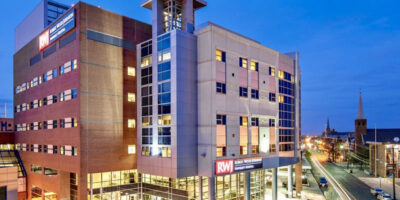
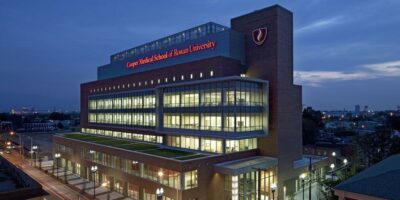
Rutgers New Jersey Medical School (NJMS) is the oldest medical school in New Jersey and one of two MD-granting medical schools in the Rutgers system. It sits on a 65-acre health sciences campus in Newark, a 15-minute train ride from Manhattan, and its principal teaching hospital is University Hospital, home of northern New Jersey’s Level I trauma center. NJMS awards the Doctor of Medicine (MD) degree and offers an accelerated three-year primary care MD, four joint degree programs and ten Distinction Programs that let students build a focus area alongside the core curriculum.
Many New Jersey students who search for a strong medical school near them hear about NJMS first, and many out-of-state applicants are drawn by its programs, its research and the patients it serves. NJMS gives equal consideration to in-state and out-of-state applicants. It is also a school in transition: Rutgers is preparing NJMS and Robert Wood Johnson Medical School for a single accreditation as the future Rutgers School of Medicine, with two campuses and one admissions process. Applicants in the current cycle still apply to NJMS on its own.
This guide covers the 2026-2027 application cycle, which fills the class that starts in July 2027 (the Class of 2031). It explains what NJMS requires, what its newest class looks like, what each of the ten items on the current secondary application asks and how to answer them, how interviews and costs work, and what the merger means for you. Every number is labeled with its year or cohort, and sources are listed at the end.
Every medical school has its own character, and NJMS is no different. Before you plan your strategy, take time to learn what NJMS values in its students. This guide organizes the key information in one place, but nothing beats one-on-one guidance. International Medical Aid’s medical school admissions consulting helps with everything from the details of your application to your overall strategy, and if you have questions about your own situation, you can reach out to us.
Key Takeaways
- Who applies where: For entry in 2027, NJMS runs its own admissions process, separate from Robert Wood Johnson Medical School. You must complete at least three years at an accredited US college to apply and hold a bachelor’s degree before you start.
- Academic context: NJMS sets no minimum GPA or MCAT score. For the 2025 entering class, accepted applicants had a median MCAT of 514 and a median GPA of 3.89. Take the MCAT no later than October of the year you apply. Coursework covers two semesters each of biology, general chemistry, organic chemistry, physics and English, plus one semester of biochemistry.
- No situational test: NJMS does not require PREview or Casper.
- Mission: NJMS describes itself as preparing “humanistic leaders in global healthcare and pioneering science.” Humanism, service and equity run through its curriculum, its secondary questions and its interview.
- Key dates: Early Decision AMCAS deadline August 1 (materials by September 1). Regular MD AMCAS deadline December 1. Secondary application ($95 fee, waived with AMCAS Fee Assistance) and letters are due December 15. Review is rolling, so earlier is better.
- Selectivity: In 2025, NJMS received 6,513 applications, conducted 719 interviews and welcomed 174 new students. No offer count is published, so there is no true acceptance rate. Early Decision is a major route: 75 of the 174 estimated new entrants come through ED.
- Who can apply: Out-of-state, Canadian, international and DACA applicants are all considered, and no residency preference is given.
- Costs: 2026-2027 tuition is $48,080 for New Jersey residents and $77,125 for non-residents, before fees, insurance and living costs.
- Secondary: Ten items this cycle, each limited to 1,500 characters: two short background questions, three required essays on humanism, failure and difference, and conditional or optional items for gap years, reapplicants, added context and anything else.
- Next action: Draft your three required essays now, keep each under 1,500 characters, and submit the secondary within days of receiving it.
Key Statistics About Rutgers New Jersey Medical School
The snapshot and table below come from the same fact record as every number in this guide. Application, interview and enrollment counts describe the 2025 admissions cycle, which produced the Class of 2029, the newest class the school profiles. The median MCAT and GPA describe accepted applicants for the same 2025 entering class. Tuition and fees are the 2026-2027 rates. Living costs come from the 2025-2026 budget, the newest Rutgers has published.

| Metric | Value | Year and group | Source |
|---|---|---|---|
| School and degree | Rutgers New Jersey Medical School, MD | Newark, N.J.; part of Rutgers Health | NJMS admissions and About pages |
| Accreditation | LCME, full accreditation; next survey 2026-27 | Current | LCME directory of accredited programs |
| Applications | 6,513 | 2025 admissions cycle (Class of 2029) | NJMS Admissions Recruitment Pamphlet 2026 |
| Interviews | 719 (interviews conducted, not an acceptance rate) | 2025 admissions cycle (Class of 2029) | NJMS Admissions Recruitment Pamphlet 2026 |
| New students | 174 | Class of 2029 (entered 2025) | NJMS Admissions Recruitment Pamphlet 2026 |
| First-generation students | 74% first generation in medicine; 7% first generation in college | Class of 2029 | NJMS Admissions Recruitment Pamphlet 2026 |
| Class background | 61 colleges, 13 birth countries, 24 languages | Class of 2029 | NJMS Admissions Recruitment Pamphlet 2026 |
| Median MCAT (total) | 514 (mean 514.8) | 2025 entering class, accepted applicants | AAMC MSAR |
| Median MCAT sections | Chem/Phys 129, CARS 127, Bio/Biochem 129, Psych/Soc 130 | 2025 entering class, accepted applicants | AAMC MSAR |
| Median overall GPA | 3.89 | 2025 entering class, accepted applicants | AAMC MSAR |
| Minimum GPA or MCAT | None | Current policy | NJMS admissions FAQs |
| Estimated new entrants by program | 174: Early Decision 75, MD Program 61, BA/MD 28, MD/PhD 5, other special programs 3, early assurance 2 | 2026 profile (2025 entering class total) | AAMC MSAR |
| Total MD enrollment | 780 | October 2025 | AAMC MSAR |
| Applicants considered | Out-of-state, Canadian, international and DACA; no residency preference | 2026-2027 cycle | AAMC MSAR |
| Acceptance rate | Not published (no offer count released) | Not available | NJMS admissions pages |
| Tuition, New Jersey residents | $48,080 per year | 2026-2027 | Rutgers NJMS Tuition and Fee Rates 2026-2027 |
| Tuition, non-residents | $77,125 per year | 2026-2027 | Rutgers NJMS Tuition and Fee Rates 2026-2027 |
| Fees and insurance | Campus fee $577; first-year school fee $1,875; health insurance $3,286 (waivable) | 2026-2027 | Rutgers NJMS Tuition and Fee Rates 2026-2027 |
| First-year cost of attendance (estimate) | $97,218 resident or $125,694 non-resident living off campus (sum of listed budget items) | 2025-2026, Year 1 | Rutgers Health Students Cost of Attendance |
| Students receiving financial aid | 75% | 2024-2025, all enrolled and graduated students | AAMC MSAR (LCME Part I-B) |
| Average graduate medical school debt | $229,587 | 2024-2025, indebted graduates | AAMC MSAR (LCME Part I-B) |
| Deposit | $100, refundable until April 30, 2027, applied to tuition | 2026-2027 cycle | AAMC MSAR |
| Residency Match | 93% matched before SOAP, 100% after SOAP (national rate 93%) | Class of 2026 | NJMS 2026 Match Summary |
| Secondary fee | $95; waived with AMCAS Fee Assistance Program approval | 2026-2027 cycle | NJMS Application Process page |
| One useful distinction | Accelerated 3-Year Primary Care MD with conditional acceptance into a Rutgers residency (IM, Med-Peds, OB/Gyn, Pediatrics or Psychiatry) | Current | NJMS Accelerated 3-Year MD page and FAQ |
Read the selectivity numbers carefully. 174 new students out of 6,513 applications is about 2.7 percent, but that is a matriculation ratio, not an acceptance rate. Medical schools make more offers than they have seats because admitted students also hold offers elsewhere, and NJMS does not publish its offer count. The interview count is the more useful signal: 719 interviews against 6,513 applications means roughly 11 percent of applicants reached the interview stage. If you earn an interview, your odds are far better than the headline ratio suggests.
For the 2025 entering class, accepted applicants had a median MCAT of 514 and a median overall GPA of 3.89. Those are medians, not minimums: roughly half of accepted applicants had lower numbers, and NJMS sets no GPA or MCAT cutoff. If you want to compare schools by academic averages, IMA keeps a running table of average GPA and MCAT scores by medical school, and the guide to medical schools in New Jersey compares NJMS with the state’s other programs.
Mission and Educational Priorities
NJMS states its mission in one sentence on its mission, vision and values page: “To prepare humanistic leaders in global healthcare and pioneering science by building upon our strengths of diversity, educational innovation, immersive clinical training, and transformative research.”
Its vision lists four aims. NJMS aspires to optimize health and social well-being by “Providing cutting edge tertiary and quaternary medical care of distinction and serving all patients,” “Enhancing our position as the top biomedical research institution in the state of New Jersey,” “Creating a culture of intellectual curiosity and lifelong learning in a welcoming and inclusive environment,” and “Advancing the health, education, and care of all people whom we serve, including underserved and vulnerable populations, by preparing an educated and diverse workforce.”
The school lists six values: Integrity and Professionalism, Diversity and Inclusion, Humanism and Equity, Leadership and Collaboration, Innovation and Intellectual Rigor, and Wellness and Balance. The Office of Education adds its own one-line mission: “to prepare students from diverse backgrounds to be collaborative physicians, educators and researchers with a focus on the health of underserved and vulnerable populations.”
What the mission means for applicants
Three words do most of the work in these statements: humanistic, underserved and leaders. Each one shows up somewhere in the admissions process.
Humanism is not a slogan here. NJMS has an endowed Center for Humanism and Medicine (the Healthcare Foundation of NJ Center for Humanism and Medicine) and a Gold Humanism Honor Society chapter. NJMS’s commitment to “educating humanistic physicians” guides every part of its admissions process, and the first required secondary essay asks you to reflect on human dignity, compassion, service or equity. If your application treats patients as interesting cases rather than people, it will read as a poor fit.
The patient population is the curriculum. Newark is a majority-minority city with high poverty and low per capita income, the focus of the school’s Urban Health Distinction. University Hospital is a public safety-net hospital and the region’s Level I trauma center. Students learn in that setting from the first year through Community Engaged Service Learning and the student-run clinic. Applicants who have done sustained work with underserved patients, and can describe what they learned without sounding like visitors, match what the school is built to do.
Leadership and research count. The mission pairs global healthcare with “pioneering science,” and the vision calls NJMS the top biomedical research institution in New Jersey. NJMS is the number one NIH-funded institution in the state for basic science and clinical work. Research is not required for MD applicants, but research and scholarly work are visible throughout the Distinction Programs, the MD with Thesis option and the MD/PhD program.
Why many applicants choose NJMS
New Jersey pre-meds often describe NJMS as one of the best medical schools in the state, and the reasons are concrete. It is the state’s oldest medical school, with decades of graduates practicing across the region. Its 2026 graduates matched into 26 fields, from internal medicine and pediatrics to orthopedic surgery, radiation oncology and plastic surgery. Its student body is one of the most diverse anywhere: the Class of 2029 came from 61 colleges and 13 birth countries and speaks 24 languages, and 74 percent of the class are the first in their families to enter medicine.
University Hospital gives students exposure that few schools can match. It is the principal teaching hospital of NJMS, the home of the Eric Muñoz Trauma Center (the only Level I trauma center in northern New Jersey), a comprehensive stroke center and one of the state’s two liver transplant programs. Patients come to it from across the region for those specialized services, which means students see complex cases early and often.
Accreditation and Institutional Identity
NJMS is accredited by the Liaison Committee on Medical Education (LCME), the accreditor for MD programs in the United States and Canada. The LCME directory lists it with full accreditation and a next survey in 2026-27.
Name and history
The school’s name has changed several times, which can confuse applicants who read older material. Dean Robert L. Johnson earned his MD in 1972 from what was then the College of Medicine and Dentistry of New Jersey, “now the New Jersey Medical School.” For years the school belonged to the University of Medicine and Dentistry of New Jersey (UMDNJ). Today it is Rutgers New Jersey Medical School, part of Rutgers Health (formerly Rutgers Biomedical and Health Sciences), and Rutgers describes it as “the state’s oldest medical school.” The campus sits in Newark’s University Heights, next to Rutgers University-Newark and the New Jersey Institute of Technology.
The Rutgers School of Medicine integration
The most important institutional fact for current applicants is the planned merger. On July 10, 2023, the Rutgers Board of Governors voted to pursue a single LCME accreditation for NJMS and Robert Wood Johnson Medical School (RWJMS). Rutgers Health’s integration site describes the future school as “One School. Two Campuses.” with comparable campuses in Newark and New Brunswick under one dean.
The published timeline:
- January 11-13, 2027: LCME on-site survey visit for the future Rutgers School of Medicine.
- June 2027: earliest date for possible accreditation.
- Summer 2028: anticipated matriculation of the charter class of the future school.
What it means for you depends on when you start:
- If you apply in 2026-2027 (entering July 2027): You apply to NJMS through AMCAS as its own school, with its own secondary, deadlines and admissions committee. If accreditation of the merged school were delayed, students would graduate from the medical school to which they were admitted, and that school is LCME-accredited either way.
- For future cycles: Rutgers says the integrated school will use one AMCAS submission, one secondary, one admissions committee and one set of requirements. Applicants will choose to apply to both campuses or to one. All applicants will complete a multiple mini interview and a traditional one-on-one interview, and accepted students will be offered a campus based on stated preference and space. Class sizes on each campus will stay the same.
Each campus keeps its principal teaching hospital. University Hospital remains the principal teaching hospital in Newark, and neither medical school is moving to the other campus. Many integrated experiences are launching before accreditation, including most core clerkships and the new Patient-Centered Medicine and Health Equity course, which began in July 2025.
Rankings and reputation
You will see many ranking claims about NJMS online. U.S. News has changed how it reports medical schools, and older numbered ranks are no longer a reliable guide. The verifiable markers are more useful: full LCME accreditation, the school’s standing as New Jersey’s top NIH-funded institution for basic science and clinical work, a 2026 Match rate of 100 percent after SOAP, and a teaching hospital that anchors trauma, stroke and liver transplant care for the region. If a ranking matters to your decision, check the current edition directly rather than relying on a number repeated on other sites.
Medical Programs and Affiliations
NJMS offers more ways to earn an MD than most schools of its size. Several require separate applications or apply only after you are accepted, so read the eligibility notes closely.
Traditional four-year MD
Most students follow the four-year MD. Each class has 178 students, and the MD program offers “a rigorous academic program that integrates classroom learning and clinical experience from the beginning of the first year.” The 2025 entering class (Class of 2029) had 174 new students.
Early Decision Program
NJMS runs an unusually fast Early Decision (ED) program. To apply ED, select Early Decision as the program type in AMCAS and select NJMS as your only school by August 1. If you select more than one school, AMCAS changes your program type to Regular MD automatically. Submit the secondary, letters and MCAT scores by September 1.
The school commits to reviewing complete ED files within 48 hours. ED interviews begin in early July, and acceptances begin in mid-July. NJMS does not wait until October 1, the customary ED decision date. ED applicants are either accepted or deferred to the regular pool, and deferred applicants are told immediately so they can apply to other schools.
ED is not a side door at NJMS. Of the 174 estimated new entrants, 75 come through Early Decision, more than through the regular MD route (61). NJMS strongly recommends a consultation with the Associate or Assistant Dean of Admissions before you choose ED; request one by email at [email protected].
ED makes sense only if NJMS is clearly your first choice and your file is complete by early summer. If you are accepted, you are committed to NJMS and cannot apply elsewhere.
Accelerated 3-Year Primary Care MD Program
NJMS’s accelerated 3-year MD program is open to students who have already been accepted to the four-year MD. It is designed for students with “academic excellence, clinical experiences in a primary care setting and community health or leadership experiences,” and it aims to address the national shortage of primary care physicians, particularly in the communities NJMS serves.
Students choose one primary care specialty track when they apply to the program:
- Internal Medicine
- Med-Peds (combined internal medicine and pediatrics)
- Obstetrics and Gynecology
- Pediatrics
- Psychiatry
Students admitted to the program receive conditional acceptance into a Rutgers-sponsored residency in that field. Highlights include early clinical immersion starting in July of year one, a longitudinal primary care preceptorship and a Population Health Certificate from the Rutgers School of Public Health.
The trade-offs are real:
- You must choose your residency program before medical school starts, and some students are not ready for that commitment.
- The program starts about four weeks before the four-year class, and the summer break between years one and two is shorter.
- You have fewer elective opportunities and no residency interviews elsewhere, because you are committed to your Rutgers program.
- You cannot add a research year or a joint degree. Students who want either move to the four-year track, which is always allowed.
- You cannot switch from the four-year MD into the three-year program after you start.
To apply, you submit a separate program application after acceptance, name your primary care residency program, and interview with that program. The program’s career advisor is Christin Traba, MD, Senior Associate Dean for Education. The time and tuition saved are real, so this is worth a serious look if you already know you want a primary care career in New Jersey.
Joint degree programs
NJMS has four joint degree programs:
- MD/MBA with Rutgers Business School. The MBA is 60 credits, full time, in Newark. You apply directly to the business school, before matriculation or during the first year of medical school, and you must take the GMAT. Admission to the MBA is separate from your medical school admission.
- MD/MPH with the Rutgers School of Public Health. Students complete both degrees in five years. You must be accepted to the MD program first.
- MD/PhD with the Rutgers School of Graduate Studies. The program trains physician-scientists to translate research into the understanding, diagnosis, treatment and prevention of disease. NJMS also offers an Early Decision MD/PhD option: apply ED in AMCAS with NJMS as your only school, then indicate MD/PhD interest on the secondary. You can complete both interviews on the same day.
- MD with Thesis. Students devote one extra year exclusively to independent laboratory, clinical or population-based research. The program, directed by Padmini Salgame, PhD, suits students planning careers in academic medicine. Selection favors academically strong students, alumni of the Summer Biomedical Research program and students with research experience.
The 2026 admissions pamphlet also lists an MD with Population Health Certificate.
Ten Distinction Programs
NJMS offers ten selective Distinction Programs. Each is a longitudinal experience with didactic sessions, mentorship, experiential learning and a capstone project. They are not graded, but completion is noted in the Medical Student Performance Evaluation (the dean’s letter) and on your transcript and diploma.
| Distinction | What students do |
|---|---|
| Artificial Intelligence in Medicine | Learn AI in healthcare, work with AI faculty and complete AI research; prior statistics, machine learning or programming experience is encouraged |
| Medical Innovation and Entrepreneurship (DiMIE) | Design thinking, business planning, patents and regulation, plus events such as NJMS FutureMed, alongside peers at RWJMS |
| Bioethics | Work with hospital bioethics committees, clinical ethics consultation and a publishable bioethics project |
| Global Health | Study the global burden of disease and complete a field project; applications open in year one |
| Medical Education (DiME) | Run a journal club, teach medical students, join curriculum committees and complete a medical education research project |
| Mentorship and Peer Support (WellMentor) | Train to lead mentorship and peer support and promote a culture of wellness |
| Research | Complete original laboratory, clinical or population research, during school or in a scholars year |
| Service | Work with community organizations to promote health equity |
| Service, Limited English Proficiency track | Didactics on caring for patients with limited English proficiency, a two-week clinical experience, language immersion and a medical interpretation certificate; open only to first-year students, up to 20 per year |
| Urban Health | Study and propose strategies for the health of urban and under-resourced populations such as Newark’s |
Applicants do not apply to these programs through AMCAS. Students apply during medical school, usually in the first or second year. Mentioning one that fits your history can still strengthen a secondary essay, as long as your reasons are specific.
Pathways for high school and college students
NJMS also runs earlier pathways:
- Seven-year BA/MD for high school seniors with Caldwell University, Drew University, the New Jersey Institute of Technology, Rutgers University-Newark, Stevens Institute of Technology, Saint Peter’s University and The College of New Jersey. Applicants must be in the top 10 percent of their class, have a combined SAT of at least 1400 (verbal and math), be US citizens or permanent residents and apply through the partner college by November 1 of senior year. Promotion requires grades of B or better in premedical courses and a GPA of at least 3.5 each semester. Students interested in this route can build early clinical exposure through medical internships for high school students.
- Seven-year articulated program for Rutgers sophomores on the Newark and New Brunswick campuses, with conditional early acceptance, a minimum 3.5 cumulative and science GPA, and an MCAT by the end of May of junior year at a competitive score.
- Post-baccalaureate linkage programs with Columbia University’s School of General Studies (3.5 GPA), Rutgers-Newark (3.6), Rutgers-New Brunswick and New York University (3.6, with the full premedical sequence).
Clinical affiliations
University Hospital in Newark is the principal teaching hospital. The school’s FAQ lists major clinical instruction at University Hospital, the East Orange VA Medical Center, Saint Barnabas Medical Center, Newark Beth Israel Medical Center and Morristown Memorial Hospital. The school’s site also lists affiliations with RWJBarnabas Health, the Veterans Health Administration, Bergen New Bridge Medical Center and Trinitas Regional Medical Center.
Curriculum Overview
The NJMS curriculum is built around four themes, listed by the Office of Education:
- Organ systems-based curriculum
- Early integrated clinical practice of medicine skills
- Service learning
- Individual professional identity development with a healthcare team focus
The admissions curriculum page describes “a dynamic, integrated journey” with foundational science taught through organ systems and co-led by basic science and clinical faculty, longitudinal clinical experiences and expanded elective time starting early, flexible clerkships with continued basic science integration, and a capstone course to prepare students for residency.
Phase I: Core Biomedical Curriculum (years one and two)
First-year courses:
- Patient-Centered Medicine and Health Equity 1
- Medical Evidence Discovery and Dissemination
- Community Engaged Service Learning 1
- Cells to Structure
- Concepts in Biomedical Sciences
- Musculoskeletal, Skin and Hematologic Systems
- Cardiovascular System
- Pulmonary System
- Renal System
Second-year courses:
- Patient-Centered Medicine and Health Equity 2
- Community Engaged Service Learning 2
- Gastrointestinal System
- Endocrine and Reproductive Systems
- Nervous System and Behavioral Health
Patient-Centered Medicine and Health Equity is the thread that teaches clinical skills, communication and the social context of care across both years. Students also take part in a longitudinal preceptorship, which places them with practicing physicians early. The pre-clerkship years end with a bridge course to clerkships and dedicated USMLE Step 1 study time.
Phase II: Core clinical clerkships (year three)
Third-year clerkships cover Internal Medicine, Surgery, Obstetrics and Gynecology, Pediatrics, Emergency Medicine, Family Medicine and Primary Care, Neurology and Psychiatry.
Phase III: Advanced clinical training (year four)
Fourth-year requirements include an Acting Internship or Subinternship, a Physical Medicine and Rehabilitation course, a Transition to Residency course and, starting in the 2027-28 academic year, a Critical Care Selective. The rest of the year gives students time for electives, away rotations and residency applications.
How students learn
NJMS uses a mix of active and traditional formats: team-based learning, clinical small groups with standardized patients and simulation, large-group discussions with audience response systems, e-learning modules, podcasts and flipped classrooms, alongside lectures, small groups, problem-based learning and workshops. Dedicated integration and assessment weeks use clinical case discussions to build reasoning, and a Professional Identity and Development Week introduces individualized learning and wellness.
Threads that run across all four years include culturally competent care, patient safety and quality, health across the stages of life, prevention from individual to population, leadership and health care systems, interprofessional education, community engaged service learning, emerging issues in healthcare, training to address the opioid epidemic, a Patients as Teachers curriculum and patient safety certification through the Institute for Healthcare Improvement.
How the accelerated track differs
The three-year primary care MD compresses the same content. Year one runs July to June with a shortened summer, year two runs July to April, and clerkships begin in late spring of year two. Students in this track also complete a longitudinal primary care preceptorship from the start and finish with a transition to residency in their committed Rutgers program.
What the merger means for the curriculum
Rutgers says the future Rutgers School of Medicine will have one set of competencies and objectives, identical pre-clerkship course content on both campuses and a shared clerkship schedule. Eight core competencies have been named, starting with Professionalism and Humanism and Patient Care and Procedural Skills. Students entering NJMS in 2027 will likely see more shared experiences with RWJMS during their training.
Admissions Requirements and Application Process
Eligibility
You must complete at least three years at an accredited undergraduate institution in the United States before applying, and you must hold a bachelor’s degree before you matriculate. NJMS does not accept transfer students.
The MD program considers out-of-state, Canadian, international and DACA applicants, and no state residency or connection to the school is required. The BA/MD program is different: it requires US citizenship or permanent residency. If you are an international, Canadian or DACA applicant with questions about financial documentation or loans, email the Office of Admissions at [email protected] before you pay for the secondary. NJMS requires a criminal background check.
Non-science majors and nontraditional applicants receive equal consideration if they show academic excellence, complete the prerequisites and submit an MCAT and letters. NJMS also gives equal consideration to New Jersey residents and out-of-state applicants.
Required coursework
| Course | Length |
|---|---|
| General Biology with lab | 2 semesters |
| General Chemistry with lab | 2 semesters |
| Organic Chemistry with lab | 2 semesters |
| General Physics with lab | 2 semesters |
| Biochemistry | 1 semester |
| English (college-level writing-intensive courses may substitute) | 2 semesters |
Recommended courses are one semester each of calculus, genetics, statistics, anatomy, physiology, and sociology or psychology. The Admissions Committee may waive or add requirements for individual applicants, and it encourages courses in social and cultural fields.
Two course policies matter:
- Online prerequisites are not accepted. The FAQ answers “Will NJMS accept pre-requisite course work taken online?” with a flat “No.”
- AP credit can count. NJMS will consider Advanced Placement coursework for prerequisites but strongly encourages advanced college courses in the same subjects.
MCAT
NJMS has no minimum MCAT score. You must take the MCAT no later than October of the year you apply. The school will consider a January MCAT case by case when there are extenuating circumstances; request approval by email to [email protected] and explain why. NJMS will consider MCAT scores from any year. The committee sees all of your scores and uses your most recent score in its final review.
For the 2025 entering class, accepted applicants had a median MCAT of 514 (mean 514.8). Median section scores were 129 in Chemical and Physical Foundations, 127 in Critical Analysis and Reasoning Skills, 129 in Biological and Biochemical Foundations and 130 in Psychological, Social and Biological Foundations.
GPA
There is no minimum GPA. The school reviews academic performance as GPA, course rigor, academic trends and MCAT scores together, so an upward trend and a demanding course load can help a file with a lower cumulative GPA. Accepted applicants in the 2025 entering class had a median overall GPA of 3.89.
If your undergraduate GPA is lower, NJMS will consider postbaccalaureate or graduate coursework. The screening committee needs at least one completed semester (9 credit hours) of that coursework before it can review it, so finish a full semester before you apply.
Letters of recommendation
Letters go through the AMCAS Letter Service and are due by December 15. NJMS’s preferences:
- A premedical committee packet is preferred.
- Without a committee packet, submit at least two science letters and one non-science letter from people who can assess your candidacy.
- All applicants must submit academic letters.
- You may add supplemental letters, including letters from principal investigators or employers.
- The committee can approve exceptions. If you cannot meet the requirements, email [email protected] to request approval for the letters you plan to send.
- NJMS accepts 3 to 10 letters through the AMCAS Letter Service, as a committee letter, a letter packet or individual letters.
A strong letter assesses your academic ability in the sciences, describes your clinical or research work, discusses your motivation for medicine and your character, and explains how well the writer knows you. Ask writers who have seen you work, not just people with impressive titles.
Clinical experience
NJMS encourages applicants to “validate their decision to pursue a career in medicine by obtaining clinical/patient care exposure,” through jobs such as EMT, nursing assistant, medical technician or scribe, or through hospital volunteering. Research is not required unless you apply to the MD/PhD program. Many applicants add hands-on hours through clinical internships for pre-med students, and the strongest files show sustained, direct contact with patients rather than a single short experience.
The primary application (AMCAS)
Your application to NJMS has two parts. NJMS, like most MD schools, uses the American Medical College Application Service (AMCAS) for the primary application. You complete one AMCAS application, and AMCAS sends it to each school you choose. NJMS then emails a secondary application to all applicants. The school points applicants to the 2026 AMCAS Applicant Guide for step-by-step instructions.
The AMCAS is only the first step, but it is an important one. For tips, see IMA’s article 10 Most Common Mistakes to Avoid on Your AMCAS Application. The secondary usually adds essays and short-answer questions written by the school’s admissions staff to learn more about you as a person and future student. For a fuller explanation, read Primary vs. Secondary Applications: Understanding the Differences.
What makes a file complete
Screening begins as soon as your file is complete. A complete file includes:
- A verified AMCAS application
- The NJMS secondary application with the $95 fee or an AMCAS Fee Assistance Program waiver
- Letters of recommendation
- Your most recent MCAT results
You will get an email when your file is complete, and you can track materials in the applicant portal. NJMS accepts updates after your application is verified; upload them to the portal or email [email protected].
Timeline for the 2026-2027 cycle
| Date | What happens |
|---|---|
| Early May 2026 | AMCAS opens |
| June 25 | NJMS secondary becomes available |
| June 30, 2026 | Interview invitations begin |
| Early July (July 1 in the 2026 pamphlet) | Early Decision interviews begin |
| Mid-July | Early Decision acceptances begin |
| August 1, 2026 | Early Decision AMCAS deadline |
| September 1, 2026 | Early Decision supporting materials due (secondary, letters, MCAT) |
| Mid-August | Regular decision interviews begin |
| October 2026 | Latest MCAT date (January only by approval) |
| October 15, 2026 | Regular decision acceptances begin, on a rolling basis through March |
| December 1, 2026 | Regular MD AMCAS deadline, including joint degree applicants |
| December 15, 2026 | Secondary application and letters of recommendation due (secondary preferred within two weeks of receipt) |
| Through mid-March 2027 | Complete files remain under consideration for interview |
| Mid-June 2027 | Acceptances from the Alternate List begin (Alternate List review starts June 1) |
| June 15, 2027 | Deadline to request a one-year deferral |
| July 1, 2027 | Latest date acceptance notices are sent |
| July 2027 | Class of 2031 begins |
AMCAS applications are reviewed from July through March. Because review is rolling, the school encourages applicants to submit everything “as soon as possible.” Plan backward from that advice. If you take the MCAT in the spring, submit AMCAS in June and return the secondary within two weeks of receiving it, which is the window NJMS prefers. If you are deciding how to use the summer before you apply, pre-med summer internships with direct patient contact can add depth to your experiences section before AMCAS opens.
Decisions, deferral and the Alternate List
Early Decision acceptances begin in mid-July. Regular decision acceptances go out on a rolling basis from October 15 through March. Accepted students holding a seat may request a one-year deferral by June 15; requests are considered individually and are not guaranteed. Strong applicants who are not accepted at first may be placed on the Alternate List, with offers beginning in mid-June. If the committee votes not to accept you, it sends a letter of regret, and many “eminently qualified students are not offered acceptances solely because of class size restrictions and the large applicant pool.”
Once you receive an offer, you have up to two weeks to respond. The deposit is $100 for residents and non-residents alike; it is refundable until April 30, 2027 and is applied to tuition if you enroll. Acceptance notices for this cycle can go out as late as July 1, 2027, so a spot on the Alternate List can turn into an offer well into the summer.
NJMS also follows the AAMC’s applicant responsibilities, including choosing one school by the AAMC deadline once you hold multiple acceptances and withdrawing from other schools promptly. NJMS uses the AAMC Plan to Enroll and Commit to Enroll steps; for the 2026 entering class those dates were April 30 and June 23, and they fall on similar dates each year. Waitlisted applicants are encouraged to upload relevant updates to the applicant portal.
Tuition, Cost of Attendance and Financial Aid
As a public school, NJMS charges New Jersey residents much less than non-residents. Rutgers publishes tuition and fees by academic year.
2026-2027 tuition and fees
| Item | Resident | Non-resident |
|---|---|---|
| Tuition (annual) | $48,080 | $77,125 |
| Campus fee (all years) | $577 | $577 |
| School fee, year 1 | $1,875 | $1,875 |
| School fee, year 2 | $1,509 | $1,509 |
| School fee, year 3 | $1,817 | $1,817 |
| School fee, year 4 | $955 | $955 |
| Health insurance (annual premium, waivable) | $3,286 | $3,286 |
Source: Rutgers NJMS Tuition and Fee Rates, 2026-2027. Rutgers notes that rates are set annually by the Board of Governors and are subject to change, so treat them as estimates.
Adding the first-year items, a New Jersey resident would pay $50,532 in tuition and fees, or $53,818 with the student health insurance. A non-resident would pay $79,577, or $82,863 with insurance. You can waive the insurance if you have your own coverage.
Living costs and total cost of attendance
Rutgers’ newest published cost-of-attendance budget is for 2025-2026. Its year 1 budget covers 11 months:
| Year 1 item (2025-2026) | On campus | Living with parents | Off campus |
|---|---|---|---|
| Room and board | $20,922 | $7,118 | $23,420 |
| Personal and miscellaneous | $5,776 | $5,776 | $12,882 |
| Transportation | $9,142 | $9,142 | $9,142 |
| Books and supplies | $1,196 | $1,196 | $1,196 |
| Loan fees | $476 | $476 | $476 |
| Fees | $2,965 | $2,965 | $2,965 |
| Tuition, in-state / out-of-state | $47,137 / $75,613 | $47,137 / $75,613 | $47,137 / $75,613 |
Adding those items gives a 2025-2026 year 1 budget of about $97,218 for a resident living off campus and $125,694 for a non-resident living off campus. On campus, the totals are about $87,614 and $116,090. Years three and four are 12-month budgets with higher living costs. Expect 2026-2027 budgets to be somewhat higher, since tuition rose for 2026-2027.
Housing
NJMS has on-campus student housing at 180 West Market Street, with studio, one, two and three-bedroom apartments. Students also live near campus or commute from nearby towns, and a university shuttle links the campus with NJIT, Rutgers-Newark and Newark Penn Station.
Paying for medical school
Most students combine federal loans, school scholarships and outside awards. In 2024-2025, 75 percent of NJMS students received financial aid, and graduates who borrowed left with average medical school debt of $229,587. Financial aid at Rutgers is managed centrally and plays no part in admissions decisions. NJMS also runs a mandatory Debt Management Program twice a year for first- through third-year students, and fourth-year students complete exit interviews in the winter and early spring.
A few practical steps:
- File the FAFSA early. The AAMC’s applicant guidelines tell students who need aid to start the process as early as possible.
- Watch the new federal loan rules. Federal changes to graduate borrowing limits take effect for new borrowers in 2026-2027. Ask the Rutgers financial aid office how they affect your package before you commit.
- Look at the accelerated program. Finishing in three years removes a full year of tuition and living costs, which is a large saving for students certain about primary care.
- Compare true costs. A non-resident at NJMS pays more than $29,000 a year more in tuition than a resident. If you are out of state, weigh that difference against your other offers and any scholarship NJMS includes.
- Use the Alumni Association. The NJMS Alumni Association’s mission includes supporting medical students with scholarships.
The application cost is modest by comparison: the secondary fee is $95, and it is waived for applicants approved for the AMCAS Fee Assistance Program.
Campus Facilities and Student Life
Campus and city
NJMS sits on a 65-acre campus in Newark’s University Heights. Its connecting buildings let students walk from classrooms and labs to the George F. Smith Library, student housing and University Hospital without leaving campus. Newark Penn Station puts Manhattan about 15 minutes away by train, and the Jersey Shore starts about 20 miles south.
The school’s own neighborhood guide points students to Branch Brook Park (home of the annual Cherry Blossom Festival), the New Jersey Performing Arts Center, the Prudential Center, the Newark Museum of Art and the restaurants of the Ironbound neighborhood. Newark is a real city with real challenges, and that is part of the education. Students see the health effects of poverty, housing and access in the patients they treat.
Community Engaged Service Learning (CESL)
Community Engaged Service Learning is a required course in both preclerkship years. CESL gives students structured service experiences that teach community needs and the civic responsibilities of healthcare workers. Projects at NJMS have included HIV education and prevention workshops, healthy cookbooks for families, blood pressure, glucose and vision screenings at local churches, health conferences for community leaders, mentoring local students and health education sessions for young mothers.
The Student Family Health Care Center
The Student Family Health Care Center (SFHCC) is one of the oldest student-run clinics in the country and one of the oldest institutions at NJMS. Students organized it in 1968, soon after the 1967 civil unrest in Newark, “in an effort to improve conditions for the people of Newark.” Its two stated goals are to provide thorough, efficient care to community members who cannot afford medical care and “to educate, through students teaching students.”
The clinic runs every Tuesday and Thursday evening from 5:30 p.m. in the Doctor’s Office Center on the health sciences campus. Teams of three to five students, each led by one or two third- or fourth-year students with first- and second-year students rounding out the team, interview and examine patients, then consult with an attending physician who also sees the patient. It is one of the clearest examples of how NJMS students build clinical skills from year one.
Student organizations
NJMS has a wide range of student groups:
- Specialty interest groups such as NJMS Medicine-Pediatrics, the Military Medicine Interest Group, the Anesthesia Interest Group and the Plastic Reconstructive Surgery Interest Group.
- Cultural and religious groups including the Student National Medical Association (SNMA), Latino Medical Student Association (LMSA), Asian Pacific American Medical Student Association (APAMSA) and Muslim Student Association.
- Interdisciplinary groups such as the Global Health Alliance, NJMS Technology in Medicine and Building the Next Generation of Academic Physicians.
- Community service groups including the Student Sight Savers Program, Green Club, Nourishing Newark and the Diabetes Health Literacy Outreach.
- Athletic and recreational groups such as the NJMS Basketball League, the Medwings Hockey Club, the Knitting Club and The Vocal Cords singing group.
Support and wellness
The Office of Student Affairs oversees academic progress and advising. Students also have access to the Center for Academic Success and Enrichment, the Office of Diversity and Community Engagement, a Student Wellness (Mental Health) Program and violence prevention and victim assistance services. The WellMentor Distinction trains students to lead peer support. NJMS emphasizes a “supportive family environment, committed to mentoring and wellness,” with focused career advising.
Pipeline programs
NJMS runs pipeline programs for students from backgrounds underrepresented in medicine, including the Northeast Regional Alliance MedPrep Scholars Program, the Science, Medicine and Related Topics (SMART) program and the Summer Health Professions Education Program, as well as a Hispanic Center of Excellence. The NJMS secondary asks about past participation in NJMS-sponsored pipeline initiatives, so list any you completed.
Clinical Rotations and Research Opportunities
Clinical training sites
Third-year clerkships and fourth-year rotations take place mainly at University Hospital, with other major clinical instruction at the East Orange VA Medical Center, Saint Barnabas Medical Center, Newark Beth Israel Medical Center and Morristown Memorial Hospital. Students also train at “almost a dozen additional clinical sites throughout the state.”
University Hospital is the anchor. It is the principal teaching hospital of NJMS and houses the Eric Muñoz Trauma Center, the only Level I trauma center in northern New Jersey, along with a comprehensive stroke center and a liver transplant center that is one of only two providers of liver transplant services in the state. Patients travel from across the region for those services, so students see a wide range of acute and complex disease. NJMS also runs the main academic teaching programs in the state for several highly competitive surgical subspecialties.
Residency outcomes
NJMS publishes its residency placements each year. In the 2026 Match, 93 percent of the Class of 2026 matched before SOAP, matching the national rate of 93 percent, and 100 percent were placed after SOAP. The largest fields were internal medicine (36), anesthesia (19), emergency medicine (12), psychiatry (11), and obstetrics-gynecology, orthopedic surgery and diagnostic radiology (10 each). Graduates also matched in dermatology, plastic surgery, radiation oncology, interventional radiology, ophthalmology, otolaryngology, urology and vascular surgery, among others. Students interested in primary care should note that 9 graduates matched in family medicine, 7 in pediatrics and 3 in medicine-pediatrics in 2026.
Research
NJMS calls itself the number one NIH-funded institution in New Jersey for basic science and clinical work. The research office highlights these Areas of Excellence:
- Brain Injury and Stroke
- Center for Cell Signaling
- Cardiovascular Biology
- Immunology and Infectious Diseases
- Neurosciences
- Stem Cells and Regeneration
Infectious disease research is a particular strength. The Ruy V. Lourenço Center for Emerging and Re-Emerging Pathogens, founded in 1999, studies drug-resistant tuberculosis, tuberculosis immunity and transmission, bacterial-parasite coinfection, predatory bacteria as antimicrobials, rapid diagnostics and HIV drug development. It operates within the Regional Biocontainment Laboratory. The Public Health Research Institute (PHRI) adds further infectious disease labs, such as Marcela Rodriguez’s work on the role of metal homeostasis in the pathogenesis of tuberculosis.
Student research routes
Research is optional for MD students, but the routes are many:
- Distinction in Research, completed during medical school or in a scholars year.
- MD with Thesis, a full extra year of independent research.
- MD/PhD, including the Early Decision MD/PhD option.
- Summer Biomedical Research program, which the MD with Thesis program uses as a selection factor.
- Medical Evidence Discovery and Dissemination, a required first-year course on research evidence.
- Distinctions in AI in Medicine, Bioethics, Global Health and Medical Education, each with a scholarly capstone.
Global health
The Global Health Distinction asks students to study the global burden of disease, the ethics of global health work and impact effectiveness, then complete a field project with faculty support. “A significant majority of medical students now express an interest in learning more about global health, with almost a third participating in a global health experience.” Applicants who have done clinical work abroad, such as a medical internship in Peru where Spanish-language care is part of daily practice, can connect that experience to the Global Health Distinction or the Limited English Proficiency track, as long as they describe what they actually did and learned.
Notable Alumni, Faculty, Leadership and Admissions Staff
The people below hold current roles at NJMS or are NJMS graduates in leadership roles. Each profile is based on the school’s own pages or Rutgers Health pages.
Robert L. Johnson, MD, FAAP: Dean and NJMS alumnus
Dr. Johnson is The Sharon and Joseph L. Muscarelle Endowed Dean of NJMS. He became interim dean in 2005 and was appointed dean on March 16, 2011, the eighth person to lead the school. On January 1, 2026, he also became interim chancellor of Rutgers Health. He earned his MD in 1972 from the College of Medicine and Dentistry of New Jersey, now NJMS, and is a professor of pediatrics who directed the Division of Adolescent and Young Adult Medicine.
His work centers on adolescent physical and mental health, adolescent HIV, violence and family strengthening. He chairs the New Jersey Governor’s Advisory Council on HIV/AIDS and Related Blood Borne Pathogens and the Newark Ryan White Planning Council, and he has served as president of the New Jersey Board of Medical Examiners and chair of the federal Council on Graduate Medical Education. He wrote The Race Trap and Strength for Their Journey. His career shows what NJMS values: a graduate who stayed in Newark, cared for its young people and led the school. In his words on the school’s About page, “NJMS has a very important focus on community.”
Maria L. Soto-Greene, MD, MS-HPEd, FACP: Executive Vice Dean and NJMS alumna
Dr. Soto-Greene is professor and executive vice dean. She oversees undergraduate medical education, accreditation, diversity, faculty affairs and professional development. She earned her MD at NJMS, trained in internal medicine at University Hospital and served as its chief medical resident. Her roles at the school have included director of the medical intensive care units, associate dean for special programs, senior associate dean for education and vice dean.
She has led federally and privately funded programs for students from educationally and economically disadvantaged backgrounds since the early 1990s. She is a past chair of the AAMC Group on Diversity and Inclusion and a past president of the Hispanic-Serving Health Professions Schools, and she received the AAMC’s 2019 Herbert W. Nickens Award. For applicants, her career explains why pipeline programs and service carry weight at NJMS.
Mercedes Rivero, M.S.: Assistant Dean for Admissions
Mercedes Rivero leads the Office of Admissions as assistant dean. Consultations with Dean Rivero are available, schedule permitting, as part of the Early Decision timeline. Applicants also meet admissions leadership in the school’s virtual information seminars, such as the June 2026 session “More Than Metrics: What Admissions Committees are Really Looking For,” and in dean’s sessions after interview invitations.
Natacha Simon: Admissions Coordinator
Natacha Simon is the admissions coordinator listed with Dean Rivero on the admissions team page. For file questions, the office asks current applicants to email [email protected] with their AMCAS ID or call 973-972-4631.
Christin Traba, MD, MPH: Senior Associate Dean for Education
Dr. Traba is the career advisor for the Accelerated 3-Year Primary Care MD program. Students in that track work with her and with a faculty advisor from their chosen Rutgers residency program.
Padmini Salgame, PhD: Director, MD/PhD Program and Graduate Medical Research Program
Dr. Salgame directs the MD/PhD program and the MD with Thesis program. Her laboratory studies host immunity to tuberculosis. She was the first to show the presence of human T-helper 1 and T-helper 2 subsets, and her research has linked tuberculosis with parasitic worm infections and looked for biomarkers of progression from latent infection to disease. MD/PhD and research-minded applicants will likely encounter her program.
David Alland, MD: Center for Emerging Pathogens
Dr. Alland led the series of projects that produced the Xpert MTB/RIF assay, “the first near-patient, on-demand diagnostic test for tuberculosis and resistance to rifampicin.” He also identified the iniBAC operon as the first genetic cause of drug tolerance in Mycobacterium tuberculosis and serves as scientific director of the TB Clinical Diagnostics Research Consortium. His work is a good example of NJMS research that changed care worldwide.
G. Marcela Rodriguez, PhD: Public Health Research Institute
Dr. Rodriguez is an associate professor of medicine at PHRI. Her lab studies how M. tuberculosis acquires iron and manganese, how the IdeR regulator maintains iron balance, and how iron-starved bacteria release extracellular vesicles that help them evade the immune response. A 2025 paper from her group in PLoS One describes those vesicles carrying pathogenicity factors.
Joel S. Freundlich, PhD: Drug discovery
Dr. Freundlich joined NJMS in 2011 after eight years as a medicinal chemist in the pharmaceutical industry. He holds appointments in Pharmacology, Physiology and Neuroscience and in Medicine and works in the Division of Infectious Diseases and the Center for Emerging Pathogens on antibacterial drug discovery.
Jason Yang, PhD: Systems biology
Dr. Yang is a Chancellor Scholar in Microbiology, Biochemistry and Molecular Genetics. His NIH-funded lab combines network modeling, machine learning and high-throughput experiments to understand how antibiotics work and fail in diseases such as tuberculosis. Students interested in the AI in Medicine Distinction may find his approach relevant.
Admissions Statistics and Class Profile
The 2025 admissions cycle (Class of 2029)
| Measure | 2025 cycle |
|---|---|
| Applications received | 6,513 |
| Interviews conducted | 719 |
| New students | 174 |
| Interviews as a share of applications | About 11% (not an acceptance rate) |
| New students as a share of applications | About 2.7% (not an acceptance rate) |
Source: NJMS Admissions Recruitment Pamphlet 2026, “Class of 2029 (current M1 class).”
These numbers tell you that most applicants are screened out before the interview. About one in nine applicants reached the interview stage. Because NJMS does not publish how many offers it made, the true acceptance rate cannot be calculated. Any rate you see elsewhere that divides class size by applications describes enrollment, not acceptance.
Who is in the class
The Class of 2029 profile shows:
- 74 percent first generation in medicine and 7 percent first generation in college, as the school labels them
- Students from 61 colleges
- 13 birth countries
- 24 languages
The admissions home page’s “Class of 2025 Profile” adds 51 percent female and 49 percent male students, students from 22 states and the same 61 colleges and 24 languages, along with first-generation and underrepresented-in-medicine shares. Another school listing gives a first-year enrollment of 87 men and 90 women. Total MD enrollment across all four years was 780 in October 2025.
How the class is filled
The 174 estimated new entrants break down by route as follows:
| Program or pathway | Estimated new entrants | Source |
|---|---|---|
| Early Decision | 75 | AAMC MSAR |
| MD Program (regular decision) | 61 | AAMC MSAR |
| Baccalaureate/MD | 28 | AAMC MSAR |
| MD/PhD | 5 | AAMC MSAR |
| Other special programs | 3 | AAMC MSAR |
| Early assurance | 2 | AAMC MSAR |
| Total | 174 | AAMC MSAR |
Two points stand out. Early Decision fills more seats than regular decision, and about one in six seats goes to students from the BA/MD program with partner colleges. If NJMS is your clear first choice and your file is ready by early summer, ED deserves serious thought.
GPA and MCAT
NJMS sets no minimum GPA or MCAT score. In NJMS’s words: “While there is no threshold GPA or MCAT score, intense competition typically favors those with stronger credentials.”
| Measure (accepted applicants, 2025 entering class) | Median | Mean | Source |
|---|---|---|---|
| MCAT total | 514 | 514.8 | AAMC MSAR |
| Chemical and Physical Foundations | 129 | 128.7 | AAMC MSAR |
| Critical Analysis and Reasoning Skills | 127 | 127.5 | AAMC MSAR |
| Biological and Biochemical Foundations | 129 | 129.0 | AAMC MSAR |
| Psychological, Social and Biological Foundations | 130 | 129.6 | AAMC MSAR |
| Overall GPA | 3.89 | Not reported | AAMC MSAR |
MCAT figures use each accepted applicant’s most recent score, and applicants with several acceptances are counted once.
Section medians are balanced, with CARS slightly lower than the science sections, so a strong CARS score helps you stand out. If your numbers are below these medians, the rest of your file has to carry more weight: an upward grade trend, sustained clinical work and secondary essays that clearly fit the NJMS mission. Use the IMA table of average GPA and MCAT scores linked above to compare NJMS with other schools.
In-state and out-of-state applicants
NJMS says it “gives equal consideration to in-state and out-of-state applicants,” and no residency preference is given. Canadian, international and DACA applicants are also considered. The large share of New Jersey residents in recent classes reflects who applies, who interviews and who accepts, since residents pay much lower tuition. Out-of-state applicants should still apply if their experiences fit the mission, but they should be ready to explain why NJMS and Newark specifically, which is exactly what the first secondary question asks.
Using these numbers to plan
Treat the interview as the main hurdle. With roughly 700 interviews for about 175 seats, interviewed applicants have a far better chance than the overall applicant pool. Your goal before the interview is a complete, early file whose essays match the mission. Your goal after the interview invitation is to show the qualities the school lists, in conversation.
Tips and Strategies for Admission
Strong grades, compelling clinical experience, meaningful service, informative letters and thoughtful secondary essays matter at every medical school. Each admissions committee also looks for students who fit its institution. NJMS aims to enroll students who understand its mission and are positioned to contribute to its community.
What NJMS says it evaluates
Like most medical schools, NJMS uses holistic review: it considers every part of your file and evaluates you as a whole person. The application process page lists the factors its review considers, “including, but not limited to”:
- Academic performance (GPA, course rigor, academic trends and MCAT scores)
- Interpersonal skills, professionalism and emotional intelligence
- Reflection and clarity in the decision to pursue a career in medicine
- Leadership, self-awareness, ethical behavior and resilience
- Commitment to service, humanism and meaningful extracurricular engagement
- Capacity to contribute to and benefit from a diverse, inclusive learning environment
The 2026 admissions pamphlet lists the qualities assessed during screening and interviews: passion for medicine, interpersonal and communication skills, resilience and adaptability, commitment to service, academic readiness, professionalism and integrity, cultural humility, self-awareness and emotional intelligence, critical thinking, and teamwork and collaboration.
Keep this list handy while you write and prepare for interviews. For each item, write down one experience that shows it. If a quality has no example, that is a gap to fill or to address honestly.
Six strategies that fit NJMS
1. Show sustained work with underserved patients. NJMS trains students in a safety-net hospital and a city with deep health inequities. A long commitment to one clinic, shelter or community program tells a more convincing story than many short ones. If you need more hands-on experience, pre-med internships that let you take vitals and help with patient care under supervision can complement volunteer work closer to home.
2. Write about people, not about yourself as a helper. The first required essay asks about human dignity, compassion, service or equity. Admissions readers notice when an essay makes the writer the hero. Center the patient or community member, describe what you learned, and show how it changed what you do.
3. Be specific about Newark and NJMS. The first secondary question asks which aspects of NJMS influenced your interest. Name real features: University Hospital, Community Engaged Service Learning, the Student Family Health Care Center, a Distinction Program, the accelerated primary care track or a research center. Then explain why each matters to you. Generic praise (“diverse,” “excellent clinical training”) fits any school.
4. Use the timing advantage. Review is rolling, and complete files are screened as they arrive. The secondary is available from June 25. A file completed in July competes for more open interview slots than one completed in December, even though the formal deadline is December 15.
5. Decide early about Early Decision. If NJMS is truly your first choice and your file will be complete by September 1, ED offers interviews from early July and decisions from mid-July. If you are not certain, apply regular decision and put your energy into a fast, polished secondary instead.
6. Prepare for the questions behind the questions. The secondary asks about failure, difference and gap time. Those topics reappear in interviews. Keep a short list of stories ready: a failure you owned, a conflict you handled with respect, a time you worked on a team, and what you did with any time away from school.
Building your experiences
NJMS values clinical exposure, service and leadership more than any single activity type. A balanced profile might include paid or volunteer clinical work with direct patient contact, a long-term service commitment in an underserved community, a leadership role you held for at least a year, and research if it genuinely interests you.
Some applicants look for internships for pre-med students during summers or gap years. If you choose a program abroad, choose one where supervised interns do real patient care, then reflect on how care differs across settings. Programs offering pre-med internships abroad can fit naturally with the school’s Global Health Distinction and its emphasis on serving patients from many countries, as long as you can explain what you did and what you learned. You can also browse healthcare internships abroad to compare programs and locations.
Common mistakes
- Treating the secondary as a formality. Every essay is limited to 1,500 characters, which is about 230 to 270 words. Short limits reward precision, not filler.
- Ignoring the mission. If your application never mentions service, humanism or equity, readers may wonder why you chose NJMS.
- Applying late. The December 15 deadline is not a target. Rolling review favors early files.
- Leaving out pipeline participation. The secondary asks whether you took part in NJMS-sponsored pipeline programs. If you did, say so.
- Weak letters. A committee packet is preferred. If you do not have one, make sure your two science and one non-science letters come from people who know your work well.
Secondary Application Questions, Example Responses and Analysis
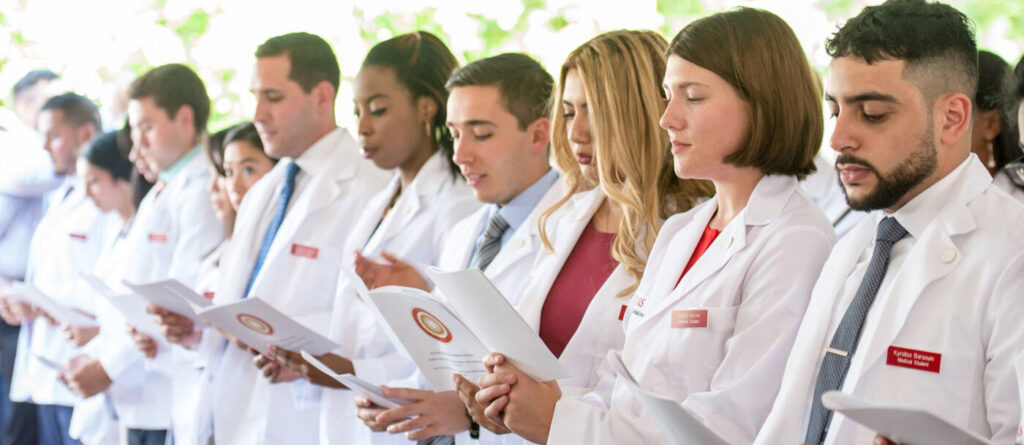
Your secondary is your best chance to show what makes you a fit for NJMS. The primary application gives the admissions committee the basic facts; the secondary shows who you are and why you want this school.
NJMS sends its secondary to all applicants by email. It costs $95 (waived with AMCAS Fee Assistance) and is due December 15, 2026, but because review is rolling, aim to submit within a week or two. The secondary is a chance “to provide additional context and insight into your experiences, interests, and motivations,” with questions about special program interests and past participation in NJMS-sponsored pipeline initiatives, and “reflective essay prompts that explore themes central to our school’s mission, such as resilience, integrity, collaboration, humanism in medicine, and the ability to engage with individuals from varied backgrounds and perspectives.”
For 2026-2027 the secondary has ten written items: two short questions under a “Demographic information” heading, seven numbered essays, and one follow-up field asking for activities and time commitments. Every item is limited to 1,500 characters, including spaces. Write to 1,500 characters and follow the counter shown in your portal.
Applicants to the MD/PhD program report additional MD/PhD sections on the secondary. Those MD/PhD prompts and any Early Decision-specific questions have not been published for this cycle, so this guide does not reproduce them. If you are applying MD/PhD or ED, plan extra time for those sections.
How to write strong NJMS secondary essays
Brainstorm before you start writing. Write down anything each prompt makes you think of. This helps you organize your thoughts and keeps you from forgetting an important experience. From there, choose the single best story for each prompt.
Ground your answers in concrete examples. Support every claim with a real moment. Specific stories make an essay convincing and memorable and show the committee how you will contribute to the NJMS community.
Be thoughtful and honest. This is your chance to let the committee know you. Share your story, but be deliberate about what you share and why it matters.
Be specific. It is tempting to include everything. Focus on a few points that show who you are. Broad statements can give context, but they should not be the focus.
Edit, edit, edit. Put each draft away, then return with fresh eyes. Ask someone else to read it. With a 1,500-character limit, every sentence must earn its place.
Spread your stories. Ten items invite repetition. Map your experiences across the prompts so each essay adds something new: one story for humanism, a different one for failure, another for difference.
The examples below are original and written for this guide. Each is labeled “Illustrative example, not an actual applicant essay.” They show structure and specificity. Do not copy them; your essays must describe your own experiences.
Demographic information, question 1: Why NJMS and your New Jersey connections
Rutgers New Jersey Medical School (NJMS) attracts applicants from across the country. What aspects of NJMS have influenced your interest in our program, and how do you see yourself contributing to our community? If applicable, please describe any personal, educational, professional, or community connections you have to New Jersey:
Limit: 1,500 characters. Who answers: all applicants.
What it asks: This question has three parts: what aspects of NJMS influenced your interest, how you will contribute to the community, and, if applicable, your personal, educational, professional or community ties to New Jersey. Out-of-state applicants should still answer the first two parts fully.
Approach: Pick two or three verified NJMS features that connect to your own history. Spend at least a third of the answer on contribution: what you will actually do in the NJMS community. Add the New Jersey connection only if it is real.
Illustrative example, not an actual applicant essay (1,481 characters):
I grew up in Elizabeth and spent two summers as a patient transporter at a hospital in Union County, so I already know what a crowded North Jersey emergency department sounds like at 2 a.m. I want to train where that reality is the classroom. University Hospital is northern New Jersey’s Level I trauma center and the principal teaching hospital for NJMS, and I want my clerkships to happen in a public hospital that serves people like my neighbors.
Two things at NJMS shaped my interest most. First, Community Engaged Service Learning runs through both preclerkship years, which tells me service is part of the curriculum rather than an extra. Second, the Distinction in Service has a Limited English Proficiency track. I interpret Spanish for my grandmother at every appointment, and I have seen how a missed word becomes a missed diagnosis. Earning a certificate in medical interpretation and studying care for LEP patients would turn a family habit into a professional skill.
I see myself contributing at the Student Family Health Care Center, where students have cared for Newark residents since 1968. I bring two years of experience calming frightened patients during transport and a habit of asking families what they actually understood. I also want to help with health literacy outreach, since the Diabetes Health Literacy Outreach group matches work I did at a church screening in Elizabeth.
New Jersey is home. I want to learn medicine here and stay here to practice.
Analysis: What it asks: two things, plus one conditional. (1) Which aspects of NJMS shaped your interest, (2) how you will contribute to the community, and (3) if applicable, your connections to New Jersey. How the example answers: it names verifiable NJMS features (University Hospital as the principal teaching hospital and northern New Jersey’s Level I trauma center, Community Engaged Service Learning, the Distinction in Service Limited English Proficiency track, the Student Family Health Care Center and a student service group), links each to the applicant’s own history, then states concrete contributions and ends with the New Jersey tie. Mistakes to avoid: listing features without personal reasons, praising rankings, inventing programs, or skipping the contribution question. Out-of-state applicants should answer the connection part only if a real tie exists; NJMS gives equal consideration to in-state and out-of-state applicants.
Demographic information, question 2: Background, upbringing and perspective
We value the experiences and perspectives that shape how individuals understand the world and their role in it. Are there aspects of your background, upbringing, or experiences that have influenced your values, perspective, goals, or interest in medicine? If so, please share them here:
Limit: 1,500 characters. Who answers: optional (“If so”).
What it asks: Whether parts of your background, upbringing or experiences shaped your values, perspective, goals or interest in medicine.
Approach: If you answer, choose one setting or experience and show its effect on how you think and act. Name the values, then prove each with a short example.
Illustrative example, not an actual applicant essay (1,357 characters):
My parents left Ecuador with one suitcase each and opened a small bakery in Paterson. I worked the register from age twelve, and the bakery taught me more about community health than any class. Regulars told me about their blood sugar, their late rent and their sons in the hospital, usually while counting coins. I learned that people share health worries with someone they trust, not necessarily with someone in a white coat.
That shaped my values in three ways. First, I see trust as clinical work. When I later volunteered at a free clinic, I noticed patients opened up after small talk about home, and I made that small talk part of how I take a history. Second, I measure a plan by whether a patient can afford and follow it. A prescription that costs a day’s earnings is not a plan for a baker. Third, I feel a responsibility to my parents’ neighborhood. Many of our customers had no regular doctor, and I want to be the physician who notices when a regular stops coming in.
My interest in medicine grew from that counter, and it grew again when my father had a heart attack at 54. The cardiology team explained everything clearly, but no one asked how he would take three new medicines while working fourteen-hour days. I filled that gap with a pill organizer and a phone alarm. I want to practice in a way that asks the question no one asked him.
Analysis: What it asks: whether parts of your background, upbringing or experiences shaped your values, perspective, goals or interest in medicine. The ‘If so’ wording makes it optional. How the example answers: it describes one setting (a family bakery), names three specific values that grew from it, shows each value in a clinical setting, and ties the background to the interest in medicine through a family event. Mistakes to avoid: repeating the personal statement, writing a list of identities without showing their effect, or treating hardship as the whole story. If your background is already fully covered elsewhere, leaving this blank is acceptable.
Essay 1: Humanism, dignity and equity
At NJMS, we are committed to the principles of humanism in medicine and to addressing health inequities that affect many communities. Our students work as part of interprofessional teams to care for patients from diverse backgrounds and life experiences. Reflect on an experience that shaped your understanding of human dignity, compassion, service, or equity. How do you hope to embody these values as a medical student and future physician?
Limit: 1,500 characters. Who answers: all applicants.
What it asks: Reflect on one experience that shaped your understanding of human dignity, compassion, service or equity, then explain how you hope to embody these values as a medical student and future physician.
Approach: Use about 60 percent of the space for the experience and what it taught you, and about 40 percent for the future. Name one or two NJMS settings where you will practice these values, such as the Student Family Health Care Center or Community Engaged Service Learning.
Illustrative example, not an actual applicant essay (1,374 characters):
During my year as a scribe in an emergency department, I worked with a physician who knelt at eye level with every patient before speaking. One night a man with no fixed address came in with cellulitis and a strong smell of alcohol. Several staff members spoke to him from the doorway. The physician pulled up a stool, asked his name, and asked where he had been sleeping. The answer, a parked car, changed the plan: oral antibiotics he could store without a fridge and a social work referral before discharge.
That moment taught me that dignity is practical. Sitting down gave the patient room to tell the truth, and the truth changed his treatment. Equity, I learned, often begins with a question about someone’s life outside the room.
At NJMS I hope to practice that habit from the first year. Patient-Centered Medicine and Health Equity and Community Engaged Service Learning would give me structured time with communities in Newark, and the Student Family Health Care Center would let me take histories under supervision with the same patience I watched that night. I also want to learn from interprofessional teams, because the social worker, not the physician, found the man a shelter bed.
As a physician, I want to keep asking where patients sleep, eat and work, and to build plans around the answers. I want every patient to feel that someone sat down with them.
Analysis: What it asks: reflect on one experience that shaped your understanding of human dignity, compassion, service or equity, then explain how you hope to embody these values as a medical student and physician. How the example answers: one scene with a clear turning point (the physician sitting down), a short reflection on what dignity and equity mean in practice, then NJMS-specific plans (Patient-Centered Medicine and Health Equity, Community Engaged Service Learning, the Student Family Health Care Center, interprofessional teams) and a closing commitment. Mistakes to avoid: abstract essays on ‘humanism’ with no scene, casting yourself as a savior, or skipping the ‘medical student and future physician’ half of the prompt.
Essay 2: A significant challenge or failure
Medicine demands humility, self-awareness, and resilience. Describe a significant challenge or failure you have faced. What did you learn about yourself, and how has it shaped your approach to working with others and handling responsibility?
Limit: 1,500 characters. Who answers: all applicants.
What it asks: Describe a significant challenge or failure, what you learned about yourself, and how it shaped your approach to working with others and handling responsibility.
Approach: Choose a real failure with stakes. Spend little space on the setup and more on your response, the self-insight and how you work differently with others now. The prompt’s opening words, “humility, self-awareness, and resilience,” are the qualities to demonstrate, not to claim.
Illustrative example, not an actual applicant essay (1,337 characters):
In my junior year I failed my first organic chemistry exam with a 52. I had always done well by studying alone, and I assumed the same method would work. It did not. For a week I told no one, including my lab partner, because asking for help felt like proof I did not belong in medicine.
What changed things was a teaching assistant who noticed my score and asked me to come to office hours. She showed me that I memorized mechanisms instead of predicting them. I joined a study group, began teaching reactions aloud to classmates, and earned a B+ in the course. The bigger lesson was about me: my instinct under pressure is to hide, and hiding makes problems grow.
That lesson has shaped how I work with others. As a volunteer EMT, I now say early and plainly when I am unsure, such as asking my crew chief to double-check a medication dose. I also watch for teammates who go quiet after a mistake, because I recognize the pattern. Last spring I noticed a new EMT avoiding questions after a rough call and asked him to debrief with me over coffee.
Handling responsibility, for me, now means owning a gap quickly, asking for help before harm happens, and making it easier for others to do the same. I expect medical school to test me again, and I plan to respond the way I eventually did in chemistry: early, honestly and with a team.
Analysis: What it asks: a significant challenge or failure, what you learned about yourself, and how it shaped your approach to working with others and handling responsibility. How the example answers: a real failure with numbers, an honest admission about hiding it, the specific fix, a self-insight stated plainly, and two later examples (asking a crew chief to double-check, supporting a struggling teammate) that show the lesson applied to teamwork and responsibility. Mistakes to avoid: a ‘failure’ that is secretly a success, blaming others, or ending before the ‘working with others’ part.
Essay 3: An interaction across difference
Describe a meaningful interaction or experience with someone whose background, perspective, or life experiences differed from your own. What did you learn from this experience, and how has it influenced the way you engage with others?
Limit: 1,500 characters. Who answers: all applicants.
What it asks: One meaningful interaction or experience with someone whose background, perspective or life experiences differed from yours, what you learned and how it influenced the way you engage with others.
Approach: Choose a relationship, not a single glance. Show your starting assumption, the moment it changed and the lasting habit that resulted. NJMS patients come from many countries, faiths and languages, so a story about listening across difference is directly relevant.
Illustrative example, not an actual applicant essay (1,310 characters):
For a year I volunteered as a conversation partner for Mr. H., a retired engineer from Syria who had resettled in New Jersey. He was 71, deeply religious and skeptical of American medicine. I was 20, raised without religion and certain that evidence would settle every argument.
Our weekly sessions were meant to practice English. Instead, Mr. H. often asked why his doctor had prescribed a statin without asking about his diet, and why the clinic always sent a male interpreter when his wife needed care. At first I defended the clinic. Over time I realized I was answering questions he had not asked. He wanted to be consulted, not convinced.
I learned to listen first and explain second. When he refused a colonoscopy, I stopped repeating statistics and asked what worried him. His fear was about modesty and fasting during a religious holiday. Once he said that out loud, he scheduled the procedure for a later month and asked for a female nurse for his wife’s visits. The facts never changed. The conversation did.
Mr. H. changed how I engage with everyone. I now ask what someone already believes before offering information, and I treat pushback as a sign I have not yet understood. At NJMS, where patients come from many countries and faiths, I want to carry that patience into every history I take.
Analysis: What it asks: one meaningful interaction with someone whose background, perspective or life experiences differed from yours, what you learned, and how it changed the way you engage with others. How the example answers: it sets up the differences honestly (age, faith, culture, views on medicine), shows the applicant’s initial mistake, describes the change in approach with a concrete outcome, and ends with a lasting habit tied to NJMS’s patient population. Mistakes to avoid: treating the other person as a lesson rather than a person, using stereotypes, or choosing a trip abroad where you only observed.
Essay 4: Time away from full-time enrollment
If you have taken or plan to take time away from full-time academic enrollment (undergraduate or graduate) before medical school, please describe how you have used or plan to use this time. What experiences, skills, or insights do you hope to gain, and how will they contribute to your preparation for medical school and your development as a future physician?
Limit: 1,500 characters. Who answers: applicants who have taken or plan to take time away from full-time study before medical school.
What it asks: How you used or will use the time, what you hope to gain, and how it will prepare you for medical school and your development as a physician.
Approach: State the dates and your main role first. Then explain what you are learning and why it matters for NJMS. Gap years are common, and NJMS asks about them directly, so there is no need to apologize. If you are still planning your year, pre-med gap year programs with supervised clinical work are one option to weigh alongside paid clinical jobs.
Illustrative example, not an actual applicant essay (1,252 characters):
I graduated in May 2026 and am using this year to build clinical depth and test my commitment to primary care. I work full time as a medical assistant at a federally qualified health center in Newark, where I room patients, take vitals and update medication lists for a family medicine team. I chose this job because I wanted steady, repeated contact with the same patients rather than one-time encounters.
The year has already taught me things a classroom could not. I have learned to manage a panel of follow-up calls, to notice when a patient’s blood pressure log looks too perfect, and to work with interpreters on almost every shift. I have also seen how often care stalls on paperwork, which has made me curious about systems as well as diagnoses.
Outside work, I volunteer with a Newark food pantry, where I help run monthly blood pressure screenings, and I am completing an online biostatistics course so I can read the clinical studies my preceptors cite.
I hope to gain clinical judgment that starts before medical school, comfort with team-based care, and a clear view of what continuity means to patients. These will help me use early clinical experiences well and give me a realistic picture of the primary care career I am considering.
Analysis: What it asks: if you took or will take time away from full-time enrollment, how you used or will use it, what you hope to gain, and how it prepares you for medical school and practice. How the example answers: dates, the main role with concrete duties, what was learned so far, secondary activities, and a closing tie to medical school readiness and career goals. Mistakes to avoid: apologizing for a gap year, listing activities with no reflection, or putting the detailed hour schedule here instead of in the next field.
Essay 4 follow-up: Activities and time commitments
Please include your anticipated activities and time commitments through matriculation in July 2027:
Limit: 1,500 characters (follow your portal’s counter). Who answers: the same applicants as Essay 4.
What it asks: A factual list of what you will be doing, and for how long, until you start medical school in July 2027.
Approach: One line per activity: role, setting, hours per week or month, and dates. Keep it consistent with your AMCAS and your Essay 4 answer.
Illustrative example, not an actual applicant essay (635 characters):
Medical assistant, family medicine, community health center in Newark: 40 hours per week, June 2026 to June 2027. Blood pressure screening volunteer, Newark food pantry: 4 hours per month, ongoing through June 2027. Online biostatistics course: about 5 hours per week, September to December 2026. Spanish medical terminology course (evening, community college): 3 hours per week, January to May 2027. Clinical research volunteer, chart review on hypertension follow-up rates at my health center (supervised by the medical director): 4 hours per week, February to June 2027. Planned rest and family time before matriculation: July 2027.
Analysis: What it asks: a factual list of anticipated activities and time commitments through July 2027 matriculation. How the example answers: one line per activity with role, setting, hours and dates, including planned rest so the timeline is complete. Mistakes to avoid: writing another essay here, vague hours (‘some volunteering’), or listing plans you are not likely to complete. Keep it consistent with the essay above and with your AMCAS entries.
Essay 5: Reapplicants
If you are re-applying to medical school, describe the steps you have taken to strengthen your candidacy and reflect on what this process has taught you about your motivation and preparedness for a career in medicine.
Limit: 1,500 characters. Who answers: anyone re-applying to medical school.
What it asks: The steps you have taken to strengthen your candidacy and what the process taught you about your motivation and preparedness.
Approach: Many applicants do not get in the first time, and even very qualified candidates are turned away because of limited seats. Medical schools understand this and are often receptive to reapplicants. Name the weakness in your earlier application plainly, list what you changed with numbers where possible, and give at least half the space to reflection. Do not gloss over weaknesses or make excuses.
Illustrative example, not an actual applicant essay (1,283 characters):
When I applied in the 2025-2026 cycle, I received no interviews. My application coach and a premedical advisor both read my file and agreed on the main problem: I described clinical interest without showing much clinical work. I had 80 hours of shadowing and a strong research record, but little direct patient contact.
Since then I have worked as a patient care technician on a medical-surgical floor, where I have logged more than 1,200 hours taking vitals, helping patients move safely and reporting changes to nurses. I also retook the MCAT and raised my score by six points, and I rewrote my personal statement around patients rather than experiments.
The process taught me something uncomfortable. I had been applying to prove I could do medicine rather than to show I understood what the work is. Night shifts changed that. Helping an older woman back to bed after a fall at 3 a.m. is not glamorous, and I found that I wanted to be there anyway. That told me more about my motivation than any acceptance would have.
I also learned that I can hear a hard verdict and respond with a plan. I think that will matter in medical school, where feedback will be constant. I am applying again with a fuller record, a clearer reason and a steadier sense that this is the work I want.
Analysis: What it asks: steps you have taken to strengthen your candidacy and what reapplying taught you about your motivation and preparedness. Applicants on SDN report that anyone reapplying to medical school should answer, even if they never applied to NJMS before. How the example answers: it diagnoses the earlier weakness honestly, lists measurable changes (clinical hours, MCAT, rewritten statement), and spends the second half on reflection about motivation and handling feedback. Mistakes to avoid: blaming the process, listing changes without reflection, or hiding the earlier cycle.
Essay 6: Additional context
We understand that an application may not always fully reflect the circumstances surrounding an applicant’s experiences or performance. If there are aspects of your personal, academic, or professional journey that would benefit from additional explanation or context, we invite you to share them here.
Limit: 1,500 characters. Who answers: optional, for anyone with circumstances that need explanation.
What it asks: Context for anything in your record that may not reflect your abilities: a grade drop, an institutional action, a gap, an MCAT retake, health or family events.
Approach: State the issue, the cause and the recovery in that order. Take responsibility, keep medical or family details brief, and end with evidence that the issue is resolved. Leave the box blank if nothing needs explaining.
Illustrative example, not an actual applicant essay (1,144 characters):
My GPA dropped to 2.9 in the spring of my sophomore year. That semester my mother was diagnosed with breast cancer, and as the oldest child who could drive, I took her to most of her chemotherapy appointments while keeping a full course load. I did not withdraw from any classes because I worried about losing my scholarship, and two grades suffered.
I am not offering this as an excuse. I made a choice to stay enrolled, and I own the results. What I would like the committee to see is what came after. Once my mother finished treatment, I met with an academic advisor, built a weekly schedule that protected study time, and earned a 3.8 or higher in each of my remaining five semesters, including upper-level biochemistry and physiology.
The experience also gave me something useful. I spent many hours in an infusion center watching nurses manage fear, nausea and family questions at once. It was the first time I saw care from the side of the family, and it is a large part of why I want to become a physician.
My mother has now been cancer free for three years. I hope this context helps explain one semester without defining my record.
Analysis: What it asks: optional context for anything in your record that needs explanation. How the example answers: it states the issue directly (GPA drop, which semester, why), accepts responsibility, shows the recovery with specific numbers, and adds one brief note on what the experience taught. Mistakes to avoid: using this box for a second personal statement, long medical details, or explaining problems the committee would not have noticed. Use it for institutional actions, grade trends, MCAT gaps or similar issues.
Essay 7: Anything else
Is there anything else you would like the Admissions Committee to know about you, including the experiences, values, interests, or passions that have shaped your path and may not be fully reflected elsewhere in your application?
Limit: 1,500 characters. Who answers: optional.
What it asks: Experiences, values, interests or passions that shaped your path and are not fully reflected elsewhere.
Approach: Before writing, reread your other answers and your AMCAS. Choose something new: a skill, a commitment, a long-term goal or an update since you submitted your primary, such as a new job, leadership role or award. Connect it to how you will contribute at NJMS.
Illustrative example, not an actual applicant essay (1,311 characters):
One thing my application does not fully show is how much I enjoy teaching. For three years I have tutored high school students in biology through a free program at my public library in Jersey City. Most of my students are the first in their families to consider college, and several want careers in health. Watching a student finally understand osmosis by drawing it on a napkin is one of my favorite feelings.
Teaching has shaped how I think about medicine. A good explanation depends on what the listener already knows, and I suspect the same is true for patient education. I want to be a physician who checks for understanding rather than assuming it.
That is part of why the Distinction in Medical Education caught my attention. Running a journal club, teaching fellow students and studying how medical education works would let me build on a skill I already love. I am also interested in NJMS’s pipeline programs for students from backgrounds underrepresented in medicine, because I have seen how much a single mentor can change a student’s plans.
Outside of academics, I am a long-distance runner and have completed two half marathons. Running has taught me pacing, which I expect to need for four years of medical school. I hope to bring both habits, teaching and steady effort, to the NJMS community.
Analysis: What it asks: an optional, open invitation to share experiences, values, interests or passions not fully reflected elsewhere. How the example answers: it adds a new dimension (teaching), shows the effect on how the applicant thinks about patient care, links it to a real NJMS option (Distinction in Medical Education) and the school’s pipeline programs, and closes with a short personal note. Mistakes to avoid: repeating your strongest activity again, pasting a generic ‘why medicine’ essay, or filling the box only because it exists.
Final secondary checklist
- Every answer is under 1,500 characters, counted with spaces, in your portal.
- Each essay uses a different main story.
- Your “why NJMS” answer names real programs and explains your reasons.
- Your gap-year essay and time-commitment list agree with each other and with AMCAS.
- You noted any NJMS pipeline program participation and special program interests.
- You submitted the $95 fee or confirmed your Fee Assistance Program waiver.
- You submitted well before December 15.
Interview Format and Preparation
Format
NJMS invites applicants to interview by email after its screening committee reviews a complete file. Applicants are interviewed “by medical school faculty and administrators who will discuss personal and educational achievements, motivation, drive, ability, background, personality, long term goals and extracurricular activities,” and that interviews “vary in length but generally last about one hour.” These are “traditional one-on-one interviews,” and optional student interviews are available when student schedules permit.
Interviews are virtual, on Zoom, and invitations for this cycle began going out on June 30, 2026. The day centers on a 45 to 60 minute interview with a faculty member, and you can add an optional 30-minute interview with a current medical student. The interview assesses your interpersonal and communication skills, your fit with NJMS, your motivation for medicine and how well you have tested that choice in patient-centered settings. Your invitation email will list available dates. The Office of Admissions says it “makes every effort to schedule interview dates and times that are convenient to applicants.” In 2026, applicants described “Meet the Deans” information sessions on Zoom alongside interview scheduling, and some reported only a few interview dates offered, close to the invitation date, so check your email often.
Timing
- Early Decision interviews begin in early July (July 1 in the 2026 pamphlet).
- Regular decision interviews begin in mid-August.
- Complete files remain under consideration for interview through mid-March.
What to expect in a traditional interview
A one-hour, one-on-one conversation is very different from a multiple mini interview. Expect your interviewer to have read your file and to ask follow-up questions about specific experiences. Common topics at NJMS-style traditional interviews include:
- Why medicine, and why now
- Why NJMS and Newark
- The experiences on your AMCAS, especially your most meaningful ones
- A challenge or failure, and what you learned
- Working with people whose backgrounds differ from yours
- Your long-term goals
- Your gap year or time away, if any
- Questions you have for the interviewer
How to prepare
NJMS’s own interview advice is direct: “Make your first impression count. At Rutgers New Jersey Medical School, we value authenticity, professionalism, and passion. Be prepared, know your story, and speak genuinely about the experiences that shaped your path to medicine. Lastly, familiarize yourself with NJMS’s mission and values.” It adds that applicants “who demonstrate a sincere connection to our community and vision for healthcare distinguish themselves during the interview process.”
Practical preparation:
- Reread everything you submitted. Your AMCAS, your secondary and any updates. Interviewers ask about details.
- Prepare five stories. One each for humanism, failure, teamwork, difference and leadership. Practice telling each in about two minutes.
- Know the school. Be ready to discuss University Hospital, CESL, the Student Family Health Care Center, the Distinction Programs and the Rutgers School of Medicine integration. A thoughtful question about how the merger affects students shows you did your homework.
- Practice out loud. A one-hour conversation tests stamina. Do at least one full-length mock interview.
- Prepare questions. Ask about things you cannot find online, such as how students choose Distinction Programs or what interviewers enjoy about teaching at University Hospital.
- Follow up with updates, not pressure. NJMS accepts application updates through the portal or by email.
Future cycles
If you apply in a later cycle to the integrated Rutgers School of Medicine, all applicants will complete both a multiple mini interview and a traditional one-on-one interview. That format does not apply to the 2026-2027 NJMS cycle.
Frequently Asked Questions
Is Rutgers New Jersey Medical School merging with Robert Wood Johnson Medical School?
Yes, but not for the 2026-2027 cycle. Rutgers is seeking a single accreditation for NJMS and RWJMS as the future Rutgers School of Medicine, with an accreditation survey in January 2027 and a possible decision as early as June 2027. The charter class of the merged school is expected to start in summer 2028. If you apply now for July 2027 entry, you apply to NJMS on its own through AMCAS, and you can also apply to RWJMS separately. Each campus will keep its own teaching hospital and class size.
What GPA and MCAT do I need for NJMS?
NJMS has no minimum GPA or MCAT score. For the 2025 entering class, accepted applicants had a median MCAT of 514 and a median overall GPA of 3.89. Its admissions summary notes that intense competition typically favors applicants with stronger credentials. The school reviews GPA, course rigor, grade trends and MCAT together with your experiences and personal qualities. Take the MCAT no later than October of the year you apply; a January test is possible only with approval for extenuating circumstances.
What is the NJMS acceptance rate?
NJMS does not publish its number of offers, so a true acceptance rate is not available. In the 2025 cycle, it received 6,513 applications, conducted 719 interviews and enrolled 174 new students. About 11 percent of applicants were interviewed. Enrollment divided by applications (about 2.7 percent) understates your chance of an offer, because schools admit more students than they enroll.
Does NJMS prefer New Jersey residents?
No. NJMS states that it gives equal consideration to in-state and out-of-state applicants. Residents do pay much less tuition: $48,080 versus $77,125 for 2026-2027. Out-of-state applicants should explain their interest in NJMS and Newark clearly in the first secondary question.
Does NJMS require Casper or PREview?
No. The application process page says, “We do not require the PREview or CASPer tests.” Your file is complete with a verified AMCAS application, the secondary and fee, letters and your MCAT score.
How many secondary essays does NJMS have, and how long are they?
The 2026-2027 secondary has ten written items, each limited to 1,500 characters: two short questions about why NJMS and your background, three essays on humanism, failure and difference, and conditional or optional items about gap years, your planned activities, reapplying, added context and anything else. MD/PhD applicants have additional sections. The fee is $95, and the deadline is December 15.
When does NJMS send secondaries and interview invitations?
The secondary becomes available June 25 and goes to all applicants by email. Early Decision interviews begin in early July and regular decision interviews in mid-August. Complete files are considered for interviews through mid-March, and regular decision acceptances begin October 15.
What is the NJMS interview like?
NJMS uses traditional one-on-one interviews with faculty and administrators. They generally last about one hour and cover your achievements, motivation, background, goals and activities. Interviews are held virtually on Zoom, and you can add an optional 30-minute conversation with a medical student.
Should I apply Early Decision to NJMS?
Apply ED only if NJMS is clearly your first choice and you can complete your file by September 1. ED applicants must select NJMS as their only school by August 1. NJMS reviews complete ED files within 48 hours and begins ED acceptances in mid-July. If you are deferred, you are told immediately and can then apply to other schools.
What is the Accelerated 3-Year Primary Care MD program?
It is an option for students already accepted to the four-year MD who are committed to primary care. You finish the MD in three years and receive conditional acceptance into a Rutgers-sponsored residency in internal medicine, medicine-pediatrics, obstetrics and gynecology, pediatrics or psychiatry. You apply after acceptance, choose your residency program and interview with it. The trade-offs are an earlier start, a shorter summer, fewer electives and no joint degree or research year.
Can I take prerequisites online or use AP credit?
NJMS does not accept online prerequisite coursework. It will consider AP credit for prerequisites but strongly encourages advanced college courses in the same subjects.
How much clinical experience do I need for NJMS?
NJMS does not set a minimum number of hours. It encourages applicants to validate their choice of medicine through clinical work such as EMT, nursing assistant, medical technician or scribe jobs, or hospital volunteering. Sustained, hands-on patient care is the strongest evidence. Undergraduates looking for more direct experience sometimes add medical internships for undergraduates during breaks, but steady local clinical work over many months matters most.
Does NJMS require research?
No, unless you apply to the MD/PhD program. NJMS encourages a broad range of experiences, and research opportunities are plentiful once you enroll, through the Distinction in Research, the MD with Thesis program and faculty labs.
Does NJMS accept transfer students?
No. The admissions FAQ states, “We do not accept transfer students.”
Where do NJMS students do their clinical training?
Mainly at University Hospital in Newark, the school’s principal teaching hospital and northern New Jersey’s Level I trauma center, with major clinical instruction also at the East Orange VA Medical Center, Saint Barnabas Medical Center, Newark Beth Israel Medical Center and Morristown Memorial Hospital.
Is there student housing at NJMS?
Yes. On-campus housing at 180 West Market Street offers studio, one, two and three-bedroom apartments. Many students also live near campus or commute.
How much does NJMS cost?
For 2026-2027, tuition is $48,080 for residents and $77,125 for non-residents. First-year fees add $2,452, and the student health insurance premium is $3,286 if you do not waive it. The newest full budget (2025-2026) puts total first-year cost of attendance at roughly $97,000 for residents and $126,000 for non-residents living off campus.
Can I defer my acceptance to NJMS?
Accepted students holding a seat may request a one-year deferral by June 15. Requests are reviewed individually, and approval is not guaranteed.
Does NJMS accept international, Canadian or DACA applicants?
Yes. The MD program considers out-of-state, Canadian, international and DACA applicants, and it gives no residency preference. The BA/MD program is the exception: it requires US citizenship or permanent residency. Contact the Office of Admissions early if you have questions about financial documentation or loan eligibility.
Is there a deposit after acceptance, and how long do I have to respond?
Yes. The deposit is $100 for residents and non-residents, refundable until April 30, 2027 and applied to tuition if you enroll. You have up to two weeks to respond to an offer.
How much debt do NJMS graduates have?
Graduates who borrowed in 2024-2025 left with average medical school debt of $229,587, and 75 percent of NJMS students received financial aid that year. The accelerated three-year primary care MD removes a year of tuition and living costs for students who qualify.
How many students enter NJMS through Early Decision?
Of the 174 estimated new entrants, 75 come through Early Decision and 61 through the regular MD route. The rest enter through the BA/MD program (28), MD/PhD (5), other special programs (3) and early assurance (2).
Does NJMS accept application updates?
Yes. After your application is verified, you can upload updates to the applicant portal or email them to [email protected].
What joint degrees does NJMS offer?
NJMS offers the MD/MPH (five years, with the Rutgers School of Public Health), the MD/MBA (with Rutgers Business School, which requires the GMAT and a separate application), the MD/PhD (including an Early Decision MD/PhD option) and the MD with Thesis (one extra research year).
Related Medical School Guides
If NJMS is on your list, these guides cover schools with a clear connection to it:
- Rutgers Robert Wood Johnson Medical School: the other Rutgers MD school, in New Brunswick and Piscataway, and the future second campus of the Rutgers School of Medicine. Apply to both separately this cycle.
- Hackensack Meridian School of Medicine: a private MD school in Nutley, a few miles from Newark, with a three-year core curriculum built around community family visits.
- Cooper Medical School of Rowan University (CMSRU): New Jersey’s South Jersey MD option in Camden, with a similar focus on service in an urban community.
- NYU Medical School: a nearby Manhattan school with a three-year MD pathway, useful for comparing accelerated options.
- NYU Grossman School of Medicine and NYU Langone Health: IMA’s overview of NYU’s Manhattan and Long Island programs, including the primary care focused Long Island campus.
- Weill Cornell Medicine: a highly research-focused New York City option for applicants interested in the MD/PhD and physician-scientist routes NJMS also offers.
- For a side-by-side view of every program in the state, see IMA’s guide to medical schools in New Jersey.
More medical school guides
Make sure to check out the rest of IMA’s medical school guides:
- Rutgers Robert Wood Johnson Medical School
- Cooper Medical School of Rowan University (CMSRU)
- A.T. Still University Kirksville College of Osteopathic Medicine
- Saint Louis University School of Medicine
- University of Missouri Medical School
- Kansas City University (KCU)
- UMKC School of Medicine
- New York Medical College
- University of Pittsburgh School of Medicine
- University of Wisconsin Medical School
- VCU School of Medicine
- University of Maryland School of Medicine
- Case Western Medical School
- University of North Carolina Medical School
- University of Florida Medical School
- Emory University School of Medicine
- Boston University College of Medicine
- California University of Science and Medicine
- UC San Diego Medical School
- California Northstate University College of Medicine
- Touro University of California
- CHSU College of Osteopathic Medicine
- UC Davis School of Medicine
- Harvard Medical School
- UC Riverside School of Medicine
- USC Keck School of Medicine
- UT Southwestern Medical School
- Long School of Medicine at UT Health San Antonio
- University of the Incarnate Word School of Osteopathic Medicine
- UT Austin’s Dell Medical School
- UTMB School of Medicine
- McGovern Medical School at UT Health
- Johns Hopkins School of Medicine
- The University of Texas Rio Grande Valley School of Medicine
- UNT Texas College of Osteopathic Medicine
- University of Houston College of Medicine
- Texas A&M College of Medicine
- Baylor College of Medicine
- George Washington University School of Medicine
- Vanderbilt University School of Medicine
- St. George’s University School of Medicine
- Lake Erie College of Osteopathic Medicine (in Pennsylvania)
- Sidney Kimmel Medical College at Thomas Jefferson University
- Wake Forest University School of Medicine
- Western University of Health Sciences (in California)
- Drexel University College of Medicine
- Stritch School of Medicine at Loyola University Chicago
- Georgetown University School of Medicine
- Yale School of Medicine
- Perelman School of Medicine
- UCLA Medical School
- NYU Medical School
- Washington University School of Medicine
- Brown Medical School
How International Medical Aid Can Help
International Medical Aid (IMA) runs clinical internships abroad, in Kenya and other countries, for pre-health students. Interns work under the supervision of local physicians and nurses: they take vitals, do patient intake and triage, and help with direct patient care. IMA is independent of NJMS, and taking part does not affect your admissions decision at any school. What it can give you is real patient contact and stories you can reflect on honestly in essays and interviews.
That kind of experience fits what NJMS asks about. The first required essay wants an experience that shaped your sense of dignity, compassion, service or equity. The third asks about an interaction with someone whose background differs from yours. The gap-year essay asks how your time away prepares you for medical school. Supervised care in a setting with limited resources can speak to all three, as long as you describe what you did and learned rather than what you saw.
IMA’s pre-health internships are built for students preparing for medical, PA and other health careers, and IMA’s medical internships abroad cover several countries and specialties. Many students take part in a summer before applying or during a gap year.
IMA also offers medical school admissions consulting for help with school lists, AMCAS, secondaries like NJMS’s ten-item application, and interview practice. Advisors work with you on your own experiences and writing; they do not write essays for you or promise outcomes.
Next step: Map your experiences against the NJMS secondary prompts in this guide. If you find gaps in direct patient care or need help shaping your stories, reach out to us with any questions, big or small.
Final Thoughts and Sources
NJMS rewards applicants who understand what it is: a public medical school in Newark built around humanism, service and a safety-net teaching hospital, with strong research and a wide range of special programs. For the 2026-2027 cycle, the practical plan is simple. Complete your AMCAS early, return the ten-item secondary quickly with specific, honest essays under 1,500 characters each, secure a committee packet or strong science and non-science letters, and prepare stories for a one-hour, one-on-one interview. Keep an eye on the Rutgers School of Medicine integration, which will change how future applicants apply.
Completing the NJMS secondary with care is a crucial step. By taking time to answer each prompt thoughtfully, you give yourself a much better chance of an interview and, ultimately, an offer. We wish you the best of luck on your journey to becoming a physician.
Source notes
All sources were checked on October 18, 2026. Figures are labeled with their cohort or academic year in the text.
- NJMS Office of Admissions: Application Process (deadlines, $95 secondary fee, no PREview or Casper, letters, MCAT timing, review factors); Academic Requirements; The Interview; Selection Process; Early Decision Program; Important Dates; Admissions FAQs; Admissions home page (Class of 2025 Profile, admissions team); Admissions Information Summary (undated).
- NJMS Admissions Recruitment Pamphlet 2026: Class of 2029 (2025 cycle) applications, interviews, new students and class profile; screening qualities; interview advice; Class of 2026 residency placement.
- NJMS 2026 Match Summary (Class of 2026), from the Residency Match List page.
- AAMC Medical School Admission Requirements (MSAR), Rutgers New Jersey Medical School profile, 2026 edition: median and mean MCAT and median GPA of accepted applicants (2025 entering class), estimated new entrants by program, total enrollment, applicant eligibility, letters, interview format, acceptance dates, deposit, Plan to Enroll and Commit to Enroll dates, financial aid and graduate debt (LCME Part I-B, 2024-2025).
- NJMS program pages: MD Program; Accelerated 3-Year Primary Care MD FAQ; Distinction Programs; MD/MBA; MD/MPH; MD/PhD; MD with Thesis; BA/MD; articulated and linkage programs.
- NJMS mission, vision and values; About NJMS; Office of the Dean; Office of the Executive Vice Dean; Office of Education curriculum pages; Research Areas of Excellence; Student Family Health Care Center; Center for Emerging Pathogens.
- Rutgers NJMS Tuition and Fee Rates, 2026-2027 (Rutgers University Finance); Rutgers Health Students Cost of Attendance (2025-2026 estimates).
- Rutgers Health, Our Future: Rutgers School of Medicine (integration timeline, FAQ, considerations for prospective students, admissions policy, process).
- Rutgers Health, About Robert Johnson (interim chancellor and dean).
- LCME directory of accredited US programs.
- Public Health Research Institute faculty page, G. Marcela Rodriguez.
- University Hospital, Newark: emergency medicine and trauma services pages.
- Secondary prompts: NJMS does not post its secondary questions publicly. The 2026-2027 wording and the 1,500-character limit come from an applicant’s copy of the portal posted on the Student Doctor Network 2026-2027 NJMS thread (July 24, 2026) and the Med School Insiders 2026-2027 NJMS listing, which match word for word. All example essays in this guide are original illustrations, not actual applicant essays.