
If you intend to attend medical school in the Sunshine State, you have more excellent options than ever. From the thriving urban centers of Miami, Tampa and Orlando to the quieter college towns of Gainesville and Tallahassee, each school presents unique opportunities. Florida now has eight MD programs and seven osteopathic (DO) campuses, and two of those DO campuses, in Jacksonville and Orange Park, welcomed their first students in 2026. Mayo Clinic Alix School of Medicine also trains a small group of MD students at its Jacksonville campus.
Let’s take a close look at your options for medical schools in Florida: where each one teaches, the latest class MCAT and GPA figures, what the first year costs, which programs admit students who are not Florida residents, and what each admissions office expects from your application. Each school profile links to IMA’s full admissions guide for that school where one exists.
Key Takeaways
- Florida has eight LCME-accredited MD programs: the University of Florida, University of Miami, USF Health Morsani, University of Central Florida, Florida State University, Florida International University, Florida Atlantic University and Nova Southeastern University’s Dr. Kiran C. Patel College of Allopathic Medicine.
- Florida has seven DO campuses: NSU-KPCOM in Fort Lauderdale/Davie and Clearwater, LECOM Bradenton, LECOM at Jacksonville University, Burrell College’s Melbourne campus, LMU-DeBusk’s Orange Park campus and the Orlando College of Osteopathic Medicine, which holds pre-accreditation.
- USF Morsani’s Class of 2030 entered with a median MCAT of 521 and a median GPA of 3.98, the highest published class figures of any Florida MD program.
- For 2026-2027, UCF, FAU, USF and UF charge Florida residents between $29,680 (UCF) and $37,130 (UF) in first-year tuition and fees. Nonresidents at those four schools pay between $49,390 (UF) and $73,394 (FAU).
- The University of Miami charges every MD student the same tuition, $57,600 for 2026-27, and enrolled more out-of-state students (128) than Florida residents (74) in its Class of 2029.
- FSU usually accepts fewer than 10 out-of-state applicants per class, while UCF’s Class of 2029 included 35 non-Florida residents and FAU’s entering class of 2025 was 28% out of state.
- Every MD program based in Florida considers only U.S. citizens and permanent residents, with one partial exception: Miami also considers DACA recipients. Among the DO programs, LECOM accepts international applicants and NSU-KPCOM considers DACA applicants.

Guidance for Applying to Medical Schools in Florida
At International Medical Aid (IMA), we’re committed to helping future doctors find the right medical schools and succeed in the application process. This guide aims to simplify the wealth of information available about medical schools in Florida. We understand the process can be overwhelming, so we’ve condensed the essentials into one resource. Our objective is to help you make an informed decision about where to submit your application.
Every medical school has its own admission criteria and selection process, making it crucial to research each one carefully. Our comprehensive guides on medical schools can assist you in this effort. Each school has a unique approach to medical education and to the qualities it seeks in applicants. Schools may require specific prerequisite courses, United States citizenship or permanent residency, a minimum MCAT score and more.
In Florida, three rules in particular separate the schools:
- Citizenship. UF, USF, UCF, FSU, FIU and FAU consider only U.S. citizens and permanent residents, and USF, FIU and FAU state plainly that they cannot consider DACA applicants. The University of Miami considers U.S. citizens, permanent residents and DACA students. LECOM accepts international applicants who can document the funds to pay for their education, and NSU-KPCOM considers DACA applicants on the same basis as everyone else.
- Where you took your coursework. UF, USF and UCF want prerequisites from regionally accredited U.S. institutions (UF also accepts a bachelor’s degree from a Canadian university). FIU and FAU accept coursework from accredited schools in the United States or Canada, and Miami accepts coursework from accredited U.S., U.S. territorial or Canadian institutions.
- State residency. The public schools give preference to Florida residents, and FSU is the most restrictive. The private schools set no state rule. This is covered in detail in the residency section below.
IMA’s guide on how many medical schools to apply to can help you decide how many Florida programs belong on your list next to schools in other states.
Competitive Medical Schools in Florida
Knowing what individual medical schools in Florida are looking for can give you a leg up in a competitive admissions landscape. Whether it’s academic performance or prior medical experience, understanding the factors each school values will better prepare you for the application journey.
You’re already in a good position if you’ve completed your prerequisites at an accredited U.S. institution and have relevant clinical or volunteer experience. Florida’s medical schools are highly competitive and often expect high GPA and MCAT scores. USF’s newest class posted a median MCAT of 521, Miami’s and UF’s averages are 516, and FAU’s mean is 515. This means you must bring your best effort to every stage of the application process to secure a spot.
Florida schools also read closely for patient contact. FIU calls hands-on patient contact over a consistent period of time “essential to be considered a competitive applicant,” and UF strongly recommends a letter from a medical professional who has observed or supervised you in a clinical setting. College students who are still building those hours can look at medical internships for undergraduates alongside volunteer and work roles closer to home.
When exploring schools, consider the institution’s mission, vision and focus areas. Ask yourself: does this align with my aspirations in medicine? Will I add value to this educational community or simply blend in? These considerations make your application more focused and more appealing to admissions committees. FSU, for example, gives preference to applicants who want to practice medicine in Florida and who show a strong, consistent commitment to underserved communities. UF’s new Jacksonville track looks for a demonstrated interest in health disparities and urban underserved patients.
Selecting a medical school in Florida that resonates with your career goals and values is crucial. Applicants who are genuinely passionate about their prospective schools stand out. Admissions committees appreciate students who are deeply committed to the medical profession and to the ethos of their institution. By focusing on these elements, you can improve your chances of succeeding in Florida’s highly competitive world of medical school admissions.
Medical Schools in Florida Pre-Med Preparation
Florida’s top medical schools are fiercely competitive, making early and thorough preparation key to a successful application. If you’re in the early stages of your pre-med journey, these tips will help you get ready:
- Take challenging science courses that are likely prerequisites. Biology, general and organic chemistry, biochemistry and physics appear on almost every Florida list. UF, USF, UCF, FSU and Miami now require biochemistry, and FAU strongly recommends it.
- Aim for a high GPA. It is a significant factor in admissions decisions. You can use IMA’s Medical School GPA Calculator to understand better how your GPA measures up, including the science GPA that UCF and UF review closely.
- Treat the MCAT as a major project. Dedicate ample time to studying and aim to complete the test well before applying. Florida medical schools set different limits on how old a score can be, so check the table below before you book a date.
- Get involved. Clubs, student government and sports enhance your application, and organizations related to health care or the sciences are particularly useful.
- Build clinical experience. Volunteer or work in a local clinic, a doctor’s office or a hospital, or join a research project. Admissions committees at every Florida medical school value this hands-on experience.
Here is how the MCAT rules differ for the 2026-2027 application cycle:
| School | MCAT rule for the current cycle |
|---|---|
| UF | 500 or higher in a single administration, earned no earlier than 2024 and taken by September 12, 2026, to be considered for interview; most successful applicants score above 509 |
| USF | Taken within three years before entry; latest accepted test date September 10, 2026; no minimum score |
| UCF | Minimum 500, best single score within the last three years; must be completed by the last September test date |
| FSU | Minimum 500 with a 3.5 GPA for regular applicants; scores may be up to five years old at matriculation |
| FIU | Only scores from 2024 or later for the 2027 entering class, taken no later than September of the application year |
| FAU | Taken by September of the year before entry and no more than three years old at application |
| Miami | Taken by the last test date of the year before entry; valid for 36 months from the exam date |
| NSU-KPCOM (DO) | No more than three years before expected matriculation |
| LECOM (DO) | 497 or higher, or an Academic Index Score of 110 or higher, plus a 2.7 GPA, to receive a supplemental application |
Most applicants plan their MCAT date and their clinical experience around the same calendar. If you are a year or two from applying, the summer before you submit is often the best window for both: study blocks in the spring, a test date that leaves time for a retake before the school’s cutoff, and pre-med summer internships or local clinical work once the exam is behind you.
IMA offers enriching Pre-Med Shadowing Study Abroad Programs. This standout experience lets you work in health care settings very different from those in Florida or anywhere else in the U.S., and it can give you a unique talking point in your application and interviews. IMA’s pre-med internships abroad place interns in teaching hospitals in Mombasa, Kenya and Cusco, Peru, where they take vitals, help with patient intake and triage and assist with direct care under the supervision of local physicians and nurses. Students who want to practice medical Spanish in a clinical setting can choose the medical internship in Peru.
While schools in Florida consider each applicant comprehensively, there’s no ignoring the role of GPA and MCAT scores. Among the Florida MD programs that publish class GPAs, the latest figures run from a 3.85 average at Miami and FAU to a 3.98 median at USF. You’ll find valuable insights on what to aim for in IMA’s compilation of Average GPA and MCAT Scores for Every Medical School in the US.
Which Florida Medical Schools Admit Nonresidents?
Residency shapes your chances in Florida more than almost any other factor. Here is where each program stands for the 2026-2027 cycle:
- Florida State University: very few nonresidents. FSU’s mission centers on Florida, and the school usually accepts fewer than 10 out-of-state applicants per class. If you live outside Florida, treat FSU as a long shot unless you have strong ties to the state and to its underserved communities.
- University of Florida: Florida preference, a limited number of nonresidents. UF gives Florida residents preference in admission but welcomes applications from nonresidents and admits a limited number each year.
- University of Central Florida: nonresidents admitted. The Class of 2029 included 35 non-Florida residents among its 120 students. UCF’s Early Decision Program is open to Florida residents only.
- USF Morsani: nonresidents admitted. USF reviews nonresidents, sends its secondary to every applicant and asks all applicants to document their residency with the secondary. Florida residency for tuition requires 12 months of permanent residency in Florida before registration. USF does not publish the residency split of its class.
- FIU Herbert Wertheim: Florida preference, nonresidents considered. Preference goes to Florida residents, and well-qualified applicants from other states are also considered.
- FAU Schmidt: nonresidents admitted. Out-of-state students made up 28% of the entering class of 2025.
- University of Miami Miller: no state limit. Miami has set itself the goal of being a national medical school and places no limit on the number of out-of-state students. The Class of 2029 had 128 out-of-state students and 74 Florida residents.
- NSU MD: no state rule. The 2026 class was 52% Florida residents and 48% non-Florida residents, and tuition is the same for everyone.
- DO programs: no state requirement. NSU-KPCOM, both LECOM campuses, Burrell, LMU-DCOM and OCOM charge the same or nearly the same tuition to every student. LECOM Bradenton charges Florida residents $42,395 and nonresidents $42,750 for the first year.
If you live outside Florida, your strongest Florida options are Miami, NSU MD, FAU, UCF and the DO programs, with UF and USF as competitive choices and FSU as a reach. If you are a Florida resident, every school on this list is open to you, and the public schools charge residents far less than nonresidents: UCF’s first-year tuition and fees are $29,680 for residents and $59,251 for nonresidents, and FAU’s are $31,830 and $73,394.
Medical Schools in Florida Profiles and Application Tips
Here is a list of the medical schools in Florida. Further information about each school, its application process and its criteria can be found in IMA’s dedicated guides, which also cover campus life, student organizations, interviews and secondary essay prompts with sample answers. The roster below matches the LCME directory of accredited MD programs (updated October 14, 2026) and the September 2026 directory of osteopathic colleges.
MD programs
- University of Florida College of Medicine (Gainesville, with a Jacksonville Regional Medical Campus for years 3 and 4)
- University of Miami Miller School of Medicine (Miami)
- University of South Florida Morsani College of Medicine (Tampa)
- University of Central Florida College of Medicine (Orlando, Lake Nona)
- Florida State University College of Medicine (Tallahassee, with six regional campuses)
- Florida International University Herbert Wertheim College of Medicine (Miami)
- Florida Atlantic University Charles E. Schmidt College of Medicine (Boca Raton)
- Nova Southeastern University Dr. Kiran C. Patel College of Allopathic Medicine (NSU MD) (Fort Lauderdale)
- Mayo Clinic Alix School of Medicine (a Jacksonville campus for students on its Arizona/Florida and Minnesota/Florida tracks)
DO programs
- Nova Southeastern University Dr. Kiran C. Patel College of Osteopathic Medicine (NSU-KPCOM) (Fort Lauderdale/Davie and the Tampa Bay Regional Campus in Clearwater)
- Lake Erie College of Osteopathic Medicine (LECOM) (Bradenton, and LECOM at Jacksonville University)
- Burrell College of Osteopathic Medicine (Melbourne campus, on the Florida Tech campus)
- Lincoln Memorial University-DeBusk College of Osteopathic Medicine (Orange Park campus, opened 2026)
- Orlando College of Osteopathic Medicine (Winter Garden, COCA pre-accreditation)
Florida Medical Schools Admissions Profile
| School | Degree, type and campuses | MCAT | GPA | Class size | Applications and outcomes | Class or cohort | Source |
|---|---|---|---|---|---|---|---|
| University of Florida | MD, public; Gainesville, Jacksonville Regional Medical Campus (years 3 and 4) | 516 (average) | 3.85 (average science GPA) | About 135 | Over 2,800 completed secondary applications | Current figures; UF gives no class year | UF COM admissions FAQ and admission requirements, checked October 17, 2026 |
| USF Morsani | MD, public; Tampa | 521 (median) | 3.98 (median; science 3.99) | 140 | Not published | Class of 2030 (entered 2026) | USF Health news, July 27, 2026, checked October 17, 2026 |
| University of Miami Miller | MD, private; Miami | 516 (average) | 3.85 (average; science 3.80) | 202 | 9,912 applicants; 686 interviewed | Class of 2029 (entered 2025) | Miller School Class of 2029 Profile, checked October 17, 2026 |
| FAU Schmidt | MD, public; Boca Raton | 515 (mean) | 3.85 (mean; BCPM 3.82) | 78 | 4,165 applications | Entering class 2025 | FAU Entering M.D. Class Profile, checked October 17, 2026 |
| UCF | MD, public; Orlando (Lake Nona) | 514 (average) | 3.90 (average; science 3.87) | 120 | 5,394 verified applications; 512 interviews | Class of 2029 (entered 2025) | UCF Class of 2029 Profile, checked October 17, 2026 |
| NSU MD | MD, private; Fort Lauderdale | 512 (median) | 3.85 (median) | 68 | 6,185 primary applications; 385 interviewed; 162 accepted | 2026 Class Profile | NSU MD admissions requirements page, checked October 17, 2026 |
| FIU Herbert Wertheim | MD, public; Miami | 510 (average of accepted applicants; range 502-522) | 3.86 (average of accepted applicants; BCPM 3.80) | Not published | Not published | No cohort year given | FIU Medicine MD FAQs, checked October 17, 2026 |
| Florida State University | MD, public; Tallahassee and six regional campuses | Not published (minimum 500) | Not published (minimum 3.5) | 120 | More than 6,500 applications | Current figures | FSU COM admission requirements, FAQs and Our Story, checked October 17, 2026 |
| Mayo Clinic Alix (Jacksonville campus) | MD, private; Arizona/Florida and Minnesota/Florida tracks finish in Jacksonville | 521 (median, all campuses) | 3.97 (median, all campuses) | 12 students on Florida tracks | 5,499 MD applications; 681 interviewed; 180 acceptances | 2026 first-year class | Mayo Clinic Alix School of Medicine Class Profile, checked October 17, 2026 |
| NSU-KPCOM | DO, private; Fort Lauderdale/Davie and Clearwater | 504.5 (mean) | 3.71 (average) | About 322 across both campuses | More than 7,500 completed applications a year | Year not labeled | NSU-KPCOM D.O. program and admissions pages; AACOM Choose DO Explorer, checked October 17, 2026 |
| LECOM Bradenton | DO, private branch campus; Lakewood Ranch | 505.2 (mean) | 3.71 (average) | 142 first-year matriculants | Not published | Year not labeled | AACOM Choose DO Explorer, LECOM Bradenton, checked October 17, 2026 |
| LECOM at Jacksonville | DO, private; Jacksonville University campus; first class 2026 | Not yet published | Not yet published | Not yet published | Not yet published | First class entered 2026 | LECOM Jacksonville campus page; AOA directory (September 2026), checked October 17, 2026 |
| Burrell College (Melbourne) | DO, private additional location; Florida Tech campus; first class 2024 | 500.0 (mean, college-wide) | 3.46 (average, college-wide) | Not published for Florida | Not published | Year not labeled | AACOM Choose DO Explorer, Burrell College, checked October 17, 2026 |
| LMU-DCOM Orange Park | DO, private additional location; first class 2026 | 497.0 (mean, Tennessee campuses) | 3.60 (average, Tennessee campuses) | Not yet published | Not published | Year not labeled | AACOM Choose DO Explorer, LMU-DCOM; AOA directory, checked October 17, 2026 |
| Orlando College of Osteopathic Medicine | DO, private; Winter Garden; COCA pre-accreditation; first class 2023 | 500.0 (mean) | 3.54 (average) | 141 first-year matriculants | Not published | Year not labeled | AACOM Choose DO Explorer, OCOM; AOA directory, checked October 17, 2026 |
Florida Medical Schools Cost and Residency Rules
| School | First-year tuition (and fees where noted) | First-year cost of attendance | Who may apply | Secondary fee | Source |
|---|---|---|---|---|---|
| University of Florida | $37,130 residents; $49,390 nonresidents, tuition and fees (2026-2027) | $71,612 residents; $83,872 nonresidents | Florida preference, limited nonresidents; U.S. citizens and permanent residents | $30 plus processing charge (university application); COM secondary free | UF COM 2026-2027 cost of attendance; regular admission requirements, checked October 17, 2026 |
| USF Morsani | $33,694 residents; $60,500 nonresidents, tuition and fees (2026-2027) | $68,962 residents; $95,768 nonresidents | Residents and nonresidents; U.S. citizens and permanent residents (no international or DACA) | $30 | USF Health MD cost of attendance 2026-2027; application process and FAQ, checked October 17, 2026 |
| University of Miami Miller | $57,600 for every student (2026-27) | $115,633 | No state limit; U.S. citizens, permanent residents and DACA students | $100 | Miller School tuition and cost of attendance; application process and FAQ, checked October 17, 2026 |
| FAU Schmidt | $31,830 residents; $73,394 nonresidents, tuition and fees (2026-2027) | $65,848 residents; $107,412 nonresidents (off campus) | Residents and nonresidents (28% out of state); U.S. citizens and permanent residents (no international or DACA) | $30 | FAU cost of attendance 2026-2027; admission requirements and FAQs, checked October 17, 2026 |
| UCF | $29,680 residents; $59,251 nonresidents, tuition and fees (2026-2027) | $58,555 residents; $88,126 nonresidents | Residents and nonresidents (35 in the Class of 2029); U.S. citizens and permanent residents | $30 | UCF 2026-2027 cost of attendance; application requirements and timeline, checked October 17, 2026 |
| NSU MD | $73,407 for every student (2026-27) | $135,112 | No state rule (52% Florida residents in the 2026 class) | $50 | NSU MD 2026-27 cost of attendance and how to apply, checked October 17, 2026 |
| FIU Herbert Wertheim | $32,739 residents; $65,737 nonresidents (2025-2026, newest posted) | $84,468 residents; $119,966 nonresidents (12 months) | Florida preference, well-qualified nonresidents considered; U.S. citizens and permanent residents (no international or DACA) | $30 | FIU Medicine cost of attendance 2025-2026; academic requirements and FAQs, checked October 17, 2026 |
| Florida State University | $25,611 residents; $69,315 nonresidents, Year 1 tuition (2026-2027) | $73,858 residents; $117,562 nonresidents | Strong Florida preference (usually fewer than 10 out-of-state admits); U.S. citizens and permanent residents | $30 | FSU COM 2026-2027 student budgets; admission requirements and FAQs, checked October 17, 2026 |
| Mayo Clinic Alix | $70,280 (2026-2027) | Not totaled here; see the school’s 12-month budget | National school; no state rule | Not checked for this hub | Mayo Clinic Alix tuition and aid 2026-2027, checked October 17, 2026 |
| NSU-KPCOM | $73,407 for every student (2026-2027) | About $138,765 (sum of the posted first-year costs) | No state rule; DACA applicants considered | $50 | NSU-KPCOM D.O. program and tuition pages; Choose DO Explorer, checked October 17, 2026 |
| LECOM Bradenton | $42,395 Florida residents; $42,750 nonresidents (2026-2027) | Not totaled; living expenses $33,080 for the first year | No state rule; international applicants accepted with proof of funds; no DACA | $50 | LECOM Bradenton 2026-2027 tuition and fees; Choose DO Explorer, checked October 17, 2026 |
| LECOM at Jacksonville | $44,000 for every student (2026-2027) | Not yet posted in full | Same LECOM admissions rules as Bradenton | $50 | LECOM at Jacksonville 2026-2027 tuition and fees, checked October 17, 2026 |
| Burrell College (Melbourne) | $70,622 plus $3,657 Florida fees (2026-2027) | Not totaled; living costs $38,044 (Florida) | U.S. citizens and permanent residents; no international or DACA | $80 | AACOM Choose DO Explorer, Burrell College, checked October 17, 2026 |
| LMU-DCOM Orange Park | $59,550, all campuses (2026-2027) | Not totaled; living costs $34,157 | No international or DACA applicants | $50 | AACOM Choose DO Explorer, LMU-DCOM, checked October 17, 2026 |
| Orlando College of Osteopathic Medicine | $57,500 plus $5,000 fees (2026-2027) | Not totaled; living costs $34,736 | No international or DACA applicants | $100 | AACOM Choose DO Explorer, OCOM, checked October 17, 2026 |
A few notes on reading these tables. An acceptance rate is the number of applicants offered admission divided by the number who applied. Only NSU MD and Mayo publish both numbers: 162 acceptances on 6,185 primary applications at NSU MD (about 2.6%) and 180 MD acceptances on 5,499 MD applications at Mayo (about 3.3%). Miami, UCF and FAU publish applicants and matriculants or interviews, but not offers, so their acceptance rates cannot be calculated from their own figures. Dividing matriculants by applicants understates the real acceptance rate, because some admitted students enroll elsewhere. Interview figures are still useful: about 6.9% of Miami applicants (686 of 9,912) and about 9.5% of UCF applicants (512 of 5,394) were interviewed. IMA’s guide to the total cost of medical school explains how tuition, fees and living costs add up over four years.
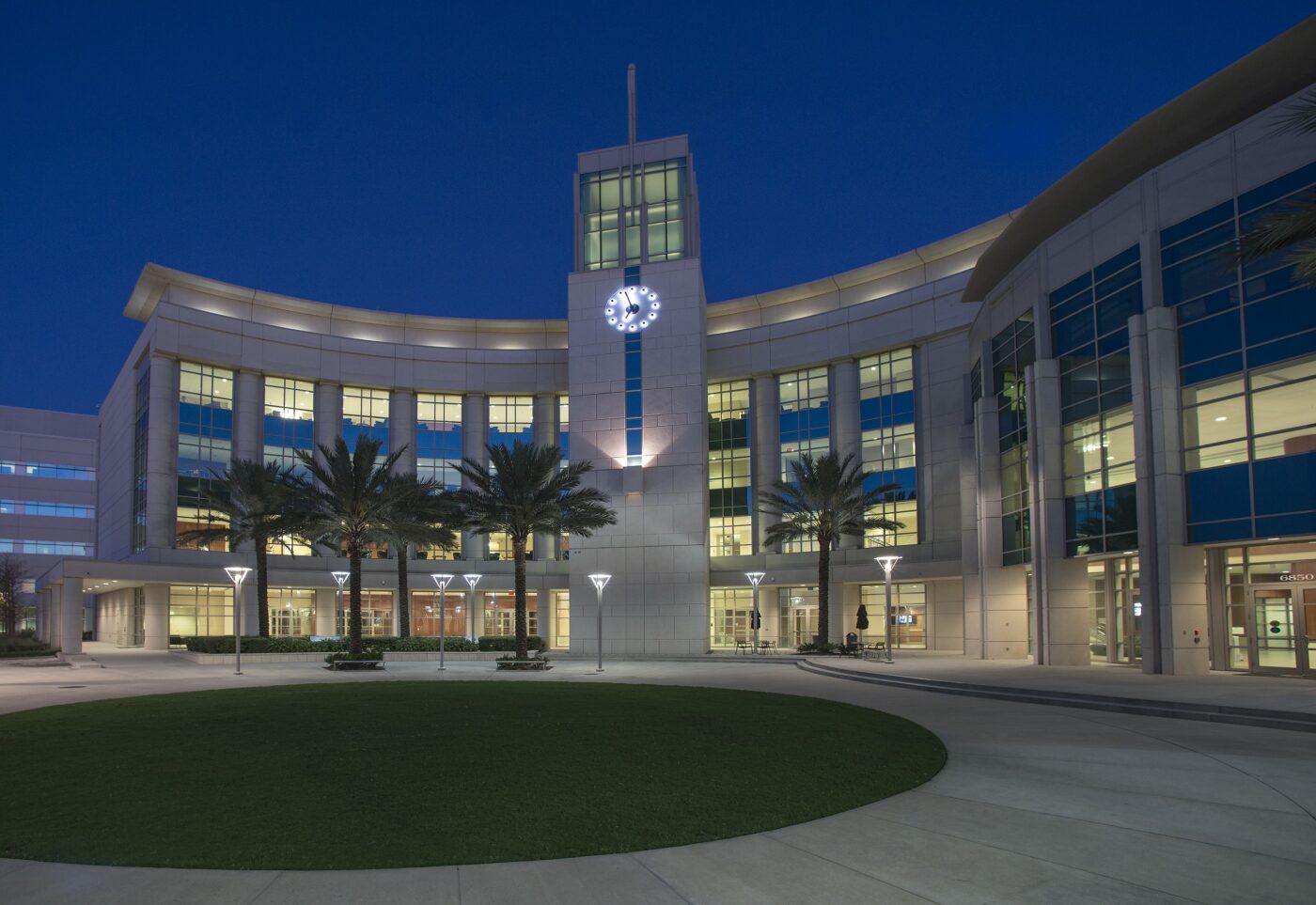
University of Central Florida College of Medicine Info and Rankings
Located at Lake Nona in Orlando, this public MD program sets its AMCAS deadline at November 16 and its secondary deadline at December 1 for the current cycle. The Class of 2029 entered with an average MCAT of 514, an average total GPA of 3.90 and an average science GPA of 3.87. UCF admits out-of-state applicants: 35 of the 120 students in the Class of 2029 were non-Florida residents. For 2026-2027, first-year tuition and fees are $29,680 for Florida residents and $59,251 for nonresidents, and the first-year class size is 120. Students can also pursue joint MD/PhD, MD/MBA, MD/MS in Hospitality and MD/MS in Biomedical Engineering degrees.
For a comprehensive examination of class statistics, secondary prompts and other essential details for your application, be sure to read our definitive guide on the University of Central Florida College of Medicine. It offers expanded statistics and insights to help you on your application journey, and UCF’s own admissions page posts its current class data.
University of Central Florida (UCF) College of Medicine
Notable Information
- First accredited by the LCME in 2008
- Located at 6850 Lake Nona Blvd. in Orlando’s Lake Nona medical community
- Admissions reviewers look for long-term, consistent motivation for medicine and evidence that you will be a good team member
Campus Life
- Campus in Lake Nona, Orlando
- The class speaks 17 languages, and every student is involved in research
- 42 non-traditional students and 9 first-generation students in the Class of 2029
Rankings and Stats
- Class of 2029: 5,394 verified applications, 512 interviews and 120 matriculants
- Class of 2030: 120 students chosen from 5,422 applicants
- Average MCAT 514, average total GPA 3.90 and average science GPA 3.87 (Class of 2029)
- 35 non-Florida residents and 6 students with a PhD or master’s degree in the Class of 2029
Application Essentials for UCF College of Medicine
To apply successfully to the University of Central Florida’s College of Medicine, you need to address several elements of your application carefully. UCF requires a minimum cumulative undergraduate GPA of 3.0 and a minimum science GPA of 3.0 (biology, chemistry, physics and math), plus a minimum MCAT score of 500, using your best single composite within the last three years. Applicants who fall below the 3.0 GPA marks can still be considered if they earn at least 20 core science credits in postbaccalaureate or graduate coursework with a 3.0 or higher. Applicants invited to interview exceed these minimums by far. Additional desirable traits include substantial clinical involvement, consistent community service and strong skills in teamwork, leadership or other areas such as sports or research.
UCF’s Early Decision Program is for Florida residents with an overall and science GPA of 3.8 or better and an MCAT of at least 513, with no section below 128. The secondary application, fee and letters are due by August 15, and Early Decision applicants hear by October 1.
Prerequisite Courses for Admission
Before enrolling in the MD program, you must complete specific prerequisite courses: two semesters each of biology, general chemistry, physics, college English and college math, plus one semester of organic chemistry and one semester of biochemistry, with labs where offered. These courses should be taken at accredited U.S. institutions. UCF has no policy against taking courses online or at a community college, and it accepts AP, IB and dual-enrollment credit for prerequisites, but not CLEP.
Optional Courses to Enhance Application
You may consider taking optional courses besides the prerequisites for a more robust application. UCF recommends genetics, cell biology, statistics, comparative anatomy and calculus, and it encourages coursework in the humanities, natural sciences and communication arts. If you’re majoring in a non-science field, taking extra science courses is advisable to be more competitive.
Letters of Reference Requirements
Letters of reference are another key component of your application. You will need at least three but no more than five letters. At least one should come from a core science faculty member (biology, chemistry or physics) who has taught you and can discuss both your academic readiness and personal suitability for medicine. Other references can be professors, advisors, research mentors, preceptors, supervisors, coaches or colleagues. Letters from family members or significant others are not accepted. Non-traditional applicants may submit a letter from a current or recent supervisor in place of the faculty letter. UCF advises that letters be no more than two years old.
Joint Degree Programs at UCF
UCF’s College of Medicine offers several joint degree programs, from an MD/PhD for those interested in biomedical research to programs that combine medicine with business (MD/MBA), hospitality and customer service through UCF’s Rosen College of Hospitality Management (MD/MS in Hospitality), or engineering (MD/MS in Biomedical Engineering, a five-year program). These programs build additional skills and typically extend the time required to complete your education, but they open more career options after graduation.
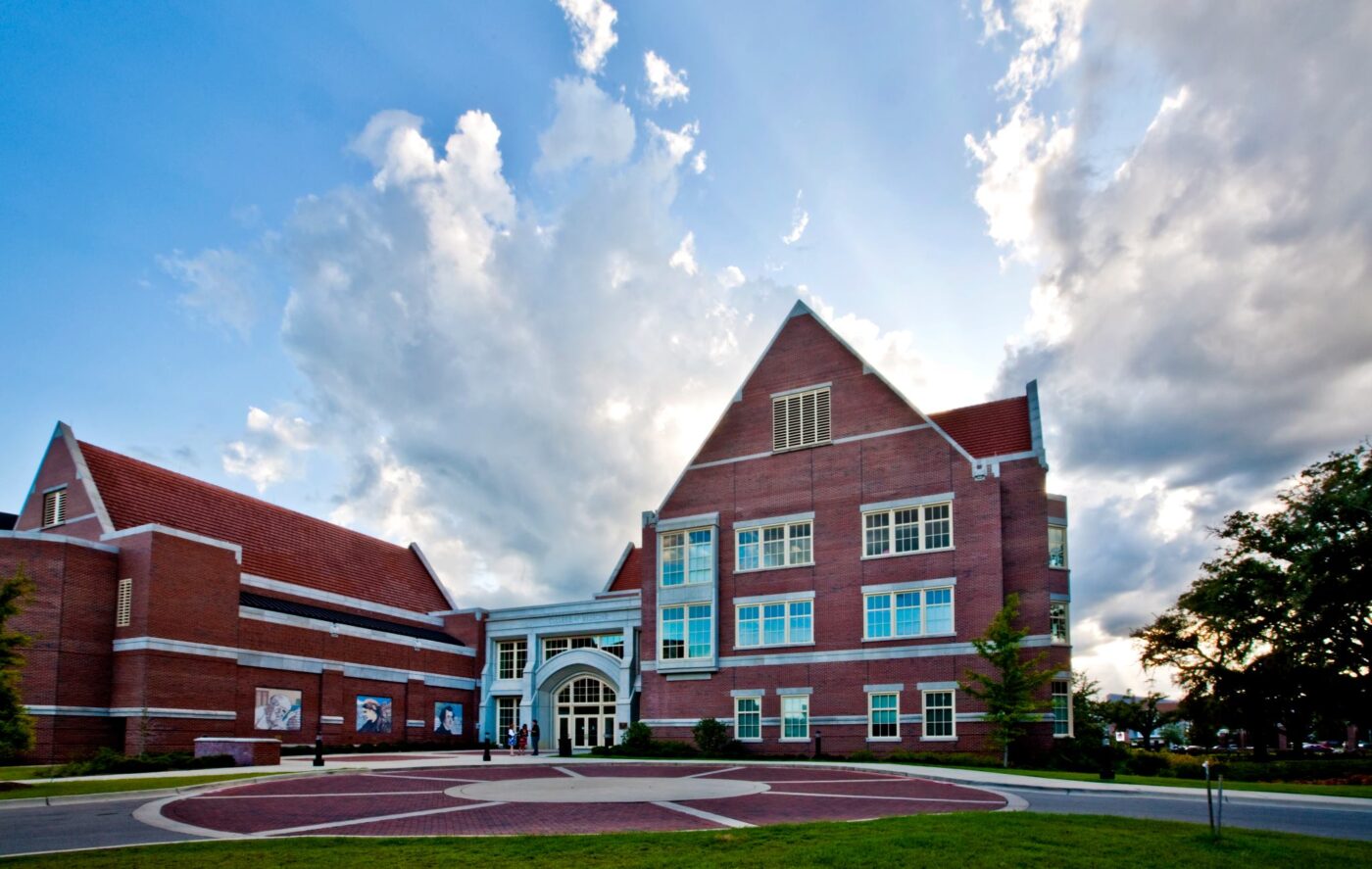
Florida State University College of Medicine
Based on the FSU campus in Tallahassee, this Florida medical school has an AMCAS deadline of November 15, 2026 and a secondary deadline of December 10, 2026 for regular admission. Early Decision applicants submit AMCAS by August 3 and secondary materials by August 24. FSU does not publish the median MCAT or GPA of its entering class; regular applicants need at least a 500 MCAT and a 3.5 GPA. For 2026-2027, Year 1 tuition is $25,611 for Florida residents and $69,315 for nonresidents. The first-year class size is 120, and the school usually accepts fewer than 10 out-of-state applicants per class.
To gain a thorough understanding of admission requirements and key metrics, don’t miss our definitive guide on the Florida State University College of Medicine. It offers extensive statistics and details that can strengthen your application, and FSU’s admission requirements page lists the current rules.
(FSU) College of Medicine Info and Rankings
Notable Information
- First accredited by the LCME in 2002
- Years 1 and 2 are taught on the main FSU campus in Tallahassee
- Focus on community-based primary care and on older adult, rural, minority and underserved populations
Campus Life
- Years 3 and 4 take place at one of six regional campuses: Daytona Beach, Fort Pierce, Orlando, Pensacola, Sarasota or Tallahassee
- Rural training options in Marianna, Immokalee and Thomasville, Georgia
- Located in Florida’s capital, Tallahassee
Rankings and Stats
- More than 6,500 applications reviewed each year for 120 seats
- About 250 to 300 applicants interviewed in a typical cycle
- Usually fewer than 10 out-of-state applicants accepted per class
Overview of Admissions at FSU COM
Getting into the Florida State University College of Medicine (FSU COM) is no small feat. The school reviews more than 6,500 applications each year and takes a comprehensive approach to selecting future physicians. Academic strength is crucial: regular applicants need a minimum undergraduate GPA of 3.5 and an MCAT score of at least 500.
Candidate Evaluation Criteria
FSU COM looks at many parts of a candidate’s record, including service and volunteer work, understanding of the medical field, research and the likelihood that the applicant will practice in Florida. The admissions process aligns closely with FSU COM’s mission, and the school gives preference to applicants who want to practice in Florida and who show a strong and consistent commitment to serving underserved communities.
Pre-Enrollment Requirements
Before orientation, all degree requirements, including any degree program you are currently enrolled in, must be complete and posted to your transcript. You’ll need at least a bachelor’s degree by the time you join. If you’re not a U.S. citizen, you must hold a permanent resident “green card” at the time of application.
Coursework Prerequisites
The required coursework includes 6 hours of college English or another writing-intensive course, 6 hours of college mathematics, 8 hours of biology with lab, 4 hours of organic chemistry with lab, 8 hours of physics with lab and 3 hours of biochemistry (which must have organic chemistry as a prerequisite; a biochemistry lab is preferred). Recommended subjects include statistics, social and behavioral sciences, genetics, Spanish and cellular or molecular biology. Prerequisites need a grade of C or better, and AP, CLEP and dual-enrollment credit can fulfill the requirements, though classroom courses at a four-year institution are considered more competitive.
Application Process
The application has two main steps: the AMCAS primary application and the FSU secondary, which every U.S. citizen or permanent resident with a complete, verified AMCAS application is invited to complete. Deadlines differ for Early Decision and Regular Admission applicants. The secondary carries a non-refundable $30 fee, which is waived automatically for applicants approved for AMCAS Fee Assistance.
Importance of Letters of Recommendation
Letters of recommendation play a key role in your application. You’ll need a minimum of three and a maximum of six. A committee letter or letter packet fulfills the requirement, although the committee prefers to see the individual letters. The strongest letters typically come from people who can speak to your work with patients in a clinical setting, such as medical providers, along with faculty who know your academic work. Letters from family members or close family friends are not considered, and all letters must come through the AMCAS Letter Service.
Special Programs
FSU’s Bridge to Clinical Medicine program is a 12-month major within the M.S. in Biomedical Sciences that provides both medical knowledge and clinical experience and serves as a bridge to medical school. Students are identified for the Bridge Program from the regular FSU COM applicant pool; there is no direct application.
Communication and Deadlines
If you’re communicating with the admissions office, use email. The office does not answer phone inquiries and does not give application information over the phone. You must also make sure that every part of your application is submitted by the deadline. FSU COM will not notify you of missing documents, so keeping track of your application status is crucial.
Admission Decisions
Admission decisions are made on a rolling basis throughout the cycle, and applicants are notified of the committee’s decision after the interview. Interviews are held on Zoom, with an information session and two one-on-one interviews.

University of South Florida Morsani College of Medicine
Located in Tampa, USF Morsani is a Florida medical school with a later AMCAS deadline of January 15, 2027 and a secondary deadline of January 31, 2027. It is highly competitive: the Class of 2030 arrived with a median MCAT score of 521 and a median GPA of 3.98. For 2026-2027, first-year tuition and fees are $33,694 for Florida residents and $60,500 for nonresidents. The first-year class has 140 students. Combined pathways include MD/PhD and a 7-year BS/MD program with the USF Judy Genshaft Honors College.
For a comprehensive understanding of what it takes to get accepted, be sure to consult our definitive guide focused on the University of South Florida Morsani College of Medicine. It includes expanded statistics and additional information that can be very useful for your application. USF posts its rules on the MD admissions site.
(USF) Morsani College of Medicine Info and Rankings
Notable Information
- First accredited by the LCME in 1971
- Located in Tampa, with medical education offices at 560 Channelside Drive
- The SELECT MD track, which split training between Tampa and Allentown, Pennsylvania, is being sunset and ends with the graduating class of 2027
Campus Life
- Urban campus in downtown Tampa
- 79% of the Class of 2030 speak at least two languages, and 38% speak three or more
- 35 members of the Class of 2030 earned undergraduate degrees at USF
Rankings and Stats
- Median MCAT 521, median GPA 3.98 and median science GPA 3.99 (Class of 2030)
- 47% of the Class of 2030 attended a top-30 ranked university
- Tier 1 research rating from U.S. News & World Report, which USF first earned in 2025, the first Florida medical school to do so
Prerequisites for Enrollment
If you plan to enroll in the MD program at USF Health Morsani College of Medicine, there are several prerequisites and steps to follow. You’ll need a bachelor’s degree from a regionally accredited U.S. college or university, and all prerequisite courses must be completed at a regionally accredited U.S. institution by the time you enroll. Required coursework includes two semesters of biological science with lab, two semesters of chemistry with lab, one semester of organic chemistry with lab, one semester of biochemistry, two semesters of physics, two semesters of mathematics and two semesters of English or expository writing. Organic Chemistry II may be taken in place of biochemistry. Required coursework may not be taken pass/fail.
Recommended Additional Coursework
Beyond these basics, the program values a well-rounded education. USF recommends no less than 15 semester hours of general coursework in psychology, sociology, the arts and humanities, and ethics. It gives strong consideration to students who complete molecular biology, genetics or microbiology, and it recommends statistics or calculus.
Extracurriculars and MCAT Requirements
Involvement in extracurricular activities, especially those related to health care, volunteering and community service, strengthens your application. You’ll also need an MCAT score taken within three years before entry, and scores older than three years may be considered case by case. The latest accepted test date for the 2026-2027 cycle is September 10, 2026; January MCAT scores are not considered for the same cycle. USF has no minimum GPA or MCAT. Early Decision applicants, however, need at least a 518 MCAT (126 in each section) and a 3.8 overall and science GPA.
Application Process
The first step is the AMCAS application. Every applicant with a verified AMCAS then receives the USF secondary application, which includes a non-refundable $30 fee, a residency form with supporting documentation, and letters of recommendation from a pre-professional committee or science faculty.
Interview and Acceptance Timelines
Interviews are extended based on the strength of your application, with the earliest notifications beginning in August and continuing through March. Acceptances are offered on a rolling basis from mid-October to May, and candidates who are not accepted outright are placed on a wait list.
Post-Acceptance Requirements
If accepted, you must submit official and final transcripts, with your degree conferral date posted, from all schools you’ve attended. Requests to defer admission are considered case by case.
Communication and Updates
Communication with the Office of MD Admissions is generally by email, and if you are selected for an interview you may be contacted by email or phone. Keep your contact information current through AMCAS. USF does not accept application updates unless the Office of MD Admissions or your interviewer requests them.
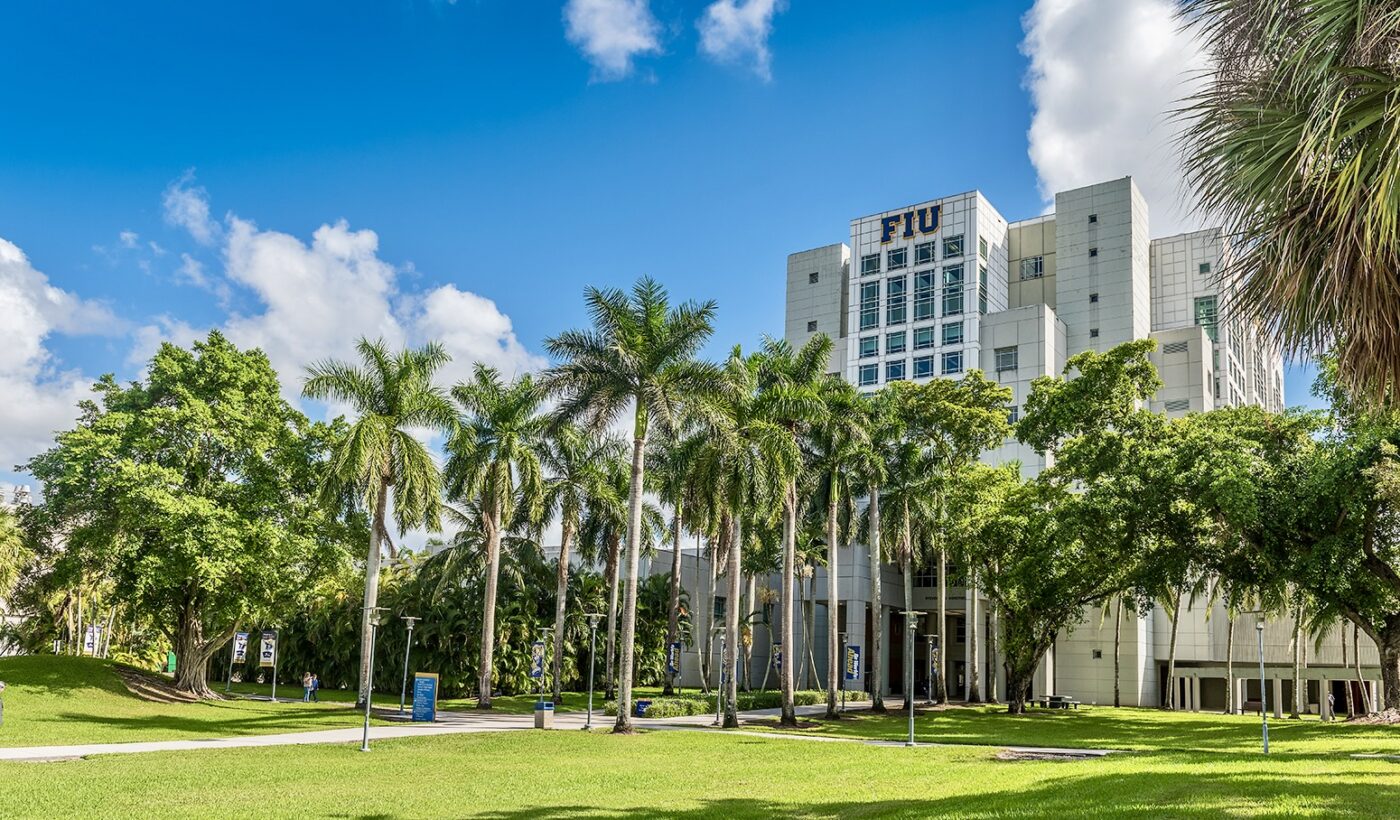
Florida International University Herbert Wertheim College of Medicine
Located in Miami, this public MD program has an AMCAS deadline of December 1 and a secondary deadline of January 15. FIU publishes averages for accepted applicants rather than for its class: an MCAT of 510 (range 502 to 522) and an overall GPA of 3.86 (BCPM 3.80). Tuition for 2025-2026, the newest year posted, is $32,739 for Florida residents and $65,737 for nonresidents. FIU does not post its entering class size on its admissions pages. Students can apply in the third period of medical study to combined MD/Healthcare MBA, MD/MPH and MD/MS in Health Informatics and Analytics programs.
To get an even more comprehensive understanding of the Florida International University Herbert Wertheim College of Medicine, including its curriculum, costs and secondary essays, take a look at our definitive guide for 2024. It offers extended statistics and essential insights for your application. FIU’s application process page has the current dates.
(FIU) Herbert Wertheim College of Medicine Info and Rankings
Notable Information
- First accredited by the LCME in 2007
- Located in Miami
- The Green Family Foundation NeighborhoodHELP program places students on teams that care for households in Miami-Dade communities
Campus Life
- Urban campus in Miami
- Clinical training begins in the first year
- Research is not required but strongly encouraged
Rankings and Stats
- Accepted-applicant averages: MCAT 510 (range 502 to 522), overall GPA 3.86 (range 3.27 to 4.00), BCPM GPA 3.80
- Early Decision minimums for 2026-2027: 3.70 overall GPA, 3.50 science GPA and a 510 MCAT
- Secondary application fee: $30
Eligibility Criteria
If you’re eyeing a spot at the Herbert Wertheim College of Medicine at Florida International University, here are some important points to guide you through the application process. You must be a U.S. citizen or permanent resident; international applicants and those with DACA status are not eligible at this time. You must have a bachelor’s degree by the time you start the program.
Accreditation and Residency Requirements
Your bachelor’s degree and prerequisite courses should come from a regionally accredited institution in the U.S. or Canada. Applicants with a bachelor’s degree from outside the U.S. are considered case by case if they complete all prerequisites in the U.S. or Canada. Florida residency affects tuition and earns preference in admissions. If you claim to be a Florida resident, you must have established and kept a legal domicile in Florida for at least 12 months before orientation and must prove it with acceptable documentation.
Academic Requirements
FIU’s required courses are two semesters of general biology with lab, general chemistry with lab, organic chemistry with lab (Organic Chemistry 1 plus either Organic Chemistry 2 or biochemistry), physics with lab, college mathematics or statistics, and writing-intensive courses such as English, humanities or social sciences. You should also have a strong command of spoken and written English.
Recommended Additional Coursework
These prerequisites set the foundation, and going beyond them makes your application more competitive. FIU recommends advanced science coursework such as anatomy, biochemistry, cell biology, genetics, histology, immunology, microbiology and physiology. AP and IB credits may fulfill requirements, though additional coursework in those areas is highly recommended; AICE and CLEP credits are not accepted. Online coursework is considered, but labs should be completed in person when possible.
MCAT and GPA Standards
An MCAT score is required. The test must be taken no later than September of your application year, and only scores from tests taken within three years of matriculation are accepted; for the 2027 entering class, that means 2024 or later. Accepted applicants have averaged an MCAT of 510 and a GPA of 3.86.
Letters of Recommendation
You will also need letters of recommendation. FIU requires at least three: two from science faculty (biology, chemistry, physics or math) and one from another faculty member who taught you. If your school has a Health Professions Advisory Committee, you must submit its letter with the three faculty letters attached. You may add up to three supplemental letters from physicians, researchers, mentors or employers.
Additional Qualifications
Beyond academic requirements, FIU considers community service and volunteer activities essential to a competitive application, and it wants to see hands-on patient contact over a consistent period of time. Research is not required, but it is strongly encouraged.
Application Procedure
The process starts with the American Medical College Application Service (AMCAS). Every applicant receives FIU’s secondary application after AMCAS verification, and it carries a $30 fee.
Communication and Deadlines
Keep your AMCAS contact information current, as much of the communication runs through that platform. All letters of recommendation and the secondary application are due by January 15 of your application year. Timely submission of all materials is critical, because interviews are scheduled only for complete applications.
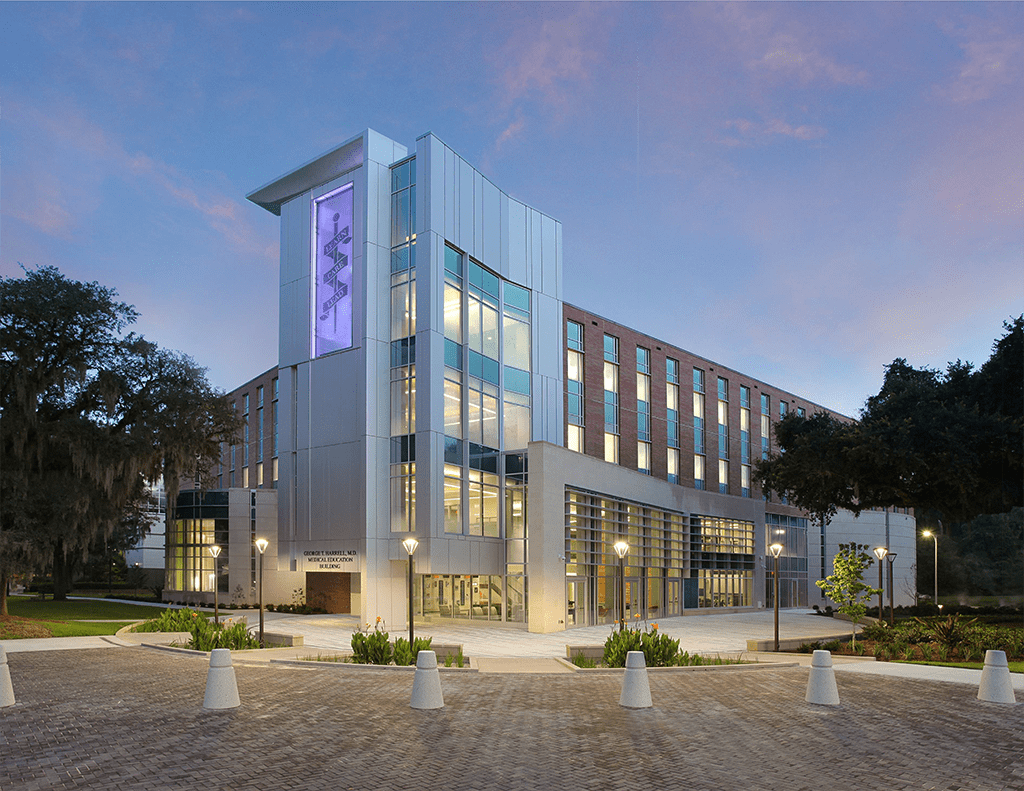
University of Florida College of Medicine
This Florida medical school is located in Gainesville. The AMCAS deadline is December 1, and all application materials, including letters, are due by January 15, 2027. UF reports a current average MCAT of 516 and an average science GPA of 3.85 for entering students. For 2026-2027, first-year tuition and fees are $37,130 for Florida residents and $49,390 for nonresidents. The class has about 135 students, and combined options include the MD/PhD (MSTP), MD/JD, MD/MBA, MD/MSM and MD/MPH, plus the Discovery Pathways research track.
For an in-depth look at the class profile, essays and other critical details, check out our comprehensive guide on the University of Florida College of Medicine. The guide contains extended statistics and insights to further inform your application journey. UF’s regular admission requirements are written for the 2027 entry cycle.
University of Florida (UF) College of Medicine Info and Rankings
Notable Information
- First accredited by the LCME in 1958
- Located in Gainesville, with a Jacksonville Regional Medical Campus for clinical years 3 and 4
- Leads Florida public medical schools in National Institutes of Health research funding
Campus Life
- The Harrell Medical Education Building offers 95,000 square feet of learning space, including two learning studios that each seat up to 160 students
- 18 standardized patient rooms in the clinical skills center
- 97% first-time Step 1 pass rate (national average 91%)
Rankings and Stats
- Over 2,800 completed secondary applications for about 135 seats
- Average MCAT 516 and average science GPA 3.85 for entering students
- Most successful applicants in recent cycles scored above 509 on the MCAT
If you’re interested in attending the University of Florida College of Medicine, there are several options and pathways to consider. The school is highly selective: out of more than 2,800 completed secondary applications, about 135 students matriculate each year. The college looks for applicants who show the personal and intellectual qualities expected of physicians, including compassion, character, leadership and excellence.
Admission Paths
UF now lists two routes of admission. The first is Regular Admissions, open to those who have or will have at least a bachelor’s degree; it covers the regular MD program, the MD/PhD and MD/master’s tracks, and the Jacksonville Regional Medical Campus track. Jacksonville applicants select “Other Special Program” in AMCAS, answer an extra secondary essay and commit to spending years 3 and 4 in Jacksonville; the track currently has 13 spots. The second route is Transfer/Advanced Standing Admissions, which is rare and open only to students at an LCME-accredited medical school transferring into the third year. UF announced no transfer seats for 2025-2026. The seven-year Medical Honors Program is no longer listed among UF’s admission routes.
Dual-Degree Programs
The University of Florida College of Medicine offers several dual-degree programs. The MD-PhD program, now the MSTP, has trained clinician-scientists for over 30 years. If law interests you, consider the MD-JD program, which lets you earn both degrees in about six years instead of seven. You must be accepted by both colleges and follow each one’s curriculum requirements. The MD-MBA and MD-MSM options let medical students take a one-year break, ideally after the second year but also allowed after the first or third, to complete a Master of Science in Management or a one-year MBA at the Warrington College of Business.
Specialized Options
Other specialized options include the Discovery Pathways Program, a research track in which students complete an extended project with a faculty mentor, earn a Certificate of Special Competence in Research and graduate with Honors in Research. There is also an MD-MPH program for those interested in public health medicine and policy, which saves about a year compared with earning the degrees one after the other.
Eligibility Criteria
All applicants must be U.S. citizens or permanent residents. A bachelor’s degree from a regionally accredited U.S. institution is required before matriculation; UF also accepts a bachelor’s degree from a Canadian university or a graduate or professional degree earned in the U.S. Applications are reviewed for personal attributes, academic record, achievements, references, MCAT performance and interviews. If you’re working toward a graduate-level degree, you must complete it before joining the University of Florida College of Medicine.
Academic Requirements
Minimum science coursework is required, with no grade lower than a C. It includes two semesters of general biology with labs, two semesters of general chemistry with labs, one semester of organic chemistry with lab, one semester of upper-division biochemistry and two semesters of physics with labs. The MCAT is also essential: a minimum score of 500 from a single test is required for interview consideration.
Diversity and Inclusion
The admissions process is comprehensive, and the College of Medicine does not discriminate on the basis of race, color, sexual orientation, gender identity or expression, creed, age, national origin or disability. Florida residents receive preference, and the college also admits a limited number of out-of-state applicants each year.
Letters of Recommendation
UF requires at least three letters of recommendation and accepts up to six. All letters must be sent through AMCAS, and if more than six are designated to UF, only the first six received will be considered. The letters should come from people who can describe the full range of your skills, including persistence, integrity, emotional intelligence, adaptability and how well you take constructive feedback. A letter from a medical professional who has observed you in a clinical setting is strongly recommended.
Additional Academic Suggestions
There is no rigid mathematics requirement, but some college calculus is recommended, and familiarity with statistics is an important asset. While completing your degree, take a balanced set of courses across the humanities and the social and behavioral sciences. Independent study and scientific research are encouraged.
Extracurricular Activities
Outside the classroom, your extracurricular activities matter. Work experience, especially in health care, is a plus, and UF encourages a broad set of medical experiences over time, across specialties, practice settings and patient populations. Engagement with the community beyond medicine also counts. The admissions committee recognizes the extra time required of students who work substantial hours or play a major sport. Research is not required, but a substantial contribution is a plus.
Application Process
The AMCAS application opens in late May, and the deadline is December 1 for Regular MD and all combined-degree applicants. UF invites applicants with a verified AMCAS to submit secondary materials (after October 15, a verified MCAT of at least 500 is also needed for an invitation). The deadline for all materials, including letters, is January 15, with no extensions. Interviews are held on Fridays from August through late February or early March, entirely on Zoom. Beginning October 15, acceptances are made on a rolling basis, and the class is filled by the middle of March.
Communication and Fees
Communication is mainly by email, so keep an active address without a spam blocker. Time-sensitive information is sometimes shared by phone, so make sure your voicemail works. The UF Professional School Application, which is a university requirement separate from the College of Medicine, costs a non-refundable $30 plus a processing charge, and the AMCAS fee waiver does not apply to it. The UF COM secondary itself has no fee.
Post-Acceptance Steps
If you are accepted, you must accept or decline your seat in the COM portal within two weeks; accepting there is not binding. Accepted applicants to the Class of 2031 can select “Plan to Enroll” in the AMCAS Choose Your Medical School tool from February 19, 2027, and those choosing UF must do so and withdraw other acceptances by May 1, 2027. The final deadline for Regular MD applicants to select “Commit to Enroll” is June 11, 2027. Missing these deadlines can lead to your offer being rescinded, so contact the admissions office right away if extraordinary circumstances arise.
University of Miami Miller School of Medicine
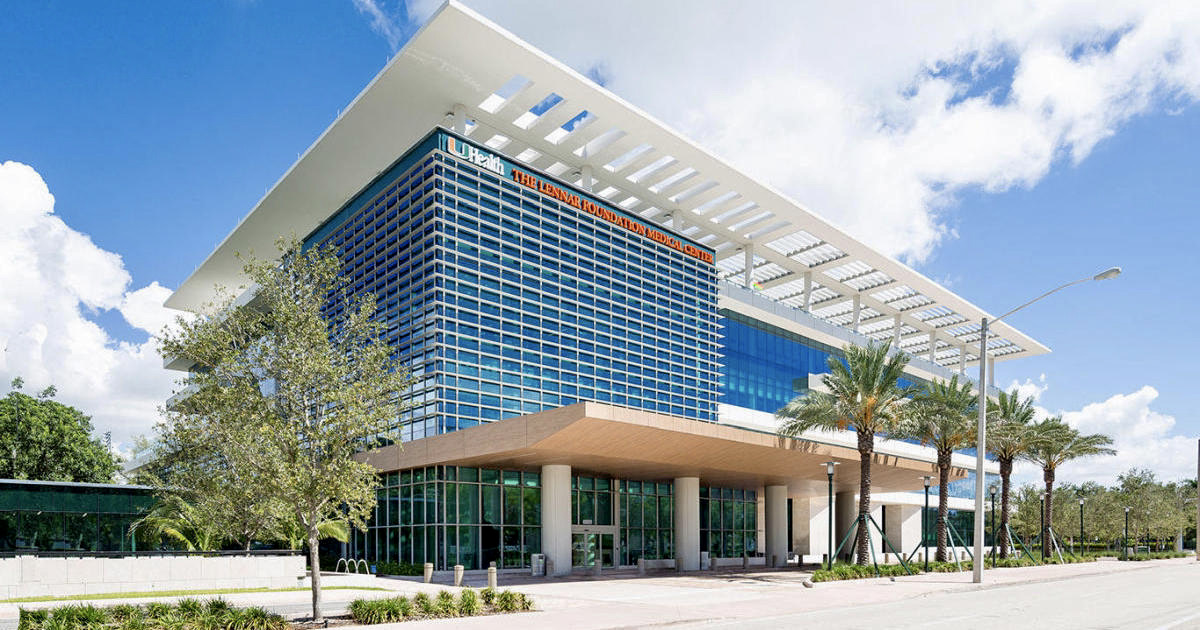
Located in Miami, the University of Miami Miller School of Medicine has an AMCAS deadline of December 1 and a secondary deadline of December 15. The Class of 2029 entered with an average MCAT score of 516 and an average cumulative GPA of 3.85. Tuition is the same for in-state and out-of-state students: $57,600 for 2026-27. The Class of 2029 has 202 students, the largest entering class among Florida’s MD programs. Combined degrees include the MD/MPH, MD/MBA and MD/PhD, and the Medical Scholars Program offers early acceptance to selected University of Miami undergraduates.
Whether you aim to study in an urban or suburban setting, prefer a larger or smaller class, or are weighing combined degrees, Florida offers something for every aspiring physician. For a full breakdown of Miami’s process, read our guide to the University of Miami Miller School of Medicine, and see the Miller School’s Class of 2029 profile.
(UM) Miller School of Medicine Info and Rankings
Notable Information
- First accredited by the LCME in 1955
- Medical campus in Miami; some student fees support services on the university’s Coral Gables campus
- Uses the NextGenMD curriculum
Campus Life
- Students in the Class of 2029 come from 25 states and 68 undergraduate institutions
- Students have access to the Coral Gables Student Health Center and Wellness Center
- 25 students in the Class of 2029 are in the MD/MBA, 46 in the MD/MPH and 11 in the MD/PhD
Rankings and Stats
- Class of 2029: 9,912 applicants, 686 interviewed, 202 matriculated
- Average MCAT 516, average cumulative GPA 3.85 and average science GPA 3.80
- 74 in-state and 128 out-of-state students
Initial Requirements and Guidelines
If you’re interested in attending the University of Miami Miller School of Medicine (UMMSM), there are specific requirements and deadlines to be aware of. First, you need a conferred bachelor’s degree before you start medical school, and the school recommends having at least 90 credit hours when you apply. If you’re admitted through the University of Miami’s Medical Scholars Program, the early matriculation pathway for selected UM undergraduates, these rules don’t apply to you.
Accreditation and Course Credits
Courses must be completed at fully accredited institutions in the U.S., its territories or Canada, and science courses must come from a four-year, bachelor’s degree-granting institution. AP credits for English or literature, behavioral science, biology, physics and inorganic chemistry are accepted if AMCAS verifies them and they appear on your college transcript. Only online courses completed between the Summer 2020 and Fall 2021 terms are accepted. CLEP credits and credits from foreign institutions are not accepted, with one exception for qualified study-abroad courses. Prerequisite coursework must be completed within 10 years of your AMCAS application date.
Required and Recommended Courses
You need to complete a set of required courses: two semesters each of English, chemistry with labs, physics with labs, biology with labs and behavioral science, plus one semester of organic chemistry with lab and one semester of biochemistry (lab recommended). Behavioral science can include anthropology, economics, family studies, psychology and sociology. The school also recommends extensive natural science coursework, such as cell and molecular biology, computer science, developmental biology, genetics, immunology, microbiology, neuroscience and physiology. These requirements were developed from the academic paths of students who succeeded in the Miller curriculum, so make sure you meet them.
Application Deadlines and Fees
Two application deadlines are critical. Your AMCAS application is due by December 1, with no extensions. The supplemental application and a $100 non-refundable fee are due by December 15. Transcripts are due two weeks after the AMCAS deadline. Take the MCAT no later than the last test date of the year before you plan to start medical school; scores are valid for 36 months from the exam date. The Miller School does not require the Casper exam.
Citizenship and Affinity Criteria
UMMSM sends secondary applications to most U.S. citizens and permanent residents who submit an AMCAS application. Applicants must be U.S. citizens, DACA students or permanent residents with a green card; DACA applicants submit a copy of their Notice of Action and employment authorization card. Miami does not accept international students. To gauge your competitiveness, compare your academic metrics with those of recent entering classes, and double-check every prerequisite before you enroll.
Letters of Recommendation
For letters of recommendation, you’ll need a committee letter packet or three letters from individual faculty members, at least two of whom are science faculty who have taught you. You can also submit up to two additional letters, which cannot replace the required ones. All letters and transcripts go through AMCAS.
Class Statistics
Here are the numbers for the most recent class. The Class of 2029 has 202 students selected from 9,912 applicants, representing 25 states and 68 undergraduate institutions. The class has an average cumulative GPA of 3.85, an average science GPA of 3.80 and an average MCAT of 516. The undergraduate schools with the most students in the class are the University of Miami (31), the University of Florida (17), Vanderbilt and Cornell (9 each) and UCLA (8).
By meeting these requirements and deadlines, you’ll be taking significant steps toward a medical career, learning everything from basic biology to patient care. Applying to medical schools in Florida is an exciting venture with its own challenges and opportunities. Whether you’re an in-state student or from elsewhere, the Sunshine State offers a diverse range of programs that could fit your medical career.
Florida Atlantic University Charles E. Schmidt College of Medicine
FAU’s Schmidt College of Medicine in Boca Raton is one of Florida’s smaller MD programs. Its entering class of 2025 had 78 students chosen from 4,165 applications, with a mean MCAT of 515, a mean GPA of 3.85 and a mean BCPM GPA of 3.82. Out-of-state students made up 28% of the class. For 2026-2027, first-year tuition and fees are $31,830 for Florida residents and $73,394 for nonresidents, and the off-campus cost of attendance is $65,848 and $107,412. FAU considers only U.S. citizens and permanent residents and does not accept international or DACA applicants.
FAU’s secondary costs $30 and must be submitted by December 31. Letters come through the AMCAS Letter Service, and the school greatly prefers a premedical committee letter; otherwise it requires at least three faculty letters, two from natural science professors, with up to five letters in total. Interview days run on Mondays, Tuesdays and Thursdays from mid-September through February. FAU also runs the Wilkes Medical Scholars Program, a seven- to eight-year BS/MD program for high school seniors offered with the Harriet L. Wilkes Honors College on the Jupiter campus; its 2026-2027 FAU application is due November 23, 2026. Read IMA’s guide to FAU’s Charles E. Schmidt College of Medicine for more detail, and FAU’s entering class profile.
Nova Southeastern University Dr. Kiran C. Patel College of Allopathic Medicine
NSU MD in Fort Lauderdale received full LCME accreditation and is the newest of Florida’s established MD programs, first accredited in 2017. Its 2026 Class Profile shows 68 students, a median MCAT of 512 and a median overall GPA of 3.85, chosen from 6,185 primary applications; 385 applicants were interviewed and 162 were accepted. The class was 52% Florida residents. Tuition is $73,407 for every student in 2026-27, and the first-year cost of attendance is $135,112. Students complete core third- and fourth-year rotations at HCA East Florida hospitals and rotate in pediatrics at Nemours Children’s Hospital in Lake Nona. The secondary fee is $50.
NSU has two medical colleges that share the Patel name, so be careful when you apply: the MD program uses AMCAS, and the osteopathic college (covered below) uses AACOMAS. IMA’s guide to NSU’s medical school explains the differences, and NSU’s admissions requirements page carries the class profile.
Mayo Clinic Alix School of Medicine in Jacksonville
Mayo Clinic Alix School of Medicine is a national medical school with campuses in Arizona, Minnesota and Florida. Students do not start their MD training in Jacksonville. In the 2026 first-year class, 50 students began in Phoenix/Scottsdale and 55 in Rochester, and 12 of them (6 on an Arizona/Florida track and 6 on a Minnesota/Florida track) will complete their training at the Jacksonville campus after about a year and a half. For 2026, Mayo received 5,499 MD applications, interviewed 681 applicants and issued 180 MD acceptances. The class posted a median MCAT of 521 and a median cumulative GPA of 3.97, and first-year tuition for 2026-2027 is $70,280. Applications are accepted from June 1 to October 1. Read IMA’s Mayo Clinic Alix School of Medicine guide and Mayo’s class profile for details.
General Information About LECOM Bradenton
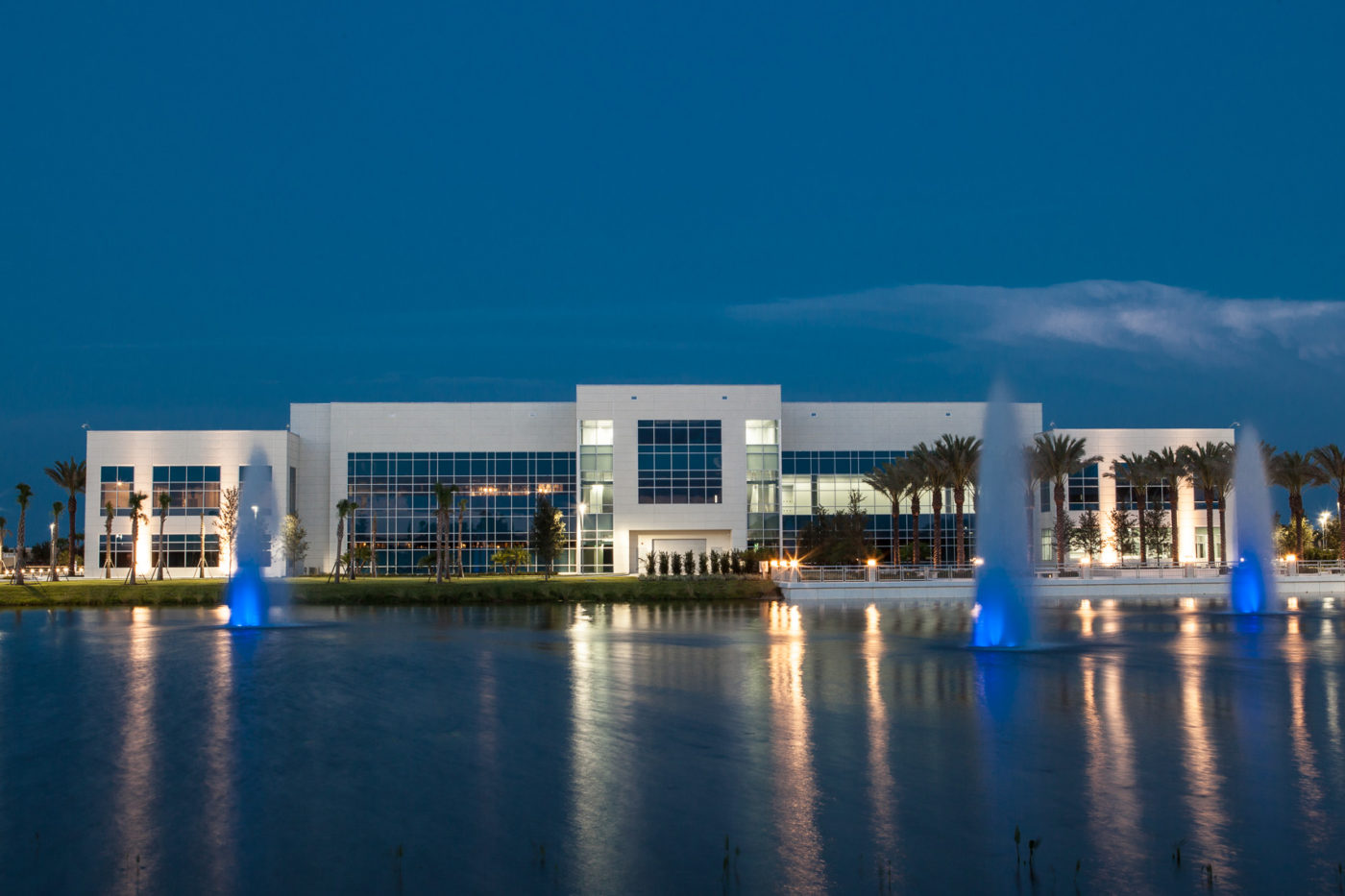
LECOM Bradenton is a branch campus of the Lake Erie College of Osteopathic Medicine (LECOM). Located in Lakewood Ranch, between Bradenton and Sarasota near Florida’s Gulf Coast, the campus is a strong choice among medical schools in Florida for osteopathic medicine. LECOM describes itself as the nation’s largest medical college and the only academic health center in the osteopathic profession. Since opening in Erie, Pennsylvania in 1992, it has added campuses in Greensburg, Pennsylvania, Elmira, New York, Bradenton and, in 2026, Jacksonville.
LECOM Bradenton reports a mean MCAT of 505.2 and an average GPA of 3.71 for its matriculants, with 142 first-year students (100 in-state and 42 out of state). Financially, LECOM is competitive with other Florida medical schools. For 2026-2027, first-year tuition is $42,395 for Florida residents and $42,750 for nonresidents. Annual fees total $3,387 for every student, and student health insurance is $4,524 (it may be waived in the first two years). LECOM estimates first-year living expenses at $33,080. About 72.6% of enrolled students receive financial aid, and the average scholarship or grant per student is about $3,251.
When it comes to admissions, LECOM follows a rigorous, multi-step process. Besides the AACOMAS application, a supplemental application is required. LECOM Bradenton does not offer an Early Decision Program. The interview process is distinctive: LECOM runs a virtual information session and has applicants record and submit video responses, and applicants can choose to interview virtually or in person. LECOM looks for candidates who share its mission of developing competent osteopathic physicians with strong ethical and professional values.
Overall, LECOM offers an educational experience that goes beyond the classroom. Most LECOM graduates become primary care physicians in family medicine, internal medicine, pediatrics or OB/GYN. That commitment to primary care, along with a detailed admissions process and competitive costs, makes LECOM an attractive choice for students pursuing osteopathic medicine.
Mission Statement of LECOM
LECOM’s mission is to prepare students to become osteopathic physicians, pharmacy practitioners, dentists and podiatric physicians through programs of excellence in education, research, clinical care and community service, to improve the quality of life through better health for all humanity. Its graduate programs extend that mission to scholars in other areas of study.
Application Information for LECOM Bradenton
LECOM Bradenton is a Florida medical school that uses the AACOMAS service for its primary applications. For the current cycle, the earliest submission date was May 4, 2026, and the AACOMAS deadline is April 1, 2027. LECOM’s own deadline for the supplemental application is also April 1. To improve your chances of an interview, submit your AACOMAS application at least four weeks before the deadline; LECOM admits on a rolling basis.
Selection Factors for First-Year Class Matriculants
LECOM’s admissions process looks beyond academic excellence. In line with its mission, the school seeks candidates who understand the values of osteopathic medicine and who meet the ethical and professional standards the public expects of health care professionals, with an interest in community service and leadership. LECOM encourages applicants to learn about the profession by getting to know osteopathic physicians before their interviews.
International Students
LECOM accepts applications from international students. Applicants without permanent residency must provide written proof of sufficient funds, held in an escrow account, to pay for their education. Coursework completed at foreign institutions must be evaluated by World Education Services or Josef Silny and Associates. DACA applicants are not considered.
Interview Format
LECOM begins with a virtual information session. Applicants then log in through a partner organization to record and submit video answers to interview questions, and applicants may also choose a virtual or in-person interview.
Early Decision Program (EDP)
LECOM Bradenton does not currently offer an Early Decision Program. Instead, apply as early as possible in the rolling cycle, which opens each May and closes the following May.
Supplemental Application
After screening, qualified applicants receive an email inviting them to complete the supplemental application. To receive it, applicants need a 2.7 or higher overall GPA and either an MCAT of 497 or better or an Academic Index Score (AIS) of 110 or higher. The AIS is LECOM’s alternative to the MCAT, calculated from your undergraduate and graduate GPA with your ACT or SAT scores. LECOM requires a letter of recommendation from a premedical or pre-health committee, or two letters from science professors, and a letter from an osteopathic physician is recommended. The supplemental fee is $50 and non-refundable, and it is waived with proof of an AACOMAS fee waiver.
Acceptance and Matriculation
Acceptances follow a rolling schedule, and first-year orientation begins July 26, 2027. The total deposit to reserve a seat is $2,000; students admitted before February 1 pay it in two installments, $1,500 and then $500 by February 1. LECOM considers deferred entrance only in the case of military deployment.
MCAT and GPA Requirements
LECOM Bradenton reports a mean MCAT of 505.2 and an average cumulative undergraduate GPA of 3.71. MCAT scores taken within the past five years are acceptable, and a competitive score is in the 50th percentile or higher. The minimums are a 2.7 GPA and either a 497 MCAT or a 110 AIS.
With this in mind, LECOM Bradenton has a thorough admissions process designed to find students who are academically prepared and aligned with the values of osteopathic medicine.
Curricular Offerings
LECOM Bradenton teaches through the Problem-Based Learning (PBL) Pathway, in which small groups of students work through clinical cases with a faculty facilitator instead of attending traditional lectures. In the third and fourth years, students are assigned to a core year-long clinical training site in a regional campus model, with inpatient and outpatient rotations at hospitals and clinics.
Preparatory Programs
Master of Medical Science: a 10-month, non-thesis program for students with an undergraduate degree from a regionally accredited college or university. MMS students who keep a 3.0 GPA, pass all courses without remediation and meet professionalism standards are eligible for an early spring interview with the LECOM College of Osteopathic Medicine.
Special Programs
Doctor of Health Care Administration (DHA)
This program prepares health industry professionals to become leaders in health care administration and to serve as college faculty members.
Doctoral in Anatomy Education Program (DAE)
Given the shortage of anatomy educators with advanced degrees, this program trains candidates to teach the anatomical sciences.
Doctoral Program in Medical Microbiology Education (DME)
This program prepares graduates to teach microbiology at the undergraduate and graduate levels.
Doctoral Program in Pharmacy Education (DPE)
Focused on the pharmaceutical and clinical sciences, the DPE trains graduates to teach that content through a variety of curricular techniques.
Doctoral Program in Medical Education (DME)
This program, an extension of LECOM’s MSMEd program, produces educator-scholars who can contribute original research in medical education.
Dual Degrees/Concurrent Programs
- DO/MPH: Public Health
- DO/MHSA: Health Services Administration
- DO/MSBE: Biomedical Ethics
- DO/MS MCT: Medical Cannabinoid Therapeutics
Note: These master’s programs are delivered through online distance education, mostly during the third and fourth years.
Premedical Coursework
Science courses
- Biology/Zoology: Required (with lab, 8 semester hours)
- Chemistry (Inorganic): Required (with lab, 8 semester hours)
- Chemistry (Organic): Required (Organic 1 and 2 with labs, 8 semester hours; 3 credits of biochemistry may replace Organic 2)
- Physics: Required (with lab, 4 semester hours)
- Biochemistry, physiology, microbiology and anatomy: Recommended
Non-science courses
- Behavioral Sciences: Required (6 semester hours)
- College English: Required (6 semester hours of composition and literature)
Prerequisites need a C or better. LECOM does not accept AP or IB credit for the core sciences, though AP or IB credit can count for English or behavioral science.
Campus Facilities and Technology
The campus sits in a suburban setting between Sarasota and Tampa and is built around educational technology. Two lecture halls with smart classroom technology seat 210, and 24 smaller classrooms host problem-based learning groups. A multipurpose lab, an osteopathic manipulative medicine lab and a Standardized Patient Suite add to the teaching space.
Housing and Student Life
LECOM does not provide campus housing, but it helps students find housing within a close walk or commute. LECOM estimates first-year living expenses at $33,080. The Lakewood Ranch community around campus offers shopping, dining and recreation. About 72.6% of enrolled students receive financial aid, and the average annual scholarship or grant is about $3,251 per student.
Accreditation and Institutional Affiliation
LECOM Bradenton is a branch campus of Lake Erie College of Osteopathic Medicine, which is accredited by the Commission on Osteopathic College Accreditation (COCA). Its most recent COCA visit was in fall 2024, and the next is scheduled for academic year 2034-2035. LECOM is also accredited by the Middle States Commission on Higher Education.
Student Demographics
The campus has a diverse student body with a range of backgrounds and academic interests. LECOM Bradenton’s most recent first-year class had 142 students: 74 men and 68 women, 100 Florida residents and 42 from out of state, and about 90% science majors.
Contact and Additional Information
For more information, prospective students can reach the Bradenton campus by phone at (941) 756-0690 or visit LECOM’s official website.
Further Reading
For a fuller understanding of admission prerequisites, programs and other important parts of LECOM, consult our comprehensive guide. It will give you the details you may need during your application to medical schools in Florida.
LECOM at Jacksonville University
LECOM’s newest campus sits on the Jacksonville University campus at 5415 Dolphin Point Blvd. and enrolled its first class in 2026. LECOM calls it the first medical school ever established in the city of Jacksonville. Like Bradenton, it teaches through the Problem-Based Learning Pathway, in a 75,000-square-foot building with PBL classrooms, an osteopathic principles and practice lab, lecture halls and a medical library, and students have access to Jacksonville University amenities, including on-campus housing. First-year tuition for 2026-2027 is $44,000 for every student. Applicants use the same AACOMAS application and LECOM supplemental application as the other campuses. See the LECOM Jacksonville campus page.
Nova Southeastern University Dr. Kiran C. Patel College of Osteopathic Medicine
NSU-KPCOM is Florida’s oldest DO program, established in 1981, and it is among the largest in the country, with about 322 students per class across its Fort Lauderdale/Davie campus and its Tampa Bay Regional Campus in Clearwater. The college receives more than 7,500 completed applications each year. The AACOMAS deadline is January 15 and the NSU supplemental application is due March 1. Applicants need at least a 3.0 cumulative and science GPA, and the supplemental fee is $50. NSU-KPCOM reports a mean MCAT of 504.5 and an average GPA of 3.71. Tuition for 2026-2027 is $73,407 for every student, and the posted first-year costs add up to about $138,765. DACA applicants are considered on the same basis as other applicants. Read more on the NSU D.O. program page and in IMA’s NSU guide, which compares NSU’s MD and DO colleges.
Burrell College of Osteopathic Medicine, Melbourne Campus
Burrell College’s Florida campus, an additional location of its Las Cruces, New Mexico school, sits on the Florida Institute of Technology campus in Melbourne on Florida’s central east coast and enrolled its first class in 2024. Applicants use the main campus application to apply to the Florida location. College-wide, Burrell reports a mean MCAT of 500.0 and an average GPA of 3.46; Florida-specific figures are not yet published. Tuition for 2026-2027 is $70,622, with $3,657 in Florida fees and estimated living costs of $38,044. The AACOMAS deadline is April 30, 2027, the supplemental fee is $80, and Burrell considers only U.S. citizens and permanent residents. Read IMA’s Burrell College of Osteopathic Medicine guide and Burrell’s Melbourne campus page.
Lincoln Memorial University-DeBusk College of Osteopathic Medicine, Orange Park
LMU-DCOM, based in Harrogate, Tennessee, opened its third location in Orange Park, near Jacksonville, in fall 2026, and the campus is listed with full COCA accreditation as part of LMU-DCOM. Tuition is $59,550 at all campuses for 2026-2027, and estimated living costs are $34,157. The AACOMAS deadline is April 30, 2027, the supplemental fee is $50, interviews are virtual, and the college does not accept international or DACA applicants. Class statistics for Orange Park have not been published yet; across the Tennessee campuses, LMU-DCOM reports a mean MCAT of 497.0 and an average GPA of 3.60. IMA does not yet have a dedicated LMU-DCOM guide, so start with our AACOMAS guide for the application itself.
Orlando College of Osteopathic Medicine
The Orlando College of Osteopathic Medicine (OCOM) in Winter Garden enrolled its first class in 2023 and holds COCA pre-accreditation, the stage before full accreditation for a new college. OCOM reports a mean MCAT of 500.0 and an average GPA of 3.54, with 141 first-year matriculants. Tuition for 2026-2027 is $57,500 for every student, plus $5,000 in fees, and the supplemental fee is $100. OCOM does not accept international or DACA applicants. Because a pre-accredited college is still moving through COCA’s process, ask about its accreditation timeline when you interview. IMA does not yet have a dedicated OCOM guide; visit OCOM’s website for current admissions details.
Make Your Application Count with Medical School Admissions Consulting
Preparing an application for medical school is a critical step, and Medical School Admissions Consulting can give you insight into what schools are looking for. From your personal statement to your list of extracurricular activities, every element should be shaped to highlight your qualifications and your commitment to medicine. Florida’s schools add their own layers, from FSU’s mission questions and UF’s Jacksonville essay to Miami’s December 15 secondary deadline, and a consultant can help you plan around each one.
If your first cycle does not end in an acceptance, a structured year can make the second application much stronger. UF points applicants with weaker science grades toward one-year “special master’s” programs with stacked science courses, and FSU and LECOM run their own bridge and master’s programs. Clinical work during a gap year counts too, and pre-med gap year programs can add supervised patient care while you rebuild your application.
IMA Resources for Aspiring Medical Students in Florida
International Medical Aid (IMA) offers resources that give future medical professionals the tools and experiences they need. From medical school admissions consulting to global internship opportunities, IMA provides several ways to build a strong application.
IMA’s pre-med internships give students the opportunity to work with patients in underserved parts of the world who lack consistent access to quality medical care. These internships for pre-med students run in teaching hospitals, where interns take vitals, do intake and triage and help with direct care under supervision, and they never perform tasks that would require a medical license in the United States. Many Florida applicants also want clinical internships for pre-med students that add structured hours to the clinical work they do at home, especially for schools such as FIU and UF that read closely for consistent patient contact. IMA’s medical internships abroad also include programs for nursing, pre-PA, mental health and other health careers, and our healthcare internships abroad page describes every track.
Our Medical School Secondary Essay Prompts Database is another useful tool. Secondary essays play a significant role in admissions decisions, giving committees a window into your unique qualities and goals, and Florida schools ask very different questions.
To get a leg up in the admissions process for Florida’s best medical schools, make sure your GPA and MCAT scores are strong, engage in meaningful extracurricular activities and seek out relevant clinical experience.
Good Luck!
We hope this guide offers valuable insights as you research the best medical schools in Florida, whether MD or DO. If you have more questions like “What are the best medical schools near me?”, feel free to explore our other medical school guides.
For more help on your application journey, contact International Medical Aid. We offer services from medical school admissions consulting to opportunities for gaining vital clinical experience; see our internship program dates and fees to plan your term. Good luck finding the Florida medical school that’s right for you!
Frequently Asked Questions
How many medical schools are in Florida?
Florida has eight LCME-accredited MD programs: the University of Florida, the University of Miami Miller School of Medicine, USF Health Morsani, the University of Central Florida, Florida State University, Florida International University, Florida Atlantic University and NSU MD. It also has seven DO campuses: NSU-KPCOM in Fort Lauderdale/Davie and Clearwater, LECOM Bradenton, LECOM at Jacksonville University, Burrell College in Melbourne, LMU-DCOM in Orange Park and the Orlando College of Osteopathic Medicine. Mayo Clinic Alix School of Medicine also trains a small group of MD students at its Jacksonville campus.
What is the newest medical school in Florida?
Two DO campuses opened in 2026: LECOM at Jacksonville University and LMU-DCOM’s Orange Park campus. Burrell College’s Melbourne campus opened in 2024, and the Orlando College of Osteopathic Medicine enrolled its first class in 2023. Among MD programs, NSU MD is the newest, with its first LCME accreditation in 2017.
What is the easiest medical school to get into in Florida?
No Florida medical school is easy to get into. Among the DO programs, OCOM and Burrell report mean MCAT scores of 500.0, and LECOM Bradenton sets the lowest published minimums (a 2.7 GPA and a 497 MCAT, or an Academic Index Score). Among MD programs, FIU’s accepted applicants average a 510 MCAT, the lowest published MD figure in the state. For Florida residents, UCF, FIU and FSU also weigh mission fit heavily, so a strong service record matters as much as scores.
Which Florida medical schools accept out-of-state students?
Miami, NSU MD, FAU, UCF, USF and all of the DO programs admit students from outside Florida. Miami has no limit on out-of-state students and enrolled 128 of them in its Class of 2029. UF admits a limited number of nonresidents each year, and FSU usually accepts fewer than 10 out-of-state applicants per class.
What MCAT score do I need for medical school in Florida?
It depends on the school. The latest class figures are 521 at USF (median), 516 at UF and Miami (average), 515 at FAU (mean), 514 at UCF (average), 512 at NSU MD (median) and 510 for FIU’s accepted applicants. Minimums also differ: UF and UCF require 500, FSU requires 500 with a 3.5 GPA, and USF sets no minimum for regular applicants.
What GPA do I need for medical school in Florida?
The latest class GPAs are 3.98 at USF (median), 3.90 at UCF (average), 3.86 for FIU’s accepted applicants, 3.85 at Miami, FAU and NSU MD, and a 3.85 average science GPA at UF. UCF requires at least a 3.0 overall and science GPA, FSU requires 3.5 for regular applicants, and the early decision programs at USF and UCF require 3.8.
Which is the cheapest medical school in Florida?
For Florida residents, UCF has the lowest first-year tuition and fees among schools with 2026-2027 budgets, at $29,680, followed by FAU at $31,830 and USF at $33,694. FSU lists Year 1 tuition of $25,611 for residents, before fees. For nonresidents, UF is the least expensive public option at $49,390 in tuition and fees. Among DO programs, LECOM Bradenton has the lowest tuition, at $42,395 for Florida residents.
Do Florida medical schools accept international or DACA students?
The MD programs based in Florida consider only U.S. citizens and permanent residents, with one difference: Miami also considers DACA students. Among DO programs, LECOM accepts international applicants who can document the funds to pay for their education, and NSU-KPCOM considers DACA applicants. OCOM, Burrell and LMU-DCOM accept neither international nor DACA applicants.
Is Mayo Clinic’s Jacksonville campus a full medical school?
Not on its own. Mayo Clinic Alix School of Medicine is one school with campuses in Arizona, Minnesota and Florida. Students begin in Arizona or Minnesota, and those on the Arizona/Florida or Minnesota/Florida tracks (12 students in the 2026 first-year class) complete their training in Jacksonville.
How much clinical experience do Florida medical schools want?
Florida schools do not set a fixed hour count, but they read closely for patient contact. FIU calls consistent hands-on patient contact essential to a competitive application, and UF strongly recommends a letter from a medical professional who has supervised you clinically. Supervised programs such as IMA’s pre-health internships can add hands-on hours alongside the clinical work you do in Florida.
When should I apply to medical schools in Florida?
Apply early in the AMCAS or AACOMAS cycle, because most Florida schools admit on a rolling basis. For the 2026-2027 cycle, FSU’s regular AMCAS deadline is November 15, UCF’s is November 16, UF’s, FIU’s and Miami’s are December 1, and USF’s is January 15, 2027. Among DO programs, NSU-KPCOM’s AACOMAS deadline is January 15 and LECOM’s is April 1, 2027.
What is the difference between NSU’s MD and DO programs?
NSU has two separate medical colleges that share the Dr. Kiran C. Patel name. The College of Allopathic Medicine grants the MD, applies through AMCAS and enrolls about 68 students a year in Fort Lauderdale. The College of Osteopathic Medicine grants the DO, applies through AACOMAS and enrolls about 322 students a year across Fort Lauderdale/Davie and Clearwater. Both charge $73,407 in tuition for 2026-2027.
Does Florida have BS/MD programs?
Yes. USF offers a 7-year BS/MD program with the Judy Genshaft Honors College for first-time-in-college freshmen, and FAU’s Wilkes Medical Scholars Program is a 7- to 8-year BS/MD program for high school seniors. The University of Miami’s Medical Scholars Program offers early medical school admission to selected UM undergraduates after their junior year.
Sources
- Liaison Committee on Medical Education, Directory of Accredited Programs (updated October 14, 2026).
- American Osteopathic Association, Colleges of Osteopathic Medicine directory (September 2026); COCA candidate-status list. Checked October 17, 2026.
- University of Florida College of Medicine: admission requirements overview, regular admission requirements (2027 entry), Jacksonville Regional Medical Campus admissions, dual degrees, transfer policy, admissions FAQ; 2026-2027 cost of attendance. Checked October 17, 2026.
- USF Health Morsani College of Medicine: “USF Health welcomes record-breaking incoming class of medical students” (July 27, 2026); MD admissions application process, FAQ, academic requirements, selection criteria, timeline and Early Decision pages; educational programs and 7-Year BS/MD pages; 2026-2027 cost of attendance. Checked October 17, 2026.
- University of Central Florida College of Medicine: Class of 2029 Profile; “120 Students Join UCF to Become Physician Knights” (August 3, 2026); application requirements, admissions FAQ, timeline and process; 2026-2027 cost of attendance. Checked October 17, 2026.
- Florida State University College of Medicine: M.D. admission requirements, admission process and 2026-2027 timeline, admissions FAQs; 2026-2027 in-state and out-of-state student budgets; Our Story; Educational Program; Bridge to Clinical Medicine. Checked October 17, 2026.
- Florida International University Herbert Wertheim College of Medicine: MD FAQs, application process, academic requirements, Early Decision; cost of attendance 2025-2026; combined degrees; NeighborhoodHELP. Checked October 17, 2026.
- University of Miami Miller School of Medicine: Class of 2029 Profile; application process; prerequisites; admissions FAQ; apply now; 2026-27 tuition and cost of attendance. Checked October 17, 2026.
- Florida Atlantic University Charles E. Schmidt College of Medicine: Entering M.D. Class Profile (entering class 2025); admission requirements and process; admissions FAQs; 2026-2027 cost of attendance; Wilkes Medical Scholars B.S./M.D. Checked October 17, 2026.
- Nova Southeastern University Dr. Kiran C. Patel College of Allopathic Medicine: admissions requirements and 2026 Class Profile; 2026-27 cost of attendance; how to apply; timeline; clinical rotations. Checked October 17, 2026.
- Mayo Clinic Alix School of Medicine: class profile (2026 admissions statistics); tuition and aid 2026-2027. Checked October 17, 2026.
- Lake Erie College of Osteopathic Medicine: Bradenton and Jacksonville campus pages; 2026-2027 tuition and fees for both campuses; entrance requirements; how to apply; learning pathways. Checked October 17, 2026.
- Nova Southeastern University Dr. Kiran C. Patel College of Osteopathic Medicine: D.O. program overview; D.O. admissions; tuition and estimated costs. Checked October 17, 2026.
- Burrell College of Health Sciences: Melbourne, Florida campus page. Orlando College of Osteopathic Medicine: home page. Checked October 17, 2026.
- AACOM Choose DO Explorer profiles: NSU-KPCOM, LECOM Bradenton, Orlando College of Osteopathic Medicine, LMU-DeBusk College of Osteopathic Medicine and Burrell College. Checked October 17, 2026.